


26 Signs Your Senior Cat Is Rearranging Her Life Around You
The clues are in the litter box, the hallway rug, and the small trips she has stopped making.
By Ruth Ellison, Family Editor
Updated · 12 min read
- Written by our family editor
- Cited 11 sources
- How we review
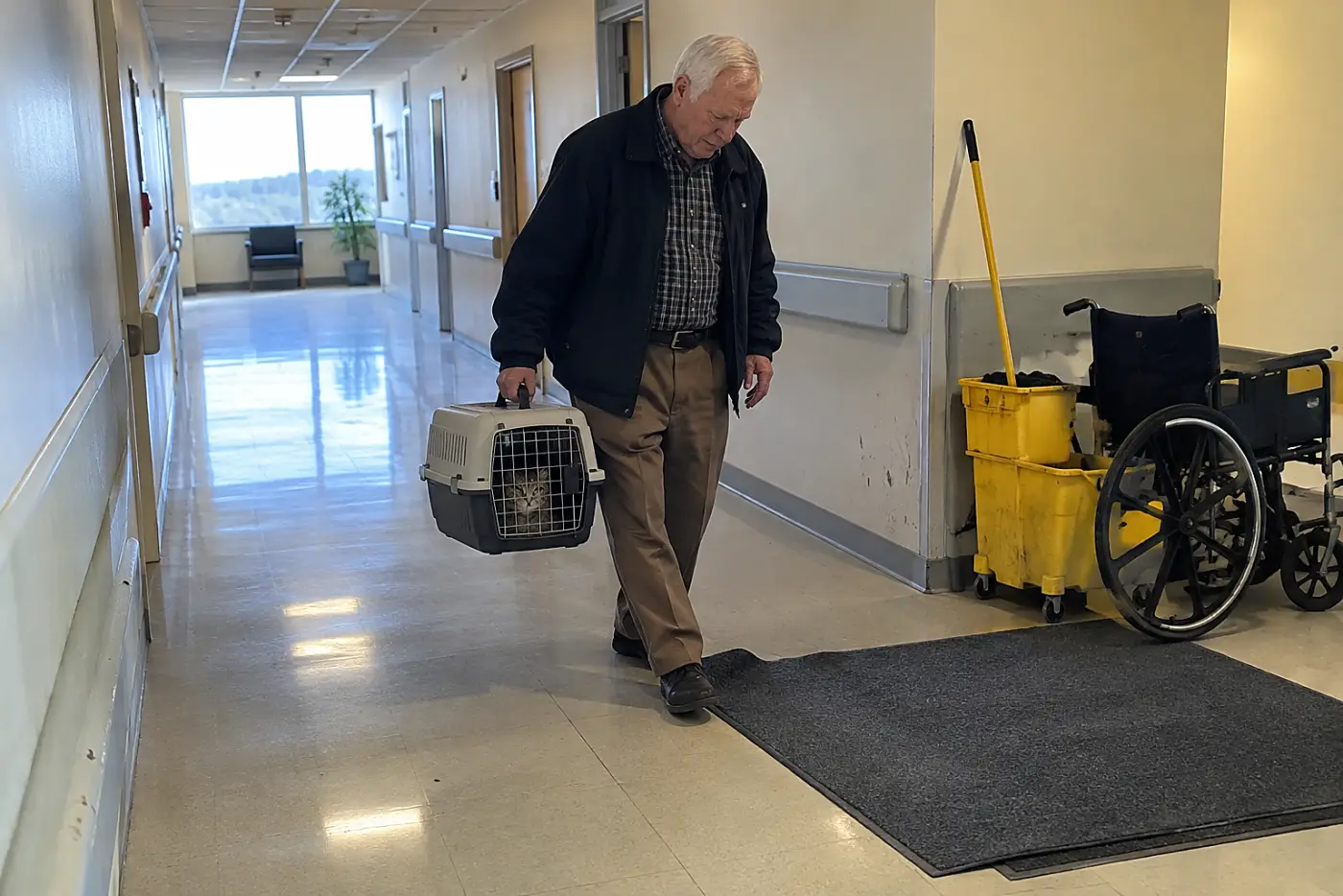
You hear her collar tap against the water bowl after the house goes dark. By morning, she's back in her usual chair, looking as if nothing happened. The rug beside the bed has a faint crease where she's been sleeping instead.
Cats are good at making a smaller life look like the same life. You know her habits better than anyone. That makes the changes worth noticing, even when she seems determined to carry on. Veterinary guidance from the organizations linked below helps explain which changes need a call.
26The chair she gives up before supper
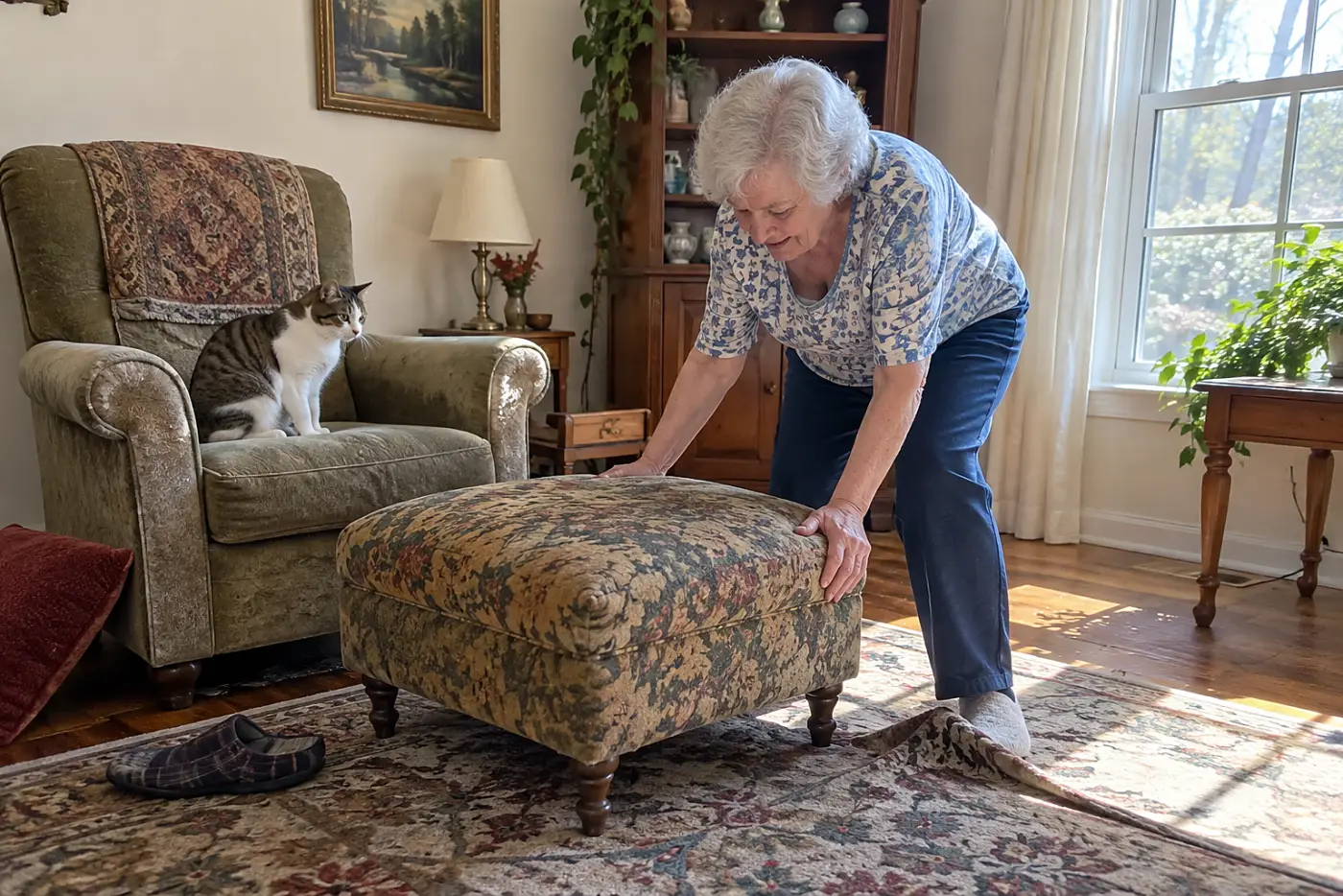
Her place on the armchair is empty again. At first, you blame the afternoon sun: it moved, so she moved. Then you notice she still watches the chair from the floor.
Check how she gets up there. A cat with sore joints might keep watching a favorite perch while choosing a landing she trusts. Pull a sturdy footstool close and see whether she uses it.
If she stopped jumping abruptly, or seems painful, call your veterinarian rather than testing her with another leap. The American Association of Feline Practitioners has guidance on caring for older cats.
25The rug placed beside your bed
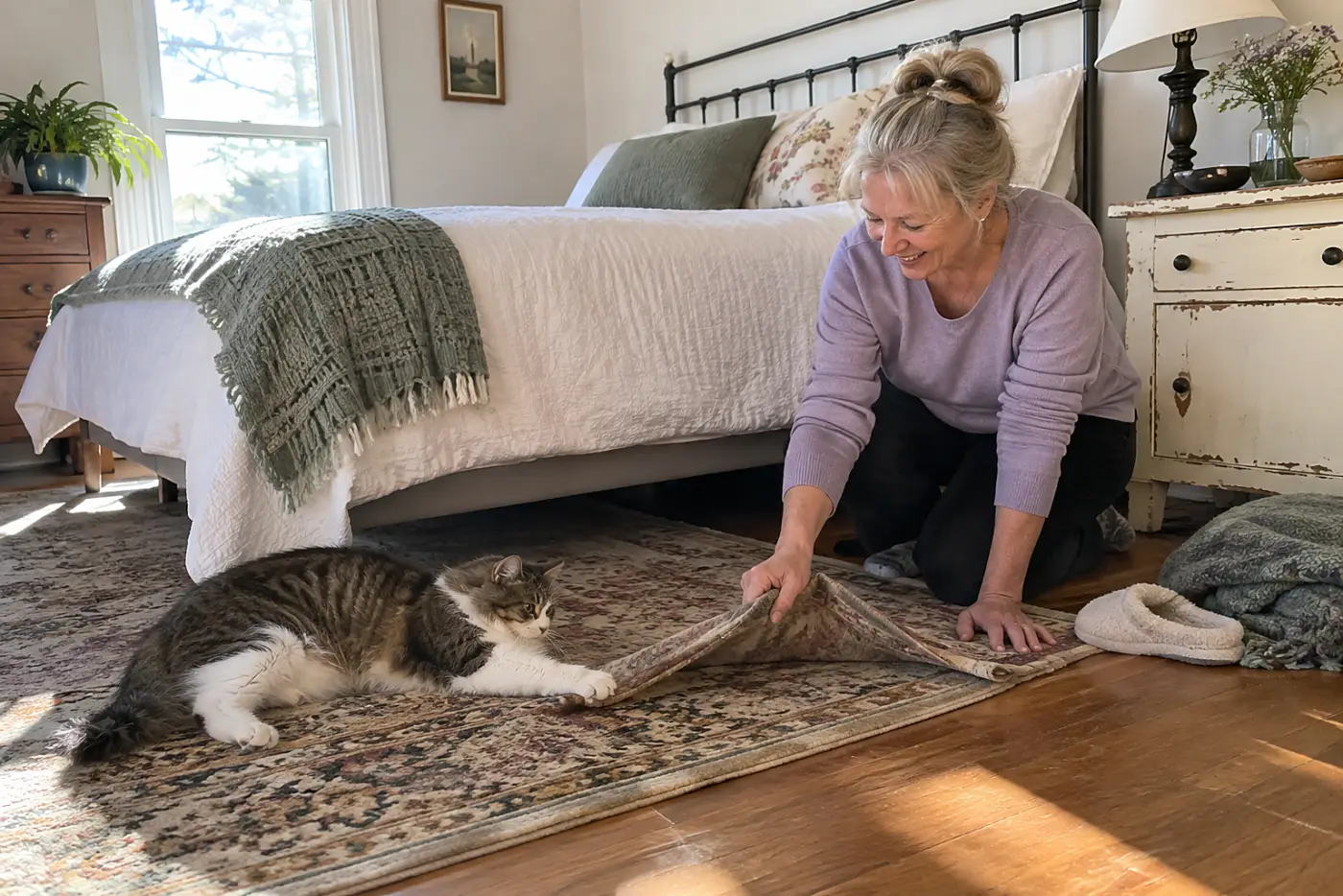
Perhaps you bought the rug for your feet. She's claimed it for sleeping.
Feel the floor where she used to sleep, then feel the rug. Notice the distance between that spot and your side of the bed. If she has settled there night after night, leave the rug in place while you work out why.
Watch how she lowers herself onto it and how she rises. You're looking for a change from her own routine, not proof that she loves you less because she no longer climbs onto the mattress.
24The stairs she watches you climb
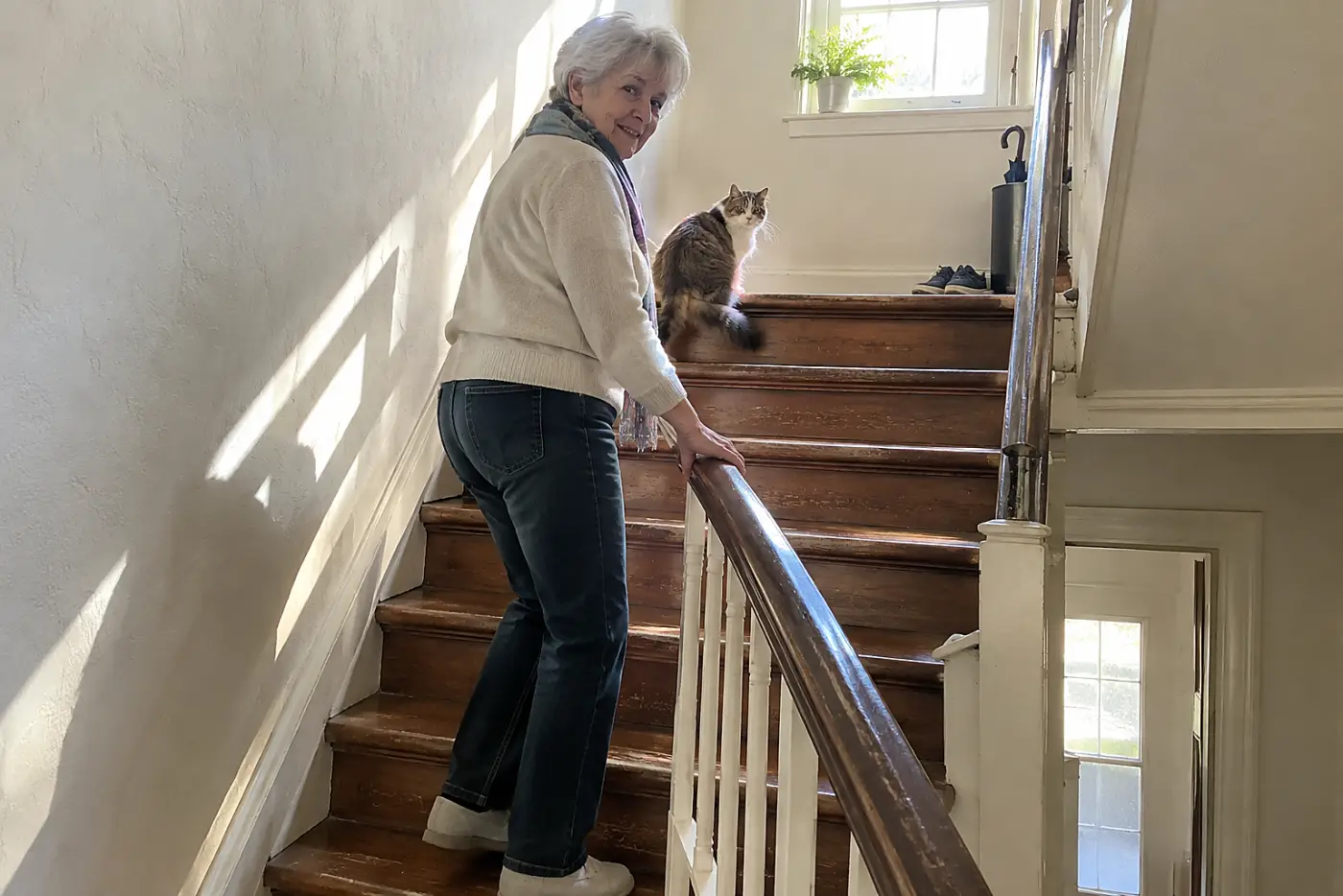
Does she wait at the bottom until you return? Watch her on an ordinary day instead of calling her upstairs. Count the steps she takes before she stops, and notice whether coming down looks harder.
Stiffness is one possibility. Poor vision is another. The Cornell Feline Health Center has information on both arthritis and aging cats. Tell your veterinarian which direction gives her trouble.
Don't carry her up as a test. If she's chosen to stay downstairs, make sure she has water and a comfortable place there while you arrange the visit.
See more: 25 Fears About Falling That Keep People Home, and the Fixes That Get Them Out →
23The greeting moved to the hallway
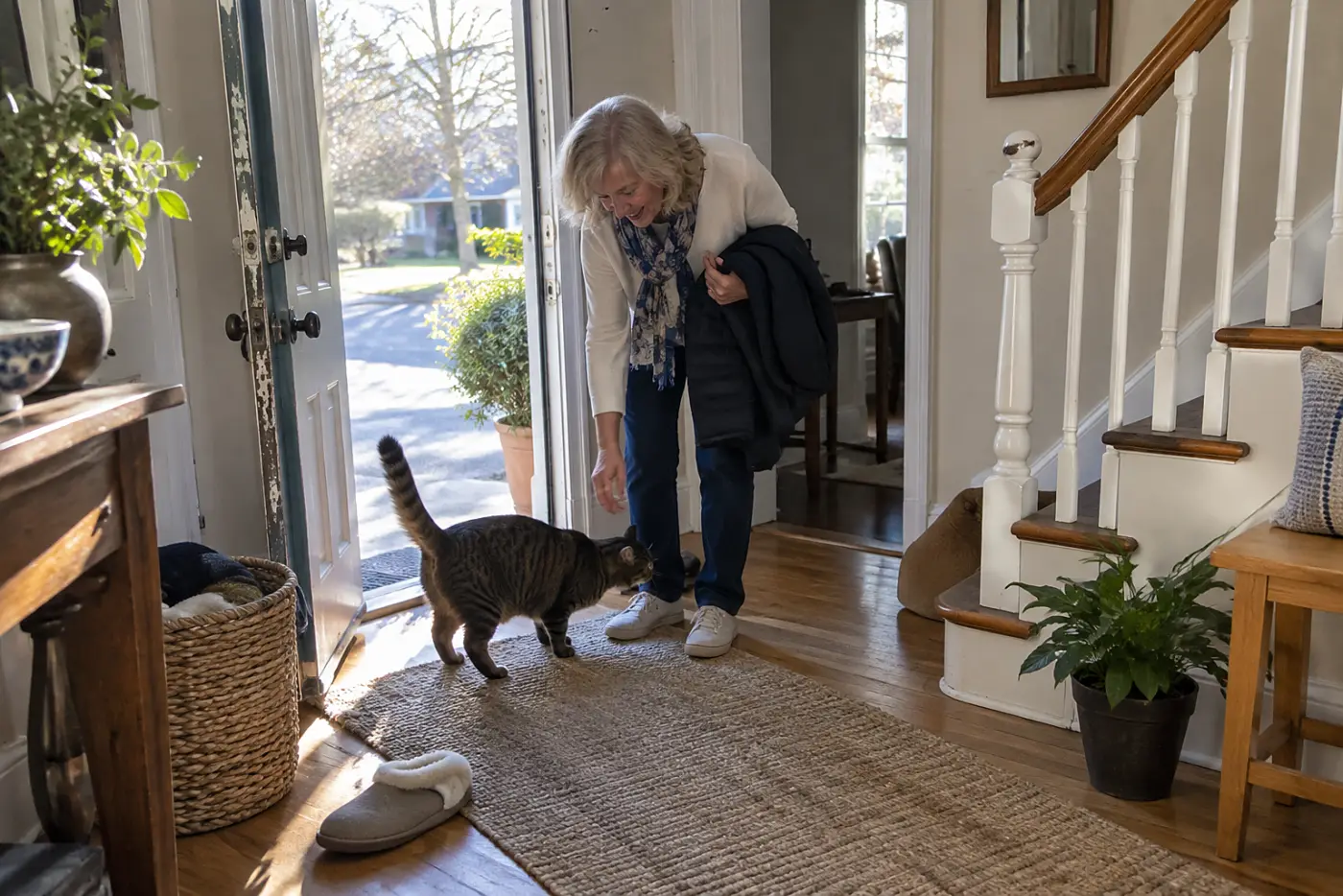
The front door opens, and she doesn't appear. Then you spot her halfway down the hall, sitting where she has a clear view of you.
She has found a shorter route to the greeting. Notice whether she turns when you speak or waits until she sees you. If she's less responsive to familiar sounds, mention that at her visit. Don't clap behind her head to test her hearing. A startled cat tells you very little.
For now, walk over and greet her where she's waiting. You've both kept the ritual; its meeting place changed.
See more: 26 Signs Your Family Sees You Differently Since You Turned 70 →
22The bowl with food left behind
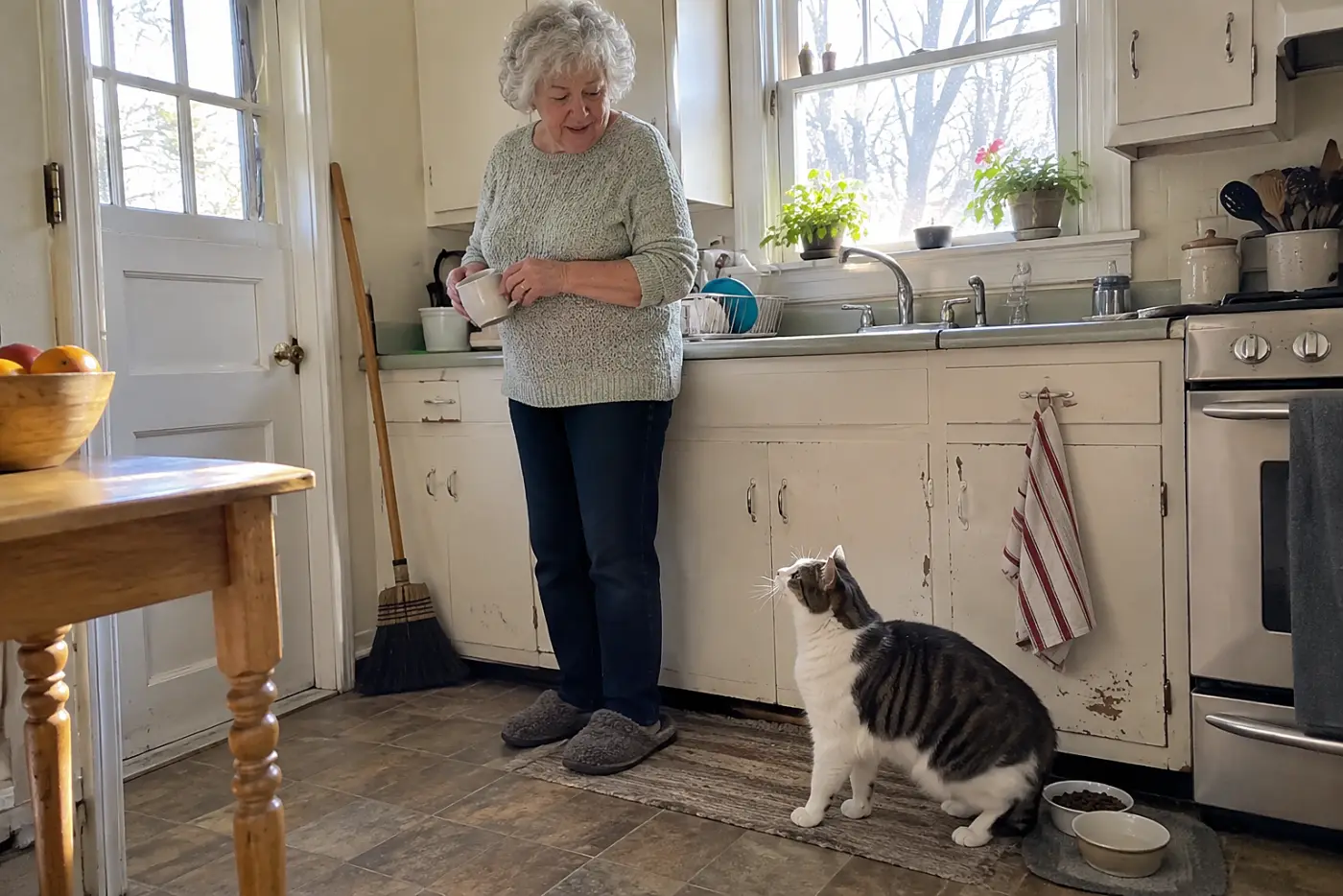
You put down breakfast. She walks over, sniffs, and leaves food behind. Later she follows you and asks again.
Before calling her fussy, watch her take a bite. Dropped food, chewing on one side, or backing away after a mouthful deserves a dental check. The AVMA explains that dental disease in pets goes beyond bad breath. Tell the veterinarian what eating looks like, not only how much remains.
21The water bowl near your chair
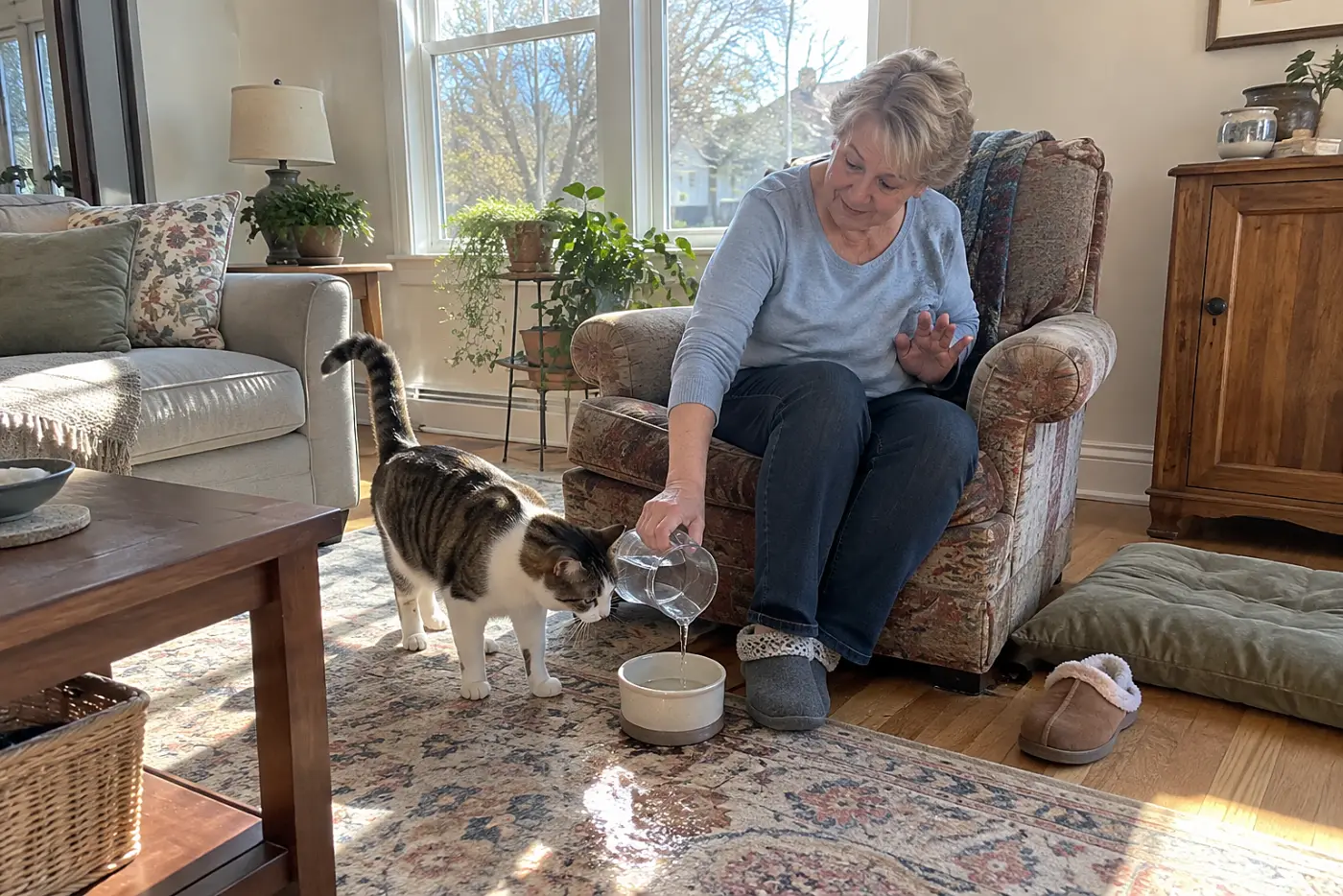
A move toward your chair isn't proof she wants company. She drinks there now, though another bowl sits closer to her usual sleeping place. Keep both filled while you check the route to each.
For three days, refill each bowl to the same mark and note what remains. Another pet drinking there makes the measure less useful, so watch who visits. Increased thirst alongside more urine in the litter box deserves a veterinary call.
The Merck Veterinary Manual describes thirst and urination changes associated with kidney disease and diabetes. Don't take water away to test her preference. Give her easy access while you find out what's happening.
20The meow outside the bathroom door
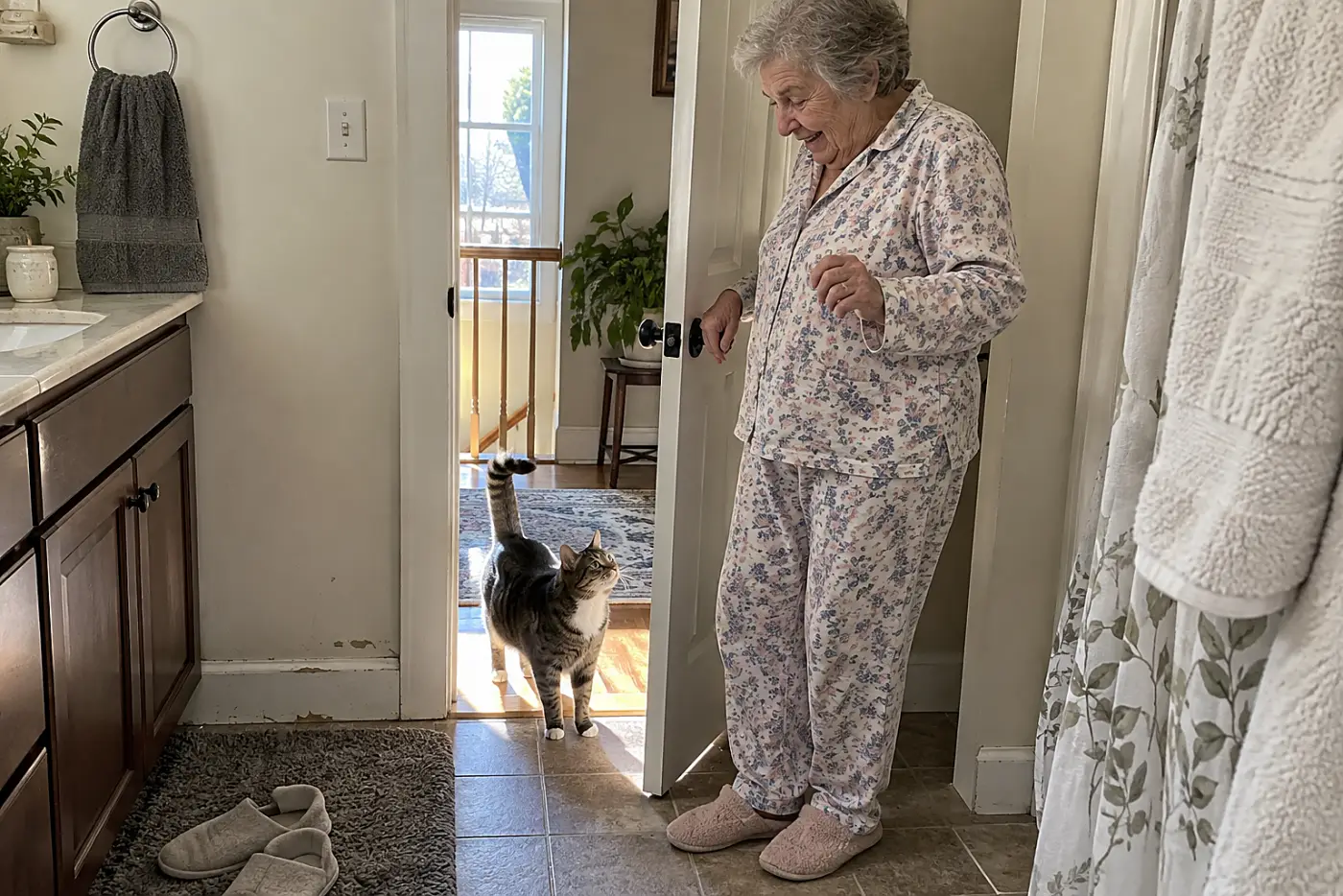
You close the bathroom door, and she calls from the other side, although she once slept through your whole morning routine. Answer in your normal voice before opening it, then notice whether she settles.
Does the calling also happen at night? Tell your veterinarian when it began and what she does afterward. Pain, sensory changes, and confusion are possibilities to discuss. You don't have to settle the question from the bathroom sink.
19The lap visit that ends early
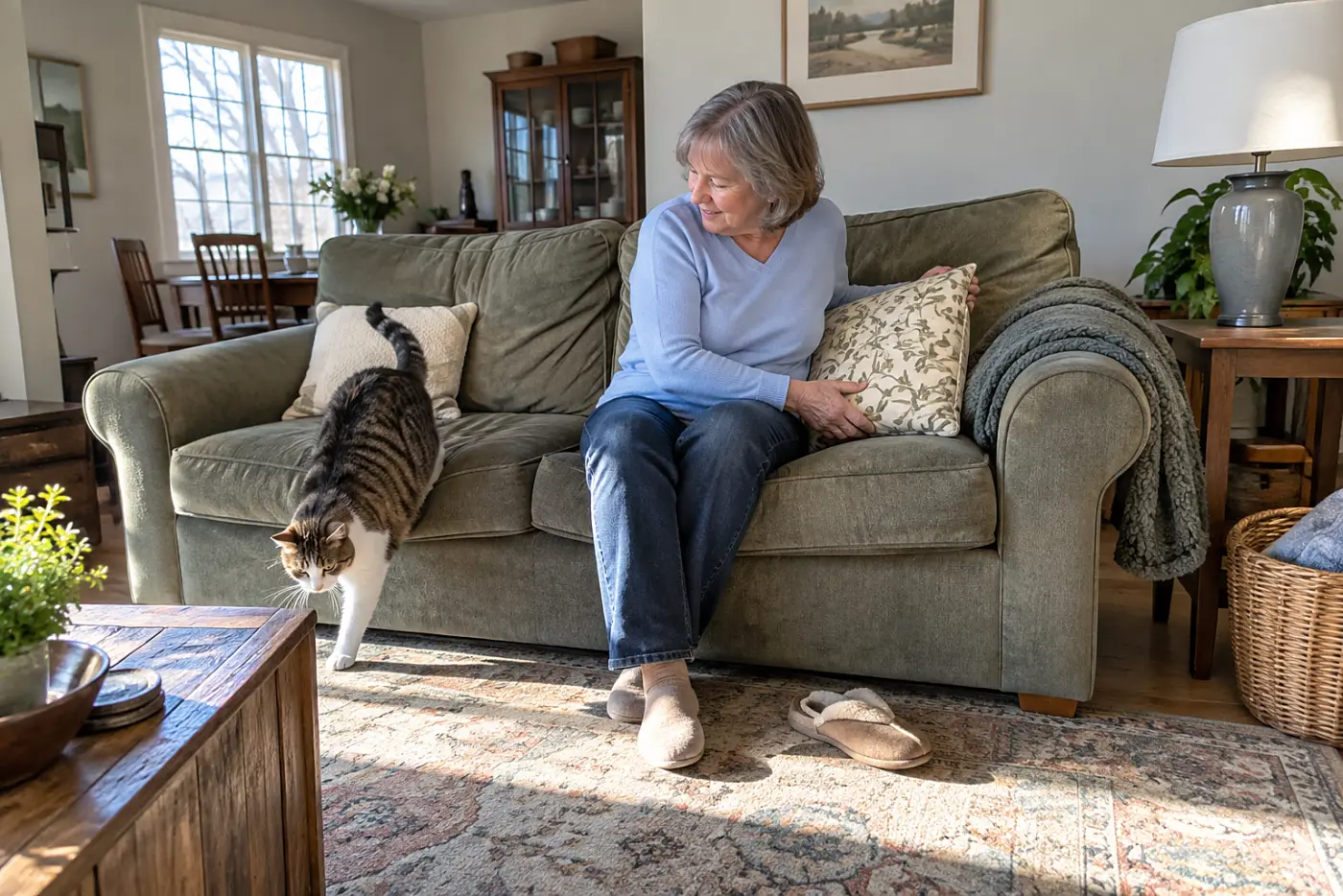
A shorter lap visit stings, especially when she still climbs up to see you. Notice how she leaves: a hesitant step, a hard landing, or a pause before walking tells you more than the length of the visit.
Put a firm cushion beside you for a shorter way down, and make sure it doesn't slide. If she welcomes a stroke but pulls away when you touch her back or hips, note the spot for her veterinarian.
She came to you. The difficult part seems to be getting comfortable or getting down.
18The windowsill she watches from below
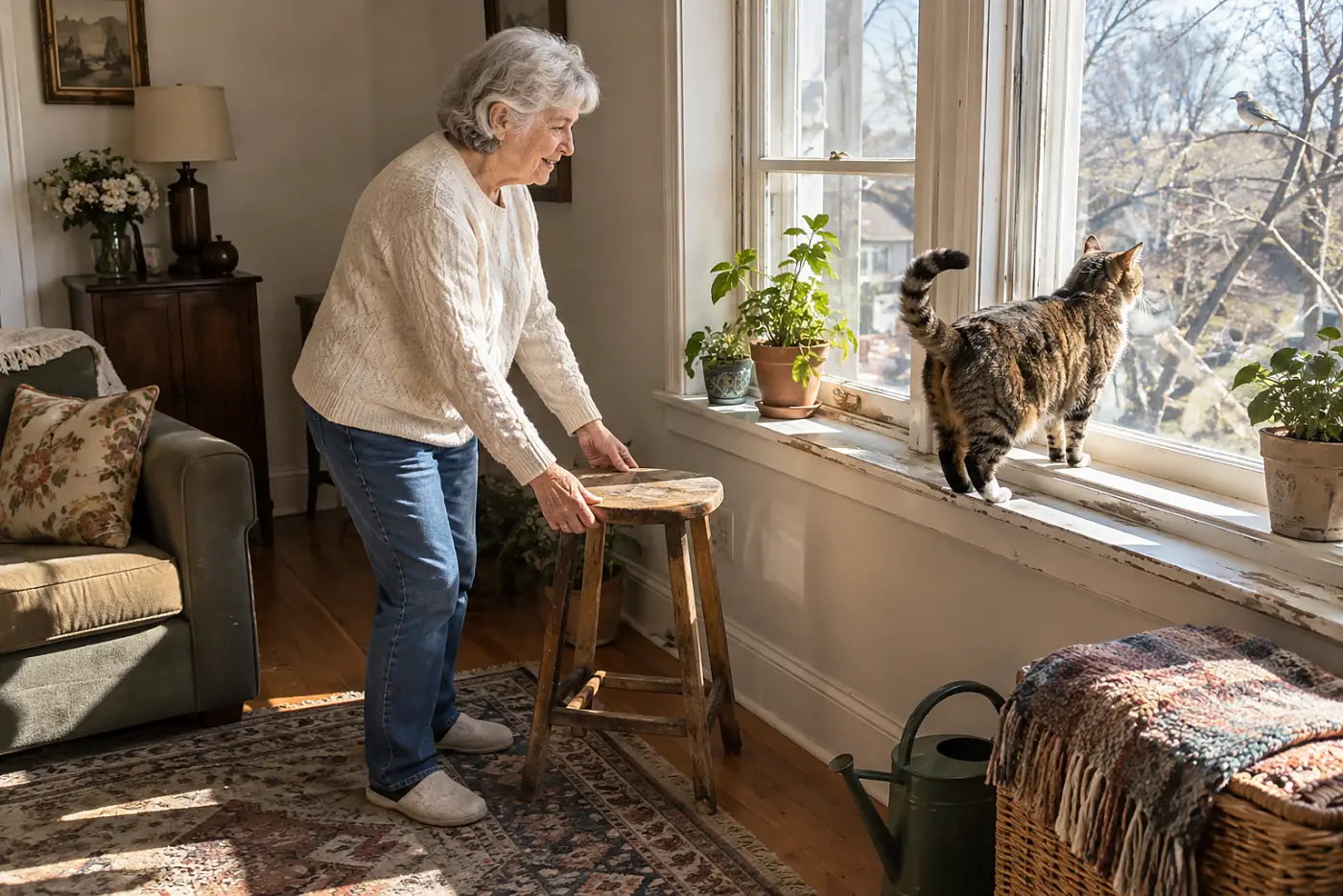
The bird arrives, and she tracks it from the floor. Her old windowsill stays empty.
Move a stable seat close enough to offer an easier climb, leaving room for her to turn around. Then let her choose. If she stays down, notice whether she still follows the bird across the glass.
That difference matters: interest in the view remains, while the trip to her old seat has fallen away. Leave her a clear view from the floor rather than lifting her onto the sill.
17The hallway she crosses by lamplight
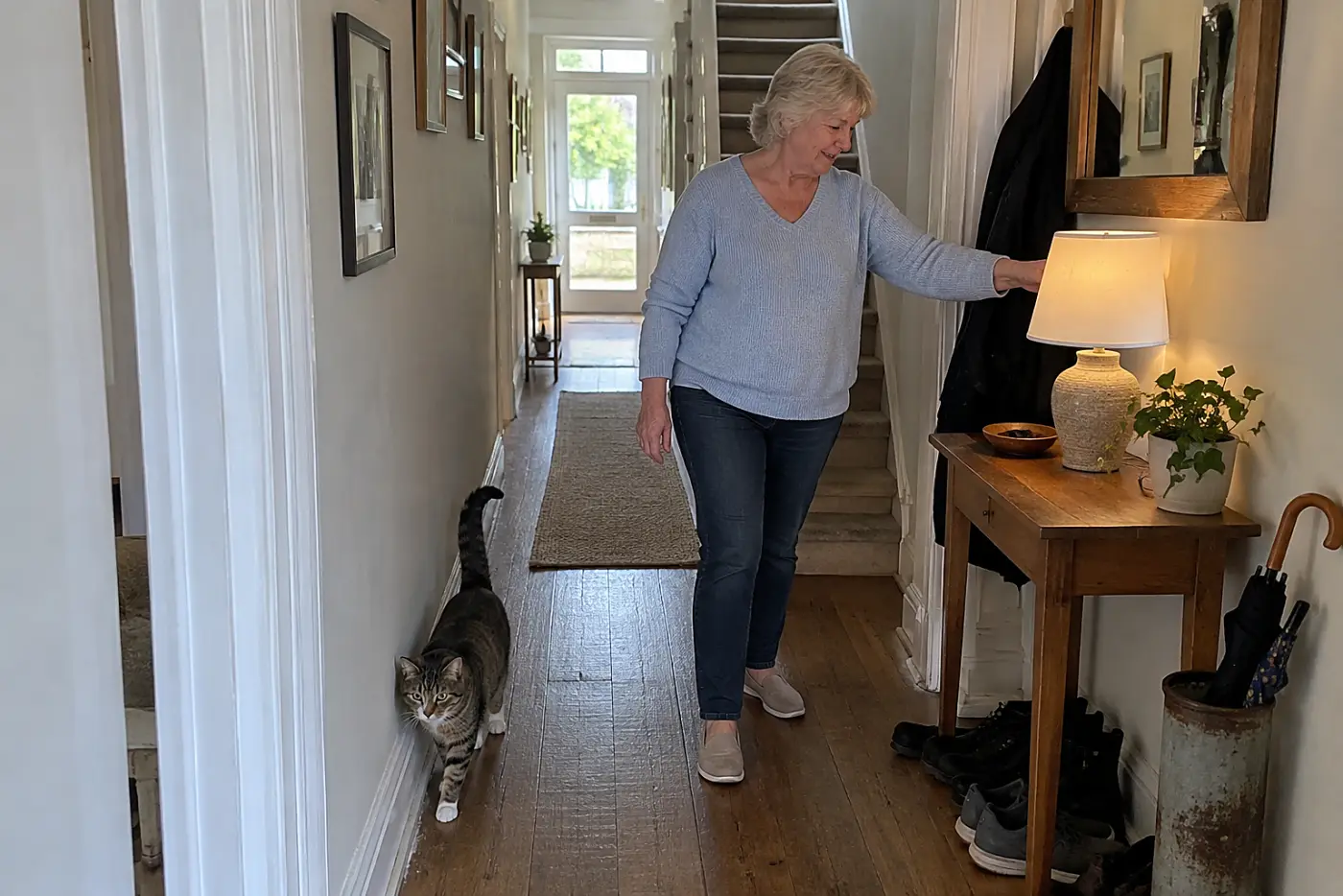
At night she takes the wall side of the hallway, brushing past the baseboard instead of walking down the middle. Leave a small lamp on and keep shoes out of her path.
Then watch her in daylight. Cloudy-looking eyes, bumps into furniture, or trouble finding familiar openings need a veterinary exam. The VCA Animal Hospitals pet health library discusses vision changes and other problems in older cats.
Don't rearrange every room at once. Her memory of the furniture is helping her get around.
16The horizontal scratcher she finally uses
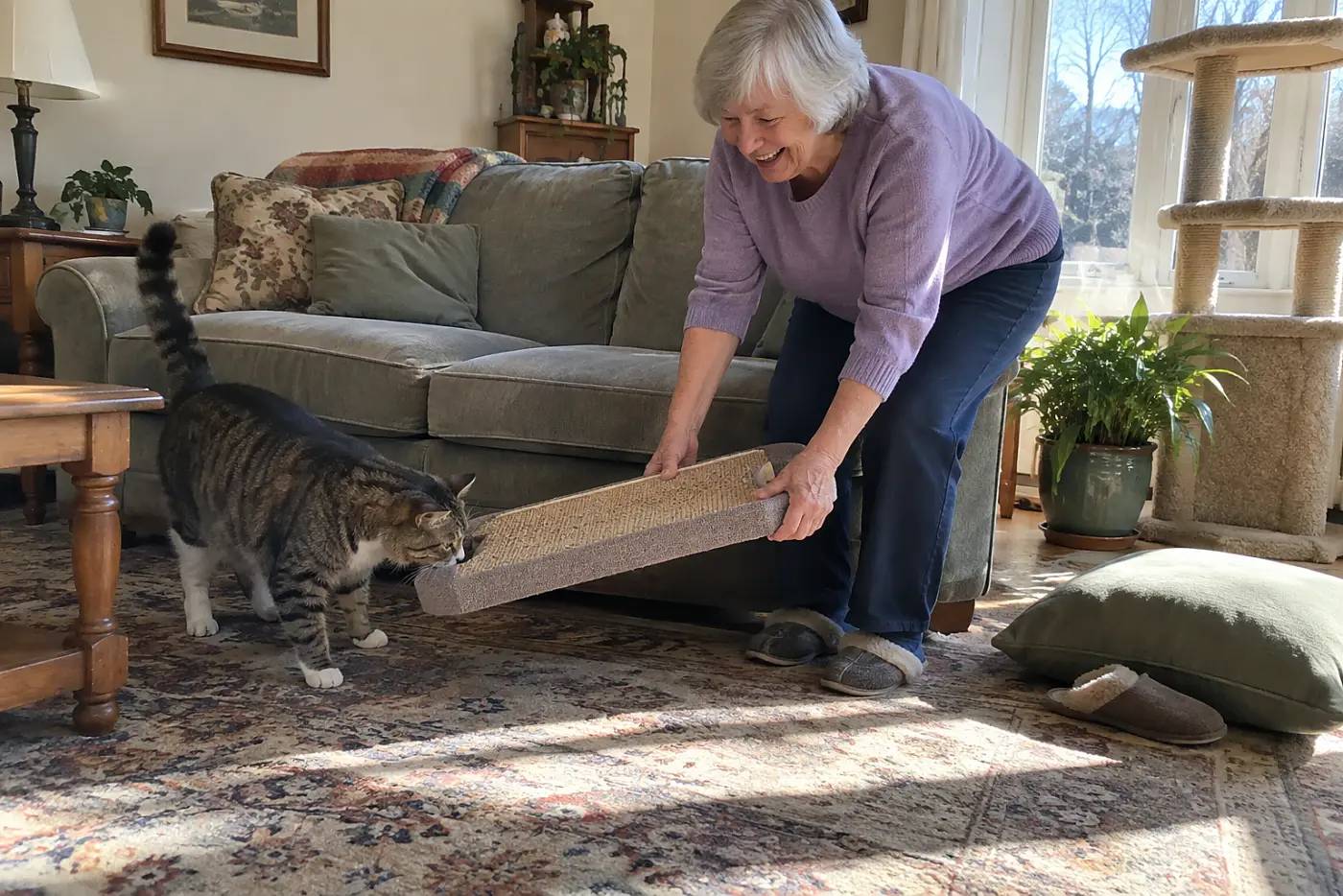
The tall post stands untouched, but she stretches out to scratch the rug. Before scolding her, set a sturdy horizontal scratcher where she already stops. Notice whether she uses it without standing high on her back legs.
Keep the old post for now. Her choice gives you a clearer answer than moving it across the room each day. Look at her claws, too: a nail catching in fabric or curving toward the paw needs attention. Ask the veterinary clinic to show you a safe trimming method if handling her paws is difficult.
Scratching still belongs in her day. The position she chooses has changed.
15The laundry pile she chooses over blankets
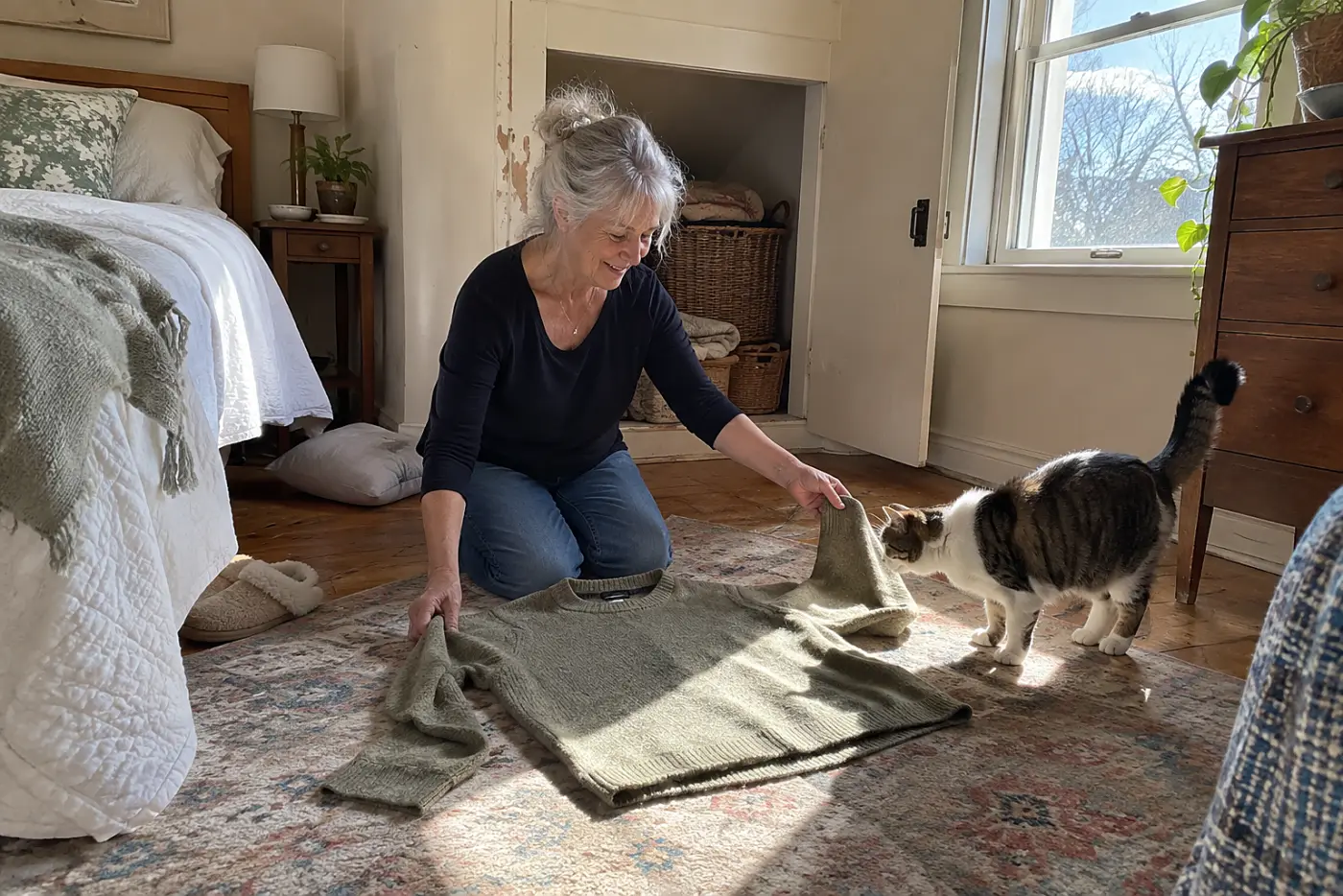
You find her curled in a sleeve of your worn sweater. The clean fleece you bought for her sits untouched.
Your scent is familiar, and the laundry pile stays put when she steps into it. Check whether the sweater is easier to reach than her old bed. Move a washable piece of clothing to a low, draft-free spot where she already rests. Keep loose strings and drawstrings away from her.
If she's seeking warmth, check the temperature there with your hand. Don't use a heating pad without veterinary advice. She should always be able to move away from a warm spot.
14The grooming she leaves unfinished
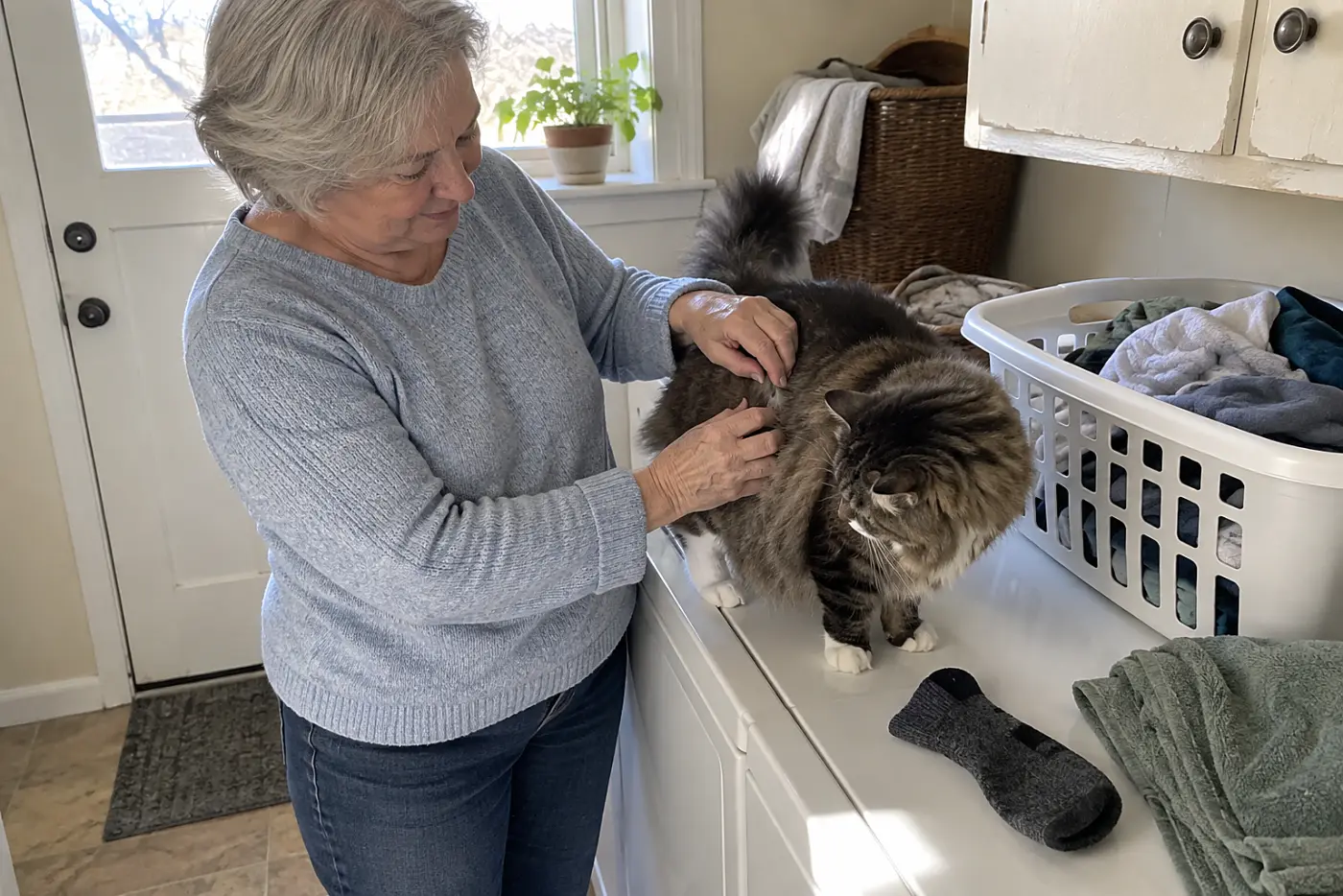
Her coat feels different under your hand. A patch along her lower back is greasy or matted, while the fur she reaches easily still looks clean.
Watch her try to turn and wash that spot. Arthritis, dental pain, and other illness can interfere with grooming. Don't tug at a mat or cut close to her skin with scissors. Tell your veterinarian where the change began. A Cats Protection guide to caring for older cats also covers coat changes.
13The litter box route she shortens
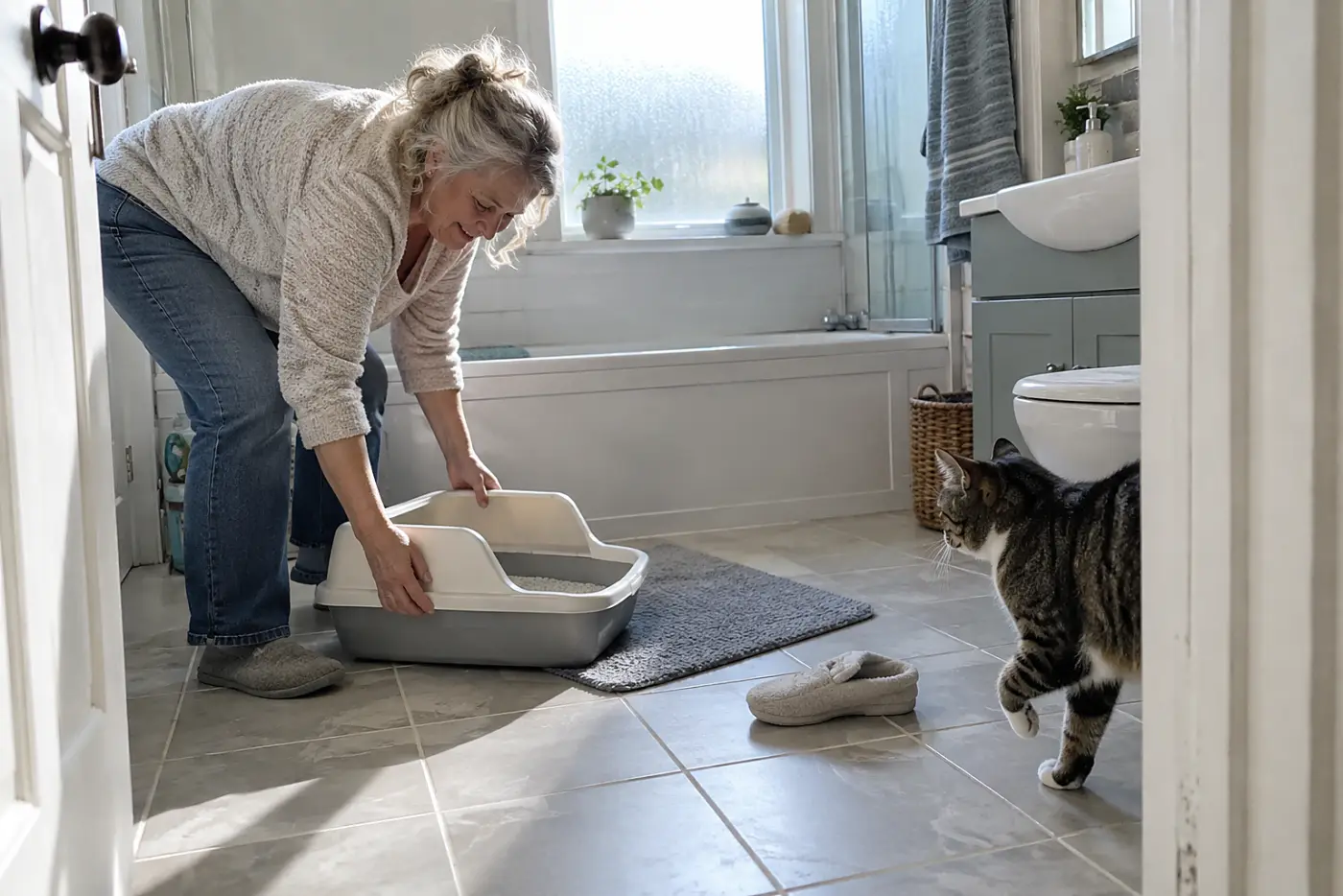
She reaches the box, but the high side makes her pause. Later, you find a wet patch just outside it.
First, check the box itself. Is the entrance low enough to step over? Is the floor slick on the way in? Set out a second box with a low entrance, in a spot she reaches without stairs. Keep the familiar box while she learns where the new one is.
An accident also warrants watching what happens inside the box. Repeated trips with little urine, straining, or crying call for prompt veterinary help. If she cannot pass urine, seek emergency care. The ASPCA has advice on litter box problems.
12The doorway where she pauses for you
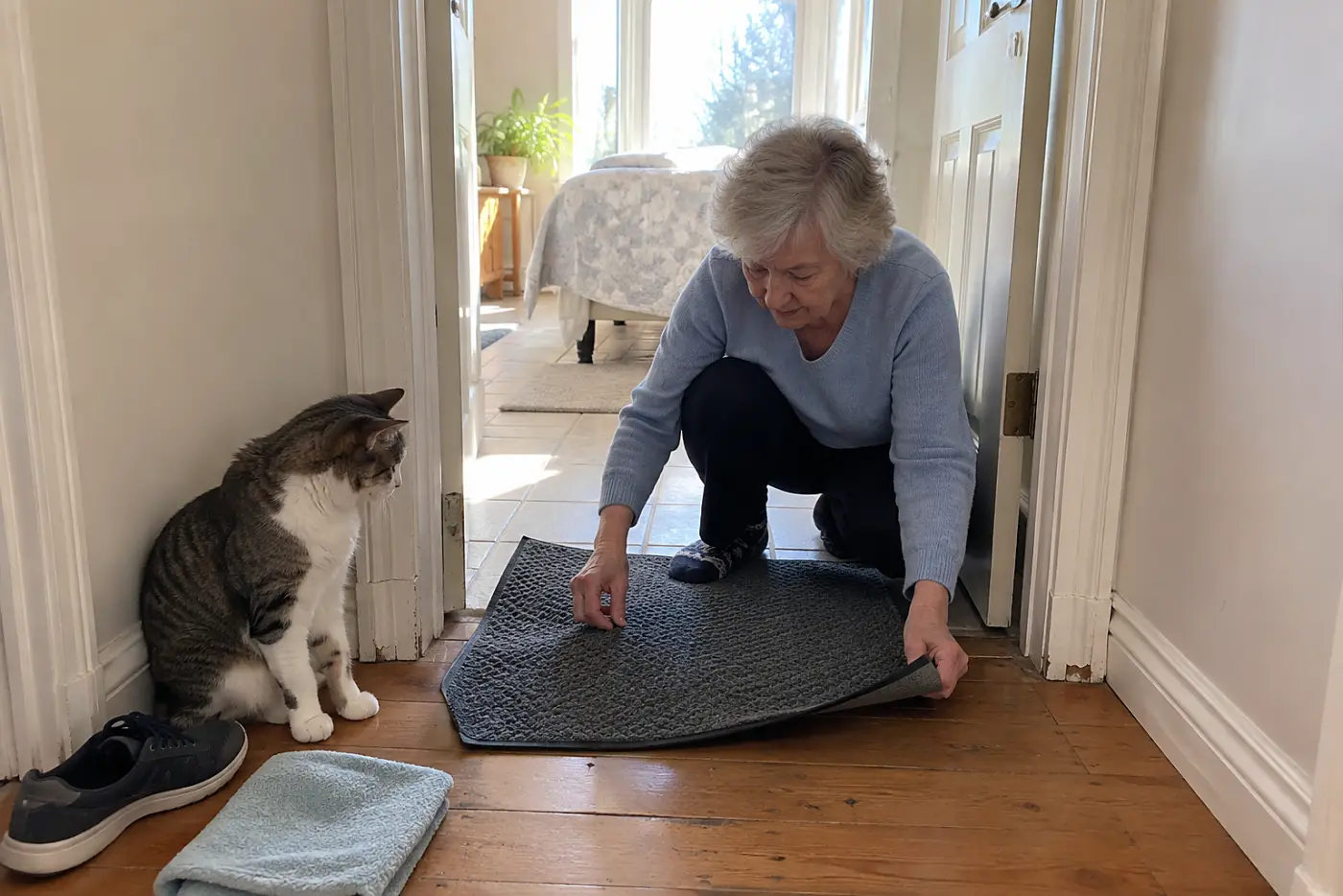
You're carrying towels through the doorway and find her waiting against the frame. She follows once you pass.
Watch whether she crosses the doorway alone at other times. A dark threshold, a slippery patch, or another pet on the far side changes the trip. Put down a nonslip mat if the floor is slick.
If she seems lost in familiar rooms, tell your veterinarian what you saw and when it happened. The pause matters more when you know what happened next.
11The medicine cabinet she visits at night
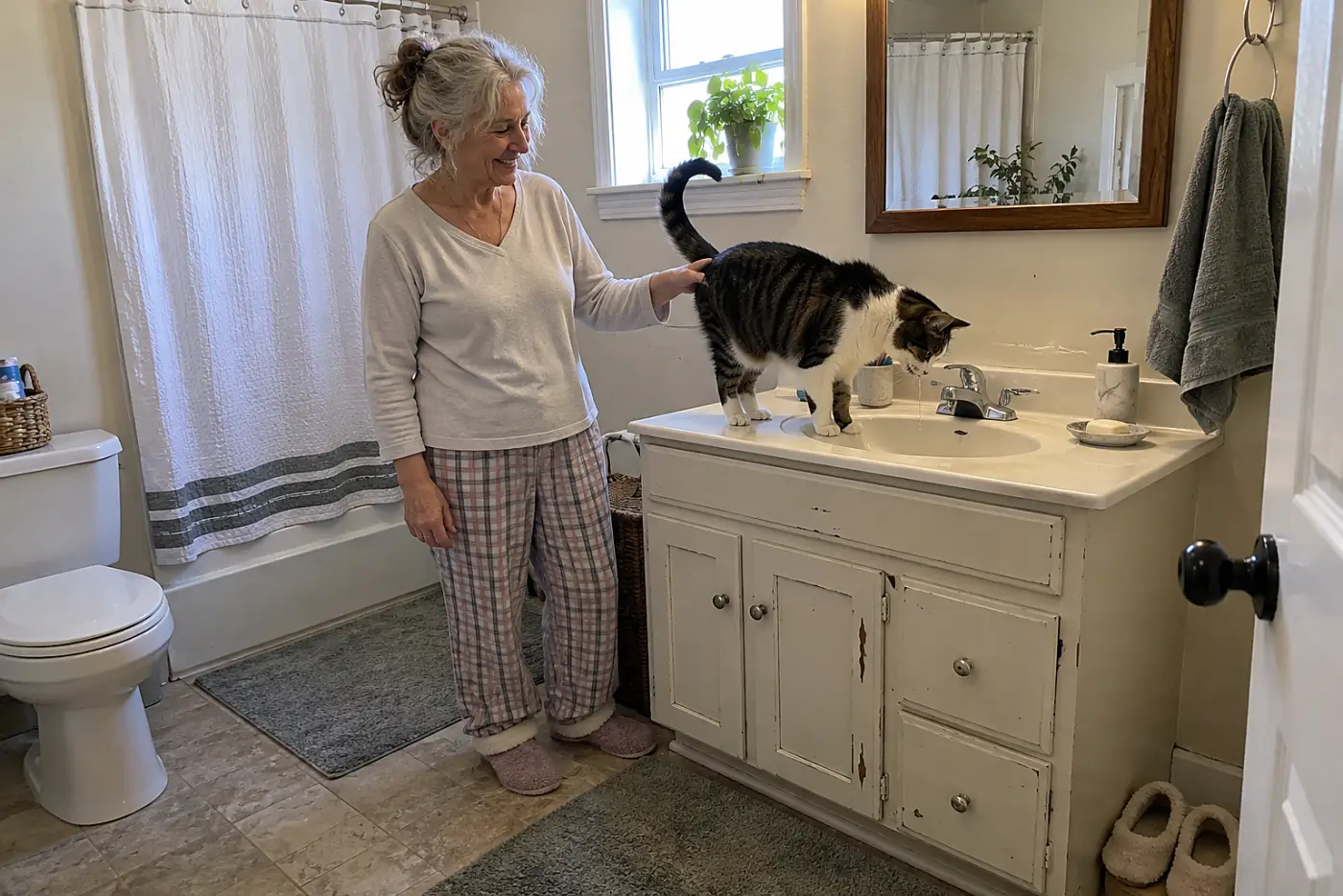
The cabinet door clicks. She appears before you've finished brushing your teeth.
She has learned the part of your evening when you stand still. If she waits for a stroke, give her one and watch what comes next. Does she follow you to bed, then settle? Or does she pace, call, and return again?
Note the time and duration if the pacing repeats. Night waking has several possible causes, including pain and illness. The International Cat Care site discusses senior cat behavior and care. A pattern you can describe helps your veterinarian far more than “she's acting strange.”
See more: 26 Signs You've Become the Parent to Your Parent →
10The sun patch she misses by inches
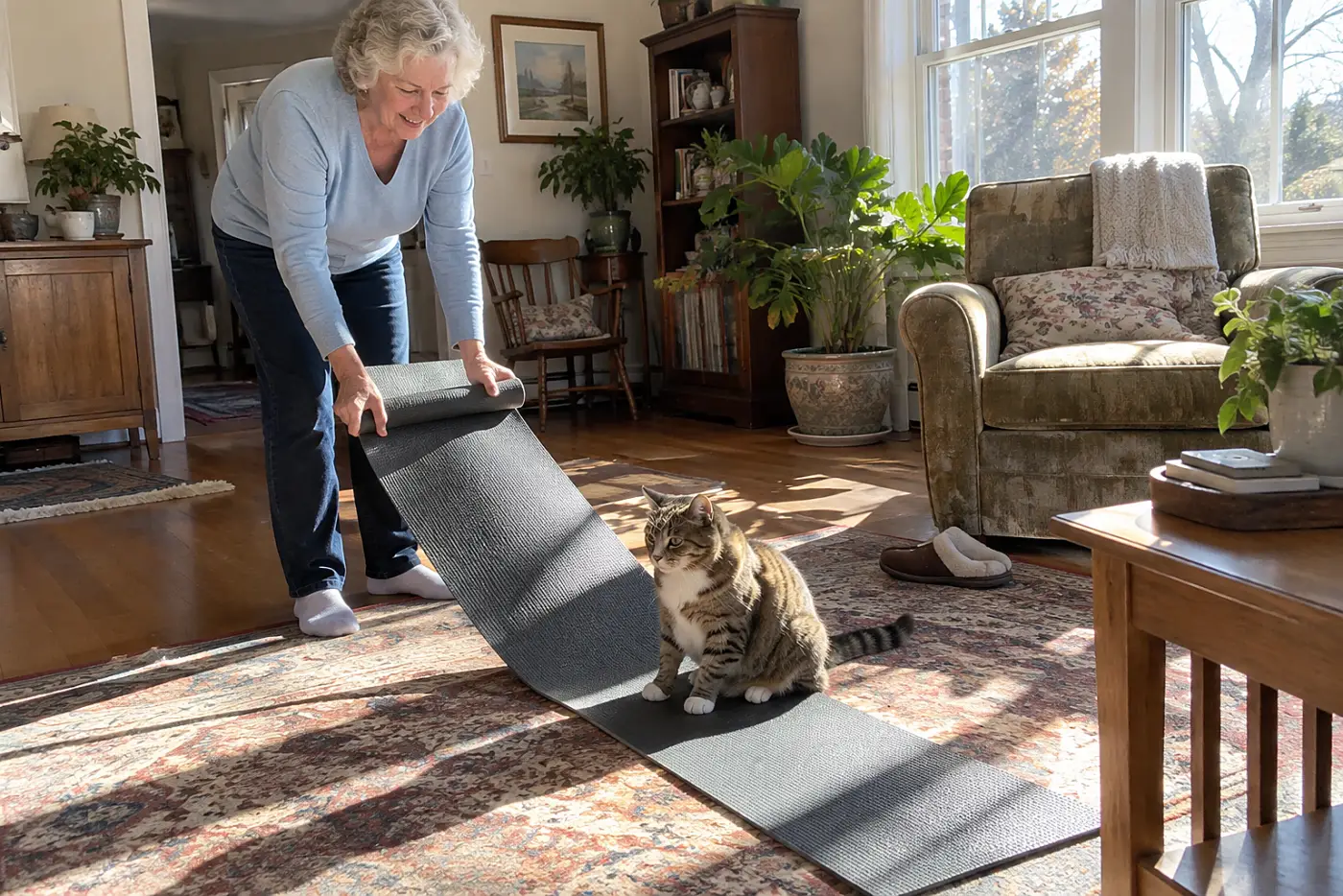
The warm square has shifted across the room. She lies beside it instead of following it.
Check whether reaching the sun means crossing a slick floor. A grippy mat gives her footing without changing where the light falls. Watch what she does when the patch moves again tomorrow.
If she stays put, make a resting place where sunlight already reaches her. Don't pick her up and set her in the patch as a test. The clue is the route she chooses for herself.
9The refrigerator sound she no longer follows
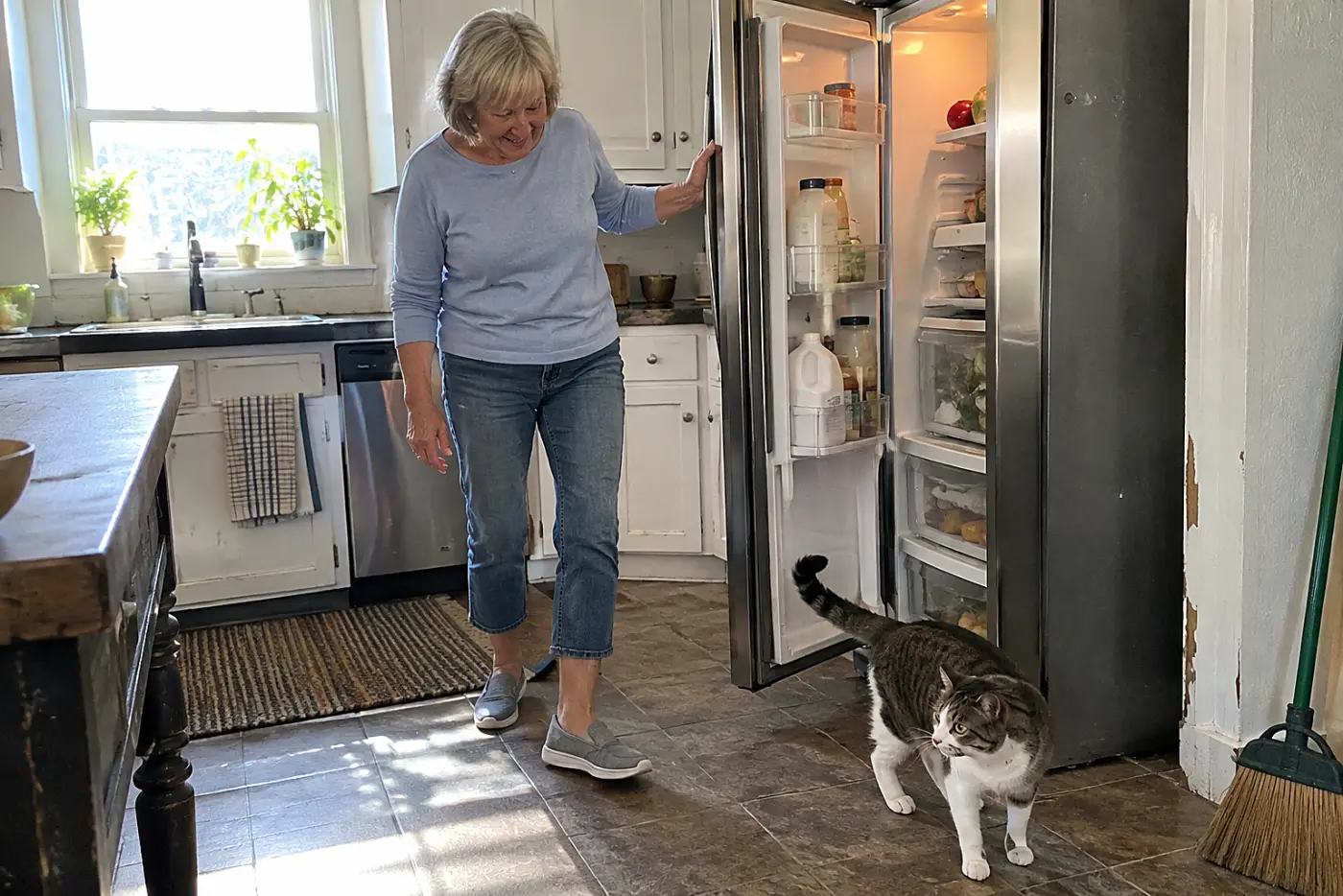
The refrigerator opens. Once, that sound brought her running. Today she comes only after she sees you at the counter.
Try the sounds of an ordinary day: your voice, a familiar food container, your footsteps. Note which ones still get a response. Don't make a sudden noise beside her ear. Hearing changes are worth raising with your veterinarian, especially if she startles when touched from behind.
Approach where she can see you. That small courtesy prevents a fright, whether her hearing has changed or she's deeply asleep.
8The carrier she avoids after breakfast
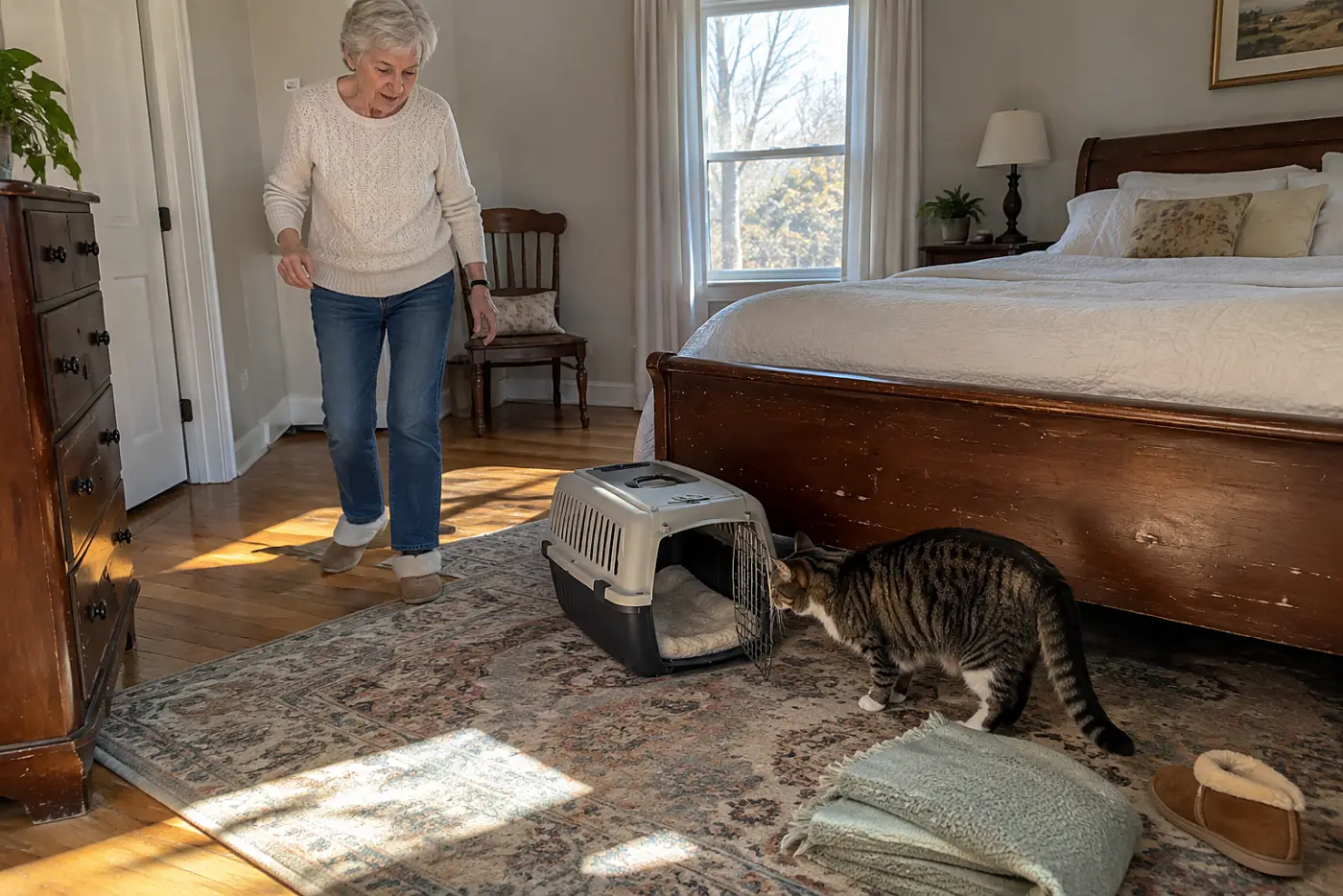
You bring the carrier out for a veterinary visit. She disappears under the bed, and getting her out becomes a chase.
Leave the carrier open in a familiar room between visits, with bedding that smells like home. Start several days before an appointment rather than bringing it out that morning. If handling hurts her, tell the clinic before you come.
The American Association of Feline Practitioners' Cat Friendly Practice program has advice on getting cats to the clinic. You need a plan that gets her examined without turning the morning into a struggle.
7The sofa route she takes in stages
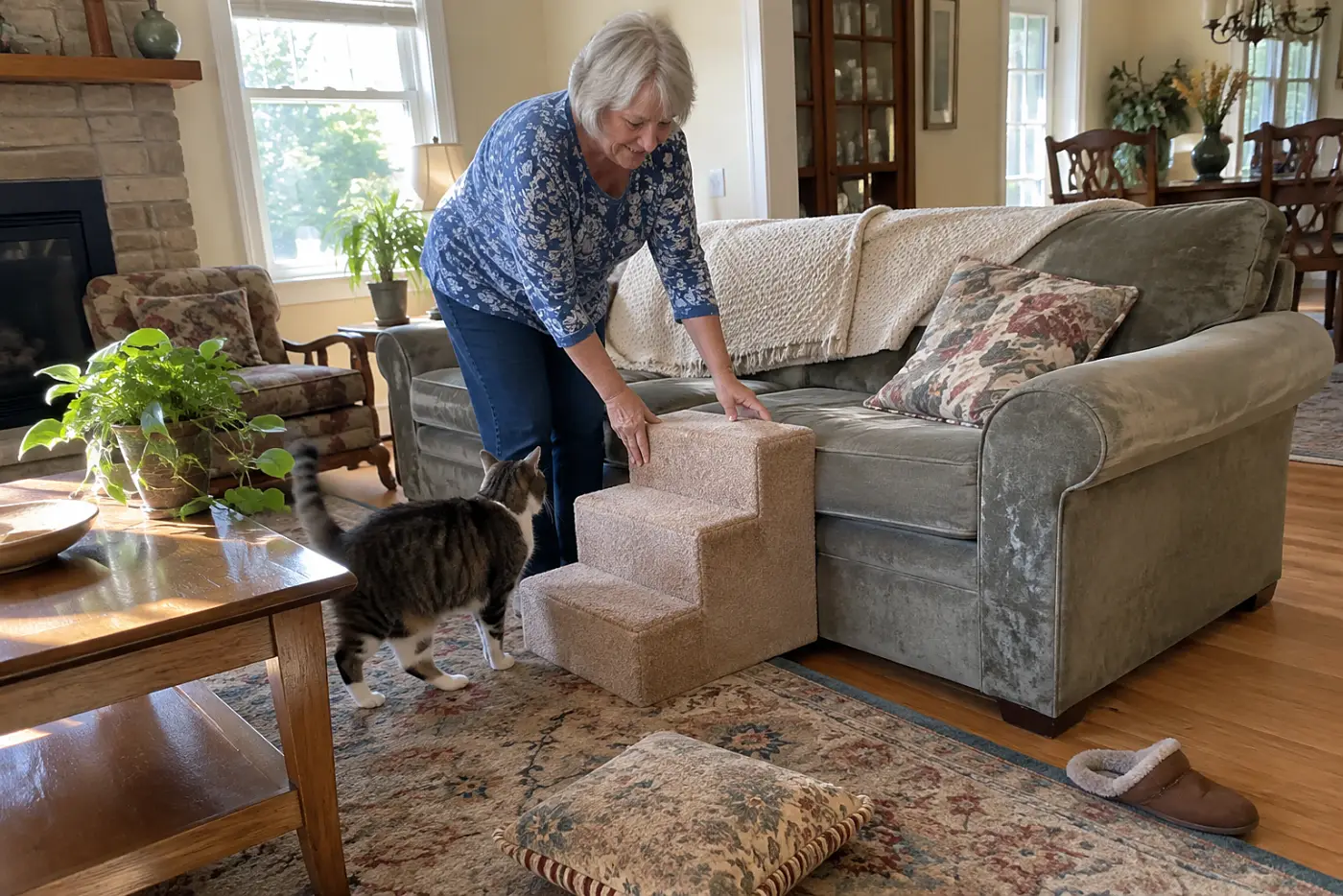
Watch her return to the sofa. She steps onto a low shelf, pauses, then climbs onto the cushion. She has built herself a route using what was already in the room.
Check each landing. A loose shelf or rolling stool turns a careful plan into a fall. Replace it with firm, stable steps if she uses that path every day. Give her room to step down, too.
You're allowed to admire how resourceful she is while still changing the furniture. The Ohio State University Indoor Pet Initiative describes ways to make a cat's home easier to use. Her route shows you exactly where to begin.
6The visitor chair she leaves empty
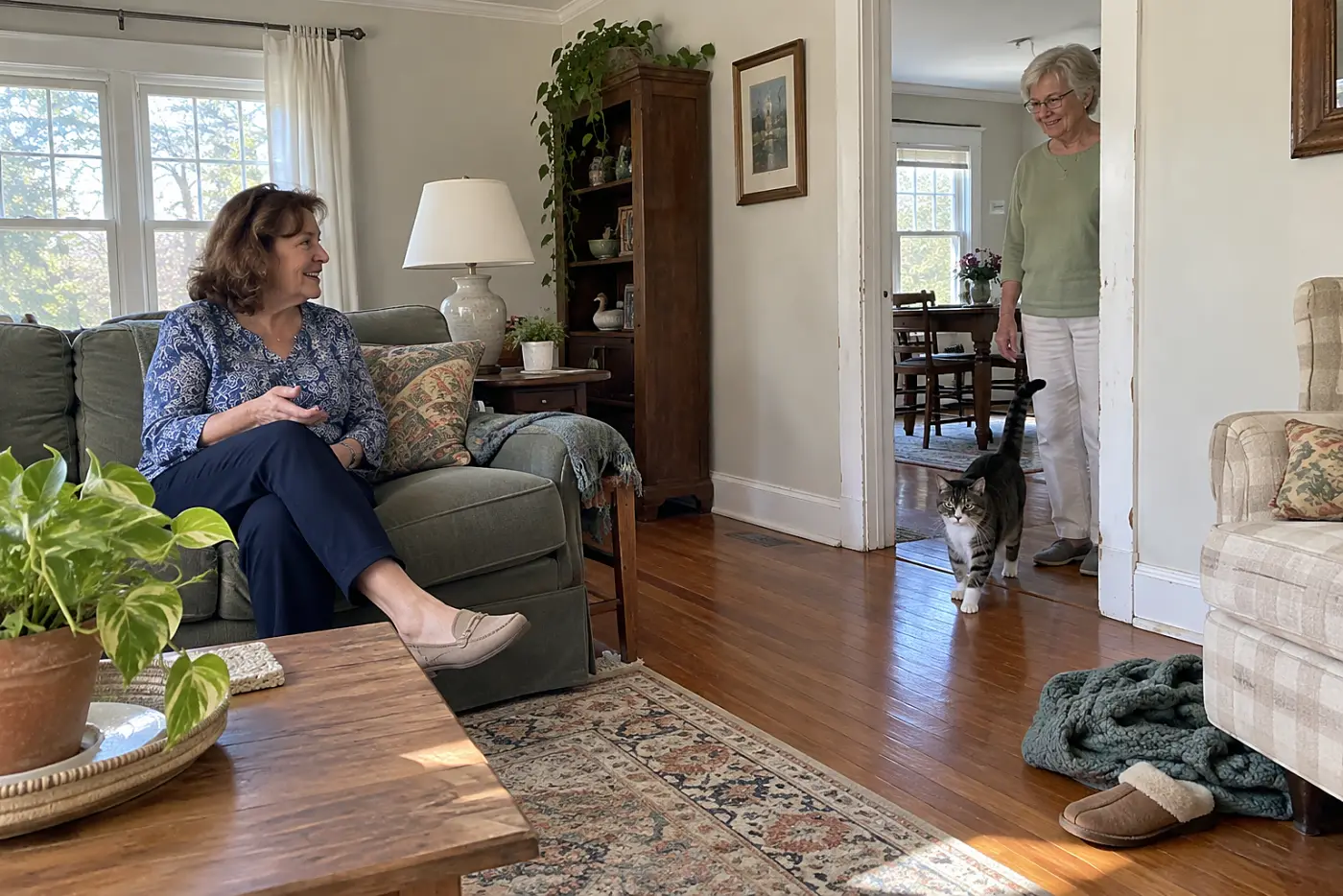
Your friend comes in and takes the chair. Your cat stays behind the doorway, where she can see both of you.
Before asking the friend to reach for her, give your cat a clear path out. Let her choose whether to come closer. If she's withdrawing from people she once sought out, especially alongside changes in eating or movement, tell your veterinarian. “She stopped visiting when company comes” is a useful detail.
5The feeding place she moves toward you
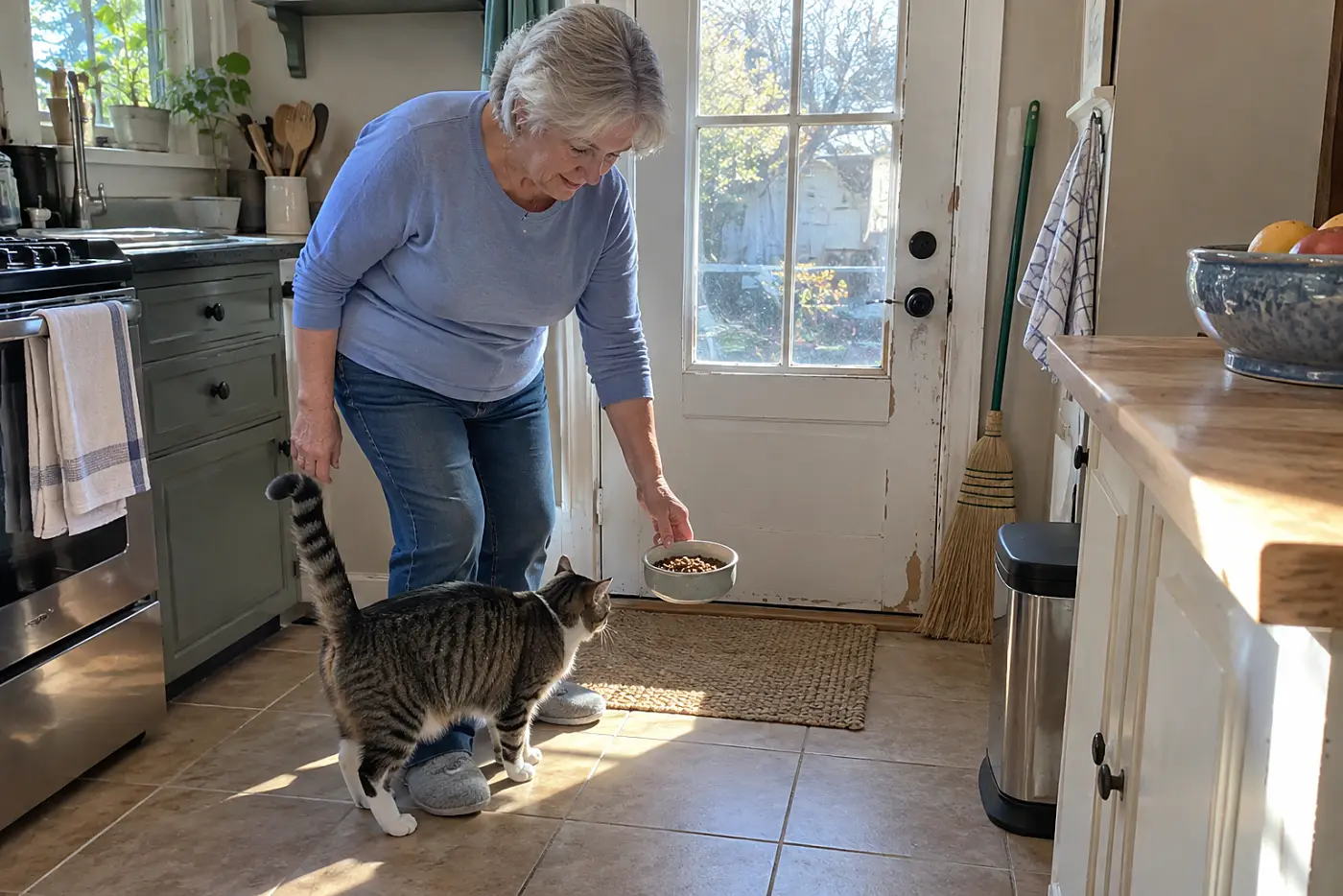
She used to eat alone by the back door. Now she waits until you're nearby.
Look at the place she left. Is the bowl beside a noisy appliance? Does another pet cross that doorway? Put food in a calmer spot and give her room to step away after eating. The American College of Veterinary Behaviorists is a resource for finding a veterinary behavior specialist if household tensions persist.
Don't move every bowl in the house on the same day. Change one thing, then watch where she eats.
4The doorway naps that block your path
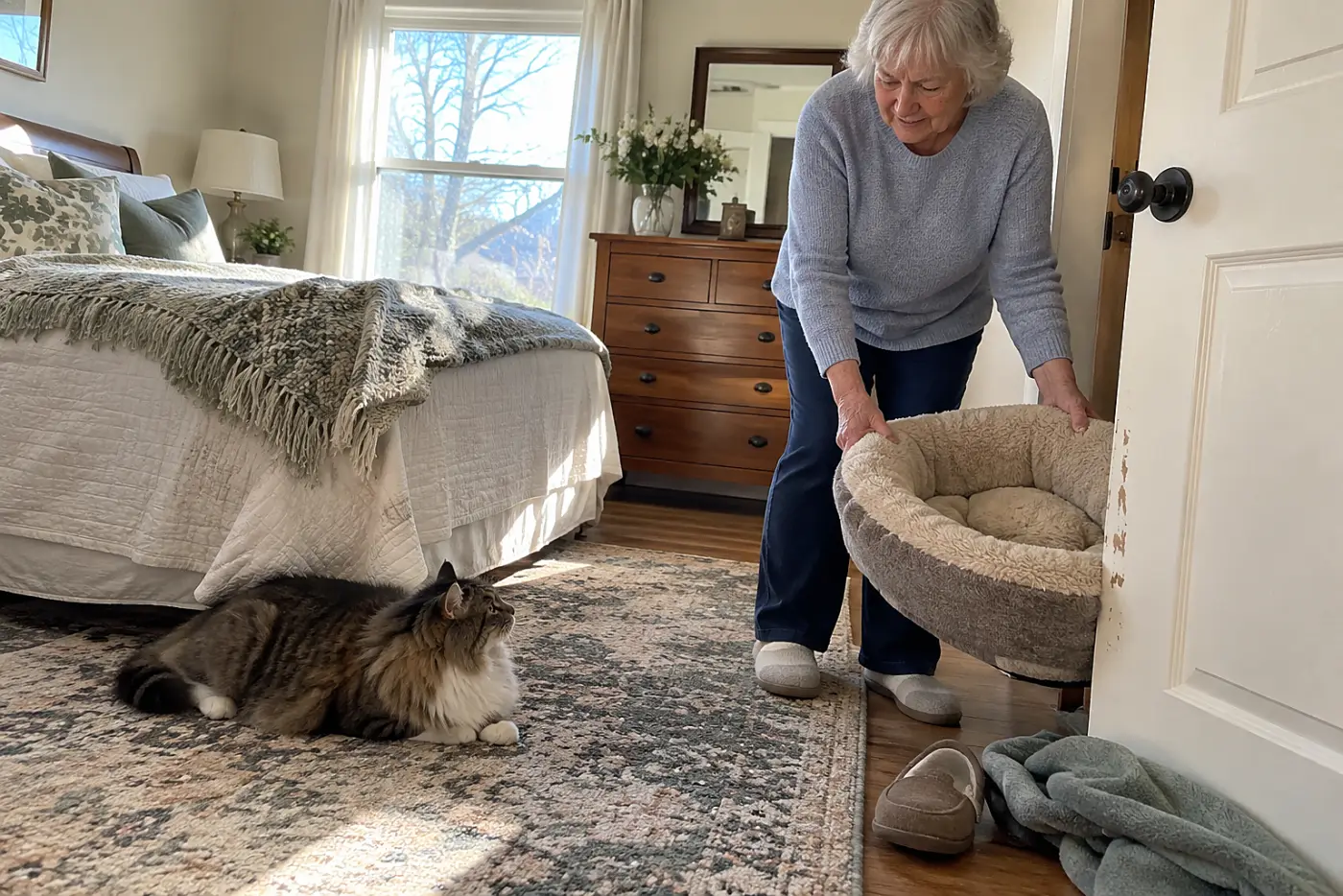
She's asleep where you'll have to step around her. That seems like an odd choice until you notice the view: from there, she sees you leave the room.
Place a bed nearby, out of the walking path but within sight of the doorway. If she starts sleeping far more than before, or wakes with difficulty, report the change. For now, slow down when you pass. She's chosen a lookout post at ankle height.
3The weight you notice while holding her
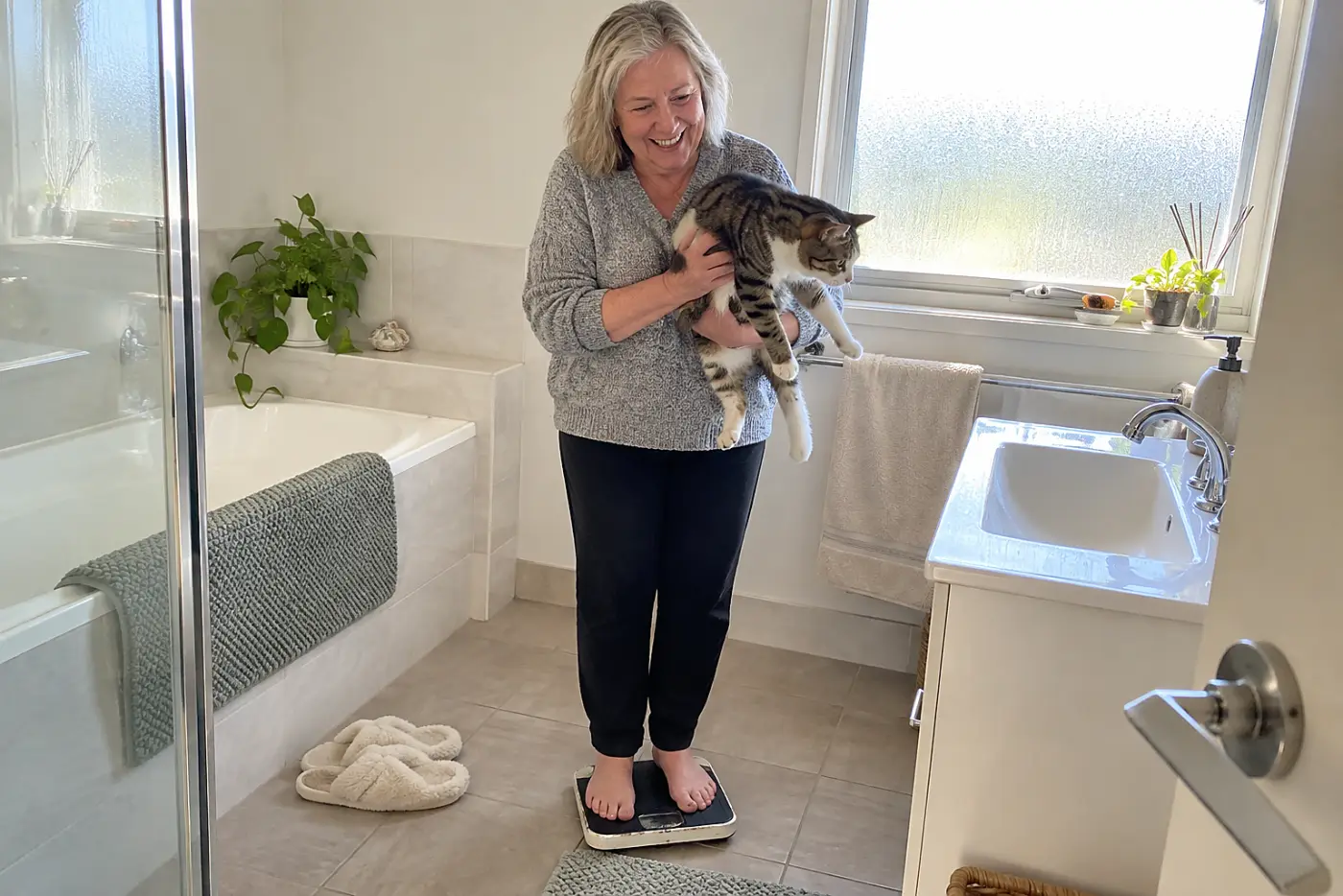
You pick her up and feel more backbone than you remember. Or she's heavier, though the food scoop hasn't changed.
A hand on her ribs tells you to look closer, but it won't measure a trend. Ask the clinic to weigh her and compare the result with her earlier visits. Tell them whether her appetite, thirst, or litter box habits have shifted. Unplanned weight change deserves a veterinary assessment.
At home, use the same scale and method each time if she'll tolerate it. Take two readings: weigh yourself, then weigh yourself holding her. Subtract the first from the second and bring the result to her appointment.
See more: 25 Signs a Parent Is Struggling Alone and Hiding It →
2The familiar call she answers differently
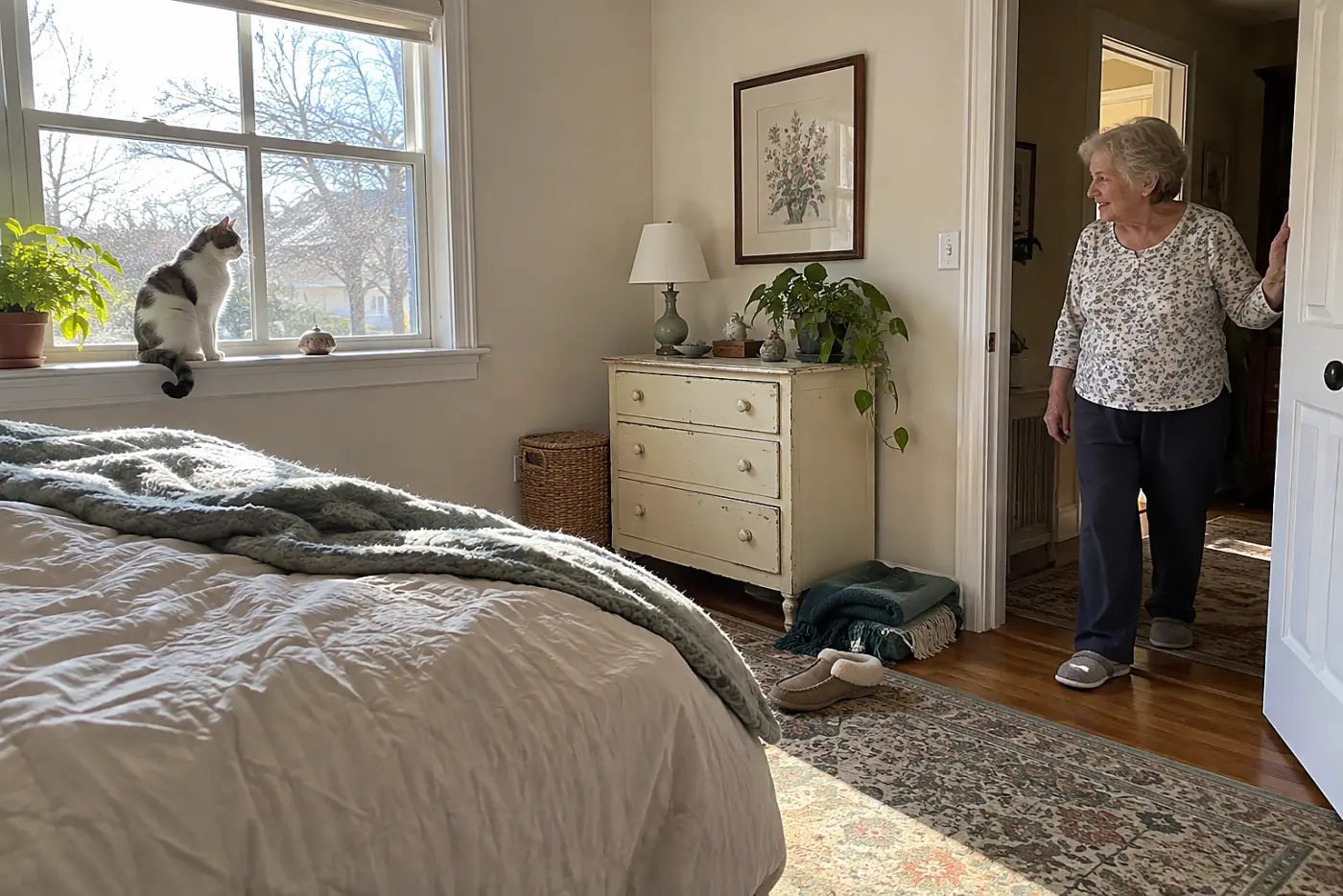
You say her name from the bedroom. Instead of coming, she answers from the next room.
Go to her and look around before repeating the call. Is she resting on a lower surface? Has she found a place where she hears you approach? If the response is new, tell her veterinarian what changed.
She is still taking part in the conversation, though you're doing more of the walking. The place she answers from is as useful a clue as the sound itself.
1The dated record of her ordinary day
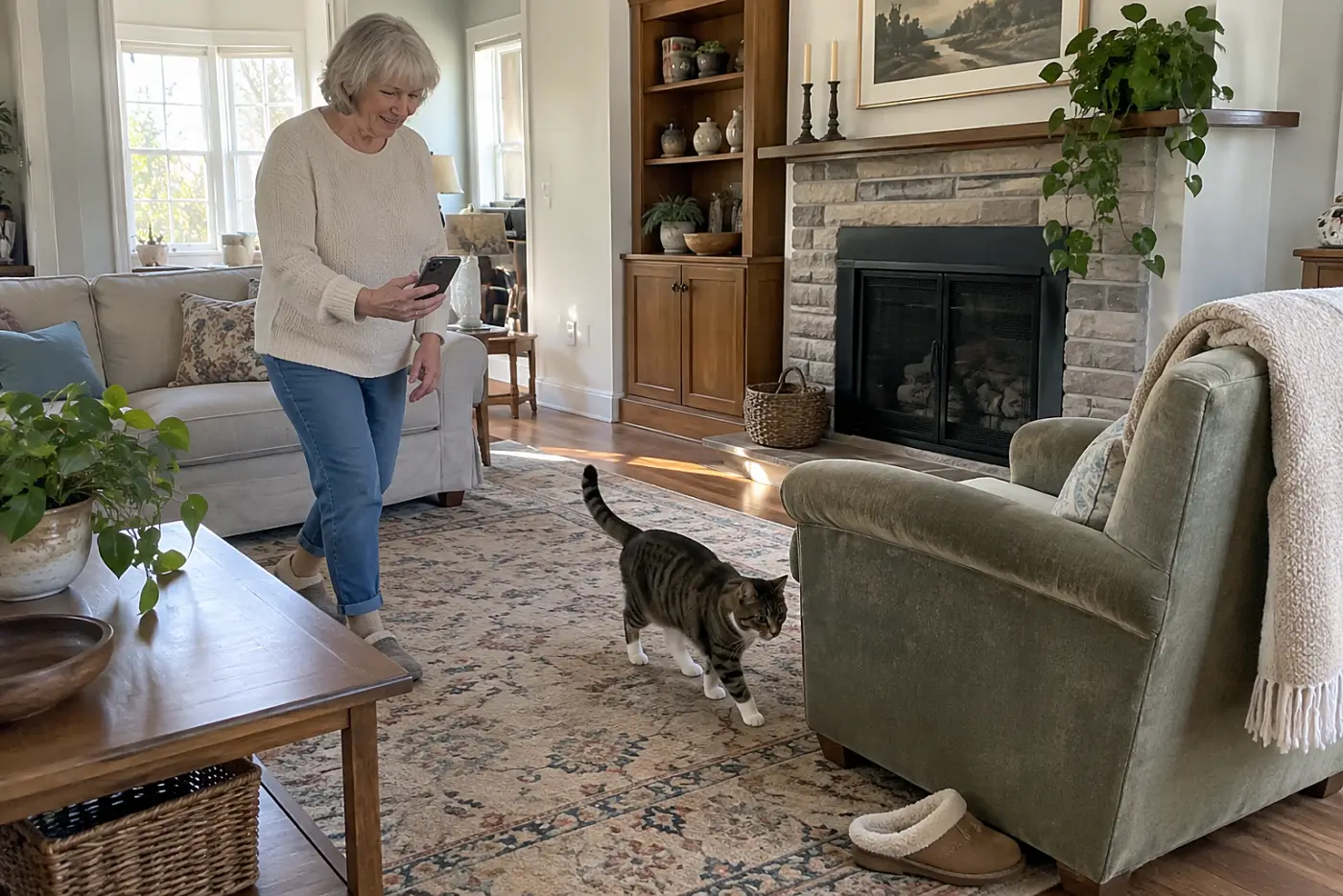
Memory smooths over change. After a week, it's hard to say when she stopped jumping onto the bed or whether the water bowl always emptied this fast.
Start a dated record today. For seven days, note where she sleeps, what she eats, what she drinks, and what you find in the litter box. Record how she reaches favorite places, too.
Take a short video of a walk or jump that worries you. You're saving details she'll hide during a clinic visit, not trying to diagnose her.
Bring the record to your veterinarian, especially if several routines changed together. For an urgent problem, call instead of waiting to collect more notes. The American Animal Hospital Association has pet health information, but the clearest account of *her* day comes from you.
The bottom line
Her changes make more sense when you look at the routes between her favorite things. A bed, a bowl, and your chair are still there. Getting to them has changed.
The prepared version of you has cleared a path, kept the things she still uses, and saved a few dated observations for the veterinarian.
What has she moved closer to you lately, and what has she stopped crossing the room to reach?
Up next
24 Gentle Things an Old Dog Does in Her Last Good Year That Families Only Understand Later
The hallway rug, the porch step, and the sound of a key give you places to notice her while she’s here.
Read the list →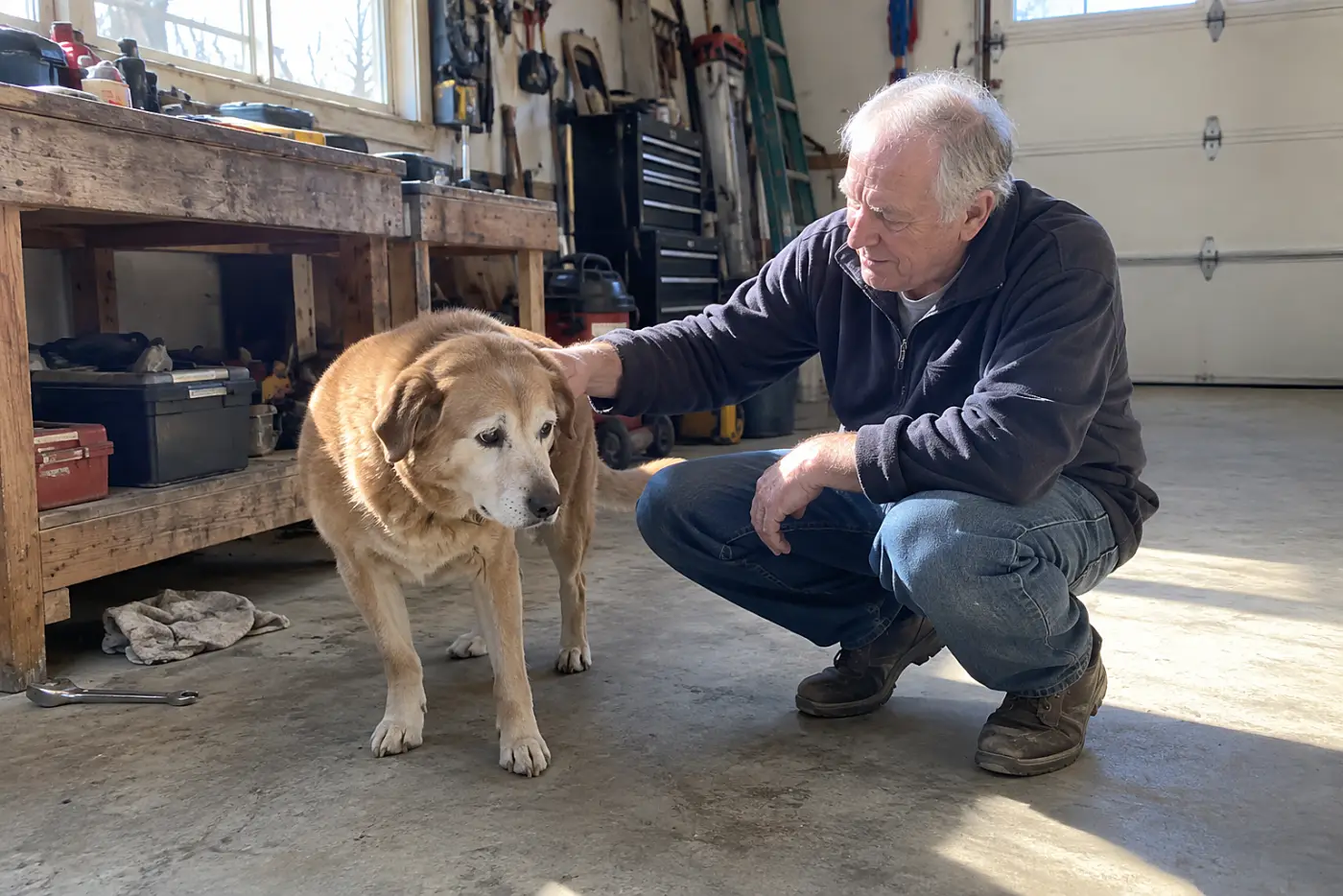
Reader quiz
Did you catch the details?
5 questions from this article.
What should you try if your cat watches her favorite chair but no longer jumps onto it?
Did any of these feel familiar?
Know someone who needs this?
Sources cited in this article
This article links to 11 outside sources, listed here so you can read them yourself.
- American Association of Feline Practitioners catvets.com
- Cornell Feline Health Center www.vet.cornell.edu/departments-centers-and-institutes/cornell-feline-health…
- AVMA www.avma.org
- Merck Veterinary Manual www.merckvetmanual.com
- VCA Animal Hospitals vcahospitals.com
- Cats Protection www.cats.org.uk
- ASPCA www.aspca.org
- International Cat Care icatcare.org
- Ohio State University Indoor Pet Initiative indoorpet.osu.edu
- American College of Veterinary Behaviorists www.dacvb.org
- American Animal Hospital Association www.aaha.org
Ruth Ellison
Family Editor
Ruth writes about grown children, grandchildren, ageing parents, and the conversations families put off, in the words of the people involved.
More from Ruth Ellison