

27 Things Your Dog Is Trying to Tell You When He Follows You Room to Room
Watch where he stops, what he looks at, and what three ordinary days of noticing tell you about the back door.
By Ruth Ellison, Family Editor
Updated · 13 min read
- Written by our family editor
- Cited 11 sources
- How we review
You stand up to fetch a sweater. Behind you come the familiar clicks of nails on the floor. By the time you reach the bedroom, your dog is there, watching. He followed you to the bathroom earlier, too, and waited outside.
It’s tempting to give every trip the same answer: he loves you. He does. But love doesn’t tell you why he stopped at the back door this time, or why he’s pacing past the bed he slept on yesterday. The next clue is usually in what he does when you stop walking.
27The bathroom doorway he guards
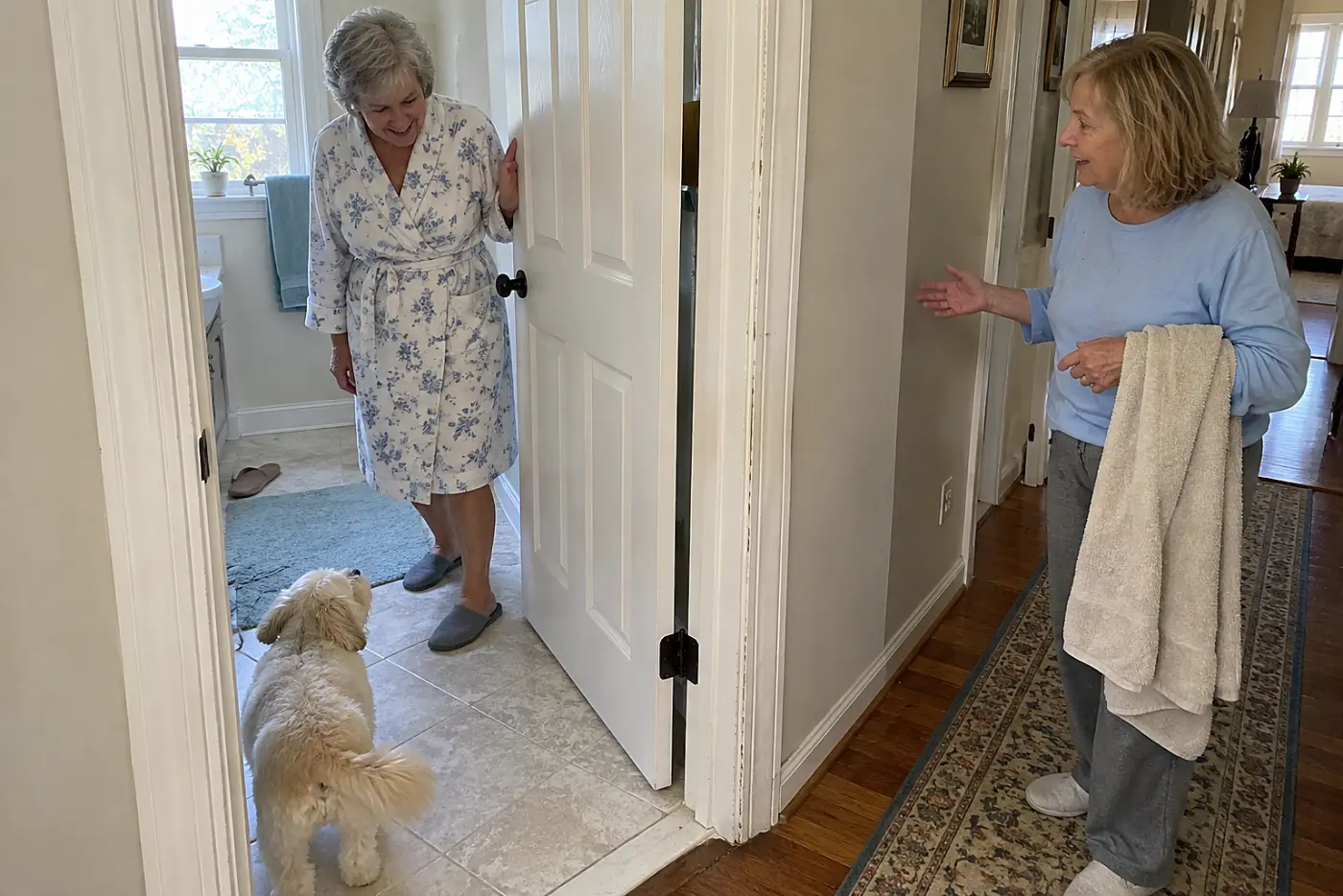
The latch clicks, and he settles against the bathroom door. When you turn on the faucet, he gets up.
Notice whether he rests while you’re inside. A dog who lies down and waits is behaving differently from one who scratches, whines, or pants until the door opens. What happens during the wait tells you more than the fact that he followed.
Next time, leave the door open a crack if you’re comfortable doing that. Watch whether he chooses the cool tile, keeps his eyes on you, or heads straight for the hall once he sees you’re staying put.
26The empty water bowl
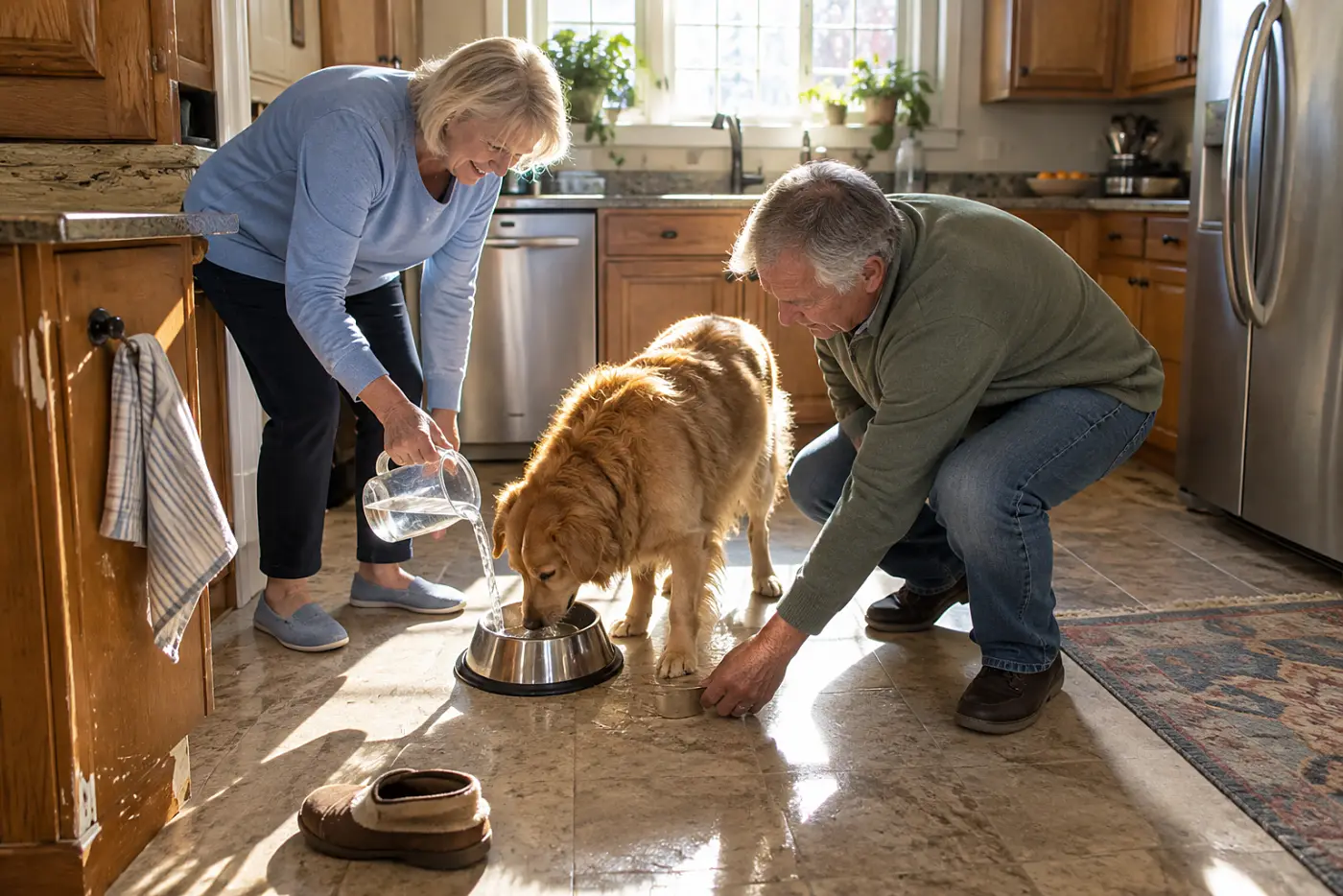
He trails you into the kitchen and stops beside the bowl. Before you call him clingy, check the water.
A bowl that looks full from standing height has a different story at dog height: crumbs floating on top, a slippery bottom, or water warmed by the sun. Wash it, refill it, and see what he does. A dog who drinks at once has answered your question.
25The breakfast he expects next
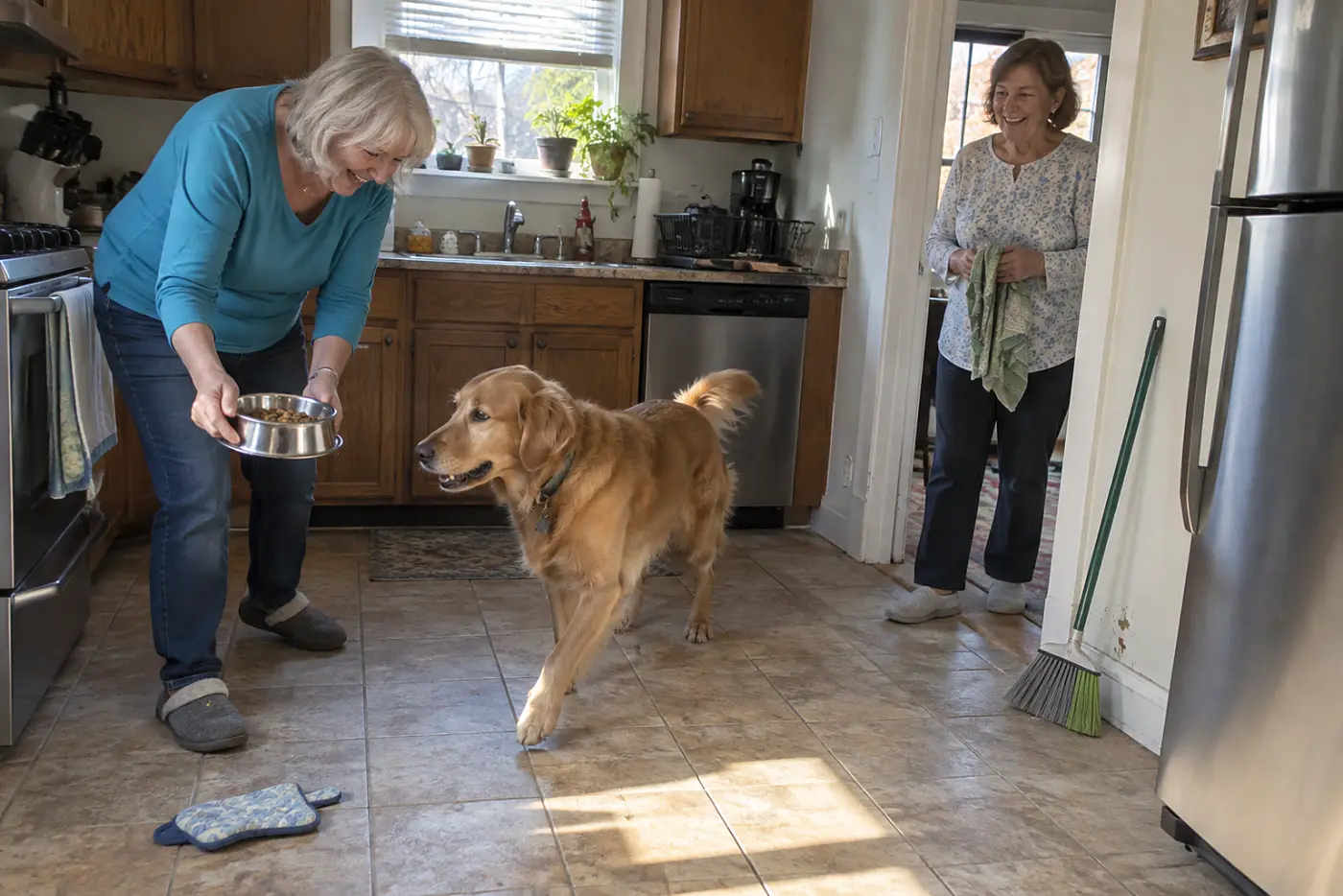
Morning has an order in your house. You open the blinds, put on the kettle, and feed the dog. Today you open the blinds, take a phone call, and walk into another room. He follows.
Dogs learn sequences, not clock faces. He has seen the first step and is waiting for the next. Try finishing the familiar sequence before deciding his behavior has changed.
Then look at what happens afterward. If he eats and goes to his usual spot, breakfast was the point. If he leaves the food untouched and keeps following, take note. That’s a different message from an impatient nose at an empty dish.
24The leash hanging by the door
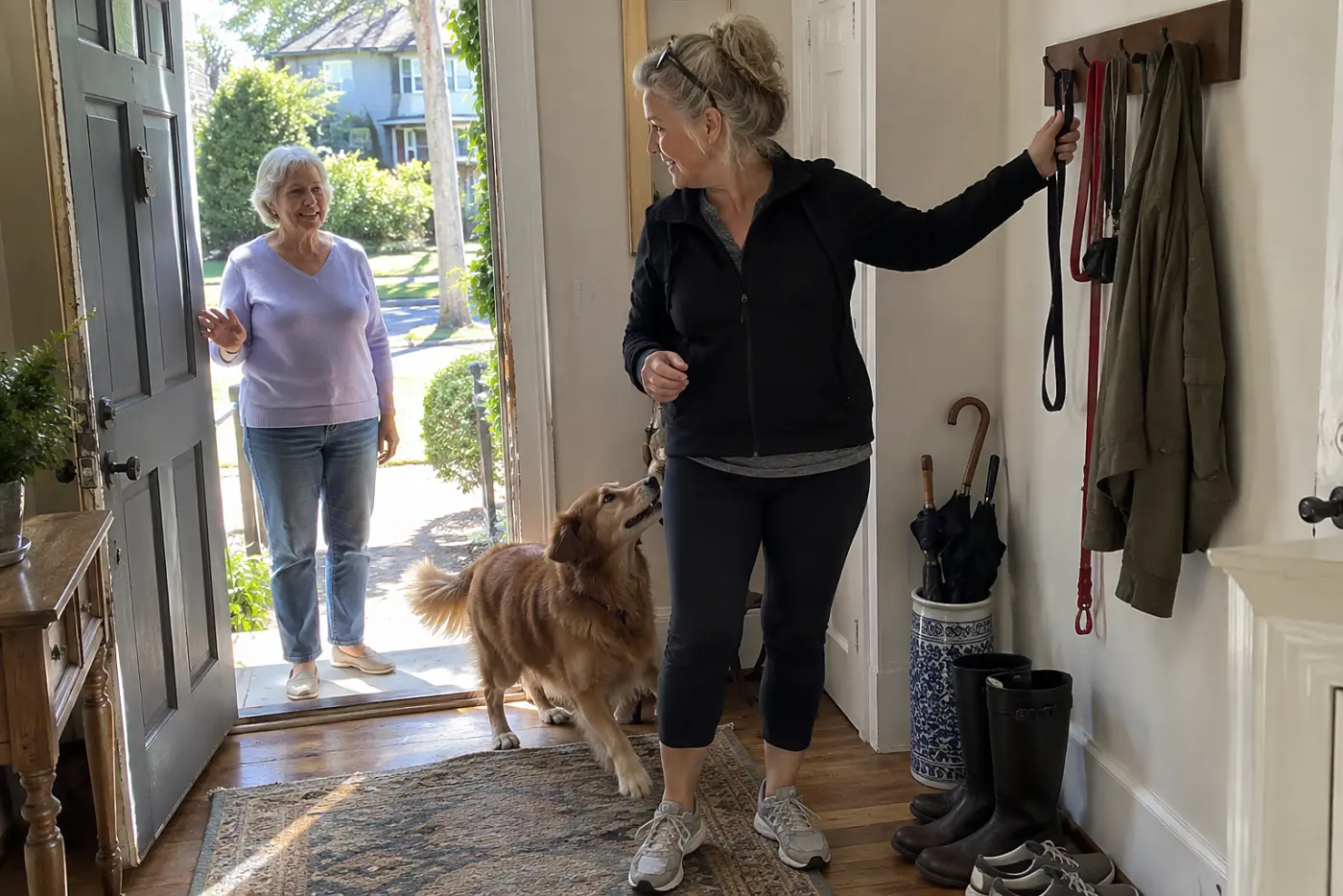
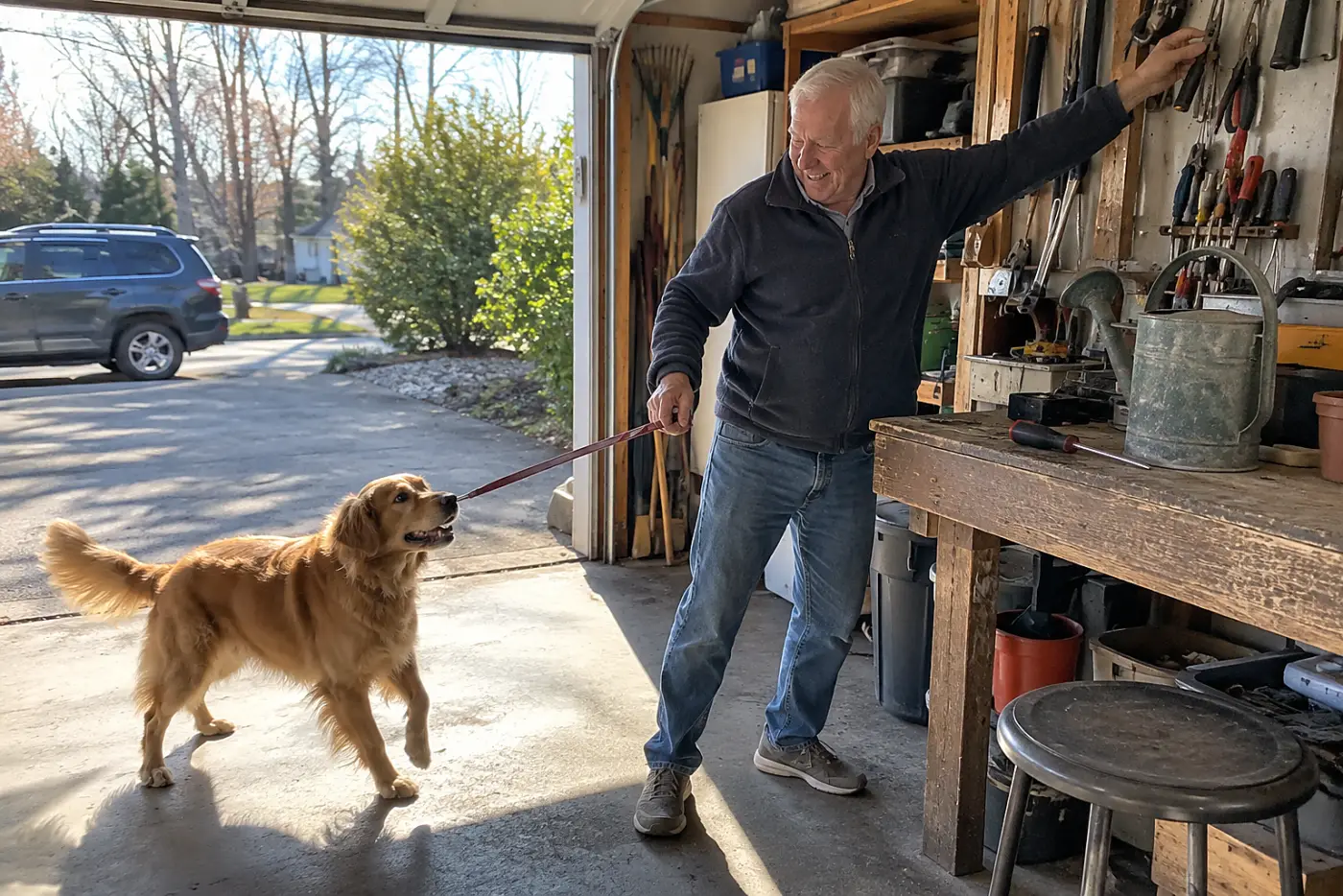
Your hand brushes the hook where the leash hangs. Your dog appears beside you. Did he follow *you*, or did he spot the start of a walk?
Say, “Not yet,” and step away without touching the leash again. Then watch. If he returns to his bed, the hook was the clue. If he continues to pace between you and the door, check whether he needs to go out before your planned walk.
23The back door he keeps approaching
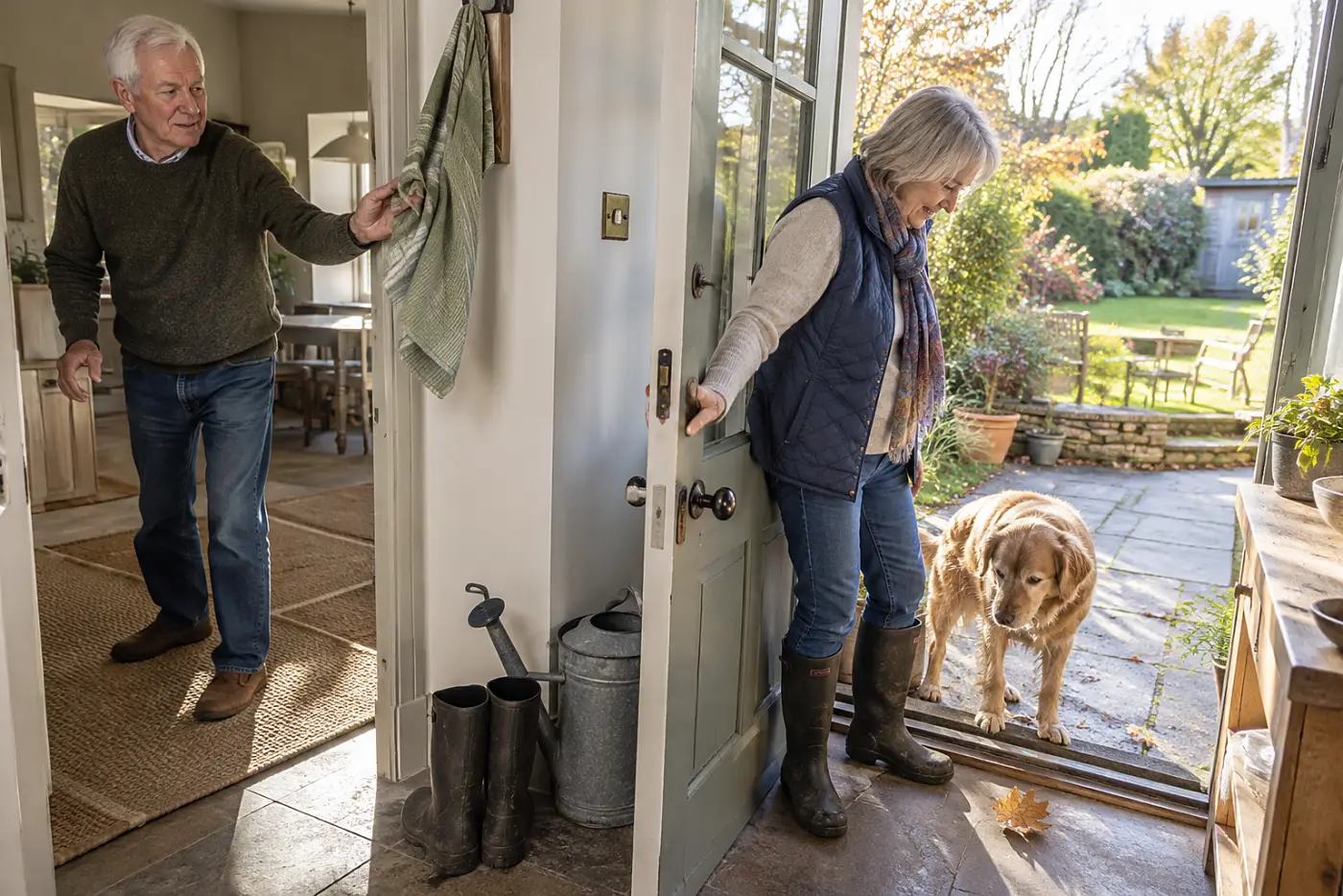
A dog who follows you down the hall, turns back, and heads for the back door is giving you a route. Follow it once.
Open the door and give him a chance to go out. Watch what he does outside rather than assuming a quick trip settles it. Does he urinate, strain, circle without passing stool, or hurry back in?
Straining to urinate with little or no urine is an emergency. Call your veterinarian or an emergency clinic now; don’t wait 12 hours to see whether he succeeds. Tell them when he last passed urine. The American Veterinary Medical Association has pet-care guidance, but that call comes first.
22The noise behind the wall
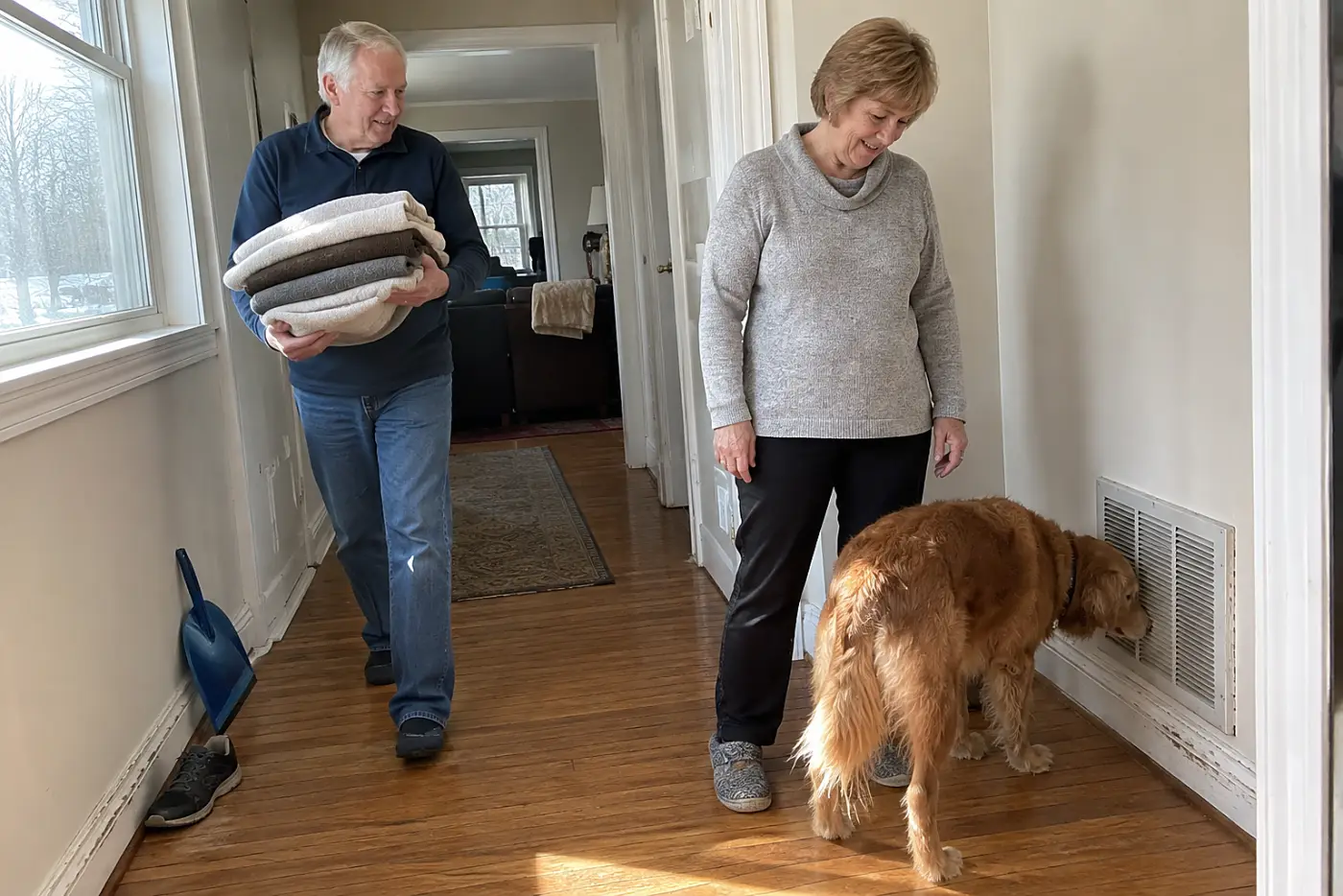
The furnace starts, and your dog gets up to follow you into the next room. You heard a hum. He heard the click before it.
Pause and listen where he left his bed. A smoke alarm chirping, a new appliance sound, or work outside the house gives him a reason to relocate. If the sound stops and he settles again, you’ve learned why he came along.
21The shoes beside the closet
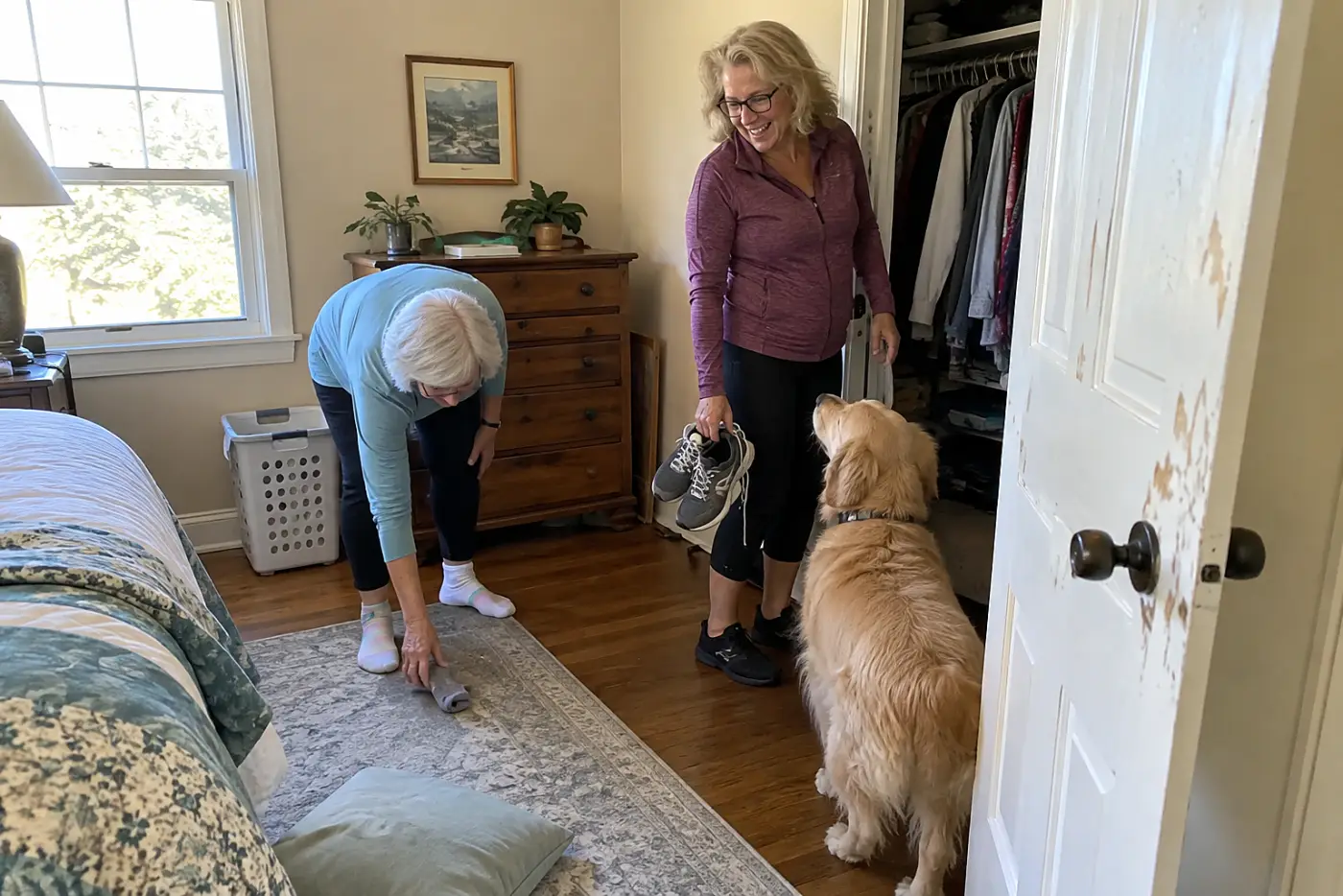
He follows you toward the closet but stays asleep when you walk toward the sofa. Then he plants himself beside your walking shoes.
Those shoes predict time outside as well as time apart. Instead of testing a departure, pick them up and head toward the door. Does he wag and wait for his leash, or hang back when you reach for it? Check his paws and harness if the walk itself seems unwelcome.
If he’s eager to go, that trip to the closet carried a promise. What happens after you leave without him is a separate question.
20The chair you always choose
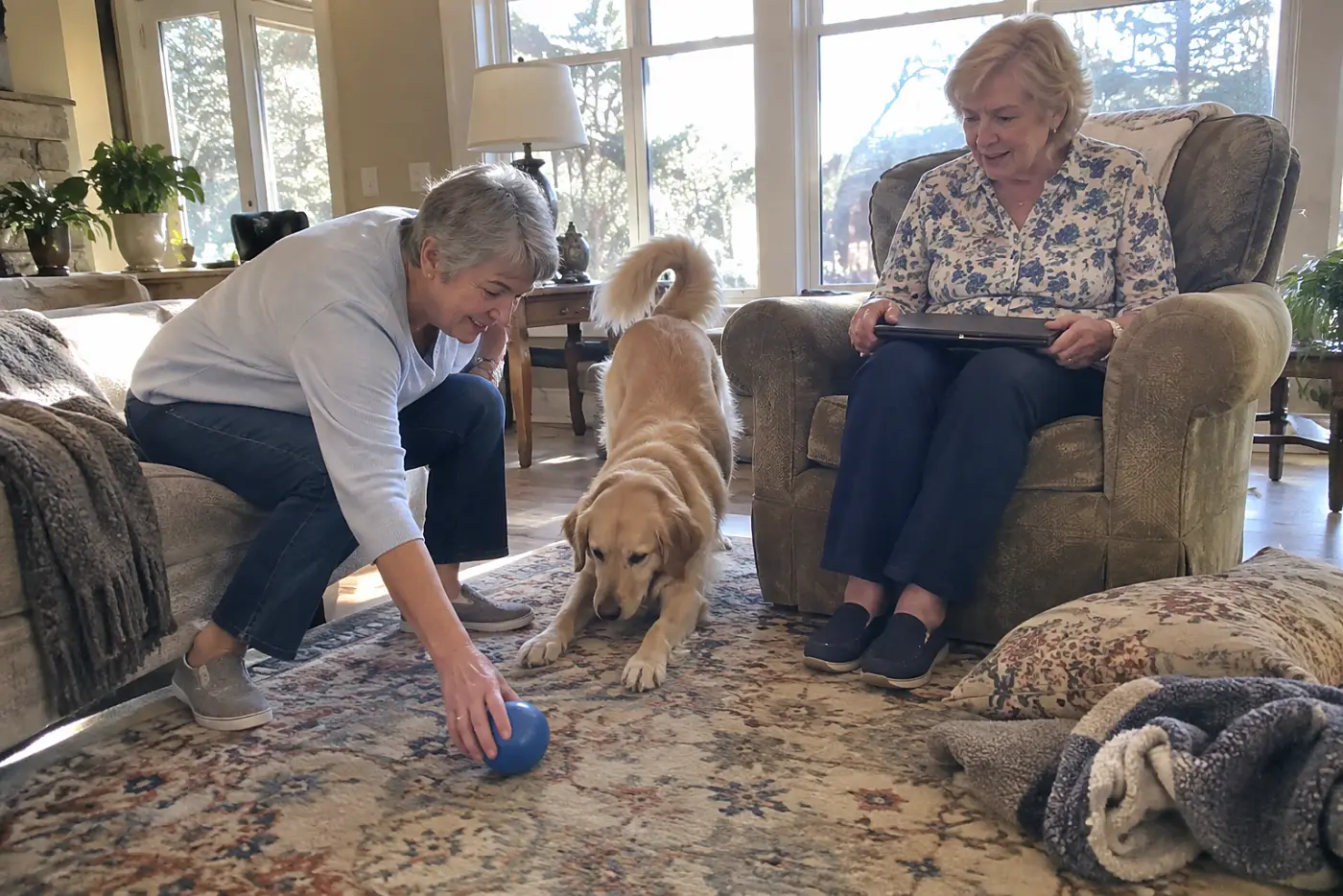
You sit down to read, and he lies beside the chair. When you stand, he comes too. The useful clue is what he does once you sit again.
Try a different seat for a few minutes. If he settles nearby, he wants your company and has found a place to rest. Leave a clear path so neither of you trips when you get up.
Now look for the difference that matters: does he sleep while you read, or stay on his feet, panting and watching each move? Resting near you needs no fix. An inability to settle deserves a closer look at what changed around him.
19The visitor who just left
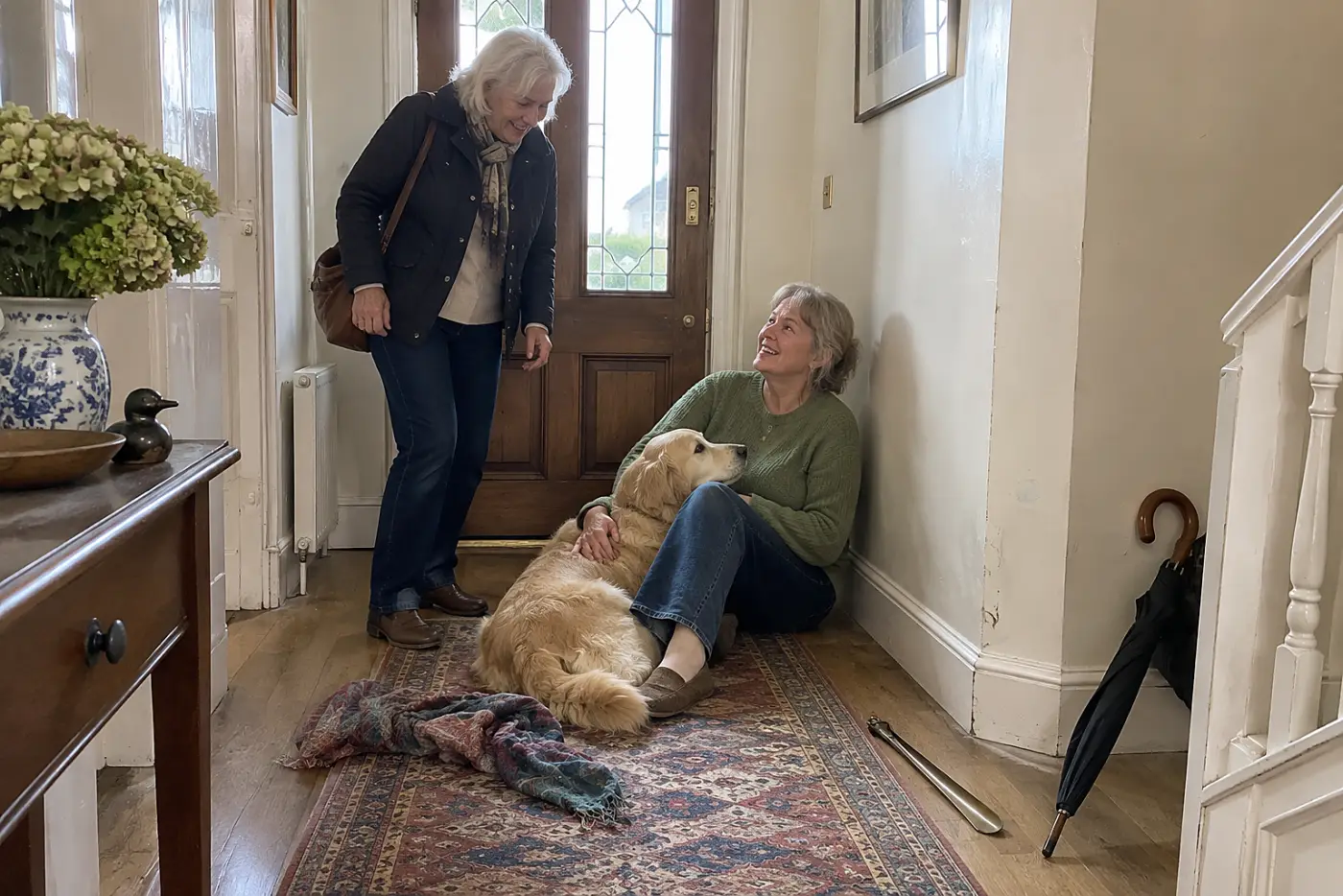
The front door shuts. Your dog follows you from room to room, sniffing your sleeve and checking the hall.
Visitors change a house. There are voices, unfamiliar shoes, perhaps a hand reaching over his head. Once everyone leaves, his route through the rooms gives you a chance to see where he feels settled.
Offer his usual resting place and let him choose it. If he follows you but loosens up when the house is still, the busy evening was enough to explain it. If he hides, trembles, or stays on alert long after the visit, remember what happened before the next guest arrives.
18The closed door to his bed
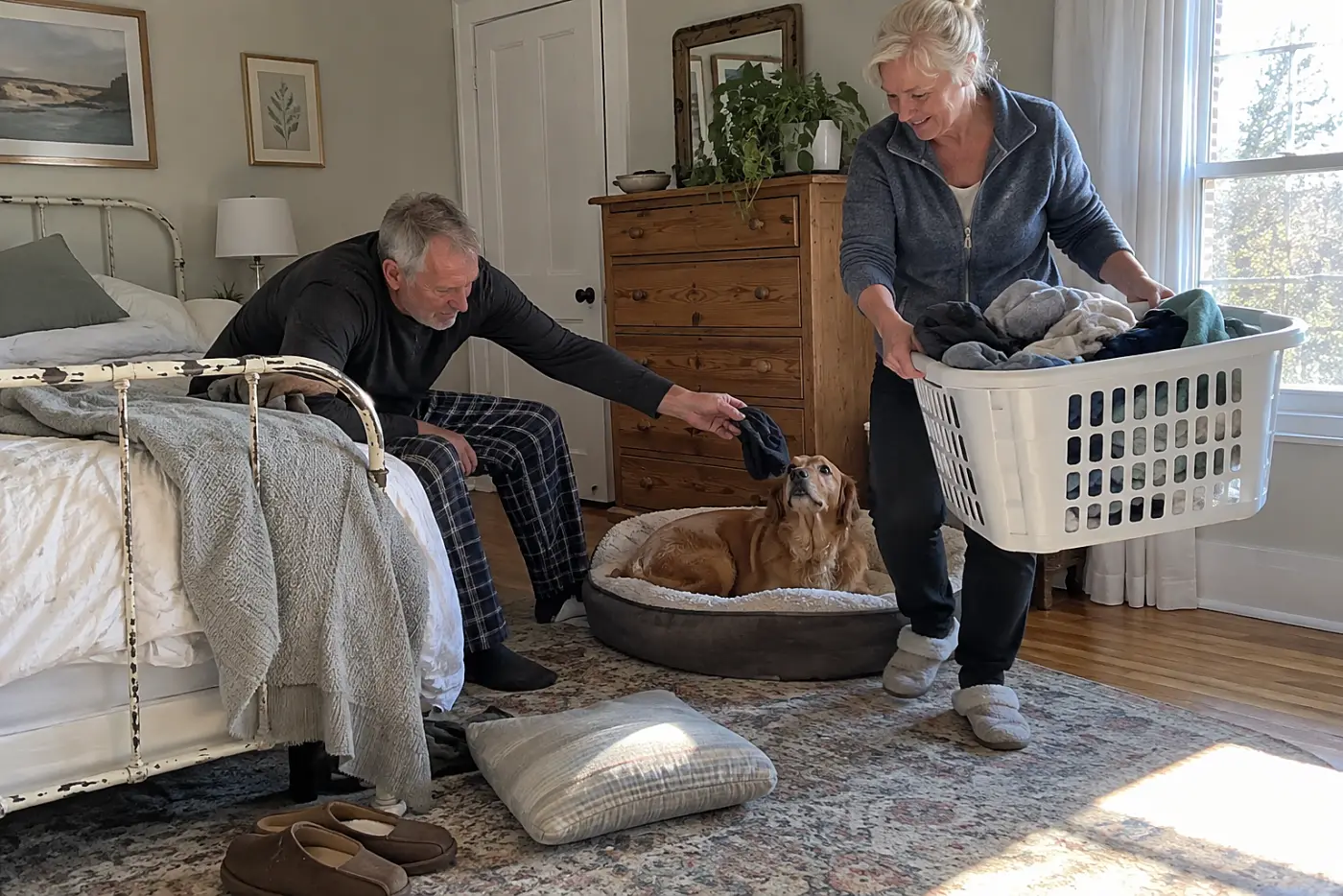
You lead him to the bedroom, but he follows you back out. Look at the room before you look at the dog.
A shut door, a moved bed, or a laundry basket in his usual spot changes the resting place he knows. Put things back if you can. Then stand aside and let him decide whether to enter. If he goes in and settles, you’ve solved something more useful than a command to “stay.”
17The scent on your coat
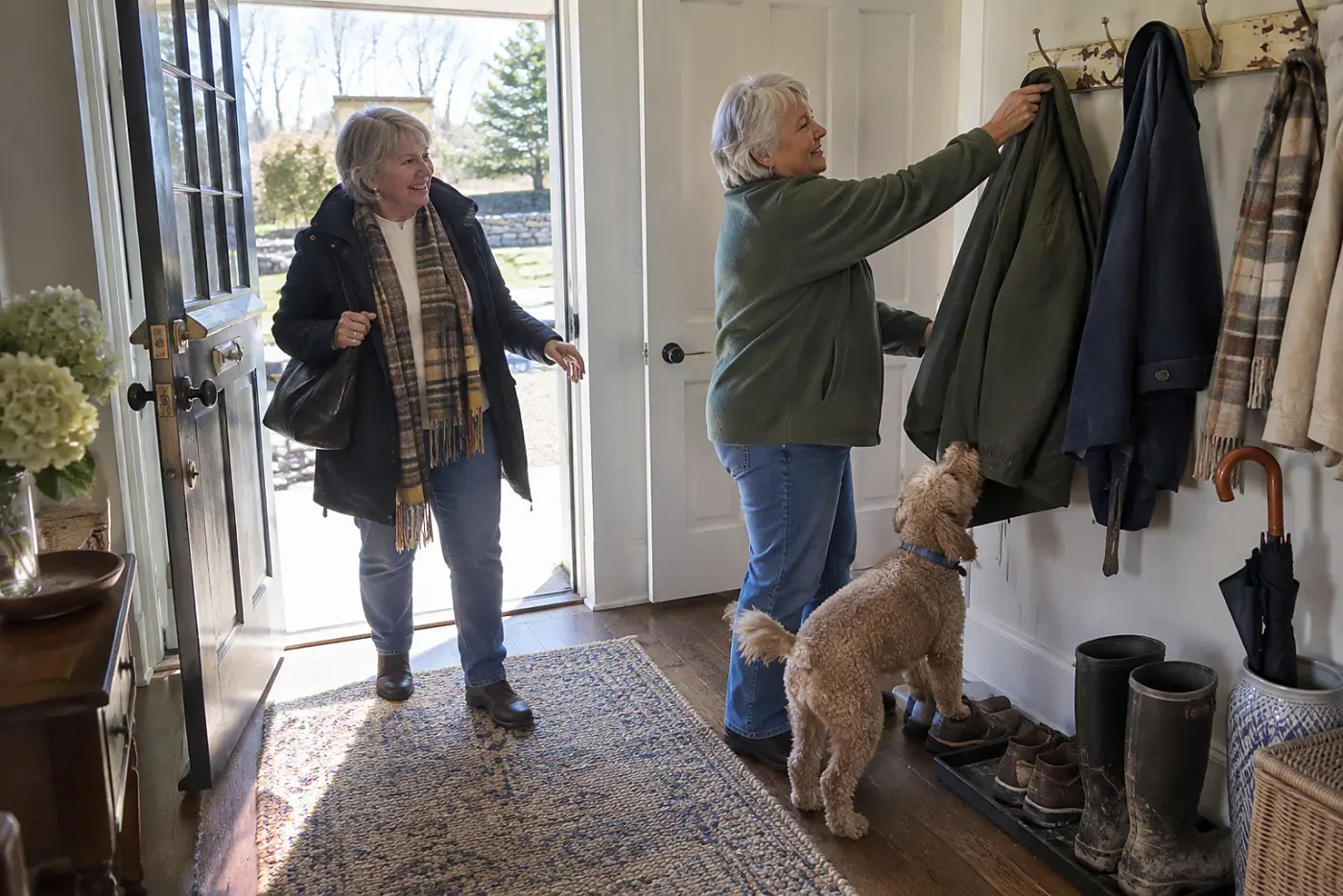
You come home carrying the smell of another dog. Yours follows you down the hall with his nose near your coat pocket.
Give him time to sniff, then hang the coat where he can’t pull it down. Watch whether the following stops once the new scent is old news. Dogs gather information through smell; a coat from the vet’s office or a friend’s house carries details you never noticed.
If he keeps tracking one place, check it. A treat crumb in a pocket is an easier mystery to solve than a change in his personality. Your nose and his are working with different evidence.
16The dropped crumb beneath the counter
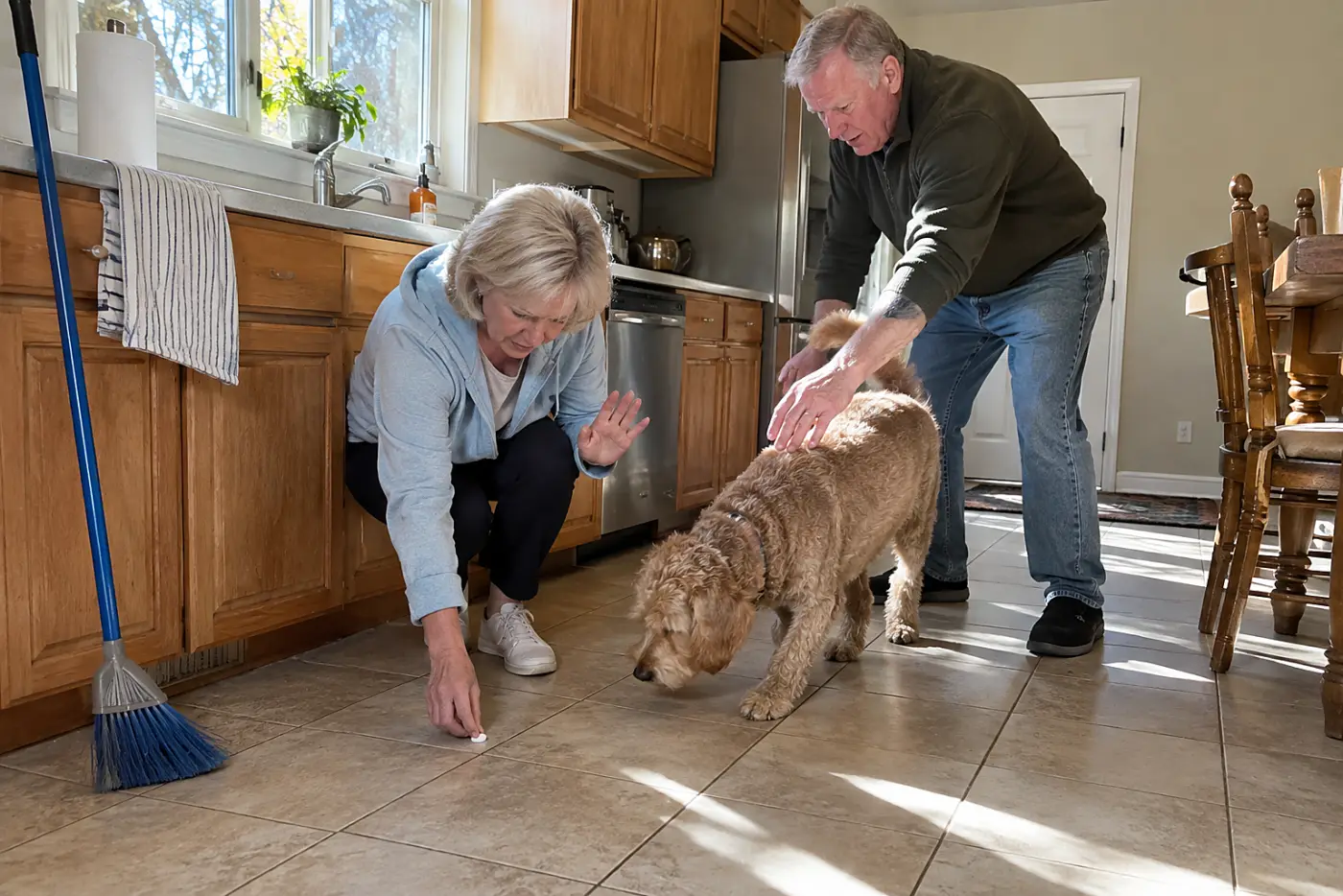
He followed you into the kitchen and stayed close to your slippers. Look down before you look for a deeper meaning.
A piece of toast, a fallen pill, or an onion scrap makes the floor worth checking. Pick up anything you didn’t mean him to eat. The ASPCA lists foods and household hazards that are toxic to dogs, including onions and certain human medications.
If you think he swallowed a pill, keep the container and call your veterinarian or the ASPCA Animal Poison Control Center. Don’t wait for him to act sick before you tell them what’s missing.
15The dinner he leaves untouched
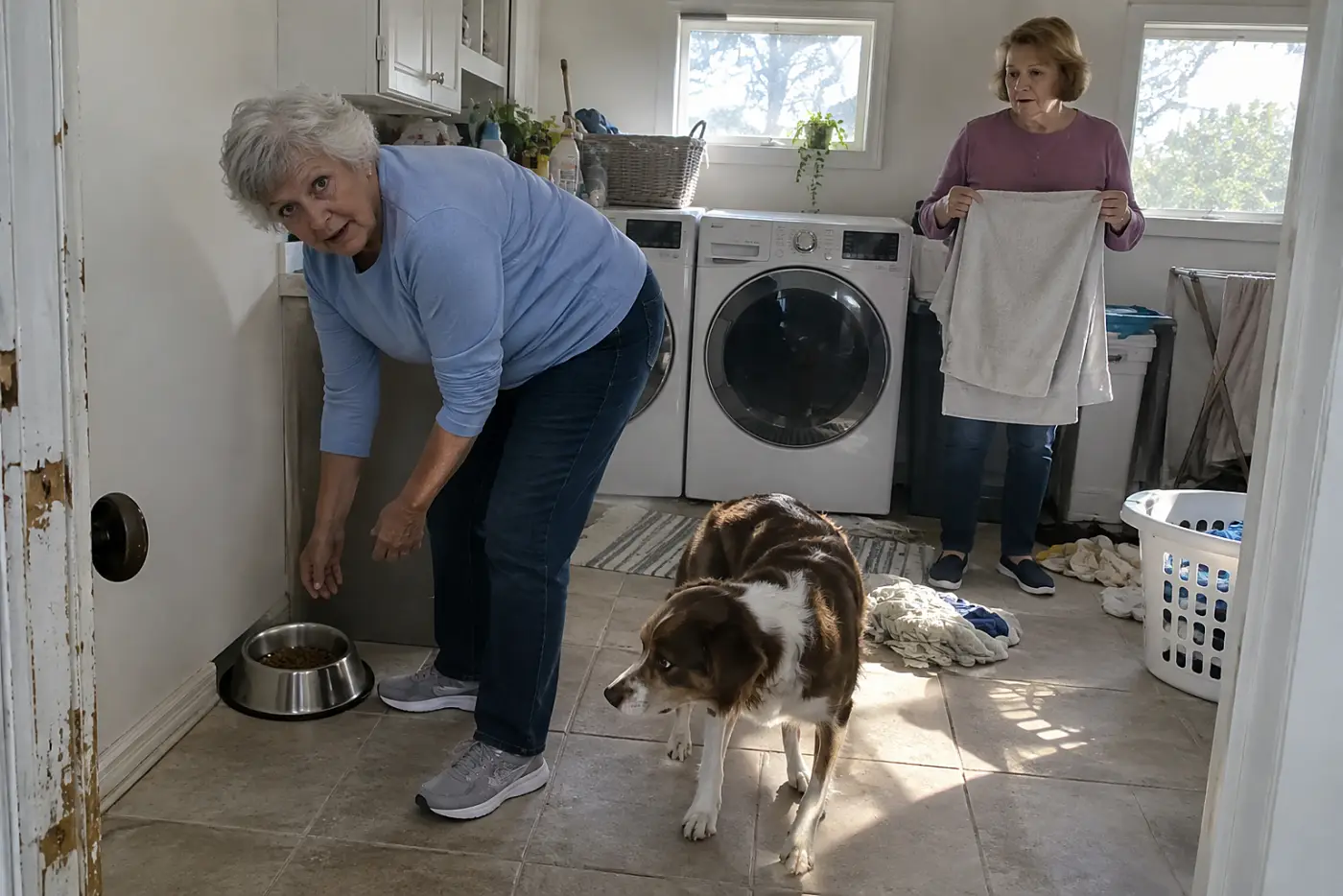
He shadows you while you make dinner, then walks away from his own bowl. That change deserves attention, especially if he normally eats as soon as food appears.
First, check the simple things. Is this his usual food? Is the bowl clean? Has someone already fed him? Then look for vomiting, diarrhea, drooling, or trouble chewing. Note whether he drinks.
Don’t try to settle the question by offering richer and richer food. Call your veterinarian if he refuses meals or shows other signs of illness. Tell the clinic when he last ate, including whether he missed 1 meal or several.
The Merck Veterinary Manual describes appetite loss as a sign with many possible causes. Your useful contribution is a clear account of what he ate and when.
14The window he wants opened
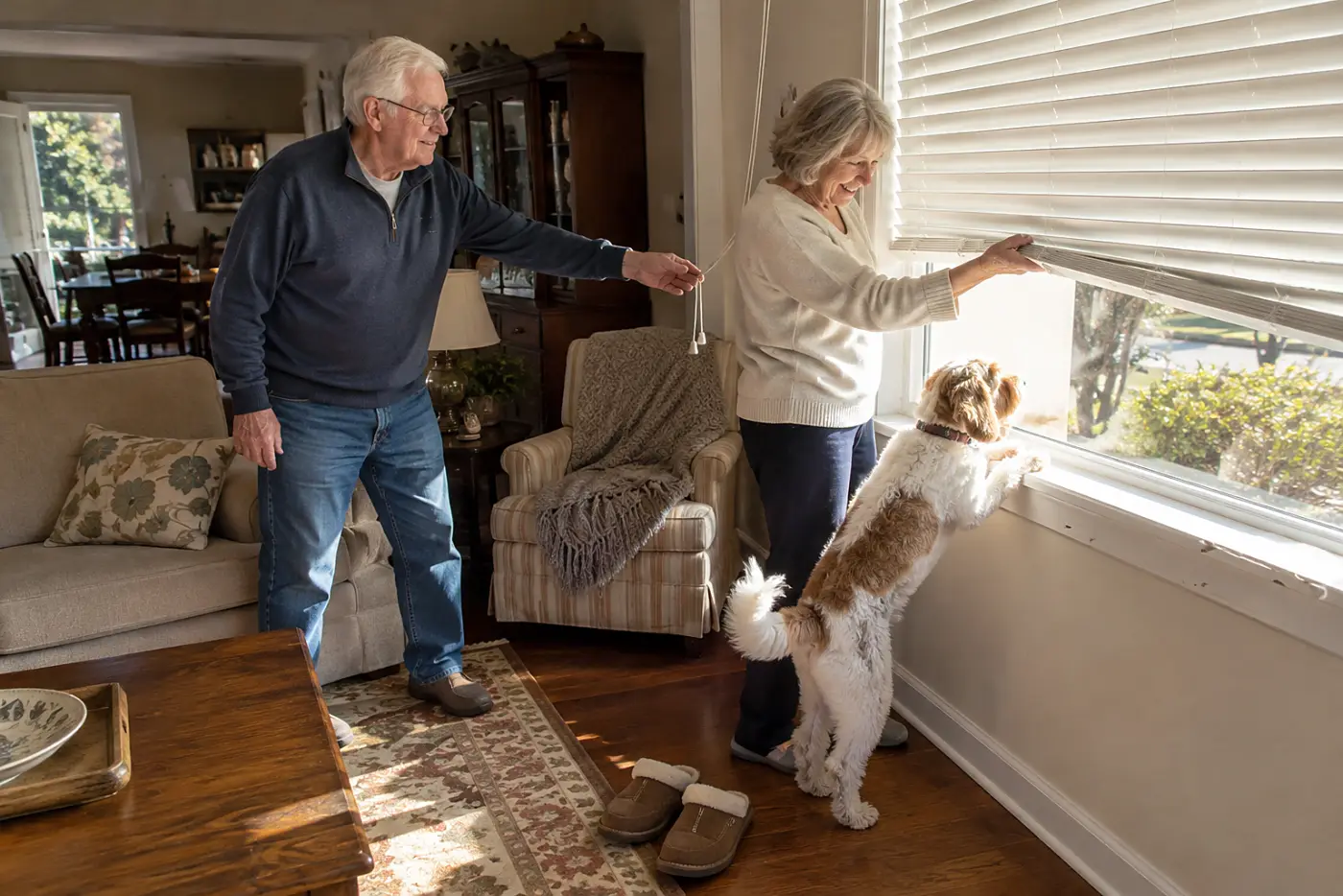
He follows you to the living room, stops by the window, and looks outside. Take a glance before calling him back.
A delivery truck, a neighbor’s dog, or movement in the yard has caught his eye. Close the blind if watching turns into frantic barking. If he watches for a moment and walks away, let that be enough. Following you was his way of reaching the room with the view.
13The hallway he no longer crosses
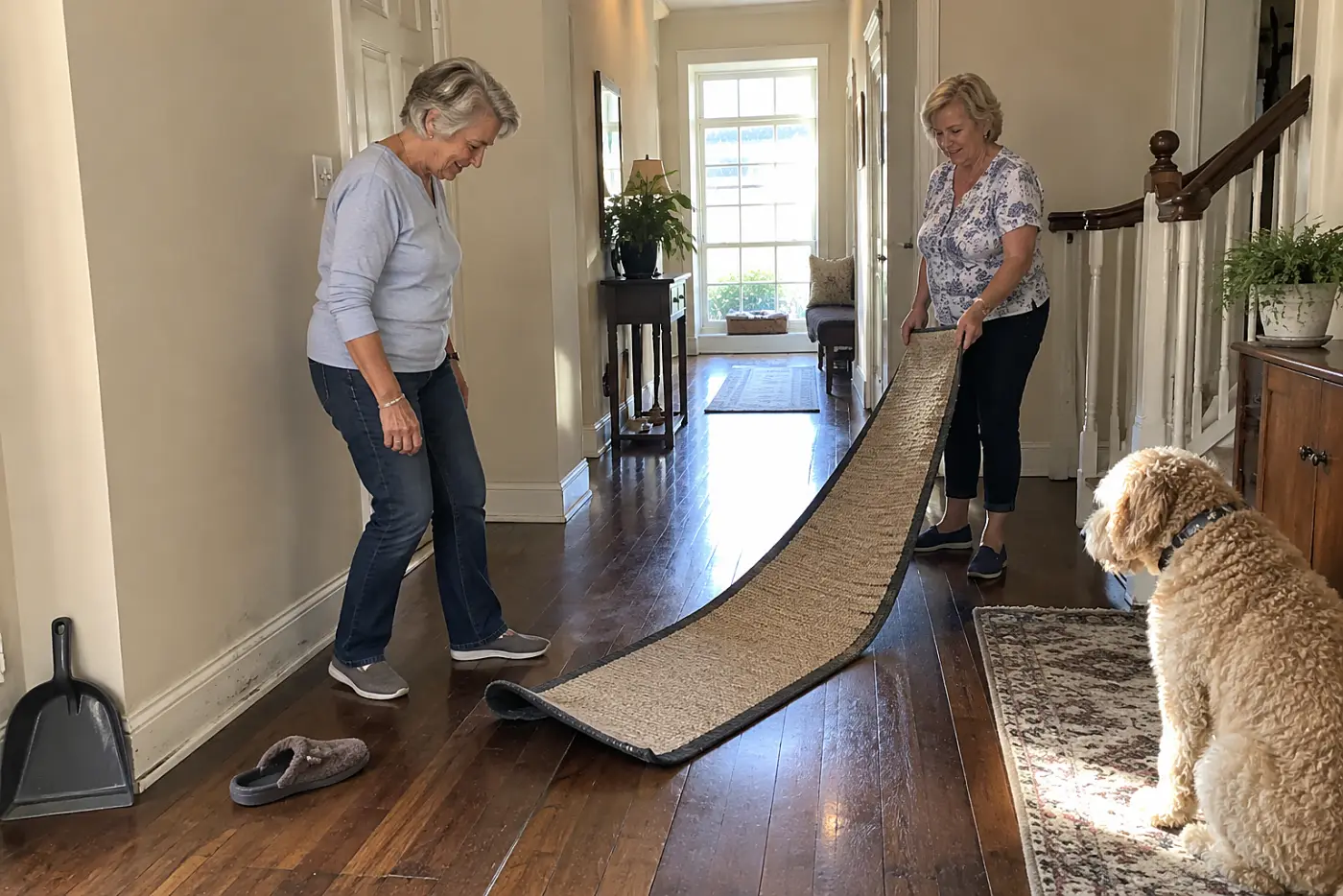
Yesterday he followed you across the slick floor. Today he stops at the rug’s edge and waits.
Watch him from a few steps away. Does he cross when you lay down a nonslip runner? Does he avoid turning on that floor? Does he hesitate at the same spot when you aren’t there to coax him?
Slipping is frightening, and reluctance to cross also points you toward a possible mobility problem. The American College of Veterinary Surgeons publishes information on orthopedic conditions in dogs. Tell your veterinarian about a new hesitation, especially if you also notice limping or trouble rising.
For now, a runner gives him a steadier path. It also gives you a useful comparison to report.
12The collar caught on furniture
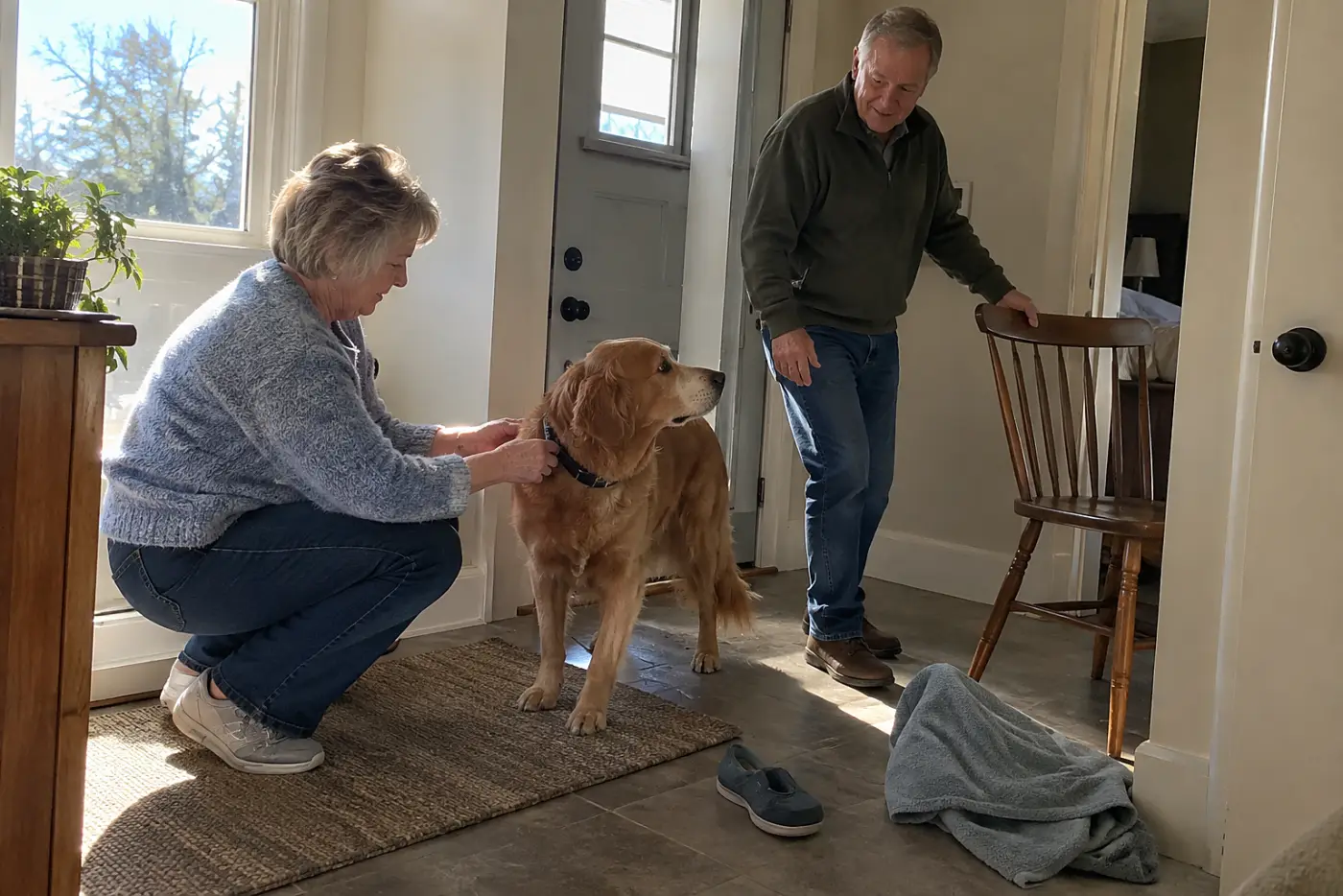
He moves behind you through a narrow doorway, and his collar catches on a chair knob. After that, he sticks close instead of passing the chair alone.
Check the collar’s fit and anything hanging from it. Remove the snagging hazard before he makes another trip. If he walks through the doorway once it’s clear, the furniture told the story. Fear after a scare doesn’t require a dramatic event.
11The sunny patch he leaves
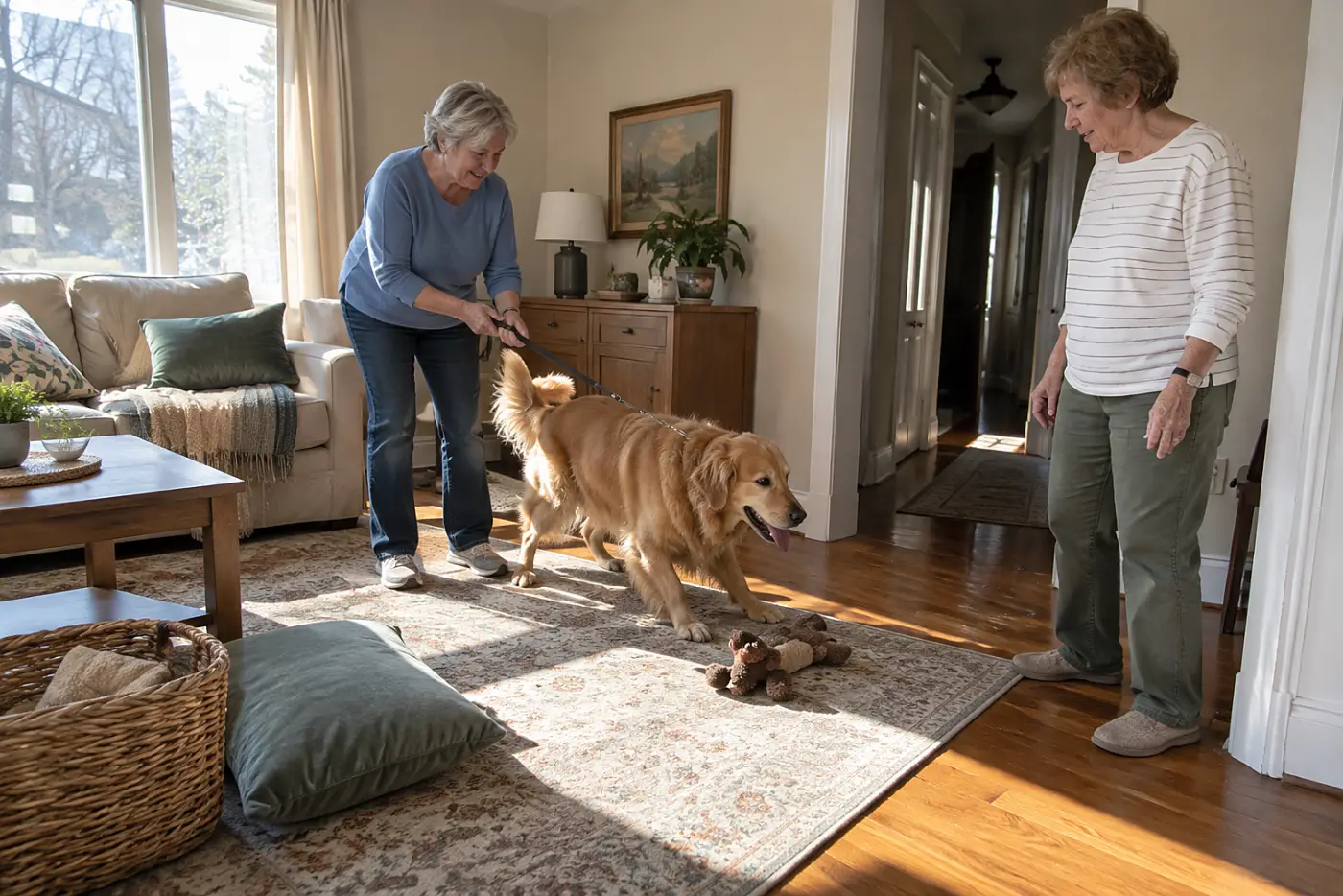
Your dog gets up from the sunlit rug and follows you to the cooler hall. Feel the rug with your hand. Then check the room.
Panting after resting in heat deserves more attention than a simple move to a cooler spot. Offer water and a cooler place. If he has trouble breathing, seems weak, or doesn’t recover, contact a veterinarian promptly.
The American Kennel Club publishes guidance on heatstroke signs in dogs. Don’t wait for a thermometer reading to take panting and weakness seriously. Notice where he chose to leave, and what he did after reaching you.
10The bedroom he used to sleep in
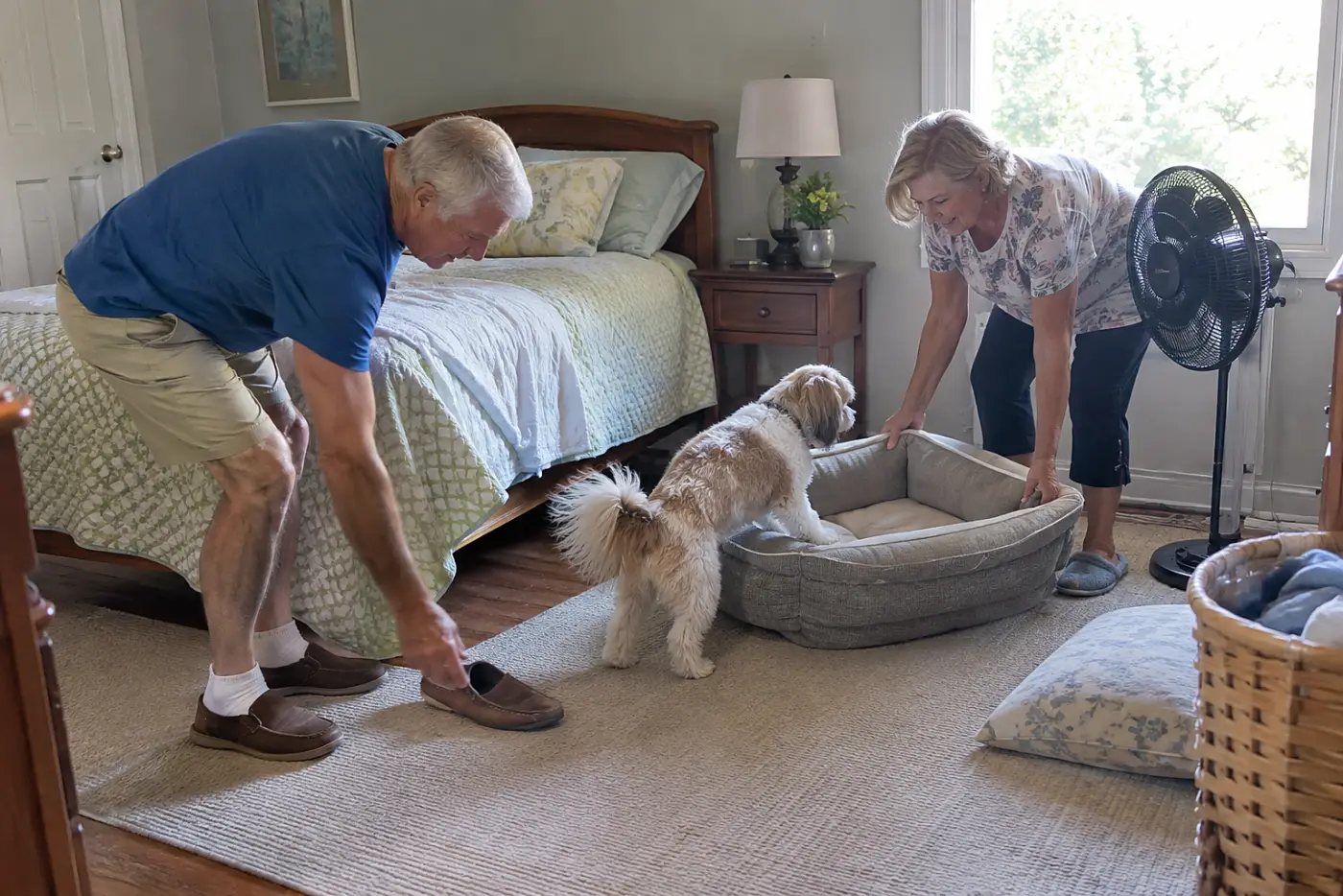
At bedtime, he used to curl up before you switched off the light. Now he follows you out each time you leave the room.
Look for the change inside the bedroom: a new fan, a draft, a moved bed, or a new pet sleeping nearby. Try giving him access to his old spot without insisting he stay there.
If he paces through the night or seems unable to get comfortable, tell your veterinarian. What happens after the lights go out is part of the picture.
See more: 27 Questions People Most Want to Ask a Pet Who Has Gone →
9The missing person’s usual seat
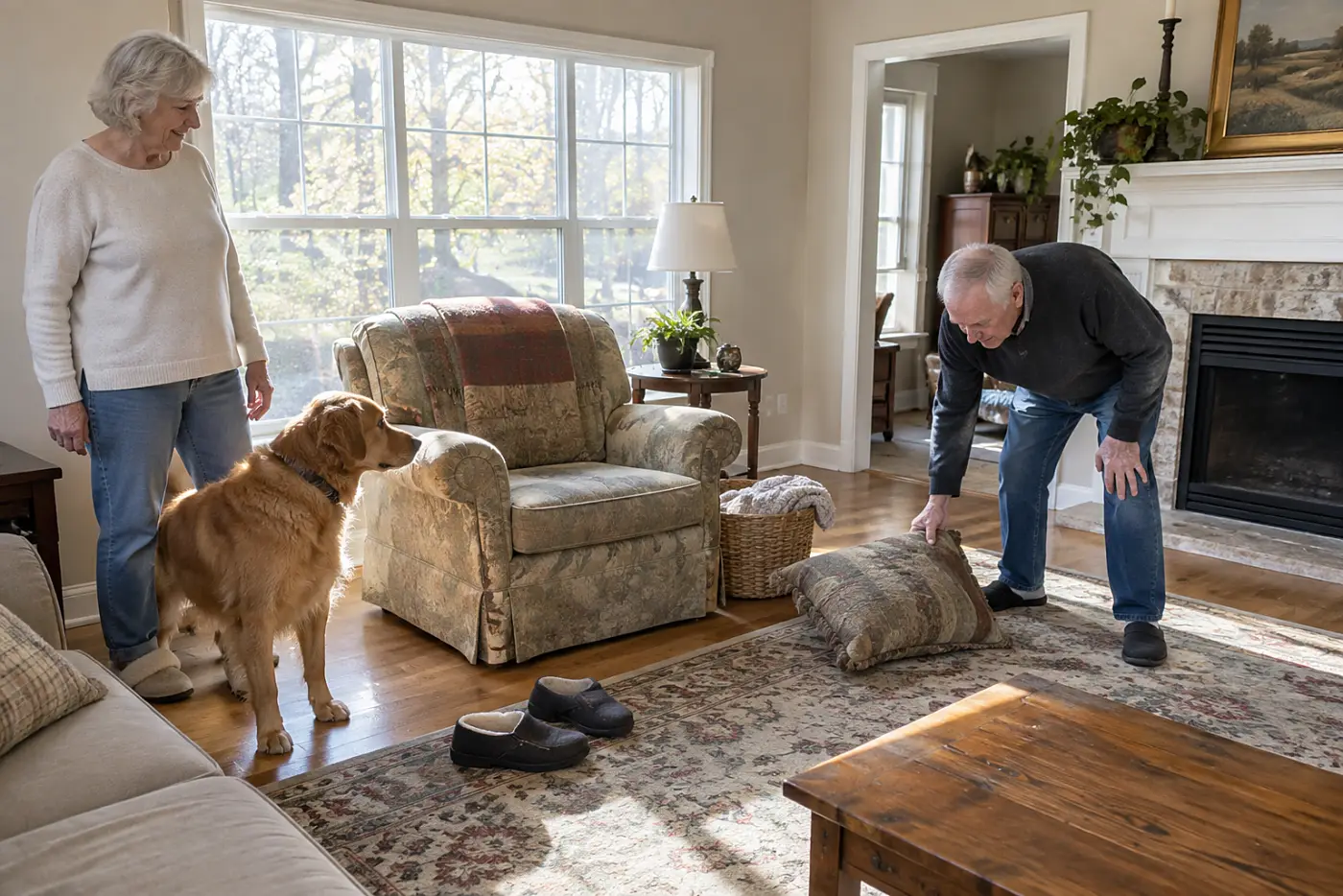
Someone who lived with you is away, or no longer there. Your dog follows you past that person’s chair and pauses.
Keep the daily routine steady where you can: meals, walks, and the place he sleeps. Give him a chance to investigate the rooms without repeatedly calling him away. You’re both living with a changed household.
Watch for a change in eating, sleep, or activity rather than deciding what he feels from one look at the chair. Humane World for Animals has pet-care resources on behavior and changes at home. If the new behavior persists or comes with illness signs, bring those details to your veterinarian.
See more: 26 Ways People Say a Pet Lets Them Know She Is Still Around →
8The thunder before you hear it
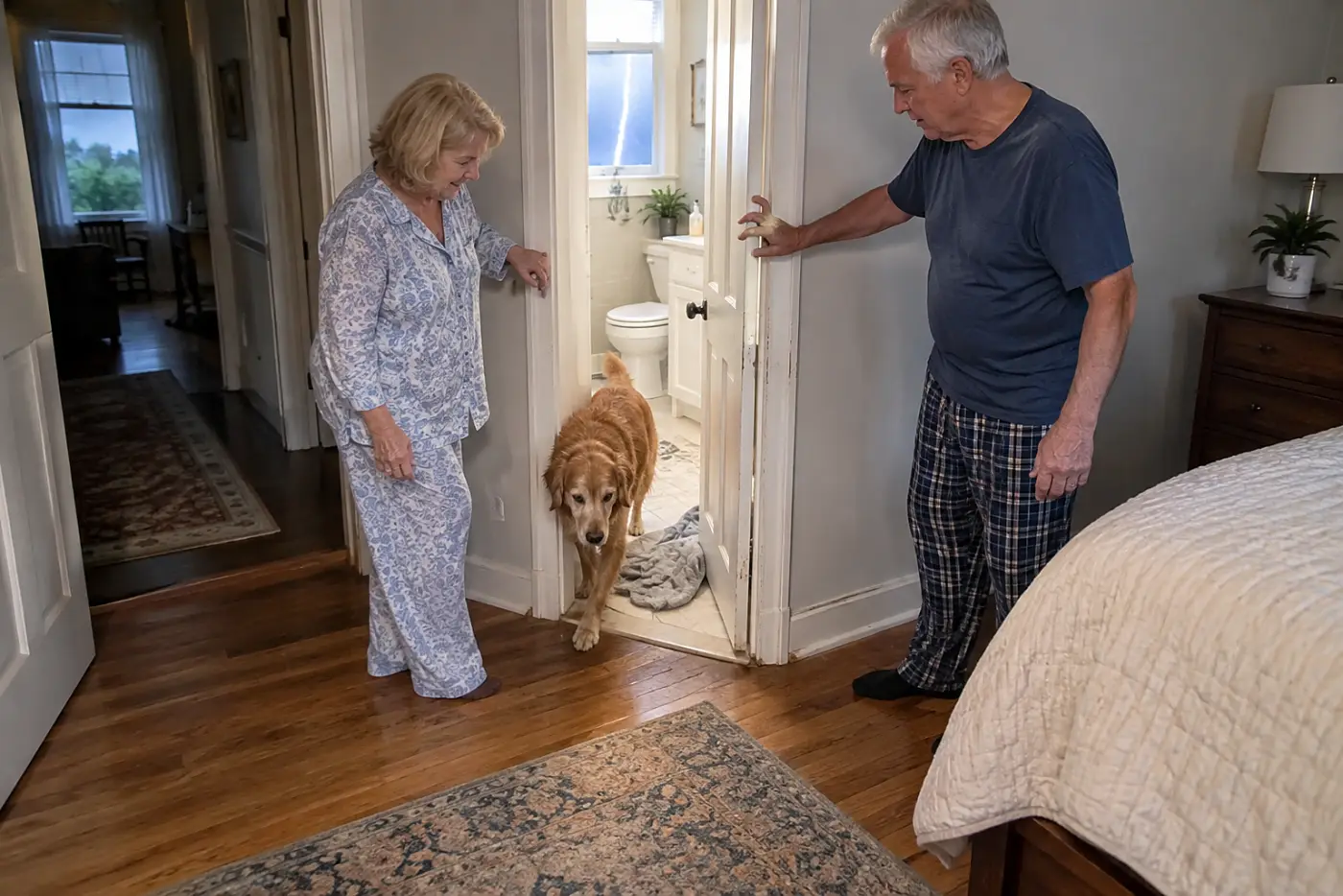
He leaves the bedroom and follows you into the bathroom. A storm arrives minutes later.
Check the forecast and give him access to a place he chooses during storms. Some dogs prefer an interior room. Let him go there without pulling him back toward a window. If storms bring panic or escape attempts, ask your veterinarian about a plan before the next one.
7The moment you pick up your keys
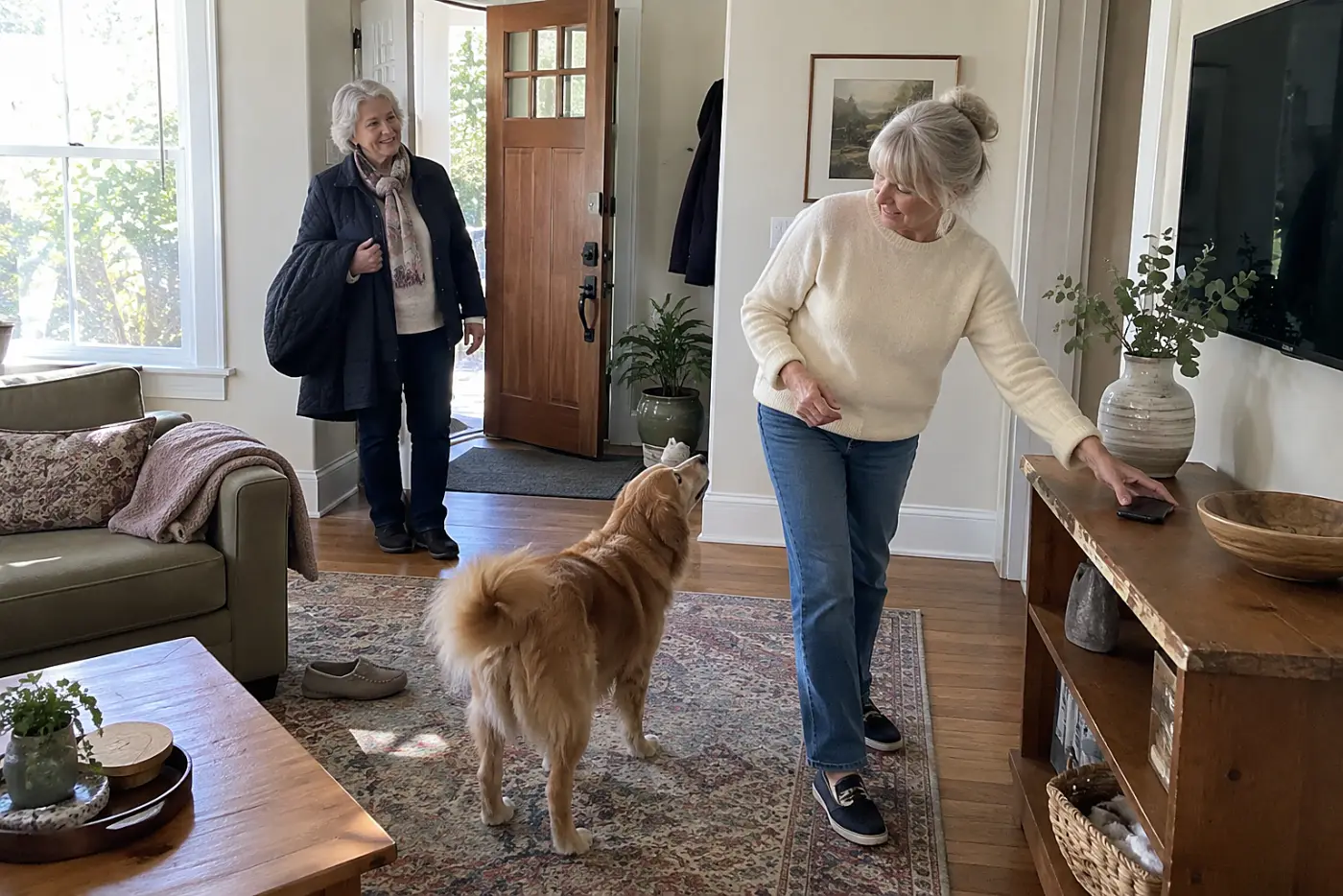
Keys come off the hook. He’s at your heels before you reach the door. Unlike the walking shoes, this cue tells you to look at what happens *after* you leave.
Set up your phone to record him during a short, ordinary absence. On playback, look for pacing, barking, drooling, destruction, or attempts to escape. A dog who naps after you leave is telling you something different from one who stays distressed.
Share the recording with your veterinarian. The American College of Veterinary Behaviorists has a directory of board-certified veterinary behaviorists if you need specialist help. Skip punishment for what happened while you were gone. The video shows what you couldn’t see from the doorway.
6The stair he stops climbing
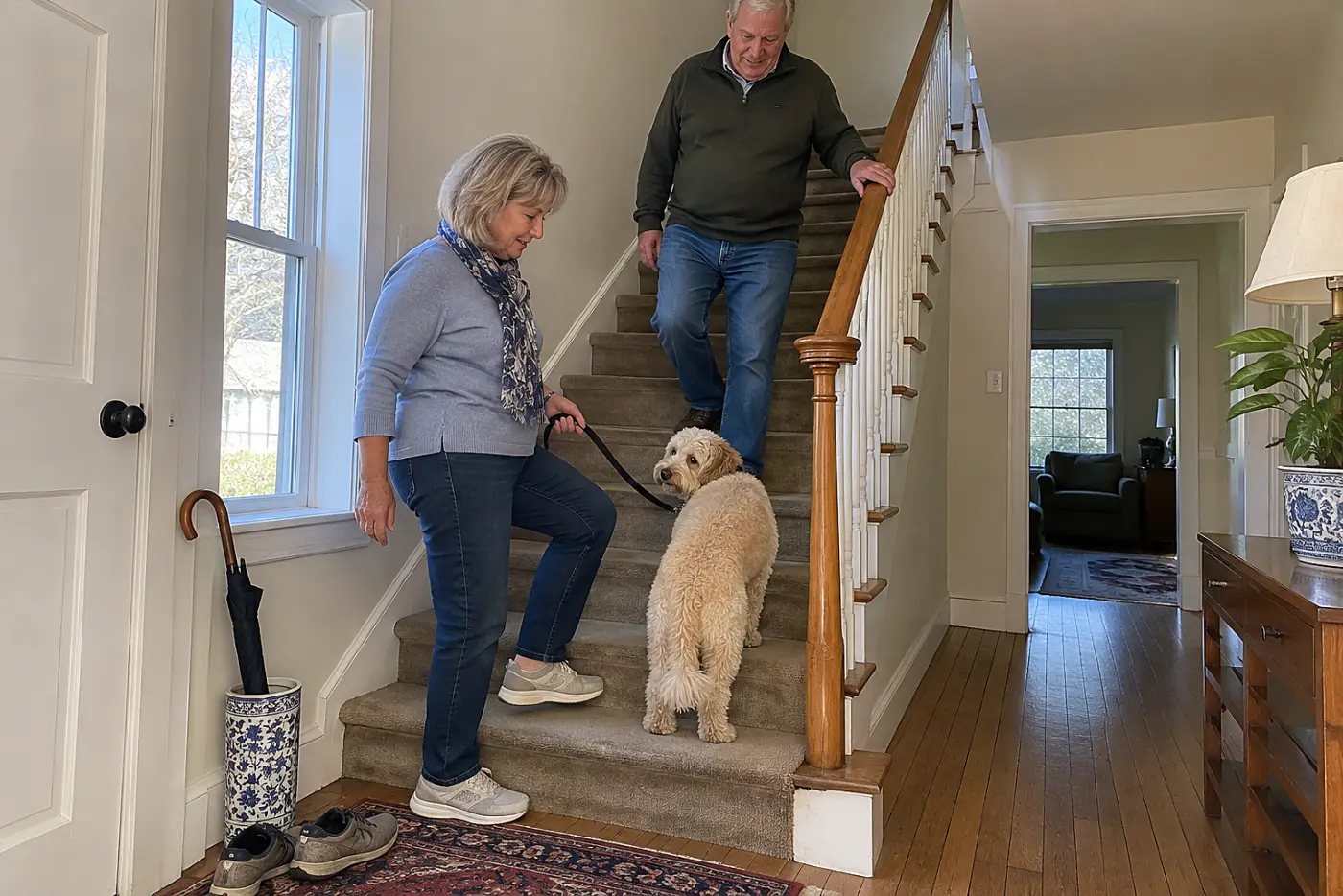
He follows you to the stairs and waits at the bottom. Last week, he came right up.
Watch him rise from the floor, turn, and step over a low threshold. Don’t force him up the stairs to prove he can do it. A sudden reluctance paired with limping or stiffness belongs in a call to your veterinarian; don’t wait 2 days for him to try again.
The American Animal Hospital Association publishes pet pain resources. Describe the stair, the day you noticed the change, and what he does on level ground.
5The walk that ends early
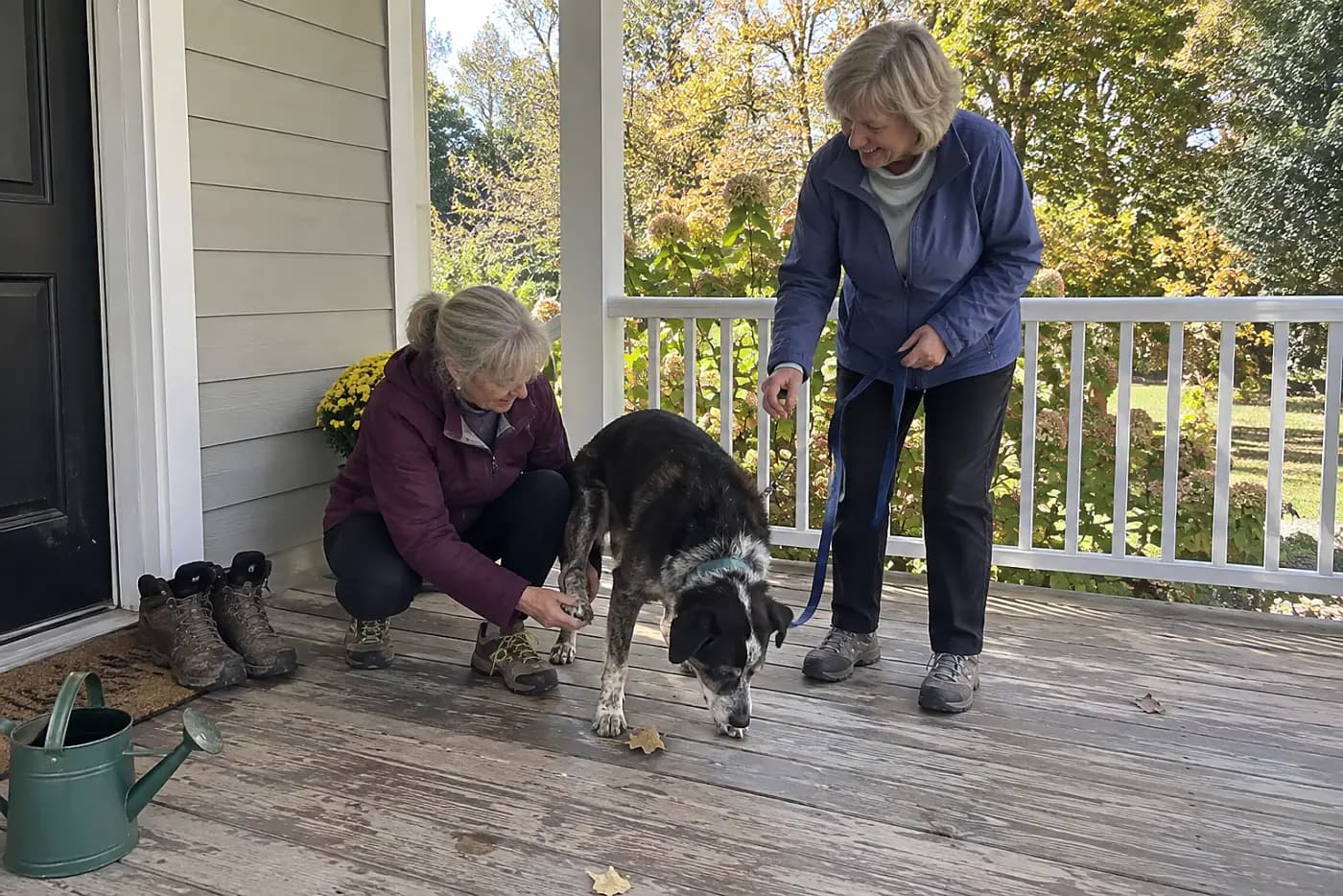
You get back from your usual walk, and he follows you inside without stopping at the water bowl. Then he stays close.
Before offering another walk, look him over. Check the pads of his feet for debris or cuts. Look between his toes. Notice whether he favors a leg, pants after resting, or seems reluctant to lie down.
Check his harness, too. A strap rubbing behind a front leg turns an ordinary walk into an uncomfortable one. If you find an injury or his breathing doesn’t settle, call your veterinarian. The American Red Cross has pet first aid resources, but an online guide doesn’t replace care for an injured dog.
See more: 23 Moments Pet Grief Ambushes You, and What Helps →
4The pacing that keeps repeating
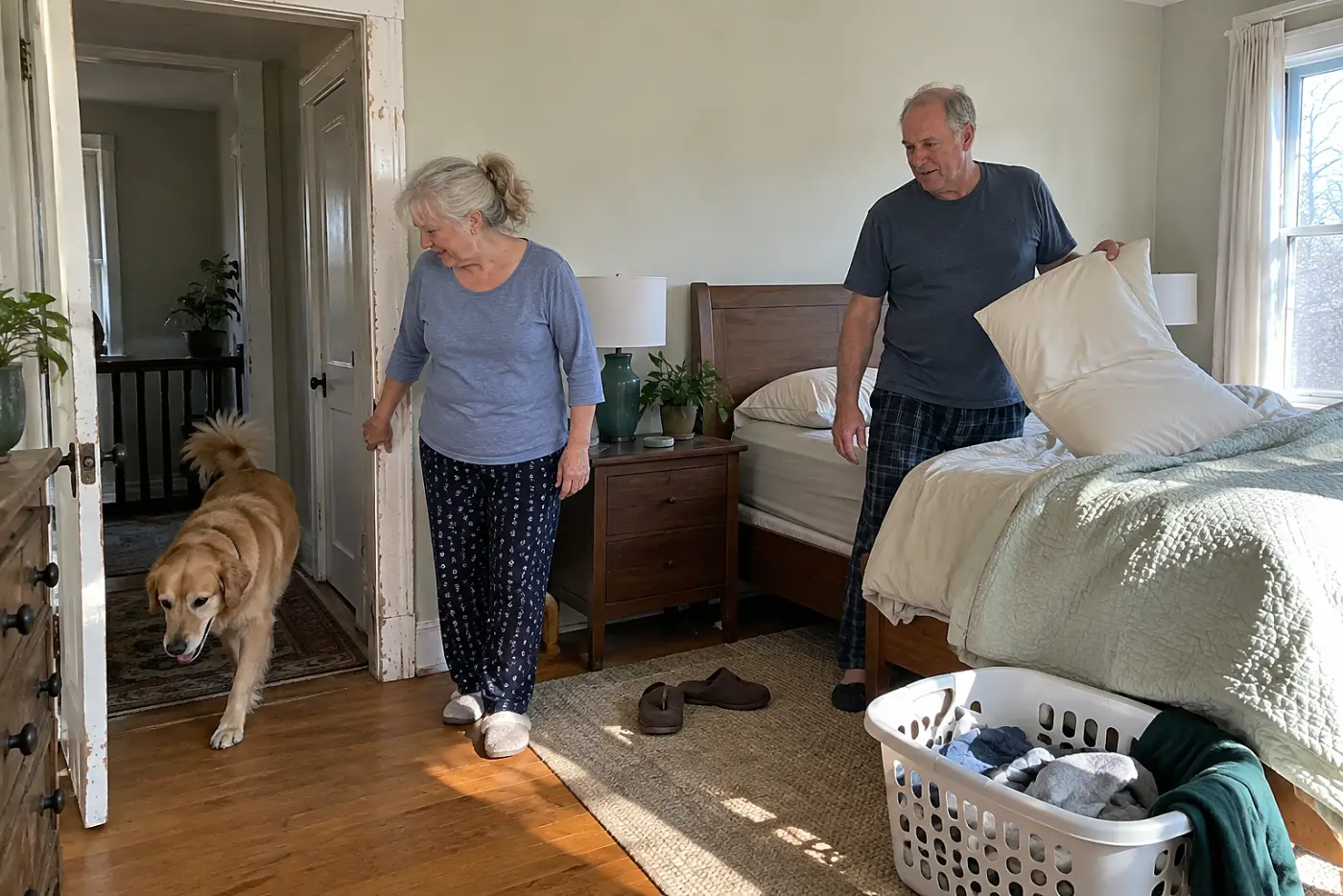
He follows you to the bedroom, circles out, and comes back. The route repeats even after food, water, and a trip outside.
Notice whether he stops between laps or keeps moving. Call your veterinarian rather than adding more activities to tire him out. Repeated pacing, especially when it’s new, gives the clinic a clearer reason to see him than “he’s being clingy.”
3The habit that changed overnight
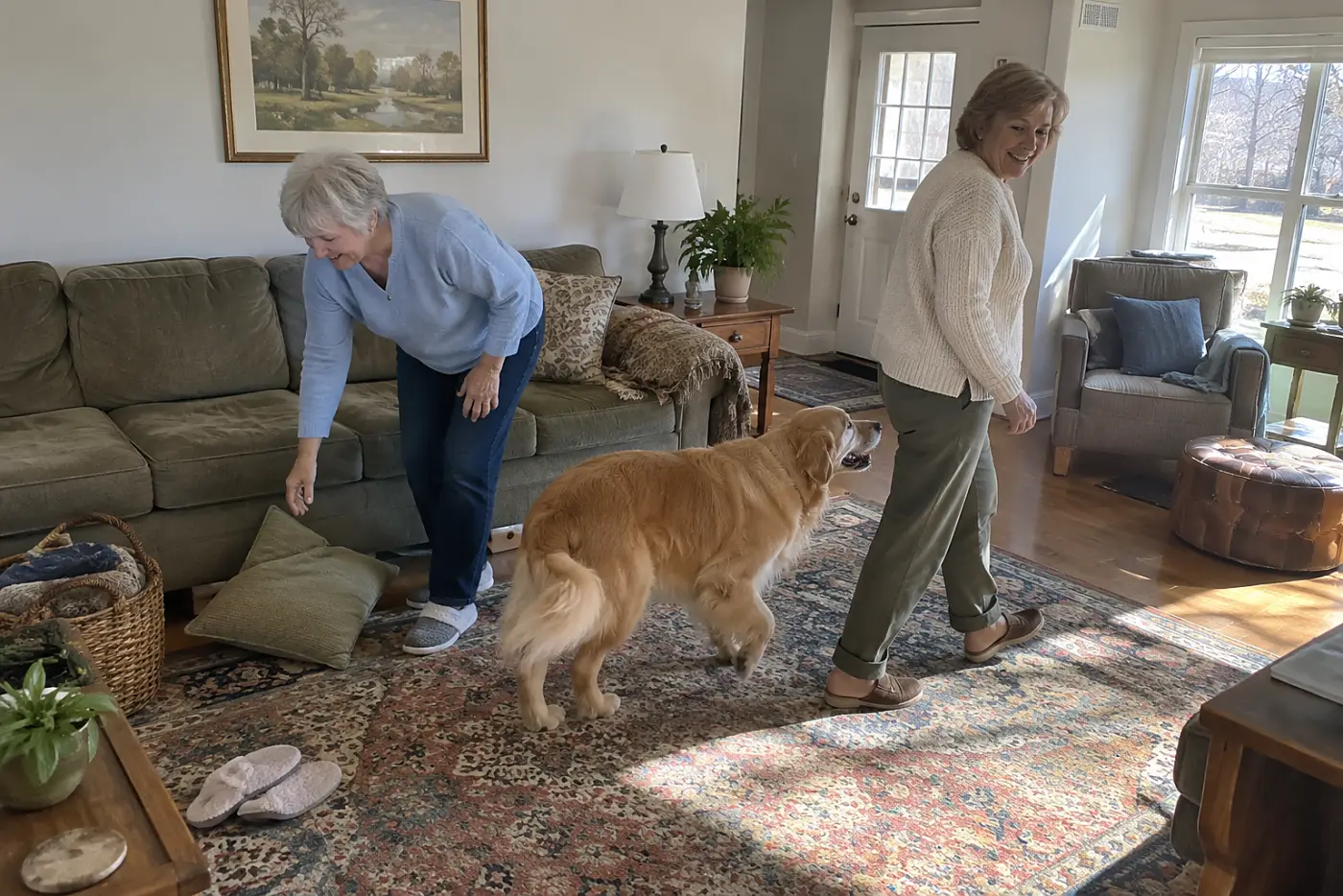
For years, he stayed on the couch when you left the room. Today he follows every step. Start with that contrast.
Check food, water, bathroom trips, gait, breathing, and whether he seems alert. Don’t write off an overnight change as a new phase of life. Tell the veterinary clinic what he did yesterday and what he does now. Include any new medication, recent fall, or household change.
The Cornell University College of Veterinary Medicine provides dog health information, but your own timeline is the key fact in the call. “He started following me this morning” is far more useful than “He seems off.” Watch for the next change while you arrange help.
See more: 26 Signs Your Senior Cat Is Rearranging Her Life Around You →
2The signs that should stop the guessing
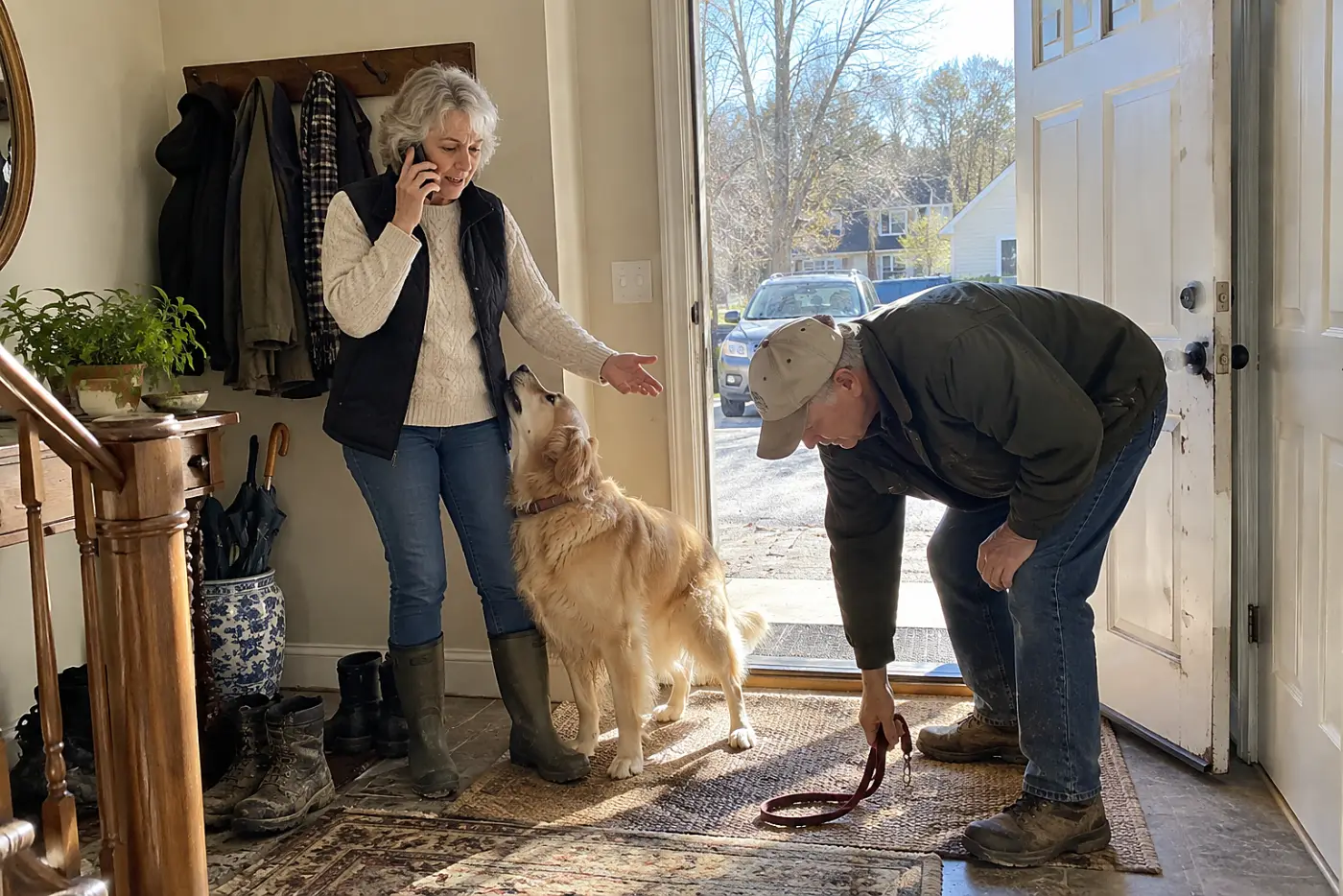
Following is easy to notice. Trouble breathing, collapse, repeated unproductive retching, or a swollen abdomen demands a different response.
Call an emergency veterinary clinic and describe the signs. Don’t wait to see whether he follows you into another room. The Veterinary Emergency and Critical Care Society has emergency care resources; your regular veterinary office’s recorded message should also direct you to after-hours care.
If he has eaten something dangerous, tell the clinic what it was and bring the package if you have it.
1The notes from three ordinary days
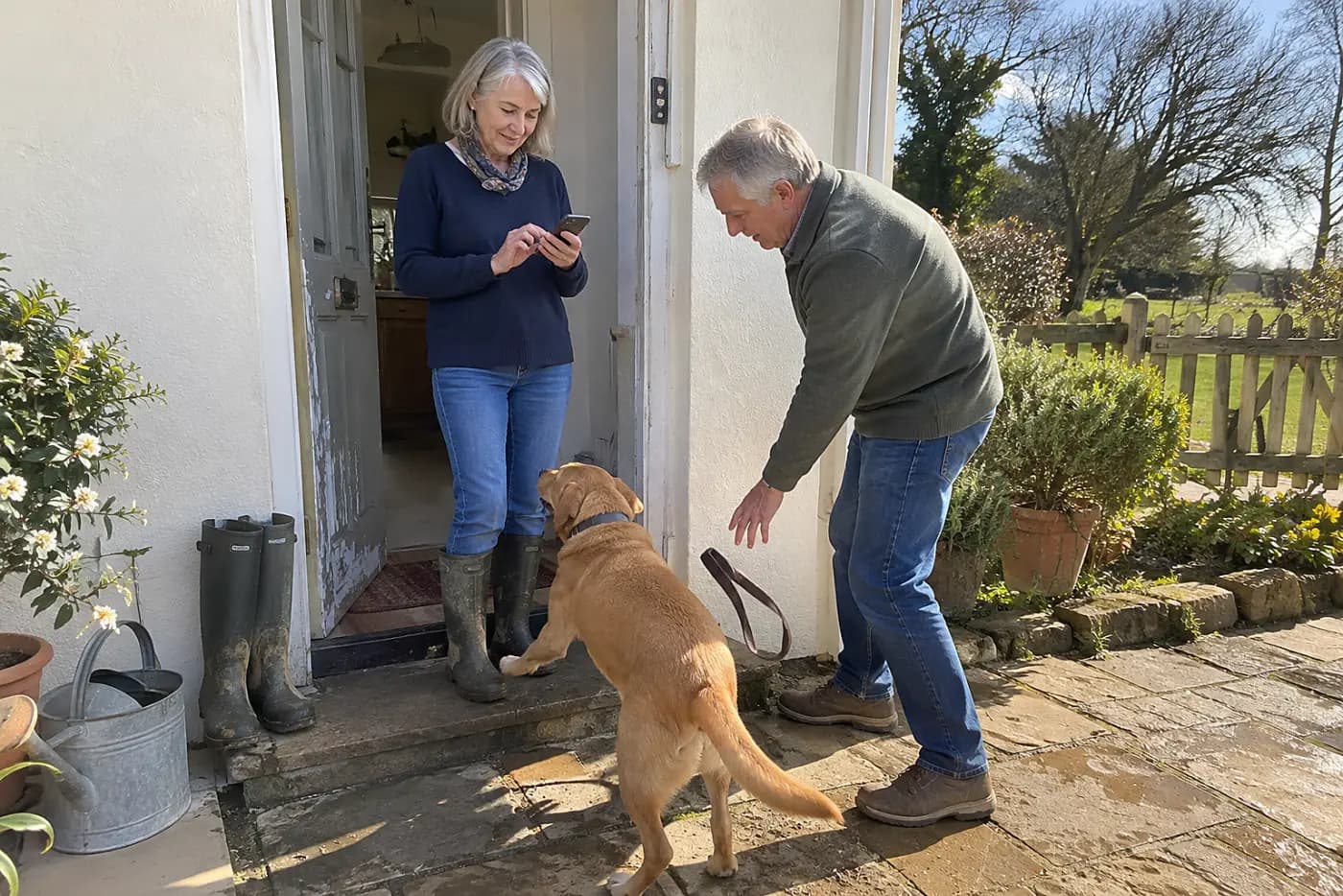
The best way to hear what he’s telling you is to stop interpreting every trip as a separate mystery.
For 3 ordinary days, make a brief note when he follows you: where you went, what he did when you stopped, and what happened next. Add meals, walks, visitors, noises, and any signs of illness. Use your phone’s notes app or a scrap of paper on the counter. You need a record you’ll actually keep.
Then look for a repeat. Does he stop at the door before each bathroom trip? Follow only when you reach for shoes? Pace after meals but settle after going outside? A pattern gives you an action to try. A sudden break in that pattern gives your veterinarian a better account.
One trip says he wants to be near you. The next three days help you learn what else he wants.
The bottom line
Your dog’s route has clues: the bowl, the door, the stair, the sound you barely heard. What matters is where he stops and whether this is new.
The well-prepared version of you has watched him through an ordinary day, saved a few notes, and knows which changes deserve a call. The next time those nails click behind you, where does he lead you?
Up next
23 Small Comforts an Aging Dog Wants Most From the Person He Chose
A few changes around the house, from a night-light to a water bowl, can make his days easier to read and live.
Read the list →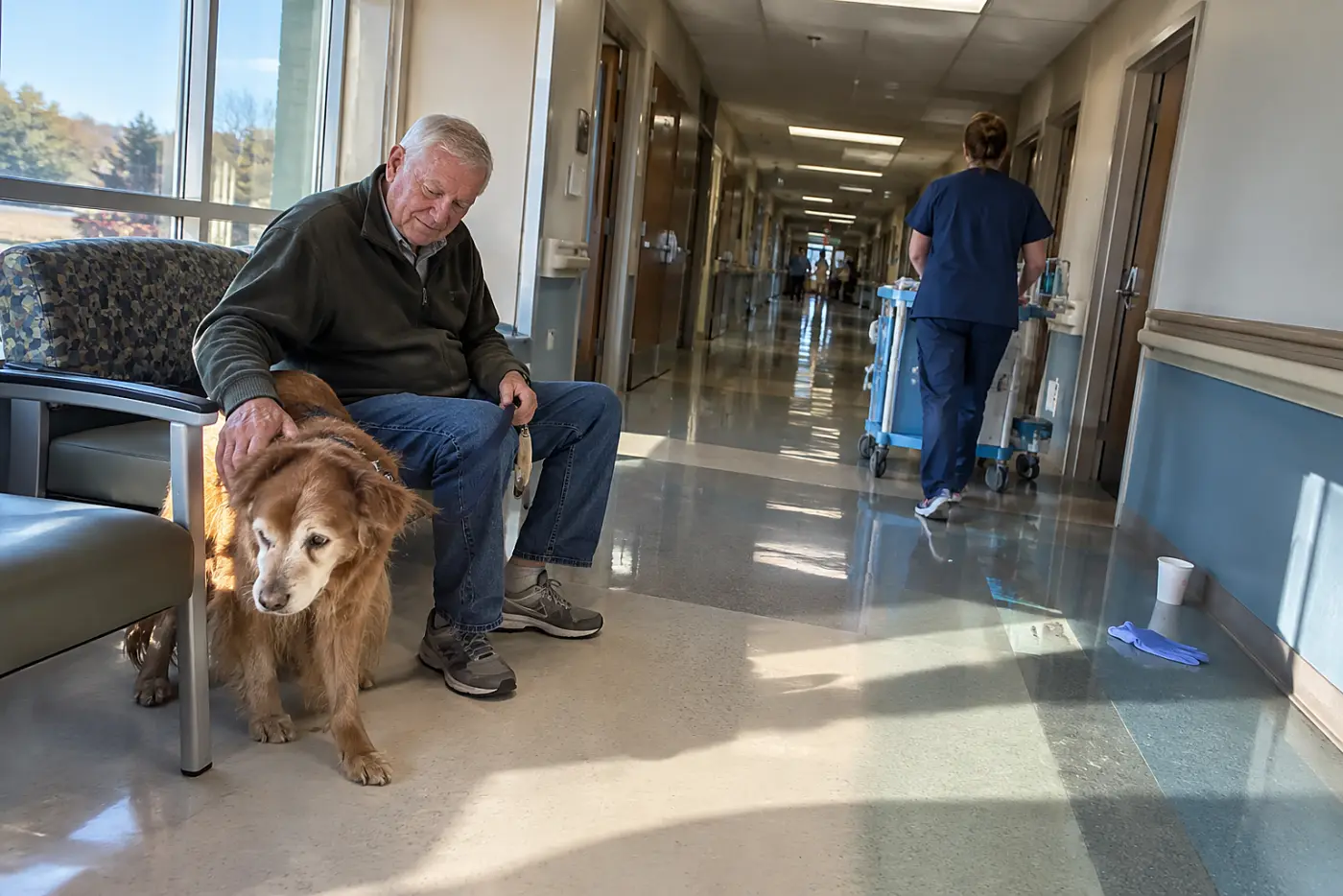
Reader quiz
Did you catch the details?
5 questions from this article.
What should you do before deciding your dog followed you into the kitchen because he is clingy?
Did any of these feel familiar?
Know someone who needs this?
Sources cited in this article
This article links to 11 outside sources, listed here so you can read them yourself.
- American Veterinary Medical Association www.avma.org
- ASPCA www.aspca.org
- Merck Veterinary Manual www.merckvetmanual.com
- American College of Veterinary Surgeons www.acvs.org
- American Kennel Club www.akc.org
- Humane World for Animals www.humaneworld.org
- American College of Veterinary Behaviorists www.dacvb.org
- American Animal Hospital Association www.aaha.org
- American Red Cross www.redcross.org
- Cornell University College of Veterinary Medicine www.vet.cornell.edu
- Veterinary Emergency and Critical Care Society veccs.org
Ruth Ellison
Family Editor
Ruth writes about grown children, grandchildren, ageing parents, and the conversations families put off, in the words of the people involved.
More from Ruth Ellison