23 Things Your Adult Children Notice About Your House That They Won't Mention
A loose stair rail or crowded kitchen drawer prompts a familiar look, but a house walk-through lets you set the terms first.
By David Ruiz, Tech & Home Writer
Updated · 14 min read
- Written by our tech & home writer
- How we review
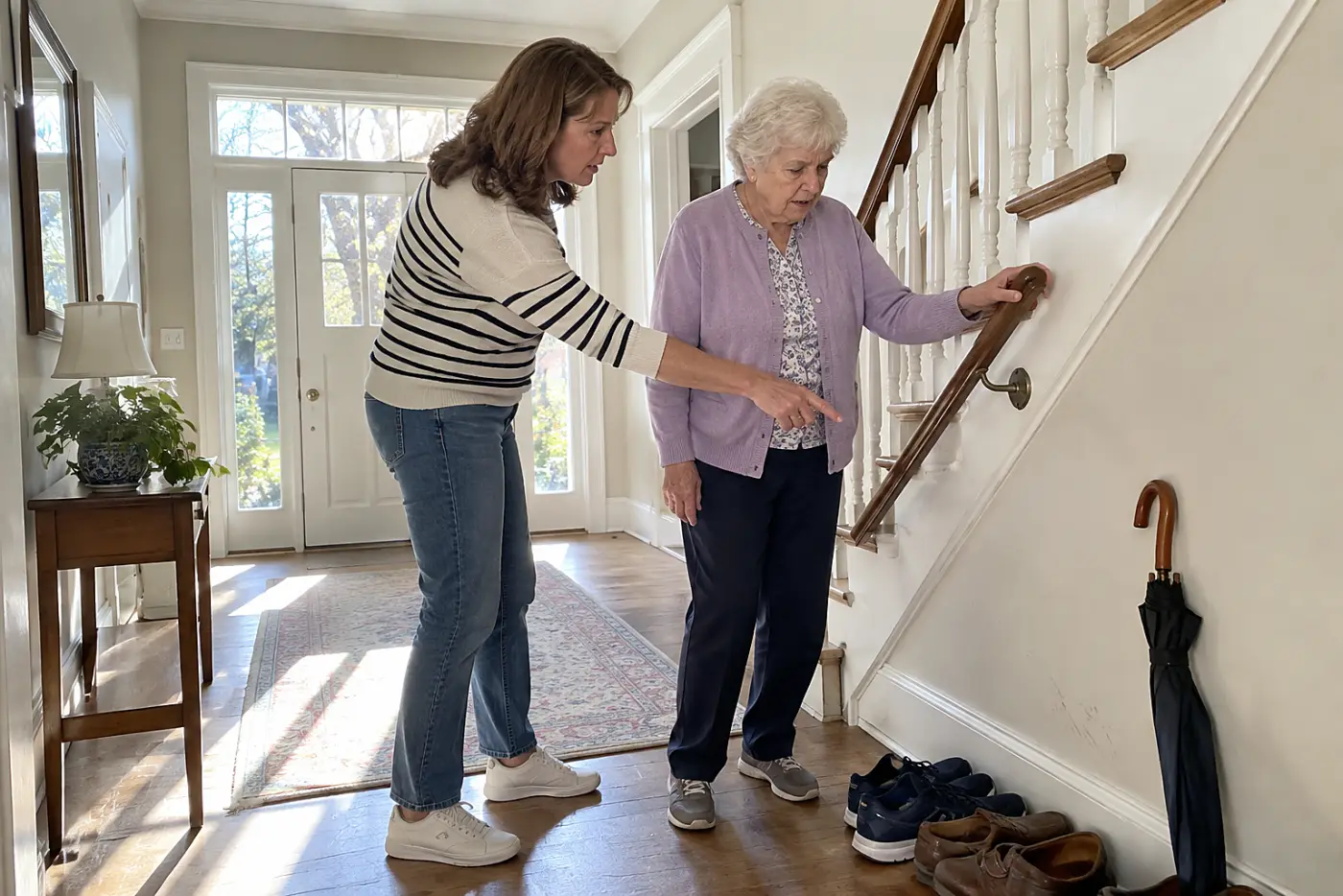
Read to the end: #1 is the one house walk-through that puts you in charge of the conversation, and almost nobody proposes it.
The doorbell rings while you're holding a dish towel. Your daughter steps inside, hugs you, then puts one hand on the stair rail. It shifts. She looks at the screws, then at you, and says nothing. Later, she carries the laundry basket upstairs without being asked.
That look doesn't tell you what she's thinking. A loose rail deserves repair, but a silent repair campaign can leave you feeling inspected in your own house.
Here are 23 things to check before anyone starts guessing.
23The porch bulb above the front steps

The last step disappears when the porch light fails.
Someone arriving at dusk sees the dark patch before you do, especially if you know the step by heart. A bulb that's been out for months also makes visitors wonder what else you've stopped seeing.
The National Institute on Aging recommends good lighting to help prevent falls at home. Darkness at the entrance matters to you, too, not only to guests.
Tonight, turn on the porch light and walk to the curb. Ask, "Would you grab the bulb while I hold the ladder?"
Then look at where the light ends.
22The welcome mat that bunches at the door
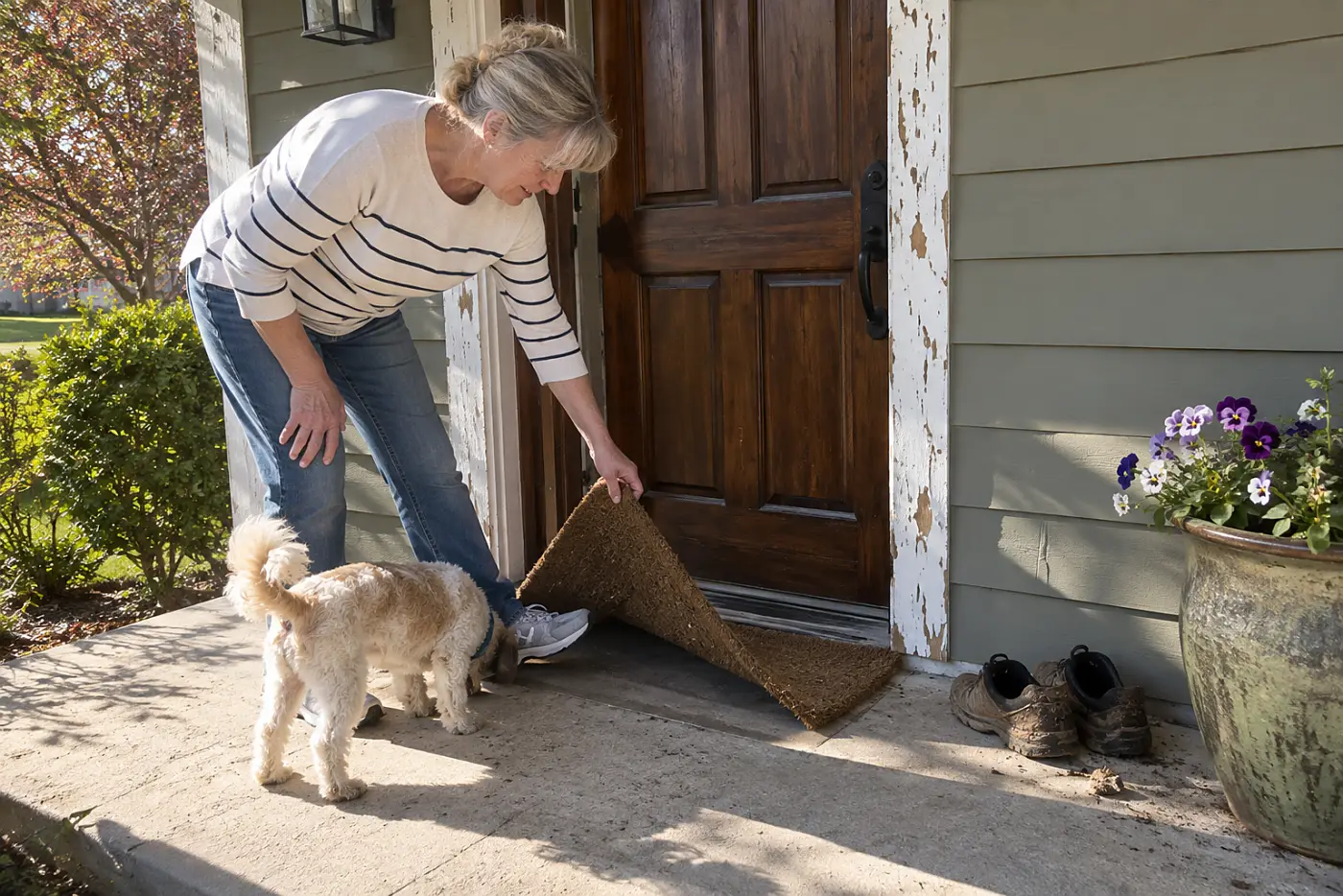
Your welcome mat moves every time the door opens.
The curled edge catches a shoe before anyone reaches the hall. Visitors look down, step around it, then carry that little moment into the rest of their visit.
The CDC lists tripping hazards among the home risks worth removing. A mat that's become a daily obstacle doesn't earn its place through sentiment.
This week, open and close the door several times while watching the mat. Say, "I like this one, but it has to stay flat."
The next snag sits where shoes pile up.
21The shoes lined across the entryway

The entry has become an obstacle course after dark.
One pair by the door becomes several when rain boots, walking shoes, and a visitor's sneakers join it. From the threshold, your child sees a narrow landing spot and starts shifting shoes without asking.
A clear path matters during an ordinary trip to the mailbox. It also matters when someone enters with a grocery bag and can't see the floor ahead.
This week, stand outside, open the door, and walk in carrying two bags. Move everyday shoes to a rack or tray outside the walking line. Say, "Leave your shoes here, so the doorway stays clear."
A clear floor still leaves the stairs to inspect.
20The stair rail that shifts under pressure
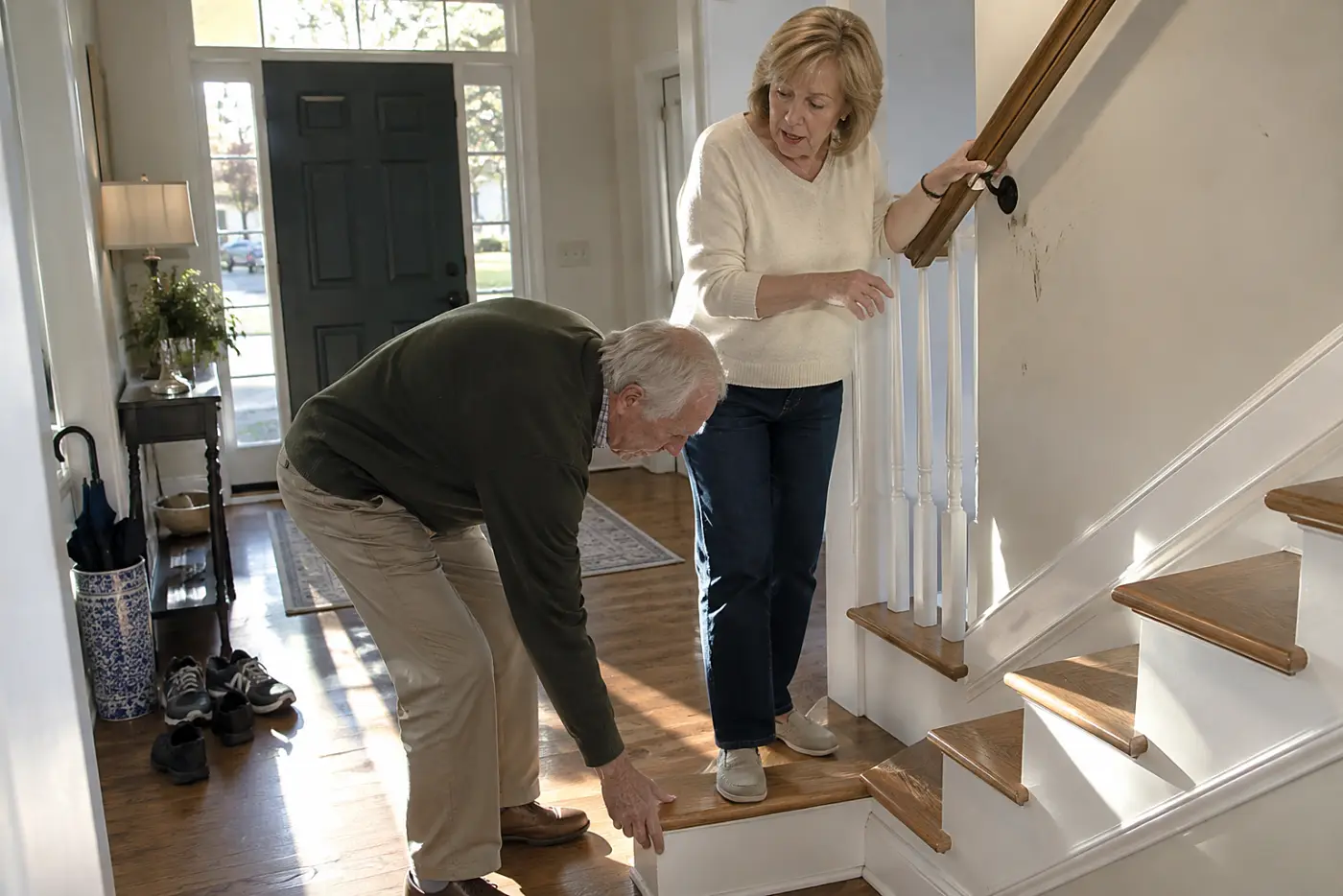
A loose rail makes every stair trip feel uncertain.
Your child feels it while following you upstairs. The movement points to a fastening problem, but tugging at it harder won't show whether the wall or the bracket needs work.
A rail has one job: stay firm when someone grabs it. Until it's fixed, the uncertainty belongs to everyone using those stairs.
This week, press each rail near its brackets and note where it moves. Call a qualified repair person and say, "The stair rail shifts at this bracket."
The floor beside those stairs tells another story.
19The runner rug stretched across the hallway

The hallway runner slides before your foot lands.
A rug without grip moves over smooth flooring. From behind you, a visitor sees your stride change around its edge, even when you barely notice doing it.
The National Institute on Aging's fall-proofing advice calls for securing rugs or removing them. The point isn't to make your home bare. It's to stop a familiar object from shifting beneath you.
This week, walk the full hallway and watch the rug's corners. Lift it, check the backing, and decide whether it needs a proper nonslip pad or a different spot. Say, "I want the runner here only if it stays put."
Once the floor holds steady, check what you're stepping over.
18The charging cord across the living room
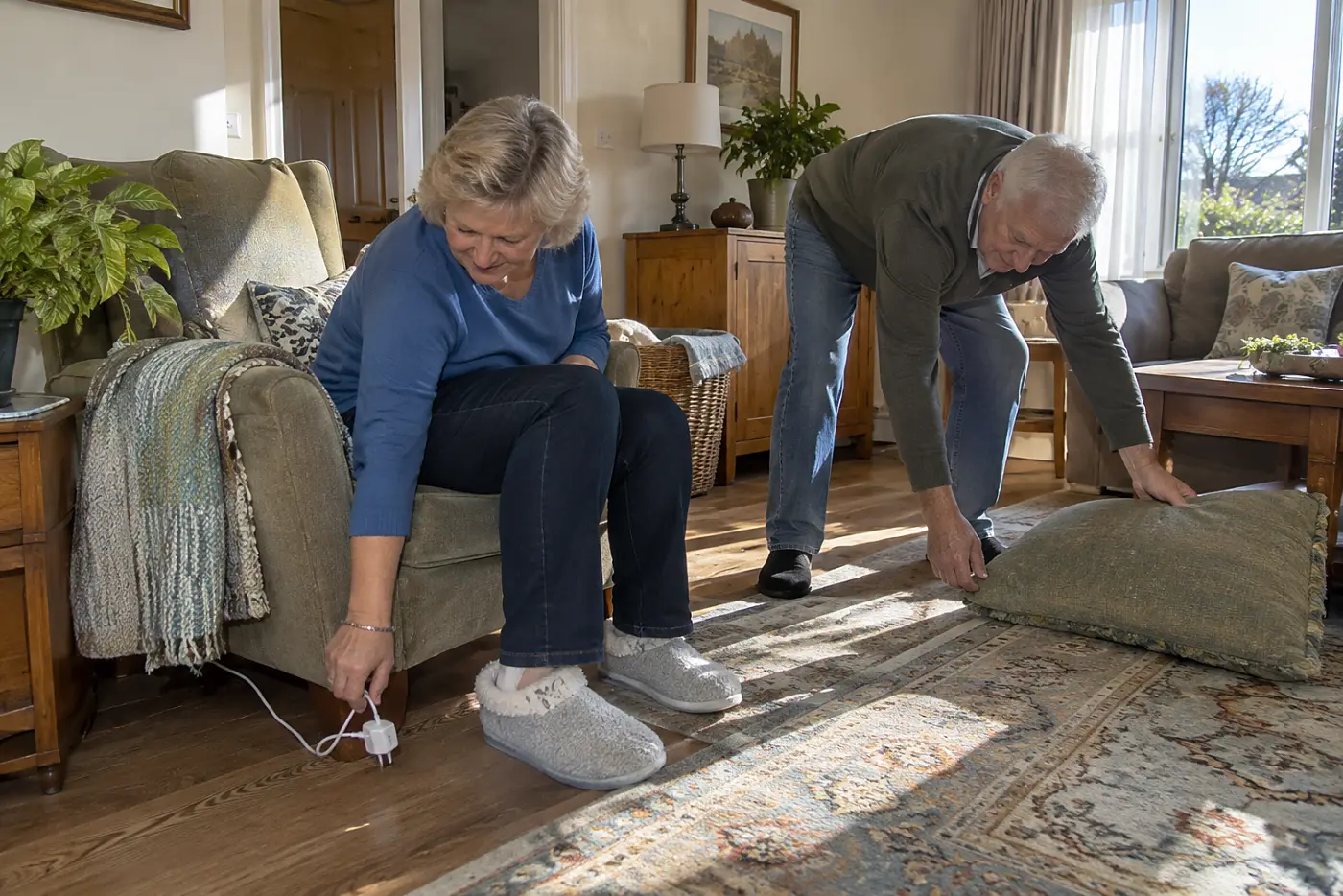
A phone cord now crosses the route to your chair.
The outlet is behind the sofa, so the cord takes the shortest path. Someone visiting sees it at once because they haven't learned your usual step over it.
An ordinary trip with a cup of tea leaves less room for that step. The cord's position, rather than your balance, is the problem to solve.
This week, unplug it and find an outlet beside the chair. Say, "Let's keep the charger within reach without crossing the floor."
The chair has its own small test.
17The armchair you push against to stand

Standing up now takes a push from the armrest.
The chair sinks low, and its cushions shift as you rise. Your child sees you brace a hand there and wonders whether the chair, rather than your legs, is making the move harder.
An unstable chair adds a problem each time you get up. You don't owe anyone an explanation for preferring a seat that works better.
This week, try standing from each chair you use most, with your feet on the floor. Check whether the armrests hold firm, and retire a chair that rocks or shifts. Say, "This one is hard to get out of; help me move the other chair here."
The next clue is closer to the kitchen.
16The kitchen stool beside the high cupboard
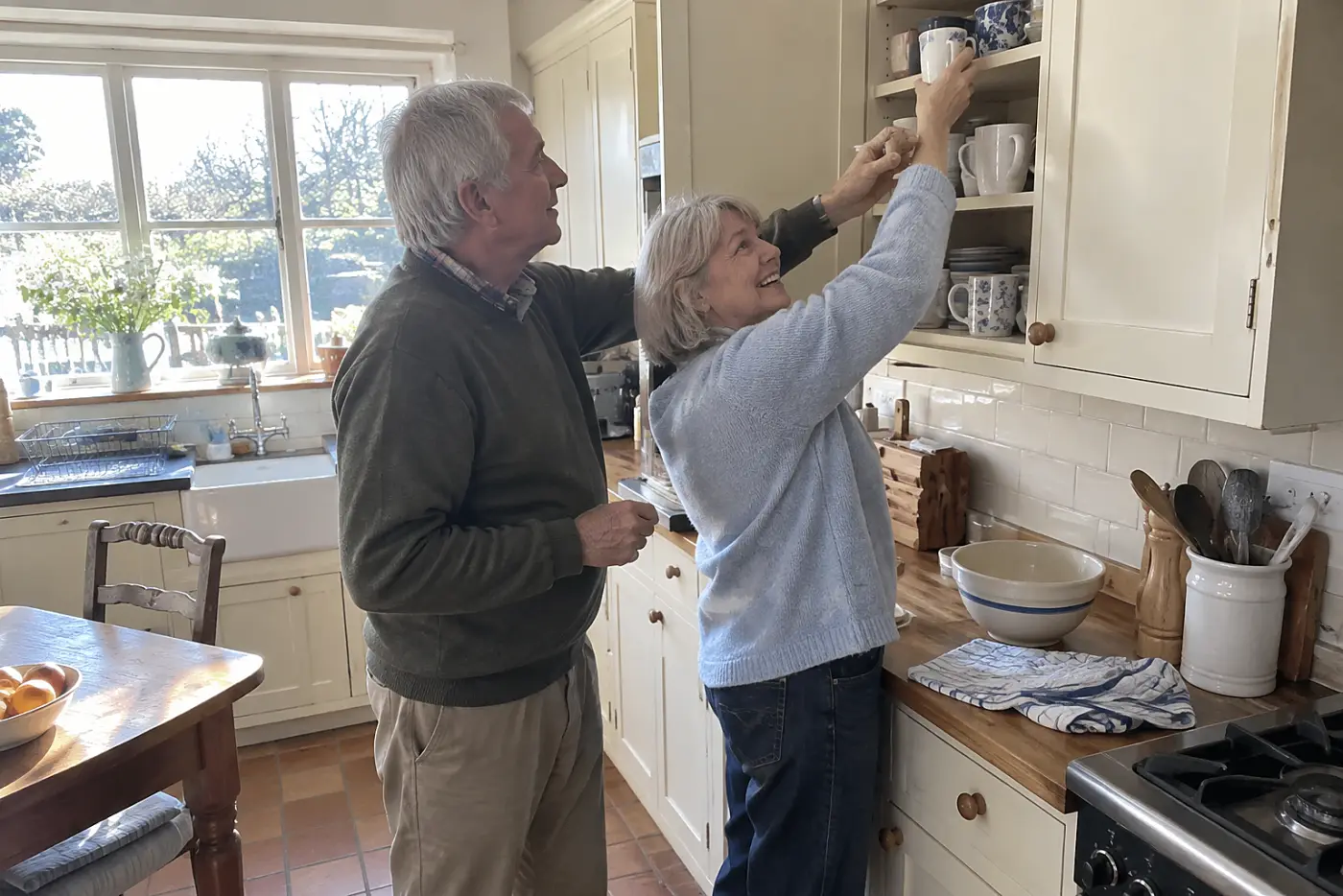
That stool turns a cup into a climb.
A high cupboard keeps everyday dishes out of reach. Your child sees the stool stationed there and realizes reaching for a mug now starts with stepping up.
A fall from a stool has consequences far beyond a broken cup. The CDC's home fall guidance puts frequently used items within easy reach.
This week, move the mugs and plates you use daily to waist-level shelves. Say, "I want the dishes I use every day down here."
That cupboard isn't the only place where clutter hides a decision.
15The refrigerator shelf crowded with old containers

Nobody knows what's behind the front row anymore.
Fresh leftovers go in front, older containers slide back, and a crowded shelf stops being useful. Your child opens the door to put away milk and sees that finding dinner now takes sorting.
The USDA's FoodKeeper app gives storage guidance by food type. A container without a date leaves you guessing what it holds and when it went in.
This week, empty one shelf at a time, label what you keep, and put newer food behind older food. Keep the shelf open enough to see its back. Say, "I want to know what's here without taking everything out."
The next kitchen check doesn't require opening a door.
14The smoke alarm above the kitchen doorway
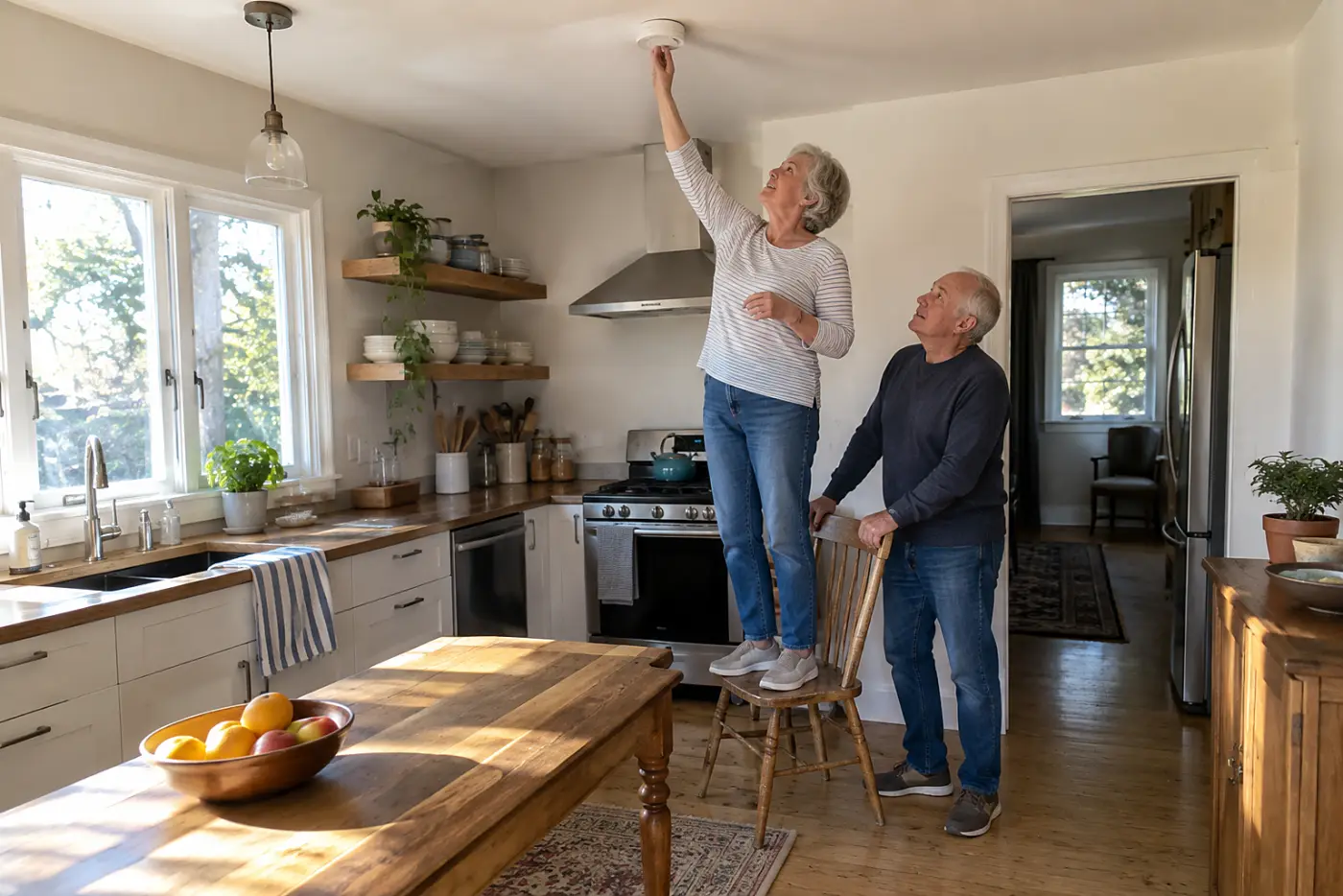
The alarm chirps, and everyone waits for it to stop.
A chirp needs attention, whether it signals a low battery or another fault. Your child hears it during lunch and wonders how long you've been eating through that sound.
The US Fire Administration's smoke alarm guidance says to test smoke alarms monthly. It also says to replace smoke alarms that are 10 years old.
This week, read the date on the alarm and press its test button. Say, "Let's check this one today, not just silence it."
Another sound is easier to miss entirely.
13The dryer vent packed with lint
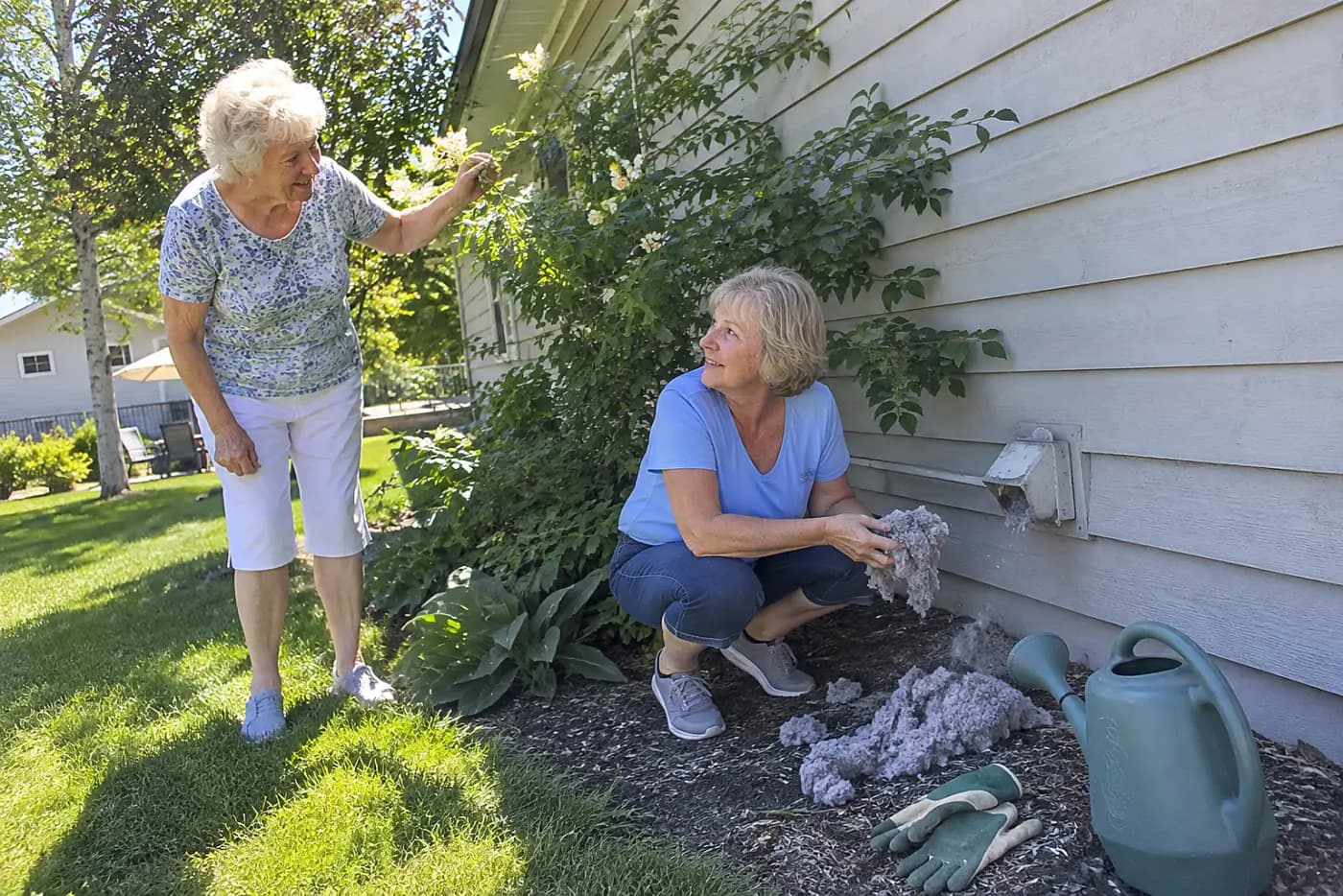
Laundry dries, but the machine runs longer.
Lint builds up in places the screen doesn't reach. Your child notices the dryer running again for the same load, then looks at the vent hose behind it.
The US Fire Administration's clothes dryer safety advice calls for cleaning the lint filter before and after each load. It also calls for keeping the area around the dryer free of things that burn.
This week, check the lint screen and the outdoor vent flap while the dryer runs. If the hose or vent is blocked, arrange a cleaning rather than pushing lint farther in. Say, "The dryer is taking longer; I want the vent checked."
The laundry path has a separate problem.
12The laundry basket waiting on the basement stairs
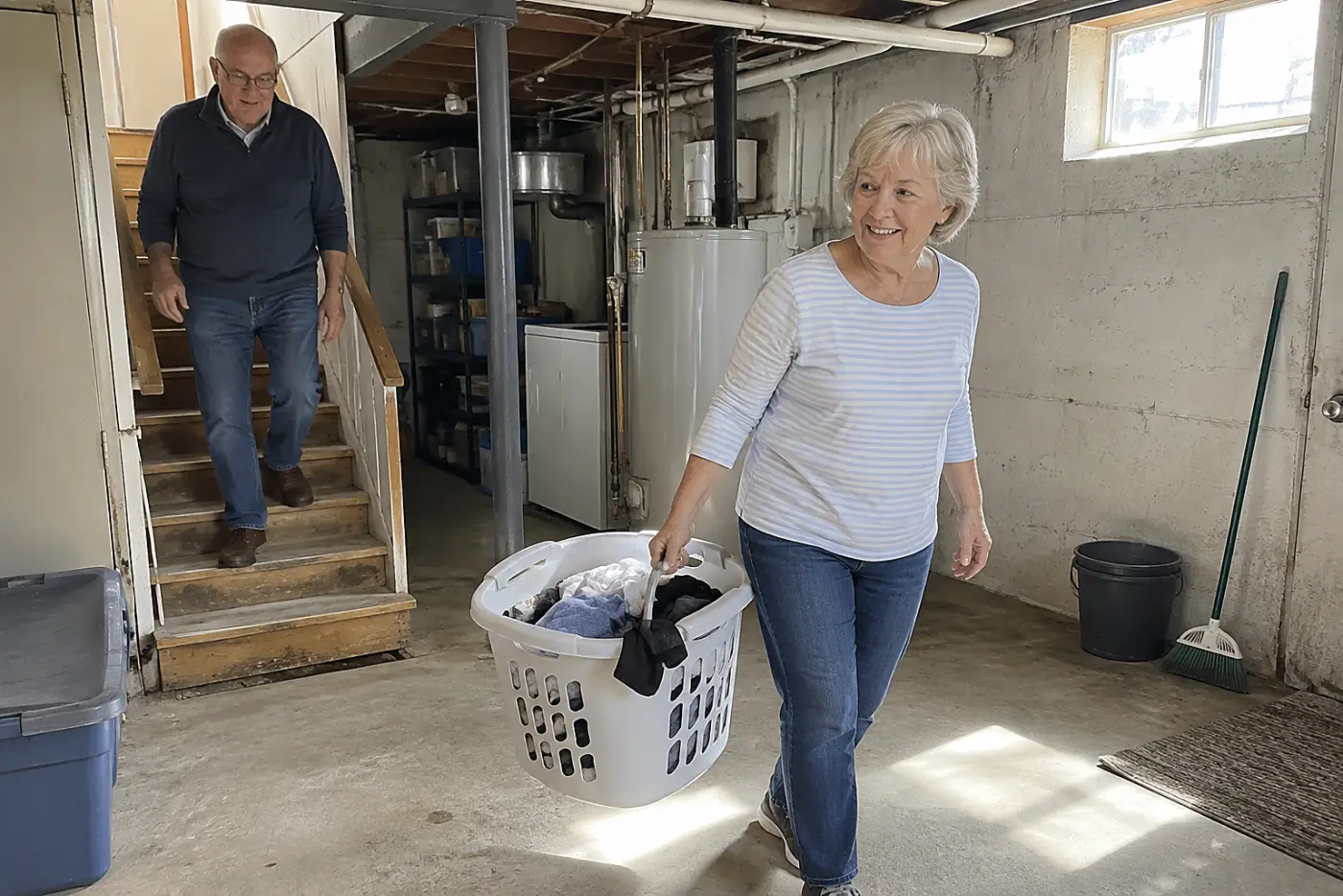
A basket on the stairs makes both hands busy.
You lift it to move it out of the way, then carry it down the next time you need a load. Your child sees the handrail sitting unused beside a full basket.
The CDC advises keeping stairs free of clutter. Those steps need to stay clear even between laundry days.
This week, give the basket a parking spot off the stairs. Say, "I'll bring the laundry down in smaller loads so I can use the rail."
Downstairs, one switch deserves a look.
11The basement light switch behind the shelves
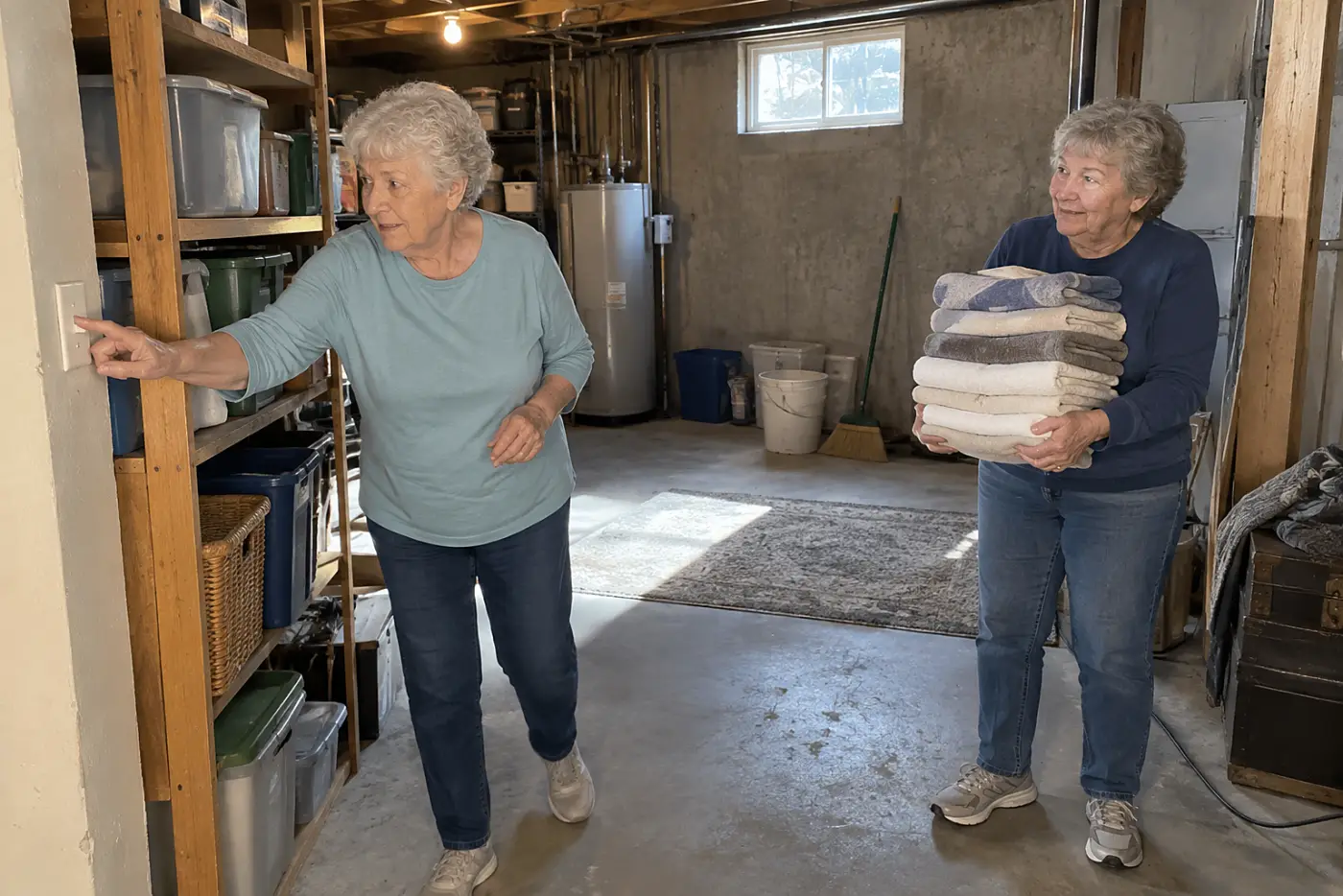
You reach into darkness before finding the switch.
A storage shelf has crept across the wall beside the basement door. Now your hand searches past boxes before the stairwell lights up, and a visitor sees the delay from the top step.
The risk begins before you reach the first stair. Lighting that starts after the descent has already begun isn't doing its job where you need it.
This week, stand at the top of the stairs with the basement dark. Reach for the switch without taking a step; move anything blocking it. If the switch still sits out of reach, ask an electrician about placing a control at the entrance. Say, "I want the stairs lit before I go down."
That fix makes it easier to spot what's stored below.
10The boxes stacked against the furnace
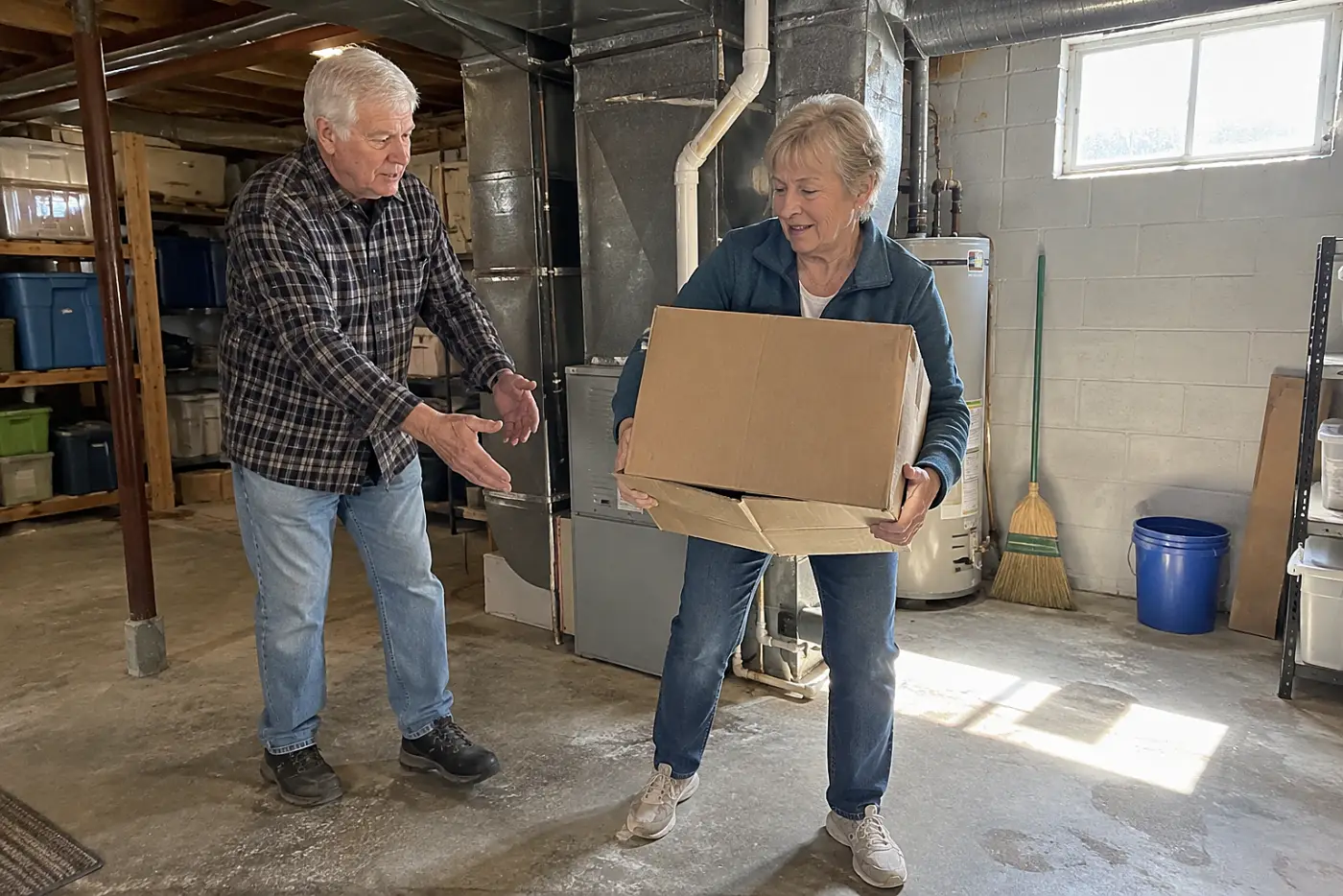
Storage has crept into the furnace's working space.
Boxes fill an empty-looking corner, then spread toward the equipment. Your child sees cardboard beside the furnace and starts calculating what needs to move first.
The US Fire Administration advises keeping anything that burns away from heating equipment. Leave the clearance required by your equipment's manual, rather than guessing by eye.
This week, find the manual's clearance instructions and move the boxes beyond them. Say, "I need this space clear around the furnace."
The next pile is harder to measure.
9The mail stack covering the kitchen table

The table no longer has room for a meal.
Bills, catalogs, appointment cards, and envelopes land together. A visitor clears a corner for coffee and sees a stack that gives no clue what's urgent.
The cost of an unopened letter depends on what's inside it. A bill, an insurance notice, and a birthday card deserve different treatment, but the pile hides all three.
This week, sort the stack into action, file, and recycle piles. Open the action pile before you put anything back on the table. Say, "I need the table clear; I don't need anyone reading my mail for me."
Paper isn't the only thing that spreads across a surface.
8The medicine bottles beside the coffee mugs
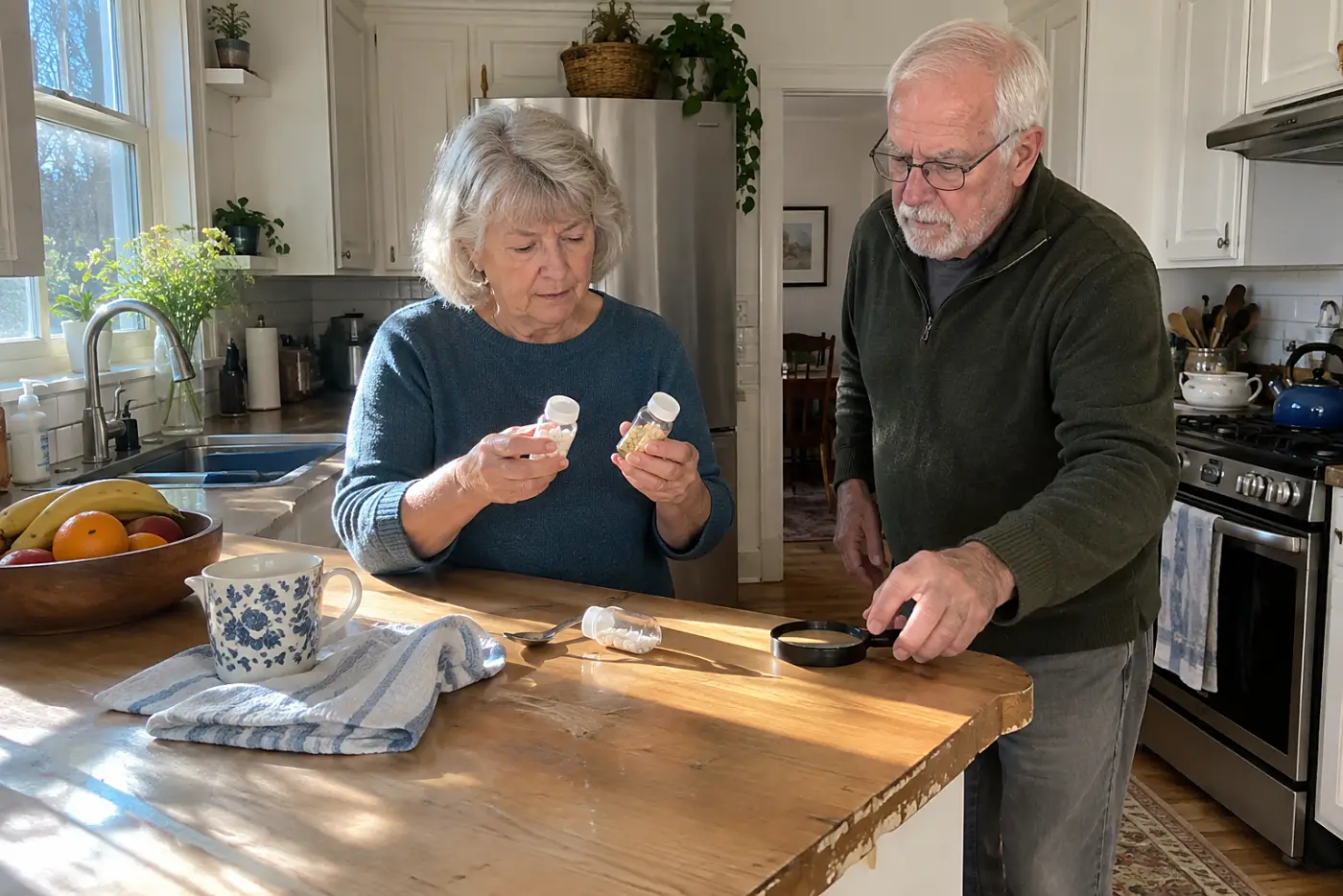
The kitchen counter has become a dosing station.
Bottles gather near the mugs because breakfast is when you take them. Your child sees several containers and has no way to tell which are current or whether two hold the same drug.
The FDA advises checking medicine labels and keeping an up-to-date medicine list. That list helps at appointments, too.
This week, line up the bottles and compare each label with your current list. Ask your pharmacist, "Can we check which of these I still take?"
The counter has another signal that needs less interpretation.
7The faucet drip beneath the bathroom sink
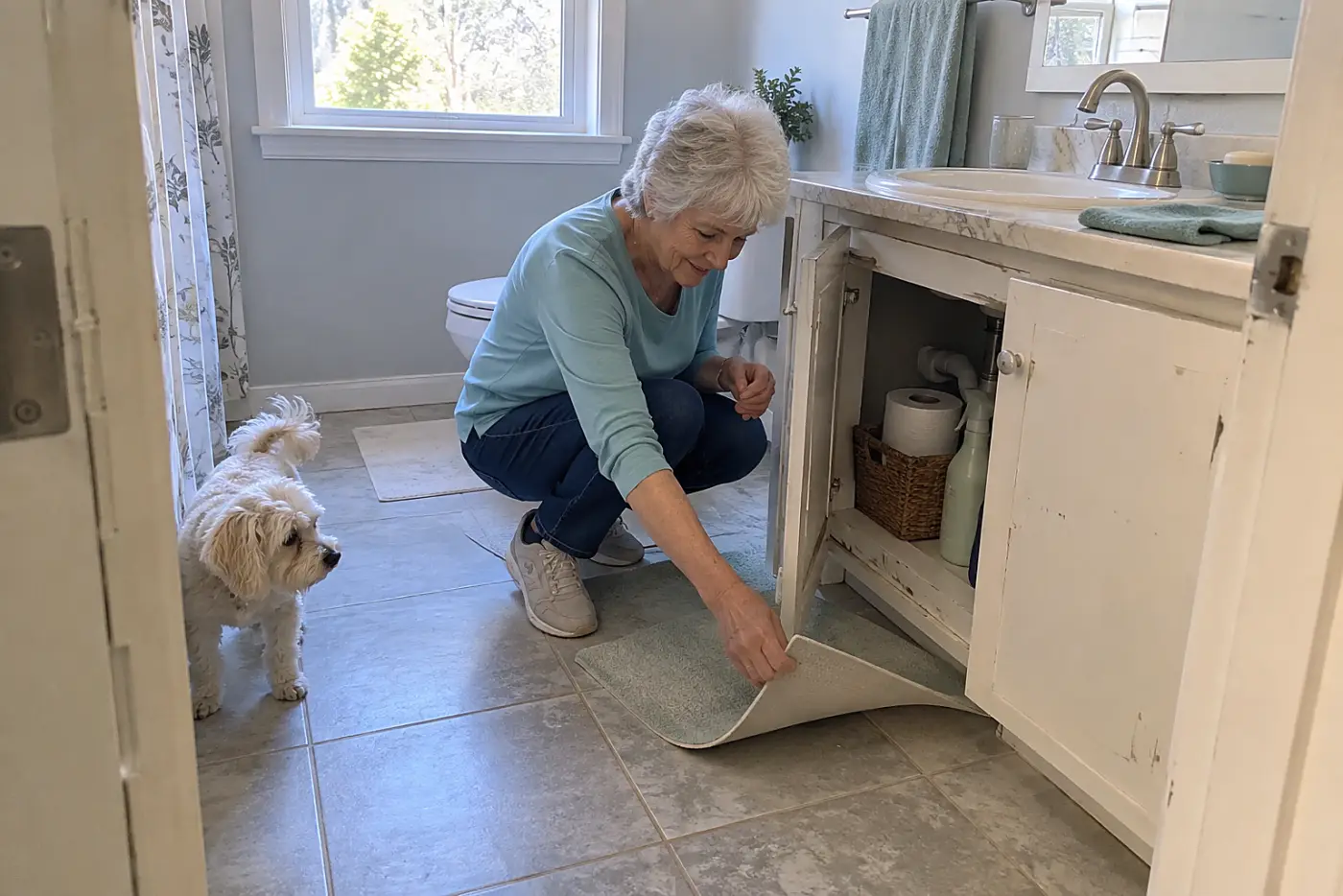
A drip keeps working after everyone leaves the room.
Water collects under the sink, then finds the cabinet base. Your child notices a towel tucked around the pipe and wonders whether you know how long it's been wet.
A dry towel doesn't fix a leak. Left alone, water damages the cabinet and gives you a bigger repair than the fitting that started it.
This week, empty the cabinet and dry its base. Place a clean, dry sheet of paper beneath the pipe, run the faucet, and check for drops. If you find water, call a plumber and say, "The leak is under the bathroom sink, and I can show you where it lands."
The floor outside that cabinet needs its own test.
6The bathroom rug beside the tub
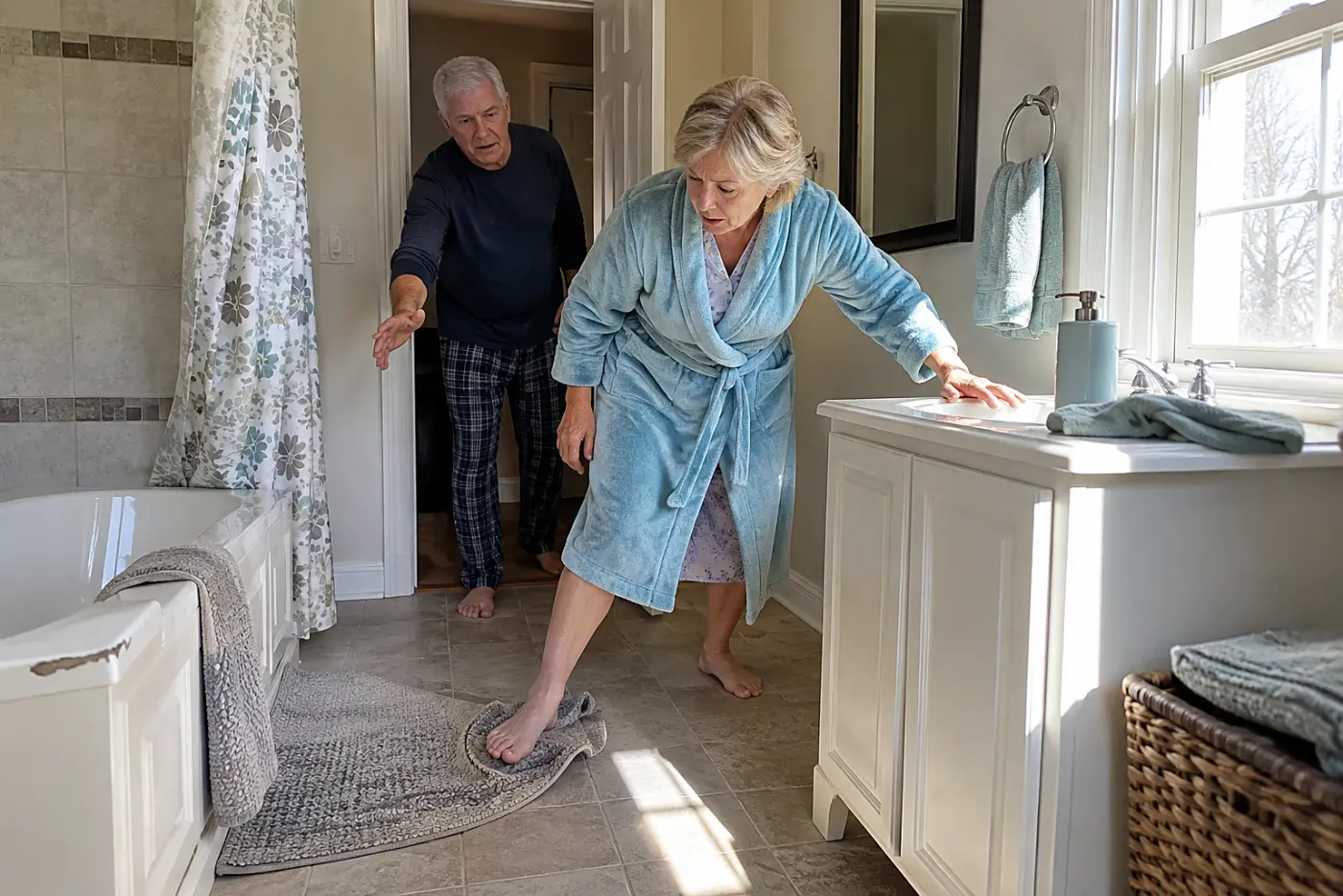
The rug slides when someone steps out wet.
Its backing wears down long before the fabric looks finished. A visitor sees it shift under one foot and starts worrying about every trip into that bathroom.
The National Institute on Aging advises using nonslip mats in bathrooms. A rug that moves on dry tile won't improve when water reaches it.
This week, push the rug sideways with your foot, then test it again after a shower. Say, "If this one slides, it's going."
The next concern sits at hand height.
5The towel bar used as a handhold
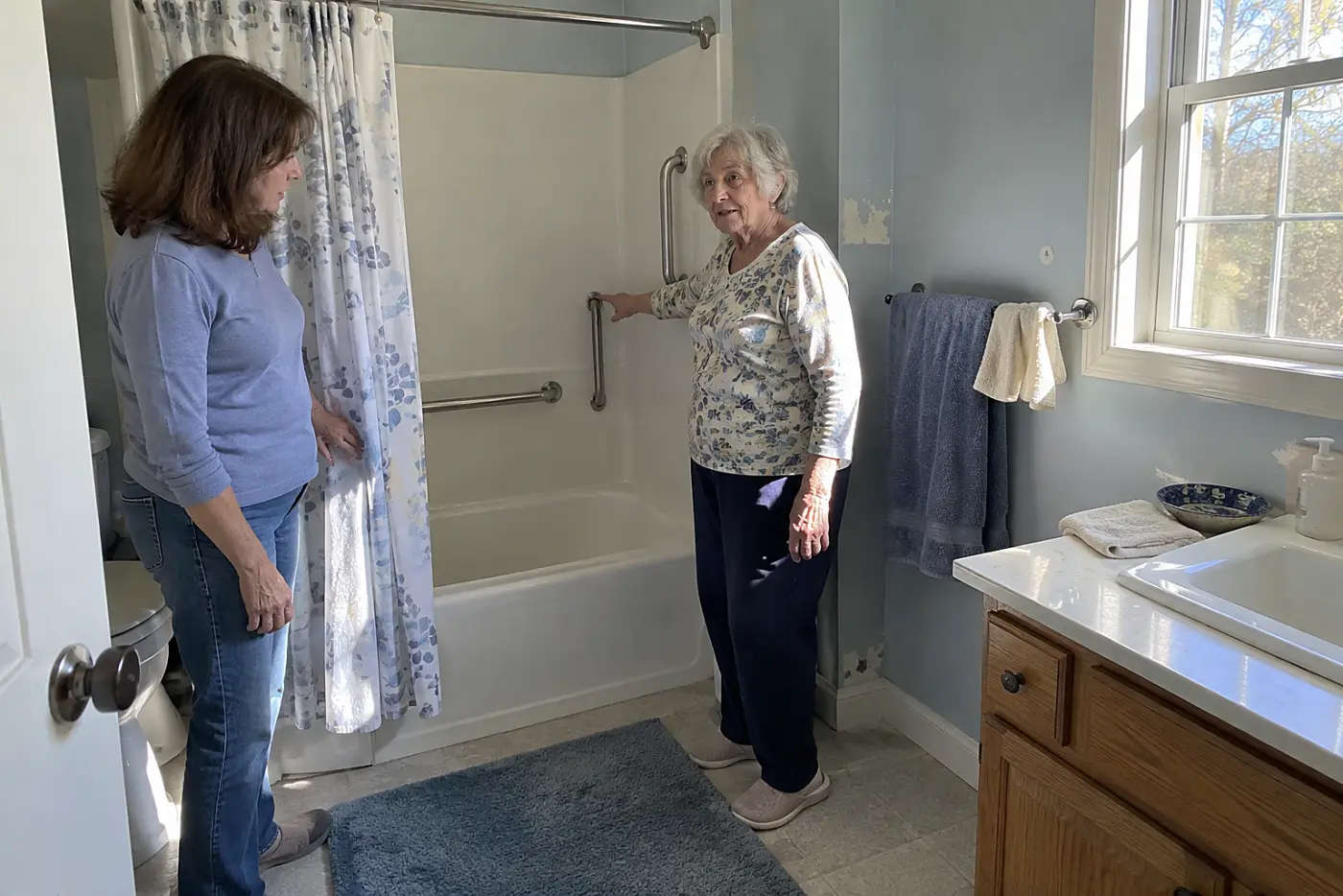
A towel bar isn't built to take your weight.
It's at the right height, so you grab it when stepping out of the tub. Your child sees your hand close around it and looks at the screws holding it to the wall.
The CDC recommends grab bars near the toilet and inside and outside the tub or shower. A towel bar serves towels; it doesn't replace a properly installed grab bar.
This week, notice exactly where you reach when you stand or step out. Ask a qualified installer to assess that spot and the wall behind it. Say, "I want a real grab bar where my hand already goes."
Another small habit starts at bedtime.
4The bedroom lamp beyond the bed

You cross the room before the light comes on.
The switch sits by the door, while the lamp is across the bedroom. Your child watches you take the familiar route and realizes it disappears when the room is dark.
A clear route matters most when you're half awake. You shouldn't have to memorize the position of every chair to reach a light.
This week, lie in bed and try to reach a lamp without standing. Move one within reach, or ask an electrician about a bedside switch. Say, "I want light before my feet hit the floor."
Light won't help if the path itself has changed.
3The furniture shifted into the bedroom walkway
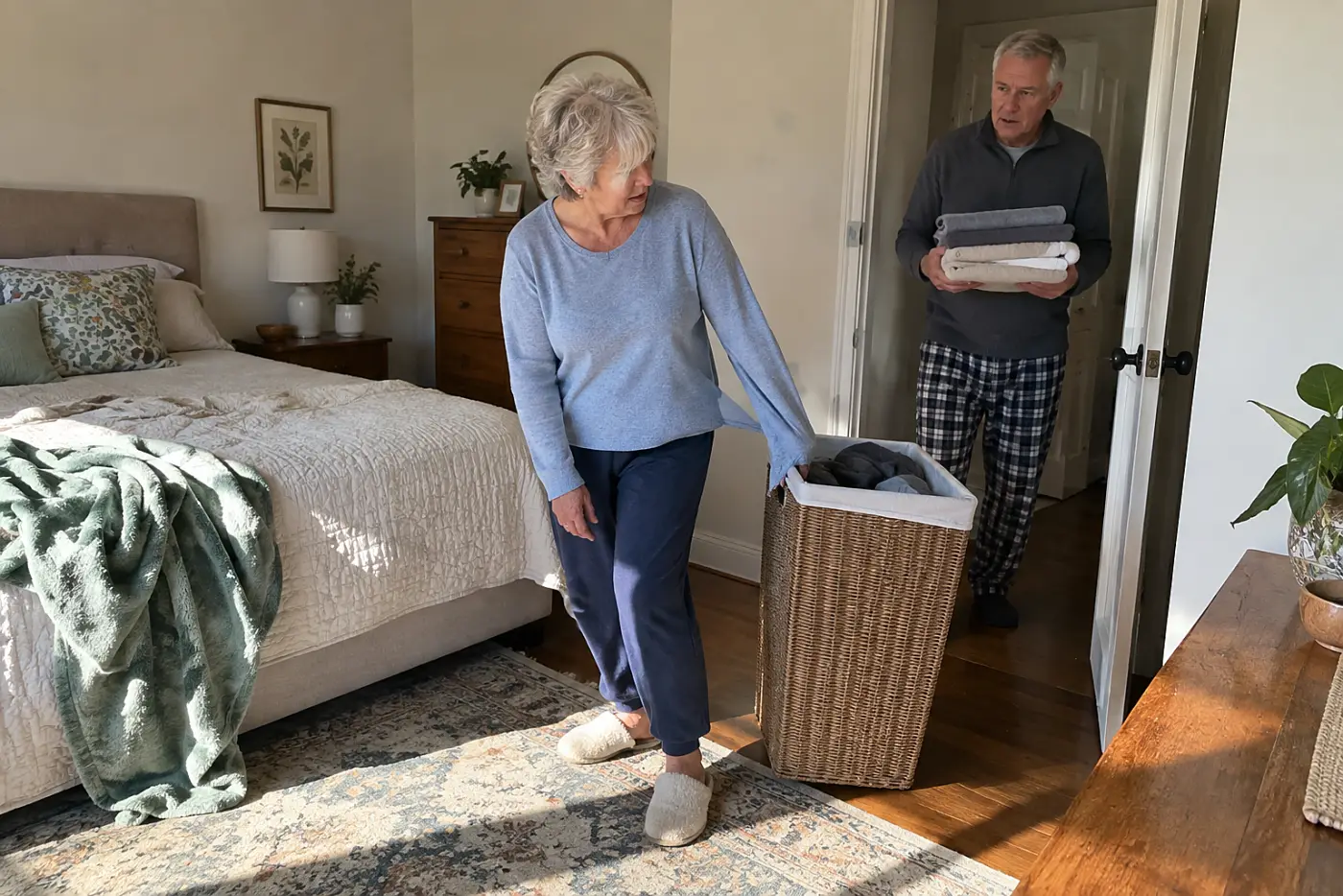
The route from bed to bathroom has narrowed.
A small table moves beside the dresser, then a laundry hamper takes the open spot. Your child walks through during daylight and sees a turn you take each night without thinking.
The National Institute on Aging advises keeping walking paths clear. At night, the path needs to work without a sideways step around furniture.
This week, walk from the bed to the bathroom and back with the room lights off and a flashlight in hand. Move anything that makes you turn or reach for support. Say, "This path needs to stay open, even when company comes."
Before anyone else changes the room, check one private detail.
2The spare key hidden under the flowerpot
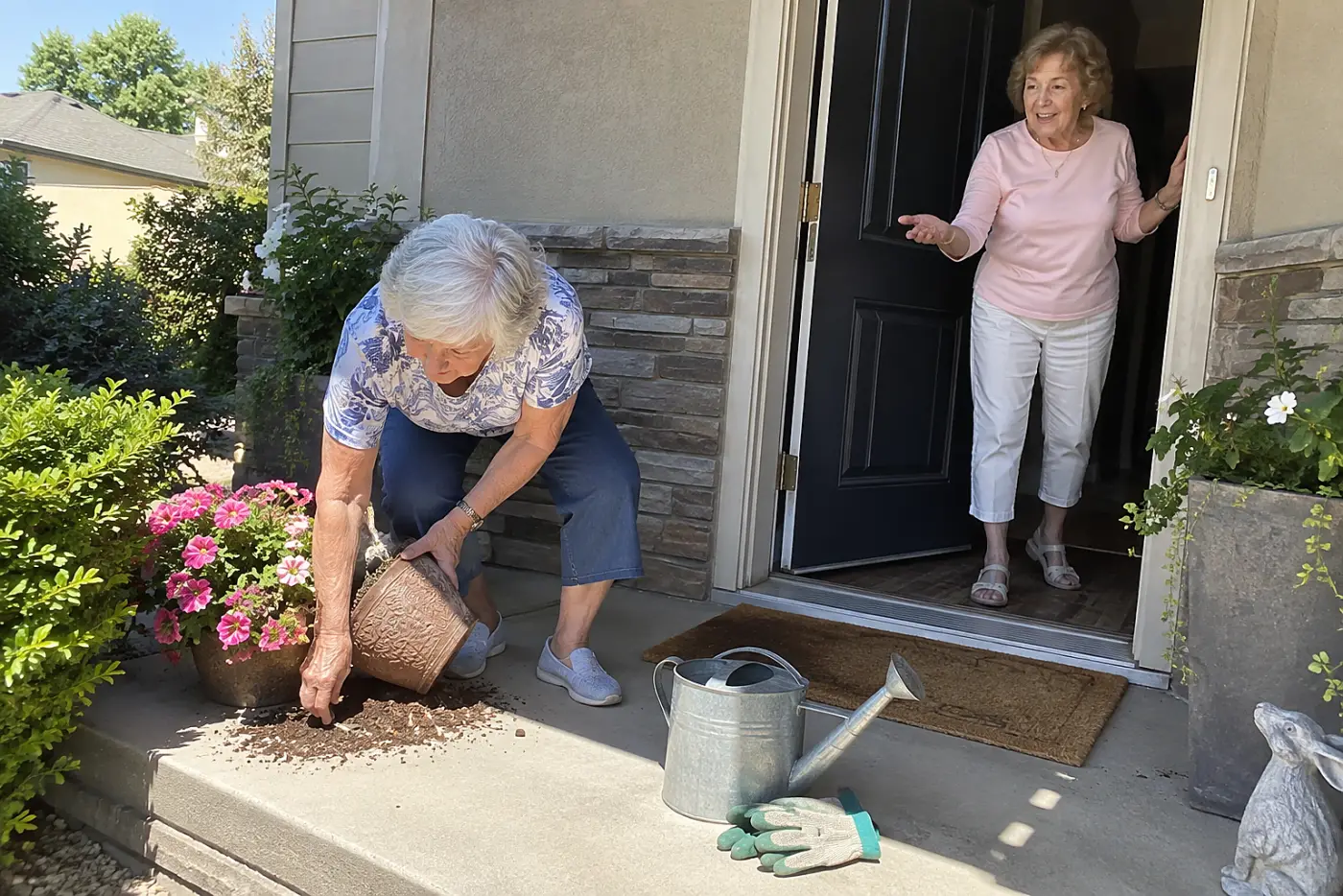
Everyone knows where the flowerpot key lives.
A familiar hiding place feels handy until someone outside the family guesses it. Your child notices the pot beside the door and asks who else has used that key.
A spare key should be available to someone you trust, not to everyone who checks beside the steps. You also deserve to know exactly who holds a copy.
This week, collect spare keys and make a short list of holders. Say, "Tell me if you still have a copy, so my list is right."
Now you have something better than a list of worries.
1The house walk-through you invite first

A worried glance isn't a plan for your house.
When someone points out a loose rail, it's easy to hear a verdict about everything else. When no one says a word, it's easy to spend the visit reading faces. Neither version tells you which repair matters, who'll handle it, or whether anyone has mistaken a household choice for a problem.
A walk-through changes the order. You pick the time and the route, and you start with things you already want checked. Your child names what they noticed. You decide what gets fixed and what stays as it is. The conversation stays attached to the house, rather than becoming a judgment about your independence.
This week, choose a daylight hour and invite one person who knows your home. Carry a notebook and walk from the front step through the rooms you use every day.
For each concern, write down the location, the next action, and who owns it. Say, "Walk through with me and tell me what you noticed. I'll decide what we tackle first."
Then give them a chance to mention what you missed.
The bottom line
Across these 23 details, the pattern is the same: a house changes by inches while everyone waits for someone else to speak.
The best-prepared version of you has checked the routes and picked the repairs. You've also invited a direct conversation before a visit turns into an inspection.
Which of these has already happened in your family?
Bonus: The house walk-through you invite first
- Pick a daylight hour and say, "Let's walk through the house together."
- Start at the front steps, then follow the paths you use daily.
- Ask, "What have you noticed but hesitated to mention?" Write down the answer without agreeing to a fix on the spot.
- Choose the first repair yourself. Put its next step and the person handling it in your notebook.
David Ruiz
Tech & Home Writer
David tests gadgets with real readers in their 60s and 70s, because the best tech is the tech you'll actually use.
You might also like