25 What the Empty Bedroom Does to a Marriage
A spare key, an unused bed, and an open door turn ordinary household choices into decisions you both have to make.
By David Ruiz, Tech & Home Writer
Updated · 16 min read
- Written by our tech & home writer
- How we review

Read to the end: #1 is the room talk that prevents a furniture fight; almost nobody has it first.
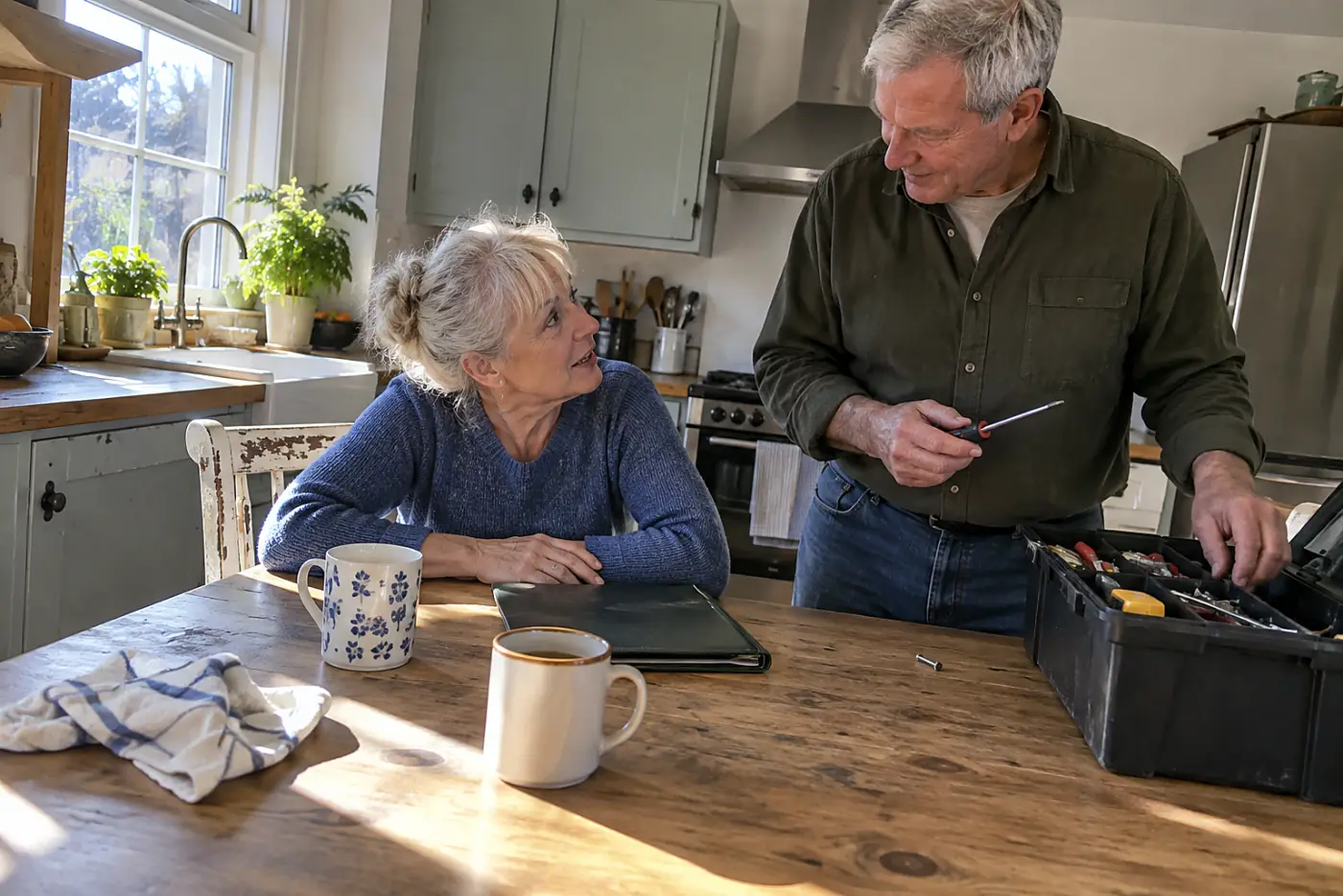
The bedroom door is open again. A stripe of hall light falls across the bedspread, and there's nobody to remind about a glass left on the nightstand. You stand there holding laundry that belongs somewhere else.
It seems as if the hard part should be missing your child. Then your spouse reaches for the remote while you're still looking down the hall. Nobody meant to choose between the living room and the doorway, yet the evening has already split.
These 25 things begin with what changes around the house.
25The hallway light left on
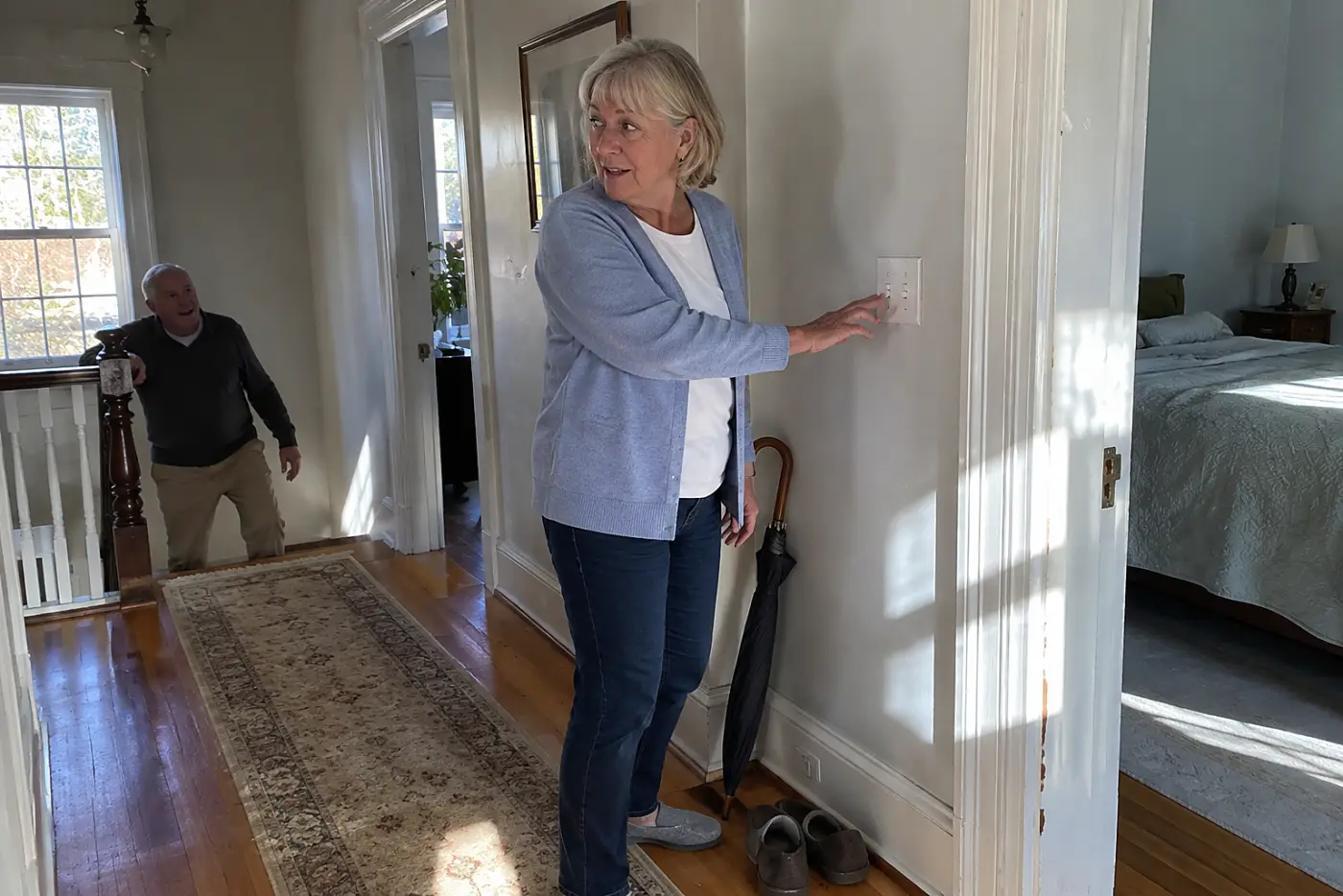
The light stays on longer than either of you intended.
One person has grown used to listening for a key in the door. The other sees no reason to keep a bulb burning after bedtime. A switch turns into a small, oddly sharp argument.
Neither of you is wrong about the bulb. But if the argument stays there, your spouse never learns why you pause beside the switch. The next night, the same exchange begins again.
This week, agree on when to turn it off, then stand together in the hall for a moment. Say, “I still listen for someone coming home.”
Then notice what happens at the door beside it.
24The closed bedroom door at breakfast

A closed door starts looking like a decision.
Leaving it shut preserves the room you remember. Opening it puts the unmade bed and empty floor in view while you carry coffee down the hall. Each choice changes the route through an ordinary morning.
Soon, one of you is avoiding that end of the house, and the other is wondering why. A door position is a poor substitute for an answer. If you disagree, leave it as it is until you've both said what seeing the room brings up.
This week, ask your spouse to stand with you at the doorway for a minute before changing anything. Say, “Do you want this open for now, or do you need it closed?”
You still have to walk past what was left inside.
23The laundry basket without their clothes
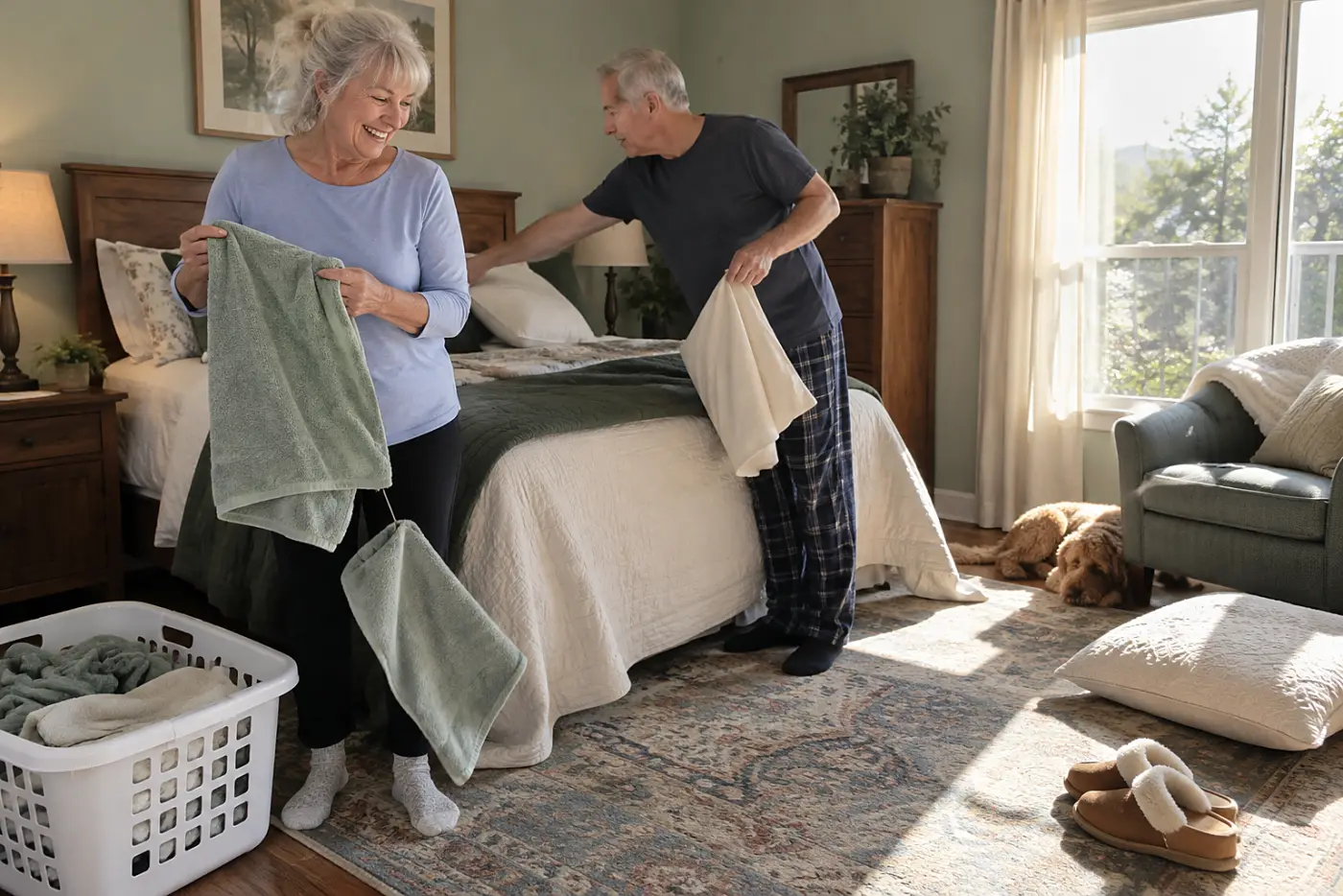
The laundry shrinks before the habits do.
You sort towels and reach for clothes that aren't there. Your spouse finishes the load and sees an empty basket, ready to put away. Neither response tells you how the other feels.
The American Association for Marriage and Family Therapy has a directory if ordinary household arguments start feeling impossible to untangle. You don't need a diagnosis to name what's happening at the dryer.
A remark about detergent lands badly when you meant to say you miss the bustle. This week, fold a load together and name one household chore that feels different. Say, “I keep expecting another pile on the floor.”
The kitchen has its own missing place.
22The extra plate in the cabinet
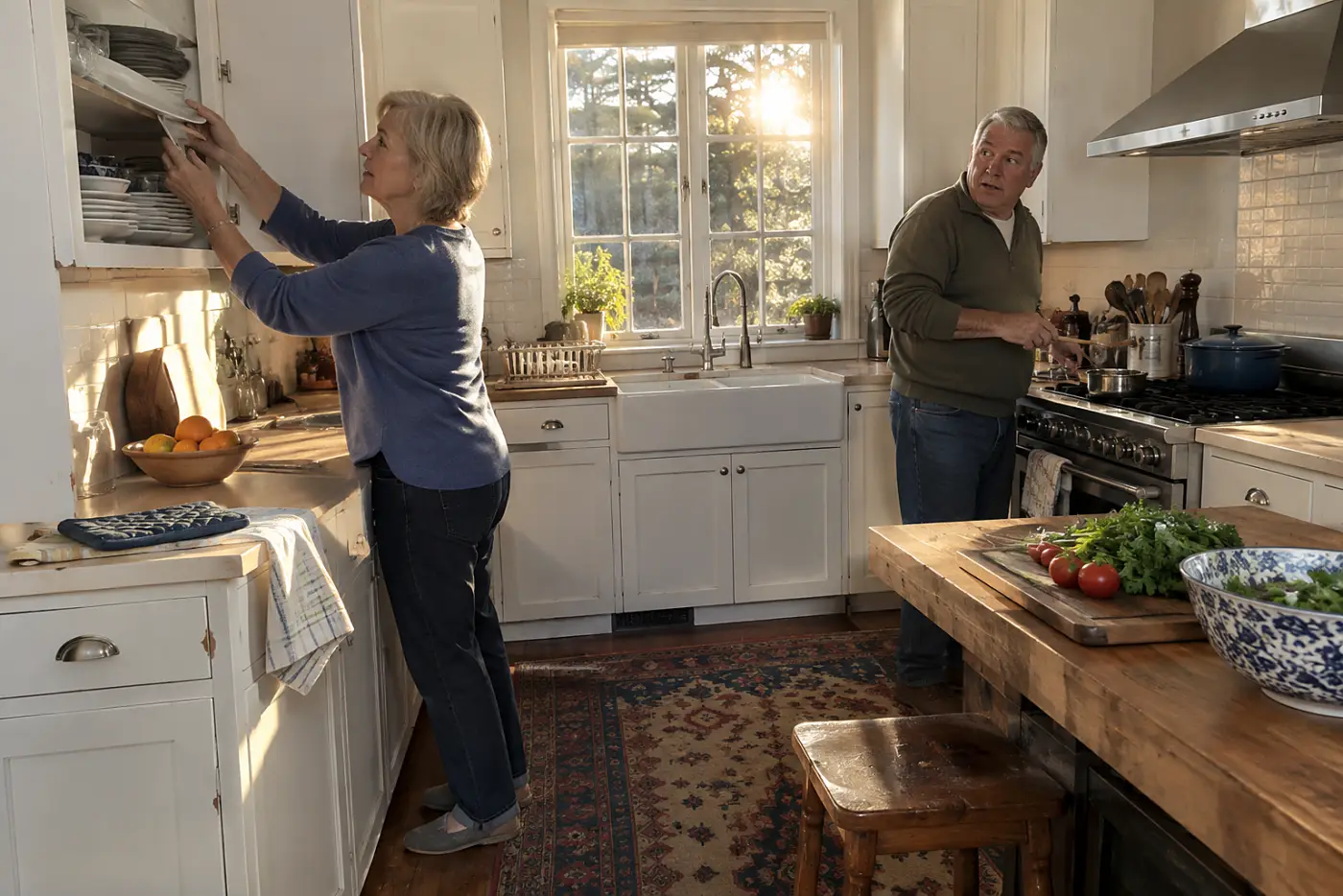
Dinner still follows an old head count.
You pull down three plates, then put one back. Your spouse starts cooking less food and asks why you bought another large bag of rice. The two of you are working from different pictures of dinner.
The wrong-sized meal wastes food, but the worse loss is sitting down already annoyed. A small ritual, setting the table, has become the place where neither of you wants to admit something changed.
This week, choose one dinner you both like and cook the amount you'll eat. Say, “I reached for their plate again. Does dinner feel strange to you too?”
After the dishes, the old timetable returns.
21The evening pickup that stopped happening
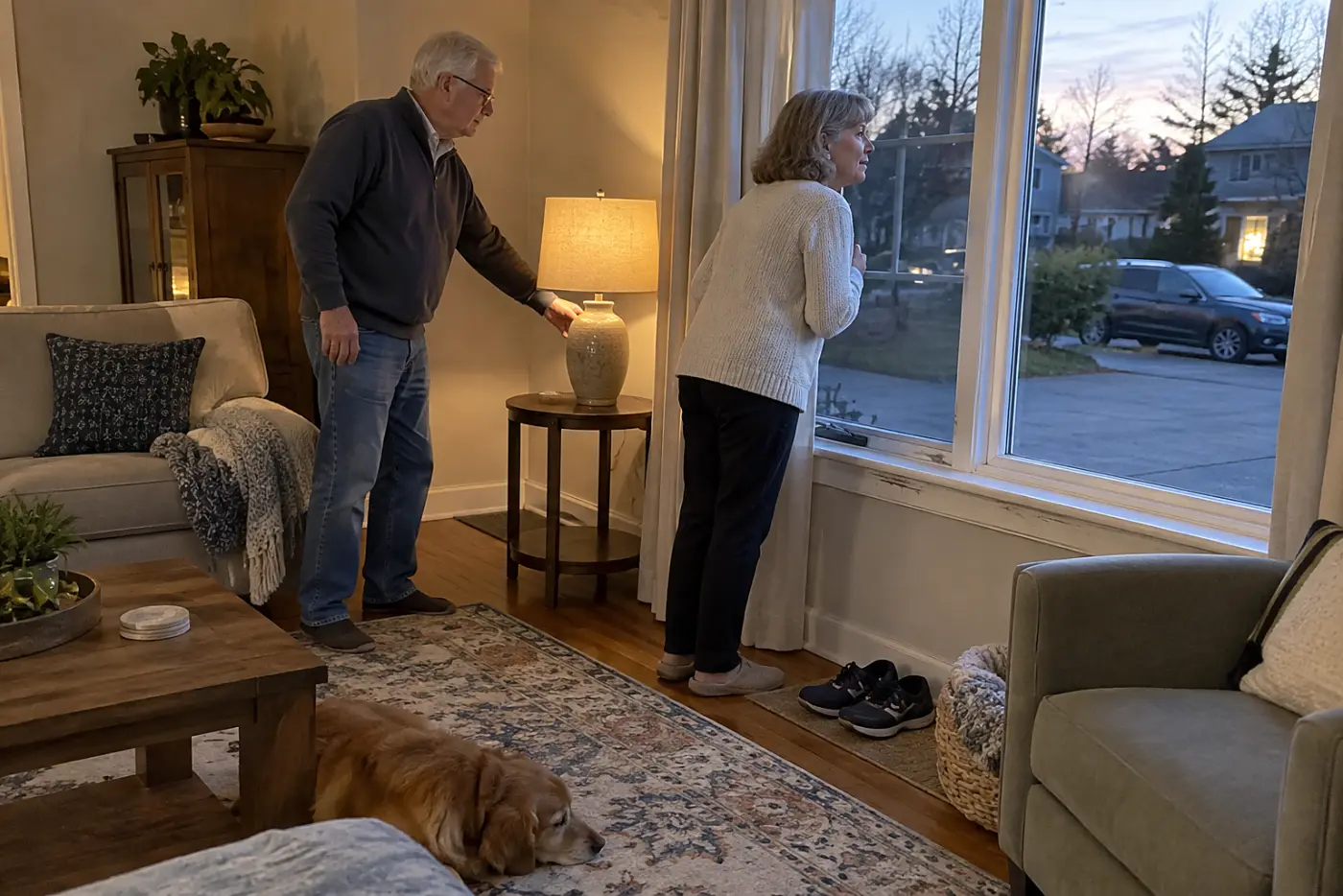
An hour opens up, but nobody claims it.
You once checked the clock before a pickup or late arrival. Now your spouse proposes a movie at that same hour, and your attention stays on the driveway. The clock has changed faster than your body has.
Repeated refusals start sounding like a verdict on the person inviting you. Point to the hour instead of asking your spouse to guess what went wrong. The National Institute on Aging describes social isolation and loneliness as different experiences; a busy household once hid both from view.
This week, mark that old pickup hour with a walk together. Say, “I'm still waiting at eight, even though nobody needs a ride.”
Then the question of who gets your attention moves elsewhere.
20The television remote between two chairs

The remote takes over the conversation.
One of you turns on a show as soon as the dishes are done. The other sits through an episode while wishing there were ten minutes to talk. Silence looks shared from one chair and crowded from the other.
After several nights, asking to turn it off sounds like criticism of how your spouse rests. You don't have to give up the show to make room for an exchange. Put the talk before the opening credits, when nobody has to interrupt anything.
This week, pick a time to watch together and a time to leave the screen dark. Say, “Before we start this, will you sit with me for ten minutes?”
Once the room is still, another kind of sound comes through.
19The creak on the upstairs landing
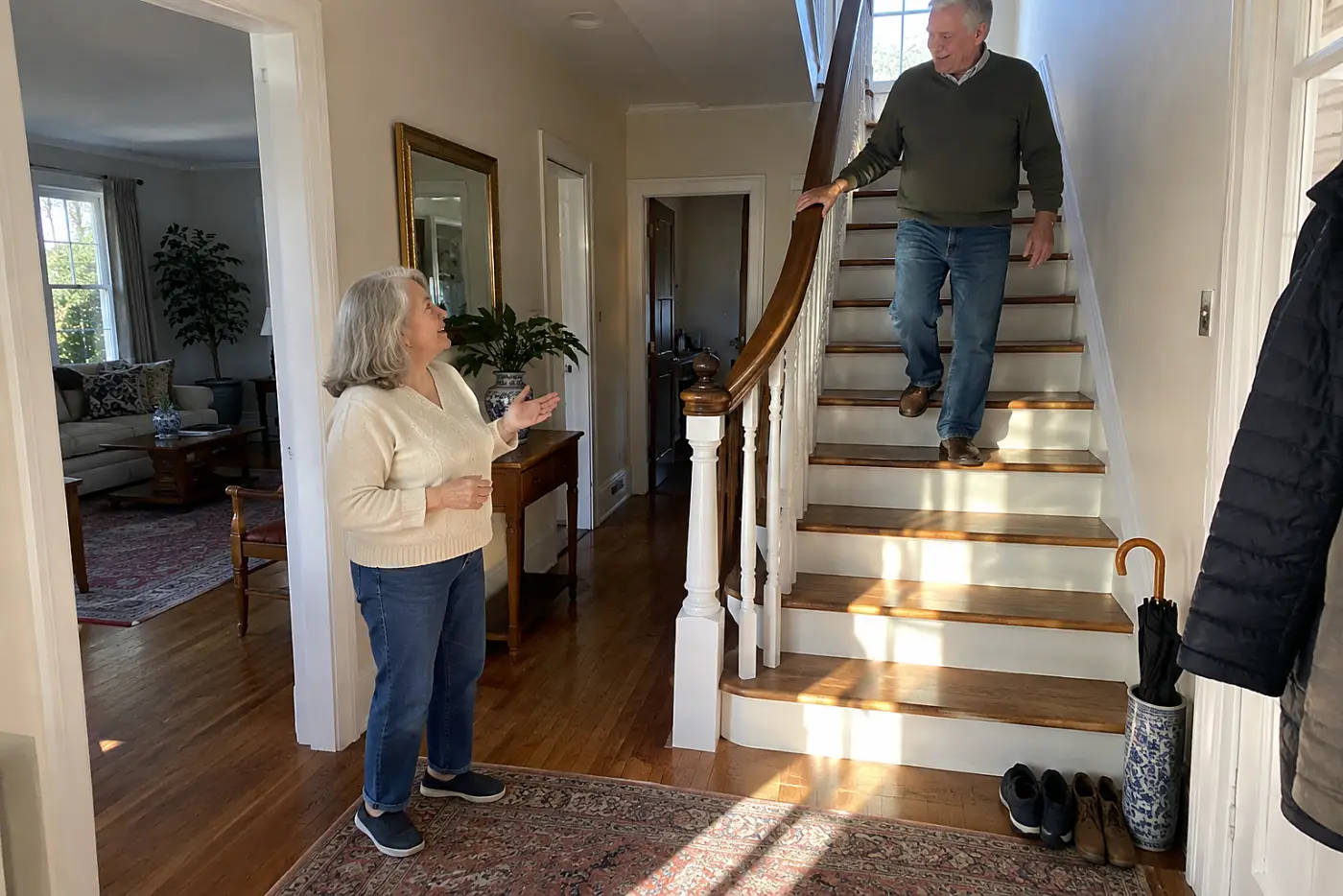
An old sound still gets a reaction.
The house settles, and one of you looks toward the stairs. The other has stopped noticing that board altogether. A quick glance becomes easier to hide than to explain.
Hiding it leaves your spouse guessing why you seemed distant in the middle of a sentence. That brief look isn't a request to fix the stairs. It's a chance to let someone beside you know where your mind went.
This week, point out the sound when it happens. Say, “That board still makes me look up.”
The things you kept in the room hold different memories.
18The trophies lined up on the shelf
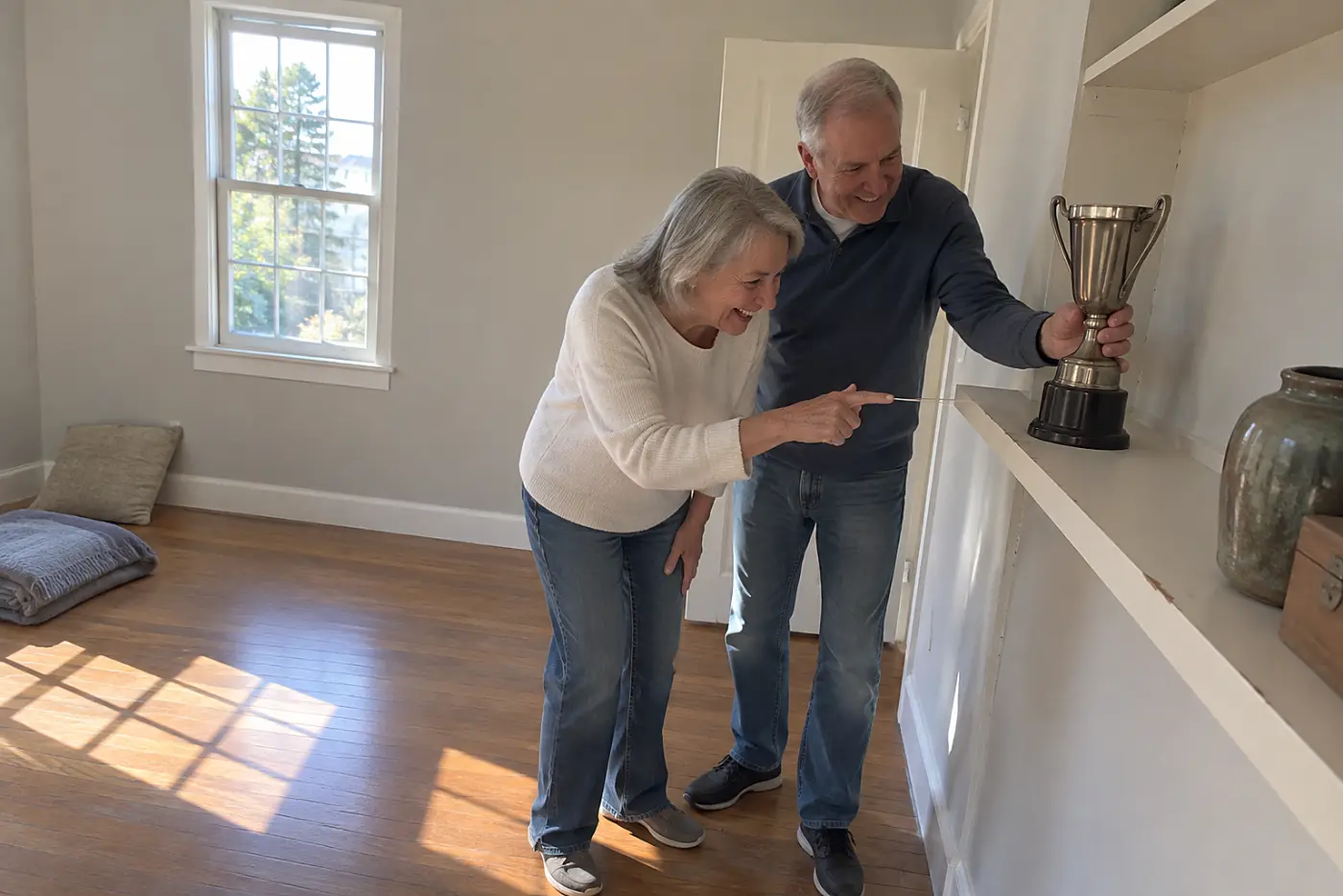
One person's clutter is another person's record.
A trophy holds a school year, a long drive, or a day you remember clearly. To your spouse, it takes up a shelf needed for books. Clearing it without a conversation turns a storage job into an accusation.
A box carried to the garage is easy to read as a box marked unwanted. Ask which objects tell a story before either of you sorts by size. The answer won't require keeping every trophy, but it gives the shelf a history your spouse hasn't seen.
This week, choose three objects each of you wants to ask about. Say, “Tell me which one matters to you before we pack anything.”
Then decide what happens to the things that belong to someone else.
17The borrowed jacket in the closet
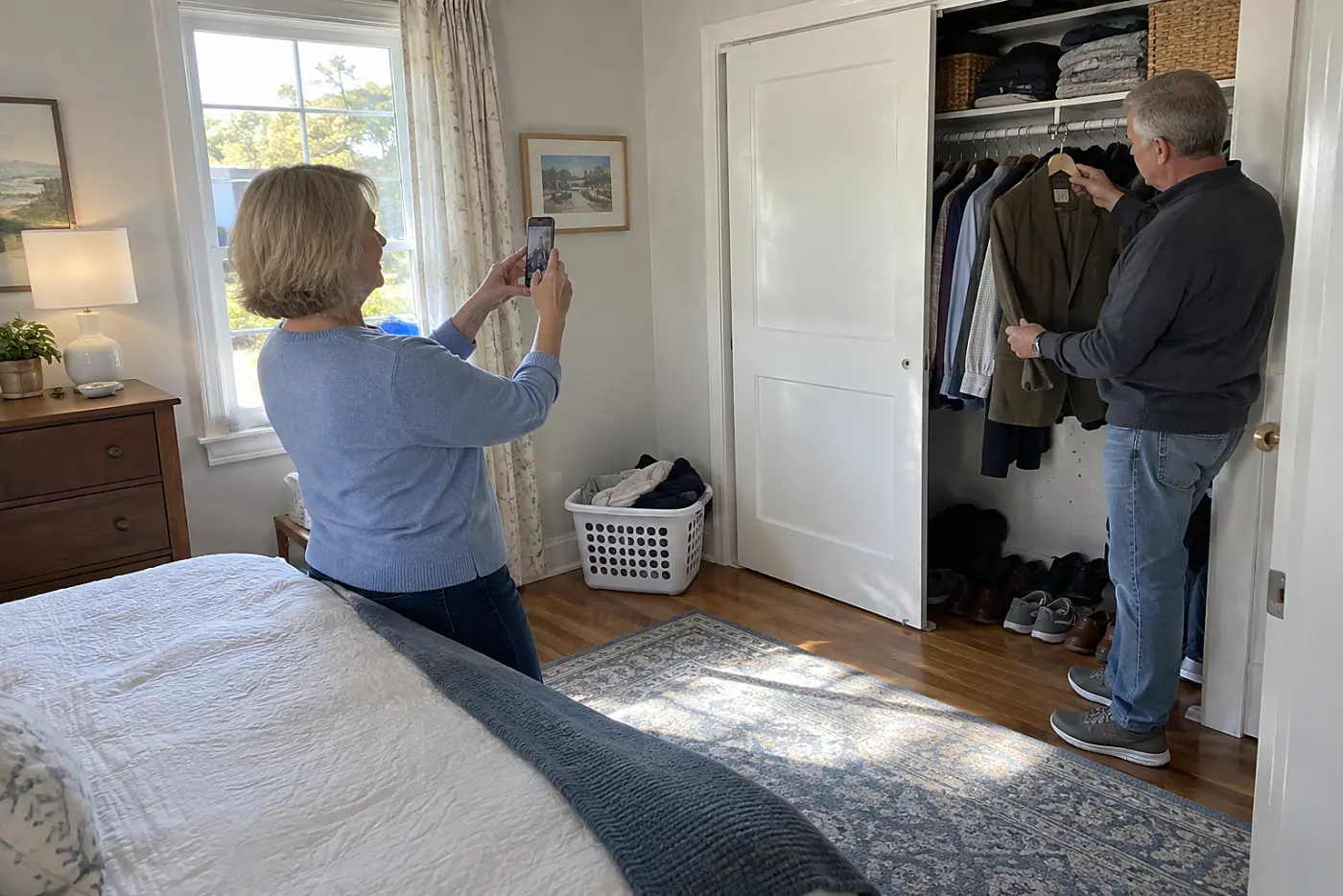
Their jacket isn't yours to give away.
A child who has moved out still owns the clothes left behind. You and your spouse don't need to agree on the jacket's sentimental value to respect that. Ask its owner before donating it.
An argument between spouses becomes harder once somebody outside the house asks where their things went. The Federal Trade Commission has guidance on donating used goods, but permission comes before the donation bag.
This week, send a photo of the jacket and ask what they want done with it. Say to your spouse, “Let's wait for an answer before clearing this rail.”
That answer won't settle how much room stays theirs.
16The freshly made guest bed
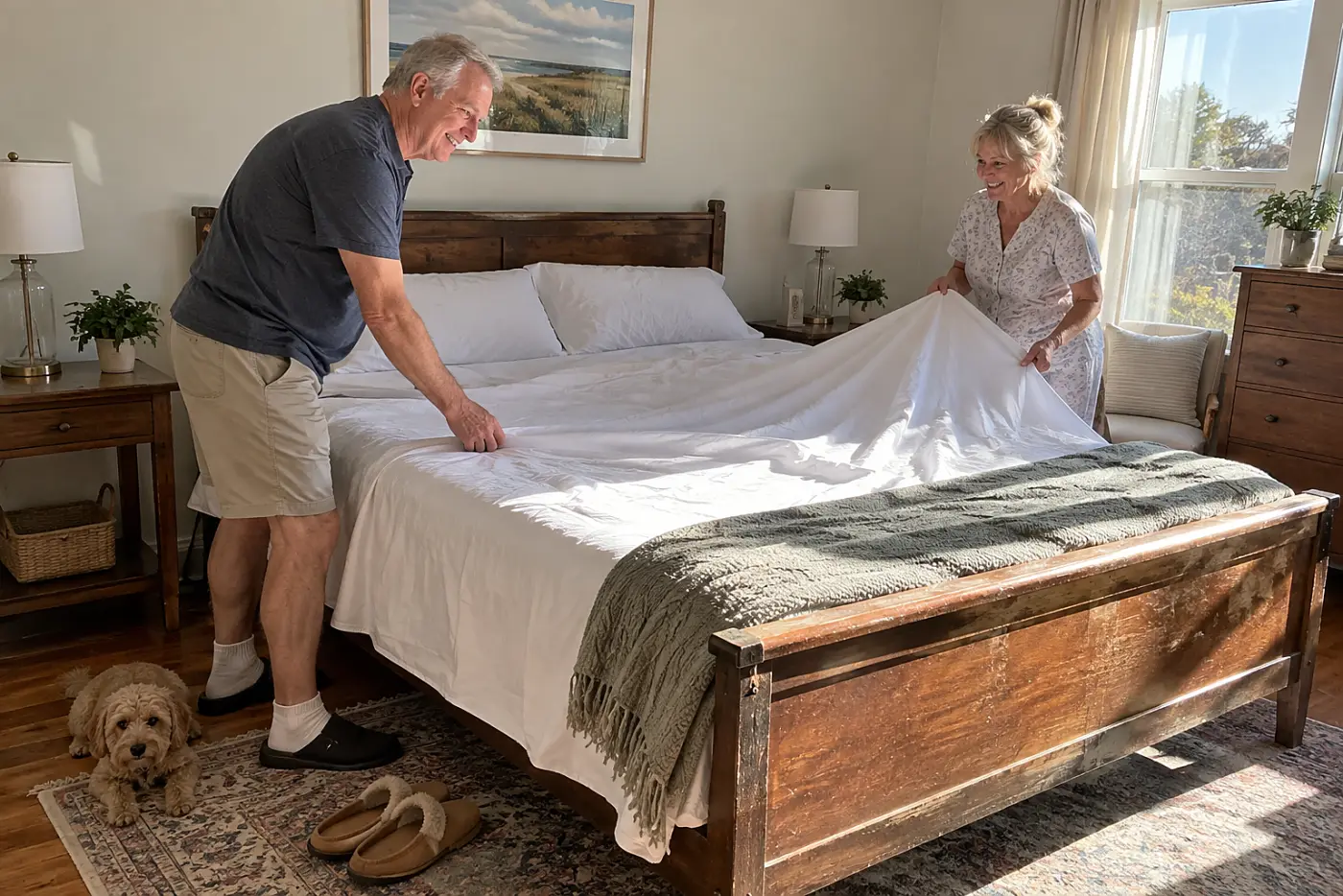
A made bed sends an invitation.
Fresh sheets and a cleared dresser make visits easier. They also tell a story about how available the room is, even if nobody has said it aloud. Your spouse sees a guest room; you see a place your child can return to.
Then a casual invitation becomes a fight over who gets to sleep there. Don't wait until someone asks for a weekend to find out what your spouse thought the fresh sheets meant. A made bed is easy to undo; a withdrawn invitation is awkward for everyone.
This week, decide whether the room is ready for guests, storage, or neither. Say, “I want us to agree before we invite anyone to stay.”
The room isn't the only place where visits need a plan.
15The spare key still on the hook
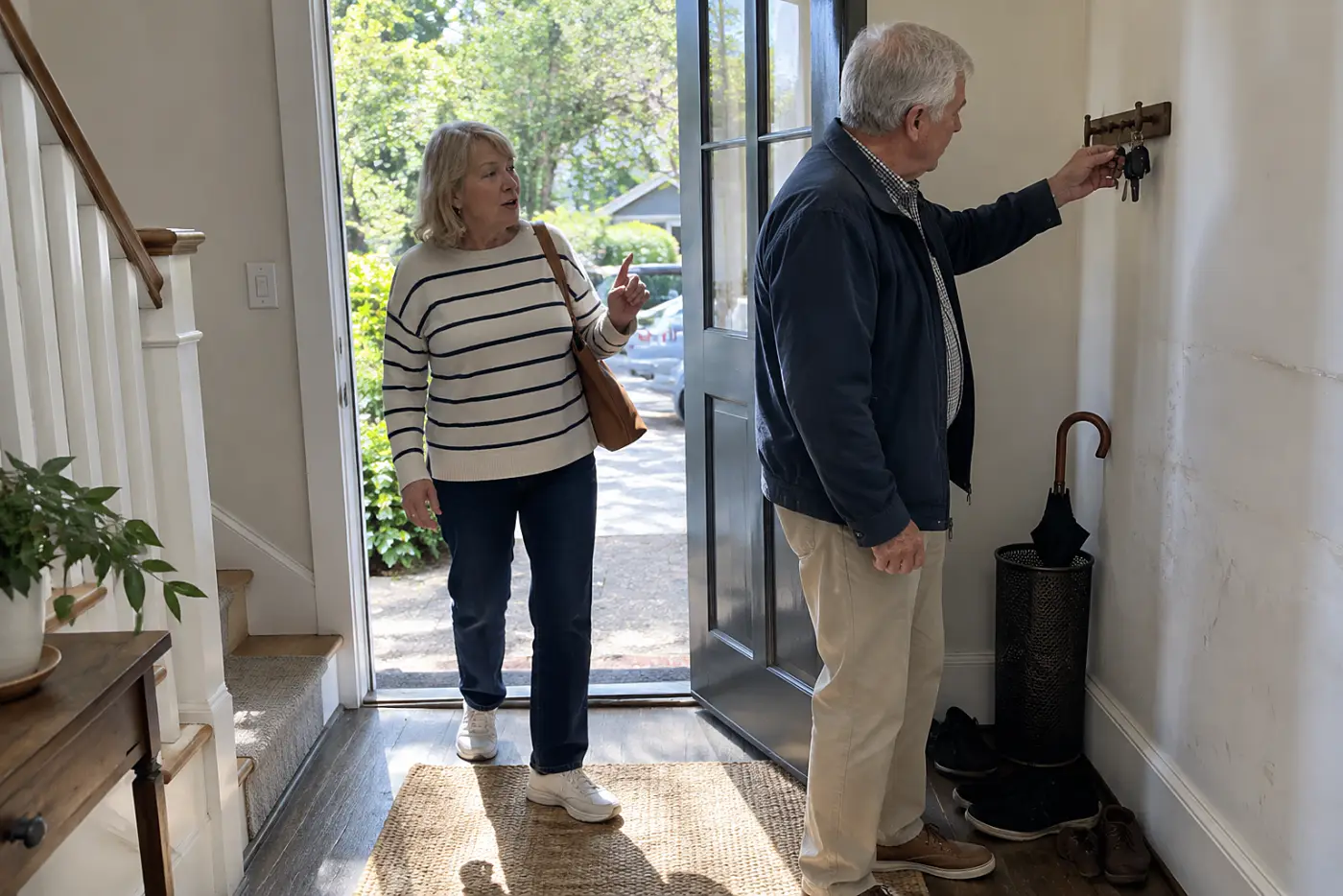
A key settles access without a conversation.
When your child visits, a spare key makes coming in easy. It also leaves you and your spouse with different ideas about notice, overnight stays, and who comes through the door when you're out.
An unexpected visit costs you a relaxed evening at home. Neither a welcome nor a boundary has to be delivered at the doorstep. The Family Institute at Northwestern University writes about family relationships; at home, the useful part is saying the expectation aloud before it is tested.
This week, agree with your spouse on the notice you'd both like, then tell your child. Say, “We're glad to see you. Please let us know before you come over.”
Even a planned visit changes the morning after.
14The breakfast table after a weekend visit
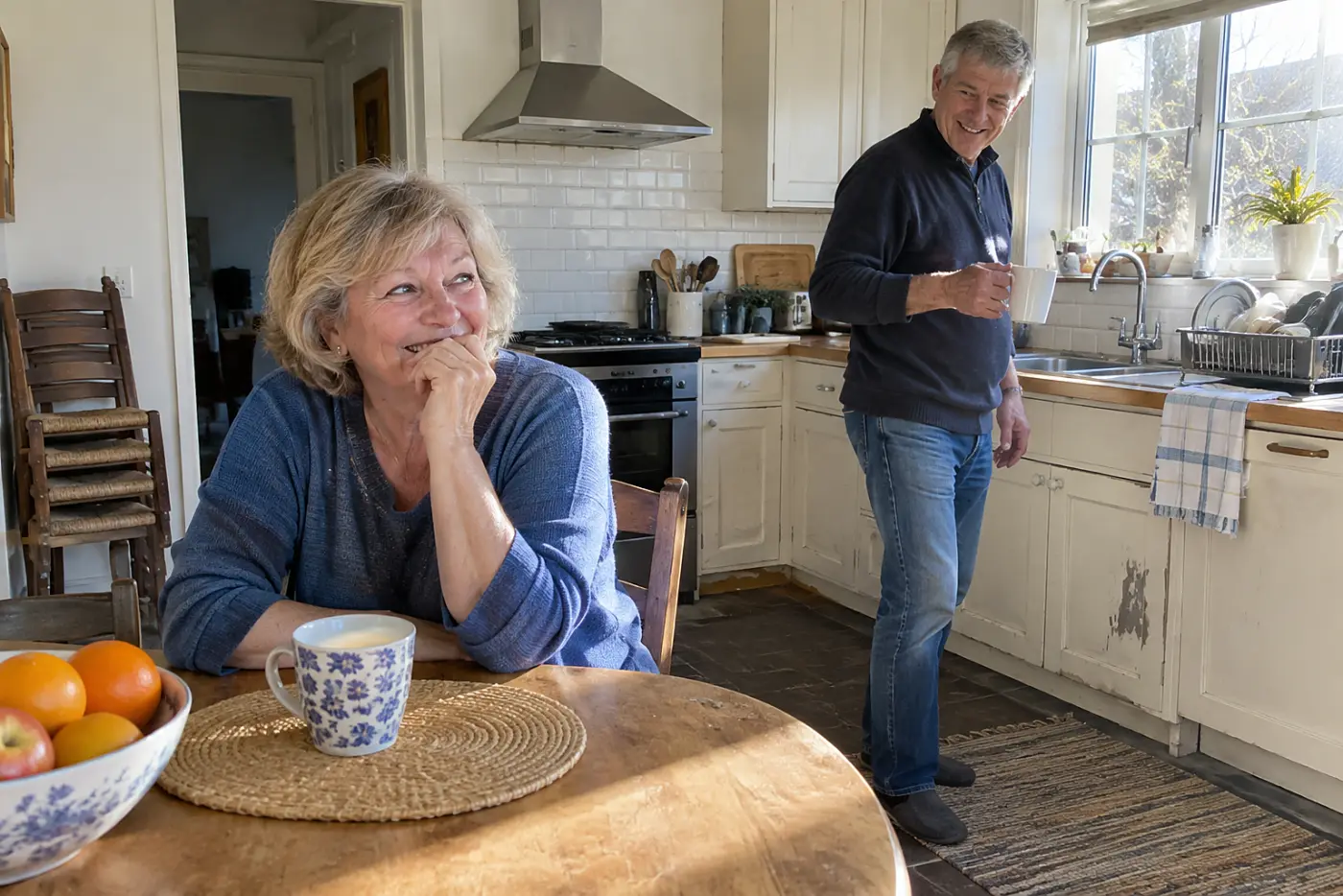
Departure can hit harder the second time.
During a visit, coats fill the hall and breakfast takes longer. Afterward, the cleared table looks newly empty. One of you starts cleaning immediately while the other wants to sit and talk about what happened.
If cleaning looks like impatience, or sitting looks like avoidance, the goodbye follows you into Monday. Give each response a place in the morning rather than treating either as a verdict on the visit. The dishes will still be there after half an hour.
This week, before the next visit, agree on what happens after your guest leaves. Say, “I need half an hour together before we strip the bed.”
That half hour has to compete with the rest of the week.
13The calendar with fewer school dates
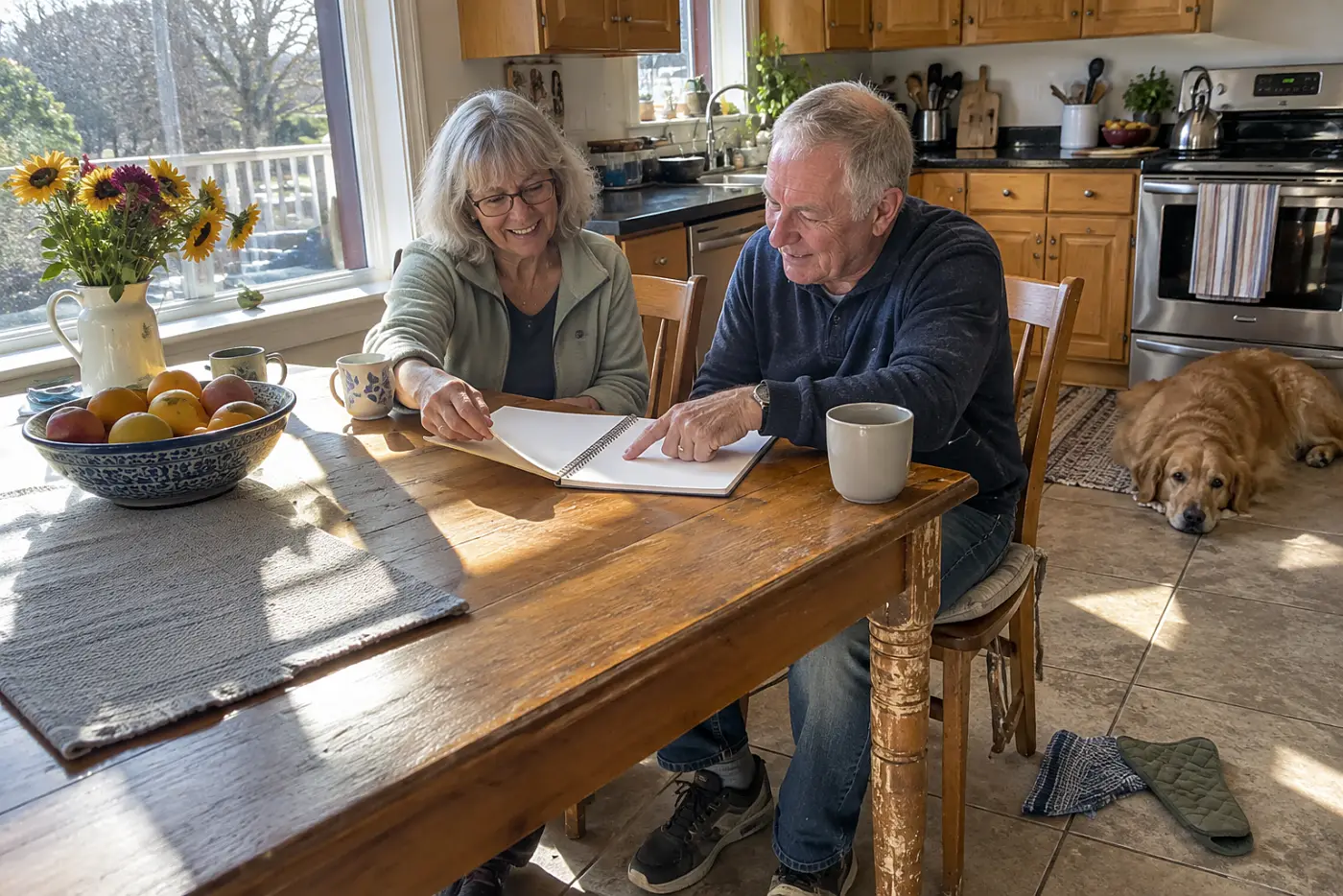
The calendar lost a shared script.
School concerts, appointments, and pickups once told you where both of you needed to be. Without those entries, a free Saturday sits blank until one spouse fills it. The other learns the plan afterward.
Resentment grows from the missing invitation, even when the outing itself sounds fine. A blank square isn't a promise that both of you are free for errands. It is time neither person has claimed yet.
This week, put one shared hour on the calendar before adding errands. Say, “What do we want this Saturday to look like?”
A calendar entry still needs something worth leaving home for.
12The walk around the same block

A walk can expose how little you've talked.
Side by side, you don't have to hold eye contact. That helps some conversations start. It also makes it easy to spend the whole block discussing a neighbor's fence instead of the empty room upstairs.
Calling that walk “time together” won't help if one of you goes home feeling unheard. If the first answer is short, keep walking without supplying a better one. The National Institute on Aging has information on staying socially connected, but the question on this sidewalk belongs to you.
This week, take one short walk and ask a question without trying to fix the answer. Say, “What part of this change has felt hardest at home?”
The answer follows you back through the front door.
11The couch seat no longer taken
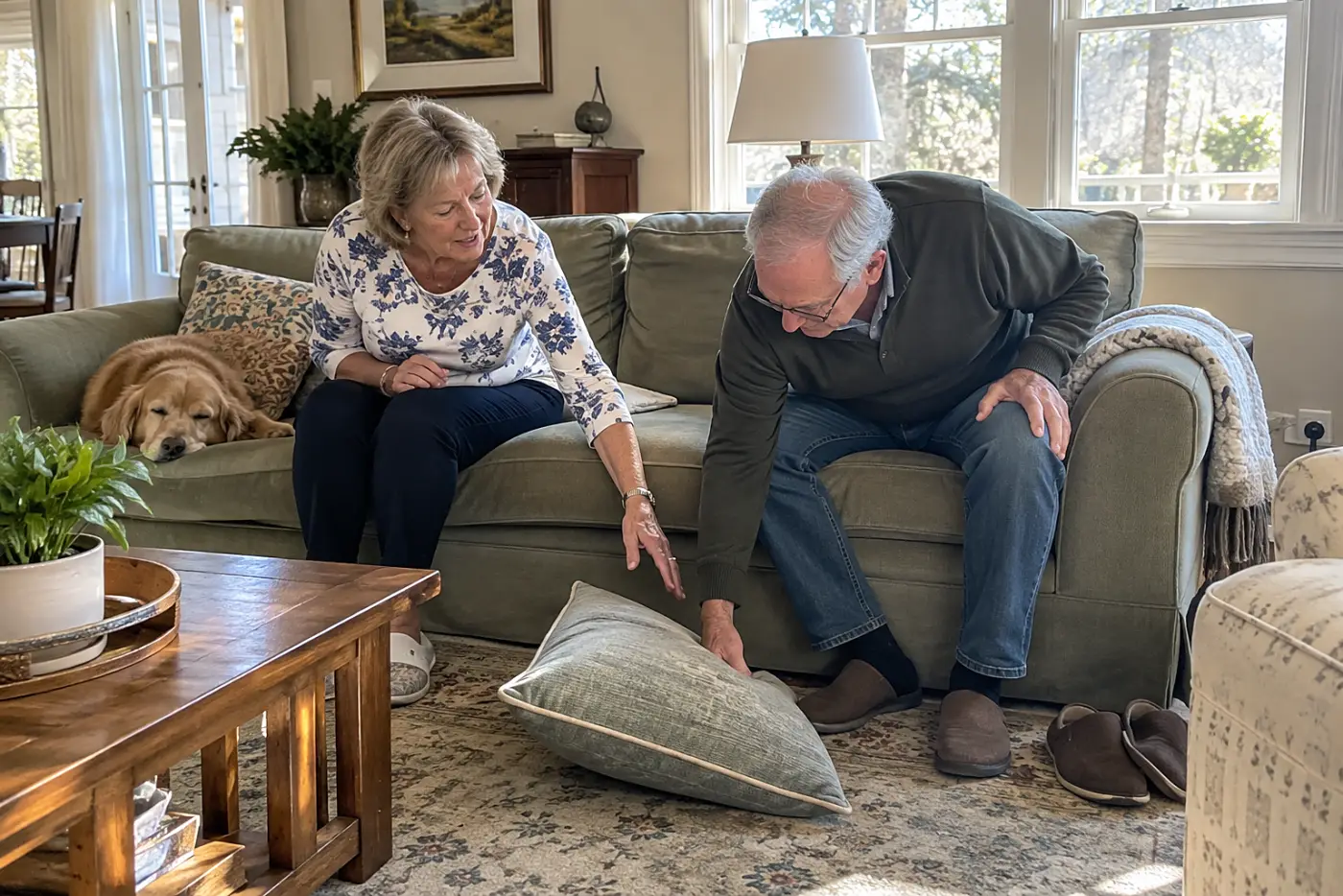
An empty cushion changes where you sit.
You and your spouse took familiar spots when the family watched television. With one person gone, a gap sits between you. Moving closer feels deliberate in a way it never did before.
If neither of you moves, distance becomes the easiest habit to keep. Your spouse might welcome the company and still need room for an elbow or a book. Asking makes the move an invitation, not a test.
This week, sit beside your spouse for one show. Say, “I want to sit here tonight. Is that all right?”
Closeness gets harder when the day has worn you out.
10The work bag dropped by the door

Work brings home its own noise.
One of you walks in ready to talk. The other needs to put down a bag and breathe before hearing about the day. When the house was busier, those few minutes disappeared among other demands.
Now the delay feels personal, especially if you've waited alone through dinner. Give the pause a beginning and an end so it doesn't stretch across the entire evening. The American Psychological Association has resources on stress, but a work bag by the door gives you a more immediate signal.
This week, agree on a short landing period after either of you gets home. Say, “I want to hear about your day. Give me a few minutes to get settled.”
When both of you are ready, the subject still matters.
9The same question at dinner

The usual dinner question starts carrying too much.
“How was your day?” asks for a whole day in one answer. A short reply sounds like a closed door when your spouse was hoping for company. The question has become a demand neither of you intended.
Then dinner turns into an interview. One person keeps asking, while the other searches for a report worth giving. A detail you already know happened is easier to answer than a request to sum up everything since breakfast.
This week, ask about one thing you already know happened. Say, “How did that call with your sister go?”
Some days the answer points beyond the two of you.
8The friend you stopped calling
One marriage can't fill every empty hour.
You and your spouse still need other voices. If you wait for one person to be free for every walk, meal, and story, ordinary solitude starts to feel like rejection.
That weight lands on the marriage even when nobody has done anything wrong. The National Institute on Aging's social isolation and loneliness page draws a line between being alone and feeling alone. Look at which one troubles you on a particular evening.
This week, call a friend and set a date you intend to keep. Say to your spouse, “I'm seeing my friend Thursday. What would you like to do that evening?”
Outside plans change how you spend time together.
7The date night booked out of duty

A reservation can't supply a conversation.
You dress, drive, and order dinner, then talk about the dishwasher. Nothing is wrong with that conversation. Trouble starts when you both expect the table to make you feel close on command.
A disappointing night out costs more than the meal if it makes trying again feel foolish. Save the reservation for a place you both want to visit. Coffee nearby leaves you free to go home after one cup, without treating the evening as a failure.
This week, choose an outing you both want, even if it's coffee nearby. Say, “I'd rather do something small that we actually enjoy.”
Enjoyment doesn't settle what happens when you come home.
6The bedroom lamp switched off early
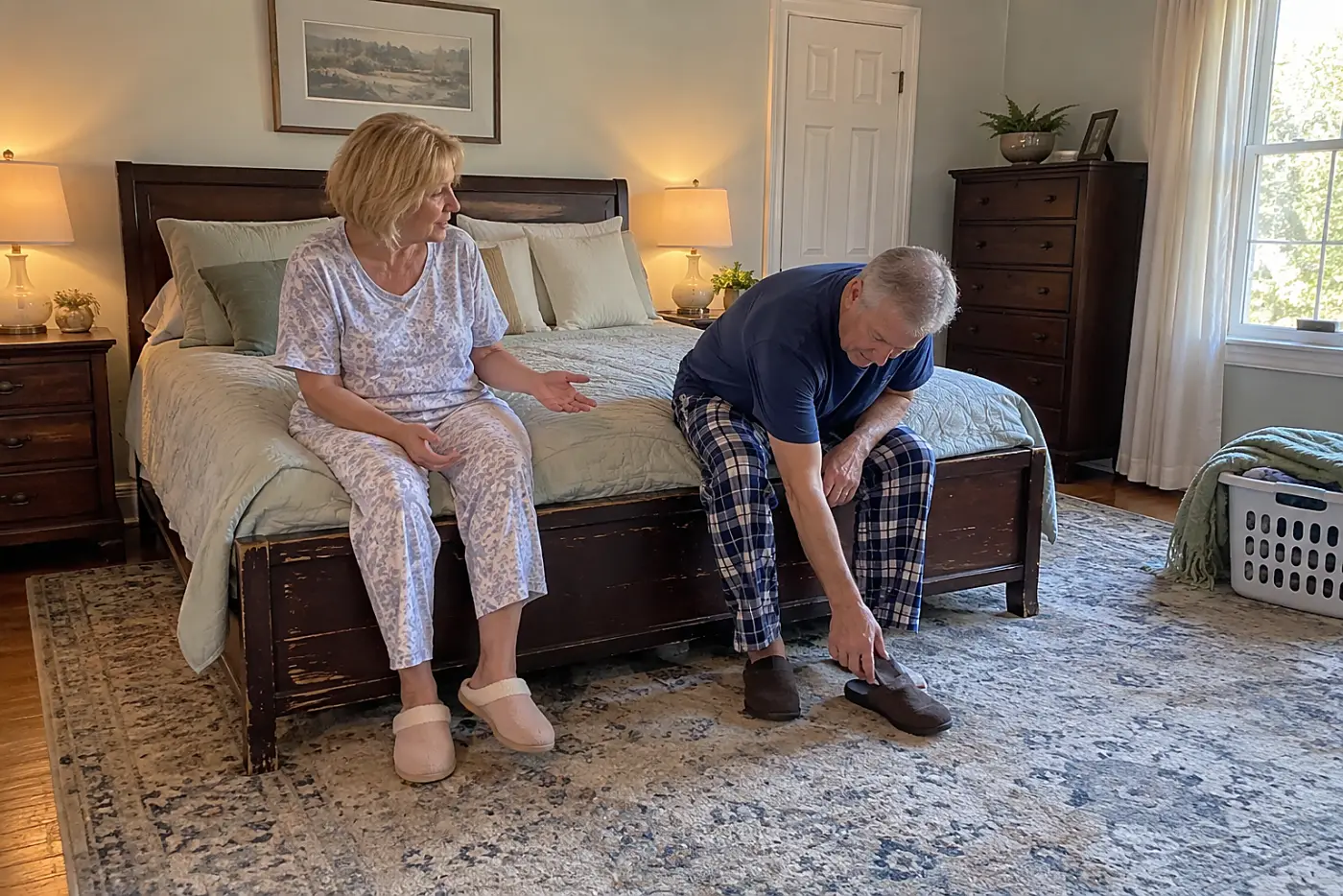
Bedtime carries a new set of expectations.
Without late pickups or a teenager awake down the hall, evenings belong to the two of you. That doesn't mean you'll want the same bedtime, conversation, or physical closeness. Guessing leaves one spouse pursuing and the other retreating.
Silence at night can last into breakfast. If the gap keeps hurting, the American Association of Sexuality Educators, Counselors and Therapists has a provider directory. You don't have to wait for a crisis to say what feels different.
This week, talk before getting into bed, when neither person is trying to sleep. Say, “What helps you feel close lately, without putting tonight under pressure?”
The next morning brings practical choices too.
5The household budget after move-out
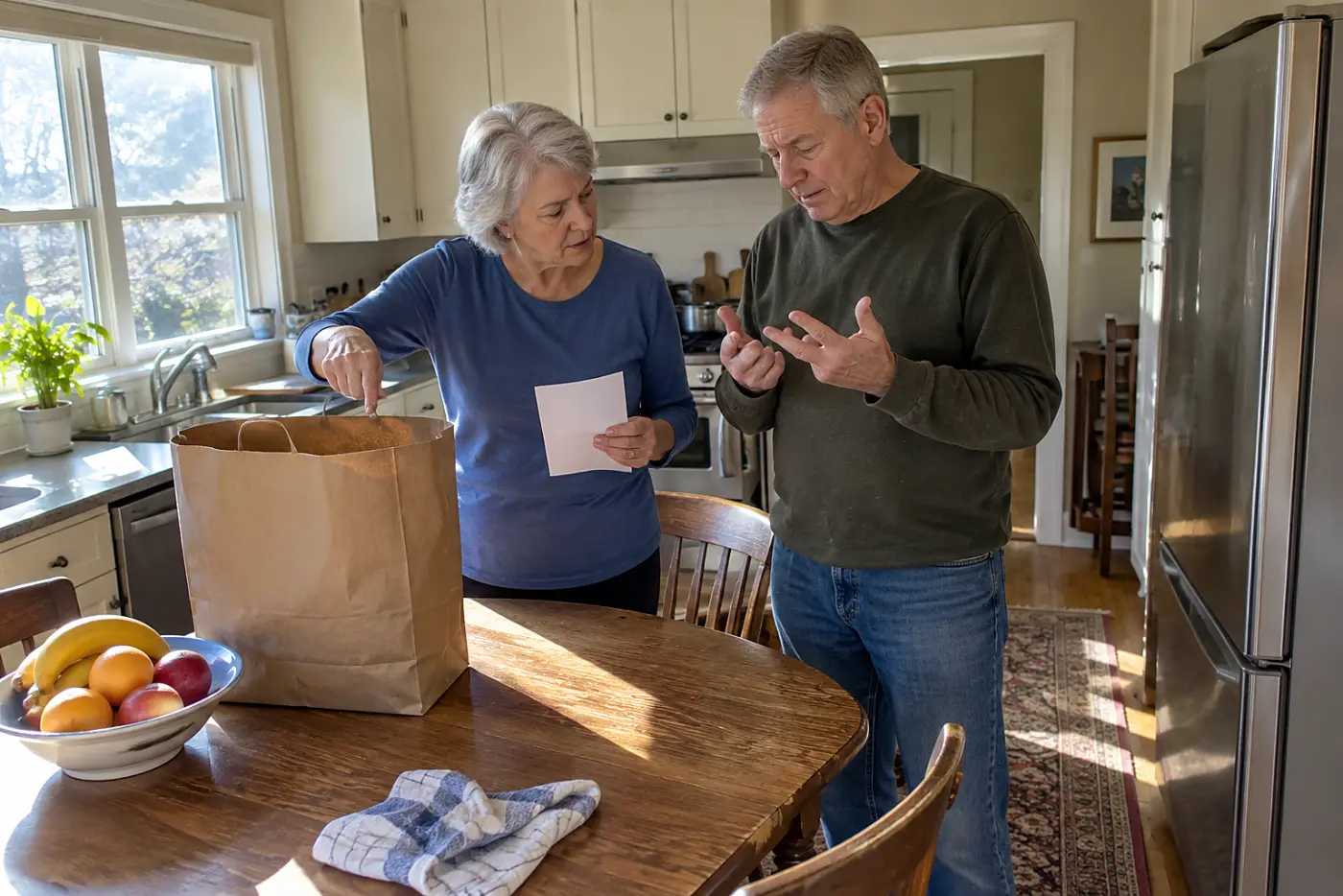
Fewer groceries don't settle the money question.
You and your spouse may picture different uses for the money once spent on a child at home. One wants to save it. The other wants repairs, travel, or a little room to breathe.
Without a shared number, every purchase becomes a clue about priorities. Compare receipts and bank transactions rather than guessing what groceries used to cost. The Consumer Financial Protection Bureau has budgeting tools, but your own statements hold the amount that matters here.
This week, look at a recent grocery bill and your current household budget together. Say, “What expense has actually changed, and what do we want that money to do?”
Money isn't the only thing you once organized together.
4The chores nobody reassigned
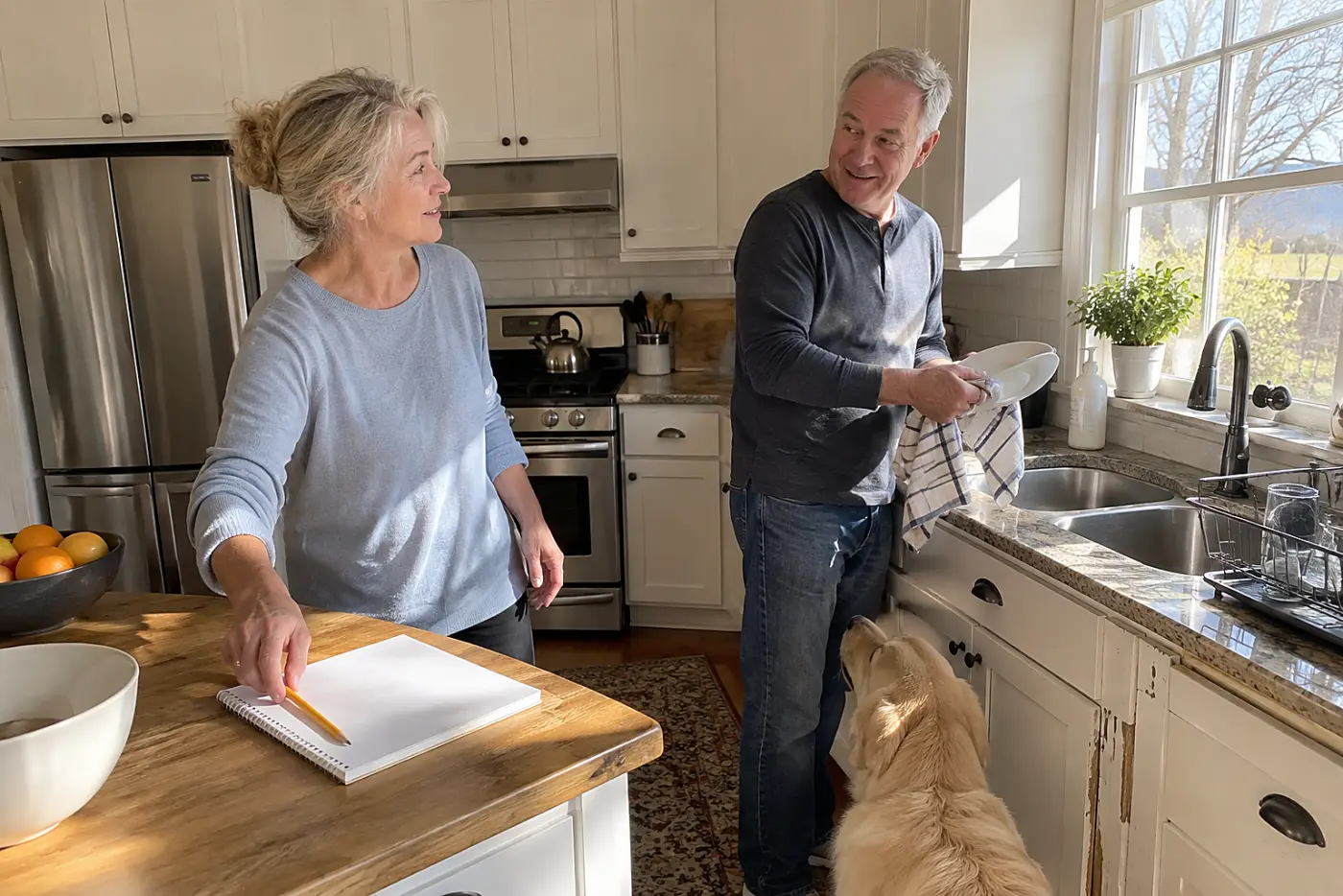
The work stayed after the child left.
Someone still takes out the trash, cleans the bathroom, and calls about the furnace. If your child handled one of those jobs, it falls to a spouse unless you decide otherwise.
The first person to notice a full bin becomes the person expected to empty it. Write down what actually changed, including the task nobody remembers taking over. The American Cleaning Institute has household cleaning guidance, but no outside checklist knows who used to roll your bins to the curb.
This week, list the tasks that changed hands and divide them aloud. Say, “I don't want us guessing whose job this is now.”
Once the jobs are named, there's room to notice who you are outside them.
3The hobby supplies under the bed
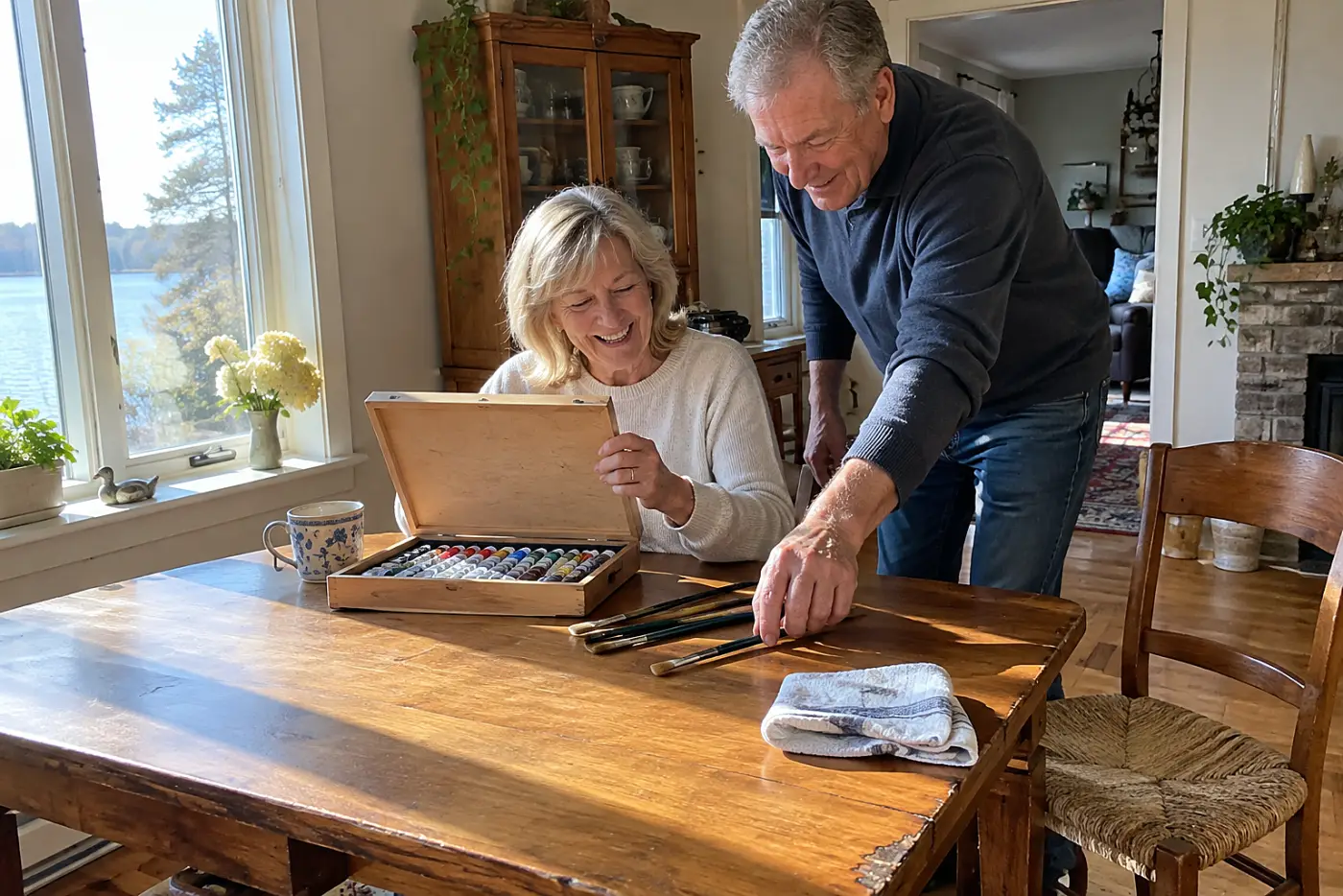
Old plans need a place to land.
A box of paints or a half-finished quilt survived years of busy evenings. Bringing it out takes space, and your spouse has plans for that same space. The conflict is about a table, not whether either of you deserves a hobby.
Leaving the box hidden keeps one more part of your life on hold. If the supplies block dinner, find a tray or a surface you can leave ready for a few days. Then your spouse gets to say what they need from the same room.
This week, clear one surface for an hour and use it. Say, “I'd like to leave this set up until Sunday.”
Making space for yourself changes what you ask of your spouse.
2The photo taken before they left
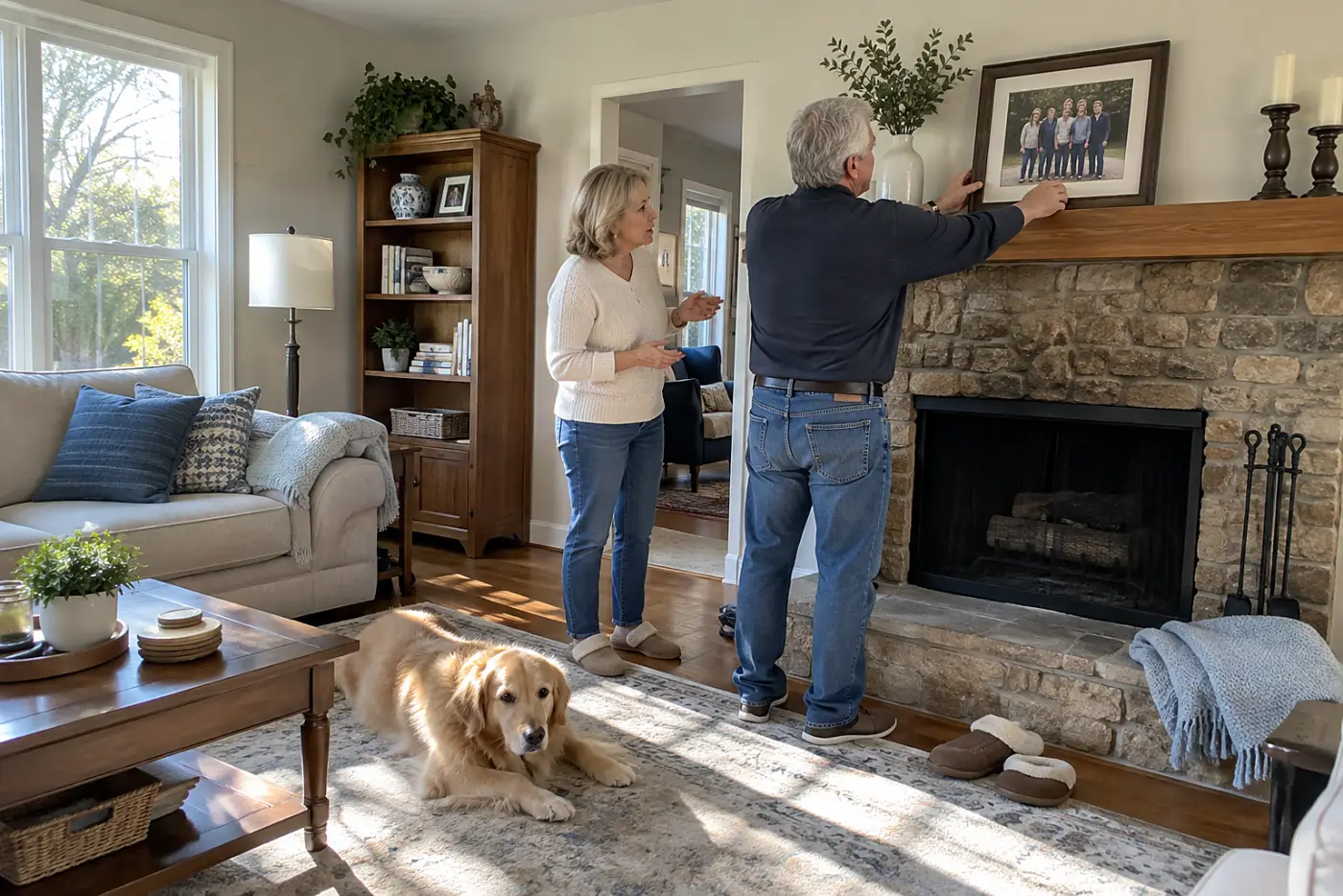
One picture can freeze the whole family.
It's there on the mantel: everyone together, just before the move. You look at it and remember a full house. Your spouse sees the same photo and remembers how tired you both were.
Treating either memory as the official version shuts down the other. A photograph records who stood in the frame, not how the day felt from each side of the camera. Let both accounts stay in the room.
This week, ask what your spouse remembers about that day before offering your account. Say, “What do you see when you look at this picture?”
The harder conversation concerns the room the picture came from.
1The room conversation before moving furniture
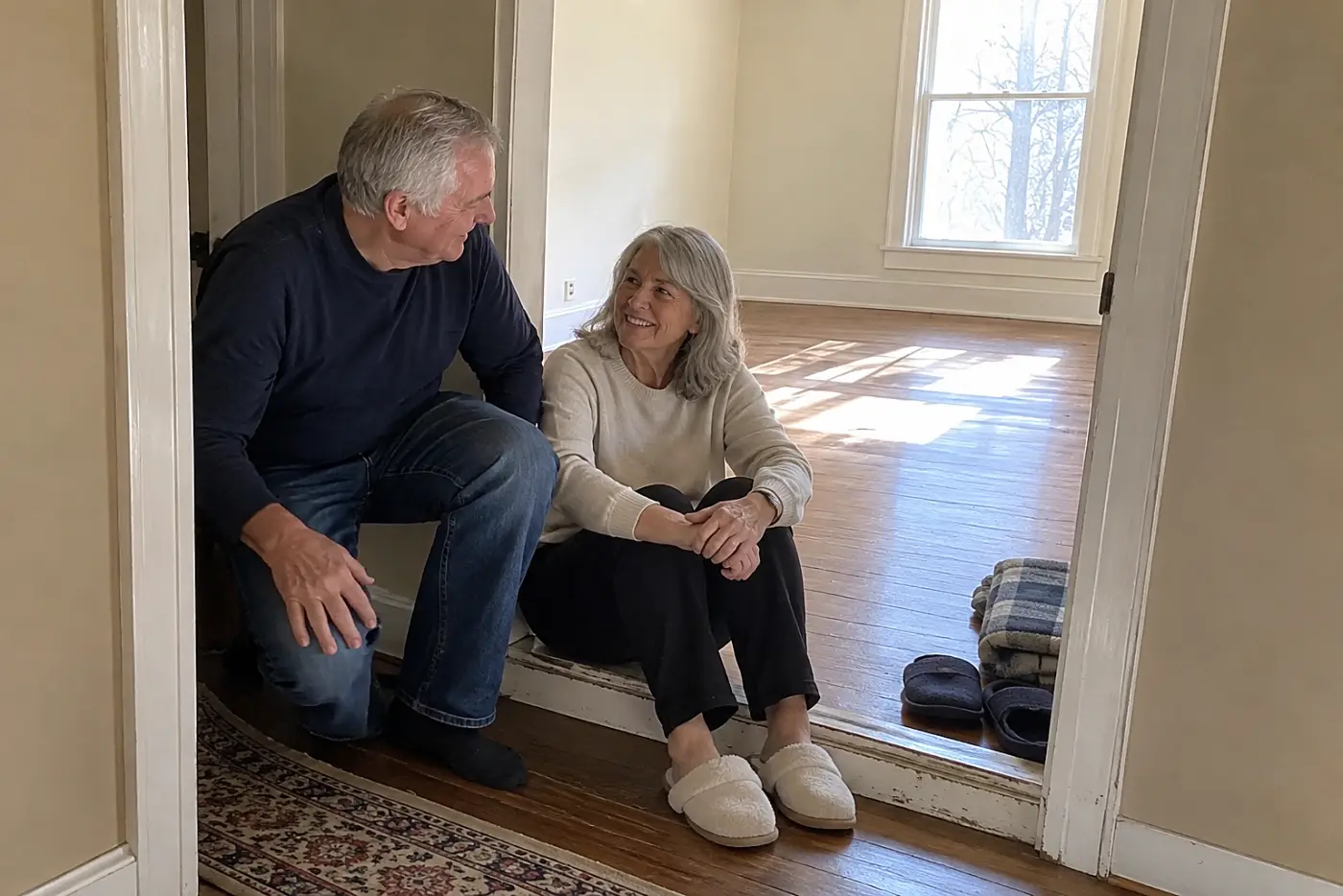
Furniture is easier to move than a mistaken assumption.
One of you wants to keep the room intact. The other has already imagined a desk by the window. If the first real discussion happens while a mattress is halfway down the stairs, the room becomes a test of loyalty.
You lose the chance to hear what each person wants before defending a plan. A measuring tape makes a proposal look settled, even when nobody agreed to it. Leave the furniture where it is long enough for both of you to speak.
This week, sit together in the doorway with no boxes, tape, or measuring tools. Say, “What do you want to keep, what would you change, and what should wait?”
Write down both answers, including the ones that conflict. Pick one change you both accept, or leave the room alone for now.
The unanswered part will still be there when you return.
The bottom line
An empty bedroom changes the small agreements that once ran your days.
The best-prepared version of you has noticed which agreements no longer fit. You've made room for your spouse's answer alongside your own.
Which of these has already happened in your family?
Bonus: A four-step doorway talk for any room you're not sure about
- Sit at the doorway together. Leave the boxes in the closet.
- Each say what you'd keep in the room, without interrupting.
- Each say what you'd change, then name one thing you're unsure about.
- Choose one change you both want. Put a date on the calendar to revisit the rest.
David Ruiz
Tech & Home Writer
David tests gadgets with real readers in their 60s and 70s, because the best tech is the tech you'll actually use.
You might also like