23 Things That Change When Your Child's Spouse Becomes the First Call
A shared calendar and a hospital visitor list change when news reaches your child's spouse before it reaches you. The Friday dinner plan changes, too.
By Margaret Hale, Travel & Lifestyle Editor
Updated · 17 min read
- Written by our travel & lifestyle editor
- How we review

Read to the end: #1 is the conversation script that gets your child's wishes into the open. Almost nobody starts with it.
Your phone lights up beside the grocery receipt. There’s a family photo: your child, their spouse, and a new house key. The move happened Saturday. You found out Tuesday, between the milk and the pharmacy reminder.
That gap hurts, but it doesn’t prove you’ve been shut out. A spouse now hears the first draft of plans at the kitchen table; what matters is how you and your child handle the next conversation.
Here are 23 changes worth noticing before the next family call.
23The house key photo in the group chat

A photo can deliver news after everyone else has unpacked.
Your child and their spouse discuss the move while sorting boxes. By the time the picture reaches you, the decision has become a story with an ending. You’re left reacting to a finished plan instead of hearing the uncertain parts.
That delay hurts most when you’ve helped with past moves. A heart under the photo won’t tell them you’d like to hear sooner.
This week, respond to the news before raising the timing. Say, “I’m glad you’re settled. Next time, I’d love to hear about a move before the boxes arrive.”
The next change shows up before anyone has packed a box.
22The spouse at the planning table

Dinner plans now pass through another person’s calendar.
Your child checks work shifts, shared errands, and plans with their spouse before answering. A delayed reply means the answer isn’t theirs alone to give. The old habit of settling Saturday with one phone call no longer fits.
If you read every pause as rejection, you’ll spend Saturday waiting for an invitation nobody knows you expect. They’ll hear disappointment; you’ll hear a phone that didn’t ring.
This week, offer two dates and a time to decide. Say, “Would lunch on Saturday or Sunday work for both of you? Tell me by Thursday, and I’ll make other plans if neither does.” The deadline frees you to plan, too.
Then comes the question of whose name is on the invitation.
21The invitation addressed to both partners

An invitation for one person now reaches a household.
A spouse gets a vote on how the couple spends a weekend. When you invite only your child to a family meal, the missing name sends a message even when you intended none. Your child then has to explain the omission.
That explanation takes space your actual invitation deserved. You lose a chance to welcome someone who belongs in the plans.
This week, check the next invitation before sending it. Say, “We’d love to see you both for dinner, and tell me if another night works better.”
Their answer will also change the way a visit unfolds.
20The guest room with two suitcases

Your guest room has room for two opinions now.
The mattress, bedtime, and morning coffee worked when your child visited alone. A spouse brings their own routines into the room. Neither person needs to dislike your house for a visit to feel cramped.
If every request sounds like a verdict on your hospitality, the trip turns into a test you can’t pass. The cost is time together spent defending the pillow, the thermostat, or breakfast.
This week, ask about one practical need before their next stay. Say, “We have the same guest room as last time. Is there anything you two need me to change before you arrive?” You get an answer instead of making six guesses.
A house rule gets harder when it follows them home.
19The spare key on your ring
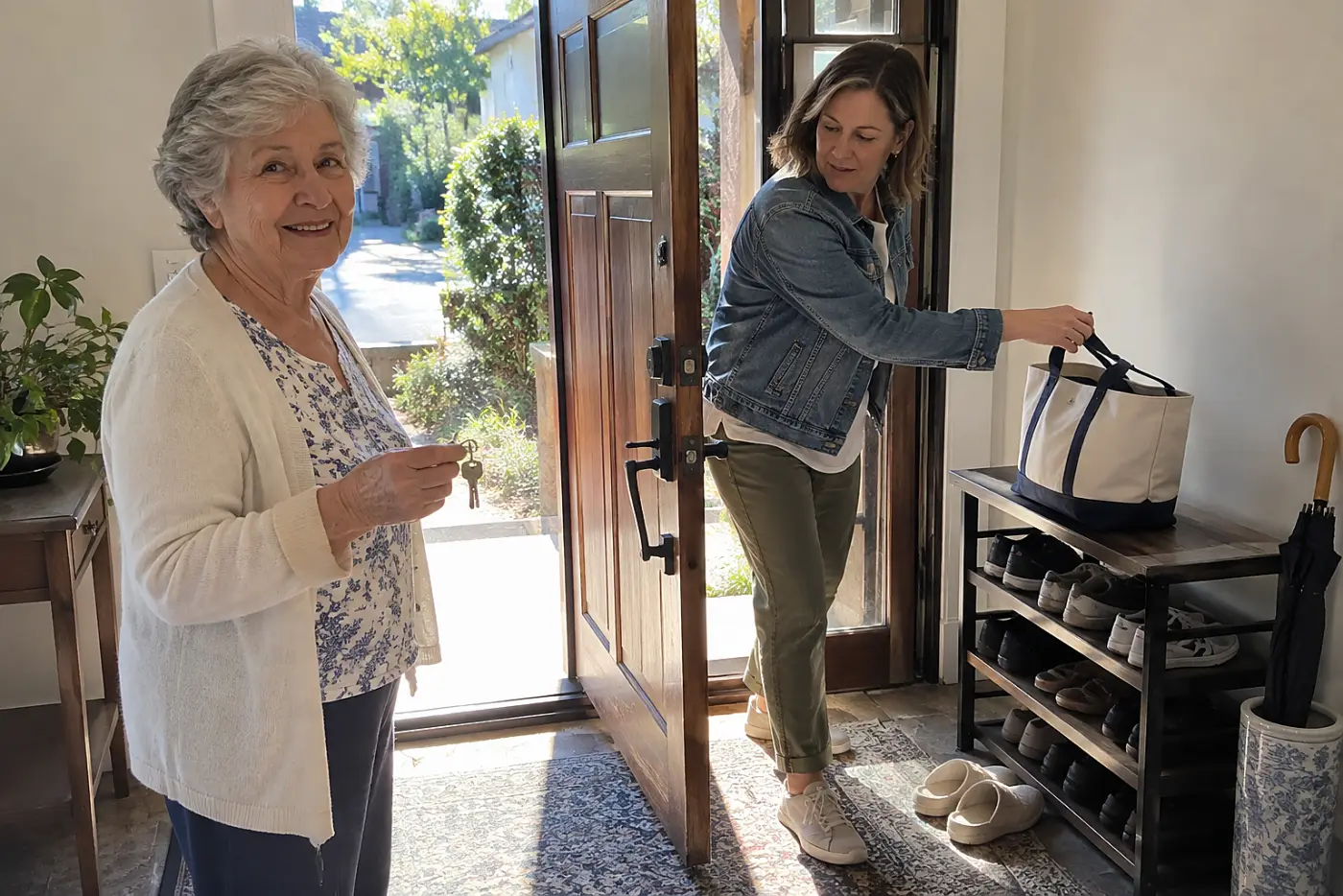
A spare key no longer means an open door.
Your child gave you a key for emergencies or deliveries. After marriage, that same door belongs to a shared home. Letting yourself in for a cheerful surprise puts their spouse in the position of enforcing a boundary your child never spelled out.
The key still works; the agreement behind it needs checking. One unexpected visit can linger longer than the flowers you brought.
This week, ask what the key is for now. Say, “I still have your spare key. Should I use it only when you ask?”
Once you know the rule at their door, another household habit stands out.
18The holiday meal split between kitchens

The holiday table no longer has a standing reservation.
Your child and their spouse now weigh two families, travel, work, and the holiday they want at home. They make a plan together, then tell everyone else. Last year’s visit to your table is no promise about this year.
Wait until December to ask, and the day you wanted has already been claimed. Push for an answer before they’ve talked, and your child has to carry that pressure back to the other kitchen.
This week, ask when they intend to decide, rather than claiming a date. Say, “I’d love to host Thanksgiving. When do you two want to settle your holiday plans?” Put your own alternate plan on the calendar as well. You deserve a holiday that isn’t held hostage by an unanswered text.
Even an ordinary Sunday meal has a new set of chairs.
17The restaurant check beside your plate

The restaurant check carries an unspoken question.
You paid when your child was younger. Their spouse didn’t grow up with that arrangement, and nobody knows whether this dinner is your treat until the check lands. An awkward reach across the table then replaces an easy thank-you.
It costs more than the meal when generosity starts to feel like an obligation. A clear invitation lets everyone order without guessing.
This week, settle payment when you suggest dinner. Say, “I’d like to treat you both,” or, “Let’s each get our own check.”
The harder exchange happens without a server standing nearby.
16The family recipe sent by text

The family recipe has another cook now.
Your child asks their spouse how to make a dish they once called you about. It’s a tiny change, but the question carried years of ordinary closeness. Their kitchen has its own habits, including recipes neither you nor your child grew up with.
Correcting the spouse’s version over dinner turns a dish into a contest. You won’t get the old phone call back by winning an argument over onions.
This week, send the recipe your child has asked for in the past, with the detail you always gave aloud. Say, “Here’s the soup recipe, including the part about browning the onions. Make it your way.” There’s no need to ask whether they used it.
Another small question used to bring your child to you, too.
15The car trouble call you missed

The breakdown story reaches you after the tow.
When a tire goes flat, your child calls the person sharing the car, the bill, and the evening plans. Their spouse helps arrange the tow. You hear the story when everyone is safe and tired.
You lost the chance to help at the roadside, not your standing as someone who cares. An annoyed response turns good news into a reason to delay the next call.
This week, ask about the car without auditing the call order. Say, “I’m relieved you’re home. Do you need a ride while it’s in the shop?”
A health scare makes that order feel far less small.
14The emergency contact line on a form

A form puts one name in the first box.
Your adult child chooses whom to list as an emergency contact at a doctor’s office or workplace. Their spouse lives closest to the daily details and hears the first call if staff use that list. You won’t see the form, and your years of care won’t appear in its boxes.
Learning about an injury late is frightening. But pressing staff for information won’t change a form your child filled out.
This week, ask your child about the form itself, rather than setting a rule for family news. Say, “Does your workplace call one person or several? I want to understand how that list works.”
Read the HHS page on HIPAA and family members before a crisis. It explains why a hospital call to your child’s spouse doesn’t guarantee a separate call to you.
The first contact is only part of what a hospital asks.
13The visitor list at the hospital desk

The visitor list doesn’t record who raised whom.
A hospital follows the patient’s wishes and its visitor policy. Your child’s spouse knows what your child wanted before arrival and is standing there when staff ask. Arriving later leaves you trying to sort out access under fluorescent lights.
A dispute at the desk steals time from the person in the bed. It also puts the spouse on guard when you need to speak plainly.
This week, ask your child whom they want invited during a hospital stay. Say, “If you’re admitted, would you want me there?” For questions about the hospital’s rules, ask its patient relations office before anyone is admitted.
The next document answers a different question entirely.
12The health care proxy in the folder

The person who gets called isn’t automatically the decision-maker.
Your adult child can name someone to speak for them through a health care power of attorney or similar state form. State law sets what happens without that document. Neither your relationship nor a place on an emergency contact list tells you what your child signed.
Without that conversation, you face a hospital crisis unsure whether your child wanted your advice or your presence. Guessing aloud in front of staff helps nobody.
This week, ask whether your child has named a decision-maker and where the document is kept. Say, “I don’t need to see private details. I want to know whom you’ve chosen so I support them.” The National Institute on Aging’s advance care planning page names the documents to look for.
Paperwork can settle authority while leaving feelings untouched.
11The insurance card in a new wallet

A new insurance card has its own phone number.
If your child joins a spouse’s health plan, that plan handles claims under its terms. The doctor they used before marriage still needs to be checked against the current network. You don’t have access to their member details unless they choose to share them.
Offering the name of your own doctor won’t settle a bill. A well-meant referral creates work if the office is outside the new plan.
This week, stop recommending an appointment based on an old card. Say, “Check your plan’s provider directory before you book; I’m happy to send the doctor’s name.” Healthcare.gov explains how to check a plan’s provider network if the card has left you wondering.
A bill can shift the conversation before you hear about it.
10The loan request with two signatures

A request for help now touches two budgets.
Your child once called you alone when money ran short. Now their spouse shares the rent, repairs, and consequences of debt. A loan offered in a private call enters a household that hasn’t agreed on the terms.
If you tell your child to keep it secret, you’ve joined the argument before it begins. A missed payment then hurts more than your bank balance. You stand between partners, wondering whether repayment or loyalty matters most.
This week, decide what you can give without needing it back before anyone asks. If a loan comes up, put the amount and repayment dates in writing. Say, “I won’t arrange money behind either person’s back.” The CFPB’s website is a place to check financial terms before signing anything.
The same tension appears when the money comes as a gift.
9The birthday gift with a condition

A gift can arrive carrying instructions.
You hand over money for a birthday, then ask your child to spend it on furniture you prefer. Their spouse hears a decision about their shared home. The child who once bought things alone now has to bring your instruction back to someone else.
A condition turns thanks into negotiation. It also teaches the couple to explain less about what they bought.
This week, decide whether the gift is theirs to use. Say, “This is for you to spend as you choose.” If the money has a purpose, name it before they accept.
The line is harder when the purchase is a house.
8The down payment conversation at your table

House money can buy an unwanted seat.
When you help with a down payment, the couple chooses a home they’ll live in and pay for. Your contribution gives you a reason to ask questions about the money. It doesn’t give you a standing vote on the kitchen, neighborhood, or guest room.
For loans that follow Fannie Mae rules, borrowers must document gift funds. Your child needs to tell the lender about your contribution before moving funds. A promise at your table unravels if you call the money a gift but expect repayment.
This week, decide which it is before offering a check. Say, “I’d like to help, but we should agree on whether this is a gift before you speak with the lender.” Fannie Mae’s selling guide sets out its gift-fund rules.
The couple’s address also changes who handles the mail.
7The envelope marked for your child

Mail for your child stays theirs.
A bank letter arrives at your address because your child never updated an old account. You used to open mail for the whole household. The household has changed, even if the address on the envelope hasn’t.
Opening a statement to be helpful gives you information your child didn’t choose to share. Then the missing call feels sharper because you know more than they told you.
This week, put the unopened envelope aside and ask for an address update. Say, “Your bank mail still comes here. Where should I forward it?” If other mail follows, the U.S. Postal Service has address-change instructions your child can check.
The next boundary is easier to miss because it arrives by phone.
6The password reset sent to your phone

An old recovery number keeps you inside an account.
Your child used your phone number for a login years ago. Now a verification code lands on your screen while their spouse stands beside them, waiting to pay a bill or sign in. Passing along the code solves today’s problem and leaves tomorrow’s problem in place.
If you’ve shared a password, change the arrangement instead of guarding it for them. The FTC’s account security guidance recommends separate, strong passwords and multifactor authentication. You don’t need access to prove you’re available.
This week, tell your child which codes still reach you and ask them to update the recovery settings. Say, “I got another code for your account. Please switch the recovery number while you’re signed in.” Don’t read a code to anyone who calls asking for it.
A phone carries family news as well as account codes.
5The grandchild photo posted before your call

A new photo arrives without the story behind it.
Your child and their spouse choose when to share pictures of their child. You see a first step, a school outfit, or a cake on a screen after they’ve lived the moment together. Missing the call you imagined stings.
Posting the photo again without asking takes another choice away from the parents. It won’t bring you closer to the moment you missed.
This week, ask how they want photos shared and whether they want them reposted. Say, “I loved seeing the picture. Please tell me which photos you’re comfortable having me share.”
The next question needs an answer before anyone takes a picture.
4The childcare offer on the fridge

A standing offer isn’t a standing plan.
You wrote “Call me anytime” on the fridge years ago. Now your child and their spouse agree on pickups, food, bedtime, and who can say yes to a visit. Your offer still matters, but neither partner can use it well without details.
If you expect a call and they make other plans, you feel passed over. If they expect you at four and you meant six, a child is left waiting.
This week, give them the days and hours you’re free, plus what you’re willing to do. Say, “I can pick her up on Tuesdays after school if you both want that. Who should text me the plan?” Keep it a specific offer, not a test of whether they need you.
Being trusted with a child won’t answer every question about your place.
3The family story told without you

A familiar story now has a new audience.
Your child tells their spouse about a childhood birthday, including details you remember differently. Their spouse wasn’t there and knows the version they heard first. Correcting every line turns a dinner story into a hearing.
You lose the pleasure of being there with them. Your child loses the freedom to tell a story in their own voice.
This week, let one disputed detail pass and ask about what they remember. Say, “I remember that day differently, but I want to hear your version.”
The larger disagreement won’t fit inside a birthday story.
2The complaint you send to a sibling

A third person makes the hurt travel faster.
You tell a sibling that your child’s spouse controls the calendar. The sibling repeats a softer version at dinner. Your child hears an accusation before hearing that you missed them. Their spouse hears a judgment from someone outside the marriage.
Now the next invitation has to cross a room full of people who know part of the story. You wanted closeness; the complaint has made an audience for a private ache.
This week, stop passing the message through family. Tell the sibling you’ll handle it yourself. Say, “I was hurt about finding out late, and I’m going to speak to my child.” Leave your sibling out of the next exchange. MedlinePlus has family and relationship resources, but no website can have this conversation for you.
There’s one question left that only your child can answer.
1The first-call question asked directly

Waiting to be chosen leaves the rules unwritten.
Your child’s spouse now hears daily news first because they share a daily life. That doesn’t tell you what your child wants to share with you, or how soon. Neither a surprise announcement nor a missed call answers that question on its own.
The cost of never asking is a growing list of guesses. Each late update joins the last one until a move, a meal, and a hospital visit feel like the same rejection. You start bracing for the next photo instead of looking forward to hearing from them.
This week, ask for a private call when neither of you is rushing. Start with the house key photo or another moment you both know.
Say, “I felt left out when I heard about the move after it happened. What news would you want me to hear directly from you?” Listen before proposing a rule of your own.
Then ask what contact feels right to them, and tell them what you’d welcome. Give them room to say that a plan was uncertain or that sharing it felt hard. You need an answer you both mean, rather than a promise made to end an awkward call.
You’re asking your child for their wishes, not asking them to rank two people they love. Write down whatever plan you both choose, so the next announcement doesn’t begin at zero.
The answer still leaves you with a choice about how to reach out.
The bottom line
The first call follows the life your child shares at home. Old habits no longer tell you what news you’ll hear next.
The best-prepared version of you has checked the practical rules and chosen one moment to raise with your child. The next call is still yours to make.
Which of these has already happened in your family?
Bonus: The first-call conversation script
- Ask for a time to talk: “Do you have ten minutes this week, just the two of us?”
- Name one event: “I learned about the move from a photo, and I felt left out.” Stop there.
- Ask the real question: “What news would you want me to hear directly from you?”
- Say what you’d welcome: “I’d love a call when you’re making a big change.” An uncertain plan is fine.
- Let your child answer first. Then agree on what the next call will look like.
Margaret Hale
Travel & Lifestyle Editor
Margaret has covered travel for 25 years and has ridden every long-distance train route in the U.S. at least once.
You might also like