










23 Things Only the Person a Cat Chose Will Ever See
A tour of the private rituals, from a stolen shoelace to the chair she claims beside you.
By Ruth Ellison, Family Editor
Updated · 11 min read
- Written by our family editor
- Cited 6 sources
- How we review
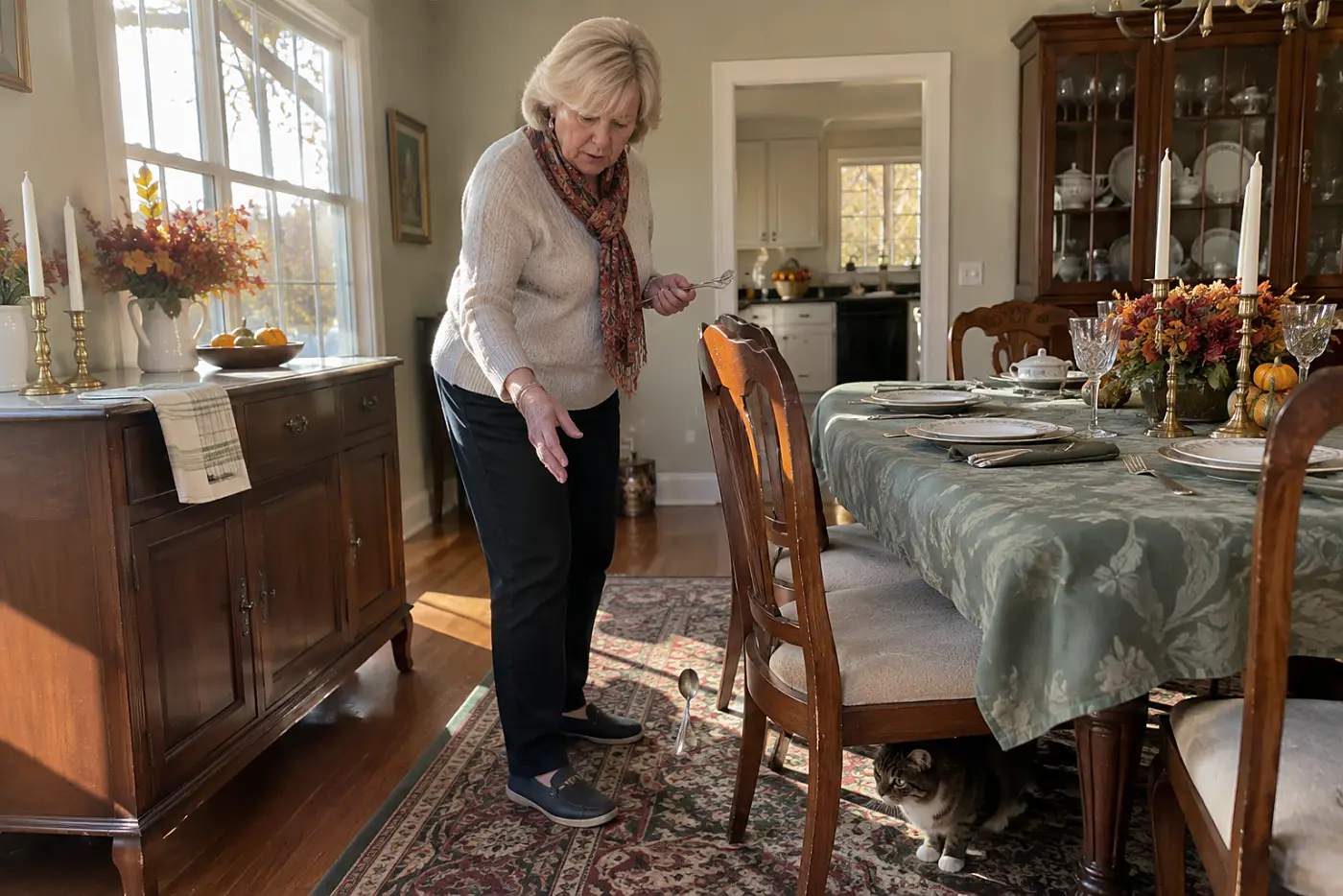
The holiday table is set, and there's an empty chair beside yours. Under it sits the cat, watching your ankle while the doorbell rings. She has places to hide and people arriving with excellent coats to investigate. Instead, she stays where she can touch your shoe.
Nobody else at the table will see much of this. They'll see a cat under a chair. You know she picked that spot before the guests arrived. And when the house is yours again, you'll see what she does without an audience.
23The doorstep where she stopped

She passed the open box, the outstretched hand, the patch of sun. Then she walked to your shoes and sat. Perhaps that was the whole adoption interview.
A cat's choice rarely arrives with ceremony. It's a small action repeated: she approaches when she has room to leave. If you're still getting acquainted, sit nearby without reaching. Let her decide the distance. The next visit tells you more than the first.
22The shoelace she remembers
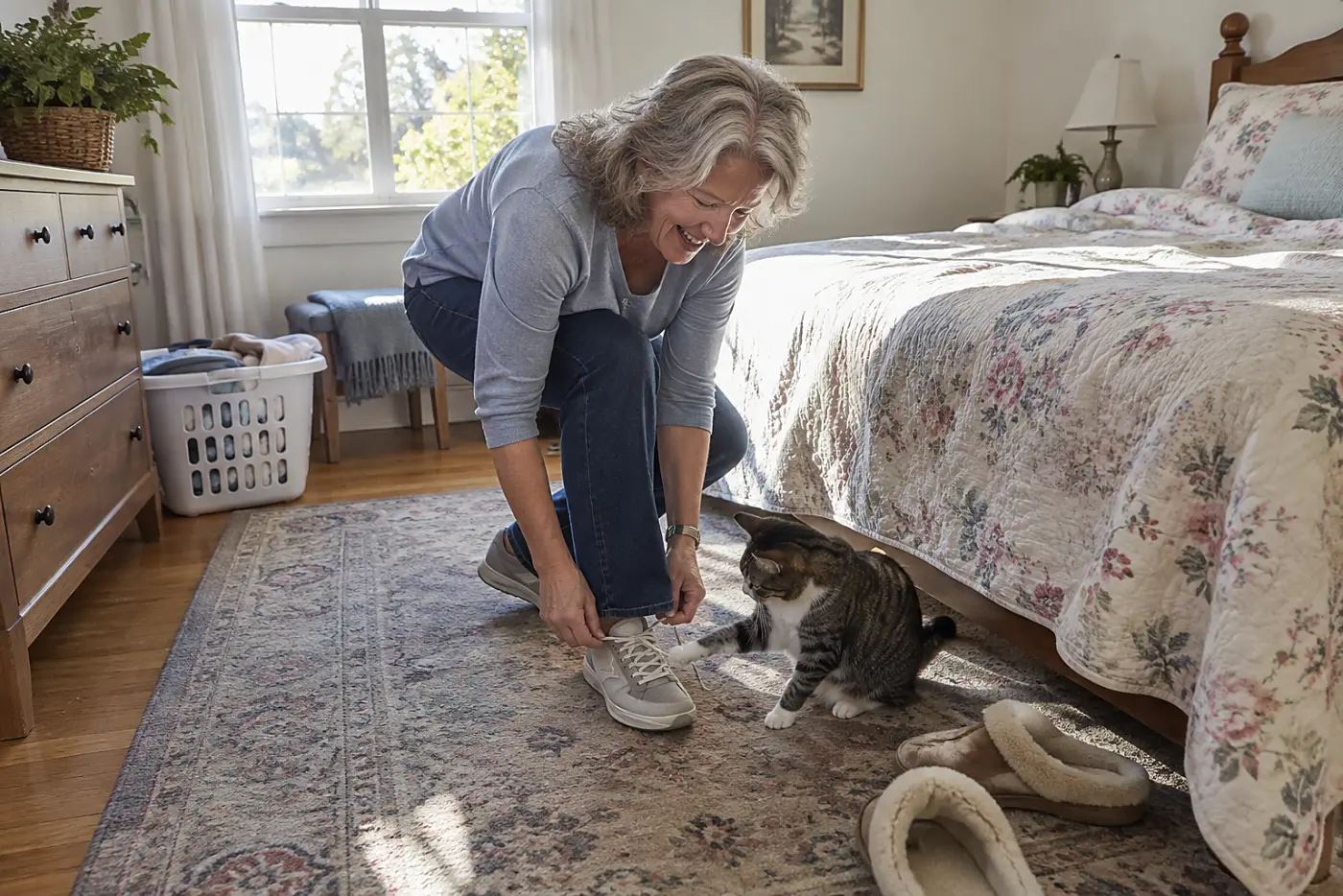
That loose lace is hers before you've finished tying the other shoe.
She bats it across the bedroom floor, then waits for you to move your foot again. Is it the string she wants, or the part of the morning when you sit beside her? Watch where her eyes go when you stand. Put the lace away afterward; string play needs someone there to take it back.
See more: 25 Things Grandchildren Remember That You Never Notice Doing →
21The hallway escort
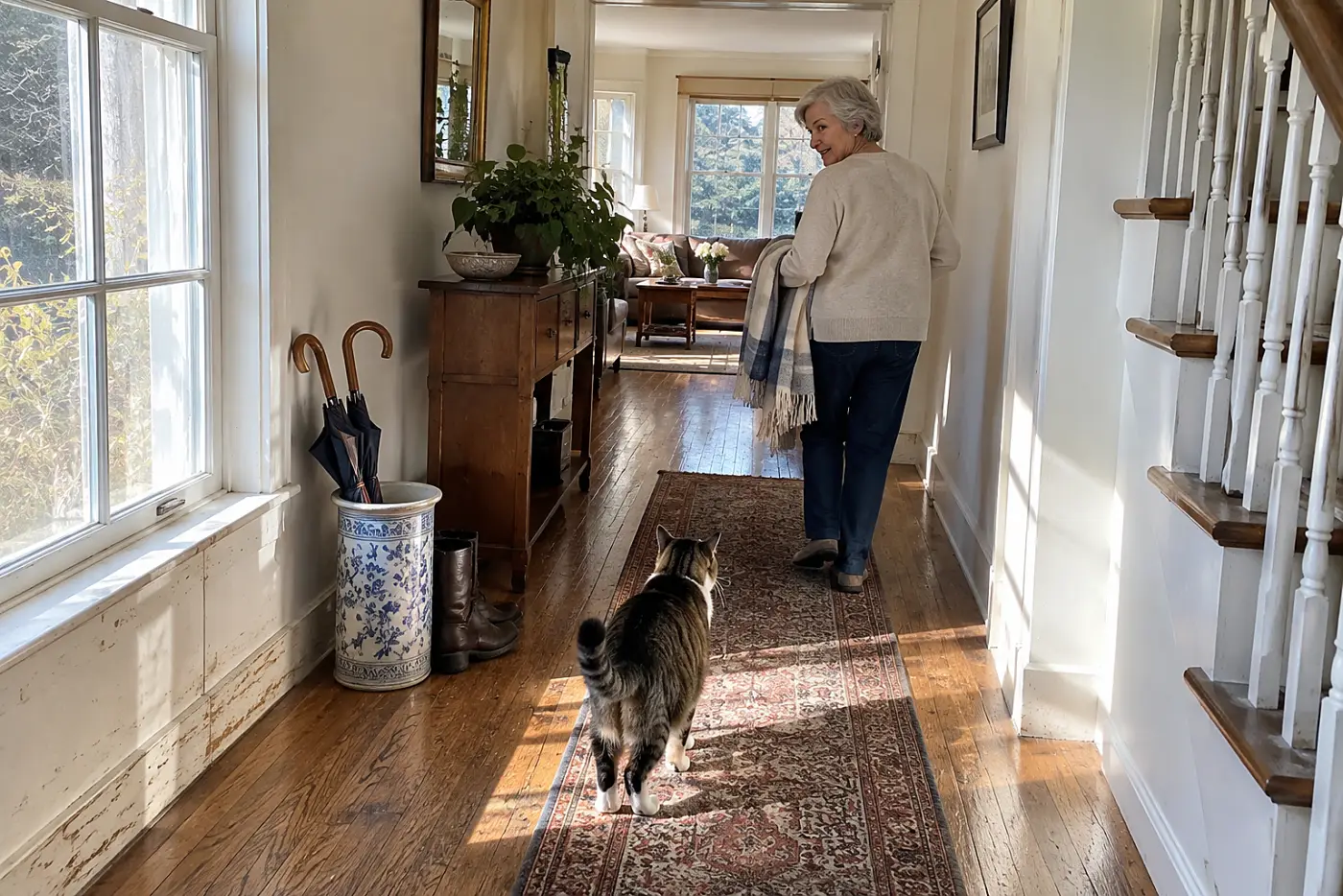
She doesn't follow every person down the hall. She follows you, stopping when you stop and walking again when you do. There's no destination she needs to reach.
Look back next time. She'll pretend the baseboard required inspection.
This little procession changes with the house. A visitor sees her cross a doorway. You know the route: bedroom to bathroom, bathroom to linen closet, then back again when you remember why you went upstairs. She has learned that route because it belongs to your day. If you turn around, she'll come with you.
20The washing machine inspection
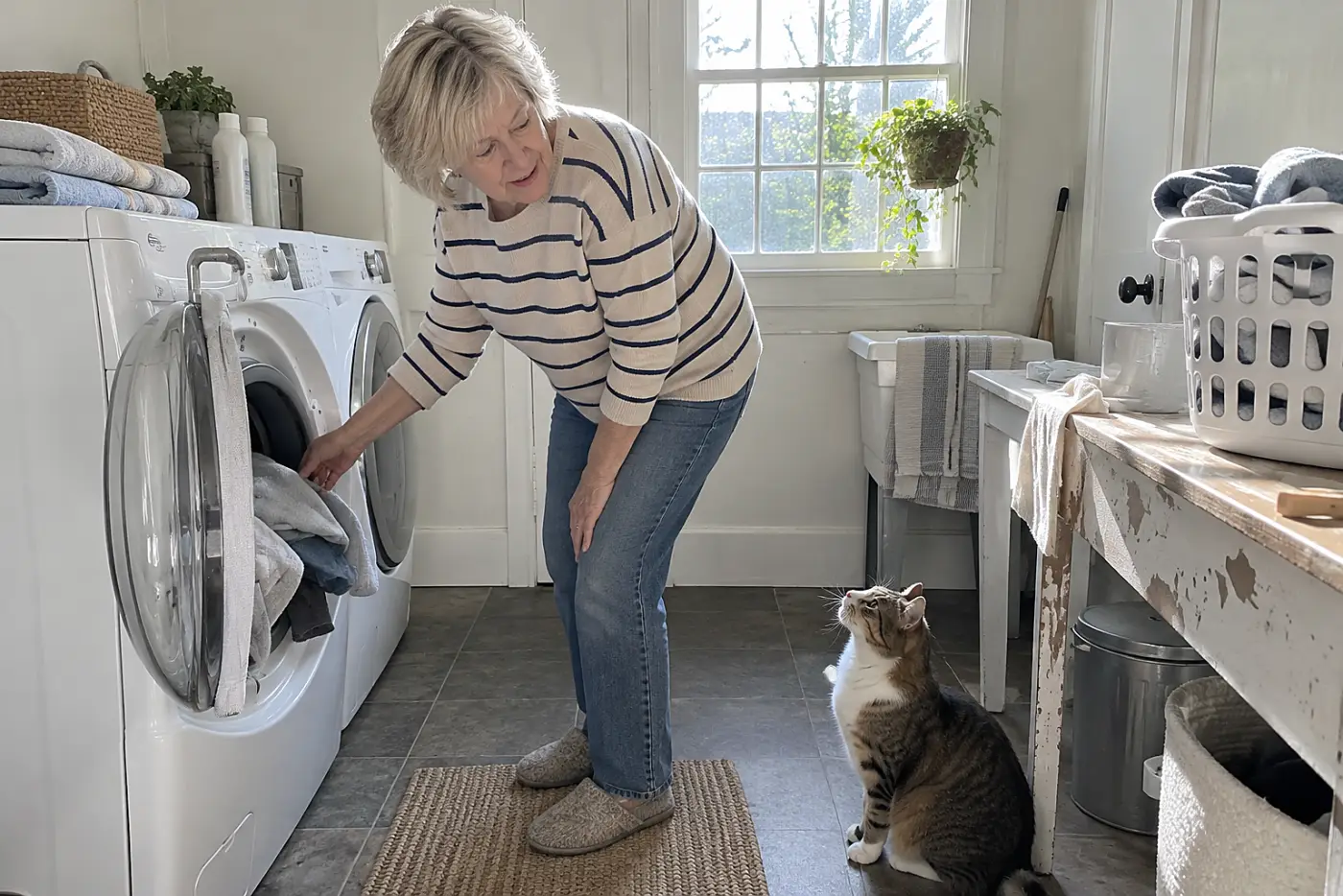
Before you start the dryer, where's the cat?
She was watching you unload the washer a moment ago. Check inside both drums before closing their doors, and keep her in sight while you move the laundry. The ASPCA lists household hazards for pets; this one sits in a room you visit without thinking.
A cat who trusts your routines will walk straight into the middle of one. That extra look takes seconds, and it belongs before every load.
19The chair beside your chair
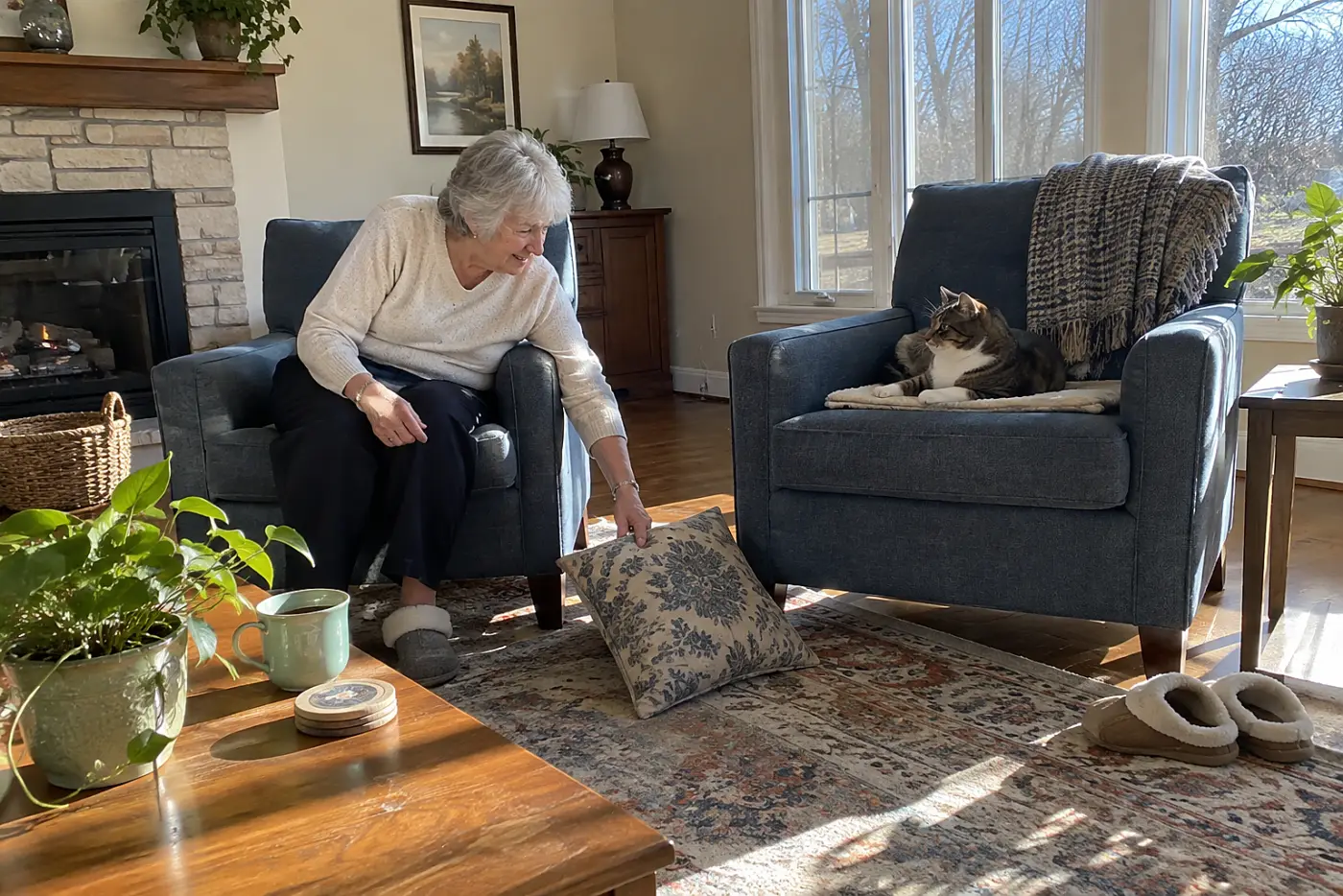
There are better cushions in the room. She takes the stiff chair beside yours, where she can watch your hands. When you get up, she stays until the chair scrapes back across the floor.
Then she gets down, as if the meeting has adjourned.
Her preference has a physical shape: close enough to reach, far enough to move away. You don't need to pull her onto your lap. Leave that chair where it is. Tonight, notice whether she claims it before you've even sat down.
18The bathroom audience
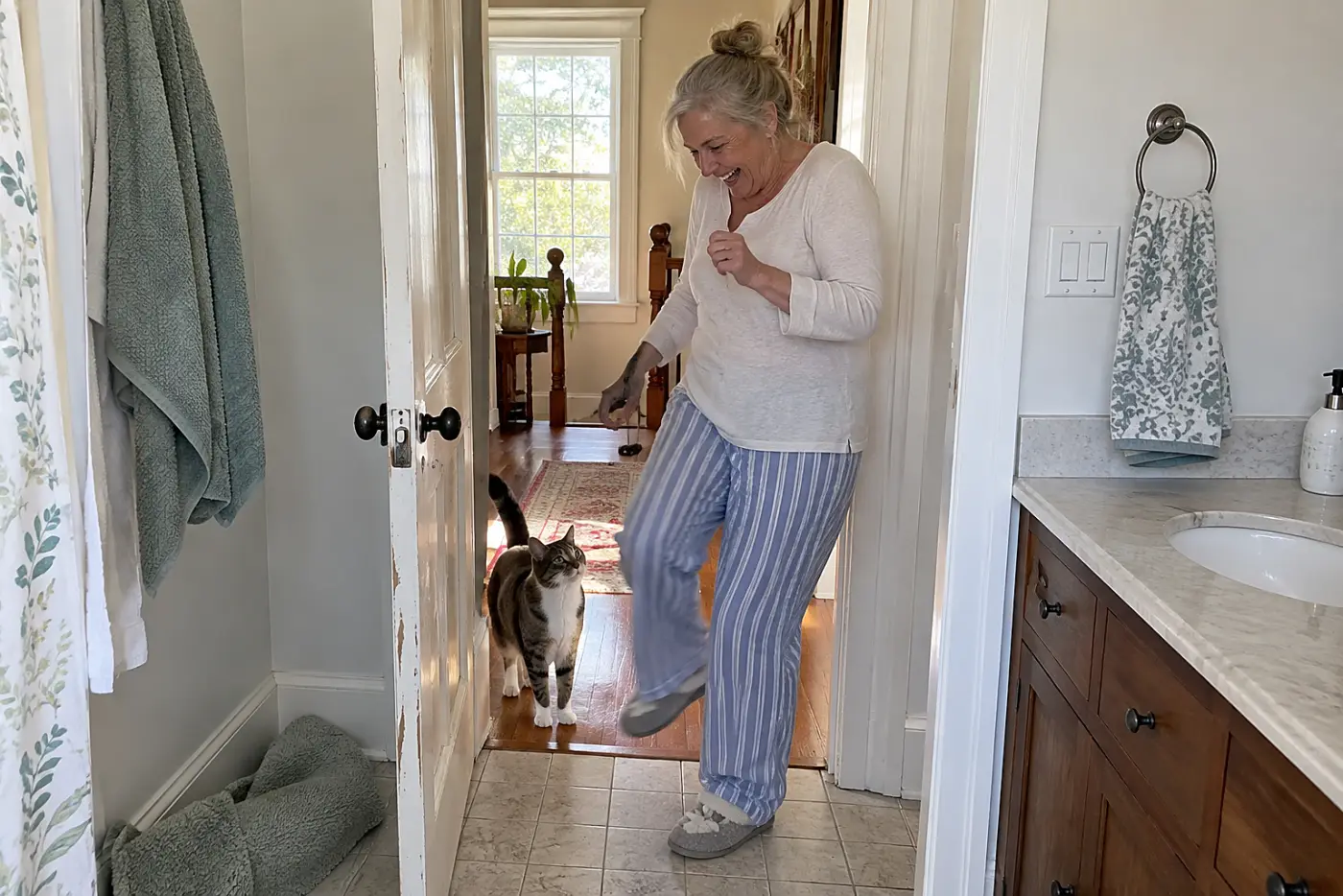
Why does she come running when you shut the bathroom door? Because she knows where you went, and she wants the door reopened.
You hear a paw touch the gap. Then another. When you emerge, she walks away without thanks. That exchange belongs to the person whose absence she noticed. If the closed door upsets her, let her settle nearby before you go in.
17The sweater pulled from the laundry
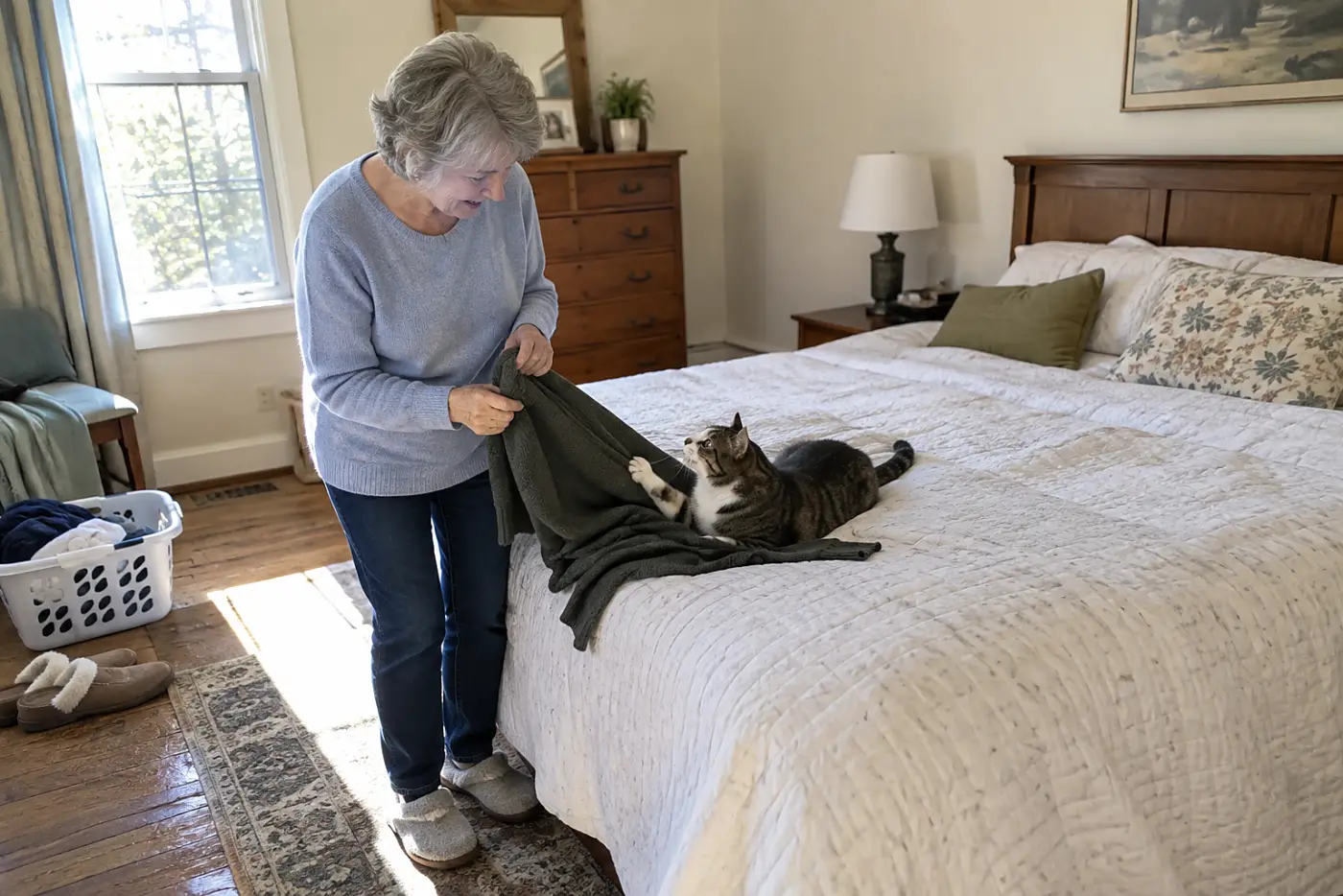
You fold clean sweaters on the bed. She ignores the top one and burrows into the one you wore yesterday. By the time you return with hangers, there's a warm dent in the wool.
She knows that sweater through her nose. Cats use scent to recognize familiar people and places, so your worn clothes offer a familiar place to rest.
Put a washable old shirt where she likes to sleep. You get to keep the good sweater; she gets something that smells like you. Both of you know which of those matters more to her.
16The toy beneath the refrigerator
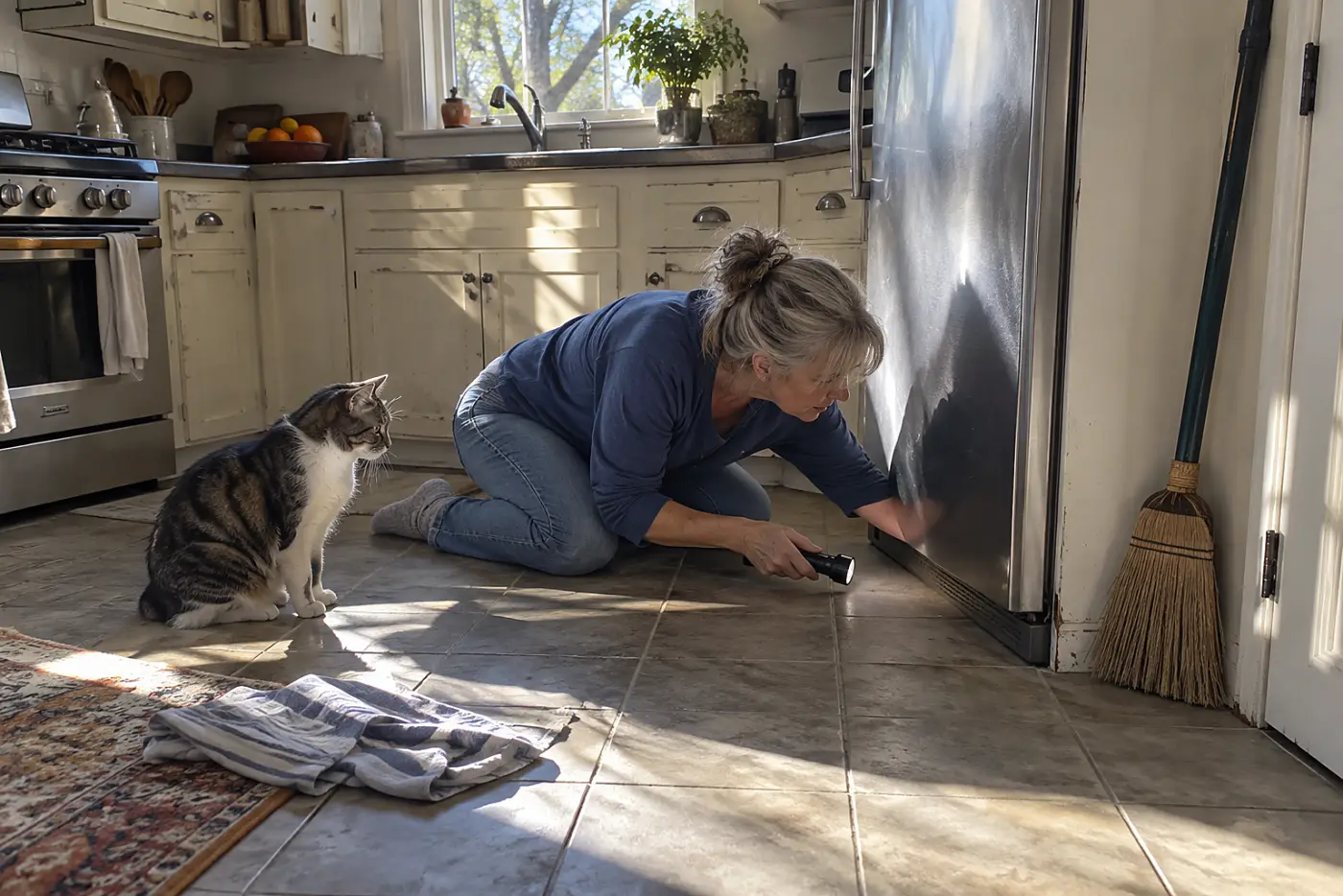
For several minutes, she sits facing the refrigerator without moving. The food bowl holds no answer. Neither does the back door. Then you crouch beside her and spot the felt mouse beneath the appliance.
Use a flashlight to find it. If the gap is safe, slide the toy out with a ruler, keeping clear of wires and moving parts. She'll carry it off without acknowledging the rescue. Tomorrow, she'll ask again.
15The slow blink across the room
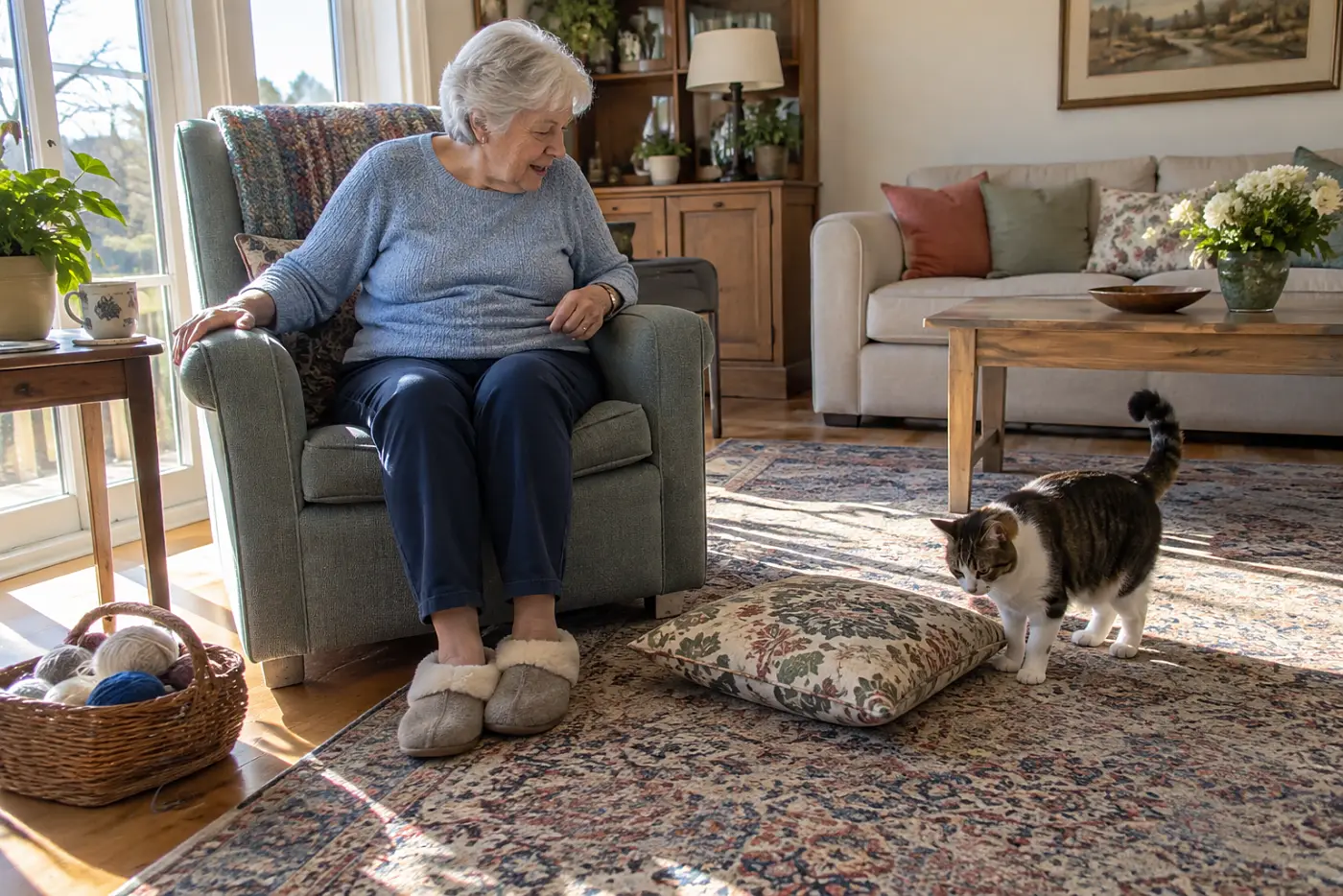
You look up from your book. She's watching from the rug. Her eyes narrow, close for a beat, then open. You blink back, slowly, and she stays.
The slow blink lets you greet her without crossing the room. Researchers at the University of Sussex and the University of Portsmouth reported in a 2020 study that cats responded to slow blinks from people. It doesn't tell you what your cat is thinking.
Don't stare and wait for a performance. Blink, look slightly away, and let her choose what happens next. You get to stay in your chair.
14The belly shown but untouched
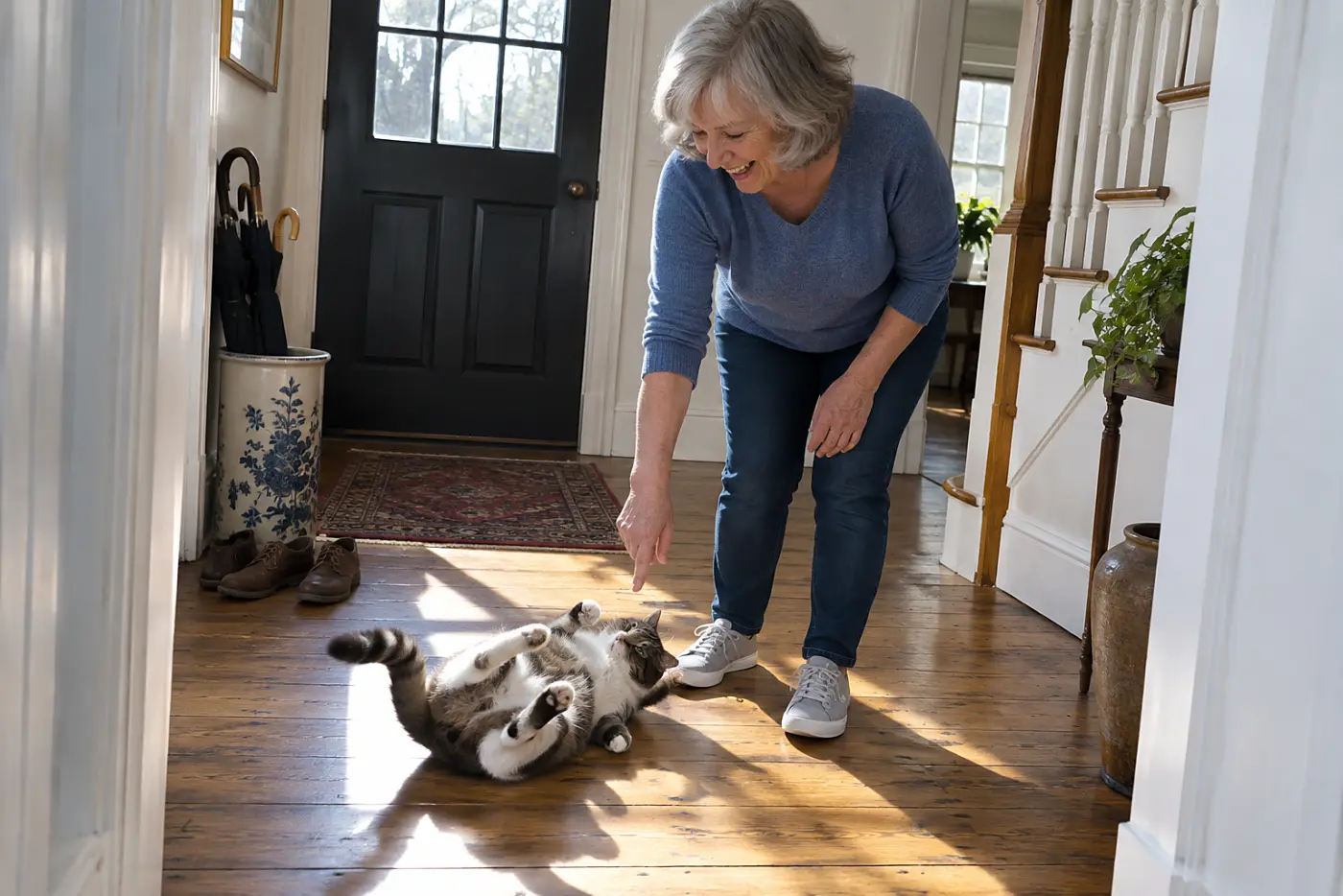
She rolls onto her back in the doorway and shows you her stomach. You reach down, and she catches your wrist between her paws.
Now you know: she wanted you to see her, not rub her belly. Offer a finger near her cheek instead and wait for her to move toward it. The exposed stomach was her decision. Your job was to notice.
13The shoulder perch by the window
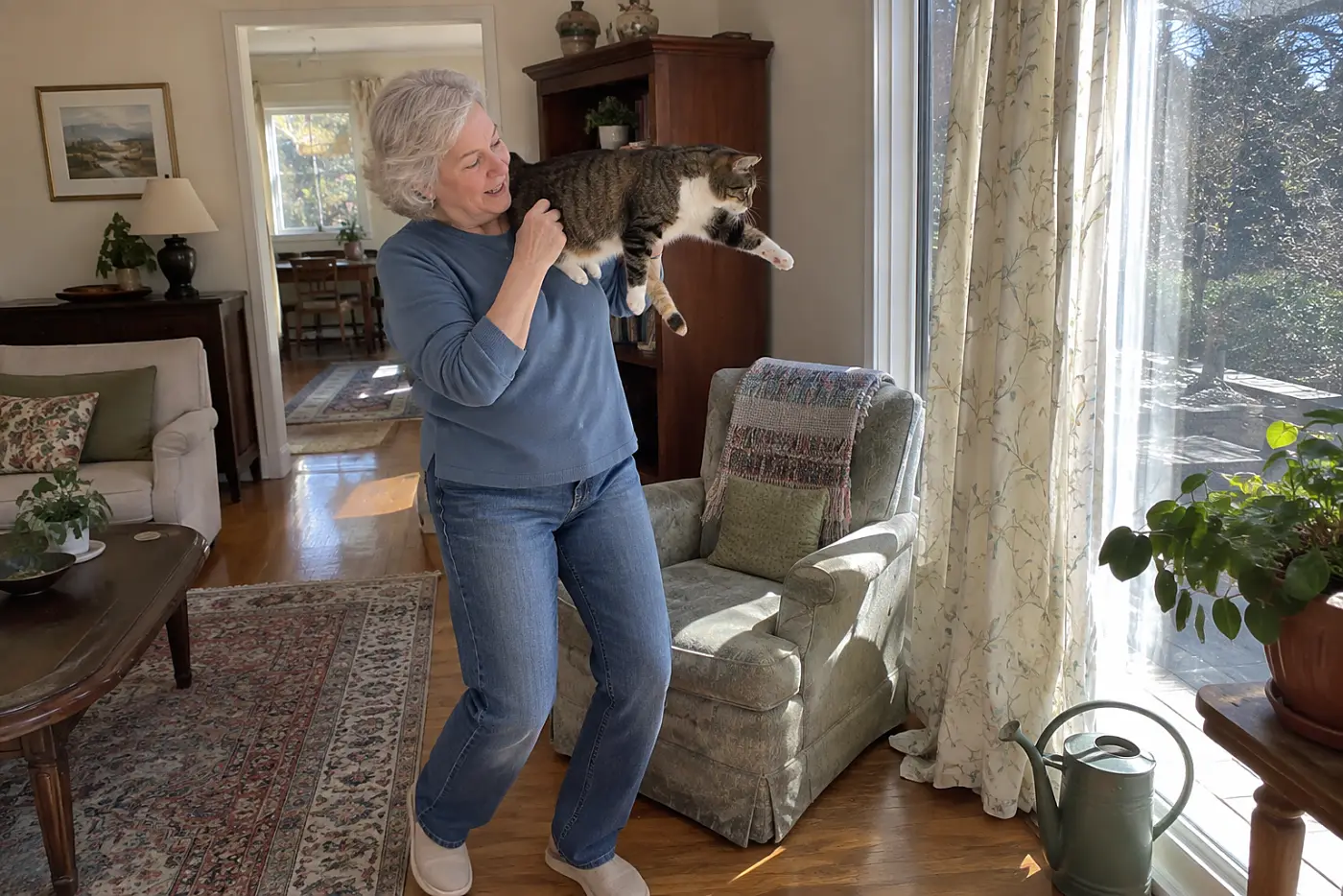
She climbed onto your shoulder once to see a bird. Now she expects a lift whenever you stand near that window.
You learn to steady her with an arm and to set her down before your neck complains. She learns which sweater gives her claws a grip. Anyone watching sees an awkward balancing act. You feel the moment she settles her weight and trusts you to hold it.
If the perch stops being safe, put a sturdy cat tree near the window. She still gets the view, and you get both feet free.
12The greeting at the front door
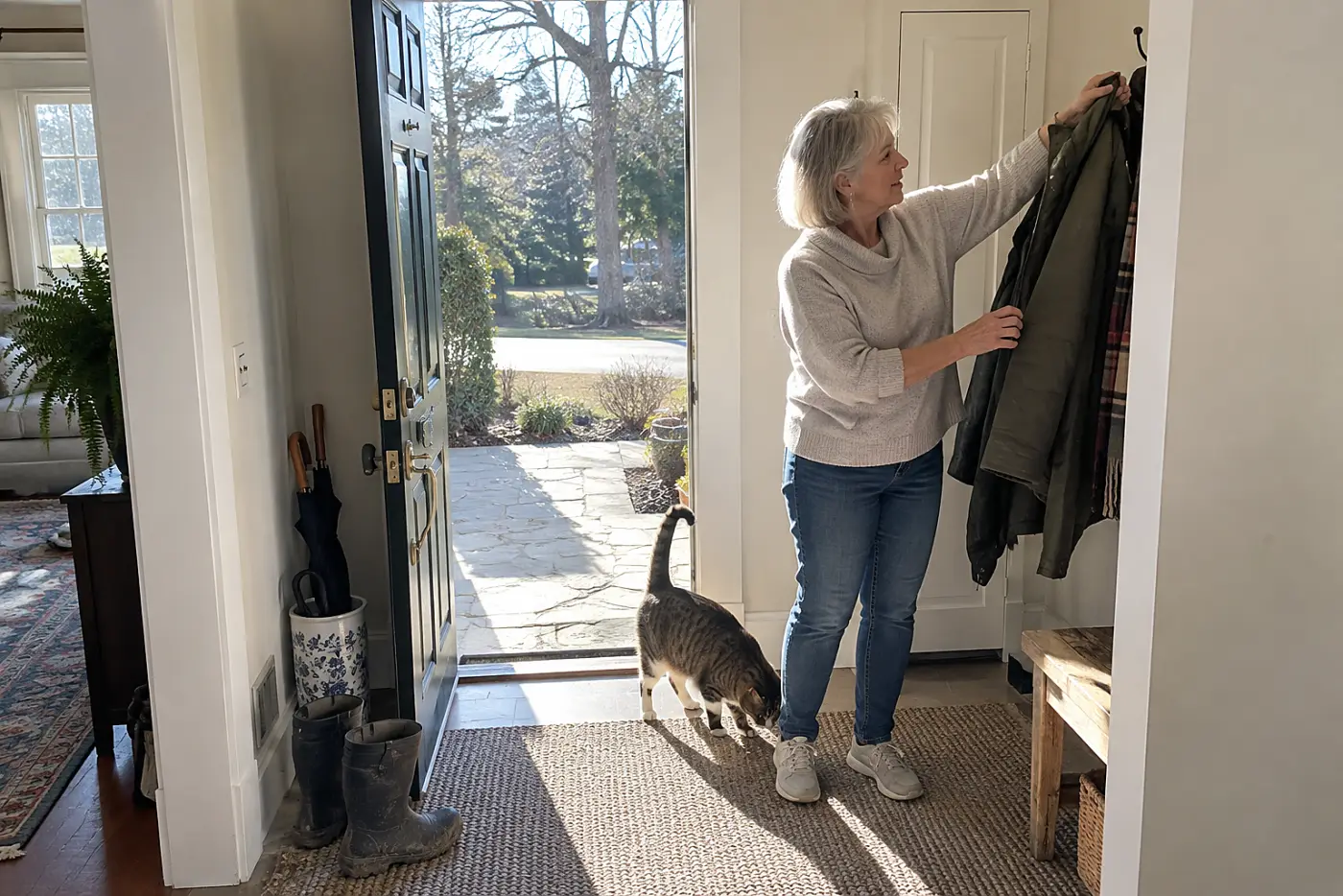
The key turns. Inside, you hear her feet cross the hall. She appears before you've put down your bag, then follows you to the coat hook.
Hold still for a moment. Let her sniff your shoes and sleeves before you reach for her. You smell different after a trip to the store, and she takes her time checking. Then comes the familiar rub against your leg.
On days when nobody else is home, that greeting fills the hallway.
11The weight at the foot of the bed
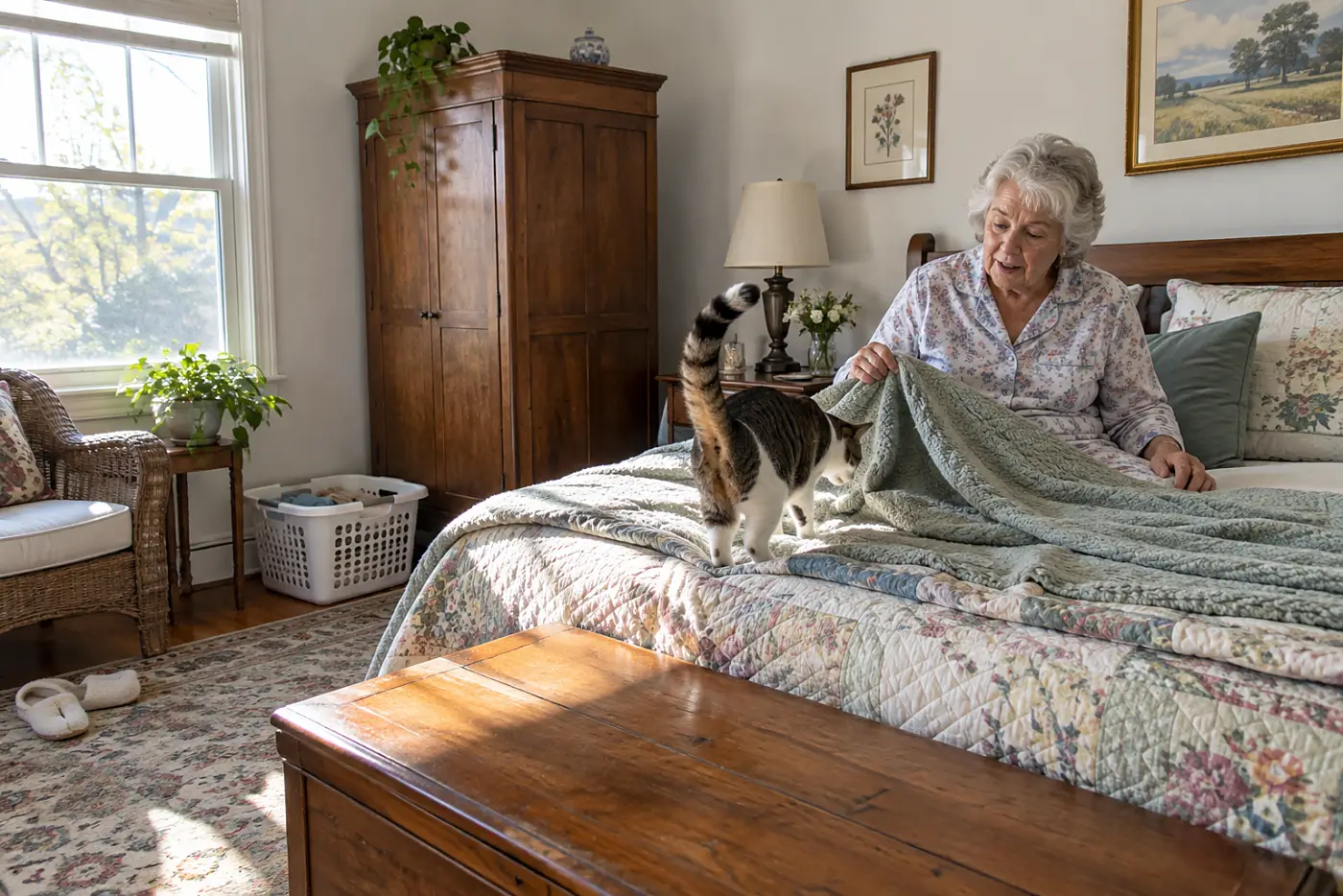
The room is dark when the mattress dips. She circles your feet, steps across the blanket, and settles against your ankle.
You know which movement means she's staying. She knows how far your feet will slide before dawn.
If her night visits wake you, give her a bed near yours. Keep the same bedtime routine either way.
If you like the company, shift the blanket and make room for her instead. You'll learn her tiny route across the mattress: the pause at your knee, the turn, the final drop of her weight. A visitor asleep in the next room will never see it.
10The argument through a closed door
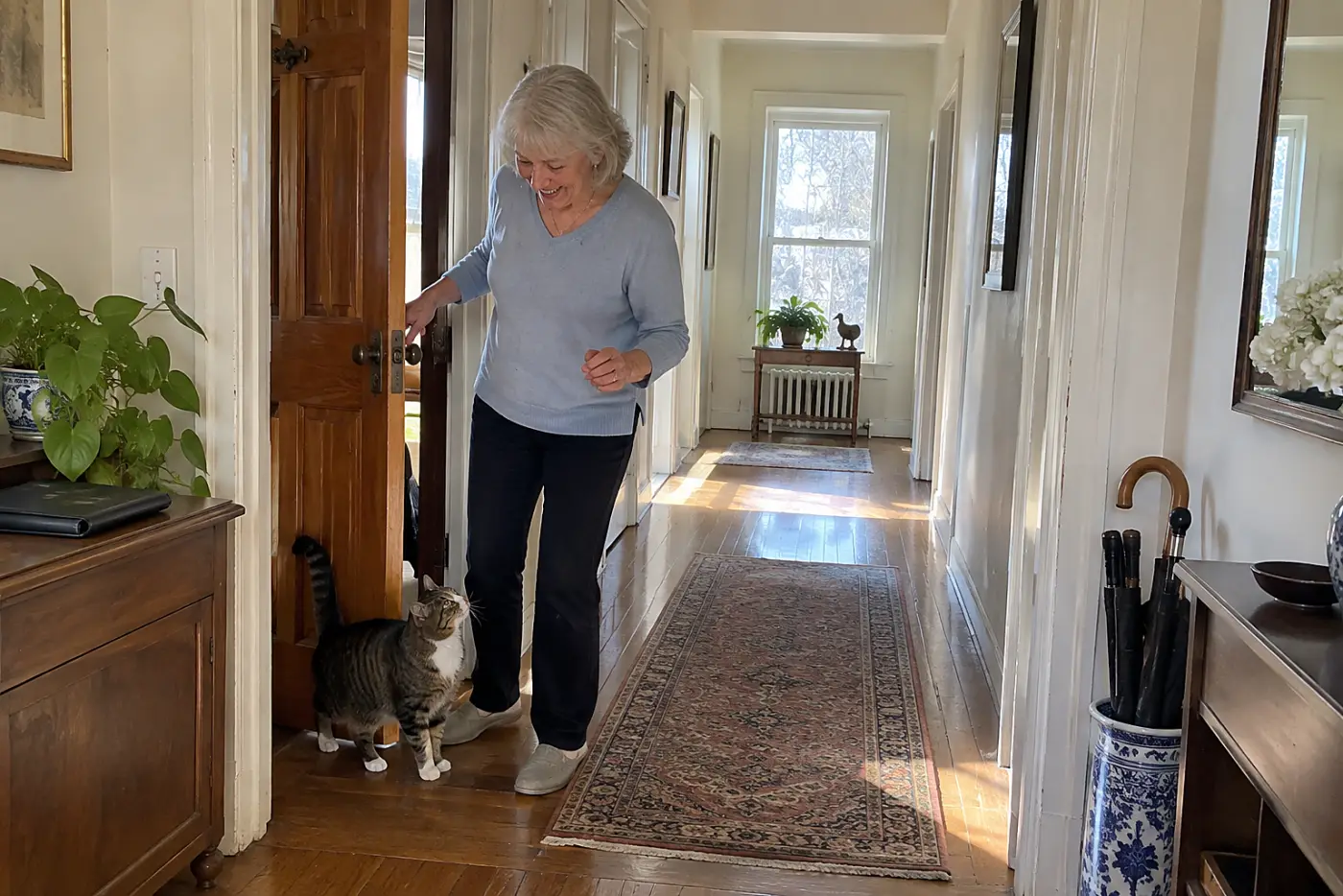
You close the study door for a phone call. From the other side comes one sharp meow. You answer; she answers back. Soon you're explaining yourself to a cat while the person on the phone waits.
Open the door when the call ends, and watch what she does. She isn't waiting for a speech. She wants access to the room where you are. Once admitted, she'll find a place to sit.
9The visitor she leaves behind
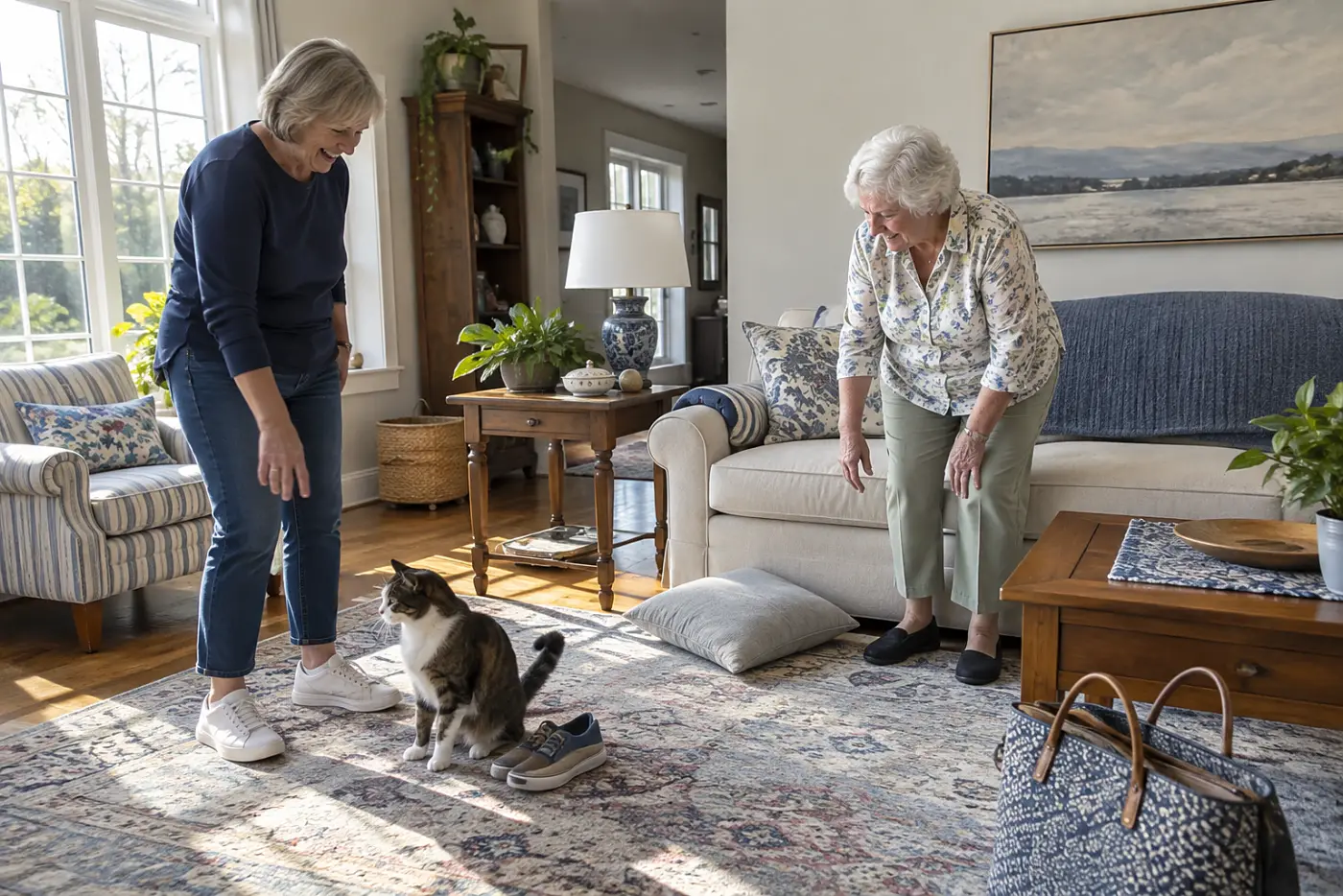
Your friend holds out a hand. The cat sniffs it, accepts a stroke, and walks across the room to sit by your shoes. Your friend laughs. You feel a ridiculous little swell of pride.
Don't turn it into a contest. Let visitors offer a hand and give her space to leave. Cats need an exit from attention, even from people they like.
What you get is the return. She has inspected the new person and come back to her usual place. In a crowded room, that familiar choice stands out. Later, when the house empties, she'll follow you while you put the cups away.
8The holiday chair beside yours
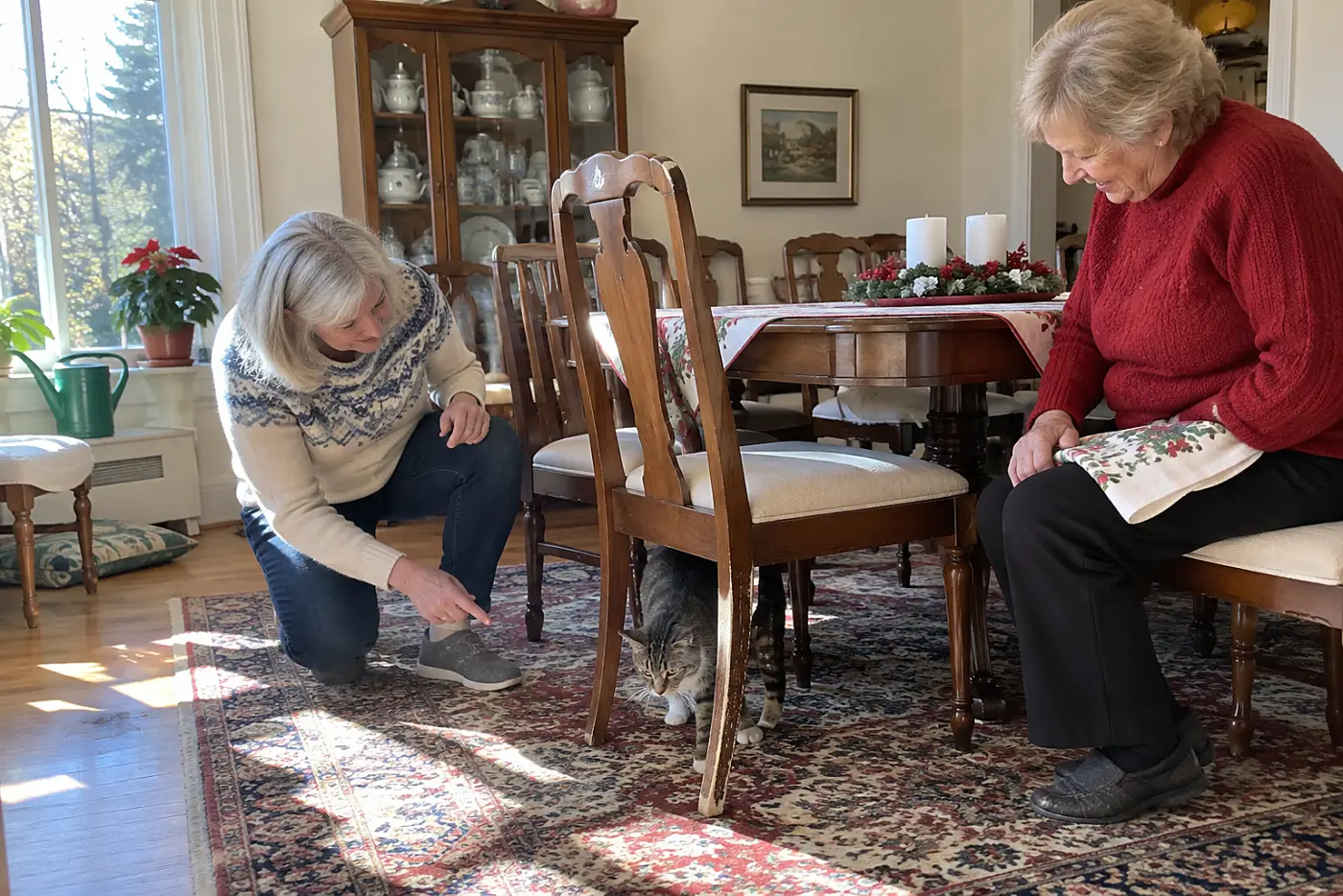
You set the table for company and leave a chair slightly pulled out. She takes the space beneath it before the coats come off.
Tell guests where she's resting so nobody drags the chair back over her tail. Then carry on with dinner. She'll listen to the unfamiliar voices and keep your ankles in view. From above the table, it looks like she's hiding. Underneath, she's exactly where she chose to be.
See more: 27 Things Grandmothers Notice That Nobody Else Does →
7The afternoon you stayed in bed
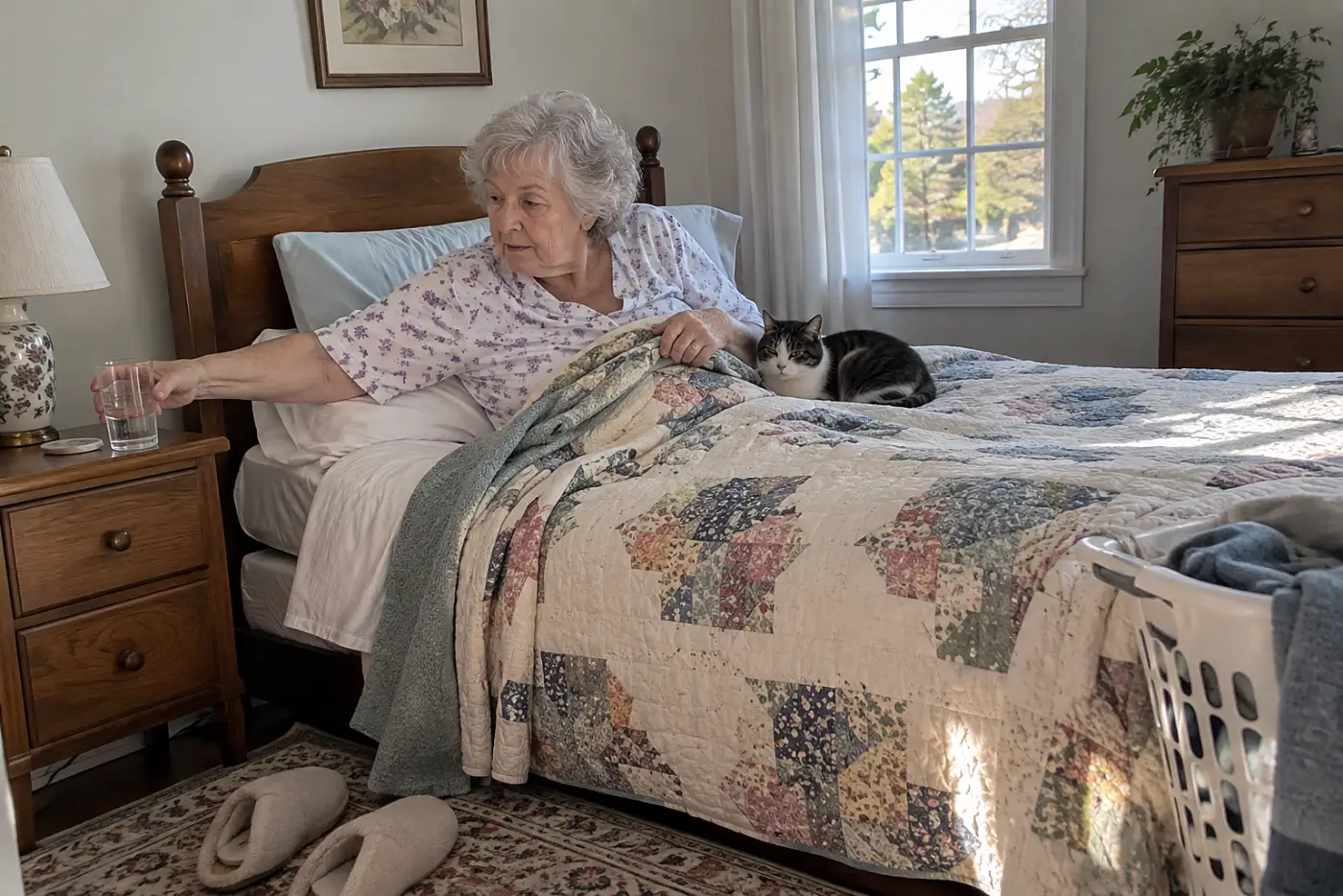
The heating pad is warm, the water glass is nearly empty, and the afternoon slips past. She climbs onto the bed and settles near your hip. No performance. Just her steady weight while you reach for the glass.
You don't have to call her your nurse. She knows the bedroom, your scent, and the long pause in your routine. When you rise, she follows as far as the door.
On a hard day, that plain company counts. Before you lie down, make sure her food and water are ready and her litter box is accessible. Then let her choose her spot.
See more: 23 Signs Your Dog Knows Something Is Wrong Before You Do →
6The carrier left open
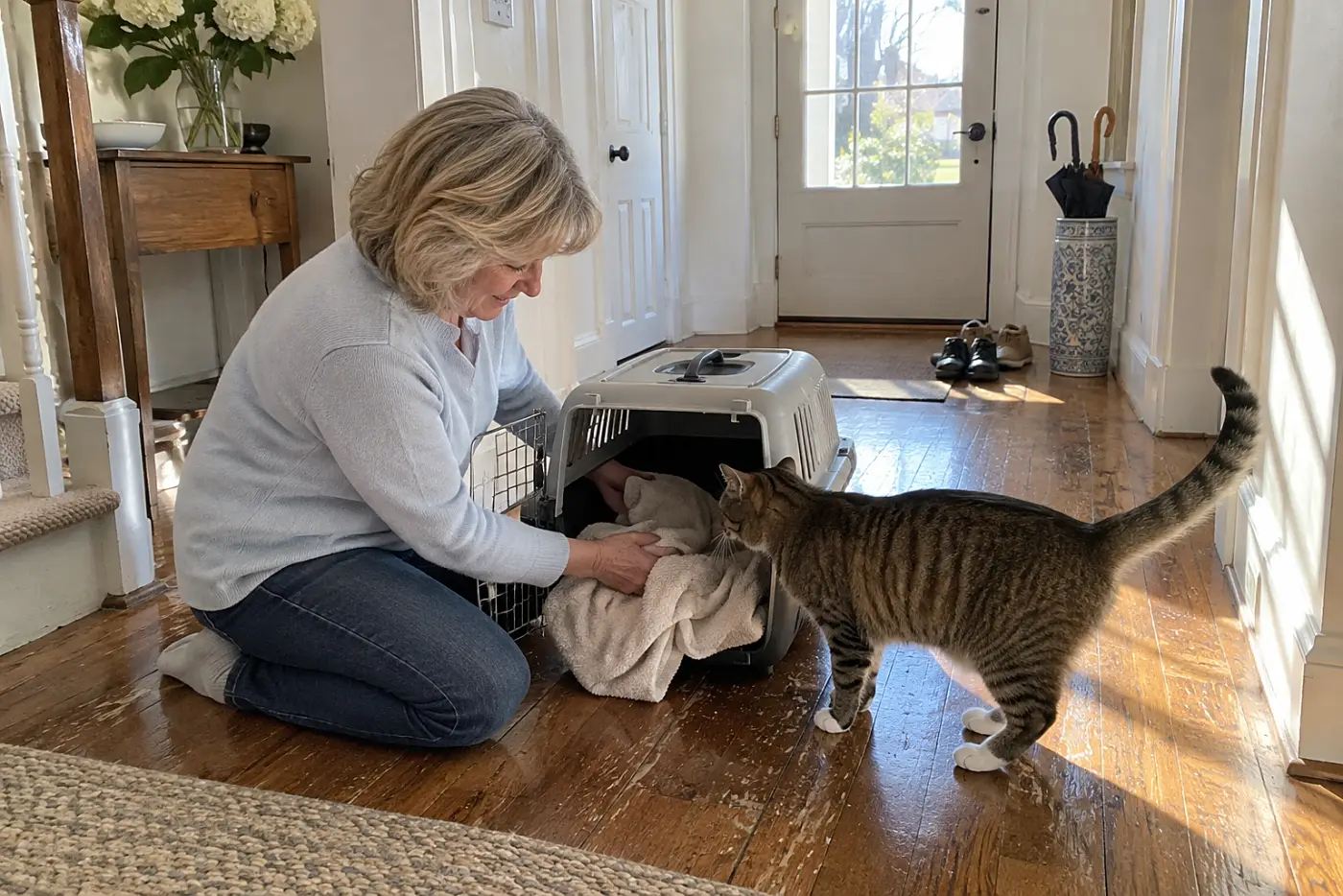
The carrier sits in the hall with its door open. She walks past it for days, then steps inside to investigate the towel.
Leave it out well before an appointment. Put treats near the entrance, then inside, and let her enter without shutting the door. The American Association of Feline Practitioners has advice on getting cats comfortable with carriers. Her willingness to step in took time; remember that when you're tempted to rush.
5The reunion in the exam room
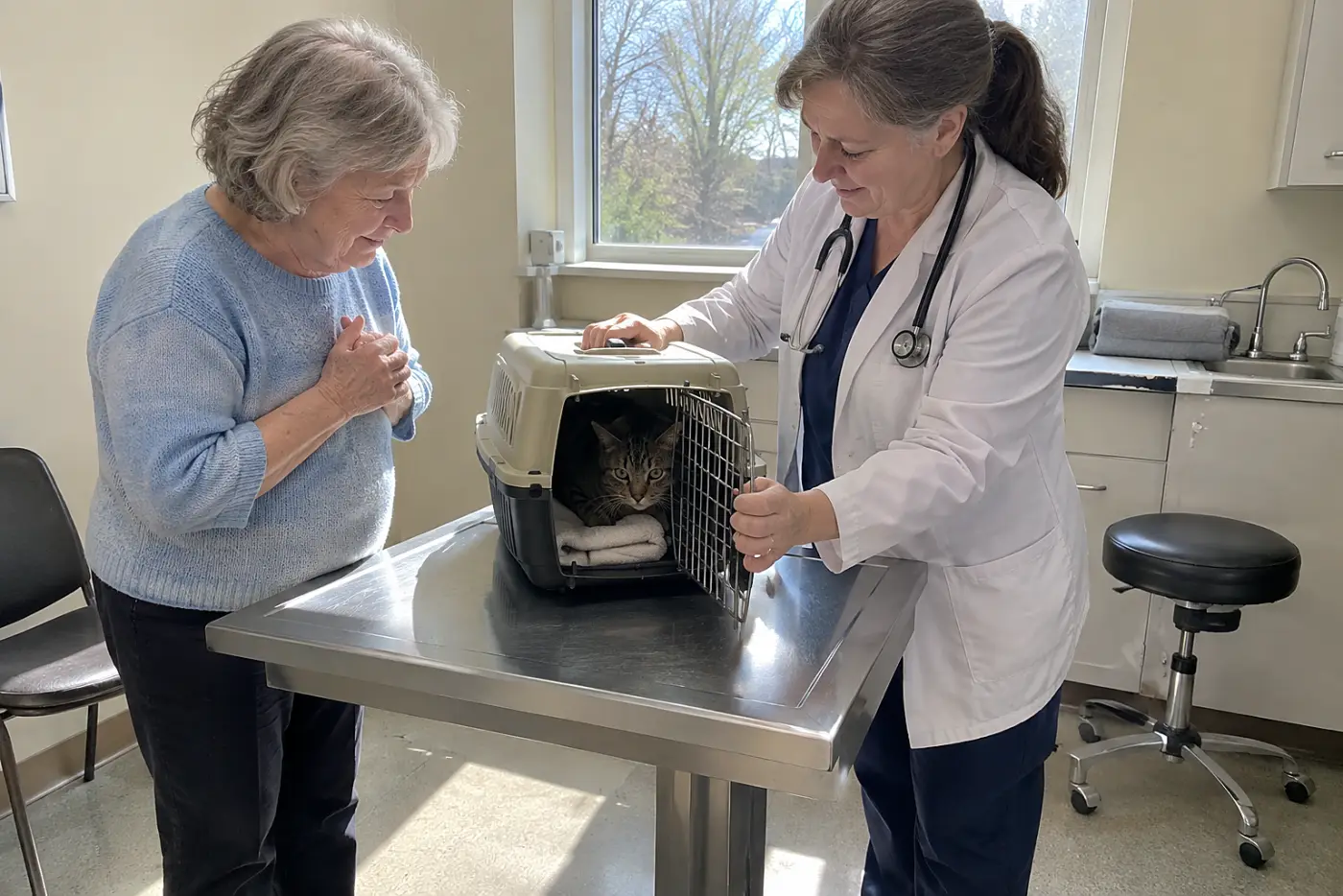
At the clinic, she stays at the back of the carrier while unfamiliar hands prepare the exam. You speak. Her ears turn toward your voice.
Ask the veterinary team where they'd like you during the exam. If they invite you to stay close, keep your movements steady and let them handle the medical work. Your presence gives her one familiar sound in an unfamiliar room.
Afterward, watch what she does when the carrier opens at home. Some cats head straight under the bed. Give her a clear path and leave water nearby. When she comes out, she'll know where to find you.
The American Veterinary Medical Association recommends routine veterinary care. Ask your veterinarian when she should come back, especially as her needs change with age. Put that date somewhere you'll see it.
See more: 22 Reasons Your Old Dog Paces at Night, and What Helps →
4The pill hidden in supper
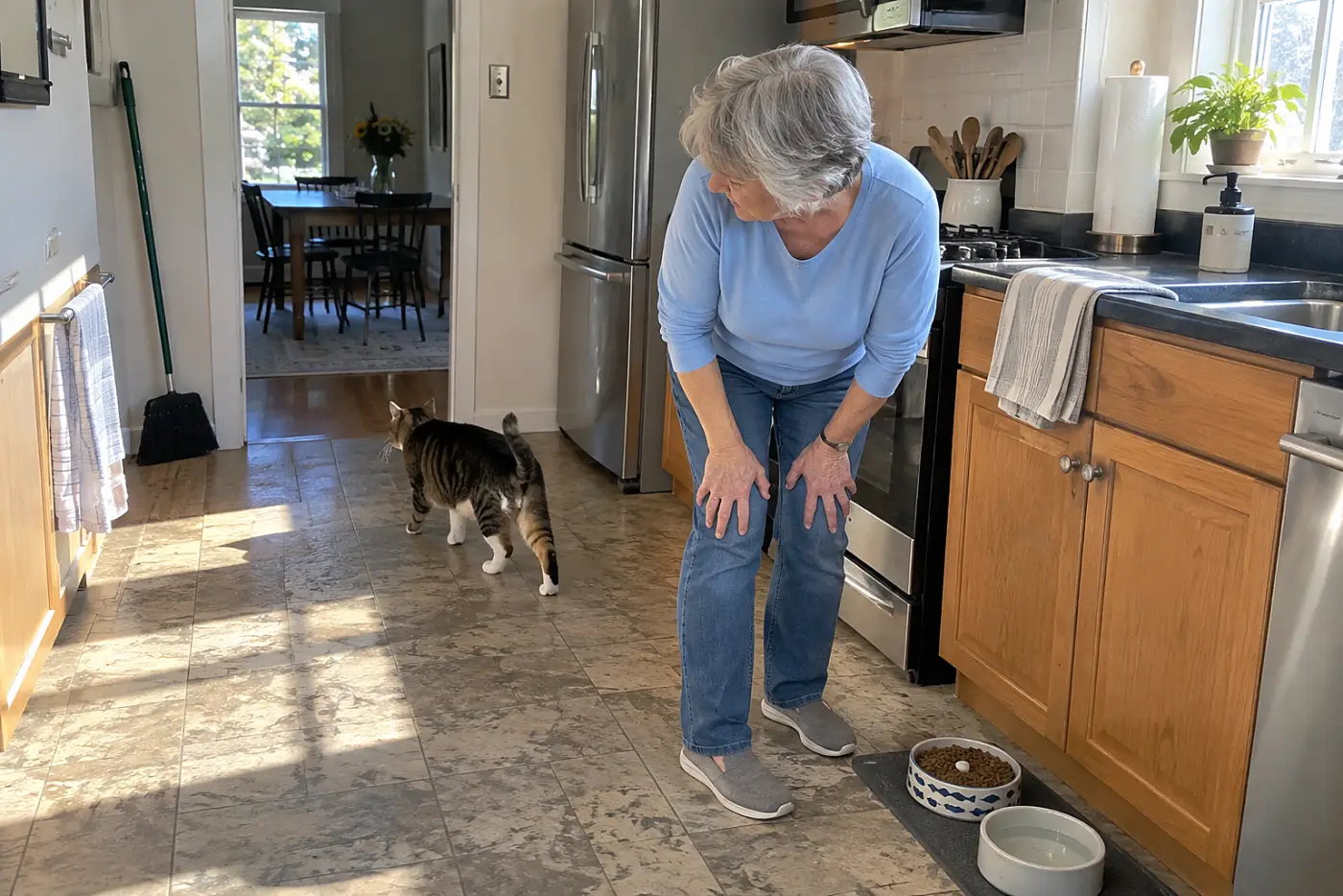
You tuck a pill into a spoonful of food. She eats around it and leaves the tablet shining in the bowl. Of course she does.
Before hiding any medicine, ask the veterinary team whether that pill can be crushed or given with food. Some medicines need another approach. If she rejects the dose, call for instructions rather than guessing whether she swallowed enough. The FDA's Center for Veterinary Medicine has pet medication guidance, but her prescription label sets the schedule.
Check that label before each dose, even when you've given the medicine before. She trusts you with dinner; keep the medicine part accurate.
3The step up to her favorite perch
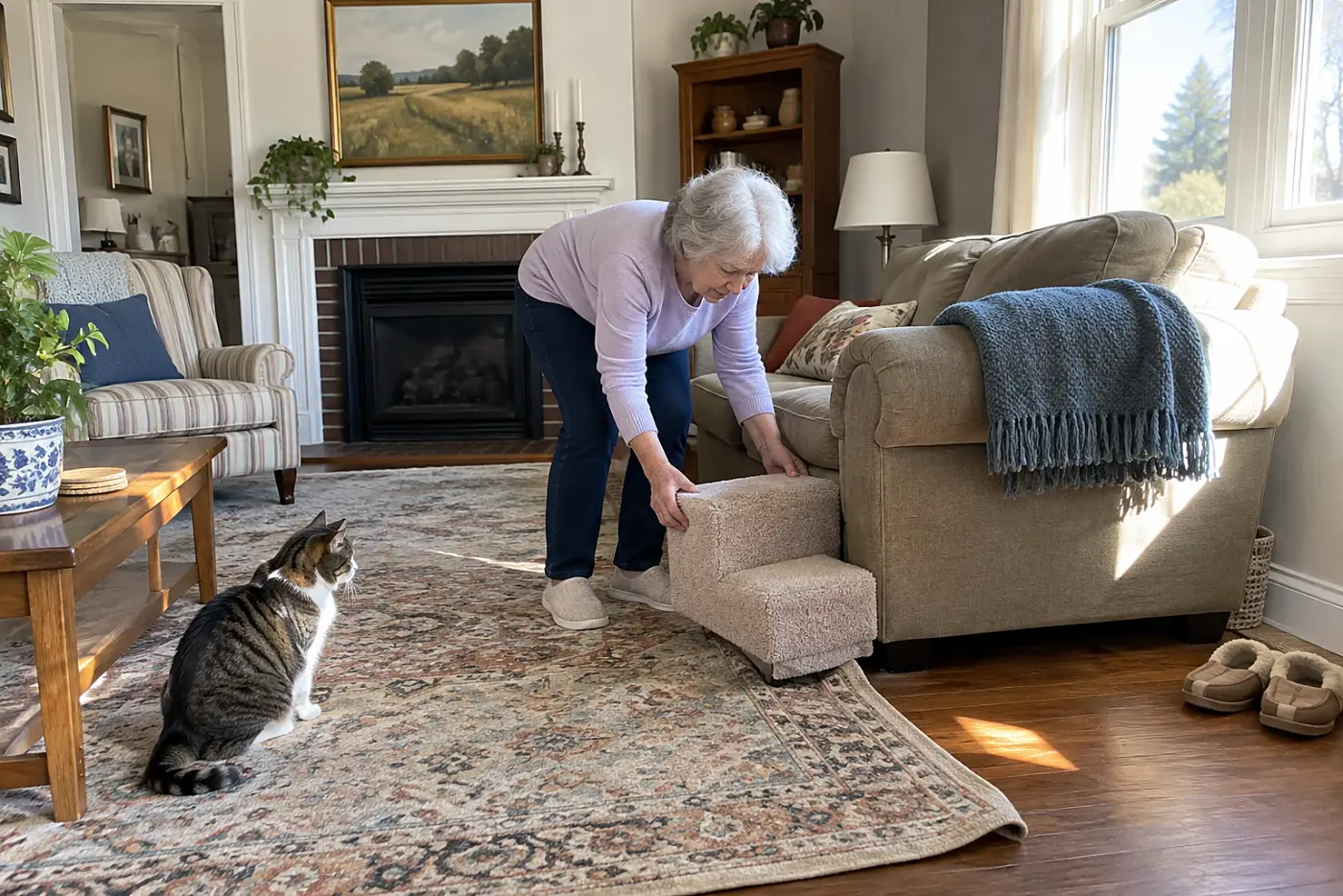
She pauses before jumping onto the sofa. Yesterday she made the leap without thinking. Today she studies the distance and chooses the floor.
Start with what you can see. Note whether the pause happens on other jumps, whether she still grooms her back, and whether she reaches the litter box comfortably. The American Association of Feline Practitioners publishes guidance on recognizing pain in cats. Bring what you've noticed to your veterinarian; cats don't need to cry out for pain to matter.
A low step beside the sofa gives her another route to the cushion. She still gets to choose her place. You've changed the height, not the invitation.
2The last good afternoon together
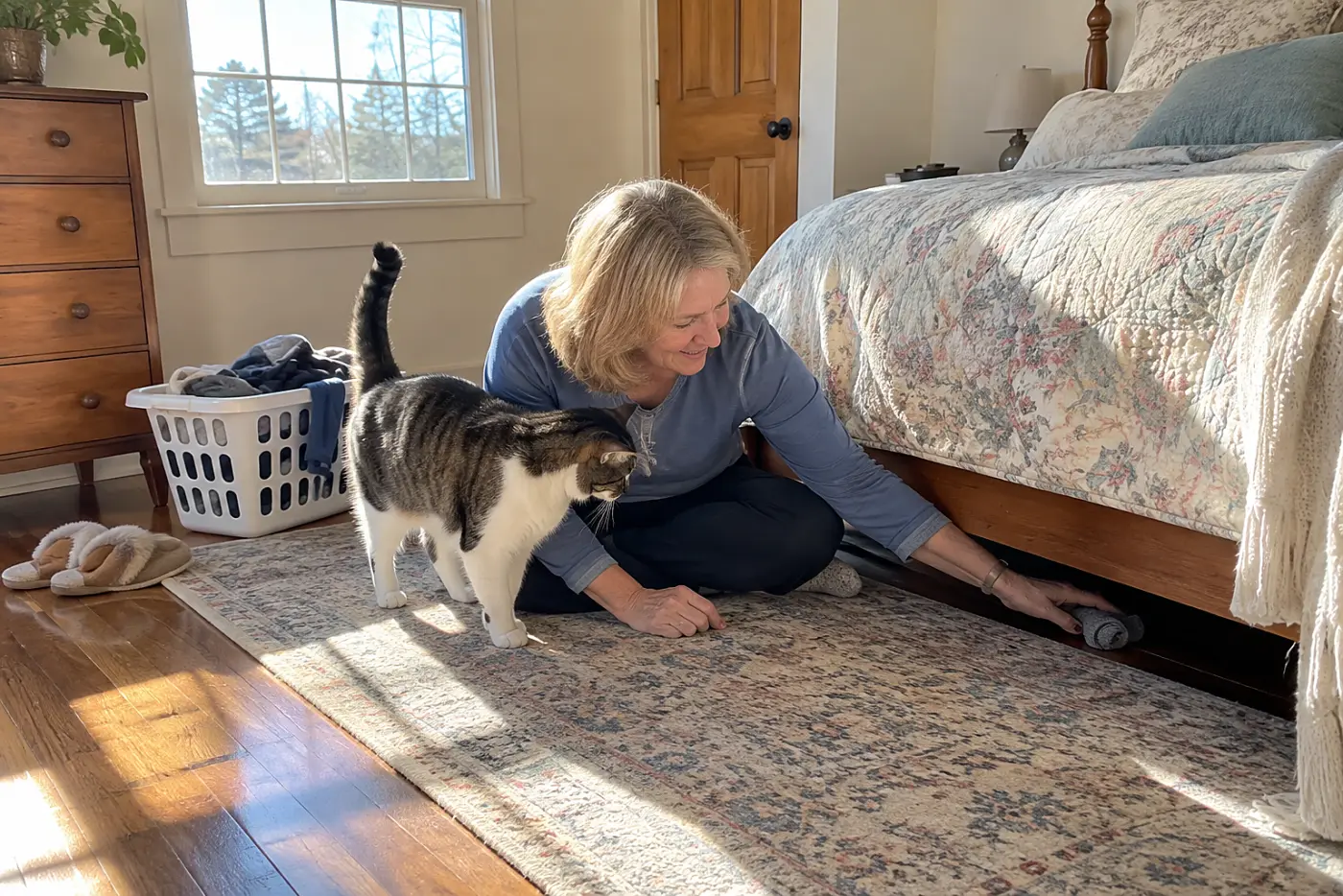
She eats a little, settles in her usual patch of light, and lets you sit beside her. You want that afternoon to tell you what to do next. It won't carry the whole decision.
Ask your veterinarian what changes to watch for in eating, breathing, movement, and comfort. Write down what her good days look like to you, then talk through the hard days. You know her habits better than anyone entering the exam room. Bring that knowledge with you.
1The changes you wrote down
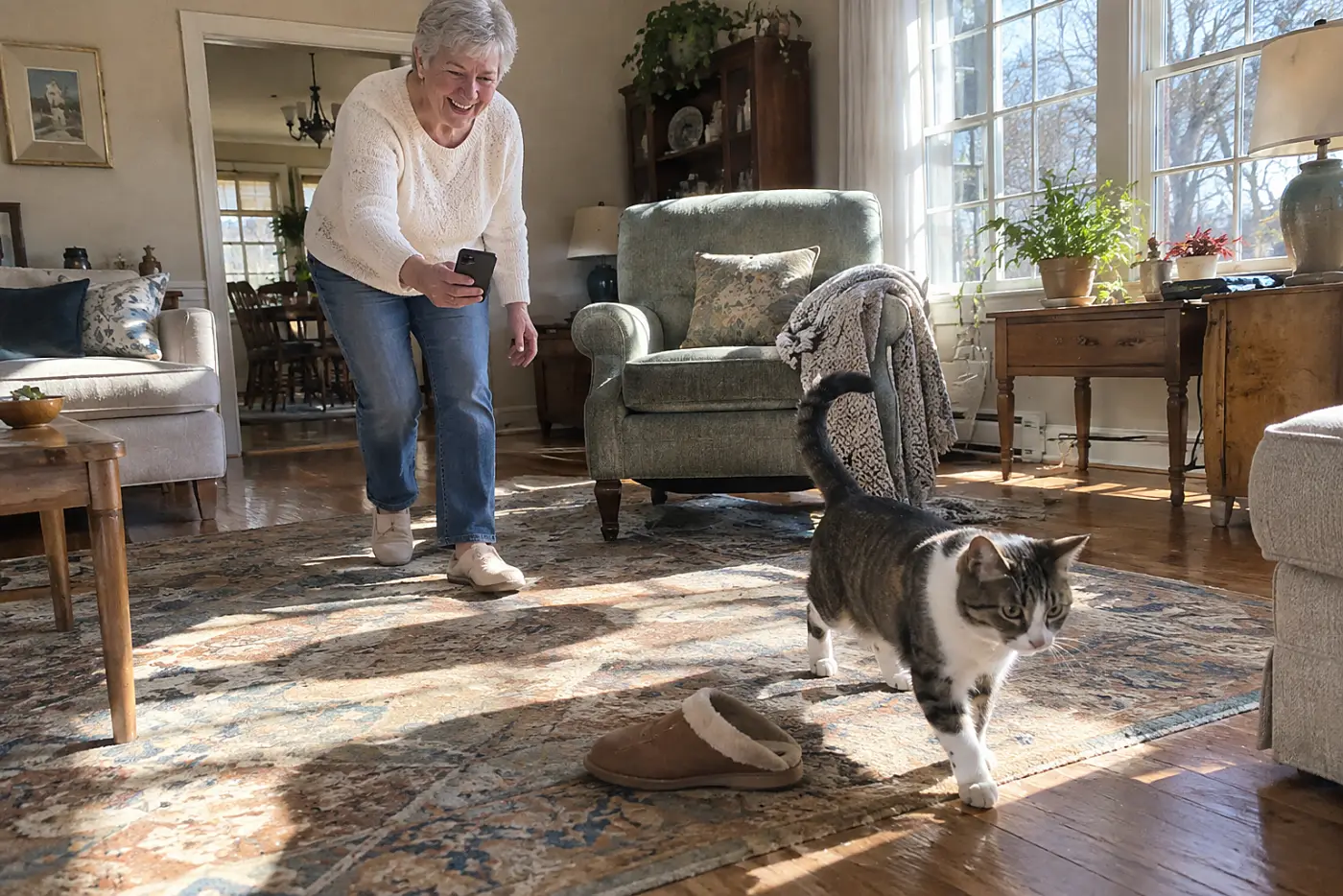
A note on your phone holds 3 things: when she last ate, whether she used the litter box, and how she moved across the room. The details look small until you need to tell someone what changed. Then they give you a way to speak for her.
Start a fresh note when something seems different. Write what you saw and when, without trying to diagnose it. Record a short video of the movement that worries you. The Cornell Feline Health Center publishes cat health information, but your veterinarian needs your account of *this* cat.
Call the veterinary office about a sudden change or a symptom that concerns you. Say, “She missed her usual jump this morning, and I have a video.” If she's struggling to breathe, seek emergency veterinary care now.
The bottom line
Her choice shows up in the places she returns to: beside your chair, along your hallway, within reach when the house fills up. The small routines tell you where she feels at home.
You've learned to leave her an exit, check the dryer, and notice when a familiar jump gets hard. You've also kept track of what changed, so you can tell her veterinarian what only you saw.
Where does she go when she wants to be near you without asking for a thing?
Up next
25 Reasons a Cat Suddenly Changes Where She Sleeps, and the One That Means Call the Vet
The cold tile, the missing blanket, the closed bedroom door: each gives you a clue about her new sleeping spot.
Read the list →

Reader quiz
Did you catch the details?
5 questions from this article.
What should you check before closing the washer and dryer doors?
Did any of these feel familiar?
Know someone who needs this?
Sources cited in this article
This article links to 6 outside sources, listed here so you can read them yourself.
- ASPCA www.aspca.org
- 2020 study www.sussex.ac.uk
- American Association of Feline Practitioners catvets.com
- American Veterinary Medical Association www.avma.org
- FDA's Center for Veterinary Medicine www.fda.gov/animal-veterinary
- Cornell Feline Health Center www.vet.cornell.edu/departments-centers-and-institutes/cornell-feline-health…
Ruth Ellison
Family Editor
Ruth writes about grown children, grandchildren, ageing parents, and the conversations families put off, in the words of the people involved.
More from Ruth Ellison