











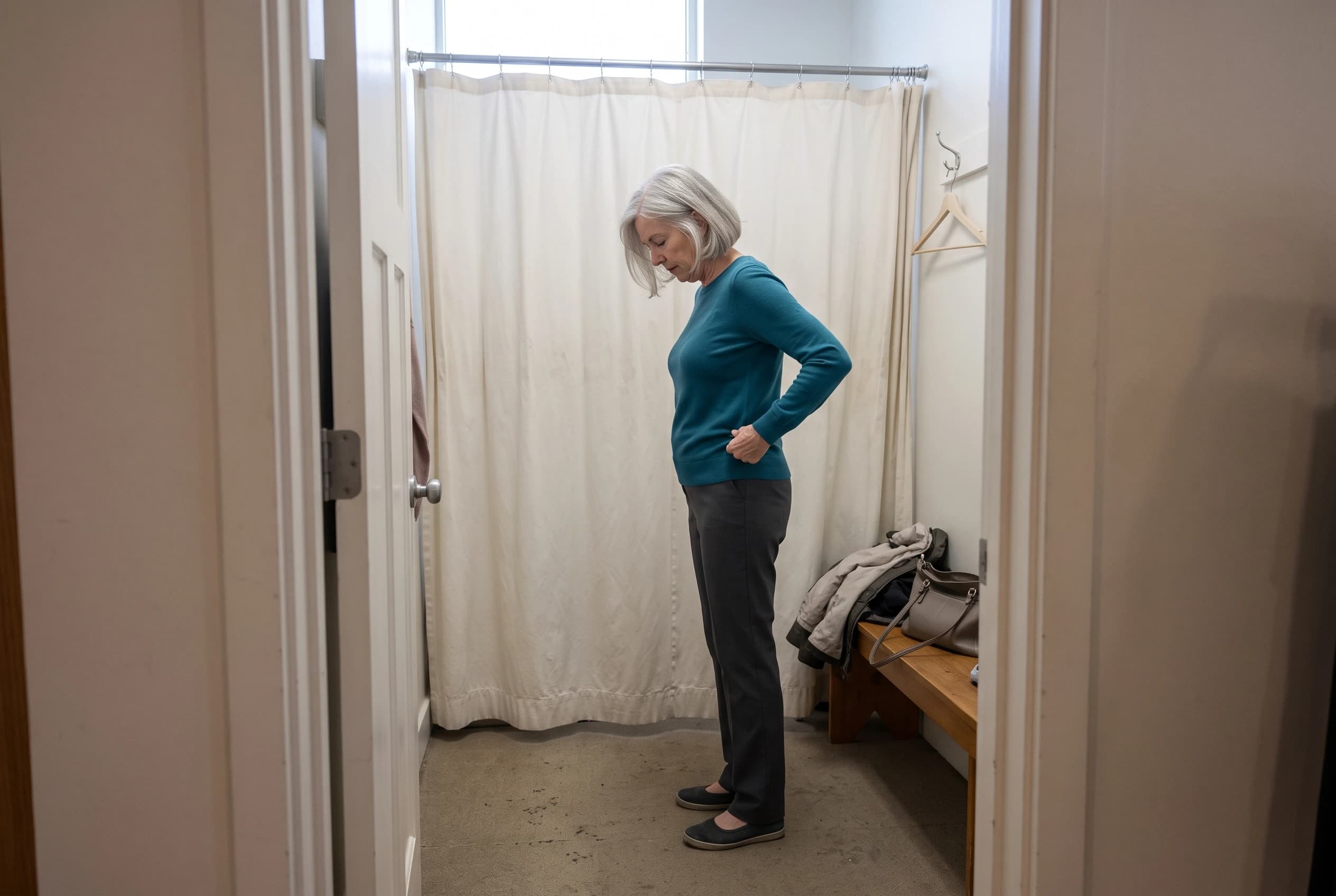

25 Reasons a Cat Suddenly Changes Where She Sleeps, and the One That Means Call the Vet
The cold tile, the missing blanket, the closed bedroom door: each gives you a clue about her new sleeping spot.
By Ruth Ellison, Family Editor
Updated · 10 min read
- Written by our family editor
- How we review

Last night she was curled against your knees. This morning she’s asleep behind the bathroom door, where the tile feels cold through your socks. She has never chosen that spot before.
Move the door slowly. Watch what she does when she wakes. Does she stretch, eat breakfast, and follow her usual route through the house? Or does she stay tucked away while the food sits untouched? The place matters, but the change in everything around it matters more.
25A sun patch that moved across the floor
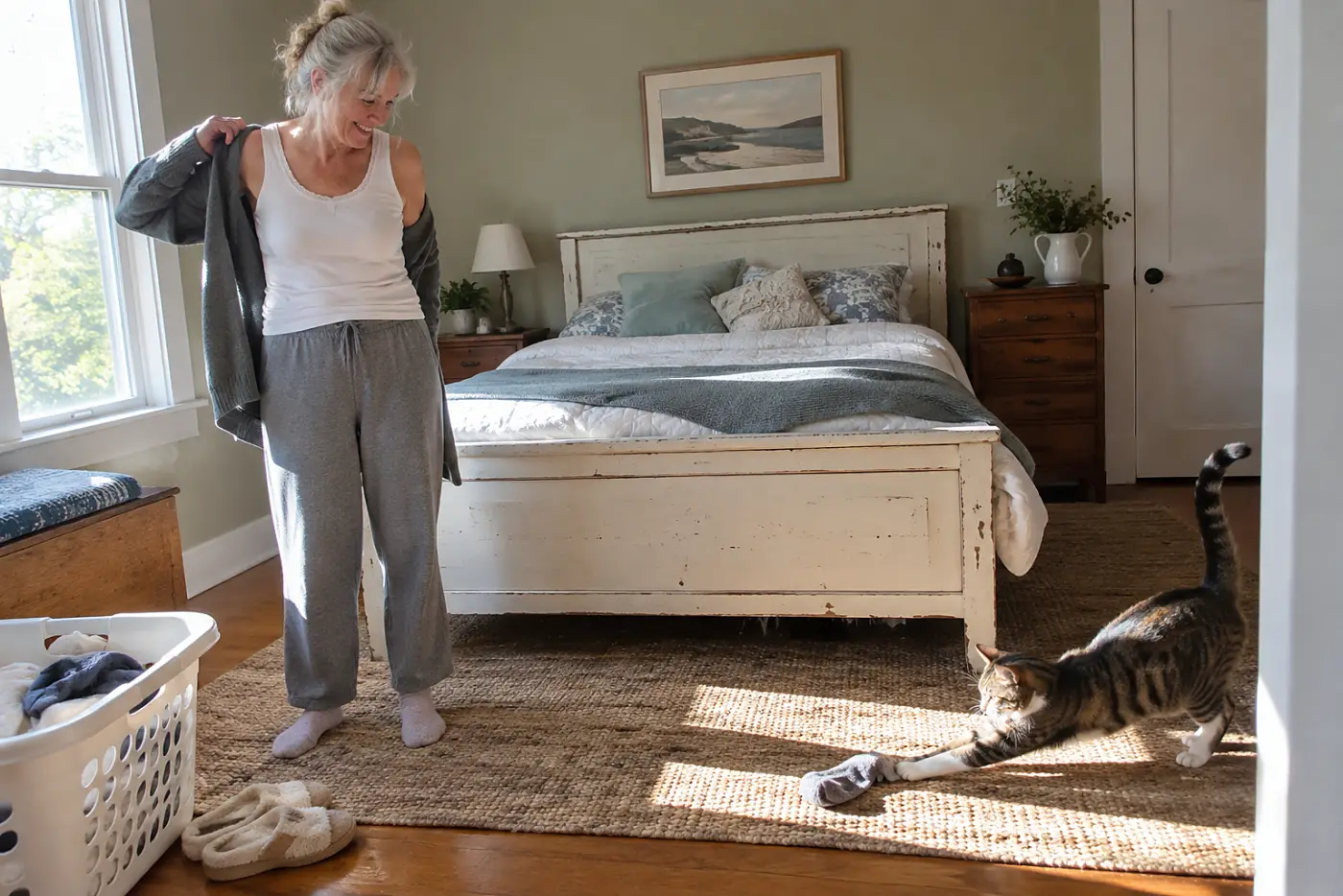
A cat who followed the sun onto the living room rug yesterday has found it on the bedroom floor today. Before you worry about the abandoned cushion, put your hand on the new spot. Is it warmer?
Watch where she settles as the light shifts. If she gets up, stretches, and follows the bright patch, she has shown you what she wanted. If she stays planted after the sun leaves, look for another clue.
24A radiator warming the guest room
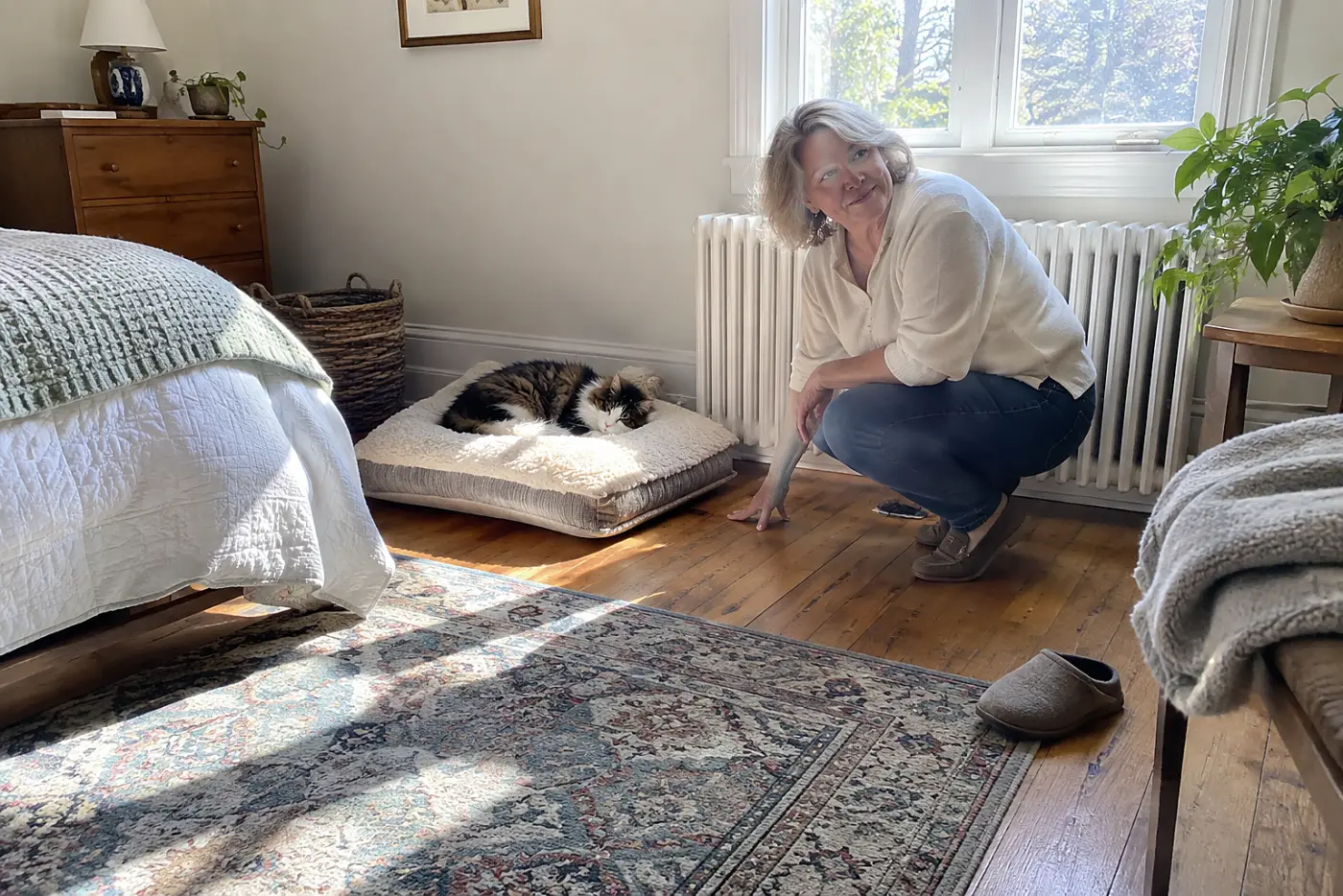
The guest room has barely interested her until the heat came on. Now she sleeps beside its radiator, away from the bed you bought her.
Check that she can move away from the heat and that the surface beneath her isn’t hot. Give her room to choose a cooler spot. Then watch whether the guest room loses its appeal when the radiator cools.
23A cool bathroom floor
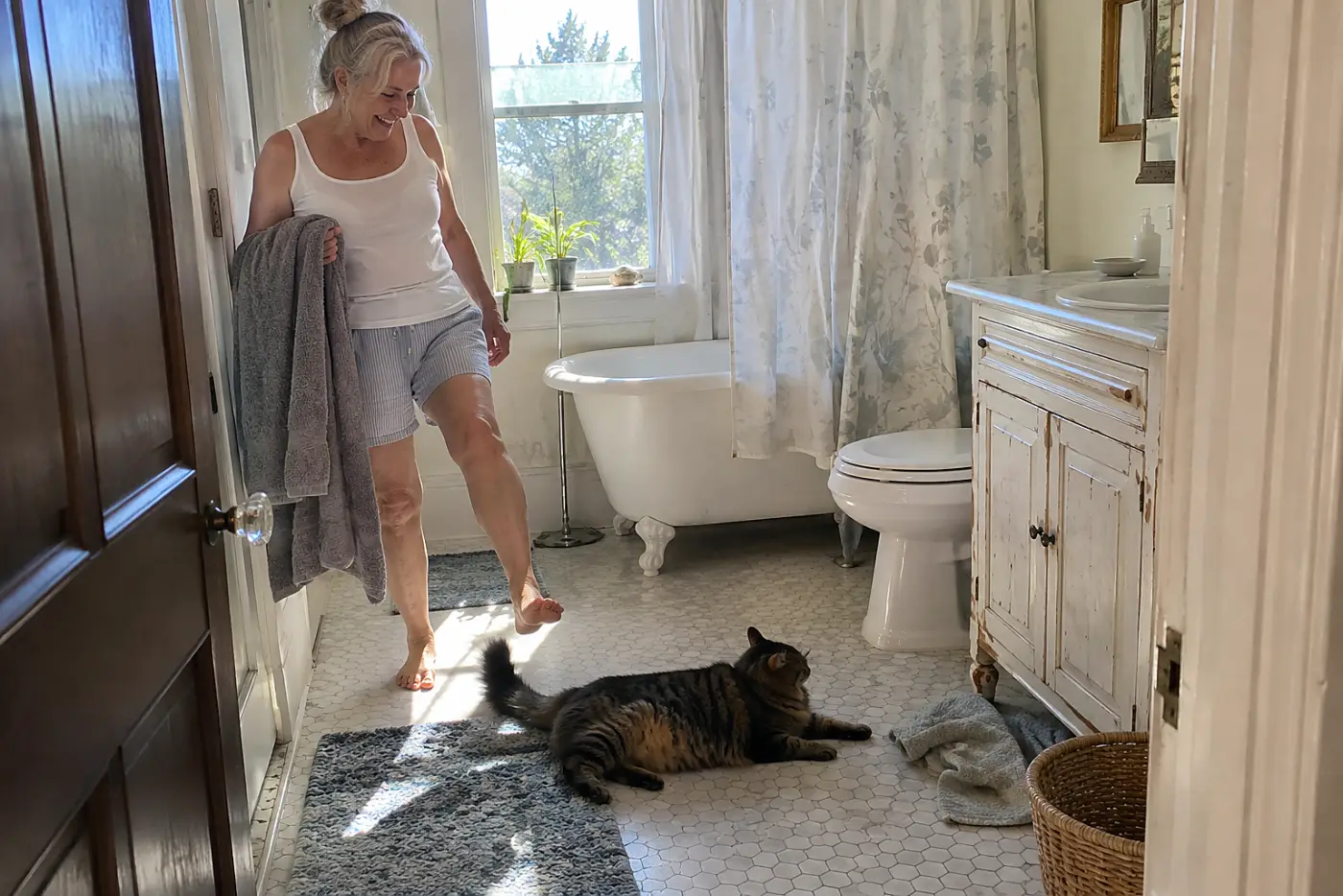
Why the tile when she has a perfectly good sofa? Touch both surfaces. A sunny living room and a warm throw make the bathroom floor feel appealing.
Look at the rest of her behavior before you settle on temperature as the answer. Is she eating and moving as usual? A cat who seeks a cool floor while panting, breathing with her mouth open, or acting weak needs veterinary care. The tile alone doesn’t tell you enough.
22A new draft across her old cushion
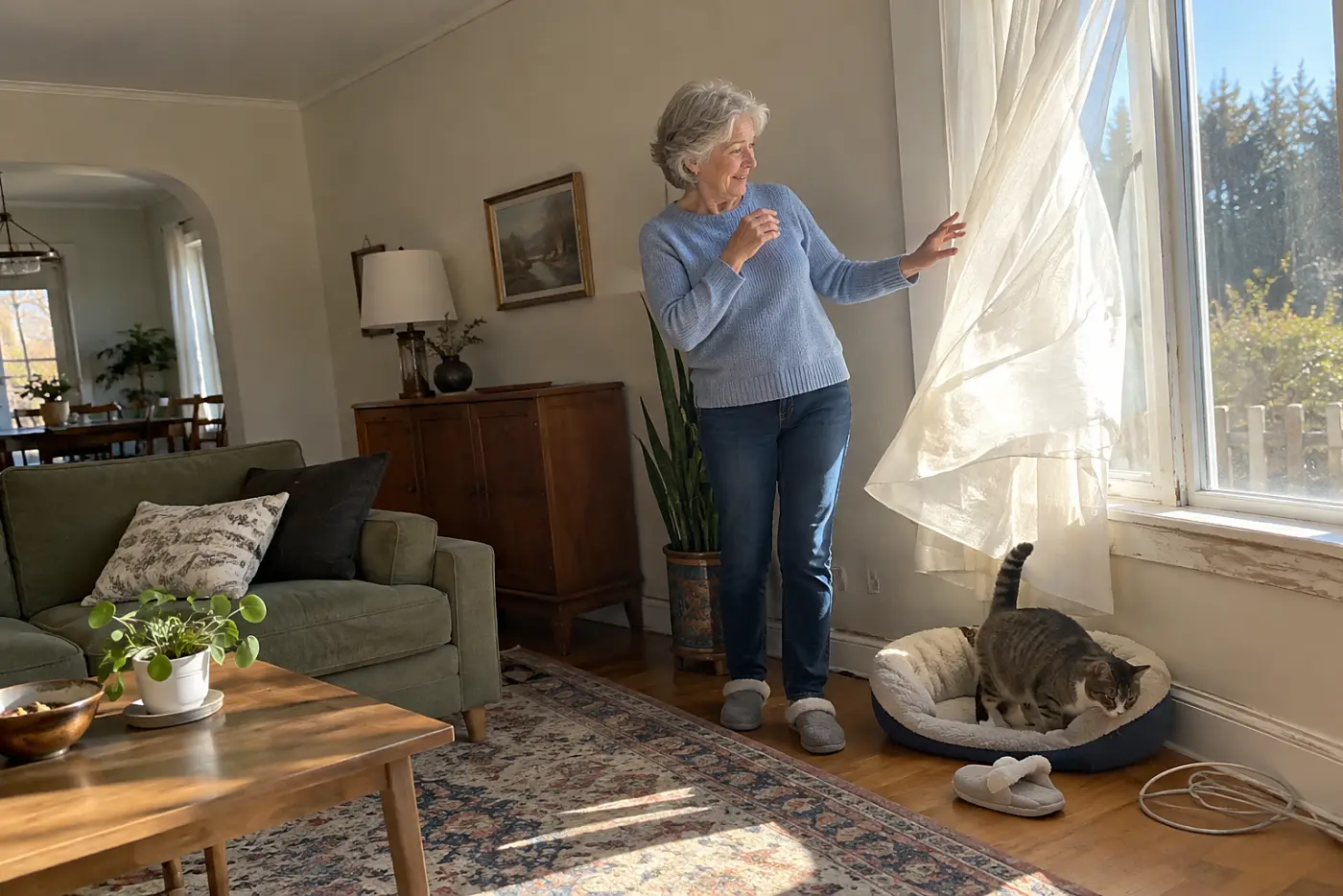
Sit where she used to sleep. Feel for air at ankle height, especially near a window, vent, or door. A cushion that feels fine to you has a draft blowing straight across it.
Move the cushion out of the airflow and leave her free to choose. If she goes back, you have your answer without buying a new bed.
21A blanket fresh from the laundry
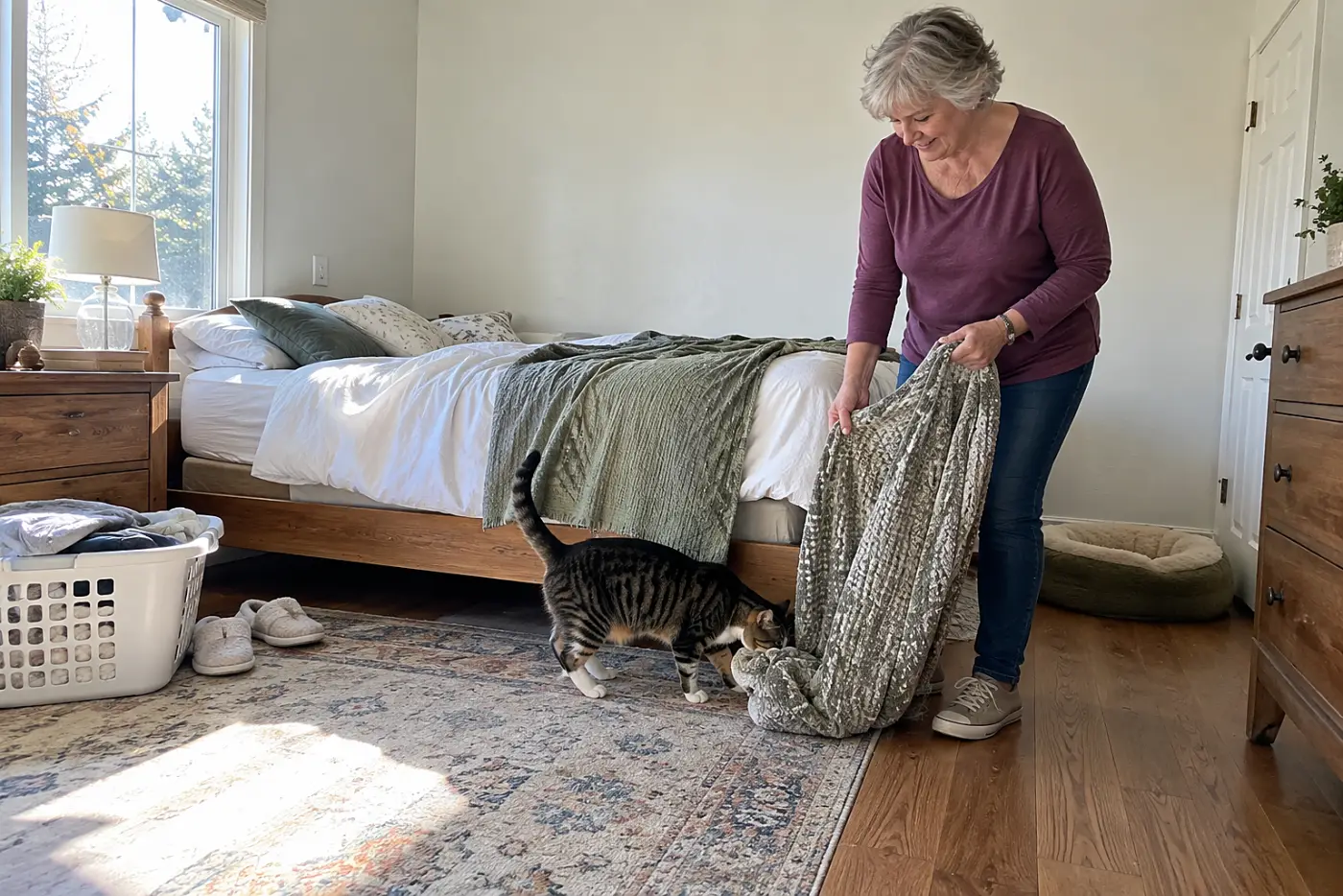
The throw smells clean to you. To her, it no longer smells like the place where she slept yesterday.
Think about what changed before she left it. Did you wash her favorite blanket, switch detergent, or add a scented dryer sheet? Put an unwashed item with her familiar scent nearby, and skip heavily scented products on her bedding. Don’t pick her up and put her back. Let her inspect it when the room is still.
20A cardboard box beside the closet
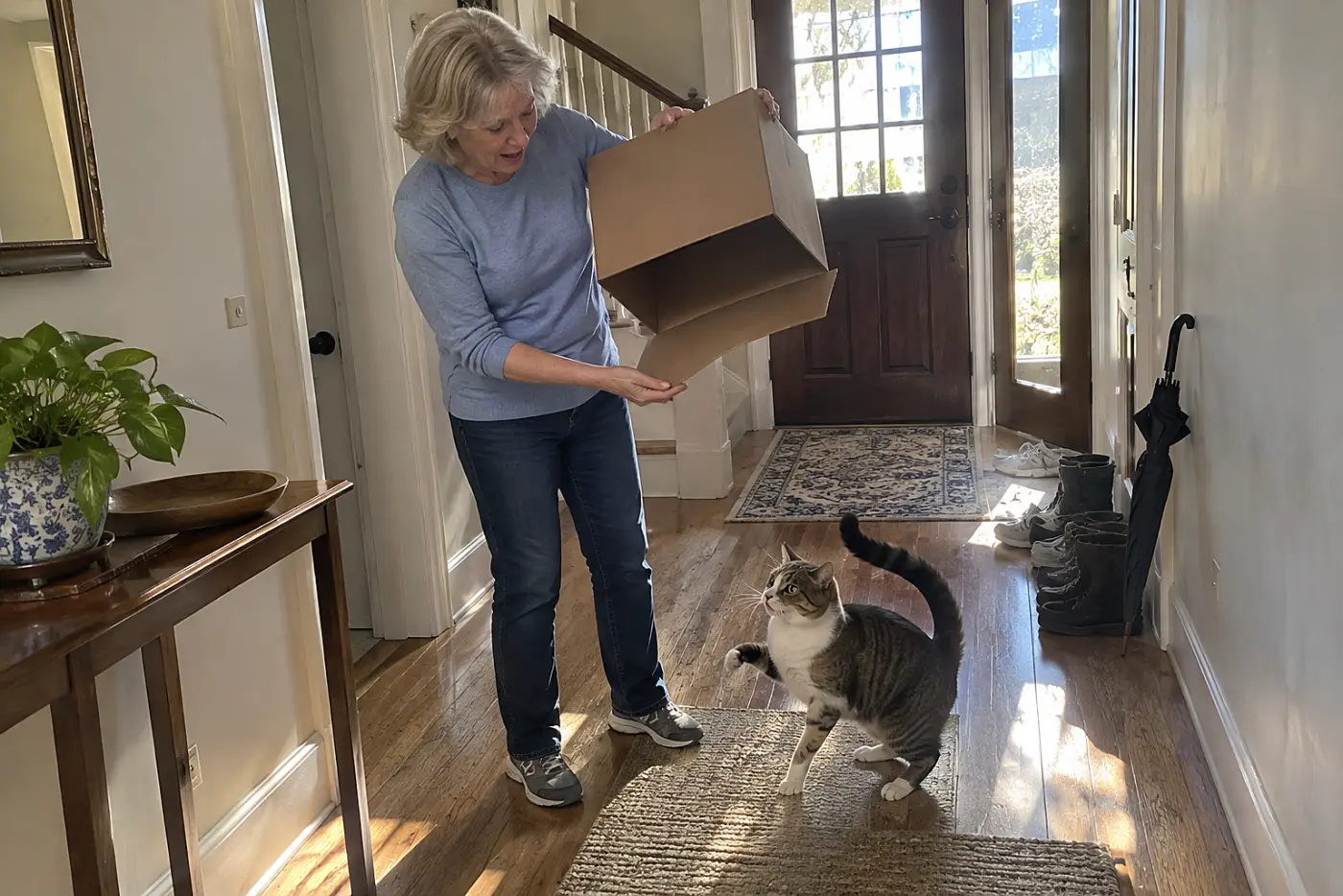
A delivery box has edges she can lean against and walls that block part of the room. The expensive open bed beside it has neither.
Check the box for staples, tape she chews, and handles that could trap her head. Put it somewhere she can enter and leave freely. If she chooses it and carries on with her day, the mystery has a fairly ordinary answer.
19A higher perch with a better view
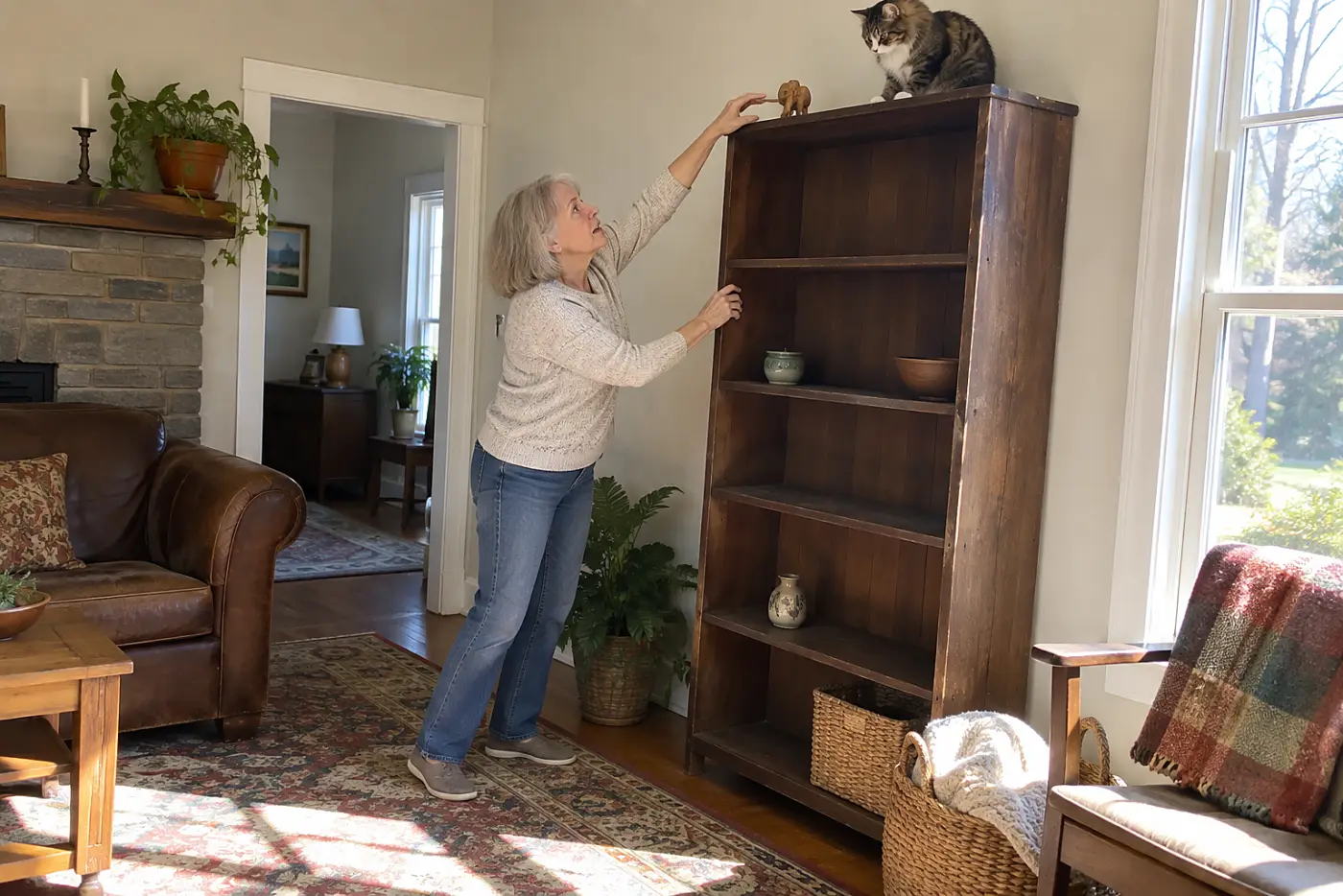
Look from the chair where she used to sleep toward her new shelf. What can she see from there that she couldn’t see before?
Height gives her a view of the doorway and the room below. Make sure the shelf is steady and the route down is safe. Watch her jump afterward. A new love of height is different from a cat who goes up and then seems unable to get down.
18A closet door left ajar
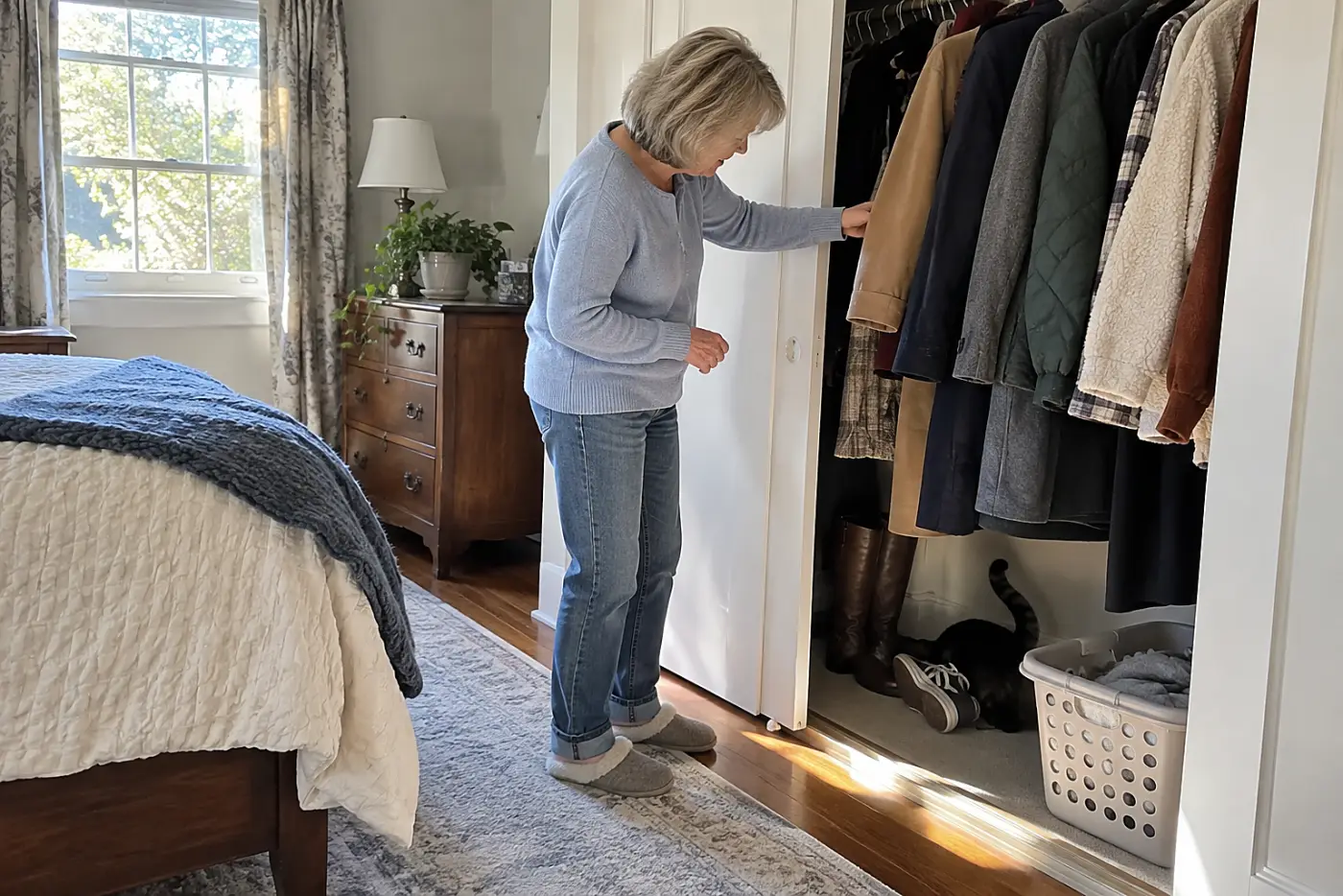
You leave the closet open while putting clothes away. Later, two bright eyes appear between the shoes.
The closet blocks noise and foot traffic, and your clothes smell familiar. Before you close it, check where she is. Keep an exit open if she has made it her nap spot, and move cleaning products out of reach. If she chooses the closet only when company arrives, pay attention to what is happening outside the door.
17A humming appliance near her bed
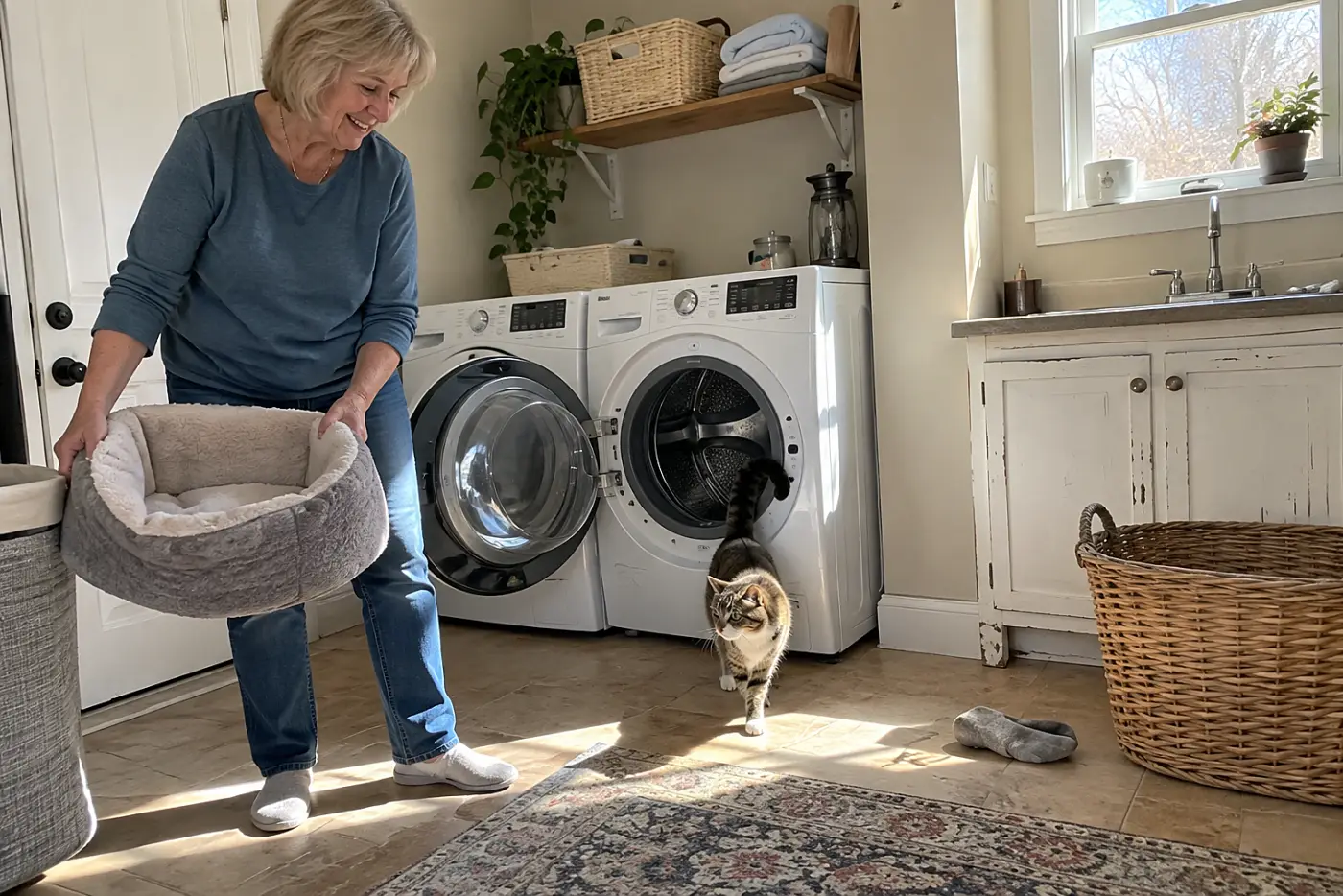
The washer enters its spin cycle. She leaves the laundry-room mat.
Put your hand on the floor beside the appliance. You feel the vibration; she rests close to it. Move her bed away from the machine rather than waiting for her to get used to the noise. If the mat stays empty even when the house is still, keep looking.
16A hallway turned into a busy route
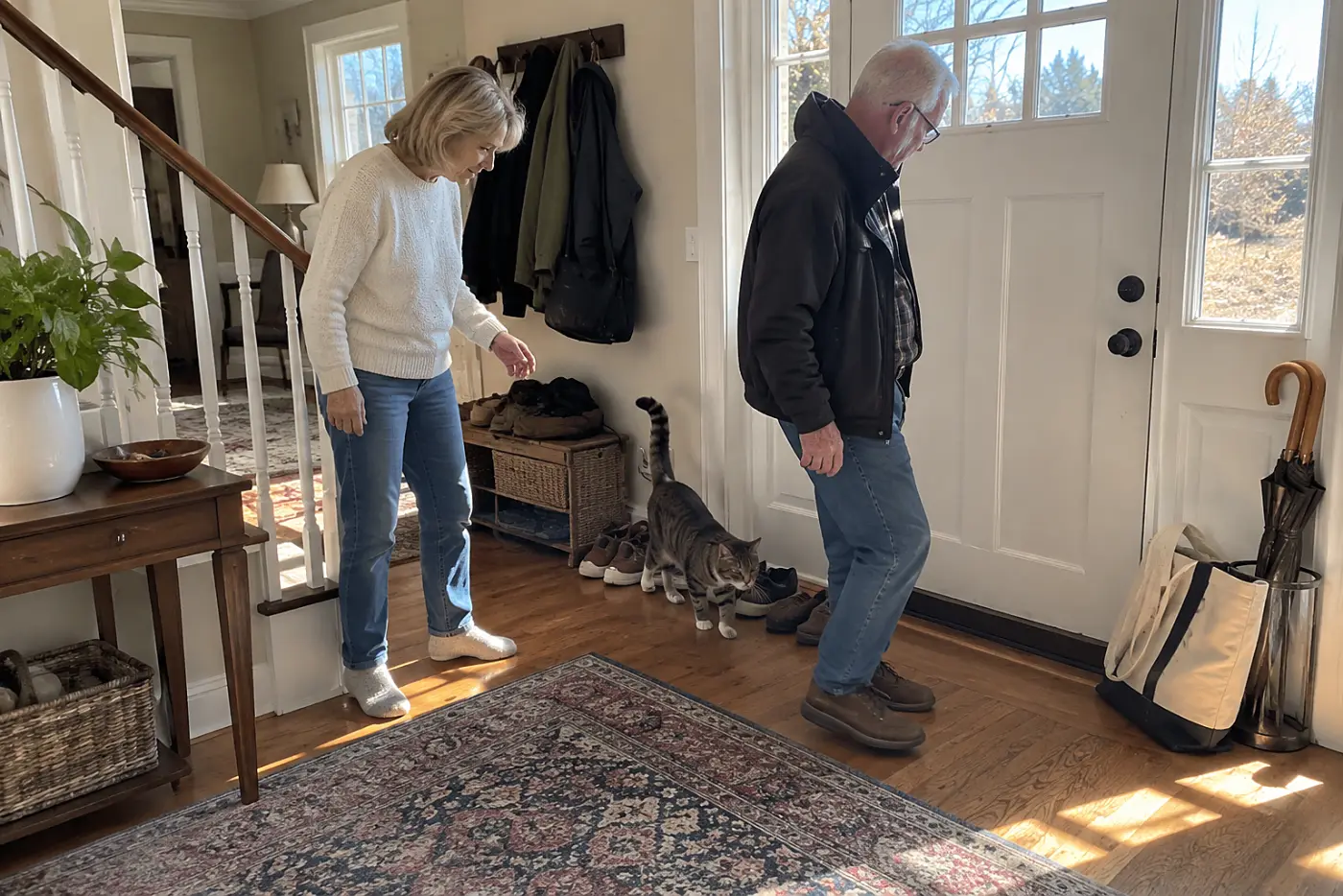
A favorite hallway corner stops being restful when everyone starts walking through it. Perhaps you moved a chair, changed where you keep your shoes, or began using a different door.
Stand there during the hours she normally naps. Count the interruptions: footsteps, swinging doors, a dog passing close by. Set up another resting place away from the route. She needs a spot where she can wake without finding someone directly above her.
15A new scent on the sofa
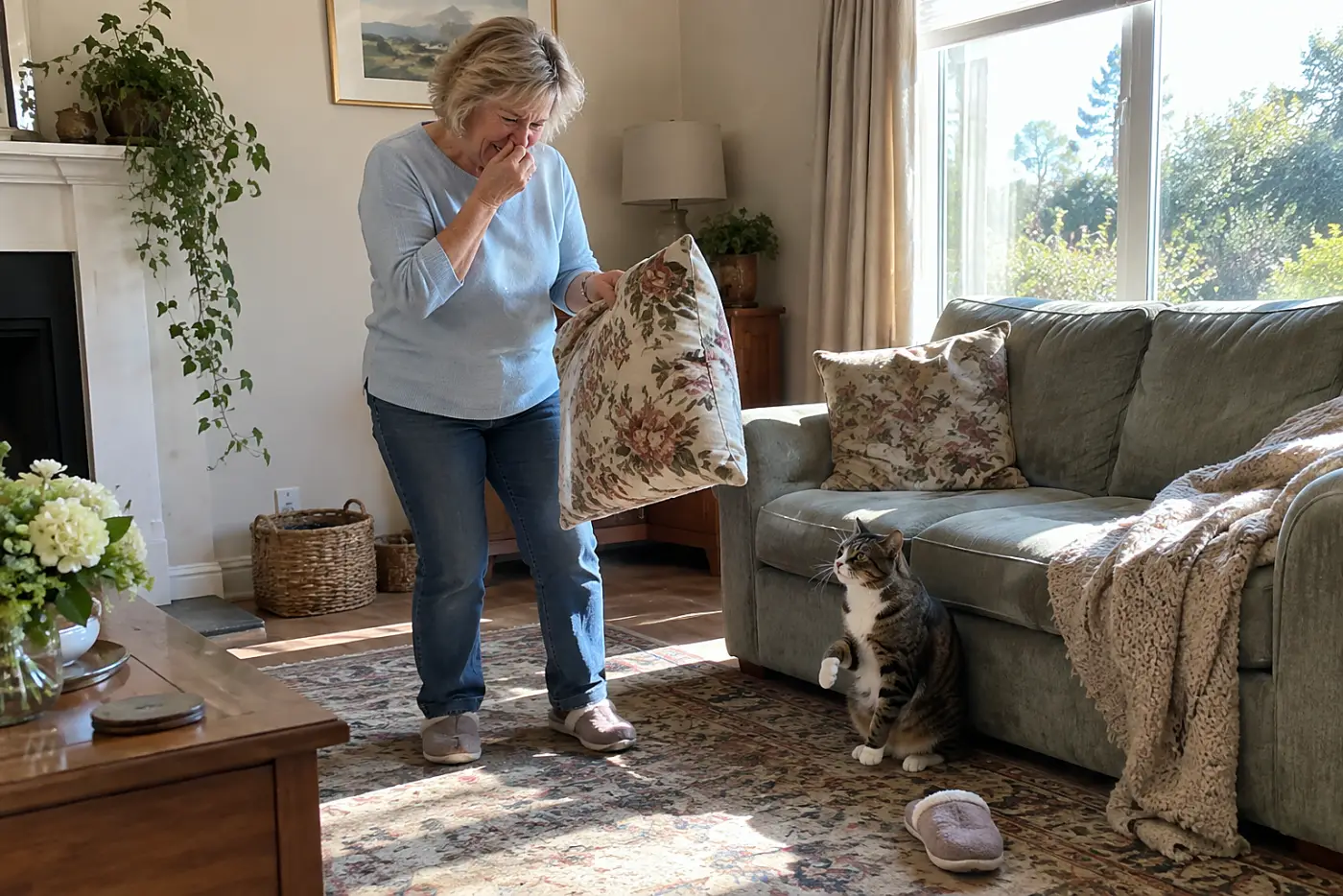
Think about what touched the sofa before she stopped sleeping there. A room spray, upholstery cleaner, visitor’s coat, or another animal’s scent gives her something new to investigate.
Air out the room and remove the scented item if you can. Follow product directions before letting her near a treated surface. If she returns after the smell fades, you have a better answer than “cats are unpredictable.”
14A guest who took her usual chair

Your sister takes the armchair, and the cat spends the visit under the bed. The chair wasn’t empty when she wanted it.
Give your cat a place visitors won’t approach. Ask them to let her come out on her own, even if she was friendly last time. Notice whether she reclaims the chair after they leave. If she keeps hiding once the house is back to normal, the visitor wasn’t the whole story.
13A patch where another pet slept
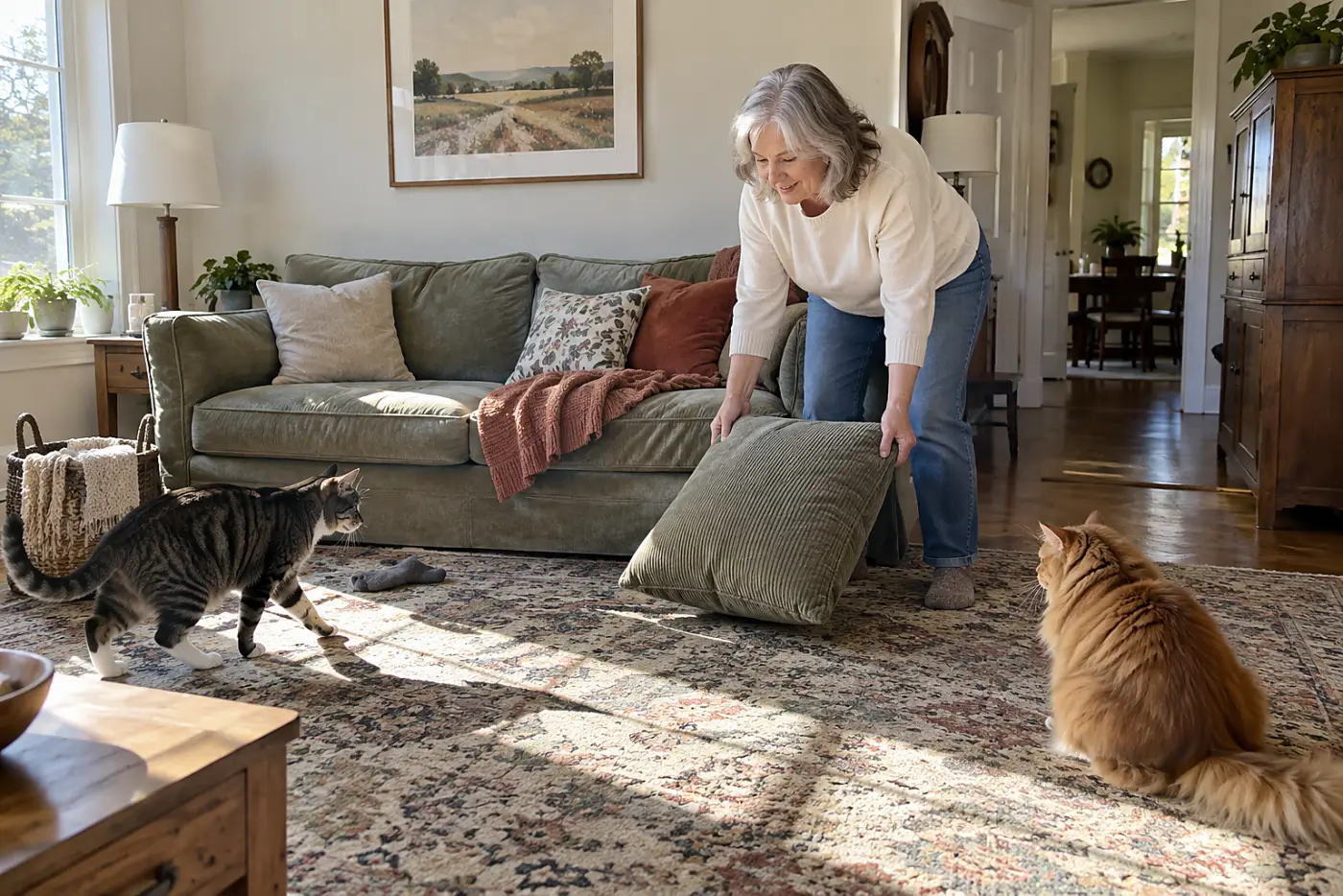
She sniffs her cushion, turns, and chooses the windowsill. Check whether the dog or another cat has been lying on it.
Offer separate resting spots instead of making them share one. Watch for blocking at doorways or near favorite beds. In a home with more than one cat, sleeping somewhere new gives you a clue about who has access to the old spot.
12A bed moved beside the television
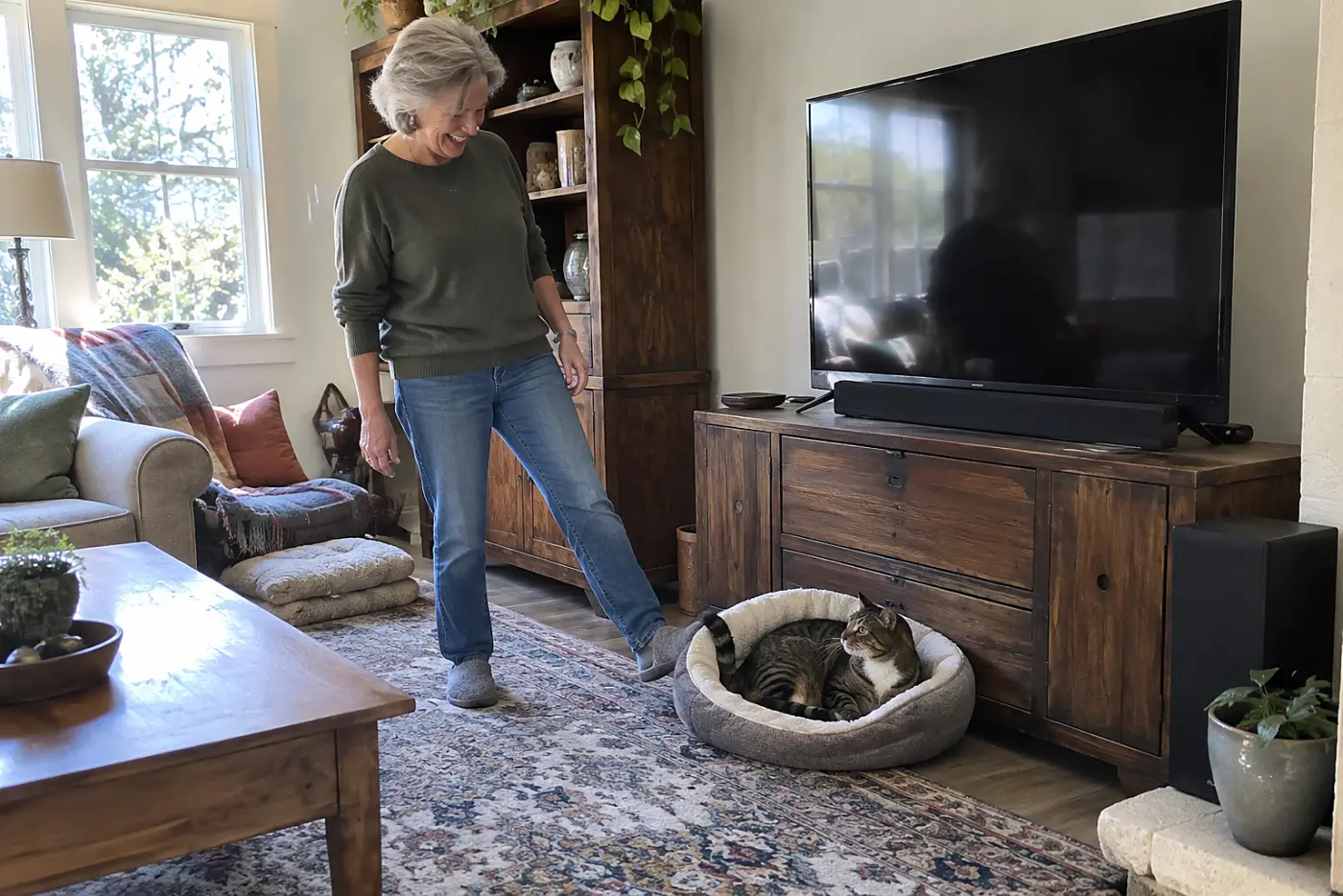
The soft bed is still hers, but you moved it to make room for a chair. Now it sits beside the television speaker.
Try putting it back before replacing it. Cats notice changes in sound, traffic, and escape routes as well as fabric. Give the bed a spot where she can see someone approach without being in everyone’s path. Then let her decide whether it earns its old place in her routine.
11A nighttime routine that changed
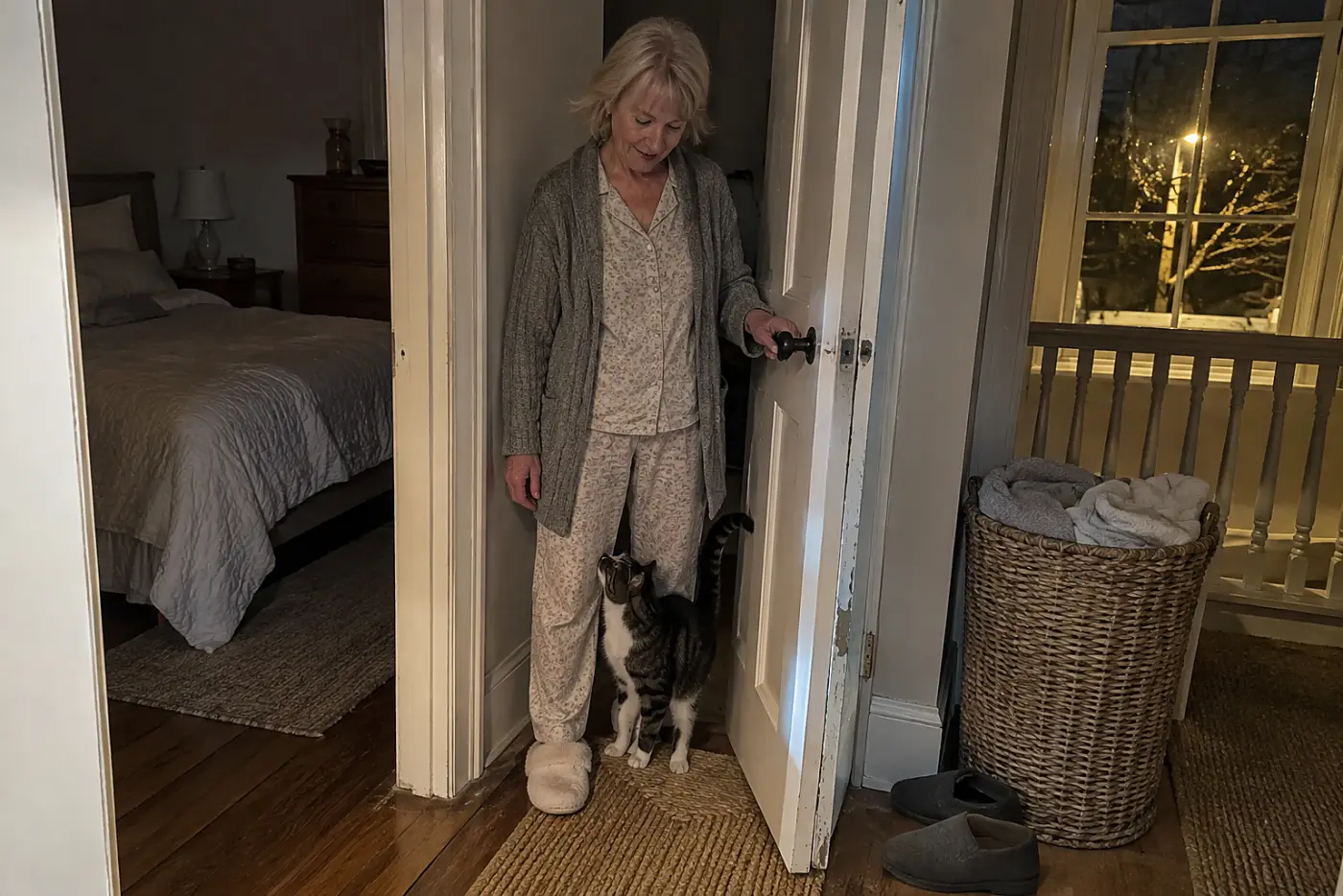
At bedtime, she used to curl up beside you. Now she waits in the hall.
What changed in the room? A fan, a shut door, a new bedtime, or a restless dog alters the night she knew. Restore what you can for a few nights, then see where she settles.
If she seems confused in familiar rooms or calls out repeatedly at night, tell your veterinarian. Describe the behavior as well as the missing bedtime cuddle.
See more: 22 Reasons Your Old Dog Paces at Night, and What Helps →
10A windowsill she no longer climbs
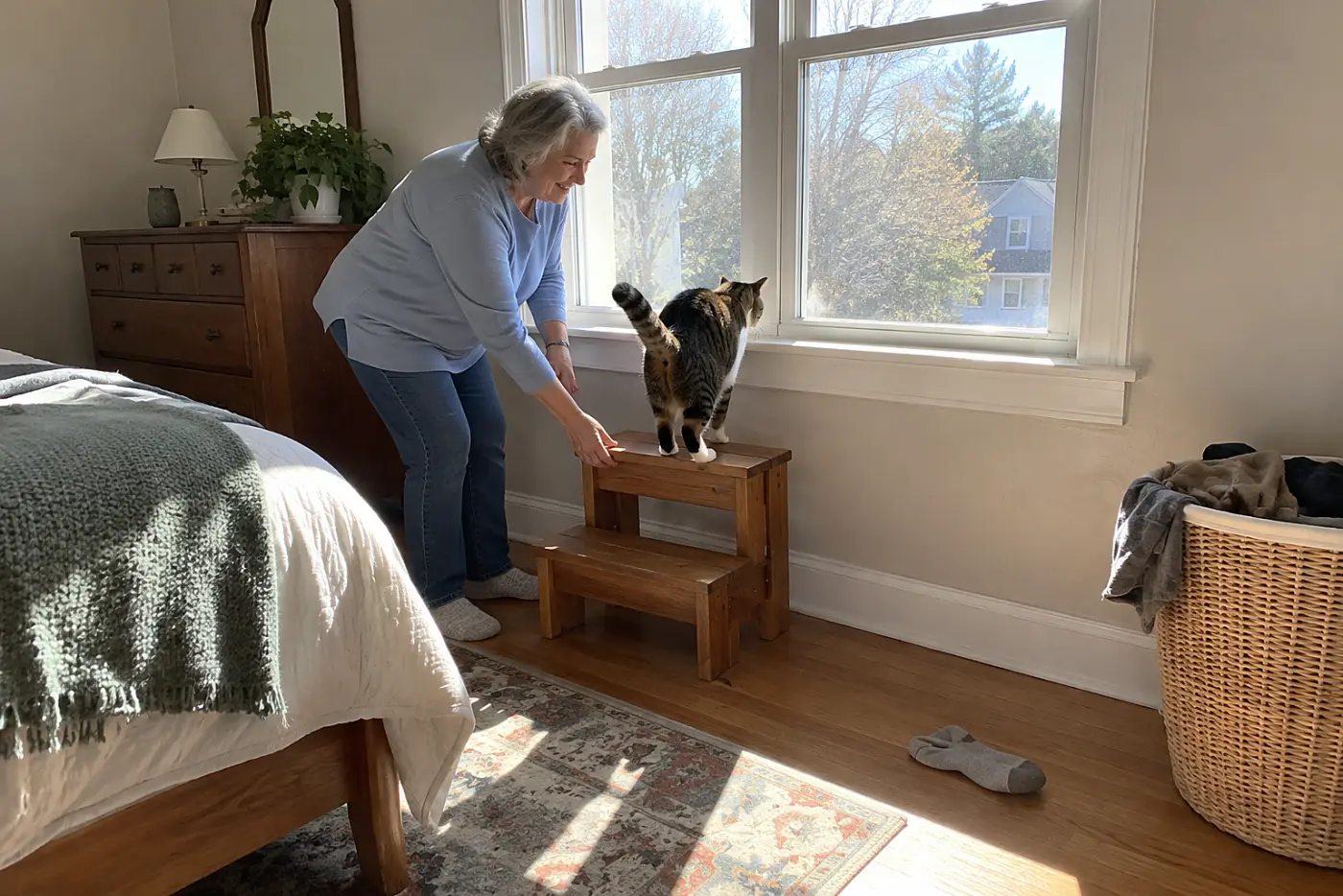
Her new place is lower. Before deciding she prefers it, watch how she reaches the old windowsill.
Does she prepare to jump, stop, and walk away? Put a stable step near a favorite perch and see whether she uses it. Don’t lift her onto a height she cannot leave on her own.
Watch her first steps after waking, too. A stiff walk or hesitation before jumping belongs on your vet’s list of questions. The American Association of Feline Practitioners’ cat-care guidance is another place to read about changes in movement.
See more: 28 Ways to Tell When Your Dog Is a Senior, and What Changes →
9A staircase she now avoids
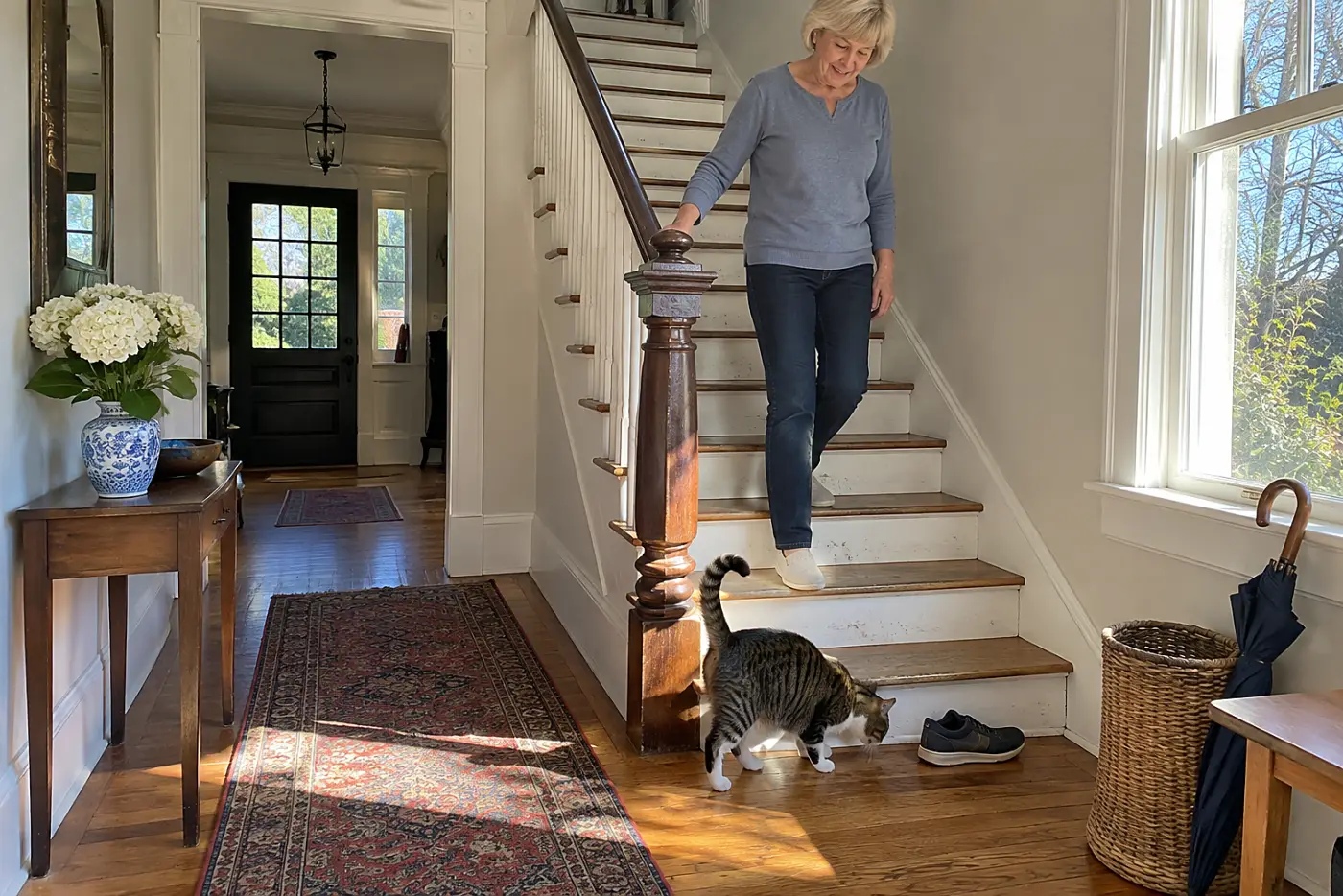
She once slept upstairs. Now she stays on the main floor, and the stairs are the only link between the two places.
Watch her climb and descend without calling her toward you. Does she take the steps evenly, pause, or turn back? Pain, weakness, and poor vision deserve a veterinary check.
Meanwhile, keep food, water, and a litter box where she can reach them without taking the stairs. Tell the vet whether she avoids climbing, descending, or both. That detail is more useful than saying she has stopped sleeping upstairs.
See more: 27 Reasons a Senior Dog's Legs Give Out, and What Helps at Home →
8A position that protects her belly
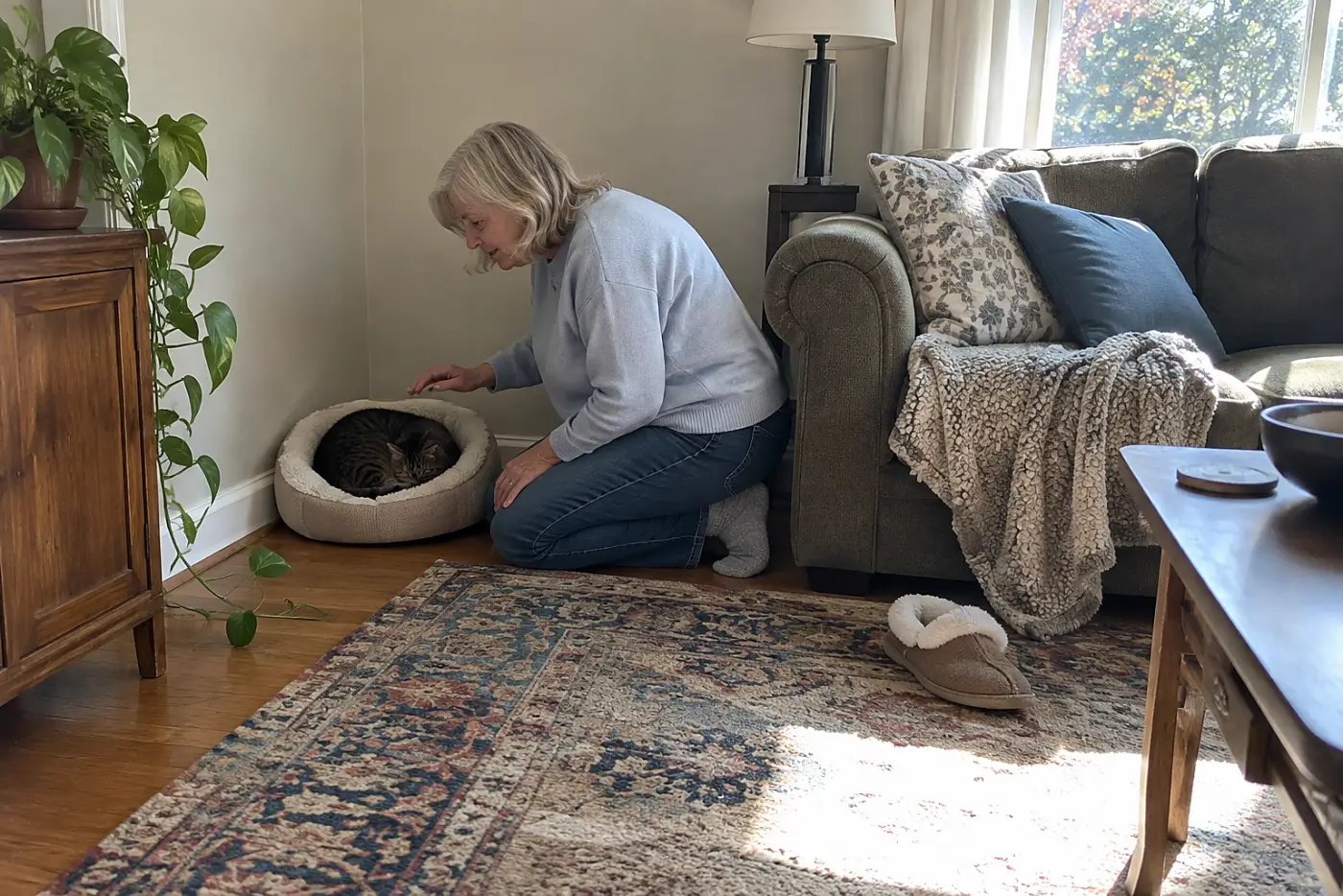
She curls in a tight ball in a new corner and no longer sprawls across the sofa. Watch her posture when she wakes, too.
Does she resist being touched, stay hunched while standing, or stop grooming? Those signs matter more than the corner itself. Call your veterinarian and describe the change rather than testing her belly with your hands.
7A hiding place she won’t leave
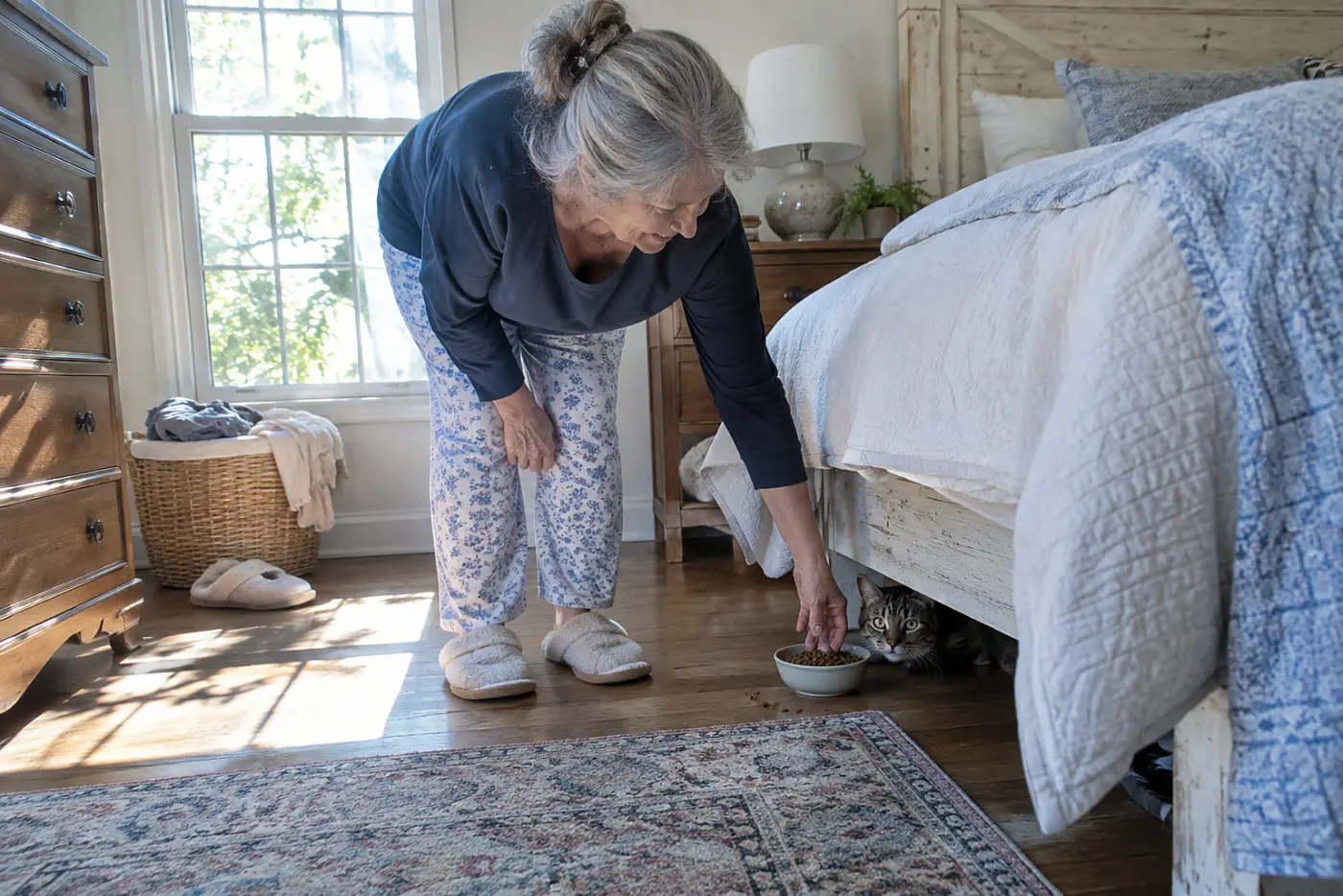
A cat who naps beneath the bed and comes out for dinner has one routine. A cat who stays there through dinner has another.
Check the food bowl, water bowl, and litter box. Note when you last saw her eat, drink, and move around normally. Don’t drag her out to prove she’s fine. Call the veterinarian if hiding comes with a change in those habits, weakness, or signs of pain. Tell the office what changed first.
6A litter box she now sleeps beside
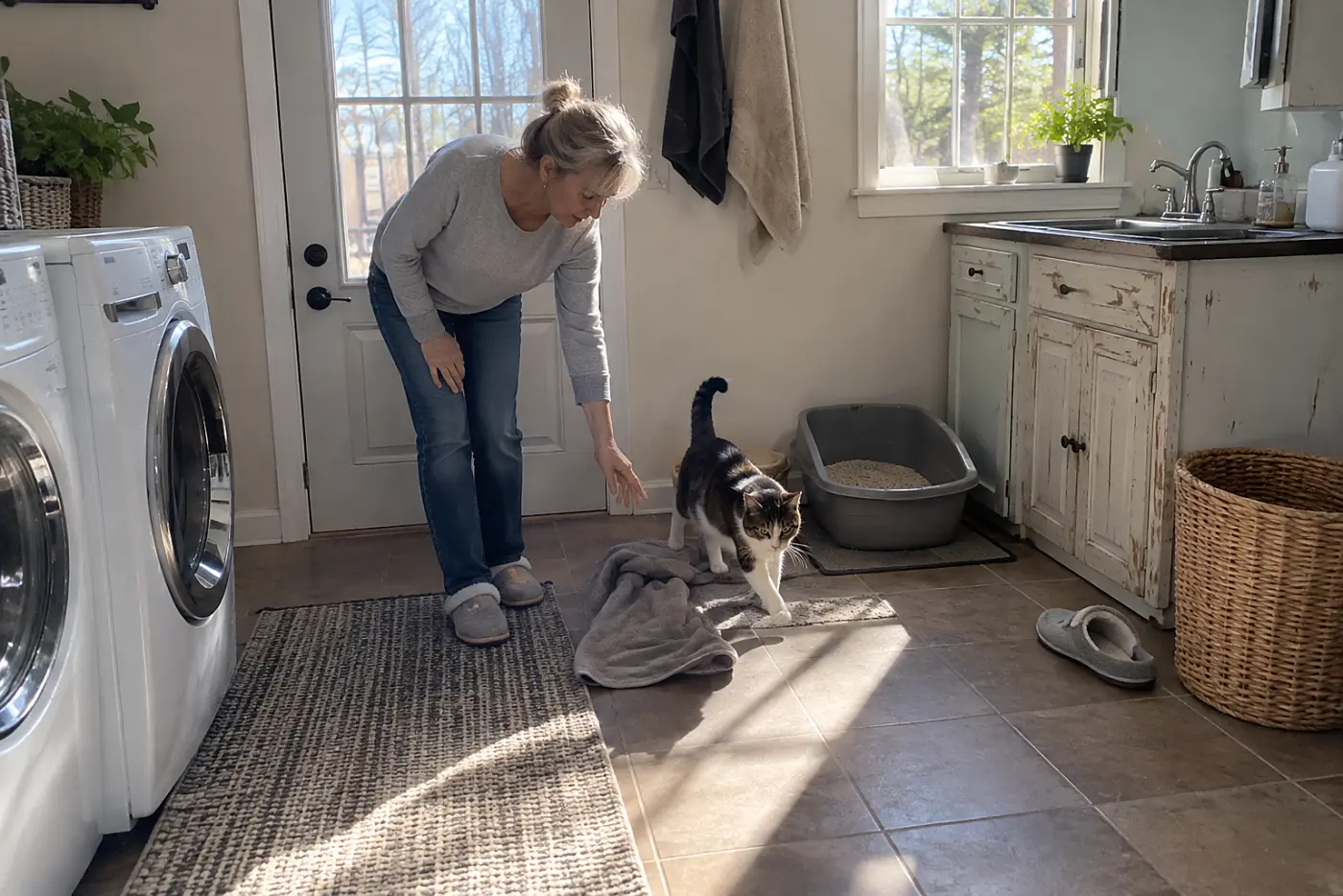
Finding her asleep beside the litter box feels strange because it is. Notice whether she returns to the box again and again after getting up.
Frequent visits, small urine clumps, or crying in the box deserve a call to your veterinarian today. Tell the clinic what you saw and when. If other cats share the box, keep them apart long enough to see which cat is using it. That observation matters more than guessing from the sleeping spot.
5A bare surface after an accident
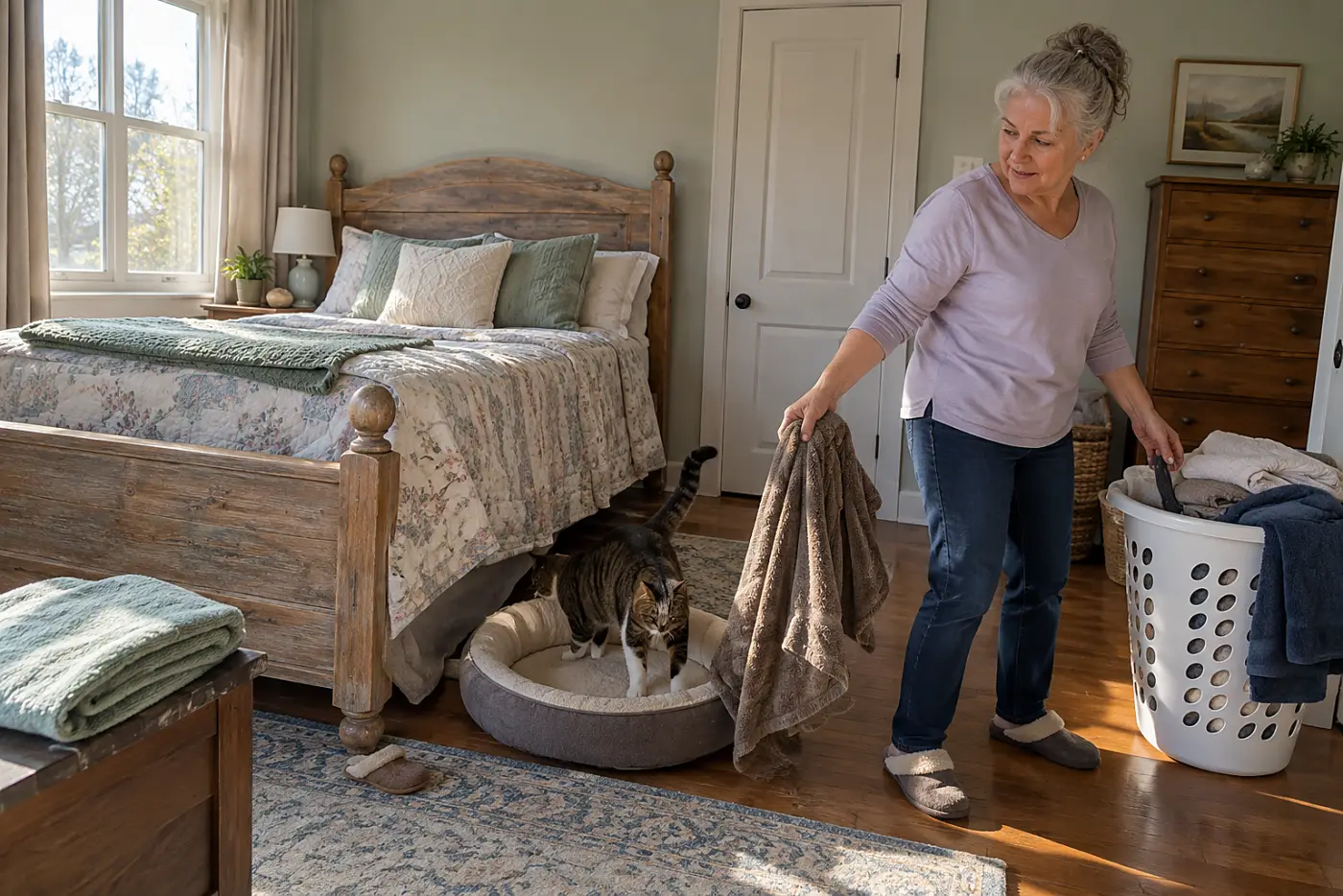
She leaves a damp blanket and chooses the bare floor. Check the blanket before you wash it. Is the wet patch urine, vomit, or spilled water?
If she has urinated where she sleeps, note whether she also seems to have trouble reaching the box or controlling her bladder. Clean the bedding, but don’t stop at the laundry. Call your veterinarian about a new accident, especially when it arrives with a sudden change in where she rests.
4A breakfast bowl left untouched
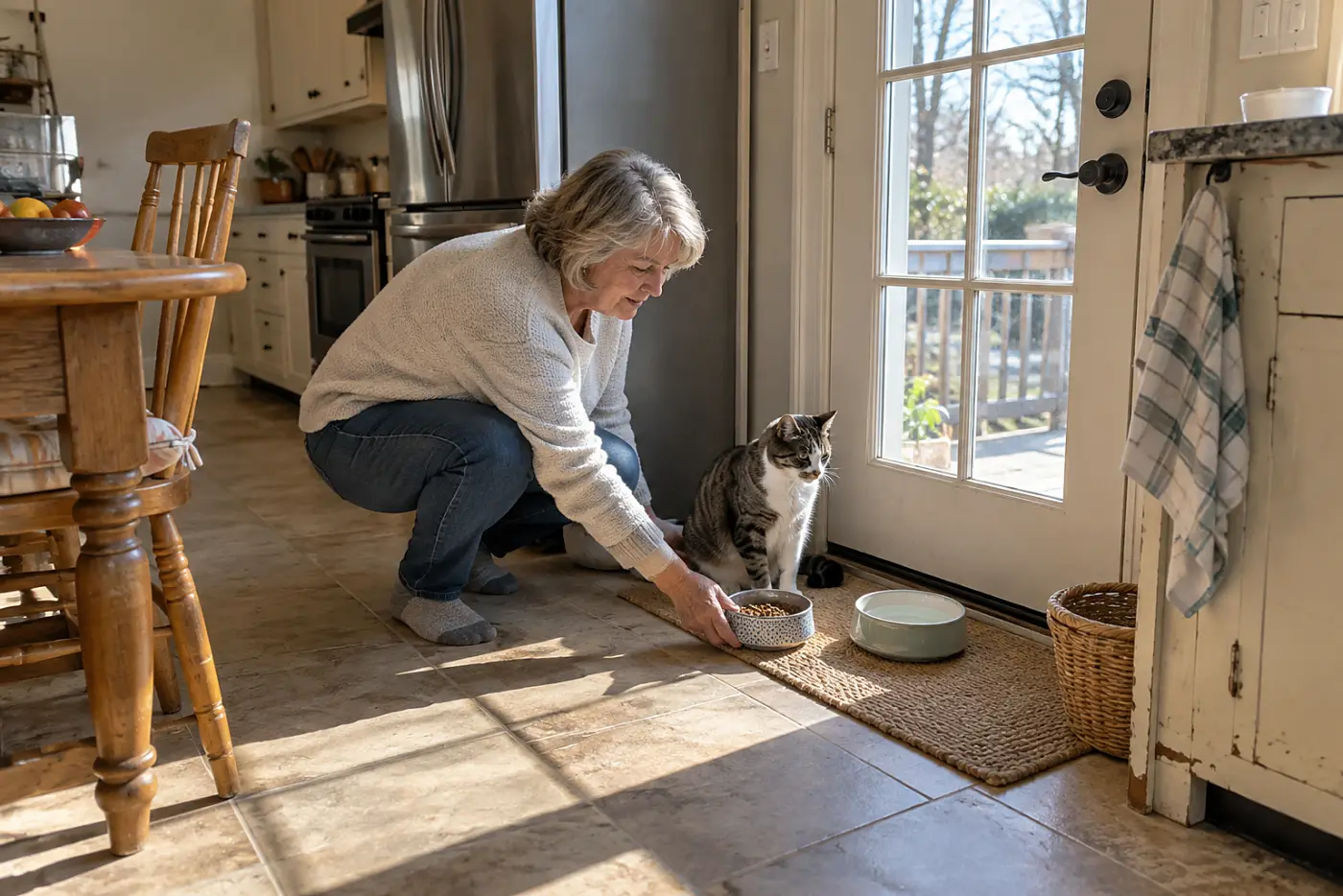
The first thing you notice is the missing cat on your bed. The second is breakfast still sitting in the bowl.
Offer her usual food and check whether she actually eats. If she refuses food or seems unwell, call the veterinarian rather than trying treat after treat. Tell the clinic when you last saw her finish a meal.
The Cornell Feline Health Center describes hepatic lipidosis, a serious liver condition linked to loss of appetite. Don’t wait for a second missed day of meals before reporting a cat who has stopped eating.
See more: 23 Signs Your Dog Knows Something Is Wrong Before You Do →
3A water bowl emptied faster
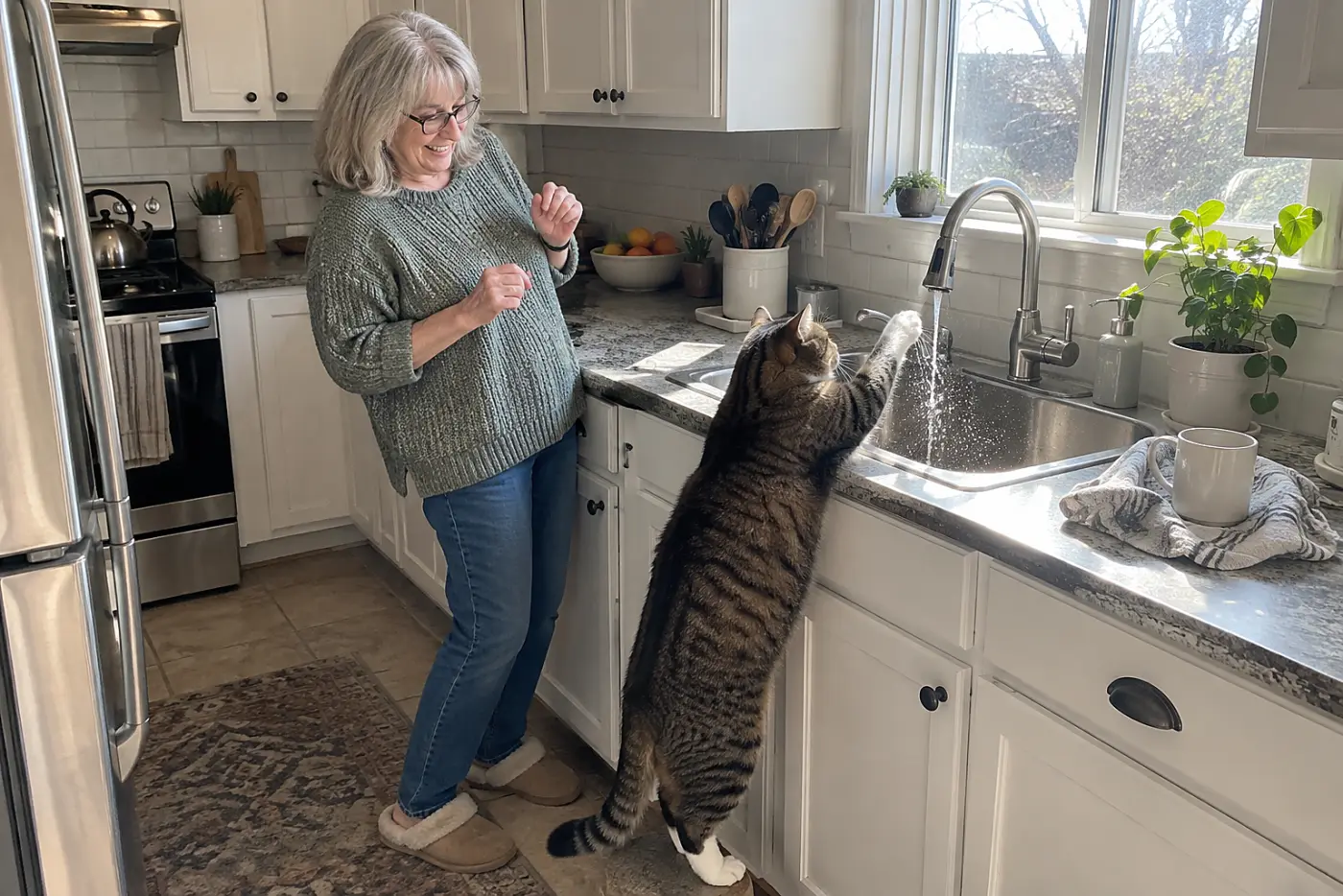
She sleeps beside the sink now. You also refill the water bowl more than you used to.
Watch for larger urine clumps in the litter box or more trips to it. Increased thirst and urination deserve a veterinary appointment; kidney disease and diabetes are among the conditions a vet will consider. Don’t restrict her water to test the idea.
If you share your home with other pets, set out a separate bowl to see who drinks from it. Bring the vet what you observed, not a guess about how much she drank. The Cornell Feline Health Center has guides to both kidney disease and diabetes in cats.
2A medicine bottle opened this week
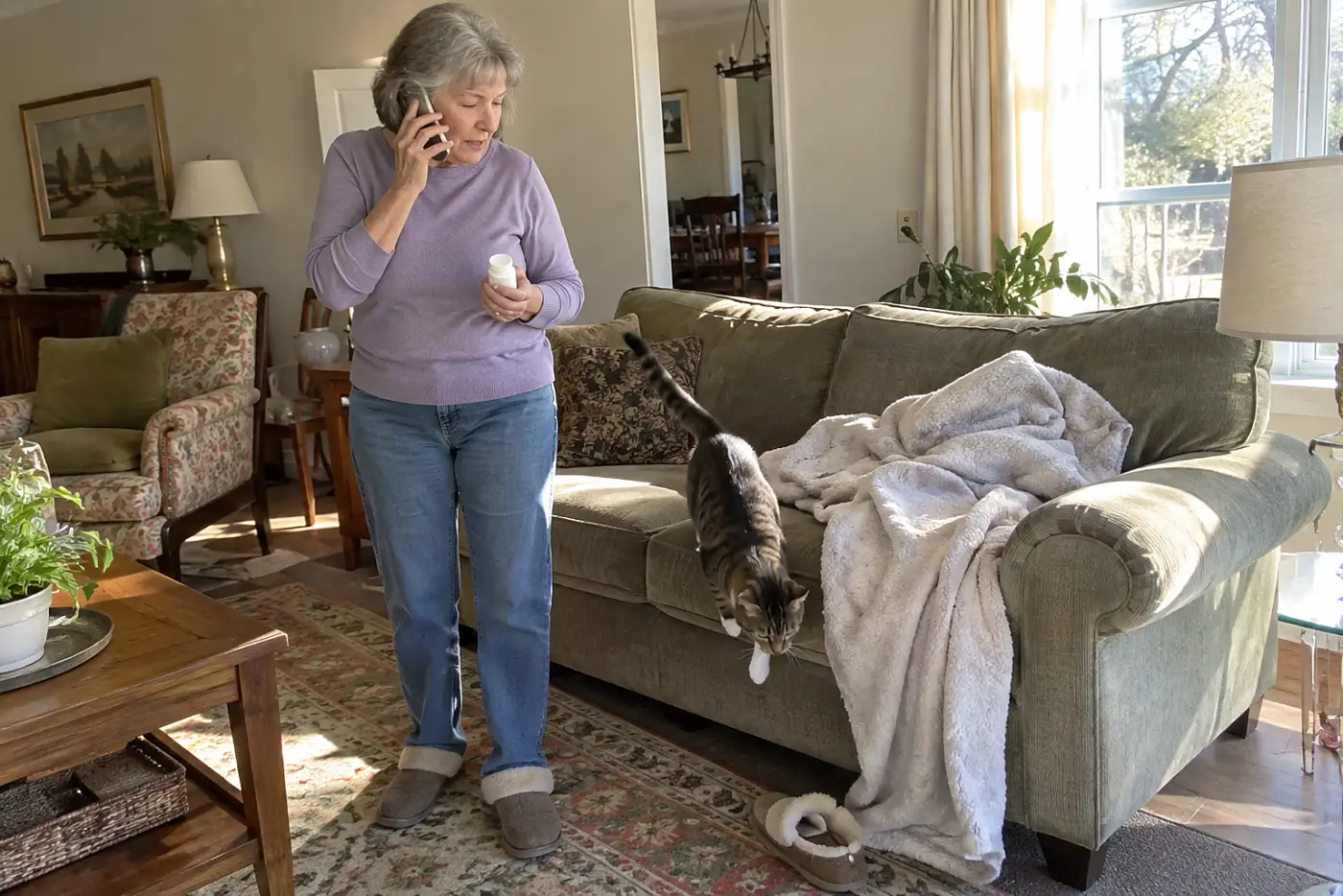
A new prescription starts on Monday. By Wednesday, she has abandoned her usual bed and seems far less lively.
Read the label, then call the prescribing veterinarian before changing a dose. Tell them the medicine’s name, when she started it, and what you saw afterward. Keep the package nearby for the call.
If you suspect she got into a human medicine, call the ASPCA Animal Poison Control Center or your emergency veterinarian. If she is hard to wake, breathing badly, or having a seizure, seek emergency care instead of waiting for a return call.
1A male cat straining without urine
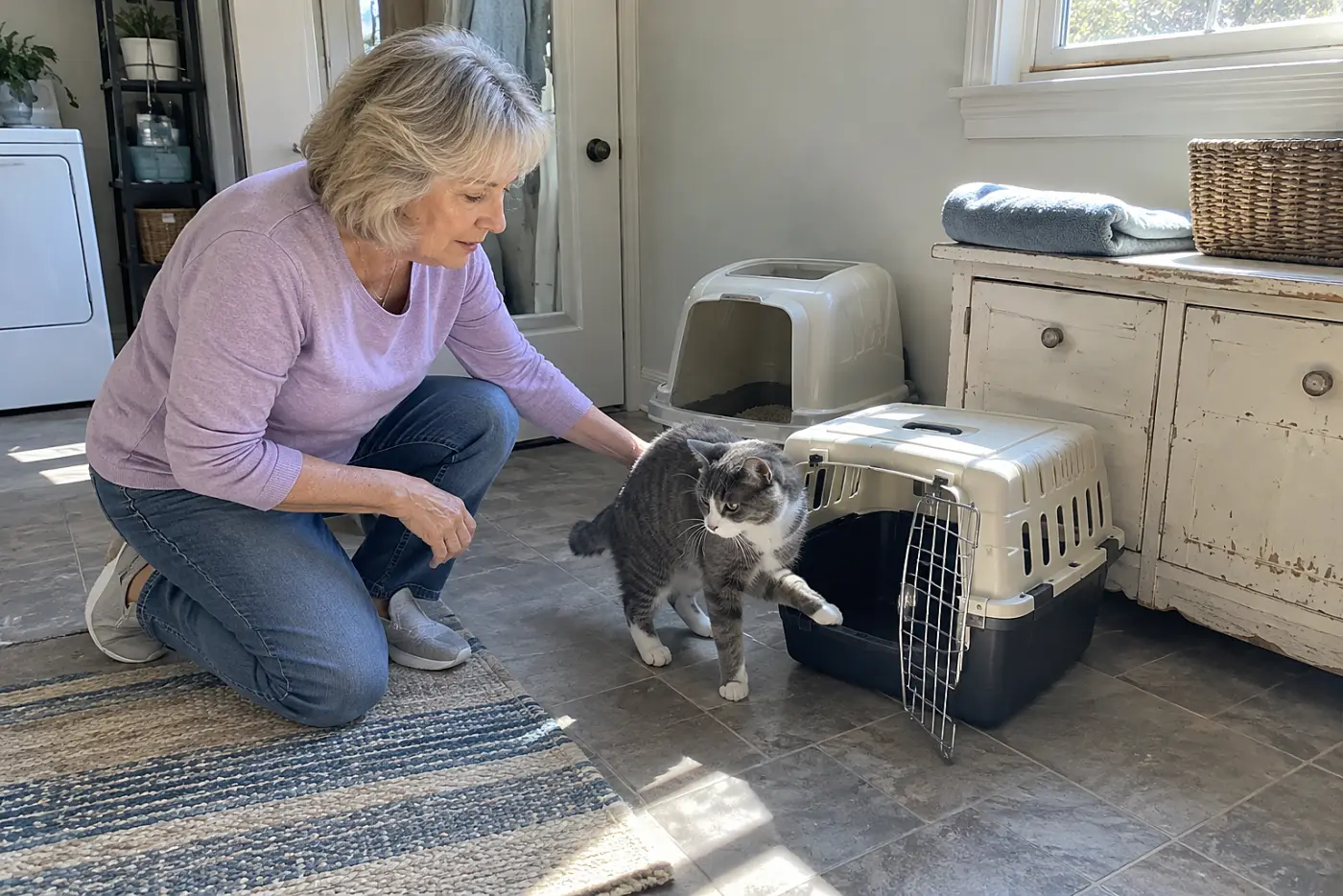
He is asleep in a place he never uses, then gets up and makes another trip to the litter box. He squats, strains, and produces no urine.
Call an emergency veterinarian now. A blocked urethra stops urine from leaving the body. The American College of Veterinary Surgeons describes urinary obstruction as a life-threatening emergency, particularly in male cats.
Tell the clinic, “My cat keeps trying to urinate, and I haven’t seen any urine.” Don’t wait for another box visit to confirm it. Vomiting, crying, or collapse add to the urgency, but the absence of urine is enough to go.
The bottom line
A different sleeping place gives you a place to start looking. Check what changed around it, then watch what happens when she wakes.
The well-prepared version of you has already noticed her last normal meal, litter-box visit, and easy jump. Those details make a call to the vet much clearer.
Where did your cat choose to sleep when you first realized something had changed?
Up next
How Old Is Considered a Senior Cat? 24 Changes to Watch For
An age chart, a missed jump, and the changes worth describing to your vet.
Read the list →
Reader quiz
Did you catch the details?
5 questions from this article.
What should you check about the new spot before worrying about her abandoned cushion?
Did any of these feel familiar?
Know someone who needs this?
Ruth Ellison
Family Editor
Ruth writes about grown children, grandchildren, ageing parents, and the conversations families put off, in the words of the people involved.
More from Ruth Ellison