













24 Things Long-Married Couples Stop Saying, and What It Costs
When you stop asking about old routines, even a grocery receipt can reveal how long you've been guessing what your spouse wants.
By Ruth Ellison, Family Editor
Updated · 16 min read
- Written by our family editor
- Cited 3 sources
- How we review

Read to the end: #1 gives you a weekly question that catches a changed need, plus a way to follow through.
The grocery receipt curls beside the toaster. There’s yogurt on it again, though the last six cups went untouched. One of you bought it because the other has always liked yogurt. Neither asked whether that was still true.
That small mistake seems harmless until the same habit reaches the doctor's office, the bank, or the bedroom. Years together give you a record of who someone was; they don't hand you today's answer. Silence starts looking like agreement, while both of you keep adjusting your lives around guesses neither has checked.
Here are 24 places to start asking again.
24The grocery item nobody wants now

The shopping list keeps an old preference alive.
A favorite food becomes part of the route through the store. You buy it without asking, and the other person eats around it rather than explaining a change that feels too small to mention.
The cost is small in dollars but sharp at dinner: someone feels unseen over a carton of yogurt. Check what stays in the fridge past its date, including the things you've stopped eating yourself.
This week, look at those untouched purchases before shopping. Ask, “Do you still want me to pick this up, or has your taste changed?”
Then notice who keeps making the list.
23The dinner job assigned years ago

An old division of labor never clocks out.
One person cooks because that person always cooked. Over time, sore hands, a later work shift, or plain boredom changes the job. The meal still appears, so the other person sees no reason to ask how it got there.
Takeout on Thursday doesn't fix Tuesday's resentment. When you don't name the work, you also miss the planning: checking the pantry, deciding what to make, and remembering what needs using first. A takeout dinner for two can cost $30 to $60, while the planning job remains untouched.
This week, sit together before making the next shopping list. Each of you should name one part of dinner that feels easy and one part you dread. Write down who will plan, shop, cook, and clean for the next three meals. Ask, “Which part would you like me to take?”
The answer might change what happens after dinner, too.
22The sink full of unclaimed dishes

A finished meal doesn't finish the work.
When dishes have always belonged to one person, the other walks away without deciding to refuse. Meanwhile, the person at the sink sees a choice being made each night.
A stack of plates becomes a tally neither of you agreed to keep. Even putting dishes away takes time when one person must clear the table first.
This week, pick three nights and split clearing, washing, and putting things away. Say, “I see you doing this after every meal. Which part should I take?”
Watch what else happens after the kitchen light goes off.
See more: 24 Signs Your House Has Become Too Much, Before Your Children Say It →
21The calendar entry nobody agreed to

One person's calendar can spend two people's time.
You say yes to a birthday dinner, a repair visit, or a weekend guest. Your spouse finds out when the date lands on the shared calendar. By then, declining means disappointing someone else, so a private guess becomes a public commitment.
The cost isn't the event itself. It's losing the chance to say, “I'm tired,” before the invitation turns into a plan. A phone calendar shows where you'll be; it doesn't show whether both of you wanted to go.
This week, review the next two weekends together before accepting another invitation. Mark anything that needs a joint yes, including guests in your home and trips that use shared money. Say, “I haven't checked with us yet. I'll get back to you.”
Even a shared calendar won't tell you who handles the call when plans change.
20The repair call waiting on the counter

A broken faucet can become a marriage quiz.
One of you notices the drip and assumes the other will call. The other assumes mentioning it counted as handing over the job. Days pass while both believe they've done their part.
A repair gets delayed, and the next conversation starts with blame. The note beside the faucet won't make a phone call; a named person and a day give the task somewhere to go.
This week, write the repair and one person's name on a note by the faucet. Ask, “Who is calling the plumber, and when will we do it?”
That answer still leaves the question of who pays.
See more: 25 Small Changes That Let You Stay in Your Home Ten More Years →
19The purchase hidden inside ordinary errands

A receipt tells you what happened, not why.
One of you buys a new tool or sends money to a relative. The other sees a card charge without the conversation that came first. Soon the argument becomes about the amount, even when the deeper issue is who thought they had to ask.
A shared account doesn't give either person a shared understanding. That matters when one purchase postpones a bill or when an unspoken spending rule applies to only one of you.
This week, choose a dollar amount that means “talk first” for your household. Decide whether it covers gifts, help for family, subscriptions, and cash withdrawals. Ask, “Which purchases do you want us to discuss before either of us pays?” Put the answer where you keep the bills, not in a conversation you'll each recall differently.
Money has another habit: it keeps leaving after you've forgotten agreeing to it.
18The subscription renewing without a conversation
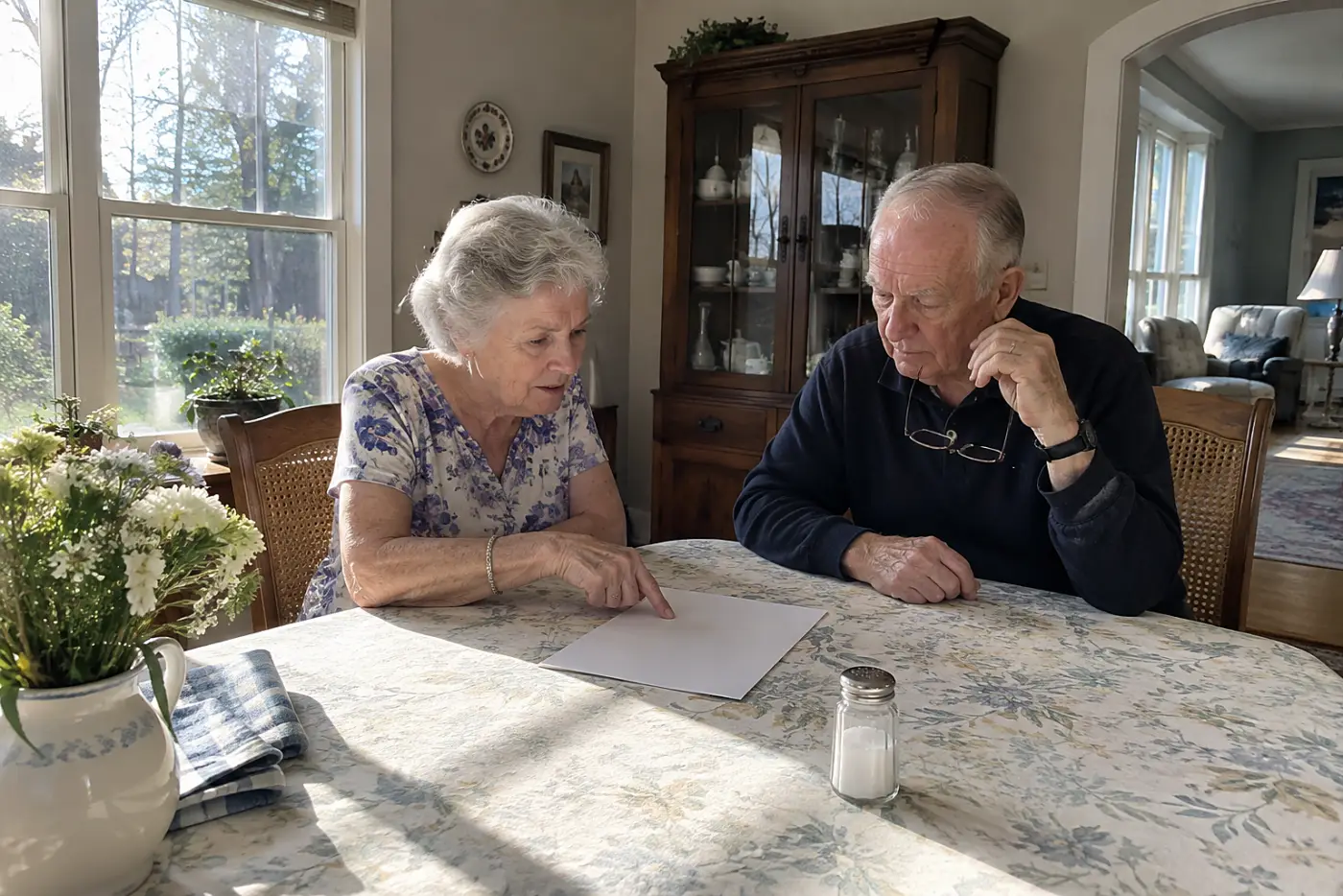
A familiar charge disappears into the statement.
One person signed up years ago; the other now thinks it is essential. Neither checks whether anyone still uses it, so the charge renews under an agreement that no longer exists between you.
The cost sits in the bank statement, not in a dramatic argument. A streaming plan can cost $8 to $20 a month, even when neither of you watches it. This week, open one month of card and checking transactions together. Circle every recurring charge and name who uses it. Ask, “If we signed up today, would we still choose this?”
Some old agreements are much harder to spot on paper.
17The bank password only one remembers

Knowing the bank name isn't knowing how to get in.
One person manages the account, the password, and the phone that receives sign-in codes. The other knows money is there but cannot find the latest statement without help. An illness or lost phone turns that routine into a scramble.
A password written on a sticky note creates its own problem. Account access also depends on ownership, bank rules, and whose phone is tied to verification. Those details deserve a conversation while both of you can answer questions.
This week, sit together at the bank's website or app. Identify each account owner, the phone used for sign-in codes, and where statements are kept.
Ask the bank how each owner should access a jointly held account. Say to each other, “Show me how you'd find last month's statement without my phone.” Don't pass passwords around as a substitute for proper access.
Once you can find the account, look at whose name receives the money after a death.
16The beneficiary form nobody reopened

An old name can outlast an old plan.
For accounts with beneficiary designations, the institution uses its recorded form when it processes a death claim. A conversation at the kitchen table doesn't change that form.
An IRA or life insurance policy deserves a fresh look after a major family change. On a $100,000 policy, an outdated designation can direct the entire payout to someone you no longer intended to choose. This week, open each account's beneficiary page or request its current designation from the institution. Ask, “Are these still the people we chose?”
A form names a recipient; it doesn't tell that person what else exists.
See more: 23 Downsides of Taking Social Security the Month You Can →
15The shoebox holding the only policy

A life insurance policy helps nobody find itself.
One spouse knows the company and keeps the papers. The other remembers “something in the closet” but doesn't know whether premiums still get paid. A beneficiary left searching after a death has to identify the insurer before making a claim.
Your state insurance department and the NAIC Life Insurance Policy Locator give families a search route. Neither replaces knowing what you own now. The same problem reaches beyond insurance: pensions, old bank accounts, and a safe deposit box all need a trail.
This week, make a one-page list of institutions, account types, and where current papers live. Keep account numbers and passwords in a secure place, not on a sheet taped to the fridge. Ask, “If I were away, where would you look first for our insurance paperwork?”
The next piece of paper matters before anyone dies.
14The health care proxy in a drawer

A signed form cannot speak from an unknown drawer.
The person you named needs to know they're named. Your spouse also needs to know where the document is and which choices you have already discussed.
Without that conversation, a hospital visit begins with searching and guessing. This week, find your state's health care directive or proxy form through your state health department or bar association. If you've signed one, show your chosen person where to find it. Ask, “Have I told you what matters most if I can't answer?”
Paperwork still leaves room for one sentence at the exam table.
13The doctor's question answered by habit

A spouse's answer can replace your own.
The doctor asks about sleep or pain. Your partner answers from what they saw last month, and you let it stand because correcting them feels awkward. The appointment moves on before your newer symptom gets a turn.
A visit summary then records the story that was spoken in the room. If the symptom began after a medication change, that timing belongs in the conversation. The MedlinePlus guide to talking with your doctor recommends preparing questions and sharing symptoms clearly.
This week, each of you write down your own top concern before an appointment. Bring the medication list and note when a new symptom began. Say, “I'd like to answer that one myself.” Your spouse can add what they've seen after you've finished, rather than speaking as your interpreter.
At home, though, noticing a problem still needs words.
12The pill bottle left by the sink
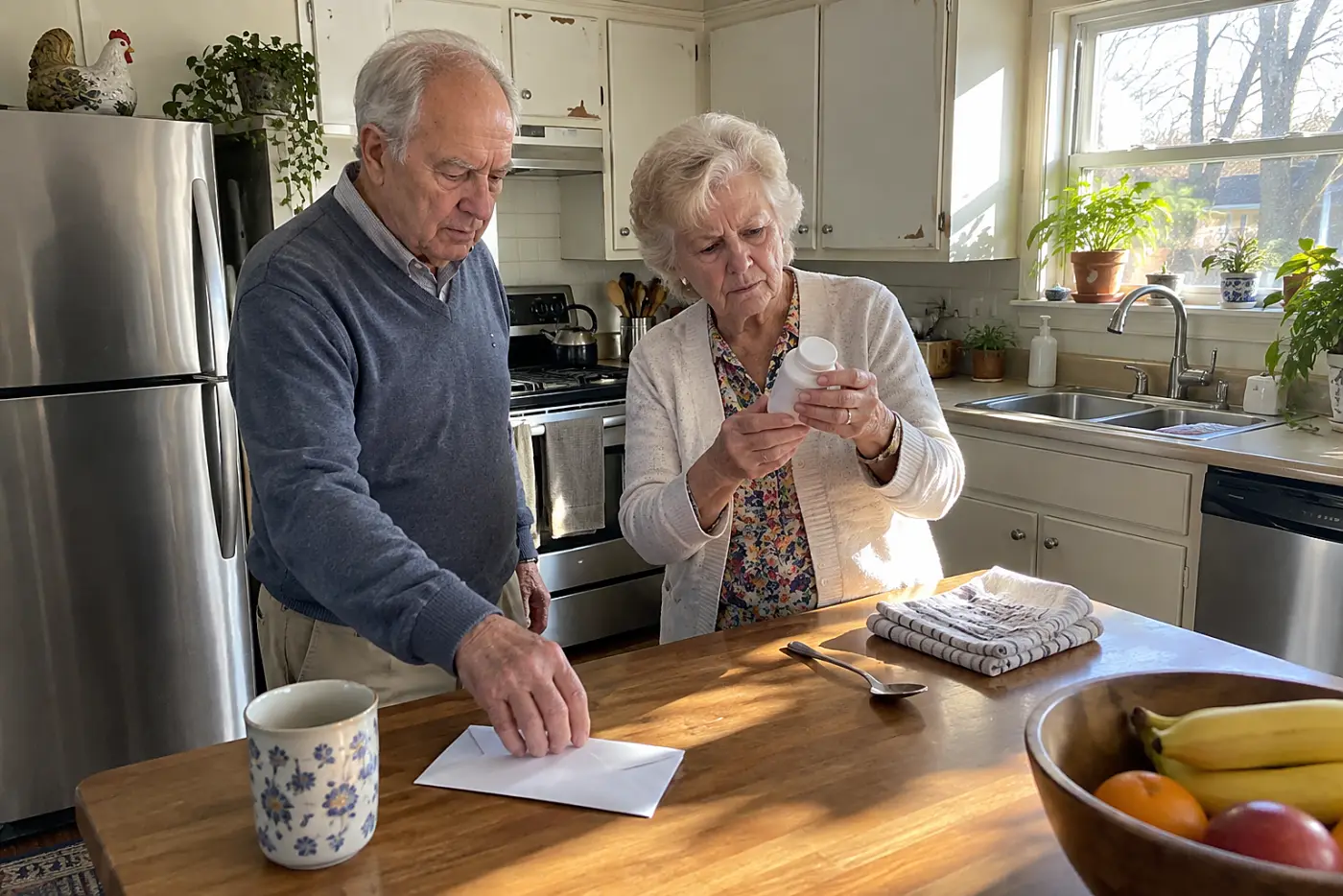
A bottle on the counter isn't a medication plan.
You notice a missed dose and assume your spouse has already handled it. They assume you moved the bottle because you've taken charge. Neither assumption belongs near a prescription.
The FDA's medication guidance tells patients to follow their label and ask a health professional about questions. This week, compare each bottle with its current instructions and ask who manages refills. Say, “Did you take this, or do we need to check the label together?”
That question gets harder when the concern isn't visible on a label.
11The hearing aid switched off at dinner
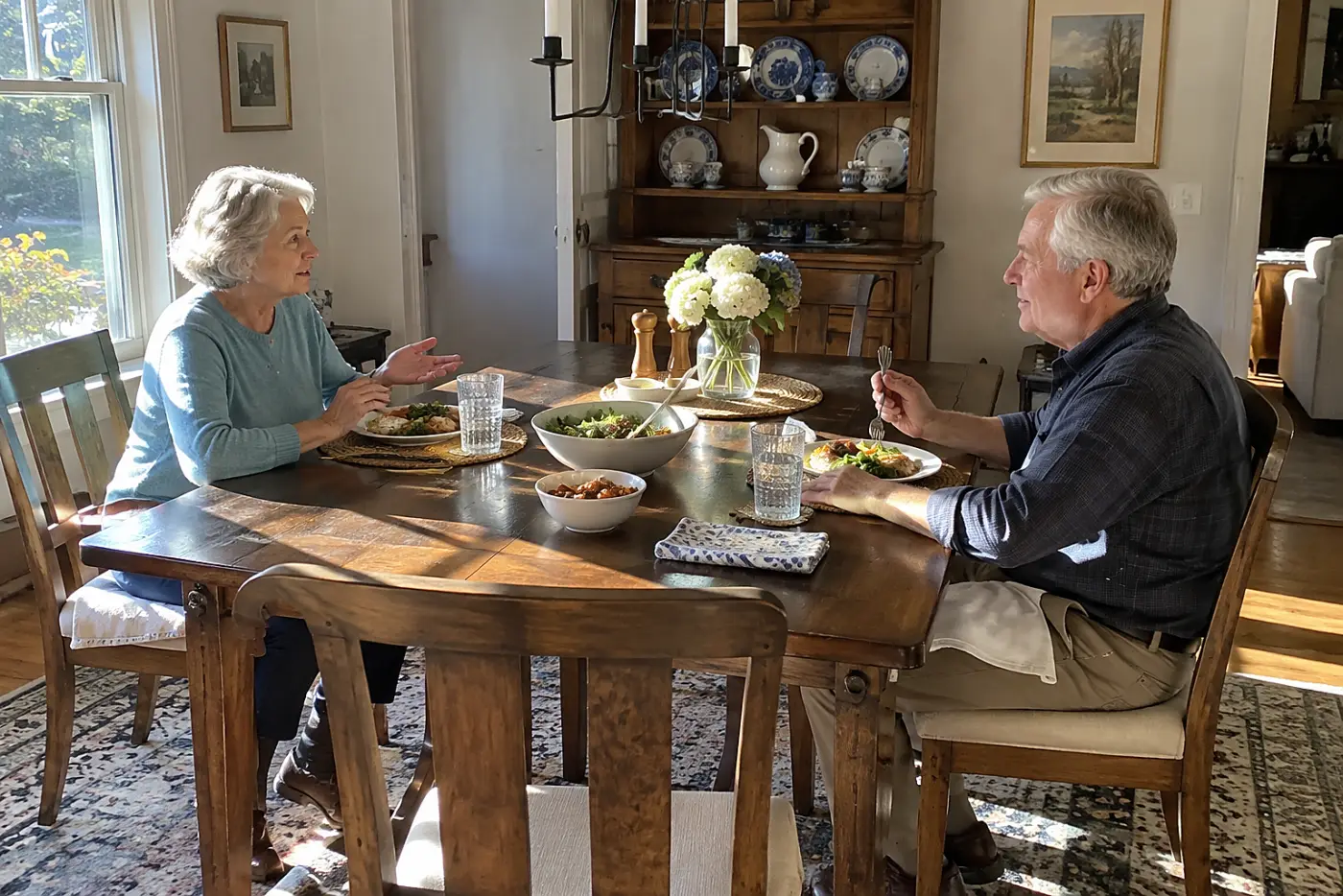
An unanswered question doesn't always mean indifference.
Across a noisy table, your spouse misses the first half of what you say. You hear no reply and decide they don't care. By dessert, you're angry about a refusal they never heard.
Repeating the same sentence louder isn't always the fix. Face the person, reduce background noise, and check what they caught. The National Institute on Deafness and Other Communication Disorders has guidance on hearing aids and communication. Still, the moment at your table needs a direct question.
This week, turn off the television for one meal and sit where you can see each other's faces. Say, “Did you hear what I asked, or should I start again?” If hearing has changed, talk about arranging a hearing test instead of building a case from missed words.
The room itself has been interrupting you, too.
10The television volume covering a question
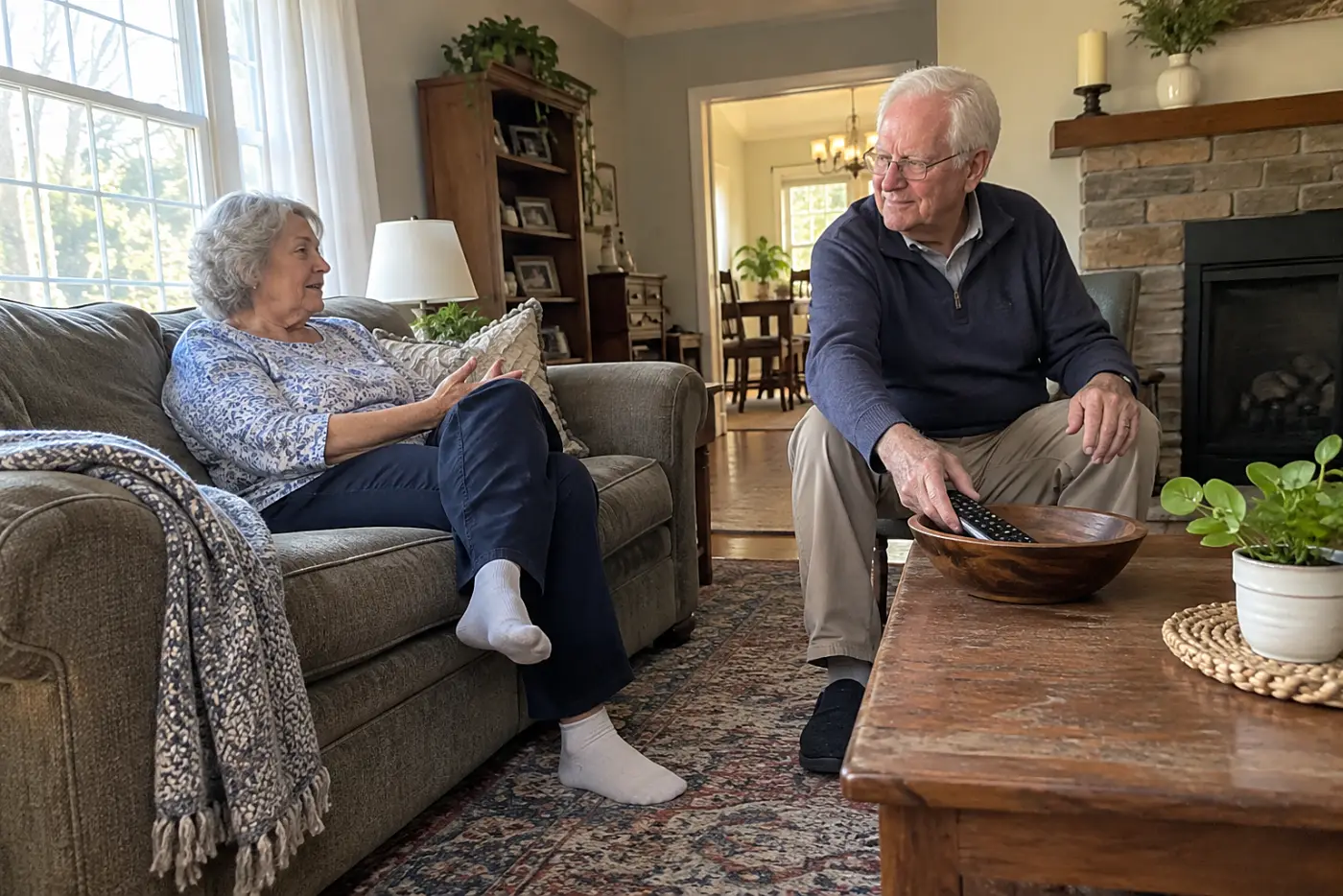
Background sound can make silence look deliberate.
One person talks while the news is on. The other catches a few words, nods, and misses the request. Later, each remembers a different conversation.
That gap costs you trust over something neither of you heard clearly. A nod while the television plays is no record of what your spouse agreed to do.
This week, pause the television before asking for an answer that matters. Wait until you have the other person's attention. Say, “I need a real answer, so I'm turning this off for a minute.”
Then ask what happens when the room is empty.
9The invitation turned down for both

One “we can't” hides two separate answers.
A friend calls about lunch, and one spouse replies for the household. Perhaps the other person would have gone alone. Perhaps they wanted a quiet afternoon and felt relieved. Neither answer surfaces when “we” settles it first.
Over time, invitations stop arriving for one person because friends assume the couple makes every choice together. The calendar stays clear, but the person who wanted company loses it without ever declining.
This week, take a recent invitation and ask each other separately: “Would you have wanted to go?” If one of you says yes, discuss how to answer next time before calling the friend back. Try, “Thanks for asking. I'll check who wants to come and let you know.” You don't owe every event a joint appearance, and staying home doesn't require a joint excuse.
An evening apart raises a smaller question when you meet again.
8The question missing from the doorway

Coming home together isn't the same as checking in.
One of you walks through the door, starts talking about traffic, and never asks about the other's day. The other has been holding a piece of news since noon.
That news gets smaller each time it goes unasked. The doorway is where the first conversation begins, even when neither of you planned to have one.
This week, put down your keys before starting your own report. Ask, “What happened today that I haven't heard yet?” Then let the answer finish before reaching for your phone.
A familiar room holds older conversations that need reopening.
7The photograph with an unnamed person

A face in an album needs a voice beside it.
You both recognize the wedding photograph, so neither asks who stands at the edge. Years later, one of you is the only person who remembers the name, the quarrel, or why that guest mattered.
A caption written now gives children or friends more than a box of faces to sort. You needn't turn the afternoon into a family history project. Start with one photograph and the story both of you remember differently.
This week, choose five pictures and write names, places, and approximate dates on a separate sheet or in the digital photo details. Ask, “Who is this, and what do you remember about that day?” Keep both versions if they differ. A disagreement about a photograph is safer than assuming one person holds the whole family record.
Some family stories concern living people who need to hear them firsthand.
See more: 29 Signs the Clutter Is Really Grief →
6The call to a sibling postponed again

Someone else is waiting for your version of events.
One spouse assumes the other keeps in touch with a sibling. The sibling hears from neither and reads the silence as distance. Nobody intended that message.
A missed call becomes harder to make after another holiday passes. You also lose the chance to hear what's happening directly, rather than piecing it together at the next family gathering.
This week, name one person each of you wants to contact, and put the call on the calendar. Say, “I thought you had spoken to her. Should we call together tonight?”
The same habit reaches inside your own home.
5The thank-you kept inside your head

Unspoken gratitude doesn't reach the person doing the work.
You noticed the cleared snow, the paid bill, or the ride across town. After years together, saying thanks starts to feel formal, as if naming the effort would suggest it wasn't expected. So you say nothing.
The other person sees the task vanish into the household routine. They cannot tell whether you noticed it, much less whether you valued it. A vague “thanks for everything” doesn't identify the work that took their afternoon.
This week, pick one thing your spouse did and name it before bedtime. Say, “Thanks for calling the insurance company. I know that took time.” Leave room for the answer; it might reveal how much more the task took than you saw.
Appreciation needs another companion when the hurt is yours to own.
4The apology replaced by a chore

Fixing the thing doesn't name the hurt.
You snap at breakfast, then make coffee later as a peace offering. Your spouse accepts the cup but has to guess whether you know what happened.
A chore cannot tell someone which words you regret. Without an apology, the cup sits beside the same sharp sentence. Neither of you knows whether that sentence will come back at dinner.
This week, return to one sharp moment before it turns into a running complaint. Say, “I was unfair when I said that at breakfast. I'm sorry.” Then ask what you missed in their response.
The next hard sentence asks for something rather than taking it back.
3The touch mistaken for an invitation

A hand on your shoulder should not require mind reading.
One person reaches for closeness; the other expects sex, reassurance, or help. If either guesses wrong enough times, even a small touch starts to carry a question neither wants to ask aloud.
Long marriage doesn't erase the need for consent or the right to change your mind. It also doesn't make every hug a promise of something afterward. Avoiding touch altogether has a cost when what you wanted was to sit close on the sofa.
This week, ask what kind of touch feels welcome today, outside an argument and away from the bedroom. Say, “Would you like a hug, or would you rather I sit with you?” Answer the same question honestly when it comes back. An ordinary request makes room for both affection and a no.
Closeness also needs room for the plans each of you makes alone.
2The trip discussed as already decided

A shared future still needs two current votes.
One of you mentions a trip as if the old plan stands. The other has changed their mind about the drive, the cost, or the company but doesn't want to spoil it.
Tickets make disagreement harder after they're bought. A deposit also turns an old conversation into a choice you'll have to undo. You both deserve the chance to say what changed before either of you pays.
This week, reopen one plan before paying a deposit or inviting anyone else. Ask, “Do you still want this trip, or have I been carrying an old yes?”
The larger question sits underneath that plan.
1The weekly question without a guessed answer
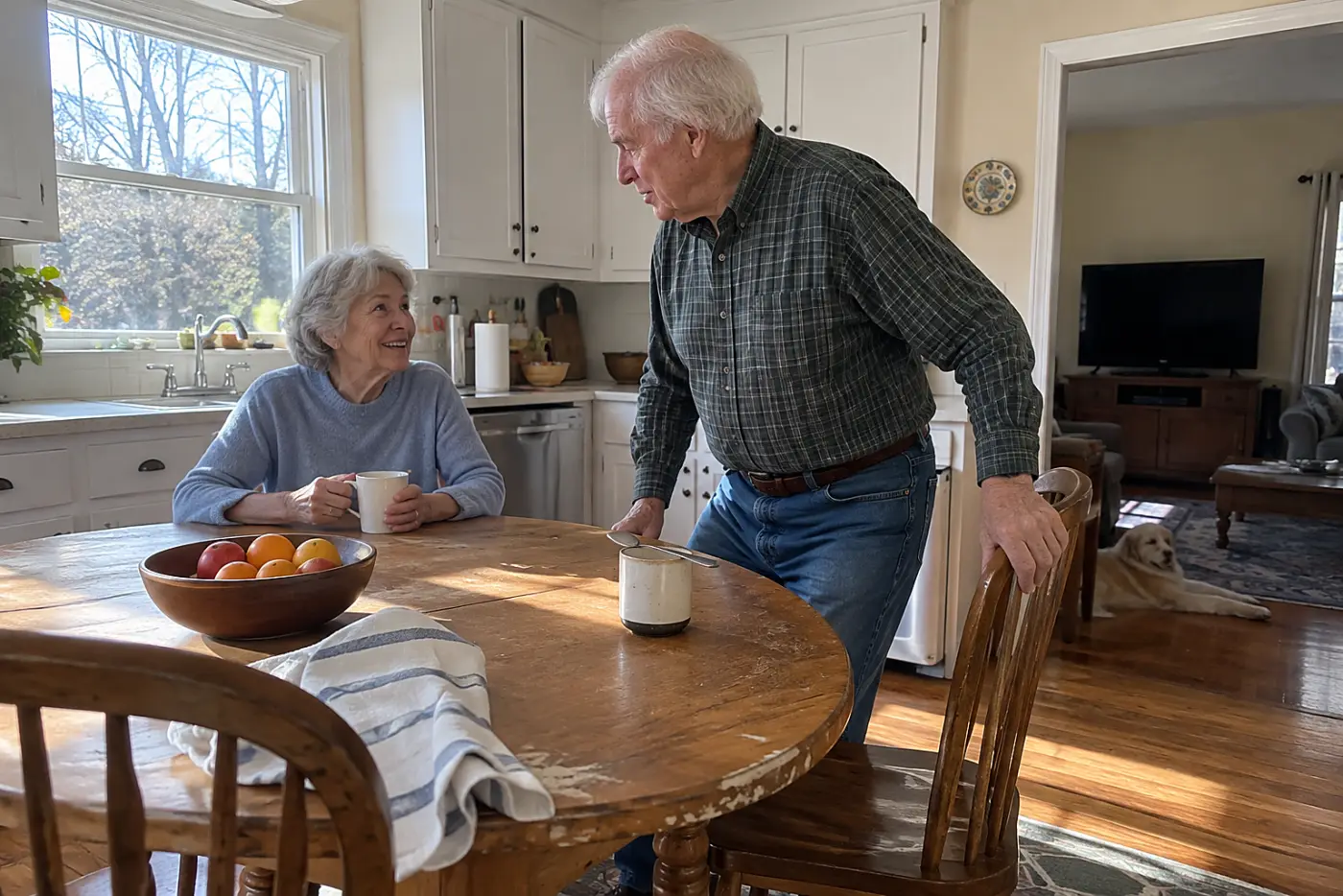
Your best guess is still a guess.
You know the old answer: the preferred dinner, the usual Saturday, the kind of help your spouse once refused. That knowledge feels like attention. Yet needs change between big talks, and an old answer keeps working long after it stops fitting.
This question catches change before either of you has to announce a crisis. It asks about now, not what went wrong or what the other person should feel grateful for. A weekly habit gives both of you another chance after an awkward first answer.
This week, choose a regular moment with no television and no errand waiting. Ask, “What do you need from me this week that I wouldn't know to offer?” Listen without correcting the answer or listing what you've already done. Then say what you need, just as plainly. Write down any practical promise before the day carries it off.
An answer given on Sunday still needs a place to land on Monday.
The bottom line
Across these 24 moments, the pattern is an old answer standing in for a current conversation.
The best-prepared version of you checks the paperwork, divides the work, and asks again.
Which of these has already happened in your family?
Up next
29 Conversations Families Keep Putting Off Until It's Too Late
A hospital call can turn an ordinary question into a decision nobody knows how to make. The unopened envelope is still on the counter.
Read the list →


Reader quiz
Did you catch the details?
5 questions from this article. Finish them all to unlock the editor's bonus tip.
What should you check before buying the same groceries again?
Did any of these feel familiar?
Know someone who needs this?
Sources cited in this article
This article links to 3 outside sources, listed here so you can read them yourself.
- Irs.gov www.irs.gov/retirement-plans/individual-retirement-arrangements-iras
- MedlinePlus guide to talking with your doctor medlineplus.gov/talkingwithyourdoctor.html
- FDA's medication guidance www.fda.gov/drugs/resources-you-drugs
Ruth Ellison
Family Editor
Ruth writes about grown children, grandchildren, ageing parents, and the conversations families put off, in the words of the people involved.
More from Ruth Ellison