





How to Lose Belly Fat After 50: Realistic Tips That Work
Why your waist changes after menopause, what actually shrinks it, and why a cloth tape measure will tell you more than the bathroom scale.

By Peter Byalik, Food & Home Editor
Updated · 14 min read
- Written by our food & home editor
- Cited 13 sources
- How we review
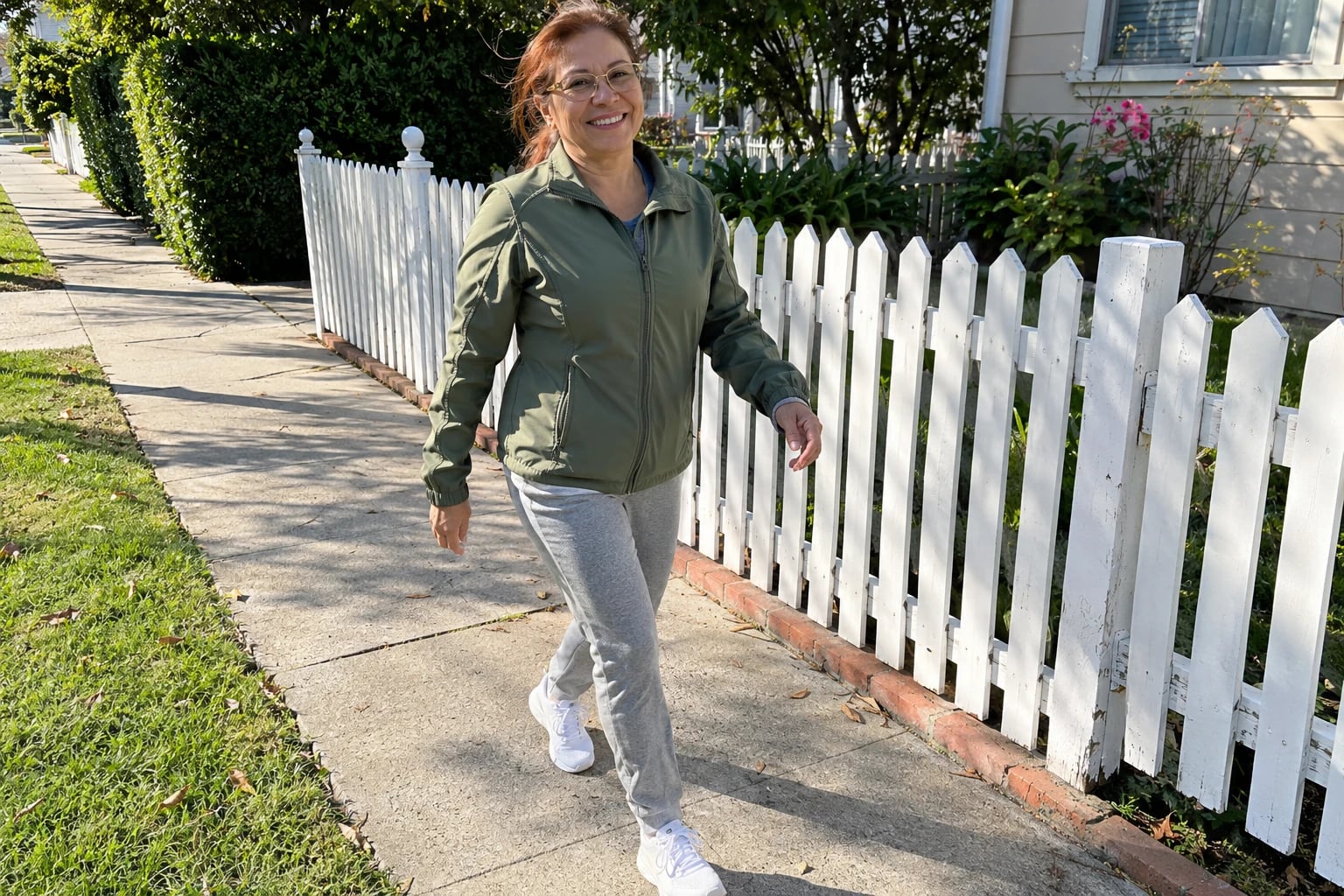
The pants still button. They just button with a small breath in, and the blazer you wore to a wedding last spring now pulls across the middle when you sit down. Meanwhile, almost nothing about your week has changed. Same oatmeal, same lunch, same Saturday walk with the neighbor.
That gap is real, and it has causes you can name. Some of them you can change. A few you can only work around.
And a surprising amount of what gets sold to women your age to fix it does nothing at all. Once you know why it happens, the fix looks less like a diet and more like a handful of steady habits. The why comes first, briefly, then the steps you can start this week.
Why your waist is growing when you eat the same
You're not imagining it, and you're not doing anything wrong. Two things are happening at once. Midlife adds weight on its own: women gain about a pound and a half a year at this stage. Losing estrogen then decides where it lands, and the answer is the middle.
It starts earlier than most women expect. In women followed through menopause, the deep fat around the organs began climbing three to four years before the last period, then leveled off. Over the same stretch, the calories their bodies burned each day fell by about 200.
That 200 is roughly a buttered English muffin, gone from your daily allowance without anyone telling you. Eat exactly what you ate at 45, and the extra quietly settles in.
Most of what builds up here is visceral fat, the deep kind packed around your liver and intestines. It's different from the soft layer you can pinch, called subcutaneous fat. The deep kind is the riskier one, linked to heart trouble, which is why your waist matters more than your weight.
Muscle is slipping too. Lower estrogen speeds up muscle loss, and less muscle means fewer calories burned even while you sit. It's also why thinner legs and a flatter rear often show up alongside a thicker middle.
Your appetite signals shift as well. Leptin, the hormone that tells you you've had enough, drops. Ghrelin, the one that makes you hungry, rises. Both get worse after a bad night's sleep, which is exactly when the pantry calls loudest at 4 p.m.
So when a doctor tells you your calorie needs have gone down, believe it. As one menopause specialist put it to NBC News, "our calorie requirements to maintain our weight decline." The budget that kept you steady for twenty years is simply too big now.
Fat, bloating or something your doctor should see?
Before you change anything, make sure fat is what you're dealing with.
Fat stays put. It's there when you get out of bed and still there at bedtime. Bloating comes and goes. It's often worse by evening or after certain meals, and your waistband can feel a size different between breakfast and dinner.
Some symptoms call for a phone call rather than a new routine. See your doctor if bloating, belly or pelvic pain, feeling full fast, or a sudden urge to urinate happens more than 12 times a month, especially if it's new for you.
That pattern can be an early sign of ovarian cancer. Usually it's something far less serious, but it needs checking.
The same goes for a stomach that swells quickly, feels hard, or changes shape over a few weeks. That isn't menopause weight. Call this week.
Wondering about your thyroid? It's a fair question if the weight arrived with other changes: feeling cold when others aren't, unusual tiredness, constipation, dry skin, thinning hair. Whether a blood test makes sense is a quick question to bring up at your next visit. A normal result is useful too, because it rules something out.
If the bloating began when you started hormone therapy or changed your dose, tell whoever prescribes it. Ask whether a different dose or form is worth trying. Don't stop on your own.
Why crunches won't flatten it, and what will
Lift something reasonably heavy, twice a week. For most women past 50, that's the single change most likely to reshape the middle, and it doesn't need a gym.
A simple start, two days a week:
- Sit-to-stands. Rise from a dining chair without using your hands, then sit back down slowly. Ten times, rest, ten more.
- Wall pushups. Hands on the wall at shoulder height, lower your chest toward it, push back.
- Band rows. Loop a resistance band around a sturdy door handle and pull your elbows back, squeezing your shoulder blades together.
- Step-ups. Use the bottom stair, holding the rail.
- Carries. Two full grocery bags or two gallon jugs, walked the length of the house and back.
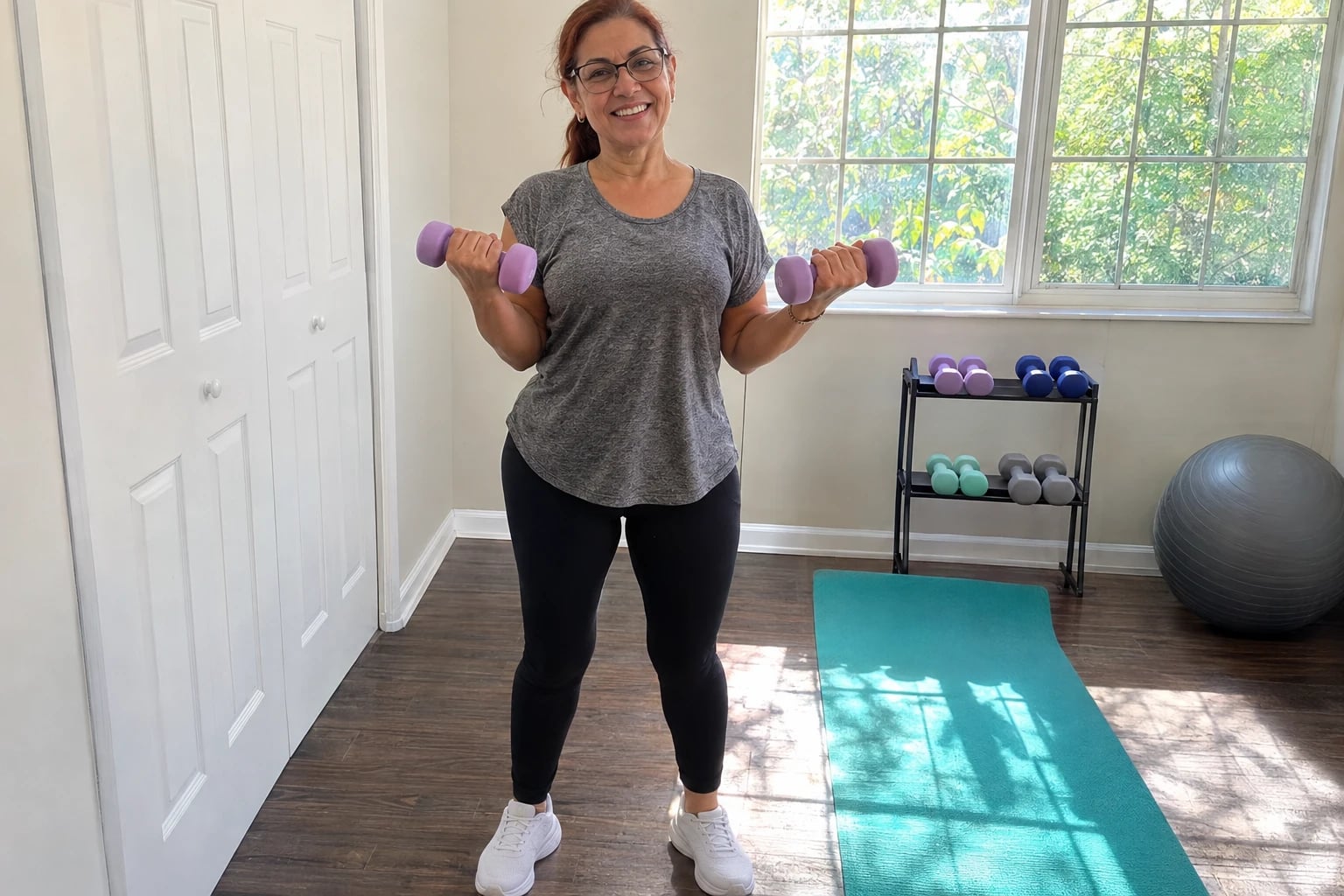
When ten of anything feels easy, make it harder: a heavier band, a pair of dumbbells, a slower count on the way down.
Federal guidelines call for muscle-strengthening on at least two days a week for every adult. In postmenopausal women, twice-weekly strength training for eight weeks cut body fat significantly. The muscle you add burns more at rest, which pushes back against what menopause is doing.
What won't work is aiming at the belly itself. No exercise burns fat from one spot. A hundred crunches strengthen the muscle underneath, but the fat on top only shrinks as you lose fat everywhere. Your body decides the order, and it doesn't take requests.
If your legs have thinned and your rear has flattened, the squats and step-ups help there too. Rebuilding muscle below the waist changes your proportions, so the middle stops being the main event.
Weights or cardio? Both. But if you've been riding the stationary bike for an hour a day and seeing nothing, the missing piece is probably strength. Trading two of those rides for two lifting sessions is a better bet than adding a seventh ride.
Short, hard bursts help as well. One approach is ten minutes of high-intensity intervals, five times a week. On a bike, that could mean 30 seconds pedaling hard, 90 seconds easy, repeated five times.
Ill, in pain or nursing a bad knee? Most of this works seated. Band rows, for one, can be done from a sturdy chair. If you have a heart condition or recent surgery, check with your doctor or a physical therapist on which moves are safe before you start.
How much walking actually makes a difference
Count the walking already in your week: the loop around the grocery store, the trek from the far end of the pharmacy lot, the dog's evening lap around the block. For most women it adds up to less than it feels like.
In one small study of postmenopausal women, only those averaging 12,500 steps or more a day had clearly less deep belly fat and a normal average BMI. The researchers suggested 10,000 may be too few at this age.
Treat that number as a direction to head in. Few women jump there in a week, and they don't need to. Steps hidden inside the day count as much as steps on a planned walk:
- Take long phone calls on your feet, pacing the hallway or the backyard.
- Walk for ten minutes after dinner, before the dishes.
- Park at the far end of every lot, on purpose.
- Carry laundry upstairs one basket at a time.
If hot flashes and broken sleep leave you drained by afternoon, walk early while the air is still cool. A menopause practitioner at University of Utah Health recommends at least 30 minutes of moderate activity daily, and going easy on yourself on the days it doesn't happen.
Moderate means you can talk but couldn't sing. Before changing anything, check your phone's step count for one ordinary week. That average is your real starting number.
What to put on your plate
You don't need a named diet. You need a smaller calorie total built around two things that do extra work: protein and soluble fiber.
Protein protects the muscle you're trying to build. The standard advice is 0.8 grams per kilogram of body weight a day, about 55 grams for a 150-pound woman.
For people over 65, a panel of researchers recommends 1.0 to 1.2 grams, roughly 68 to 82 grams for that same woman, and at least 1.2 grams for those who exercise.
The higher target isn't for anyone with serious kidney disease, so if your kidneys are in question, that's worth a call first.
Spread it across the day. Eggs or Greek yogurt at breakfast, tuna or chicken at lunch, fish, beans or lean meat at dinner. Breakfast is often the easiest place to add some, since it tends to be the lightest meal.
Soluble fiber is the kind that turns soft and gel-like in water: oats, barley, beans, lentils, peas, apples, citrus. In a five-year study, each extra 10 grams a day went with 3.7% less gain in deep belly fat. It made no difference to the fat you can pinch.
Be clear about what that means. Fiber slowed the gain without melting anything: deep belly fat still rose about 12% on average, and exercise had the stronger effect. Fiber is a helper, and it keeps you full, which makes the smaller calorie budget easier.
What about low-carb or fasting? Cutting back on white bread, pastries and sweet drinks is the tip women trade most often, and it's an easy way to trim calories. Whatever you choose, the plan that works is the one you're still following in week three.
Fasting divides people. Many women report that it leaves them dizzy, shaky or wide awake at 3 a.m. If that's you, it's the wrong tool, whatever it did for your friend.
And if a calorie cut that worked for years has stopped working, your metabolism moved the goalposts. Cutting deeper rarely fixes that. More muscle and more protein are the levers left to pull.
Sleep, stress and the glass of wine at 9 p.m.
It's 9 p.m. You pour a second glass because the day was long. You fall asleep fast, then wake at 2:40, hot and wide awake, and spend tomorrow hungry and short-tempered. That loop does more to your waistline than any single meal.
Sleep. Women who slept under five hours a night had a 30% higher risk of gaining 30 pounds or more over 16 years than women who slept seven. Short nights also push ghrelin up and leptin down, so the next day you're hungrier and less satisfied.
What helps: a cool bedroom, a fan by the bed, layers you can kick off, the same wake-up time every day, weekends included. If hot flashes or night sweats are what wake you, bring them up at your next appointment, because they can be treated.
Alcohol. Wine and cocktails add calories you don't feel, loosen your resolve near the snack drawer, and tend to break up the second half of the night. You don't have to quit. Try keeping it to weekends for a month and watch what happens to your sleep and your waistband.
Stress. Cortisol, your main stress hormone, runs high when you're stretched thin: a parent to look after, a job, a worry about money at midnight. Very hard dieting piles on more strain, and it usually costs you sleep and mood first.
A steadier approach is easier on both. Even a fifteen-minute walk after a hard phone call gives the stress somewhere to go.
How to tell it's working, without living on the scale
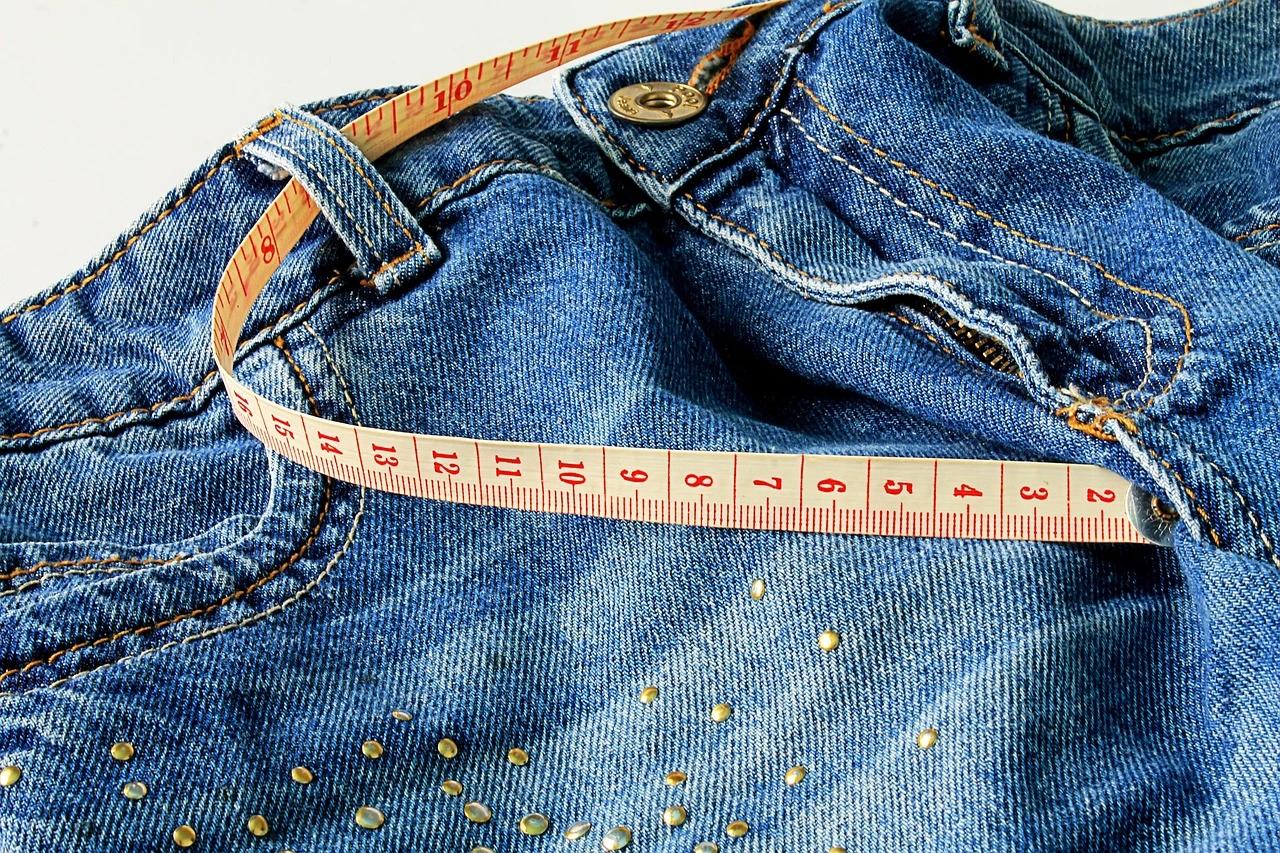
Use a cloth tape measure and a calendar. Measure once now, then once a month, on the same morning before breakfast.
Where you put the tape matters. Skip the navel. In postmenopausal women, measuring at the narrowest point of the torso, or halfway between the lowest rib and the top of the hipbone, tracked deep belly fat better.
That 35-inch mark is the one the National Heart, Lung, and Blood Institute uses for women.
If your BMI is normal but your shape has gone from hourglass to apple, don't let the BMI reassure you. Belly fat raises heart risk even at a normal weight, a pattern called normal weight obesity.
The scale went up but your belly looks smaller? Trust the waist. If you're lifting and eating more protein, you can add muscle while losing fat, so the scale may stall or creep up while your pants loosen.
How fast should it go? Slower than any ad suggests. Remember that midlife drift of about a pound and a half a year.
In a trial of more than 500 women, those eating about 1,300 calories a day and burning 1,000 to 1,500 calories a week through exercise didn't gain at all. The comparison group gained an average of 5.2 pounds over four and a half years.
So holding steady while the tape shrinks is genuine progress. Losing weight you've already gained is possible too. Think in months and inches rather than weeks and pounds.
If daily weighing or calorie apps have pulled you toward disordered eating before, leave them alone. A monthly tape check, the fit of your jeans and how the stairs feel tell you plenty. Your doctor should hear about that history too.
What to stop spending money on
Some purchases are easy to cross off. None of these shrink the deep fat around your organs:
- Waist trainers and sweat belts. They squeeze you or make you sweat. The water comes back with your next glass of iced tea.
- Detox teas and cleanses. Many work as laxatives. What you lose is water and the contents of your bowels.
- "Fat-burning" or "menopause belly" supplements. The FDA doesn't approve dietary supplements before they go on sale, so the label's promise hasn't been checked.
- Belly creams, wraps and electric ab belts. Fat doesn't leave through the skin you rub or buzz.
Worth the money instead: a set of resistance bands, a pair of light dumbbells, walking shoes that fit well, and a cloth tape measure.
If you've never lifted, one or two sessions with a trainer who works with older adults can be money well spent. Ask them to check your form on the chair squats and rows, then carry on at home.
When to bring in a doctor, and which one
If you've put in a few steady months and nothing is moving, or you'd simply like guidance from the start, the right appointment can change the plan.
Hormone therapy does affect belly fat, but only while you take it. Women currently on it had less belly fat than women who never used it, and women who had stopped kept no lasting benefit. If you stop, the Endocrine Society advises stepping up physical activity, because belly fat comes back quickly.
Whether hormone therapy suits you depends on your age, how long it's been since your last period, and your personal and family history. That's a weighing to do with a doctor who knows the field.
Not every doctor keeps up with menopause care. A certified menopause practitioner, with MSCP after their name, has specialist training. The Menopause Society keeps a searchable list of them on its website.
Curious about weight-loss medication? Whether it fits your health picture is a decision that belongs in the exam room.
If healthy eating keeps collapsing after two weeks, you don't have to keep trying alone. A registered dietitian can build a plan around your real meals, your schedule and the foods you like. Start with a referral from your doctor, then call your insurer to find out what's covered.
The bottom line
This week, measure your waist the right way and write the number on the calendar. Then book two strength sessions, say Monday and Thursday, even if each is twenty minutes in the living room with a chair and a band.
If you already walk a lot, add the lifting before you add miles. If you barely move right now, start with a ten-minute walk after dinner and bring in the chair squats the following week.
If anything about your stomach is new, sudden or painful, call your doctor first.
Up next
17 Plus-Size Office Outfits Over 50 That Actually Look Polished
Seventeen office outfits for a real plus-size body, each with the one fit detail that makes it work, from where a blazer button lands to what a tailor charges.
Read the list →

Reader quiz
Did you catch the details?
5 questions from this article. Finish them all to unlock the editor's bonus tip.
According to the article, where should you place the tape measure when checking your waist?
Did any of these feel familiar?
Know someone who needs this?
Sources cited in this article
This article links to 13 outside sources, listed here so you can read them yourself.
- About a pound and a half a year www.aarp.org/health/conditions-treatments/weight-loss-menopause-belly
- Began climbing three to four years before the last period pmc.ncbi.nlm.nih.gov/articles/PMC2748330
- Speeds up muscle loss www.uhhospitals.org/blog/articles/2023/08/the-connection-between-menopause-a…
- Put it to NBC News www.nbcnews.com/news/amp/wbna24058512
- More than 12 times a month www.cancer.org/cancer/types/ovarian-cancer/detection-diagnosis-staging/signs…
- Muscle-strengthening on at least two days a week odphp.health.gov/our-work/nutrition-physical-activity/physical-activity-guid…
- 12,500 steps or more a day pmc.ncbi.nlm.nih.gov/articles/PMC4520368
- At least 30 minutes of moderate activity daily healthcare.utah.edu/healthfeed/2024/07/how-battle-bulge-during-menopause
- 1.0 to 1.2 grams researchexperts.utmb.edu/en/publications/evidence-based-recommendations-for-…
- 3.7% less gain in deep belly fat newsroom.wakehealth.edu/news-releases/2011/06/soluble-fiber-strikes-a-blow-t…
- Slowed the gain without melting anything www.scientificamerican.com/article/soluble-fiber-to-reduce-belly-fat
- Narrowest point of the torso, or halfway between the lowest rib and the top of the hipbone pmc.ncbi.nlm.nih.gov/articles/PMC5852815
- Less belly fat than women who never used it www.endocrine.org/news-and-advocacy/news-room/2018/treating-menopause-sympto…

Peter Byalik
Food & Home Editor
Peter Byalik is a professional chef with more than 20 years of experience, including years running his own business. He came to the United States from Ukraine.
More from Peter Byalik