






How to Make Friends After 50: 15 Easy Ways
Where to meet people you'd actually like, what to say over the coffee urn, and how a friendly face in your Thursday class becomes someone you call.

By Irina Byalik, Style Editor
Updated · 15 min read
- Written by our style editor
- Cited 13 sources
- How we review
It's a Tuesday, a little after eleven. The boxes are flattened in the garage, or the retirement lunch is two months behind you, and you open your phone to find someone for lunch.
You scroll the contacts. The people you'd call first are three states away. The women from work are at work. The neighbor who waves from her driveway has a first name you're not sure of.
That quiet house doesn't mean anything is wrong with you. Friendship takes hours spent together, a lot of them, and for decades your hours belonged to a job, a family, a calendar someone else mostly set.
Now they're yours. You need to know where to spend them, what to say when you get there, and how to keep showing up until a face becomes a friend.
Why does this feel so much harder now?
Because the machinery that used to make friends for you has stopped running. The office put you next to the same people five days a week. The kids' school put you on the same bleachers every Saturday. You didn't have to plan any of it. It just happened, the way weather happens.
Take that away and new friends arrive less often for everyone. In one national survey, 41% of older Americans had made a new friend in the past year, compared with 56% of young adults. Almost a third of the older group hadn't made one in five years or more.
So if you feel behind, you're in a very large club. Many women report the same gap. With no children at home, no spouse, or no church, there's simply no built-in place to meet anyone.
Living alone makes it sharper. In 2023, 31% of women 65 and older lived alone, compared with 19% of men. When nobody's in the kitchen when you get home, a quiet week is very quiet.
Some of the shrinking is your choice, and a sensible one. Past a certain age, most people stop collecting acquaintances and keep the friends who matter.
The catch is that the casual people count too. In a small study of adults averaging about 72, those with fewer outer-circle acquaintances did worse on a memory test five years later.
That's one reason it may be worth not letting every casual acquaintance drop away. The man at the hardware store who remembers your project counts. So does the woman you chat with at the dog park.
There's a health side too. The CDC links loneliness and isolation to heart disease, stroke, type 2 diabetes, depression, anxiety and dementia. That's a good reason to treat this as seriously as your walking.
And the timing is better than it feels. As NYU psychiatry professor Irene S. Levine has pointed out, a friendship you start now could last decades. Someone you meet at 58 could be at your 88th birthday.
Where are the people you'd actually like?
Look for places where people show up for the same reason you would, and come back more than once. The five below put you in a room with people who chose the same thing you did, which is a fair first sign you'll get along.
Sign up for a lifelong learning class. Osher Lifelong Learning Institutes, called OLLI for short, are for people 50 and older. There are 125 of them at colleges and universities around the country. Courses carry no credit, so there are no grades, and many are taught by retired professors and local experts.
Members pay dues, and many OLLIs hold lunch-and-learn talks too. A ten-week class on the Civil War or watercolor gives you the same people every week, plus something to talk about that isn't the weather.
If you don't live near a campus with one, your community college may run its own continuing education classes for older adults.
Use the senior center for one thing you like. If the phrase makes you picture your mother's bingo afternoons, call and ask for this month's calendar anyway. Programs vary a lot by town. There are more than 11,000 senior centers serving over a million older adults a day.
The useful number is this one: three in four participants go one to three times a week, staying about three hours on average. Those are regulars, and regulars are who you want. Pick a single thing, a line dancing class or a Wednesday card game, and skip the rest.
Volunteer somewhere that gives you a job. A shift at an animal shelter, a soup kitchen or a literacy program puts you beside people who care about the same thing you do. The task carries you through the awkward part. Coach Caroline Maguire has said that having a job to do eases the awkwardness, and you're never standing around with a paper cup wondering whom to approach.
Volunteering also mixes ages.
If younger women have seemed cool toward you in social settings, side by side with them at the cat cages is different. If you'd like a paycheck, a part-time job does the same work, and Harvard Health suggests it too.
Bring a dish to a potluck. Houses of worship hold potluck suppers, and so do neighborhood associations, garden clubs and 55+ communities. A casserole dish is an easy opener. Somebody always asks what's in it, and somebody always wants the recipe.
Look for a "village" near you. In the US, a village is a membership group of older adults who live in their own homes in a set area and help each other out: rides, a hand with a ladder, regular get-togethers. Members volunteer for one another, and most of them are women. Search your town's name with "village aging in place," or ask your local Area Agency on Aging.
Why one Thursday class beats ten new things
Picture the 9 a.m. water aerobics class at the Y. The first week, you're the stranger in the shallow end. The second week, the woman in the blue swim cap nods at you. By the fourth, she's saving you the spot near the steps and telling you the instructor's knee is acting up again.
Nobody planned any of that. You just kept being there at nine.
Go to the same place at the same time every week. Familiarity grows when you see the same people regularly, at a yoga class, a stretching class, a Saturday walking group. Trying something new every week feels busy and productive, and it keeps you a stranger everywhere.
Harvard Health names the most common mistake: just joining. A name on a sign-up sheet doesn't make a friend. Your face in the same chair, week after week, starts to.
So choose one or two regular things and protect them. Put them on the calendar the way you'd put a doctor's appointment. Skip a week and you lose some of the familiarity you built up.
Learn the regulars' names. Then use them. "Morning, Linda" lands very differently from a nod. It counts beyond the class, too. The librarian who sets aside the new mysteries, the couple who walk their beagle past your house at six, the cashier at the farm stand: each is part of the outer circle that matters more than it looks.
If names slip away from you, type them into your phone in the parking lot afterward with one detail: "Linda, blue cap, granddaughter at Ohio State." Next week you'll have something to ask her.
What do you say first?
Say something about the thing right in front of both of you. It's the easiest opener there is, because it asks nothing personal and gives the other person something easy to answer.
Start with the thing in front of you. Try lines like these, out loud in the car first if that helps:
- "Have you taken a class with this teacher before?"
- "What did you think of the speaker?"
- "That looks good. Did you make it?"
- "I'm new here. Is it always this crowded on Tuesdays?"
- "How long have you been coming?"
Any of them works. You're looking for one exchange, and if it goes somewhere, lovely. If it doesn't, you've still said hello, and next week you'll say it again.
Give yourself a small job at the door. If you're an introvert and walking into a room of strangers drains you before you've taken off your coat, arrive ten minutes early and ask the organizer, "Can I help set up?" Put out chairs. Pour the coffee. Hand out the name tags.
A job gives you a reason to be there and a script. "Cream's on the left" is an easy first line. By the time everyone's seated, you've spoken to half the room without a single forced introduction.
When the talk keeps circling to grandkids or dogs and you have neither, steer it with a question that lets anyone in: "What are you reading?" or "What did you do before you retired?" The second one also gives you a way to share a piece of your own history.
New friends don't know about your career, your family or the people you've lost. They learn it one story at a time.
Now the part that should help you sleep. After a conversation, people consistently underestimate how much the other person liked them. Researchers call it the "liking gap," and it held whether the talk lasted two minutes or 45.
Shy people feel it more. So do people who replay their own "mistakes" on the drive home. If you've been wondering whether people really enjoy your company after decades focused on work and marriage, the odds are good that they liked you more than you think.
How does a friendly face become a friend?
You move it out of the room where you met, and you suggest a specific time. Three steps, in this order.
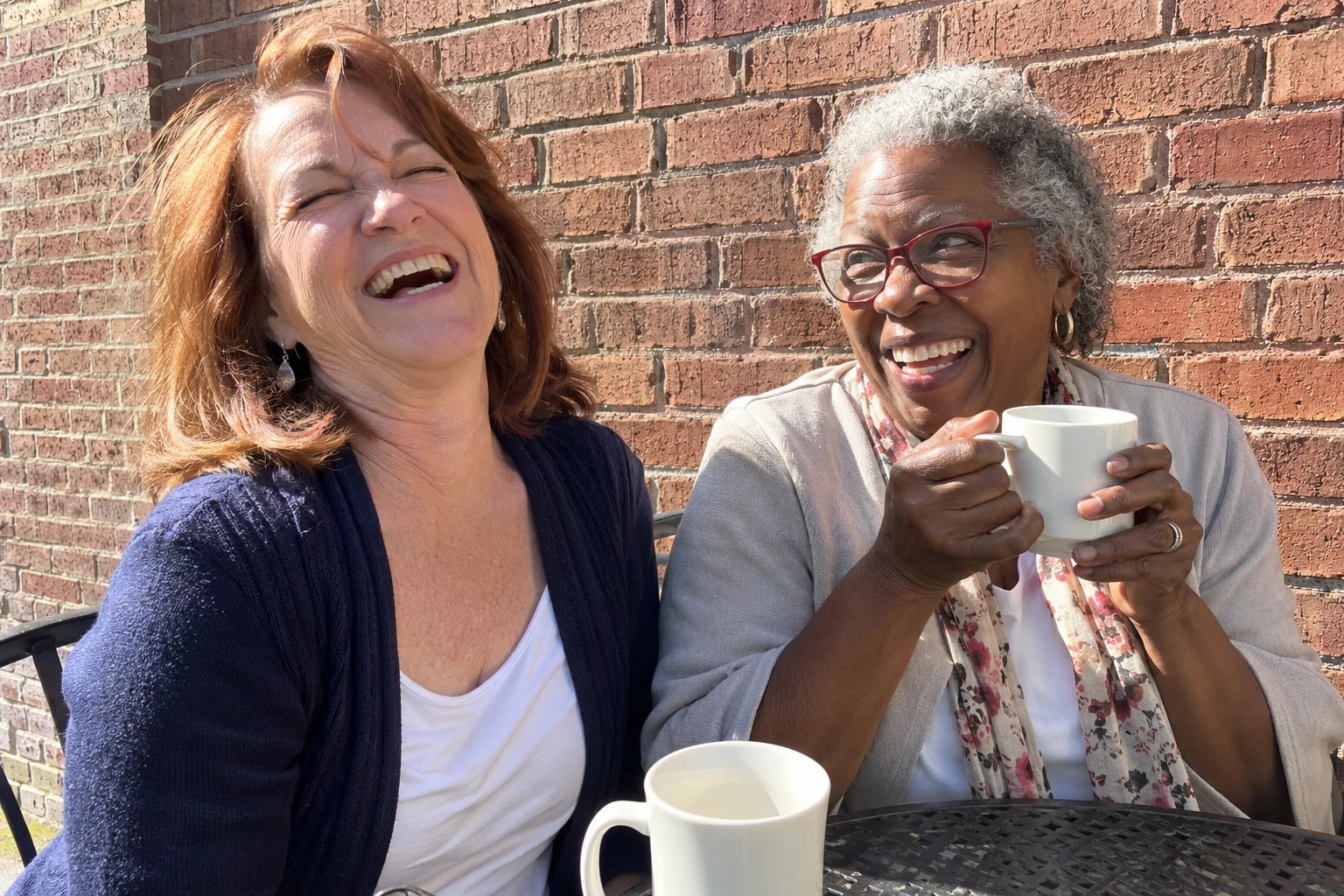
Take it somewhere new: from class to coffee. After the class or the shift, say to one or two people, "A few of us are grabbing coffee after. Want to come?" The coffee shop across the street will do. A different setting turns classmates into people who chose to spend time together.
Follow up with a day and a time. Within a few days, send a text with an actual plan: "I'm trying the bakery on Main Friday at 10. Want to join me?" A day and a place are easy to say yes to. "We should get together sometime" is easy to forget, for both of you.
Leave room to just hang out. Once you've met up a time or two, keep some of it loose. Walk the long way around the lake. Sit on the porch. Laugh about the instructor's playlist. Working side by side is nice, but the loose, unhurried time is where friends get made.
Here's why those steps work. University of Kansas researcher Jeffrey Hall studied adults who had moved in the previous six months and counted how long friendship takes. His figures: about 40 to 60 hours together to become casual friends, 80 to 100 hours to become friends, and more than 200 to become close friends.
Hall also found that the kind of time counts. Hanging out and joking around built friendship more than working together did.
His advice is to shift from the usual setting to a new one, such as from class to lunch. In his words: "You can't make people spend time with you, but you can invite them."
What if you're always the one who invites?
Doesn't always calling make me look needy?
Early on, someone has to go first, and most people are quietly relieved when it's you. The trick is the pace. Levine warns against coming across as needy and says close friendships build slowly. One invitation, then give it a week or two before the next. That's friendly, not pushy.
What about the people who say "let's get together" and never call?
Offer one specific plan. If she says yes, wonderful. If she's vague twice, stop chasing and let her be a pleasant acquaintance you're glad to see at class. Those people still count, and a few of them turn into friends years later, once their lives open up.
What if I end up doing all the listening?
Give it a fair test. Over two or three coffees, does she ever ask you a question back? Some people warm up slowly.
If after a few months the conversation is still a one-woman show, you can stay cordial and spend your best hours elsewhere. You're allowed to want friends who are curious about you.
How many friends do I actually need?
Fewer than you might fear. Almost half of Americans, 49%, have three or fewer close friends, and only 13% have ten or more. You're not trying to rebuild your whole wedding guest list. Two or three good people nearby, plus a ring of friendly faces, is a full life.
I tried before and it didn't work. Why bother?
Because one try is a small sample. Levine suggests trying several approaches at once: a class, a volunteer shift, a potluck. Some will fizzle. With three going, one usually catches.
If getting out is hard, or there's nothing near you
Small towns, bad knees, a hearing aid you keep in a drawer: none of these rules you out. Levine's view is that physical ability matters more than age, and most limits can be planned around.
If a health problem has knocked your confidence, that's common. Health troubles can leave you feeling physically vulnerable and less sure of yourself socially. And the early awkwardness of joining a new group is part of the process: the stiff first few weeks are normal, and they pass.
Choose quiet places and get your hearing checked. In a federally funded study of adults 70 to 84, the more hearing trouble got in the way, the lonelier people were and the smaller their social circles. People who could follow speech in background noise had bigger networks.
That suggests two easy moves. Suggest the quiet café at 10 a.m. instead of the brewery at 7, and take the corner table so you're facing her.
Then book a hearing test if you've been nodding along at gatherings without catching every word. If you have hearing aids, wear them to the potluck, not just to the TV.
Start your own group with one post. If your town has no group for women your age, you can start one. One group for women in Newport, Oregon started when a few women posted on Facebook asking other local women to meet up. It has grown into outings from walks and game nights to happy hours and lunches, and members come to whatever appeals to them.
You don't need to run anything that big. Post in your town's Facebook group or on the library's bulletin board: "Women 55 and up, coffee at the diner, first Saturday at 9. Come once and see." Let others host their own outings as the group grows, so it doesn't rest on you.
If you started a group once and it fizzled, one fixed thing at one fixed time usually lasts longer than a busy schedule.
And if a meetup site or app feels desperate, remember that everyone on it signed up for the same reason. Treat it as a bulletin board for finding an in-person walk or book club near you.
Call the Eldercare Locator. It's a free federal service at 1-800-677-1116, and you can also reach it by text, chat or email. It connects you with your Area Agency on Aging, the county or regional office that keeps track of local programs.
Ask what's offered for social connection in your area, including anything for people with limited mobility. In a small town, that office may know about the one exercise class or lunch program you'd never find online.
The 15 easy ways at a glance
- Sign up for a lifelong learning (OLLI) class.
- Use the senior center for one thing you like.
- Volunteer somewhere that gives you a job.
- Bring a dish to a potluck.
- Look for a "village" near you.
- Go to the same place at the same time every week.
- Learn the regulars' names.
- Start with the thing in front of you.
- Give yourself a small job at the door.
- Take it somewhere new: from class to coffee.
- Follow up with a day and a time.
- Leave room to just hang out.
- Choose quiet places and get your hearing checked.
- Start your own group with one post.
- Call the Eldercare Locator.
The bottom line
This week, pick one thing that meets every week and sign up. If you're near a college, start with the OLLI catalog. If you're not, call your senior center or the Eldercare Locator and ask what's on the calendar.
If you're an introvert, make it something with a task, like a volunteer shift or a setup job. If you're a talker, pick a class where conversation comes naturally afterward.
Give it eight weeks before you judge it. Then ask one person to coffee.
Up next
How to Enjoy Christmas Alone After 50: Ideas That Feel Good
A practical plan for a Christmas Day on your own, from what goes in the fridge to the one phone call worth booking ahead.
Read the story →


Reader quiz
Did you catch the details?
5 questions from this article. Finish them all to unlock the editor's bonus tip.
According to Harvard Health, what is the most common mistake people make when trying to make new friends?
Did any of these feel familiar?
Know someone who needs this?
Sources cited in this article
This article links to 13 outside sources, listed here so you can read them yourself.
- 41% of older Americans had made a new friend www.americansurveycenter.org/research/the-state-of-american-friendship-chang…
- 31% of women 65 and older lived alone www.pewresearch.org/short-reads/2025/12/04/a-smaller-share-of-older-us-adult…
- Fewer outer-circle acquaintances pmc.ncbi.nlm.nih.gov/articles/PMC6845241
- Loneliness and isolation www.cdc.gov/social-connectedness/risk-factors/index.html
- A friendship you start now could last decades www.psychologytoday.com/us/blog/the-friendship-doctor/201003/making-friends-…
- 125 of them at colleges and universities continue.utah.edu/osher/about
- More than 11,000 senior centers www.ncoa.org/article/get-the-facts-on-senior-centers
- Having a job to do eases the awkwardness www.aarp.org/family-relationships/unexpected-ways-to-make-friends
- Harvard Health suggests it www.health.harvard.edu/healthy-aging-and-longevity/how-to-make-one-on-one-co…
- Underestimate how much the other person liked them www.bps.org.uk/research-digest/liking-gap
- About 40 to 60 hours together news.ku.edu/news/article/2018/03/06/study-reveals-number-hours-it-takes-make…
- Lonelier people were pmc.ncbi.nlm.nih.gov/articles/PMC10736891
- Free federal service eldercare.acl.gov

Irina Byalik
Style Editor
Irina Byalik is a hairdresser and the owner of New Image Hair Salon in East Brunswick, New Jersey, with more than 20 years of experience. She came to the United States from Ukraine.
More from Irina Byalik