



How to Keep Working Out in December When Life Gets Busy
How to stay active during the holidays over 50 with a smaller routine, a resistance band in your suitcase and a plan for the first week of January.

By Peter Byalik, Food & Home Editor
Updated · 13 min read
- Written by our food & home editor
- Cited 8 sources
- How we review
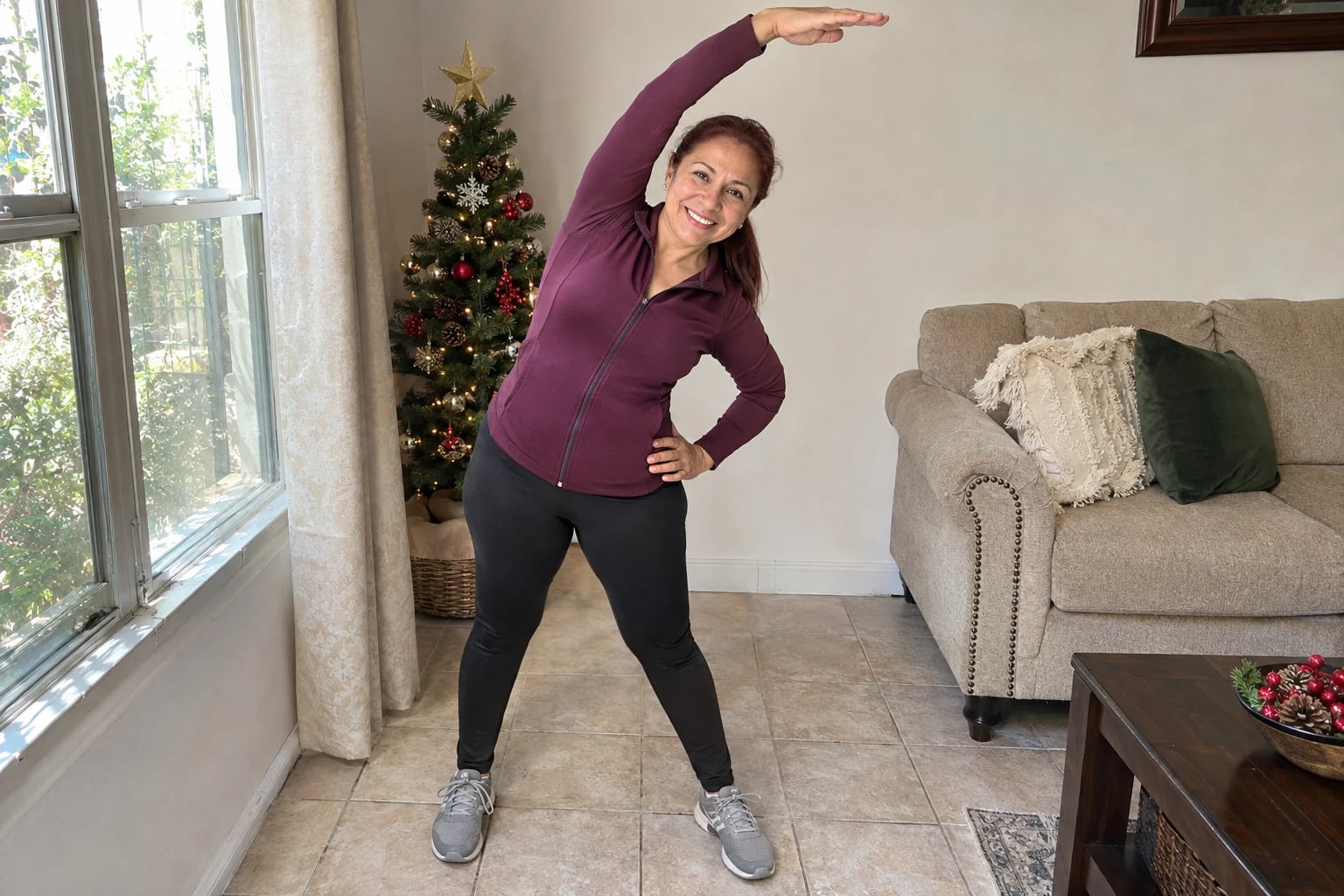
The calendar on the fridge looked fine in October. Now December holds a cookie exchange, two parties, a long drive to see family and a full house from the 23rd on. Your Tuesday class is in there too, the one you've finally kept since spring, squeezed between errands.
Last year that class was the first thing to go, and January felt like starting from zero.
It doesn't have to go that way. You can do a lot less in December and keep most of what you built. The trick is a smaller plan you set up now, before the invitations take over.
How little can you do and still keep what you built?
Less than you'd guess, if you keep the effort the same.
In one study, older adults who'd been lifting weights cut back sharply for months, some to about one session a week, and their strength held up well.
What they didn't keep was the extra muscle size, which, the researchers concluded, takes more weekly training to hold at our age than it does for younger people. For December, that's an easy trade. Strength is what gets you up the stairs with a laundry basket, and strength holds.
A holiday-break guide written by exercise researchers puts it the same way: you can drop from five sessions a week to two, or cut a 40-minute session to 20, and maintain your fitness. Keep the effort the same. If you normally walk briskly, walk briskly for less time.
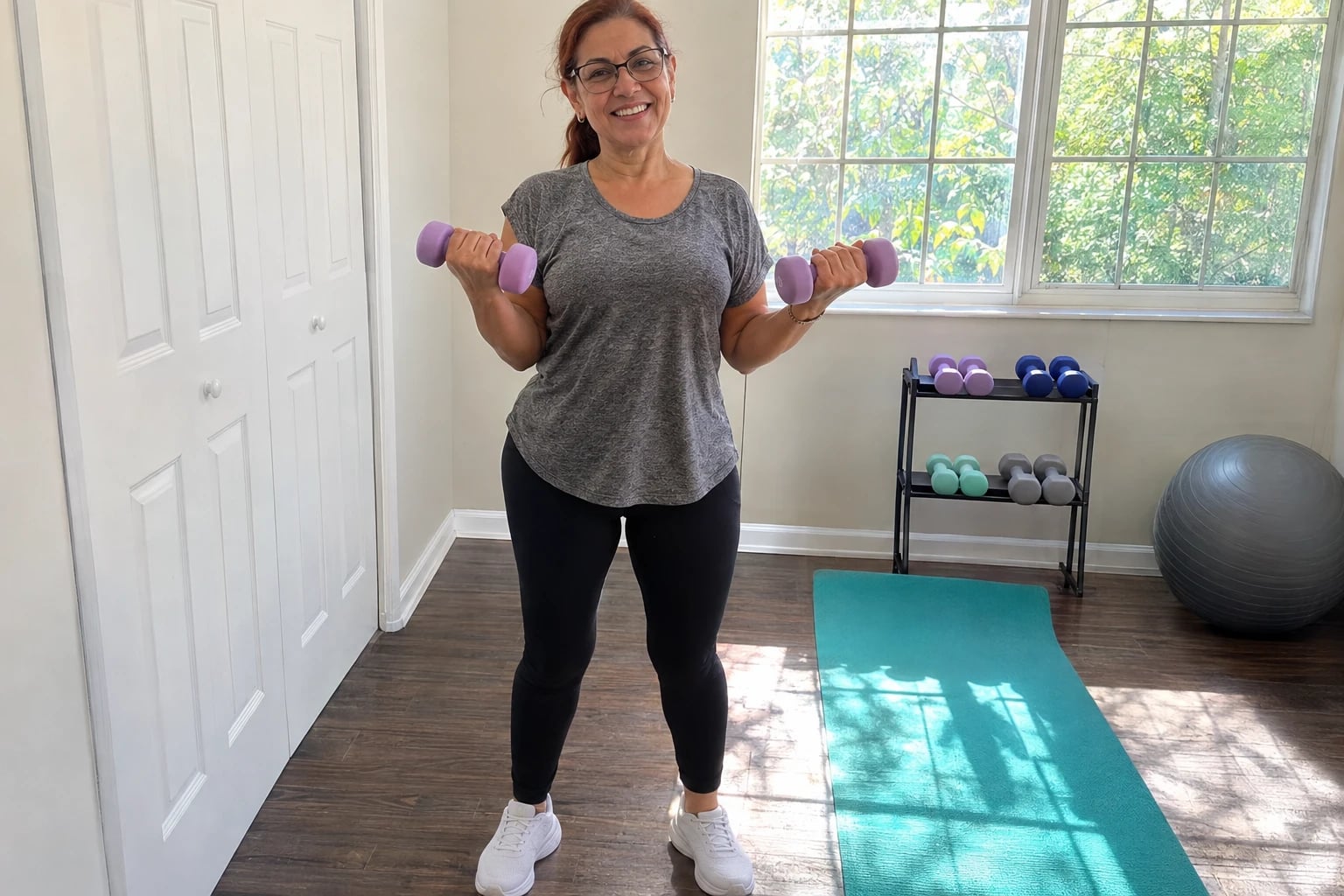
Fitness expert Shirley Archer's advice for the holidays is to maintain your fitness, not set new goals. She says a strength routine can take as little as 15 minutes and still help you keep what you have.
One thing does slip faster: balance. A review of balance training in older adults found some balance gains were gone after 4 weeks without practice.
Gains from tai chi and water-based programs held for 8 weeks. So whatever else you cut, keep a few minutes of balance work, especially with icy sidewalks, unfamiliar stairs and late nights ahead.
For context, the CDC's guidelines for adults 65 and older are 150 minutes a week of moderate activity (effort like brisk walking) plus strength work at least two days a week. That's the full target. In December you're aiming to hold steady, and the CDC is clear that some activity is better than none.
Put your workout on the calendar before the parties fill it
Picture the Sunday after Thanksgiving. You sit down with the calendar and a pen, and before you write in anything new, you block out Tuesday and Friday mornings, 8 to 8:30. Then you fill in the rest around them.
That's the whole method. The mistake to avoid is dropping everything until January. The fix is to plan smaller and put the workouts on the calendar like appointments.
A few things make those blocks stick:
Go early. In December, evenings belong to other people. Mornings are usually still yours.
Check holiday hours now. Gyms, the Y and community centers often shorten hours or cancel classes from the week before Christmas through New Year's. Ask at the front desk this month, and write the closed days on your calendar so they don't catch you by surprise.
Have a home version ready for the closed days. It doesn't need to be fancy. The 15-minute routine in the next section works in a living room.
Tell someone. If you walk with a friend, set the December dates together now. It's harder to skip on a person than on a promise to yourself.
If you keep moving partly because it protects your mood, you're in good company. Plenty of women say they go stir crazy without it, or that skipping December is what sets up the January blues.
That's a real reason to guard those blocks. The same researchers' guide says swimming, yoga or a 20- to 40-minute walk can ease holiday tension, which is worth more in the week of the big dinner than any other time of year.
The 15-minute version for days that are already full
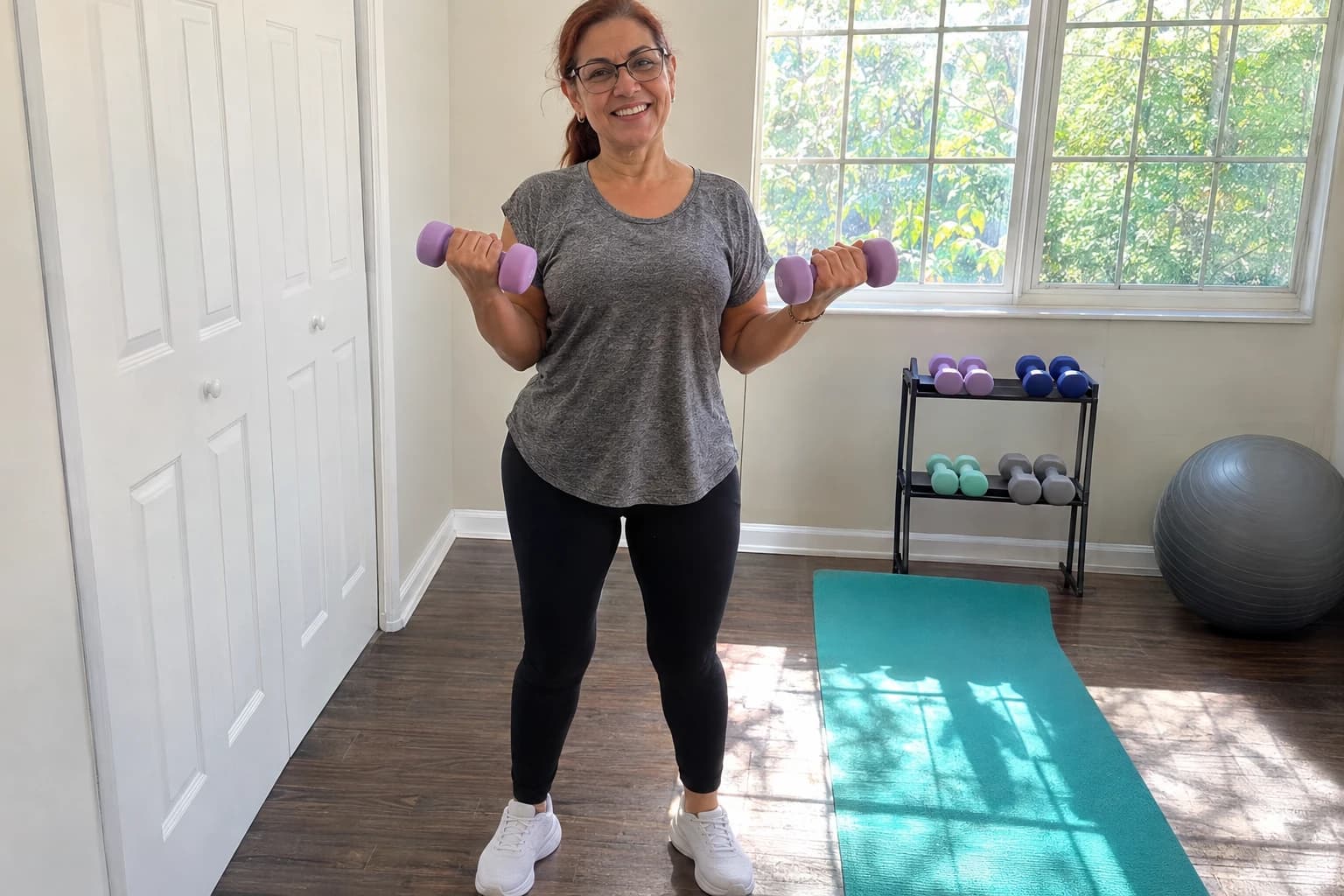
Here's a routine you can do in the time it takes the coffee maker and the oven to warm up. No equipment beyond a sturdy chair and a wall. A resistance band is a bonus.
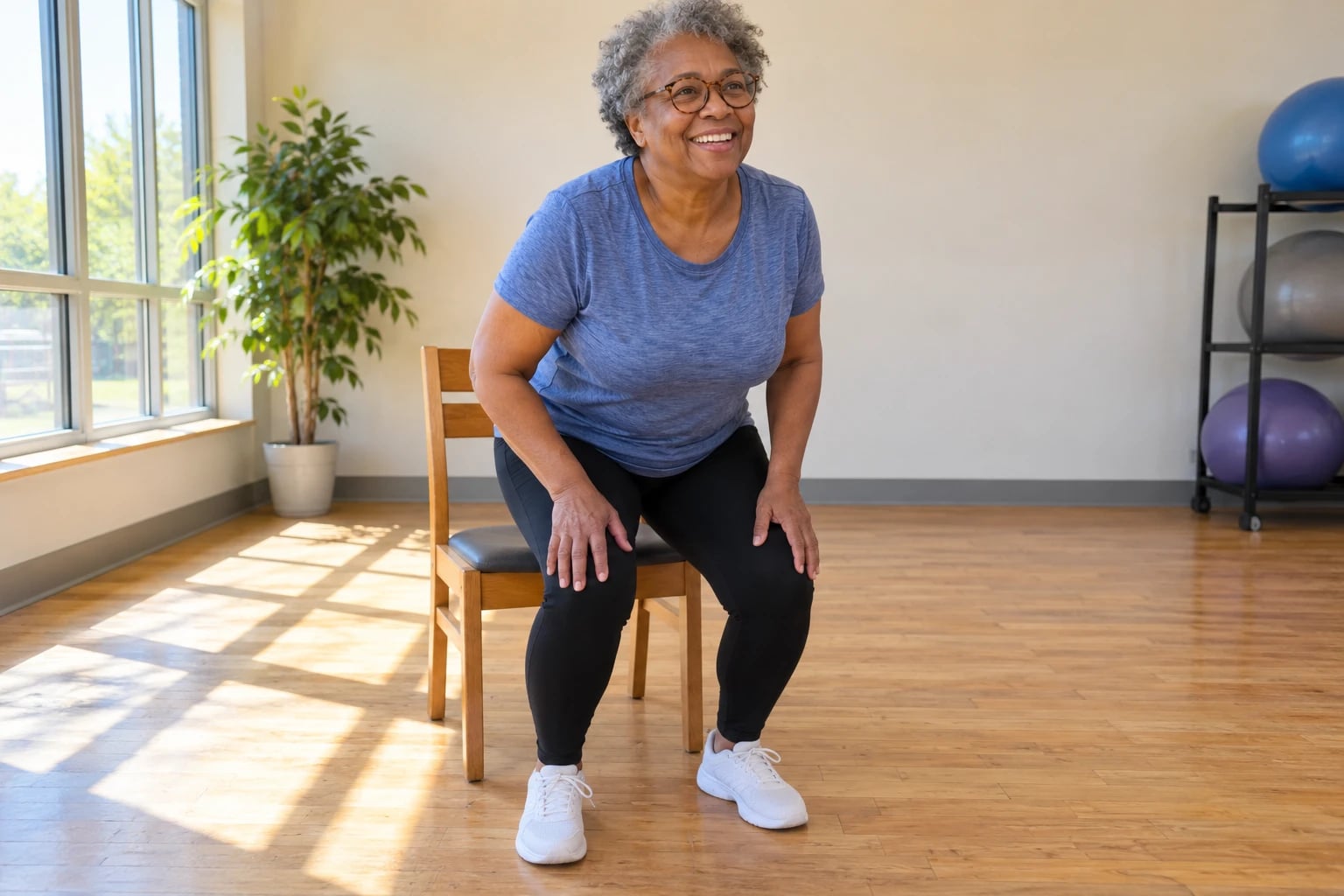
- Sit-to-stand, 10 to 15 times. Stand up from a chair without using your hands, then sit back down slowly. Legs and hips.
- Wall push-ups, 10 to 15 times. Hands on the wall at shoulder height, feet back a step, bend your elbows and press away. Chest, shoulders and arms.
- Band rows or towel pulls, 10 to 15 times. Loop a band around a door handle, or hold a bath towel taut, and pull your elbows back. Upper back.
- Calf raises at the counter, 15 times. Rise up onto your toes and lower slowly.
- Heel-to-toe walk down the hallway, 2 or 3 lengths. One foot directly in front of the other, as if on a line. Touch the wall if you need to.
- Slow standing knee lifts, 10 each side. Abdomen and balance at once.
Do one or two rounds. That covers the muscle groups the CDC lists, from legs to arms, and the CDC itself names heel-to-toe walking and standing up from a chair as balance moves.
The idea behind it has a name: exercise snacks, meaning short bouts of a few minutes spread through the day.
That same holiday guide suggests strength snacks of one or two exercises per muscle group, one or two sets each, up to 15 minutes, five to seven times a week. You don't need all seven. Two or three in a busy week keeps you in the habit.
For cardio on a crowded day, try intervals: 30 seconds of fast marching or stair climbing, 30 seconds easy, repeated for five minutes or less. That short burst can improve cardio fitness. If your knees or hips complain about stairs, march in place or do it on a stationary bike.
If you're newer to exercise, or you have a heart condition, high blood pressure, diabetes or joint problems, check with your doctor before adding harder intervals. The CDC's advice is to be as active as your abilities and conditions allow, and that's the right yardstick.
Moving while you're traveling or staying with family
Start with the trip itself, because that's where the real risk is.
On any trip over 4 hours, by plane, car, bus or train:
- Get up and move every 1 to 2 hours. In the car, that means a real stop at a rest area, with a lap around the parking lot.
- In your seat, work your calves. Lift your heels with toes on the floor, then lift your toes with heels down. Repeat often.
- Ask your doctor whether compression socks make sense for you.
The CDC says travel-related clot risk rises after age 40, and long periods of sitting are the setup for deep vein thrombosis (DVT), a blood clot in the leg.
Once you arrive, someone else's house has its own rhythm, and it rarely includes your workout. Pack your sneakers and a resistance band first. The band weighs almost nothing and fits in a shoe.
The guest room floor is enough space for the 15-minute routine. Do it before anyone else is up, while the house is quiet and the kitchen hasn't started.
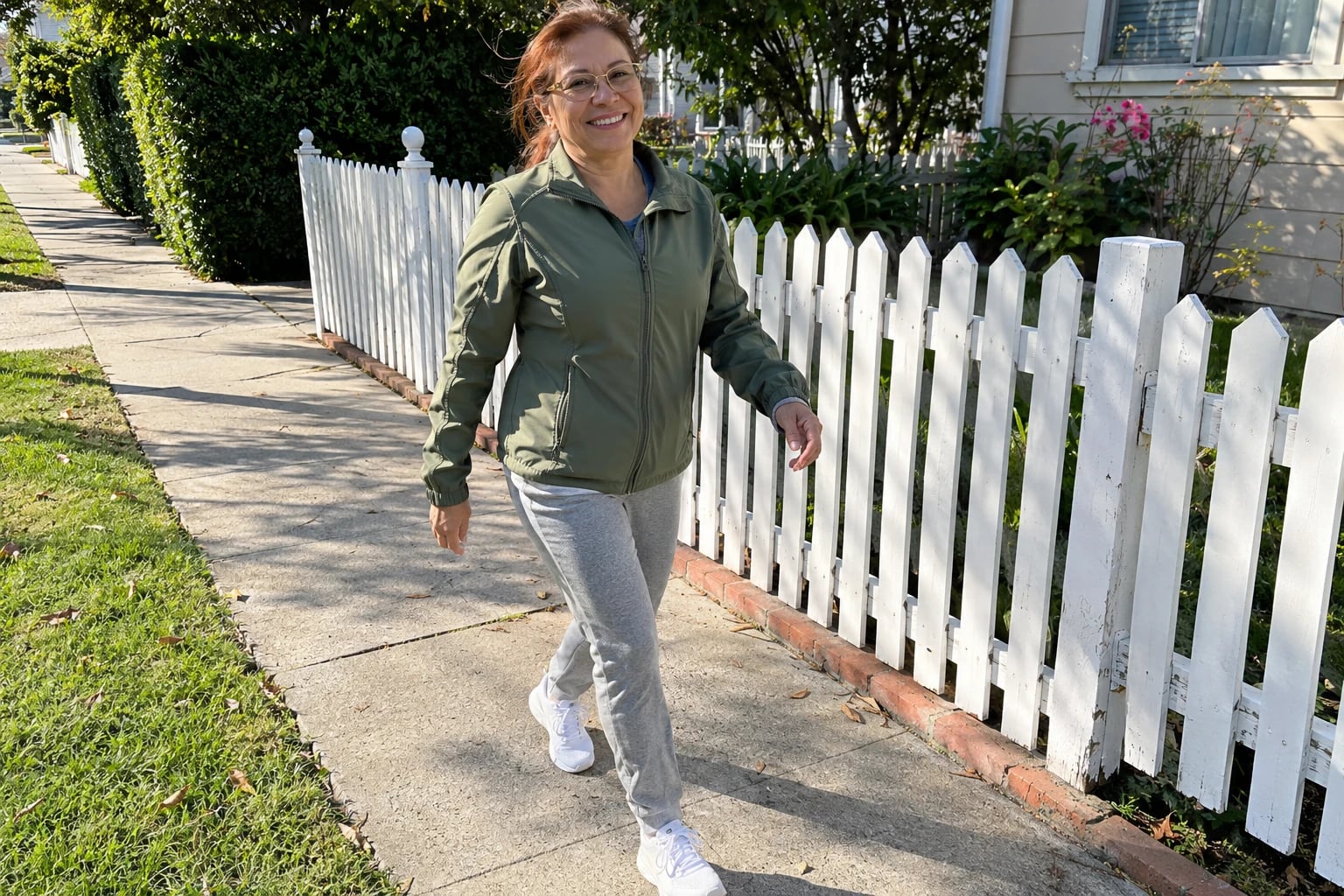
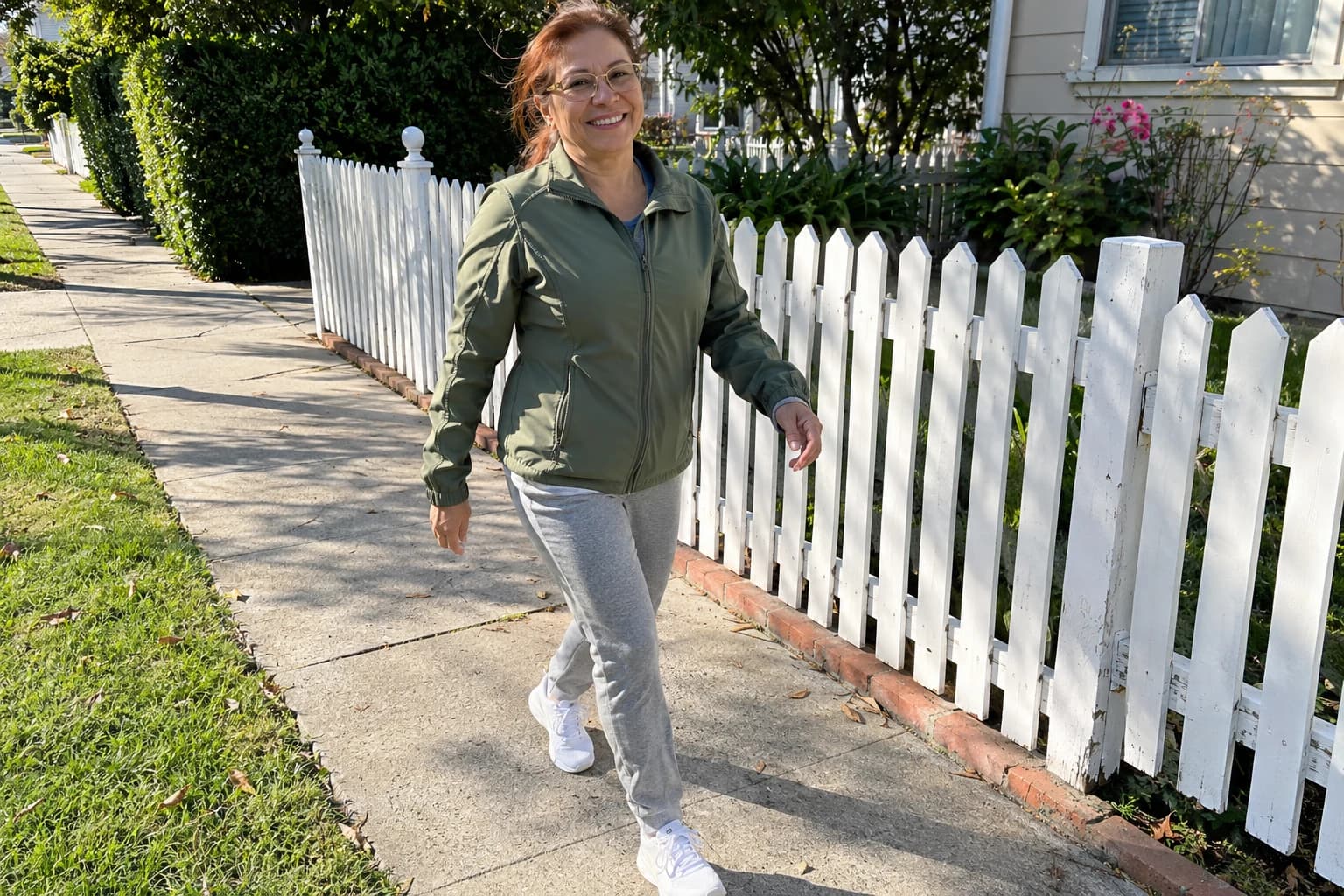
Walking is the easiest thing to fold into a family visit. Offer to walk the dog. Volunteer for the grocery run on foot if the store is close. When it's too cold or icy, walking the mall is a long-standing tradition for a reason: it's flat, heated and open early.
The guide also notes that for adults 60 and older, the benefits of daily steps level off at about 6,000 to 8,000 a day, lower than the 8,000 to 10,000 for younger adults. On a visit, that's a realistic number to aim for without a gym anywhere nearby.
Grandchildren count as equipment. Getting down on the floor to play and back up again is a sit-to-stand with stakes. A game of tag in the yard is an interval session.
Does a walk after Christmas dinner count?
Yes. So does dancing at the party, carrying chairs up from the basement and the trip around the block after pie.
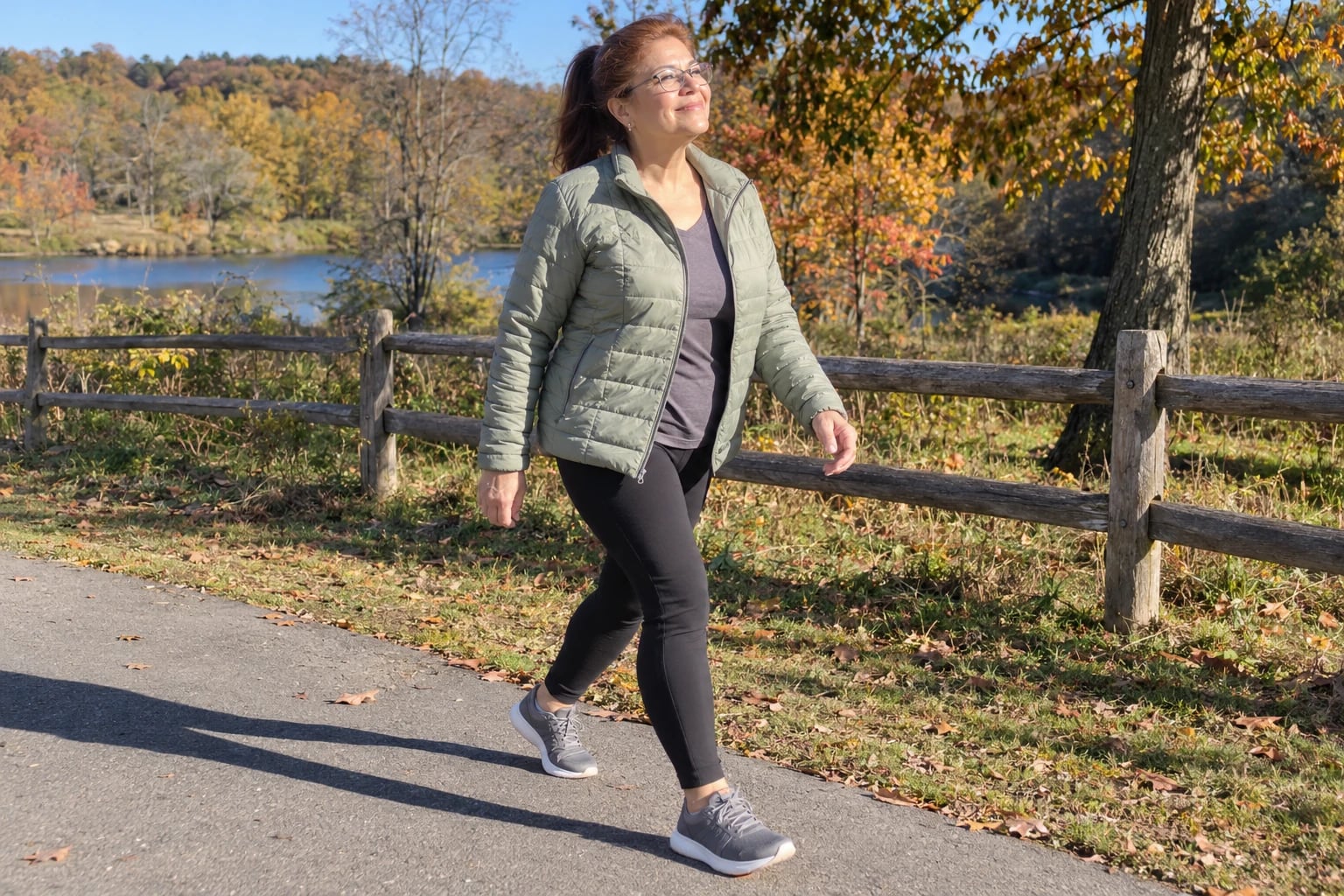
By the CDC's own measure, brisk walking is moderate-intensity activity, whether or not there's a class schedule involved. If you're moving enough that you can talk but not sing, you're counting minutes toward the 150.
What you're not doing is earning dinner. Food at the holidays is food, and a big meal isn't something to work off. The walk after Christmas dinner is worth doing because it feels good, gets everyone out of the overheated dining room and gives the cook a break from the dishes.
At parties, stand and circulate rather than sitting in one spot all evening. If there's music, dance.
Drinks deserve a straight word, without guilt. Older adults are more sensitive to alcohol's effects on balance and coordination, and because we carry less muscle and body water, the same glass of wine gives a higher blood alcohol level than it did at 35.
That matters most on stairs, icy driveways and in strange houses at night.
Alcohol also interacts with many common medicines, including those for pain, sleep, anxiety and blood pressure. If you take any of these, ask your doctor or pharmacist before the party season starts whether yours mix with a drink.
A useful habit: alternate each drink with a glass of water or sparkling water, and walk the host's stairs with a hand on the rail.
If something feels wrong, say so before the holiday is over
Keeping moving is half of a good December. The other half is not ignoring what your body tells you. More cardiac deaths happen on December 25 than on any other day of the year, according to the American Heart Association.
Its chief clinical science officer, Dr. Mitchell Elkind, points to disrupted routines, people exercising and relaxing less, and a habit of ignoring symptoms so as not to spoil the day.
The symptoms to take seriously:
- Chest discomfort, pressure or squeezing
- Shortness of breath
- Pain in the arm, shoulder, neck or jaw
- Lightheadedness
- Nausea
Women more often than men get the less typical signs, such as nausea, fatigue, or jaw, neck or back pain, rather than classic chest pain. If any of them show up, the right line is the plain one, said out loud to whoever's nearest: "I don't feel right. I need to call 911."
Nobody's holiday has ever been ruined by a false alarm. Keep your phone on you during long gatherings, and tell your host where you're keeping your medicines.
Cold mornings, stiff joints and how to get moving anyway
If your knees and hands ache more as the weather turns, there's a reason. Cold can thicken the synovial fluid, the natural lubricant inside your joints, and it can raise pain sensitivity and slow circulation, says an occupational therapist at SSM Health.
The catch is that doing less in winter tends to make the stiffness worse. Many women notice that a long stretch on the couch or in the car hurts more than gentle movement does.
Warm up from the inside before you head out:
- Put a heating pad on the stiffest joint for a few minutes while you drink your coffee.
- Do range-of-motion moves, which means moving each joint gently as far as it comfortably goes. Roll your shoulders, circle your wrists and ankles, bend and straighten your knees while seated.
- March in place for two minutes before you open the front door.
On days the cold wins, move the walk indoors: a mall, a big-box store or a long hallway in your building.
For joint-friendly options that hold up through winter, look for water aerobics at a heated indoor pool or a chair exercise class at your Y or senior center.
Water-based balance gains also held up longer after a break. If cold changing rooms put you off the pool, bring a warm robe and slip-on shoes.
On cold mornings, give yourself an extra five minutes of warm-up at the start, especially if you have arthritis. It's the cheapest fix in the whole routine.
What if December slips anyway?
Maybe you'll take two weeks off. Maybe it'll be three days, then a week, then it's January 6 and your sneakers are by the door, untouched.
Here's the honest answer to the question many women ask: a few days off, or even a week, costs you very little, and the strength research suggests that keeping up even a little training, not none at all, lets you hold onto most of your gains.
A rest day when you feel run down is fine. Playing it by how you feel each day is a reasonable plan.
Balance is the exception. Since some gains fade within about 4 weeks, even two minutes of heel-to-toe walking while the kettle boils keeps that door open.
When it's time to restart, go back at about half. Half the weight, half the distance, half the class if you can slip out.
Then add back over two or three weeks. Your body remembers more than you think, and starting gently is how you avoid the sore, discouraged second week that makes people quit again.
If the January gym crowds put you off, go at off hours. Mid-morning and early afternoon on weekdays usually thin out first. The resolution rush tends to fade by February.
If you've drifted from a walking group or class, the hardest part is the first message. Send it before the month is out, and ask what day they're meeting.
The bottom line
If your days will be packed at home, plan on the 15-minute routine. If you'll be traveling, plan on the band, the guest room floor and a walk most days. If cold joints are your main obstacle, plan indoor options: the pool, a chair class or the mall.
Then decide now what your first week of January looks like, at half your usual effort.
Up next
17 Plus-Size Office Outfits Over 50 That Actually Look Polished
Seventeen office outfits for a real plus-size body, each with the one fit detail that makes it work, from where a blazer button lands to what a tailor charges.
Read the list →
Reader quiz
Did you catch the details?
5 questions from this article. Finish them all to unlock the editor's bonus tip.
When cutting back your workouts in December, what does the article say you should keep the same?
Did any of these feel familiar?
Know someone who needs this?
Sources cited in this article
This article links to 8 outside sources, listed here so you can read them yourself.
- Drop from five sessions a week to two, or cut a 40-minute session to 20 theconversation.com/no-gym-or-regular-routine-heres-how-to-stay-fit-over-the…
- Maintain your fitness, not set new goals www.nbcnews.com/news/world/stay-fit-over-holidays-bending-your-routine-flna1…
- Some balance gains were gone after 4 weeks without practice pmc.ncbi.nlm.nih.gov/articles/PMC8539369
- Guidelines for adults 65 and older www.cdc.gov/physical-activity-basics/guidelines/older-adults.html
- Travel-related clot risk rises after age 40 www.cdc.gov/blood-clots/risk-factors/travel.html
- More sensitive to alcohol's effects on balance and coordination www.niaaa.nih.gov/alcohols-effects-health/aging-and-alcohol
- American Heart Association newsroom.heart.org/news/winter-holidays-bring-more-heart-attack-deaths-than-…
- Thicken the synovial fluid www.ssmhealth.com/newsroom/blogs/ssm-health-matters/february-2024/weather-wo…

Peter Byalik
Food & Home Editor
Peter Byalik is a professional chef with more than 20 years of experience, including years running his own business. He came to the United States from Ukraine.
More from Peter Byalik