









24 Signs Your House Has Become Too Much, Before Your Children Say It
A worn stair tread and an unopened repair bill reveal how much work your house now demands.
By David Ruiz, Home Editor
Updated · 17 min read
- Written by our home editor
- Cited 8 sources
- How we review
Read to the end: #1 is the timed home test that turns worry into a plan few people repeat.
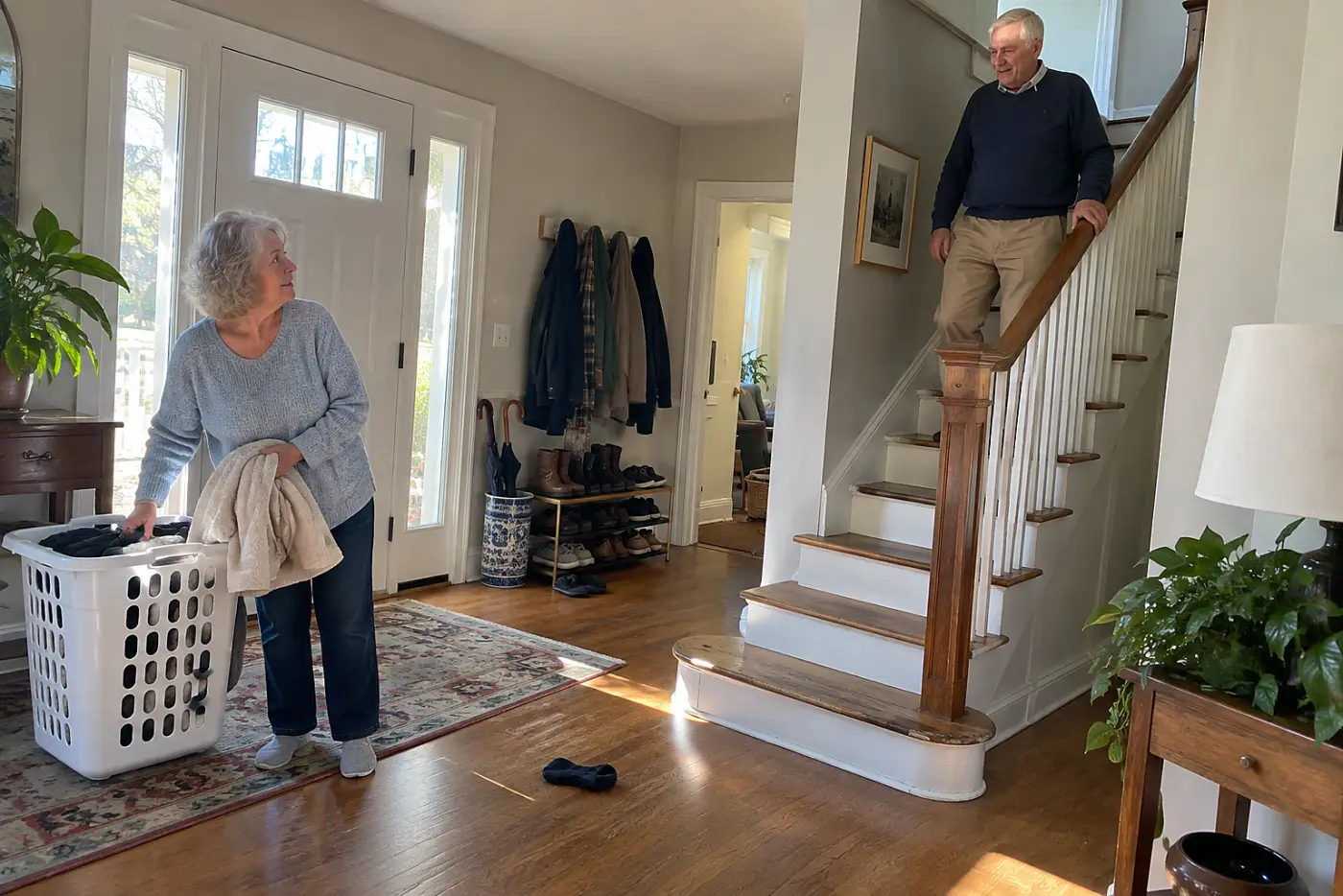
The laundry basket is waiting at the foot of the stairs. You've left it there since Tuesday because carrying it up means gripping the rail with one hand and the basket with the other. You find yourself choosing clothes from what remains downstairs.
That doesn't mean you have to leave the house you love. It means the workaround deserves a closer look before someone else notices it and starts a conversation you wanted to begin yourself.
Here are 24 signs you can check first.
24The laundry basket stays downstairs

A full basket has turned the stairs into a negotiation.
First you put it off until tomorrow. Then clothes collect where they land, while the washer and the bedroom remain on different floors. Soon a chore you once did without thought dictates what you wear.
If the basket needs both hands, the rail is no longer available when you need it. Leaving clothes downstairs solves tonight's problem, but it doesn't tell you whether the laundry setup still works.
This week, carry an empty basket along the usual route and notice where you need a free hand. Move a small set of everyday clothes downstairs for now. “I'm trying a different laundry setup before I make any bigger decisions.”
Next, look at the steps without the basket.
23The stair tread catches your toe

One worn edge changes how you climb every step.
A loose stair nosing, curled runner, or uneven tread catches a shoe before you reach the rail. After one stumble, you start watching your feet instead of where you're going. That adjustment follows you upstairs even when your hands are empty.
The CDC includes stairs in its home fall-prevention checks. Ignoring a snag risks a fall, but avoiding the stairs cuts you off from rooms you still want to use.
This week, climb in the shoes you wear indoors and mark the exact spot that catches. Ask a qualified repairer to secure the tread or runner rather than covering it with another rug. “This edge catches my shoe; I want it fixed in place.”
A sound step still needs a sound grip.
22The handrail moves under your palm
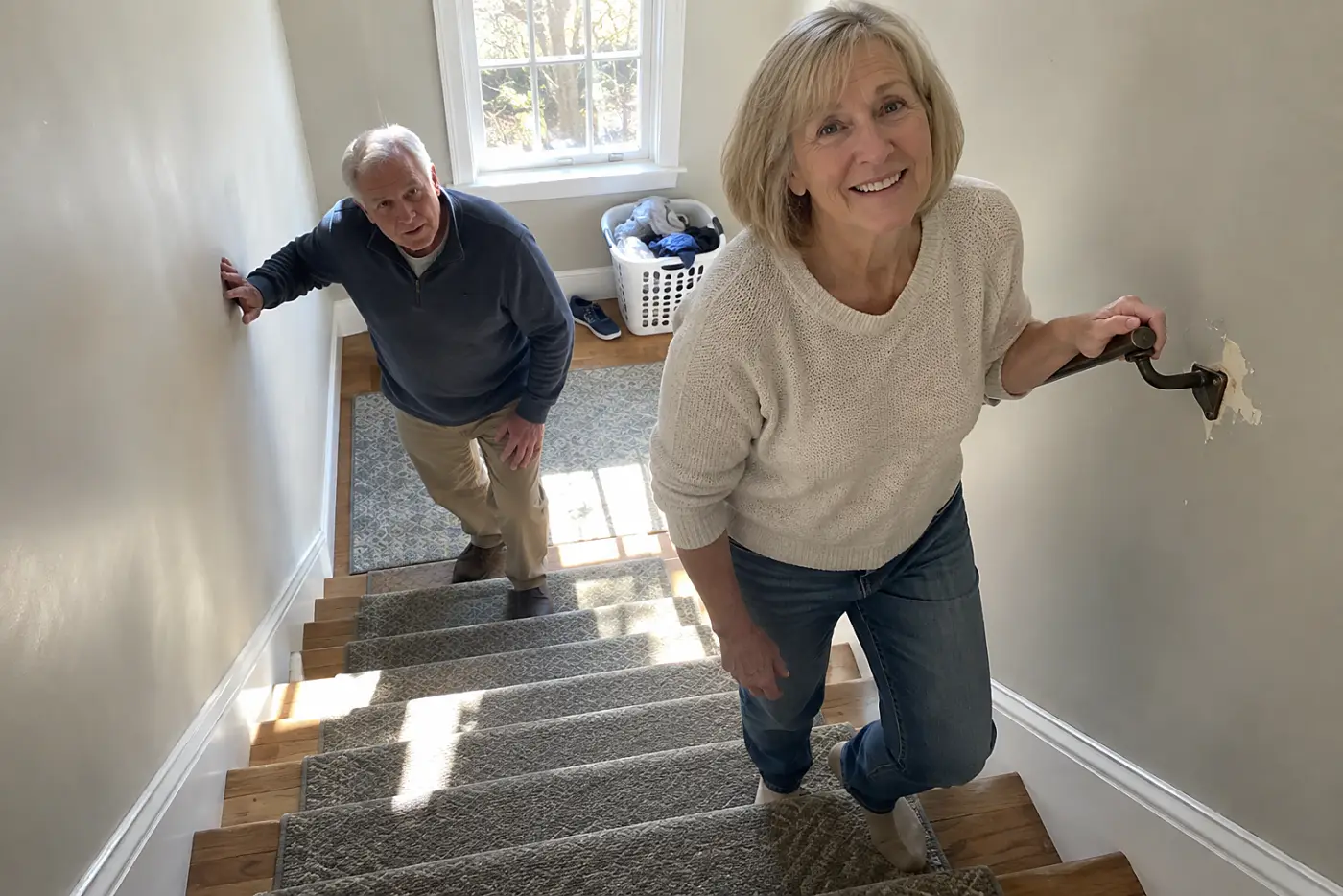
A shifting rail won't steady the person holding it.
The screws loosen, then the bracket moves against the wall. You compensate by pressing less firmly. That defeats the reason the rail is there, especially when a step catches your shoe or both feet need time to settle.
The bracket's position matters as much as the rail's finish. Tightening a screw into damaged wall material won't give you a dependable handhold, and paint won't show what sits behind it.
This week, grip the rail at each bracket and pull firmly without climbing the stairs. Mark any place that moves, then have it fixed into suitable wall support. “Please check what this bracket is anchored to.”
The landing presents another test.
21The upstairs bathroom dictates your bedtime

You plan your evening around one flight of stairs.
When the only full bathroom sits upstairs, a nighttime trip starts before you switch on a light. You rise from bed, cross the hall, find the rail, and make the return trip half awake.
Cutting back on drinks to avoid those steps creates a different problem. The National Institute on Aging urges you to address fall risks at home rather than let fear dictate your routine.
Write down the route you take after dark, including each switch and doorway. Check whether a main-floor bedroom or bathroom arrangement would remove the stairs from that trip. That is a layout question, not a verdict on where you belong.
This week, walk the route with the lights set as they are at bedtime. Put a reachable light at the bedside and ask an electrician about poorly placed switches. “I want to see what it takes to light this whole route.”
Then inspect the floor beneath those lights.
See more: 25 Things You Feel the Day You Sell the House You Raised Your Kids In →
20The hallway rug bunches at one corner

Your foot has learned to dodge that corner.
A rug slides a little each time someone crosses it. You step around the curled edge, and the detour feels so normal you stop seeing the obstacle. Carrying folded towels or answering the door leaves less attention for that practiced step.
The CDC's fall prevention guidance calls for removing trip hazards because a familiar route still needs a clear floor. A rug you keep avoiding is already changing the way you move through your house.
This week, lift the rug and walk the bare floor in both directions. If the route feels easier, leave the rug off it and check whether the floor beneath needs cleaning. “I like the rug, but I like a clear hallway better.”
There's another tight turn ahead.
19The doorway requires a sideways turn

A doorway shouldn't demand a practiced maneuver.
A chair, shoe rack, or stack of mail narrows the opening by inches. You turn your shoulders, carry parcels in one hand, and repeat the move until it feels like part of the house. In an emergency, a blocked route won't widen because you know it well.
Walk from the bedroom to the outside door without moving anything first. Notice whether you sidestep furniture or shift a pile with your foot. The National Fire Protection Association calls for clear exits, and that matters on an ordinary Tuesday, too.
This week, move the object that narrows the doorway and test the opening while carrying a bag. Keep the cleared space open for seven days. “This doorway stays clear; I don't want to keep squeezing past it.”
The front steps deserve the same honest look.
18The porch step has no reliable light

Dusk turns one familiar step into a guess.
The bulb burns out, or the switch sits inside after you've shut the door. You put a hand against the wall and judge the step by memory. Arriving home with groceries leaves even less room to feel for the edge.
A porch light that brightens the door but leaves the step dark hasn't solved the problem. Look from the sidewalk, too: that's the view you'll have when you return after sunset with your hands full.
This week, approach the door after dark and note exactly where the light stops. Replace the bulb or ask an electrician about the fixture, then check the step again from outside. “I need to see the step before I reach it.”
Getting inside is only half the job.
17The groceries stop at the front door
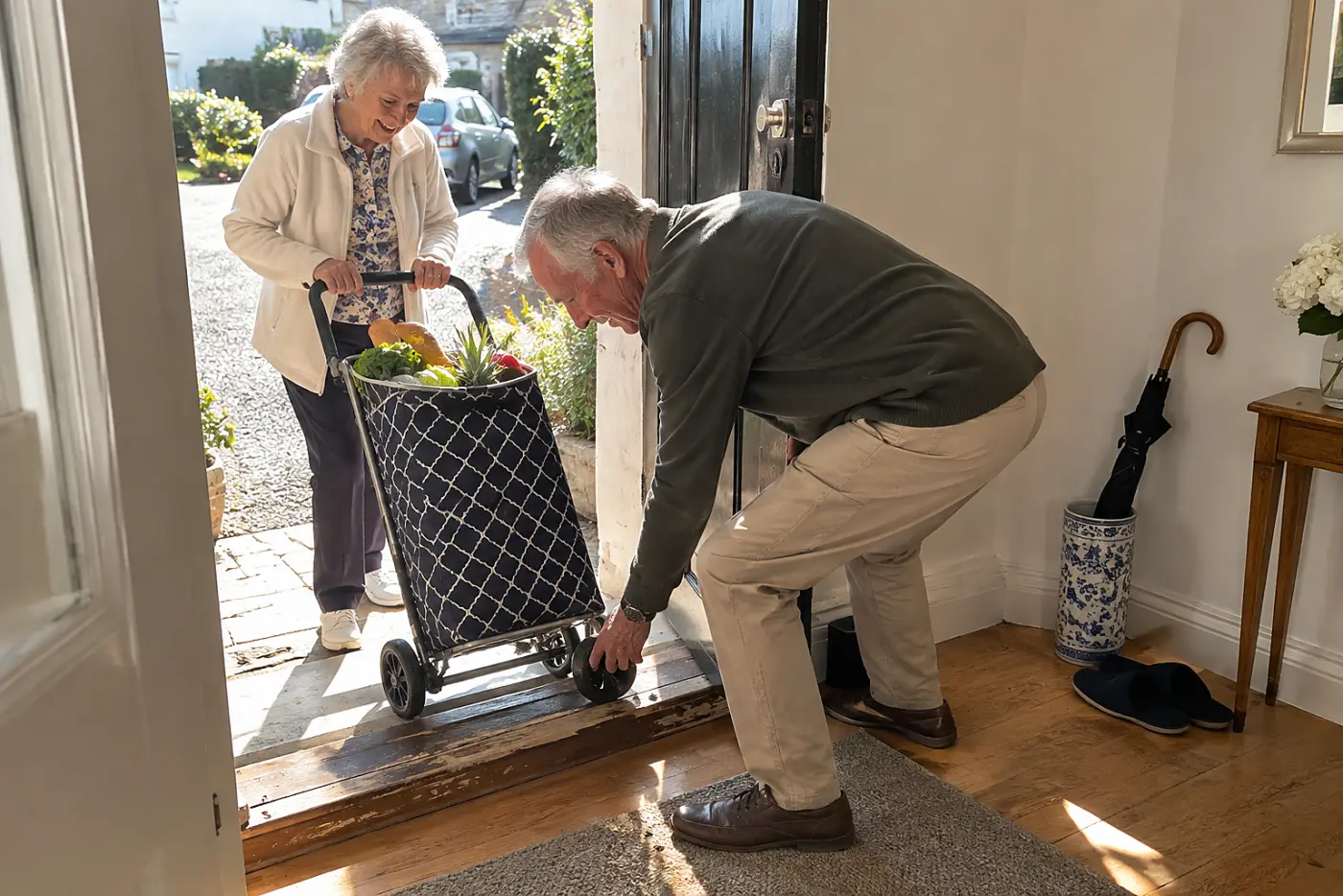
Bags reach the house before you do.
You unload the car, set everything on the porch, and take several trips to the kitchen. Heavy items wait by the door because crossing the threshold and hall takes more effort than shopping itself. Food that needs refrigeration is then waiting while you rest.
The clue is the handoff from car to kitchen, not the weight of one bag. Count the doors, steps, and turns between the car and refrigerator. If the shortest way runs through the garage, check its lighting and floor before relying on it.
This week, shop for the amount you can bring in comfortably and test a rolling cart across the actual threshold. A cart that stops at the door solves nothing. “I'd rather make a smaller trip than leave food sitting outside.”
Inside, check where you put those bags down.
16The kitchen counter has disappeared

Dinner starts with clearing a place to work.
Mail, appliances, and groceries crowd the surface nearest the sink. You shift them from one patch to another before washing produce or setting down a hot pan. That extra move arrives when both hands are already busy.
The pile returns when nothing removed has another home. Watch where the mail lands after you clear it; if it comes straight back, choose a drawer or basket outside the cooking area.
This week, clear one continuous stretch between the sink and your main cooking area. Give everything removed a place beyond that stretch, then make dinner without moving it back. “I'm keeping this counter ready for food, not storage.”
Now look above the counter.
15The everyday plates live overhead

You reach high for dishes you use daily.
A cabinet arrangement made sense when lifting a stack of plates felt routine. Now you brace against the counter, stretch past shoulder height, and bring dishes down one-handed. Repeating that reach at breakfast and dinner matters more than retrieving holiday china once a year.
The National Institute on Aging says to keep everyday items within easy reach, so your plates shouldn't demand a stretch. You don't need new cabinets to test the change. A lower shelf or sturdy drawer alters the movement immediately; keep light, seldom-used things overhead.
This week, move a week's worth of dishes to a shelf you reach without stretching. Leave them there and notice whether you stop bracing against the counter. “I want the plates where I can lift them with both hands.”
Next, watch where your hands go at the stove.
See more: 25 Things People Regret Giving Away When They Downsize →
14The hot pan crosses a crowded floor

A hot pan leaves no free hand.
You lift it from the burner, turn past a chair, and hunt for counter space. Each obstacle lengthens the trip while you hold something you cannot set down. The problem starts before dinner is cooked.
Look at the stove when it is cold. If the nearest clear landing place sits across the kitchen, you have to carry a hot pan farther than your cooking requires. Moving the chair alone won't create counter space.
This week, trace the path from stove to sink and table with an empty pan. Clear one landing spot beside the stove and rehearse setting the pan there. “I need a place to set this down immediately.”
Then check the appliance doing the cooking.
13The burner knob needs a second try

A stubborn knob makes “off” less certain.
The marker has worn away, or the knob turns without a clear stop. You lean in to read it after cooking, then check again before bed. Repeated checking isn't fussiness when the control itself gives poor feedback.
If you smell gas, leave the area and contact the gas utility or emergency services from outside. Don't operate switches or hunt for the source. For an unreliable knob without a gas smell, find the appliance model number before arranging service.
This week, check every control in daylight while the stove is cool. Stop using a burner whose setting you cannot identify, and book service with the model number ready. “This knob no longer shows me when the burner is off.”
A different warning sits near the sink.
12The faucet drips into a stained cabinet
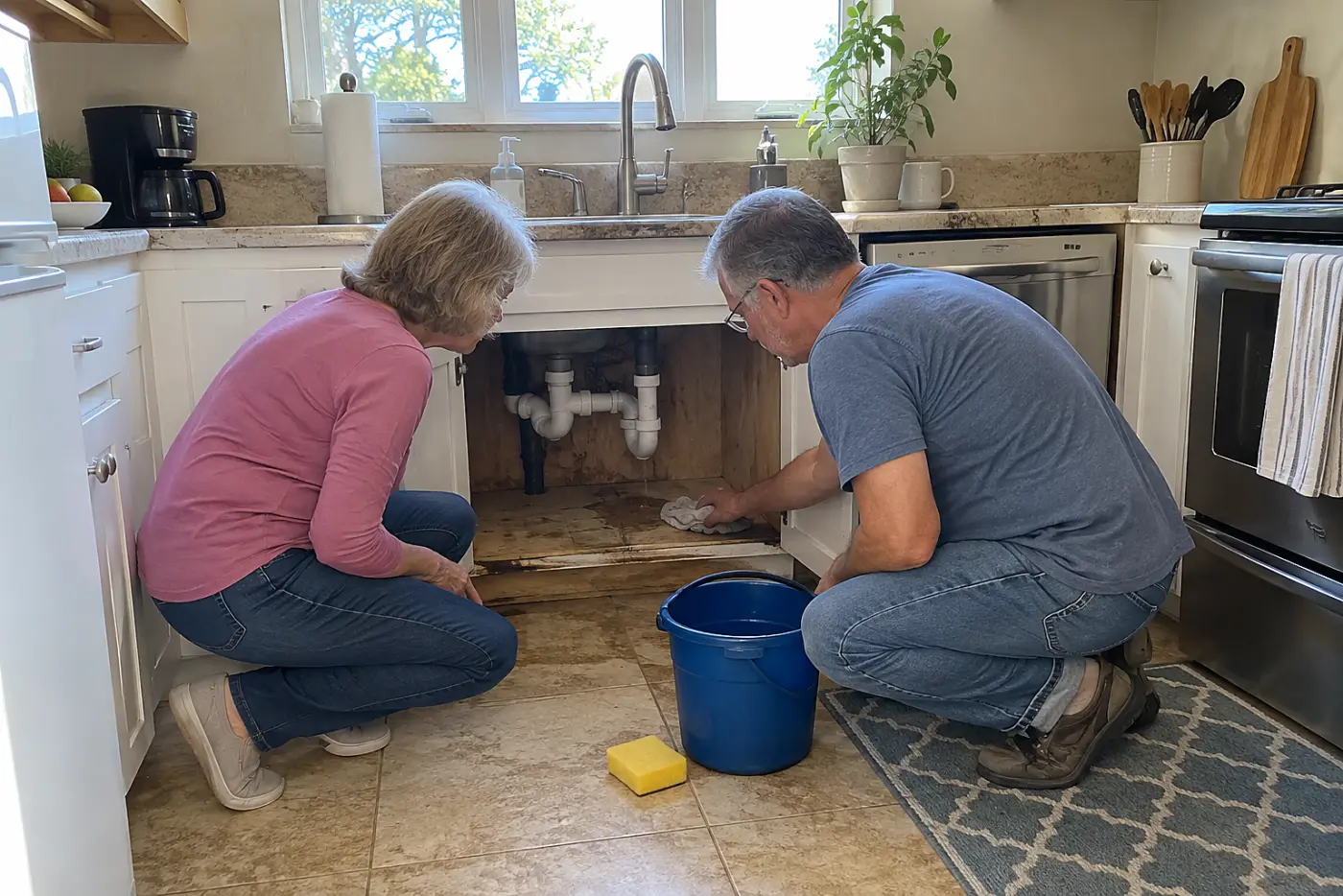
A drip hides damage until the shelf bows.
Water follows the pipe into the cabinet, where bottles and sponges conceal it. The wood swells, and the smell lingers after the faucet stops. Wiping the visible puddle doesn't repair the leak behind it.
A stained cabinet floor also hides the first fresh drops. Emptying the space lets you see whether water appears while the faucet runs, while the sink drains, or when neither is in use. Those details help a plumber find the source.
This week, empty the cabinet and dry its floor. Run the faucet, watch the supply lines and drain, and call a plumber if water appears. “The cabinet is wet under the sink; please find the source.”
The repair list keeps growing elsewhere.
11The repair estimate stays unopened
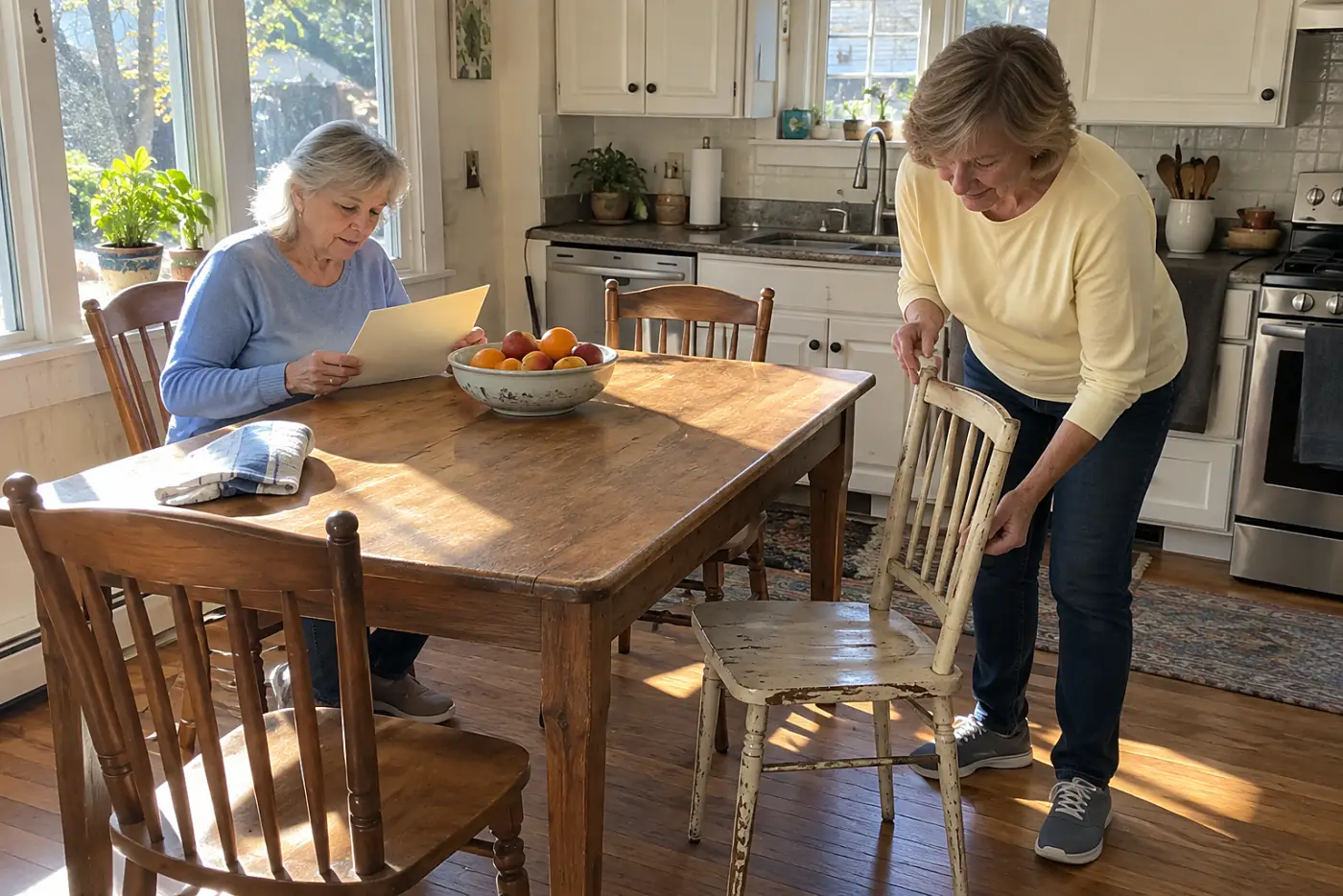
An envelope can postpone a repair indefinitely.
You already asked someone to look at the problem. Then the estimate arrived, and opening it meant weighing cost, disruption, and the chance of bad news. Meanwhile, the leak, loose step, or faulty outlet continues on its own schedule.
Open the estimate and separate immediate safety work from cosmetic work. Ask the contractor to list materials, labor, and the plan if more damage appears during the job. The Federal Trade Commission urges written repair terms, so an unclear payment schedule leaves you guessing before work even starts.
This week, request a second written estimate for the same scope of work. Don't compare two totals for two different jobs. “Please price the urgent repair separately from the rest.”
The paperwork has a hiding place, too.
10The house papers fill three drawers

You know the papers exist, not where.
Insurance renewals, appliance manuals, and contractor receipts drift into separate drawers. When a repairer asks for a model number or a claim date, you search while someone waits. The delay gives a small job room to grow.
A single folder won't answer every question, but it puts the first answers in one place. Keep the current papers at the front; old appliance manuals don't deserve the spot you need for the furnace model number.
This week, gather house records into one folder without sorting every old receipt. Put the insurance declarations page and recent repair invoices at the front, then label the folder so you can find it. “Give me a minute; I know exactly where the house folder is.”
One bill belongs outside that folder.
See more: 29 Things People Are Relieved to Let Go Of When They Downsize →
9The property tax bill brings a scramble

The bill arrives before you've set money aside.
A property tax payment gets lost among insurance, repairs, and monthly spending when a mortgage escrow account no longer collects it. The due date and payment options come from your local tax office, not a national rule. Last year's calendar won't confirm this year's bill.
Find the current bill or open your county treasurer's website. Confirm the parcel number, amount due, and deadline. For relief programs, read the eligibility rules published by your local assessor before making plans around a reduction.
This week, put the deadline and amount on the calendar you actually use. Call the number printed on the bill if anything doesn't match your records. “I'm calling about my parcel; please tell me what's due and when.”
That calendar should also tell you what protects the house.
See more: 23 Reasons Staying Put Costs More Than People Admit →
8The insurance renewal goes unread

Last year's coverage isn't this year's answer.
The renewal packet shows the premium, deductible, and policy changes before the new term starts. Leave it sealed, and you'll discover a changed deductible only after something breaks. Your declarations page gives the clearest first look at the current policy.
Set the old and new pages side by side. Circle any line you don't understand rather than guessing what the wording means. A call before the renewal takes effect gives you time to hear the insurer's explanation and keep a record of it.
This week, compare the renewal with the previous declarations page. Write down the date, the representative's name, and the explanation of each change. “Please walk me through what changed between these two pages.”
A policy cannot keep the lights on.
7The outage kit needs a flashlight
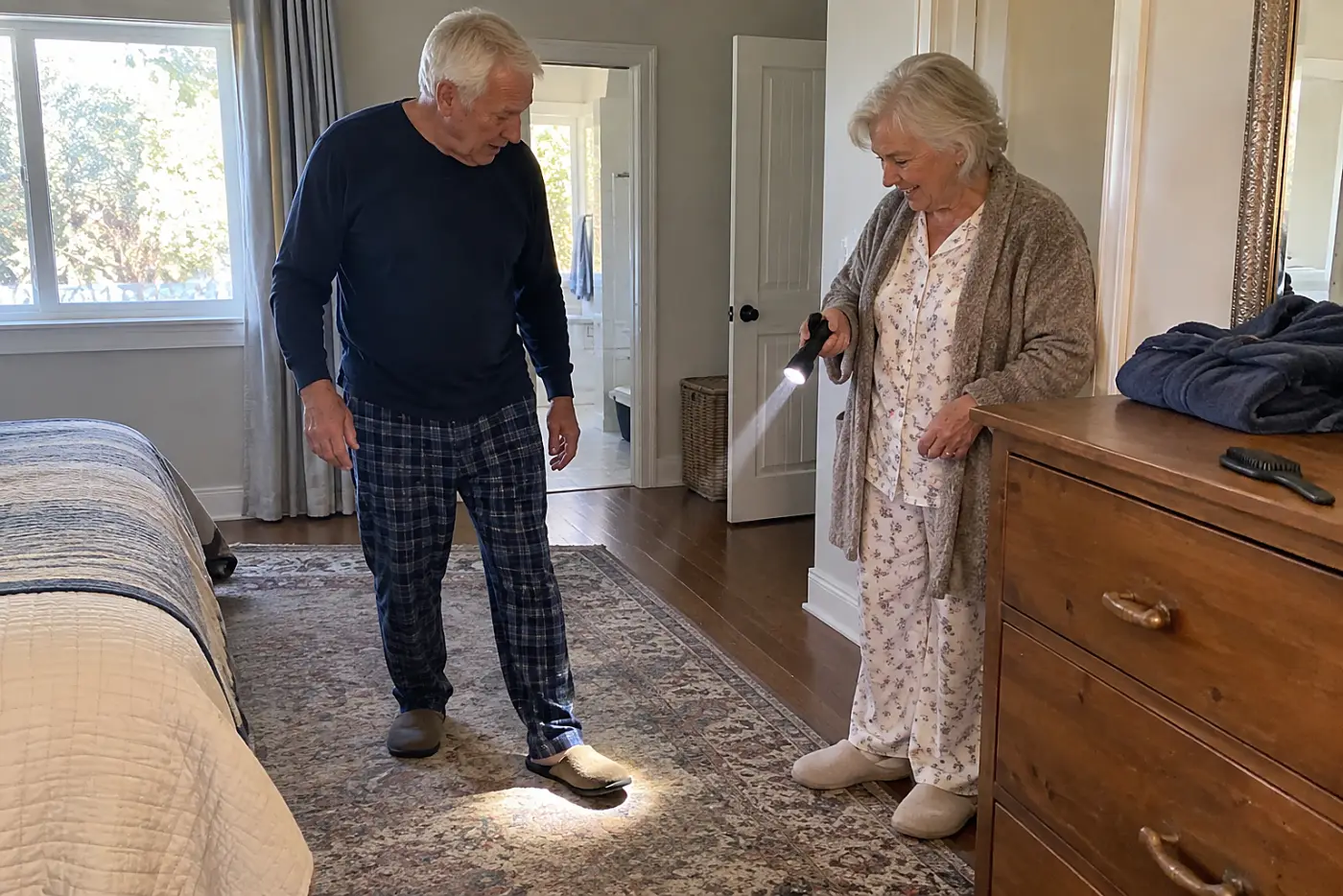
The flashlight is somewhere you can't reach.
When power fails, a phone light helps only while the phone has charge. You then need a flashlight, necessary medication, and a way to hear local updates without crossing a dark house. A kit buried behind holiday boxes fails that first test.
Ready.gov lists water, light, and communication supplies, but a list won't help if you can't reach what you own. Check the outages your area gets, then place the supplies where you'll look first. A flashlight beside the bed serves a different purpose from one in the garage.
This week, turn off the lights and find your flashlight from the bedroom. Replace dead batteries and move supplies you currently need a ladder to reach. “If the power goes out tonight, I want to find this in the dark.”
With the lights back on, look at the alarms.
6The smoke alarm chirps for days
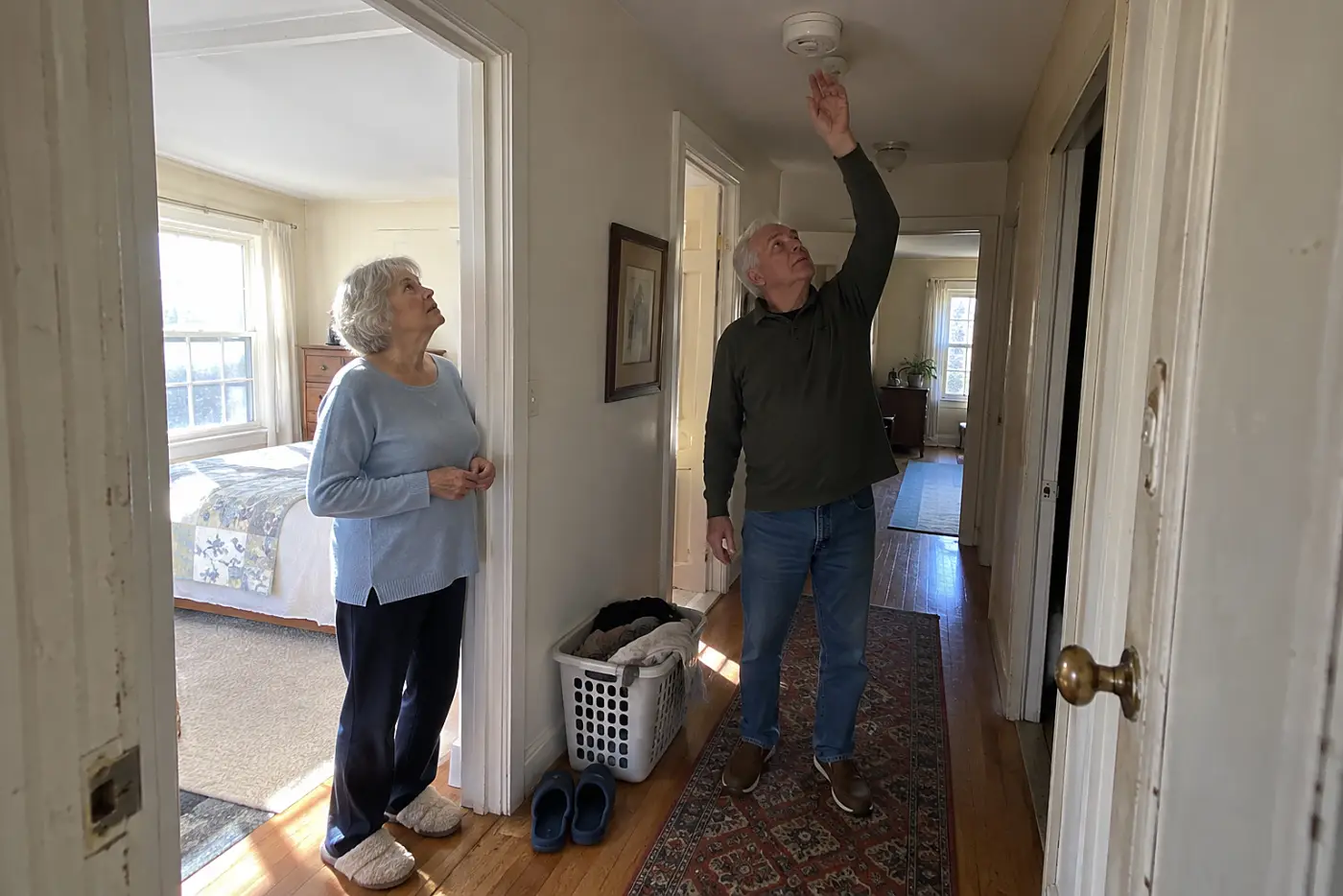
A chirp asks for action, not patience.
A low battery or fault starts the noise; closing a door doesn't fix it. If the alarm sits beyond safe reach, getting to it becomes part of the problem. The U.S. Fire Administration says to test smoke alarms monthly.
An alarm you silence without fixing leaves you without that warning. Smoke alarms generally need replacing after 10 years; check the manufacture date on the back and follow the manufacturer's instructions for that unit. Don't climb onto furniture to reach one above you.
This week, test each alarm using a safe method and follow the instructions for any chirping unit. Arrange help for a high-mounted alarm. “I need this alarm working, and I'm not climbing up to reach it.”
Another alert deserves a look near the bedroom.
5The carbon monoxide alarm has vanished
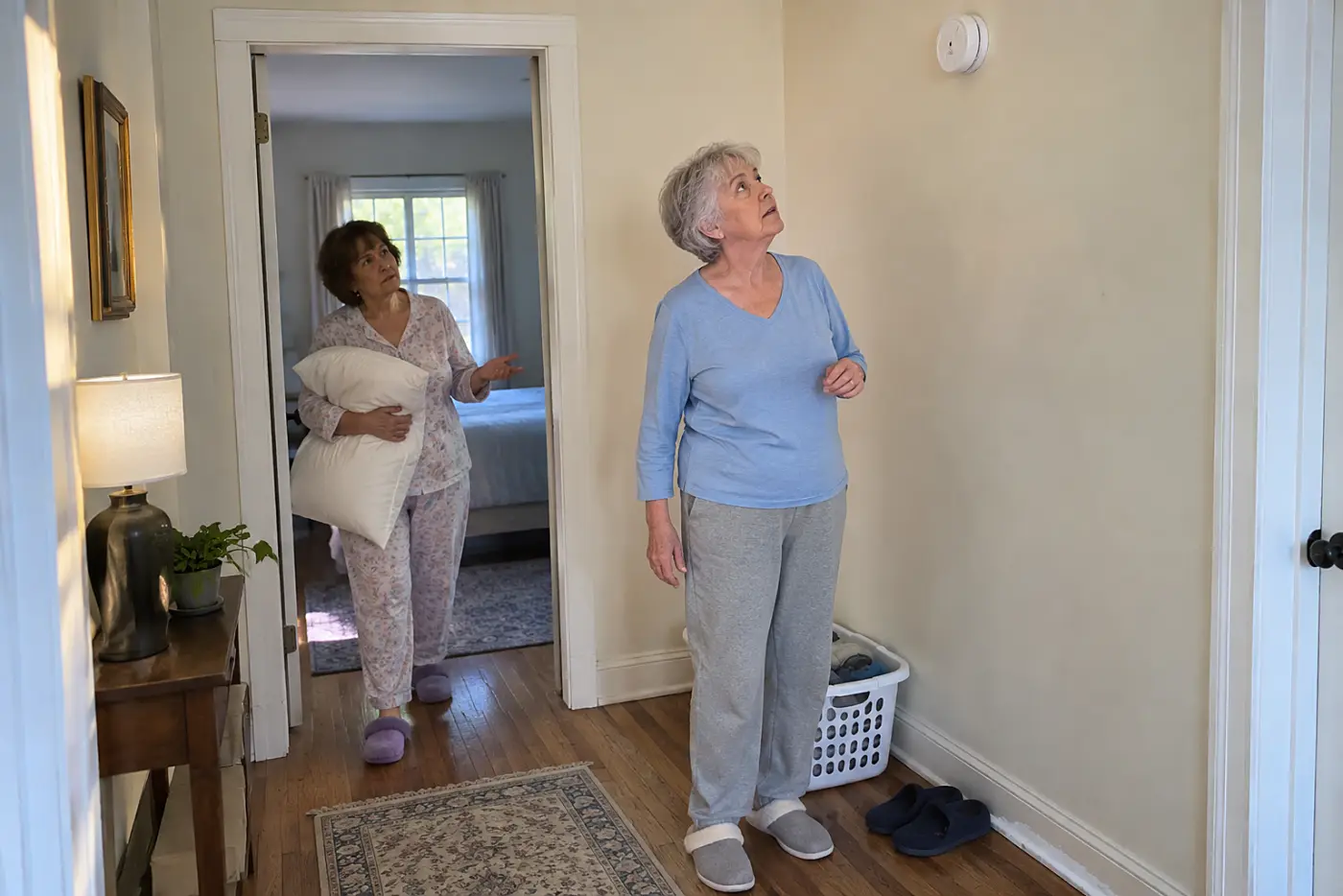
You can't hear an alarm you removed.
A carbon monoxide alarm starts sounding for a reason, and removing it to end the noise leaves no warning in that spot. Fuel-burning appliances and attached garages make placement worth checking against the manufacturer's instructions. Carbon monoxide has no smell, so your nose offers no backup.
The Consumer Product Safety Commission calls for carbon monoxide alarms on each level and outside sleeping areas, giving you warning before a bedroom door opens. Carbon monoxide alarms have different replacement schedules, commonly 5 to 10 years; check the date and instructions printed on each unit. If an alarm sounds, get outside and call emergency services or the fire department. Don't stay inside to investigate.
This week, walk each level and locate every carbon monoxide alarm. Check its label for replacement instructions and arrange help for units beyond safe reach. “I want to know what each alarm is telling me, not silence it.”
The next missing safeguard is less noisy.
4The bathroom grab bar is a towel rack
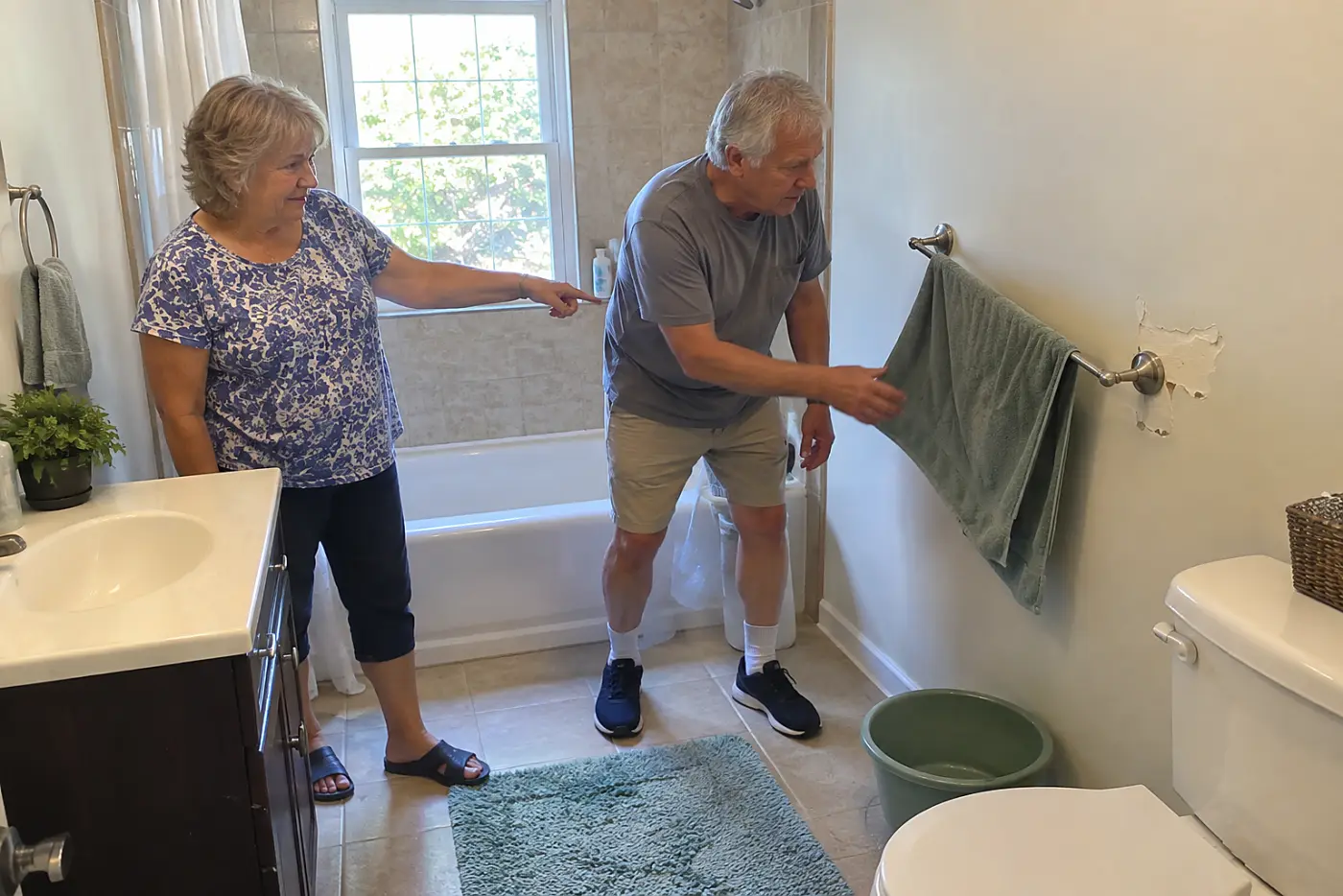
A towel rack won't serve as a handhold.
You grab the closest fixture while stepping out of the tub. Its screws and wall anchors were chosen to hold towels, not to support your weight. Once that reach becomes a habit, removing the rug won't solve the problem.
Watch the movement before choosing where a bar belongs. The useful spot is where your hand reaches while you step, not where a bar looks tidy on the wall. Proper anchoring matters as much as placement.
This week, notice what you grab during a normal bath or shower. Ask a qualified installer about a properly anchored grab bar at that spot. “This is where my hand goes; I want a bar installed here.”
That handhold matters beyond the bathroom.
3The garden hose stays across the path

A hose changes the way you cross the yard.
You step over it on the way to the mailbox, pull it aside with your foot, and leave it there because watering isn't finished. The route looks clear from the porch but catches your toe halfway down. Uneven paving nearby makes the detour harder.
The CDC's STEADI program urges you to spot fall risks before a fall; on this path, that starts with the hose. Check the walkway you use rather than trying to tidy the whole yard. Look for raised paving and branches that push you off it.
This week, inspect the path from door to mailbox at your normal pace. Put the hose away and mark any raised edge for repair. “I want this path clear every day, not only when company comes.”
The yard also tells you which work no longer gets done.
2The gutter spills onto the walkway

Rain sends the roof's water underfoot.
Leaves block the gutter, water pours over its edge, and the walkway stays wet after the shower ends. You then avoid the path or cross a slick patch to reach the car. Clearing a gutter from a ladder creates its own risk.
Watch where the water lands before deciding what to repair. A clear gutter still needs a downspout that sends water away from the path. The stain or puddle below tells you where to start asking questions.
This week, watch the downspout during rain from a safe spot on the ground. Ask a gutter service to clear the blockage and check drainage. “Please show me where the water goes after it leaves this downspout.”
Now put all those clues together.
1Your ordinary day needs several workarounds
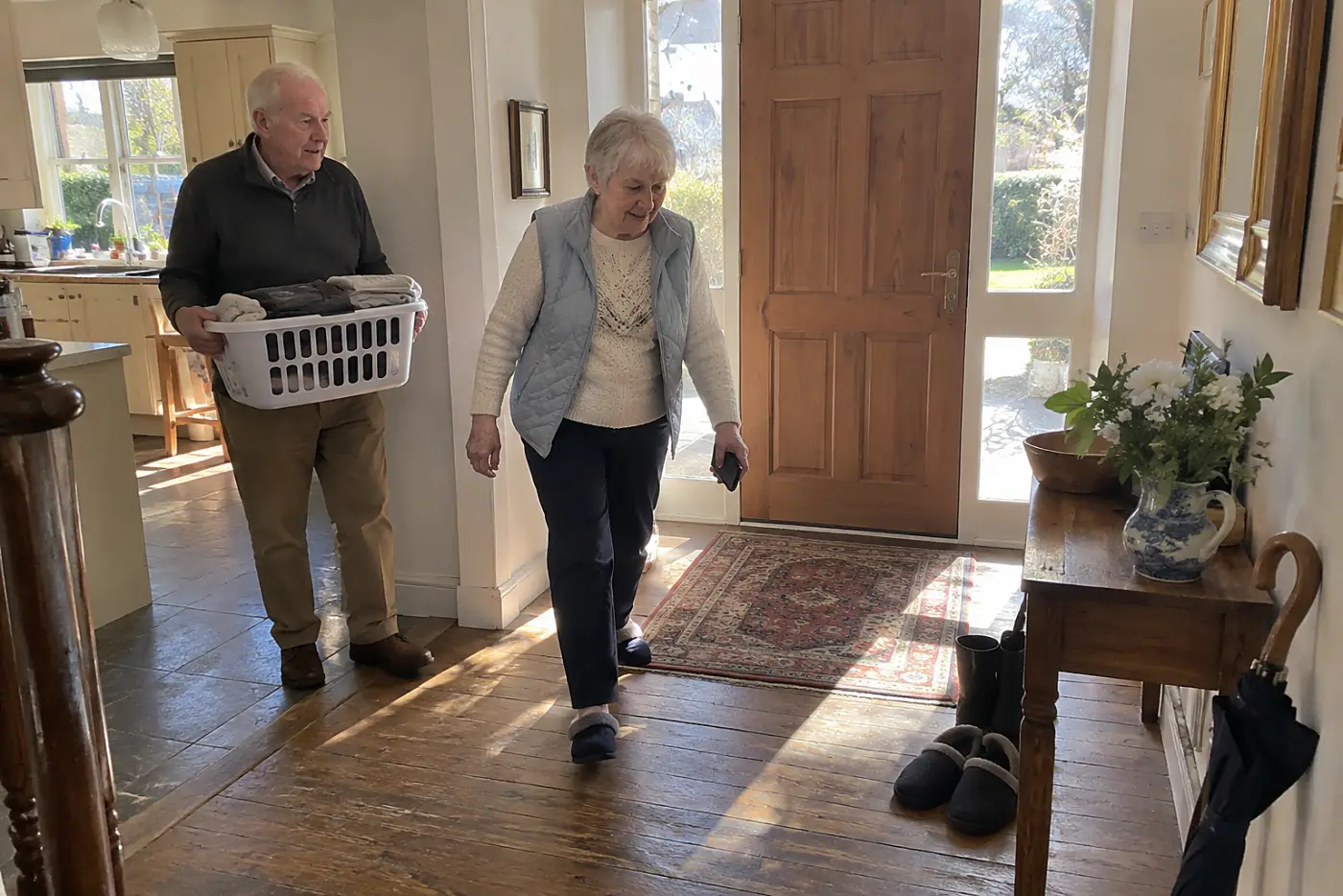
One changed habit hides inside another until the whole day shifts.
The basket waits downstairs. You reach for furniture in the hall, leave groceries at the door, and avoid the wet path to the car. Each adjustment has its own excuse; together, they show how much work your house asks of you.
This is where a timed home test earns its place. Instead of checking one obstacle, time three everyday routes at your normal pace: bed to bathroom, kitchen to front door, and front door to car. Record stops, handholds, sidesteps, and anything you move. Repeat after one change.
The time isn't a pass-or-fail score. Your notes show which fix deserves attention first and whether it improved the same route. Stop if any part feels unsafe; the record matters more than finishing.
This week, make the first walk and write down what interrupted each route. Keep that record before asking anyone else what they think. “I checked my usual routes and found the first thing I want fixed.”
Then repeat the test before calling the job done.
The bottom line
Across all 24 signs, the pattern is the same: the house asks you to adapt before anyone else notices.
You've already named the changes, fixed what you could, and written down what needs outside help.
Which of these has already happened in your family?
Up next
25 Small Changes That Let You Stay in Your Home Ten More Years
A stair bulb, a reachable shutoff valve, and a measured bathroom doorway help you plan for the next decade without betting on a renovation.
Read the list →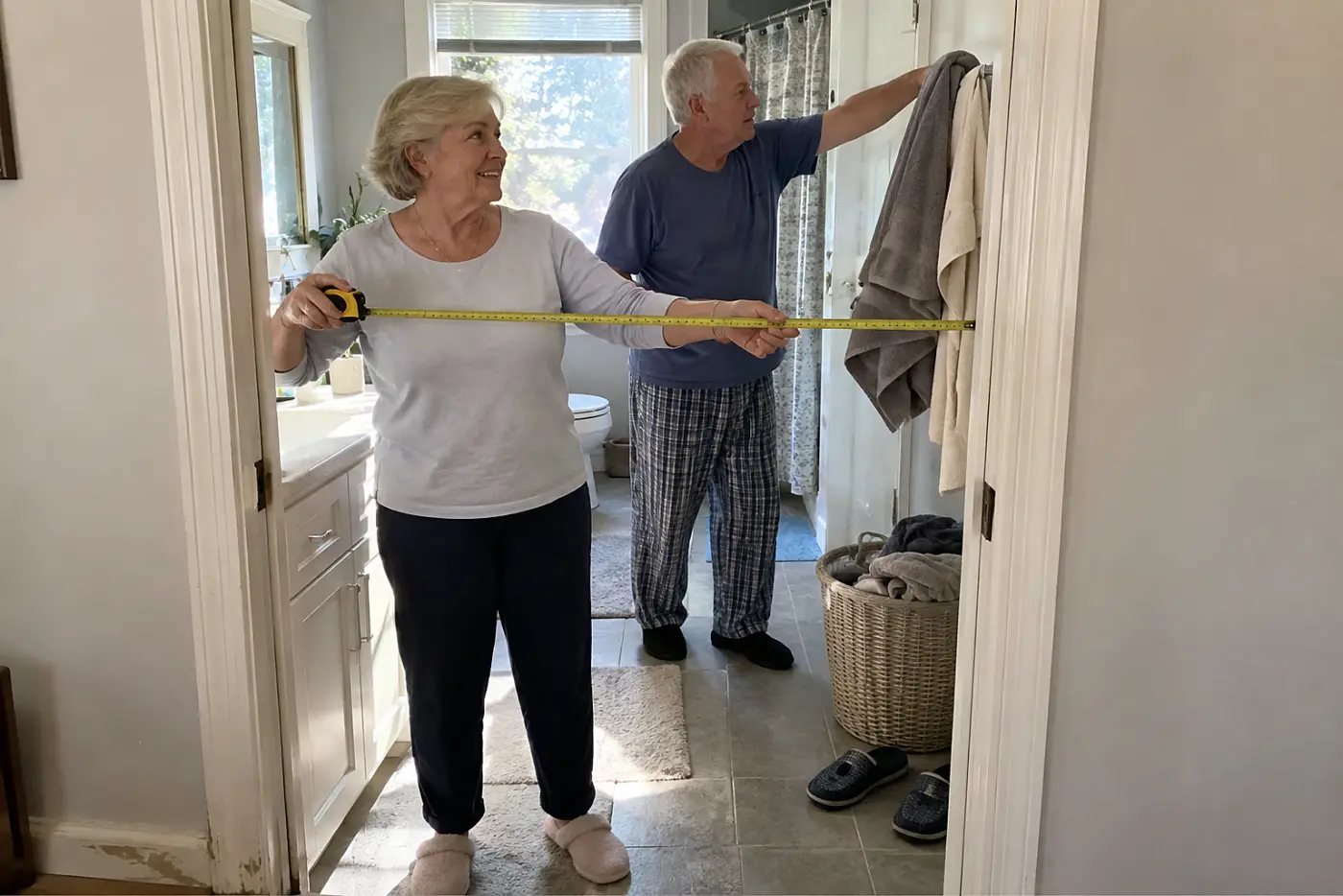

Reader quiz
Did you catch the details?
5 questions from this article. Finish them all to unlock the editor's bonus tip.
What should you carry along your usual laundry route to see where you need a free hand?
Did any of these feel familiar?
Know someone who needs this?
Sources cited in this article
This article links to 8 outside sources, listed here so you can read them yourself.
- Cdc.gov www.cdc.gov
- National Institute on Aging www.nia.nih.gov
- CDC's fall prevention guidance www.cdc.gov/falls
- National Fire Protection Association www.nfpa.org
- Federal Trade Commission consumer.ftc.gov
- Ready.gov www.ready.gov
- U.S. Fire Administration www.usfa.fema.gov
- Consumer Product Safety Commission www.cpsc.gov
David Ruiz
Home Editor
David writes about the house you have and the one you might move to: staying put, downsizing, repairs, and the small changes that stop a fall.
More from David Ruiz