












23 Reasons Staying Put Costs More Than People Admit
A house you know by heart still sends bills: tax notices, contractor deposits, and utility charges for rooms you rarely enter.
By David Ruiz, Home Editor
Updated · 16 min read
- Written by our home editor
- Cited 10 sources
- How we review

Read to the end: #1 is the house-budget test that puts staying beside leaving. The Bonus shows you how to do it.
The hallway light flickers above the pencil marks where you measured the kids. There’s a small crack beside the switch, too. You’ve known about it long enough to stop seeing it.
Staying feels cheaper because there’s no moving truck, no agent, and no goodbye to that wall. But the house collects money in smaller installments, while the cost of leaving sits in one frightening pile.
Here are 23 places to look before deciding what staying costs.
23The spare bedrooms you still heat
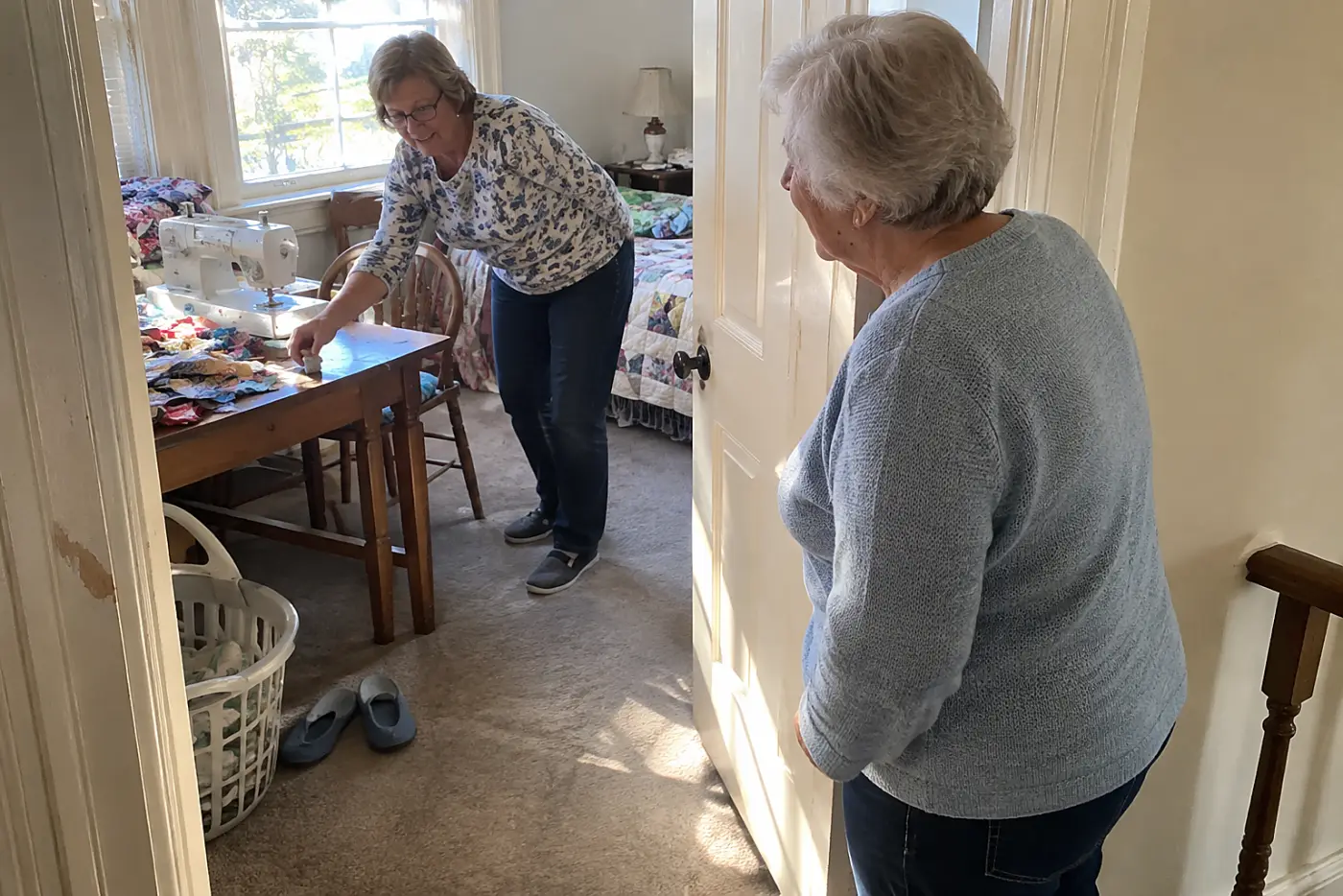
Empty rooms still sit inside the heated part of the house.
A closed door doesn’t seal off the duct beneath it. Warm air leaks around the frame, and heat moves through walls and floors. Your furnace works for the whole house.
That cost hides in the monthly bill. Nobody sends a separate charge for the room with the old sewing table. Check the utility’s usage history before assuming that closing the door has changed what you pay.
This week, compare a year of utility bills with the square footage you actually use. Ask an HVAC contractor, “What would safely reduce heating and cooling in these rooms?”
And the rooms aren’t the only space asking for upkeep.
22The gutters above the back porch

One blocked downspout sends roof water toward the foundation.
Gutters collect leaves while you’re busy living indoors. When water spills over, it lands beside the wall instead of leaving through the downspout. The damp patch looks small from a kitchen window.
Water at a foundation has several paths into the house. It reaches basement walls, crawl spaces, and wood near the sill. A cleaning bill is easier to face than a repair estimate after the wall stays wet.
This week, walk outside during rain and watch where each downspout empties. Keep off the ladder. Tell a gutter cleaner, “Please photograph any loose sections or standing water while you’re up there.”
If that water has been landing by the house, look inside too.
21The basement box beside the water heater
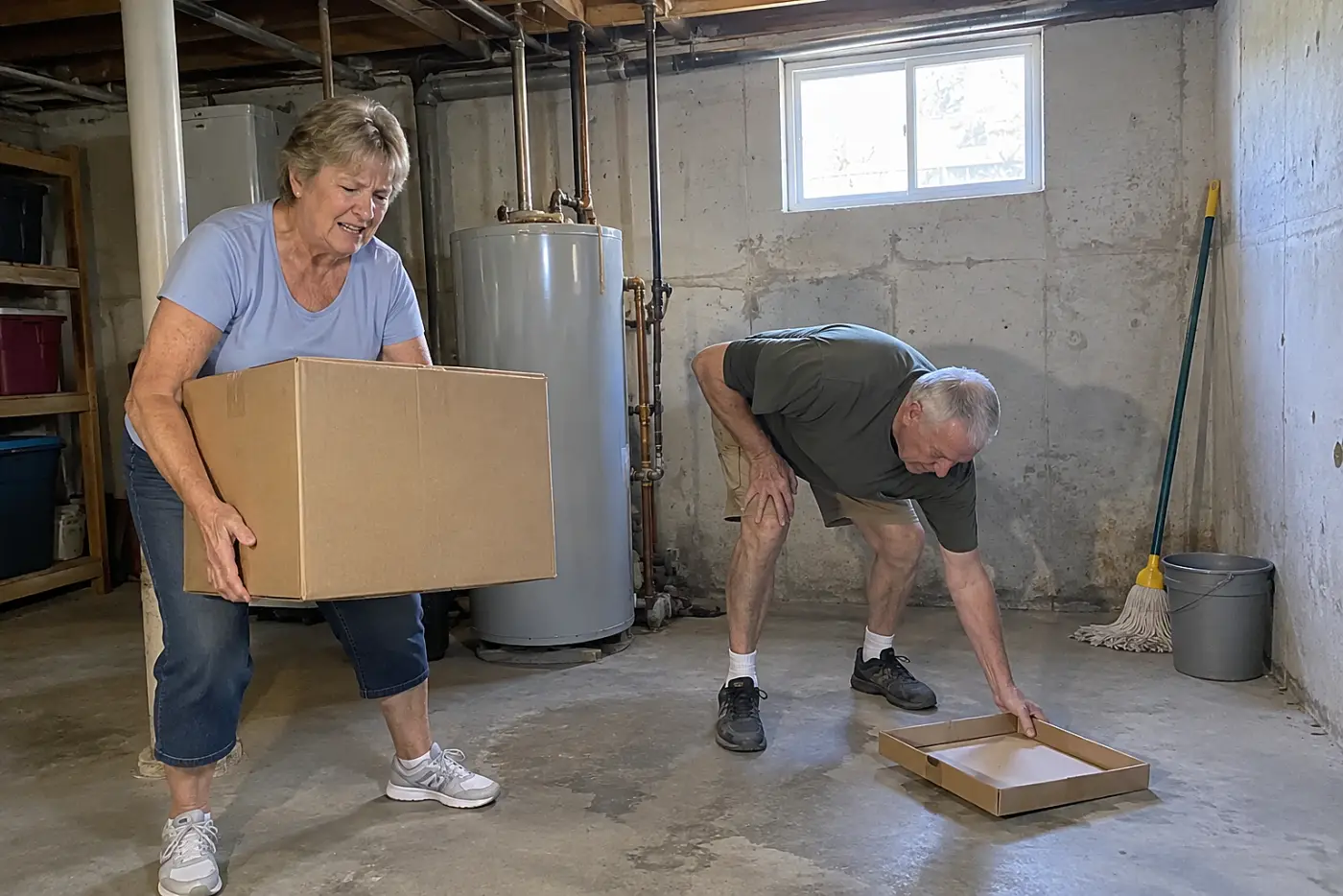
Stored memories lose their labels when the floor gets wet.
Cardboard wicks up water before a small leak catches your eye. By the time you find it, photos and letters are stuck together. The same leak reaches drywall and flooring. Staining near the heater gives a plumber somewhere to start looking.
Your homeowner policy has terms and limits; an old album has no replacement price. A box on a shelf is easier to save than one sitting in a puddle.
This week, move irreplaceable papers above floor level and photograph the plumbing connections. Say to a plumber, “There’s staining near this water heater. What’s leaking?”
The damage you can’t replace is only part of the bill.
20The roof repair you keep postponing
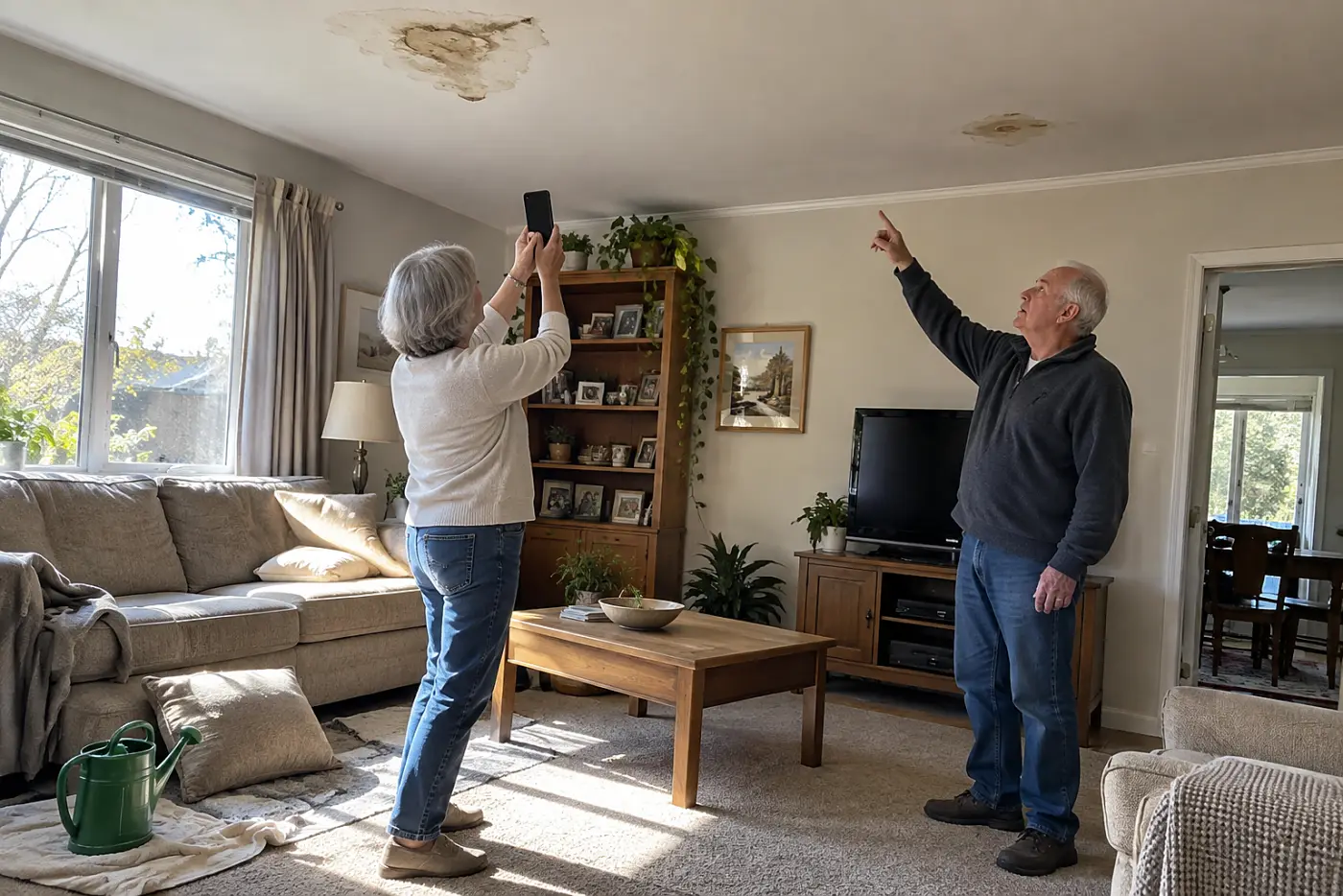
A ceiling stain rarely marks the first day of a leak.
Water enters at a failed shingle, flashing joint, or vent boot. It travels along framing before showing up downstairs, far from the opening. Painting the stain leaves the route open.
You don’t need to diagnose a roof from the driveway. You do need to separate a repair estimate from a sales pitch for full replacement. A written scope helps you compare what each contractor proposes to fix.
This week, photograph the stain, note whether it changes after rain, and book a roof inspection. Ask, “Where is water getting in, and what evidence supports replacing rather than repairing this section?”
The leak also tells you something about how the house is insured.
See more: 29 Conversations Families Keep Putting Off Until It's Too Late →
19The deductible on your insurance declarations page
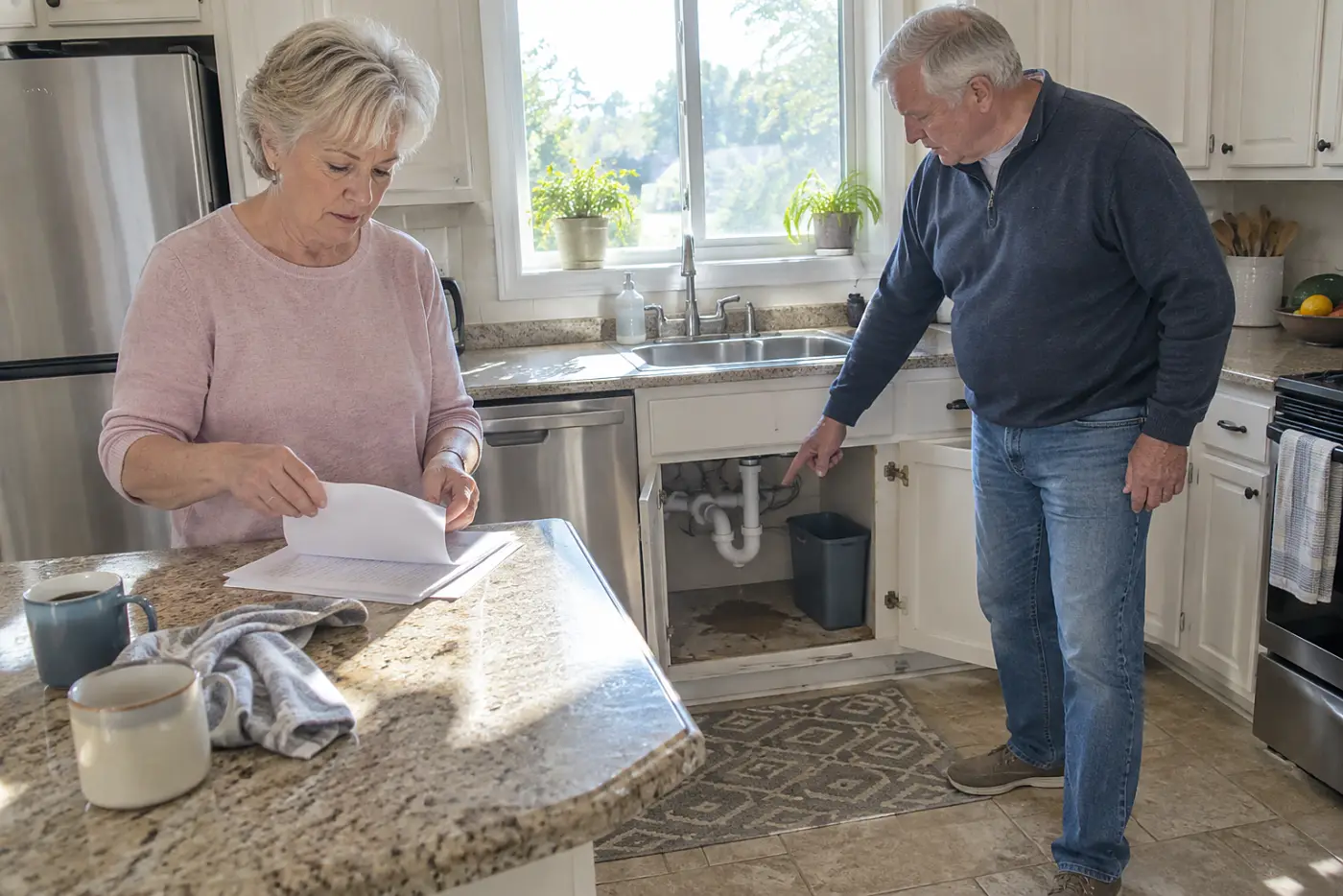
An insured loss still begins with money from you.
The declarations page lists your deductible and coverage limits. A claim doesn’t erase routine wear or turn neglected upkeep into a sudden accident. Read the policy language before counting on a check.
A deductible due at the wrong time competes with the furnace, groceries, and the contractor’s deposit. Check whether the policy lists a separate deductible for wind or hail; the answer is on your paperwork, not the roof.
This week, find the current declarations page and mark each deductible. Call your agent and ask, “What would I pay first if a storm damaged my roof?”
Then check the line that rises even without a storm.
18The property tax notice in your drawer

A paid-off mortgage does not pay the tax bill.
Property taxes keep coming after the last loan payment. Local assessors send notices, and local rules control assessment appeals and exemptions. If your lender once paid taxes through escrow, the bill now lands directly with you.
Look at the notice rather than last year’s bank withdrawal. It shows the assessed value, tax amount, and where to question an error. Some states and localities have homeowner relief programs, but eligibility and filing dates differ. The National Association of Counties describes county government; your assessor has the rules for your address.
This week, find the latest notice and put its due dates on your calendar. Call the assessor and say, “Please tell me where to check my assessment and homeowner exemption status.”
The notice is only one part of what ownership charges each year.
See more: 22 Things That Change on Your Taxes the Year You Retire →
17The insurance renewal beside the tax bill

Last year’s premium is not next year’s promise.
The renewal shows the price and terms for the next policy period. Read it before the payment clears. Compare coverage limits and exclusions as well as the premium; they determine what the next policy promises to pay.
Otherwise, you budget from the old bill. A changed term becomes painfully clear when you need to file a claim, rather than while there’s still time to review the renewal.
This week, put the old and new declarations pages side by side. Ask your agent, “What changed in coverage, exclusions, and price since last year?”
Those two envelopes still leave out the work you arrange yourself.
16The yard you no longer want to mow

A lawn needs work whether you enjoy it or not.
Grass, shrubs, and fallen branches keep their own schedule. When you stop doing the work, you hire it, trade favors for it, or watch it grow. Each choice takes money, time, or a conversation you didn’t want.
Set aside nostalgia for the garden you once kept. Look at the jobs as they are now: mowing, pruning, leaves, snow, and hauling. The house came with a yard, but keeping both no longer means doing every task yourself.
This week, list what you paid for yard work over the last 12 months, including supplies. Ask a local service, “What exactly is included, and what work costs extra?”
The next recurring chore happens on a colder morning.
15The icy steps before a doctor appointment
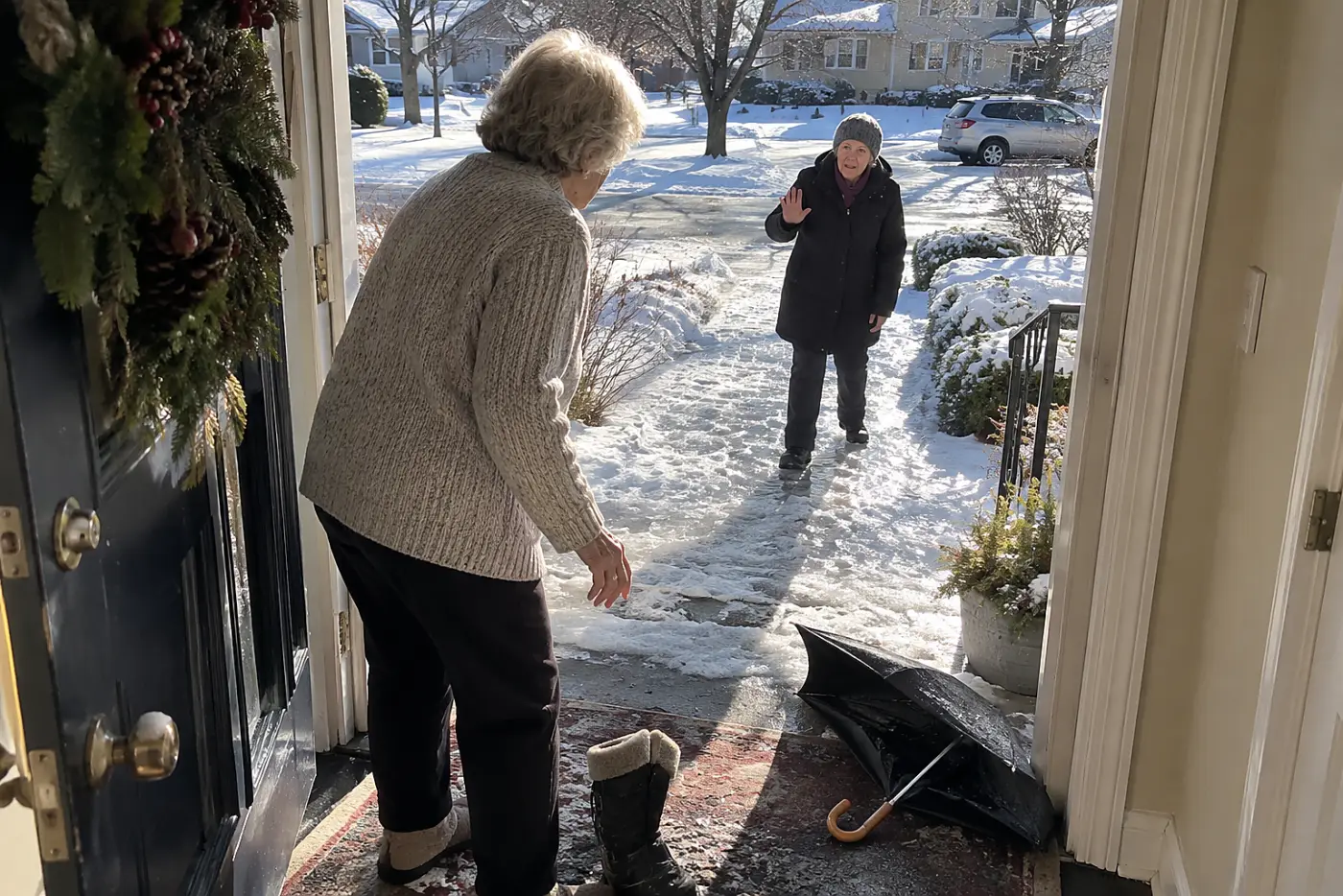
A path you once cleared yourself still needs clearing.
Snow removal has to happen before you leave, not whenever help arrives. Ice on a step stays slick after a quick pass with a shovel. That changes what a simple appointment takes.
Paying for a plow doesn’t clear the walk from your door to the car. A service quote that says “driveway” leaves the steps, handrail, and path as separate jobs.
This week, measure that route and arrange who handles each part after a storm. Say to the service, “Will you clear the steps and walkway as well as the driveway?”
And even in good weather, getting around the house has a price.
See more: 23 Best Places to Winter for Retirees on a Budget →
14The second-floor bedroom at the top of the stairs

The familiar staircase becomes a daily trip, not a feature.
Count how many times you climb it for sleep, laundry, or a bathroom. A change in your knee or balance turns that routine into a housing problem. Sleeping downstairs works only if the ground floor has what you need.
The price of adapting the house starts with the actual layout. A grab bar won’t create a ground-floor shower, and a bedroom without a nearby toilet changes the plan. Medicare’s home health care page describes covered services; it isn’t a remodeling budget.
This week, draw the ground floor and mark a place to sleep, bathe, and use the toilet. Ask a contractor, “What would it take to make these rooms work every day?”
Once you count the stairs, inspect what’s underfoot.
13The loose rug beside the bathroom door
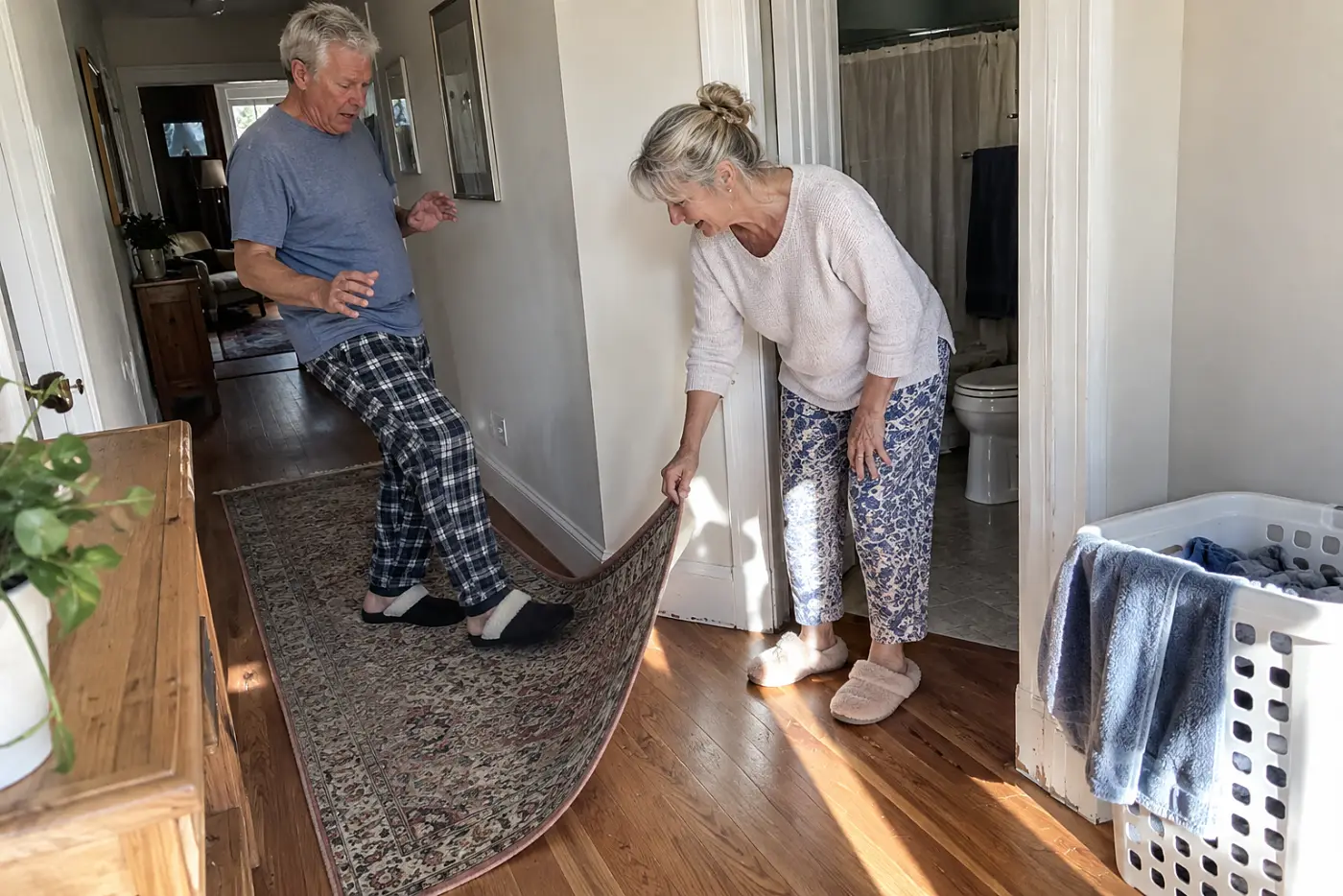
A small shortcut across the hall has a cost.
The rug shifts because its backing wears and the floor stays smooth. You adjust your steps without noticing, until you’re carrying laundry in the dark. The CDC’s fall prevention pages include home hazards worth checking.
The point isn’t to turn your home into a clinic. It’s to catch a cheap fix before a fall changes where you live. That rug has held its place in your hallway for years; you don’t owe it the same spot forever.
This week, walk your nighttime route and remove rugs that slide or curl. Tell someone who visits, “I’m checking the hall. Show me what you’d trip over.”
Then look at the doorway that decides whether you can get through.
12The narrow bathroom doorway you never measured
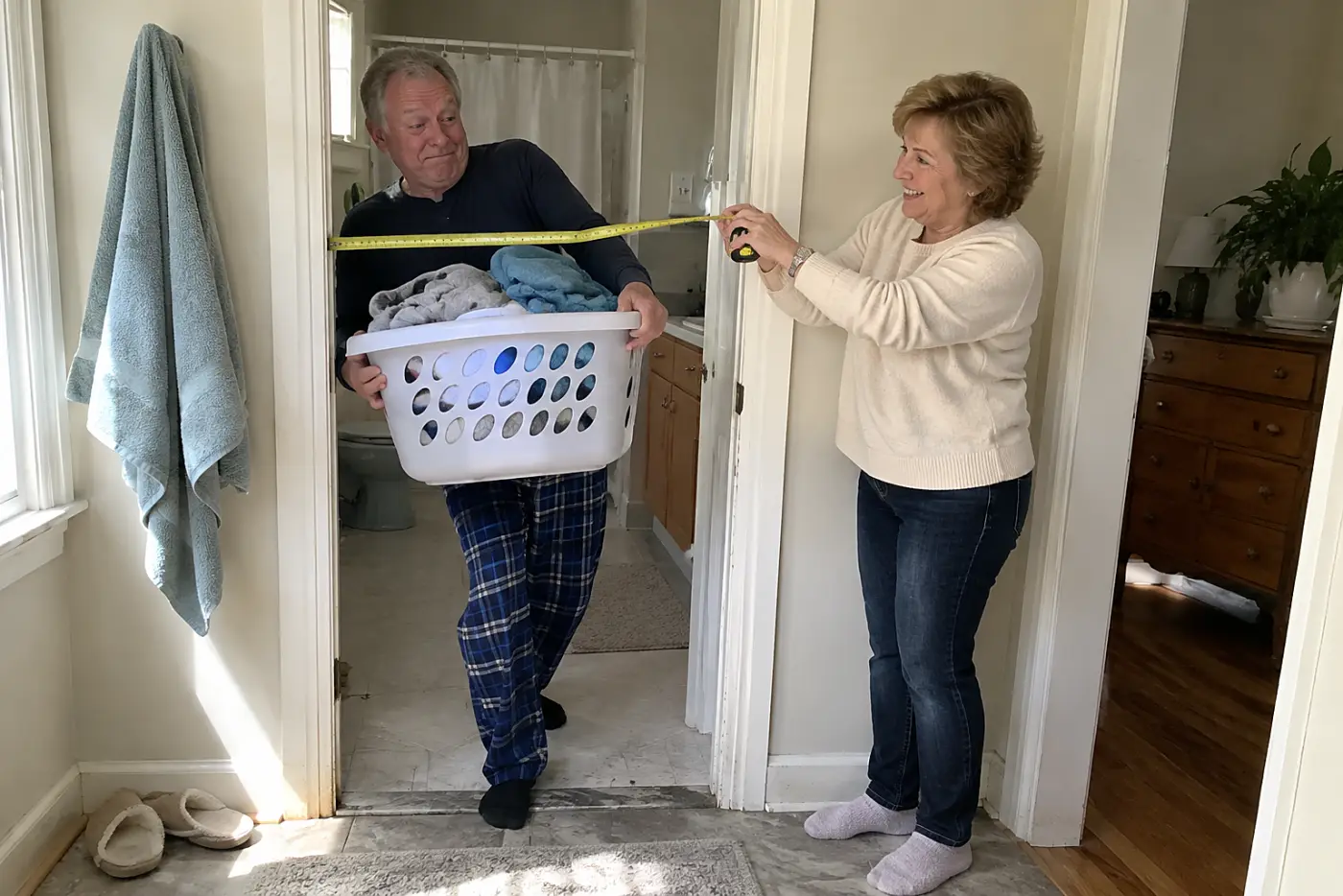
A bathroom is useful only if you can enter it.
Door width is easy to ignore while you walk through sideways with a basket. It matters when you need a walker or help from another person. The clear opening is narrower than the door slab because the door and hinges take space.
Measure the opening with the door fully open. A contractor can then tell you whether changing hinges, the door, or the frame would help. That answer costs less than assuming a full renovation or buying equipment that won’t fit.
The U.S. Access Board publishes accessibility standards, but your house wasn’t built from a checklist. Start with the doorway and the way you move through it.
This week, measure the clear opening and write the number on your floor sketch. Ask a contractor, “What change would give me more usable width here?”
A doorway tells you what fits; the bathroom floor tells you where water goes.
11The soft floor around the toilet
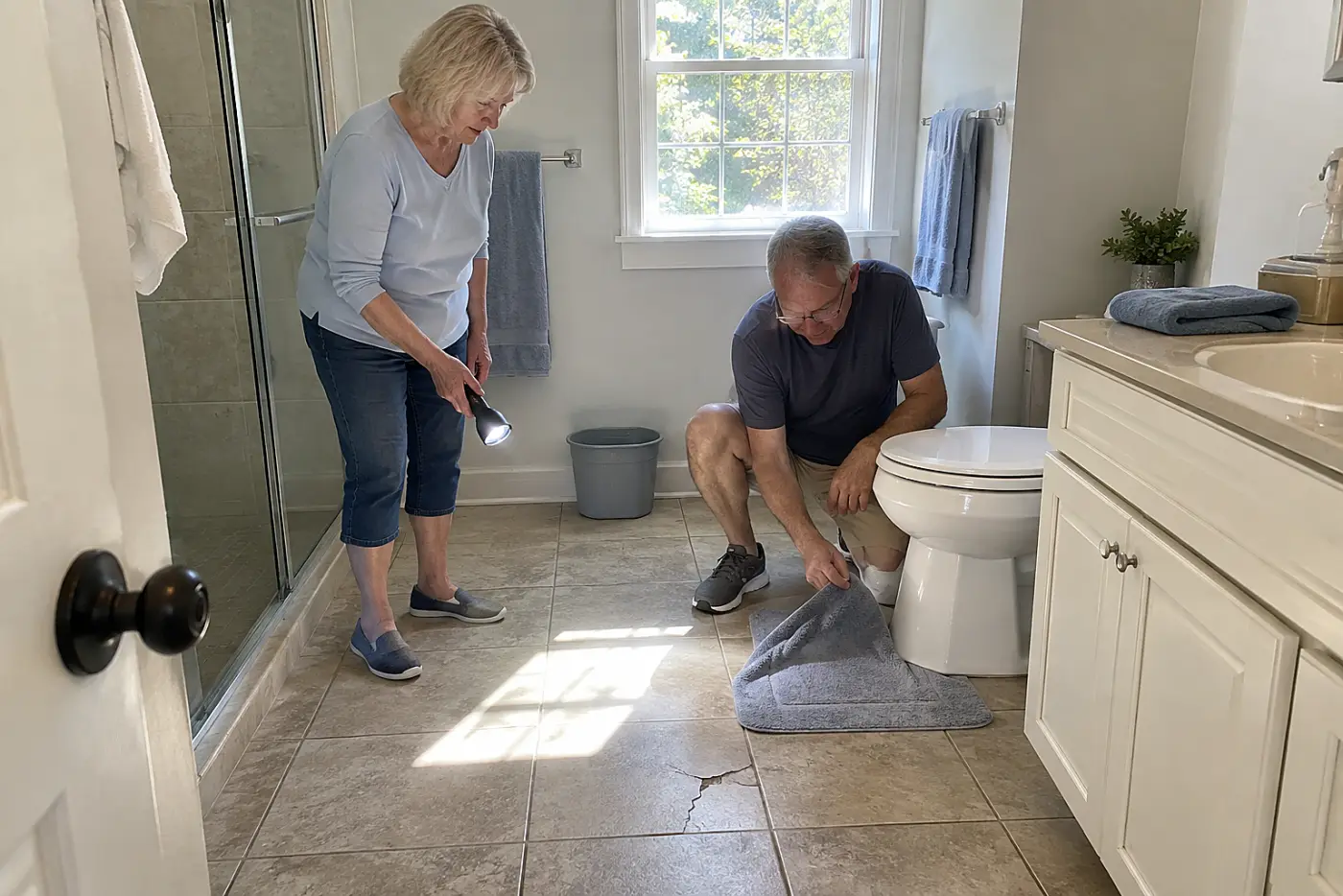
A slow leak bills you for more than water.
A failing wax seal or supply connection lets moisture reach the subfloor. Flooring hides the damage until it feels soft or stains appear below. Tightening a visible fitting won’t repair wet wood underneath it.
Waiting turns a plumbing visit into a floor repair. If the subfloor has weakened, replacing the visible flooring alone leaves the damaged layer in place, ready to cause trouble again.
This week, check for movement, dampness, and staining around the base of the toilet. Tell a licensed plumber, “Please find the source before anyone replaces the flooring.”
The other costly water problem stays out of sight even longer.
10The sewer line beneath the front walk

The pipe leaving your house belongs in the budget.
A sewer backup starts outside the rooms you clean and inspect. Roots, broken pipe, or a blockage stop waste on its way to the public line or septic system. The location of the trouble determines the repair.
Before paying for digging, find out what pipe you own and what a camera inspection shows. Your utility or local sewer department can explain its boundary; your insurer can explain any sewer-backup coverage on your policy. Neither answer comes from the kitchen sink.
This week, locate the sewer cleanout and save its photo with your house records. Ask your utility, “Where does my responsibility for this line end?”
Then check the system that works hardest when the weather turns.
9The furnace that reaches another winter
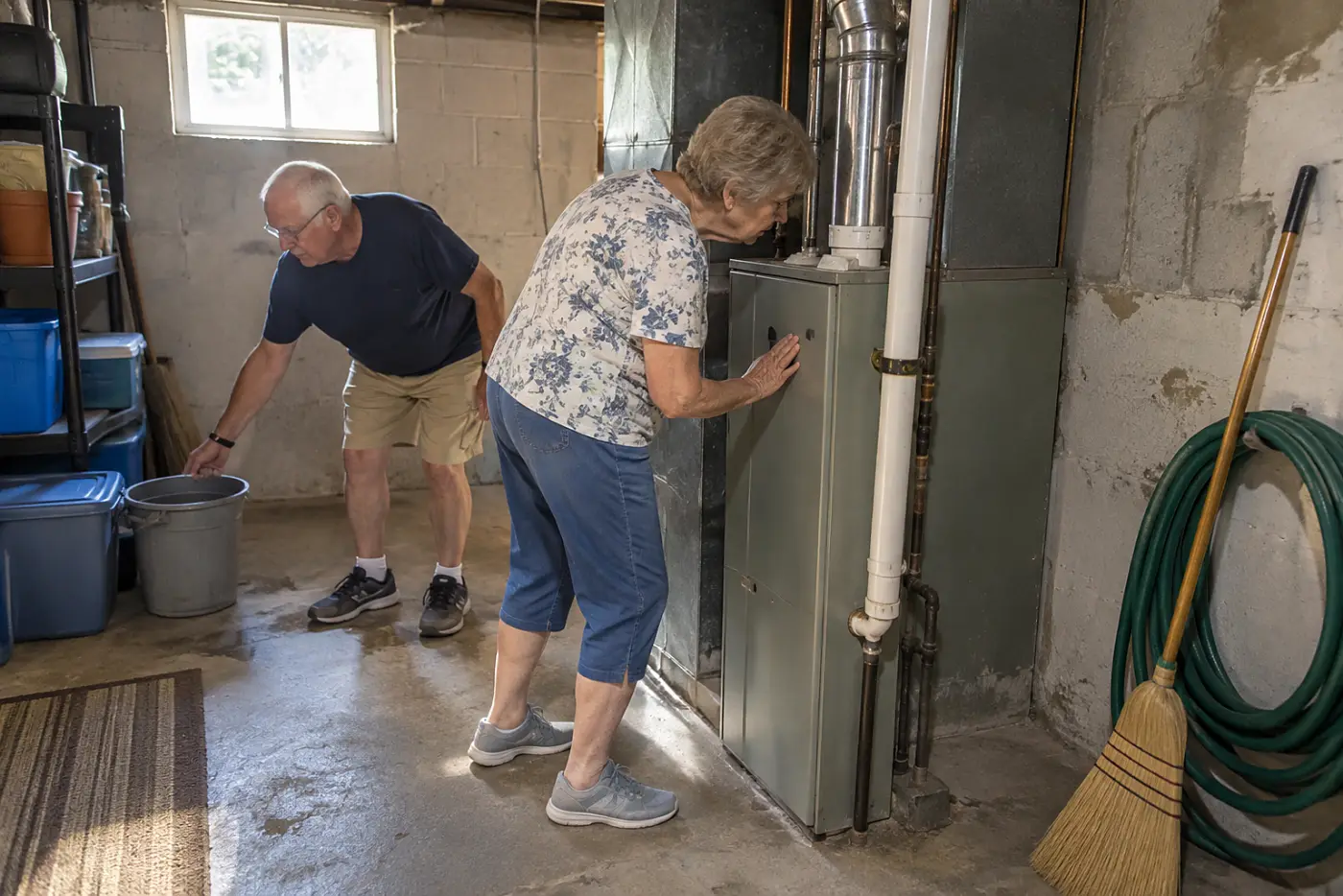
Working today tells you little about replacement timing.
A furnace loses heat on its own schedule, not on the schedule of your budget. When it stops during a cold spell, you have less time to compare bids and installation dates. The emergency is a poor shopping assistant.
A rushed choice costs you the chance to compare repair and replacement scopes. Without an installation date or service history, each contractor starts by piecing together the story of the machine.
This week, record the model number and installation date, then schedule service. Ask the technician, “What condition points to repair, and what points to replacement?”
The machine also spends money while it’s still running.
8The thermostat set for empty rooms
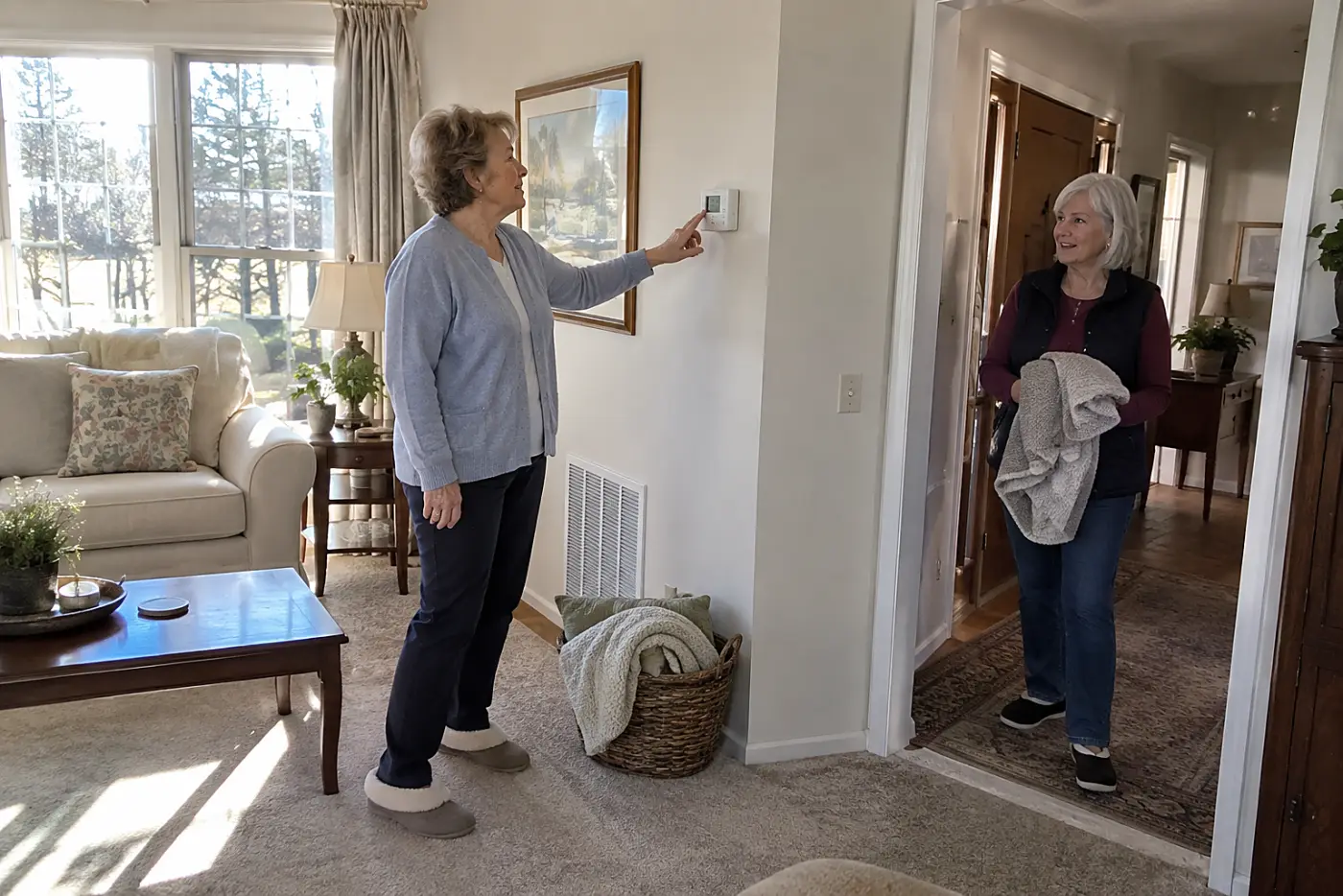
Old habits survive after the household changes.
You heat and cool rooms for people who moved out years ago. A programmable thermostat changes settings by schedule, but it doesn’t fix poor insulation or an unbalanced system. The work starts with noticing when the house is empty.
Look at your utility’s usage history, not a neighbor’s bill. The Department of Energy’s Energy Saver site has guidance on thermostat settings and home energy work. For an upgrade, ask about the cost before assuming savings will cover it.
This week, write down your heating and cooling schedule for a normal week. Ask your utility, “Do you offer a home energy assessment, and what does it cost?”
The walls and attic decide how much of that treated air stays put.
7The attic hatch above the hallway
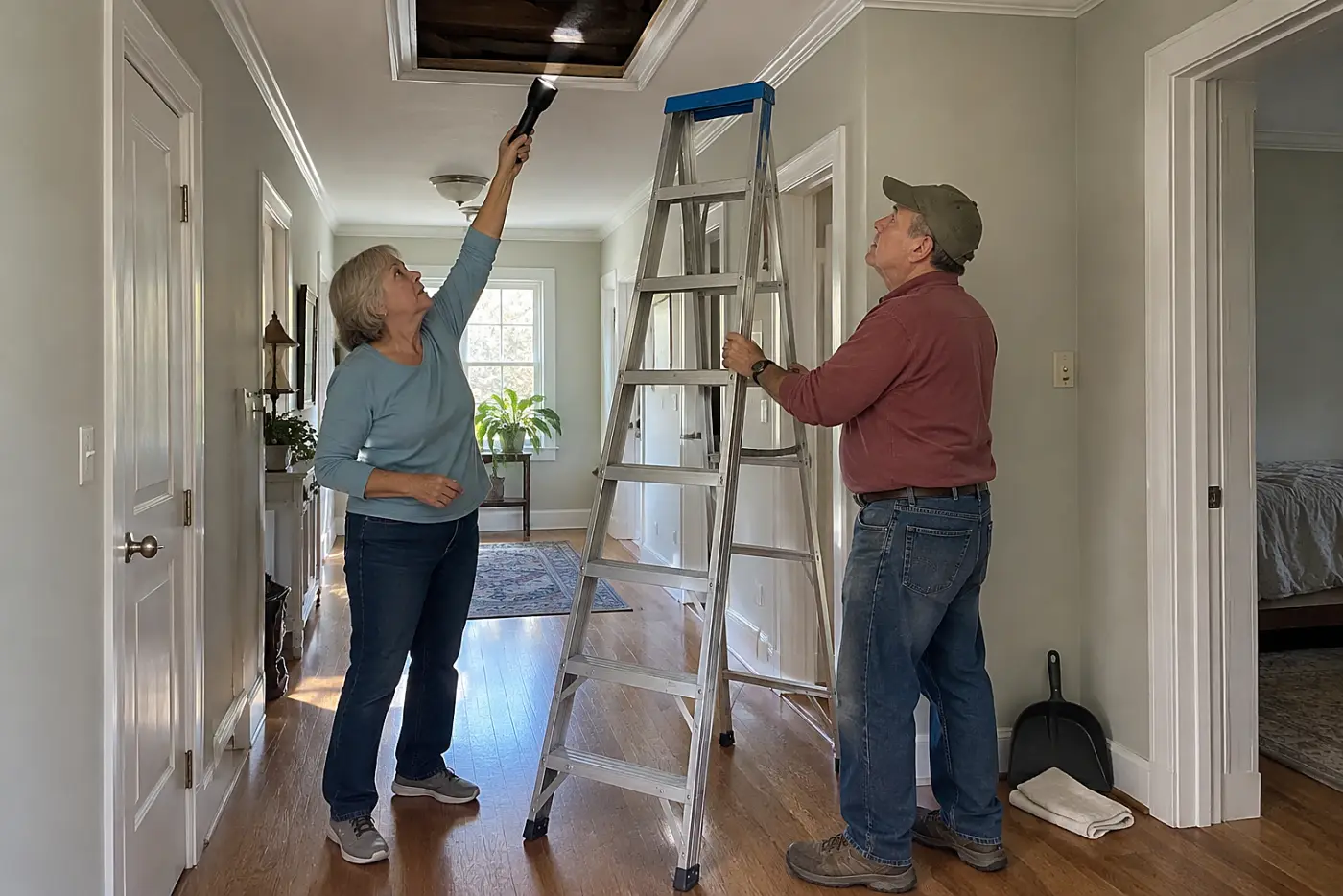
Air you paid to warm escapes through small gaps.
An attic hatch sits between conditioned rooms and an unconditioned space. If its edges leak, warm air rises through the opening. Insulation piled nearby doesn’t seal the gap.
The Department of Energy recommends sealing air leaks before adding insulation. Doing that work in the wrong order leaves a draft behind. A bid that lists only insulation won’t tell you what the contractor plans to do around the hatch.
This week, check the hatch for visible gaps and ask for an air-sealing estimate. Tell the contractor, “Please separate sealing costs from insulation costs.”
That estimate belongs beside another bill you’ve learned to accept.
6The water bill nobody questions anymore
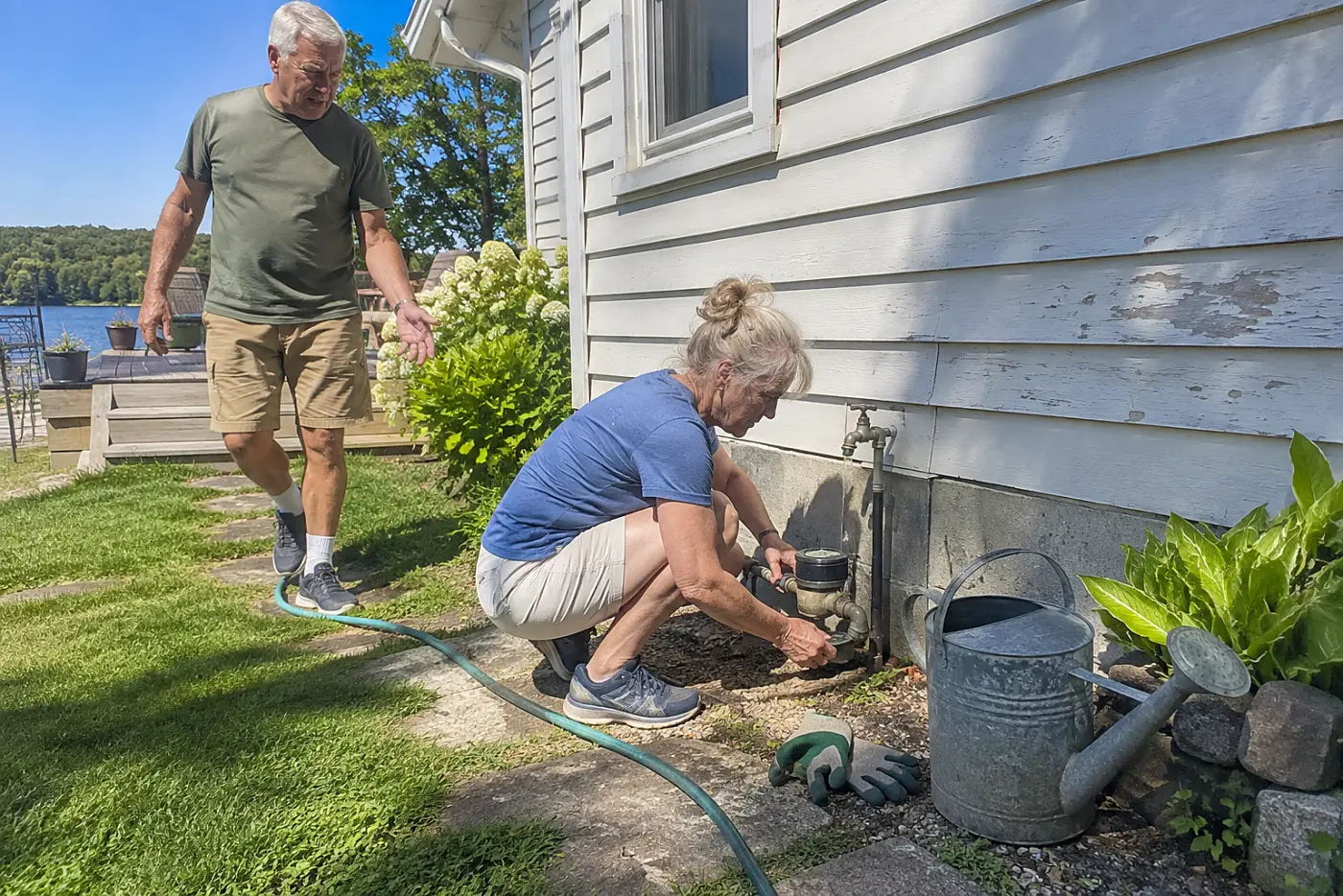
A small leak becomes part of the monthly routine.
A running toilet doesn’t announce itself from every room. Water moves through the tank and bowl after the flush is over, and the meter records it. Outdoor lines and faucets deserve a look too.
Compare the usage shown on several bills, not just the amount due. Rates change; gallons tell you whether the house is using more water. The EPA’s WaterSense site has a home leak check, including a food-coloring test for toilet tanks.
Don’t put dye in the tank and walk away forever. Check the bowl after a short wait without flushing; color there points to a leak through the flapper. Fixing one leak won’t settle every bill, but it gives you a number to compare afterward.
This week, find your meter and read it when no water is running. Ask the water utility, “Can you show me the usage history, not just the charges?”
The next bill buys a service you stopped examining long ago.
See more: 25 Numbers That Show How Much Retirees Spend Per Month →
5The cable package nobody watches together

A shared routine can outlive the people who shared it.
The package stays because it once served the whole house. Channels, rented equipment, and add-ons remain on the bill after viewing habits change. Autopay keeps the decision from coming back to you.
The cost is the current monthly total, not the advertised price for new customers. Keep the equipment line in view, too: canceling a service doesn’t tell you what to return or where to take it.
This week, mark each charge on the bill that you actually use. Call the provider and say, “What will my full monthly bill be if I remove these services?”
Then look for charges tied to the house itself, not its entertainment.
4The service contracts in the kitchen drawer

A contract renews whether the appliance needs attention or not.
Home warranties and maintenance plans cover different work. Some charge a service fee on top of the premium; others limit repairs or require a particular contractor. The brochure won’t settle a dispute with the contract.
Check the renewal date and cancellation terms before the next charge. Compare what you paid in premiums and service fees with work the plan actually covered. If a plan covers an aging system, read its limits before treating it as replacement money.
The FTC’s consumer advice site has guidance on warranties and service contracts. Your own paperwork decides what this one promises.
This week, put every home-service contract beside a year of repair receipts. Ask the company, “What will renewal cost, and how do I cancel before it renews?”
The paperwork becomes harder to manage when nobody else knows where it lives.
3The contractor numbers saved only in your phone

An urgent repair needs a contact, not a search.
When a pipe bursts, someone has to find a plumber, a shutoff valve, and a past invoice at the worst possible hour. If every name sits behind your phone passcode, help starts with a hunt instead of a call.
Time spent searching lets water keep moving. So does a helper who knows the plumber’s name but has no idea where the main shutoff is.
This week, put trusted service numbers and shutoff locations on one paper sheet. Tell someone you trust, “This is where the house information is if I need help.”
That sheet still doesn’t answer what happens when help means leaving home.
2The care plan that assumes you stay

A house can remain affordable while care does not.
Living at home and receiving help there are separate costs. Bathing, meals, rides, and overnight supervision require people, whether family provides the hours or you pay for them. Count the work before assuming the address settles the question.
Home-care help can run about $30 to $40 an hour, depending on where you live and what care you need. That rate still leaves you to find out whether an agency requires a minimum visit and charges more for nights or weekends.
Medicare does not pay for long-term custodial care. Medicaid has state rules for long-term services and supports; check your state’s program rather than planning around a benefit you haven’t confirmed.
This week, list the daily tasks you’d need covered after an illness and who would do each one. Ask a local home-care agency, “What is your current hourly private-pay rate, and what is the minimum visit?”
Now put that answer beside every other cost of staying.
1The written cost of staying versus leaving

A paid-off house still needs a price comparison.
Start with what you spent over the last 12 months: taxes, insurance, utilities, repairs, maintenance, yard work, and services. Add quotes for work you’ve delayed. Then build a leaving column with moving costs, sale expenses, and the ongoing cost of the place you’d choose.
Keep one-time costs separate from annual ones. Otherwise a moving truck competes unfairly with a roof that has another year to leak. Include help at home if staying relies on it. Include the cost of help at the new place too.
The Consumer Financial Protection Bureau has tools for reviewing household bills. Your comparison needs your figures, not someone else’s average.
This week, make the two columns on paper and leave unknown amounts blank until you get quotes. Say to a contractor or agent, “I’m comparing staying with moving. Please put the full cost and what it includes in writing.”
The answer won’t decide what the pencil marks are worth to you.
The bottom line
Staying costs more when familiar bills, delayed work, and unpaid help never land on the same page.
The best-prepared version of you has found the bills, priced the repairs, and written down what help would take. You still get to decide what the house is worth.
Which of these has already happened in your family?
Up next
28 Steps on the Downsizing Checklist for Seniors, in Order
A measured doorway, a labeled donation bag and one box that stays with you turn a daunting move into decisions you can check.
Read the list →


Reader quiz
Did you catch the details?
5 questions from this article. Finish them all to unlock the editor's bonus tip.
What should you check before assuming that closing a spare bedroom door has reduced your heating cost?
Did any of these feel familiar?
Know someone who needs this?
 Prime Journal · Free printable
The Everyday Home Safety Checklist
- Clearer routes from the front door to your bed.
- Working lights and alarms where you need them.
- House details ready when a repair needs attention.
Free printable: The Everyday Home Safety Checklist. Enter your email and it is yours.
Sources cited in this article
This article links to 10 outside sources, listed here so you can read them yourself.
- National Association of Counties www.naco.org
- Medicare’s home health care page www.medicare.gov/coverage/home-health-services
- CDC’s fall prevention pages www.cdc.gov/falls
- U.S. Access Board www.access-board.gov
- Department of Energy www.energy.gov
- EPA’s WaterSense site www.epa.gov/watersense
- FTC’s consumer advice site consumer.ftc.gov
- Medicare www.medicare.gov
- Medicaid www.medicaid.gov
- Consumer Financial Protection Bureau www.consumerfinance.gov
David Ruiz
Home Editor
David writes about the house you have and the one you might move to: staying put, downsizing, repairs, and the small changes that stop a fall.
More from David Ruiz