





7 Aquarius Zodiac and Birth Flowers (and How to Grow Each One)
A guide to the Aquarius zodiac flower and six other blooms, with planting depths, pet safety, and a gift pick for each.
By Vera Collins, Astrology Editor
Updated · 7 min read
The short answer: The orchid is the flower most widely linked to Aquarius, named by Cafe Astrology, major florists, and the National Garden Bureau. Bird of paradise, gladiolus, and iris also appear on Aquarius lists. Aquarius runs January 20 to February 18. For birth-month flowers, January brings carnation and snowdrop; February brings violet. Zodiac flowers follow the sign, while birth flowers follow the month.
- Written by our astrology editor
- Cited 17 sources
- How we review
You’ve found a spot on the windowsill for a birthday plant. Then you see three different answers to “Aquarius flower” and wonder which one belongs on the card.
The answer depends on what you’re celebrating. Florists and astrology writers choose zodiac flowers for a sign’s symbolism. Birth flowers follow the calendar month.
That’s why a January Aquarius and a February Aquarius can share an orchid as a zodiac choice but have different birth-month choices. Before you buy or plant one, ask where it will grow and who else lives there.
7Snowdrop for a January Birthday

A small white flower appears while the rest of the garden still looks asleep. In cold climates, snowdrops bloom from late January through March, according to the Chicago Botanic Garden.
Snowdrop is a January birth flower, listed by FTD. For your garden, NC State Extension lists full sun to part shade. Its plant profile calls for less than 12 inches of planting space. Check with your local extension service for a planting date.
We couldn’t find an ASPCA pet-safety listing for snowdrop. If an animal eats garden plants, check the exact plant name with the ASPCA before bringing snowdrops home.
Best for: A January birthday and a garden where you want an early bloom.
See more: 7 Cancer Zodiac and Birth Flowers (and How to Grow Each One) →
6Violet for February Shade
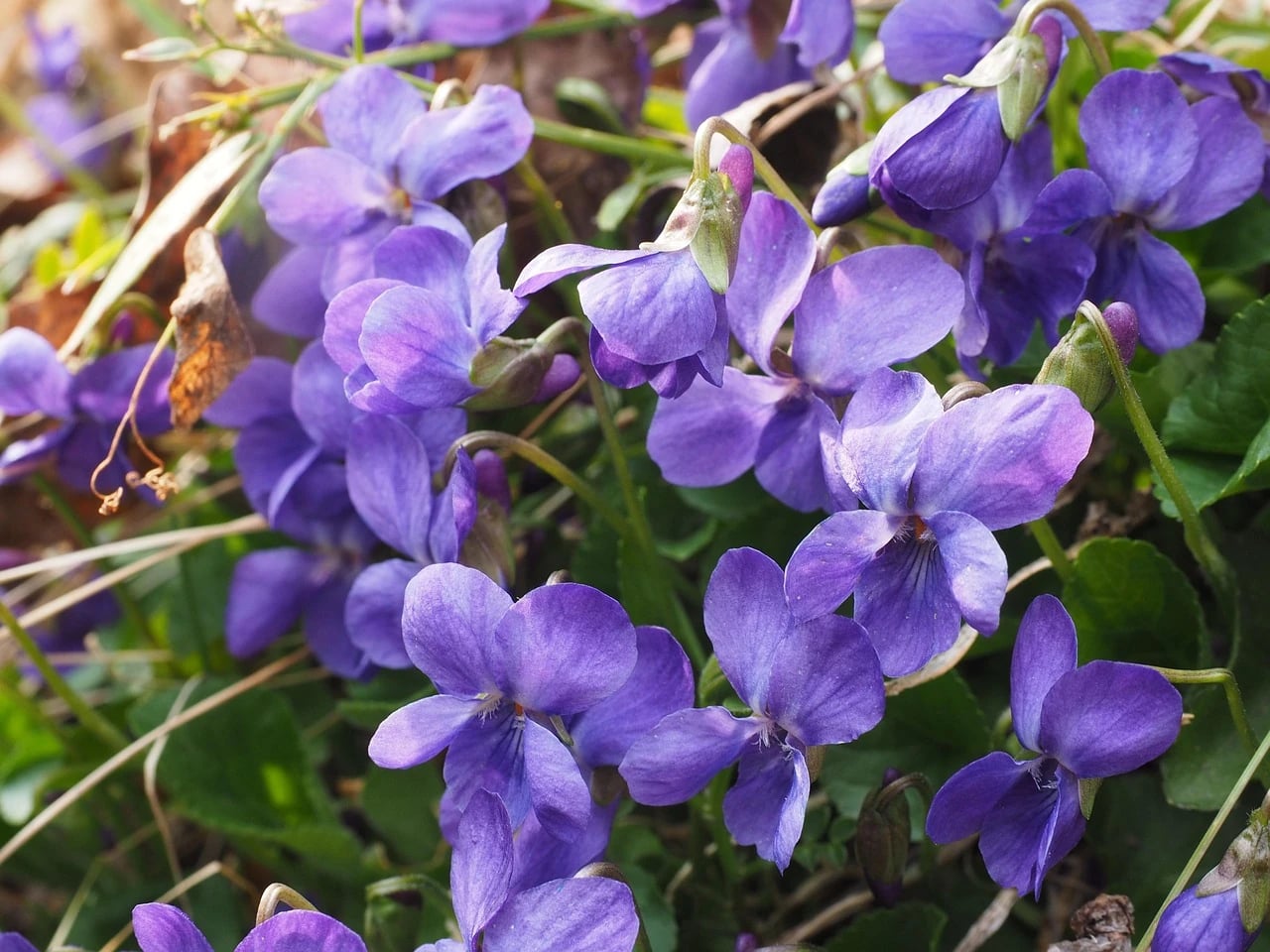
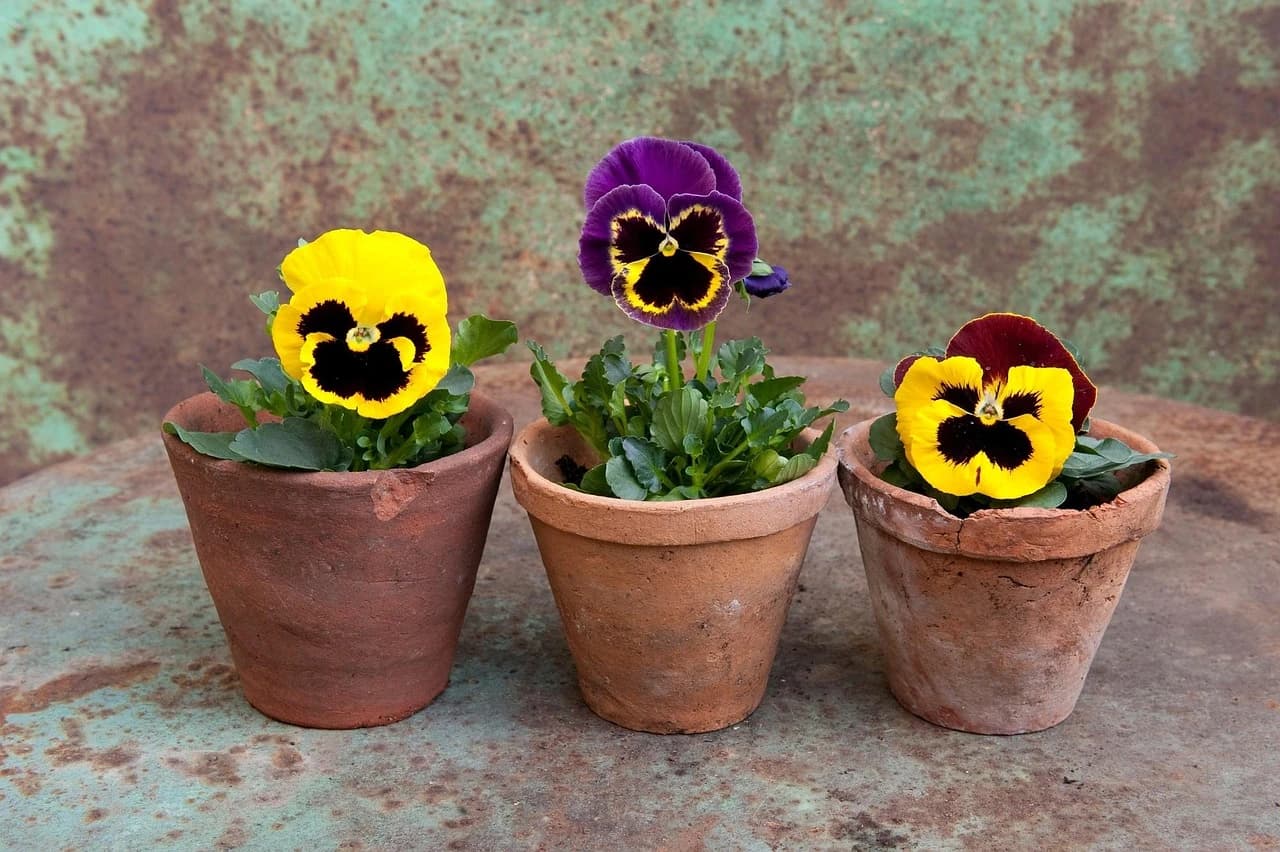
Suppose the birthday falls in February, and the best planting spot gets afternoon shade. Violet fits both. The Society of American Florists names it as a February birth flower. Penn State Extension says most native violets prefer moist, partly shaded sites.
Check the plant label before treating every “violet” as the same choice. Penn State says common blue violet also tolerates full sun and clay.
For a pet household, match the label to *Viola tricolor* var. *hortensis*. The ASPCA identifies that plant as non-toxic to pets.
Best for: A February Aquarius birthday and a partly shaded spot; choose the ASPCA-listed *Viola* for a pet household.
See more: 6 Virgo Zodiac and Birth Flowers (and How to Grow Each One) →
5Carnation for a January Bouquet

Carnation is the other January choice. The Society of American Florists names it for the month. Cut carnations make a birth-month bouquet for a January Aquarius birthday.
Growing *Dianthus caryophyllus*? Give it full sun. NC State Extension says it tolerates some shade. For a planting date or a way to start your own, ask your county extension service about your area.
Check the household before taking that bouquet to the register. The ASPCA lists carnation as toxic to cats and dogs, with generally mild stomach or skin irritation.
Best for: A January birthday bouquet in a home without cats or dogs.
See more: 7 Leo Zodiac and Birth Flowers (and How to Grow Each One) →
4Bearded Iris in a Sunny Bed
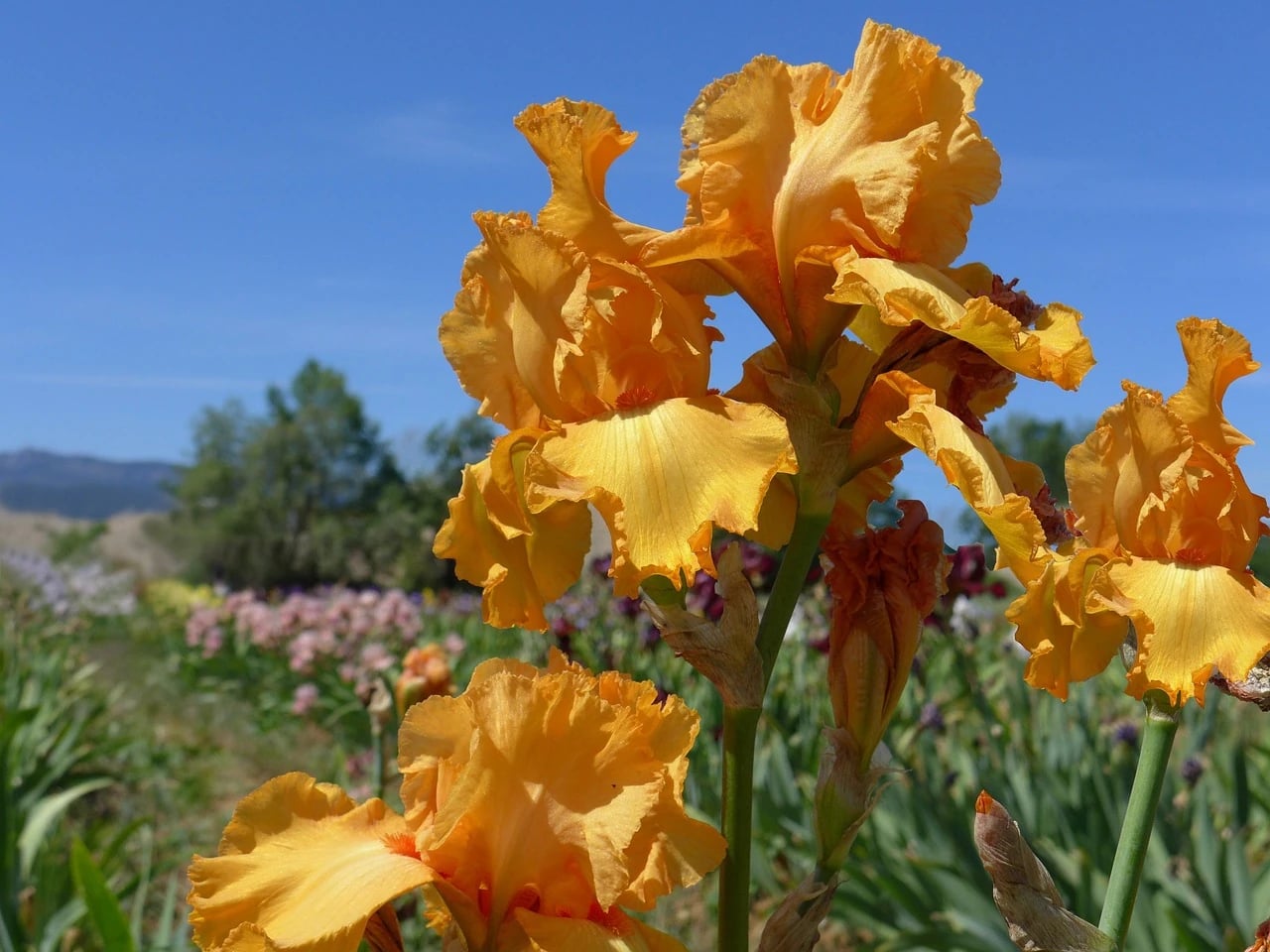
Iris appears on Aquarius flower lists from ProFlowers and Teleflora. Teleflora also lists it as a February birth flower. If you’d rather grow one than choose cut stems, bearded iris gives you a specific garden project.
Start with the light. Clemson Cooperative Extension calls for at least 6 hours of full sun each day. Plant in late summer to early fall. Leave about 16 to 18 inches between plants so air circulates.
Think twice if pets dig in that bed. The ASPCA lists iris as toxic to cats and dogs, with the highest concentration in its rhizomes.
Best for: A sunny garden bed away from pets.
3Gladiolus Spikes for Cutting
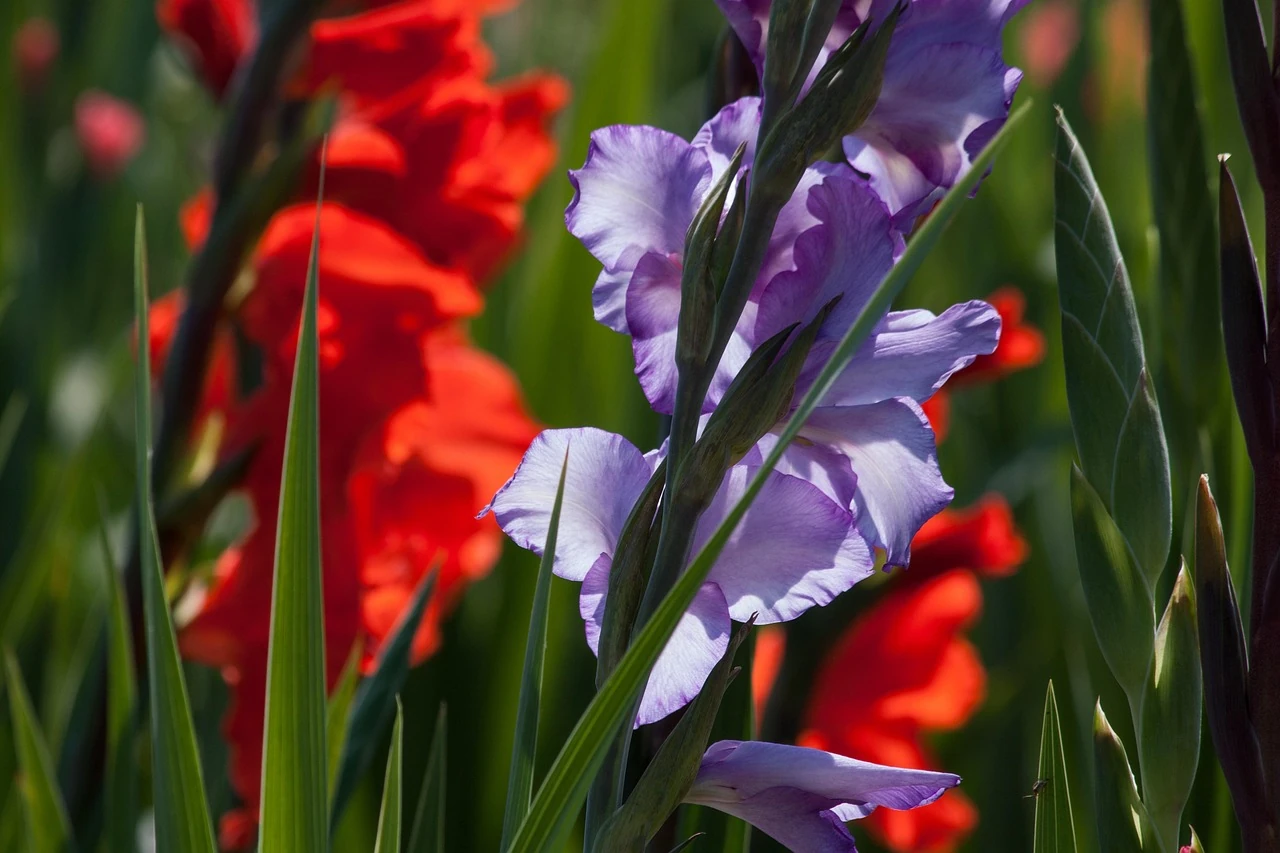
If you like carrying flowers in from the garden, gladiolus earns its place. Cafe Astrology and ProFlowers both name it for Aquarius, and its tall spikes suit a vase.
The planting starts with corms, rather than seeds. After frost, choose a spot in full sun. Clemson Cooperative Extension says to plant corms 3 to 6 inches deep and 2 to 3 inches apart.
Want stems to cut across the summer? Plant another group each week, as Clemson advises, instead of putting every corm in the ground at once.
Keep that planting bed away from curious diggers. The ASPCA lists gladiolus as toxic to cats and dogs; the corms are the most potent part.
Best for: A cut-flower garden without pets digging among the corms.
See more: 5 Sagittarius Zodiac and Birth Flowers (and How to Grow Each One) →
2Bird of Paradise in a Container

Bird of paradise makes a striking Aquarius gift. 1-800-Flowers calls it a go-to flower for the sign. For a grower, the question is whether winter frost reaches the planting spot.
Outdoors, UF/IFAS Extension places it in USDA zones 10 and 11. Give plants part sun to part shade and 24 to 36 inches of space.
Farther north, UF/IFAS Gardening Solutions recommends a container you move indoors to avoid frost. Before sending one to someone else’s house, ask about pets.
The ASPCA lists bird of paradise as toxic to cats and dogs, especially its fruit and seeds.
Best for: A warm-climate garden or a container grower with room indoors and no pets.
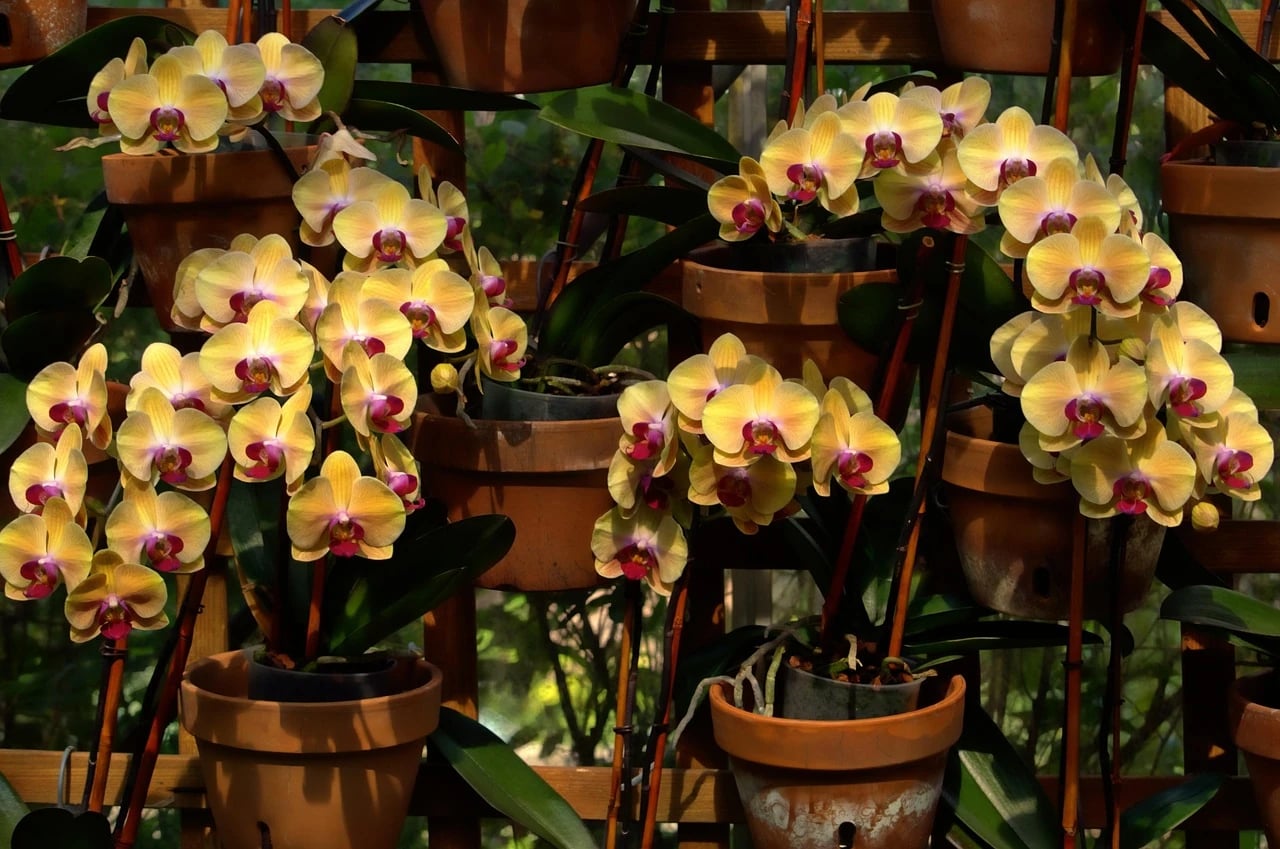
1Orchid, the Aquarius Zodiac Flower
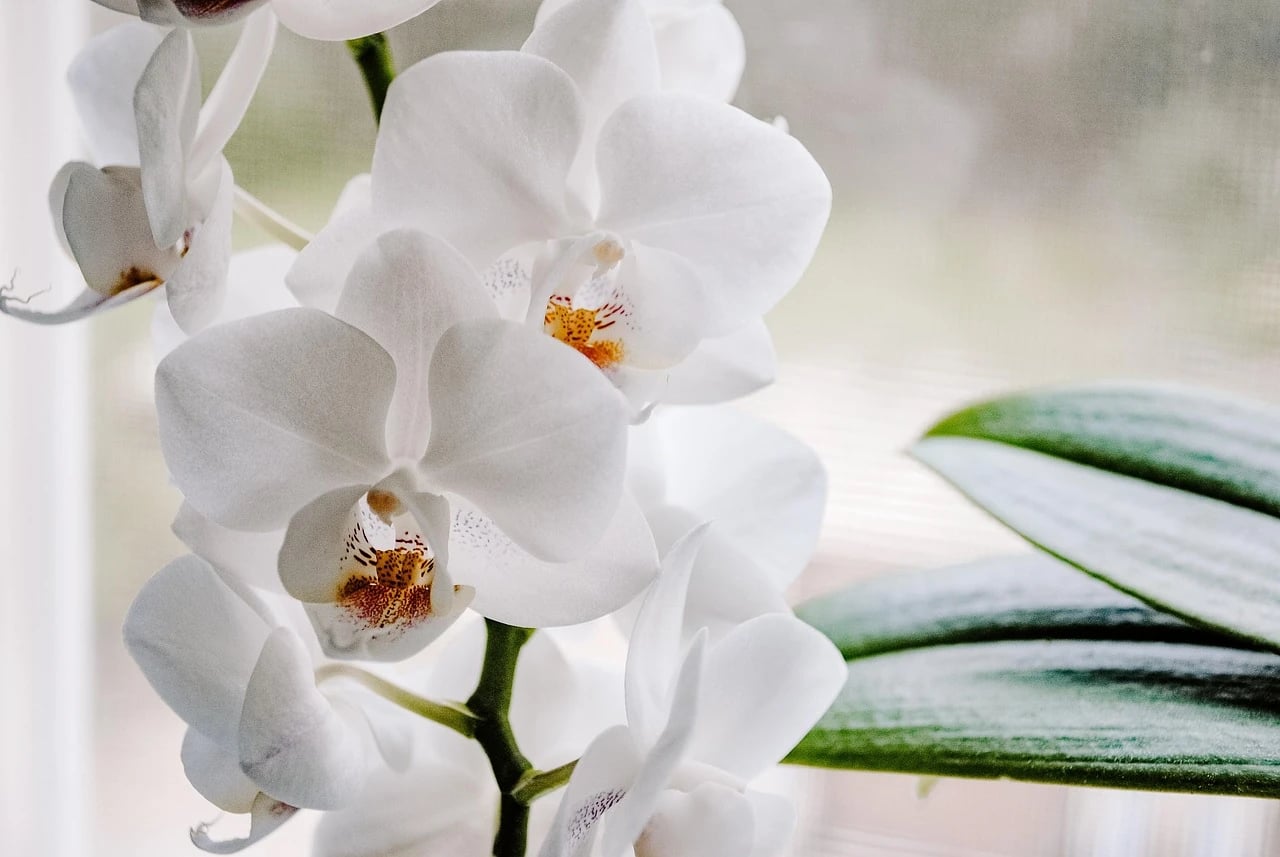
Here’s the flower for Aquarius when you want the sign itself on the gift card: orchid. The National Garden Bureau pairs it with Aquarius, as do Cafe Astrology and several major florists. Orchid is the clearest zodiac-flower answer.
For an indoor plant, look for a *Phalaenopsis* orchid. Clemson Cooperative Extension recommends bright, filtered light and a coarse, airy growing medium rather than ordinary soil. Place it near a bright window, out of direct sun.
Smithsonian Gardens puts its thriving indoor temperature range at about 70 to 90°F. Don’t leave the growing medium soggy.
Check the label for *Phalaenopsis*, especially if animals live there: the ASPCA lists that orchid as non-toxic to cats and dogs.
Best for: An Aquarius gift overall, including a home with cats or dogs.
The bottom line
Choose by the reason for the flowers. Orchid speaks to the Aquarius sign. Carnation, snowdrop, and violet speak to the birthday month. The others give you choices for a sunny bed, cut-flower garden, or container.
Before you take a plant to the register, check its label, its light needs, and the pets at its destination. Which flower would have a place in your home?
Up next
7 Capricorn Zodiac and Birth Flowers (and How to Grow Each One)
Find a Capricorn zodiac flower for your window box or a December birthday bulb, with growing basics and pet-safety checks for all seven picks.
Read the list →
Reader quiz
Did you catch the details?
5 questions from this article.
What should you check before bringing snowdrops home if an animal eats garden plants?
Questions people also ask
What is the birth flower for Aquarius?
The birth flower for an Aquarius birthday depends on the month: January has carnation and snowdrop, while February has violet. The Old Farmer’s Almanac lists those birth-month flowers; the National Garden Bureau names orchid as an Aquarius zodiac flower. The date gives you a birth-month choice, while orchid reflects the sign.
Are zodiac flowers the same as birth flowers?
No. Florists and astrology writers match zodiac flowers to signs, while birth flowers follow calendar months. The National Garden Bureau pairs orchid with Aquarius; the Society of American Florists names carnation for January and violet for February. Those are different ways to choose a birthday gift.
Is the orchid safe for cats and dogs?
Yes, the ASPCA lists *Phalaenopsis* orchid as non-toxic to cats and dogs. Check the plant label for that name before buying. The ASPCA lists bird of paradise, gladiolus, iris, and carnation as toxic.
What's my birth flower for February?
February’s birth flower is the violet, according to the Society of American Florists. Teleflora also lists iris for February, so ask a florist which February tradition a bouquet follows.
Why is Aquarius connected to the orchid specifically?
Cafe Astrology links Aquarius to the orchid’s unusual, refined form. The National Garden Bureau also names orchid for the sign, and major florists use the pairing for gifts. That shared choice explains why orchid comes up first.
Did any of these feel familiar?
Know someone who needs this?
Sources cited in this article
This article links to 17 outside sources, listed here so you can read them yourself.
- Chicago Botanic Garden www.chicagobotanic.org/plant-information/plant-profiles/snowdrops
- NC State Extension plants.ces.ncsu.edu/plants/galanthus-nivalis/common-name/snowdrops-2
- Penn State Extension extension.psu.edu/native-violets
- ASPCA identifies that plant as non-toxic www.aspca.org/news/popular-fall-plants-which-ones-are-pet-friendly
- NC State Extension plants.ces.ncsu.edu/plants/dianthus-caryophyllus
- ASPCA lists carnation as toxic www.aspca.org/pet-care/aspca-poison-control/toxic-and-non-toxic-plants/carna…
- Clemson Cooperative Extension hgic.clemson.edu/bearded-iris
- ASPCA lists iris as toxic www.aspca.org/pet-care/aspca-poison-control/toxic-and-non-toxic-plants/iris
- Clemson Cooperative Extension hgic.clemson.edu/factsheet/summer-and-fall-flowering-bulbs
- ASPCA lists gladiolus as toxic www.aspca.org/pet-care/aspca-poison-control/toxic-and-non-toxic-plants/gladi…
- UF/IFAS Extension ask.ifas.ufl.edu/publication/FP563
- UF/IFAS Gardening Solutions gardeningsolutions.ifas.ufl.edu/plants/ornamentals/bird-of-paradise.html
- ASPCA lists bird of paradise as toxic www.aspca.org/pet-care/aspca-poison-control/toxic-and-non-toxic-plants/bird-…
- National Garden Bureau ngb.org/zodiac-flowers
- Clemson Cooperative Extension hgic.clemson.edu/factsheet/orchids
- Smithsonian Gardens gardens.si.edu/collections/plants/orchids/orchid-care-sheets/phalaenopsis
- ASPCA lists that orchid as non-toxic www.aspca.org/pet-care/aspca-poison-control/toxic-and-non-toxic-plants/phala…
Vera Collins
Astrology Editor
Vera writes about zodiac flowers, birthstones and the astrology milestones that arrive after 50, in plain words, and says where the traditions disagree.
More from Vera Collins