









19 Kinds of 1960s Chewing Gum and Candy You'll Remember
The zebra pack, a yellow Peppermint wrapper, and candy stuck to paper strips might send you straight to the phone to call your sister.
By David Ruiz, Home Editor
Updated · 15 min read
The short answer: Popular gums of the 1960s included Bazooka Bubble Gum with comics inside its wrappers, zebra-packed Fruit Stripe, cinnamon Dentyne, and Beeman’s Pepsin. Wrigley’s Juicy Fruit, Doublemint, and Spearmint were familiar staples, alongside Chiclets, Beech-Nut Peppermint, and Clorets. The same candy memories bring back lipstick-shaped sweets, wax lips, Pixy Stix, and Necco Wafers.
- Written by our home editor
- Cited 33 sources
- How we review
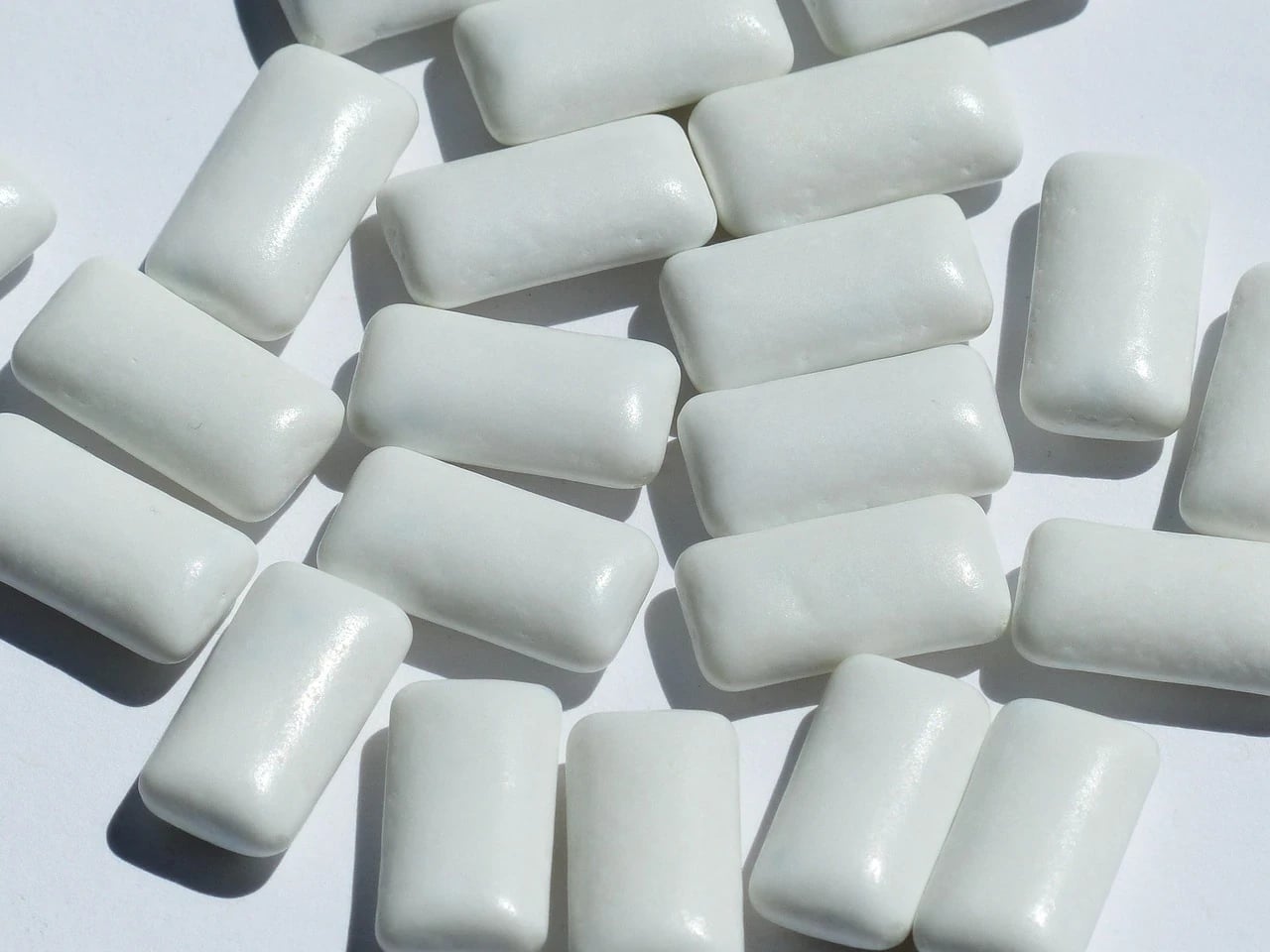
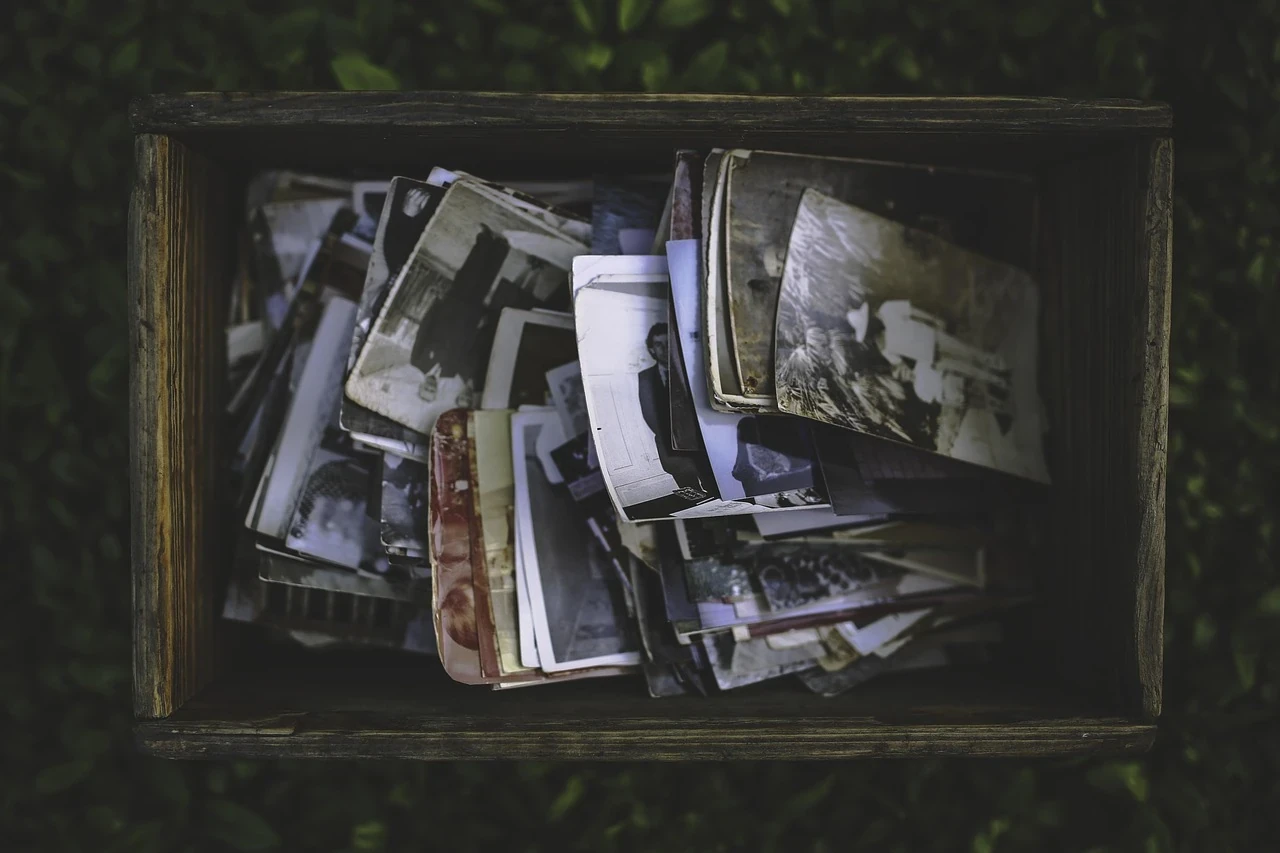
A wrapper gets flattened against the entryway bench. The gum is long gone, but the color does the work: suddenly you remember who handed you the pack and where you stood when you opened it.
Then comes the argument worth having. Was the yellow pack Beech-Nut? Did Fruit Stripe have the zebra on it, or was that another gum? You reach for your phone. Your sister will settle this, or make the disagreement even better.
Some of these names have later chapters: a new maker, a discontinued pack, a return to store shelves. Those dates help you find the wrapper you remember without mistaking today’s package for the one you held then.
19Bazooka Bubble Gum 1960s Chewing Gum Wrapper
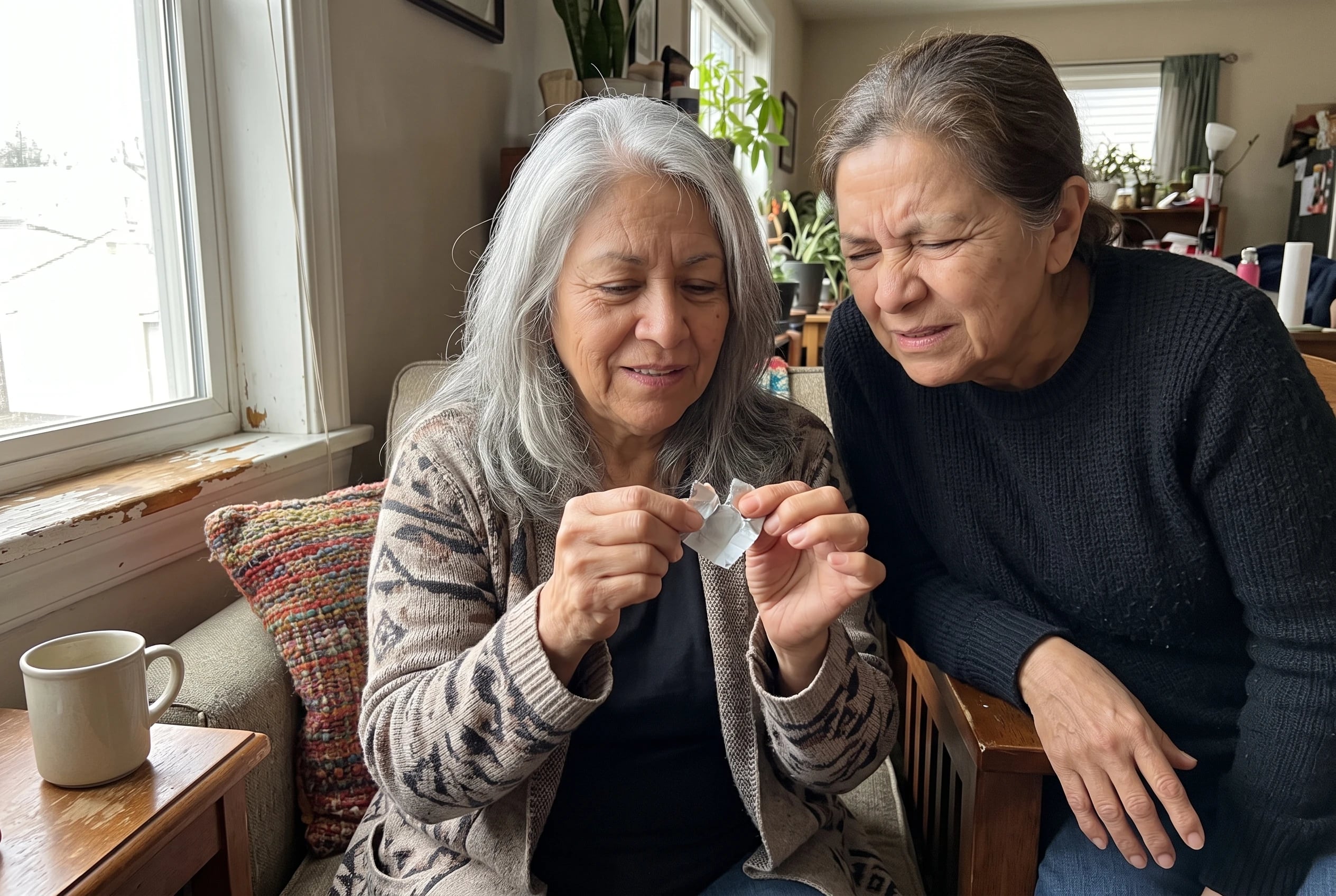
The comic was the second treat. First came the job of opening the gum without tearing the little strip inside. Then you smoothed the paper against your knee and read it before anyone asked for a piece.
Bazooka’s history places its U.S. launch after World War II and says Bazooka Joe comics followed inside the wrappers. So if the character is the part you remember, your memory has a home in the pack.
The brand still celebrates that comic legacy. Find an old wrapper pictured online and look at the fold, not only the character. That cramped bit of reading space was part of the pleasure. Did you read the comic aloud, or pocket it before the gum was even soft?
18Fruit Stripe Gum Zebra-Striped Wrapper

You could spot that zebra-striped pack before you got close enough to read it. Then there were the temporary-tattoo wrappers, another reason to keep the paper after the gum was gone. If someone in your family remembers the zebra but forgets the gum’s name, show her the wrapper first.
Fruit Stripe began at Beech-Nut as a multi-flavor fruit gum. Its zebra mascot and tattoos became signatures of the brand, as the Fruit Stripe history records.
Here’s the disappointing part of the search: Ferrara confirmed that Fruit Stripe was discontinued in 2024. An old pack pictured for sale is an old pack, not proof the gum is back.
For this one, the photograph of the striped wrapper is the surest way to start the conversation.
17Dentyne Cinnamon Gum Foil Wrapper

Cinnamon announces itself before the name comes back. If Dentyne is the gum you’re trying to place, look for the older wrapper rather than today’s package.
Dentyne began as a cinnamon breath-freshening gum made by American Chicle. An archival wrapper held by the Australian War Memorial lists gum base, sugar or dextrose, and flavors. That physical wrapper is a better check on an old memory than a fresh pack on a store shelf.
Packaging changed. A court description of a modern Dentyne Ice format describes pellets in a foil-sealed blister inside a cardboard sleeve.
If you remember a flat pack, don’t let the newer sleeve talk you out of it. Match the era of the wrapper first.
16Beeman’s Pepsin Gum Pilot Legend
Why did a gum have *Pepsin* in its name? That question is more useful than trying to reconstruct the flavor from memory.
Dr. Edward E. Beeman formulated the gum in the 1890s. It originally contained pepsin; it no longer does, according to the Beeman’s gum history. The name survived the ingredient.
The same history connects Beeman’s to an aviators’ good-luck superstition, linked in retellings to test pilots. Treat that as a legend, not a verified endorsement by any particular pilot.
If you’re showing someone an old pack, you have two stories to tell: why the label says Pepsin, and how a stick of gum acquired a cockpit tale. Families have a way of passing along the better one.
15Wrigley’s Doublemint, Juicy Fruit, and Spearmint Packs
Set these three names side by side and ask which pack belonged in your household: Doublemint, Juicy Fruit, or Spearmint. The answer has a way of coming back faster than the flavor. Maybe you remember the pack in a purse; maybe you remember being told to take only one stick.
Mars lists all three among its heritage gum brands. Juicy Fruit is Wrigley’s oldest brand, and it picked up an unlikely second claim to fame after the decade we’re visiting.
In 1974, a pack of Juicy Fruit became the first retail product scanned with a UPC barcode, in Troy, Ohio, according to Mars’ company history. That fact won’t tell you who bought the gum in your family.
It does give you a precise answer when someone asks why that familiar pack keeps turning up in stories about store history.
14Chiclets Candy-Coated Gum Cardboard Box
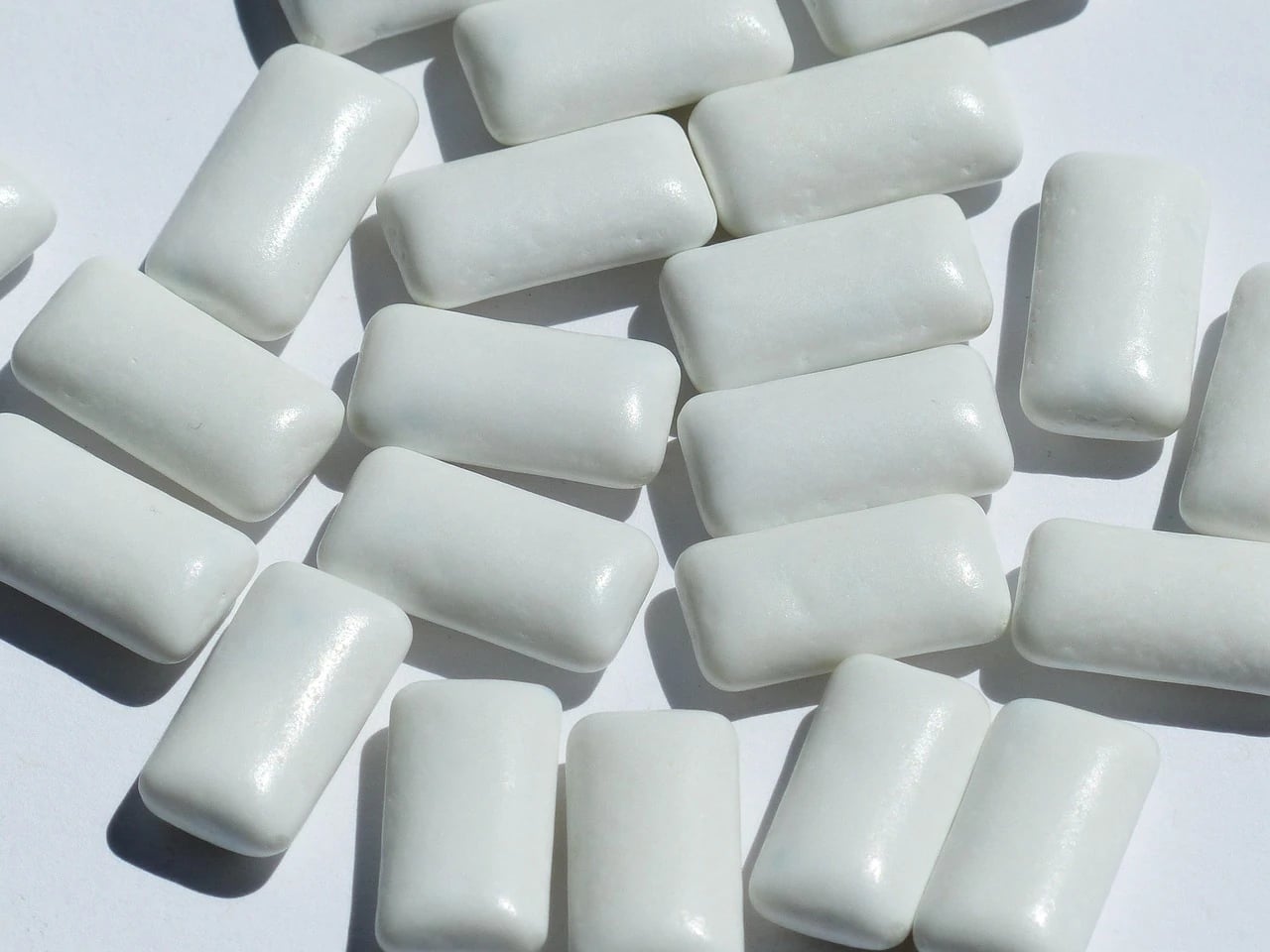
The box mattered. You tipped it, listened to the pieces move, and decided whether to take one or pour several into your hand. Chiclets had a different little ritual from unwrapping a stick.
If you haven’t seen that cardboard box in a U.S. checkout lately, there’s a documented reason. Testimony described in a 2020 trademark-case summary says the last U.S. Chiclets product ended by March 2016.
That is a U.S. sales history, not the end of the name everywhere. Mondelēz says Chiclets has been sold in Mexico for 95 years.
When you search for the box you knew, include the country and the older cardboard format. A current product image from another market could send the memory in the wrong direction.
13Beech-Nut Peppermint Gum Yellow Package

Here’s one for the sister who insists the Peppermint pack was yellow. She has an old advertisement on her side.
A scanned 1941 *Liberty* ad tells shoppers to get Beech-Nut gum in the yellow package. That ad predates the 1960s. It proves the package description in the ad, not every wrapper sold later.
Still, “yellow package” is a much better search than “old mint gum.” The Smithsonian also holds a Beech-Nut chewing-gum shipping crate.
It’s a plain object, built to move gum rather than catch your eye at the counter. Put the crate and the ad together, then look for a package photograph from the year you recall.
12Clorets Chlorophyll Breath-Freshening Gum

Clorets sold a very specific promise. Its owner describes the brand as gum containing Actizol and chlorophyll for breath deodorizing. If the green idea is what stuck in your head, you’ve remembered the pitch as well as the product.
Finding an old Clorets wrapper takes care. In U.S. trademark proceedings during the 2016 filing period, the owner acknowledged that no Clorets-brand gum was available for purchase in the United States.
That statement describes U.S. availability then; it isn’t a claim about every shop in every country today. Show someone the wrapper before saying the name. The word *chlorophyll* might bring back the package.
See more: 25 Bathroom Ideas Straight From the 1970s: 70s Bathroom Ideas to Keep or Update →
11Bonkers Fruit Chews With Tangy Centers
The surprise was inside. Bonkers! were rectangular fruit chews with a tangy center, a combination described by *Snack Food & Wholesale Bakery*. That shape and center are better clues than a vague memory of “fruit candy.”
Nabisco introduced them, and they were discontinued in the 1990s. Leaf Brands later obtained rights to the name, according to trademark records. A name changing hands is not a nationwide return to candy shelves.
So if your sister says she saw something about Bonkers coming back, ask what she saw: a trademark story, an old wrapper, or an actual bag in a store. There’s a difference.
For the taste test you’re remembering, the tangy middle is the detail to bring up first.
10Certs Powerful Mints and Candy Ruling

Was Certs candy? That sounds like the sort of question you settle by offering somebody a mint. It became a question for the courts.
The Federal Circuit ruled that sugar-free Certs Powerful Mints belonged under a classification for oral and dental hygiene preparations.
A related customs ruling described Certs’ Retsyn ingredient and classified sugar-containing Cool Mint Drops as sugar confectionery.
Those decisions concern particular products and legal categories. They don’t erase how you treated the roll in your pocket. Perhaps it was your after-coffee mint. Perhaps you called it candy and gave one to anyone who asked.
When you compare memories, use the product name on the package. “Certs” alone hides the difference between those two rulings.
9Candy Lipstick in Plastic Makeup Tubes
You twisted up the little colored tip and pretended to put on makeup. Then you ate it. The plastic tube did nearly as much work as the candy.
If you’re searching for candy lipstick from the 1960s, start with that shape, not a guessed flavor. A patent for edible candy makeup describes pressed dextrose or sugar candy with acids, colors, and flavors, formed to sit in a lipstick-style plastic holder.
Novelty-candy maker Kidsmania also describes pressed dextrose as a base for toy candies. The patent explains how such a candy is made; it doesn’t identify the exact tube you carried.
To narrow yours down, remember the part you handled. Did the candy sit deep inside? Did you keep the empty case for play? Ask your sister about the tube before suggesting a brand neither of you truly remembers.
8Candy Cigarettes in Lookalike Packages

Remember how convincing the little package looked? The resemblance was deliberate. The Smithsonian notes that candy-cigarette makers closely copied major cigarette-brand packaging by the 1940s.
That’s why the wrapper deserves more than a fond glance. Concern about the product grew after the 1964 Surgeon General’s report. A published study indexed by PubMed found an association between childhood candy-cigarette use and later smoking among U.S. adolescents.
An association doesn’t prove what any particular child did next. You don’t have to edit your childhood memory to say that clearly. The package looked grown-up; playing along was part of its pull.
Show the image to your sister and ask what she recalls first: the candy itself, or the act of holding that tiny imitation pack.
See more: 27 Old-Fashioned Comfort Food Recipes Grandma Made →
7Wax Lips and Playable Wax Whistles

The wax lips were for wearing before they were for chewing. A wax whistle offered a different order: make a sound, then chew.
Tootsie Roll’s Wack-O-Wax line includes lips made from refined food-grade wax, sugar, flavors, and colors. Wowee Wax Whistles describes its novelty with the instruction to play the whistle before chewing it.
That explains why a photograph of the product alone feels incomplete. You need someone putting the lips against her face or trying to get a note out of the whistle.
If you still have the old family photo, look for the pose. A wax candy did its best work before anybody took a bite.
See more: 23 Dance Moves From the 50s and 60s →
6Candy Buttons on Paper Strips
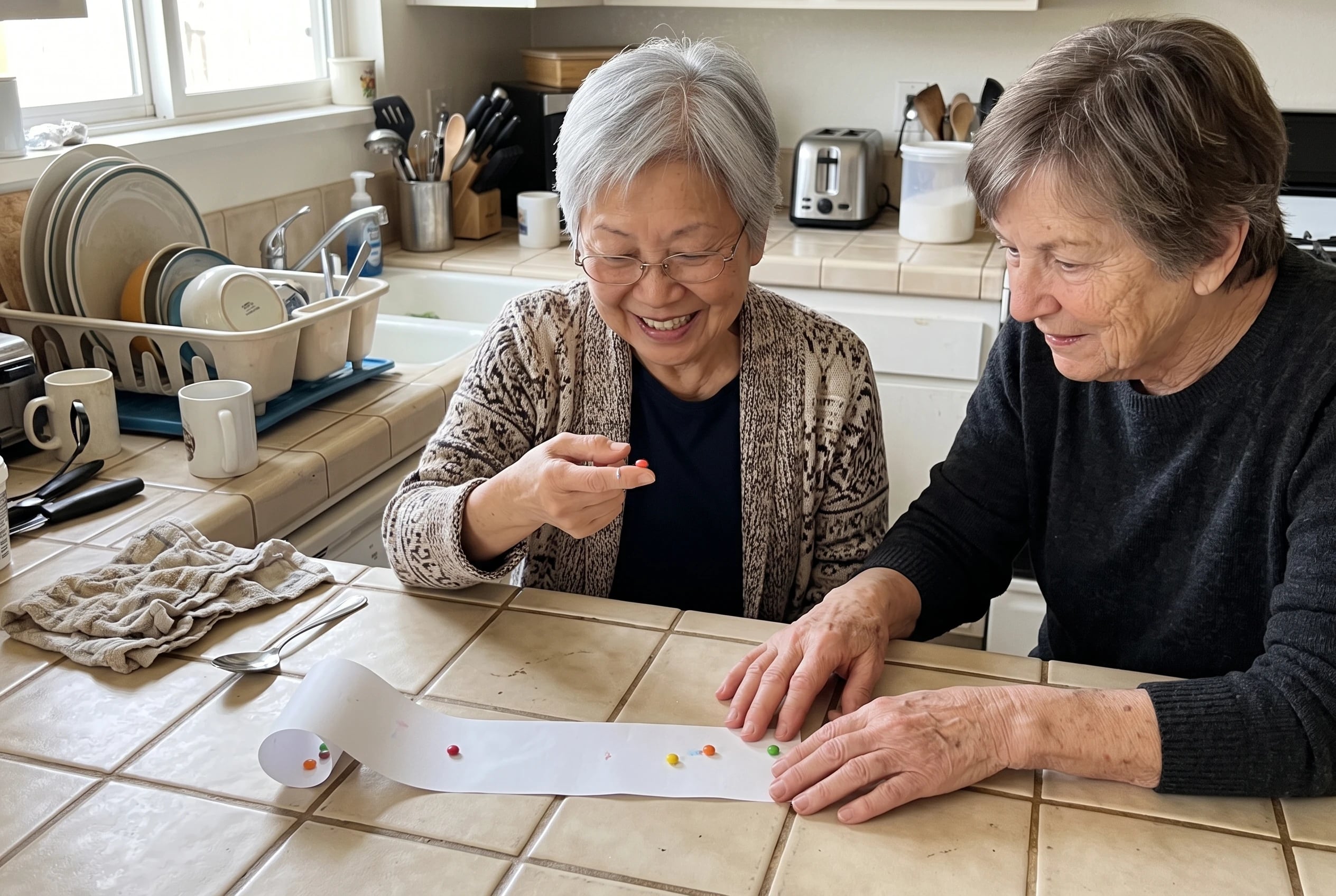
Pull one button from the paper and some paper comes with it. That stubborn little step is the memory. Nobody needed a bowl or a wrapper to share the strip; you held it out and let the next person pick a color.
Candy Buttons are still made by Doscher’s Candy Co., which acquired the brand after its previous maker’s 2018 bankruptcy. A retail description lists three colors and flavors on a strip: pink cherry, yellow lemon, and blue lime.
Don’t let that list rewrite what your own strip tasted like. Use it as a check on the version pictured for sale now. For the stronger memory test, show your sister a close photograph of the dots still attached to the paper.
The bit of paper that came away with each button is harder to forget.
5Pixy Stix Powdered Candy Straws

No chewing required. You opened a Pixy Stix straw and poured the flavored powder out, trying not to lose it on your clothes.
Ferrara traces Pixy Stix back to 1959 and describes the powdered-candy straw format. That date puts the candy in reach of the decade you remember. U.S. retailers still list small boxes and giant straws.
For the old visual jolt, look up the straw size you held. Your memory might begin with the open end folded over to save the rest.
4Mary Jane Peanut Butter Taffy Wrappers
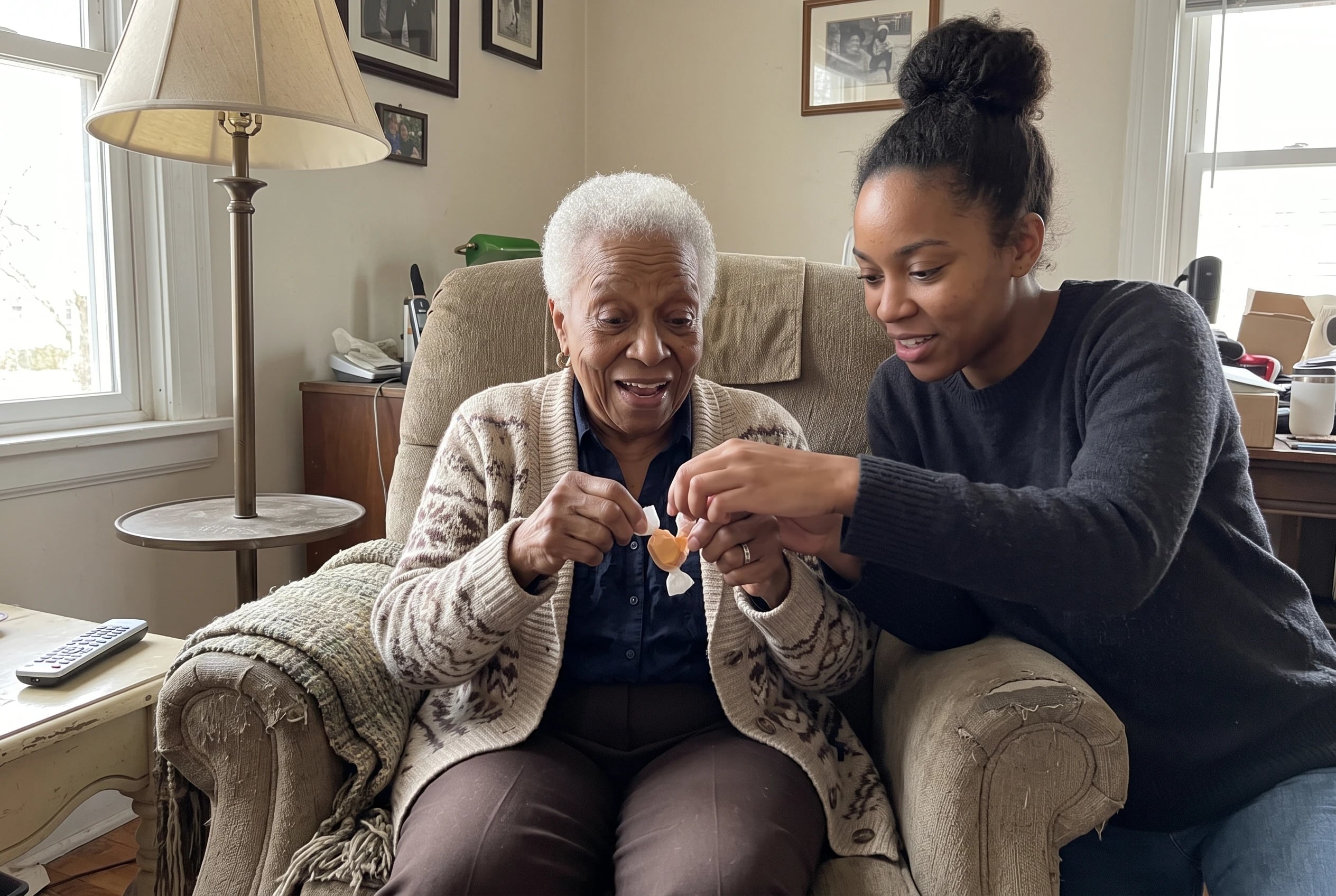
The name went away from shelves, then came back. If you’ve been trying to show somebody the Mary Jane you knew, that return is worth knowing about.
Mary Jane is a peanut-butter-and-molasses taffy. After its previous maker’s collapse, Atkinson Candy announced the brand’s comeback and returned it to production.
Atkinson also publishes the current ingredient statement. Check it before sharing today’s candy with anyone who needs ingredient details.
For a memory check, though, begin with the wrapper. A familiar label has a knack for sending you back to the exact spot where you last saw it.
See more: 17 Jell-O Mold Recipes From the 1950s →
3Black Jack and Clove Stick Gum
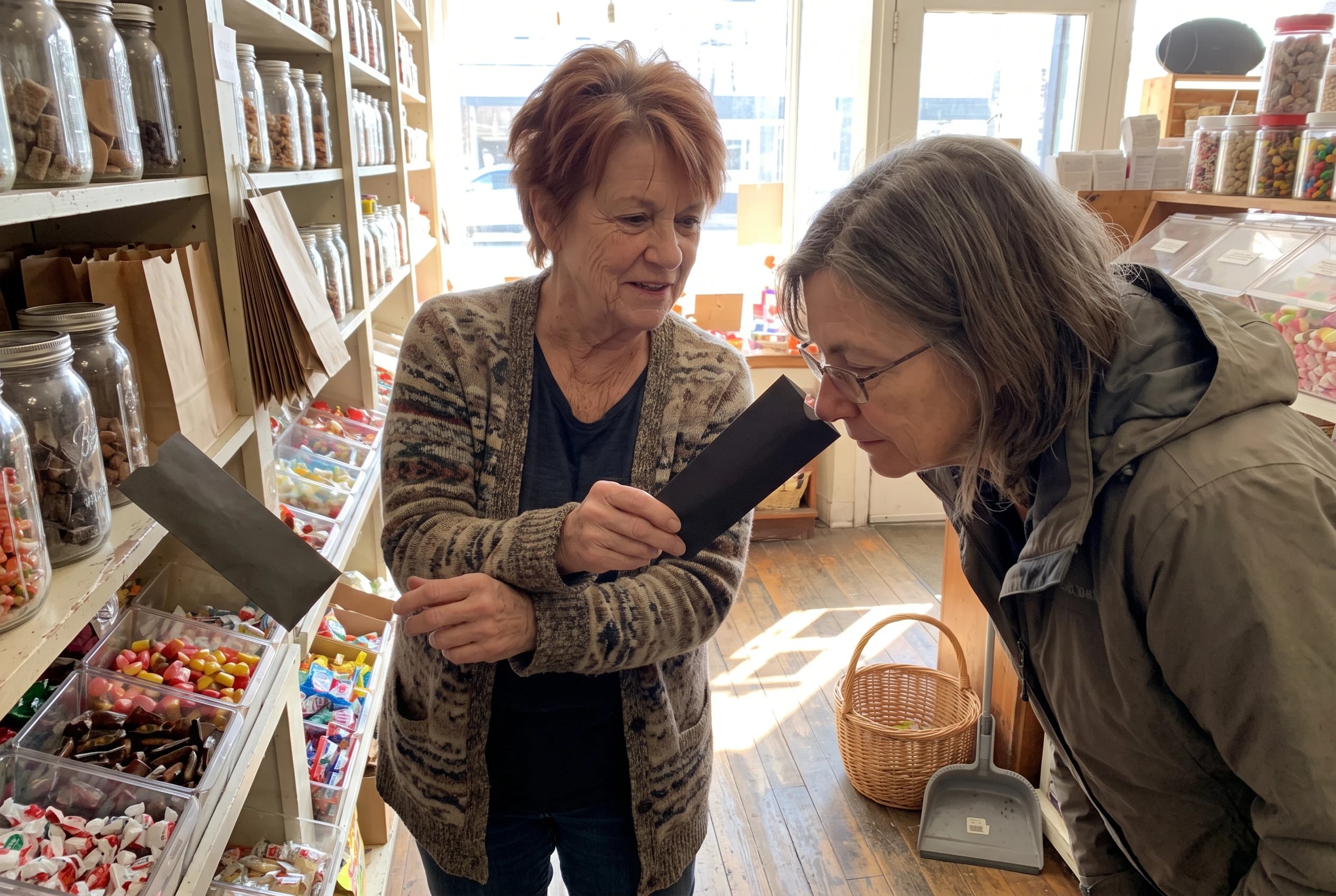
Some gum flavors refuse to blend into a general memory of “mint.” Black Jack is licorice-flavored stick gum with roots in the 1880s. Clove has its own name right on the pack.
Both have been revived and are marketed by the Gerrit J. Verburg Company. The company’s Black Jack listing gives you a current image to compare with the older wrapper in your head.
NACS trade coverage also notes sugar-free versions of Black Jack, Beemans, Clove, and Teaberry. That matters if you’re buying a pack to settle a family argument. Check the label before calling it the gum you remember.
Then ask the useful question: “Was yours the licorice one or the clove one?”
2Bonomo Turkish Taffy Countertop Crack
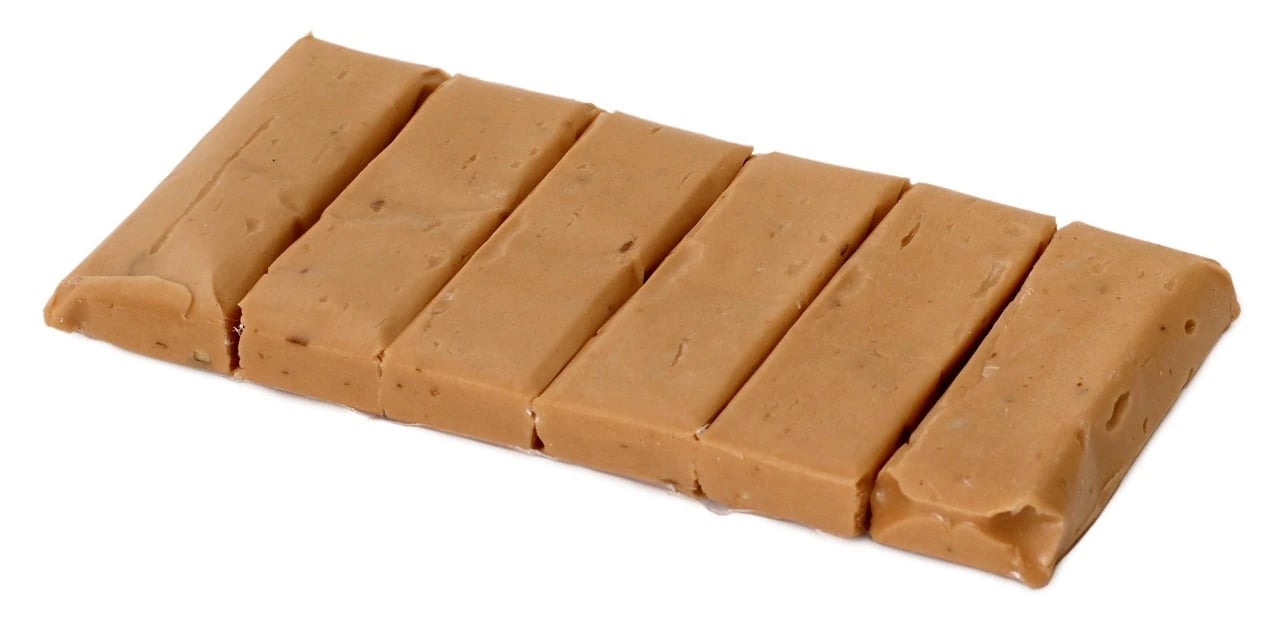
Set the bar down. Hit it. Open the wrapper and see whether it broke into pieces. That was the Turkish Taffy ritual, and it’s the part somebody else in your family is bound to remember differently.
Bonomo says it reintroduced Turkish Taffy in 2010 in its original “smack-it, crack-it” formula. The company also holds the SMACK-IT CRACK-IT trademark used in its packaging and marketing.
So the cracking instruction wasn’t something you invented while standing at the counter. Before reenacting it, look at the package. The sight of an intact bar is enough to bring back the decision: one big piece, or a handful of broken ones?
Tell your sister where you did the cracking. She’ll tell you whether she was there.
1Necco Wafers in Paper Rolls
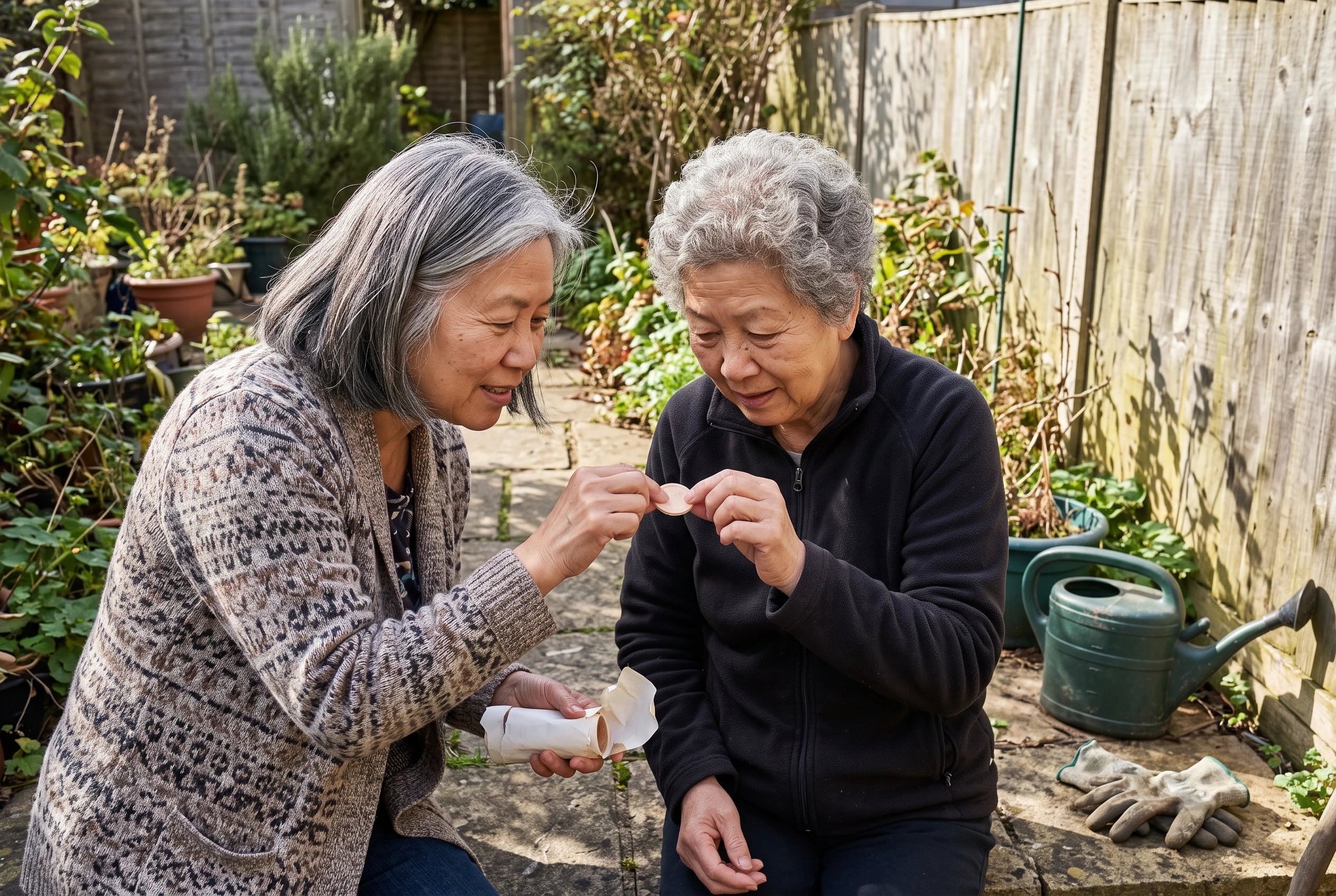
Here’s the easiest memory to put back in someone’s hand. A paper roll opens to a stack of flat wafers, each one ready to be passed across the room. You don’t need to describe the taste first. Show the roll.
Spangler Candy makes Necco Wafers today, including Original and Chocolate/Licorice varieties. Its Original listing includes a 24-roll tray. Check the variety before ordering if your aim is the exact roll someone remembers.
Better still, start with a single roll. Open it where you can both see the stack rather than describing it over the phone. Offer the first wafer without naming its flavor. The choice gives you something to talk about before either of you has to agree on how it tasted.
“Which wafer did you take first?” Watch where the conversation goes. Your sister might remember sorting them, saving a color, or handing back the one she didn’t want.
If she remembers a different order, put the wafers between you and compare. That’s the useful thing about a candy you can still open together. You get the object and the memory in the same room, one wafer at a time.
The bottom line
The wrapper does much of the remembering. A zebra, a yellow package, a paper strip, or a roll in your hand gives you something specific to show instead of asking, “Do you remember that candy?”
The well-prepared version of you has the old package image ready before making the call. For the sweets still sold, she checks the current maker and the exact variety before bringing one home.
Which wrapper would you send your sister first, and what would she insist you got wrong?
Up next
25 Things We Remember About Growing Up in the 50s and 60s
From a black-and-white TV to a dime comic book, these memories recall the people who made an ordinary afternoon unforgettable.
Read the list →
Reader quiz
Did you catch the details?
5 questions from this article.
What does the article say an old Fruit Stripe pack pictured for sale does not prove?
Questions people also ask
What are some vintage chewing gum brands?
Fruit Stripe, Beeman’s, Beech-Nut Peppermint, Clorets, Dentyne, and Wrigley’s Juicy Fruit, Doublemint, and Spearmint are names to search. Mars lists the Wrigley trio, while Gerrit J. Verburg lists revived vintage gums. Certs was a mint, and Bonkers was a fruit chew, rather than a chewing-gum brand.
What gum is no longer made?
Ferrara discontinued Fruit Stripe in 2024. In a 2016 U.S. trademark filing, Clorets’ owner said no gum bearing that name was available for purchase in the United States. One source documents discontinuation; the other documents U.S. availability during that filing period.
What were some popular chewing gum brands in the 1970s?
Wrigley’s Juicy Fruit, Doublemint, and Spearmint remained familiar names; Mars records the Juicy Fruit pack scanned in a store in 1974. Trident’s history) identifies it as the leading sugarless brand by 1977, and Freedent’s history dates its introduction to 1975. Those dates help separate a 1970s gum memory from an older one.
What was candy lipstick made of?
A published edible-candy-makeup patent describes pressed dextrose or sugar with acids, colors, and flavors. The candy was formed into a lipstick-like piece for a plastic holder. That describes the type of candy, not the formula of every tube sold.
How much did a pack of gum cost in 1960?
The research did not establish a reliable single U.S. price for a pack in 1960. For a pack you remember, find a dated store ad showing the brand, pack size, and price. As a later comparison, Mondelēz’s history gives a 1974 suggested price of 15 cents for several Adams gum packs.
Did any of these feel familiar?
Know someone who needs this?
 Prime Journal · Free printable
The Everyday Home Safety Checklist
- Clearer routes from the front door to your bed.
- Working lights and alarms where you need them.
- House details ready when a repair needs attention.

Free printable: The Everyday Home Safety Checklist. Enter your email and it is yours.
Sources cited in this article
This article links to 33 outside sources, listed here so you can read them yourself.
- Bazooka’s history www.bazookajoe.com/about
- Celebrates that comic legacy www.bazookajoe.com/75th-anniversary
- Discontinued in 2024 www.fooddive.com/news/ferrara-discontinues-fruit-stripe-and-super-bubble-gum…
- Archival wrapper held by the Australian War Memorial www.awm.gov.au/collection/C1193600
- Court description of a modern Dentyne Ice format law.justia.com/cases/federal/district-courts/FSupp2/32/690/2337858
- Mars lists all three www.mars.com/our-brands/all-brands
- Mars’ company history www.mars.com/about/history
- 2020 trademark-case summary www.mondaq.com/unitedstates/trademark/961338/finding-no-intent-to-abandon-tt…
- Mondelēz says Chiclets has been sold in Mexico for 95 years www.mondelezinternational.com/mexico/ricolino-y-mdlz-mexico/index.html
- Smithsonian also holds a Beech-Nut chewing-gum shipping crate americanhistory.si.edu/collections/object/nmah_1361913
- Describes the brand www.mondelezinternational.com/our-brands/clorets/index.html
- U.S. trademark proceedings during the 2016 filing period ttabvue.uspto.gov/ttabvue/ttabvue-92066283-CAN-22.pdf
- *Snack Food & Wholesale Bakery* www.snackandbakery.com/articles/102499-bonkers-fruit-chews
- Trademark records www.trademarkelite.com/trademark/trademark-detail/85341453/BONKERS-
- Federal Circuit ruled caselaw.findlaw.com/us-federal-circuit/1195577.html
- Related customs ruling www.customsmobile.com/rulings/docview?doc_id=HQ+963764
- Patent for edible candy makeup patents.google.com/patent/US20030118699A1/en
- Novelty-candy maker Kidsmania kidsmania.com/faq
- Smithsonian notes www.americanhistory.si.edu/collections/object/nmah_2031483
- Published study indexed by PubMed pubmed.ncbi.nlm.nih.gov/1728016
- Tootsie Roll’s Wack-O-Wax line tootsie.com/products/wax-mustaches
- Wowee Wax Whistles woweewaxwhistles.com
- Doscher’s Candy Co doscherscandies.com
- Retail description candyfunhouse.com/products/candy-buttons
- Ferrara traces Pixy Stix back to 1959 www.ferrara.com/index.php/us/fr/node/21
- U.S. retailers still list small boxes and giant straws www.walmart.com/c/brand/pixy-stix
- Atkinson Candy announced the brand’s comeback atkinsoncandy.com/blogs/atkinson-brings-back-mary-jane-candy/atkinson-brings…
- Current ingredient statement atkinsoncandy.com/products/mary-jane-tub
- Gerrit J. Verburg Company gerritjverburg.com/pages/products
- Black Jack listing gerritjverburg.com/products/black-jack-gum
- Reintroduced Turkish Taffy in 2010 www.bonomoturkishtaffy.com/MuseumHistory_ep_40.html
- SMACK-IT CRACK-IT trademark trademarks.justia.com/owners/bonomo-turkish-taffy-llc-2823526
- Spangler Candy makes Necco Wafers today spanglercandy.com/products/necco-original-wafers-mix-24-count-rolls
David Ruiz
Home Editor
David writes about the house you have and the one you might move to: staying put, downsizing, repairs, and the small changes that stop a fall.
More from David Ruiz