







27 Reasons Your Mother's Jewelry Is Worth More Than You Think
That pearl clasp you remember fastening for her deserves a closer look before anyone sorts the jewelry box.
By Nora Bennett, Style Editor
Updated · 12 min read
- Written by our style editor
- How we review
Read to the end: #1 is the one thing that helps identify her jewelry after she wore it, and almost nobody keeps it.
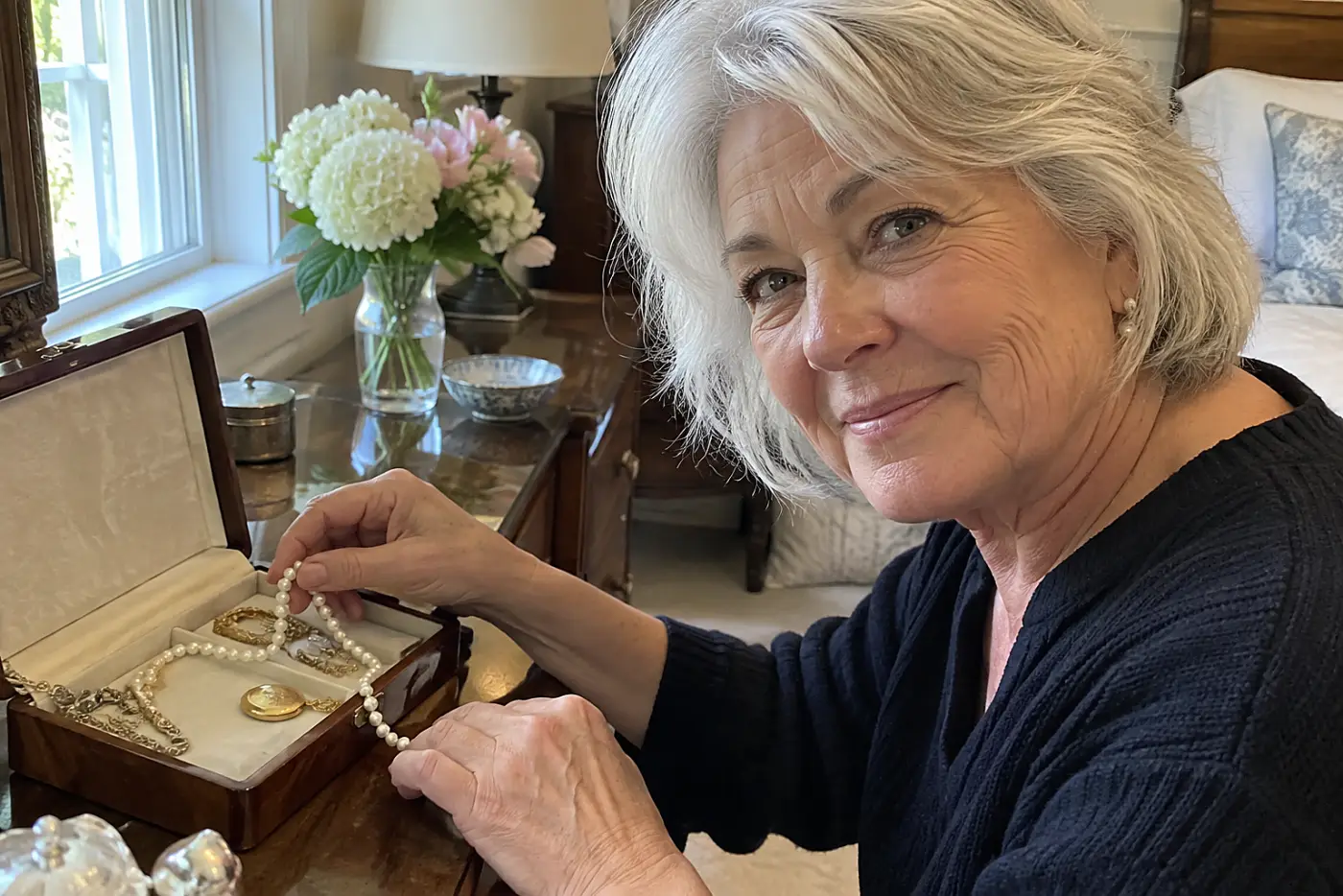
The jewelry box still smells faintly of face powder. Under a knot of chains sits the bracelet she wore to dinner, its clasp tucked beneath one link. You kept it because you remember her reaching across the table. No one needs to turn that memory into a price tag. But a careful look keeps you from giving away a clue you didn't know was there.
Here are 27 pieces and details worth looking at twice.
27The Single Gold Hoop
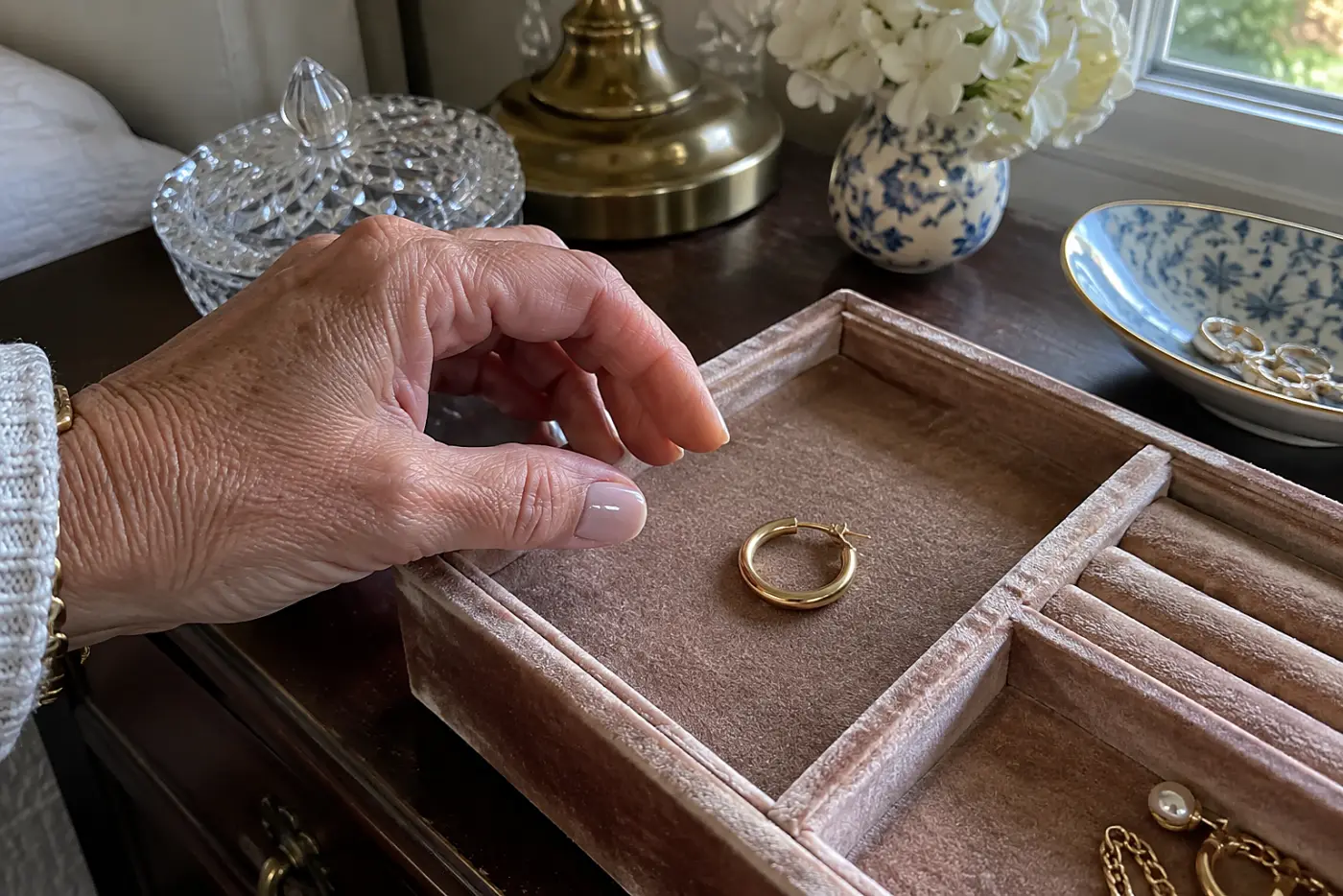
One hoop glints from the corner of the velvet tray.
Its partner disappeared years ago, but this one still deserves a look. Gold content doesn't vanish with the other earring. The clasp and any mark inside the curve matter more than whether it's a pair. She wore the pair; keeping one needn't make it feel like half a memory.
Keep it separate from costume earrings until you've checked the metal.
26The Cameo With a Pin Back
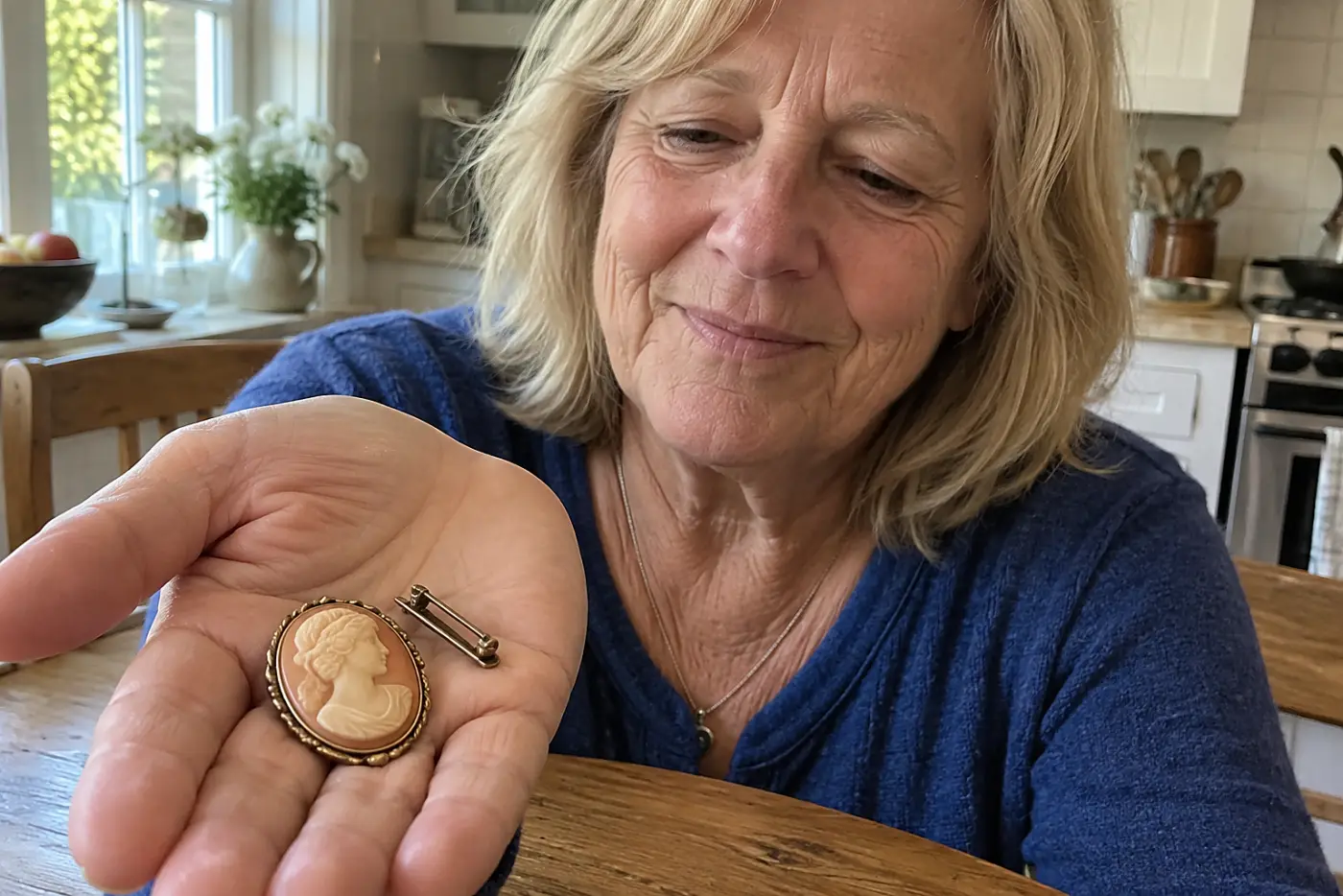
The profile on her cameo faces across a peach-colored oval.
She wore it on a coat lapel, where you saw it every winter. Cameos come in shell, stone, glass, and molded materials. A carved profile has depth that a molded one lacks. Look at the back, too. An old repair tells a different story from damage to the carving itself.
A jeweler or dealer can examine the material without guessing from a photograph. If you have a matching pendant or earrings, keep them together. That winter coat is gone, but the pin still shows where she chose to place it.
Photograph both sides before you ask a dealer to identify it.
25The Milky Opal Ring
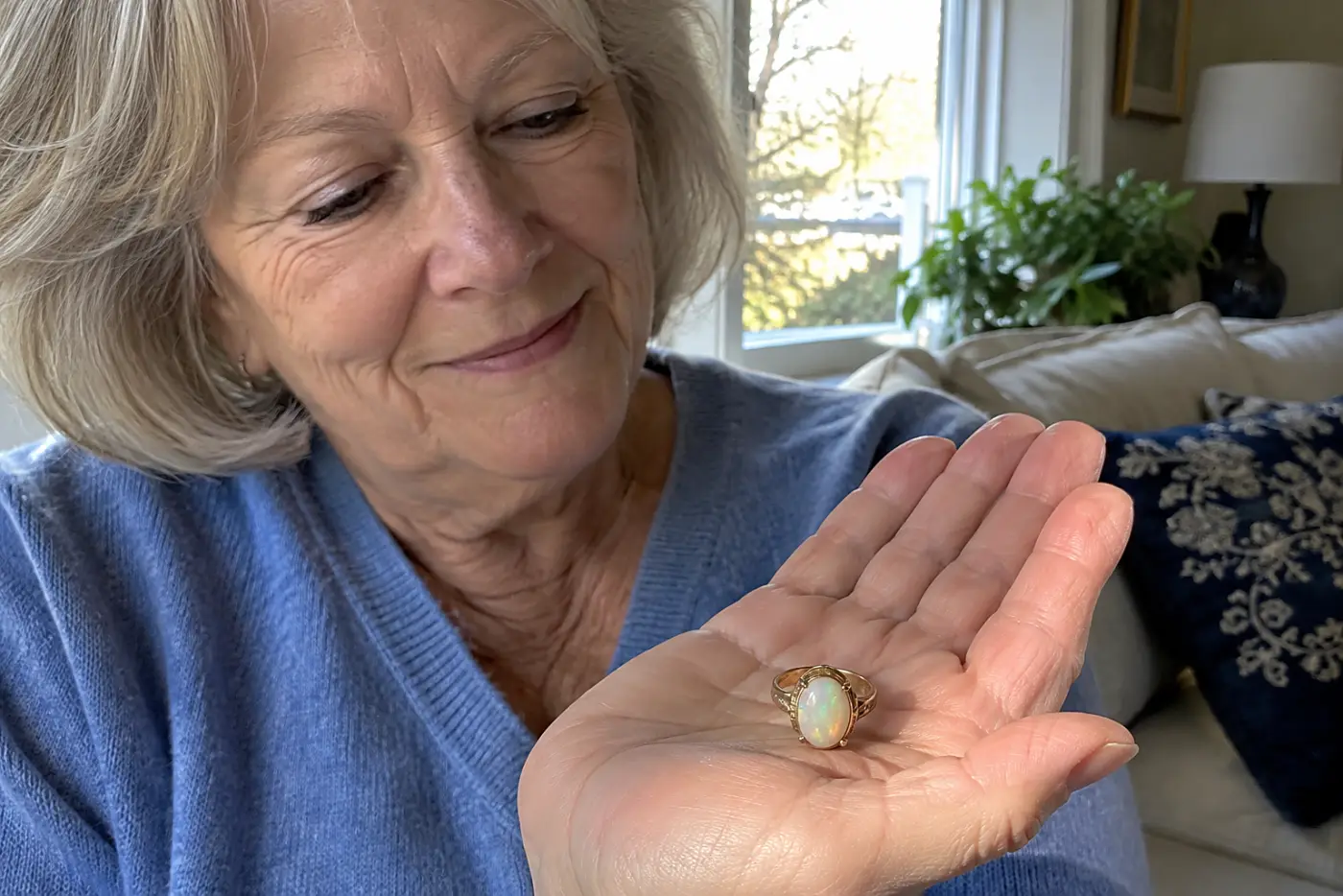
The opal catches color even when the room looks gray.
Your mother knew which finger it fit, and the setting tells part of its history. Opals need care: heat, impact, and harsh cleaning pose risks. A loose stone or a crack changes what a buyer sees. The metal and any maker's mark deserve their own check, apart from the stone.
Leave the surface as she kept it until someone has examined the ring. A worn prong is easier to address before the stone falls out.
Set the ring aside for a jeweler's inspection; don't soak it.
24The Bracelet With Tiny Charms
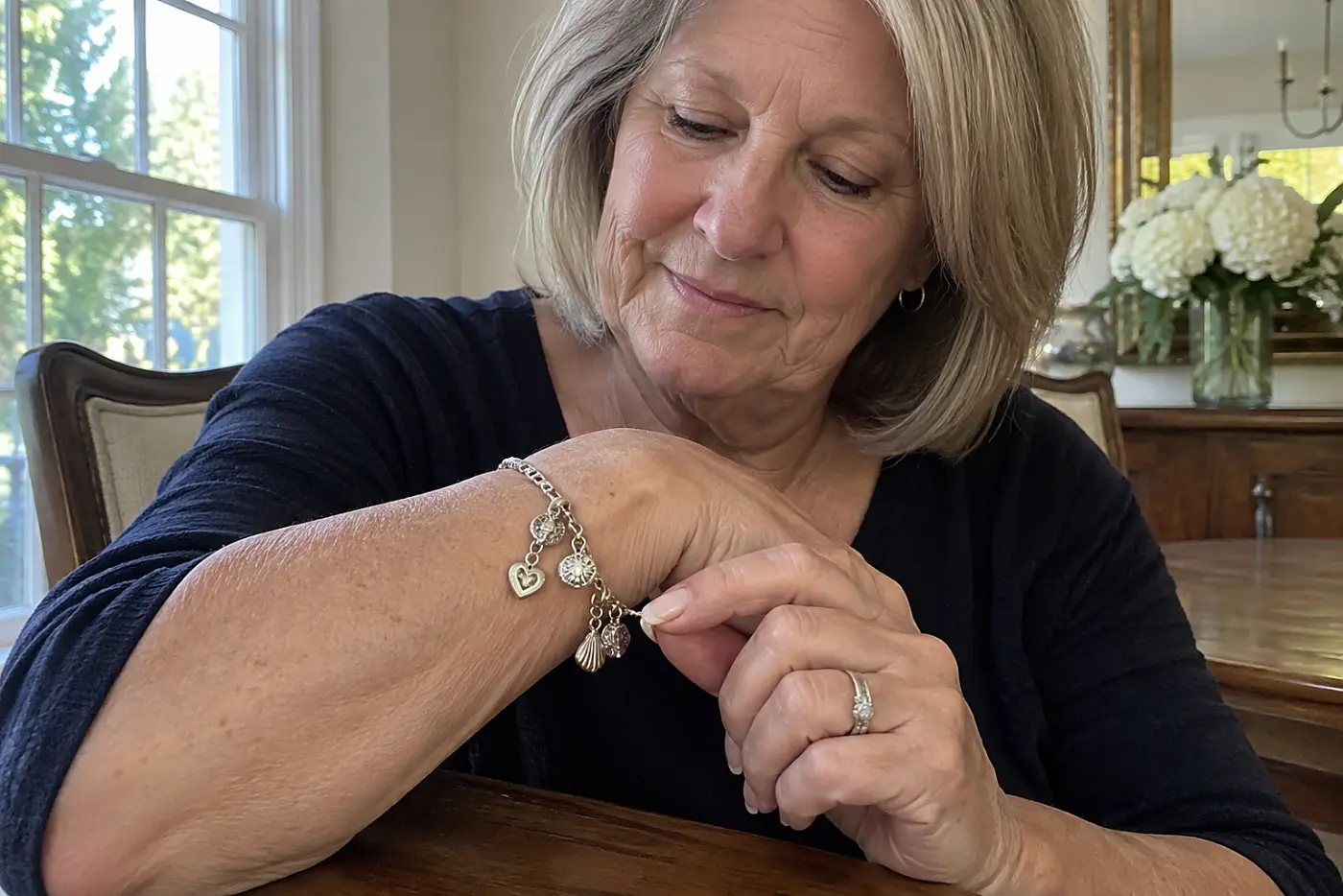
A little silver charm swings when you lift her bracelet.
Each charm marks something she chose to carry: a trip, a birthday, a joke nobody else remembers. Check whether the bracelet and charms are marked sterling or another metal. Individual charms have their own makers and collectors, so don't judge the whole bracelet by its weight.
Before selling anything, photograph the arrangement. Those pictures preserve which pieces belonged together, even if the clasp gives way later. Ask a relative about a charm you don't recognize. Its story belongs in your notes beside its photograph.
Keep the charms attached until you've identified them and recorded their order.
23The Pearl Strand With a Clasp
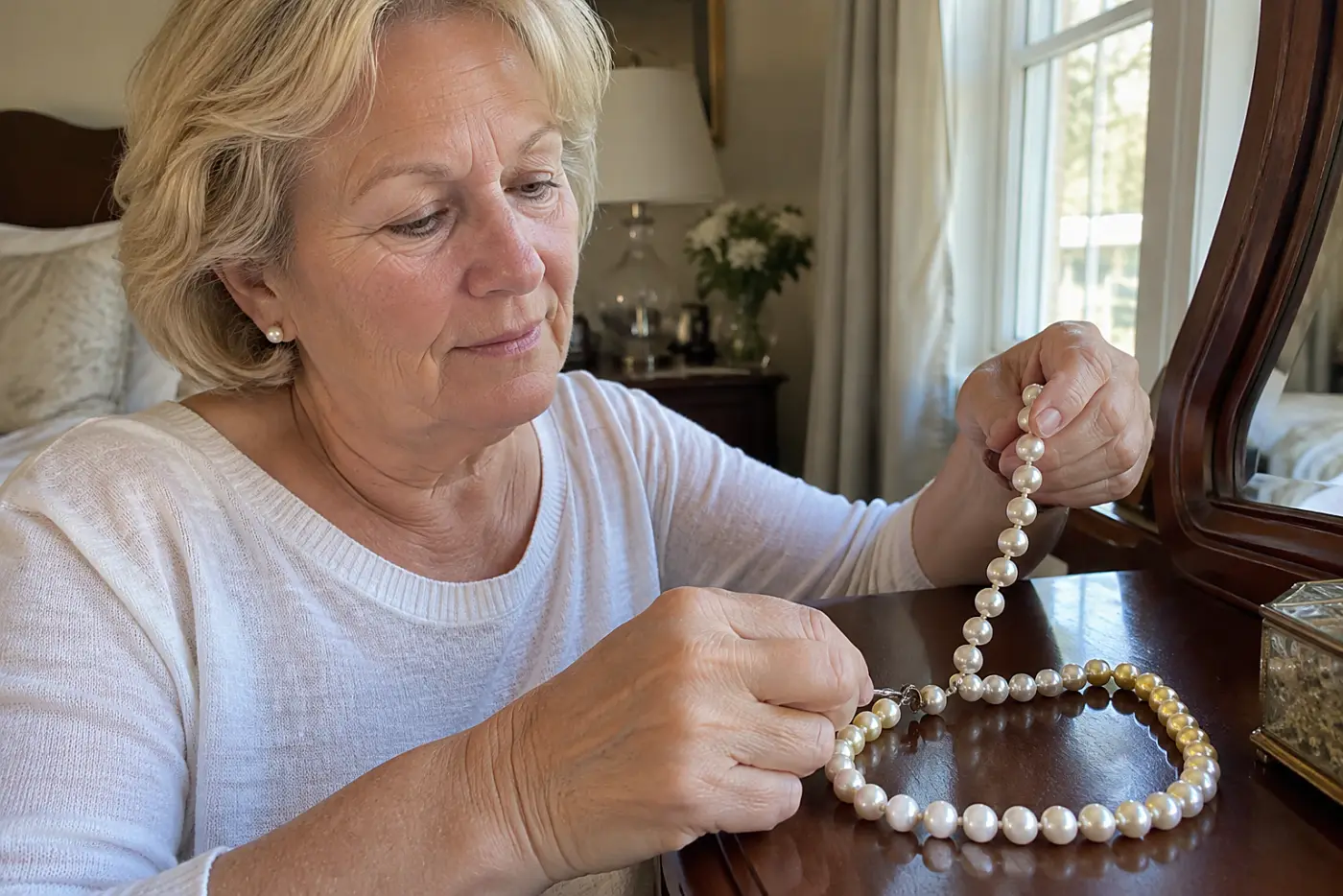
Her pearls lie in a loose curve beside the empty box.
Pearls need more than a glance at their color. The clasp has its own metal and marks; it isn't just a way to fasten the strand. Knots between pearls help prevent rubbing and limit loss if the string breaks. You remember how she checked that clasp before leaving the house.
Ask a jeweler to examine the clasp and stringing before wearing them.
22The Wristwatch She Wound
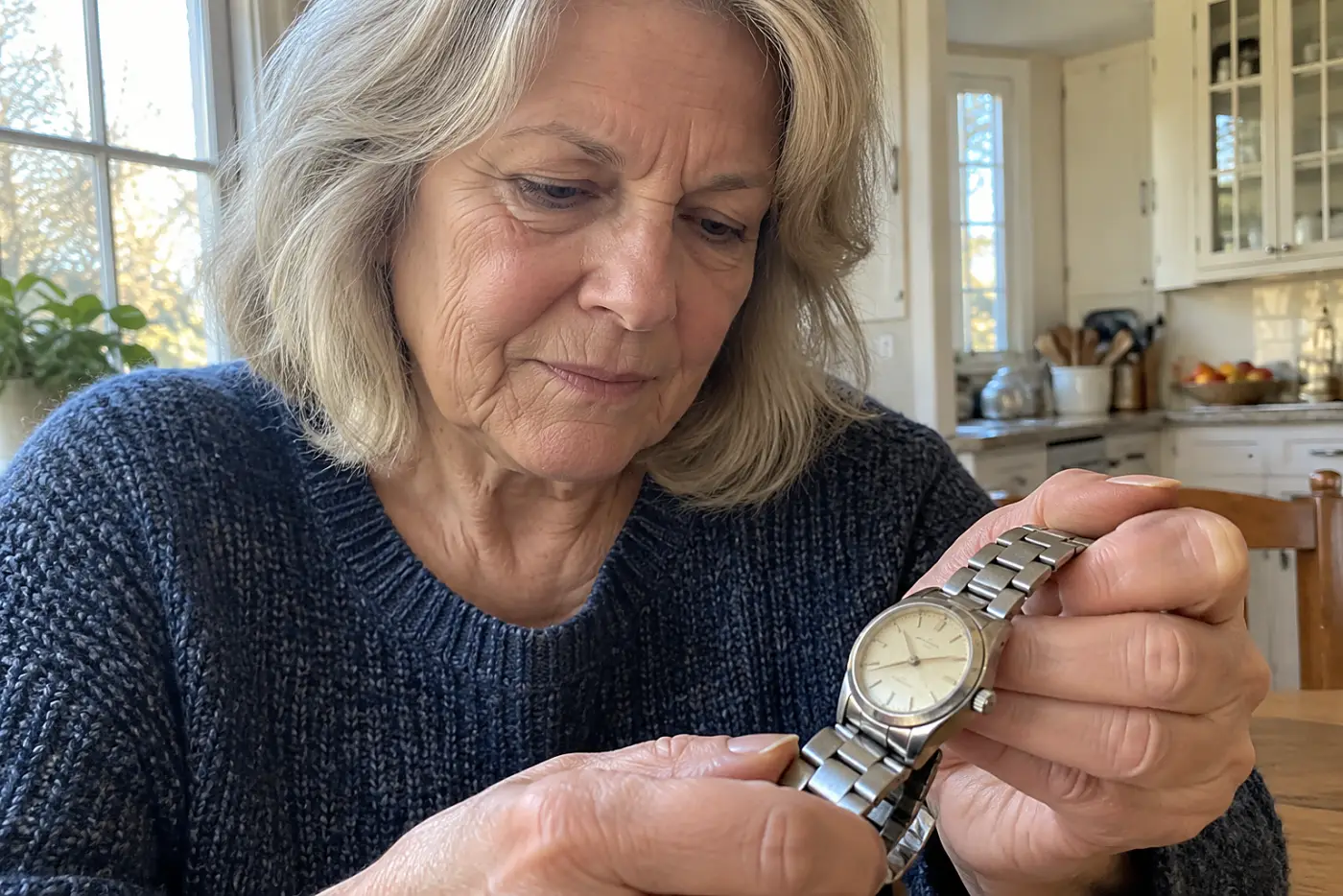
The small watch rests faceup, its hands stopped at another hour.
She wound it before work, perhaps without looking. A familiar brand on the dial is only the start: the movement inside, case material, condition, and original bracelet all matter. Don't pry the case open with a kitchen knife. Damage to the back loses information and creates a repair bill.
If the watch still runs, that fact belongs in your notes. If it doesn't, leave its condition to someone who handles vintage watches. Record where you found it, too. The bracelet tucked beside it could be the original.
Take clear pictures of the front and back, then ask a watchmaker what it needs.
See more: 25 Things Grandchildren Remember That You Never Notice Doing →
21The Art Deco Dress Clip
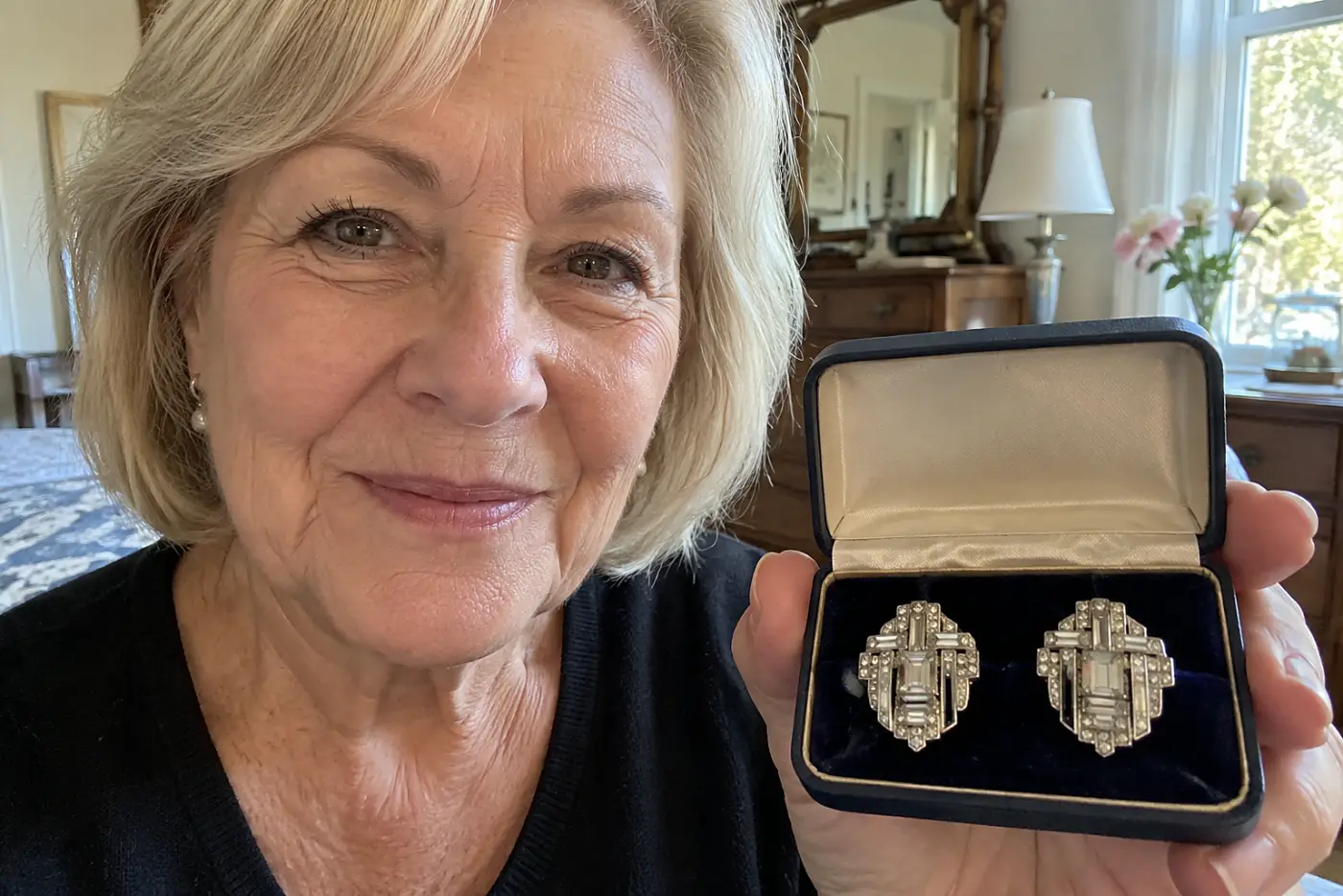
Two bright clips sit where she left them, side by side.
In the 1930s, dress clips fastened onto necklines, lapels, and hats. A matched pair belongs together, even when each clip has its own fastening. Glass stones aren't a reason to dismiss them; design and maker matter in costume jewelry. Turn them over without forcing the mechanism.
Put both clips in one pouch, and show the backs to a vintage jewelry dealer.
20The Heavy Gold Signet Ring
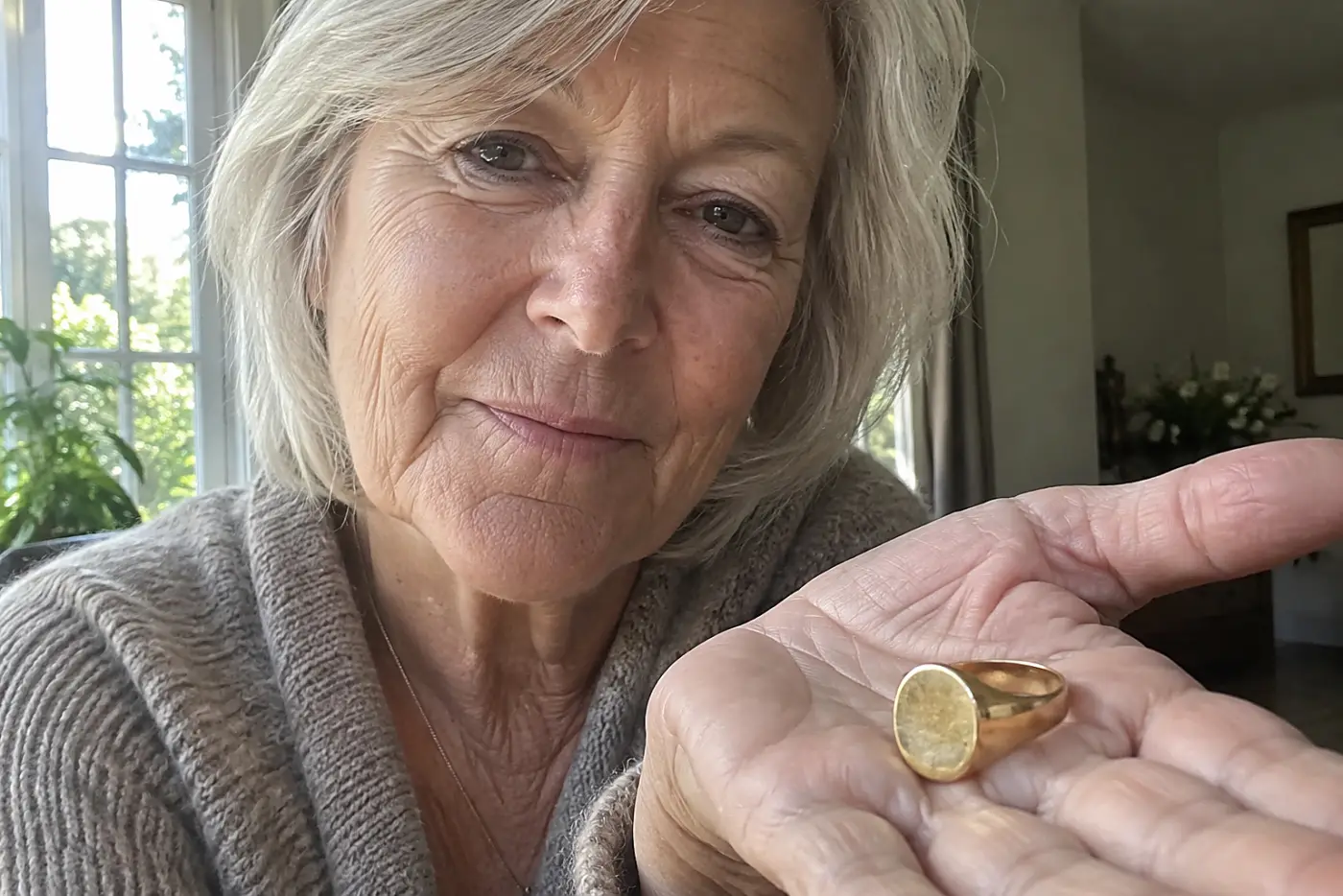
Her signet ring has a broad face and worn edges.
That wear is the record of a hand, not a defect to polish away without thought. A signet ring has two stories to check: its metal and any engraving. Hallmarks can identify gold purity, while an engraved initial connects the ring to your family. A replacement stone or altered shank changes its history.
Even a plain ring deserves a proper test rather than a guess based on color. Ask who wore it before your mother if the initial isn't hers. Write that name down while someone still remembers.
Record whose initial it is before a dealer weighs the ring.
19The Beads From Her Dresser
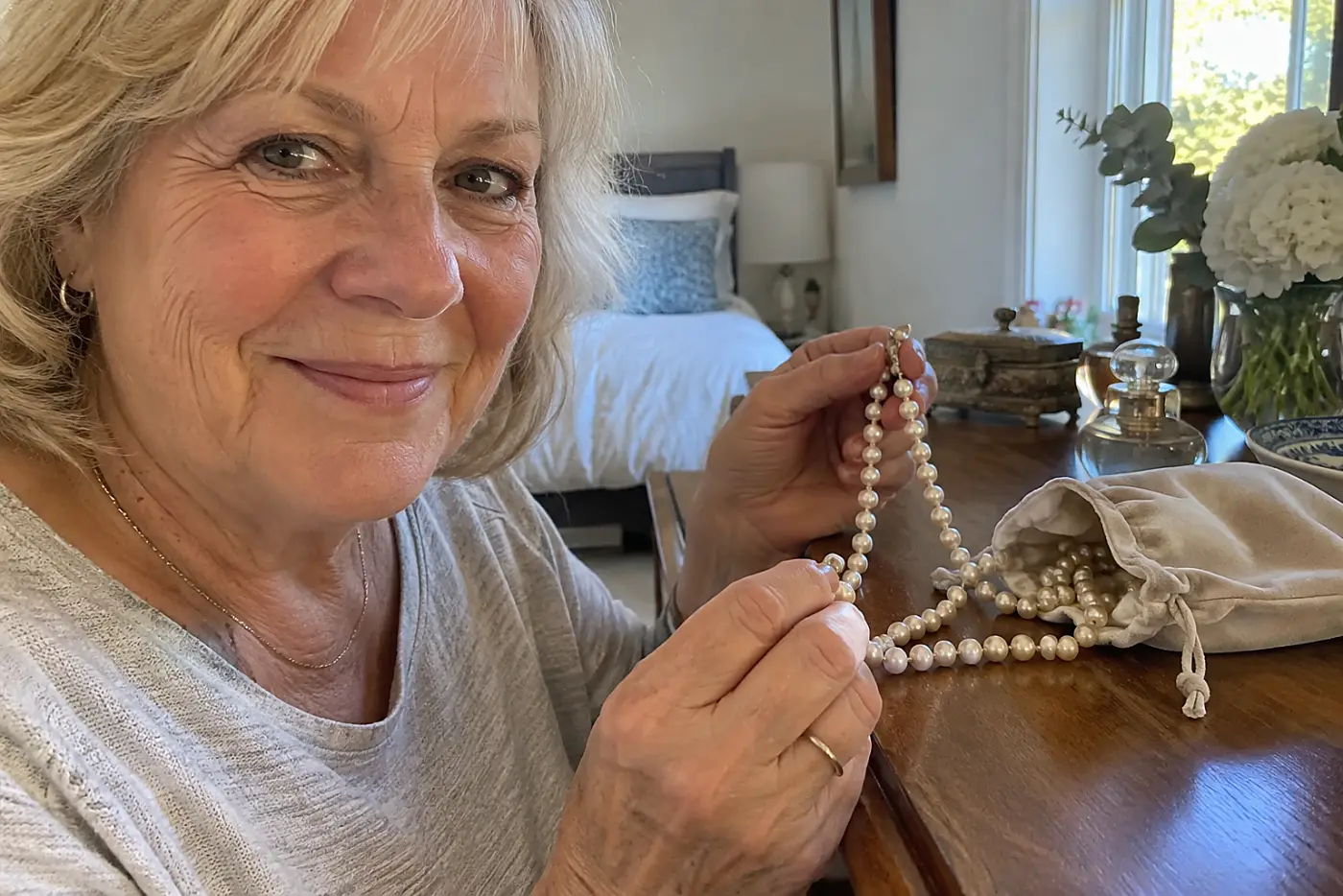
Round beads spill from the pouch you remember opening.
They look alike until you hold them near a window. Glass, stone, and plastic have different surfaces and weights. Some strands were restrung, leaving an old clasp on newer thread. Others still have their original knotting and findings. That distinction helps when you ask what the necklace is.
Lay the strand flat, photograph its clasp, and leave cleaning for later.
See more: 28 Steps on the Downsizing Checklist for Seniors, in Order →
18The Brooch Shaped Like a Flower
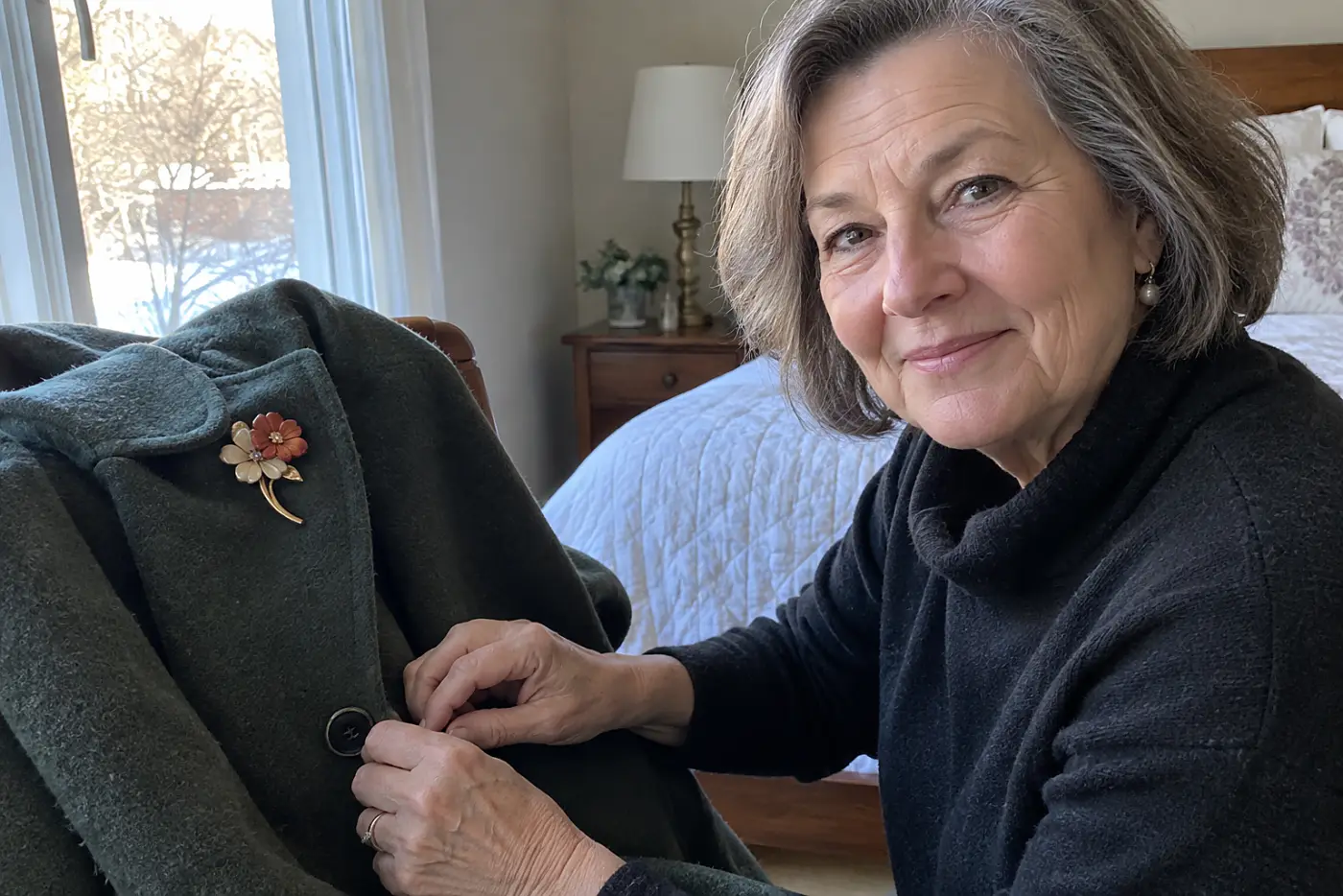
A bright flower sits on its pin, petals still sharp.
She fastened it to a winter coat because the coat needed something cheerful. Check the back before assuming the front tells the whole story. A maker's mark, secure catch, and intact enamel each add useful information. Missing stones and chipped enamel matter, too.
Costume jewelry isn't automatically cheap, and precious metal isn't guaranteed by a gold-colored finish. Your first task is identification, not polishing. Look at the petals in daylight before you describe their color. A dealer needs to see the back as clearly as the flower.
Photograph the front and back beside a ruler, then search completed sales for comparable brooches.
17The Tennis Bracelet With a Latch
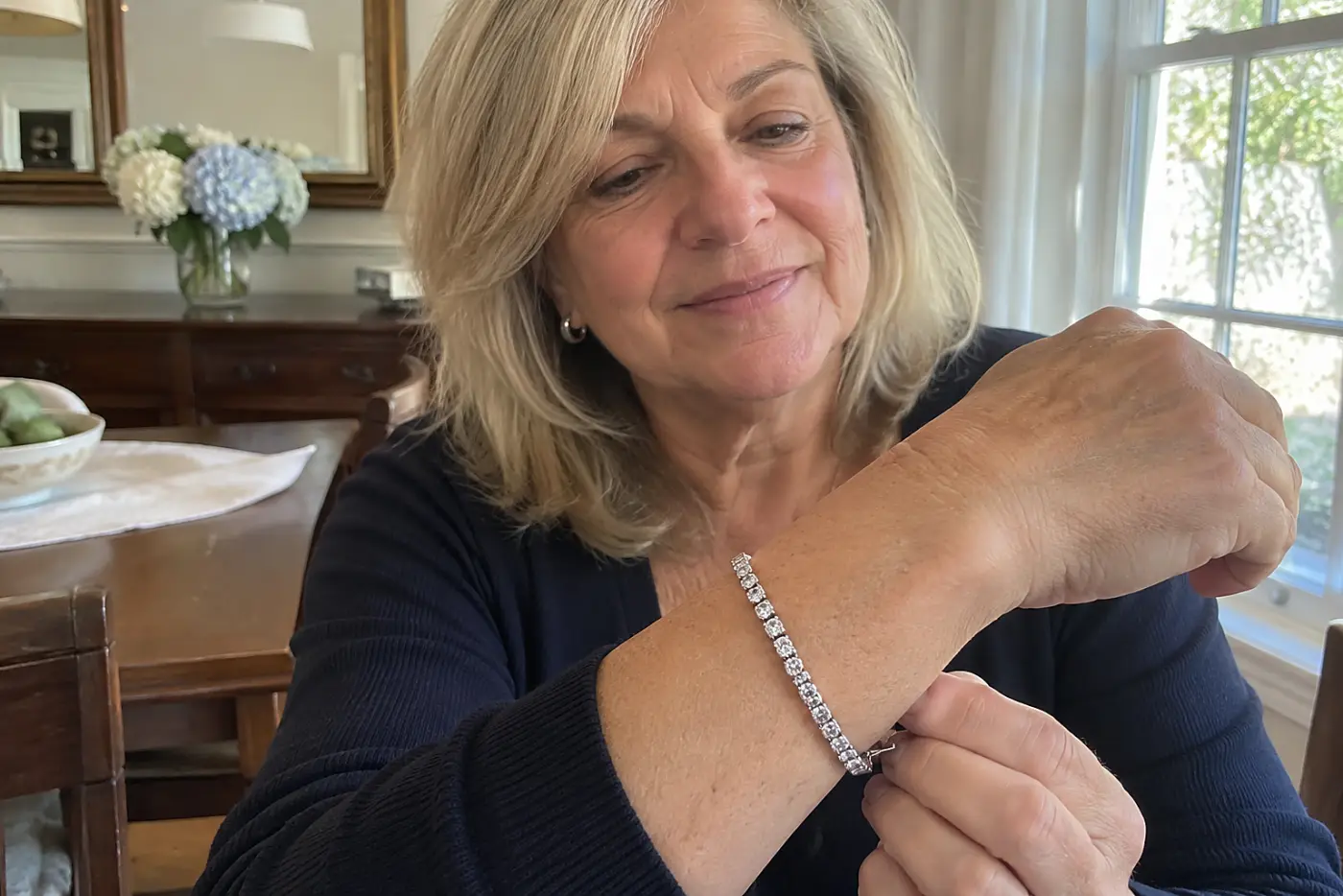
Small clear stones run the length of her wrist.
A bracelet like this depends on every setting and its clasp. One loose link changes whether it's safe to wear. Stones that look identical at arm's length need identification up close. Diamonds, glass, and other gems call for different descriptions. The metal deserves a separate check.
If she wore it to every family wedding, you already know its place in the box. Keep it there until the latch holds securely. A photograph of the full bracelet also records any gap before a repair.
Have a jeweler inspect the stones and latch before you wear it again.
16The Coral-Colored Bead Necklace
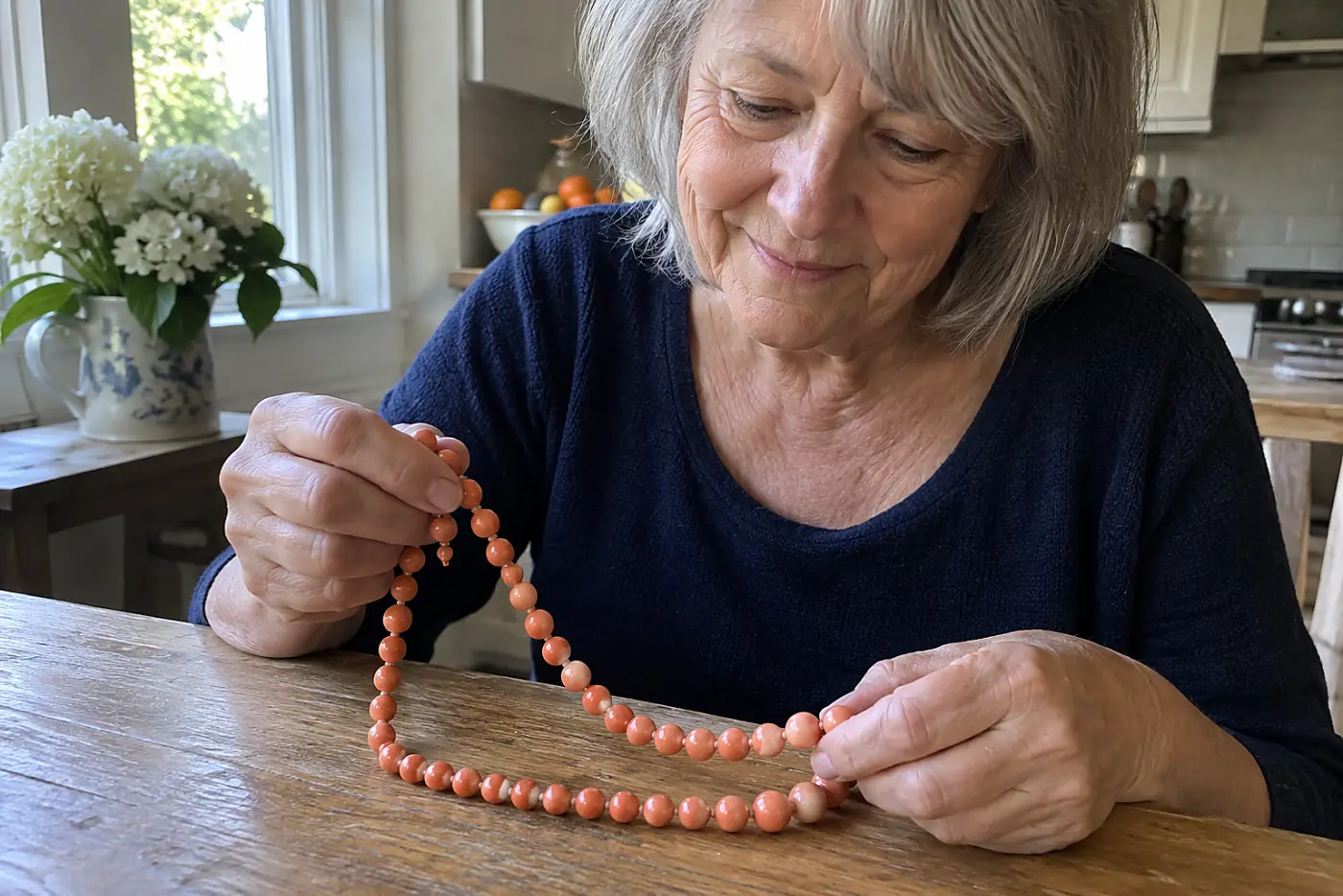
The red-orange beads look different in morning light.
Color alone doesn't identify coral. Glass, dyed stone, plastic, and coral can resemble one another in a photograph. Genuine coral also raises questions about species and trade rules, especially before a sale or shipment. She bought the necklace to wear, not to answer those questions decades later.
Look for old paperwork before asking anyone to name the material. A dealer who handles antique jewelry is better placed to inspect it than an online guesser. Keep any loose bead with the strand. Its hole and surface give the dealer another place to look.
Keep the strand intact and get an in-person identification before listing it.
15The Gold Locket With a Photograph
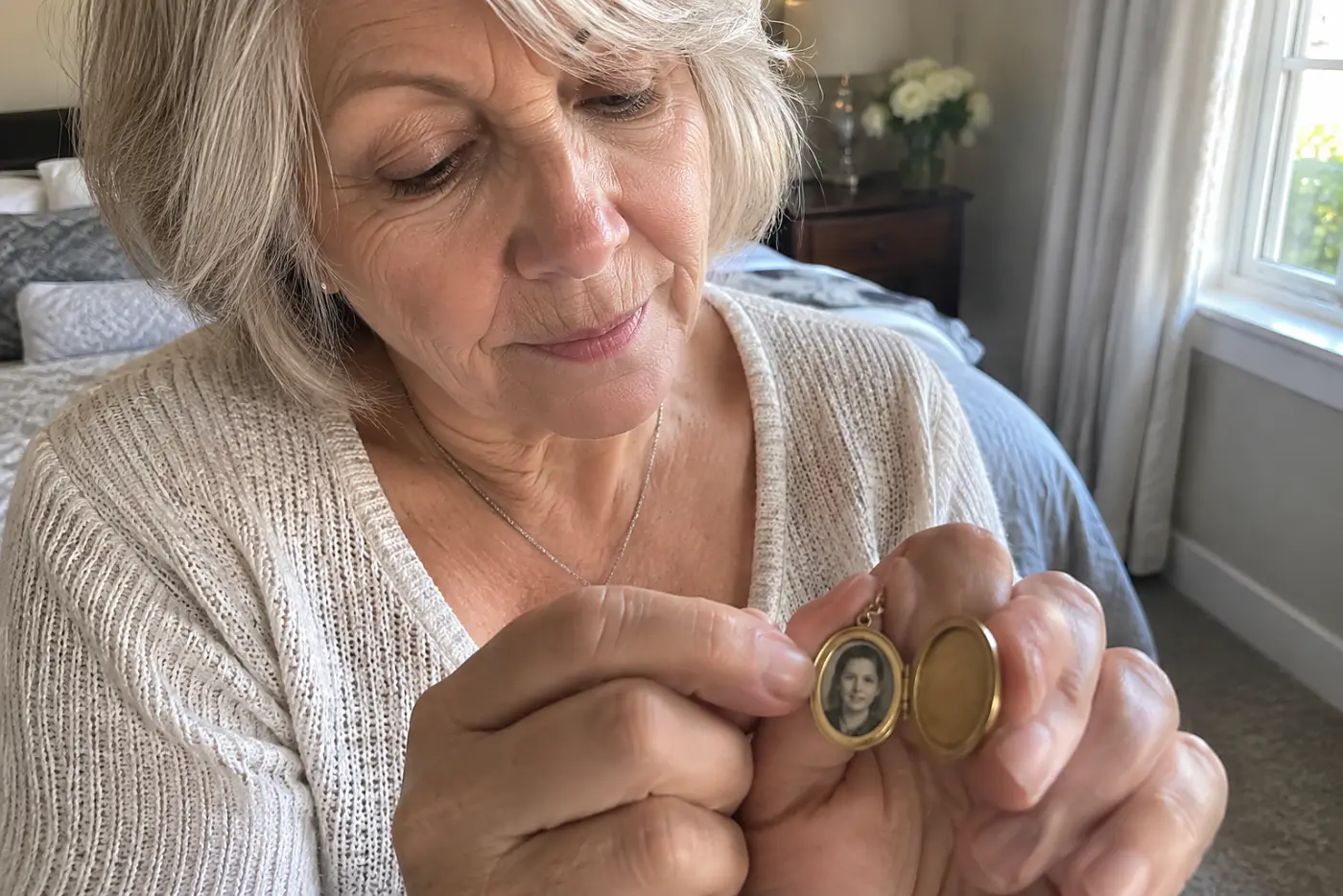
Her locket opens to a face you know by name.
The photograph is part of the reason you saved it. The case deserves attention as well: inspect the hinge, glass covers, and marks inside. A monogram or date links the piece to its owner.
Don't remove the photograph just to check the metal. A fragile image has value to your family that no dealer's scale measures. If someone remembers the person pictured, write down the connection. That name travels with the locket long after anyone forgets which drawer held it.
Record the name behind the face, and photograph the locket open and closed.
See more: 27 Things Grandmothers Notice That Nobody Else Does →
14The Rhinestone Necklace From Parties
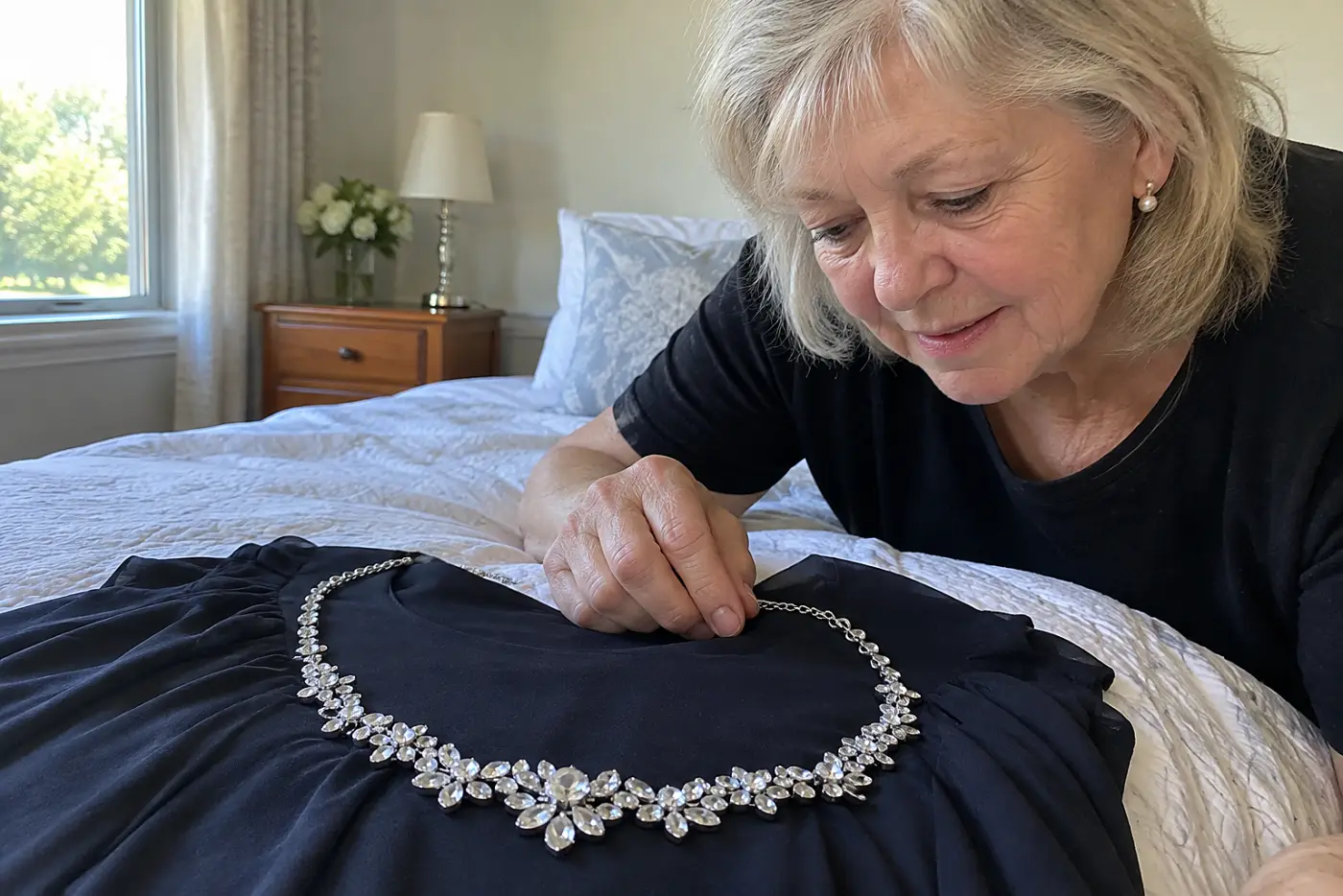
Clear stones crowd the necklace she wore after dark.
She didn't need real diamonds to make an entrance. Vintage rhinestone jewelry earns attention through its maker, design, condition, and surviving stones. Darkened foil behind a stone changes its look; a replacement stands out in a matched row. Turn the necklace over to look for a signature and inspect the links.
You don't have to wear it yourself to respect why she loved it. Nor should a missing box make you assume it has no audience.
Search completed sales using the maker's name and a clear photo of the whole necklace.
13The Turquoise Ring With Veins
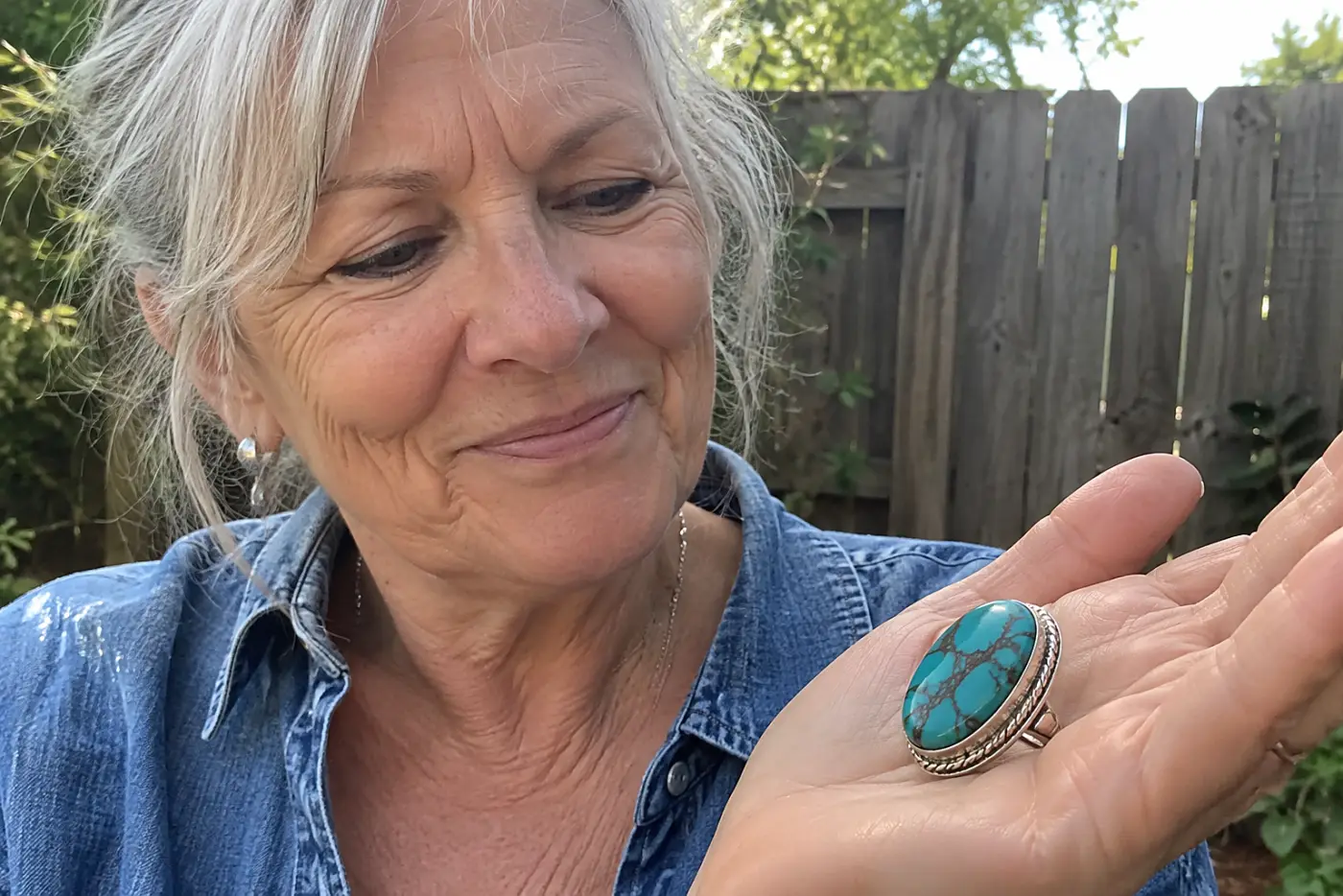
Blue stone and dark lines fill the ring's face.
That pattern is part of what caught her eye. Turquoise varies in treatment, quality, and origin; color alone proves none of them. Silverwork deserves attention in its own right, especially when a maker's mark appears inside the band. Don't call a piece Native American without evidence of its maker. That label carries a specific meaning, not a description of a look.
Photograph the band and setting, then ask a qualified dealer to identify the work.
12The Pair of Pearl Earrings
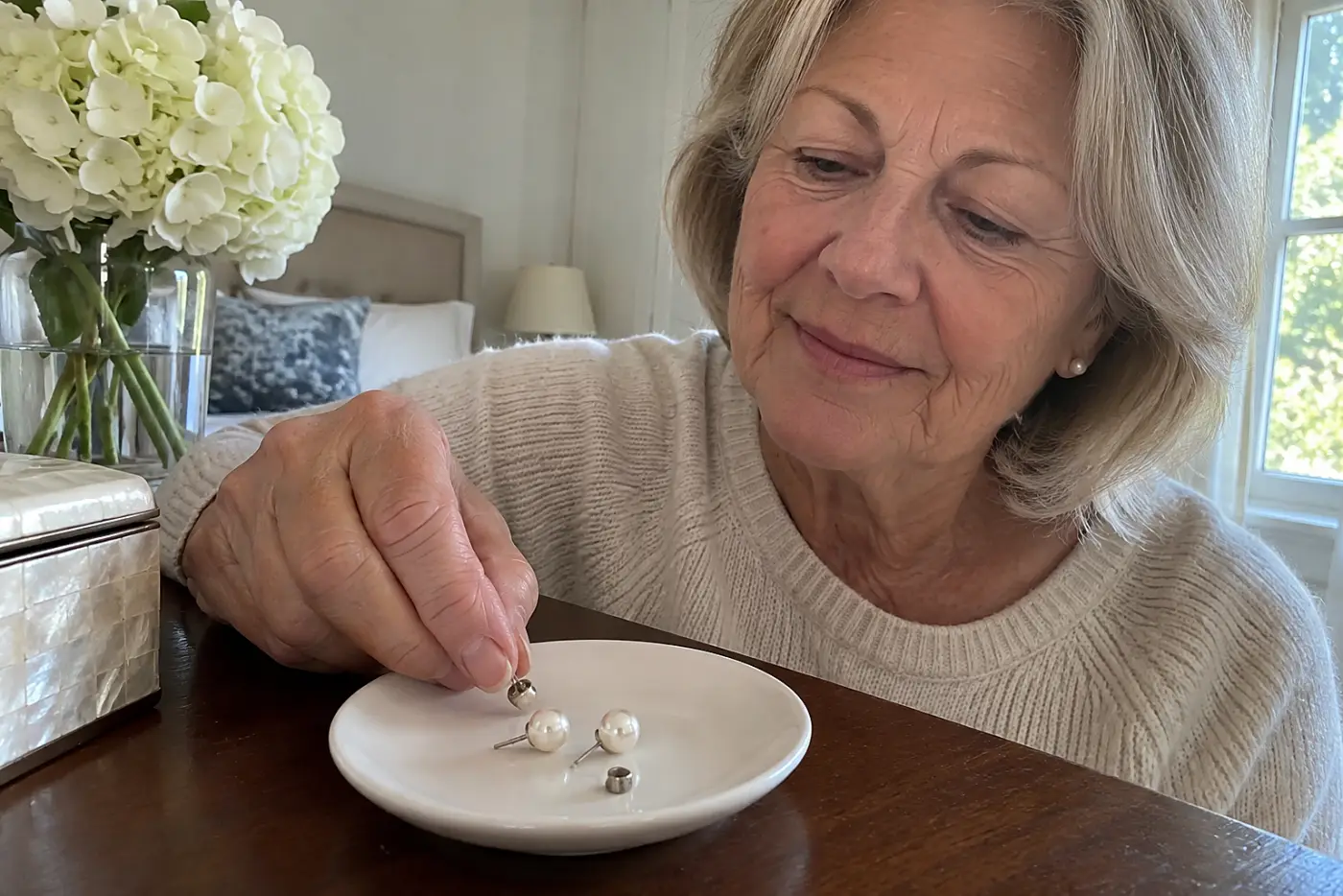
Two pearls sit above the little posts she wore daily.
They spent years beside her perfume bottles, so check them before cleaning. The settings hold the clues: metal marks, maker's marks, and whether each pearl is firmly attached. Pearls also vary in type, and a photograph won't settle that question.
A pair matters because matching size, color, and condition matter to the person assessing it. Keep the original backs if they're still in the box; replacing them before identification removes a detail.
Place each earring and its back in one small pouch, then have the pearls identified.
11The Wide Silver Cuff
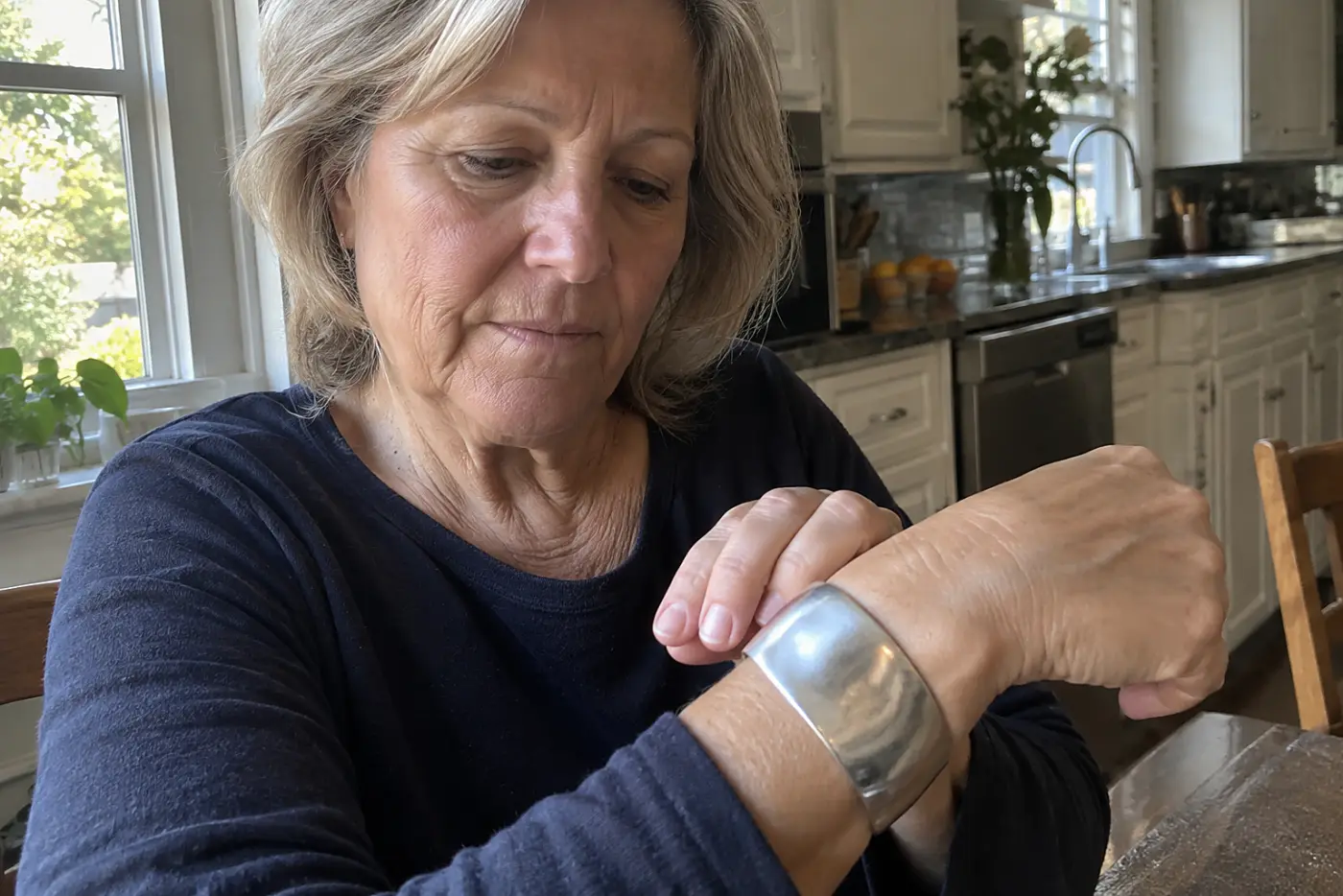
The cuff has a shallow dent where it met a table.
Your mother kept wearing it anyway. Handwork, weight, and a stamped maker's mark tell more than a quick polish does. Silver tarnish is not the same as damage. Abrasive cleaning can erase dark detail from an engraved design, leaving it harder to read. The dent belongs in a condition report, not an apology.
Check the inside for marks and ask a silver dealer before cleaning it.
10The Garnet Cluster Brooch
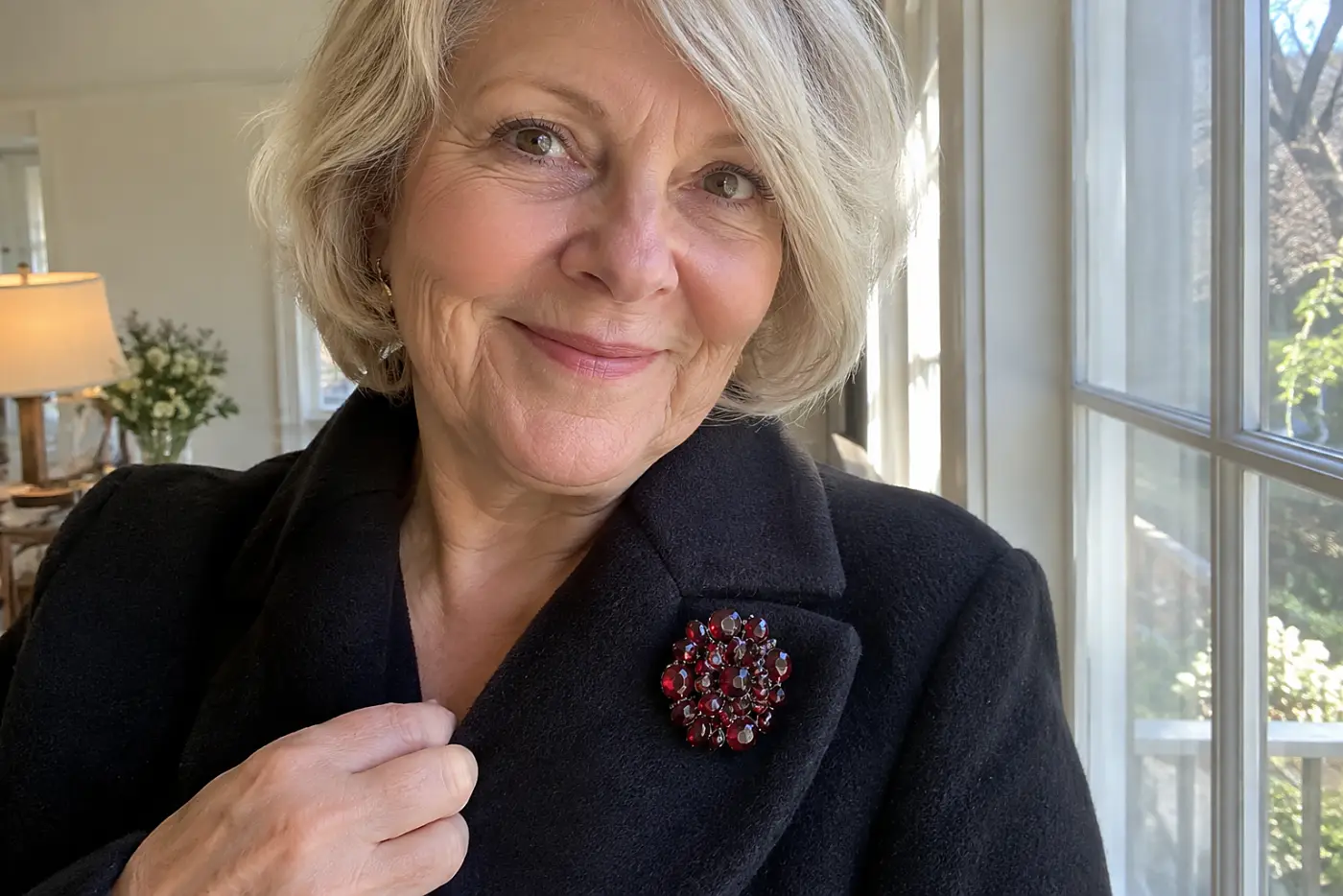
Deep red stones gather around the center pin.
She wore the brooch against a dark coat. It almost disappeared until the light caught it. Garnets appear in older jewelry, but red glass can look convincing too. Check for missing stones, a repaired pin, and any metal marks.
A complete cluster gives a dealer more to assess than a loose stone. That familiar coat is gone; the brooch still holds the memory. Look at the catch before pinning it to another coat. A weak catch puts the whole piece at risk.
Take it to a jeweler for stone identification before describing it for sale.
9The Two-Tone Gold Chain
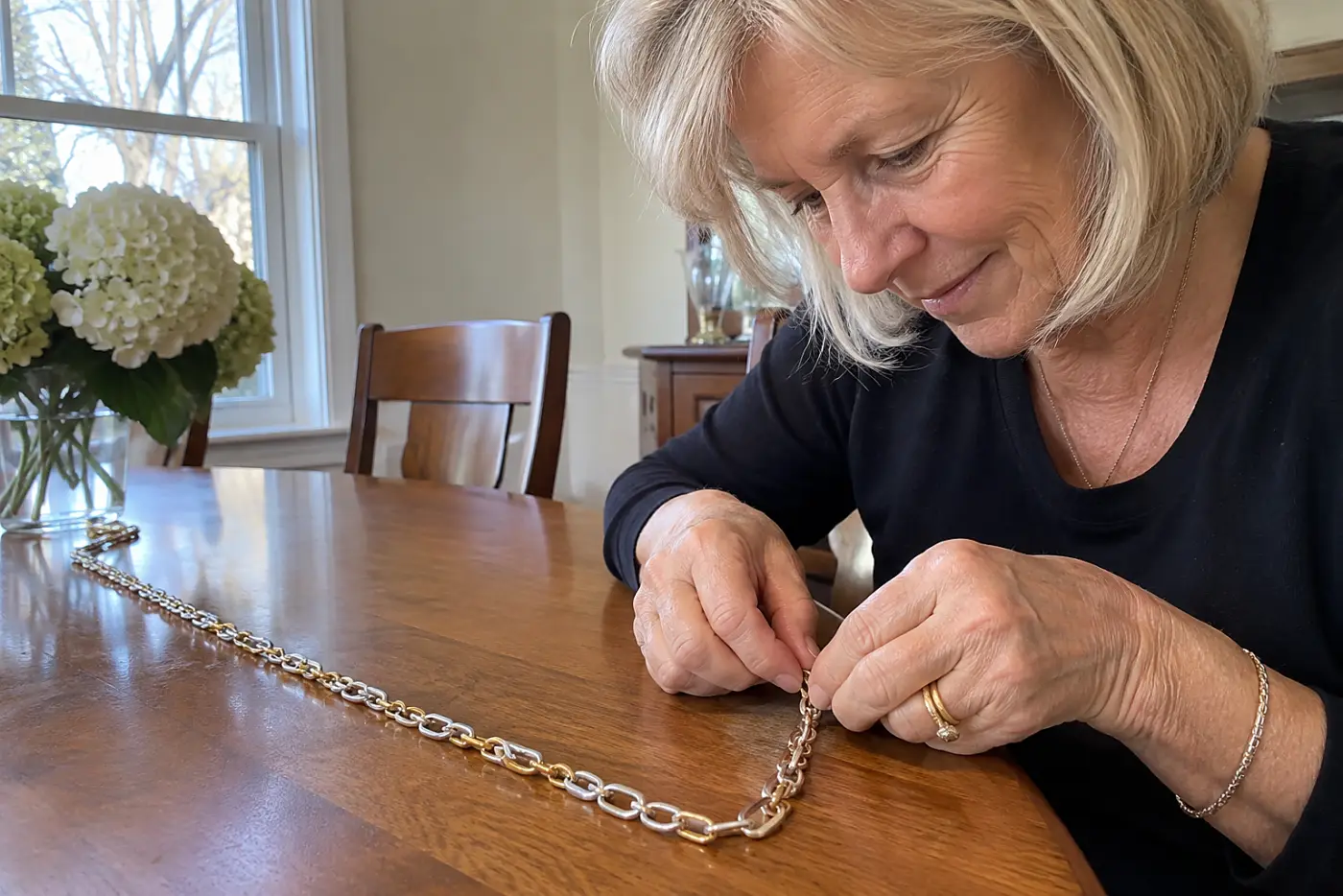
Yellow and white links alternate around her chain.
She wore it with nearly everything, which explains the rubbed spots near the clasp. Two colors don't tell you whether both metals are gold. Marks on the clasp and links help, as does testing by a jeweler. Check for kinks and repairs before wearing it. A chain has value as an object, not only as metal by weight; its construction and condition count.
Lay it straight for a photograph, then ask for a metal test before accepting a scrap offer.
8The Ring With Tiny Side Diamonds
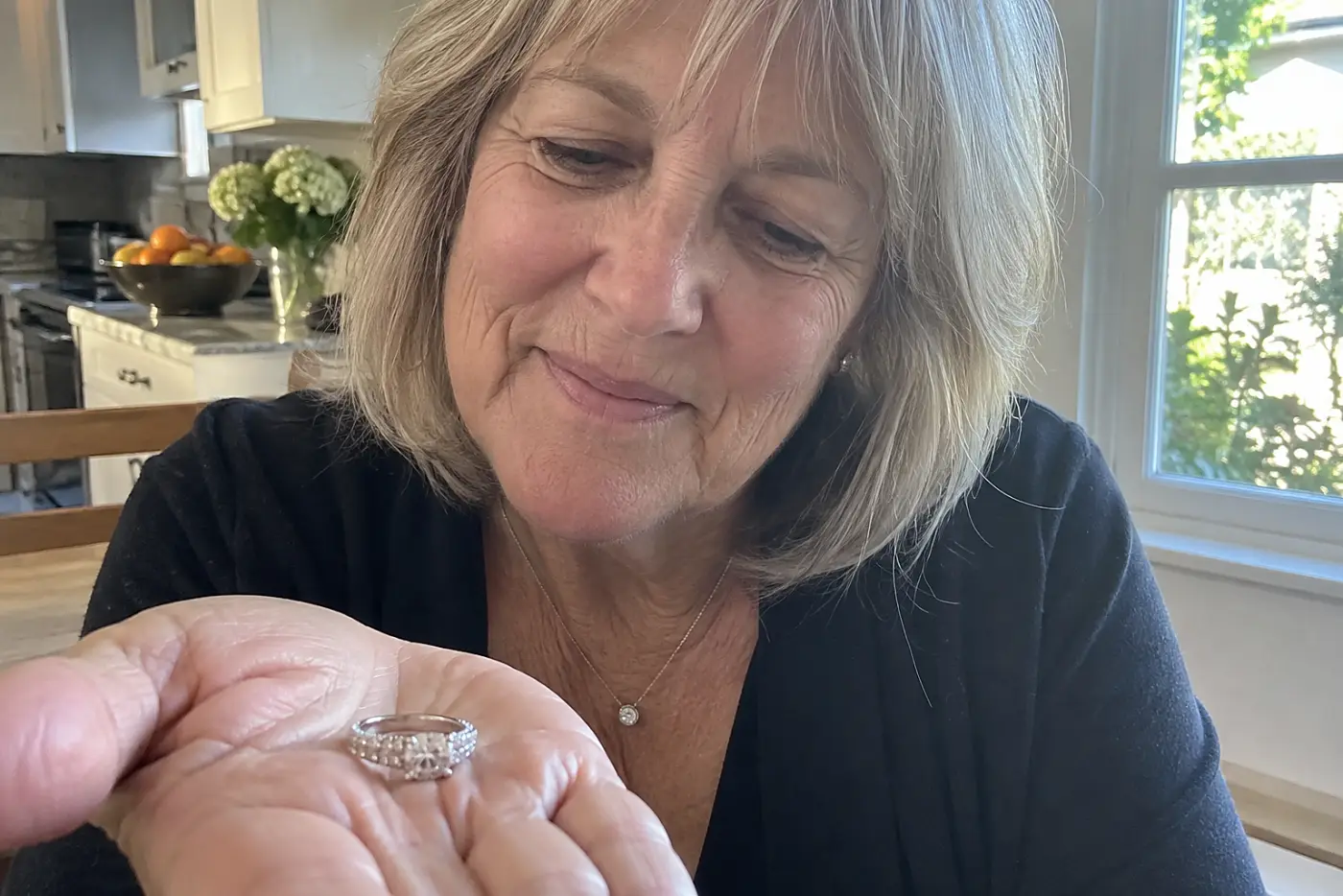
Small stones flank the center of her old ring.
You noticed the center first, as she intended. The side stones matter when someone describes or assesses the entire ring. Check for missing stones, thin prongs, and a worn shank. A ring that's been resized also leaves clues inside the band.
Don't clean it over an open sink; a loose stone has a way of finding the drain. If this ring carries a family promise, decide who should hear its story before discussing a sale. Photograph the underside, where worn prongs are easier to spot.
Ask a jeweler to inspect every setting and identify each stone.
7The Matching Necklace and Earrings
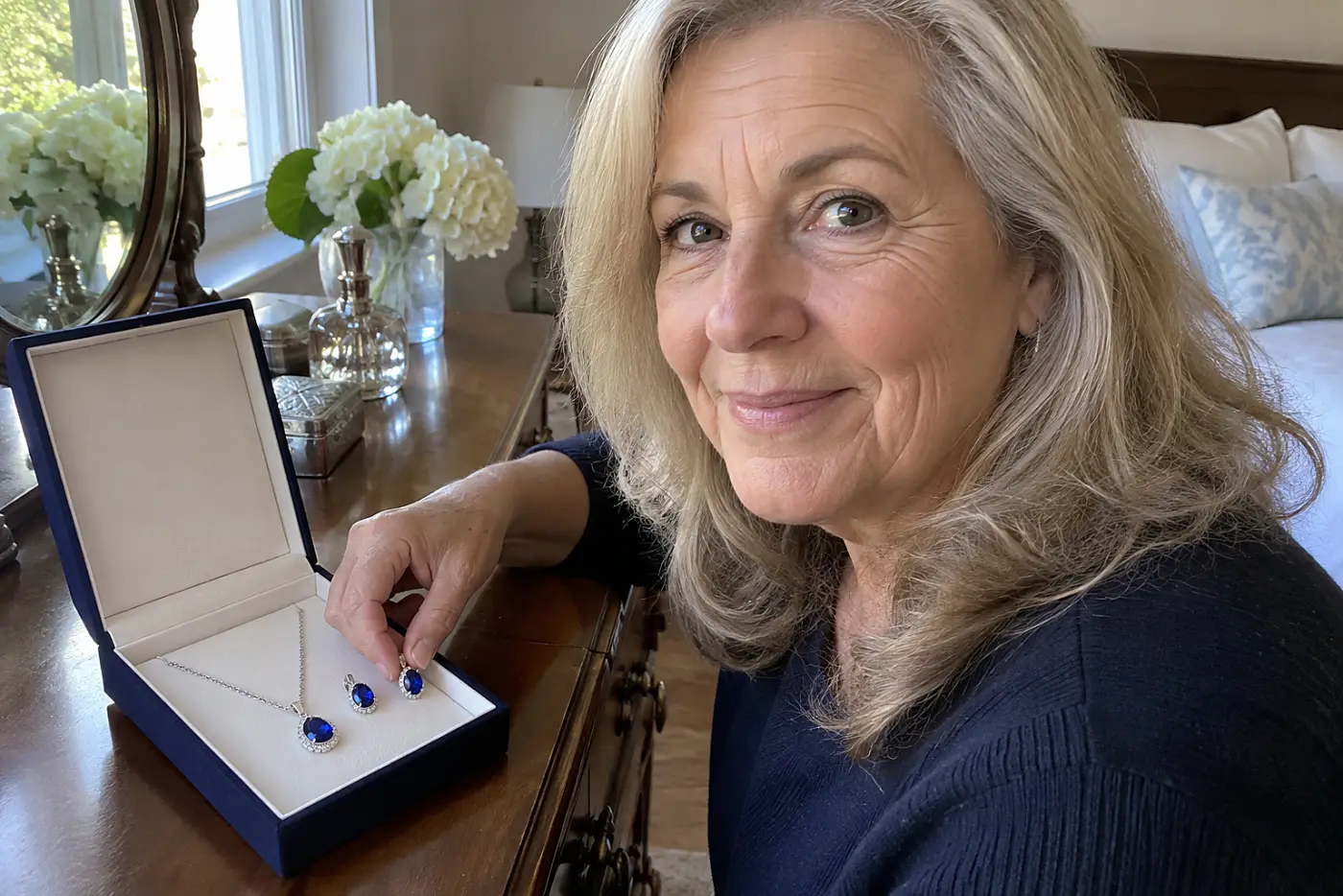
The earrings repeat the necklace's little blue stones.
You saw her reach for the set on days she dressed up. Matching pieces belong together when you compare them with completed sales. Check whether the same maker marked each piece and whether any stones have changed color. A lone earring in another tray is worth finding before anyone sorts the box.
Gather the pieces, photograph them together, and keep each clasp and backing with its mate.
6The Ring Guard Beside Her Rings
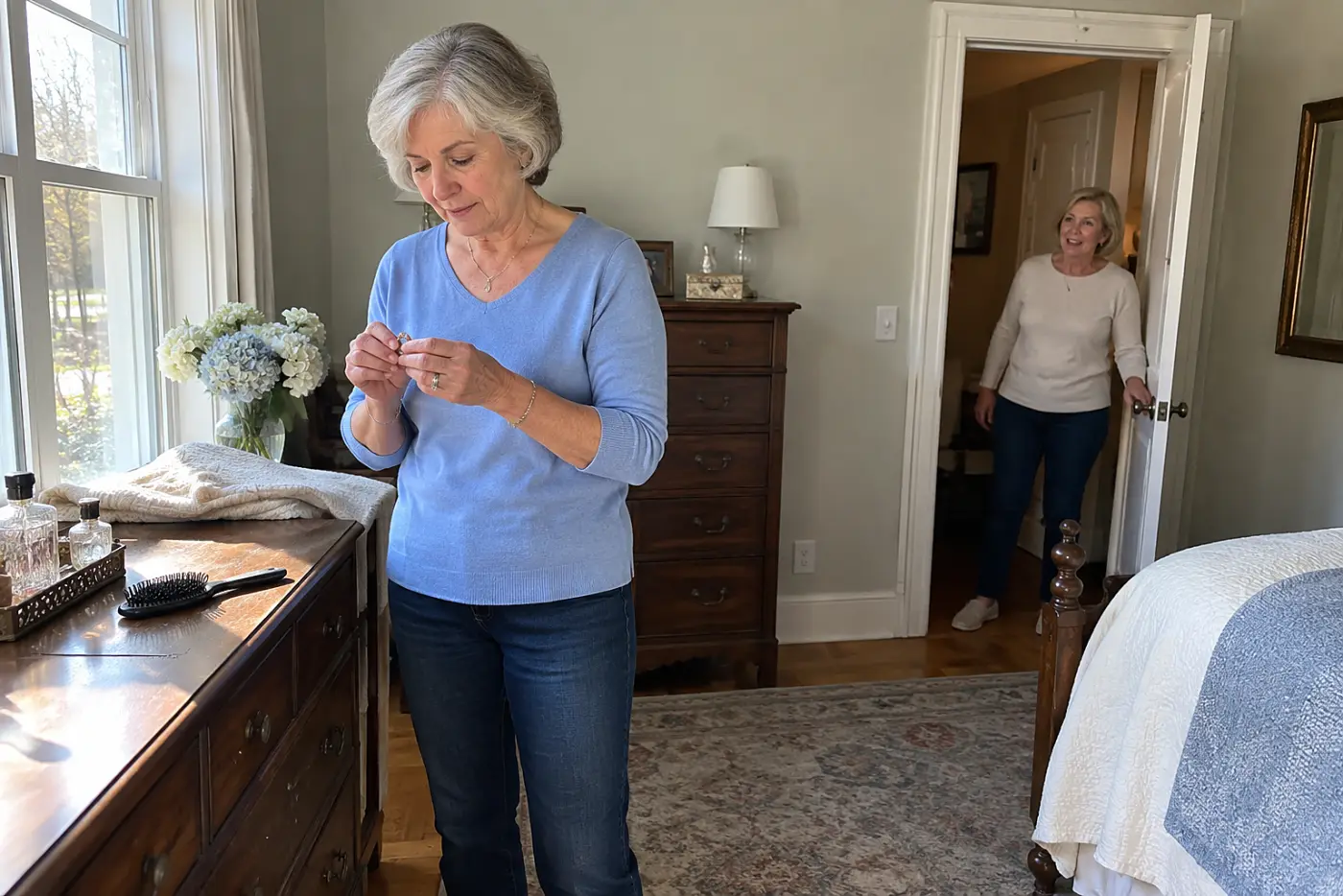
The curved band fits around the ring you remember on her hand.
She used the guard to hold a loose ring in place. She didn't need to resize the ring she loved. Look inside the guard for a metal mark. Then check its shape against the rings still in the box.
Wear along both edges shows how the pieces sat together. A guard isn't part of the ring's setting, so don't assume a dealer will know they belonged together. You remember the pair on her hand; that connection deserves a place in your notes.
Keep the guard beside the ring. Tell the jeweler, “She wore these together. Please check them as a pair.”
5The Loose Stone in a Small Pouch
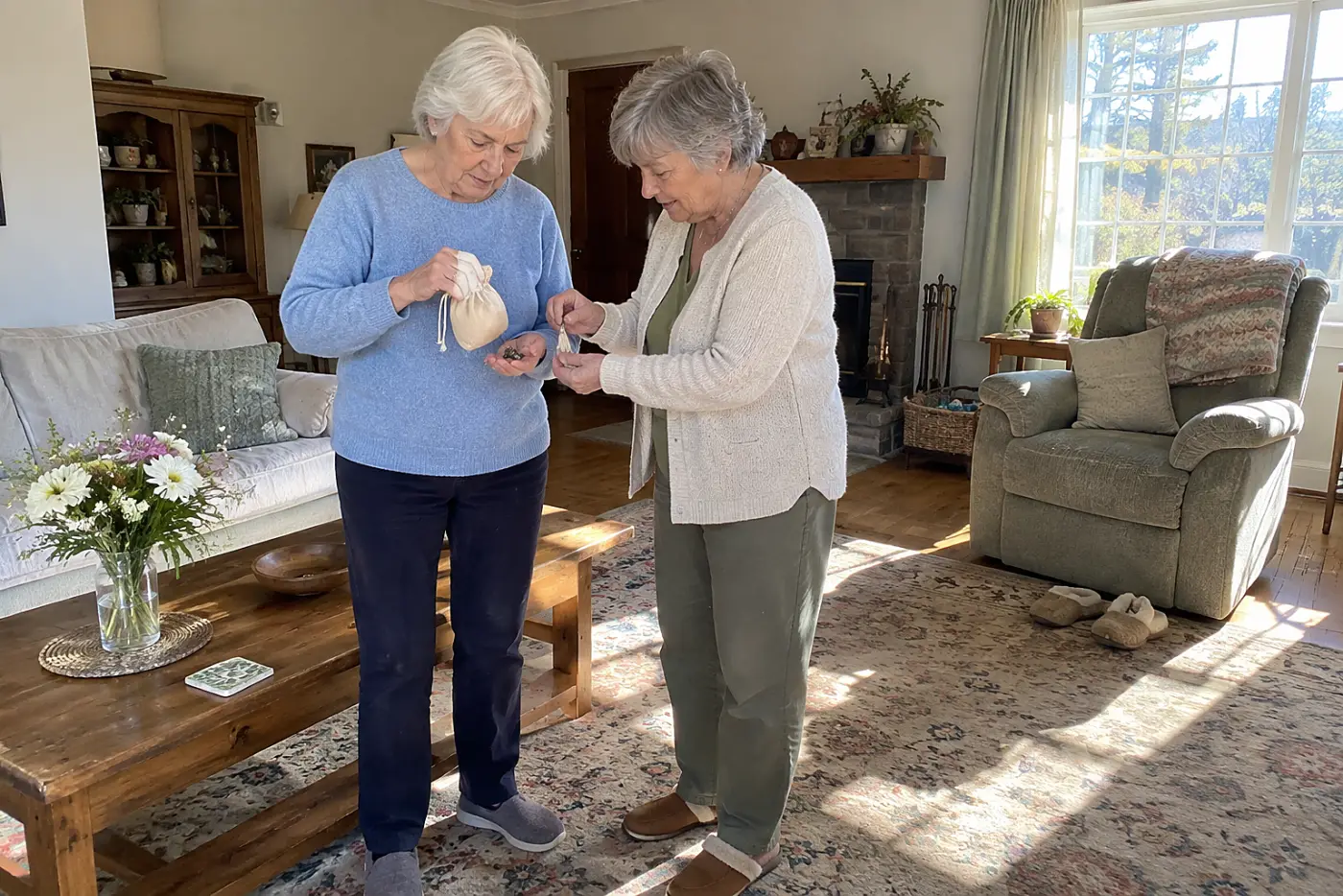
A single stone rolls against the seam of her old pouch.
She saved it after a repair, or it fell from a setting. Color won't identify it. Look through the jewelry for an empty setting, but don't press the stone into place. Its size and cut give a jeweler something to compare with the gap. You kept the pouch because it was hers; keep what was inside it too.
Close the pouch. Ask a jeweler, “What is this stone, and does it fit that setting?”
See more: 29 Signs the Clutter Is Really Grief →
4The Screw Clasp on Her Necklace
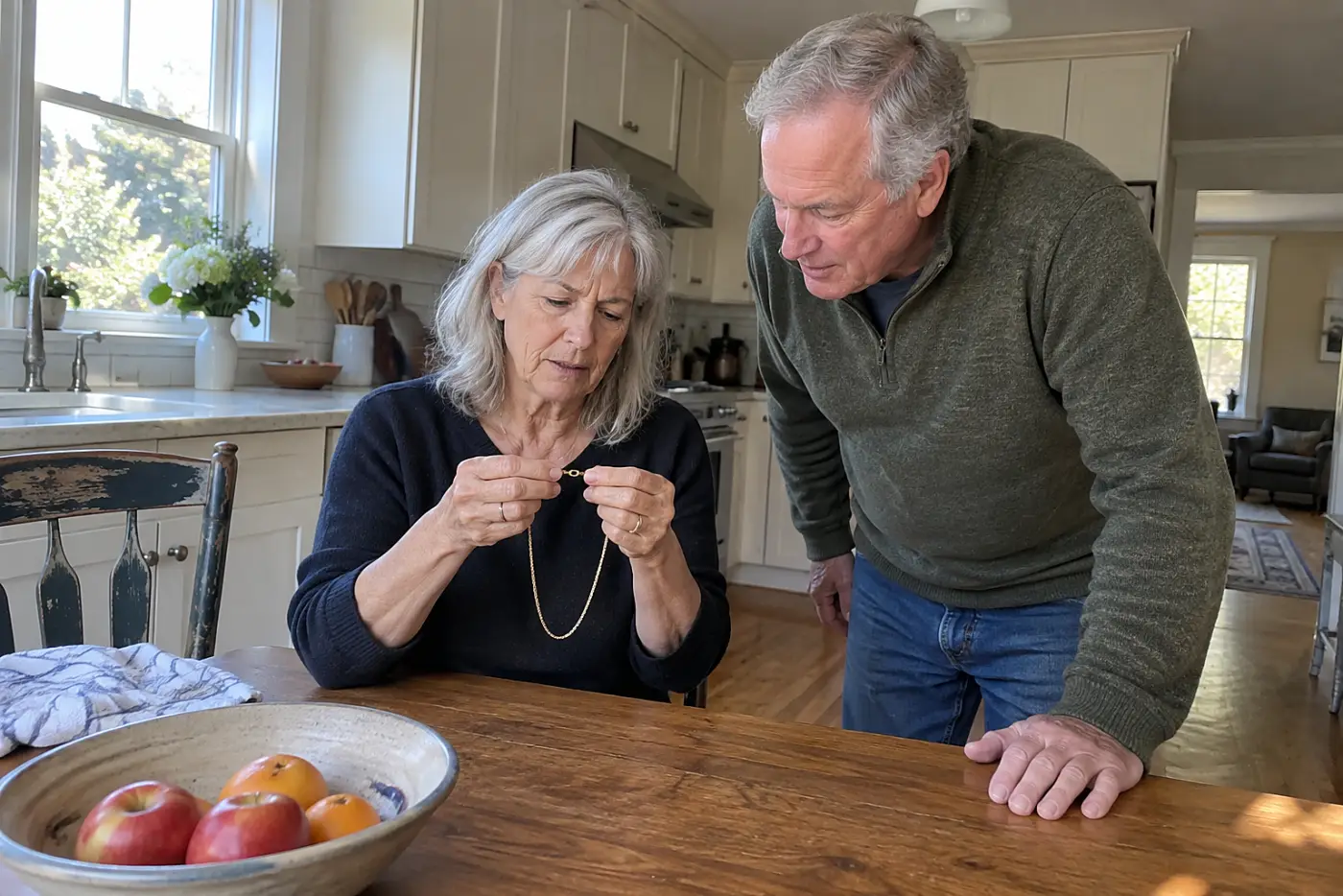
A small metal barrel joins the ends of her familiar necklace.
She turned that clasp before leaving the house. Now it takes several tries to catch. Dirt or worn threads can keep a screw clasp from closing securely, and a forced turn can damage it. Check the metal for marks, but don't judge the whole necklace by its clasp.
Leave it unfastened. Tell a jeweler, “This clasp won't close. Can you check the threads before I wear it?”
3The Unused Links From Her Bracelet
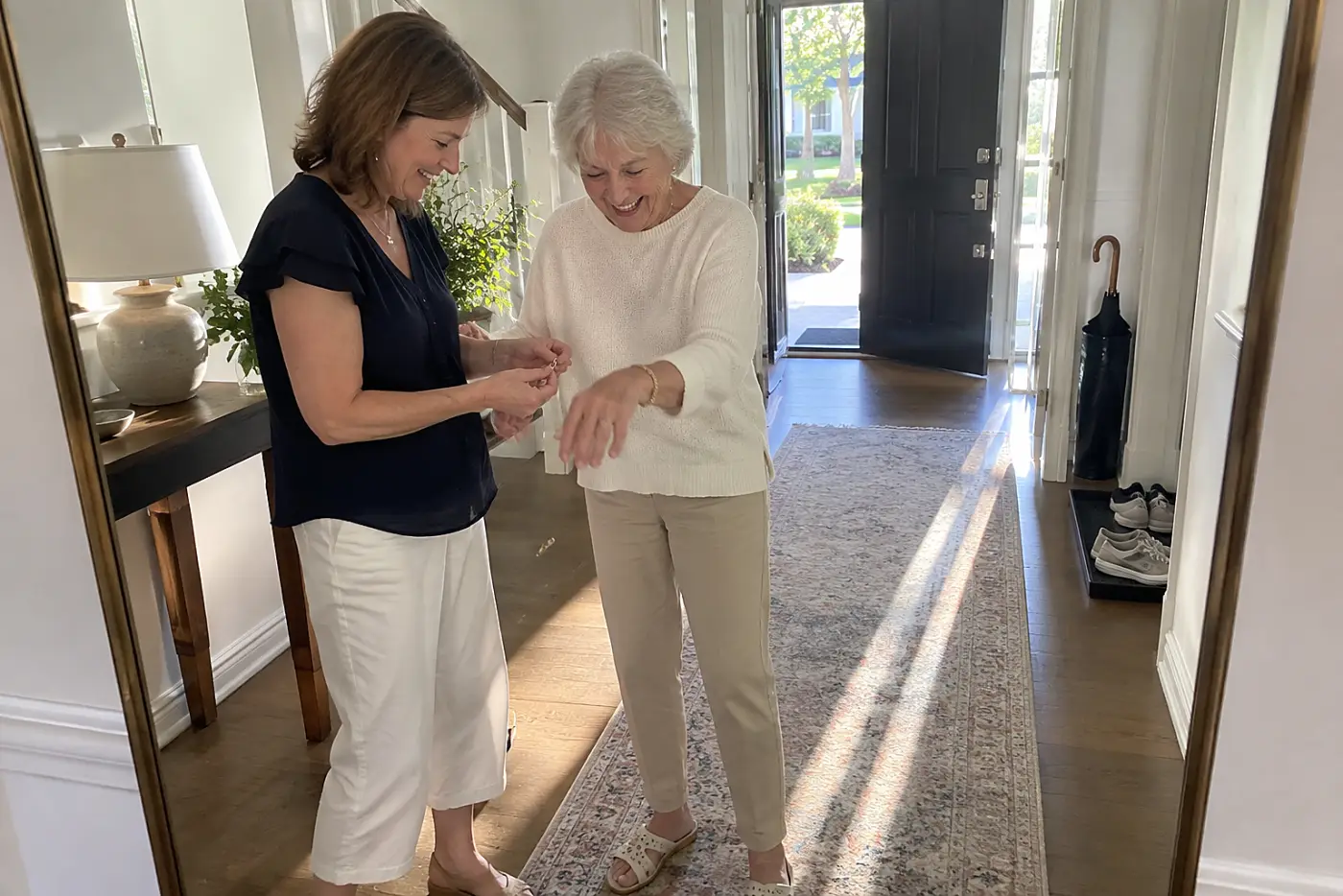
Extra links sit in the pouch with her fitted bracelet.
She had them removed so the bracelet wouldn't slide over her hand. Those links belong with it, even if they spent decades in a drawer.
They give a future wearer room to adjust the fit. Check that the links match the bracelet's metal, pattern, and width; don't assume every loose link came from the same piece. Their tiny connecting pins matter too.
You kept the bracelet as she wore it, but you don't have to lose the parts she set aside.
Put the links beside the bracelet. Ask a jeweler, “Do these fit?”
2The Engraved Wedding Band
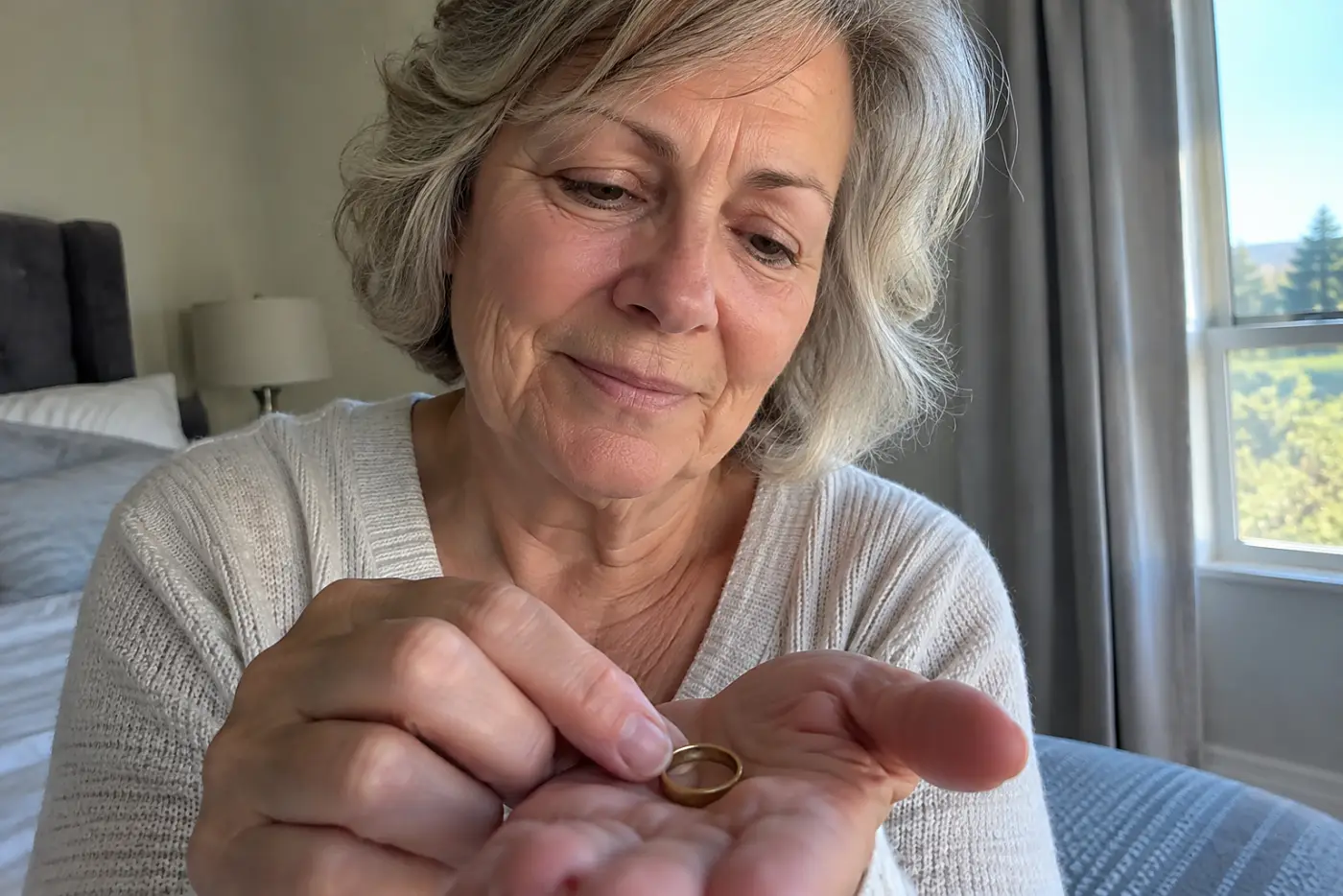
Her wedding band is thin where it touched another ring.
Years of wear changed its shape. They didn't erase its history. Look inside for dates, initials, hallmarks, and evidence of resizing. Metal content matters if you're considering a sale, but an inscription records something a metal test cannot.
Ask family before moving it out of the house. You aren't required to sell a ring because someone quotes its weight. If you keep it, a written name beside it prevents the next person from guessing whose band it was.
Copy the inscription exactly, photograph it, and store that record with the ring.
1The Jewelry Box Paper Trail
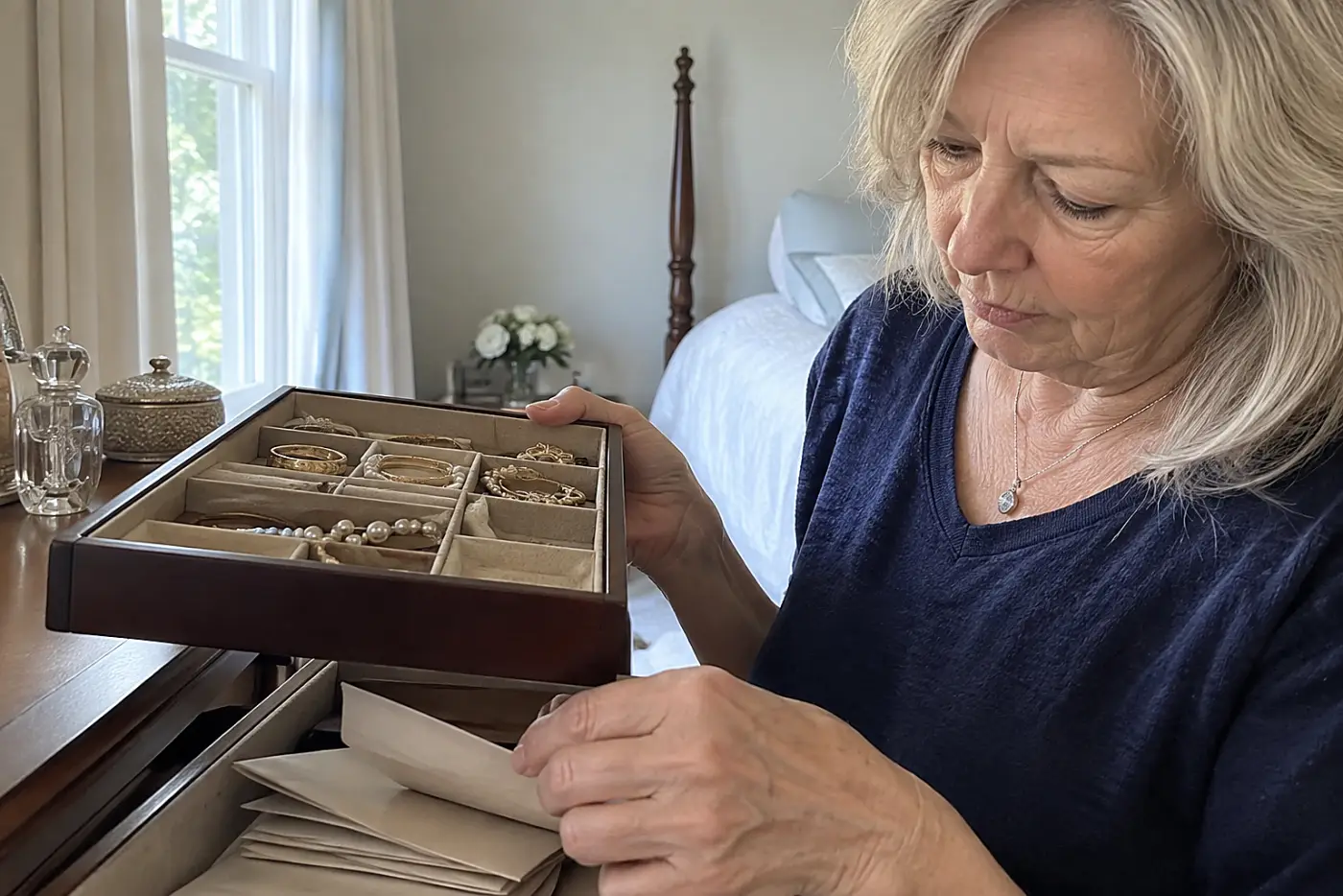
Folded papers sit beneath the tray you nearly tossed.
An old receipt, repair slip, appraisal, or handwritten note identifies jewelry after your mother is gone. Look for descriptions, dates, marks, and drawings that connect a page to a piece.
An appraisal records an opinion at one point in time; it isn't a current sale price. Still, the paper gives a jeweler a place to start and gives your family names to remember.
Keep each document with a photograph of the piece it describes.
The bottom line
Across all 27, the pattern is the same: a clasp, mark, match, or old paper holds information you can't see from across the room.
You already know why you kept her jewelry. Now you'll check those details before you clean, divide, wear, or sell it. Which one did your mother have?
Up next
23 Things in Your Attic Worth More Than You Think, and the Ones Worth Nothing
That chipped Pyrex bowl deserves a closer look, but the stack of old newspapers probably doesn't.
Read the list →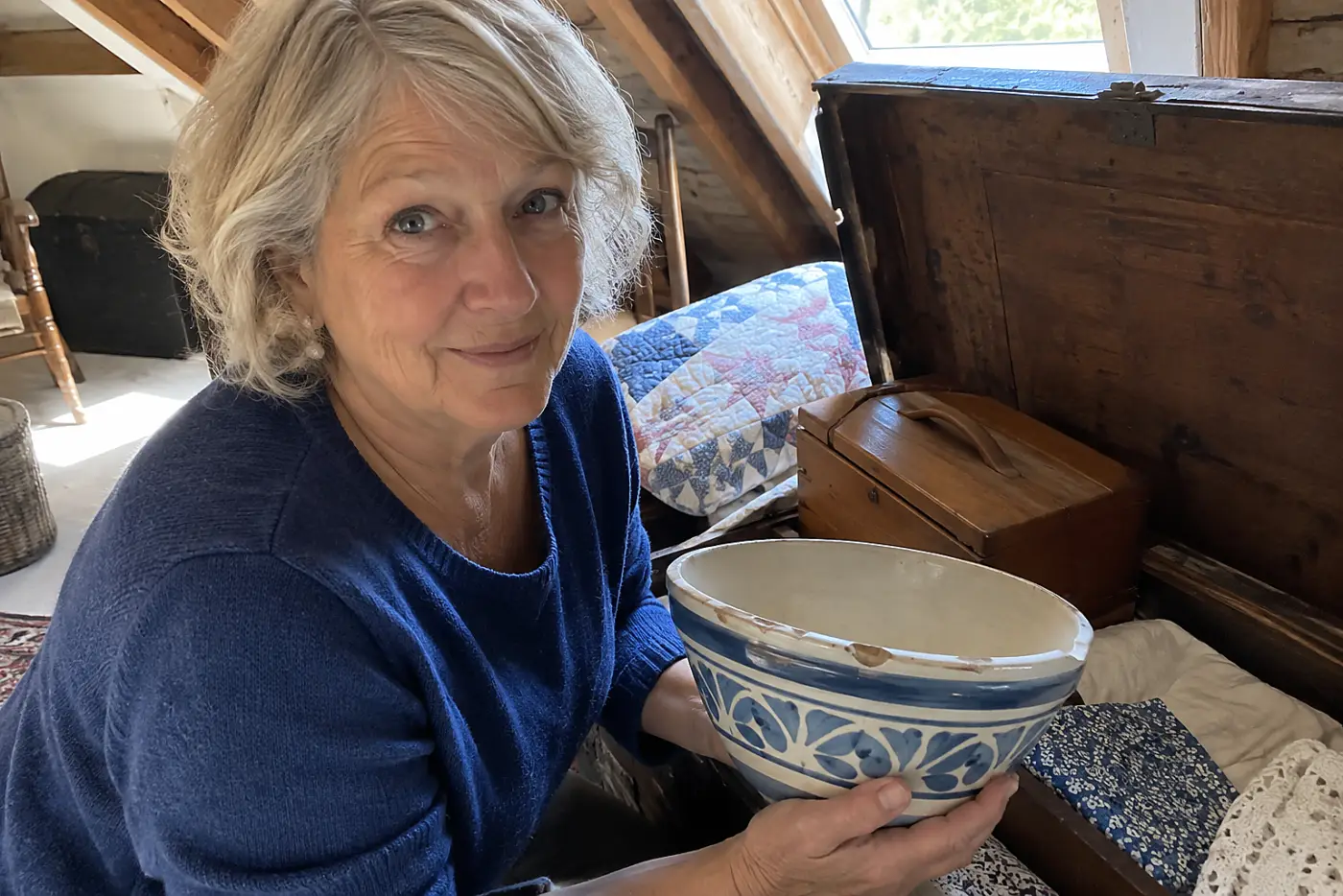

Reader quiz
Did you catch the details?
5 questions from this article. Finish them all to unlock the editor's bonus tip.
What should you do with the single gold hoop before mixing it with costume earrings?
Did any of these feel familiar?
Know someone who needs this?
Nora Bennett
Style Editor
Nora writes about hair, clothes and grooming for people who have stopped asking permission: what to keep, what to let go, and what reads as taken care of.
More from Nora Bennett