











25 Things You Feel the Day You Sell the House You Raised Your Kids In
A pencil mark inside a closet door survives the packing. The closing papers give you a deadline for deciding how to keep it.
By David Ruiz, Home Editor
Updated · 17 min read
- Written by our home editor
- Cited 11 sources
- How we review
Read to the end: #1 is the one final-sweep checklist that keeps irreplaceable papers with you, and almost nobody writes it down.
The kitchen drawer sticks when you pull it open for the last time. Inside are two rubber bands, a takeout menu, and the pencil you used to mark your children’s heights on the pantry wall. The buyers get the drawer. They don’t get that Tuesday afternoon.
You’ve signed papers before, and a house sale has its own orderly stack. But the forms have no line for the moment you realize you’ll never again hear your key turn in this lock.
Here are 25 things you feel as that day approaches.
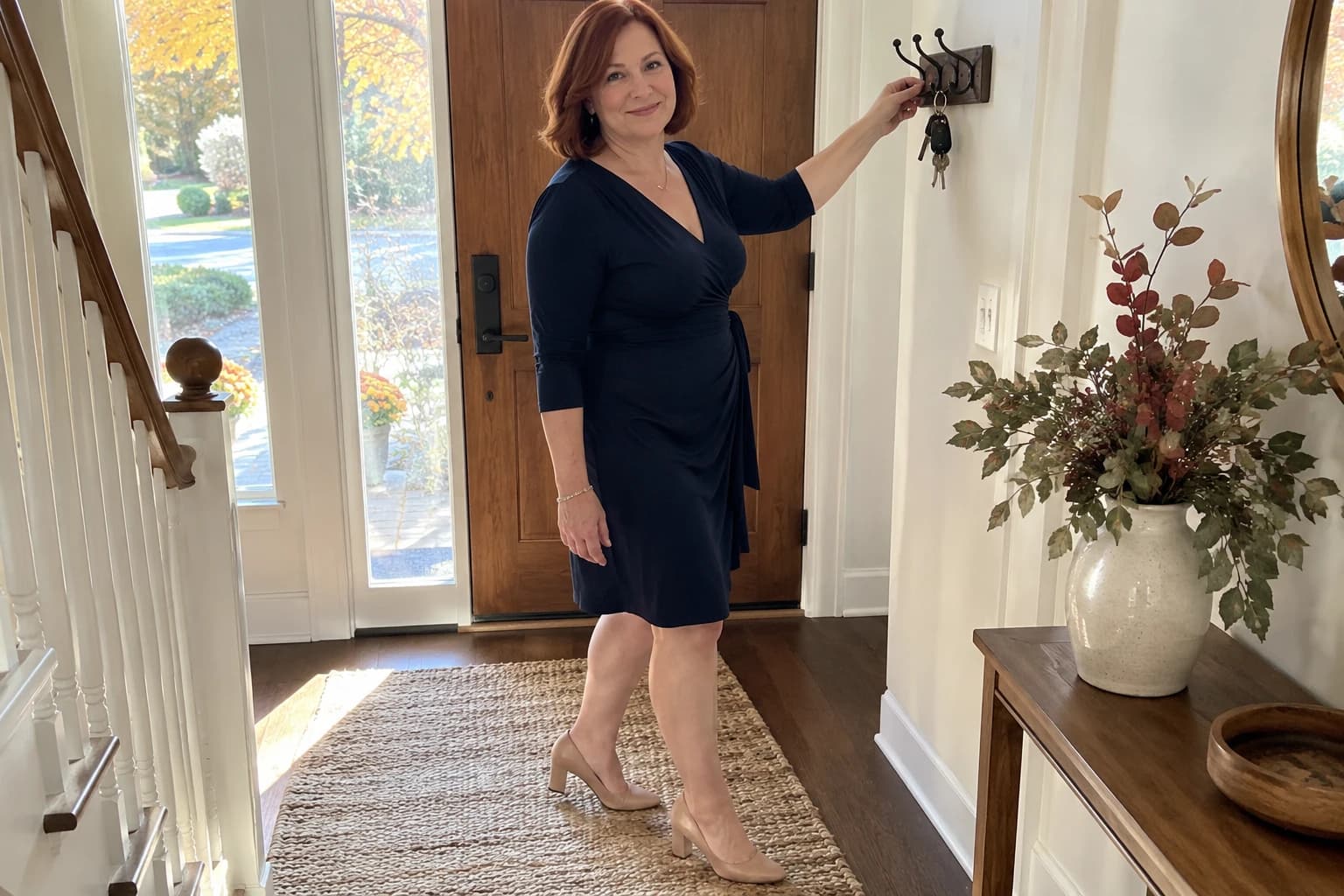
25The final pull on the front door
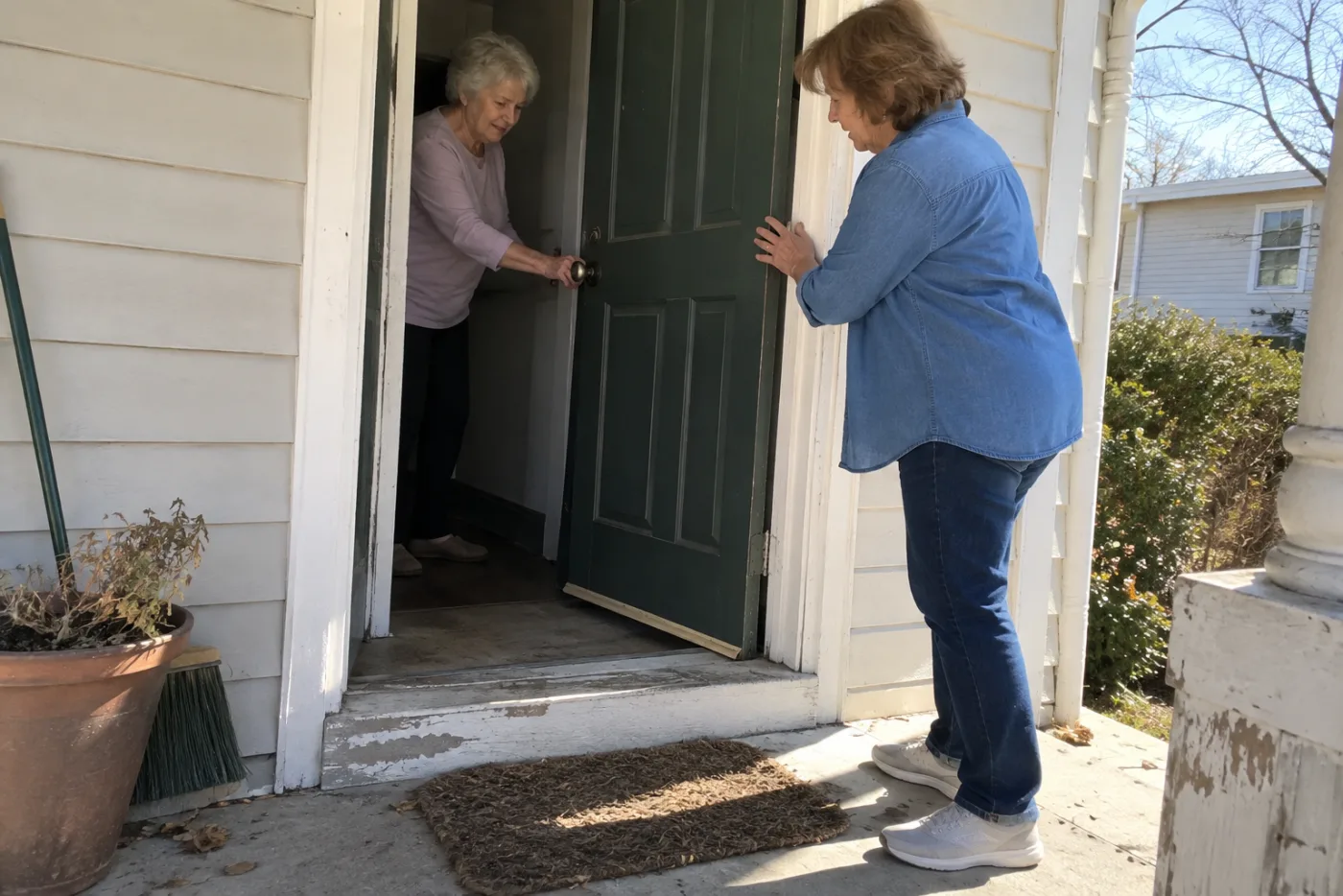
The lock clicks before you feel ready to leave.
At the final walkthrough, the buyer checks that the house matches the sale agreement. After closing, possession follows the contract’s terms. That last pull on the door belongs to a schedule, even when you want another hour.
If you leave belongings behind without an agreement, you create a question for the buyer and the agent. The signed contract gives the handoff time; your memory of a conversation doesn’t replace it.
This week, check that time and plan the last load around it. “Can you confirm exactly when the house needs to be empty and the keys handed over?”
Then there’s the thing you forgot to take from the hallway.
24The pencil marks inside the closet door
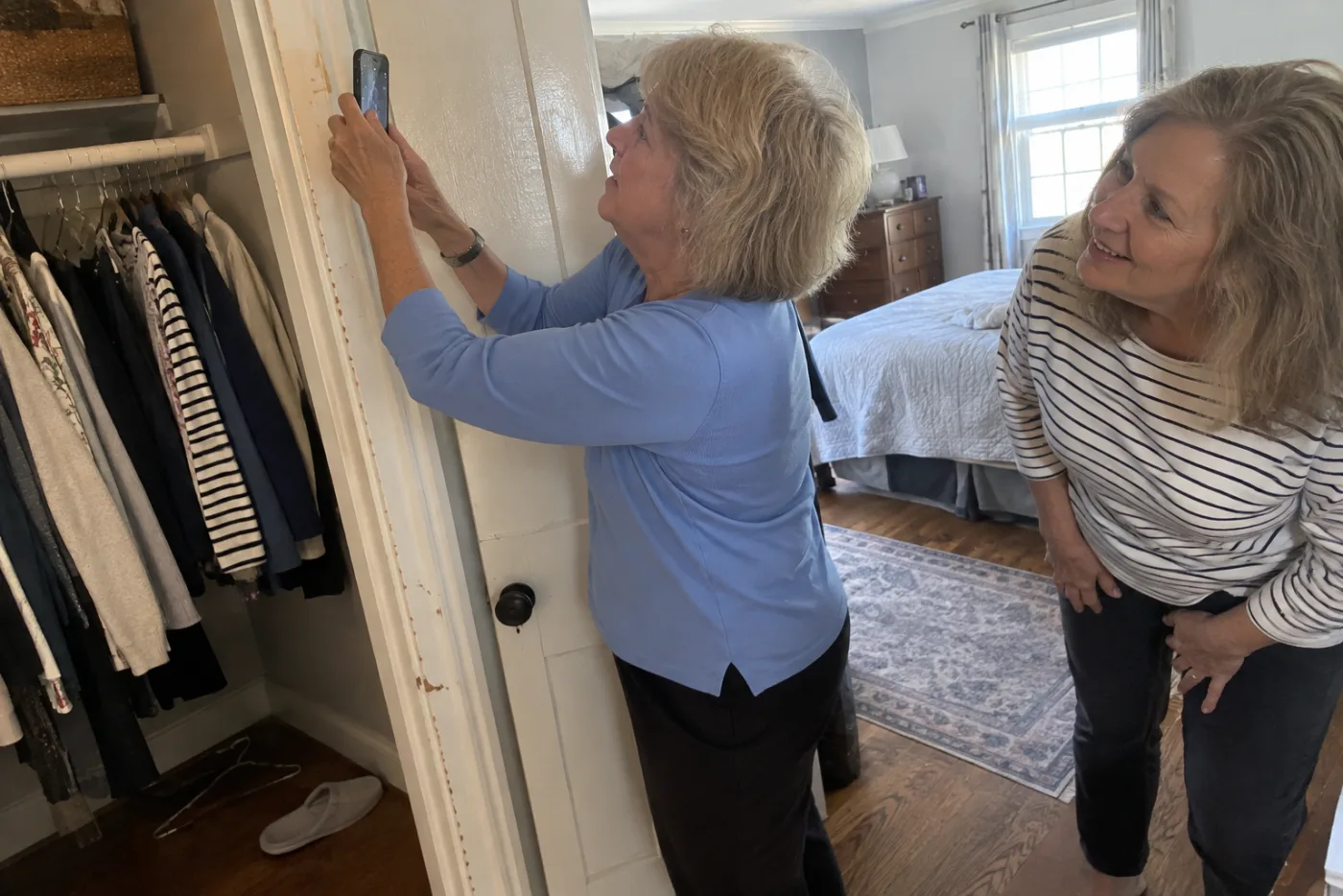
Paint doesn’t know those marks are your children.
A buyer sees a closet door. You see the year someone shot up past her brother, then the year everyone stopped coming to the door for measurements. Once the sale closes, that surface belongs to someone else. Photograph it before anyone touches a brush.
Stand a ruler beside the marks and take one wide photo and several close ones. Include names and dates if they’re there. A close-up without context turns into a mystery when you find it in your camera roll years later.
Don’t pull off trim or remove the door without checking the contract and talking with the buyer. Fixtures and attached parts aren’t the same as a framed picture.
This week, walk the house with your phone and photograph every mark you once meant to paint over. Then tell your children, “I’m sending you the closet marks before I hand over the door.”
The same walk leads to a drawer nobody else knows how to sort.
23The shoebox under your youngest child’s bed
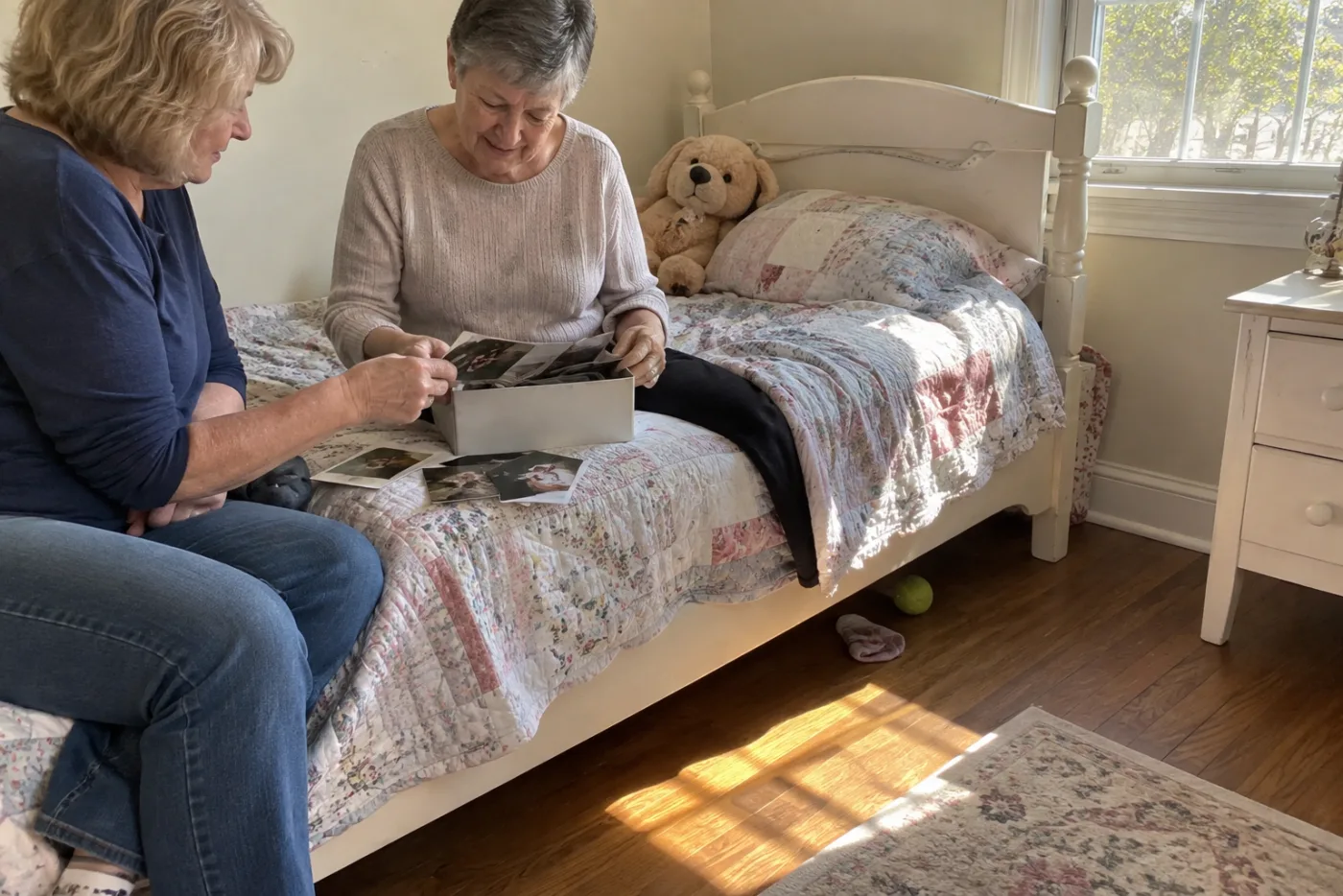
Someone has to decide what stays in the box.
Ticket stubs and school photos look ordinary until you’re standing over a donation bag. Sorting them after the move puts every decision inside a new home already crowded with boxes.
The National Archives’ preservation guidance recommends clean, dry storage for paper records and photographs. A damp garage is no place for the pieces you want to keep. Keep the shoebox out of the truck if losing it would send you looking through every carton.
This week, label one box “decide later” and keep it with you. “I found your school things. Do you want the originals or photos of them?”
Before you close that box, check what’s still hanging on the walls.
22The bare rectangle behind the family portrait

The wall kept a record of what hung there.
Take down a portrait that stayed put for years and you expose a pale rectangle. The paint around it has lived through sunlight, birthdays, arguments, and ordinary dinners. You’re seeing the shape of a family habit, not a decorating problem.
The buyer’s final walkthrough checks the property’s agreed condition. Don’t start patching or repainting on impulse afterward. A hurried repair creates a fresh question where there wasn’t one. First check your contract and ask your agent what still needs doing.
Take a photo of the portrait on the wall before you pack it. Then take one of the empty space. Pair them in the same album so the rectangle has an explanation when it turns up later.
This week, take the pictures, wrap the portrait with soft material, and label the box by room. “I want this picture in my car, not in the moving truck.”
Once the walls are bare, the sounds of the place stand out.
21The creak on the third stair

You know which step answers your foot.
The buyer will hear a creak. You hear children sneaking downstairs and the familiar warning that someone is awake. An ordinary sound becomes hard to place once you’re living elsewhere.
A phone recording won’t capture the whole house, but it will keep that stair from becoming a story you have to explain. Record it before the rooms fill with movers. Say the location aloud at the start, so you remember which step you heard.
This week, walk the route from bedroom to kitchen and record the sounds you know by heart. “I’m recording the third stair. Come listen before the moving truck gets here.”
That walk takes you past an appliance with its own set of memories.
20The refrigerator door covered in old magnets

The door looks strange without everyone’s names on it.
For years, it held the appointment card, the pizza coupon, and the photo nobody remembered putting up. Emptying it takes minutes. Deciding which scraps were part of daily life takes longer.
Start with anything that carries an address, phone number, or account detail. Shred what you don’t need rather than leaving it for strangers. The Federal Trade Commission’s identity theft site has steps to follow if personal information is exposed.
The refrigerator itself needs a separate decision. Check the sale agreement and property listing to see whether it stays. A magnet is yours; an appliance named in the deal is a different matter. Put that distinction in writing before moving day.
This week, clear the door into three piles: keep, photograph, discard. “I’m keeping this ridiculous pizza magnet because it was on our fridge for years.”
The kitchen counter has paperwork that deserves a less sentimental sort.
19The closing folder on the kitchen counter
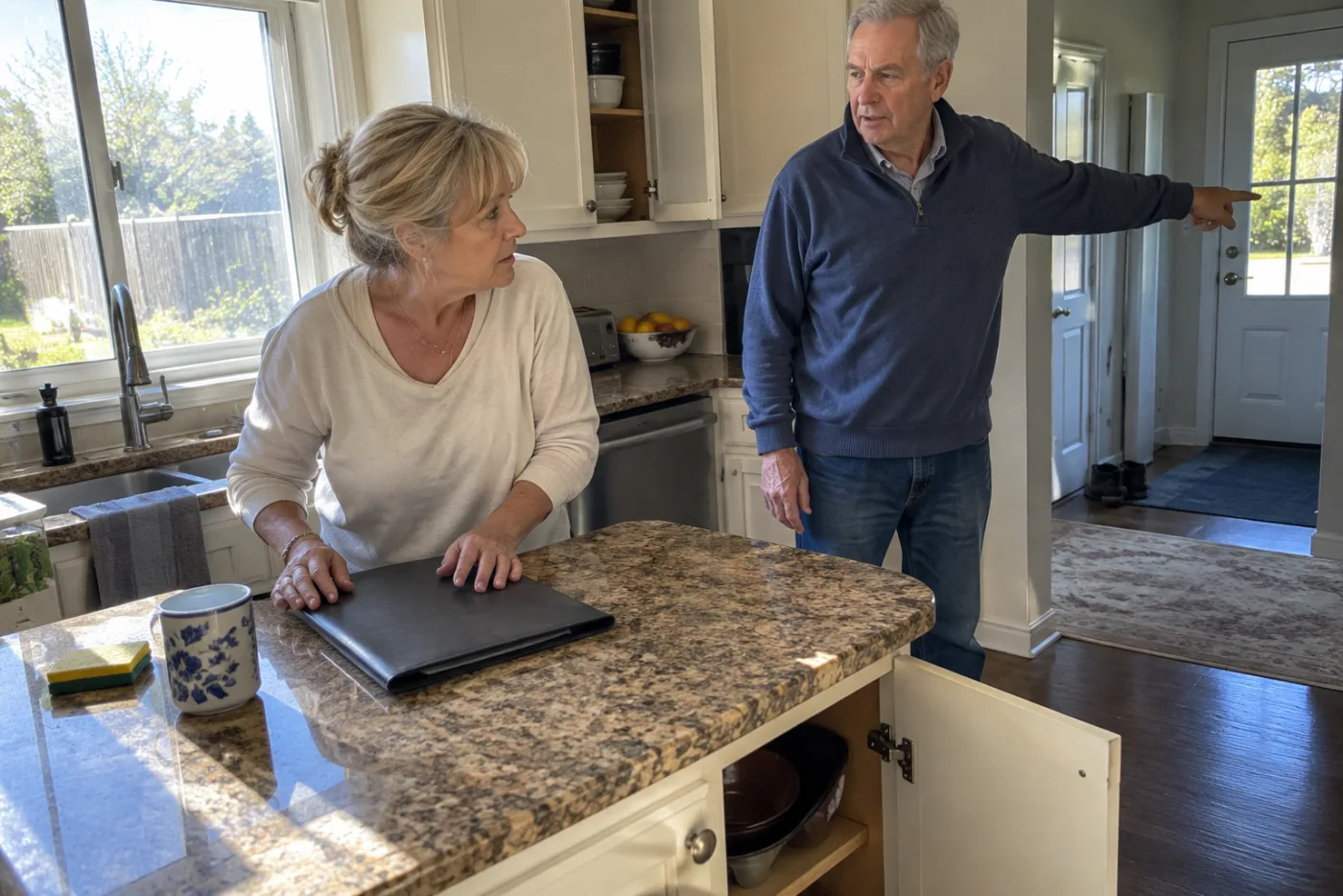
Signing feels final long before the money arrives.
The settlement statement shows charges, credits, and the amount due to you. The Consumer Financial Protection Bureau’s closing guidance identifies the forms you’ll see. Read the figures before signing, not from the car afterward.
An unexpected charge deserves an explanation while everyone involved is still reachable. Circle the line rather than trusting yourself to remember it once the papers are stacked again.
This week, compare the final statement with the estimate you received. “Please show me where this charge came from before I sign.”
The folder closes, but the house still has a meter running.
See more: 24 Signs Your House Has Become Too Much, Before Your Children Say It →
18The last utility bill for the house
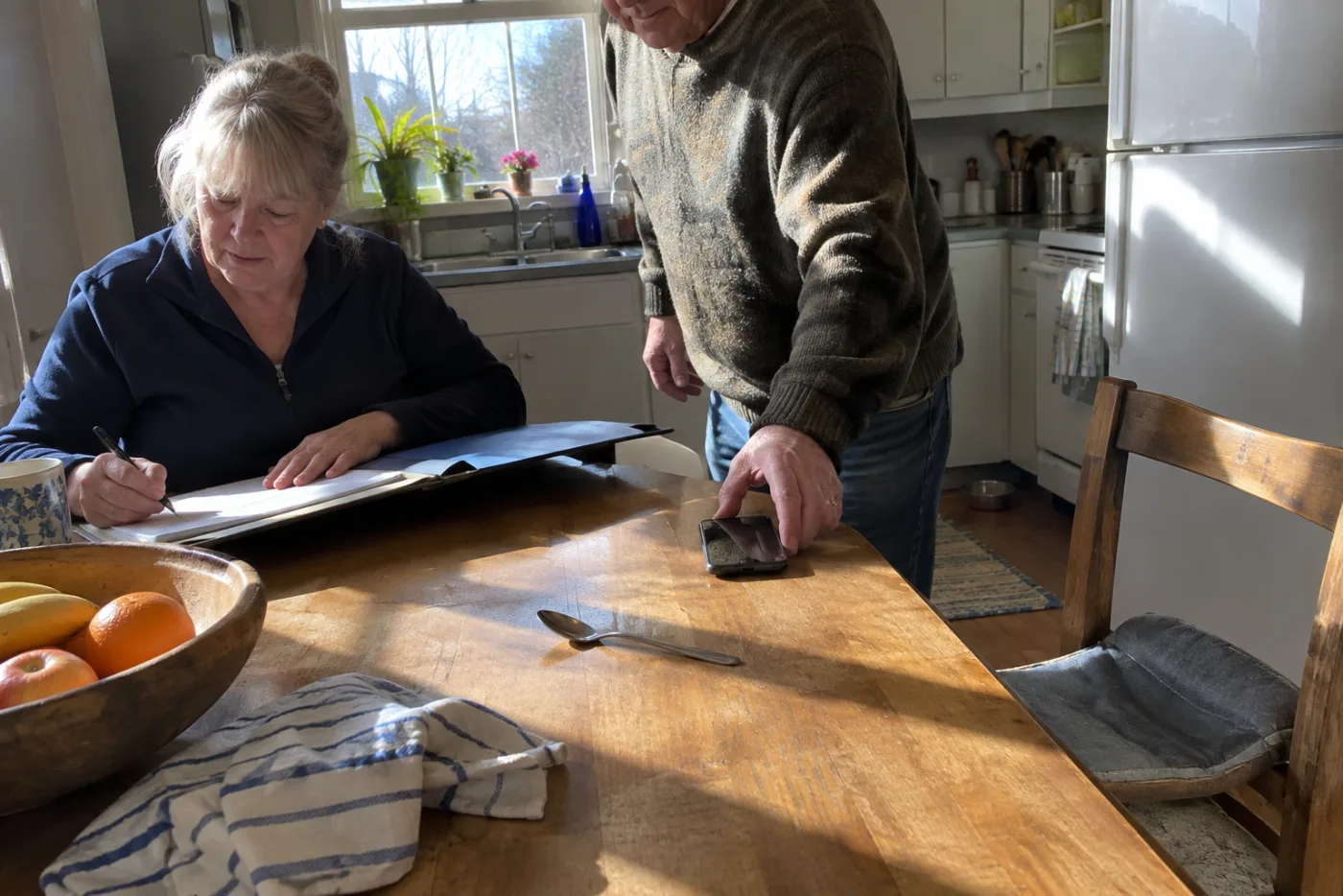
A closing date doesn’t shut off the lights by itself.
Electric, gas, water, trash, and internet service each have their own account. Unless you call, a provider still has your name on its records after the buyer takes over. A final bill sent to the old address becomes another errand.
Call each provider with the service end date from your sale agreement. Ask the water department whether it needs a final meter reading or an in-person visit. Keep confirmation numbers beside your closing papers.
Don’t cancel service before the agreed walkthrough. An empty house still needs lights and running water when the buyer checks it.
This week, list each account number, service end date, final billing address, and confirmation number. “I’ve sold the property. What do you need from me for a final bill?”
After the accounts are set, you’ll notice how many things still know your old address.
17The mail slot you checked every afternoon
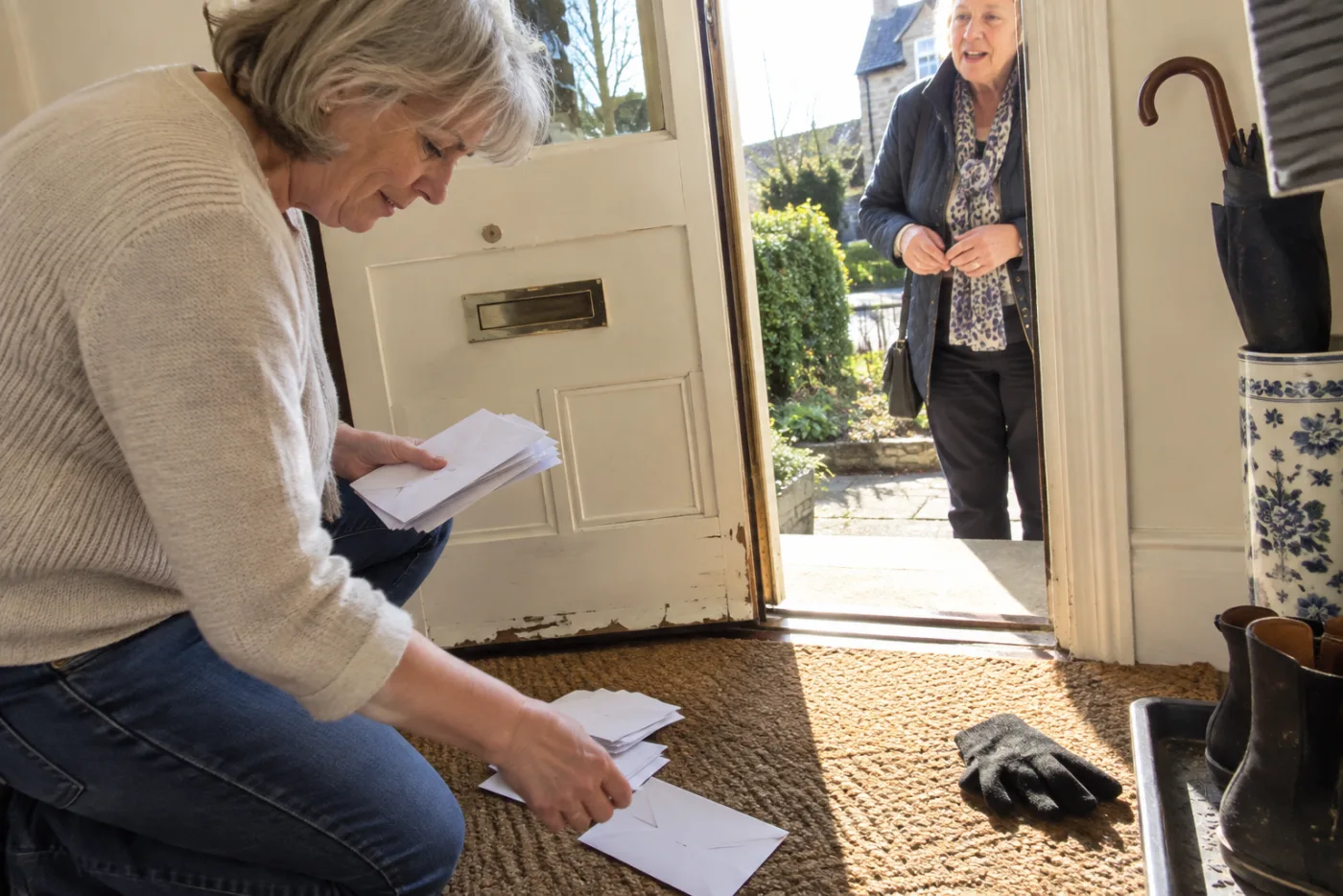
The new owner shouldn’t become your mail clerk.
A change of address through the U.S. Postal Service forwards eligible mail. It leaves the address on your bank’s records untouched. Doctors, insurers, and the people who still send birthday cards need to hear from you directly.
First-Class Mail forwarding lasts 12 months. That gives you time to spot a sender you missed, not a reason to put off changing your address with them. A missed letter from a financial institution matters more than a lost catalog. Make a list from the mail that arrived this month, then add accounts that send only electronic notices.
This week, file the change of address and update your important senders directly. “Please replace my mailing address on every account you have for me.”
Then open the cabinet where the house records have been living.
16The folder of warranties and paint colors
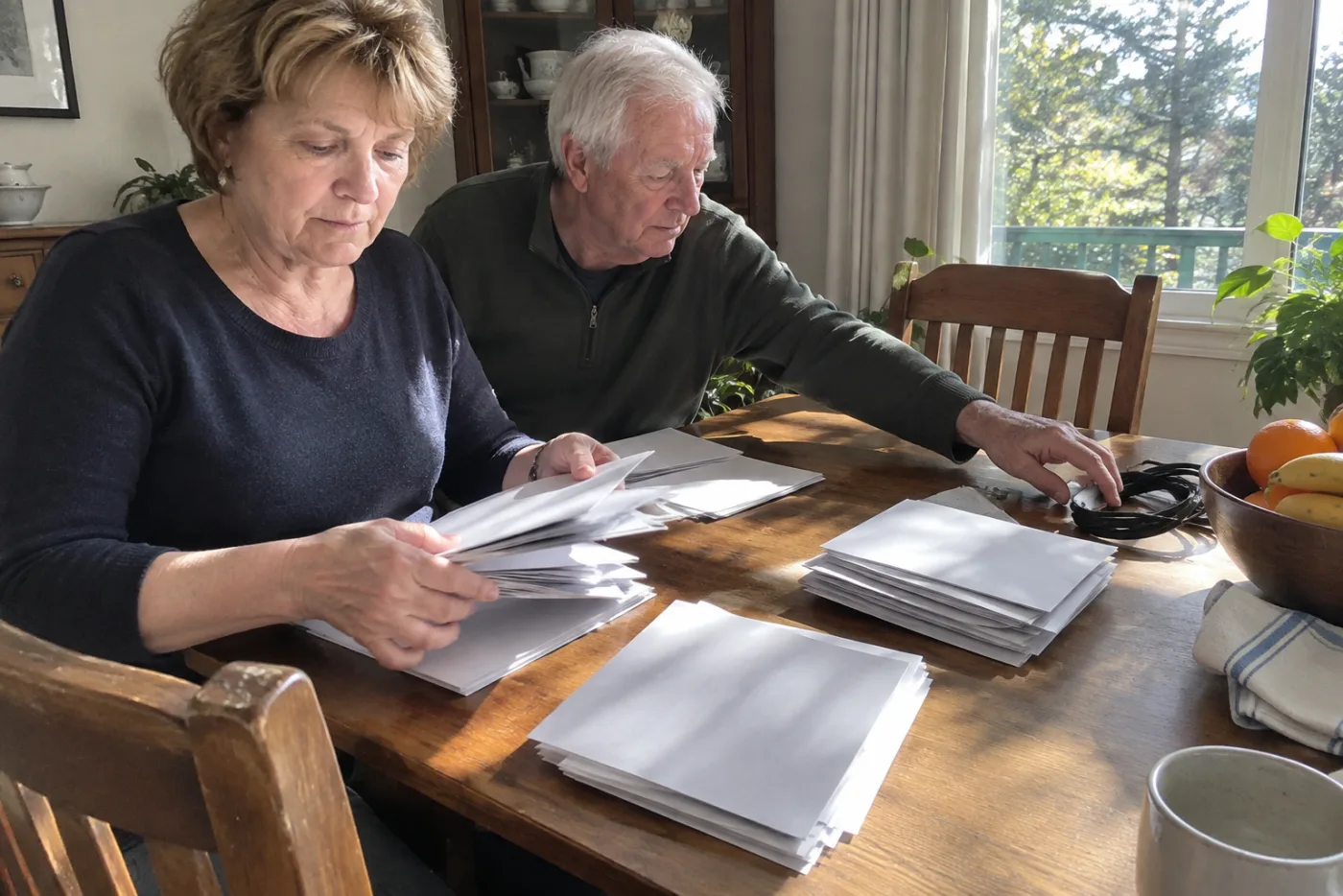
The folder has outlived half its contents.
Old manuals sit beside the roof paperwork and a paint label written in your handwriting. Some pages help the buyer use what stays. Others contain your name, payment details, or service history you’d rather keep.
Sort by purpose, not by how long the papers have sat together. Leave instructions for installed equipment if the contract calls for them. Keep your closing documents, proof of improvements, and records you need for taxes. The IRS home-sale guidance covers the home-sale gain exclusion and the records behind it. For most sellers, the ownership-and-use test asks whether you owned and lived in the home for at least 2 of the 5 years before the sale. Check the IRS guidance against your circumstances before discarding records.
A folder handed over without a look gives away private information. A folder thrown out whole takes useful records with it.
This week, separate buyer instructions from your own financial papers. “I’ve left the furnace manual, but I’m keeping the invoices with my tax records.”
One invoice in that stack points back to a repair you still remember.
15The patched ceiling below the upstairs bath
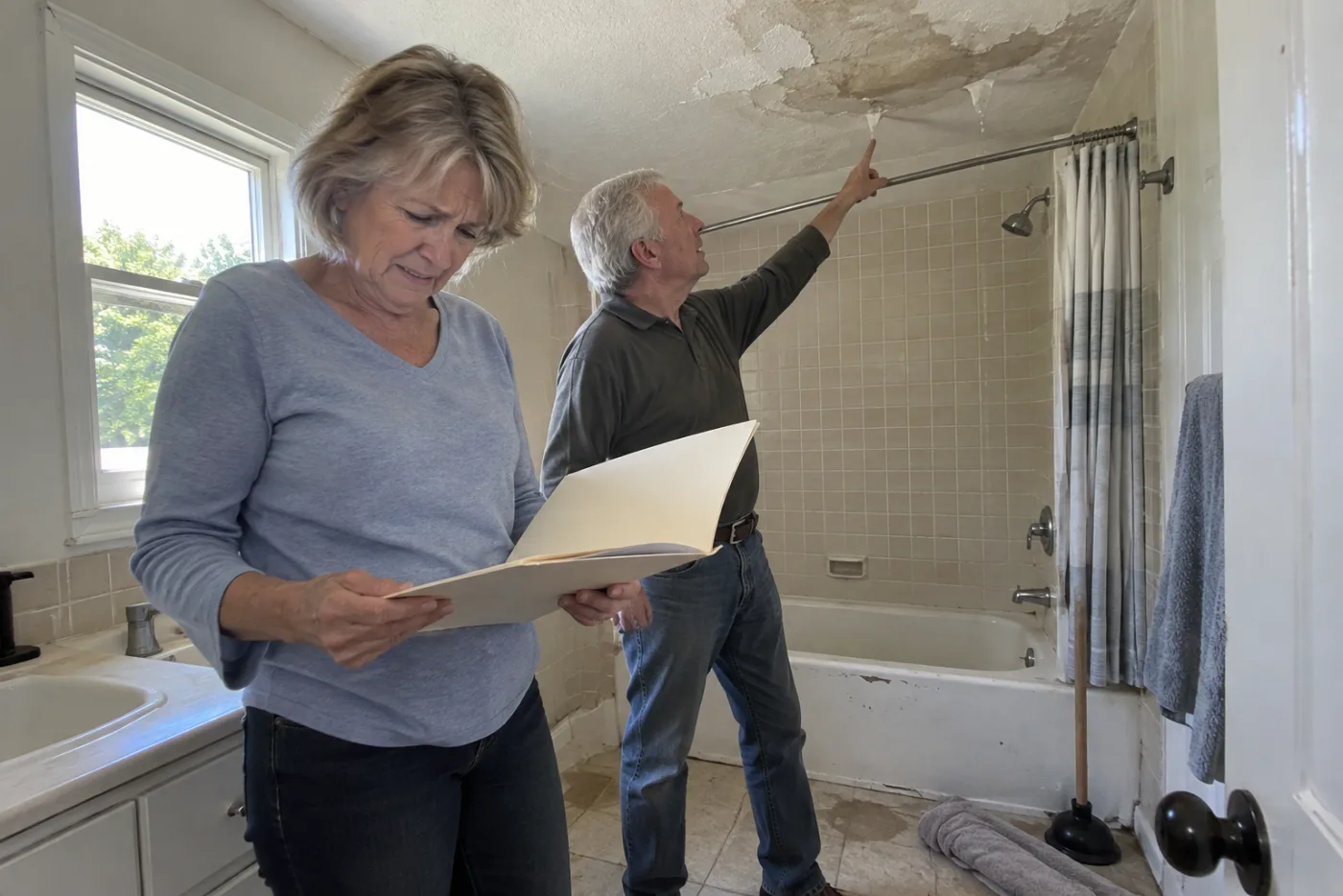
You remember the leak even after it vanished.
Water came through, someone found the cause, and the ceiling was patched. When you’re asked about the repair, the invoice tells a clearer story than the color of the new paint. Your state’s disclosure form sets the questions you need to answer.
A guess about the work leaves room for a second question you can’t answer. The invoice gives you the repair date and the work actually done, without asking you to reconstruct it from memory.
This week, find the invoice and check your disclosure answers against it. “I found the plumber’s invoice. Let’s make sure my disclosure matches the work.”
The paperwork settles one question; the yard raises another.
14The garden hose beside the back steps

The last watering feels like abandoning something alive.
A rosebush you planted with your mother stays rooted where it grew. A pot you carried out each spring is another matter. The sale agreement, listing, and any written exclusions settle what goes with the house.
Don’t dig up a plant on closing day because you suddenly cannot bear leaving it. Removing landscaping changes the property the buyer agreed to purchase. If you want a cutting or a plant, raise it with your agent early and get any agreement in writing.
For a plant that stays, take a close photo and write its name down. Ask for a cutting only if the buyer agrees. USDA’s plant hardiness zone map helps you check whether a cutting suits the place you’re moving to.
This week, mark each pot and garden plant as going, staying, or needing an answer. “I’d like to take a cutting from this rose. Will you ask the buyer?”
There’s a heavier object inside that needs the same kind of decision.
13The piano against the living room wall
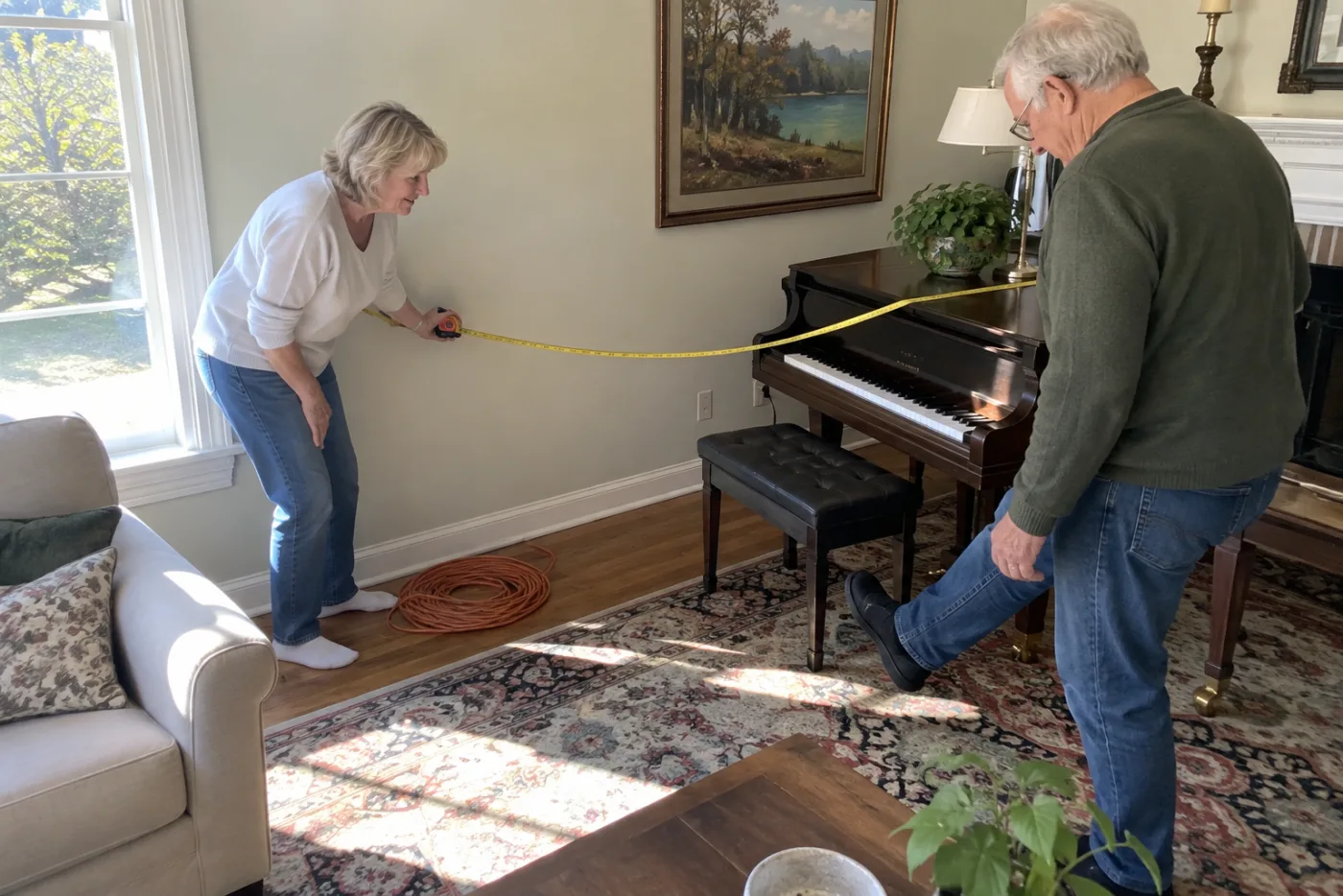
The piano has been waiting for someone to claim it.
It belonged to the room as much as to the child who practiced there. Moving it takes a plan, and leaving it takes the buyer’s agreement. A large object doesn’t become part of the sale because it’s hard to lift.
If nobody wants it, say so now. Don’t make your movers or the new owner solve the problem on closing day. A piano left in the room is still a piano someone must move. Moving an upright piano locally can cost roughly $150 to $500; stairs and difficult access raise the price. Get a quote for your piano and route before deciding it will travel.
This week, ask family members for a firm answer and call a piano mover if it’s going. “I need a yes or no about the piano by Friday.”
Once that corner is clear, you’ll see what the room has been hiding.
12The boxes stacked behind the basement door
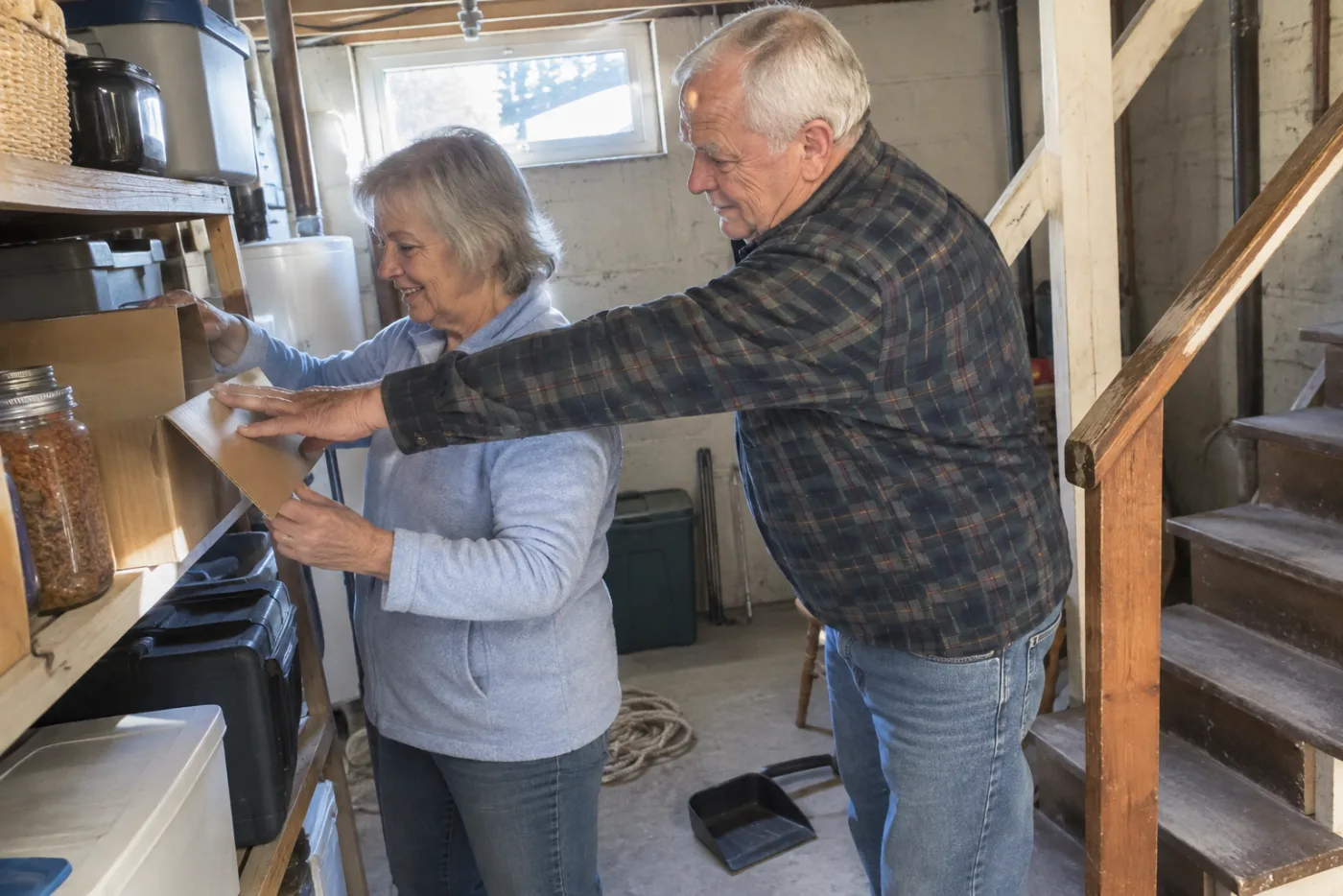
The basement stores decisions you postponed for years.
You find baby shoes, spare tiles, and a lamp that never worked after the last move. Keeping everything feels safer than choosing. But every box travels somewhere, and an unlabeled one demands the same decision again at the other end.
Check for paint, cleaners, batteries, and other items your mover won’t take. Your local solid-waste department has the rules for household hazardous waste. The EPA’s household hazardous waste page names products that need special care.
Make a small space for what you’re still deciding. Give it a label and a date to open it again. Everything else needs a destination before the truck arrives.
This week, empty one basement shelf and arrange disposal for what cannot travel. “I’m keeping this one box undecided. The broken lamp isn’t coming.”
Upstairs, someone else remembers a very different version of that room.
See more: 29 Signs the Clutter Is Really Grief →
11The bedroom your grown child calls theirs
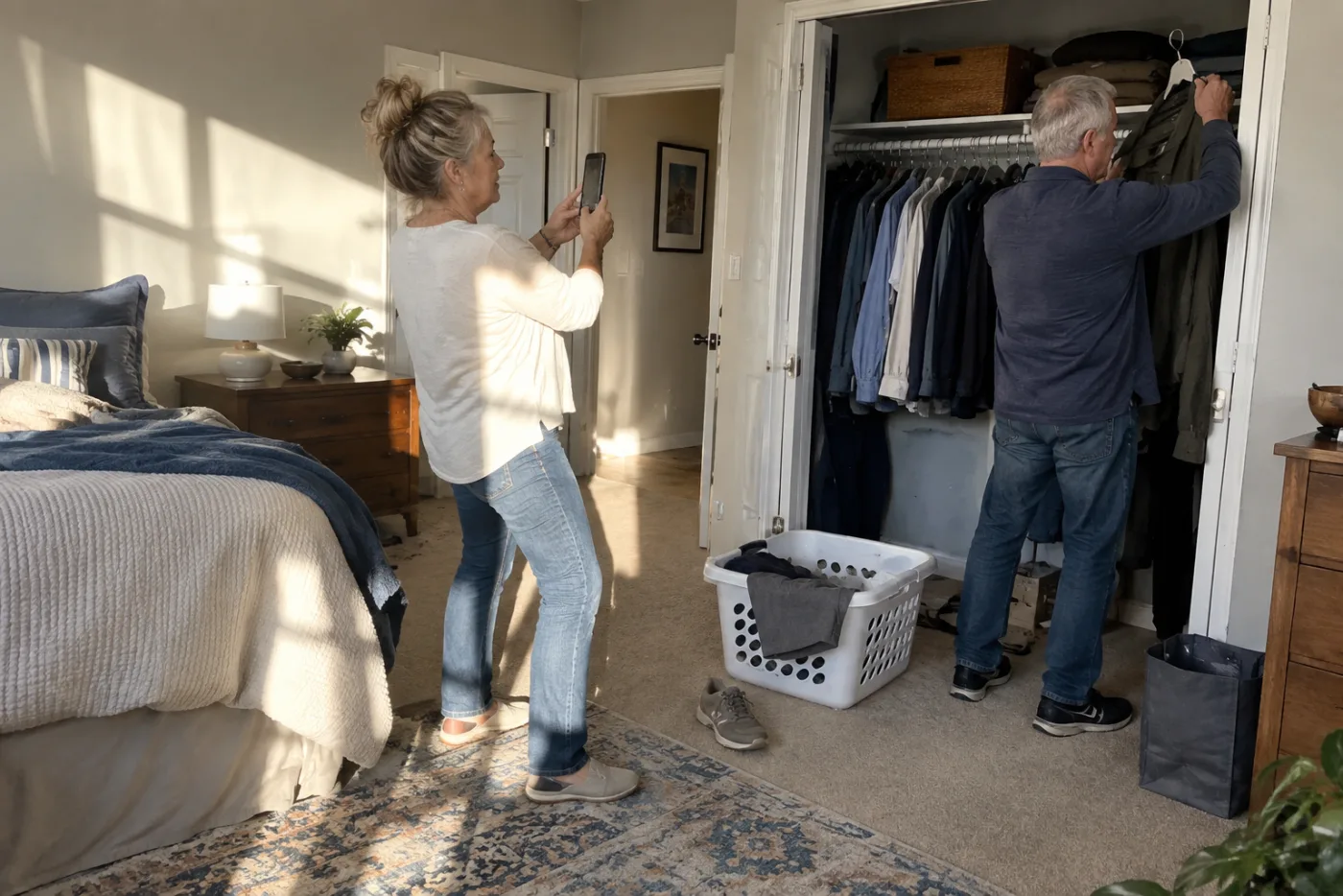
Their old room is still part of your house.
A grown child walks in and sees the place that held their posters. You see a closet that must be empty before the movers leave. Both views are real, but the packing decision belongs to you.
Give them a clear time to collect what they want. After that, tell them how you’ll handle what remains. A photograph of the closet lets them choose without asking you to describe every old sweatshirt.
This week, send photos of the room and set a pickup date. “Choose what you want from this closet by Sunday; I need to pack the rest.”
The room is easier to empty than the expectations attached to it.
See more: 24 Things to Do With an Empty Nest →
10The spare key on your neighbor’s hook

Someone down the street still holds a way in.
That key once meant a child locked out after school could get inside. Later, it meant someone would water plants while you traveled. Returning it ends an arrangement that lasted longer than some jobs.
Collect keys from neighbors, relatives, cleaners, and anyone else who held one. Ask your agent which keys and access devices belong in the handoff. Include garage remotes, gate fobs, and keypad instructions. Don’t leave the buyer guessing which device opens which door.
If you have a keypad, follow its instructions to remove codes you created. Then write down the access information the buyer needs. Keep personal passwords out of that packet.
This week, ask the neighbor for the key and thank them for what it meant. “You kept us from being locked out so many times. I’m collecting keys before closing.”
A key fits in your palm. Some things you’re handing over are harder to hold.
9The stack of holiday table leaves
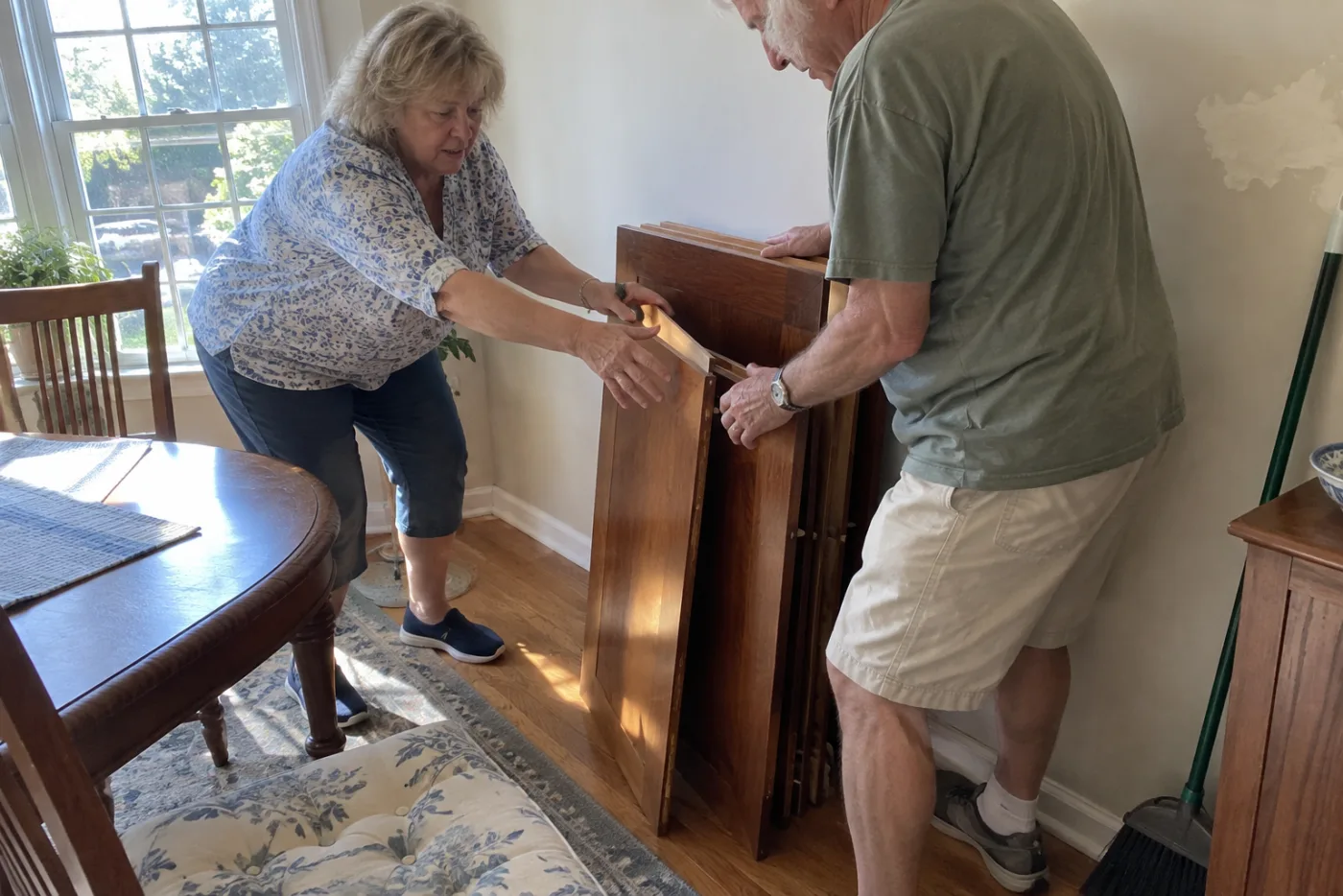
The table expanded because people kept showing up.
Those leaves came out of the closet for crowded dinners. Each one has to reach the same address as the table. Once the movers wrap the tabletop, a leaf on a high shelf is easy to miss.
You won’t notice the gap until you try to set the table again. The chairs will be there, but the space you once made for another person won’t.
This week, wrap the leaves, label them for the mover, and point out where they’re stored. “The table leaves go with the table, even if they’re packed separately.”
The next room holds something no moving label can describe.
8The light switch in your child’s doorway
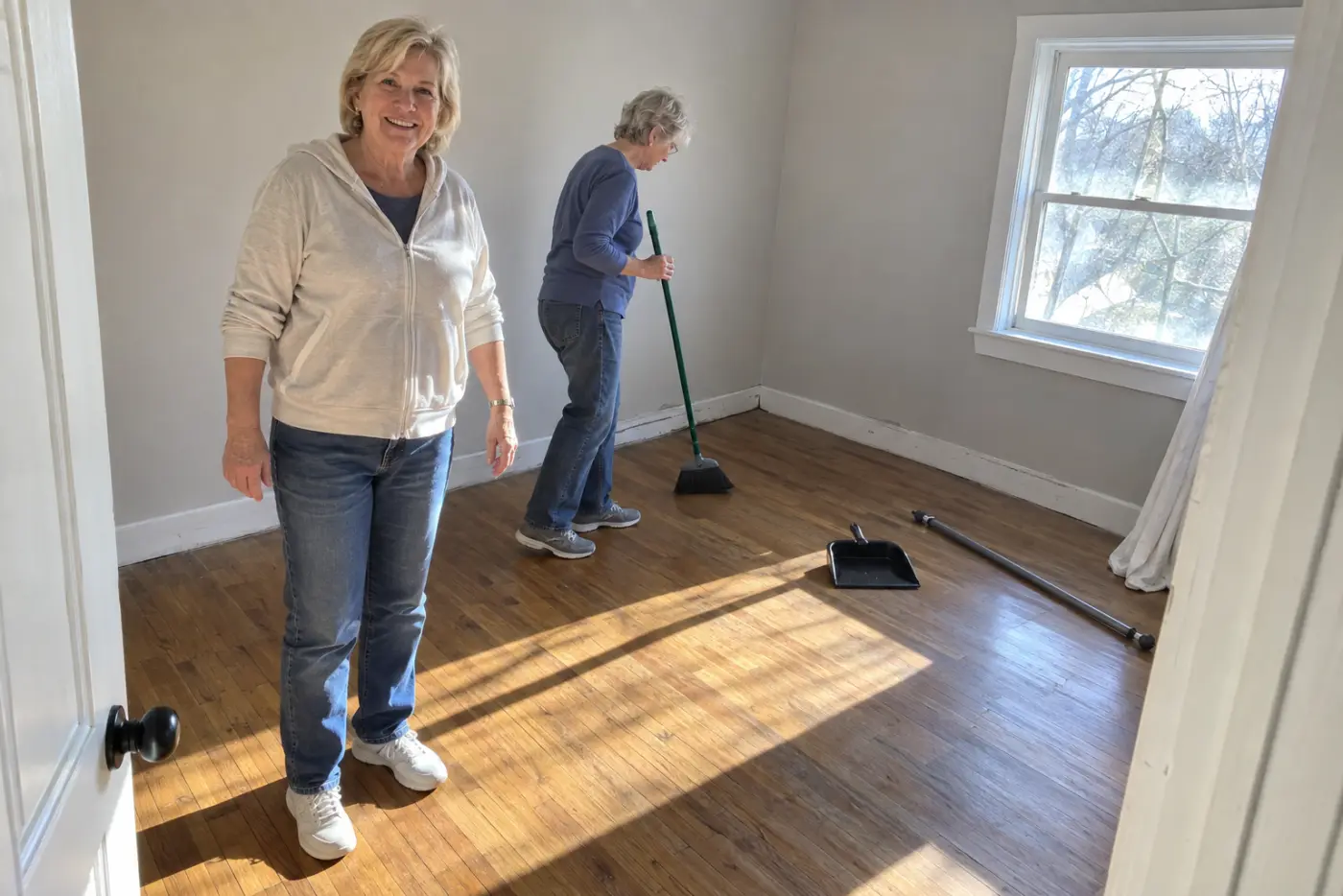
Your hand still reaches for it without looking.
That switch marked bedtime, sick nights, and the mornings you walked in to wake someone for school. In a new place, your hand will look for a switch on the wrong side. The mistake lasts a second; the jolt lasts longer.
Walk through the empty room before the last load goes out. Photograph it from the doorway at your eye level, not only from the prettiest corner. The image will show the room as you entered it for years.
If your child wants a picture too, send the empty room alongside one from when it was theirs. Let them decide what to do with it. You don’t have to turn every memory into a group conversation.
This week, take the doorway photo while the switch and the floor are still visible. “I took a picture from the doorway. This is how I always saw your room.”
Then you’ll have to decide who else hears the news from you.
7The goodbye you owe the next-door neighbor

A moving truck shouldn’t be how they find out.
Your neighbor knew when your kids got home and when the kitchen light stayed on late. A short goodbye gives both of you a chance to acknowledge the ordinary help that passed between houses.
Leave contact details only if you want to stay in touch. There’s no duty to hand the buyer your neighbor’s number. You also don’t need to make a promise about visiting that neither of you has made before.
This week, knock before moving day and say it plainly. “We’ve sold the house. I wanted to tell you myself, and thank you for being next door.”
Back inside, the house has another place to check.
6The hiding place above the kitchen cabinets
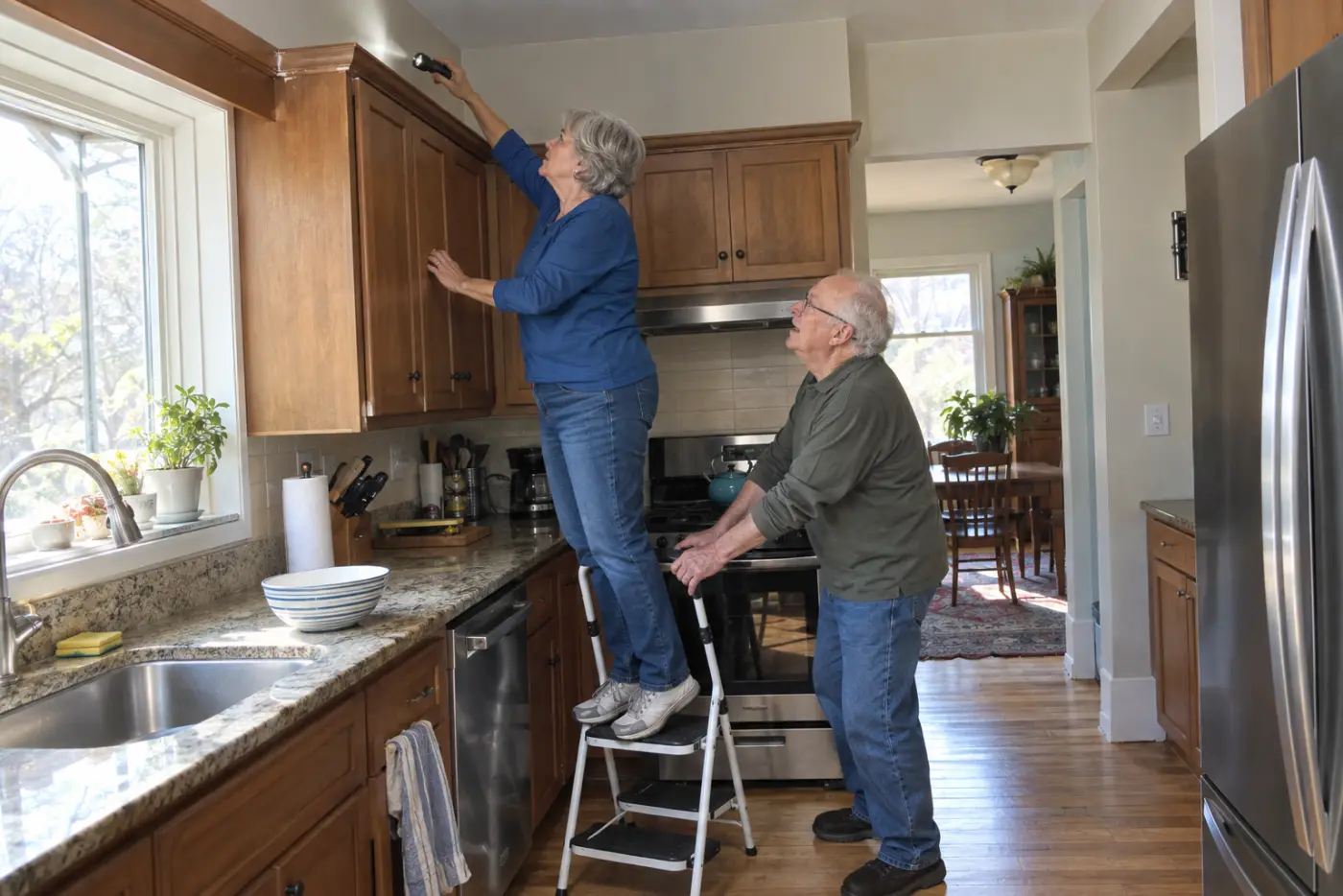
The forgotten envelope is still your responsibility.
People tuck documents above cabinets, behind drawer liners, and on top shelves. Movers empty what they see, not what you once hid. The buyer gets the space after you leave, with anything you missed still in it.
Use a flashlight and check each room from high to low. Open every drawer and look behind furniture after it’s moved. Check the garage shelves, attic access, medicine cabinet, and the drawer beneath the oven if yours has one.
Keep passports, Social Security cards, checkbooks, and closing papers in a bag that stays with you. The Social Security Administration and U.S. Department of State have replacement instructions, but finding the originals now saves the work.
This week, start a list of hiding places and have another person check it with you. “I’ll check the high shelves. Will you take the drawers?”
One empty space will still look occupied when you glance at it.
See more: 23 Things in Your Attic Worth More Than You Think, and the Ones Worth Nothing →
5The patch of floor beneath the crib
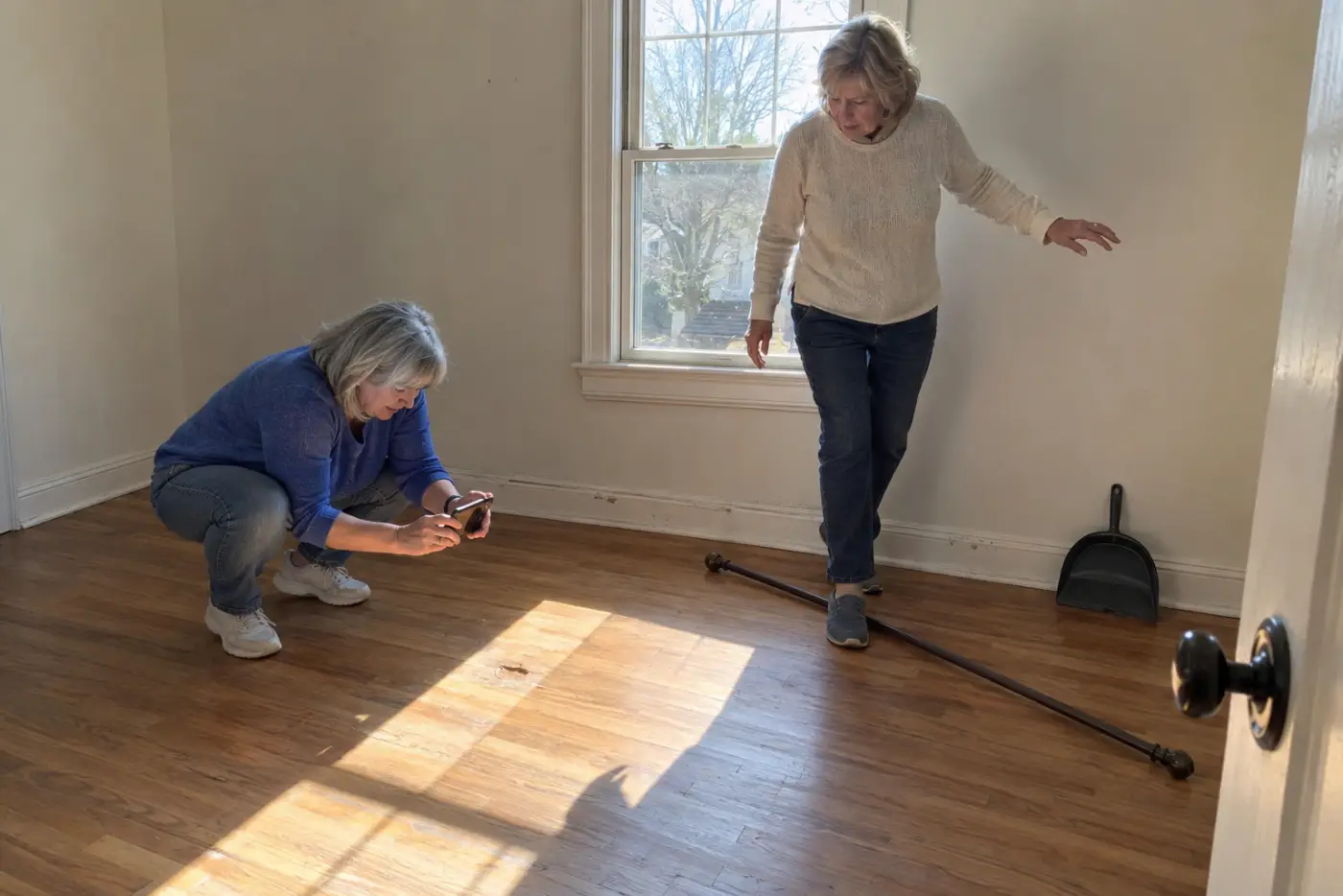
The furniture leaves; the years stay in place.
A dent in the floor recalls the crib’s exact position. You’ll notice it only after the room is empty and the light reaches that corner. Once furniture fills your new bedroom, the mark will have no visible counterpart there.
That image has a place among family photos, even without anyone in the frame. A caption matters because the floor alone won’t tell your child why you took the picture.
This week, photograph the mark from the doorway and name the album while you remember where the crib stood. “That mark is where the crib stood.”
The last load will take the things you chose to keep.
4The family dog’s route through the empty rooms
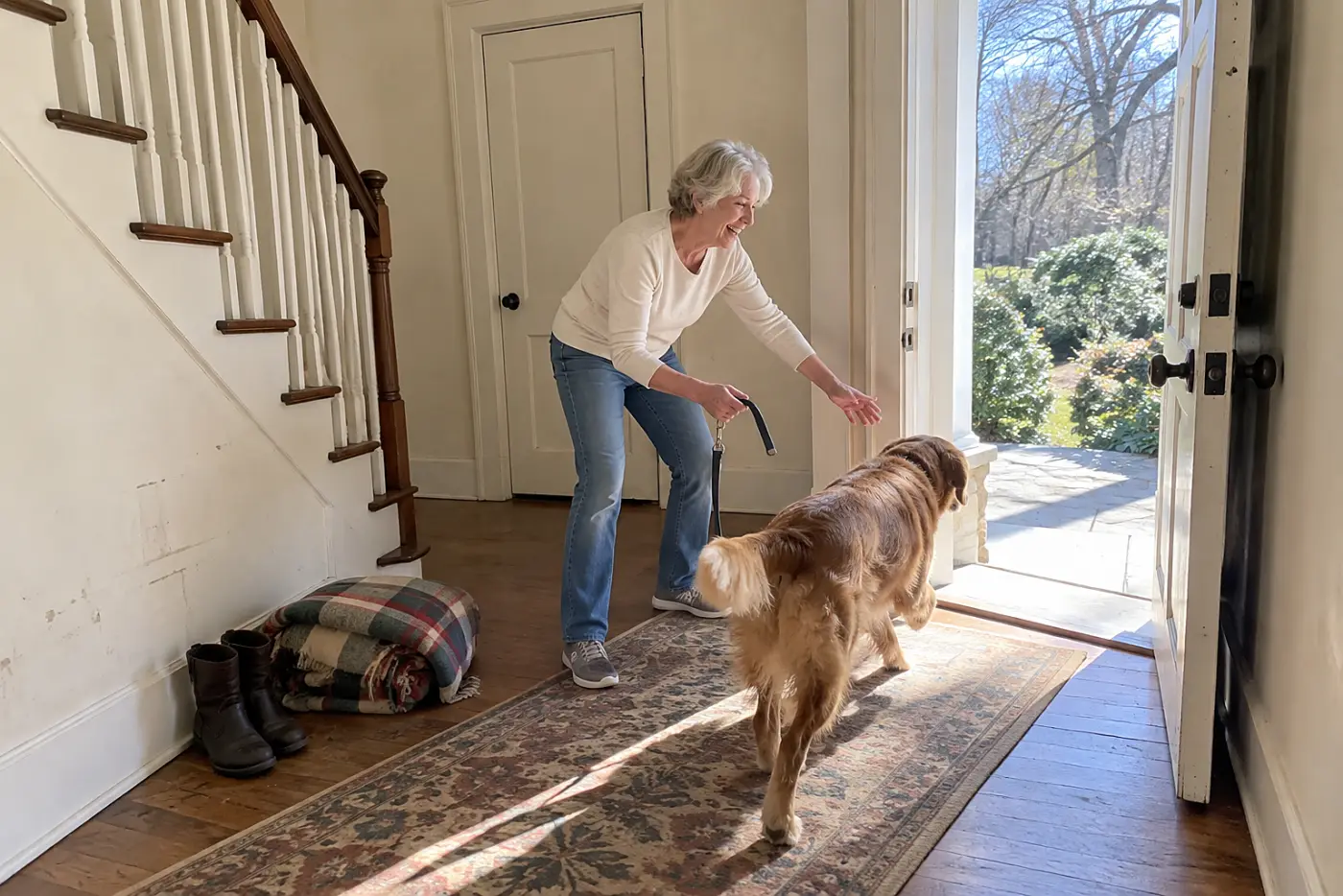
The dog keeps looking for the couch that’s gone.
As furniture leaves, the paths your dog knows disappear. She checks the living room, pauses where her bed sat, then follows you into the hall. For years, this was her map of the family. Now footsteps sound different without the rugs.
An open door during loading gives her a path to the street. The empty rooms offer nowhere familiar to settle while people carry boxes past her. The ASPCA’s moving-with-pets guidance recommends keeping pets away from the loading activity in a room with familiar things.
This week, choose a closed room for her bed, water, and leash while the movers work. Tell the crew, “The dog’s in this room. Please keep this door shut.” Walk her through the yard once more before taking her with you.
Her bed has a destination. Another familiar thing needs a different plan.
3The deed filed under your old address
Your old address becomes someone else’s property to search for.
After closing, the signed deed goes to the office that records deeds where the house sits. Filing creates a public record of the transfer. You can search that address later and see the new owner’s name. The sight of it lands differently from the signature you put on a page.
Your closing folder shows what you signed, but a signature alone doesn’t tell you whether the deed was recorded. That difference matters if you need to show when ownership changed. Unlike a utility account you close, the filed deed remains part of the house’s ownership history. Your years there don’t vanish from that history either.
The office’s name and search system vary by location. The National Association of Counties can help you identify your county; ask your closing agent which local office records deeds and how to use its records. There’s no need to sit refreshing a website on closing night. Ask when the filed deed should be available, then put a reminder on your calendar.
This week, write that question on your closing folder so it doesn’t disappear beneath the moving receipts. Say, “Which office will record the deed, and how will I find it afterward?” Once it appears, save a copy with your sale papers. Keep the folder where you can reach it without opening every box in the new place.
The public record keeps the address. You still have to decide what stays close.
2The bag you keep out of the moving truck
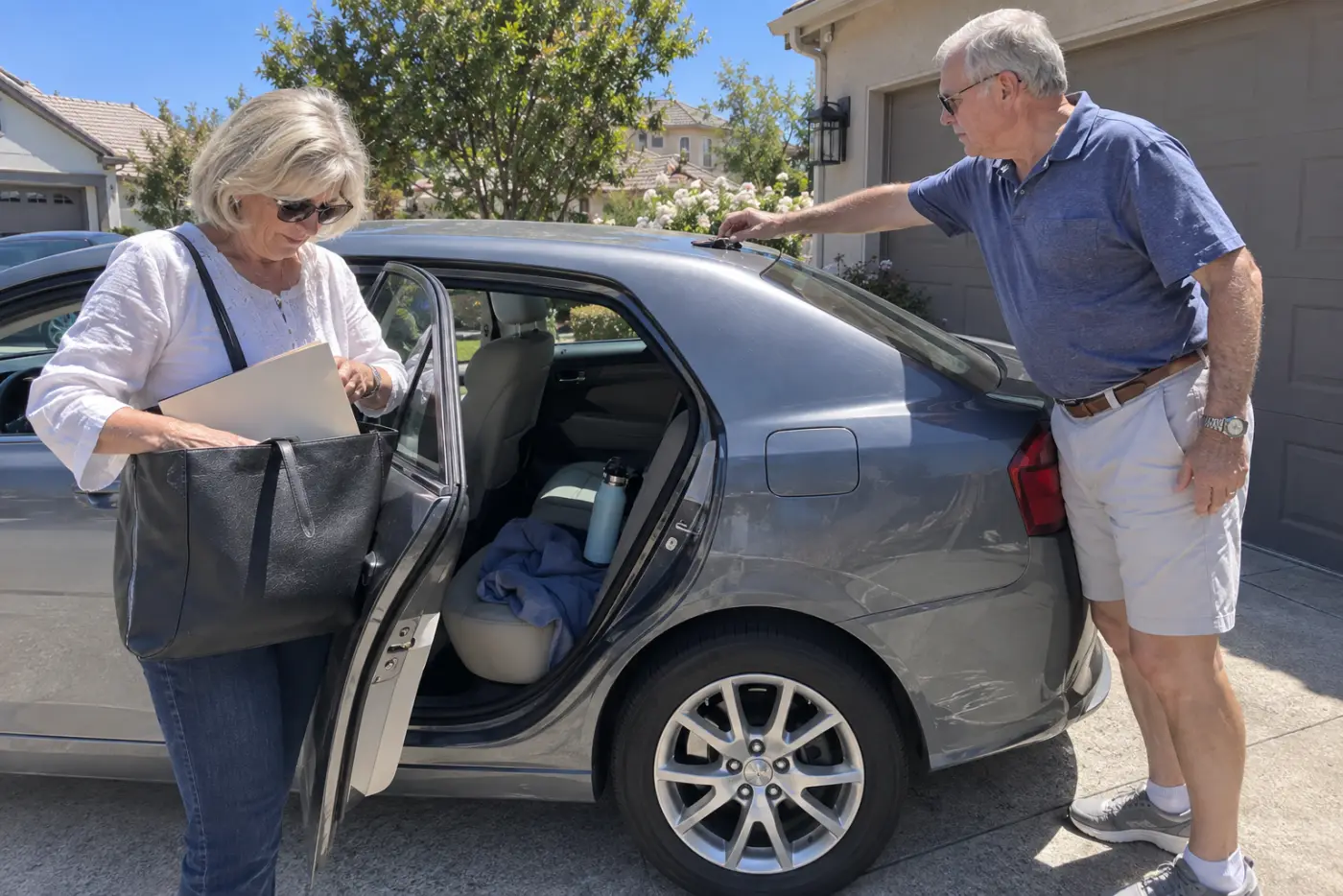
Everything important looks packable until the truck leaves.
Put medication, identification, keys, phone chargers, closing papers, and one change of clothes in a bag that rides with you. Add the objects you would turn around for: the small photo, the recipe card, the watch from the dresser.
The Federal Motor Carrier Safety Administration’s moving guidance tells you how to check a mover and understand the paperwork. Even with a careful mover, the bag in your car is the one you can reach tonight.
Don’t make it a second household. You need what carries you through closing and the first night, plus the few things that would hurt to lose.
This week, pack the bag before any other box and put it by your car keys. “This bag stays with me. Please don’t load it.”
After the truck goes, the rooms need one last check.
1The written checklist for the final sweep
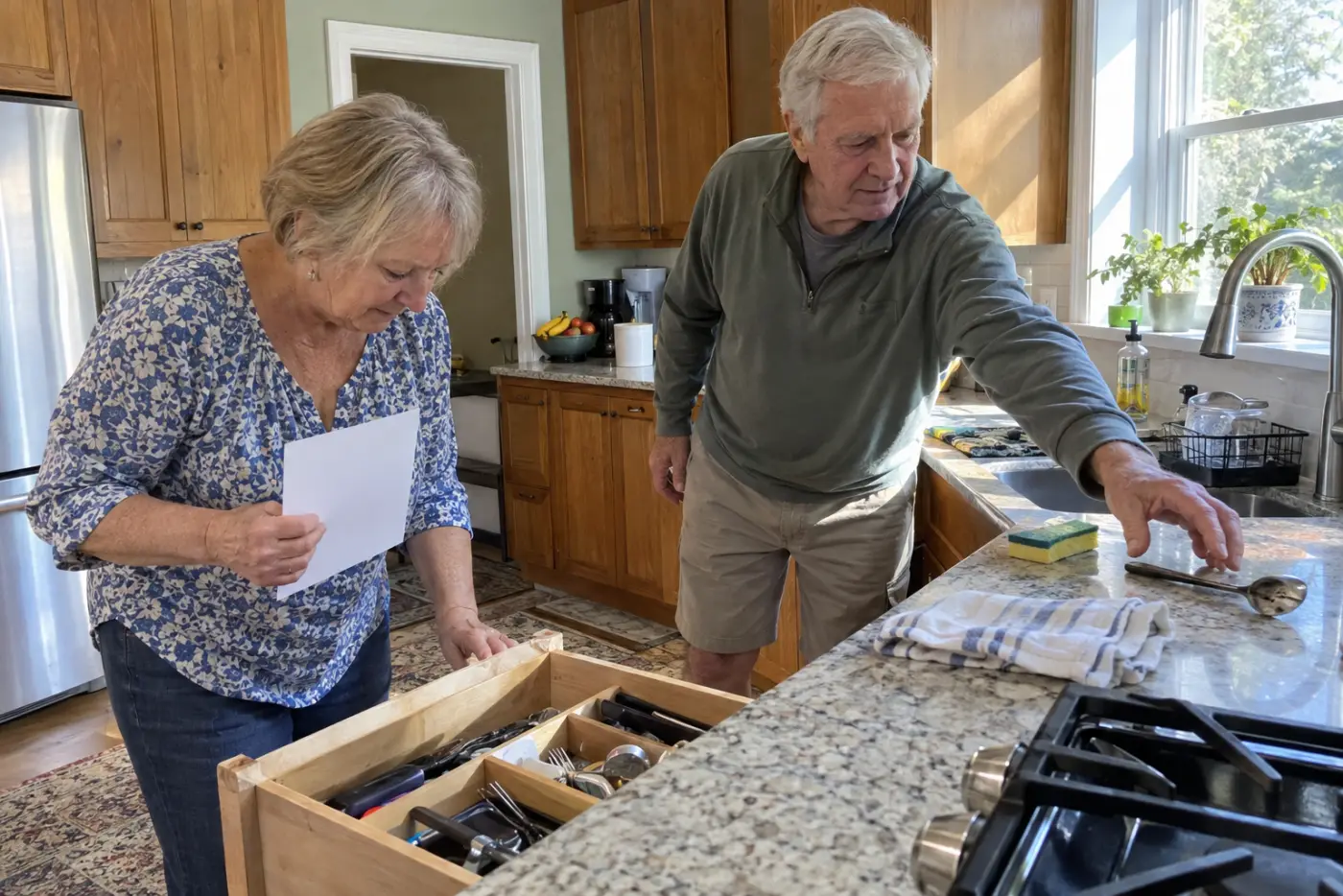
An empty room can still hold what you cannot replace.
After the movers leave, familiar hiding places look unfamiliar. A checkbook stays behind a drawer liner; a passport sits on the high shelf you stopped seeing years ago. Walking through without a list lets habit decide where you look.
Write the room names before moving day. Under each, name the places a mover won’t empty: cabinet tops, drawers, closet shelves, garage rafters, and the oven drawer. Give another person the list and have them mark each spot only after looking inside.
The cost of skipping one space is another person finding your papers after you’ve surrendered the keys. That is a harder call to make than one last look.
This week, write the checklist and put it with the bag that stays in your car. “Before I hand over the keys, will you check every place on this list with me?”
There’s still a way to keep the list useful after the door closes.
The bottom line
A house sale gives every room a deadline before it gives every memory a place.
The best-prepared version of you has checked the papers, packed what must stay close, and written down where to look once the rooms are empty.
Which of these has already happened in your family?
Up next
25 Things People Regret Giving Away When They Downsize
A cleared shelf looks like progress until you need the shoebox holding the only copy of a handwritten recipe.
Read the list →

Reader quiz
Did you catch the details?
5 questions from this article. Finish them all to unlock the editor's bonus tip.
How does the article say to photograph the closet height marks before leaving?
Did any of these feel familiar?
Know someone who needs this?
Sources cited in this article
This article links to 11 outside sources, listed here so you can read them yourself.
- National Archives’ preservation guidance www.archives.gov/preservation
- Federal Trade Commission’s identity theft site www.identitytheft.gov
- Consumer Financial Protection Bureau’s closing guidance www.consumerfinance.gov/owning-a-home/close/close-the-deal
- U.S. Postal Service www.usps.com
- IRS home-sale guidance www.irs.gov/taxtopics/tc701
- USDA’s plant hardiness zone map planthardiness.ars.usda.gov
- EPA’s household hazardous waste page www.epa.gov/hw/household-hazardous-waste-hhw
- Social Security Administration www.ssa.gov
- U.S. Department of State travel.state.gov
- National Association of Counties www.naco.org
- Federal Motor Carrier Safety Administration’s moving guidance www.fmcsa.dot.gov/protect-your-move
David Ruiz
Home Editor
David writes about the house you have and the one you might move to: staying put, downsizing, repairs, and the small changes that stop a fall.
More from David Ruiz