








25 Shoes That Look Good After 60 and Don't Hurt
A square-toe ballet flat earns its place when your toes have room and its heel stays put.
By Nora Bennett, Style Editor
Updated · 9 min read
- Written by our style editor
- How we review
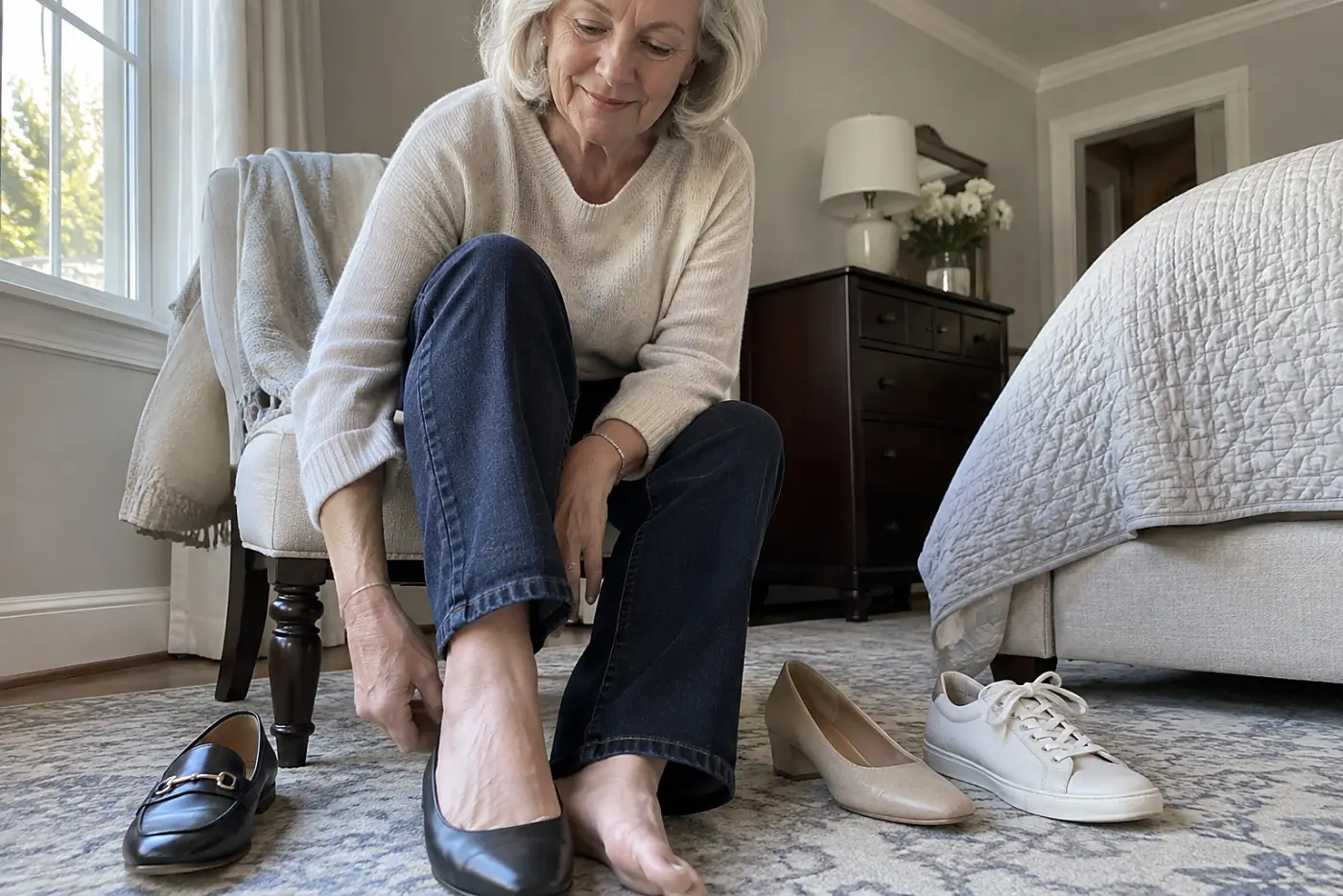
Read to the end: #1 is the fit check that catches rubbing before checkout, and almost nobody does it.
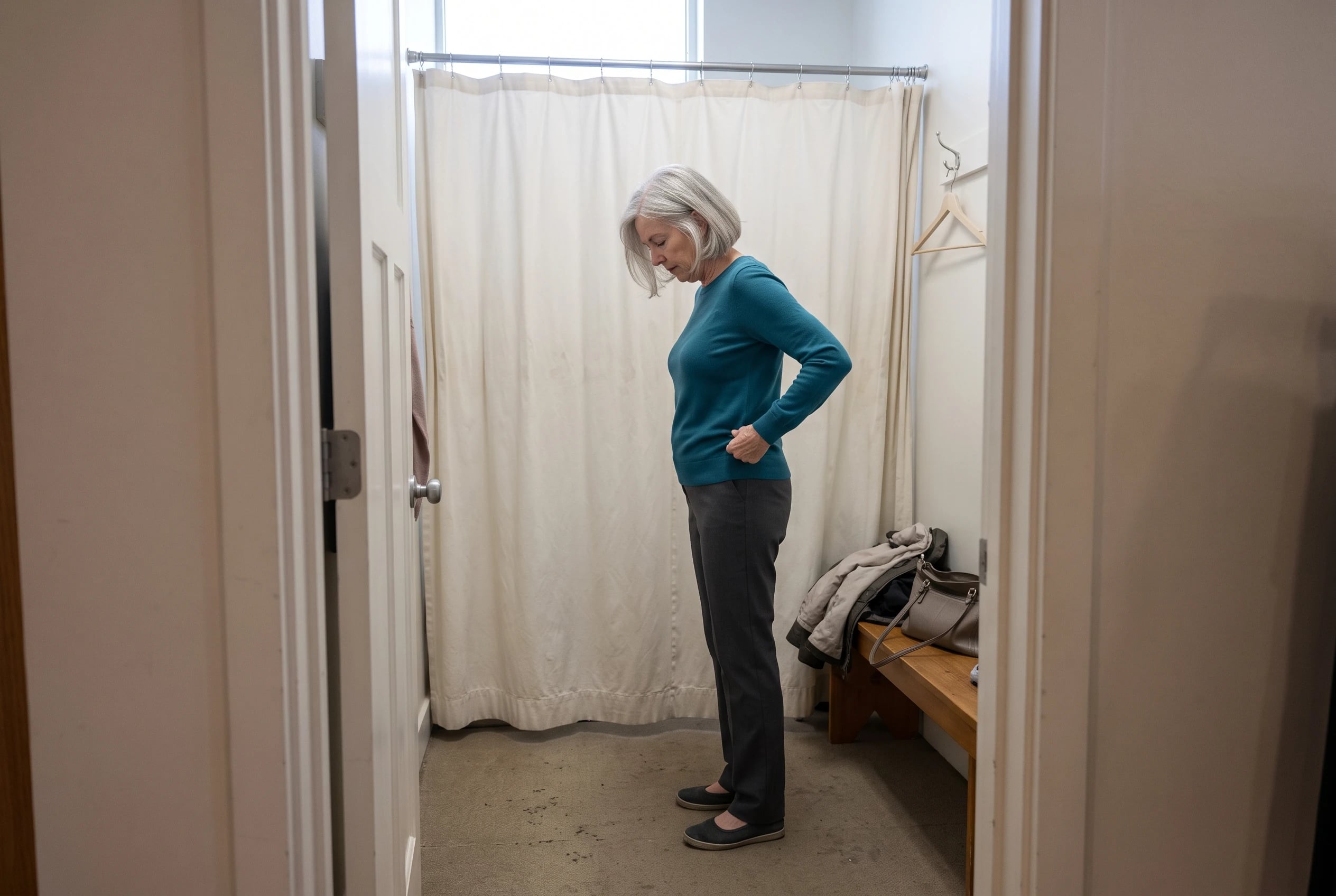
The shoes look perfect under the fitting-room mirror. Then you walk to the door, and the back edge starts rubbing your heel. You shouldn't have to trade the outfit for the walk home.
Here are 25 shoes worth trying, with the fit detail that matters for each.
25A Square-Toe Ballet Flat
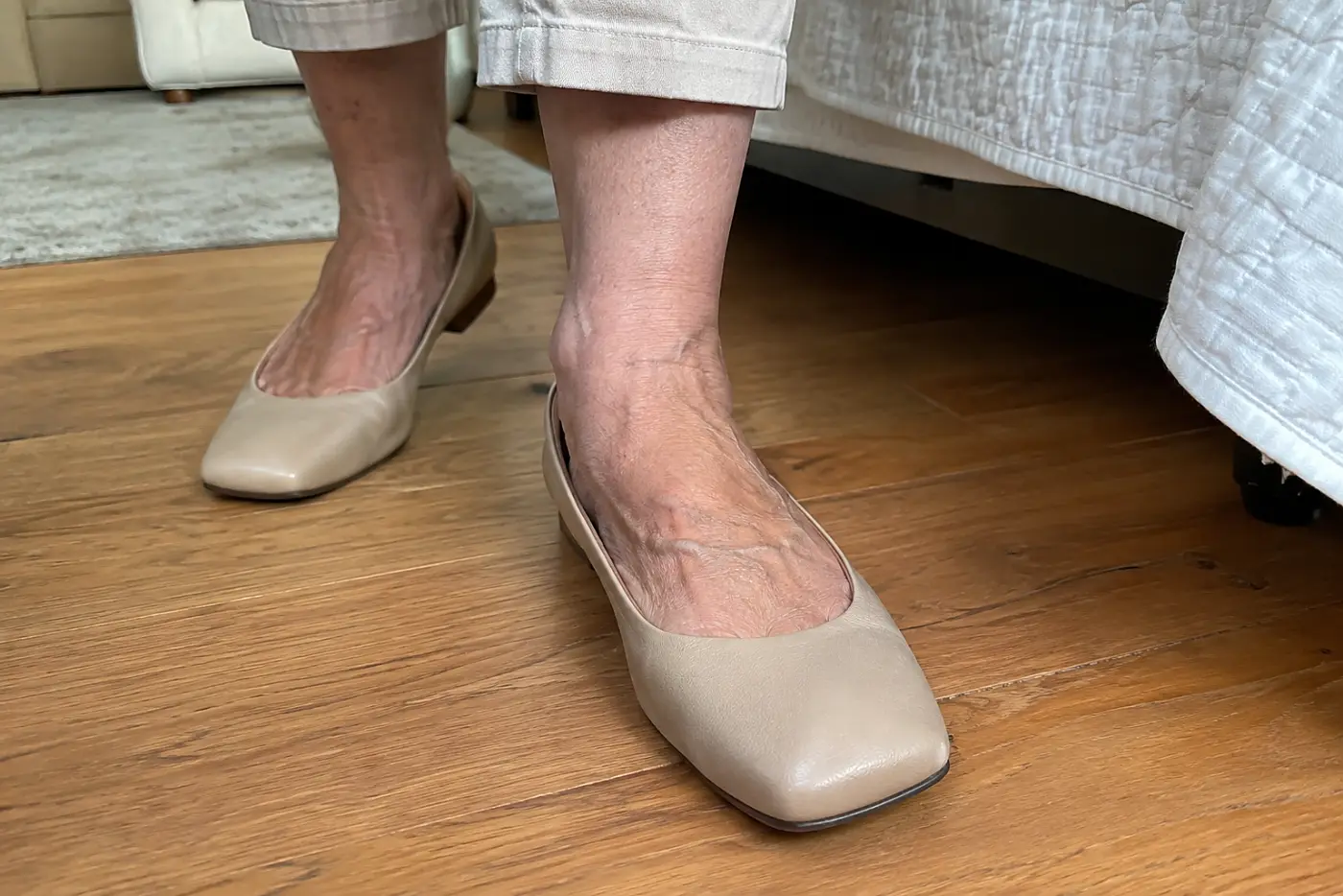
The squared front gives this familiar flat a stronger outline.
That shape also leaves more space across your toes than a pointed front. A flat sole still needs substance; one you can fold in half offers little between your foot and the sidewalk. The back should cup your heel without a hard edge. Pretty from above isn't enough.
Try it on hard flooring, and leave it behind if your heel slips.
See more: 12 Best Blushes for Women Over 60, and How to Wear Them →
24A Suede Mary Jane
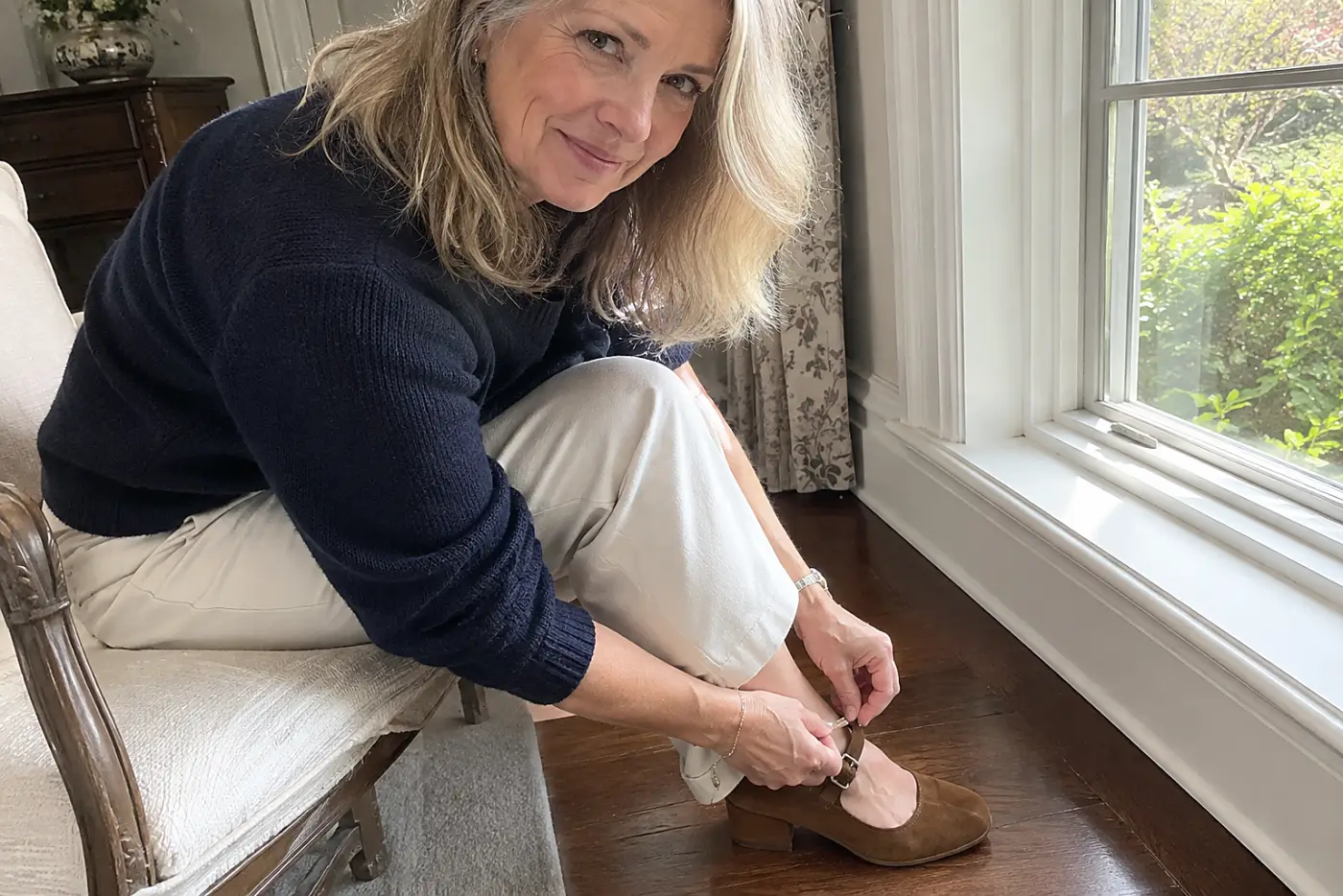
A strap across the instep changes the whole shoe.
It also holds the shoe on without making your toes grip. Suede has a rich, matte surface that looks right with trousers or a skirt, but the strap should sit flat without digging in. Check its buckle while standing, not just while seated. If the edge presses across the top of your foot, a longer walk won't improve it.
Fasten both shoes and walk a full lap before deciding.
23A Low Block-Heel Pump
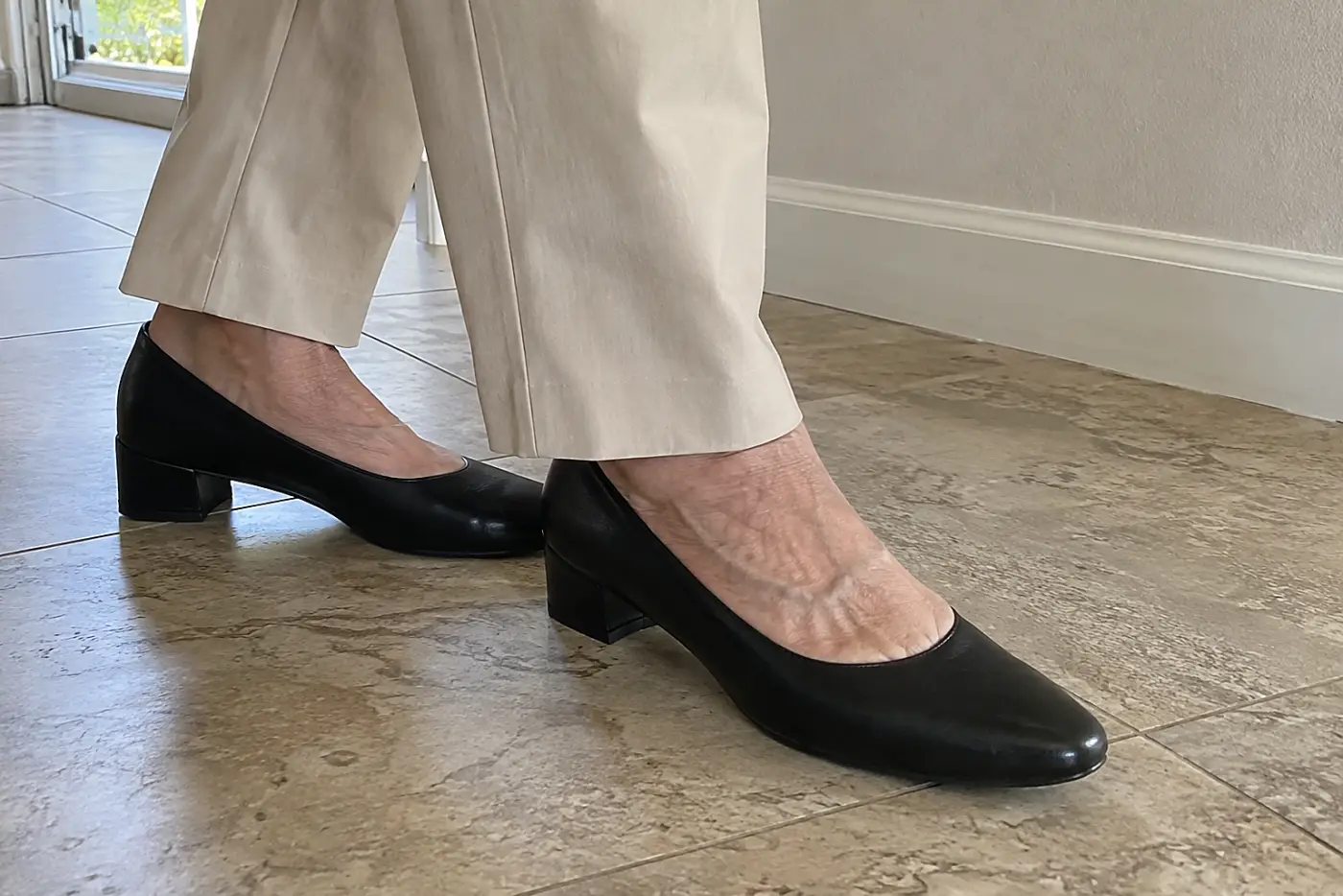
A broad heel looks deliberate beneath a straight trouser leg.
Its width gives you a steadier landing than a narrow heel. Height still matters: if your weight tips toward the balls of your feet, the heel isn't low enough for your day.
Stand still, then walk; both should feel easy.
22A Leather Loafer With Cushioning
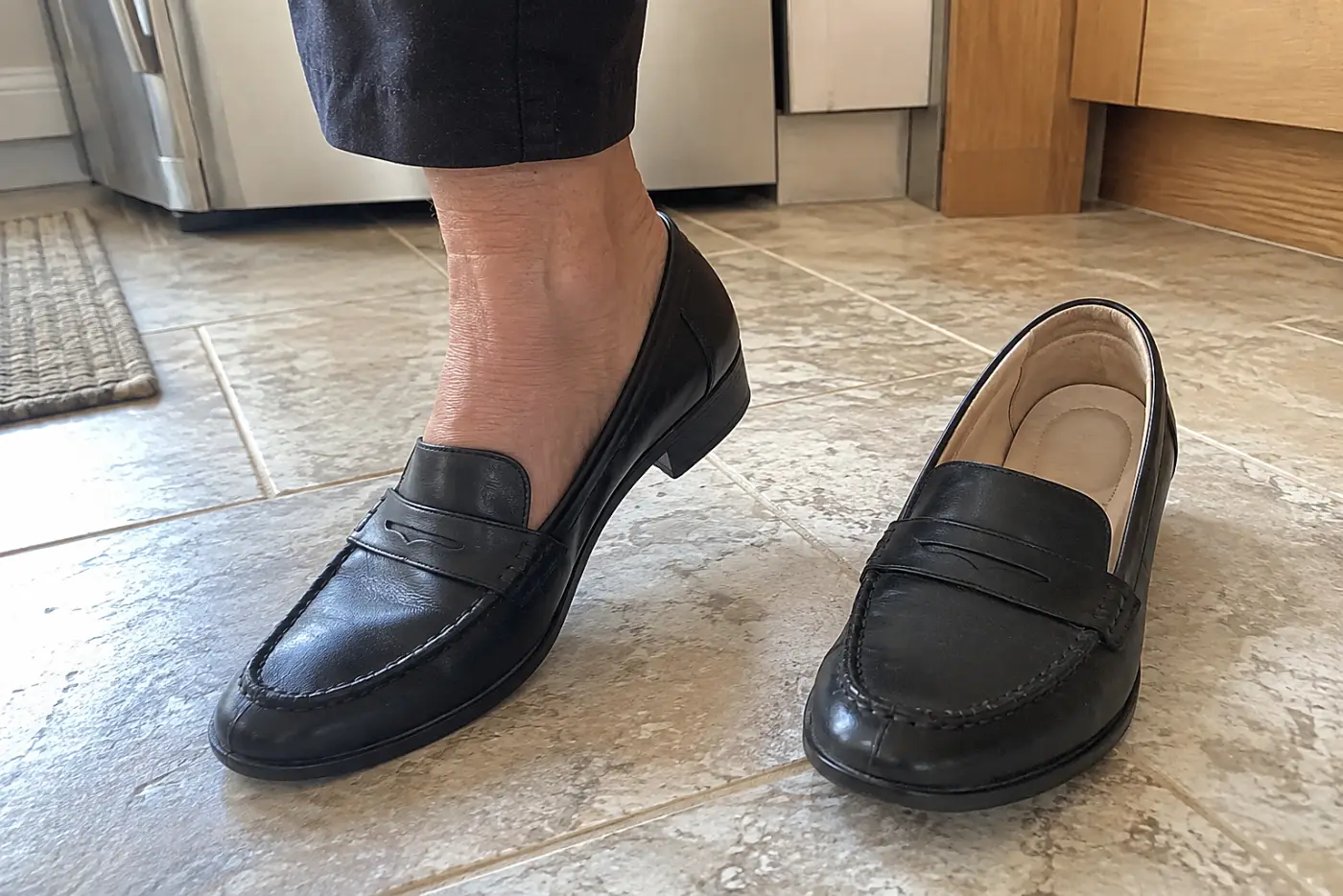
The clean vamp keeps this loafer sharp beside dark denim.
Look inside before judging the leather outside. A padded footbed softens the floor underfoot, while a firm back holds your heel in place. Leather across the instep should feel snug, not tight. A loafer that gapes at the sides won't become secure because you like its color.
Walk quickly in it; don't buy the pair you have to shuffle in.
21A Soft Leather Sneaker
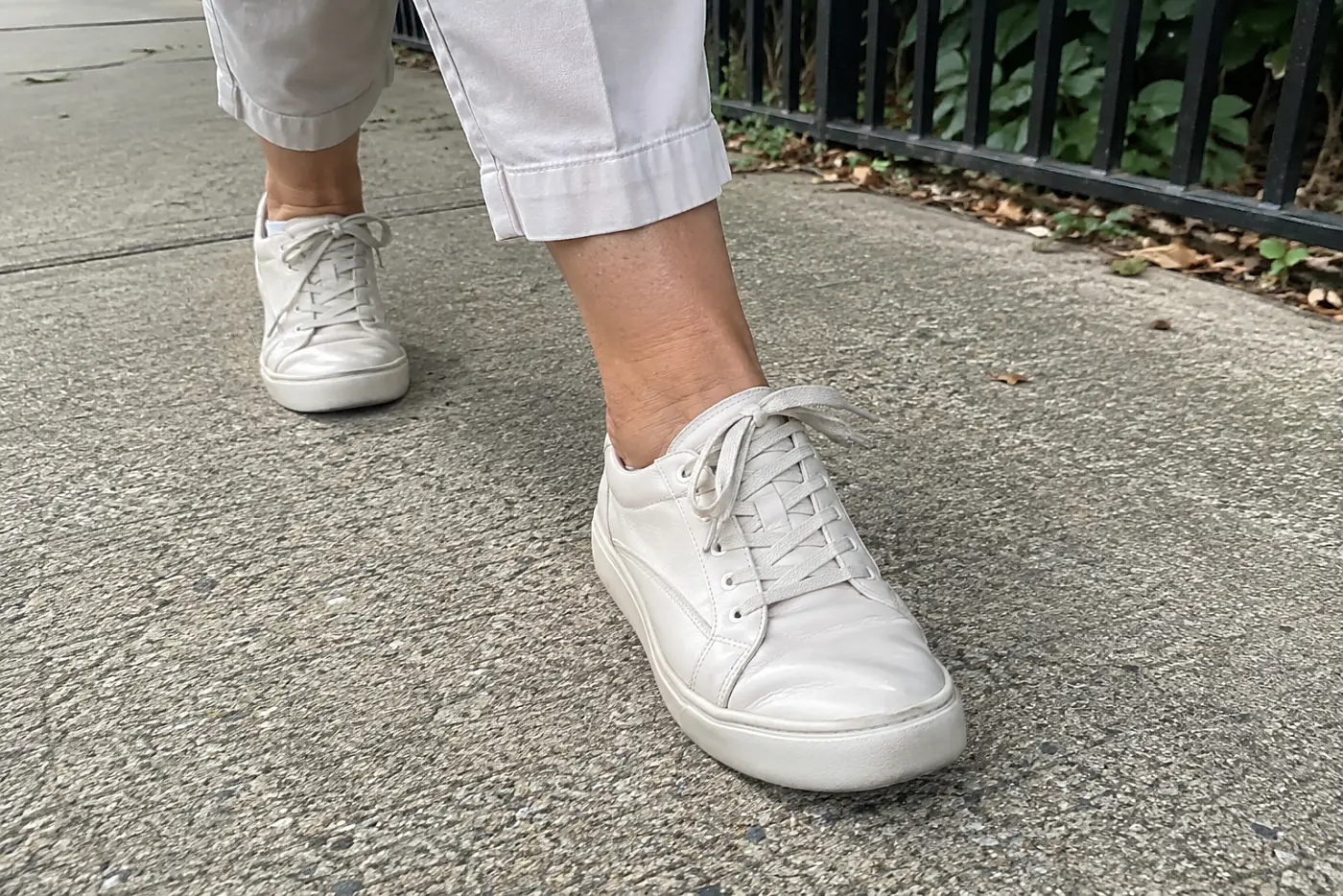
Plain leather makes this sneaker look considered, not gym-bound.
A flexible upper follows your foot without squeezing it. Check that the sole bends near the ball of your foot, where your foot bends, rather than through the middle.
Wear the socks you'd use with it when you try it on.
20A Slingback With a Low Heel
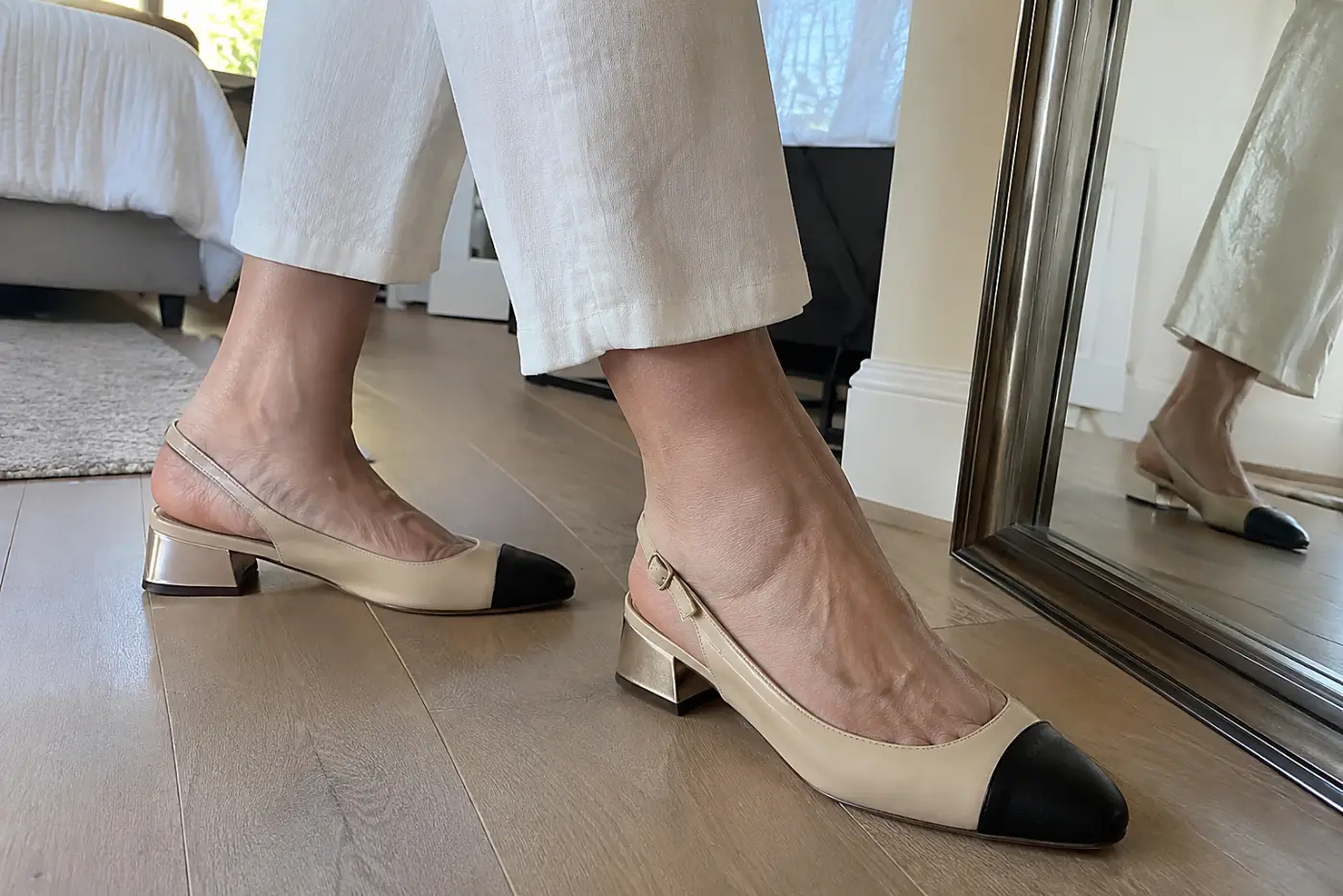
The open back makes this heel feel lighter with a dress.
The strap has one job: stay on your heel while you move. If it slides down, you'll change your stride to keep the shoe. A low heel and a roomy front work together; neither fixes a strap that won't stay put. Patent leather gives the shape a crisp finish, but don't let the shine distract you from that back strap.
Take several turns in the store and watch for slipping.
19A Fisherman Sandal
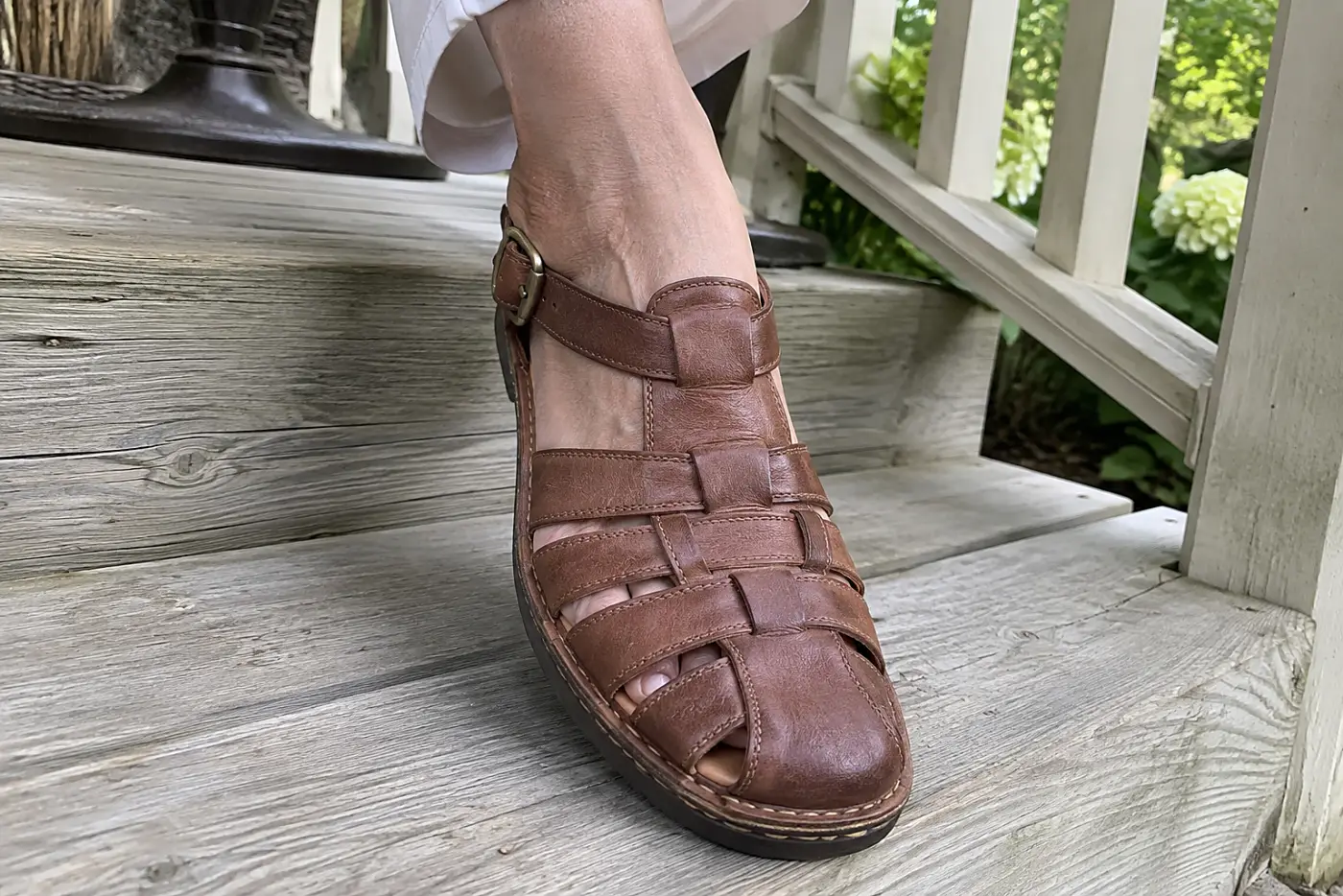
The woven leather front gives this sandal its unmistakable shape.
Those straps protect more of your foot than a thin-strapped sandal. They also create several places for rubbing, especially around the little toe. Look for smooth edges and enough room to move your toes.
Try it without socks and check every strap against your skin.
18A Chelsea Boot With a Wide Toe
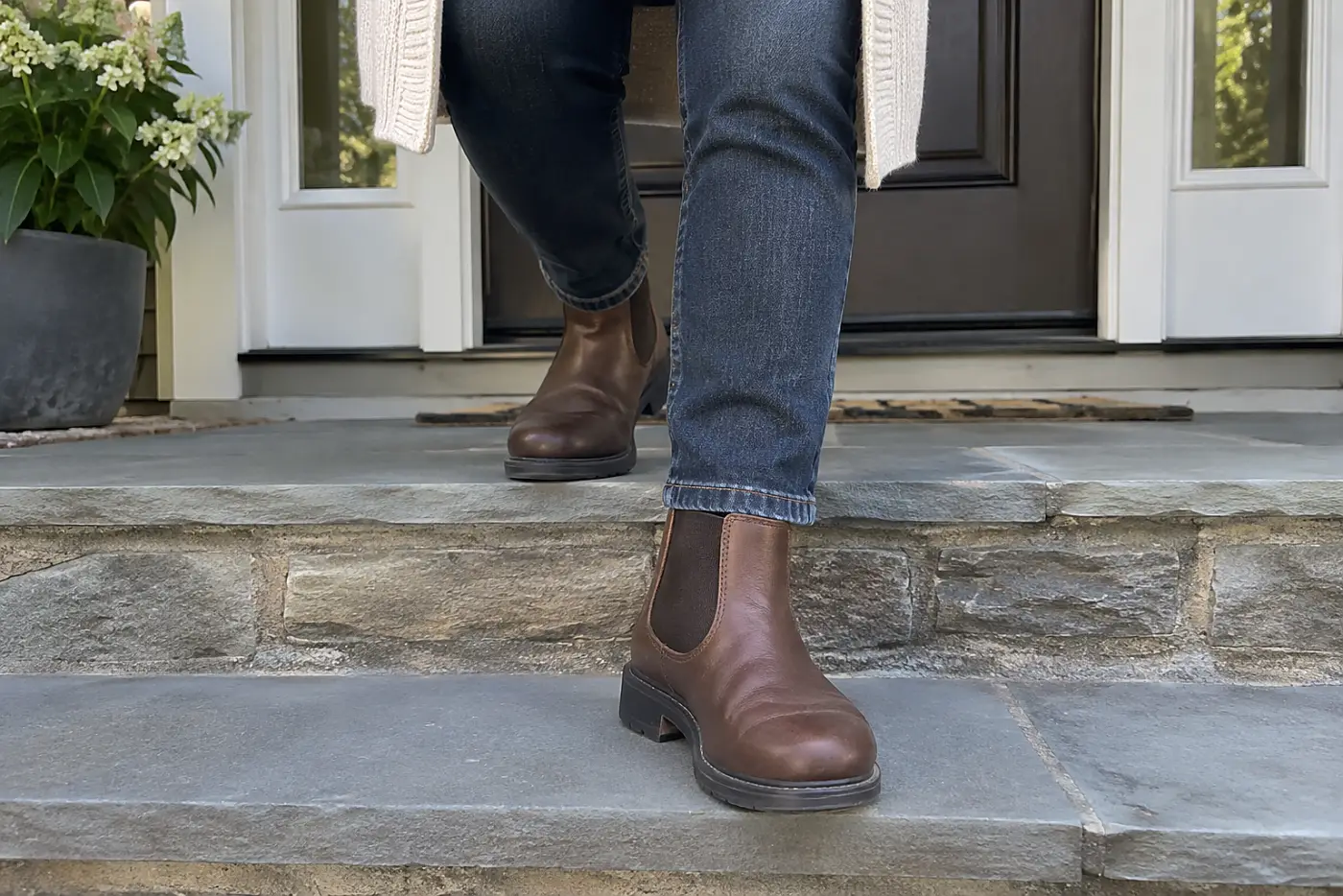
The elastic side panels make this ankle boot easy to spot.
They also let the shaft give as you pull it on. The front still has to match your foot; a sleek photograph tells you nothing about toe room. Choose a sole with grip for wet pavement, and check that the boot bends as you walk. A stiff ankle opening that rubs on the first lap deserves no second chance.
Walk down a short flight of stairs before you keep it.
17A Leather Walking Sandal
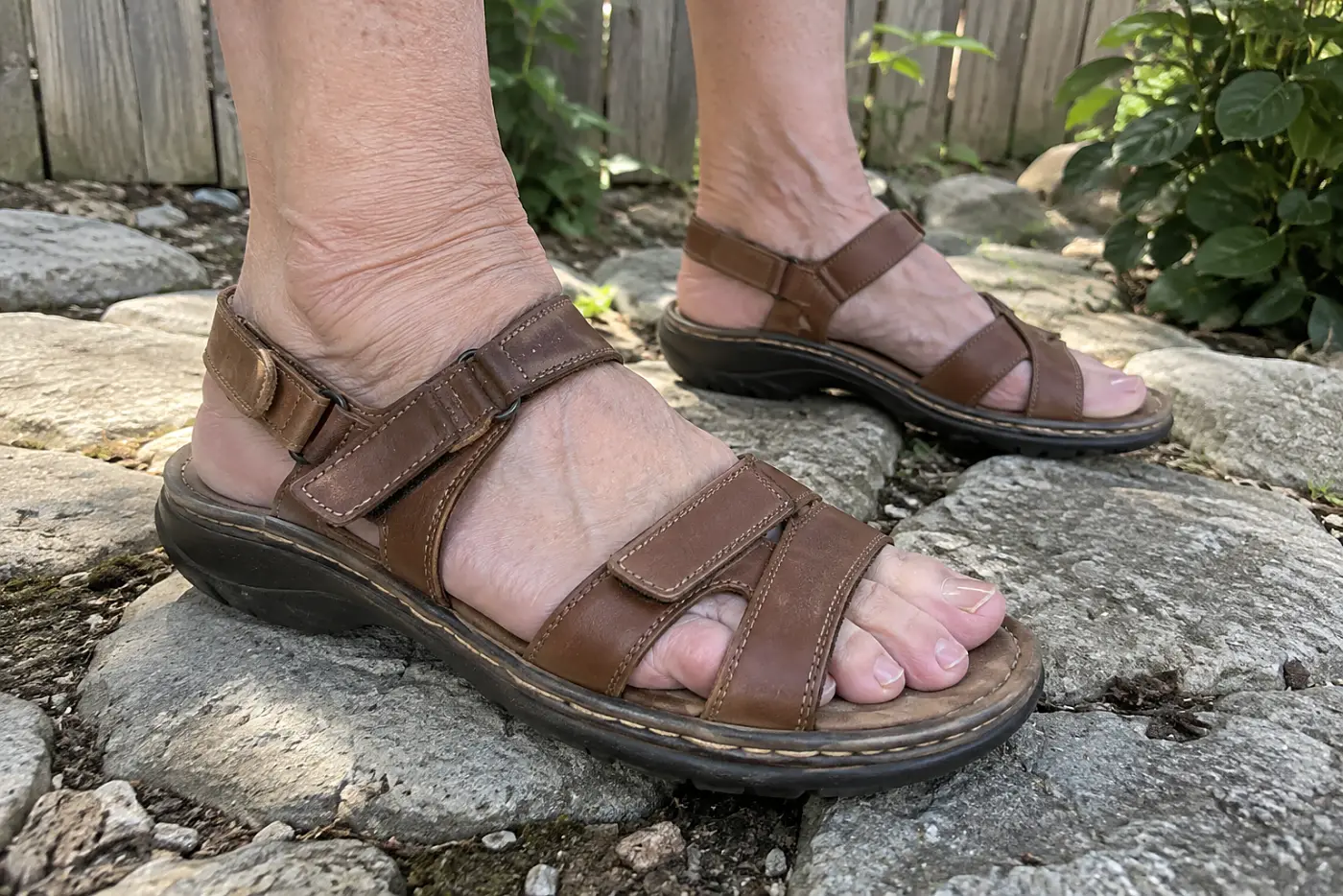
Wide straps give this sandal more presence than a flip-flop.
A secure heel strap stops your foot from sliding forward. Adjustable straps help you get a close fit across the instep without pinching. Bare skin finds rough seams fast.
Run a finger along each strap edge, then walk in both sandals.
See more: 28 Cruise Outfits for Women Over 60 →
16A Penny Loafer in Oxblood
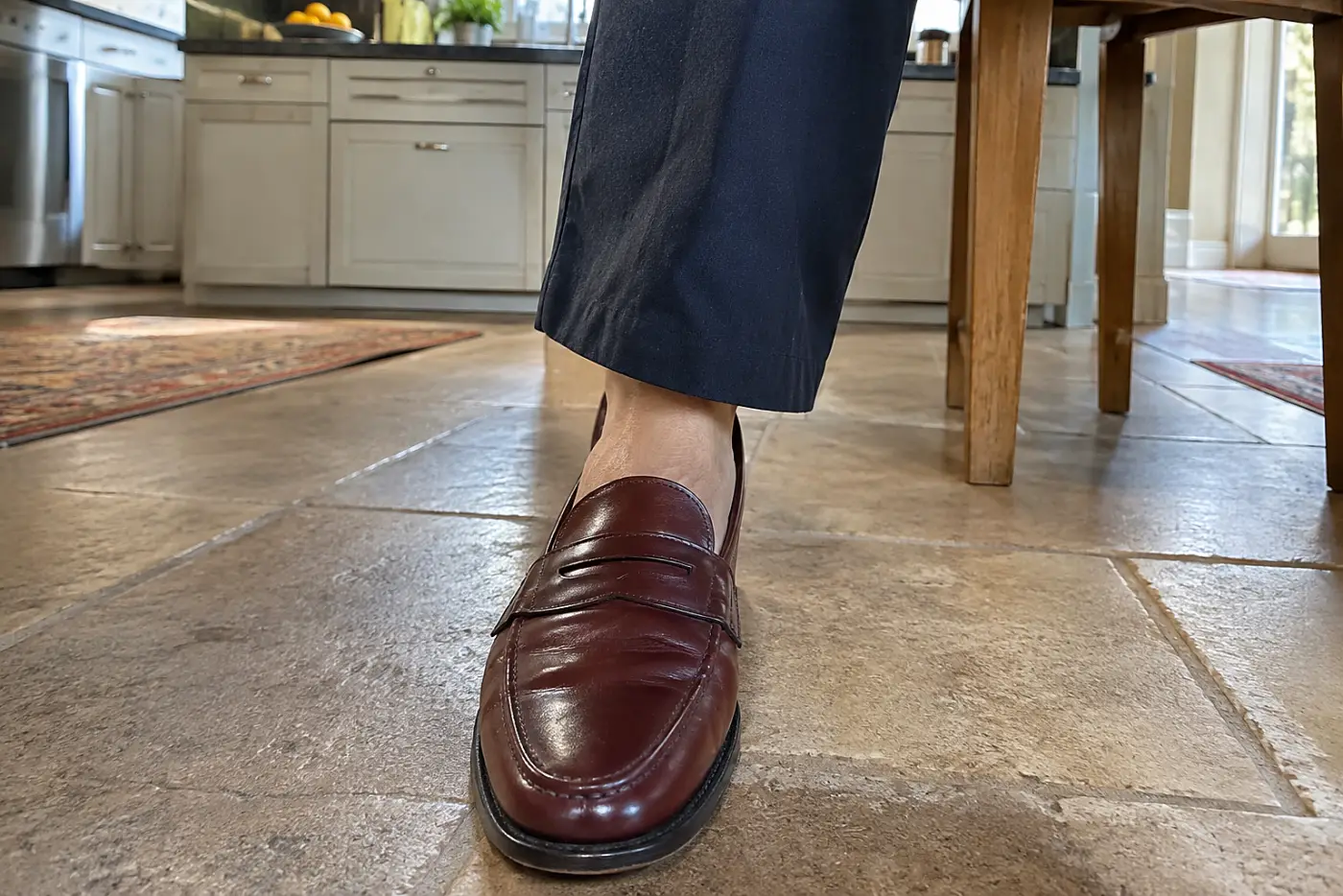
That deep red-brown leather looks especially good against navy.
The penny slot gives the shoe a familiar face, but fit decides whether you keep wearing it. Your toes need space inside the front, and your heel needs to stay down. A cushioned insole helps with hard floors; it won't rescue a shoe that's too short. If the leather creases against your toes on the first walk, pay attention.
Try this color with the trousers you wear most, not just the outfit you wore shopping.
15A Canvas High-Top Sneaker
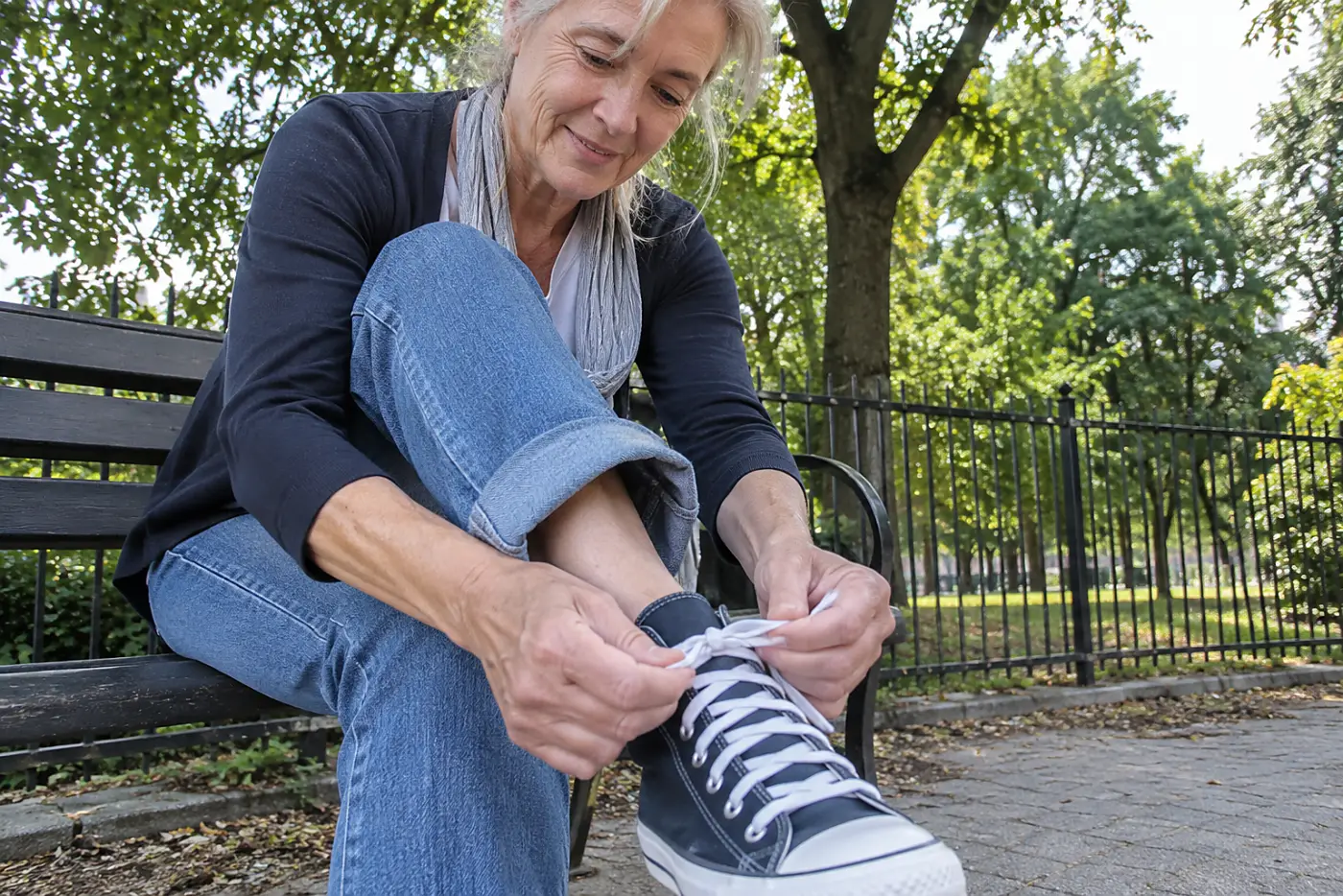
The high canvas sides change the line of a simple sneaker.
Laces let you adjust the fit over your instep. A thin sole still puts you close to the pavement, so check what sits under your foot. Don't accept rubbing at the back of your ankle.
Lace both shoes as you would at home and walk until the canvas warms up.
14A Low-Heeled Ankle Boot
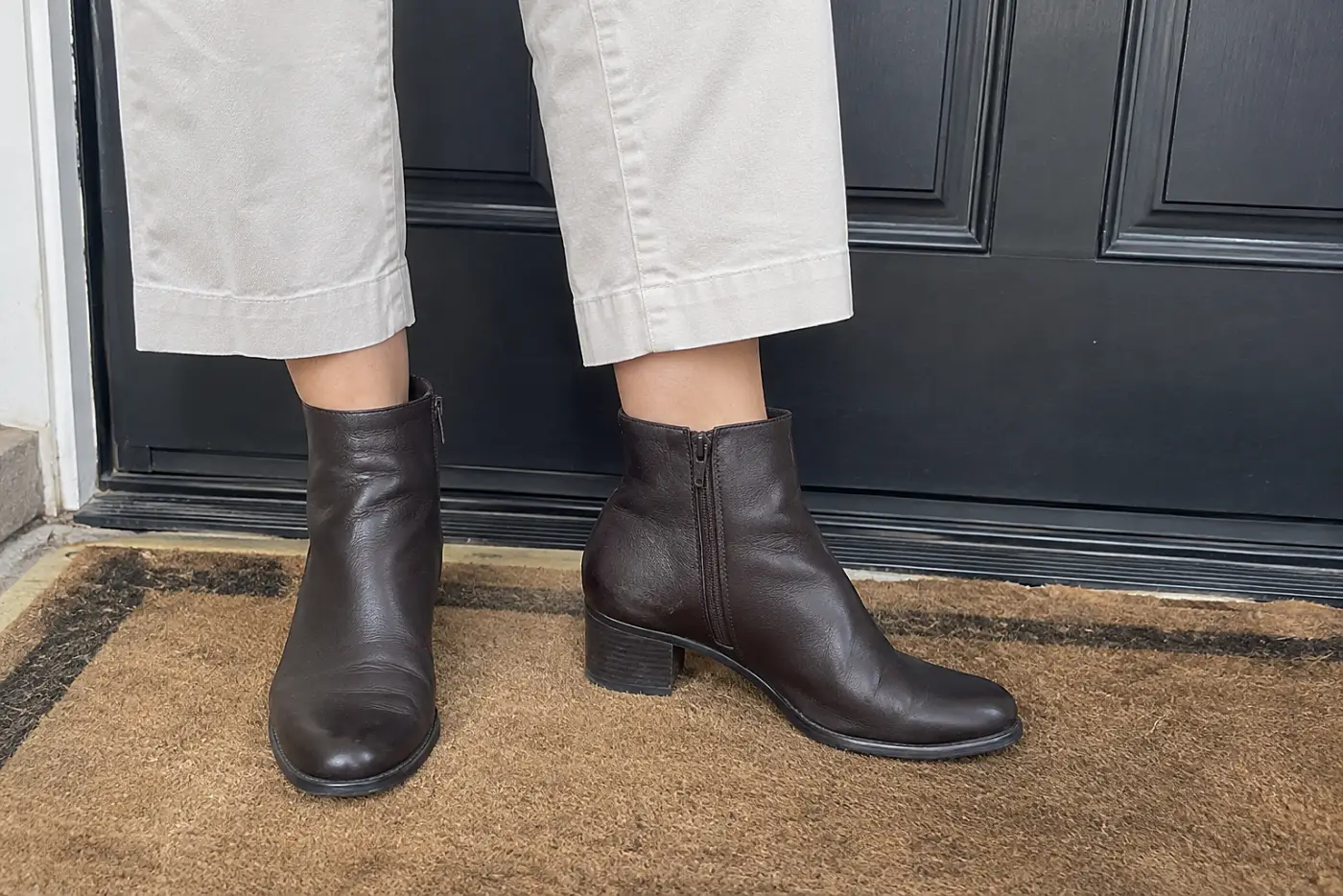
The short shaft sits neatly under a cropped trouser hem.
A side zipper gets you in without tugging at your foot. Once zipped, the opening should clear your ankle as you walk. A block heel gives the boot a little height without tipping your foot forward. Check the sole too; smooth leather underfoot feels different from rubber on a wet entryway.
Wear your usual socks, zip it fully, and walk on the store's hardest floor.
13A Square-Toe Heeled Sandal
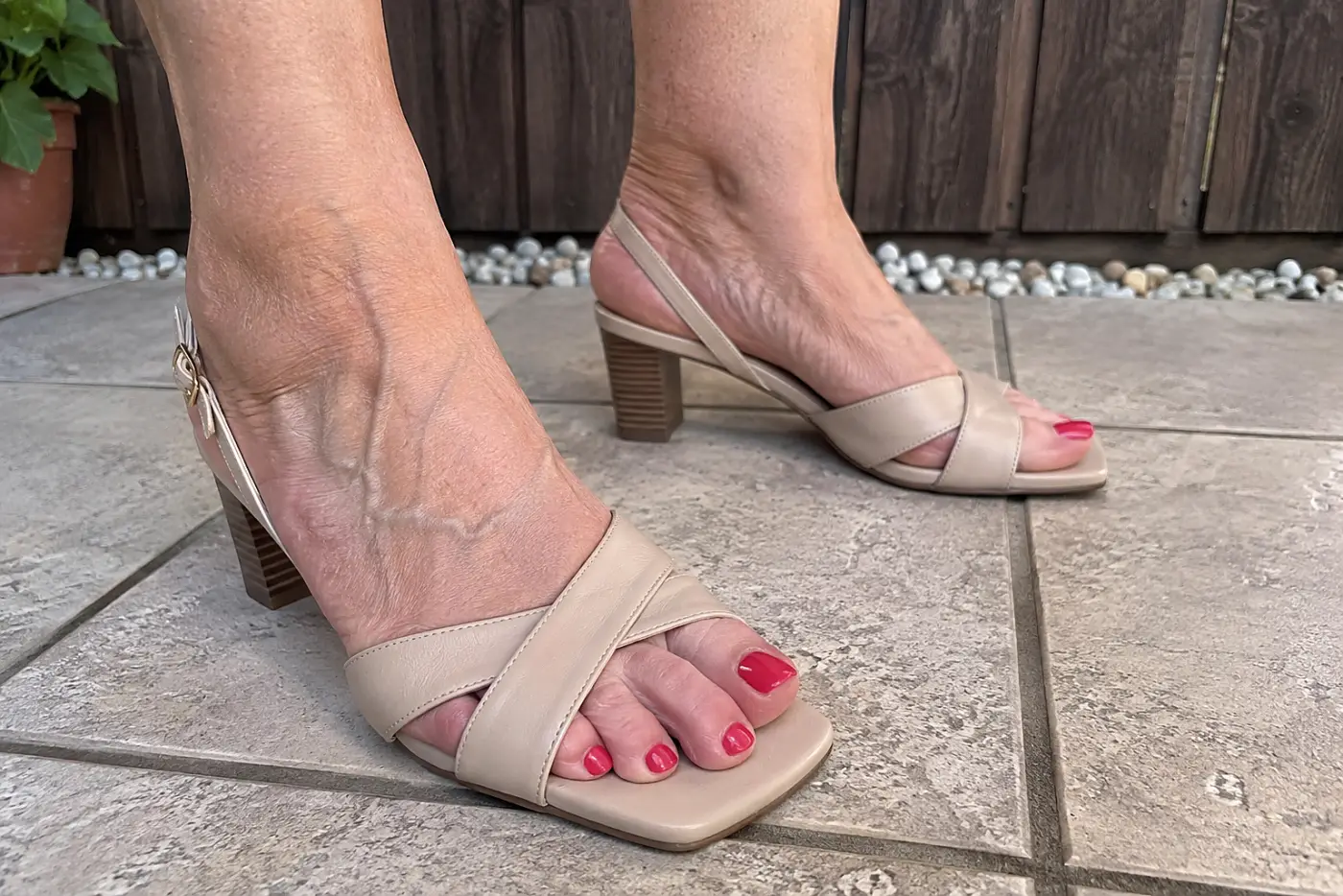
The straight front makes this dress sandal look current.
It also shows exactly where your toes land. They should sit on the footbed, not reach past its edge. A low, broad heel steadies the step, while an ankle strap keeps the shoe with you.
Check the front and back in a mirror while standing.
12A Knit Walking Sneaker
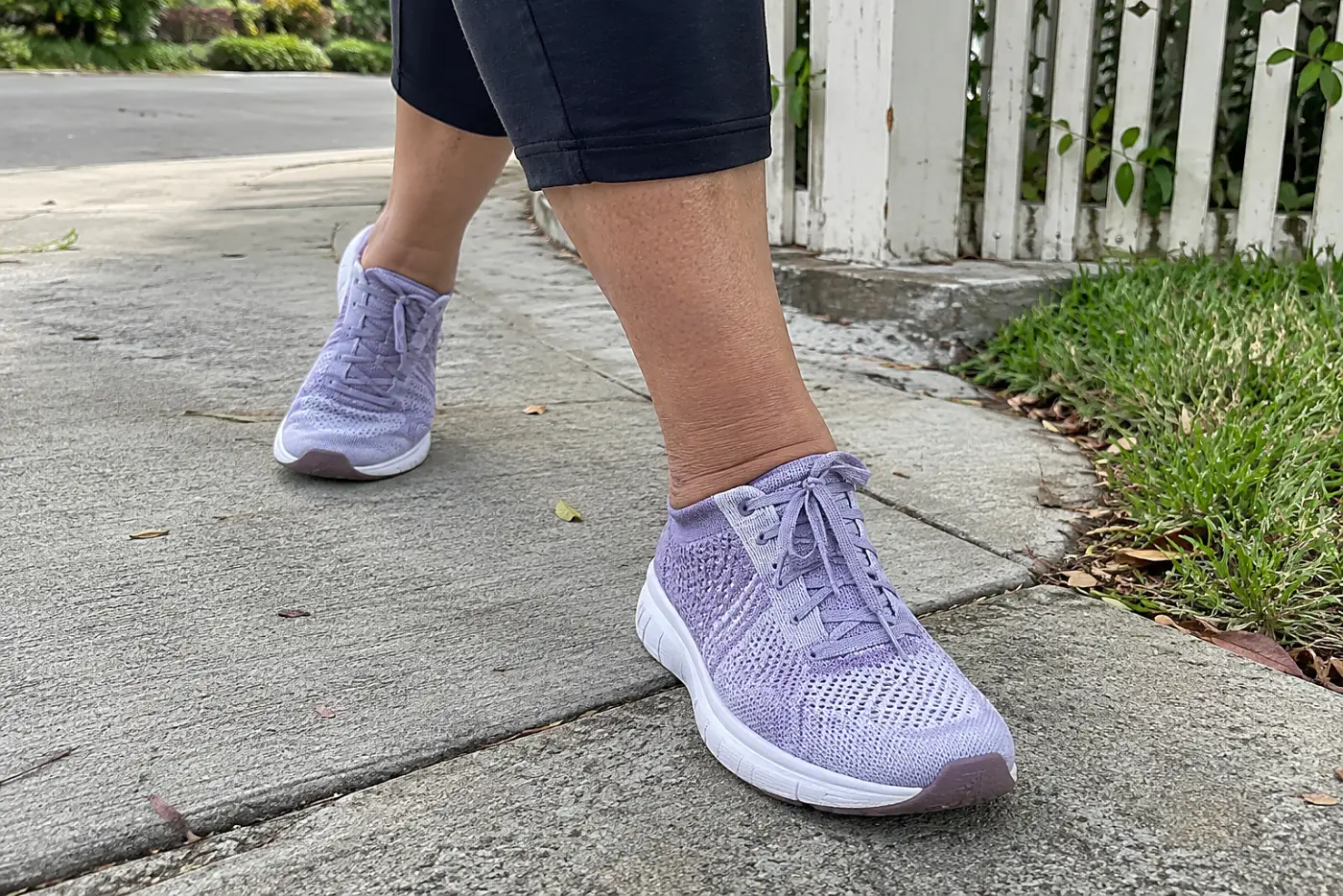
The textured upper looks relaxed beside linen pants.
Knit stretches across the top of your foot, but stretch doesn't create length. Leave room at the front and check that your heel stays anchored. Look at the sole from the side: enough material underfoot matters when the day includes sidewalks. A soft upper paired with a loose heel turns every step into work.
Walk fast, turn a corner, and reject any pair that makes your foot slide.
11A T-Strap Flat
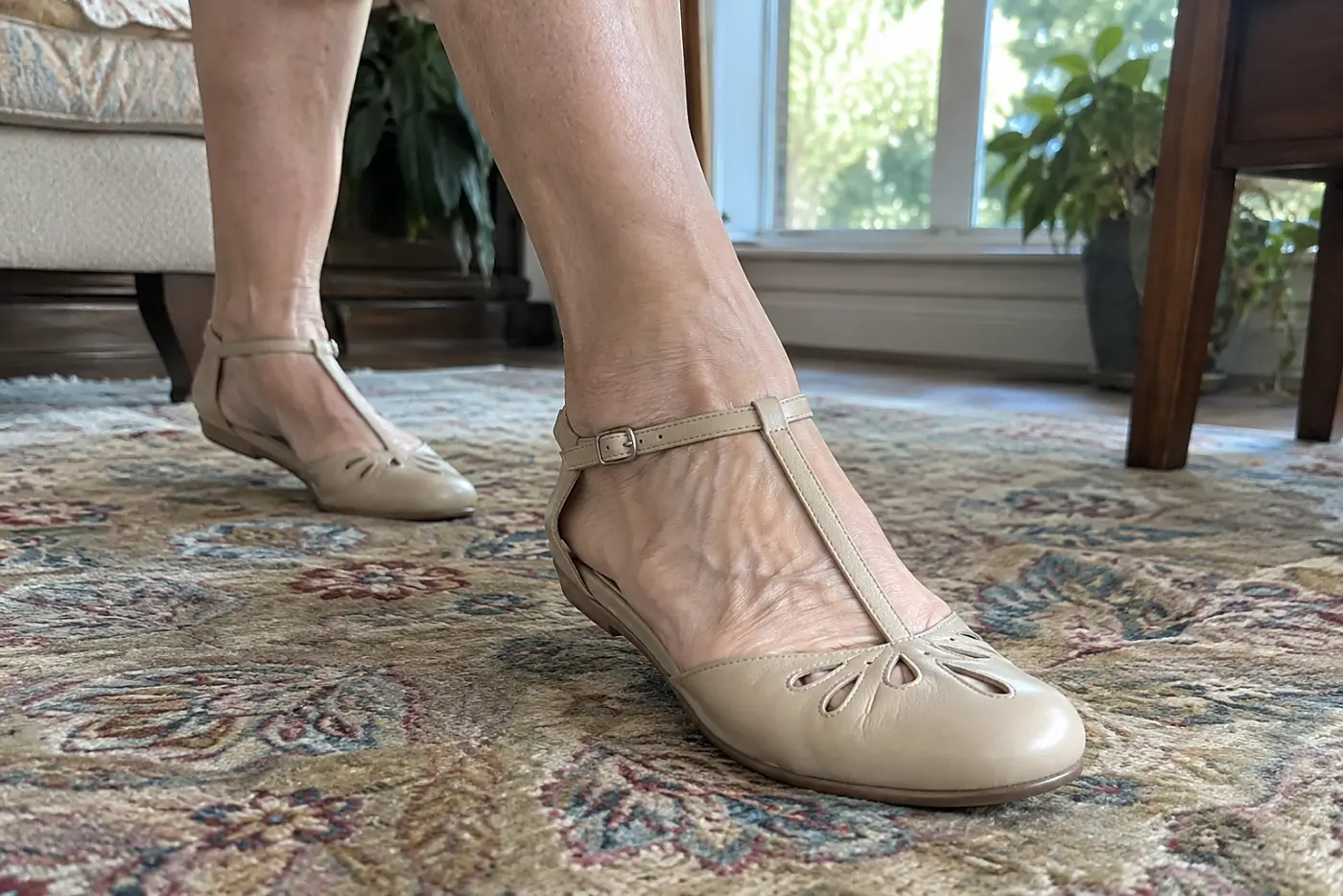
One narrow strap draws the eye down the center of this flat.
The shape recalls dance shoes without requiring a thin dance-shoe sole. Its fastening keeps the front from slipping off, provided the strap lies comfortably across your foot. Check where it meets the ankle.
Take a few long strides; the strap should stay flat.
10A Lug-Sole Loafer
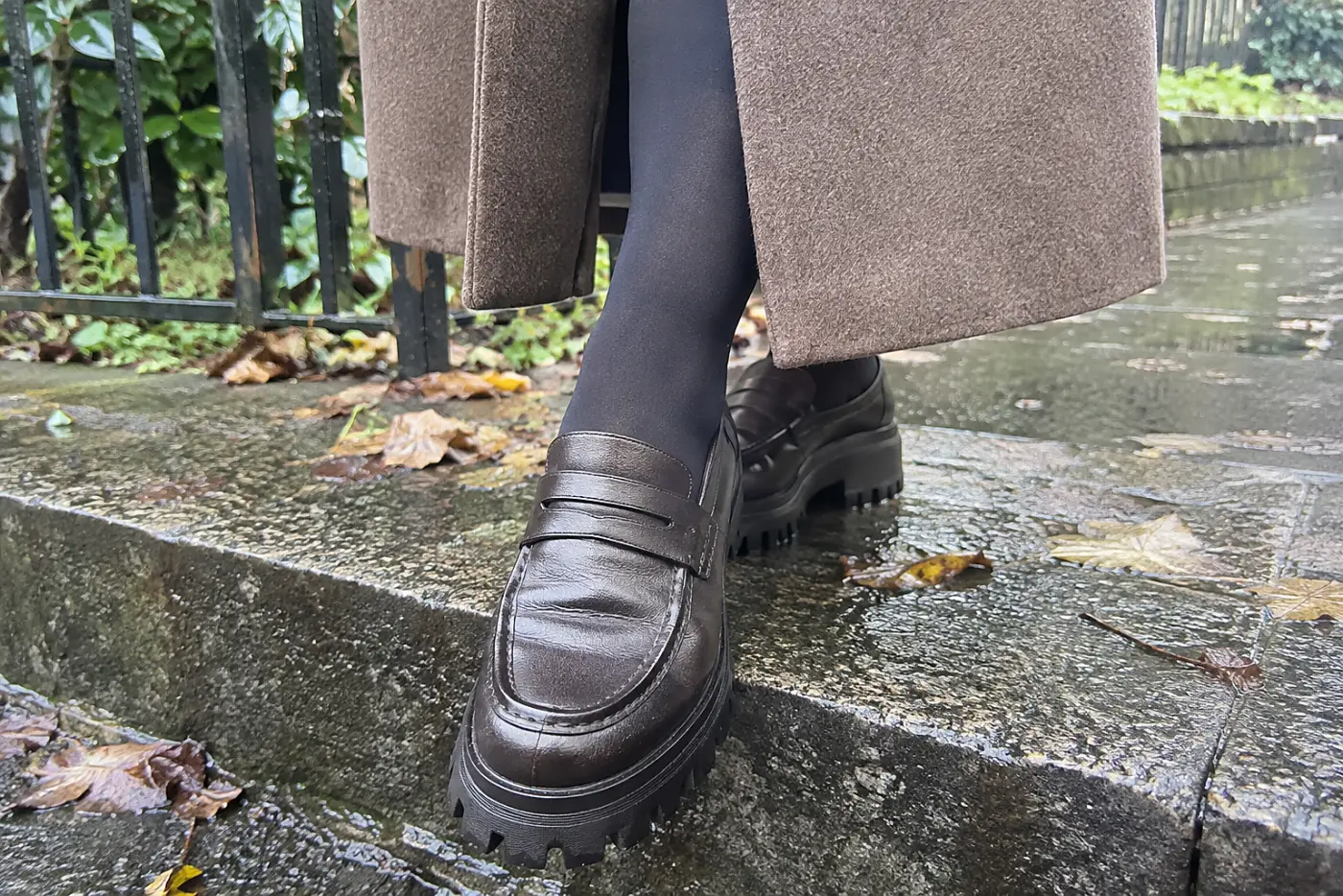
The thick, ridged sole gives this loafer a bold profile.
That tread adds grip, but a heavy shoe becomes tiring if it fights your stride. Lift it before you put it on, then walk and listen for slapping. The upper needs to hold your heel securely, especially with extra weight below it. Black leather looks good with a long coat; it shouldn't demand a shorter walk.
Try stairs and a quick turn, not just a pose in the mirror.
9A Leather Huarache Sandal
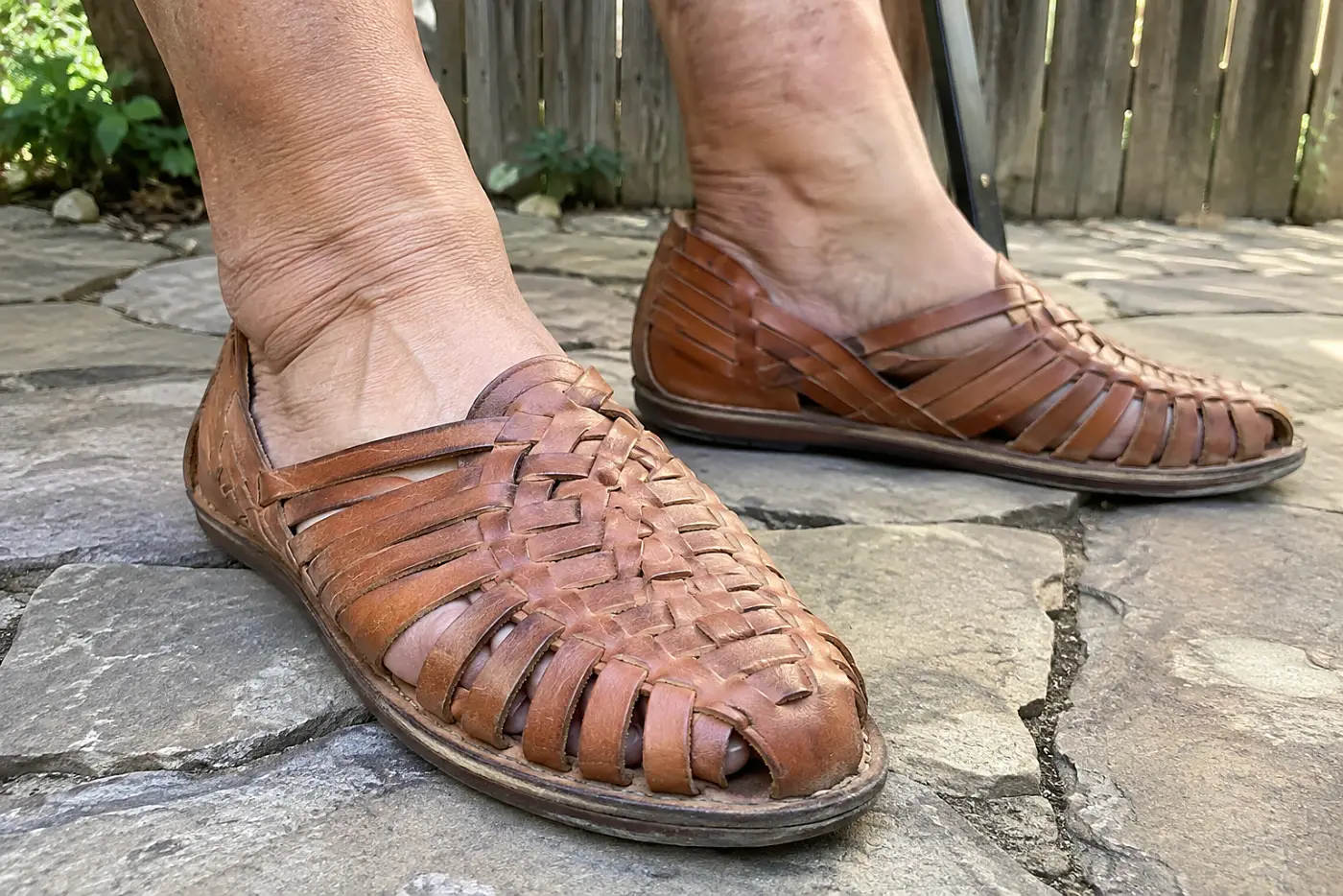
Woven strips give this sandal its airy, closed-toe look.
The weave lets air through while covering your toes. Each strip also touches skin, so a rough edge has plenty of chances to announce itself. Check the back strap for a secure fit.
Wear it around the store long enough to find the first rub.
See more: 23 Ways to Wear Bohemian Style Over 50 →
8A Lace-Up Derby Shoe
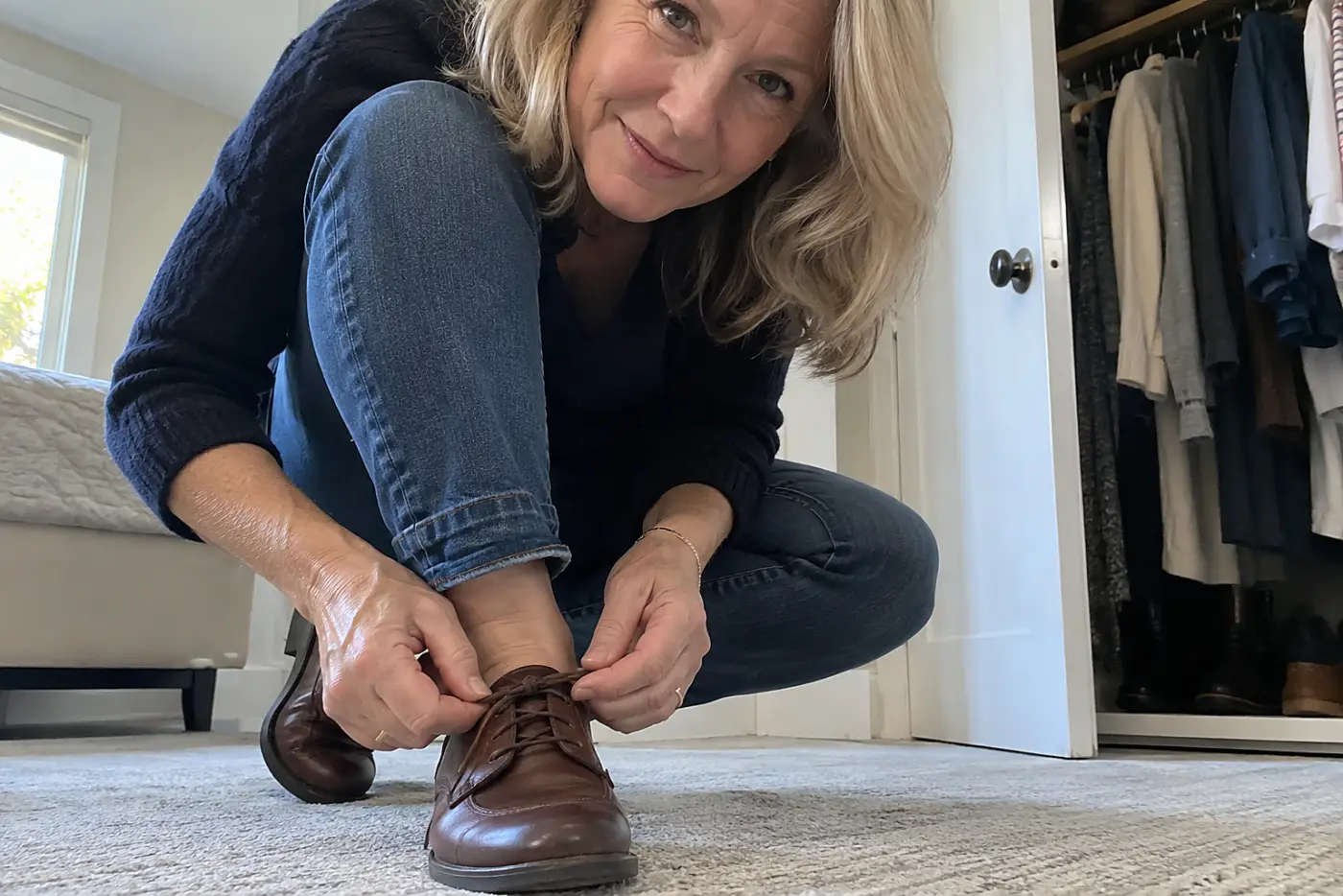
The open lacing gives this leather shoe a less severe look.
It also gives you control across the instep, where slip-ons sometimes press. A rounded front leaves your toes space without making the shoe look oversized. Brown leather wears well with denim and wool trousers, but a derby's neat shape is no reason to tolerate a hard seam. Check the inside with your hand before putting it on.
Tighten the laces to your usual comfort, then walk and bend each foot.
7A Backstrap Espadrille Wedge
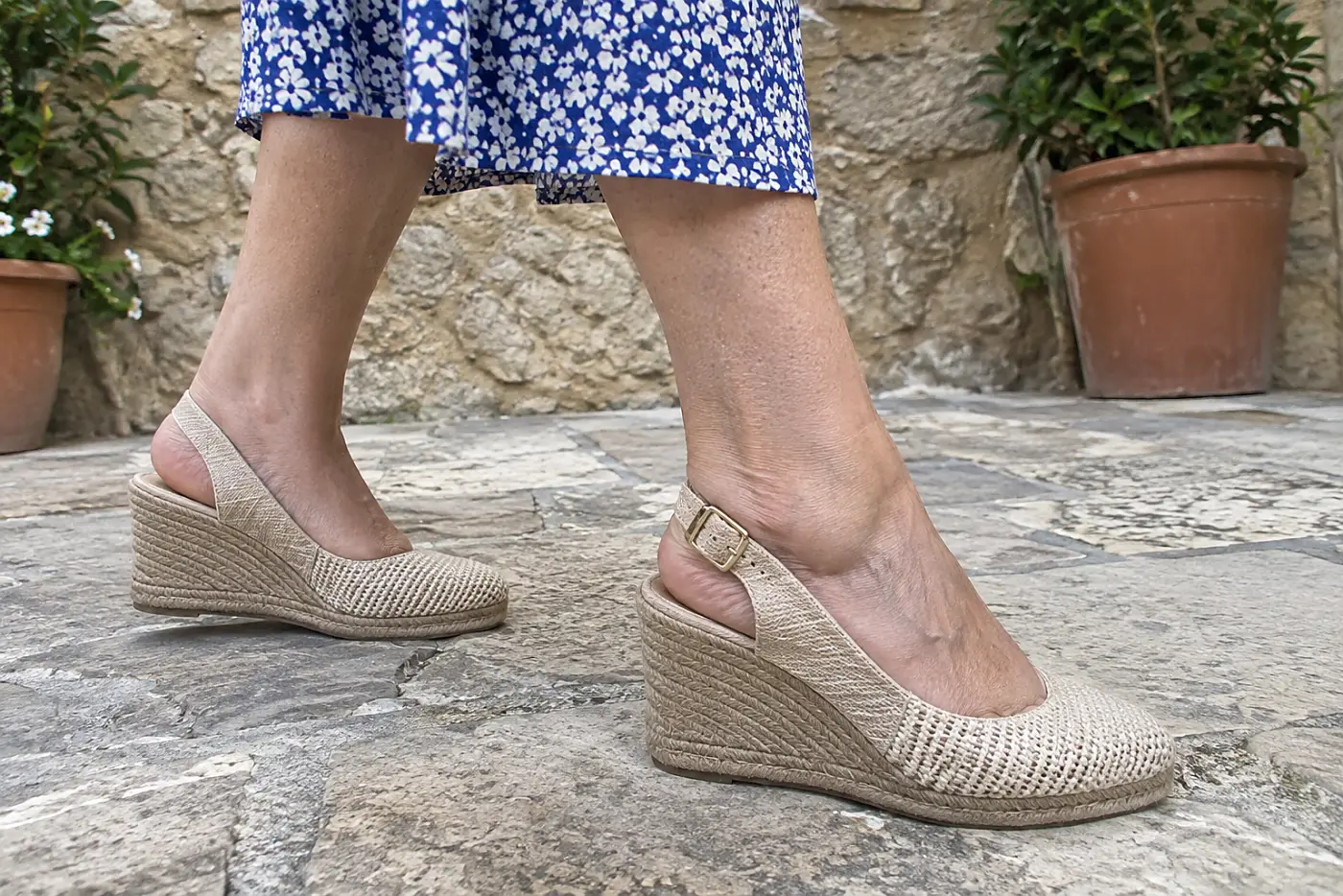
The woven rope edge says summer before you take a step.
A modest wedge spreads height along the sole instead of balancing it on one narrow point. The backstrap matters more than the rope: it should keep your heel on the footbed. Check the sole for grip.
Walk across a hard floor and pass if your foot slides forward.
6A Buckled Clog With a Backstrap
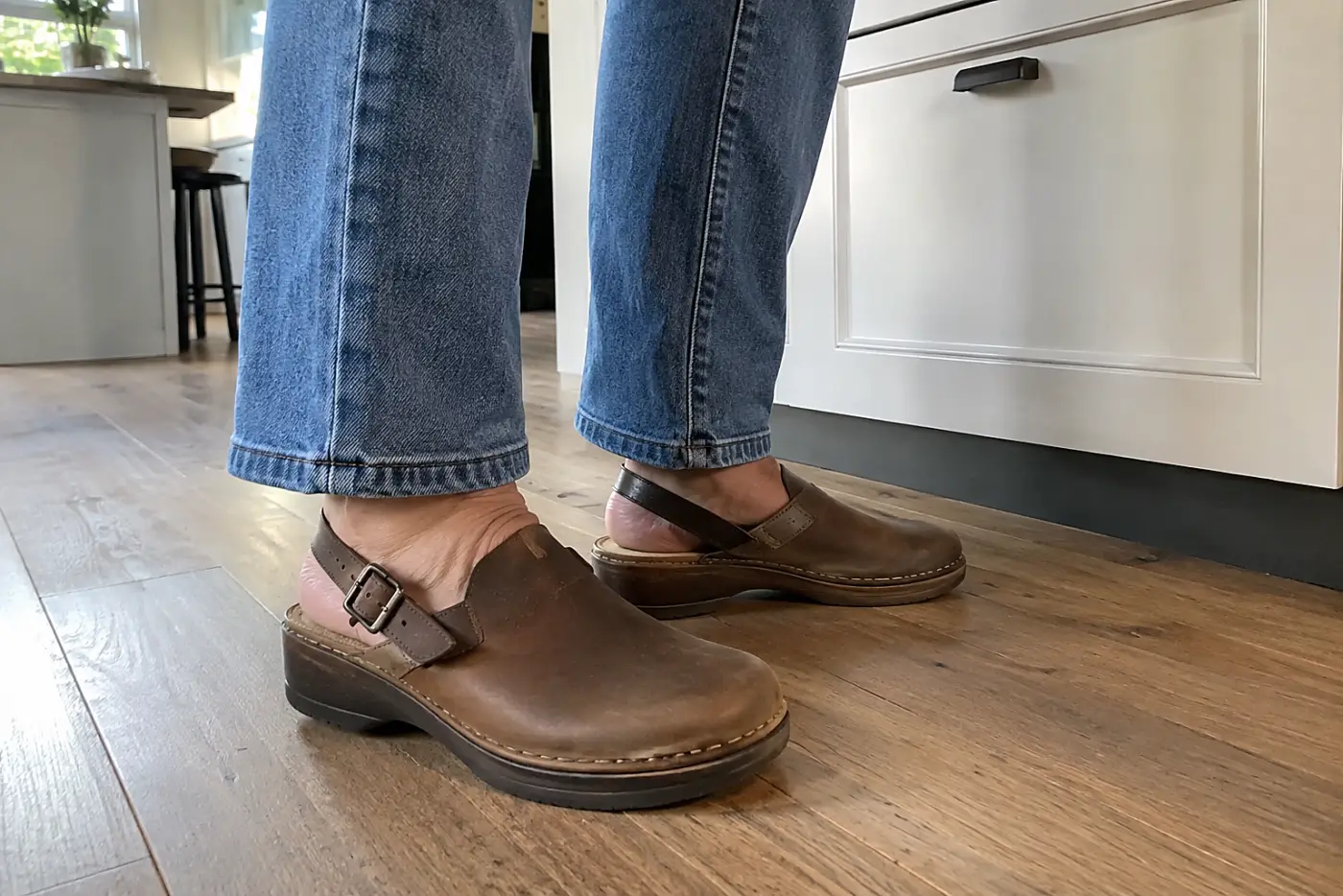
The rounded toe and buckle give this clog its character.
Unlike a backless clog, the strap helps keep the shoe attached during a quick step. A firm footbed feels different from plush padding; neither is right if it puts pressure under one spot. Check the toe box for room and the buckle for a smooth edge. Wear it with straight jeans and the shape looks intentional, not like you forgot to change shoes.
Walk briskly and see whether the heel stays in place without effort.
5A Moc-Toe Walking Shoe
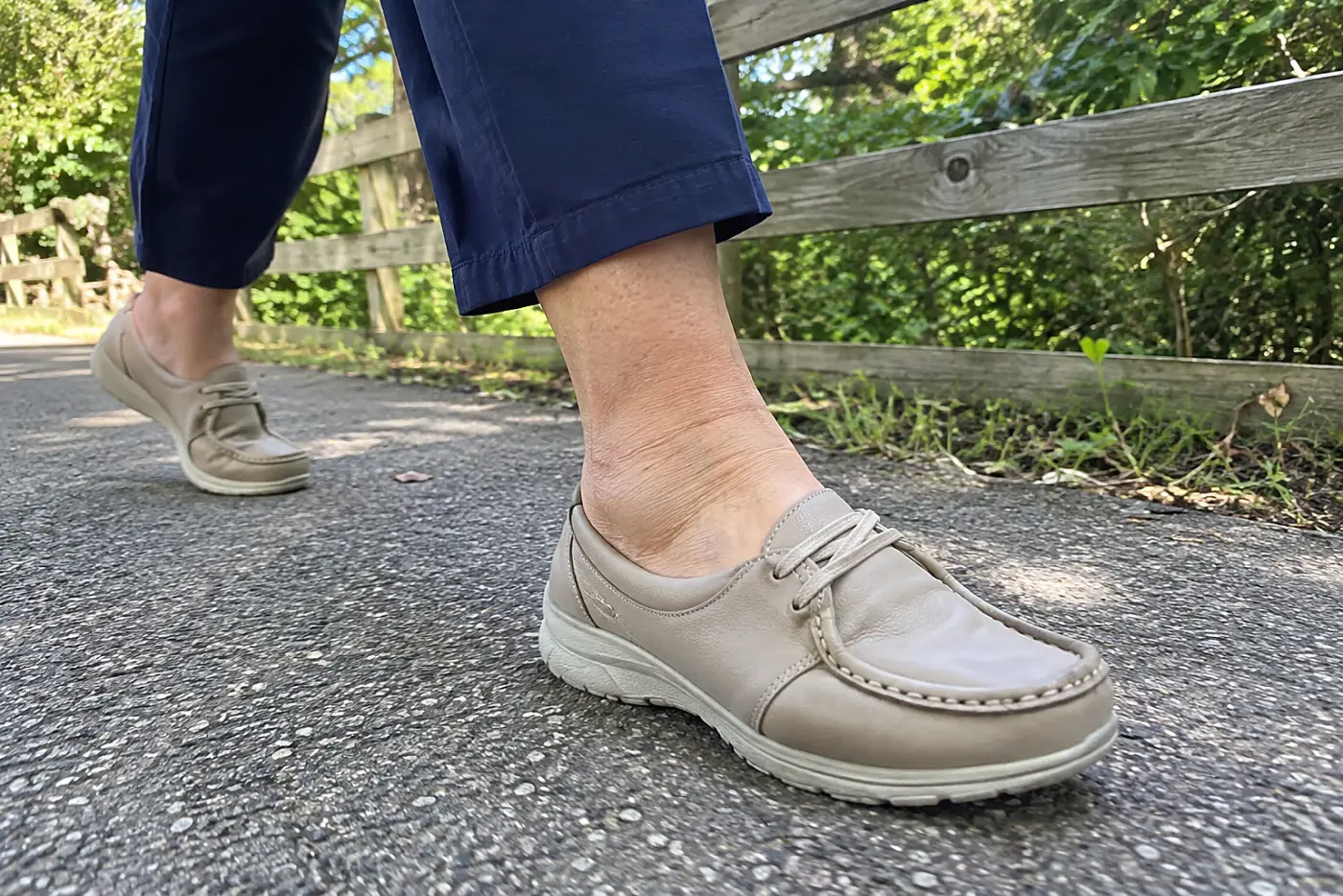
The stitched ridge across the front gives this shoe definition.
Under that casual shape, look for a sole that grips and bends where your foot bends. The toe stitching shouldn't press against your toes from inside. A cushioned collar helps only when it fits your heel.
Check the inner seam with your fingers, then take a long stride.
4A Low Wedge Mule
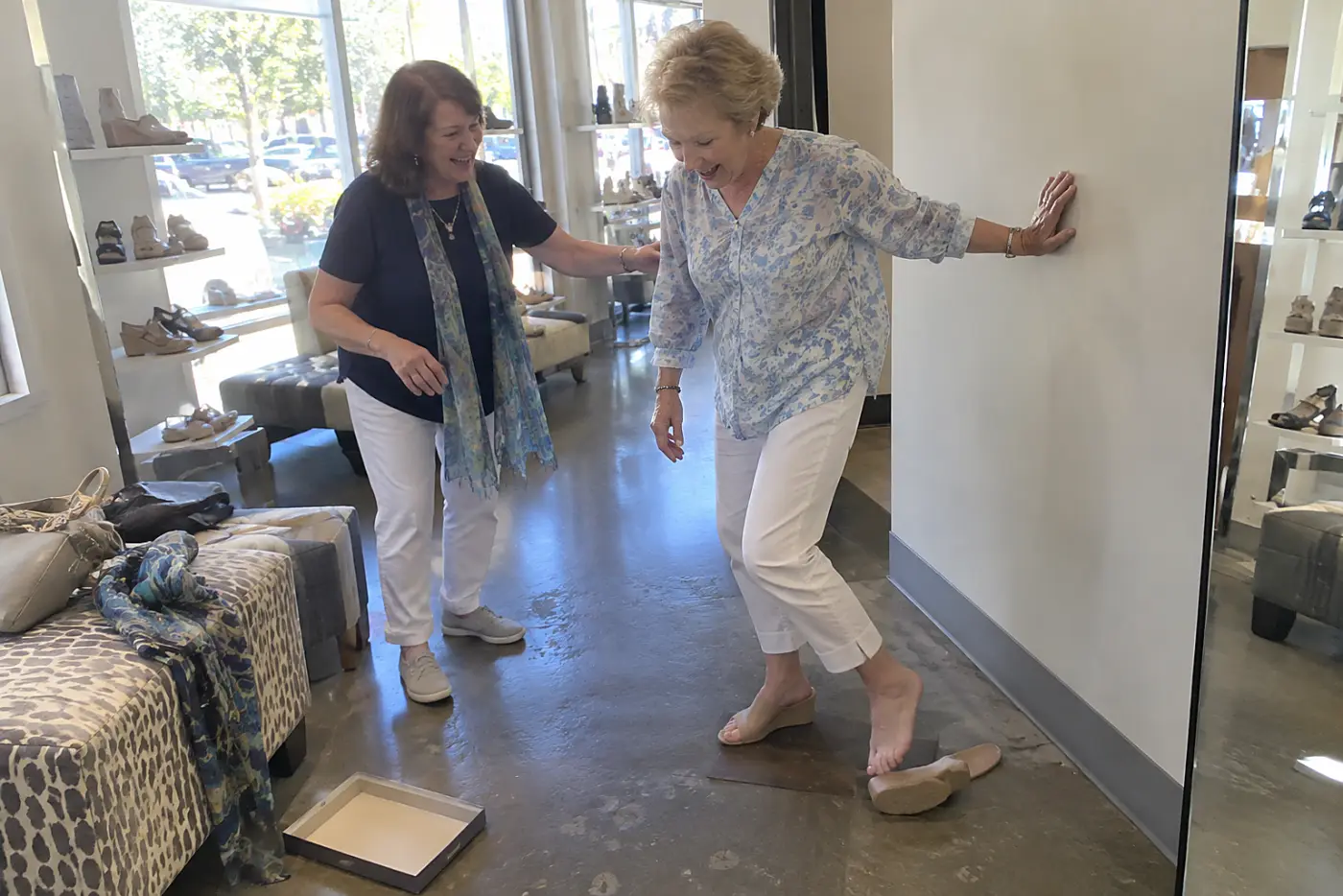
A low wedge gives this open-back mule a clean profile.
With no backstrap, the vamp must hold your foot as you walk. If your toes grip to keep the shoe on, the fit has failed. A low wedge puts some height under your heel without a narrow point of contact. Neither detail fixes a mule that slides forward. Check the front edge, too. Your toes should stay on the footbed when you stop short.
Walk at your normal pace, then turn quickly. If the mule stays on without help from your toes, try it with the trousers you brought.
The next pair keeps its dressy detail at the front.
3A Leather Cap-Toe Flat
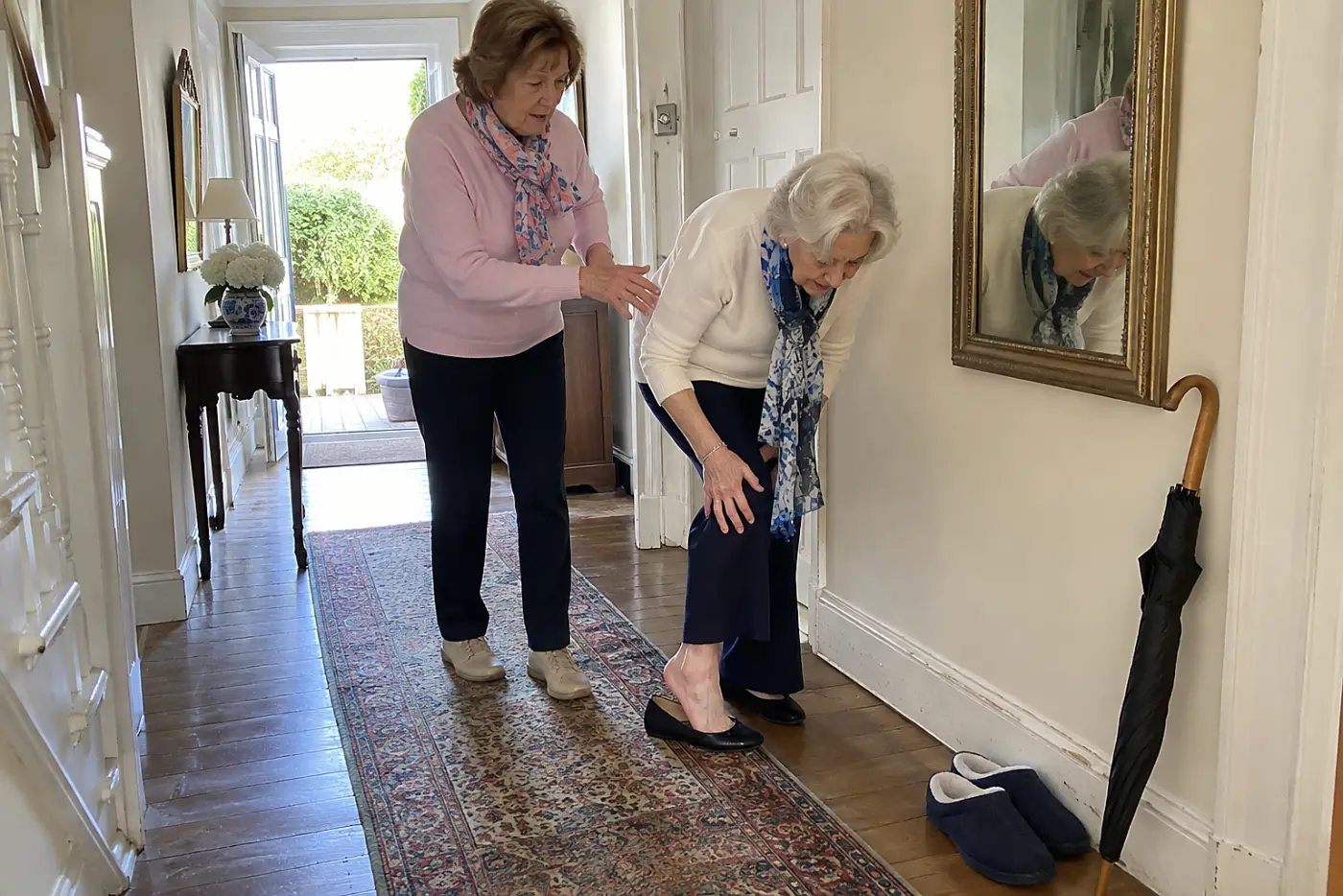
One line of stitching gives this plain flat a finished front.
A cap toe draws the eye without asking you to wear a heel. The stitched panel should lie smooth, especially where it crosses your toes. Feel inside for a raised seam. That seam will meet your foot with every step.
Unlike a soft slipper flat, this one looks at home with a jacket. That’s no bargain if the stitching rubs.
Say, “I need to check that seam while I walk.” Then take a full lap around the store.
A neat front still needs a shoe that fits everywhere else.
2A Wide-Toe Leather Flat
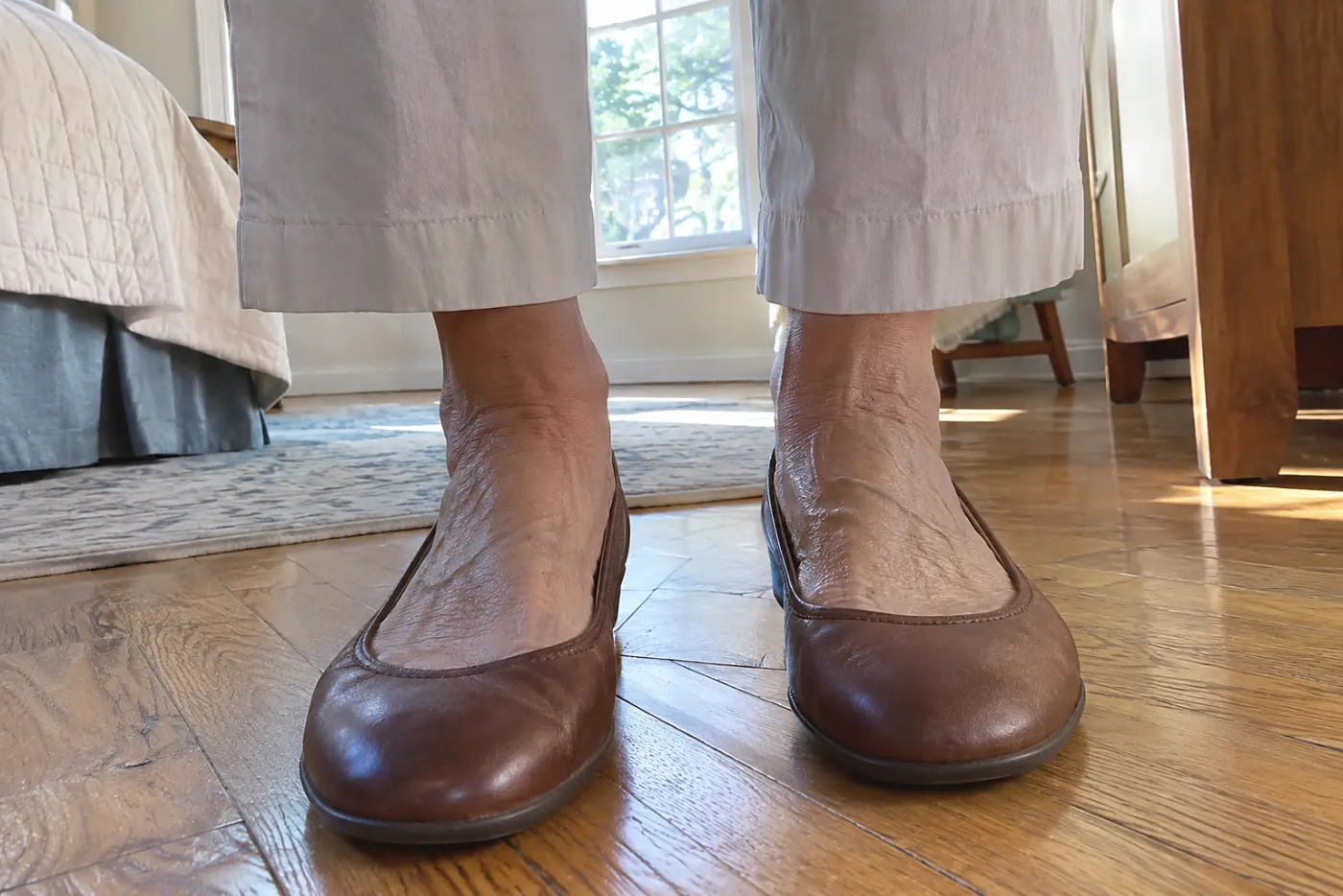
The broad front looks calm, not orthopedic, beneath cropped pants.
That extra space belongs at the toes, not around your whole foot. A flat that is wide everywhere slips at the heel. Then your toes start gripping to hold it on. Look for a secure back and a sole with substance. Soft leather across the front feels good, but it still needs enough length. Don't choose a larger size to solve a shoe that is only too narrow.
Try your usual size in a wider fit, then walk without curling your toes.
1A Properly Fitted Shoe
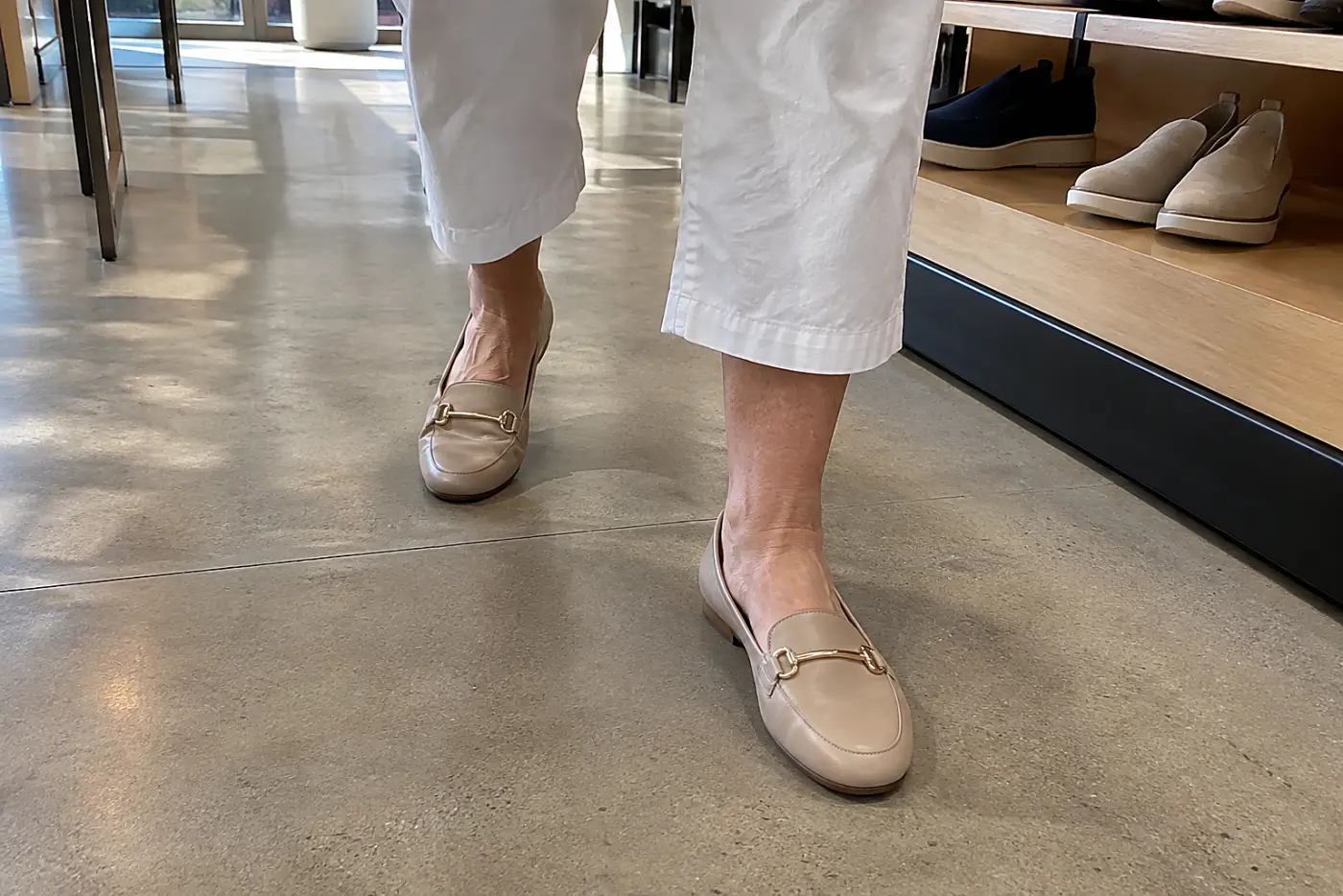
The best-looking pair is the one you walk out wearing normally.
A mirror shows the outline; walking exposes the fit. Test shoes late in your usual shopping day, with the socks or hosiery you'll wear. Try both feet. Check the longest toe for space, the widest part for pressure, and the heel for slipping. Then stand on a hard floor and walk at your real pace. Don't count on pain disappearing after a break-in period. Take a turn, then walk back. A shoe that rubs on the return trip has given you its answer.
Ask for another length or width if one spot fails. Leave without the shoes if the fit still isn't right.
The bottom line
Across all 25, the pattern is the same: the shape catches your eye, but the fit earns the walk.
You already know a beautiful shoe isn't worth guarding with every step. Which pair in your closet still passes the walk test?
Up next
25 Fall Outfits for Women Over 60
A cardigan, a rain-ready coat, and a short capsule list turn pieces already in your closet into outfits for ordinary fall days.
Read the list →
Reader quiz
Did you catch the details?
5 questions from this article. Finish them all to unlock the editor's bonus tip.
What should you do if a square-toe ballet flat slips at the heel on hard flooring?
Did any of these feel familiar?
Know someone who needs this?
 Prime Journal · Free printable
The Closet Fit and Color Checklist
- A clearer view of colors beside your face.
- Clothes that pass the sitting and walking test.
- Shoes and repairs checked before anything gets replaced.
Free printable: The Closet Fit and Color Checklist. Enter your email and it is yours.
Nora Bennett
Style Editor
Nora writes about hair, clothes and grooming for people who have stopped asking permission: what to keep, what to let go, and what reads as taken care of.
More from Nora Bennett