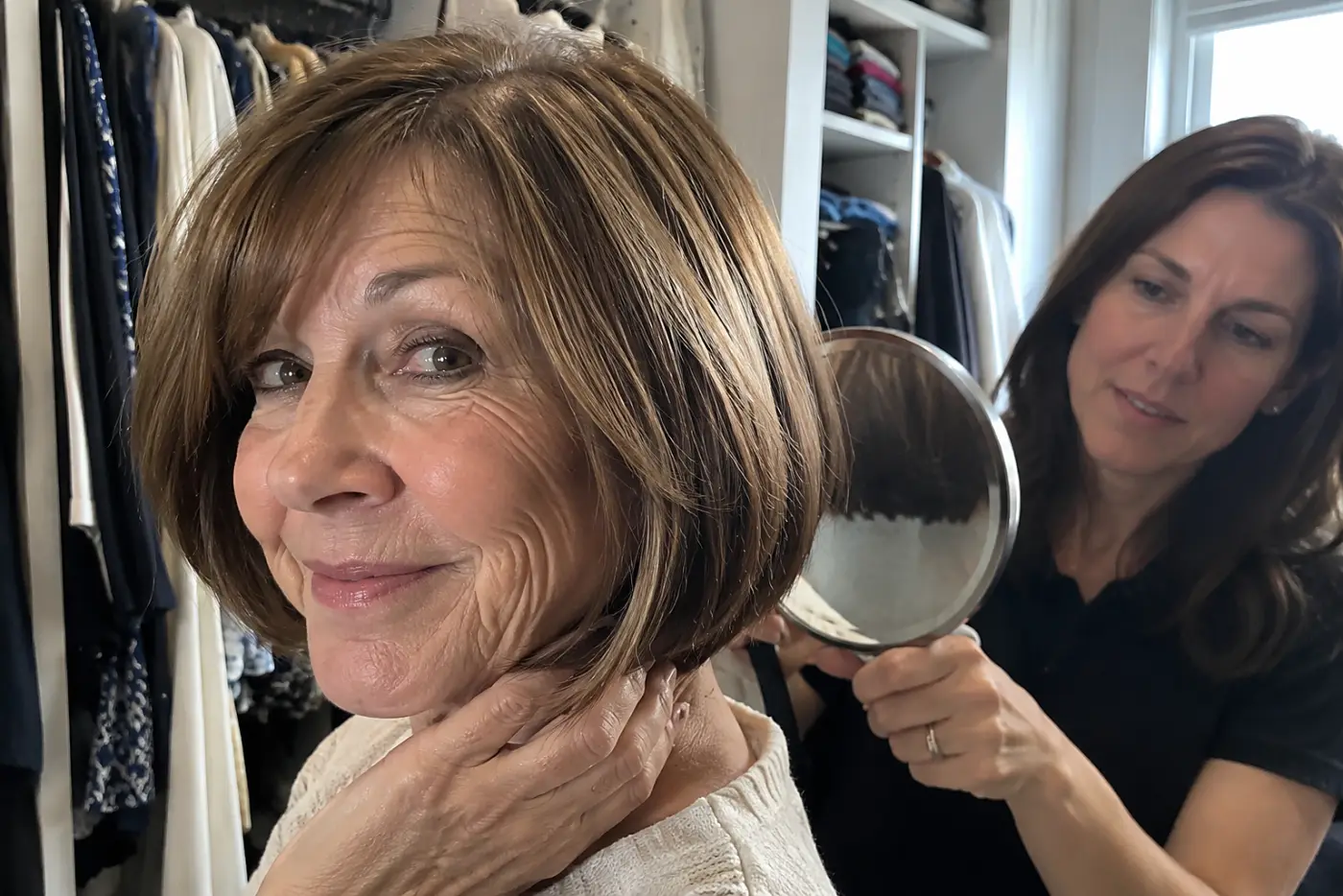








23 Steps to a Simple Skin Care Routine for Women Over 60
Get the best skin care routine for women over 60 in the right morning and night order, with a sink-side table and no crowded shopping list.
By Nora Bennett, Style Editor
Updated · 16 min read
The short answer: Cleanse with a gentle product, then use vitamin C and moisturizer in the morning, finishing with broad-spectrum SPF 30+. At night, cleanse, add a hydrating serum, and introduce a retinoid slowly before moisturizer. Keep eye cream, niacinamide, and balm optional. Patch test new products, and stop using anything that irritates your skin.
- Written by our style editor
- Cited 16 sources
- How we review

The bathroom shelf holds a vitamin C bottle, a half-used cream, and sunscreen you keep forgetting until after makeup. Which goes first? If you guess wrong, have you wasted the morning?
Start with what you already own. The products that earn space have different jobs, and some belong only at night. A mask or primer has to justify the extra step. A sore that won't heal calls for something other than another bottle. Once you know the difference, the shelf looks less like a puzzle.
23A Dermatologist Visit for Changing Skin

A new spot isn't a reason to try a stronger serum. Neither is a sore that won't heal or a mole that bleeds.
The National Institute on Aging says to have those changes checked by a doctor. Look at your skin while you wash, including places a bathroom mirror doesn't show easily.
Dryness has a line, too. If skin stays inflamed or painful despite home care, or itching keeps you awake, make a medical appointment. That's the advice from Mayo Clinic Health System. Tell the office what changed and when you noticed it. Bring the products you've been using, or take a photo of their labels.
There's no prize for finishing a jar before getting a worrying change checked. Put that jar aside and book the visit.
22A Hydrating Sheet Mask for Occasional Use
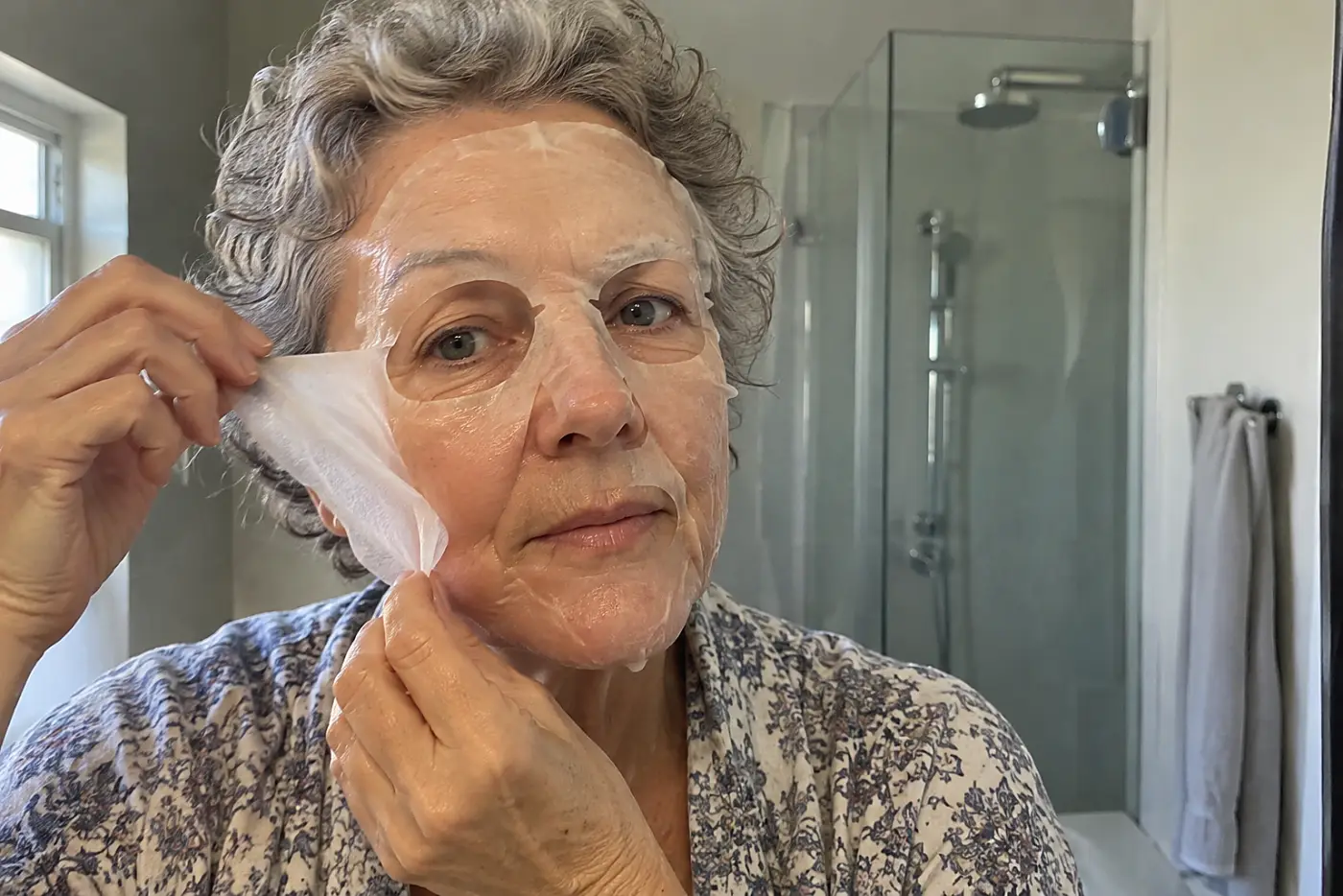
A sheet mask earns its place when it feels good and leaves your skin comfortable. Cleveland Clinic describes masks as a complement to daily care, with soothing and hydration as possible benefits.
Try one on a day when you aren't also trying a new serum. If a fragranced or acidic mask leaves skin irritated, stop using it. Patch test before considering another use. That gives you a clearer answer than putting more cream over the reaction.
A weekly mask is an extra, not an overdue assignment. If you're choosing between it and the moisturizer you use every day, buy the moisturizer.
21A Light Touch for Bruise-Prone Skin
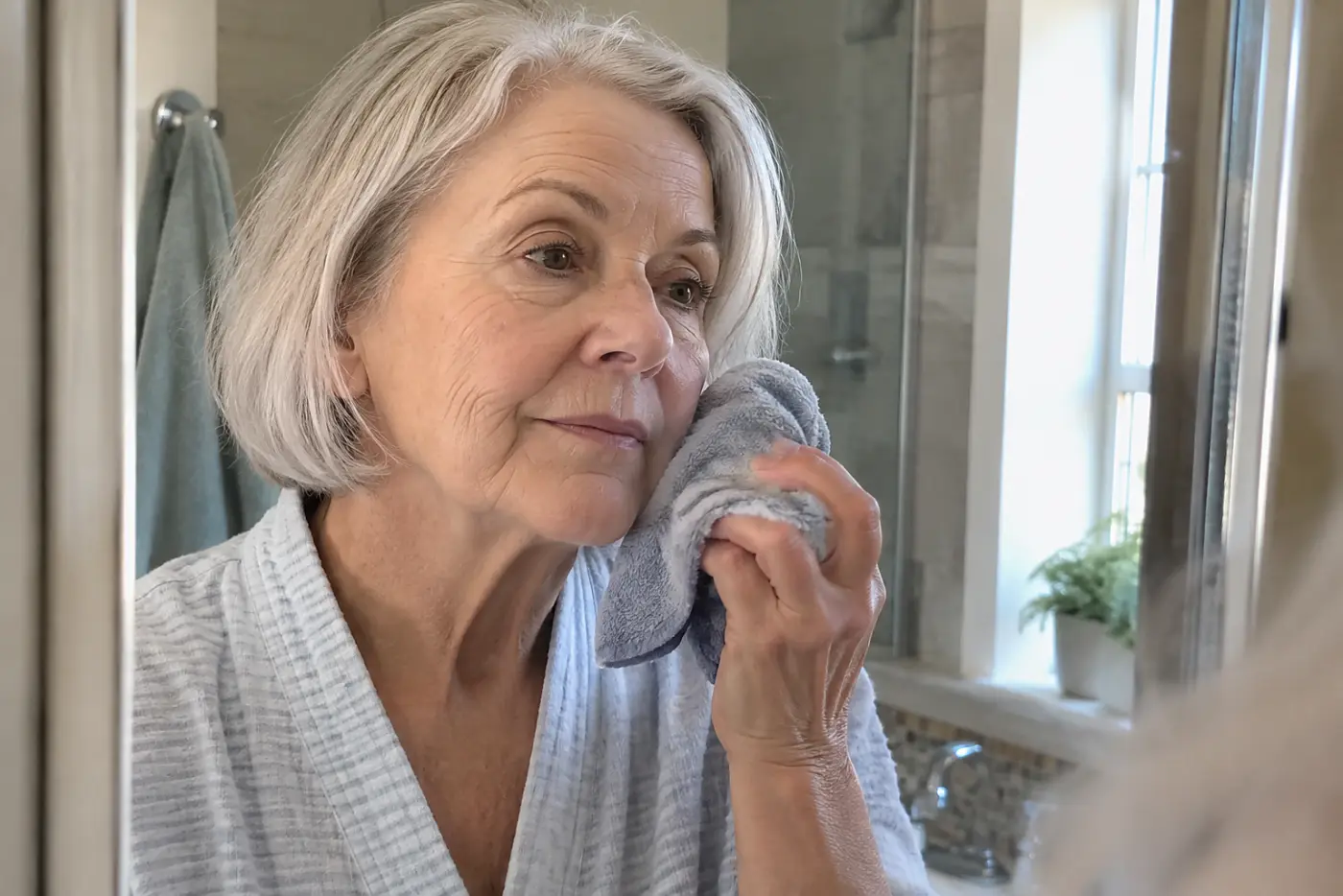
A purple mark from a small bump changes how you handle the washcloth. Aging skin is thinner, and the vessels beneath it are more fragile, explains Mayo Clinic. Aspirin and blood-thinning medicines such as warfarin also raise bruising risk.
DermNet NZ describes actinic purpura, bruising linked with aged, sun-damaged skin. It also notes an association with anticoagulant and corticosteroid use. For your routine, the practical response is less friction: skip rough rubbing and aggressive scrubs, and handle tender areas with care.
Don't change a medicine because a mark appeared. If a bruise worries you, bring it up with the clinician who knows your health history.
20A Bathroom Shelf with Fewer Irritants
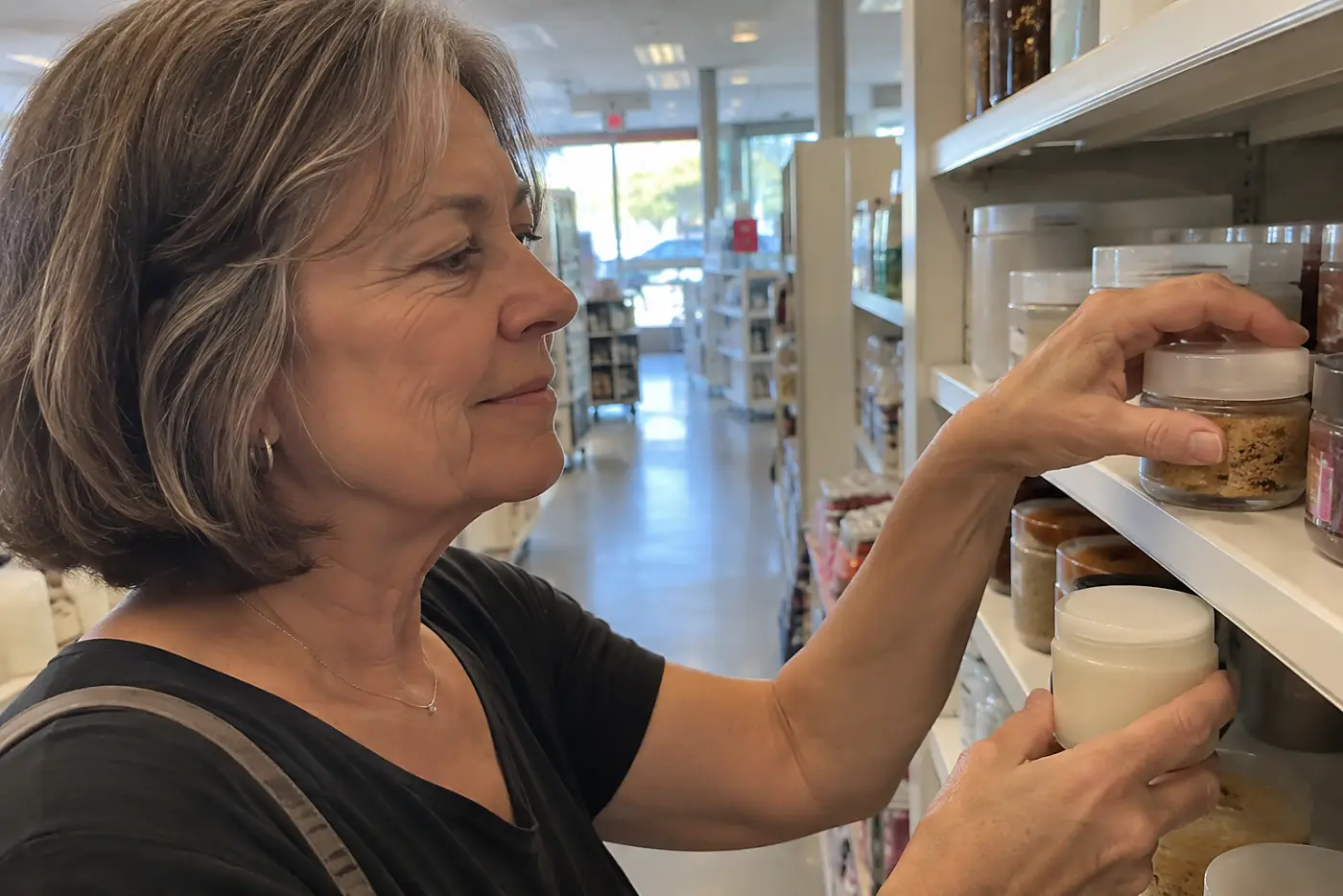
Look at the shelf for the products you've been stacking: an exfoliant, an active serum, then another active cream. Too many actives irritate skin and damage its barrier, warns Cleveland Clinic.
Drop three habits. First, stop using hot water and harsh soap when skin feels dry. MedlinePlus favors gentler cleansing. Second, put down the abrasive scrub. Harvard Health warns that over-exfoliation inflames skin. Third, don't add a product just because there's room beside the sink.
If your face feels uncomfortable, check what you've added before shopping for something to counter it. Set the latest purchase aside and pay attention to whether the discomfort changes. An empty space on the shelf doesn't need filling.
19A Daily Water, Sleep and Smoking Check

A serum is easier to evaluate when it isn't being asked to do everything. Start with habits that no bottle replaces.
The National Academies puts adult women's total water intake at about 2.7 liters a day. That includes water in food and other drinks, not a target for plain water alone. The CDC says most adults need at least 7 hours of sleep nightly.
For premature skin aging, Mayo Clinic puts sun protection and not smoking among the most effective steps. None of this asks you to count every sip. It puts the expensive jar in perspective: keep the daily habits and the daily products separate in your mind.
18A Same-Spot Test for New Products
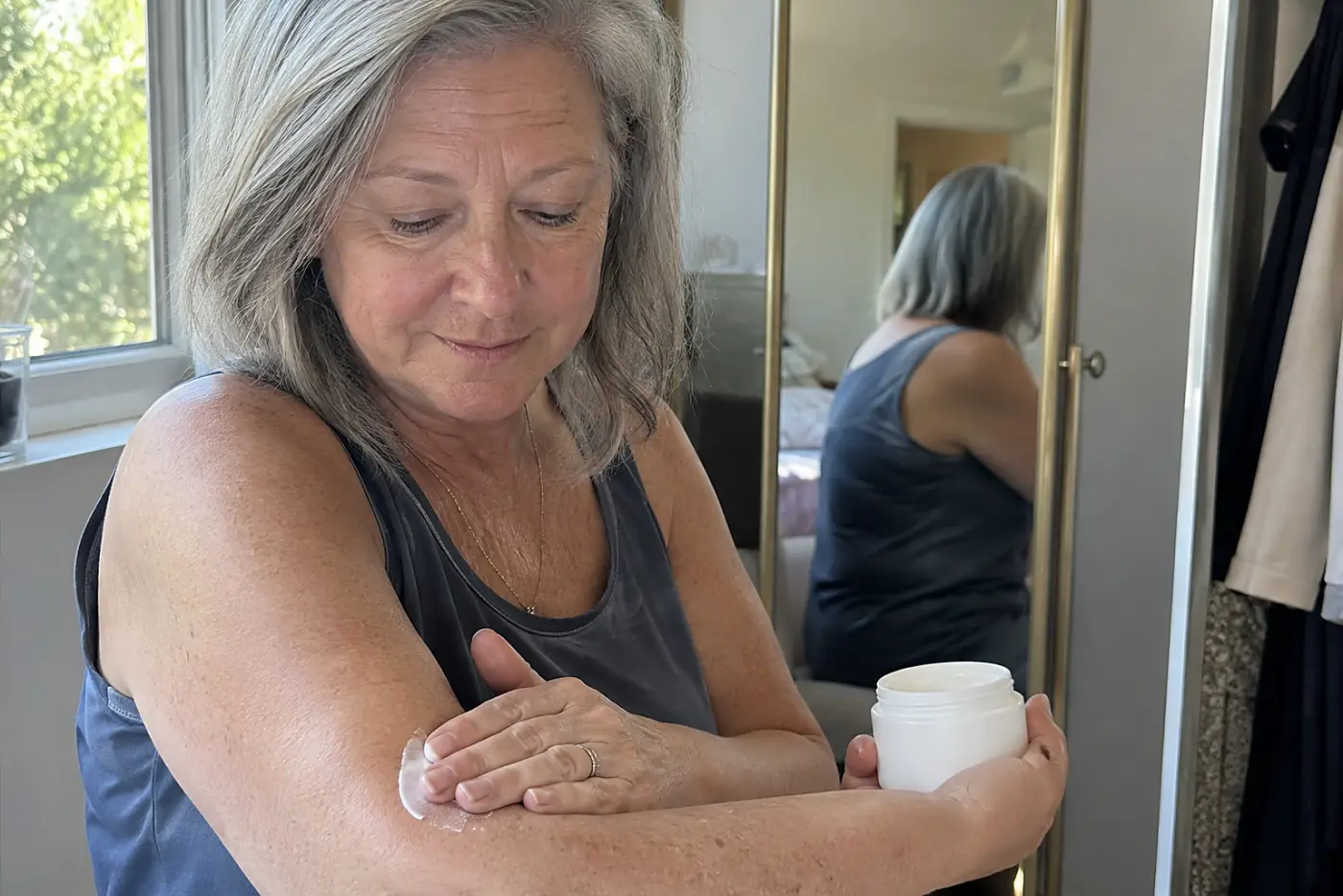
The new serum looks harmless on your hand. Your face gets the final vote, but it doesn't have to be the first test site.
DermNet NZ describes an open application test: put a small amount on the same spot daily for several days, watching for a delayed reaction. Test one new product at a time so you know which bottle caused trouble.
If a reaction develops, stop. Fragrance is among the leading cosmetic allergens, notes Cleveland Clinic. That doesn't mean every scented product will bother you. A pleasant smell isn't proof that a product belongs on your face.
Keep the box or photograph its ingredient list until you know how your skin responds.
17A Drugstore Moisturizer with Useful Ingredients
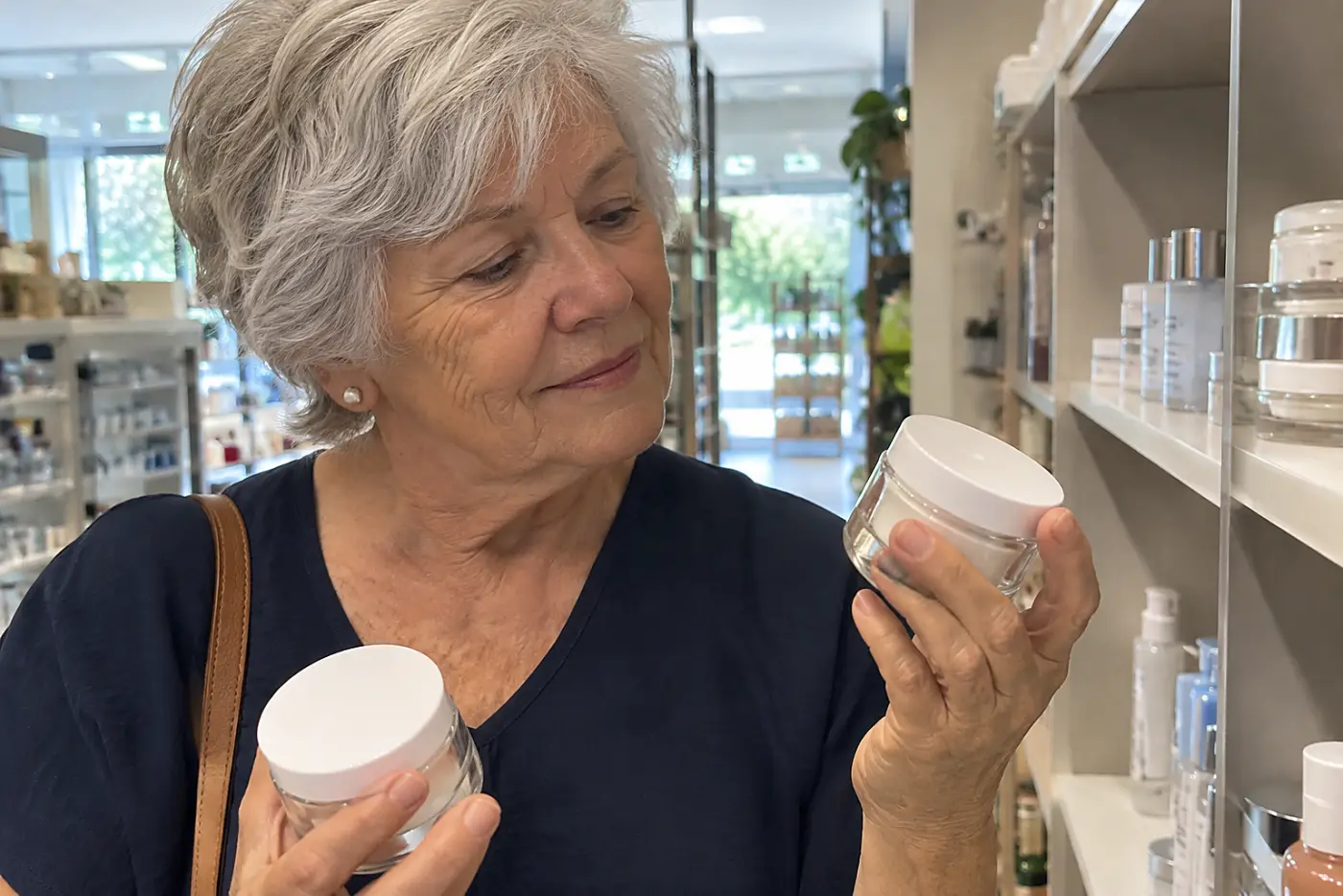
The heavier jar isn't automatically the better buy. Turn it around and look at what you're paying to put on your skin, rather than the weight of the lid.
Cleveland Clinic says a routine built around proven ingredients, moisturizer, and sunscreen doesn't require a prestige budget. Harvard Health points to effective drugstore ingredients, including retinoids and niacinamide.
For a moisturizer, compare the ingredient list and how the product feels after you use it. A cream you finish and replace is a better purchase for your routine than a costly one left untouched. Give a new bottle its own test period before adding another purchase.
16A Fix for Mixed-Up Product Layers
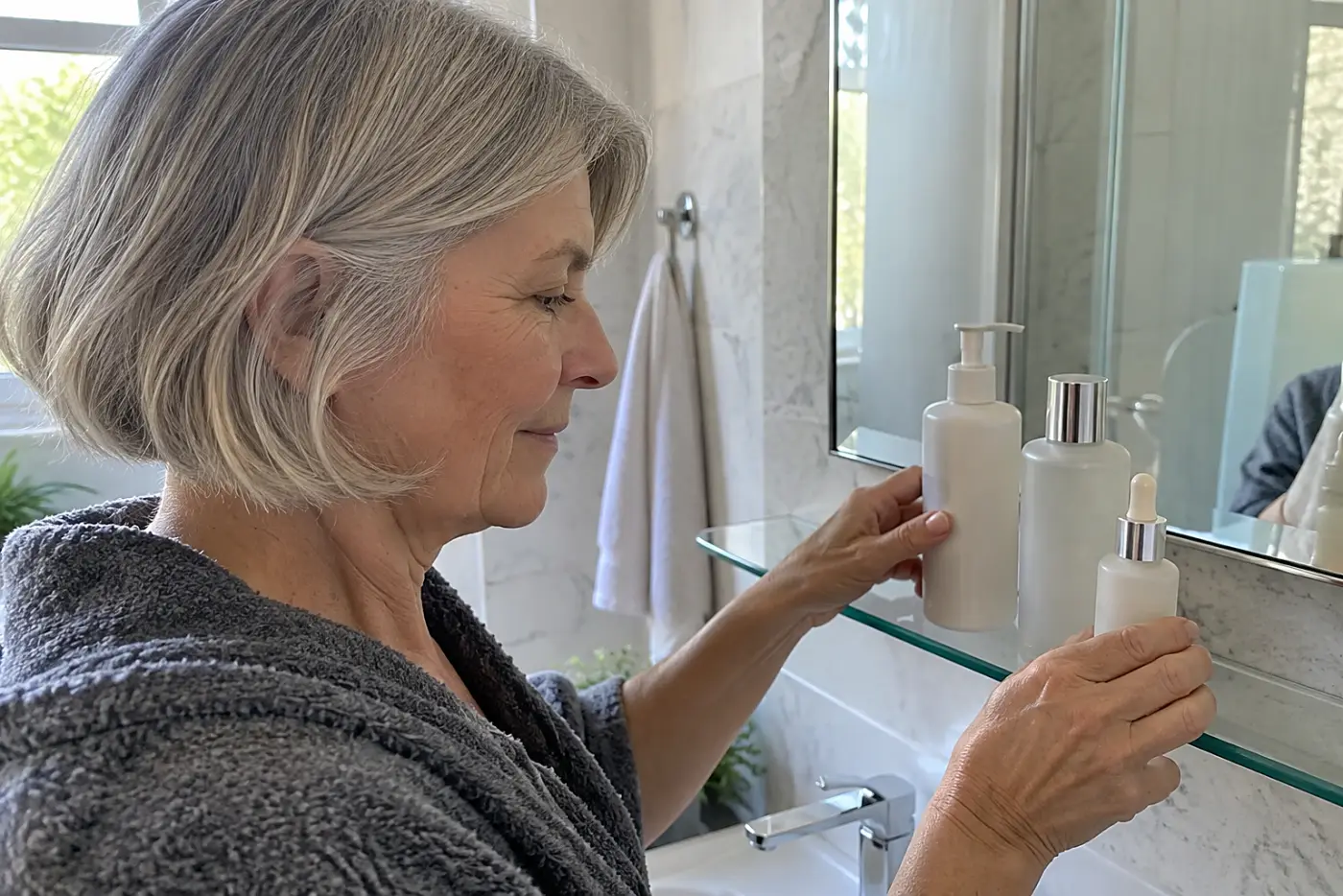
You reach for the moisturizer, then notice the serum still sitting on the shelf. Don't wash everything off to correct one mixed-up morning. Cleveland Clinic's product-order guide places thin serums before cream, but the next wash is a chance to reset the order.
At night, a retinoid sits before or after moisturizer based on how sensitive your skin feels. Make that choice when you set out the bottles, rather than changing several products at once.
Put tomorrow's products where you'll reach for them in sequence. The full morning and night routine appears in the table below; today, just make the shelf easier to use.
15An Eyelid Primer for Creasing Shadow
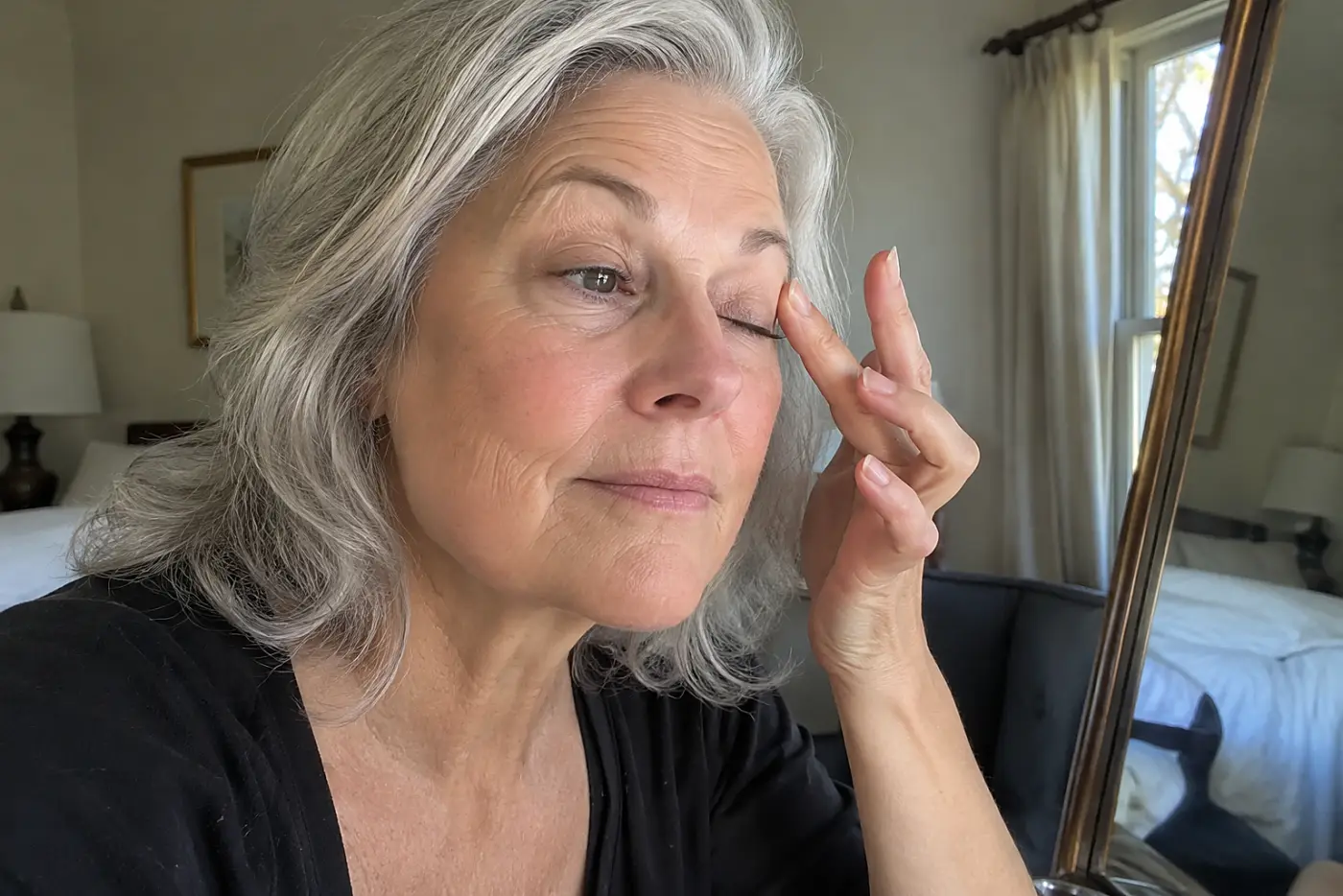
Eyeshadow that gathers in a lid crease presents a makeup problem. An eyelid primer is made for that job; it doesn't have to join your skin-care routine on days you skip shadow.
If you're searching for the best eyelid primer for mature skin over 60, compare wear and comfort rather than trusting an age label.
Urban Decay Anti-Aging Eyeshadow Primer Potion is sold as a smoothing base; it was about $28 at Ulta in the 2026 research. Milani Eyeshadow Primer is a budget alternative listed by Target. Check today's price and availability before buying either.
Try the primer with the shadow you already own. That tells you more than a new primer and a new palette tried together.
See more: 23 Rules About Dressing Your Age That Are Worth Ignoring →
14A Smoothing Face Primer Beneath Makeup
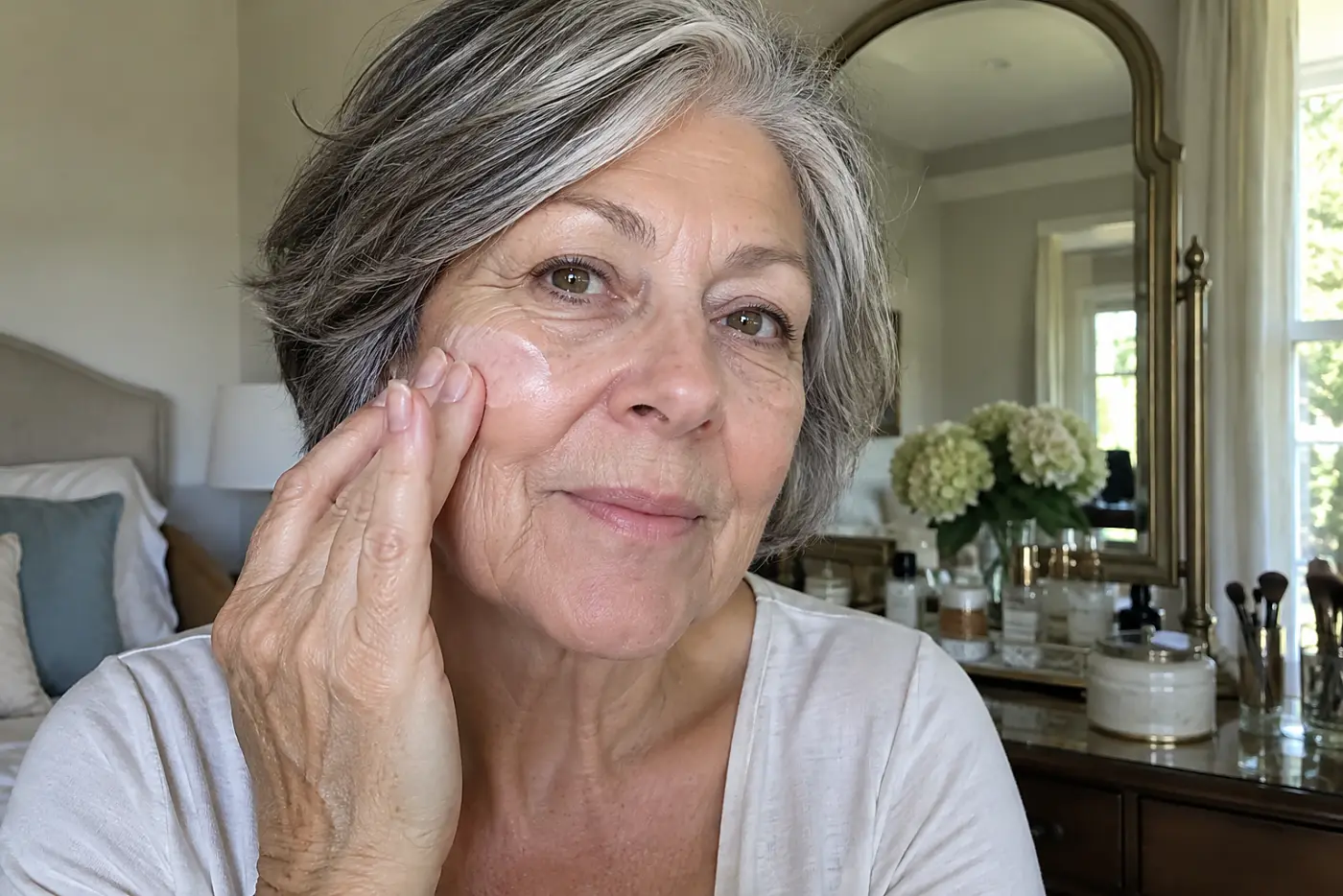
Foundation settling into lines by lunchtime doesn't call for another treatment serum. If you wear makeup, a smoothing primer is an optional layer after moisturizer.
For the best makeup primer for mature skin over 60, look at its job. A review of silicone in dermatology describes how silicone elastomers scatter light, giving fine lines a blurred appearance. That's a visual effect under makeup, not a change to the skin beneath it.
Let moisturizer have its place first. Then assess the primer with your usual foundation. If you like the makeup without it, leave this step out. The right routine has room for getting dressed without another bottle.
See more: 29 Ways to Dress for the Body You Have Now Without Giving Up →
13Sunscreen on the Neck and Upper Chest
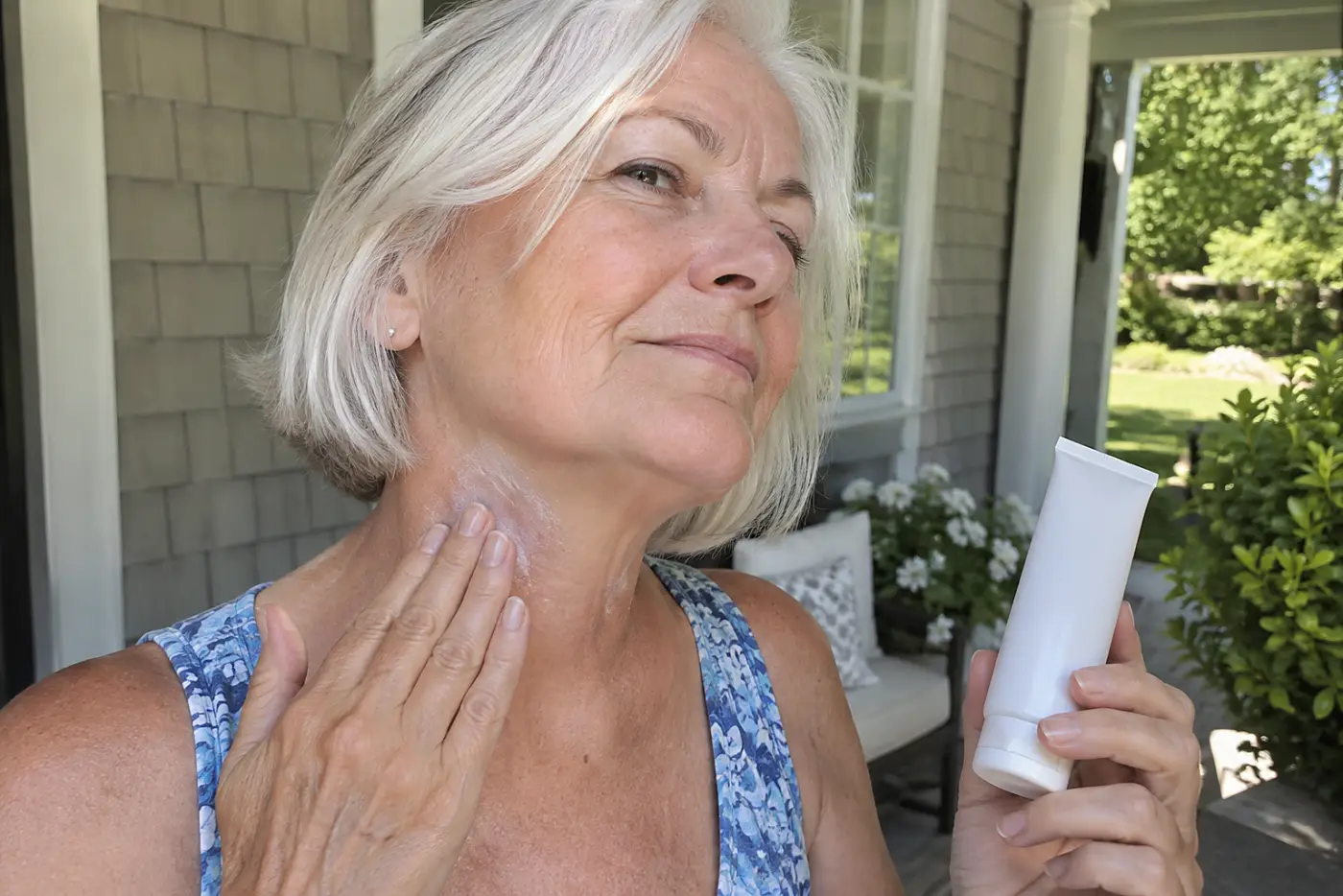
The mirror frames your face. A shirt neckline doesn't. Before you leave, look at the uncovered skin below your chin.
The FDA's sunscreen guidance includes the neck, ears, hands, feet, and lips among places to protect. Sunscreen on uncovered skin needs reapplication at least every 2 hours outdoors.
For care beyond sunscreen, Cleveland Clinic recommends extending moisturizer and selected antioxidant or retinoid care to the neck and upper chest. There's no need to buy a separate neck jar first. Decide what you'll use there, watch for irritation, and keep the daytime protection in view when you choose a lower neckline.
12A Chemical Exfoliant Instead of a Scrub

Grit feels like it's doing something. On skin that's already dry or sensitive, that sensation isn't a good reason to keep scrubbing.
Harvard Health favors chemical exfoliation over physical scrubs for aging skin because scrubs irritate it. Cleveland Clinic names glycolic and salicylic acids as exfoliant options and urges care with sensitive skin.
Exfoliation is an optional purchase, not a missing foundation of the routine. If you choose an acid product, introduce it on its own and watch how your skin feels. If irritation starts, stop. You don't need to scrub the discomfort away or buy a second exfoliant to finish the first one's work.
11A Night Balm for the Driest Spots
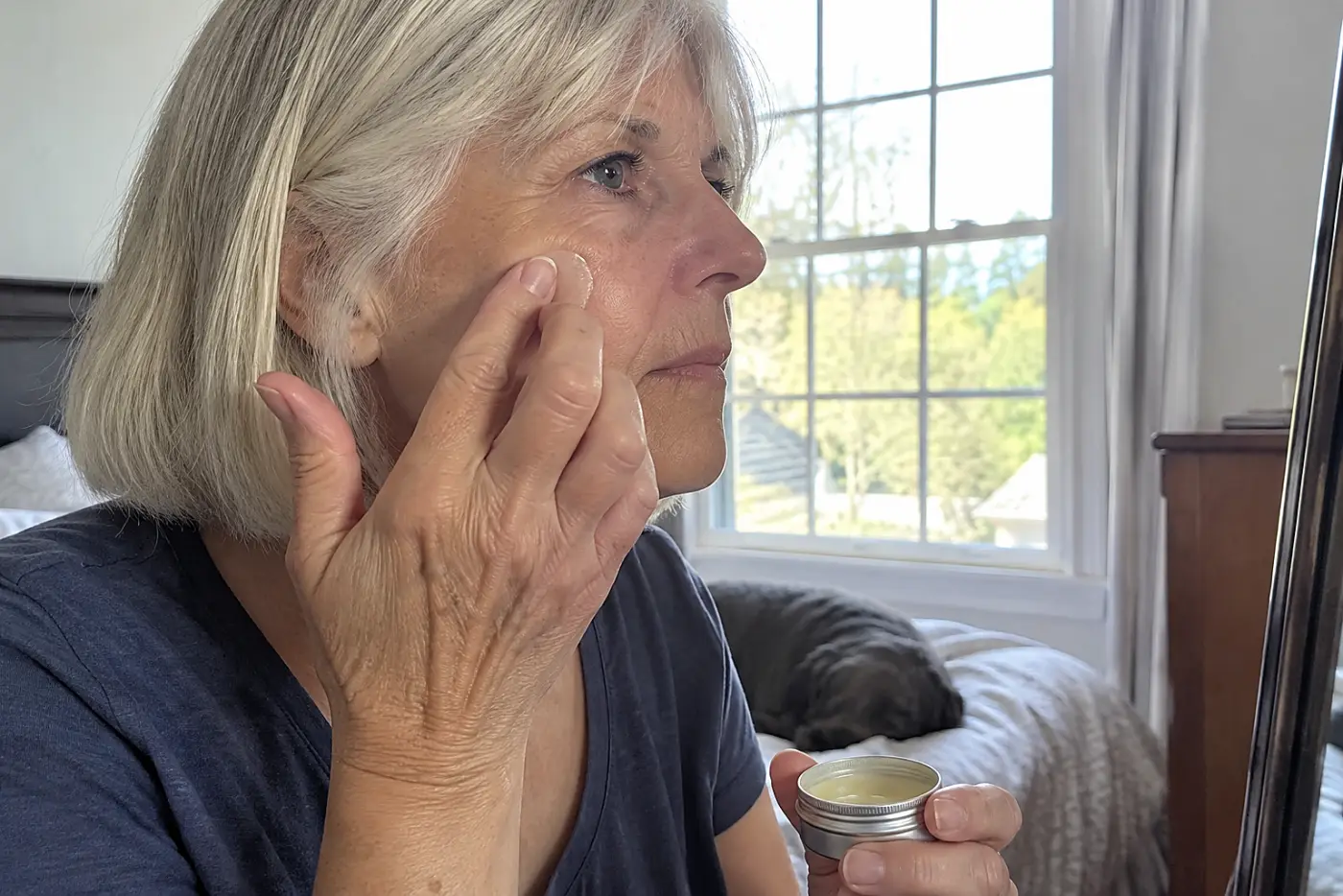
By bedtime, you know which patches feel tight despite moisturizer. Those are the places to consider a balm, rather than spreading a thick product everywhere out of habit.
Petrolatum is an occlusive, which means it helps hold water in the skin. A StatPearls review reports nearly 99% less water loss through skin in testing with petrolatum. That's a measure of its sealing effect, not a promise that every dry patch will disappear overnight.
CeraVe Healing Ointment is one petrolatum-and-ceramide example with the National Eczema Association's acceptance seal. The Mayo Clinic Store lists it for targeted use. You don't need that particular tube to try the step; look at what you already have in the cabinet.
Put an occlusive on your driest spots after moisturizer. If those spots feel comfortable with moisturizer alone, stop there. The point is to keep moisture in where you need it, not to replace every earlier step with a heavier jar.
10A Retinoid Schedule for Wrinkle Care After 50
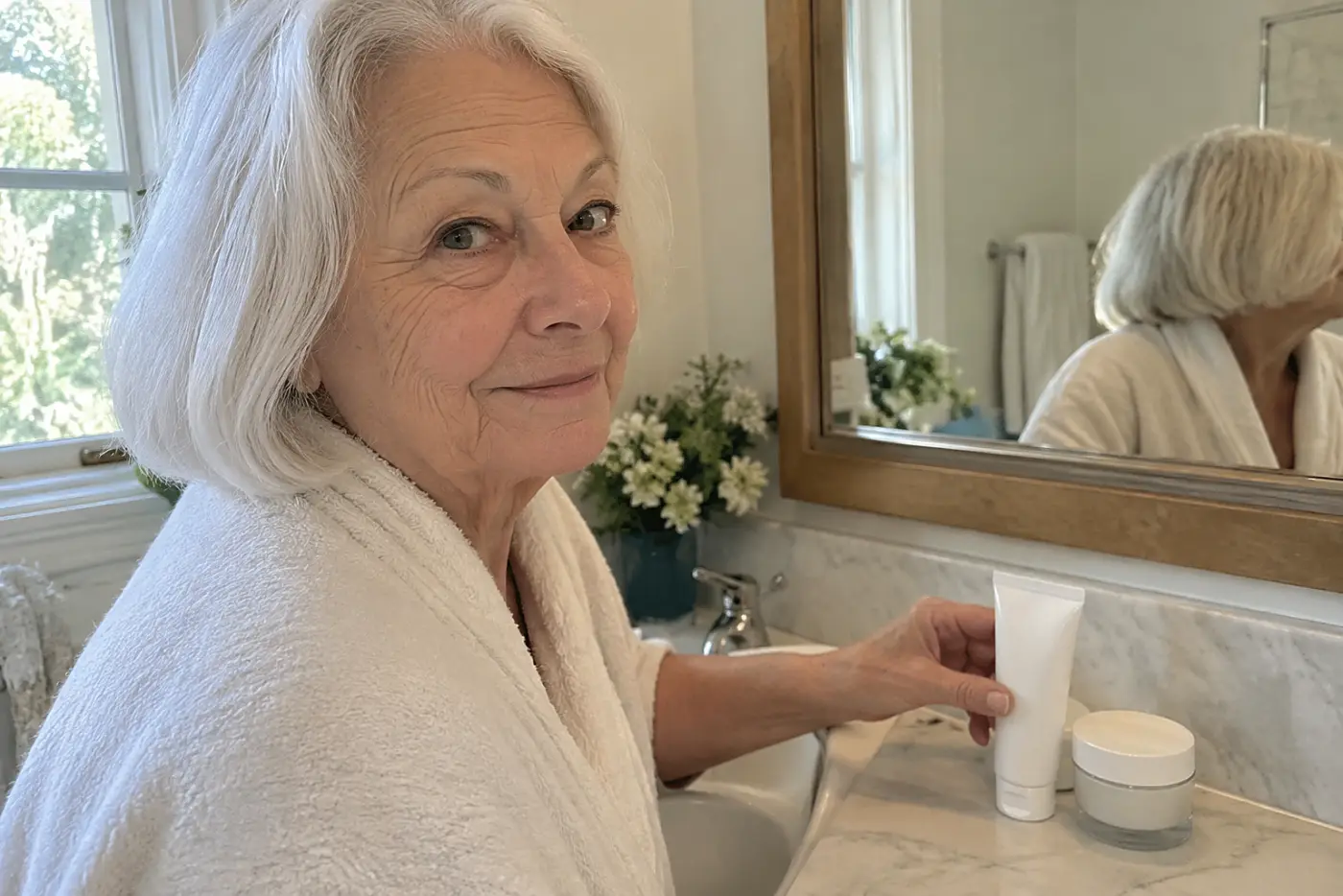
Put the retinoid beside your night moisturizer, then resist using it every night straight away. M.B. Dermatology's retinoid handout advises starting 2 to 3 nights a week and increasing as skin tolerates it.
Patch test first. At night, cleanse, then use the retinoid before or after moisturizer according to how your skin responds. Cleveland Clinic advises starting slowly and moisturizing to limit dryness. If irritation develops, stop the new product rather than adding more actives over it.
Don't judge it by the next morning's mirror. Harvard Health puts visible wrinkle improvement at roughly 3 to 6 months of regular use.
Retinoids also increase sun sensitivity. Keep the morning sunscreen step, including on days after a night without retinoid.
See more: 29 Outfit Habits That Make You Look Older Than You Are →
9A Broad-Spectrum SPF 30+ Every Morning
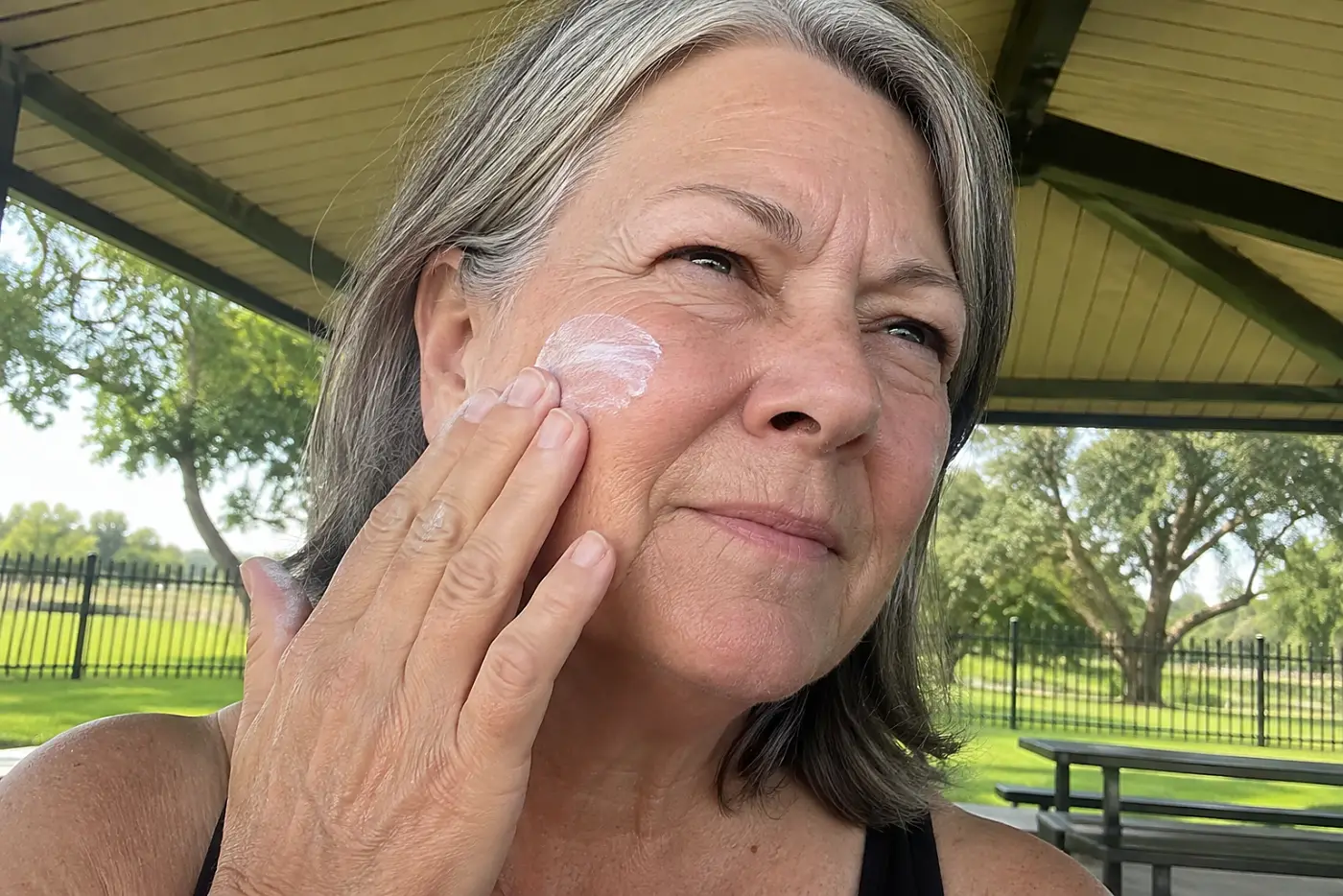
This is the last skin-care layer before the rest of your daytime routine. The Skin Cancer Foundation recommends broad-spectrum SPF 30+ for daily use. For extended outdoor time, it recommends water-resistant SPF 50+.
The clock matters outdoors. The FDA says to apply sunscreen 15 minutes before sun exposure and reapply at least every 2 hours. Reapply after swimming, sweating, or towel-drying, following the time on the product's water-resistance label.
Blue Lizard Sensitive Mineral Lotion SPF 50+ is one fragrance-free mineral option listed by Consumer Reports. The research found it at about $16 in 2026; check today's price. Buy sunscreen you'll use, then keep it where the morning routine ends.
8An Eye Cream for Fine Lines
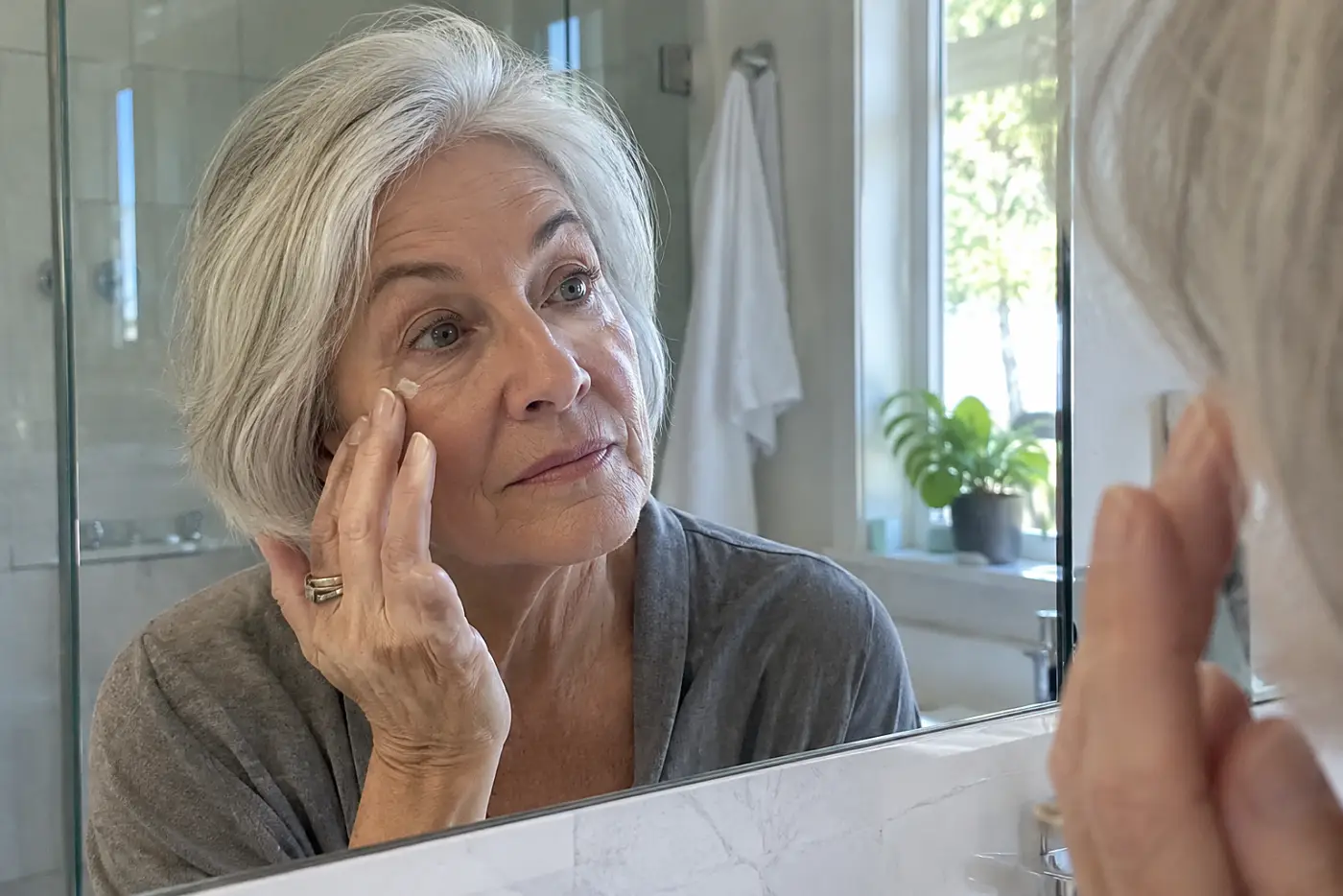
Is a separate eye cream worth the space? Only if it tackles a concern you want to treat and feels comfortable enough to use.
If you're looking for the best eye wrinkle cream for women over 50, consider the ingredient before the box. Harvard Health reports that retinoids reduce fine wrinkles with regular use over months.
RoC Retinol Correxion Line Smoothing Eye Cream is a drugstore example, listed at about $22 in the 2026 research. Check its current price.
An eye cream isn't mandatory. If you use one, place it after serums and before moisturizer, following Cleveland Clinic's order guide. Introduce a retinoid eye product separately so you can tell how your skin responds.
7A Ceramide Moisturizer for Barrier Support
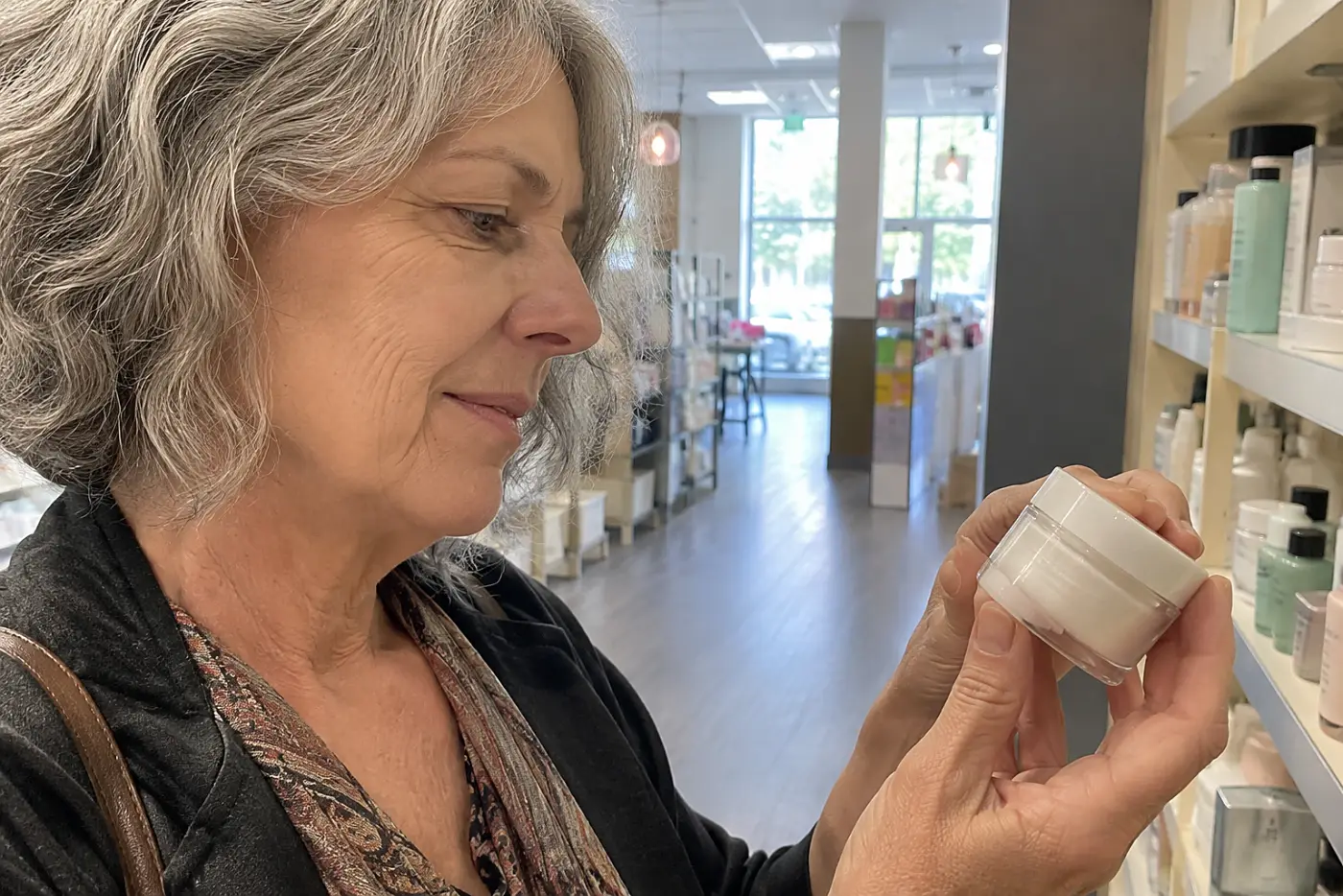
When your skin feels dry after washing, look for a moisturizer you'll use without bargaining with yourself. Ceramides help seal in moisture and support the skin barrier, according to Harvard Health.
Here's a label example, not a winner of a contest: La Roche-Posay Toleriane Double Repair Face Moisturizer contains ceramide NP and niacinamide. It was about $25 at Ulta in the 2026 research; the current shelf price is the one to compare.
Use moisturizer after your serums. If the cream you already own keeps your skin comfortable, finish it before shopping. Buying a ceramide product makes sense when you need a moisturizer, not because the word has appeared on every bottle in the aisle.
6A Niacinamide Serum for Uneven Tone
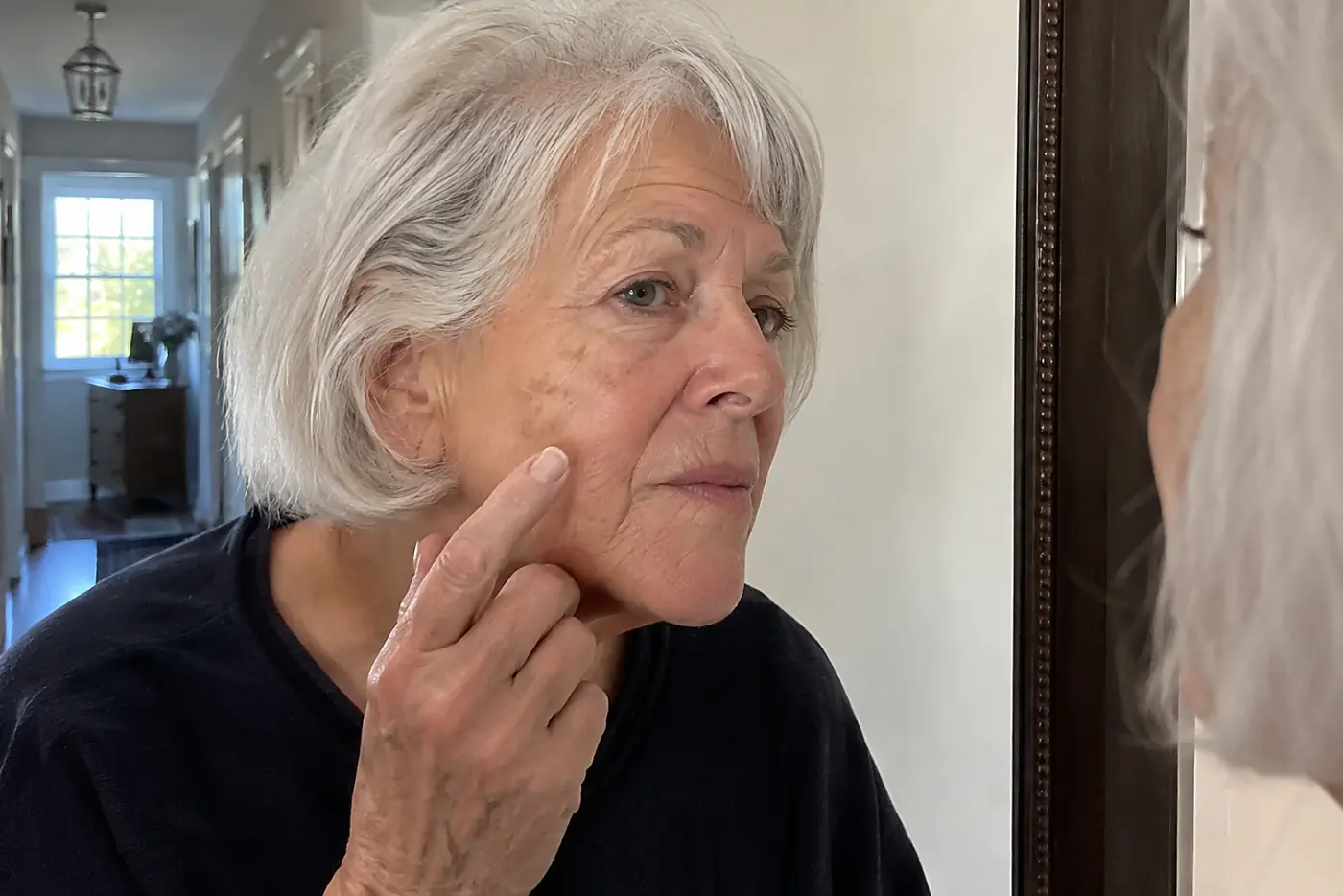
You notice redness after washing, or a patch of uneven color while putting on makeup. Niacinamide is an ingredient to consider for those concerns, not a required extra step.
Harvard Health describes its effect on pigment transfer and reports improvements in redness and sallowness. In a 10-week trial, a moisturizer with 4% niacinamide plus N-acetyl glucosamine reduced the look of facial dark spots. The comparison was a plain moisturizer.
That trial tested a combination, not every niacinamide serum on a store shelf. Check your moisturizer's label before buying another bottle; some formulas already contain it.
If you add a serum, put it with the thin products before cream. Introduce it separately, so redness from a new product doesn't get mistaken for the concern you meant to treat.
5A Hyaluronic Acid Serum for Dry Skin
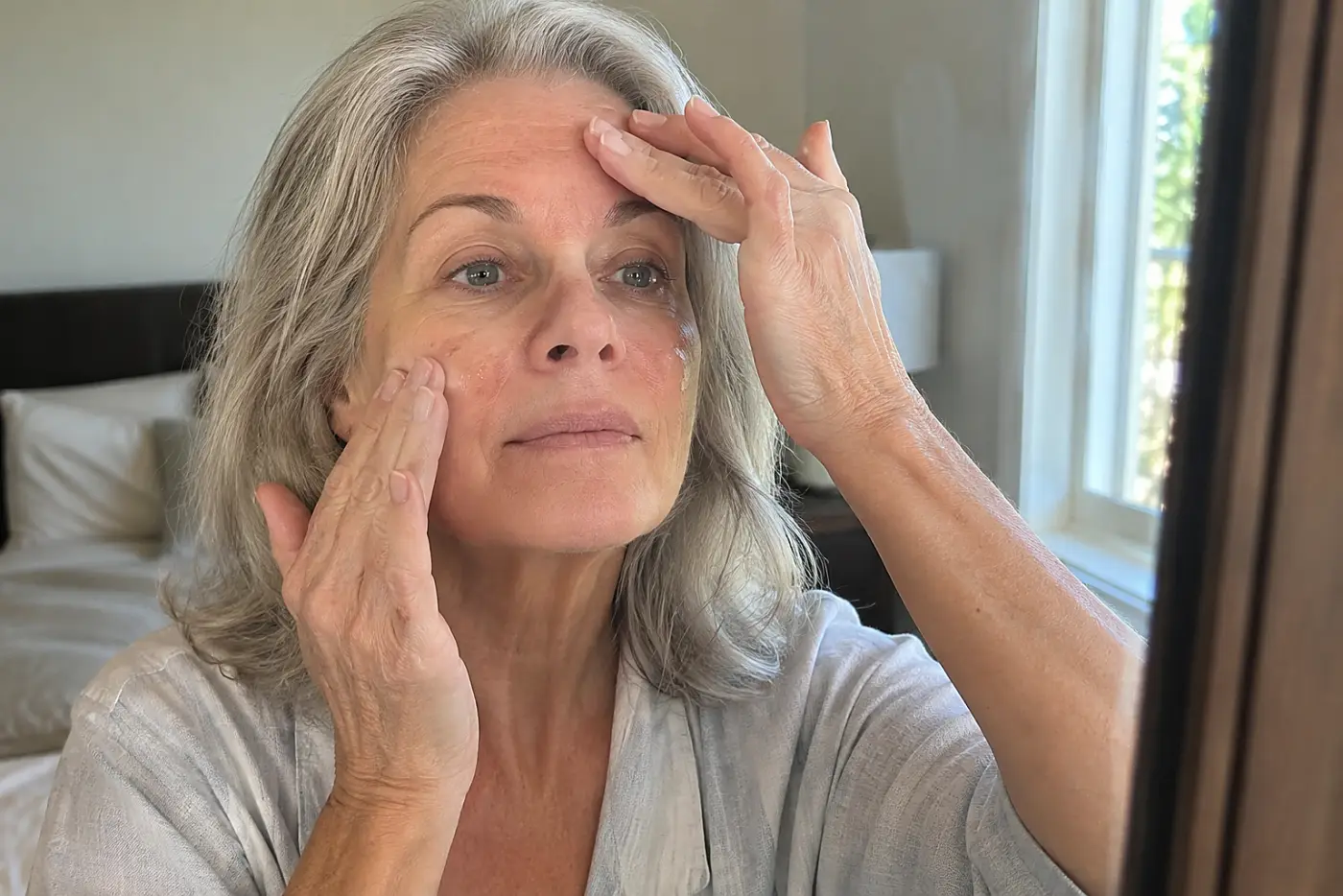
Hyaluronic acid has a less glamorous job than its name suggests: it helps skin hold water. Harvard Health describes it as a humectant and points to hyaluronic acid or glycerin moisturizers for aging skin.
A double-blind trial involving older people with dry skin found improved hydration with certain low-molecular-weight hyaluronic acid moisturizers. The study compared them with a formula without that ingredient. That supports hydration; it doesn't turn a serum into a replacement for moisturizer.
If you want this step, use the serum before your night cream. Then pay attention to how your face feels after the cream, not just after the serum. If a moisturizer already does the job, you don't need to buy hyaluronic acid in a separate bottle.
4A Vitamin C Serum Before Morning Moisturizer
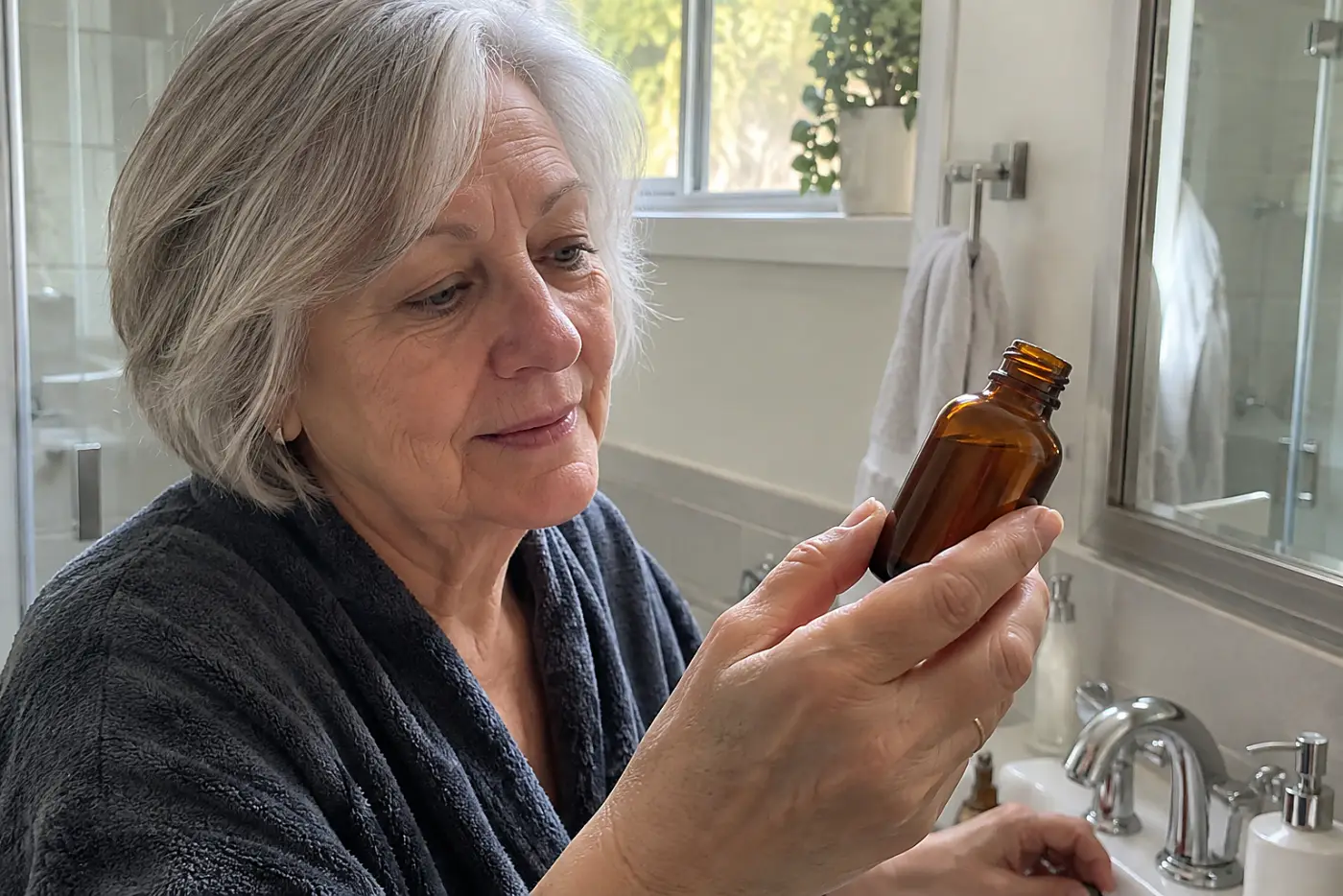
Morning is an easy place to give vitamin C one clear job. Apply a vitamin C serum after cleansing and before moisturizer, rather than guessing where it belongs among thicker creams.
Harvard Health describes topical vitamin C as an antioxidant that helps with the appearance of wrinkles and dark spots. It doesn't replace sunscreen. That remains the last daytime skin-care step.
A review of 31 studies found a greater skin-lightening benefit with 10% vitamin C than with lower concentrations studied. You don't need to turn that finding into a shopping rule. Choose a product you tolerate, add it alone, and keep using sun protection while you assess what it does for your skin.
3A Cream Cleanser Beside the Sink

If your face feels tight as soon as you rinse, check the cleanser and the water.
Mayo Clinic advises gentle cleansing and warns that long, hot washing strips oils and worsens dryness. MedlinePlus favors cream or non-soap cleansers over traditional soap for dry skin.
Use a gentle cleanser at night to remove what the day left on your face. Morning cleansing doesn't have to mean repeating the same wash if your skin is very dry or sensitive. Mayo Clinic suggests cleanser at night and water at other times for that situation.
Keep the water comfortable, and notice how your skin feels before reaching for another product.
2A Menopause Change Behind Drier Skin
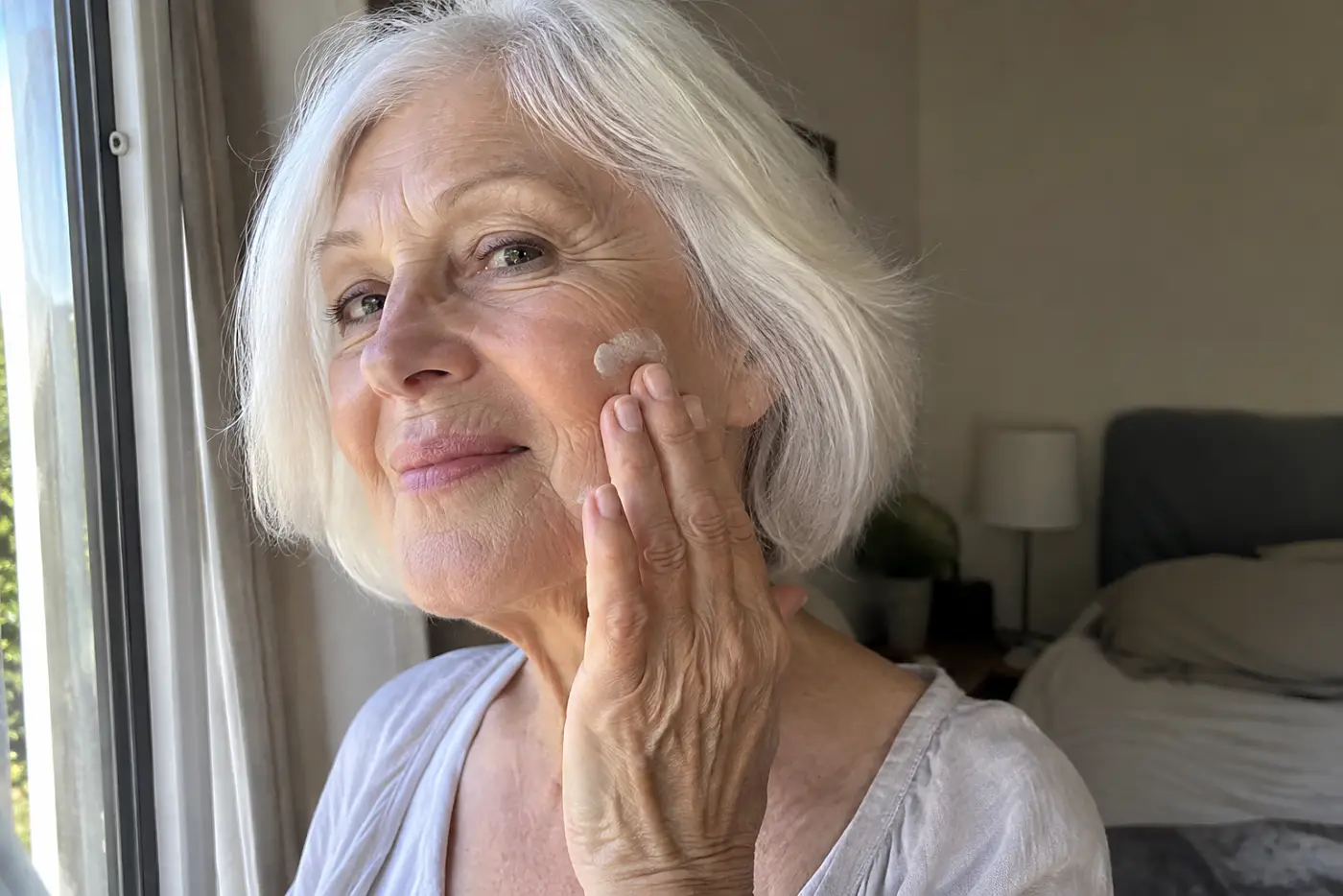
The cream that served you for years is still in the cabinet, but now your face feels dry before lunch. There's a reason your old routine deserves another look.
After menopause, falling estrogen leaves skin thinner and drier and speeds the loss of collagen and elastic fibers. The National Institute on Aging describes those changes.
A review of post-menopause skin changes reports roughly 30% collagen loss in the first 5 years after menopause. After that, the decline slows to about 2.1% a year for the next 15 years.
That doesn't call for buying every product marked for mature skin. It makes a stronger case for gentle cleansing, reliable moisture, and sun protection. If the old cream no longer leaves your skin comfortable, replace that useful step first.
1The Best Skin Care Routine for Women Over 60

Here is the whole routine to save on your phone or tape inside the bathroom cabinet. Morning order follows Cleveland Clinic's product-order guide. Its retinol guidance and the FDA's sunscreen directions supply the timing.
| Order | Morning | Night | |---|---|---| | First | Gentle cleanse, or water if your skin is very dry | Gentle cleanse | | Next | Vitamin C serum | Hyaluronic acid serum, if needed | | Then | Niacinamide serum, if wanted | Retinoid on 2 to 3 nights a week to start | | After that | Eye cream, if used | Ceramide moisturizer | | Finish | Ceramide moisturizer, then broad-spectrum SPF 30+ | Occlusive balm on the driest spots, if needed |
Outdoors, reapply sunscreen at least every 2 hours and after swimming, sweating, or towel-drying. Increase retinoid nights only as your skin tolerates them.
The table is a menu in order, not a shopping list. Skip an optional product rather than filling its slot with something your skin doesn't need.
The bottom line
A short routine is easier to follow when every product has a place. Cleanse, use the serum you've chosen, moisturize, and finish the morning with sunscreen. Give new products time to show how your skin responds.
The well-prepared version of you has the morning and night order saved. She knows which steps are optional and has stopped buying a second bottle to fix the first.
Which product on your shelf do you use every day, and which one would you leave out of tomorrow's routine?
Up next
12 Best Blushes for Women Over 60, and How to Wear Them
A compact mirror test of the best blush for women over 60: which textures give you color, and which finishes look right in daylight.
Read the list →


Reader quiz
Did you catch the details?
5 questions from this article.
What should you do if you notice a sore that won't heal?
Questions people also ask
What is a good skincare routine for older women?
Start with a gentle cleanser, moisturizer, and daily broad-spectrum SPF 30+. Add vitamin C or a hydrating serum for a concern you want to address, and introduce a nighttime retinoid slowly. Cleveland Clinic recommends keeping the routine simple.
What is the 4-2-4 rule in skincare?
Brands use the name for a cleansing ritual: 4 minutes massaging with an oil or balm, 2 minutes cleansing again, and 4 minutes rinsing. It isn't a medical requirement. Mayo Clinic recommends gentle cleansing and avoiding hot water that worsens dryness.
How to look 10 years younger naturally?
No routine promises a 10-year change. For skin, focus on daily broad-spectrum SPF 30+, not smoking, moisturizer, and a simple routine with vitamin C by day and a retinoid introduced slowly at night. Those are the habits and ingredients described by the Skin Cancer Foundation and Mayo Clinic.
What is the best drugstore serum for mature skin?
There isn't one best serum for every face. Choose vitamin C for brightening, hyaluronic acid for hydration, or niacinamide for uneven tone and redness. Test the new product before using it widely. Cleveland Clinic favors choosing proven ingredients over building a costly, crowded routine.
How often should a 60-year-old use retinol?
Start 2 to 3 nights a week and increase as your skin tolerates it, according to M.B. Dermatology's retinoid guidance. Use moisturizer and daily sunscreen. Harvard Health says wrinkle improvement takes roughly 3 to 6 months of regular use.
Do you need a separate eye cream after 60?
No. An eye cream is an optional product for a concern you want to address, rather than a required skin-care step. If you use one, Cleveland Clinic's product-order guide places it after serums and before moisturizer.
Did any of these feel familiar?
Know someone who needs this?
 Prime Journal · Free printable
The Closet Fit and Color Checklist
- A clearer view of colors beside your face.
- Clothes that pass the sitting and walking test.
- Shoes and repairs checked before anything gets replaced.

Free printable: The Closet Fit and Color Checklist. Enter your email and it is yours.
Sources cited in this article
This article links to 16 outside sources, listed here so you can read them yourself.
- National Institute on Aging www.nia.nih.gov/health/skin-care/skin-care-and-aging
- Cleveland Clinic health.clevelandclinic.org/anti-aging-skin-care
- National Academies www.nationalacademies.org/read/10925/chapter/6
- DermNet NZ dermnetnz.org/topics/open-application-test
- Harvard Health www.health.harvard.edu/blog/drugstore-skincare-science-backed-anti-aging-ing…
- FDA's sunscreen guidance www.fda.gov/consumers/consumer-updates/tips-stay-safe-sun-sunscreen-sunglasses
- StatPearls review www.ncbi.nlm.nih.gov/books/NBK545171
- Cleveland Clinic my.clevelandclinic.org/health/treatments/23293-retinol
- Harvard Health www.health.harvard.edu/healthy-aging-and-longevity/do-retinoids-really-reduc…
- La Roche-Posay Toleriane Double Repair Face Moisturizer www.ulta.com/p/toleriane-double-repair-face-moisturizer-with-niacinamide-xls…
- 10-week trial pubmed.ncbi.nlm.nih.gov/19845667
- Double-blind trial involving older people with dry skin pubmed.ncbi.nlm.nih.gov/38829483
- Harvard Health www.health.harvard.edu/blog/why-is-topical-vitamin-c-important-for-skin-heal…
- Mayo Clinic www.mayoclinic.org/diseases-conditions/dry-skin/symptoms-causes/syc-20353885
- Review of post-menopause skin changes pmc.ncbi.nlm.nih.gov/articles/PMC10092853
- Cleveland Clinic's product-order guide health.clevelandclinic.org/proper-skin-care-product-order
Nora Bennett
Style Editor
Nora writes about hair, clothes and grooming for people who have stopped asking permission: what to keep, what to let go, and what reads as taken care of.
More from Nora Bennett