






15 Age-Defying Modern Hairstyles for Women Over 50
Hairstyles that make women over 50 look younger, explained cut by cut: what each one does to your face, and the exact words to say in the chair.

By Irina Byalik, Style Editor
Updated · 23 min read
- Written by our style editor
- Cited 39 sources
- How we review
You know the sound of your own haircut by now. The same snip at the nape, the same comb down the same part, the same "just a trim?" before you've even sat down. A 55-year-old woman with wavy, thin hair put the itch into words in a TikTok comment: "I haven't done anything drastic to my hair in a long time and I think it's time for a change."
Drastic can mean shorter. It can also mean the same length, cut an inch smarter. Either way, you should know what a cut will do to your face before the first snip.
15A bob that ends just off the chin
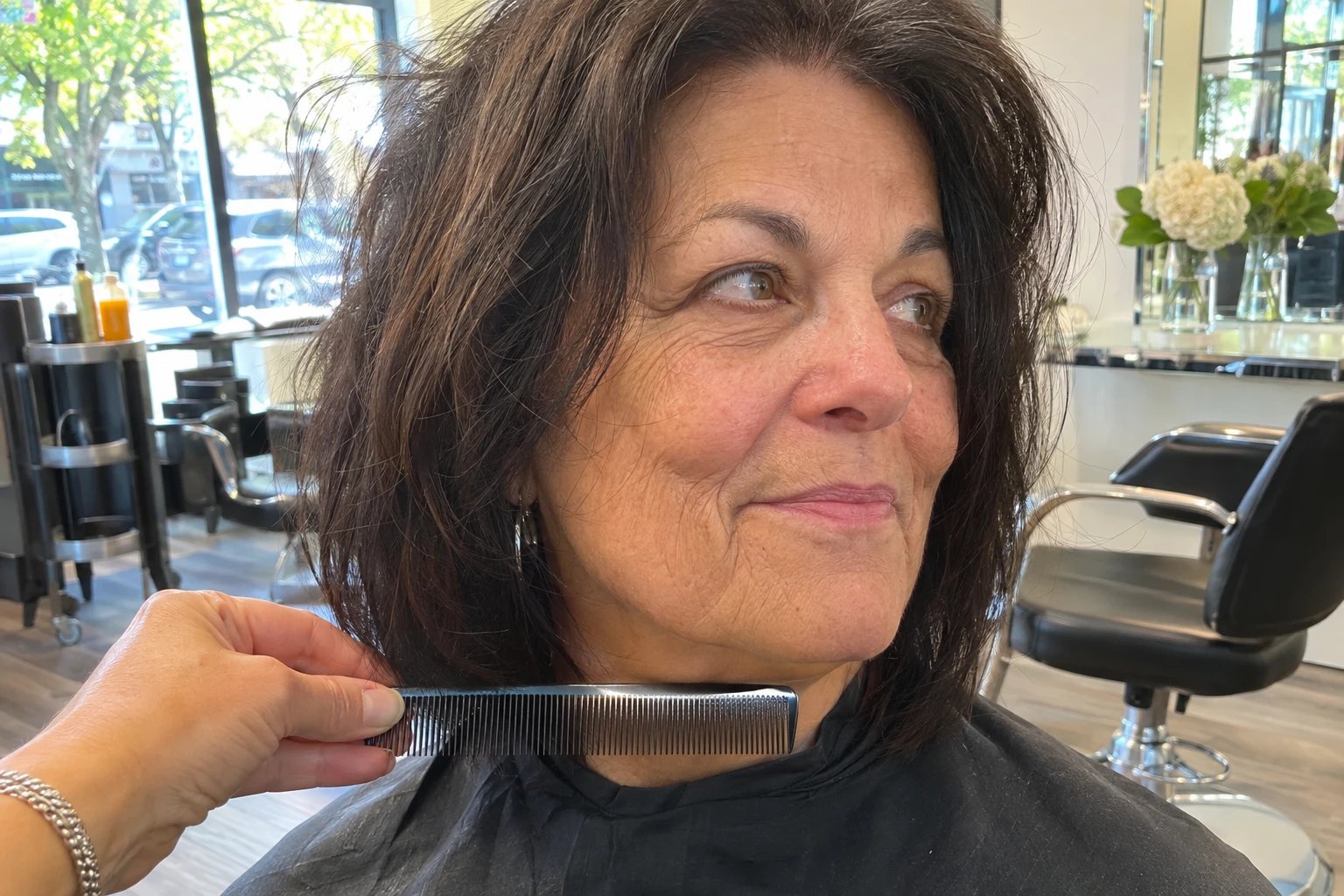
The bob is the cut I'm asked about most. It's also the one most often cut an inch in the wrong place.
Celebrity hairstylist Jason Collier says a bob "removes tired, damaged ends, lifts the face, and creates movement that longer hair sometimes lacks." All true. But where it ends decides whether it lifts your face or widens it.
End it right at the chin and you've drawn a straight line across the lower face. Sanda Petrut, a Chicago stylist, warns that as a jawline softens, "a chin-length bob is going to accentuate that, and short bangs would appear harsh."
Justin Hickox, a Portland, Oregon stylist with more than 30 years behind the chair, agrees. In one of his videos, he makes the point that bringing the length right up to the chin can add width to the face.
The fix is to drop the line just below the chin, not right at it. Celebrity hairstylist Haley Heckmann places the bob "just below the chin to slightly above the shoulders." That small drop moves the line off your jaw, and the eye follows the length down instead of across.
Say this in the chair: "I want it to land just below my chin, not at it."
There are two catches. If your face is long, Collier likes a classic chin-length bob with volume at the sides, so the old rule works for you. And a bob only stays at its best length for a while. Collier suggests a trim every 6 to 8 weeks. At roughly half an inch of growth a month, skip one and "just below the chin" is heading for your collar.
See more: 14 Steps to a Simple Skin Care Routine for Women Over 60 →
14The collarbone lob, cut so it won't flip

The lob, or long bob, runs from mid-neck to collarbone, and AARP calls it a compromise for women who aren't sure about going shorter. It's the cut I suggest when someone wants a real change without mourning. You keep enough length to feel like yourself, and you lose enough weight to feel it the first time you shake your head.
It has one bad habit. You know it if you've had one: the ends kick out by lunchtime, every day, whatever you did with the round brush.
Celebrity stylist Michelle Cleveland explains it in one line: "A flip at the ends can be the result of your hair hitting your shoulders." Her fix is in how it's cut. She prefers "shears over a razor or clipper for a strong, blunt hairline that won't flip."
So two choices decide your lob. What cuts it, and where the back lands against your shoulders.
Here's what can undo it. Hair grows roughly half an inch a month, so a lob cut an inch above your shoulders meets them in about two months, and the flip starts right on schedule. Book the next trim before then, or ask for a little more clearance than you think you need.
Try this in the chair: "Shears, a blunt line, and please check the back clears my shoulders while I'm sitting up straight."
13A soft pixie with length left on top
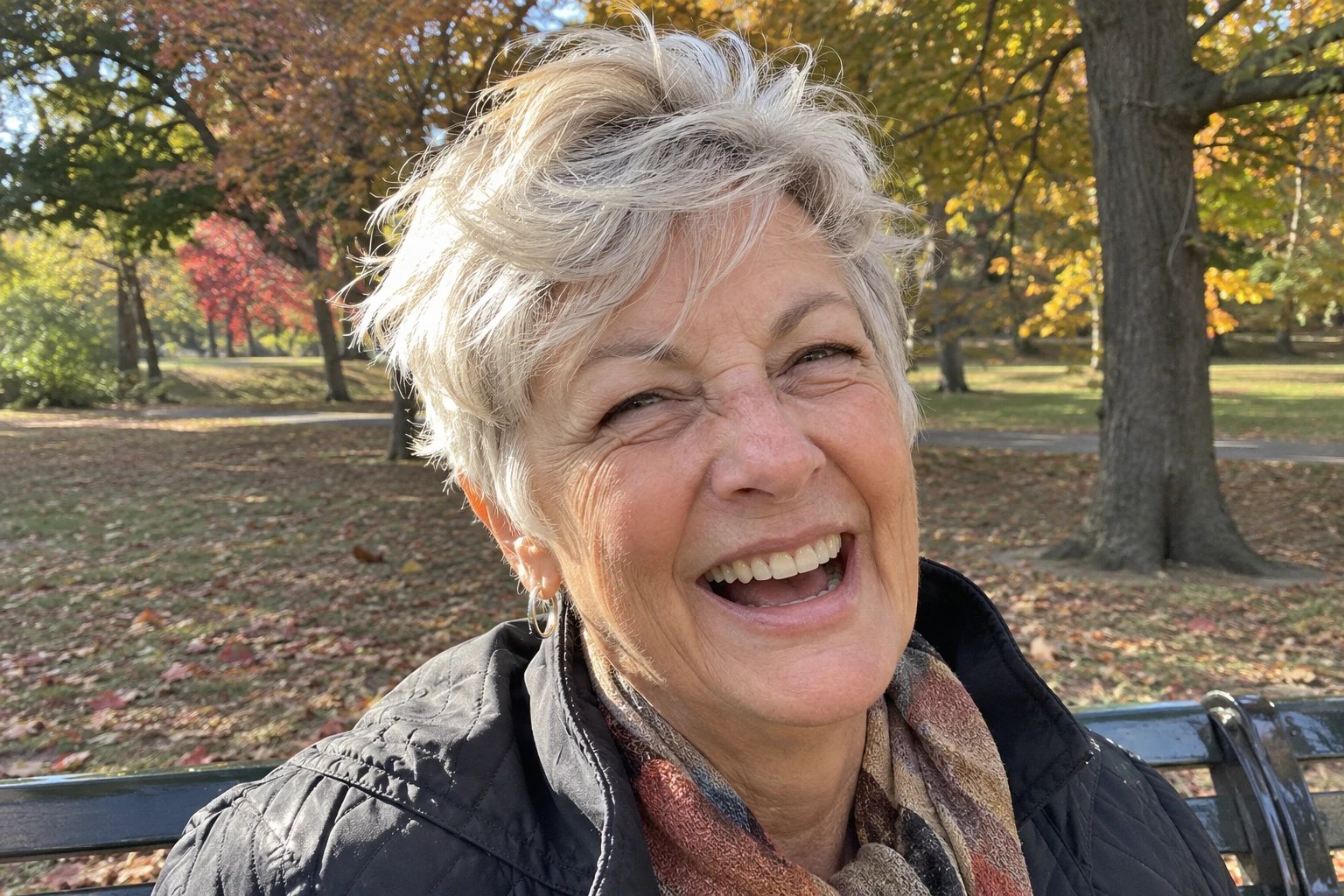
A pixie cut is the boldest move here, and the one with the biggest payoff. With nothing hanging around your face, AARP notes, your features reveal themselves more.
The kind of pixie matters. AARP beauty editor Lois Joy Johnson says a very short pixie needs "feathery, well-cut layers for texture and flattery (no barbershop buzzes or fades)." Leave some length on top and it moves, and movement is what looks young at any age.
AARP is honest about the cost: regular upkeep, and you'll need to be at peace with your neck and jawline on display. Their test is a good one. Pull your hair back for a week before you commit.
Then there's the question every gallery skips: what if you hate it? "It'll grow back" is true. It's also slow. Clementine's Salon in Denver maps it out at roughly half an inch a month:
| Stage | When it happens |
|---|---|
| The awkward stretch | Months 3 to 6 |
| Bob length | 6 to 12 months |
| Shoulder length | 12 to 18 months |
The nape and sides grow faster than the crown, so the back gets shaggy first. The salon suggests light nape clean-ups every 4 to 6 weeks, and gives you the words: "Only clean up the nape. Do not take anything off the top, crown, front, or sides."
For those rough middle months, Clementine's suggests turning the in-between length into a bixie, so it looks planned. That cut is coming up at #8.
12A deep side part, switched for free
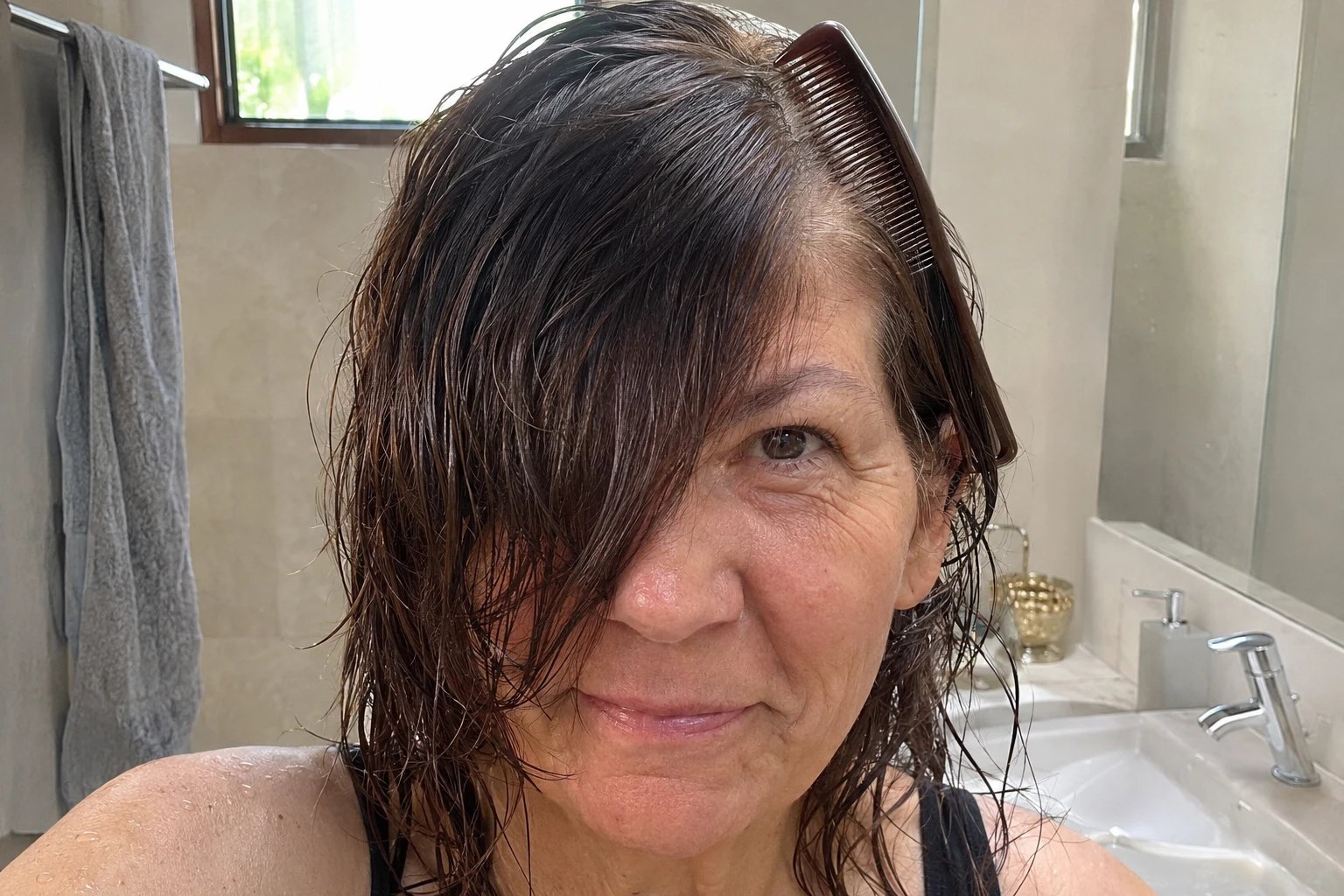
This one costs nothing and needs no appointment. Move your part over to one side and your hair sweeps across your forehead, the weight shifts, and your face looks different by dinner. It can lift flat hair, too. Celebrity hairstylist Marcos Diaz says a deep side part on a lob "adds instant elegance and subtle volume at the crown, helping to offset thinning or flatness."
In my experience, women who've parted on the same side for decades are always surprised how much of a change one comb line makes. The hair fights you at first.
There's one face it works against. Celebrity stylist Mika Fowler is blunt about it: "If you have a round face, don't make a deep part. It will just make your face look even rounder."
If that's you, I'd move the part an inch off center and stop there. You still get the surprise, without the extra width.
11A tapered cut measured for coily hair
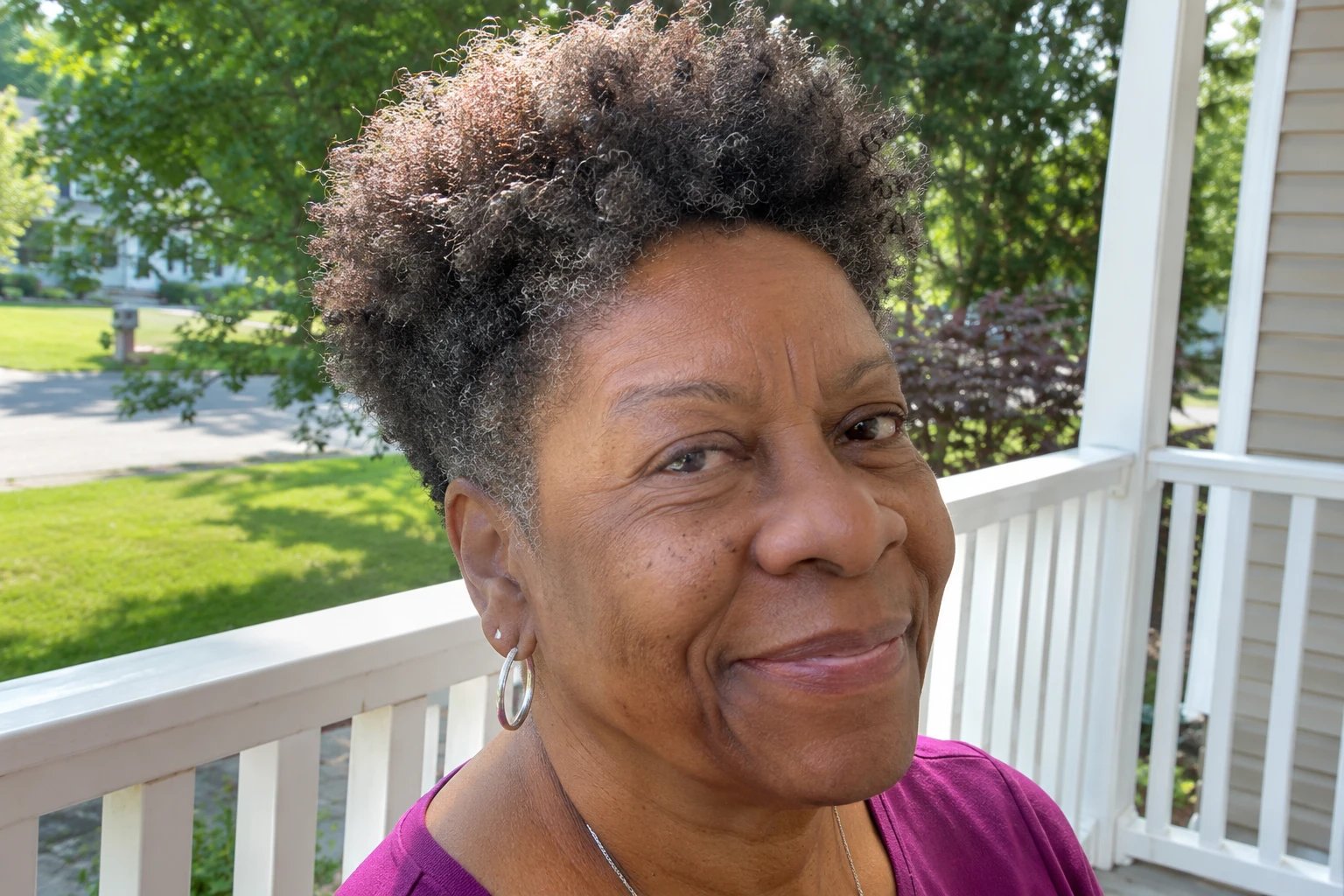
Most "ask for layers" advice is written for straight hair. Coily hair needs real numbers, because what you see on your head and what the stylist measures can be very different lengths.
A tapered cut keeps the sides and back close and leaves the shape on top. One guide to short natural cuts puts it plainly: "Two to four inches at the crown is the sweet spot." The same guide notes that coily hair "can sit at a quarter of its stretched length."
That second fact is the one to bring with you. Pulled straight, your hair may be four times longer than it looks. A stylist who cuts it stretched without thinking about shrinkage can take off far more than you meant.
Why it reads younger: the height sits at the crown, where it lifts the whole face, and the clean sides keep the shape neat instead of heavy.
The American Academy of Dermatology has a rule worth saying out loud in any chair. In its words: "If it hurts while your hair is being styled, ask the stylist to stop and redo it. Pain equals damage."
See more: 17 Secrets for Shoes That Look Good After 60 and Don't Hurt →
10Curtain bangs instead of a blunt fringe
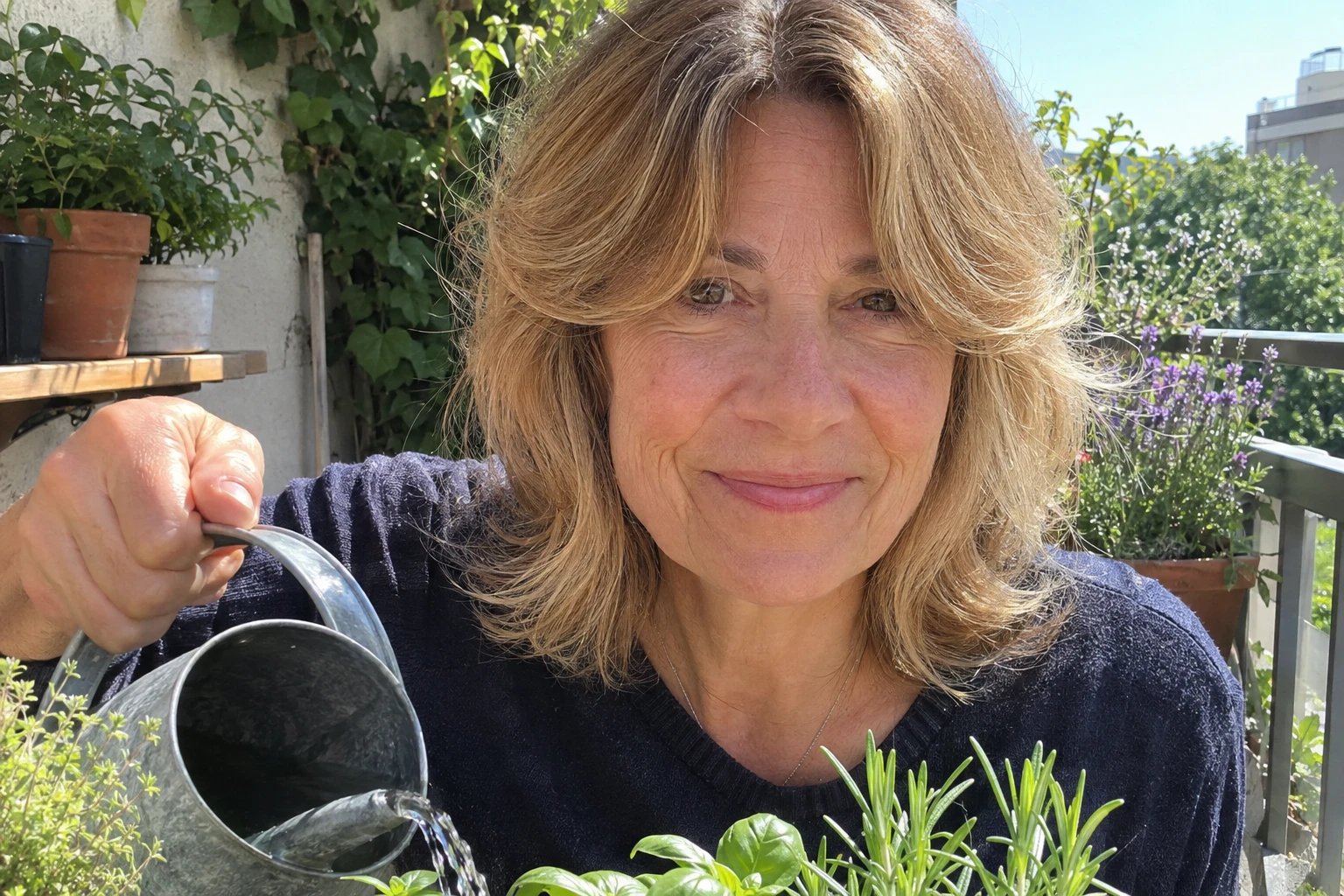
Bangs are worth it. AARP calls them "the ultimate hairstyle accessory" for women over 50, because they soften forehead lines and bring the eyes forward. The question is which kind.
Red-carpet hairstylist Luna Viola says blunt bangs "can look outdated and severe on the face." Gabi, a licensed hairstylist with 17 years in the business, explains why in her video: "Bangs that are strong, blunt and short draw a ton of attention right here." She means the under-eye area.
"Strong lines bring arrows." Gabi, licensed hairstylist
A hard, straight edge at the brow is a line, and the eye follows it straight to whatever sits just below. WebMD says the same: if you have puffiness or fine lines around the eyes, "blunt bangs at the brow line can call attention to them."
Curtain bangs avoid the single hard edge that blunt bangs create. Gabi points out they can sweep over crow's feet at the outer corners of your eyes, right where you'd want them.
The catch is upkeep, and the temptation of the bathroom scissors. Layers with a fringe need a refresh every 6 to 8 weeks, and The Look Hair Salon has a warning I wish every client heard before she picked up a pair: "hair pulled forward always cuts shorter than you think."
9The modern shag, back from the 70s
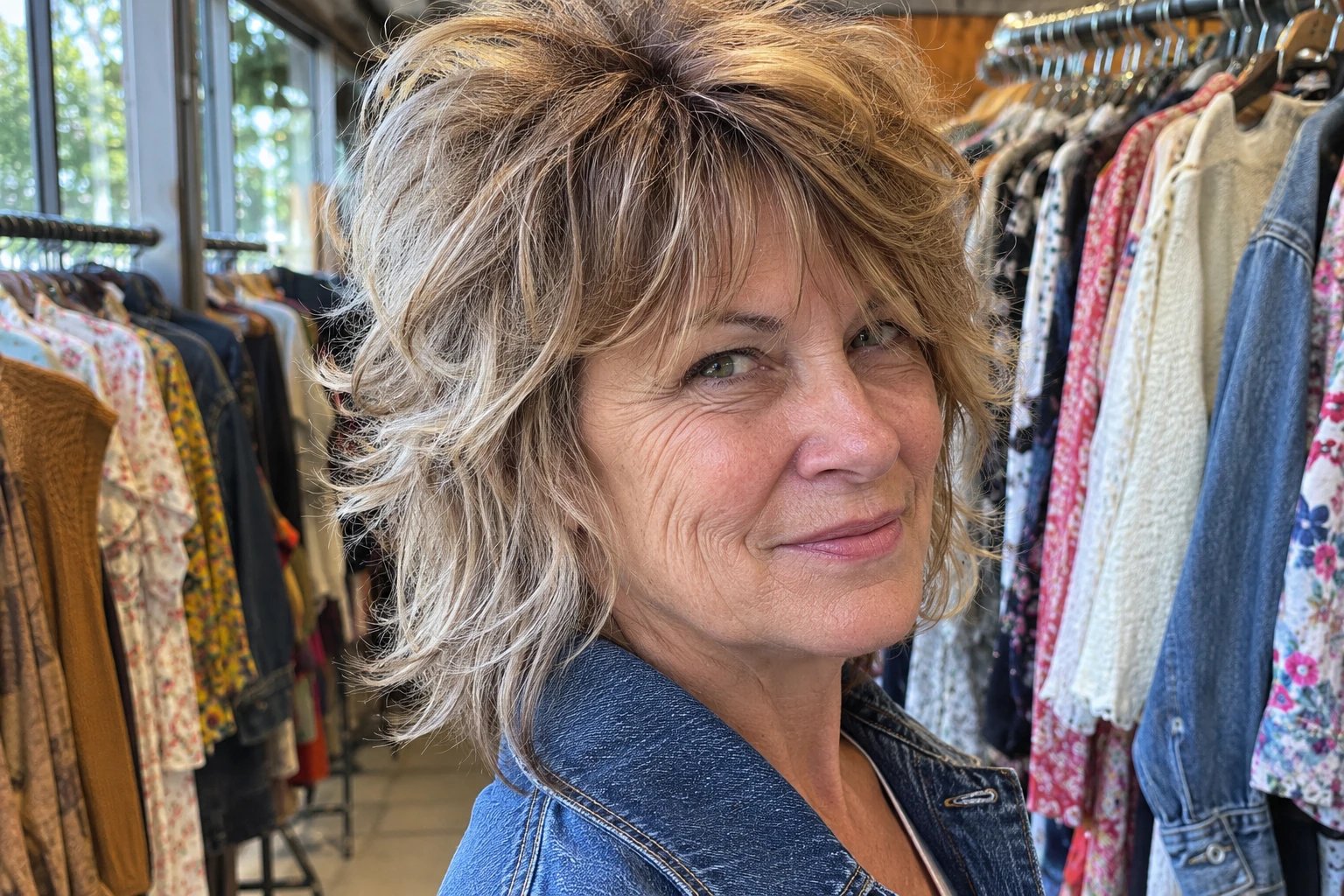
If the shag feels familiar, there's a reason. New York hairstylist Paul McGregor created it for Jane Fonda around 1969, and he first called it "the Funky." It became famous through her role in the 1971 film *Klute*, and it came back in the early 2020s.
The original had layers "often feathered at the top and sides," which gave it fullness at the crown. That's the part that still works. Height at the top draws the eye up, and hair that's full at the crown frames a face very differently from hair that lies flat against the head.
The modern shag is softer and less blown out than the version you may remember. Johnson at AARP describes a choppy shag with "long full bangs to camouflage forehead lines, weak brows or a receding hairline; and layers for volume." That's a lot of work for one haircut.
It isn't only for thick hair. Cleveland says the modern shag "works incredibly well for fine or thinning hair. It adds shape, bounce and that youthful lift so many women are looking for." She suggests a trim every 6 to 8 weeks to keep the shape.
Two cautions. Stylists split on layers for fine hair, so read #4 before you ask for this many. And if your stylist offers you a wolf cut, know what it is: the shag's younger cousin, shorter at the front "in a style reminiscent of the mullet." I'd stay with the shag.
8The bixie, named at last
You've seen this cut a hundred times and probably never knew what to call it. Too long for a pixie, too short for a bob.
The Look Hair Salon defines the bixie as "earlobe-to-jaw length, with a tapered nape, heavy interior texture, usually a fringe." The phrase that separates it from a short bob is "Tapered at the nape, not blunt." Tapered means the hair is cut closer as it goes down the back of your neck, rather than ending in one straight line.
That taper shows off your neck, and the texture inside keeps the whole cut moving instead of sitting there. The same salon puts styling at about 5 minutes:
- Rough-dry it to about 80 percent.
- Work in a texture product.
- Finish the blow-dry.
- Press a little paste into the ends.
Gabi likes it for another reason: "This cut is so quick to blow dry for those who have any mobility issues." If holding a dryer up for a long blow-dry is ever a chore, that matters.
Here's the honest part. The bixie is a low-maintenance haircut to style but not to keep. The salon suggests a trim every 5 to 7 weeks and a bang trim every 3 to 4. That's seven to ten haircuts a year, plus the bangs in between.
The good news: it "grows into a lob or a shag much more gracefully than a true pixie does." If a pixie scares you, start here.
7A low ponytail instead of a tight one
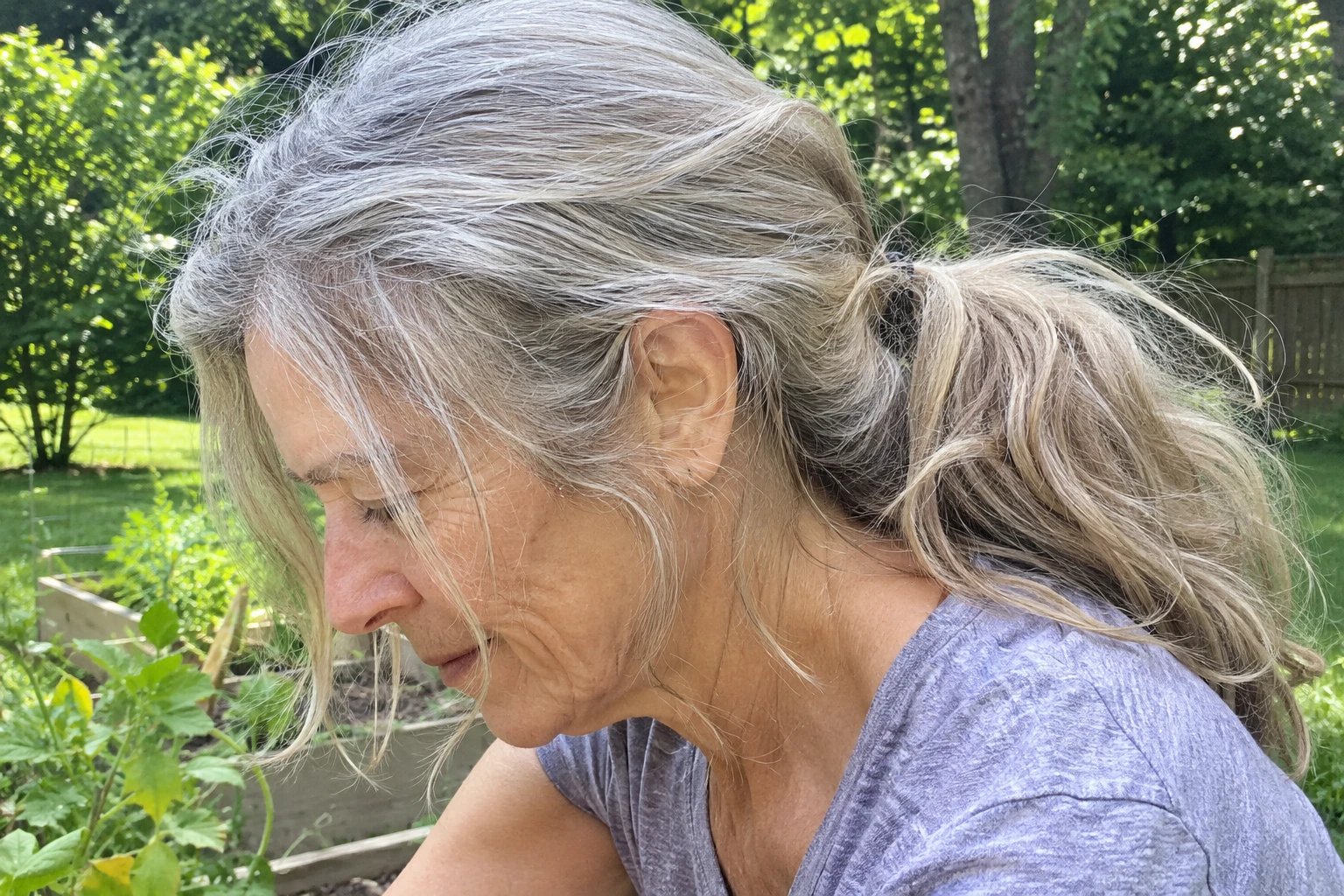
The ponytail gets a bad name it doesn't deserve. On Reddit, women in their 50s, 60s and 70s who've kept their hair long say it's one of the best things about it: up in seconds, out of your eyes.
The problem is the tight one. WebMD warns against pulling hair "straight off your forehead into a high, tight bun," a look that "automatically adds at least a decade!"
Hickox explains why in his video. A tight pull-back lifts the eyes and cheekbones, but it does nothing for the chin and neck, and "flat, compressed hair emphasizes facial sagging." So the top of the face looks pulled and the bottom looks unframed.
Your face isn't the only thing that pays for a tight ponytail. Your hair does too: Dr. Monica Christmas of UChicago Medicine advises women in menopause to "avoid hairstyles that cause pulling."
What I'd do instead: tie it low at the nape, loose enough that the band doesn't pull at your hairline, and push the top up a little with your fingers before you tie it. Pull a few soft pieces free at the temples. Same ponytail, same ten seconds.
See more: 17 Festive Hairstyles Over 50 for Holiday Parties →
6Gray hair, given back its shine
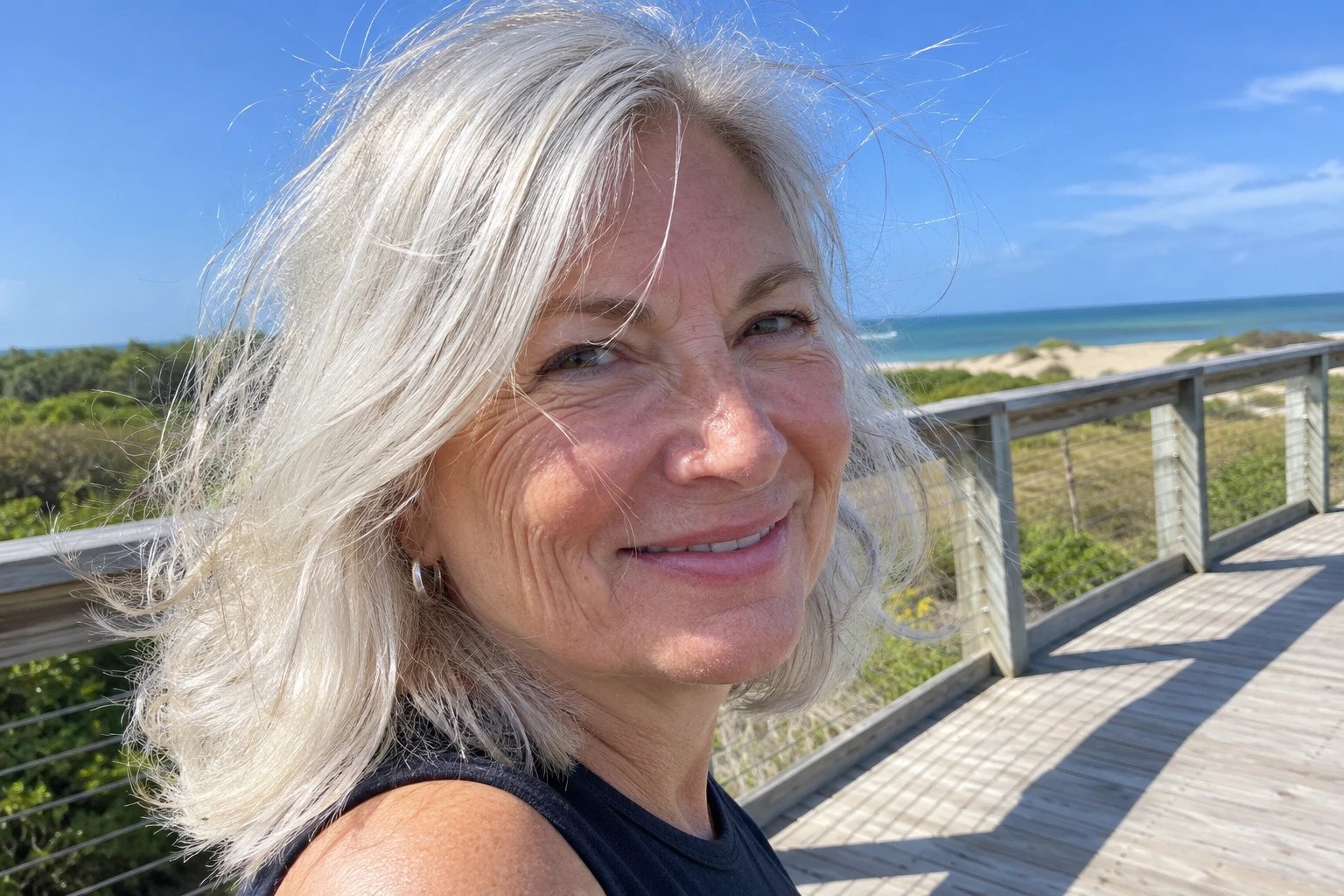
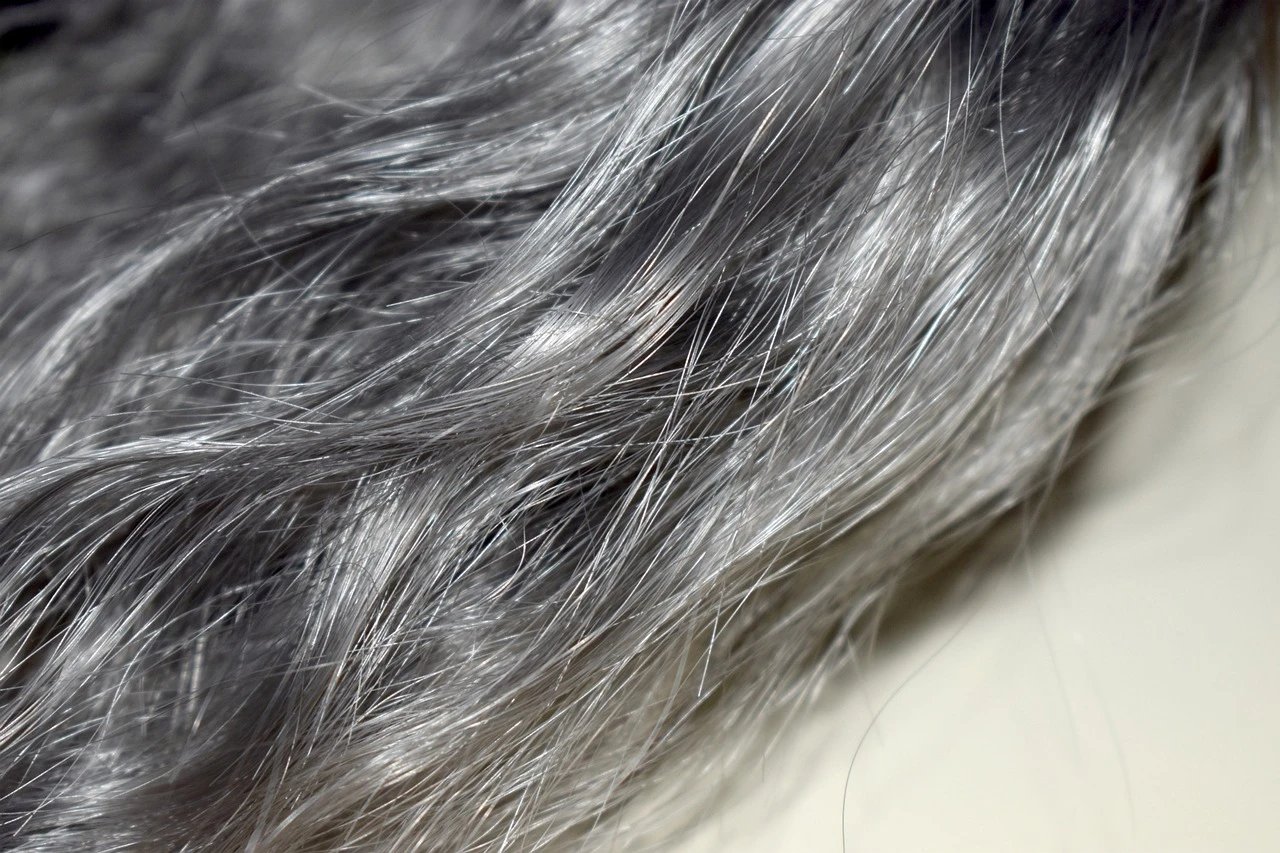
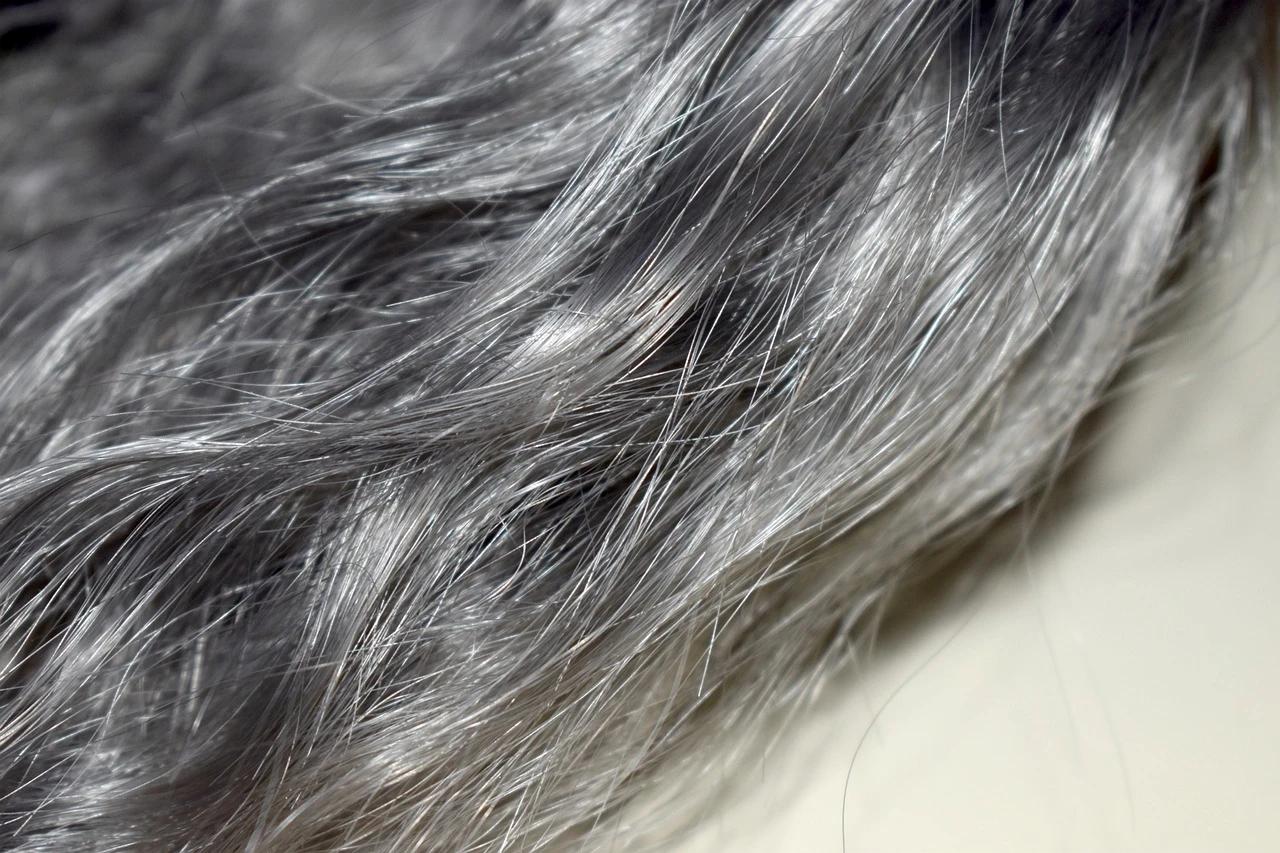
If you've let your gray or silver hair come in, you may have noticed it doesn't behave like the hair it replaced. You're not imagining it.
Dermatologist Debra Jaliman puts it simply: "Gray hairs are thicker and wirier, so your hair gets coarser as they multiply."
Dr. Aamna Adel, who founded a haircare company, explains what's going on. She says gray hair "often has fewer natural lipids and a rougher cuticle, which means it can feel drier and coarser." The cuticle is the outer layer of each strand. When it's rough, the hair can look flat and dry even on the day you wash it.
Here's a surprise: scientists once went looking for proof using Old Order Mennonites with salt-and-pepper hair, because they don't chemically treat their hair and limit their time in the sun. The small differences they found in gray strands "lend support to the perception by consumers" that gray hair is "wilder, drier and less manageable."
The fix is a gloss, a salon treatment that coats the hair for shine. Skipping a wash won't get you there. Hickox makes the same distinction in one of his videos: shine and grease are not the same thing. Wella says its Shinefinity gloss lasts up to 6 weeks and fades gradually, without harsh grow-out lines. Ask your salon what it costs and how it holds on your hair, since gray hair is more porous and can take products differently.
5Highlights placed only where they brighten
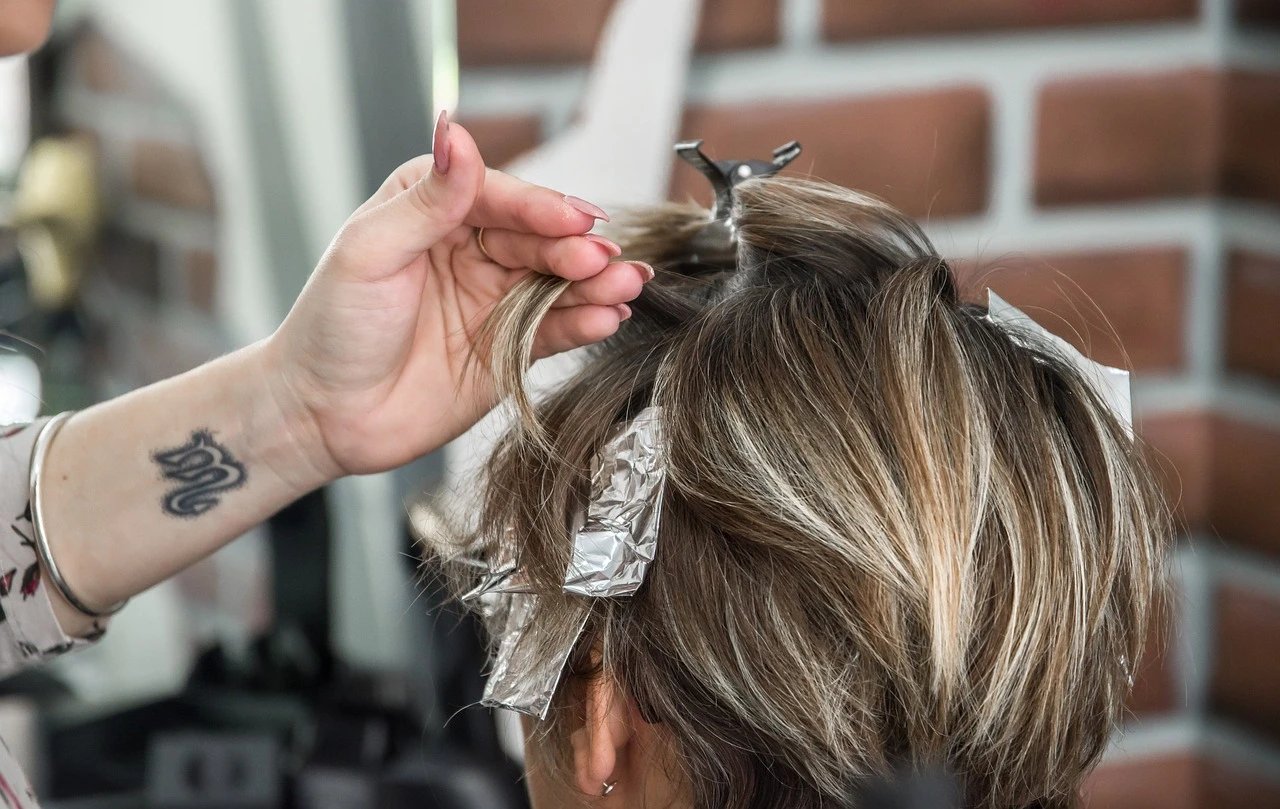
In my experience, plenty of women still wear the color they chose ten or fifteen years ago. The skin underneath has changed since then. When hair and skin end up too close in tone, the whole face looks washed out.
Colorist Min Kim doesn't fix that with all-over color. She paints "a soft halo of light around the face that lifts features and brightens the complexion."
Her details are the useful part:
- Warm tones only: golden beige, warm honey, creamy champagne. She avoids ashy tones.
- Painted by hand, so there are no hard stripes or lines.
- Placed around the face, where the light does the most work.
If you'd rather use foils, WebMD suggests asking for "five or 10 foils around your hairline to brighten your face." It's a small, specific request, and it's easier to say than "something brighter."
Plan for upkeep. Redken puts blonde touch-ups at every 6 to 12 weeks, depending on your shade and how much it contrasts with your roots. Soft, painted color can usually go longer.
One warning before you bring a photo. Colorist Kristin Grip says a filter can turn warm blonde into white, ashy blonde with contrasting lowlights in less than 10 seconds, so bring a photo nobody has filtered.
4A blunt bob instead of more layers

If your hair is fine or thinning, stylists don't agree on what to do, and they say so out loud.
| Who | What they say about layers |
|---|---|
| Michael Gray, hairstylist | They "add softness, movement, and can create the illusion of fuller, healthier-looking hair" |
| Lois Joy Johnson, AARP beauty editor | Women with thinning hair should "back off from layers completely" |
| Eugene Toye, senior stylist, Rita Hazan Salon | "You don't want to layer fine hair" |
Sources: Women.com, AARP, WebMD
For fine hair, I side with the blunt camp. Toye says "a blunt haircut makes thin hair look fuller," and it's easy to see why: when every strand ends at the same line, the bottom edge is as thick as your hair can be. AARP's 2026 pick is the "box bob," cut blunt and straight, without layers and with little volume.
A woman about 50 put the frustration plainly on Reddit's r/fashionwomens35: "It stinks being 50ish and needing a shorter cut because menopause sucks the life out of us." If that's how your hair feels, a blunt edge is how you give it back some weight.
The middle ground is real, and it's in the wording. Celebrity hairstylist Danielle Priano asks for "a chin-to-jawline bob with blunt ends, soft texture for movement and volume at the roots." Blunt at the bottom, softness only up top. That's the version that can take years off fine hair. If your jaw is softening, take it to the jawline end of her range, off the chin, for the reasons in #15.
Michael Gray's point about layers adding movement and the illusion of fuller hair is about mature hair generally, not fine or thinning hair specifically, and that's where the split in the table comes from. For styling, Toye keeps it easy. Let it air-dry, "then all you have to do is smooth the ends."
3Loose movement, not a stiff set

Some short haircuts look "old lady" at any age. Most women blame the length. Hickox says the length is innocent.
In his video on short cuts, he traces it back to the old shampoo-and-set: "Every little curl from that curling iron is exactly the same, and so it looks kind of very stiff."
If you grew up with that weekly appointment in your family, you can picture it: the pink rollers, the hood dryer, the hairnet at bedtime to make it last until next Friday. That look was built to hold still. Hair that holds still reads older than hair that moves.
People commenting on Reddit name the same suspects when they describe dated hair: stiff, sharply angled bobs and teased crowns.
So keep your length and change the movement.
If you're ready to let the rollers go, say so in the chair, because a cut shaped for a set won't fall right without one. Ask for a cut that moves on its own.
2Face-framing layers placed by face shape
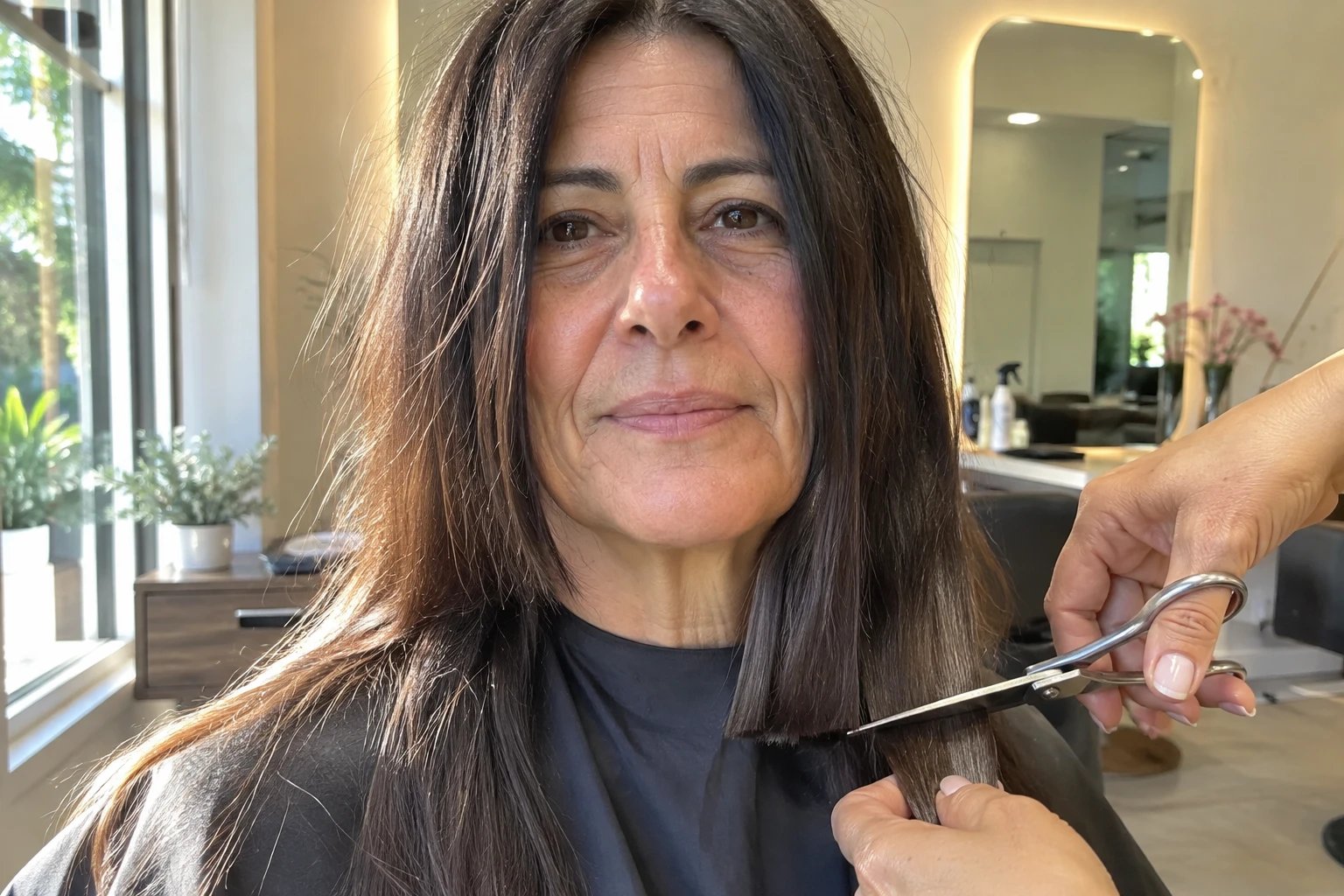
Face-framing layers are the most requested change I see on long hair. They can lengthen a face or widen it, and the difference is one sentence you say before the scissors come out.
The Look Hair Salon spells out the rule. For a round face: "Start the shortest piece below the chin. Anything that hits at the widest part of your face adds width." For a long or oval face: "Layers starting at the cheekbone or even just below the eye add horizontal softness."
So, depending on your face:
Round or full face: "Please start the shortest layer below my chin."
Long or oval face: "Start the layers at my cheekbone."
Diaz recommends long, blended layers that start at the cheekbone or jawline and says that for fine or thinning hair, soft face-framing layers "add instant lift and movement." Lift right where people look at you is what makes a face read younger.
The upkeep depends on how sharp you go:
- Soft long layers: a refresh every 12 to 16 weeks
- Sharp chin-length frames: every 8 to 10 weeks
- Layers with a fringe: every 6 to 8 weeks
Soft long layers work out to three or four visits a year.
1Long hair, kept thick at the bottom
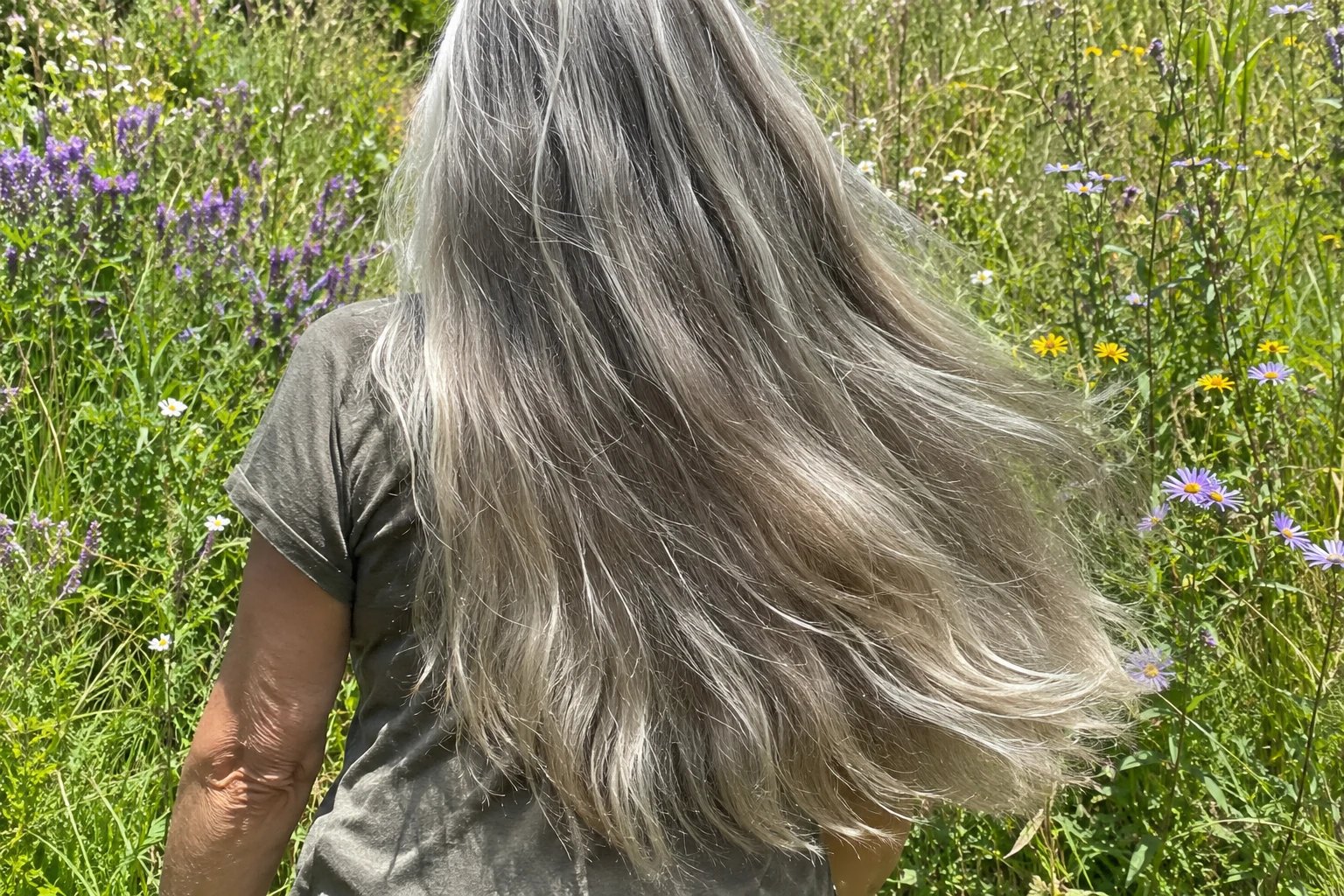
You don't have to cut your hair at 50. Women on Reddit have written about being told to cut it short at that birthday, and about saying no.
A woman of 75 who has kept her hair waist-length since she was 16 described it on r/AskWomenOver50: "I think of it as an elderly pet. It's mostly white now."
Hair does have its own ceiling. Dermatologist Ross Kopelman says "there's no magic trick to growing it past what your genetics allow." But in my experience, most long hair that looks tired after 50 hasn't hit its limit. It's been layered wrong.
Hickox says most bad layering comes from cutting into the bottom too much, which leaves thin, choppy ends. His rule is simple. There's a ridge at the back of your head, and it starts behind your ear. "When you start from behind the ear, everything below that should almost be one length."
Keep that bottom section whole and your ends stay thick. Put the movement on top and around your face, and leave the bottom alone. Hairstylist Edward James says "sweeping layers around the face create movement and allow more light onto the skin." That's soft layers doing their job.
There's one more trap: top layers cut too short for the length underneath, which leaves you with a mushroom. Hickox's fix is to measure it yourself. Lift a section from the top of your head, decide where the shortest layer should fall, and hold it up:
- Put a flat hand behind your ear and say, "Everything below this stays nearly one length."
- Pinch the top section at your chosen point and say, "I want layers on top, but I don't want my layers to be any shorter than this length."
- If layers still make you nervous, do the front only. Hickox calls this "the best way to dip your toe into layering without going full bore."
Know the limit before you go in. "The longer your hair is, the longer the layers have to be, the less layering you can do," Hickox says. If you'd trade a few inches for more shape, Diaz suggests "shoulder length with internal movement layers and soft ends," which keeps hair from falling flat.
The bottom line
Most of the women I see don't need a braver haircut. They need a more exact one. The difference between a bob that lifts your face and one that widens it is whether it ends right at the chin or just below it. The difference between thick long hair and tired long hair is one line behind your ear.
So before your next appointment, ask yourself which part of your hair you've been protecting the longest, and whether it's still earning its keep.
Then pick the one measurement here that fits you: the line just below the chin, the shortest layer, the line behind your ear. Say it first, before "the usual" comes out of anyone's mouth.
Up next
16 Long Hairstyles Over 50 for Women Who Won't Cut Their Hair
Sixteen long hairstyles for women over 50 who don't want to cut their hair, from where the shortest layer should start to the one sentence that saves your length at the salon.
Read the list →
Reader quiz
Did you catch the details?
5 questions from this article. Finish them all to unlock the editor's bonus tip.
Where does the article suggest a bob should end if your jawline is softening?
Questions people also ask
Do you look younger with longer or shorter hair?
Neither length wins on its own: where the layers sit and how the hair moves change a face more than length does. AARP calls shoulder length, or an inch or two below, "the new long" for women over 50. Hairstylist Edward James says layers around the face let more light onto the skin, whatever the length.
Should a woman over 50 have a fringe?
Yes, if it's soft. A piecey or curtain fringe can soften forehead lines and bring out the eyes, while blunt bangs at the brow line can draw attention to puffiness and fine lines around the eyes. Stylist Luna Viola says blunt bangs can look "outdated and severe."
Do I have to cut my hair short at 50?
No, nothing about turning 50 requires short hair. Hair has its own genetic limit on length, says dermatologist Ross Kopelman, and the hormone shifts around menopause, which can start up to 10 years before it, are more often what changes hair density and texture. If your hair still looks good long, you can keep it long.
What haircut makes thinning hair look thicker after menopause?
A blunt, layer-free edge makes thinning hair look thicker than heavy layers do. Stylist Eugene Toye says a blunt haircut "makes thin hair look fuller," and AARP's 2026 "box bob" is cut blunt with no layers. If your part is widening or your ponytail is getting thinner, the AAD suggests seeing a dermatologist.
Is it normal to lose so much hair in the shower?
Usually, yes: the AAD says it's normal to shed 50 to 100 hairs a day, which is roughly 350 to 700 hairs a week. Heavier shedding a few months after stress, illness or surgery is often temporary, and the AAD says hair tends to look full again within six to nine months. Dr. Monica Christmas of UChicago Medicine suggests seeing a doctor if sudden shedding hasn't improved after four months of treatment.
What is the best haircut for a round face and double chin over 50?
End the cut below the chin, never at the widest part of your face. Jason Collier suggests longer bobs that graze the collarbone for round faces, and The Look Hair Salon says to start the shortest face-framing piece below the chin. Stylist Mika Fowler adds that a deep side part makes a round face look rounder.
Did any of these feel familiar?
Know someone who needs this?
 Prime Journal · Free printable
The Closet Fit and Color Checklist
- A clearer view of colors beside your face.
- Clothes that pass the sitting and walking test.
- Shoes and repairs checked before anything gets replaced.
Free printable: The Closet Fit and Color Checklist. Enter your email and it is yours.
Sources cited in this article
This article links to 39 outside sources, listed here so you can read them yourself.
- In a TikTok comment www.tiktok.com/@alinecoiffurewarn/video/7616639643911572758
- Says a bob www.hellomagazine.com/healthandbeauty/hair/857641/best-bob-haircuts-for-over…
- Warns www.glam.com/1563846/best-worst-hairstyles-older-women
- In one of his videos www.youtube.com/watch?v=Rl4rHC5t7ik
- Places the bob www.aol.com/articles/why-italian-bob-cut-try-211000111.html
- AARP calls it a compromise www.aarp.org/benefits-discounts/members-only-access/info-2025/best-womens-ha…
- Explains it www.brit.co/how-to-stop-your-lob-from-flipping-out
- Says a very short pixie www.aarp.org/entertainment/beauty-style/cool-hairstyles
- Maps it out clementinesdenver.com/blog/how-to-grow-out-a-pixie-cut-gracefully-5-stages
- Says a deep side part parade.com/living/face-framing-haircuts-with-layers-for-women-over-50
- Is blunt about it www.foxnews.com/lifestyle/having-a-bad-hair-day-this-style-will-cure-your-woes
- One guide to short natural cuts haircutster.com/short-natural-haircuts
- In its words www.aad.org/public/everyday-care/hair-scalp-care/hair/care-african-american
- In her video www.youtube.com/watch?v=nGU8TSX_c9k
- WebMD says the same www.webmd.com/beauty/ss/cm/slideshow-age-defying-hairstyles
- "hair pulled forward always cuts shorter than you think." www.thelookhairsalonla.com/blog/face-framing-layers-guide-glendale
- Created it for Jane Fonda around 1969 en.wikipedia.org/wiki/Shag_%28haircut%29
- Says the modern shag parade.com/living/hair-style-celebs-over-50-love-summer-2025
- Defines the bixie www.thelookhairsalonla.com/blog/bixie-haircut-guide-glendale
- Women in their 50s, 60s and 70s www.reddit.com/comments/1kqie0i
- In his video www.youtube.com/watch?v=W8Hg-J6HbUo
- Advises women in menopause www.uchicagomedicine.org/forefront/womens-health-articles/2023/august/menopa…
- Puts it simply www.webmd.com/beauty/features/texture-changes?page=2
- She says gray hair www.aol.com/articles/gray-hair-needs-extra-care-170000000.html
- "lend support to the perception by consumers" doi.org/10.1111/j.1468-2494.2010.00614.x
- Lasts up to 6 weeks www.wella.com/professional/en-US/shinefinity
- She paints www.yahoo.com/lifestyle/best-hair-color-technique-women-121700267.html
- Every 6 to 12 weeks www.redken.com/blog/40-blonde-hair-color-ideas-for-every-skin-tone.html
- Says a filter www.modernsalon.com/377811/filtered-vs-reality-how-one-colorist-is-managing-…
- Women.com www.women.com/2306592/pamela-andersons-blurred-out-bob-is-perfect-haircut-in…
- Cut blunt and straight, without layers and with little volume www.aarp.org/entertainment/beauty-style/beauty-trends-women-50-plus
- On Reddit's r/fashionwomens35 www.reddit.com/comments/ew7xrl
- In his video on short cuts www.youtube.com/watch?v=Bzq_8i10brg
- On Reddit www.reddit.com/comments/1j4l20z
- Recommends long, blended layers that start at the cheekbone or jawline www.aol.com/articles/9-best-layered-wash-wear-140000625.html
- Says www.huffpost.com/entry/why-wont-my-hair-grow_l_677ffc1de4b09fe8a981f7c2
- Says most bad layering www.youtube.com/watch?v=n1JcYPBwIks
- Warned on TikTok dailydot.com/ai-hair-inspo-photos
- Puts it simply creakyjoints.org/living-with-arthritis/hair-makeup-tips-with-arthritis

Irina Byalik
Style Editor
Irina Byalik is a hairdresser and the owner of New Image Hair Salon in East Brunswick, New Jersey, with more than 20 years of experience. She came to the United States from Ukraine.
More from Irina Byalik