










Best Recliner Chairs for Seniors: 17 Things to Know Before You Buy
The best recliner chair for seniors is sometimes a lift chair costing $2,121 to $3,861 and sometimes the old one sitting on a $40 riser, and the difference is worth knowing before a salesman hands you the remote.

By Peter Byalik, Food & Home Editor
Updated · 27 min read
- Written by our food & home editor
- Cited 42 sources
- How we review
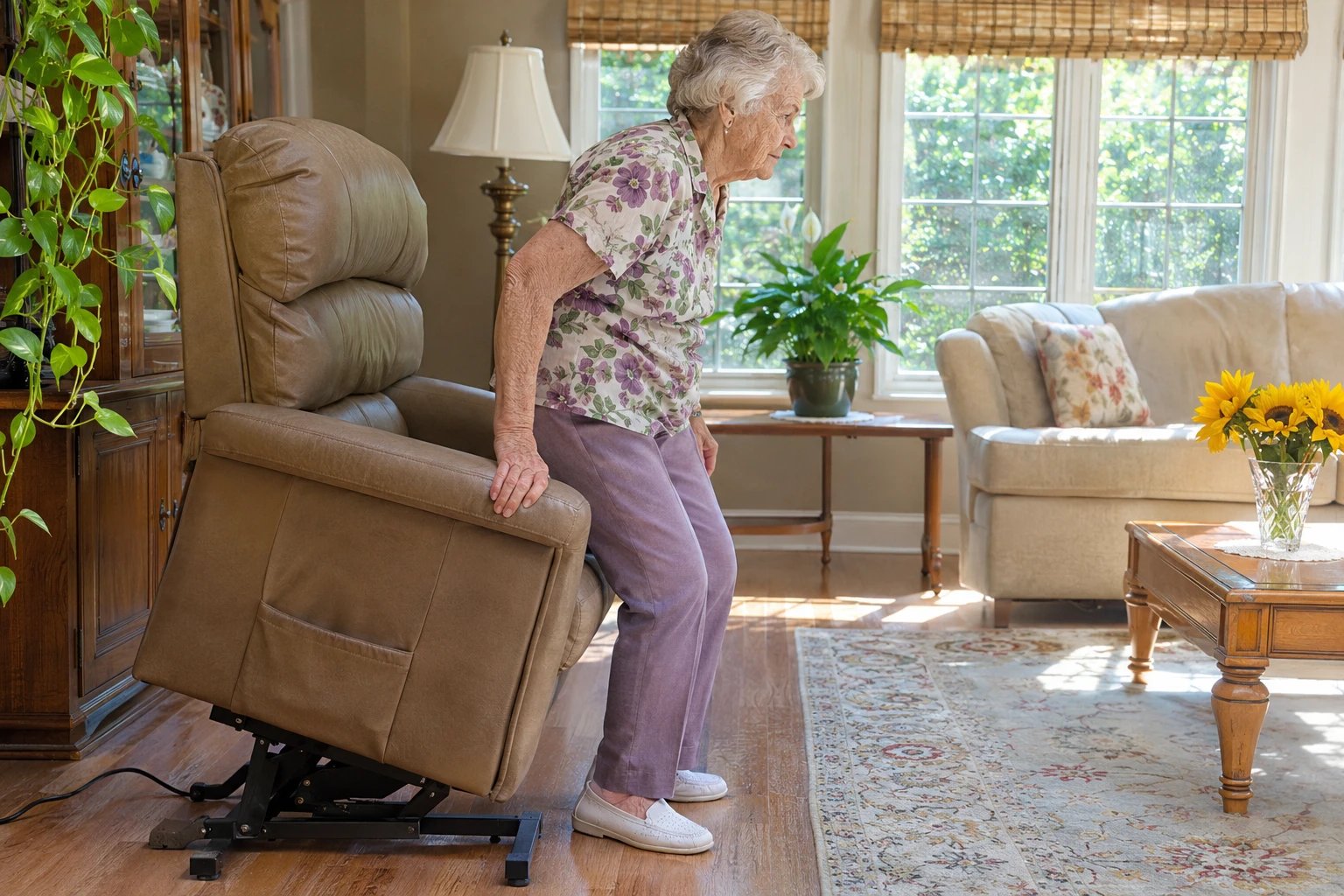
You know the routine, whether it's yours or one you watch from across the room. Hands on both armrests. One rock forward, then another, a small grunt on the third, and up. Or not, and back into the cushion to try again. A showroom will sell you a motor for that. Sometimes it's the right call. But I've spent a career buying equipment with my own money, and the most expensive machine is not always the one that fixes the problem. Sometimes the problem is three inches.
17A too-low seat, not weak legs
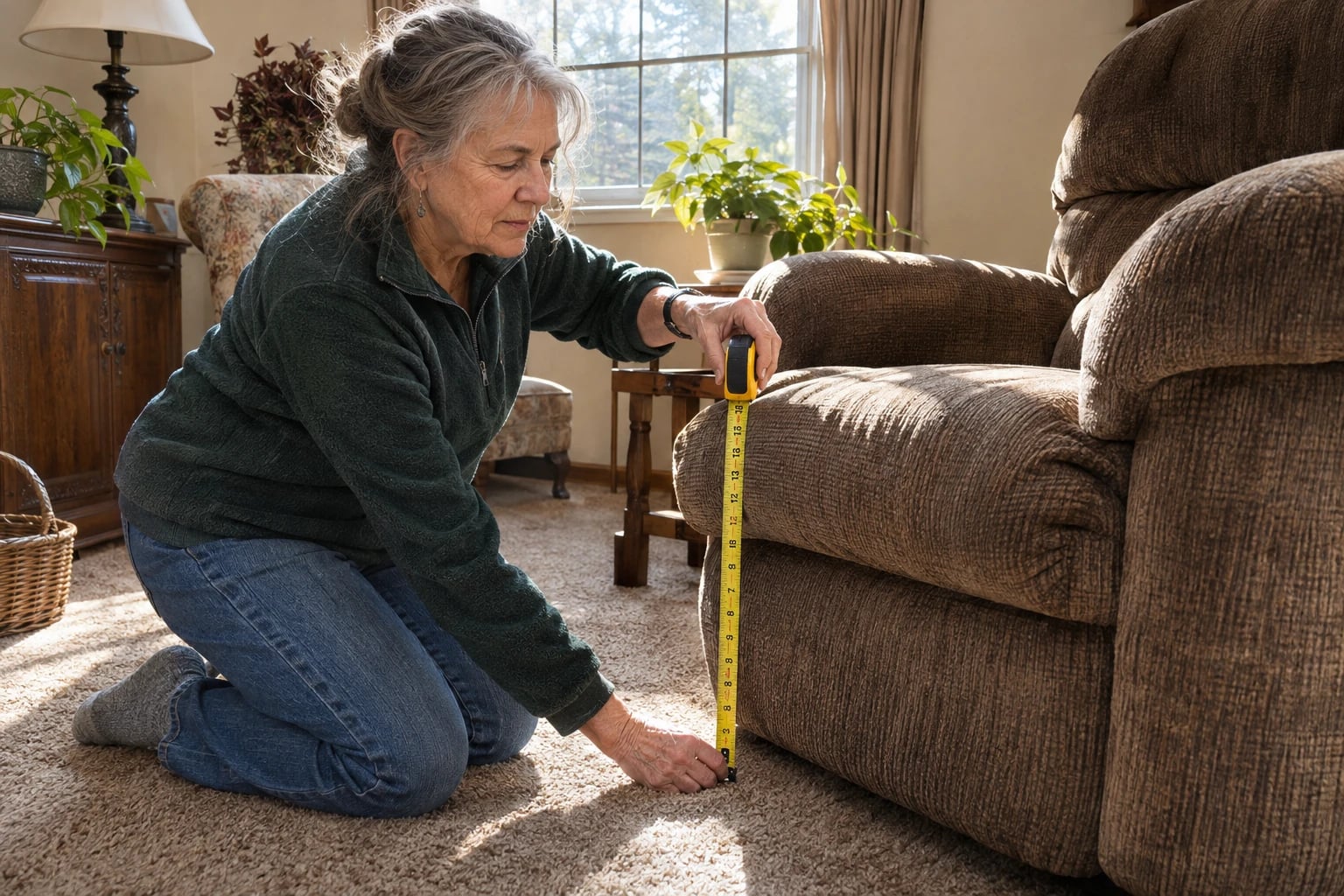
Before you decide anyone's legs have given out, measure the seat. A lot of the struggle out of a soft recliner is a height problem, and height is cheap to fix.
Here's a useful yardstick. The 30-second chair stand test that health workers use to check leg strength calls for a seat 17 inches off the floor, and a different height changes the score. That is how much a few inches matter.
Now look at lift chairs. Pride's own spec sheets put the seat at 18 inches on the Evolution's small and medium sizes and 21 inches on the large, and anywhere from 18 to 21.5 inches on the VivaLift Radiance. A lift chair already sits higher than the test chair before the motor ever moves. Some of what it sells you is plain altitude.
People caring for a parent describe this on Reddit's aging-parents and dementia forums again and again: a parent who stands from a kitchen chair or a firm couch just fine, then gets swallowed by the recliner.
So get the tape measure. Measure the recliner's seat-to-floor height at the front edge, with someone sitting in it, because a soft cushion sinks. If you get a number well under 17, you may not be shopping for a motor yet. You may be shopping for #7.
See more: How to Build Muscle After 50 →
16A lift chair that rises straight up
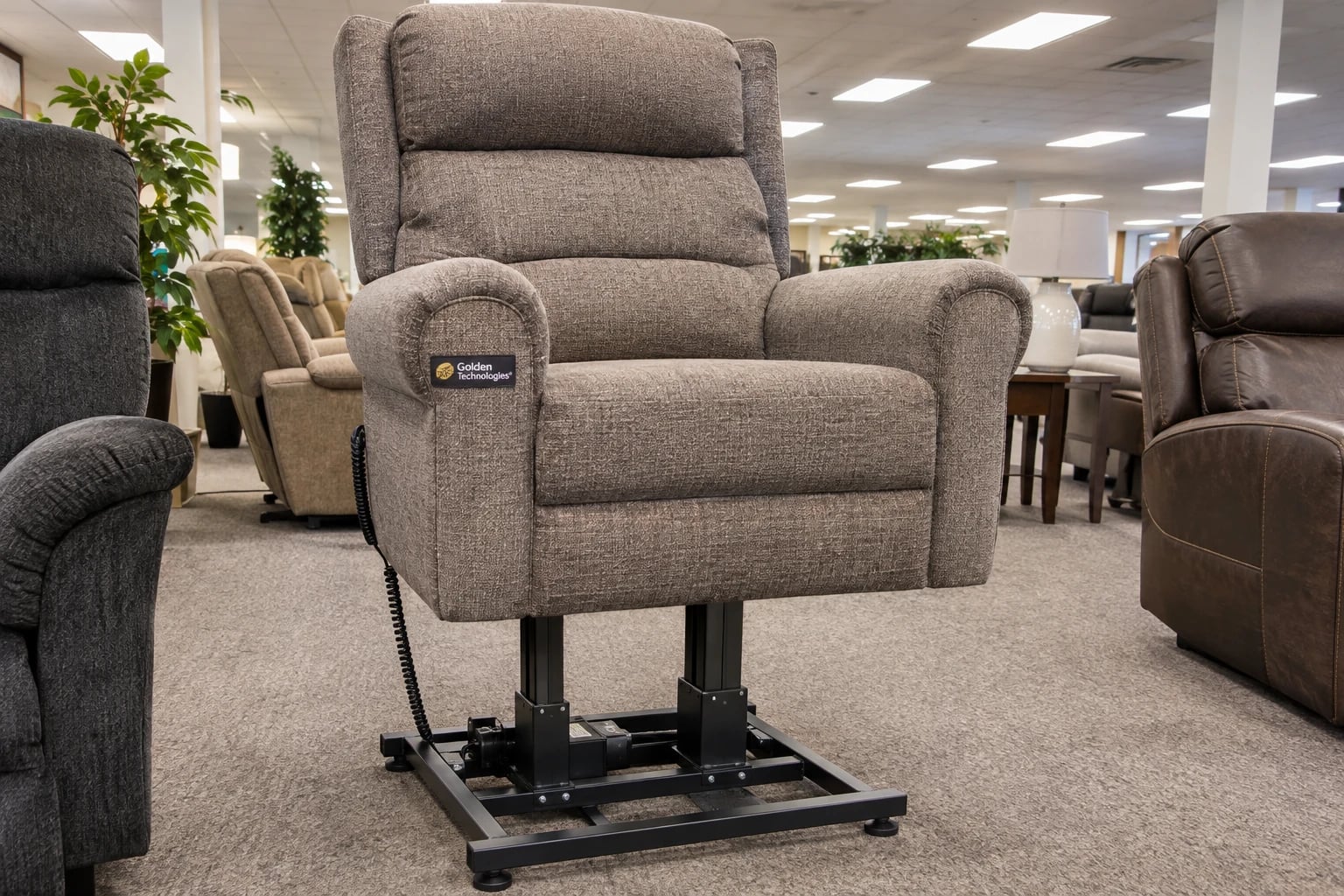
Most power lift recliners get you up by tipping the whole seat forward and nudging you onto your feet. Golden Technologies makes one that lifts you vertically instead of tilting forward, and says it's the only lift chair maker that offers it.
One term to know, since salespeople toss it around: a power lift recliner reclines and also raises the seat to help you stand.
Golden aims its Straight Lift at three groups: people who need caregiver-assisted transfers, people with back pain, and people recovering from joint surgery. In plain terms, if someone stands beside the chair to help, or if being tipped forward feels like getting pitched off a diving board, this is the version to try. Golden also has a Mid Lift, a gradual straight rise with a smaller seat angle, on every model except its 5-Zone chairs with Twilight Tilt. If you already own a Golden, the company says to ask a retailer about converting it.
The lift chairs we priced on maker and retailer pages ran from about $2,121 for a Golden Comforter Tall at one retailer to about $3,861 list price for Pride's VivaLift Premier. Golden doesn't publish a Straight Lift price, so ask.
Ask the store to run both kinds back to back with the person in the seat. Ten seconds each, and they'll know which one feels like a launch.
15A seat so deep it forces a slouch
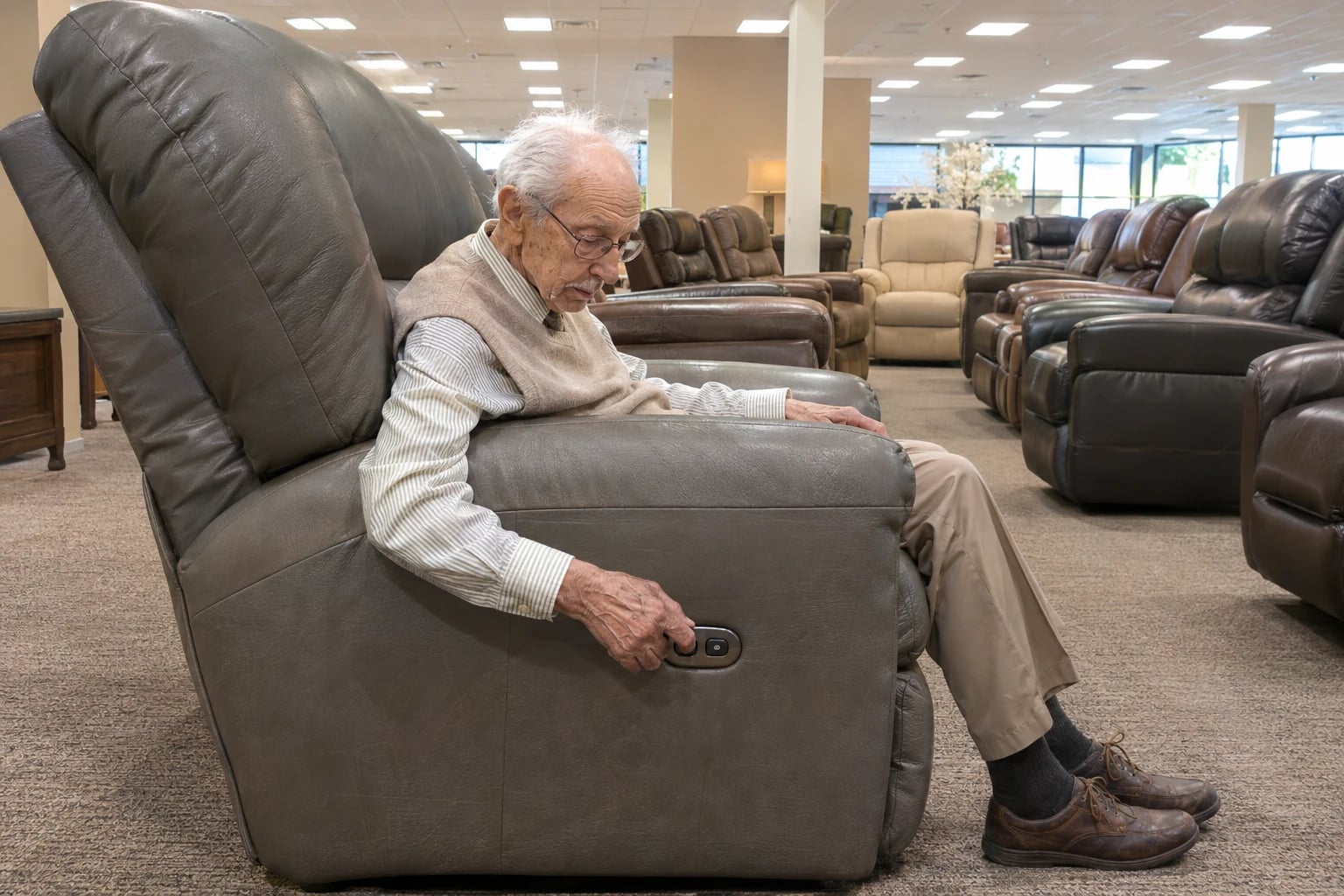
Seat depth is the distance from the front edge of the cushion to the backrest, and it's where "oversized" goes wrong fastest. If the seat runs longer than the thigh, you either sit all the way back with the cushion edge digging behind your knees, or you scoot forward and lose the backrest. Either way, you slouch.
The spread is wider than most people expect, even inside one brand:
| Size | Evolution LC-435 | VivaLift Radiance |
|---|---|---|
| Small | 18.5 in | 18 in |
| Petite Wide | 19 in | 18 in |
| Medium | 20 in | 21 in |
| Large | 22.5 in | 22 in |
That's a four-inch difference between small and large, from Pride's Evolution specs and its Radiance specs. Four inches is a lot of thigh.
And it doesn't take years to show up. Owners in Reddit threads about recliners report an "oversized" chair that forced a slouch and back pain within an hour, and caregivers warn that some chairs look good and feel bad an hour later.
Sit in it for the length of a TV episode before you pay. Five minutes in a showroom tells you about the cushion. An hour tells you about the depth.
14Feet flat, back against the cushion
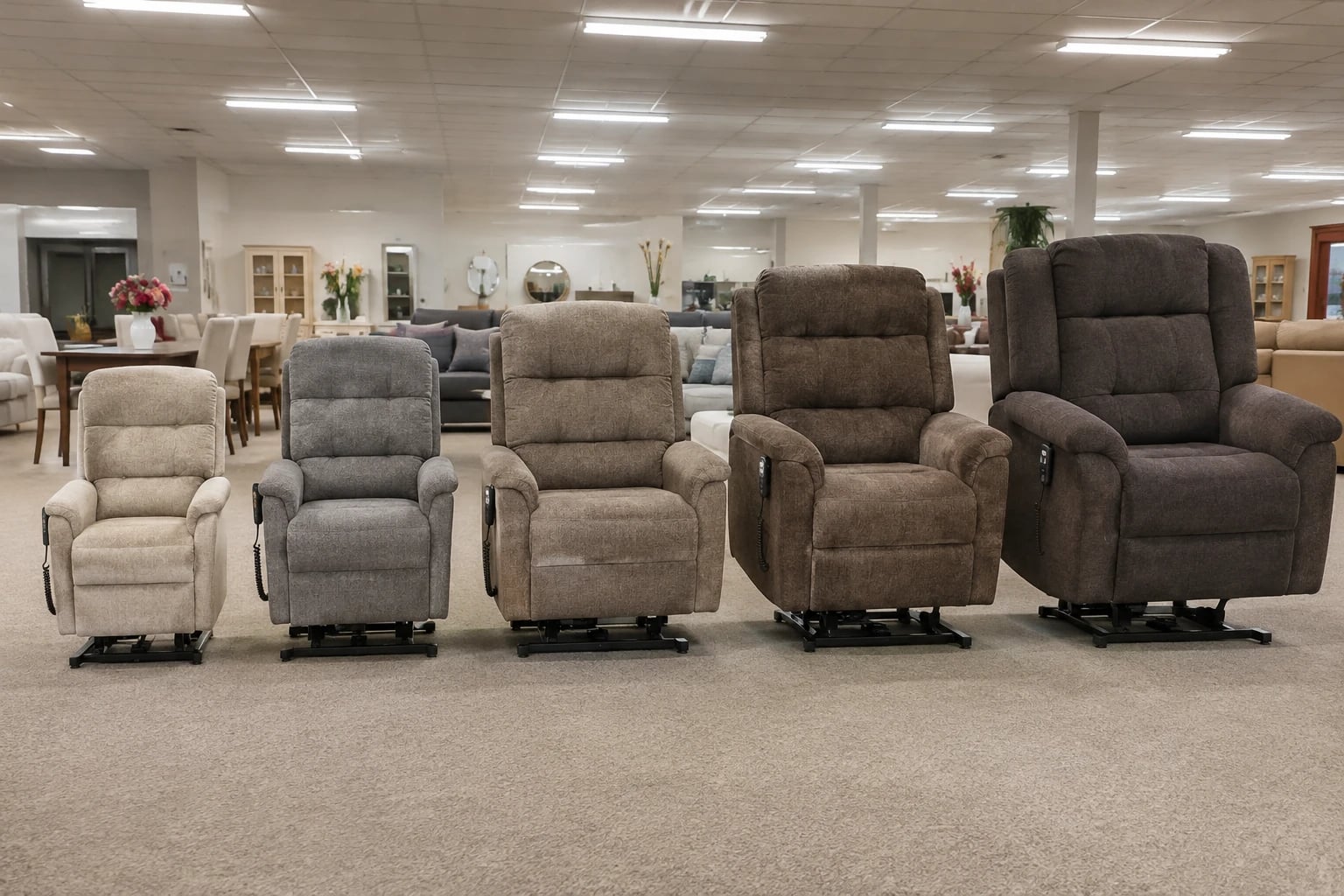
The test that beats any feature list takes a tape measure and a few minutes in the chair. Pride's own caregiver guide says to measure seat-to-floor height, seat depth, seat width and backrest height, plus the chair's overall width and how much floor it takes up reclined.
Makers size these chairs by the person's height. On Pride's Evolution, the Small and Petite Wide are for people 5 feet 3 inches and under, the Medium for 5 feet 4 inches to 5 feet 9 inches, and the Large for 5 feet 9 inches to 6 feet. That height is the whole person, standing, so get the real number, not the one from a driver's license renewed in a different decade.
Once you're in the chair, a short check one caregiver posted to a Reddit thread on fit is as good as any I've seen: feet on the floor, bottom all the way back, back supported, head not pushed forward. If any one fails, the size is wrong, whatever the tag says.
In my experience you buy a stove for the cook who uses it, not the one in the catalog photo. Same here.
See more: 26 Five-Minute Exercises for Seniors →
13Stuck in the chair when the power fails
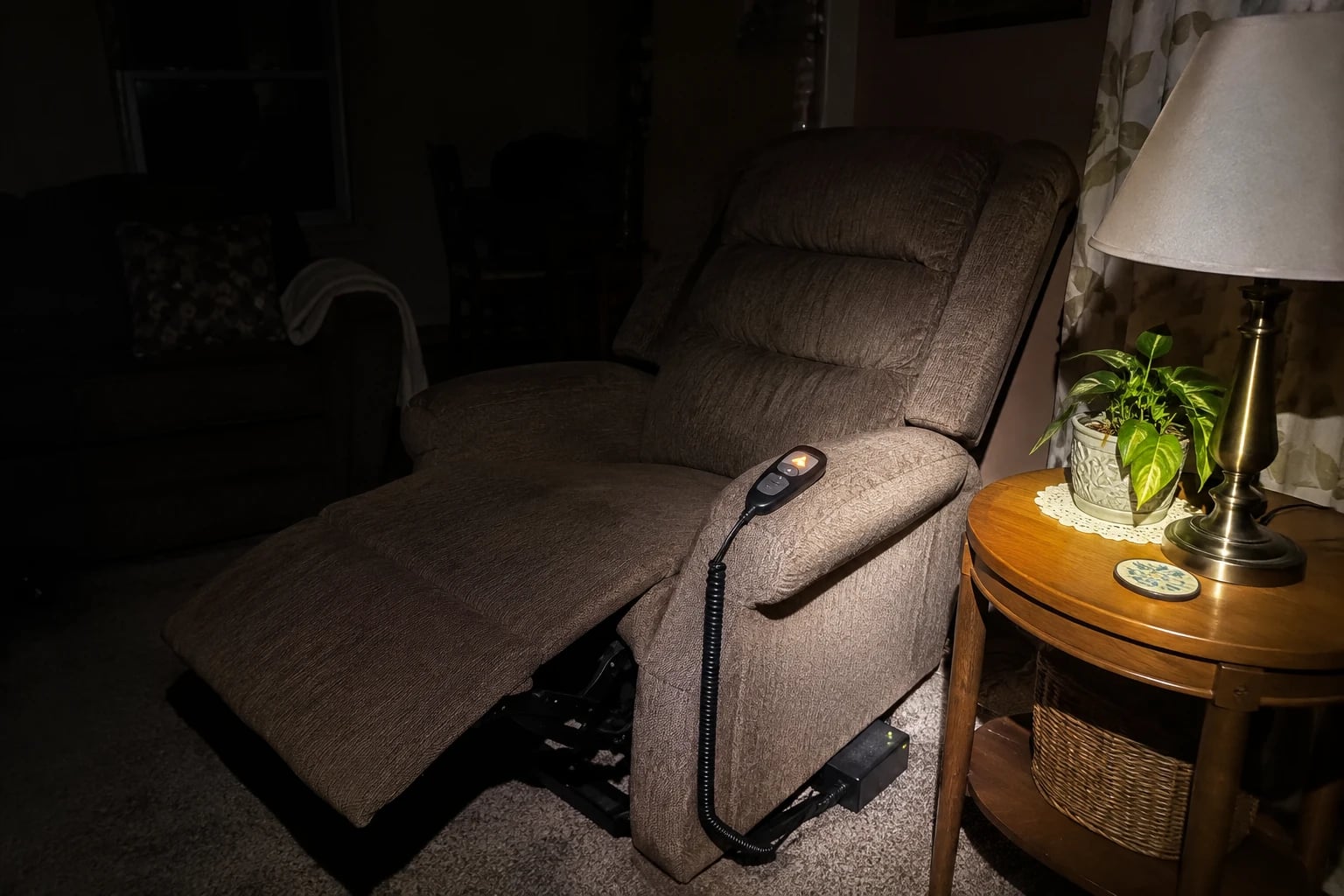
If the power goes out while the chair is reclined, the battery backup is the only thing that brings it upright. And the two kinds you'll be offered are nowhere near the same.
The first is a 9-volt battery in a clip. Pride says using it once may drain it, and it can't be recharged. Mega Motion, which recommends a lithium 9-volt, says it gives enough power to recline and lift the chair once or twice. That's a trip or two, which is fine for a short outage and no good at all for an ice storm.
The second is a built-in rechargeable lithium pack. Pride's can be used several times and recharges when the power comes back. It's standard on all VivaLift chairs and optional on the Oasis, Infinity and Heritage lines. Golden says its EverRun pack, on select models, gives more than 30 lifting cycles on a full charge and sounds an alarm at 25 percent.
If the chair you love comes with the 9-volt, ask whether the rechargeable pack is an option. If it isn't, buy the 9-volt fresh and write the date on it with a marker. I label everything in a walk-in cooler that way, and I've never once regretted knowing how old something was.
12A remote nobody can remember

If the person you're buying for has memory trouble or dementia, the remote may be the weakest part of the whole chair. Families in one r/dementia thread describe a mother who struggles with it, a father who couldn't remember how to use it, and a grandfather who mixes up the chair remote with the TV remote and his phone.
Pride's guide for caregivers puts the bar in one line: "Make sure the user can understand, reach, and operate the hand control." That's three separate tests, and nobody at the store will run them for you.
The fixes people land on are simple ones:
- A remote that can't wander off. A lift-recliner owner in the same thread, who bought the chair to recover from surgery, likes it because "It has a remote that is permanently attached so it cant be lost."
- Fewer choices. Pride's 2-position chairs offer only two seated positions, upright or reclined, with a remote to match.
- A plan for the lost one. A replacement Pride two-button, up-and-down hand control runs about $120, and the seller tells you to confirm the plug fits your chair first.
In the store, hand the person the remote and say nothing. Watch what their thumb does.
11How flat the recline really goes
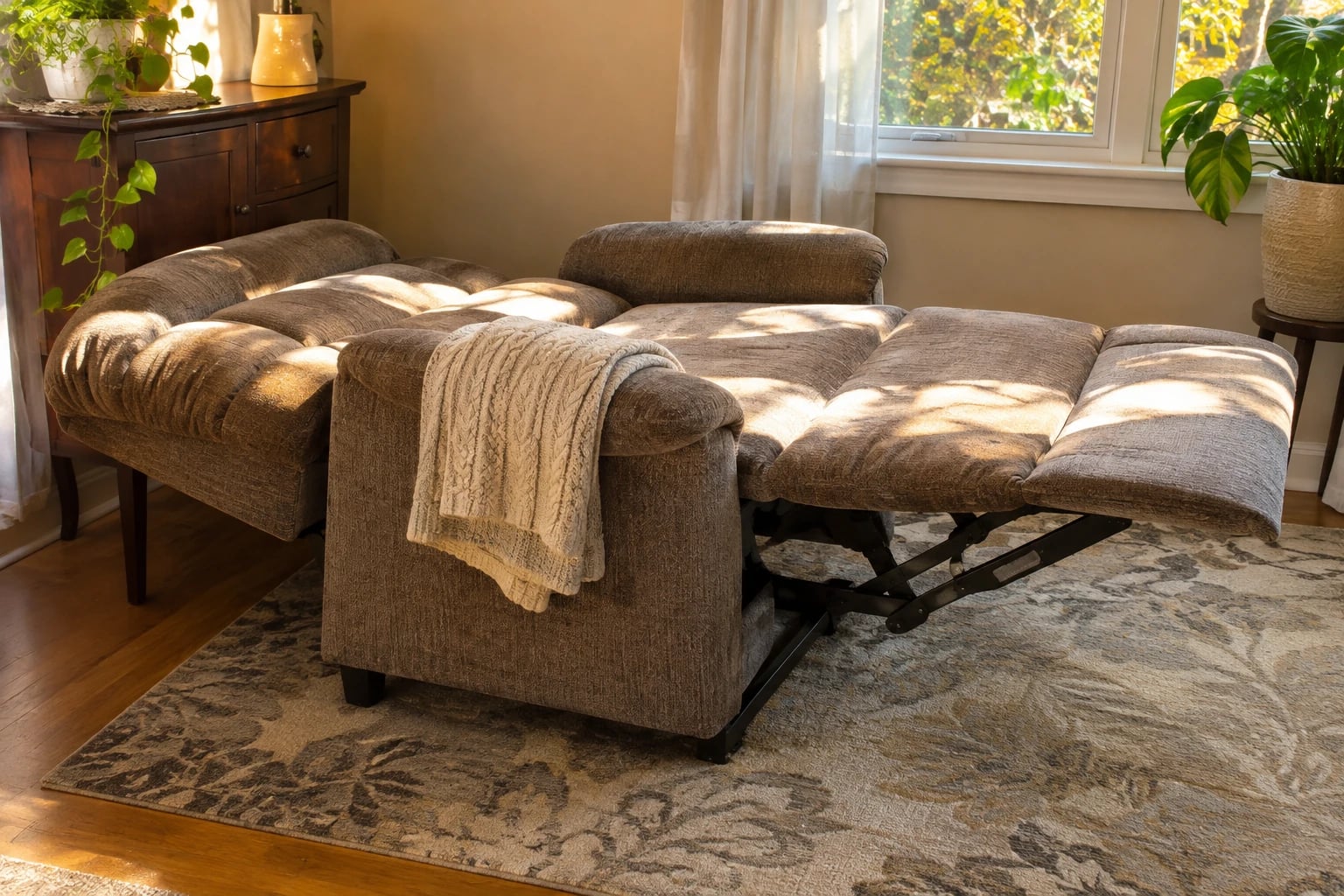
Recline labels sound like a menu at a steakhouse: everybody nods and nobody's sure what they're ordering. In Pride's terms:
- 2-position: upright for reading, or reclined. That's it.
- 3-position: reclines far enough for "a cozy midday nap," but not as far back as the infinite kinds.
- Infinite position: Pride says these chairs typically don't have zero gravity.
- True infinite position: the lay-flat kind, reclining to 180 degrees, according to Pride for its own chairs.
"Zero gravity" does have a real NASA pedigree. NASA's posture research began with Skylab, the first American space station, and NASA Spinoff describes one massage chair whose "Zero Gravity setting" copies those joint angles. What NASA's page doesn't say is anything about legs above the heart. That line seller pages love sounds like ordinary swelling advice, which MedlinePlus gives as legs on pillows while lying down.
Plenty of people end up sleeping in the chair. Owners on Reddit mention recovering from surgery, not being able to lie flat, or nights when bed just isn't comfortable. A physical therapist reviewing for the Sleep Foundation says patients after shoulder surgery report that "sleeping in a recliner is the only way they can get comfortable."
One caution matters here. Dr. Robbin Cohen, a heart surgeon at USC, says needing the recliner all the time can be a warning sign of fluid buildup around the heart or lungs, so if that's the reason for a chair that lies flat, tell the doctor before you tell the salesman.
10A washable pad over a waterproof cover
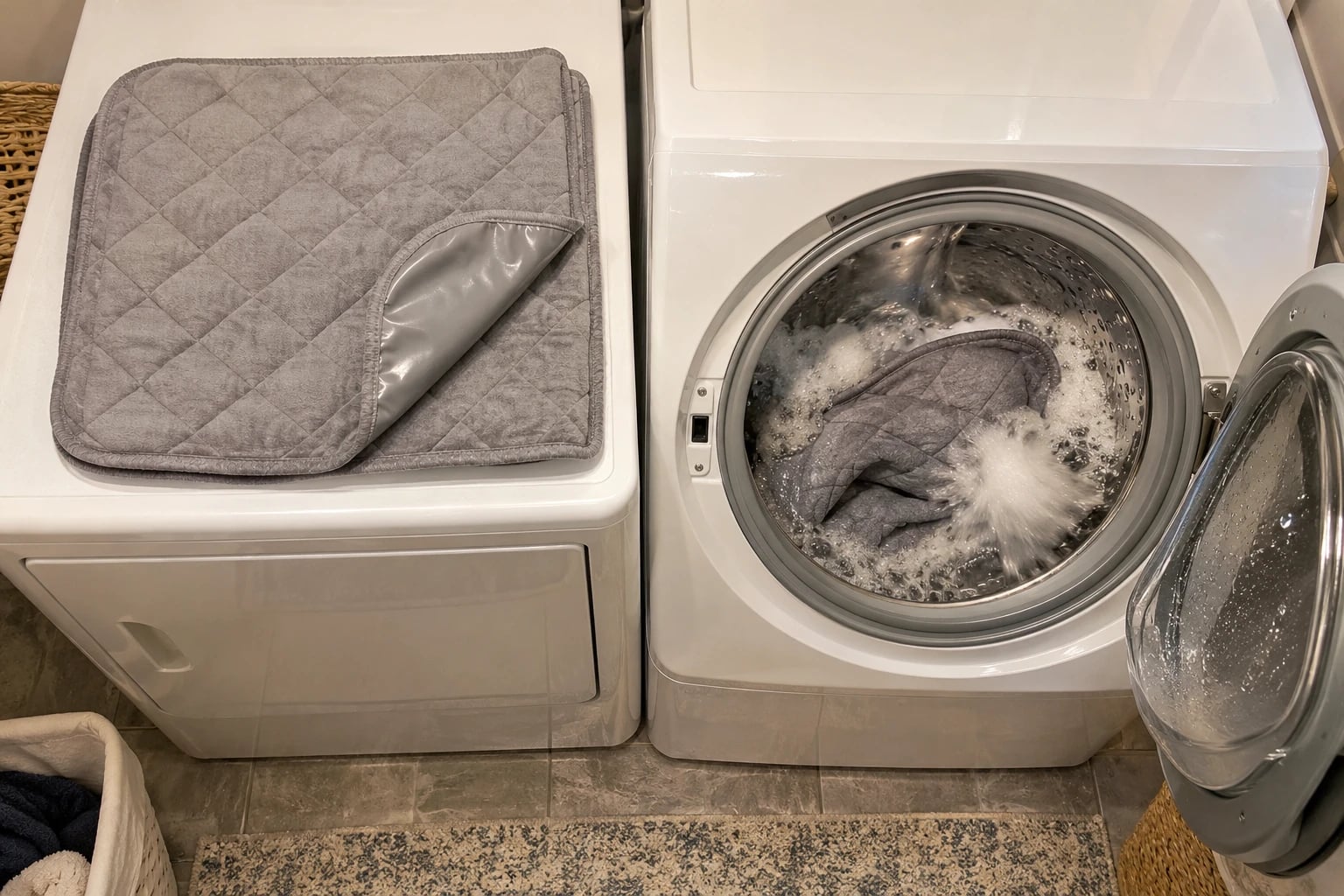
If incontinence is part of the picture, or might be, plan for it on day one. Caregivers moving a parent home in one r/dementia thread land on the same setup: washable seat pads in rotation, with a full waterproof cover underneath. Covers made for lift chairs do exist. LiquaGuard sells a waterproof recliner and lift chair cover for about $193, sized by measuring arm to arm across the chair.
They learned it the expensive way. One family's custom furniture was ruined soon after it arrived, and the adult child who posted about it put the lesson in one line:
"Go with what works rather than what looks best." An adult child whose mother's furniture was ruined, on r/dementia
Watch the upholstery labels too. Bonded leather is often only 10 to 20 percent genuine leather and can start peeling and flaking within one to three years, according to BTOD, which sells furniture itself.
And "performance fabric" doesn't mean bleach-proof. Crypton allows bleach only on its contract fabric made of 100 percent solution-dyed polyester or acrylic, and says plainly: "Do not bleach clean Crypton Home Fabric or furniture." Ask exactly which fabric is on the chair and how you're allowed to clean it.
Buy two covers. In a kitchen you never own just one of anything that has to go through the wash.
9A chair sized for nobody's actual body

The petite and big-and-tall sizes exist. They're just buried in spec sheets nobody reads until the chair is in the living room.
"Bought one online for my grandmother when she was alive, she hated it because it was way too big for her." A grandchild who bought a lift chair, on r/dementia
For the small end, a petite lift chair looks like this:
- Pride's Radiance Small is for people 5'4" and below, with an 18-inch seat height and a seat 18 inches deep and 20 wide.
- The Radiance Petite-Wide is for the same height but trades height for width: a 24-inch-wide seat that sits 19.5 inches off the floor. Someone short who wants hip room gets an inch and a half more climb.
- The Evolution Small is for 5'3" and under, with an 18-inch seat height, 18.5-inch depth and 18-inch width.
For the big and tall end, people in Reddit threads complain about footrests that don't rise high enough and tall men whose feet hang off most of them. Look for an extended footrest. Golden's Comforter Tall is built for people 6'3" to 6'8", with what Golden calls "Superior Leg Extension," a full chaise pad and a 500-pound weight capacity, for about $2,121. Pride's Radiance Large/Tall is for 6'2" and up with a 400-pound capacity, and its Evolution XXL holds 600 pounds.
If the person is at either end of the height range, skip the default size on the showroom floor and ask for the spec sheet by name.
8A ceiling pole instead of a lift chair
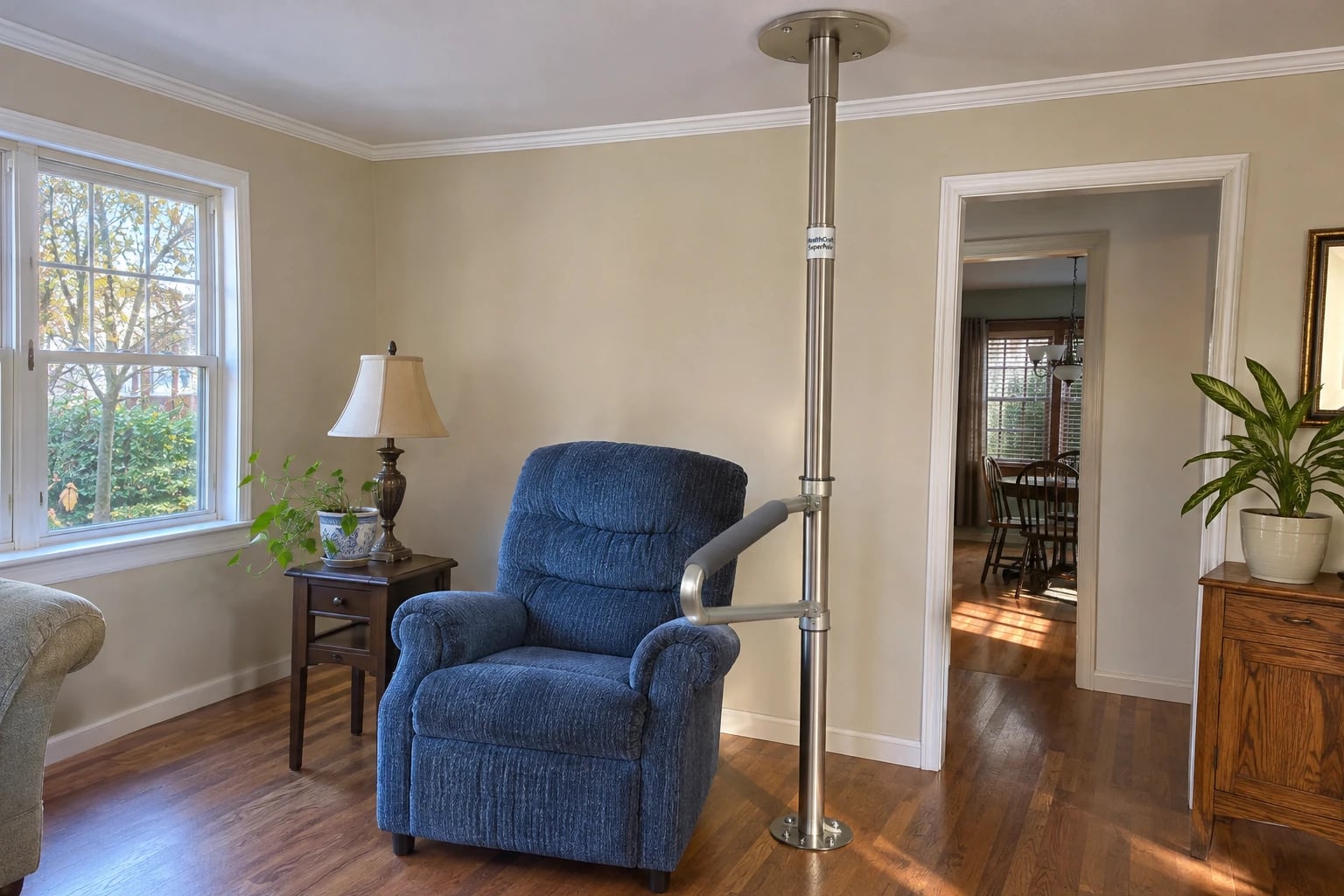
Here's the option almost no lift-chair page mentions: a floor-to-ceiling pole right next to the chair you already own. People caring for a parent describe using one so the person pulls up to stand instead of pushing off the armrests.
HealthCraft's SuperPole runs about $299 to $464 depending on options. It's rated for 300 pounds in the standard version and 450 in the bariatric one, which must be secured to the ceiling. It fits ceilings 93 to 99 inches high, or up to 120 with an extender.
What can stop it working for you:
- The ceiling plate has to cross at least one ceiling beam. HealthCraft writes "MUST" in capital letters. If the beams don't run where the chair sits, either the chair moves or the pole doesn't happen.
- A bathroom ceiling may not be strong enough, one Reddit commenter warns in a thread about standing up.
- It installs with a jackscrew, no drilling, which suits renters, but HealthCraft says to check the tension every month.
For aging in place on a budget, it's one of the few fixes that doesn't touch the chair at all. Put the tension check on the calendar for the first of every month.
7A $40 riser instead of a lift chair
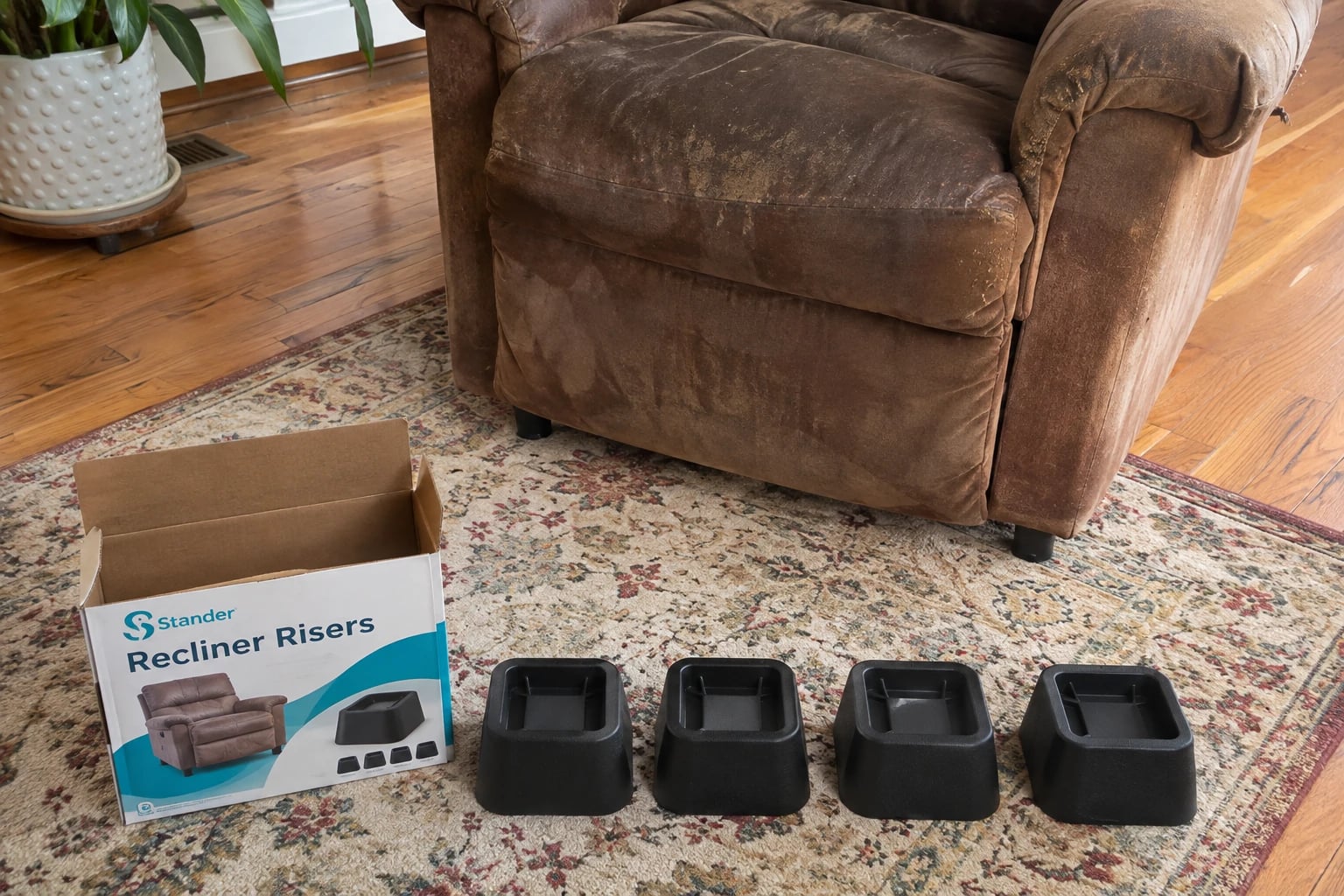
If #17 showed you the seat is too low, this is the cheapest fix that's actually built for the job. A set of four Stander Recliner Risers costs about $40. Each riser is 1.75 inches tall, and together they lift the seat 3 to 4 inches.
The weight capacity is 800 pounds, and that includes the chair. Even a heavy chair around 180 pounds leaves about 620 for the person. The set also comes with what Stander calls a rocker-limiter, which reduces forward tilt on a recliner that rocks.
Here's the catch: the risers screw into a wooden base and won't fit metal or round ones. Get down with a flashlight and look under the chair before you order.
For some families, the riser isn't just cheaper. It's the better choice.
"My father would not be capable of recalling how to use a remote on a power lift chair, so we use a chair 'riser' instead," writes an adult child caring for a father with dementia, in r/dementia. Other people in those threads have built wood platforms or strapped boards under the legs. I'd spend the forty dollars. Lumber doesn't come with a weight rating.
6Sitting bolt upright with legs straight out

"Probably the worst thing to do is to have your legs all the way out straight and be sitting up at a 90° angle." Dr. Dave Candy, physical therapist, on YouTube
Look around any living room with a recliner in it and you'll see that exact posture: footrest up, back straight, like a man waiting for a haircut. Candy, a Missouri physical therapist, explains that it presses gravity straight down your spine, rounds your lower back and pulls the sciatic nerve tight. He says the same position is why so many people get sciatica from driving.
His fix, he says in the video, is to recline rather than sit bolt upright, with the knees slightly bent to take tension off the nerve.
Then there's a fit check most buyers never think of. Candy also points out, in the video, that a recliner's hinge ideally sits at the hip joints but in most chairs sits behind them. So after you recline, scoot yourself all the way back until there's no gap between your lower back and the chair. In the store, recline and feel for that gap. If you have to scoot halfway across the cushion to close it, that's information.
You'll also see a claim that 135 degrees is the ideal recline for your back. Candy says, in the same video, that the often-cited 135-degree study was presented at a radiology conference and, as far as he could find, was never published in a peer-reviewed journal. We searched PubMed, the main index of medical research, and found 11 papers mentioning recliners or lift chairs with older people. None of them tests whether a home recliner helps or harms anybody.
So the most useful back advice in the whole recliner business comes free, from a physical therapist with a video camera.
See more: 20 Tai Chi Exercises for Women Over 50 →
5Buying mid-range and planning to replace it
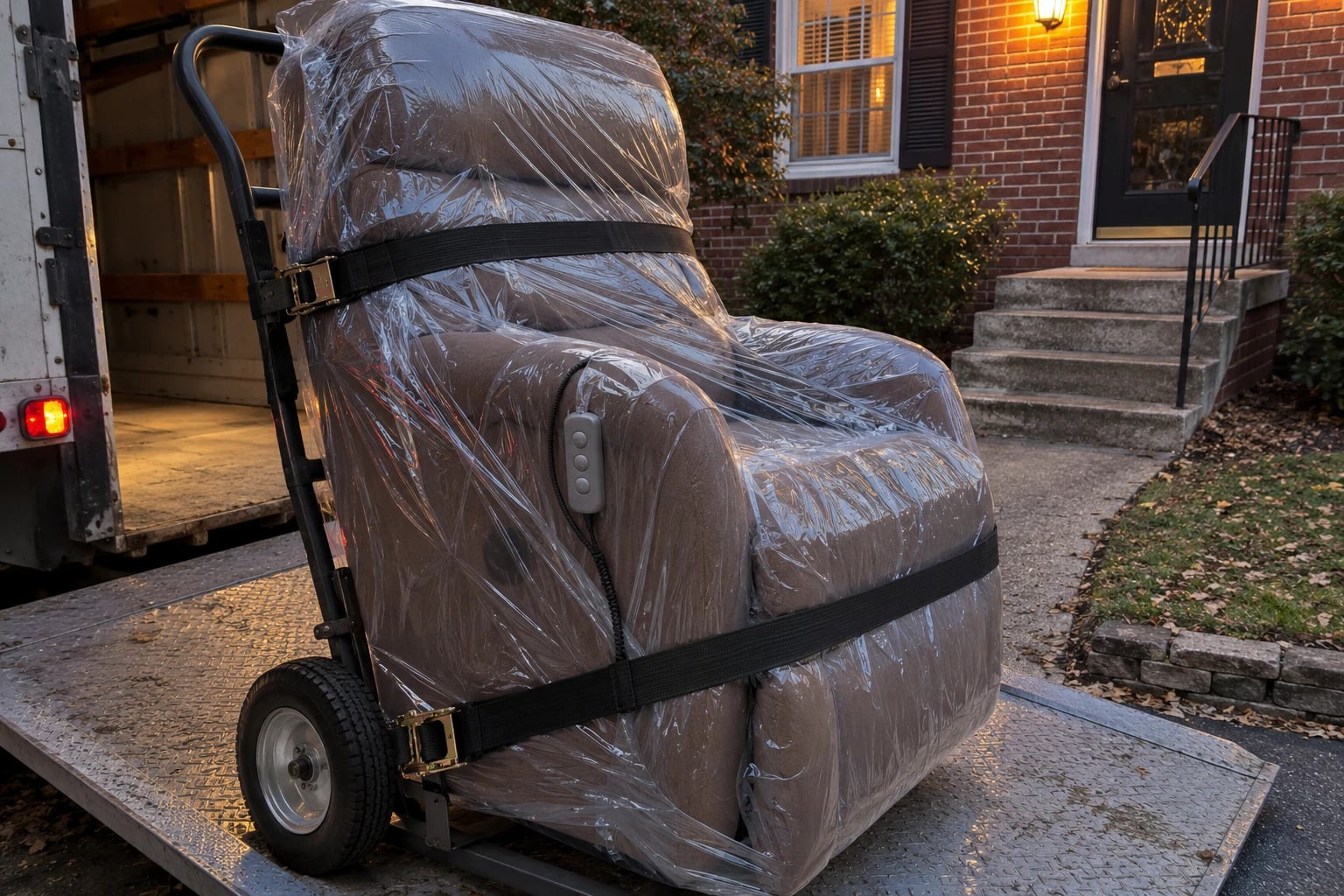
Some caregivers have quit hunting for the chair that lasts forever. They buy mid-range on purpose and plan to replace it about every three years.
Their reasoning is all-day use. People in r/AgingParents and similar threads point out that a parent may eat, nap and watch TV in that chair for hours every day, and they report chairs worn out in under two years, loud clunky lift motors and backs that drop away with no support.
"Moving a chair every 3 years is easier than moving my husband or mom when they need to use the bathroom," writes a caregiver for a disabled husband and a mother in cancer treatment, in r/AgingParents.
In my experience, equipment falls into two piles. Some things you buy once and baby. Others you buy knowing they'll wear out, so you buy them sensibly and budget for the next one. A chair used all day goes in the second pile.
Consumer Reports' lift-chair testing backs them up. The costliest chair it tested didn't make its top five. Its test chairs ran from around $300 to more than $2,500, and two lower-cost models did make the top five.
Spend where it changes the day: the right size, the right kind of lift, a rechargeable battery.
4A frame that gives out in three years
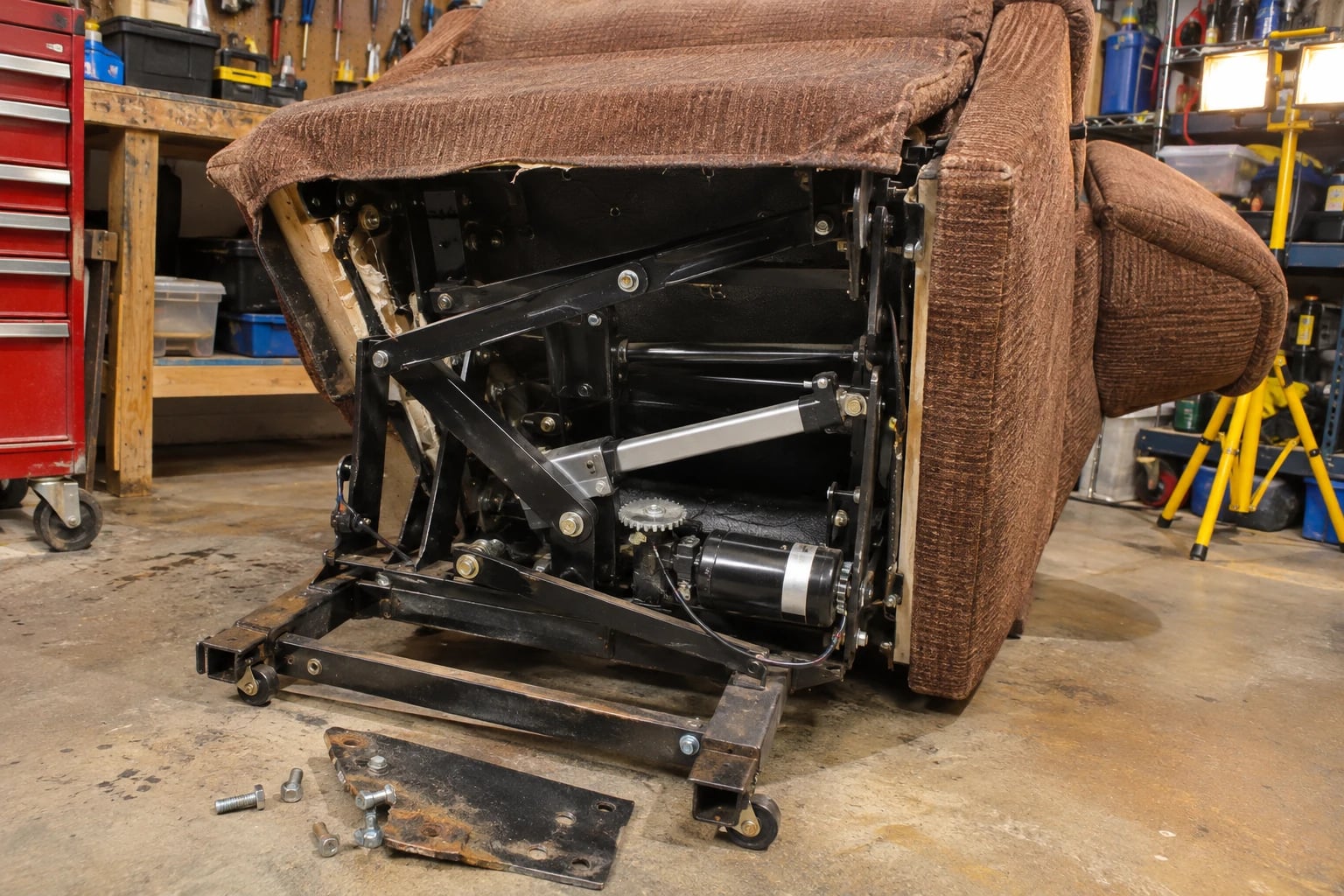
Caregivers in r/AgingParents and related threads report a frame that tore out of its base after three years, even though the mother was under the weight limit, and frames that cracked within five. No one tracks how often that happens. The warranty is the only promise you get in writing, and it covers parts very differently.
The details matter. Golden's warranty, as its dealer Senior.com publishes it, discounts electrical parts 35, 25, 15 and then 5 percent in years four through seven, except on the Capri and Monarch. Labor is shorter than parts: three years for mechanical work, one year for electrical on most models. Going over the weight limit voids it. The lifetime coverage on the frame, lift and recline mechanisms applies only to the original buyer, not to someone who inherits or buys the chair used.
Mega Motion's coverage is a lifetime on the steel lift mechanism but two years on the motors and hand controls. Pride lists a 7-year prorated warranty for every size. La-Z-Boy's Lancer wall recliner includes its limited lifetime warranty, without saying which parts.
Before you sign, ask two questions: who comes to the house when the motor dies, and who pays them after the first year?
3What Medicare will actually pay for
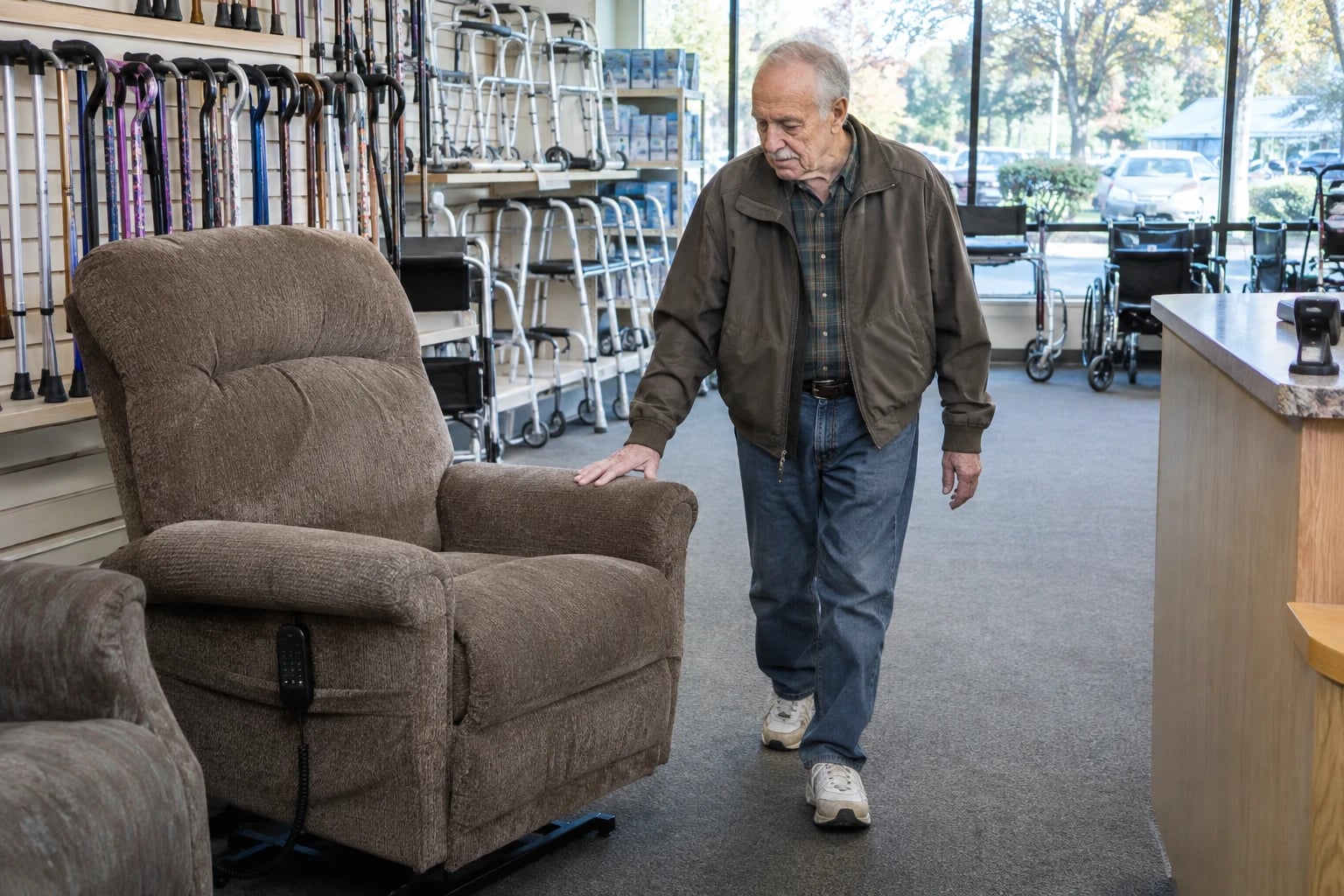
Medicare doesn't buy the chair. It pays only toward the motorized lift mechanism inside it, and only when every one of its conditions is met. Difficulty getting up from low chairs isn't enough.
Under the Medicare coverage rule for seat lifts, the person must:
- Have severe arthritis of the hip or knee, or a severe neuromuscular disease.
- Be "completely incapable of standing up from a regular armchair or any chair in their home."
- Be able to walk once standing.
- Have the lift as part of a doctor's treatment plan, with records showing other treatments such as medication and physical therapy "have been tried and failed."
There's paperwork too: a written order from the doctor, needed before the chair is delivered. Lifts that spring up with a "sudden, catapult-like motion" aren't covered.
Now the money. The 2026 Part B deductible is $283, and the lift mechanism's cost typically runs $250 to $300. Medicare pays 80 percent after the deductible. On a $300 approved amount, if the deductible is already met for the year, Medicare pays about $240 and you owe $60. If the deductible isn't met yet, Medicare's share is about $14, and you owe about $286. Either way, you pay the full price of the chair itself. The supplier must also take part in Medicare and accept assignment. If you have a Medigap plan, Plans A, B, C, D, F and G pay that 20 percent in full, while Plans K and L pay half and three-quarters of it. A Medicare Advantage plan has to cover the lift too, but your plan decides which supplier you use and what you pay.
If you're counting on Medicare to help pay for the lift, time the purchase for after other medical bills have used up the deductible. The 2027 deductible hadn't been announced when we checked.
See more: 22 Medicare Enrollment Checks Before Next Year's Coverage Starts →
2The worry that a lift chair weakens the legs

It's a fair worry: if the motor does the standing, do the legs forget how? Nobody has studied that for home lift chairs. What the CDC does say is that being less active makes people weaker. So don't guess. Measure.
The 30-second chair stand test turns the worry into a number you can track. Skip it if standing from an ordinary chair already isn't safe for the person; that's a question for their physical therapist. Otherwise:
- Push a sturdy chair against a wall so it can't slide, as Harvard Health recommends for its chair-stand exercise; the CDC's version of the test uses a chair about 17 inches high.
- Sit in the middle of the seat, feet flat, arms crossed at the wrists.
- Stand all the way up and sit back down, as many times as you can in 30 seconds.
- Count only the full stands.
Here are the normal ranges:
| Age | Women | Men |
|---|---|---|
| 60 to 64 | 12 to 17 | 14 to 19 |
| 70 to 74 | 10 to 15 | 12 to 17 |
| 80 to 84 | 9 to 14 | 10 to 15 |
| 90 to 94 | 4 to 11 | 7 to 12 |
A score below the bottom of the range counts as below average in the CDC's fall-risk screening.
Do it before the new chair arrives, write the number on the calendar, and do it again in a few months to track the trend. Many things besides a lift chair affect the score, so if it drops, mention it to a physical therapist rather than assuming the chair caused it. The test is the same motion as Harvard's chair stand exercise, which uses 8 to 12 slow repetitions with hands used as little as possible, then a rest and another set.
1Sliding to the floor, unable to get up

It's late afternoon and the TV is on. The person in the recliner decides to go to the kitchen. Halfway up, the legs don't finish the job, and they slide down the front of the seat onto the carpet, wedged between the footrest and the coffee table. Nothing hurts. They just can't get up.
Physical therapist Tony Maritato says in a video for families that this is a fall he sees all the time: people who lack the leg strength, or have been sitting too long, trying to get up from a couch or recliner. As he puts it, "People are going to fall at home and they're never going to fall somewhere convenient."
Here's why it matters more than any feature on a chair. Many people don't call 911 for a fall with no injury, Maritato notes. They wait on the floor until someone comes. The CDC says more than one in four older people fall each year, and less than half tell their doctor. That's an estimated 7 million or more people a year whose fall no doctor hears about, and "fine, just stuck" is the easiest kind to keep quiet. Telling matters: the CDC says falling once doubles the chance of falling again.
The wait itself can do the damage. A study that followed people over 90 in Cambridge, England, for a year found that 80 percent of those who fell couldn't get up on their own at least once. Thirty percent lay on the floor an hour or more, which was strongly tied to serious injury, hospital stays and moves into long-term care. Most falls happened when the person was alone. And in most of the long waits, the call alarm wasn't used. An alarm in a drawer is a drawer.
The encouraging part: getting up off the floor can be taught. In a 2026 UK pilot trial with older adults already attending Otago exercise classes, those who had five weekly 20-minute floor-rise sessions could all get up from lying on their backs unaided afterward, compared with 63 percent of those who only watched a video. The American Geriatrics Society says if you can't get up from a fall, ask to work with a physical or occupational therapist. Brianne Carroll, a physical therapist at NYU Langone, calls practicing it "almost like a fire drill."
Two safety lines. "If something hurts as you move, it is best to remain on the floor and seek assistance," says Leah Verebes, who teaches physical therapy at Touro University, and the geriatrics society says any confusion, passing out, or pain on putting weight on a leg means getting medical help right away. And if you're the helper, don't haul. A helper trying to lift someone can get hurt instead, Maritato says.
Keep the phone in a pocket, or the alarm on a wrist, not on the side table the chair just tipped them away from.
The bottom line
Shop for the worst minute of the day. Not the showroom minute, fresh and rested with a salesman at your elbow, but the end of a long afternoon in the chair, or the trip to the bathroom in the dark.
If you're doing this for someone else, the first step costs nothing. Watch them get out of their current chair a few times this week, at different hours, without making a thing of it. Count the rocks forward. Notice when it's harder.
Then measure the seat, and look under it with a flashlight. Those two minutes tell you whether you're shopping for $40 of plastic, a pole, or a lift chair costing up to $3,861.
Up next
How to Stay Motivated Over 50 When You've Quit Before
A restart plan built around the exact points where your last attempt broke down, from the first missed day to the week your knee started complaining.
Read the story →


Reader quiz
Did you catch the details?
5 questions from this article. Finish them all to unlock the editor's bonus tip.
According to the article, how should you measure a recliner's seat-to-floor height?
Questions people also ask
Does Medicare pay for lift chairs?
Medicare Part B pays only toward the motorized lift mechanism inside the chair, never the chair itself. The person must be completely unable to stand up from any regular armchair or chair at home, and other treatments must have been tried and failed. After the 2026 deductible of $283, Medicare pays 80 percent of a mechanism that typically costs $250 to $300, according to U.S. News via WTOP.
How long does a lift chair actually last?
No study has measured how long lift chairs last, so the warranty is your best clue. Golden covers the frame and lift mechanism for the original owner's lifetime but electrical parts for three years, and Mega Motion covers motors and hand controls for two years. Pride lists a 7-year prorated warranty.
Is it bad to sleep in a recliner every night?
Sleeping upright is neither healthy nor unhealthy in itself, and the Sleep Foundation says it should be a temporary measure until bed is comfortable again. Heart surgeon Robbin Cohen says needing the recliner all the time can signal fluid buildup around the heart or lungs. If that's why someone sleeps there, mention it to their doctor.
Are recliners bad for your back?
A recliner isn't bad for your back in itself, but how you sit in it matters. Physical therapist Dave Candy calls sitting bolt upright with your legs straight out probably the worst way to use one. If you're shopping for a recliner for back pain, lean back with your knees slightly bent, and scoot all the way back after reclining, because the chair's hinge usually sits behind your hips.
What size recliner does a petite or short woman need?
Most petite women fit a small or petite size, which Pride builds for people about 5'3" to 5'4" and under. Those seats sit about 18 to 19.5 inches off the floor and run about 18 to 19 inches deep. A petite-wide model gives more hip room but sits a little higher, so measure seat-to-floor height before you buy.
Is a power lift chair or a regular recliner better for a senior?
A regular recliner, made easier to get out of, is often enough; a power lift chair is for someone who still can't stand up after cheaper fixes. Medicare reserves lift coverage for people completely unable to stand from an ordinary chair. Before buying one, try $40 recliner risers that add 3 to 4 inches, or a floor-to-ceiling pole from about $299.
Did any of these feel familiar?
Know someone who needs this?
 Prime Journal · Free printable
The Everyday Health Readiness Checklist
- A clearer path from bed to bathroom
- A medicine list ready for the pharmacist
- A symptom story and follow-up plan you can use

Free printable: The Everyday Health Readiness Checklist. Enter your email and it is yours.
Sources cited in this article
This article links to 42 outside sources, listed here so you can read them yourself.
- 17 inches off the floor www.topendsports.com/testing/tests/chair-stand.htm
- Evolution's small and medium sizes www.pridemobility.com/pride-power-lift-recliners/evolution-lc-435/specificat…
- 18 to 21.5 inches on the VivaLift Radiance www.pridemobility.com/pride-power-lift-recliners/vivalift-radiance-plr-3955/…
- Aging-parents www.reddit.com/comments/lrq9ae
- Dementia www.reddit.com/comments/rw77lu
- Vertically instead of tilting forward goldentech.com/straightlift
- $3,861 list price for Pride's VivaLift Premier www.pridemobility.com/pride-power-lift-recliners/lift-chairs-with-heat-and-m…
- Reddit threads about recliners www.reddit.com/comments/1l8b5ha
- Warn that some chairs look good www.reddit.com/comments/1sgcj0b
- Measure seat-to-floor height, seat depth, seat width and backrest height experience.pridemobility.com/lift-chair-recliners/lift-chairs-a-guide-for-ca…
- Reddit thread on fit www.reddit.com/comments/1k64wjw
- Using it once may drain it experience.pridemobility.com/lift-chair-recliners/faqs-for-lift-chair-reclin…
- Enough power to recline and lift the chair once or twice megamotionrecliners.com/faq.asp
- More than 30 lifting cycles goldentech.com/golden-introduces-everrun-lithium-ion-battery-backup-with-saf…
- Only two seated positions experience.pridemobility.com/lift-chair-recliners/faqs-for-lift-chair-reclin…
- About $120 greatfurnituredeal.com/products/pride-lift-chair-replacement-remote-hand-con…
- Began with Skylab spinoff.nasa.gov/Spinoff2020/cg_5.html
- Legs on pillows while lying down medlineplus.gov/ency/article/003104.htm
- Sleeping in a recliner is the only way they can get comfortable www.sleepfoundation.org/sleep-hygiene/sleeping-upright
- All the time can be a warning sign www.yahoo.com/news/best-sleeping-positions-open-heart-surgery-154909571.html
- Waterproof recliner and lift chair cover liquaguard.com/products/waterproof-recliner-chair-covers-waterproof-lift-cha…
- Only 10 to 20 percent genuine leather www.btod.com/blog/what-is-bonded-leather
- Do not bleach clean Crypton Home Fabric or furniture crypton.com/bleach-instructions
- About $299 to $464 healthcraftproducts.com/product/superpole
- About $40 stander.com/products/recliner-risers
- On YouTube www.youtube.com/watch?v=KaiY_quOAmc
- None of them tests pubmed.ncbi.nlm.nih.gov/?term=%28recliner%5Btiab%5D+OR+%22lift+chair%22%5Bti…
- R/AgingParents www.reddit.com/comments/1nnr2tu
- Didn't make its top five www.consumerreports.org/health/lift-chairs/best-lift-chairs-a5190452595
- R/AgingParents www.reddit.com/comments/1n0dvh2
- Warranty, as its dealer Senior.com publishes it senior.com/pages/golden-technologies-lift-chair-warranty
- Lancer wall recliner www.la-z-boy.com/p/living-room/recliners/wall-recliners/lancer-wall-recliner…
- Medicare coverage rule for seat lifts www.cms.gov/medicare-coverage-database/view/lcd.aspx?lcdid=33801
- Typically runs $250 to $300 wtop.com/news/2026/07/will-medicare-pay-for-a-lift-chair-2026-coverage-rules
- Plans A, B, C, D, F and G www.medicare.gov/health-drug-plans/medigap/basics/compare-plan-benefits
- Your plan decides www.medicare.gov/publications/11045-medicare-coverage-of-dme-and-other-devic…
- Being less active makes people weaker www.cdc.gov/falls/data-research/facts-stats/index.html
- Harvard Health www.harvardhealth.org/exercise-and-fitness/chair-exercises-for-seniors-boost…
- In a video for families www.youtube.com/watch?v=UCn94-w6j40
- Ask to work with a physical or occupational therapist www.healthinaging.org/tools-and-tips/tip-sheet-preventing-falls
- Almost like a fire drill www.aarp.org/health/healthy-living/how-to-safely-get-up-from-falls
- Within 7 days www.mylocalhomestore.com/returns-and-exchange-policy

Peter Byalik
Food & Home Editor
Peter Byalik is a professional chef with more than 20 years of experience, including years running his own business. He came to the United States from Ukraine.
More from Peter Byalik