










26 Things That Decide How Long It Takes to Build Muscle After 50
The tape measure, your training log, and the weight in your hand tell a fuller story than the mirror.
By Dr. Alan Pierce, PT, DPT, Health Reviewer
Updated · 14 min read
- Written by our health reviewer
- Cited 12 sources
- How we review

The dumbbell comes off the floor more easily than it did last month. Then you catch yourself in the bathroom mirror and see no change at all. Which one tells the truth?
Both, for now. Your first strength gains come partly from learning the movement and recruiting muscle more effectively.
Visible muscle growth takes longer. With two or three strength sessions a week, most people feel stronger within roughly 4 to 8 weeks. A change you can see in the mirror usually takes 8 to 12 weeks or longer.
If you want to know whether lifting is working, watch what happens during your workouts as well as what happens in the mirror.
26Your age at the first workout

Starting after 50 doesn't put muscle growth out of reach. Age changes the pace and raises the value of recovery, but your muscles still respond to resistance training.
The National Institute on Aging includes strength work in its exercise guidance for older adults. If you've just begun, compare today's lifts with your own starting point. The woman beside you has a different training history, even if you're the same age.
That comparison matters when progress feels slow. Learning to steady a weight is progress, even before you're ready to lift a heavier one. Give your body a chance to learn the work before deciding what age has ruled out.
25The workout history behind your dumbbells
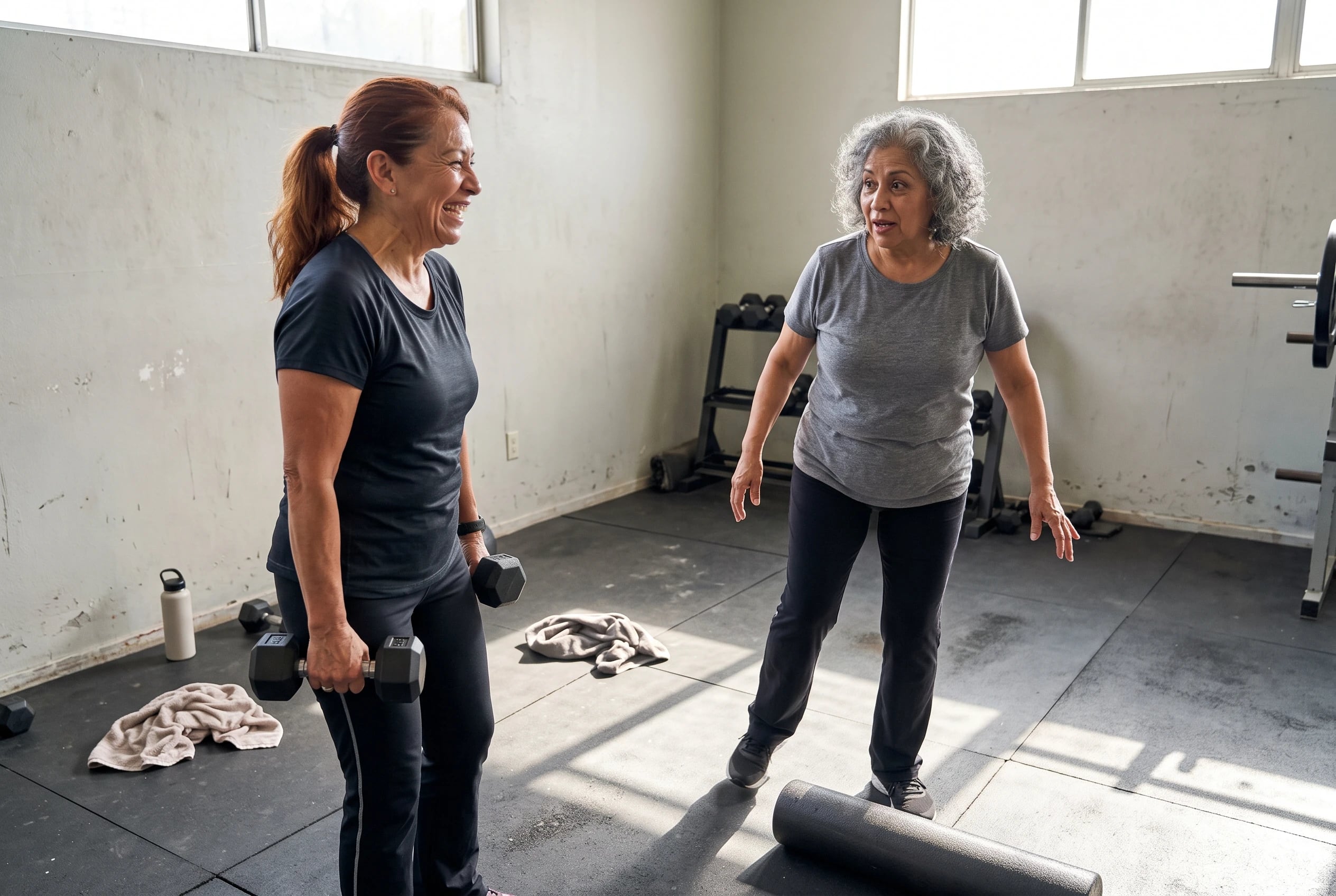
An old pair of weights turns up in the closet. You remember doing rows with them years ago, but the first set back feels awkward. That history still matters.
Previous training gives you movement skills to relearn. If this is your first attempt, expect time spent finding your stance, grip, and range of motion. That work counts.
The woman returning to lifting and the woman starting fresh shouldn't use each other's timeline. Notice which movements come back quickly and which need practice. You'll have a clearer idea of what you're rebuilding.
24A weight that stays in the rack

A weight you never pick up can't make you stronger. Neither can a plan so punishing that you dread opening the closet where the dumbbells live.
Choose a starting load you control through the full movement. Finish with the sense that you had a few good reps left. The American College of Sports Medicine publishes resistance-training guidance.
Your first practical test is simpler: Are you ready to train again at your next planned session? If every workout leaves you unable to do that, ease the load or shorten the session. A weight that fits your life gets lifted again.
23The space between lifting days

Do you need to lift every day to see a difference? No. The workout challenges muscle; the time afterward gives it room to repair and adapt.
The CDC's physical activity guidance calls for muscle-strengthening activity on at least 2 days a week. Put those sessions on days you'll keep, with time between hard workouts for the same muscles.
If Tuesday's leg workout still leaves you stiff on Wednesday, another hard leg session isn't the only way forward. Train a different area or take a rest day. A calendar that survives errands, appointments, and ordinary life beats a perfect plan you abandon.
22The notebook beside your weights

Memory rounds every workout into “about the same.” A small notebook puts an end to that.
After each exercise, jot down the load, reps, and how hard the last rep felt. If you use an app, enter the same details before leaving the gym.
Keep the notes brief enough to make the habit stick. Write “row, 10 pounds, 8 reps” rather than a long review of the workout. When that row feels easier, the page tells you what to try next: another rep, a heavier weight, or the same work with steadier form.
21The last rep of each set
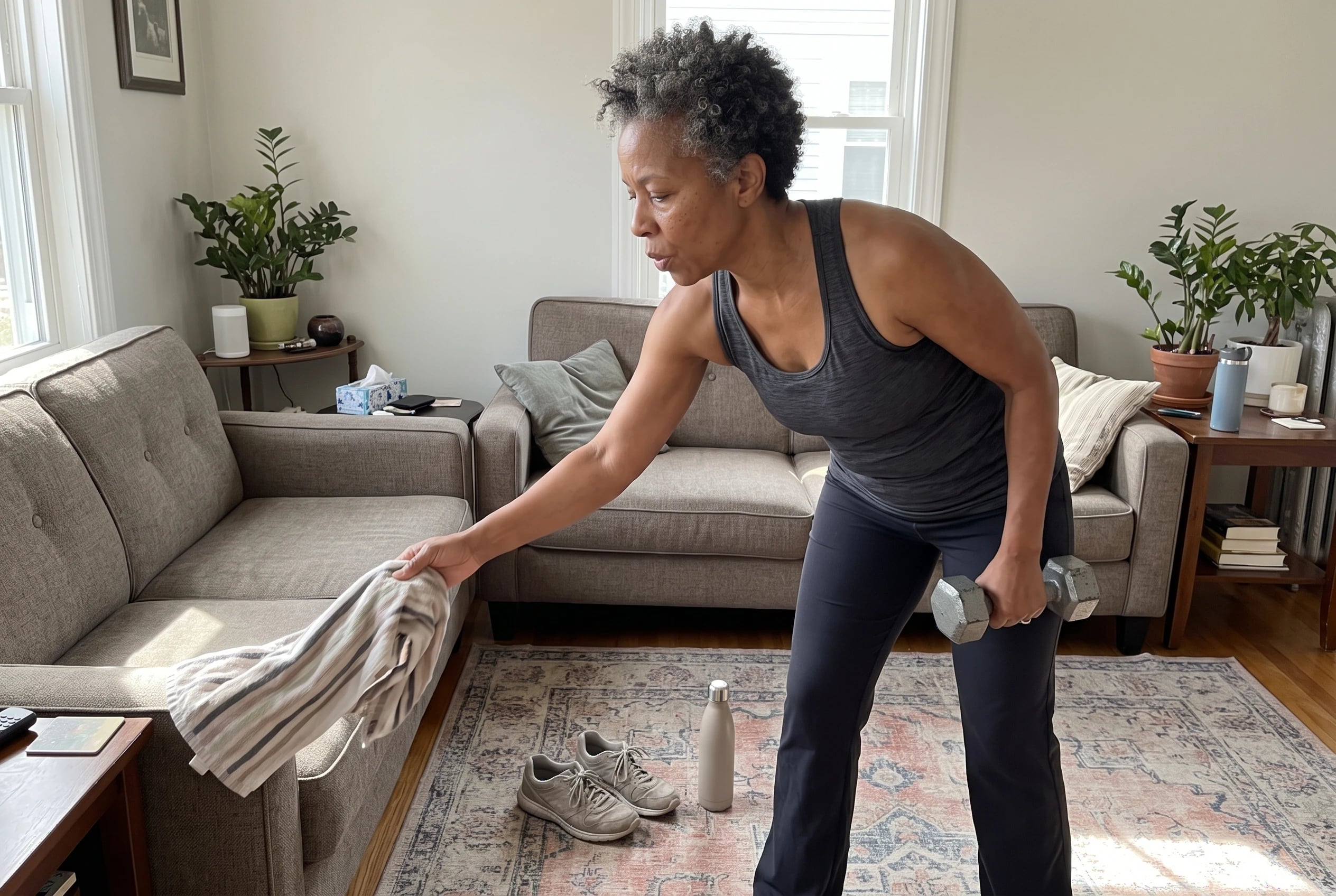
Watch the last rep, not the first. The first can look easy even when the weight is right. Near the end, the lift should demand attention while your form stays under control.
Try this check: Stop the set and ask how many more clean reps you had. If the answer is 8, the load is likely too light for that exercise. If your back twists to finish, you've gone too far.
Aim for challenging work you expect to repeat at the next session. That gives the muscle a reason to adapt without turning every set into a test of how much strain you tolerate.
20The range your joints allow

A squat that reaches a controlled depth asks more of your legs than a tiny dip with a heavier weight. But forcing a painful range isn't the answer.
Work through the range you control without joint pain, then build from there. A chair gives you a clear target for a sit-to-stand. For a press, choose a path your shoulder tolerates.
Watch what happens as the weight rises. If your movement shrinks each time you choose a heavier dumbbell, the number on its end is hiding a change in the work. The American Academy of Orthopaedic Surgeons has exercise information, but persistent joint pain deserves an individual assessment.
See more: 24 Best Hamstring Stretches for Seniors, Standing, Seated and in Bed →
19The chair you rise from

Stand from a chair without using the arms. That ordinary movement gives you a training check when your goal is stronger legs for daily life.
Use a stable chair. Keep your feet planted, stand, then sit back down with control. Notice whether one leg takes over or whether you drop onto the seat at the end.
A sit-to-stand doesn't measure every muscle in your legs. Still, it gives you a familiar task to revisit as your leg work progresses. If the chair feels easier, try pausing just above the seat before sitting. Keep the same chair so the task stays familiar.
18The words you give your clinician
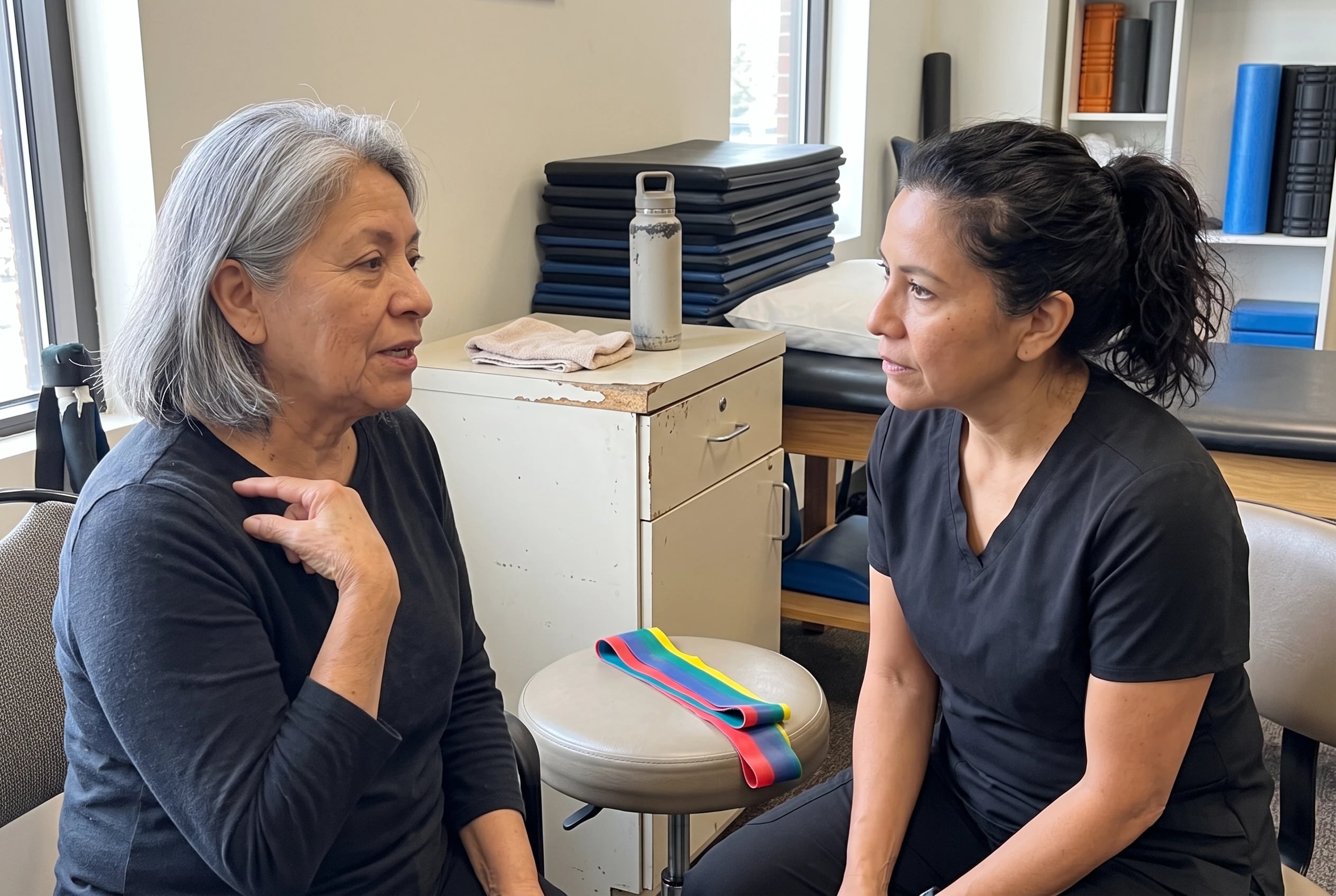
“I'm lifting weights, and this movement causes a sharp pain here.” That's more useful than “Exercise hurts.”
Point to the spot. Say which lift triggers it and whether the pain lasts after the workout. Bring the name of the exercise and the weight you used.
A physical therapist or clinician needs those details to help sort out the next step. If you have a medical condition and aren't sure how hard to train, bring the actual workout plan. You won't have to reconstruct it from memory in the exam room.
17The grip on a heavy handle

Your legs are ready for a heavier carry. Your fingers disagree halfway across the gym floor. The set ends, though your legs still feel steady.
Notice what fails first. If the dumbbell rolls in your fingers during a row, try a different handle or a supported version. Don't treat a grip limit as proof your back hasn't improved.
For hand strength, a farmer's carry gives you a simple measure: walk with weights you hold securely and note when your grip tires. For leg work, choose an exercise your hands don't end early. Otherwise, the muscle you're trying to train never gets its full turn.
16The speed of the lowering phase
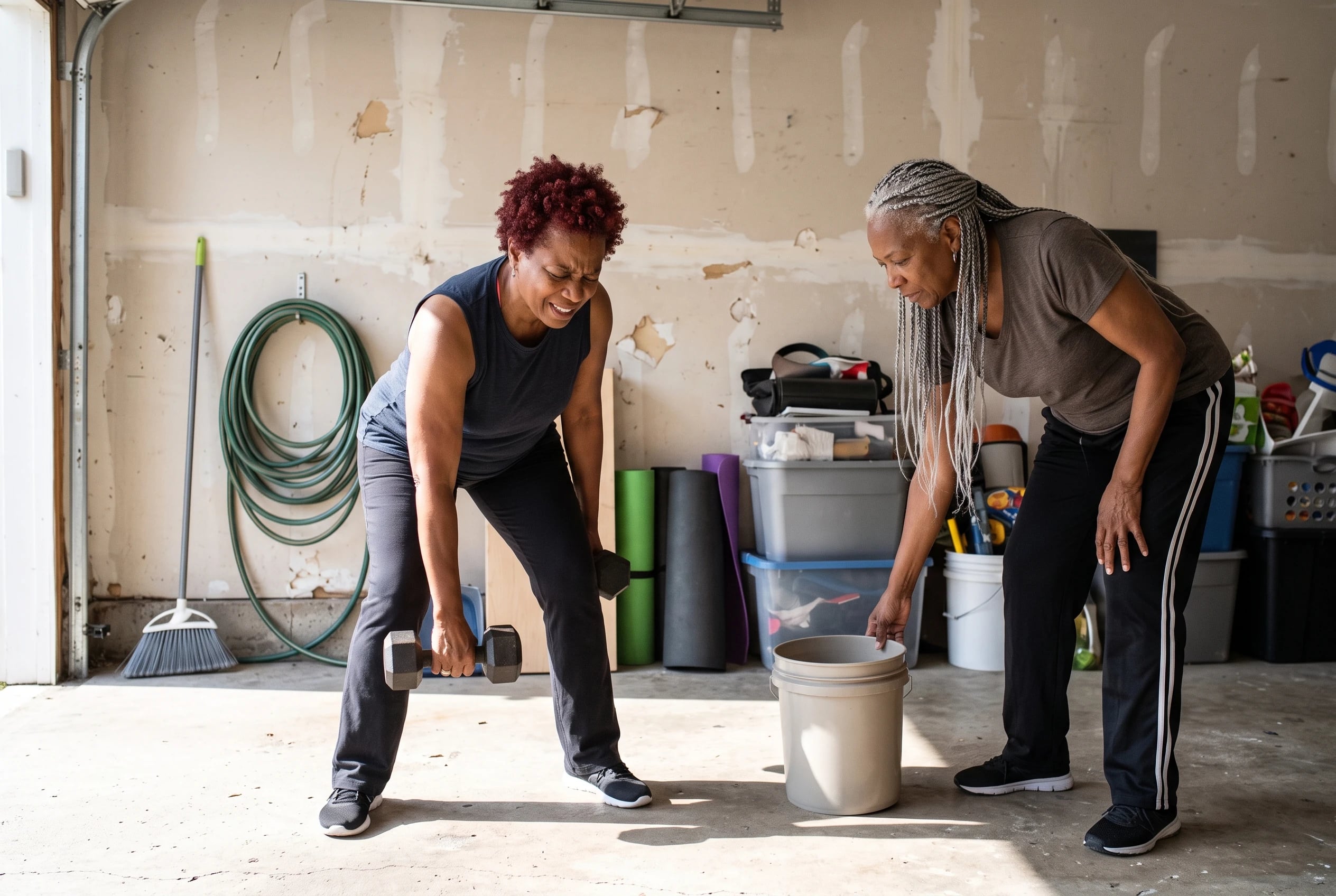
Dropping the weight cuts short part of the work. Lower it under control, whether you're doing a curl, a row, or a sit-to-stand.
That doesn't require counting a precise number of seconds. Watch for the moment gravity takes over. If you can't slow the descent without twisting or holding your breath, reduce the load.
Try setting a dumbbell down without a thud. The same control belongs in each rep. It lets your muscles work through the return trip instead of leaving that part to gravity.
15The workout that skips your back
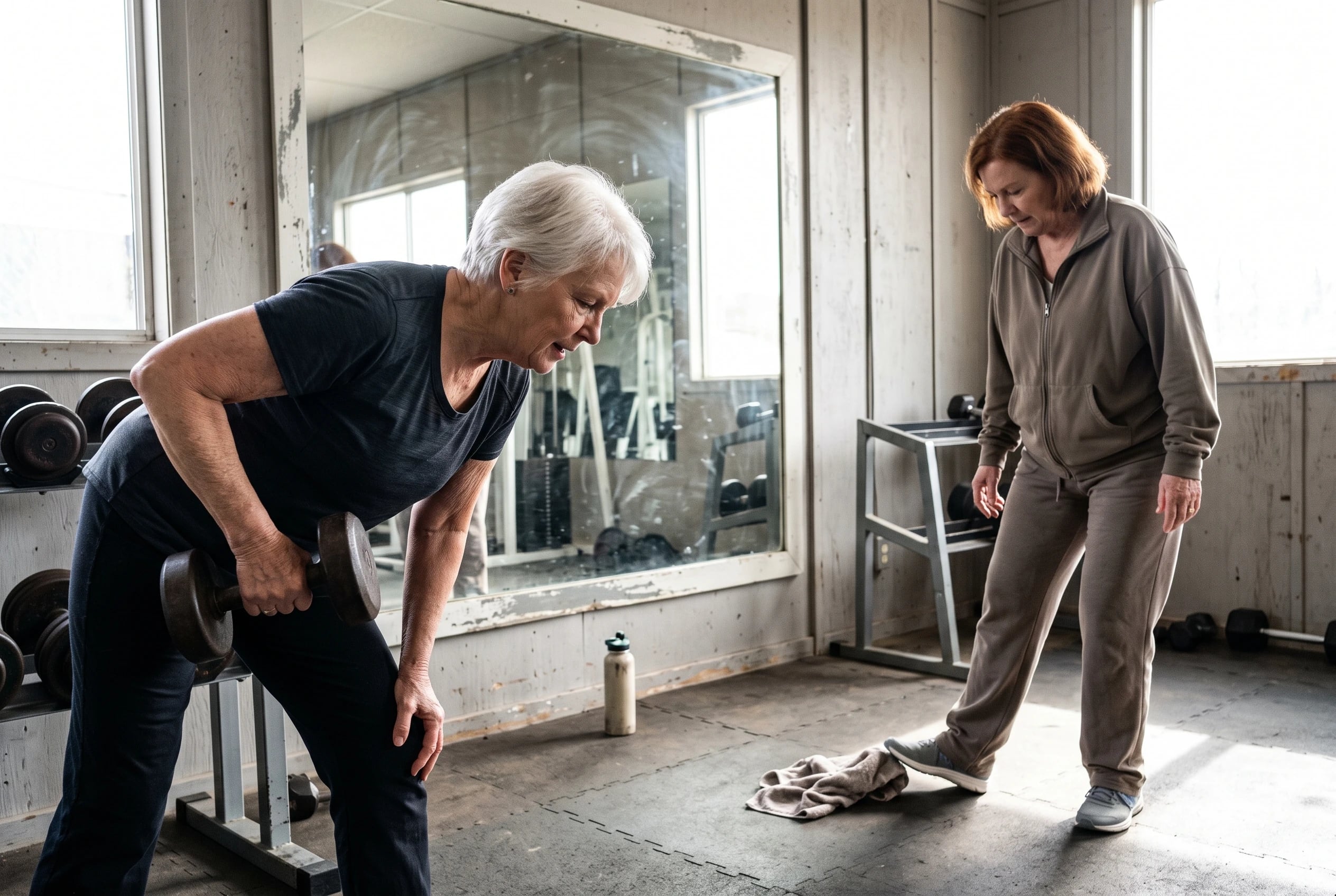
It happens in front of a mirror: curls feel satisfying, so curls get done. Rows are less showy and easier to forget.
A balanced routine includes pushing and pulling, plus work for your legs and hips. The National Strength and Conditioning Association is a source of strength-training education. At home, check which movements are in your routine.
If it has chest presses but no rows, you've spotted a gap. Add a pulling exercise rather than doing another set of curls. Strength grows where you ask for work, including muscles you can't see in the mirror.
14The exercise you keep changing
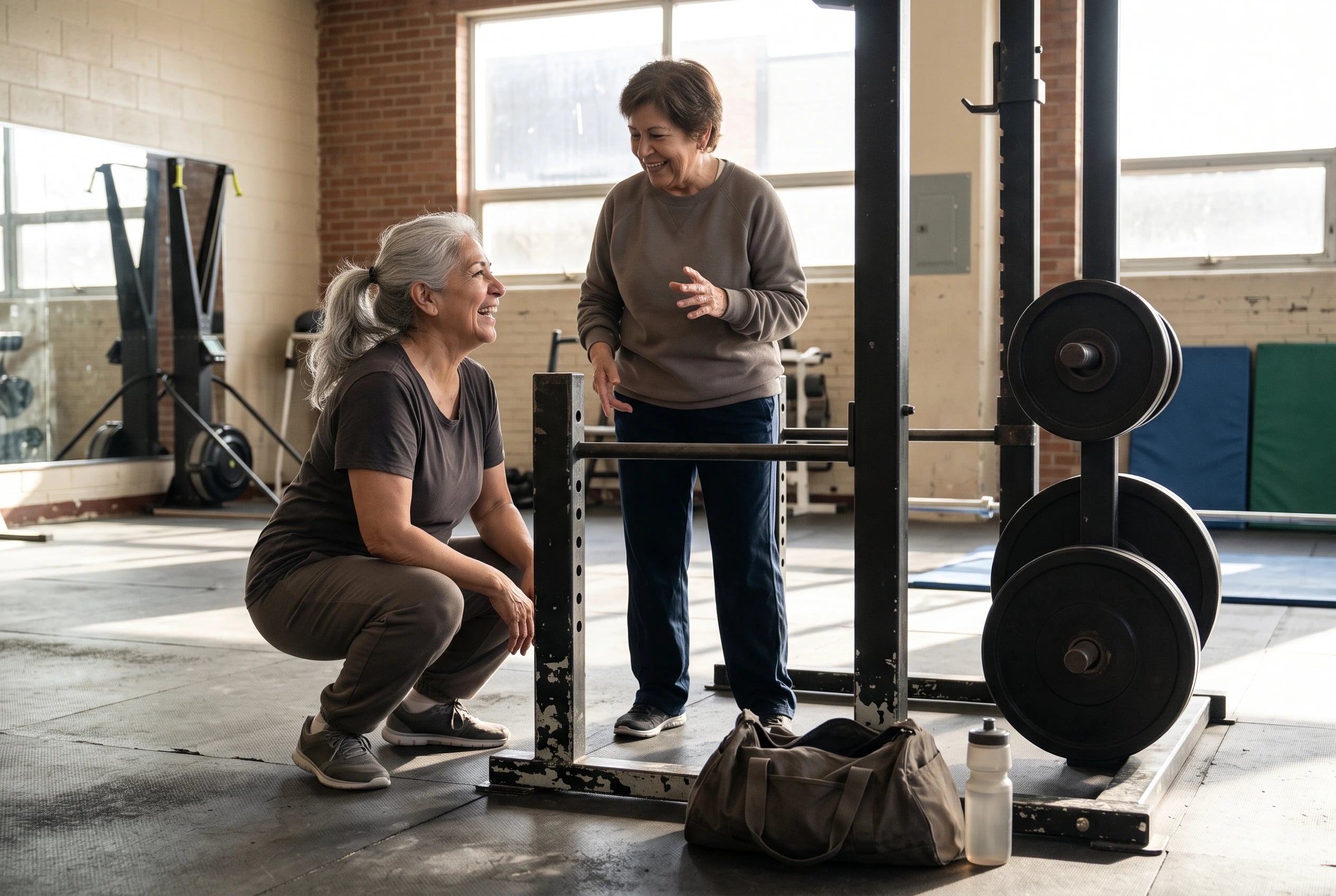
A new workout video every time you lift makes progress hard to read. Was that movement easier because you're stronger, or because it's a different movement?
Keep a few core lifts in your plan long enough to compare them. Change a painful exercise without replacing everything. Variety has a place; so does practice.
Suppose you do a row one week and switch to a completely different back exercise the next. You lose the chance to feel the first movement grow steadier. Repeat the row, squat, and press you tolerate, and let improvements show up there.
13The suitcase you want to lift

What do you want stronger muscles to do? Put a suitcase in the overhead bin, carry groceries from the car, or get up from the floor?
Choose exercises that train the actions behind that goal. A loaded carry practices holding and walking. A squat builds strength for standing. Floor-to-stand practice teaches a skill that a leg machine alone won't teach.
Make the goal specific enough to notice. If you want to lift luggage, think about where it starts and where it needs to go. Practice a safe lifting motion at a height and load you control, then build from there.
The weight room matters, but so does the moment your new strength turns up outside it. Pick one real task and pay attention the next time it comes around.
12The walk after your workout

Walking and lifting do different jobs. Keep the walk if you enjoy it, but don't count it as the strength session that challenges your arms, back, and legs.
The Physical Activity Guidelines for Americans include both aerobic and muscle-strengthening activity. A brisk walk supports heart health and fitness. Resistance work gives your muscles a reason to grow.
If walking fills your week, keep it. Then look for a place to put strength work beside it. A walk home from the gym doesn't erase the lifting you did, and it doesn't replace the next planned session.
See more: 20 Tai Chi Exercises for Women Over 50 →
11The breath you hold under load

A hard rep makes breath-holding tempting. Then you finish the set feeling more rattled than worked.
Exhale through the effort and inhale on the easier part of the movement. For a chair squat, breathe out as you stand.
If you have high blood pressure or a heart condition, ask your clinician about training intensity and breathing during lifts. The American Heart Association offers exercise guidance for people managing heart health. Your goal is a lift you control, not a contest to see how long you hold your breath.
Practice with a lighter weight until breathing and movement fit together. Then the next hard set has one less thing to distract you.
10The night after a hard session

You put the weights away, eat dinner, and spend half the night awake. The next workout feels harder before you've even started.
Sleep is part of the time your body uses to recover. The CDC's sleep guidance recommends at least 7 hours for adults aged 18 to 60, with age-specific recommendations after that.
If sleep has been short, don't judge your whole program by one rough session. Look for a pattern across your workouts. When a poor night follows each late workout, try moving that session earlier and notice whether the next day feels different.
9The soreness in your thighs

Sore thighs after a new workout don't prove you built more muscle than last week. They tell you the work was unfamiliar or demanding.
The American Academy of Family Physicians' familydoctor.org distinguishes ordinary exercise soreness from injuries in its patient guidance. Ease back into the next session if movement feels stiff.
Sharp pain, swelling, or pain that changes how you walk calls for a different response. Notice the location and when it began, then speak with a clinician. Your aim is to train again, not to earn soreness as a badge.
8The protein missing from breakfast

A piece of toast and coffee gets you out the door. It gives your muscles little protein after a night without food.
Protein supplies the building blocks for muscle repair. Eggs, yogurt, tofu, cottage cheese, and beans are familiar options. Look at meals across the day instead of trying to make dinner do all the work.
Open the fridge before tomorrow's breakfast and choose what you'll have with the toast. That small decision is easier than trying to overhaul every meal at once. If you have kidney disease or have been told to limit protein, check your target with your care team before changing your intake.
7The grocery bag after a workout

Carry the bag from the car and pay attention. Are your hands giving out, or do your legs feel less steady than before? Daily tasks show changes a mirror misses.
Food matters here too. Training takes energy, and regularly eating too little makes it harder to support muscle growth. If your appetite has dropped or your weight is falling without trying, tell your clinician.
The National Institute on Aging's healthy eating guidance covers nutrition in later life.
For now, think back over what you ate before a workout that felt flat. Skipping lunch and then lifting before dinner leaves you less ready for the work. A meal or snack before training deserves a place in that picture.
See more: 26 Daily Activities for Seniors That Give a Day Its Shape →
6The glass left beside the sink

Thirst has a way of arriving after you've already felt sluggish through a workout. Put water where you'll see it before you start, and drink with meals as well.
Hydration won't replace a sound lifting plan. It does help you show up ready to work.
The National Academies of Sciences, Engineering, and Medicine publishes guidance on water intake. Heat, activity, and medical conditions change what you need, so skip a one-size-fits-all water target. If your doctor has given you a fluid limit, follow that plan.
5The dumbbell you finally outgrow
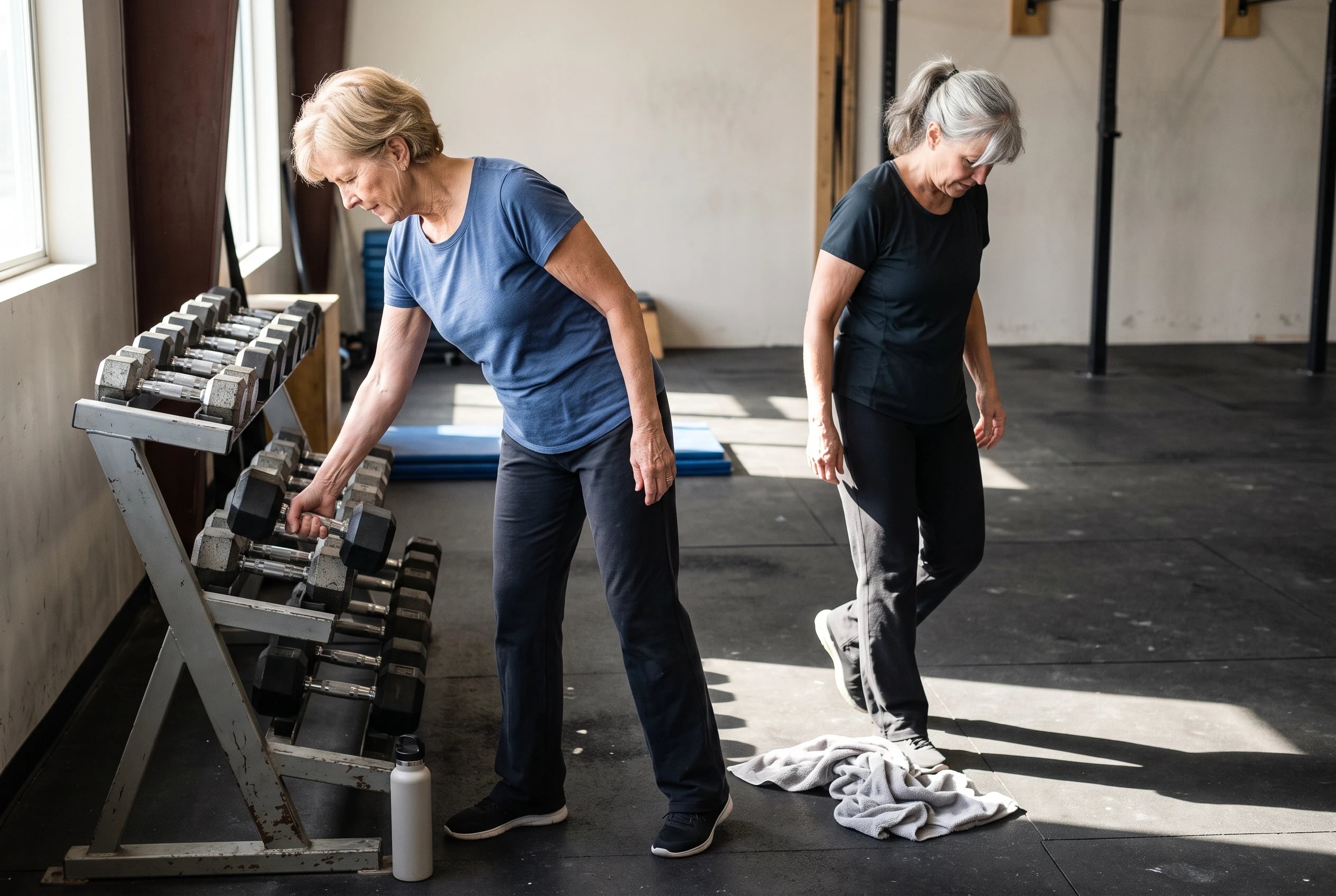
Last month, the final reps of your row demanded focus. Now you finish and wonder whether you picked up the lighter weight by mistake.
That's your cue to change something. Add a rep, add a set, or move to a heavier dumbbell while keeping the motion controlled. You don't need to increase everything at once.
Try the new load for a set and watch the movement, especially the last rep. A heavier weight that turns the row into a full-body yank isn't progress for the muscles you meant to train. If the motion breaks down, return to the lighter one and build more controlled reps there.
That adjustment gives your muscles a fresh challenge without making the number on the dumbbell the only goal.
4The medication list in your bag

Bring your medication list to a health visit if fatigue or weakness feels out of proportion to your workouts. Some medicines and health conditions affect energy, balance, or muscle function.
Don't stop a prescribed medicine to test a theory. Tell your clinician when the change began and what happened during exercise.
The National Institute on Aging's medication guidance encourages keeping an up-to-date list. Include medicines you take only when needed. That list gives the conversation somewhere specific to start, so you aren't left guessing whether the workout itself explains how you feel.
3The mirror on a Tuesday morning

The mirror is a poor weekly judge. Light, posture, clothing, and the time of day change what you see. Early strength gains also arrive before visible size changes, so your lifts improve while your reflection looks familiar.
Give a training plan time before judging its direction. If you're taking photos, use the same room and lighting. Notice whether sleeves fit differently, but don't make them the only evidence.
A mirror tells you what you look like at that moment. It doesn't show how much steadier a lift felt or whether stairs now demand less effort. Keep those changes in view when your reflection looks stubbornly familiar.
2The sessions you actually repeat

Two consistent strength sessions beat a burst of enthusiasm followed by a long gap. Put them on your calendar at times that fit your life, then protect them as you would an appointment.
If a session gets missed, take the next opening instead of waiting for a fresh week. Keep the workout short enough that you finish it on a busy day.
Think of the week when errands ran late and you still managed the shorter session. That wasn't a lesser workout because it lacked your full routine. Muscle responds to repeated challenge. Your schedule decides whether that challenge arrives often enough.
1The next session after a flat stretch

You've been lifting, but the weights haven't felt easier lately. Before you rewrite the whole plan, look at the next workout you have scheduled. A flat stretch calls for a change you can test, not a verdict on your body.
First, decide whether the exercise still feels challenging with good form. If it doesn't, try the small increase described earlier. If it does, keep the load and check what surrounds the session: sleep, meals, rest, and missed workouts.
Change one thing at a time. Move a late workout earlier, add food before training, or leave more recovery between hard sessions. At your next workout, notice whether you finish the same work with better control.
That approach gives you an answer to “What speeds this up?” without promising a date for visible muscle. Keep giving your muscles a challenge they can recover from, and make the next session possible.
The bottom line
The first difference you feel is likely to show up in a lift or a daily task before it shows up in the mirror. Repeated, challenging workouts give you a fairer test than one hard day.
The well-prepared version of you has a workable schedule, enough food, and a way to remember what felt easier. She changes one part of the plan when progress stalls instead of throwing out the whole thing.
What has changed for you so far: the weight in your hand, the stairs, or another task you hadn't thought to watch?
Up next
23 Ways to Get a Toned Body After 50 Without Endless Cardio
A sturdy chair, a tote bag and a few minutes of effort give you ways to build strength without another reluctant hour on the treadmill.
Read the list →


Reader quiz
Did you catch the details?
5 questions from this article.
What should you jot down after each exercise to track your progress?
Did any of these feel familiar?
Know someone who needs this?
 Prime Journal · Free printable
The Everyday Health Readiness Checklist
- A clearer path from bed to bathroom
- A medicine list ready for the pharmacist
- A symptom story and follow-up plan you can use

Free printable: The Everyday Health Readiness Checklist. Enter your email and it is yours.
Sources cited in this article
This article links to 12 outside sources, listed here so you can read them yourself.
- National Institute on Aging www.nia.nih.gov/health/exercise-and-physical-activity
- American College of Sports Medicine www.acsm.org
- CDC's physical activity guidance www.cdc.gov/physical-activity-basics/guidelines/older-adults.html
- American Academy of Orthopaedic Surgeons orthoinfo.aaos.org
- National Strength and Conditioning Association www.nsca.com
- Physical Activity Guidelines for Americans health.gov/moveyourway
- American Heart Association www.heart.org
- CDC's sleep guidance www.cdc.gov/sleep
- American Academy of Family Physicians' familydoctor.org familydoctor.org
- National Institute on Aging's healthy eating guidance www.nia.nih.gov/health/healthy-eating-nutrition-and-diet
- National Academies of Sciences, Engineering, and Medicine www.nationalacademies.org
- National Institute on Aging's medication guidance www.nia.nih.gov/health/medicines-and-medication-management
Dr. Alan Pierce, PT, DPT
Health Reviewer
Alan is a physical therapist who specializes in helping adults over 50 stay strong and mobile.
More from Dr. Alan Pierce