









23 Ways to Get a Toned Body After 50 Without Endless Cardio
A sturdy chair, a tote bag and a few minutes of effort give you ways to build strength without another reluctant hour on the treadmill.
By Dr. Alan Pierce, PT, DPT, Health Reviewer
Updated · 11 min read
- Written by our health reviewer
- Cited 8 sources
- How we review

Your treadmill shoes are by the door. Your knee objects before you've even tied them. Meanwhile, the jeans that used to feel good sit in the drawer, and you miss the solid feeling of carrying groceries without rearranging the bags.
“Toned” means something less mysterious than fitness ads suggest: stronger muscles, with enough activity and nourishment to support them. None of that requires punishing your knees. It does require giving your muscles work that grows harder as they grow stronger.
23Shoes that don't wobble underfoot

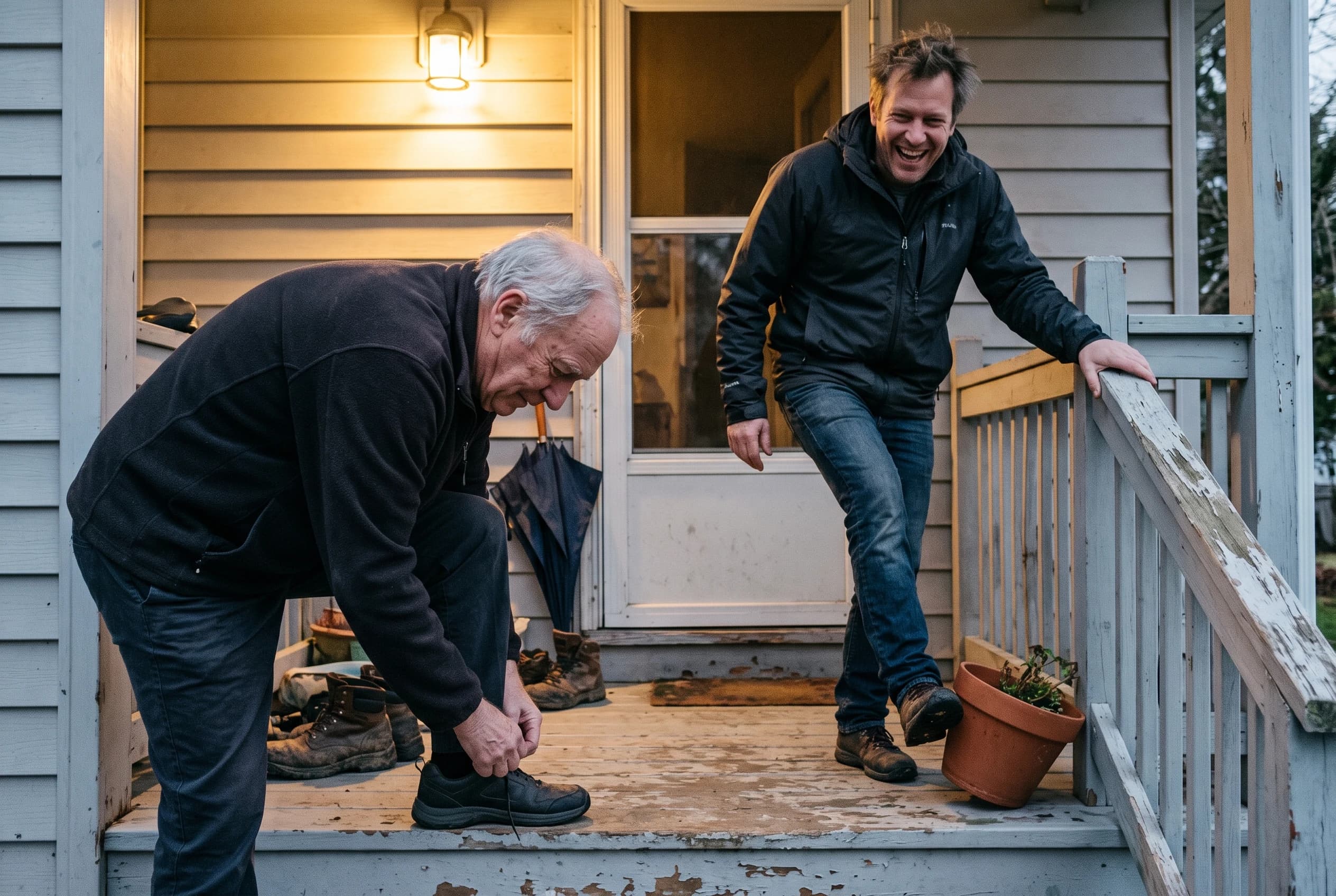
Before you pick up a weight, look at the shoes you'll wear. A worn sole or a heel that slides around makes a squat feel less steady than it needs to.
Stand beside a counter and shift your weight from foot to foot. If your shoe rolls outward or your heel lifts inside it, try a supportive pair with a secure fit. Bare feet work for some home exercises on a dry, clear floor. Skip slippery socks.
A firm connection with the floor lets your legs do the work instead of leaving your ankles to chase balance.
22Dumbbells you can lift with control
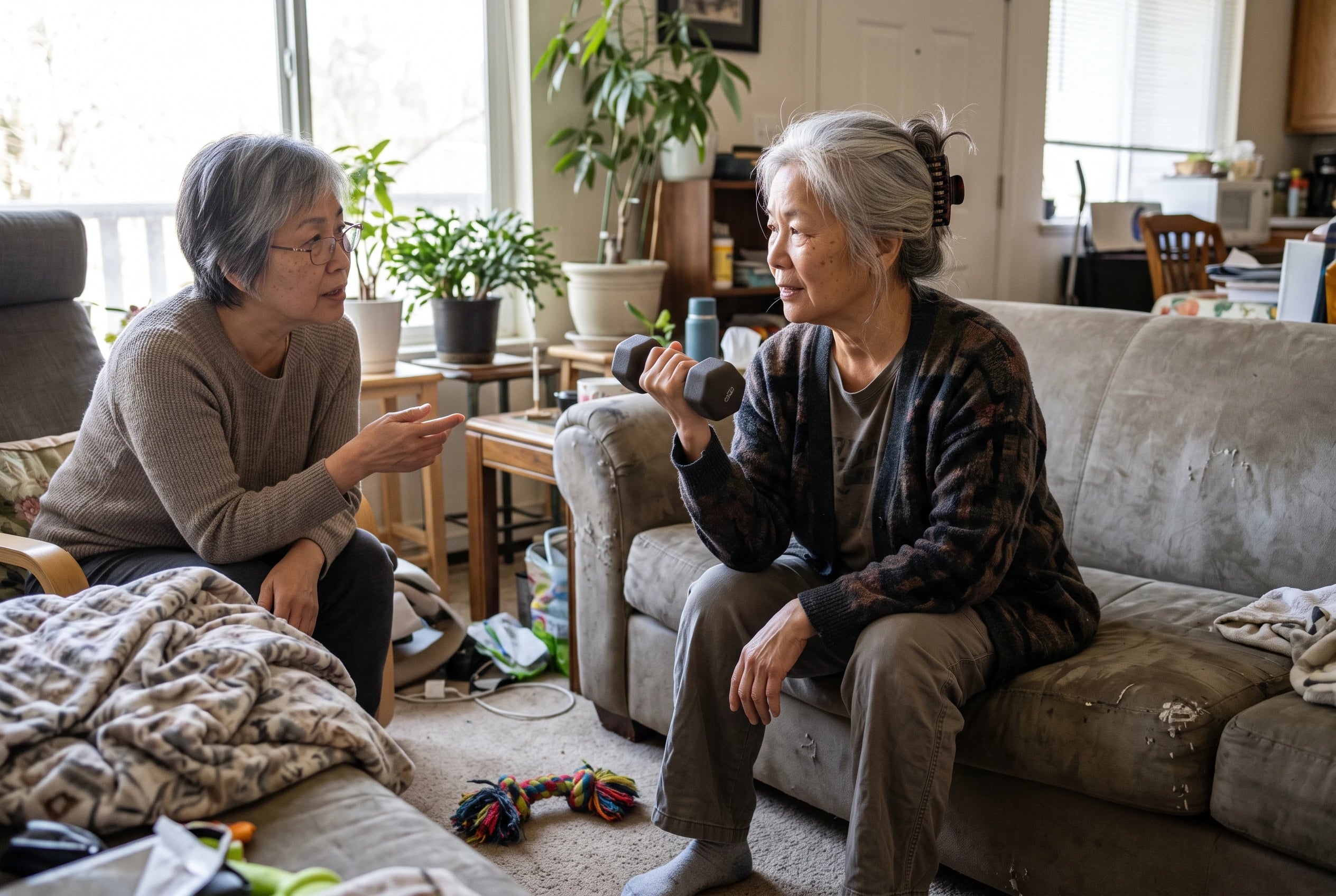
A pair of weights belongs in your hands only if you can move it without swinging. Start with a load you can lift for roughly 8 to 12 repetitions while keeping the last few challenging.
Try a biceps curl. Keep your elbows near your sides, lift, then lower without dropping your hands. If you have to lean back, use a lighter weight. If you could keep going long after the set ends, try a heavier one next time.
No dumbbells? Filled water bottles give you a place to begin.
21Wall push-ups beside the hallway mirror
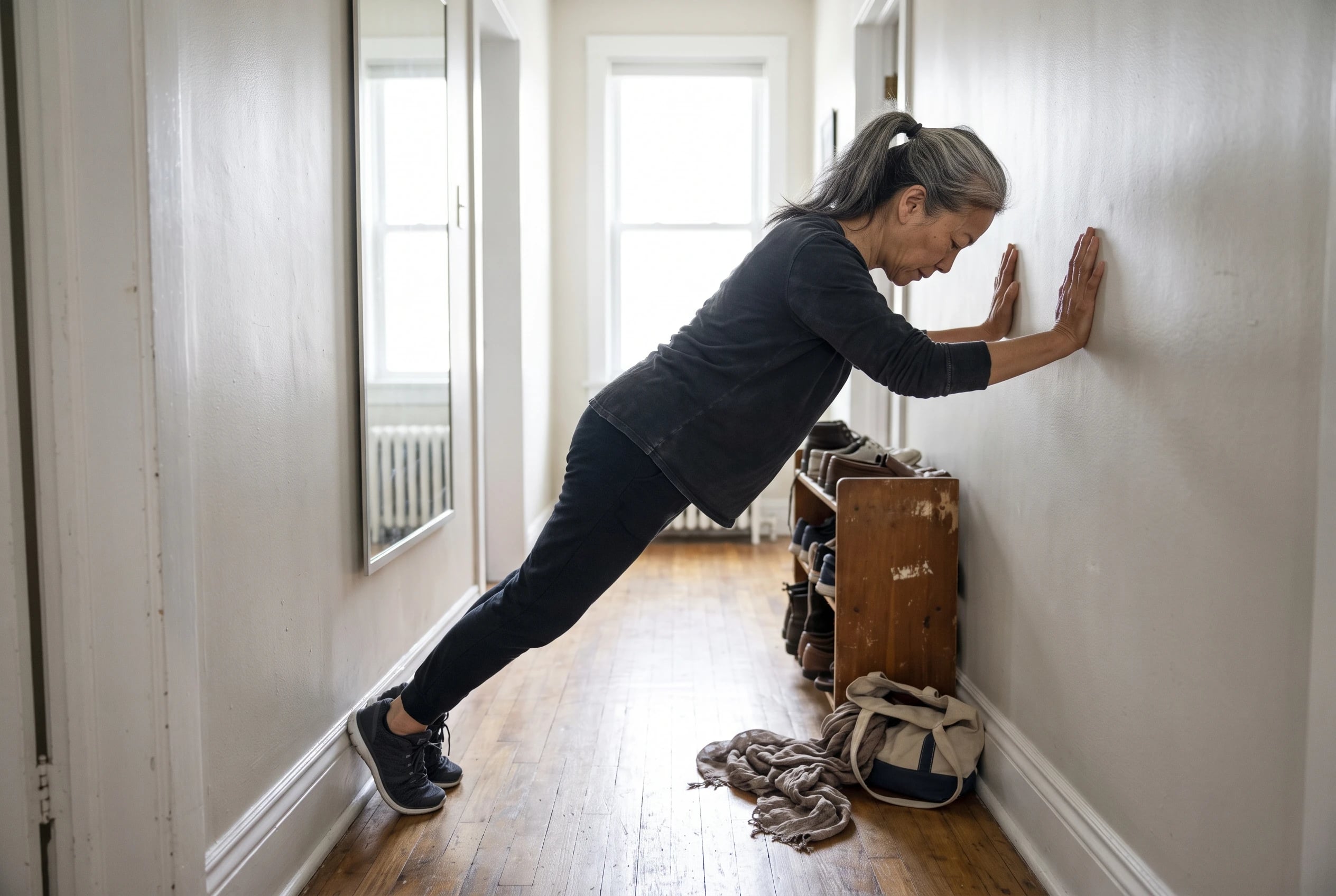
Want to work your upper body without getting down on the floor? Face a wall, place your palms at chest height and step your feet back. Bend your elbows to bring your chest toward the wall, then press away.
Keep your body in a straight line rather than letting your hips sag. The National Institute on Aging publishes exercise guidance if you want other ways to work your arms and chest.
Once the wall feels easy, try a sturdy counter for a harder angle. Check that it won't move before you lean on it.
20Chair rises without a running start
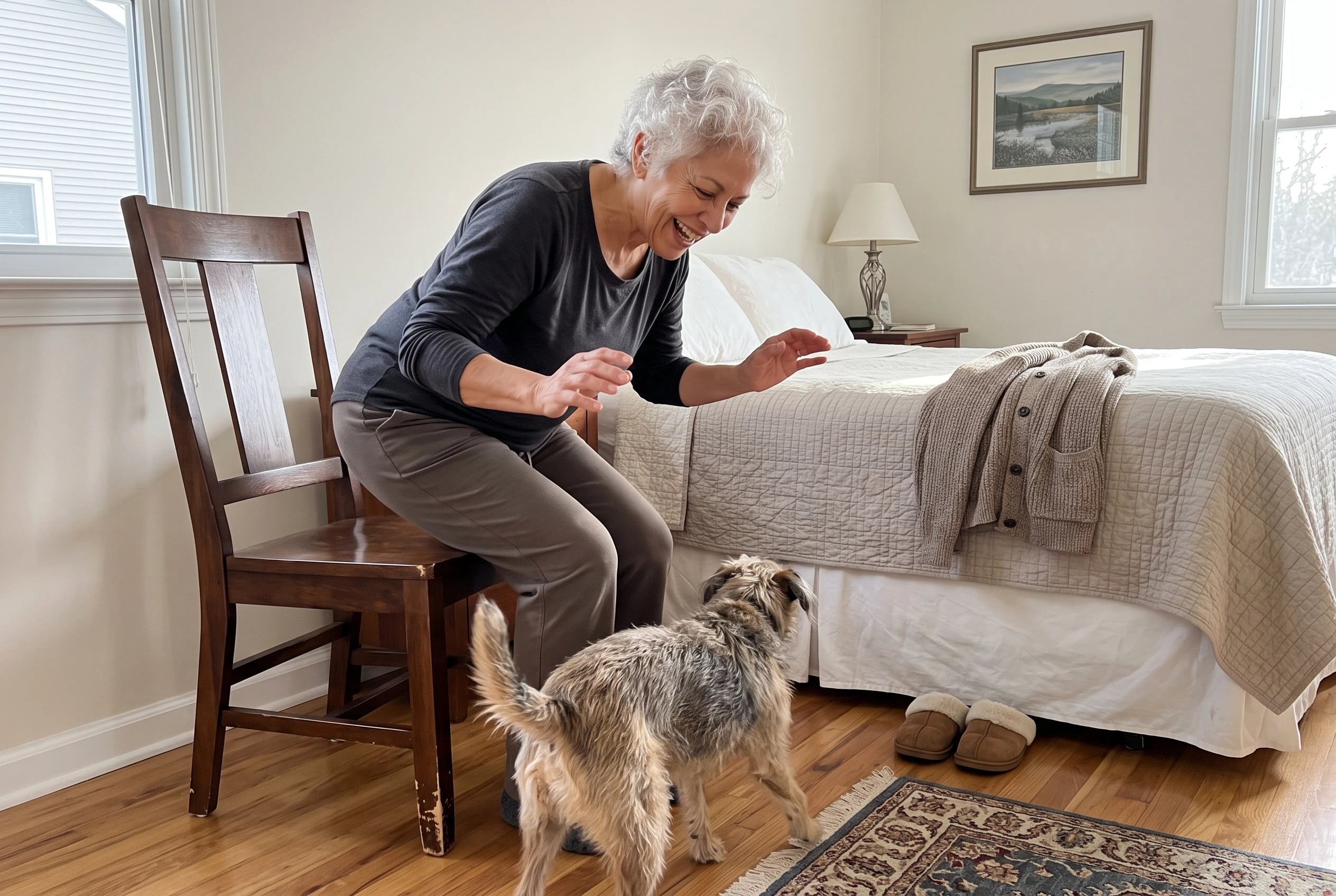
Sit near the front of a firm chair, with both feet planted. Stand without rocking forward, then lower yourself until you touch the seat. Do several rises at a pace that lets you control the trip down.
Use the armrests if you need them. Later, press through your hands less. The chair you've sat in all morning is now training a task you repeat all day: getting up without negotiating with the furniture.
19Bathroom mirror check for squat depth
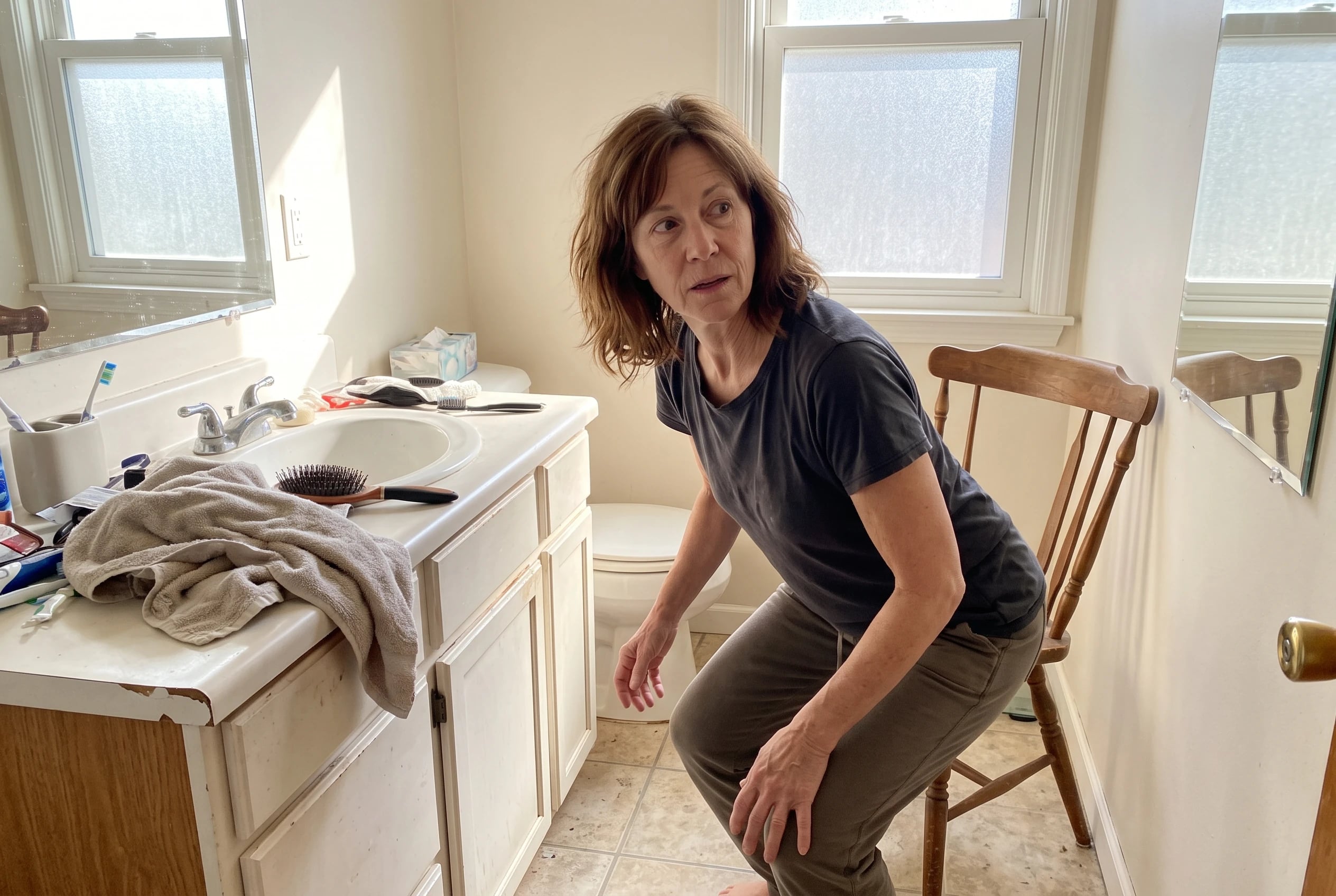
Put a chair behind you and face the bathroom mirror. Bend at your hips and knees, keeping your heels down and your knees pointed in the same direction as your toes.
Stop at a depth you control, then stand. The chair marks your stopping point, so you don't have to guess where to turn around.
If a shallow squat feels fine and a deep one hurts, stay shallow. You don't owe anyone a deep squat; pain isn't a measure of effort.
18Countertop presses while the kettle heats
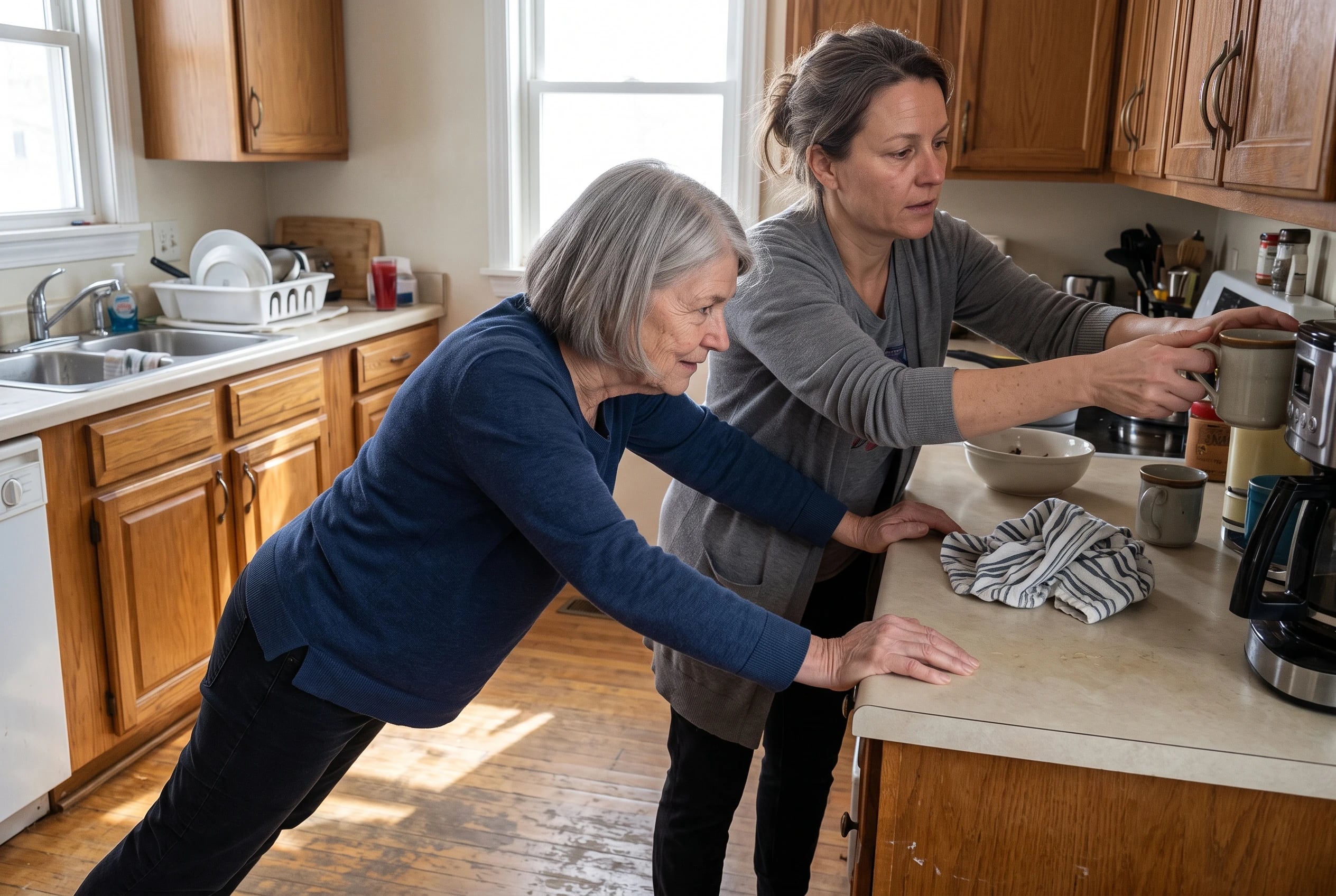
The kettle's on. Use the wait to work your chest and arms against a fixed kitchen counter. Place your hands a little wider than shoulder width, then walk your feet back until your body forms a straight line.
Bring your chest toward the counter and press away. Keep your shoulders away from your ears for 8 controlled repetitions.
Check the counter before you start. A rolling cart won't hold steady when you lean into it.
17Laundry basket lifts from a clear floor

A laundry basket is an awkward object. That's exactly why picking it up deserves practice. Start with an empty basket between your feet. Bend at your hips and knees, grip both sides and stand tall.
Hold it close to your body. Set it down the same way. When that feels steady, add a few towels, then repeat. Don't fill it first and call the struggle a workout.
Clear the floor before you begin. The basket teaches you to make room, get close and lift with control, whether you're moving laundry or retrieving a dropped shopping bag.
16Resistance band with no hidden cracks
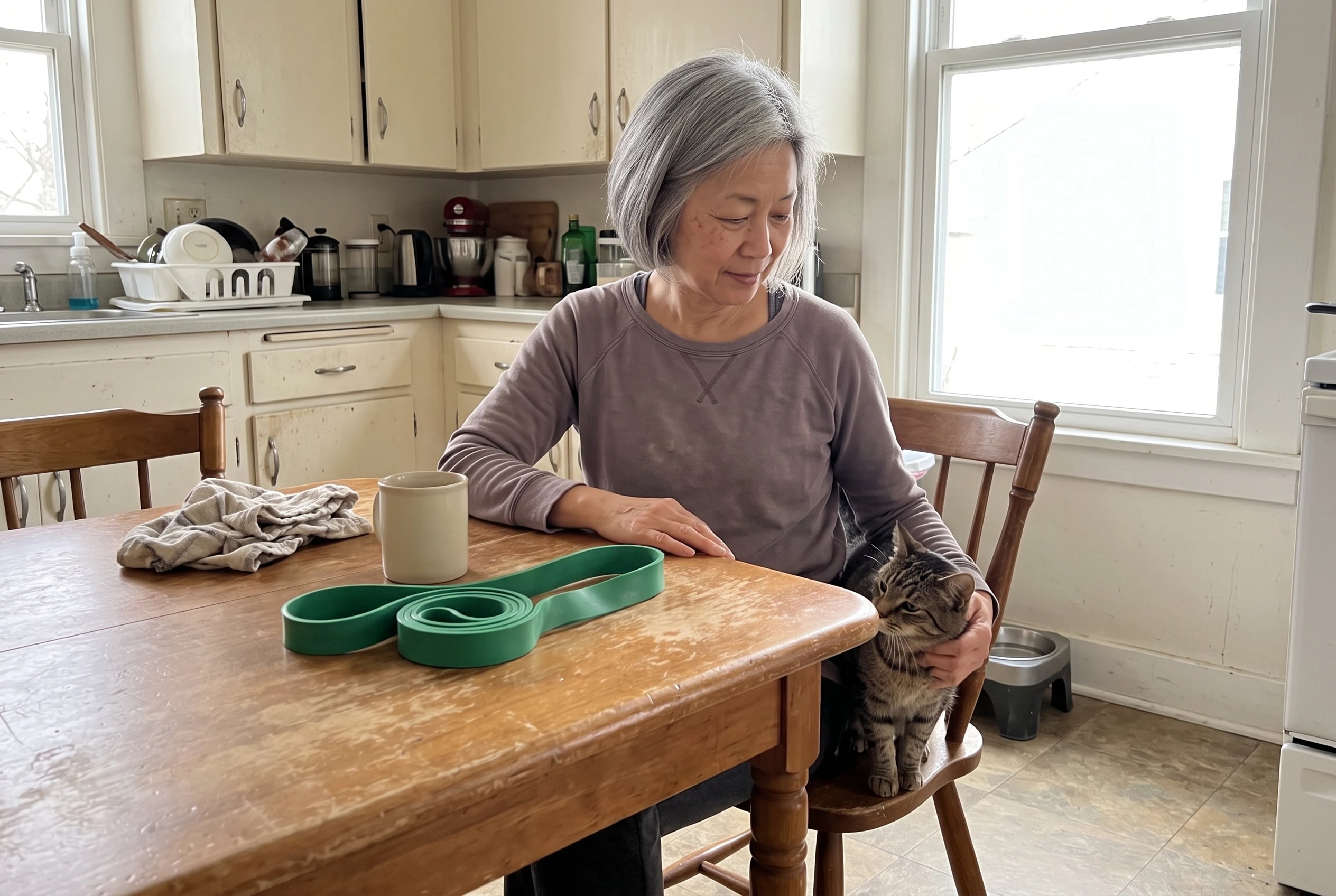
A band fits in a drawer and gives your upper back something to pull against. Before each session, stretch it lightly and inspect the length for tears, thin spots or brittle patches. Replace a damaged band.
To work your upper back, hold the band in front of your chest with straight arms. Pull your hands apart as your shoulder blades move toward each other. Return slowly, keeping the band away from your face.
A band supplies resistance without taking up the space of a weight rack. The American College of Sports Medicine publishes exercise resources if you're choosing equipment for home.
15Stair step-ups on the bottom step
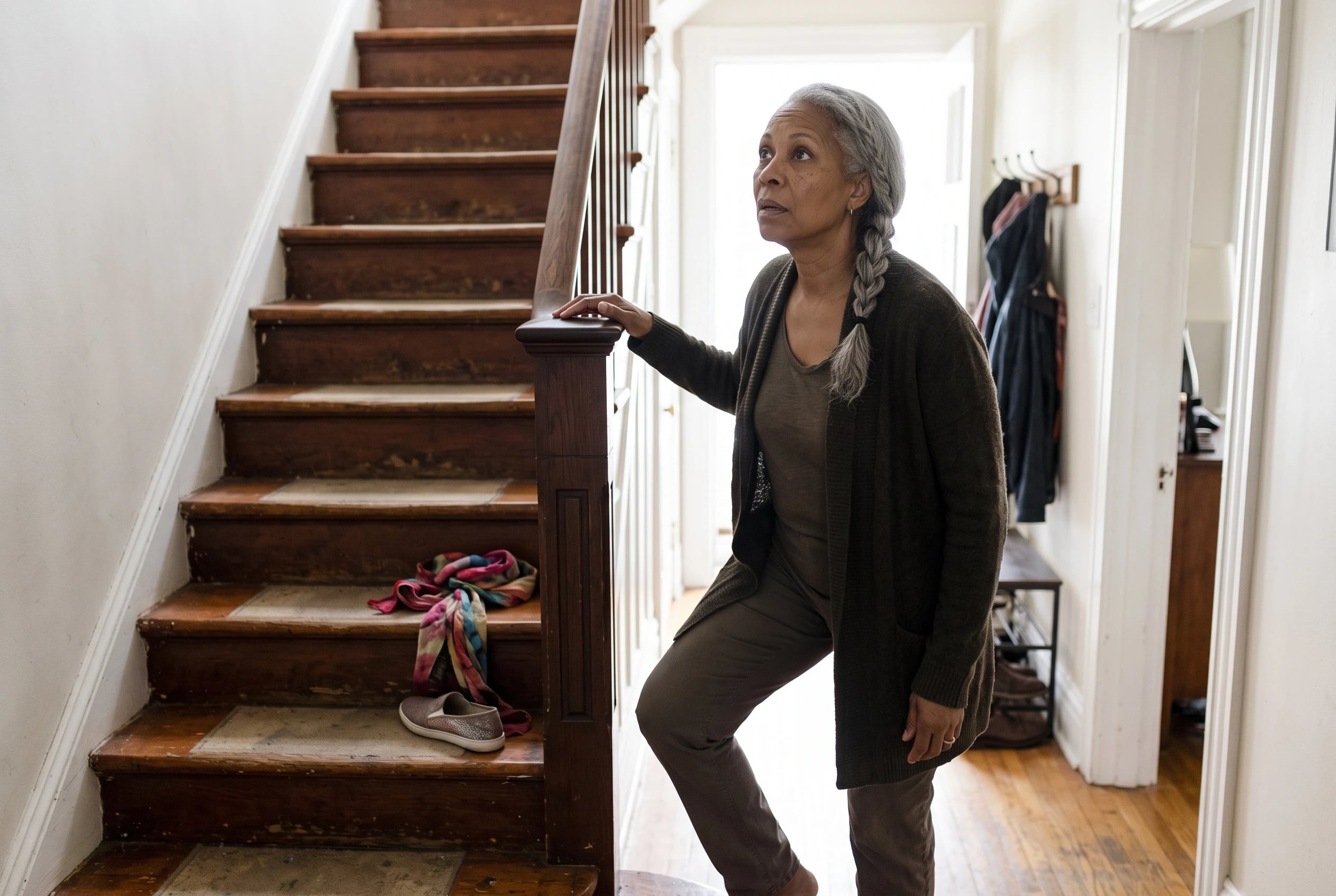
That first stair is enough. Face a staircase, hold the rail and step up with one foot. Bring the other foot up, then step down slowly. Switch the leading foot after a few repetitions.
Start with 5 on each side. Watch for a knee that caves inward or a foot that hangs off the edge. If stepping down hurts, use a lower step or skip this move for now.
Step-ups train the same leg power you need for curbs and stairs. There's no need to race to the top.
14Calf raises while holding the sink
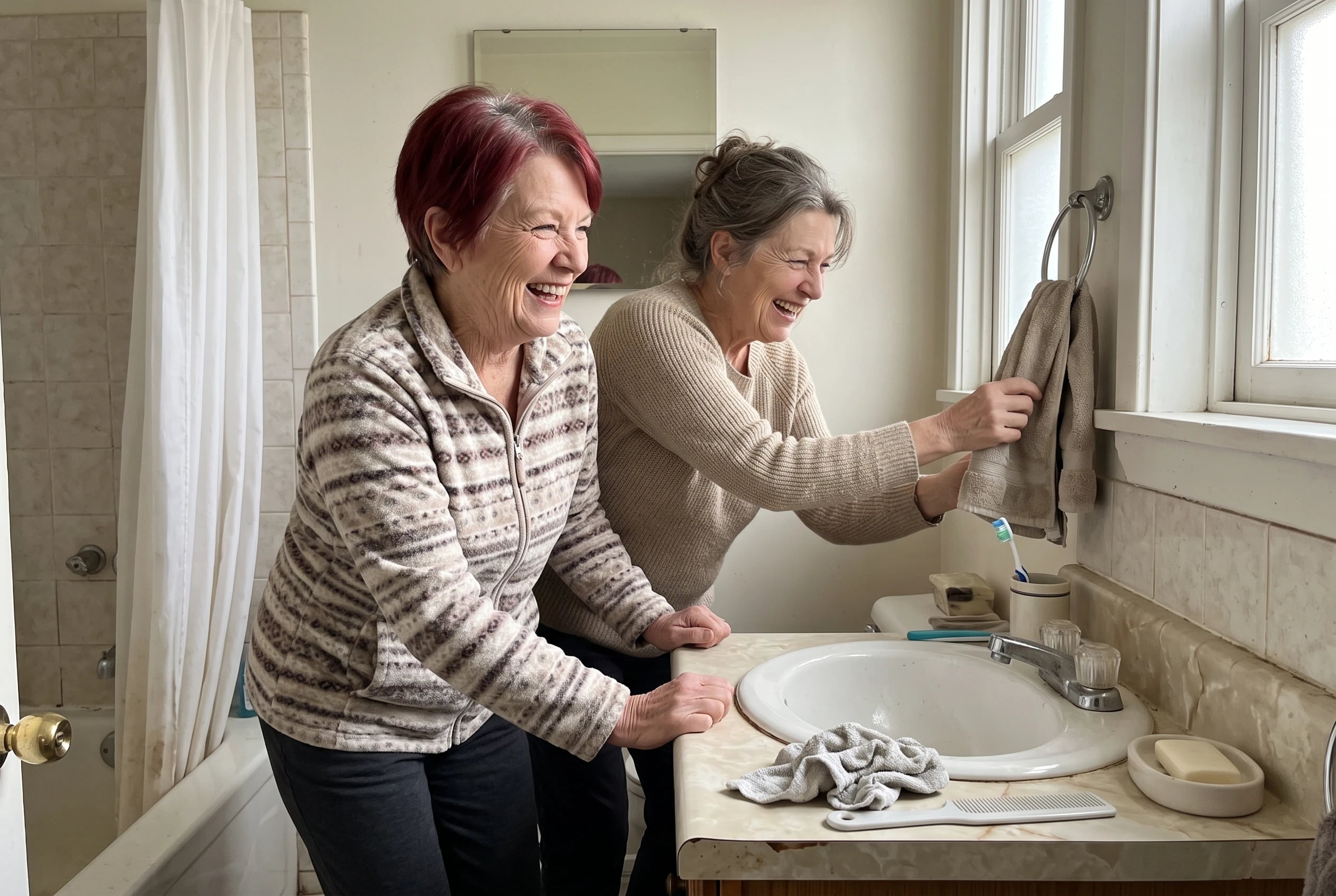
Strong calves help you push off when you walk and steady yourself when you reach overhead. Stand at the sink, hold the edge, rise onto the balls of your feet and lower your heels slowly.
Try 10 repetitions with both feet, pausing at the top rather than bouncing. Once those feel controlled, spend more time on the way down.
The sink is there for balance, not for pulling yourself upward. Stop if a foot or ankle hurts.
13Doorway rows with a secure anchor
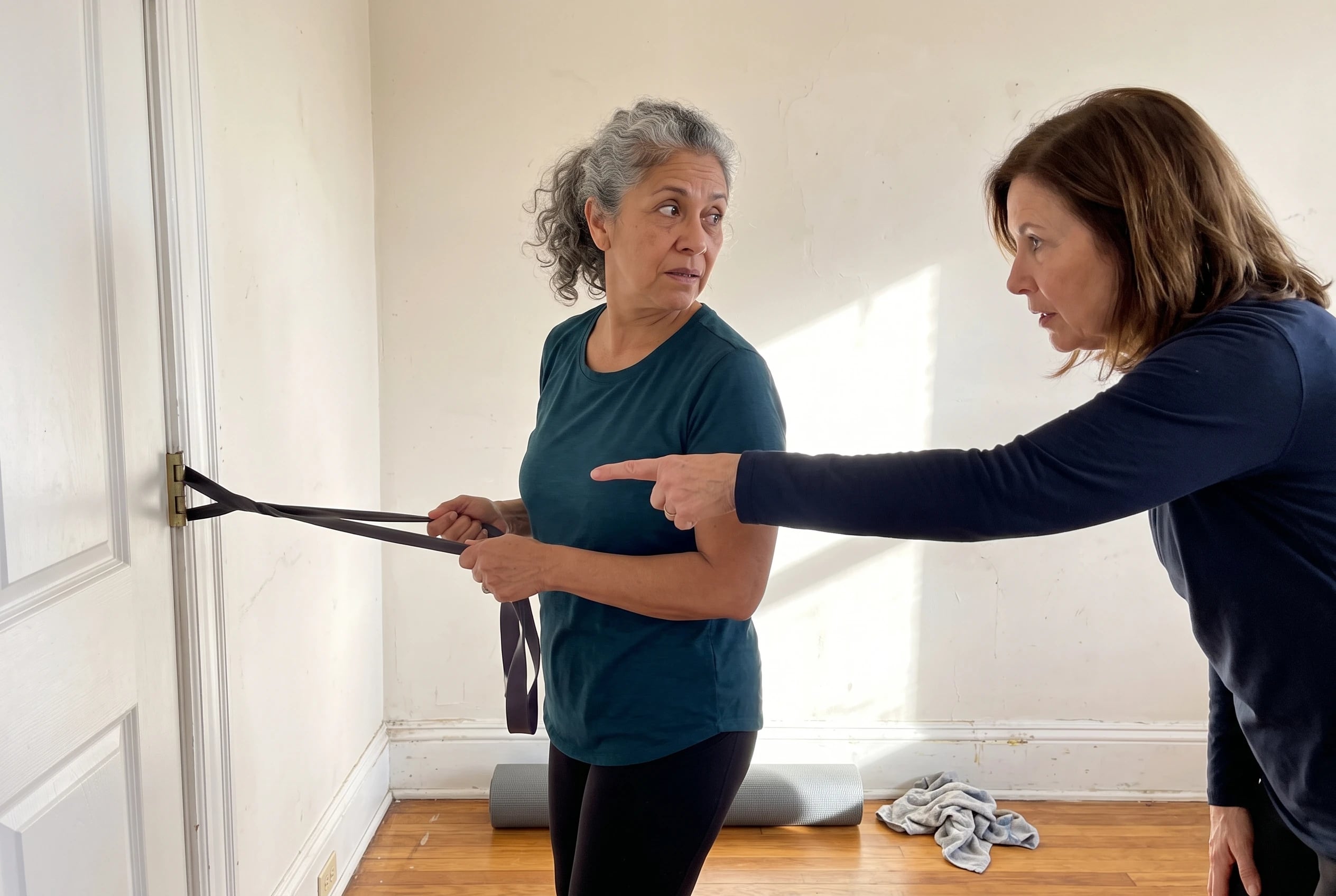
Pulling exercises counter all the reaching you do in front of your body. A resistance band looped through a rated door anchor gives you a row without a gym machine.
Stand facing the anchor, hold the band ends and pull your elbows back alongside your ribs. Let your arms straighten slowly, keeping your shoulders down instead of shrugging.
Before each set, check that the door is shut and nobody will open it. Don't loop the band around a loose doorknob. Without a safe anchor, leave rows out and choose another back exercise.
12Shoulder blades that move before your arms
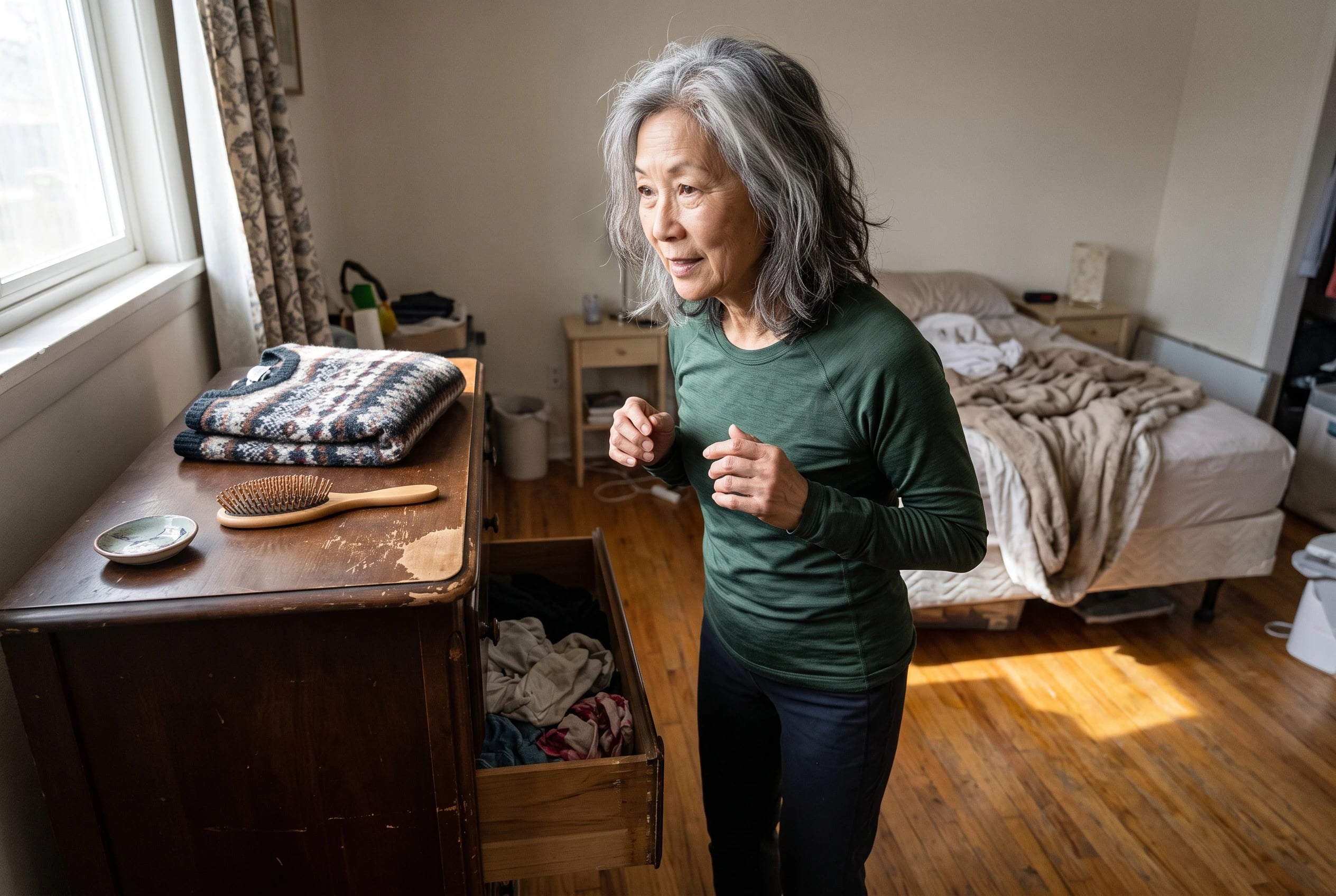
Your shoulders shouldn't have to do every lift by themselves. Before an overhead reach, stand tall and let your shoulder blades move naturally as your arms rise. Don't pin them down or squeeze them together.
Raise both arms only as far as you can without pain or a sharp pinch. Lower them slowly. That simple check tells you whether today's range feels comfortable before you add a weight.
If reaching overhead keeps hurting, leave overhead presses out of your routine and bring the problem to a physical therapist.
11Bedside hip hinges before breakfast
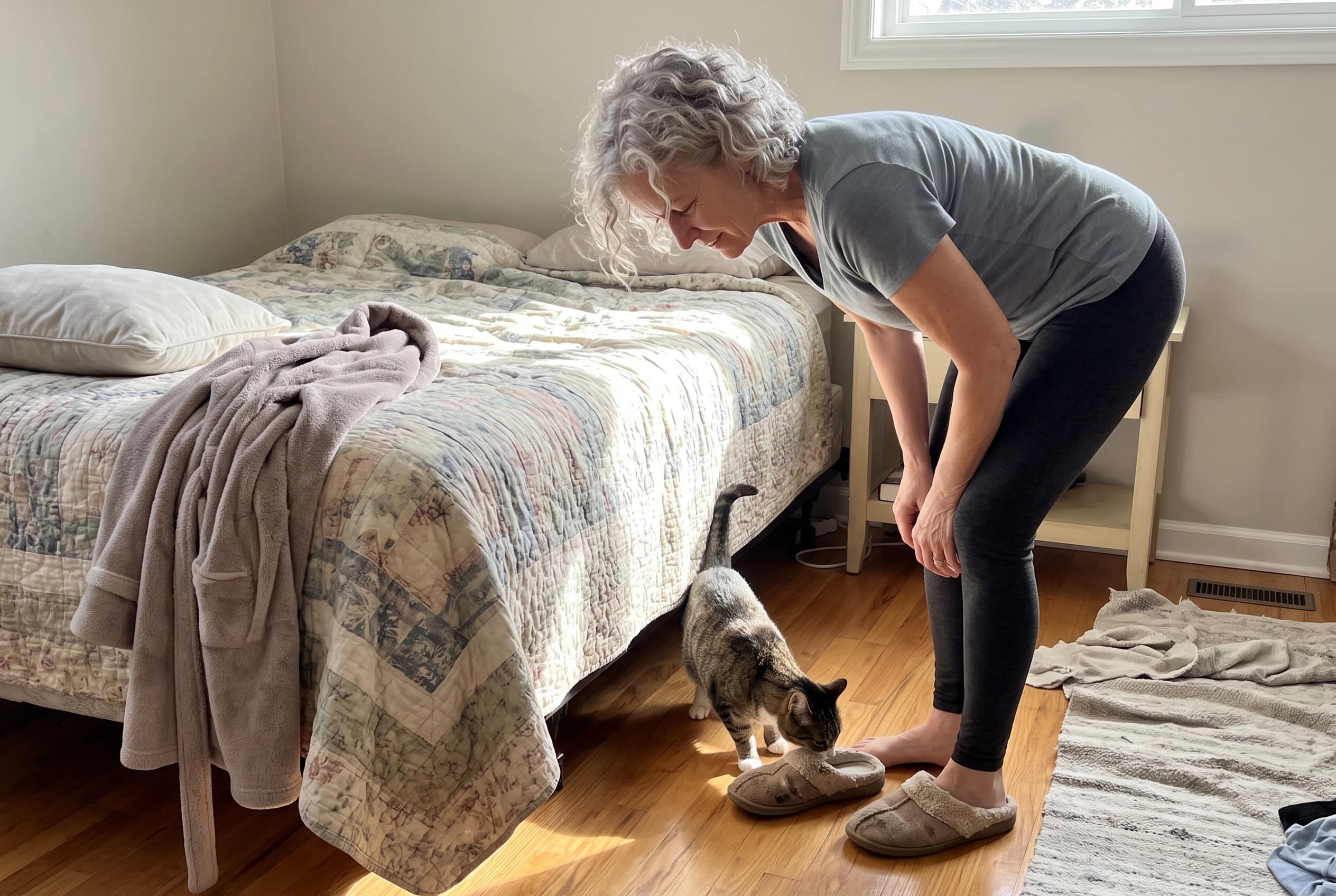
A hip hinge teaches your hips to take the lead when you bend. Stand near the bed with knees slightly bent. Place your hands on your hip bones and push your hips backward, keeping your back in a comfortable, neutral position.
You should feel a stretch along the backs of your thighs. Stand by pressing your feet into the floor and bringing your hips forward.
Practice 8 slow hinges with empty hands. Later, hold a light weight close to your legs. Think of closing a car door with your backside: the motion goes back, not straight down.
See more: 24 Best Hamstring Stretches for Seniors, Standing, Seated and in Bed →
10Grocery bag carries across the room

If you carry shopping bags, you're already doing a strength exercise. Make it deliberate. Put a manageable load in one sturdy bag, stand tall and walk across a clear room without leaning to the side.
Switch hands and repeat. Keep the bag close to your leg and your steps unhurried. The CDC's physical activity guidance includes muscle-strengthening work alongside aerobic activity.
Stop before your grip gives out. Dropping a bag of canned tomatoes is a poor way to find your limit.
See more: 26 Daily Activities for Seniors That Give a Day Its Shape →
9Rest days that protect your next lift

The day after a hard leg session, the stairs tell you what worked. Give those muscles time before you work them hard again; recovery lets you return ready to lift with control.
The Physical Activity Guidelines for Americans recommend muscle-strengthening activity on at least 2 days each week. They don't ask you to repeat every hard exercise daily.
Try strength sessions on Monday and Thursday. Between them, take a comfortable walk or move in another way you enjoy. Sharp pain, swelling or a joint that worsens as you go is a reason to stop and get advice.
8Protein on the lunch plate

A hard workout needs food to back it up. If lunch is coffee and crackers, your muscles have little to work with afterward.
Put a protein food on the plate: eggs, yogurt, tofu, beans, fish or chicken. The USDA's MyPlate shows how protein foods fit alongside vegetables, fruit and grains. You don't need a special powder to start eating a fuller lunch.
If you have kidney disease or another condition that changes your diet, ask your care team before making a big increase in protein.
7Bedtime that leaves room for recovery
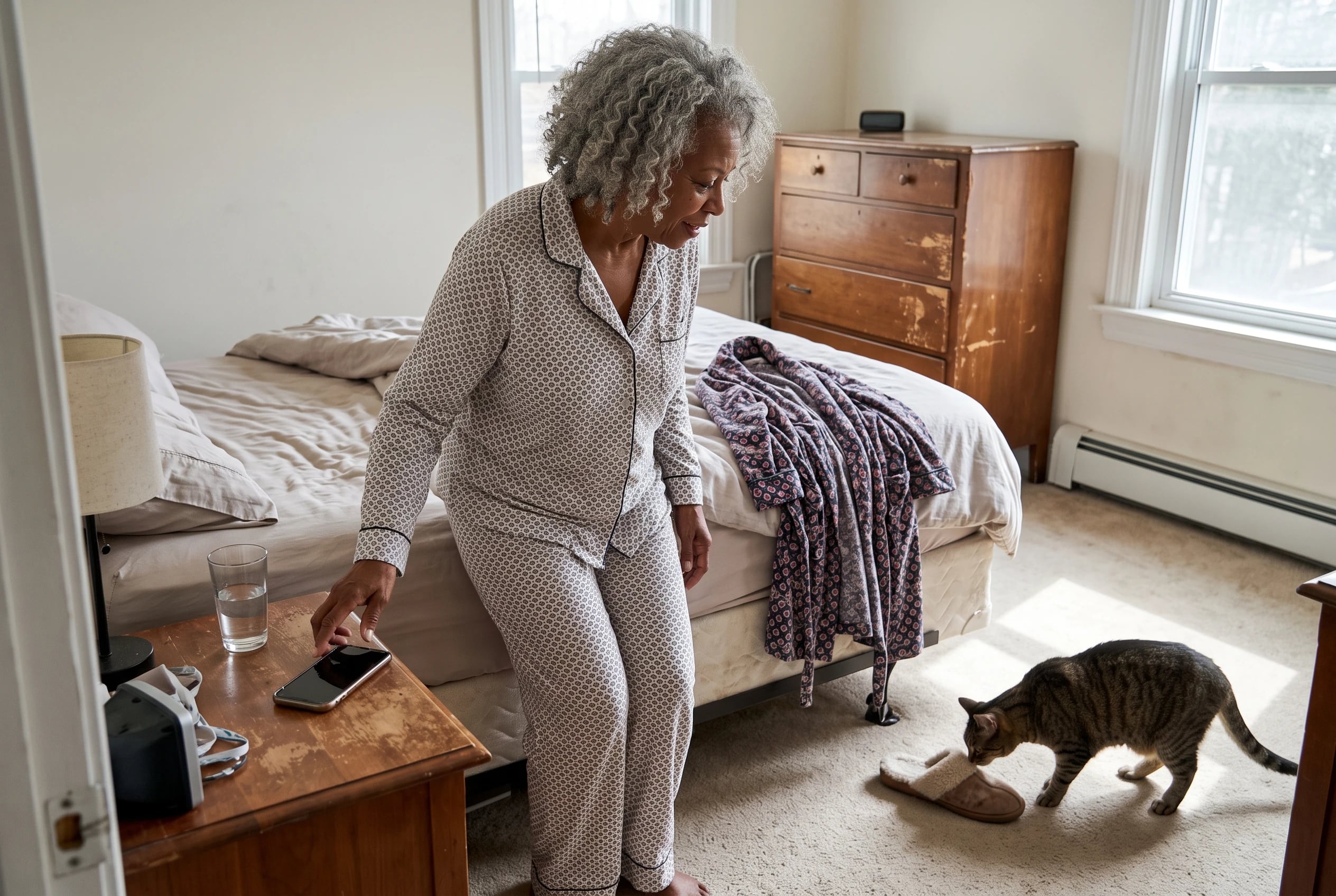
The workout gets the credit. Sleep does some of the repair.
The CDC's sleep guidance recommends at least 7 hours of sleep for adults in this age range. If late-night scrolling cuts into that time, set the phone down earlier before you add another exercise to your plan.
A workout isn't a debt you repay by sleeping less. Give yourself enough time in bed to recover and feel ready to move again.
See more: 23 Habits of the Happiest Retirees →
6Walks that end before knee pain

Does your knee complain after a long walk? Shorten the walk instead of quitting movement altogether. Try 10 minutes on level ground and notice how the knee feels during the walk and later that day.
A bike, pool or flat indoor route gives you other ways to move. The Arthritis Foundation has joint-friendly activity guidance worth checking if arthritis is part of the picture.
Cardio still supports your heart and stamina. It doesn't have to be an hour on a treadmill, and it doesn't replace strength work.
5Knee pain details that preserve your workouts
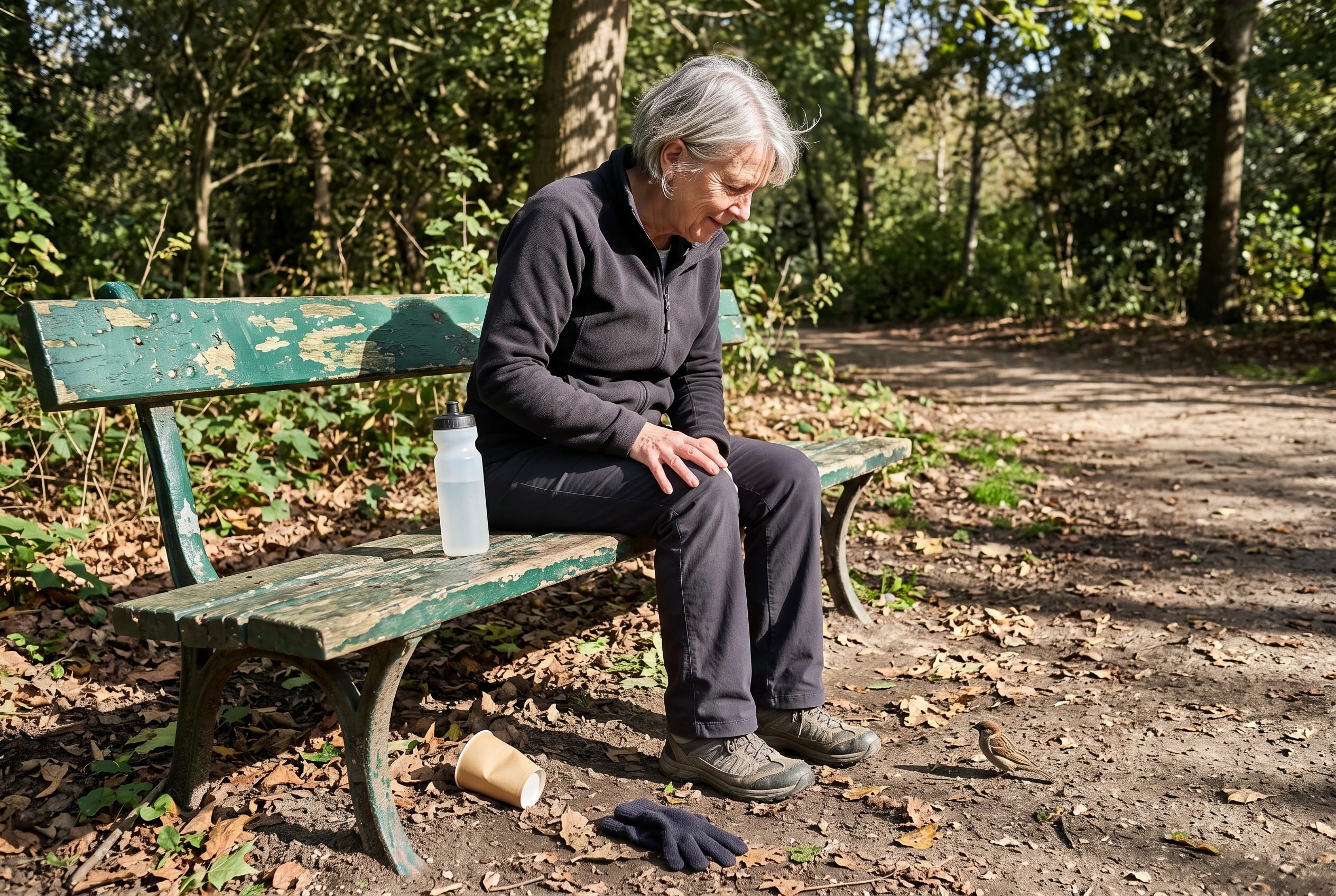
When knee pain stops your squats, a vague description at an appointment won't help you find a workable exercise. Try this: “It hurts when I step down from a curb, and the pain lasts into the next day.”
Point to the spot. Say when it began, whether it swells and which movements set it off. Those details give your clinician something specific to examine, so you can discuss which strength moves to change.
For joint pain that persists, the American Academy of Orthopaedic Surgeons has patient information on knee conditions. An article cannot diagnose your knee.
4A chair test you repeat monthly
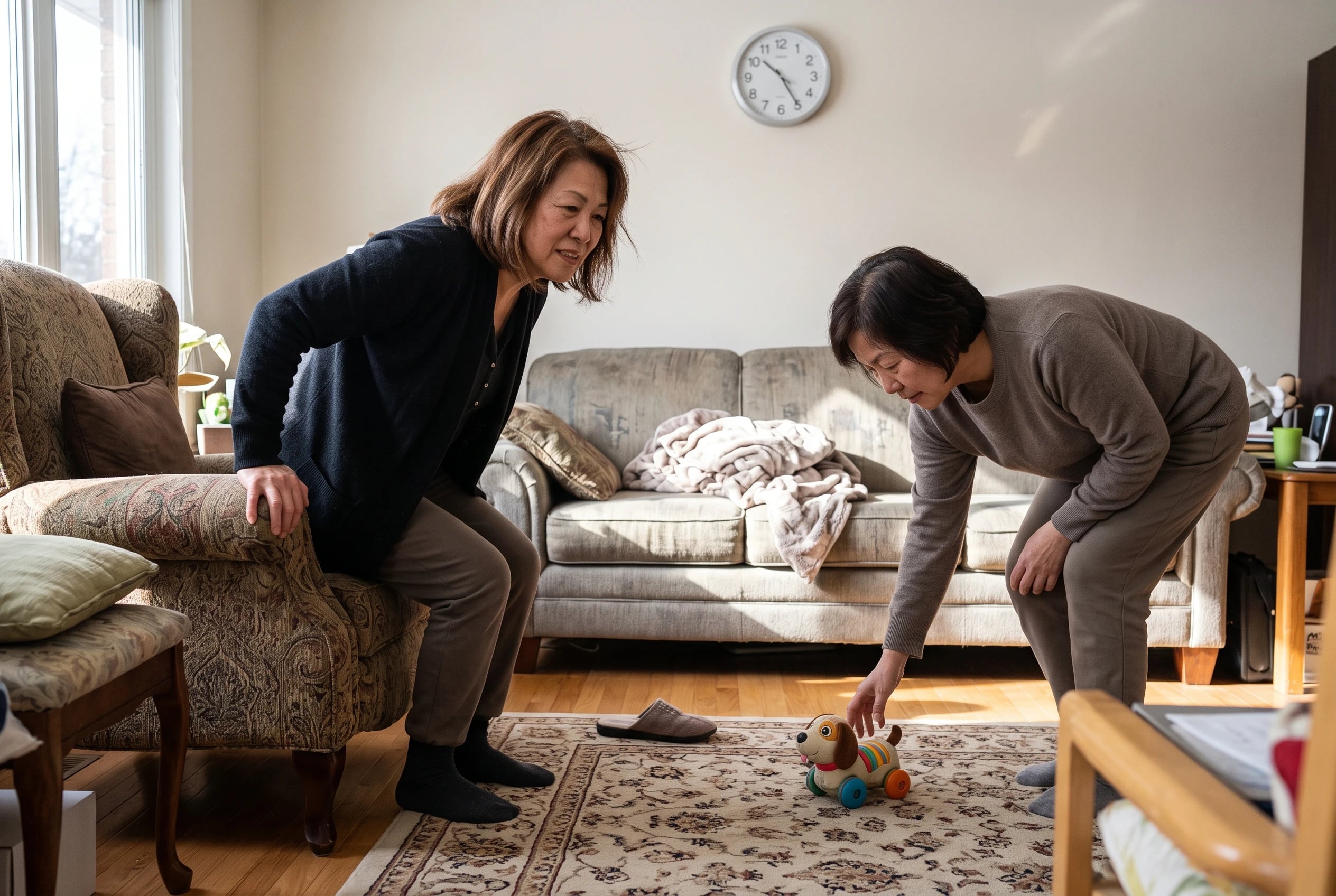
Progress doesn't always appear in the mirror first. Put a sturdy chair in the same spot once a month. Count how many times you can stand and sit in 30 seconds without using your hands, if that feels safe.
Write the count on your calendar. Use the same chair each time, and stop if you feel dizzy or have pain. The CDC's STEADI program uses chair-stand testing in fall-risk assessment.
Your number is a record of *your* movement, not a contest with anyone else's. A smoother, steadier rise matters too.
3Heavier weights after easy repetitions
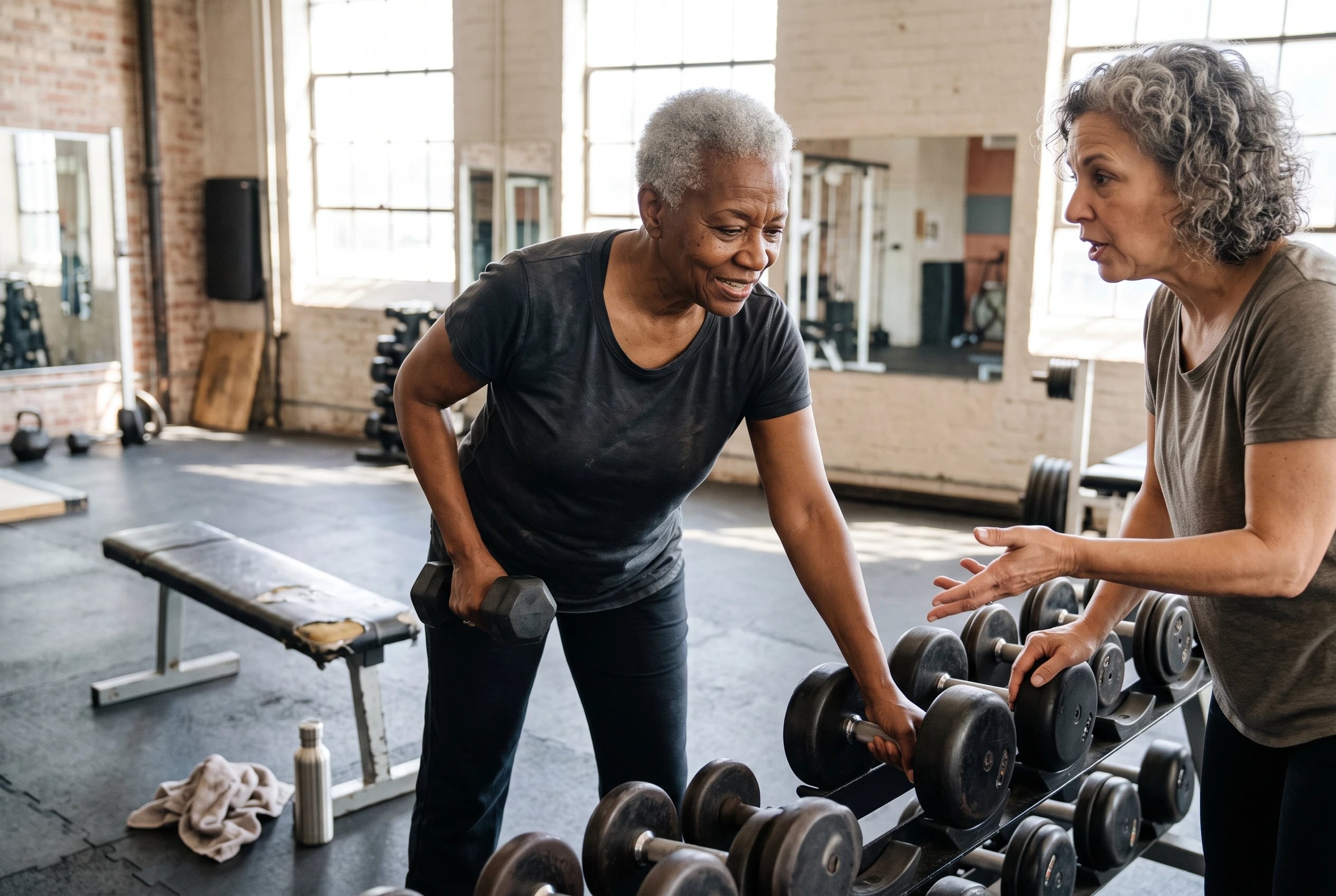
The first weight that felt challenging won't stay challenging forever. That's a sign you're ready to adjust the work.
When you finish 12 controlled repetitions and feel you could do several more, increase the resistance a little. Choose a heavier dumbbell, a firmer band or a slower lowering phase. Change one thing at a time.
Strength coaches call this progressive overload: asking muscles to do more as they adapt. The National Strength and Conditioning Association publishes strength-training resources. Keep your form; extra weight isn't progress if it makes you swing or hold your breath.
2Strength appointments on your calendar
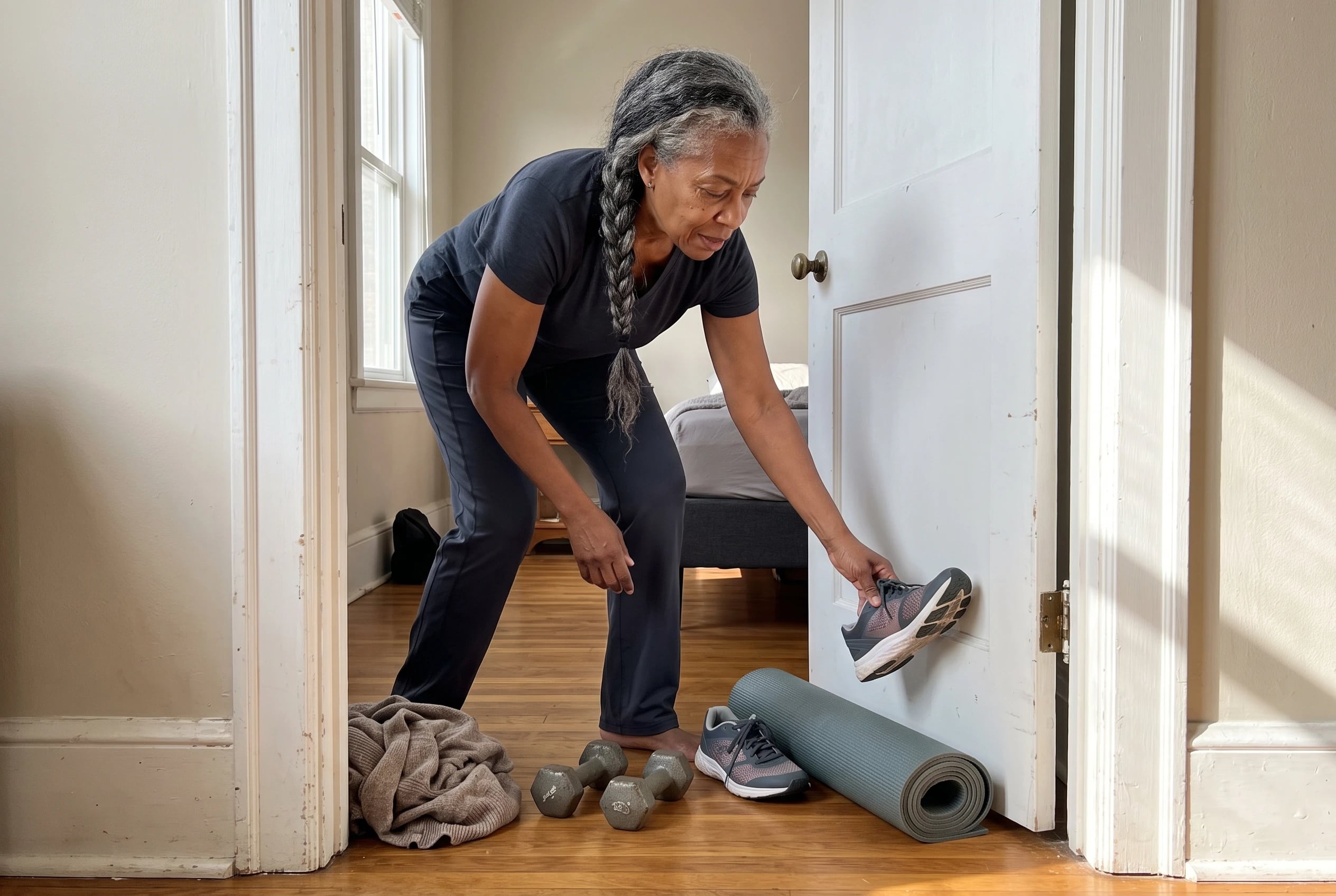
A good intention loses to a crowded Tuesday. Put 2 strength sessions on your calendar as appointments, with at least a day between them. Each one needs a start time, not merely a promise to exercise “later.”
Set out your shoes and weights beforehand. When the time comes, begin with the first movement rather than deciding what to do from scratch.
If a session gets bumped, move it to another day. Don't double the next workout to make up for it. Your calendar's job is to make strength work repeatable, even in a week that doesn't go to plan.
1A starting weight chosen by feel
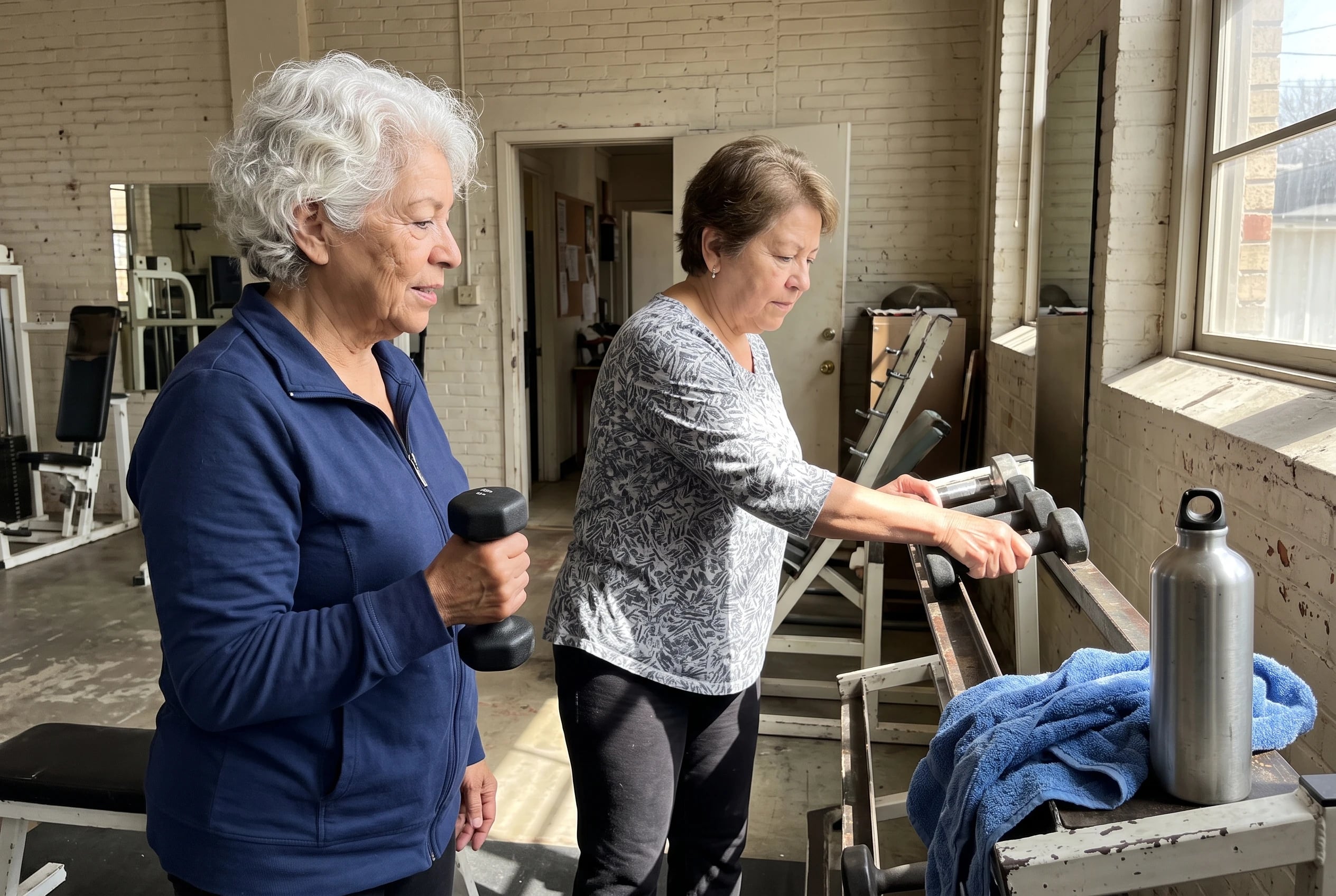
The weight on the rack doesn't know what your knees did yesterday. Start with a load you can handle through the entire movement. For a new exercise, practice the motion empty-handed before picking up anything heavy.
Then try a set. By the last repetition, your muscles should feel challenged while your movement stays controlled. If you have to swing, twist or hold your breath to finish, lighten the load.
Use that check each time you start an unfamiliar move. It gives you a way to begin today without guessing what someone else lifts. The National Institute on Aging's exercise resources show strength movements if you want to check your form.
The bottom line
Feeling firmer comes from asking your muscles to work, feeding them and giving them time to recover. An exhausting cardio session isn't the entry fee.
The well-prepared version of you has a clear patch of floor, a sturdy chair and 2 strength appointments on the calendar. She knows which movements feel good and which ones need adjusting.
What would change if your next workout began with the chair you already own?
Up next
26 Five-Minute Exercises for Seniors
A head-to-toe menu of 5-minute exercises for seniors using a sturdy chair, a kitchen counter, and, if you want one, a soft ball.
Read the list →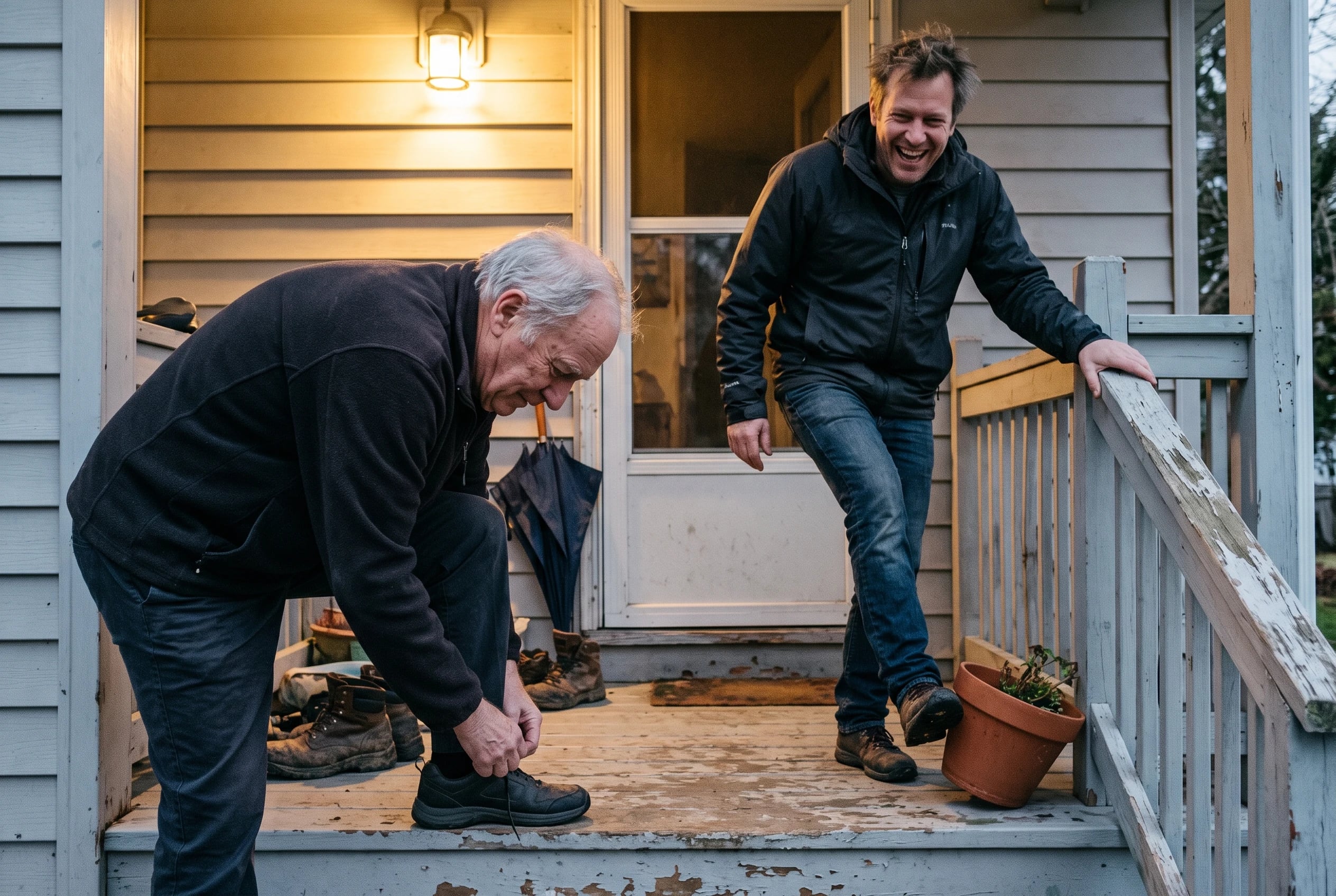
Reader quiz
Did you catch the details?
5 questions from this article.
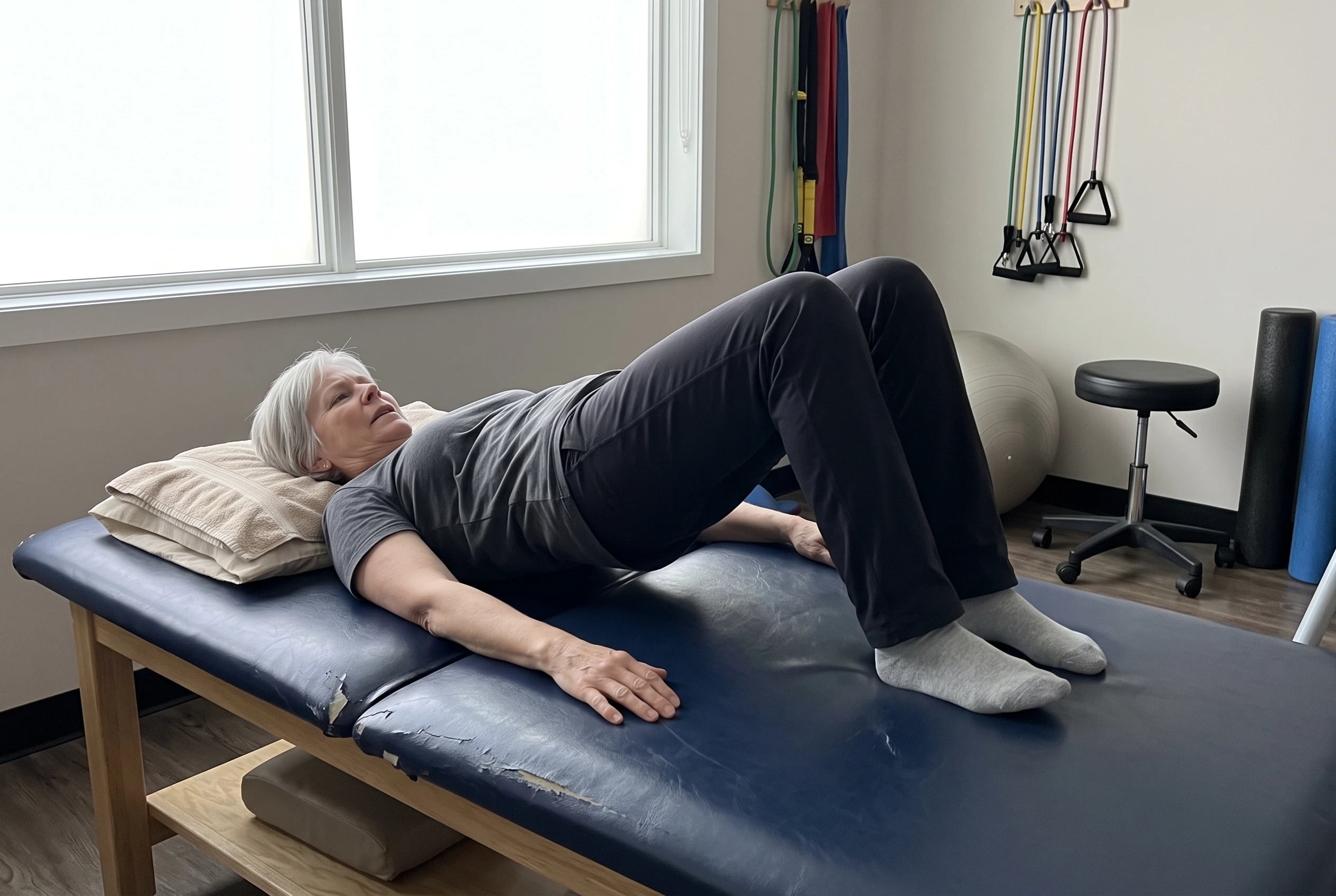
What should you try if your heel lifts inside your shoe when you shift your weight?
Did any of these feel familiar?
Know someone who needs this?
 Prime Journal · Free printable
The Everyday Health Readiness Checklist
- A clearer path from bed to bathroom
- A medicine list ready for the pharmacist
- A symptom story and follow-up plan you can use
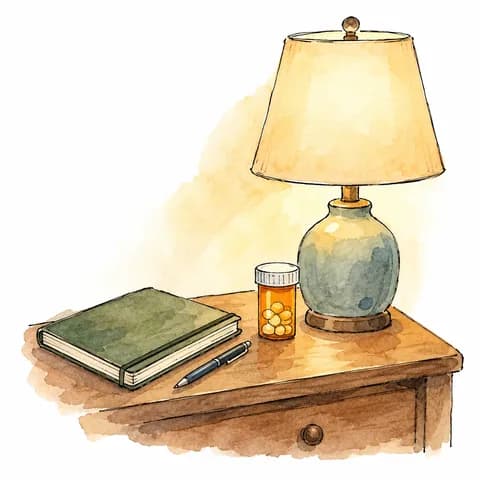
Free printable: The Everyday Health Readiness Checklist. Enter your email and it is yours.
Sources cited in this article
This article links to 8 outside sources, listed here so you can read them yourself.
- National Institute on Aging www.nia.nih.gov
- American College of Sports Medicine www.acsm.org
- CDC's physical activity guidance www.cdc.gov/physical-activity-basics
- Physical Activity Guidelines for Americans health.gov/moveyourway
- Arthritis Foundation www.arthritis.org
- American Academy of Orthopaedic Surgeons orthoinfo.aaos.org
- National Strength and Conditioning Association www.nsca.com
- National Institute on Aging's exercise resources www.nia.nih.gov/health/exercise-and-physical-activity
Dr. Alan Pierce, PT, DPT
Health Reviewer
Alan is a physical therapist who specializes in helping adults over 50 stay strong and mobile.
More from Dr. Alan Pierce