








26 Daily Activities for Seniors That Give a Day Its Shape
A menu sorted by mobility, company, and cost, with library-card options and a weekly schedule you can put to work.
By Dr. Alan Pierce, PT, DPT, Health Reviewer
Updated · 21 min read
The short answer: Daily activities for seniors include walking, seated movement, puzzles, reading, creative projects, music, and time with other people. Federal guidance recommends 150 minutes of moderate aerobic activity each week, strength work on at least 2 days, and balance work on 3 or more days for those at risk of falls. Even 5-minute bouts count.
- Written by our health reviewer
- Cited 29 sources
- How we review

The mug is still beside the sink when you realize it’s nearly time to make dinner. You did things today. You answered a call, found the missing scissors, brought in the mail. Yet nothing gave the afternoon a place in your memory.
The same feeling hits when you visit your mom and ask what she’s been up to. A packed calendar won’t fix it. One small thing worth anticipating, followed by another that fits her energy, gives both of you somewhere to start.
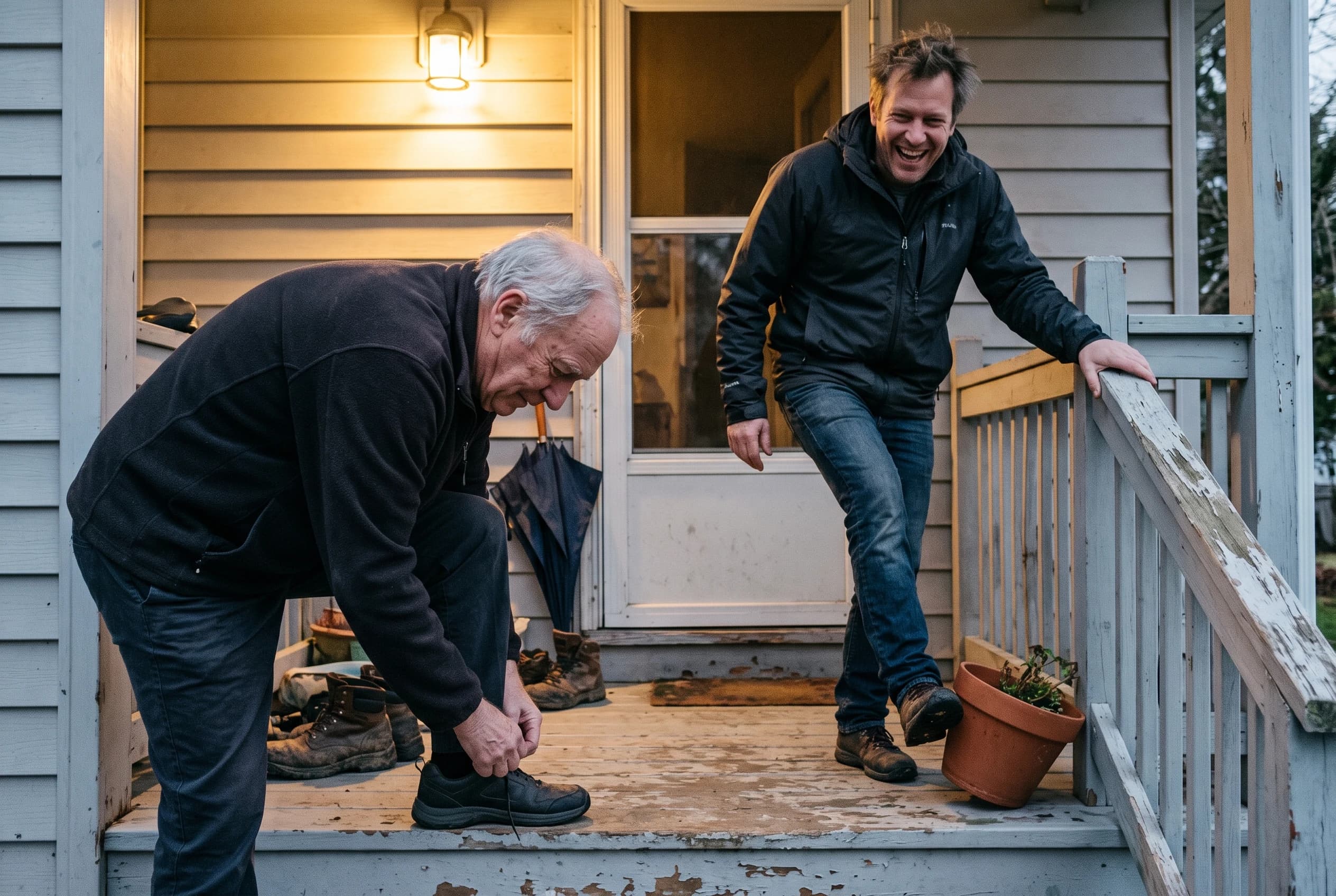
26Morning Walk Around the Neighborhood or Mall

The coat is on, but rain has reached the sidewalk. Rather than abandon the walk, consider an indoor route. The CDC’s mall-walking guide points to level routes, climate control, benches, restrooms, and water fountains.
Before going, check the mall’s opening hours and decide where to enter. If benches matter, locate them on your first visit. A neighborhood loop works too: choose a turn-around point you recognize instead of setting a distance you feel obliged to finish.
The destination gives the morning a cue. Afterward, there’s something specific to recall: the shop window that changed, the neighbor you saw, the route you’d take next time.
On a day when you’d rather stay close to home, even a brief walk has a beginning and an end. Move Your Way says activity bouts as short as 5 minutes count.
25Chair Yoga or Gentle Stretching Session
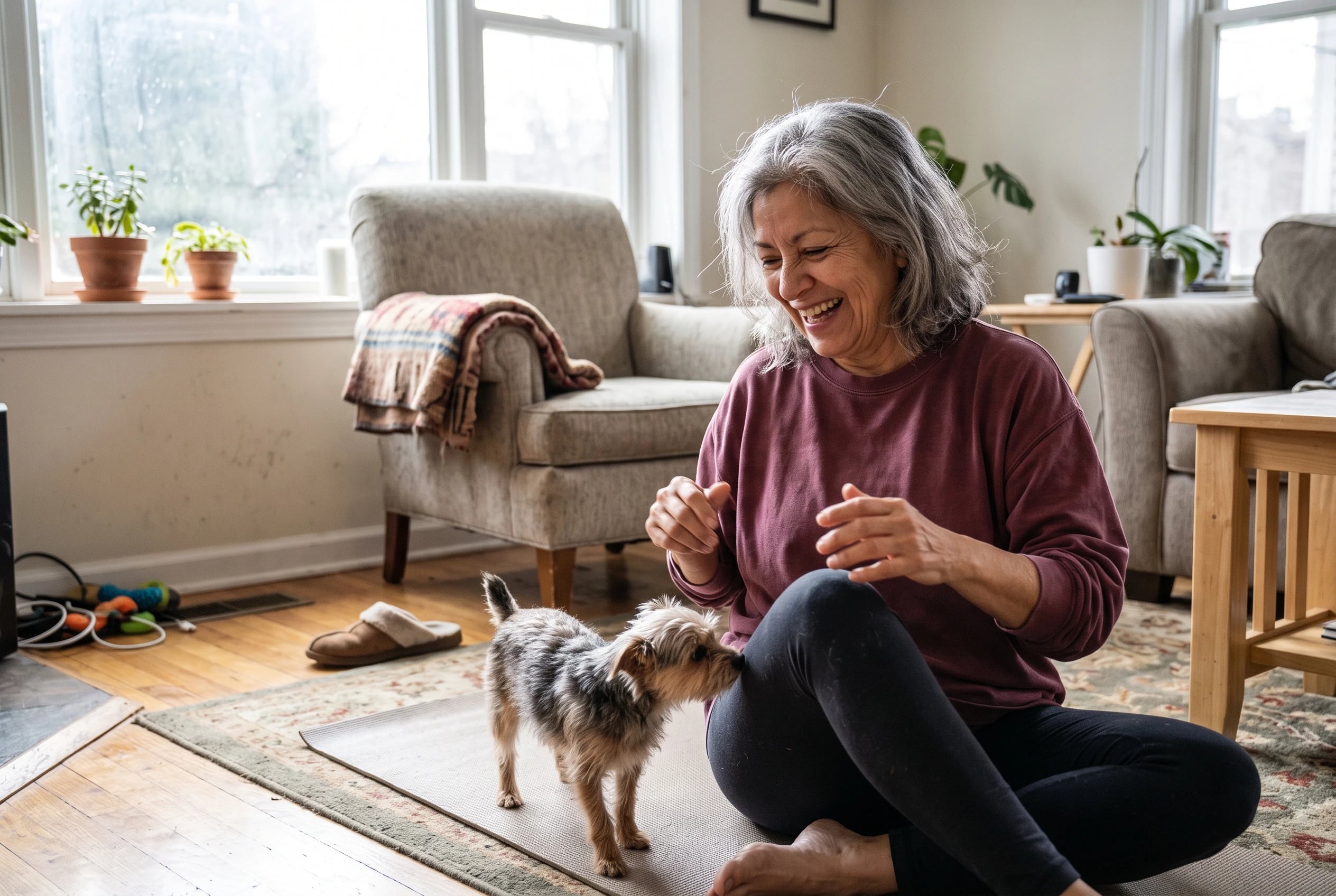
A chair changes the question from “Can I get down to the floor?” to “Which movements feel workable today?” That makes a seated session worth considering when floor poses feel awkward or out of reach.
A small randomized trial summarized by Harvard Health studied older adults with lower-extremity osteoarthritis. Participants did 45-minute chair-yoga sessions twice weekly for 8 weeks.
They reported less pain and fatigue than a health-education group. That finding belongs to the people and program studied, not every stretch labeled “chair yoga.”
Start by asking an instructor what a session involves and whether movements have seated options. The National Center for Complementary and Integrative Health advises older adults to discuss yoga with a clinician and instructor.
Put the chair where you have room to move, then keep the routine that feels worth returning to.
See more: 24 Hamstring Stretches for Seniors, Standing, Seated and in Bed →
24Tai Chi Practice for Balance and Calm

Tai chi gives you a sequence to learn rather than a finish line to reach. That appeals on a day when a long outing feels like too much planning. Find a class or video that shows movements clearly, and watch a session before joining in.
The National Center for Complementary and Integrative Health summarizes research indicating tai chi improves balance and stability in older adults.
A 2022 scoping review also examined findings on mobility and cognition. Neither source turns one practice into a promise about your own results.
The useful part of a routine is familiarity. You know when the session starts, what you’re practicing, and which movement you want to ask about next time. If you’re choosing alongside your mom, let her see the pace before either of you commits to a class.
23Raised Bed or Window Box Garden

A garden doesn’t need to begin with digging. Put a container where you already pause during the day, and the plant gives you a reason to look again tomorrow. If bending takes the pleasure out of it, height matters more than the size of the harvest.
The Arthritis Foundation suggests raised beds or window boxes to reduce stooping. One larger option, the Vego Garden elevated bed, measures 2 by 4 feet.
It was listed at about $240 when this was written. That’s a choice, not a requirement; check the maker’s current listing before buying.
Set a pot where you can reach it without stretching across a counter. Then make the activity small: look at the leaves, check the soil, and decide whether anything needs doing. Some days, the answer is no.
22Window Birdwatching With a Sightings Log
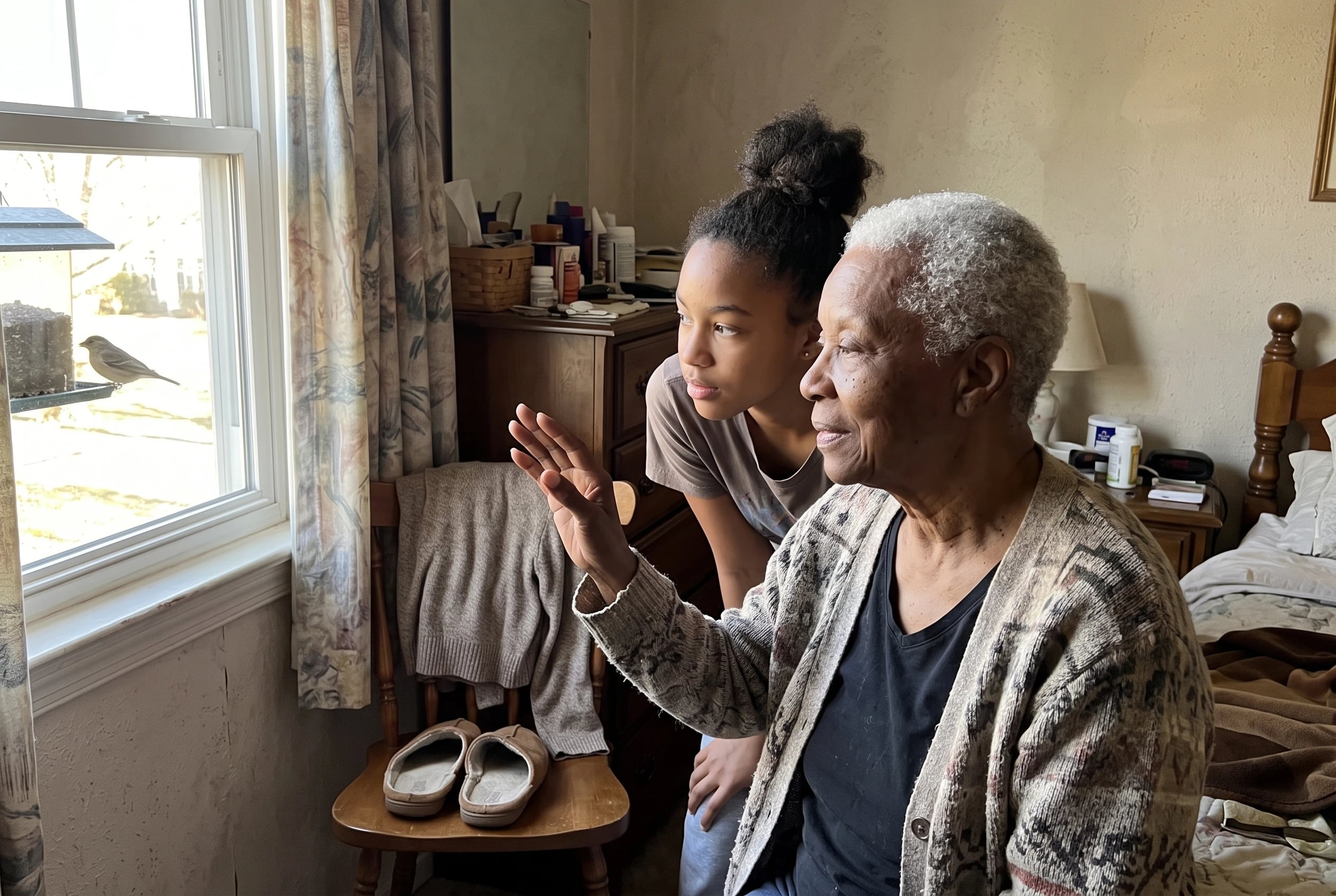
There’s a particular pleasure in recognizing a visitor before it lands. Put a chair near a window, keep a short sightings list, and see which birds return. No long trip or special schedule stands between you and the activity.
If you use a feeder, the Cornell Lab of Ornithology says black-oil sunflower seed attracts the widest variety of feeder birds. Start there rather than buying an assortment to solve a problem you haven’t met.
Want to give the observations somewhere to go? Project FeederWatch accepts sightings logged from home. Its U.S. participation fee was $18 for the 2026 season.
Check the current fee before joining; watching from your window needs no membership. The list itself becomes a reason to pull up the chair again tomorrow.
21Jigsaw Puzzle or Daily Crossword
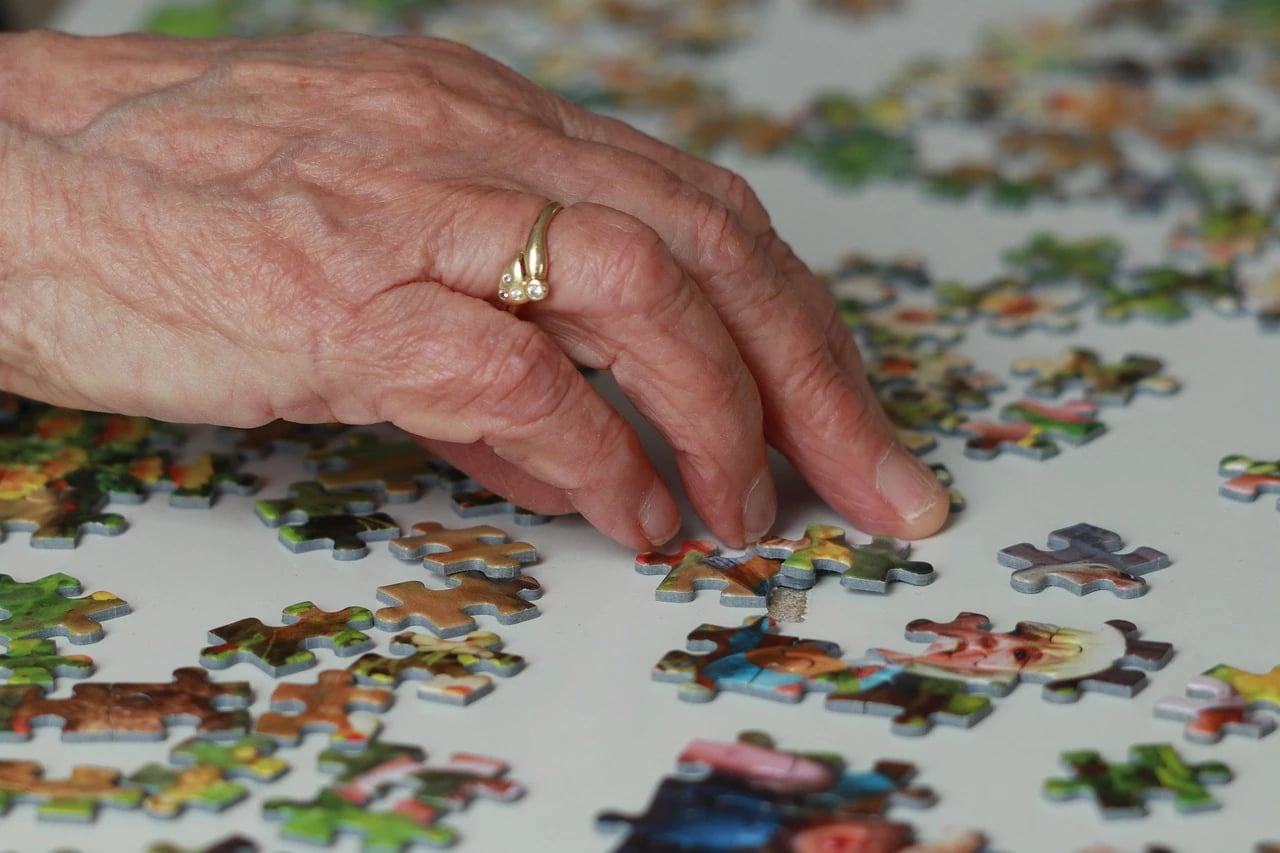
Leave a jigsaw where it won’t need to be put away before supper. You get the pleasure of returning to a half-finished corner without starting over. If space is tight, a crossword on your phone takes the same idea into a waiting room or armchair.
The NYT Games app listing showed monthly in-app options of about $6 for Games and $7 for Crossword in 2026. Check the current listing before subscribing. A puzzle you already own costs nothing to reopen.
Choose based on the kind of attention you want. A jigsaw invites you to look for color and shape; a crossword asks for words. Neither needs a performance goal. Stop at a satisfying point and leave yourself a place to begin tomorrow.
20Bridge Lessons or a Solitaire Game
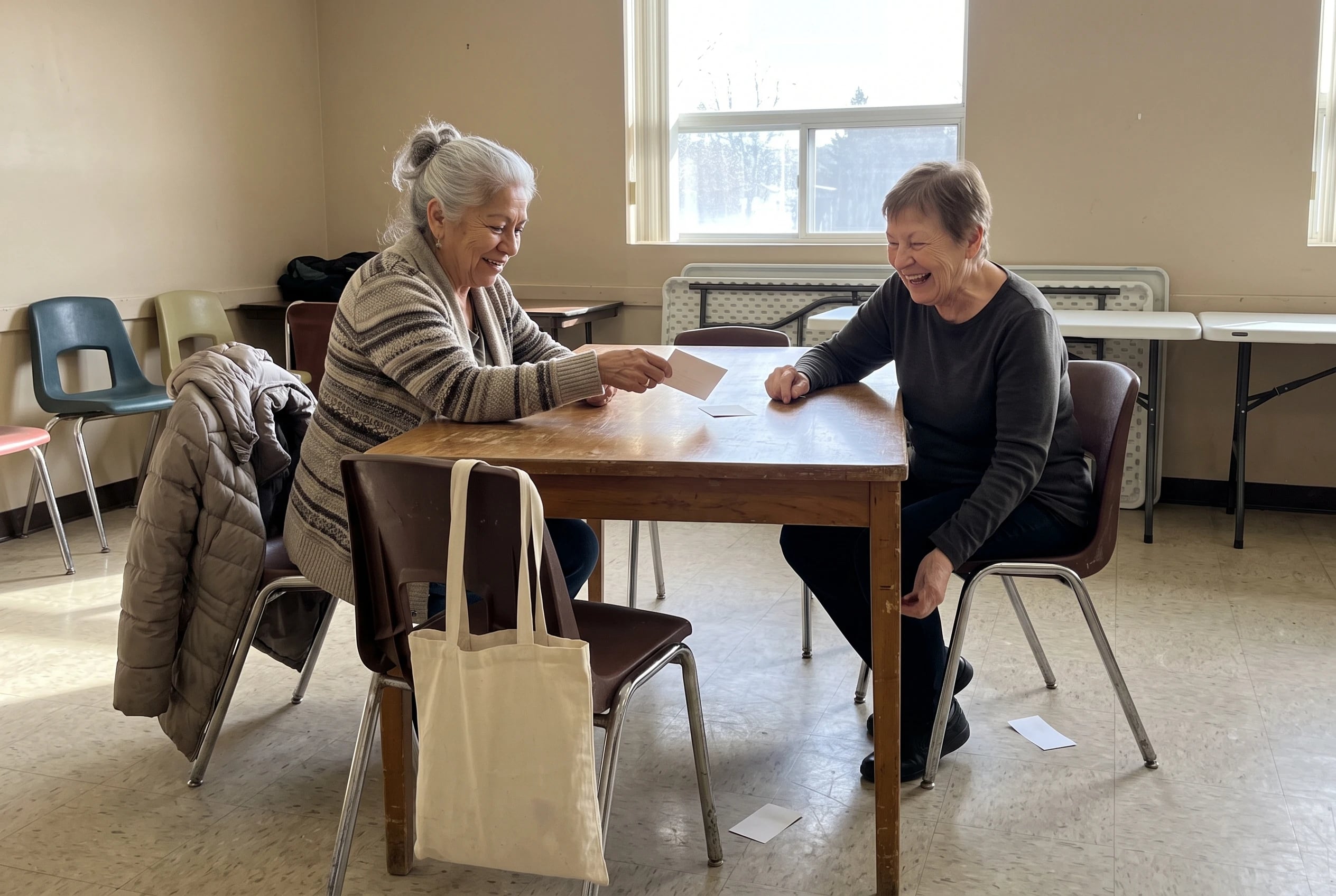
A deck of cards offers two different afternoons. Solitaire fits a stretch of time you have to yourself. Bridge gives you a standing reason to meet other players and keep learning.
For a structured start, the American Contract Bridge League’s Intro to Bridge Online listed a beginner series. It included 10 classes, 2 hours each, for $99 when this was written.
Check the course page for the current format and price. You needn’t sign up to find out whether the game interests you.
If you already know a card game, invite someone for a round and agree on the rules before playing. “Show me how your family plays” is a better opening than discovering halfway through that you learned different versions. The next game then has a date and a person attached to it.
19Board Game Night With Neighbors
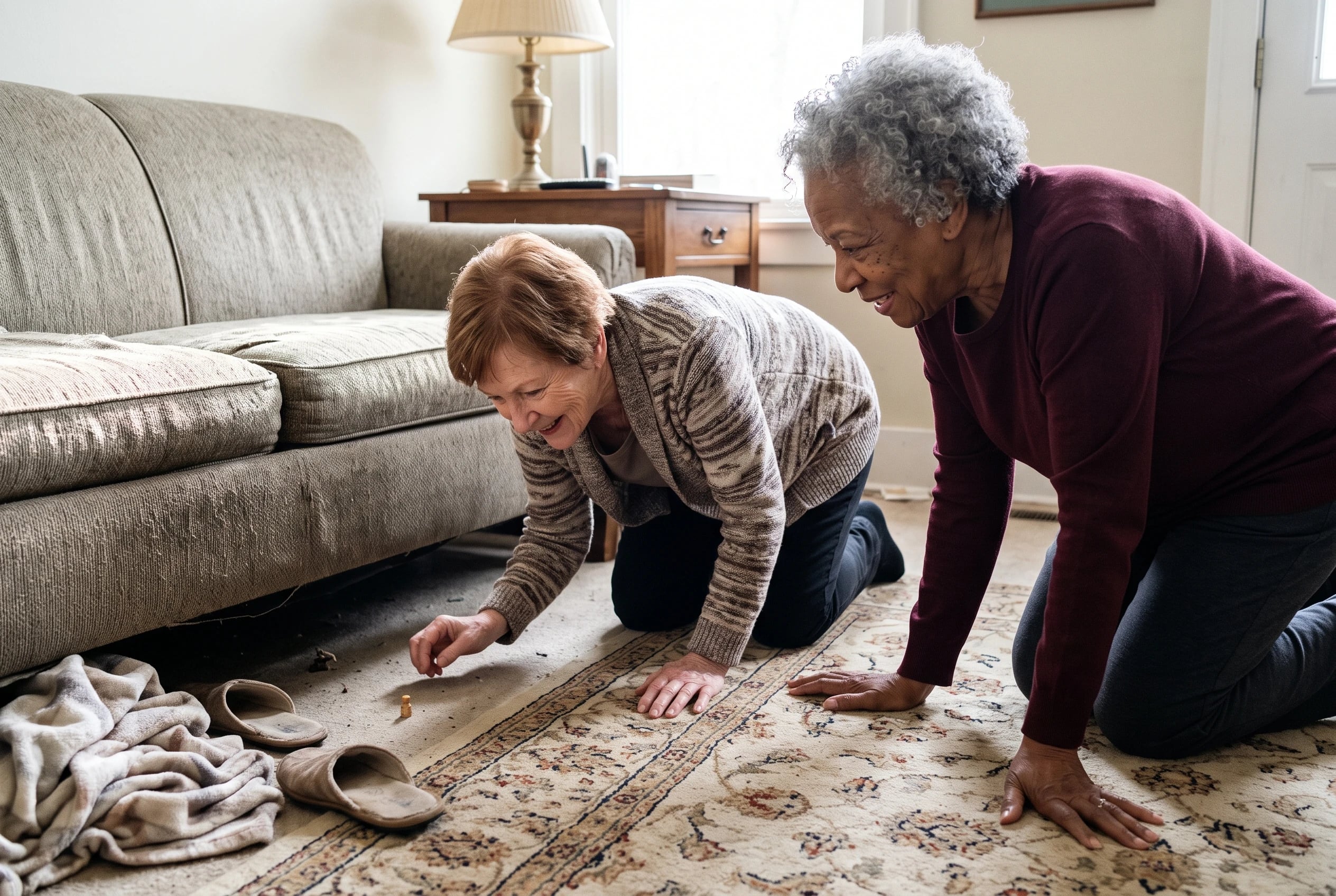
A game night stalls when nobody knows which box to open. Pick the game before inviting people, and tell them how long you plan to play. That lets a neighbor say yes without wondering whether the evening will run on.
For groups with mixed experience, Ticket to Ride and Codenames Pictures offer different kinds of play. Asmodee USA’s June 2026 catalog listed their suggested retail prices at about $50 and $25, respectively. Those are catalog prices, so check a store’s current price before buying.
You don’t have to buy either one. Ask guests to bring a game they know well and teach it. Set out the pieces before they arrive. Once the first turn begins, conversation has something easy to gather around.
18Library Book or Borrowed Audiobook

When concentration comes and goes, an audiobook lets you keep a story close without holding your place on a page. On another day, the print version is exactly what you want. A library card leaves both choices open.
Libby is free to install, and ebooks and audiobooks are free to borrow with a valid library card. Open the app, find your library, and use your card to see its collection.
If you don’t have a card, ask the library how it issues one; don’t assume every branch handles digital registration the same way.
Give the book a regular spot in your day. Listen while you sit by the window, or read until a natural stopping point. Then put it where you’ll see it again. An unfinished chapter gives tomorrow an invitation.
17Book Club With a Shared Pick
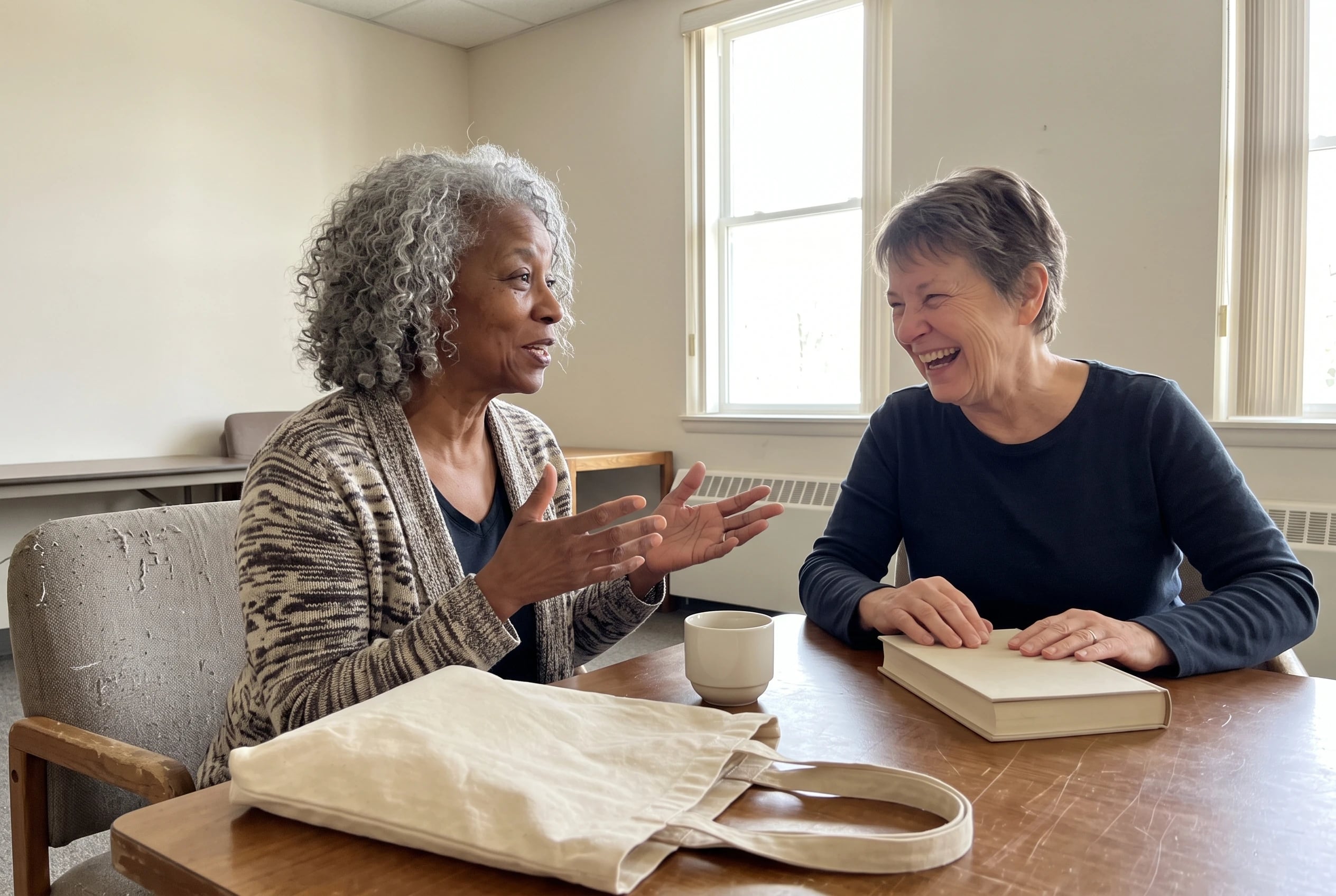
Have you ever finished a book and wanted to call someone before the last page had settled? That’s enough reason for a club. It doesn’t need a long reading list or a room full of people.
Ask a friend to choose the first book with you. Pick a day to talk, then decide whether you’d rather meet in person or call. The conversation starts with what caught your attention, including what annoyed you.
Finishing the book isn’t an entrance exam.
If coordinating dates and titles becomes the tiresome part, Bookclubs.com says its core organizing tools are free, with paid extras optional.
Use a tool only if it saves effort. What gives the week shape is knowing somebody else is reading toward the same conversation.
16Drawing Pad and Colored Pencils
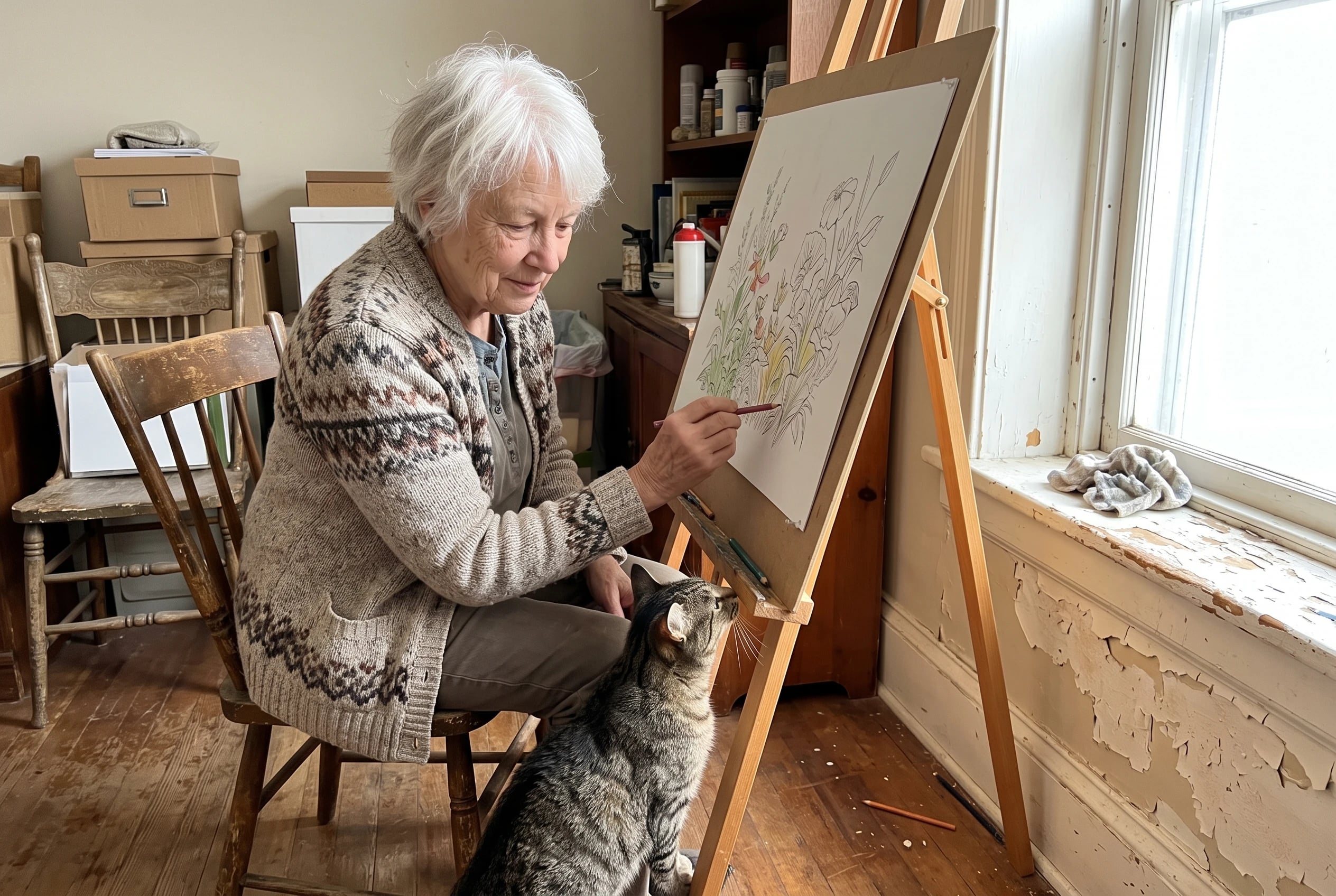
The blank page looks less demanding when you give it a small assignment. Draw the mug in front of you. Color the shape of a leaf. Try another version tomorrow and keep both.
A Strathmore 300 Series drawing pad is one acid-free option at 9 by 12 inches.
If blending color is the part you enjoy, Michaels lists a 72-count Prismacolor Premier pencil set.
Look at what you own before buying either. A pencil and a sheet from the drawer will start the same habit. Keep supplies within reach, not packed behind the holiday decorations. You’re making it easy to sit down for another try, rather than saving art for an afternoon that arrives fully clear.
15Crochet, Knitting or Sewing Project
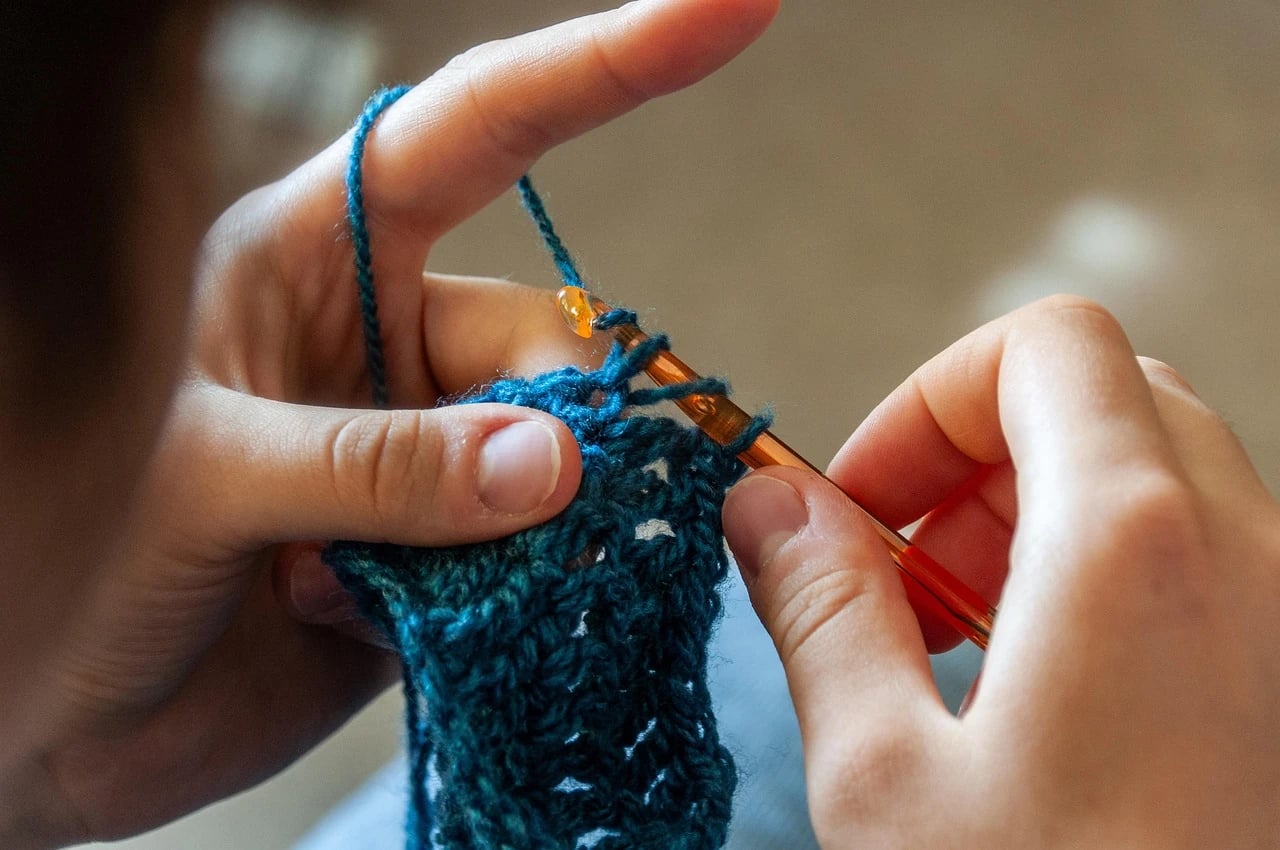
A half-finished scarf in a basket has one advantage: it remembers where you left off. Choose a project with a next step you can identify without setting everything up again.
For crochet, Clover’s Amour set has 10 easy-grip hooks and was listed at about $94 when this was written. They’re an option for comfort, not something you need to purchase to begin.
Lion Brand’s Wool-Ease Thick & Quick is a super-bulky yarn if you prefer a project that grows visibly.
Returning to sewing? The Brother CS7000X has built-in stitches and speed control.
First decide what you’d like to make or mend. Let that decision guide the tools, not the other way around.
14Scrapbook of Old Photos and Letters

The shoebox is full, and one photo keeps sliding between letters that belong to different years. Start with that small problem. Choose a few things you want to revisit, then give them a place where you can find them again.
Materials matter when the originals are worth keeping. The National Archives recommends acid-free, lignin-free enclosures. For photos, the Library of Congress describes photo corners and suitable sleeves rather than putting glue or tape directly on the image.
Write a caption separately: who’s pictured, what you know, and what you’re still trying to remember. Leave uncertain names uncertain. That gives you a reason to ask someone about the picture next time you talk.
13Favorite Recipe and Kitchen Thermometer
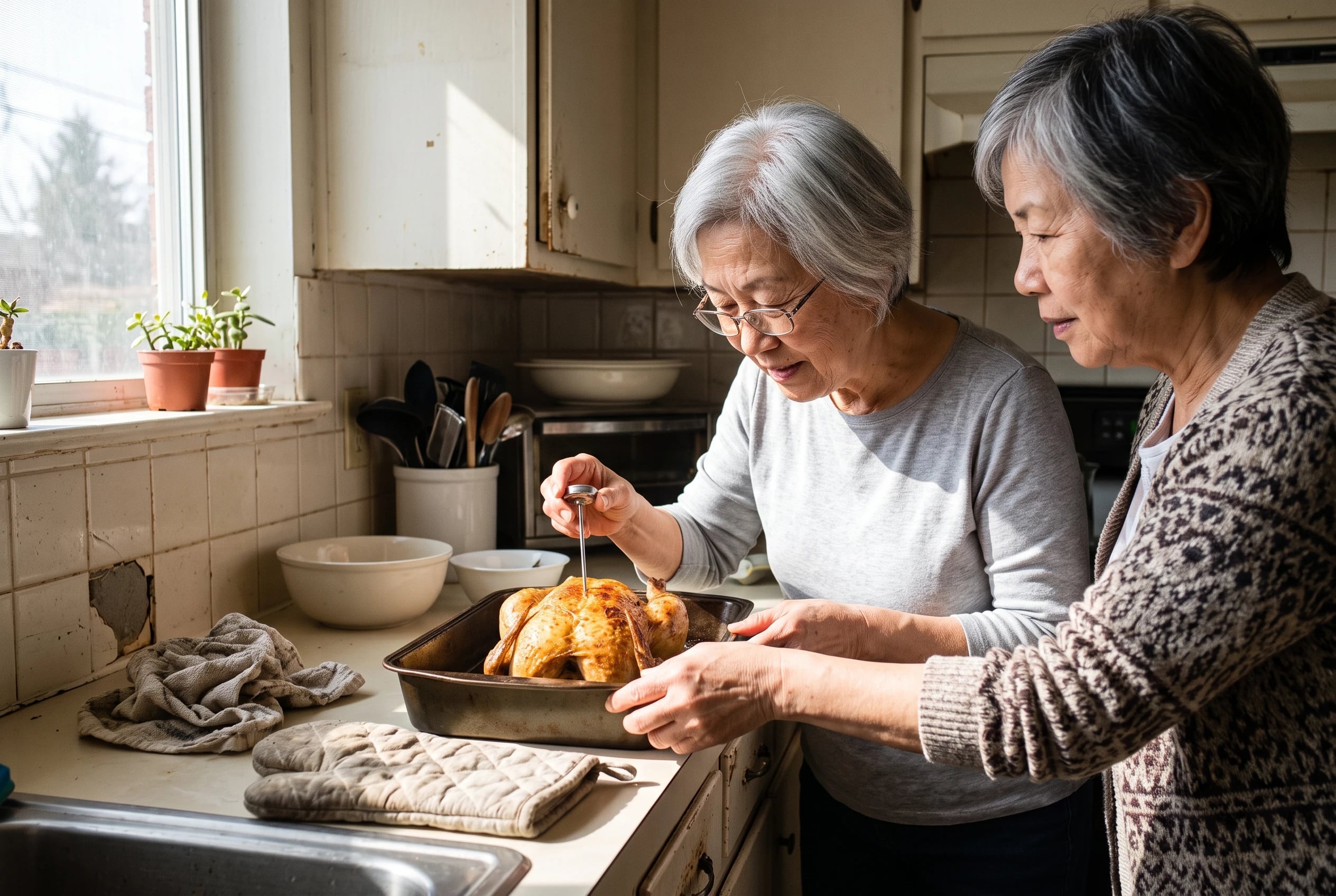
A familiar recipe brings back more than its ingredients. You remember who used to request it, which pan fits, and the part you still do by feel. Keep that pleasure, and use a thermometer for the part a glance won’t tell you.
The USDA safe-temperature chart says poultry should reach an internal temperature of 165°F. If you’re cooking for your mom as well as yourself, that’s a detail worth checking instead of guessing.
The CDC notes that adults 65 and older face greater risk of severe foodborne illness.
Make the recipe the occasion. Ask who wants a portion, or write down the change you made this time. The thermometer handles the safety check; the conversation gives the cooking a life beyond dinner.
12Favorite Songs on a Portable Speaker
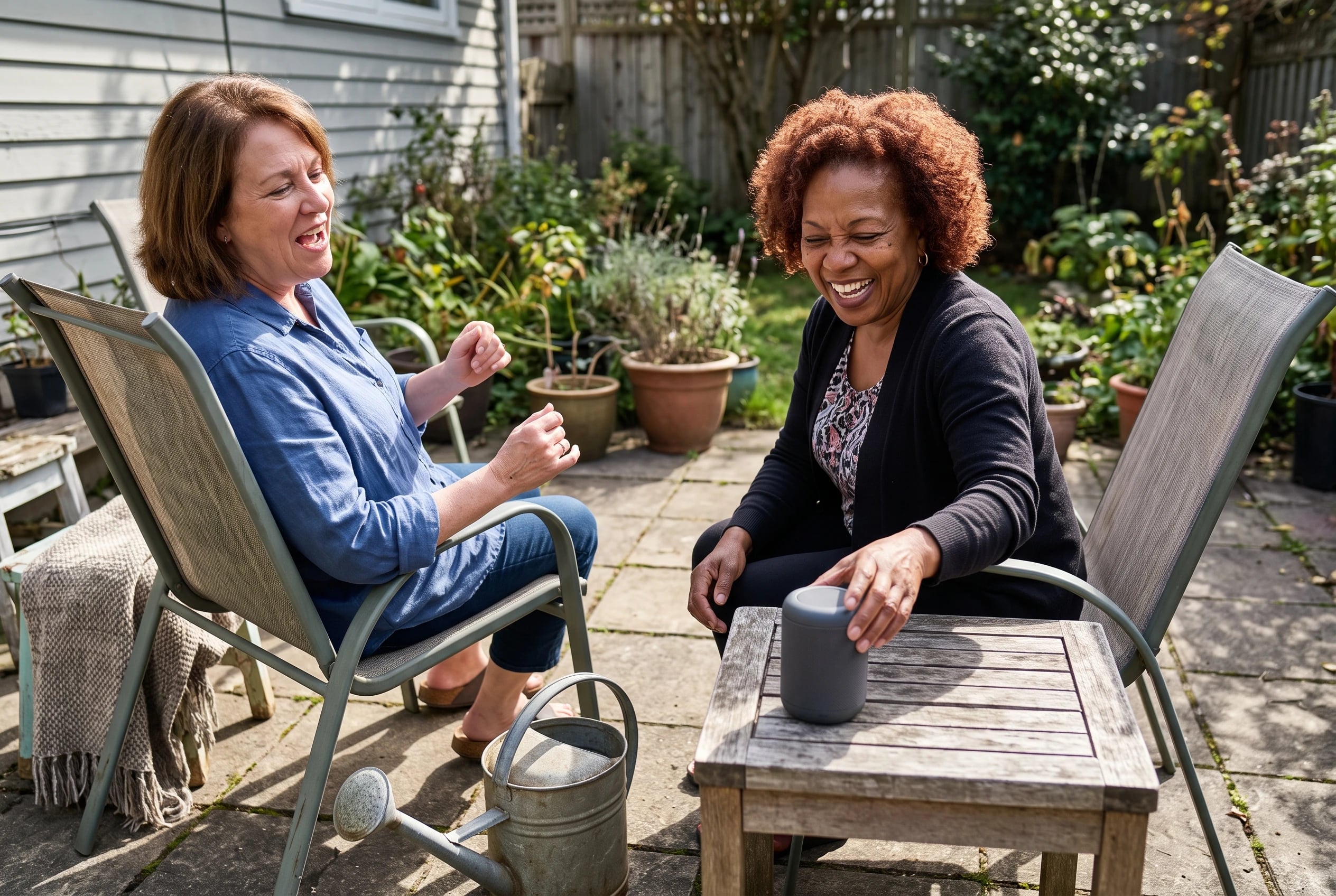
You know the opening notes before you know where you left your glasses. Put a song on while you sort a drawer or sit on the patio, and the room changes without requiring an outing.
If you want sound that moves with you, JBL announced the Flip 6 at about $130, with IP67 water and dust resistance. That was its announced price, not a promise about today’s store shelf.
Your current speaker or phone is enough if it plays what you want to hear.
Make a short list of songs with a purpose: one for starting the morning, one you haven’t heard in years, one to send a friend. Ask what they remember about it. Music gives you a ready-made reason to reach out.
11Choir Rehearsal or Group Singalong
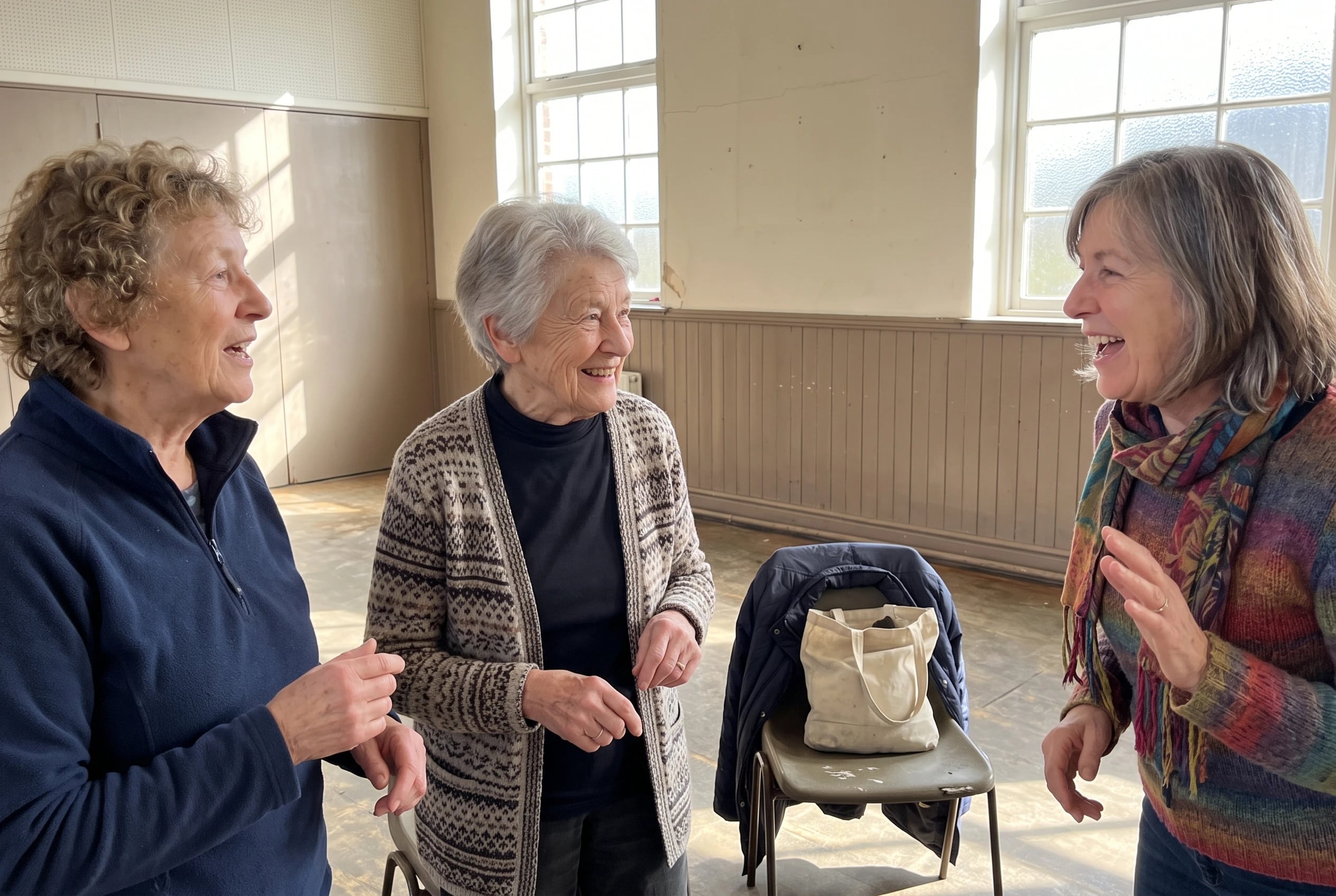
Singing with other people puts a date on the calendar before you’ve learned every word. If there’s a group you’d like to try, ask what the next rehearsal is like and whether newcomers are welcome. You’re allowed to listen before committing.
For a remote gathering, Zoom’s Basic plan listed free group meetings of up to 40 minutes in 2026. Check its current terms before setting a time.
A family singalong doesn’t need to sound like a formal rehearsal; choose familiar songs and let people join from where they are. Pick the song you hope the group sings, or ask someone to send the words. Afterward, you have a name to remember and a reason to return.
10Video Call With a Friend

“Call sometime” is easy to forget. “Thursday after lunch?” gives both people something to put on the calendar. A regular call also takes away the pressure to have important news. You can show a plant, ask about a recipe, or pick up a conversation you paused last time.
Zoom Basic listed free group calls of up to 40 minutes in 2026. Check the current plan terms if you’re arranging a group. For a call with your mom, settle the setup together beforehand: where the device sits, how she answers, and how to turn up the sound.
Don’t make new equipment the price of seeing someone’s face. Start with a device you already use. The part worth repeating is the appointment with the person on the other end.
9Living Room Dance to Favorite Songs
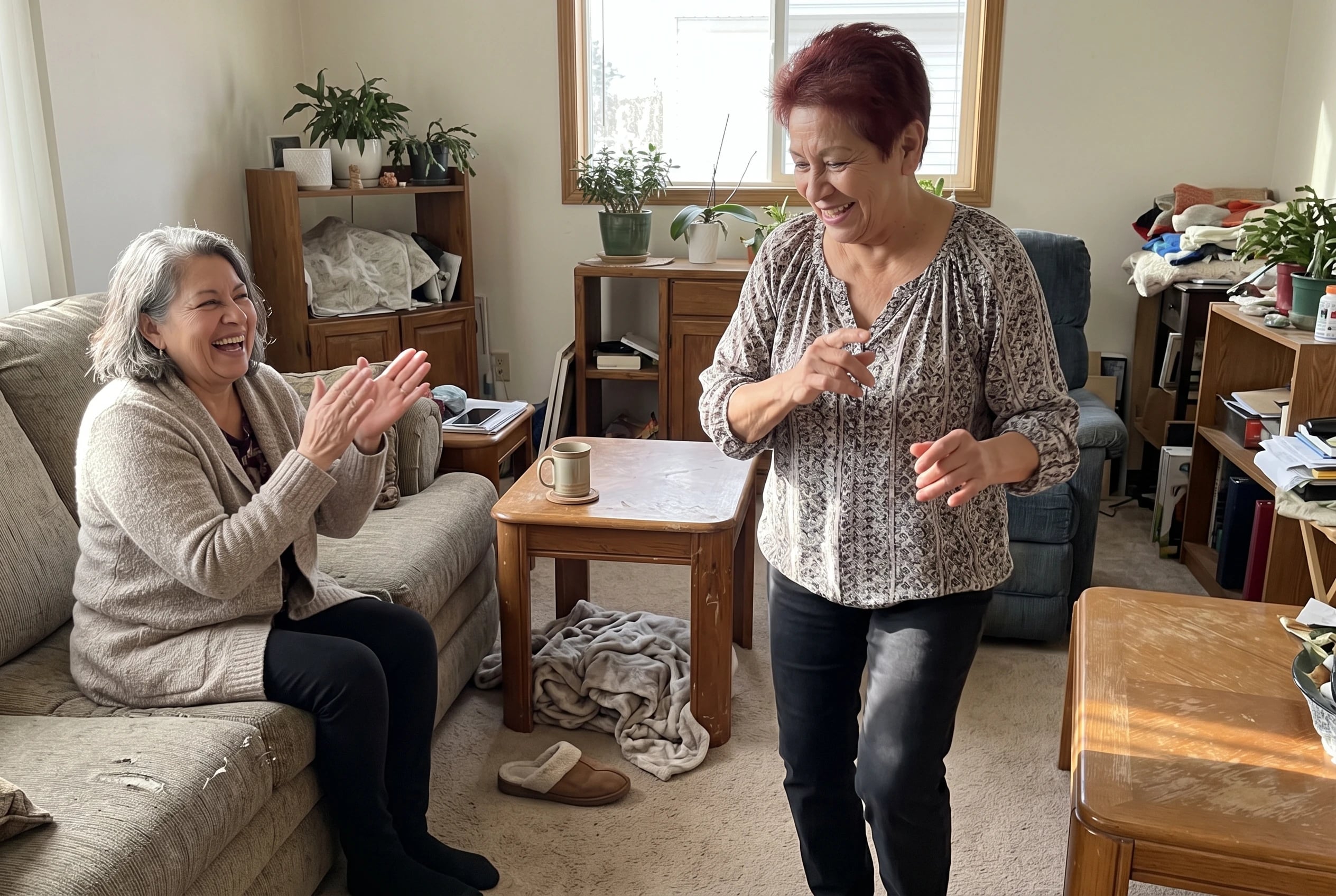
A song comes on while you’re putting things away, and you stay for the chorus. That counts as an activity you chose, even if nobody else saw it. Clear a patch of floor before you turn the music up, then move in the way that feels comfortable.
Associated Press reporting on dancing and aging describes dancing as movement that contributes toward aerobic activity goals and engages balance and mobility. The appeal at home is simpler: you pick the song, the space, and when to stop.
Keep a few favorites ready so you aren’t spending the whole break searching. If dancing brings back a person or place, tell someone. A brief song in the living room becomes part of the day you’ll remember.
8Chair Supported Strength Exercise Session
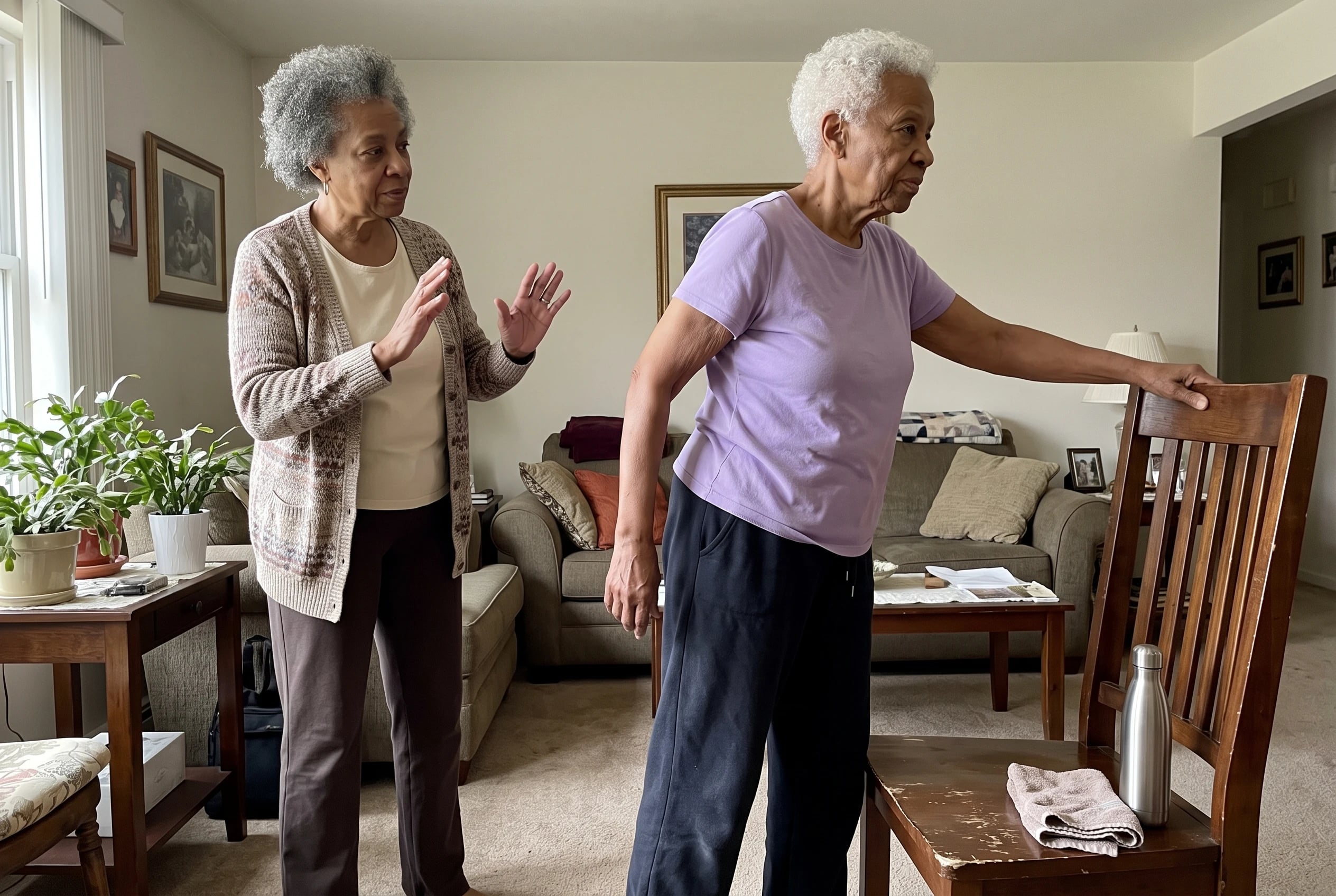
Set a sturdy chair where you have room around it. Before exercising, sit down and stand up at a comfortable pace. Notice how the movement feels today. That’s a useful check for choosing a session, not a test you need to pass.
The CDC’s guidance for older adults recommends strength activity alongside aerobic movement and balance work when fall risk is present. Chair-supported exercise gives you a place to begin if standing for a whole session doesn’t suit you.
Ask a clinician which movements fit if pain, recent illness, or balance concerns change what feels safe.
Put strength days on your calendar rather than waiting to remember them. When the chair is already in place, starting asks less of you.
7Short Journal Entry or Written Memory
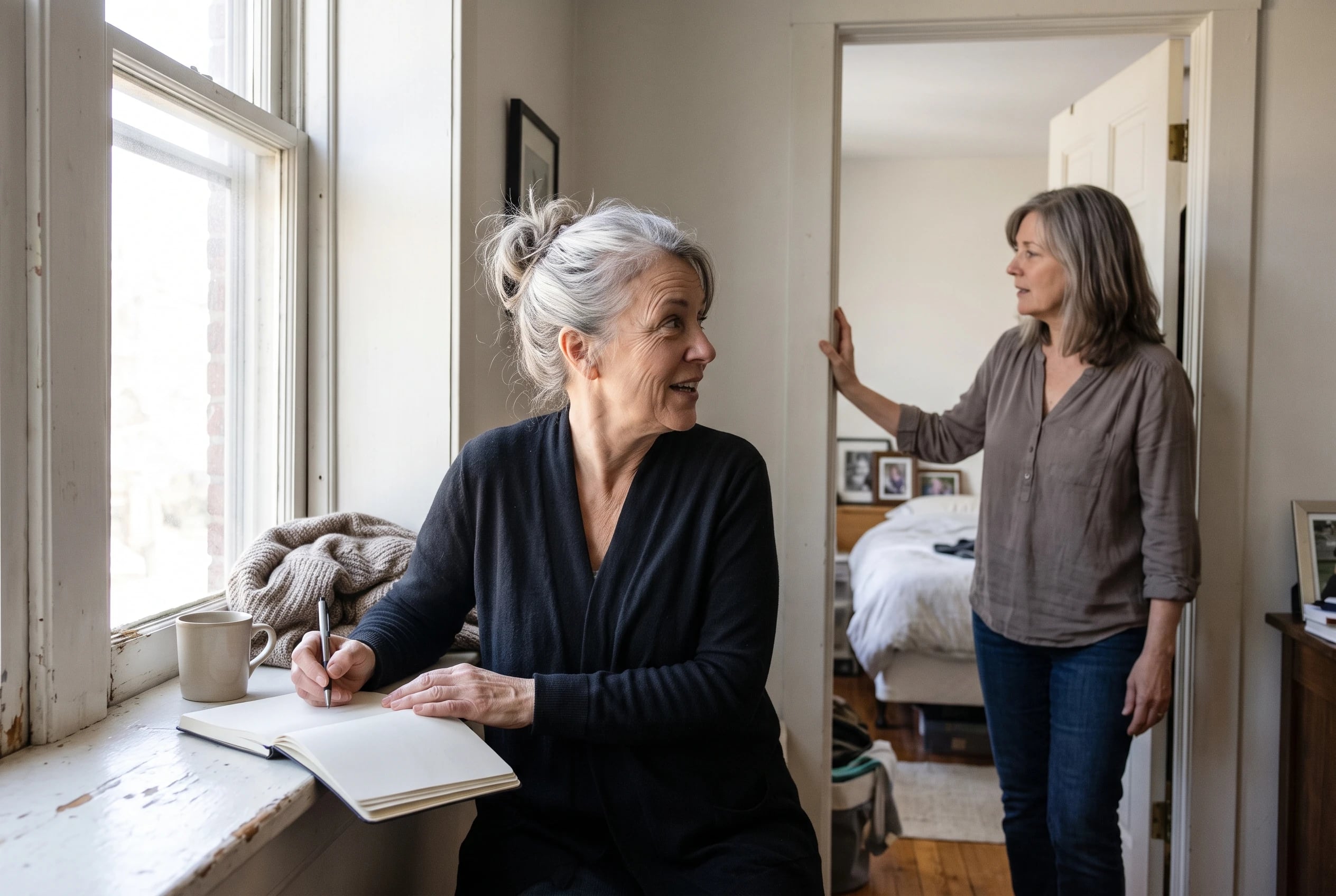
You open a notebook and can’t think of anything important enough to record. Skip “important.” Write down the sound outside your window, the meal you want again, or what made you laugh. A sentence is an entry.
If you’re writing memories, begin with an object. Who gave you the blue bowl? What was in the drawer beneath the old phone? Let the detail lead, and stop when you’ve said what you know. You don’t owe the page a complete family history.
Keep the notebook where the prompt will find you, beside the chair you use in the afternoon or near the bed. If you’re helping your mom, ask whether she wants to tell a story while you write it down. Ask before recording or sharing it. The next entry starts with whatever she brings up herself.
6Senior Center Class or Event

An event on the calendar changes how the morning feels. The difficult part is choosing one when a schedule is full of unfamiliar titles. Start with the activity you’d attend even if nobody you know were going.
Look up your local senior center’s current calendar or call. Ask, “What happens at this class, and do I need to register?” Then ask about the cost and where to enter the building. Those answers tell you whether this particular outing works, without relying on another center’s schedule or an old listing.
Go once before judging whether it belongs in your week. Notice whether you liked the activity, the people, or simply having somewhere to be. If it wasn’t for you, ask what’s coming next. A trial visit is enough of a plan for now.
See more: 23 Habits of the Happiest Retirees →
5Farmers Market or Botanical Garden Visit

An outing is easier to anticipate when it has a small mission. At a farmers market, look for an ingredient you haven’t cooked lately. At a botanical garden, choose a path you’d like to see and leave the rest for another visit.
Check the place’s current hours, admission, and walking conditions directly before setting out. Seasonal schedules change, and the right details are the ones for the day you plan to go. If you’re going with your mom, ask which part she wants: shopping, looking, or sitting together somewhere new.
Bring home one thing to extend the outing. It could be something for dinner or the name of a plant you want to look up. Then there’s a small after-story to the trip, rather than another errand crossed off a list.
4Group Activities for Nursing Home Residents
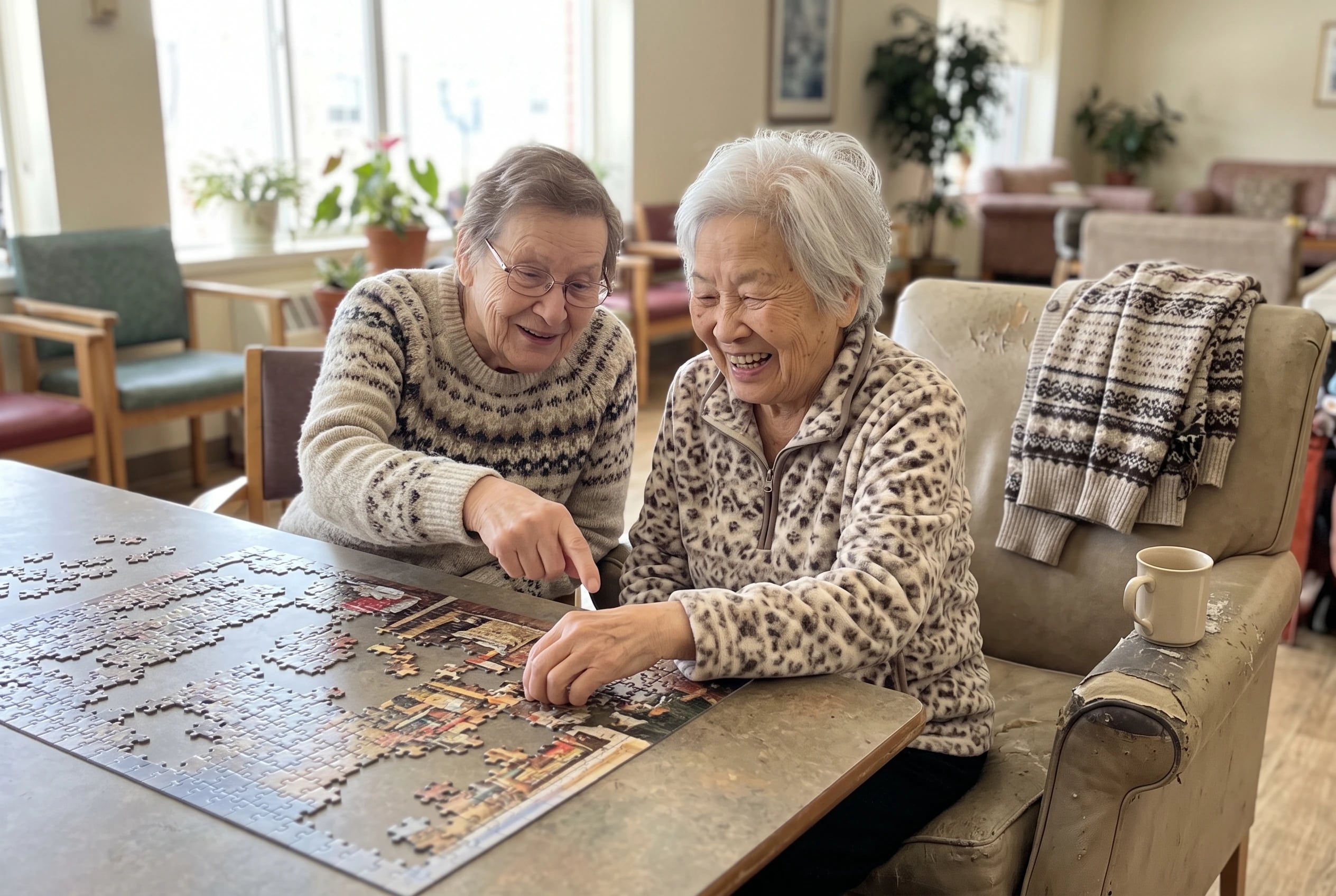
If you’re planning a visit or helping organize a group, begin with activities people already recognize. Ask residents what they want to hear or play before arriving with a full schedule. The answer saves everyone from an afternoon built around someone else’s idea of fun.
- Play a familiar song and invite people to name it or sing along.
- Put a jigsaw where people can add pieces without staying for the whole puzzle.
- Offer a card or board game to those who want a round.
Ask staff what space is available and what the group already enjoys. For your own visit, participation matters more than running an event. Sit with your mom, let her choose the song, and leave time for a conversation that has nothing to do with the activity.
3Dementia-Friendly Versions of Favorite Activities
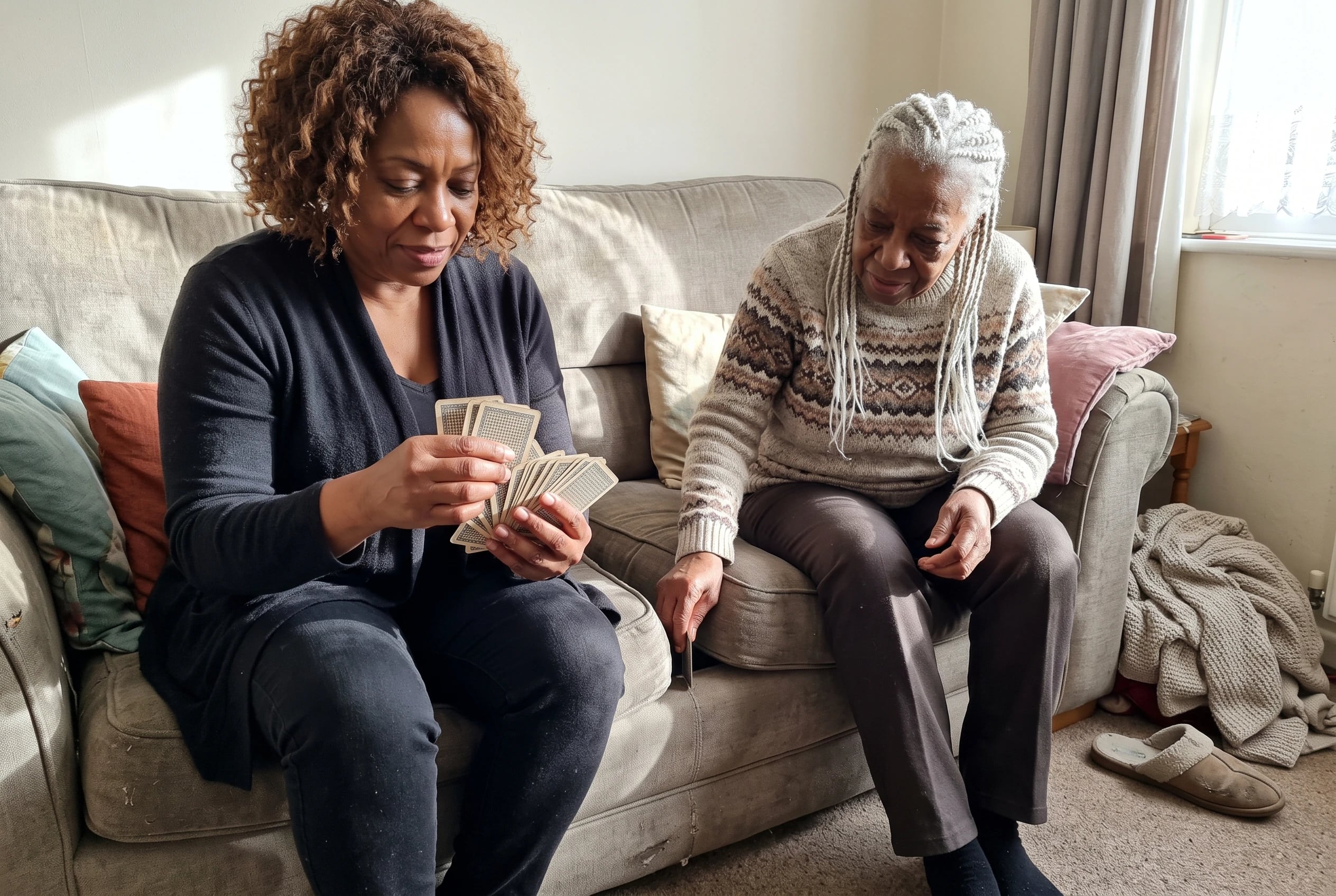
When your mom has dementia, begin with something she has enjoyed before. A familiar song, a deck of cards, or a craft she recognizes gives you a shared activity without asking her to learn new rules that afternoon.
Make the invitation small. Put on a song and listen together. Sort cards by color rather than starting a competitive game. Offer a craft step she can see and try, then let her decide whether to continue.
If the activity frustrates her, stop and choose another way to spend the time. Ask her care team what to adjust for her needs, and pay attention to what she enjoys today. You don’t need a finished craft or a completed game to have spent the visit together.
2Free Daily Activities for Seniors on Any Budget
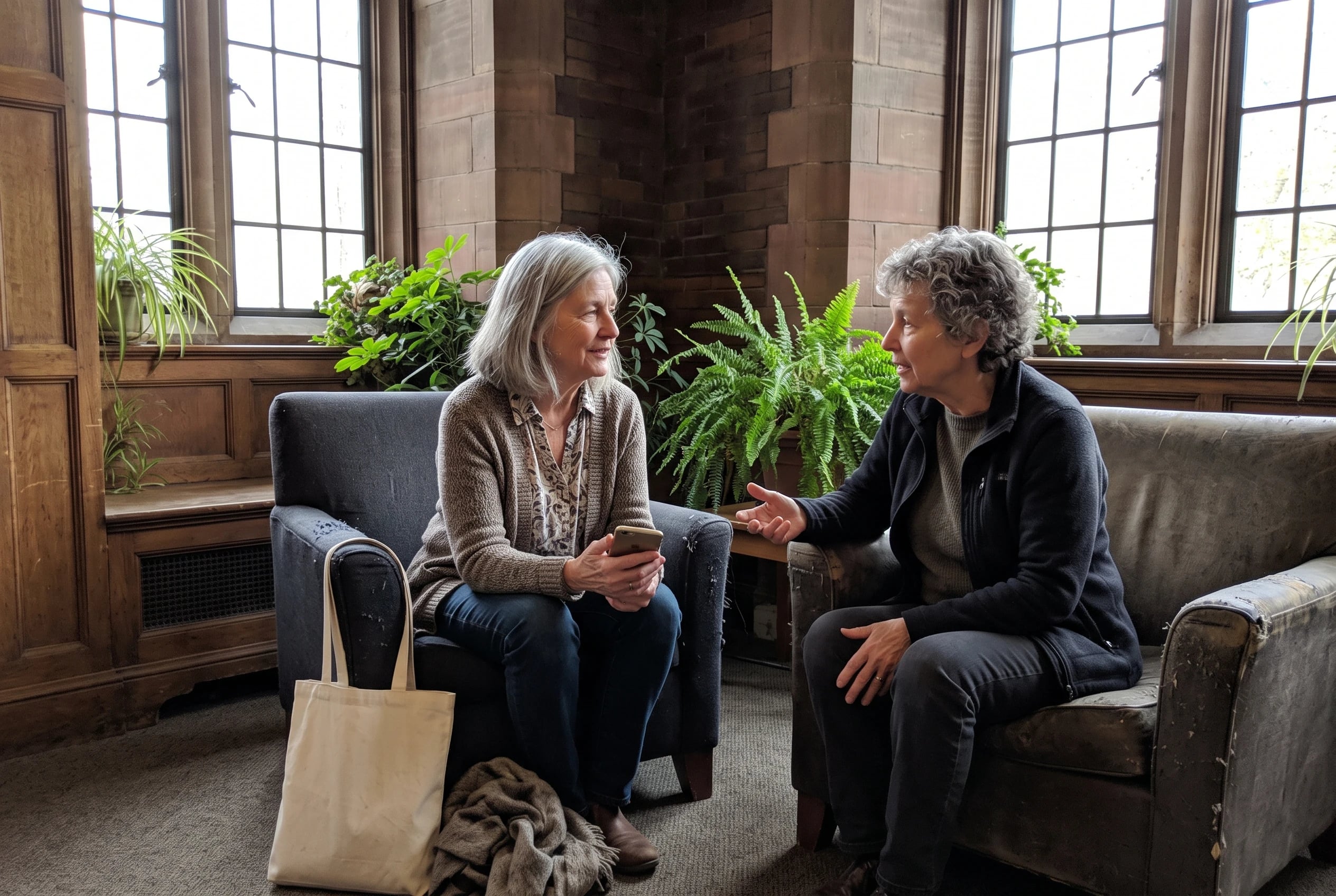
Before buying supplies, look at what’s already available. Pick an activity that suits the time you have, then check its current terms before signing up.
Match the choice to the day. Borrow a book when you want time alone, arrange a call when you want company, or watch birds without joining anything. The price tells you what to check; it doesn’t tell you which afternoon you’ll enjoy.
1Weekly Schedule for Daily Activities at Home
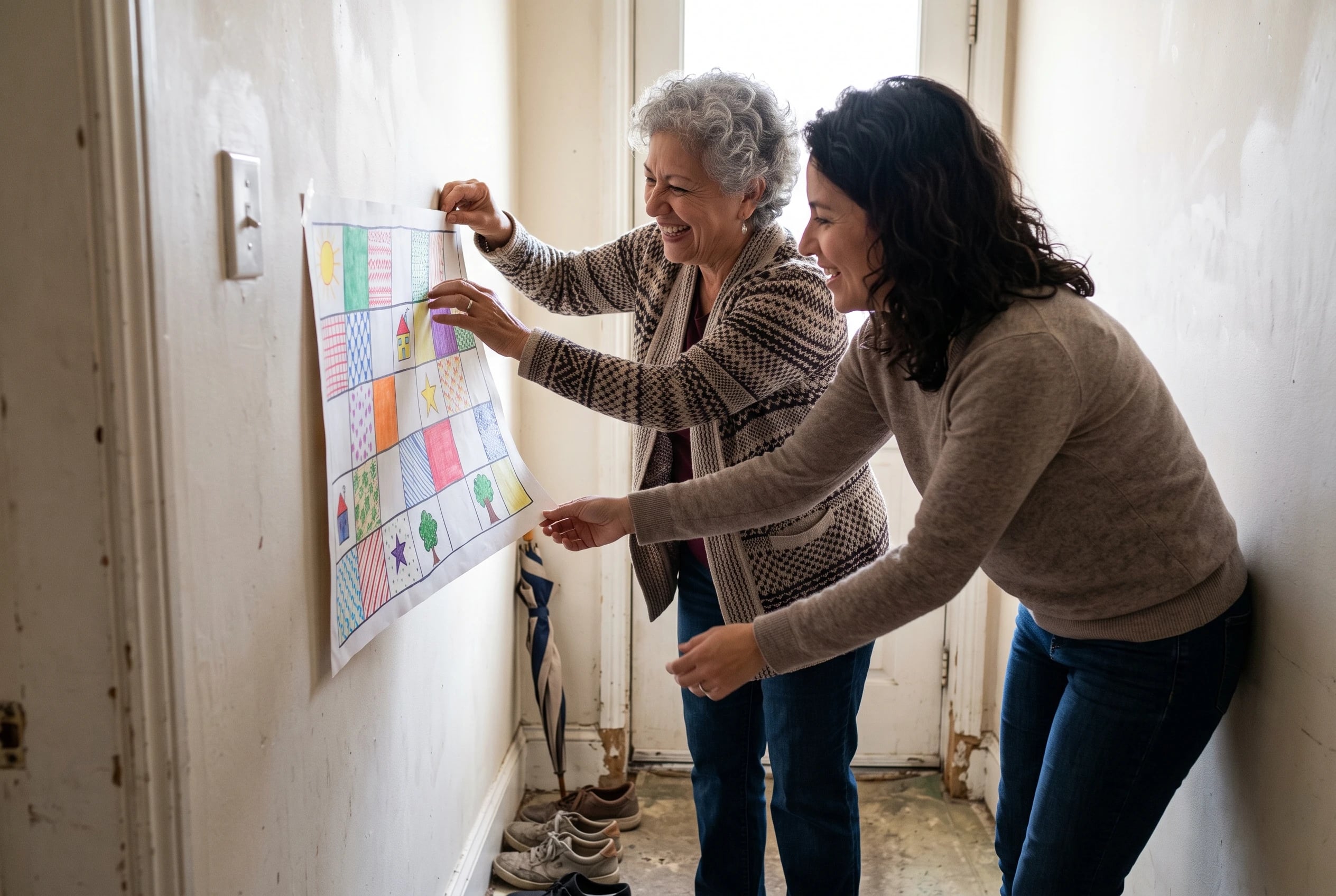
A list leaves you making the same decision every morning. A schedule makes a few decisions ahead of time while leaving room for how you feel. Start with the parts of the day when you have energy. Give each one a purpose: movement, something absorbing, or contact with another person.
Here’s a week to adapt, not a set of appointments to complete.
- Monday: Morning walk; afternoon library book; evening call.
- Tuesday: Chair-supported strength; a short craft session; music after dinner.
- Wednesday: Walk or seated movement; puzzle; book-club conversation.
- Thursday: Balance practice; recipe you enjoy making; a friend’s call.
- Friday: Walk; journal entry; a game with someone.
- Saturday: Market or garden visit; time with a book.
- Sunday: Familiar music; look over the week ahead; choose next week’s plans.
The Move Your Way fact sheet recommends mixing aerobic, strength, and balance activity across the week.
Its talking points say even 5 minutes of movement counts. Short blocks belong here too.
Keep the schedule where you’ll see it. If Tuesday’s plan falls through, move the call or skip the craft. Then choose what you still want to return to tomorrow.
The bottom line
A day gets its shape from a few things you chose: a reason to move, something that holds your attention, and a person or place to anticipate.
The prepared version of you has checked the class time, put the library card where she can find it, and penciled in the next call. She has also left space to change her mind.
Which part of your day already has that pull, and where would you like one more reason to look forward?
Up next
26 Five-Minute Exercises for Seniors
A head-to-toe menu of 5-minute exercises for seniors using a sturdy chair, a kitchen counter, and, if you want one, a soft ball.
Read the list →

Reader quiz
Did you catch the details?
5 questions from this article.
What should you check before going to the mall for a walk?
Questions people also ask
What should a 70 year old be doing every day?
There’s no separate age-70 rule in the CDC’s guidance for older adults. It recommends 150 minutes of moderate aerobic activity weekly, strength work on at least 2 days, and balance work on 3 or more days for those at risk of falls. Move Your Way says even 5-minute bouts count.
What are some fun activities for Senior Citizen Day?
Choose an activity you’d enjoy sharing: a book discussion, a game, or a call with people who live elsewhere. Bookclubs.com lists free core organizing tools, and Zoom Basic listed free group calls up to 40 minutes in 2026. Check current terms before arranging a gathering.
What do 70 year old people do for fun?
There’s no required hobby at 70. Try dancing to a favorite song, a board game with friends, or watching birds from a window. The Cornell Lab identifies black-oil sunflower seed as a choice that attracts a wide variety of feeder birds.
What do 80 year olds do for fun at home?
An audiobook, a tabletop puzzle, music, or birdwatching all work without planning an outing. Libby lets you borrow ebooks and audiobooks free with a valid library card. Choose by interest and comfort, rather than treating age as an activity list.
What are good indoor activities for seniors on a rainy day?
Try a puzzle, an audiobook, or chair yoga if that form of movement suits you. A small trial summarized by Harvard Health found reduced pain and fatigue after a chair-yoga program among older adults with lower-extremity osteoarthritis. It doesn’t establish the same result for every indoor exercise session.
How can seniors stay active if they have limited mobility?
Break movement into manageable parts; Move Your Way says even 5-minute bouts count. Chair-supported strength work is one way to plan activity alongside the CDC’s older-adult guidance. Ask a clinician to help choose movements if pain, illness, or balance concerns affect what you can do safely.
Did any of these feel familiar?
Know someone who needs this?
 Prime Journal · Free printable
The Everyday Health Readiness Checklist
- A clearer path from bed to bathroom
- A medicine list ready for the pharmacist
- A symptom story and follow-up plan you can use
Free printable: The Everyday Health Readiness Checklist. Enter your email and it is yours.
Sources cited in this article
This article links to 29 outside sources, listed here so you can read them yourself.
- CDC’s mall-walking guide www.cdc.gov/physicalactivity/downloads/mallwalking-guide.pdf
- Move Your Way health.gov/sites/default/files/2021-12/PAG_MYW_Campaign-Talking-Points.pdf
- Small randomized trial summarized by Harvard Health www.health.harvard.edu/exercise-and-fitness/chair-yoga-benefits-of-a-mind-bo…
- National Center for Complementary and Integrative Health www.nccih.nih.gov/health/yoga-effectiveness-and-safety
- National Center for Complementary and Integrative Health www.nccih.nih.gov/health/tips/tips-what-you-should-know-about-tai-chi-for-he…
- 2022 scoping review pubmed.ncbi.nlm.nih.gov/36389043
- Arthritis Foundation www.arthritis.org/health-wellness/healthy-living/daily-living/life-hacks-tip…
- Maker’s current listing www.vegogarden.com/collections/elevated-beds-v2
- Cornell Lab of Ornithology www.allaboutbirds.org/news/types-of-bird-seed-a-quick-guide
- Project FeederWatch join.feederwatch.org
- NYT Games app listing apps.apple.com/us/app/nyt-games-wordle-crossword/id307569751
- American Contract Bridge League’s Intro to Bridge Online www.acbl.org/portfolio/intro-to-bridge
- Asmodee USA’s June 2026 catalog www.asmodeena.com/AUSA-Active-06012026.pdf
- Libby help.libbyapp.com/en-us/6144.htm
- Bookclubs.com help.bookclubs.com/support/solutions/articles/39000029216-bookclubs-is-free-…
- Strathmore 300 Series drawing pad www.dickblick.com/items/strathmore-300-series-drawing-pad-9-x-12-wire-bound-…
- 72-count Prismacolor Premier pencil set www.michaels.com/product/prismacolor-premier-soft-core-colored-pencil-set-10…
- Amour set clover-usa.com/products/amour-crochet-hook-set
- Wool-Ease Thick & Quick www.lionbrand.com/collections/yarn-weight-6-super-bulky/products/wool-ease-t…
- Brother CS7000X www.brother-usa.com/products/cs7000x
- National Archives www.archives.gov/preservation/family-archives/storing
- Library of Congress loc.gov/preservation/care/photo.html
- USDA safe-temperature chart www.fsis.usda.gov/food-safety/safe-food-handling-and-preparation/food-safety…
- Cdc.gov www.cdc.gov/food-safety/foods/adults-65-older.html
- Flip 6 news.harman.com/releases/jbl-flip-6-bold-sound-for-every-adventure
- Zoom’s Basic plan zoom.us/pricing
- Associated Press reporting on dancing and aging apnews.com/article/0408e20084b24026125df19faff77988
- CDC’s guidance for older adults www.cdc.gov/physical-activity-basics/guidelines/older-adults.html
- Move Your Way fact sheet health.gov/sites/default/files/2021-07/PAG_MYW_FactSheet_OlderAdults_07-08_5…
Dr. Alan Pierce, PT, DPT
Health Reviewer
Alan is a physical therapist who specializes in helping adults over 50 stay strong and mobile.
More from Dr. Alan Pierce