








24 Best Hamstring Stretches for Seniors, Standing, Seated and in Bed
A room-by-room guide to supported stretches and strengthening moves, with a towel, hold times and a flexibility test you can do without standing.
By Dr. Alan Pierce, PT, DPT, Health Reviewer
Updated · 17 min read
The short answer: The best hamstring stretches for seniors include a seated chair-edge stretch, a lying stretch assisted by a towel, and a standing heel-on-step stretch with support. Hold a comfortable stretch for 10 to 30 seconds and repeat it 2 to 4 times. Stretch at least 2 to 3 days a week; daily practice is most effective.
- Written by our health reviewer
- Cited 13 sources
- How we review

Your legs feel tight when you swing them off the bed. You’d like to reach toward your toes, but the floor feels far away, and balancing on one foot sounds worse.
So start where you feel steady. A firm chair, a bed or a wall gives you a place to work without turning a stretch into a balance test.
Aim for tension at the back of your thigh, not pain. If a position hurts, back off. That rule matters more than how far your hand reaches.
24Doorway Hamstring Stretch Against the Wall
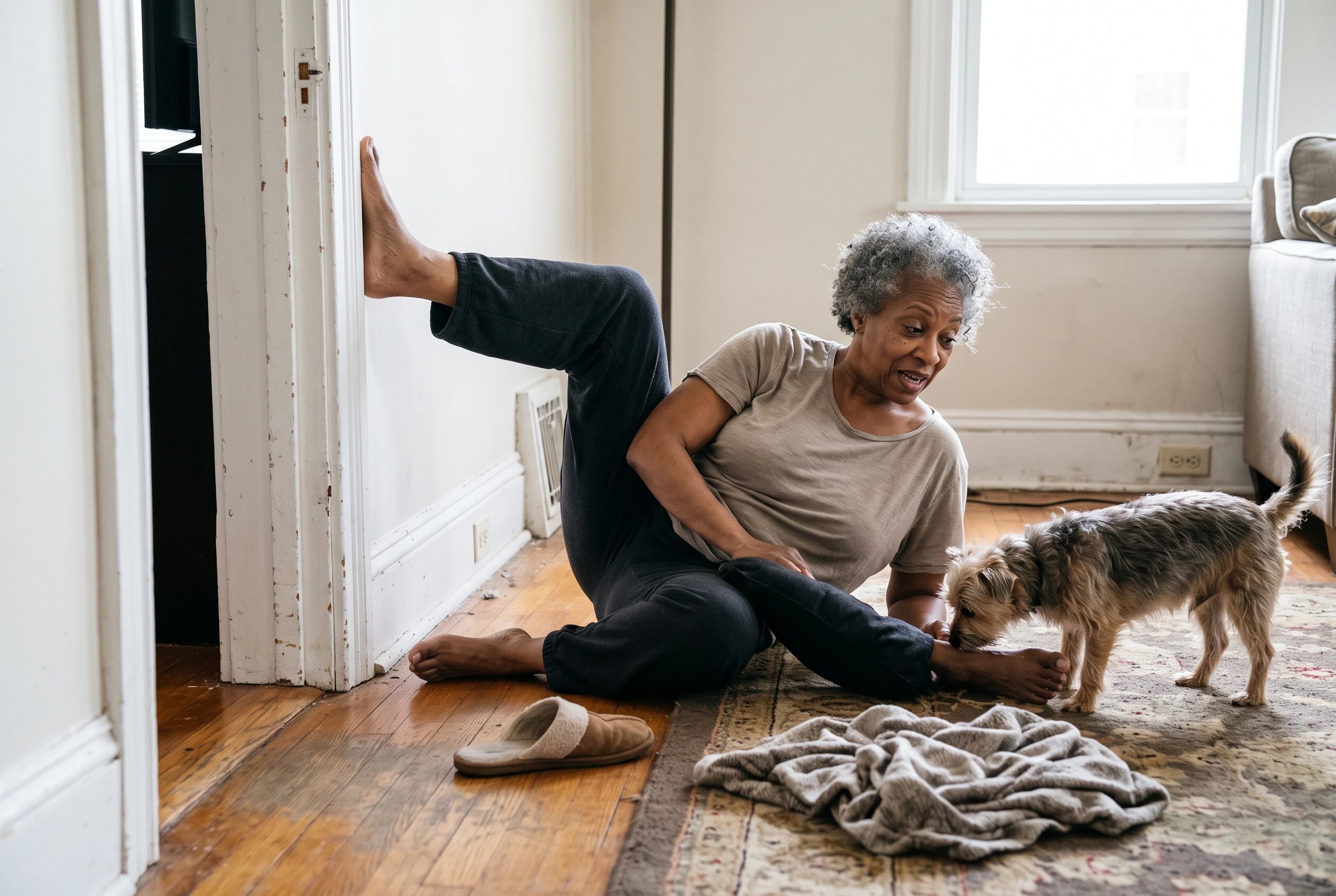
A doorway gives one leg a wall to rest against while the other stays on the floor. Lie on your back near the open doorway.
Place one leg through the opening, then bring the other leg up against the wall beside the frame. Straighten the raised leg only until you feel a mild stretch behind the thigh.
You don’t need to press the knee flat or get your hips flush against the wall. Move farther from the frame if the position feels too strong. Keep your attention on the raised leg rather than trying to make both legs look even.
Mayo Clinic’s doorframe stretch uses the wall to hold the position. That leaves your hands free and takes standing balance out of the exercise.
23Best Hamstring Stretches for Seniors: Chair-Edge Stretch

Pull up a stable chair and sit near its front edge. Extend one leg with its heel on the floor and toes pointing up. Keep the other foot planted. Now tip forward from your hips until you feel the stretch along the back of the extended thigh.
Think about moving your chest forward, not dropping your head toward your knee. A small hinge counts. South Tees Hospitals NHS shows this position.
A Nottinghamshire patient leaflet gives an example of a 20 to 30 second hold repeated 3 times. This is the chair stretch worth learning first: no floor to get down to, and no need to stand on one leg. Switch sides rather than stretching only the leg that complains loudest.
See more: 20 Best Recliner Chairs for Seniors →
22Lying Hamstring Stretch With Hands or Strap

If reaching your foot takes more effort than the stretch itself, leave your foot alone. Lie on your back and clasp your hands behind one thigh. Bring that leg toward you until you feel tension behind it. Straighten the knee only as far as feels comfortable.
Cleveland Clinic’s stretching guide offers a towel when clasping behind the thigh is difficult. A strap serves the same purpose in a UCSF Sports Rehab handout: it helps guide the raised leg as the knee straightens.
Your arms are there to assist, not win a pulling contest. Ease the leg back down before changing sides.
Notice whether one leg stops sooner. There’s no prize for forcing it to match the other. If holding the thigh strains your hands, try the towel before you give up on the lying position.
21Standing Heel-on-Step Stretch With Chair Support
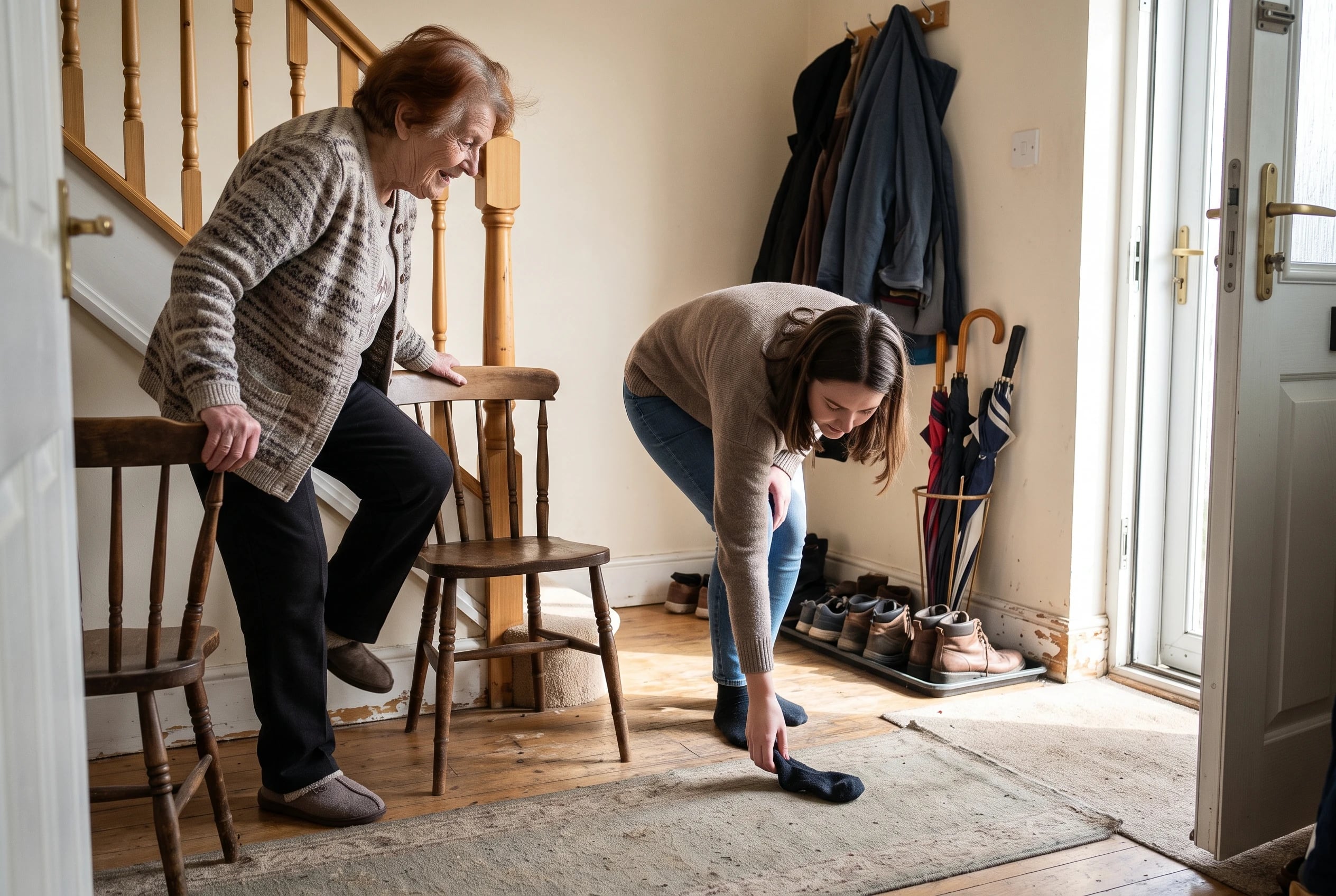
A step or low stool brings your heel up to you. It doesn’t ask you to reach all the way down. Stand beside a firm support, place one heel on the raised surface and keep that knee comfortably straight. Hinge forward from the hips until you feel the back of your thigh stretch.
Keep a hand on the support throughout. NHS inform’s thigh exercises describe a supported heel-up stretch; its chair-height version increases the stretch.
There’s no need to start with that higher position. Before lifting a foot, check what’s under the other one. If the support wobbles or your stance feels uncertain, lower your foot and choose a seated stretch instead.
20In-Bed Hamstring Stretch for Stiff Mornings
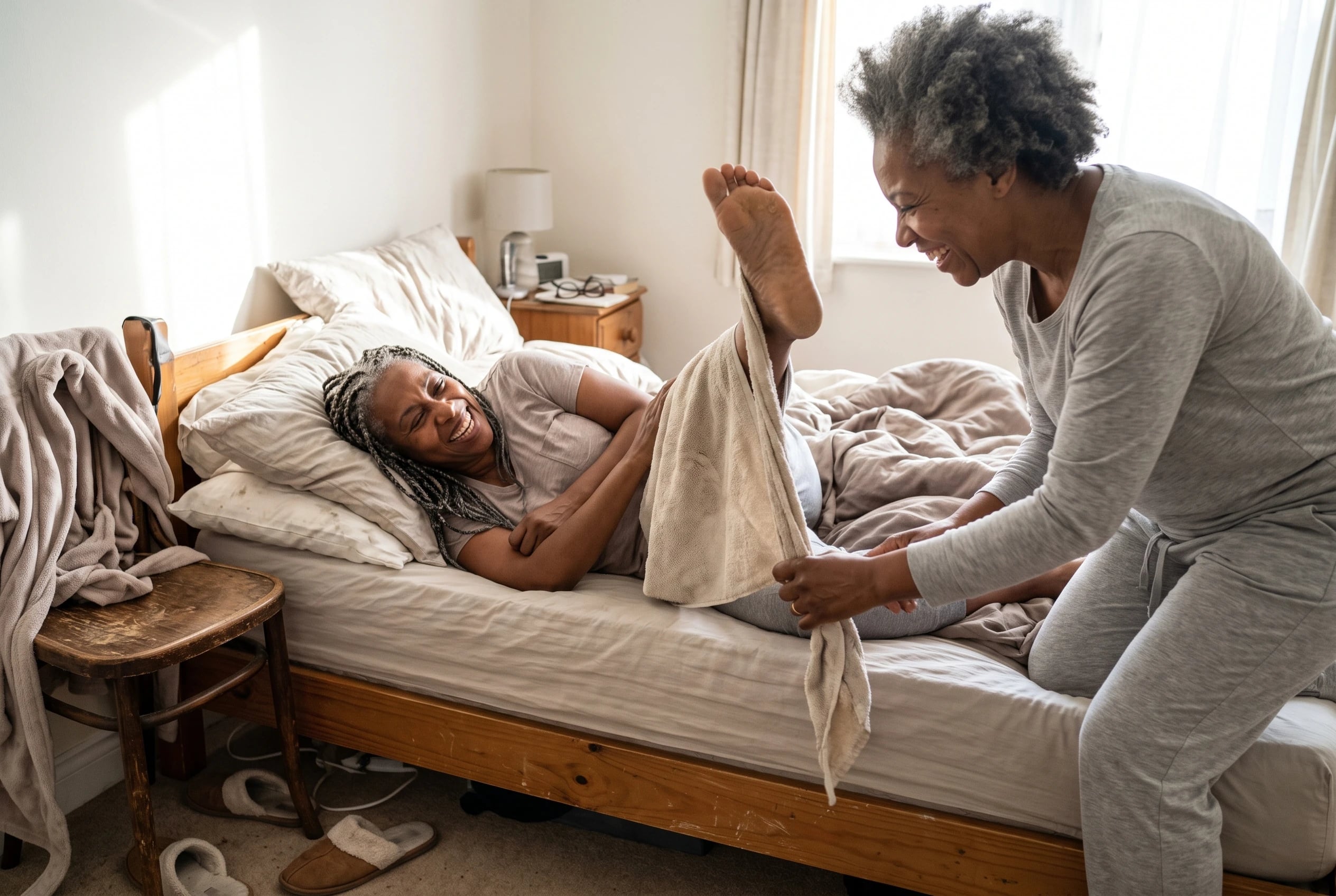
The sheets are still around your feet, and the first walk to the bathroom feels stiff. You don’t have to stand up to start moving the backs of your legs. Set a towel, T-shirt or resistance band beside the bed the night before.
While lying on your back, loop it around one foot. Raise that leg to a comfortable angle and use the fabric to guide it toward you. Stop at a mild pull, then lower it before doing the other side.
Cleveland Clinic’s bed-exercise guide includes this supine hamstring stretch. Use the bed as your starting place, not a reason to pull harder.
If your mattress makes the position awkward, the chair-edge stretch offers another route. The aim is a position you can control, even before you’re ready to leave the bedroom.
19Towel-Around-Foot Stretch Lying Flat
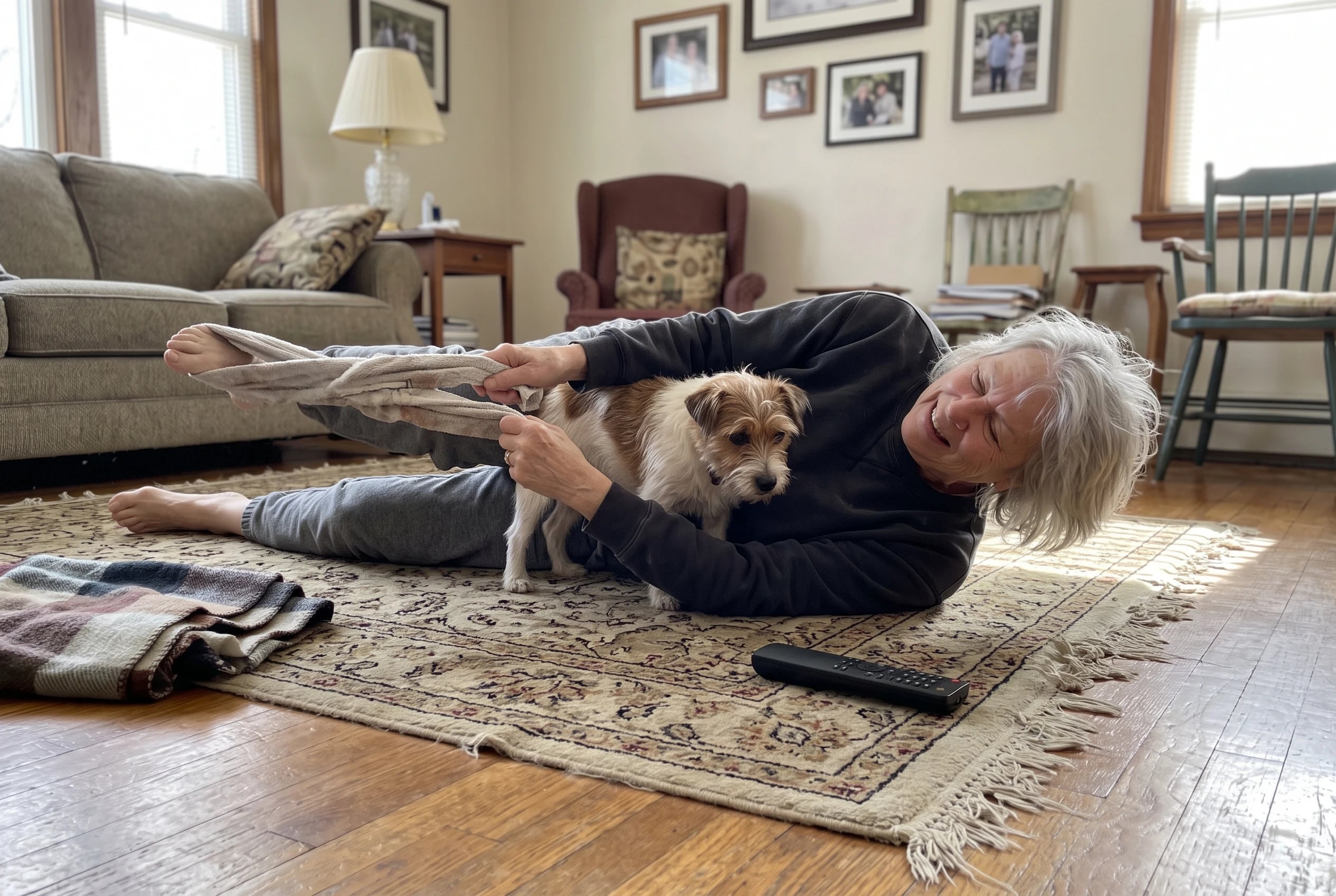
The towel version gives you a handhold without asking your fingers to reach your toes. Lie flat on your back, loop a towel around one foot and hold an end in each hand. Bring the leg toward you until you feel a stretch behind the thigh.
Your knee can stay straight or slightly bent. That detail matters if locking it straight creates strain behind the knee. Hawai‘i Pacific Health’s towel-stretch instructions allow either position.
Let the towel carry the leg’s weight rather than hauling the foot toward your face. Keep the pull steady, then release it before you switch legs. A familiar bath towel does the job; this stretch needs no special piece of equipment.
18Wall-Supported Standing Hamstring Stretch
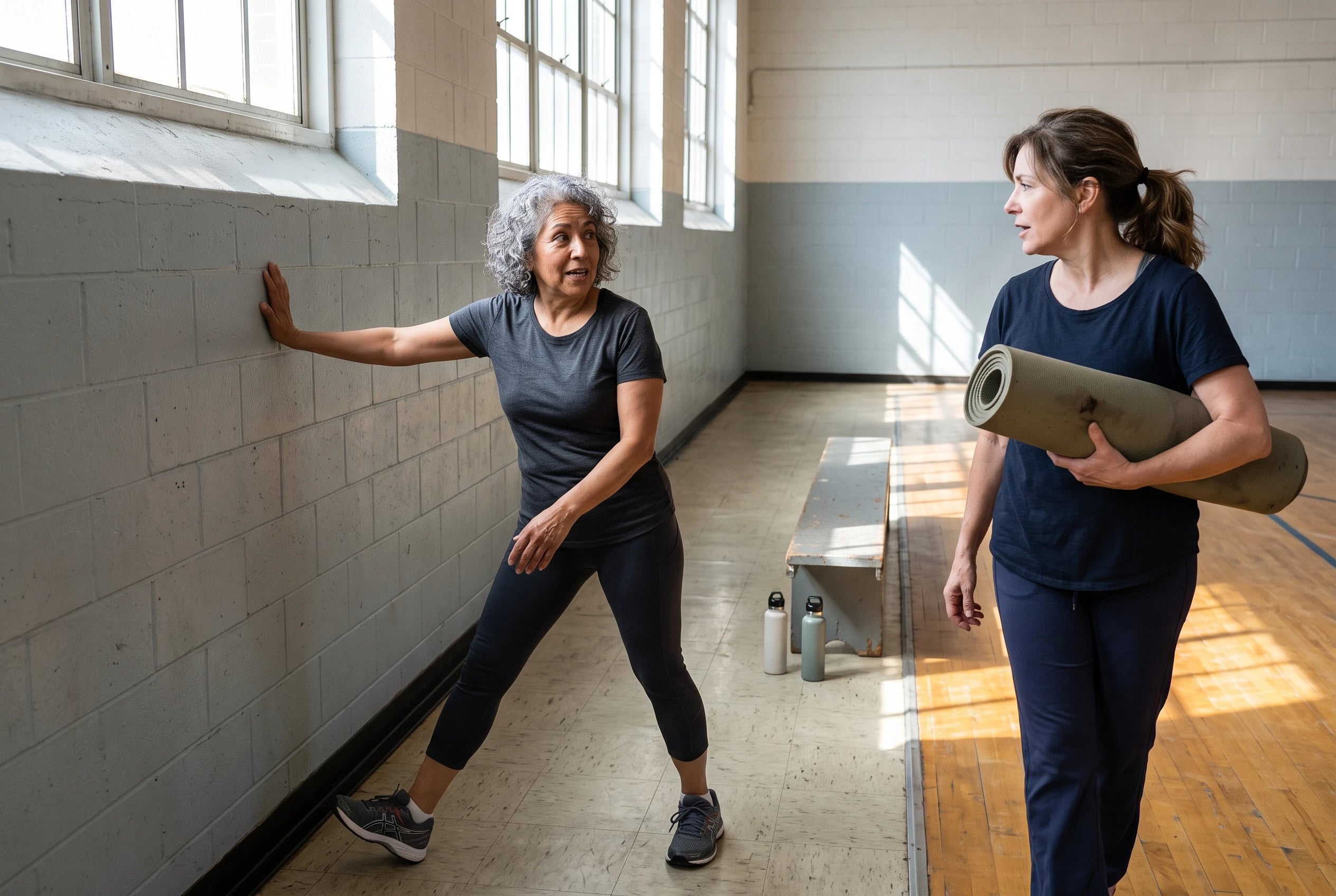
A standing stretch loses its appeal when all your attention goes to staying upright. Face a wall and put a hand against it before arranging your feet. Set one heel forward on the floor, keep that leg comfortably straight and hinge at the hips to find tension behind the thigh.
You’re using the wall for support, not pushing against it to deepen the stretch. Stay close enough that your hand rests there easily.
The NHS after-exercise stretching guide supports using a wall or chair when balance is a concern. It gives a 15 to 20 second hold.
If the wall position still feels uncertain, sit down. The same back-of-thigh tension is available from a chair.
17Seated Figure-Four Stretch for the Hips

The pull you call “tight hamstrings” isn’t always in the back of the thigh. If it sits in your hip or buttock, try a different chair position. Sit with both feet down, then cross one ankle over the opposite knee. Hinge forward a little, keeping the movement comfortable.
This figure-four position targets the hip muscles and glutes rather than directly stretching the hamstring. Kaiser Permanente’s Strong Back and Core guidance includes the chair version, and Genesis Healthcare System’s chair yoga includes a seated figure-four.
Don’t press down on the crossed knee to chase a bigger stretch. Notice where you feel the pull. That tells you more than how far forward you fold.
16Standing Toe-Reach With Bent Knees
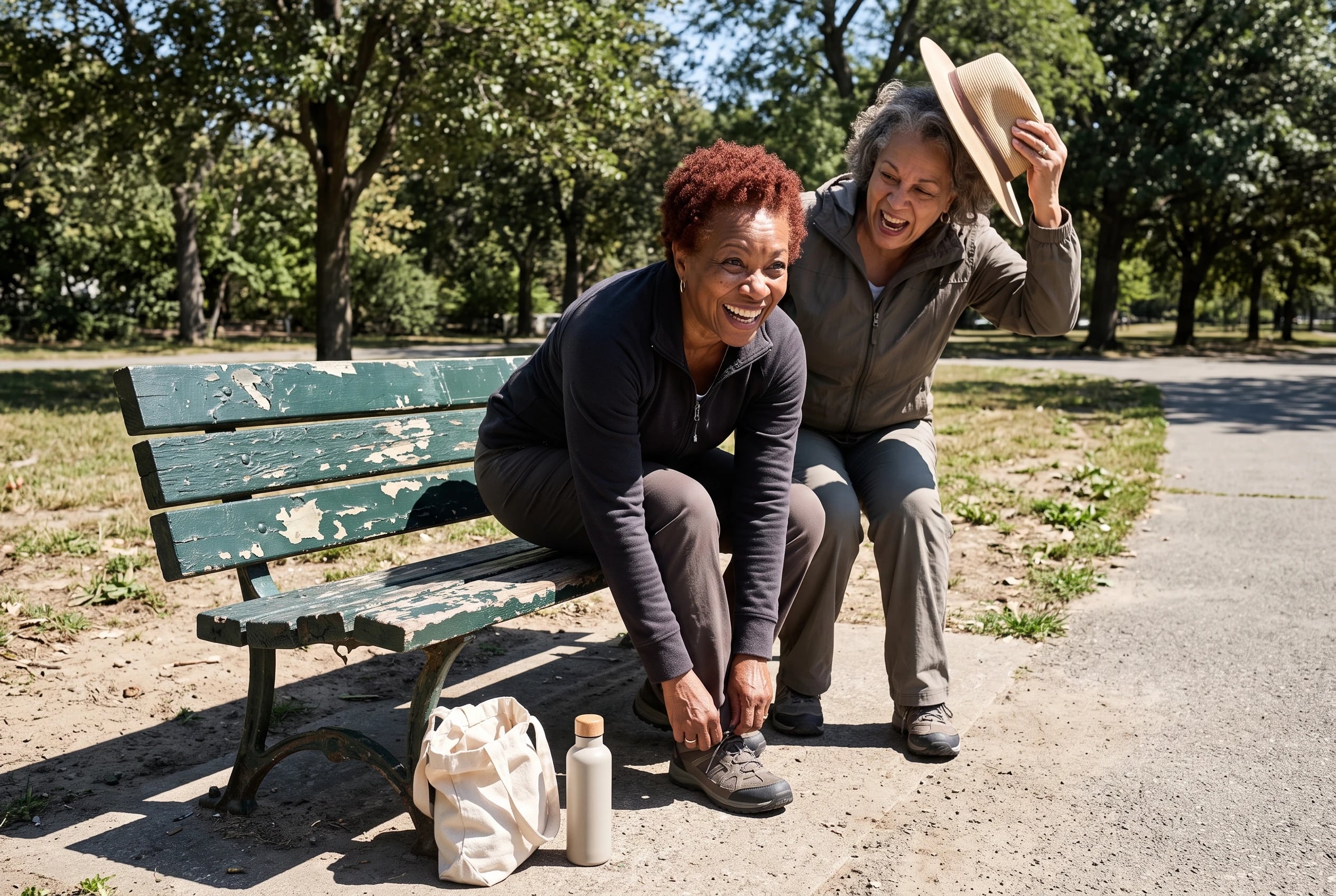
Perhaps you remember touching your toes without thinking about it. Now the attempt sends a sharp pull behind a knee before your hands get anywhere near your shoes.
Bend your knees. A clinical exercise handout from the Missouri Association of Osteopathic Physicians & Surgeons advises starting a standing hamstring stretch with the knees slightly to moderately bent. That reduces strain behind the knee while you learn the position.
Stand with support within reach. Let your knees soften, tip forward from the hips and stop when the back of the thigh feels stretched.
Don’t bounce toward the floor. Your fingertips don’t need a destination; your feet need a steady place to stay. If bending still leaves a sharp pull, come upright and choose the chair.
15Floor-Seated Forward Fold With Both Legs Extended
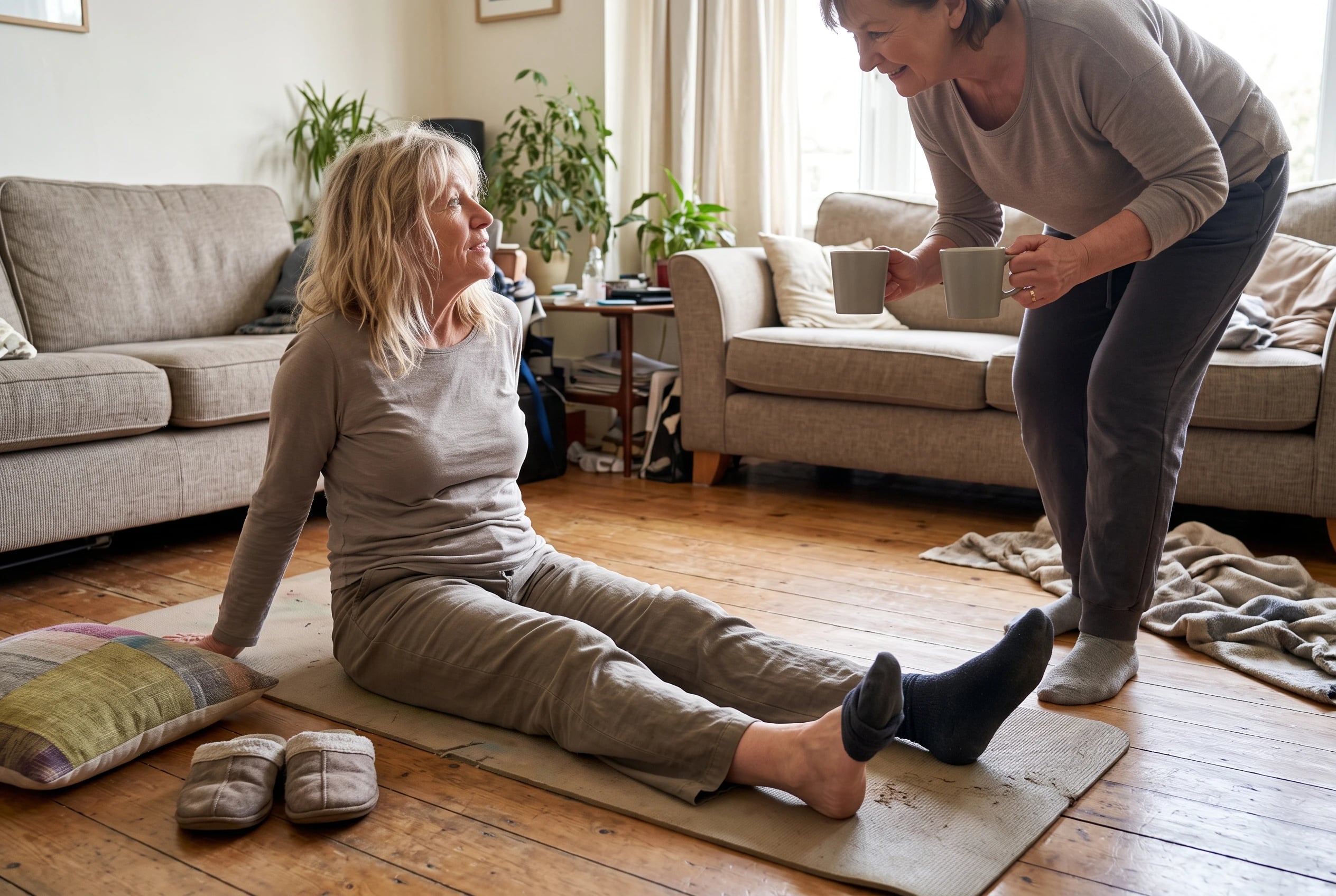
If getting down to the floor and back up is comfortable for you, try the seated version there. Sit with both legs extended in front of you. Reach along your legs until you feel a stretch behind your thighs, then stay where you can keep breathing.
Mayo Clinic’s seated-on-floor hamstring stretch says to reach to the point of a stretch without bouncing. That’s enough. Your hands don’t have to cover your feet, and rounding yourself into the deepest fold adds nothing to the instructions.
Getting up is part of the decision to do a floor stretch. If that part feels doubtful today, choose the chair-edge version instead. You’ll still have a clear way to stretch the same area.
14Single-Leg Seated Stretch With Foot Rotation
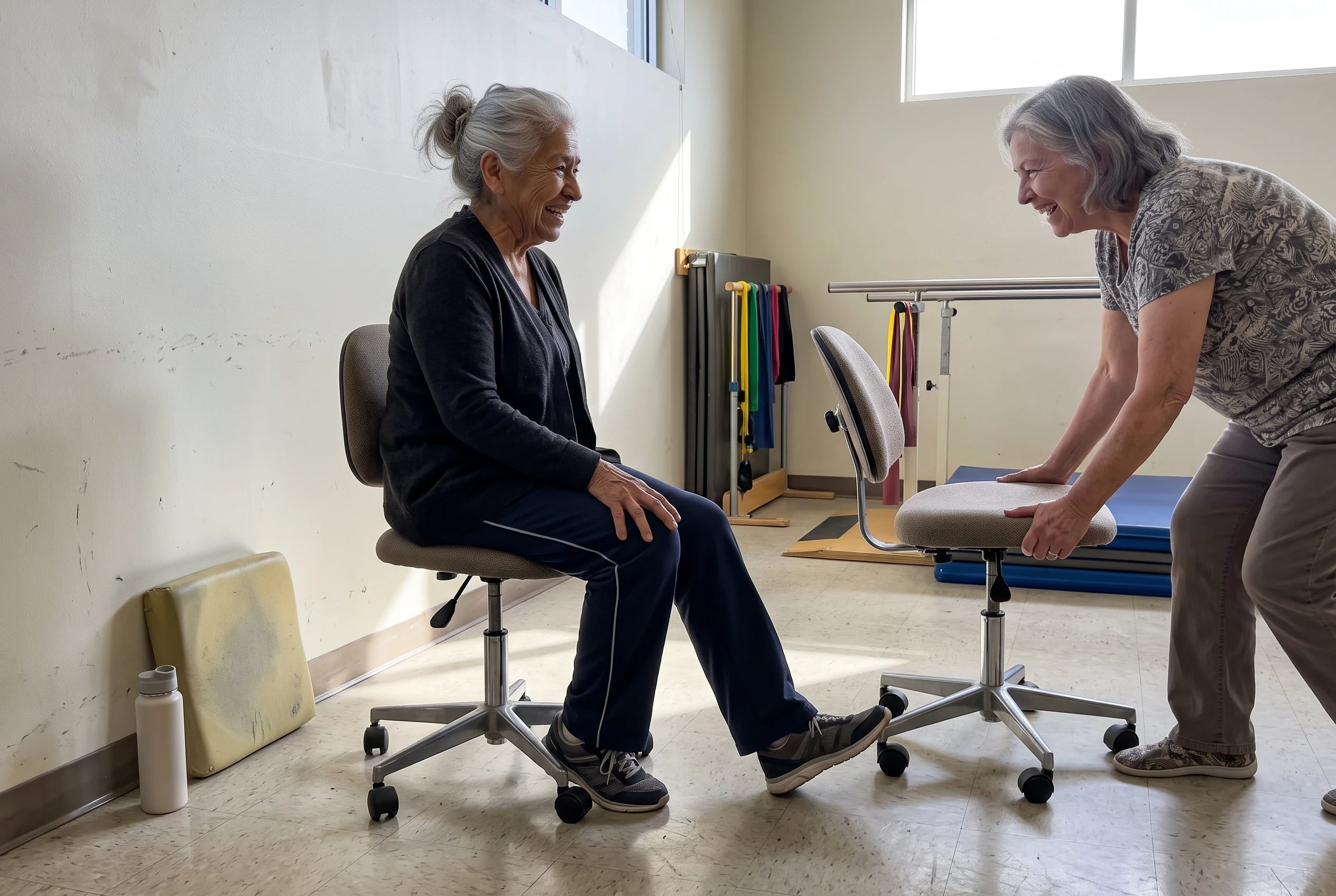
Once you’ve found a comfortable single-leg chair stretch, make a small change at the foot. Keep your heel down and your hip hinge steady. Turn your extended foot a little to one side, return to center, then turn it the other way.
Cedars-Sinai recommends rotating the foot left and right during a seated hamstring stretch to reach different parts of the muscle.
The movement is a variation, not a reason to twist the whole leg or lean farther forward. Pay attention to what changes behind your thigh. If turning the foot creates pain, return it to center and ease out.
13Firm-Seat Hamstring Stretch After Joint Surgery
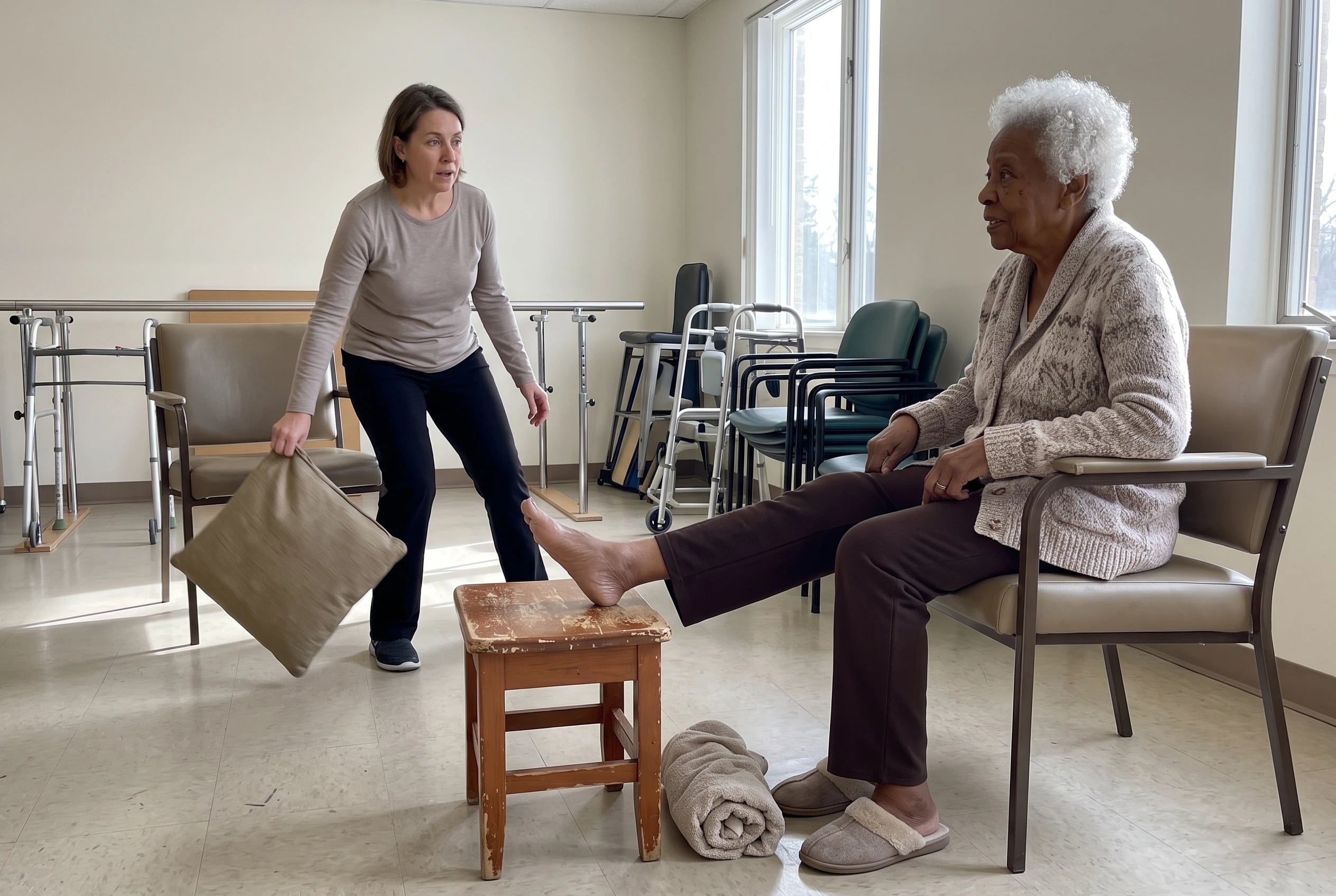
A recliner sounds comfortable, but its soft, sloping seat isn’t the firm edge shown in joint-replacement exercise guides. If you’re recovering from surgery, don’t swap positions because they look close enough. Ask your surgeon or physical therapist which seat and stretch fit your precautions.
An AAHKS and Operation Walk knee-recovery guide shows a seated hamstring stretch from a firm seat. The heel stays supported and the body leans forward. MedlinePlus hip-replacement precautions stress following the positioning rules your team gave you.
The useful question is specific: “Is the seated heel-supported stretch in my plan, and what position should I use?” Follow the answer you get for *your* recovery.
Keep that answer with your exercise instructions. If you’re unsure whether a recliner or bed edge fits those precautions, don’t use it as a substitute for the firm seat shown in the guide. Get the position confirmed before you try the fold.
A photo of an exercise doesn’t settle what’s right after your operation. Your own precautions do. Until you have that answer, leave this stretch off your list.
12Resistance-Band Hamstring Stretch for Extra Control
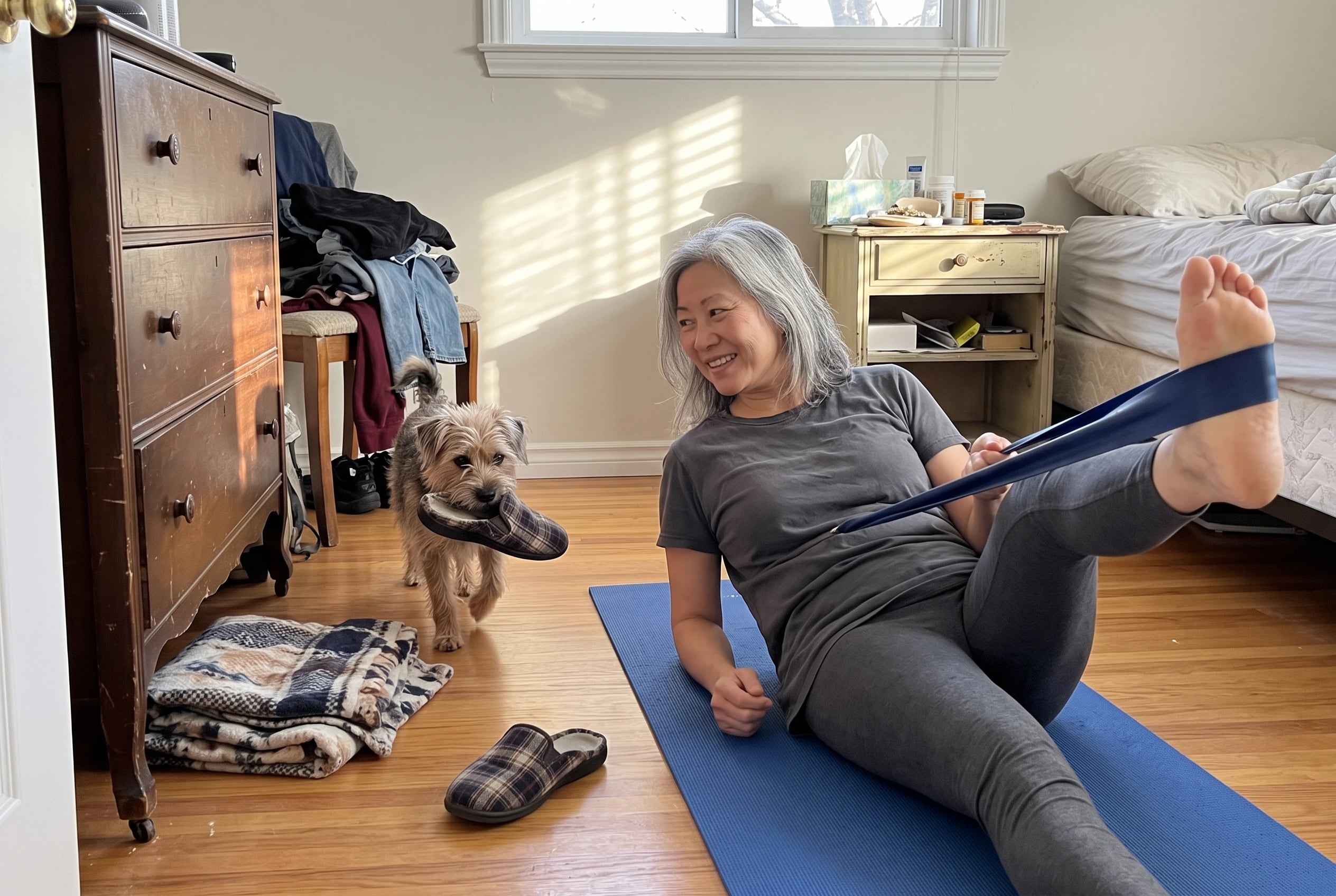
A band gives your hands a longer reach. Lie on your back, loop it around the raised foot and hold the ends while you guide the leg upward. As the leg rises, straighten the knee only to a comfortable point.
UCSF Sports Rehab’s lower-body stretch handout shows a supine hamstring stretch assisted by a strap. Its instructions also allow a band or towel. The point is control: you decide where the leg stops without grabbing at your foot.
Don’t buy a band just for this move if a towel works well in your hands. Check that whatever you use sits securely around the foot before you pull. Then keep the pressure steady and ease it off before lowering the leg.
11Partner-Assisted Lying Leg-Raise Stretch
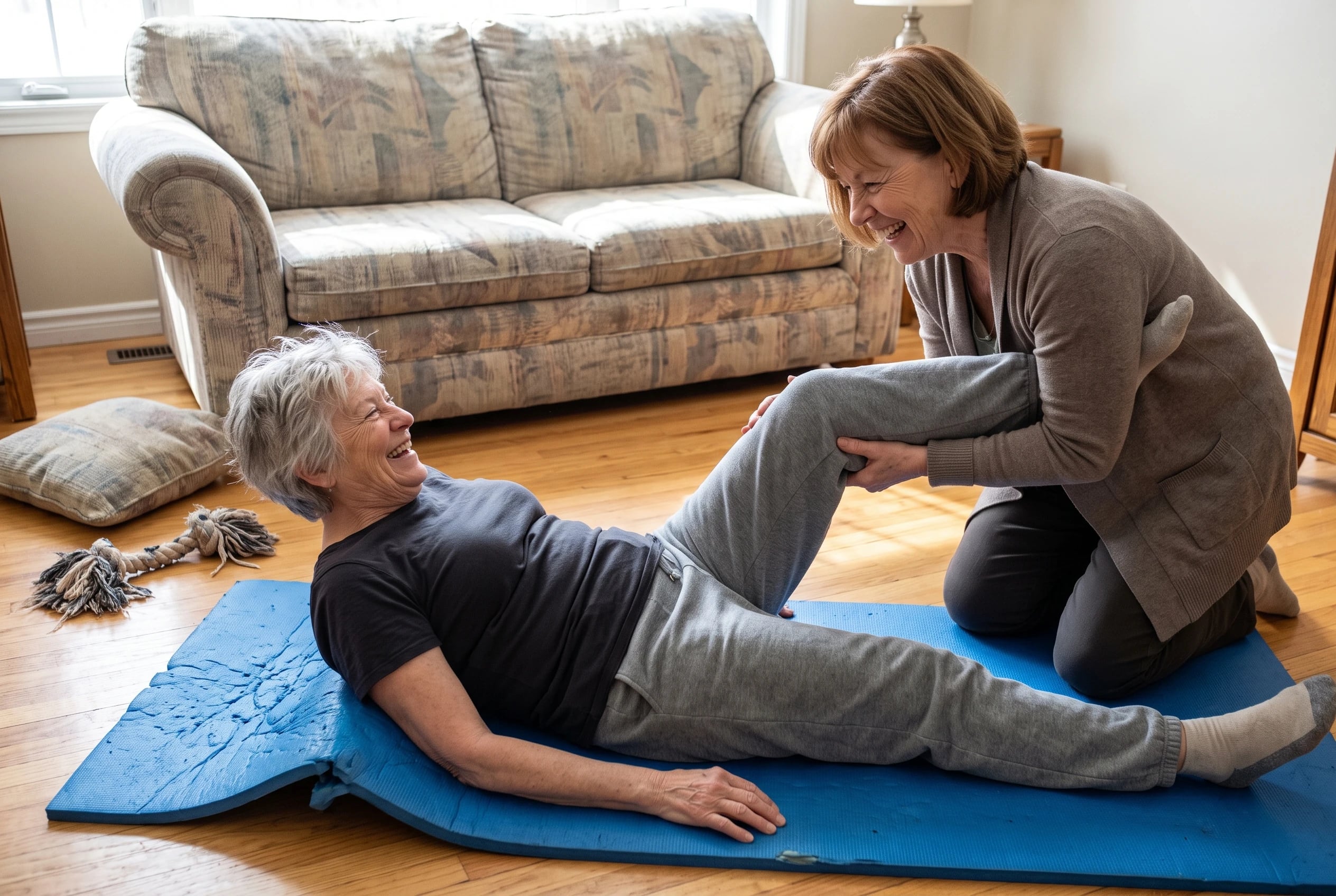
A helper changes the stretch because someone else controls your leg. Agree on the stopping point before you begin. Lie on your back while your partner supports the leg above and below the knee. They raise it with the knee straight only until you feel a mild stretch.
An Advocate Aurora Health patient handout shows that supported leg raise. It doesn’t call for your partner to push through resistance. Tell them plainly, “Stop there,” as soon as you reach comfortable tension.
Stay involved throughout. Your partner doesn’t know exactly what the stretch feels like from the outside, even if the movement looks small. If you can guide the leg yourself with a towel, that remains a straightforward choice when you’d rather set the pace.
10Chair-Seated Wide-Leg Forward Fold
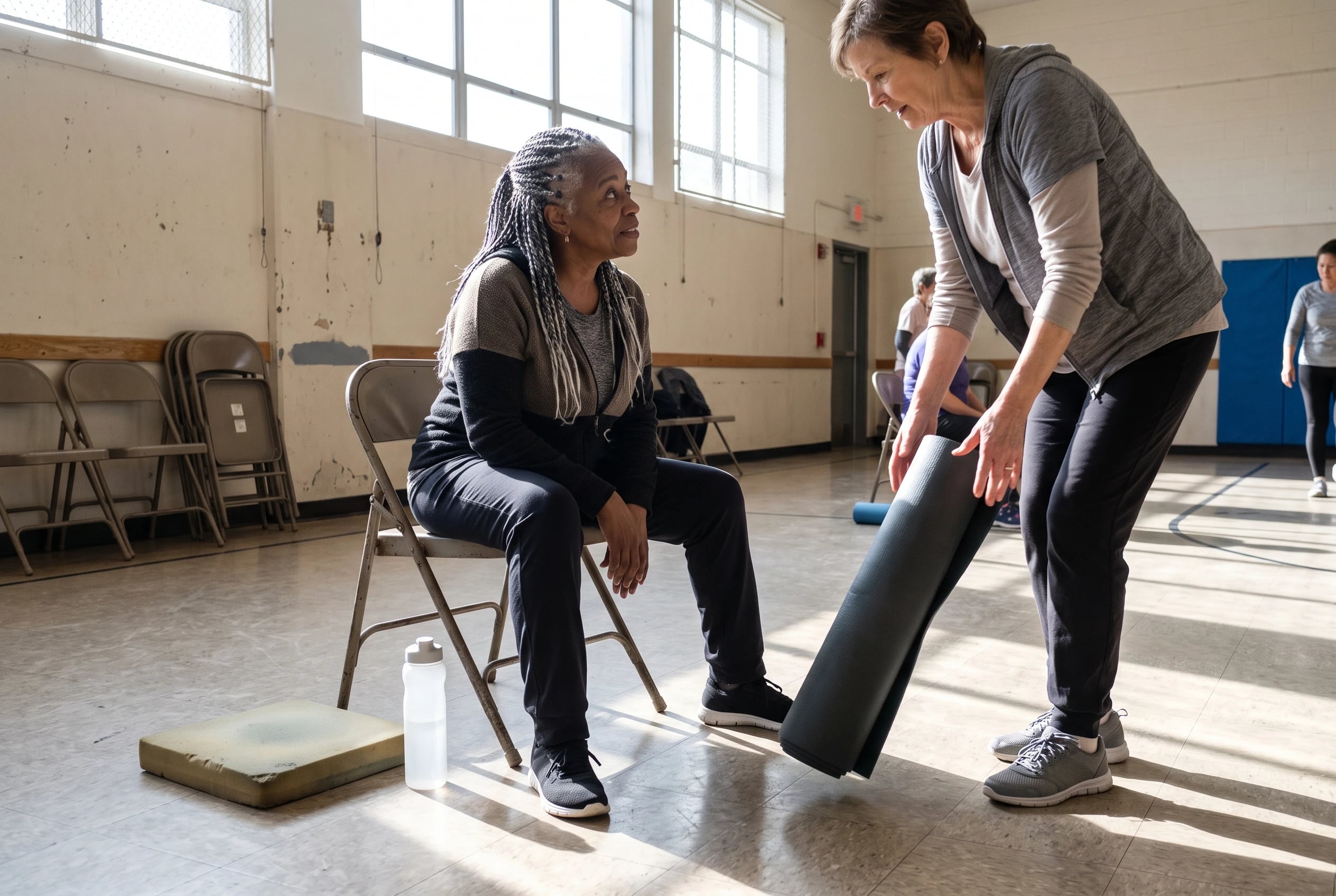
A chair-supported forward fold changes the setup from the floor. Sit securely, set your feet apart and tip forward from your hips only as far as feels comfortable. Keep your attention on the pull, not on reaching the carpet.
Mayo Clinic’s gentle-yoga guide includes both a seated forward fold and a seated wide-leg version. Genesis Healthcare System includes the wide-leg chair variation too. It’s a way to change the angle of a seated fold while keeping the chair beneath you.
Don’t assume the wider position should produce a stronger hamstring stretch. Notice where you feel it. If the sensation moves to an uncomfortable place, bring your feet closer and sit upright again.
9Counter-Supported Standing Hip-Hinge Stretch

Put your hands on a sturdy counter before you move your hips. Stand where the counter is easy to reach, soften your knees and send your hips back as your upper body tips forward. Stop when you feel a comfortable pull along the backs of your thighs.
University of Florida IFAS Extension describes the hip hinge as a movement that stretches the hamstrings and hips when done correctly. Veterans Health Library exercise guidance also uses a countertop or chair back for balance during standing lower-body work.
Think of the counter as a steady contact point, not something to drag yourself into a deeper fold. Straighten up, reset your feet and try a smaller hinge if the first one felt awkward. Your hands stay put while you work out how far *your* hips want to travel.
8Supported Dynamic Leg Swings Before Activity
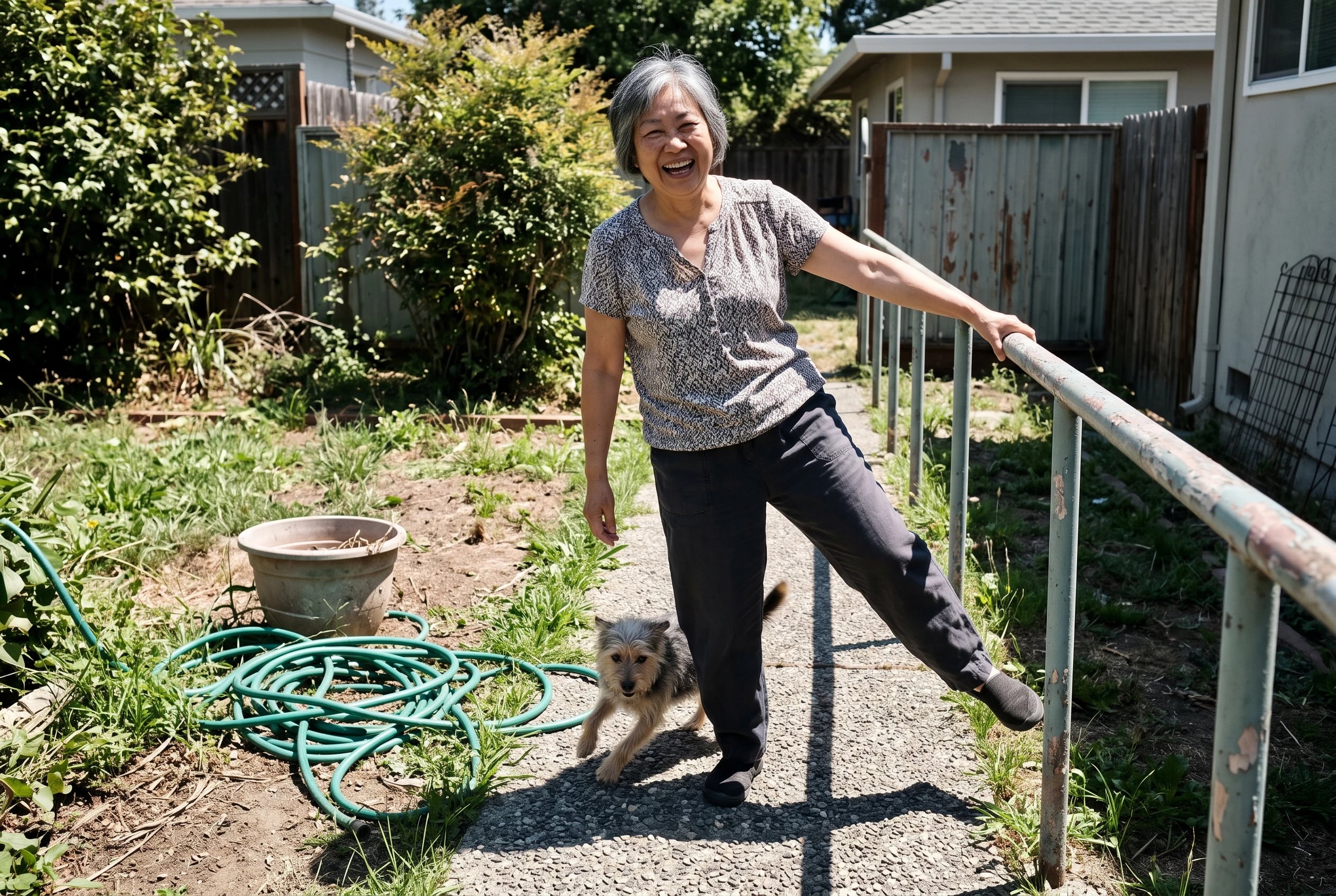
A held stretch isn’t the only way to move your legs. Before a walk, stand beside a secure support and hold it. Let one leg swing forward and back in a small, controlled arc, then return the foot to the floor. Change sides.
Cleveland Clinic describes leg pendulums as dynamic stretching, a warm-up movement for the hips and hamstrings. The leg moves rather than staying at the far end of its range. Keep the swing small enough that your standing foot remains settled.
This is a warm-up, not a challenge to see how high your foot goes. If balancing on one leg takes all your concentration, skip the swings and use the seated march in item #2. You still have a way to get your legs moving.
See more: 26 Daily Activities for Seniors That Give a Day Its Shape →
7Hamstring Self-Massage With a Ball or Roller
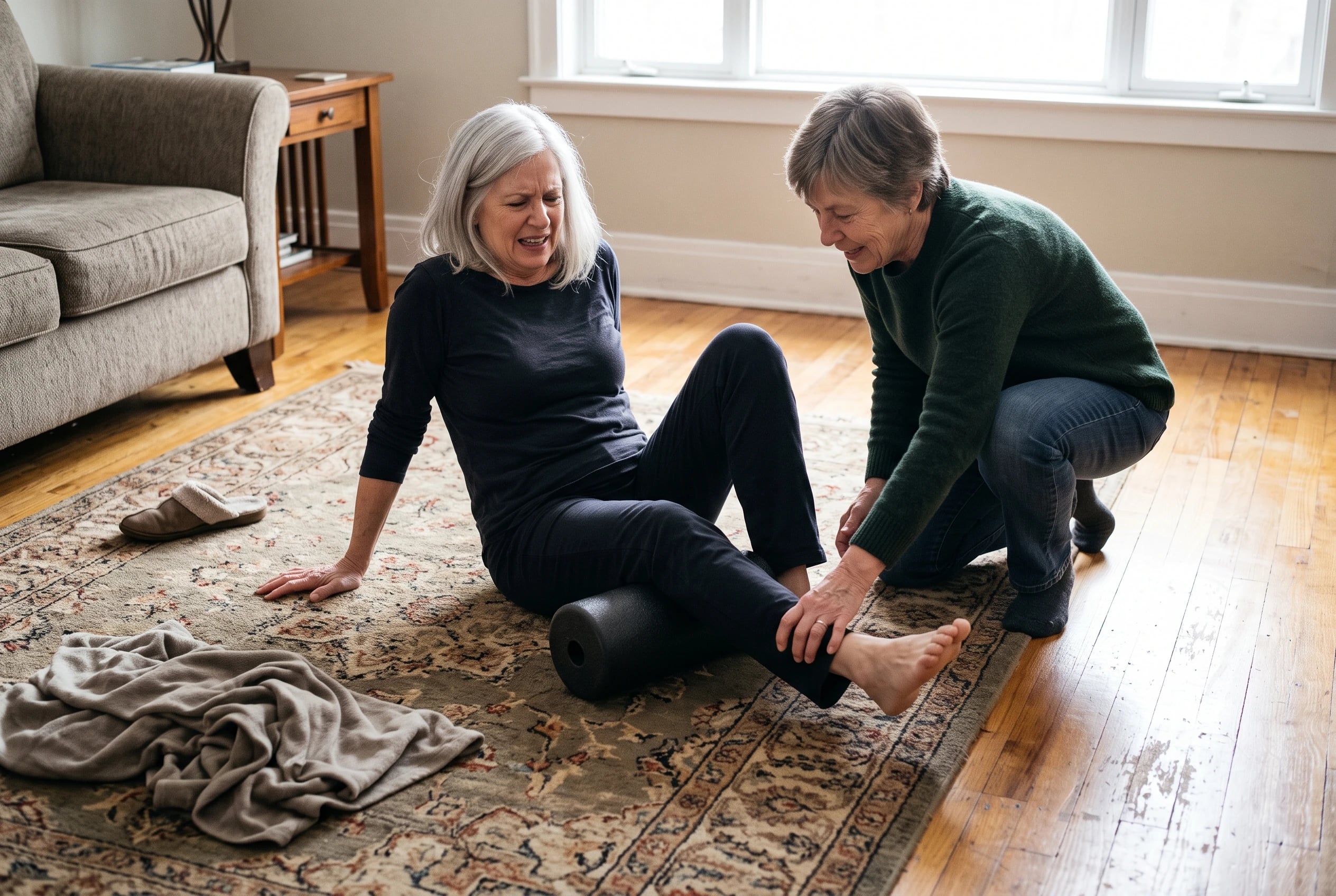
A roller or rubber ball offers another way to work on a tight spot. It doesn’t replace a stretch, and you don’t need to buy one to follow the rest of this list. If you already own one, set it up where you can control your position and pressure.
Cleveland Clinic’s foam-rolling guide includes the hamstrings. Its self-massage guidance also describes rollers and rubber balls as tools for tight spots and range of motion. Roll over the back of the thigh with pressure you can tolerate rather than bearing down on a sore point.
Ask yourself what you need right now. If it’s a supported stretch, the chair and towel versions are ready without equipment. The roller is an extra tool, not a test of commitment.
6Seated Band Hamstring Strengthening Exercise
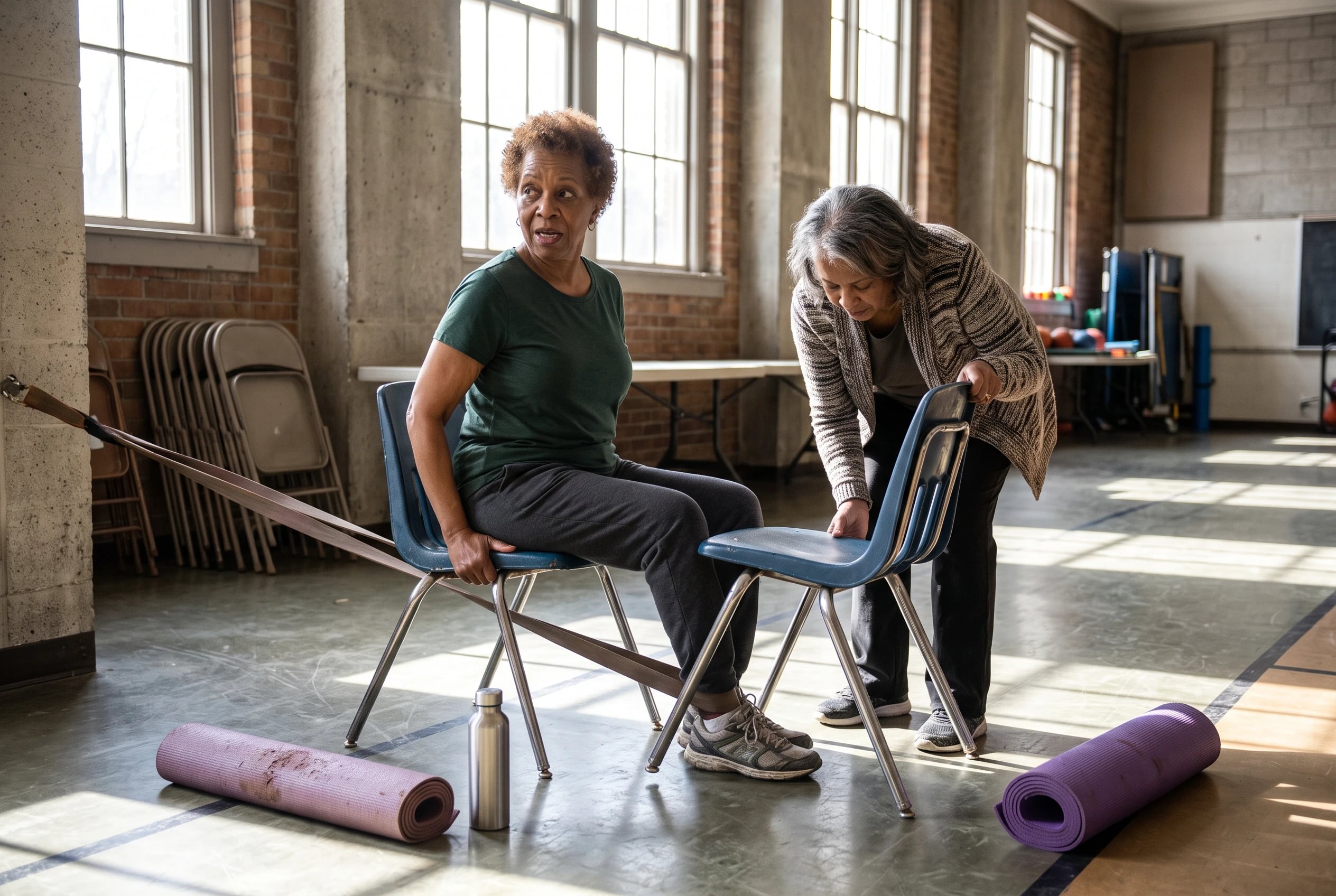
This is a moving strength exercise, not another way to pull your leg into a stretch. Sit on a stable chair with a resistance band anchored securely and looped around your heel. Start with that knee straight, then draw the heel back under the chair against the band.
Vanderbilt University Medical Center’s seated hamstring-curl handout shows the heel-back movement. Intermountain Health also describes an anchored-band seated curl for strength.
Check the anchor before starting; if it shifts, stop. Let your foot return with control. Unlike the heel press in item #4, this curl moves your knee against resistance. You stay seated for the entire exercise.
5Wall-Supported Hamstring Strengthening Leg Curl
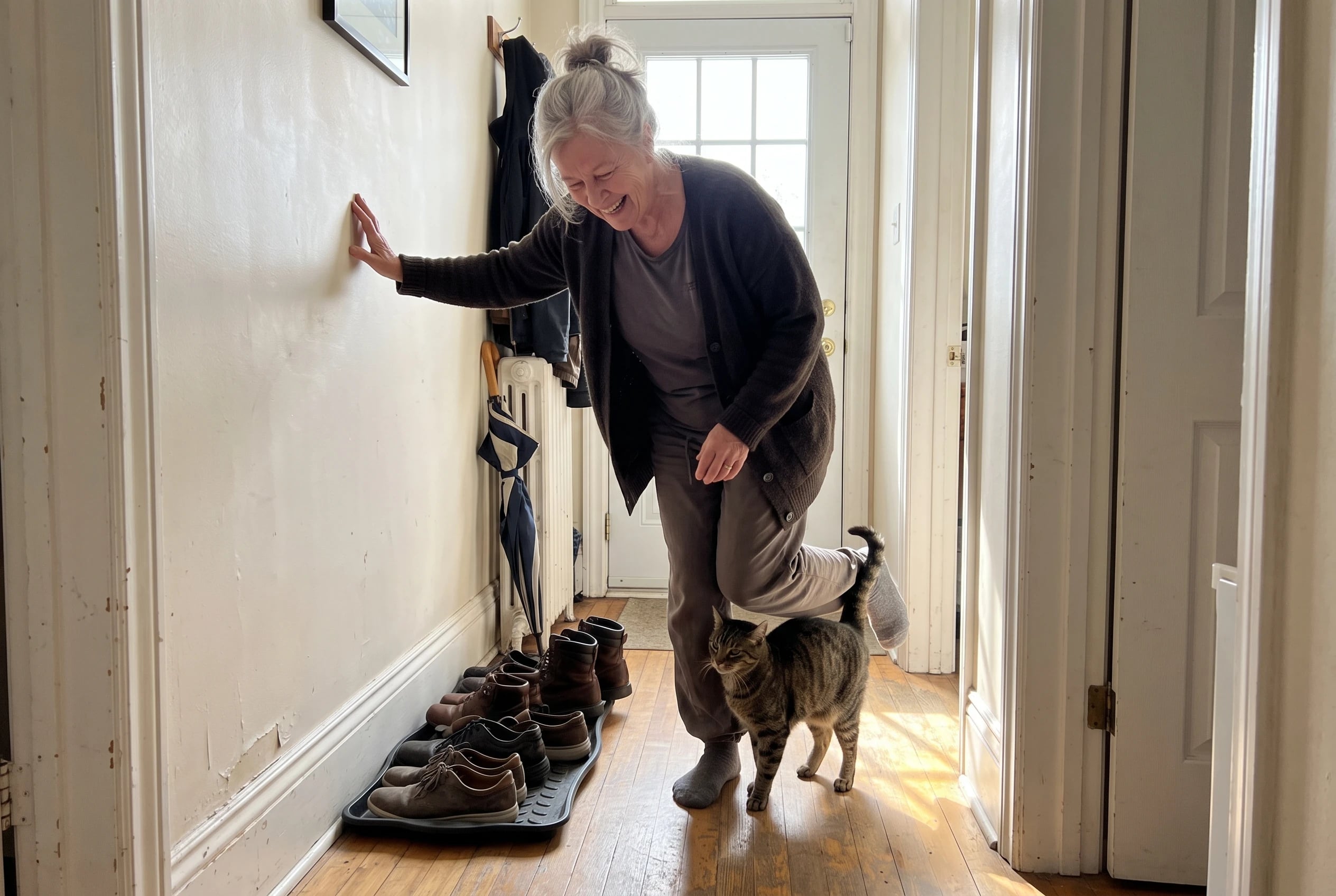
Stand near a wall or sturdy chair and keep a hand on it. With your feet settled, bend one knee and bring that heel back toward you. Lower the foot with control, then work the other leg.
The AAOS Knee Conditioning Program includes standing hamstring curls with a chair or wall for balance. The movement trains the hamstring by bending the knee. You aren’t trying to stretch the raised leg behind you.
Keep the motion small enough that your upper body stays steady. If you find yourself tipping forward or gripping the support harder, lower the foot and reset. A curl done while you feel secure is more useful than a higher heel that pulls you off balance.
4Seated Heel-Press Hamstring Set
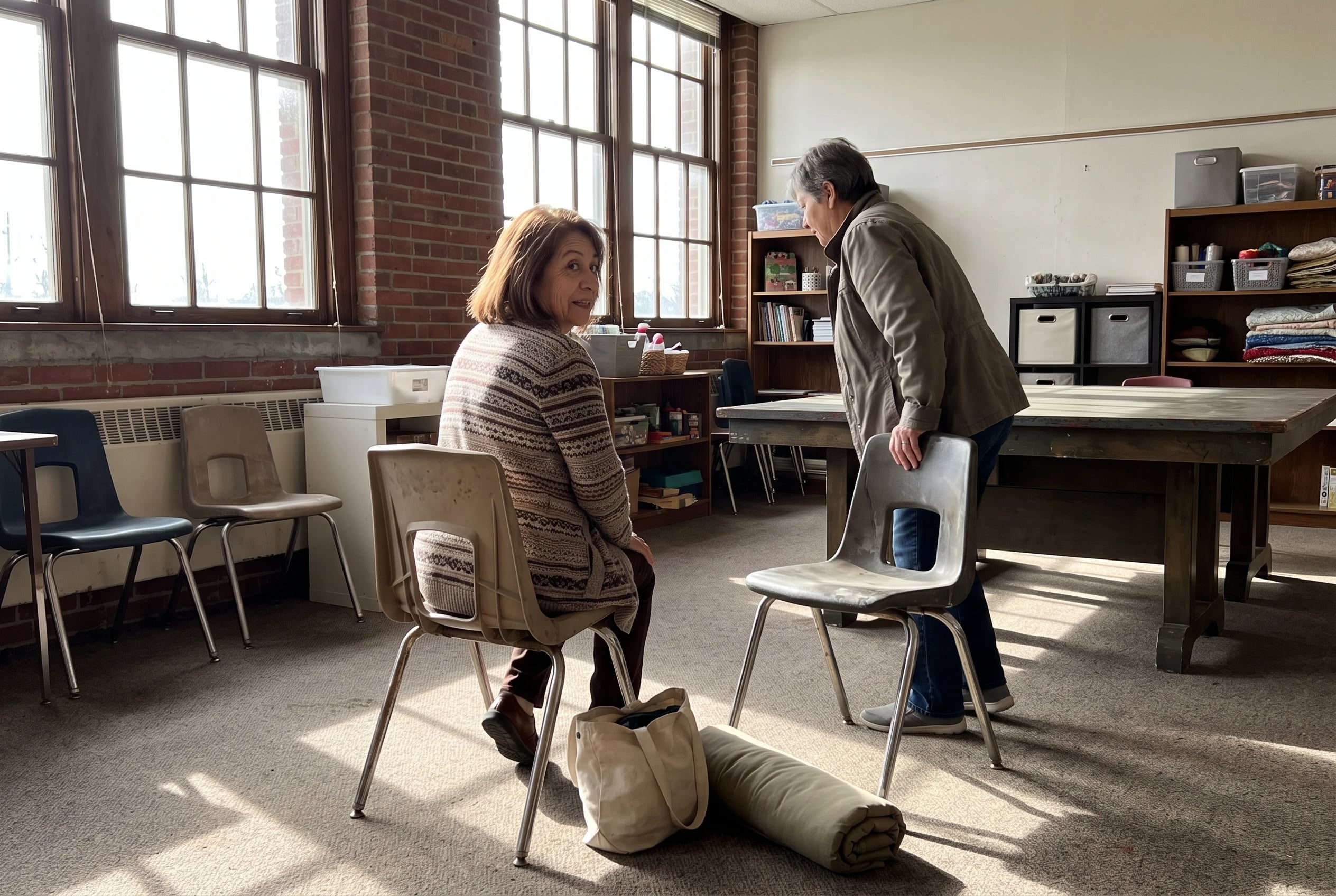
No band, no moving knee. Sit in a stable chair with a heel on the floor. Press that heel down until you feel the back of your thigh tighten, then release.
Kaiser Permanente’s hamstring rehabilitation instructions call this a seated hamstring set. It’s an isometric exercise: the muscle works without moving the joint. That’s the key difference from the band curl. If you feel pain, stop rather than pressing harder.
3Lying Glute Bridge for Hamstring Strength
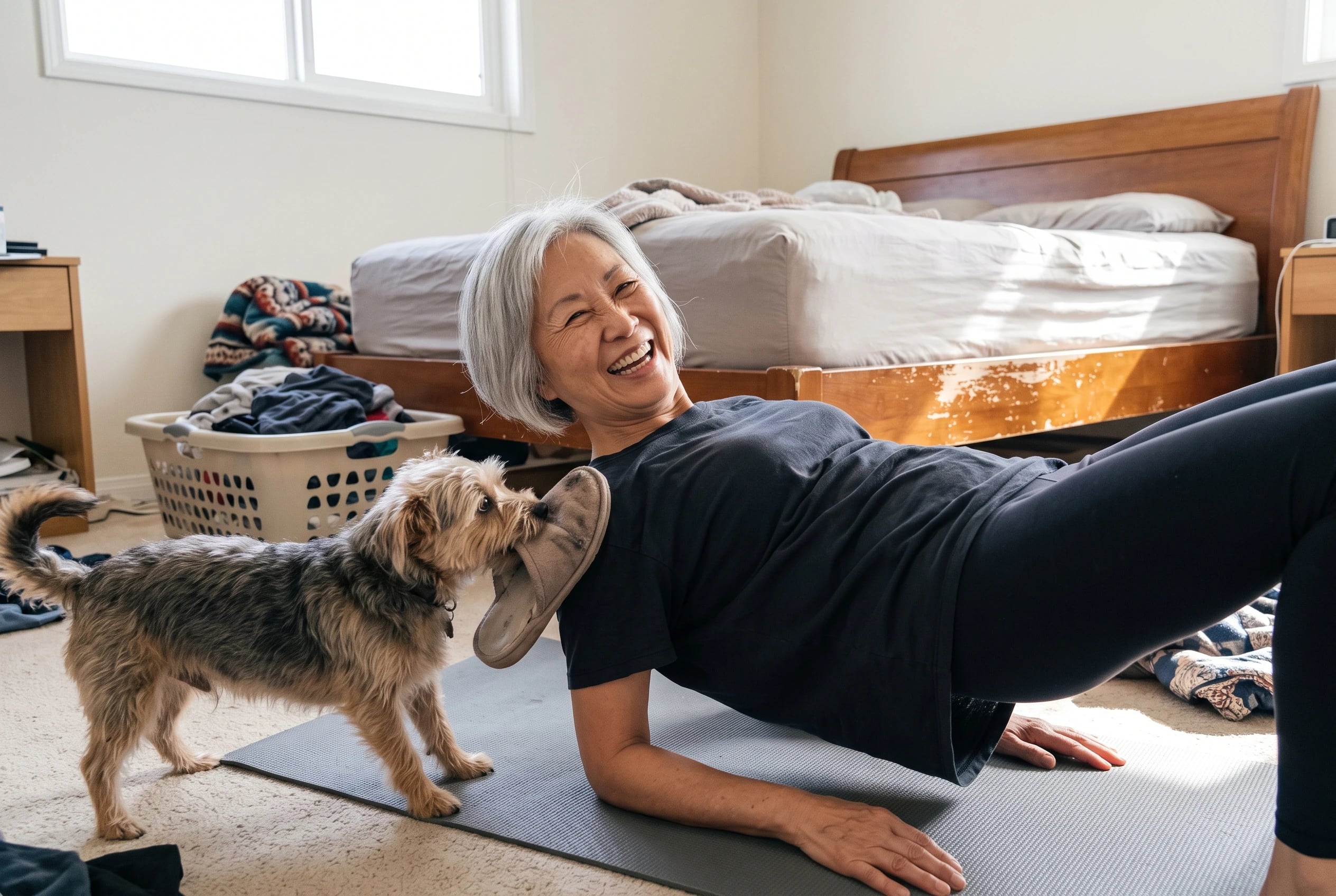
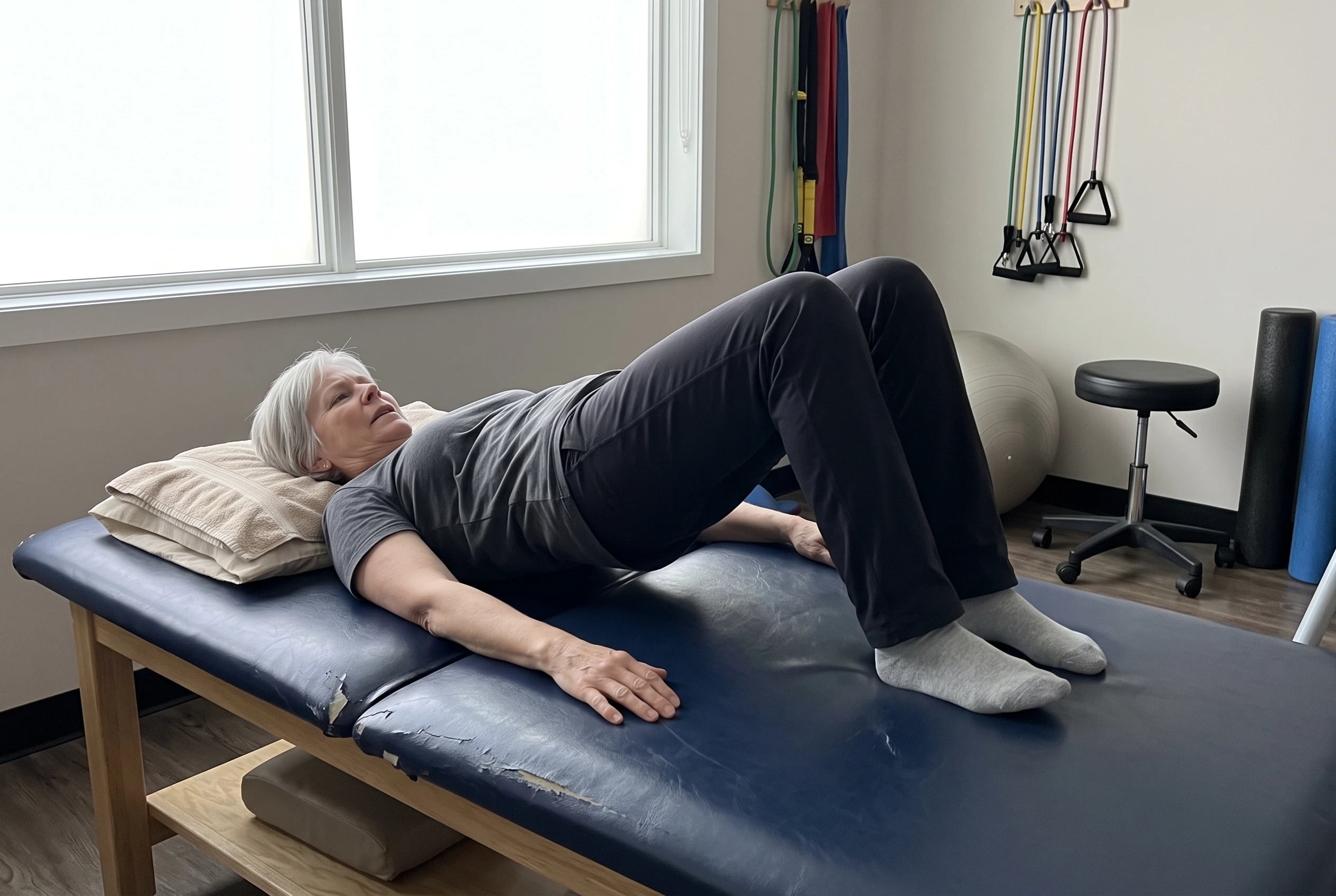
Lie on your back with your knees bent and feet on the floor. Lift your hips, then lower them with control. Keep the movement within a range that feels comfortable rather than trying to make a high arch.
Cleveland Clinic’s glute-bridge guide identifies the glutes as the main working muscles and the hamstrings as contributors. So this belongs with the strengthening moves, even though you perform it lying down.
Notice how different it feels from pulling a straight leg toward you. One move lengthens the back of the thigh; the other asks those muscles to help lift your hips. If getting onto the floor isn’t a good choice today, leave the bridge out and use a seated strength move instead.
2Chair-Based Marching for Leg Activation
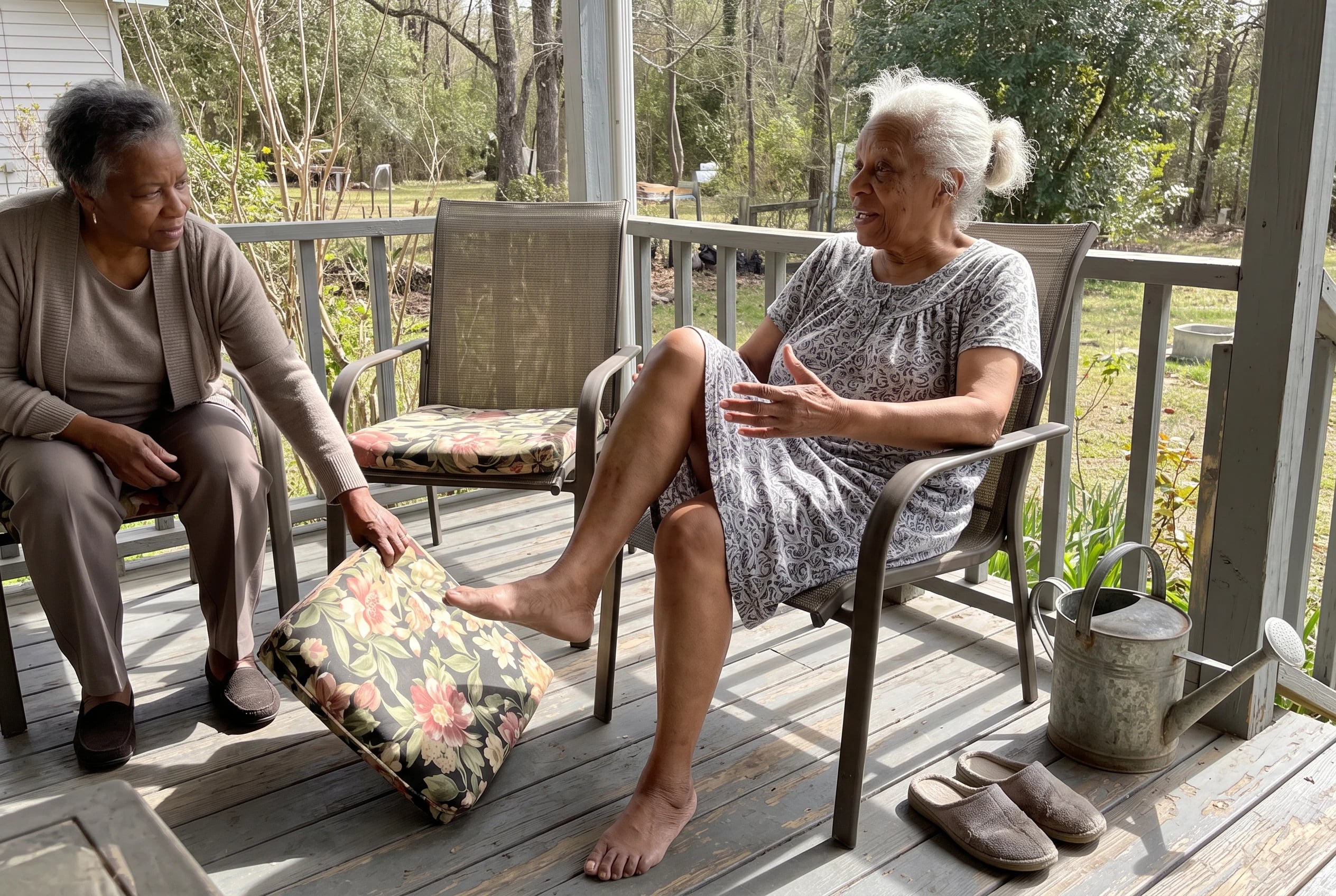
Sit in a stable chair with your feet on the floor. Lift one knee, set that foot down and lift the other. Keep the movement controlled enough that you stay settled on the seat.
Memorial Sloan Kettering’s chair-exercise guide includes seated marches for lower-body activity. This isn’t a deep hamstring stretch or a substitute for a curl. Try it before a chair-edge stretch when you’d rather get moving without standing.
1The 90/90 Lying Hamstring Flexibility Test
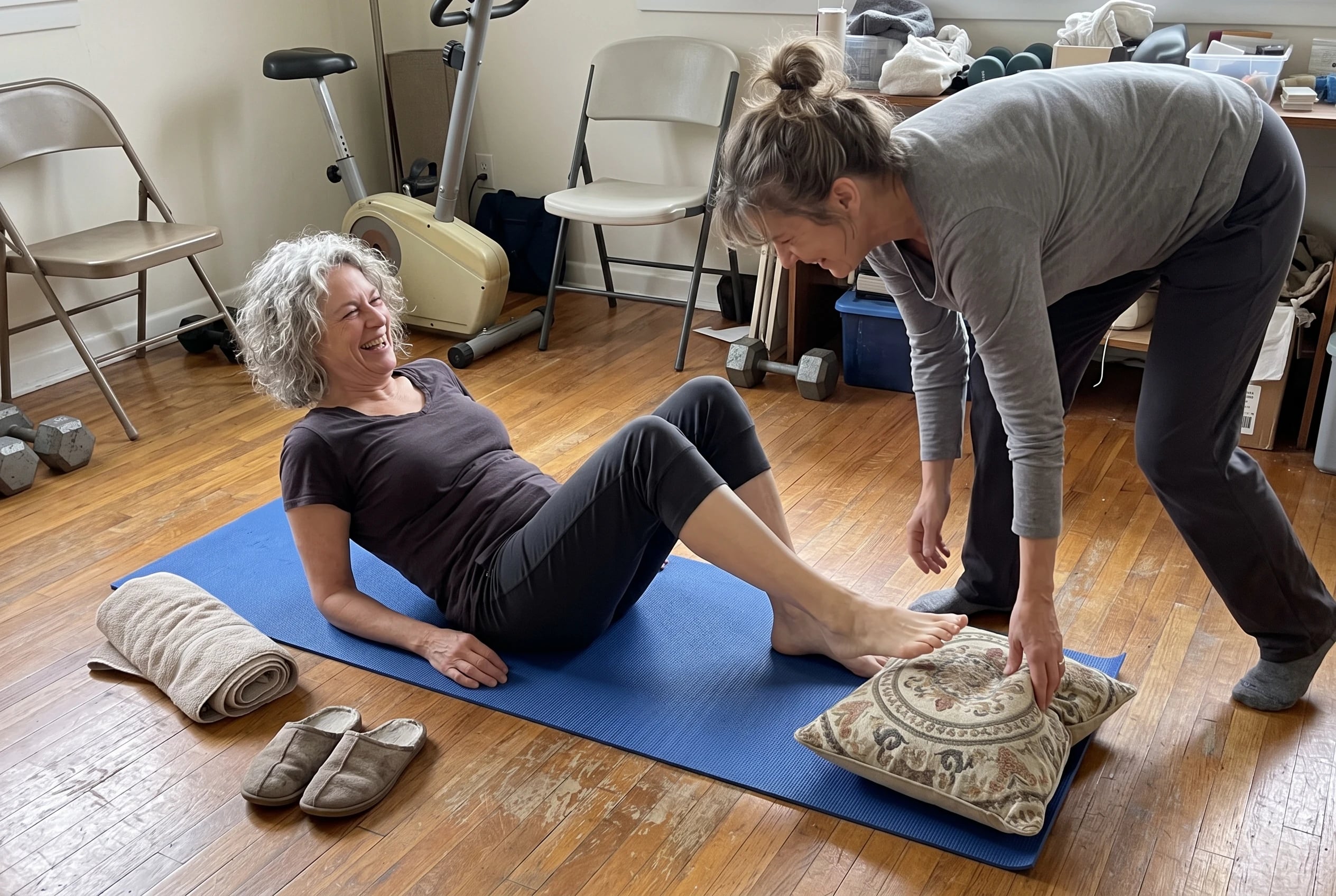
How do you tell whether the back of your thigh feels different from last time without reaching for your toes? Do the check lying down.
Lie on your back and bring one hip and knee into a bent, roughly 90-degree position. Straighten that knee as far as feels comfortable, then lower the leg and check the other side.
This is the 90/90 active knee extension test. Less bend remaining at the knee indicates greater hamstring length. The method has also been studied as a way to assess hamstring flexibility.
You don’t need to force the knee straight or turn this into a score. Notice where each leg stops. If pain appears, stop the test.
When you check again after practicing your chosen stretches, use the same lying position. Compare what your knee does, rather than whether your fingers reach farther toward your toes. The useful result is a position you recognize, with no standing balance test involved.
The bottom line
The best position is the one where you feel steady enough to notice a mild stretch. Keep a chair, wall or towel in the plan when it helps, and leave pain out of it.
The prepared version of you has already picked a stretch, cleared a place to do it and chosen a strength move that fits. Which position lets you pay attention to your leg instead of worrying about your balance?
Up next
26 Five-Minute Exercises for Seniors
A head-to-toe menu of 5-minute exercises for seniors using a sturdy chair, a kitchen counter, and, if you want one, a soft ball.
Read the list →
Reader quiz
Did you catch the details?
5 questions from this article.
In the chair-edge stretch, where should you bend forward from to feel the stretch?
Questions people also ask
What is the fastest way to loosen tight hamstrings?
There’s no single fastest method. The American College of Sports Medicine’s guidance favors regular stretching. Aim for at least 2 to 3 days a week, with daily practice most effective. The American Heart Association also advises stretching when your muscles are warm.
Can a 70-year-old regain flexibility?
Yes. The National Institute on Aging includes flexibility work alongside strength, balance and aerobic activity for older adults. Harvard Health notes that regular stretching helps maintain and improve range of motion.
Do hamstrings get tighter as you age?
Range of motion tends to decline over time, especially with inactivity and prolonged sitting. The American Heart Association’s article on how much and how often to stretch discusses that change. Regular stretching helps maintain range of motion; age alone doesn’t tell you what your legs can do today.
What are some good 5-minute stretches for seniors?
Try the seated chair-edge stretch on both sides, then a lying towel-assisted stretch on both sides. Hold each for 20 to 30 seconds and repeat twice per side; allow the rest of the 5 minutes to change positions. South Tees Hospitals NHS shows the chair position, and Cleveland Clinic shows the lying version.
Is it normal for hamstrings to hurt when stretching?
No. Expect mild tension, not pain. Mayo Clinic’s safe-stretching advice says to back off to a comfortable range when a stretch hurts.
How long should I hold a hamstring stretch?
Hold for 10 to 30 seconds and repeat 2 to 4 times, aiming for about 60 seconds total per muscle. Older adults may benefit from holds up to 60 seconds. Those figures come from the American College of Sports Medicine’s flexibility guidance.
Did any of these feel familiar?
Know someone who needs this?
 Prime Journal · Free printable
The Everyday Health Readiness Checklist
- A clearer path from bed to bathroom
- A medicine list ready for the pharmacist
- A symptom story and follow-up plan you can use

Free printable: The Everyday Health Readiness Checklist. Enter your email and it is yours.
Sources cited in this article
This article links to 13 outside sources, listed here so you can read them yourself.
- Mayo Clinic’s doorframe stretch www.mayoclinic.org/diseases-conditions/hamstring-injury/diagnosis-treatment/…
- South Tees Hospitals NHS www.southtees.nhs.uk/resources/hamstring-stretch-2
- Cleveland Clinic’s stretching guide health.clevelandclinic.org/stretching
- NHS inform’s thigh exercises www.nhsinform.scot/illnesses-and-conditions/muscle-bone-and-joints/leg-and-f…
- Cleveland Clinic’s bed-exercise guide health.clevelandclinic.org/bed-exercises
- NHS after-exercise stretching guide www.nhs.uk/live-well/exercise/how-to-stretch-after-exercising
- MedlinePlus hip-replacement precautions www.medlineplus.gov/ency/patientinstructions/000171.htm
- Cleveland Clinic health.clevelandclinic.org/dynamic-stretching-vs-static-stretching
- Cleveland Clinic’s foam-rolling guide health.clevelandclinic.org/foam-rolling
- AAOS Knee Conditioning Program www.orthoinfo.org/recovery/knee-conditioning-program?webid=2FDEE455
- Cleveland Clinic’s glute-bridge guide health.clevelandclinic.org/glute-bridges
- 90/90 active knee extension test www.topendsports.com/testing/tests/flex-9090.htm
- American College of Sports Medicine guidance www.acsm.org/wp-content/uploads/2025/01/fitt-recommendations-for-hypertensio…
Dr. Alan Pierce, PT, DPT
Health Reviewer
Alan is a physical therapist who specializes in helping adults over 50 stay strong and mobile.
More from Dr. Alan Pierce