








17 Shoulder-Length Cuts Over 50 That Never Look Dated
Where the ends should land for your face, the four words to say before the first snip, and the honest minutes your hair costs you at the mirror.
By Irina Byalik, Style Editor
Updated · 26 min read
- Written by our style editor
- Cited 53 sources
- How we review
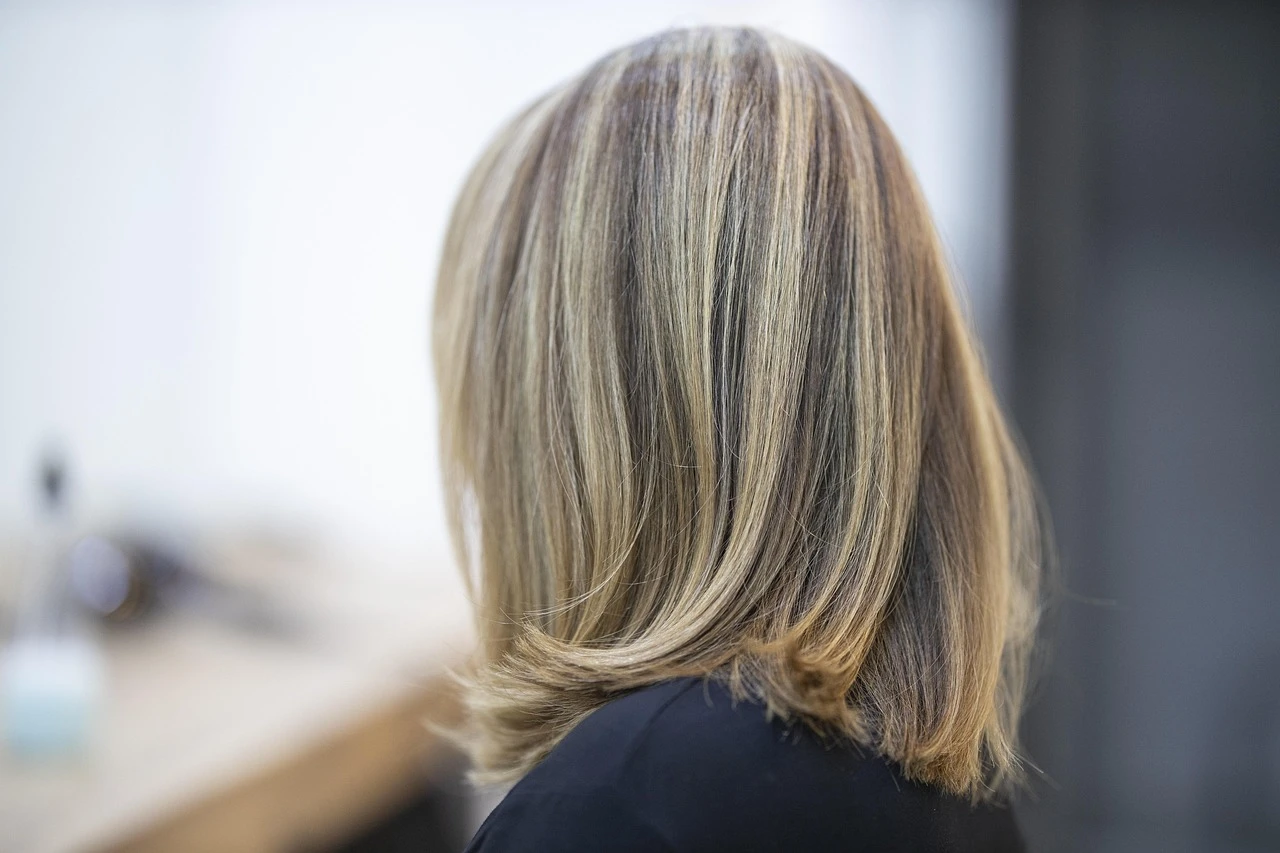
The cape snaps shut at the back of your neck. Your stylist lifts a piece of your hair, lets it drop, and finds your eyes in the mirror. "So what are we doing today?"
And you say it: "Something different. Not too long, not too short."
I've heard that sentence for more than 20 years, and it only sounds clear to the person saying it. Medium length haircuts for women over 50 who feel stuck between short and long all come down to where the ends stop. You can decide that before the cape goes on.
17The long hair you were told to cut
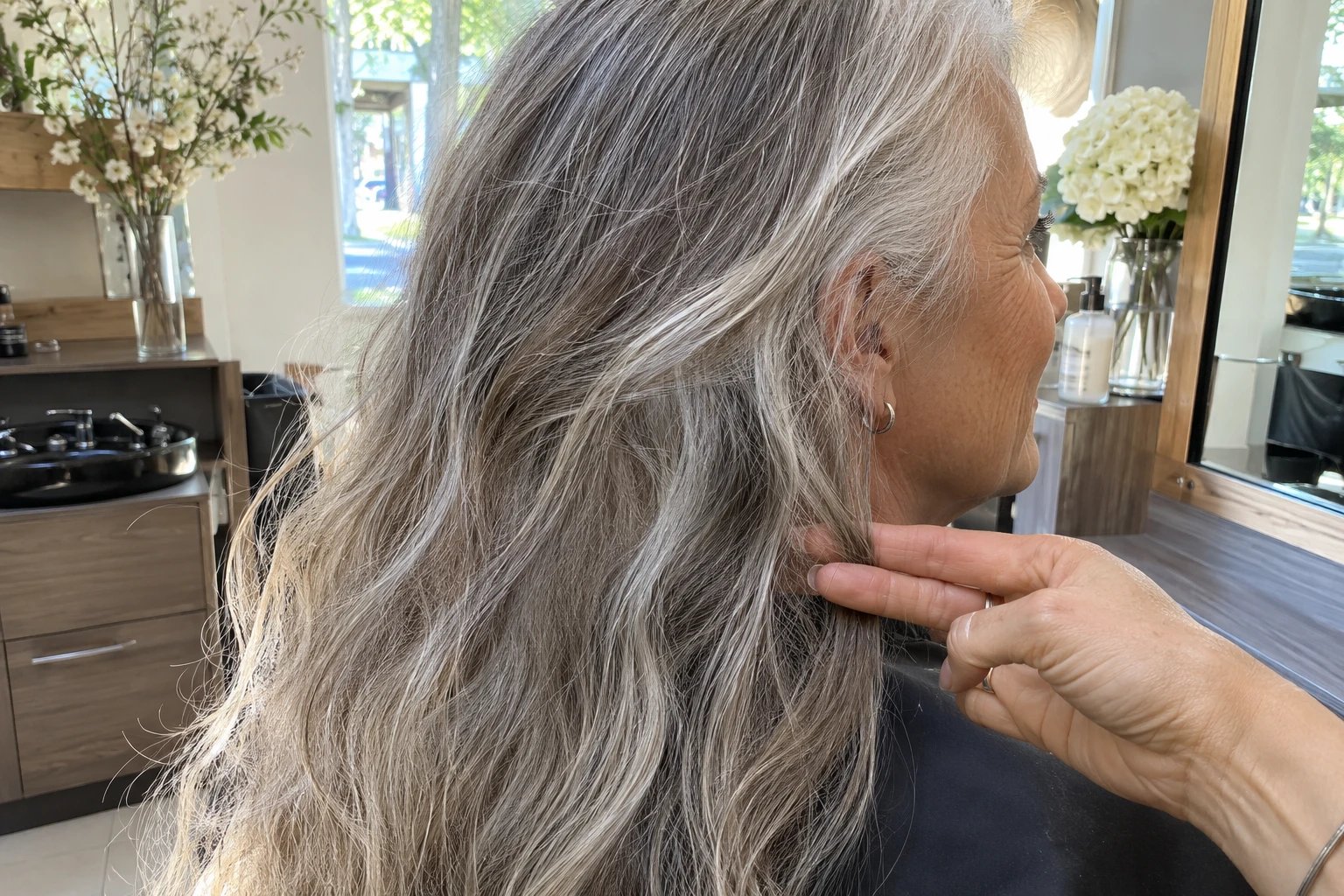
Somewhere after 50, the scissors seem to get braver. A woman with hip-length hair put it plainly on Reddit's NoStupidQuestions forum: "And this isn't the first time its happened, since I turned 50 everytime I go to a hairdresser they want to chop my long locks short."
If you've felt that push from a stylist, a relative or someone you barely know, you have company. On Reddit's forums for women over 50, whole threads start with the same question: do I have to cut it now?
You don't. What a stylist usually reacts to is the shape. Very long hair cut all one length "can drag the hair down and make ends look stringy," says celebrity stylist Kenna Kennor. Shaping fixes that, and shaping works at any length.
Some women are going the other way. "I'm in my 60's and I'm wearing my hair the longest I've ever had it," a woman wrote in Reddit's AskWomenOver50 forum.
If you're weighing shoulder length hair over 50 against keeping it long, take Kennor's advice first, because it costs nothing: "All good salons offer a free consultation, so get as much advice as you can." Sit down with dry hair, worn the way you really wear it, and ask what they'd do if they had to keep your length.
A stylist whose only answer is "go shorter" has told you what you need to know.
16The lob that just grazes your shoulders
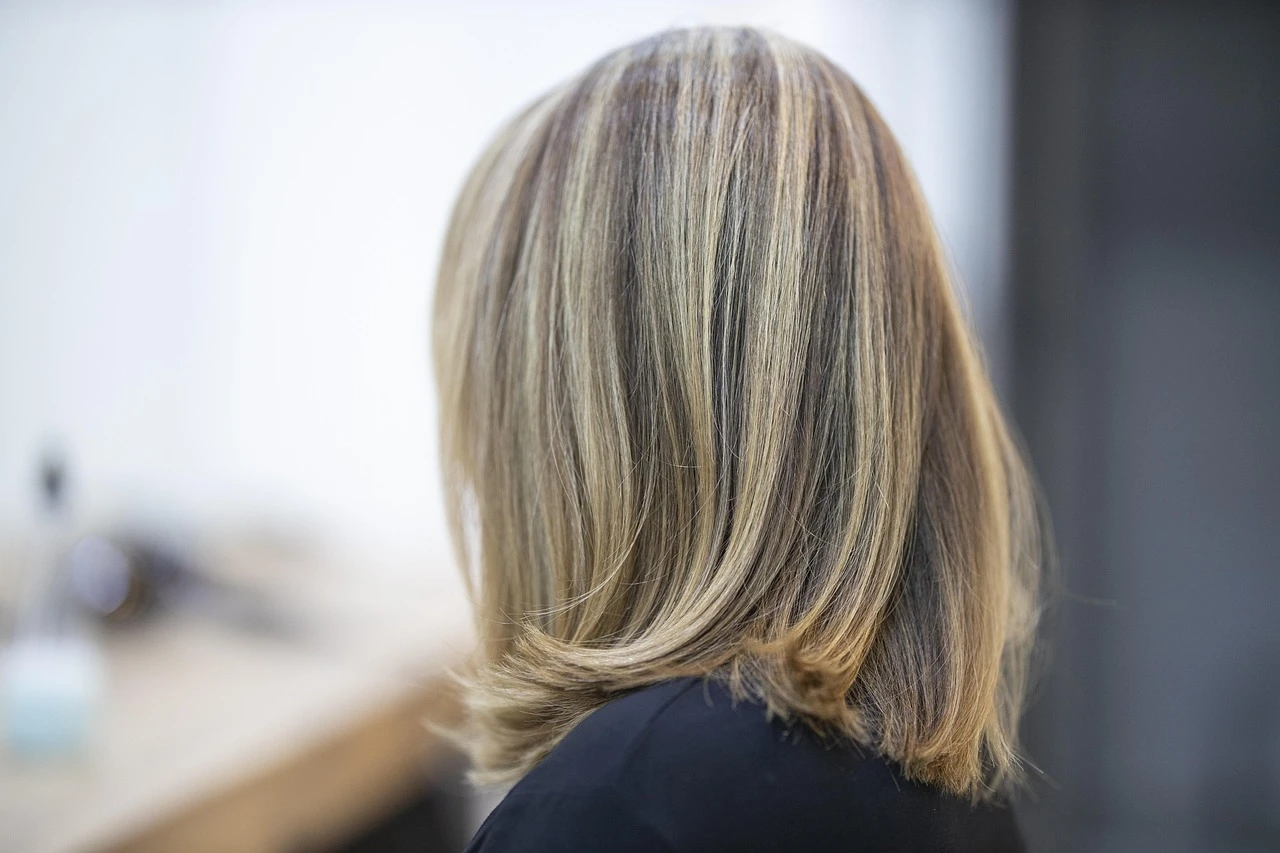
A lob is a long bob, and one line separates it from a regular bob. Fox News put it this way: "Unlike the bob, which is ideally cut at jaw-level, the lob skims the shoulders, making it long enough to be worn in a ponytail or bun."
That last part matters more than it sounds. A jaw-length bob is a commitment. A lob still goes up, still gets tucked behind your ears, and still gives you a choice on the mornings your hair has opinions.
The edge does the rest. Los Angeles groomer Julia Papworth says the lob suits thinner hair because "a blunt edge can help make their hair appear thicker." Celebrity hairstylist Paul Labrecque says the same thing in fewer words: "A blunter cut will create the look of fuller hair."
If "layered bob" makes you picture a tight stack of short pieces at the back of your head, the current version is gentler. Leo Izquierdo, co-founder of IGK Hair Care, suggests asking for "a stacked bob that builds volume at the back while keeping the front soft."
Who it doesn't suit: very thick hair cut as one blunt length. Portland stylist Justin Hickox warns that kind of bob "can cause your hair to take on a triangular shape". If that's your hair, keep the lob and have the weight taken out from inside (that's #11).
If your face is round, ask for the front a little longer than the back. Stylist Jennifer Nast says an A-line bob "elongates the face while adding angles that counteract the roundness."
15The modern shag, minus the 1970s chop
Farrah Fawcett's swimsuit poster came out in 1976 and went on to sell more than 12 million copies, the best-selling poster of all time. That much hair on that many bedroom walls is a big reason the word "shag" makes so many women flinch.
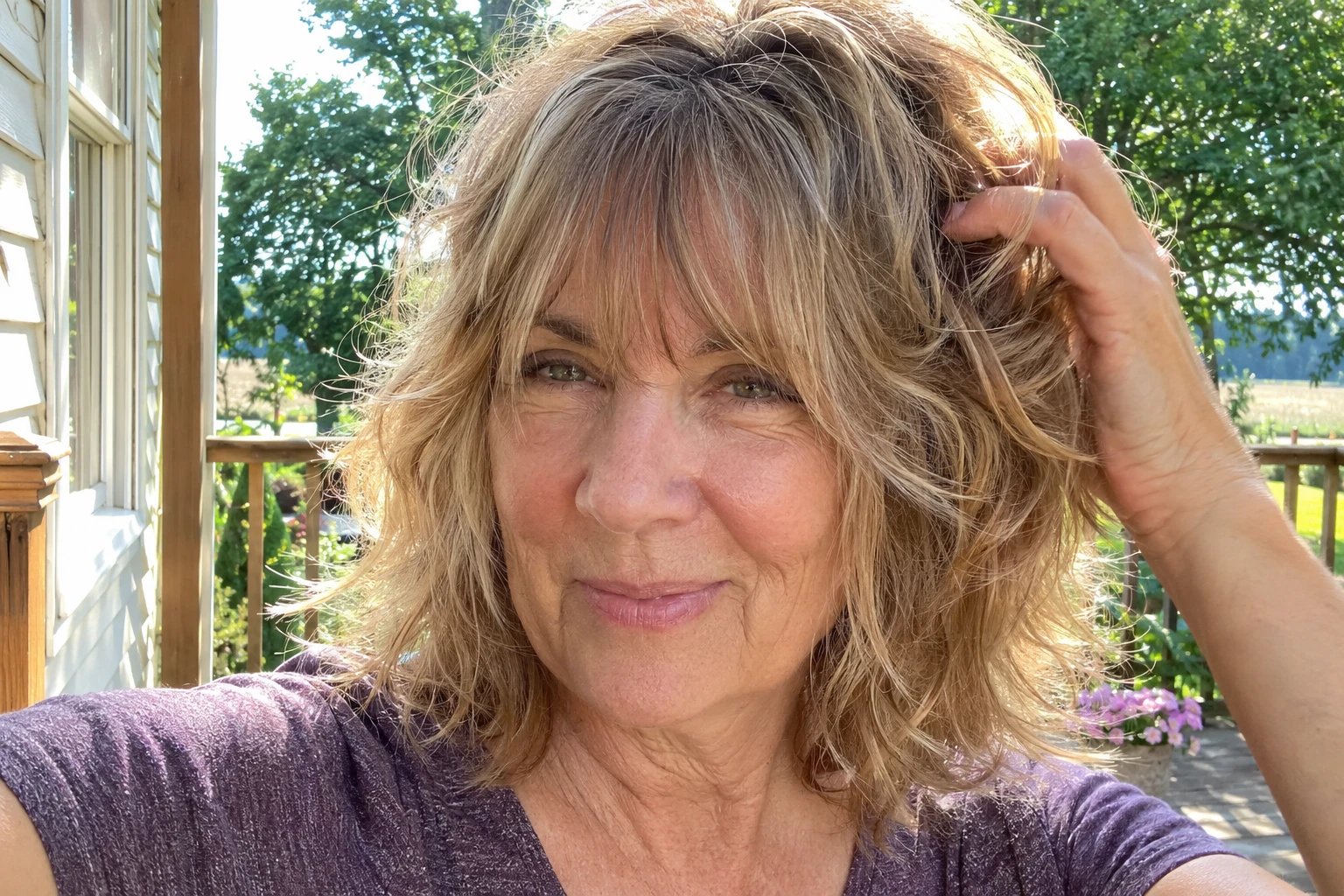
Today's shag is a different cut, and a salon guide from Numi Hair names the difference exactly: "The 70s shag used heavy thinning and hard, choppy ends. You could see where each layer stopped. A modern shag blends them instead."
So here's the test. If you can see where a layer ends, it reads 1977. If you can't, it reads now.
The guide also says the modern version is "built to look good air-dried," and that's the part I'd hold your stylist to. A shag that needs a round brush every morning is one you'll resent by week three.
It can be kind to thin hair, too. Celebrity hairdresser Julius Michael says "the layers in a shag offer much-needed body and movement to thin hair."
Where it falls down is pin-straight hair. Commenters on TikTok who've worn shags say the wash-and-go version works mostly for people with some natural wave or curl. Everyone else describes a daily date with a curling iron.
If you have a bit of bend in your hair, say this in the chair: "Blend the layers so I can't see where they stop."
14The collarbone cut, matched to your hair
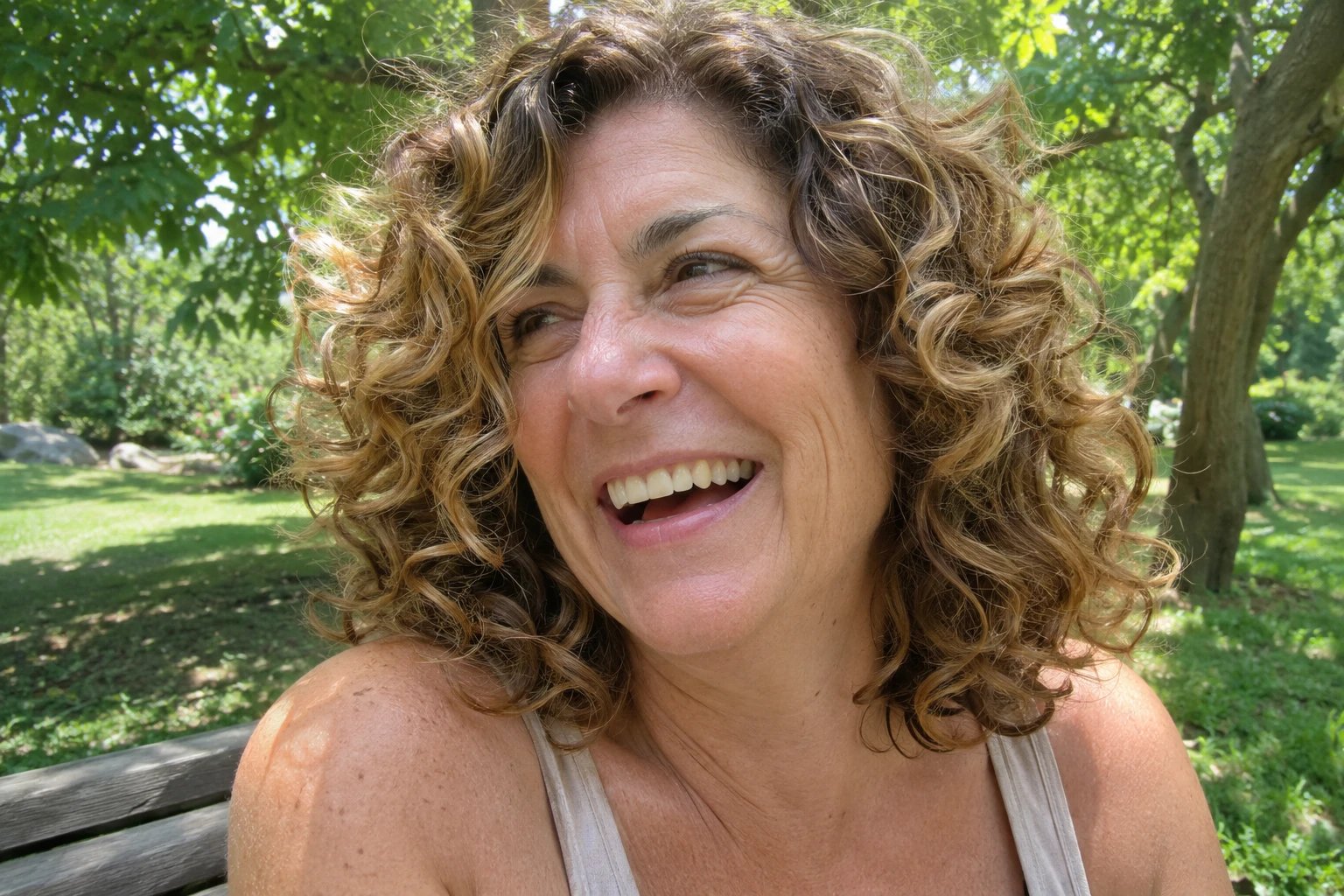
The collarbone cut (you may hear it called a clavicut) is the in-between length that lands on or just below your collarbone. Celebrity hairstylist Gregory Russell picks a collarbone-length layered cut as one that adapts to almost any texture. The catch is that it should be cut differently for each one.
| Your hair | Ask for | Why |
|---|---|---|
| Fine | Full ends, few layers | Keeps the ends from going thin |
| Thick | Notching or deep point cutting | Stops a triangle shape |
| Curly or coily | A little extra length | Curls shrink as they dry |
On thick hair, Russell's reasoning is simple: "Removing weight by notching or deep point cutting can be helpful so you don't have a triangle shape." On curls: "Curly and coily hair may need a little extra length to account for shrinkage."
If your jaw is on the square side, America's Beauty Show, a trade show for stylists, suggests "a long bob that grazes the collarbone, paired with soft layering." The soft layers take the corners off.
If you're curly, your stylist will typically cut your hair dry, since hair dries a little shorter than it looks wet.
See more: 20 Best Recliner Chairs for Seniors →
13The side part that hides a thinning crown
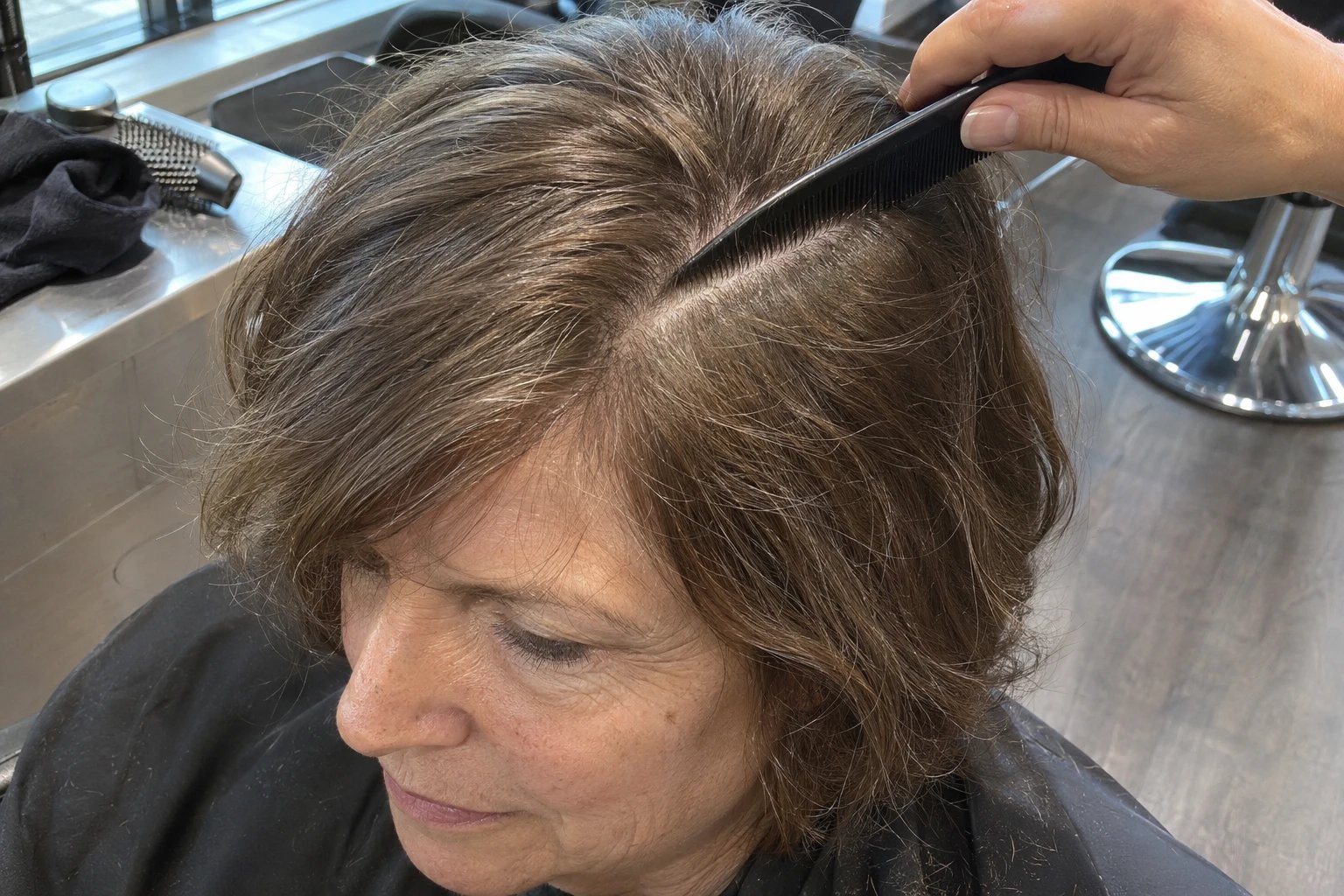
You catch it in a store elevator, the light directly overhead: your part looks wider than you remember.
If that's you, the American Academy of Dermatology says a part that "often gets wider" is a common sign of female pattern hair loss, the most common cause of hair loss in women. It also means where you part your hair is doing more work than you think.
Hair expert Ghanima Abdullah doesn't mince words: "If you're thinning in the crown of your head, a center part is going to draw attention to it." A side part does the opposite: "The added hair going over will increase volume in the area as well."
Here's the practical part nobody mentions. Tell your stylist which side you're moving to before they pick up the scissors, so the cut is built for your new part.
If your crown is full, keep your center part. It isn't wrong; it just isn't hiding anything.
Hair that has gone one way for decades will fight you for a while. In my experience, combing it to the new side while it's wet, every day for a couple of weeks, is usually enough to make it stay.
12Curtain bangs or full bangs at shoulder length

Bangs are the biggest change you can make without giving up length. A shoulder length bob with bangs looks like a whole new haircut, and nobody had to touch your ends. The trick is choosing the bang for the problem you actually have.
| If you have | Try | Why |
|---|---|---|
| Fine hair | Curtain or light, jagged bangs | Volume without weight |
| Thick hair | Blunt bangs | Gives the hair structure |
| A front cowlick | Longer bangs | The weight pulls it down |
| Big, bold frames | Lighter, shorter bangs | Heavy bangs fight the frames |
Curtain bangs, as eyewear maker Pair Eyewear describes them, "part in the middle, much like a pair of curtains, then fall softly past your temples." They're the face-framing choice for fine hair. Colin Ford, education director at SACHAJUAN, says they "can create the illusion of volume without being too heavy."
Mihaela Vatafu, a director stylist in London, splits it by texture: "Light, jagged bangs add movement to fine hair without weighing it down," while "blunt cuts help create structure on thicker strands."
If a cowlick has ruined every bang you've tried, length is your friend. Stylist Ashley Rourk says "longer lengths are best because the weight of long hair pulls them down."
If you wear glasses with large or very noticeable frames, Pair's advice is to "avoid heavy, lengthy bangs." It also points out something you'll notice by lunchtime: bangs pick up oil from your skin and leave it on your lenses.
Count on a trim every six to eight weeks to keep any bang in shape, and ask your salon whether it does quick bang trims between cuts. At Whistle in New York, regulars get them free as often as they need, while new clients pay $10 to $15. And ask for your bangs to be cut dry. L'Oréal Paris notes that cutting dry gives you "a really precise cut, especially if you're cutting bangs."
11Hidden layers inside thick hair
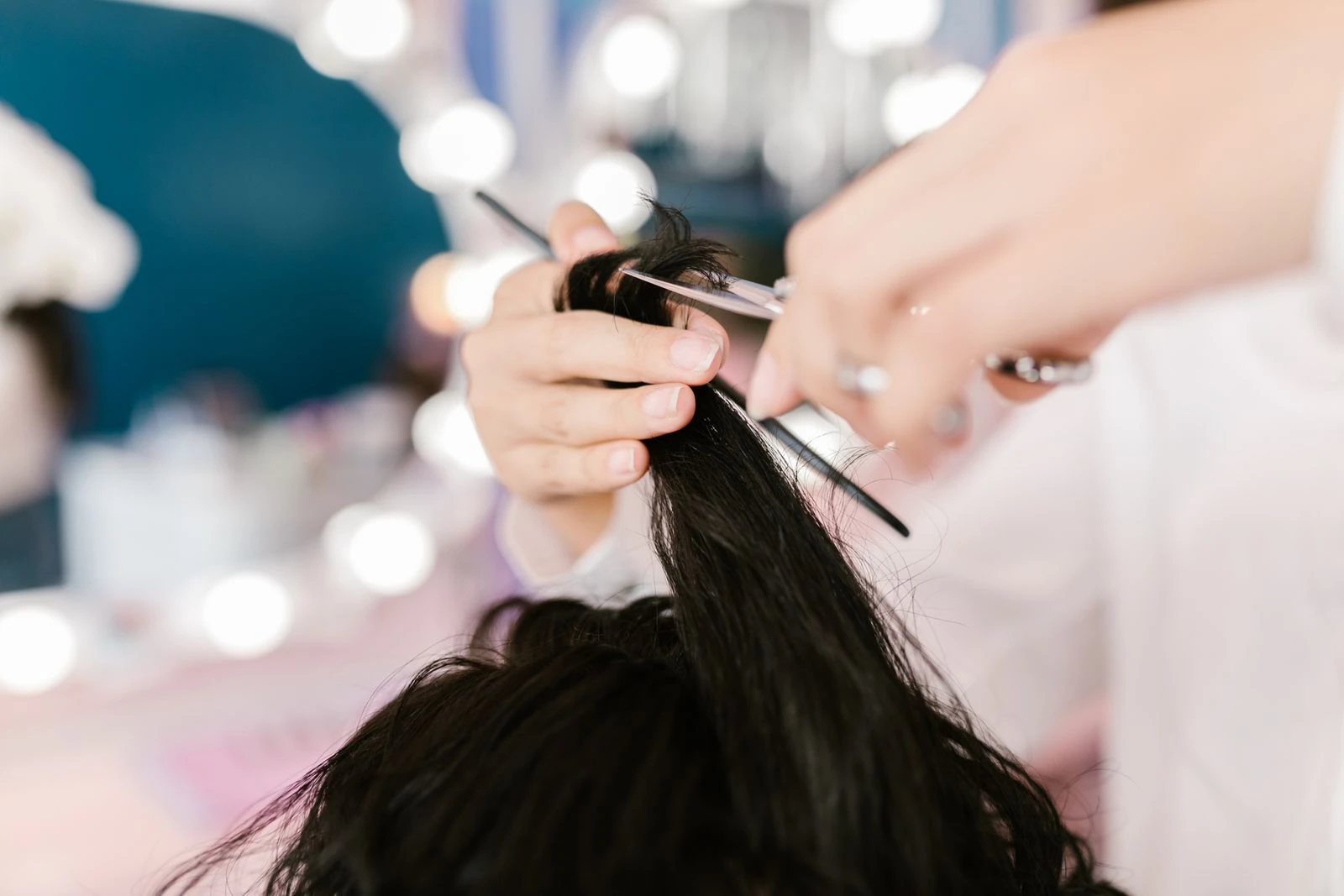
Thick hair has the opposite problem from fine hair. You don't need more fullness. You need weight gone, without anyone seeing where it went.
Celebrity stylist Gregory Patterson, who works with Sally Beauty, calls these "invisible layers", a "technical term where shorter lengths are created within the haircut." His explanation is lovely and simple: "short hair pushes long hair," so the lift comes from inside.
Rami Jabali, a salon owner in Dubai, shows on camera why the usual fix fails on thick, straight hair. "You try to add layers to give it a bit of movement. Those layers would look very choppy." The top stays flat under the weight, the ends frizz, and you end up styling more, which dries the ends further.
His answer is to keep the outline simple and do most of the texturizing underneath, on the bottom layer, as he shows in his video. The top layer falls over it and hides the work. He doesn't give his client's age, but this is about thickness, not birthdays.
What could go wrong: a stylist who thins the outside layer instead.
The words to use: "Can you take the weight out underneath, so it doesn't show?"
10The cut that dodges the shoulder flip
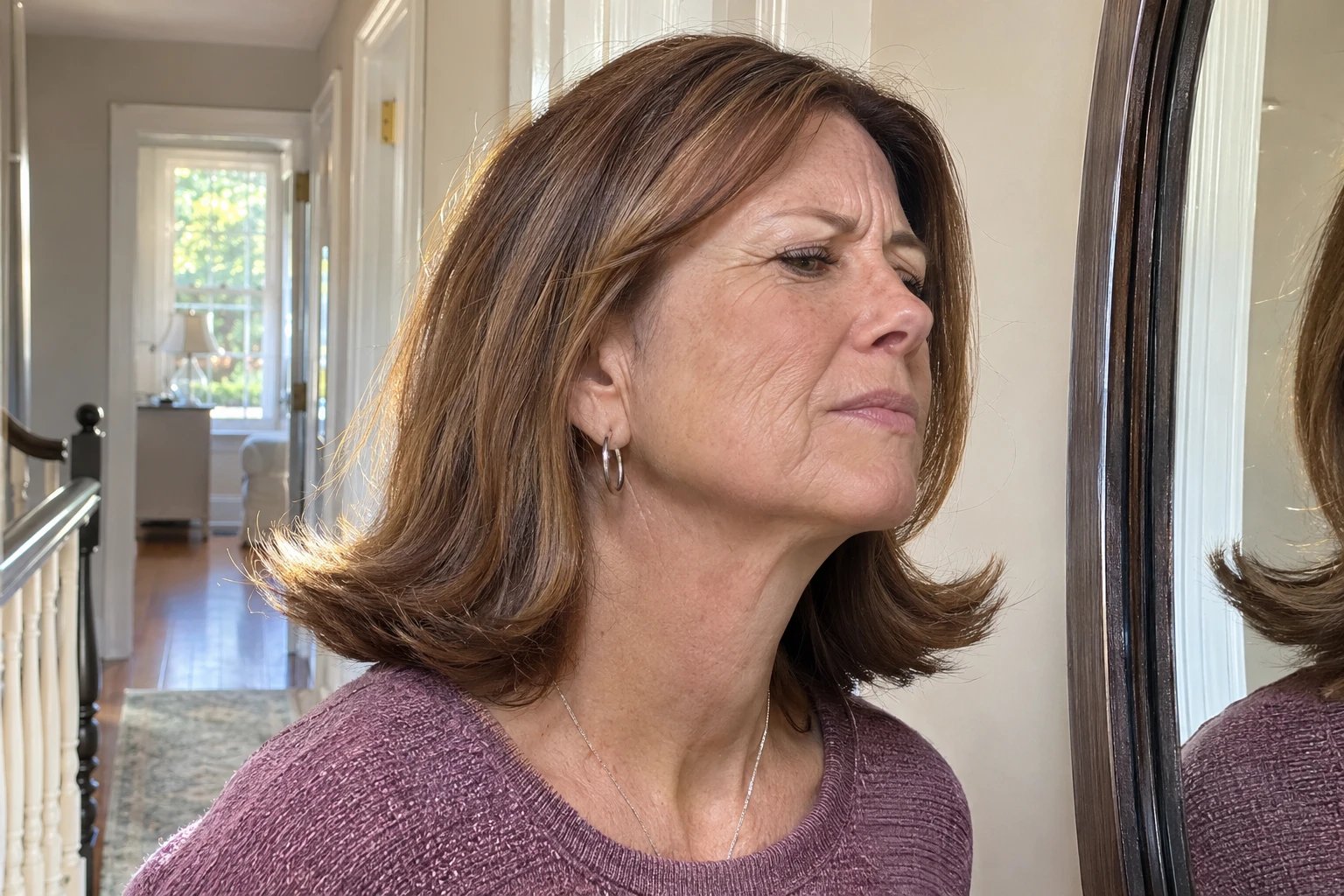
You blow it smooth, get in the car, and by the time you check the visor mirror the ends have kicked out like a flip you never asked for.
That isn't your blow-dryer's fault. A cosmetology instructor's blog calls the shoulder the "collision zone": "When ends rest right on the shoulders, they naturally curve outward or inward depending on styling."
The fix is all about placement. Cut "slightly above the shoulders (a clean bob or lob) or go well past the shoulders into long layers. Avoid the exact 'resting spot.'"
That's why a lob that grazes looks its best sitting just above where your ends would rest, never on it.
The same blog explains the little sprigs that pop up near your part: "When you leave too little weight near a cowlick or strong part, the shorter hairs spring up or out." If you have either, ask for that area left heavier.
Find your resting spot before the appointment. Stand in front of a mirror with your shoulders relaxed, the way you actually stand, and look at where your hair touches. Then tell your stylist, "Above this or well past it, never on it."
If you'd rather go past it, you're in good company. A few women on Reddit say they've settled on just past shoulder length and like it there.
See more: 26 Habits of People Over 70 Who Still Move Like They're 55 →
9Blunt ends for fine or thinning hair

Women with fine hair on TikTok and Reddit say the same thing: long layers left them with almost nothing at the bottom.
If your hair has been thinning, it's far more common than people think, and not only among men. The American Academy of Dermatology estimates 80 million Americans have hereditary thinning, and about 3 in 8 of them are women. For most women it begins in their 40s, 50s or 60s.
The cut that helps most is the one that keeps every strand you have at the bottom. Sharon O'Connor, a salon owner in Cary, North Carolina, says "The perimeter of the hair should be cut blunt, not overly layered, and in some fine hair cases, the ends shouldn't be layered at all."
Kenna Kennor adds a reason to stop at your shoulders rather than going longer: "Longer hair often makes thinning more noticeable." He's also a fan of layering for density, which sounds like a contradiction until you see where the layers go.
Maddy Cauthen, a stylist in Jackson, Mississippi, puts them in front only: face-framing layers around your face and none in the back, because "Layers can take away weight on your ends, so too many layers may not be the answer." That's the version I'd choose for you too.
If you want one sentence to bring in, borrow Justin Hickox's. He tells clients to ask for the hair "below the parietal ridge (the area from behind your ear to the occipital bone) as close to one length as possible." Translated: everything from behind your ears down stays one length.
8The minutes your straight hair really takes
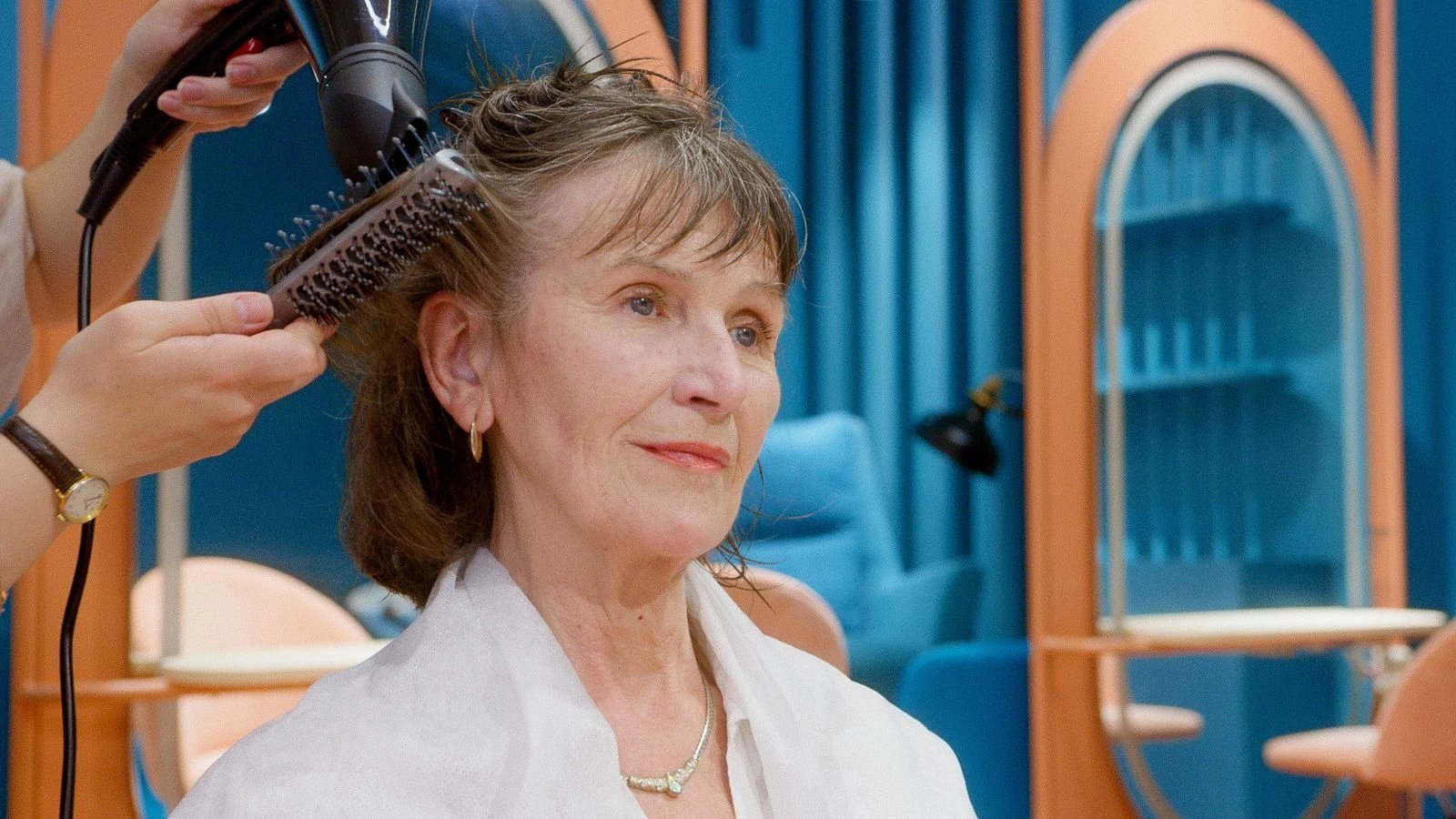
"Low-maintenance" may be the most generous word in any salon. On TikTok, women describe layered cuts sold as easy that came with daily blow-drying, a curling iron, and a shape they could never get back at home. Justin Hickox admits a style that suits you in the salon "may fail to translate once you get home."
So here are honest numbers. Stylist Devin Graciano gives these estimates for medium-length hair:
| Medium-length hair | Blow-dry | Air-dry |
|---|---|---|
| Fine | 10 to 15 minutes | Under an hour |
| Thick, curly or high-porosity | 25 to 45 minutes | Several hours |
At the thick end, a daily blow-dry adds up to three to five hours a week. Meanwhile, the American Academy of Dermatology suggests using heat once a week or less and on the lowest setting. A cut that only looks right after a blow-dry fights your schedule and your ends at the same time.
Straight hair has a reputation for refusing to move, but that's a cutting problem. Hickox shows a straight-haired client after her cut and says, "It shows you that you don't have to have wave to have movement." The movement has to be cut in, so the hair falls into it on its own.
Before you pay, ask one question: "What does this look like if I don't touch it?"
See more: 26 Five-Minute Exercises for Seniors →
7Growing a choppy cut back to your shoulders

"I will say the first weeks of shorter hair were hard! I am horrible at styling!" wrote a woman of 62 on Reddit after trading long hair for layers. If you're on the other side of a choppy cut and want your even shoulder length back, here's the math nobody gives you.
Healthy hair grows about half an inch a month, or 4 to 6 inches a year on average. The gap between your shortest layer and your ends is your waiting time, and by that math a 2-inch gap takes roughly four to six months to grow out.
The surprise is that you should keep getting trims while you wait. L'Oréal Paris recommends one every 8 to 12 weeks while growing out "to maintain growth and stop split ends." Skipping them saves nothing if the splits travel up and you lose more later.
At each visit, ask for the ends cleaned up and the shortest layers left alone. Ask the stylist to point out which pieces they're leaving to catch up, so you're both counting the same months.
See more: 20 Tai Chi Exercises for Women Over 50 →
6The cuts that dated, and what they had in common
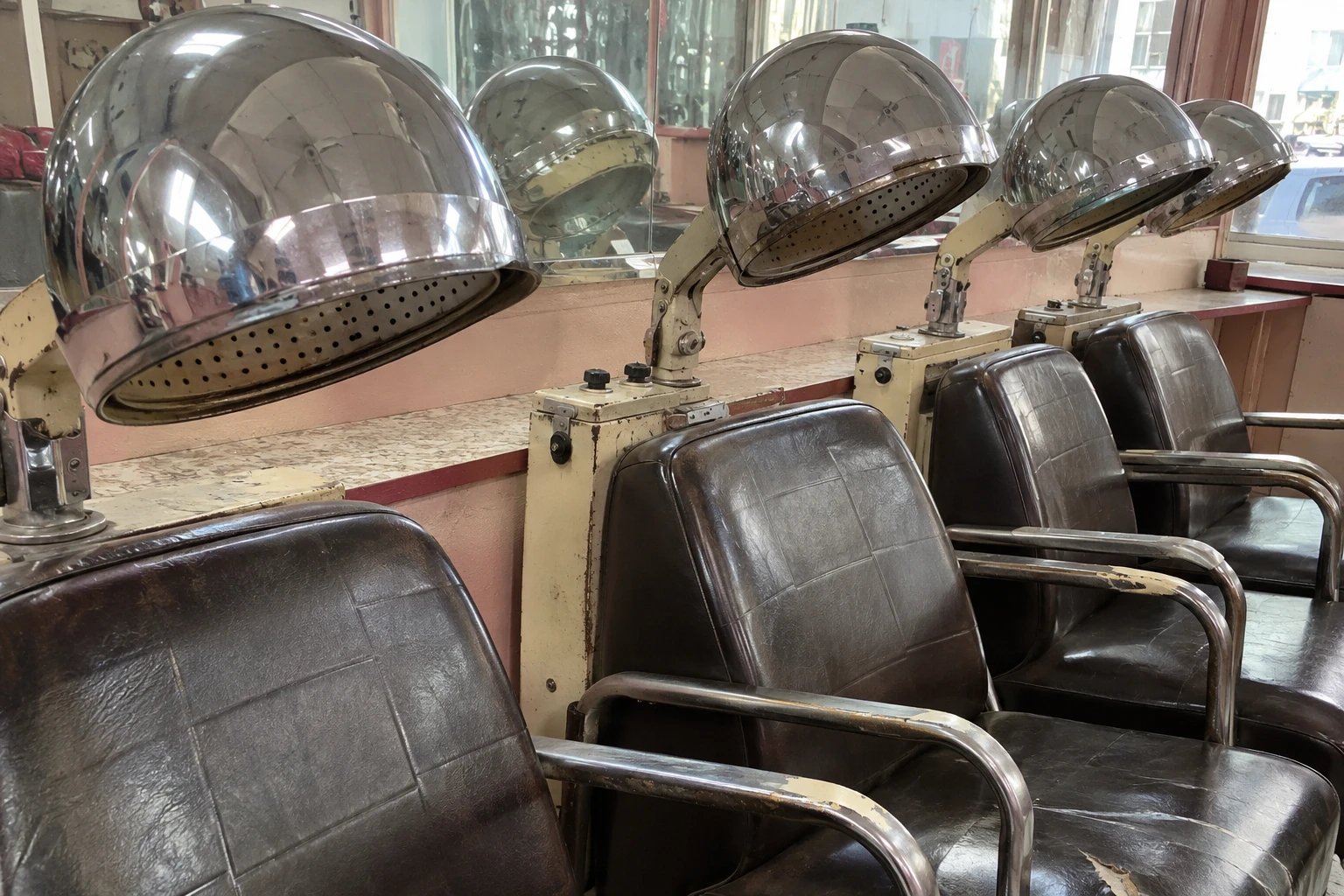
If you grew up around a mother or grandmother with a standing appointment, you may remember the smell of setting lotion and the hum of the hood dryer. Those sets are what most of us picture when we say "my mother's haircut."
What dated them wasn't their length. It was that they were built to hold one shape and never move.
The Flip, that bouncy, upturned 1960s look, needed "a light setting lotion and curlers." Mary Tyler Moore wore a short version when *The Dick Van Dyke Show* debuted in 1961. It began as a modified bouffant, and by the early 1970s it had loosened into a longer, softer version.
Around the same time, Vidal Sassoon's "1960s wash-and-wear cuts freed women from endless teasing and hairspray." That's the idea that won.
Then came 1976. Dorothy Hamill won Olympic gold in Innsbruck with a bob by stylist Yusuke Suga, and it set off a fad known as the "short and sassy" look. She'd waited a long time for it: "It took me two years to get an appointment with Mr. Suga who cut my hair for the Olympics." And she was as surprised as anyone: "I had no idea that it would be popular."
The current stacked bob shows how far things have moved. Leo Izquierdo describes the 2026 version as "less about harsh angles and more about soft, blended stacking", cut so it "never feels too helmet-like."
Before you leave the chair, run your fingers through the finished cut once and let it fall. If the shape comes back, it'll still look current years from now.
5The small trim that beats the big chop
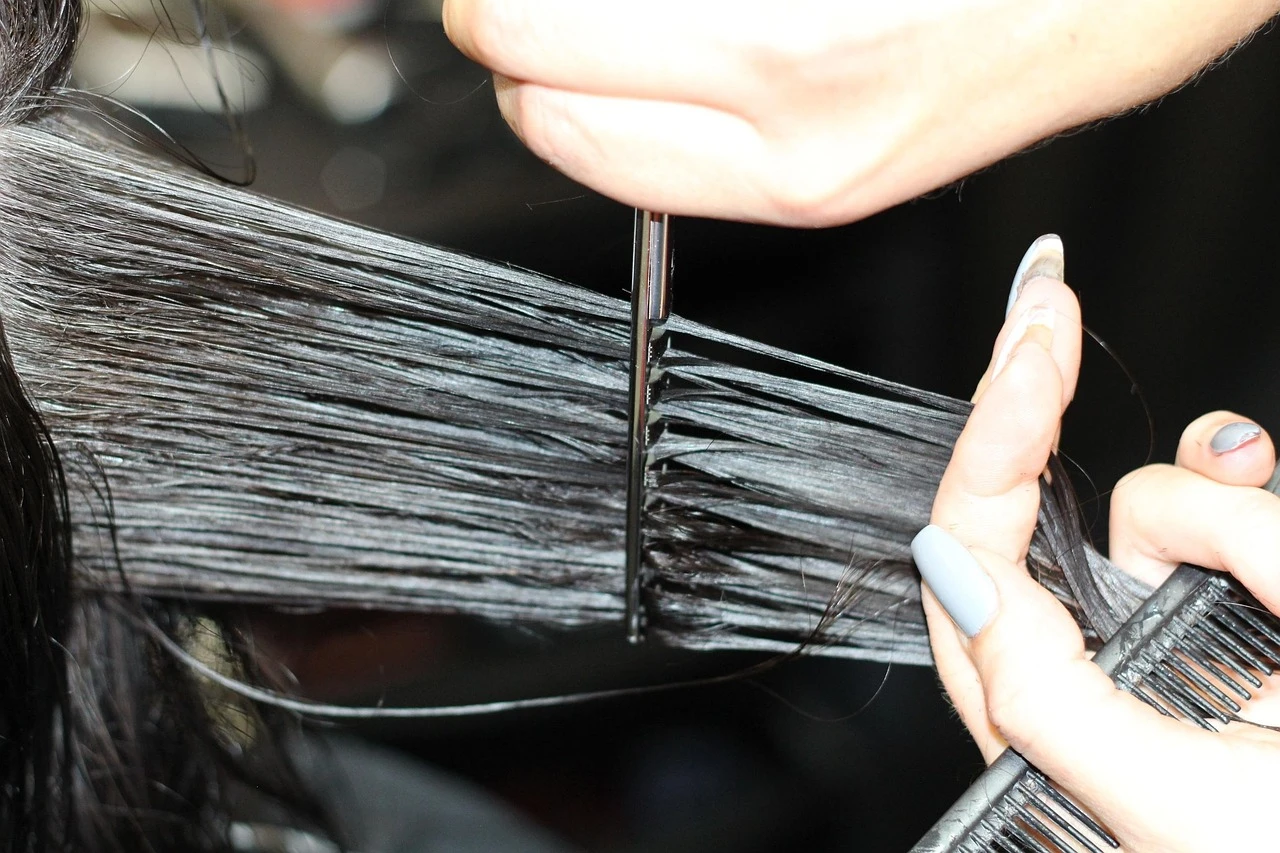
Some stylists will tell you to take it all off and start fresh. I hear it often, and I wince every time.
Chris, a Fort Myers, Florida, salon owner who posts as the Blowout Professor, says what I'd say: "If you do that, your hair is going to grow back with the exact same damage again." The new hair gets treated the same way the old hair was, so you're back where you started, only shorter.
His reason for protecting the ends is worth remembering: "Your ends are the oldest, most fragile part of your hair because they've been on your head for the longest amount of time."
Damage does need cutting, just not much of it. Cleveland Clinic dermatologist Dr. Wilma Bergfeld says "Split ends run up the hair fiber like a rip in your stockings. You need to clip those off." The splits go. The healthy length stays.
What changes going forward is care. Cleveland Clinic's Dr. Shilpi Khetarpal says "chemical processing tends to make hair more fragile," and that people with longer hair should keep shampoo off the ends.
And if you were raised on a hundred brush strokes a night, the American Academy of Dermatology lists "brushing 100 strokes a day" as a habit that damages hair. You may retire the brush with a clear conscience.
In the chair, ask, "Where do the splits stop?" Then have them cut just above that line.
4The length that still goes up on a hot-flash day
You're in the checkout line when the heat starts climbing your neck, and the only thing you want in the world is your hair off it.
If hot flashes are part of your life, you're in a big club. Cleveland Clinic says as many as 3 in 4 people report them in the years leading up to menopause, and a typical one lasts between one and five minutes. That's not long enough to fuss with your hair, so it needs to go up in seconds.
Some women solve this by going very short. "No more heat trapping hair on my neck or face, no stray hairs poking me in the eyes and going up my nose or in my mouth," wrote a woman over 70 on Reddit after cutting hers.
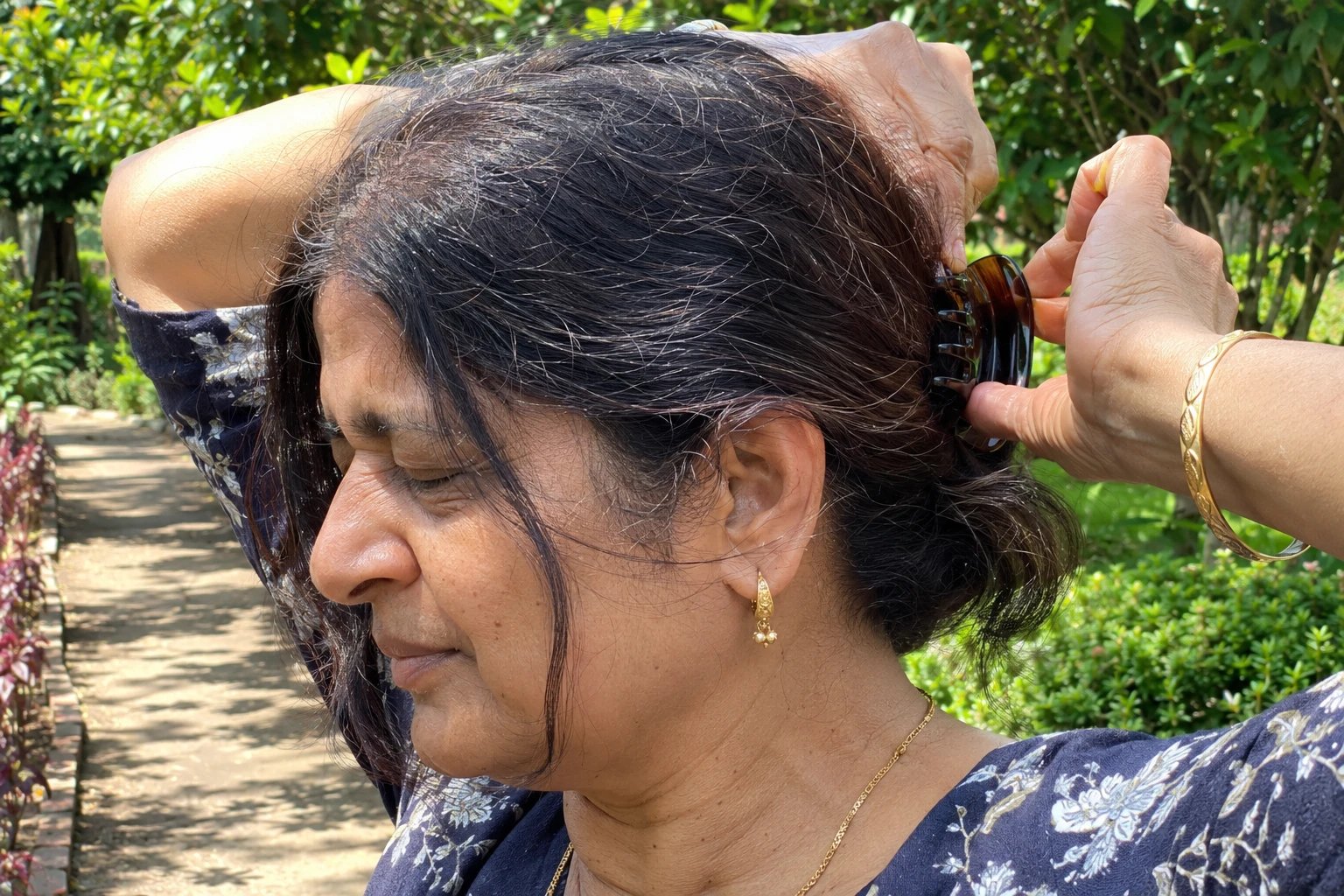
Shoulder length gives you a middle path, as long as it's long enough to gather. The lob at #16 is, by definition, long enough for a ponytail or bun. A cut with very short front layers may not be, because those pieces fall right back onto your face.
Run the test while you're still in the chair. Before the stylist puts the dryer down, gather your hair at the nape with one hand. If the front pieces make it into your fist, you'll be fine in that checkout line.
When it goes up, keep it loose. The American Academy of Dermatology suggests hair "loosely pulled back" with covered bands rather than tight ponytails.
3The cut you order in inches
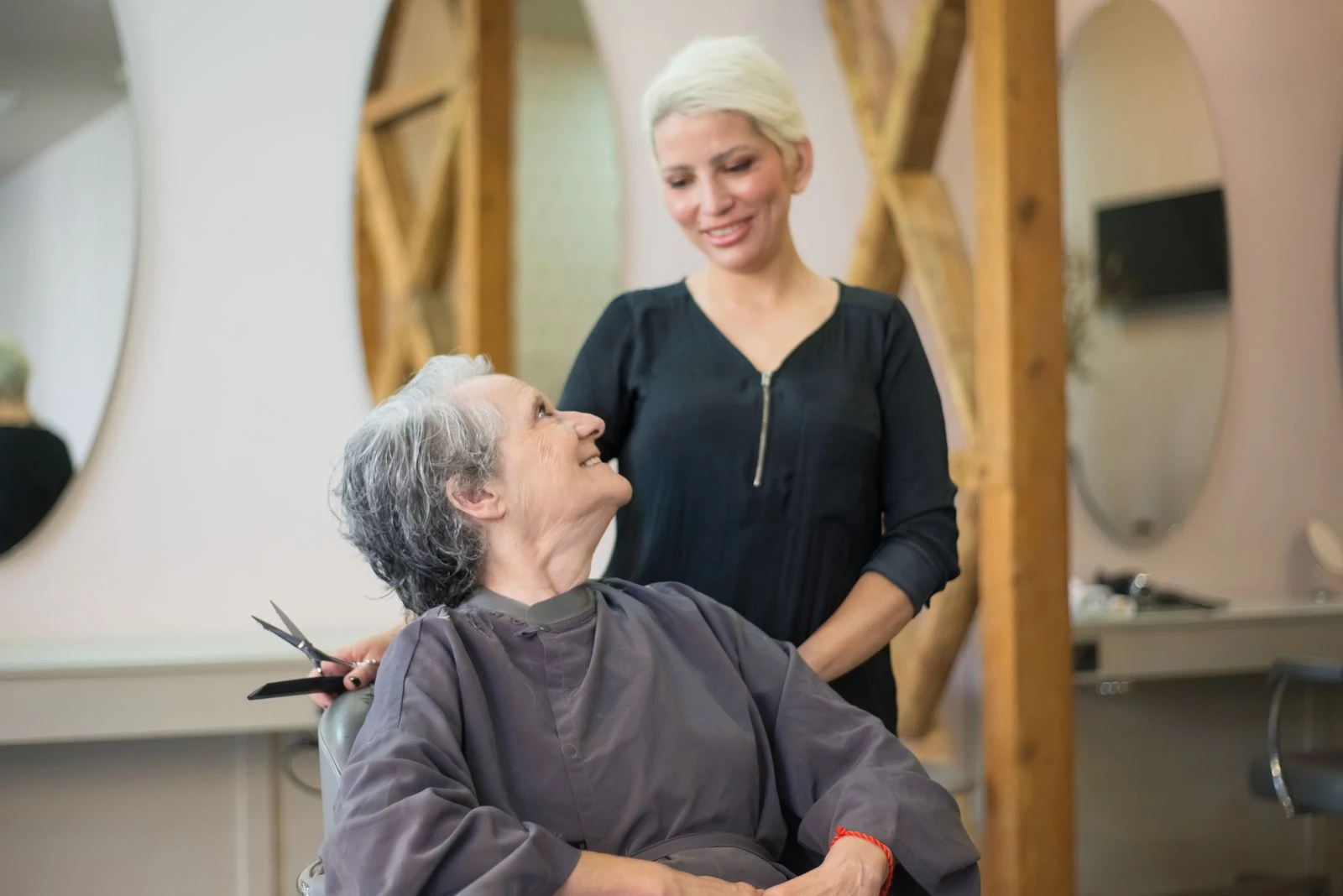
On Reddit, women trade stories of asking for two to four inches and losing eight, or being shown six inches and losing ten. Most of those cuts started with a friendly, vague sentence.
An insurance company that covers hairdressers puts it bluntly in its guidance for stylists: "'Short but not too short' is not a unit of measurement." It tells them to "cut in small increments first" and to "physically show the length you would cut."
That's the part I love. You aren't being difficult by asking for those things. You're asking your stylist to do what their own insurer recommends.
If you only remember four words, make them these: "Show me first, please."
That guideline is the one to protect. Roberto Torres, a Tampa-area salon owner, narrates a cut for clients who want a change without going short, and his rule is simple: "The point is, don't lose the guideline."
Wet hair is the other trap. L'Oréal Paris notes that "When your hair dries, the cut will end up a little shorter than when it was wet." For fine, straight hair, a wet cut is likely ideal. For curls, the curl brand Ouidad says to "interview your stylist" about their experience with curls before you commit.
2Front pieces that land past your chin
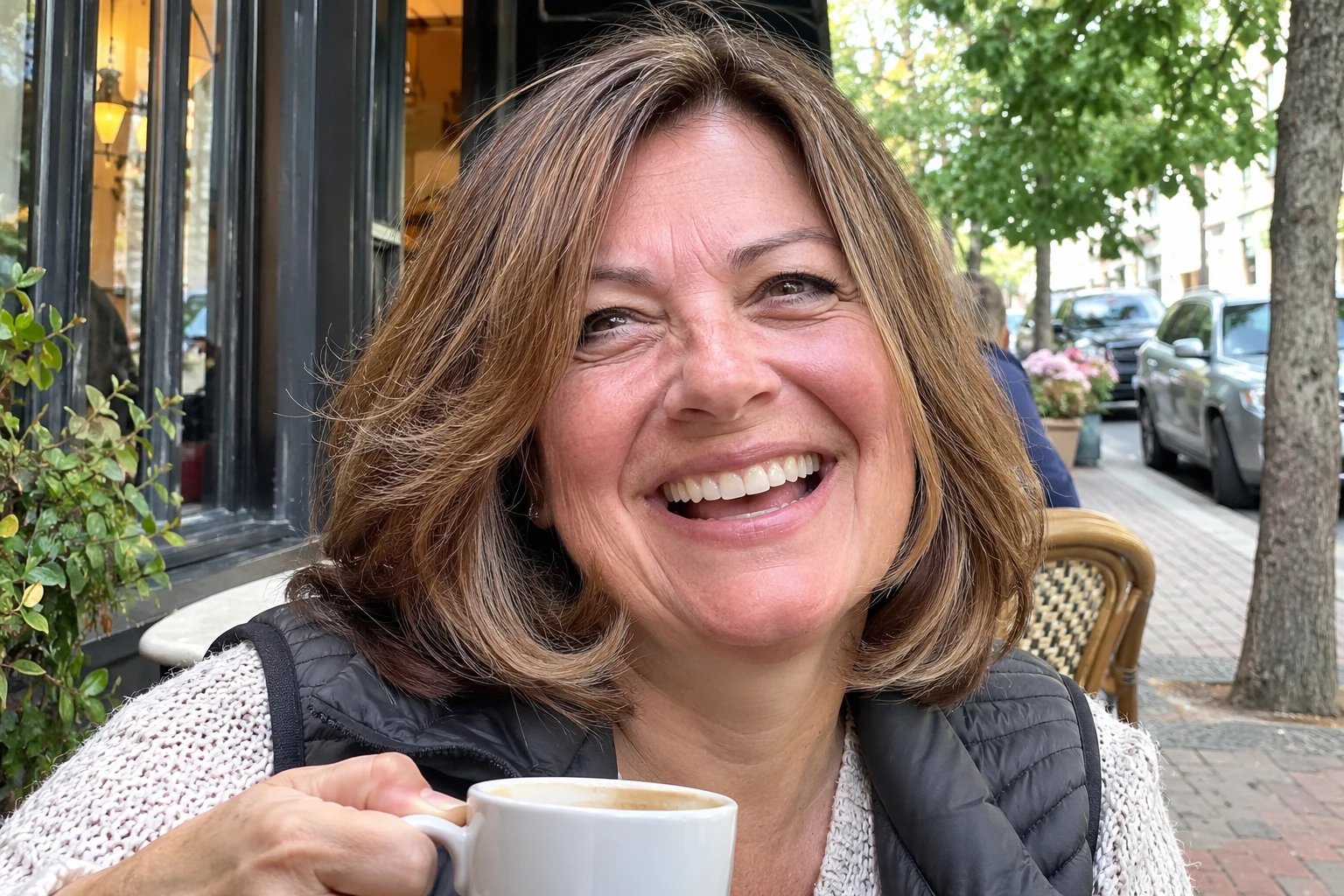
Where the front of your cut lands changes your face more than any other inch. Justin Hickox, who has been a professional stylist for over 30 years, explains it in one breath: "You bring that length right up to the chin, all of a sudden, it's going to add more width to the overall face."
He says the same about a bob that stops at the chin: "Someone with a round face may want to rethink this bob type."
So where should it land? Jennifer Nast gives the number nobody else does: "When working with a round face, longer hair and layers two inches below the chin can help to elongate the face."
Two inches. That's your spot for the shortest face-framing piece if your face is round.
Other face shapes have their own sweet spots. America's Beauty Show says a cut that falls "just below the jawline or even brushes the shoulders" elongates a round face, and for heart-shaped faces "A bob that falls just below the chin is your best bet."
Two inches is hard to judge by eye with a cape on. Hold a ruler up to your chin in your own bathroom mirror and note where two inches lands. Then, in the chair, put your finger on that spot and say, "My shortest piece starts here."
1The Rachel, minus what dated it
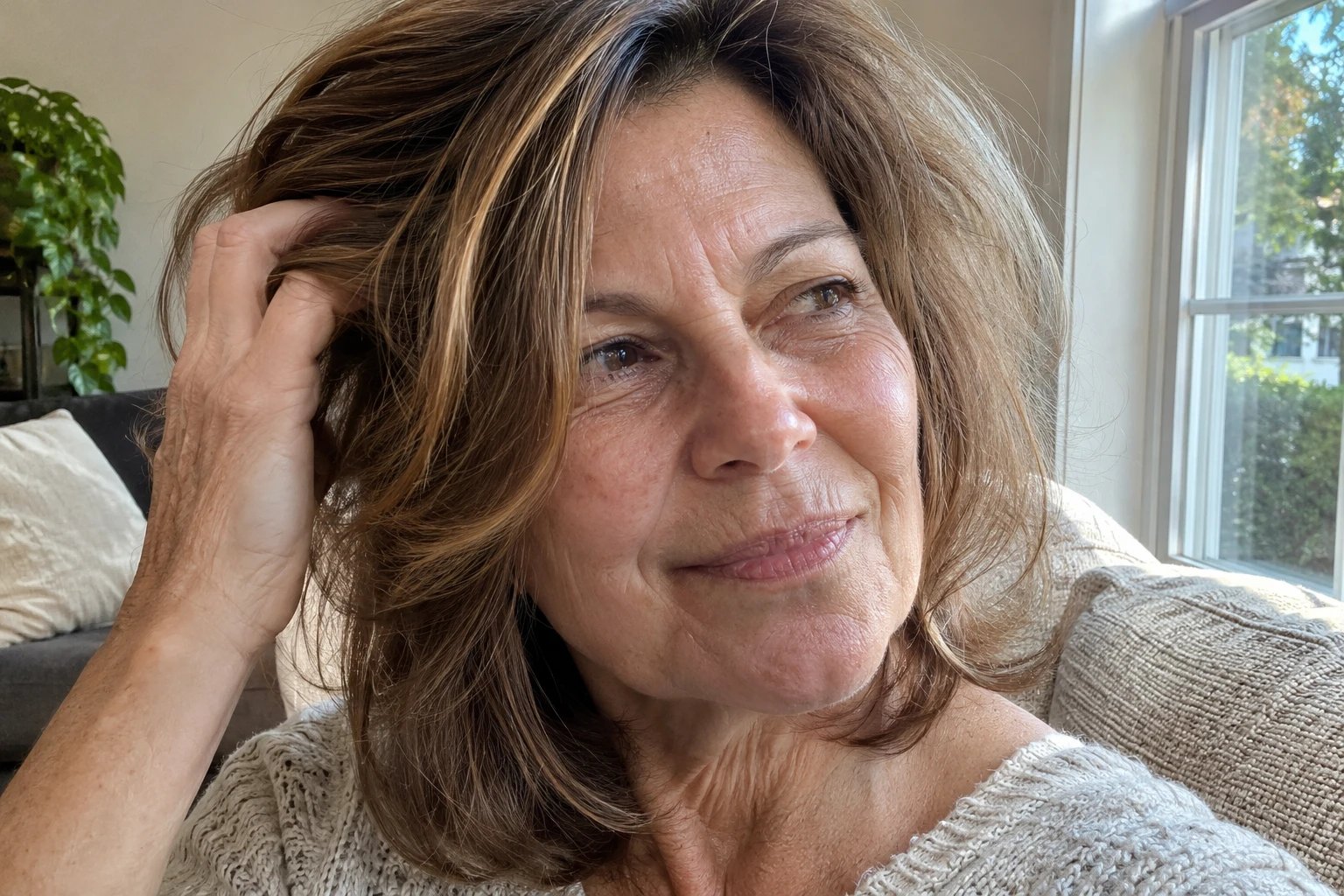
One of the most famous shoulder-length cuts of the 1990s was hated by the woman wearing it.
Stylist Chris McMillan created the Rachel for the April 1995 episode of *Friends*, "The One With the Evil Orthodontist." Jennifer Aniston wore it through the first three seasons and had dropped it by season 4.
Years later, she told *Allure* exactly how she felt about it: "I think it was the ugliest haircut I've ever seen."
Stylist Trevor Tobin explained why it was so hard to copy: "She doesn't just wake up, blow it dry, and it just turns out like that." The shape lived in the styling. Take away the round brush and the professional hands, and the layers had nowhere to go.
That's what dated it, and it's the same thing that dated the Flip: a shape that only existed after someone worked on it. The length was never the problem. Shoulder-length layers framing the face are still flattering, which is why the cut keeps coming back.
If you want today's version, go in with clear eyes. Silver Mestre, a London stylist, says it "does benefit from heat styling," and "Those with very thick hair should try to avoid the Rachel, as the layers could look a little chunky." Ask for the layers longer and blended, so they fall into place without a brush.
Then, before you leave, ask your stylist to hand you the dryer for the last five minutes. If you can't make it look right with their eyes on you, it won't look right on a Tuesday morning at home.
The bottom line
Most cuts that go wrong go wrong before a single hair falls, in the few seconds between what you said and what they heard.
So think about when you last wore your hair a way you truly chose, rather than one you drifted into after a stylist said "how about." If the answer takes a while, that's worth knowing.
The next time you wash your hair, let it dry without touching it at all. Look at where it lands and what it does on its own. That's the hair you'll be living with between appointments, and it's the best guide you can bring to the chair.
Up next
17 Secrets for Shoes That Look Good After 60 and Don't Hurt
A three-question store script, a phone test for wide-leg pants and the Medicare shoe benefit for diabetic feet: how to find the most comfortable shoes for women over 60 that still look like you.
Read the list →

Reader quiz
Did you catch the details?
5 questions from this article. Finish them all to unlock the editor's bonus tip.
According to the article, what four words should you say to your stylist before the first snip?
Questions people also ask
Is shoulder-length hair high maintenance?
It depends on your texture more than the length. One stylist's estimates put a blow-dry for medium-length fine hair at 10 to 15 minutes, against 25 to 45 minutes for thick, curly or high-porosity hair. A shoulder-length cut built to air-dry cuts that time down, which matters if you don't want to use heat every day.
How often should I trim shoulder-length hair?
Every six to eight weeks is the usual advice for medium-length hair, according to L'Oréal Paris. Ogle School, a cosmetology school, gives a wider range of 6 to 12 weeks. At a $66 mid-price cut, six to eight weeks works out to roughly $429 to $572 a year before tip, though your salon's price will differ.
Do layers make thin hair look thinner?
Too many layers can, because they take weight off the ends where thin hair needs it most. Stylist Maddy Cauthen says "too many layers may not be the answer" and suggests face-framing layers in front with none in back. Hidden "invisible layers" cut underneath can add movement while the ends keep their weight.
Will shoulder-length hair work with glasses?
Yes, shoulder-length hair works with glasses; the trick is matching the length and weight of your bangs to your frames. Pair Eyewear advises that with large, iconic frames you "avoid heavy, lengthy bangs," while longer, thicker bangs suit low-profile frames. Bangs can also leave oil on your lenses, so expect to clean them a little more often.
Does cutting your hair make it grow back faster?
No, cutting your hair doesn't make it grow back faster. Cleveland Clinic explains that regular trims keep hair from breaking and getting even shorter, because split ends travel up the strand if they're left alone. The trim protects the length you have rather than adding any.
How much length will I lose once curly hair dries?
Expect curly hair to dry a little shorter than it looks wet, by an amount that varies with your curl. L'Oréal Paris notes the cut "will end up a little shorter than when it was wet," and stylists often cut coily hair dry for that reason. Celebrity stylist Gregory Russell says curly hair "may need a little extra length to account for shrinkage," so tell your stylist the length you want once it's dry.
Did any of these feel familiar?
Know someone who needs this?
 Prime Journal · Free printable
The Closet Fit and Color Checklist
- A clearer view of colors beside your face.
- Clothes that pass the sitting and walking test.
- Shoes and repairs checked before anything gets replaced.
Free printable: The Closet Fit and Color Checklist. Enter your email and it is yours.
Sources cited in this article
This article links to 53 outside sources, listed here so you can read them yourself.
- Reddit's NoStupidQuestions forum www.reddit.com/comments/1p44v4e
- Whole threads www.reddit.com/comments/1kqie0i
- Kenna Kennor shopping.yahoo.com/beauty/hair/articles/1-hair-mistake-celebrity-stylist-143…
- Fox News www.foxnews.com/lifestyle/the-lob-hollywoods-hottest-haircut
- Says the same thing www.hellomagazine.com/healthandbeauty/hair/856780/best-haircuts-add-fullness…
- Suggests asking for shopping.yahoo.com/beauty/hair/articles/7-best-stacked-haircuts-2026-1310002…
- "can cause your hair to take on a triangular shape" www.justinhickox.com/blog2/which-trending-bob-haircut-is-for-you
- "elongates the face while adding angles that counteract the roundness." www.aol.com/lifestyle/celebrity-hair-stylists-explain-best-221900445.html
- More than 12 million copies www.biography.com/actors/farrah-fawcett-swimsuit-poster
- Numi Hair numihair.com/blog/what-is-a-modern-shag-haircut
- Commenters on TikTok www.tiktok.com/@glamgirlgabi/video/7522495000270228742
- Picks a collarbone-length layered cut shopping.yahoo.com/beauty/hair/articles/5-best-haircuts-every-hair-101100126…
- Suggests www.americasbeautyshow.com/blogs/in-the-loop/which-bob-haircut-length-is-rig…
- "often gets wider" www.aad.org/public/diseases/hair-loss/types/female-pattern
- Doesn't mince words www.glam.com/1563846/best-worst-hairstyles-older-women
- Describes them paireyewear.com/blogs/news/glasses-with-bangs
- "can create the illusion of volume without being too heavy." shopping.yahoo.com/beauty/hair/articles/42-chic-curtain-bangs-ideas-13000067…
- Splits it by texture www.aol.com/lifestyle/shoulder-length-cuts-bangs-almost-165100436.html
- "longer lengths are best because the weight of long hair pulls them down." www.yahoo.com/lifestyle/6-tips-getting-rid-cowlick-154836468.html
- Whistle in New York www.timeout.com/newyork/shopping/whistle
- L'Oréal Paris www.lorealparisusa.com/beauty-magazine/hair-care/all-hair-types/cut-hair-wet…
- "invisible layers" www.aol.com/articles/discover-invisible-layers-haircut-adds-143300821.html
- "You try to add layers to give it a bit of movement. Those layers would look very choppy." www.youtube.com/watch?v=x74KKconkAk&t=0
- His video www.youtube.com/watch?v=x74KKconkAk&t=121
- "collision zone" wnccosinstructor.com/2025/11/19/why-does-hair-flip-out-and-how-to-fix-it
- A few women on Reddit www.reddit.com/comments/1pk9xmv
- Reddit www.reddit.com/comments/1wbou3b
- 80 million Americans www.aad.org/media/stats-numbers
- Says www.aol.com/articles/haircut-mistake-makes-fine-hair-132500000.html
- Tells clients to ask www.justinhickox.com/blog2/transform-your-hair-over-50-without-losing-length
- "may fail to translate once you get home." www.shefinds.com/collections/medium-length-hairstyles-never-wear-after-50
- Estimates goldielocks.com/blogs/news/how-to-dry-hair-fast
- Using heat once a week or less www.aad.org/public/everyday-care/hair-scalp-care/hair/habits-that-damage-hair
- "It shows you that you don't have to have wave to have movement." www.tiktok.com/@uuser9975781761857/video/7705856753883155742
- Wrote a woman of 62 www.reddit.com/comments/1wqt4y9
- About half an inch a month medlineplus.gov/hairproblems.html
- 4 to 6 inches a year health.clevelandclinic.org/is-there-any-way-to-make-your-hair-grow-faster
- L'Oréal Paris www.lorealparisusa.com/beauty-magazine/hair-care/all-hair-types/how-often-sh…
- "a light setting lotion and curlers." www.encyclopedia.com/fashion/encyclopedias-almanacs-transcripts-and-maps/flip
- "1960s wash-and-wear cuts freed women from endless teasing and hairspray." www.cbsnews.com/sanfrancisco/news/hairstyling-pioneer-vidal-sassoon-dies-at-84
- Known as the "short and sassy" look en.wikipedia.org/wiki/Dorothy_Hamill
- Says www.youtube.com/watch?v=bQBvWQlVjlw&t=307
- "Your ends are the oldest, most fragile part of your hair because they've been on your head for the longest amount of time." www.youtube.com/watch?v=bQBvWQlVjlw&t=856
- "chemical processing tends to make hair more fragile," health.clevelandclinic.org/the-dirty-truth-about-washing-your-hair
- As many as 3 in 4 people my.clevelandclinic.org/health/symptoms/15223-hot-flashes
- Its guidance for stylists wellnessproinsurance.citadelus.com/blog/hairdresser-cut-hair-too-short-alleg…
- Simple www.tiktok.com/@robertotorres.hair/video/7519266574474235149
- "interview your stylist" www.ouidad.com/blog/hair-salon-tips/5-rules-for-cutting-curly-hair
- "The One With the Evil Orthodontist." www.mentalfloss.com/article/598225/jennifer-aniston-the-rachel-haircut-frien…
- "I think it was the ugliest haircut I've ever seen." www.cbsnews.com/news/jennifer-aniston-the-rachel-was-the-ugliest-haircut-ive…
- Says www.stylist.co.uk/beauty/hair/rachel-haircut-revival/1028875
- Yelp's women's haircut guide www.yelp.com/costs/womens_haircuts
- Ogle School's www.ogleschool.edu/blog/how-often-should-you-cut-your-hair
Irina Byalik
Style Editor
Irina Byalik is a hairdresser and the owner of New Image Hair Salon in East Brunswick, New Jersey, with more than 20 years of experience. She came to the United States from Ukraine.
More from Irina Byalik