





17 Hair Colors Over 50 That Take Years Off
Seventeen shades, each with who it suits, how the roots grow out and how many salon visits a year it really takes, plus an honest look at going silver.
By Irina Byalik, Style Editor
Updated · 24 min read
- Written by our style editor
- Cited 34 sources
- How we review
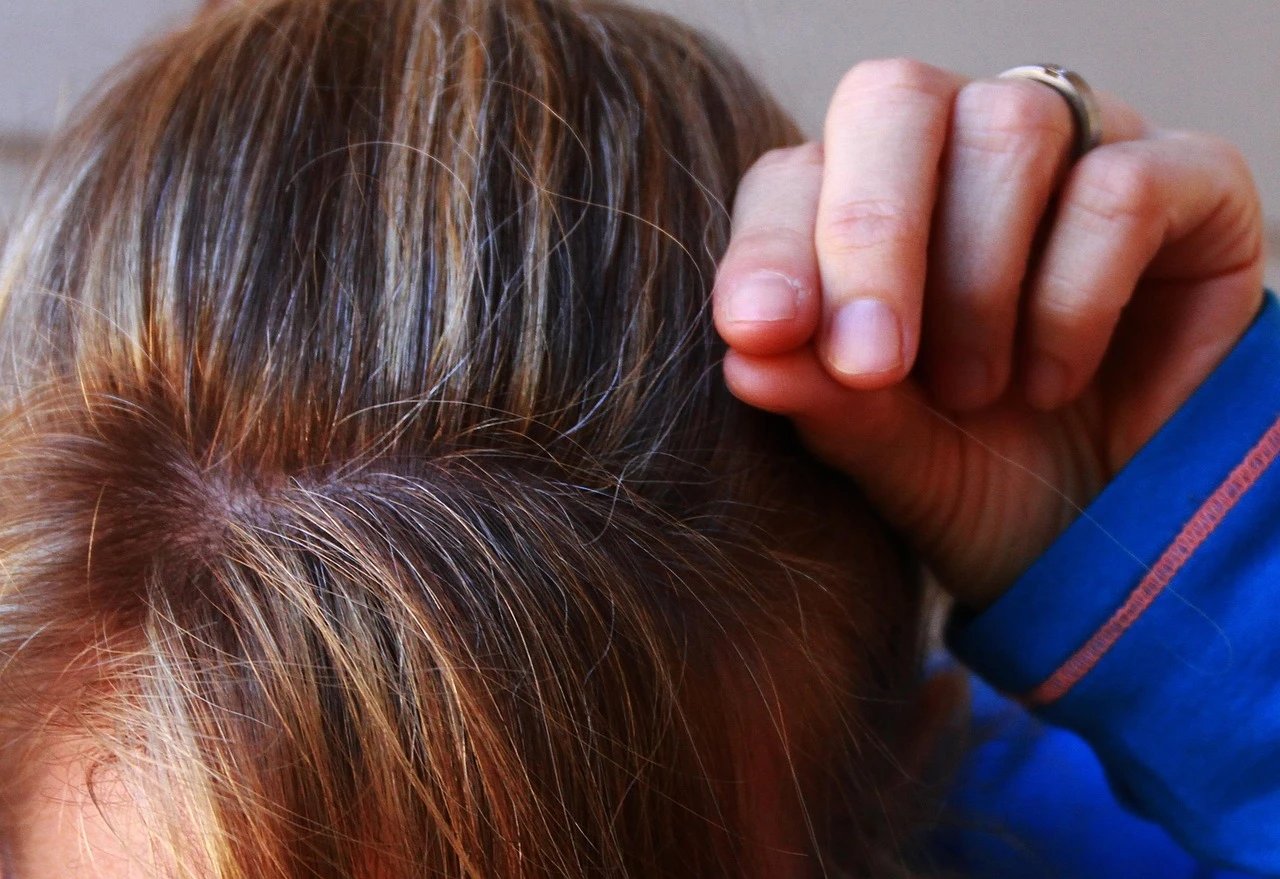
If you've colored for decades and quietly want out, the real exit plan, with the hours and the dollars, is waiting at #1.
Somebody texts you a photo from Saturday. You zoom in the way everyone does, and there it is: the color you've worn for years, suddenly looking like it belongs to someone else. Flatter. Darker. A little too loud next to your face.
Your hair didn't let you down. It changed, and your skin changed with it.
Most hair color ideas for women over 50 stop at the pretty "after" photo. Week six is where you actually live.
17Caramel balayage over a brunette base
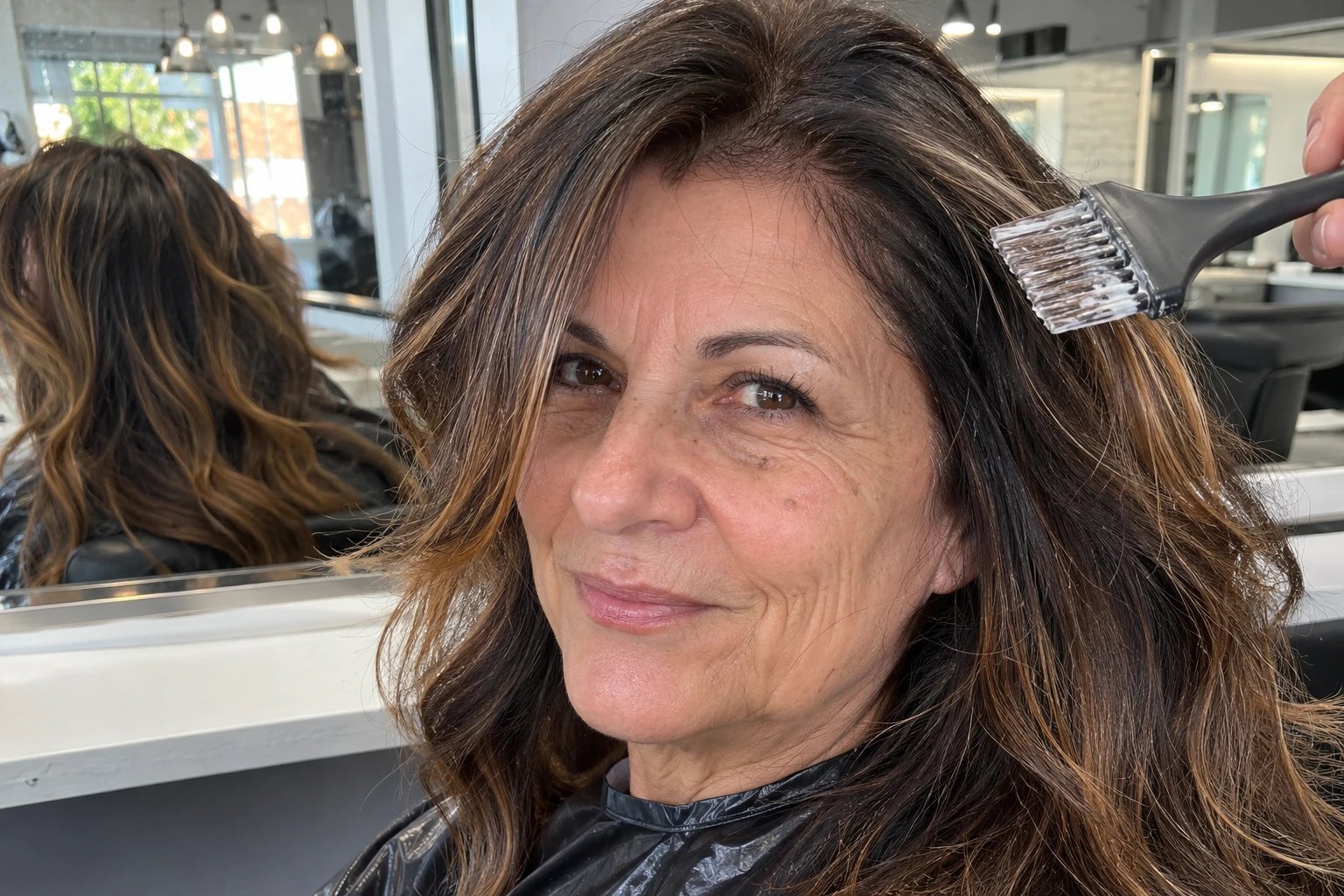
If you're a brunette with dark eyes or dark brows, this is where I'd start. AARP recommends amber, honey and caramel for exactly that coloring, painted on by hand away from the root, and says a visible brown root is "essential" for a natural look.
That root is the whole trick. Your regrowth is part of the design, so nothing goes wrong when it shows.
The visit count is what sells it. Balayage touch-ups run every 8 to 12 weeks, according to AARP's highlights guide, which comes to about four to six visits a year. Brian Keller, a senior colorist at Frederic Fekkai Salon, says balayage lets you "go about a month longer between treatments."
For a woman over 50, this is the most forgiving way to wear highlights that I know, with one catch. If your roots now come in mostly white, that "visible brown root" isn't brown anymore. The white line shows up against the caramel at about the same pace it would against any other color, and you'll want the blending at #3 mixed in.
16Honey highlights woven through brown hair
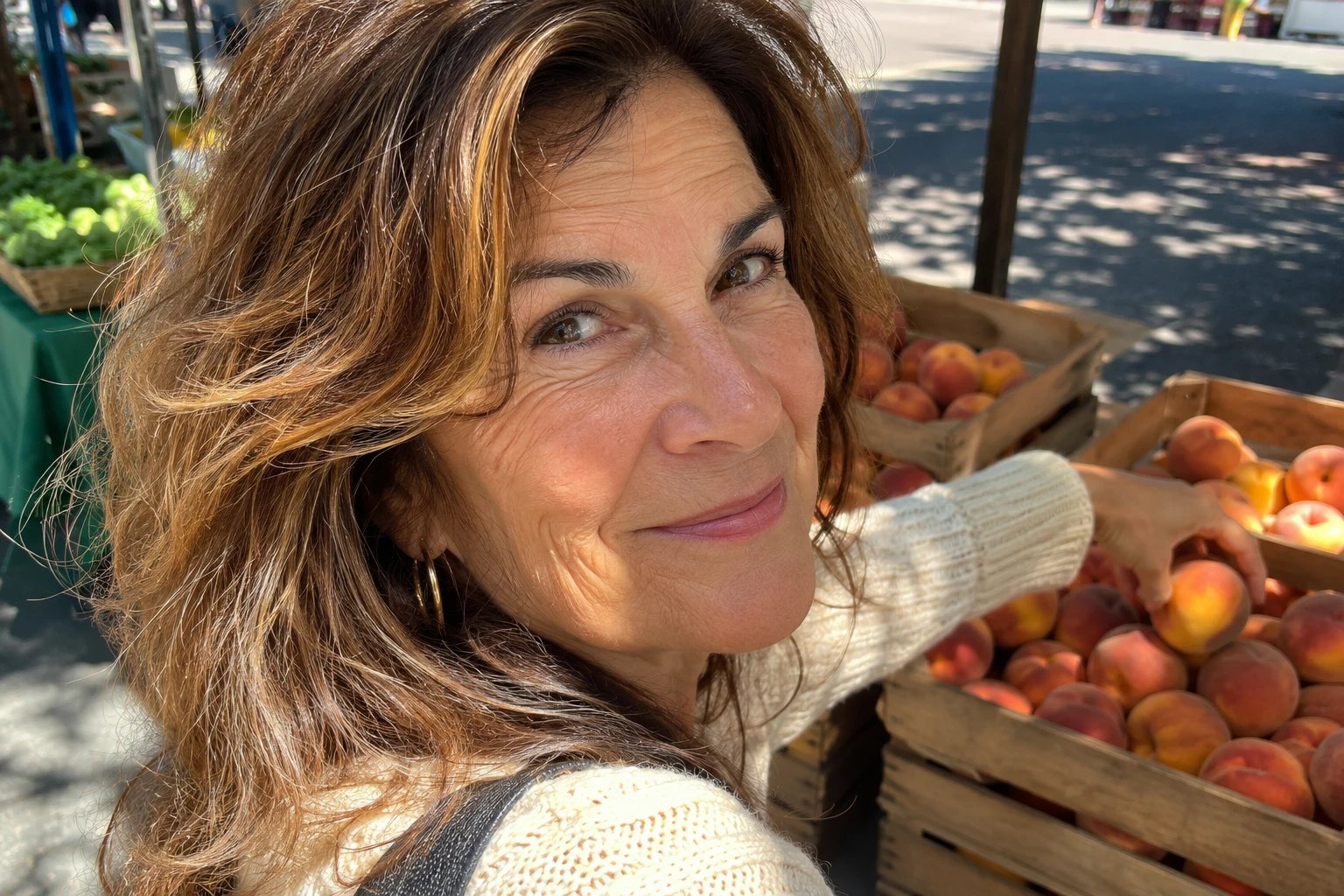
Highlights get called low-maintenance all the time. Count the visits before you believe it.
Foil highlights need a touch-up every five to seven weeks, because foils leave a noticeable root line. That's about 7 to 10 appointments a year, close to double what balayage asks for.
The shade rule matters too. AARP's guide says a good colorist keeps highlights within four shades of your base: "You wouldn't want buttery blonde lights on rich brunette hair; hazelnut or chocolate highlights are enough."
Four shades for highlights is roomier than the rule for all-over dye. For that, the American Academy of Dermatology says to stay within three shades of your natural color.
Salons number color from 1 (black) to 10 (the palest blonde). If you count one shade as roughly one level, a medium brunette at level 4 or 5 can take all-over color up to about a 7 or 8, and highlights one step past that.
So honey blonde pieces look lovely on a mid-brown. On near-black hair, "honey" will come out closer to hazelnut, and it should.
If the root line is what you hate most, ask for the same honey painted on instead of foiled. Same color, roughly 40% fewer appointments: about four to six a year instead of seven to ten.
15Champagne or beige blonde

If you're already blonde, or a light brown drifting toward gray-brown, the blonde to ask for is the soft one. AARP's "soft blonde" is sandy, beigey or creamy over a light-brown or gray-brown base, and it calls the upkeep budget-friendly.
Neil Moodie, a celebrity stylist, says the most flattering blondes are "softer and more multi-dimensional rather than one flat hair colour." He reaches for "champagne, soft beige, golden honey, or buttery tones."
His reason for skipping the icy ones is the line I'd tape to every color chart:
"Very icy or platinum shades can drain the skin as pigmentation changes." Neil Moodie, celebrity stylist, in Hello!
The part nobody mentions is the gloss. Moodie's advice is to "book in for a professional gloss or toner every six to eight weeks." That's six to nine quick visits a year, even when your roots blend beautifully.
Ask your colorist up front whether a gloss is a separate appointment or can ride along with something else. Those short visits add up.
14Softening jet black a shade lighter

You know the look: hair the color of a piano lid, and a bright white stripe at the part three weeks after every appointment.
The tempting fix is to go much lighter, all at once. Anna Wiig, a colourist at Taylor Taylor London, explains why that backfires: "Dyeing dark hair light makes it warm, and that contrast with the ashiness of the grey is very harsh."
So you trade a black-and-white stripe for an orange-and-white one.
The better move is smaller. Lift the black itself a single shade, to a softer black or the darkest brown, so the gap between your color and your new growth narrows. That stays well inside the three-shade range the dermatologists set.
There's a reason for that range. Going more than three shades lighter "requires higher volumes of peroxide, which causes more hair damage," the AAD warns. Dermatologist Paradi Mirmirani has put it the other way round: picking a dye "darker rather than lighter than your natural color" is the gentler road for your hair.
A shade lighter softens the line. It won't erase it. Go in expecting a quieter stripe, and you'll walk out happy.
13Ash blonde that melts into incoming gray
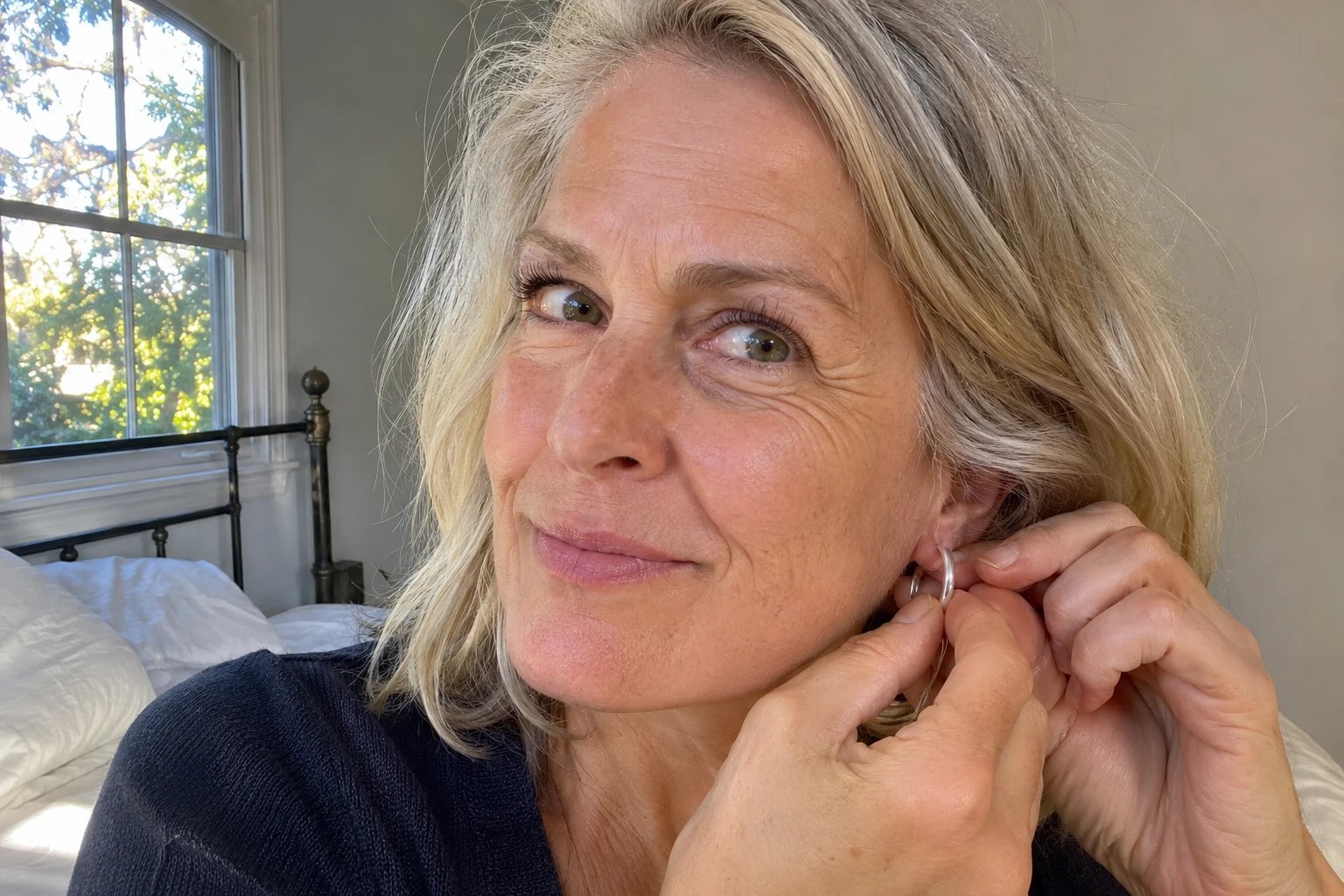
Look at the earrings you reach for most. If they're silver, keep reading.
AARP says a cool ash blonde, meaning one with more silver in it than gold, suits you if you favor silver jewelry and have plenty of gray. Wella's colorists say the same about cool blonde highlights: "gray roots won't appear as visible." The white simply disappears into it.
Two honest catches.
First, AARP says ash "requires vibrant complexion." If your skin runs sallow, or you look tired by four o'clock, cool undertones can make that worse.
Second, ash turns brassy, and AARP calls purple shampoo essential to fight it.
Then time catches up with the color. Neil Moodie says that in your 60s, "warmer or creamier blondes often flatter much more than stark, ashy ones."
In my experience, ash is a wonderful bridge during the first few years of gray. When people start asking whether you're feeling all right, it's time to warm it up a notch, toward cream.
12Deep red-brown cherry cola
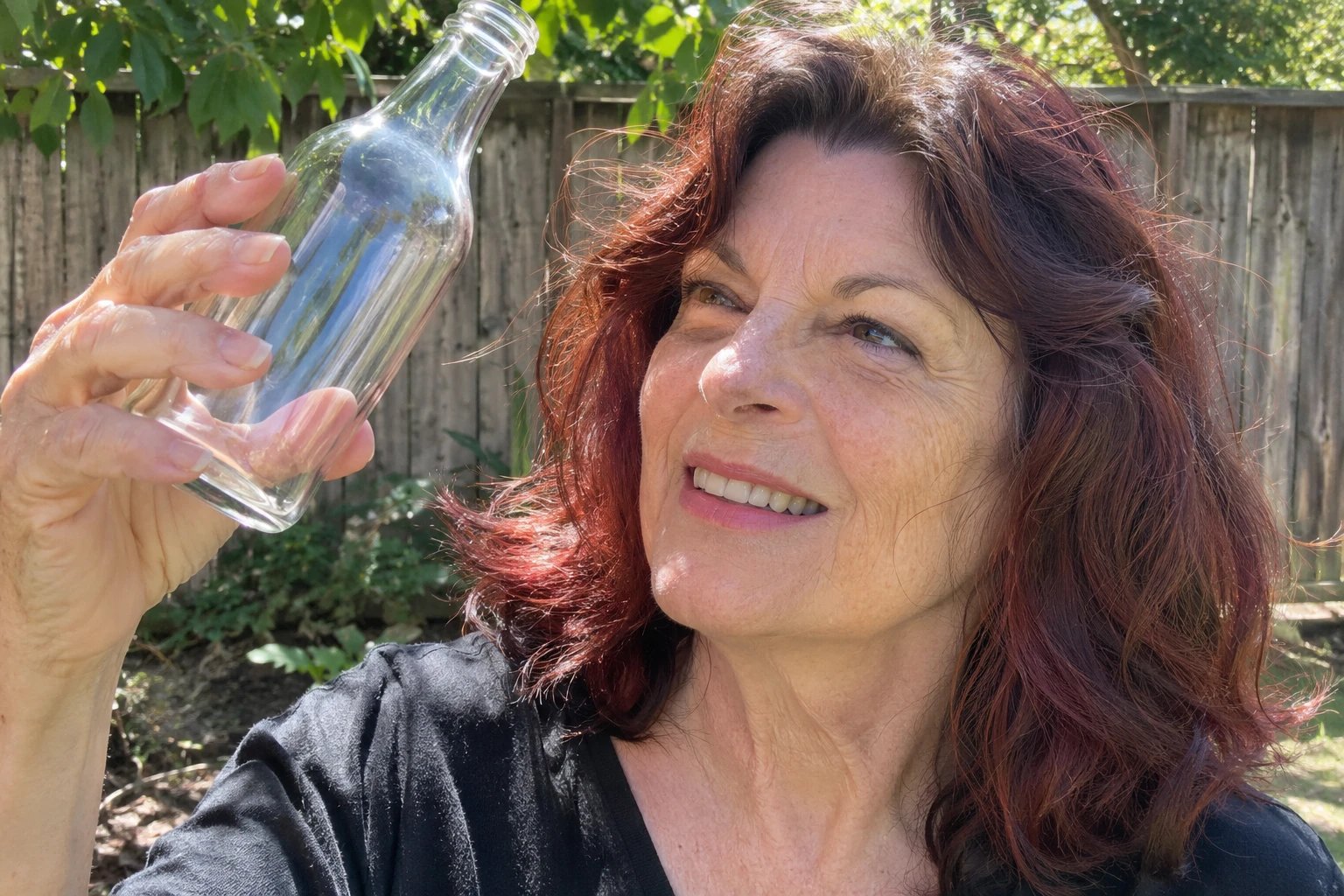
Miami colorist Melodie Briere describes it better than I can: "a deep brown base with red underneath it," "the color of a cola bottle held up to the light."
If you've always wanted red and been scared of it, this is the red for you, because of the way it leaves.
"Cherry cola fades the way all reds fade," Briere says. In her telling, red pigment molecules "are the largest, sit closest to the surface, and leave first."
With cherry cola, a deep brown is still sitting underneath when the red goes. She calls it "forgiving on skin tone" and says "It grows out sensibly."
One catch if you're mostly gray: L'Oréal does this look with its Excellence Crème in Dark Mahogany Red and promises "100% gray coverage." That's covering, not blending, so a white root will show against it as it grows.
The cost is the gloss. Briere recommends "a gloss every four to six weeks," which is 9 to 13 short visits a year, more than any balayage.
If you'd rather go a little longer, let it fade toward brown between glosses. It will still look like a color you chose.
11Pink or lavender tint over silver
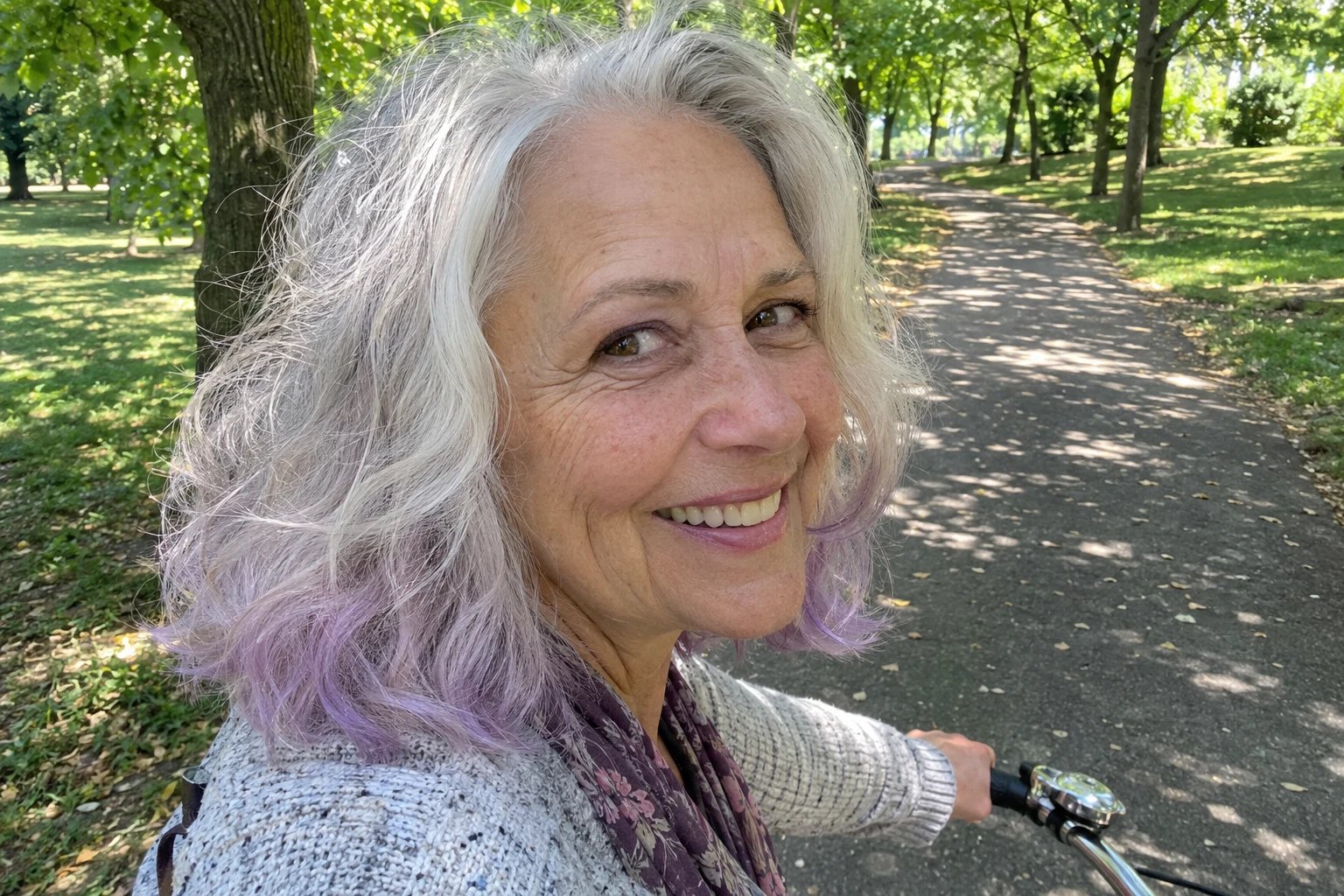
In Reddit threads where women in their 50s and 60s trade notes, pink and purple tips on gray keep coming up, along with the color-depositing products people use at home to keep the shade going between visits.
This is the one color on the list built to disappear. L'Oréal says "pastel shades will wash out the fastest," while deeper, brighter shades hang on longer.
That's the appeal. Try it for a month, and if you hate it, it rinses away.
If you'd rather go subtler, salon owner Mickey Bolek points to semipermanent, ammonia-free colors in silver, platinum and gray that last "about four to six weeks."
Before you buy anything at home, read the label. The Bleach London Lavender Grey Toner Kit costs about $14 and lasts six to eight washes, but its label says "For use on bleached hair." The maker doesn't say it's for natural gray, so if your silver is your own, don't count on the color on the box. Overtone's Twilight Titanium mask is a deposit-only, bleach-free color. The maker says the truest, most silvery result comes after pre-lightening to a light blonde base, and results on unlightened gray hair vary. It costs $32 for 8 ounces and lasts about two to three weeks.
10Babylights for fine or thinning hair
If your part looks wider in photos than it used to, you're in big company. Dermatologist Kimberly Salkey of VCU Health says "between 40% and 60% of women experience hair loss during menopause."
That's why the highlight you choose matters more now than it did at 35.
Chunky stripes leave stretches of solid color between them, and on fine hair, I see scalp peeking through those stretches. Babylights are the opposite: "very fine, delicate strands," placed around the hairline and part, according to Madison Reed. The regrowth may look less noticeable, it adds, "since there is less of a stark contrast."
AARP explains the fullness part: breaking up solid color with lighter highlights, and sometimes darker lowlights, "makes your hair appear thicker."
One practical note from my side of the chair: babylights mean many tiny sections, so they take longer than a regular highlight. Book the long appointment, not the one squeezed in before lunch.
See more: 26 Five-Minute Exercises for Seniors →
9Rooted or shadow-root blonde
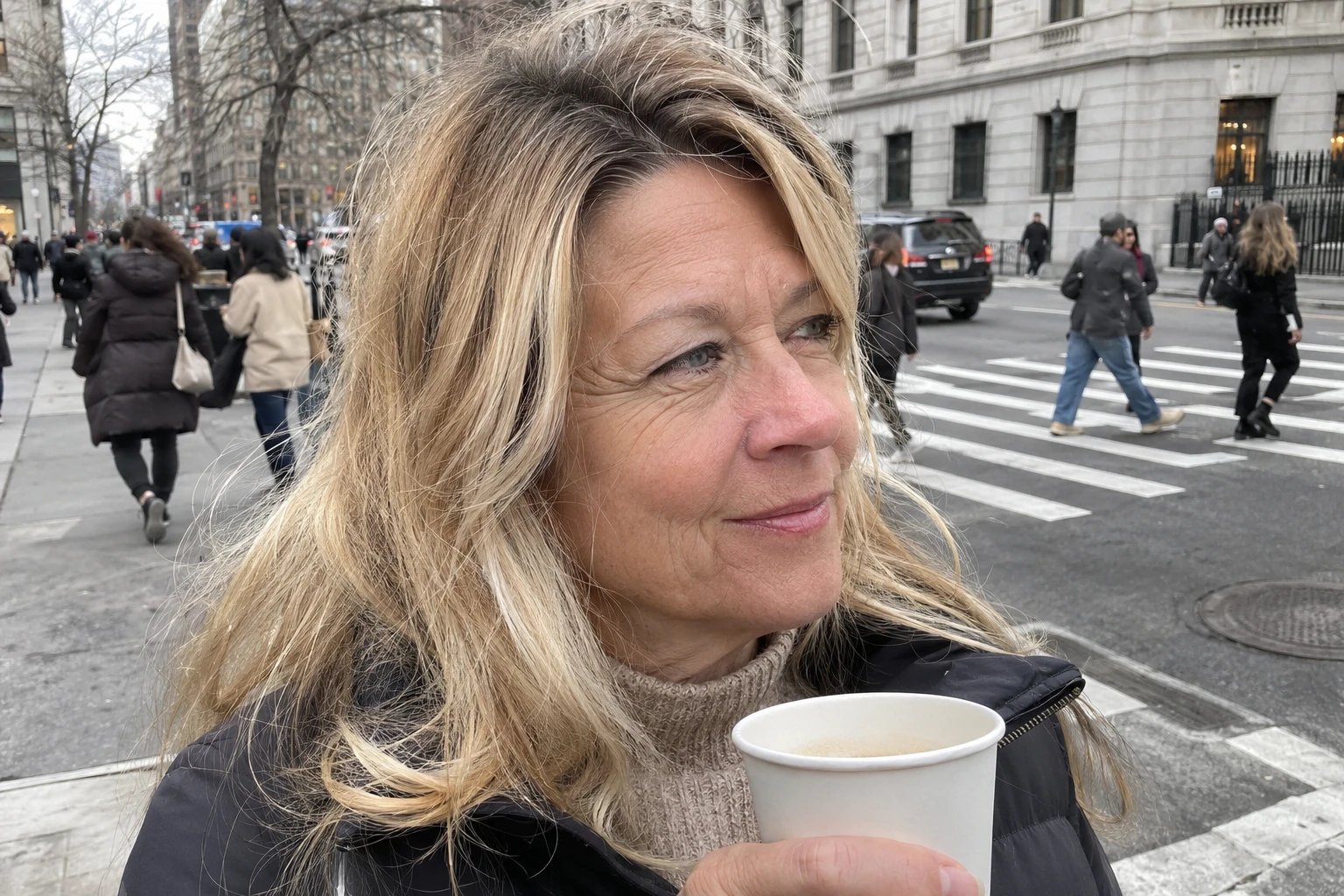
You've probably seen this one and not known what to call it. The colorist's names are "shadow root" and "root smudge." AARP calls its version a "blond melt", a dark root that flows into blonde with no obvious break.
L'Oréal says the smudged root is left "within a shade or two of your natural hair color," and that you can expect it to last around two months. That's about six visits a year.
At half an inch of growth a month, two months is about an inch of new hair before the smudge starts to read as grown out. Ask for it this way:
- Say "root smudge" or "shadow root," never "just do my roots."
- Ask for the root to land within a shade or two of your natural color.
- Ask what it will look like at week eight, before you agree to anything.
If your colorist can answer number three without hesitating, you're in good hands.
See more: 20 Best Recliner Chairs for Seniors →
8Salt-and-pepper sharpened with lowlights
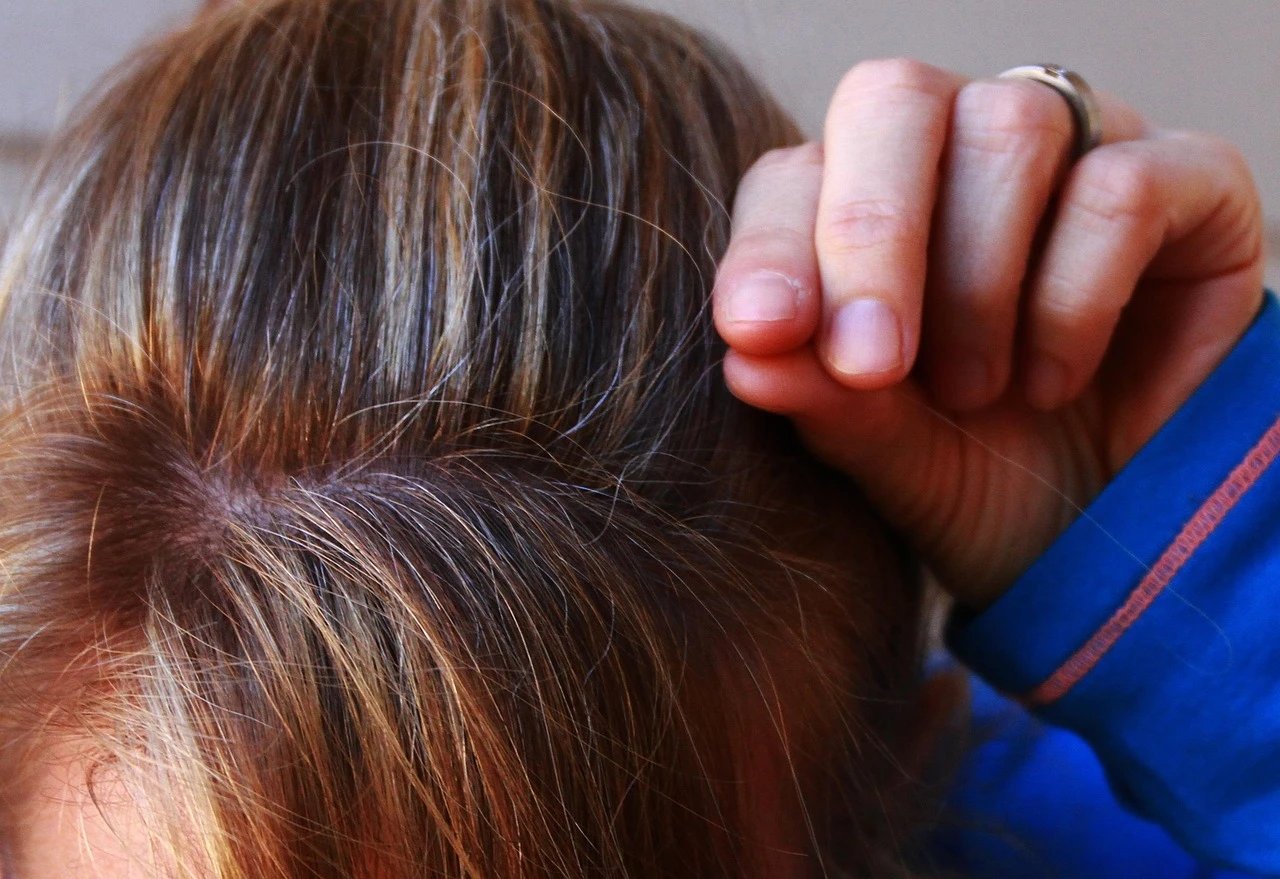
Partway gray can look like a decision or an accident. Lowlights decide which.
Christopher Naselli, a celebrity hairstylist who owns a salon in New York City, calls them "a great way to ease into the process of going gray." Lowlights put the pepper back where the salt took over, using color "usually the same level as your natural color or darker."
His rule is simple: "Just match your natural level to the lowlight."
Do that, and the silver starts reading as highlights you paid for. The patches turn into a pattern.
Celebrity hairstylist Guy Tang adds the warning people skip: "Don't go too dark." Go deeper than your pepper and the silver stripes jump out instead of melting in. He suggests demi-permanent formulas, a softer color that L'Oréal says lasts up to 12 to 24 washes before it fades.
Bring a photo of your hair from about five years ago. That's often the exact pepper you're trying to put back.
7Strawberry blonde for former redheads
Red hair doesn't go gray the way brown does. Wella's colorists say "natural red shades fade lighter as they lose their pigment."
That in-between stage can feel like losing yourself. A former redhead who has gone natural twice put it with a wink:
"The first time, I struggled that I looked old. The second go, I figured out I am kinda old." Former redhead, 61, r/AskWomenOver60
If you're not ready for the second go, Wella suggests "strawberry tones" or "a veil of copper, mahogany or auburn" to bring the warmth back.
AARP says strawberry blonde suits pale or sallow skin. Its practical advice is the bit I'd underline: ask specifically for strawberry or rose-gold, and bring photos. Say only "a little red" and you risk walking out pink.
6White or pearl blonde over natural white
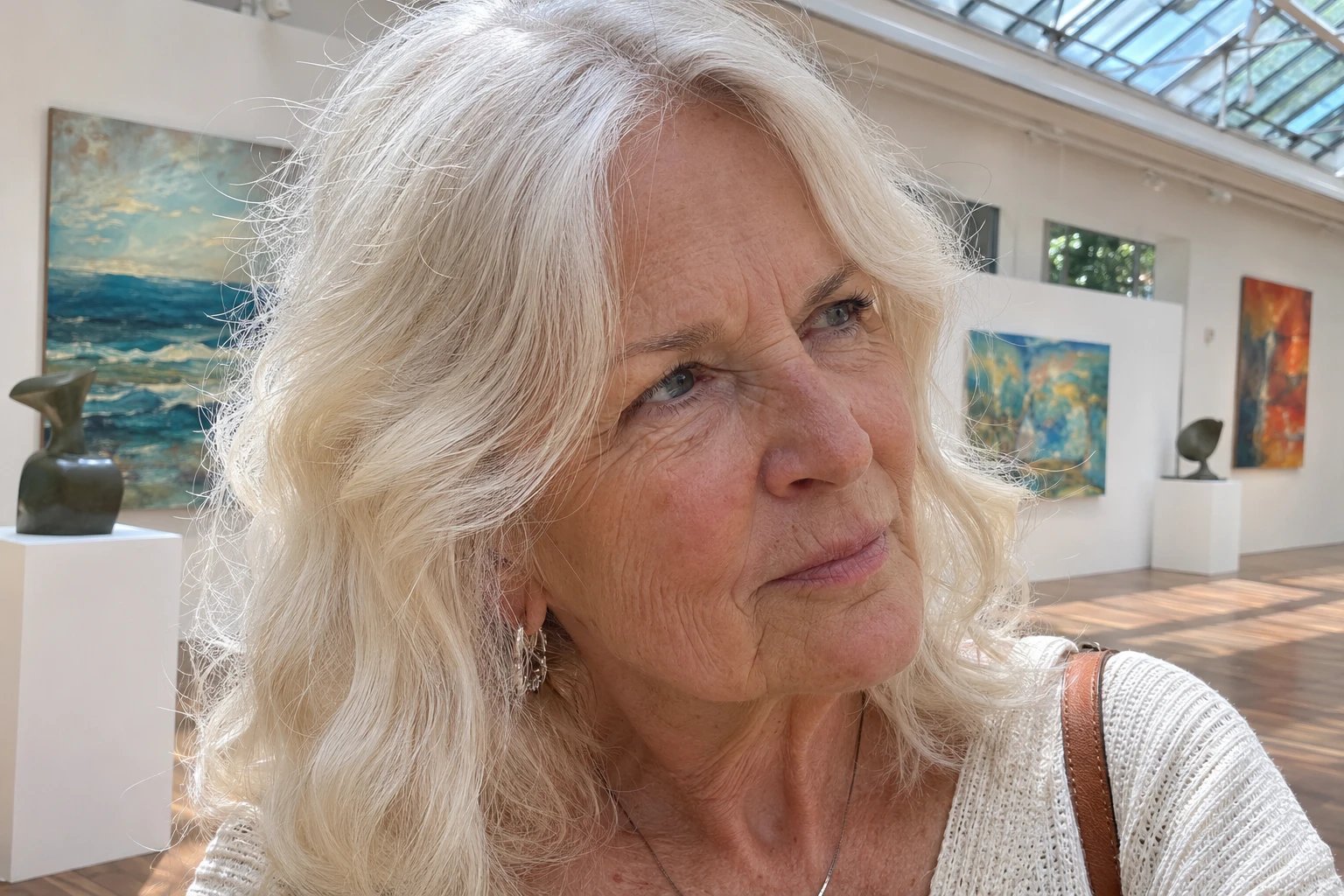
Whether this one is easy or hard depends entirely on where you start.
If you're already light gray or white, you're halfway there. AARP suggests champagne or creamy "sparkling highlights" finished with a pearly toner, which blurs the line between gray and blonde and keeps yellow away. Your hair barely has to lighten at all.
What turns it yellow anyway? Hairstylist Christine Bellemare lists "pollution, UV exposure, hard water, heat styling and product buildup." The hard water is the one people forget.
If you're starting dark, platinum is a different trip. Medium brown sits around level 4, and platinum around level 10. That's roughly six levels, double the three-shade range the AAD advises, and going past three shades at once calls for higher-volume peroxide, which causes more hair damage.
The AAD talks in shades, not salon levels, so take these as close guesses:
None of those lands on platinum. If you're dark, want white-blonde and your own hair is turning white, letting it grow in gets you there more gently than any bleach.
5Warm chestnut instead of flat dark brown

You did nothing different. Same shade, same routine, and the result came out wrong anyway.
A 63-year-old who dyed her silver hair dark brown for years described it in r/GenX: "It's way too harsh against my skin now and makes me look incredibly tired and pale."
A 52-year-old who'd colored her dark hair since her 20s noticed the change from the other end, in r/AskWomenOver50: "Suddenly at about age 50 my regular out-of-the-box color would turn out dark dark and dull, no matter what color I was going for."
Two things are going on. Gray hair is coarser and drier, which, WebMD explains, "makes it harder for color to penetrate." And a dark, inky shade, says AARP, "can create a harsh contrast to mature skin" that shows up every bit of tiredness.
The fix isn't necessarily lighter. It's warmer, and more than one color. AARP suggests "rich chocolate brown, coffee or chestnut." Colorist Tracey Cunningham mixes espresso, chocolate and hazelnut, because "the best combination is a mix of rich tones that will help add depth and dimension, so your dark hair is not one solid flat color."
A chestnut brown with a few strands of hazelnut through it stays inside your own range and still reads softer. That's the chestnut I'd mix for you, with warm undertones and no inky black at all.
4Roots only, then a gloss over the rest
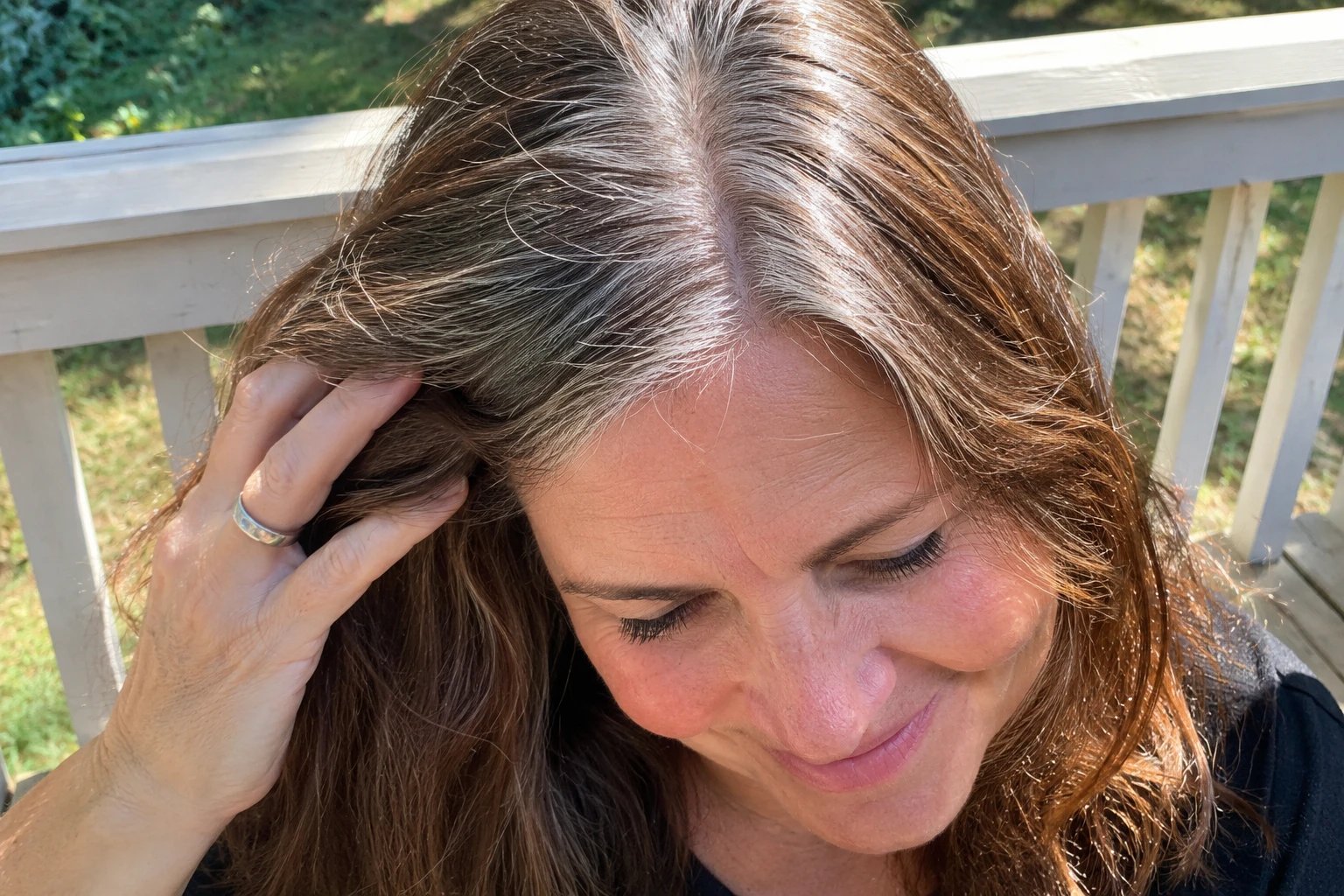
A commenter in r/AskWomenOver50 has the cleverest routine I've read in a while:
"I just get my roots done and gloss on the rest and the greys become the highlights." Commenter in her 50s, r/AskWomenOver50
It works because of what it stops doing. Kitty Greller, color director of Ted Gibson Salon, explains: "Applying new color over existing color makes hair even darker." Pull permanent dye through to the ends at every visit and the ends keep stacking up color. That's how you get the dull helmet from #5.
Color the regrowth only, and the rest of your hair gets a gloss. Anna Wiig says a soft gloss "won't leave a harsh line with regrowth," so the grays that slip through look like soft brightness rather than a problem.
Ask which kind of gloss you're getting, because it changes your schedule. L'Oréal says semi-permanent color typically lasts "6 to 8 washes," and demi-permanent up to 12 to 24.
If you shampoo every day, a semi-permanent gloss is gone in about a week. If you wash twice a week, the same gloss lasts a month.
See more: 26 Habits of People Over 70 Who Still Move Like They're 55 →
3Gray blending instead of covering every gray
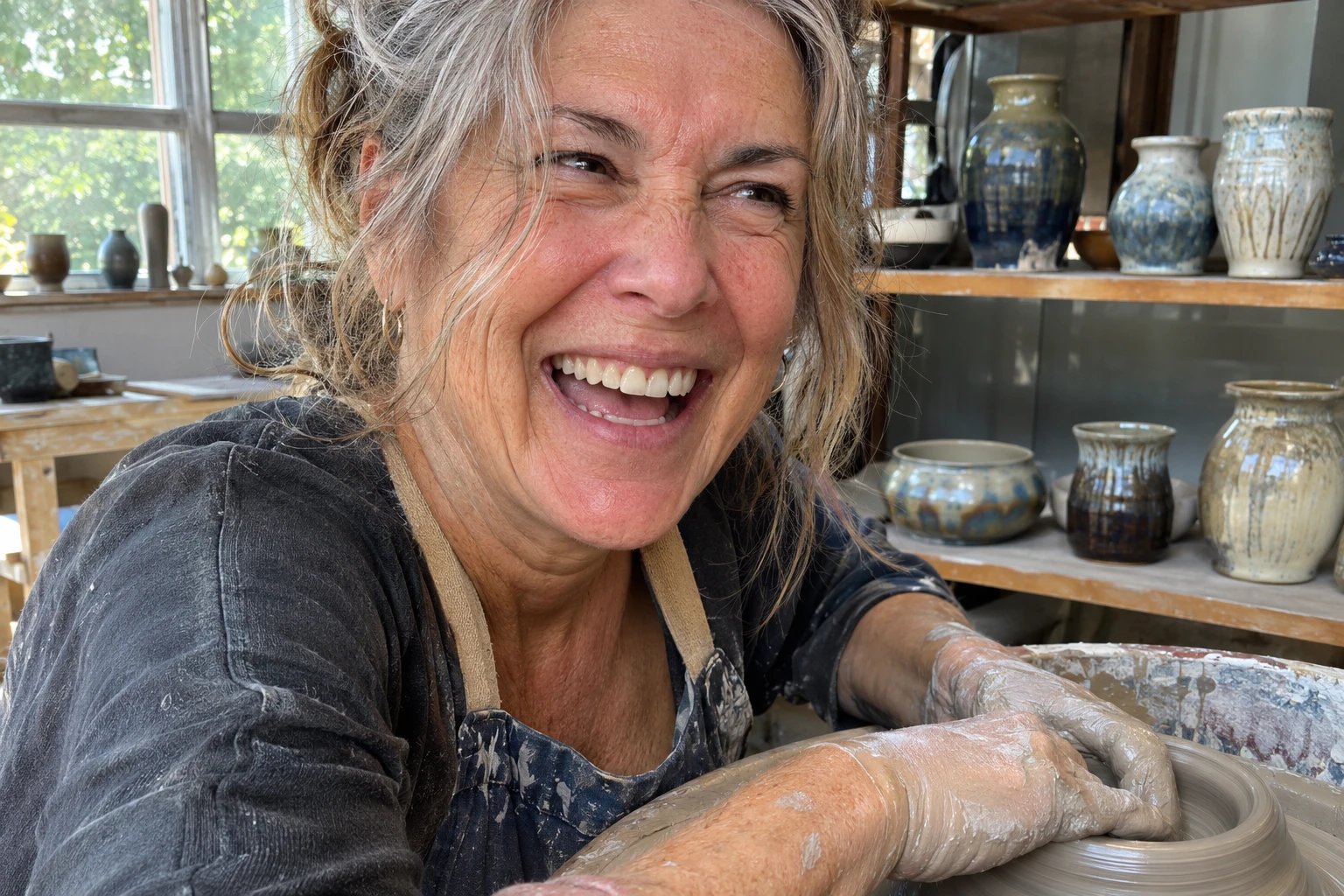
Gray blending means stopping the fight with every white strand. You soften it into the color around it, and the regrowth stops being an emergency.
Brian Keller explains the difference: permanent color is for total coverage, while "semi- and demi-permanent formulas are ideal for blending gray with your natural color." AARP says a low-contrast blond shade does the same job: "It allows you to go longer between color appointments."
Neil Moodie says it most kindly: "You don't have to fight grey. Lowlights and soft baby lights blend in silver as it comes through, so regrowth is far less obvious."
In Reddit threads about the switch, people describe blending taking them from coloring every 4 weeks to every 8 to 10. Here's what that does to a year, counting patch tests too, since the FDA says to do one "every time before dyeing your hair":
| Coloring every | Colorings and patch tests a year |
|---|---|
| 4 weeks | 13 |
| 6 weeks | about 9 |
| 8 weeks | about 6 or 7 |
| 10 weeks | about 5 |
Thirteen sessions becomes about five. At four weeks you're chasing half an inch of roots. At ten weeks there's a little over an inch, and blending is what makes that inch look fine.
See more: 27 Things Your Body Starts Doing After 60 That Nobody Warned You About →
2Going fully silver on purpose
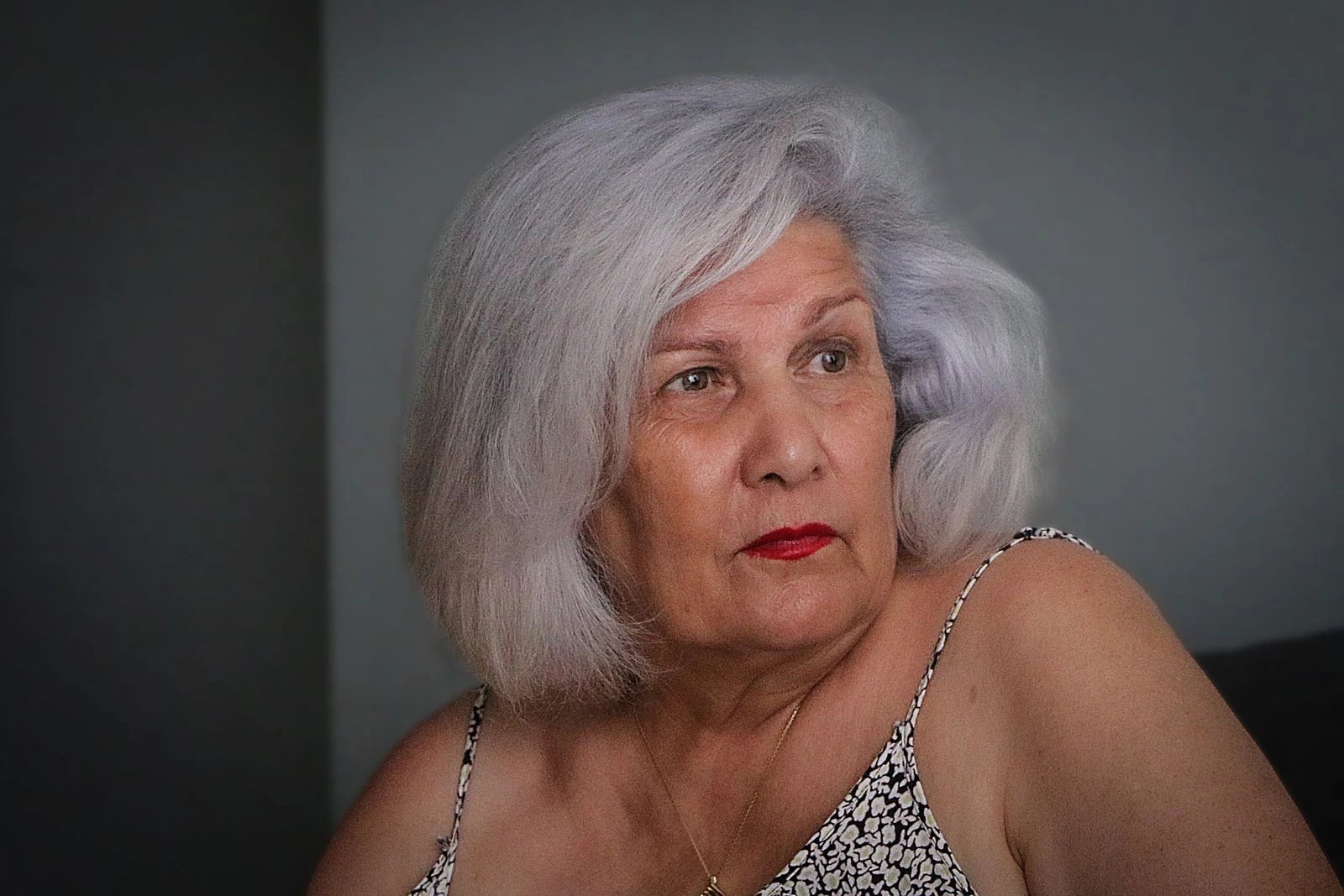
You've asked yourself whether gray will make you look older. The honest answer: sometimes, a little, and it depends on who's looking.
Dr. Sam Ellis, a board-certified dermatologist in Northern California, doesn't sugarcoat it: "When scientific studies are done that assess perceptions of age, the number one thing about someone that makes them look older is having gray hair."
The numbers behind that are smaller than the fear. In a 2009 study of Danish twins and British women, those who dyed their hair looked about 1.69 years younger in photos where their hair showed. Crop the photos to faces only, and the gap disappeared.
A 2025 study found digitally grayed faces were rated about 1.2 times older. Its judges averaged 23 years old, ranging from 18 to 43, and they were looking at simulated gray on a screen. Not exactly your crowd.
Now the other side. In interviews with Canadian women aged 71 to 94, about half liked snowy white hair and linked it with attractiveness. Under one of colorist Jack Martin's gray transformation videos on TikTok, commenters keep telling his client she looks ten years younger. A couple of people in the Reddit threads admit they were taken for older early in the switch.
Blogger Katie Emery was surprised her natural silver suited her skin and called the choice "really an exhilarating and exciting" one.
You don't control the shade. The twins study estimated that about 90% of the difference in how people gray comes down to genes. You do control the upkeep. Colorist Maddy Hall says lighter platinum or silver "tend to be more high-maintenance, requiring regular toning," while darker steel or ash gray "need less frequent toning."
Here's my honest weighing: about a year and a half of perceived age on one side and, if you color every month, a dozen-plus appointments a year handed back to you on the other. In my experience, gray that's cut with movement and toned so it shines never looks like giving up. It's the gray left flat and yellow that ages you.
1The full color correction back to natural

This is the exit plan for anyone who's been dyeing for years and wants her natural hair color back. You have three routes, and each one costs something different.
| Route | How long it takes | What it costs you |
|---|---|---|
| Salon color correction | 8 hours to 3 or 4 visits | hundreds of dollars to about $3,000 |
| Blend while it grows | months of visits | a softer line, ongoing appointments |
| Grow it out | 6 to 18 months | patience, and a visible line |
The salon route is the fastest and the most expensive. Mickey Bolek, who owns Michael Anthony Salon, says stripping color and dyeing close to natural gray takes "anywhere between eight hours to three to four salon visits," costing "hundreds of dollars to around $3,000."
Modern Salon followed a client who came to Jack Martin to stop coloring every three to four weeks, which comes to 13 to 17 sessions a year. She sat for one 10-hour session: color removal, bleach in foils with a bond-protecting treatment, toning, then a cut.
Martin is honest about the gamble:
"It's no guarantee, but I always try my best, because hair is unpredictable." Jack Martin, colorist, on TikTok
He also names the trade you may have to make: "Sometimes we have to choose between achieving that color with damaged hair or achieving blended color with much better hair condition." His approach is the one I'd want in my own chair: "I like to always start low and slow," he says, "because the integrity of the hair is my main goal, you know?"
The blending route borrows from #8 and #4. Lowlights matched to your natural level soften the line, and a gloss instead of permanent dye stops building up color on the ends while the silver grows in.
The no-salon route costs nothing but time. Hair grows about half an inch a month, and L'Oréal puts a full grow-out at "six months to 18 months." In the Reddit threads on the switch, some people wait for about three inches of new growth, roughly six months, then trim the dyed ends off in stages. Others simply grow it out over about a year and keep their length. Both work.
People who've made it to the other side describe the same thing in those threads: they feel free, with less upkeep and less money going out. Before you pick a route, book a consultation on its own, not the service. Ask the colorist which of the three they'd choose for your hair, and why.
The bottom line
The color that looked right at 40 was matched to a different face. Choosing again is the same smart move as getting your glasses prescription updated.
Dr. Sam Ellis puts it plainly: "The same hairstyle that worked for you 20 years ago may no longer serve you." She calls midlife "a really nice time to have a conversation with your hair stylist." I agree, and I'd make it a real conversation, not "the usual, please."
Here's the first thing to do. At your next appointment, before anything is mixed, ask how many times a year you'll be back in this chair.
If the answer is a number you'd happily live with, book it.
Up next
17 Secrets for Shoes That Look Good After 60 and Don't Hurt
A three-question store script, a phone test for wide-leg pants and the Medicare shoe benefit for diabetic feet: how to find the most comfortable shoes for women over 60 that still look like you.
Read the list →

Reader quiz
Did you catch the details?
5 questions from this article. Finish them all to unlock the editor's bonus tip.
When softening jet black hair, what does the article suggest instead of going much lighter all at once?
Questions people also ask
Should you color your hair darker or lighter as you get older?
Stay close to your natural color, no more than about three shades away, and if a dark shade has started to look harsh, warm or soften it rather than bleaching far lighter. The American Academy of Dermatology says lightening more than three shades takes more peroxide and does more damage. Stylists add that very dark color can look harsh against mature skin, and colorist Brian Keller calls going too dark "one of the biggest mistakes" people make with gray.
What hair color makes you look younger?
Soft, multi-tonal color tends to flatter more than one flat shade, according to colorists including Tracey Cunningham and Neil Moodie. In a 2009 study of Danish and British women, those who dyed looked about 1.69 years younger in photos where their hair showed. The gap disappeared when only their faces were shown.
How do I stop dyeing my hair and go gray without a harsh line?
You can blend with lowlights matched to your natural level, switch to a gloss that fades without a hard edge, or grow it out over roughly 6 to 18 months. Colorist Christopher Naselli recommends lowlights to ease in, and L'Oréal gives the grow-out timeline. A full salon strip can take eight hours to several visits and cost up to about $3,000.
Why does my box color look dark and dull now?
Gray hair is coarser and drier, so color penetrates it less easily, and putting new color over old color makes hair even darker. Colorist Kaitlyn Hoey says that with box dye "You're winging it with the strongest possible pigment," and she suggests it mainly for covering roots between salon visits or tweaking your tone. Coloring only the regrowth, rather than the full length, helps stop the buildup.
How often should you color mature hair?
It depends on the method. Foil highlights need a touch-up about every 5 to 7 weeks, or 7 to 10 times a year, and balayage about every 8 to 12 weeks, or 4 to 6 times a year, according to AARP. A root smudge lasts about two months, roughly six times a year, while coloring every three to four weeks adds up to 13 to 17 sessions.
Did any of these feel familiar?
Know someone who needs this?
 Prime Journal · Free printable
The Closet Fit and Color Checklist
- A clearer view of colors beside your face.
- Clothes that pass the sitting and walking test.
- Shoes and repairs checked before anything gets replaced.

Free printable: The Closet Fit and Color Checklist. Enter your email and it is yours.
Sources cited in this article
This article links to 34 outside sources, listed here so you can read them yourself.
- "essential" for a natural look www.aarp.org/entertainment/beauty-style/blonde-hair
- AARP's highlights guide www.aarp.org/entertainment/beauty-style/highlights-for-hair
- "go about a month longer between treatments." www.webmd.com/beauty/features/cm/gray-hair
- Within three shades of your natural color www.aad.org/public/everyday-care/hair-scalp-care/hair/coloring-perming-tips
- In Hello! www.hellomagazine.com/second-act/932985/best-blonde-hair-for-mature-women-ex…
- "Dyeing dark hair light makes it warm, and that contrast with the ashiness of the grey is very harsh." www.stylist.co.uk/beauty/hair/best-grey-hair-tips/944708
- "darker rather than lighter than your natural color" www.newswise.com/articles/dermatologists-offer-tips-for-color-treated-hair
- "gray roots won't appear as visible." www.wella.com/professional/en-US/blog/hair-color/best-colors-to-cover-gray-h…
- "a deep brown base with red underneath it," redmarketmiami.com/blog/cherry-cola-hair-color
- "100% gray coverage." www.lorealparisusa.com/beauty-magazine/hair-color/hair-color-ideas/cherry-co…
- Pink and purple tips on gray www.reddit.com/comments/1di1i4r
- "pastel shades will wash out the fastest," www.lorealparisusa.com/hair-color/semi-permanent
- "about four to six weeks." www.aarp.org/entertainment/beauty-style/transitioning-to-gray-hair
- Bleach London Lavender Grey Toner Kit bleachlondon.com/us/products/lavender-grey-toner-kit
- Twilight Titanium mask overtone.co/products/twilight-titanium-color-depositing-treatment-mask
- "between 40% and 60% of women experience hair loss during menopause." www.vcuhealth.org/news/vcu-health-experts-weigh-in-on-managing-hair-loss-dur…
- "very fine, delicate strands," www.madison-reed.com/blog/babylights-vs-highlights
- "within a shade or two of your natural hair color," www.lorealparisusa.com/beauty-magazine/hair-color/hair-color-application/roo…
- "a great way to ease into the process of going gray." www.aol.com/lowlights-best-way-slowly-embrace-110000852.html
- R/AskWomenOver60 www.reddit.com/comments/1xp7fib
- "pollution, UV exposure, hard water, heat styling and product buildup." www.nbcnews.com/select/amp/rcna190462
- R/GenX www.reddit.com/comments/1uww3hp
- R/AskWomenOver50 www.reddit.com/comments/1l5l76y
- "can create a harsh contrast to mature skin" www.aarp.org/entertainment/beauty-style/ways-to-find-your-best-hair-color-at…
- "every time before dyeing your hair" www.fda.gov/cosmetics/cosmetic-products/hair-dyes
- "When scientific studies are done that assess perceptions of age, the number one thing about someone that makes them look older is having gray hair." www.youtube.com/watch?v=nZ96qKH78Nk&t=548s
- About 1.69 years younger journals.plos.org/plosone/article?id=10.1371/journal.pone.0008021
- Digitally grayed faces www.frontiersin.org/journals/psychology/articles/10.3389/fpsyg.2025.1541836/…
- Linked it with attractiveness www.cambridge.org/core/product/identifier/S0144686X1000036X/type/journal_art…
- TikTok www.tiktok.com/@jackmartincolorist/video/7689958270714367245
- One 10-hour session www.modernsalon.com/articles/makeover-how-jack-martin-helps-clients-stop-col…
- About half an inch a month medlineplus.gov/hairproblems.html
- "six months to 18 months." www.lorealparisusa.com/beauty-magazine/hair-color/gray-hair-coverage/transit…
- "a really nice time to have a conversation with your hair stylist." www.youtube.com/watch?v=nZ96qKH78Nk&t=609s
Irina Byalik
Style Editor
Irina Byalik is a hairdresser and the owner of New Image Hair Salon in East Brunswick, New Jersey, with more than 20 years of experience. She came to the United States from Ukraine.
More from Irina Byalik