







12 Bobs for Fine Hair Over 50 That Add Body
Bob haircuts for women over 50 with fine hair, with where each one puts the weight and the exact sentence to say before the scissors come out.

By Irina Byalik, Style Editor
Updated · 20 min read
- Written by our style editor
- Cited 39 sources
- How we review
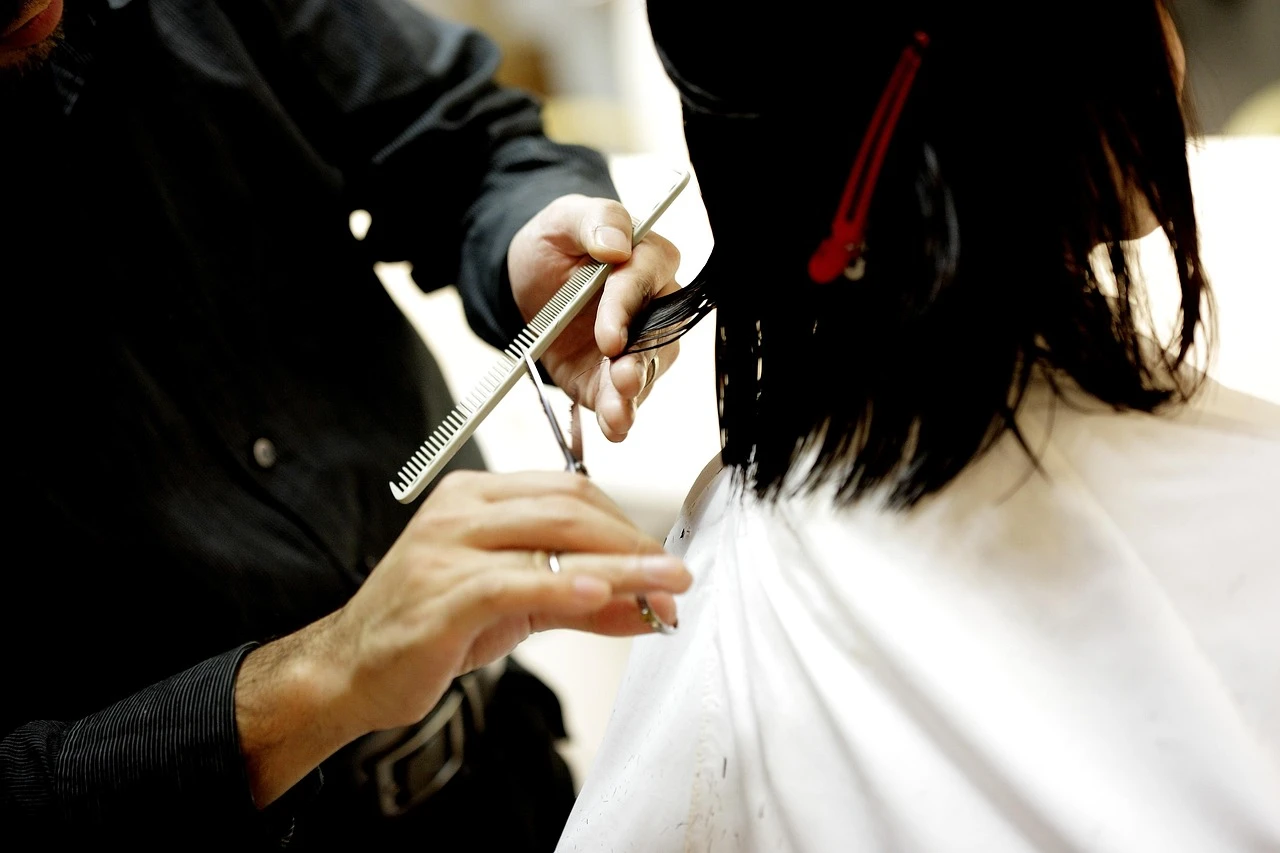
Someone snaps a group photo from the top of the stairs at a birthday lunch. When it lands in your texts, your eye skips your own smile and goes straight to the pale strip along your part. You know that strip. Your hair has gotten finer, and the cut that used to hide it doesn't anymore.
A bob can fix a surprising amount of that. The wrong bob can also hand you a helmet, or come out shorter than you pictured. In my experience, the difference comes down to where the weight sits and what you said out loud before the first snip.
12The classic chin-length blunt bob

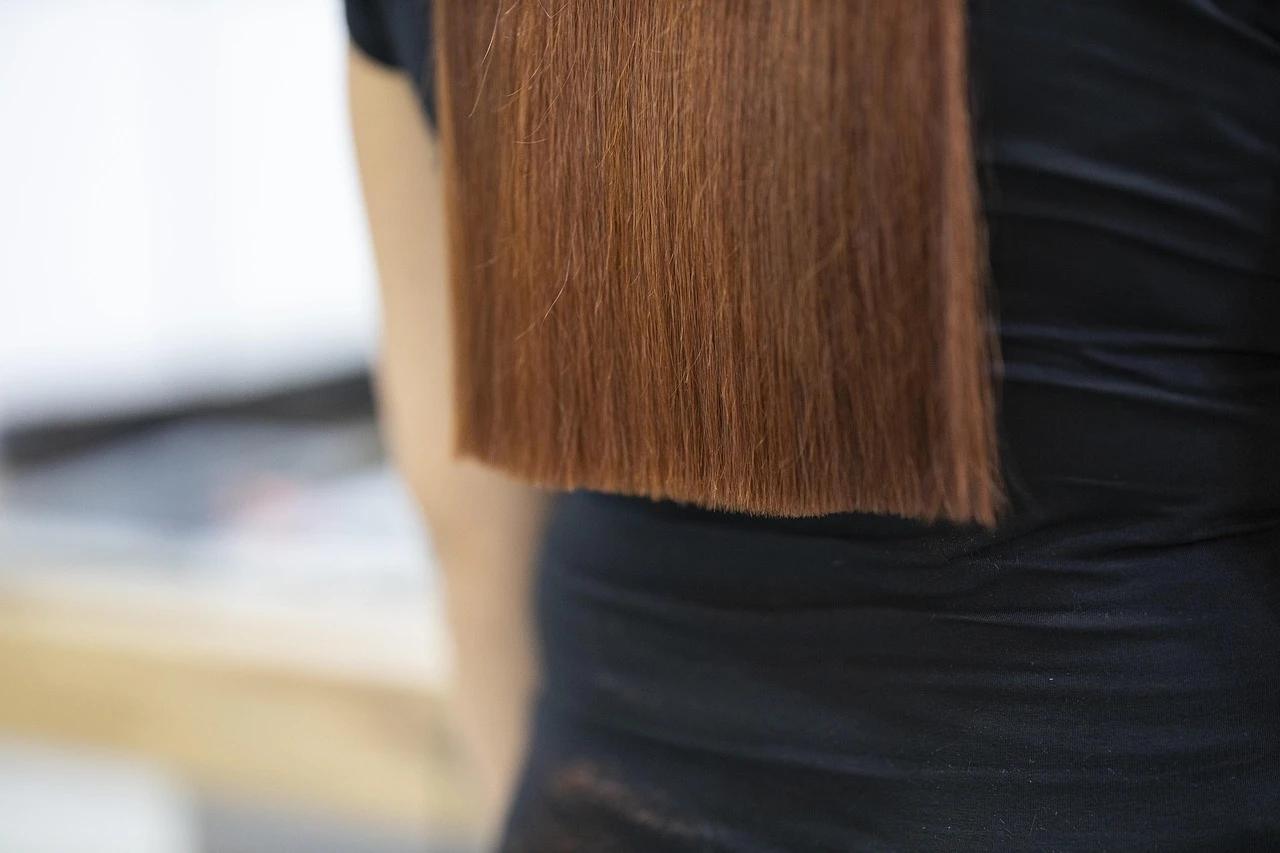
This bob is a reliable starting point for fine hair, and it earns its spot. Cutting every strand to the same length stacks all your hair into one thick edge. Andreas Wild, a creative stylist ambassador for John Frieda, says a blunt cut gives you a "strong, powerful line" and gets rid of the "wispy ends" that "betray a finer texture."
Justin Hickox, who owns a salon in Portland, Oregon, and has about 30 years behind the chair, puts the length rule simply: "The shorter your hair is, the thicker it will look."
The catch is up top. Hickox calls a one-length bob a great option for medium-to-thin hair, and says it's super-thick hair that can take on a triangular shape. On fine hair the risk is different: with all the weight at the ends, a blunt edge can leave the crown looking flatter.
I'd book a plain blunt bob if your ends look see-through but your crown is fine. If the crown is the problem, the same blunt edge with some weight taken out underneath (that's #1) gives you the thick bottom with more lift up top.
In the chair: "Blunt ends, at the bottom of my chin, not the middle of it."
See more: 17 Festive Hairstyles Over 50 for Holiday Parties →
11The collarbone lob
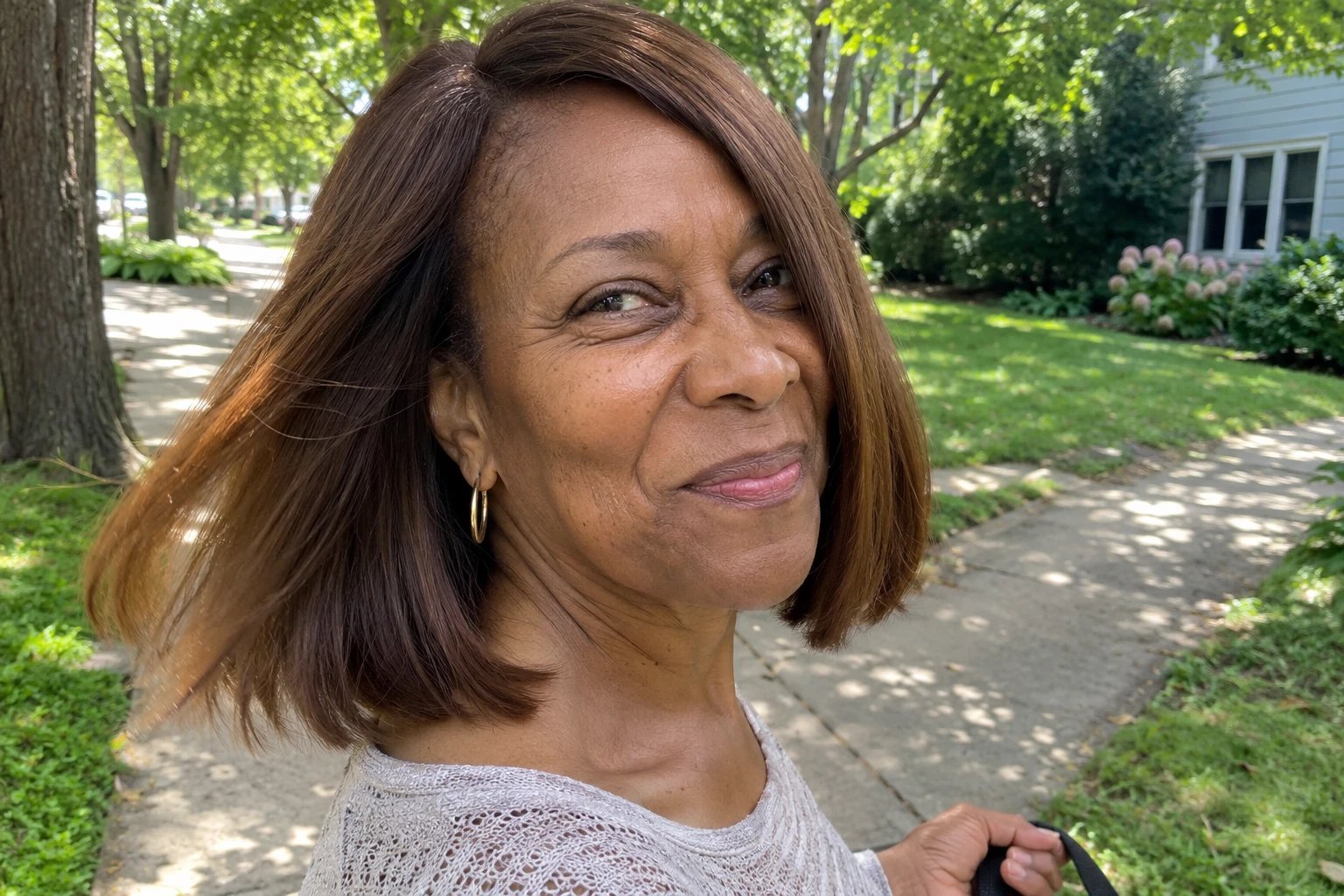
Sometimes the bravest thing you can say in a salon is "not that short."
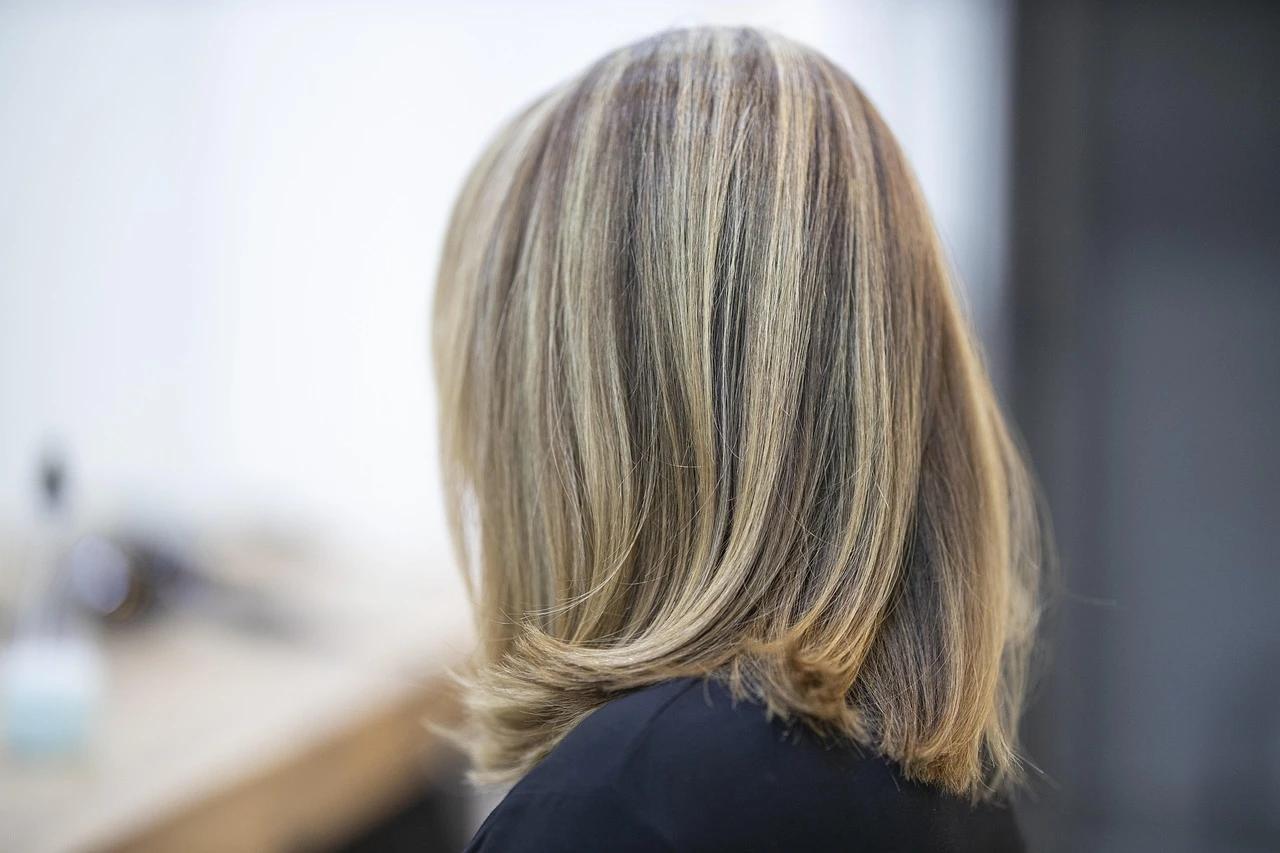
A lob, short for long bob, is the bob for anyone who isn't ready to feel a breeze on her neck. Celebrity stylist Marc Ballance says a lob "keeps the same overall silhouette but falls longer, usually between the shoulders and the collarbone," and that it "tends to grow out a little more forgivingly."
Length does have an edge, though. Celebrity stylist Melissa Timperley warns, "If it's too long, fine hair can appear limp, while going too short with heavy layers can look wispy."
Where's the line? Wild puts the best blunt-bob length between the chin and the collarbone. Ballance's lob can run from the collarbone down to the shoulders, a little longer than Wild's blunt-bob ceiling.
In my chair, the tell is the last inch. Hold your ends out toward a window. If you can see daylight through them, that length is costing you more body than it gives you.
There's a reward for keeping it long. Hairdresser Samantha Cusick says her collarbone-grazing "lived-in lob" for fine hair needs a trim only every 10 to 12 weeks.
What to say: "Grazing my collarbone, not past it, and blunt at the ends."
10The French bob

In 1915, a dancer named Irene Castle showed American audiences her short "Castle bob." By the mid-to-late 1920s, with Louise Brooks making it famous, the bob had become the dominant women's hairstyle in the West. Vidal Sassoon brought it roaring back in the mid-1960s. A shape doesn't keep coming back for a hundred years unless it works.
Photo galleries love the French bob and almost never define it. Ryan Forsythe, head of education at Trevor Sorbie, does. It "always hits the jawline or just below," it's cut much like a one-length bob, and "it doesn't have any heavy layering." The fringe is optional.
That missing layering is why it suits fine hair. Every strand keeps its full length, so the edge stays dense.
The other half is the finish. Forsythe suggests volumizing mousse, blow-dried in with your fingers, so "the movement is natural."
He recommends a cut every six to eight weeks. If you add the fringe, it'll be growing into your eyelashes long before the rest needs attention.
9The bixie

Helen Mirren traded the bob she'd worn for years for a bixie. Celebrity stylist Gustav Fouche calls the result "a facelift in haircut form." For fine hair like hers, he suggests a little mousse or setting spray, then flipping your head upside down and blow-drying for lift at the root.
It's a lovely cut. It's also the one I'd be most careful asking for by name, because "bixie" means different lengths to different stylists. Hickox makes the same point in one of his videos: never walk in with just the word. Bring a photo of a cut you think is too short and one you think is too long, so the stylist can see your range.
The fear of losing too much is real. Reddit posters describe asking for below the chin and getting mid-jaw, or going in for a trim and leaving with a bob.
Your photos need to look like you, too. The Australian salon chain Hairhouse suggests "two or three reference photos," with at least one on hair like yours. Under a TikTok gallery of bobs over 50, a viewer in menopause said none of them showed fine hair like hers. Find a photo where you can see a little scalp. That's your real reference.
Hairhouse also recommends "slightly blunter layers, which read as fuller on fine hair than heavily thinned ones."
Say: "Not shorter than this photo. Blunter layers, please, and leave enough on top to sit up."
That last request matters most. Cut the top too short while chasing volume and you get a dip, which Hickox describes in his short-hair video as a top left too short for the length on the sides.
8The point-cut bob for fine hair that's plentiful
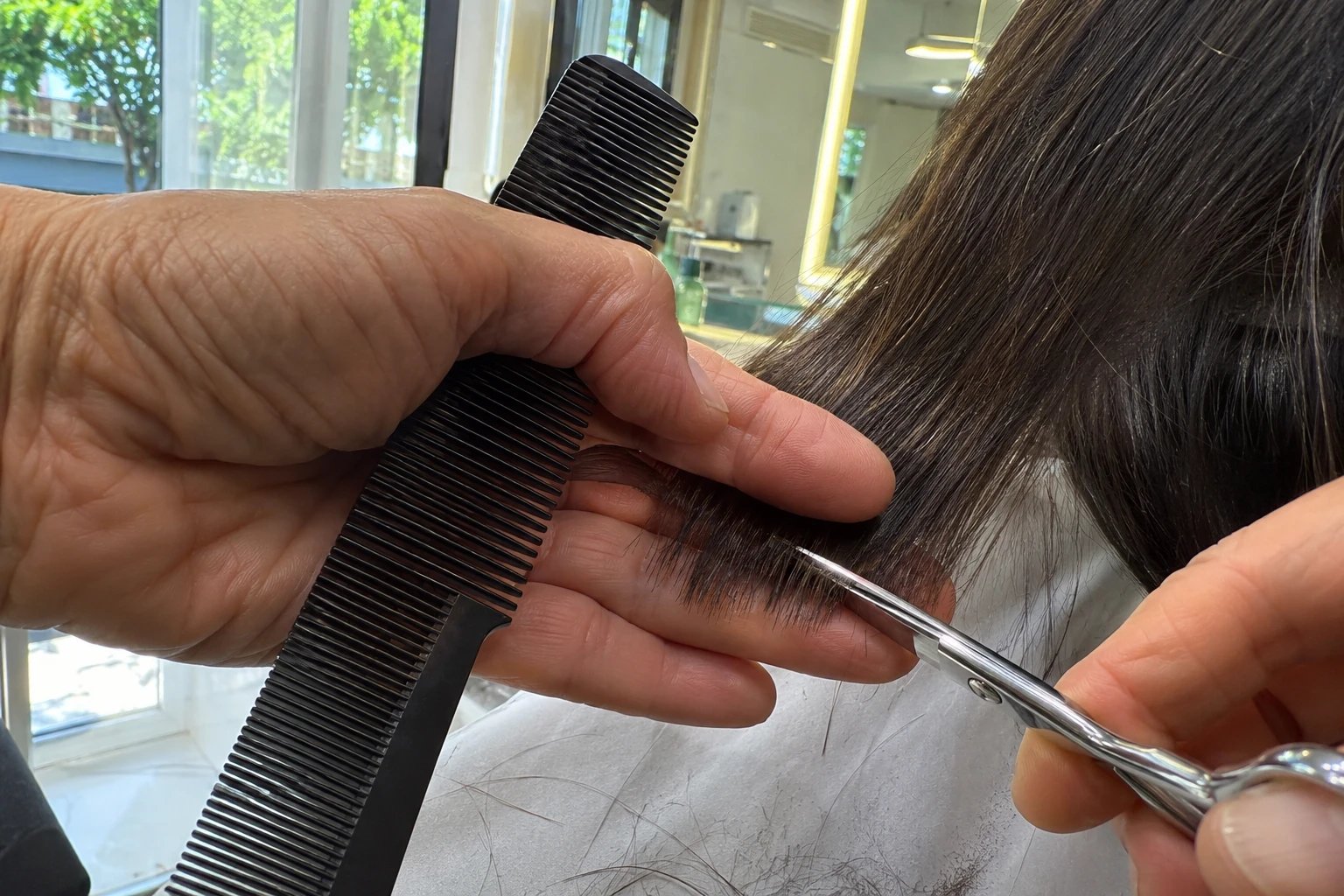
Some fine hair is fine the way silk thread is fine. Each strand is thin, but there are a lot of them. Your ponytail feels thick in your hand, yet the hair still lies down. Give that hair a hard blunt bob and it doesn't look fuller. It sits like a block.
Gabi Soares, a licensed hairstylist who posts as Glam Girl Gabi, gets the balance exactly right in her video on fine-hair bobs: "We want the base line to be heavy so that our hair looks fuller, but we don't want it to be so heavy that it's hard to style."
The fix is point-cutting the edge. The line softens without adding layers, so you keep the weight that makes fine hair look thicker.
Skip this one if your scalp shows at the crown. Then you need every bit of that weight, and #1 is your cut.
Say: "I have a lot of fine hair. Point-cut the edge to soften it, but no layers."
7Curtain bangs for a thinning temple
Curtain bangs get sold as a trend. On fine hair, they do a job.
Chaz Dean, celebrity stylist and founder of Wen Hair & Body Care, explains: "Curtain bangs act as a literal curtain to help cover those thinning areas. Especially when the center is carved out and open, which helps direct attention away from the temples."
The way they're cut makes that happen. In Kenra Professional's method, the stylist sections a triangle from the top of your head down to the recession points, the corners where your hairline dips back at the temples. She splits it in half, pulls each half toward the center, then slide cuts downward. Pulling hair across like that is called over-direction. The shortest part usually lands around the bridge of your nose.
What to say: "Curtain bangs, open in the middle, starting around the bridge of my nose. Please don't pull them tight while you cut."
That last part saves a lot of tears. Fine hair stretches when it's wet and held taut, then springs up. RaDona Ludlow, a licensed cosmetologist who has owned her own salon since 2000, says it plainly in one of her cutting videos: "If you put too much pressure, they're going to bounce back up."
6The deep side-part bob
Ever notice your hair is flattest exactly where you've parted it for years? Hair that's lain one way that long lies down at the root. Flip it, and those roots have to stand up to cross over.
Stylist Sunnie Brook, a Biolage global ambassador, says flipping your part to the opposite side "can give you an instant root lift." Siobhan Quinlán, a colorist at Salon Benjamin in West Hollywood, calls it "an instant volume booster", and she has a tip for anyone growing out gray: "You can part your hair in a less gray area and flip it over to cover more concentrated section."
Here's what the side-part advice usually leaves out. A new part won't behave on day one. Stylist Lili Bridger says to set it while your hair is wet, and warns, "It may take a couple washes and styles before it settles into its new position." For fine hair, she'd also move a side part in toward the middle of the crown, rather than way down by your ear.
Then lock the lift in. Kristin Ess, celebrity stylist and founder of Kristin Ess Hair, says "You need to lay down a base of a thickening spray or mousse before you style your hair to get that extra height up top." A volumizing mousse at the roots, on damp hair, is the cheapest way I know to make a new part stick.
In the chair: "I'm moving my part to the other side. Can you check the line with it parted there?"
5The curly or wavy bob, cut dry
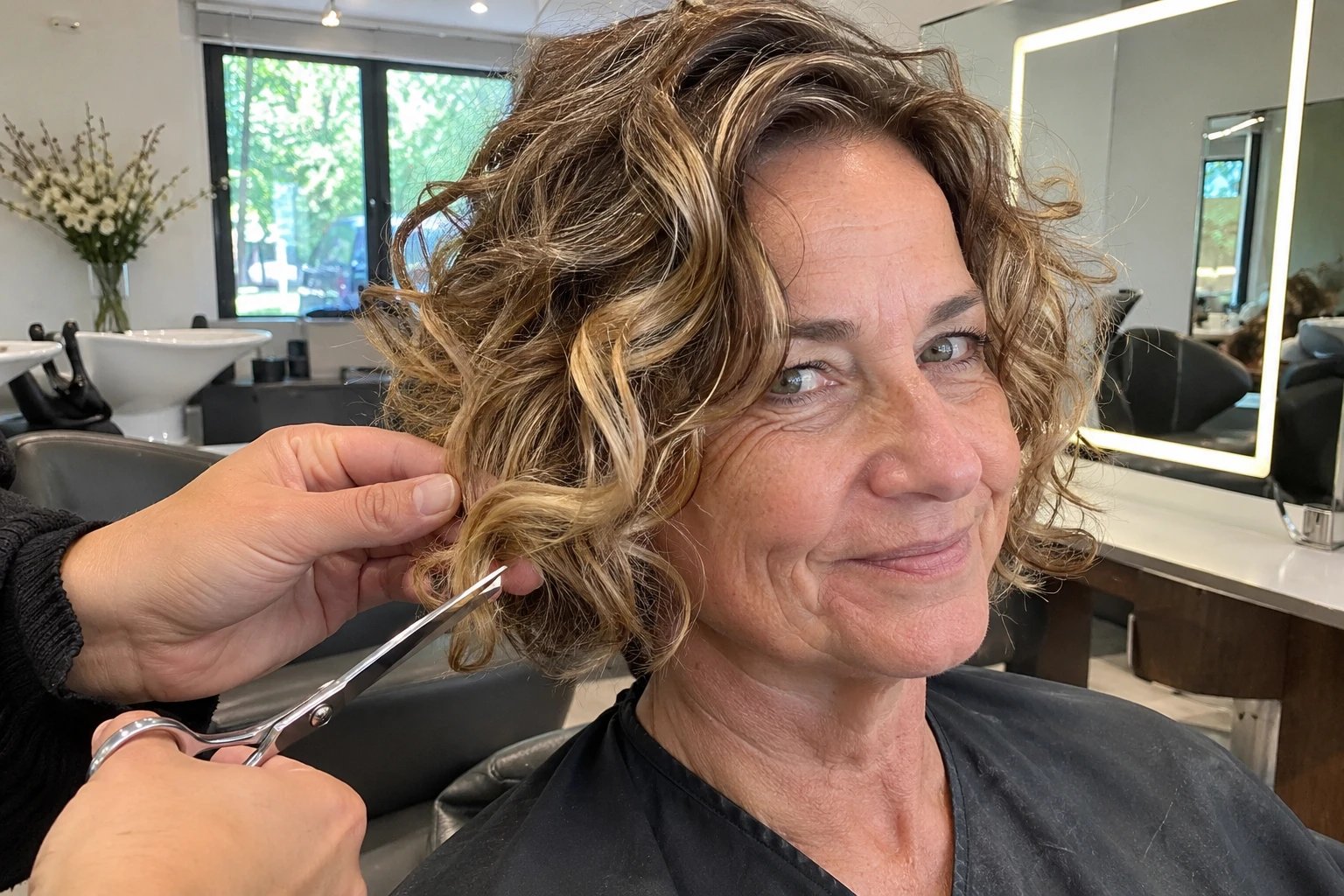
If your waves suddenly look tired, or your curl has changed its mind, you're not imagining it. Cleveland Clinic explains that hormonal changes during menopause can thin the hair because "your hair follicles shrink. This makes your hair grow finer (thinner)." A finer strand often holds its curl differently than the hair you grew up with.
On Reddit's r/WhatHairSuitsMe, women say it was texture changes around menopause, more than any age rule, that pushed them to go shorter.
Curly or wavy hair with any bend is often best cut dry. Salon San Carlos says cutting dry "allows the stylist to see how the curls naturally fall and spring." Cut wet, a length that looked perfect at your chin can bounce up well above it.
Say: "Please cut it dry, curl by curl. I want it to land at my chin once it's dry."
That's close to Samantha Cusick's "cloud bob" for fine curly hair: "light layering, cut curl by curl." She says it needs a trim every 10 weeks.
4The below-chin bob for a round face or a self-conscious neck
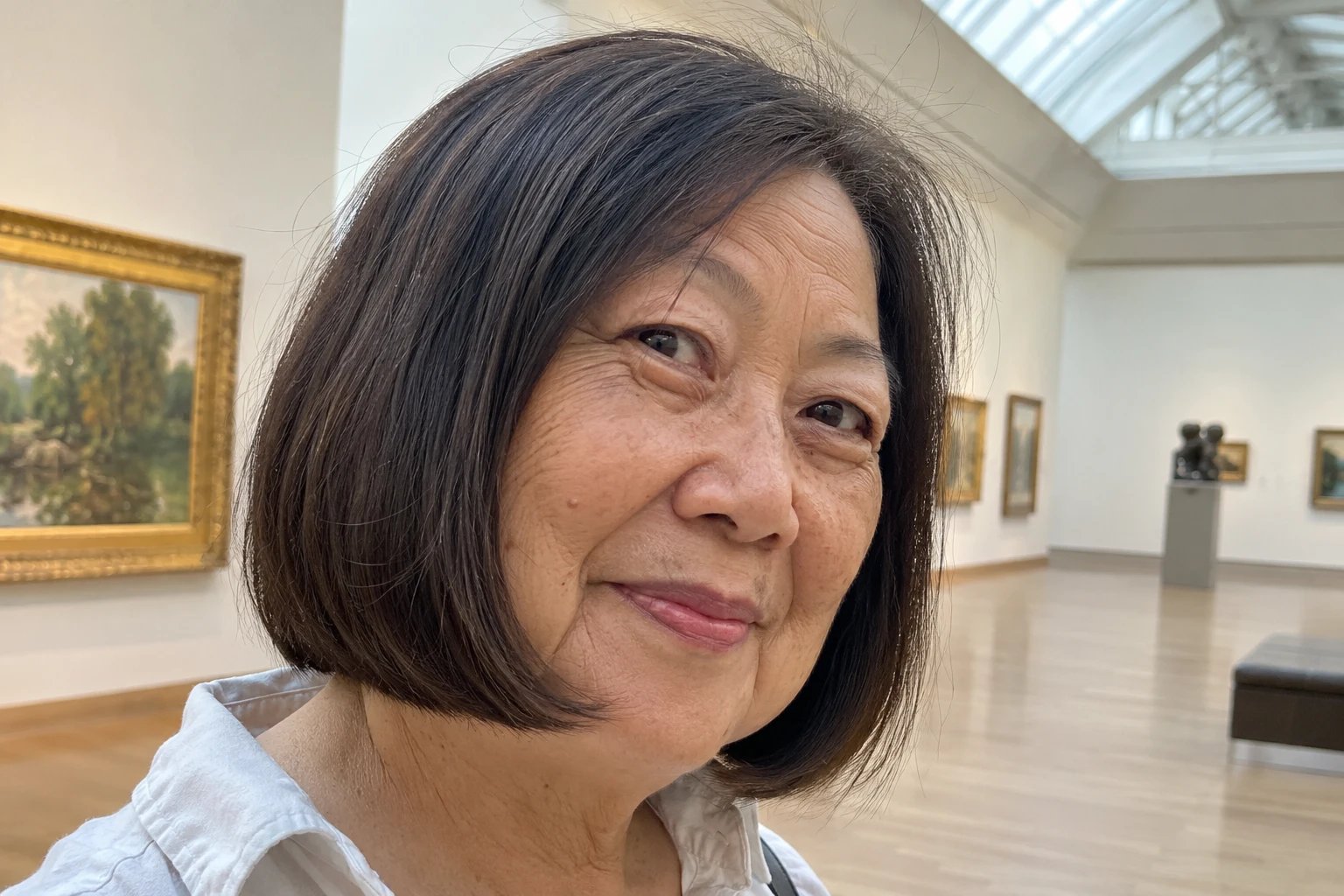
"Not on my jaw." Say those four words and you've done half the work.
A bob ends in a line, and the eye goes straight to it. Put that line on the jaw of a round face and it can add width. Fouche says a traditional bob "can sit heavily around the jawline, framing the features rigidly rather than lifting them."
Neil Moodie, an editorial stylist and founder of Neil Moodie Studio, says it straight for round faces: "Keep the length below chin level." Speaking to women over 50, he adds, "If your face is rounder, then keep the bob a little longer."
The same move helps a neck you'd rather not spotlight. Stylist Elliot Bute says a well-cut bob "can elongate the neck, soften a strong jawline." Gabi Soares is specific in her video: "Then you want to make sure that the bob line is below the chin."
She also wants the back slightly shorter than the front, never the reverse: "No one looks good with heaviness here at the nape and hollowness around the face." Weight toward the front puts your fullness where people actually look at you.
One catch. Below the chin means a little more length, and #11 showed how length can tip fine hair into limp. Keep the edge blunt so the extra inch reads thick.
What to say: "Below my chin, not on my jaw, and the back a touch shorter than the front."
See more: 14 Steps to a Simple Skin Care Routine for Women Over 60 →
3The stacked bob that styles itself in back

You know the move. Round brush in one hand, the other arm cranked behind your head, dryer cord wrapped around your wrist. The front looks great. The back is still flat, and you can't even see it.
Ludlow has a client named Linda with exactly that problem. In her video cutting Linda's bob, she explains why she stacks it:
"Linda just has to worry about really the top and the sides a little bit and then the back just falls into place." (RaDona Ludlow, licensed cosmetologist)
A stacked bob, also called a graduated bob, is shorter at the nape and longer toward the front. Moodie describes it as "a stacked, angled shape with built-in volume," and says for fine hair, "it adds fullness, prevents flatness." The short layers in back hold each other up, so the volume lives in the cut instead of your blow-dryer.
Ludlow cuts Linda's short enough to still look right after eight weeks, because that's how long Linda goes between visits. Tell your stylist your real schedule, not your ideal one. Moodie says trims every six to eight weeks are essential.
The mistake that ruins it is angling too steeply. Do that, Ludlow says, and "It's going to look too short up here and too bulky here."
If you love feeling hair on the back of your neck, this one isn't for you. If you'd rather never fight the back of your head again, picture yourself at the bakery counter, someone in line behind you, and the back of your hair simply sitting there looking finished.
See more: 13 Wash-and-Go Haircuts Over 50 That Need Almost No Styling →
2Face-framing layers with a solid back

"Layers thinned out my hair." I hear it all the time, and you're half right if you've said it.
Hickox's answer, from his video on fine hair: "It's not the layers, it's the way it was layered." His fix is to keep the hair from your temples back to the occipital bone, the bump at the back of your skull, close to one length, and put the layers around your face.
In my experience, when a client tells me layers ruined her hair, they were cut through the back, right where fine hair needs its weight most.
Front layers are a different story. Hickox writes that "front layers grow out seamlessly" and add shape without a drastic change. On thinning hair, he says "Getting a 'strong' line with front layers and adding a bend and texture to it is the key to getting your hair to appear more voluminous."
He also gives a check for how short top layers can safely go, from his guide for women over 50 keeping their hair long: "Use the occipital bone as your guide. Pull a section of hair straight up from this bone and ensure your top layers aren't shorter than this length." Go shorter and you risk what he calls the "mushroom effect."
In the chair: "Layers around my face only. Keep the back as close to one length as you can, and nothing on top shorter than a section pulled straight up from the back of my head."
At home, finish it the way Kenra Professional's fine-hair method does: thickening mousse first, then finger-dry to about 80% dry before you pick up a round brush.
1Blunt outside, weight removed inside
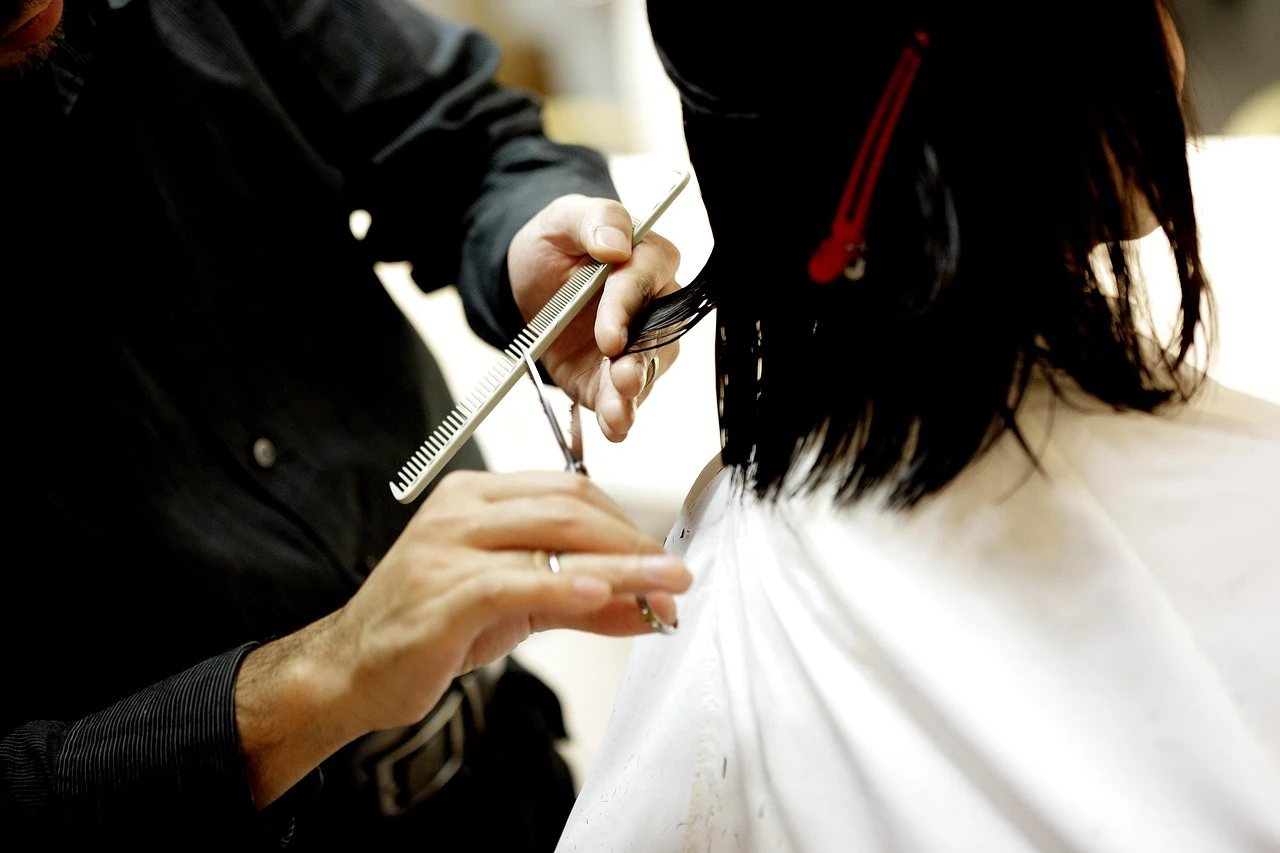
Blunt or layered? Both, each in its own place.
Hickox calls the technique internal weight removal, and in his fine-hair bob video he describes it like this: "So on the outside, the hair still looks blunt and thick, but on the inside, you're removing bulk in a very strategic way." With less bulk hanging underneath, the top isn't dragged flat, so your lift lasts. The edge still reads thick.
How it's done matters as much as what it's called. He avoids thinning shears, the ones with teeth, which can leave fine hair looking wispy. "Instead, I would use regular shears," he says. "And I would use a technique called slide cutting to remove that bulk in a more controlled way." Wild agrees that wispy layering "often removes too much weight from fine hair, which leaves it looking sparser."
One word can trip you up. Bute says "fine hair types may benefit from internal layering to create fullness," while coarser or wiry textures "often require weight removal." So some stylists hear "weight removal" and think thick, wiry hair. Use both phrases and describe what you want, and you'll both be picturing the same cut.
To keep the lift, Hickox suggests maintenance "about every four to 6 weeks". Then comes the surprise, which runs against the usual advice to trim fine hair more often. Each visit takes a little more bulk out of the inside, so he says, "If your hair is super thin, you actually need to wait a little bit longer in between cuts."
The bottom line
Before your next appointment, stand by a window in daylight and take a photo of the top of your head, or ask someone you trust to take it. Look at where the scalp shows. That spot, more than your age or your face shape, decides which bob you ask for.
Then type your sentence into the notes on your phone, word for word, and read it to your stylist before anyone picks up scissors. A good stylist will be glad you did.
In my chair, the clients who walk out happiest are the ones who told me what they were afraid of first.
Up next
17 Shoulder-Length Cuts Over 50 That Never Look Dated
Where the ends should land for your face, the four words to say before the first snip, and the honest minutes your hair costs you at the mirror.
Read the list →
Reader quiz
Did you catch the details?
5 questions from this article. Finish them all to unlock the editor's bonus tip.
For the blunt-outside bob, which tool does Justin Hickox avoid when removing bulk from fine hair?
Questions people also ask
Is a blunt or layered bob better for fine hair?
A blunt outer edge is the safer bet for fine hair, with any layering kept to the inside or around your face. Stylist Andreas Wild says wispy layering often removes too much weight from fine hair. Elliot Bute says fine hair may benefit from internal layering to build fullness. The layers to avoid are the ones cut all through the back.
What's the difference between a bob and a lob?
A bob usually sits between the jawline and just above the shoulders, while a lob, or long bob, keeps the same shape but falls longer, usually between the shoulders and the collarbone. Celebrity stylist Marc Ballance says the lob tends to grow out more forgivingly, while a shorter bob may need more daily styling to look polished.
What is a French bob haircut?
A French bob hits the jawline or just below, with no heavy layering, an optional fringe and a natural, finger-dried finish. Ryan Forsythe of Trevor Sorbie describes it as cut much like a one-length bob and suggests volumizing mousse blow-dried in with your fingers. He recommends a cut every six to eight weeks.
How often should a fine-hair bob be trimmed?
Most fine-hair bobs need a trim every 6 to 8 weeks, and softer or longer shapes can go 8 to 12 weeks. Stylist Lisa Huff says ultra-fine hair breaks more easily and usually needs a trim about every 6 weeks. If your stylist removes weight on the inside, Justin Hickox says very thin hair should wait a little longer between cuts. At the US women's average of $69 a cut, trims on that schedule come to roughly $300 to $600 a year before tip.
How do I keep my new bob from looking flat?
Put a thickening spray or mousse at the roots before you style, and try flipping your part to the other side for an instant lift. Kristin Ess says that base is what gets you extra height up top, and Sunnie Brook says flipping your part gives "an instant root lift." If you move your part, Lili Bridger says it may take a couple washes and styles before it settles.
When should I see a doctor about thinning hair instead of just changing my haircut?
See a dermatologist if your part is widening or your ponytail is getting thinner, because those are early signs of hereditary thinning. It's common: the American Academy of Dermatology estimates 30 million US women have it, out of 80 million Americans in all, so women make up roughly 3 in every 8 people who have it. It usually starts in midlife, in the 40s, 50s or 60s, and the academy says treatment works best when started at the first sign. A haircut can make hair look fuller, but it won't change what's happening at the root.
Did any of these feel familiar?
Know someone who needs this?
 Prime Journal · Free printable
The Closet Fit and Color Checklist
- A clearer view of colors beside your face.
- Clothes that pass the sitting and walking test.
- Shoes and repairs checked before anything gets replaced.
Free printable: The Closet Fit and Color Checklist. Enter your email and it is yours.
Sources cited in this article
This article links to 39 outside sources, listed here so you can read them yourself.
- "strong, powerful line" www.aol.com/articles/6-bob-styles-help-fake-221400809.html
- "The shorter your hair is, the thicker it will look." www.shefinds.com/collections/hide-thinning-hair-hairstyles
- Calls a one-length bob a great option www.justinhickox.com/blog2/which-trending-bob-haircut-is-for-you
- "keeps the same overall silhouette but falls longer, usually between the shoulders and the collarbone," shopping.yahoo.com/beauty/hair/articles/difference-between-bob-lob-bigger-18…
- A trim only every 10 to 12 weeks www.aol.com/lifestyle/thinking-bob-cuts-perfect-fine-203200304.html
- The bob had become the dominant women's hairstyle in the West en.wikipedia.org/wiki/Bob_cut
- "always hits the jawline or just below," www.refinery29.com/en-us/2020/07/9935236/french-bob-hairstyle-inspiration
- "a facelift in haircut form." graziamagazine.com/us/articles/helen-mirren-ditched-the-bob-she-wore-for-yea…
- One of his videos www.youtube.com/watch?v=26EIMqKFnaE&t=800s
- Asking for below the chin and getting mid-jaw www.reddit.com/comments/1uxm2md
- Going in for a trim and leaving with a bob www.reddit.com/comments/1xuxelj
- "two or three reference photos," www.hairhouse.com.au/blog/how-to/bixie-haircut-is-it-right-for-your-hair-type
- Said none of them showed fine hair like hers www.tiktok.com/@love_curls77/video/7436874718122183992
- His short-hair video www.youtube.com/watch?v=Bzq_8i10brg&t=245s
- Her video on fine-hair bobs www.youtube.com/watch?v=3nfUPl5_BW8&t=564s
- "Curtain bangs act as a literal curtain to help cover those thinning areas. Especially when the center is carved out and open, which helps direct attention away from the temples." www.yahoo.com/lifestyle/best-hairstyles-thinning-hair-temples-211832692.html
- Kenra Professional's method www.kenraprofessional.com/blogs/articles/different-ways-to-cut-bangs
- One of her cutting videos www.youtube.com/watch?v=H9WE3qalauI&t=560s
- "can give you an instant root lift." www.purewow.com/beauty/how-to-style-fine-hair
- "an instant volume booster" www.aol.com/lifestyle/hairstylists-side-part-back-heres-110000338.html
- "It may take a couple washes and styles before it settles into its new position." graziamagazine.com/us/articles/goodbye-the-center-part-this-2-second-change-…
- "your hair follicles shrink. This makes your hair grow finer (thinner)." my.clevelandclinic.org/health/diseases/16921-hair-loss-in-women
- Pushed them to go shorter www.reddit.com/comments/1x644tg
- "allows the stylist to see how the curls naturally fall and spring." salonsancarlos.com/what-is-curl-shrinkage
- "Keep the length below chin level." www.neilmoodiestudio.com/post/the-bob-which-is-the-bob-haircut-for-you
- "If your face is rounder, then keep the bob a little longer." www.aol.com/lifestyle/guide-bob-haircuts-women-over-193300863.html
- Her video www.youtube.com/watch?v=3nfUPl5_BW8&t=189s
- Her video cutting Linda's bob www.youtube.com/watch?v=H9WE3qalauI&t=128s
- Licensed cosmetologist boysandgirlshairstyles.com/about-us
- "a stacked, angled shape with built-in volume," www.aol.com/articles/expert-styling-guide-graduated-bob-212600019.html
- "It's going to look too short up here and too bulky here." www.youtube.com/watch?v=H9WE3qalauI&t=251s
- His video on fine hair www.youtube.com/watch?v=26EIMqKFnaE&t=125s
- "front layers grow out seamlessly" www.justinhickox.com/blog2/transform-your-hair-over-50-without-losing-length
- Kenra Professional's fine-hair method www.kenraprofessional.com/blogs/articles/cut-face-framing-layers-fine-hair
- His fine-hair bob video www.youtube.com/watch?v=m9l7rJcBigc&t=190s
- "about every four to 6 weeks" www.youtube.com/watch?v=m9l7rJcBigc&t=505s
- US average of $69 for a women's haircut www.huffpost.com/entry/heres-what-people-are-paying-across-the-us-for-a-hair…
- Take too much teasing, curling and spray www.tiktok.com/@colorbyjoanne/video/7617969361294331150
- "Fine hair often responds well to lightweight Velcro rollers, which lift roots without added heat," shopping.yahoo.com/beauty/hair/articles/velcro-hair-rollers-vs-hot-184226912…

Irina Byalik
Style Editor
Irina Byalik is a hairdresser and the owner of New Image Hair Salon in East Brunswick, New Jersey, with more than 20 years of experience. She came to the United States from Ukraine.
More from Irina Byalik