



16 Gray Blending Highlight Ideas Over 50 That Hide Roots Longer
The exact highlights and lowlights to ask for, the real dollar cost, and how many weeks you can actually go between visits.

By Irina Byalik, Style Editor
Updated · 23 min read
- Written by our style editor
- Cited 35 sources
- How we review
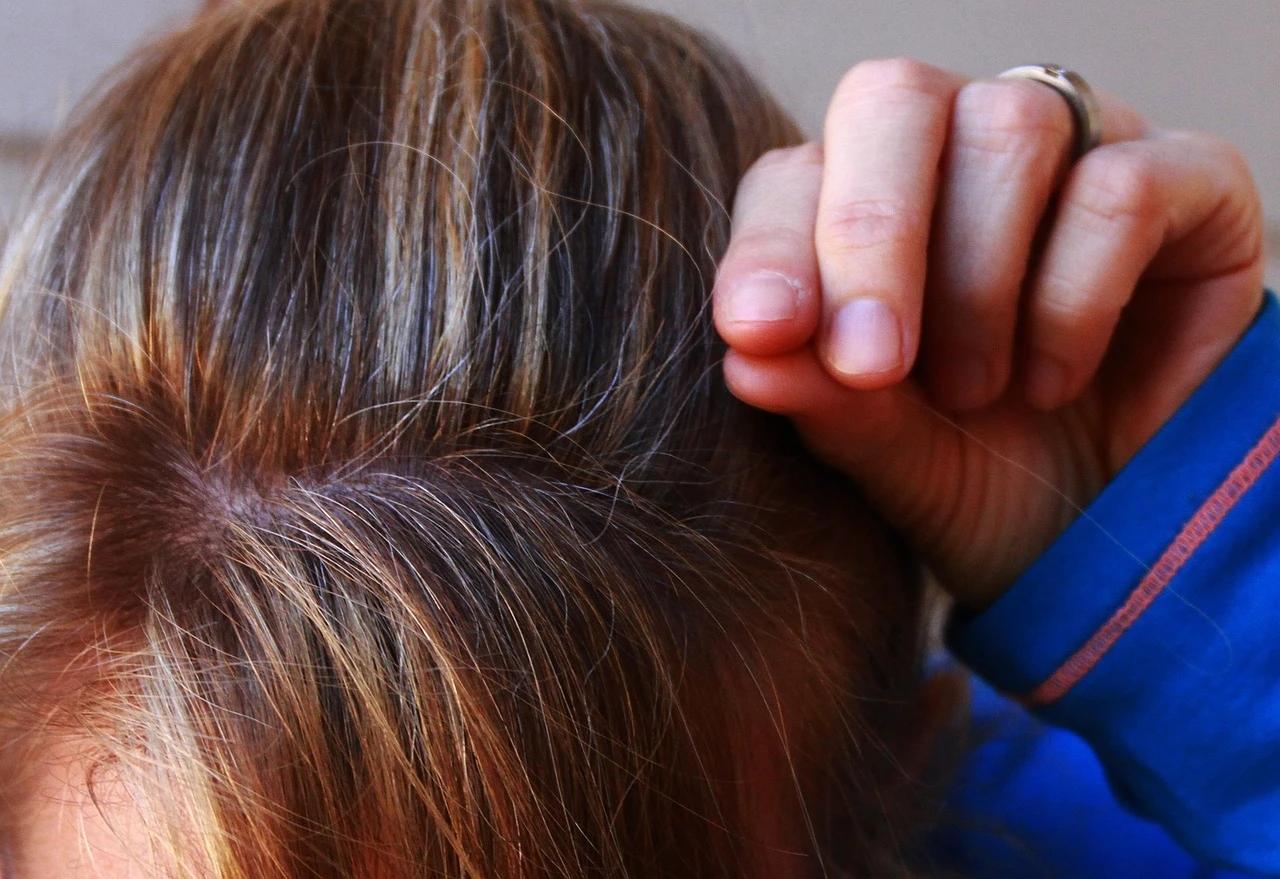
You're on a video call, and there it is in the little square in the corner of the screen: a white stripe along your part, three weeks after you paid to make it go away. You know how this goes. Another appointment, another afternoon, another stripe.
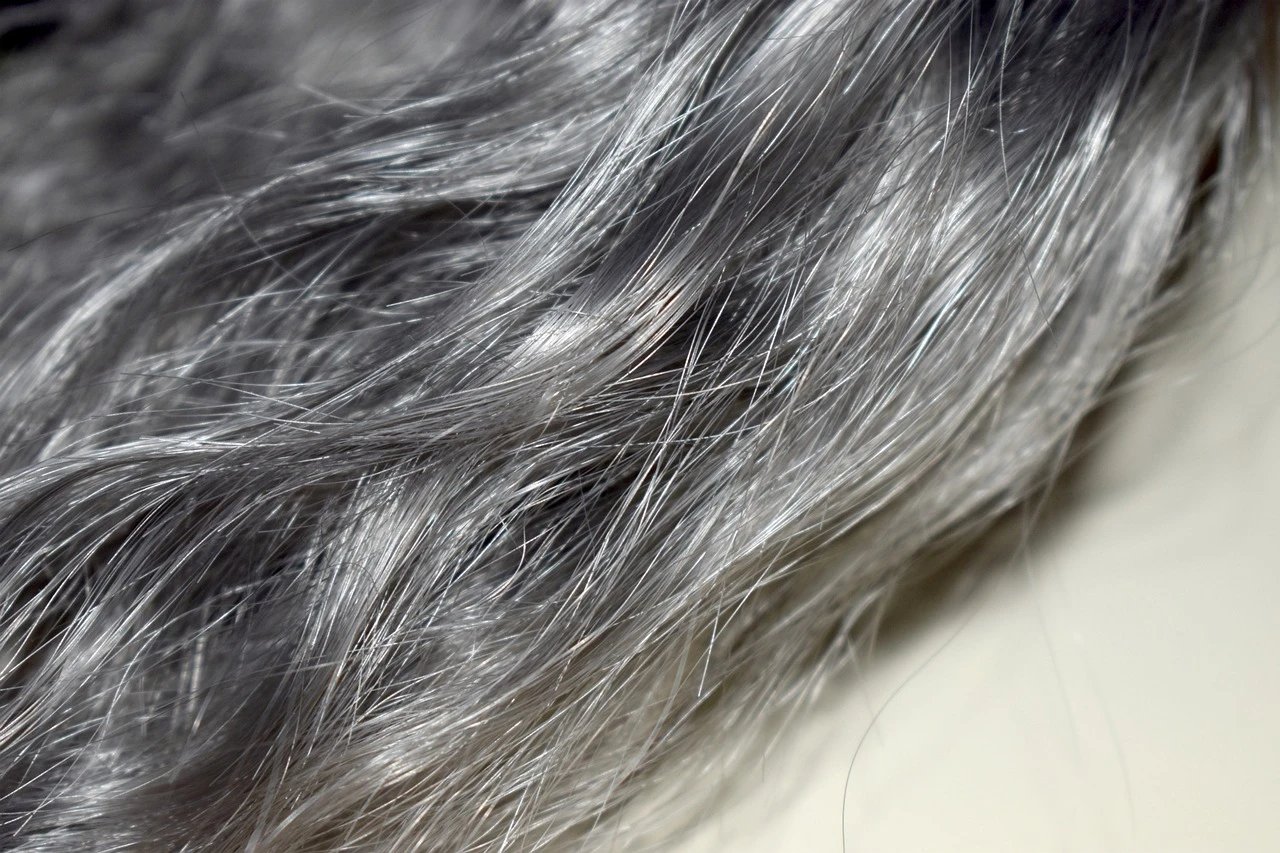
Gray blending highlights for women over 50 work the other way around. Fine highlights and lowlights mix your gray into the color, so what grows in looks like more of the same. They still use lightener and color. What you skip is all-over dye on your scalp every few weeks.
16Fine babylights instead of chunky foils
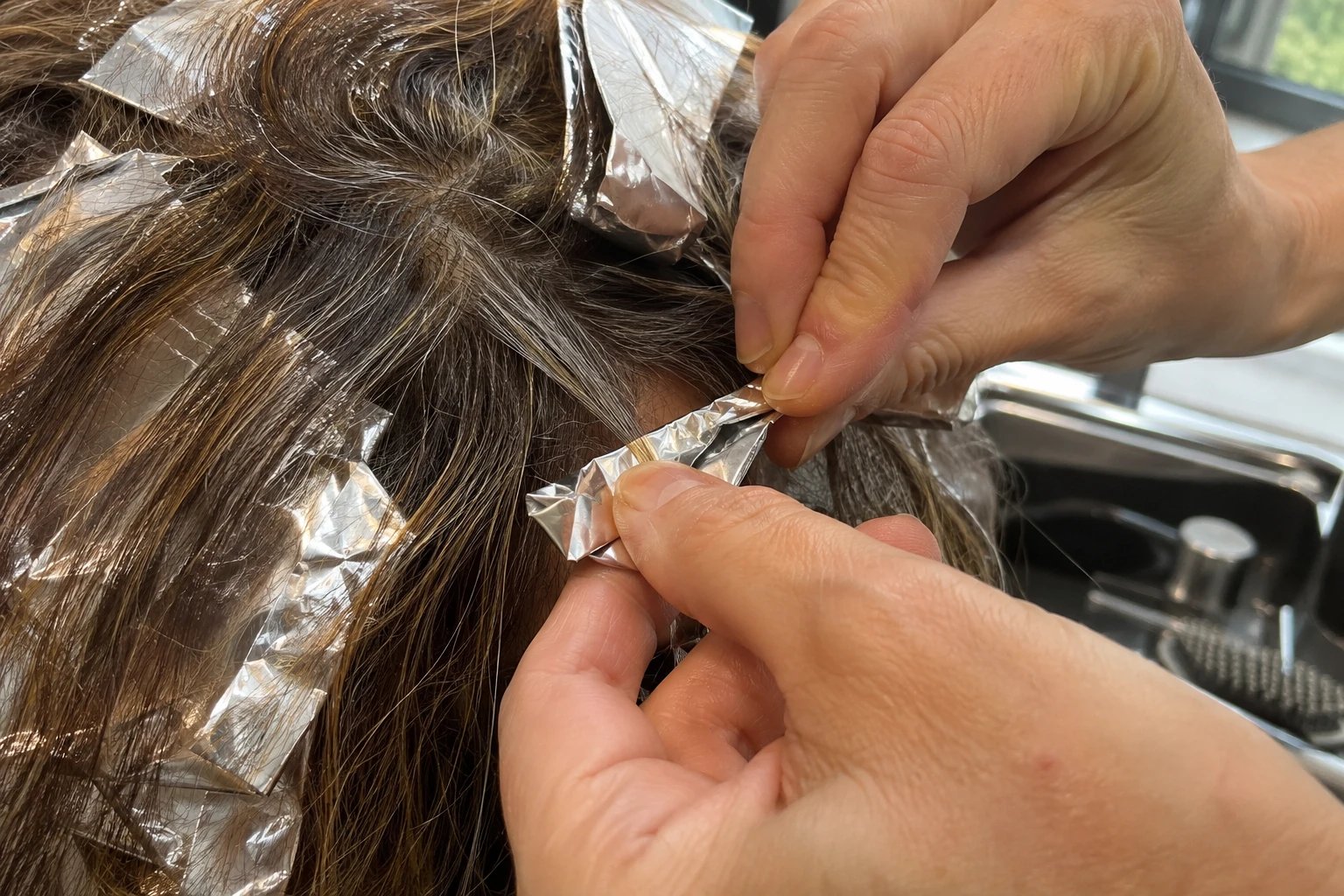
Ask for babylights. They are highlights so fine they look like strands the sun picked out, woven through in many thin foils instead of a few wide ones. Fine pieces are what let your roots come in quietly.
If you had highlights when foils first took off in the 1980s, you may remember the other kind. Foils arrived to allow people to place highlights anywhere they wanted. Wide pieces leave wide gaps of dark hair between them. When gray grows into those gaps, you get stripes.
Fine ones grow out differently. Alyssa Black, a hairstylist at Eric Marshall Salon in Nashville, explains why: "Because babylights create very little visible contrast, they tend to grow out more naturally."
The clearest demonstration I've seen comes from Jamie Dana, a hairstylist and salon owner who filmed herself highlighting her own mother. She leaves some of her mother's own hair out between foils so there's no solid regrowth line.
Salons call that solid line the line of demarcation: the hard edge where new growth meets old color. Without it, visits can stretch to every eight to twelve weeks.
The mix of highlights and lowlights depends on how much gray you have. One more thing from my own chair: a head of babylights takes longer than a handful of big foils, so book the longer appointment instead of hurrying it.
15Face-framing highlights at the part and temples
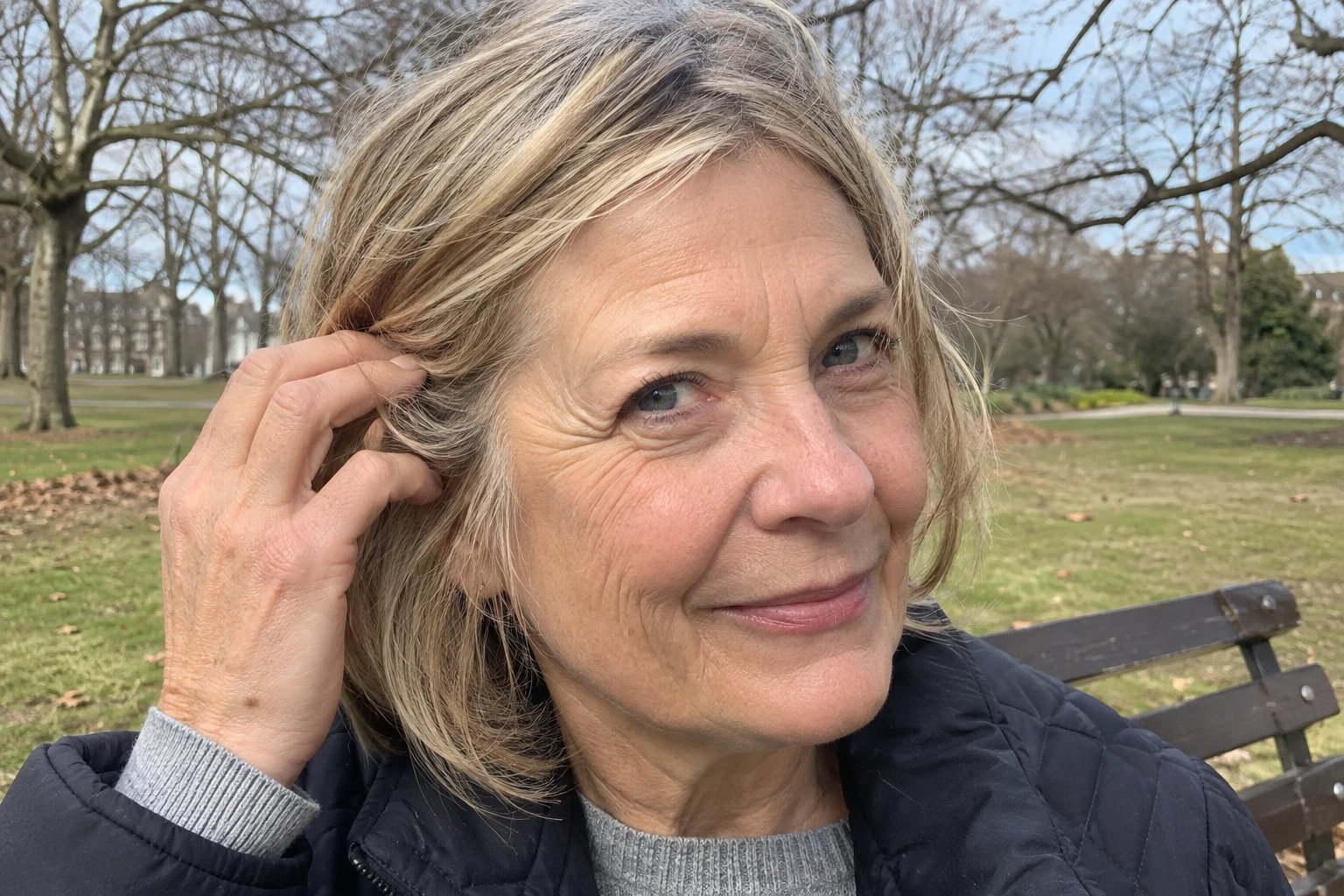
Point to three spots: your part, your temples and your crown. That's where the finest highlights belong, because that's where regrowth shows first.
Celebrity colorist Kadi Lee works to exactly that map: "Grey shows up first at the part, the temples and the crown, so that's where I weave in soft pieces."
Why not scatter highlights evenly and call it done? Because your gray doesn't spread itself evenly. Salon Bastille in Cincinnati puts it plainly: "Heavy gray concentrated at the temples and the part line shows more than the same amount scattered through the back."
Karen Conlon, senior colorist at Ted Gibson Beauty in New York, calls it her best tip: "add face framing highlights to blend the gray for a more natural look." Face-framing highlights are simply the pieces nearest your face, the ones you see first and everyone else does too.
If your gray comes in somewhere else, say a streak at the nape or a patch behind one ear, speak up. Your own map is the one that counts.
At the consultation, part your hair the way you always do and touch each spot. "Here, here and here" tells a colorist more than any shade name.
See more: 15 Age-Defying Modern Hairstyles for Women Over 50 →
14Lowlights kept close to your own shade
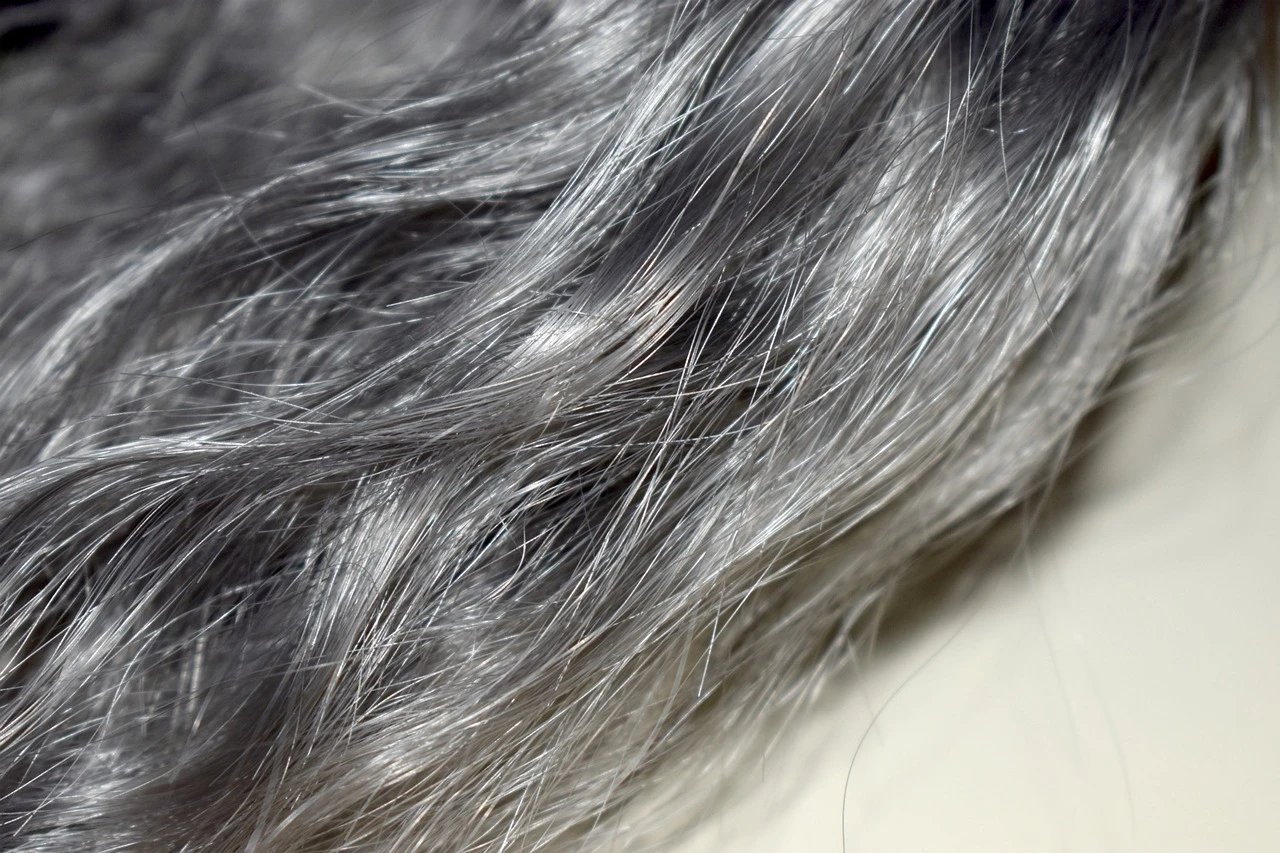
Lowlights are thin pieces colored a little darker than your gray, to put back some of the depth gray takes away. The rule that keeps them from showing up as dark stripes is simple: no more than one or two levels darker than your natural shade.
That's Wella's rule, and the color maker adds that demi-permanent color, a gentler type that fades gradually instead of growing out in a hard line, is "perfect" for lowlights.
Christopher Naselli, owner of Naselli & Co. Salon in New York, makes it even simpler: "When looking for the right tone, just match your natural level to the lowlight." Celebrity hairstylist Guy Tang says it in four words: "Don't go too dark."
Tone matters as much as depth. Warm lowlights look sunny in blonde hair, Wella says, but "those same hues through a head of gray hair = brassy, dull and uneven-looking." Brassy is that orange-gold cast you catch in daylight. Madison Reed advises lowlights that are "cool, ash, or neutral in tone" and says to "steer away from warm, golden, or mahogany tones."
How many? There's no fixed number. Madison Reed says the amount "will really depend on what percentage of dark gray and white you have," and that "less is more to start with." I agree. It's far easier to add two lowlights next visit than to grow out ten.
If the swatch your colorist holds up looks like espresso and your own hair looks like a latte, say so before anything gets mixed.
13Highlights warmed or cooled to match your skin

Gray hair is cool by nature. Jessie Knight of Nicola Clarke Salon in London says so in so many words: "Gray tones in hair are, by nature, cool." So the shade of your highlights decides whether they look related to your gray or like strangers standing next to it.
The shades colorists name fall into three rough groups:
| Your leaning | Shades colorists name | Worth knowing |
|---|---|---|
| Cool | Ash blonde, cool blonde, platinum | Closest match to silver |
| In between | Beige silver, taupe gray, mink gray, warm smoke | Mixes warm and cool, so it stays out of yellow |
| Warm | Honey, caramel | Richer on warm skin, fades faster |
Madison Reed recommends the cool group because those shades match the silver in gray. Adam Russell, creative master colorist at Josh Wood, picks the middle row, shades that "balance warm and cool pigments, keeping the color looking chic rather than yellow or brassy."
Warm can work too, for the right face. Issie Churcher, creative director of STIL Salon, says warm shades make hair look "richer and more intentional," and Knight weaves in warmth so cool gray doesn't wash out the skin.
The catch: gray hair is more porous, Churcher notes, meaning it takes in color and lets it go more easily, so warm shades fade faster. She suggests a warm-toned color-depositing conditioner between visits, which leaves a little pigment behind each time you use it.
Notice that's highlights. Warm lowlights are the risky ones.
My honest call: if you've always looked better in camel than in charcoal, try the warm row and expect to keep it up at home. If you can't decide, the middle row was made for you.
12Highlights and lowlights for dark brunette hair

If your natural color is dark brown, plan on more than one visit. Your hair has a long way to travel.
Colorists measure hair on a scale of 1 to 10, with 1 the darkest and 10 the lightest, according to a state-board exam guide for cosmetologists. Dark brown sits around a 4. Say the goal is highlights pale enough to sit beside silver: that means a 10.
Now hold that against the American Academy of Dermatology's advice: choose a dye within three shades of your natural color, because lightening further "requires higher volumes of peroxide, which causes more hair damage." Peroxide is the part of the mix that does the lightening.
Those multiples are our estimate. They assume one of the dermatologists' shades equals one salon level, which the academy doesn't say, and its tip is general coloring advice, not a rule for salon highlights. The direction is still clear. A dark brunette chasing silver-white pieces is asking her hair to lift about twice as far as the guideline is comfortable with.
So good colorists don't do it in one go. Taylor Monroe, a salon in San Francisco, suggests staying "within two to three levels of your natural depth" when you start dark. The trip to a bright blend, it says, typically takes "two to three sessions spaced 6 to 8 weeks apart."
Their gentler method "uses lower-volume developer, works in stages if you're starting dark, and adds a bond builder during lightening." Developer is the peroxide; a lower volume lifts the hair fewer levels, which limits damage. A bond builder is an additive meant to protect the hair while it lightens.
If you've colored your hair dark for years, add time. Sarah Bower of Larry King salons in London says "multiple sessions" are typically needed.
Your lowlights can stay close to home. L'Oréal Paris's shade chart pairs a level 4 with a shade it calls Neutral Chestnut and a level 3 with Cool Espresso. It says a tone "within one or two levels of your natural base keeps grays looking like intentional highlights."
Jack Martin, a colorist who posts his color corrections on TikTok, tells clients up front what the trade can be: sometimes the choice is between the exact color with damaged hair and a blended color with much healthier hair. He starts gently, and so do I.
11A toner that keeps highlights from turning yellow
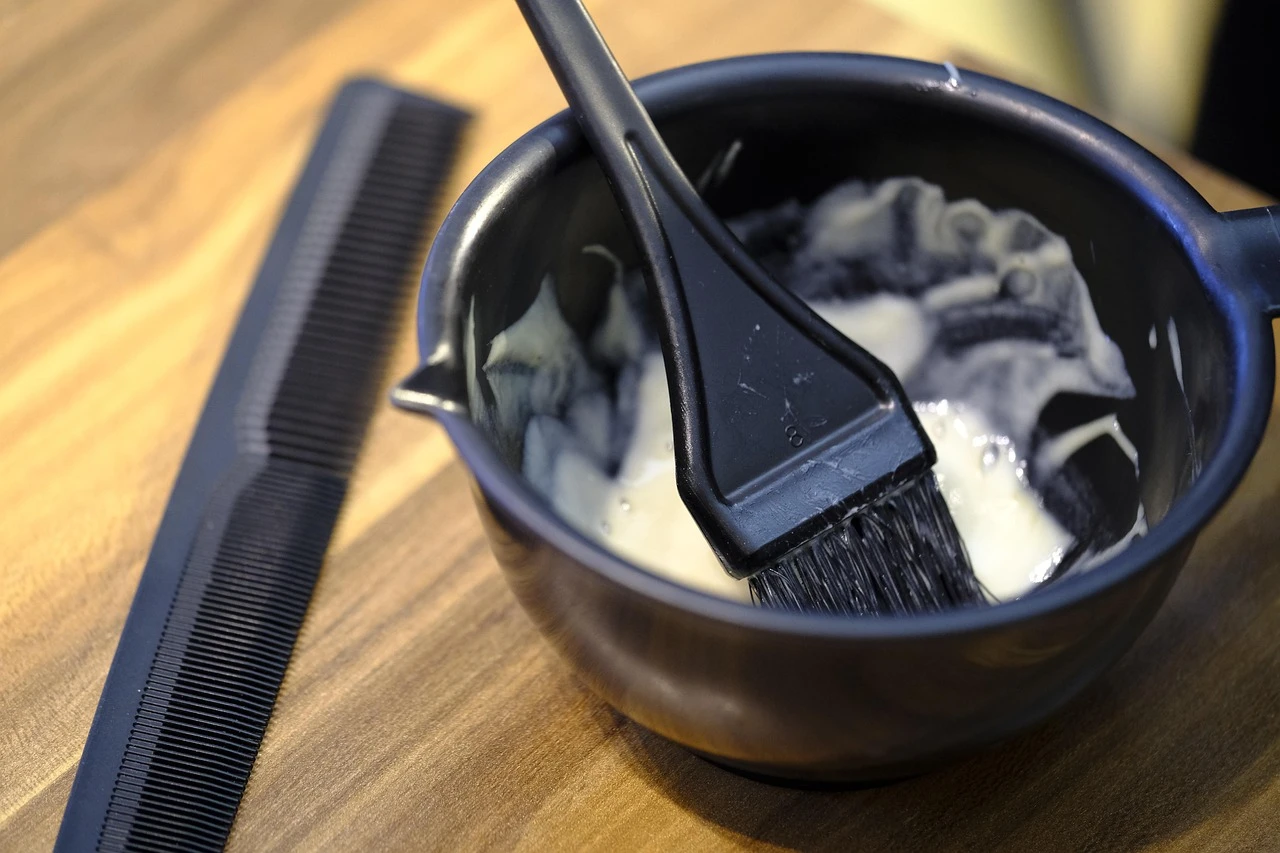
Bleached hair is never truly white. Lightener takes hair up a ladder of warm colors: red-orange around levels 3 and 4, orange at 5, then yellow-orange and yellow, and still pale yellow at 9 and 10, according to that same exam guide. Your natural white, meanwhile, has no pigment left at all.
Put the two side by side and the bleached piece loses. Rami Jabali, a salon owner in Dubai, warns that bleached highlights placed next to natural silver look yellow beside it.
That's the job of toner: a sheer coat of color put on after lightening to cancel the warmth left behind. The cool tones colorists reach for are ash and violet, the ones used "to neutralize brassy pigment." Natalie Fernandez of Volt Salon in Scottsdale, for one, mixes a pair of Schwarzkopf toners or a trio from Redken for exactly this.
Two things can go wrong. Skip the toner and your pieces stay yellow. Go too dark and, Jabali warns, a dark gray toner can fade orange within weeks.
He also puts the health of the hair ahead of matching the silver. If your colorist tells you the hair needs a break before it goes any paler, that's the priority to remember.
10Purple shampoo, used sparingly
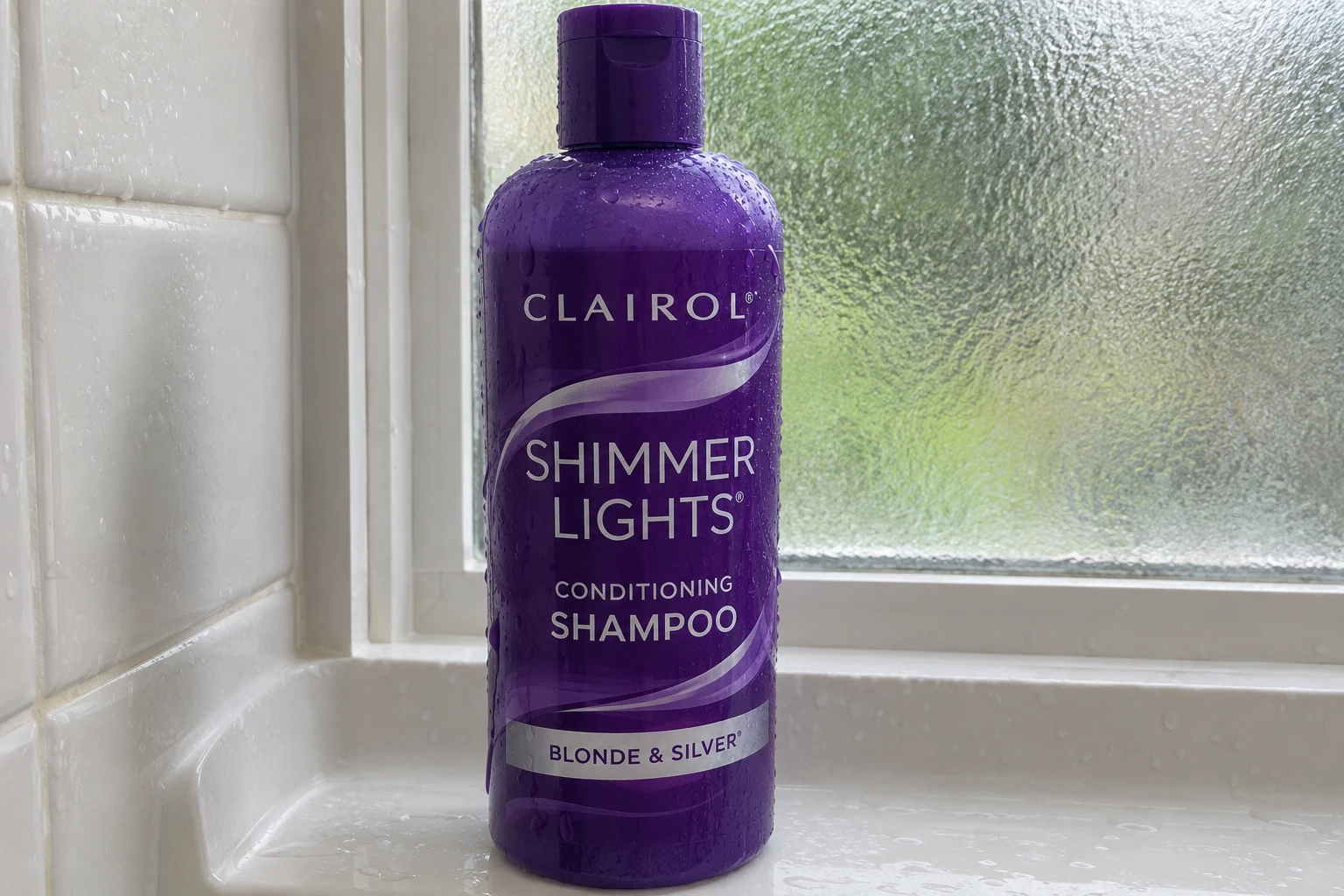
Use purple shampoo once or twice a week, and no more. Healthline's medically reviewed guide calls it "a toner, not a cleansing or moisturizing product," and says many formulas belong in your shower "once or twice a week, rather than daily."
Overdo it and it "can give certain hair tones a purple, pink, or blue tint." On silver, that's the lavender rinse you thought went out with your grandmother's generation.
Sally Beauty sells Clairol Shimmer Lights Conditioning Purple Shampoo for Blonde & Silver for about $10 for 8 ounces or about $25 for 31.5 ounces in 2026. Its own directions also say once or twice weekly, and it claims to remove "the dull yellow in gray hair."
Use your regular shampoo the rest of the week. If your silver starts looking violet in daylight, drop back to once a week.
9A demi-permanent gloss instead of full color
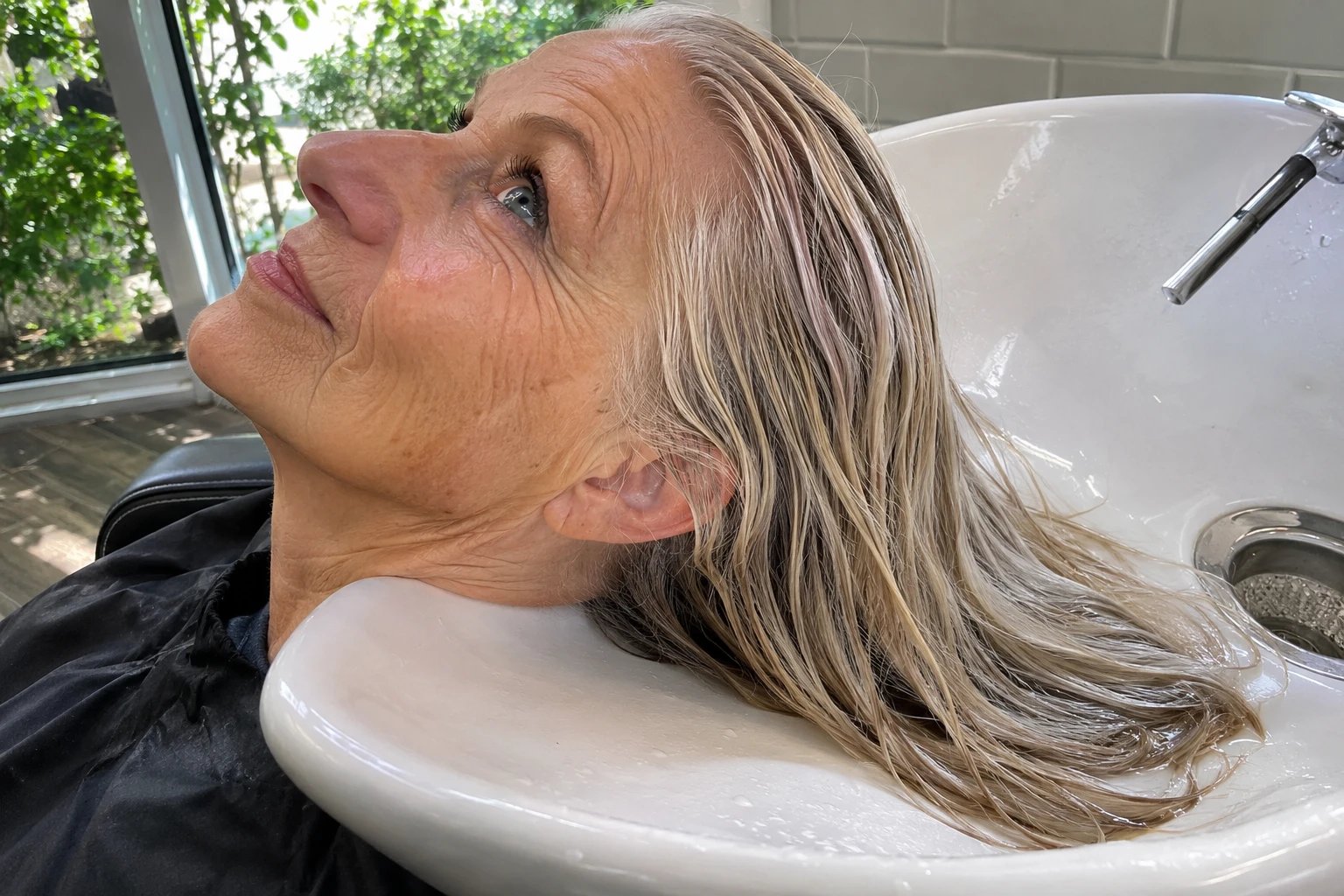
For around $150, a gloss buys you softer roots and shinier hair between highlight visits. That price comes from two colorists, Cass Keading and Natalie Rotger, quoted by Vogue Philippines.
Know what that money doesn't buy. Ulta's guide is blunt: gloss "is sheer. It won't offer full, opaque coverage for gray hair like permanent dye will." A clear gloss only adds shine; a tinted one leaves a sheer wash of color. A salon gloss lasts about 3 to 6 weeks, Ulta says, an at-home one 2 to 4.
What a tinted, demi-permanent gloss does well is soften the contrast. Erick Orellana, a hairstylist at Sally Hershberger Salon in Los Angeles, describes it: "The demi permanent will stain the gray, blending to your natural hair color."
L'Oréal Paris says demi-permanent gray blending color typically lasts 24 to 28 washes, so the fewer times a week you wash, the longer it holds.
Where it earns its keep: in my experience, a gloss around the middle of a long gap is what carries a lot of clients from week 6 to week 10 without panic. Where it doesn't: if you're hoping it will make the gray disappear. It won't, and it was never meant to.
8Lightening only the mid-lengths and ends
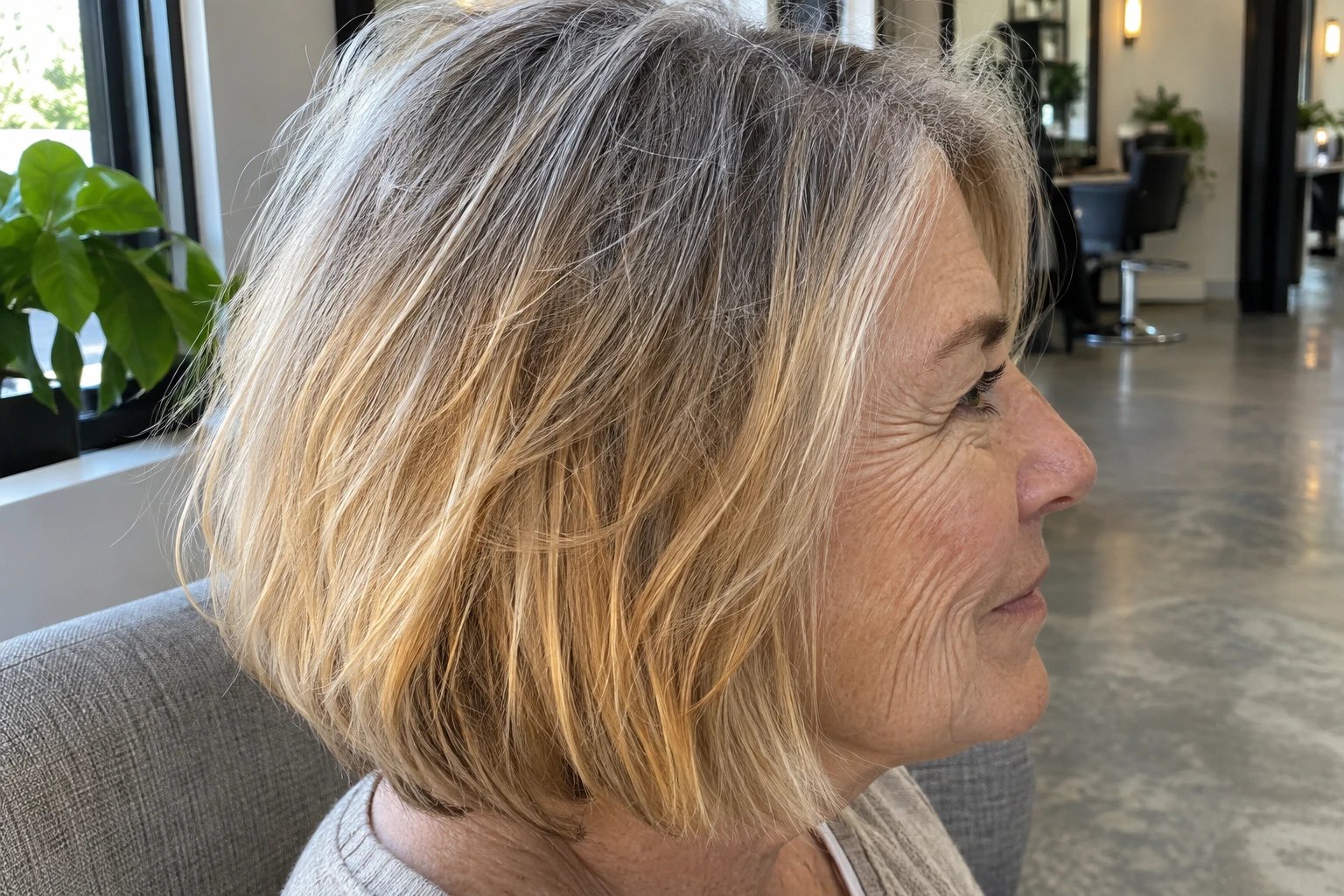
Lauryn Lee, whose YouTube channel, Locks by Lauryn, describes her as a Los Angeles-based "Grey Blending Specialist," shows how it's done. Her client had salt-and-pepper hair and wanted to stop coloring and go natural. Lauryn Lee left the roots alone completely and lightened only the mid-lengths and ends, the old colored hair, so it would meet the gray coming in. Then she toned it and added lowlights.
Where a warm band of old color still showed, she didn't lowlight the whole head. She laid in a soft shadow root, a slightly deeper color at the root that blurs one shade into the next.
It's the most honest approach to a transition to gray I've seen, partly because she's honest about the result. Matching each gray exactly is impossible, Lauryn Lee says; the blend is an illusion. Walk in with that expectation. Nobody can copy your gray strand for strand. What a good colorist can give you is colored hair that reads like your gray from across a room while the real thing grows in behind it.
This one is for you if your goal is to stop coloring, not to keep blending forever. Expect a long first day over years of old color: Leesa Lee, a colorist in Austin, spent six and a half hours on one corrective session for a client with 30 years of warm auburn color. Bring a book and a snack.
See more: 17 Shoulder-Length Cuts Over 50 That Never Look Dated →
7Thinner pieces right at your hairline
Look at the very front edge of your hair. That's where gray shows up first, at the part and the temples, and gray concentrated there shows more than the same amount scattered through the back.
The fix, as Jamie Dana shows, is to work right up to the hairline with pieces finer than you'd expect. When in doubt, go thinner.
Thick pieces at the hairline look like stripes. Thin ones look like the gray they're standing in for.
If you always wear your hair down and forward, this matters less. If you pull it back to wash your face or wear a headband most days, it matters a lot. Say "Please don't skip my front hairline" before the first foil goes in.
6A few gray pieces left alone on purpose
Leaving a few strands of gray untouched sounds like the easiest instruction in the world. In my experience, it's the one people second-guess most afterward.
The idea is sound. Celebrity hairstylist Dimitris Giannetos puts it simply: "The biggest rule is to work with the grey, not against it."
First tries often come out just okay. Untouched gray right at the temples is exactly the kind of concentrated spot that shows most.
So test it on one side only. Leave two or three pieces at one temple and highlight the other as usual. Live with both for a few weeks, and you'll know which side you like before you commit your whole head.
5A lighter root that covers half the gray
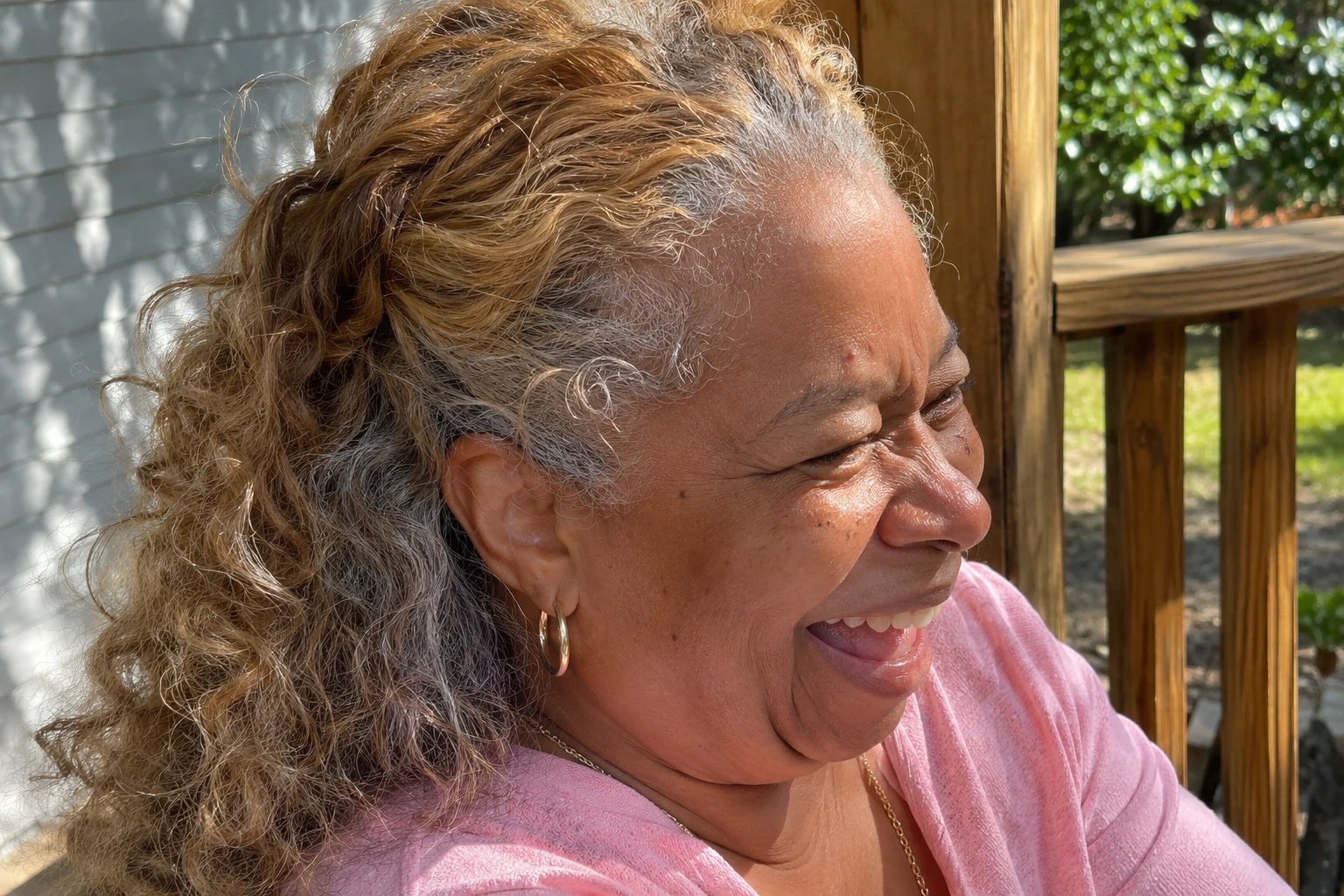
This one does put color on your roots, so let me say that first.
Rami Jabali colors the roots a lighter shade that covers only about half the gray, on purpose. The gray left showing works as built-in highlights, so there's nothing to foil.
He's frank about the trade: you'll look slightly lighter than you do now, but you won't need highlights later.
Why it works: when only half your gray is covered, new silver at the root looks like more of what's already there. Partial gray coverage leaves no solid band for the regrowth to stand out against.
Who it suits: someone happy to go a shade lighter, who'd rather have one simple root visit than a long foil appointment. Who it doesn't: anyone who wants to keep color off the scalp.
Ask for it by description: "a lighter root color that only covers about half my gray."
4Box dye on your roots between visits
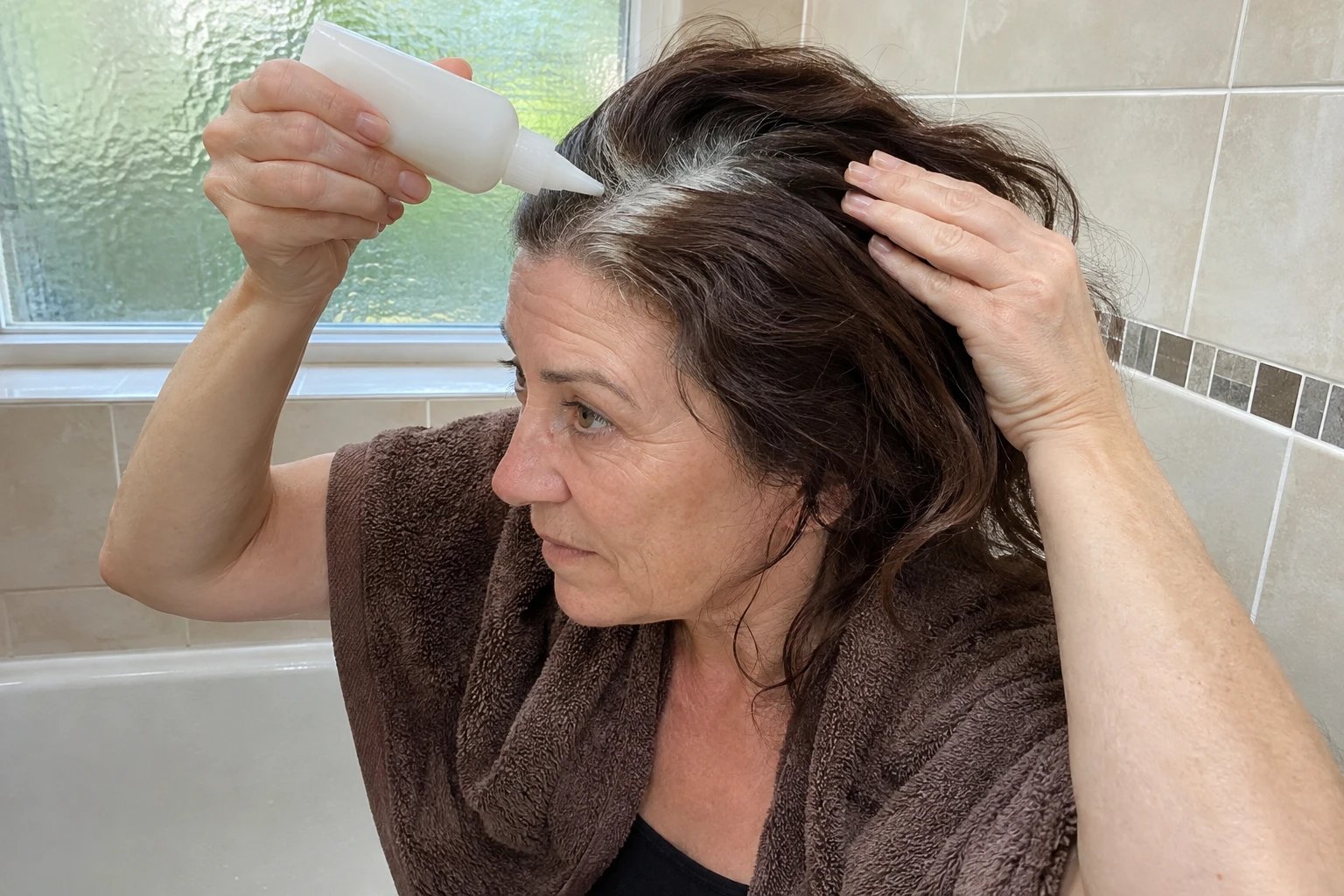
If you do it, the earliest day is day 15. The US Food and Drug Administration says to wait "at least 14 days after bleaching, relaxing, or perming your hair before using dye," and to patch-test every time, even with a product you've used before.
The bigger problem is what root touch-ups at home do to the blend. Paul Cucinello, a celebrity colorist, says it in one line: "Permanent dye will not lighten or lift previously dyed hair."
That means a box shade can only go darker over your highlights, never lighter, and every touch-up lays down a band of solid color your colorist has to work around next time. In my chair, the most common surprise after a box touch-up is warmth nobody asked for.
Keep that up for years and you've built the very thing that makes blending hard. Albert Narcisse, a master colorist in New York, says years of dark all-over color leave "significant color buildup," and blending then "requires a more complex preliminary process." It "is not impossible," he adds. It's just longer, and longer costs more.
What I'd do instead if roots are making you miserable at week 5: ask your colorist about root tapping, a quick dab of gentler semi-permanent color at the part. Katie Collins, a color specialist at Haug London Haus, says it's "quick (it typically takes between 5-10 minutes) and relatively low-maintenance." And it's color your colorist knows is there.
3Stretching visits to 8 to 12 weeks
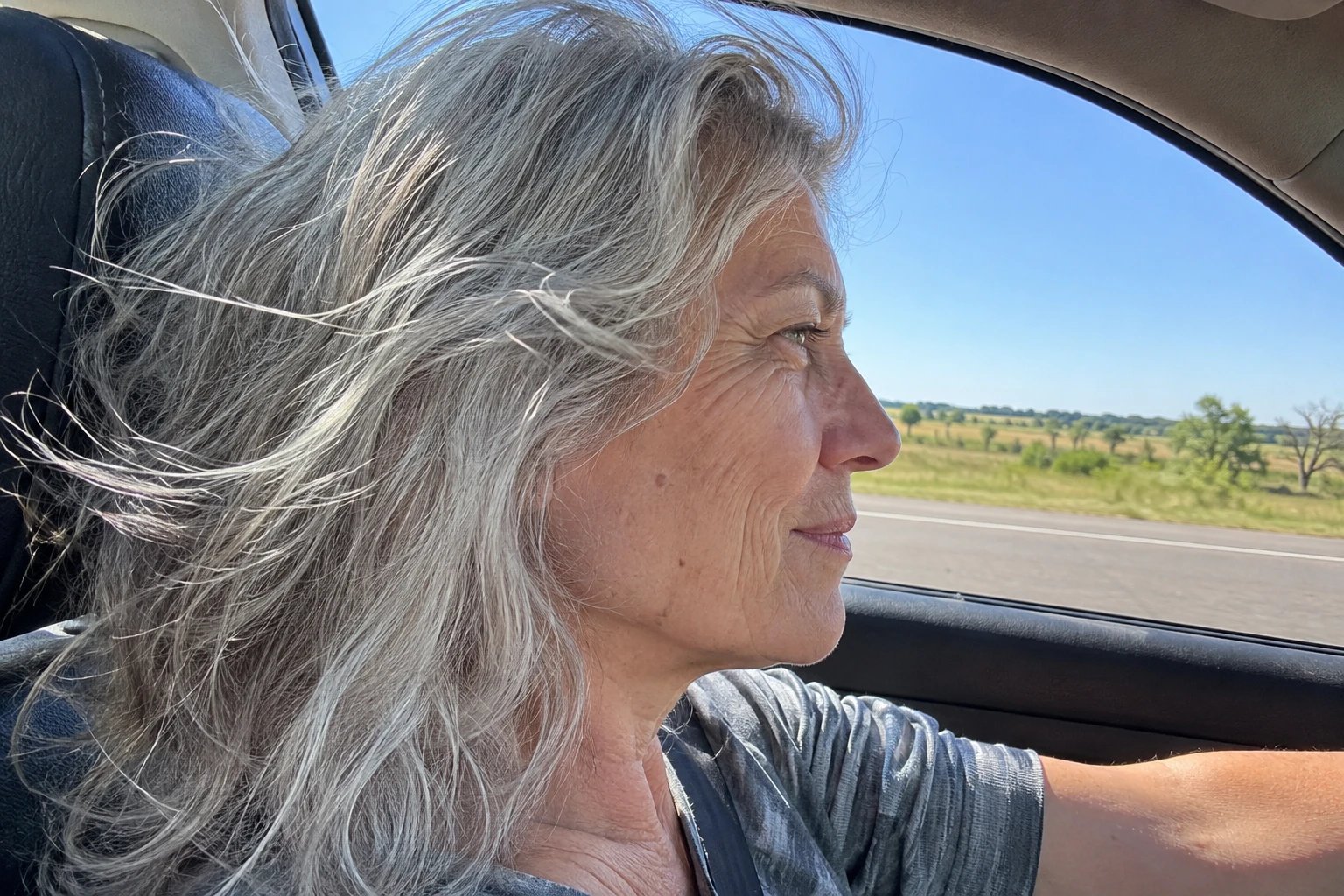
How long can you really go? With gray blending, 8 to 12 weeks between visits is typical. The catch is the first year.
Women on Reddit describe what sent them looking: root touch-ups every two weeks, or every four and still not often enough. Full root color grows out loudly. Salon Bastille notes that with full coverage "a root line usually starts showing somewhere around week four or five," which is why it's booked every four to six weeks, while blending runs "every eight to twelve weeks."
Your base color sets your number. Alyssa Black says natural dirty blondes and lighter-haired clients can often go up to 12 weeks, darker brunettes every 6 to 8. Kadi Lee adds a health reason, advising touch-ups at "eight to 12 weeks rather than the typical six weeks in order to keep up hair health."
Hair grows about half an inch a month, according to the American Academy of Dermatology, as L'Oréal Paris reports. Over 8 to 10 weeks, that's roughly 0.9 to 1.2 inches of new growth, by our estimate. Blending doesn't stop the inch. It makes the inch look like it belongs.
Now the part that rarely comes with the words "low maintenance." Albert Narcisse, writing about the stretch after you stop covering gray, is blunt: "The first three months are the steepest part." Then: "Months four through eight are where things turn." And: "Chin-length hair may be done by month nine or twelve."
So yes, low maintenance, eventually. For the first few months of the grow-out, expect a few more visits and more opinions about your own head than you've had in years.
See more: 17 Festive Hairstyles Over 50 for Holiday Parties →
2What a real session actually costs
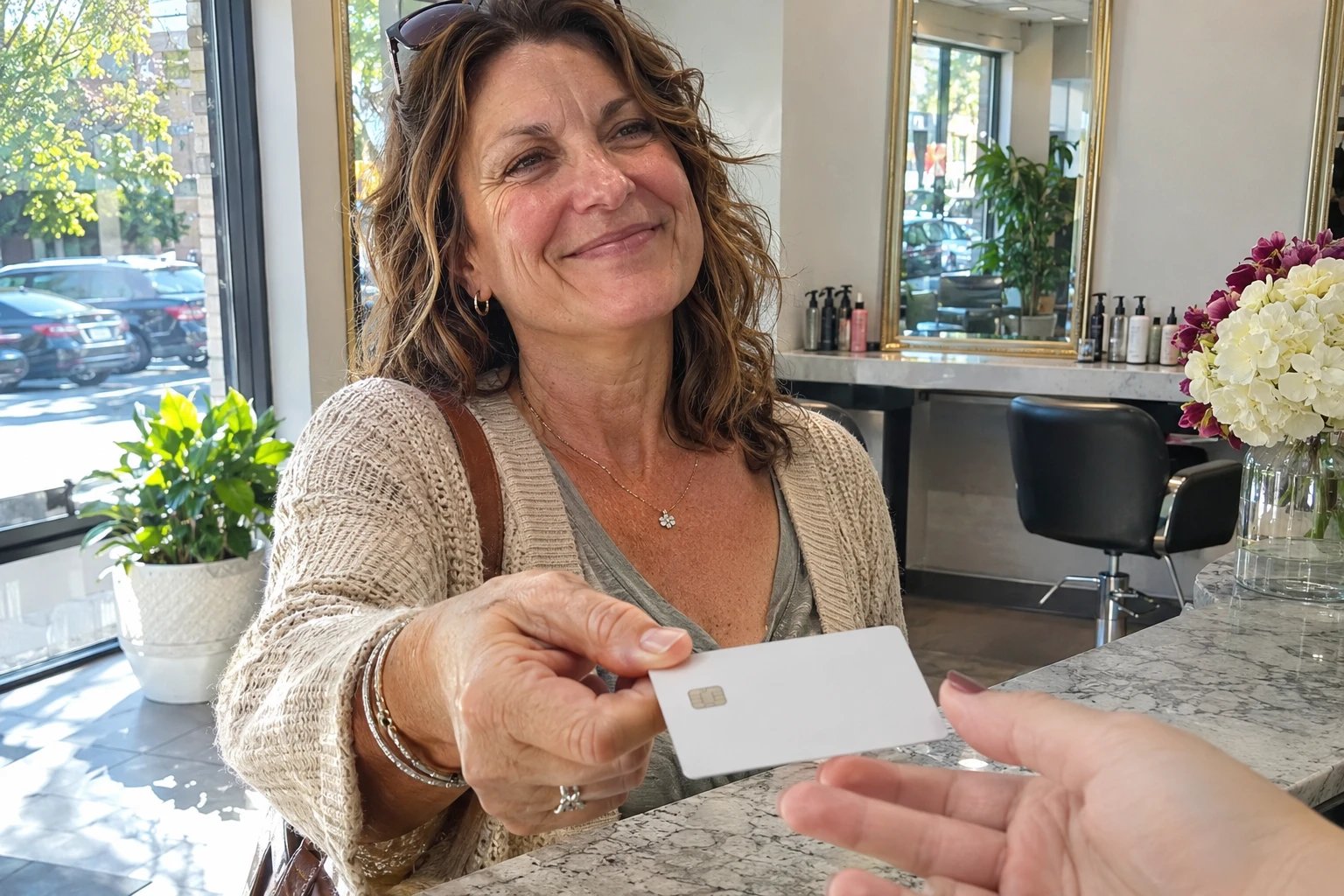
Expect a first visit that costs more and takes longer than anything you've booked for your hair before, then maintenance visits that come around far less often.
| What you pay for | What it can run | Who says so |
|---|---|---|
| A demi-permanent gloss | About $150 | Colorists in Vogue Philippines |
| Mini highlights | About $200 | The same colorists |
| First blending visit | $120 to $250 | Taylor Monroe, national range |
| Maintenance visit | $90 to $180 | Taylor Monroe |
| A year of blending, about 5 visits | $700 to $900 | Taylor Monroe |
| A year of full coverage, 9 to 10 visits | $1,100 to $1,400 | Taylor Monroe |
Those ranges cover an ordinary blending visit. A corrective first session, coming off years of dark color, is a different bill.
That's where hourly pricing surprises people. Leesa Lee prices by the length of the appointment: $440 for 3.5 hours, $875 for 7, and up to $1,125 for a 9-hour full transition, about $125 an hour by our estimate. She also warns that a full gray transition "may take several months to over a year."
Women in r/AskWomenOver60 say the cost and the hours put them off, or nearly did. I understand. But look at the yearly rows again. The big bill comes first, and the savings come after.
When you call, ask two things: do you charge by the service or by the hour, and how long should my first visit take?
1Deciding gray blending isn't right for you
"I'm not ready."
I hear that sentence in my chair as often as any other, and I've stopped trying to talk anyone out of it. Women say it in r/AskWomenOver60 and on TikTok too: they aren't ready for visible gray, they think it looks bad on them, they worry it will make them look old. Some keep highlighting. Some plan to wait.
Justin Hickox, a stylist who says he has done hair professionally for 30 years, tells the story of a client who kept being startled by her own gray and chose to stay close to her natural color instead. His advice for anyone at that fork: there's no right or wrong answer, only what matters most to you about your color right now.
That last part, right now, is what people skip. Saying no to gray blending this year doesn't mean no forever. I've had clients come back to the idea years later, once the gray had filled in and blending stopped feeling like surrender.
If you're on the fence, ask yourself three things:
- When you catch sight of your gray, do you feel curious, or caught?
- Would a soft halo at week 6 bother you less than a hard stripe at week 3?
- Would you rather pay for a long first visit now, or keep paying for the root color you already know?
If you answered "caught," "no" and "the color I know," keep covering, and book that root color without a scrap of guilt. Choosing what you want is the opposite of giving up.
And if your answers went the other way, you'd be in good company. Plenty of women who stopped covering their gray say they get more compliments on their hair now than they did when they colored it.
The bottom line
Roots were never the whole problem. The calendar was: a life booked around a stripe that came back every three or four weeks.
Gray blending swaps that calendar for a slower one, and it asks for something up front: a long first visit, a bigger bill, and a few odd months while the old color and the new one sort themselves out.
Before you book, open your phone's calendar and count your root appointments from the past year. Then decide what you'd do with half of those afternoons back.
Up next
17 Hair Colors Over 50 That Take Years Off
Seventeen shades, each with who it suits, how the roots grow out and how many salon visits a year it really takes, plus an honest look at going silver.
Read the list →
Reader quiz
Did you catch the details?
5 questions from this article. Finish them all to unlock the editor's bonus tip.
According to the article, how much darker than your natural shade should lowlights be?
Questions people also ask
How much does gray blending cost?
A gloss runs around $150 and a round of mini highlights about $200, according to colorists quoted by Vogue Philippines. Taylor Monroe gives national ranges of $120 to $250 for a first visit and $90 to $180 for maintenance. A corrective first session billed by the hour can cost far more: one Austin colorist charges $440 for 3.5 hours, up to $1,125 for nine.
How many appointments does gray blending take?
There's no fixed number, because it depends on your base color and how much old color you have. For a deep brunette, Taylor Monroe expects two to three sessions spaced 6 to 8 weeks apart. Stylist Beth Younkin says the first visit "can create a noticeable shift, while later appointments soften and balance the overall look."
How long can I go between gray blending appointments?
Usually 8 to 12 weeks, according to Kadi Lee and Salon Bastille. Lighter bases can often stretch to 12 weeks, while darker brunettes are closer to 6 to 8, says Alyssa Black. Full root color, by comparison, usually shows a line around week four or five.
Will gray blending damage my hair?
Any lightening does some damage, and the American Academy of Dermatology says lightening more than three shades takes stronger peroxide and causes more of it. That's why colorists favor fine pieces and, on darker bases, lower-volume developer, working in stages and a bond builder. Spacing visits further apart helps too.
Can I use box dye on my roots between highlight appointments?
You can, but the US Food and Drug Administration says to wait at least 14 days after any bleaching and to patch-test every time. Permanent box dye won't lighten hair that's already colored, so it can only darken your highlights. Years of it build up color that makes later blending more complex.
What colors do not look good with gray hair?
Warm, golden and mahogany lowlights tend to look brassy, dull and uneven against gray, according to Wella and Madison Reed. Cool, ash or neutral tones blend more easily. Warm highlights such as honey or caramel can still flatter warm skin, but they fade faster on porous gray hair.
Did any of these feel familiar?
Know someone who needs this?
 Prime Journal · Free printable
The Closet Fit and Color Checklist
- A clearer view of colors beside your face.
- Clothes that pass the sitting and walking test.
- Shoes and repairs checked before anything gets replaced.

Free printable: The Closet Fit and Color Checklist. Enter your email and it is yours.
Sources cited in this article
This article links to 35 outside sources, listed here so you can read them yourself.
- To allow people to place highlights anywhere they wanted www.tricociuniversity.edu/beauty-blog/the-history-of-highlights-and-lowlights
- Explains why uk.news.yahoo.com/babylights-vs-highlights-experts-explain-210235919.html
- Filmed herself highlighting her own mother www.youtube.com/watch?v=-E92CwjuIbM
- Every eight to twelve weeks www.salonbastille.com/blog/gray-blending-vs-full-coverage
- Works to exactly that map ca.style.yahoo.com/5-modern-ways-highlight-hair-124500315.html
- Calls it her best tip www.foxnews.com/lifestyle/going-gray-heres-what-to-do
- Wella's rule us.wella.professionalstore.com/en-US/blog/hair-color/lowlights-for-gray-hair
- Makes it even simpler www.aol.com/lowlights-best-way-slowly-embrace-110000852.html
- Advises lowlights www.madison-reed.com/blog/blending-gray-hair-with-highlights-and-lowlights
- Says so in so many words shopping.yahoo.com/beauty/hair/articles/best-colorist-approved-shades-gray-1…
- A state-board exam guide for cosmetologists www.salonexam.com/learn/hair-color-levels-and-tones
- Choose a dye within three shades of your natural color www.aad.org/public/everyday-care/hair-scalp-care/hair/coloring-perming-tips
- Suggests staying taylormonroesf.com/post/going-blonde-to-hide-gray-does-it-actually-work
- Says www.aol.com/articles/expert-guide-gray-blending-latest-194600809.html
- Shade chart www.lorealparisusa.com/beauty-magazine/hair-color/gray-hair-coverage/blendin…
- What the trade can be www.tiktok.com/@jackmartincolorist/video/7689958270714367245
- Warns www.youtube.com/watch?v=lyNRti8s_6M
- Mixes a pair of Schwarzkopf toners or a trio from Redken www.modernsalon.com/articles/the-art-of-gray-blending-one-stylists-approach-…
- "a toner, not a cleansing or moisturizing product," www.healthline.com/health/what-does-purple-shampoo-do
- Clairol Shimmer Lights Conditioning Purple Shampoo for Blonde & Silver www.sallybeauty.com/hair-care/shop-by-product/shampoo/color-protection-shamp…
- Quoted by Vogue Philippines vogue.ph/beauty/how-gray-blending-lets-you-embrace-your-silver-strands
- "is sheer. It won't offer full, opaque coverage for gray hair like permanent dye will." www.ulta.com/discover/beauty-education/what-is-hair-gloss
- Shows how it's done www.youtube.com/watch?v=gIKgSUzcJtE
- Spent six and a half hours on one corrective session www.leesaleehair.com/gray-transition
- Colors the roots a lighter shade that covers only about half the gray www.youtube.com/watch?v=Up9PPYTkrjs
- Says to wait www.fda.gov/cosmetics/cosmetic-products/hair-dyes
- Says it in one line www.foxnews.com/lifestyle/the-home-hair-color-spectrum-decoded
- Says www.albertcolor.com/blog/who-gray-blending-is-not-for
- Describe what sent them looking www.reddit.com/comments/1nwuqid
- As L'Oréal Paris reports www.lorealparisusa.com/beauty-magazine/hair-care/all-hair-types/facts-about-…
- Is blunt www.albertcolor.com/blog/the-in-between-phase-stopping-gray-hair-color
- Taylor Monroe taylormonroesf.com/post/what-gray-blending-actually-costs-and-why-its-cheape…
- Say the cost and the hours put them off www.reddit.com/comments/1rrufi9
- On TikTok www.tiktok.com/@nydiathemortgageteacher/video/7469565306449562922
- Tells the story of a client www.youtube.com/watch?v=b1Zq6JCDIQs

Irina Byalik
Style Editor
Irina Byalik is a hairdresser and the owner of New Image Hair Salon in East Brunswick, New Jersey, with more than 20 years of experience. She came to the United States from Ukraine.
More from Irina Byalik