











23 Signs Your Dog Knows Something Is Wrong Before You Do
A missed leash cue or a nose pressed against your knee gives you a reason to check the dog, the house, and yourself.
By Ruth Ellison, Family Editor
Updated · 12 min read
- Written by our family editor
- Cited 7 sources
- How we review
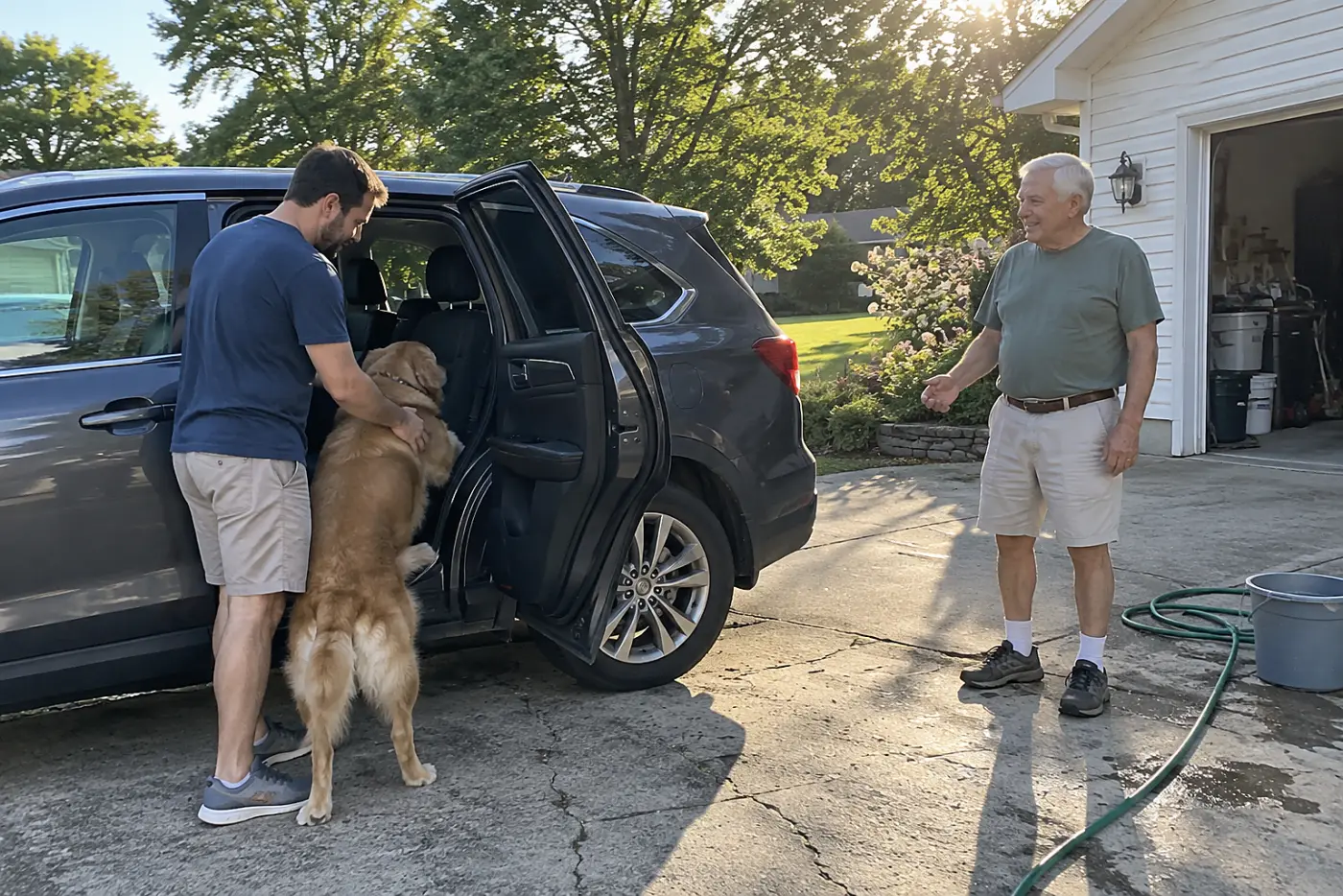
You reach for the leash, and he stays by the door instead of spinning in circles. Five minutes ago, he was begging to go out. Now his eyes keep returning to your face.
It’s tempting to give that look a grand meaning. Dogs notice smells, sounds, movements, and habits we miss. They have off days of their own, too. You don’t need to decide whether he knew something was wrong. Start with what changed, what else is happening, and whose body needs attention first.
23His usual greeting stops at the door
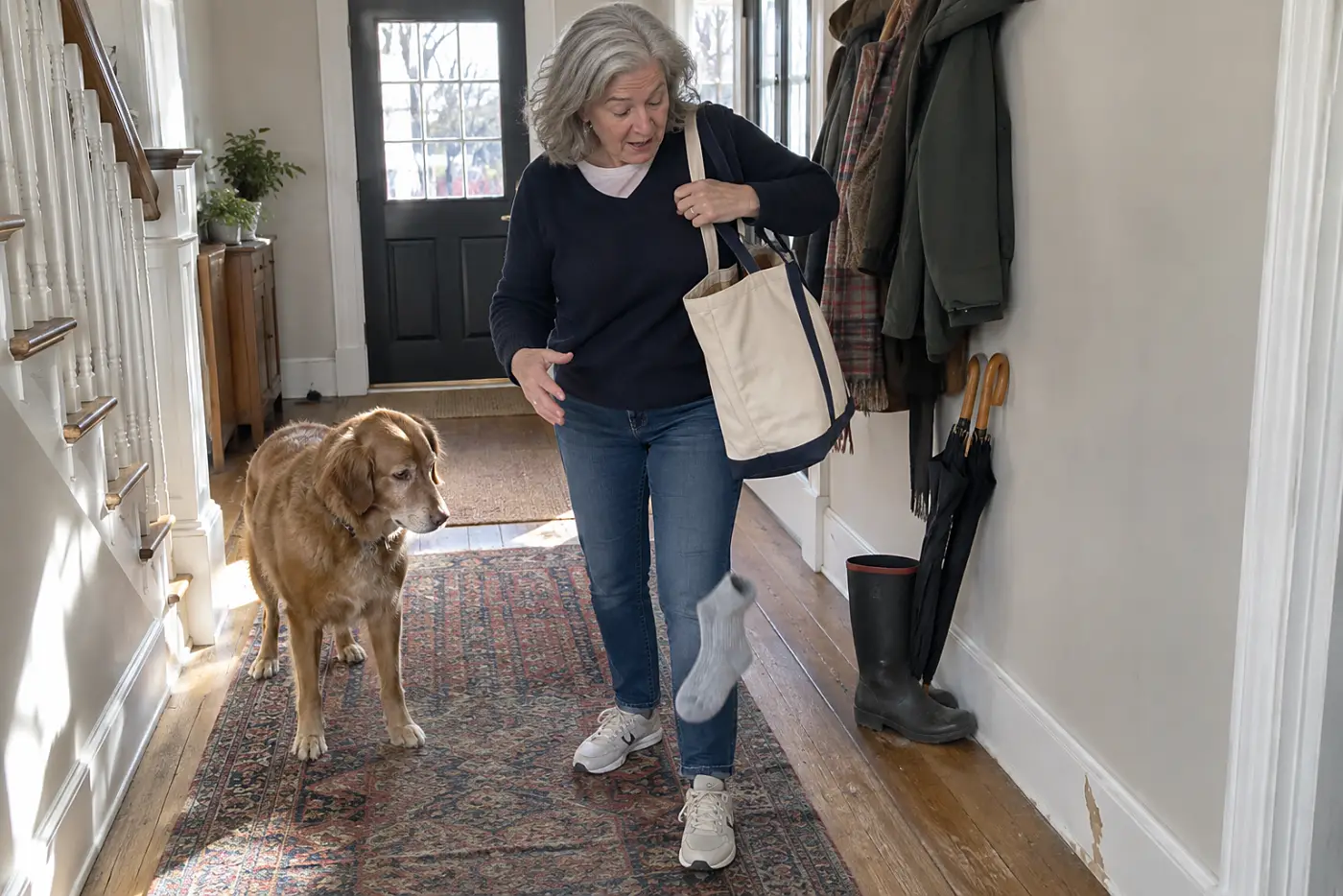
He normally meets you with a toy. Today he watches from the hall. Before turning that moment into a warning about yourself, check him: Does he rise easily? Will he take a treat? Is he breathing normally?
A dog who skips a familiar greeting has given you a change to investigate, not a diagnosis. If he seems well, think back through your arrival. Did you come home upset, carrying an unfamiliar scent, or moving differently? Your greeting changed, too, if you had to lean on the doorframe.
22A nose pressed against your knee
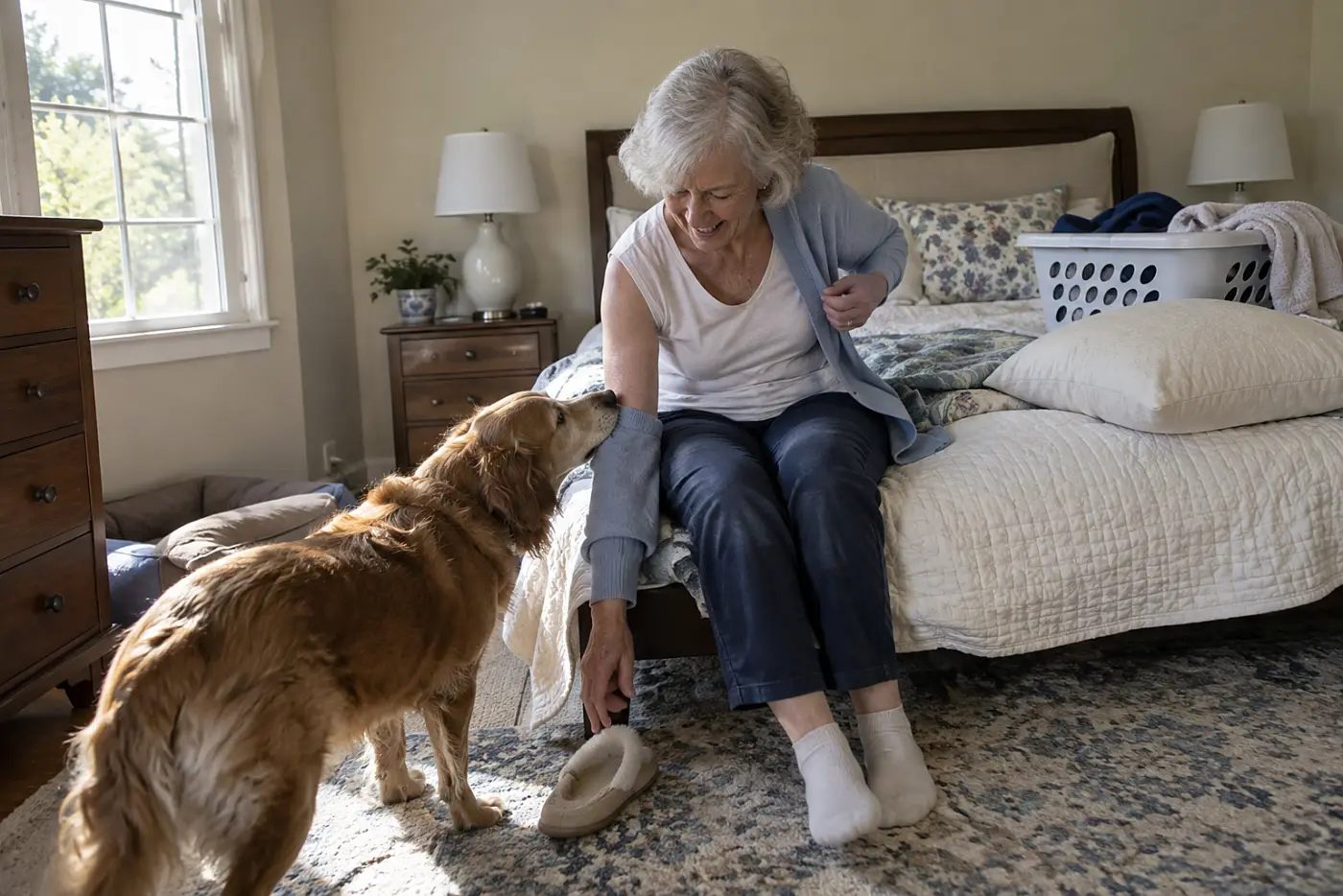
You’re sitting on the bed when his nose lands on your knee and stays there. He knows the smell and feel of the person who shares his home.
Notice whether he returns to the same place after you move. Then look at the knee yourself. Swelling, warmth, or new pain deserves your attention. His nose alone cannot tell you what caused it.
If he backs away when you touch him, check his comfort as well. The useful question is what changed on either side of that touch. There’s no need to choose an explanation before you’ve looked.
21The breakfast bowl left untouched
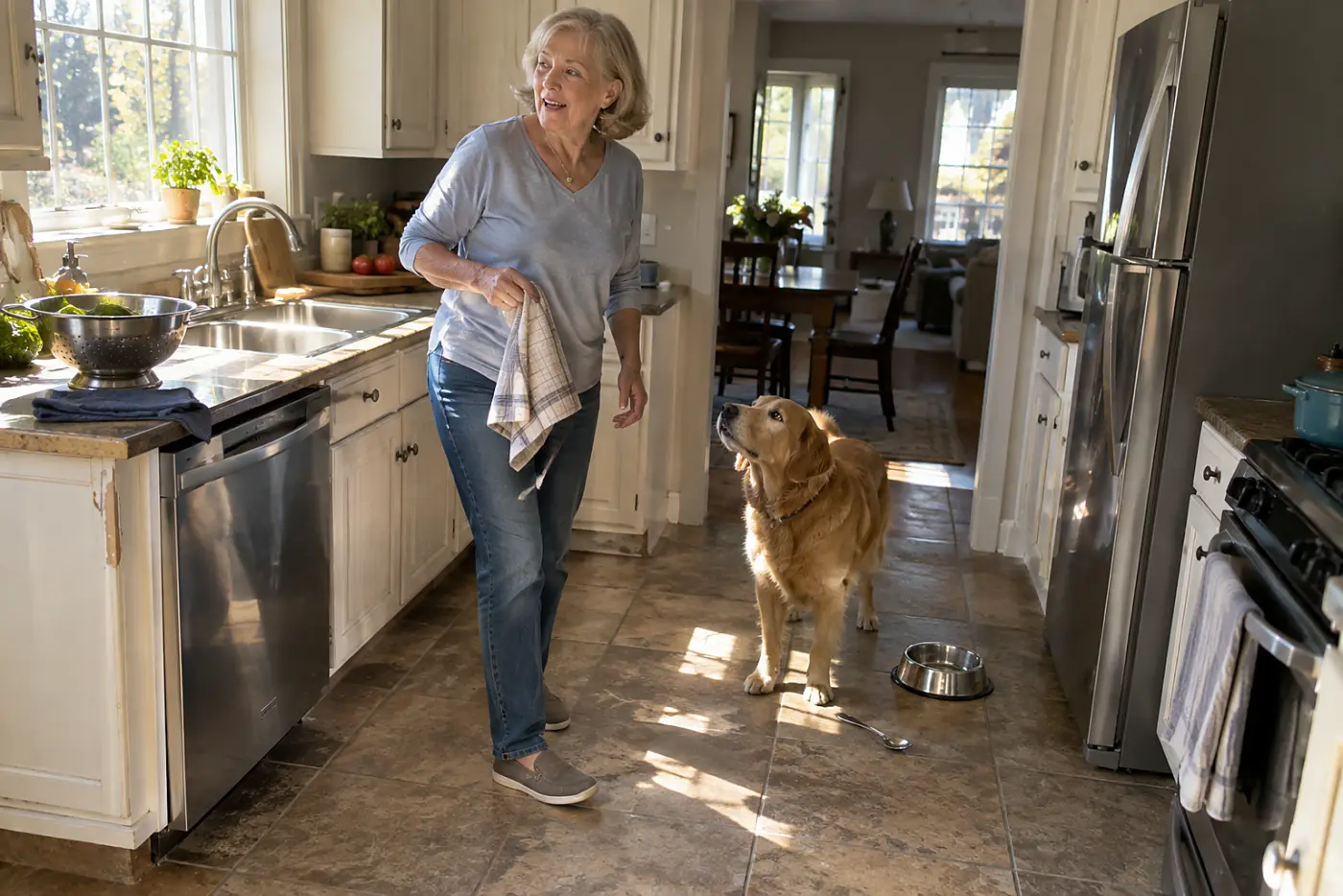
Breakfast is usually noisy: the bowl skids, his nails click, and he checks for seconds. Today he follows you to the coffee maker without eating.
Start with the dog. Skipping food, especially with vomiting, diarrhea, a swollen belly, or low energy, calls for a veterinarian. Don’t spend the morning wondering what he sensed in you while he’s the one who needs care.
If he eats once you sit down, look at the routine around the bowl. Were you late getting up? Did you forget his usual cue? A change in your morning is something he notices before you name it.
See more: 24 Things That Change When Your Cat Becomes a Senior: How Old Is Considered a Senior Cat? →
20His nose returns to one spot
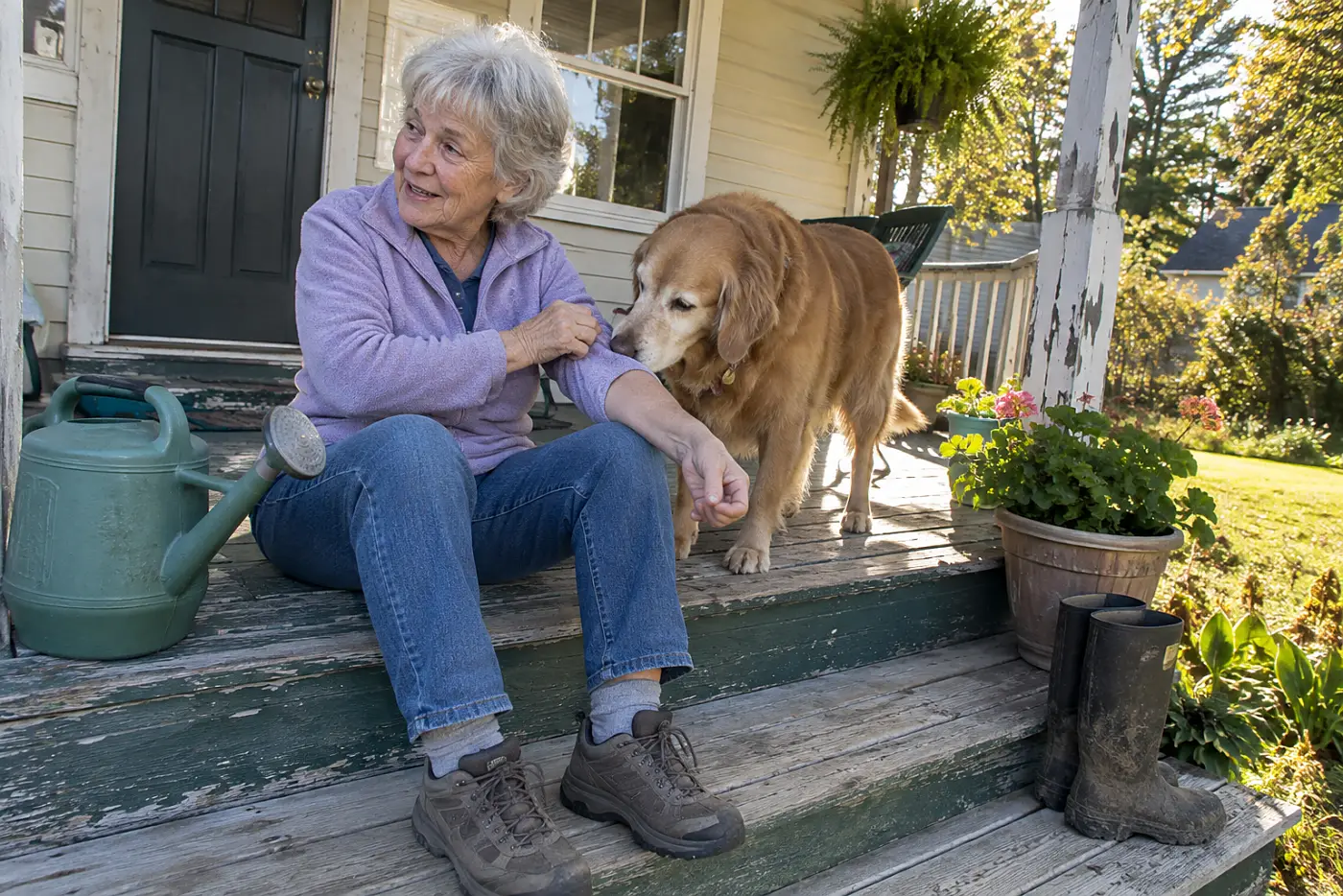
One sniff passes. A return visit gets your attention.
Dogs have a powerful sense of smell. A change in soap, medication, sweat, or a healing wound gives him something new to investigate. Watch whether he returns to the same spot after you move away.
Look at the area in good light. If you find a new skin change or a wound that isn’t healing, bring it up with a clinician. Don’t let a dog’s interest stand in for an exam. If there’s nothing to see, remember the spot and watch for a change in your own symptoms.
19The phone alarm he hears first
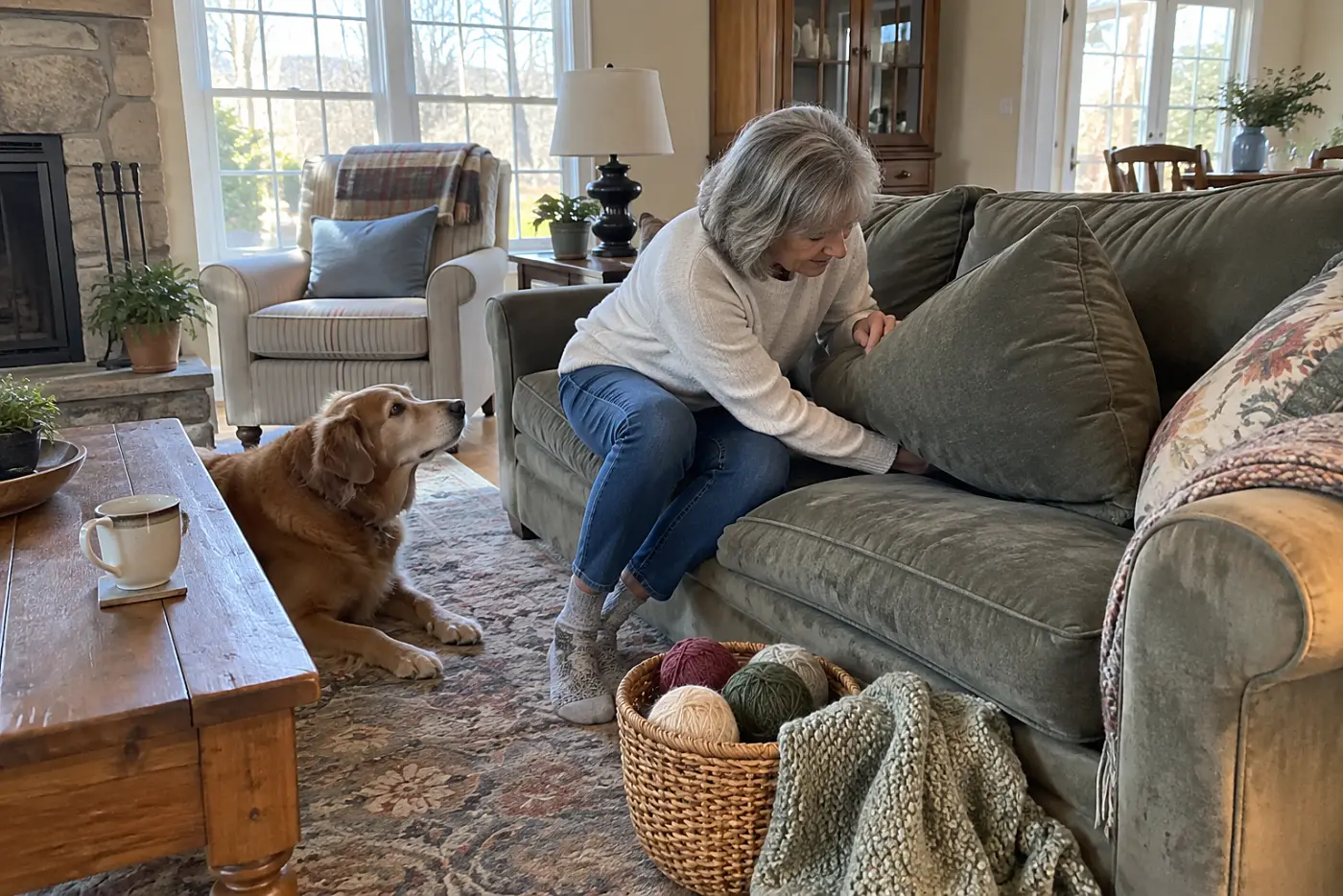
Your phone vibrates against the couch cushion. He lifts his head before you hear the ringtone. From there, he follows you as you cross the room to answer.
That sequence matters. He reacted to a sound, then to you. It feels as though he knew the call would be bad when the news is bad. But he had no way to know who was on the line.
The useful detail is how quickly he reads your response. If you sit down hard or stop speaking, he notices. Let him stay close if that helps. Give yourself a moment before making the next call.
18A pause beside the car door
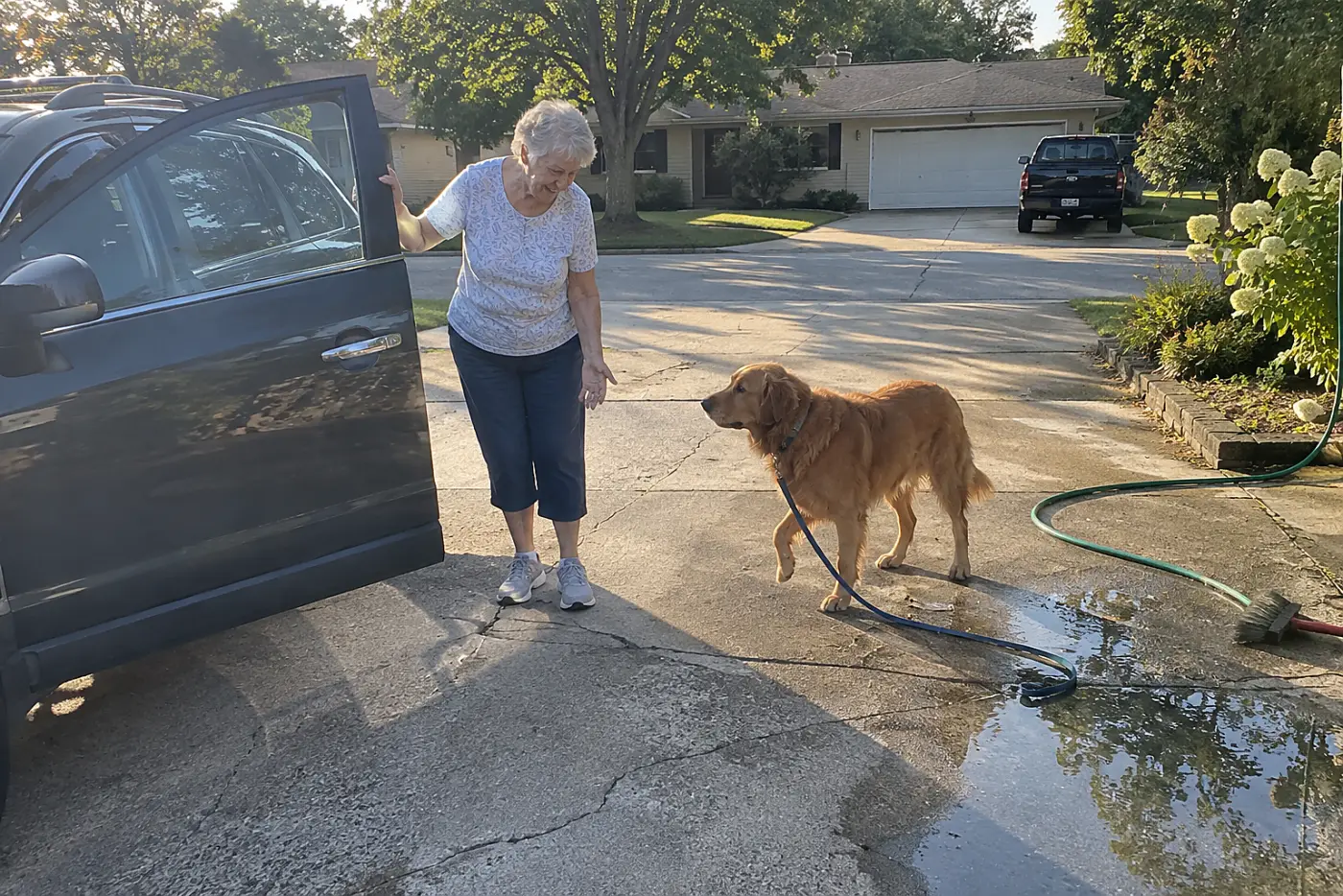
The car door is open, but he puts his front paws up and backs away. Check the seat, the pavement, and how he’s standing.
A hot surface, a sore leg, or trouble jumping gives him a reason to hesitate. You don’t need to settle which one from the driveway. Help him in without forcing the jump, and watch how he moves when he gets out.
If you’re the one holding the door for balance, notice that, too. His pause gives both of you a chance to stop before the next step.
17The hallway sound he keeps tracking
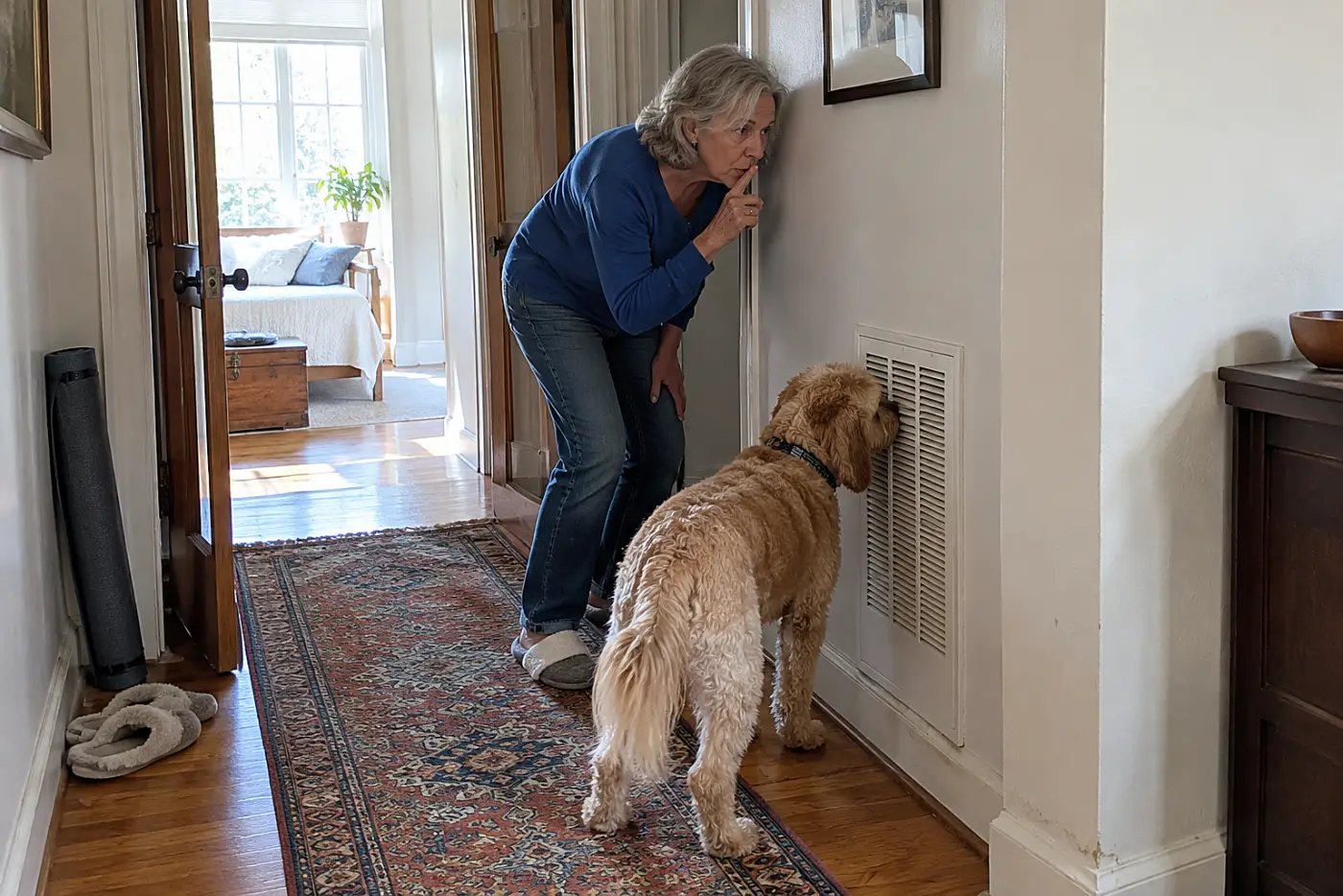
You hear nothing. He walks to the hallway, stops, and tilts his head toward a vent.
Turn off the television for one minute. Listen for a smoke alarm chirp, water running where it shouldn’t, or an appliance that sounds different. Dogs hear frequencies beyond the human range, as the American Kennel Club explains. That makes a sound check worthwhile.
If there’s an alarm, smoke, or a gas smell, leave and follow the appropriate emergency steps. If the hall is clear, see whether his attention shifts when the furnace or refrigerator stops. A repeatable sound gives you something concrete to investigate.
16A slower pace on the block
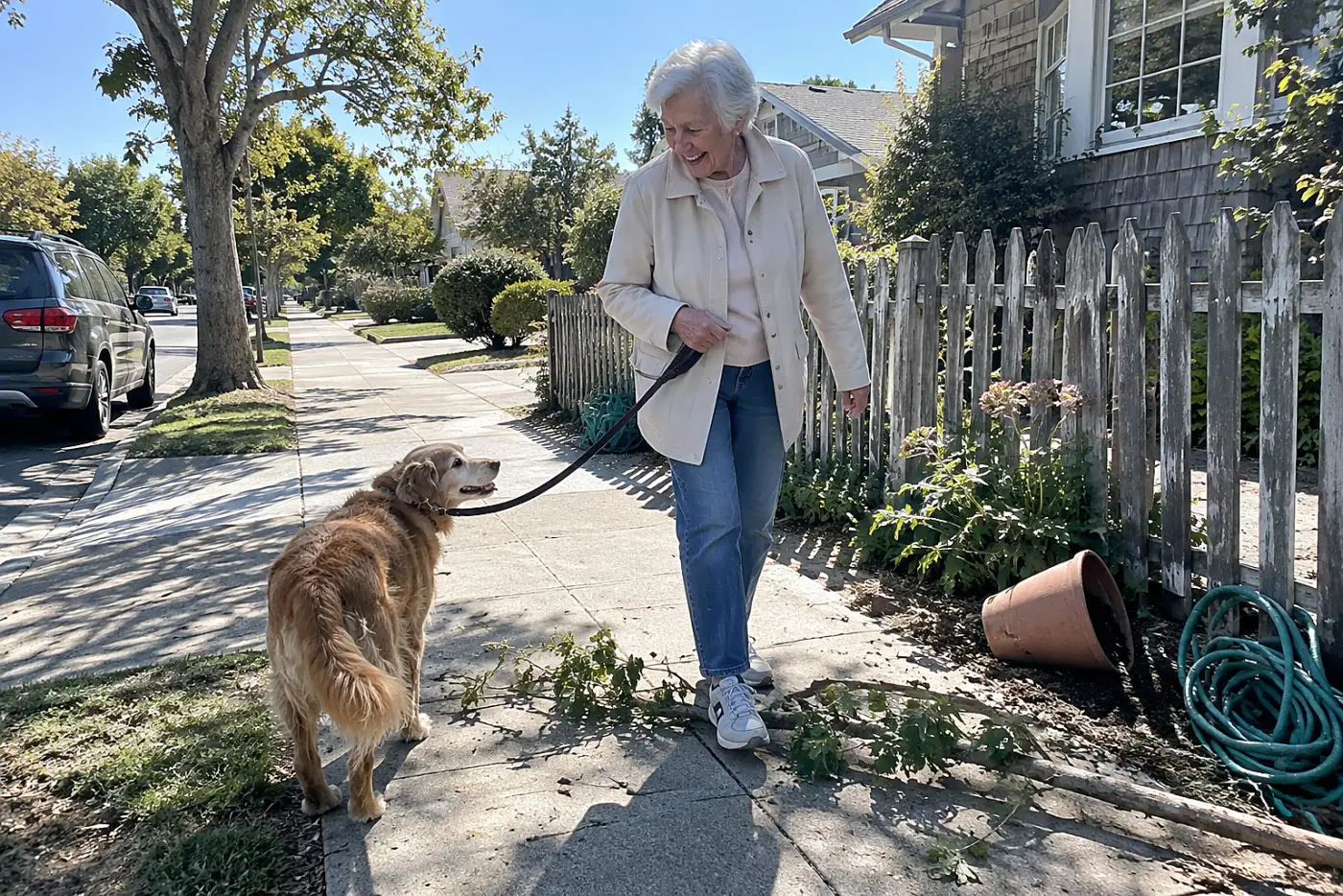
Halfway down the block, he keeps turning toward you. Look at the leash before you look for meaning in his face. Have you shortened it? Are your steps uneven?
Pain and dizziness change the way a person walks. So do tiredness and slippery shoes. If you feel unsteady, head home rather than finishing the route for his sake.
Then watch him walk on level ground. A limp points you toward the dog’s body; a taut leash points you back toward the pace you’re setting. Either observation is more useful than guessing what his glance means.
See more: 28 Ways to Tell When Your Dog Is a Senior, and What Changes →
15His rush to the basement stairs
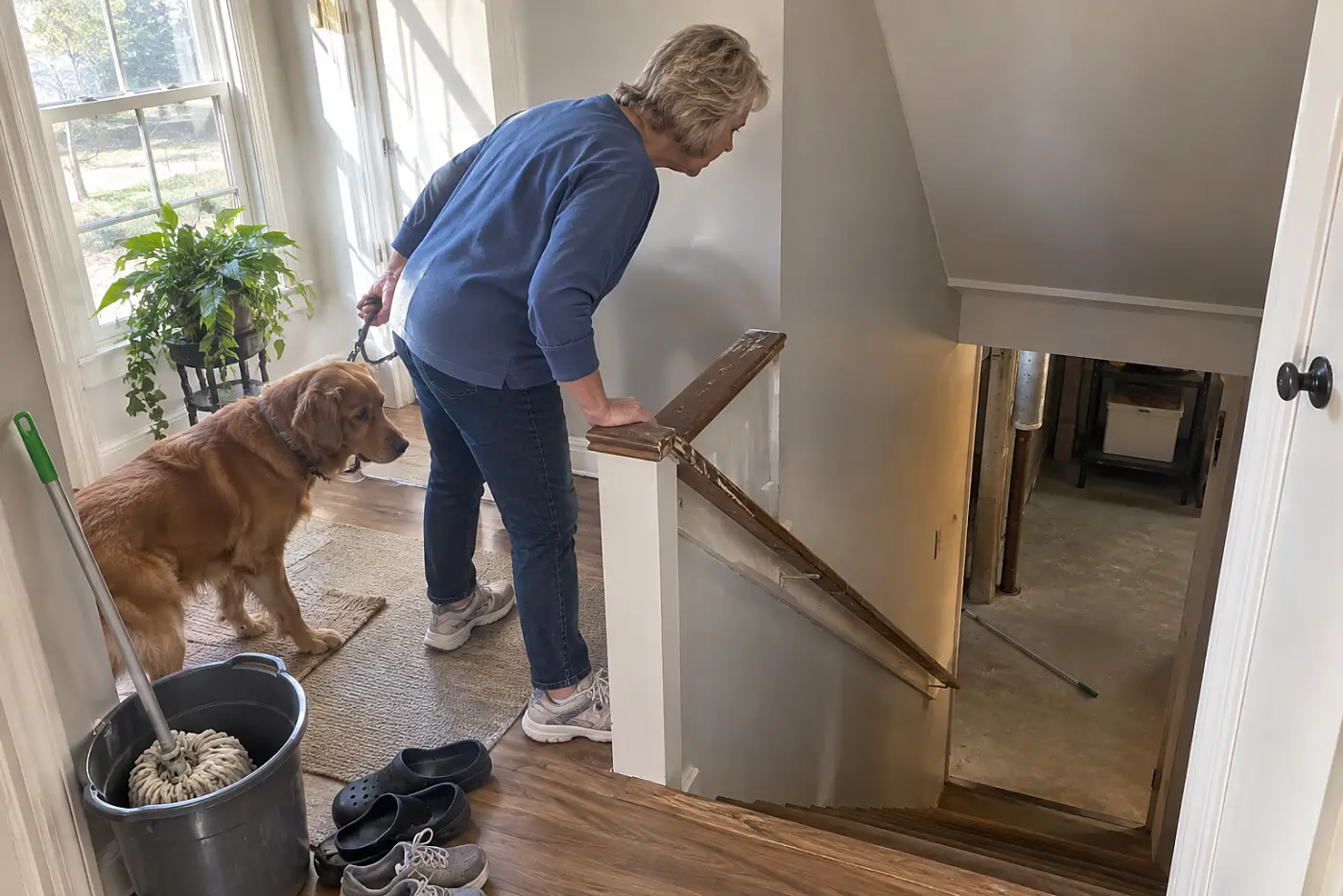
He reaches the basement door before you notice the damp smell. Now there’s a reason to follow, with the light on.
Check the floor near the water heater and laundry hookups. Look for a leak or standing water without stepping into it, especially near electrical equipment. Keep him back from anything wet, sharp, or unknown.
His trip downstairs doesn’t prove he detected a flood. It does give you a place to inspect. If you find water near an outlet or appliance, leave that area alone and call for help. The dog has already done his part by getting your attention.
14A sudden interest in the stove
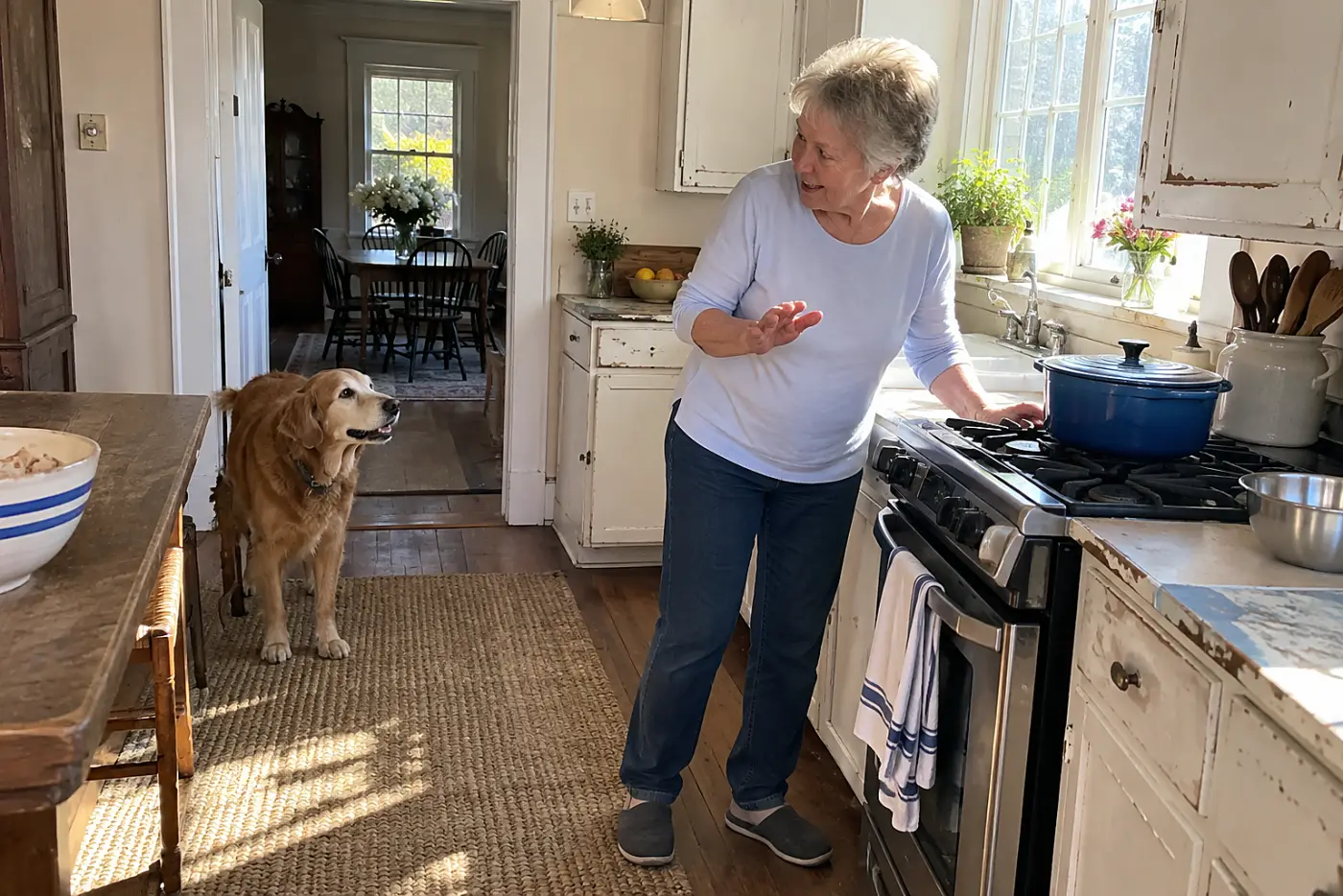
Start with the burners and oven. He’s circling the kitchen while dinner is on, and checking the stove takes less time than guessing why.
If you smell gas, get people and pets outside. Don’t flip switches or hunt for the source indoors. Call the gas utility or emergency services from outside. The American Gas Association is an additional source for natural gas safety information.
If the stove is safe, check what’s within reach of his nose. He may be hoping for dinner, but you’ve ruled out the problem that needed the fastest response.
13The bathroom door he won't leave
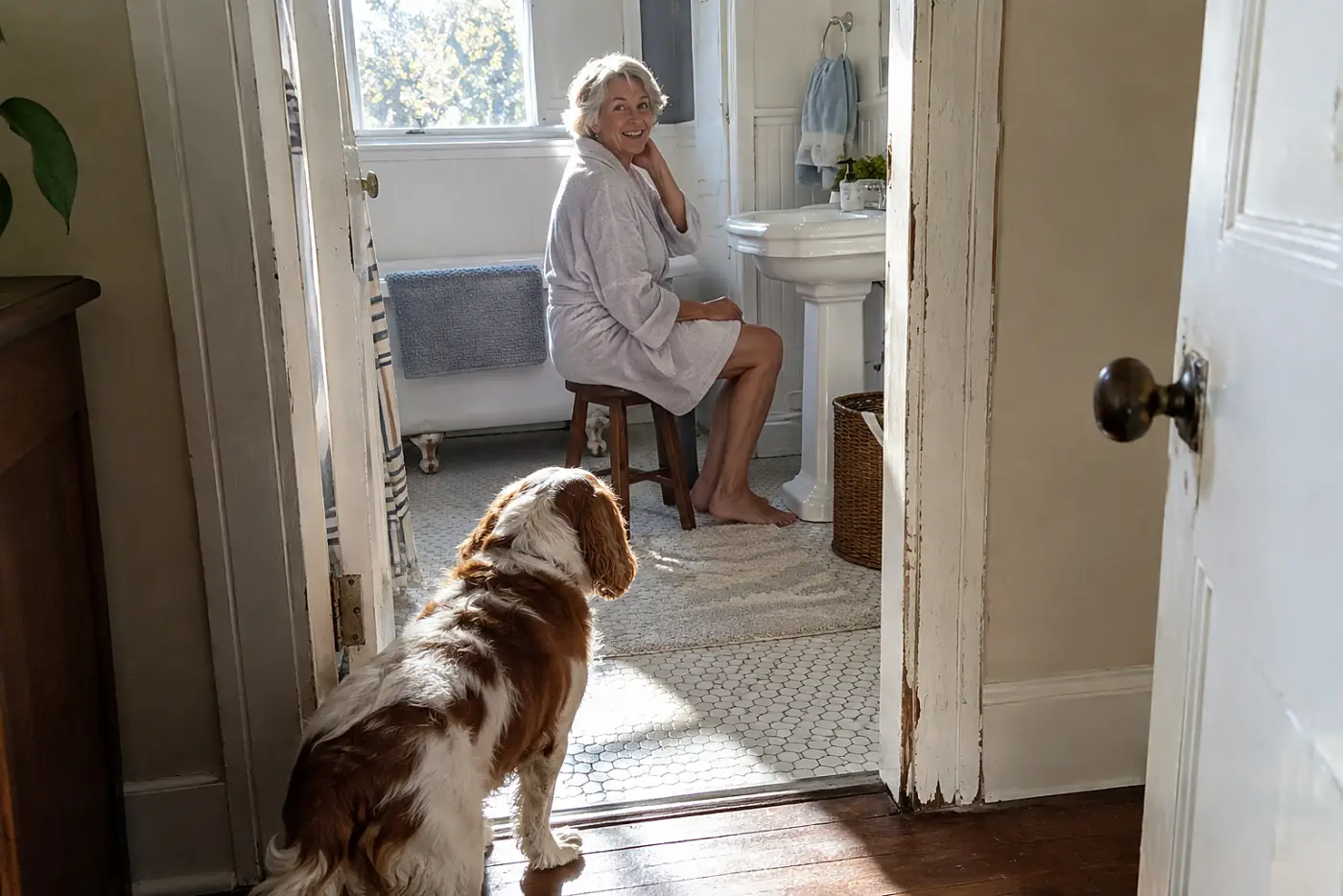
Why is he waiting outside the bathroom when he normally heads back to the couch? Replay the last few minutes. Did you feel faint getting up? Did you grip the sink or stay seated longer than usual?
He has seen you move through this doorway hundreds of times. A change in pace is visible even when you’ve talked yourself into “I’m fine.”
Sit somewhere safe and notice what your body is doing. New chest pain, trouble breathing, fainting, or signs of a stroke call for emergency help. Call 911 rather than waiting to see whether symptoms pass.
The American Stroke Association uses F.A.S.T. to flag face drooping, arm weakness, and speech trouble. The T means it’s time to call. Interpreting the dog can wait.
12His watch on the front gate
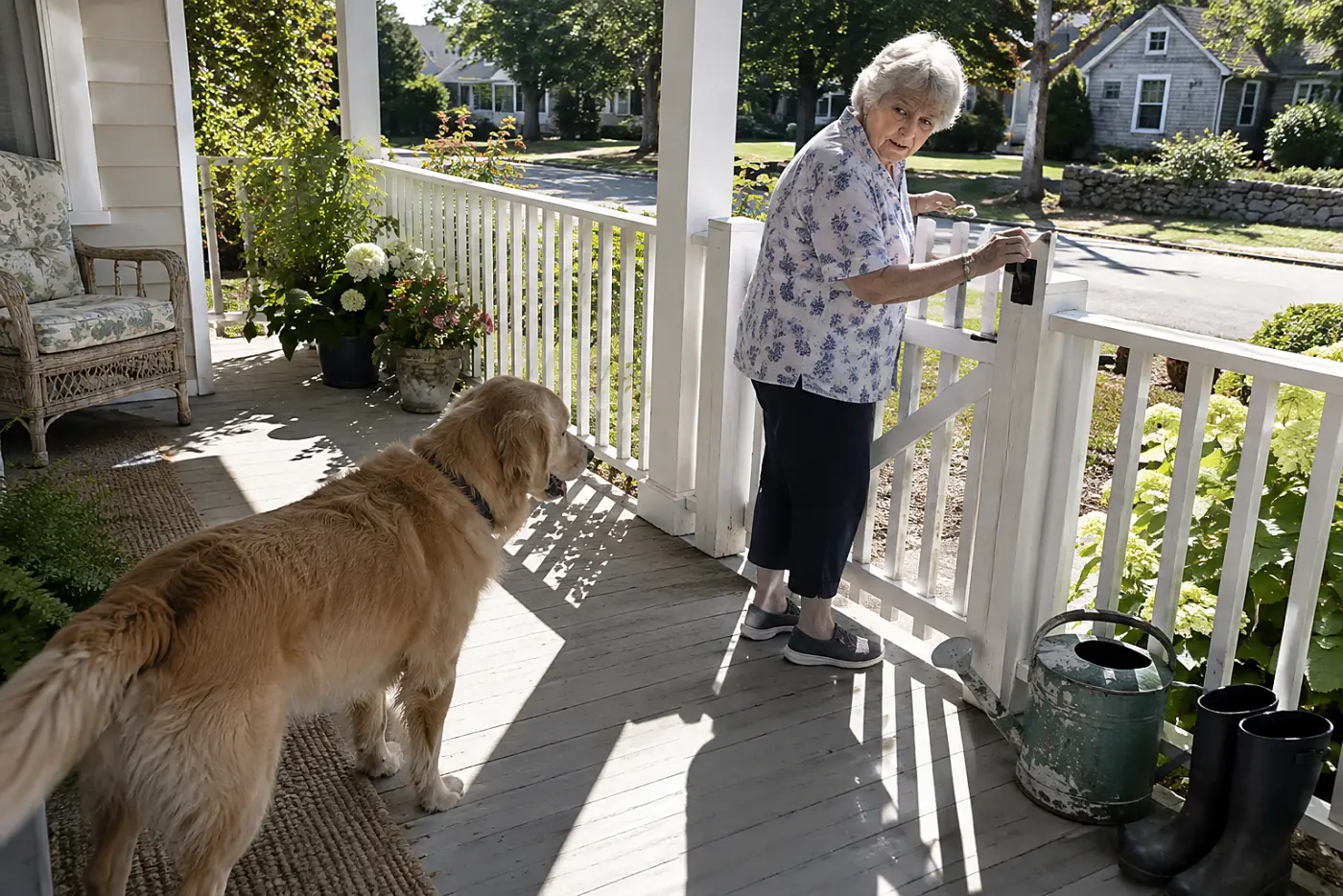
From the porch, he stares at the gate you thought you latched. Go look. A loose latch, an open delivery gate, or someone approaching the walk is worth spotting.
Keep him inside while you check; excitement is a poor substitute for a secure fence. If he’s barking at a visitor, give yourself room to answer the door without holding his collar and the knob at once.
Close the gate before testing the latch from the yard side. If it swings open under your hand, he’s shown you a problem you can fix without deciding why he noticed it first.
11A missed cue for his leash
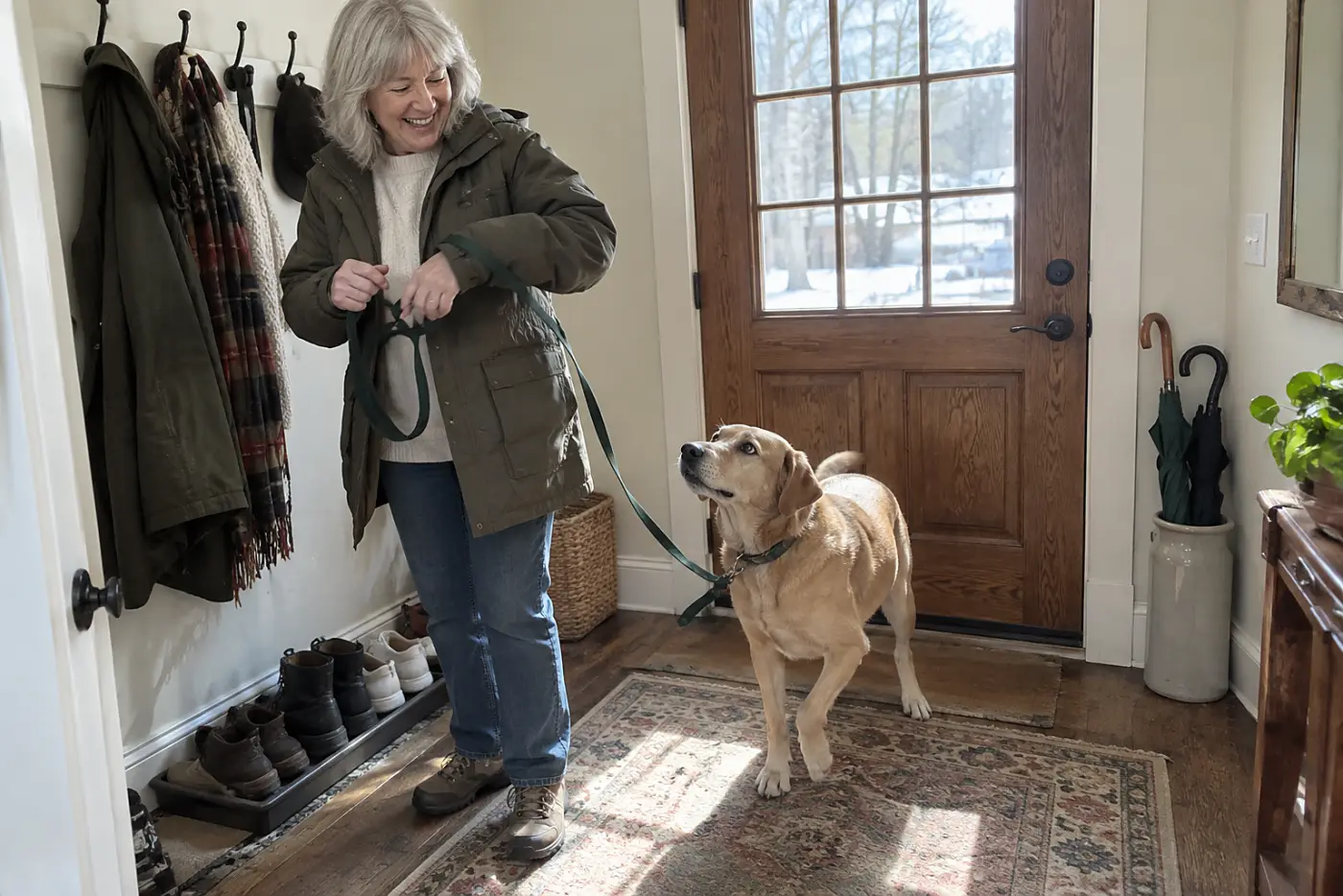
You always say the same words before a walk. Today you pick up the leash but stop halfway through the routine. He waits, staring at the hook.
Perhaps you’re distracted. Perhaps you feel unwell. Either way, his pause shows that something familiar failed to happen. Check your own state before you rush out: Have you eaten? Are you lightheaded? Did you take a medication that makes you sleepy?
Then check the dog’s side of the routine. Does he respond to a simple cue and walk normally? The value here is the break in a shared habit, not a claim that he knows its cause.
10His retreat from the laundry room
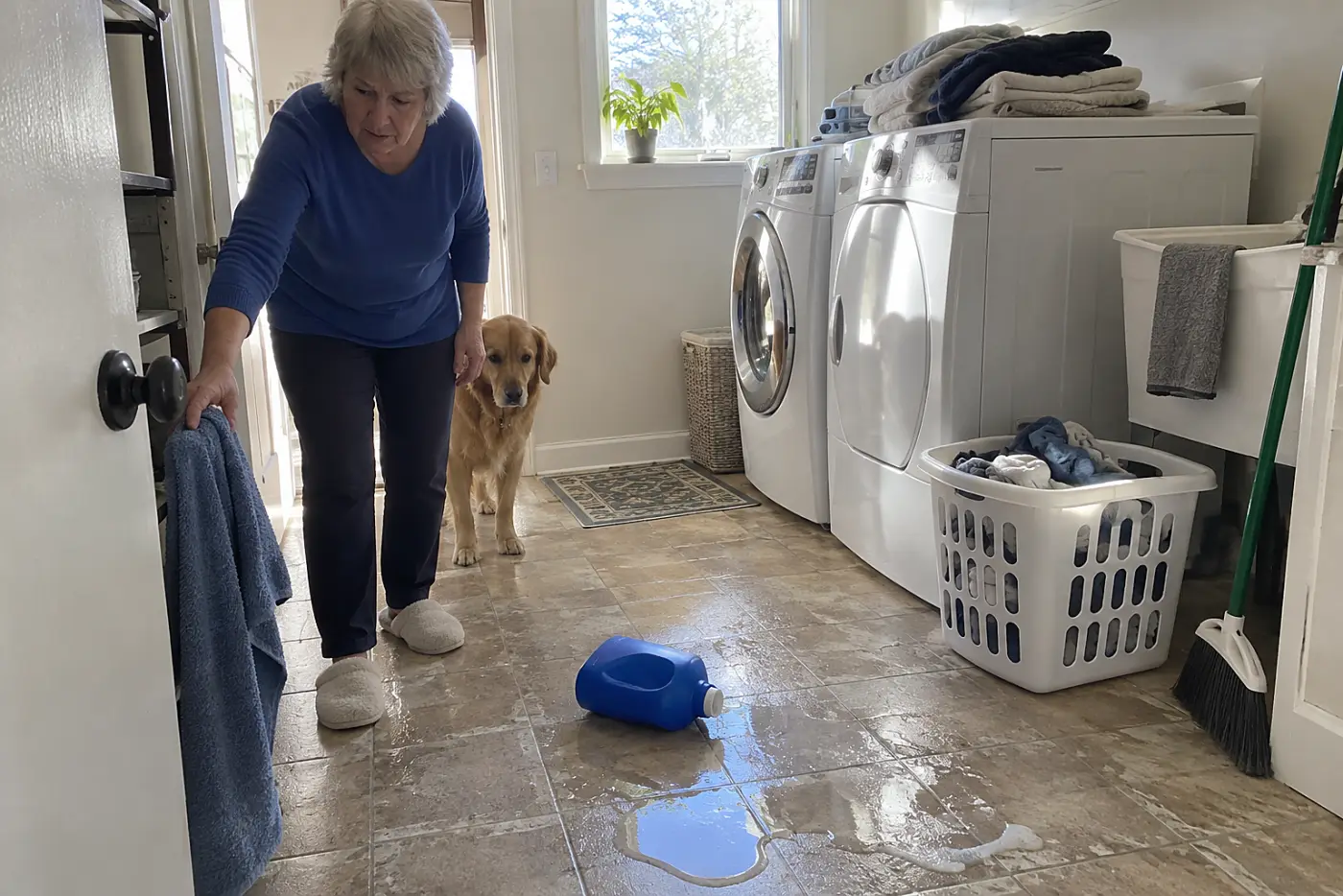
The dog who follows you everywhere stops at the laundry room doorway. Before calling it a mood, look for spilled detergent, a fallen bottle, or a machine making an odd noise.
Keep him out while you check. The ASPCA Animal Poison Control Center has guidance if you suspect exposure to a household product. Save the package so you can tell a veterinarian exactly what was involved.
Don’t wait for him to act sick if you saw him lick or swallow something. Tell the veterinarian what the product was and how the exposure happened.
9The delivery step he refuses
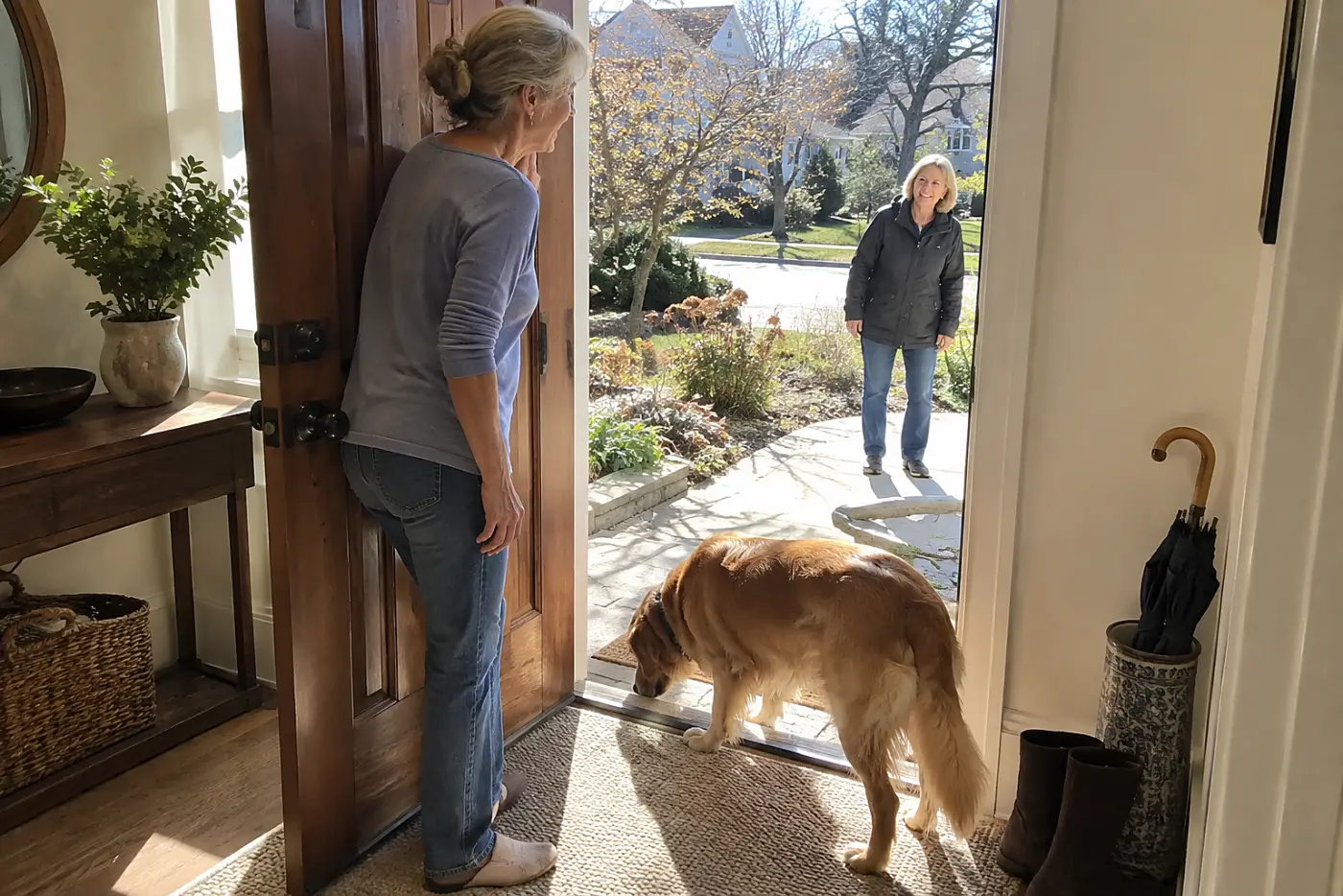
The package is on the porch. Your dog, who likes every delivery, stops at the threshold and sniffs the air.
Pause with him. Check for broken glass, an unfamiliar animal, or a chemical smell before stepping outside. Close the door if a loose dog or wildlife is nearby. He senses the doorstep from closer to the ground, where you haven’t looked yet.
There’s no need to reward him for barking at every box. Once you find the cause, give him space to settle. If you find nothing, bring the package in when you feel safe. His refusal bought you a moment to look first.
8His repeated sniff at your shoe
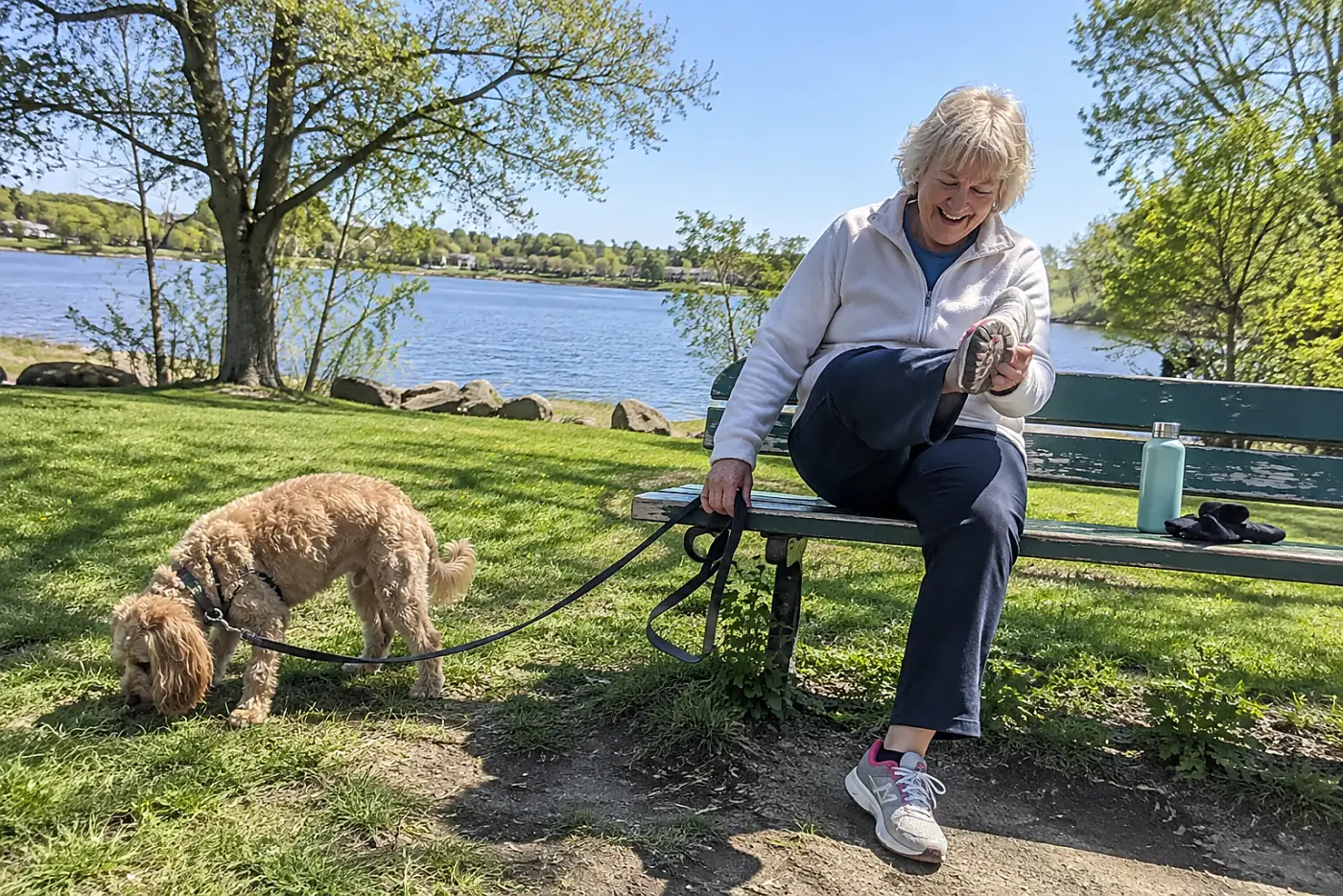
One shoe has his full attention after your walk. Take it off and inspect the sole, the laces, and your foot.
A thorn, spilled substance, or cut gives his nose a target. Compare it with the other shoe. Look beneath the tread, where something stuck against the rubber is easy to miss while you’re standing.
If the foot is numb, swollen, or painful, pay attention even if he wanders away. Wash off an unknown substance rather than letting him investigate it further. His sniff sent you to a place you hadn’t checked.
7His barking at an empty room
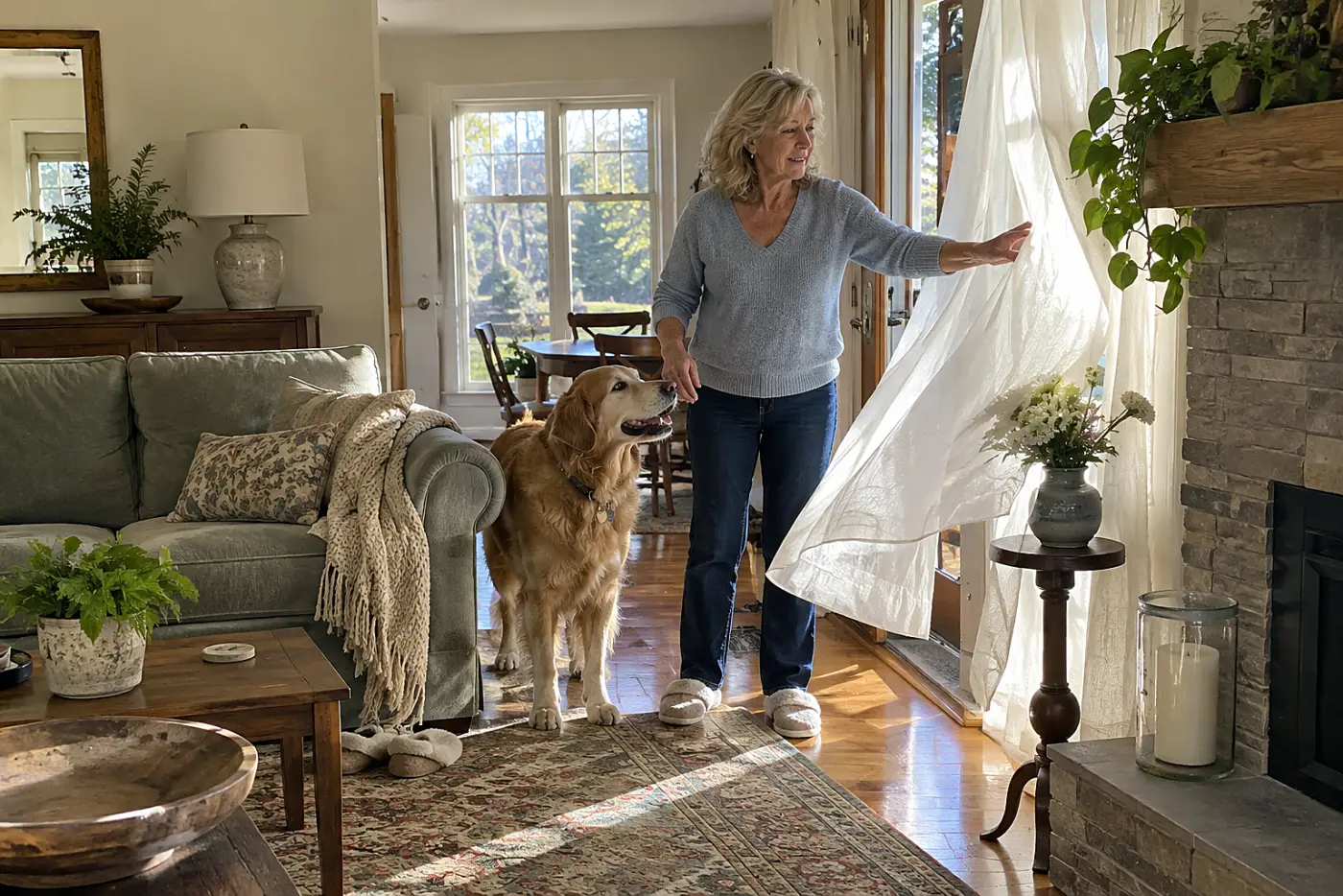
The room isn’t empty to a dog who hears a scratching wall or smells a visitor you haven’t seen. It’s still your job to check safely.
Switch on the light. Look from the doorway for an open window, a fallen object, or signs of an animal. Don’t send him in ahead of you. If you suspect an intruder, leave and call 911 rather than searching the house.
If there’s no immediate danger, note when it happens. Barking that begins whenever a heater starts points toward a sound. Barking with pacing, confusion, or trouble settling points back toward his health. An older dog with new nighttime confusion deserves a veterinary visit.
6The sleeve he won't stop sniffing
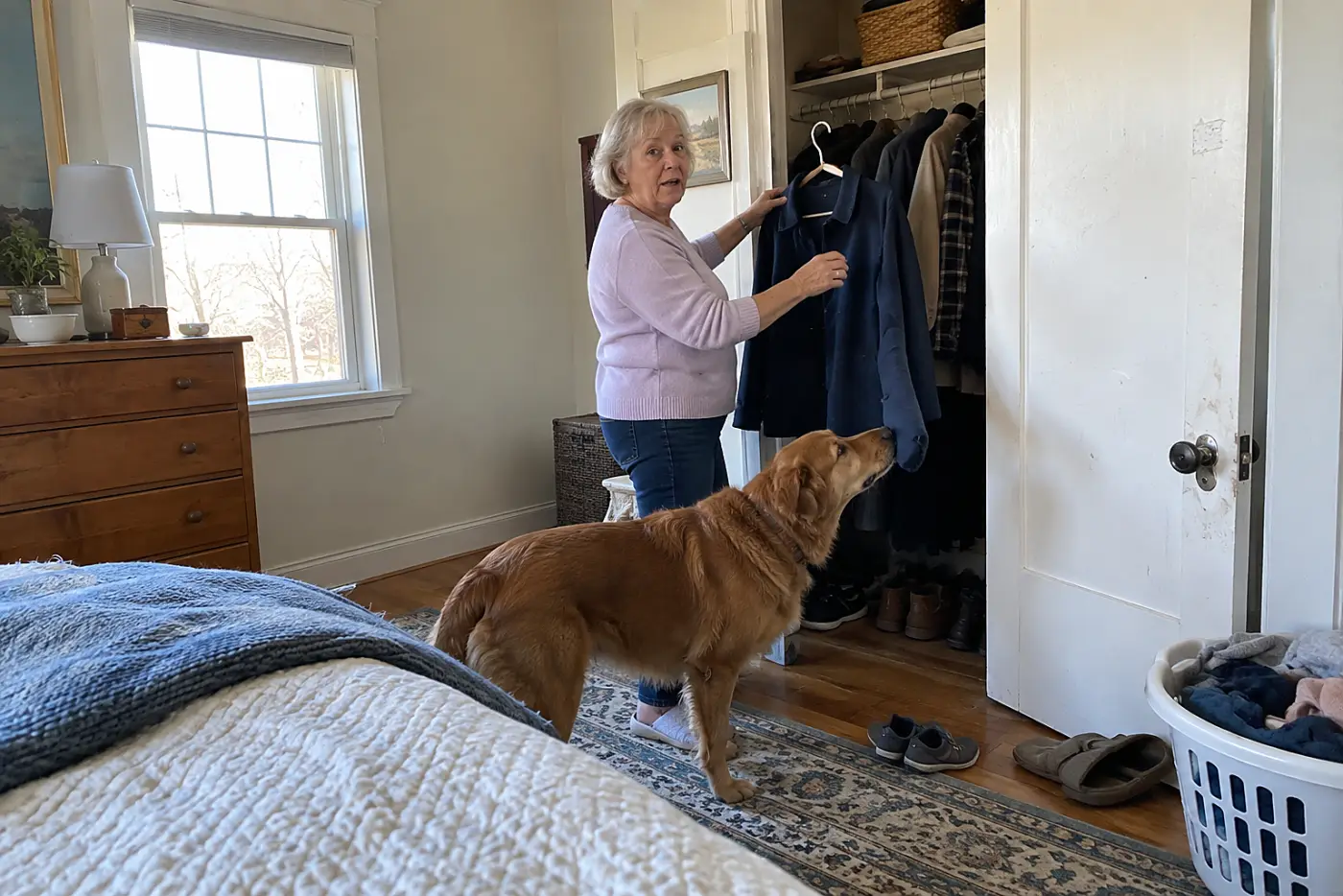
A sleeve you wore to an appointment holds his interest after you hang up the coat. Clinics, other animals, and unfamiliar rooms leave odors on clothing.
Let that be an ordinary explanation before you assign him knowledge of the visit. Still, if an appointment left you shaken, he’ll notice your behavior at home. Put the coat down, sit with him, and make the follow-up call you’ve been postponing.
You don’t need his nose to confirm what the visit meant to you. It has, however, brought you back to the coat and the call.
5A change the veterinarian should hear
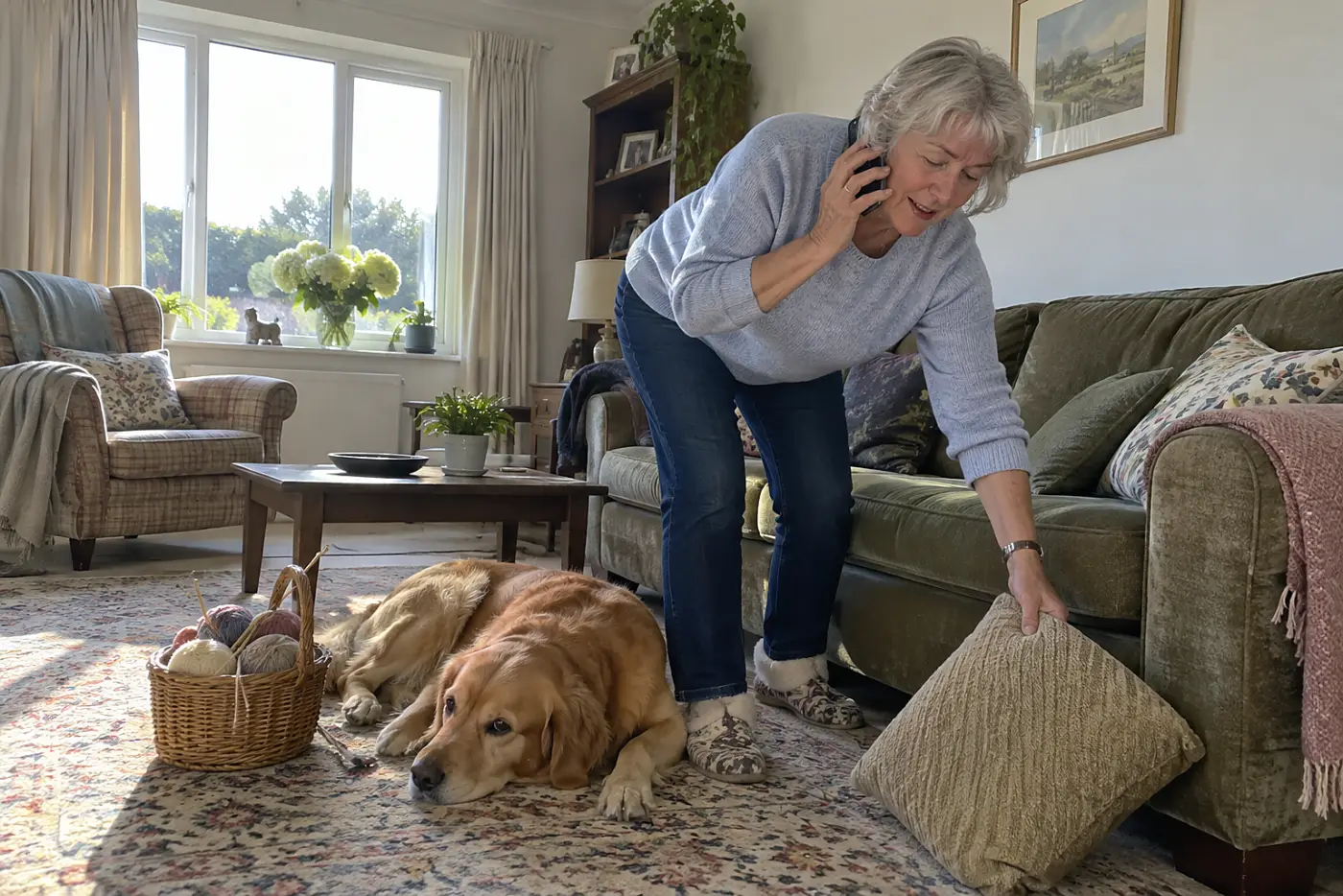
“He’s been following me all day” is something worth telling the veterinarian when it’s new and persistent. Add what changed in the dog: appetite, sleep, drinking, breathing, and ease of movement.
Those details help separate a dog’s illness from a reaction to your routine. The American Veterinary Medical Association advises owners to work with a veterinarian when a pet’s behavior changes. You don’t have to prove he’s worried about you before you make that call.
Be specific: “He started pacing Tuesday evening and hasn’t settled at bedtime.” A day and a behavior give the vet more to work with than a theory.
4His pacing during your shaky spell
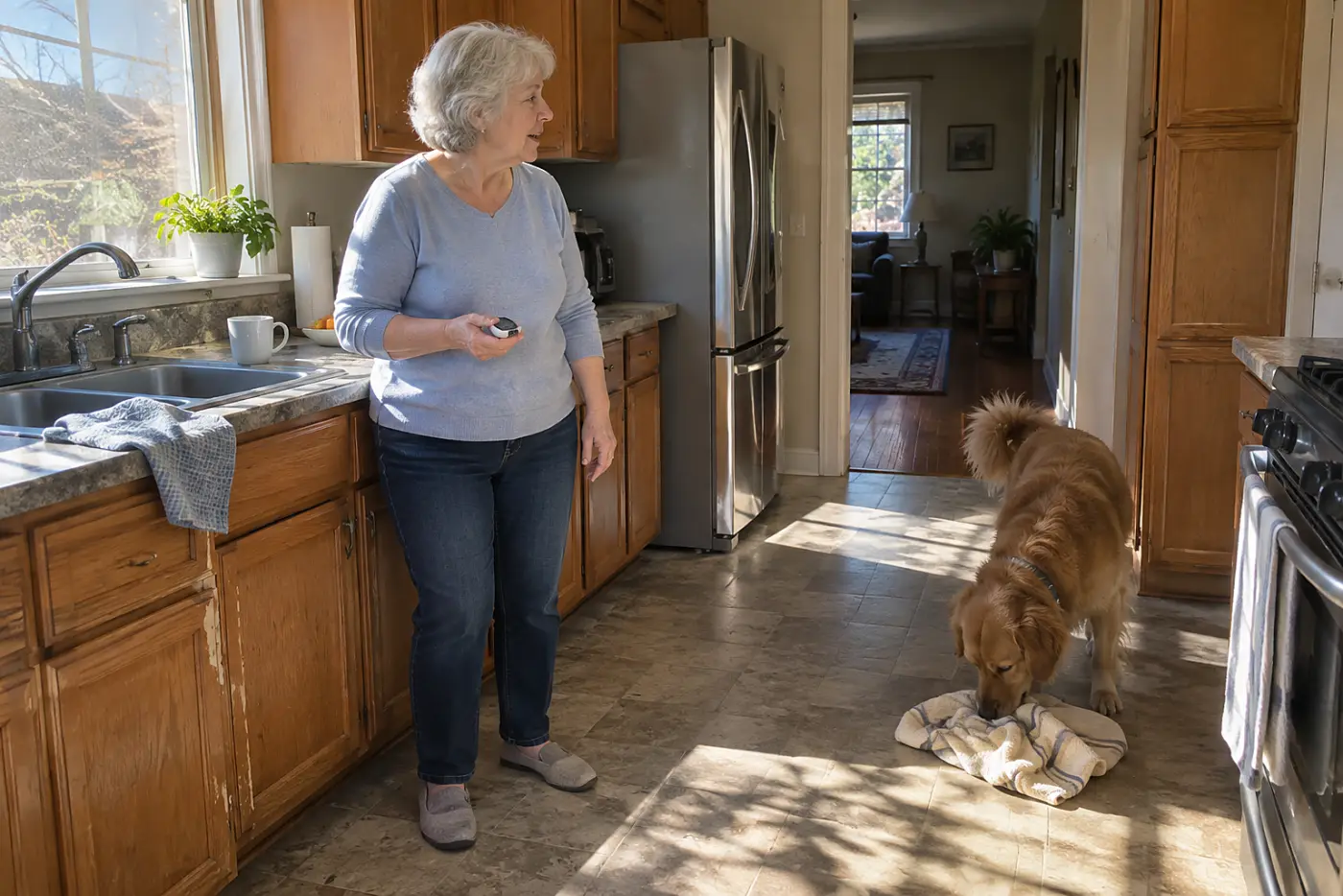
Your hands shake while you search for a snack. He paces between you and the cupboard. Attend to yourself first.
If you have diabetes and suspect low blood sugar, check it and follow your care plan. A reading below 70 mg/dL is low, according to the CDC’s low blood sugar guidance.
The CDC describes a treatment step for someone awake and able to swallow: take 15 grams of fast-acting carbohydrate, then check again after 15 minutes. Follow your own care plan. A dog’s pacing cannot give you a reading; your meter gives you that number.
See more: 27 Things Grandmothers Notice That Nobody Else Does →
3The bed he abandoned overnight
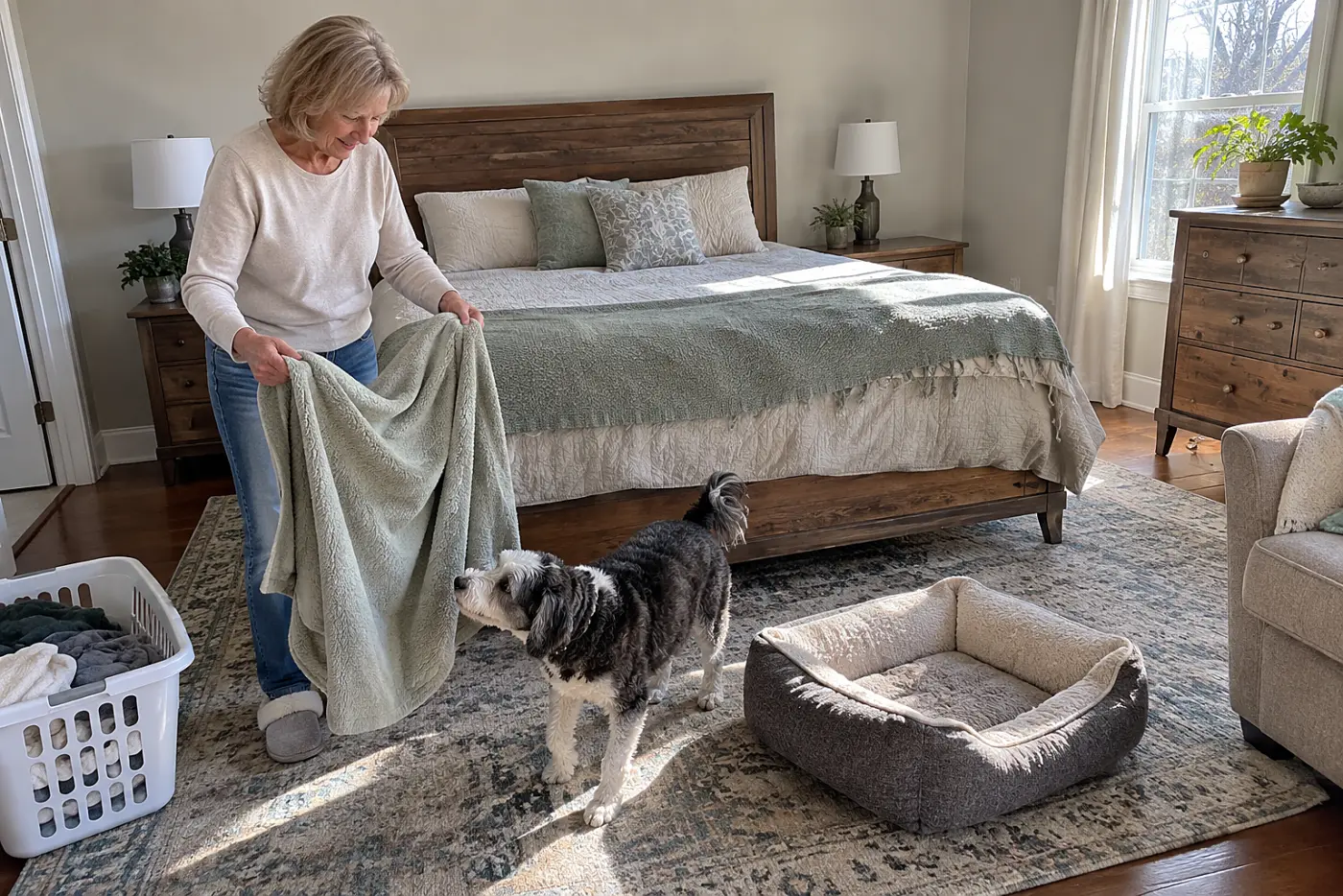
At midnight, he leaves the foot of your bed for the floor. Before you decide he’s avoiding you, check the room. Is it too warm? Is there a new fan sound? Can he still climb onto the mattress comfortably?
Then think about your night. If you’ve been coughing, getting up repeatedly, or sleeping in a different position, he has noticed the movement. That doesn’t tell you what’s wrong, but it gives you a clue about how much your sleep changed.
A sudden change in his sleep spot deserves attention when it comes with restlessness, pain, or confusion. Tell the veterinarian what you saw and when it began. Keep your own symptoms in the conversation with your clinician.
2The company he keeps after bad news
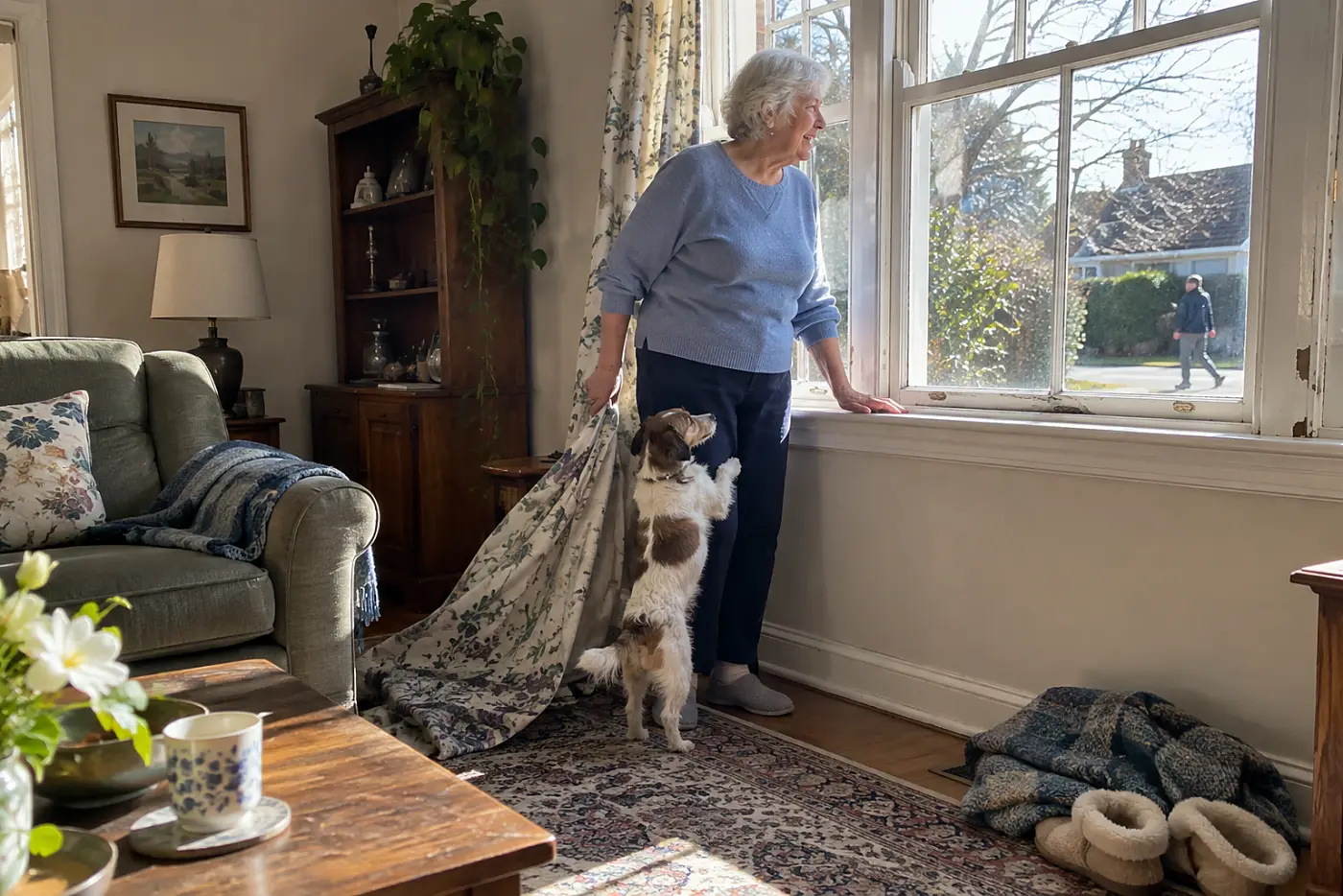
You hang up the phone and stand at the window. He comes over and leans against your leg. It feels as if he knew before you did.
What he knows now is that you’ve stopped moving and your voice has changed. That is plenty. You don’t have to solve his behavior or make a brave speech. Stroke his back if you want the company.
Then tell a person what happened. Say it plainly, even if all you have is, “I just got bad news.” Your dog has noticed the silence. Someone else needs to hear the words.
1The smoke alarm he won't pass
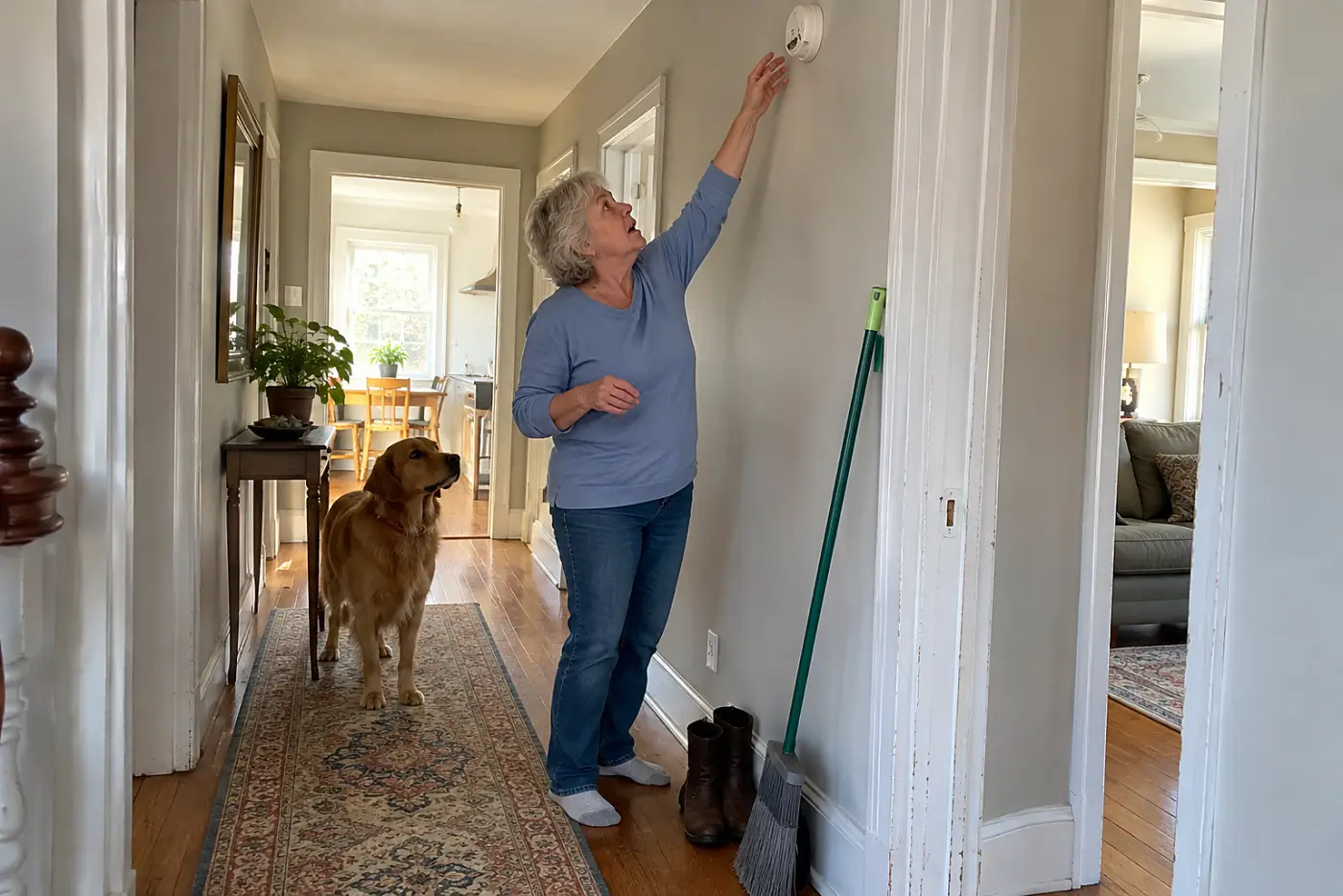
He stops at the doorway and refuses to cross beneath the smoke alarm. You hear a chirp at last. Check the alarm before you coax him through.
A chirp and a full alarm call for different actions. If the alarm sounds or you see or smell smoke, take him outside with you and call 911 from there. Don’t search the house for a cause.
If it’s a brief chirp and there’s no sign of fire, check the alarm’s instructions. The U.S. Fire Administration advises replacing smoke alarms when they reach 10 years old. Look for the manufacture date on the back.
He brought you to the doorway. You decide what happens next.
The bottom line
Your dog knows your routines intimately. When one changes, he reacts. The explanation might be in the house, in his body, or in yours.
The well-prepared version of you checks for immediate danger first. Then you look at the dog, notice what changed, and call the right person when symptoms warrant it. He doesn’t have to make a diagnosis to get your attention.
Has he ever stopped you in your tracks, and what did you find when you looked?
Up next
22 Reasons Your Old Dog Paces at Night, and What Helps
A look from the water bowl to the bedroom door at what might be keeping your dog awake, plus what to check at 2 a.m.
Read the list →
Reader quiz
Did you catch the details?
5 questions from this article.
What should you do if your dog skips breakfast and also has vomiting or low energy?
Did any of these feel familiar?
Know someone who needs this?
Sources cited in this article
This article links to 7 outside sources, listed here so you can read them yourself.
- American Kennel Club www.akc.org
- American Gas Association www.aga.org
- American Stroke Association www.stroke.org
- ASPCA Animal Poison Control Center www.aspca.org/pet-care/animal-poison-control
- American Veterinary Medical Association www.avma.org
- CDC’s low blood sugar guidance www.cdc.gov/diabetes/about/low-blood-sugar-hypoglycemia.html
- U.S. Fire Administration www.usfa.fema.gov
Ruth Ellison
Family Editor
Ruth writes about grown children, grandchildren, ageing parents, and the conversations families put off, in the words of the people involved.
More from Ruth Ellison