







26 Ways to Stay Close to Grandchildren Who Live Far Away
A shared calendar, a paperback, and a five-minute voice message give you ways to be present between visits.
By Ruth Ellison, Family Editor
Updated · 17 min read
- Written by our family editor
- Cited 2 sources
- How we review

Read to the end: #1 is the scheduling conversation that protects your place in their week, and almost nobody has it early enough.
Your granddaughter holds a spelling worksheet up to the camera. Before you read the second line, the screen freezes. When the picture returns, she has left for dinner, and you're looking at the ceiling fan.
Distance makes a dropped call feel larger than it is. The answer isn't a longer call, either. Children grow attached through small exchanges they recognize and expect. A grandparent who waits for a free afternoon loses too many ordinary days.
These 26 ways start with what you already have.
26Keep a postcard beside your stamps
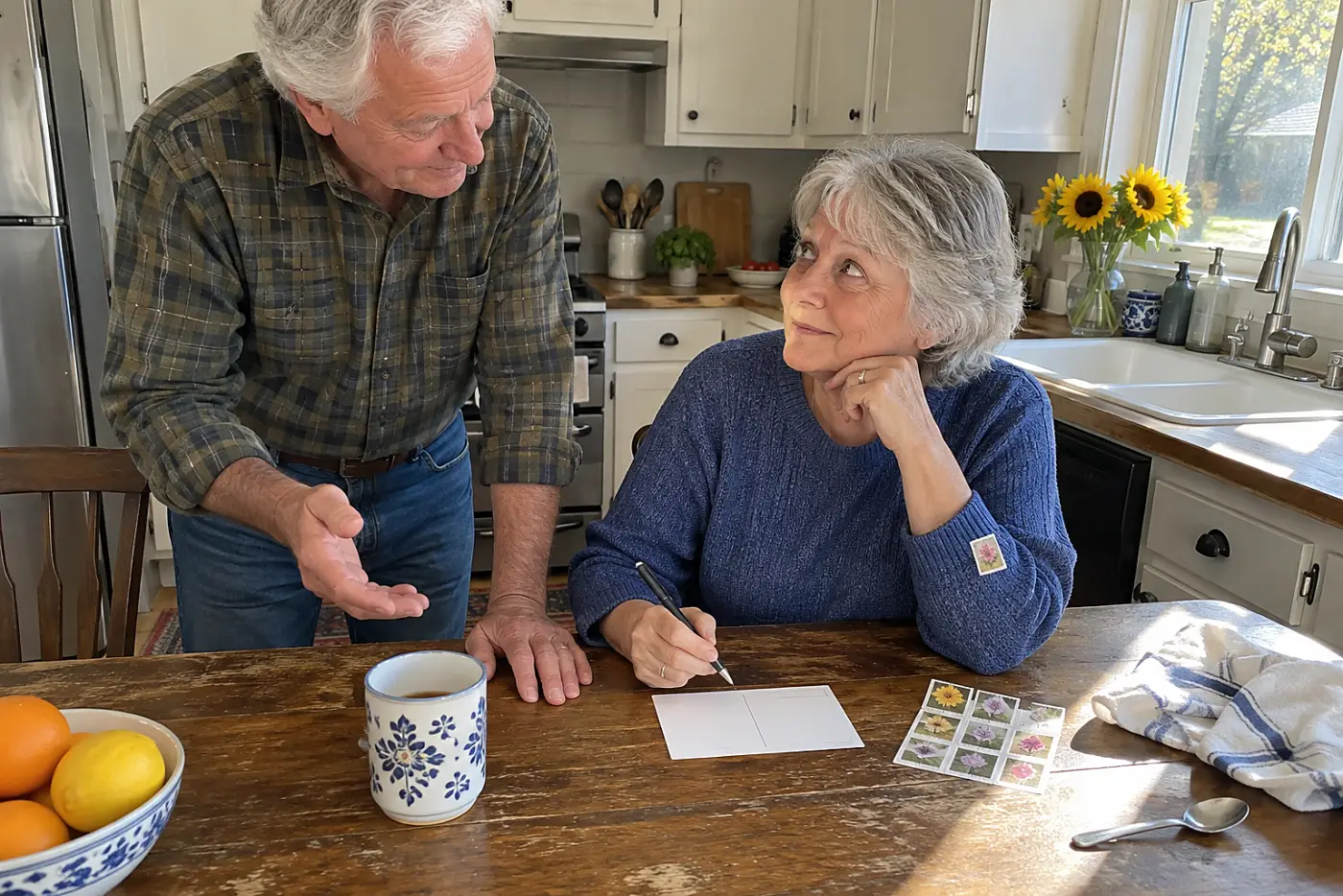
A blank postcard does nothing from the kitchen drawer.
Pick one with a picture she'd enjoy, then write three lines about something you saw today. The postcard gives her something to carry, display, or answer without sitting through a call.
Without an address in hand, the whole idea stalls at the mailbox. Ask her parent for the current mailing address this week, and send the card before you buy a stack. A postcard stamp costs less than $1 for U.S. delivery; check the current price on the Postal Service website before stocking up. Say, “Would she like mail at home, or is there a better address for her?”
Once the card lands, you'll want something to ask her about.
25Ask about the drawing on the refrigerator

A child notices when you remember last Tuesday's drawing.
During your next call, ask for a tour of one object within reach. Let him choose the drawing, Lego bridge, muddy cleats, or rock on the windowsill; his choice gives you a subject you didn't have to invent.
Don't rush to praise it and change topics. Ask what happened just before he made it, or what he'd change if he did it again. Those questions leave room for a story, even when the screen shows only half his face and the dog keeps walking through the frame.
A call that ends with “Love you, bye” leaves little to pick up next time. This week, jot his chosen object and one detail on the back of an envelope. On your next call, try, “Did that bridge ever get a roof?”
You'll need a way to remember the answer, too.
24Put a grandchild notebook by the phone
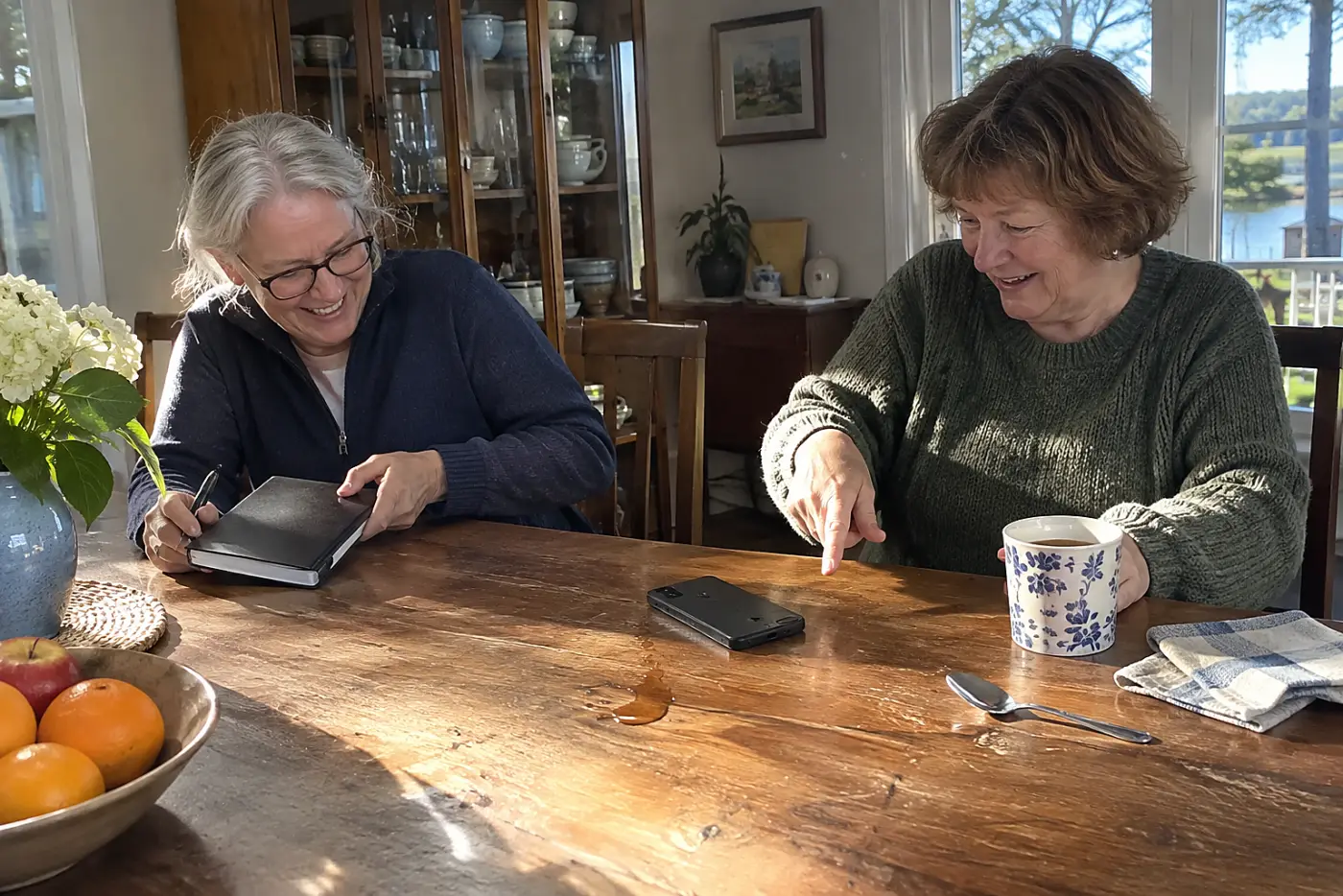
Names and favorite characters change faster than your address book.
Give each grandchild a page for the small facts they volunteer: a friend's name, a new game, the science project that went wrong. Check the page before you call.
Getting a detail wrong isn't fatal, but repeated guesses make every conversation start over. This week, write down one thing each child told you recently. Add the date, so an old favorite doesn't keep turning up after they've moved on. Then ask, “Last time, you mentioned Maya's puppy. How is it doing?”
That page also shows you what deserves a follow-up.
23Send a voice message they replay
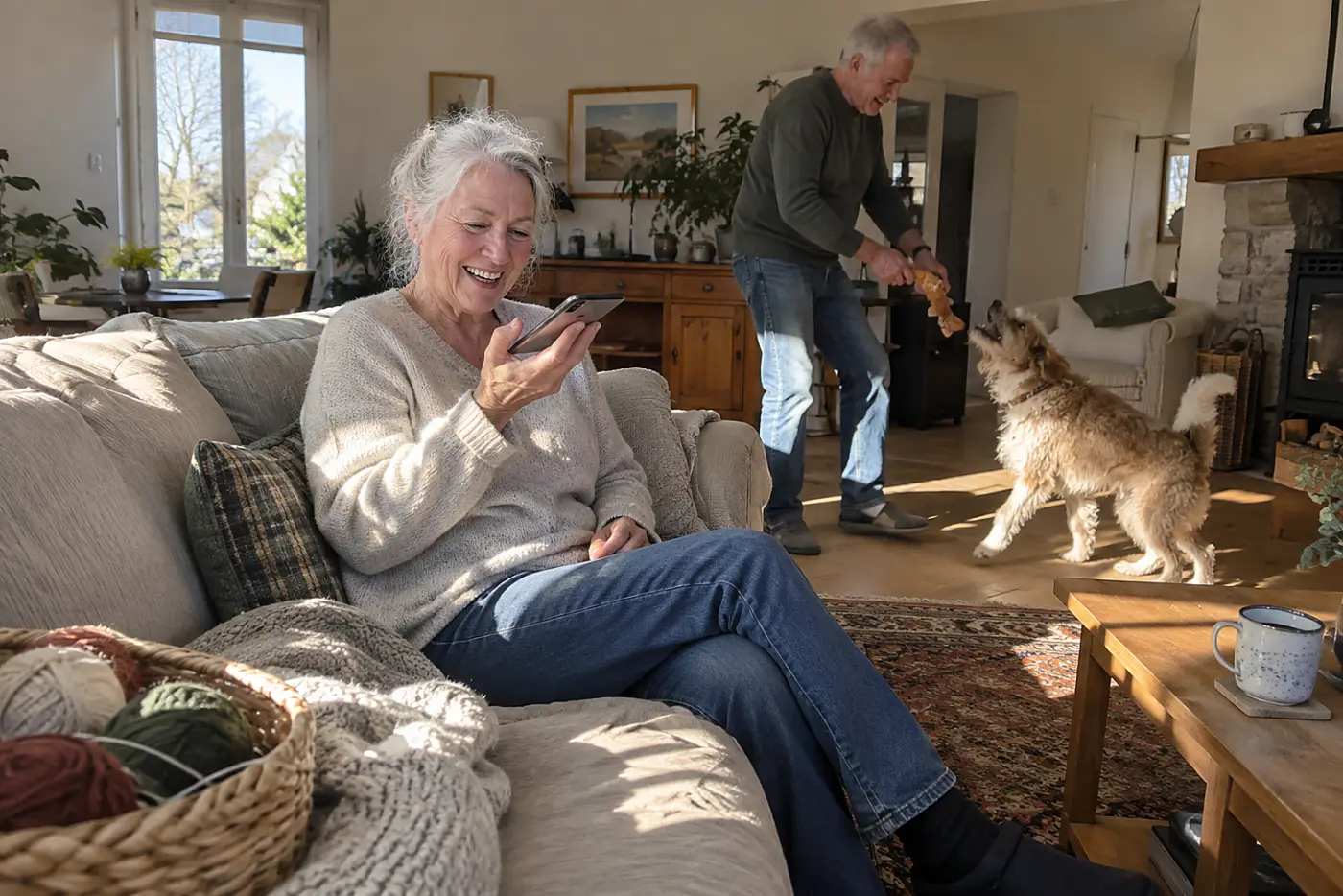
Your best story shouldn't depend on a live connection.
Record a short message about the dog that stole your mitten, or the song stuck in your head. A child hears your laugh again by tapping play, while a live call vanishes as soon as everyone hangs up.
Keep the recording focused on one moment. Don't make it a report on your whole week, and skip the question that demands a quick reply. The pleasure is hearing from you, not finding another task waiting after school.
First, check with a parent which app they use for family messages and who controls the child's device. Apple's Messages and WhatsApp both support voice messages; use the family's existing channel. Then record one this week: “I saw a dog carrying a stick wider than the sidewalk, and I thought you'd appreciate his ambition.”
A voice is lovely; your hands can give them another story.
22Show them what your hands are making
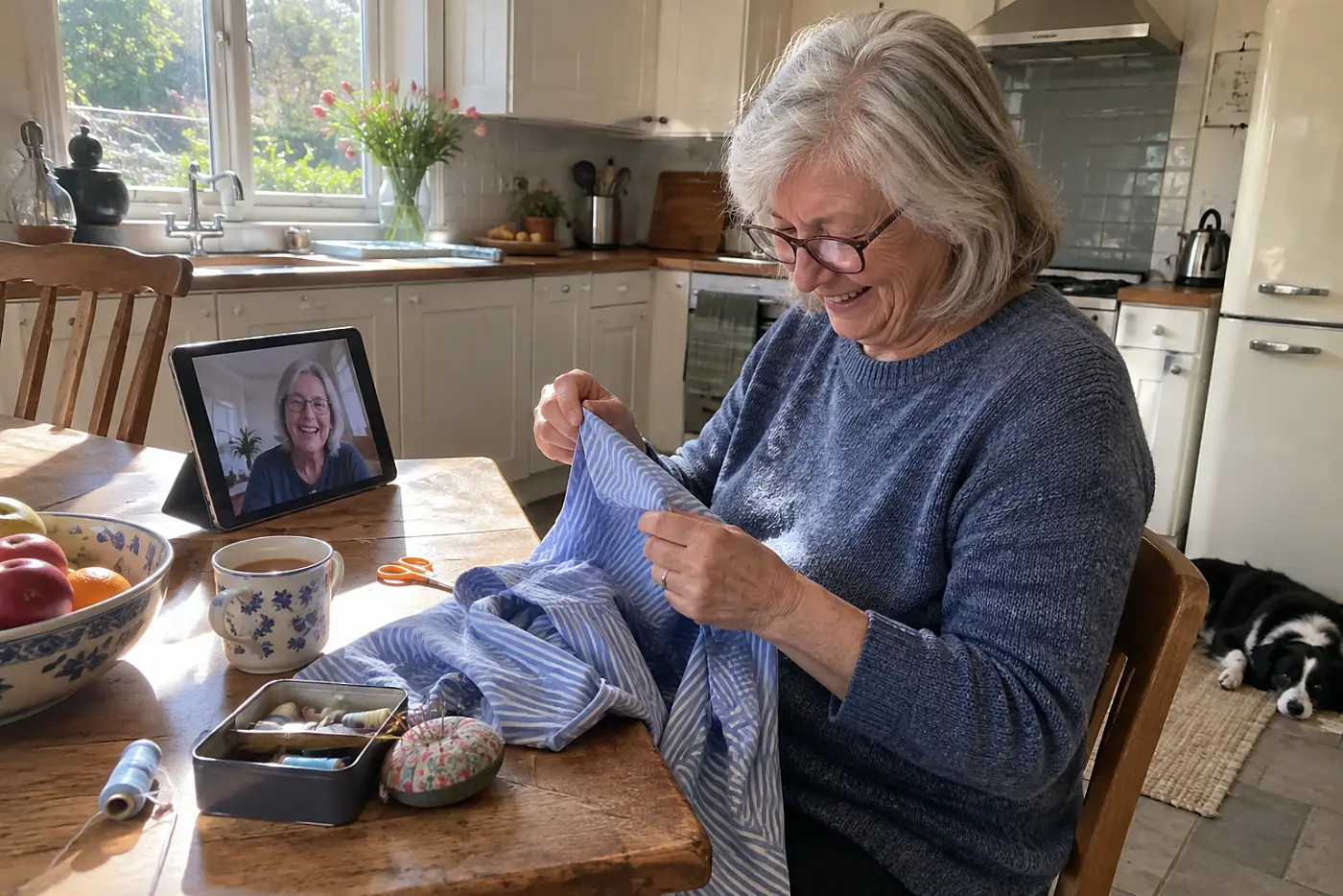
A screen gives them a narrow window into your day.
Set the phone where they can see you peel an orange, mend a seam, or frost a cake. Describe what your hands are doing, and leave room for questions.
If every call starts with “What did you do today?” both sides run out of answers. This week, choose one small task for the next call and test your camera angle first. Say, “I need a second opinion: should these buttons match?”
Some tasks work better when both of you have the same materials.
21Make the same recipe in two kitchens
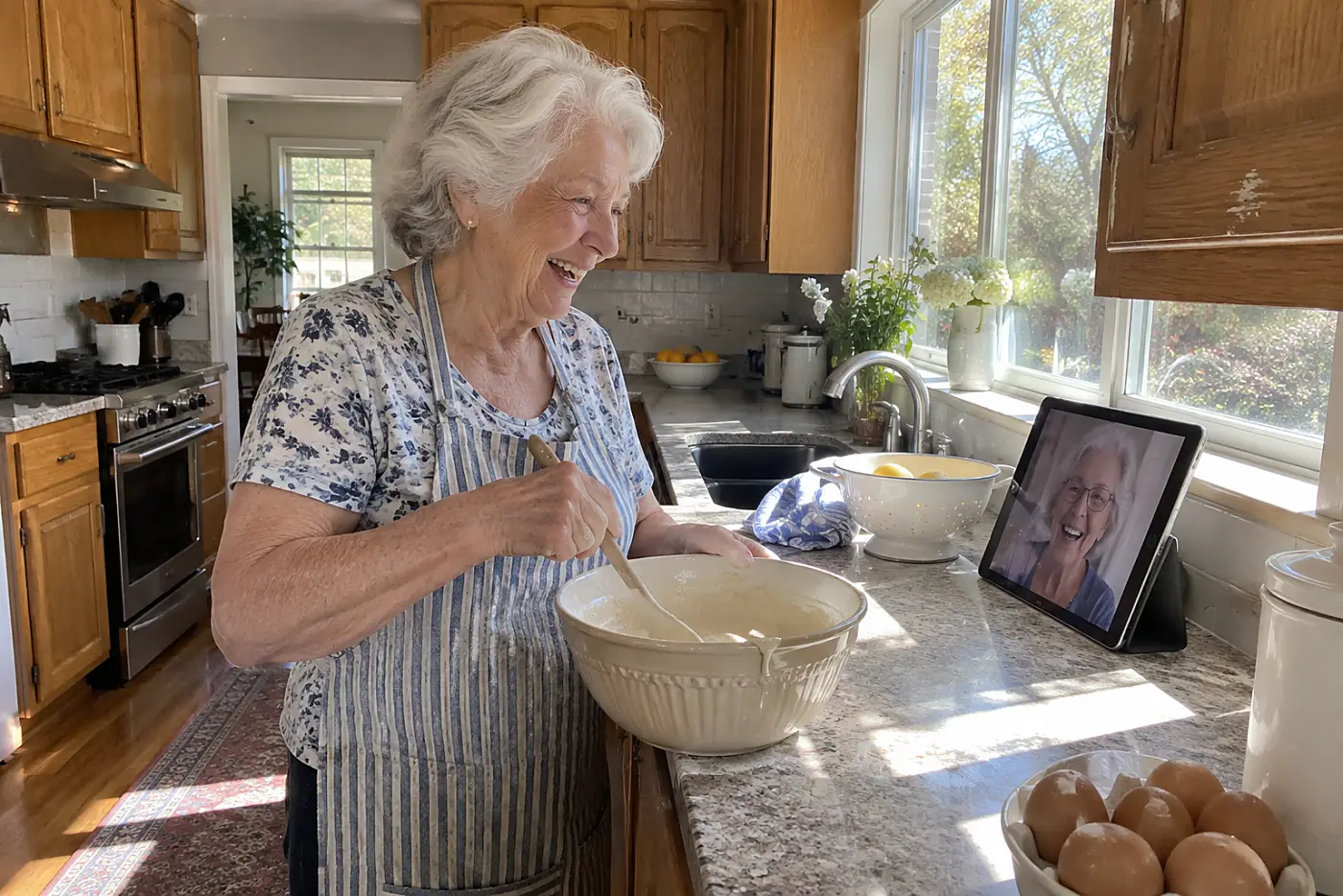
Dinner gives you something to do beside each other.
Choose a recipe with few steps, then send it to the parent before either kitchen starts. A child can stir batter while you stir yours; you don't need a perfect view or a running commentary.
Agree on ingredients and a realistic time before promising the child a cooking date. Ask the parent about allergies and whether someone can supervise the stove or oven. For a younger child, choose a no-cook task, such as arranging fruit on toast, instead.
A failed batch still makes good conversation. This week, try one recipe and compare results by photo. Say, “Mine stuck to the pan. How did yours turn out?”
Next time, let the child choose what happens on the page.
See more: 27 Old-Fashioned Comfort Food Recipes Grandma Made →
20Read two pages from matching books

Story time falls apart when nobody knows where you stopped.
Get copies of the same book, or let a parent send a photo of the cover and the last page you read together. Start at that page on your next call.
Without a shared place, half the call goes to finding the story. If the child already has the book, check your library before buying another copy; a library loan costs $0. This week, pick a book already in the child's home and ask which chapter comes next. Say, “Do you want to read the dialogue, or should I?”
A book also leaves a question hanging after the call ends.
19Ask for the next chapter prediction
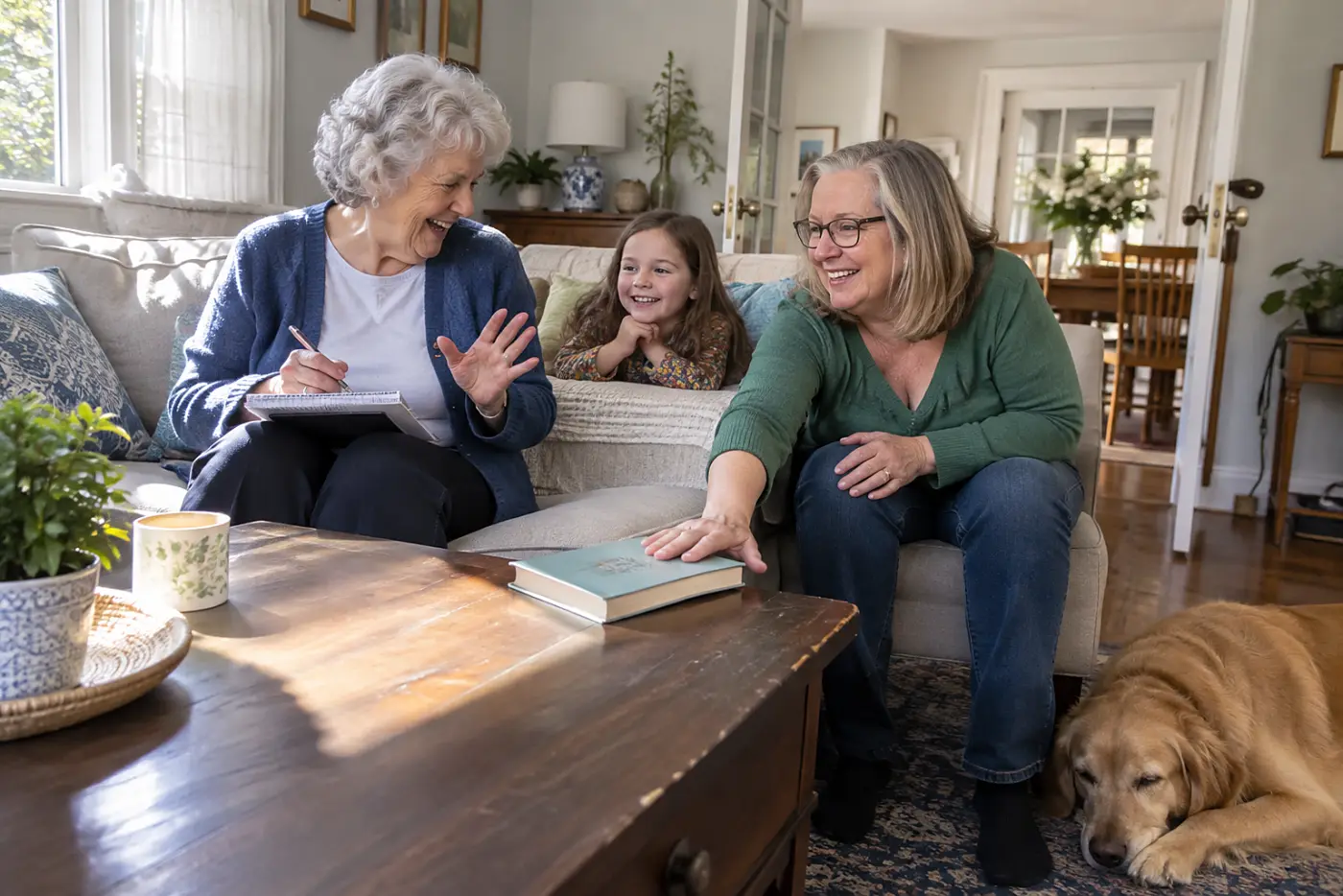
A bedtime story doesn't have to end at bedtime.
When you stop reading, ask what the character will do next. Write down the child's answer before you close the book; at the next call, you have a reason to return to that exact page.
Don't turn the prediction into a quiz. A wild guess is worth keeping, especially if the child wants to defend it. You get to learn how she thinks, rather than hear whether she remembers the plot. That difference matters when she's too old to sit still for a story but still enjoys arguing about one.
Without that saved guess, you'll reopen the book as though the last call never happened. This week, ask, “Do you think she'll tell the truth in the next chapter?” Then write down her answer, word for word.
Stories are easier to share when the screen stops fighting you.
18Test the camera before the call
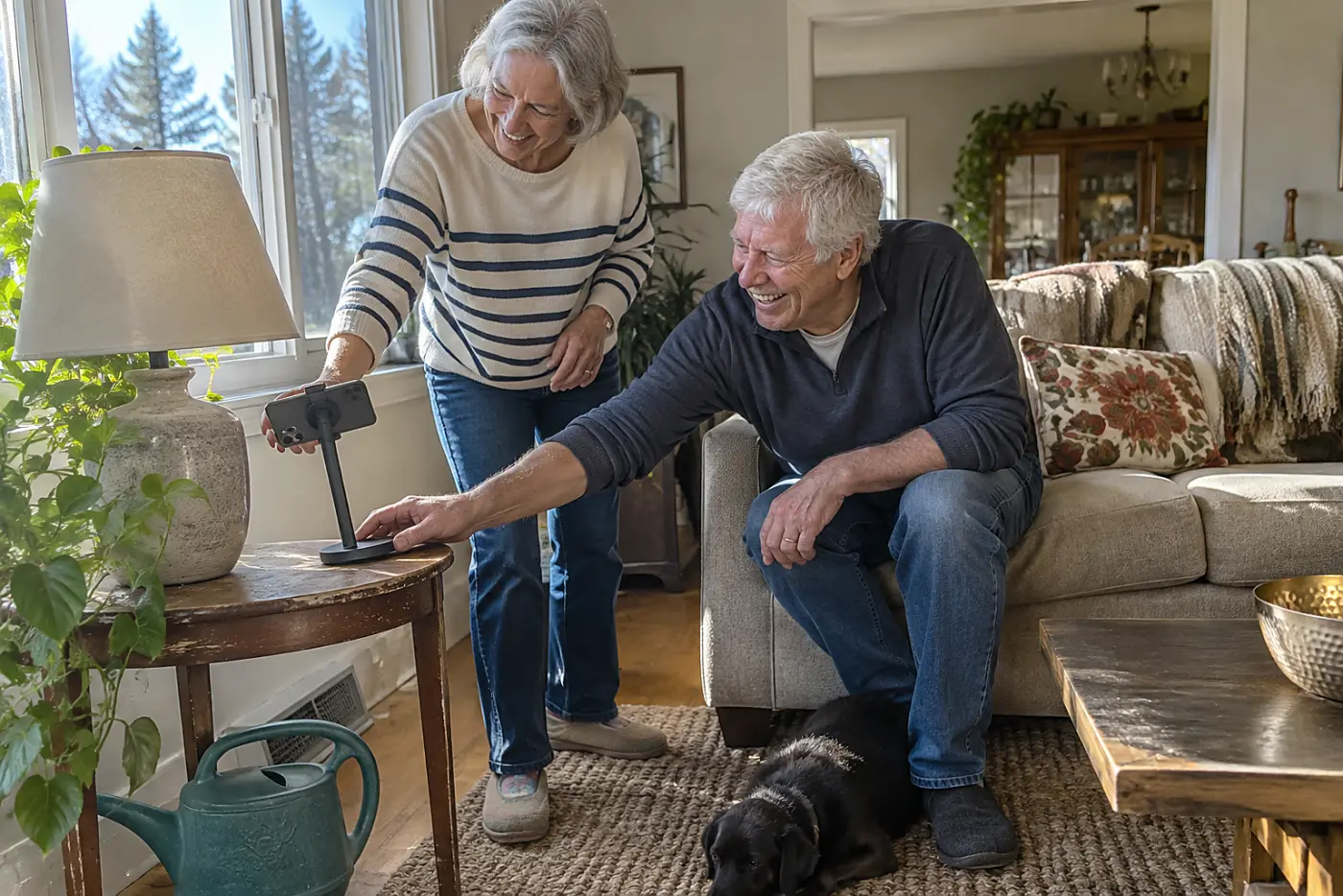
A grandchild sees your ceiling instead of your face.
Prop the phone at eye level and check the picture before you ring. Move a lamp in front of you, rather than placing a bright window behind your head.
A call spent fixing the angle leaves less time for the actual conversation. If the screen is still dark, check camera permission in your phone's settings before blaming the connection. This week, make a test call with another adult and sit in your usual chair. Ask, “Can you see my face and the table?”
Once the picture works, sound deserves its own check.
17Use headphones when the room gets loud
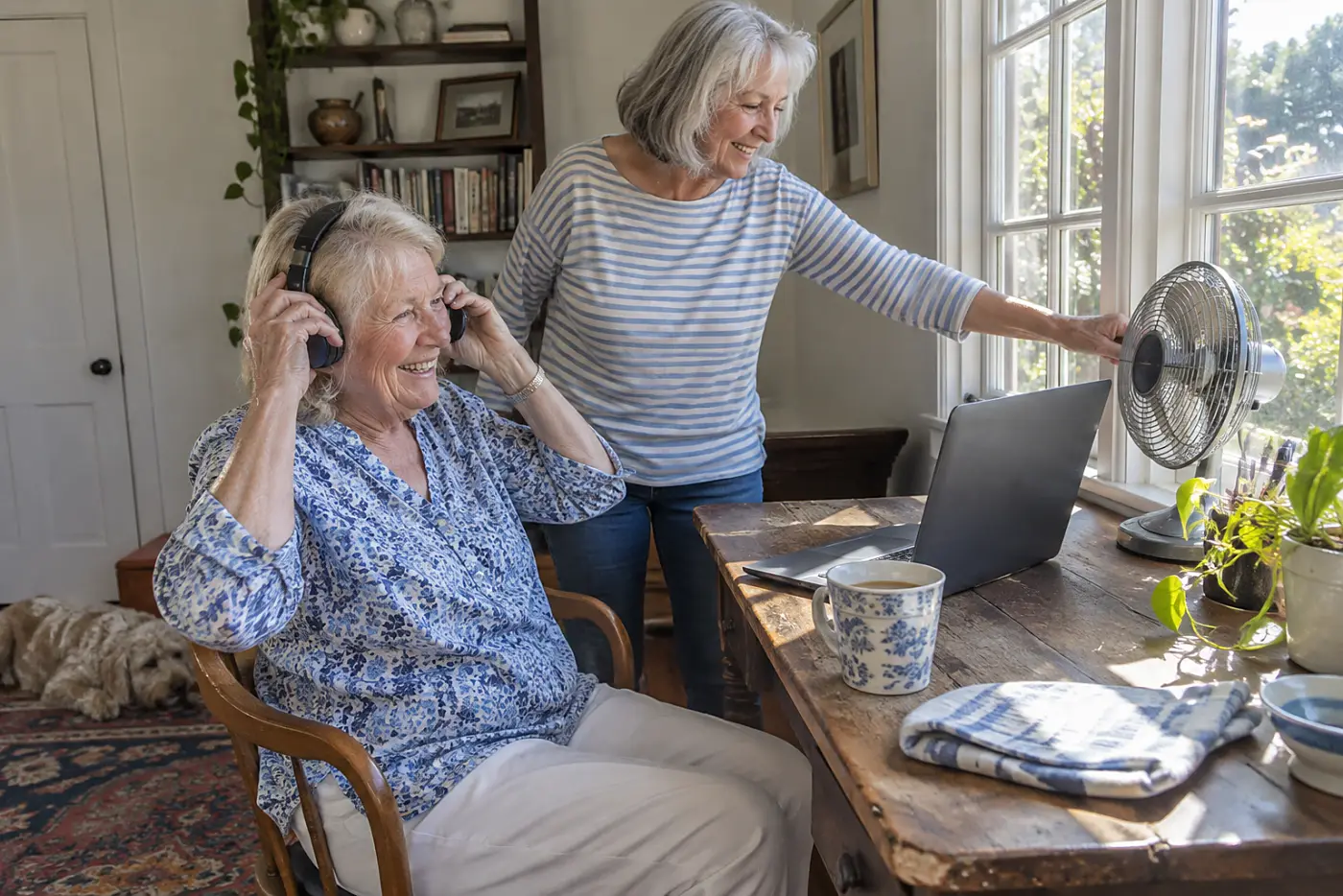
A child shouldn't have to shout over your television.
Headphones put their voice closer to your ears and keep your speaker from echoing into the microphone. For a call with several people, that small change makes it easier to catch the grandchild speaking from across a busy kitchen.
Try the headphones you already own before buying anything. Plug them in, or pair them, and make a brief test call. Ask the other person whether your voice sounds clear, too; hearing well on your end doesn't tell you what reaches theirs.
If you miss a word, say so without making the child repeat a whole story. This week, try, “I caught the part about the goalie. What happened right after that?” You'll stay in the conversation instead of pretending you heard it all.
Clear sound won't help if you misread the clock.
16Write down the time zone difference
The same hour means different things in two kitchens.
Look up the child's time zone and compare it with yours before you call. A saved contact doesn't tell you whether they're still at school or already eating dinner.
A call during dinner becomes a rushed hello from the counter. Daylight saving changes the gap when one place changes clocks and the other doesn't. This week, check both locations' current times and write the difference beside your phone charger. Then ask yourself, “Is it dinnertime there?” before you dial.
The right hour still doesn't give every child room to speak.
15Give each grandchild a private turn
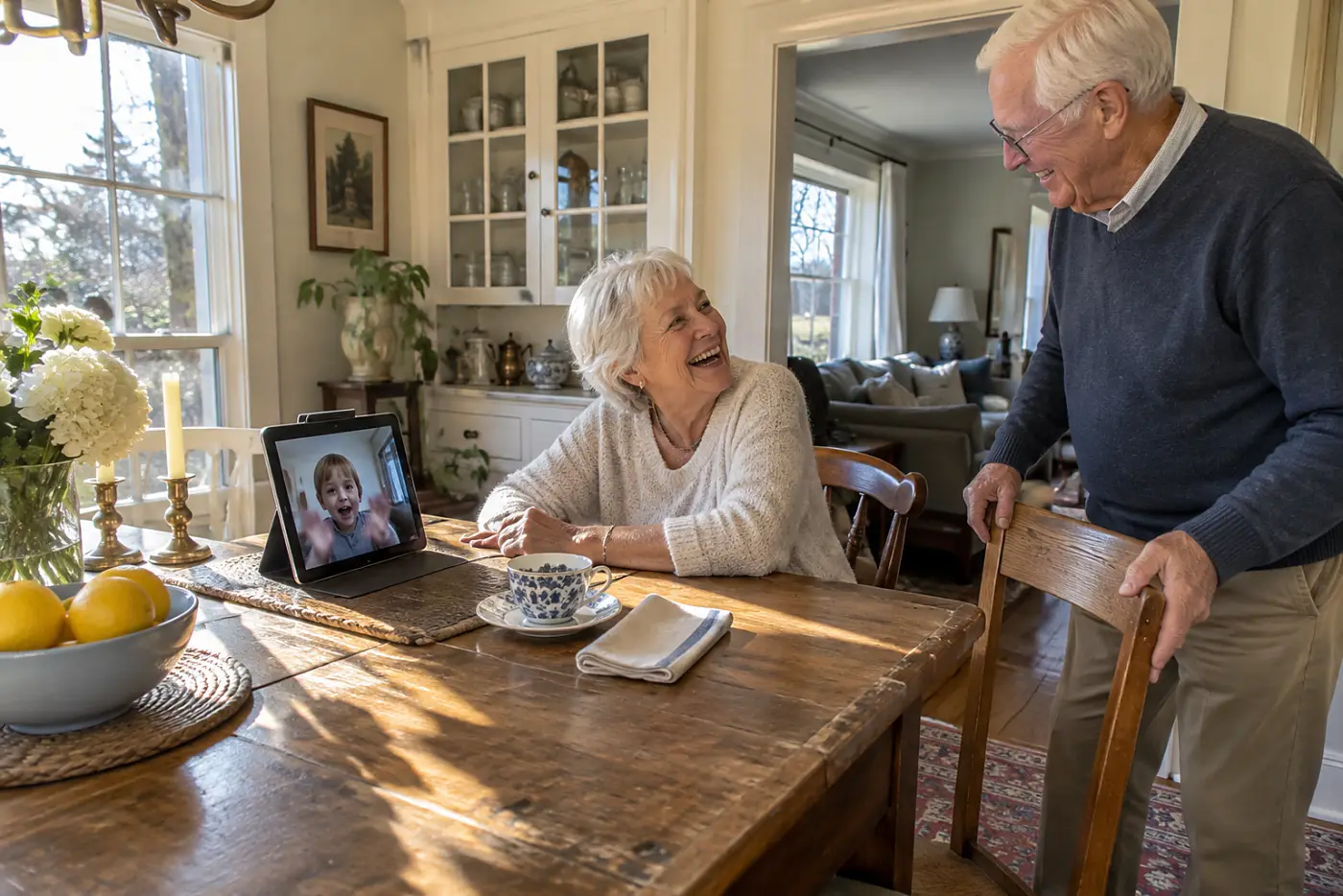
The loudest voice wins a crowded family call.
When several grandchildren share a screen, invite one to show you something while the others go about their business. On another day, give the next child the same attention. The point is a conversation they don't have to fight to enter.
Follow the household's lead on privacy and supervision. A private turn means a little space to talk, not a request to move away from a parent or keep secrets. Older children also deserve a choice about whether they're free to talk that day.
Without separate turns, you hear a roomful of noise and miss the child who rarely interrupts. This week, ask the parent for a short turn with each child. Say, “I'd love to hear about Sam's project first, then catch up with Lee.”
That turn goes further when the child gets to lead it.
See more: 19 Things to Know When One Set of Grandparents Is Favored →
14Let them give you a room tour

A question about school gets the same short answer.
Ask your grandchild to show you a place they choose: the bookshelf, the soccer bag, or the view from their bedroom door. Follow the object that catches their attention.
Without that choice, you're left guessing which part of the day matters to them. A tour also gives you a way to notice the new trophy without asking for a list of achievements. This week, ask, “What should I see in your room today?” Let them keep anything they don't want to show off-camera.
The object they choose gives you something to send back.
13Trade photos of an ordinary Tuesday
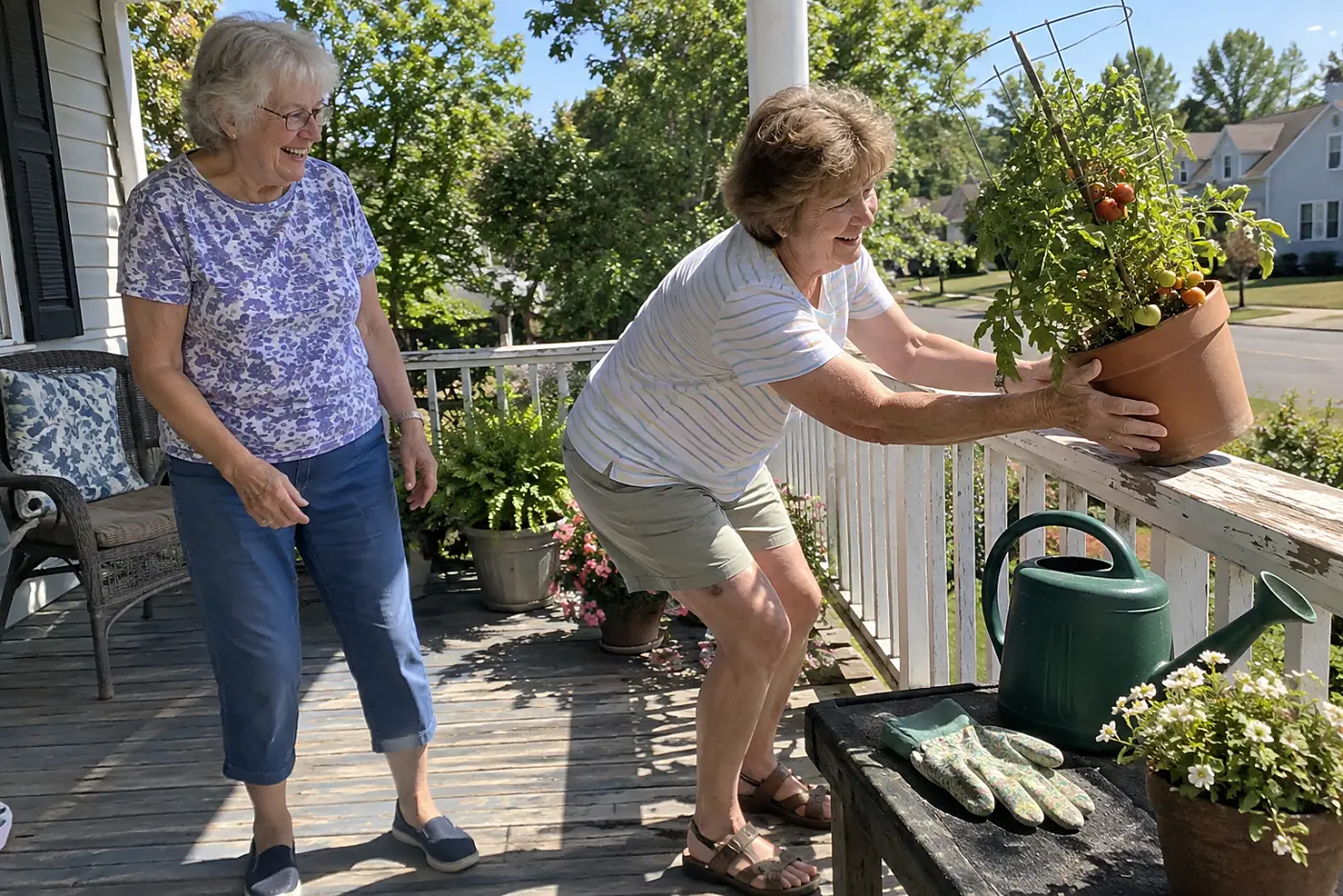
A holiday photo skips most of the child's life.
Send a picture of something small and real: the first tomato from your pot, the crooked pancake, or the squirrel on the fence. Invite a picture from their day, but don't assign them homework or expect an instant reply.
Before sharing images of a child, check the parent's rules. A photo sent to you isn't permission to post it on Facebook or forward it to a group chat. Keep the exchange in the channel the family chose, where both sides know who sees it.
Without ordinary pictures, you recognize birthdays but miss the desk where homework happens. This week, send one photo with a plain caption: “This is the puzzle I'm stuck on.” Ask, “What did you see on your walk today?”
A picture catches a moment; a familiar object lasts longer.
12Put a duplicate game on both tables
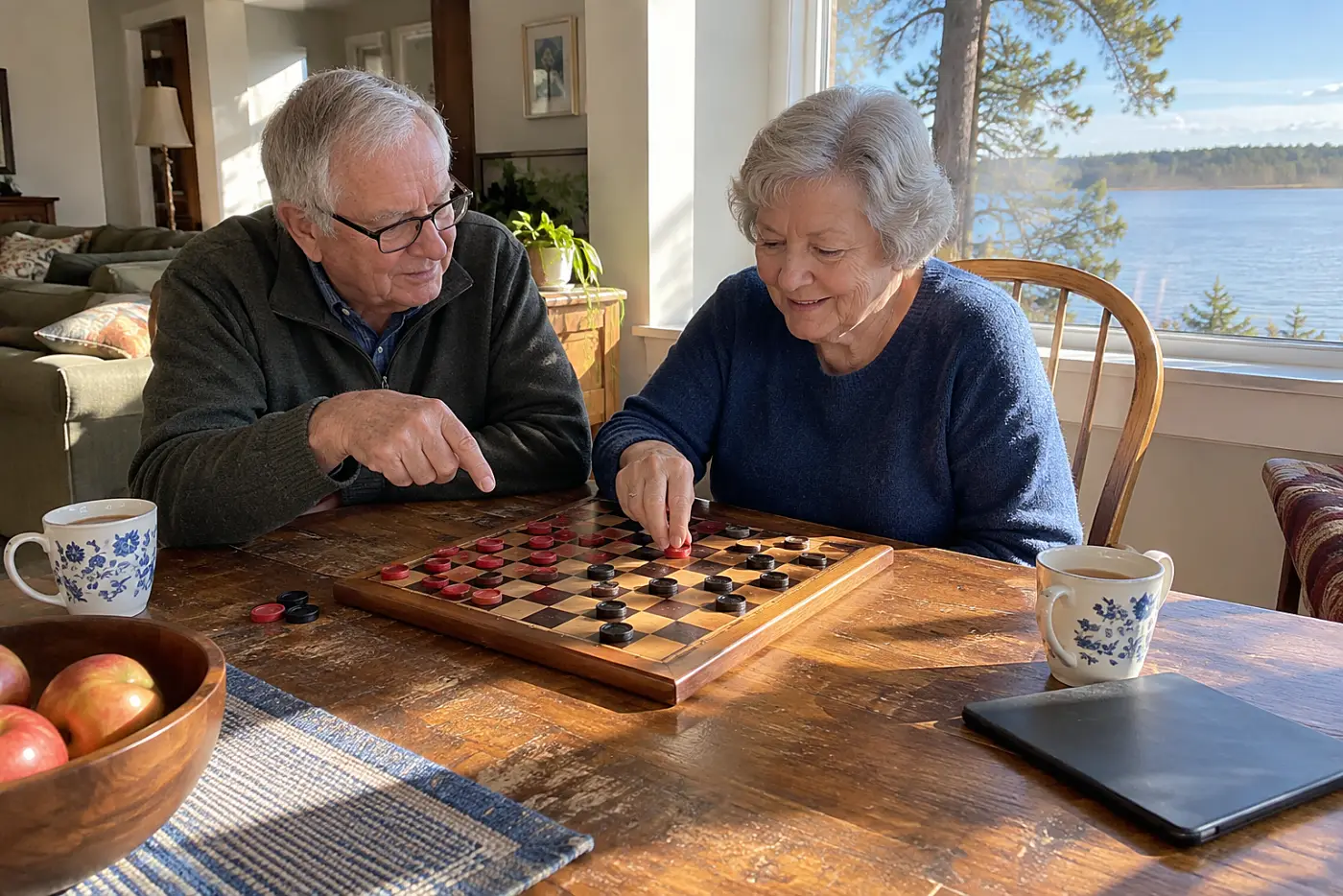
A game is hard to share when only you see the board.
Keep matching decks of cards, checkers sets, or paper bingo grids in both homes. Call out each move so neither side has to squint at the screen.
Without matching pieces, you spend the call explaining what the camera missed. A sheet of paper works for tic-tac-toe, so you don't need to ship a box. This week, ask what game the child already owns and set up your copy. Say, “Tell me your move, and I'll make it here.”
That shared table can hold more than a game.
11Start a puzzle you finish together
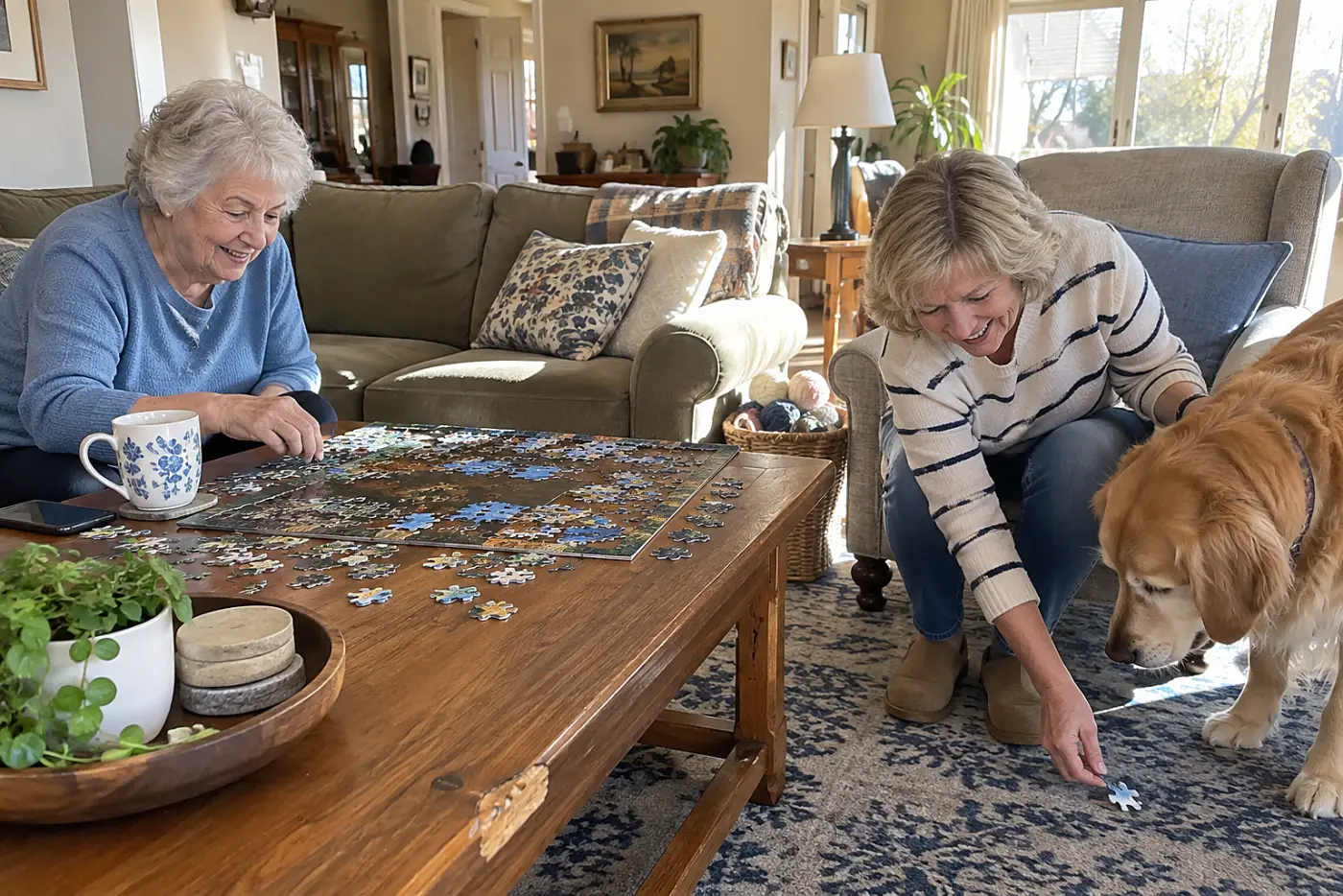
A completed game gives you no reason to return.
Pick a crossword, jigsaw, or word search that can wait between calls. Keep your copy on the table, and let the grandchild hold theirs. Stop while there's still something to solve next time.
Choose a puzzle that fits their interests, not the one you think their age requires. An older child who loves hard clues will tire of a worksheet meant for a younger sibling. A younger child who wants to find blue pieces needs time to look.
If you solve everything alone, you've removed the part that belongs to both of you. This week, start a puzzle and agree where to pause. Say, “I'm leaving the last corner until we talk again.”
That unfinished corner works best when someone remembers to bring it up.
10Put their events on your calendar

You can't ask about a recital you never heard about.
Ask which events the child wants you to remember, then enter them on your calendar. Add the time zone to a reminder for anything you plan to watch live.
Missing an event is one thing; forgetting to ask how it went stings differently. A reminder for the following day catches the conversation after the rush of the event itself. This week, request the date of one upcoming event. Say, “Would you send me the date so I can ask you about it afterward?”
A reminder helps you show up, even from your kitchen chair.
9Attend the event without claiming a seat
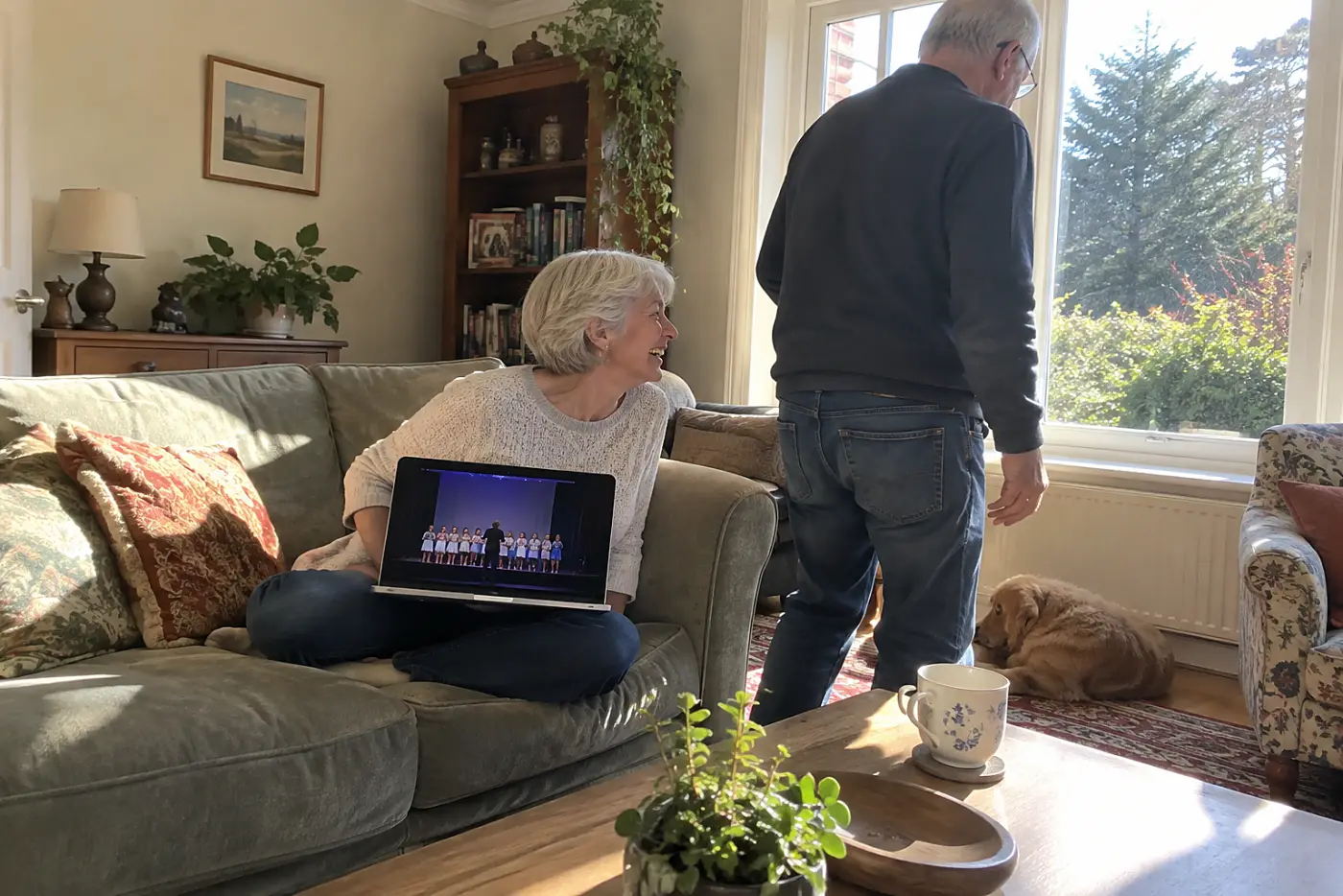
A livestream isn't an invitation to interrupt the performance.
For a school concert or game, ask the parent whether viewing from afar is available and whether they want to share access. Some events have no livestream; a photo or a later phone call still gives you a way to hear the child's version.
Watch for the part the child cares about, not only the final score or applause. If they missed a note, dropped the baton, or sat on the bench, give them room to tell you that. They needn't perform happiness for you after performing for everyone else.
Without checking first, you risk expecting a link nobody has. This week, say, “If there's a way to watch, I'd love to. If not, tell me what happened afterward.” Then follow up when the event is over.
The best question arrives after the crowd has gone home.
See more: 18 Things First-Time Grandparents Learn the Hard Way: How to Be Grandparents →
8Ask about the part nobody photographed
The official picture tells only the polished version.
After a game, concert, or birthday, ask what happened before or after the main event. The bus ride, the missing shoe, or the joke at dinner belongs to the child telling it.
If you ask only “Did you win?” a whole afternoon disappears into one word. Leave a pause after the question instead of supplying your own version of the day. This week, choose an event you already know about and ask, “What happened on the way home?”
Their answer deserves a place beyond your phone's recent calls.
7Record a family story in your own voice
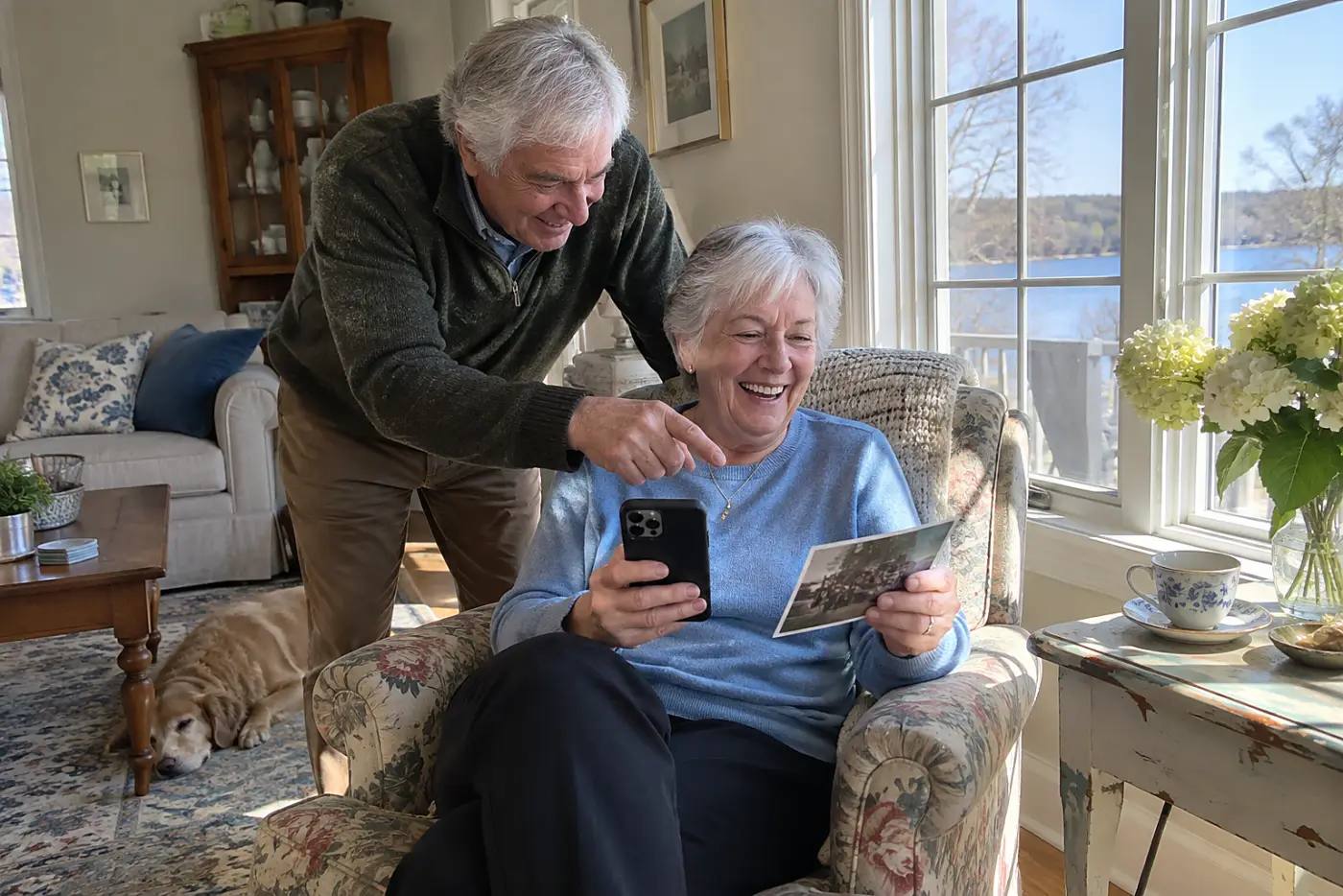
A name in a family album needs a voice.
Choose one photograph and tell the child what you remember about it. Keep to details you actually know: the color of the car, the room where the picture was taken, or why someone wore that hat.
Before you send a story involving living relatives, consider what they would want shared. Family history has hard parts as well as funny ones; you don't owe a child an edited legend, but you do owe them care with other people's private lives.
If the photo stays unexplained, the names get harder to place later. This week, record one short story and identify the people in it. Say, “This is your great-grandfather beside the car he fixed in his driveway.”
Your voice carries the story; their questions decide where it goes next.
6Label the photos you send them
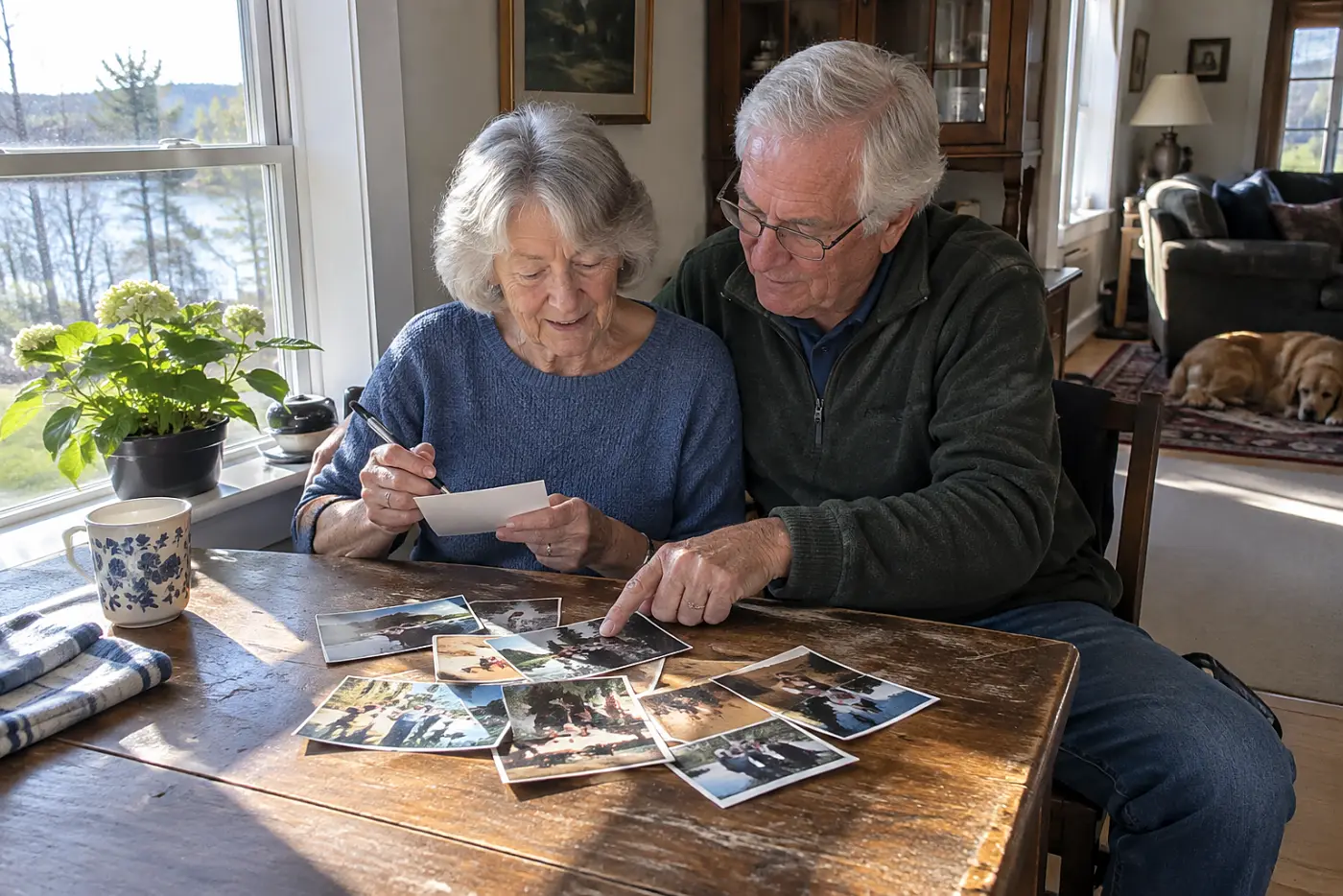
A mystery face stays a mystery in the family chat.
Add names, places, and an approximate date in the message with each photo. If you don't know a detail, say you don't know rather than making a neat guess.
Without a label, the child has no way to ask about the right person later. The label also stays with the image when it sinks below newer messages. This week, send one photo and write, “That's my sister Ruth at our kitchen table. Want to know what she was making?”
The question they send back might surprise you.
5Follow their hobby without taking it over
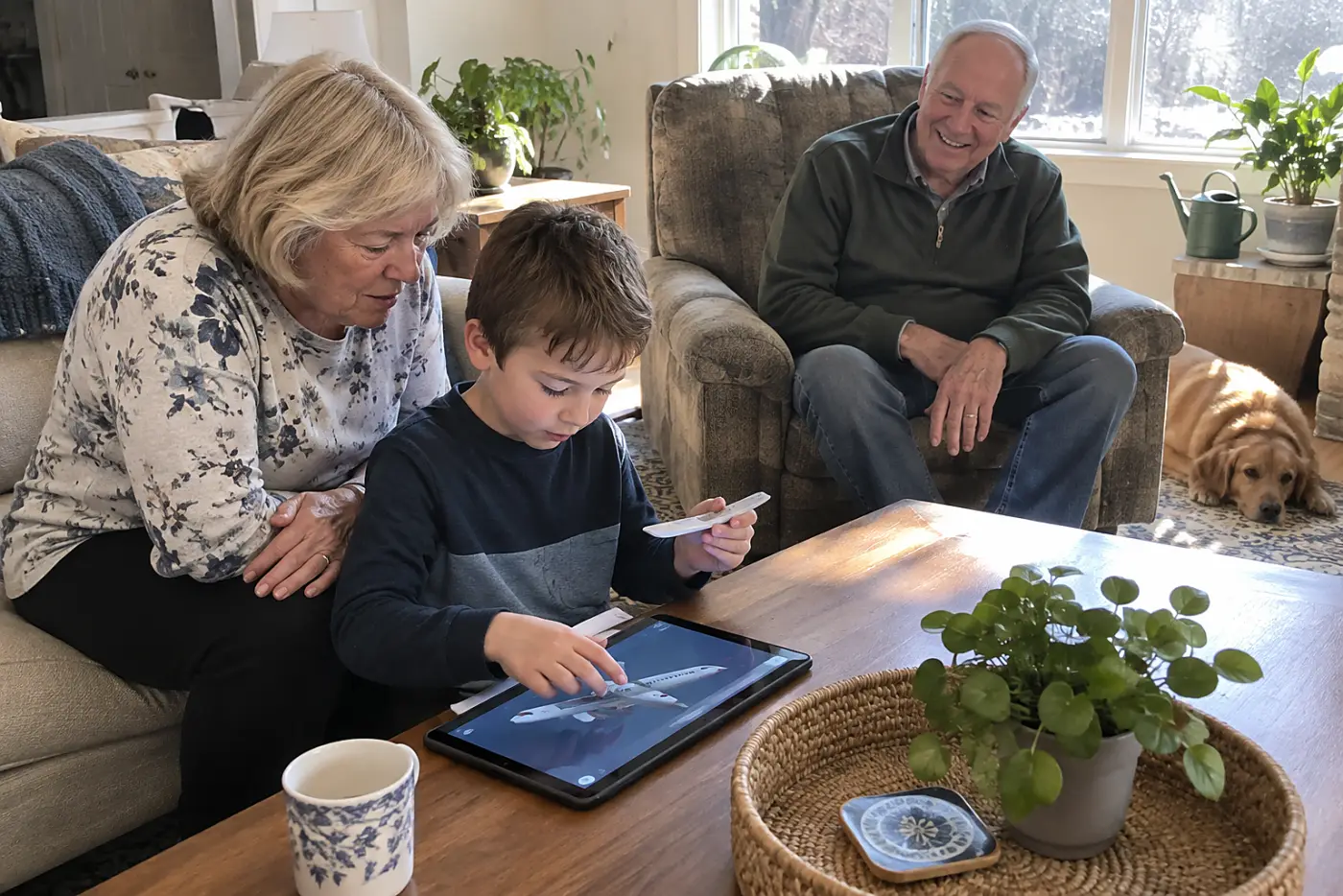
Advice arrives fast when a child wants an audience.
Ask what they're building, reading, or practicing, then let them explain one choice. You don't need to know the game's rules or the violin piece to notice what they worked hard on.
Resist the urge to send lessons, buy supplies, or correct their technique without being asked. A child showing you a skateboard trick has offered a window into their afternoon, not requested coaching. Even a pause while they find the right words is worth waiting through.
If every update draws advice, they'll have less to show you. This week, ask, “Which part took the longest to learn?” Then wait for the answer before you offer yours.
Their interests will change; the invitation to tell you about them shouldn't.
4Send a package with a reply inside
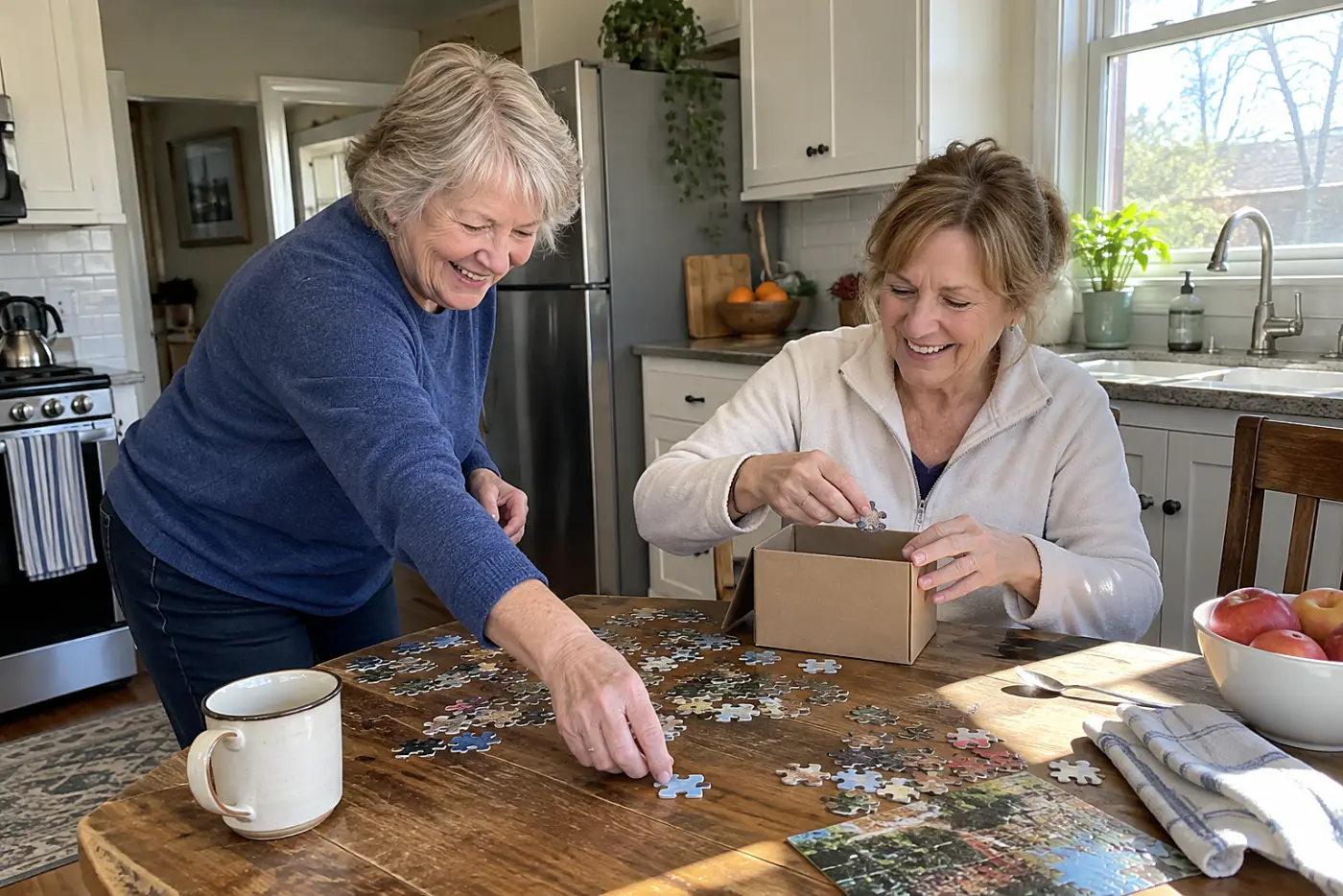
A parcel gets opened; the conversation needs a next step.
Tuck in a puzzle clipping, a recipe card, or a stamped postcard alongside a small gift. Add one question they can answer whenever they feel like it.
Without a way back, the box becomes another thank-you call arranged by a parent. A stamped return card removes the hunt for an envelope when the child feels like answering. If the reply fits on a postcard, its U.S. return postage costs less than $1; check the current rate before you stamp it. This week, prepare a simple envelope instead of shopping for something elaborate. Write, “Circle the puzzle answer you think I missed.”
Postage moves the package, but the child decides what comes back.
3Plan visits around one shared errand

A visit filled with outings leaves little room to talk.
Before you travel, ask the family what an ordinary day looks like. Joining your grandchild on a library trip, grocery run, or walk with the dog puts you beside them without requiring a grand plan.
Don't promise a visit before checking dates and the household's needs. When you do go, leave space for the child's regular friends, practices, and rest. A visit that displaces everything familiar gives everyone less time to enjoy being together.
If you measure closeness by attractions booked, you'll miss the conversation in the car. This week, if a visit is ahead, ask, “Could we do one regular errand together while I'm there?”
You'll take that everyday picture home with you, but the stretch between visits still needs attention.
2Use the family message channel

Messages disappear when you send them to the wrong place.
A child's device isn't always the place their family checks for messages. Ask which channel the household actually reads, and who sees what you send through it.
Without that answer, a missed message feels personal when nobody saw it. Save the answer in the child's contact entry rather than trusting your memory. This week, ask, “Should I send pictures to the family chat or directly to you?” Then send one ordinary hello through the channel they name, without asking for a reply.
Reaching the right inbox still leaves a bigger question open.
1Agree on a recurring contact plan
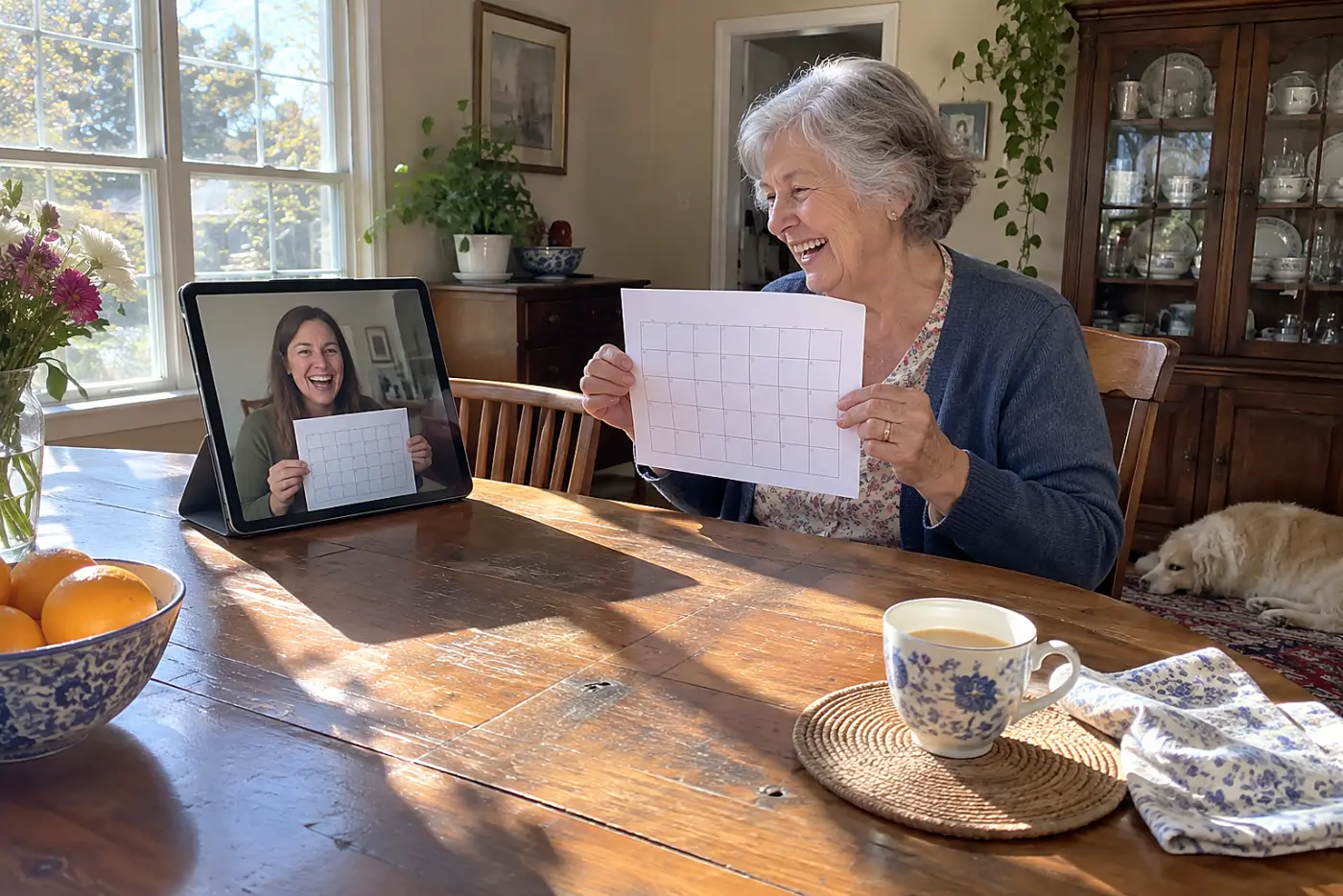
Waiting for a free moment makes you a guest.
Talk with the parent and, when the child is old enough, the child. Choose a regular day, a short time window, and the way you'll connect. A voice message is enough on a busy week if everyone agrees that it counts.
Ask what happens when the child has practice, a friend over, or no interest in talking. Build in permission to skip without guilt and a simple way to try again. Write the plan where you keep family dates; don't rely on everyone remembering a conversation held during a noisy visit.
Without a shared plan, you keep guessing when you're welcome to reach out. This week, say, “Could we pick a regular time to catch up, and decide what to do when that time doesn't work?”
That last question needs an answer before the next busy week.
The bottom line
Across all 26 ways, the pattern is a small exchange your grandchild recognizes and gets to answer.
You've kept a detail from the last conversation, but the next one still needs room to happen.
Which of these has already happened in your family?
Up next
22 Activities for Grandparents and Grandkids
A recipe card, a shoebox of photos and a free scavenger hunt give you ways to fill the next visit without filling your calendar.
Read the list →
Reader quiz
Did you catch the details?
5 questions from this article. Finish them all to unlock the editor's bonus tip.
Before sending a postcard, what does the article say to ask the parent for?
Did any of these feel familiar?
Know someone who needs this?
Sources cited in this article
This article links to 2 outside sources, listed here so you can read them yourself.
- Messages www.apple.com/ios/messages
- WhatsApp www.whatsapp.com
Ruth Ellison
Family Editor
Ruth writes about grown children, grandchildren, ageing parents, and the conversations families put off, in the words of the people involved.
More from Ruth Ellison