
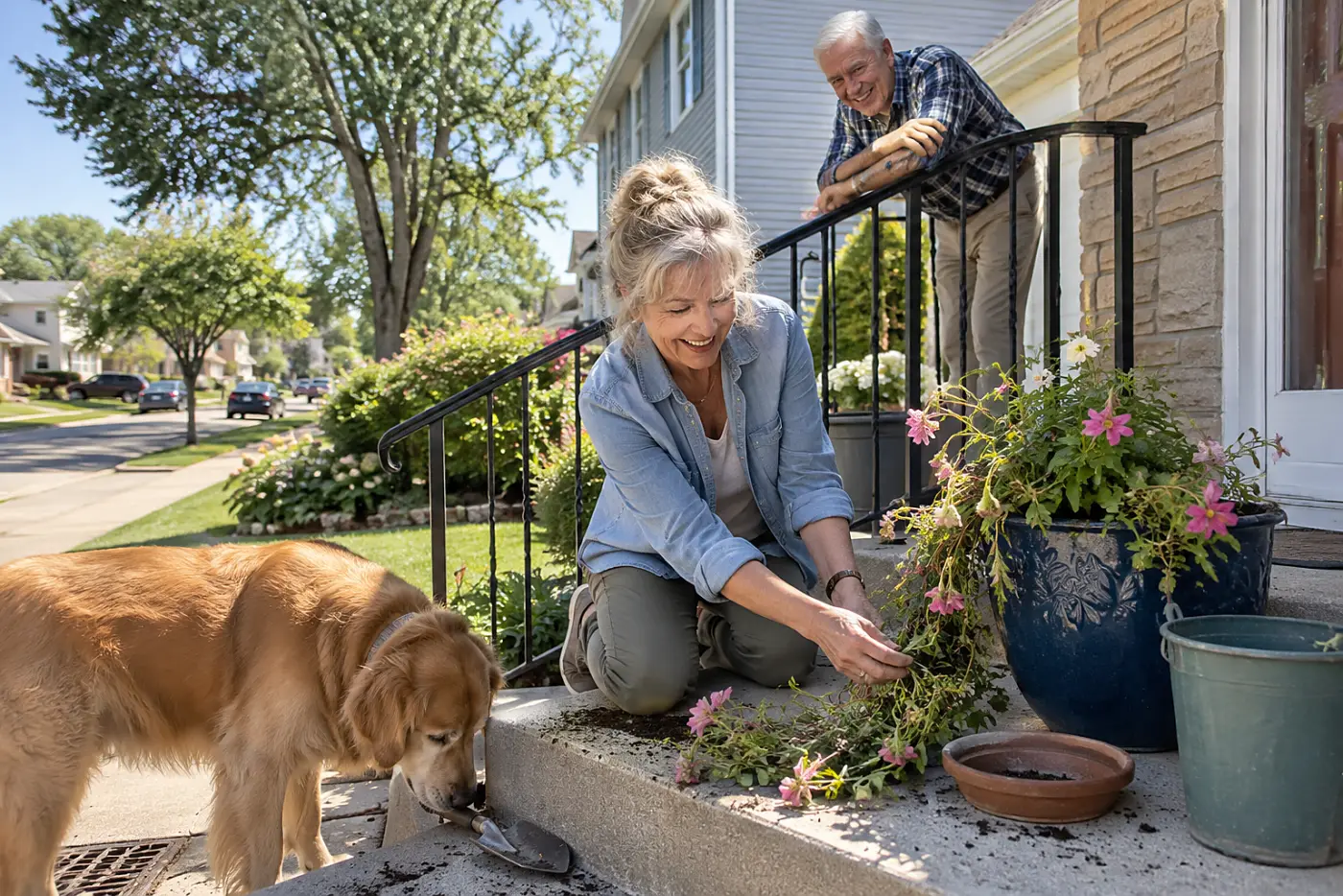


26 Ways People Say a Pet Lets Them Know She Is Still Around
The dent in the quilt, the leash hook, the click of a heater vent: what you notice after a pet dies, without having to explain it.
By Ruth Ellison, Family Editor
Updated · 10 min read
- Written by our family editor
- Cited 8 sources
- How we review
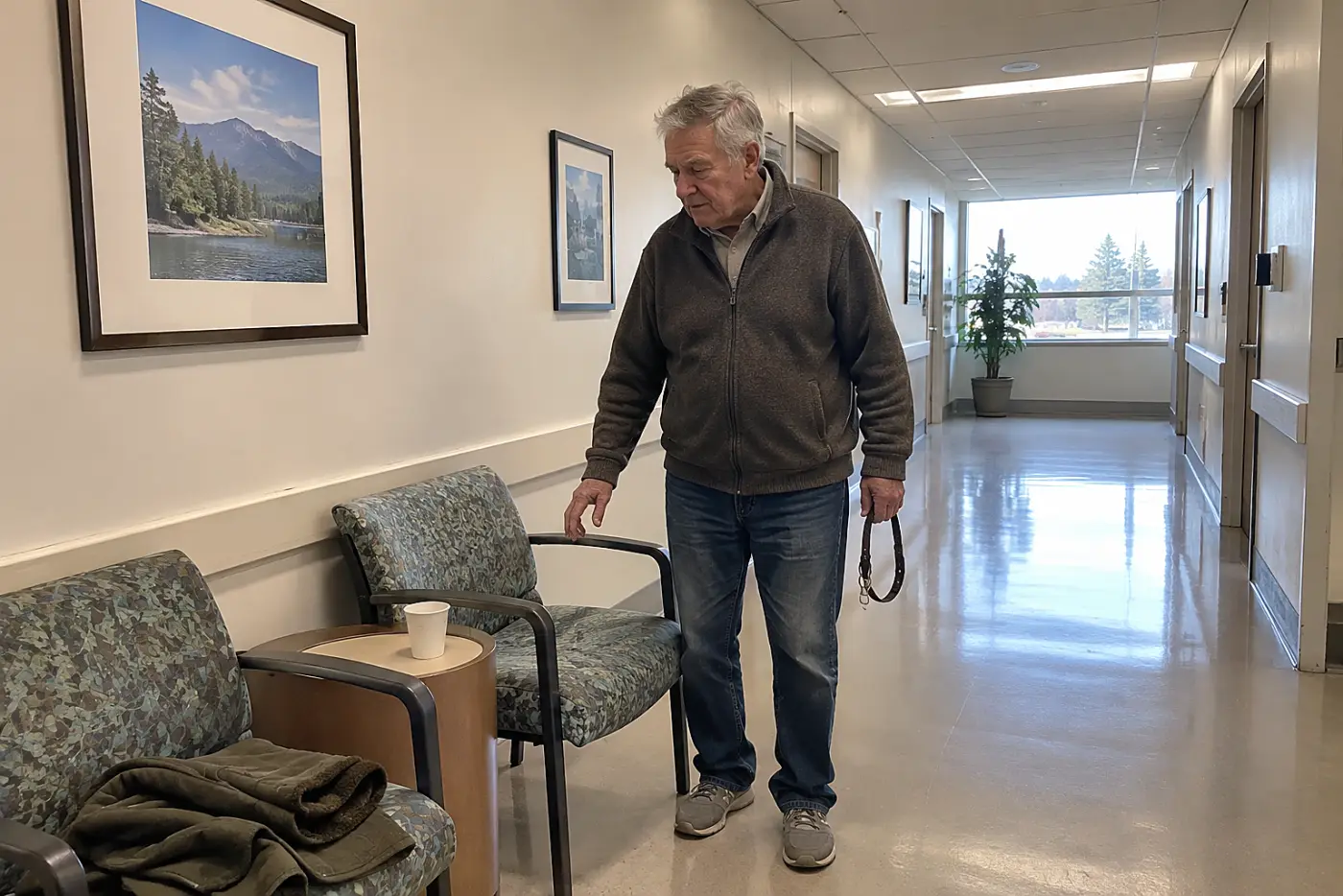
You turn over, and the sheets feel cool where she used to curl up. For a second, you hold still. Your hand knows where to reach, even though you know she isn't there.
26The jingling collar in the hall
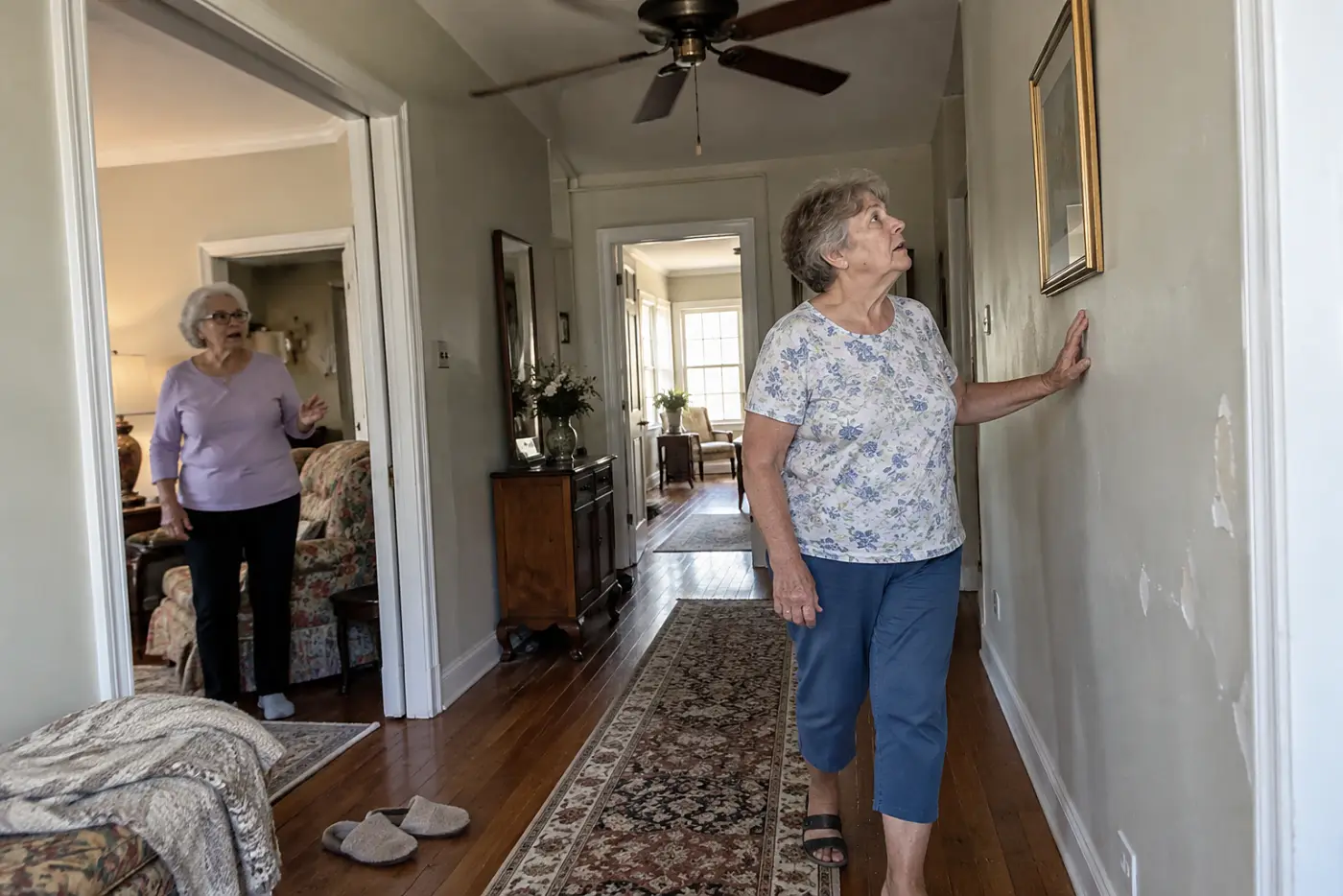
There it is: the little metal rattle that used to announce her trip down the hallway. You look up before you remember. Then you hear the ceiling fan chain tap the glass shade.
Finding the source doesn't erase the first instant. Your ear learned that sound through years of listening for her. The chain is still tapping when you turn back toward the room.
25The scratch at the bedroom door
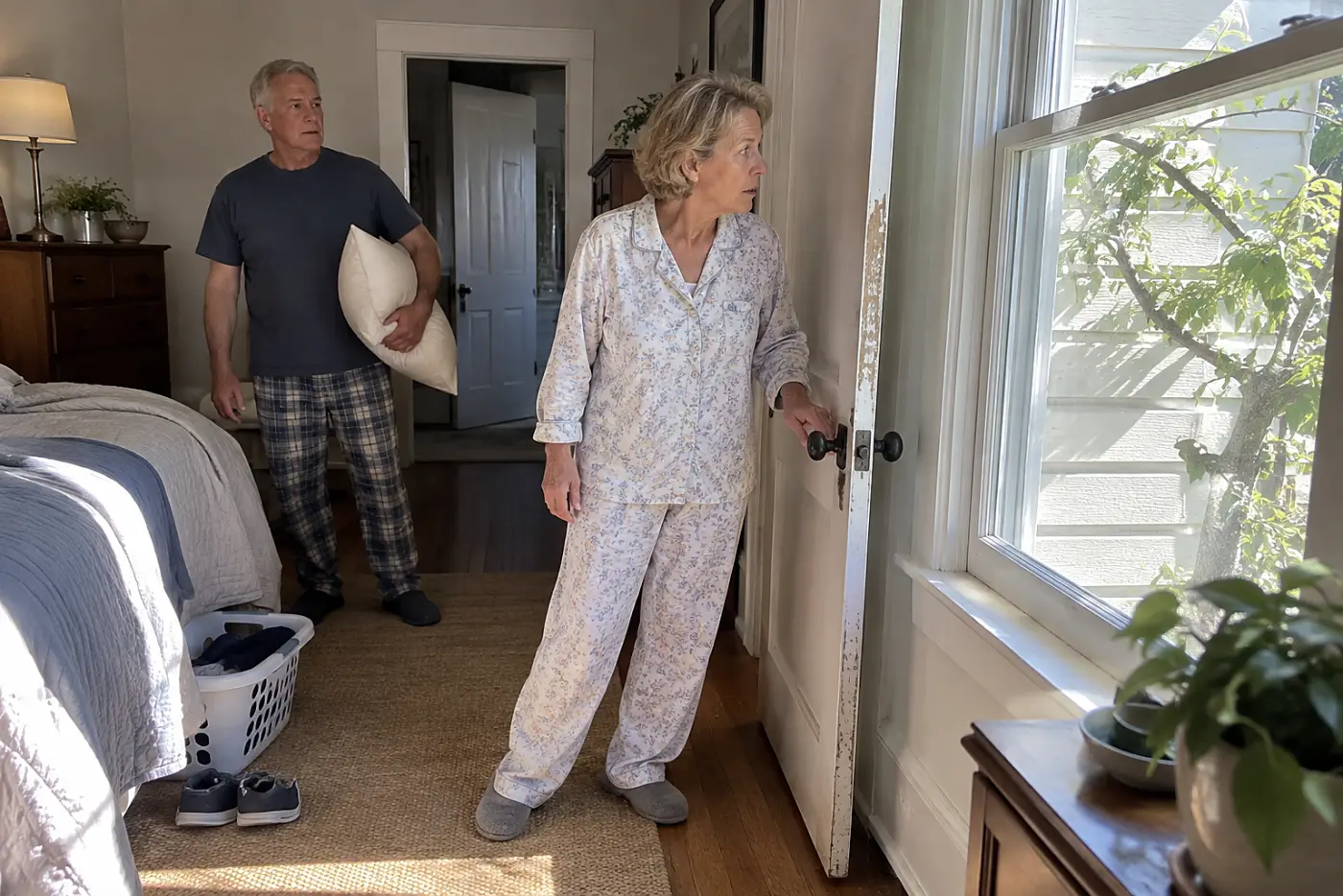
A branch drags across the siding. Your hand is already reaching for the door handle.
You opened that door for her over and over, sometimes half asleep. Step outside and check the branch if the sound keeps coming. Then come back in. The bedroom door is closed, but your hand remembers opening it for her.
24The warm spot on the sofa
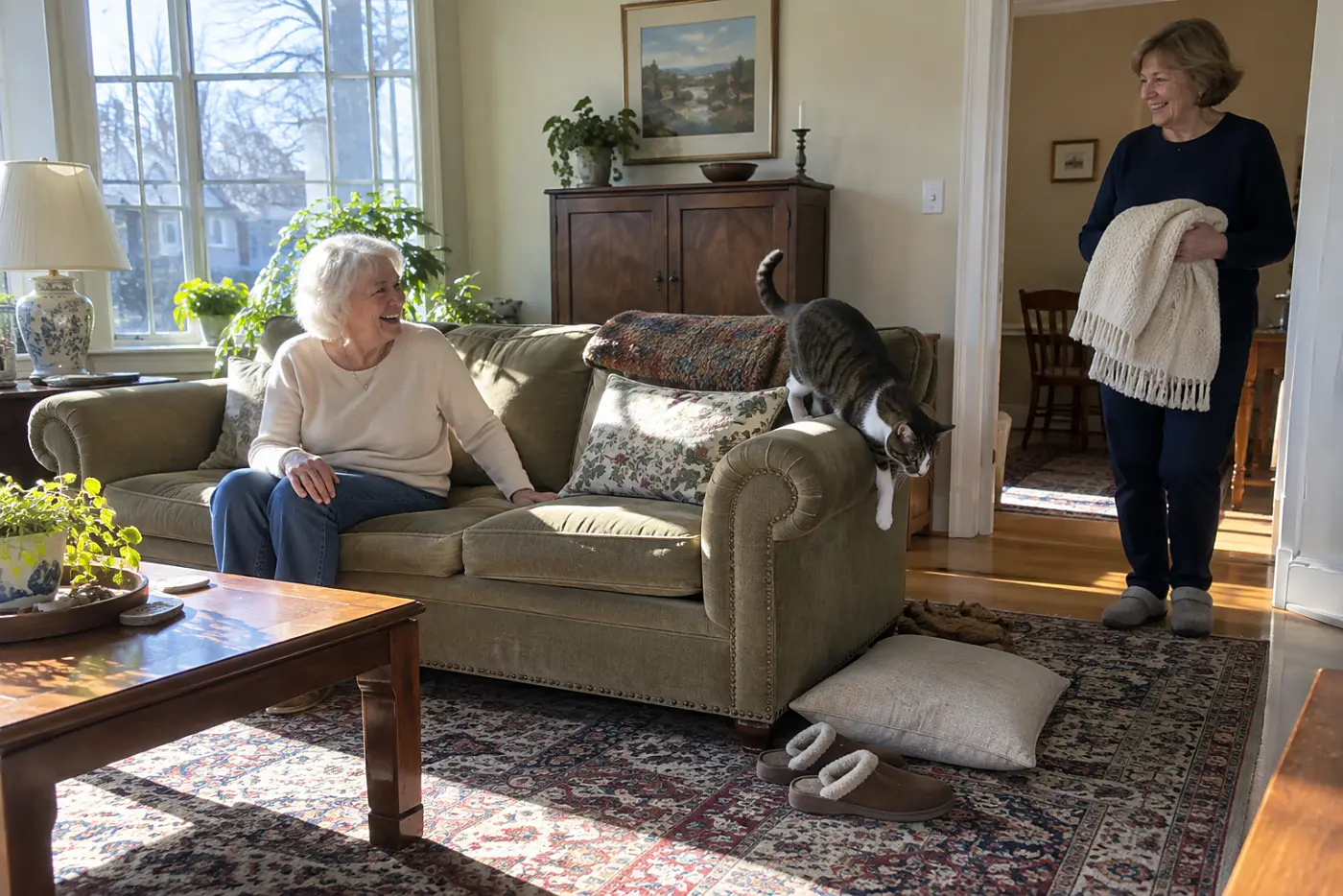
Sunlight lands on the cushion where she curled up. For a moment, the warm patch under your palm feels like a greeting.
Leave your hand there if you want. The cushion has held the sun before. It also held her, day after day. Both facts are right under your palm, and you don't need to turn either one into an answer.
23The empty space beside the coffee maker
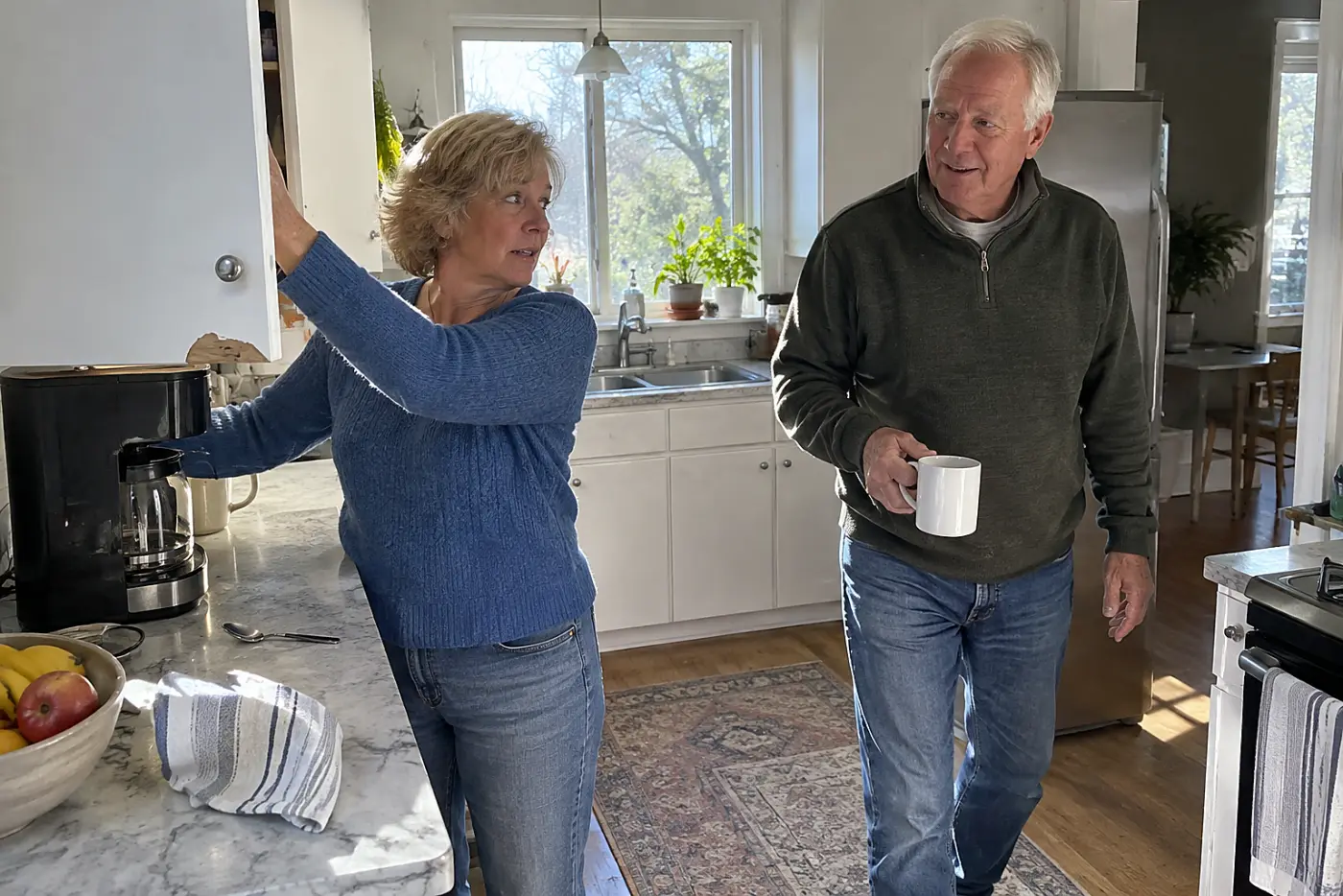
You used to fill her bowl while the coffee brewed. Now your hand reaches toward the cupboard before you've thought about it.
That reach is a record of care. Keep the bowl where it is for now, move it somewhere private, or give it away. None of those choices sets a deadline for missing her. If the empty space catches you every morning, change the arrangement for your own sake.
22The familiar smell in her blanket
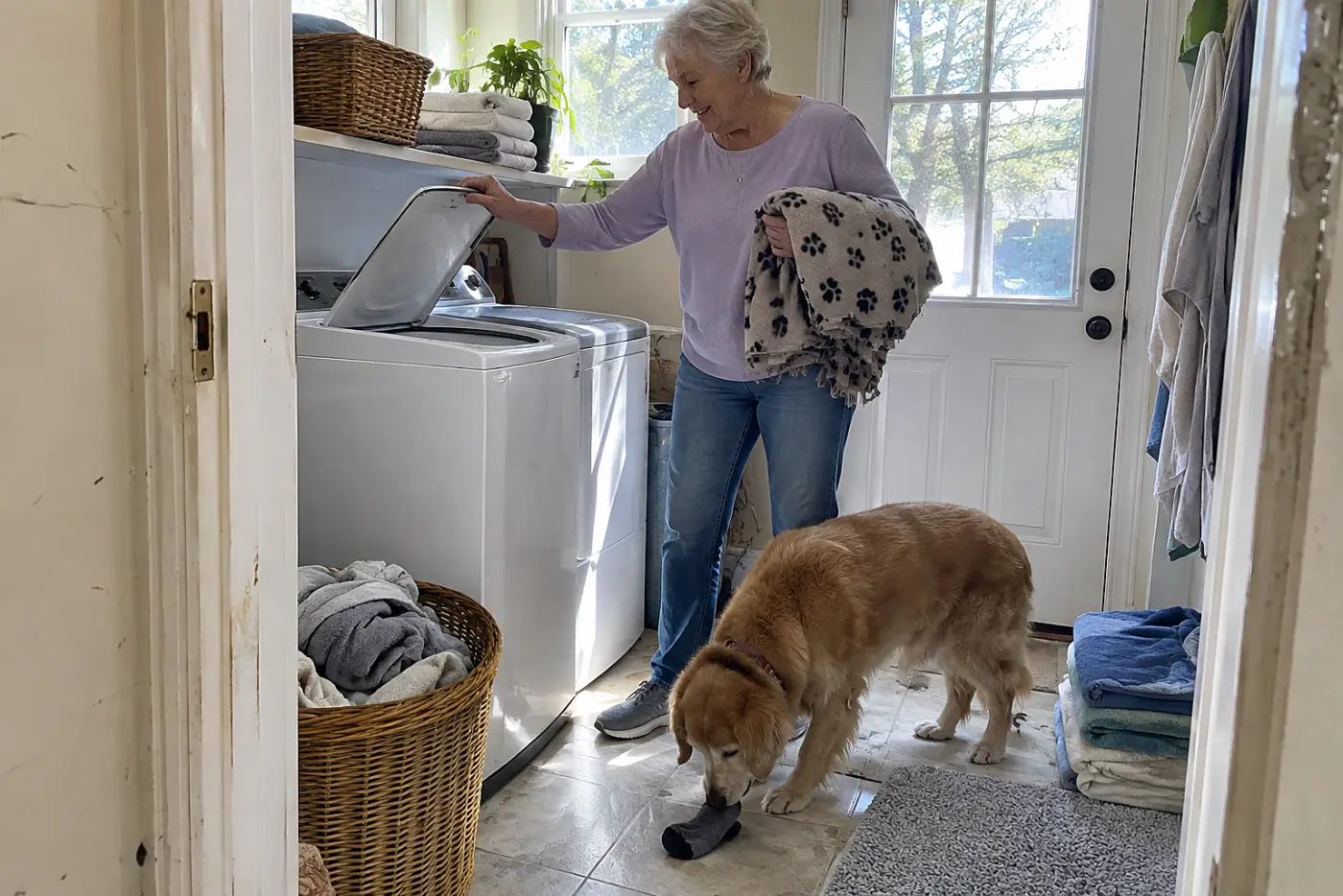
You lift the blanket to wash it and catch her smell. Suddenly you're back on the floor with her, your face pressed into her fur.
Decide whether to wash it before you start the machine. If you want to keep the scent a little longer, fold the blanket into a clean cotton bag. If you'd rather wash it today, that choice says nothing about how much you loved her.
21The shadow crossing the yard
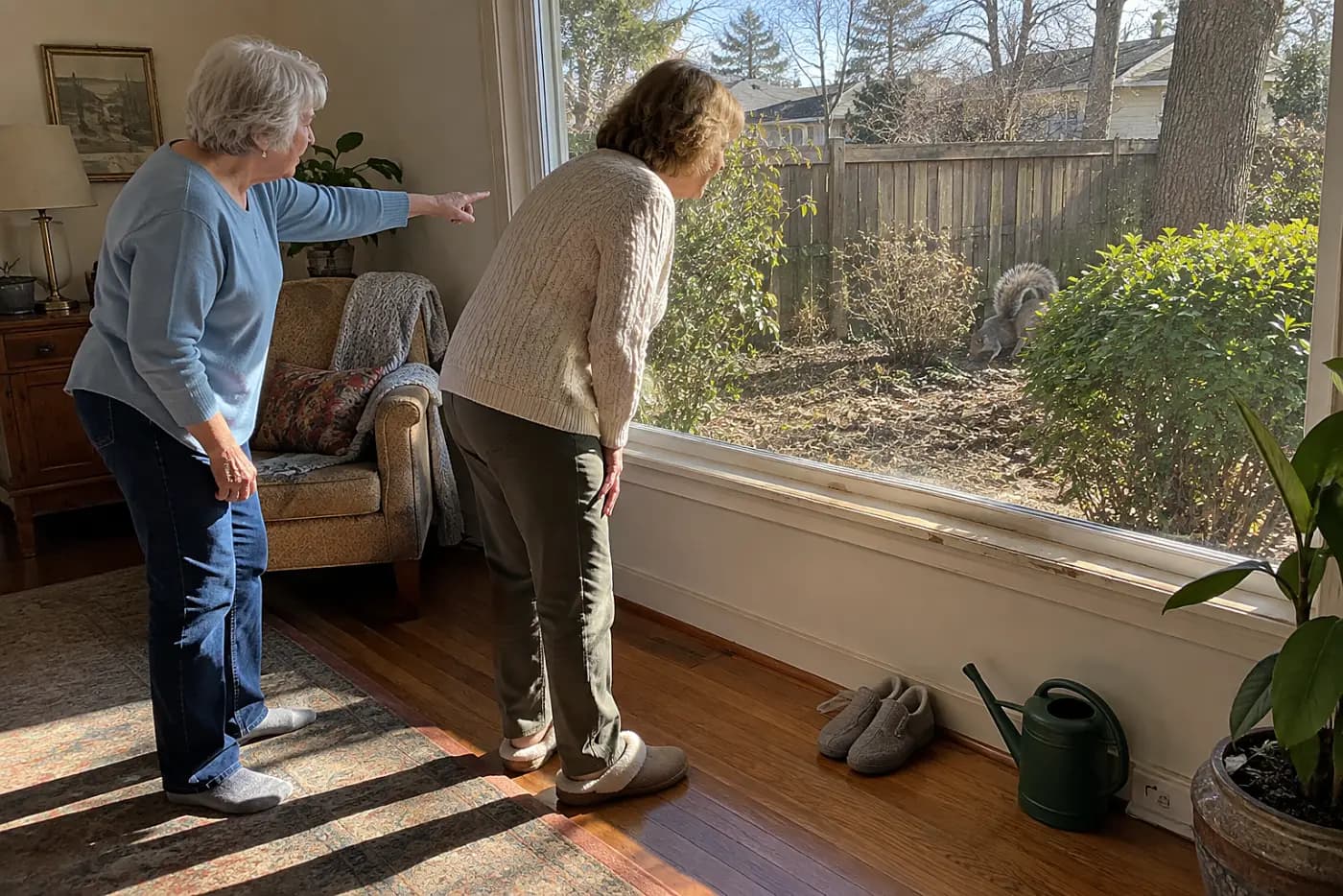
Something slips past the window at the edge of your sight. Outside, a squirrel runs along the fence where she used to patrol.
Peripheral vision is quick to complete a familiar picture. Look again if you need to. Then notice what drew your eyes: that patch of yard still belongs to the hours you spent watching her there.
20The fur on your black coat
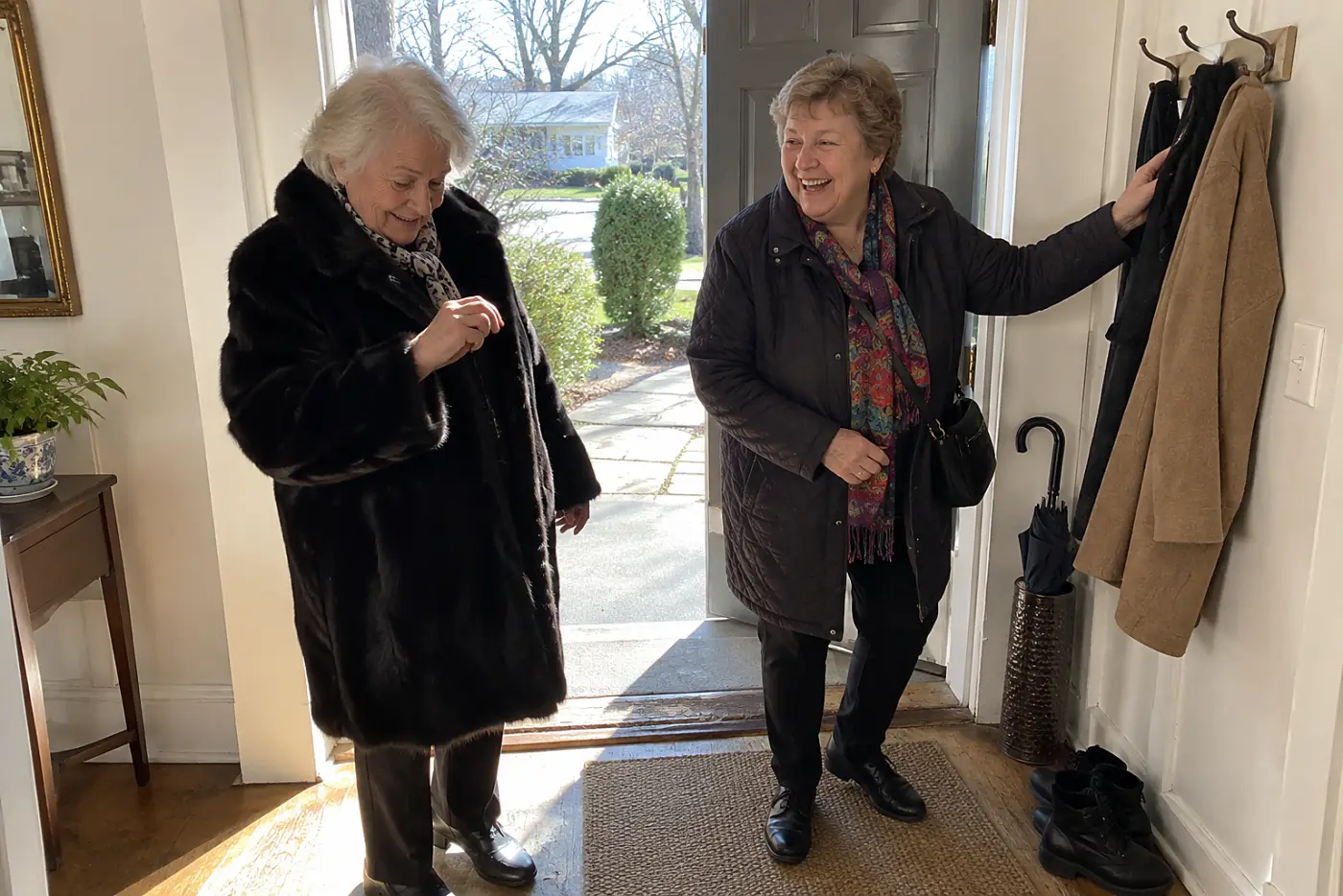
A strand of her fur appears on the sleeve you thought you'd cleaned. You pick it up, and the errand you were leaving for suddenly feels far away.
There isn't a correct place to put that strand. Brush it off, tuck it into a pocket, or stand by the door for a minute. Then the errand is still there, along with whatever you chose to do with the fur.
19The name you call by accident
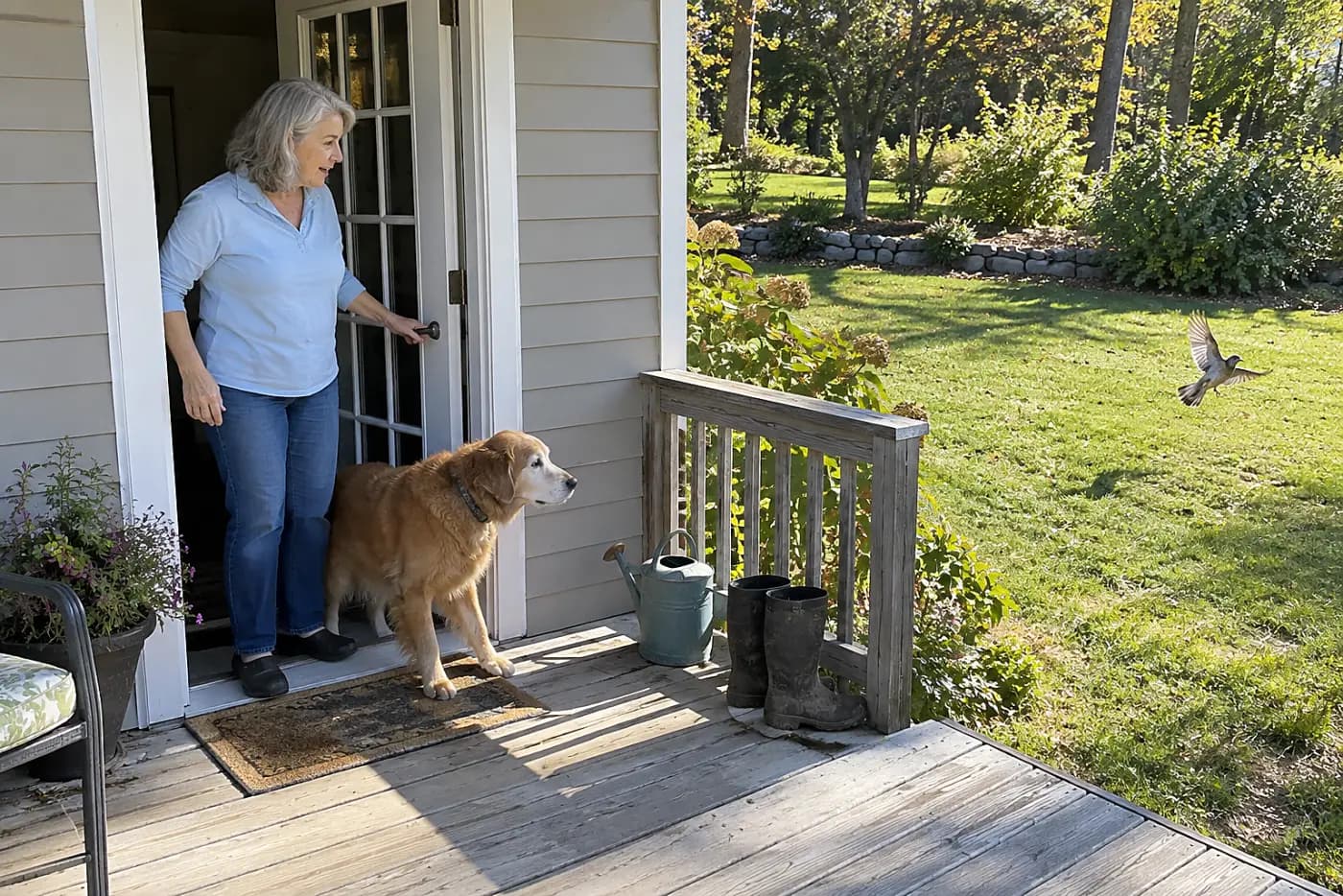
Did you hear yourself say it? You open the back door, call her name into the yard, and wait through the pause that used to follow.
For years, that name belonged to the moment the door opened. The air outside hasn't changed because you spoke. A leaf moves along the step. Behind you, the open door waits for your hand.
See more: 23 Things to Say to a Friend Who Just Lost Her Husband →
18The weight of the unopened treat jar
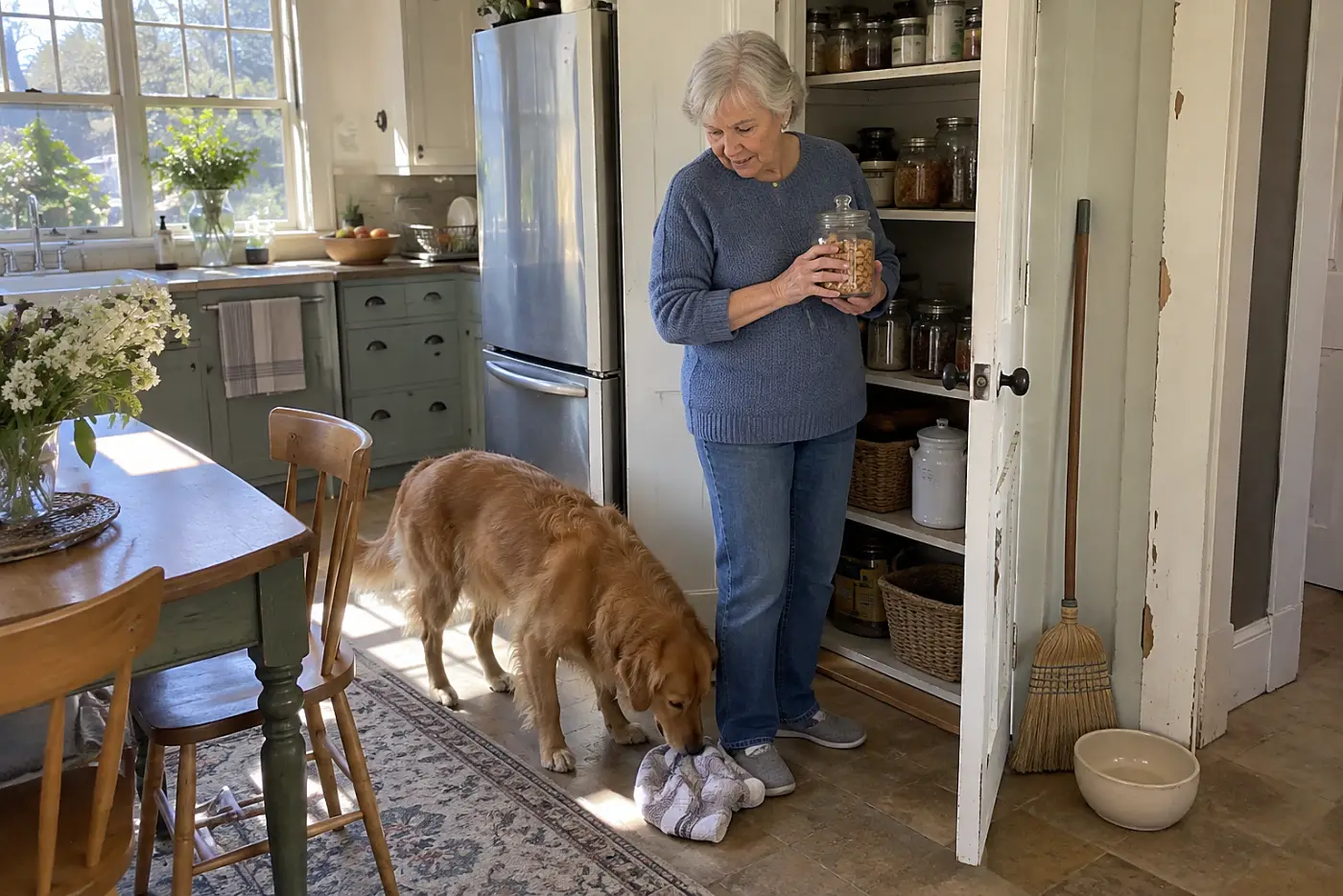
The treats have gone stale, but the jar is still on the shelf. Its lid fits your hand exactly as it did when she waited below you.
Throwing out food is a household job, not a verdict on her life. Set the jar aside if opening it is too much today. When you empty it, keep it only if you want the jar. Its familiar weight doesn't decide for you.
17The movement beneath the chair
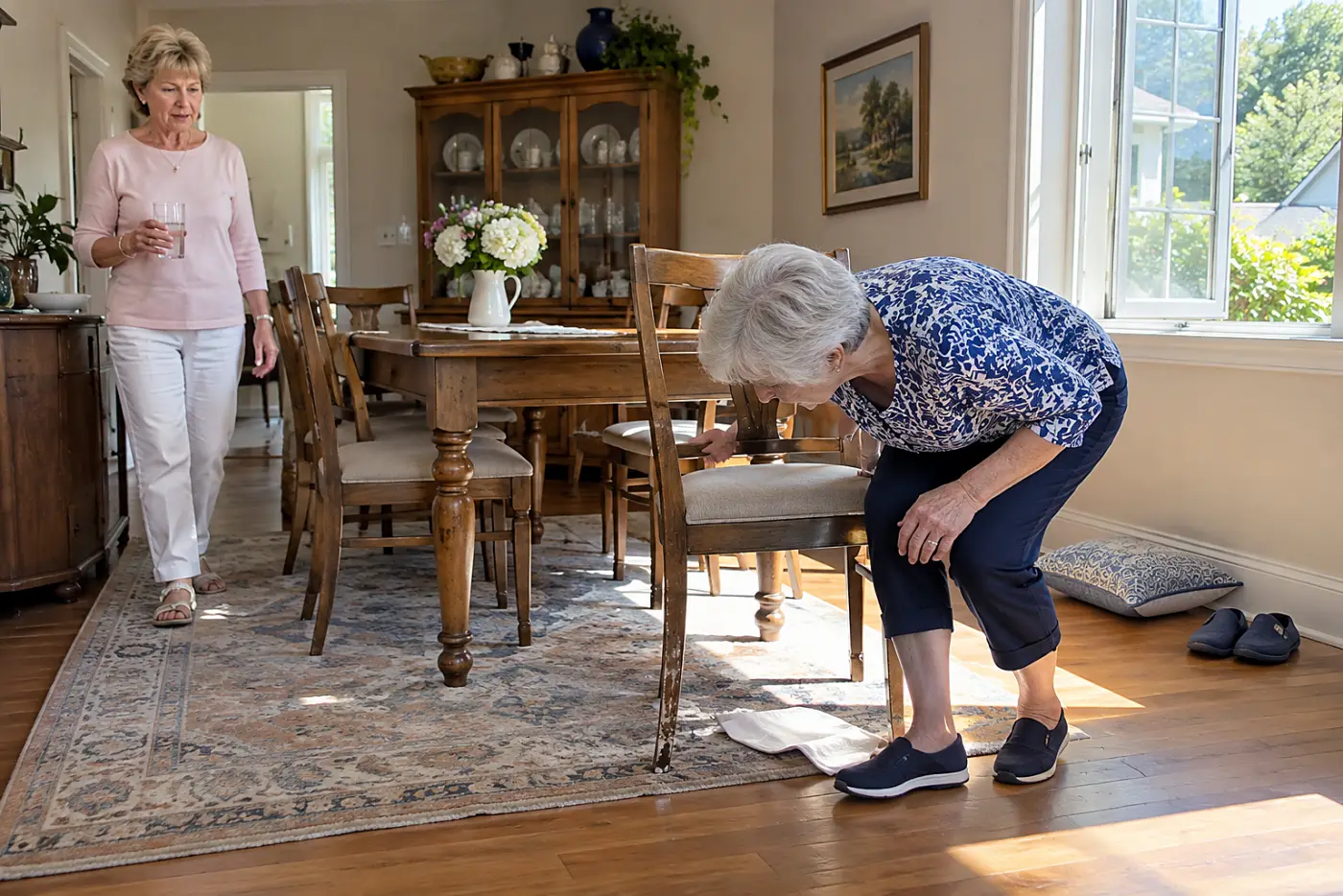
A napkin shifts in the draft, and you look down for her nose. She always turned up when food appeared.
Once you've found the napkin, the feeling can linger. That's the awkward part people leave out. You saw what moved, yet your body hasn't caught up. Give it a moment. Finish your meal when you're ready.
16The pause before switching off the lamp
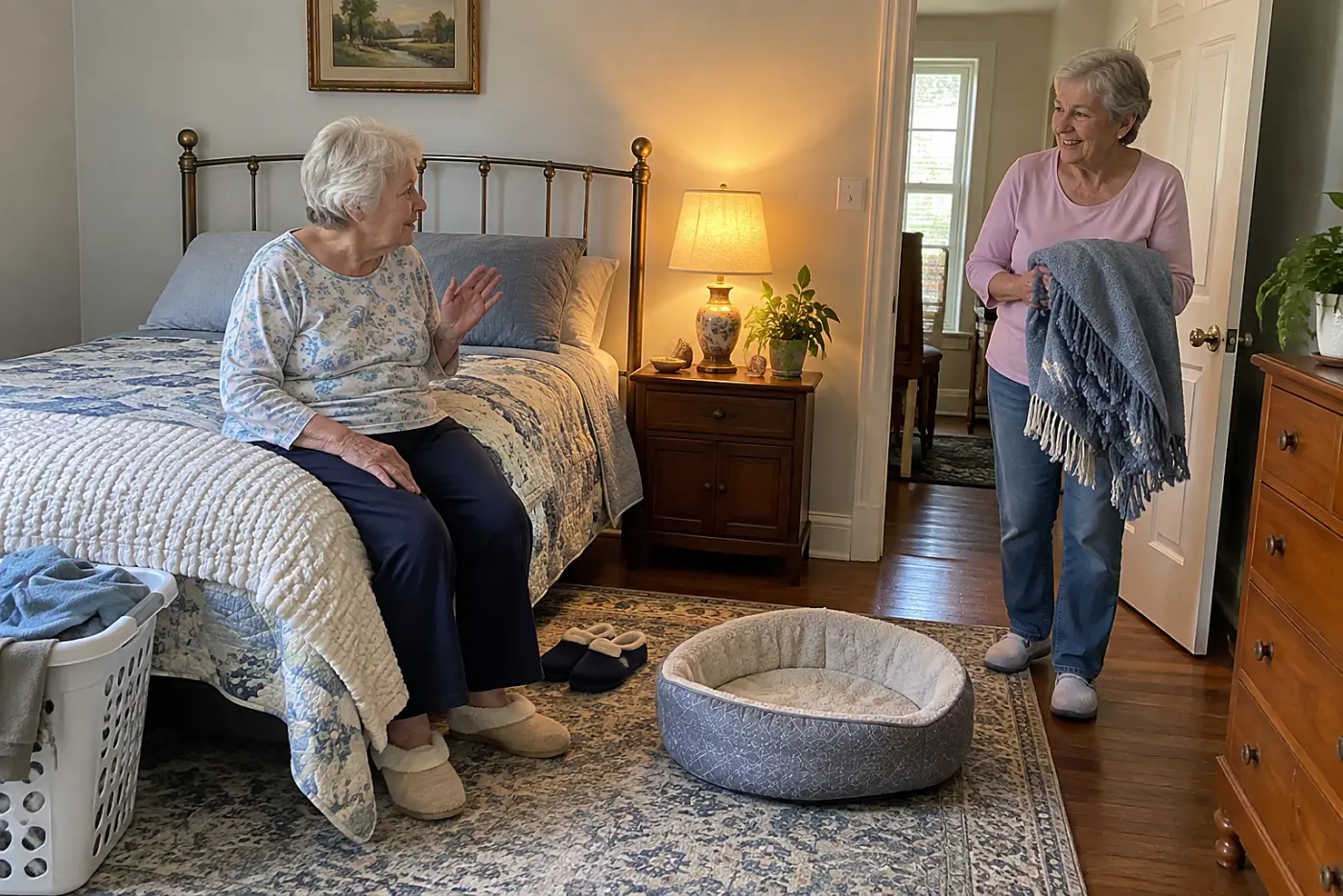
At bedtime, you glance toward her sleeping place. You used to wait for her to settle before you turned off the light.
Tonight, try leaving the lamp on while you get comfortable, if that helps. Or switch it off at once. The pause has a history. Changing the routine won't take that history away, and keeping it won't bring her back. You get to decide what makes the room bearable.
Even 10 minutes with the lamp on gives you room to notice what feels better tonight. Tomorrow's bedtime doesn't have to look the same.
15The dog across the street
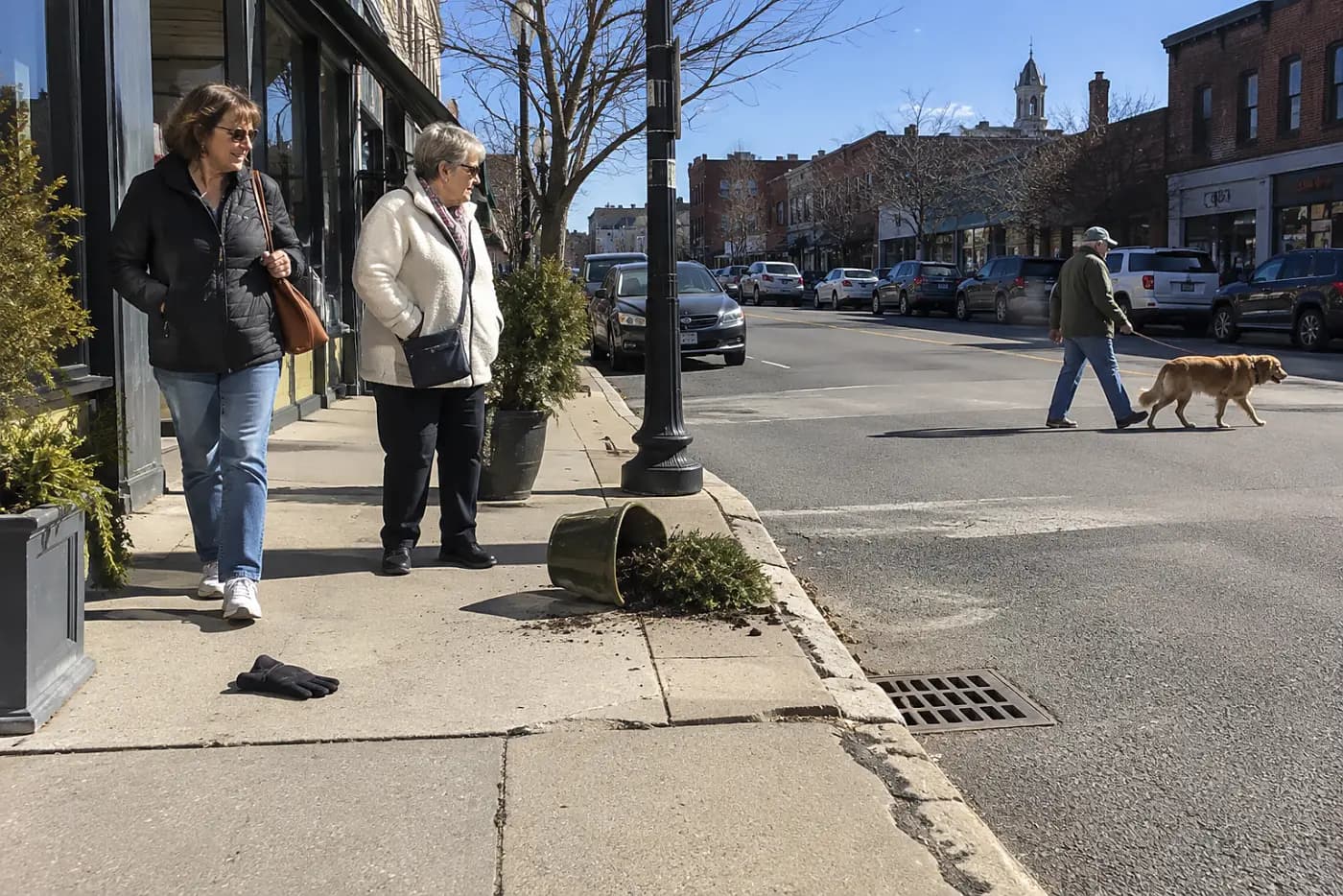
A stranger's dog has her walk. You stop on the sidewalk long enough to watch the tail swing.
The owner is already halfway down the block. You don't have to follow or ask to pet the dog. Stay where you are and watch him reach the corner. When you start walking again, the resemblance comes with you.
14The missing sound of her bowl
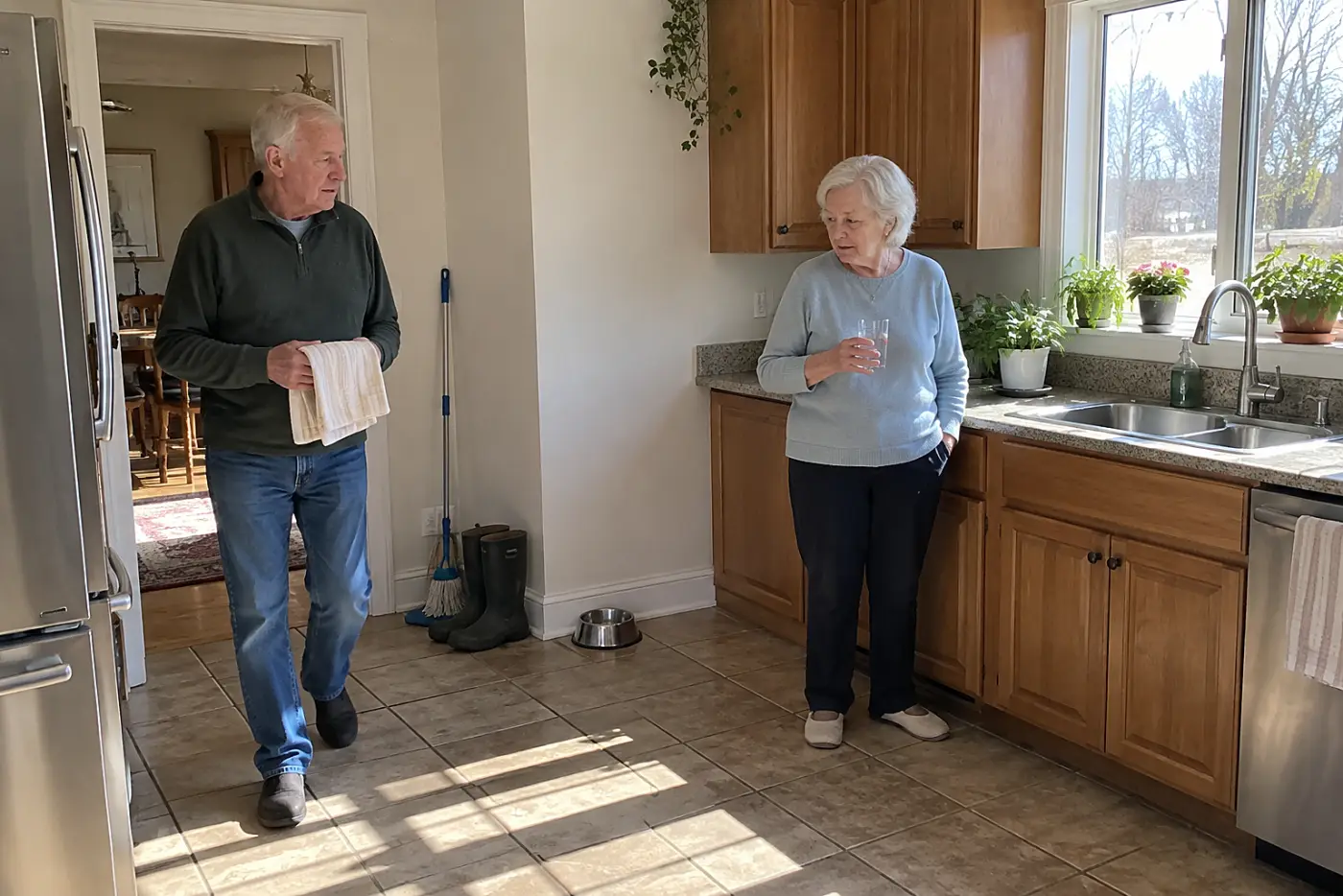
You set down a glass, and the small clink sends you toward the corner where her bowl stood.
Household sounds have their own routes through memory. Before you move furniture into that corner, ask whether you want it filled yet. An empty patch of floor is allowed to stay empty. So is a shelf, a hook, or the place beside your chair.
13The rain at the back steps
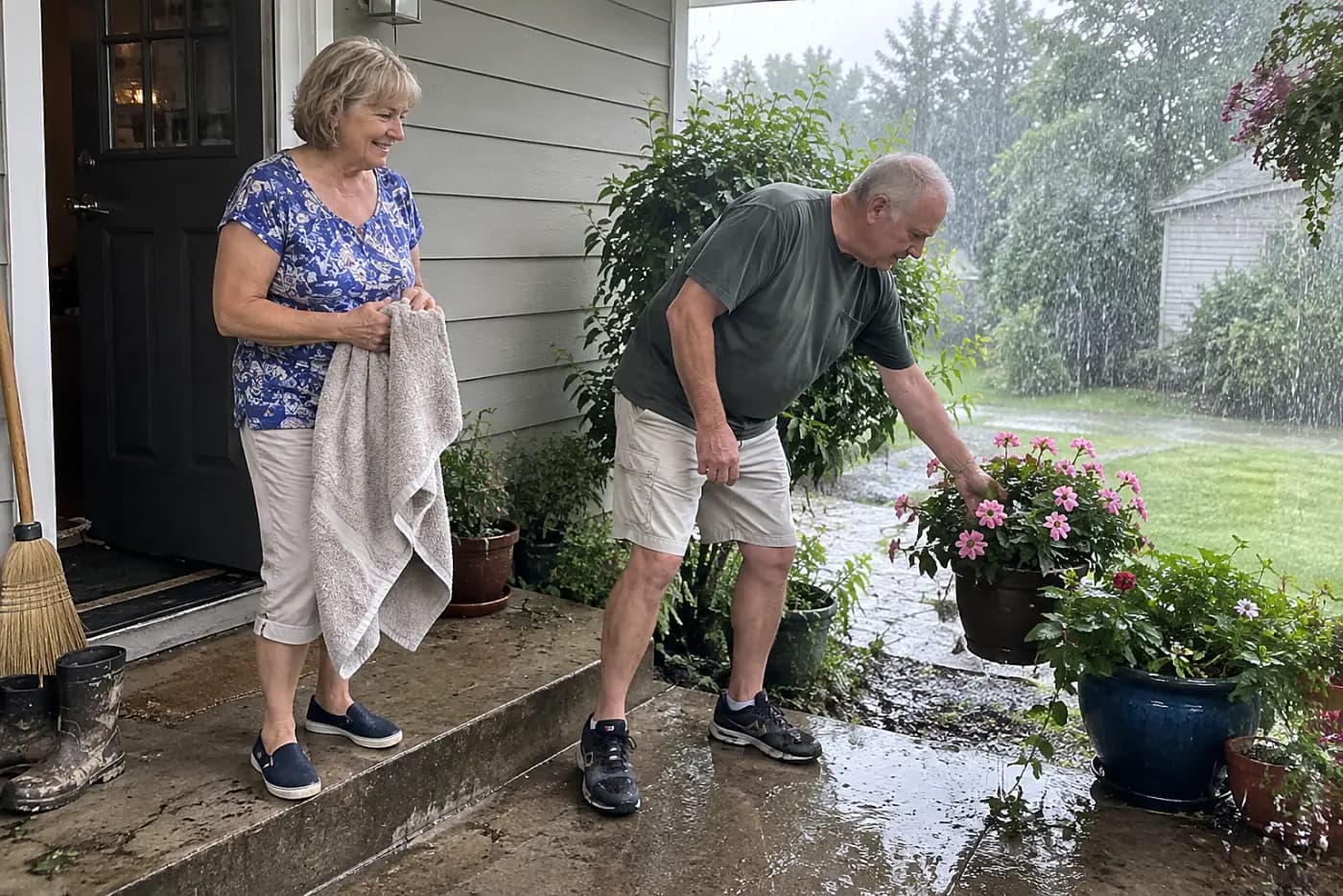
The towel is still hanging by the door. Rain starts, and you picture her waiting under the eave, refusing to get wet.
Use the towel for muddy shoes, put it away, or leave it hanging. On a rainy day, the memory arrives whether you touch the towel or not. For now, the towel stays within reach as you look out at the steps.
12The little ceremony at the garden gate
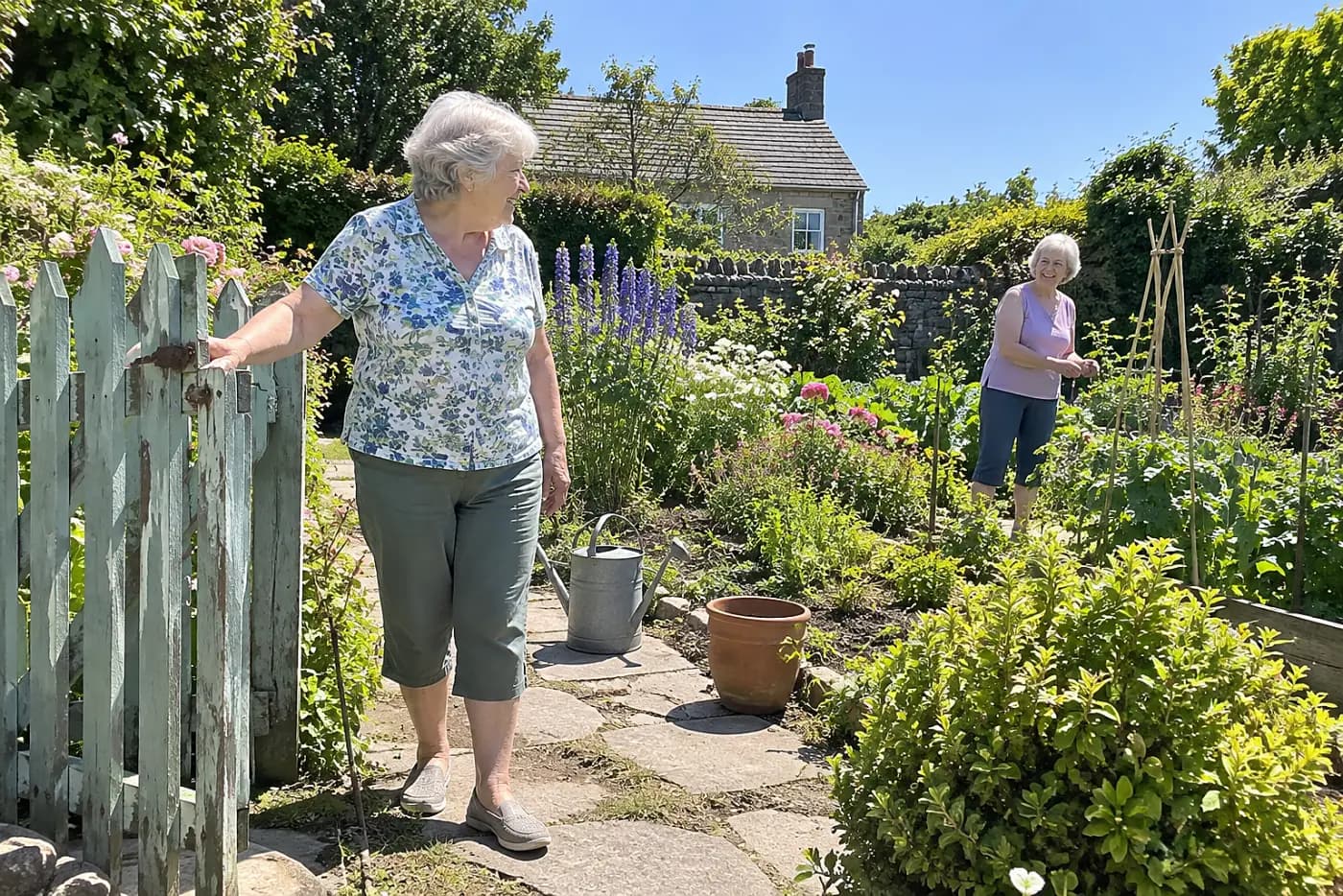
You touch the gate latch before going inside. She used to meet you there, and the gesture began without any plan.
Small rituals belong to the person doing them. If touching the latch helps, keep doing it. If you skip it one day, nothing has been broken. You aren't being graded on how faithfully you remember.
Perhaps you planted something nearby. Perhaps the gate is the whole memorial. Either way, it's a place where your hand knows what your words haven't settled.
See more: 23 Things: What Happens to a Garden the Year Its Gardener Is Grieving →
11The click from the heater vent
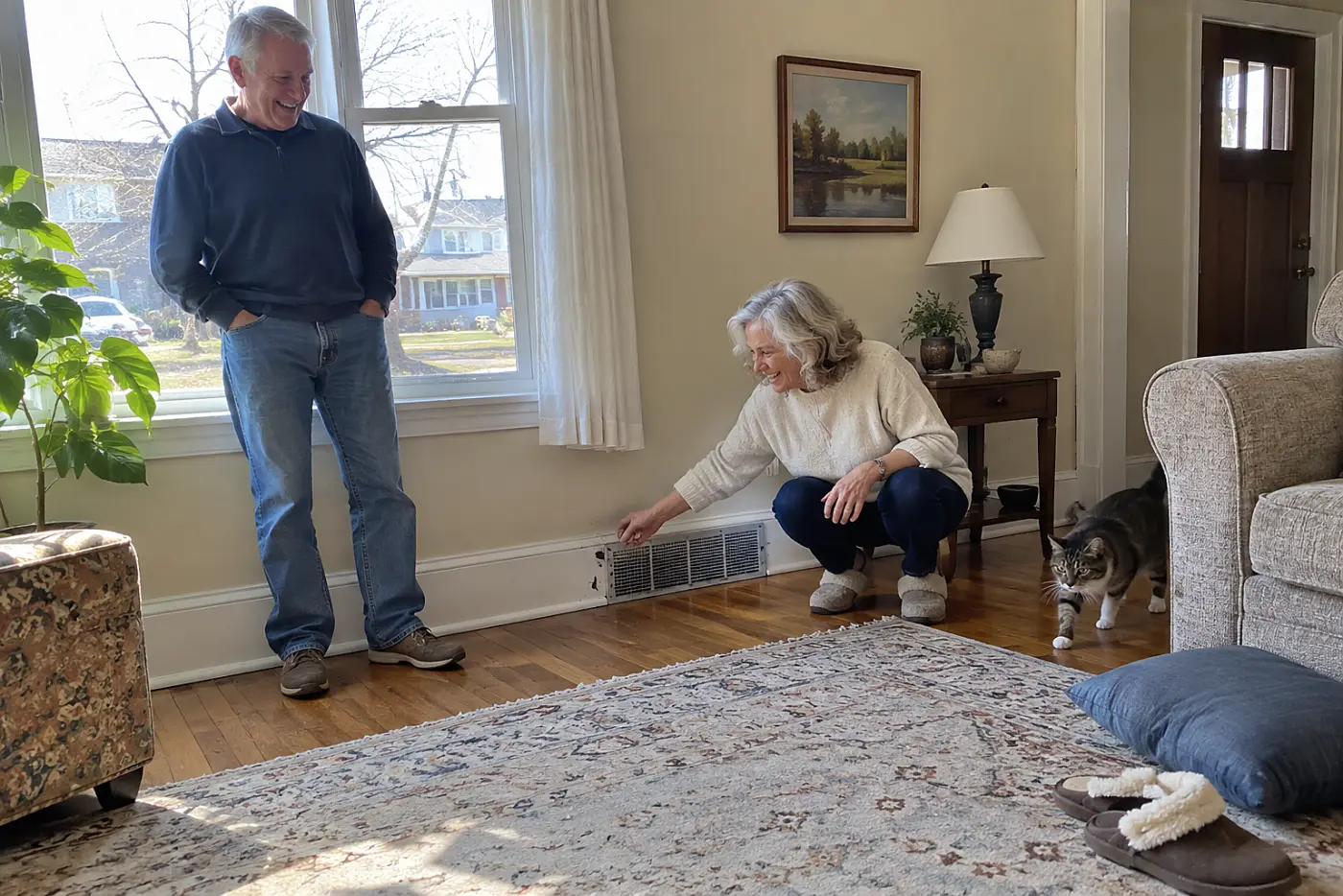
The heat comes on. Metal ticks, and for an instant you hear her nails on the floor.
Check the vent if the sound is new or persistent. If it's the same harmless click you've heard all winter, you can leave it alone. Recognition came first because you spent a long time listening for her approach.
10The turn toward the old walking route
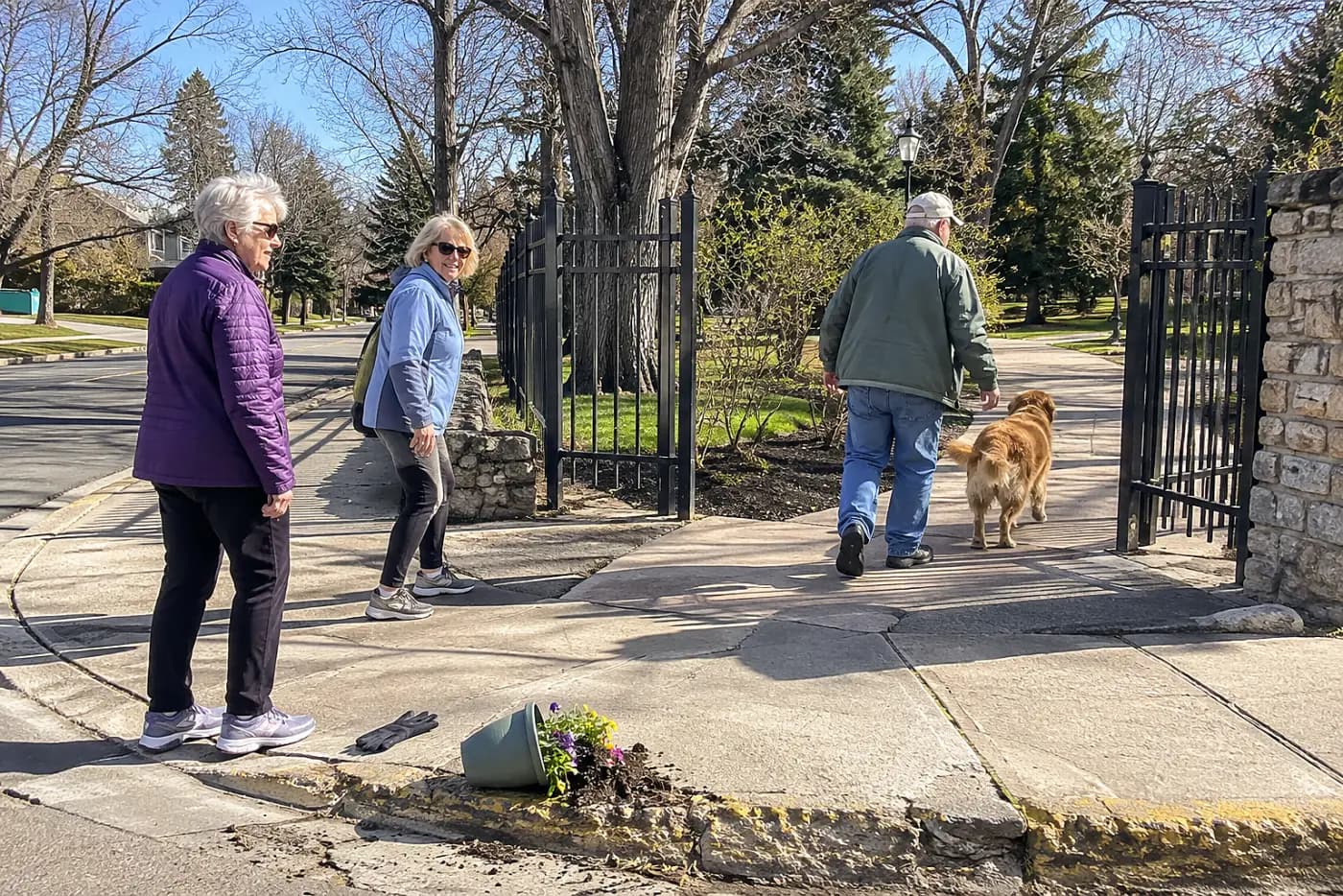
Your feet take the path toward the park before you remember there's no leash in your hand. At the corner, you stop.
You can walk the route anyway. You can turn toward the store instead. If one part feels too hard, take a shorter loop. The street hasn't changed, but your reason for walking it has. No one watching from a porch knows what that corner holds for you.
9The thumbprint on the food scoop
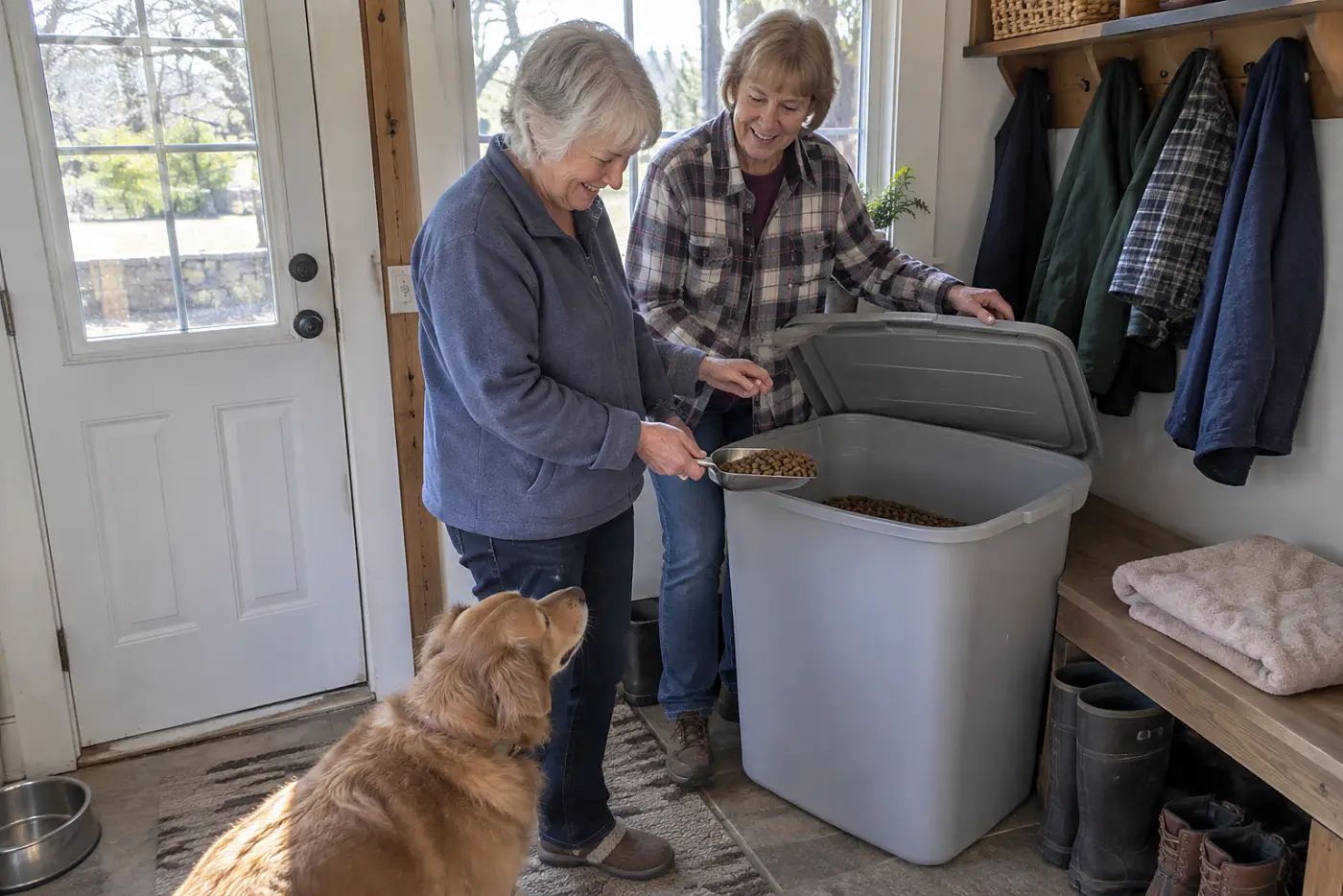
You reach into the bin and find the scoop still there, worn where your thumb rested.
Wash it, save it, or give it away with the remaining food if the food is safe to donate. Check the printed use-by date first. Then call a local shelter to ask whether it takes that food and opened bags. The scoop is a tool. It's also proof of how many ordinary mornings you showed up for her.
8The sound from an empty room
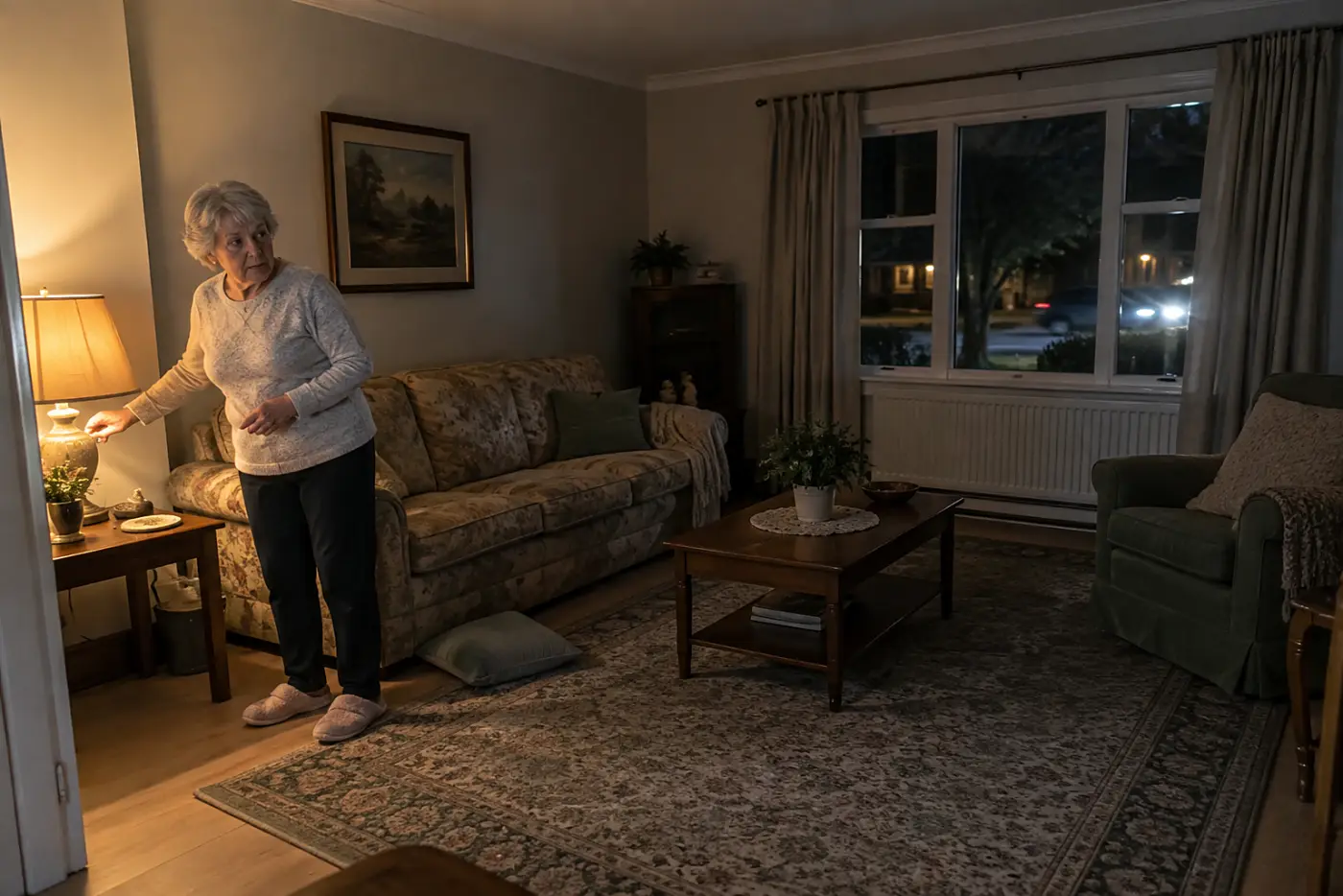
At night, the house makes a noise that sounds like her sigh. You sit up and listen. It doesn't come again.
Turn on a light if you need to. Check the room. You can be certain she's gone and still feel startled by a familiar sound. Those thoughts fit in the same night. Afterward, do whatever gets you back to sleep, even if that means moving to the sofa.
7The reminder on your calendar
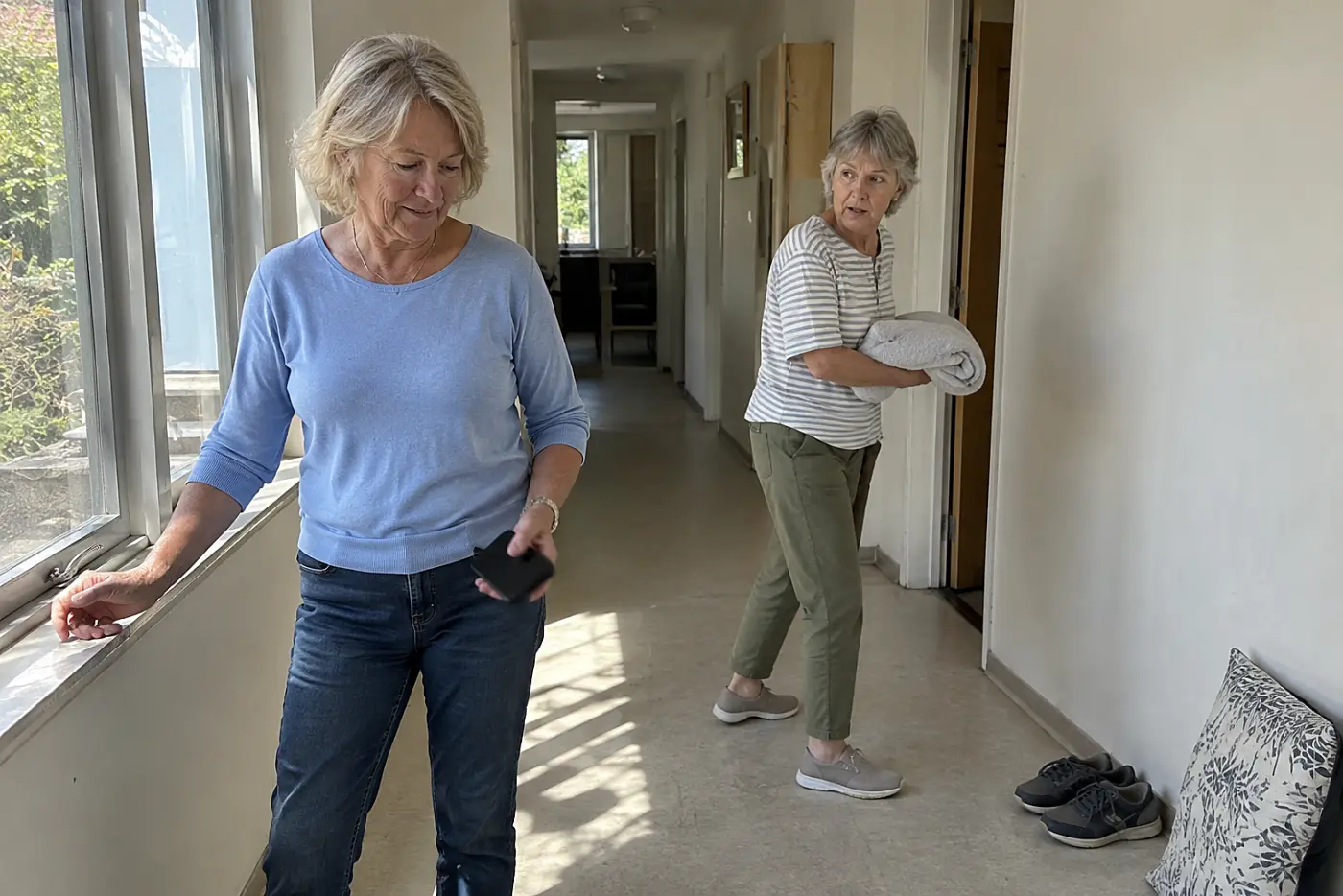
Your phone tells you it's time for her appointment. You forgot to delete the alert, and now it's glowing in your hand.
You have choices besides dismissing it in a hurry. Rename it with a memory, move it to another date, or delete it. If you kept medication reminders, check that none will wake you unexpectedly. A notification is a setting you control, even when the feeling it brings isn't.
6The brush of air against your ankle
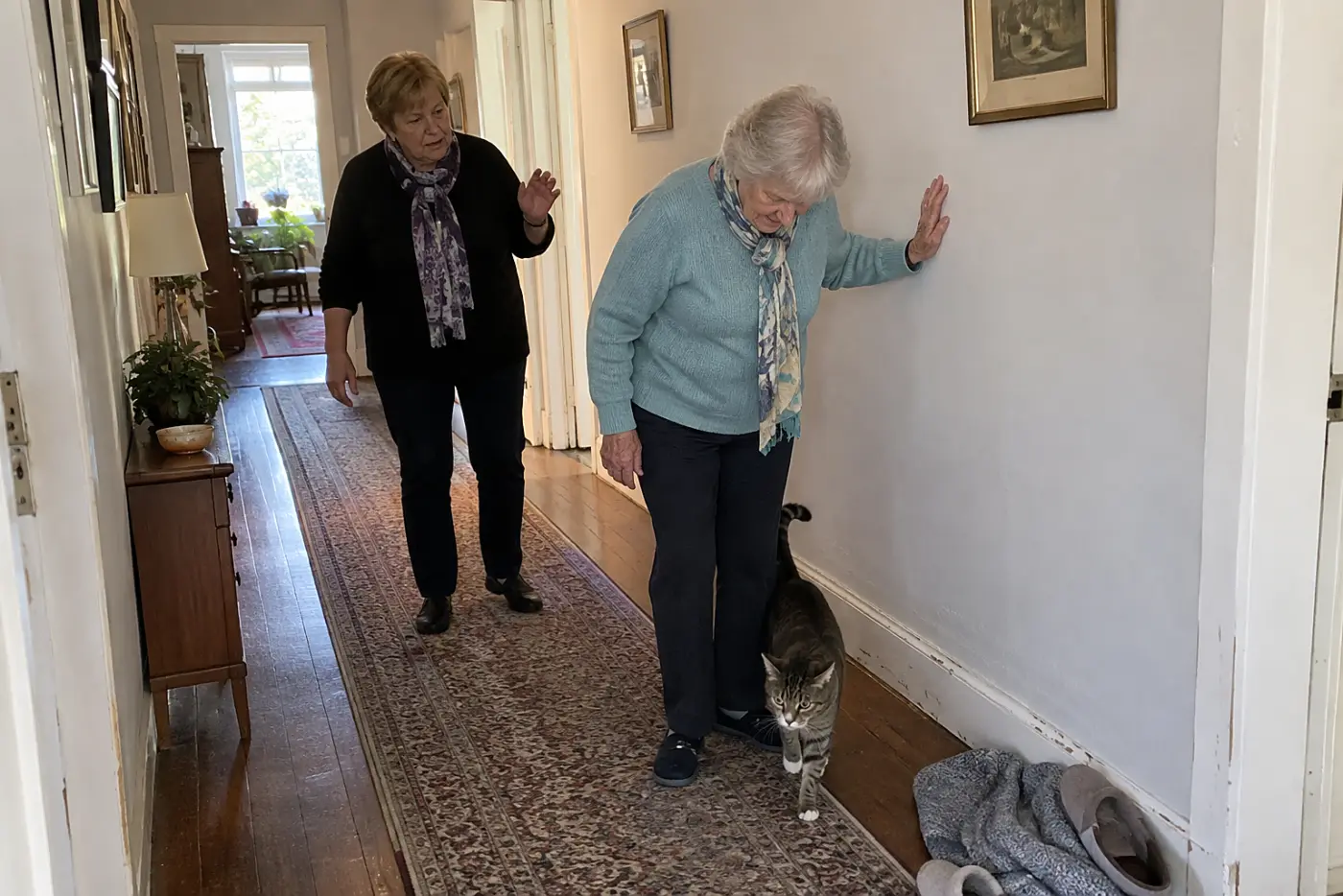
Something passes your leg in the hallway. You look down, expecting her.
First, make sure there's nothing underfoot to trip over. Then take a breath. Air from a vent, loose fabric, and a body braced for a familiar touch all belong in this moment. You don't have to pick an explanation before you steady yourself.
5The question you don't ask aloud

Was that really her? The question arrives before you've even decided whether to tell anyone about the familiar brush against your ankle.
You won't get a test that settles it for everyone. You do get to describe what you felt without adding a claim you don't believe. Try, “I felt something pass my leg, and I thought of her.” That sentence tells the truth about your experience. It leaves room for what you don't know.
4The drive past the veterinary clinic
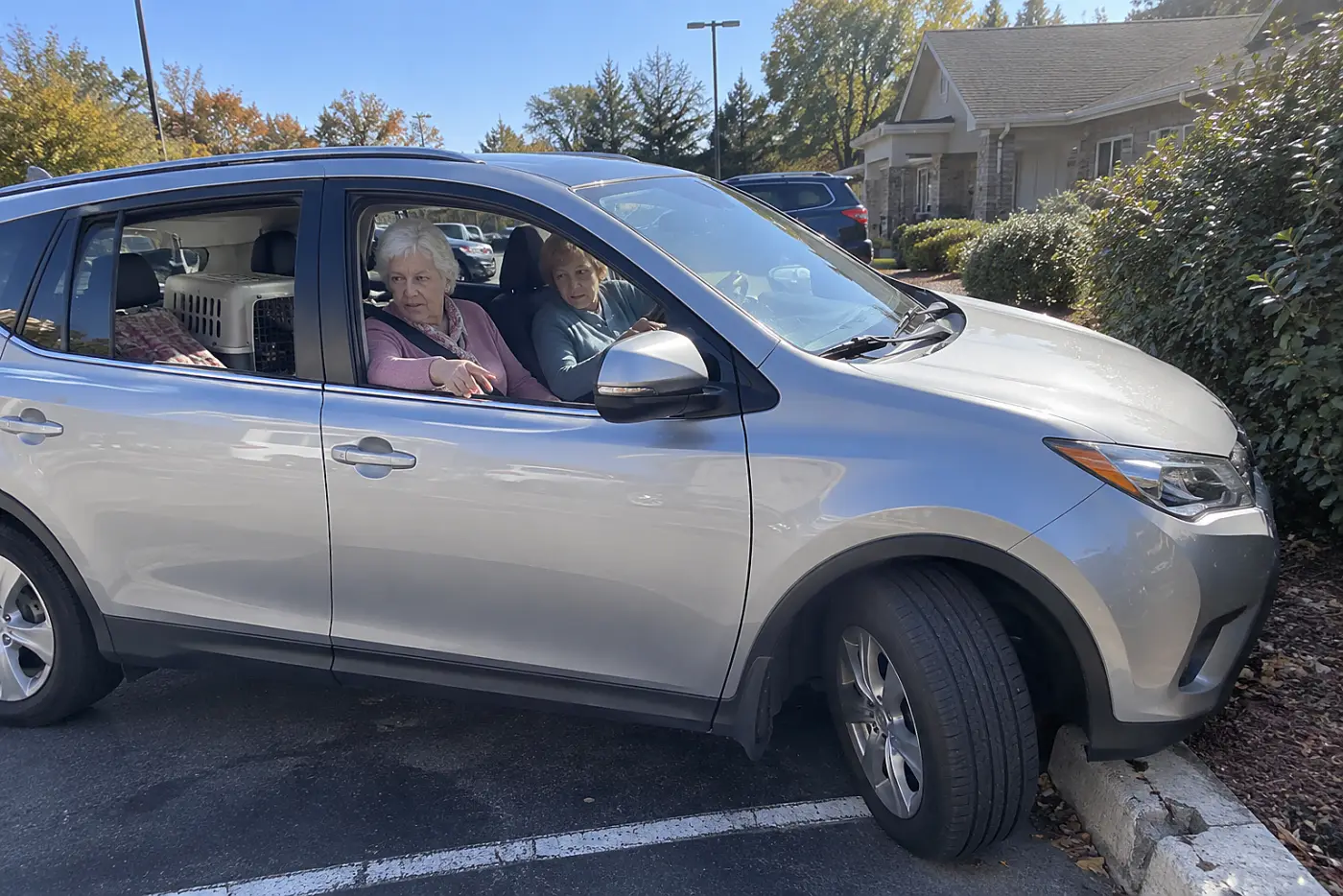
You pass the clinic and remember carrying her inside. Your hands tighten on the wheel.
If the memory is pulling your attention from traffic, pull into a safe parking place before you think it through. Later, choose another route if you need one.
The American Veterinary Medical Association and Association for Pet Loss and Bereavement both publish pet-loss resources. Look for them once you're home. You don't need to work through the memory at a stoplight.
See more: 23 Small Comforts an Aging Dog Wants Most From the Person He Chose →
3The leash hanging by the door
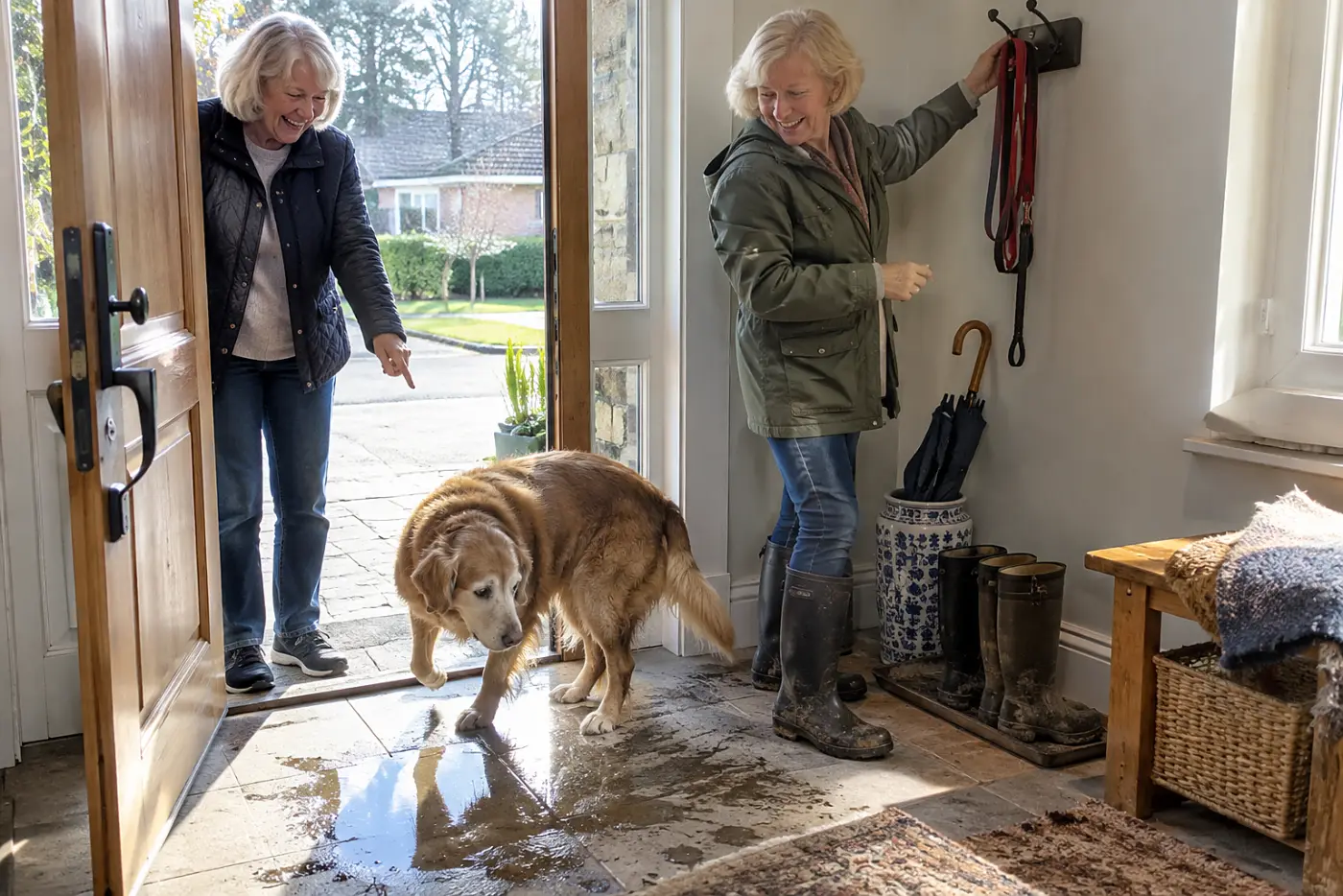
The leash swings when you brush past it. For one hopeful second, it looks like she's ready to go.
Take it down if that second hurts more than you want to bear. Leave it if you like seeing it there. Neither choice changes what you gave her. The hook served a daily purpose; now you decide what belongs on it.
2The story you choose to tell
Someone asks how you're doing, and last night comes to mind. You don't want a debate about spirits, sleep, or what grief does to a person.
You can say, “I had a strange night, and I miss her.” That's enough. For a friend who listens well, you can tell the whole story. For someone who turns every tender detail into an argument, keep it to yourself.
If you want support without explaining what happened, the ASPCA and Humane Society of the United States have pet-loss resources. The American Humane Society also writes about the bond between people and animals. Read what helps. Close what doesn't.
1The place beside your feet in bed
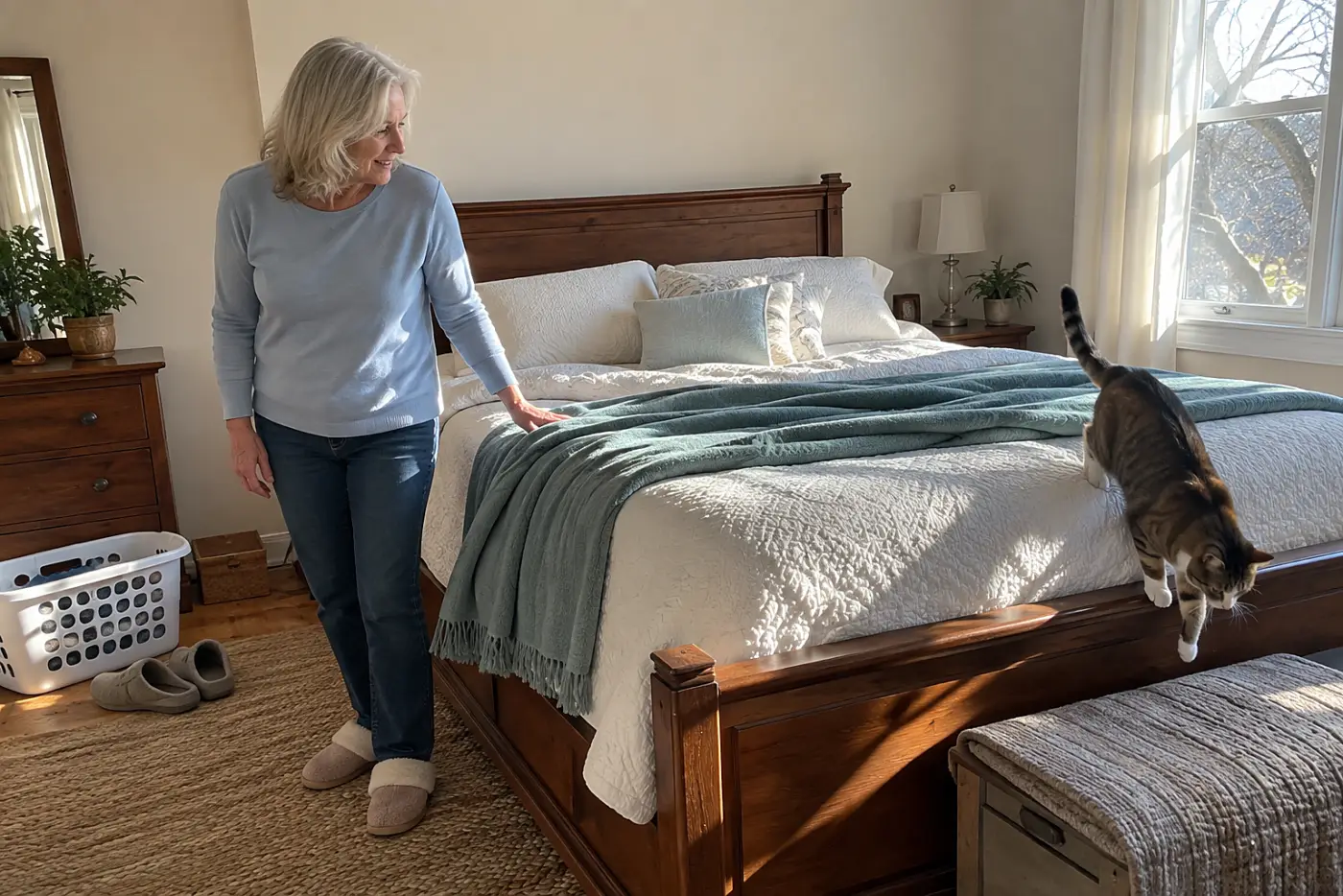
You felt the mattress dip. Before you decide what it meant, do a small check in daylight. Sit in your usual spot, then press your hand into the place where she slept. Shift your weight. Notice whether the bed frame moves or the bedding slides.
Try the check twice: once sitting still, then once as you turn over. The point isn't to prove yourself wrong. It's to give your mind something solid alongside a feeling you remember clearly.
If the sensation returns while you're falling asleep or waking, note when it happened. The Sleep Foundation describes vivid sensations around those transitions. For grief support, Lap of Love offers pet-loss resources. The National Alliance for Children's Grief has material for families with children mourning a pet.
You can check the bed, remember her weight, and still leave the deepest question unanswered.
The bottom line
The sounds, places, and routines you shared with her didn't disappear when she died. They still catch your eye, your hand, and your ear.
You've checked what needed checking. You know which objects you want nearby and which ones you'd rather move. You've also decided who gets to hear the story, if anyone.
When you reached for her out of habit, what did you notice next?
Up next
27 Memories Women Wish They'd Spoken Aloud to Their Dog Before the End
The empty leash hook by the door holds words you still want to say, and gives you a place to begin.
Read the list →
Reader quiz
Did you catch the details?
5 questions from this article.
What does the article suggest checking if the scratching sound keeps coming?
Did any of these feel familiar?
Know someone who needs this?
Sources cited in this article
This article links to 8 outside sources, listed here so you can read them yourself.
- American Veterinary Medical Association www.avma.org
- Association for Pet Loss and Bereavement www.aplb.org
- ASPCA www.aspca.org
- Humane Society of the United States www.humanesociety.org
- American Humane Society www.americanhumane.org
- Sleep Foundation www.sleepfoundation.org
- Lap of Love www.lapoflove.com
- National Alliance for Children's Grief nacg.org
Ruth Ellison
Family Editor
Ruth writes about grown children, grandchildren, ageing parents, and the conversations families put off, in the words of the people involved.
More from Ruth Ellison