23 Things: What Happens to a Garden the Year Its Gardener Is Grieving
A skipped season leaves seed heads, roots, and bare soil doing different jobs. A hand trowel helps you see which is which.
By David Ruiz, Tech & Home Writer
Updated · 16 min read
- Written by our tech & home writer
- How we review
Read to the end: #1 is the five-minute check that stops the wrong cleanup, before anyone reaches for a spade.
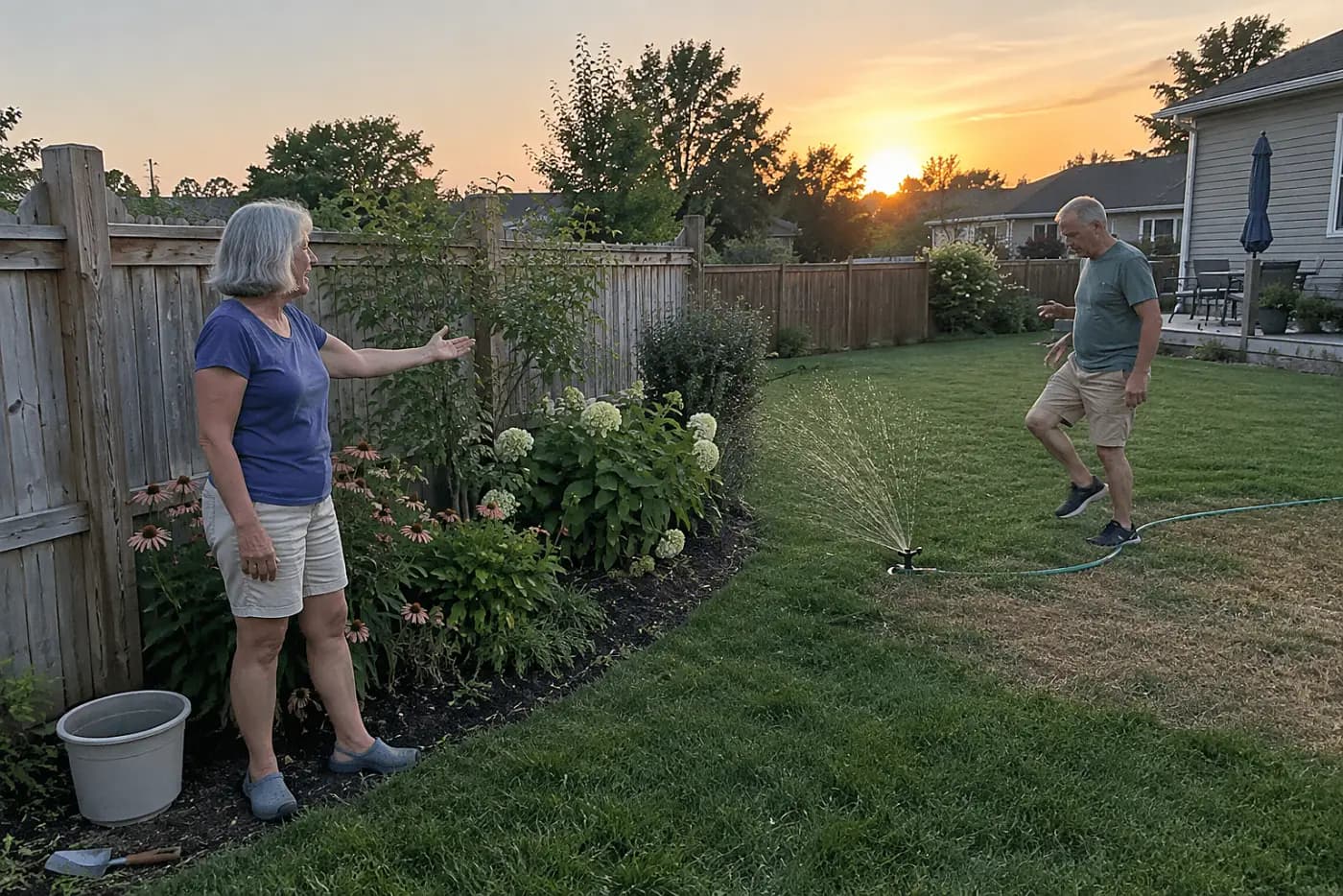
The hose is still curled beside the spigot, exactly where you dropped it. Between its loops, a small plant has pushed through the gravel. You recognize the leaves, but you can't remember planting it.
It's tempting to look across the whole yard and see a year's worth of failure. Gardens don't keep that kind of record; they leave clues about what survived, spread, or needs your attention now.
Here are 23 things to look for before you start pulling.
23The seed heads you left standing
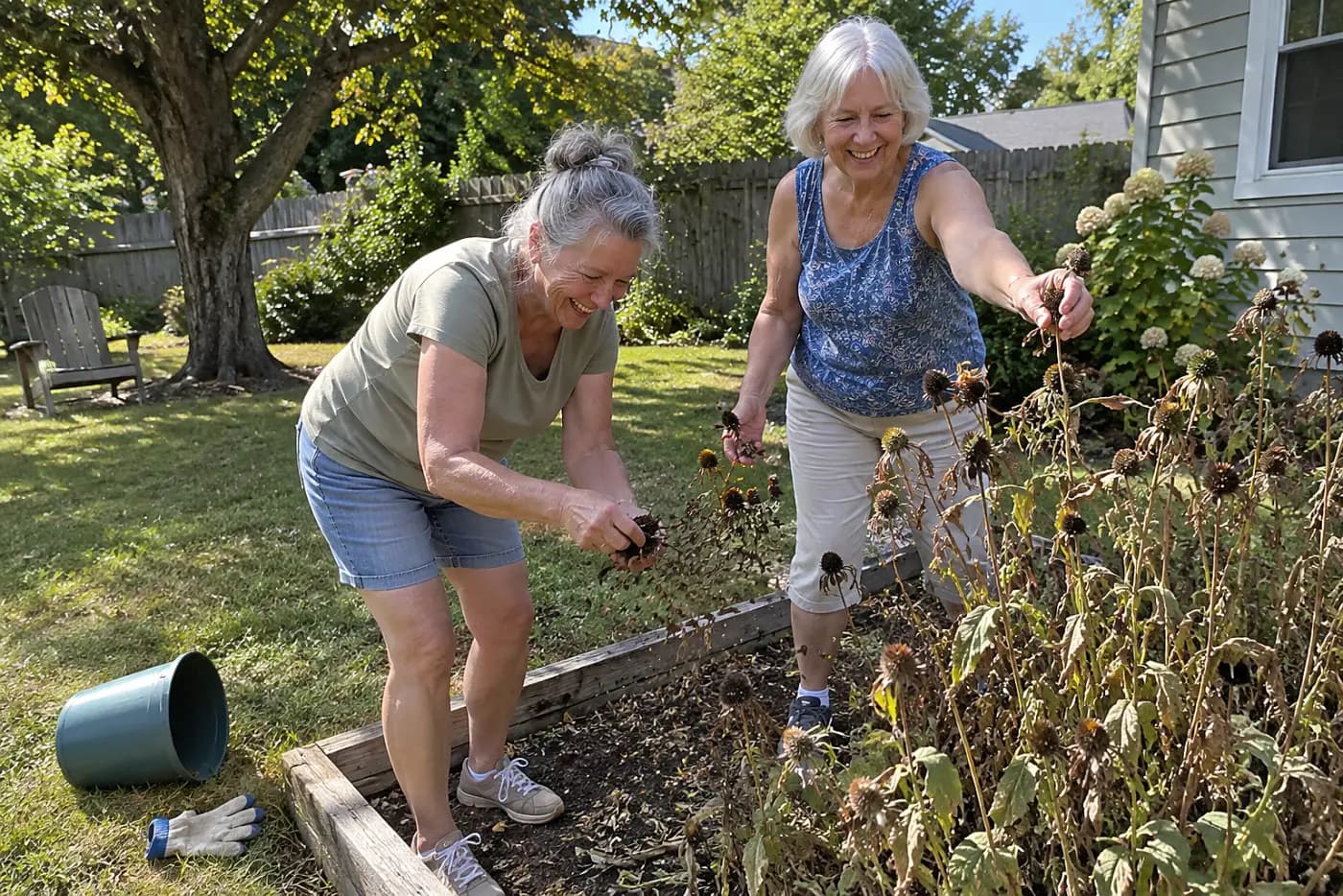
The flowers finished their work without a fall cleanup.
A dry stem holds seeds until wind, rain, or birds take them. The National Wildlife Federation describes seed heads as food for birds. Some seeds also land close enough to grow in your beds.
Cut everything now, and you lose the chance to see what came back. You also lose a useful reminder: skipping one job didn't stop every living thing.
This week, leave one patch standing while you look for seedlings. Tell anyone helping, “Please leave those stems until I've checked beneath them.”
What grew nearby brings another question.
22The volunteer seedlings beside the old path
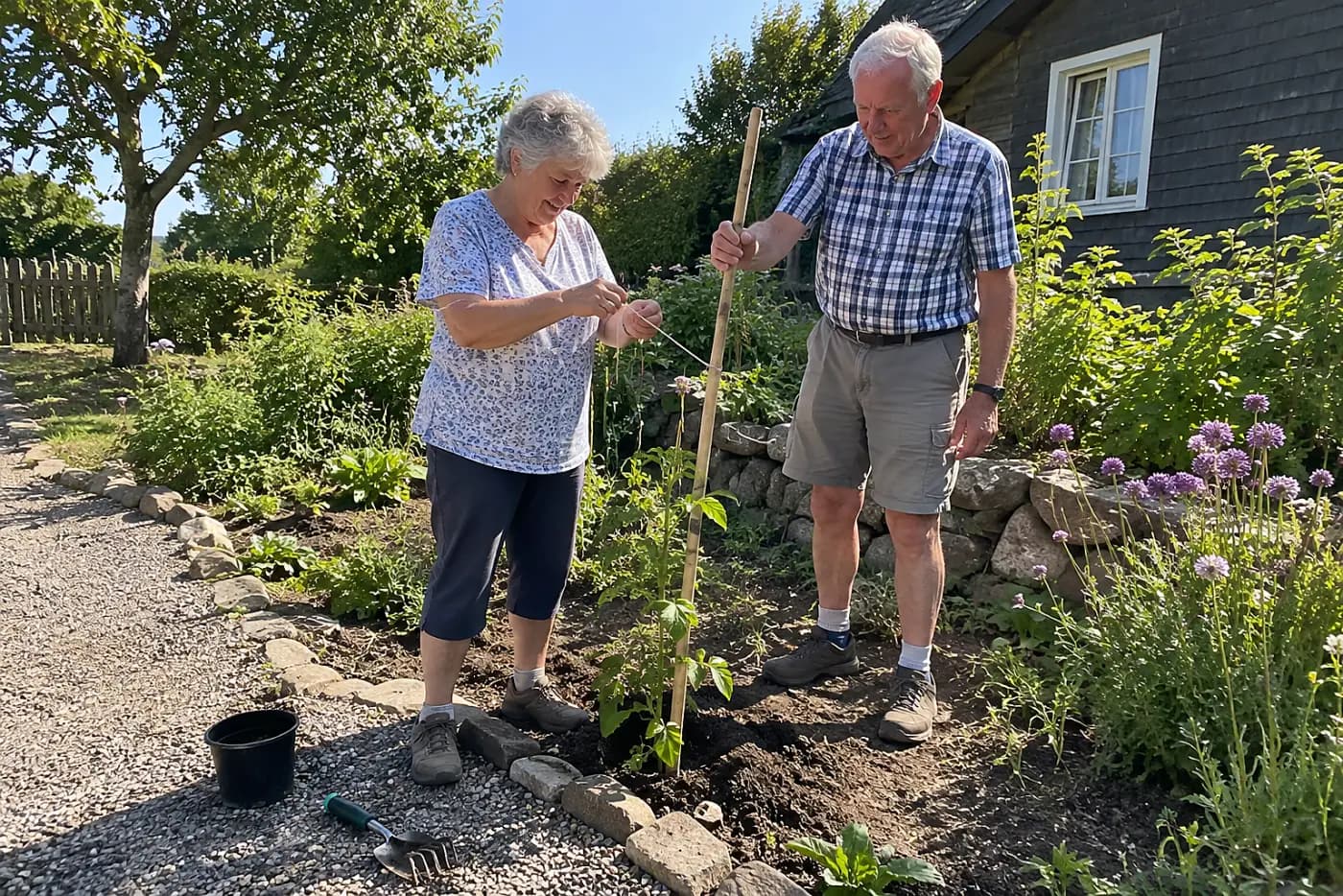
Last year's plants have placed themselves somewhere inconvenient.
A volunteer is a seedling you didn't set there. Sun, water, and bare earth decide where it takes hold, not the diagram you kept in the kitchen drawer. Before pulling it, compare its leaves with the mature plant nearby. Leave it alone if you still can't identify it; look again after it grows.
That pause matters beside a path. A desirable flower blocks your footing if it settles where you walk. An unknown seedling also needs a name before you let it spread.
Walk the path this week and mark the seedlings you want to keep. Say to a helper, “Leave the ones with string beside them; I'll decide where they belong.”
Then look at the patch where nothing appeared. What you don't see there has a different story from a seedling that chose the wrong spot. Give it a close look before you fill it.
21The empty place where bulbs bloomed

An empty patch doesn't tell you what happened underground.
Spring bulbs store energy in their leaves after flowering. Cutting those leaves before they yellow reduces what reaches the bulb for another season. A bulb also needs the right planting depth and drainage to keep going.
Digging at random risks slicing a bulb that hasn't shown itself. That empty patch deserves patience, even if the rest of the bed looks ready.
Photograph the spot this week and check it at the next bloom time. Say, “Let's leave this patch undug until we know what's underneath.”
Nearby, the soil itself has been keeping a record.
20The mulch that thinned around your shrubs

Bare soil dries faster when the sun reaches it.
Mulch slows evaporation and shields soil from hard rain. Over time, leaves break down and wood chips settle, leaving gaps you didn't notice from the window. A thin spot beneath a shrub isn't proof that you neglected it beyond repair.
The danger is covering the plant too deeply in your hurry. The University of Maryland Extension advises keeping mulch away from trunks and stems. Mulch pressed against bark holds moisture where it doesn't belong.
Check one shrub this week. Pull old mulch back from its trunk, then spread fresh mulch across bare ground without burying the stem. Tell a neighbor helping with bags, “Keep the trunk clear, even if the circle looks unfinished.”
Stand back afterward. Once the ground shows again, you notice which plants have been competing above it. That tangle needs a different sort of attention than the bare soil did.
19The vines climbing through your flowers

A vine borrows the height your flowers already made.
Its stems wrap around a support or trail over nearby leaves. Pulling from the far end drags flowers along with it. Cut the vine into short sections first, then ease each section free.
Wait too long, and the plant beneath it loses light. You also lose track of where the vine starts.
This week, trace one vine to the soil before cutting. Tell anyone with pruners, “Let's find its base before we pull.”
The leaves it covered deserve a closer look.
18The spotted leaves on your oldest rose
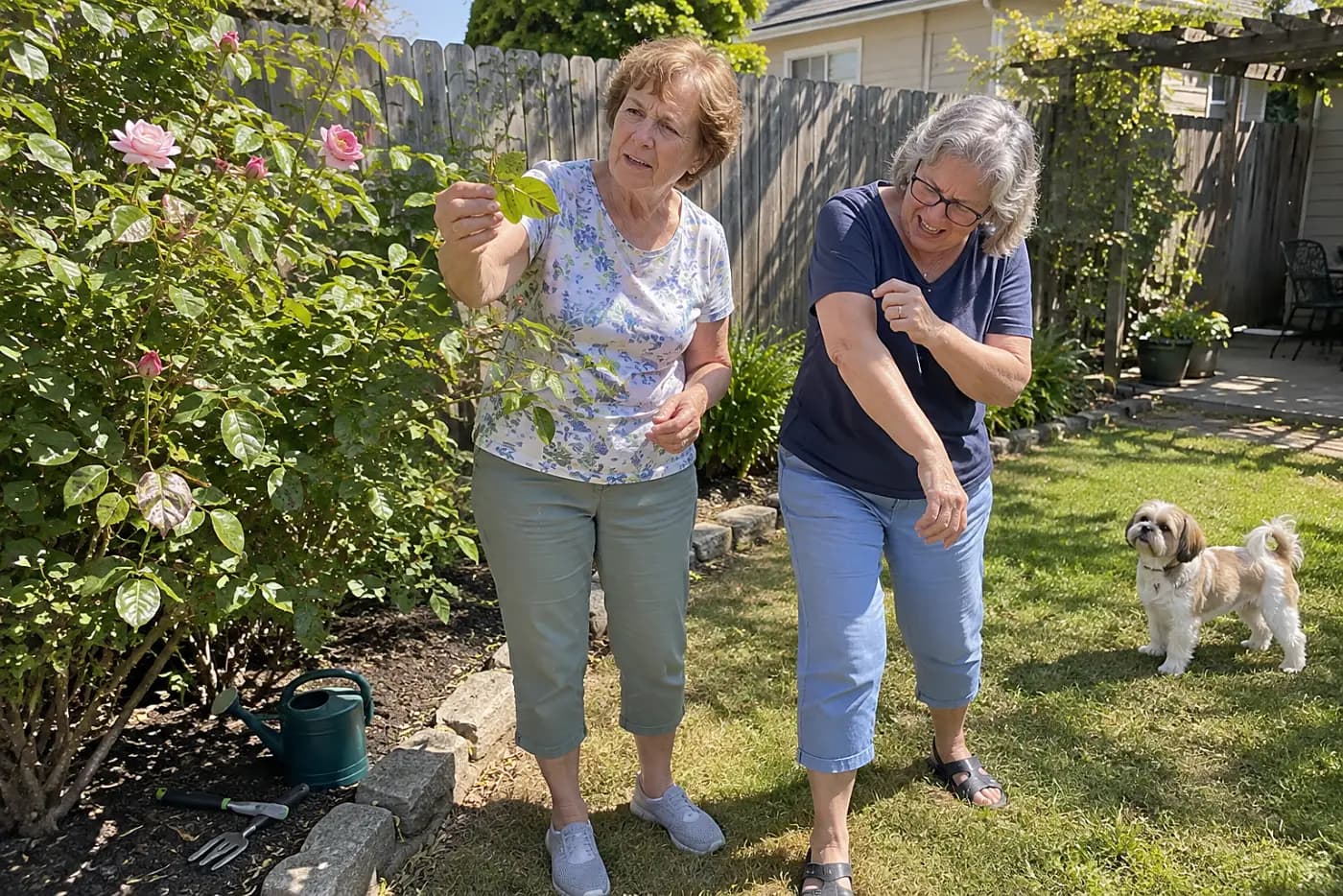
Spots on leaves don't identify the whole problem.
On roses, dark spots followed by yellowing leaves fit the pattern of black spot, a fungal disease. Spores move with splashing water.
Infected leaves left on the ground keep the cycle going. The American Rose Society has rose-care guidance, but your local extension office is the better judge of a plant in your own yard.
A rash purchase won't restore damaged leaves. Spraying before you know what's wrong also costs you time and money that could go toward the next task.
This week, note whether the spots appear on older or newer leaves, then remove fallen rose leaves from beneath the shrub. Ask your county extension office, “Does this look like black spot, or should I check for something else?”
Don't let the spots decide the fate of the whole bed. A few feet away, another plant needs you to judge its health by a different sign.
17The branch that scratches the walkway
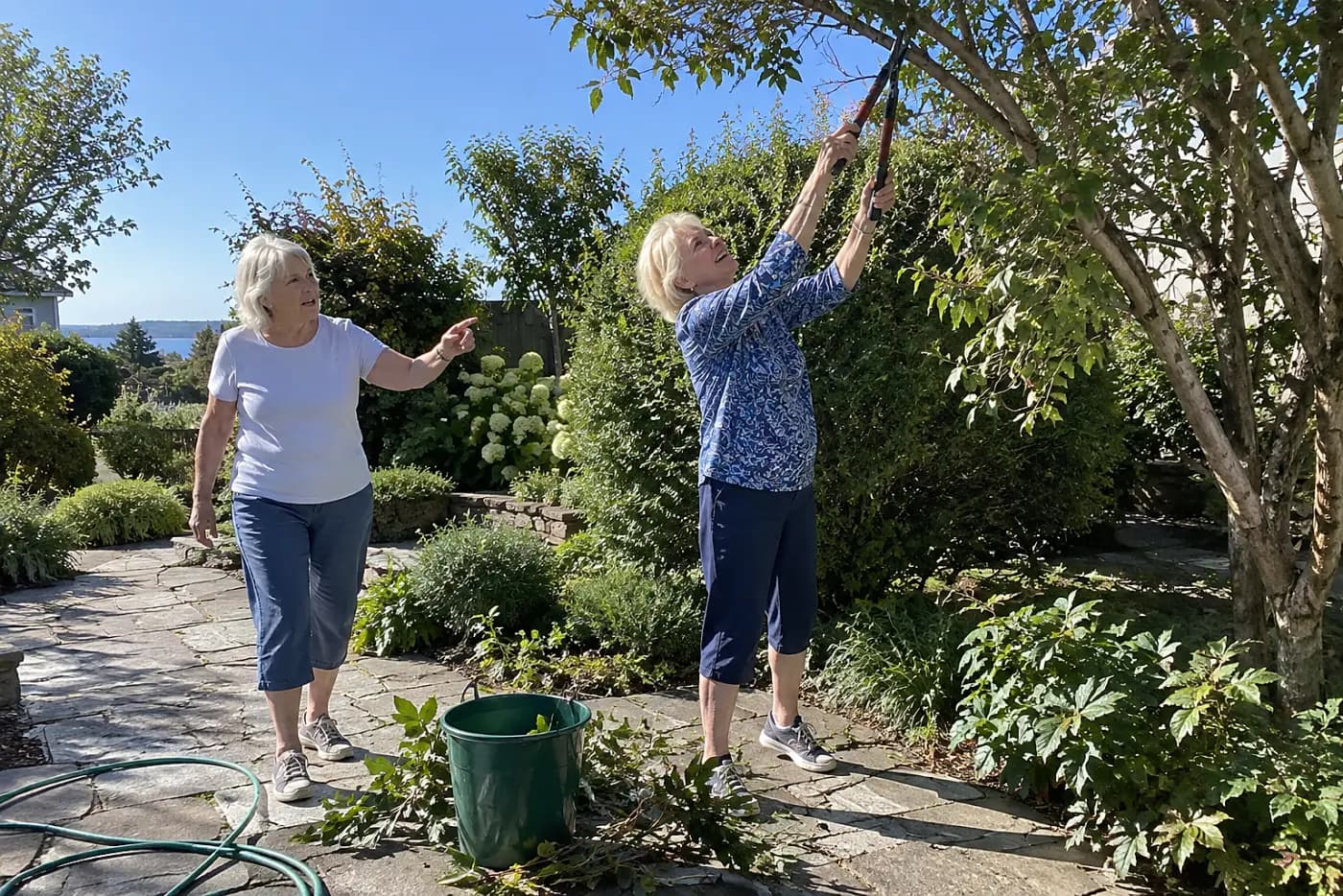
One low branch changes how you cross your yard.
Plants grow into the space you leave them. A branch that brushes your shoulder now catches a sleeve when you're carrying groceries or a watering can. Clear passage matters more than making the shrub symmetrical.
Leave it until the ground is slick, and you have one more thing to dodge. The branch still doesn't require a full pruning day.
This week, identify the branch from the path, then cut it back to a suitable side branch. Say, “I only need this walkway clear today.”
The cut exposes what else has changed at ground level.
16The weeds rooted between paving stones
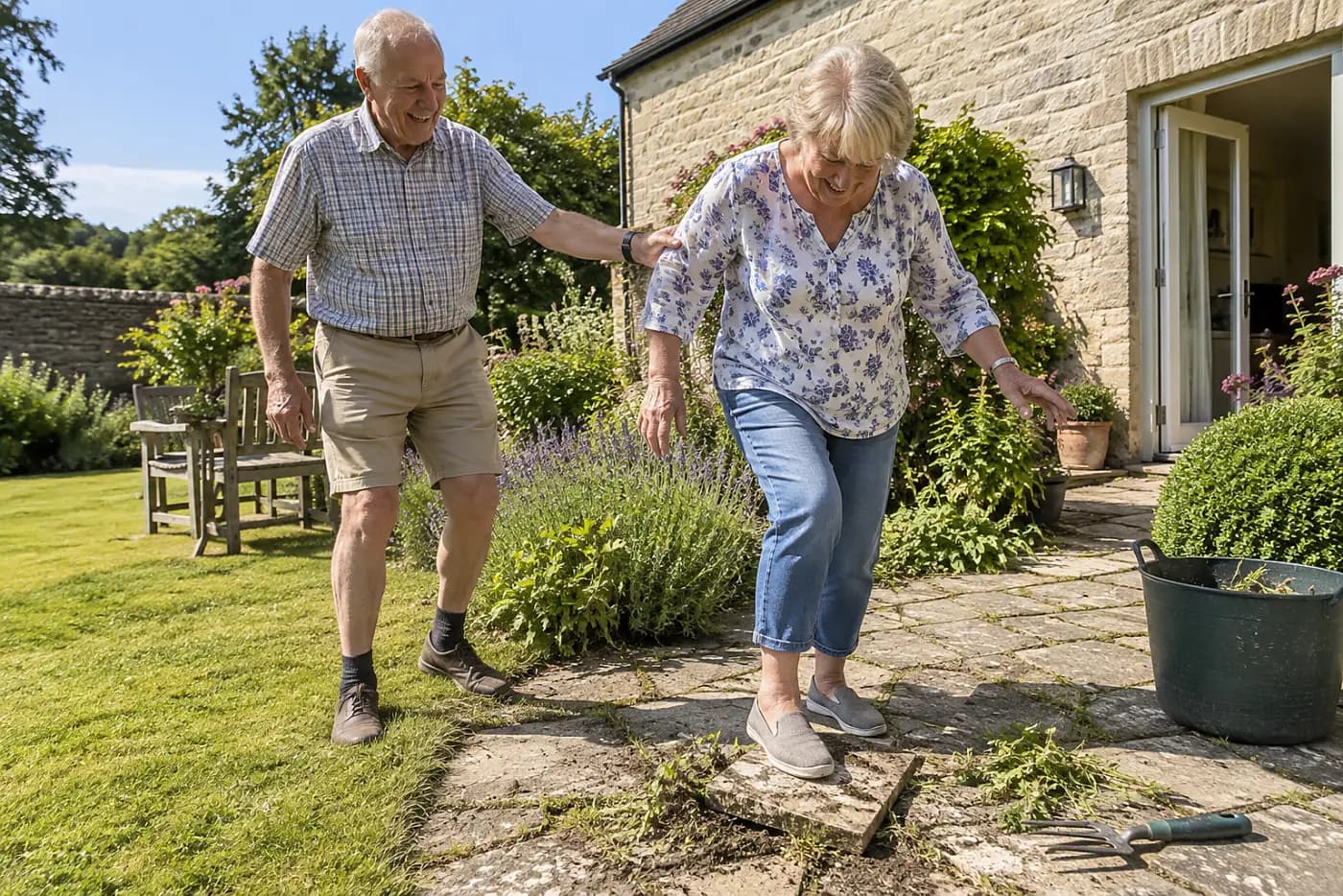
The narrowest cracks still collect enough soil for seeds.
Rain and wind carry grit into paving joints. A seed takes hold, and its roots grip the material that has gathered there. Pull after rain, when the grit is damp, and the root comes up with less strain. If a plant has a thick taproot, loosen it with a weeding knife rather than snapping its top.
There's no need to clear the whole path in one afternoon. Left in place, though, a tall weed hides an uneven stone you've been stepping around without noticing.
Choose the stretch from the door to the hose this week. Pull what's rooted there, then test each stone underfoot. Tell anyone offering help, “Please check whether a stone rocks before you put your tools away.”
With the route clear, you reach the beds again. Now the question is what has spread into the space you once kept open.
15The mint spreading past its pot
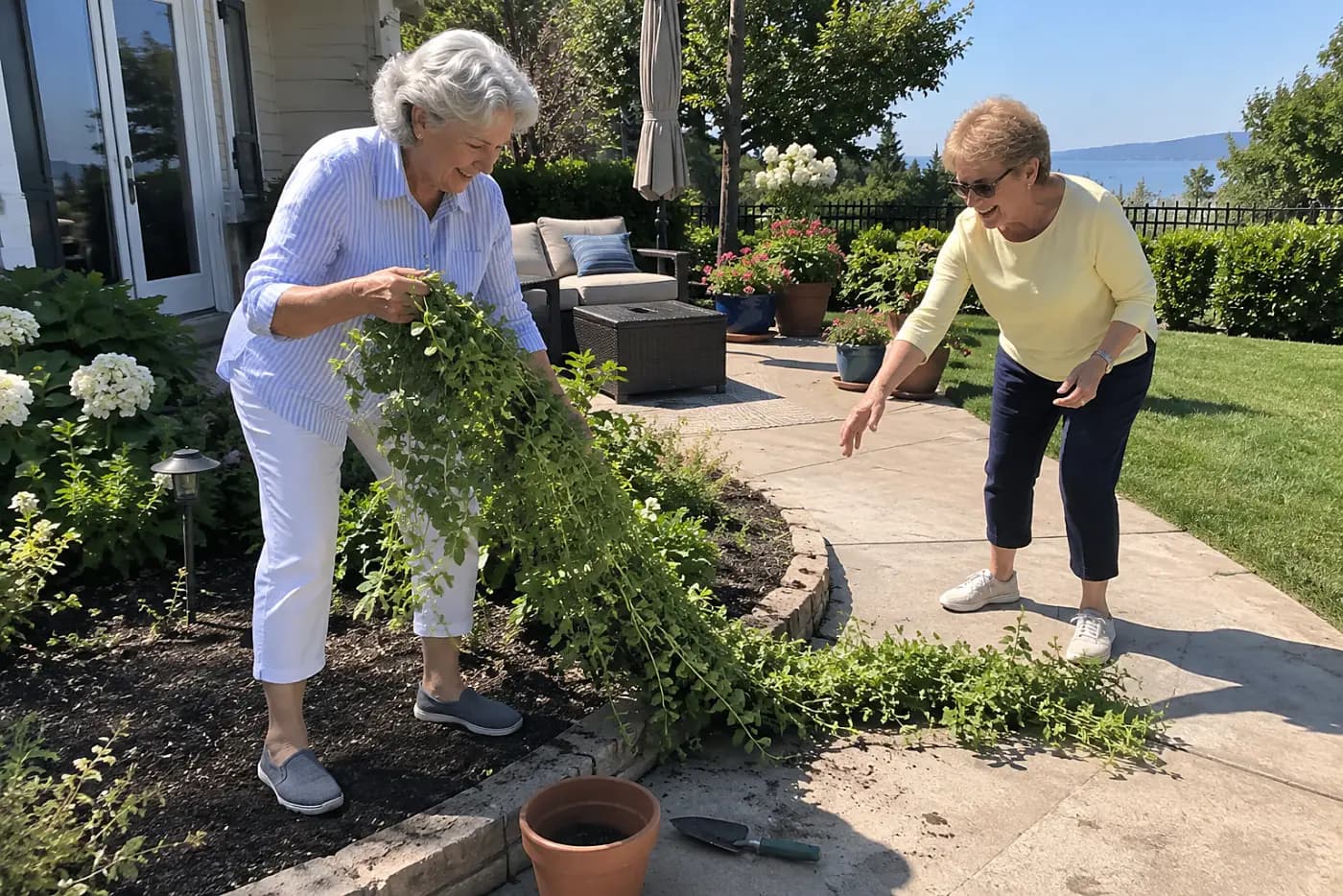
Mint doesn't respect the edge of a tired plan.
Its underground stems send up new shoots beyond the plant you remember. Pulling the visible leaves leaves those stems in place. Follow a shoot down, then lift the runner that joins it to the rest.
If mint reaches a smaller plant, finding that plant takes longer each season. A pot on the patio gives you a boundary you can actually see.
This week, trace the outermost shoot and remove its connecting runner. Tell a helper, “Save the plant beside it; that's the one I came out here to find.”
Other plants have waited in place rather than traveled.
14The perennials crowded into one clump
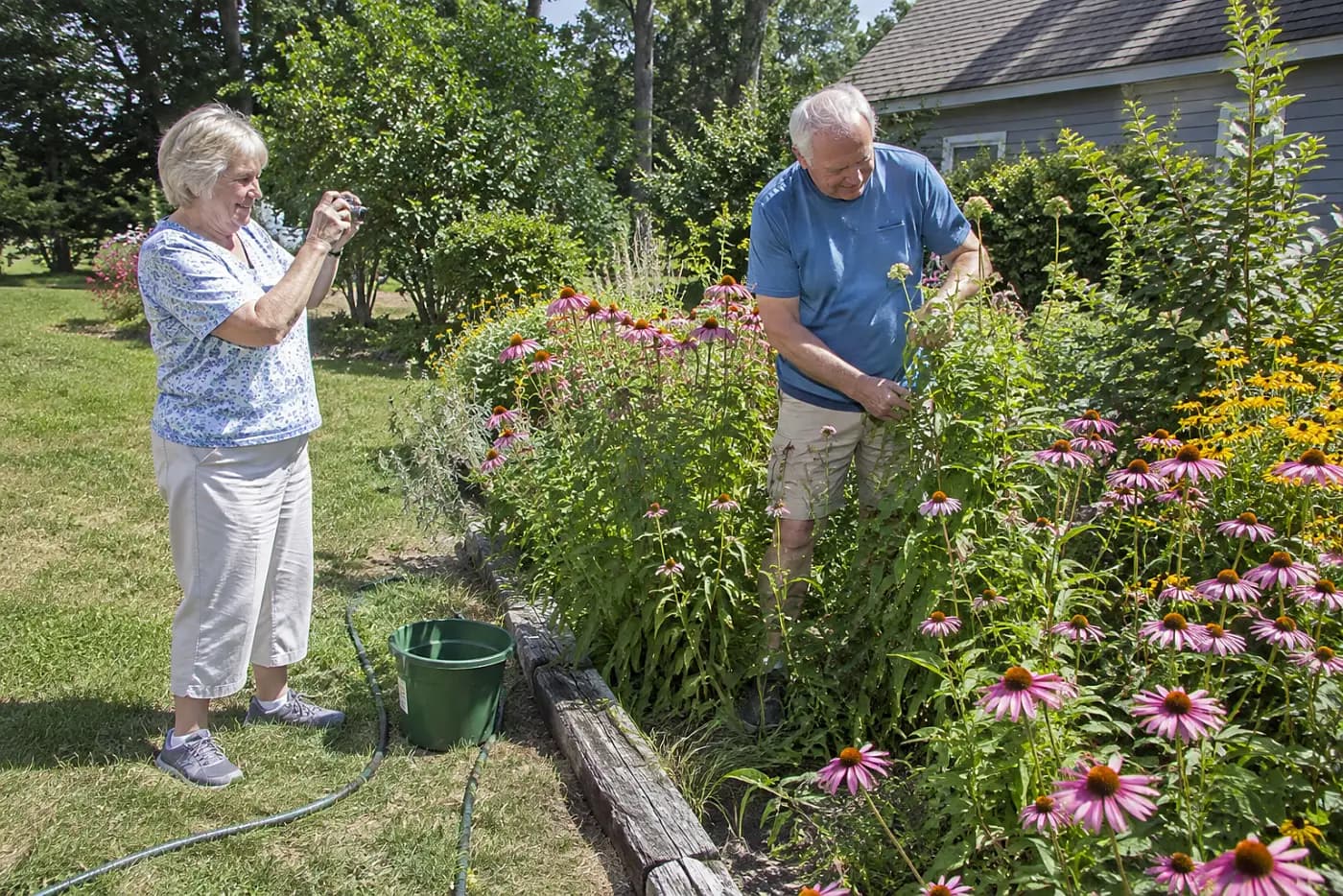
A plant can survive and still run out of room.
Perennials enlarge from their crowns or roots. Over time, the center of a clump stops making strong new growth while the outer edge stays busy. Dividing gives those growing edges space. It doesn't require saving every piece, especially when your energy belongs elsewhere this year.
The American Horticultural Society has plant resources, and your county extension office can help you time division for the species in front of you. Dividing at the wrong moment puts fresh cuts under extra stress.
This week, photograph one crowded clump and write down its name if you know it. Ask the extension office, “When should I divide this plant in my area?” If the answer points to another season, mark the clump and leave the spade inside.
Looking closely at the center tells you something useful. Looking at the stems around it tells you whether a different plant has been holding itself up without you.
13The tomato cage around a dead stem
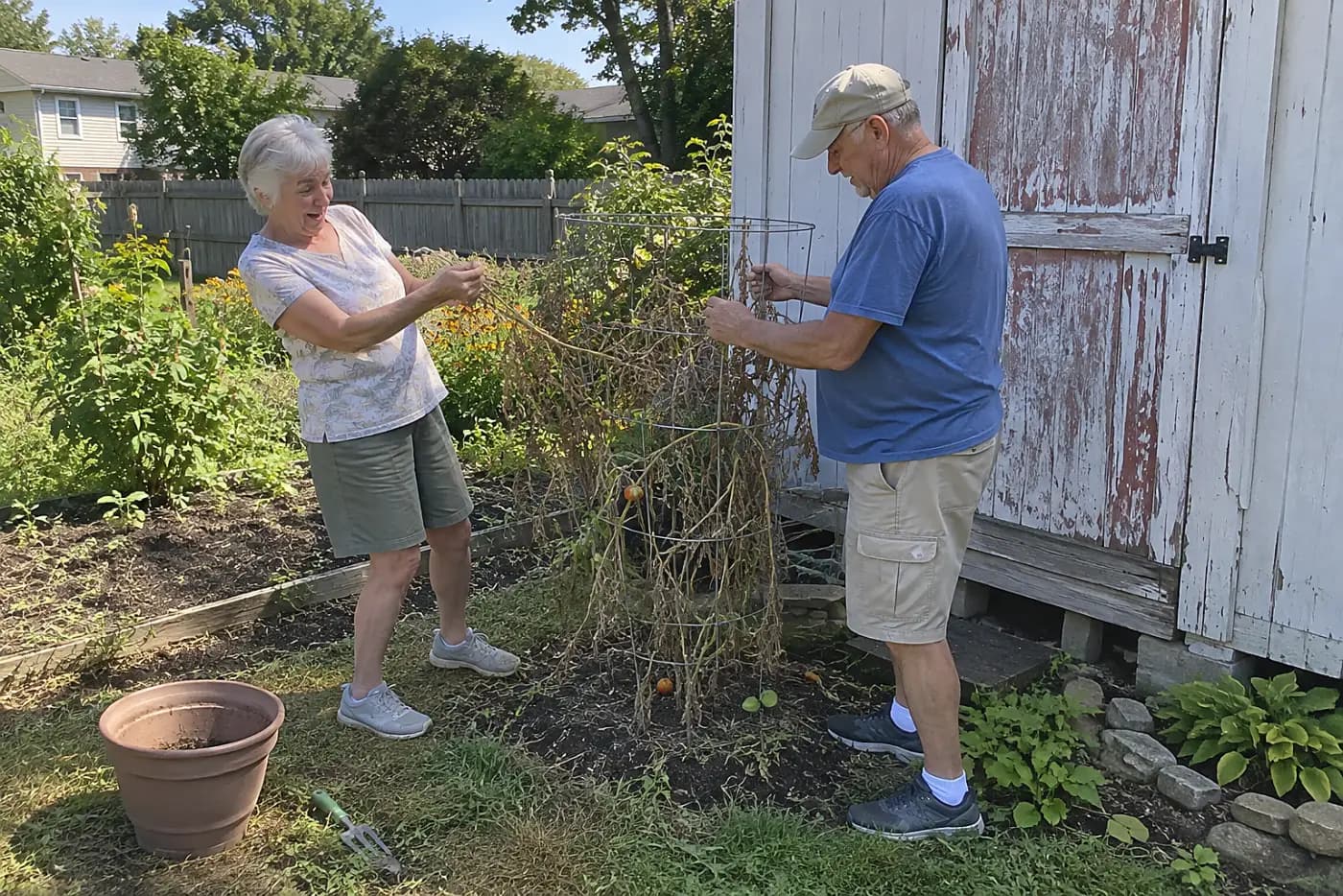
A dead plant can leave a useful piece behind.
Old stems catch on cage wires and conceal bent or broken supports. Remove the plant first, then inspect the cage before storing it. Clean soil off tools and supports before they go back into the shed.
A damaged cage fails when a new plant gets heavy. Keeping one out of habit costs you space you need for working equipment.
This week, free the cage and test each joint by hand. Say, “I'm keeping the support only if it stands straight.”
The emptied spot deserves a look before you plant again.
12The bare patch beneath the feeder
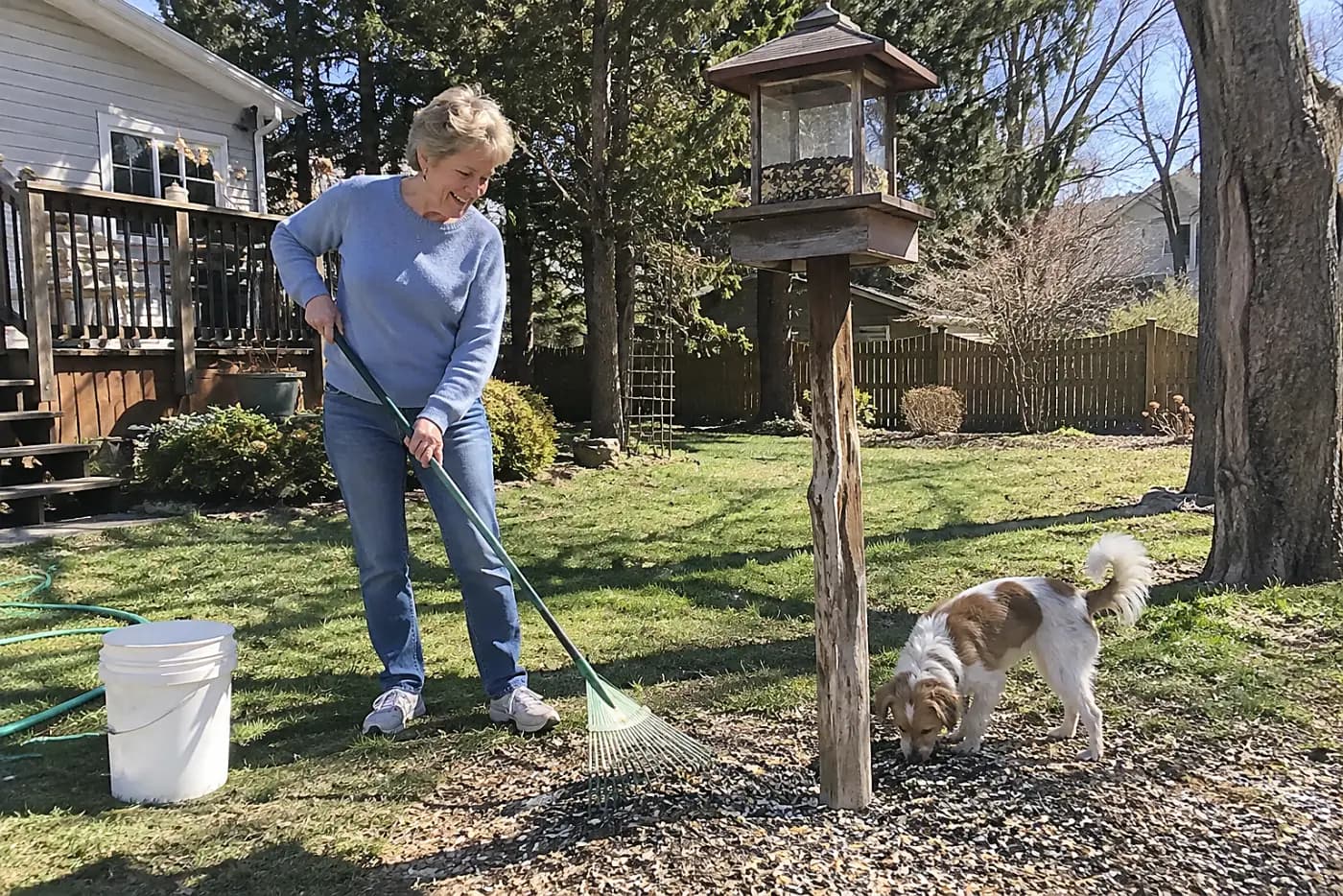
Birds drop more than seed beneath a feeder.
Hulls and uneaten seed collect in the same small area. Feet compact the ground when you refill it, and plants lose the light they need under the feeder's shadow. A bare circle there tells you about traffic and debris, not the condition of your entire garden.
The Cornell Lab of Ornithology recommends cleaning bird feeders as part of responsible feeding. Leaving damp seed to sit also turns a simple refill into a mess you dread facing.
This week, empty and clean the feeder, then rake the hulls from the ground below. Check its placement before you scatter new seed there. Tell someone who refills it, “Let's keep the ground underneath clear, too.”
Don't rush to plant that circle. Follow the shade outward first, because another change has been moving across the bed while you were inside.
11The new shade across your flower bed
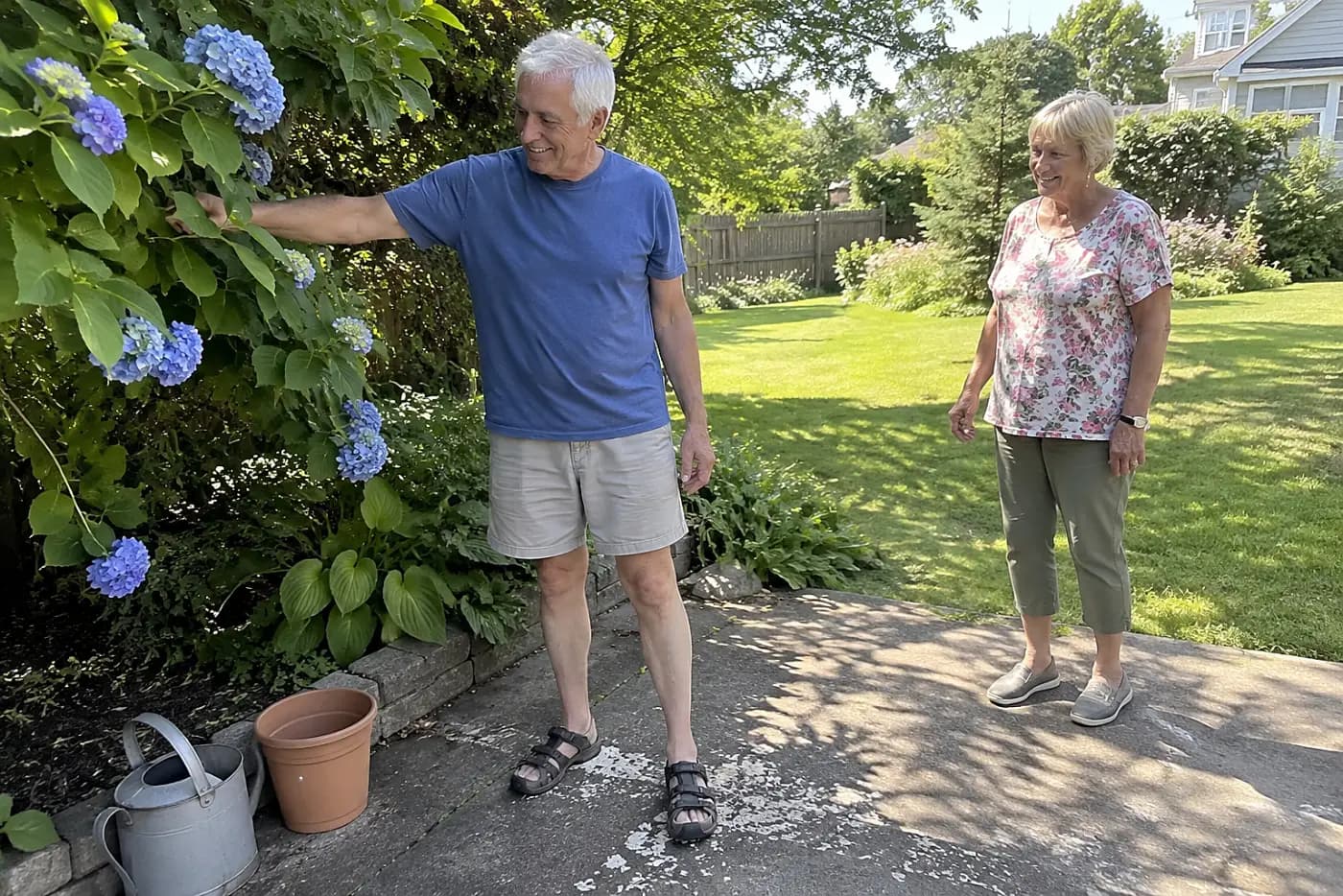
The light in a bed doesn't stay fixed.
Trees gain height and width, while a fence or nearby building changes where sunlight falls. Watch the bed at different hours before replacing a plant that stopped flowering.
Buy the same sun-loving plant without checking, and you repeat the disappointment. The bed isn't asking you to work harder.
This week, take photos from the same spot in morning and afternoon. Say at the nursery, “This bed gets shade when I expected sun. What fits here?”
Water tells the next part of the story.
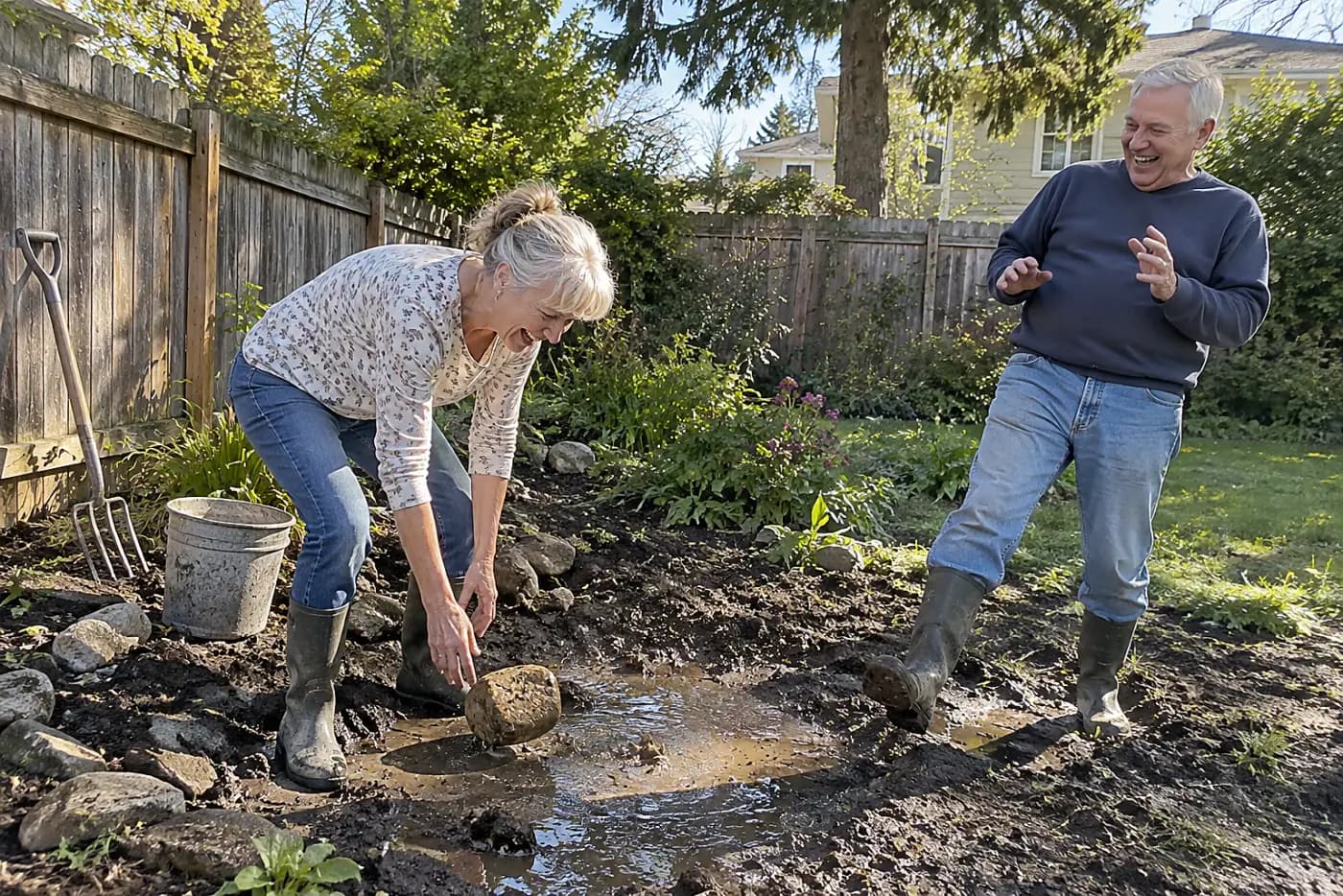
10The puddle beside the downspout

A puddle points to a route, not a remedy.
Rain leaves a gutter through the downspout and lands beside the house. From there, water follows the ground's slope. If that slope sends it toward a bed, roots sit in wetter soil than you intended. Digging up a struggling plant before watching the water misses the cause.
Keep downspout water away from the foundation; the EPA's WaterSense program has guidance on outdoor water use. A small adjustment needs a clear destination, not another flooded patch.
This week, watch the downspout during a rain. Note where the water travels and whether it reaches the house or garden bed. Tell the person helping with the gutter, “I want to see where this water goes before we move anything.”
Then check the place that stayed dry. Two beds in the same yard can carry entirely different evidence from the same storm.
9The soil pulling away from the pot

A gap at the rim changes how water travels.
Potting mix dries and shrinks. Water poured quickly can run down the gap between mix and pot, leaving the root ball thirsty. The water in the saucer doesn't prove the roots got a drink.
Keep watering that way, and a living plant looks beyond saving. One slow soak gives you a better test.
This week, water the pot slowly until the mix takes up moisture, then let it drain. Say, “I'm checking the soil, not the saucer.”
A pot holds limits that a bed doesn't.
8The roots circling inside a container

A familiar pot can become too small.
When roots reach the container wall, they turn and follow it. Slip the plant from its pot to see whether thick roots circle the outside. If they do, loosen the outer roots and move the plant into a container with room for fresh potting mix.
Don't diagnose it from the leaves alone. A dry root ball, poor drainage, and crowding ask for different fixes. Buying fertilizer before checking the roots leaves the cramped space unchanged.
This week, lift one struggling container plant out over a sheet of newspaper. Look at the root pattern and drainage hole before choosing a larger pot. Tell anyone helping, “Let's see the roots before we buy anything.”
The plant has been answering you in the space it was given. Out in the open beds, another living thing left a clue that's even easier to miss from a distance.
7The chewed leaf beside new growth

A damaged leaf records one visit, not a verdict.
Look underneath it and along the stem for an insect. Then check newer leaves. If fresh growth is intact, the chewing you noticed happened earlier.
Treat every hole as an emergency, and you risk harming insects that weren't responsible. You also turn a walk outside into another chore.
This week, mark the damaged leaf with a loose piece of string and check the plant again after a few days. Say, “I want to see fresh damage before I do anything.”
Other visitors have been leaving less obvious signs.
6The hollow stems left for bees

An uncut stem still has a job.
Some native bees nest in hollow or pithy stems. The Xerces Society offers guidance on leaving nesting habitat in a garden. A ragged stem beside a walkway doesn't have to stay exactly where it fell; place cut stems in a sheltered part of the yard rather than shredding everything at once.
That choice isn't a command to keep every dead plant. It gives you a reason to separate safety cleanup from tidying a bed for looks alone. You get to decide what stays in the path and what stays for wildlife.
This week, clear stems that block walking, then leave a small bundle somewhere out of the way. Tell anyone hauling yard waste, “Please set these stems aside until I've checked them.”
The bed will still look different from the one you used to keep. That difference deserves a look before you decide it means something went wrong.
5The fallen leaves over spring shoots

A leaf layer hides growth as well as soil.
Dry leaves shelter the surface through cold weather. New shoots push up beneath them when conditions suit the plant. Raking hard before looking can snap stems you meant to welcome.
Clear everything at once, and you lose the chance to see where spring started. You don't owe every bed a bare-soil finish.
This week, lift leaves by hand from one small patch and look beneath. Tell a helper, “Leave the rest until I see what's coming up.”
The next decision concerns what truly needs removing.
4The dead wood inside your shrub

Brown twigs deserve a test before a cut.
Scratch a small spot on a suspect stem with your thumbnail. Green tissue beneath the bark shows living wood; a dry, brown interior points toward dead wood. Work from the outer tip inward, checking before you remove a long branch. Don't strip a shrub down because its first few twigs failed the test.
The Arbor Day Foundation has tree-care guidance, but a large broken limb belongs with a qualified arborist. A small scratch test isn't a reason to work beneath a hanging branch.
This week, test one reachable stem on a shrub you want to keep. Cut dead wood only where you can work from the ground. Tell someone who offers to cut everything back, “Let's check what's alive before we shorten the whole shrub.”
What survives that inspection still needs a way through the coming season. Your next clue is hanging where you left it.
3The hose still connected to the spigot

A forgotten hose changes the next cold night.
Water trapped in an outdoor hose freezes and expands. Disconnecting it lets you drain and store it before freezing weather. Check the faucet afterward for drips.
Leave the connection in place, and a small task becomes a repair concern. A connected hose prevents a frost-free faucet from draining as designed, so trapped water threatens the faucet too. You don't need to tackle the entire yard to prevent that.
This week, disconnect the hose and empty it on the lawn. Say, “I'll put this away before I take on another bed.”
One overlooked tool waits closer to the door.
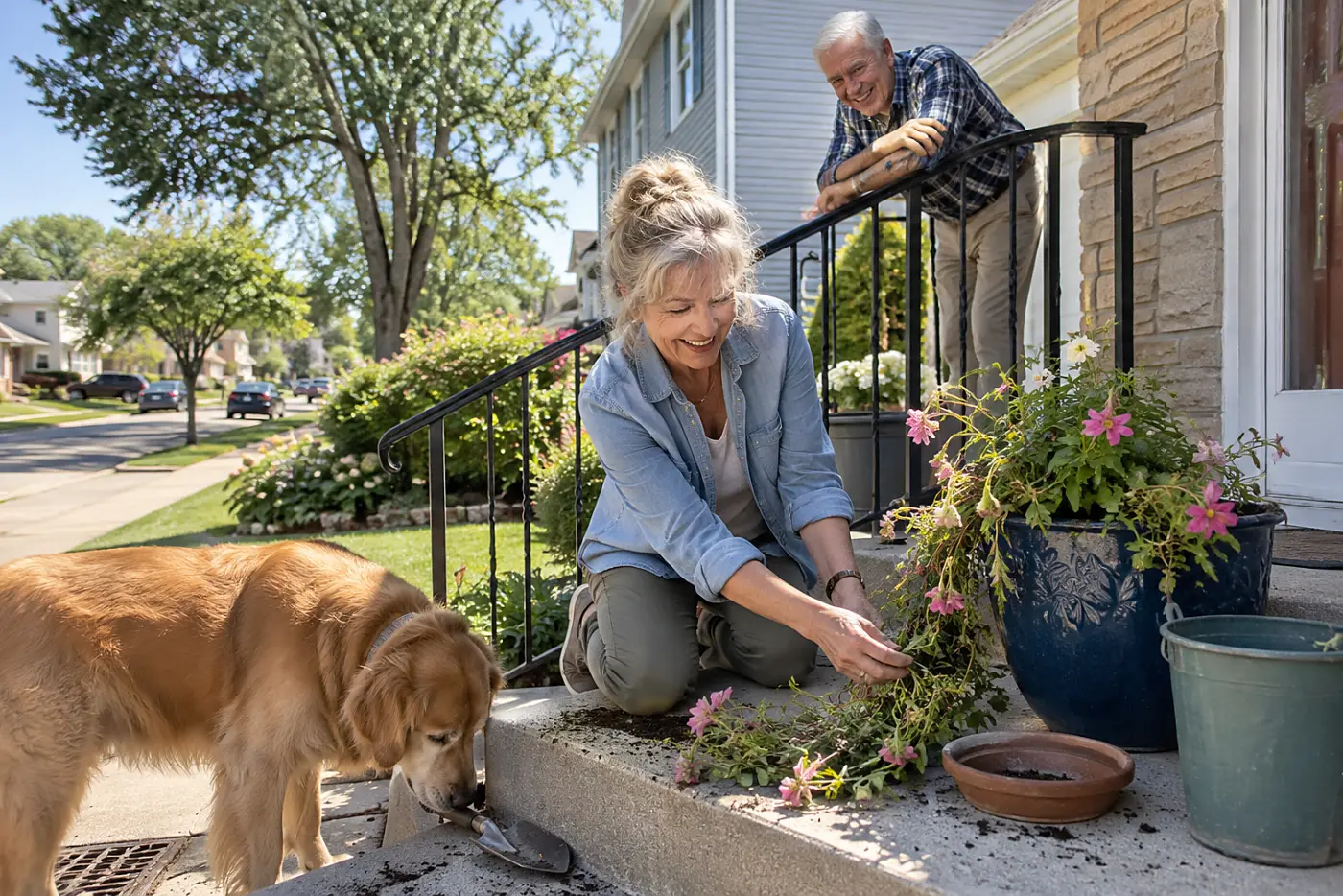
2The hand trowel beside the back steps
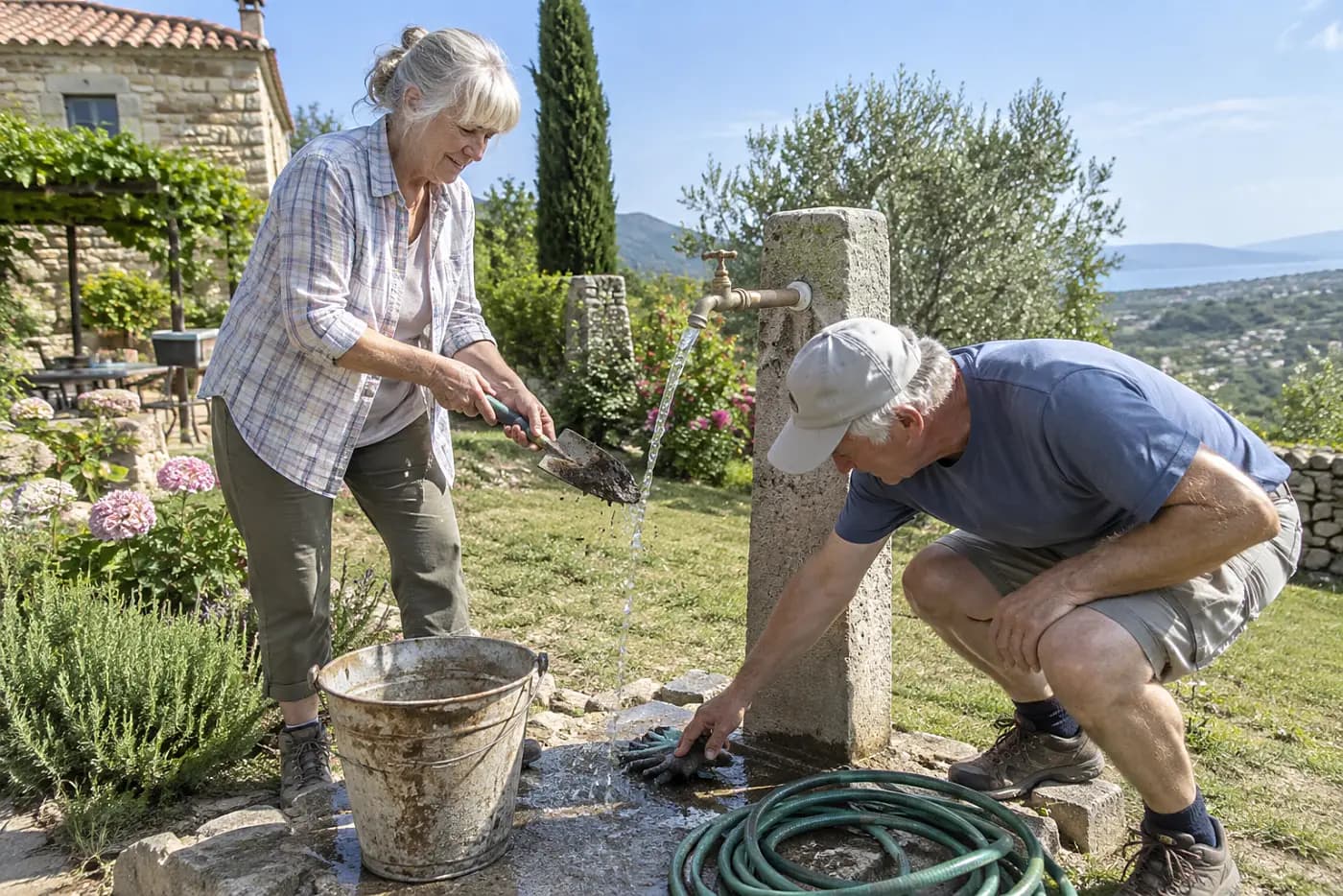
An abandoned tool says nothing about your ability to return.
Soil left on a trowel holds moisture against metal. A wooden handle also needs to dry before storage. Wash off the dirt, dry the tool, and put it somewhere you'll find it. That's a job with an end, even when the garden feels endless.
The University of Minnesota Extension offers garden tool care guidance. You don't need a new kit to take this step. A clean trowel beside the door gives you a way to begin without first searching through the shed.
Pick up the trowel this week and clean it at the outdoor tap. Put it near the bed you most want to revisit. Tell anyone who asks about the yard, “I'm starting with what I can reach.”
Keep it there. Before that trowel goes into the soil, there's one check worth making across the whole space, especially where plants seem to have disappeared.
1The five-minute walk before any digging

A fast cleanup can erase what waited for you.
Walk the garden without tools. Start at the door and follow the paths you used before. Look for green at the base of old stems, shoots under leaves, and plants hidden by taller neighbors. Mark anything you can't name; the markers hold your place when you stop.
Dig first, and you risk removing the growth that survived the year. You also make decisions while looking at only one corner.
This week, take that walk before you pull, cut, or buy anything. Say to anyone eager to help, “Give me five minutes to see what's still here.”
You'll come back to the work. First, let the garden show you where to begin.
The bottom line
A garden left alone keeps changing, and each change asks for its own response.
You've taken the walk first, marked what you can't identify, and chosen one job small enough to finish.
Which of these has already happened in your garden?
Bonus: The five-minute garden check before any digging
- Start at the door and walk your usual route without tools.
- Look beneath leaves and around old stems for new growth.
- Mark plants you can't identify before anyone digs.
- Choose one clear task. Tell your helper, “Leave everything else for now.”
David Ruiz
Tech & Home Writer
David tests gadgets with real readers in their 60s and 70s, because the best tech is the tech you'll actually use.
You might also like