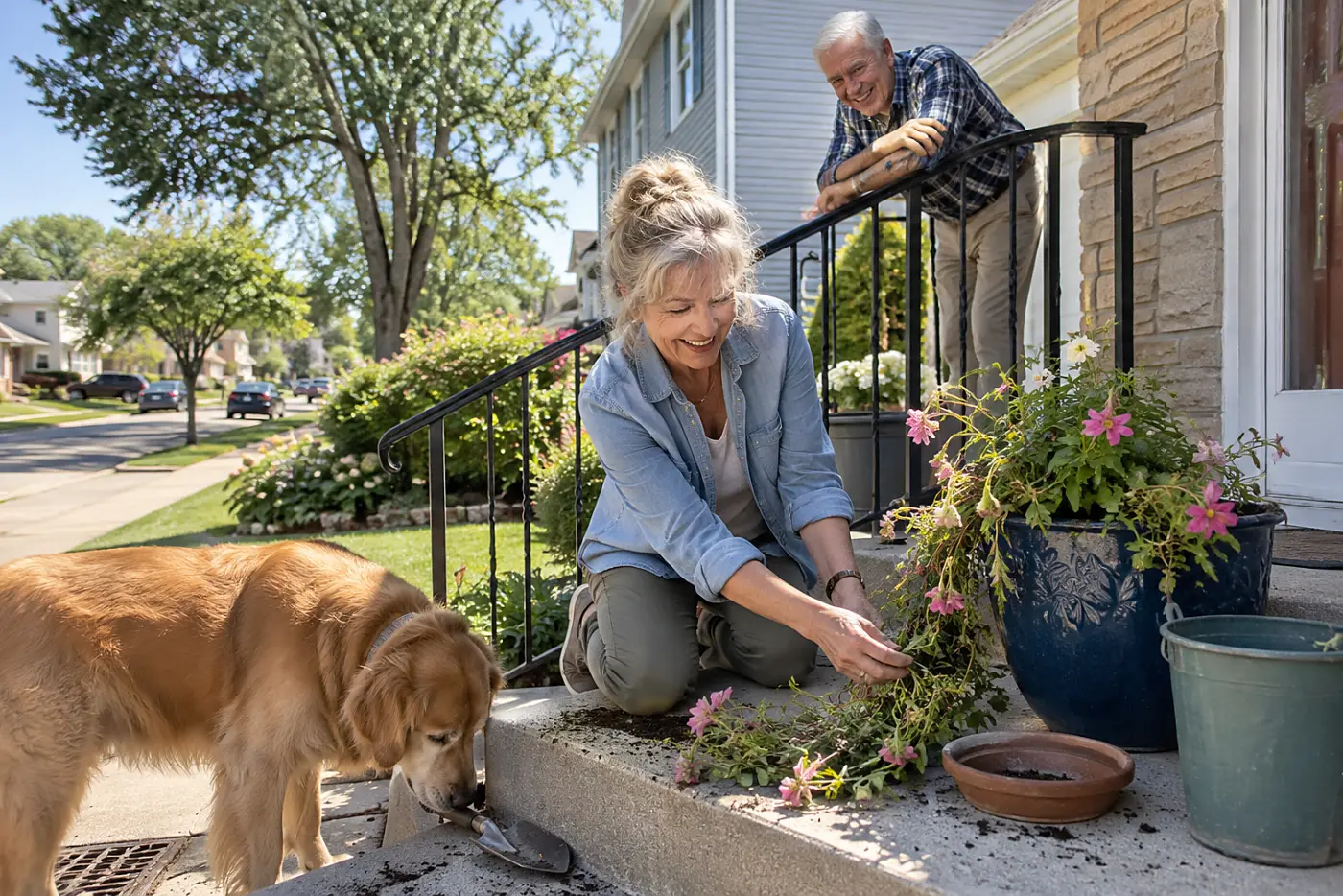
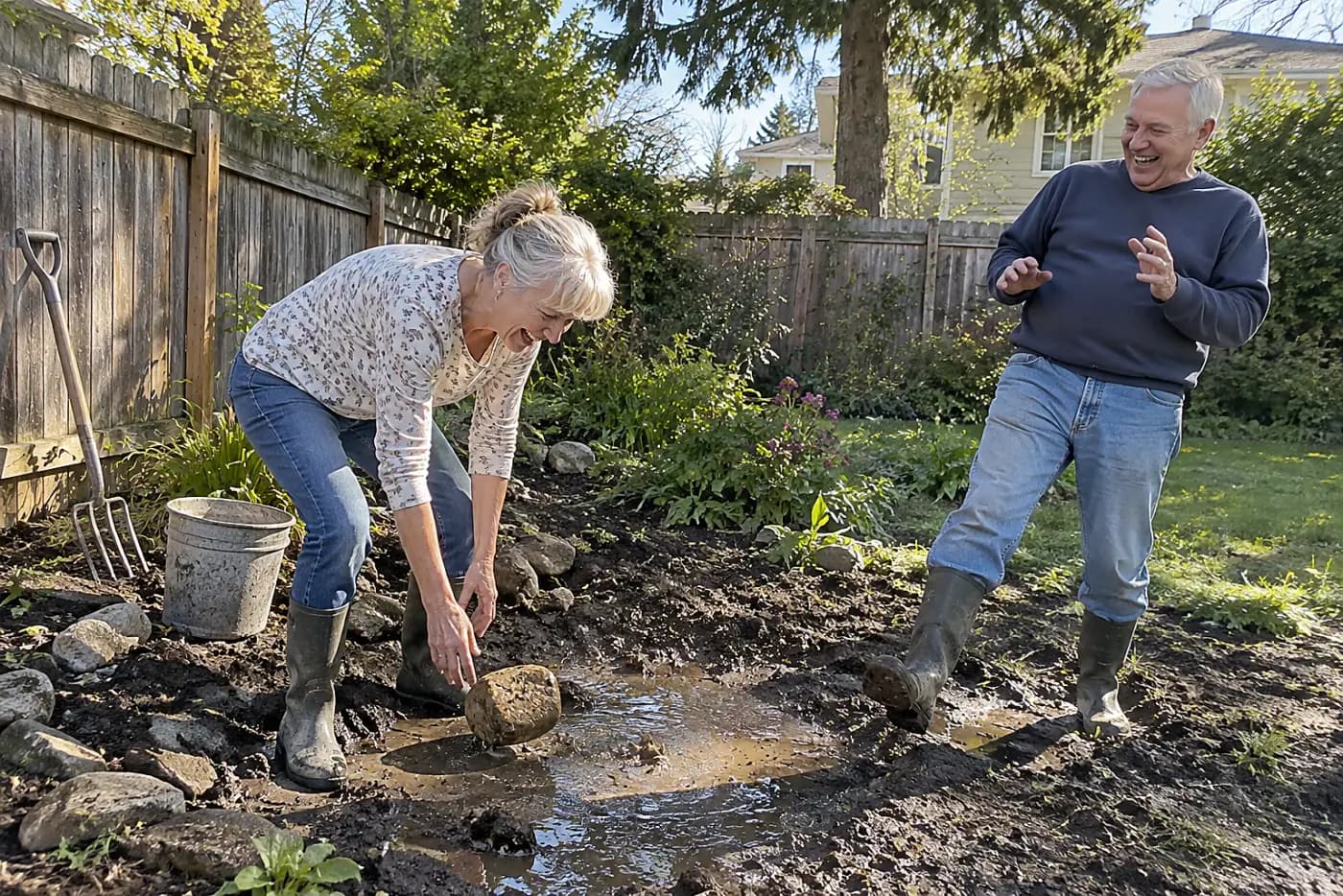
23 Things Gardeners Notice About Each Other's Yards Without Saying
A hose across the sidewalk or a bare stem in September gives a passing gardener a clue before either neighbor speaks.
By David Ruiz, Tech & Home Writer
Updated · 17 min read
- Written by our tech & home writer
- How we review
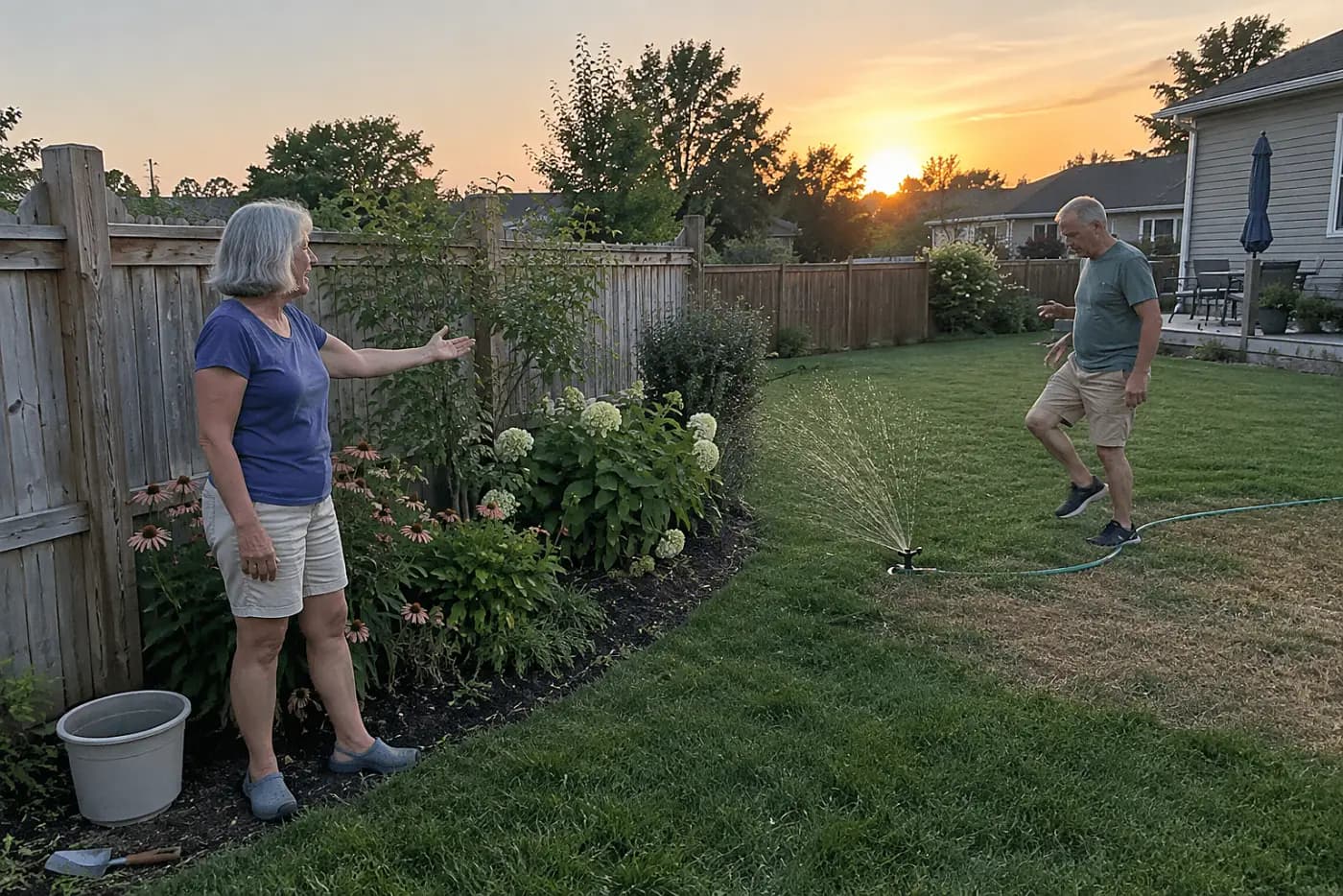
Read to the end: #1 is a five-minute boundary check that catches a problem before an awkward talk, and few gardeners make it.
The sprinkler clicks against a fence at dusk. On the other side, your neighbor sees water collecting under a rosebush and keeps walking, holding a bag of groceries against her hip.
From your side, the yard looks much as it did yesterday. From the sidewalk, the wet patch is obvious. A gardener knows how easily her own sprinkler slips out of position, so she notices yours without deciding what it says about you.
Here are 23 clues they notice.
23The watering can beside your steps
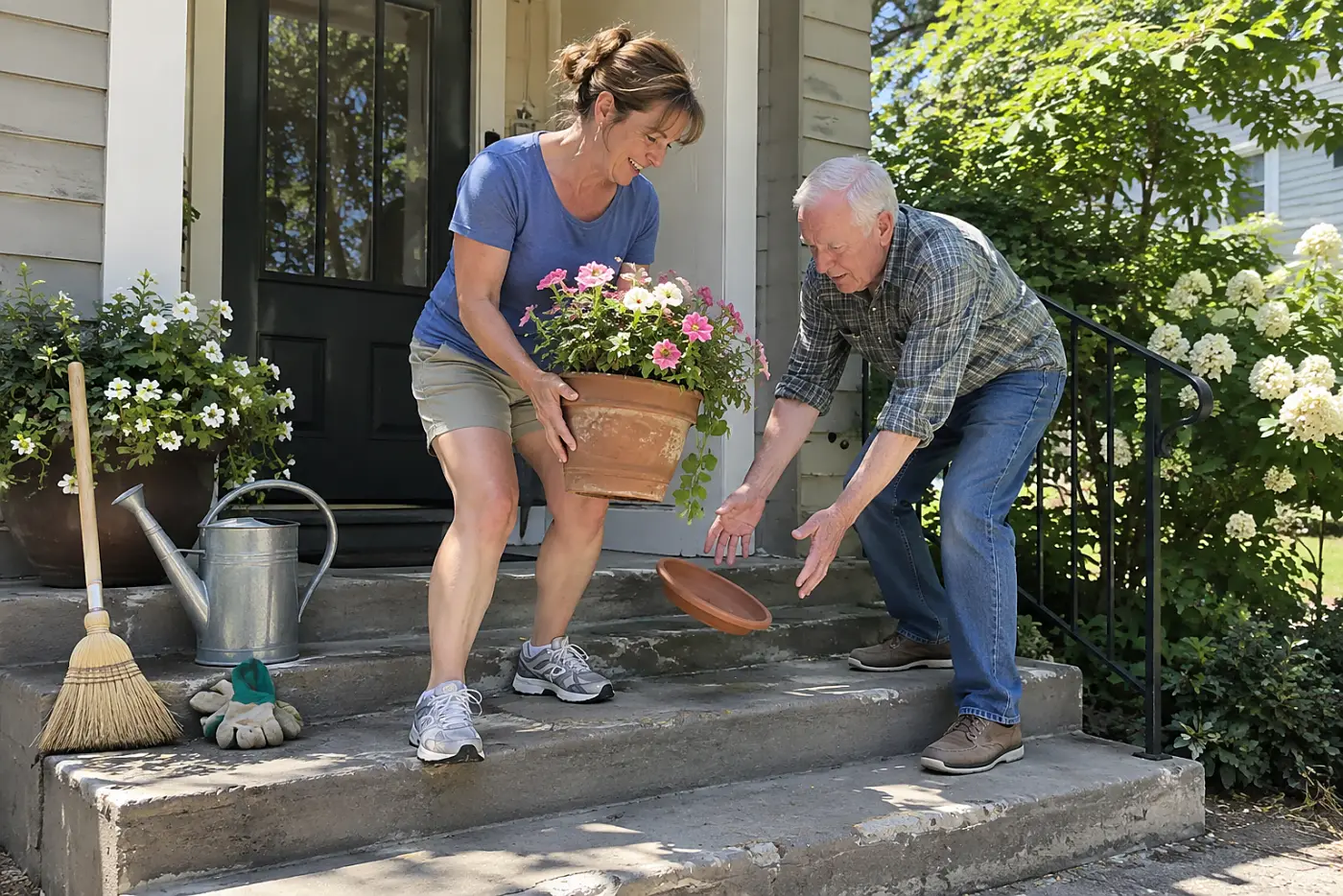
An empty can tells a different story from a dry bed.
A watering can parked near the door shows you've been making trips to thirsty pots. When its spout points toward one corner, a passing gardener notices which plants need extra attention. She also sees which pots are still waiting.
That matters when the same corner wilts day after day. A bigger can won't fix a pot whose drainage hole has filled with roots. More trips between the tap and the steps won't tell you whether water is reaching the soil.
This week, lift the pot after watering and check whether water runs through the bottom. If it doesn't, say to the neighbor who stopped to admire it, “I think this one needs a closer look.”
But pots give away another habit from farther down the path.
22The nursery pots tucked behind the shed
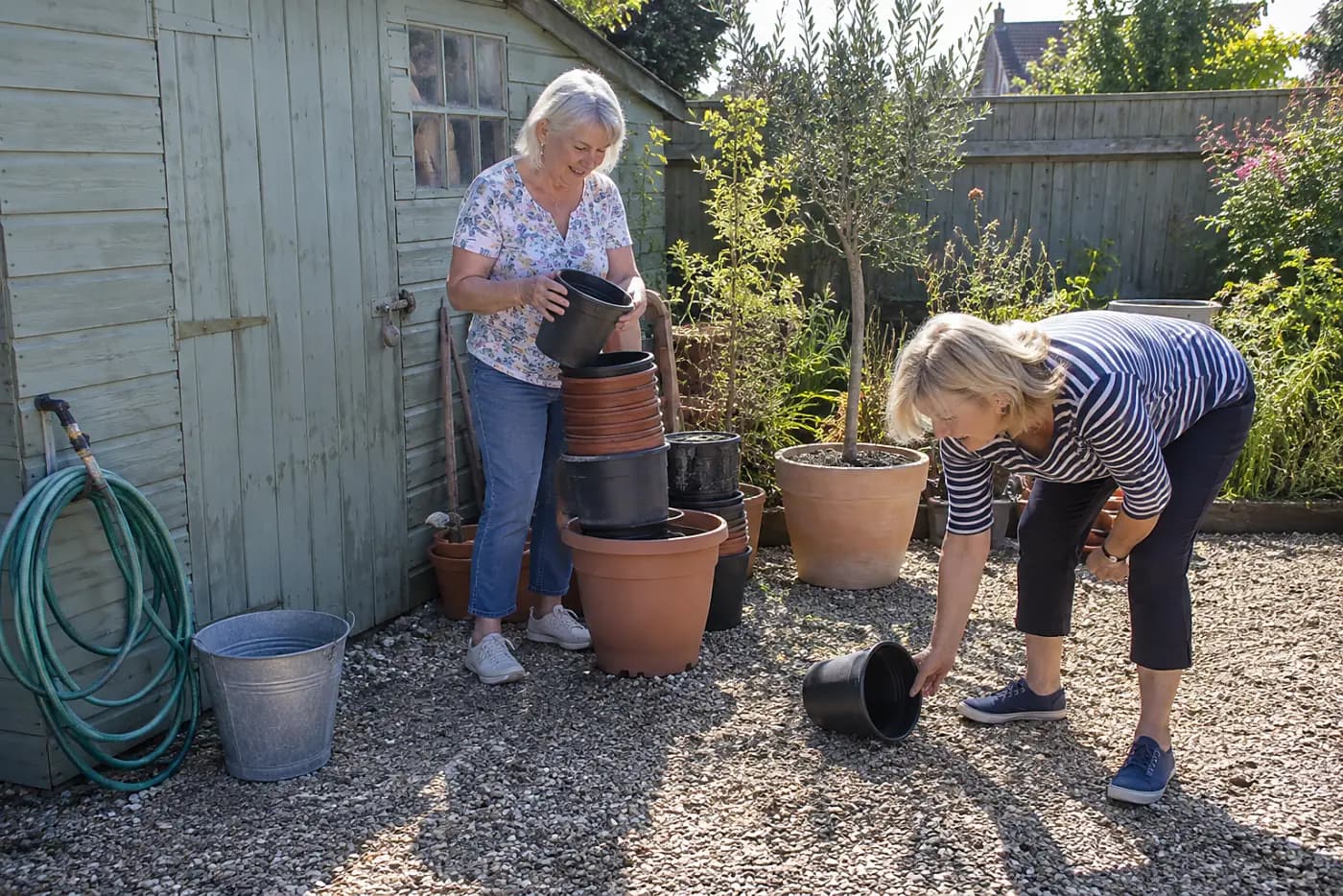
Those black plastic pots tell on an unfinished planting job.
A stack of empty pots means you've been busy. Pots still holding plants tell a different story: roots keep growing while the plants wait, even when nothing above the rim seems to change. From the sidewalk, the stack looks settled long before its contents are.
Slide one plant out and look at the roots. Thick roots circling the pot mean it's time to plant or move it to a roomier container. Leave it too long, and you'll struggle to water the root ball once it dries.
This week, sort the stack into empty pots and living plants. Water the living ones and put them where you'll see them. Tell your neighbor, “I bought these before I had a place ready, so I'm making room now.” You don't owe anyone an account of an unfinished weekend.
From the sidewalk, gardeners also notice what has already gone into the ground.
21The mulch piled against tree bark
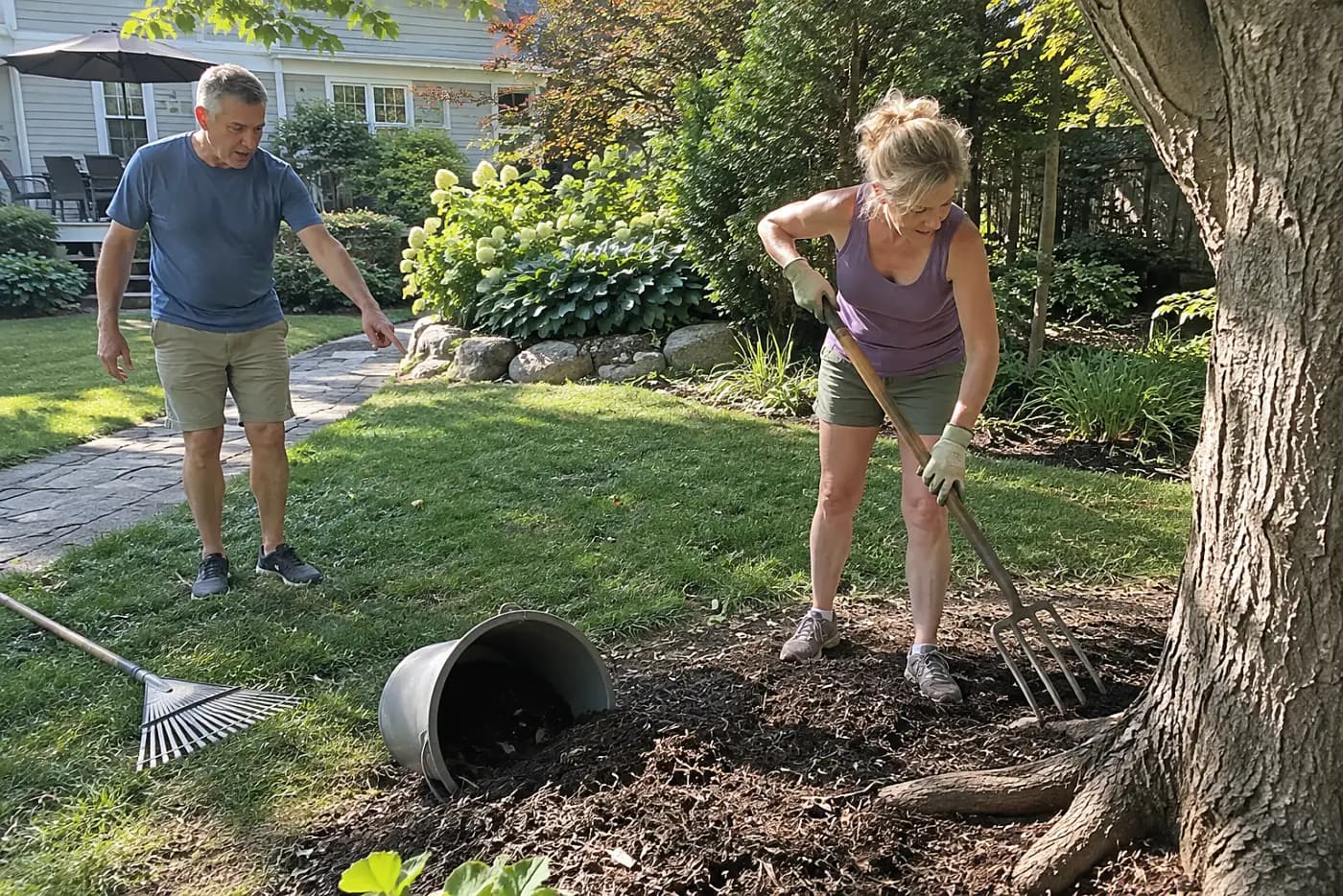
A tidy mound hides the part of a tree gardeners inspect.
Tree roots spread near the soil surface, and the trunk widens where it meets them. Mulch pressed against bark holds moisture there and hides that widening, called the root flare.
A neat-looking ring isn't worth burying the place you need to see. The International Society of Arboriculture says to keep mulch off the trunk. A passing gardener sees the mound's height before you notice how close it sits.
This week, pull the mulch back until the flare shows, leaving the surrounding soil covered. Say, “I finally uncovered the base; I'd been piling mulch too close.”
Then look at the edge of that ring.
20The sharp line between lawn and flowers
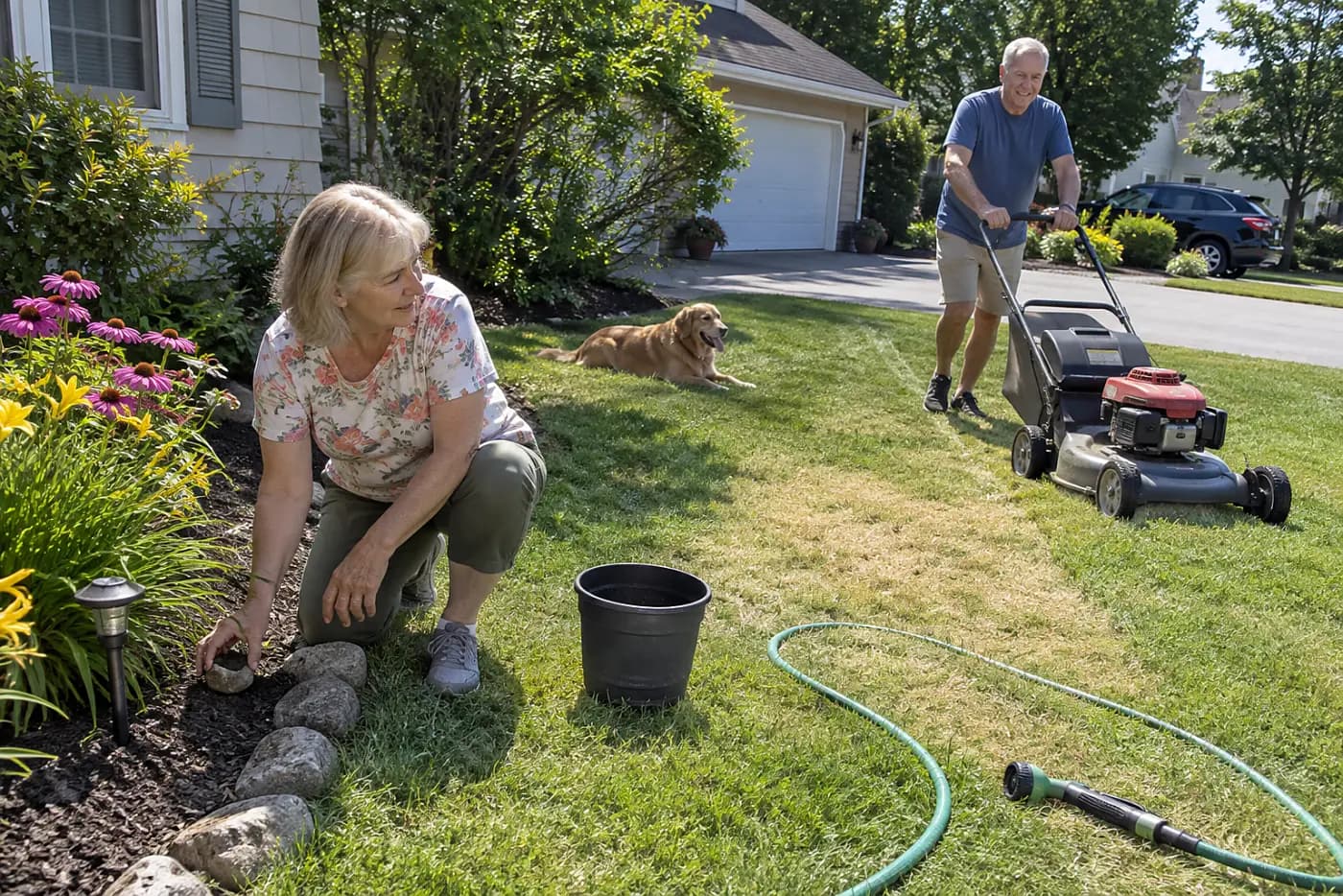
A crisp edge shows exactly where a mower travels.
Gardeners admire a clean line, then look at what crosses it. Grass blades leaning into the bed mean the edge needs another pass. Flower stems cut at lawn height tell a different story.
The difference matters for a young planting. Repeated cuts remove leaves it needs to grow, and a flower disappearing at the border is easy to blame on the wrong thing.
This week, walk the edge before mowing and mark small plants with a stone you can see from the mower. Say, “That little plant's staying; I nearly cut it twice.” Your neighbor has probably made the same mistake with something she waited all spring to see bloom.
A border looks different once the flowers have finished.
19The seed heads left on coneflowers

Brown stems aren't proof that you forgot the garden.
Coneflowers form seed heads after their petals drop. Leave the heads standing, and seed-eating birds have a place to feed through fall. The stems also keep the bed's shape after its brighter colors fade.
Cut every stem as soon as it browns, and that food disappears before the birds reach it. The National Audubon Society encourages leaving seed heads for birds. Your neighbor sees a reason for the stems, even if someone else sees an overdue chore.
This week, leave a few heads standing where they won't block a path. Tell a curious neighbor, “Those are staying for the birds.” You still get to choose which stems belong in the bed.
Sooner or later, though, someone has to walk through that bed.
18The path narrowed by overgrown lavender
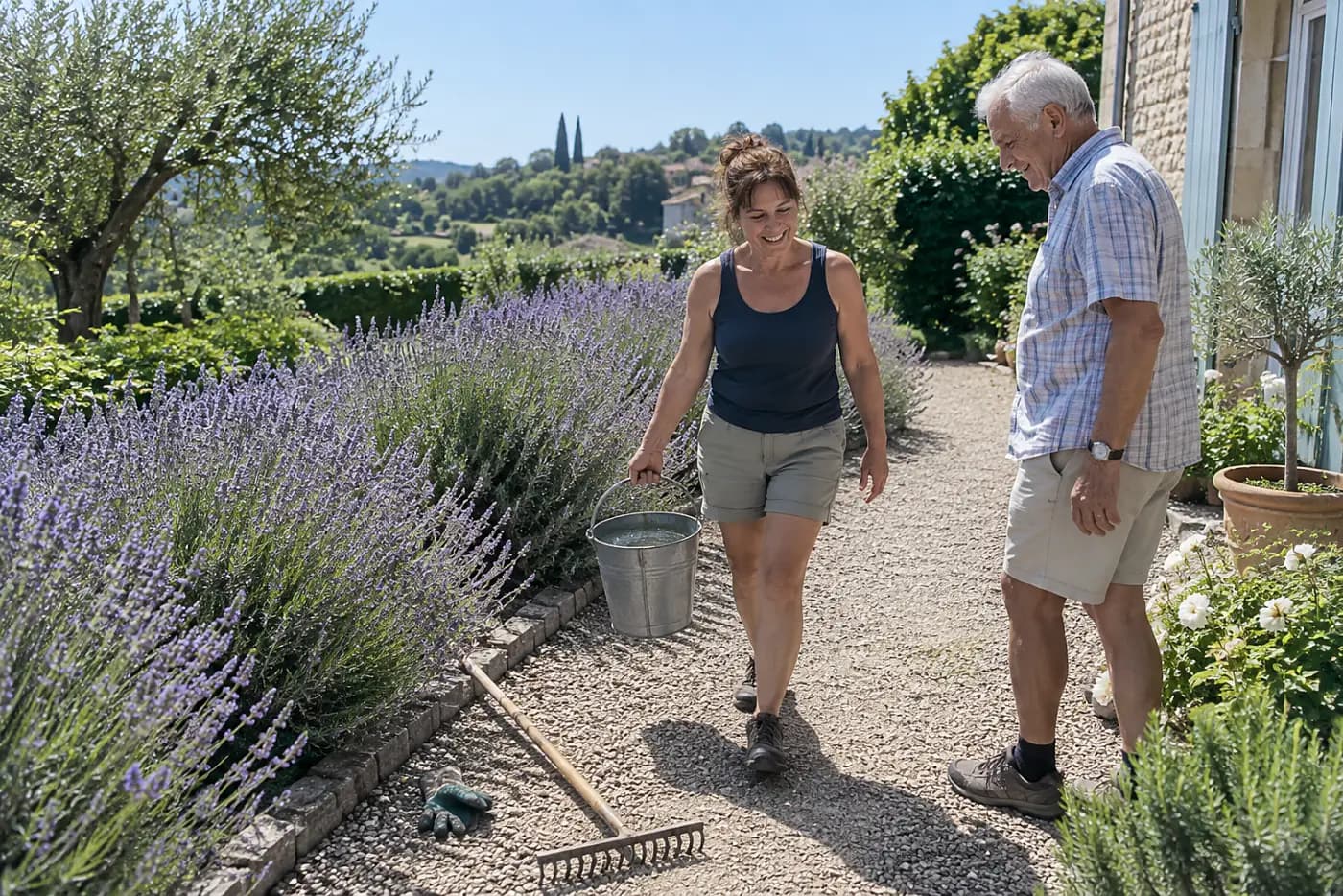
A path loses width a little at a time.
One season, you brush a flower with your sleeve. The next, you turn sideways carrying a watering can. Stems from both sides have reached into the walkway while the route still looks open from the kitchen window.
Wet foliage brushes your clothes, and a full bucket catches on branches. Stepping around them also puts your feet into the bed, where small plants are harder to spot.
This week, carry the bucket along the path before cutting anything. Notice where you change your stride, then trim stems that reach into the route. For lavender, leave the bare old wood alone when you prune; Royal Horticultural Society pruning guidance warns against cutting back into it. Say, “I hadn't noticed how far that lavender had come across.”
Your neighbor sees the squeeze from the other end, where the surface holds another clue.
17The gravel washing onto the sidewalk
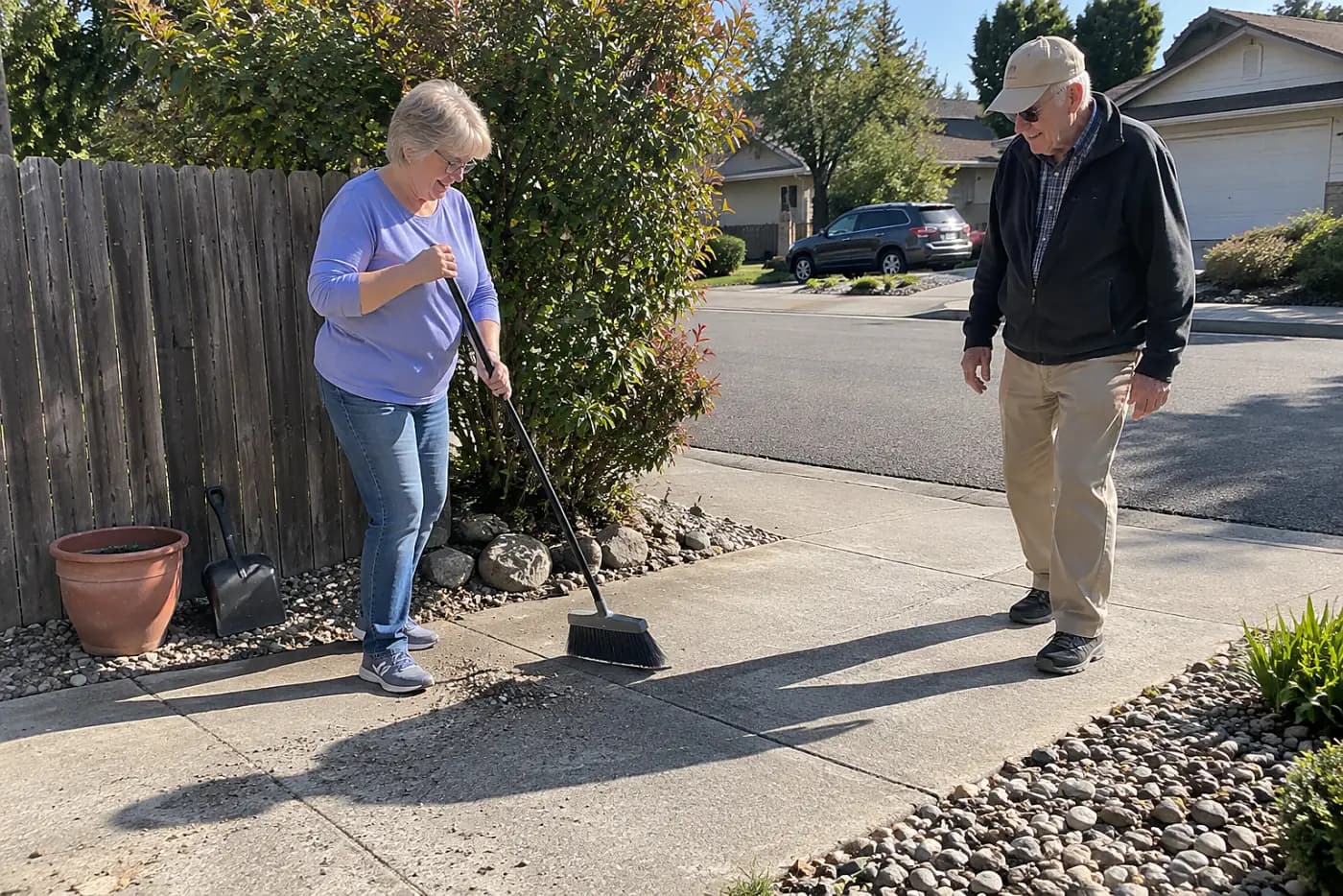
A few loose stones show where the edging failed.
On a sloped path, rain pushes gravel toward its lowest opening. Once stones reach the sidewalk, every footstep scatters them farther from the bed. A gardener walking past sees that trail without seeing the storm that made it.
Loose gravel underfoot creates a slip risk, especially where shoes turn onto the path. Sweep the stones away and the trail returns unless its exit point is closed.
This week, clear the sidewalk and follow the scattered stones back to the gap in the edging. Set the edging back in place if it's loose, then check it after the next rain. Tell the neighbor who uses that sidewalk, “I found where the stones were getting out.” The US Geological Survey has more on how moving water carries loose material.
Another patch of ground reveals what falls from above, rather than what washes downhill.
16The bare patch beneath the bird feeder
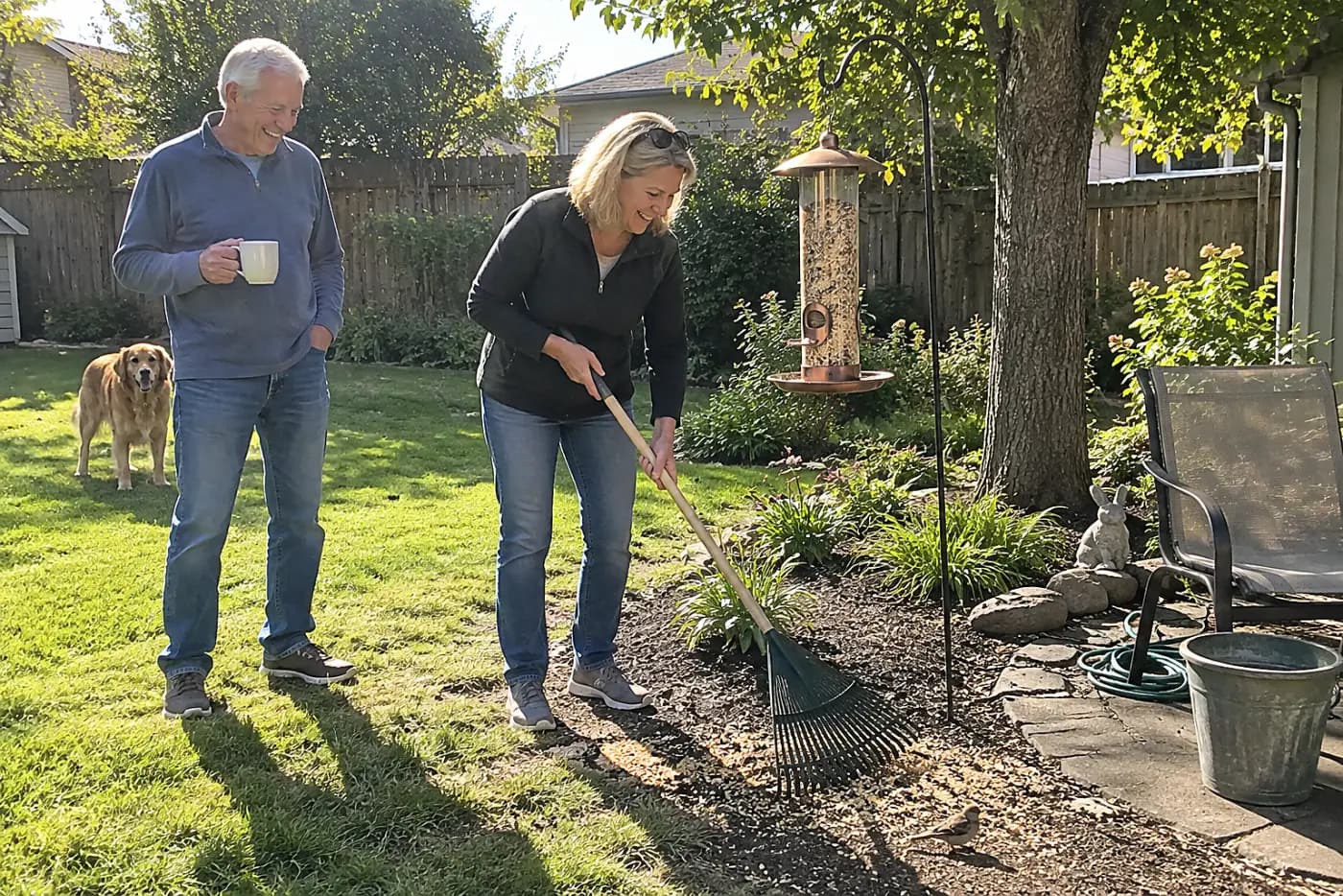
The soil under a feeder has a busy life.
Dropped seed lands there first. Birds scratch for it, and spilled seed sprouts where you wanted flowers or lawn. From the sidewalk, the bare circle looks like a planting choice until seedlings appear beneath it.
Leave the spill there, and you get a second patch to weed. Hulls also cover the soil, making it harder to see what has sprouted until the plants are taller.
This week, rake up the spilled hulls and inspect the seedlings before pulling anything elsewhere. Move the feeder over a surface you can clean if you want that ground back. Say, “The feeder made more of a garden under it than I planned.” A neighbor with a feeder knows both jobs.
What the birds leave behind isn't the only thing worth watching.
15The saucer holding water under a pot
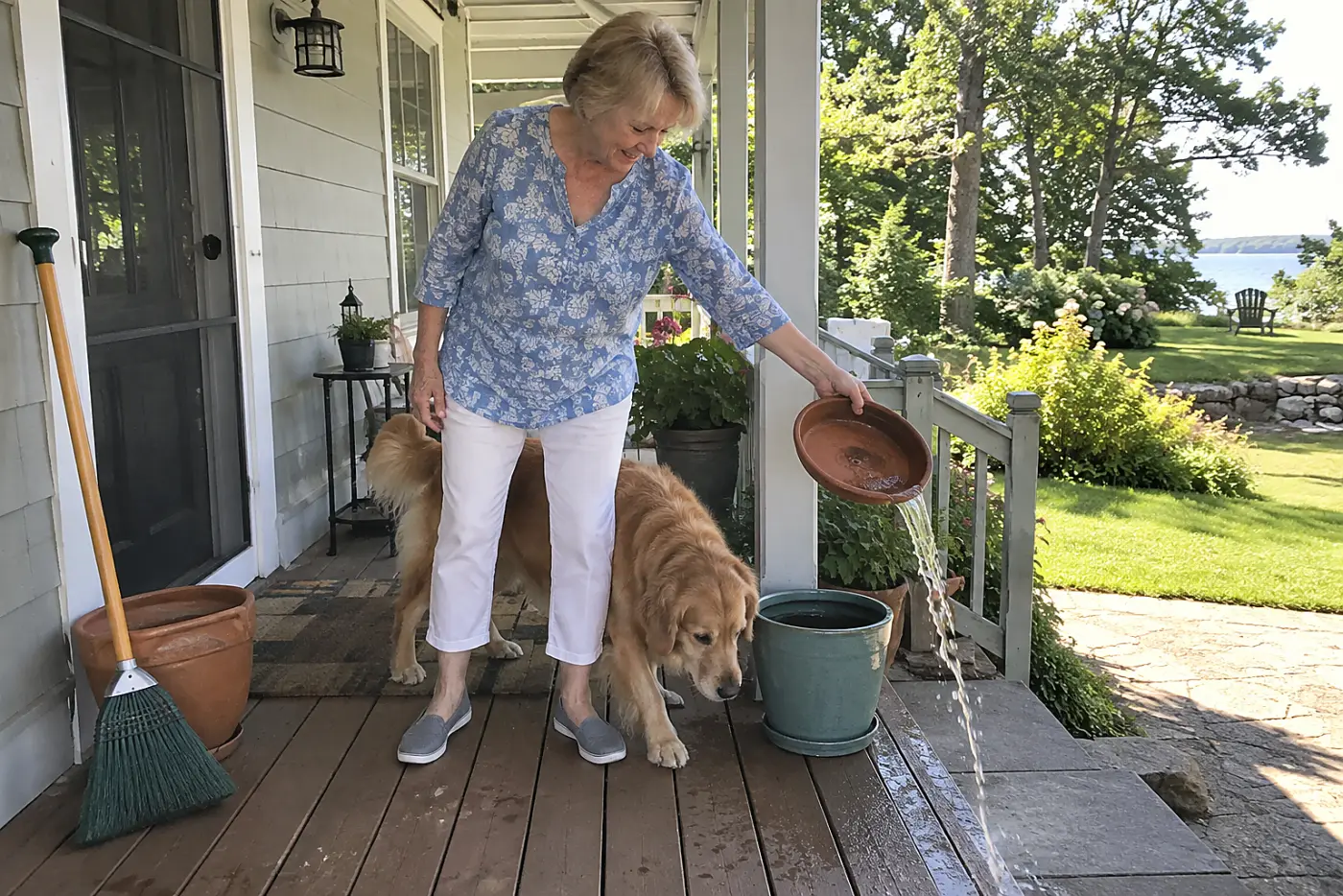
Standing water changes how a healthy plant looks.
A saucer catches what drains through the pot. If it stays full, the bottom of the pot sits in water. The soil has less chance to drain before your next trip with the watering can.
Yellow leaves send you reaching for fertilizer when the roots need air instead. Check the soil before adding more water, as University of Minnesota Extension recommends for containers.
This week, empty the saucer and feel the soil beneath the surface before watering again. Say, “I was watering the leaves I could see, not checking the soil.”
A neighboring pot has a different water problem.
14The potting soil pulled from a container edge
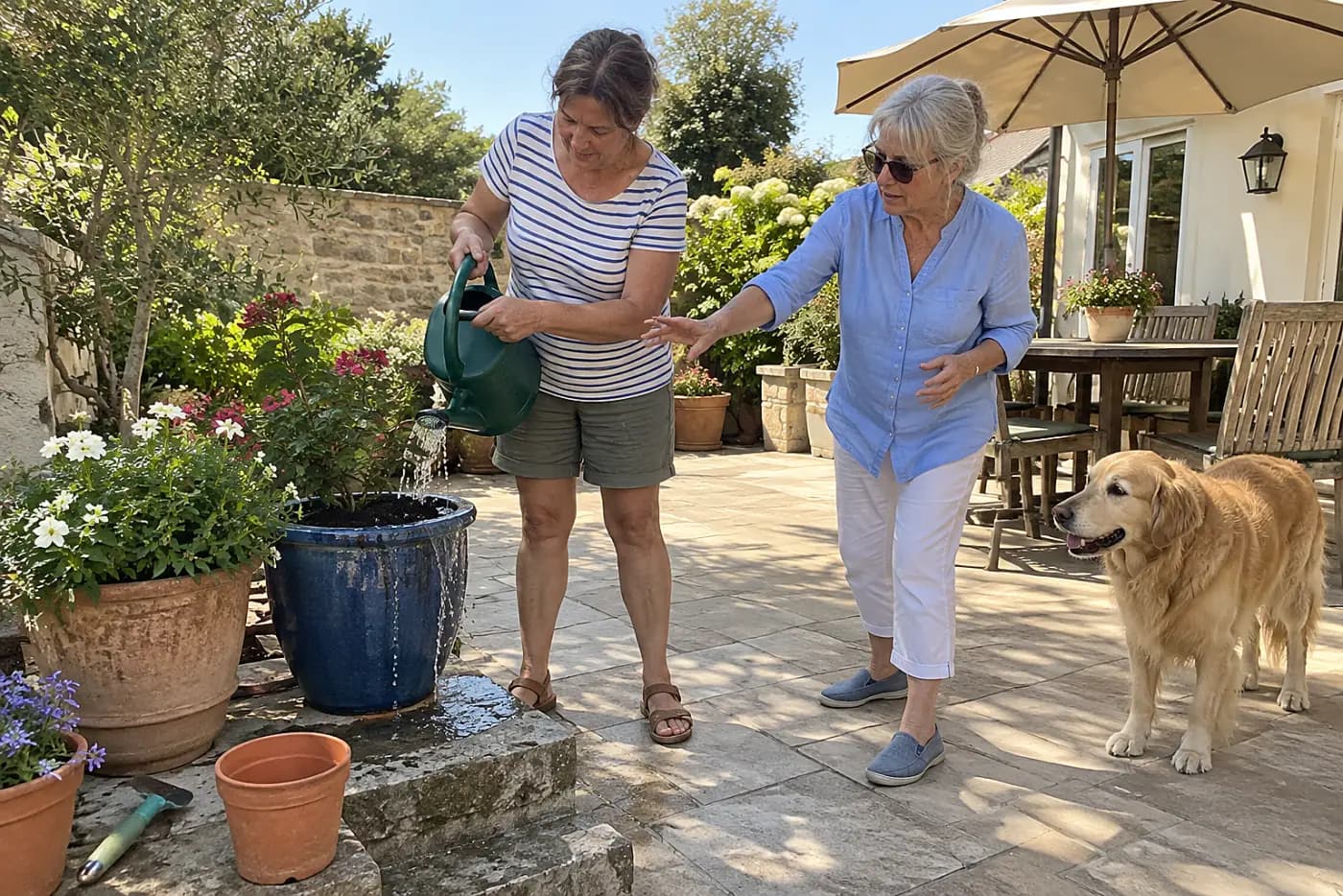
A narrow gap lets a generous watering miss the roots.
When container soil dries and shrinks, it pulls away from the pot's inside wall. Water poured quickly onto that gap runs down the side and out the drainage hole. Much of the root ball remains dry, even though the pavement beneath the pot is wet.
The plant wilts again, and you wonder how a pot you just watered is thirsty. Another fast pour sends the water down the same route. A gardener who has lifted a dry root ball knows that a wet saucer proves little.
This week, pour slowly across the soil surface and pause to see whether it soaks in. If the root ball stays dry, water in stages until the soil takes it up. Tell the neighbor admiring your flowers, “This pot fooled me; the water was running around the soil.”
A plant in the ground gives an equally misleading signal.
13The afternoon droop on a hydrangea
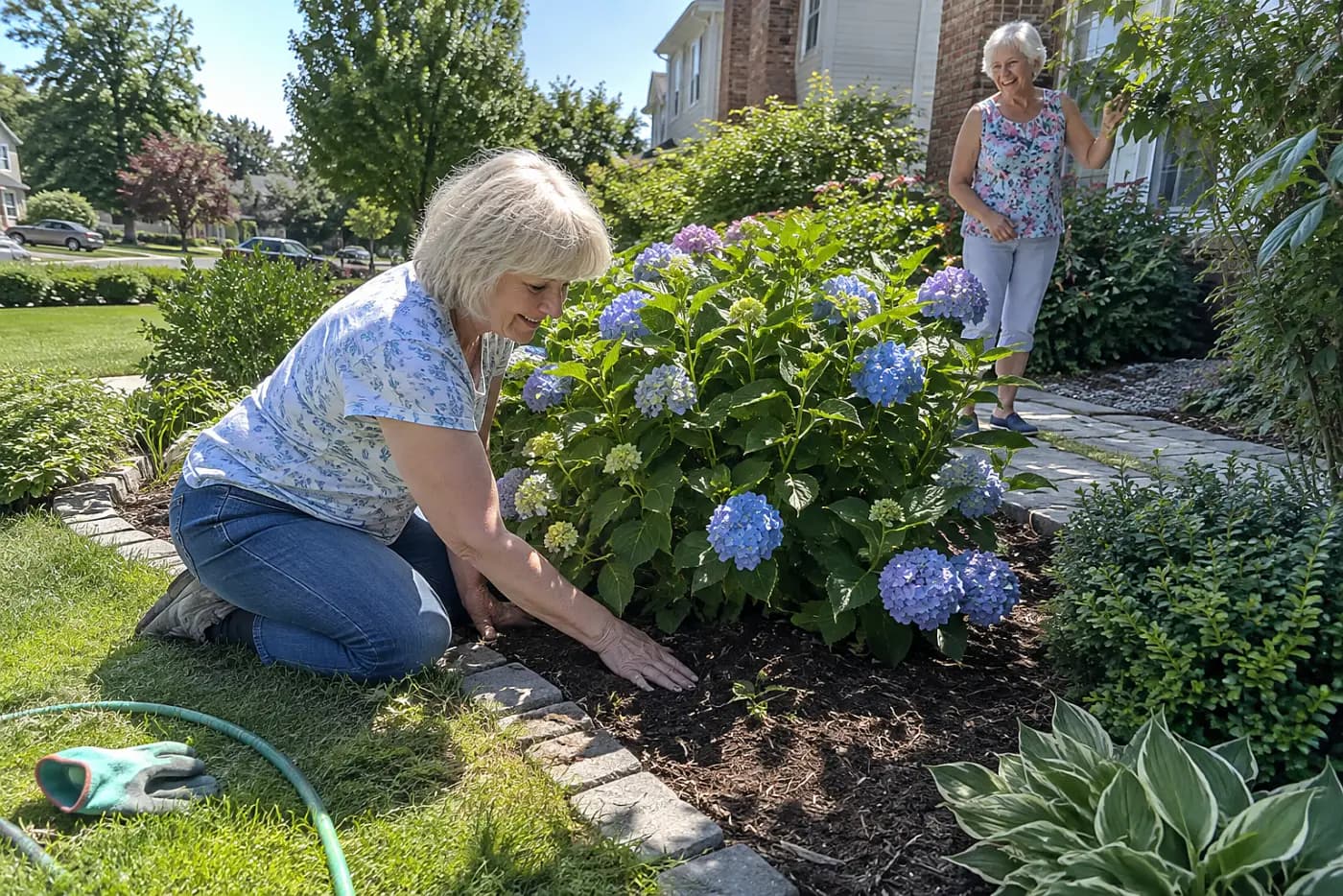
A drooping leaf at noon isn't a watering instruction.
Heat pulls water through leaves. A hydrangea can droop in strong afternoon sun and look firm again after the temperature falls. A passing gardener sees the same plant at different hours and notices when that pattern repeats.
Watering every time it droops risks leaving the soil soaked. Feel below the surface first, rather than judging by the leaves alone. University of Maryland Extension gives the same advice.
This week, check the soil and return to the plant that evening. Say, “I'm waiting to see whether it perks up before I add water.”
Nearby, a leaf tells a story that waiting won't settle.
12The holes appearing in tomato leaves
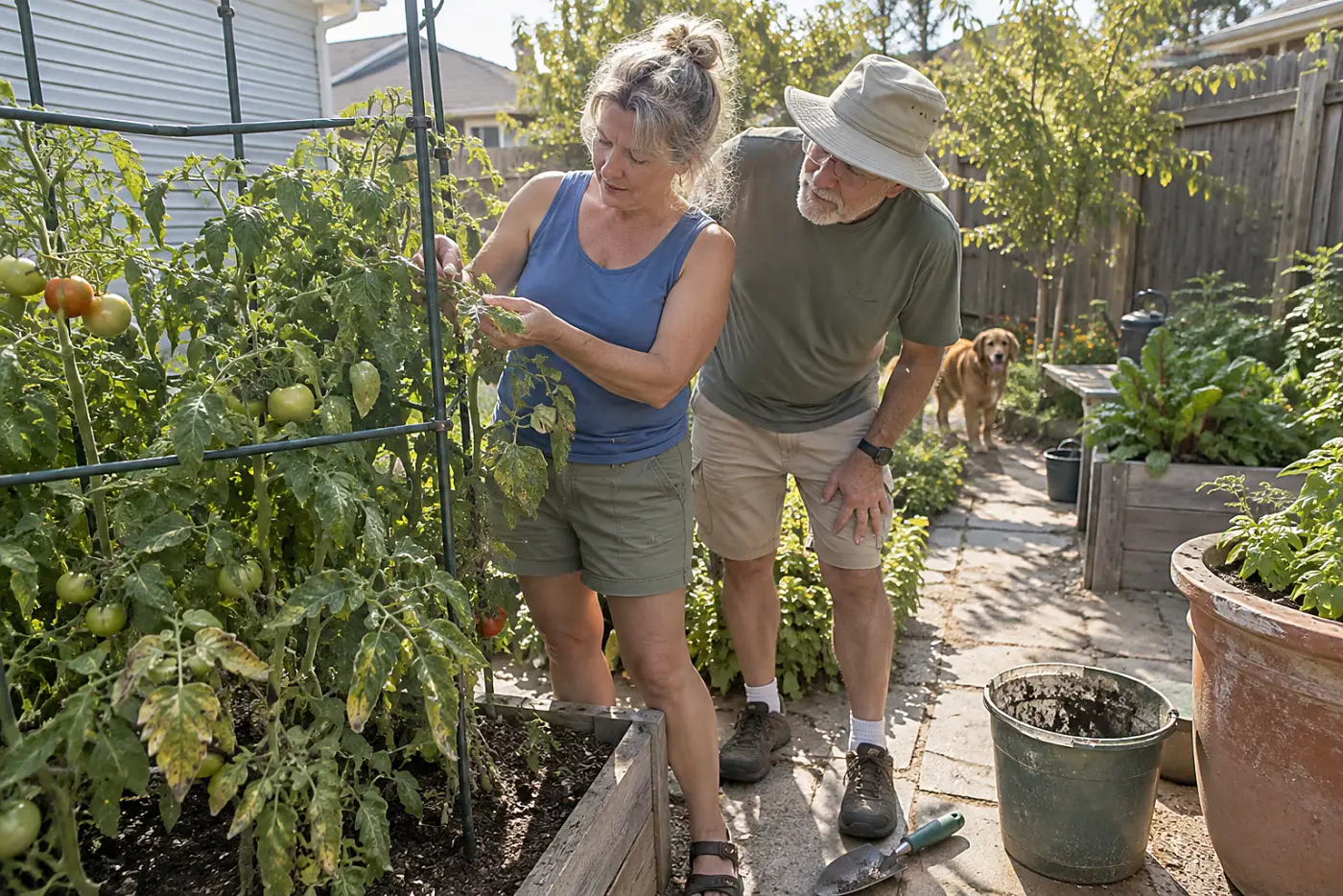
Holes tell you to look closer, not spray first.
A leaf with missing pieces is evidence of feeding. Inspect both sides and the nearby stems. The shape of the damage alone doesn't tell you what's still there, or whether the visitor has already moved on.
Spraying before you find the culprit wastes effort and puts a product where it isn't needed. The University of California Integrated Pest Management program puts identification ahead of control. That order works for one tomato as well as a whole bed.
This week, examine the damaged leaves in daylight and again near dusk. Take a clear photo of the leaf and whatever you find. Say, “I found the holes; now I'm trying to find who's eating.” Your neighbor will understand why you stopped to look.
There are other signs on a tomato that draw a gardener's eye.
11The tomatoes hanging past ripeness
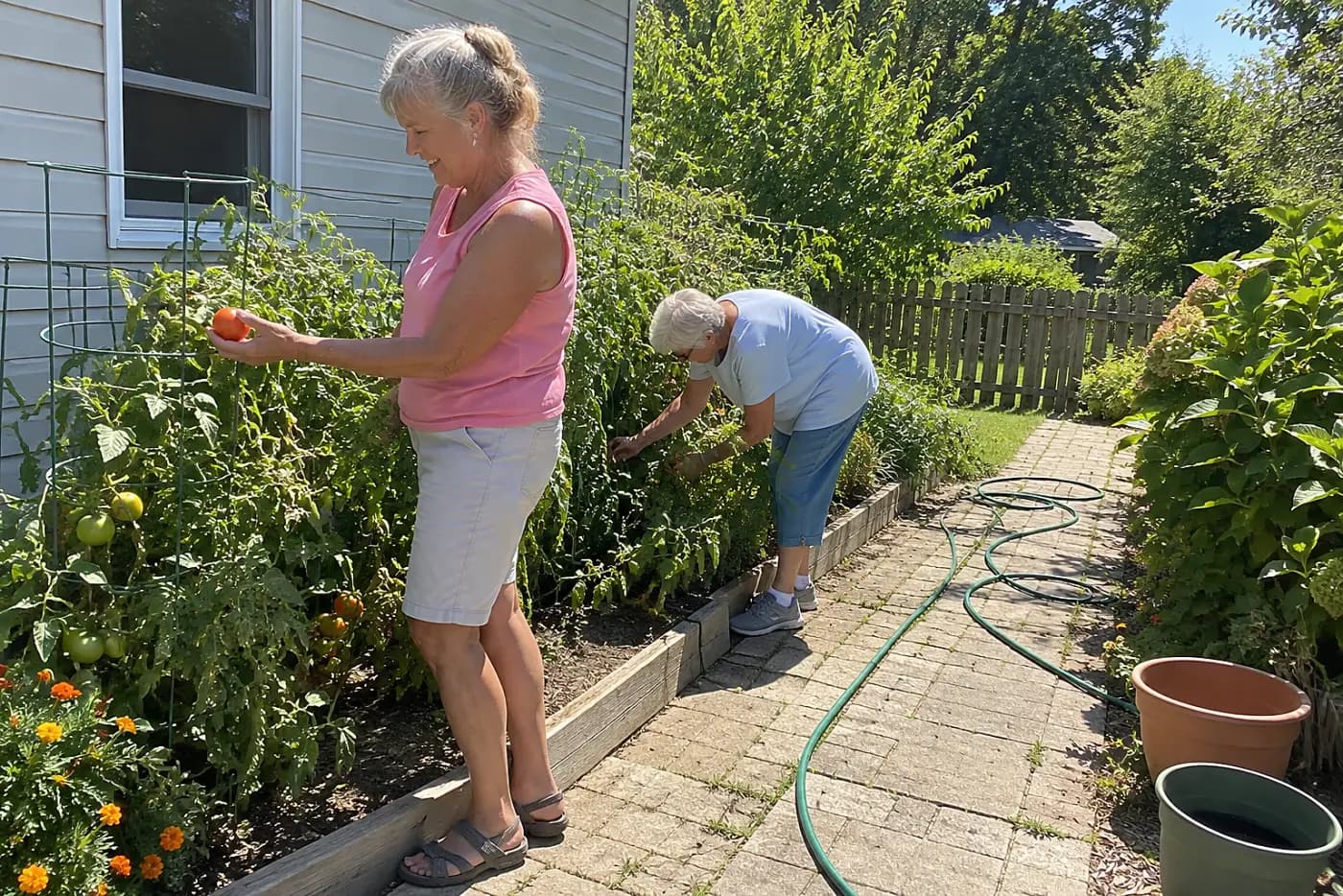
A ripe tomato changes faster than a calendar reminder.
Once fruit is ready, leaving it on the vine exposes it to splitting and animals. Gardeners spot the bright fruit from the sidewalk because they once lost a good one overnight.
If you won't eat it today, you still have choices. A tomato picked at the color-break stage continues ripening indoors, according to University of Illinois Extension.
This week, pick the ripe fruit and check the plants again before the next hot afternoon. Say, “I got to these before the squirrels did.”
The harvest leaves another clue near the kitchen door.
10The herb stems cut above new leaves
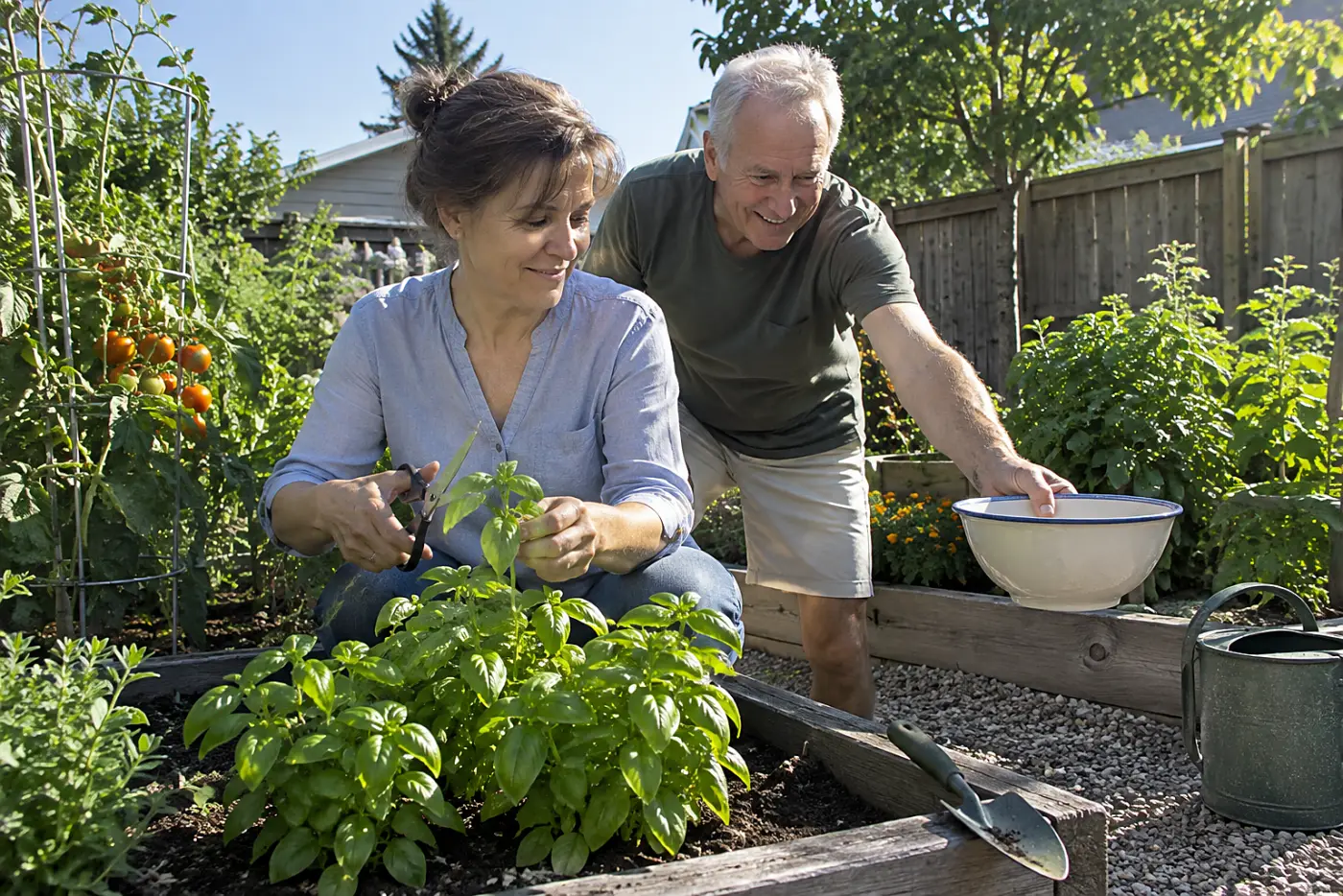
The place you cut basil shows what happens next.
At a pair of leaves, basil has growing points that produce new shoots. A cut just above that pair leaves those points in place. The plant grows outward instead of ending in a long bare stem.
Someone walking past won't inspect each cut. She'll notice the shape: a full plant where you keep harvesting, or tall stalks with leaves gathered at the top. Cut without looking, and the next harvest comes from fewer useful stems.
This week, find a healthy leaf pair before taking stems for dinner. Cut above it with clean scissors, then use what you took while it's fresh. Say, “I'm cutting here so it branches, not just pulling off the biggest leaves.” Even a neighbor growing different herbs recognizes the shape of a well-used plant.
Not everything near the kitchen gets harvested on time.
9The fallen fruit beneath a tree
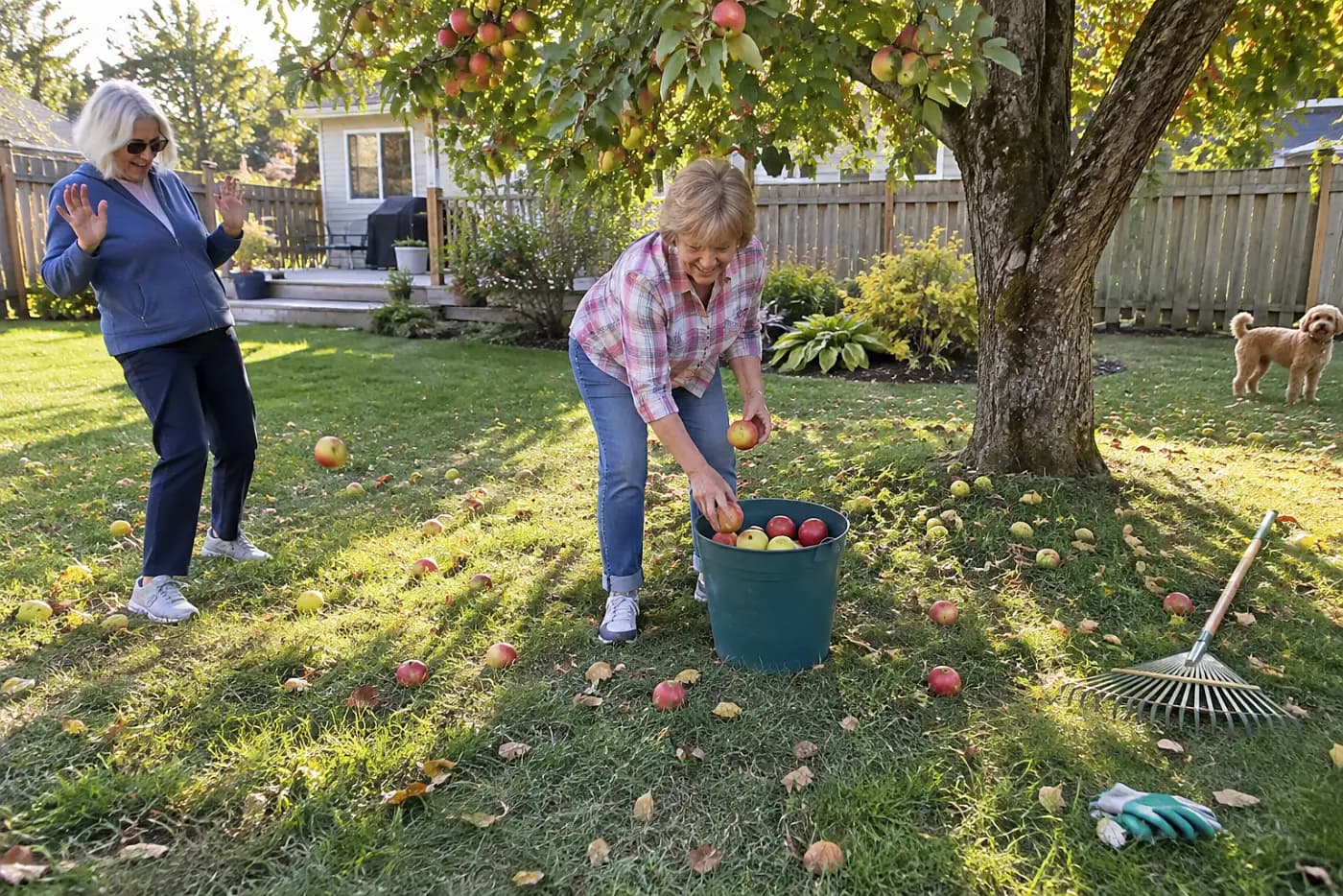
Fruit on the ground draws attention after the harvest ends.
A fallen apple or peach breaks down where it lands. Insects find it, and more fruit drops into the grass while you're looking up at the branches. From the sidewalk, the fruit under the tree shows how much the harvest has left behind.
Soft fruit underfoot is slippery. Run a mower over it, and you scatter the mess through the lawn. Penn State Extension includes dropped fruit in its orchard cleanup advice; the same chore matters beneath a single backyard tree.
This week, gather fallen fruit before mowing and put spoiled pieces where local compost rules allow. Say, “I missed the ones under the branches.” Look beneath the far side of the canopy too.
The ground beneath the tree holds a second clue.
8The sprinkler soaking one side of a fence
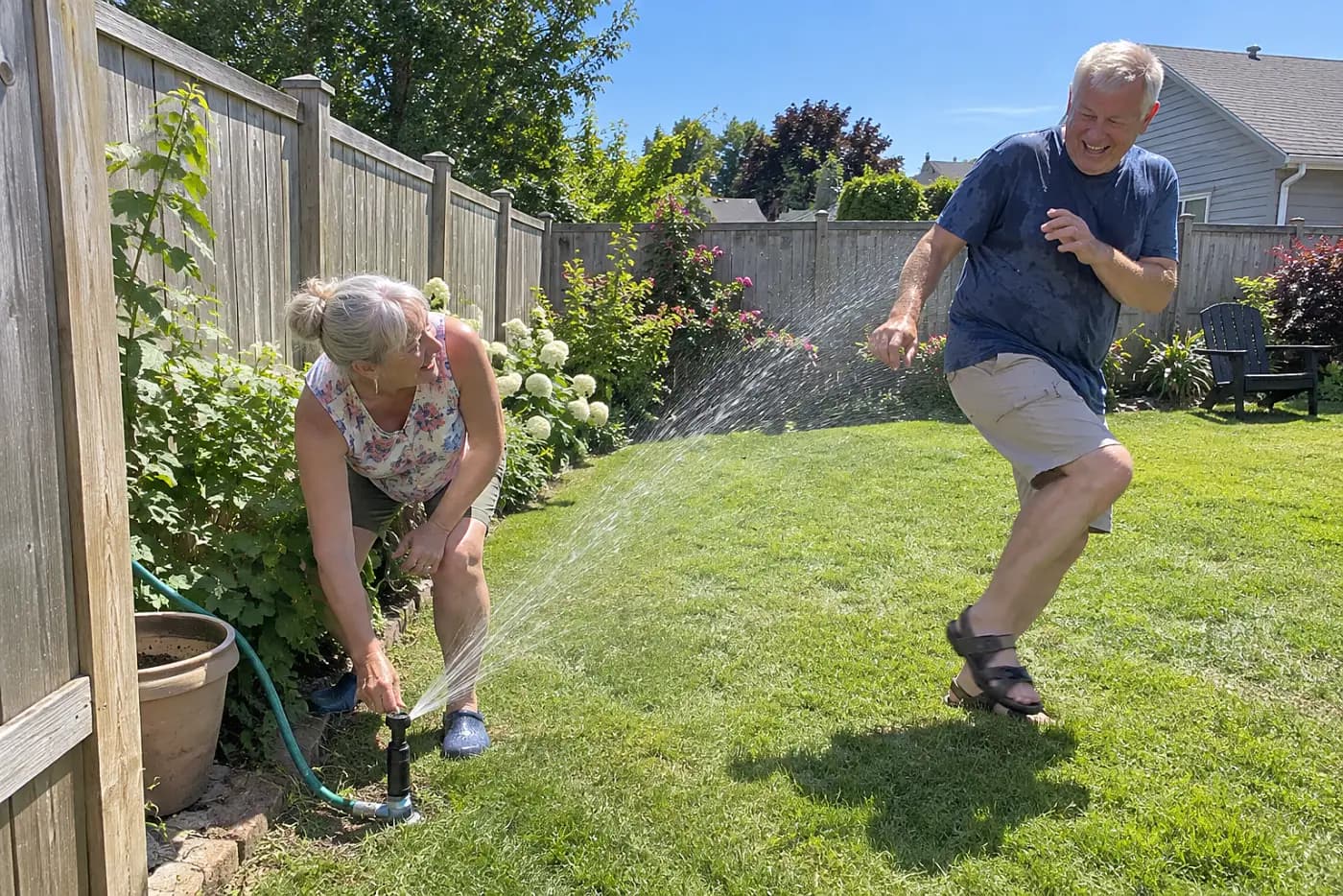
A sprinkler doesn't know where the property line falls.
Its spray follows the head's angle. A slight turn sends water across the fence, onto a walkway, or into the same corner every time the system runs. Your neighbor sees the spray from her side before you see the dry strip left behind on yours.
That dry strip gets overlooked while you assume the bed has been watered. Her wet walkway is a separate problem, with a separate person walking through it.
This week, run the sprinkler while you're home and watch a full cycle from the sidewalk. Adjust the head according to its instructions, then check the soil in the area it used to miss. Tell your neighbor, “I saw my sprinkler hitting your fence; I've turned it back.” She gets a chance to mention what the spray reached.
Water that stays on your property has a slower way of making itself known.
7The puddle that outlasts the rain
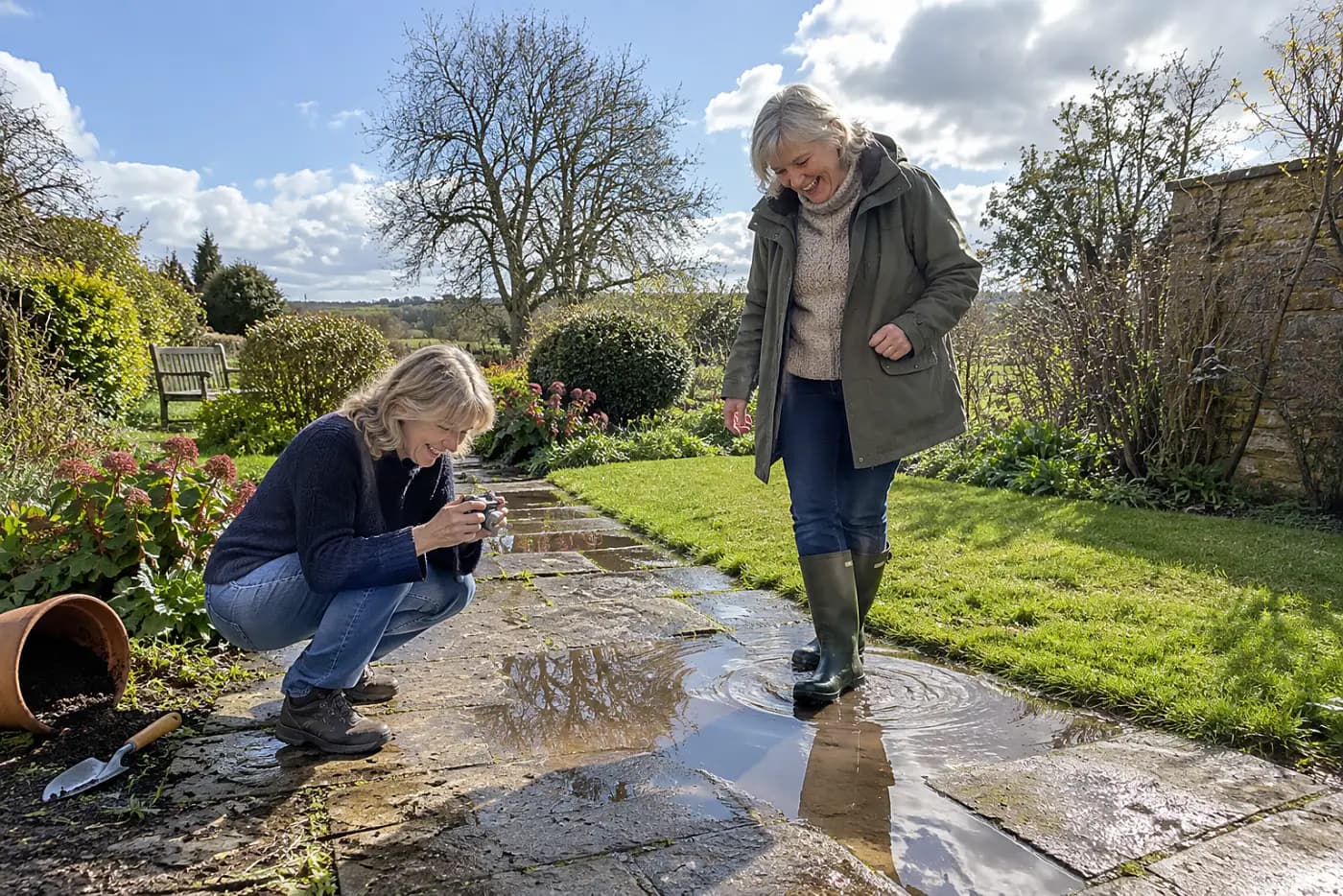
A lingering puddle marks the yard's low point.
Rain reaches that spot from the ground around it. Once the storm ends, the time it takes to disappear shows whether water has a route away. A neighbor passing the same path tomorrow sees what you missed while the rest of the yard dried.
Plants left with wet roots suffer, and a walkway puddle sends feet onto the grass. Plant straight into that spot without watching it, and you lose the chance to choose a better place.
This week, photograph the puddle after rain and again the following day. Mark its edge with a stone so you know how far it spread. Say, “I'm watching where the water sits before I plant anything there.” For planting ideas, look up the EPA's Soak Up the Rain program after you've watched the site.
The driest patch deserves a look too.
6The grass fading under a maple
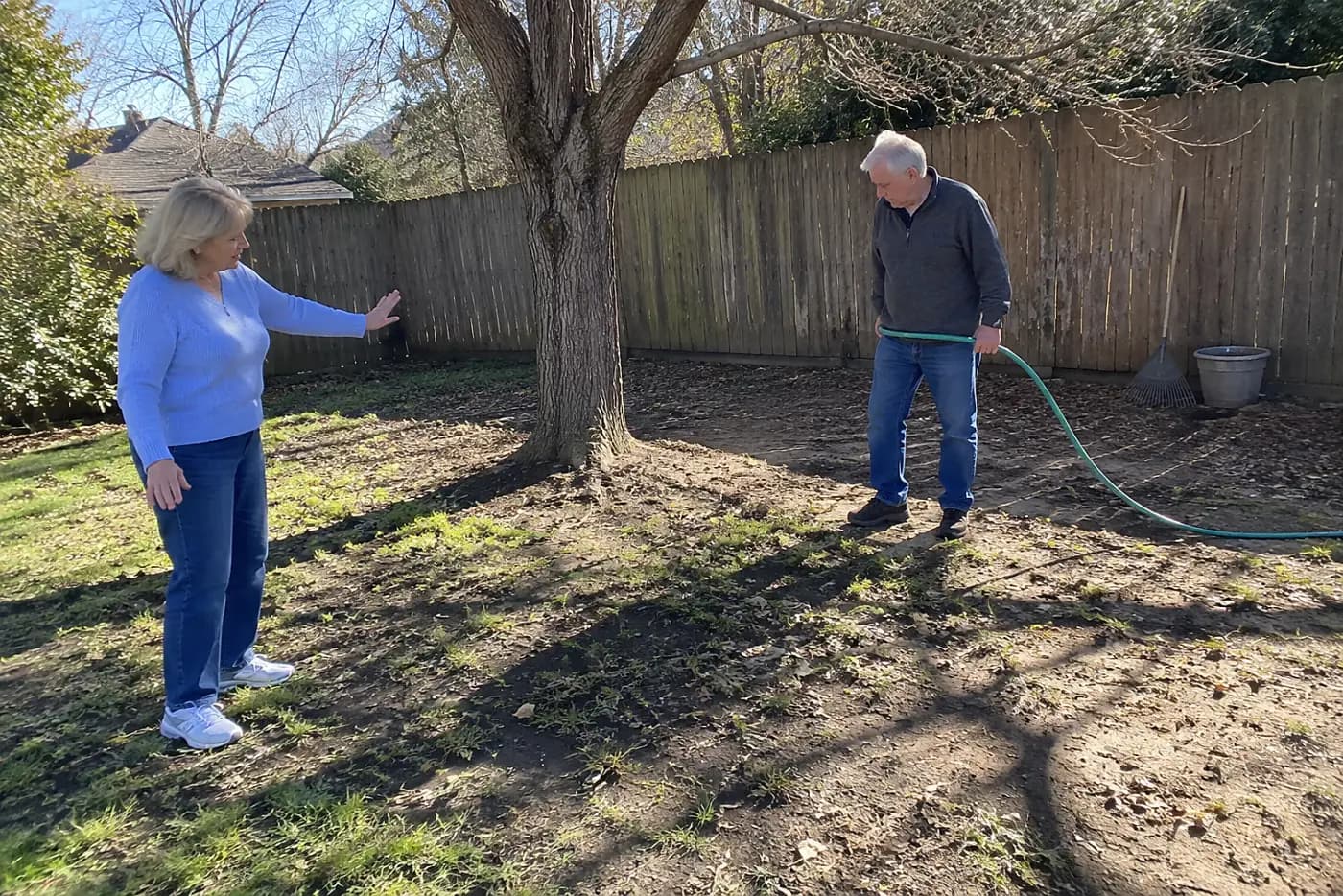
Shade changes a lawn before a gardener changes seed.
A maple's canopy blocks some light. Its roots also share the soil with grass, taking up water and nutrients where a new lawn needs them. A neighbor who passes each afternoon sees the shadow cross the same thin patch you study only while mowing.
Reseeding without checking those conditions repeats the same work. Before buying another bag, compare the spot with a patch that gets direct sun. Clemson Cooperative Extension's Home and Garden Information Center covers the challenges of growing grass beneath trees.
This week, watch when direct sun reaches the patch, then check for roots close to the surface. Keep tools shallow near those roots. Say, “I've reseeded this spot enough; I'm checking the light first.”
A different strip of grass tells a story with no shade at all.
5The tire tracks across the lawn
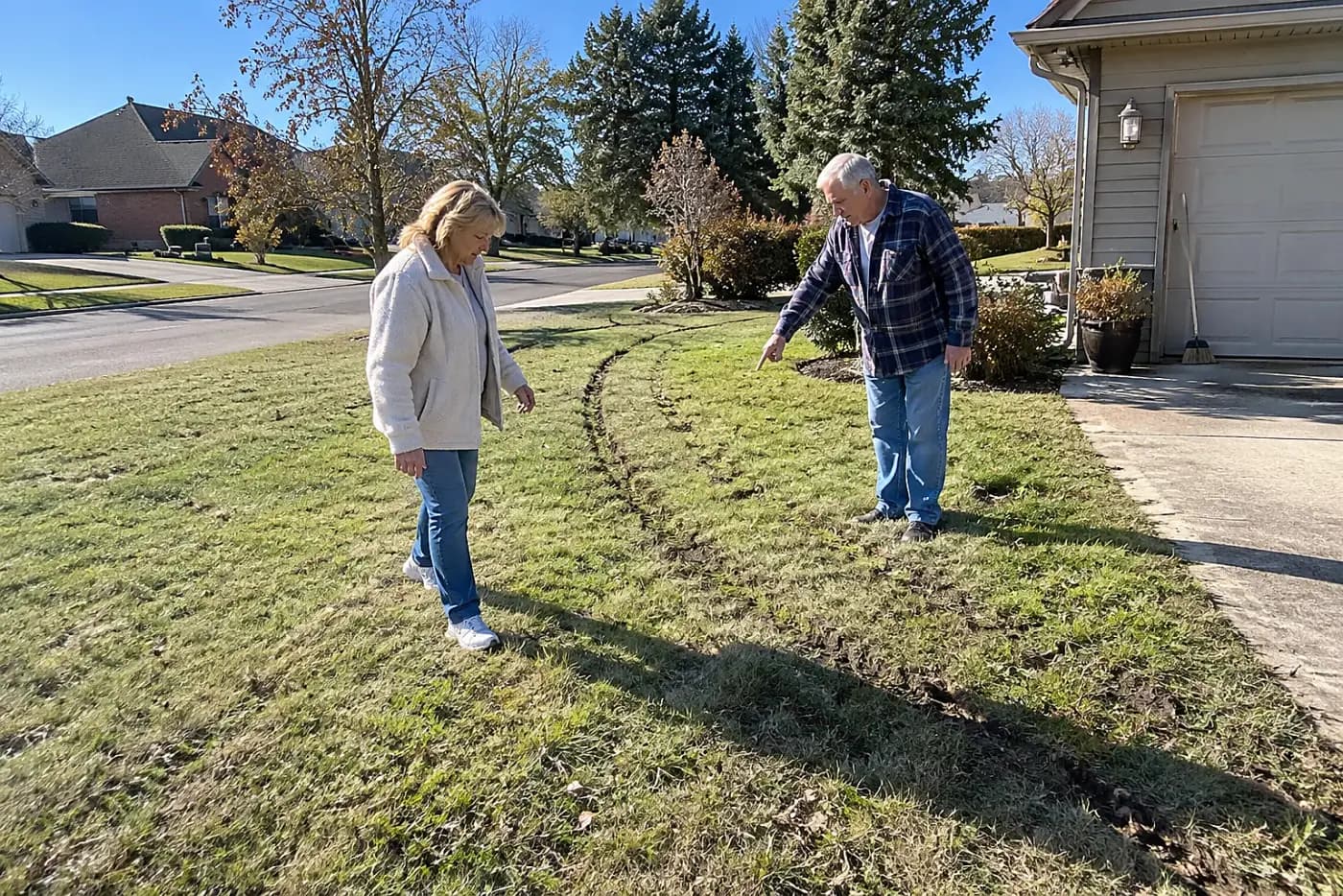
Two flattened lines show exactly where wheels passed.
A delivery or yard-work vehicle presses grass down first. If the ground was wet, the wheels also press soil tighter beneath it. The blades stand up before the tracks beneath them disappear.
You lose a useful clue if you rake the lines away without checking for ruts. A rut changes where the next rain runs, even after the grass looks green again.
This week, walk the tracks and feel for a dip before you do any repair. Say, “I'm checking whether those wheels left a rut.”
Near the drive, gardeners look for the mark wheels didn't make.
4The salt-damaged strip beside the driveway
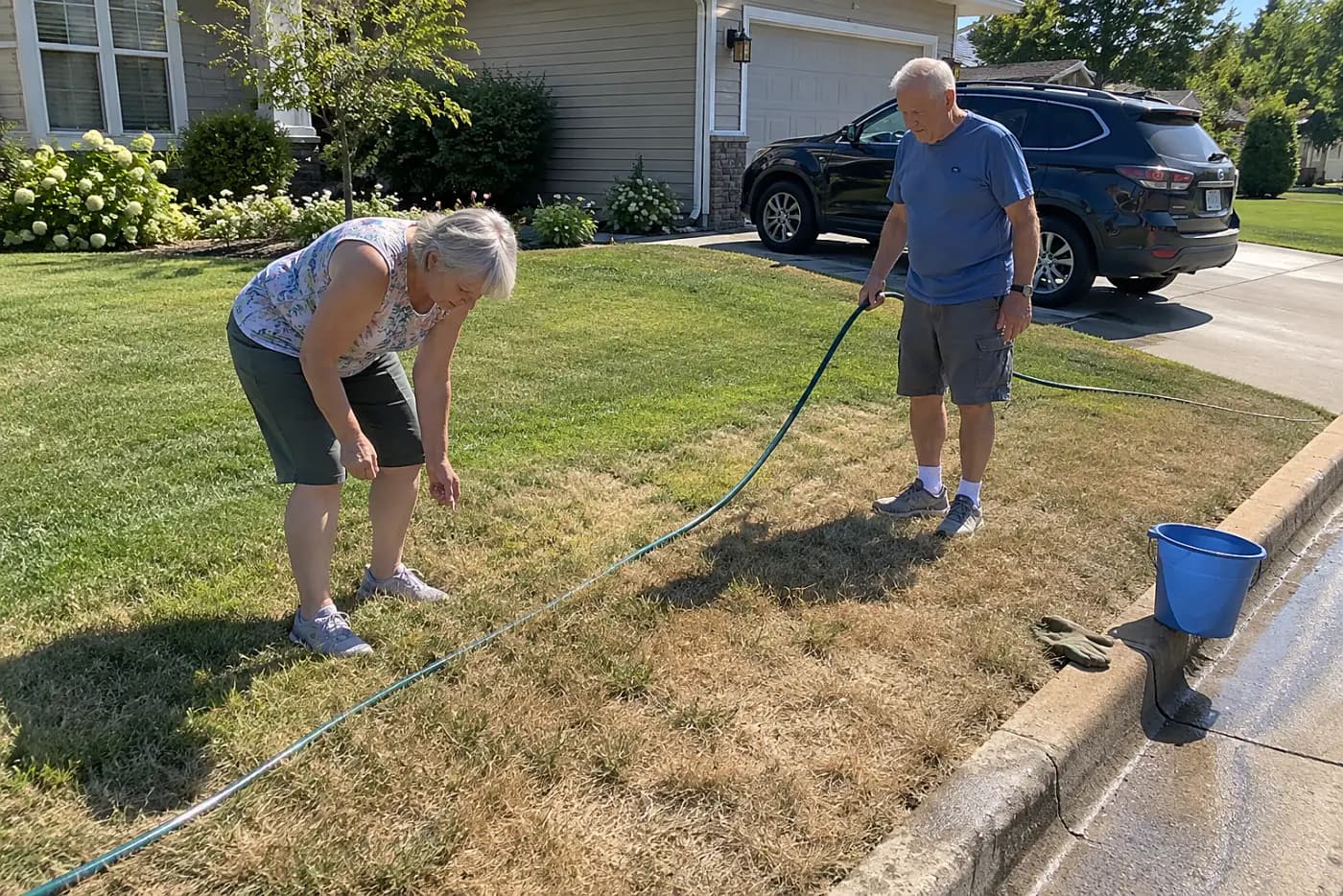
The driveway edge has a winter memory.
When snow or ice melts, runoff carries deicing salt toward nearby soil. Grass along that route browns while grass farther away stays green. The narrow strip points back to the paved edge, where your neighbor saw the snow piled.
The pattern matters before you buy seed or fertilizer. If salt reaches the same edge next winter, a fresh planting faces the same trouble. Compare the damage with guidance from University of Wisconsin Extension before replacing anything.
This week, trace where driveway runoff enters the lawn and photograph the strip. Before the next freeze, keep deicer on the paved area and follow its label. Tell your neighbor, “That brown edge lines up with winter runoff, so I'm changing where I spread salt.”
Across the yard, another straight line has a less obvious source.
3The weeds along the fence base
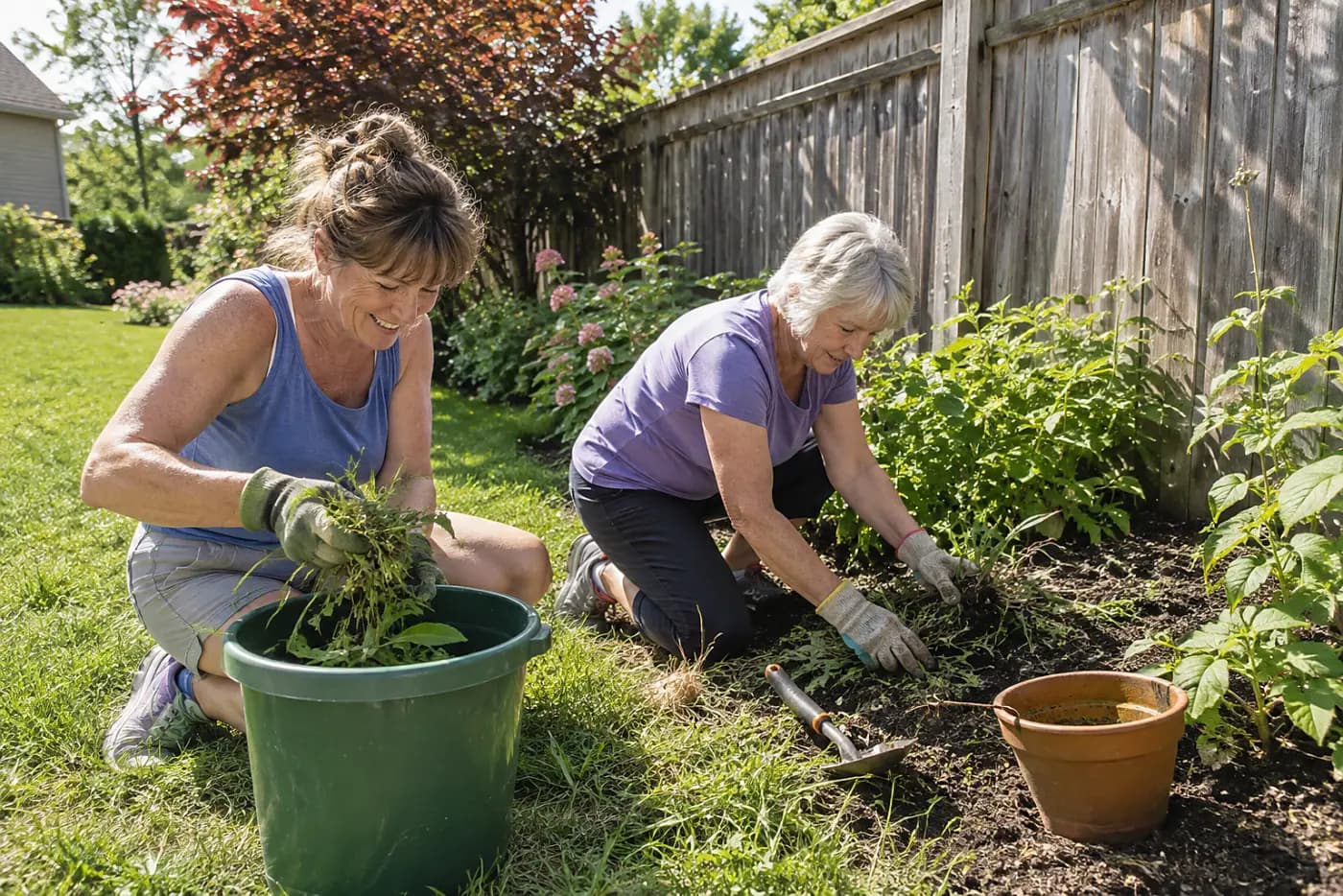
A fence line collects seeds from both directions.
Wind catches plant debris against the boards. Birds perch above, and weeds get a sheltered place to start where mowing doesn't reach.
Left alone, those stems hide the bottom rail and crowd whatever you've planted there. Wait until they set seed, and the next pass takes longer.
This week, walk the fence with a bucket and pull what you can identify. Say, “I'm clearing my side before those go to seed.”
The view over the fence reveals something more personal.
2The chair facing an unfinished flowerbed
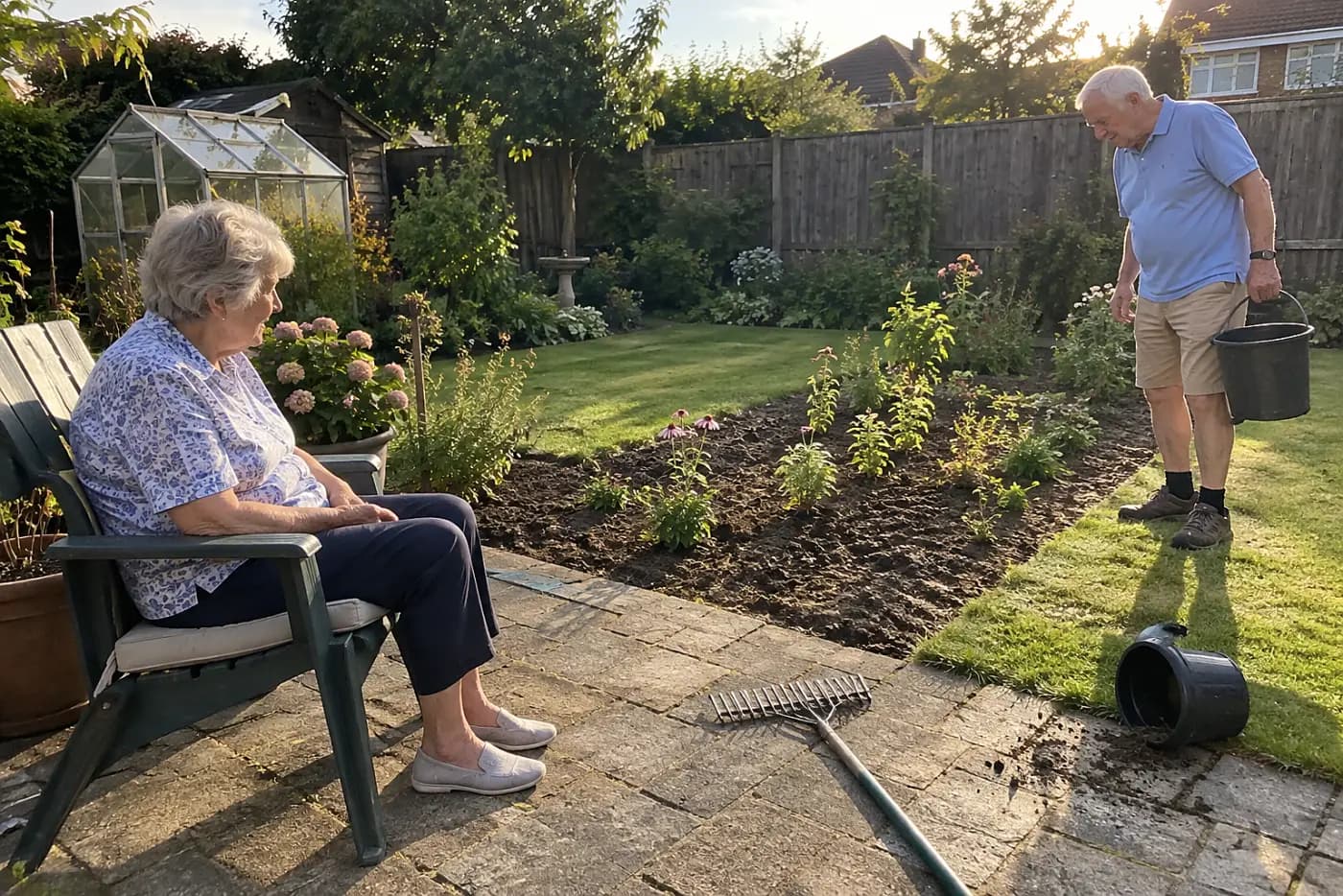
Where you sit tells a gardener where you look.
A chair aimed at a bed makes that patch part of your day. You notice the first bloom from there, but also the stake that fell and the plant hidden behind a taller one. Your neighbor sees the chair before she sees any unfinished planting.
She understands why the bed stays unfinished. You've been using the space while deciding what belongs in it. Move the chair to hide the work, and you lose the view that tells you what needs changing.
This week, sit there for a few minutes at the hour you normally use the yard. Note what blocks the view, what needs water, and what you don't mind leaving alone. Tell the neighbor who stops to chat, “I like this spot, even while I'm figuring out the bed.”
The harder view is the one that begins on your side and ends on theirs.
1The five-minute walk along the shared boundary
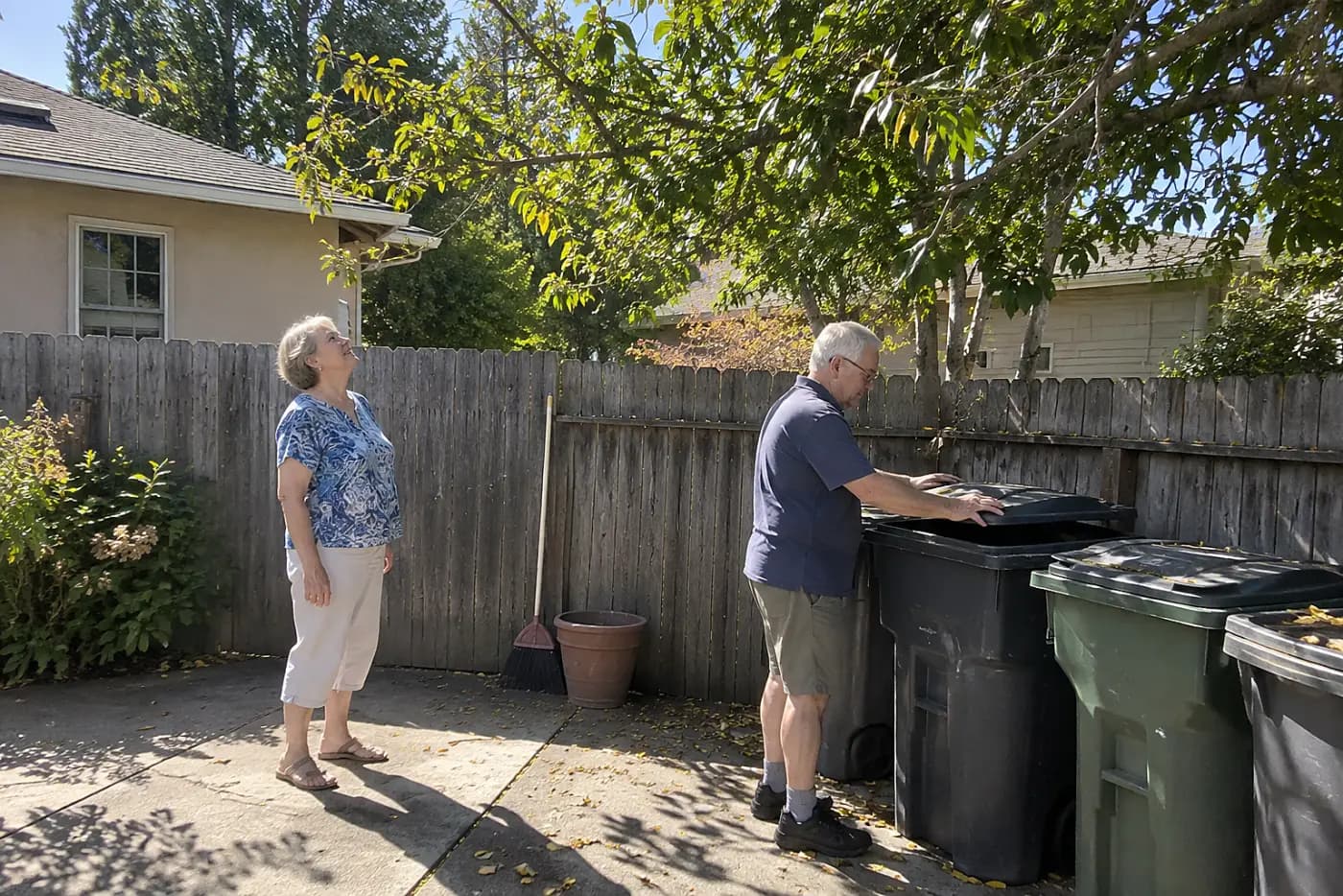
The strongest clue is visible only from the other end.
From your usual seat, a leaning branch blends into the rest of the tree. At the shared boundary, you see it hanging over the place your neighbor sets out her bins. That's a different problem from a sprinkler aimed the wrong way: it calls for a closer look before anything falls.
A whole-edge walk also lets you look back toward your house. That return view shows what a neighbor sees first, including a gate that drags across her approach or a vine reaching through the boards. You don't have to guess which side holds the source.
Waiting for her to raise a concern makes her deliver the bad news. A branch near a walkway deserves attention now, not after the next storm. Leave high limbs, drains, and structures to the right professional rather than reaching across the line yourself.
This week, walk the full shared edge from both directions, staying on your property. Look up as well as down, then photograph anything you can't safely handle. Say, “I spotted that branch over your bins and wanted to take care of it.” She gets room to tell you what else she has seen without having to open with a complaint.
For the next walk, keep the steps short enough to remember.
The bottom line
Across these 23 clues, gardeners notice where ordinary yard habits leave a visible trace.
You're better prepared once you've checked your plants up close and walked the shared edge from your neighbor's angle.
What has a neighbor noticed in your yard before you did?
Bonus: The five-minute shared-boundary check
- Walk the entire shared edge in one direction, staying on your property.
- Turn around and look back toward your house; check overhead branches and ground-level obstacles.
- Photograph anything that reaches toward a shared walkway or a neighbor's usual work area.
- Handle only what you can reach safely; call a qualified professional for high limbs or structural work.
- Say, “I spotted this from my side and wanted to take care of it.”
David Ruiz
Tech & Home Writer
David tests gadgets with real readers in their 60s and 70s, because the best tech is the tech you'll actually use.
You might also like