23 Small Comforts an Aging Dog Wants Most From the Person He Chose
A few changes around the house, from a night-light to a water bowl, can make his days easier to read and live.
By Ruth Ellison, Family Editor
Updated · 11 min read
- Written by our family editor
- Cited 8 sources
- How we review
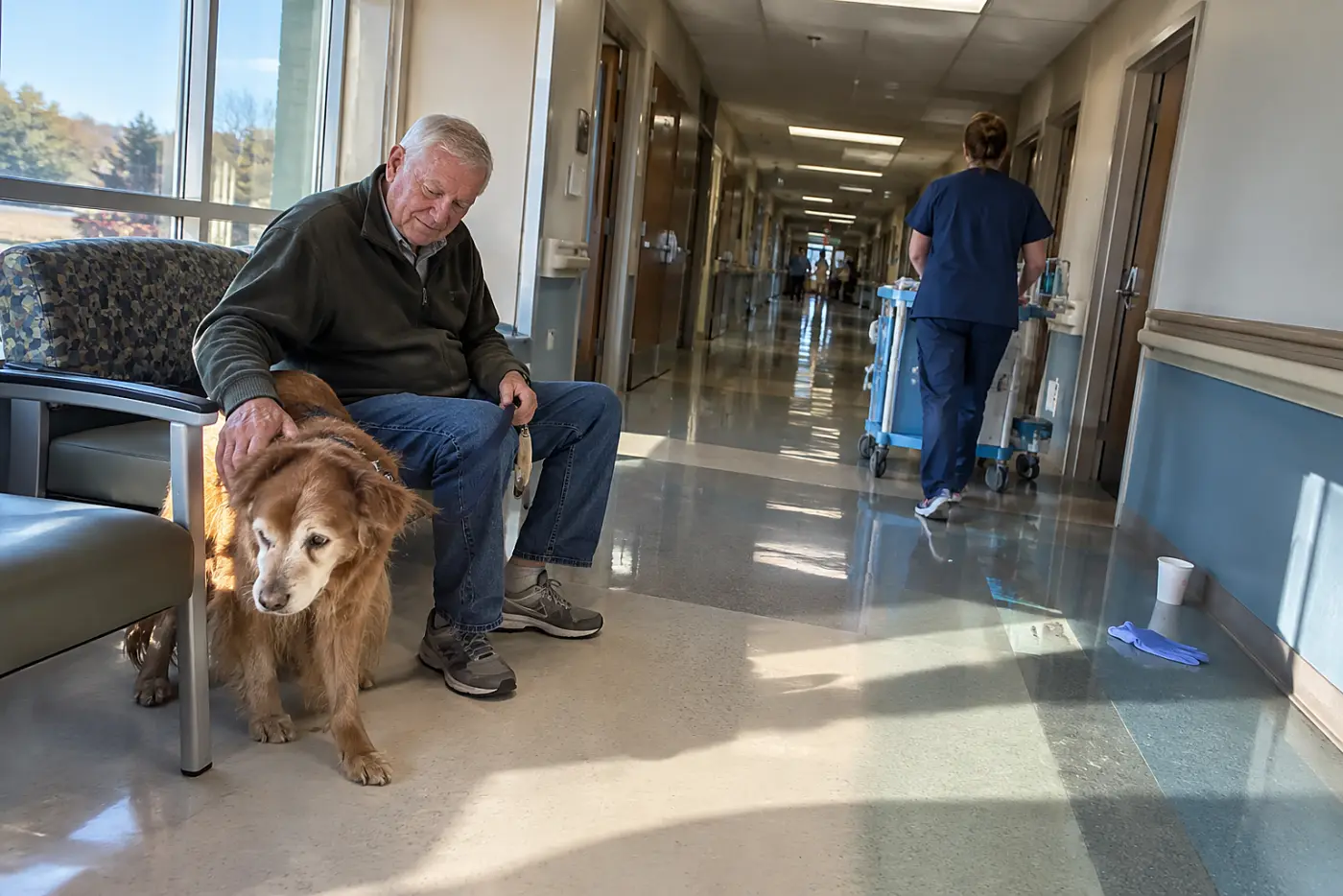
He stands at the foot of the stairs, staring up at a climb he used to take ahead of you. Then he looks back. That look can break your heart if you treat it as a verdict on his whole life.
Start with what is in front of him: slick flooring, sore legs, a trip he no longer wants to risk. He still waits for familiar things. He needs a clearer path to them.
23A welcome without the jump
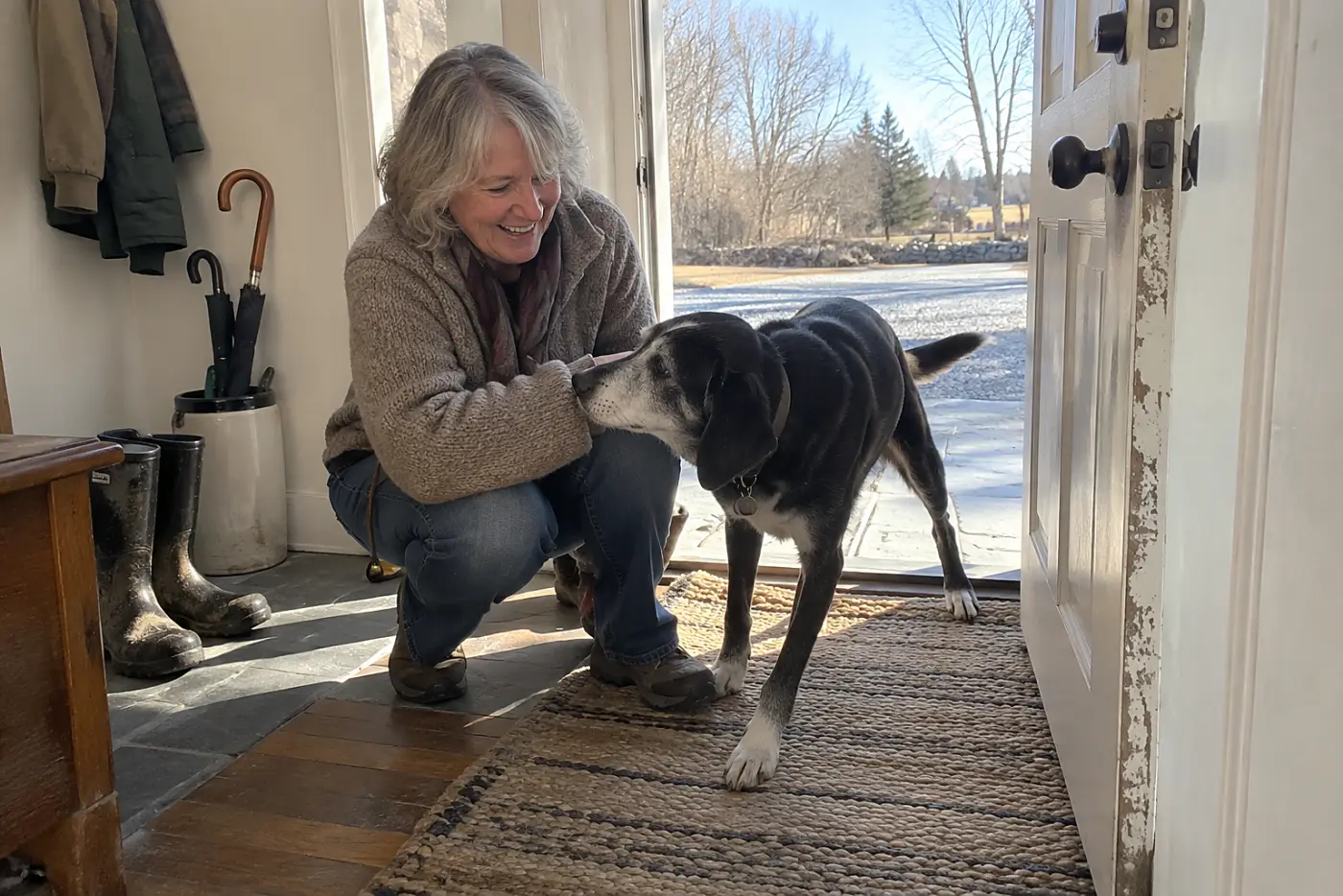
His tail still knows you're home.
He used to meet you with his front paws on your coat. Now he stays on the rug and thumps his tail. Bend down before you decide he feels less glad to see you.
Keep the greeting where all four paws stay on the floor. If he leans in, offer a chest rub. If he steps away, let him. That small choice tells you more than the height of his jump.
See more: 25 Fears About Falling That Keep People Home, and the Fixes That Get Them Out →
22A rug beside the front door
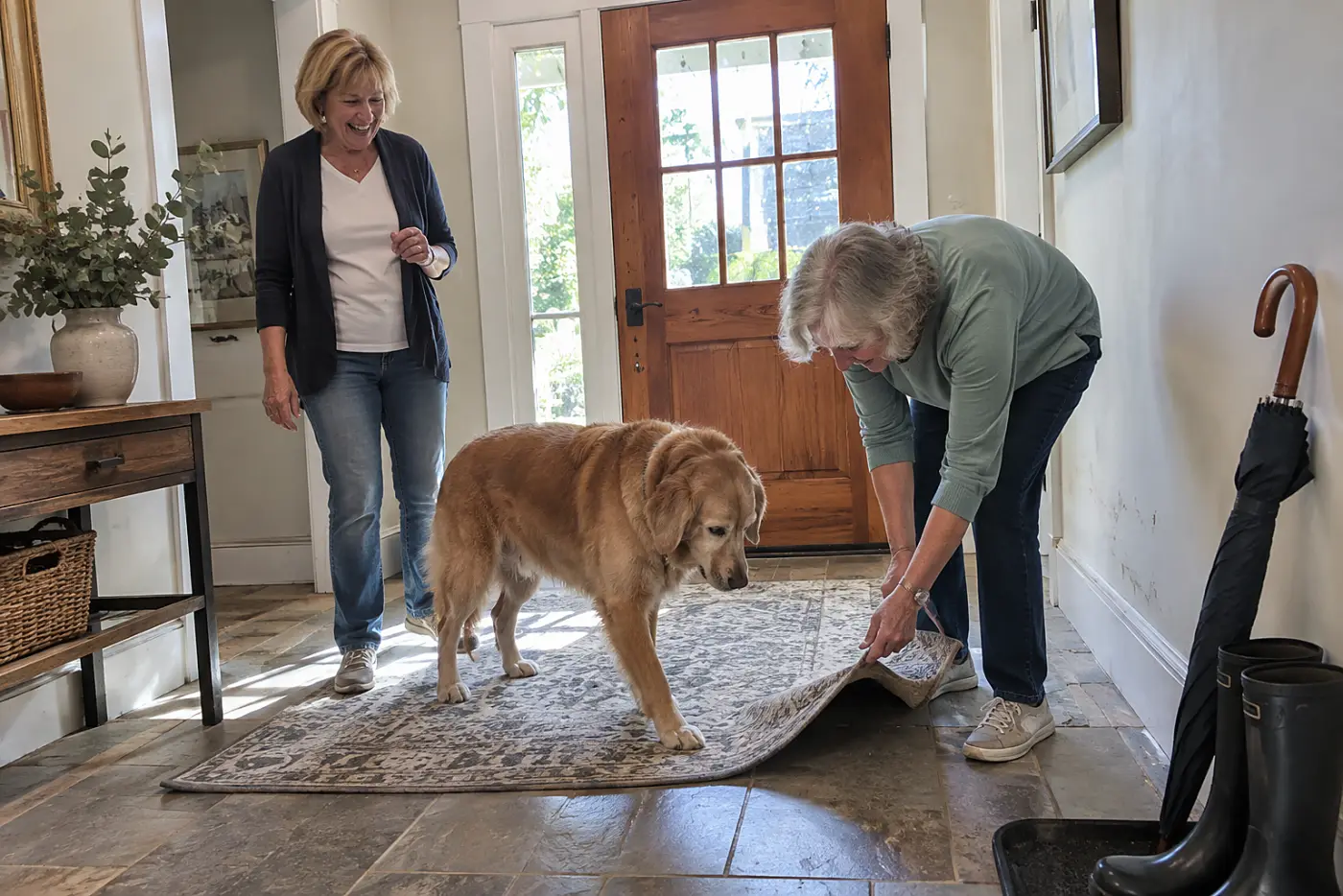
Watch his feet when he comes inside. If they slide apart on the entryway floor, the first few steps home have become work.
Put a nonslip rug where he lands, with its edges flat against the floor. Walk the route beside him. A rug that shifts under your shoe will shift under his paws, too.
Try the rug with your shoe before he uses it. If a corner lifts, secure it or choose another rug. He should be able to come in without bracing for the floor.
21A bowl he reaches without stretching
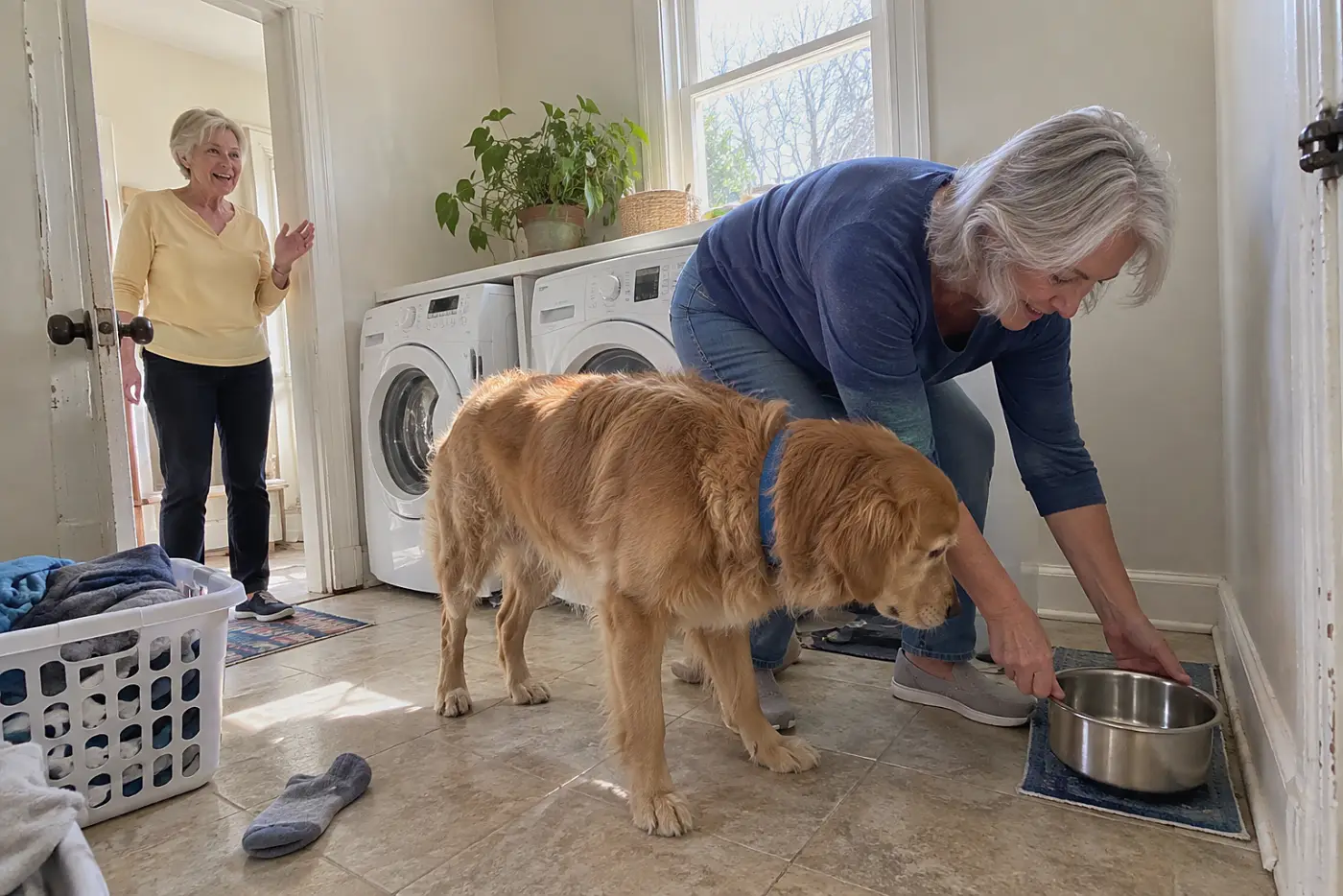
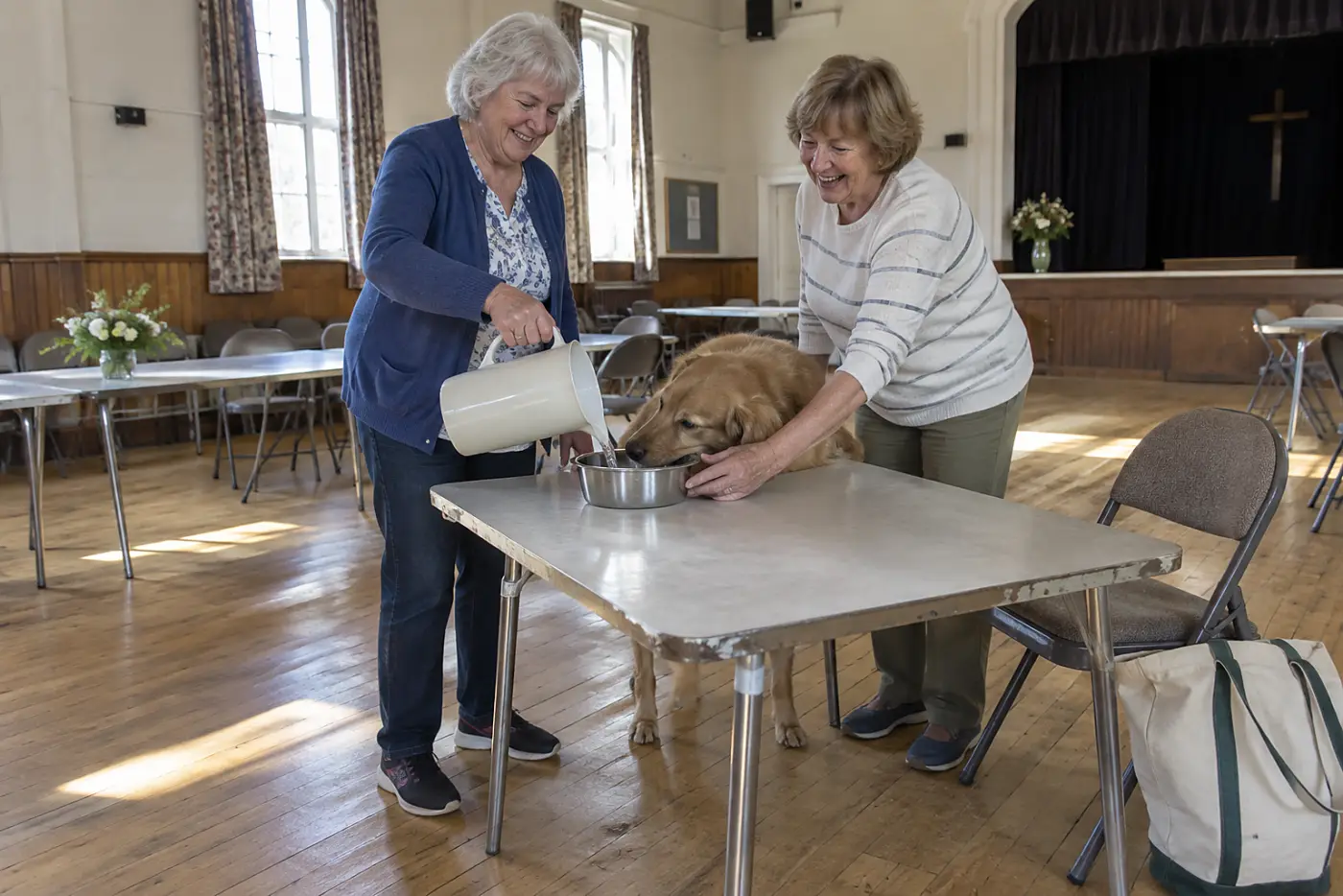
Look at how he stands to drink. His neck should reach the water without a long stretch or an awkward crouch.
Move the bowl away from a cramped corner. Check that it stays full and steady, especially if his paw catches the rim. If drinking has changed sharply, tell his veterinarian rather than treating bowl placement as the whole answer.
20A longer pause before bed
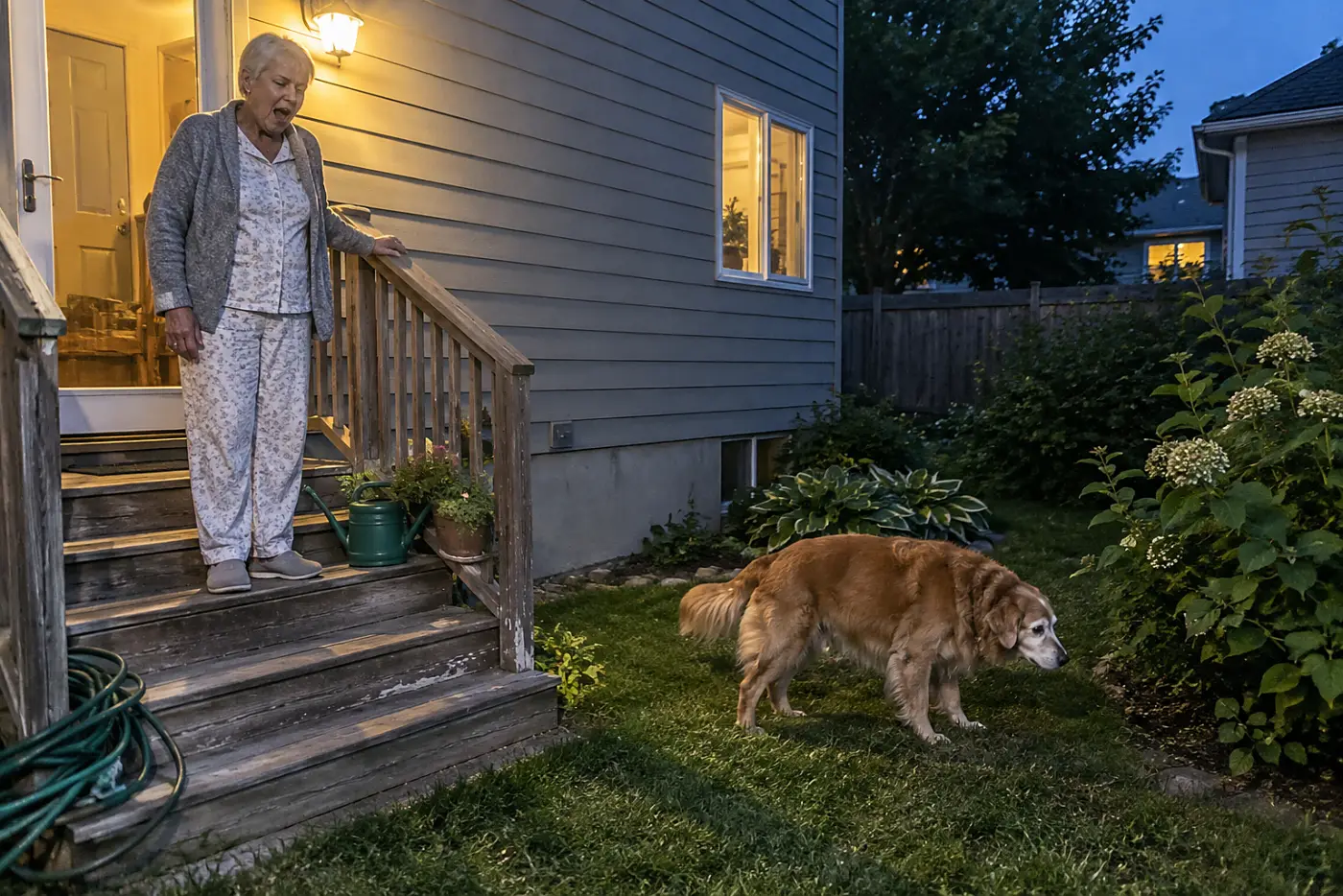
The last trip outside takes longer now. You open the door, he sniffs the same patch of grass, and you wonder whether he has forgotten why he came.
Give him time to finish, then watch whether he urinates. If he asks to go out again soon after, write that down. New accidents or repeated attempts to urinate deserve a call to the veterinarian. Straining without producing urine needs urgent care.
That extra minute by the door is a kindness. It is also a chance to notice what has changed.
19A night-light along his route
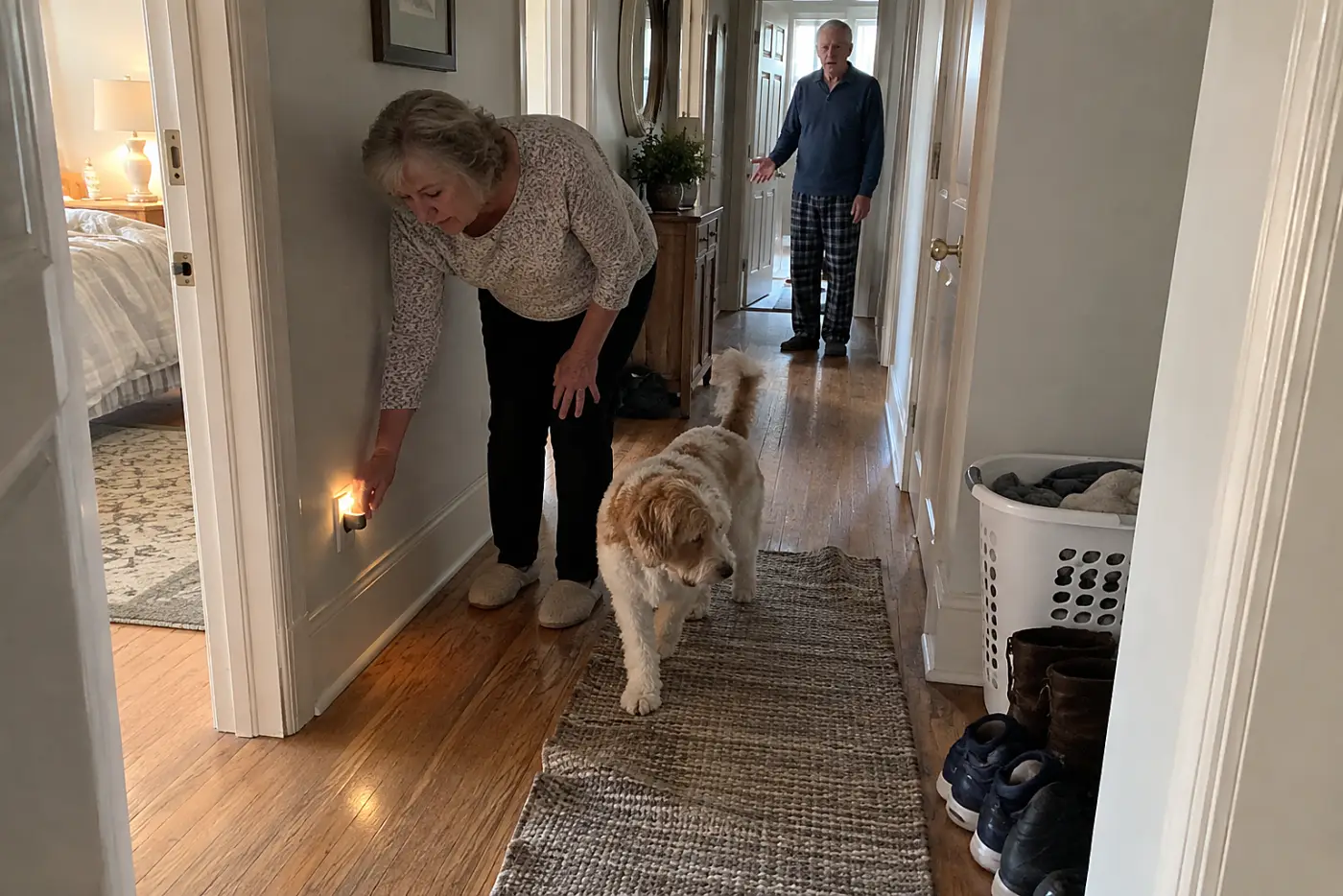
At night, the hallway looks familiar to you. From his height, a dark chair leg sits directly in the path to the door.
Turn on a night-light and watch him cross the hall. Keep his usual route clear of shoes and laundry baskets. If he starts getting lost in familiar rooms, mention that change to his veterinarian.
Look again after the house lights are off. The doorway you see from bed isn't the route he sees from the floor. Light helps him find the way; it doesn't explain every stumble.
18A hand he hears coming
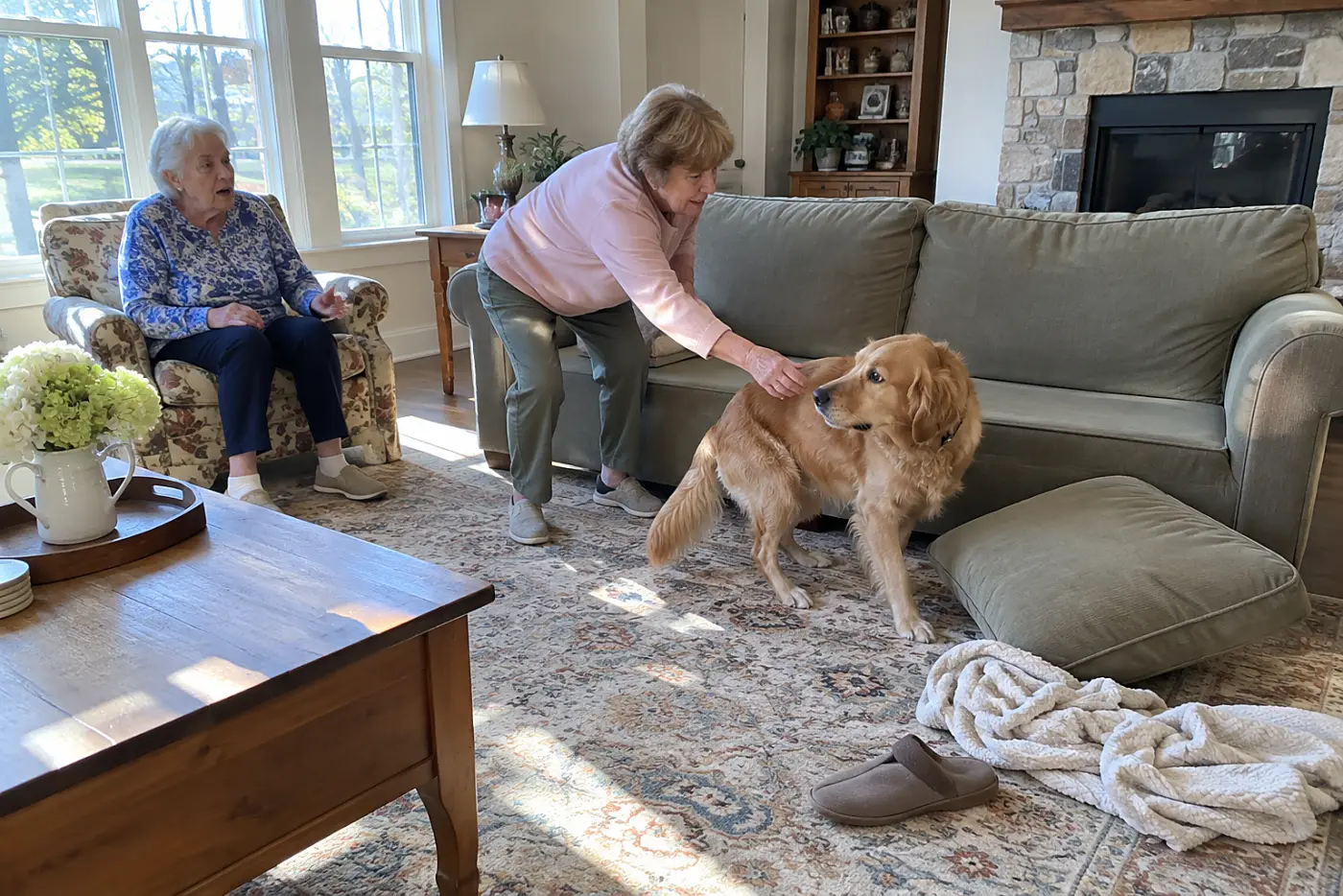
Does he startle when you touch his back? Check whether he hears you approach from behind.
Say his name where he can see your face. Give him a moment to turn before you reach for his collar. If his hearing seems different, ask for an ear exam. An ear problem and hearing loss need different responses, and you do not have to guess which one you are seeing.
17A quiet place for his bed
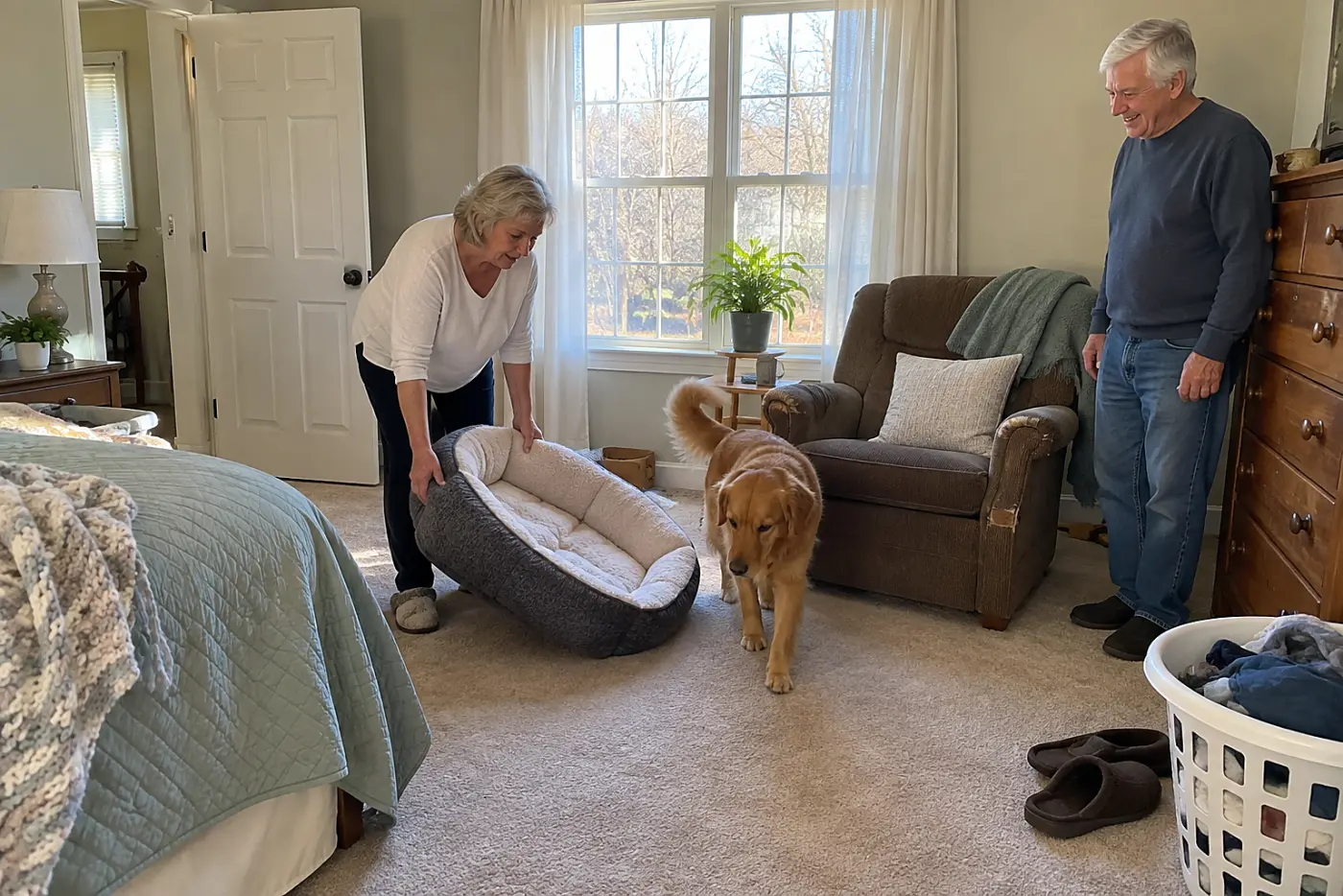
The bed has moved three times this month because it was in everybody's way. He still goes looking for it in the old corner.
Pick a spot away from household traffic, then leave the bed there. Make sure he has room to get up without backing into furniture. Keep it near enough that he can see where you are without lying in a busy doorway.
Put your hand on the floor beside it. If you feel a draft from the door, move the bed and give him a padded surface he can enter without climbing. A dependable place to sleep is a real comfort.
16A clear path through the house
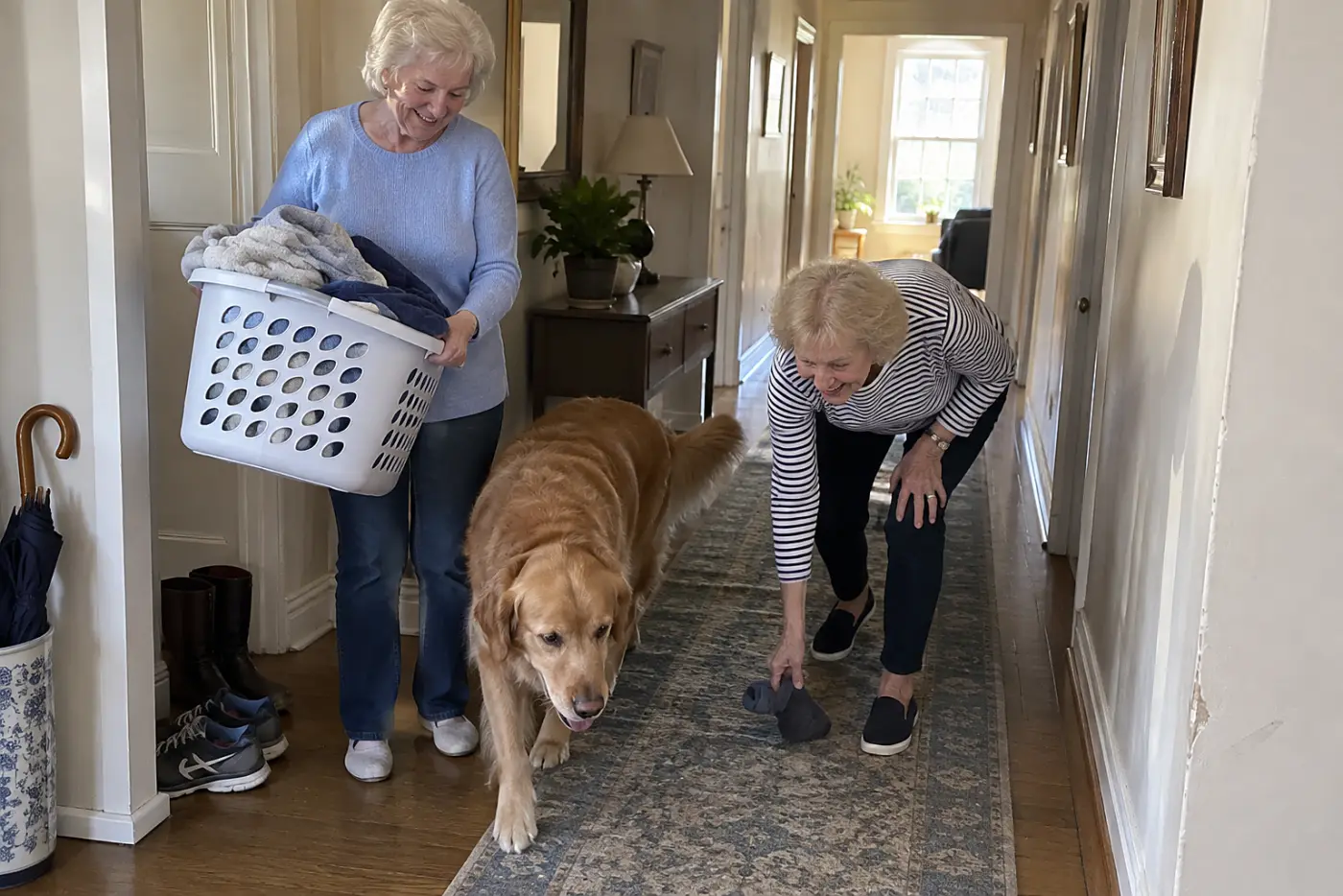
The laundry basket has found a new home.
Walk from his bed to the water, then to the door, looking down at paw level. A charging cord crosses the hall. A basket narrows the turn. Neither mattered when he moved faster.
Clear the route rather than calling him around each obstacle. Keep doorways open where it is safe to do so. If a changed room seems to confuse him, guide him with your voice and give him time to find his bearings.
Do the same walk after dark. You'll spot the shoes that appeared since morning, and he'll keep a route he knows.
See more: 25 Small Changes That Let You Stay in Your Home Ten More Years →
15A slower walk around the block
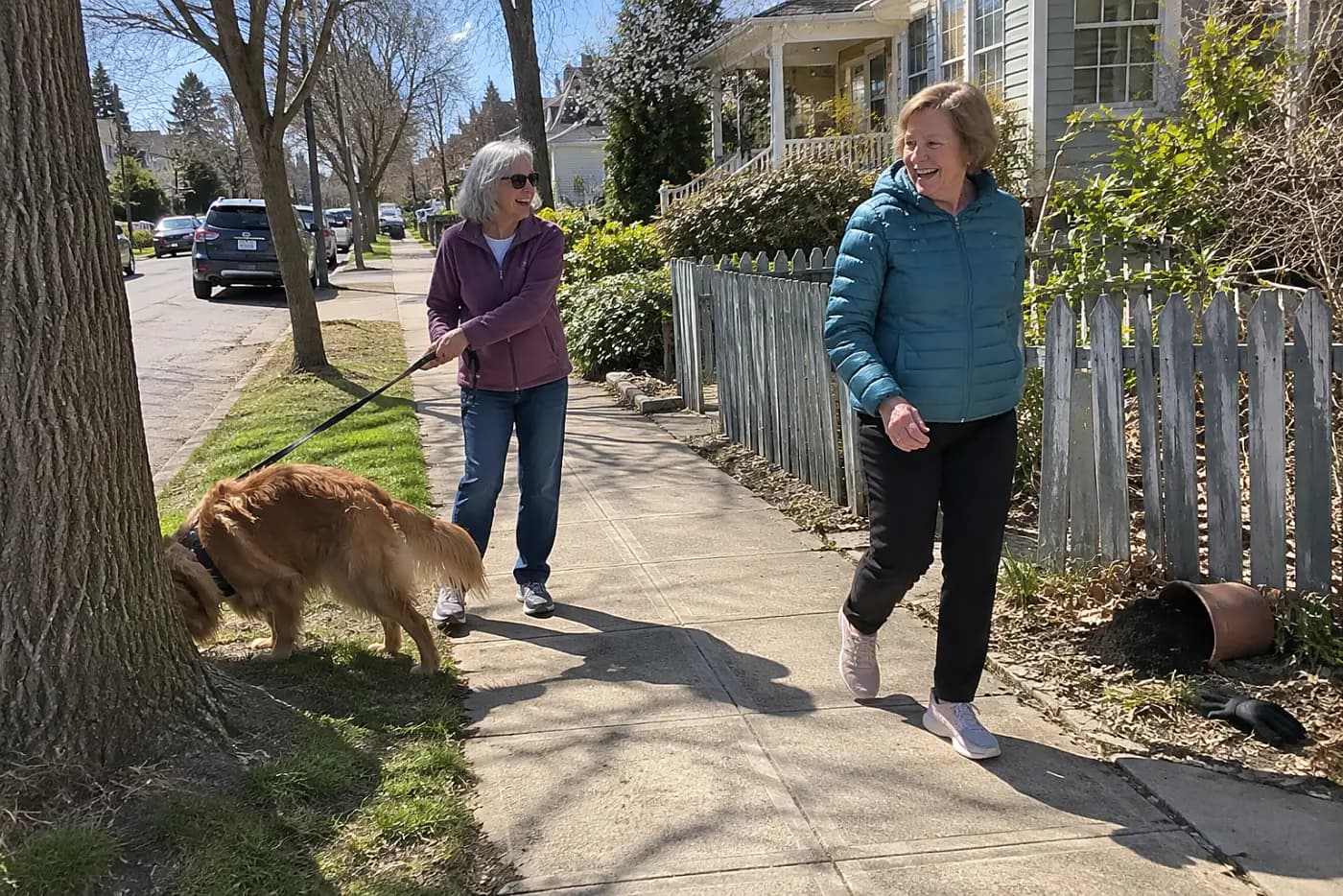
You do not owe the old route its full length. He stops at the corner, and the sniffing matters more to him than reaching the next street.
If the walk takes 20 minutes now, try turning home after 10. Watch his pace on the return trip, not just when he first sees the leash.
Let him investigate a tree. If he limps, coughs, or struggles to recover afterward, call the veterinarian before extending the walk. The turn toward home is yours to choose; the sniffing is his.
See more: 26 Signs You're Getting Older That Have Nothing to Do With Wrinkles →
14A towel ready after rain
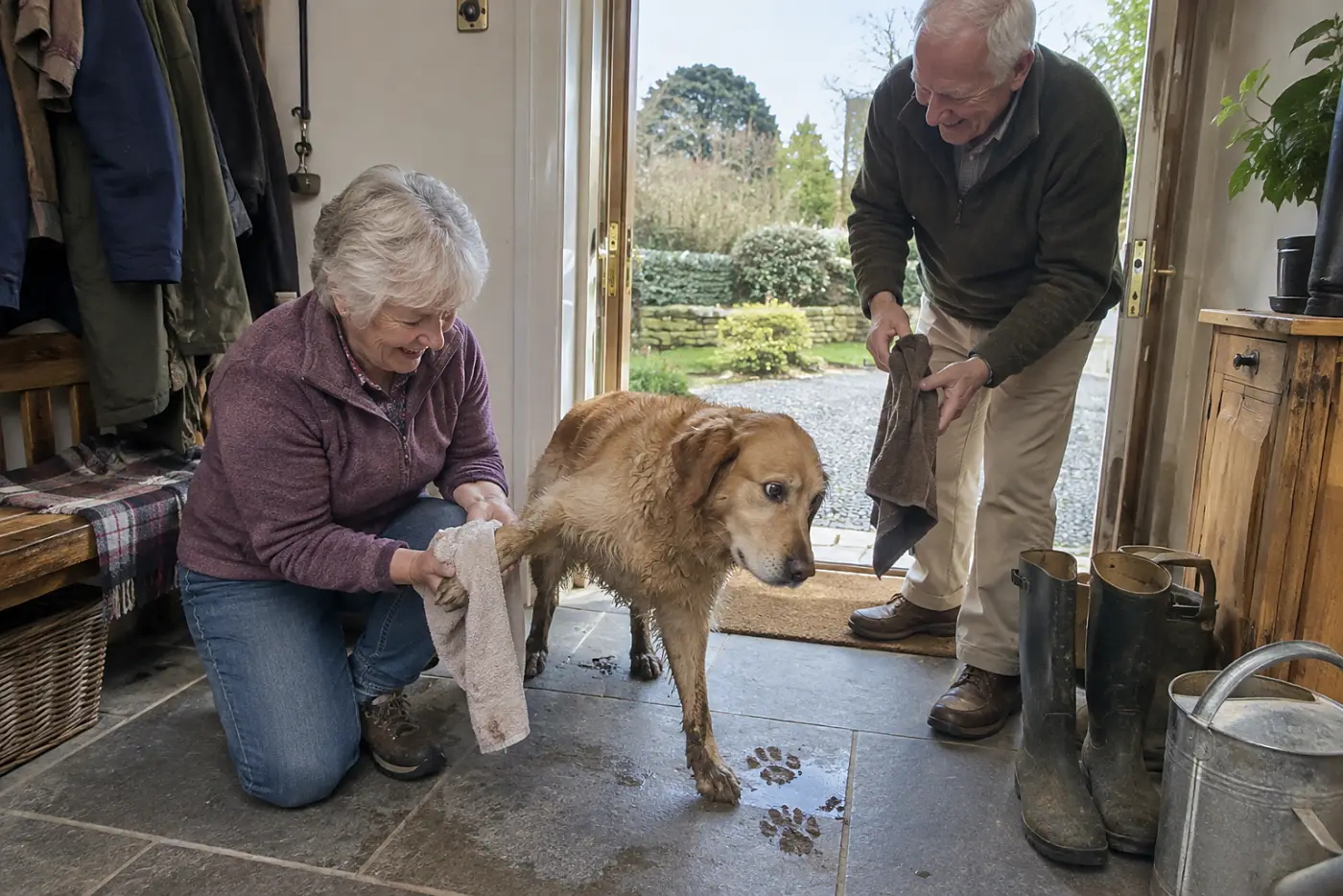
Wet paws are hard to manage when bending hurts. Put a towel by the door before you leave, so neither of you has to chase mud through the hall.
Dry between his toes and check for grit. Notice whether he pulls away from one paw but accepts the towel on the others. Look for a torn nail, swelling, or a sore pad. A dog who objects to a particular touch is giving you information, even when he cannot show you exactly where it hurts.
13His corner during a crowded visit
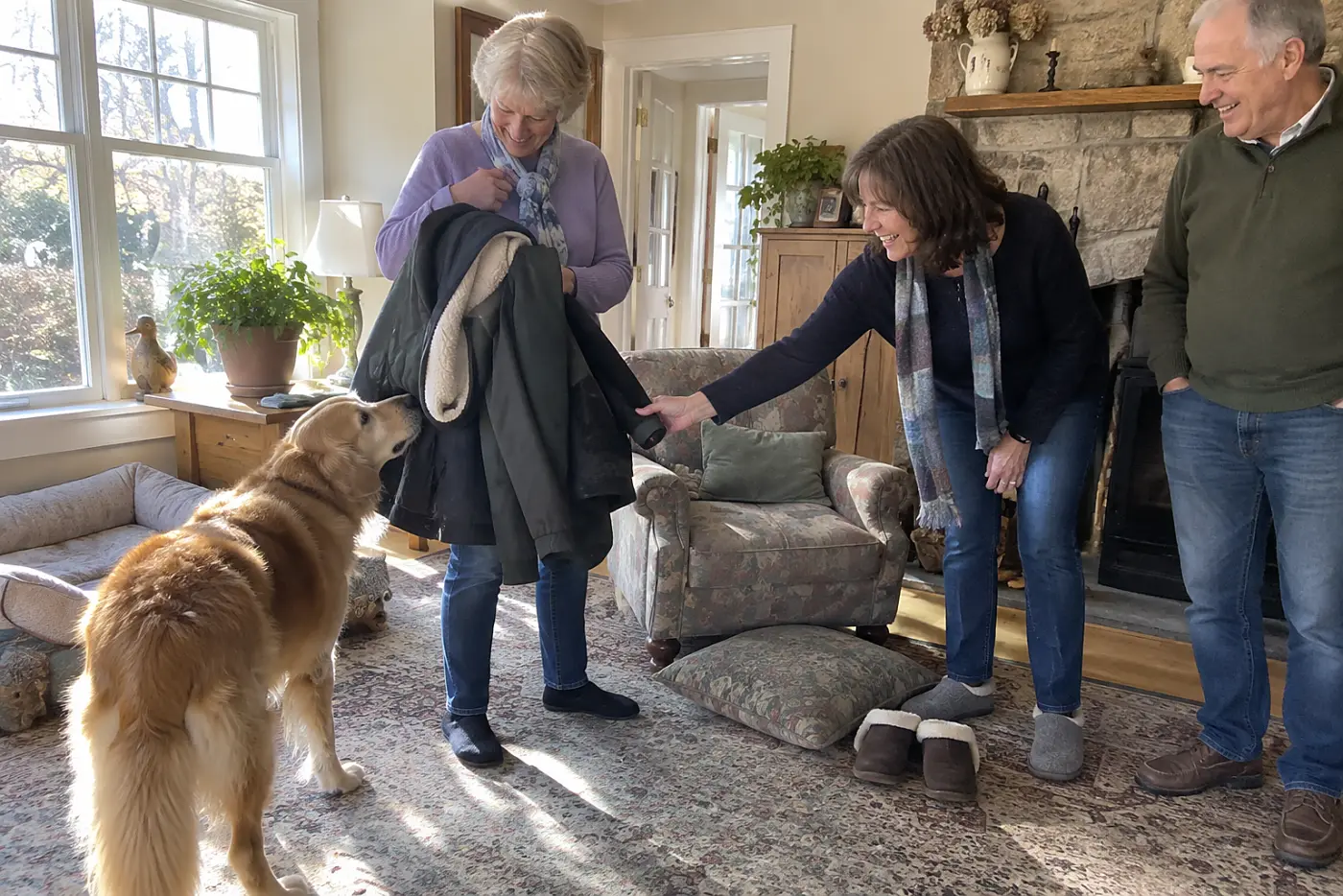
Guests arrive, chairs move, and his spot disappears under a pile of coats. He circles the room, looking for somewhere to settle.
Before company comes, protect a corner where he can watch without being stepped over. Tell guests to leave that space open. If he goes there while everyone else stays together, let him rest.
He has known these people for years. He still gets to choose when the visit is over.
12A brush session he can end
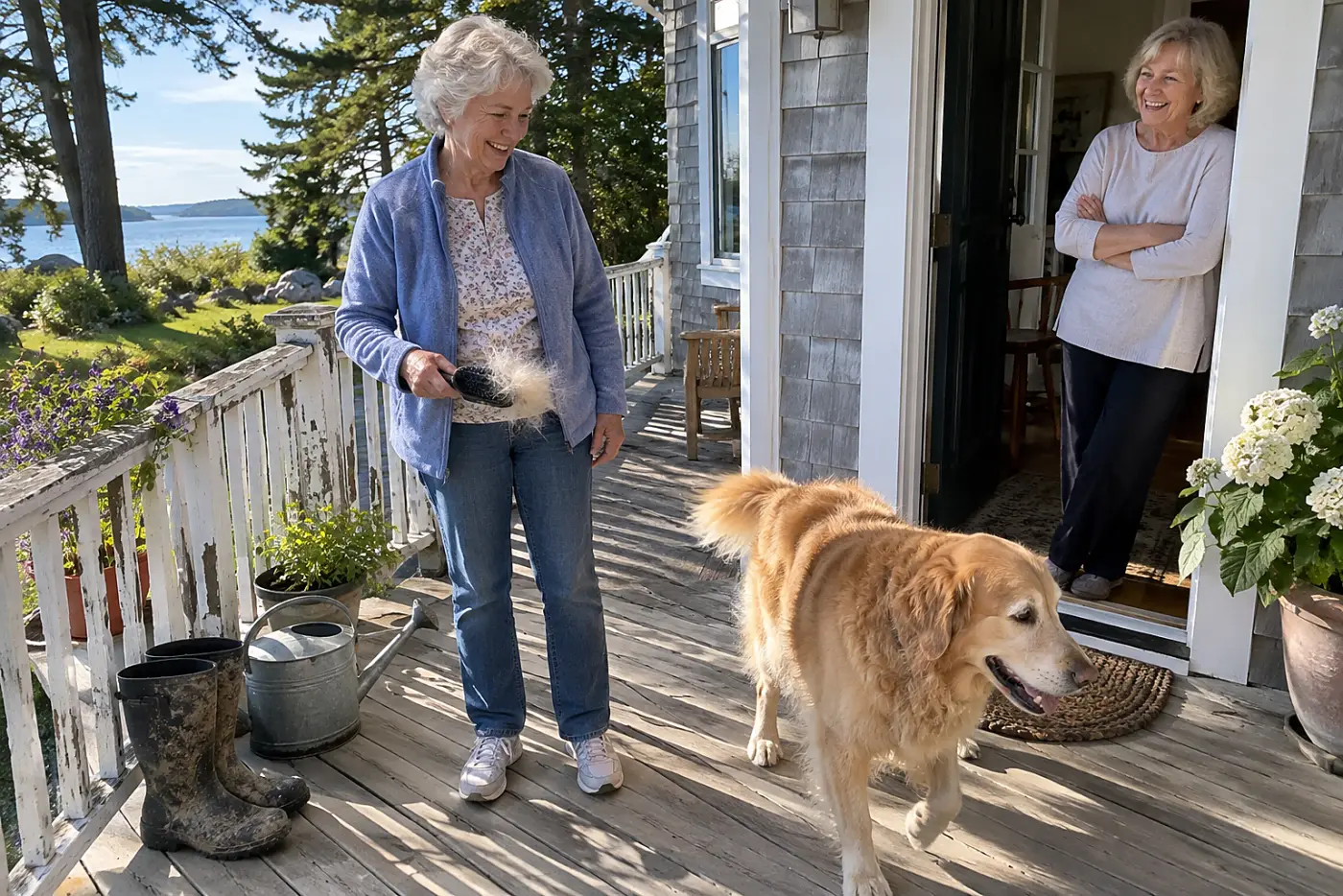
He used to lean into the brush. Today he turns his head and walks off after a few strokes.
Stop there. Check the skin under the coat for mats, tenderness, or new lumps. Use shorter sessions on another day instead of holding him still to finish. Tell the veterinarian about a lump or a spot that hurts. Grooming should give you a chance to notice his body, not make him dread your hand.
11A car ride with less climbing
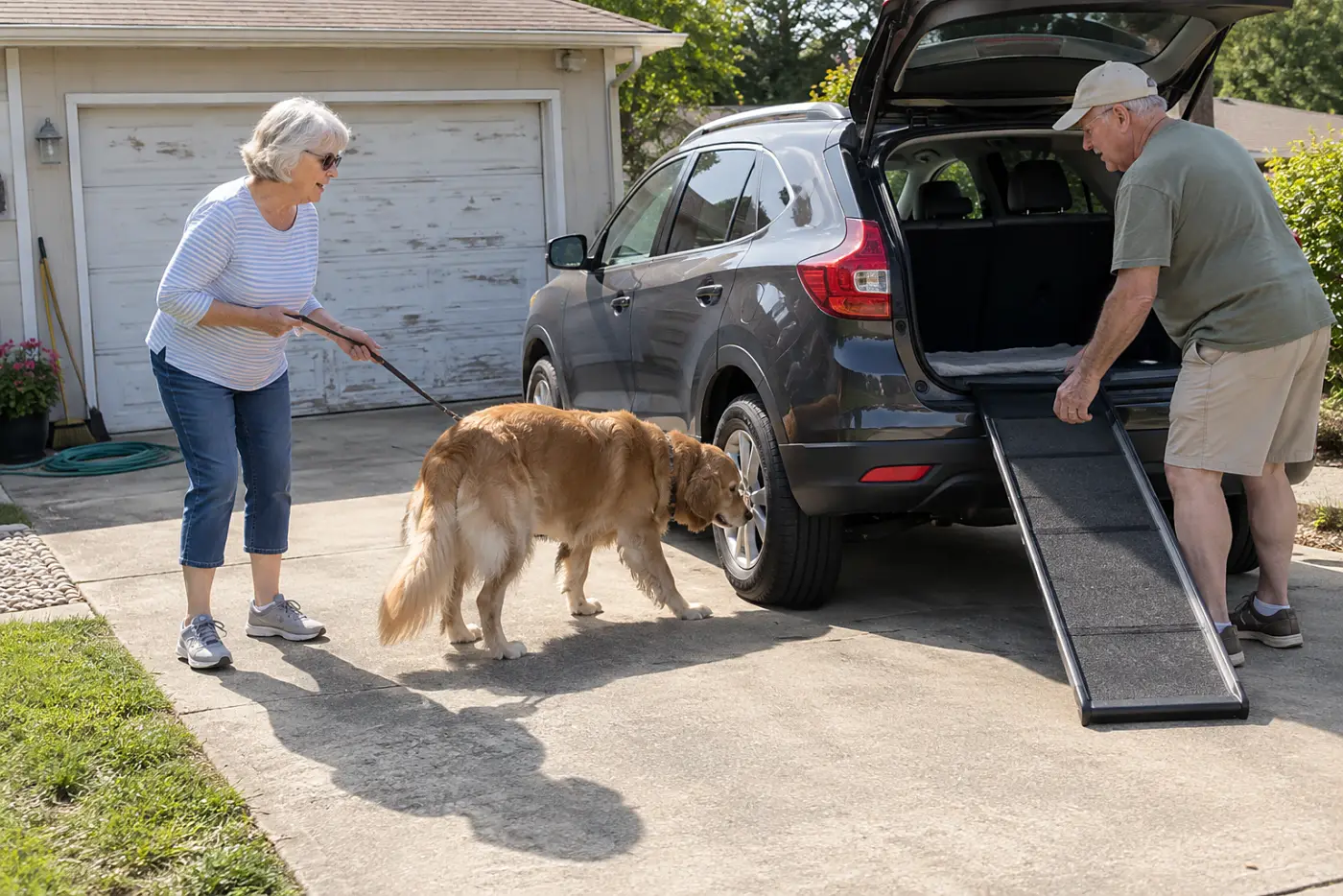
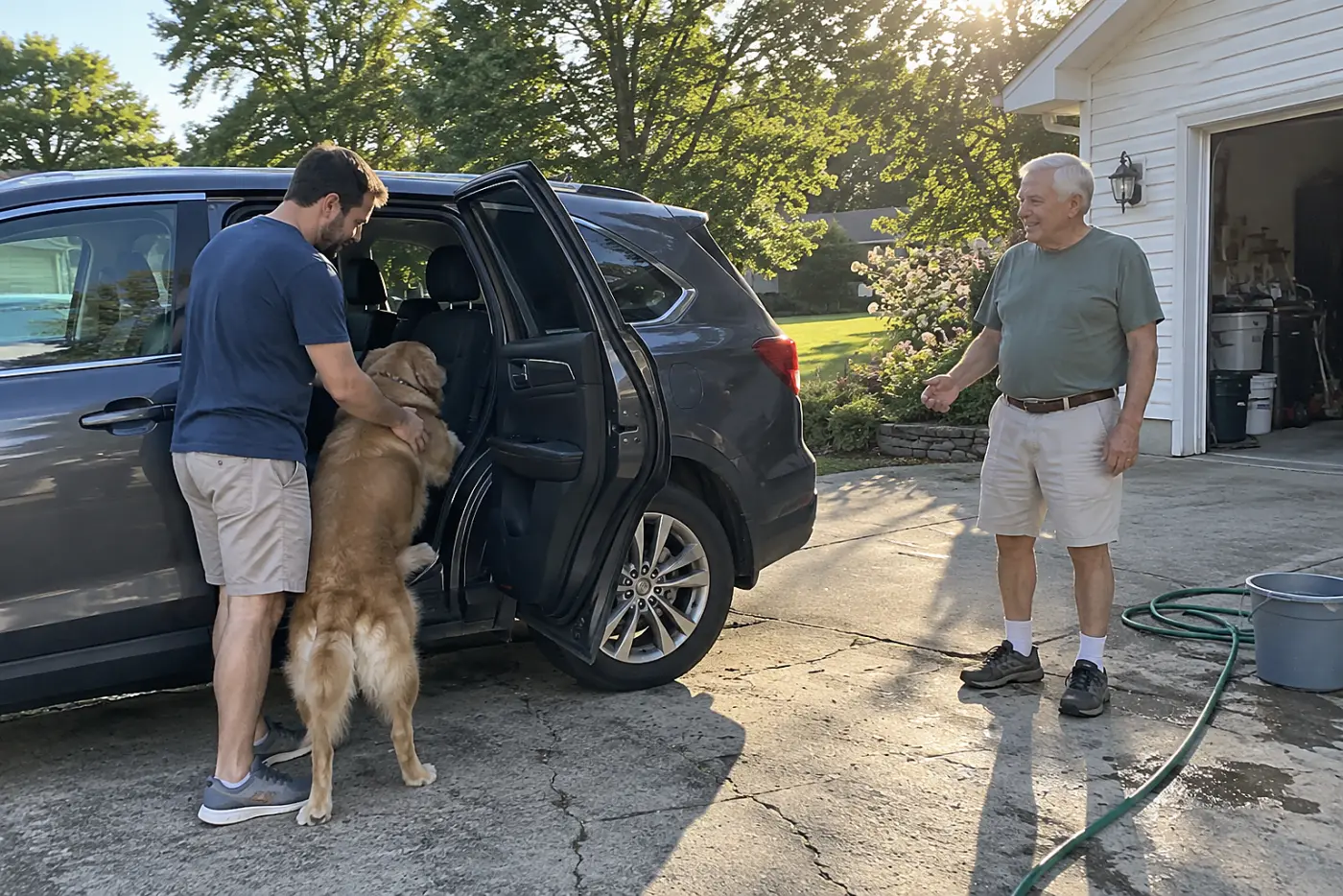
At the car door, he puts his front feet up and waits. The seat is suddenly a long way off.
Use a sturdy ramp made for his size, or lift him only if you can support his chest and hindquarters without hurting either of you. Keep a nonslip surface where he lands. Practice with the car parked and the engine off before a veterinary appointment turns the trip into a rush.
If he resists the ramp, don't pull him by the collar. Let him learn what his feet are standing on.
10A nail check on the floor
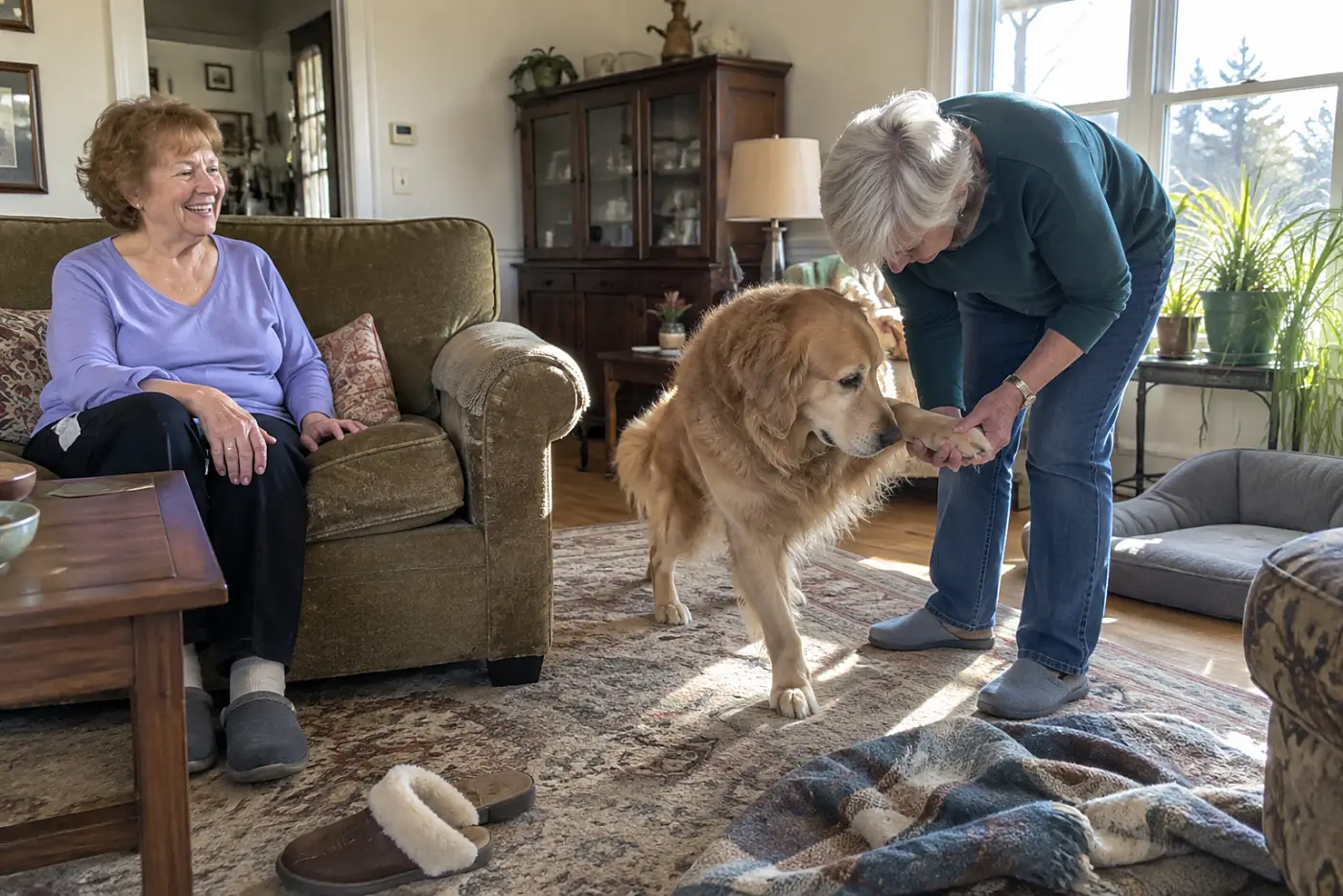
Listen when he crosses a hard floor. Nails that catch or splay his toes make steady footing harder.
Look at his paws while he stands. Check all four feet, since a nail you miss from above stands out against the floor. If his nails are overgrown, ask the veterinarian or a groomer to trim them and show you what to watch for.
Skip a hurried trim if you cannot see where the nail's quick begins. He needs sure footing more than he needs a rushed job.
9A game with an easy finish
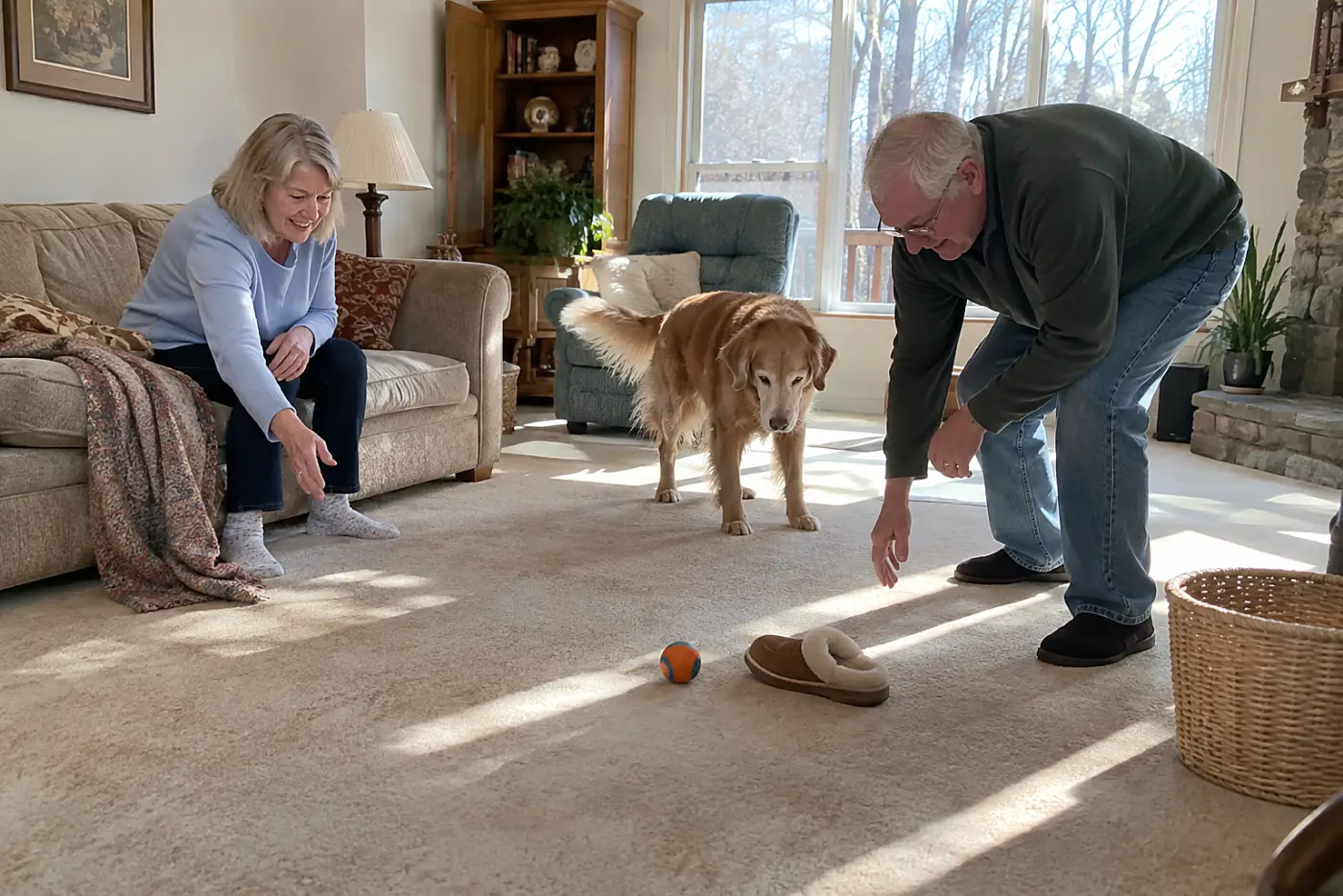
He still brings the toy, then loses interest halfway through the old game. That does not mean he has stopped wanting to play with you.
Roll a toy across the room instead of throwing it down the yard. Hide a treat nearby and let him find it. End while he is engaged, before he has to prove he is tired. A short game that leaves him eager for another feels better than one he has to abandon.
8A pause before visitors touch him
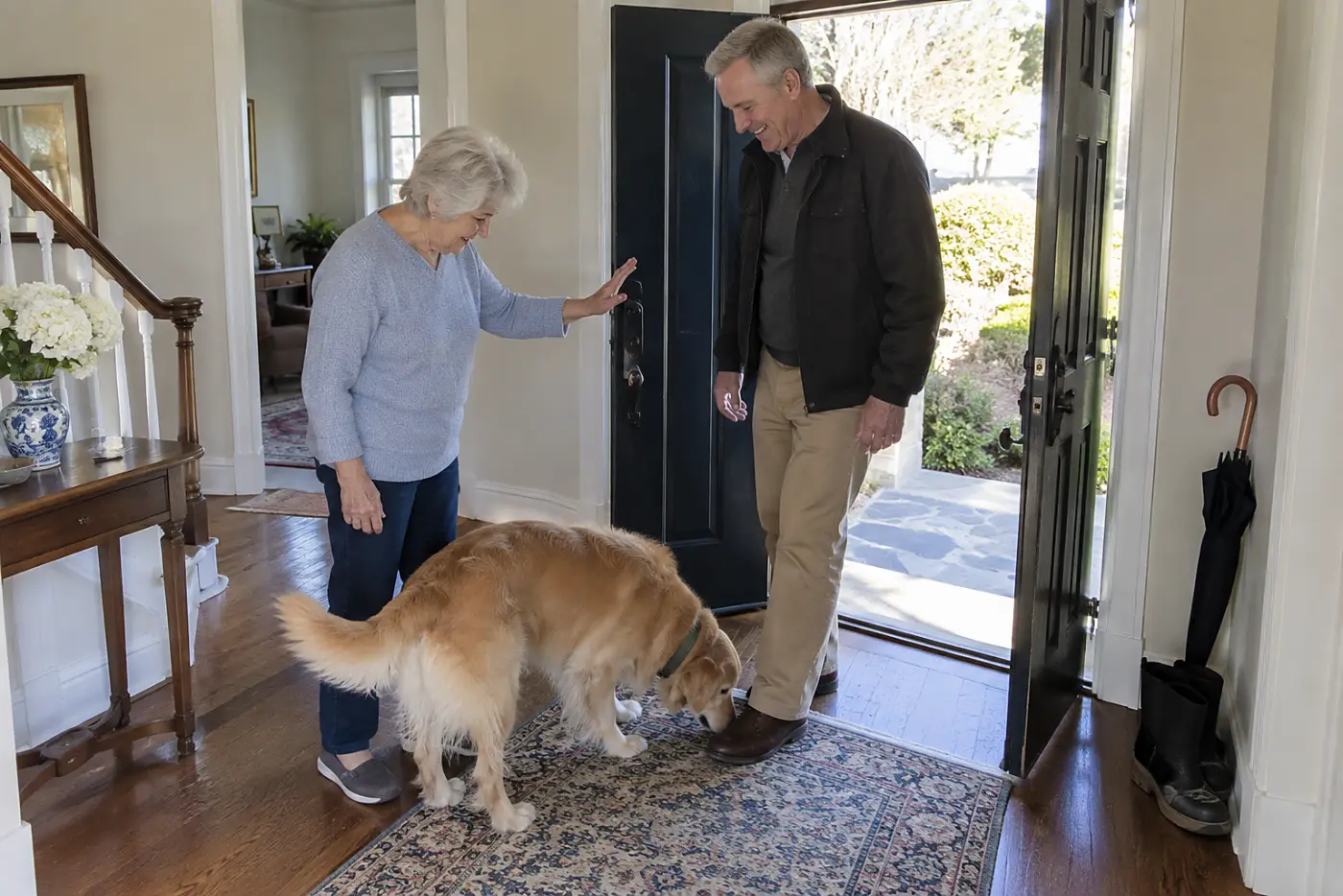
When friends come in, he used to push between them for attention. Now he backs toward the sofa while somebody reaches over his head.
Ask visitors to give him space and let him approach. Watch for a stiff body, a turned head, or an attempt to leave. Never make him accept a hug to reassure a guest.
If his tolerance for touch has changed, tell the veterinarian. Pain changes what a familiar hand feels like. Until you know more, a visitor's best greeting is to wait.
7A safe step onto the porch
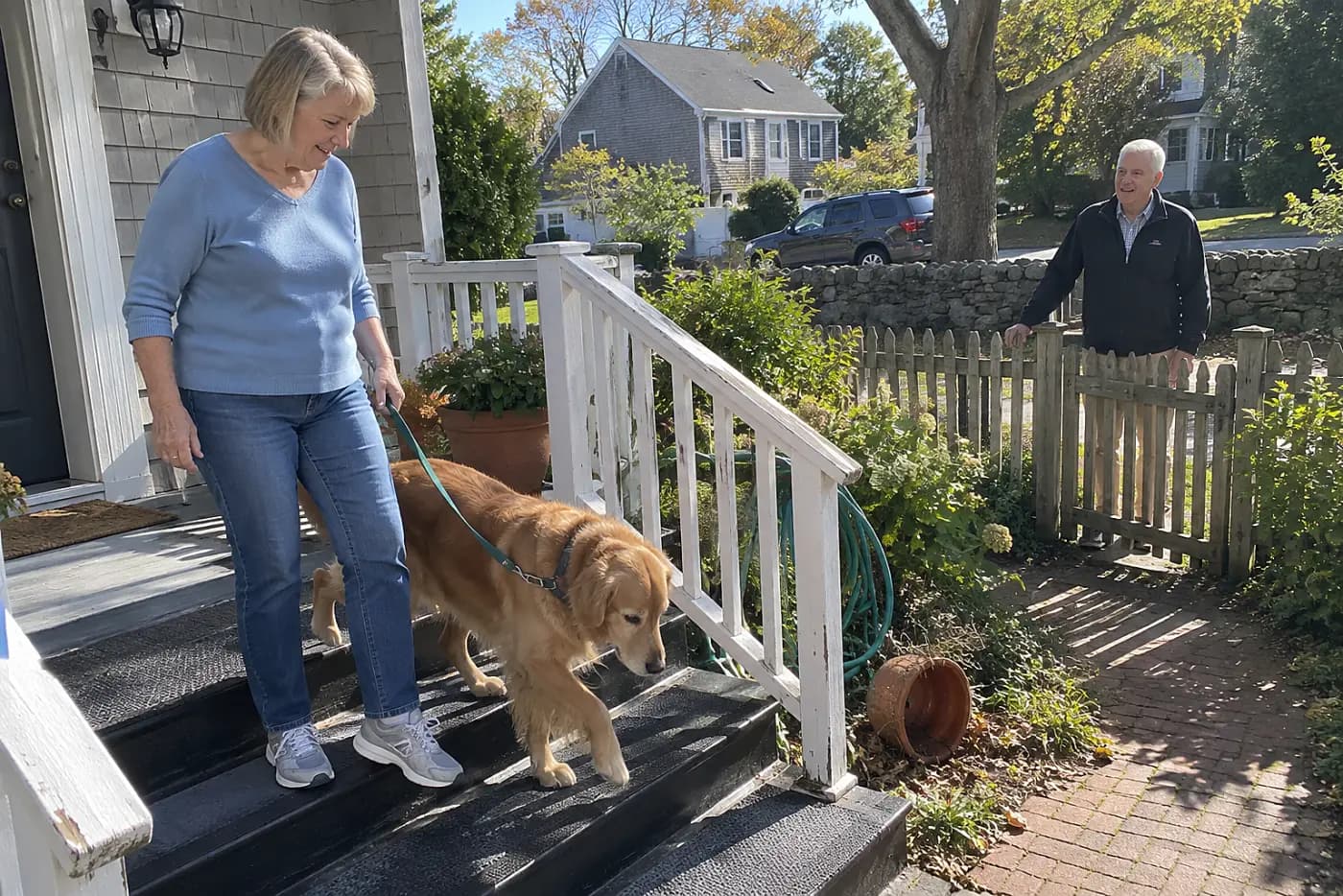
Look at the step from the side. Is there a place for his whole paw to land before he takes the next one?
Add traction where the surface gets slick. Stay beside him rather than tugging the leash from above. If he freezes, give him a route without that step until you know why. A fall can turn a familiar doorway into a place he fears.
See more: 27 Things Physical Therapists Wish You'd Changed Before the First Fall →
6A little more room at dinner
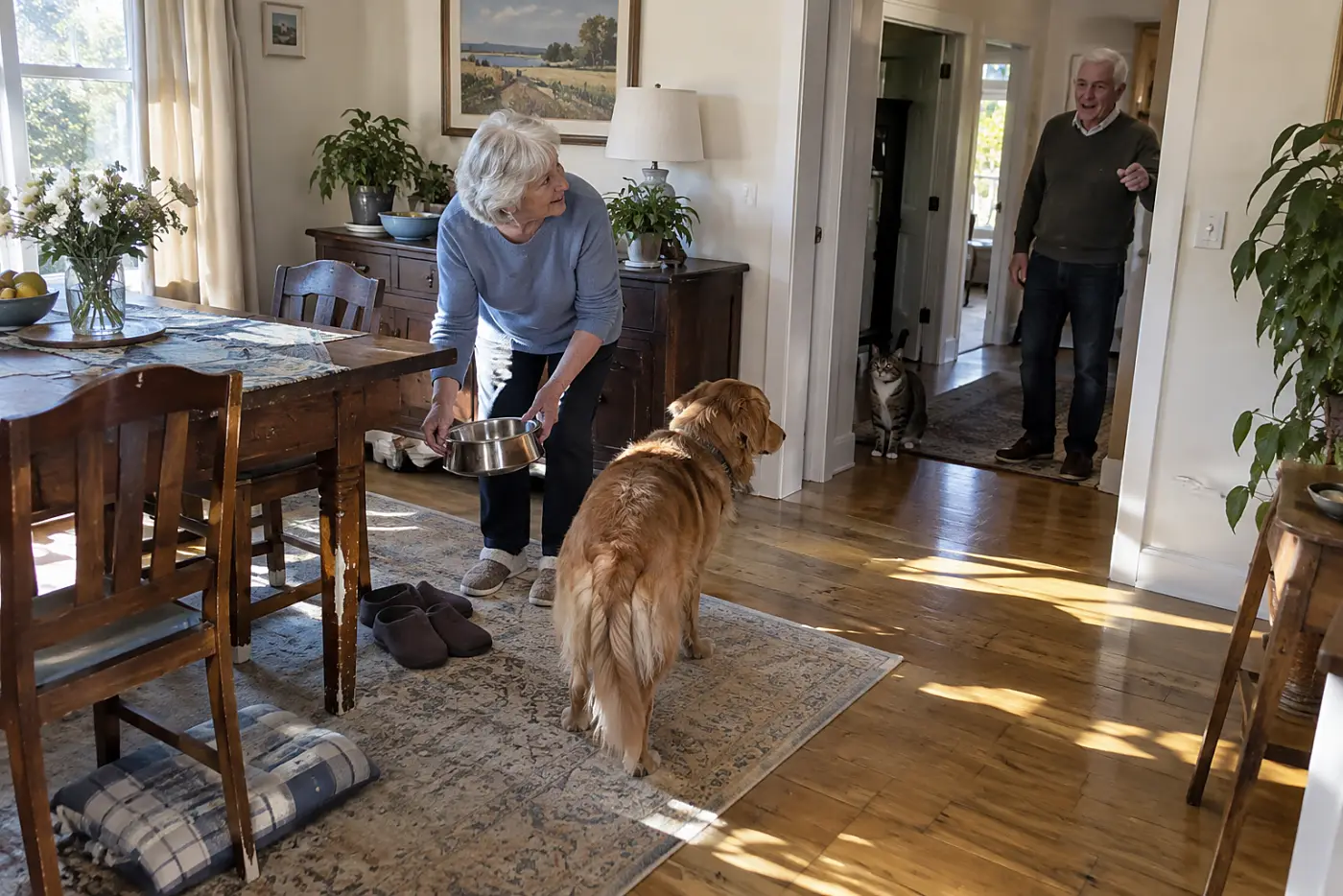
Does he walk away from food when another pet comes near? Set his meal in a place where nobody crowds him.
Keep each pet's food separate, and pick up bowls afterward if they trade leftovers. Watch him eat from start to finish. Dropping food, chewing on one side, or backing away after a bite belongs in a call to the veterinarian.
Try feeding the pets in separate rooms. Then you can tell whether he finished his own meal, rather than guessing which animal emptied the bowl.
5A meal served the same way
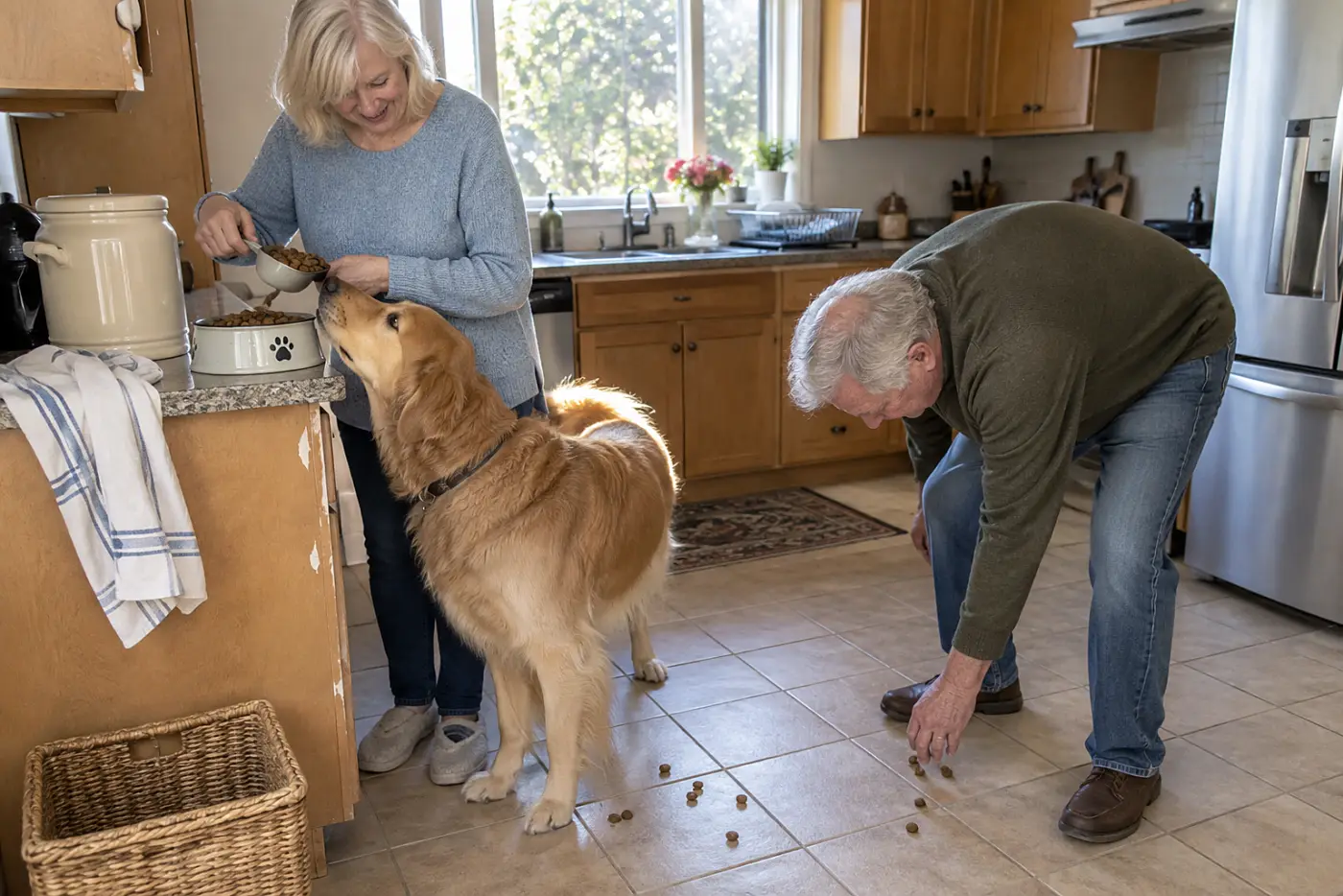
He waits by the cupboard at the usual time. Keep that familiar cue, even if the rest of the day has changed.
Measure his food instead of guessing from what remains in the bag. Use the same measuring cup each day, and follow the amount his veterinarian recommends for him. If he leaves a meal untouched, note it.
Vomiting, diarrhea, or a sudden drop in appetite needs veterinary advice. Do not replace a prescribed diet with a tempting treat without asking the veterinarian who prescribed it.
The comfort here is recognition: the same bowl, the same place, and a chance for you to spot when his response changes.
4A dry blanket after a damp day
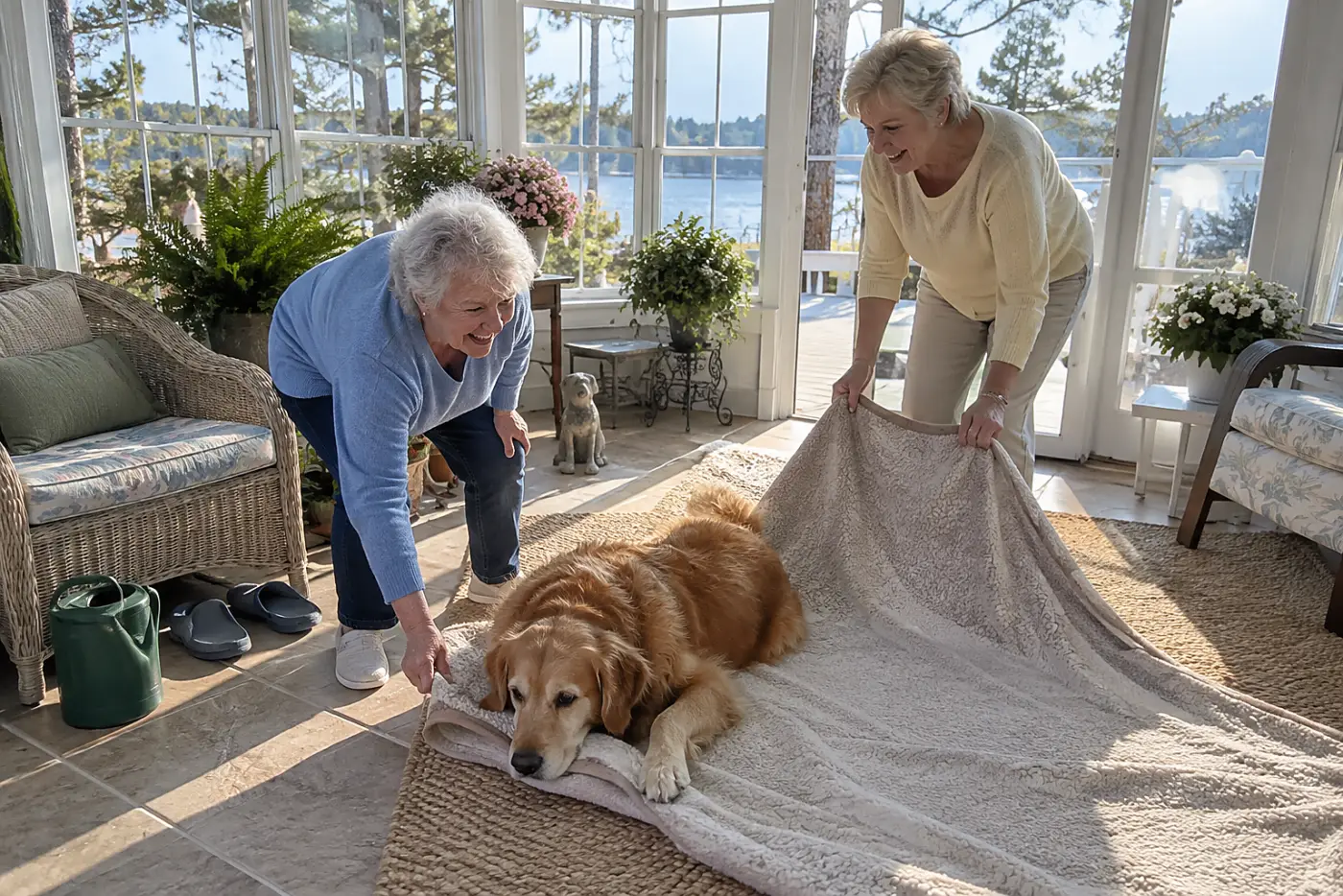
Rain follows him indoors.
Feel the blanket beneath him after a wet walk. If the fabric is damp, swap it for a dry one before he settles. Check the seams for a bunched-up towel or a fold that presses against his hip.
This is the kind of change he won't ask you to make. He'll circle, lie down, stand up, and try again. A dry, flat blanket gives him one less reason to get back on his feet.
3A place beside your chair
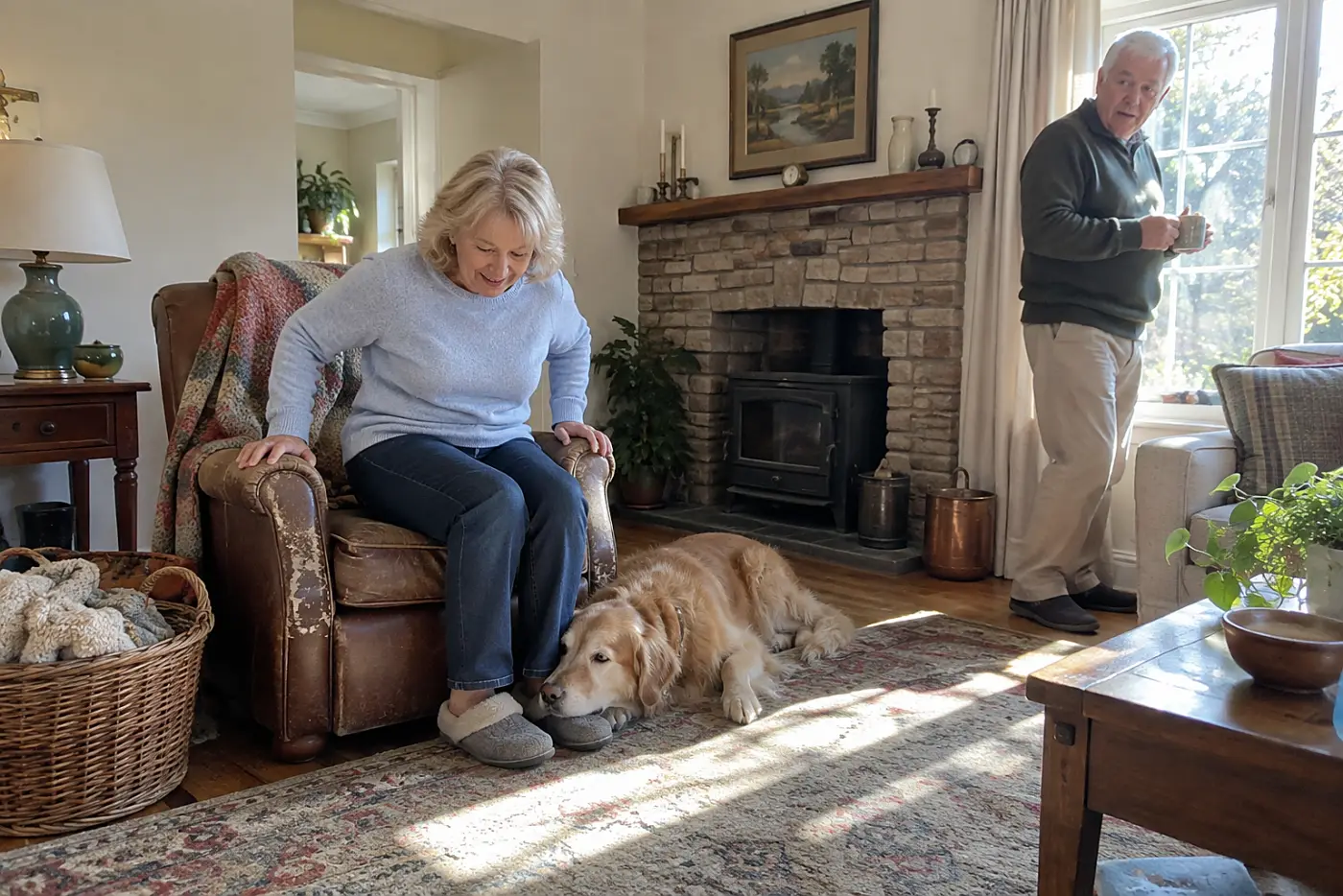
He lowers himself near your chair, even though his toys are in the other room. He wants to know where you are.
Leave enough floor space beside your usual seat for him to stretch out without blocking the walkway. Let him sleep when he settles. You needn't call him back each time you move; he knows where to find you.
If he changes position again and again or pants while resting, note when it happens and tell the veterinarian. Being close helps. So does noticing when he cannot get comfortable.
2Help ready for a frightening night
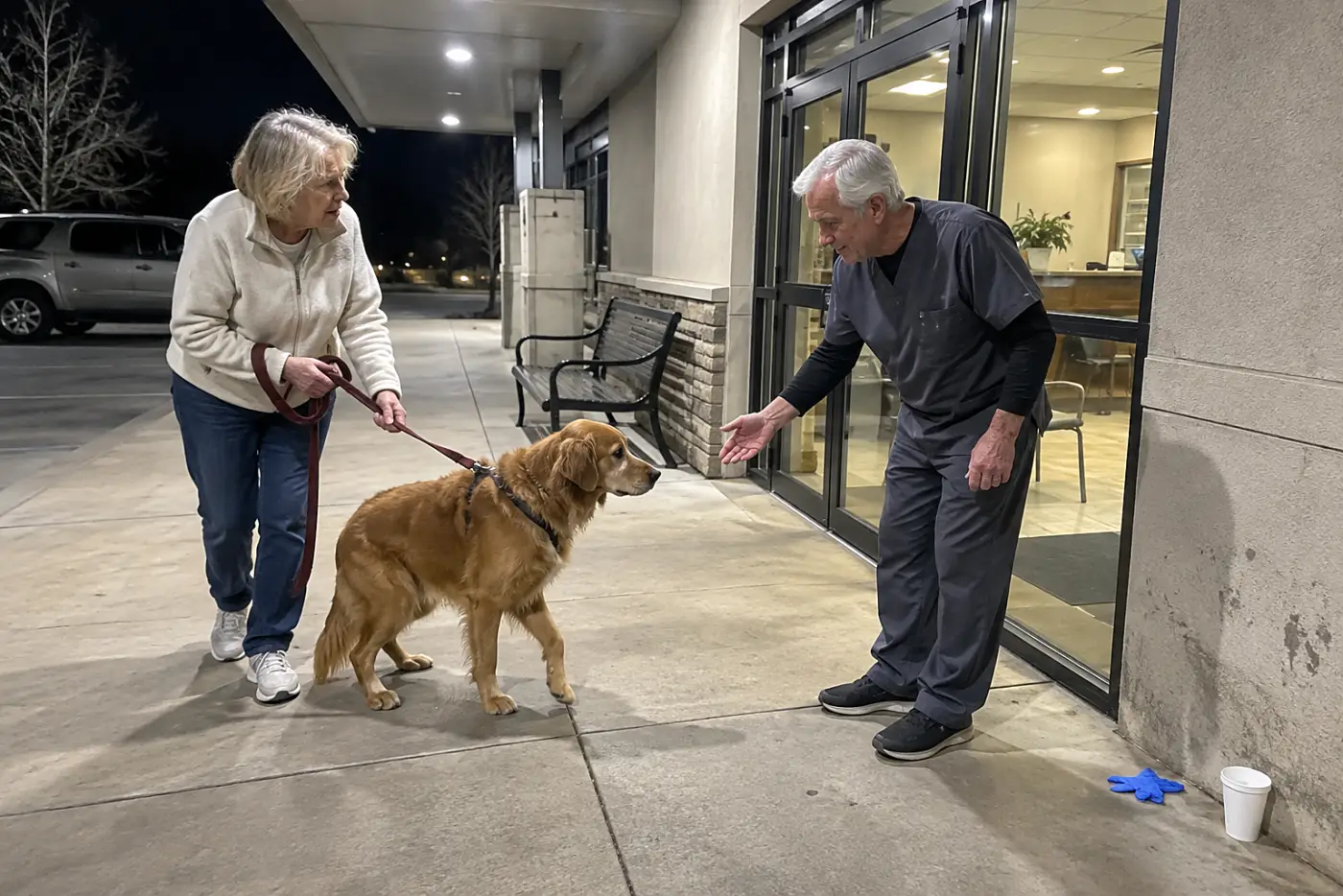
It is late. He falls, struggles to breathe, collapses, or strains to urinate without producing urine. In that moment, he needs you to reach help without delay.
Save the number and address of an emergency veterinary hospital in your phone now. Check its hours. Keep a leash and a towel where you can reach them. After a fall, call the hospital for advice before moving him if you need help carrying him.
Read the pet emergency pages at the American Veterinary Medical Association and the American Red Cross on an ordinary afternoon. Then his care doesn't begin with a search through old messages.
1A written record of his ordinary day
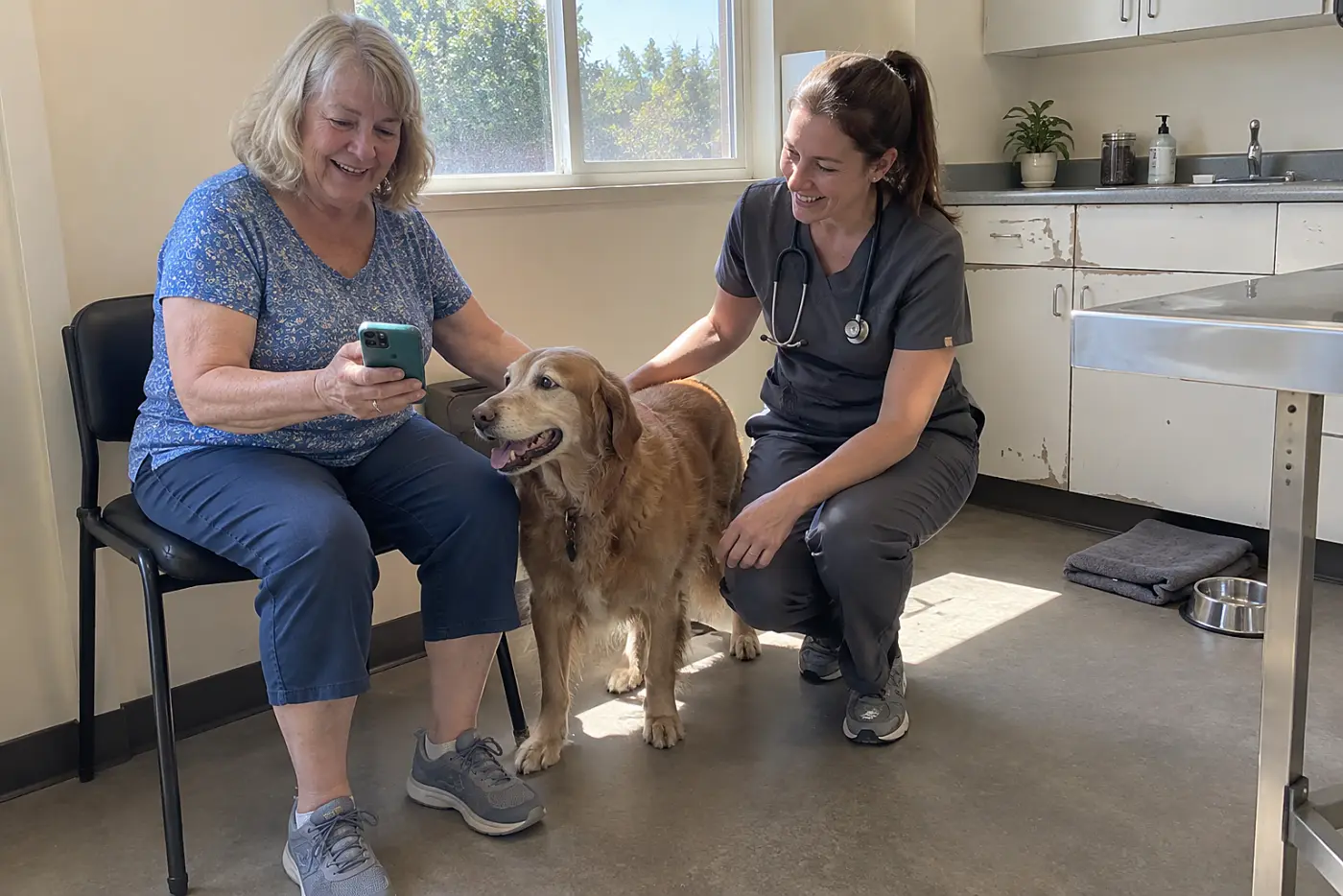
You know him better than anyone. That is why a small change is so hard to describe at the appointment. Was he slower this week, or has he been slowing down since spring?
For 7 days, check in twice a day. Note whether he finishes meals, gets up from where he rests, asks to go out, enjoys the walk, and settles to sleep. Film his stiff first steps if they disappear by the time he reaches the exam room.
Bring what you saw to his veterinarian and say, “This is what has changed.” That gives the person examining him a picture of the dog who lives with you, not only the dog standing in the clinic.
For senior-dog questions, start with the American Animal Hospital Association or VCA Animal Hospitals. If a limp leads to unfamiliar joint terms, check the American College of Veterinary Surgeons before your visit. For stumbling or other nerve-related changes, the American College of Veterinary Internal Medicine gives you terms to ask about.
Have a food or medication question? Look at the FDA Center for Veterinary Medicine or the Merck Veterinary Manual. Those pages help you form questions. Your observations help the veterinarian answer the one that matters: what has changed for *your* dog?
The bottom line
He still wants the ordinary life you share: a safe path, familiar places, time to sniff, and your attention when something feels wrong.
You have made the easy changes at home and saved the emergency number. You have also kept notes, so the next veterinary visit starts with what you saw rather than what you managed to remember.
What did your dog ask for today that you almost missed? If the answer was a strange new habit, our guide to preparing for a veterinary visit is a place to go next.
Up next
24 Gentle Things an Old Dog Does in Her Last Good Year That Families Only Understand Later
The hallway rug, the porch step, and the sound of a key give you places to notice her while she’s here.
Read the list →
Reader quiz
Did you catch the details?
5 questions from this article.
What should you check about the rug before your dog uses it?
Did any of these feel familiar?
Know someone who needs this?
Sources cited in this article
This article links to 8 outside sources, listed here so you can read them yourself.
- American Veterinary Medical Association www.avma.org
- American Red Cross www.redcross.org
- American Animal Hospital Association www.aaha.org
- VCA Animal Hospitals vcahospitals.com
- American College of Veterinary Surgeons www.acvs.org
- American College of Veterinary Internal Medicine www.acvim.org
- FDA Center for Veterinary Medicine www.fda.gov/animal-veterinary
- Merck Veterinary Manual www.merckvetmanual.com
Ruth Ellison
Family Editor
Ruth writes about grown children, grandchildren, ageing parents, and the conversations families put off, in the words of the people involved.
More from Ruth Ellison