23 Things Physical Therapists Wish You'd Changed Before the First Fall
A first fall can begin with a loose slipper, but the harder-to-spot trigger is often the turn between bed and bathroom.
By Dr. Alan Pierce, PT, DPT, Health Reviewer
Updated · 18 min read
- Written by our health reviewer
- How we review
Read to the end: #1 is a whole-house hazard test that catches problems before your feet do, and almost nobody runs it after dark.
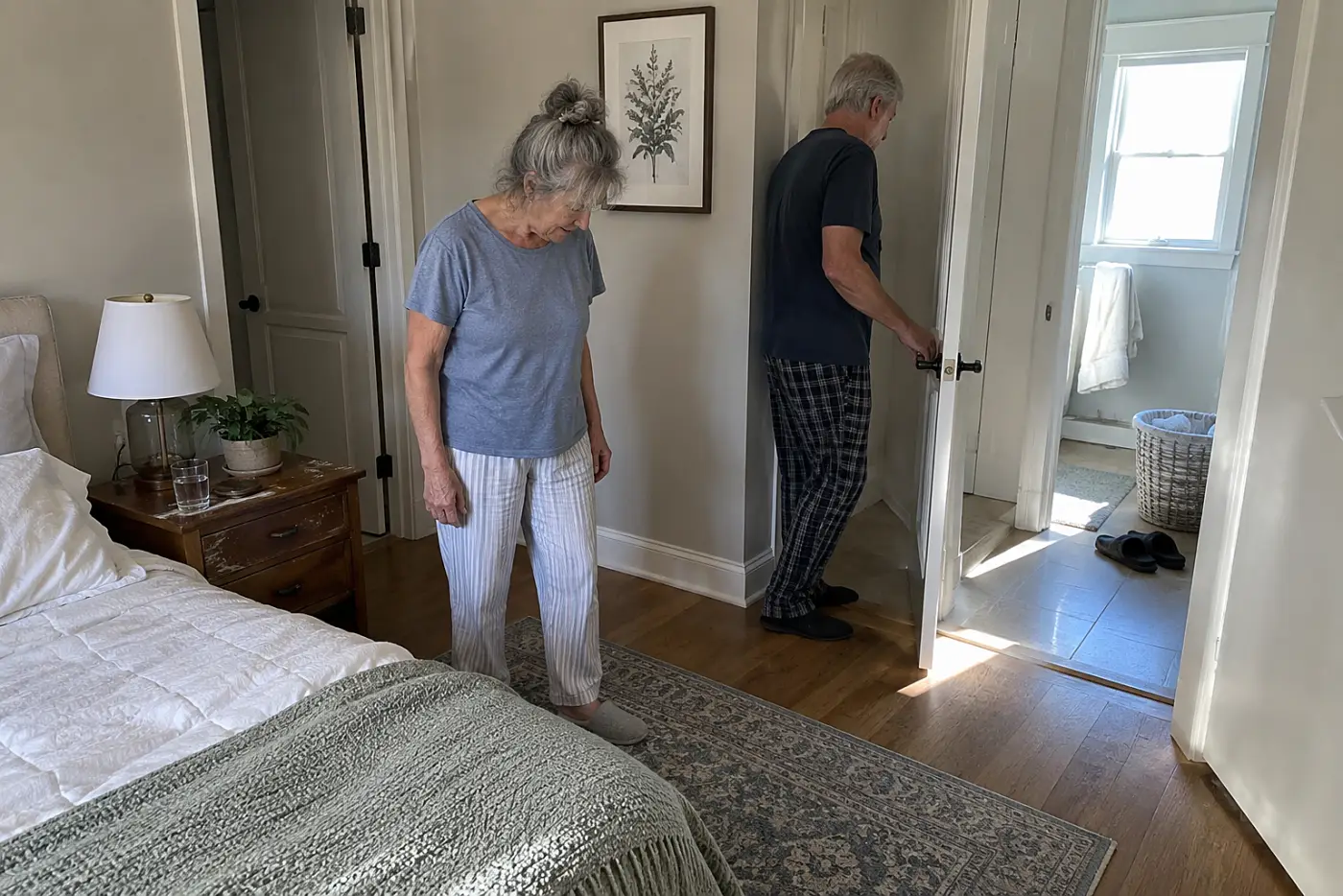
The bathroom is six steps from your bed. At noon, that trip takes no thought; at 2 a.m., you reach for the wall before your eyes have adjusted, then turn around the open bathroom door. Nothing looks wrong when you inspect the floor the next morning.
A first fall doesn't require a reckless choice. It happens when an ordinary movement meets something you never thought to test together: your shoes, the light, your balance, and the route you've walked for years.
Here are 23 changes to make before that first fall.
23Move the hamper out of your walking lane
A familiar obstacle still catches a moving foot.
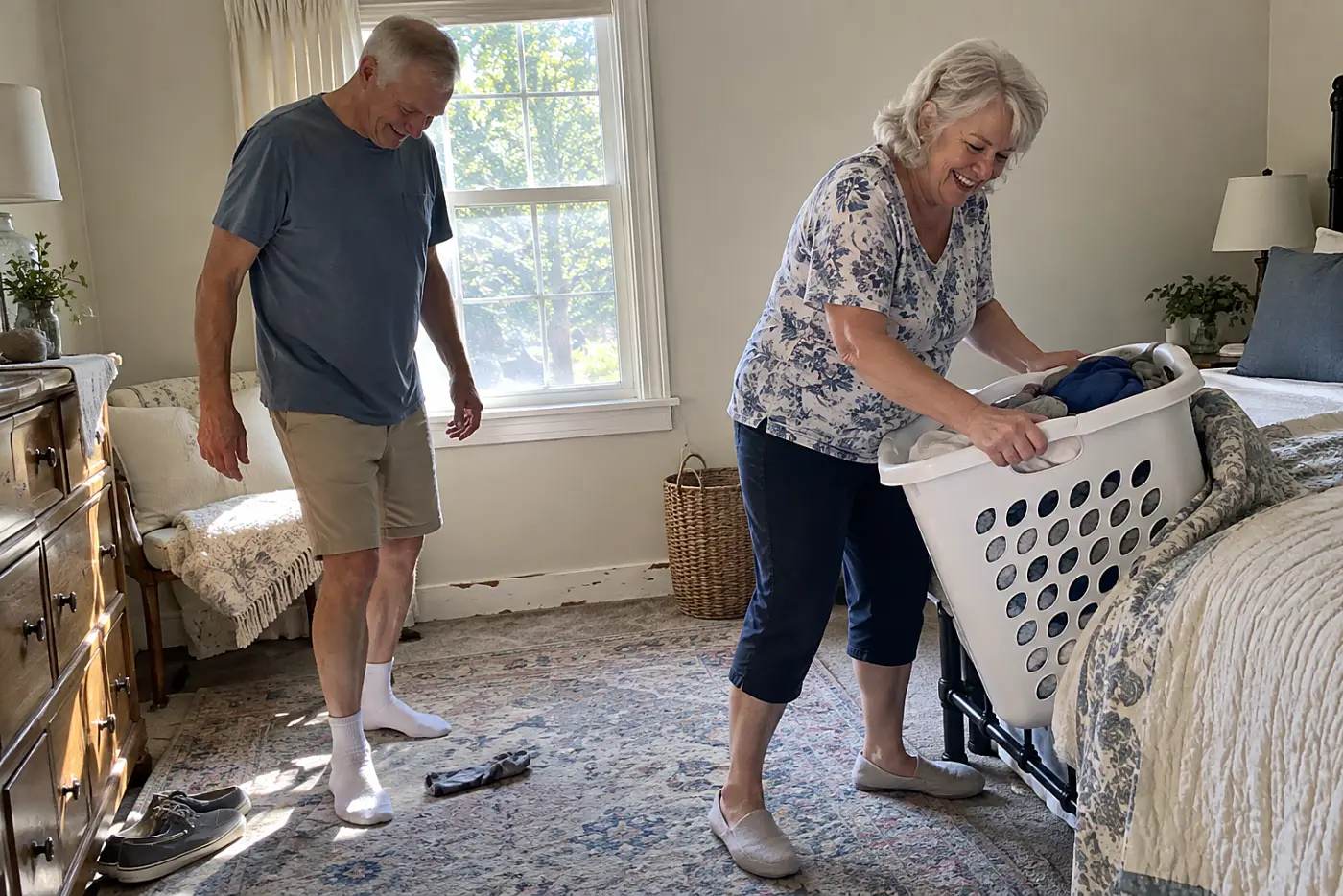
The hamper sits beside the dresser because that's where laundry goes. When you turn toward the closet, your foot takes the shorter path and meets its corner. Carrying folded clothes narrows your view of the floor.
That last detail matters. A clear path when your hands are empty says little about the same turn with a basket against your hip. You need room for both your feet and what you're carrying.
Move the hamper against a wall that isn't on your route. This week, walk from bed to closet with an empty laundry basket in your arms. Then say, “I want this path clear even when I can't see my feet.”
Look at what else crosses that same lane.
22Tape down the charging cord beside your chair
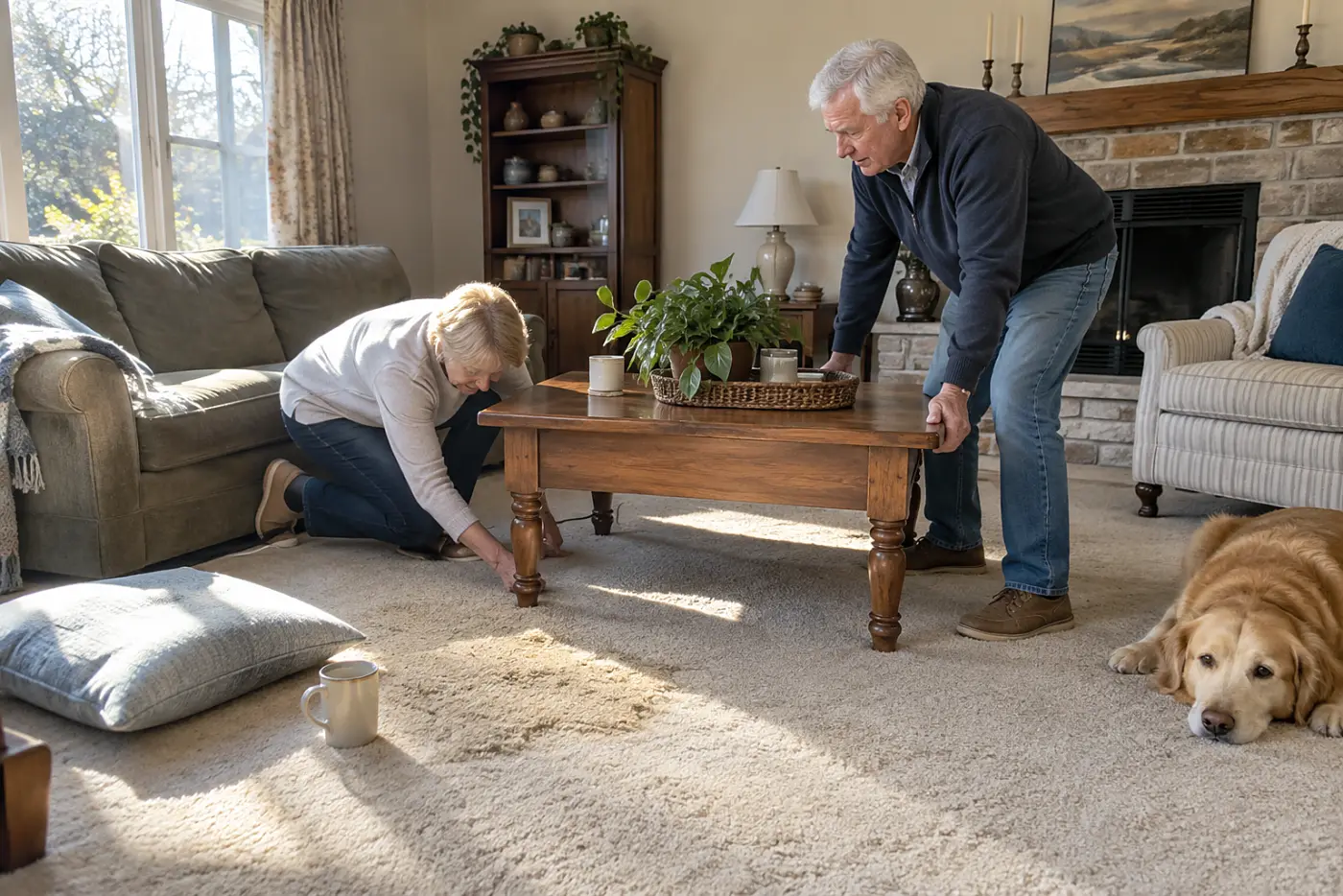
A cord doesn't stay where you left it.
You plug in your phone, set it on the side table, and draw the cable across the space where your foot lands. Later, you get up while looking at the screen. A cord that's slack on Monday sits taut on Tuesday when the plug or table shifts.
The problem isn't a dramatic tumble over a thick wire. A small catch changes your step, and the next foot has to land somewhere. The National Institute on Aging's fall prevention advice includes cords and clutter among home hazards.
This week, unplug the charger and watch where the cable lies while you stand up.
Route it behind the table or secure it against the wall with a cord cover made for floors. Don't run a cable under a rug, where you can't see wear or a raised spot. Say, “I need the chair area clear when I get up with my phone.”
Once the floor is clear, notice what your feet are wearing.
21Replace the slippers that slide off your heels
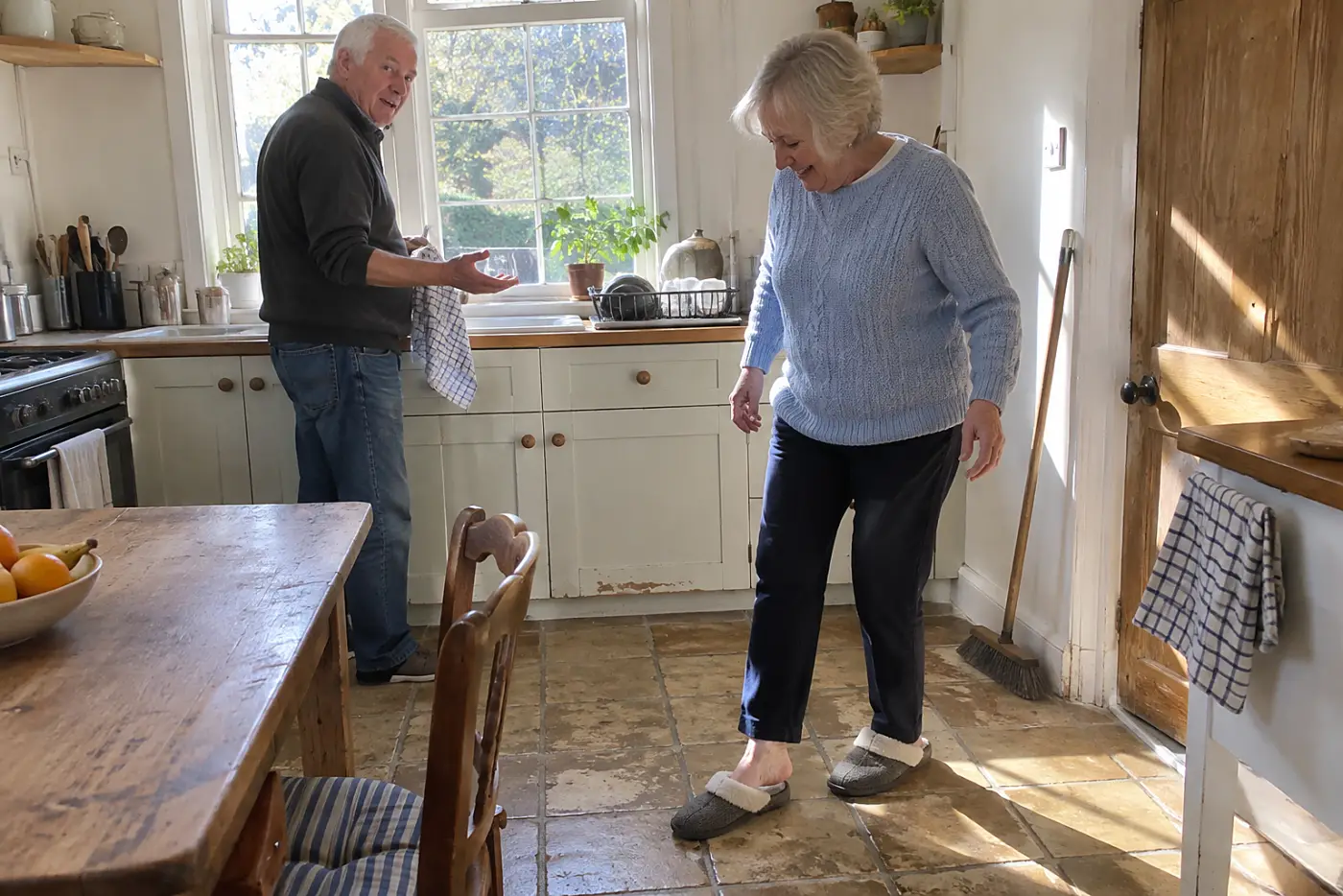
A loose heel turns a normal step into a catch.
Your slipper stays behind for an instant while your foot moves forward. You shorten the next step to keep it on, and your balance has to adjust. Soft soles also hide uneven flooring from your feet.
A shoe that behaves on a straight walk still has to stay put when you turn. The heel matters as much as the sole. Check both before deciding the pair is safe indoors.
This week, put on the shoes you wear inside and walk to the kitchen. If either heel lifts out, set that pair aside and choose a secure, nonslip shoe. “I want shoes that stay on when I turn,” is enough to say at the store.
Before you blame the floor, check what happens when you rise.
20Pause after standing up from your bed

The first step can arrive before your blood pressure settles.
When you stand, gravity draws blood toward your legs. Your body adjusts to keep blood flowing to your brain. If that adjustment lags, you feel lightheaded or your vision dims, and the doorway is suddenly harder to judge.
The American Heart Association describes this drop as orthostatic hypotension. Dehydration and some medicines play a part. A fall from faintness needs a different conversation from a fall over a rug.
This week, sit at the bed's edge, stand, and wait before walking. If you've felt faint on rising, tell your clinician exactly when it happens rather than changing a medicine yourself. Say, “I get dizzy when I stand up from bed. Please check my blood pressure sitting and standing.”
The first step also depends on where your hand lands.
19Stop pulling yourself up by the towel bar
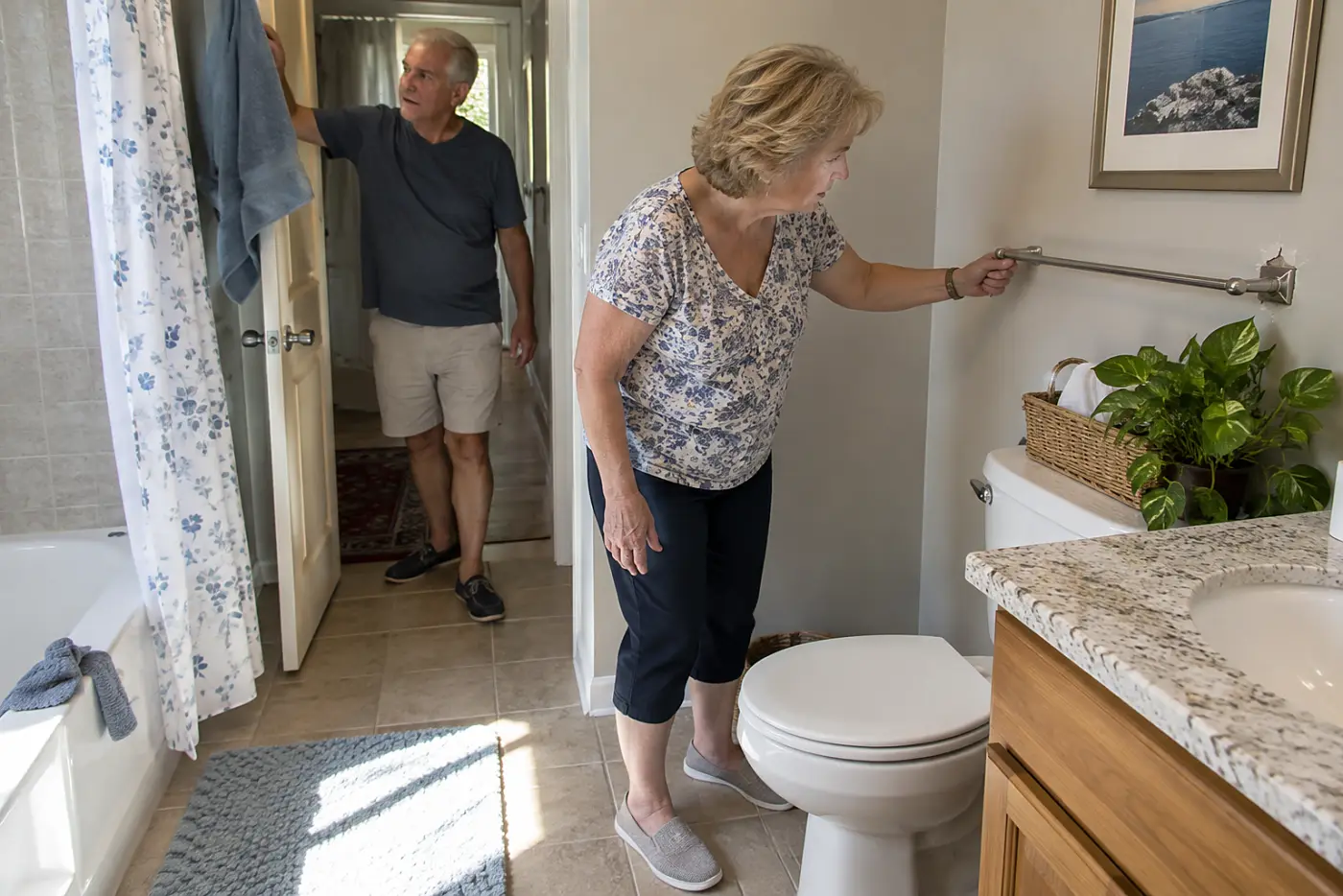
A towel bar isn't built to hold your weight.
It sits at a convenient height beside the toilet, so your hand reaches for it. If it loosens while you stand, both your grip and your balance go at once. A grab bar needs proper placement and secure installation.
A towel bar and a grab bar do different jobs, even when they look alike. Check what is fastened to the wall before you need it for support.
The National Institute on Aging's fall prevention advice recommends grab bars near toilets and in bathing areas. This week, identify every bathroom fixture you've used for support and stop treating it as a handle. “Can you check this wall for a properly installed grab bar?” is the question to ask an installer.
Then look at the surface beneath your feet.
18Put a nonslip surface in the shower
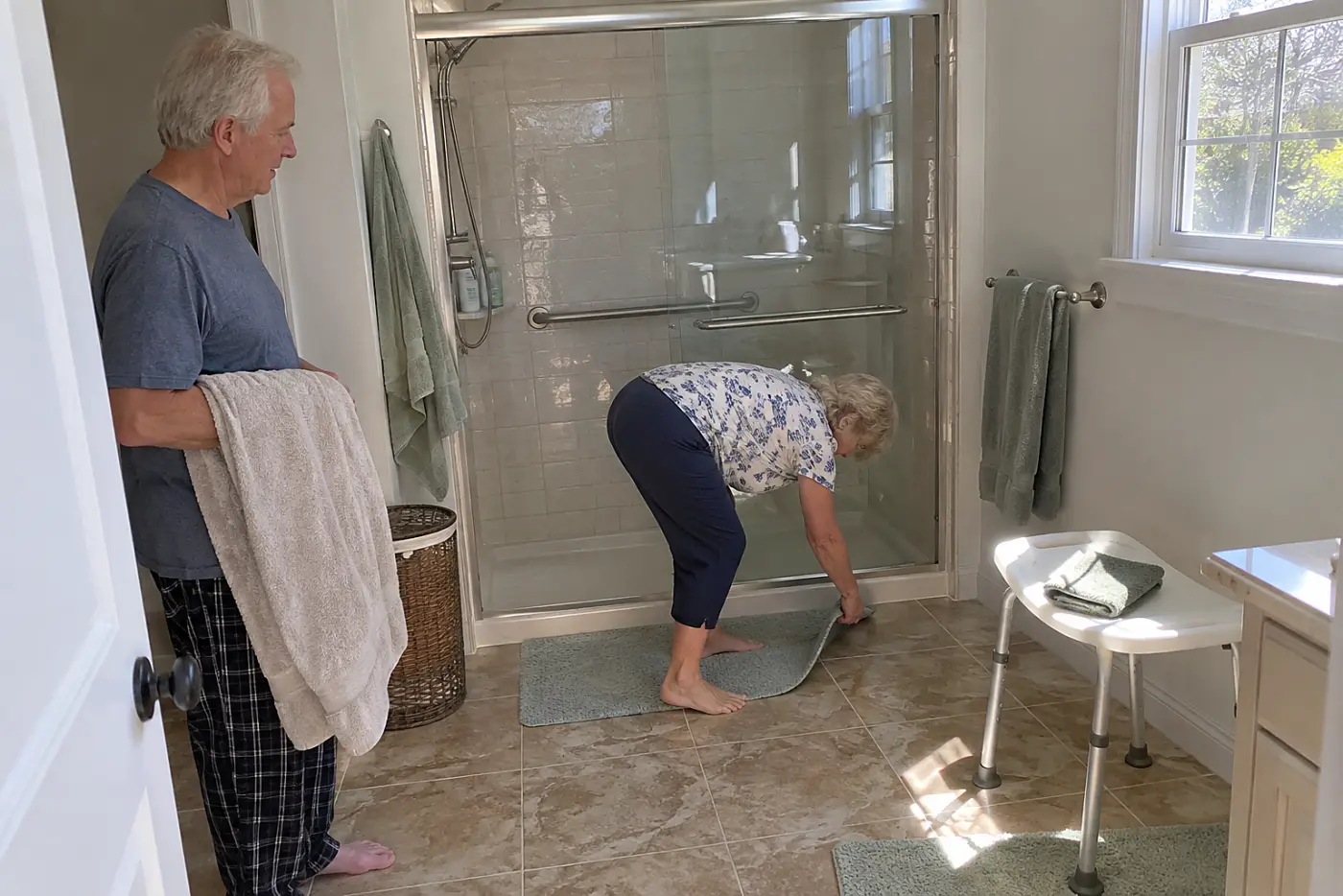
Wet tile changes the moment your weight shifts.
You step in with one foot, transfer your weight, and turn toward the water. Soap and water lower traction under the foot that now has to hold you. Reaching for the faucet adds another movement before you're steady.
A suction mat works only when it grips the tub or shower floor and stays flat. A loose mat creates its own edge to catch. A fixed nonslip surface avoids that loose edge; whichever you use, check it before stepping in. The CDC's STEADI program includes bathroom changes in fall-prevention work.
This week, press and pull at each corner of your shower mat with your hand while the floor is wet. Replace a mat that shifts, and clear bottles from the place where you put your feet. Say, “I want to know this surface won't move when I turn.”
Your next wet step happens outside the shower.
17Keep the bath towel off the floor
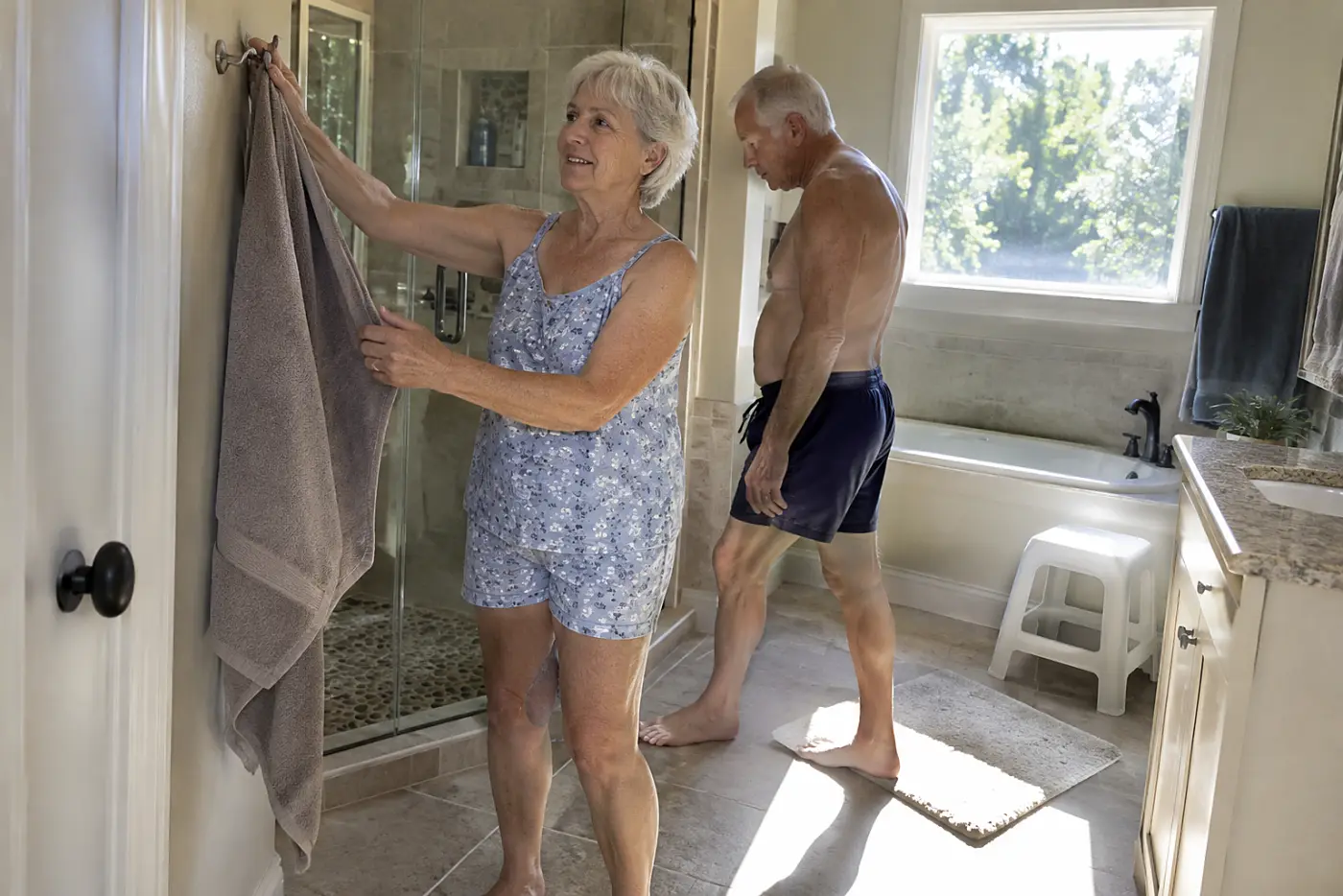
A towel becomes a moving rug under wet feet.
You drop it where you step out because it's within reach. Then one foot lands on fabric while the other stays on tile, and the two feet meet different amounts of grip.
Even a towel laid flat changes shape when you step on it. The dry bath mat needs a backing that stays put when your weight turns. Don't judge it by how it looks from the doorway.
This week, hang the towel within reach and set out a bath mat with a nonslip backing. Step from the shower onto the mat, then test whether the mat moves when you turn. “Please leave this mat flat after cleaning,” is a fair request to anyone who shares the bathroom.
Dry floors have their own loose edges.
16Lift the throw rug at the hallway corner
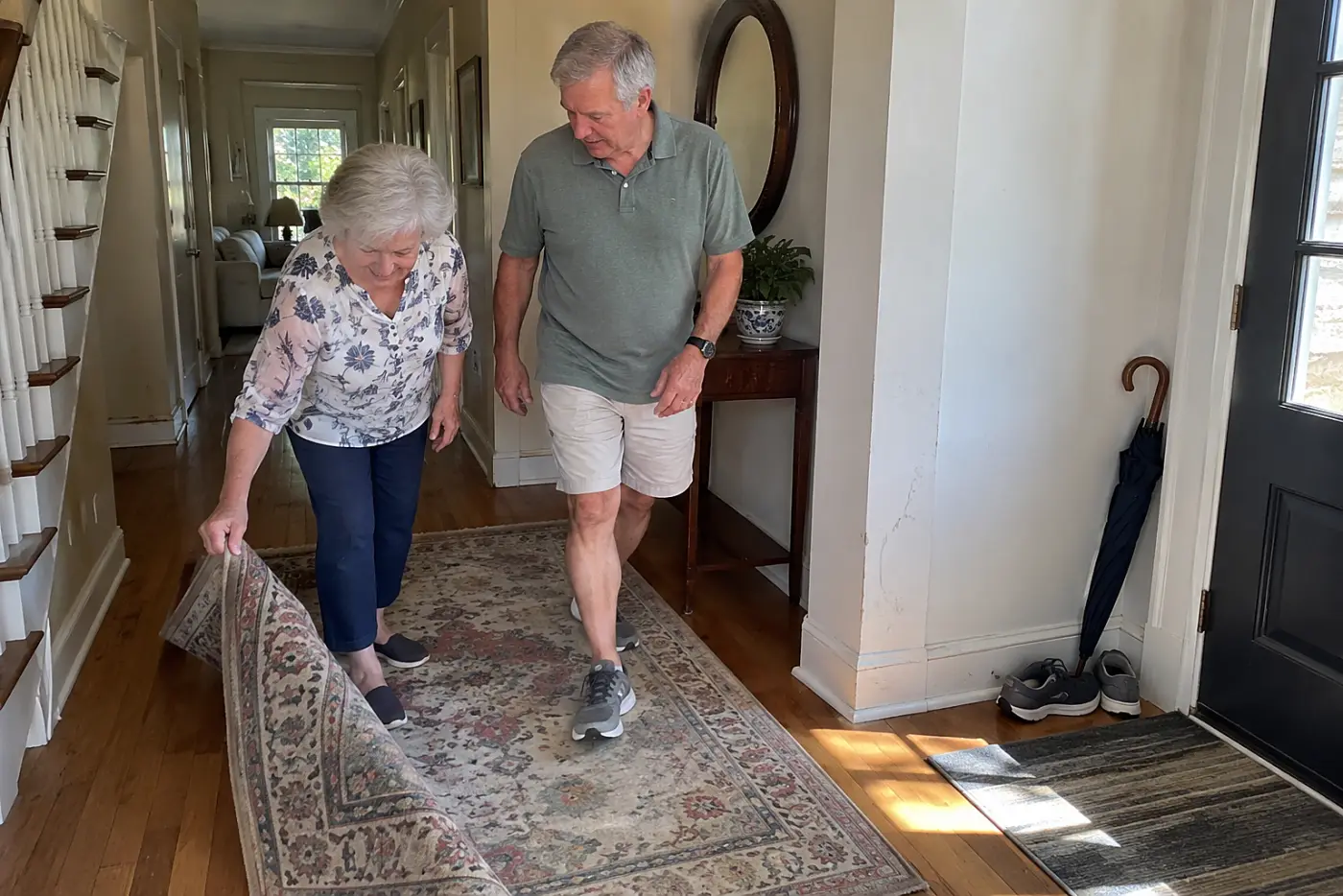
Your toe finds a curled corner before your eyes do.
A rug lies flat from the doorway, yet its far edge lifts where you turn. The foot that brushes it slows. Your upper body keeps moving, and you need another step to catch up.
The CDC's falls page recommends removing throw rugs as a home fall-prevention step. Tape doesn't fix a rug that bunches or has a worn backing. A clear floor removes both the raised edge and the question of whether it shifted since yesterday. That matters on a route you take without looking down.
This week, lift the rug and walk the route without it. If you keep it, make sure it lies flat and doesn't slide under your foot; remove it if either problem remains. Say, “I like the rug, but I need this corner clear.”
With that corner open, the stairs deserve their own inspection.
15Use the handrail before the first stair
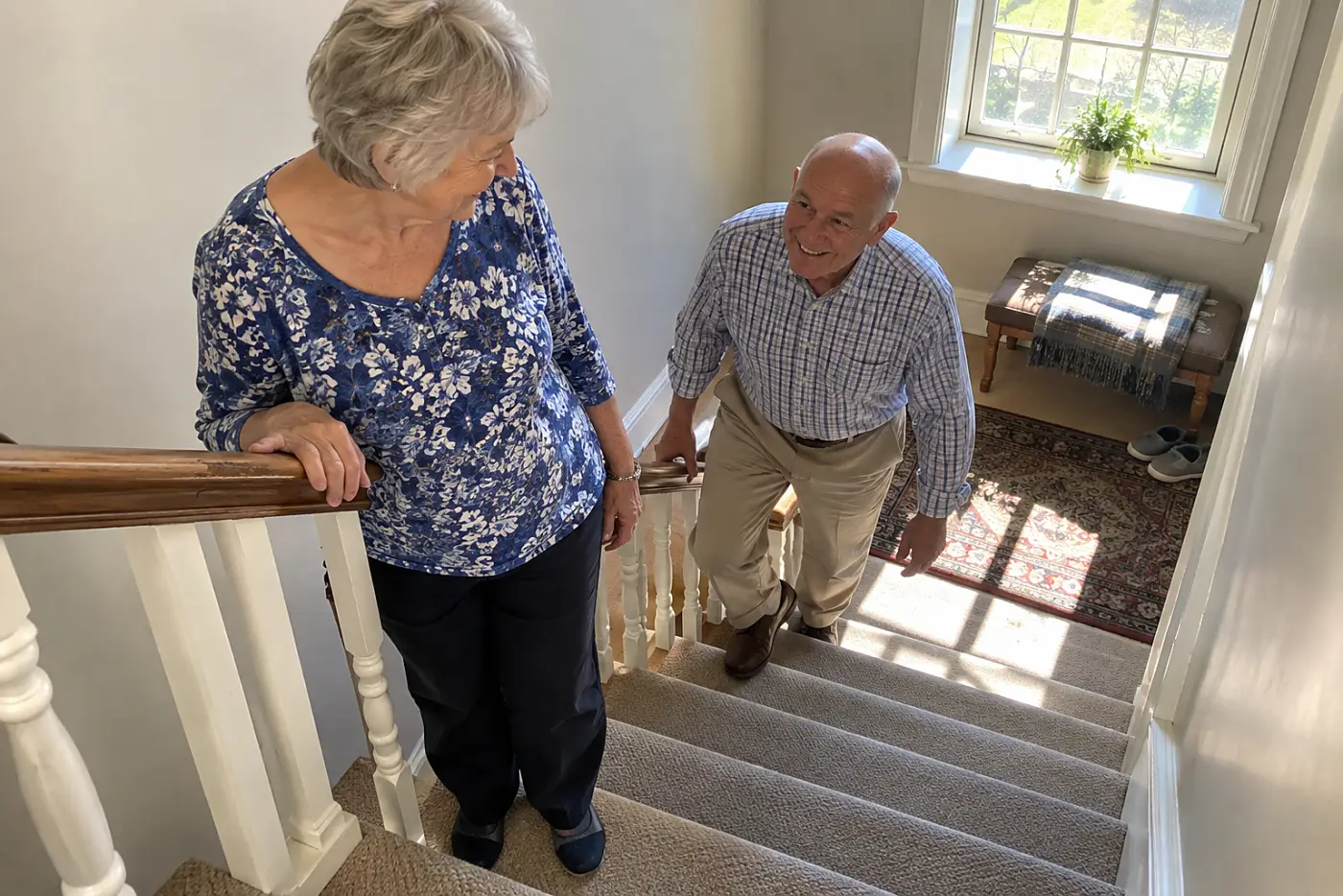
A handrail helps only when your hand reaches it.
You start down carrying a mug and touch the rail after the first step. By then, your body has already committed to the descent. A free hand gives you a point of contact before your weight moves.
Put the mug down before testing this change. The rail isn't a backup to grab halfway through; it's part of how you start. If you need both hands for a load, split the load.
This week, take the stairs with one hand on the rail from the top landing. Move what you carry to a smaller container or make another trip so one hand stays free. “I'll bring the rest down next time,” takes less time than a fall.
Check whether the rail itself stays still.
14Fix the loose handrail at the top landing
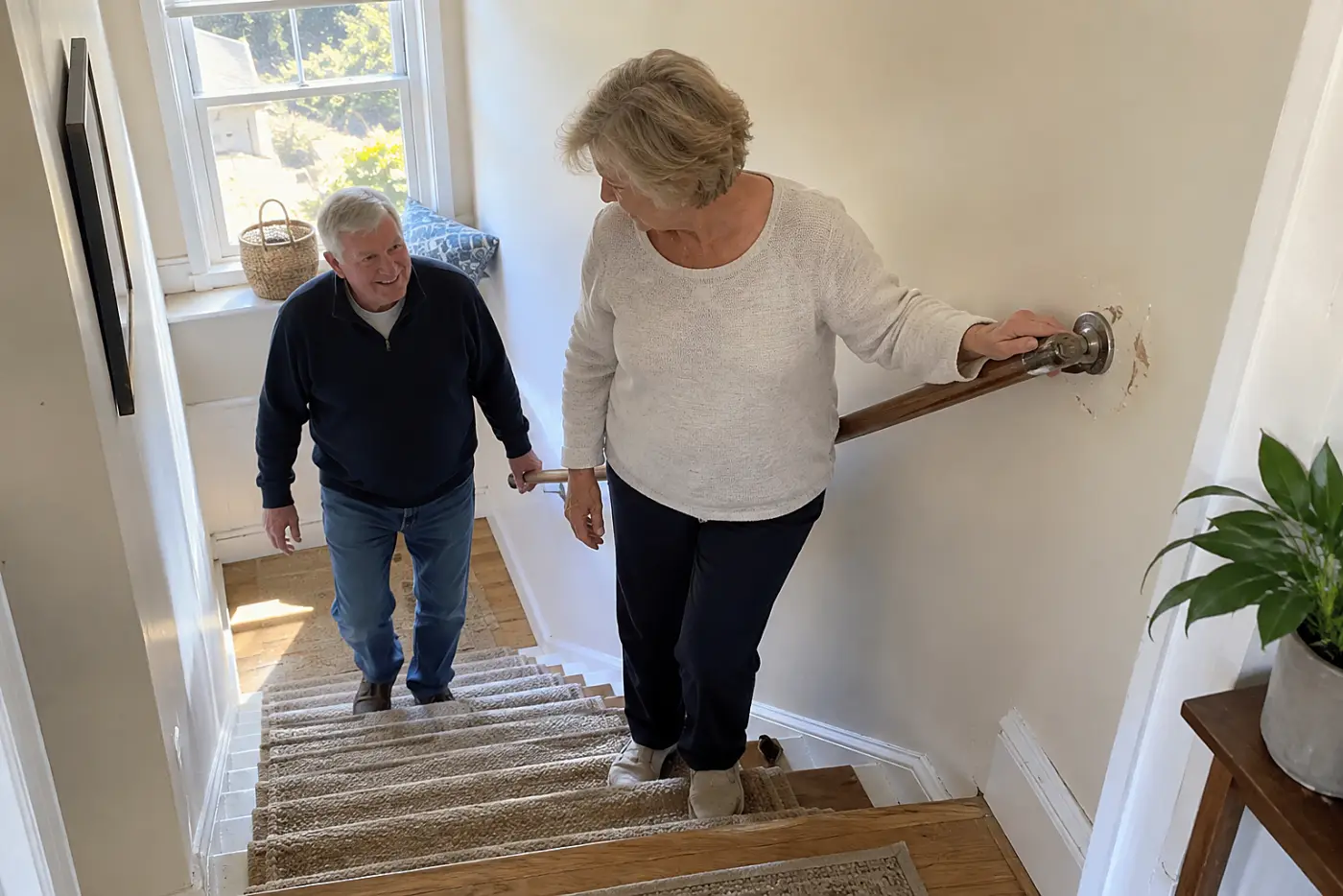
A rail that shifts gives you false confidence.
You reach for it because you already know the stairs are a place to take care. The bracket moves as you put weight through your arm. Instead of steadying you, the rail changes position at the exact moment you need it.
A handrail should feel firm along its length, including at both ends. Check every bracket and the wall where it's attached; paint can hide a loose screw. This is a repair to make before the next load of laundry goes downstairs.
This week, grip the rail while standing safely on the landing and test for movement. Arrange a proper repair if it shifts, and use another route or get help carrying things until it's fixed. Say, “The rail moves when I hold it. I need that repaired before I use these stairs again.”
Now check the light that lets you see the first step.
13Put a light switch at both stair ends
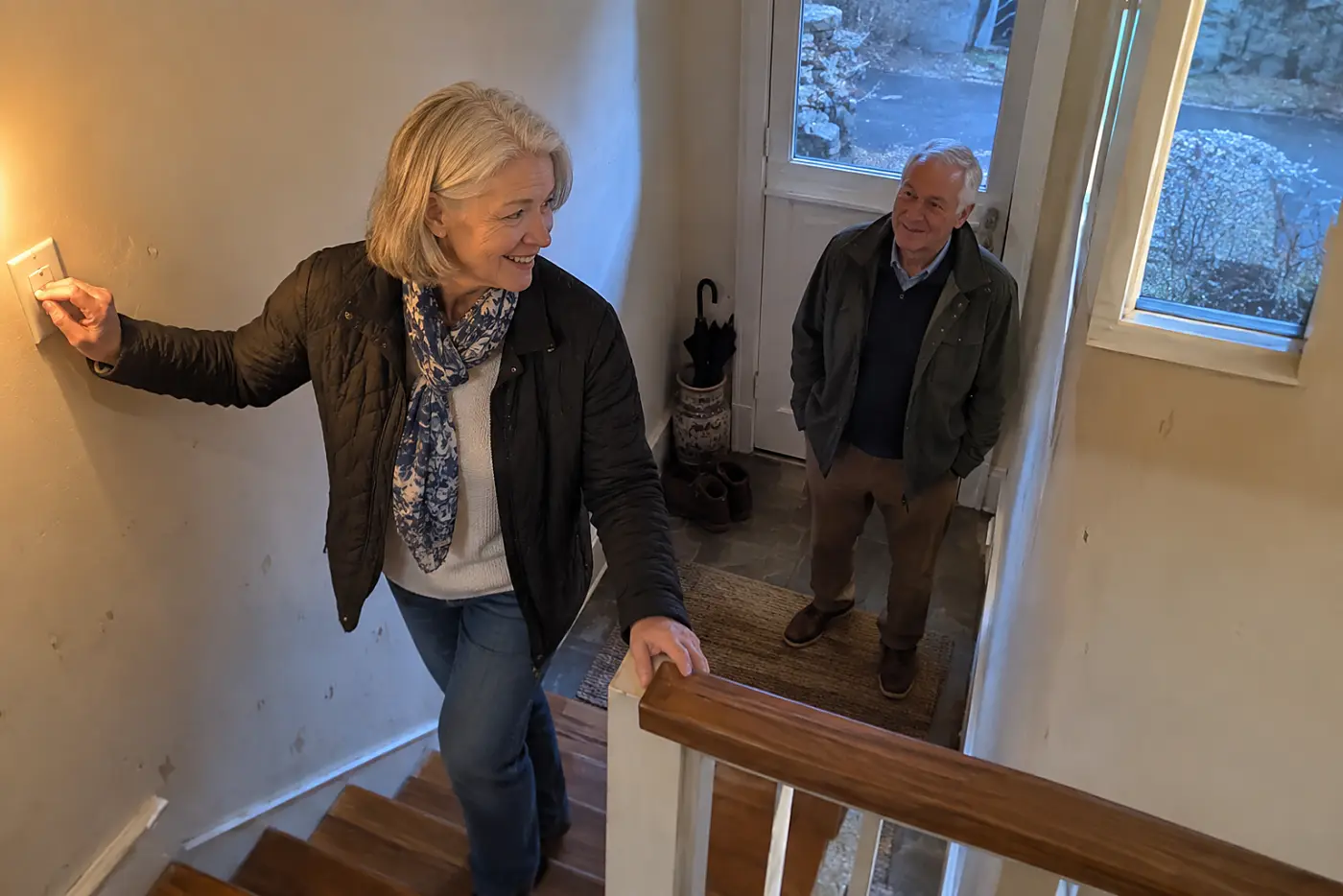
A dark stair makes the edge disappear.
You turn off the light upstairs because the switch is there. Then you face the stairs with no way to light them from the bottom next time. Shadows hide where one tread ends and the next begins.
A light that works from one landing doesn't solve the trip in the other direction. Check both approaches before deciding the stairs are well lit. The first tread is the wrong place to discover the missing switch.
This week, stand at both ends of the stairway and check whether you can turn on the light before stepping onto a tread. If you can't, ask an electrician about adding a switch or another fixed light. “I need to light the whole stairway from either end,” states the job.
The trip to the bathroom needs light sooner still.
12Light the route from bed to bathroom
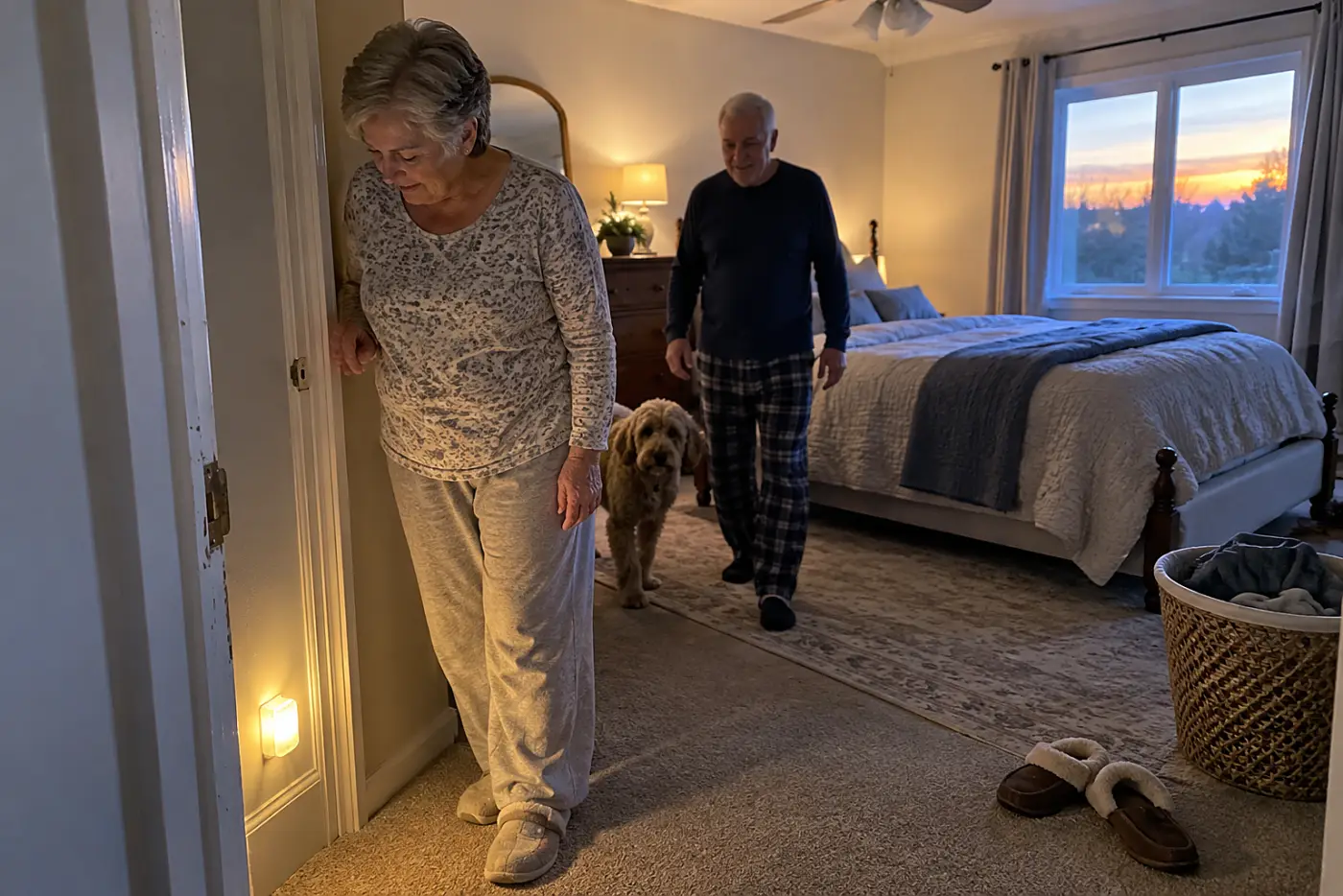
Your eyes don't adjust on the same schedule as your bladder.
You wake, sit up, and head for the door. A bright bathroom light is at the far end of the trip, after the dresser corner, hallway turn, and threshold. Reaching for a phone flashlight adds a screen and a hand movement while you're still walking.
Place lights where the route begins, not only where it ends. Plug-in night-lights or motion-activated lights give you a visible path without searching for a switch. Check that each light shows the floor rather than shining straight into your eyes.
This week, walk the full route after dark with the lights arranged as you'd actually use them. Look down at every threshold and turn, then change any light that leaves an edge hidden. Say, “I want to see the floor before I get out of bed.”
Seeing the floor won't help if you hurry past it.
11Give the bathroom trip an extra minute

Rushing takes away the step that checks your balance.
You hear the urge, get up fast, and turn before you're fully steady. Urgency also pulls your attention toward the bathroom instead of the floor. Getting there safely starts before the first step.
A clear, lit route still leaves you with the urge itself. If it repeatedly sends you running, bring that pattern to a clinician. Cutting back on water without advice isn't a substitute for that conversation.
This week, clear the route and give yourself time to sit up, stand, and pause. Tell your clinician if urinary urgency keeps making you race at night; don't try to solve it by drinking too little. Say, “I'm rushing to the bathroom at night, and I want to talk about that.”
Another rushed turn happens beside the kitchen counter.
10Turn your whole body at the kitchen counter
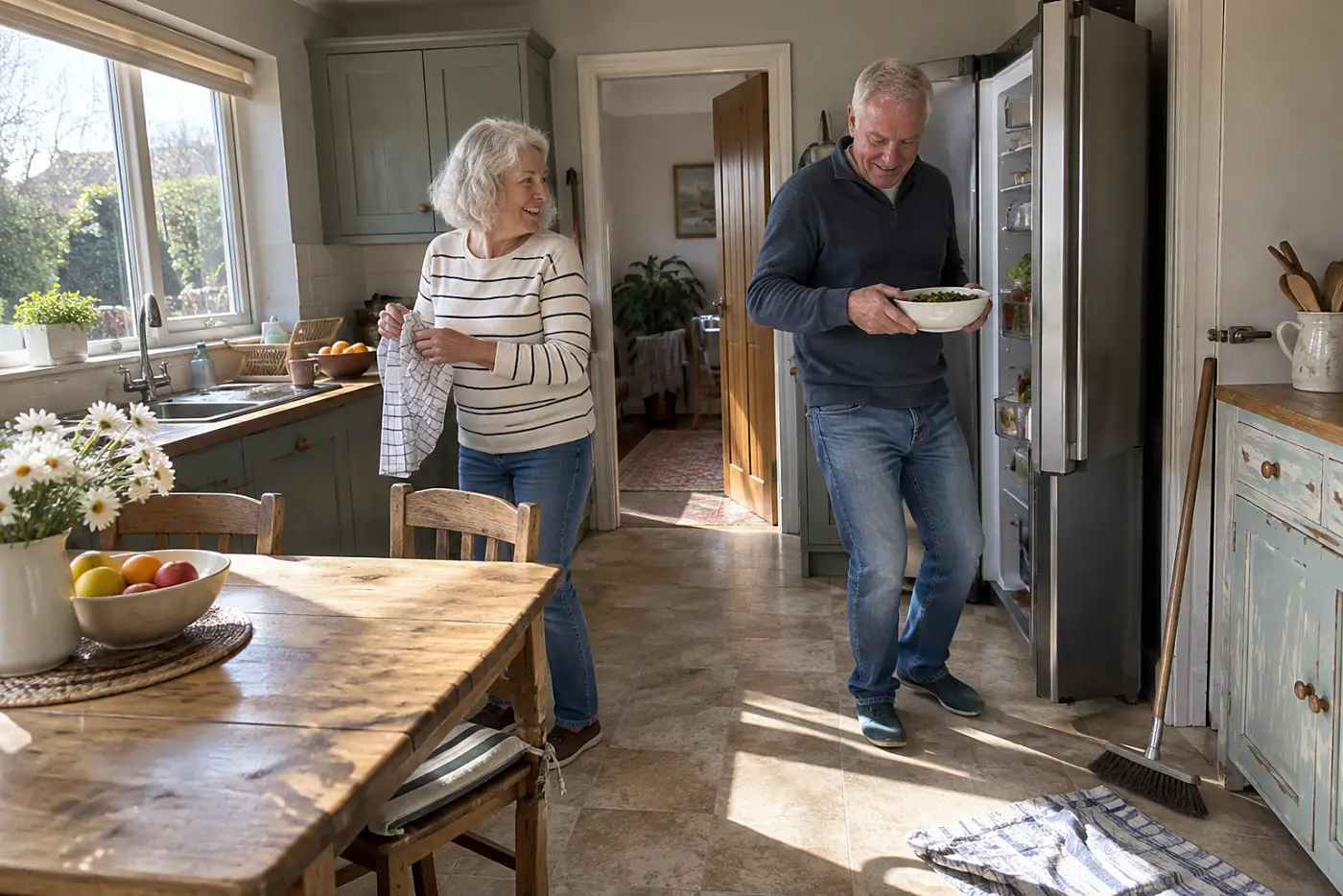
Your feet and shoulders need to make the turn together.
You reach for a cup behind you while one foot stays planted. Your shoulders rotate first, your weight follows, and the foot that's stuck has to catch up. A small kitchen turn becomes harder when you're holding a hot pan.
Instead, take several small steps to face what you need. Keep the counter close enough for balance, but don't lean on an open drawer. Notice which turns make you cross one foot over the other; that's a good detail to bring to a physical therapist.
This week, watch how you turn between the sink, stove, and refrigerator. Rehearse facing each one before you reach, especially while carrying something. Say, “I keep twisting to get to this shelf. Let's move what I use down here.”
The next shelf asks you to reach higher.
9Move everyday dishes below shoulder height
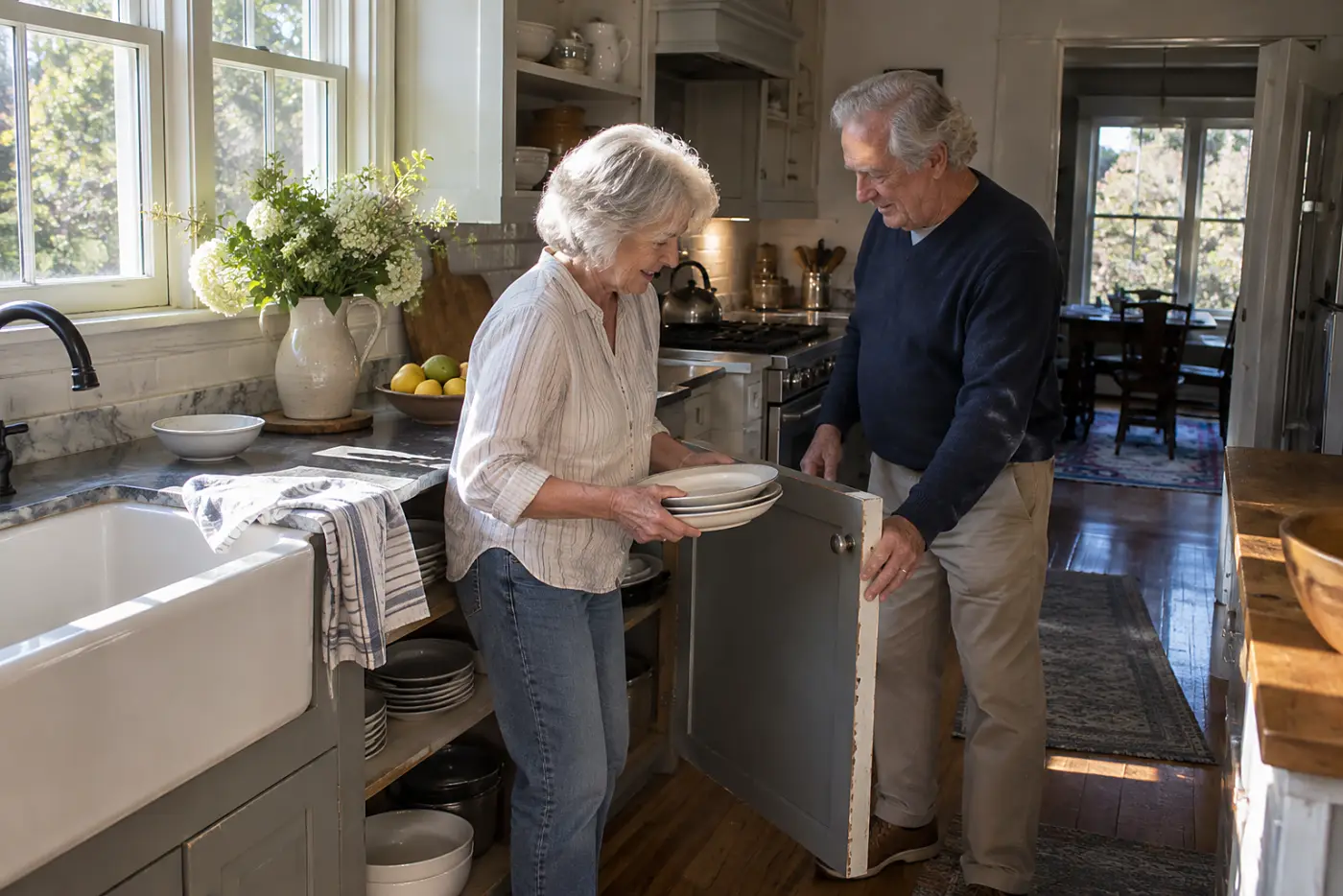
A high shelf pulls your eyes and weight upward.
You rise onto your toes to reach a plate, then look up as your hand searches behind it. Stepping back with the plate leaves little room to recover if you wobble. A chair isn't a safe shortcut.
Keep the daily dishes where your feet stay flat. You'll reach for them far more than the serving platter at the back of the cabinet. Make the easy shelf the one you use most.
This week, put the dishes you use every day where both feet stay flat. Move rarely used pieces higher, or ask someone to help with a one-time rearrangement. “I use these plates daily; they belong where I don't have to climb,” settles the question.
For the reach you still can't avoid, look at the tool.
8Retire the folding chair used as a ladder
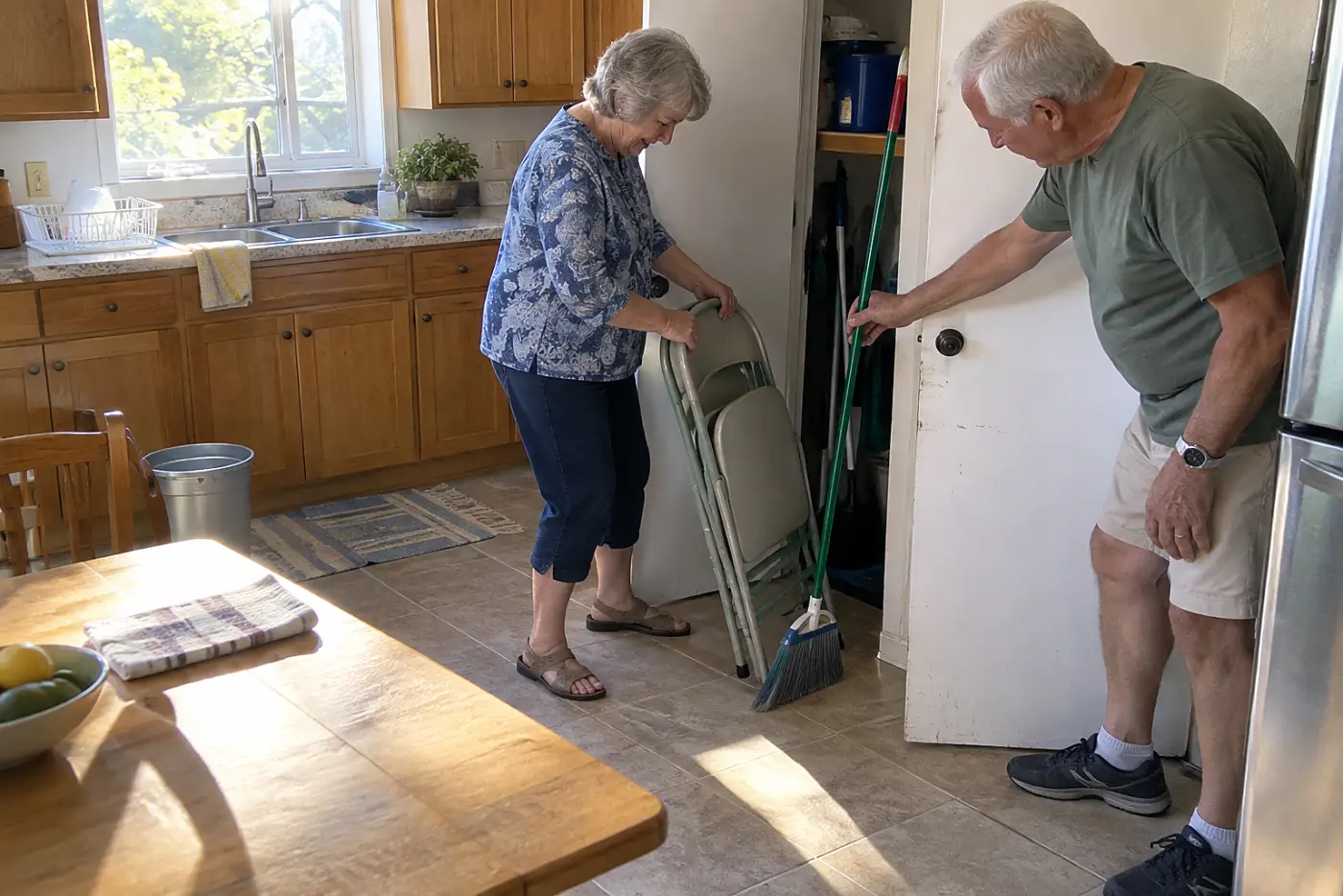
A chair seat wasn't made to be your top step.
You climb up, reach across, and discover the chair shifts as your weight moves sideways. Getting down asks you to find the seat with your foot while your eyes stay on the object in your hand. A folding chair adds hinges to that problem.
Choose a sturdy step stool with a handhold for tasks within safe reach, and put it on a level floor. Don't climb when you feel dizzy, and don't reach beyond the stool's footprint. If the job demands a ladder or overhead work, leave it for someone equipped to do it.
This week, take the chair out of the closet where you use it to climb. Put the safe tool where you can reach it, or make a plan for help with that shelf. Say, “I'm not standing on a folding chair for this.”
The same rule about steady footing follows you outside.
7Check the step between house and porch

One uneven step hides in a route you know.
You open the door while holding groceries, then look toward the car. If the porch step is loose or its edge blends into the landing, your foot meets it later than you expect.
Set the bags down before checking the step. Look at the edge from both directions, since you use it coming home, too. A repair belongs on the list before another loaded trip.
This week, walk through the doorway empty-handed and check the tread, edge, and nearby light. Repair a loose step rather than testing it again with a full bag. “This step moves under my foot. It needs fixing,” gives the repair person a clear starting point.
Past the porch, the ground changes with the weather.
6Choose the clear path across the driveway

A shortcut changes after rain, leaves, or frost.
You take the same diagonal line from the mailbox because it saves steps. Then wet leaves cover a seam, or a patch of shade stays icy after the sunny part dries. Your foot learns the old surface, not today's.
The National Weather Service issues local weather information; your shoes still have to meet the ground in front of you. Before you carry anything, look for debris, pooled water, and ice. Use the cleared route, even when it takes longer.
This week, walk from your door to the mailbox and name the route you'll use in poor weather. Arrange for leaves or ice to be cleared before you need that path, and keep a light by the door for an early trip. Say, “I'll take the cleared walk instead of cutting across the driveway.”
Once you're indoors, a different change arrives through the medicine cabinet.
5Review medicines that make you dizzy

A familiar pill can change how steady you feel.
A new dose, another prescription, or an over-the-counter sleep aid changes what you take together. Dizziness or drowsiness then shows up when you stand or walk, not while you're reading the label.
The National Institute on Aging includes medicine reviews in its fall prevention advice. Bring the bottles rather than trying to recall each name from memory. Include products you bought without a prescription.
This week, bring every prescription, supplement, and over-the-counter product to your pharmacist or clinician. “Which of these could make me dizzy or sleepy, especially at night?” is worth asking. Don't stop a prescribed medicine on your own.
The next check belongs to your eyes.
4Update the glasses you use on stairs

Your lenses shape where the next step appears.
With bifocals or progressive lenses, looking down through the lower part changes how you see the tread. An old prescription adds blur, especially when stair edges have little contrast. Your feet still need a clear target.
The American Academy of Ophthalmology discusses vision and fall risk. Tell your eye doctor when stairs or curbs look hard to judge, including which glasses you wear at the time. Keep those glasses clean and within reach; switching pairs mid-trip creates another distraction.
This week, look at the first stair and a curb through the glasses you actually wear outside. If either edge looks unclear, book an eye exam and describe the problem. Say, “I have trouble judging the stair edge when I look down through these lenses.”
Clear sight tells you where to step. Your legs still have to do it.
3Practice rising from a sturdy chair
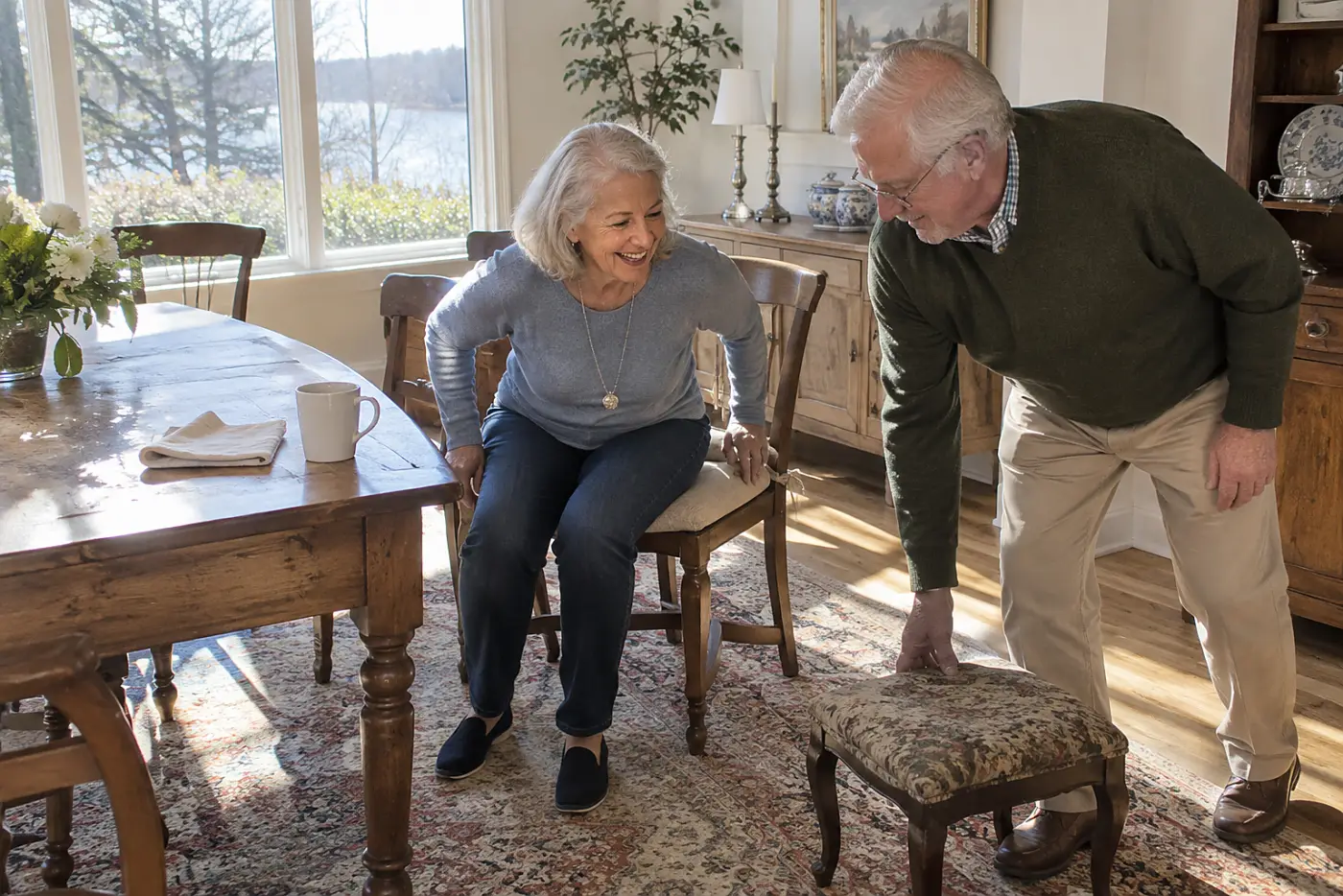
Standing up is a balance task before it's a walk.
You move forward, bring your feet underneath you, and lift your weight over them. If that sequence feels shaky, the first step starts from a poor position. Grabbing a rolling chair only makes the base move.
Set the chair near a counter before you begin. Notice whether you lunge forward or grab furniture after standing. That detail is more useful to a therapist than saying you feel unsteady.
This week, use a sturdy chair that won't slide. Practice standing and sitting with a counter nearby, and stop if you feel faint or have pain. Tell a physical therapist, “I want to get up without lunging for the furniture.”
Then see what happens when you stay on your feet.
2Ask for a balance assessment before a fall
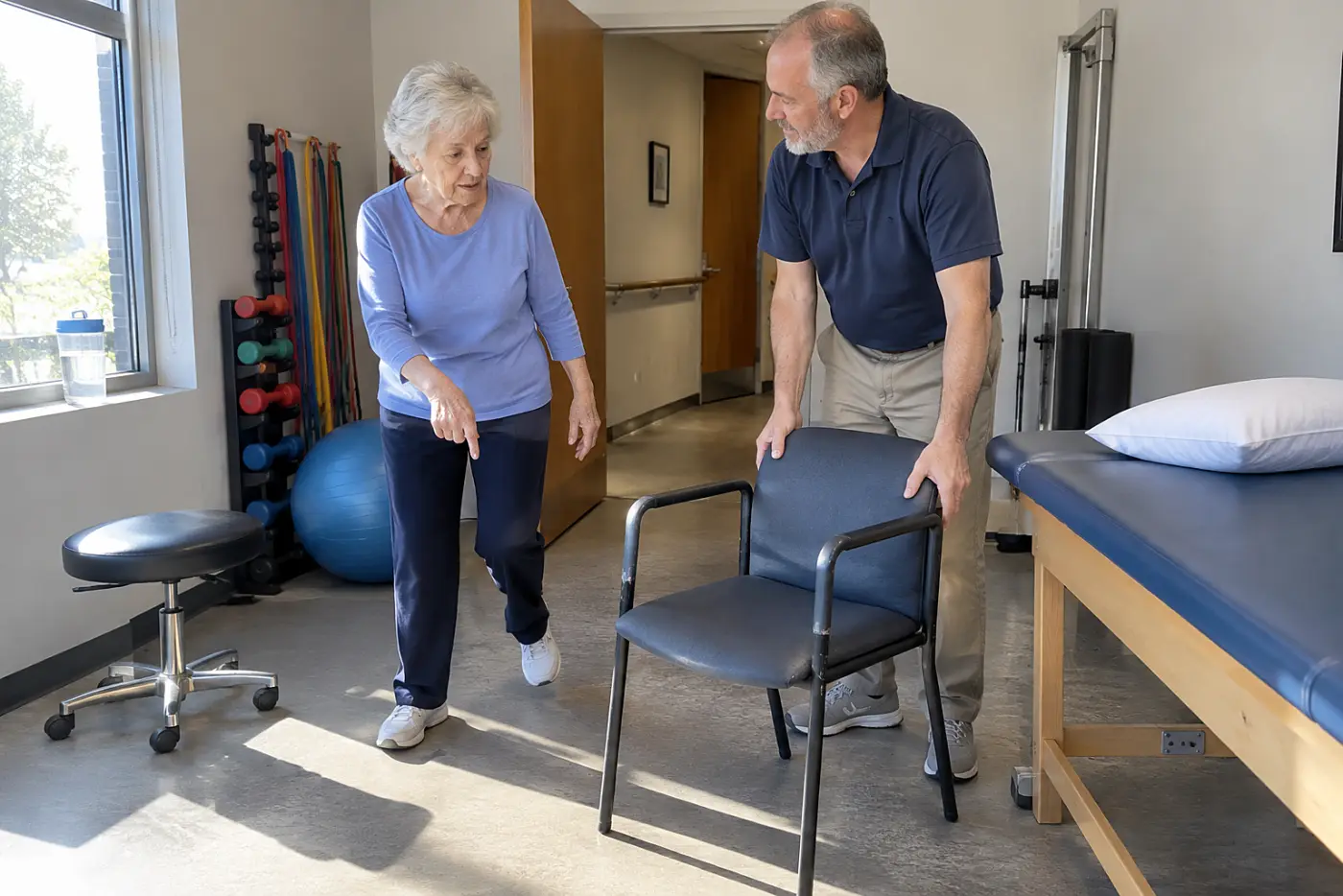
A near miss already gives you a reason to act.
You catch yourself on the counter, then carry on because you didn't land on the floor. But that catch tells a story: your balance needed outside help to finish the movement. Waiting for an injury throws away the chance to find out why.
A physical therapist looks at strength, walking, turns, and how you respond when balance shifts. The CDC's STEADI program gives clinicians tools to assess fall risk. The American Physical Therapy Association has information on physical therapy and finding a therapist.
This week, write down where the near miss happened and what you were doing. Tell your clinician, “I had to grab the counter to stop myself falling. I'd like a balance assessment.” Bring the shoes you wear most, so the assessment starts with your real footing.
The most revealing check is the one you do at home afterward.
1Run a whole-house hazard audit after dark
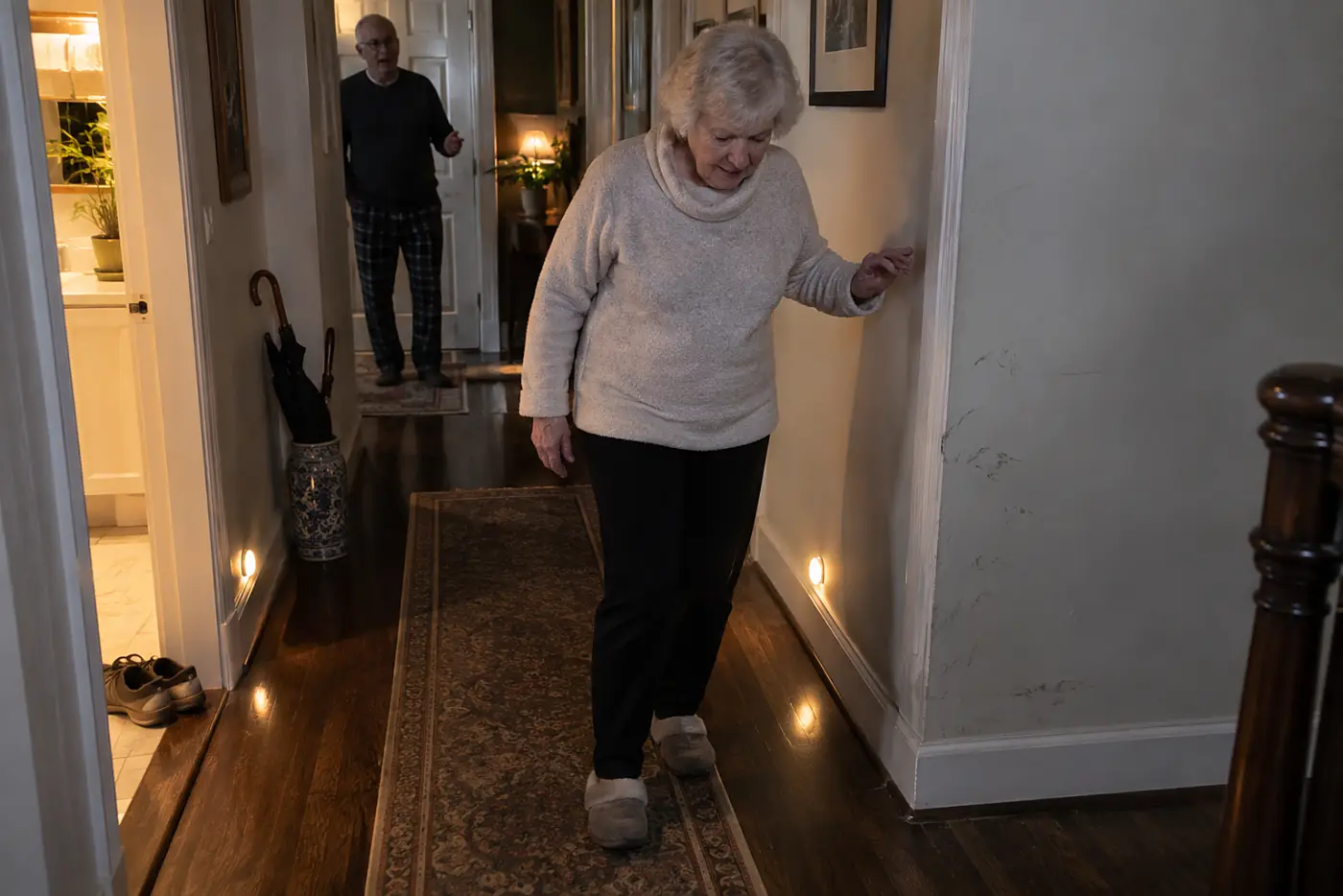
Separate fixes don't show you how hazards work together.
A bedroom cord looks harmless beside a bright lamp. After lights-out, you reach across it to close a door while wearing the slippers you meant to replace. Each detail is familiar; the combination isn't.
The same overlap follows you into other rooms. A kitchen turn changes when you're carrying a glass, and a stair rail matters before the first step. A single walk-through tests those conditions in sequence rather than judging each fix alone.
This week, set the house as it stands at bedtime and start with the lights you'd actually use after dark. Walk each room you use at night, checking the floor, turns, and handholds without rushing. Say, “What changes when I use this room the way I really do?”
Write down what you find before moving furniture. That leaves you a check to repeat after every fix.
The room-by-room steps are below.
The bottom line
Across all 23 changes, the pattern is a familiar move meeting a changed condition.
You've prepared well when you've tested those moves at home, fixed what shifts underfoot, and told a clinician about a near miss.
Which of these has already happened in your family?
Bonus: A whole-house hazard test after dark
- Set the house as it stands at bedtime, including doors, shoes, and the lights you leave on.
- Start in the bedroom. Sit, stand, and walk each room you use at night without rushing.
- At every turn, check the floor and touch only the handholds you'd use.
- Write down each hazard, fix what you can tonight, and repeat the walk-through after the changes.
Dr. Alan Pierce, PT, DPT
Health Reviewer
Alan is a physical therapist who specializes in helping adults over 50 stay strong and mobile.
You might also like