
24 Gentle Things an Old Dog Does in Her Last Good Year That Families Only Understand Later
The hallway rug, the porch step, and the sound of a key give you places to notice her while she’s here.
By Ruth Ellison, Family Editor
Updated · 10 min read
- Written by our family editor
- Cited 8 sources
- How we review
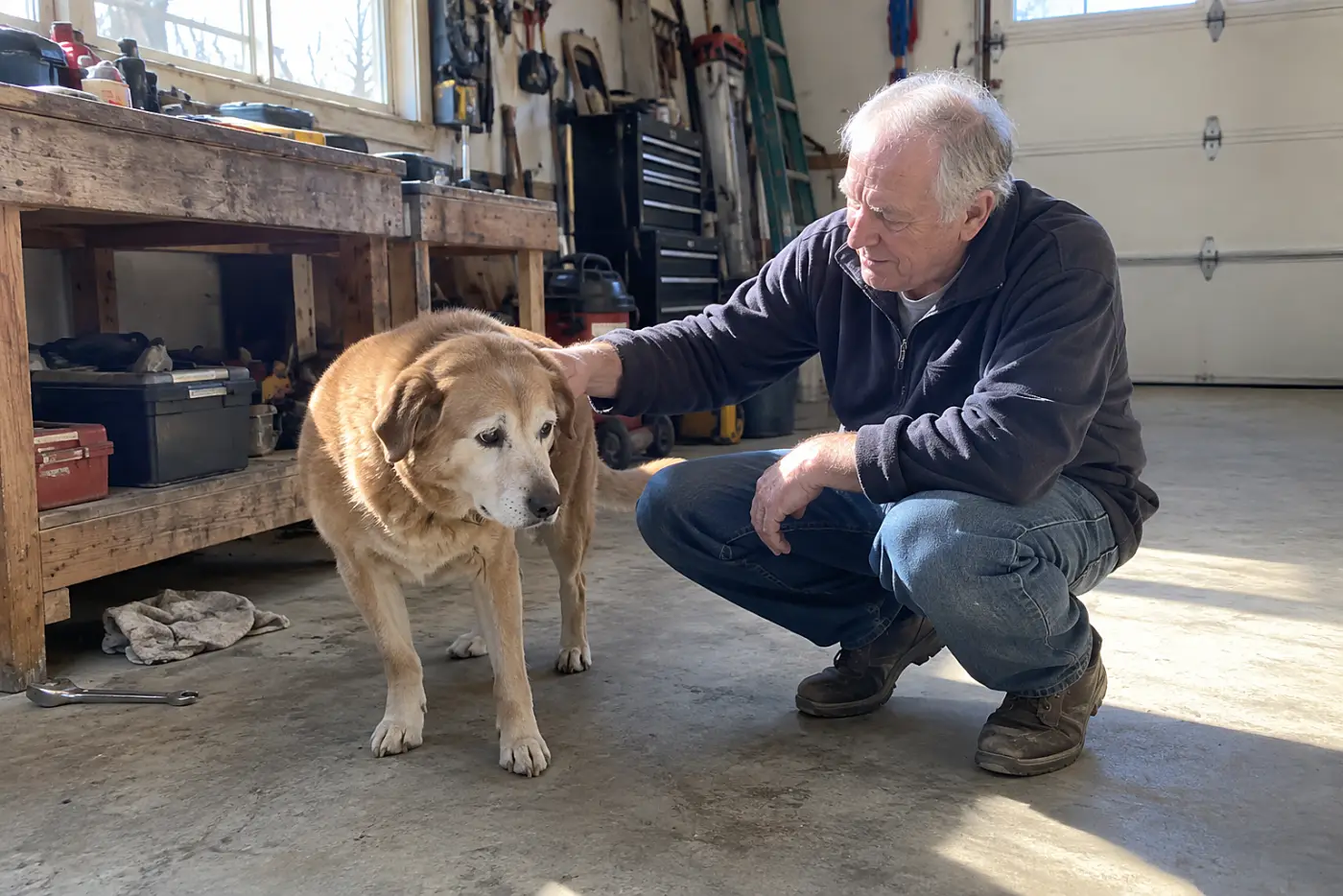
The garage door rises, and she appears at the edge of the hall. She used to meet you at the car. Now she waits where the rug ends, tail moving against the wall while you put down your bags.
You almost tell her to come closer. Then you see what she has chosen: a good view of you, solid footing, and no need to cross the slick floor. She’s worked out a new way to greet you. There are others, tucked into the hours you already spend together.
24Her place beside the front door
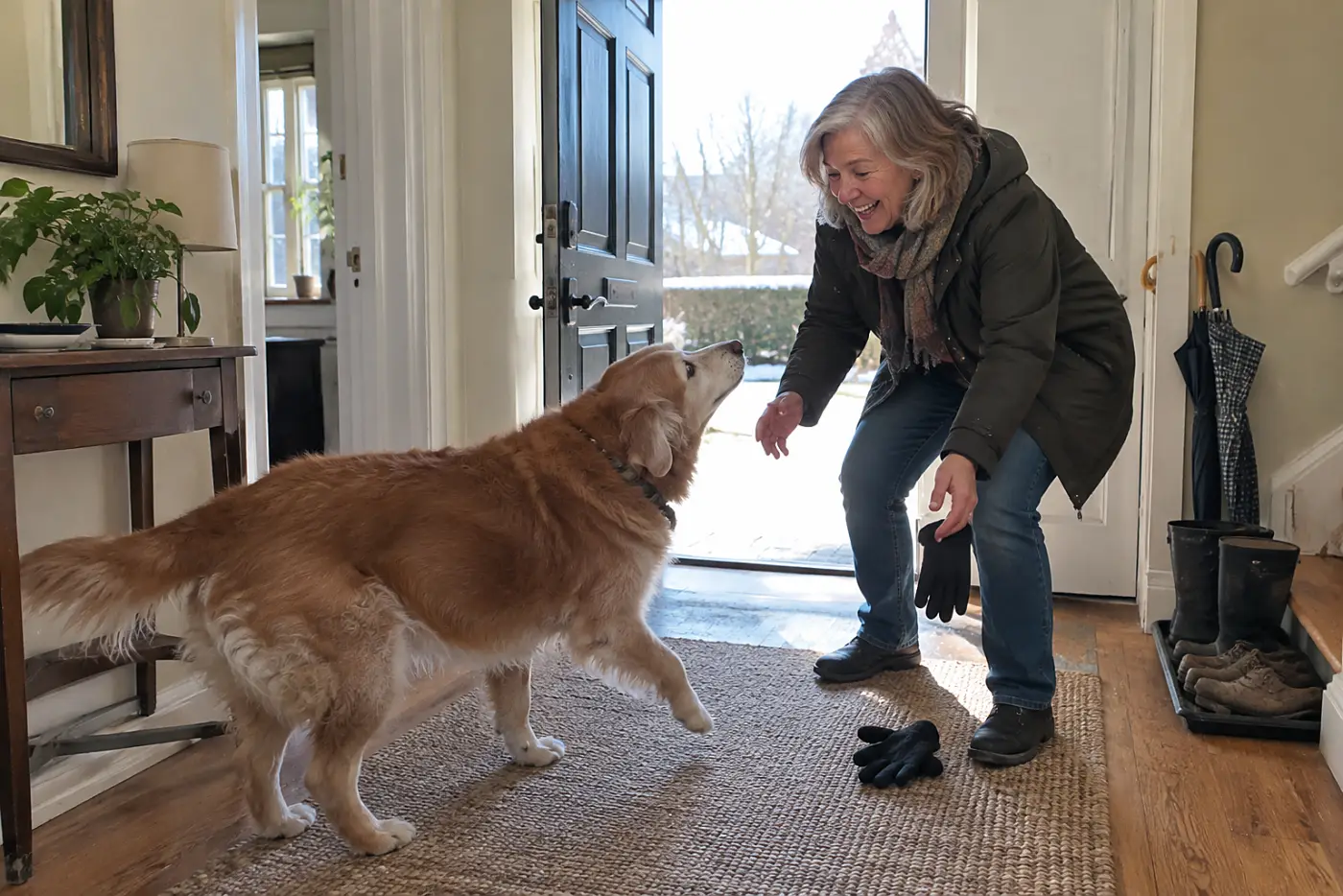
She still comes when someone arrives, but stops a few feet short of the threshold. Let her greet from there. Notice whether she looks at the visitor, wags, and settles once the door shuts. That’s a familiar job done from a new spot.
If she seems unsure on the entry floor, put a nonslip rug where she stops. You don’t need to turn every greeting into a test of how far she’ll walk.
23The sound of your keys
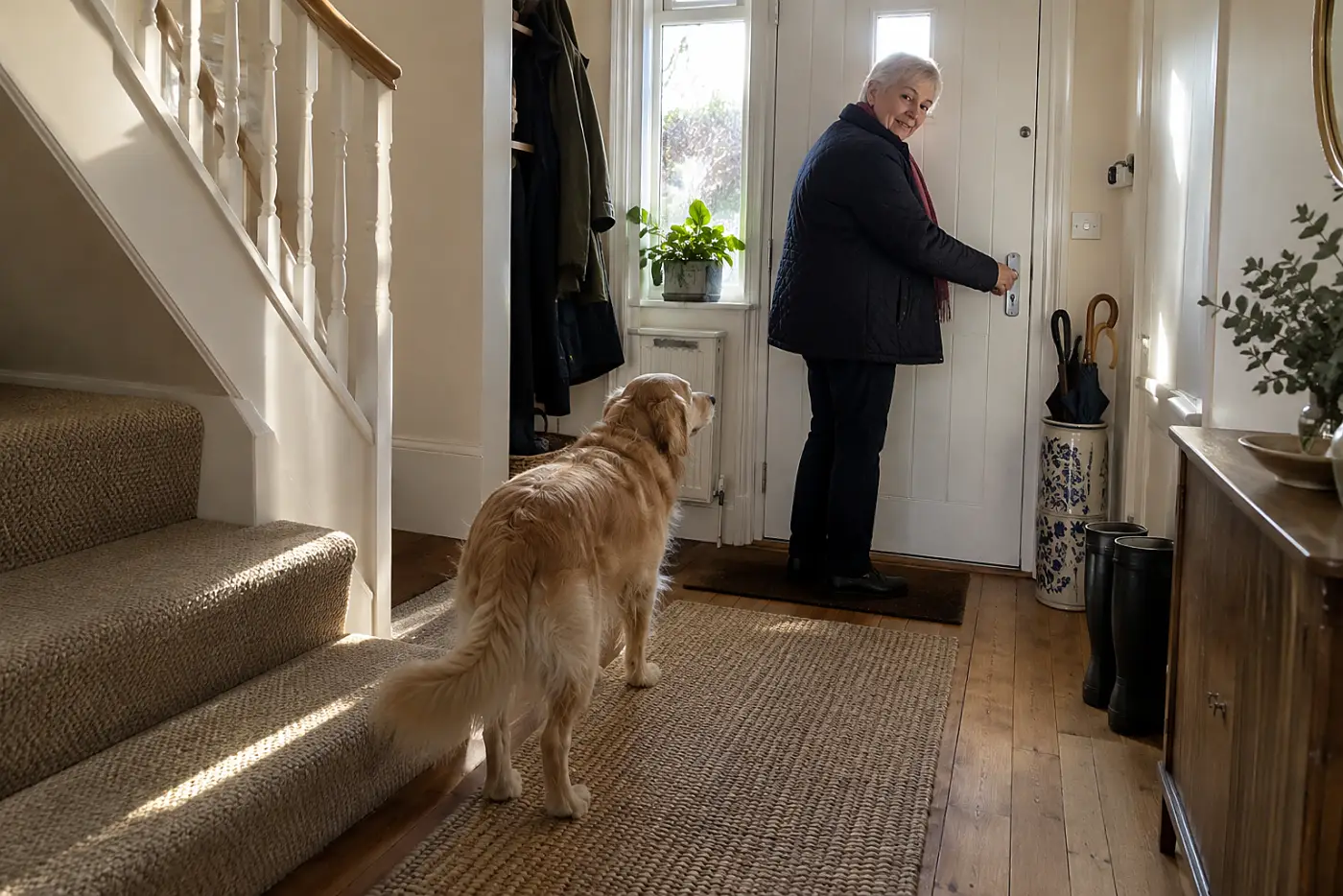
Her ears lift before you come into view. She knows the scrape of your key in the lock, even on a day when she sleeps through the doorbell.
Pause long enough to see where she is when you enter. Later, you’ll remember that she was listening for you. Right now, she gets the better part: you coming in and saying hello.
22The bed moved into the hallway
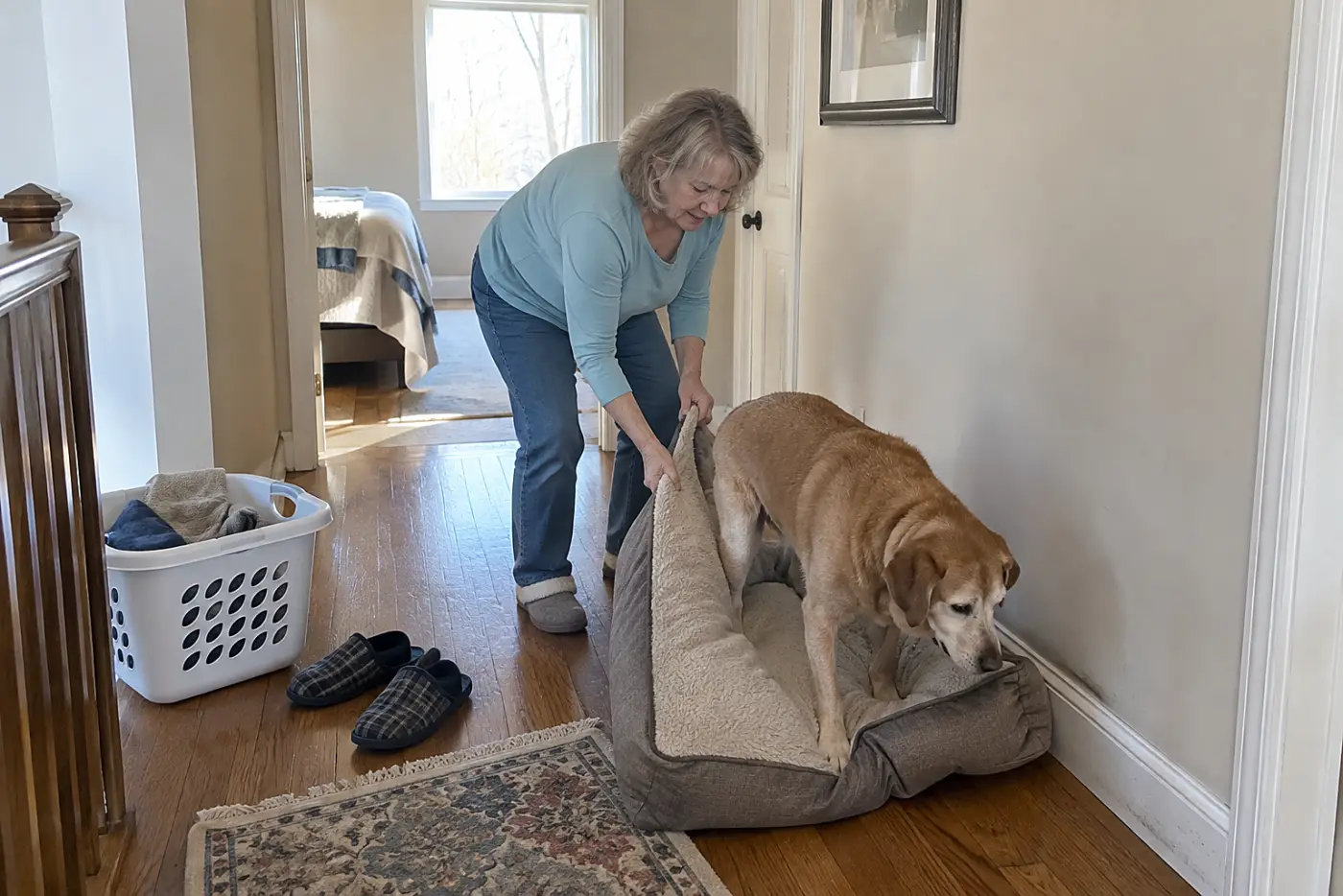
You find her bed in the hall again after moving it back to the bedroom. From there, she sees the bathroom door, hears the living room, and knows where you’ve gone without following every step.
Try leaving it there for a night. Put it against the wall so nobody trips over it, and keep a clear path to her water. A dog who wants to be near the household has given you a useful floor plan.
See more: 25 Small Changes That Let You Stay in Your Home Ten More Years →
21The pause before the porch step
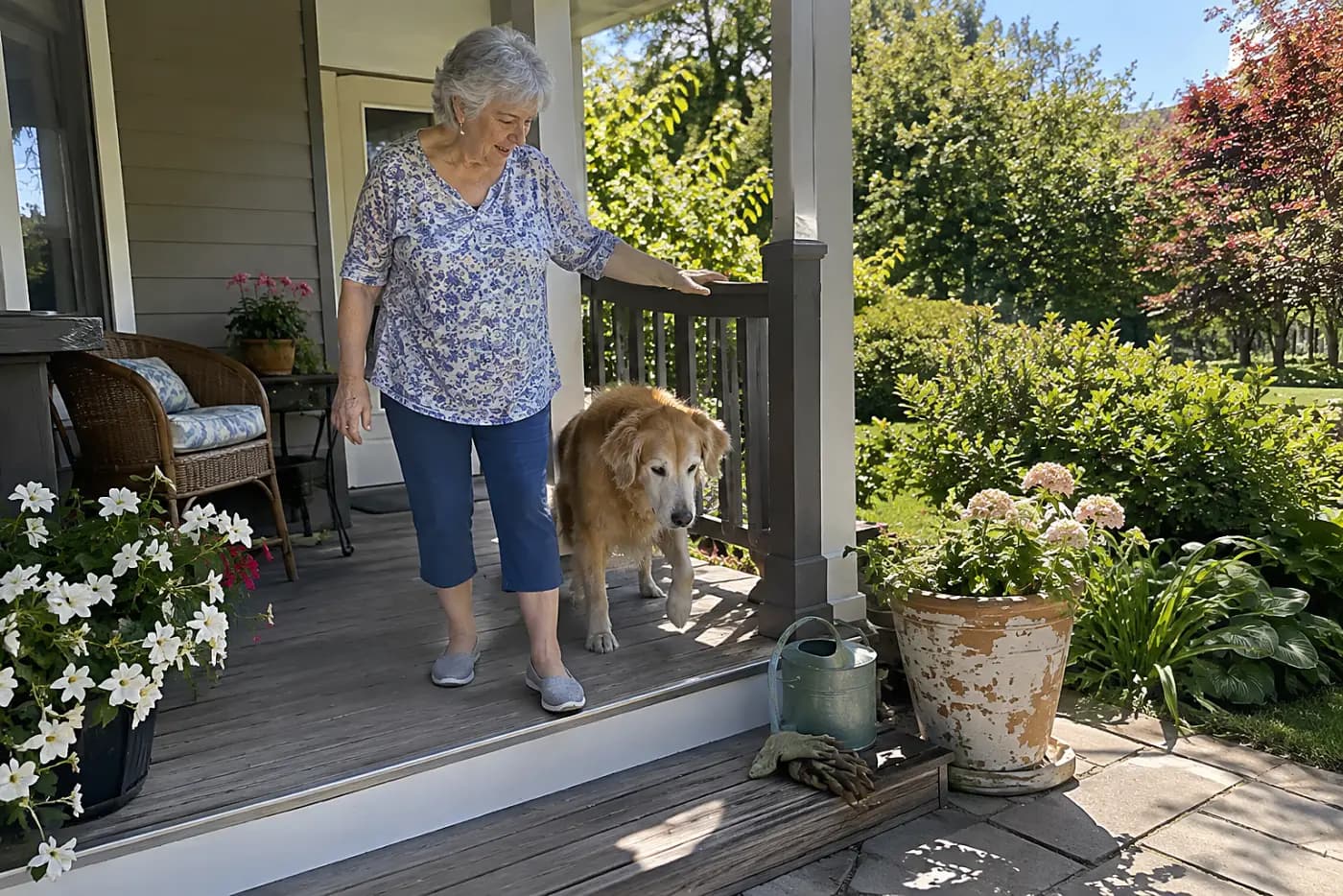
A step she once cleared without thinking now gets a long look. Watch what follows. Does she lift her foot and hesitate, or turn away after trying?
Stay beside her rather than pulling on her collar. A secure mat or a different route gives her another way outside. If the change is new or sharp, tell her veterinarian what you saw. The pause is worth describing.
See more: 27 Things Physical Therapists Wish You'd Changed Before the First Fall →
20Her nose at the morning window
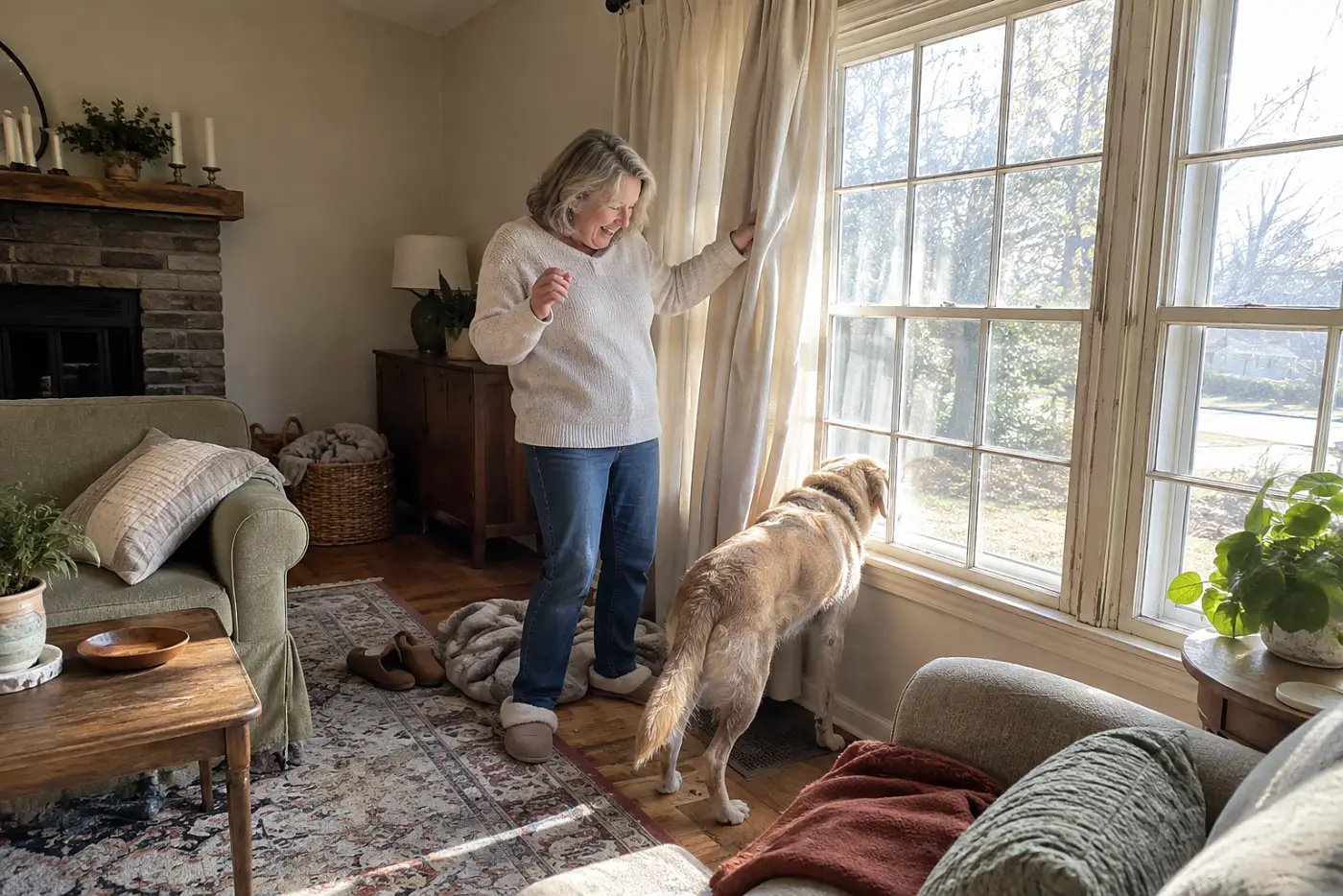
Before breakfast, she visits the window and takes in the yard. Her nose works at the gap where the sash meets the frame. You know the patch she’s checking: the one squirrels cross near the fence.
Pull back the curtain.
If she stands comfortably, let her take her time. If standing is hard, place a firm bed where she gets the view while lying down. She still wants to know what’s happening out there.
19The slow trip to your chair
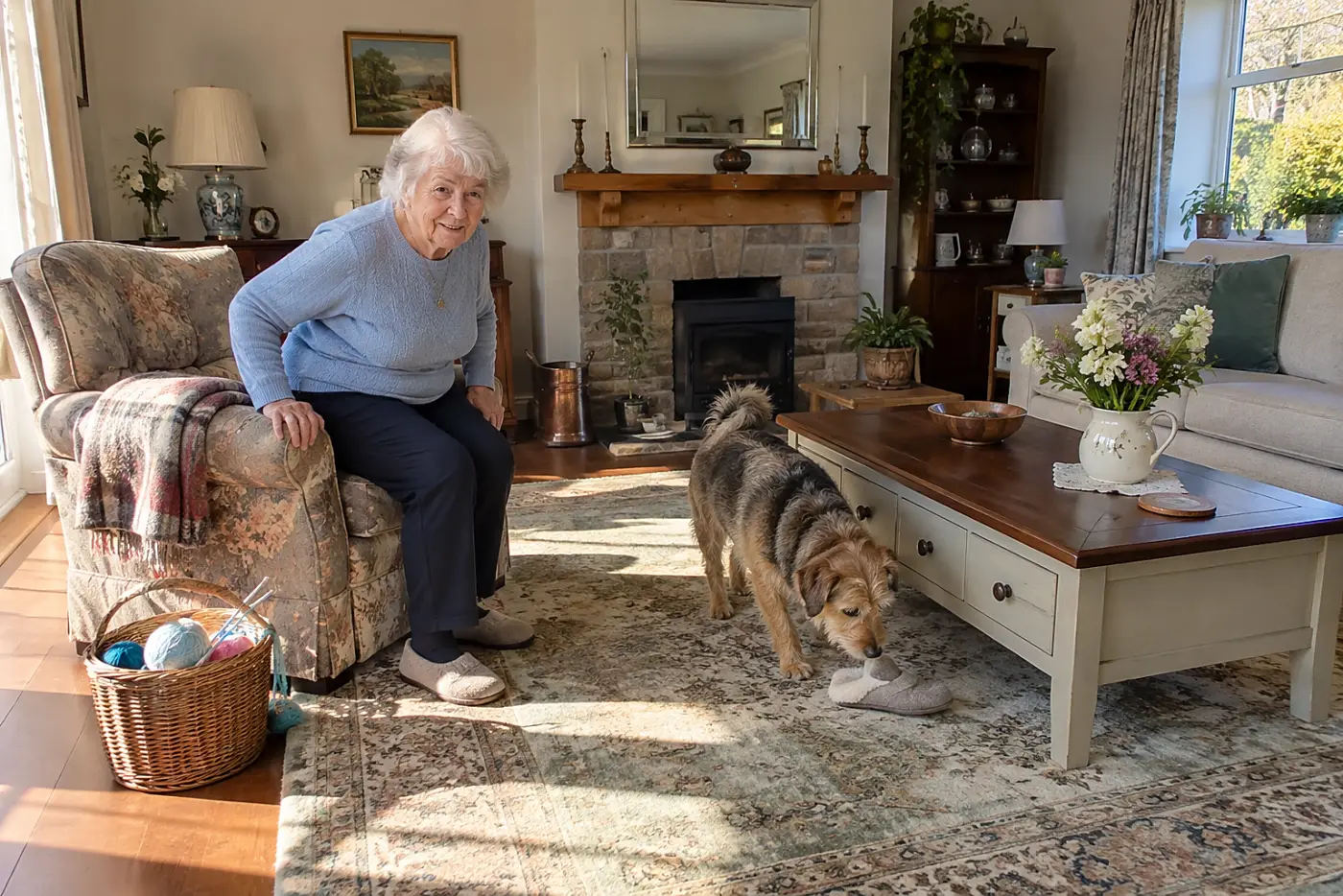
Does she choose the long way around the coffee table to reach you? Look at the short route before calling her across it. There’s a bare patch of floor, a chair leg, or a turn she no longer likes.
Give her room to choose her path. When she reaches your chair, make space for her head as you always have. The trip still ends with you.
18The same patch of grass
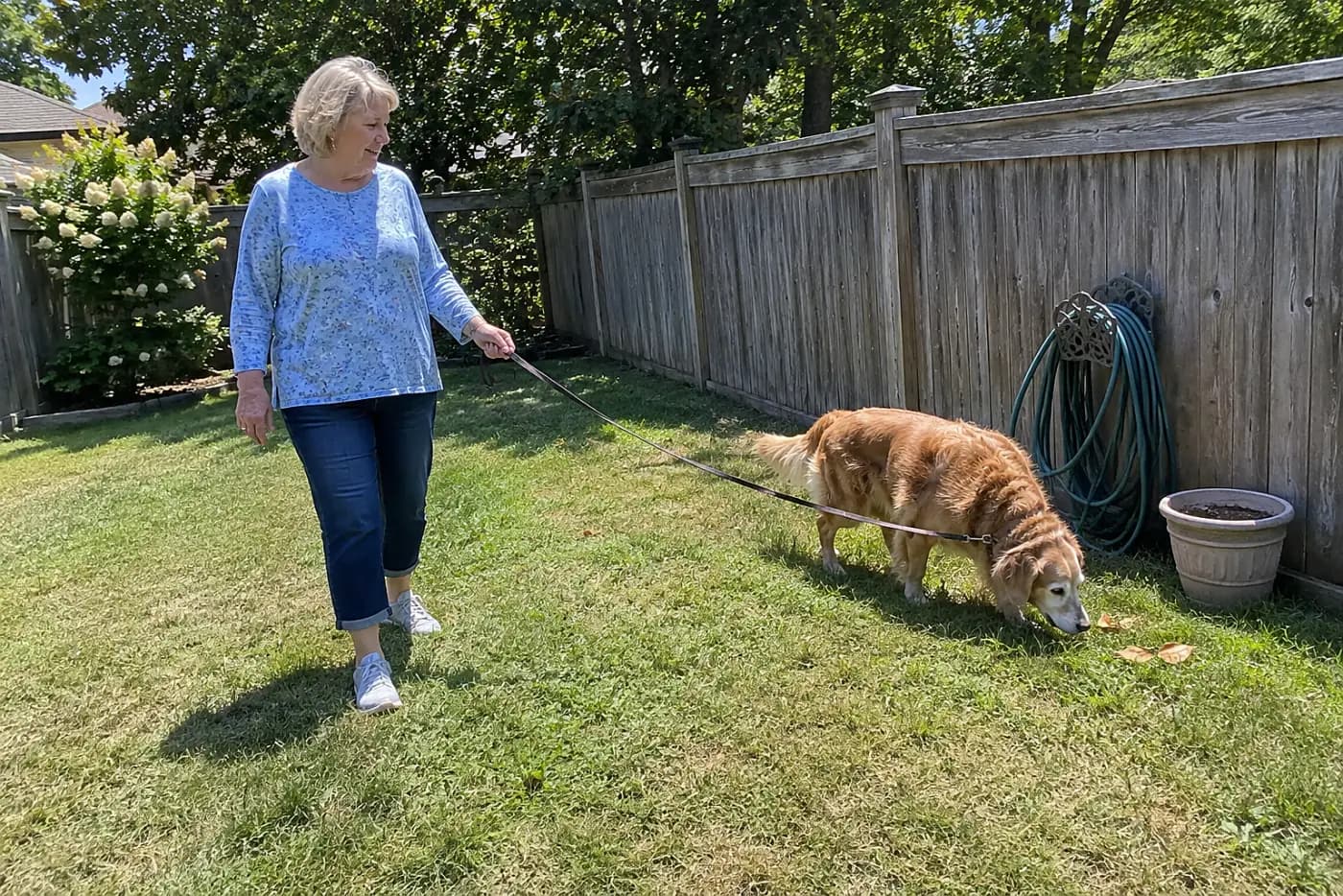
Out in the yard, she heads for one patch near the fence. She stands there sniffing while you hold the leash and glance toward the house. Nothing visible happens, and she isn’t ready to leave.
Let her finish. Sniffing gives her a way to explore without keeping pace with anyone.
On a cool morning, that patch of grass holds plenty for her. Watch where she chooses to go tomorrow, too. Her favorite place is part of the walk, however short the walk becomes.
17Her careful turn on the sidewalk
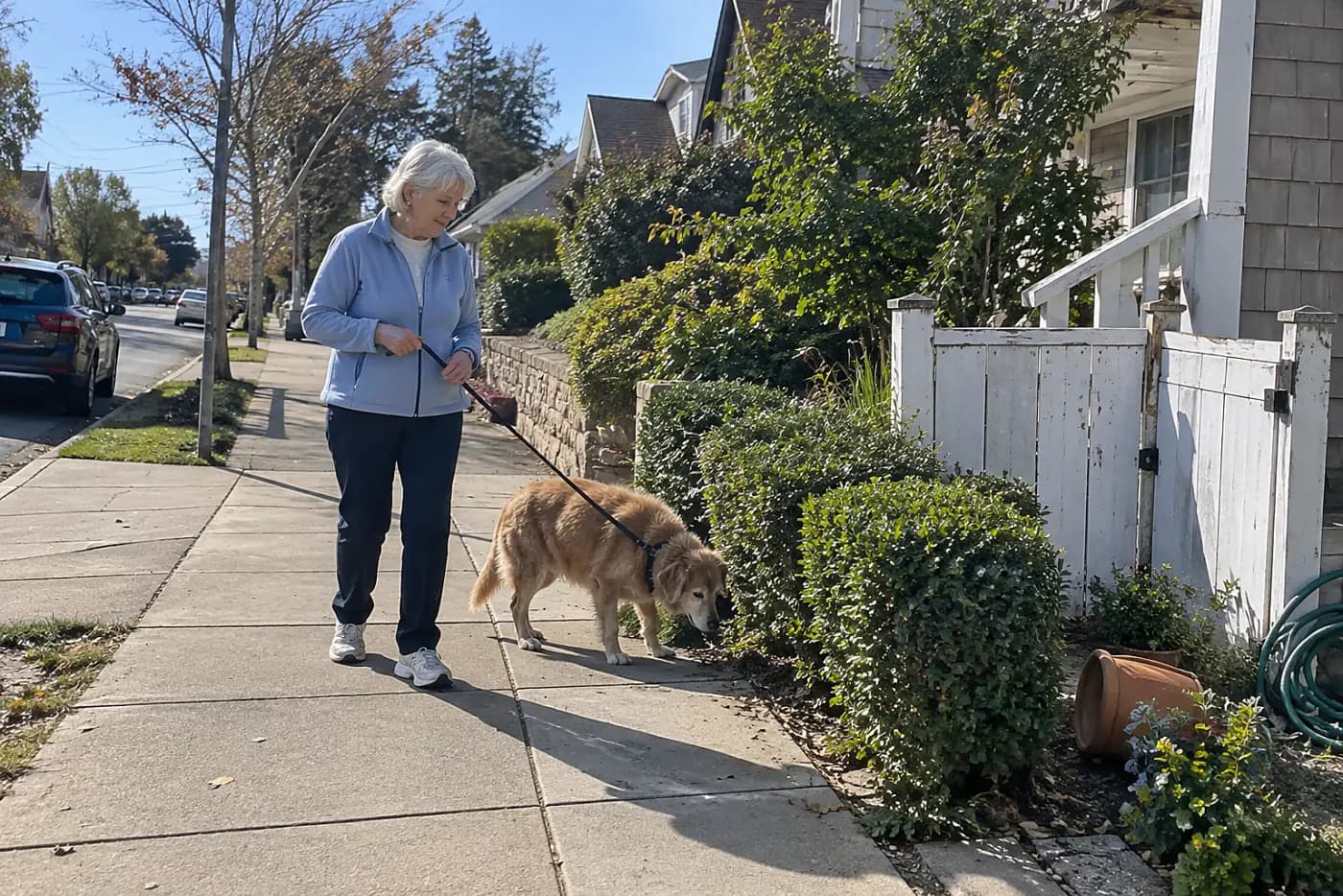
At the corner, she makes a wide turn instead of pivoting beside your knee. Follow her line. A tight turn asks her legs to do something different from walking straight.
Watch for limping or stiffness after she rests. If the change is sudden or she cannot bear weight, call the vet that day rather than waiting for another walk. The American Animal Hospital Association recommends discussing changes in movement and daily habits with your veterinarian.
Tell the vet which direction she turns with ease and where she slows down.
16The dinner bowl left half full
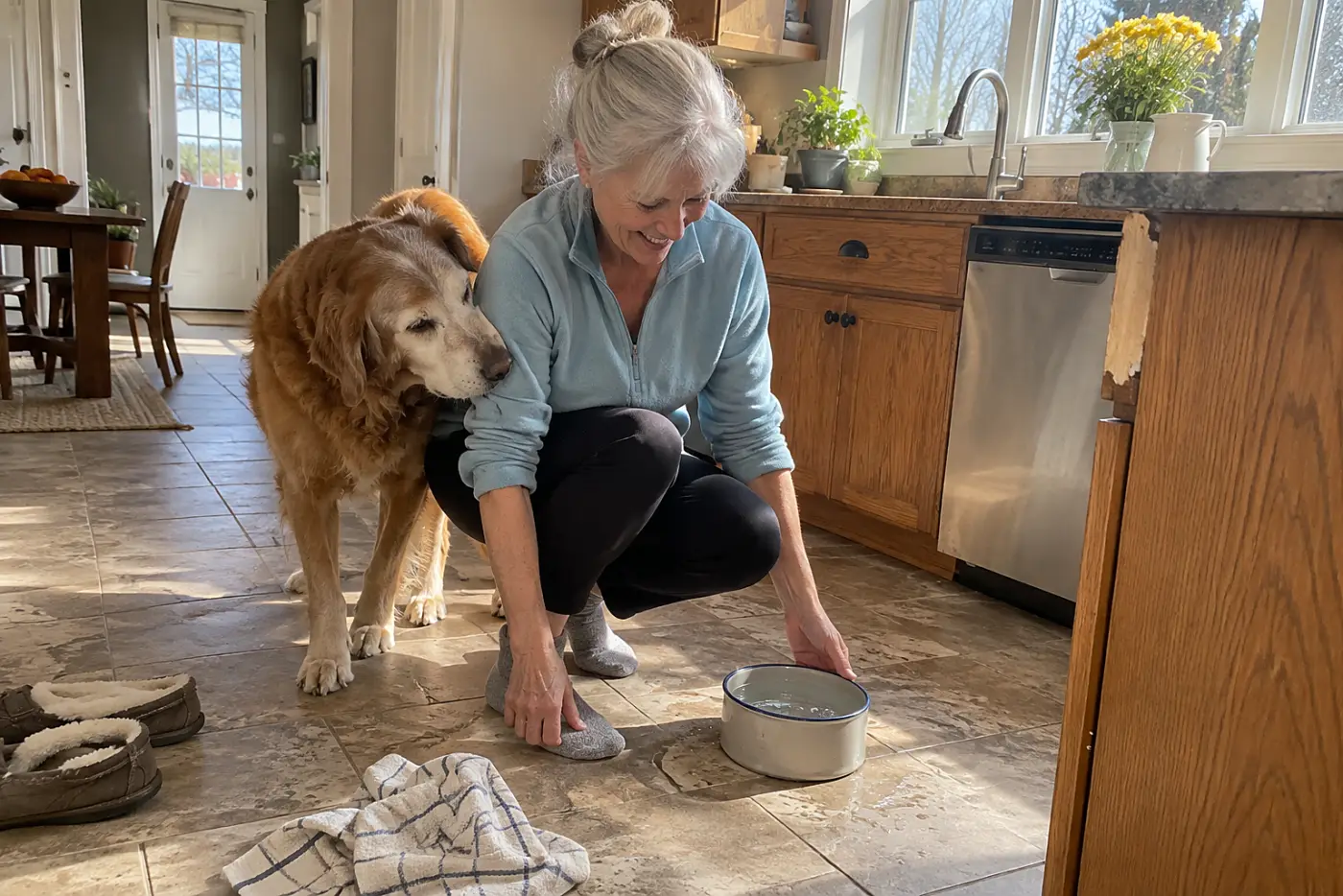
She walks away from food she used to finish. Check the bowl, then look at her. Has she dropped pieces, chewed on one side, or shown interest only when the food is close to her?
Look again at the next meal. If she refuses food or seems unwell, call the vet rather than waiting to see whether the bowl empties tomorrow. Dental pain, nausea, and other problems need a proper check. The American Veterinary Medical Association lists appetite changes among signs worth discussing.
For tonight, make sure you know whether she ate.
15The toy carried without a game
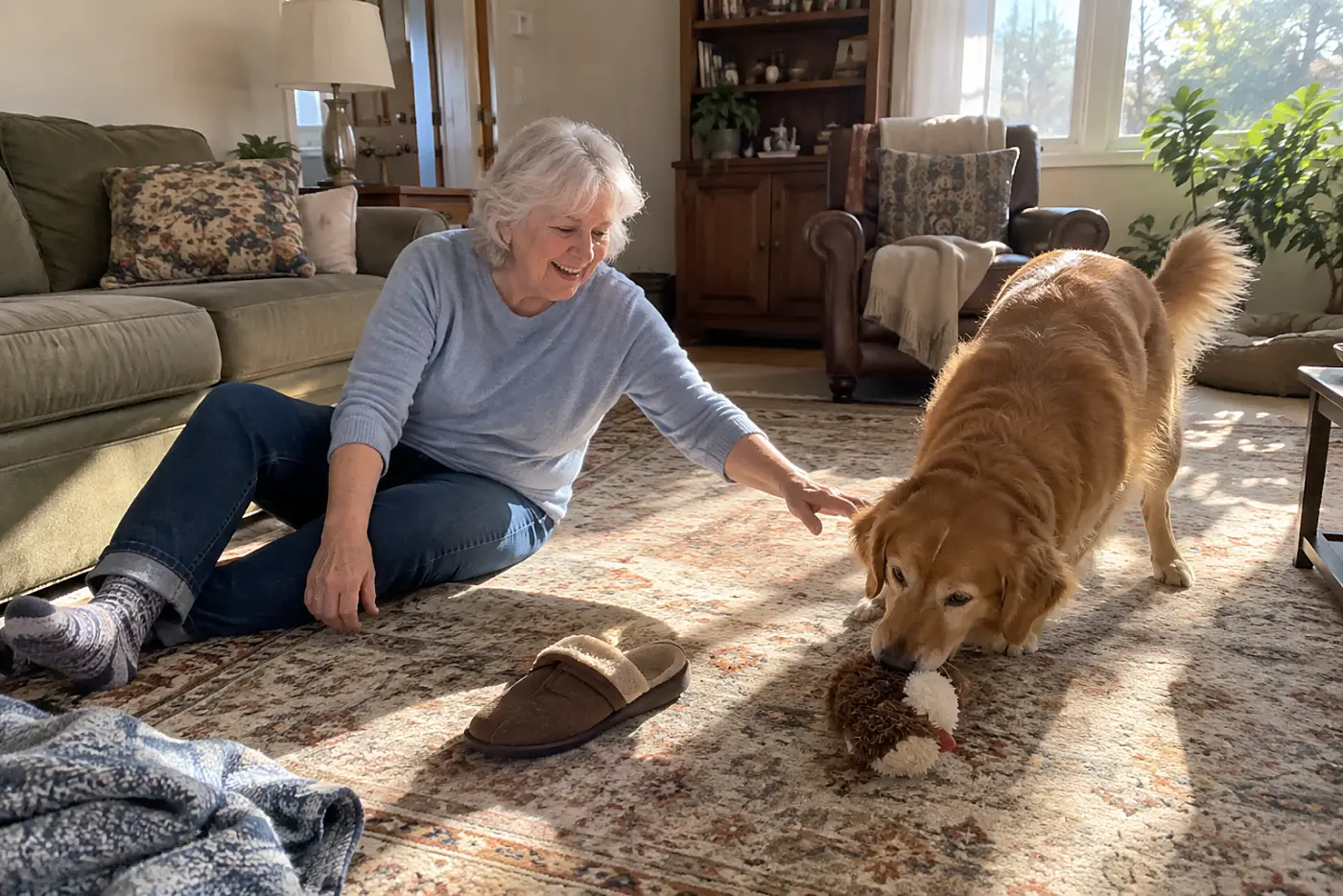
The faded toy lands near your foot. She lies down beside it, waiting while you decide whether to throw. She wanted to bring it, and she has.
Leave it beside her. If it has loose stuffing or torn pieces, put it away and offer a safer toy. You know the difference between the game she used to ask for and this visit.
14The long look from the stairs
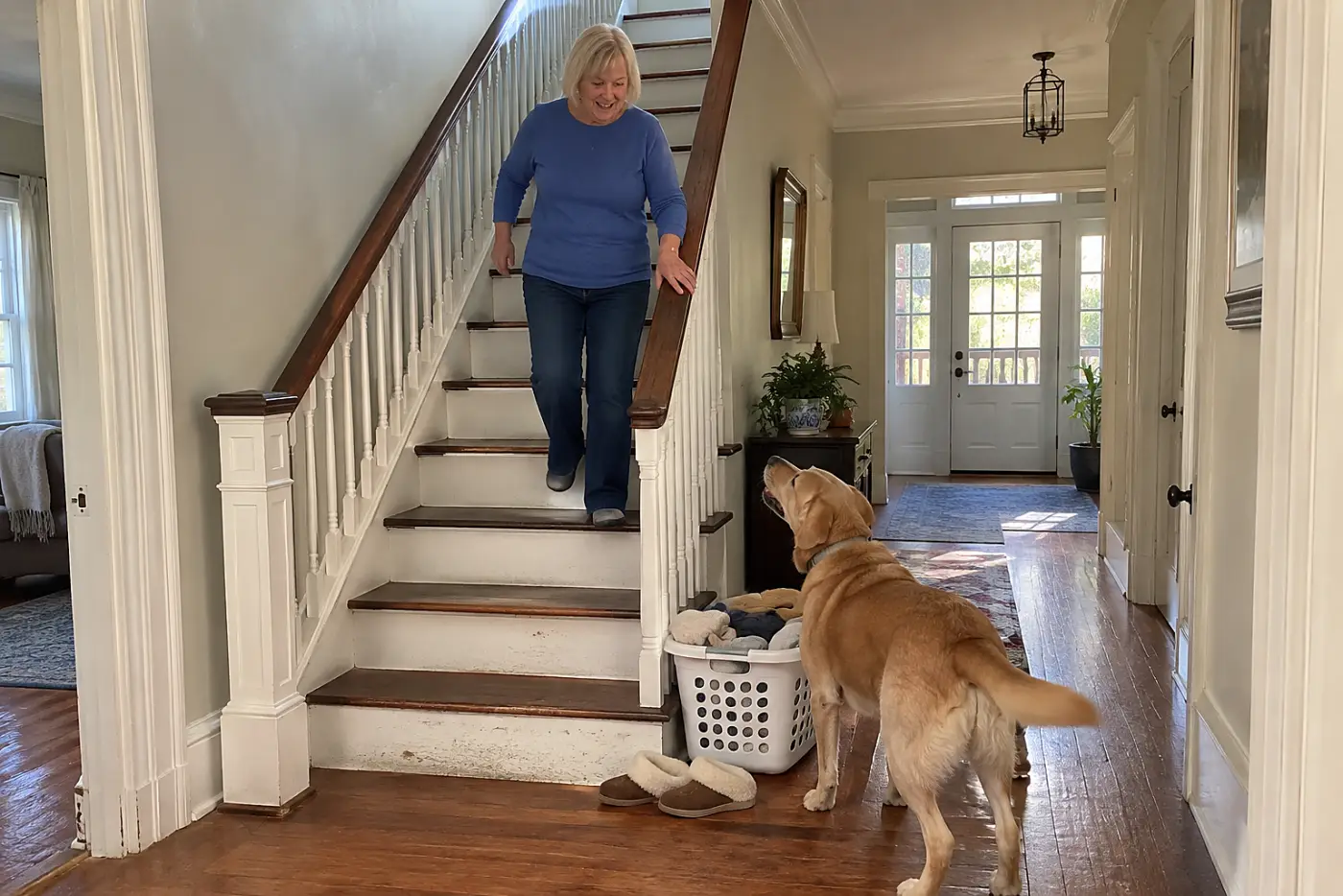
“I’ll come down.” She turns as soon as she hears your steps. She has been waiting below the stairs, looking toward you.
Notice whether she avoids climbing, slips, or struggles to rise afterward. Keep what she needs on the floor where she spends her day. Ask the vet about the change rather than trying to coax her up for reassurance. She has already told you where meeting is easier.
13Her chin on your shoe
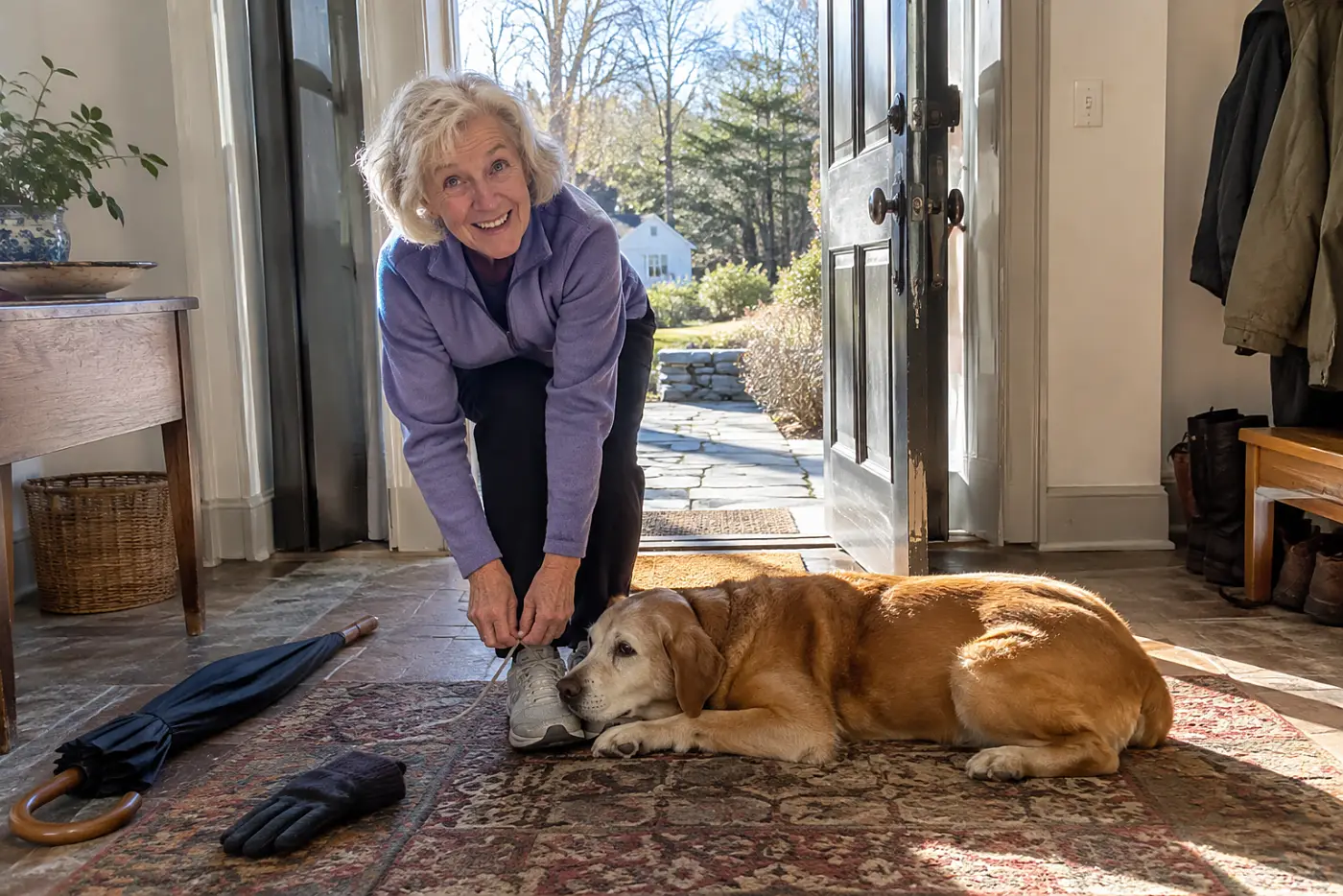
You’re putting on your shoes, and her chin comes to rest on one. She stays there while you tie the other lace. It holds you still for a moment.
Give her that moment. Then watch how she moves when you stand, especially if her chin seems to rest there because lowering her body is uncomfortable. Affection and discomfort belong in the same conversation with the vet when her habits change.
12The cough heard before the appointment
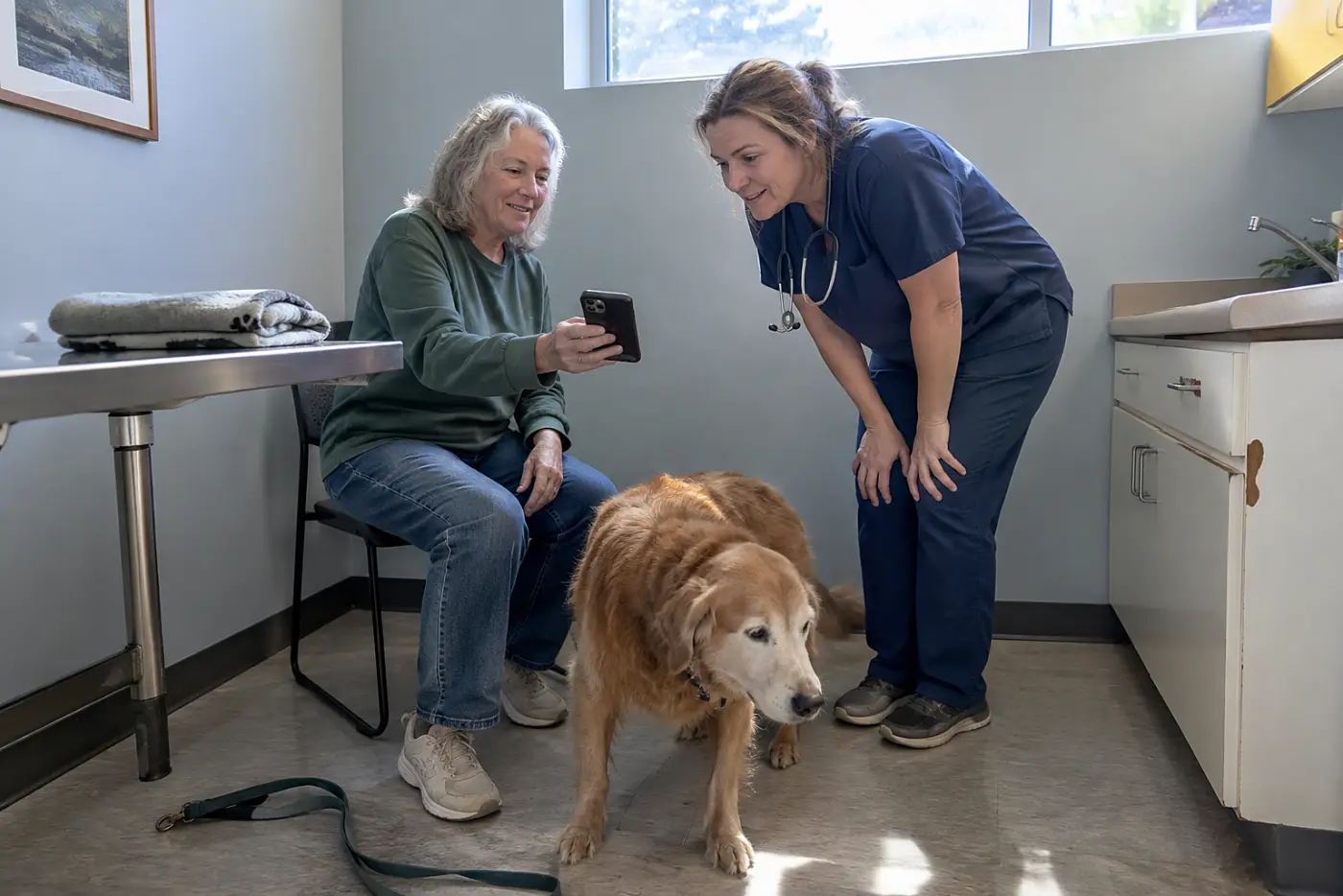
At the clinic, you remember the cough she made last night. By the time the veterinarian asks when it started, the rest of the week has blurred.
If it happens again at home, record a short video. Note whether it follows sleep, excitement, or a drink of water. Tell the vet about breathing trouble right away, rather than saving that detail for the appointment.
The Ohio State University Veterinary Medical Center provides a quality-of-life scale you can discuss with your vet. Your account of an ordinary Tuesday matters in that room.
See more: 29 Conversations Families Keep Putting Off Until It's Too Late →
11The damp towel by the water bowl
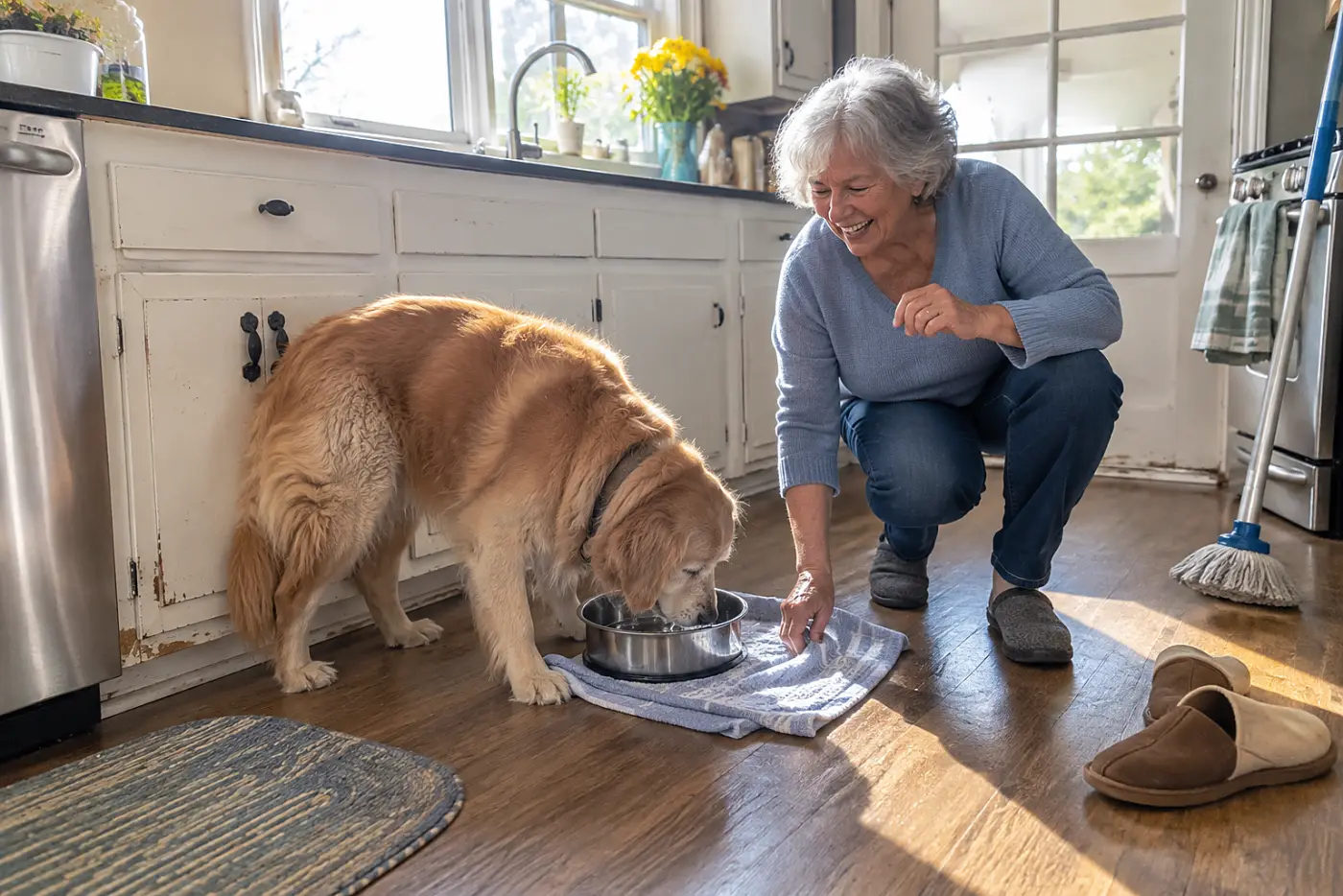
You wipe up the water she dribbles after drinking. Then you notice she takes a long drink each time she visits the bowl.
Keep fresh water available. For 2 days, note how many times you refill the bowl and whether she asks to go outside more. Tell the vet if drinking or urination has changed, and mention any accidents in the house.
The Merck Veterinary Manual describes increased thirst as a sign with several possible causes. The towel tells you where to look more closely.
10The rug that stays under her feet
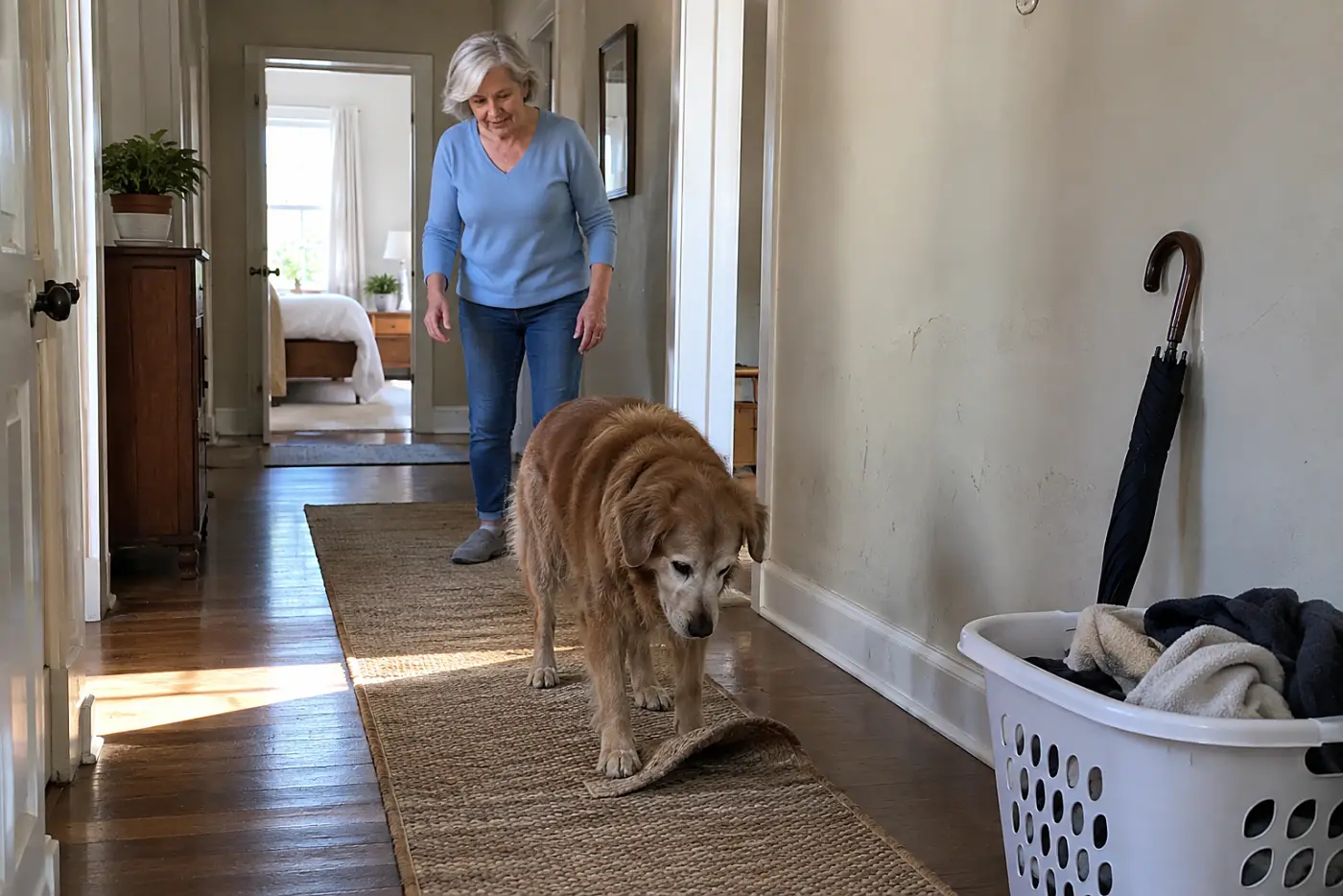
Set a nonslip rug across the stretch of floor she crosses most. Watch her walk over it, then over bare flooring. Does she shorten her steps or splay her toes where there’s no grip?
Keep rugs flat so they don’t bunch beneath her. Ask the vet about a sudden change in gait. The American College of Veterinary Surgeons has information on joint conditions in dogs, but a search page won’t tell you what is happening with yours.
The way she walks across your floor will help at her appointment.
9The sunspot she still claims
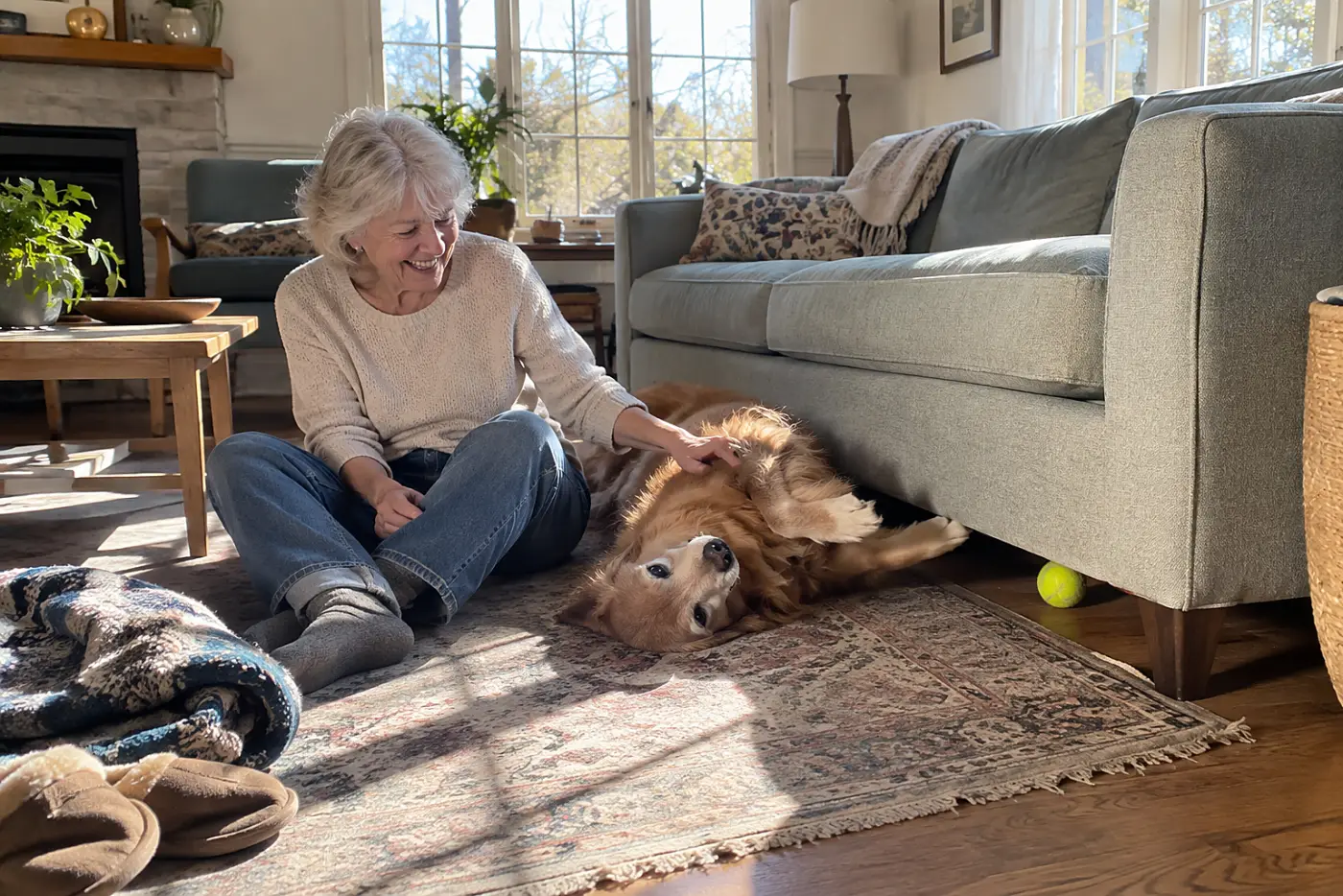
By afternoon, the light reaches the living room floor. She walks into it and folds herself down, facing the warmth, eyes half shut.
Don’t hurry to move her because the spot looks too exposed. Check that she has shade and water within reach, then let her choose. A later photograph of that patch of sunlight will bring back the shape of this ordinary hour. Today, you can sit beside her and let the afternoon pass without a task attached to it.
8Her hesitation at the car door
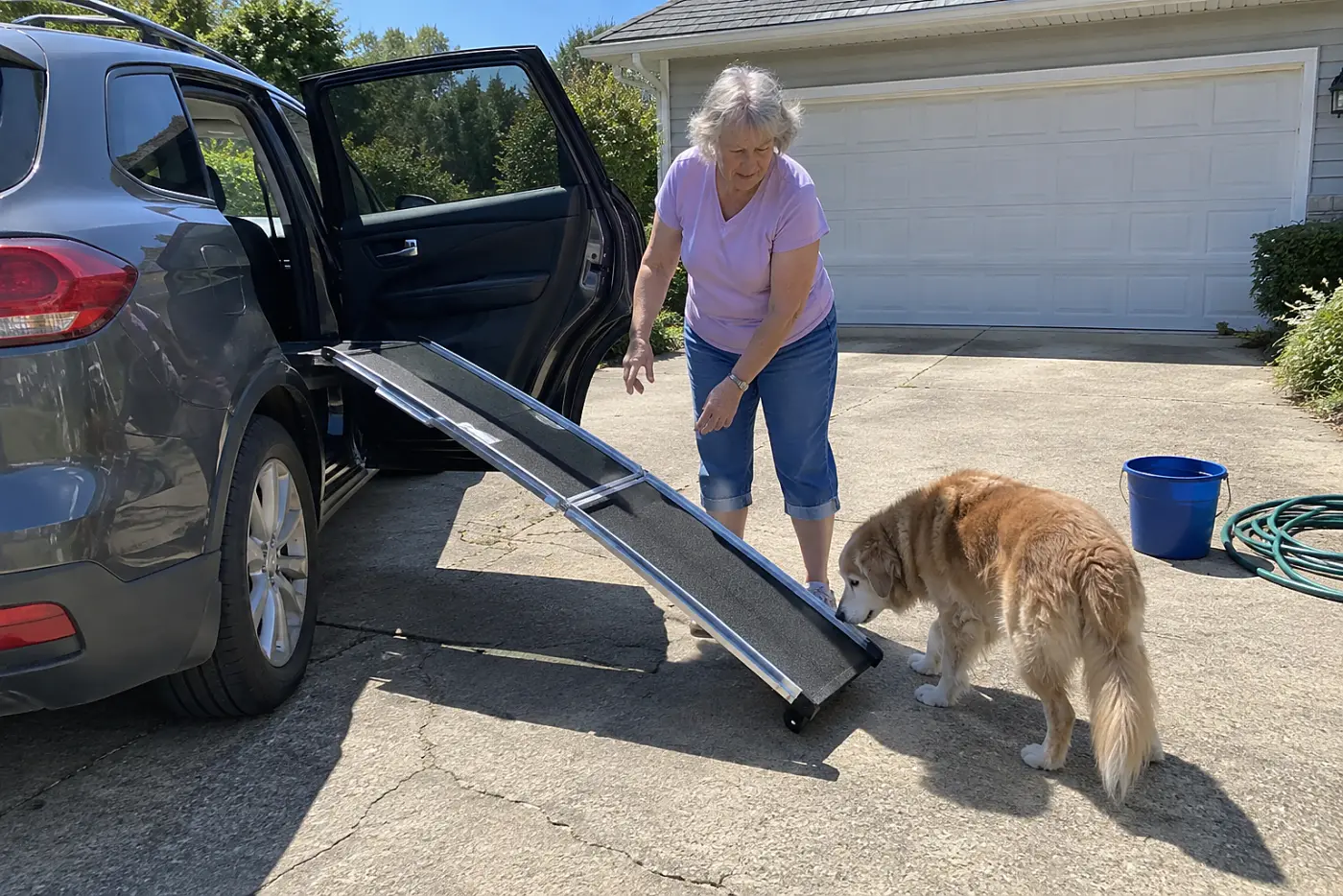
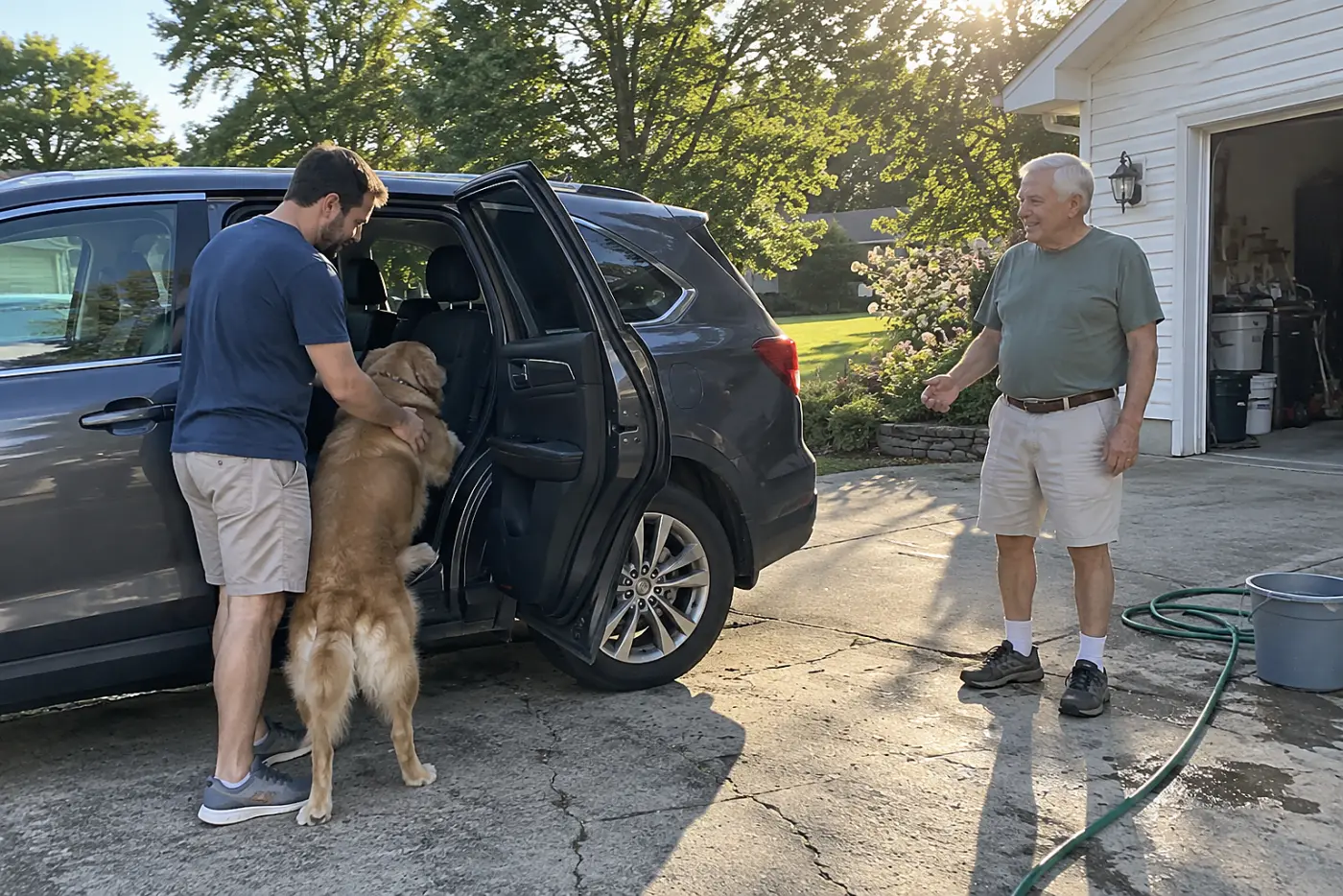
The car used to mean a ride worth rushing toward. Now she stands beside the open door, looking at the height. Lift her only if you can do it safely for both of you. A ramp needs a stable surface and time for her to learn it before an urgent trip.
Ask your veterinarian how to support her body and whether travel seems painful. The U.S. Food and Drug Administration warns against giving human pain medicines to pets without veterinary advice.
Don’t reach into your own medicine cabinet for her. Bring the car question to the person who treats her.
7The stop outside the bakery
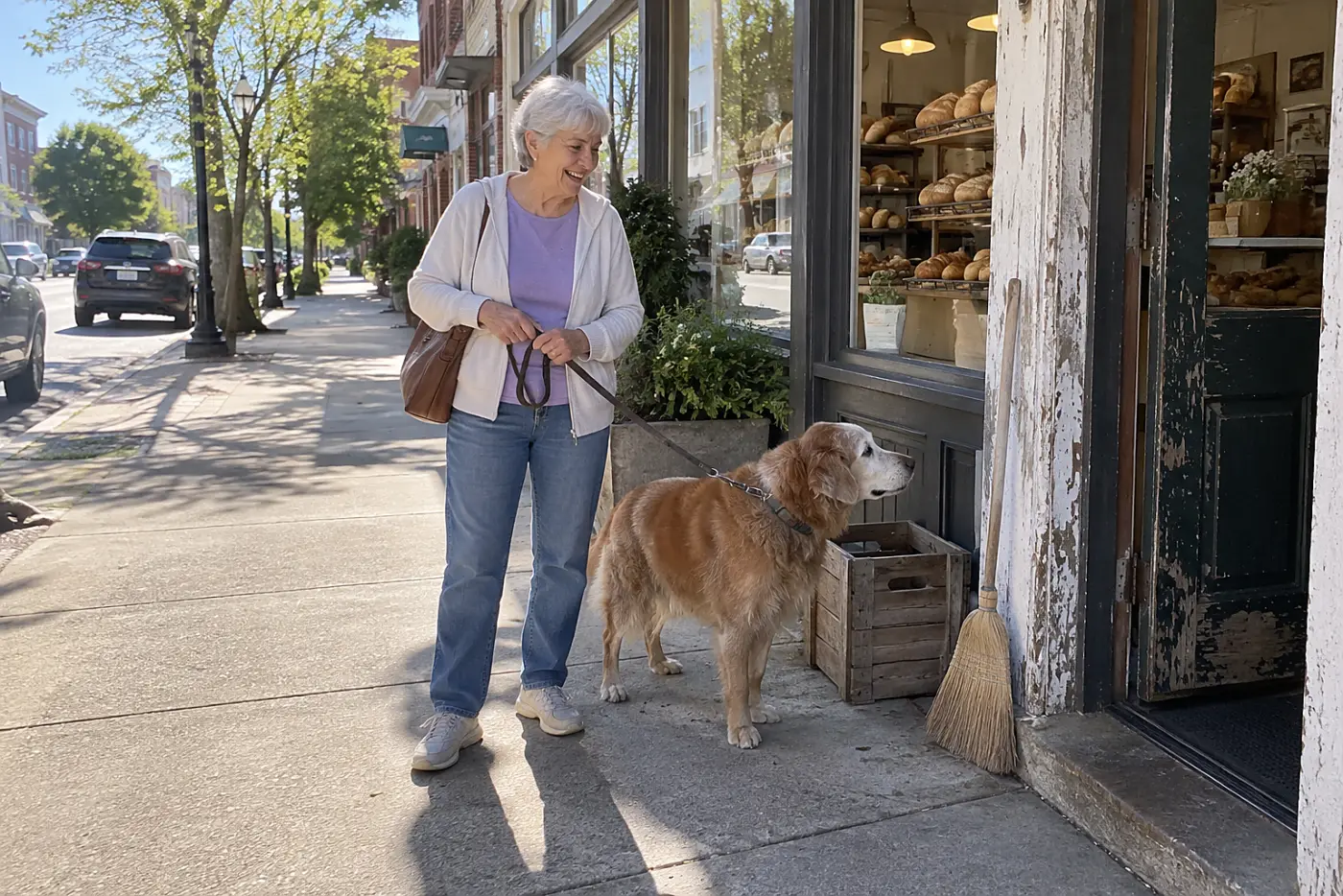
She halts outside the bakery, nose tilted toward the door. You remember the days she tugged you down the block to get there.
Stand with her for a breath. If you buy her a treat, check the ingredients first. The ASPCA Animal Poison Control Center keeps guidance on foods that are toxic to dogs. The smell is enough for this stop to belong to her.
6Her new place during dinner
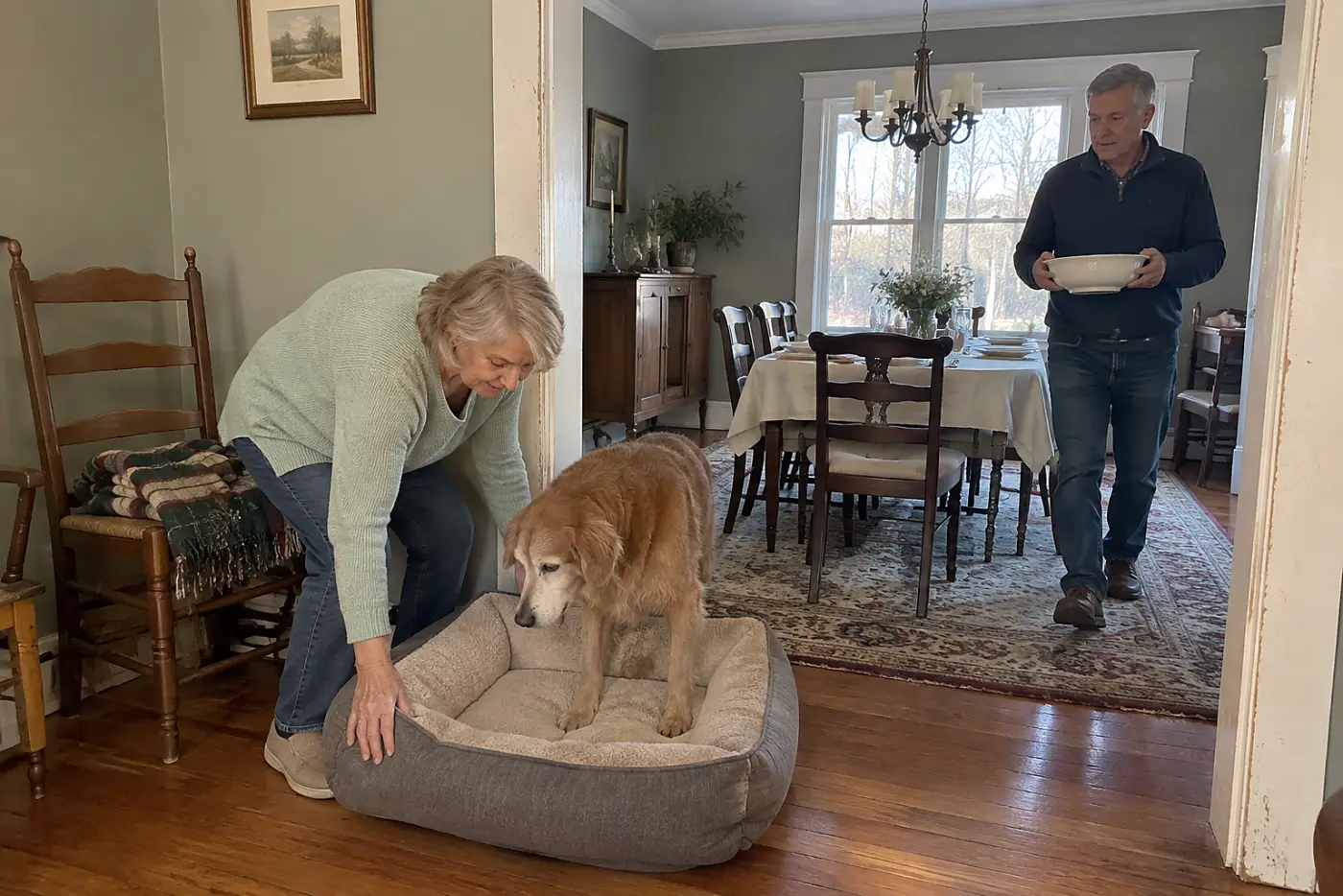
She used to wait beneath the table. Now she lies near the doorway, where she sees the whole room without getting under anyone’s feet.
Before the family arrives, put her bed in that spot. Ask everyone to step around it and leave her undisturbed while she rests. If she gets up and joins you, let her choose where to settle. At the end of dinner, she’ll know who is still there by the sounds in the room.
5The check beside your bed
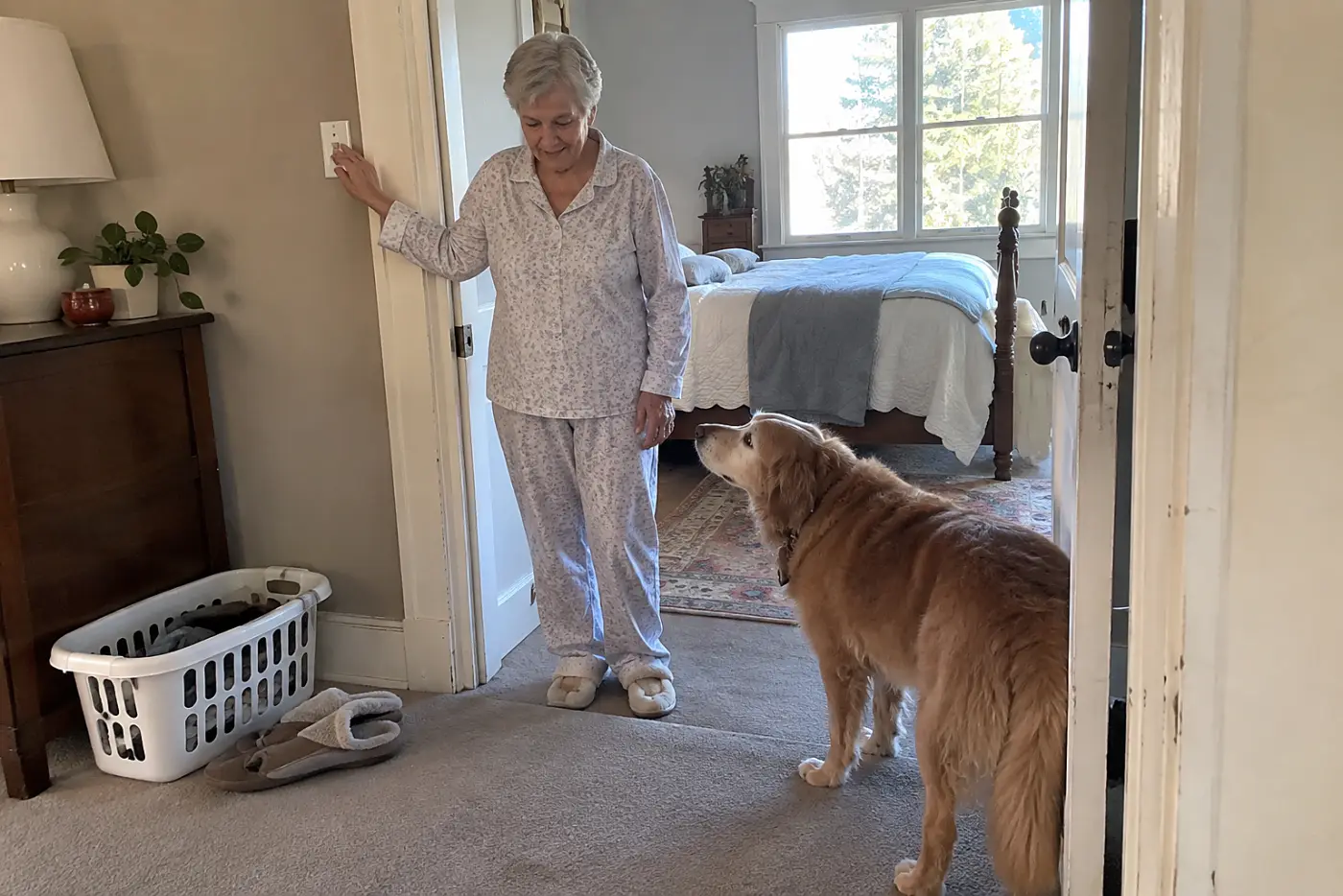
In the dark, you hear her nails reach the bedroom door. She looks in, then turns toward her own bed. You have no idea what woke her.
Keep her route clear and use a night-light if she struggles to find her way. If she begins pacing, seems confused, or loses sleep, tell the veterinarian. Note whether it happened once or on several nights so you can describe the change.
Tonight, she found you where she expected.
4The greeting she gives a grandchild
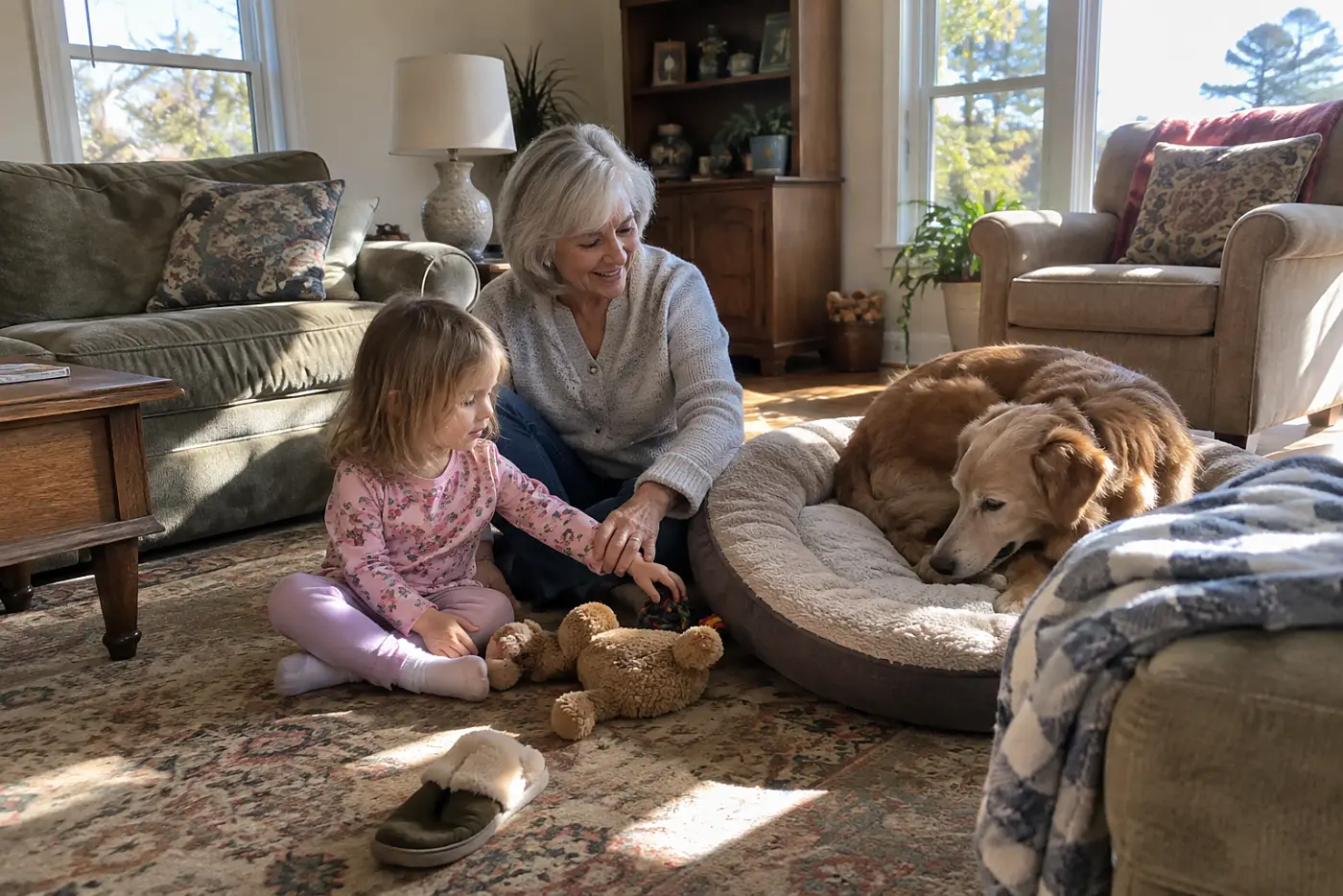
A grandchild sits on the floor and waits. Your dog comes over, takes a sniff, and walks back to her bed. The child wants another turn. You say, “She came to see you. Now she’s done.”
That small boundary protects them both. The American Veterinary Society of Animal Behavior offers guidance on reading dogs’ body language. Watch for a stiff body or an attempt to move away, and give her an exit. Her visit was a greeting, even though it lasted only a moment.
See more: 27 Things Grandmothers Notice That Nobody Else Does →
3The photograph taken from floor level
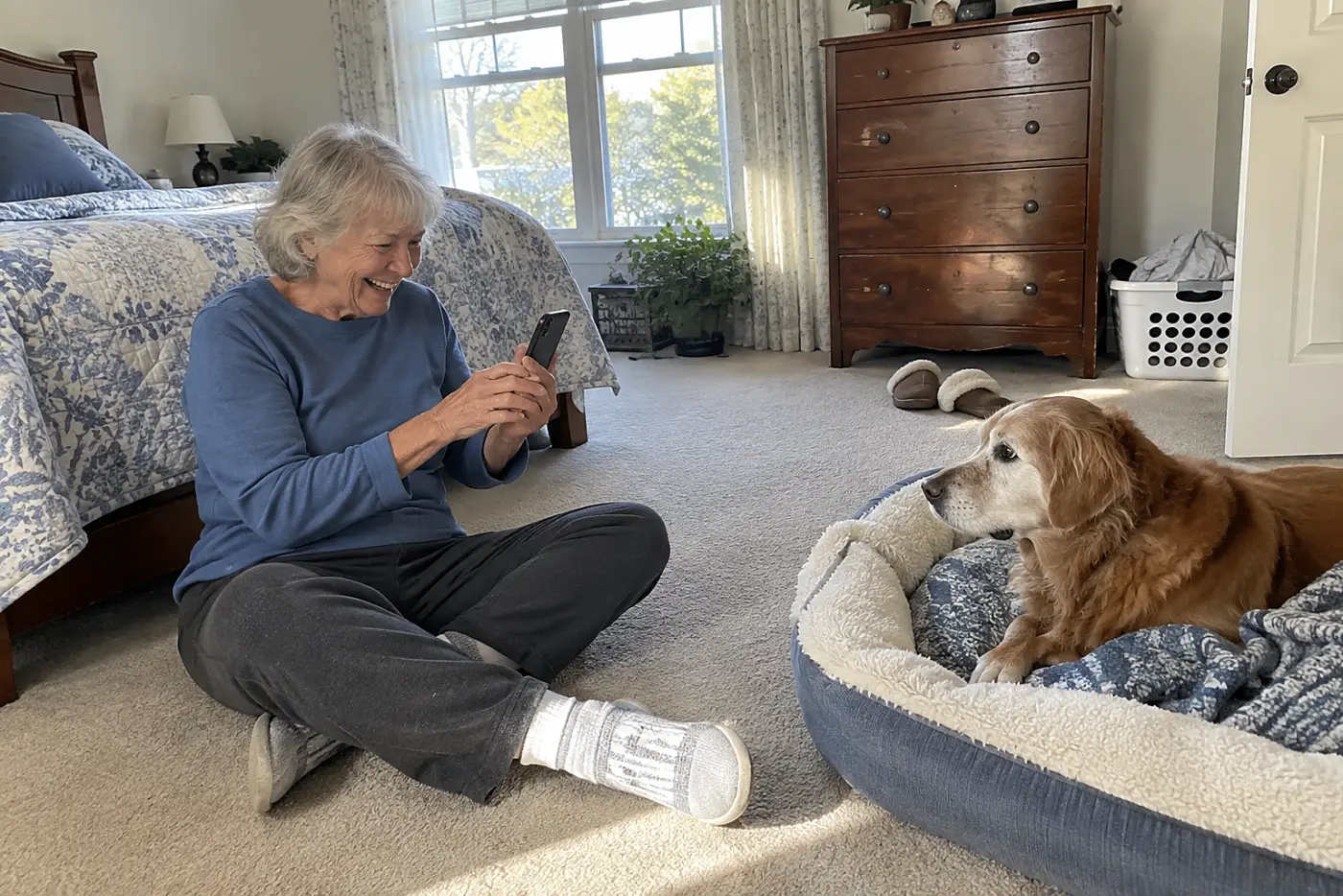
When you photograph her from above, you get the top of her head. Sit on the floor where she rests and wait until she looks toward you. Let the picture include the worn edge of her bed or the toy beside her paw.
Take a short video, too. Her way of looking up at your voice belongs in the record. Put the phone down afterward. She’s still right there, and you have time to look back.
2The words you tell her veterinarian
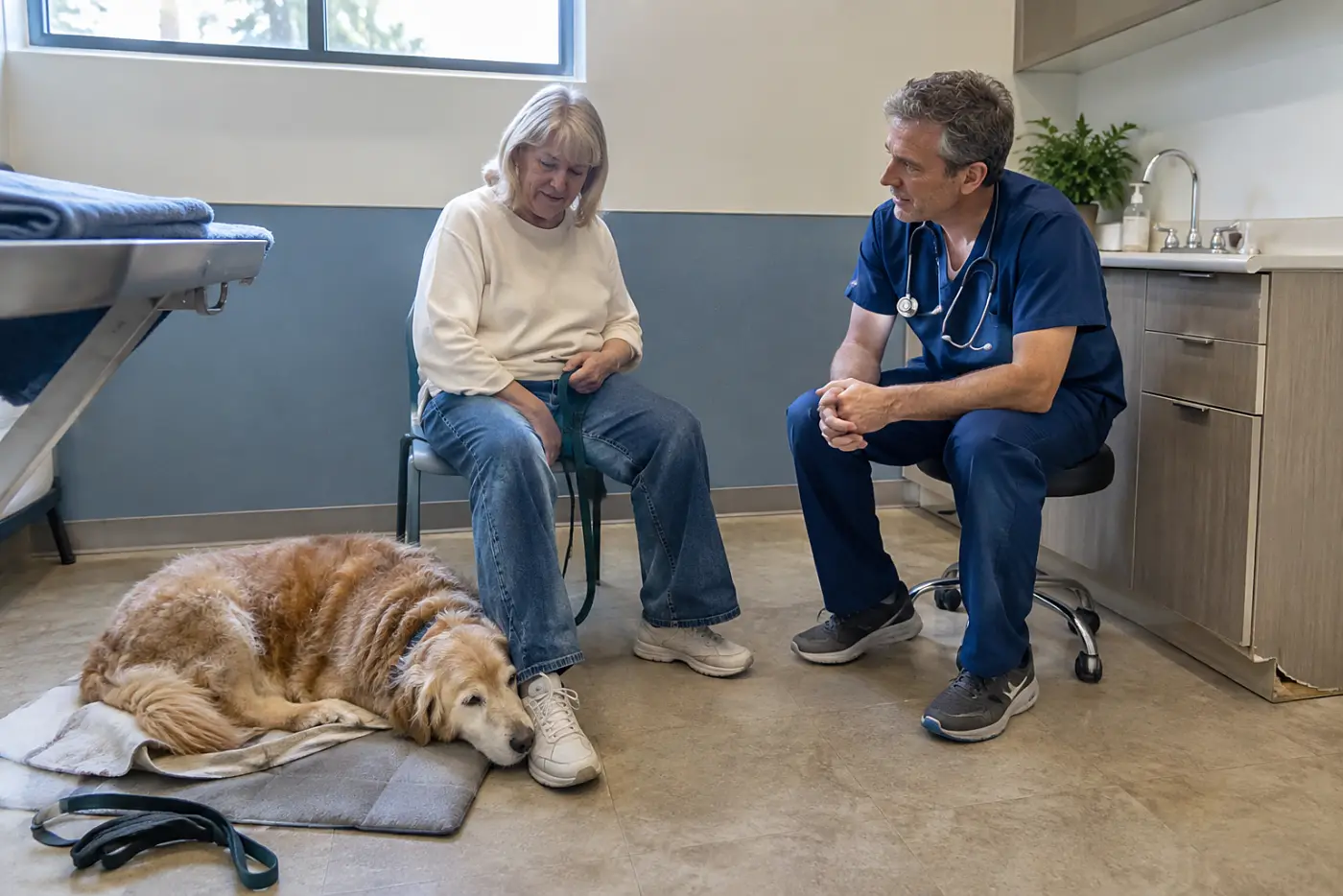
“She’s still herself, but getting up takes longer.” Say that, then name what she still enjoys. Tell the vet about the yard, the food, the welcome at the door, and the things she has stopped doing.
Ask what you should watch for next, how to recognize pain, and who to call after hours.
The American Veterinary Medical Association has end-of-life care information for pet owners, and the American Animal Hospital Association has guidance on hospice care. You don’t have to wait for a crisis to ask how to keep her comfortable.
1The calendar of her actual days
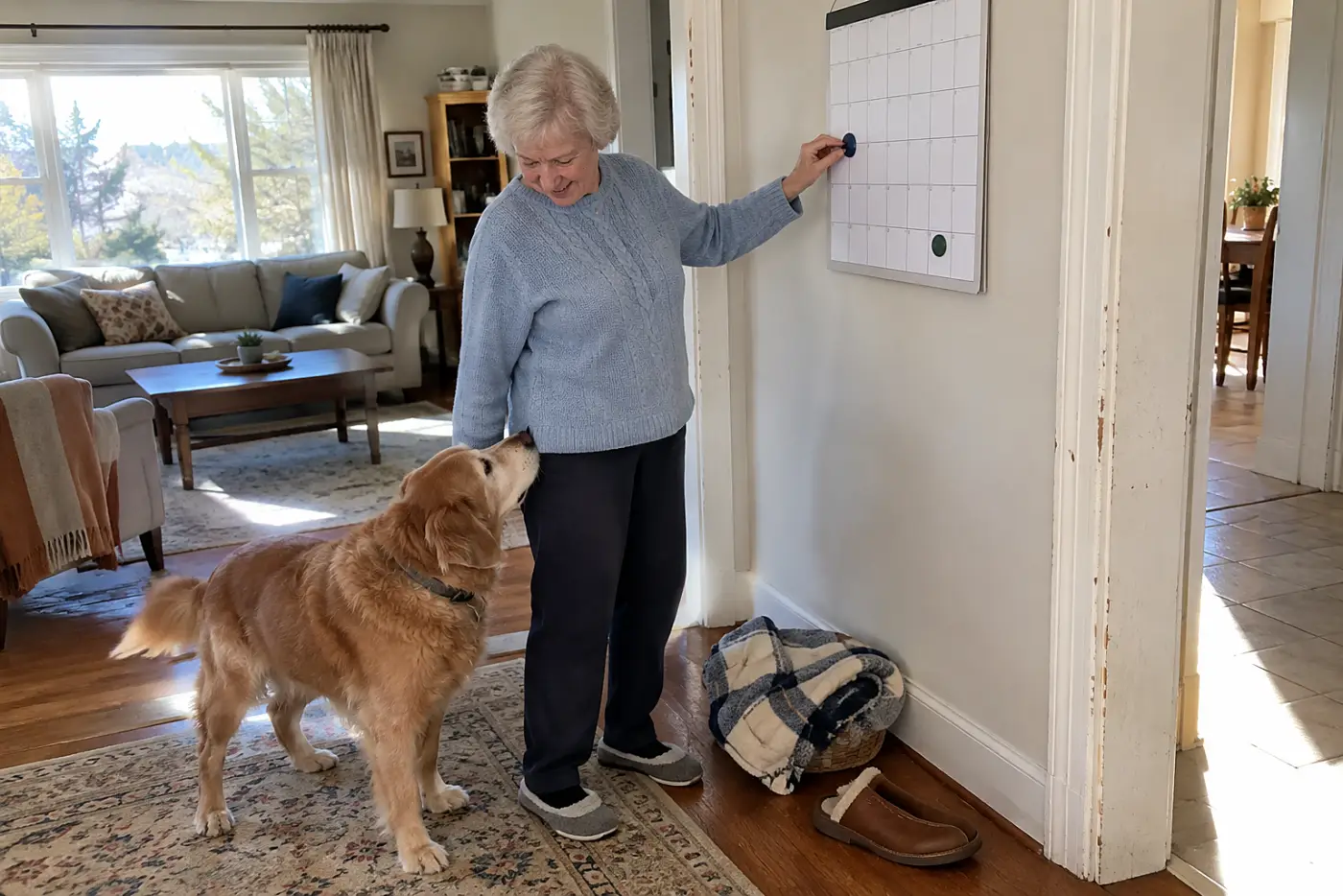
Choose a calendar you already use. Each evening, write a few plain words about her day: ate breakfast, waited at the door, slipped on the hall floor, enjoyed the yard. Include what she chose to do, not only what worried you.
After 7 days, read back through it. A change that felt sudden has a beginning you can point to. A pleasure that seems small has appeared again and again. Take the notes to her veterinarian, especially when you’re weighing a treatment or wondering whether she’s comfortable.
No checklist makes the decision for you. Your calendar gives that conversation her days, in the order she lived them.
The bottom line
She keeps doing familiar things in ways that fit the body she has now. Watch the new route, the longer pause, the place she chooses to rest.
You’ve made her footing safer, told the vet what changed, and kept a record of what she still enjoys. You’ve also let some moments be moments.
What did your dog do today that you want to remember exactly as it happened?
Up next
25 Things Grandchildren Remember That You Never Notice Doing
A kitchen stool, a spare button, and a pause before you answer give a grandchild a place in your day.
Read the list →
Reader quiz
Did you catch the details?
5 questions from this article.
What does the article suggest putting where your dog stops if the entry floor seems unsure?
Did any of these feel familiar?
Know someone who needs this?
Sources cited in this article
This article links to 8 outside sources, listed here so you can read them yourself.
- American Animal Hospital Association www.aaha.org
- American Veterinary Medical Association www.avma.org
- Ohio State University Veterinary Medical Center vet.osu.edu
- Merck Veterinary Manual www.merckvetmanual.com
- American College of Veterinary Surgeons www.acvs.org
- U.S. Food and Drug Administration www.fda.gov/animal-veterinary
- ASPCA Animal Poison Control Center www.aspca.org/pet-care/animal-poison-control
- American Veterinary Society of Animal Behavior avsab.org
Ruth Ellison
Family Editor
Ruth writes about grown children, grandchildren, ageing parents, and the conversations families put off, in the words of the people involved.
More from Ruth Ellison