25 Signs a Parent Is Struggling Alone and Hiding It
She says she’s fine, but a full pill organizer or an untouched grocery bag tells you more than another reassuring phone call does.
By Margaret Hale, Travel & Lifestyle Editor
Updated · 16 min read
- Written by our travel & lifestyle editor
- How we review

Read to the end: #1 is the doorstep safety check that gets someone to her door when she doesn’t answer.
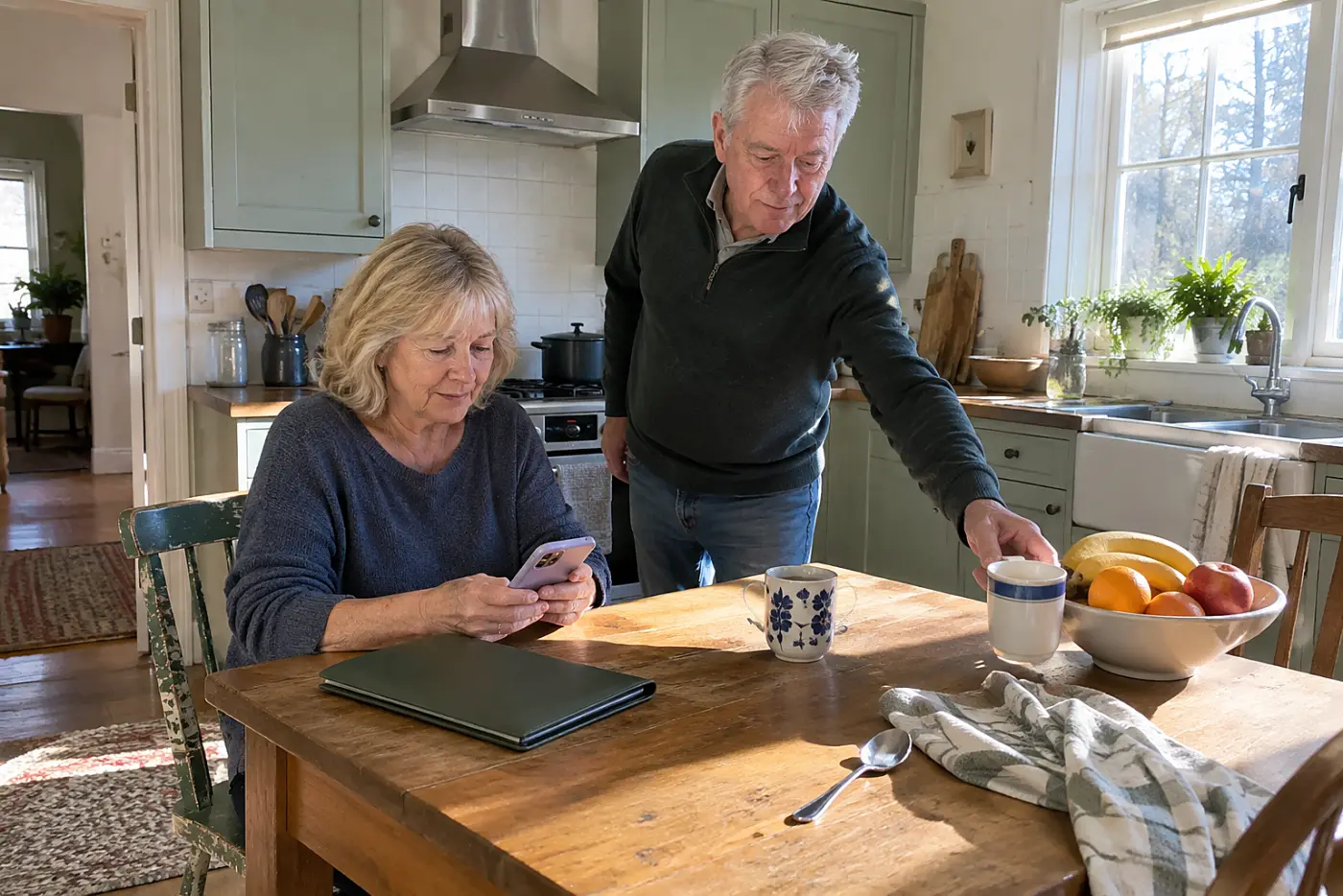
The grocery bag sits on the kitchen floor, still tied shut. Your mother answers the phone from another room and says she ate lunch. Later, you notice yesterday’s mail underneath the bag. Nothing dramatic has happened, and she sounds exactly like herself.
That’s why this gets missed. A parent who wants to stay in charge has good reasons to keep a hard day private. Asking whether she’s fine invites the answer she’s practiced. Look instead for a change you can place in time, then ask about that change without turning the visit into an inspection.
These 25 signs give you a place to start.
25The same grocery bag on the floor

Fresh food left untouched tells a different story from an empty fridge.
If groceries stay where you set them, carrying the bags, putting food away, or preparing it has become a hurdle. Check whether cold items reached the refrigerator before deciding the problem is appetite. The USDA says perishable food should not sit at room temperature for more than two hours.
That clock starts when the food leaves refrigeration, not when you discover the bag. If the delivery sat out beyond that limit, throw away its perishable contents rather than tasting them.
This week, unpack one delivery with her and notice what stops the routine. Ask, “Would it help if we put the heavy things away together?”
The next clue waits where meals are made.
24Burned pans stacked beside the stove
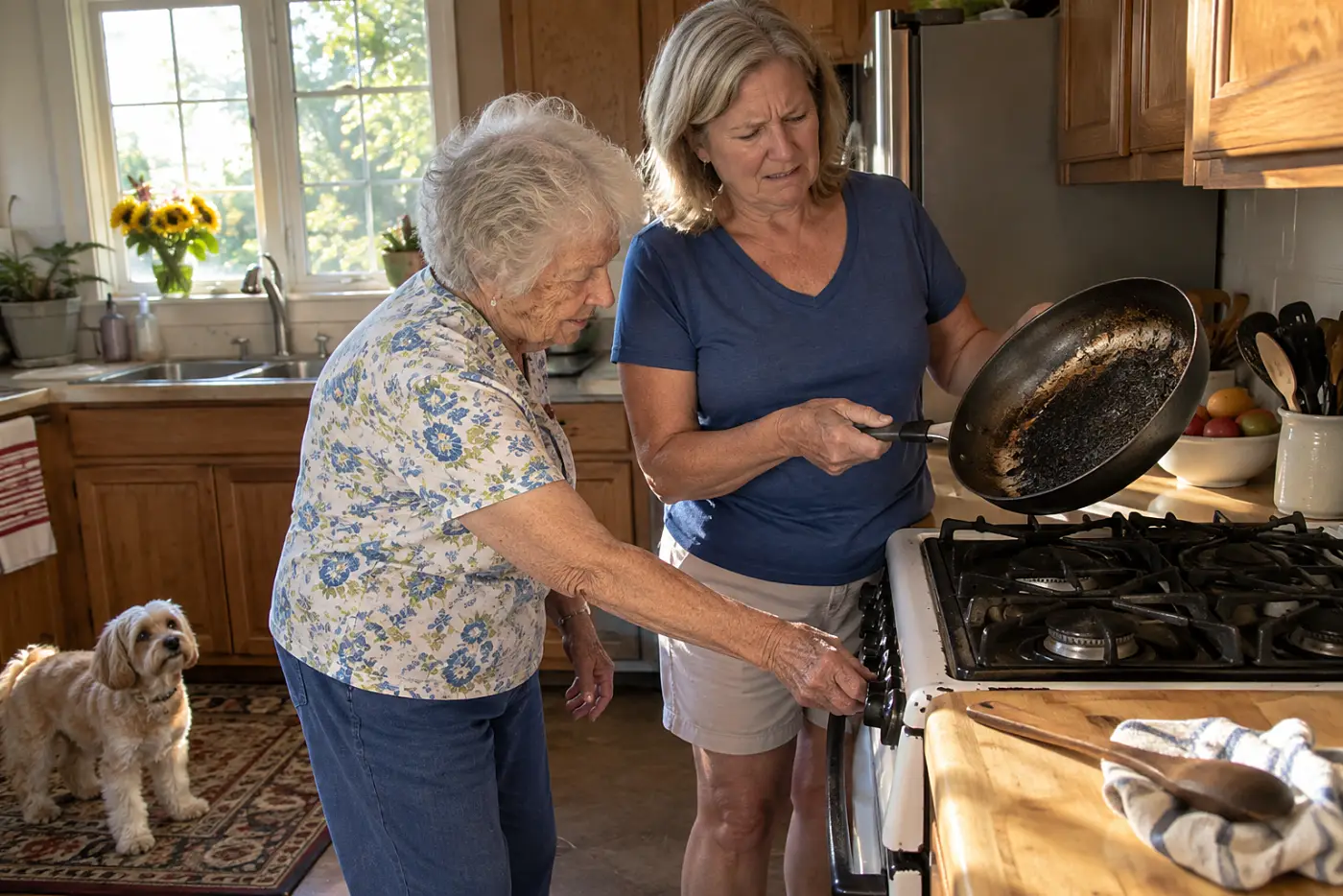
A scorched pan deserves a question about what happened.
A burner left on after cooking points to a different problem than food burned while someone answered the door. Look at the burner knobs and ask her to walk you through the last meal she made there. If you smell gas, leave the home and call the gas utility or 911 from outside.
That question matters before another meal starts. This week, cook with her instead of testing her from across the room. Say, “Show me which burner you use for tea.” Notice whether she can find the right knob and turn it fully off.
Then look at the place where she eats.
23Dinner plates piled beside the sink

A sink full of plates can mean meals have become work.
One dirty plate is ordinary. Plates with dried food from several meals show that cleanup has stopped, even if she says she cooks every night. Ask when the dishwasher last ran, and check whether its clean dishes stayed inside.
A crowded sink also hides whether she has a clean cup and plate for the next meal. Before clearing it, notice whether the dishes match what she says she ate.
This week, wash up together while she talks about her routine. Say, “Which part of dinner feels like the biggest job lately?” If she points to standing at the sink, ask when that became difficult.
What reaches the table matters next.
22Expired food at the front of the fridge

Food at eye level shows what she expects to eat.
A long-expired carton tucked behind newer food says little. Several opened containers at the front, with no clear memory of when she made them, deserve attention. Smell and dates help, but don’t make her defend every shelf.
Foodborne illness hits harder when someone is older or already ill; the CDC’s food safety guidance explains why. This week, clear the fridge together before shopping. Ask, “Which of these were you planning to have tonight?” Then make a short list of foods she’ll actually prepare.
The cupboard holds a separate clue.
21Tea and crackers replacing full meals

A cupboard can look stocked while supper disappears.
Check what she ate yesterday, not what she owns. If she describes tea and crackers as dinner, find out whether chewing, swallowing, shopping, or standing at the counter got in the way. A sudden change in eating belongs in a call to her clinician.
Look at what happens when a meal is in front of her. Food left on the plate tells you more than a full pantry, especially if she insists she has been eating well.
This week, share an ordinary meal and watch which foods she leaves. Say, “Is anything painful or hard to swallow?” Tell her clinician if she coughs while eating or drinking.
There’s another daily task she’ll notice before you do.
20Yesterday’s clothes worn through another morning

Wearing a favorite sweater twice is not the sign.
A new pattern of stained clothes points you toward laundry, bathing, or difficulty choosing clothes for the weather. Ask where the clean clothes are and whether she reaches the washer without hauling a basket down stairs. Her answer matters more than your standard for a tidy shirt.
If dressing has become hard after a fall or illness, tell her clinician exactly what changed and when. This week, offer to run one load alongside her. Say, “Is the washer giving you trouble, or is carrying the basket the hard part?” Let her show you rather than guessing.
The bathroom gives you a closer look.
19An unused toothbrush beside the bathroom sink

A dry toothbrush alone proves very little.
Look for a change from her usual routine: the brush hasn’t moved, toothpaste remains capped, or mouth pain makes her avoid it. Trouble gripping a narrow handle is different from forgetting to brush. Ask which problem she has noticed before offering a new brush.
An untreated dental problem can make eating harder. Pain also gives her a reason to turn down the meal you brought, then say she ate earlier.
This week, ask while you’re already in the bathroom, “Does anything hurt when you brush?” Help her arrange a dental visit if she says yes.
The prescription shelf is worth checking too.
18A pill organizer still full on Friday

A filled box does not tell you which pills she swallowed.
The week may have been set up on the wrong day. Doses also stay put when a label changes, a pill looks different, or the compartment won’t open. Compare the organizer with the bottles and her current medication list before drawing conclusions.
Missing or doubling a dose has different consequences for each drug. Don’t tell her to catch up without asking a pharmacist or prescriber first. A full compartment needs a question, not a guess about what to take next.
This week, sit with her as she fills the next organizer. Say, “Can you check these bottle directions against the prescriptions you have on file?” Call the pharmacy about any mismatch; the FDA’s medication safety pages are another reference.
The bottles have a clue of their own.
17Prescription bottles left at the pharmacy

A refill she never collected leaves a gap.
Ask whether delivery stopped, the copay changed, or the pharmacy sent a message she didn’t understand. Check the fill date on the last bottle against the doses remaining. Don’t assume an empty bottle means she chose to stop treatment.
Find out which medicine is missing before anyone suggests using another bottle or skipping until the next trip. The pharmacist or prescriber needs the drug name and the last dose she took.
This week, call the pharmacy with her beside you so she can authorize the conversation. Say, “What’s ready for pickup, and is anything waiting on the prescriber?”
A different kind of paper tells you what else stalled.
16Unopened envelopes on the kitchen table
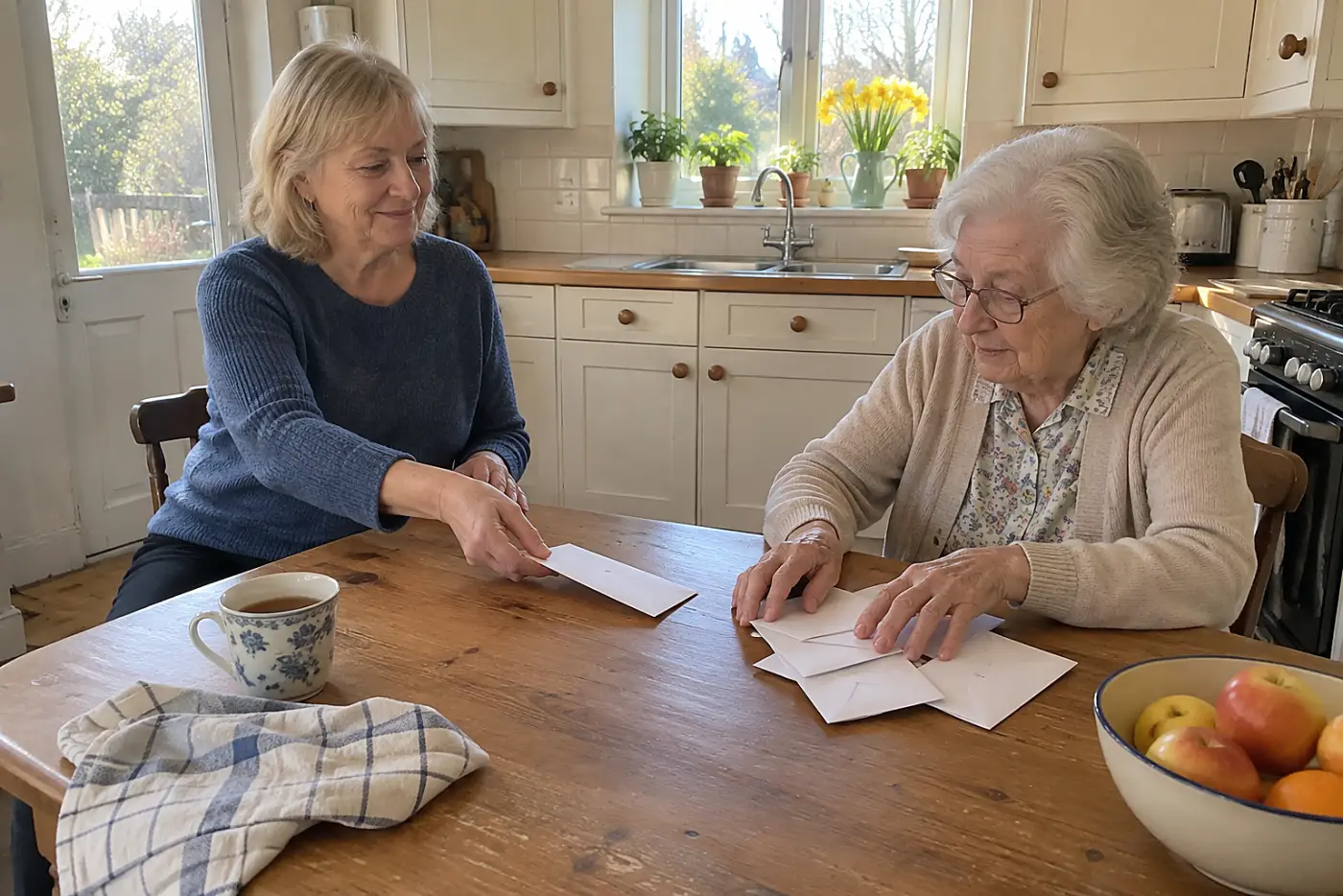
A pile of mail hides deadlines without looking urgent.
Sort it with her into bills, medical notices, and everything else. An insurance letter about a claim is different from a bill due next week, and neither should vanish under catalogs. Ask before opening anything addressed to her.
A missed payment can shut off a service or create a late fee. This week, sit beside her and make three piles, leaving each envelope in her hands. Say, “Which one has been bothering you?” If a Medicare notice is confusing, call 1-800-MEDICARE together with the letter in front of you.
Next, check whether a bill has already turned into a warning.
15A utility shutoff notice near the phone

The word “final” changes the job for today.
Read the notice for the company’s name, account number, and stated deadline. A shutoff warning needs a call to the utility using the number on a past bill or its official website, not a number supplied by a stranger.
Before paying, confirm the amount with the utility directly. A caller demanding immediate payment by gift card is a separate warning, even when they know her address.
This week, make that call with her present. Say, “What must happen to keep service on, and when?” Write down the representative’s name, the answer, and any payment confirmation she receives.
Not every money problem arrives in an envelope.
14Cash withdrawals she cannot explain
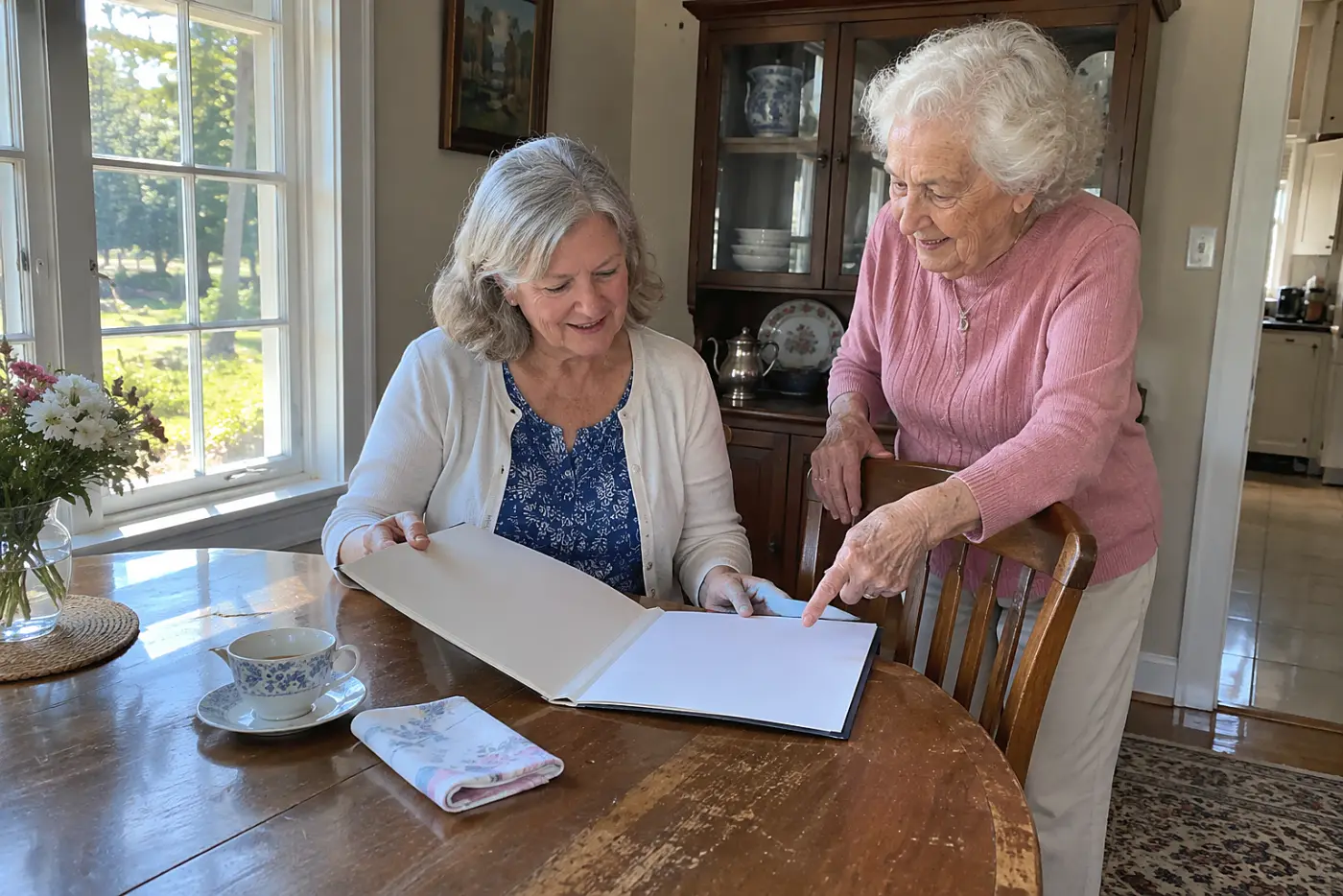
Unfamiliar withdrawals need a calm conversation, not an accusation.
Start with the dates and locations on the bank statement. An ATM withdrawal near her grocery store tells you something different from a transfer to an unknown account. Ask whether she shared a card, PIN, or online banking password, and let her describe the transaction first.
If she doesn’t recognize it, contact the bank promptly using the number on her card or statement. The Consumer Financial Protection Bureau has guidance on financial exploitation and reporting concerns. This week, review one statement together and mark only transactions she cannot place. Say, “Let’s ask the bank what this entry means before we decide anything.”
A phone call she’s avoiding deserves its own question.
13A caller’s number written by the phone
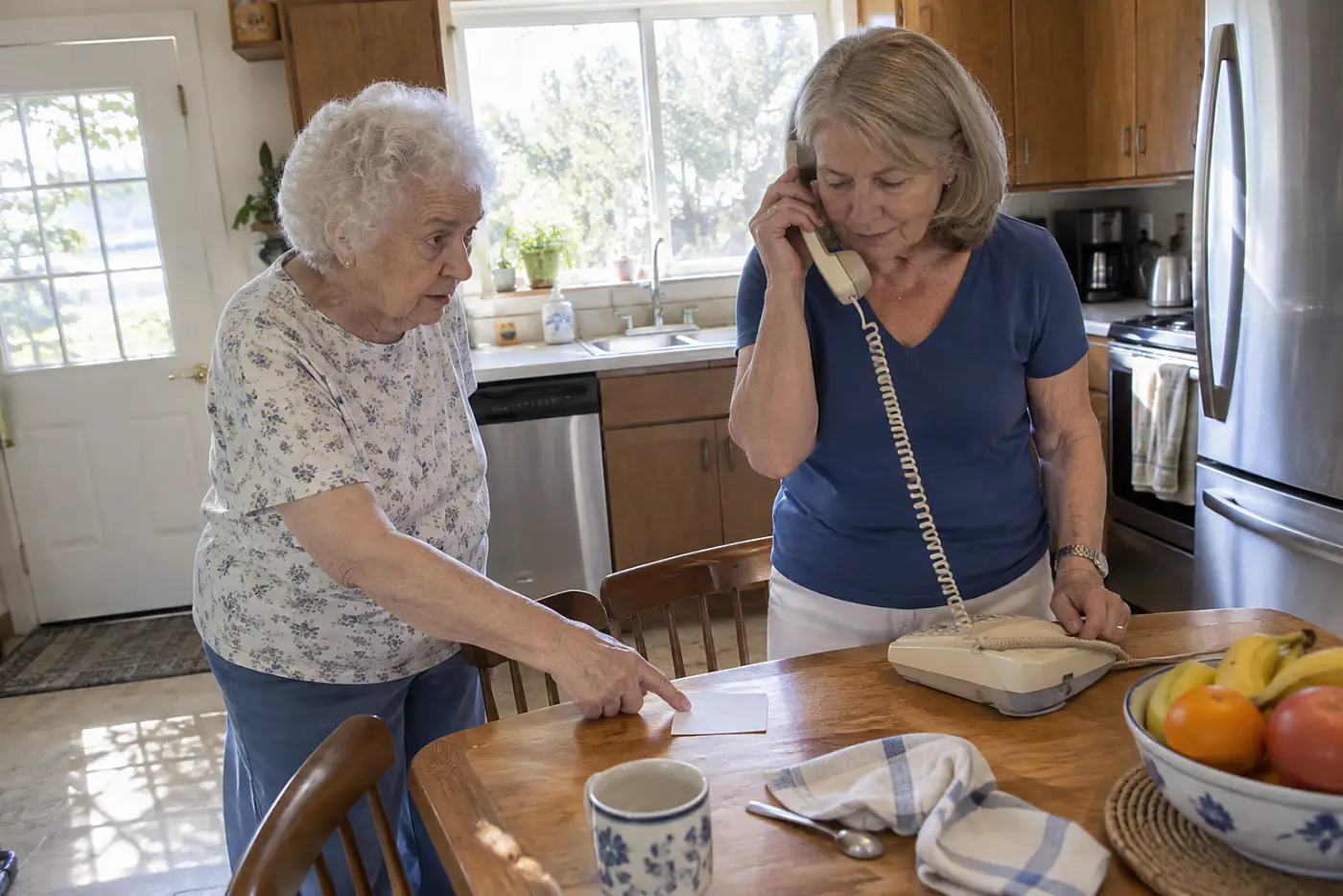
A stranger’s callback number can become a daily pressure point.
Ask who called and what they wanted before taking the paper away. If someone claimed to be from Social Security and demanded payment or a password, do not call the written number. The Social Security Administration says it does not demand payment by gift card.
Keep the paper until you know whether she gave the caller information. Throwing it away too soon erases a name or number she needs when reporting the call.
This week, look up the agency’s official number together. Say, “Let’s call the real office and ask whether anyone contacted you.”
Then check what happened after the call.
12Gift cards bought for someone she never met

A stack of gift cards is a reason to stop payment.
Scammers ask for the card numbers and PINs because they can take the value without holding the cards. Find out whether she still has the cards, receipts, and any messages from the caller. Don’t shame her into hiding the next call.
The Federal Trade Commission accepts fraud reports. If she gave away the numbers, contact the card issuer at the number printed on the card as soon as possible. This week, ask to see the receipts with her. Say, “Who asked you to buy these, and what did they promise?” Preserve texts and call records before deleting anything.
Her phone itself might explain why nobody heard about it.
11A phone that never leaves the charger

A charged phone is useless if it stays across the room.
Ask her to show you where she keeps it during a shower, a nap, and a trip to the mailbox. Then place a call from the spot where she spends most of the day. A working charger does not guarantee a working signal.
If she says she’d call for help after a fall, ask how she’d reach the phone from the floor. Don’t ask her to get down to demonstrate it.
This week, test the phone together in the places she names. Say, “If you needed me from here, where would you reach?” Check the volume and her saved contacts.
The house has other places she avoids.
10A bedroom moved to the downstairs sofa

Sleeping downstairs raises a question about the stairs.
Perhaps the move was practical. Perhaps she stopped climbing after a near fall and never mentioned it. Ask when she last slept in her bed, then watch how she approaches the first step if she wants to show you.
Don’t ask her to climb stairs to prove she can. A new change in walking belongs in a call to her clinician, especially after a fall. This week, ask her to tell you what changed about bedtime. Say, “What makes the stairs harder now?” If she fell and hit her head, seek medical advice promptly.
The route through the rest of the house matters too.
9Furniture moved into a walking path

A new chair position can turn a hallway into an obstacle.
Look at the path from bed to bathroom in ordinary light and with the lights off. Shoes, cords, and a table pulled into the route create places to trip. Ask why she moved the furniture before shifting it back.
The National Institute on Aging publishes fall-prevention guidance. This week, walk the route with her and move one obstacle she agrees to move. Say, “Is this path clear when you get up at night?”
The bathroom tells you whether the route ends safely.
8A bath mat bunched beside the tub
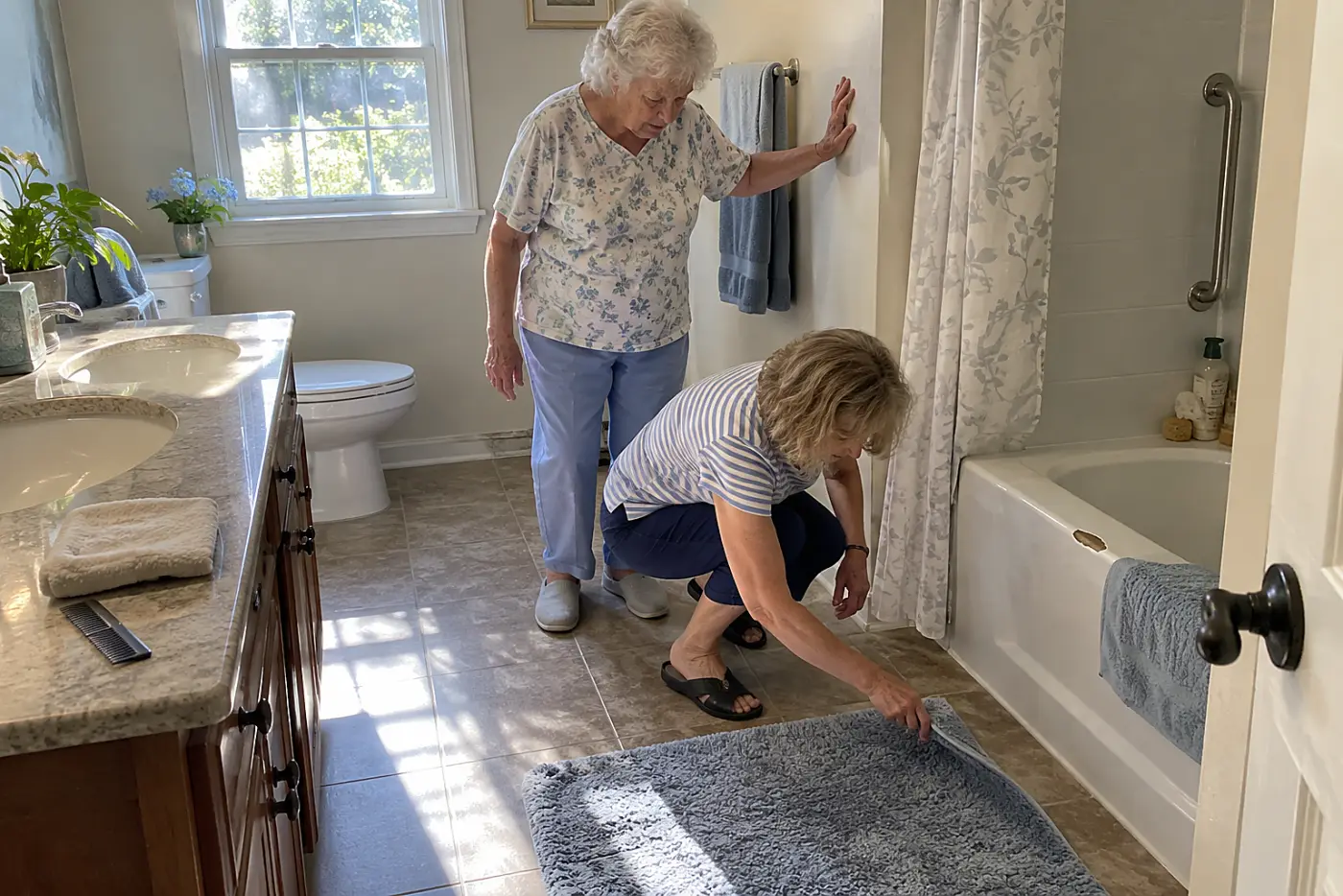
A mat pushed aside can mark a difficult step.
Ask her to show you how she gets into the tub while it’s dry and she’s dressed. Watch where her hand goes for support. A towel bar is for towels, not body weight, and a loose mat slides underfoot.
This week, check whether the floor and tub surface stay steady under her feet. Say, “Which part of getting in feels least secure?” Ask her clinician for an occupational therapy referral if bathing has changed. The clinician can help determine whether an in-home assessment fits; you do not have to guess which rail to buy first.
Now look for an injury she hasn’t mentioned.
7A bruise with no clear story
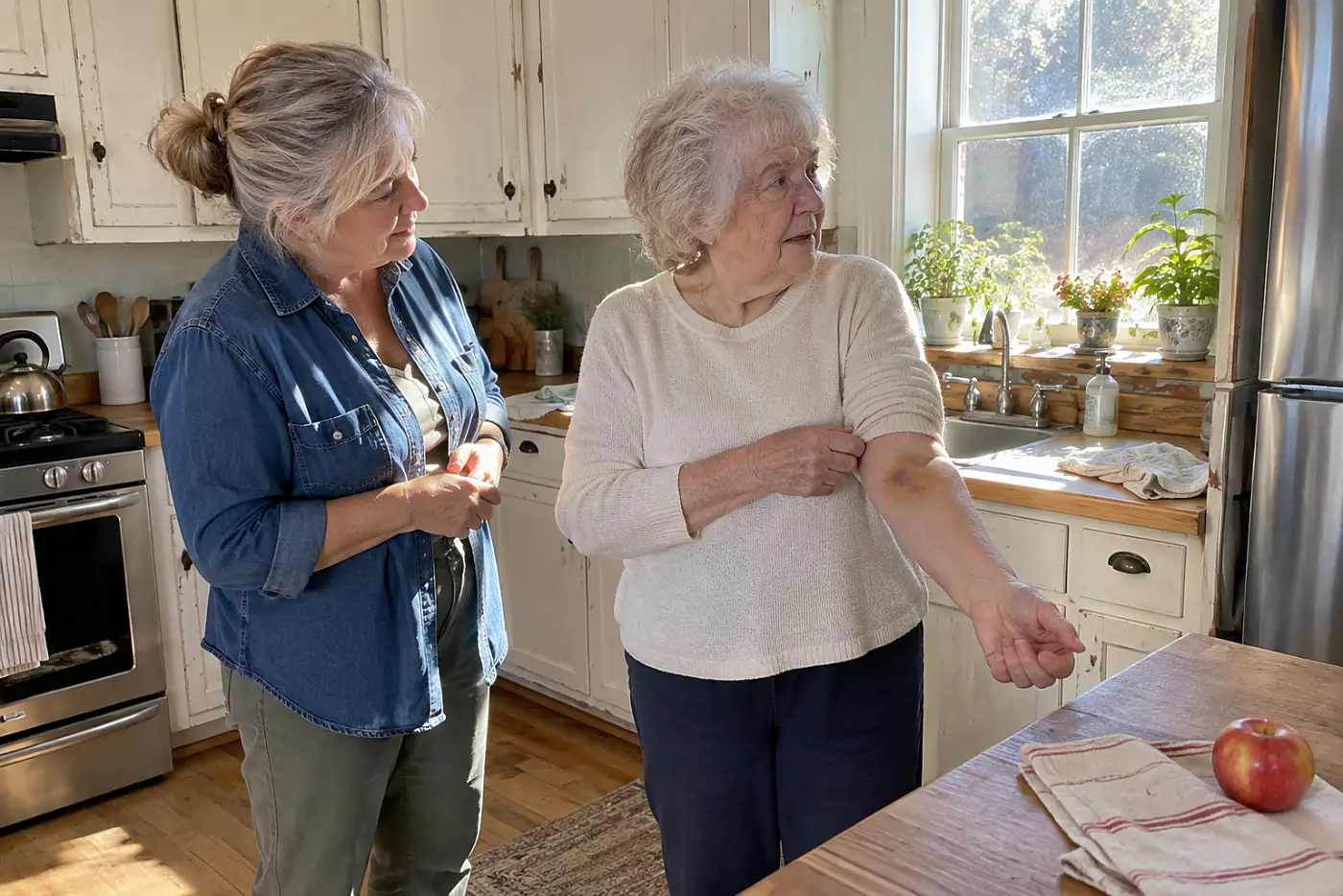
A bruise becomes important when its story keeps changing.
Ask what happened without supplying an answer. Note where it is and whether she recalls a fall, especially if she takes a blood thinner. A head strike needs prompt medical advice even when she says she feels fine.
Check whether the bruise appeared after she began a new medicine or changed a dose. Bring the medicine bottles to the call with her clinician rather than trying to identify the cause yourself.
This week, write down her account and the date. Say, “Did you hit your head or feel dizzy before this happened?” Tell the clinician if the answer changes.
The next clue appears when she leaves home.
6The car keys buried under papers
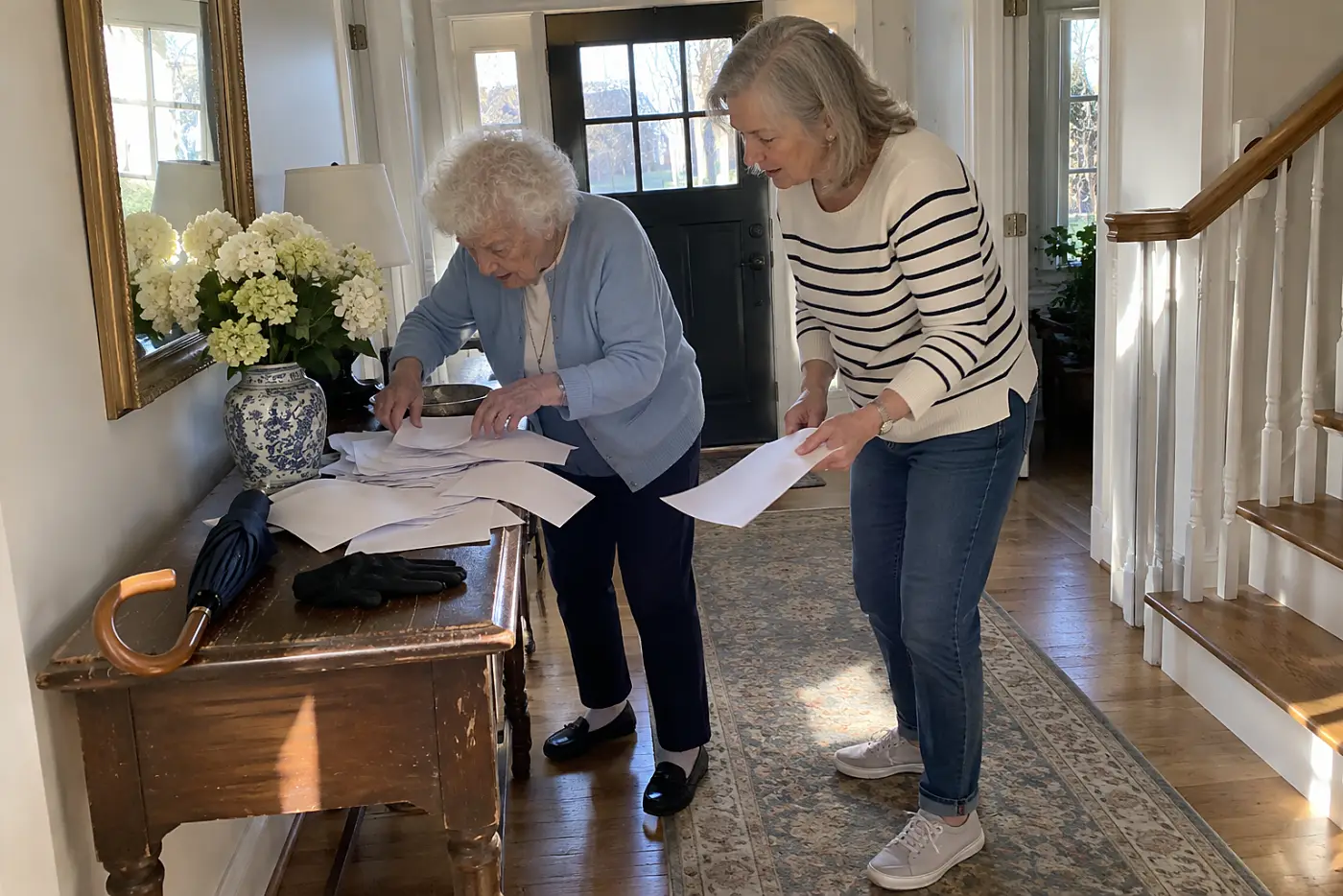
Unused keys can mean she stopped driving without telling you.
Ask when she last drove and where she went. A dead battery, trouble seeing road signs, or fear after a close call call for different next steps. Don’t turn the question into a surprise driving test or take the keys without a conversation.
If driving has changed, ask her clinician whether vision, medication, or a health change needs review. The National Highway Traffic Safety Administration has a guide to talking about driving as people age. This week, offer to take a familiar errand with her and let her tell you why the car stayed parked. Say, “How are you getting to the pharmacy now?”
That answer leads beyond the driveway.
5Missed appointments marked on the calendar

A missed appointment has a reason worth finding.
Look for the reminder card, then ask what stopped her: transportation, a confusing date, or dread of the visit. One missed checkup differs from repeatedly missing treatment or follow-up after a test.
Ask whether the office left a message she hasn’t heard. The calendar tells you a visit was missed; it won’t tell you whether the office asked her to call about results.
This week, call the office with her to reschedule and ask what she missed. Say, “Can you tell us whether the doctor needed to discuss any results?” Put the new appointment on the calendar together.
The people she used to see will notice another change.
4A favorite chair empty at church

Someone who knows her routine notices an absence before you do.
Ask whether she still wants to go to church, cards, or her regular coffee stop. Then find out whether the barrier is a ride, hearing the conversation, fatigue, or something she’d rather discuss privately. Don’t recruit friends to report on her without her knowledge.
Withdrawal that follows a loss or illness deserves attention, especially alongside changes in sleep or appetite. The National Institute on Aging has practical ideas for staying connected. This week, ask about one gathering she missed. Say, “Do you want to go next time, or has something about it changed?” Let her answer stand.
Notice who has been doing the work when she stays home.
3A neighbor carrying out the trash
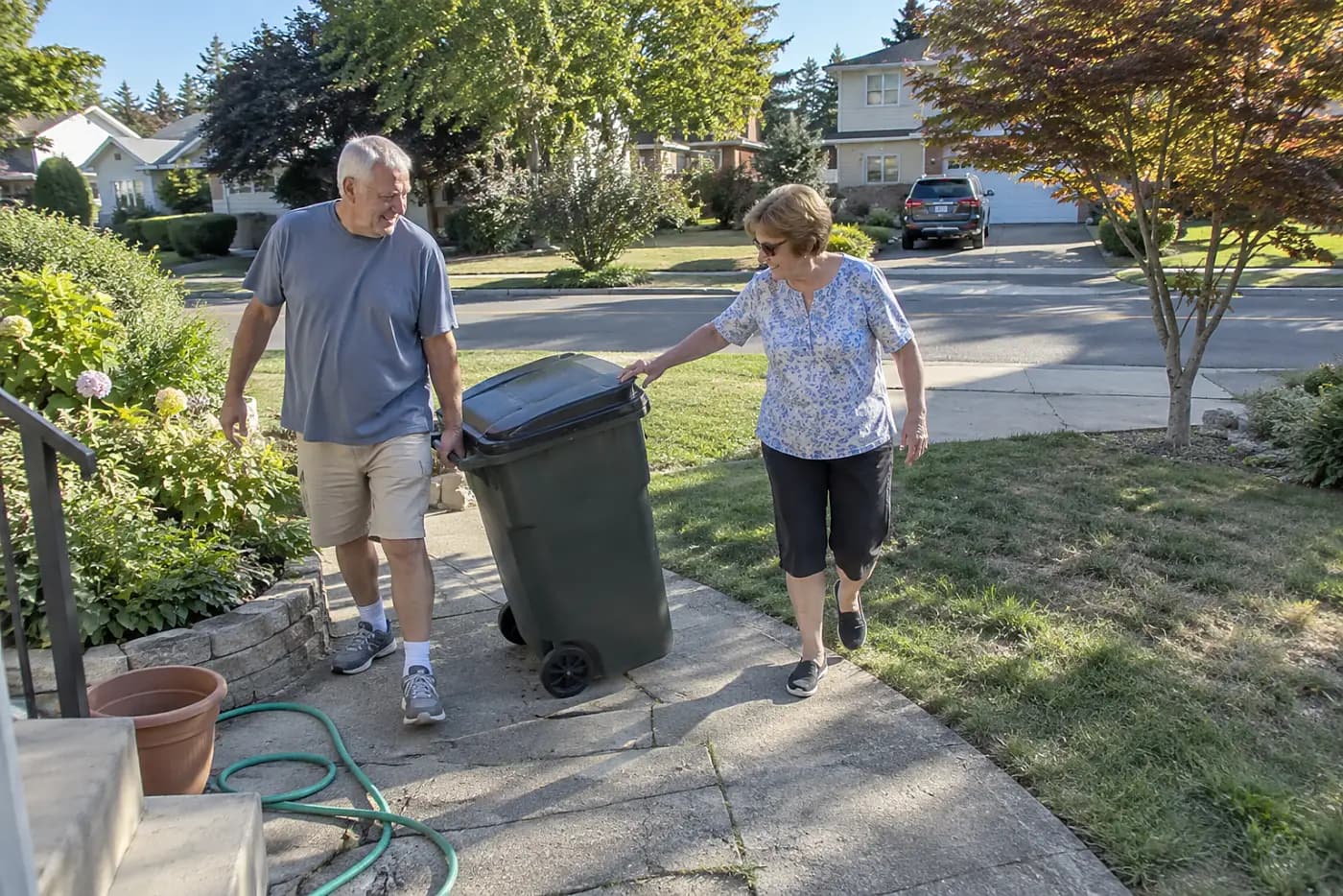
Unexpected help shows where a routine broke.
Thank the neighbor without asking for a report on your mother. Then ask your mother when the trash became hard to carry and whether the outdoor steps feel secure. She gets to decide what help she accepts.
A neighbor stepping in once tells you little. If it has become the regular arrangement, ask whether your mother knows when to expect help and what she does when the neighbor is away.
This week, take the bins out with her once. Say, “Would you rather have help with the steps or the heavy bag?” Watch which part she leaves to you.
One question remains harder to answer by phone.
2Calls answered from the same chair

A cheerful voice can hide an entire day spent sitting.
Ask what she did since breakfast and where she went inside the house. Listen for a change in her own routine, not a schedule you wish she kept. If she says she cannot stand, has new confusion, or has trouble breathing, call 911.
This week, arrange a visit at a time she chooses and see how she moves through an ordinary task. Say, “I’d like to come by and make lunch with you.” The Eldercare Locator can help you find local aging services if daily tasks now need support.
But an arranged visit doesn’t answer what to do when she goes silent.
1A closed front door after unanswered calls

A door needs a person at it, not another group text.
First, try the phone and any other way your mother agreed you should reach her. If she still doesn’t answer, the person nearest her goes to the door. A key helps only when someone knows where it is and has agreed to use it.
Before a scare, ask her who she wants called and when she wants that person to come. If you hear a cry for help or have reason to think she faces immediate danger, call 911. Don’t wait for every relative to answer first.
This week, make that doorstep plan with her and write down who has the key. Say, “If I can’t reach you, who should come to your door?” Give that person a copy of the plan, with her agreement.
The visit itself still needs a first move.
The bottom line
Across these 25 signs, the pattern is a change in an ordinary task followed by the same reassuring answer.
You’ve prepared when you know what changed and have asked without accusing. She knows who will come to the door if you can’t reach her.
Which of these has already happened in your family?
Bonus: The doorstep safety check after unanswered calls
- Try her phone and the other contact method she chose.
- Send the agreed keyholder to her door. Go yourself if you’re the person named in the plan.
- Call 911 if you hear a cry for help or have reason to think she faces immediate danger.
- When she answers, ask, “What happened when the phone rang?” Listen before changing the plan.
- Before leaving, check that she and the keyholder have the same written steps.
Margaret Hale
Travel & Lifestyle Editor
Margaret has covered travel for 25 years and has ridden every long-distance train route in the U.S. at least once.
You might also like