
27 Questions People Most Want to Ask a Pet Who Has Gone
The questions don't end when the leash goes back on its hook. A few deserve a closer look before you decide what to believe about that last day.
By Ruth Ellison, Family Editor
Updated · 14 min read
- Written by our family editor
- Cited 8 sources
- How we review
The water bowl is dry. You still step around its place on the floor. Then a car door closes outside, and for half a second you wait for the sound that used to follow: paws racing to see who came home.
You know there won't be an answer. Still, certain questions keep their shape. They come while you're washing the bowl, passing the vet's office, or remembering where your hand rested at the end. The hardest one is small enough to say in a breath: Did you know I was there?
27The dry water bowl
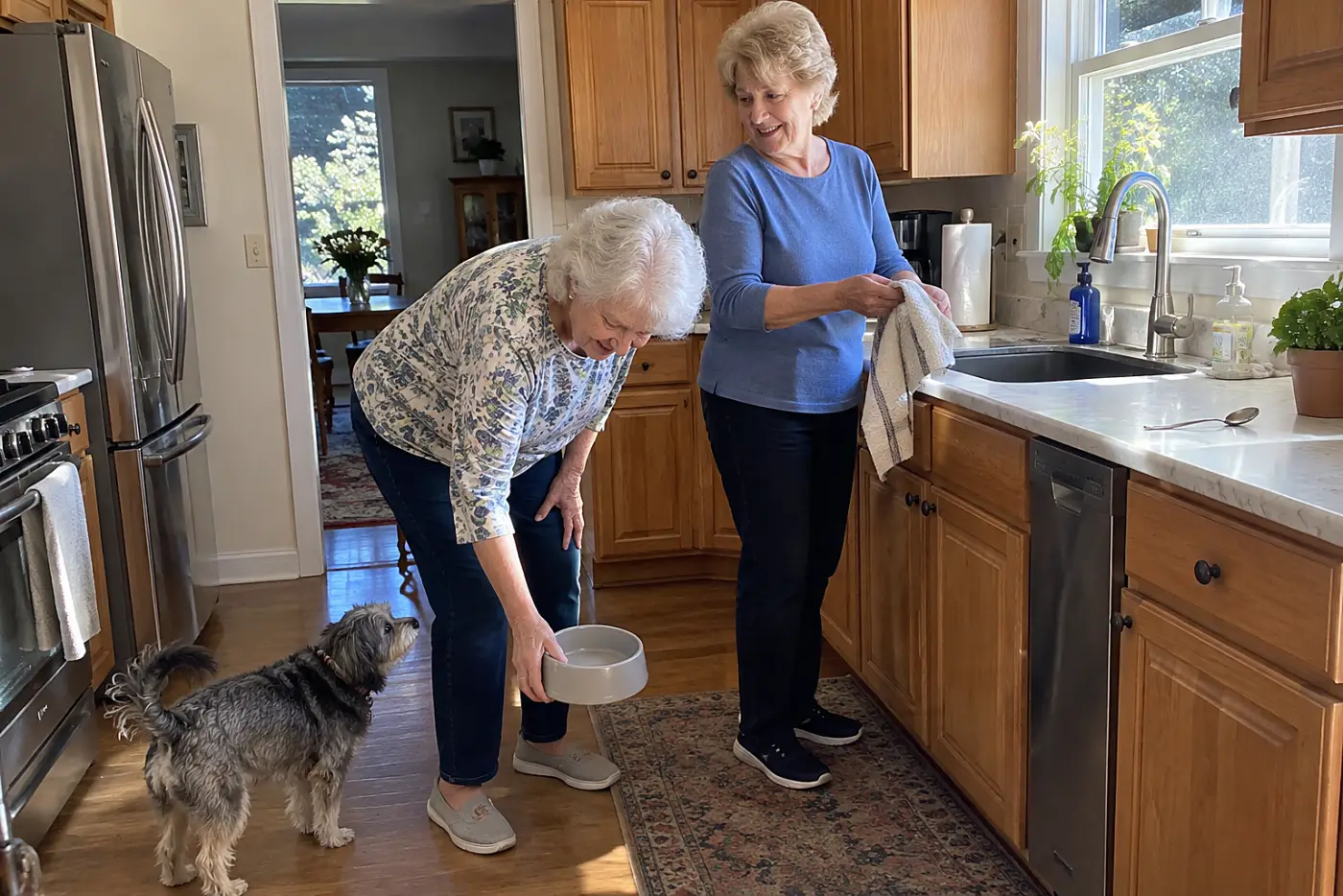
Did you know that I kept checking it?
On the day you died, I noticed the bowl before I noticed the silence. I washed it because I couldn't bear the film at the bottom, then wished I had left everything alone.
A clean bowl doesn't erase a life, and leaving it untouched doesn't preserve one. If you still step around its old place, you aren't getting a chore wrong. You're remembering where someone used to be. Look at the floor: has the bowl left a pale circle there, or a mark you never noticed while it was full?
26Your name in my voice
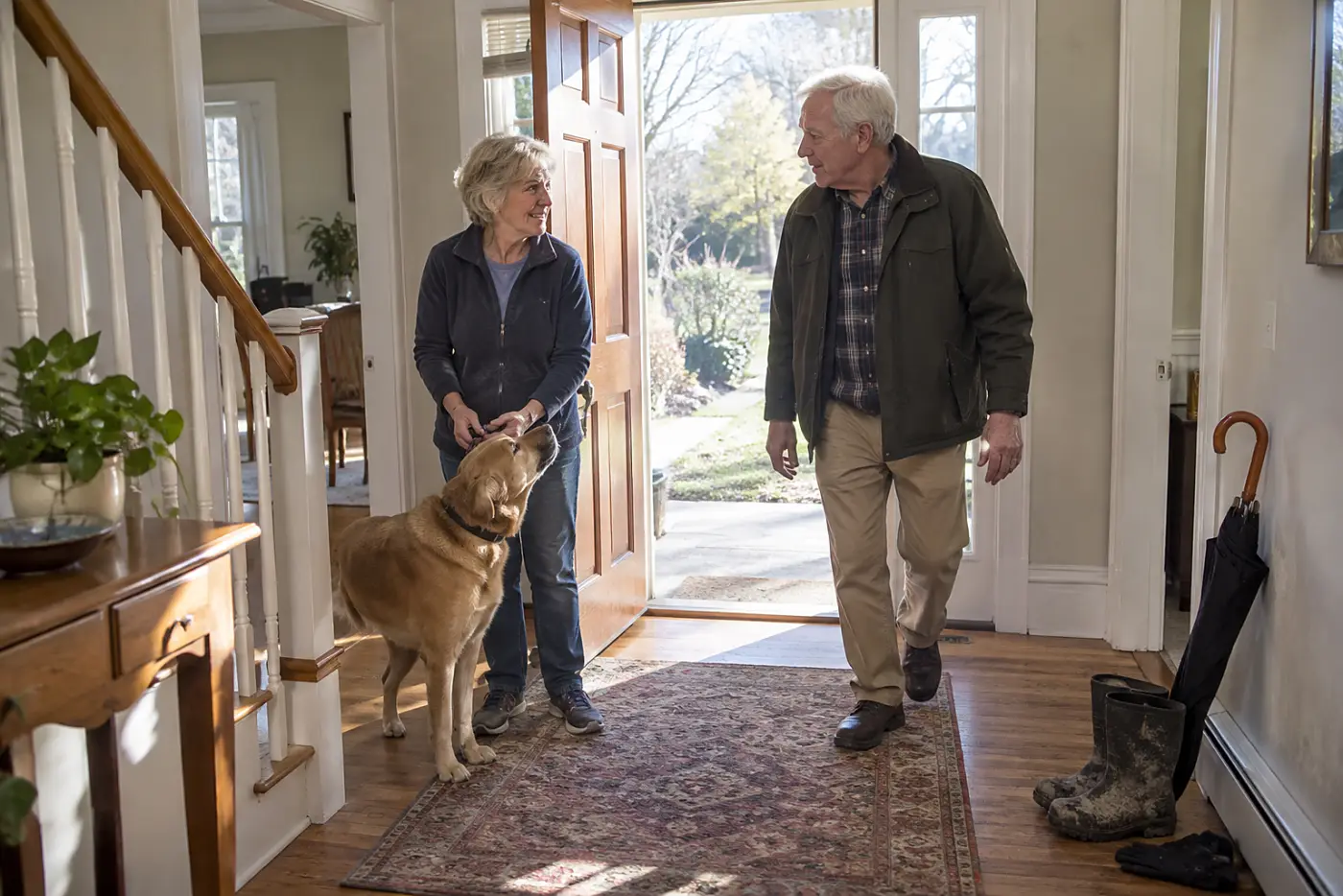
Did you know your name sounded different when I called you? The short version got you off the couch, while the long one meant I was looking everywhere.
Try saying each version aloud. You'll hear the kitchen in one and the yard in another. You gave me reasons to use that name all day. Now it catches in my throat because I still know exactly how to call you.
There was a voice I used when you stole my seat, too. Nobody else heard the difference between that voice and the one I used when I couldn't find you. I hear it the instant I speak your name.
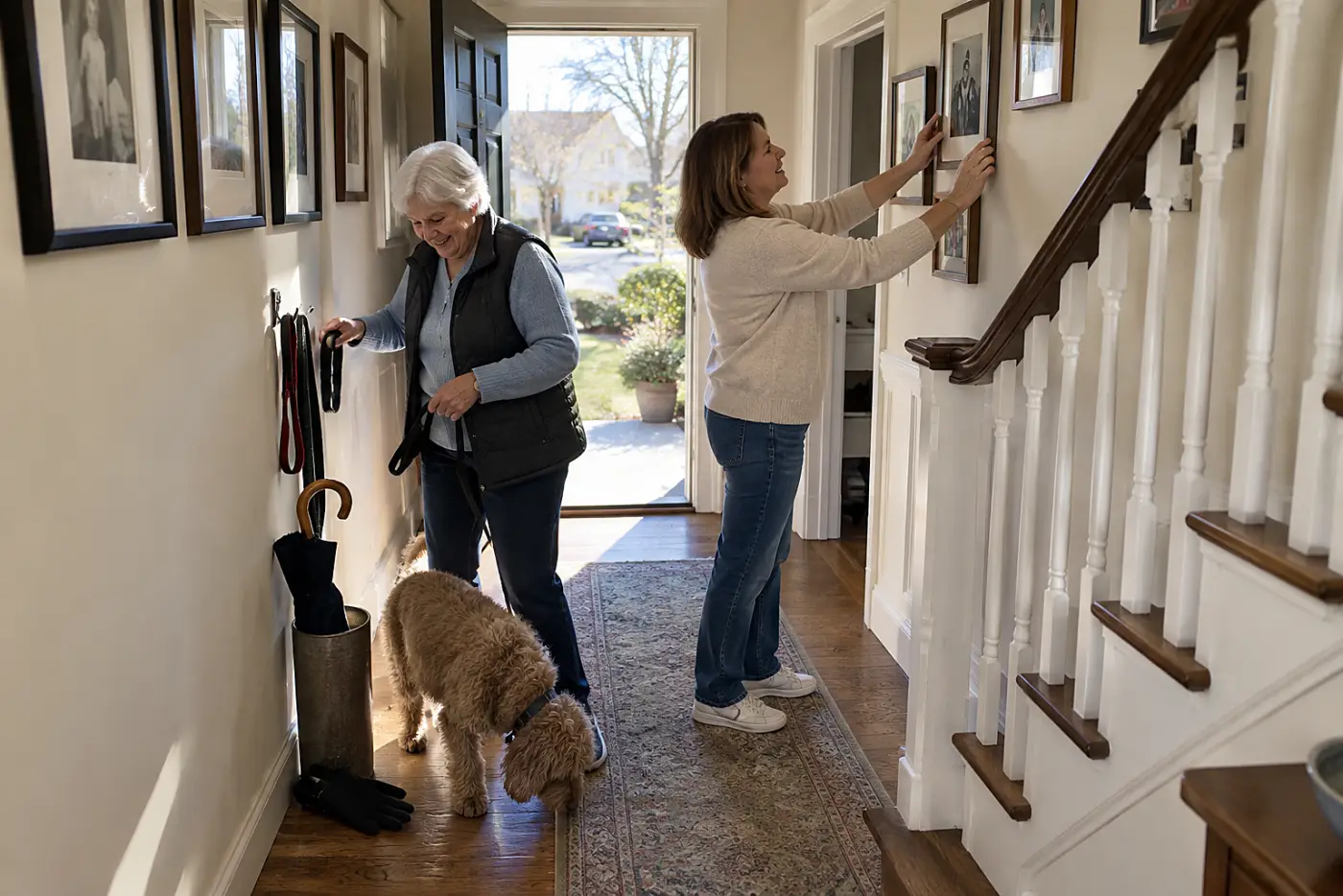
25The leash beside the door
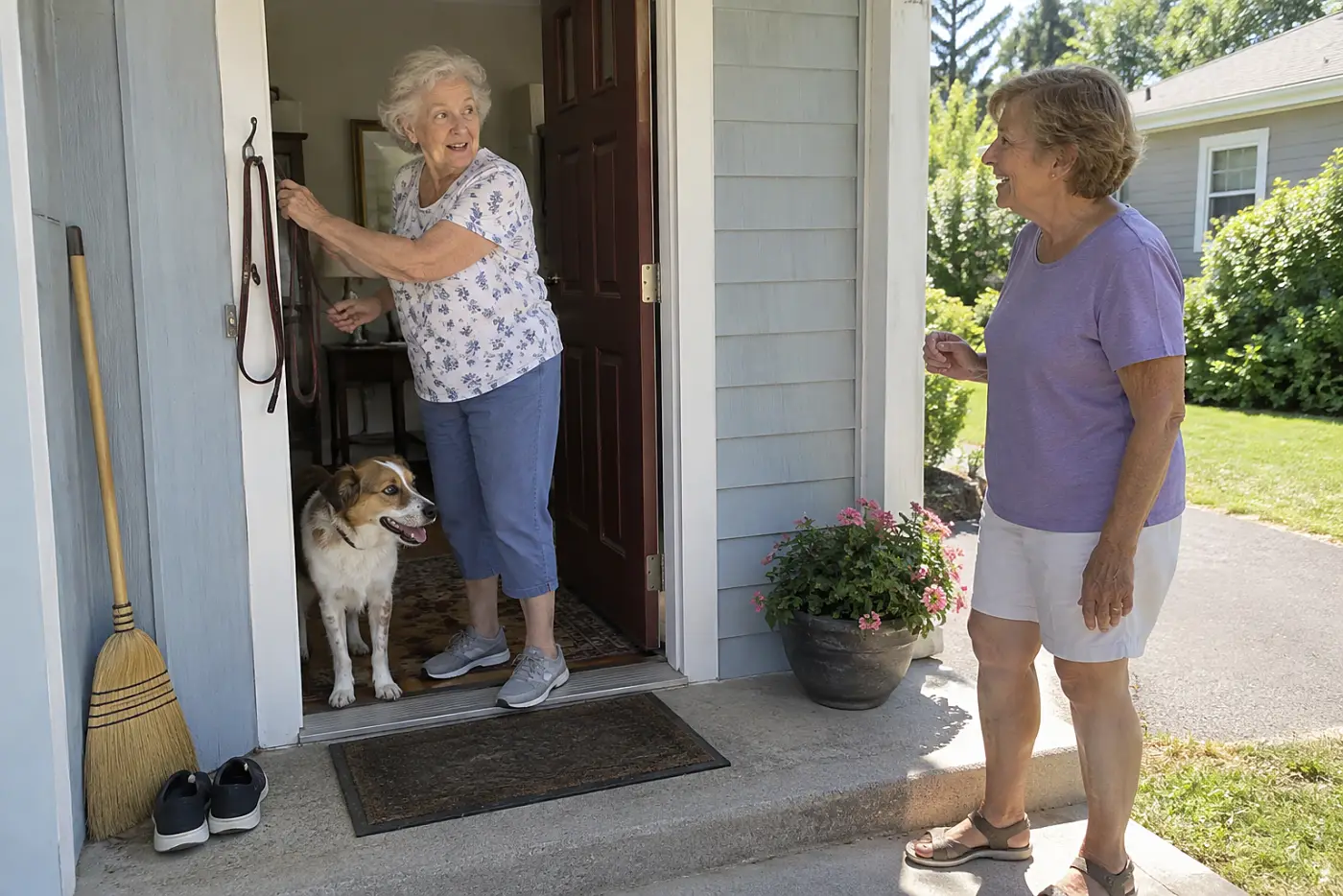
Were you waiting for a walk when I picked up the leash that last morning? I don't know. I remember your eyes following my hand, and I keep trying to turn that glance into an answer.
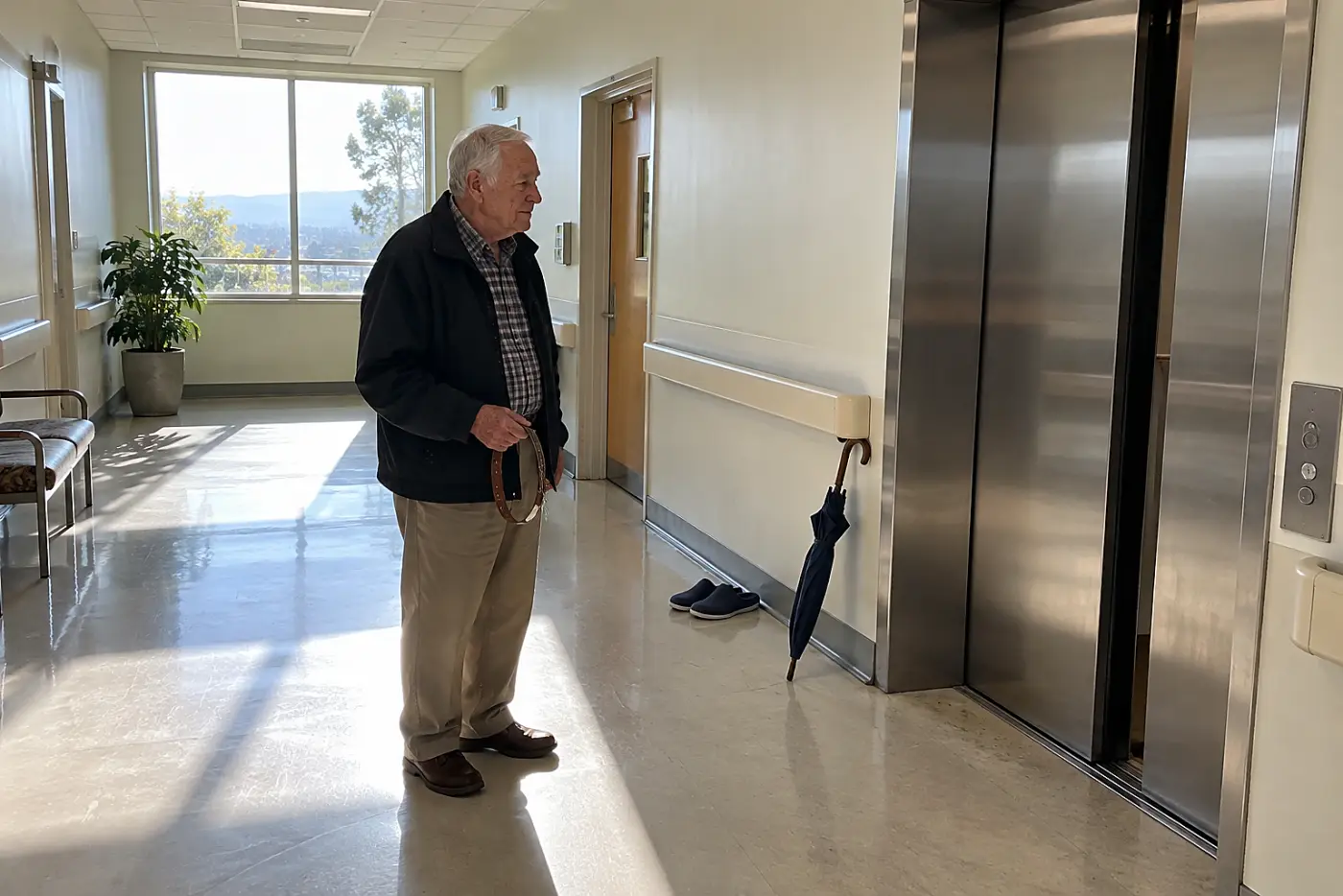
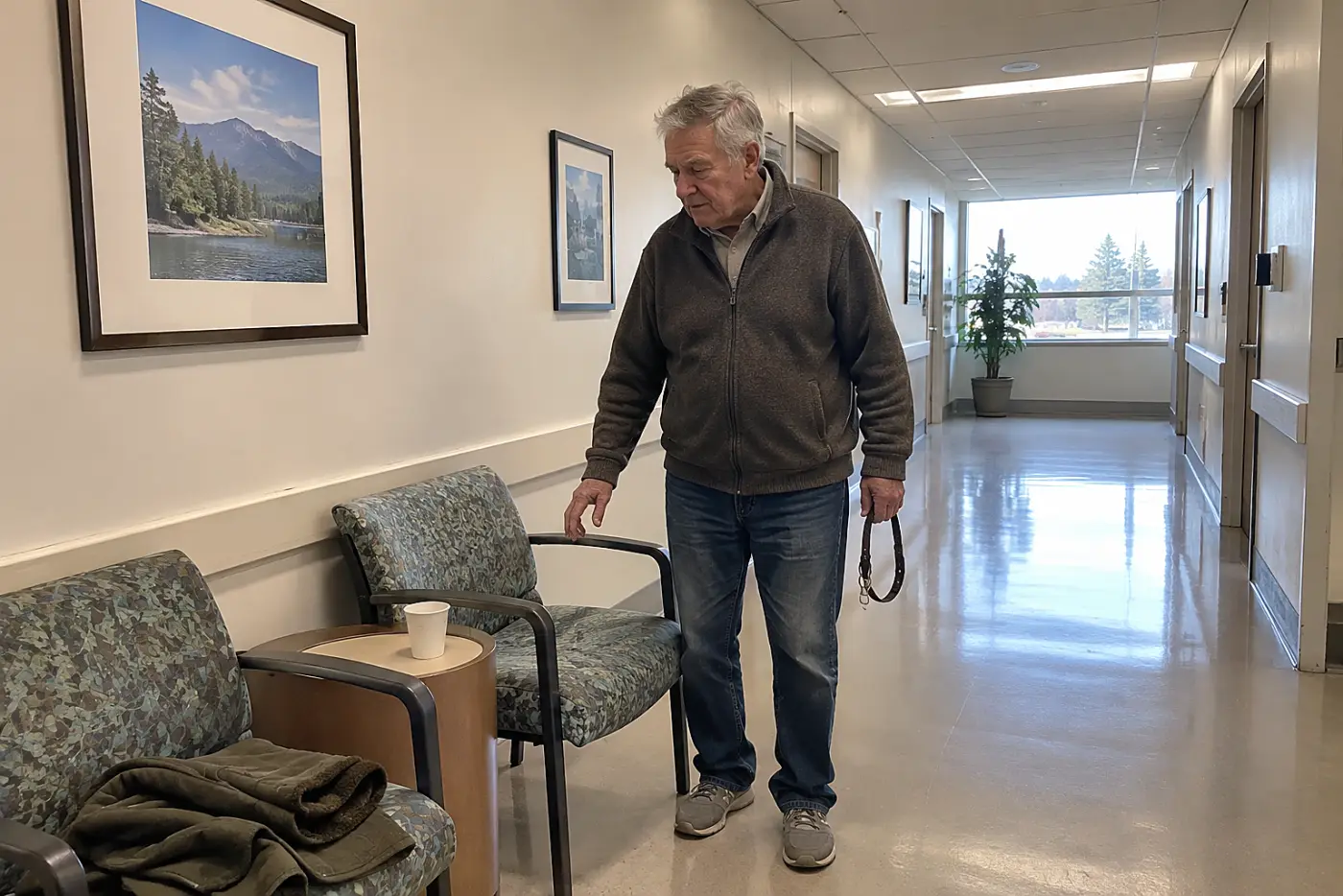
The leash held plans besides the final walk. There were wet sidewalks, slow trips to the corner, and the times you stopped for a smell I couldn't detect. If looking at it hurts, move it. If holding it helps, take it down. You don't owe the hook a decision today.
24The spot under the piano
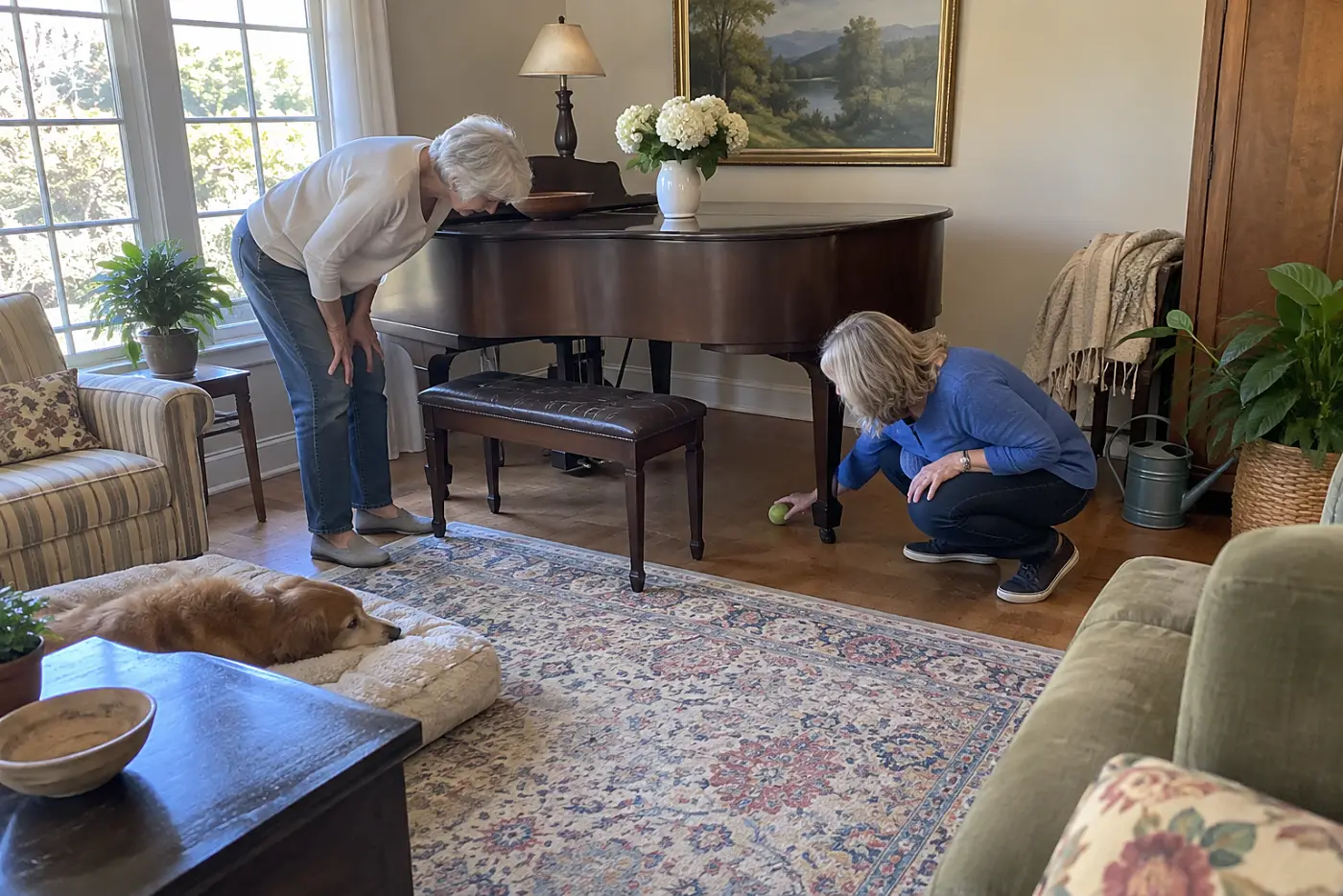
Before I sat down to play, I checked beneath the bench for your tail.
Did you choose that spot because you wanted to be near us? You slept beneath the piano through lessons, holiday visits, and the afternoon nobody felt like talking. The bench scraped. People came and went. You stayed.
I can't tell which sound or smell drew you there. I do know we grew used to looking for you before we moved our feet. Ask anyone who used that bench: do they still check the floor?
23The hand on your back
When I put my hand on your back, did you feel it through all that fur? It's a question about touch, and also about whether anything I did reached you.
I remember the rise and fall beneath my palm. I stayed because leaving felt impossible. I can't recover what you felt, but I know where my hand was. On days when memory blurs the room, I return to that one physical fact.
22The day I came home late
I was late, and the grocery bags cut into my fingers as I opened the door. You met me anyway, with the same impatient turn toward dinner.
Did you think I'd forgotten you? I wish I hadn't kept you waiting. Yet there were all those other arrivals: the coat dropped on the chair, the keys in the dish, you appearing before I reached the light switch.
When one delayed evening starts to stand for our whole life, I picture your face at the door on an ordinary Tuesday. Which arrival comes back to you?
21The food left in your dish
Were you hungry when you turned away? I kept offering another spoonful, then a different food, then a favorite treat broken into pieces.
Watching an animal stop eating is frightening. It also makes every choice at the dish feel enormous afterward. The American Animal Hospital Association has guidance on recognizing changes in a pet's health, but your pet's record is the place to start.
Before you call the clinic, count the meals you remember offering and note what your pet ate. Tell the veterinarian exactly what you saw, including any drinking or vomiting, and ask what those changes meant together. You deserve an explanation of the signs you had to read at home.
20The chair you climbed into
Did you know I pretended not to see you up there? Your hair on the cushion gave you away. So did the warm dent after you jumped down.
The rules changed around you. I cared less about the chair than I did about having you close enough to reach. I wish I'd taken one more afternoon to sit beside it. I can still picture you lifting your head when I walked into the room.
19The carrier by the car
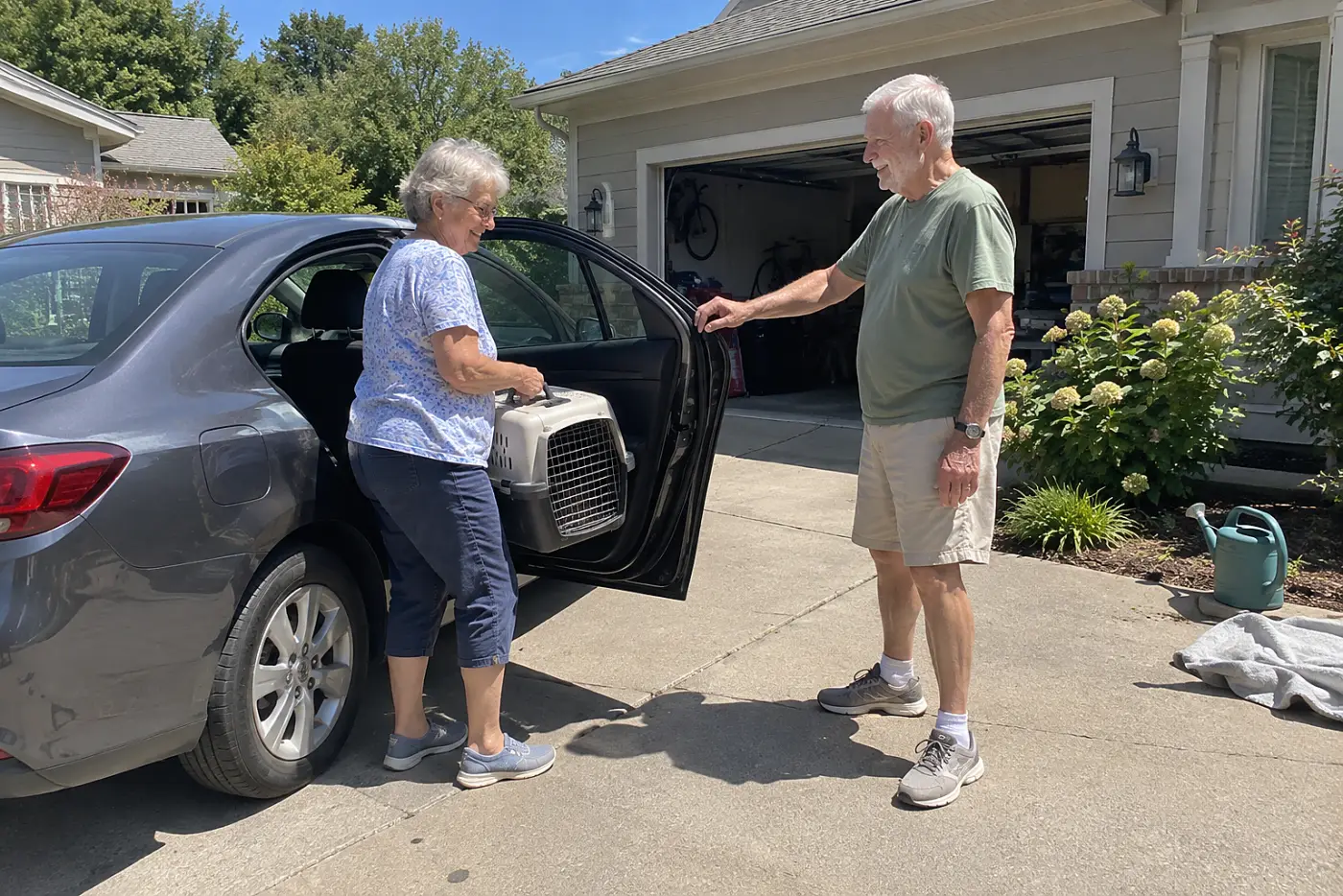
Did you think I was taking you somewhere bad? First came the carrier from the closet. Then the car ride, the unfamiliar room, the hands you didn't know. I understood why we were going. You didn't have that explanation.
That gap hurts. Before the next memory turns into a verdict, write down what led you to make the appointment: the symptom you saw, whom you called, what changed. Those details won't tell you what you thought in the car. They will tell you why I brought you for help.
For a later pet, the American Veterinary Medical Association has advice on preparing for veterinary visits. For this trip, start with the reason you picked up the carrier.
18The window at four o'clock
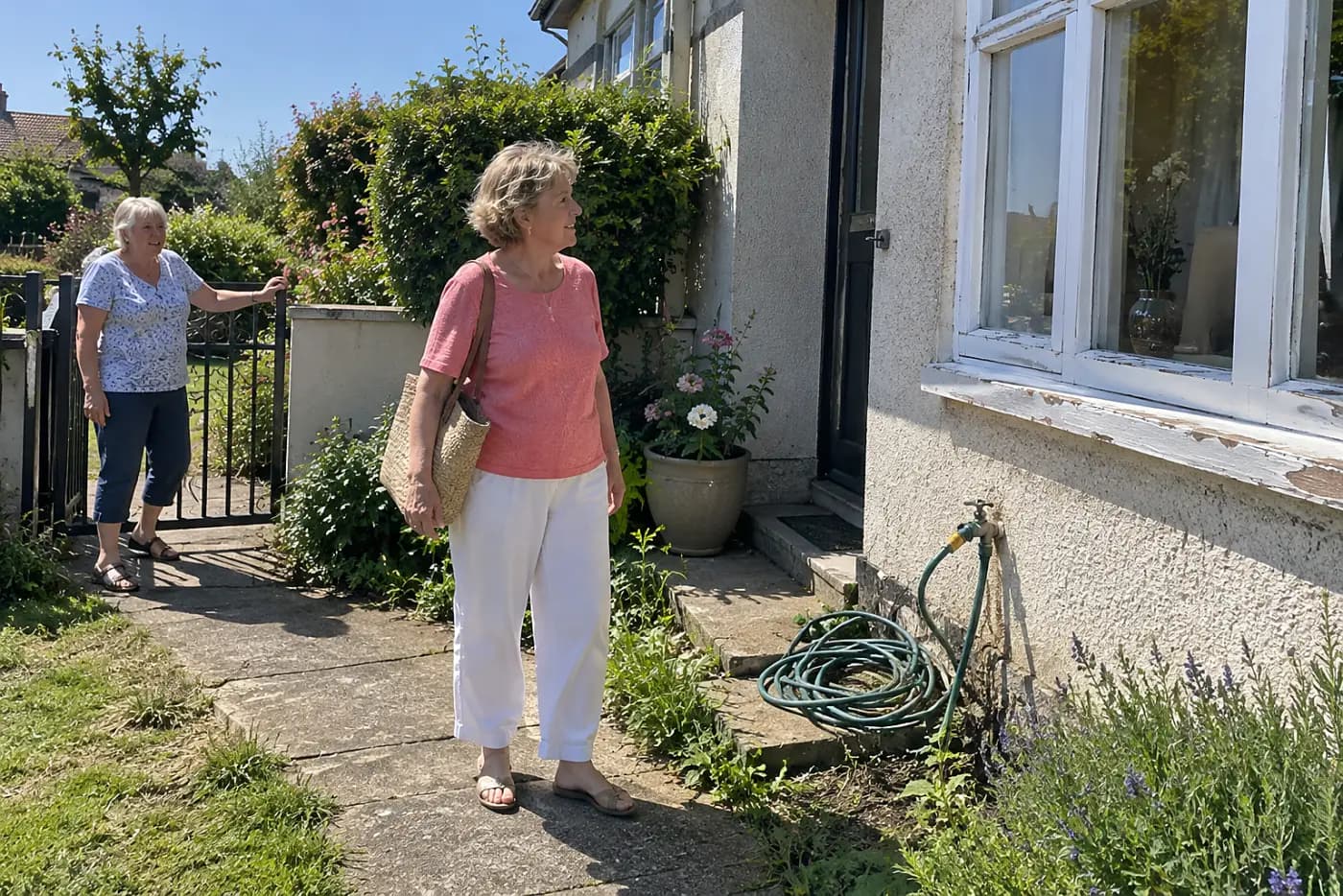
At four o'clock, the light crossed the sill and you took your place. From outside, I saw your outline before I opened the gate.
Were you watching for me, or just watching the street? I want to claim you knew the minute I'd arrive. I can't. The sight of you in that window still made coming home feel different from entering an empty house.
When the light reaches the sill now, I stop there. What held your attention before you heard the gate?
17The night you paced
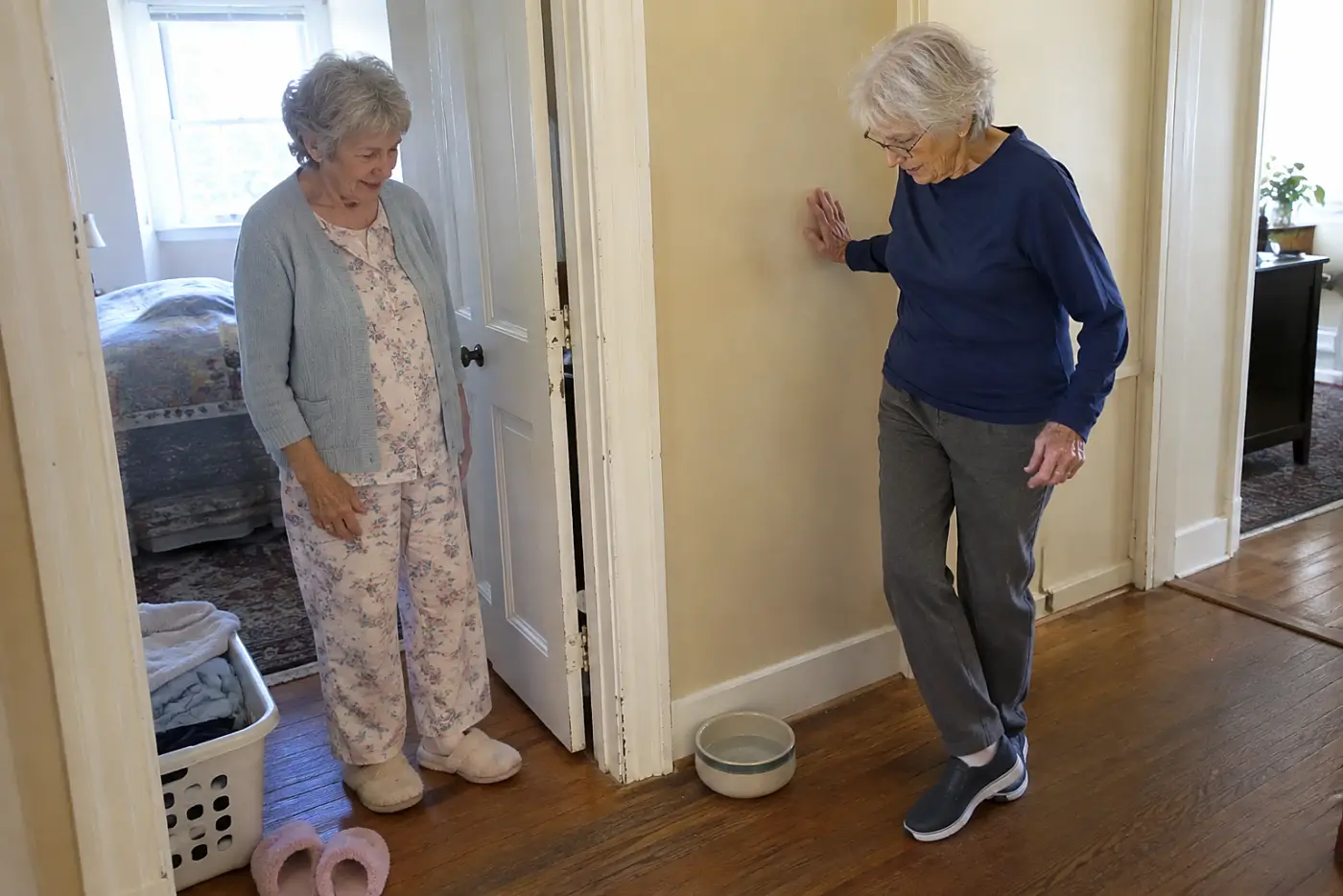
What were you trying to tell me? You crossed the bedroom, stopped at the door, then came back. I offered water and a trip outside. Neither settled you.
I keep replaying those steps as if I missed a clear instruction. But you had no words for the part I needed to know. I had your movement, your breathing, and the change from the night before.
Try putting the night in order: when the pacing began, what you offered, and when you called for help. The American College of Veterinary Emergency and Critical Care maintains information on emergency veterinary care. Your own vet can help explain what those signs meant in your pet's case.
16The blanket from the sofa
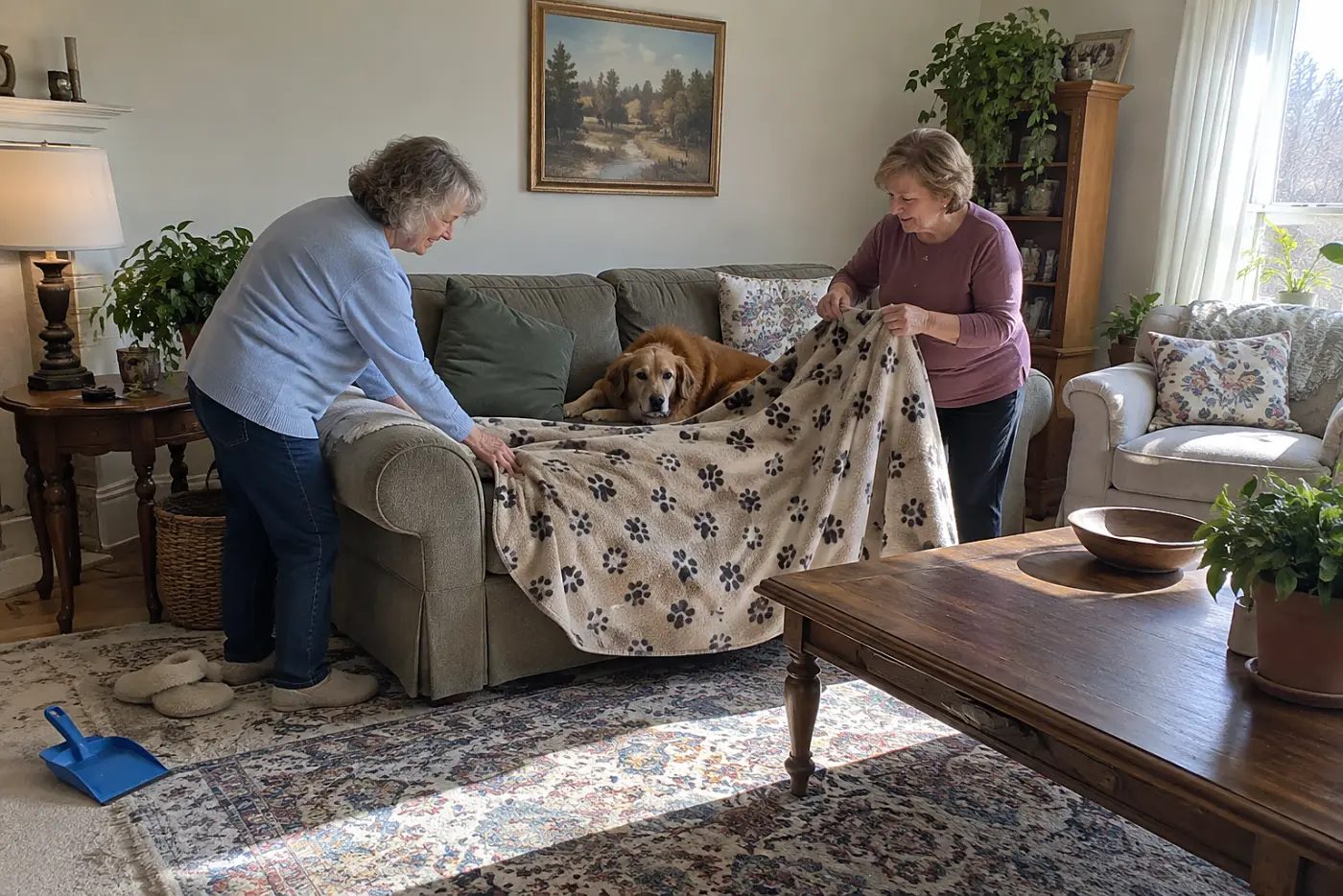
Did it comfort you because it smelled like home? You dragged the blanket into a heap whenever I folded it. I used to straighten it before anyone visited.
Now I can recall the weight of you beneath it better than I recall its color. I don't need to keep the whole blanket to keep that memory. A photograph, a small piece of fabric, or an empty shelf are all choices I get to make. None changes how you slept there.
15The medicine hidden in cheese
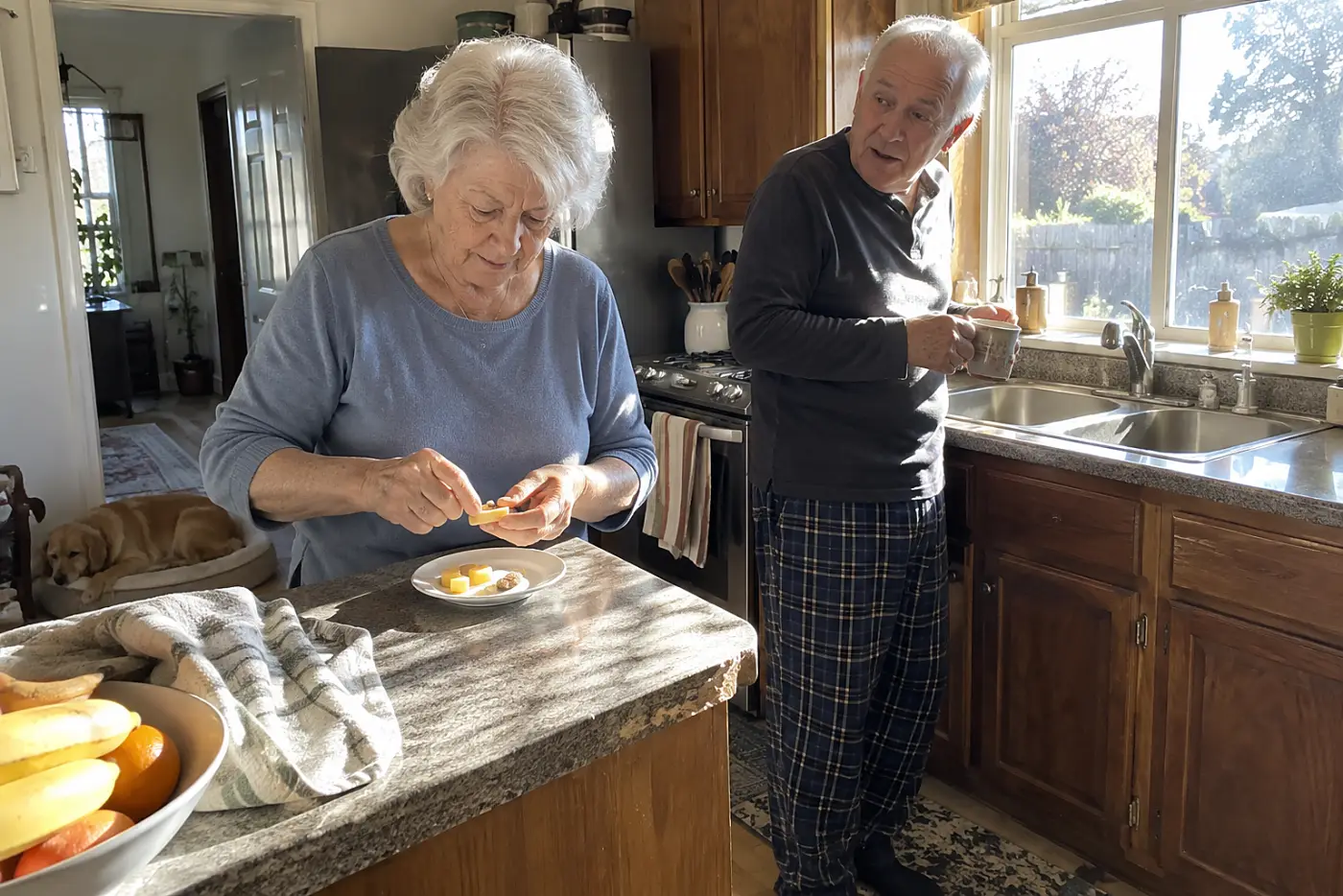
Did you know I was trying to help? You caught me twice. After that, you inspected every bite like a suspicious guest.
I hated making food into a trick. I also saw the pills waiting on the counter and knew you needed them. If I have questions about the treatment, I can ask the clinic to walk through the record: what each medicine was for, when it was given, and what changed afterward.
The U.S. Food and Drug Administration's Center for Veterinary Medicine has information about animal medicines. The clinic has the answer about the pills in my hand. That conversation won't erase the look you gave me over the cheese.
See more: 23 Small Comforts an Aging Dog Wants Most From the Person He Chose →
14The birthday I chose for you
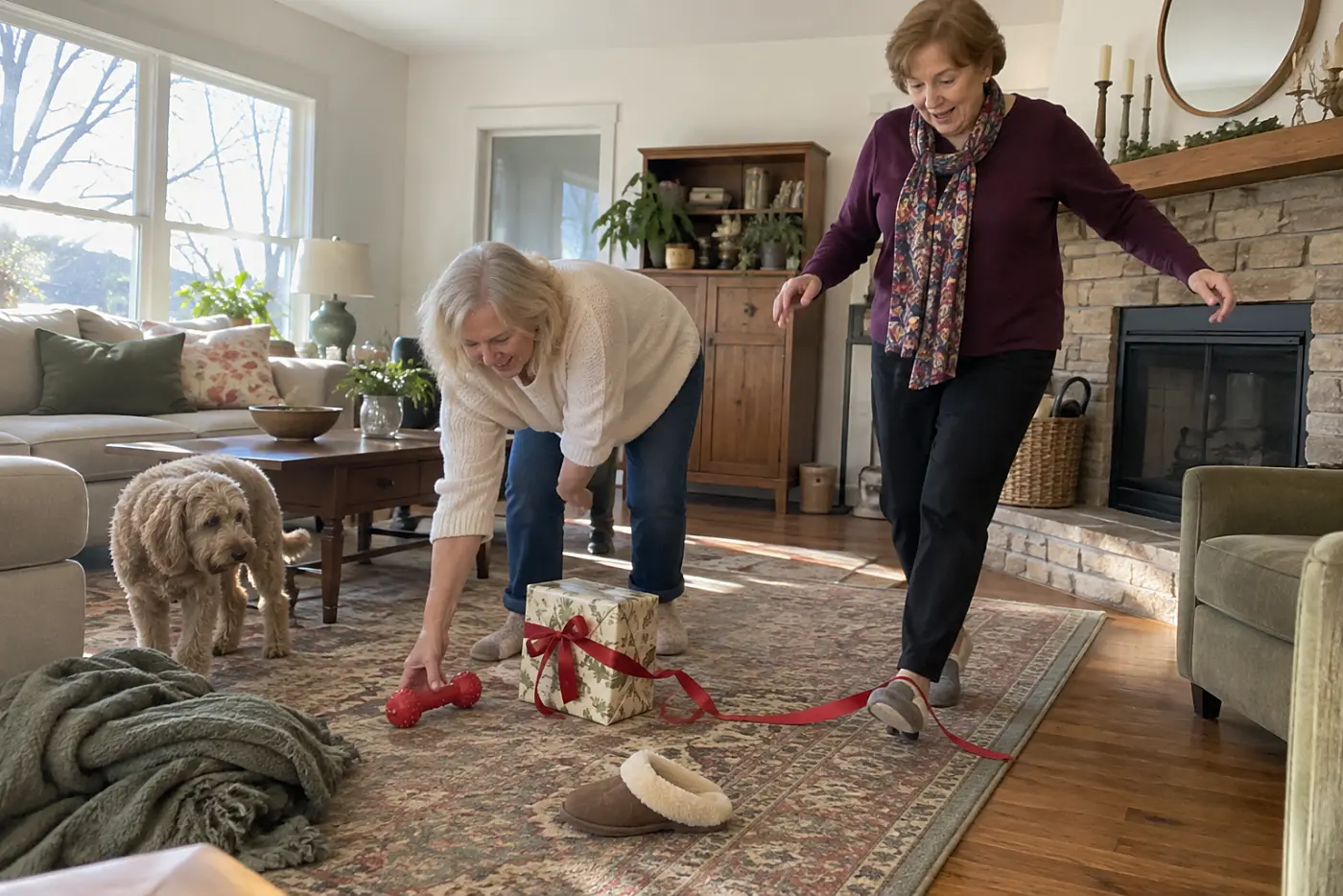
Did any of our celebrations mean anything to you? I picked a date, bought a ridiculous toy, and sang while you tried to get at the food.
You didn't need a calendar to enjoy an extra walk or a room full of familiar people. The date was mine. The time together belonged to both of us. I still see you tugging at the wrapping while I tried to take a picture.
13The empty side of the bed
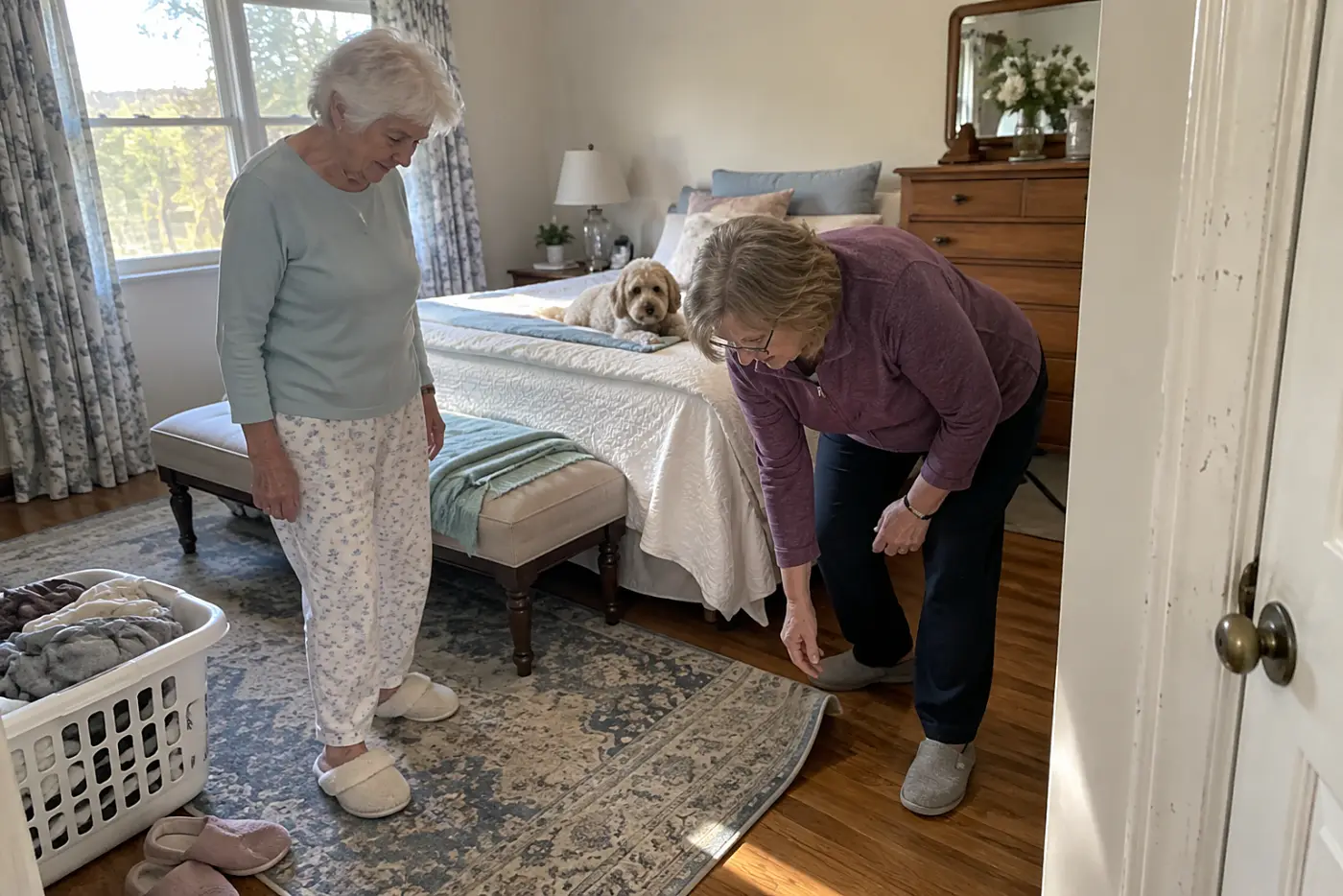
Why did you stop sleeping there? I wondered if you were tired of me. Then I remembered how you had begun choosing the rug by the door, where getting up took less effort.
I don't know what made the rug better. I wish I'd stopped trying to turn that move into a message about love. You still looked up when I passed. I still said good night. On the first morning without you, the empty space by the bed was real, but it wasn't the whole story.
12The notes from the vet visit
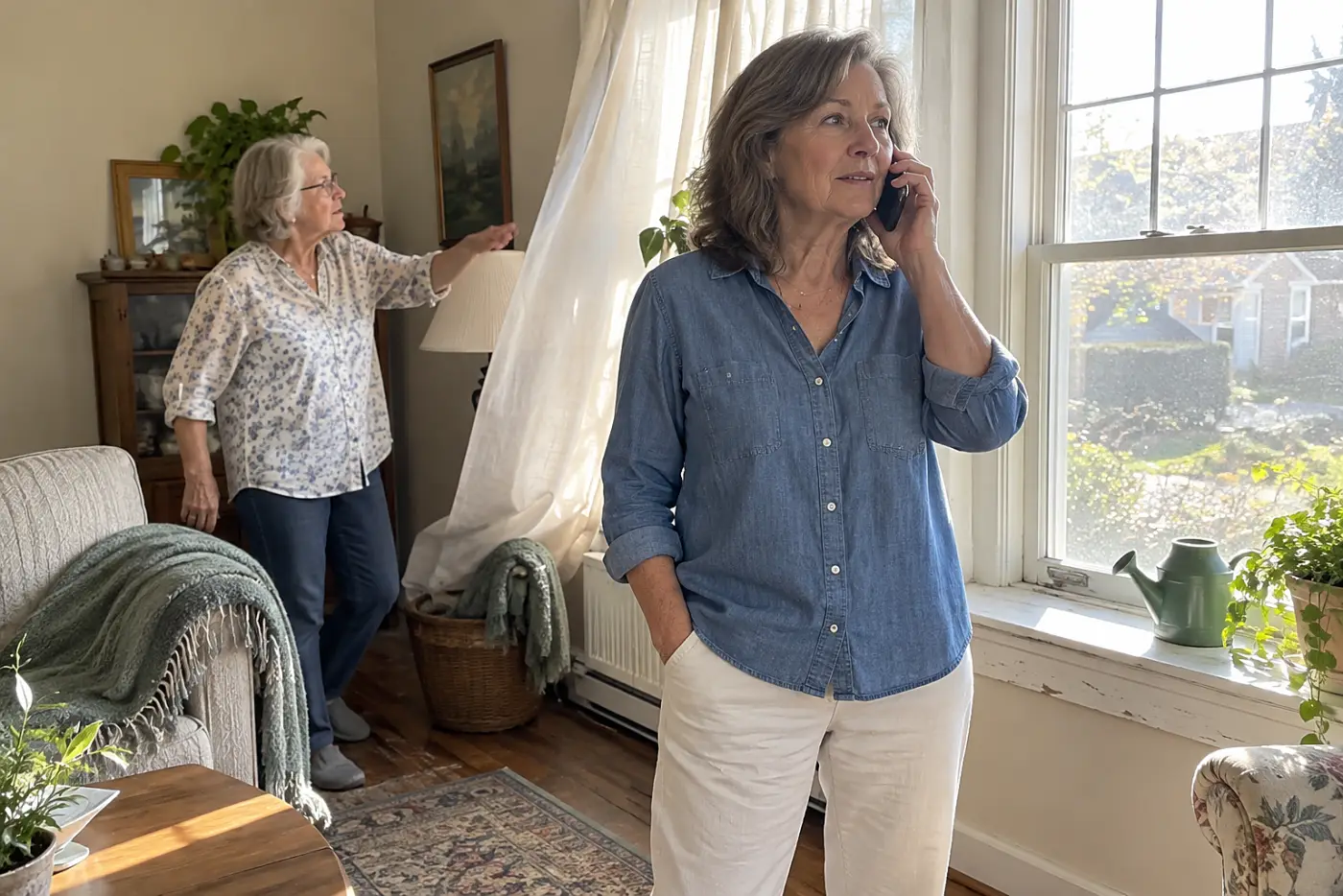
Did I understand what the vet was telling me? In the exam room, I heard words I knew and couldn't hold onto them. At home, the questions arrived in a rush.
Take the visit summary out when you have room to pause. Mark the sentence that troubles you. Then call the clinic: "I need you to explain what this meant for my pet that day."
Ask one question at a time, and write down the answer. If the summary isn't in your hands, ask the clinic how to get a copy of the record. The American Veterinary Medical Association publishes pet-owner resources, but the veterinarian who saw your pet can explain this visit.
A record won't describe every feeling in that room. It can clear up a medical detail your memory has been carrying alone.
See more: 24 Gentle Things an Old Dog Does in Her Last Good Year That Families Only Understand Later →
11The squirrel beyond the fence
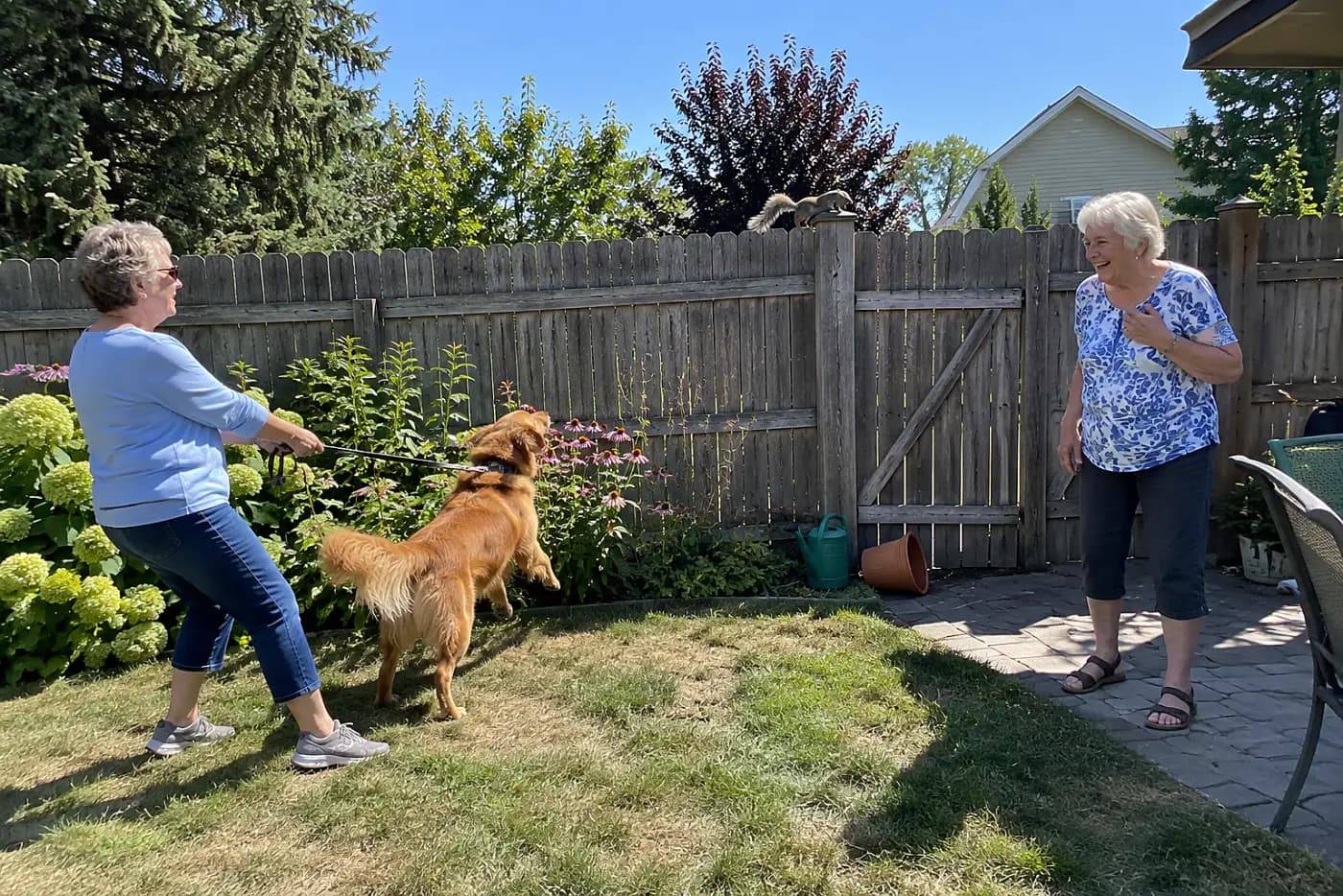
Did you ever catch sight of it before I did? You went still, then sprang forward. I always noticed the squirrel a second too late.
I loved that you had a world I couldn't fully enter. The chase ended at the fence, but your attention went farther. When I look into the yard, I remember how fiercely you watched it.
Your ears moved before I saw anything. Then your whole body pointed toward the gap under the fence, and I followed your gaze to a tail disappearing into the leaves. I wish I knew what else you saw.
10The collar in the drawer
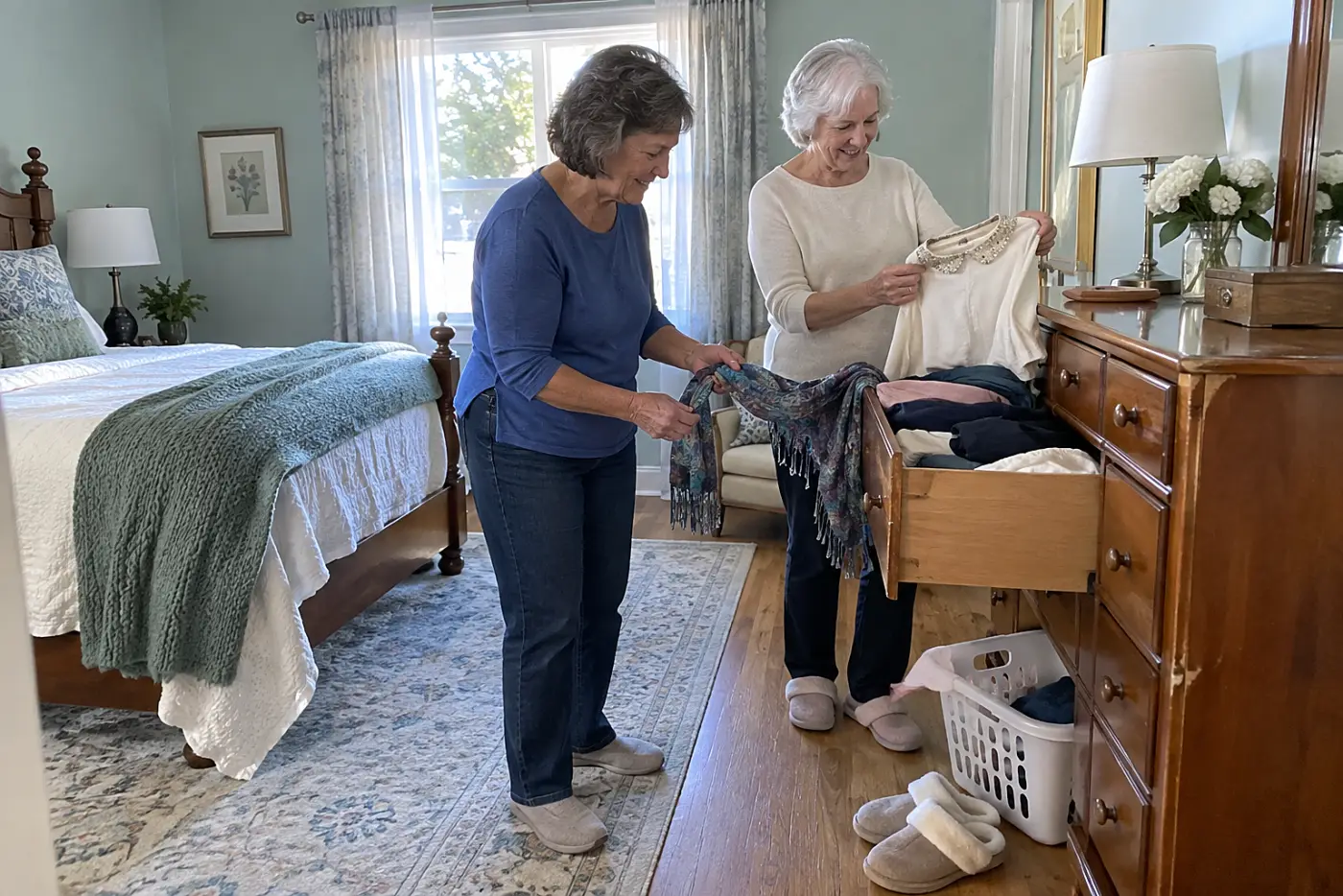
Would you want me to keep it? The tag taps against the buckle when I lift it out. That sound sends me back to you coming down the hall.
Try placing the collar somewhere you pass, then somewhere you don't. Notice which choice lets you breathe. You don't have to make a permanent display, and you don't have to put it away for good.
The Association for Pet Loss and Bereavement has grief-support resources if deciding what to keep brings up more than you expected. I left yours in the drawer because I wanted to choose when I heard that tag. Some days I open it just to hear the sound again.
9The day I raised my voice
Do you remember the time I shouted?
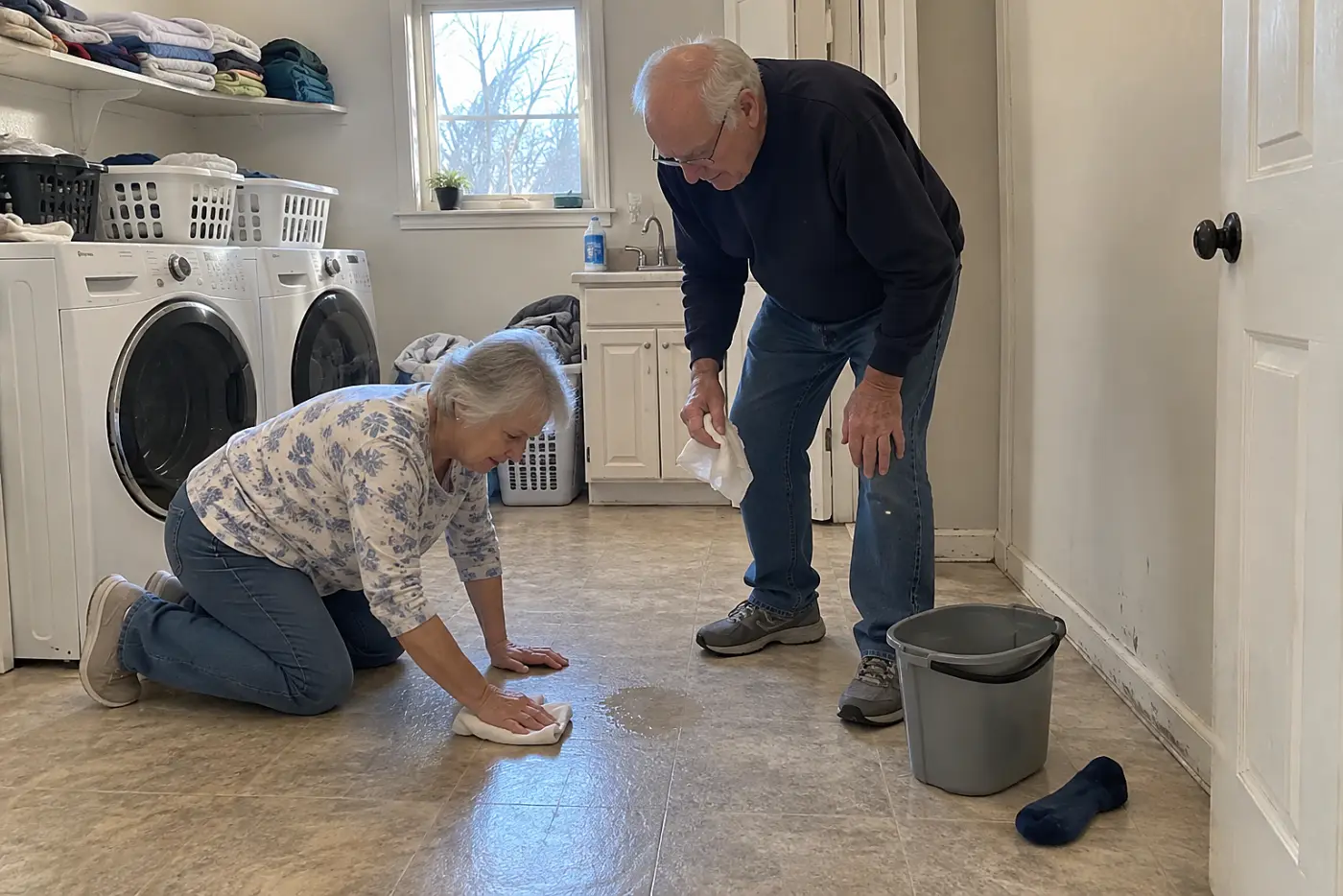
I do. I remember the mess on the floor and my own sharp voice, which sounded strange even to me once the room went still. I wish I had handled it better.
I can't ask you to tell me it was fine. What I can remember is what happened next: I cleaned up, came back, and we went on living together. I don't want to excuse that moment or let it swallow every kind one.
8The children at the gate
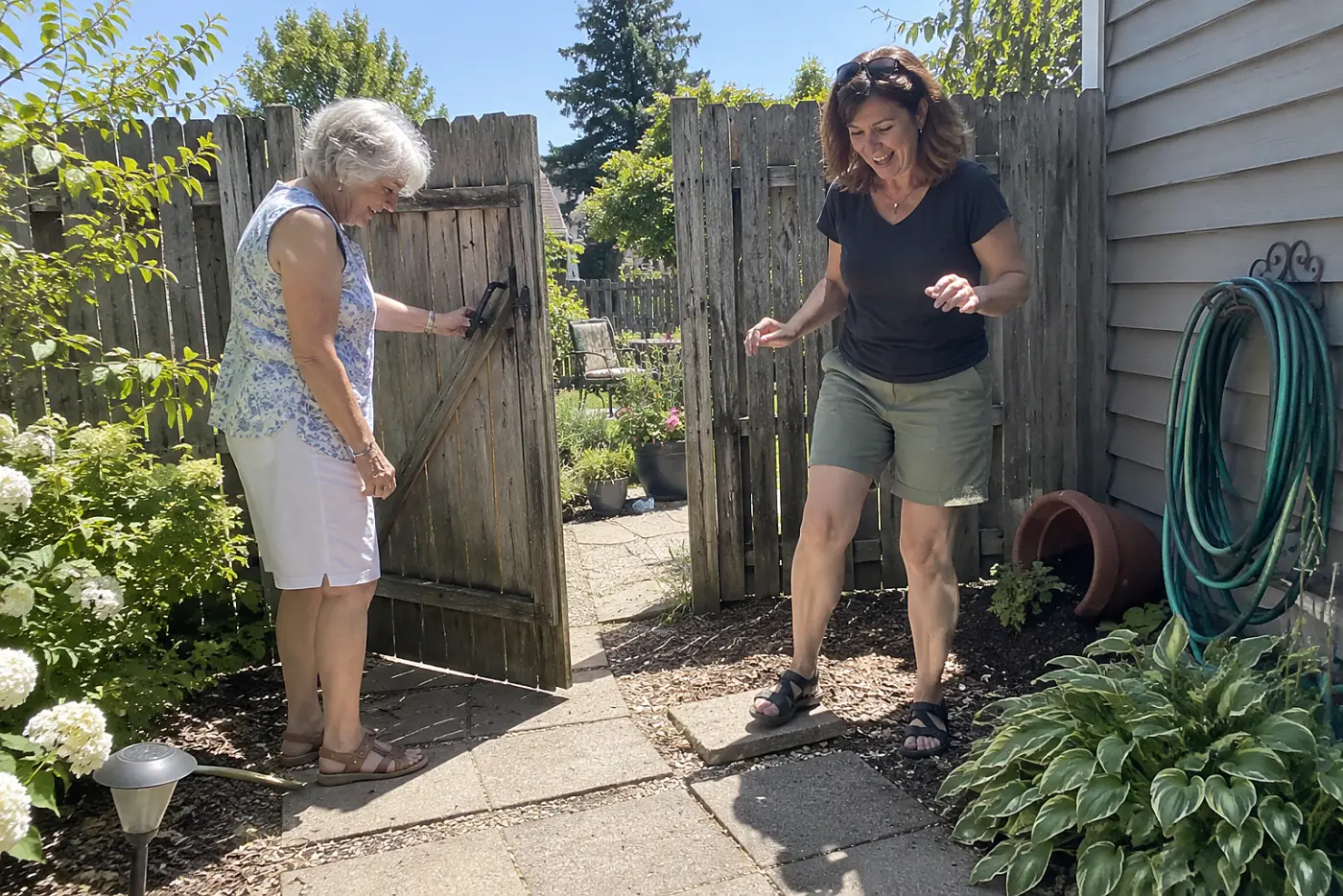
Did you know they grew up with you? At first, they had to stand on tiptoe to reach the latch. Later, they came home with car keys and still looked toward your place in the yard.
You were there for changes nobody marked at the time. Ask them for a memory that doesn't start with your last day: a game they invented or an odd habit they noticed.
The American Academy of Child and Adolescent Psychiatry has material on children and pet loss. Your grown children, though, hold memories from rooms you weren't in. Their answers give you another view of the life you shared.
7The muddy prints on the floor
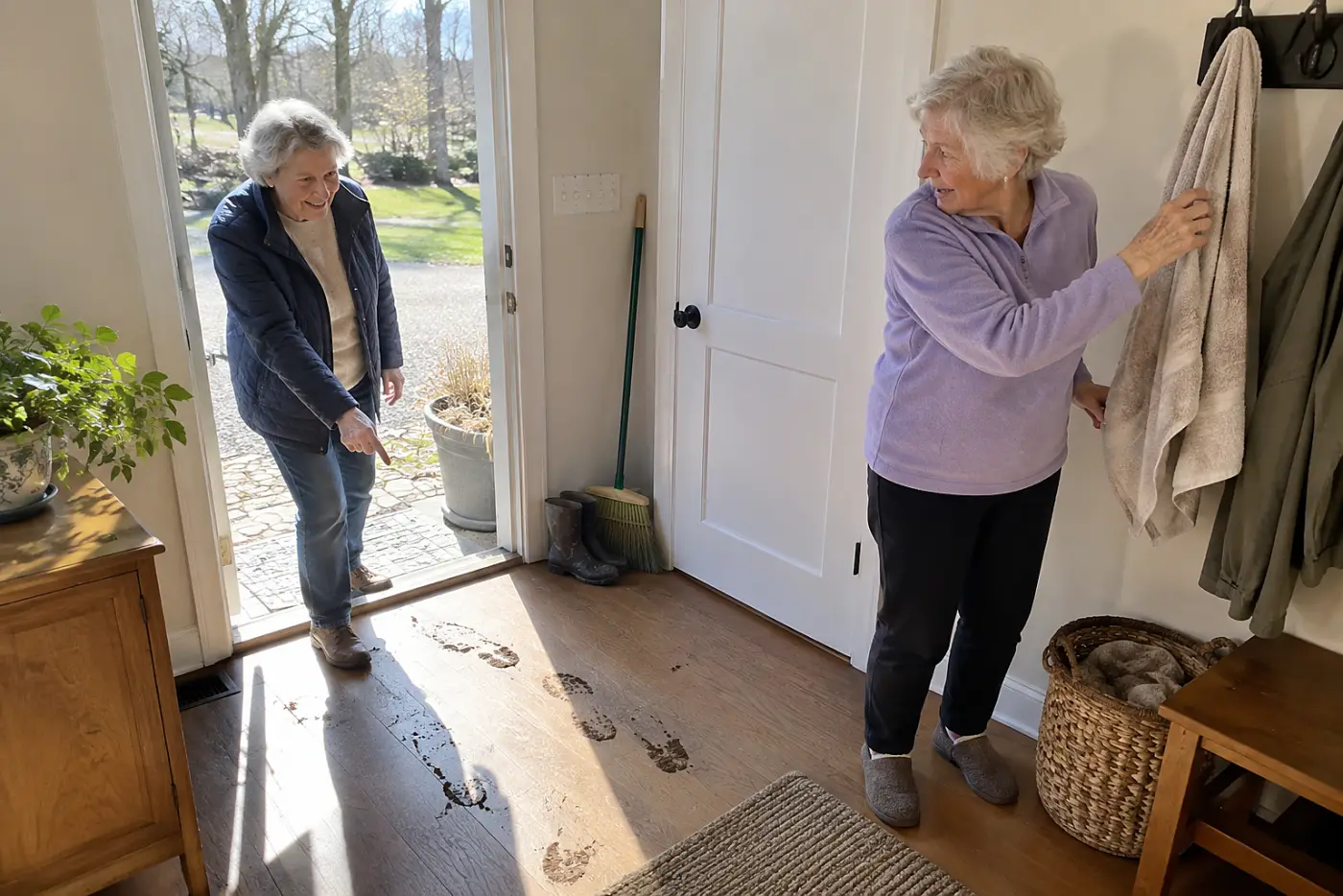
Why did I wipe them up so fast? I used to follow you with a towel, annoyed that the clean floor lasted only until you came inside.
Now I look for one print under the bench. There isn't one. I don't miss the mud itself. I miss the ordinary job that meant you had been out in the yard and were back where I could see you. I would take the towel down again.
See more: 29 Signs the Clutter Is Really Grief →
6The last photograph on my phone
Was that how you felt, or only how you looked? In the picture, you are curled on the rug with your eyes half closed. I took it because the afternoon light reached your face.
After you died, I enlarged the image until I could see every line. I kept asking it for proof that you were comfortable. A photograph holds one instant. It doesn't tell me everything happening inside it.
When I scroll back, I find other pictures: you at the door, you on the sofa, you moving through rooms that were yours. I need those, too. The Cornell University College of Veterinary Medicine has resources on caring for aging pets, but no photograph gives a diagnosis.
5The words I said at home
Did you hear me when I told you it was all right to rest? I said it because I couldn't think of anything else to give you.
Those words weren't permission you had to wait for. They were what I had left to say. I remember speaking them, and I remember staying close enough to hear your breathing. I can't know what reached you. I do know I didn't let the room fall silent because I was afraid to speak.
4The appointment I made
Did I choose the right day? Before I called, I watched you struggle with things that had once been easy. I spoke to the veterinarian. I listened, asked questions, and made the appointment.
Afterward, the question changed. I began comparing that day with an imagined later day when you would have felt better, or an earlier day when you would have suffered less. I don't know what either day would have brought.
If this question stays with you, ask the vet to walk back through the signs you saw and the reasoning behind the advice. The Ohio State University Veterinary Medical Center has pet-loss resources, including ways to think through quality of life.
You made the choice with the animal in front of you that day, not with the certainty you wish you had now.
See more: 24 Things to Do Before Your Pet's Hardest Appointment →
3The greeting I nearly missed
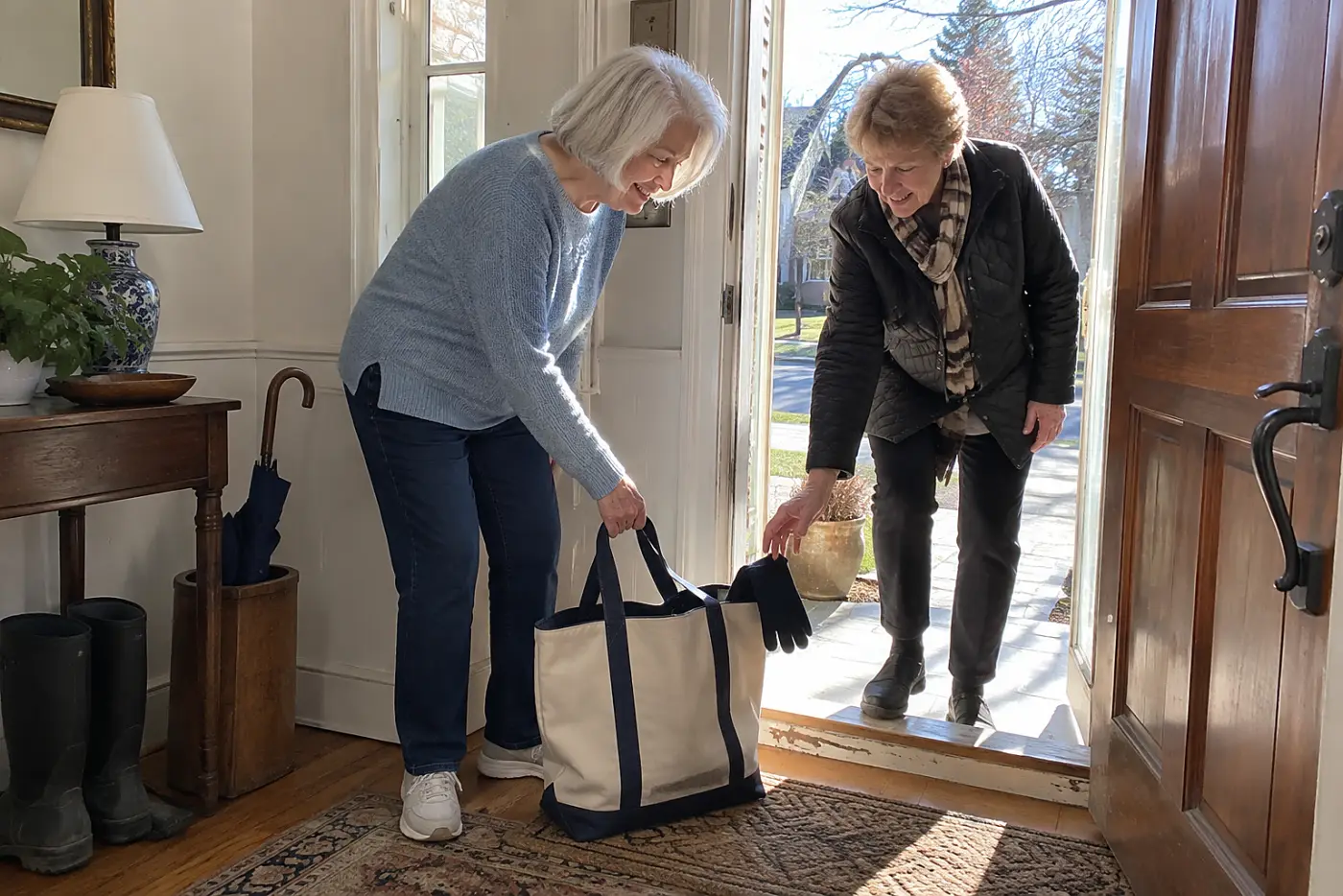
Was there a last ordinary hello? I can't find it. One day I opened the door and you came to meet me. I put down my bag, spoke your name, and went about the evening.
I would pay more attention if I had that minute back. Still, you got my voice and the familiar sound of me coming in. I keep wanting to make that greeting grander. Perhaps I should let it stay ordinary, the way so much of our life together was.
2The drive home without you
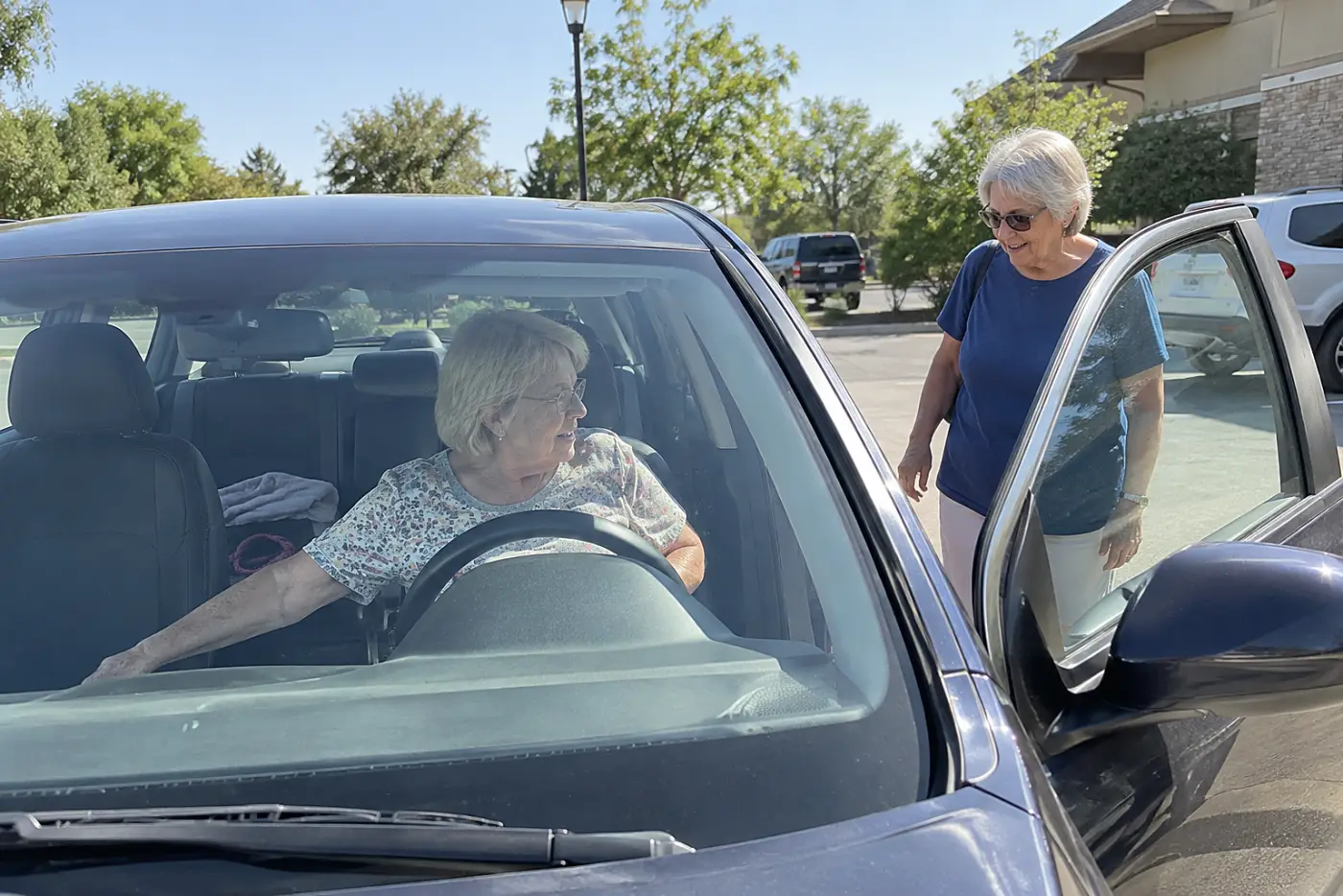
How was I supposed to leave without you? I closed the car door and saw the empty passenger seat. At the first red light, I reached toward the place where the carrier had been.
The drive home belongs to the story, even if you weren't in the car. It was the first trip through familiar streets without the sounds I knew: your shifting weight, the buckle tapping, my own voice saying we were almost home.
If that trip keeps returning, tell someone where you drove and what you noticed. The American Psychological Association has resources on grief, but you don't need a perfect account. "I stopped at the light and reached for you" is enough to begin.
1The place I sat beside you
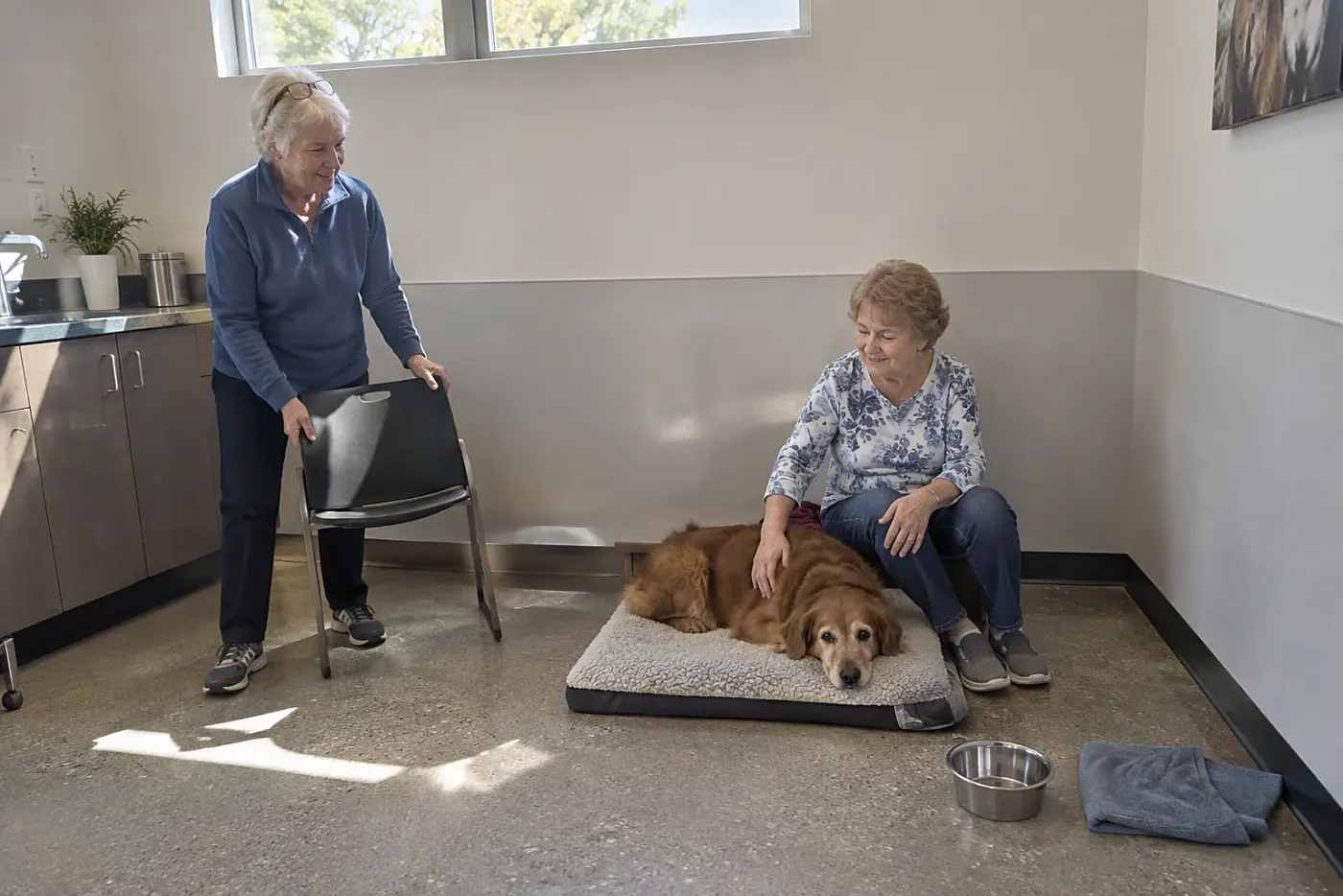
Did you know I was there?
I want to say yes without pretending I know every part of your final moments. I remember pulling a chair close. I remember your body against my hand and the effort it took to keep speaking in my usual voice.
When the memory starts with the worst image, I go back to what I did. I found a place beside you. I stayed through the part I feared. I said your name.
Write those details down if they keep slipping away. Start with three things: where you sat, what you touched, and what you said. Don't force the memory to answer for your pet. Let it tell the part that belongs to you.
I was there. I wish I knew how it felt to you.
The bottom line
These questions return because you knew your pet in the daily ways: the dish, the door, the place beside your feet. A final day leaves gaps that those memories can't fill.
Keep the details you do know. Put a photograph where you want it. Ask the vet about the medical questions that still trouble you. Write down where you were before that part of the story grows hard to reach.
Which ordinary moment with your pet still comes back to you when the house is still?
Up next
23 Moments Pet Grief Ambushes You, and What Helps
A leash by the front door, a sudden sound from another room, an empty spot on the couch: here’s what those moments do and what helps you get through them.
Read the list →
Reader quiz
Did you catch the details?
5 questions from this article.
Before calling the clinic about your pet's eating, what does the article suggest you note?
Did any of these feel familiar?
Know someone who needs this?
Sources cited in this article
This article links to 8 outside sources, listed here so you can read them yourself.
- American Animal Hospital Association www.aaha.org
- American Veterinary Medical Association www.avma.org
- American College of Veterinary Emergency and Critical Care www.acvecc.org
- U.S. Food and Drug Administration's Center for Veterinary Medicine www.fda.gov/animal-veterinary
- Association for Pet Loss and Bereavement www.aplb.org
- Cornell University College of Veterinary Medicine www.vet.cornell.edu
- Ohio State University Veterinary Medical Center vet.osu.edu
- American Psychological Association www.apa.org
Ruth Ellison
Family Editor
Ruth writes about grown children, grandchildren, ageing parents, and the conversations families put off, in the words of the people involved.
More from Ruth Ellison