


27 Things a Rescue Dog Does Once He Finally Believes He Is Home
The shoe by the door, the sound of your keys, the place you sit: small changes reveal how much safer he feels.
By Ruth Ellison, Family Editor
Updated · 12 min read
- Written by our family editor
- Cited 6 sources
- How we review
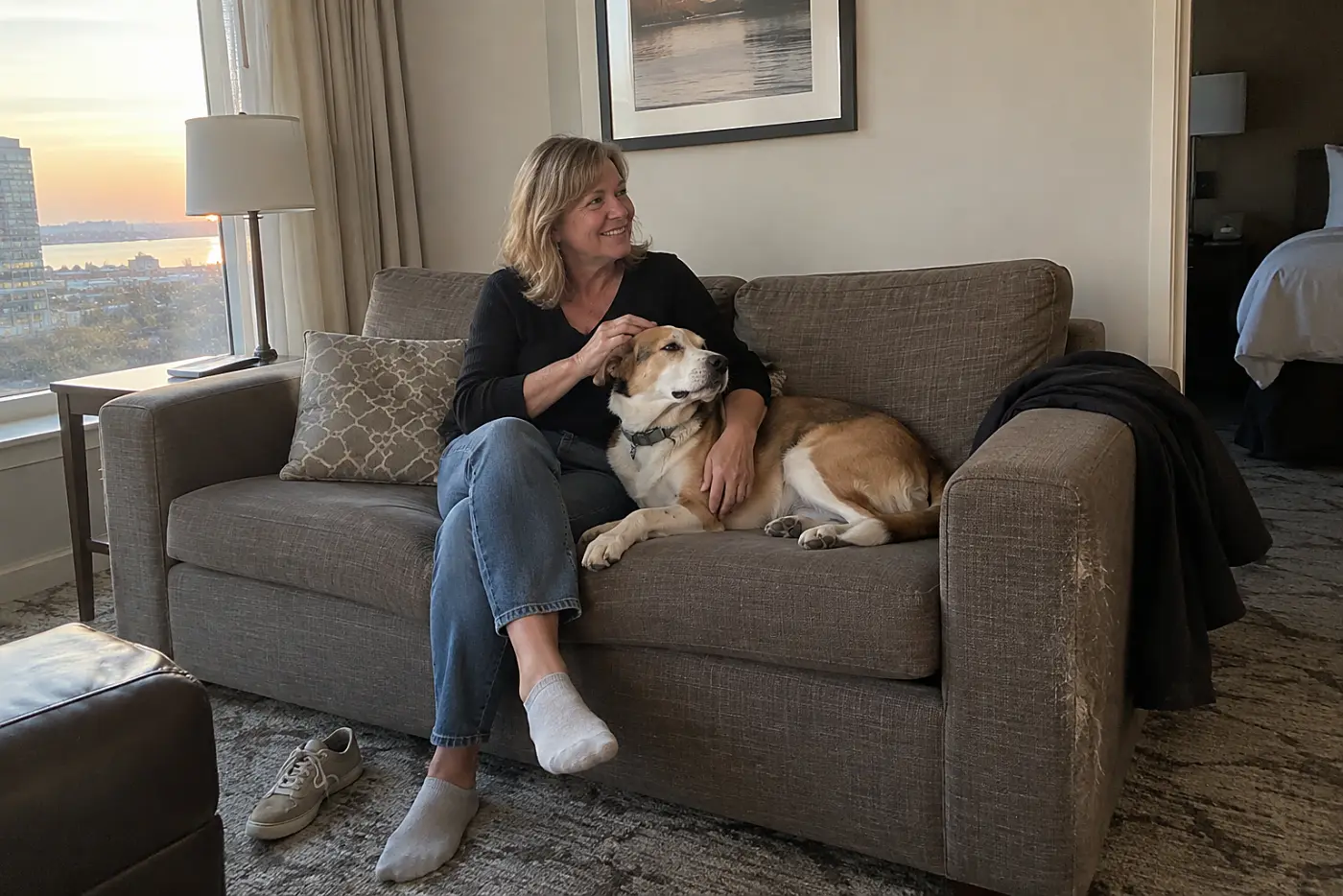
The first time the baking sheet slipped from your hand, he vanished behind the armchair. You found him pressed against the wall, eyes fixed on the kitchen. Months later, the same pan clattered onto the floor. He looked up, saw you reach for it, and put his head back down.
That change is easy to miss if you’re waiting for a grand moment. Trust lives in ordinary things: a door closing, a hand reaching, a dog choosing where to sleep. None of these behaviors proves what he’s thinking. Together, they tell you what life in your house feels like to him.
27His Head Stays Down When Keys Jingle
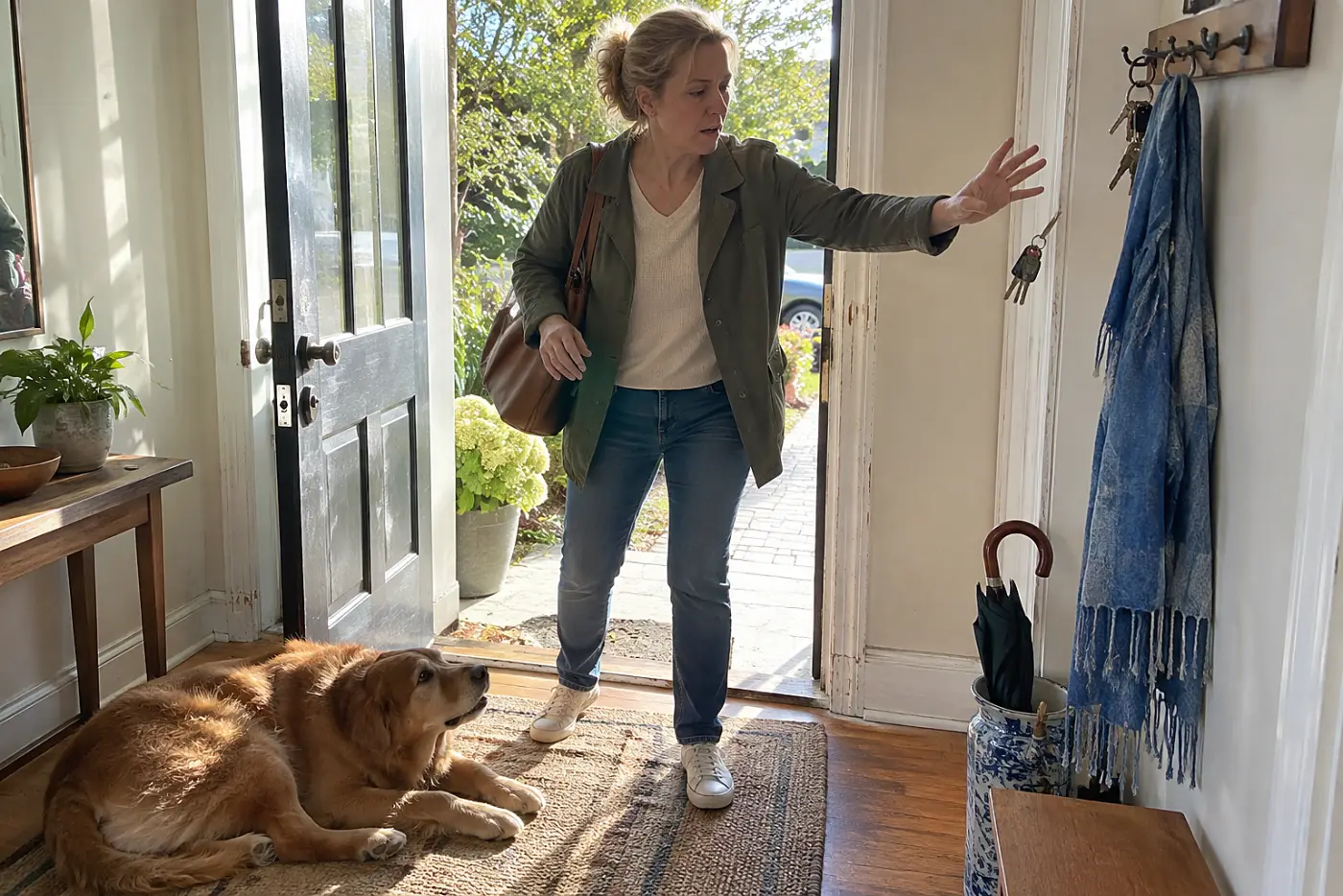
Your keys used to bring him to his feet before you reached the door. Now he watches from the rug while you find your coat. He has seen the pattern repeat: you leave, and you come back.
That doesn’t mean he’ll love every departure. A dog who panics when left alone needs help with that distress, even if he looks relaxed at other times. But this small pause, his chin still on the rug, deserves notice. The ASPCA has guidance on separation anxiety if departures remain hard.
26His Nose Finds the Grocery Bags
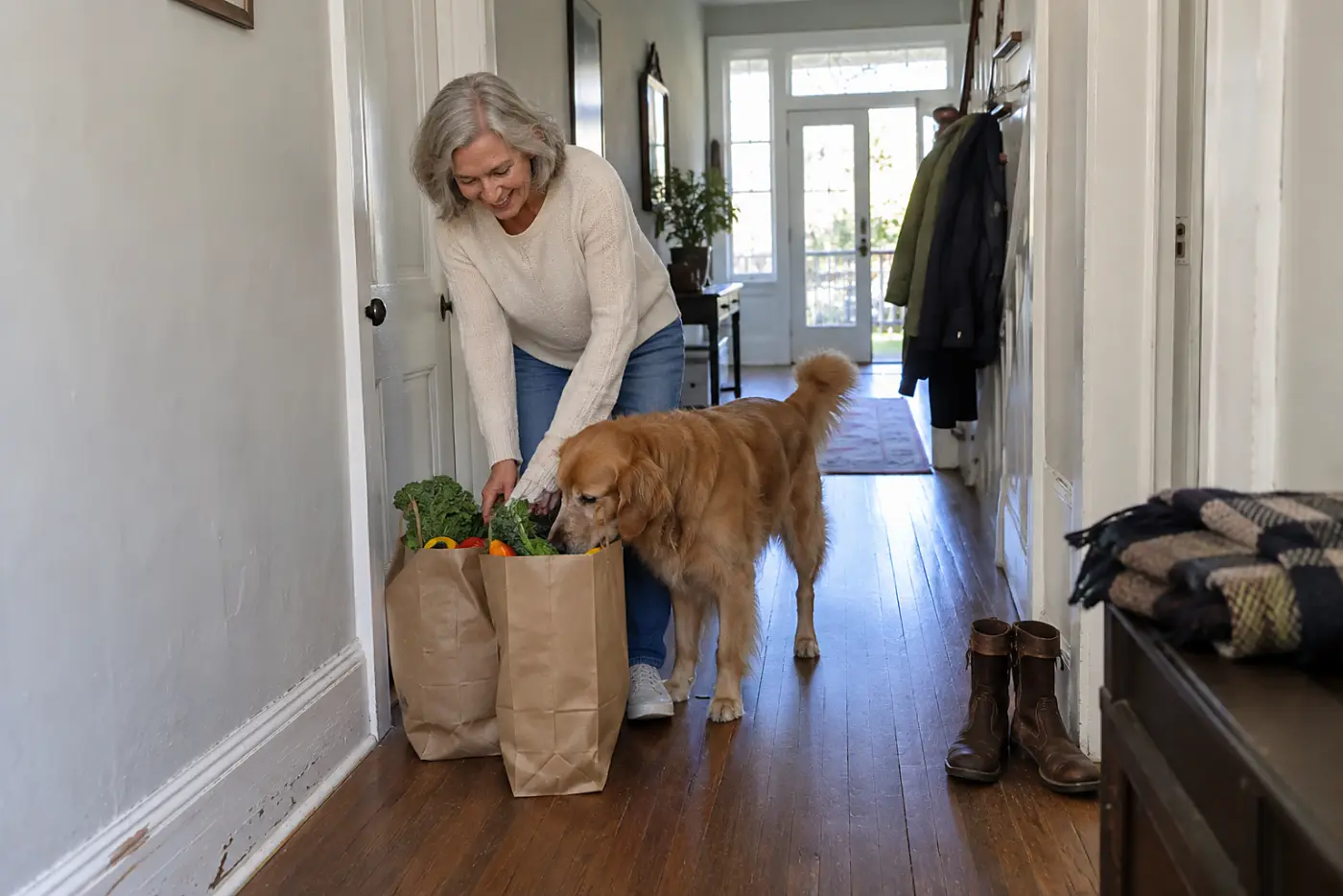
He approaches the bags before you’ve put them down. You don’t have to call him over or coax him past the doorway. He wants to know what came home with you.
Let him sniff a closed bag while you put groceries away, then move it out of reach. Food packaging, medications, and small plastic pieces don’t belong in his inspection pile. The interesting part is his choice to investigate while you’re nearby.
25His Feet Carry Him Into the Kitchen
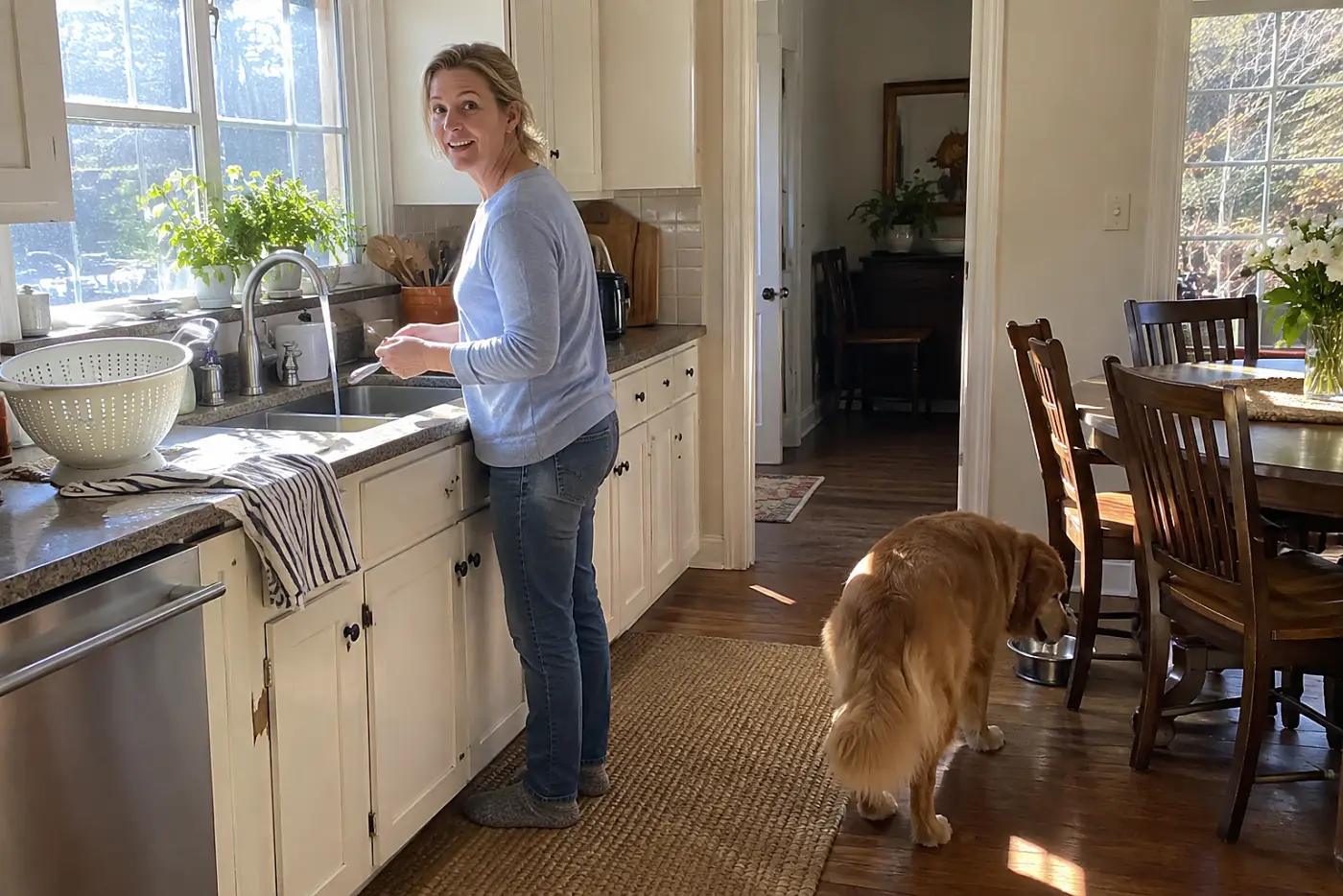
At first, he ate only after the room emptied. You’d set down his bowl, step away, and hear the faint click of his nails once he thought nobody was watching.
Now he walks in while you’re rinsing a spoon. He waits where he can see you, perhaps with an ear turned toward the hallway. A meal has become part of the household rhythm instead of a task he must finish unseen.
Give him room around the bowl. Being comfortable near you doesn’t mean he wants a hand in his food.
24His Sigh Ends an Ordinary Afternoon
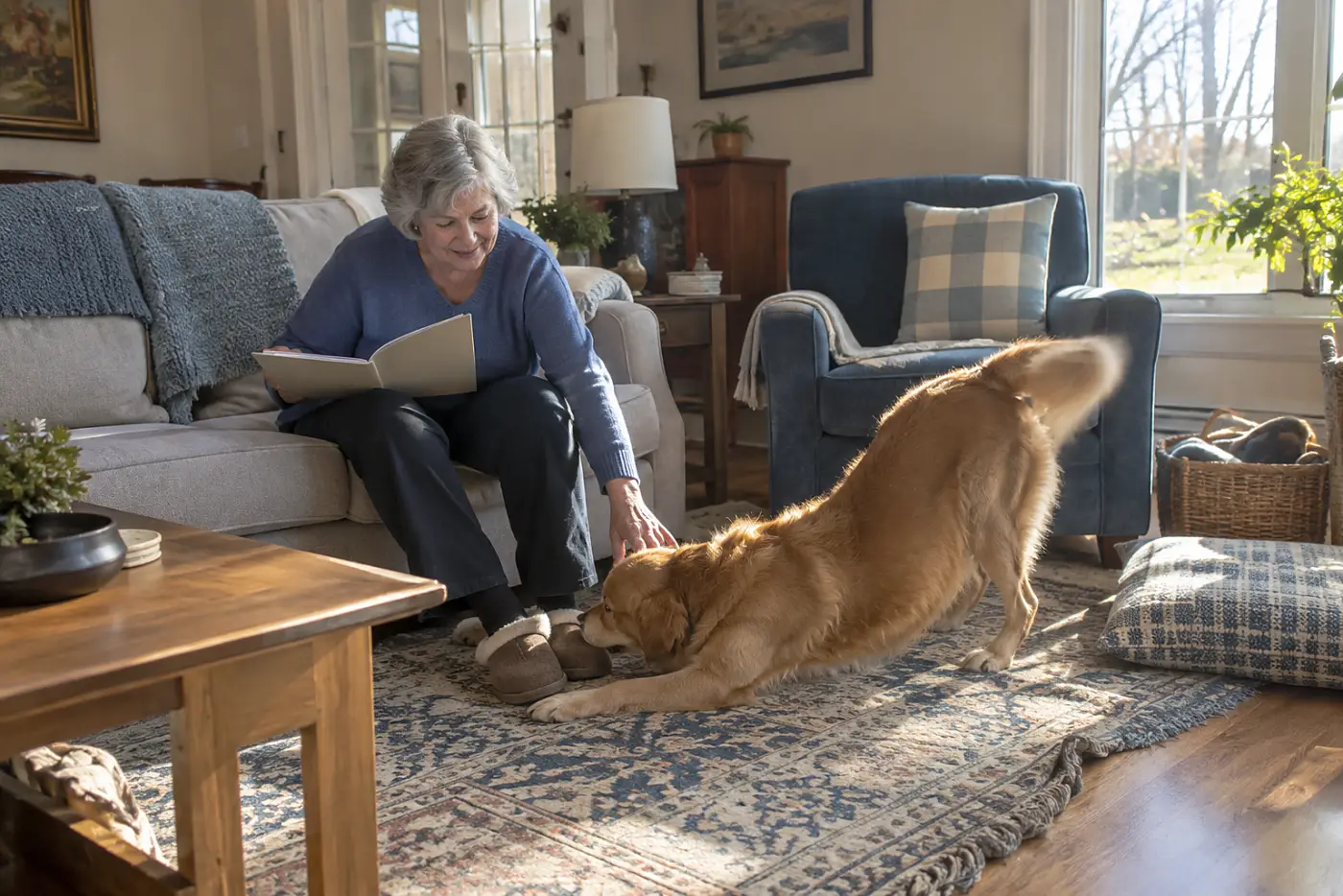
He circles the rug, lowers himself, and lets out a long breath. Nothing special happened. That’s the point.
A settled dog has time to be bored. He isn’t tracking every footstep or bracing for the next sound. Watch what comes after the sigh: loose limbs, easy breathing, and sleep. If the breathing sounds strained or his body looks tense, treat that as a separate concern.
See more: 27 Memories Women Wish They'd Spoken Aloud to Their Dog Before the End →
23His Tail Moves at the Doorbell
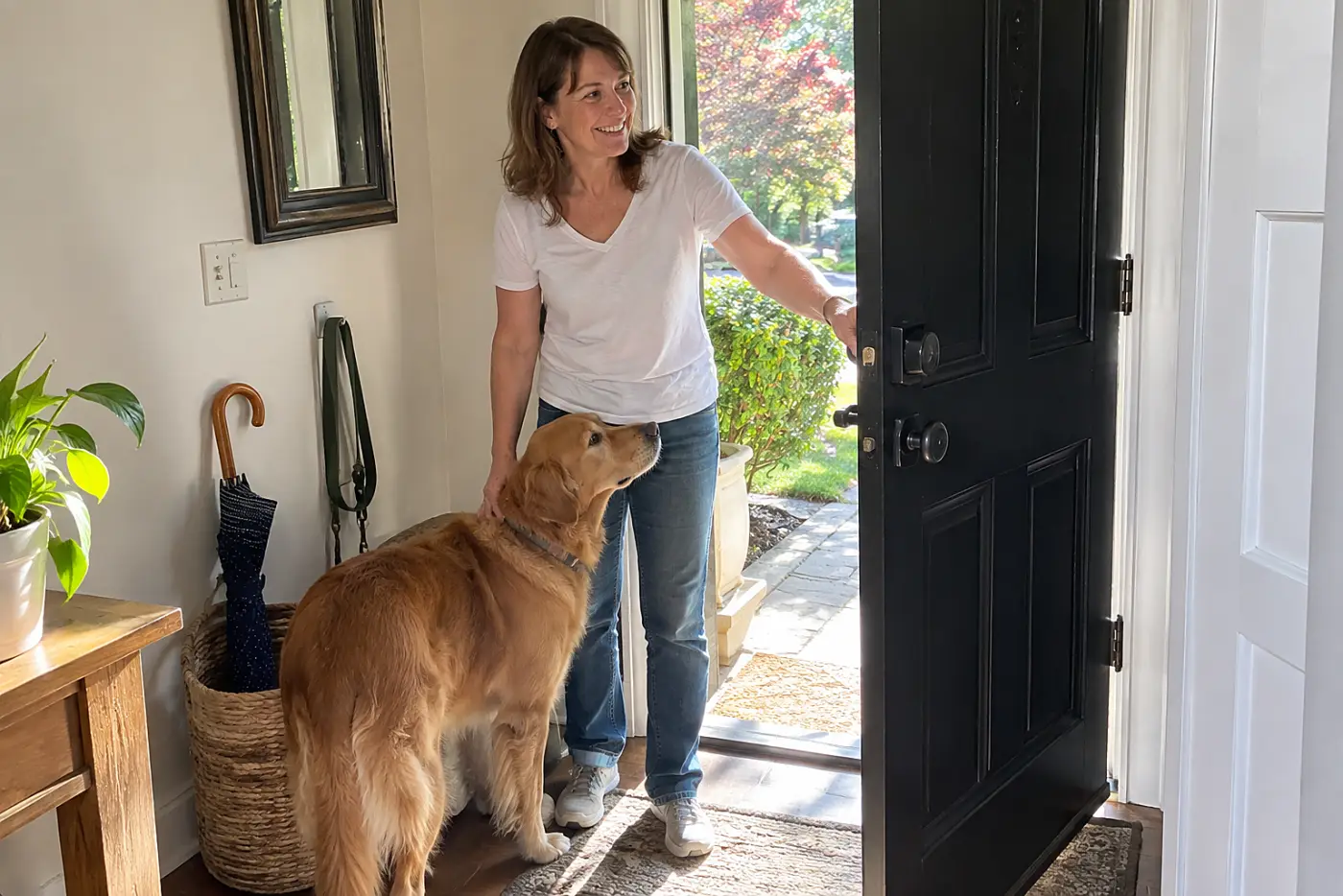
Does a wagging tail mean he loves visitors? No. Look at the whole dog. A loose body and an easy retreat toward you tell a different story from a stiff stance and frantic movement.
Perhaps he once hid whenever the bell rang. Now he stands beside your leg and watches you answer. Let him choose whether to greet anyone. Ask guests to ignore him at first, especially if he’s still learning that strangers don’t get to reach over his head.
22His Paws Follow You Down the Hall
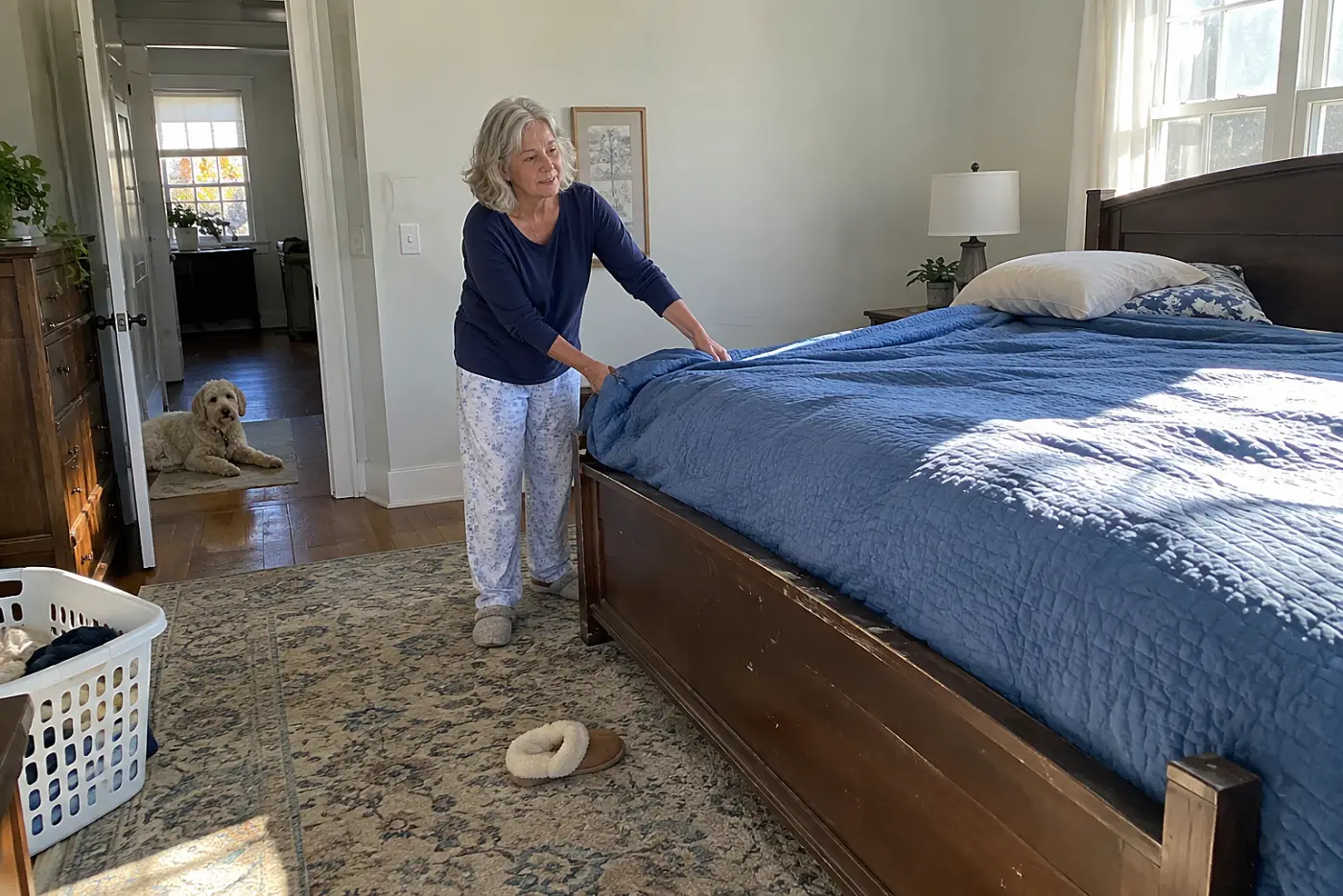
You go to change the sheets. He gets up and comes along, then settles outside the bedroom instead of rushing to keep you in sight.
The difference sits in the pace. He knows where you went. He wants to be near you, but he isn’t scrambling to stop you from disappearing.
If he follows so closely that he cries behind every closed door, talk with your veterinarian. The American Veterinary Medical Association is another place to find guidance on behavior concerns.
For now, you leave the bedroom door open. He chooses the hallway.
21His Ears Ignore the Dishwasher Click
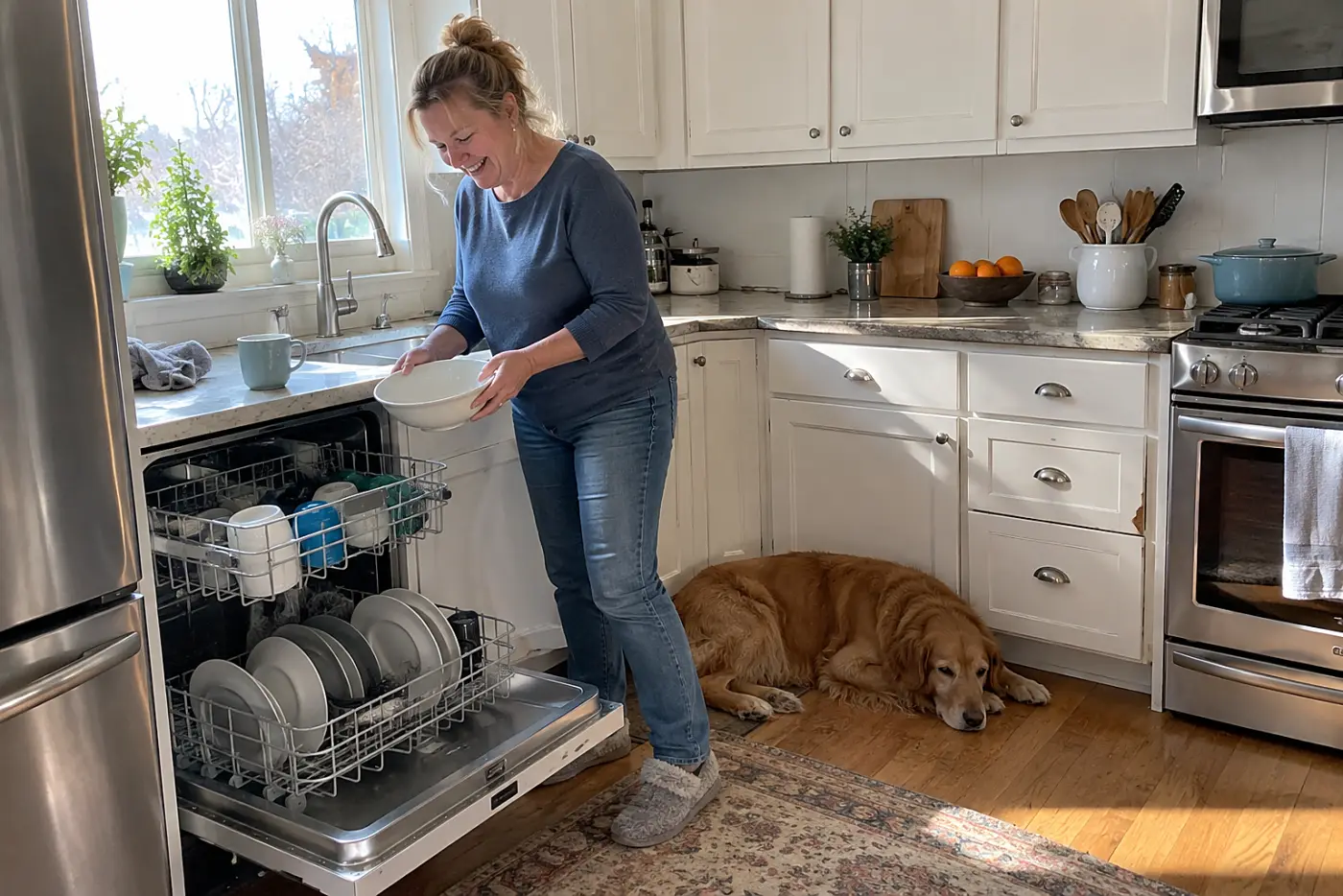
The dishwasher shuts off. He hears it, flicks an ear, and keeps resting.
You remember when that same click sent him under a chair. Familiar household sounds have become easier to sort from danger. Keep noticing changes, though. If he stops responding to the dishwasher or to your voice, ask your veterinarian to check his hearing. His history shouldn’t become the answer to every new behavior.
20His Body Stretches Across the Doorway
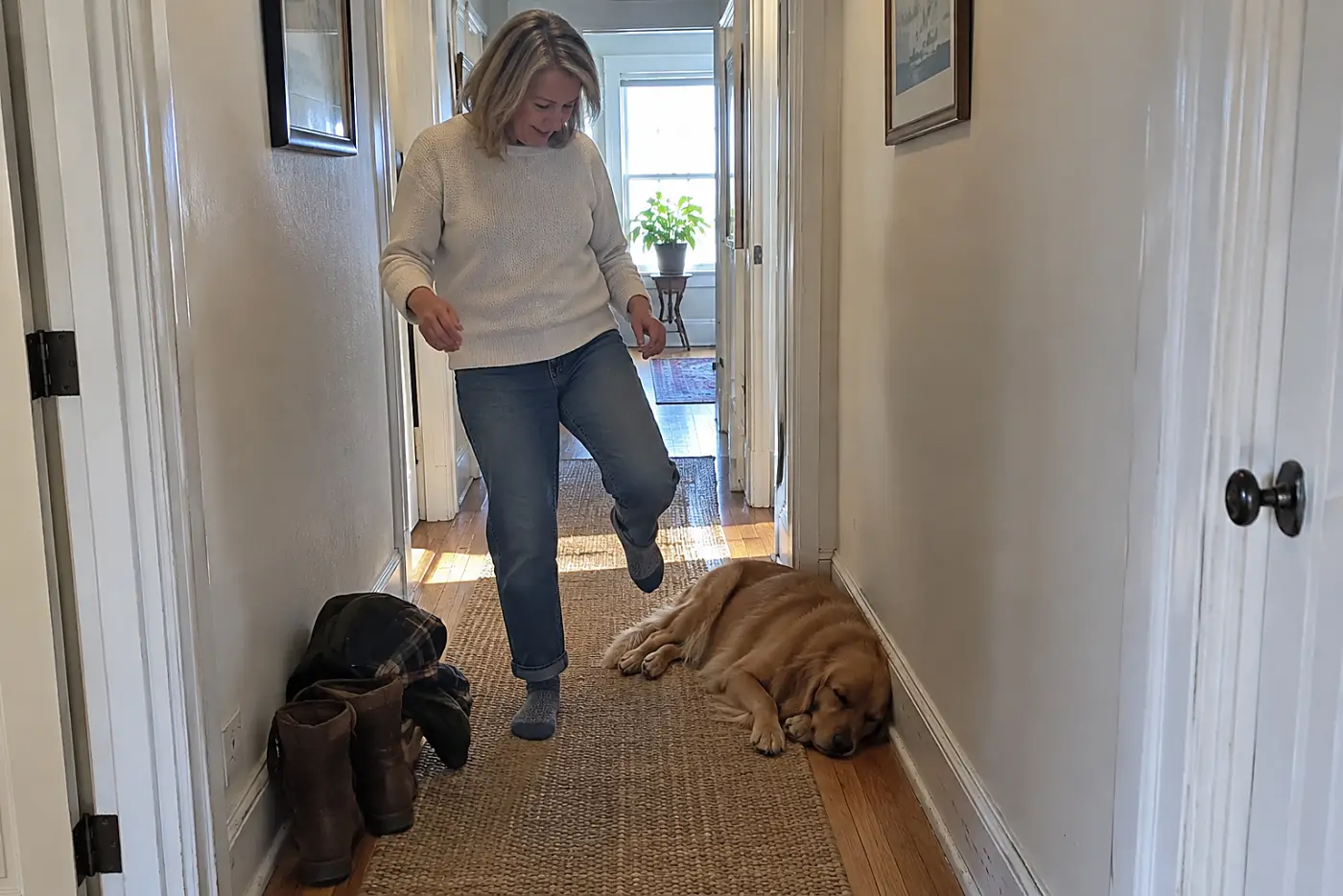
One morning, you find him lying where everyone has to step around him. He’s chosen the busiest spot in the house, with his back against the floor and his belly open to the air.
It’s tempting to read that pose as a declaration: *I trust you completely.* His body is telling you something smaller and more useful. Right now, he feels comfortable enough to rest where life happens.
Step around him rather than nudging him with your foot. Give him room to stay where he chose. He shouldn’t have to move every time someone crosses the house.
19His Eyes Return to You Outside
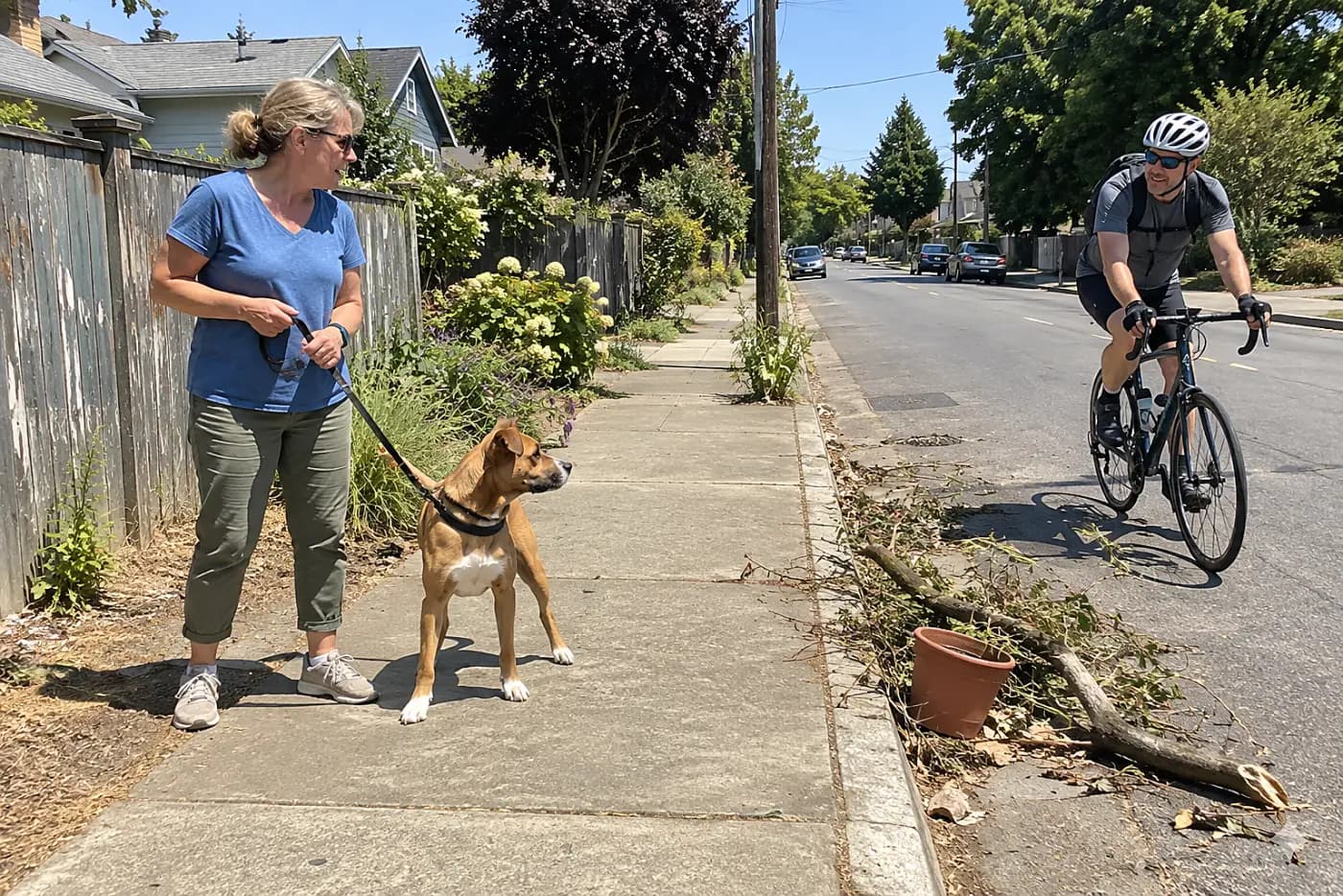
A bicycle goes by. He watches it, then glances back at your face.
That glance gives you a chance to respond before he reaches the end of the leash. Say his name, give him space from the bicycle, and reward him for coming with you. You’re building a familiar exit from a moment that feels uncertain.
The American Kennel Club describes this kind of voluntary glance as a check-in. If he looks to you, make it worth his while.
18His Chin Lands on Your Slipper
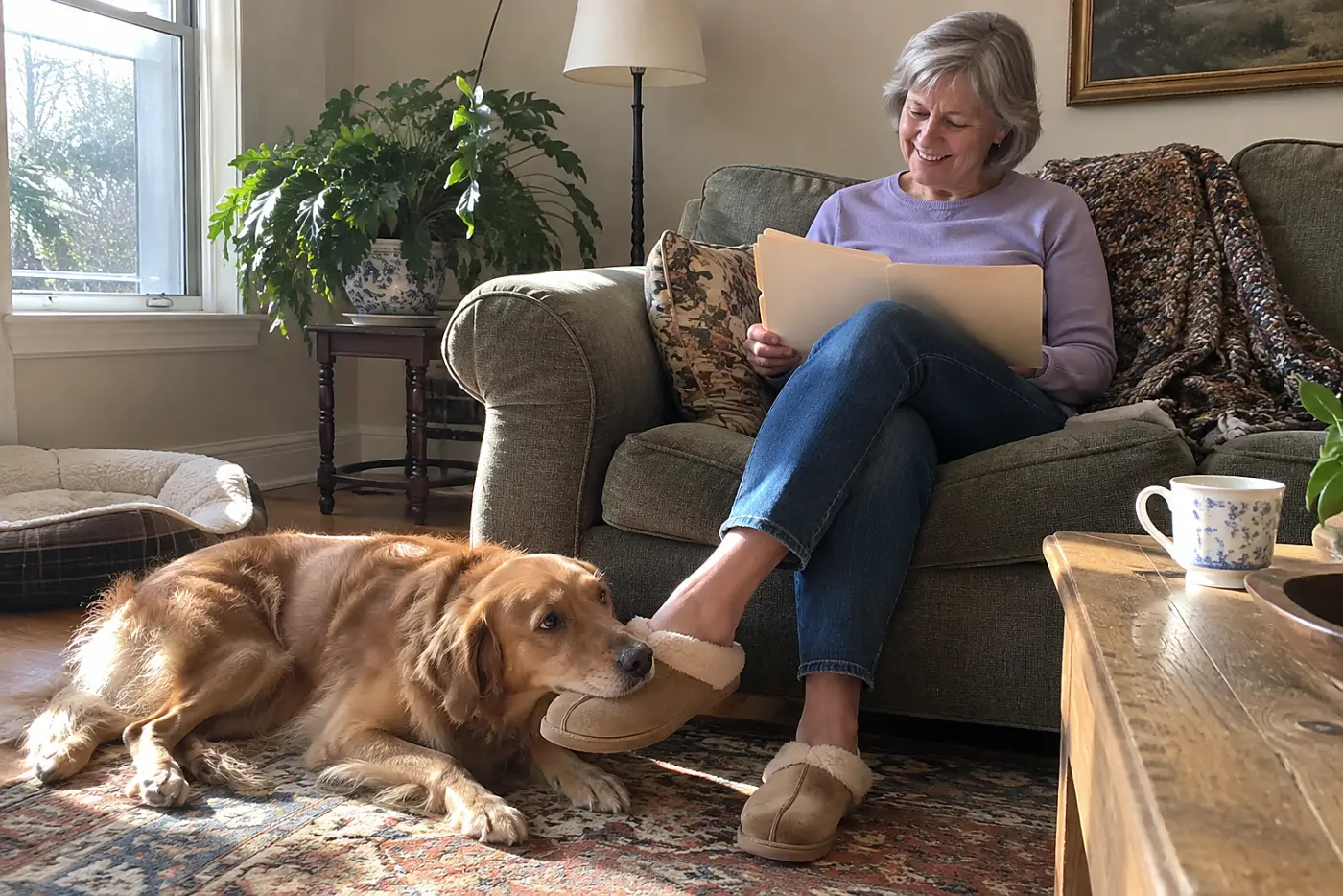
You’re reading on the couch when he rests his chin across your slipper. He doesn’t ask for a walk or a treat. He stays there while the room goes still.
You spent so long respecting his distance that this touch feels enormous. Let him set its length. Move your foot if you need to, but give him a word first. He chose a place where he could feel you.
17His Morning Begins Before the Alarm
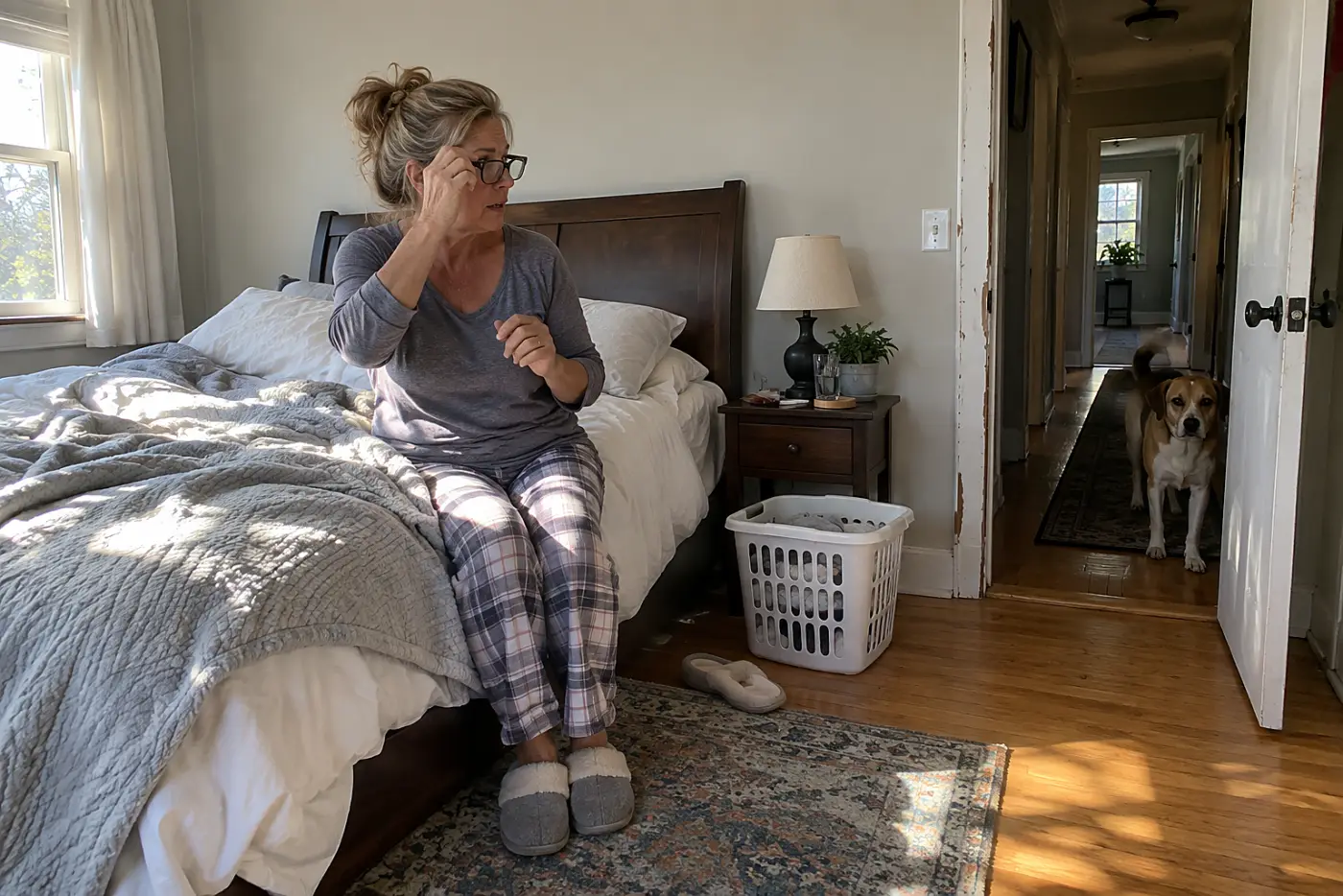
He knows the sound of the bedroom stirring. Before the alarm, you hear his tags at the door. Once you’re up, he waits while you find your glasses, then heads toward the back door.
A routine gives him clues about what comes next. It also gives you a way to spot change. If a dog who wakes eagerly starts sleeping through breakfast or seems reluctant to stand, don’t file it under “rescue dog behavior.” Notice when the change began and call your veterinarian.
On an ordinary morning, though, those tags mean something lovely: he expects the day to start with you.
16His Mouth Brings Back the Ball
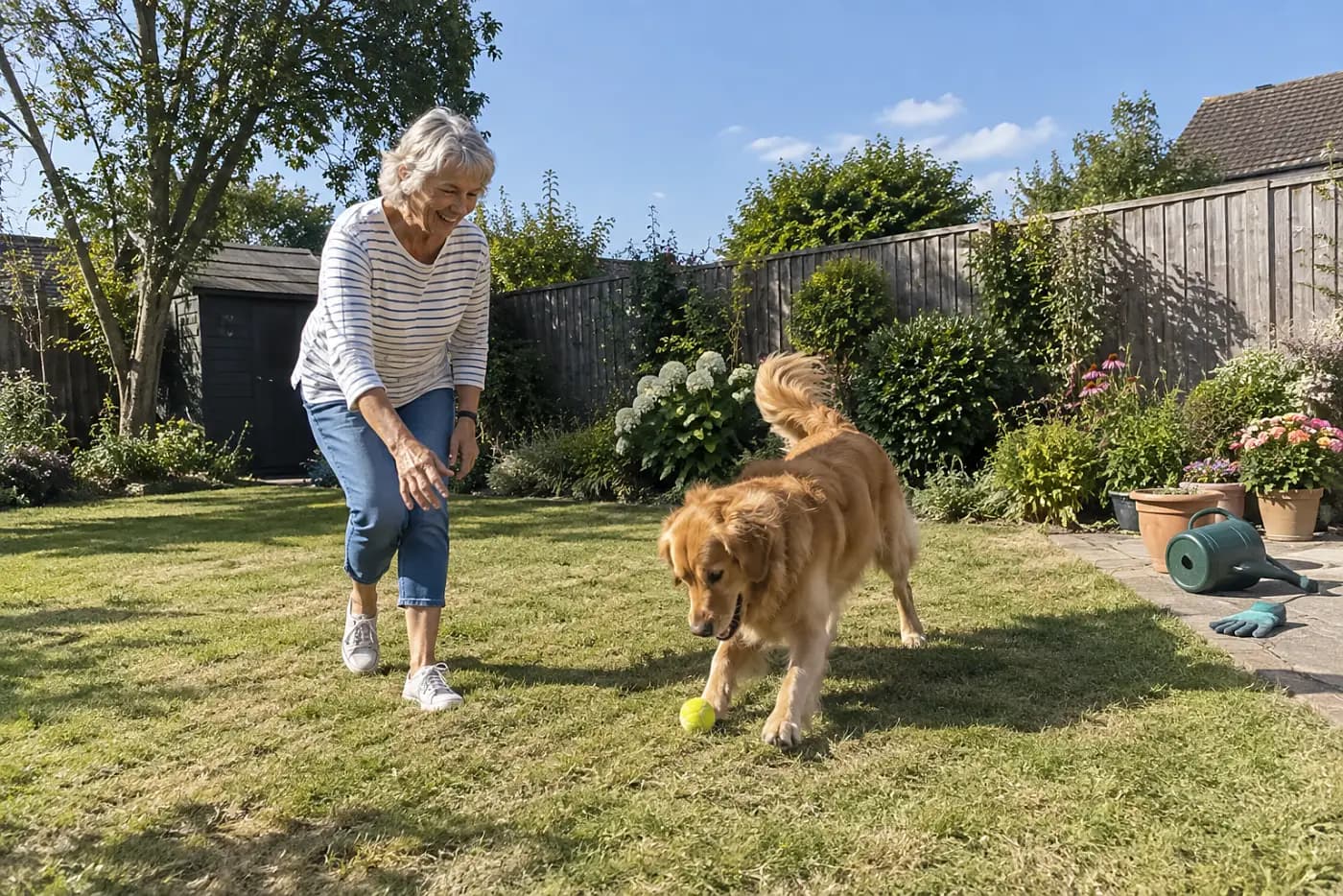
You toss a ball. This time he picks it up and brings it toward you, dropping it close enough for another throw.
He has learned that giving something back leads to more play. That’s a big shift for a dog who once carried every toy away. Keep the exchange fair: trade for a treat when you need to take an object, and leave him alone when he’s enjoying a safe chew.
If he stiffens or guards what’s in his mouth, stop reaching. The ASPCA’s dog behavior resources cover guarding, and your veterinarian can help you find a qualified behavior professional.
15His Back Turns Toward the Sofa
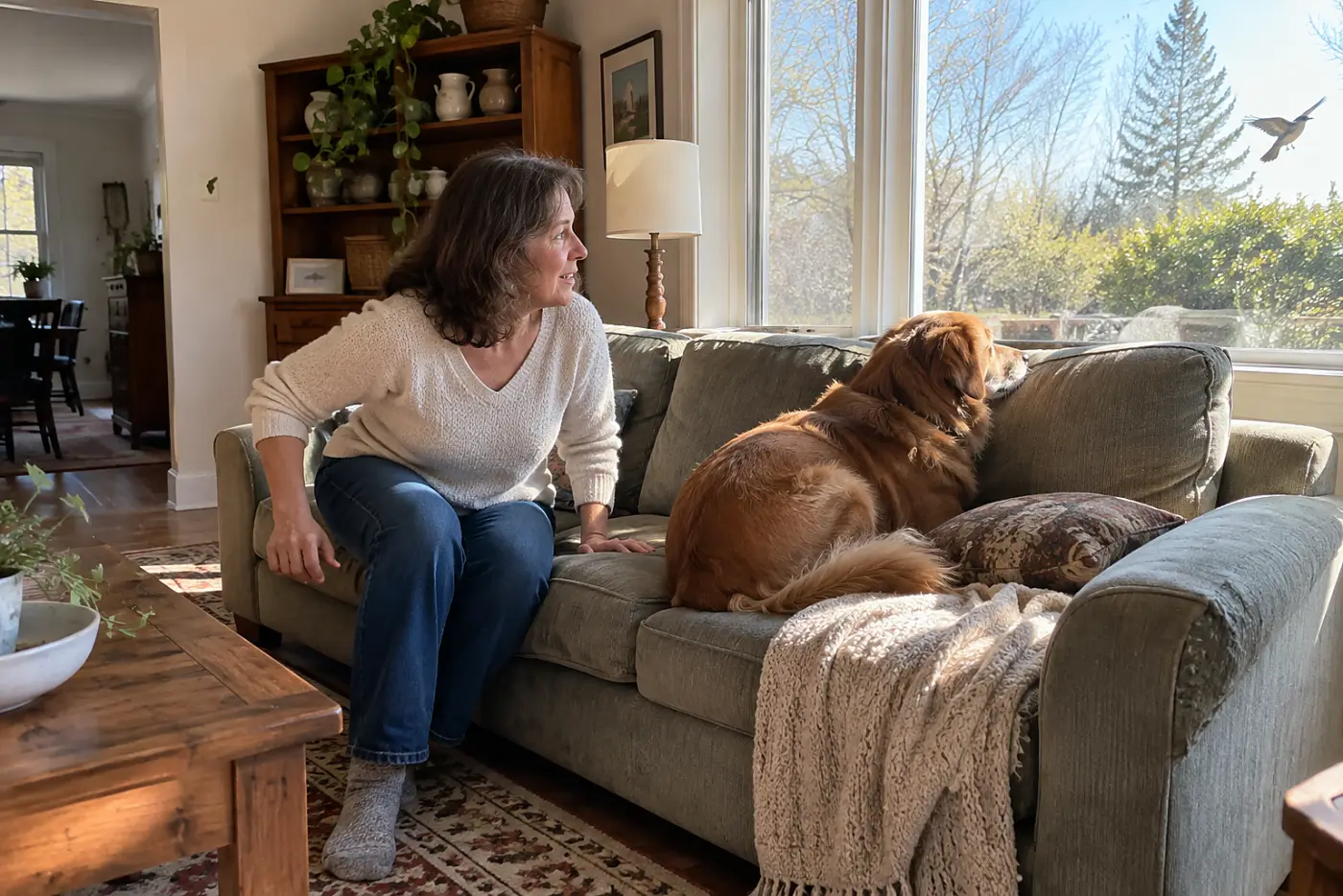
When you sit down, he settles with his back toward you. There’s no demand for petting. He has found a comfortable position beside the person he lives with.
You reach out, then stop. Ask for his attention before touching him, and pause after a stroke to see whether he asks for another. Comfort includes the freedom to say no. A dog who chooses the sofa area today gets to choose the other end of the room tomorrow.
14His Nose Leads the Walk
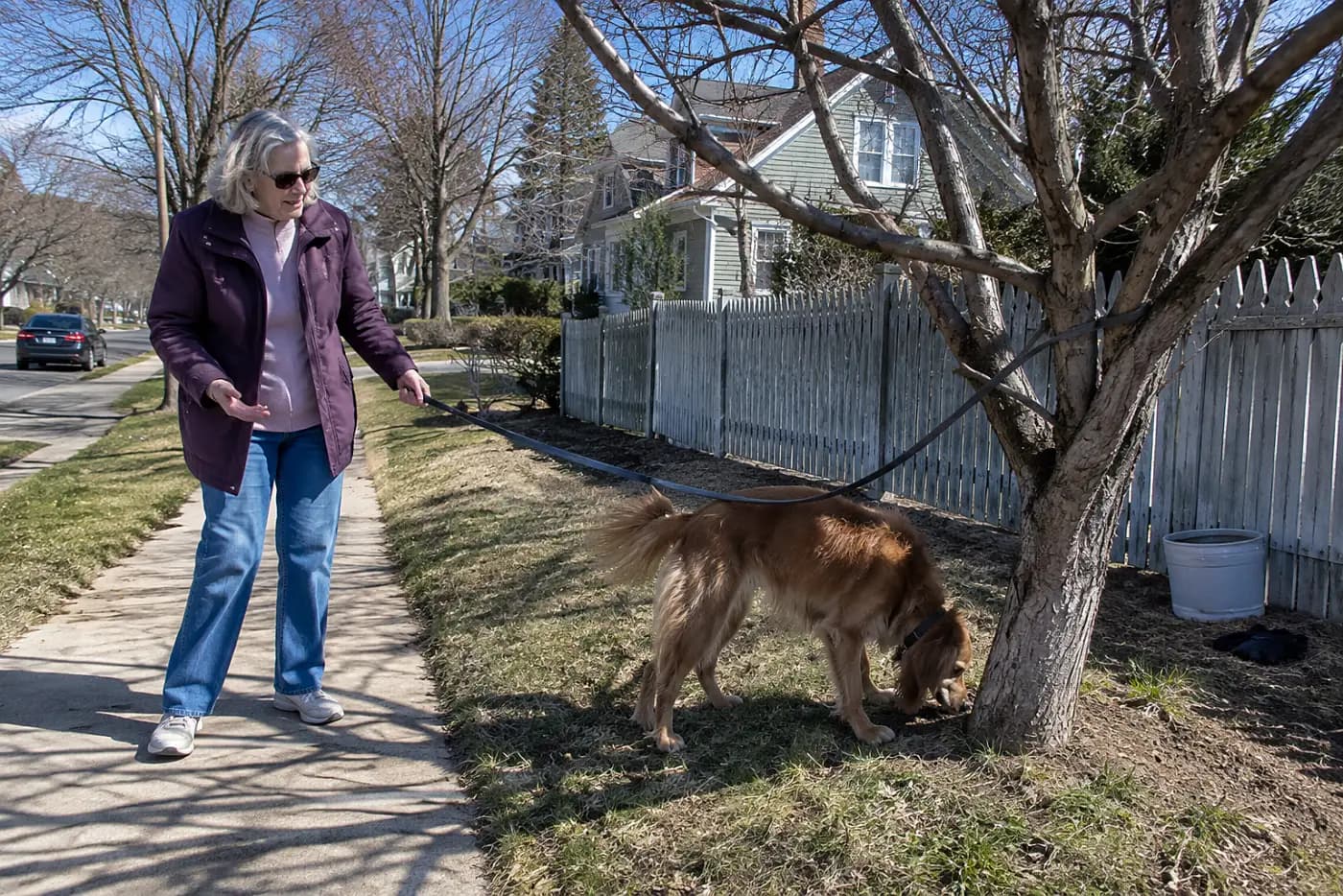
For a while, every walk was a scan: cars, gates, footsteps behind you. Now he stops at a tree and takes his time reading the ground.
Sniffing is part of how dogs explore. When the route is safe, give him a stretch where he sets the pace. Keep the leash loose enough for him to reach the grass without pulling you toward traffic.
Watch for a different kind of change. A sudden refusal to walk, limping, or repeated stops without sniffing needs attention. You know the difference between his leisurely tour of the block and a dog who doesn’t feel right.
13His Shoulder Leans Against Your Leg
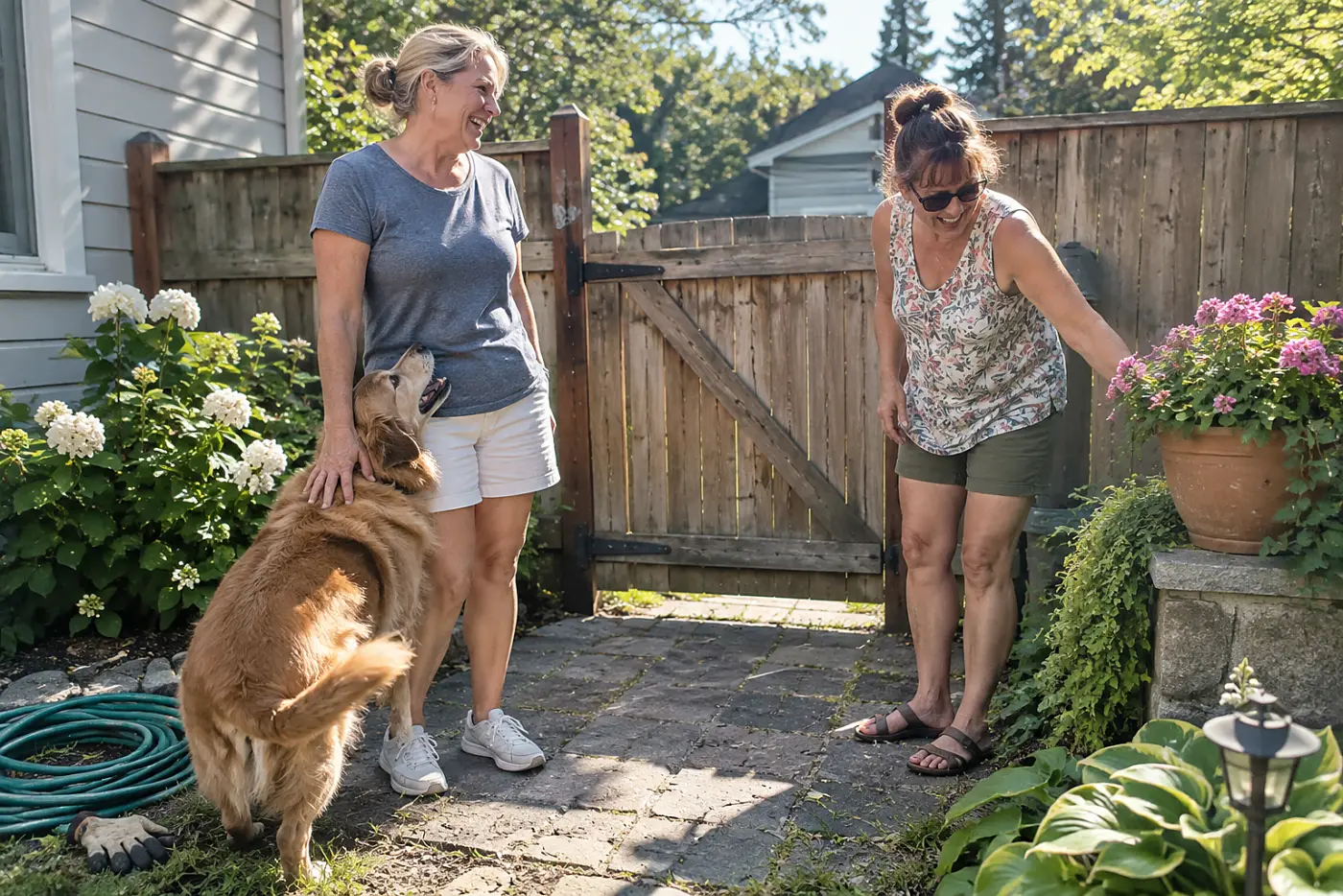
You’re talking at the front gate when his shoulder comes to rest against your calf. He stays there while the conversation carries on above him.
It feels like being chosen. Take the moment without turning it into a test. A lean beside you says more when he’s free to step away. Keep an eye on his face and posture if someone approaches; he still needs space when he asks for it.
12His Sleep Runs Deeper Than It Used To
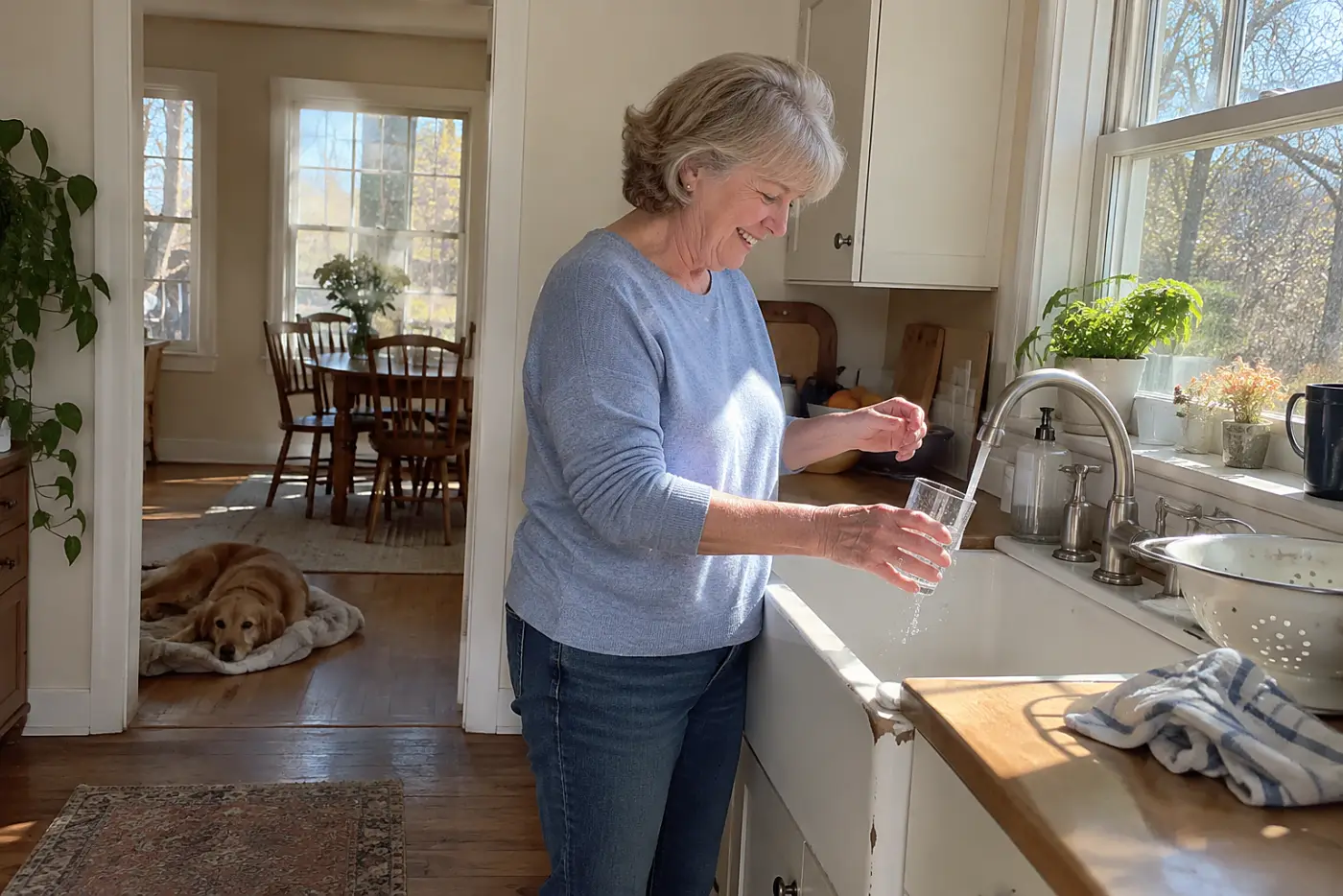
You used to see him wake whenever you stood up. Now he sleeps through a trip to the sink, his paws twitching against the blanket.
Let sleeping dogs sleep. Call his name from a short distance before you touch him. The American Veterinary Medical Association is a place to look for advice on giving dogs a safe place to rest undisturbed.
Deep sleep isn’t a measure you have to track. What you’re seeing is a dog resting through the small movements of a lived-in house. You can refill your glass without interrupting him.
See more: 26 Signs Your Senior Cat Is Rearranging Her Life Around You →
11His Tail Greets Your Familiar Friend
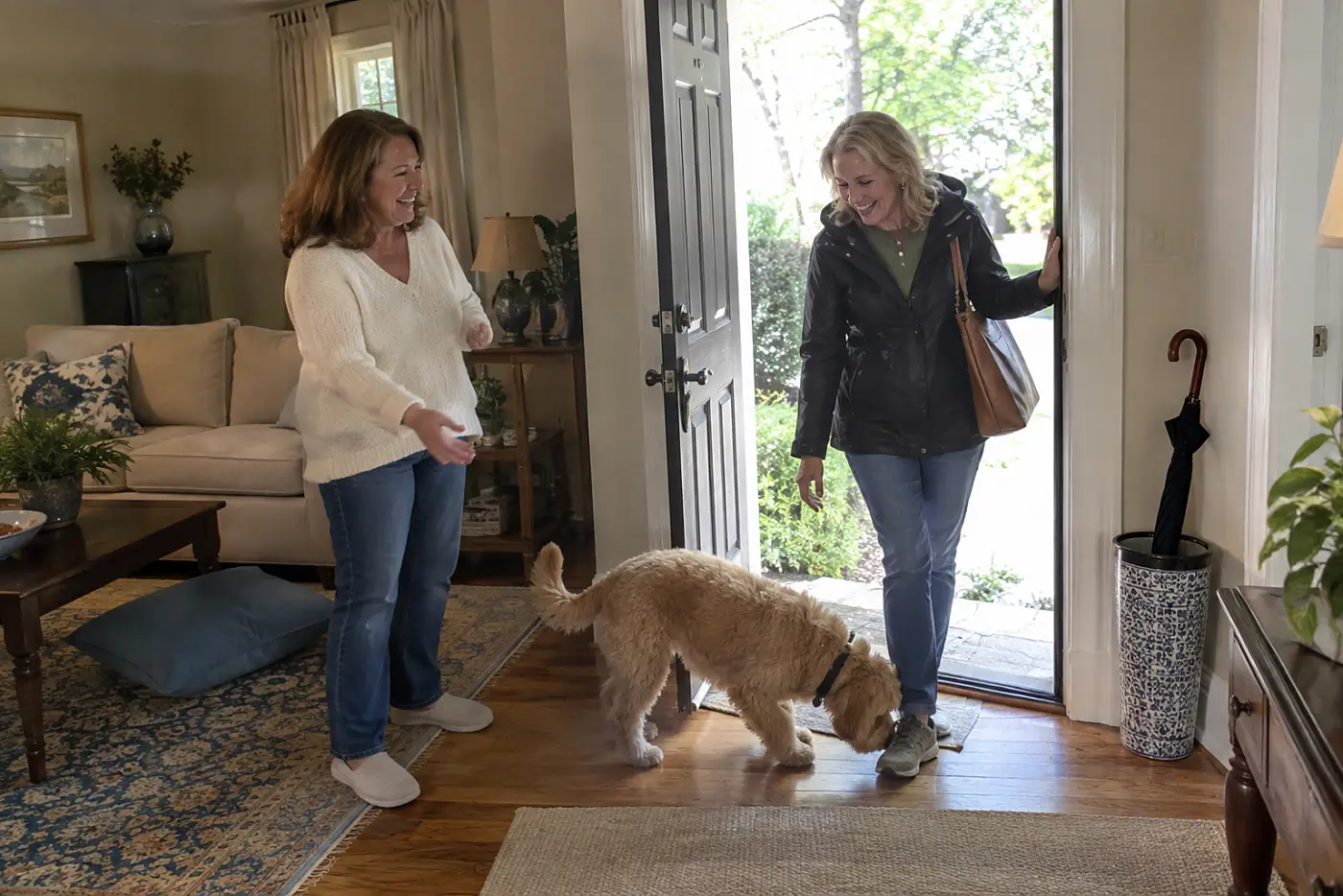
“Let him come to you,” you tell your friend as she takes the armchair. Last month, he watched her from the hallway. Today he crosses the room to sniff her shoe, then returns to you.
Ask your friend to keep her hands to herself until he seeks contact. He’s gathering information and setting the distance. If he goes back to the hallway, leave that route open. He came out because he wanted to, and he knew where he could go.
10His Feet Pause at the Open Gate
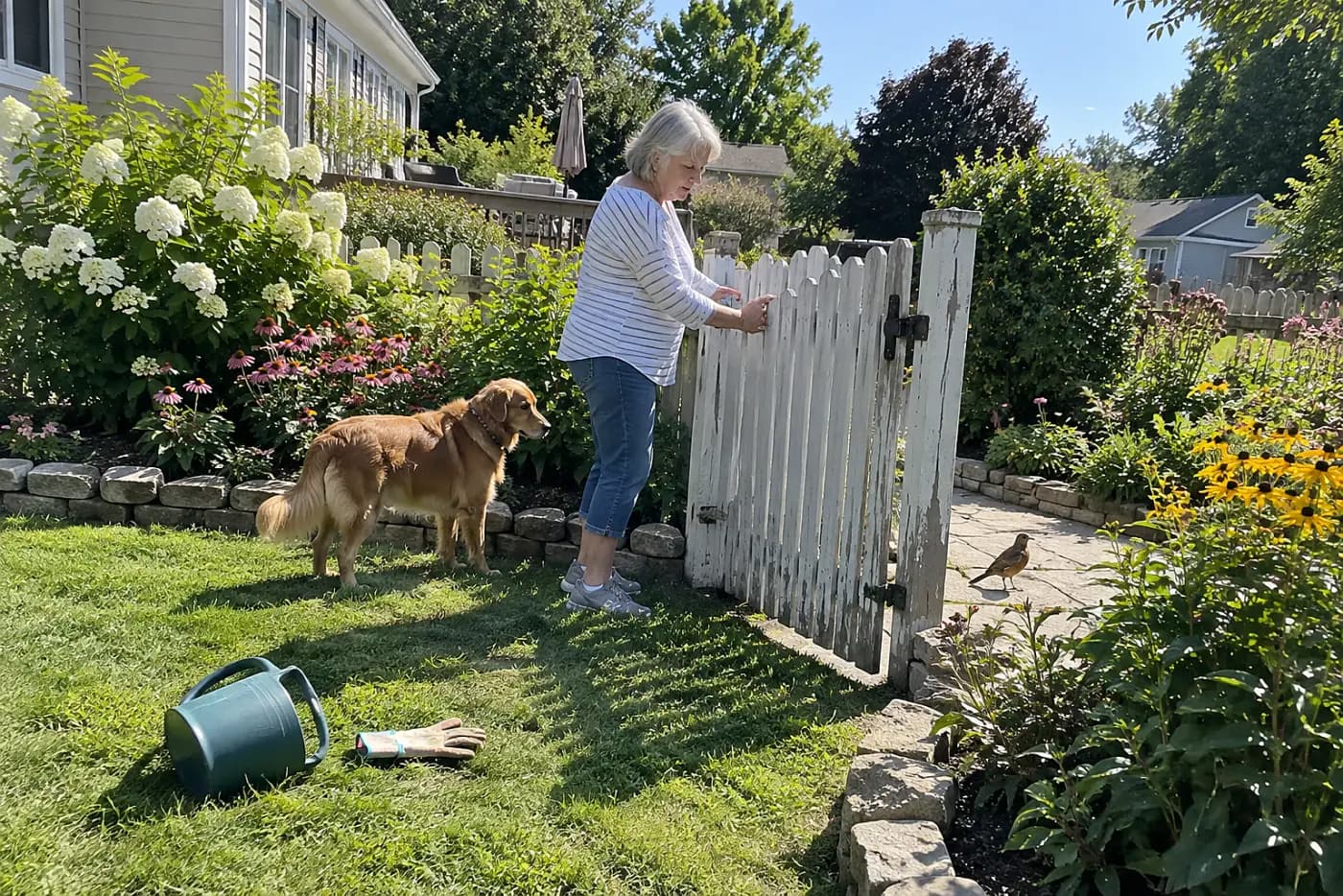
The gate swings inward while you’re bringing in the trash. He sees the opening and stops beside you instead of rushing through it.
Close the gate before you celebrate. Then reward him for staying near you. Don’t rely on this moment as proof he’ll never run. A squirrel, a sudden bang, or a visitor carrying a suitcase changes the scene.
Check that his collar fits and his ID tag is readable. Check his microchip registration once a year and whenever your phone number or address changes. AAHA’s Universal Pet Microchip Lookup helps identify the registry to contact; the lookup itself doesn’t update your details.
9His Belly Shows During Play
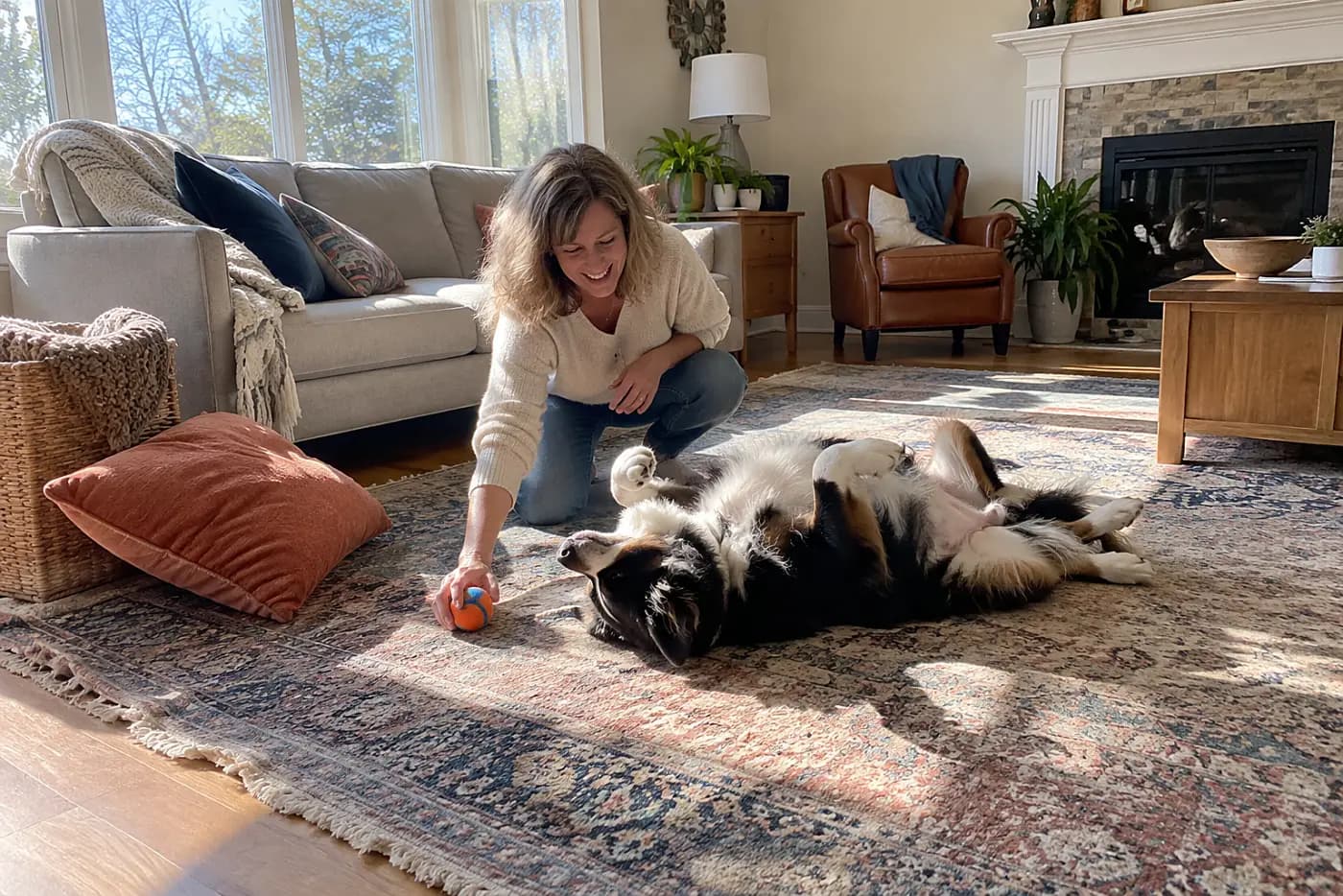
He rolls onto his back while playing with you, paws bent, mouth loose. You pause, and he wriggles closer.
Does that mean every exposed belly is an invitation to rub it? No. A dog who freezes, closes his mouth, or looks away is giving you different information. Stop your hand and see what he chooses next. When he stays loose and asks for more, you’ve found a game you both understand.
8His Voice Joins the Household Sounds
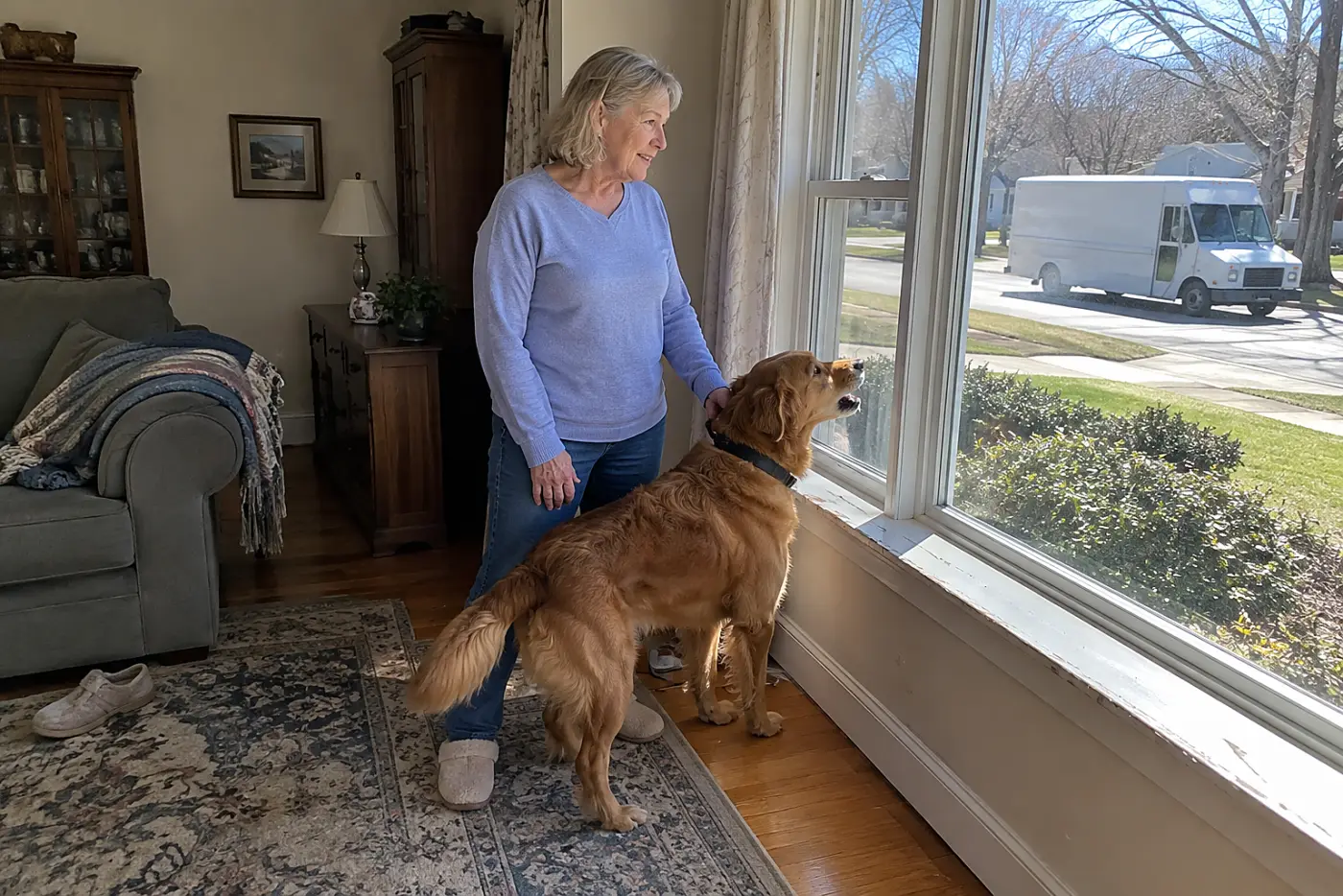
For weeks, he barely made a sound. Then one afternoon he barks at a delivery truck, or gives a short whine while you get his leash.
A new voice doesn’t mean he’s become a different dog. He has started responding to more of what happens around him. Listen to the setting and the body that goes with the sound. A playful bark before a walk differs from repeated barking with a rigid body at the window.
Give him distance from whatever upsets him. You don’t have to make him face it to show him the house is safe.
See more: 26 Ways People Say a Pet Lets Them Know She Is Still Around →
7His Toy Appears Beside Your Chair
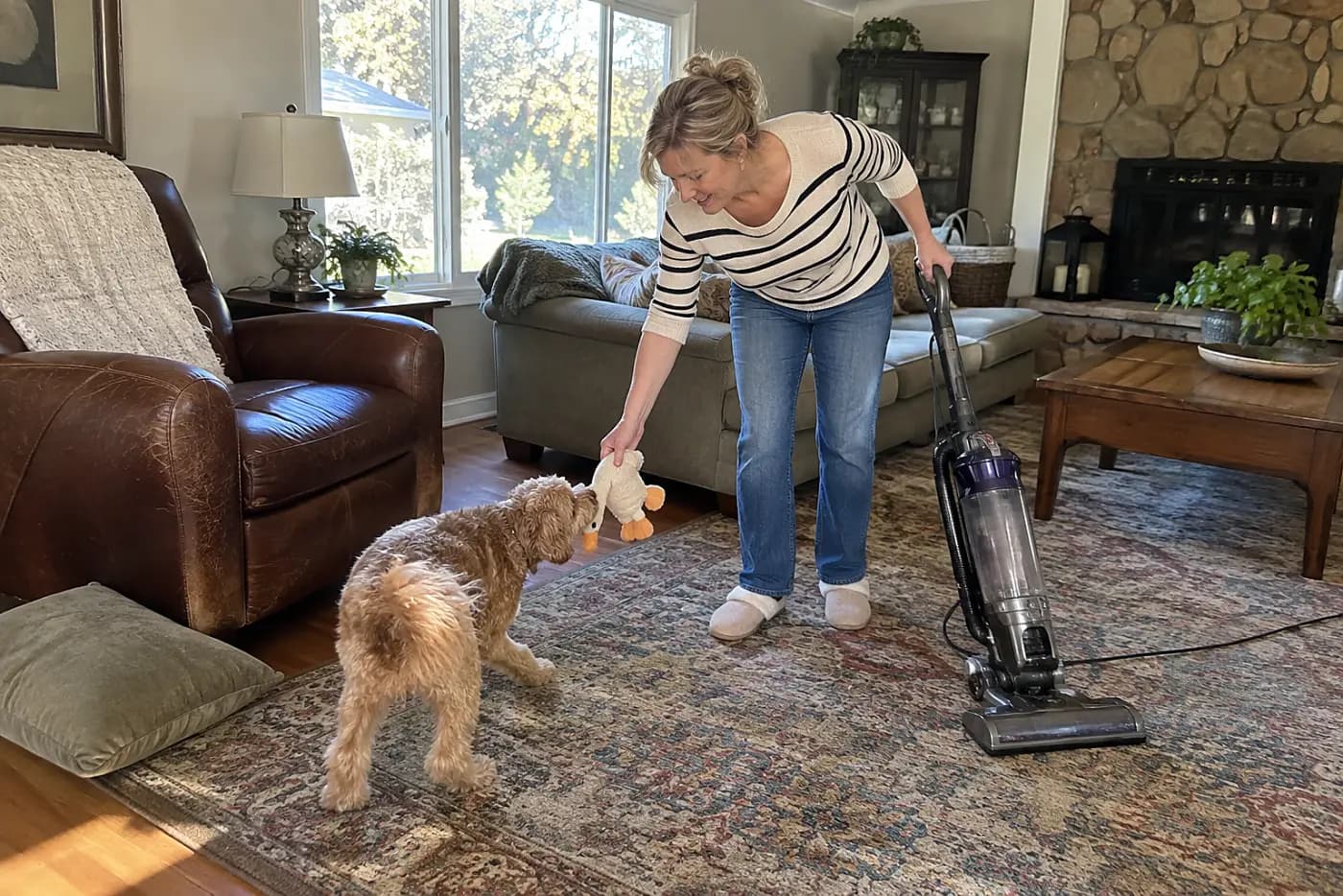
You find a stuffed duck beside your chair. He left it there after playing, close to where you spend the evening.
It’s a small piece of shared space. You don’t need to turn every toy into a game. Pick it up when you vacuum, then put it back where he can find it. Soon the duck will be under the chair again, waiting for another evening.
6His Appetite Survives a Small Change
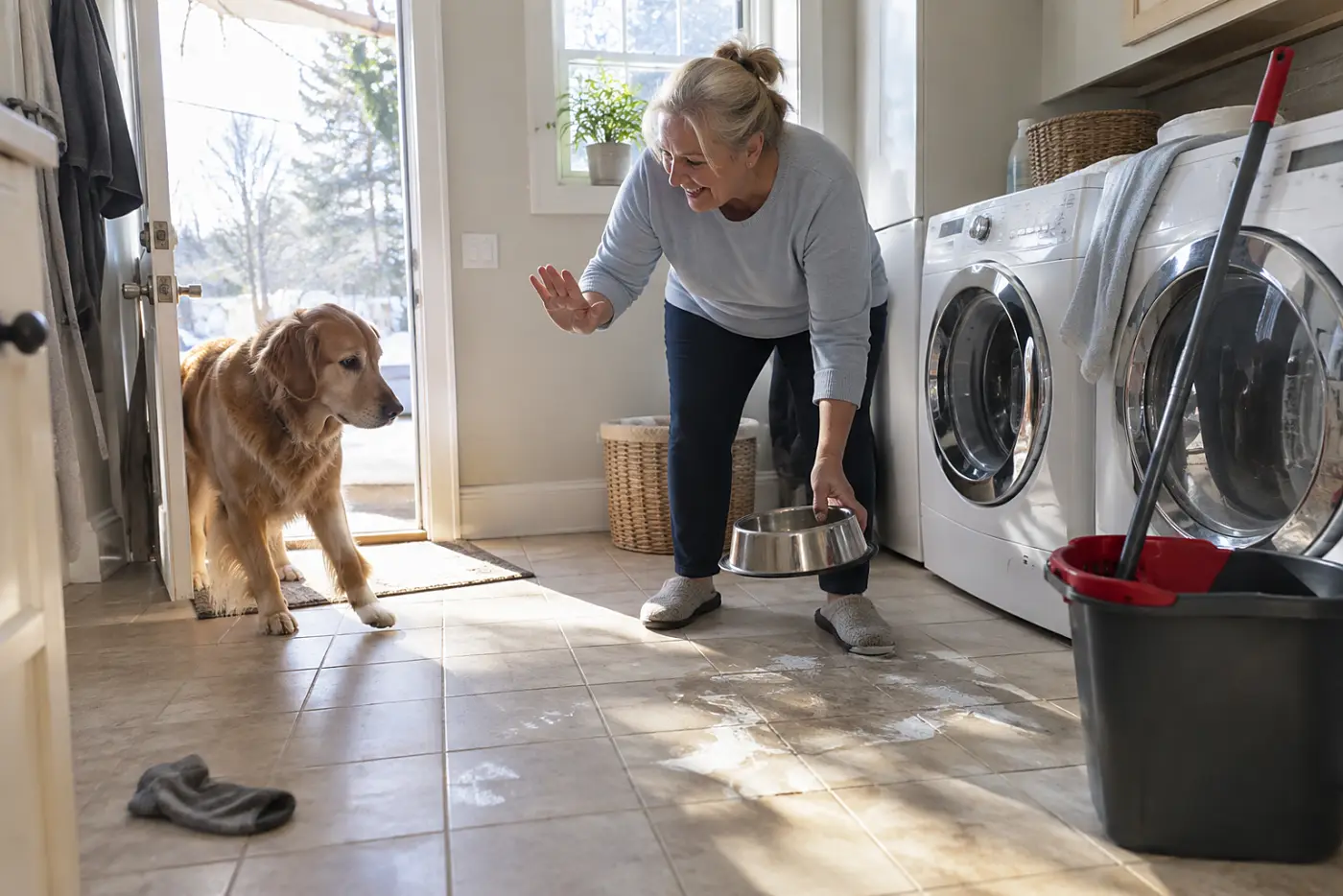
You move his bowl to the other side of the room while you mop. He sniffs the new spot, looks at you, and eats.
Some dogs need more time with changes, and there’s no prize for testing them. Keep meals predictable when you can. If he skips food, notice what else changed: the food itself, the room, a visitor, or how he feels.
If he hasn’t eaten for 24 hours, call your veterinarian. Call sooner if he vomits, seems weak, or has a swollen abdomen. The FDA Center for Veterinary Medicine has information on pet food safety, but your veterinarian is the person to call about a dog who seems ill.
5His Name Brings Him Back From Sniffing
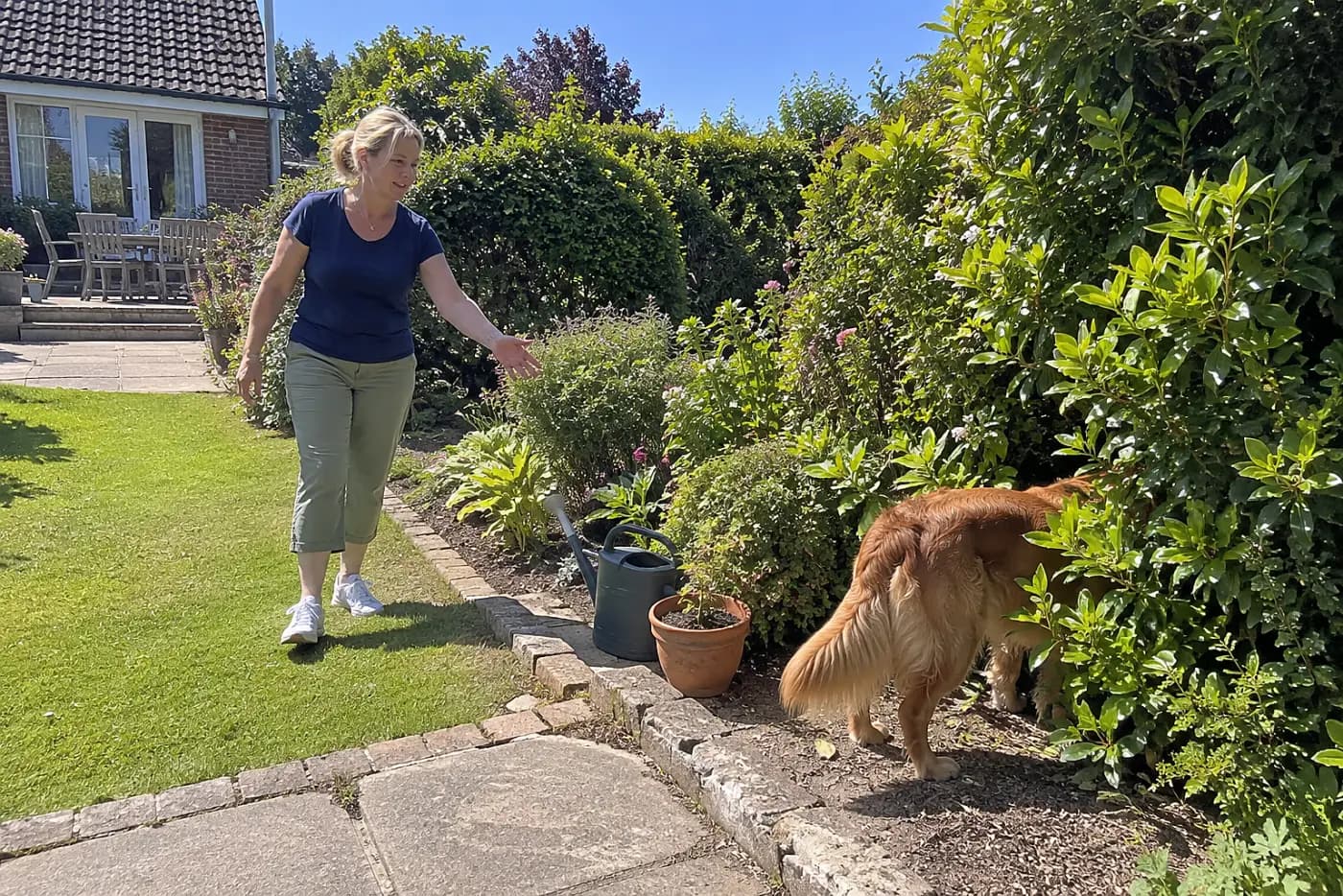
You say his name once. He lifts his head from the hedge and turns toward you.
That response grew from many ordinary moments when your voice led to something good. Keep it that way. Call him over for a treat or a scratch, and avoid using his name only when the fun ends.
Outside, clip on the leash before you need it. A reliable response in the yard isn’t a promise beside a busy road. You’re protecting both the trust he’s built and the dog attached to it.
4His Nose Touches an Outstretched Hand
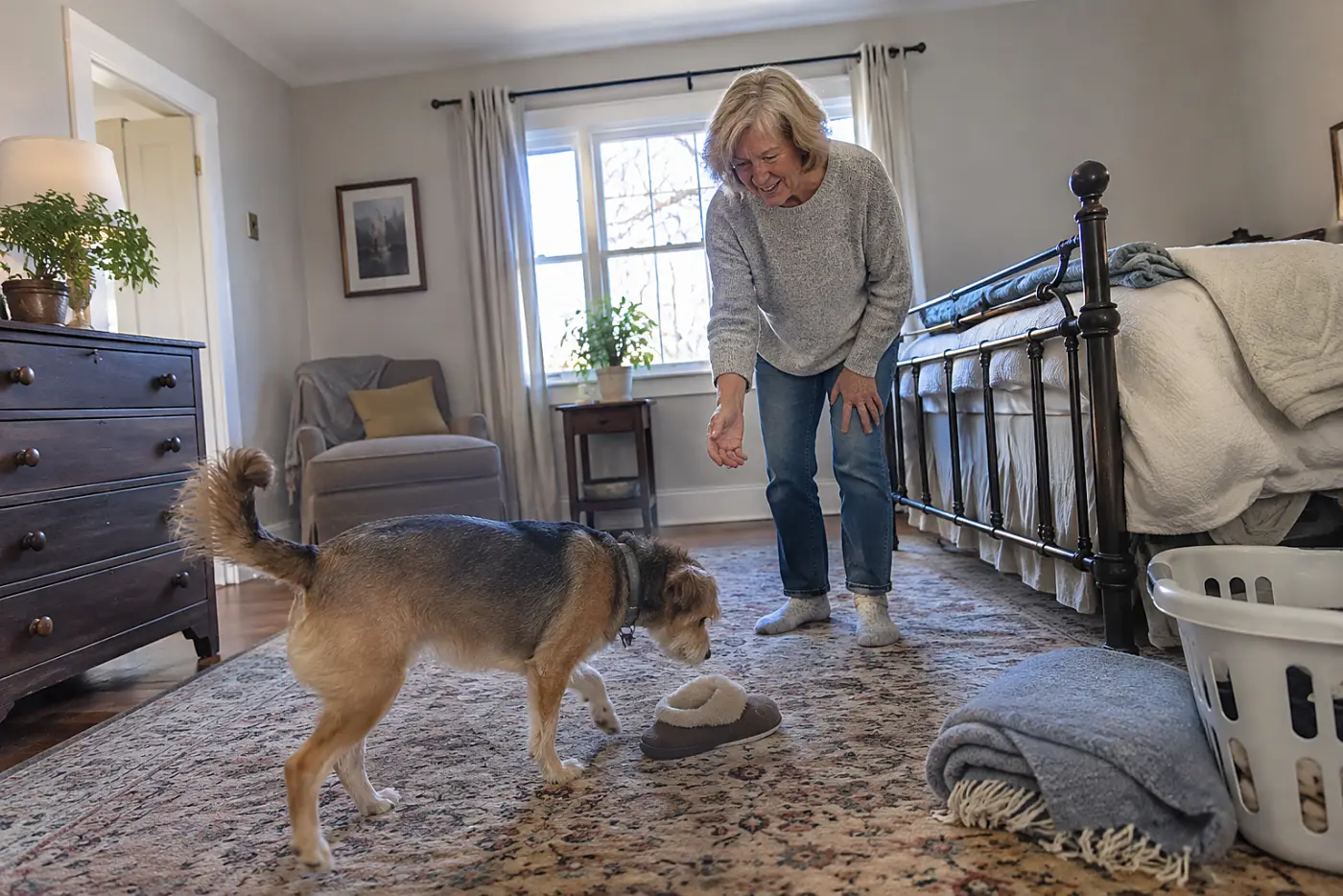
He walks up to your hand and gives it a quick tap with his nose. You hadn’t moved toward him. He closed the distance.
Try saying, “Hi, there,” and let him decide what follows. If you pet him, reach toward his chest or side rather than over his head. Pause after a moment. His choice to come closer matters most when he has room to leave.
See more: 23 Signs Your Dog Knows Something Is Wrong Before You Do →
3His Steps Cross the Threshold After You
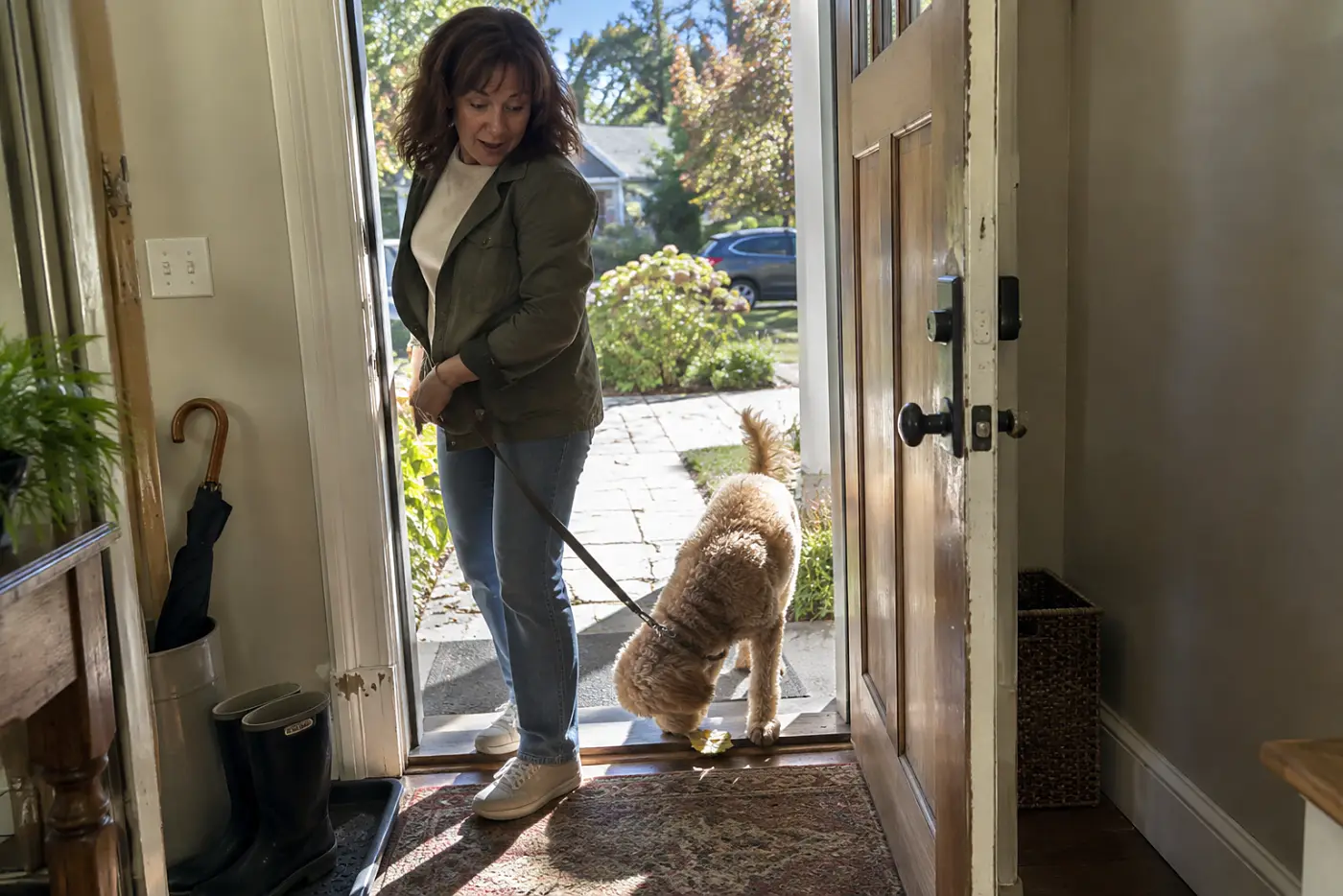
You come back from a walk and open the front door. He walks in ahead of you, pauses on the mat, and waits while you unclip the leash.
An entryway that once stopped him has become familiar. Still, keep your hand on the leash until the door is shut. Visitors, packages, and another dog outside change a doorway fast.
If he hesitates at a threshold again, look at the floor and the light. Slippery tile or a dark room deserves a practical fix. Put down a nonslip runner or turn on the lamp. You don’t have to ask him to push past something you can change.
2His Whole Body Greets Your Return
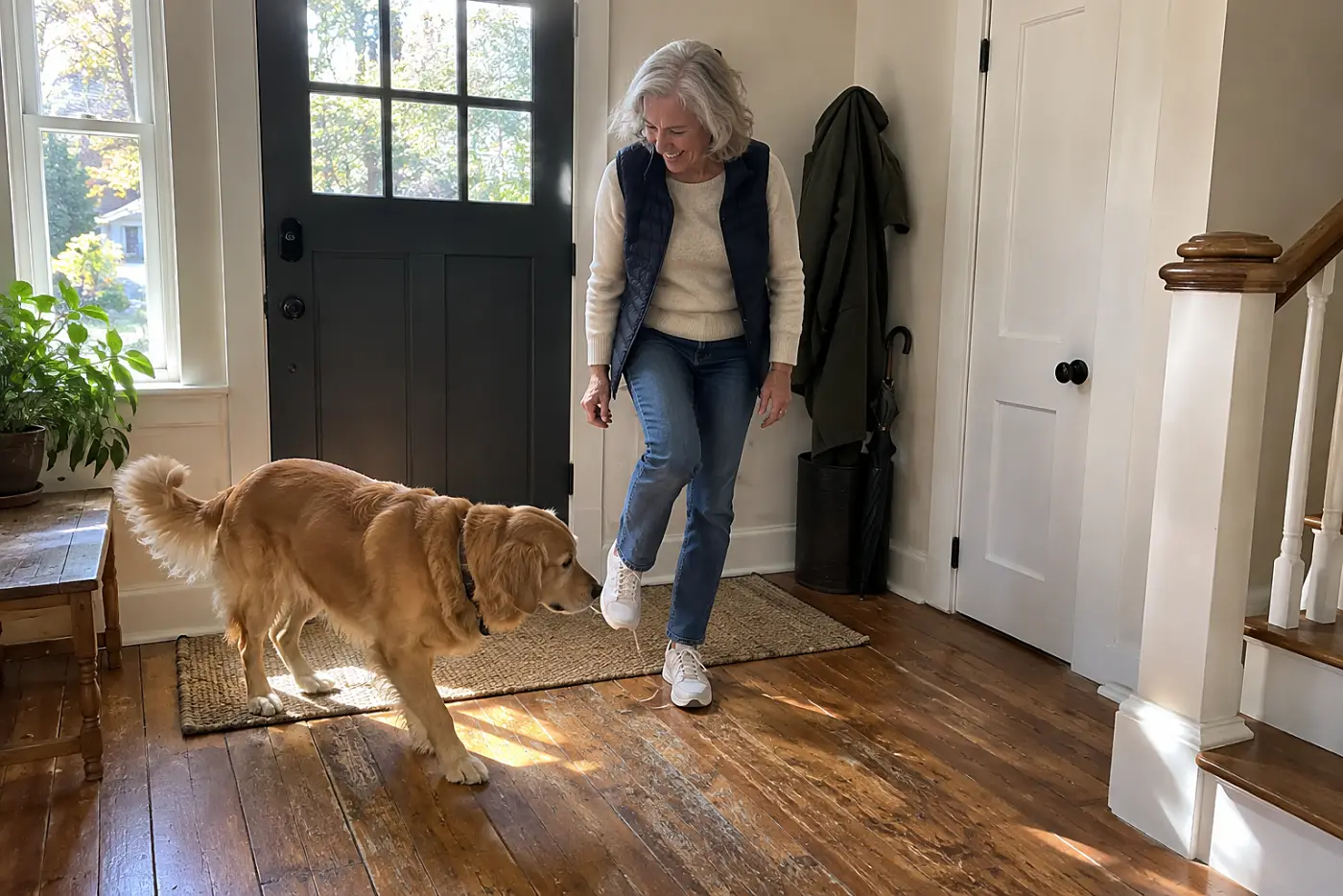
You come home from the pharmacy. He rises from his bed, stretches, and walks toward you, tail moving as you take off your shoes.
You remember a time when opening the door made him back away. Now he approaches because he wants to see who came in. Give him a moment before you unload the bags. You don’t need to make a big event of it. He’s telling you he recognizes the person who returned.
1His Flinch Gives Way to a Choice
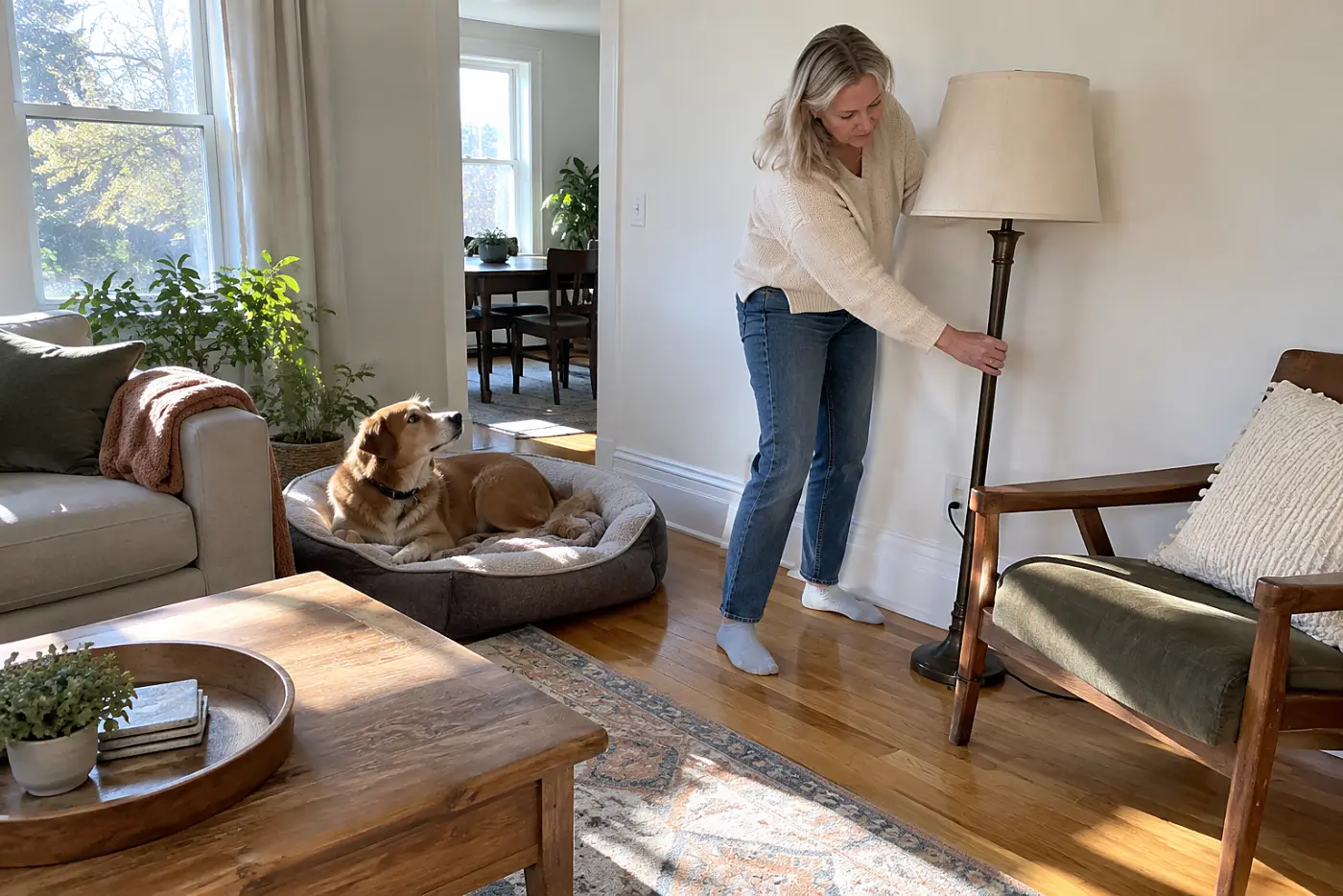
You raise your hand to move a lamp, and he stays where he is. That’s the moment you were waiting for. Then, on another day, he flinches when someone reaches past him.
Don’t measure his trust by whether he ever startles again. Notice what he does next. Does he step away and find space? Does he look at you before deciding where to settle? Make those choices available. Leave a clear path from his bed, tell visitors to let him approach, and give him a place nobody reaches into.
If fear grows or he snaps when startled, speak with your veterinarian. The American College of Veterinary Behaviorists has a directory of board-certified veterinary behaviorists. You’ve given him a home. He still gets to tell you when he needs more room in it.
The bottom line
No single sigh, stretch, or wag tells the whole story. Watch the pattern across ordinary days: where he rests, what he chooses to explore, and whether he has somewhere to go when he’s unsure.
You’ve kept his routines steady, checked his ID, and learned to leave his resting place alone. Which small moment first made you realize he knew he was home?
Up next
27 Things Your Dog Is Trying to Tell You When He Follows You Room to Room
Watch where he stops, what he looks at, and what three ordinary days of noticing tell you about the back door.
Read the list →
Reader quiz
Did you catch the details?
5 questions from this article.
After letting your dog sniff a closed grocery bag, what should you do with it?
Did any of these feel familiar?
Know someone who needs this?
Sources cited in this article
This article links to 6 outside sources, listed here so you can read them yourself.
- ASPCA www.aspca.org
- American Veterinary Medical Association www.avma.org
- American Kennel Club www.akc.org
- AAHA’s Universal Pet Microchip Lookup www.aaha.org/your-pet/pet-microchip-lookup
- FDA Center for Veterinary Medicine www.fda.gov/animal-veterinary
- American College of Veterinary Behaviorists www.dacvb.org
Ruth Ellison
Family Editor
Ruth writes about grown children, grandchildren, ageing parents, and the conversations families put off, in the words of the people involved.
More from Ruth Ellison