












27 Reasons a Senior Dog's Legs Give Out, and What Helps at Home
A checklist of possible causes, hallway fixes, and signs that mean you should call the vet tonight.
By Ruth Ellison, Family Editor
Updated · 19 min read
The short answer: Senior dog legs giving out calls for a vet exam, not an assumption about age. Arthritis, hip dysplasia, disc disease, degenerative myelopathy, muscle loss, Cushing's disease, and heart trouble are possible causes. Sudden collapse, trouble breathing, pale or blue gums, or sudden inability to stand means urgent care. Gradual stiffness deserves an appointment; rugs, ramps, and lifting support help at home.
- Written by our family editor
- Cited 14 sources
- How we review
His back feet slide apart on the hallway floor. Then his hips drop, and for a moment you're holding your breath with him. He gets up, but the question stays: Was that a slippery floor, or did something change inside his body?
Watch what happened before you move the furniture. A painful joint, a damaged spinal cord, and a fainting spell call for different responses.
The way he fell, the way he got up, and how he acts afterward give the vet somewhere to begin. Veterinary sources guide the medical details here; no veterinarian reviewed this article. Let your dog's vet make the diagnosis.
27Osteoarthritis flaring in a senior dog's hips
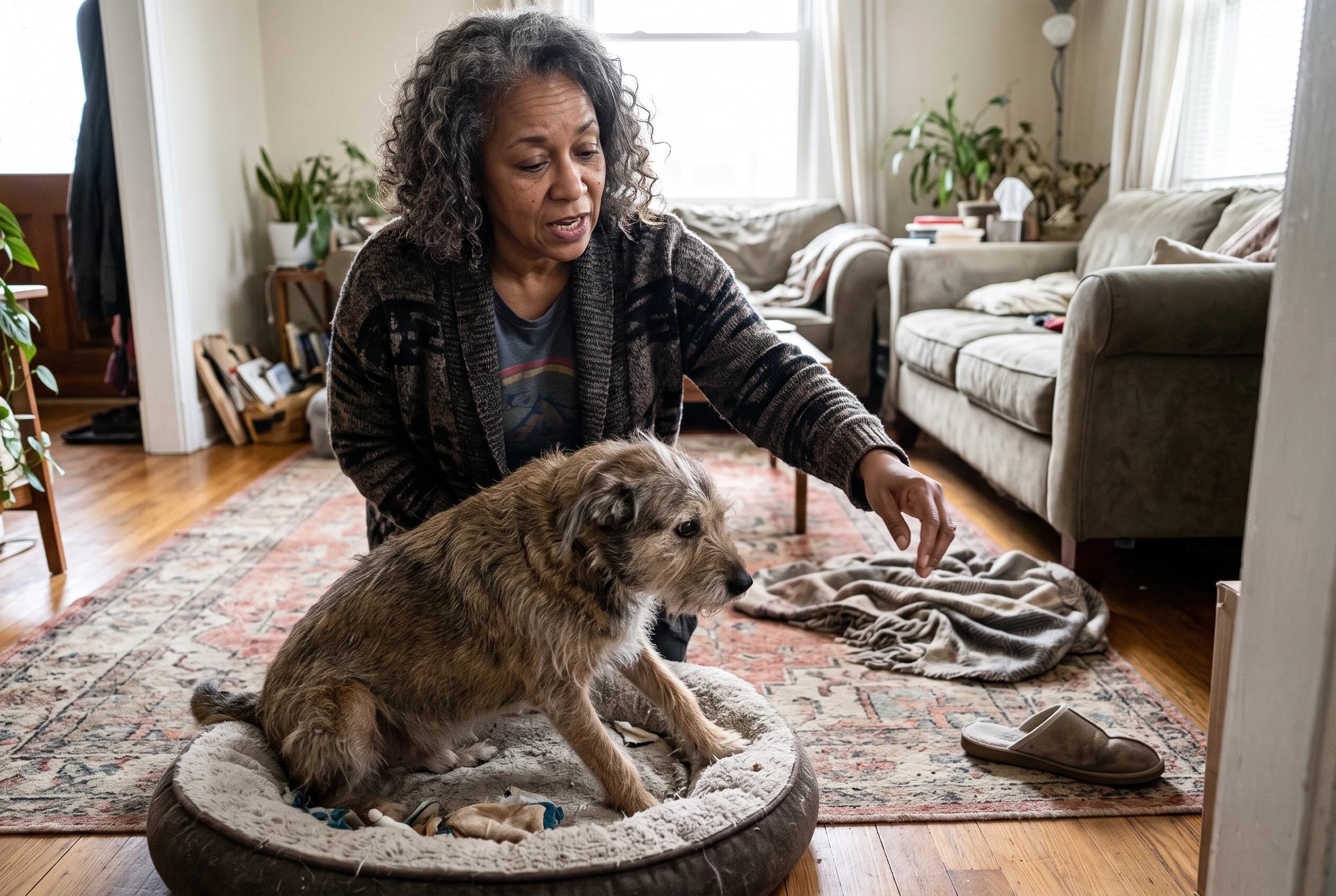
He rises from his bed, pauses, and takes a few stiff steps before following you to the door. On another day, his back legs seem to buckle. That pattern deserves an exam, even when he walks better after he gets moving.
Osteoarthritis is the most common cause of chronic pain in dogs, according to the Merck Veterinary Manual. Hip dysplasia begins with abnormal hip joint development. The loose joint can develop arthritis. Pain and muscle loss then make standing harder.
Tell the vet whether the trouble follows sleep, a walk, or a slip. Treatment has several parts: weight control where needed, appropriate exercise, veterinary pain medicine, and rehabilitation. A rug helps him reach the door. It doesn't treat the joint underneath him.
26Sudden disc rupture causing hind-end collapse
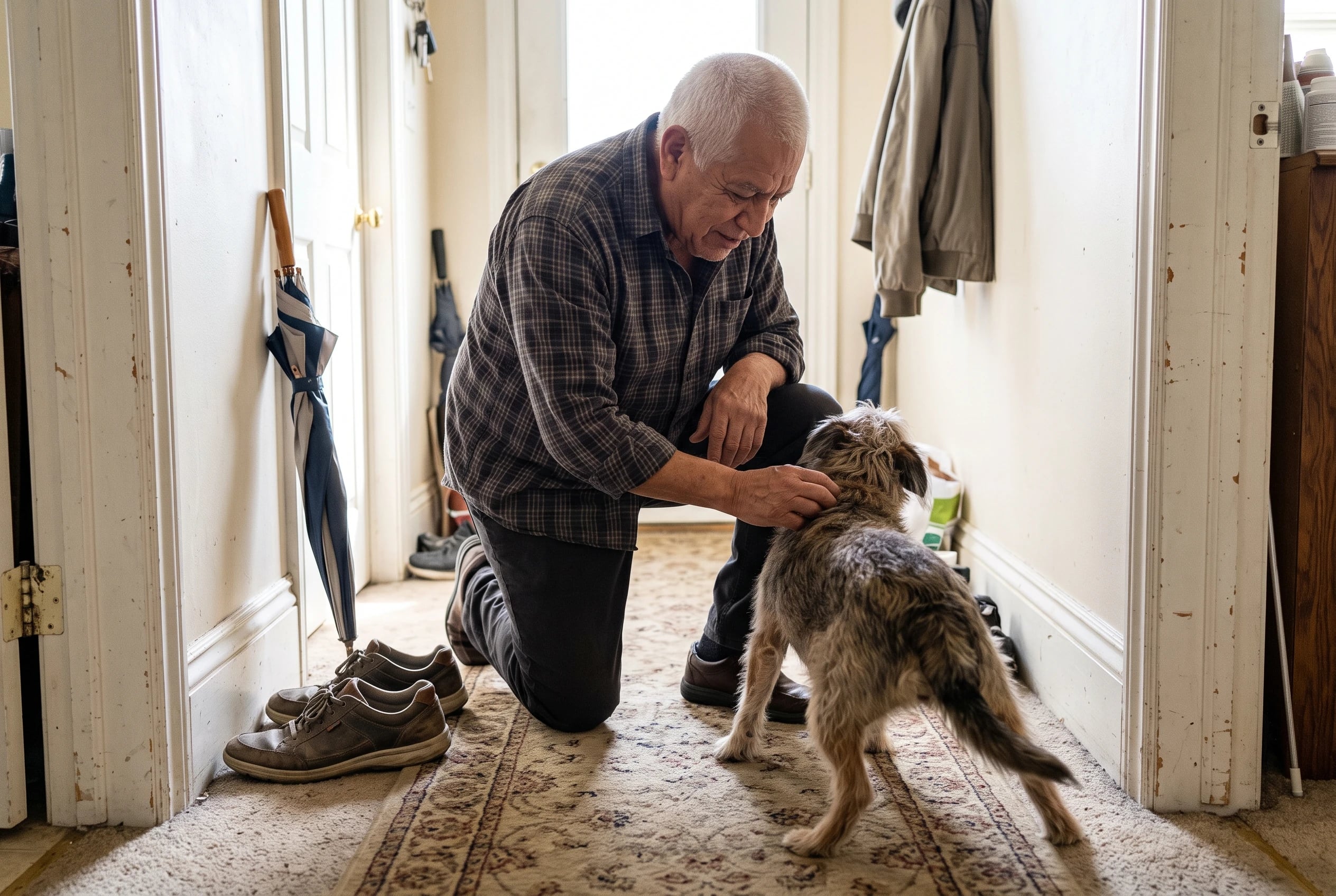
Yesterday he climbed onto his bed. Today he cries out, wobbles, or cannot use his back legs. Don't wait to see whether a nap restores them.
Sudden back or neck pain, an unsteady gait, and paralysis raise concern for intervertebral disc disease.
VCA Animal Hospitals says a ruptured disc is particularly suspect when a high-risk dog becomes paralyzed without an injury. Call an emergency veterinarian and describe exactly when the change began.
The possible cost is frightening, but it comes *after* the urgent decision. One Bay Area specialty center listed a package covering MRI, surgery, and hospitalization at $10,000 to $12,000 through December 31, 2026.
That is one center's price, not a national quote. Ask the treating team what they recommend and what their estimate includes.
25Degenerative myelopathy knuckling without pain
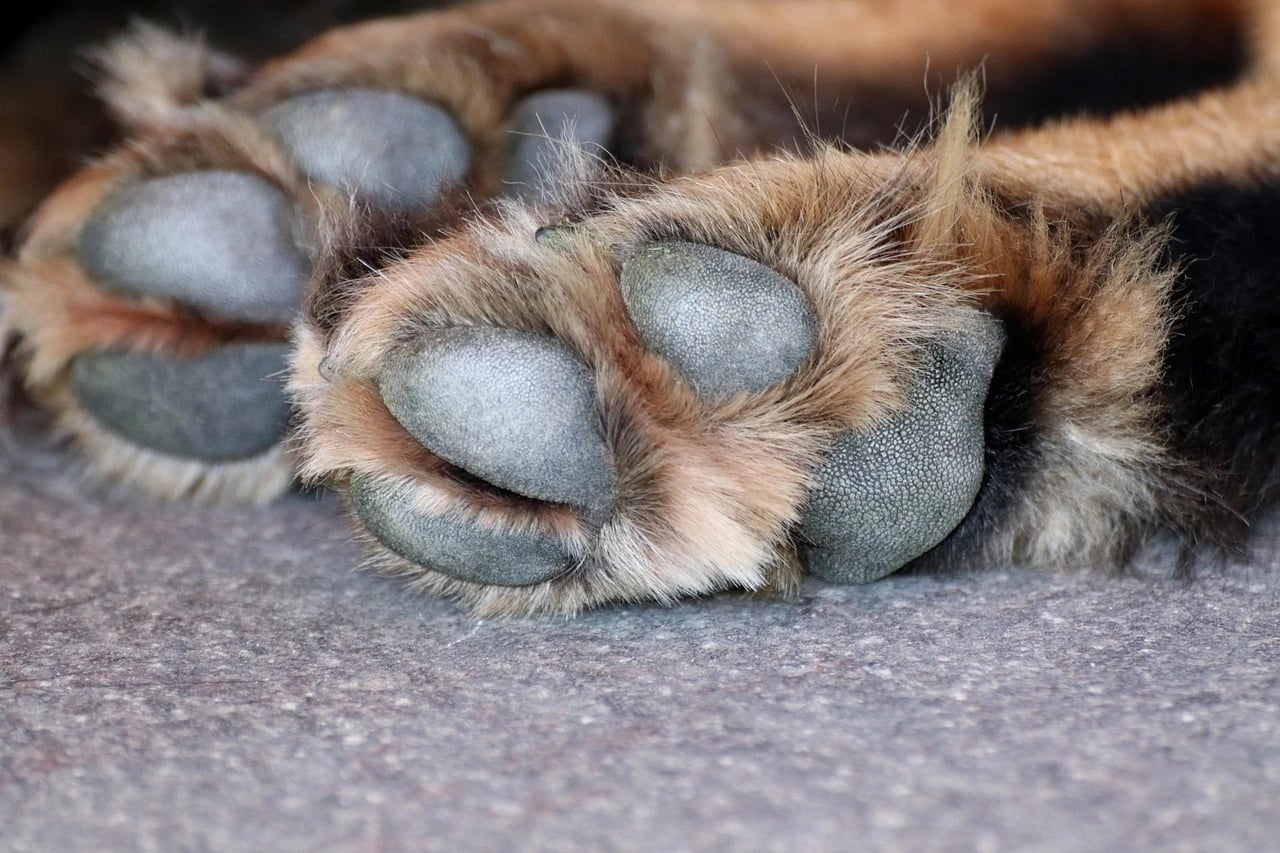
Look at the tops of his back paws. Are they scuffed? Does one foot turn under as he walks, while he shows no clear sign of pain?
The University of Missouri College of Veterinary Medicine describes degenerative myelopathy as a progressive spinal cord disease. Early signs include wobbling, dragging, and hind-paw knuckling. It is typically painless. Lack of pain does not mean nothing is wrong.
Other conditions produce similar signs. Ask the vet what the exam points toward before settling on a diagnosis. Missouri's Veterinary Health Center says care grows harder as the disease advances. Support at home matters, even though it does not stop the progression.
24Muscle wasting after months of less walking
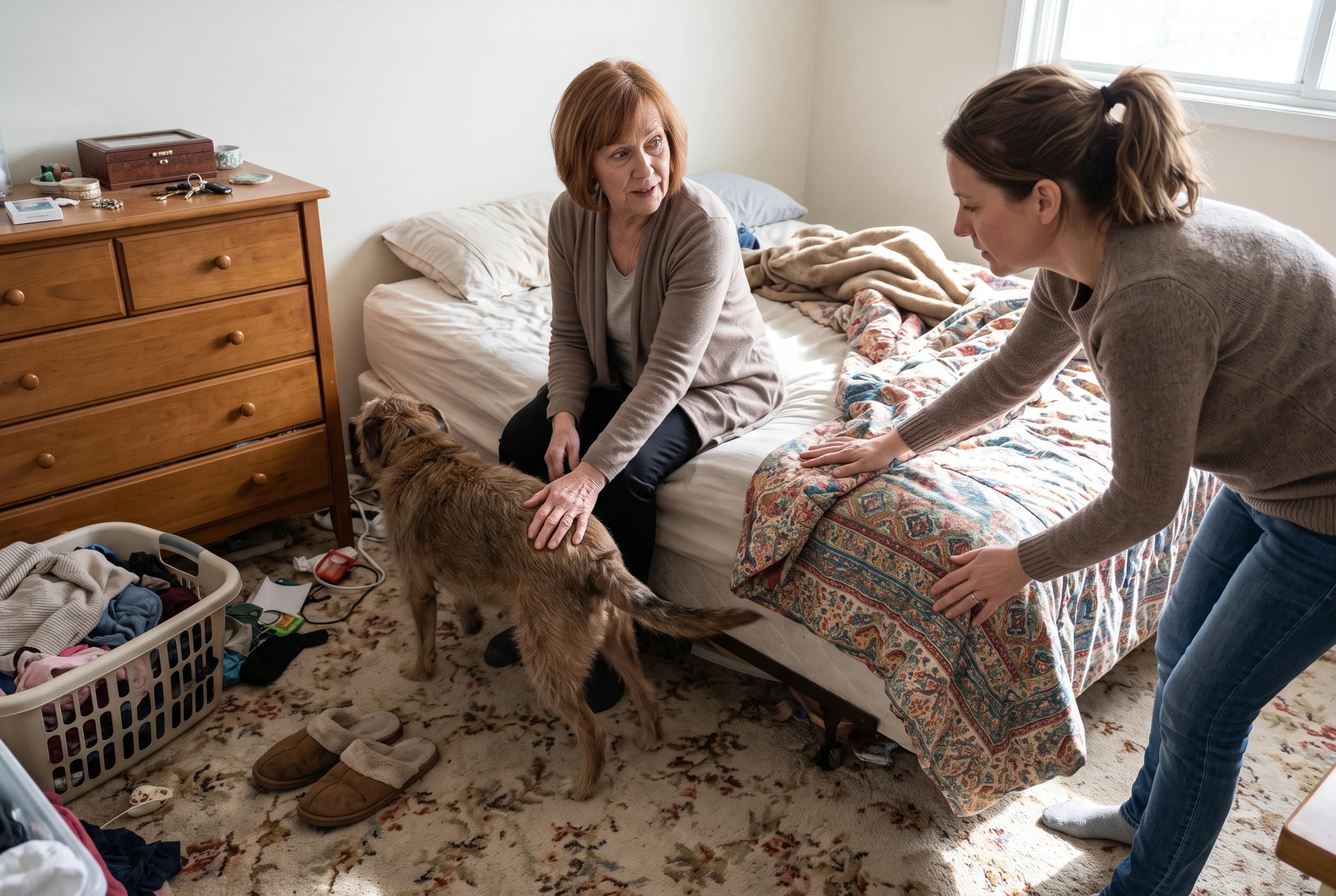
The walk shortened so gradually you barely noticed. Now his hips look narrower, and getting up takes more effort than it did before.
Arthritis pain can start a cycle: less movement, weight gain, then muscle loss. VCA's guidance on exercising dogs with osteoarthritis describes targeted activity as part of breaking that cycle. More exercise is not automatically better when a dog hurts.
Ask the vet to assess both pain and muscle. The World Small Animal Veterinary Association's Muscle Condition Score chart uses mild, moderate, and severe loss. Those words give you a clearer starting point than "he looks thinner." Then ask for home exercises matched to what he can do today.
23Cushing's disease draining a dog's leg strength
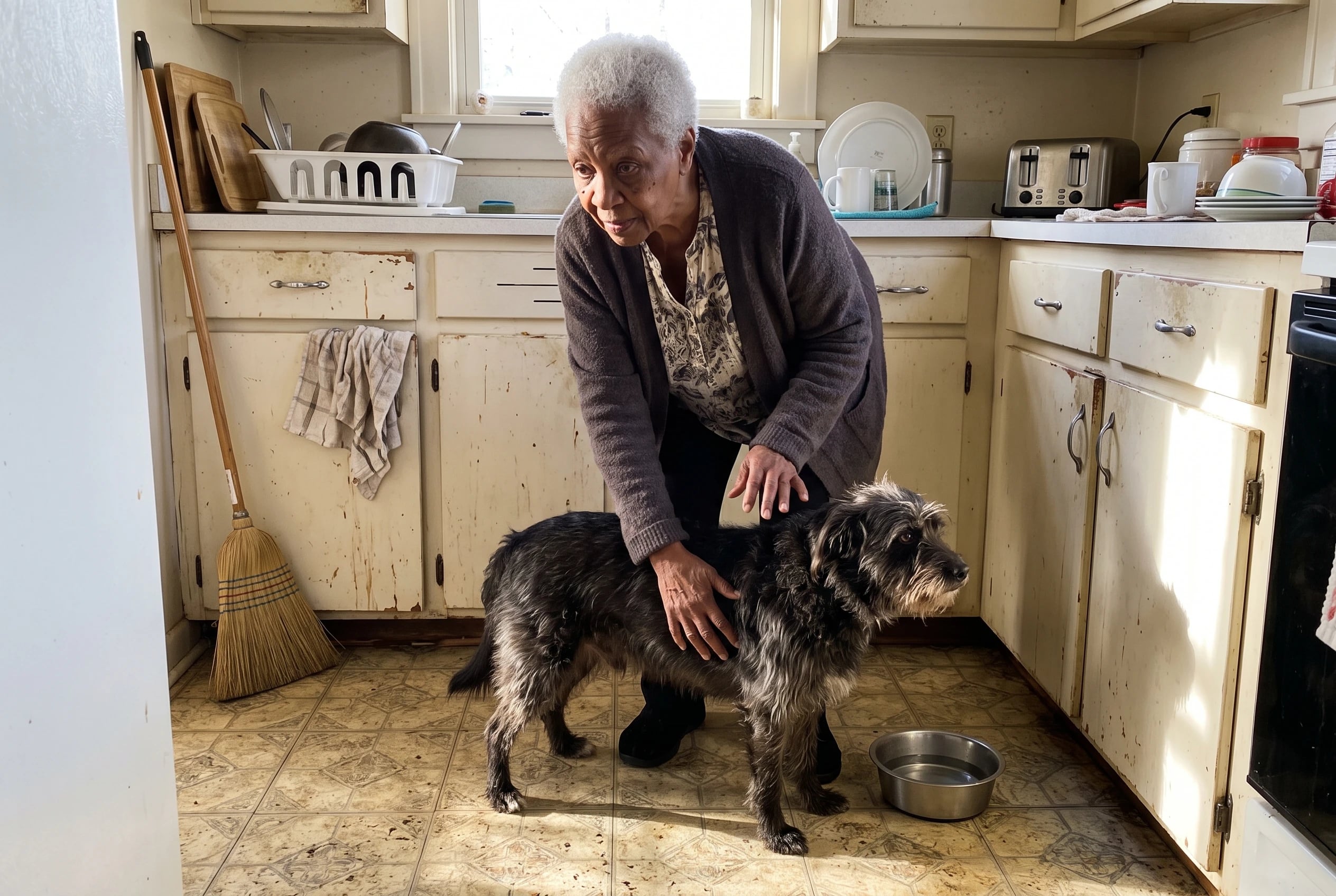
What if his legs seem weak, but no particular step or joint looks painful?
Cushing's disease can cause general weakness and poor exercise tolerance. The Merck Veterinary Manual's Cushing's disease guidance describes testing, including an ACTH stimulation test, to help confirm it. Merck also describes muscle changes tied to the disease.
Tell the vet whether he tires on walks and whether standing has become harder across the day. Don't buy a brace and assume the job is done. If weakness comes from an illness affecting his muscles, the cause needs attention alongside anything you do for his footing.
22A spinal cord stroke with no warning
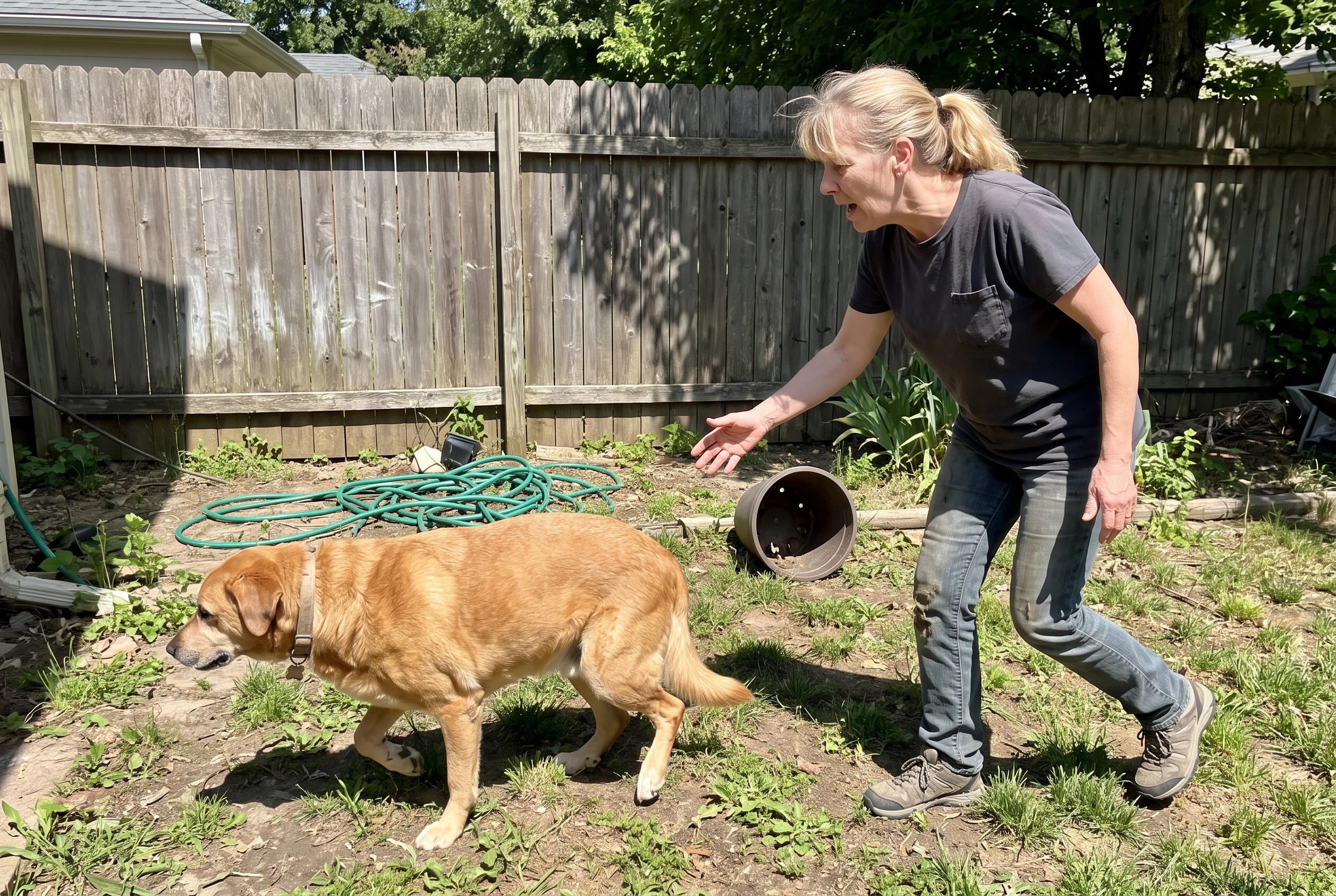
He crosses the yard, falters, and suddenly one back leg works worse than the other. There was no fall. Soon afterward, he does not seem to be in much pain.
A fibrocartilaginous embolism, sometimes called a spinal cord stroke, has that sudden, uneven pattern. The Merck Veterinary Manual notes that large and giant breeds are over-represented. Little lasting pain does not make a sudden loss of movement safe to watch overnight.
Get veterinary help promptly. Cornell's canine health center says an exam and imaging help rule out other causes.
During recovery, some dogs need help emptying their bladder. Ask the team to show you what care your dog needs before taking him home.
21A fainting spell from a weakening heart
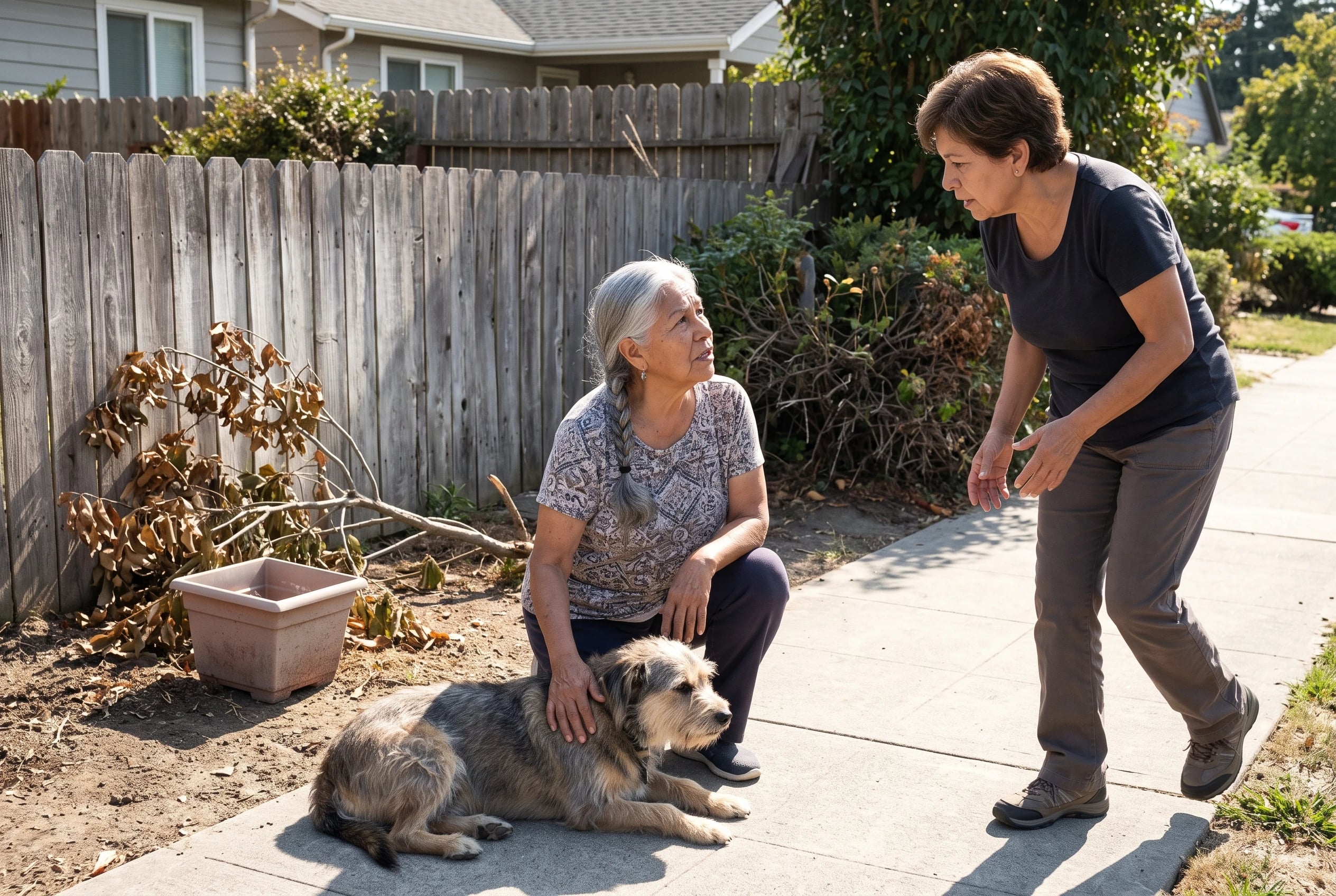
A dog drops during a walk, then seems to recover. From across the room, that looks like his legs failed. Tell the vet about the whole spell, including what he was doing immediately before it.
Heart-related fainting, called syncope, can appear as sudden weakness or collapse. VCA's syncope guidance describes an ECG and, when indicated, a wearable Holter monitor as parts of the investigation. Heart disease can also reduce blood flow to tissues, leaving a dog weak and unable to tolerate activity.
That is why a hallway runner alone cannot answer every fall. After a collapse, check his breathing and gum color. Call for urgent veterinary advice, even if he is standing when you pick up the phone.
20A paw that flips over and stays that way
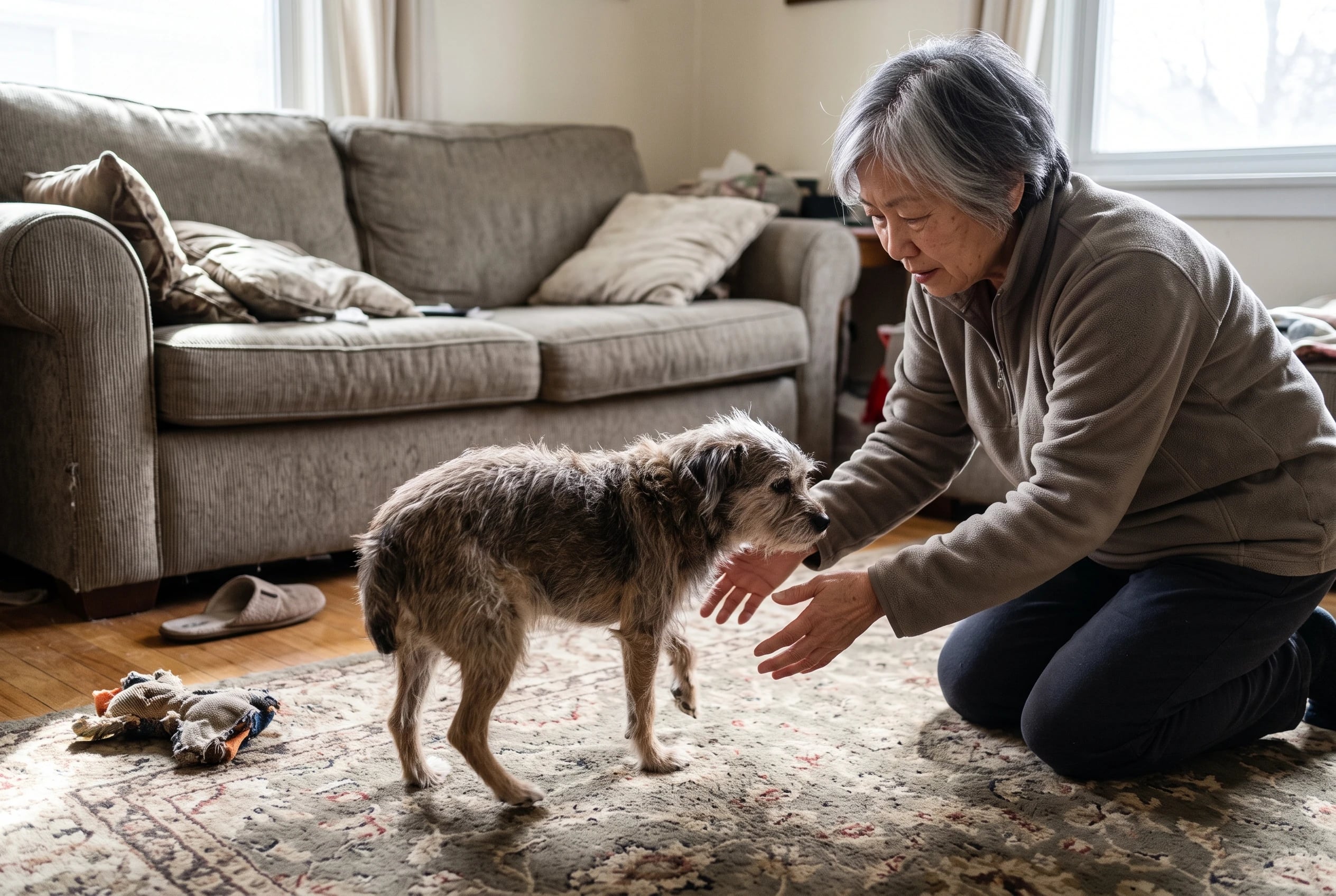
One back paw lands with its top touching the floor. He takes another step before putting it right.
That delayed correction is called knuckling. It points the vet toward a problem with the nervous system's sense of paw position, according to MSPCA-Angell's neurologic examination guidance. Notice which paw does it and whether it happens again. A short video of his ordinary walk gives the vet the movement you saw at home.
Don't keep turning the paw over to test him. The vet has other checks, including postural reactions and spinal reflexes, to locate the problem before deciding what imaging is needed. If he suddenly cannot stand, skip the home test and seek urgent care.
19An elderly dog slipping on floorboards
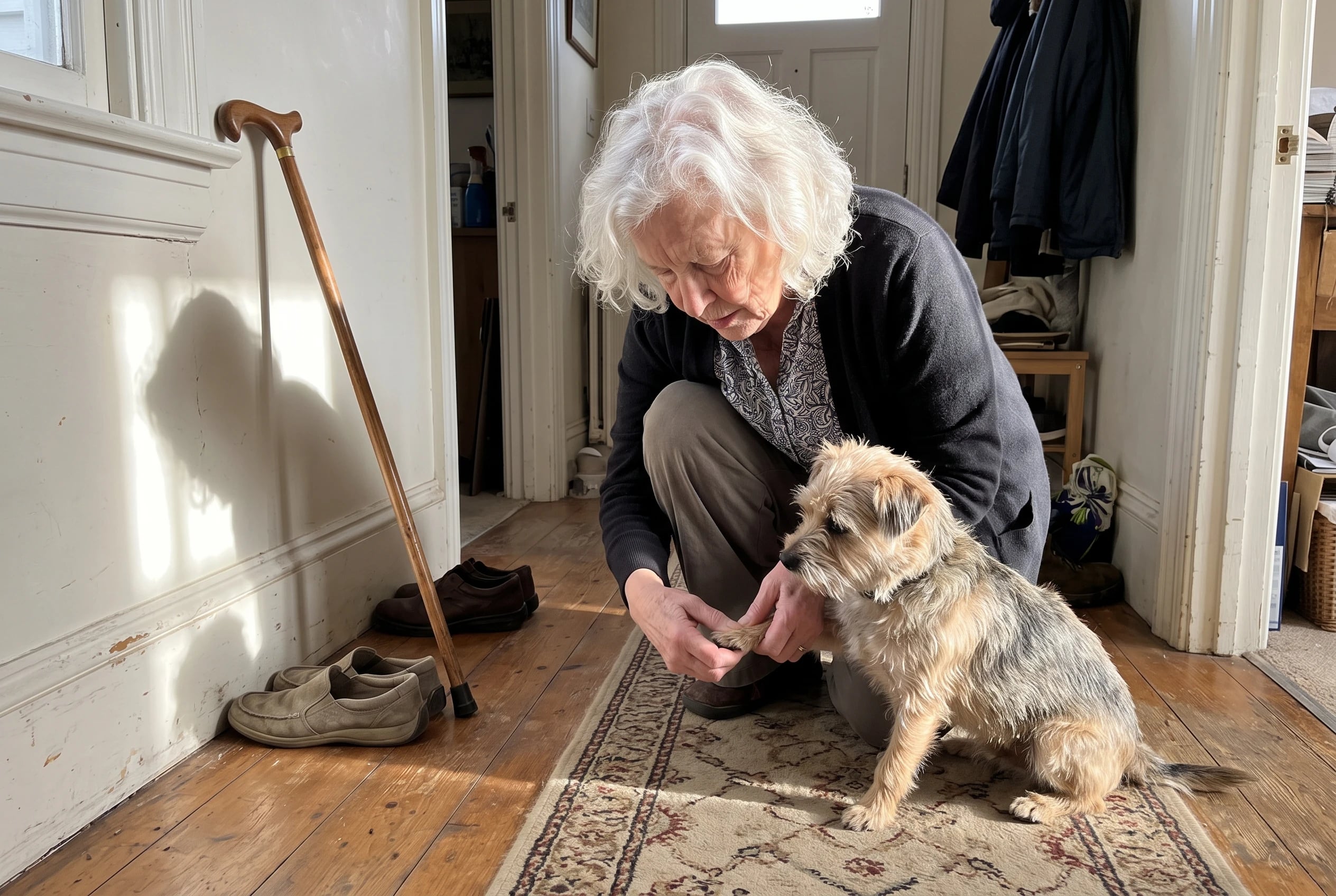
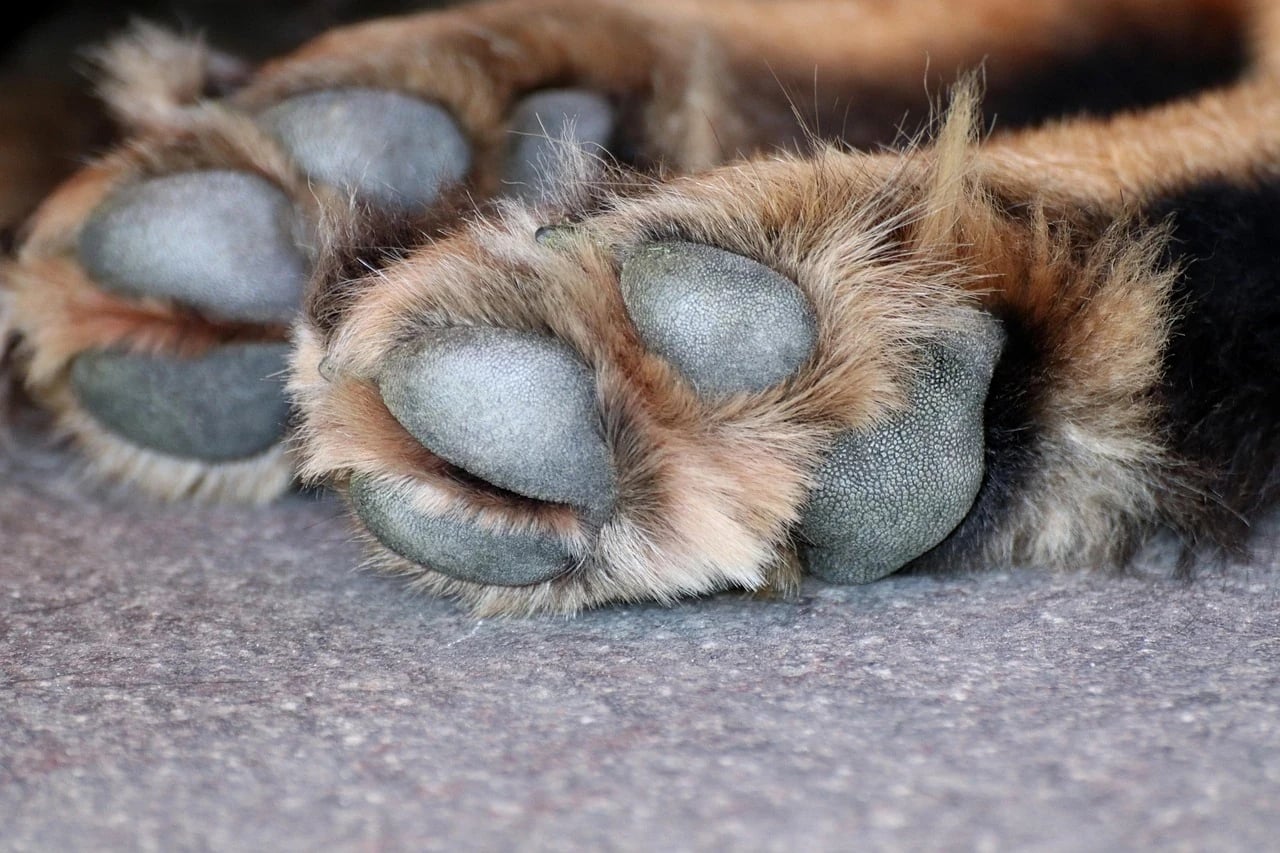
An elderly dog slipping on floorboards needs more than a laugh about polished wood. First, see whether his nails have grown long enough to change how his paw pads meet the floor.
The American Kennel Club's nail-trimming guidance notes that overgrown nails reduce paw-pad contact and stability on hard surfaces. Ask a groomer or vet to trim nails if doing it yourself feels uncertain.
Then watch him on a surface with traction. Does he stand more steadily, or does a foot still drag or fold? The ToeGrips maker sells rubberized rings for nails and describes them as a grip aid on smooth floors. That is the maker's product claim, not a diagnosis. Grip cannot explain persistent weakness.
18Your five-minute observations before the vet call
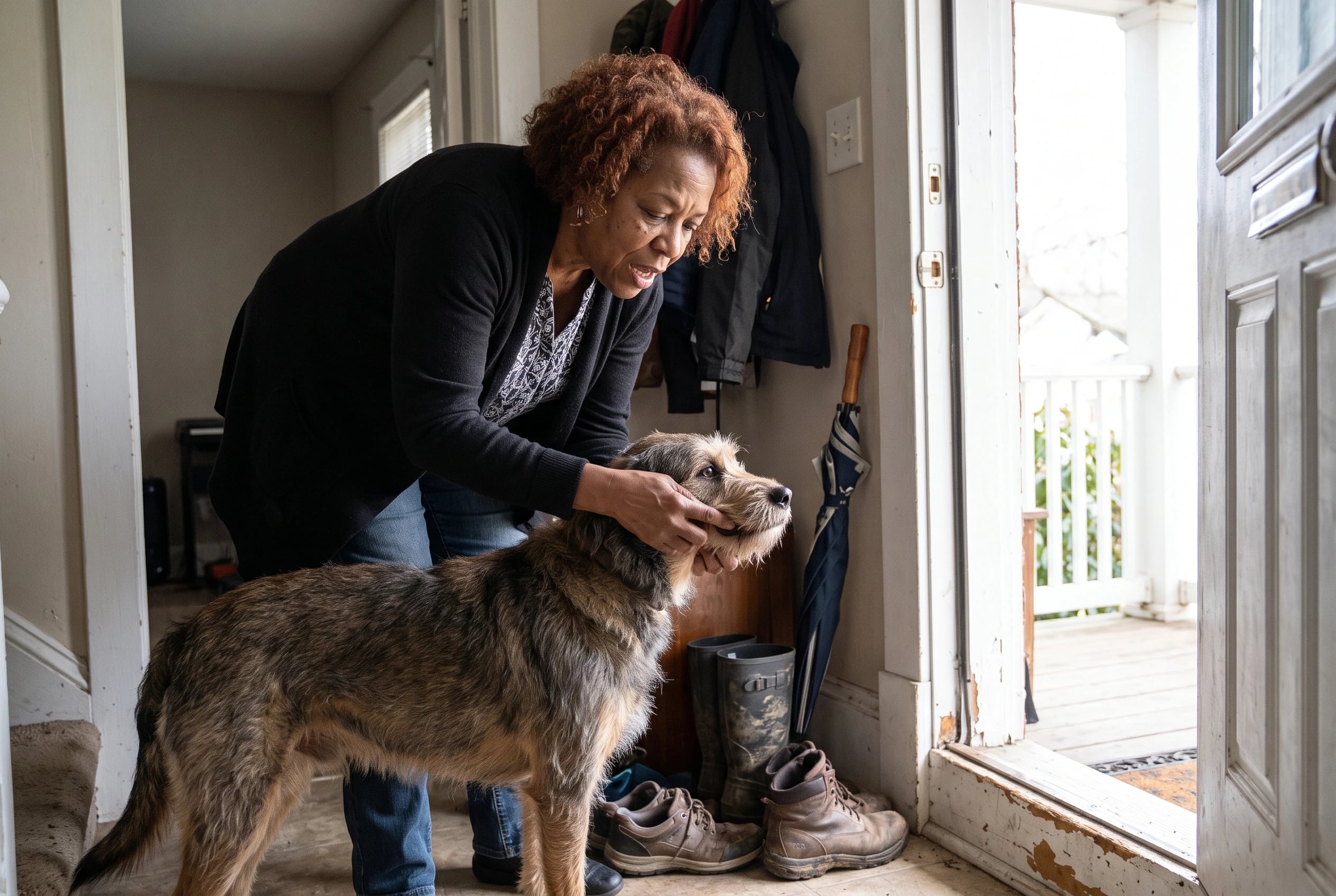
Start with what you can see without moving him. Is he breathing? Does he respond when you speak? Look at his gums. The American Animal Hospital Association flags blue, gray, or pale gums, labored breathing, and severe lethargy as emergencies.
If he has collapsed and is not breathing, follow the American Red Cross's pet CPR instructions while arranging immediate emergency care. Don't spend time taking a temperature during a breathing emergency.
If he is alert and you already know how to take his temperature safely, VCA lists 104°F or higher and 99°F or lower as emergency thresholds. Otherwise, leave the thermometer alone and call. These observations give the clinic useful facts; the next item tells you which signs cannot wait.
17A genuine tonight-not-tomorrow emergency
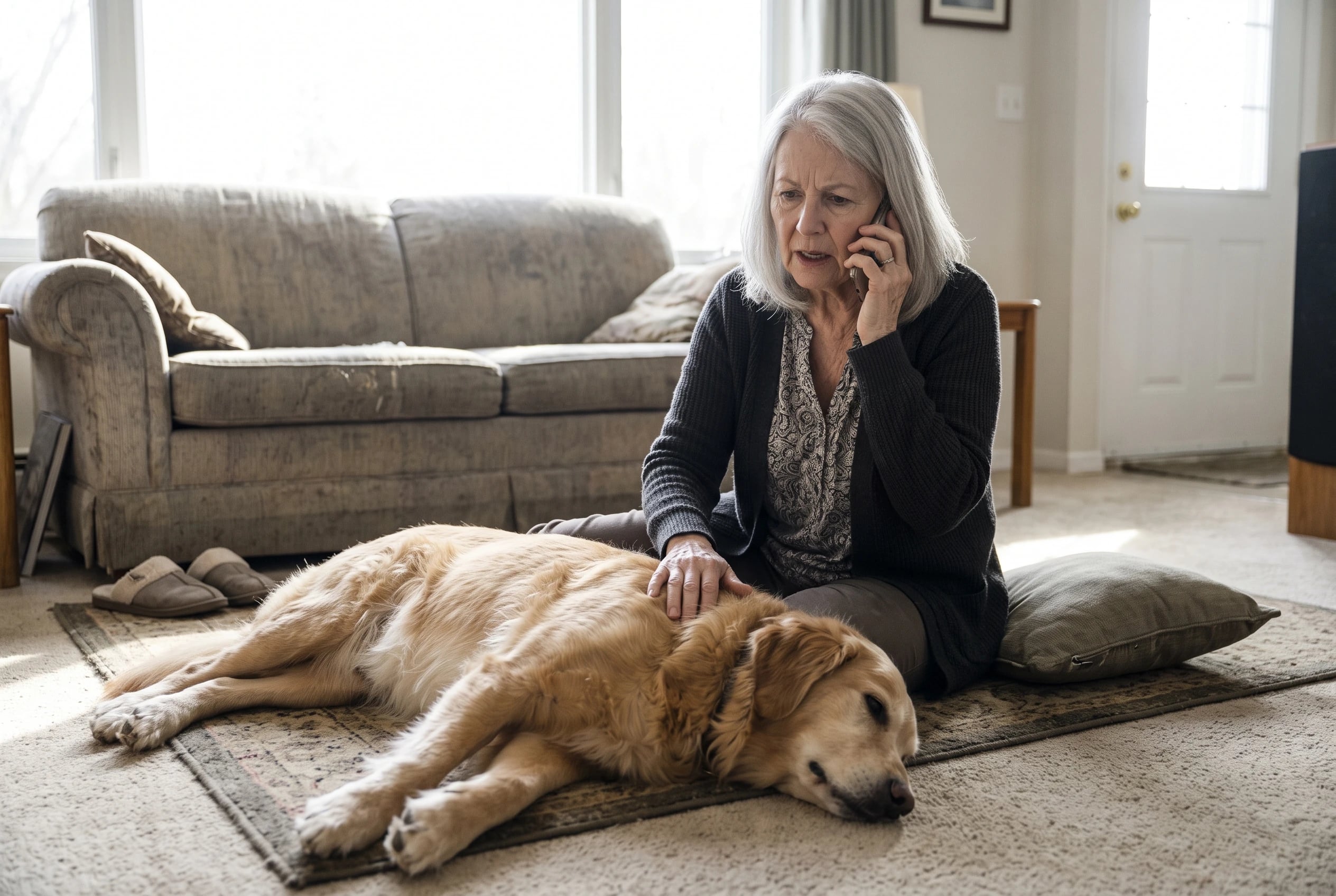
You know the difference between "he's slower lately" and "something happened just now." Use it. VCA's emergency guidance treats collapse, sudden inability to stand, breathing difficulty, severe pain, and repeated seizures as emergencies. AAHA also flags marked belly swelling and abnormal gum color.
For the urgent side of that divide, phone the nearest emergency clinic while arranging a ride. Say, "My dog suddenly cannot stand," or describe the breathing, gums, pain, or seizure you see. A dog who gets up again after a collapse still needs prompt advice.
For gradual stiffness without those red flags, book an exam. If the picture changes before that appointment, call again. This table sorts the next call; it cannot name the cause.
See more: 29 Conversations Families Keep Putting Off Until It's Too Late →
16A rug runner laid down the hallway
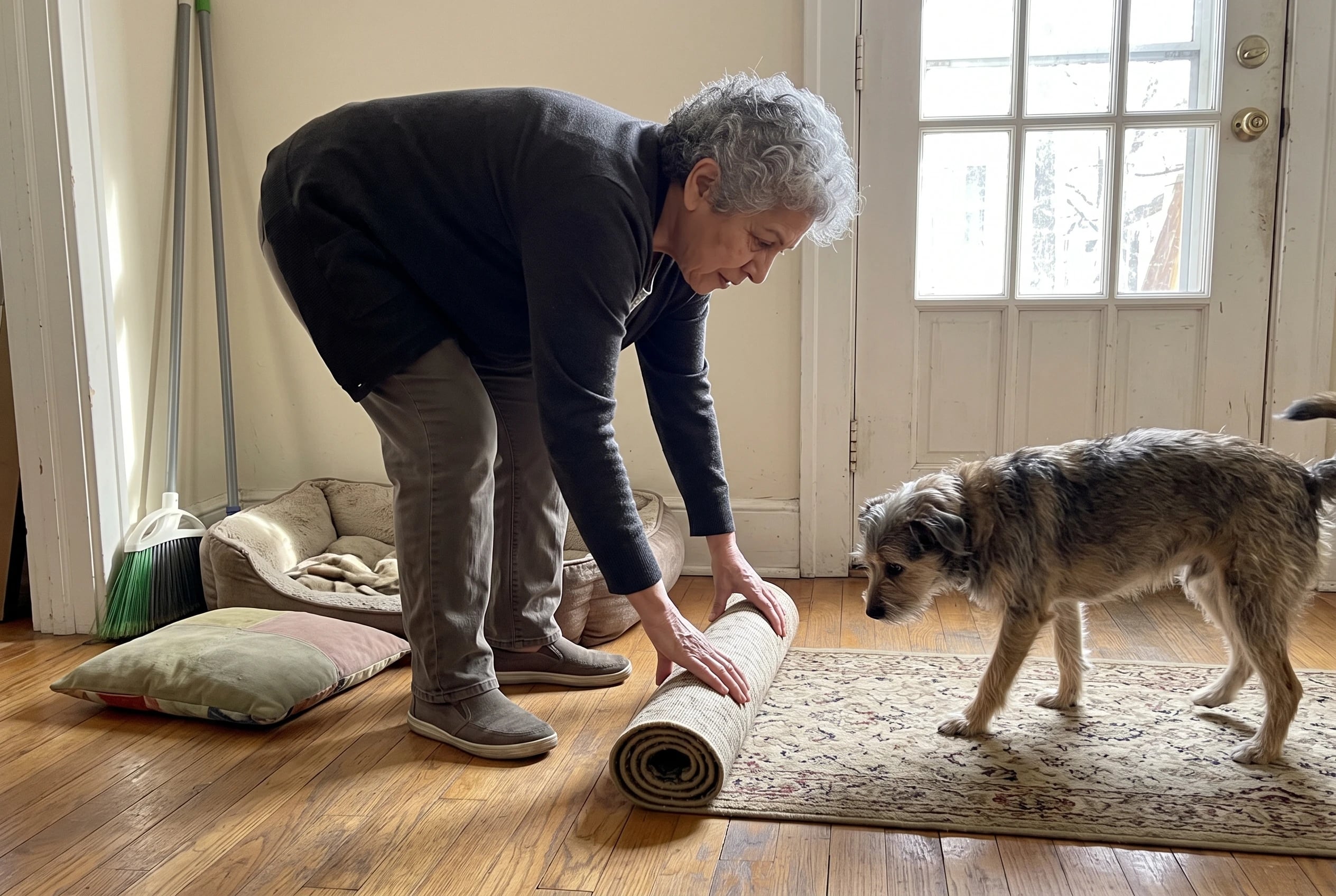
Begin at his bed. Walk the path he uses to reach water and the door. Where does bare floor interrupt his grip?
A rubber-backed, low-profile runner creates a continuous place to put his feet. A WaterHog runner listed by Touch of Class measures 22 by 60 inches and was priced at about $99 in October 2026. That is an example, not a fixed price. Check its current dimensions and cost before buying.
Rubber-soled Power Paws socks are another indoor option. Woodrow Wear listed a set of four at about $28 in October 2026. Watch whether he accepts them and whether they stay in place. The goal is a route he can use, not a pile of products beside the door.
15A rear harness fitted for hind-end support
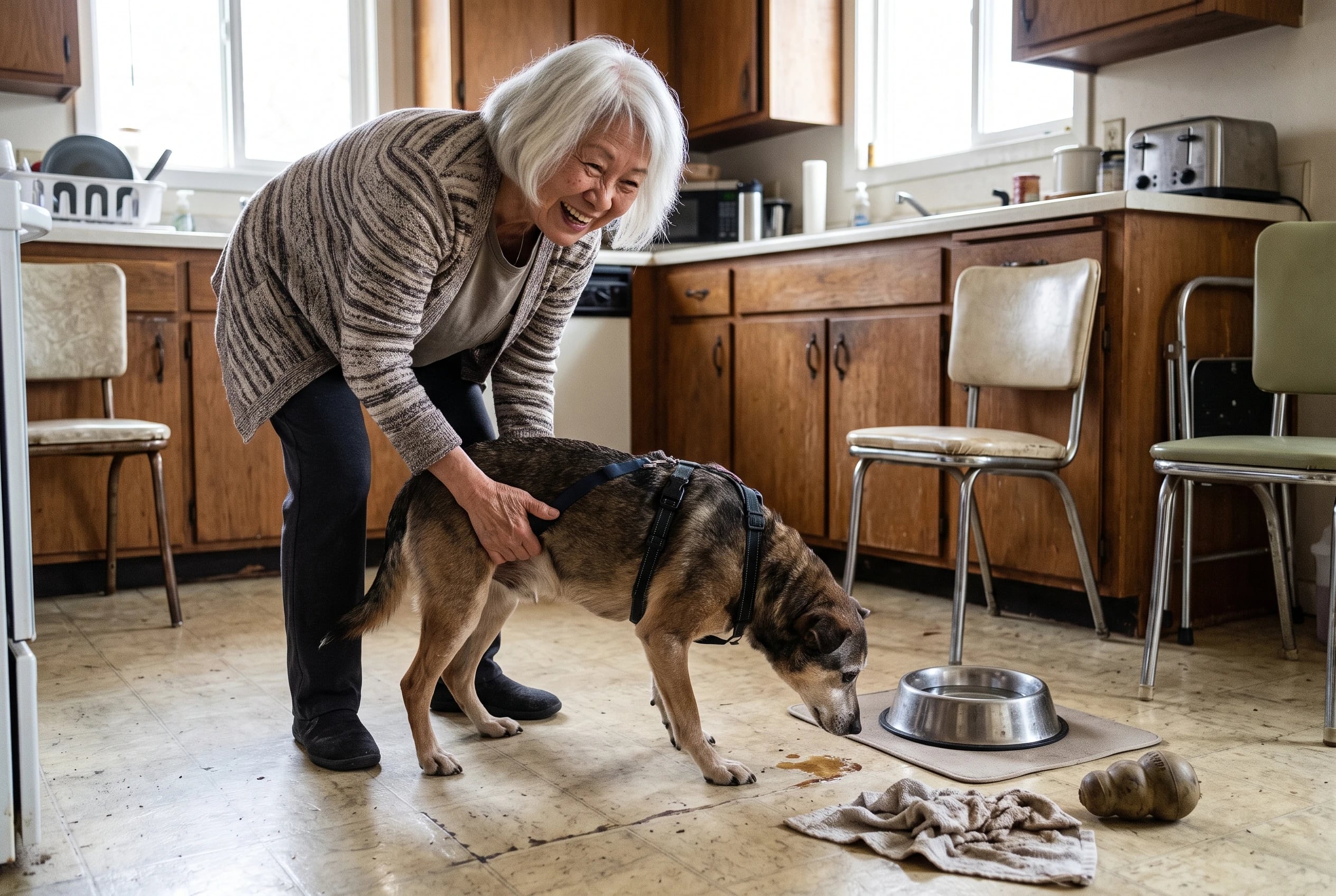
The water bowl is only a few steps away. He wants to go, but getting his back end upright is the hard part.
A lifting harness gives you handles at the front and rear. It spreads support over his body instead of asking you to haul him by his middle. The Help 'Em Up maker describes separate front and rear sections sized by weight and body shape.
Check both sets of measurements before ordering, especially if his chest and hindquarters need different sizes. Ask the vet whether this type of support fits his condition.
Once it fits, notice whether the rear section stays in place as he moves. A harness gets him to the bowl; it does not treat the reason his legs gave way.
14A shorter, slower walk around the block
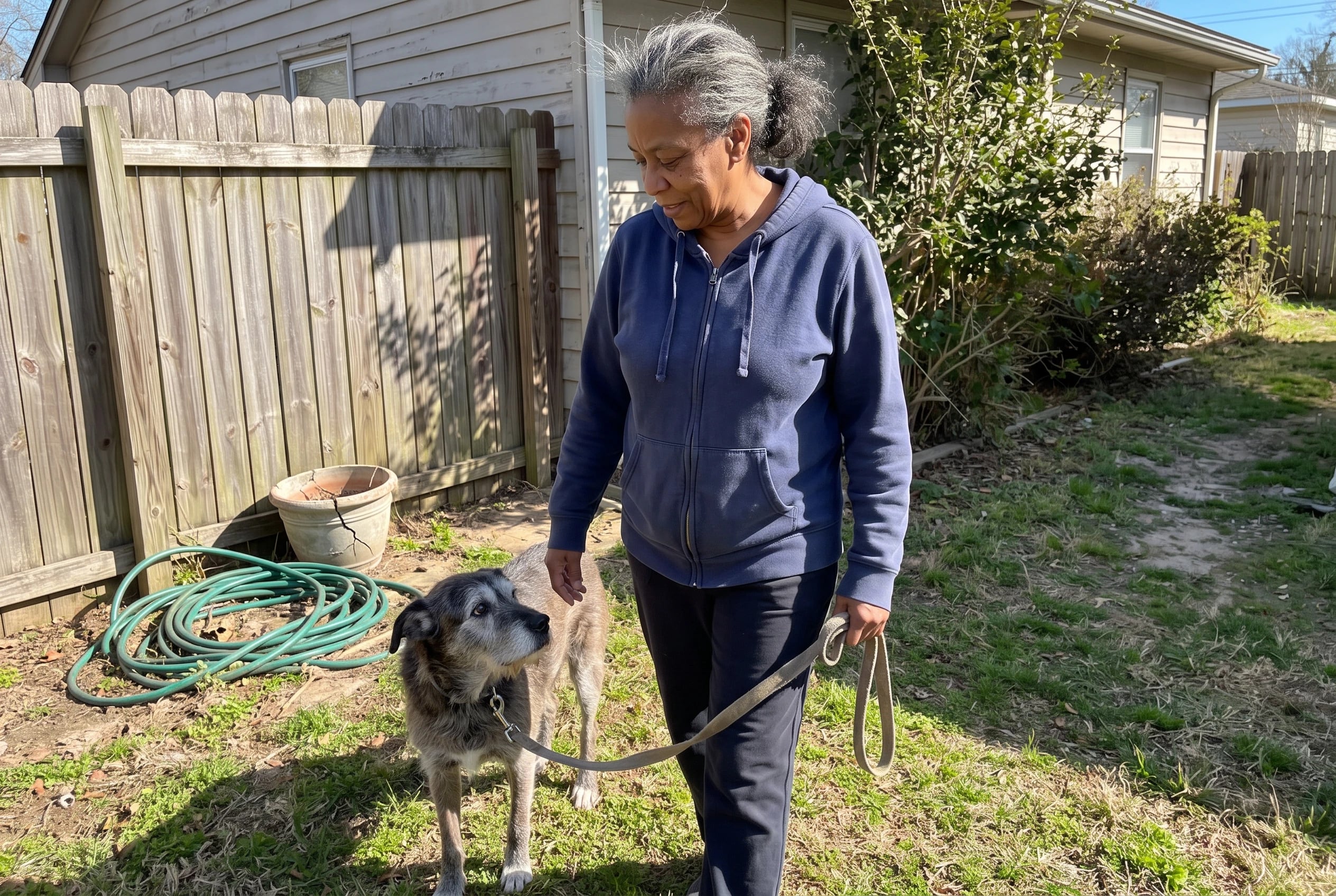
He still heads for the leash. You still want him to enjoy that part of the day. Neither of you needs to prove he can finish the old route.
For mild osteoarthritis, the Merck Veterinary Manual's owner guidance pairs weight control with appropriate exercise on softer ground. VCA recommends controlled, low-impact activity set with a rehabilitation-trained team to preserve muscle and joint movement.
Ask the vet what length and pace suit him now. Turn back before the walk becomes a struggle, then note how he gets up after resting. That answer tells you more than the distance on the leash. A sudden collapse during a walk belongs in an urgent call, not a revised walking schedule.
13A baby gate blocking the back stairs
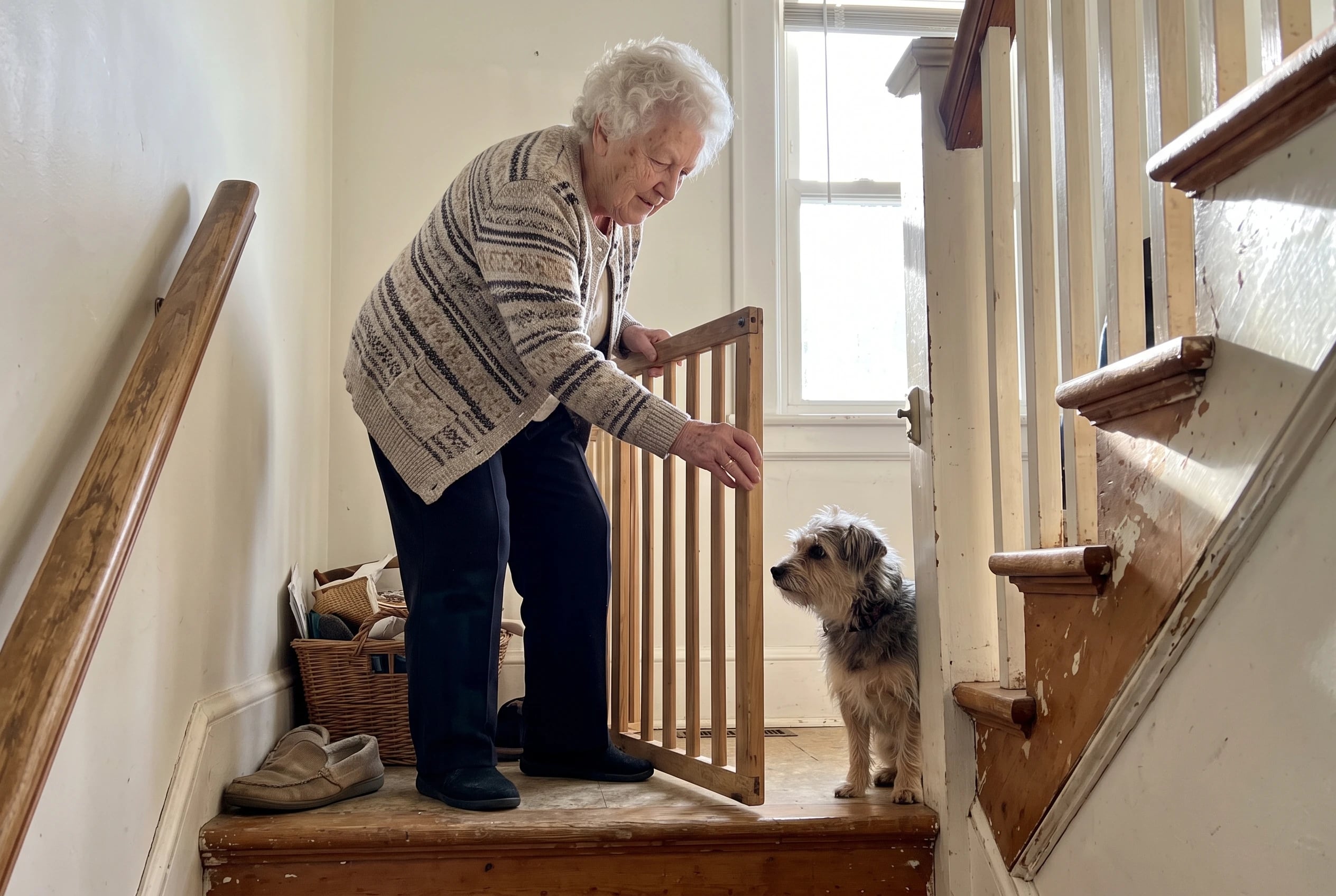
The back stairs were harmless until his feet stopped landing where he meant them to. Put a gate across the route before the next trip outside.
With lumbosacral and other spinal conditions, VCA's guidance includes limiting activities that worsen pain or neurologic signs. Stairs and jumps are worth discussing with the vet if either brings on trouble.
The gate works only if you give him another route to water, you, and his bathroom spot. Watch where he goes when he meets the barrier. You're protecting him from a repeated movement while the vet works out what that movement is doing to him.
12A ramp swapped in for the porch steps
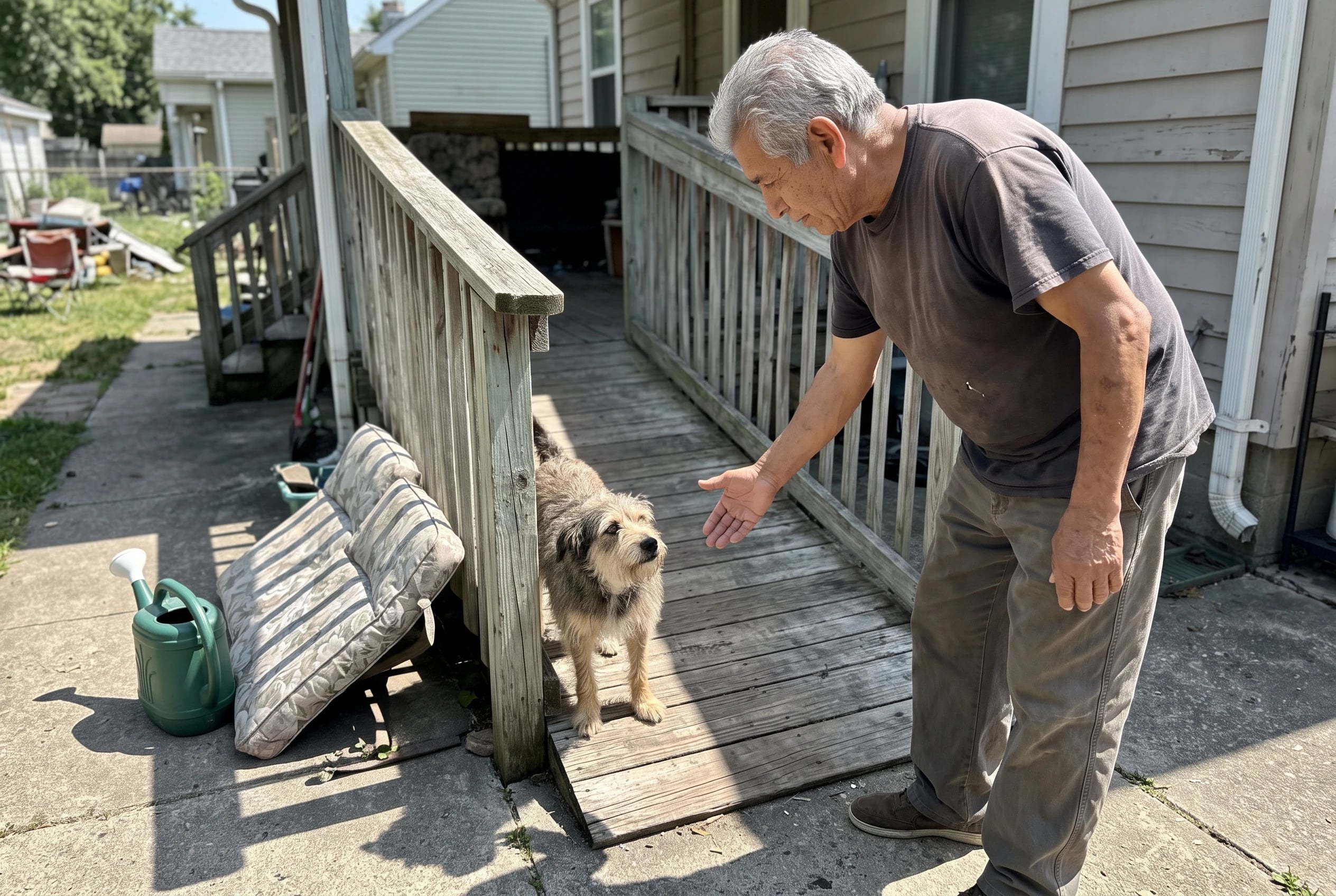
A ramp looks like an easy answer until you picture him standing at its foot, unsure whether he can climb it.
Before buying one, measure the space where it would sit and ask the vet whether a ramp suits his particular weakness. Check the walking surface, how securely the ramp stays put, and whether you can manage it yourself.
There is no reliable general ramp price in the sources for this article. Get a current quote for the size you need.
Set up the route with his actual day in mind: porch to yard, or car to sidewalk. Stay beside him while he tries it. If he cannot use it steadily, don't turn the attempt into a test of determination. Ask the vet about a different way to help him out.
11A vet-prescribed NSAID for a painful flare
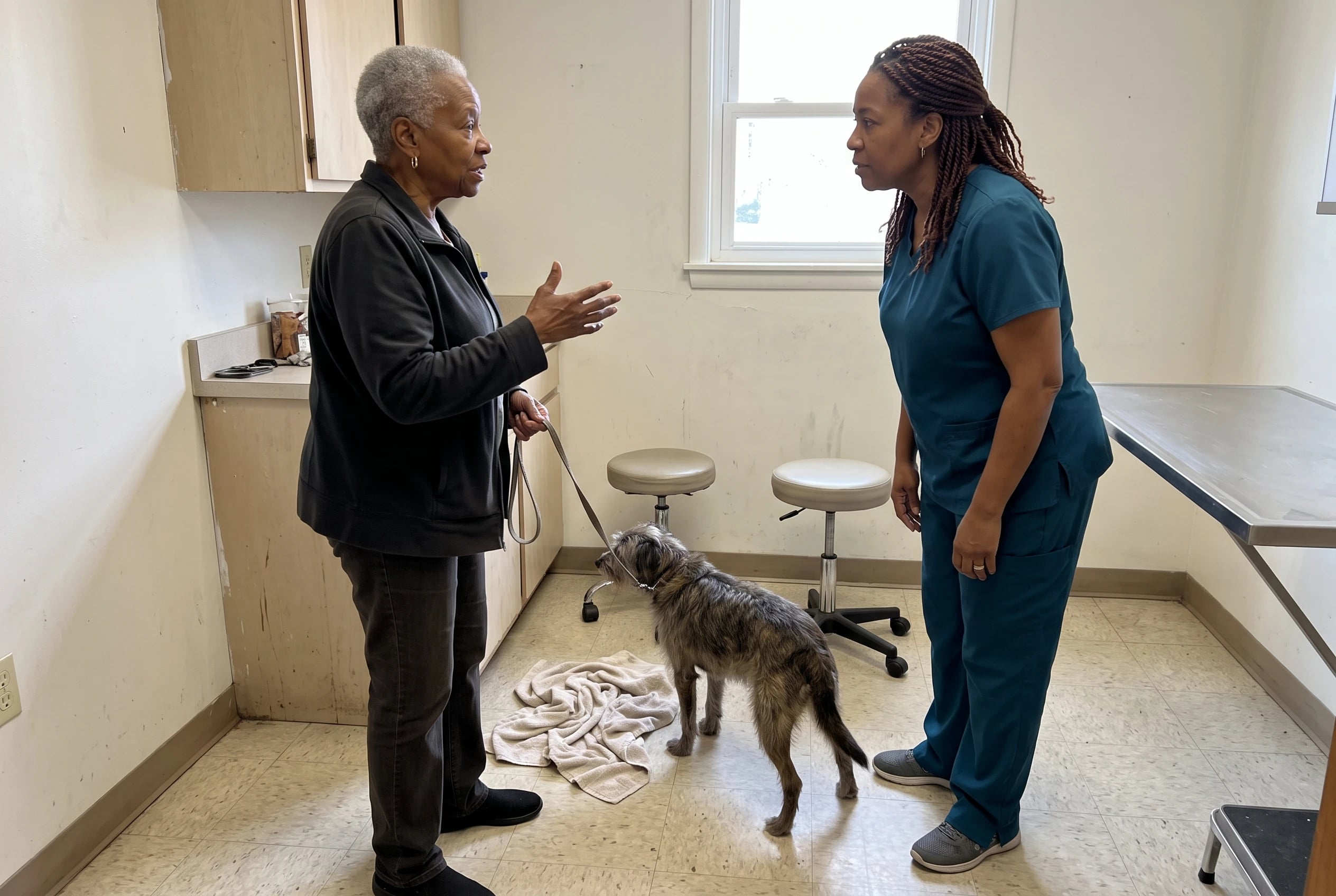
When pain makes standing harder, floor changes do only part of the work. Tell the vet what you see when he rises, walks, and lies down again.
The Merck Veterinary Manual describes veterinary NSAIDs as a first-line treatment for canine osteoarthritis. Pain care also includes measures such as weight control and rehabilitation. The vet chooses the medicine and tells you what changes to watch for.
Merck also describes an injectable anti-NGF treatment for osteoarthritis. Ask what each proposed treatment is meant to improve. How will you tell whether it helps, and when should you report a problem? Leave with a plan you understand, rather than a prescription whose purpose is unclear.
10A bottle of ibuprofen left out on the counter

You see him struggle to rise, and the bathroom cabinet holds the pain medicine you would take yourself. Leave it there.
VCA's guidance on degenerative joint disease warns that human over-the-counter medicines can cause serious problems in dogs. Don't give ibuprofen or another human painkiller without veterinary direction. Don't guess a smaller dose.
If he has already swallowed a pill, tell the vet what it was and when it happened. If he has not, make the call before giving anything. You're trying to ease his pain, and the right treatment starts with knowing what is causing it.
9A swim session in the underwater treadmill
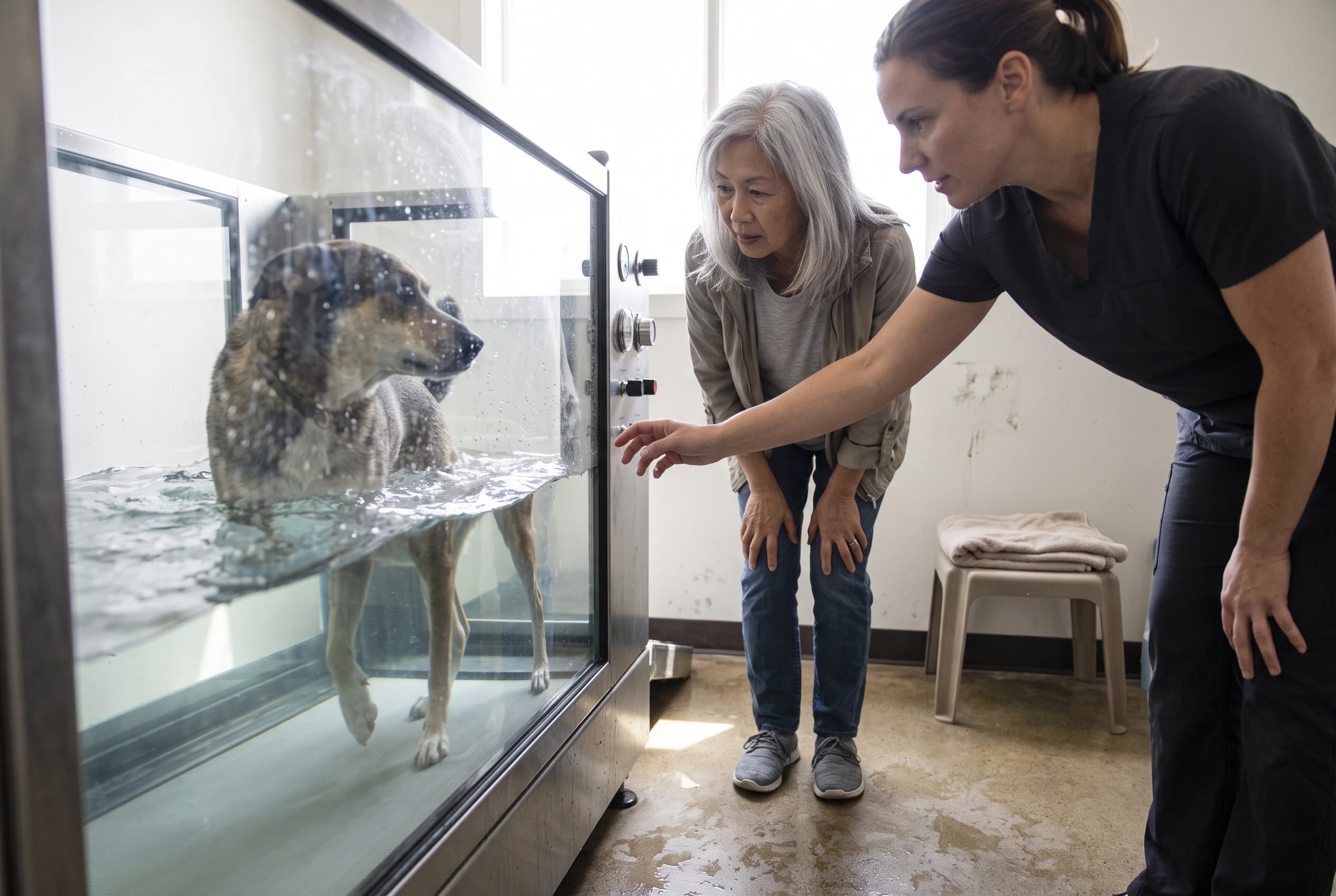
The word "therapy" sounds promising, but what would your dog actually do there? Ask before you book.
Veterinary rehabilitation includes underwater treadmill work and targeted exercises alongside pain treatment, according to the Merck Veterinary Manual. A rehabilitation team sets work around the dog's condition, rather than asking him to push through a difficult walk.
For a price check, a 2026 PetRehabNetwork snapshot put an initial evaluation near $160 and a session around $65. Clinics commonly request a veterinary referral.
Ask the local clinic for its current fees, referral rules, and plan for your dog. The useful measure is whether he moves and rests better afterward, not whether you bought a course of sessions.
See more: 26 Five-Minute Exercises for Seniors →
8A bowl of food measured a little smaller
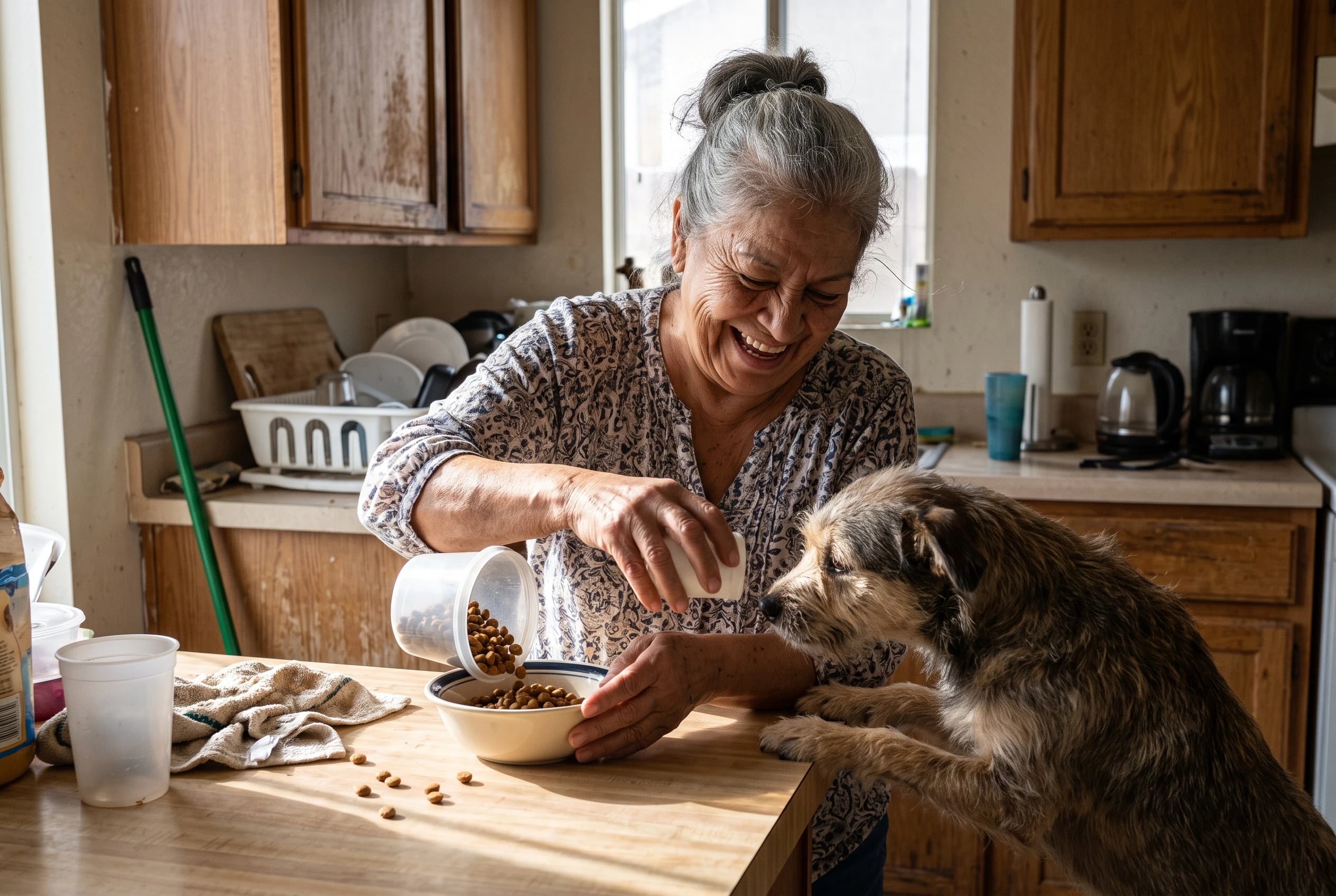
His walks got shorter, but the scoop stayed full. That mismatch deserves a conversation, not an abrupt guess at a new ration.
Weight control is central to osteoarthritis care in the Merck Veterinary Manual's owner overview. Ask the vet what weight suits him and how to adjust food while protecting the muscle he still has. Bring the food bag or its details, plus the scoop you use.
If you're considering omega-3s or another joint supplement, ask where it fits in the treatment plan. VCA discusses them as additions to care, not replacements for prescribed pain treatment. The bowl matters. So does an accurate diagnosis.
7A first vet appointment that uncovers the cause
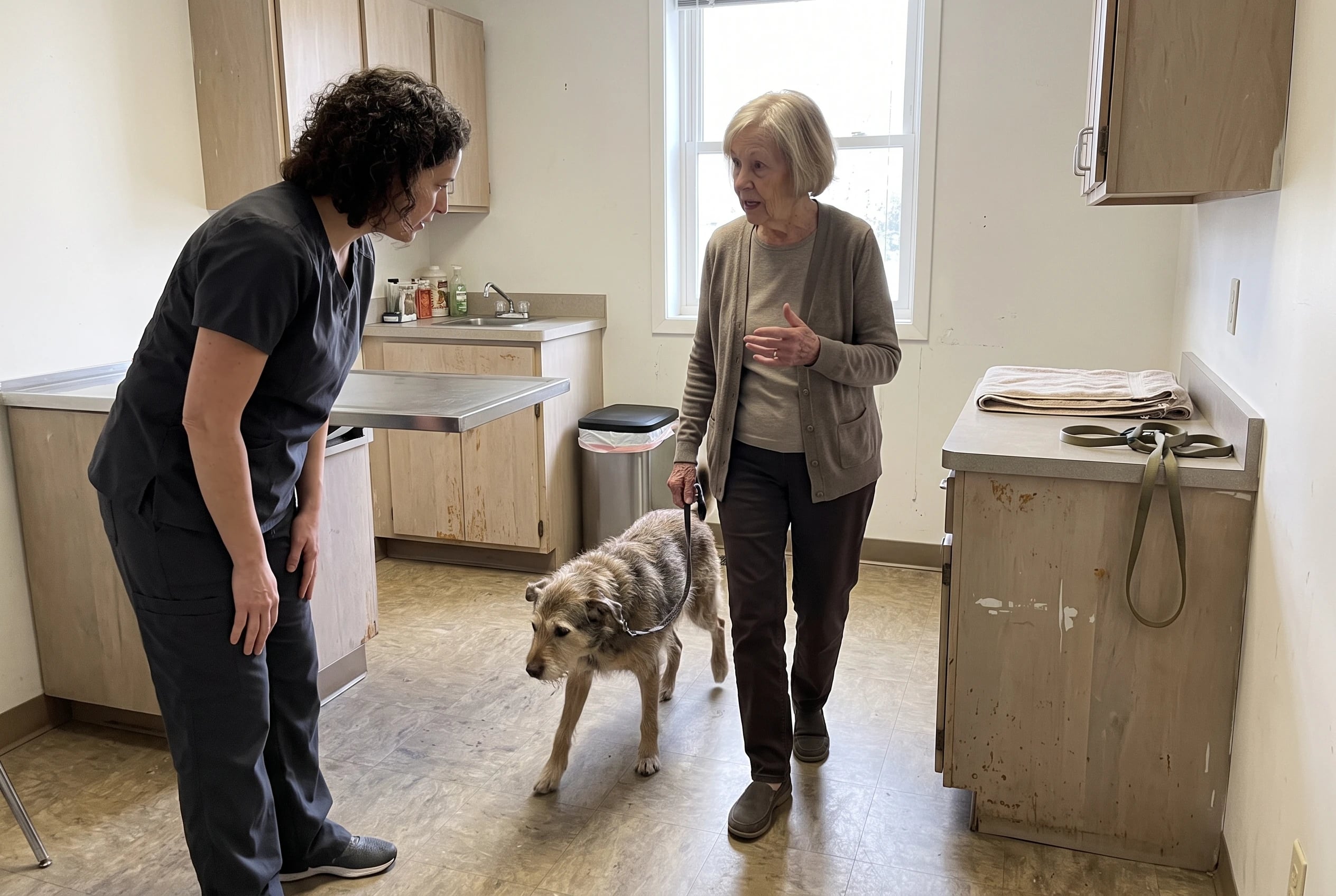
"His legs gave out" is enough reason to book the visit. What you saw next helps the vet decide what to examine first.
VCA's weakness-testing guidance starts with a physical examination and checks of the joints and nervous system. Screening lab work helps investigate illness beyond the legs. The findings then guide whether X-rays, MRI, CT, or other testing is needed.
Bring a video of his walk and describe the first episode: sudden or gradual, painful or apparently painless, one leg or both. Ask, "What are you trying to rule out with this test?" That keeps the next step tied to his examination.
For budgeting, CareCredit listed a dog X-ray average of about $213 in its 2026 cost information. Its typical range was $169 to $388. Ask your clinic for its estimate and what it includes before the image is taken.
6Lifting a 60-pound dog without wrecking your back
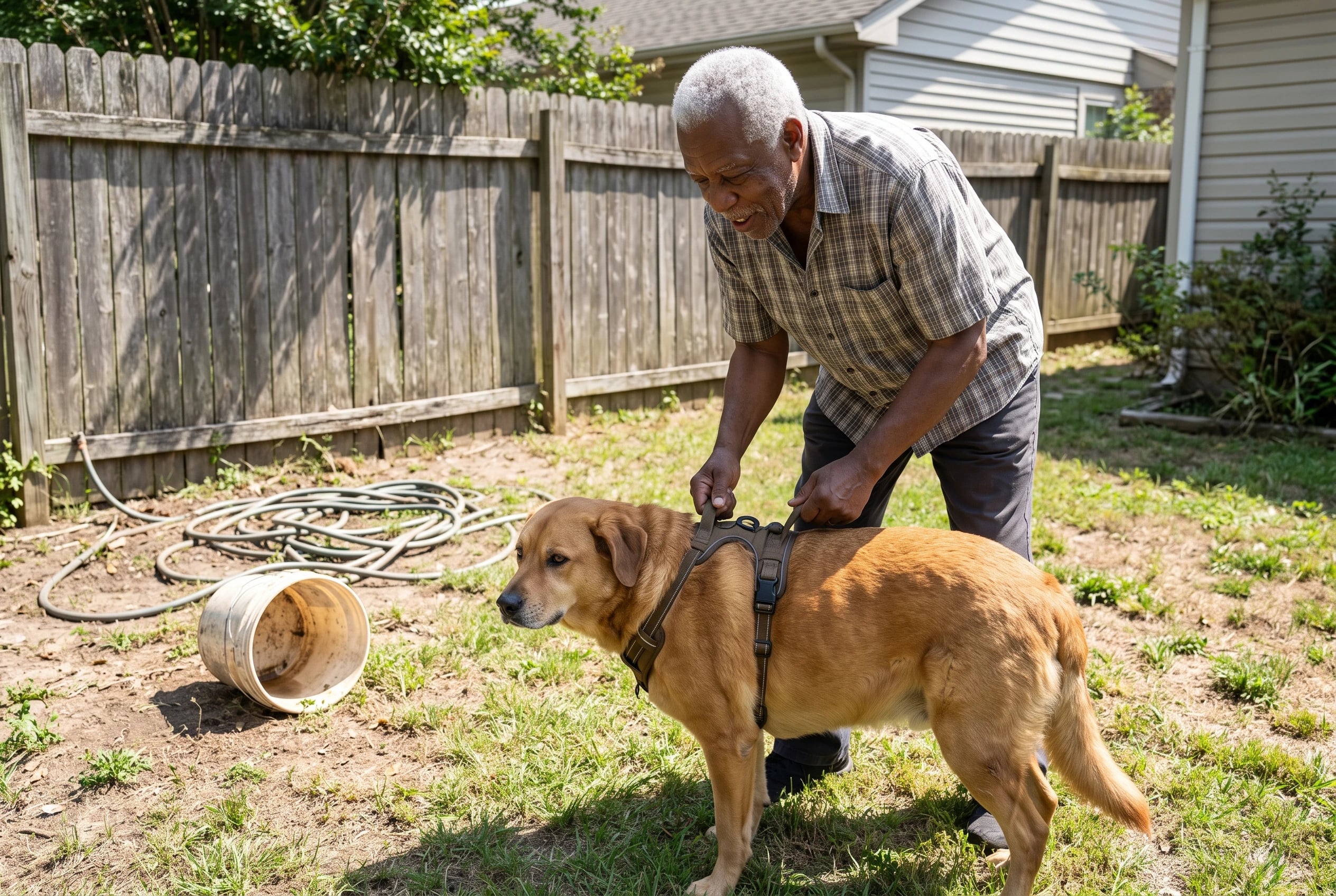
At 60 pounds, helping him off the floor is a job for more than your forearms. If he has fallen suddenly and cannot stand, call the vet before attempting to walk him around.
Once the vet has assessed him, focus on *your* position during regular help. Stand close enough that you aren't reaching across his body. The Help 'Em Up product description shows front and rear handles for guiding his shoulders and hips while keeping your spine neutral.
Clip-on walking loop handles reduce how far you bend for a taller dog. K9 Carts listed a pair for about $23 to $27 in October 2026, depending on size. Check the current price and fit. If you cannot control the lift, ask another person to help rather than straining your back.
5A heated, padded bed for the 2 a.m. wake-up

At 2 a.m., he gets up for water and cannot find steady footing beside the bed. Move the water within an easy route, with traction under his feet and clear access to his bathroom spot.
Warmth is part of the care VCA recommends for a sick dog. Ask the vet before using a heating pad on low or a wrapped hot water bottle, and follow the directions you receive.
Put comfort where he already chooses to rest, rather than making him cross the room to reach it.
Notice whether he settles after you help him. A restless, painful night or a new inability to stand is information to give the vet, not a reason to keep rearranging the bedding.
4A rear-wheel cart for a dog that still wants to move

He heads toward the yard as soon as you open the door. His front legs go first; the back ones cannot keep up. Ask the vet whether a rear-wheel cart fits his diagnosis and strength.
Walkin' Pets lists mobility carts for dogs with hind-end weakness. In its 2026 examples, a large rear-wheel cart was about $529. A large four-wheel cart was about $834. Compare current measurements, support needs, and prices before ordering.
A cart helps with movement and caregiving; it does not change a progressive disease. The University of Missouri's degenerative myelopathy guidance is clear about that disease's course. You can value a good trip around the yard without asking the cart to promise a cure.
See more: 21 Best Dogs for a Senior Woman →
3A week of notes on slips, appetite, and walks

Memory turns several rough mornings into "he's been off lately." Give the vet something sharper.
As you notice changes, record whether he ate, wanted a walk, seemed comfortable, and slipped or fell. Note where the fall happened and whether he got up alone. AAHA's pain-sign guidance encourages paying attention to behavior changes that point to pain.
If he has heart disease, follow the vet's instructions for tracking his breathing while resting. The Merck Veterinary Manual says a rising resting breathing rate deserves a vet call. Don't wait for the log to fill up before reporting an emergency sign. The notes are for patterns, not permission to postpone care.
2A German Shepherd, a Dachshund, and a Labrador compared

Breed history gives the vet a clue. It does not hand either of you a diagnosis.
Hip dysplasia is a greater concern in larger breeds, including German Shepherds and Labradors, according to VCA's hip dysplasia guidance. The University of Missouri identifies breed-linked degenerative myelopathy variants in German Shepherds, Boxers, and Pembroke Welsh Corgis, among others.
VCA flags sudden paralysis without an injury in high-risk breeds such as Dachshunds as particularly concerning for disc disease. Tell the vet your dog's breed or mix, then lead with what happened.
A Labrador with a sudden collapse still needs urgent assessment. A Dachshund with gradual stiffness still needs an exam. The timing and signs outrank the breed label.
1The honest quality-of-life talk with her vet
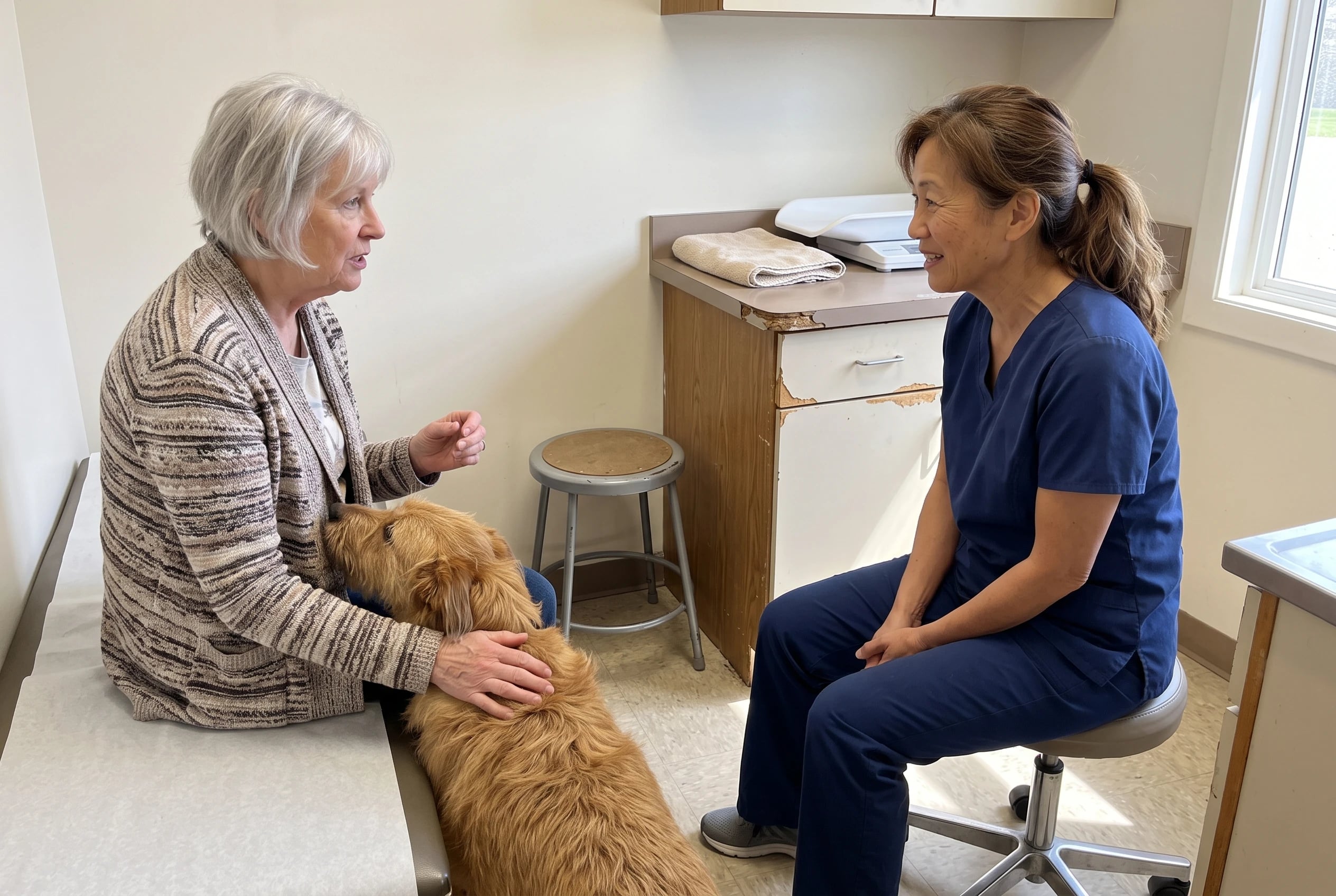
"Does this mean it's almost over?" You're allowed to ask that plainly. You're also allowed to ask it before you have decided anything.
Start with a diagnosis. Arthritis and some disc problems have treatment paths; degenerative myelopathy progresses despite support. The Merck Veterinary Manual describes care for chronic pain. The University of Missouri Veterinary Health Center describes the harder course of degenerative myelopathy. Weak legs alone cannot tell you which conversation you are having.
Then ask the vet to talk through *this* dog's days. Is he comfortable with the care available? Can he get to food and water? Can he move with help? Does he still engage with the people and things he seeks out?
Say which parts of care you can manage at home and which you cannot. Ask what change would mean the plan needs revisiting. Write down whom to call if that change happens after hours.
You do not have to turn one frightening fall into a final decision tonight unless his condition calls for emergency care. You do need an honest answer about what can be treated, what support buys him, and what he is experiencing now.
The bottom line
Legs that fold under a dog tell you something changed. The timing, pain, breathing, and way he recovers help separate an emergency call from an appointment. They do not replace the examination.
You'll be better prepared if you've cleared a grippy route through the house, kept a record of what you saw, and saved the emergency clinic's number. Then you can spend the call describing your dog instead of searching for words.
What happened just before his legs gave way, and what did he do immediately afterward?
Up next
22 Reasons Your Old Dog Paces at Night, and What Helps
A look from the water bowl to the bedroom door at what might be keeping your dog awake, plus what to check at 2 a.m.
Read the list →

Reader quiz
Did you catch the details?
5 questions from this article.
What should you do if your dog suddenly cannot use his back legs?
Questions people also ask
What happens when an old dog's back legs give out?
Arthritis, disc disease, degenerative myelopathy, muscle loss, and illness are among the possible causes. A vet examination separates joint trouble from nervous-system or other weakness; VCA's weakness-testing guidance describes the steps.
What are end of life symptoms in elderly dogs?
There is no single sign that answers that question. Severe pain, repeated collapse, labored breathing, extreme lethargy, and blue or pale gums require urgent care, according to AAHA. Ask the vet to assess comfort, appetite, movement, and engagement in light of the diagnosis.
Should I put my dog down if his back legs give out?
Not automatically. Treatment or mobility support helps some dogs, while progressive disease calls for a different discussion. Ask the vet what is causing the weakness and what your dog's comfort and daily activities show. The Merck Veterinary Manual describes treatment for chronic pain.
Is a dog's back legs giving out always arthritis?
No. Disc disease, degenerative myelopathy, metabolic illness, and heart-related collapse also belong in the conversation. A physical and neurologic examination guides further tests, as VCA explains.
Will a joint supplement fix sudden hind-leg weakness?
No. A supplement does not correct a ruptured disc or another sudden cause of lost movement. Seek veterinary assessment rather than waiting for a supplement to work; VCA's disc disease guidance describes sudden weakness and paralysis as warning signs.
Did any of these feel familiar?
Know someone who needs this?
 Prime Journal · Free printable
The Family Essentials Checklist
- Your wishes written down and shared with the right person.
- Your medicines and emergency contacts ready when needed.
- Your family plans settled before anyone counts on them.

Free printable: The Family Essentials Checklist. Enter your email and it is yours.
Sources cited in this article
This article links to 14 outside sources, listed here so you can read them yourself.
- Merck Veterinary Manual www.merckvetmanual.com/therapeutics/pain-assessment-and-management/chronic-p…
- VCA Animal Hospitals vcahospitals.com/east-bay-emergency/know-your-pet/degenerative-disc-disease-…
- University of Missouri College of Veterinary Medicine cvm.missouri.edu/research/dm-degenerative-myelopathy
- VCA's guidance on exercising dogs with osteoarthritis vcahospitals.com/chancellor/know-your-pet/exercising-dogs-with-osteoarthritis
- Merck Veterinary Manual's Cushing's disease guidance www.merckvetmanual.com/endocrine-system/the-pituitary-gland/cushing-disease-…
- Cornell's canine health center www.vet.cornell.edu/departments-centers-and-institutes/riney-canine-health-c…
- American Animal Hospital Association www.aaha.org/resources/help-is-this-a-pet-emergency
- VCA's emergency guidance vcahospitals.com/know-your-pet/common-emergencies-in-dogs
- VCA's guidance on degenerative joint disease vcahospitals.com/know-your-pet/degenerative-joint-disease-in-dogs
- 2026 PetRehabNetwork snapshot petrehabnetwork.com/dog-hydrotherapy
- VCA's weakness-testing guidance vcahospitals.com/big-lake/know-your-pet/testing-for-weakness
- VCA recommends for a sick dog vcahospitals.com/know-your-pet/caring-for-your-sick-dog
- Walkin' Pets walkinpets.com/collections/all
- AAHA's pain-sign guidance www.aaha.org/resources/whats-wrong-common-pet-pain-signs
Ruth Ellison
Family Editor
Ruth writes about grown children, grandchildren, ageing parents, and the conversations families put off, in the words of the people involved.
More from Ruth Ellison