


22 Reasons Your Old Dog Paces at Night, and What Helps
A look from the water bowl to the bedroom door at what might be keeping your dog awake, plus what to check at 2 a.m.
By Ruth Ellison, Family Editor
Updated · 15 min read
The short answer: Pain after rest, disrupted sleep tied to canine cognitive dysfunction, and anxiety linked to vision or hearing loss all explain why an old dog paces at night. Kidney disease, a bladder infection, or Cushing’s disease also belongs on the list. Retching without vomit, a swollen belly, or labored breathing means emergency care now. A veterinary exam identifies the cause.
- Written by our family editor
- Cited 21 sources
- How we review
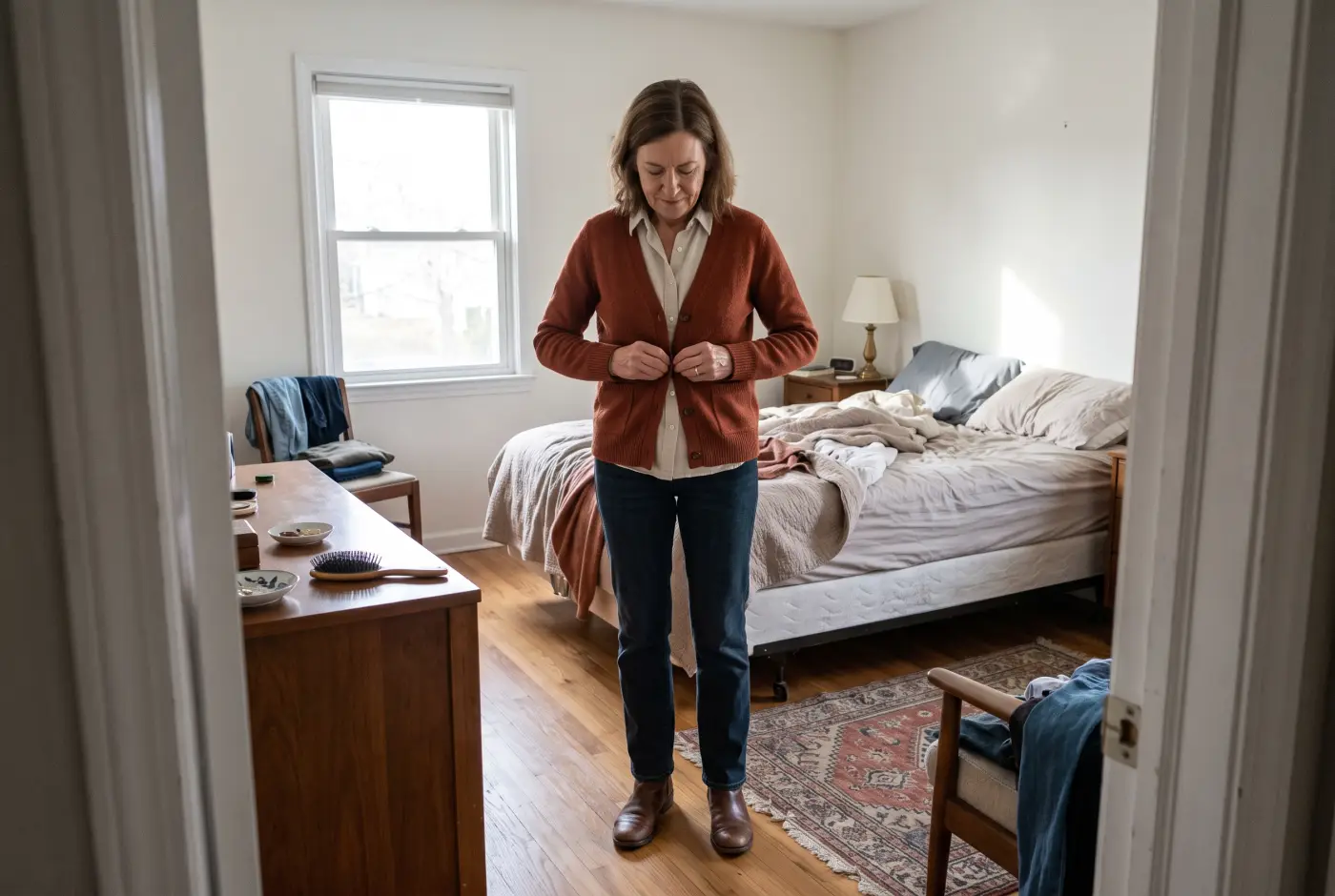
The floorboards creak again. Your dog has crossed the bedroom, stopped beside the door, and turned back toward his bed. You’ve already let him out. You’re tired enough to wonder whether you missed something serious.
That fear deserves an answer, but pacing alone doesn’t tell you he’s dying or losing his mind. Look at what happens *with* it. Does he struggle to rise, head for his water bowl, seem lost, or refuse to lie down? Those details change what you do next.
22Why Does My Old Dog Pace at Night After Rest?
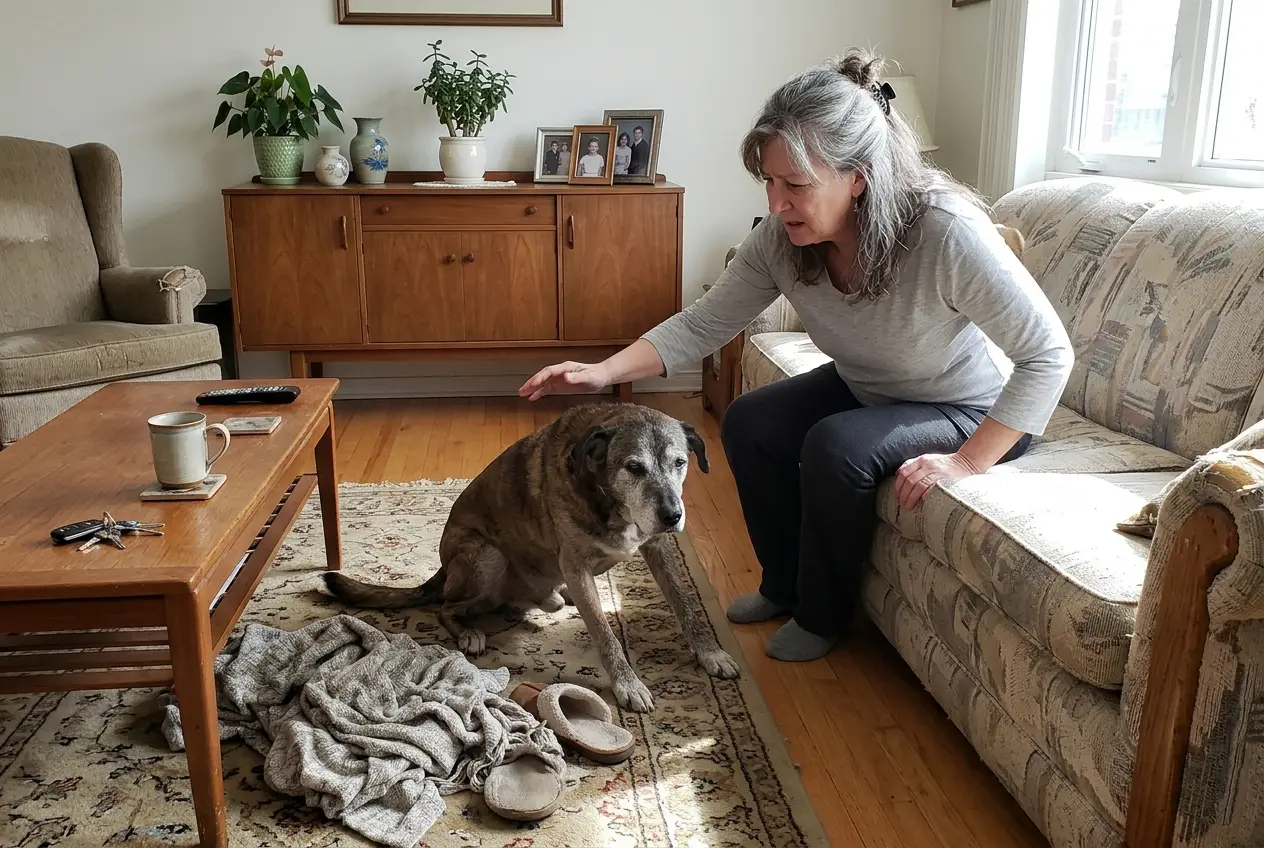
He sleeps beside the sofa all evening. Then bedtime comes, he stands, takes a few stiff steps, and walks the hall instead of settling. The walk looks purposeful until you notice how slowly he lowers himself again.
Osteoarthritis causes stiffness and slow rising after extended rest. AAHA also lists restlessness while trying to settle among signs of pain. Check whether stairs and jumps have become harder, too.
Tell the vet what happens *after* he’s been lying down. “He paces” describes the night. “He struggles to get up, then paces” gives the vet a better lead.
21The Canine Cognitive Dysfunction Diagnosis
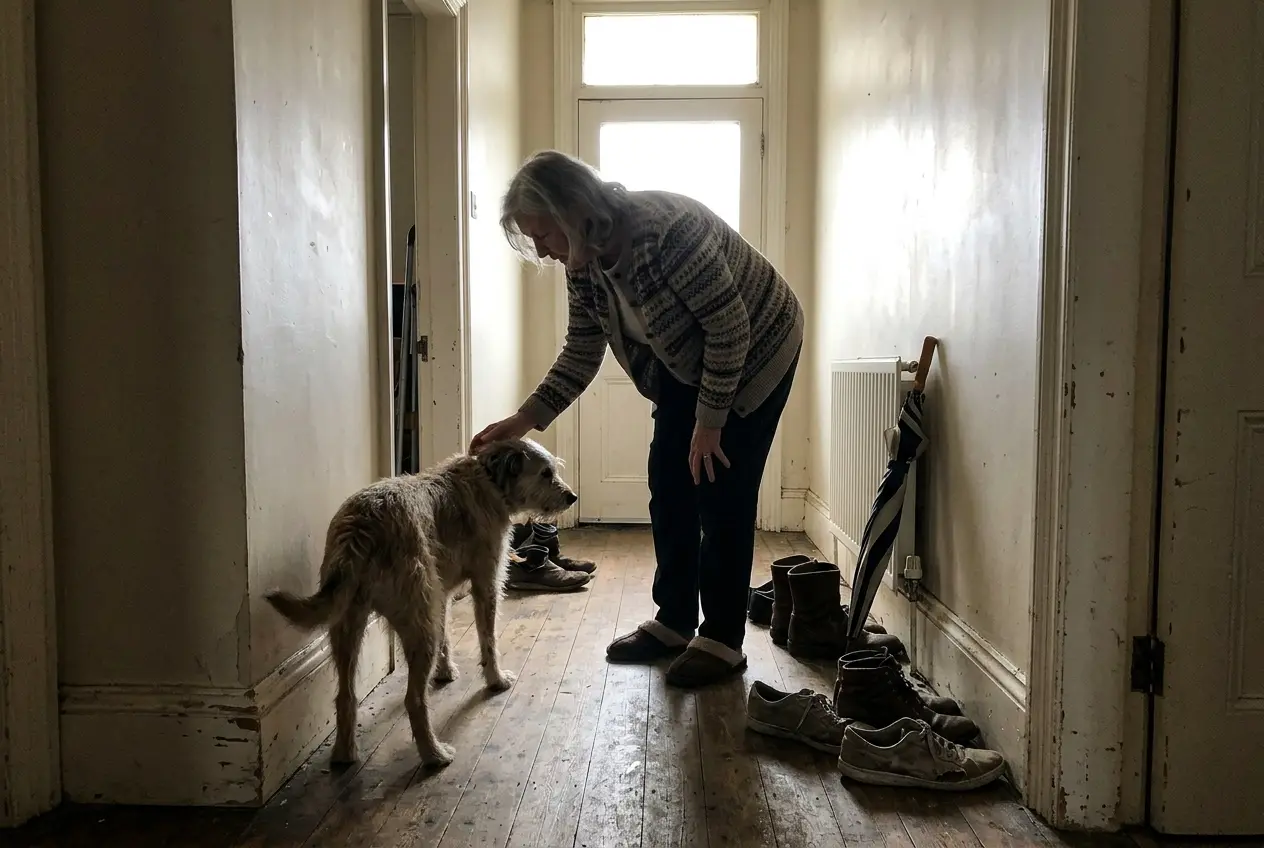
Canine cognitive dysfunction, or CCD, is a progressive brain condition associated with aging. Night wandering is one sign, but the diagnosis takes more than a restless night.
Cornell describes dogs staring at walls, getting stuck in corners, wandering after dark, and sleeping more during the day. Notice whether your dog also seems confused in familiar rooms or interacts with you differently.
Veterinarians group the changes under DISHAA, a way to describe what you see. You don’t have to decide at home whether it’s dementia. Pain and other illness need checking before that label fits.
See more: 27 Memories Women Wish They'd Spoken Aloud to Their Dog Before the End →
20Sundowning and Confusion After Dark
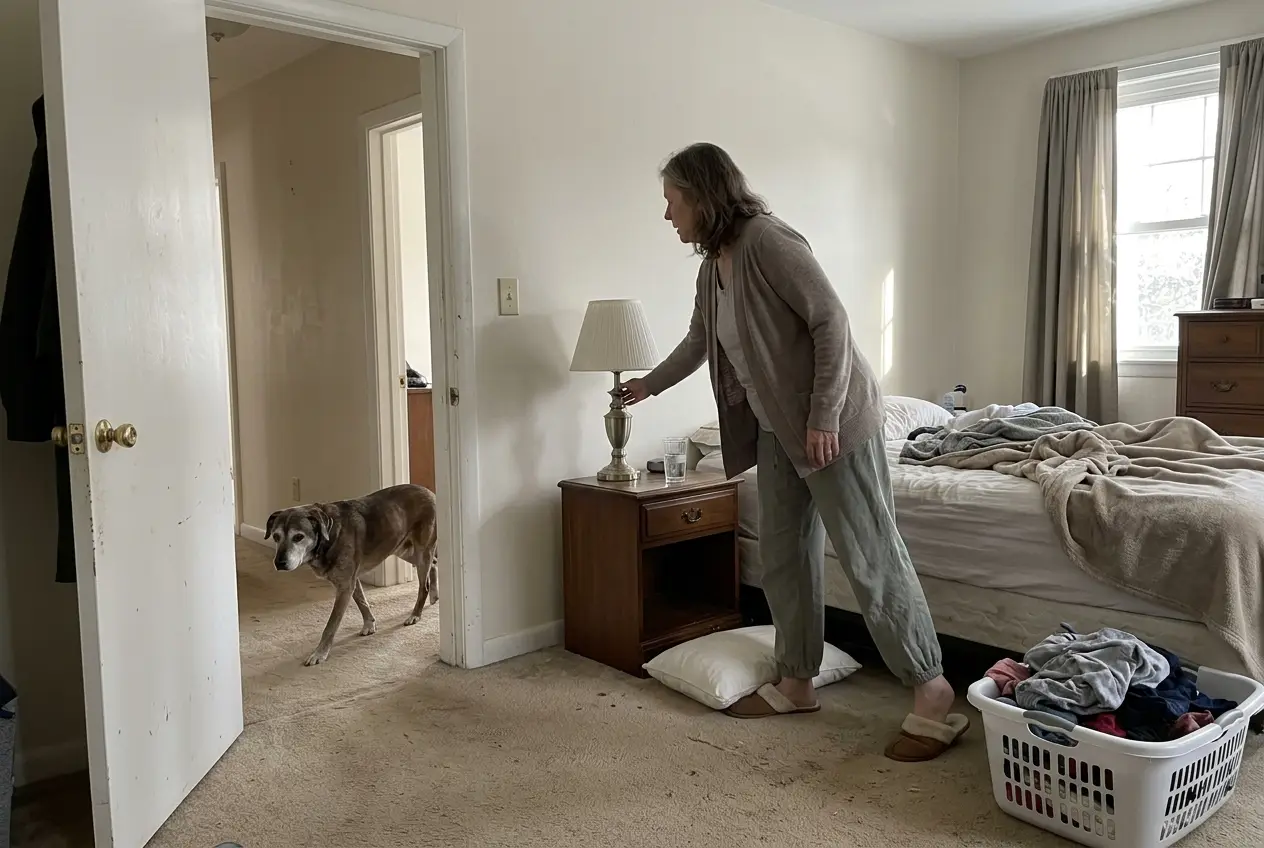
Why does a dog seem fairly settled at lunch, then wander once the house goes dark? Disruption of the sleep-wake cycle is a recognized feature of CCD, described in a review available through PubMed Central. Evening confusion and nighttime activity fit that pattern.
The timing matters, but it doesn’t settle the diagnosis.
Dim light also makes a room harder to use for a dog whose sight has changed. Note when wandering begins and what he does when you turn on a light or speak to him.
If he circles, stares, or loses his way, describe those actions to the vet. “Worse after dark” is useful. “Just sundowning” closes the question too soon.
19Vision and Hearing Loss in Familiar Rooms
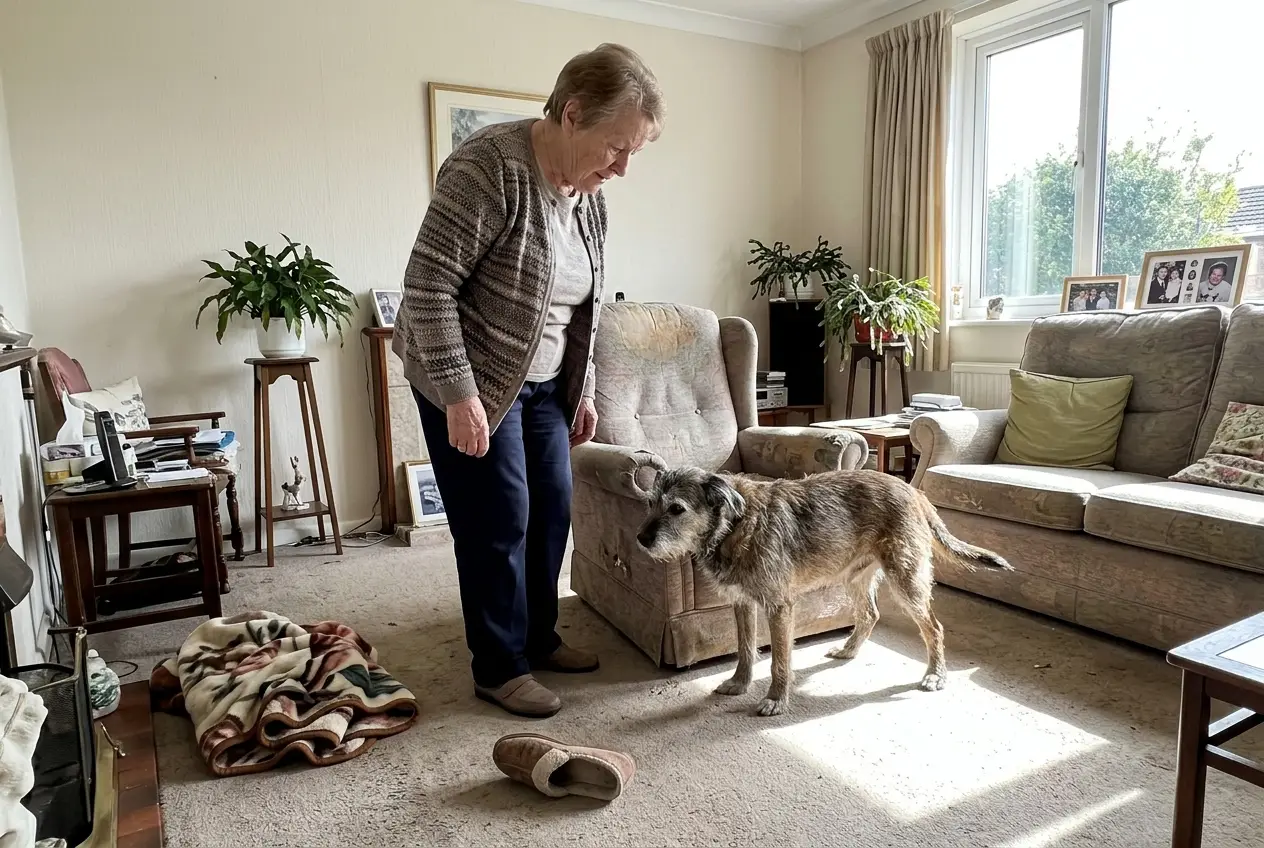
The chair hasn’t moved, yet your dog pauses beside it as though the route to his bed has vanished. He hesitates in the dark hallway. When you call from behind him, he doesn’t turn.
Progressive retinal atrophy often begins with night blindness. The Merck Veterinary Manual says age-related deafness reduces a dog’s response to sounds. Either change gives the vet something specific to examine.
For now, leave the furniture where it is and clear the path between his bed, water, and the door. Watch whether light helps him find his way. A dog who seems anxious at night deserves a sight and hearing check, not a guess about his mood.
18Separation Anxiety at the Bedroom Door
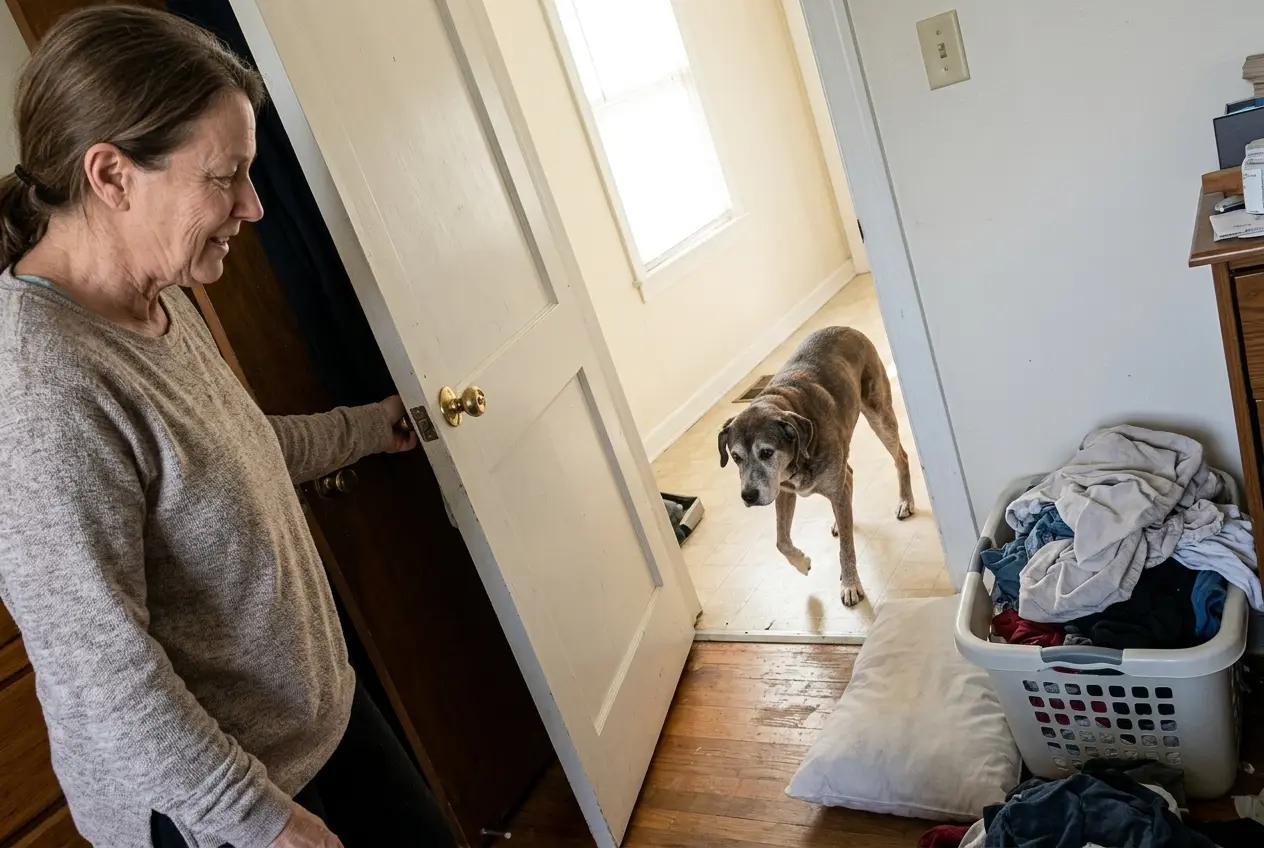
At bedtime, you close the bedroom door. He starts walking the hall. When you open it, he comes toward you and settles. That sequence is worth remembering.
Separation distress includes pacing and an inability to settle when a dog is apart from his person.
But an older dog who newly follows you at night also needs a medical check. Pain, confusion, and sensory changes belong in the conversation before anxiety becomes the answer.
Tell the vet where your dog sleeps, what happens when the door closes, and what changes when you return. That account is more useful than saying he’s suddenly become clingy.
See more: 27 Things Your Dog Is Trying to Tell You When He Follows You Room to Room →
17A Bladder Infection and Frequent Trips Outside
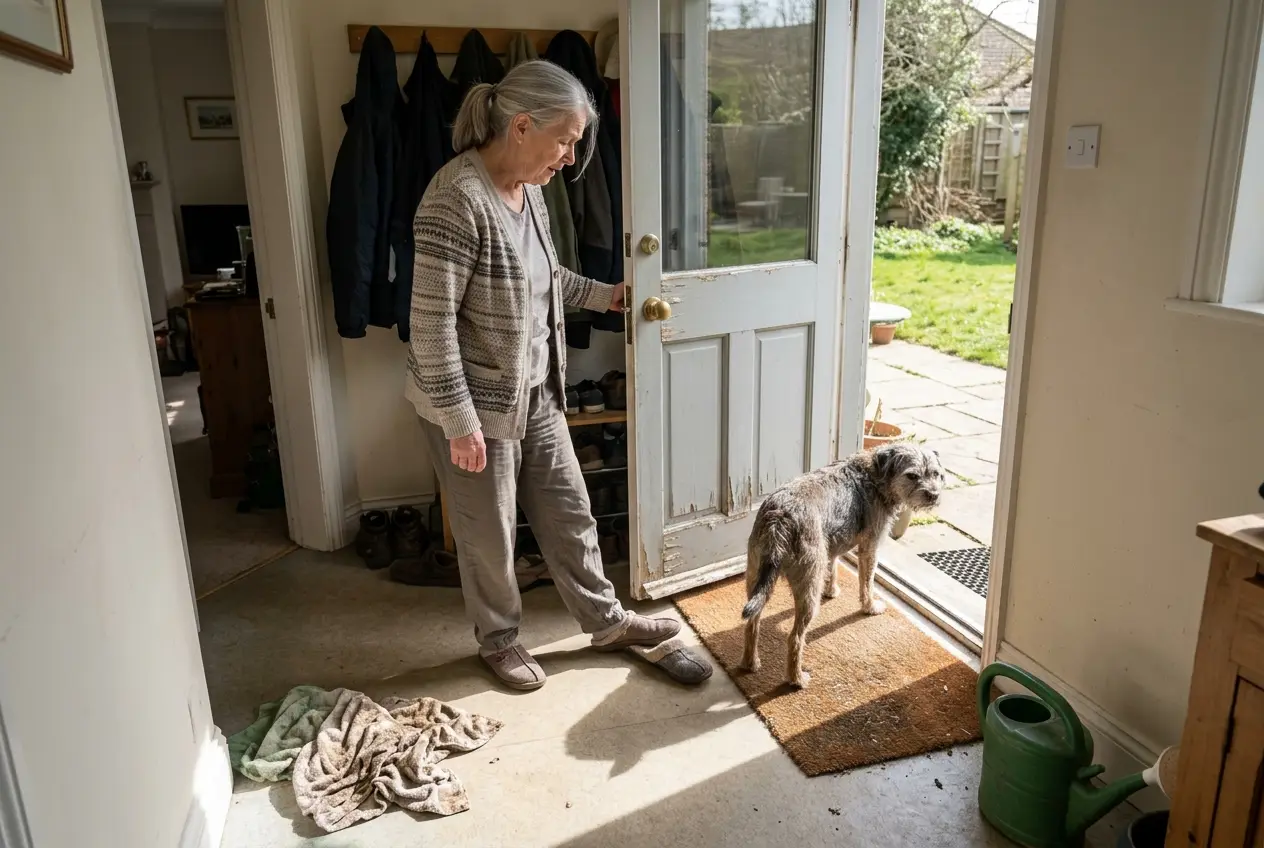
She heads for the back door again. Outside, she squats, produces a small amount of urine, and wants another trip soon after. Pacing indoors is only part of the story.
Bladder infections cause frequent urination, pain, and accidents. Note whether she urinates each time, strains, or has begun having accidents.
Ask the vet about a urinalysis. Cornell says a urine culture and susceptibility test identify the organism and guide antibiotic choice. Don’t assume the trips are a sleep problem because they happen at night. The small, frequent urinations are the clue to bring up first.
16Kidney Disease and the Water Bowl
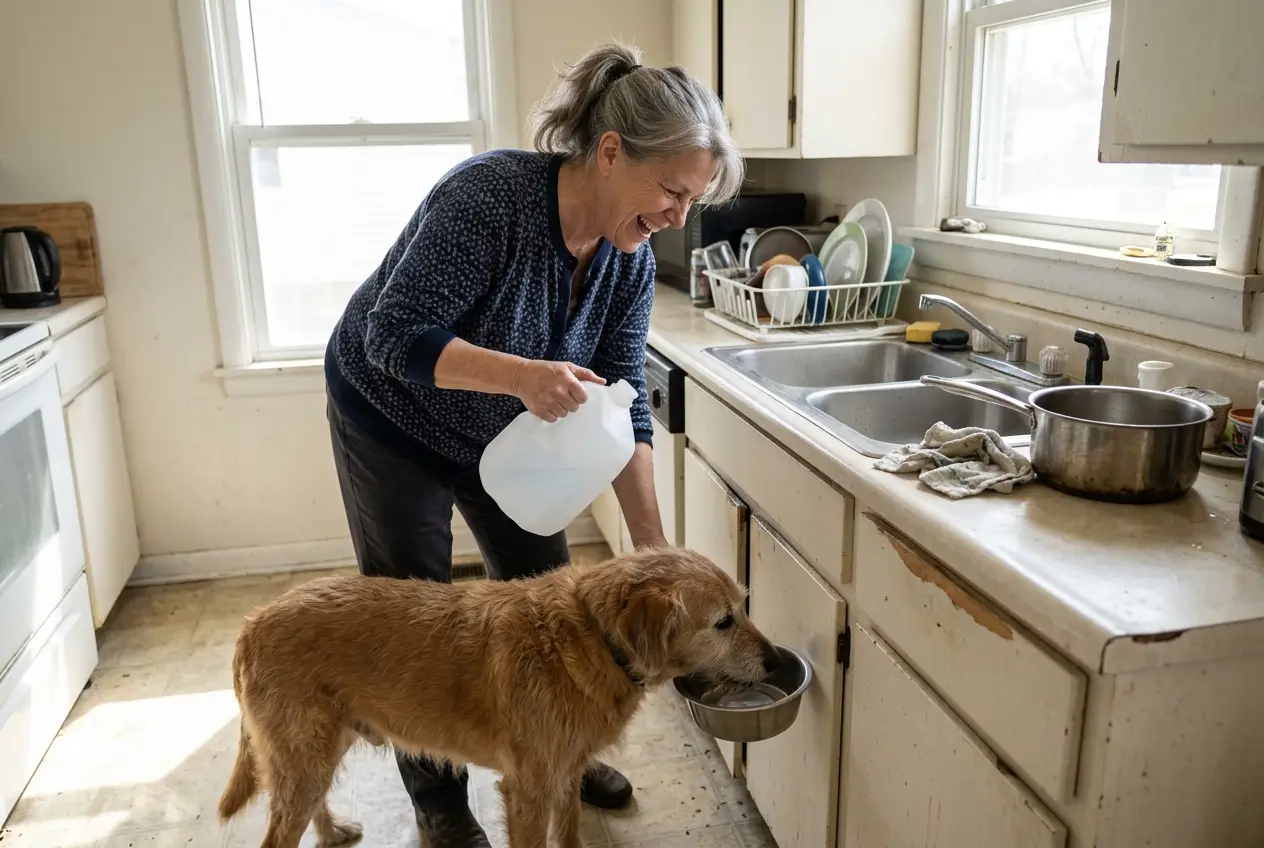
Look at the bowl before you look at the clock. Is your dog waking to drink, then asking to go out? Has the water level been dropping faster during the day, too?
Chronic kidney disease reduces the kidneys’ ability to concentrate urine. Dogs then drink and urinate more. Diabetes also belongs on the vet’s list when thirst and urination increase.
Notice whether he takes long drinks and produces larger amounts of urine, rather than the small, repeated trips described with bladder infection. Tell the vet about both the bowl and the outdoor trips. Don’t restrict his water to make the night easier.
15Cushing’s Disease and Hormone-Driven Panting
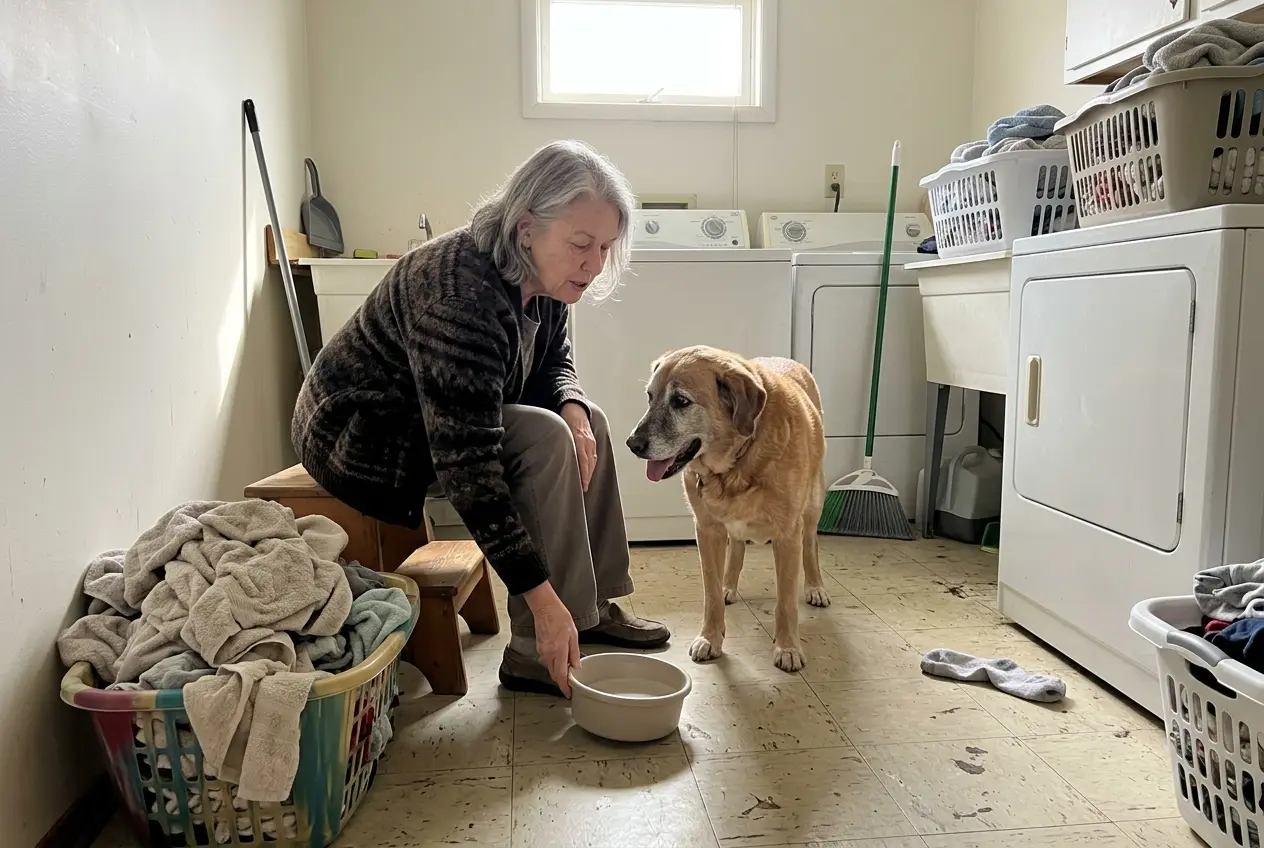
Panting in a cool room deserves a closer look. If your dog also walks between his bed and the water bowl and asks to go out, report all of it.
Cushing’s disease commonly causes increased panting, thirst, and urination. Those signs overlap with other illnesses, so the vet needs the full account rather than a diagnosis you’ve made at home.
Was he active before the panting started, or was he lying still? Has drinking changed during the day? Notice whether he’s urinating more as well. On the phone, those details give the clinic somewhere to begin.
14Bloat Signs That Cannot Wait Until Morning
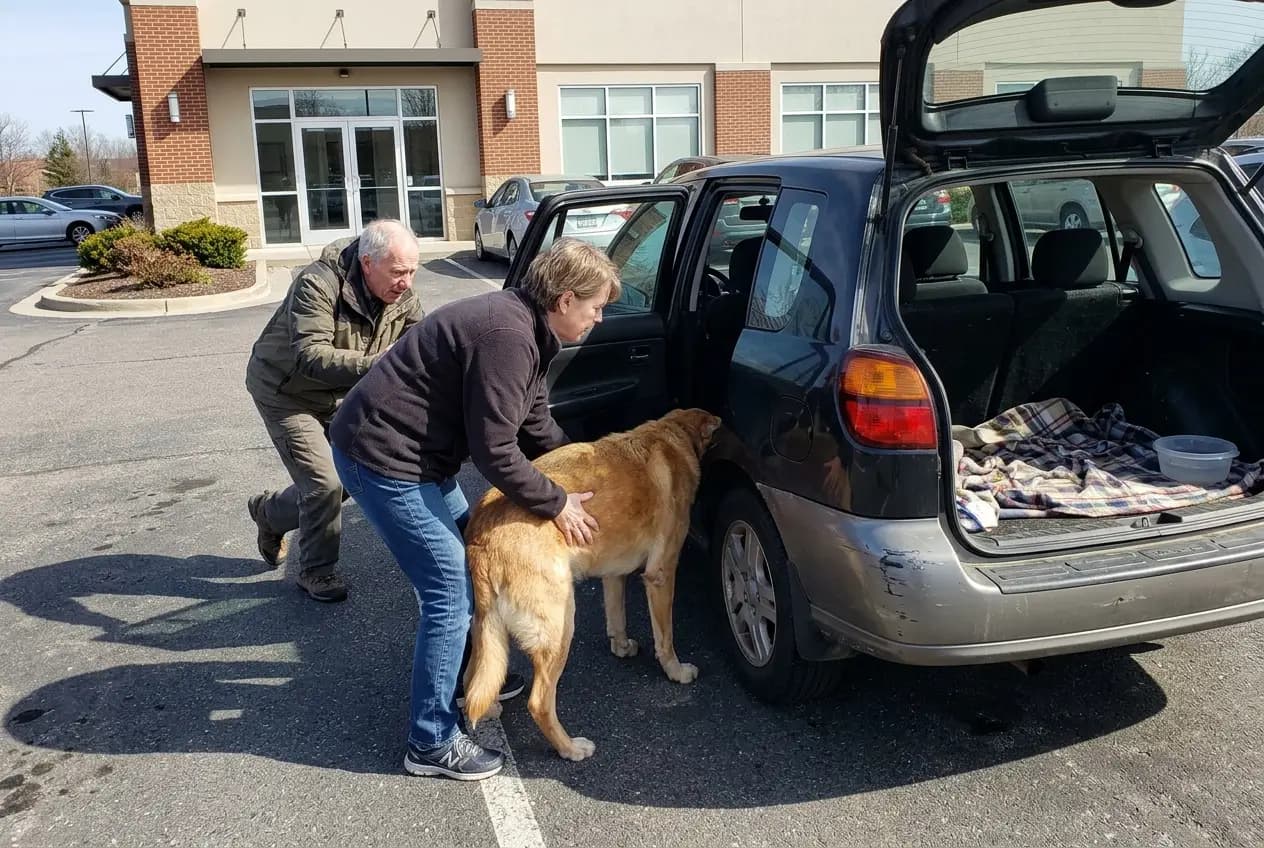
Your dog paces, drools, and tries to vomit, but nothing comes up. His belly looks swollen. Leave for emergency veterinary care.
These are warning signs of gastric dilation and volvulus, called GDV or bloat. Large, deep-chested dogs face higher risk.
Breed doesn’t change what you do when those signs are in front of you.
Call the emergency clinic as you prepare to go. Say he’s retching without bringing anything up and that his belly looks swollen. Don’t wait for another symptom.
See more: 24 Things to Do Before Your Pet's Hardest Appointment →
13Nausea Behind the Restless Walk
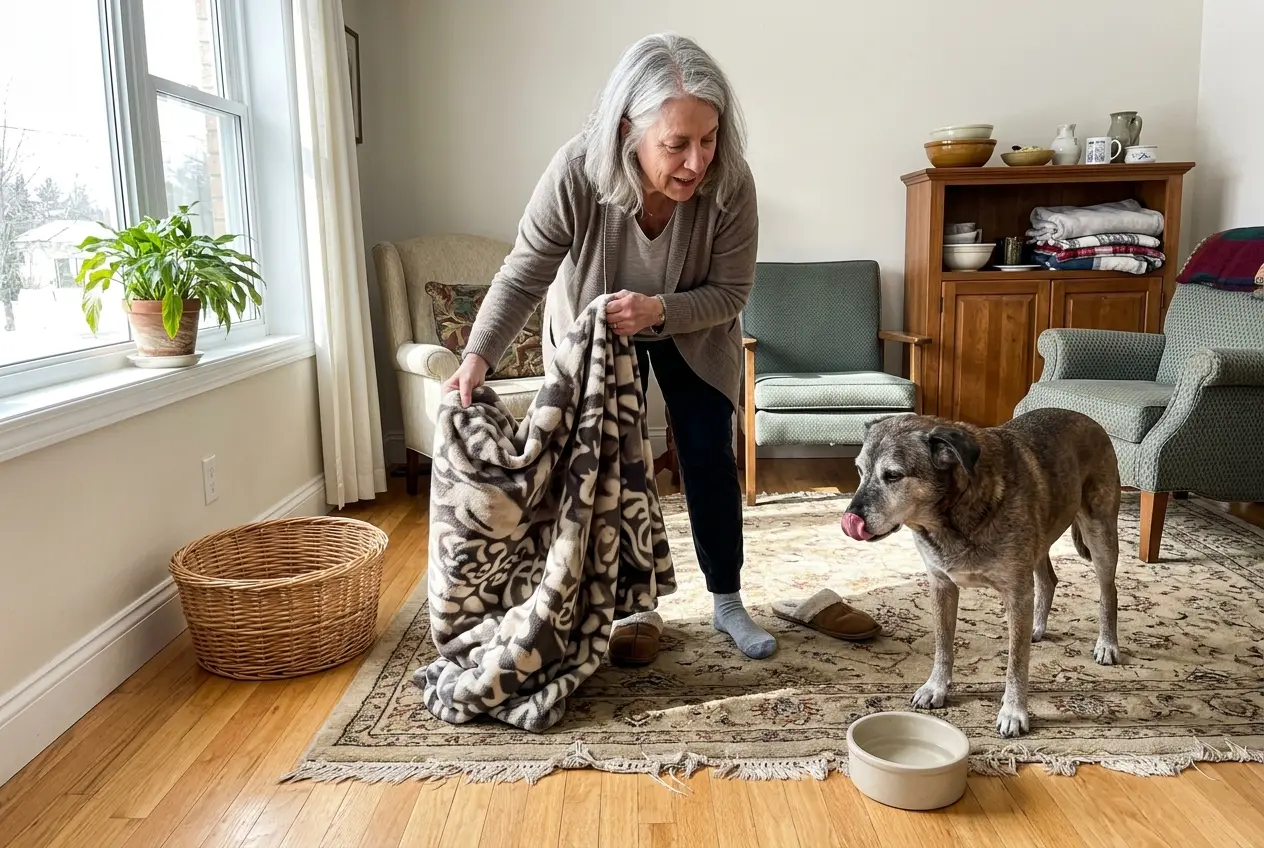
Does he keep licking his lips as he walks? Is he drooling or retching before vomiting? Those details give the restless walk a different meaning.
Merck lists lip-licking, drooling, and restlessness among signs seen with nausea and vomiting in dogs. Watch what comes up, if anything. When you call, describe whether he vomited or kept trying without producing anything.
Repeated dry heaves need emergency advice, especially with a swollen belly. If he did vomit, note what happened before and after. You don’t have to guess what upset his stomach to give the vet a useful account.
12Brain Disease, Stroke, and Vestibular Signs
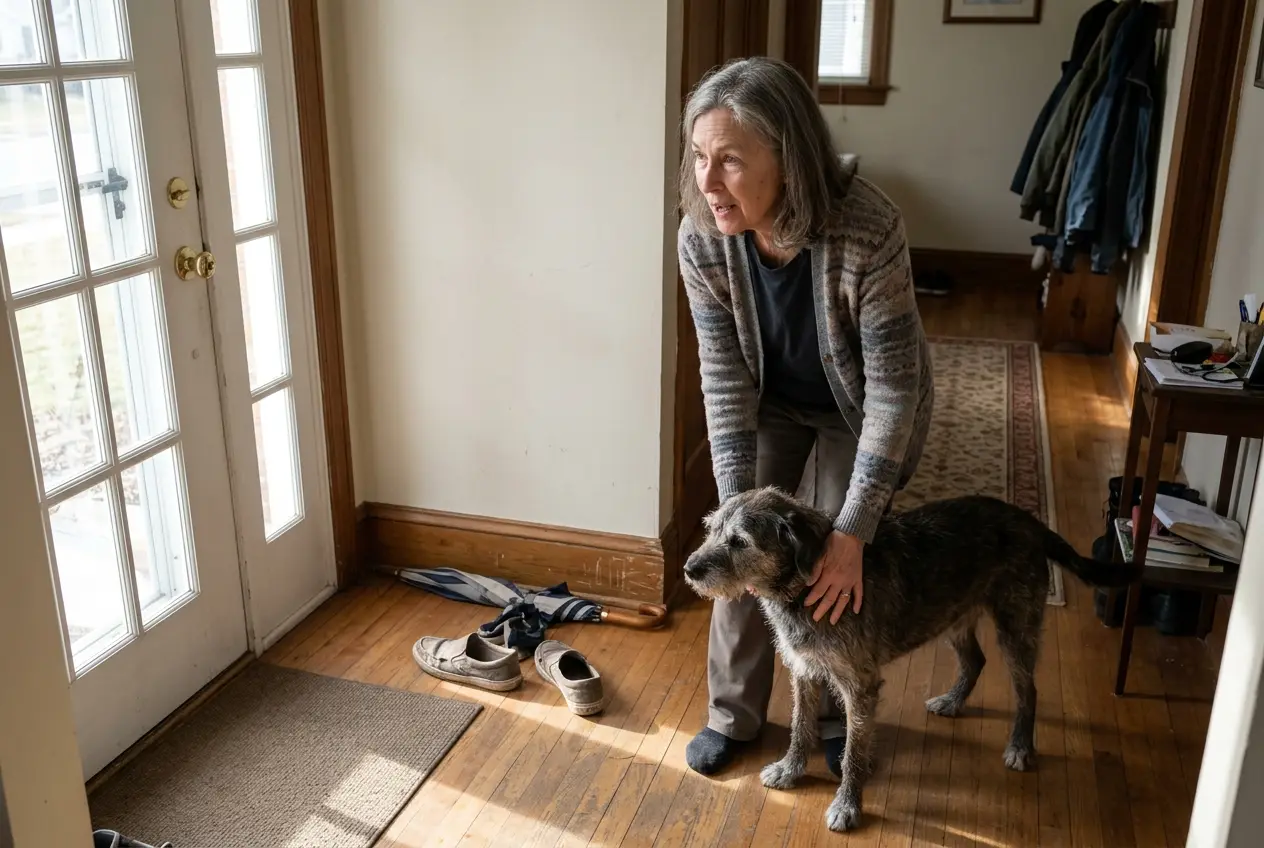
Sudden head tilt. Trouble balancing. Eyes moving oddly. A dog who starts walking in circles with those signs needs veterinary care, not a home diagnosis of dementia.
Vestibular disease begins suddenly with head tilt and loss of balance. VCA says many affected dogs improve within 2 to 3 weeks. That outlook doesn’t explain *your* dog’s sudden change.
The Merck Veterinary Manual also lists constant pacing, circling, and mental changes among signs of brain disease. Tell the clinic when the change began. Say whether he can balance and whether the circling stops. An exam, rather than the timing alone, guides what happens next.
11Nighttime Seizures Followed by Wandering
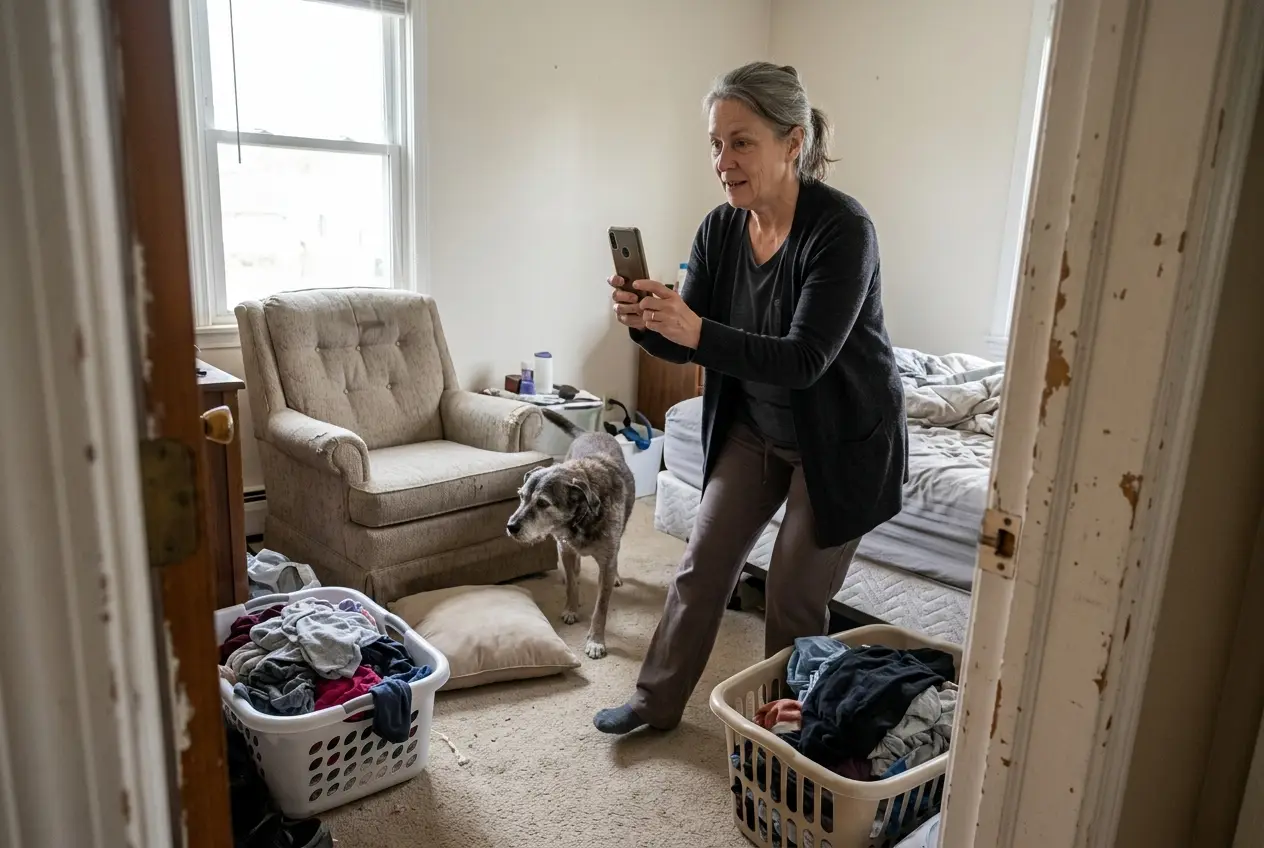
Could that confused walk have started with a seizure you didn’t see? Yes. Dogs show confusion and pacing after a seizure, and some focal seizures look like brief, odd behavior without collapse.
Describe the episode from the beginning, if you saw it: what he did, how long it lasted, and what he was like afterward. If you safely capture the behavior on video, bring it to the vet. Don’t assume that a dog must fall over for a seizure to enter the conversation.
A sudden episode of unusual behavior deserves a call for veterinary guidance. Avoid trying to treat a suspected seizure at home.
10Heart Trouble and Refusing to Lie Flat
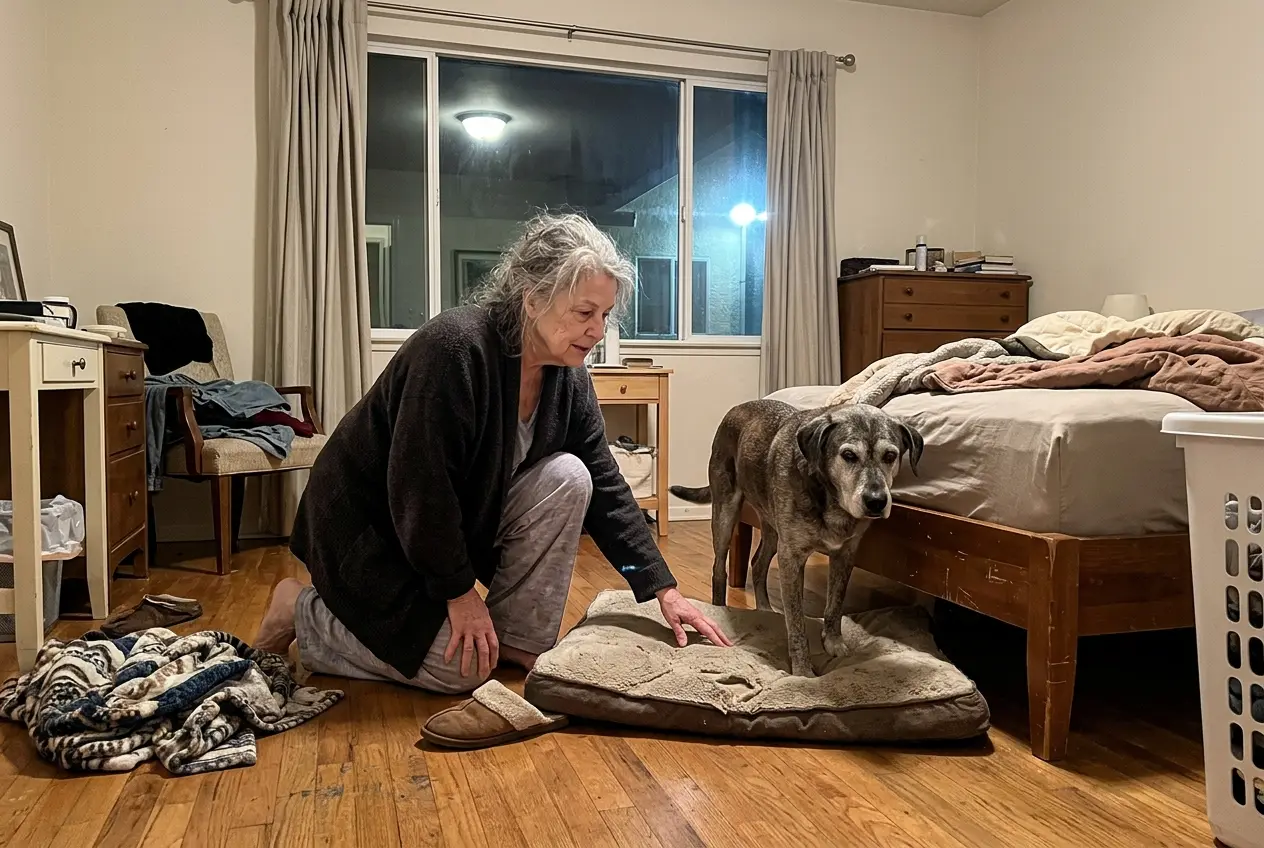
He reaches his bed, lowers himself, then stands again. Soon he changes position once more. Watch his breathing while he rests.
Tufts HeartSmart identifies difficulty sleeping and refusal to lie flat as clues to breathing trouble linked to heart disease. Breathing trouble needs emergency care.
When you call, say whether his breathing looks labored. Add whether he keeps standing to change position. That tells the clinic more than “He’s restless.” If breathing itself looks difficult, don’t wait for a routine appointment.
9Senior Dog Pacing and Panting Together
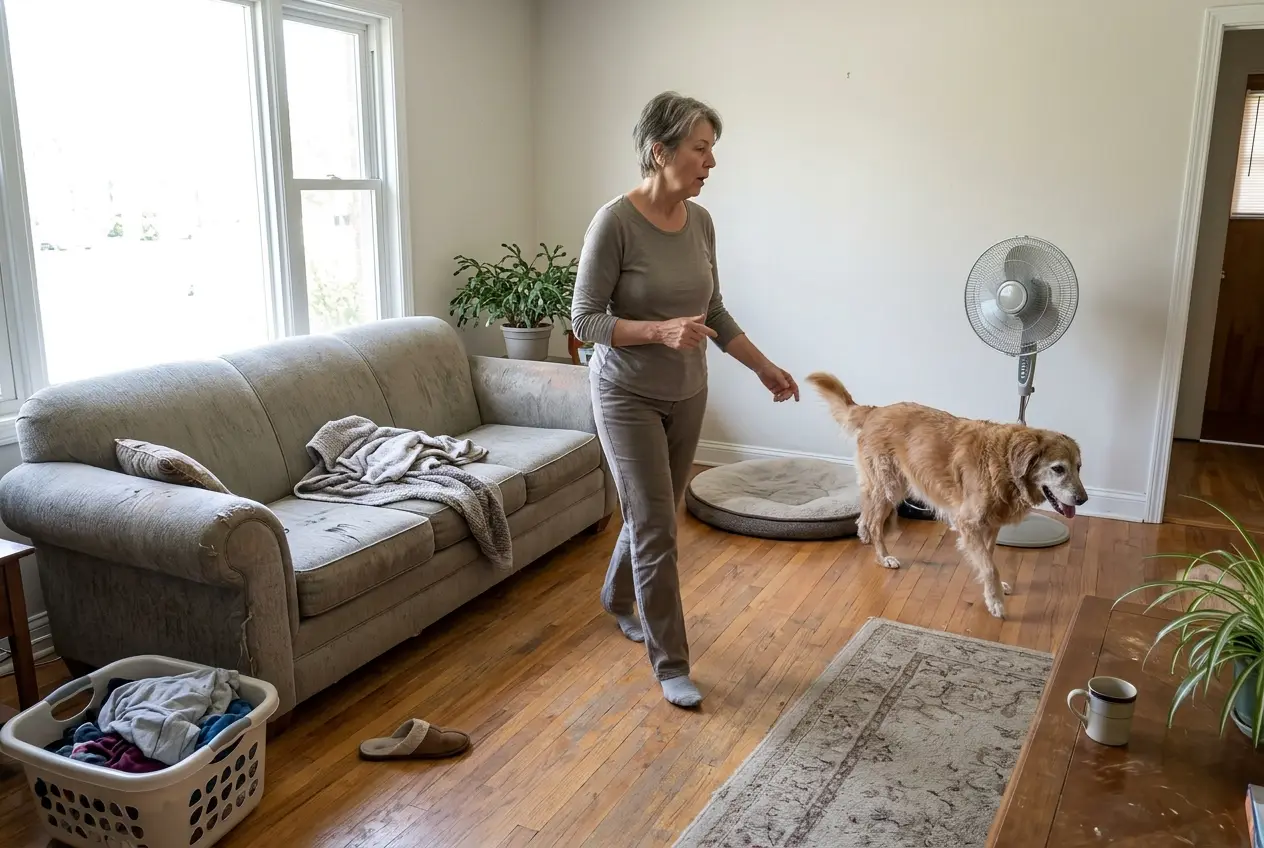
Senior dog pacing and panting gives you a combination to report, not a diagnosis. First, check the context: a warm room or recent exercise. Panting at rest in a cool room calls for a closer look.
Is he stiff when he rises? Drinking more? Taking a new medicine? AAHA lists panting out of context and restlessness among signs associated with pain.
Think of the panting as an extra clue. Tell the vet when it starts and whether your dog stops walking to catch his breath. If he struggles to breathe, stop looking for a pattern and seek emergency care.
8Waking at the Same Hour Every Night
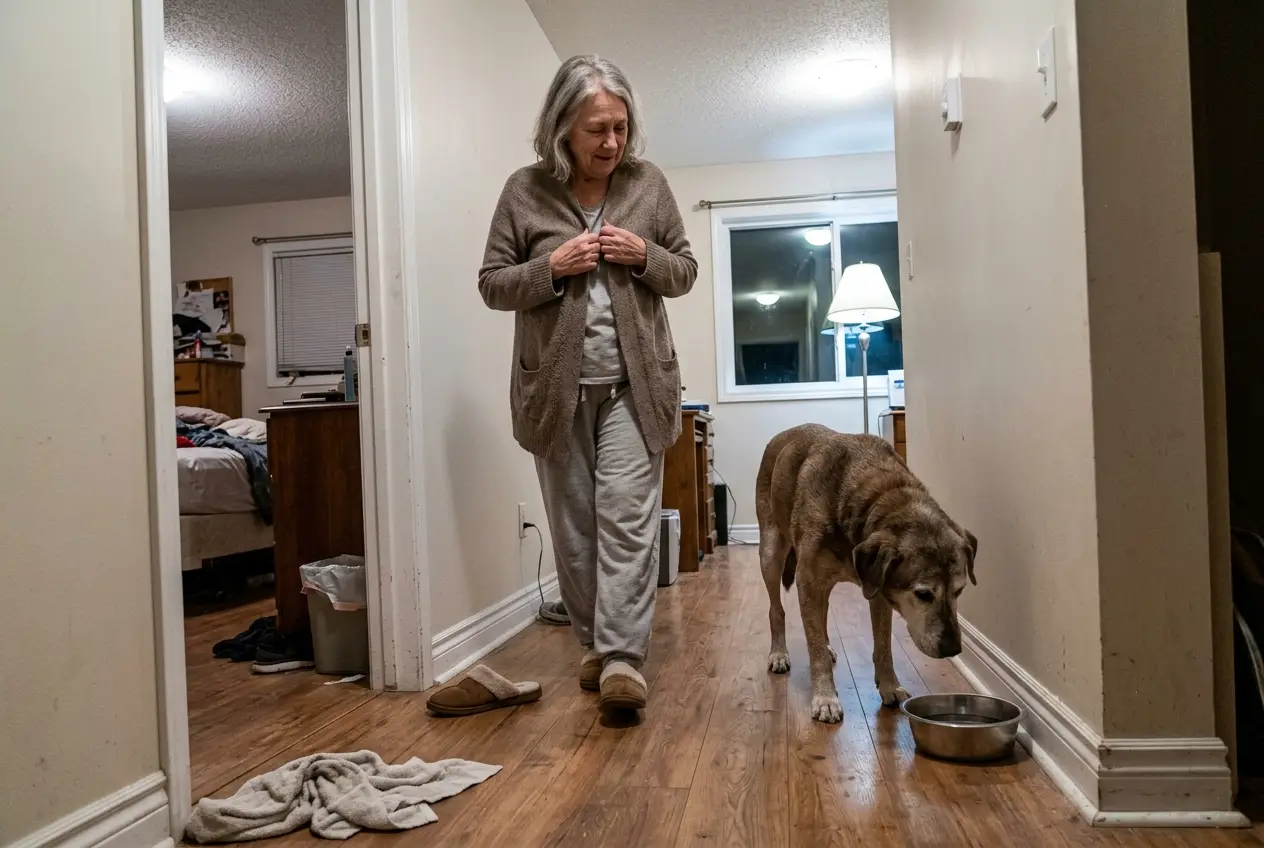
A senior dog waking up in the middle of the night at the same hour gives you one useful fact: the timing. What happens next matters more. Does she go straight to the water bowl, ask to urinate, or wander past both?
Cornell describes night wandering and day sleeping in dogs with cognitive dysfunction. The Merck Veterinary Manual describes increased drinking and urination with kidney disease. The clock alone won’t tell those experiences apart.
Keep the time, but add the action. “She woke at 2 and drank” tells the vet more than “She woke at 2.” There’s no reliable number of nights that defines a pattern. If it recurs, contact the vet; red flags call for help sooner.
7Why Does My Old Dog Sleep So Much by Day?
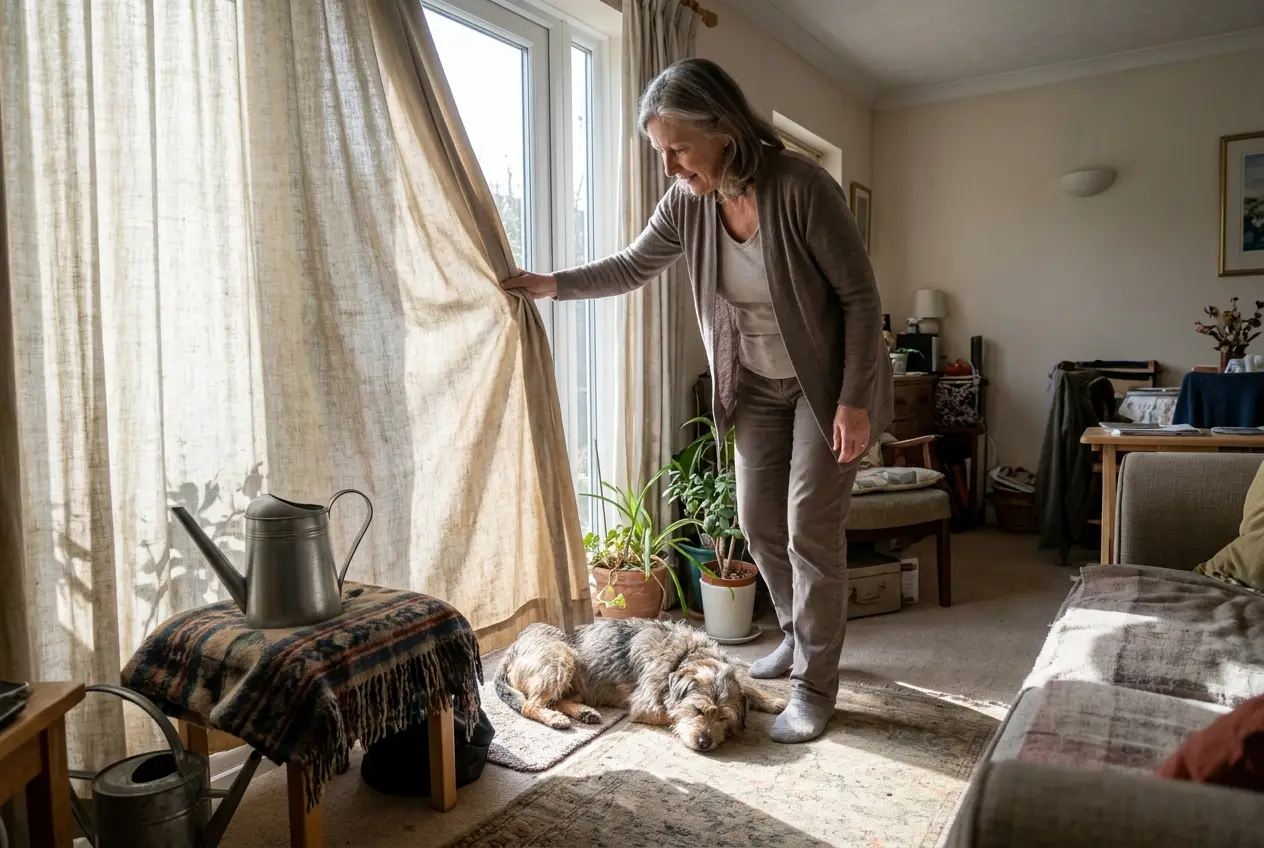
Why does my old dog sleep so much, then walk the house while everyone else is in bed? Daytime sleep alone doesn’t answer whether something is wrong.
The Sleep Foundation puts typical adult dog sleep at 12 to 14 hours in 24. Sleep research cited in the National Library of Medicine also finds more daytime drowsiness and broken night sleep in aging dogs.
Look at the change from *his* routine. Is he harder to wake for familiar activities? Is he drinking more, stiff when rising, or confused after dark? Tell the vet about the whole day, not only the hours that keep you awake.
6A New Medication and Restless Nights
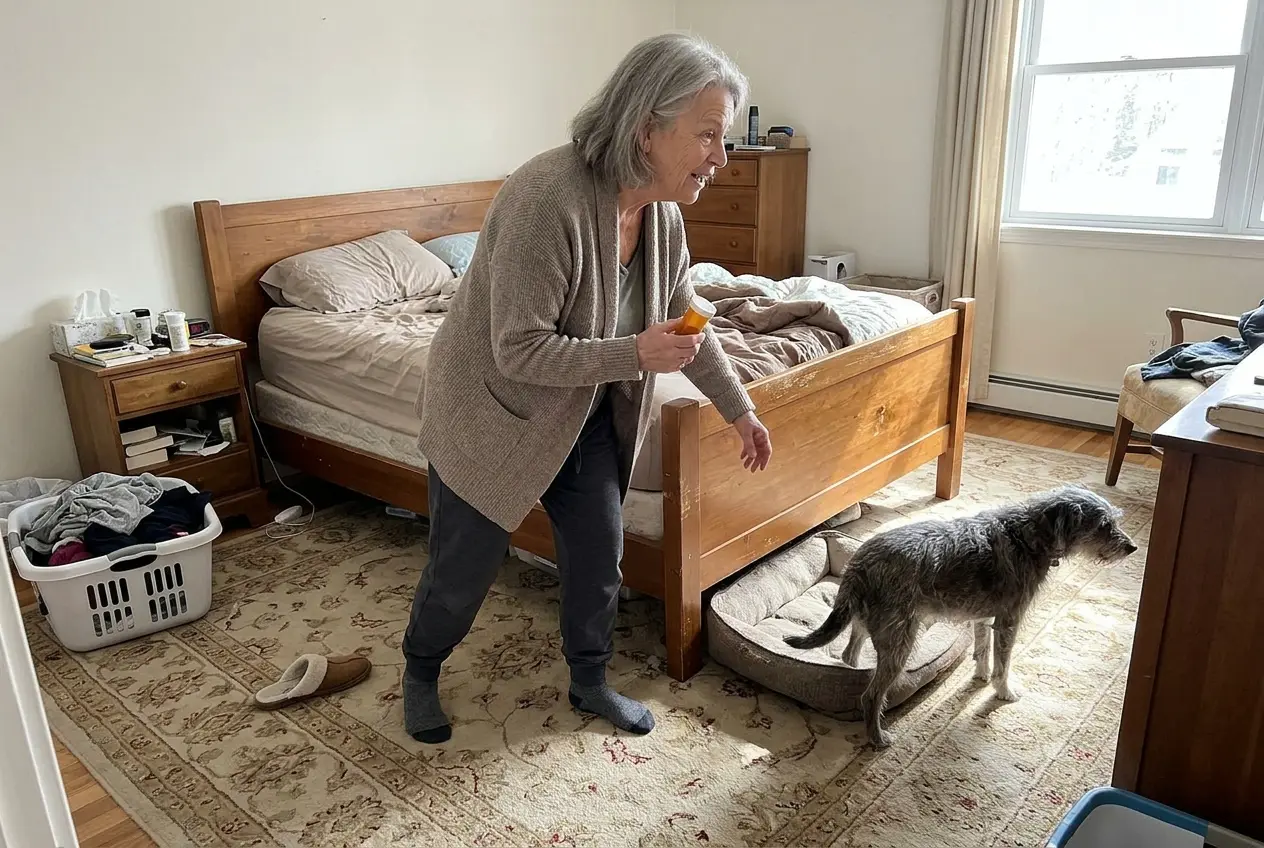
Find the date a medicine changed. Then compare it with the first night he began panting or pacing. A timeline gives the vet a way to investigate without guessing.
Prednisone and other corticosteroids cause increased thirst, urination, restlessness, and panting in dogs. Zoetis prescribing information for selegiline, a drug used for cognitive dysfunction, lists restlessness and agitation among reported adverse effects.
Bring the medication containers or a current list to the appointment. Include when each dose is given and when the pacing starts. Don’t stop or change a prescribed drug on your own; call the prescribing vet and describe what changed.
5Moved Furniture and New Household Noise
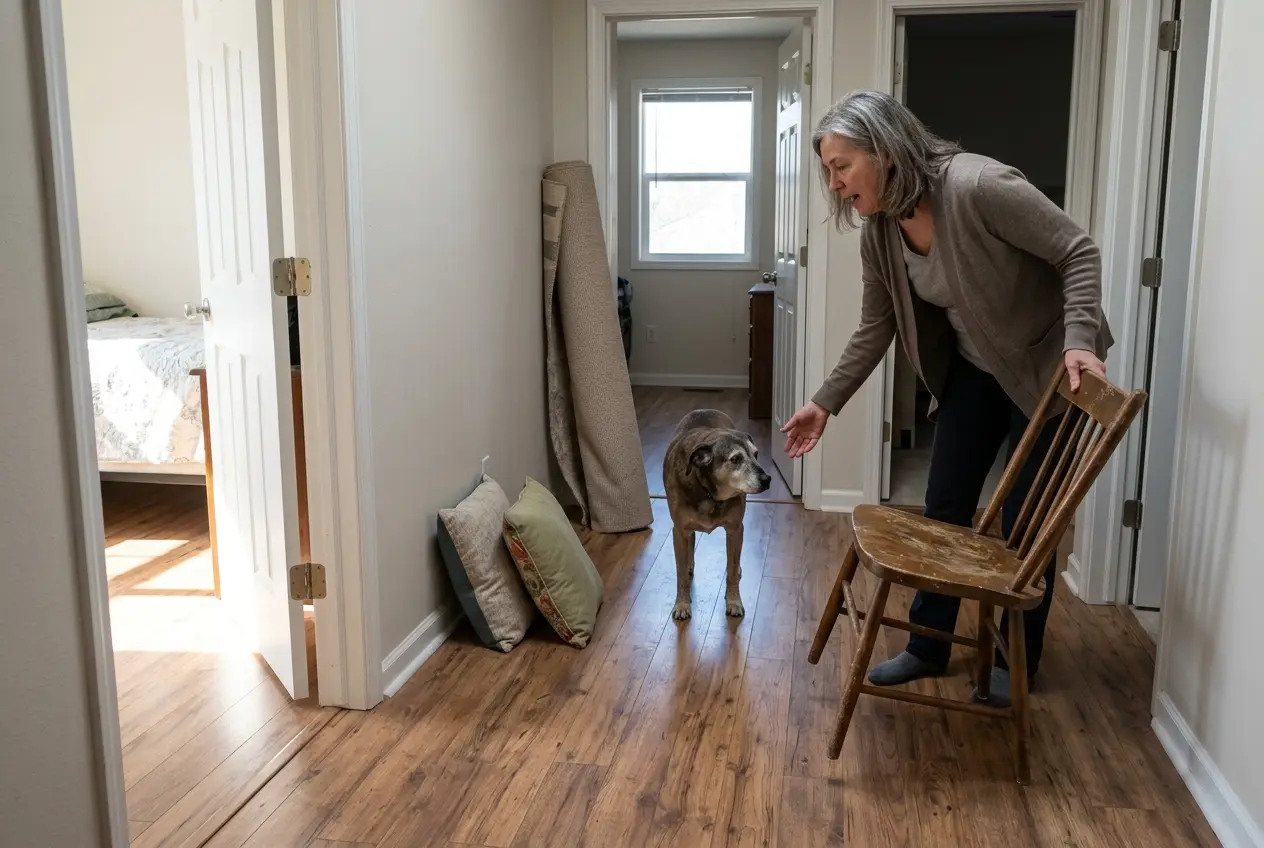
The guest-room chair has been pushed into the hall. The dog who knew that route now stops, turns, and walks back toward the bedroom. At night, a change in the path becomes harder to sort out.
Colorado State University advises keeping furniture placement consistent and walkways clear for dogs with impaired sight. VCA’s guidance on noise fear describes pacing and panting, and notes that pain can worsen a dog’s response to sound.
Put the chair back and clear the route. Then listen: does a new household sound start the walking? Tell the vet what changed in the room *and* what changed in your dog. A likely trigger at home shouldn’t hide a painful new problem.
See more: 26 Signs Your Senior Cat Is Rearranging Her Life Around You →
4Sudden Pacing Versus Gradual Confusion
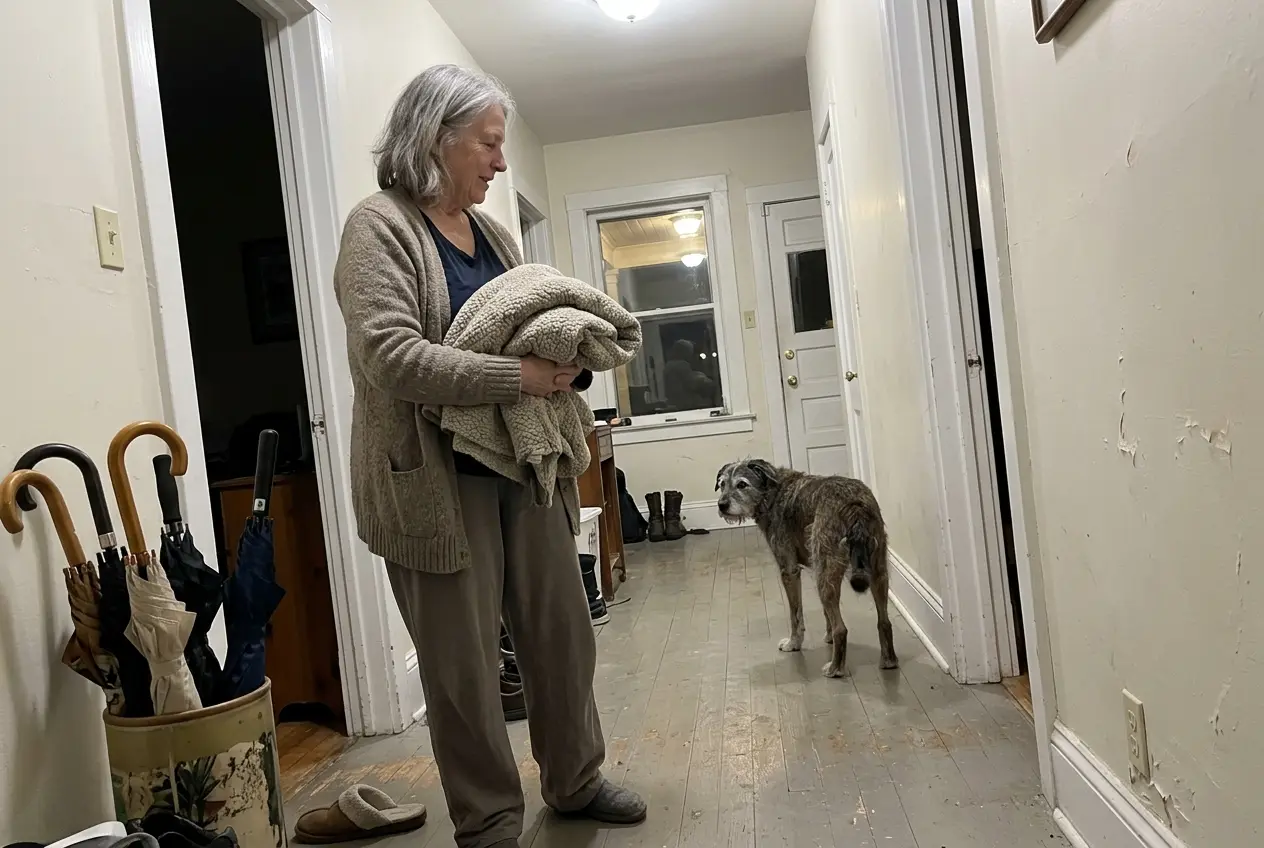
Think about the first time it happened. Did your dog go from settled to unable to rest tonight? Or have you noticed a slow change, with more wrong turns after dark?
VCA’s emergency guidance calls for prompt care when sudden restlessness comes with retching or breathing trouble. A gradual change with confusion points more toward cognitive dysfunction. Neither timeline proves a diagnosis.
Give the clinic a start point you trust: “This began tonight,” or “The wandering has gradually increased.” Then name anything that came with it. Sudden change moves the call up your list. Gradual change still earns an appointment rather than an indefinite wait.
3Pacing That Begins Before Dawn
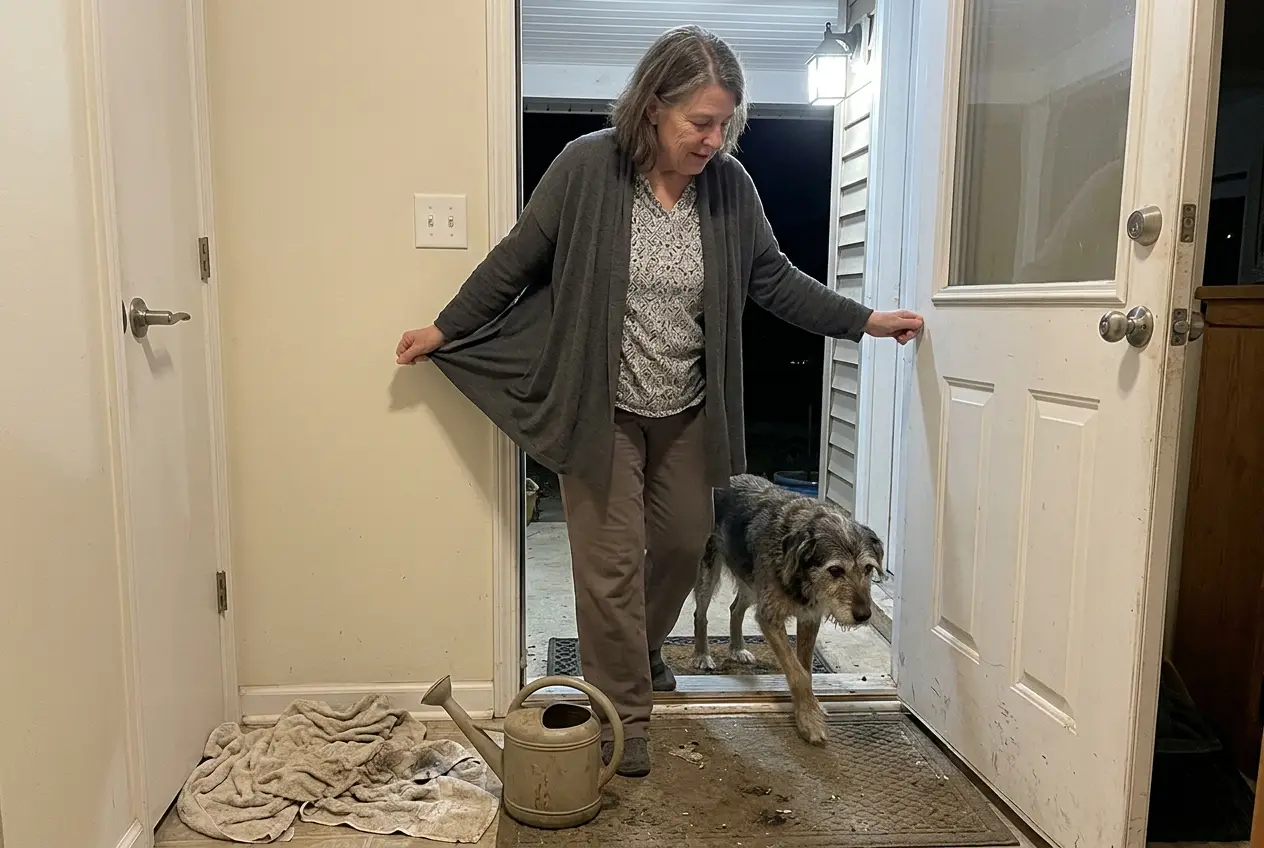
Why does he wait until the early hours to get moving? Follow his route. A direct trip to the water bowl or door puts thirst and urination into the conversation. Kidney disease, diabetes, and Cushing’s belong on the vet’s list when those needs have increased.
Now watch his first steps. Does he rise slowly, move stiffly, then ease into walking? The Merck Veterinary Manual describes osteoarthritis stiffness after extended rest, which fits a dog getting up after a long sleep.
Write down the hour and the route he takes. Include what happens once he reaches the door: does he urinate, or does he turn back toward his bed? “Before dawn” is a start. “Before dawn, he limps to the door” gives the vet something to examine.
2The 2 A.M. Emergency Gut Check
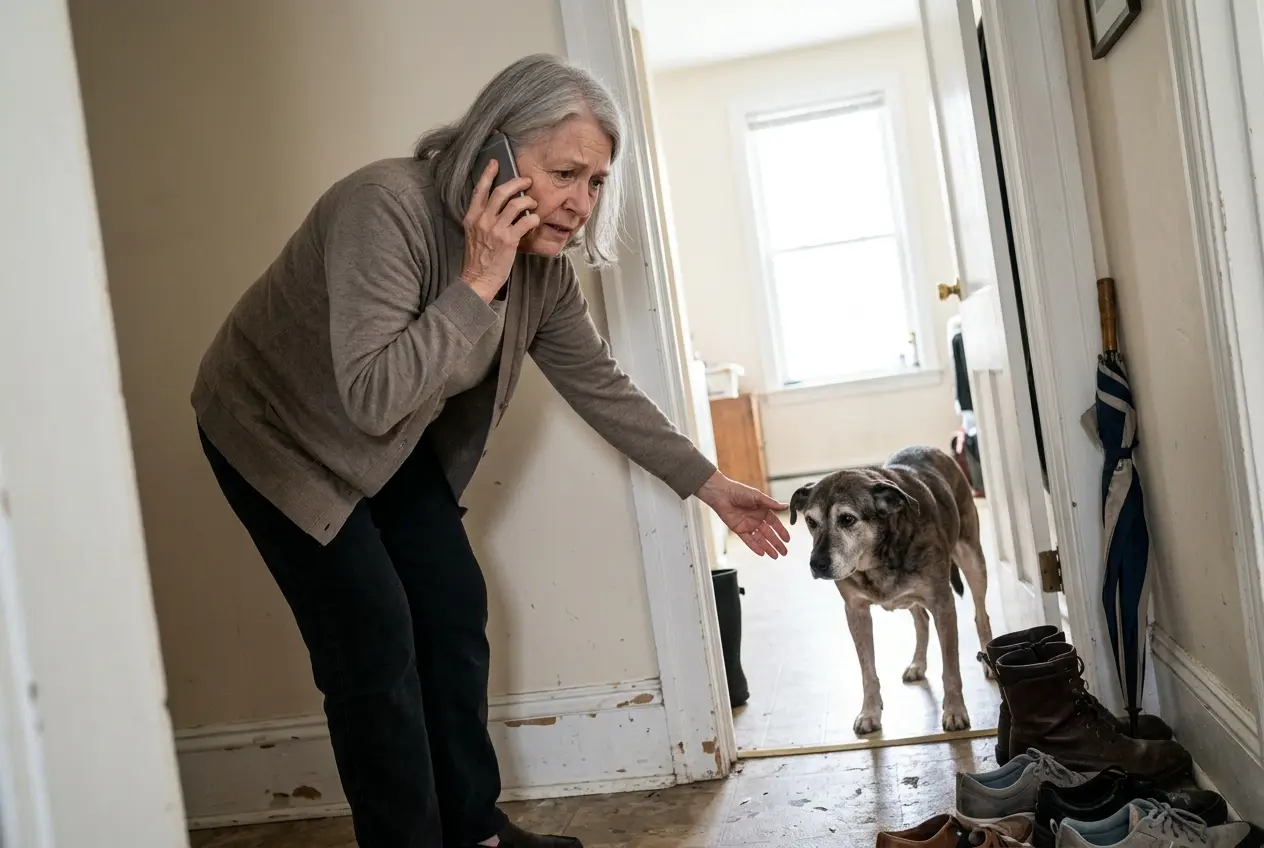
Before deciding to wait, look at your dog, not the clock. Is he repeatedly trying to vomit with nothing coming up? Is his belly tight or swollen? Does he struggle to breathe, collapse, or have pale gums? Go to an emergency vet now.
VCA’s emergency guidance calls for immediate evaluation of repeated dry retching and abdominal swelling. If poison exposure is possible, contact your emergency vet. Pet Poison Helpline provides round-the-clock toxicology guidance; its 2026 fee is about $89 per incident.
If those signs are absent but tonight’s pacing is sudden or alarming, call an emergency clinic for triage. If he settles yet the pacing returns, arrange a regular veterinary visit. You don’t need to solve the diagnosis before making the call.
1The Vet Visit That Finds the Cause
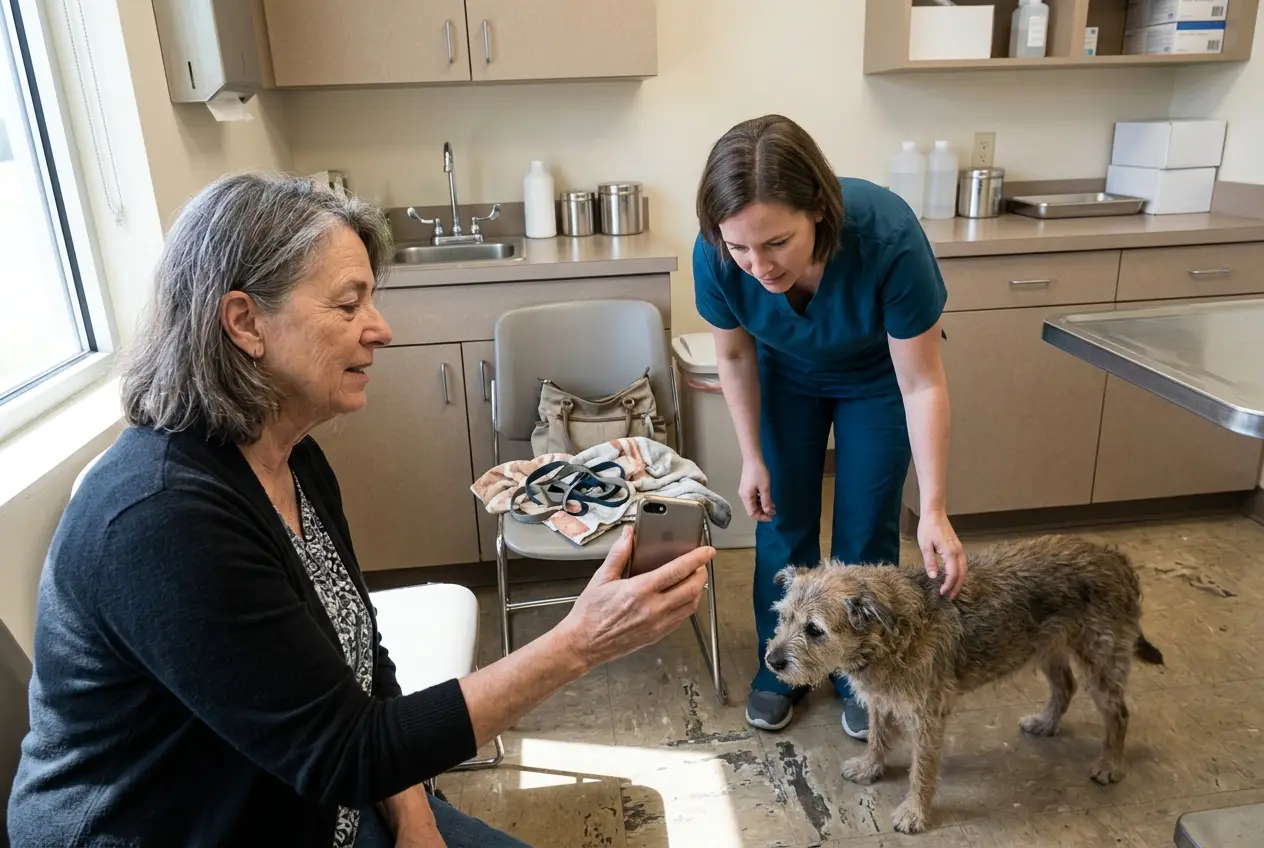
The most useful appointment starts with a clear account of the night. Tell the vet when pacing began and whether it came on suddenly. What did your dog do before and after? A short video shows movement and behavior that are hard to describe after a sleepless night.
Bring the details that narrow the search: thirst, urination, stiff first steps, panting, confusion, and recent medication changes. Include what you noticed during the day. A dog who sleeps through familiar activities tells a different story from one who rises stiffly but stays engaged.
The exam helps decide what comes next. Bloodwork and a urine test answer different questions from an assessment of painful joints or breathing.
If confusion persists, ask how the vet will track sleep and behavior over time. The AAHA senior care guidance discusses tools for following those changes.
Ask for an estimate before additional testing. You can say, “What are you looking for with this test, and what would the result change?” That question works whether the next step is urine testing or imaging. It keeps the visit focused on the cause.
The bottom line
Night pacing is a clue, not a verdict. A stiff first step, an empty water bowl, a wrong turn, or hard breathing gives you a better idea of what needs attention.
Before the appointment, check for emergency signs, note the timing, and record what your dog actually does. That’s a far better account than “He won’t sleep.”
Which detail have you noticed when he starts walking?
Up next
18 Gifts for Grandparents They'll Actually Use
From an engraved recipe board to a photo frame that gets new pictures from your phone, these picks give you something better to wrap than another mug.
Read the list →
Reader quiz
Did you catch the details?
5 questions from this article.
What should you tell the vet about pacing that starts after your dog has been lying down?
Questions people also ask
How to stop an old dog from pacing at night?
Start by finding the cause with your vet. Treatment for pain, illness, or cognitive dysfunction comes before a bedtime fix. Merck’s behavior guidance supports a steady routine; a clear path and suitable bed also make the sleep space easier to use.
What are end of life symptoms in elderly dogs?
Uncontrolled pain or breathlessness, major appetite or weight loss, and immobility or incontinence that you can’t manage warrant a quality-of-life discussion. AAHA’s end-of-life care guidance centers that conversation on comfort and veterinary support. Pacing by itself is not an end-of-life verdict.
Why is my old dog walking around aimlessly at night?
Cornell lists wandering, staring, and getting stuck in corners among signs of canine cognitive dysfunction. Pain and other illness also need checking before a vet settles on that diagnosis. Note whether your dog seems lost or is heading for water or the door.
What are the three stages of dog dementia?
The CCD Working Group guidelines describe severity as mild, moderate, or severe. Vets assess changes such as disorientation, sleep, social interaction, house soiling, activity, and anxiety. Tell your vet which changes are new rather than trying to assign a stage yourself.
Why is my senior dog restless at night all of a sudden?
A sudden change raises concern for acute pain, bloat, or breathing trouble. VCA’s emergency guide calls for immediate care with signs such as repeated dry retching and a swollen belly. If no emergency sign is visible, call a veterinary clinic for triage rather than assuming a sudden change is age-related.
Did any of these feel familiar?
Know someone who needs this?
 Prime Journal · Free printable
The Family Essentials Checklist
- Your wishes written down and shared with the right person.
- Your medicines and emergency contacts ready when needed.
- Your family plans settled before anyone counts on them.

Free printable: The Family Essentials Checklist. Enter your email and it is yours.
Sources cited in this article
This article links to 21 outside sources, listed here so you can read them yourself.
- Osteoarthritis causes stiffness and slow rising after extended rest www.merckvetmanual.com/musculoskeletal-system/osteoarthritis-in-dogs-and-cat…
- Cornell describes dogs staring at walls, getting stuck in corners, wandering after dark, and sleeping more during the day www.vet.cornell.edu/departments-centers-and-institutes/riney-canine-health-c…
- Progressive retinal atrophy often begins with night blindness www.vet.cornell.edu/departments-centers-and-institutes/riney-canine-health-c…
- Separation distress includes pacing and an inability to settle when a dog is apart from his person www.merckvetmanual.com/behavior/behavior-of-dogs/behavior-problems-of-dogs
- Bladder infections cause frequent urination, pain, and accidents www.merckvetmanual.com/dog-owners/kidney-and-urinary-tract-disorders-of-dogs…
- Chronic kidney disease reduces the kidneys’ ability to concentrate urine www.merckvetmanual.com/urinary-system/noninfectious-diseases-of-the-urinary-…
- Cushing’s disease commonly causes increased panting, thirst, and urination www.merckvetmanual.com/endocrine-system/the-adrenal-glands/cushing-syndrome-…
- Warning signs of gastric dilation and volvulus, called GDV or bloat www.merckvetmanual.com/digestive-system/surgical-problems-of-the-gastrointes…
- Nausea and vomiting in dogs www.merckvetmanual.com/dog-owners/digestive-disorders-of-dogs/vomiting-in-dogs
- Vestibular disease begins suddenly with head tilt and loss of balance vcahospitals.com/know-your-pet/vestibular-disease-in-dogs
- Dogs show confusion and pacing after a seizure www.merckvetmanual.com/nervous-system/epilepsy-in-small-animals/epilepsy-in-…
- Tufts HeartSmart identifies difficulty sleeping and refusal to lie flat as clues to breathing trouble linked to heart disease vet.tufts.edu/foster-hospital-small-animals/specialty-services/cardiology/he…
- Panting out of context and restlessness among signs associated with pain www.aaha.org/resources/whats-wrong-common-pet-pain-signs
- Sleep Foundation puts typical adult dog sleep at 12 to 14 hours in 24 www.sleepfoundation.org/animals-and-sleep/how-much-do-dogs-sleep
- Prednisone and other corticosteroids cause increased thirst, urination, restlessness, and panting in dogs www.merckvetmanual.com/pharmacology/inflammation/corticosteroids-in-animals
- Colorado State University advises keeping furniture placement consistent and walkways clear for dogs with impaired sight csuveterinaryhealth.org/caring-for-your-blind-dog
- VCA’s emergency guidance calls for immediate evaluation of repeated dry retching and abdominal swelling vcahospitals.com/know-your-pet/common-emergencies-in-dogs
- Pet Poison Helpline www.petpoisonhelpline.com
- AAHA senior care guidance www.aaha.org/wp-content/uploads/globalassets/02-guidelines/2023-aaha-senior-…
- DISHAA grouping pubmed.ncbi.nlm.nih.gov/41442884
- CareCredit’s dog MRI guide www.carecredit.com/well-u/pet-care/dog-mri-cost
Ruth Ellison
Family Editor
Ruth writes about grown children, grandchildren, ageing parents, and the conversations families put off, in the words of the people involved.
More from Ruth Ellison