








25 Reasons Your Hydrangeas Didn't Bloom, and Which One Is Your Fault
A clean pair of pruners can erase next summer’s flowers before winter even starts.
By June Marlow, Garden Editor
Updated · 16 min read
- Written by our garden editor
- Cited 6 sources
- How we review
Read to the end: #1 is a two-minute stem check that shows whether pruning cost you next summer’s flowers, and almost nobody does it.
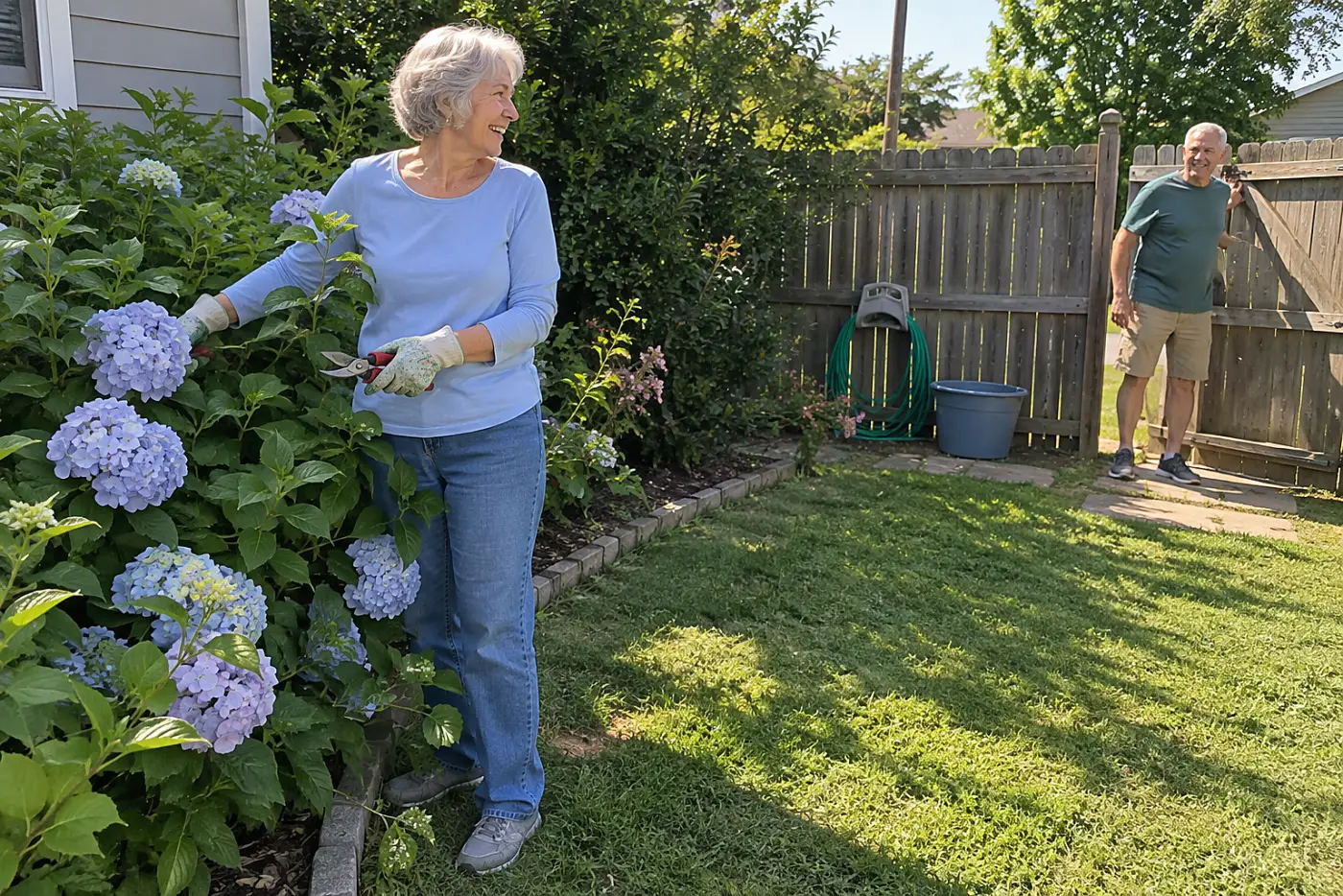
You stand beside a leafy hydrangea with an empty vase in your hand. The branches look healthy. The flower heads you expected never arrived, and the pruners are still hanging from a hook in the shed.
Before you blame yourself, find out where this plant makes its flower buds. Some hydrangeas set them on last year’s stems, while others make them on new growth in spring.
These 25 reasons, including the ones that aren't your fault, start with the plant itself.
25The plant tag tucked inside the pot
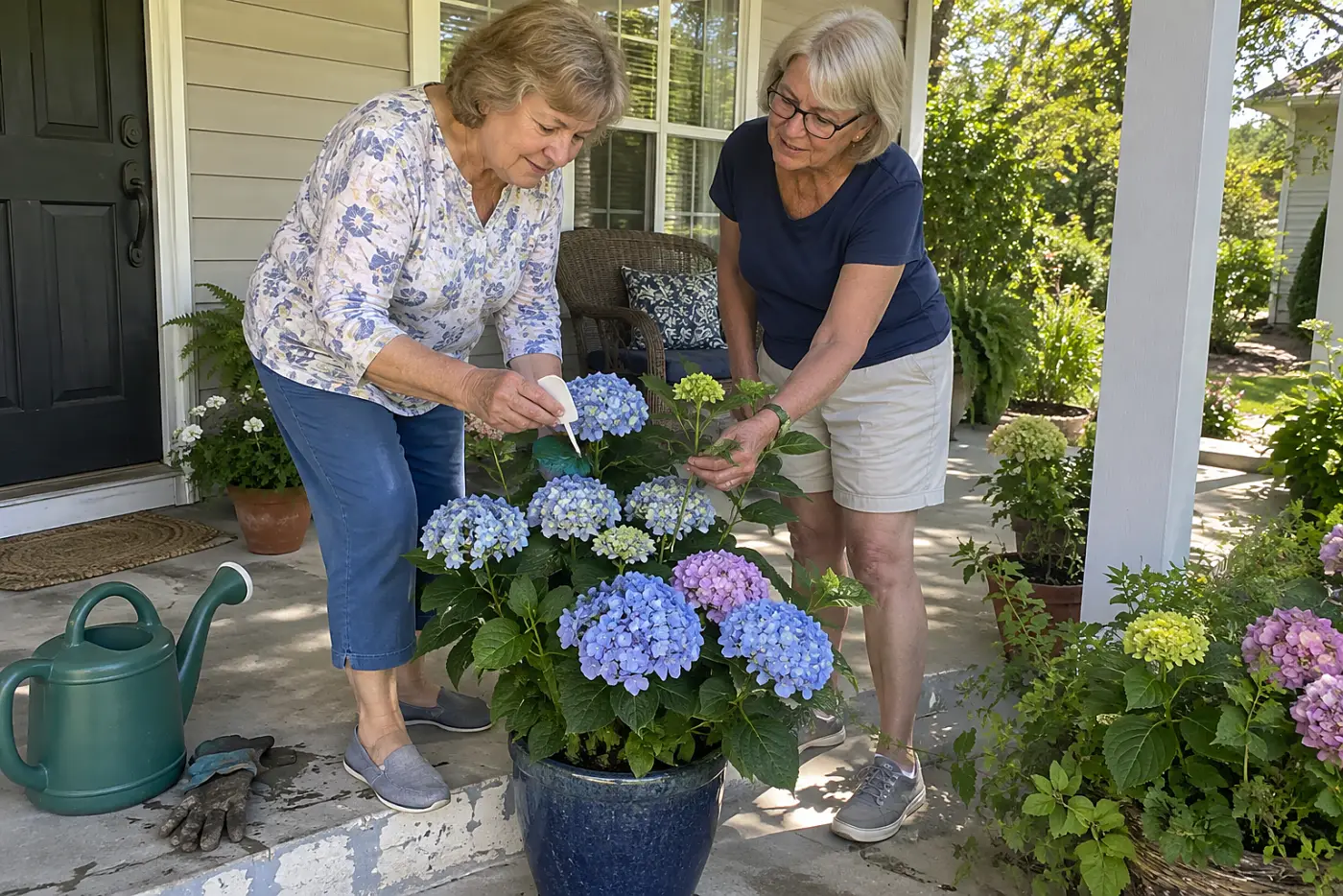
The wrong name sends you after the wrong fix.
A plant sold as a hydrangea gives you too little information. Bigleaf, oakleaf, smooth, panicle, and climbing hydrangeas set buds and respond to pruning differently. A cultivar name narrows the answer further.
Without that name, a pruning tip meant for panicle hydrangeas could cost a bigleaf hydrangea its next bloom. You’d be following sound advice for another plant.
This week, check the pot, purchase email, or nursery receipt for the full name. Then compare the leaves and flower shape with the American Hydrangea Society or a local Extension guide. At the nursery, say, “I need the name on the grower’s tag, not just ‘hydrangea.’”
If the name is gone, the shape of the plant still holds clues.
24The shady corner beside the fence
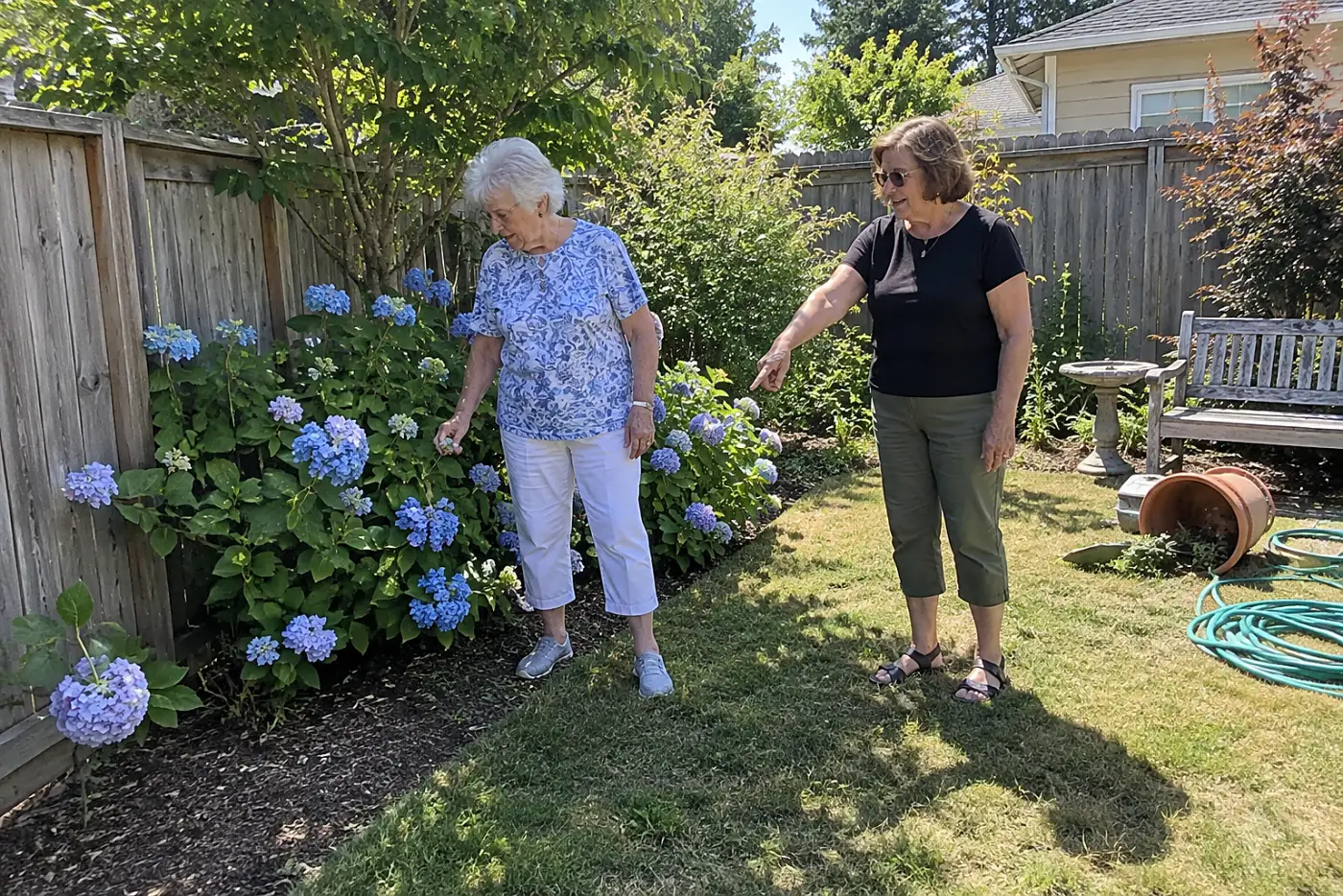
Leaves can thrive in shade while flower buds lag behind.
Count the hours of direct sun at the shrub, not across the yard. A fence, tree canopy, or taller shrub changes the light that reaches it. Bigleaf hydrangeas favor morning sun and afternoon shade in hot locations. Panicle hydrangeas flower best with more sun; aim for at least 6 hours of direct sun.
A lush plant beside a garage can fool you for years. It’s making leaves with the light it gets; that doesn’t mean it’s getting enough light to flower well.
This week, look at the spot in the morning, at noon, and late afternoon. Write down when direct sun reaches the leaves. If branches above it are blocking light, identify them before cutting anything.
Don’t move the shrub on a guess. Compare your observations with your state’s Cooperative Extension guidance for that hydrangea type. A move to full afternoon sun can trade missing flowers for scorched leaves.
Light also changes when the tree overhead grows.
See more: 27 Ways a Small Garden Beats the Big One You Used to Have →
23The new tree shade overhead
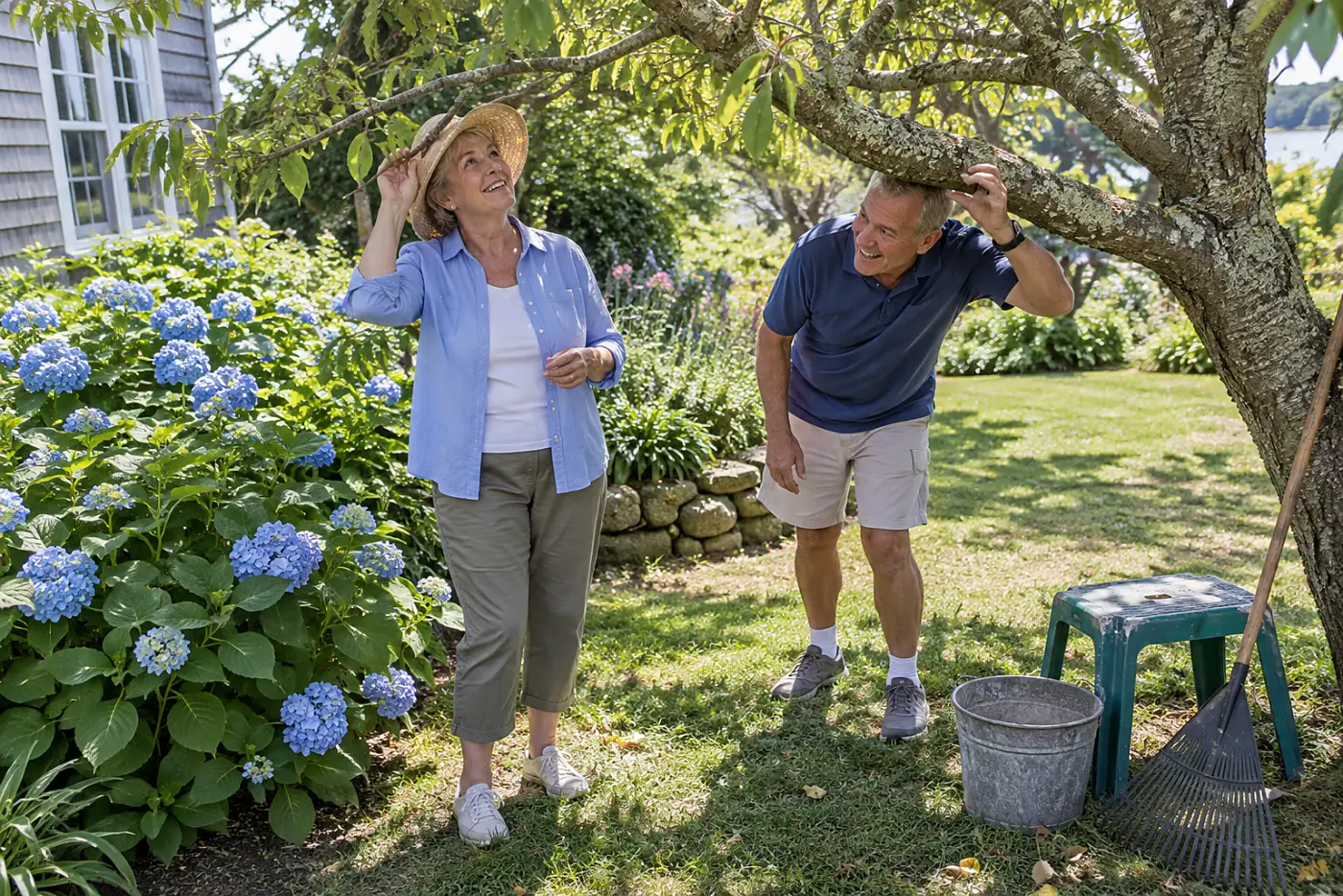
Last year’s sun chart has expired.
A young tree adds shade as its crown spreads. Hydrangea leaves still look green beneath it, so the change is easy to miss. The shrub’s flower count tells a different story.
Blaming last spring’s pruning won’t fix a spot that receives less sun each year. The growing conditions have changed even if the hydrangea hasn’t moved.
This week, stand beside the shrub at midday and look straight up. Note whether leaves or branches now cover the sky. Compare an old yard photo if you have one.
Once you know how much light reaches it, check what’s happening underground.
22The lawn sprinkler hitting shallow roots
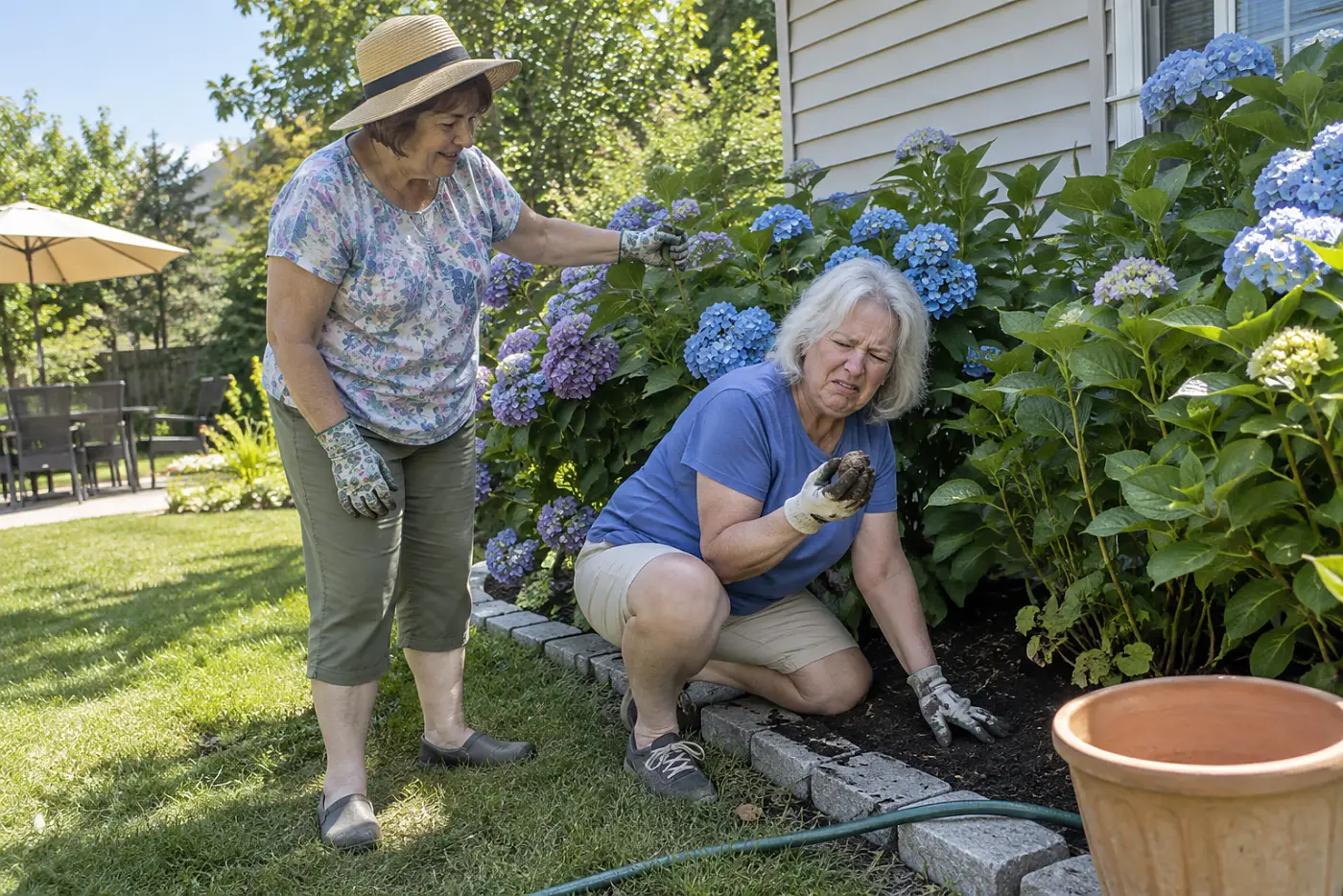
Green leaves don’t prove the root zone stayed moist.
Hydrangea roots spread near the soil surface. A sprinkler set for grass can wet the leaves while leaving soil beneath the shrub dry. Heat and dry soil put stress on a plant forming or carrying flower buds.
A dry spell this summer matters especially for an old-wood bloomer setting buds for next year. You won’t see that loss when you carry the watering can outside.
This week, push a finger a few inches into the soil under the outer edge of the shrub. If it’s dry, water the soil slowly and check again after the water has soaked in. Check another spot under the canopy rather than judging by wet mulch.
Watch the sprinkler run, too. See where the water lands before you change its timer. The USDA PLANTS database helps confirm the species, but your finger tells you what happened in this particular bed.
Too much water leaves a different set of clues.
21The puddle that stays after rain
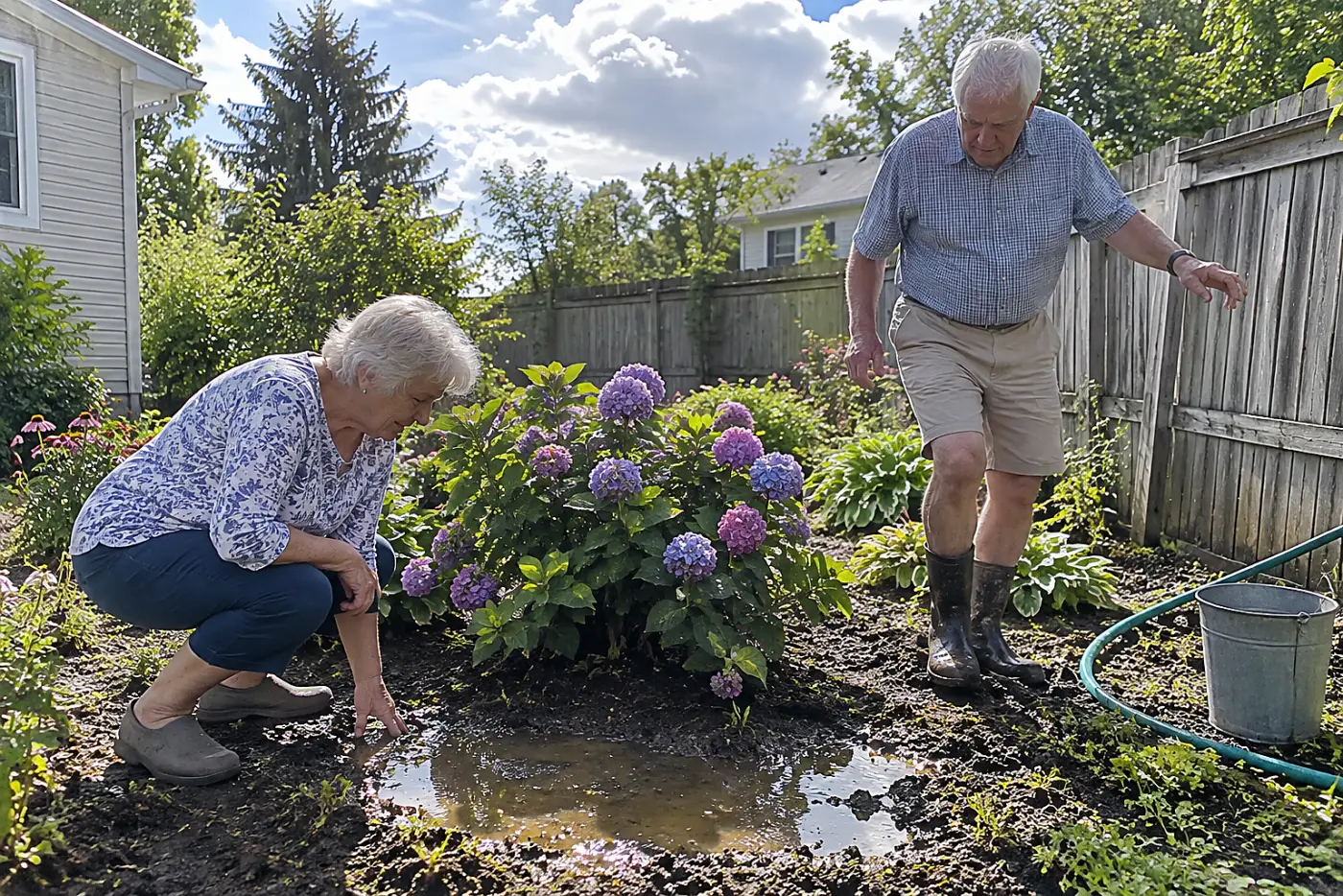
Roots need air as well as water.
In ground that stays saturated, spaces between soil particles fill with water. Roots lose access to oxygen, and growth suffers. A hydrangea in that spot can produce leaves yet have little energy for flowers.
More watering won’t rescue it. Neither will fertilizer poured onto roots already struggling in soggy ground.
This week, inspect the bed after a hard rain. Check whether water stands around the crown, then feel the soil below the mulch the next day. Stop any sprinkler that also wets the area.
Before you dig, look at what the soil itself is doing.
20The packed soil under the mulch
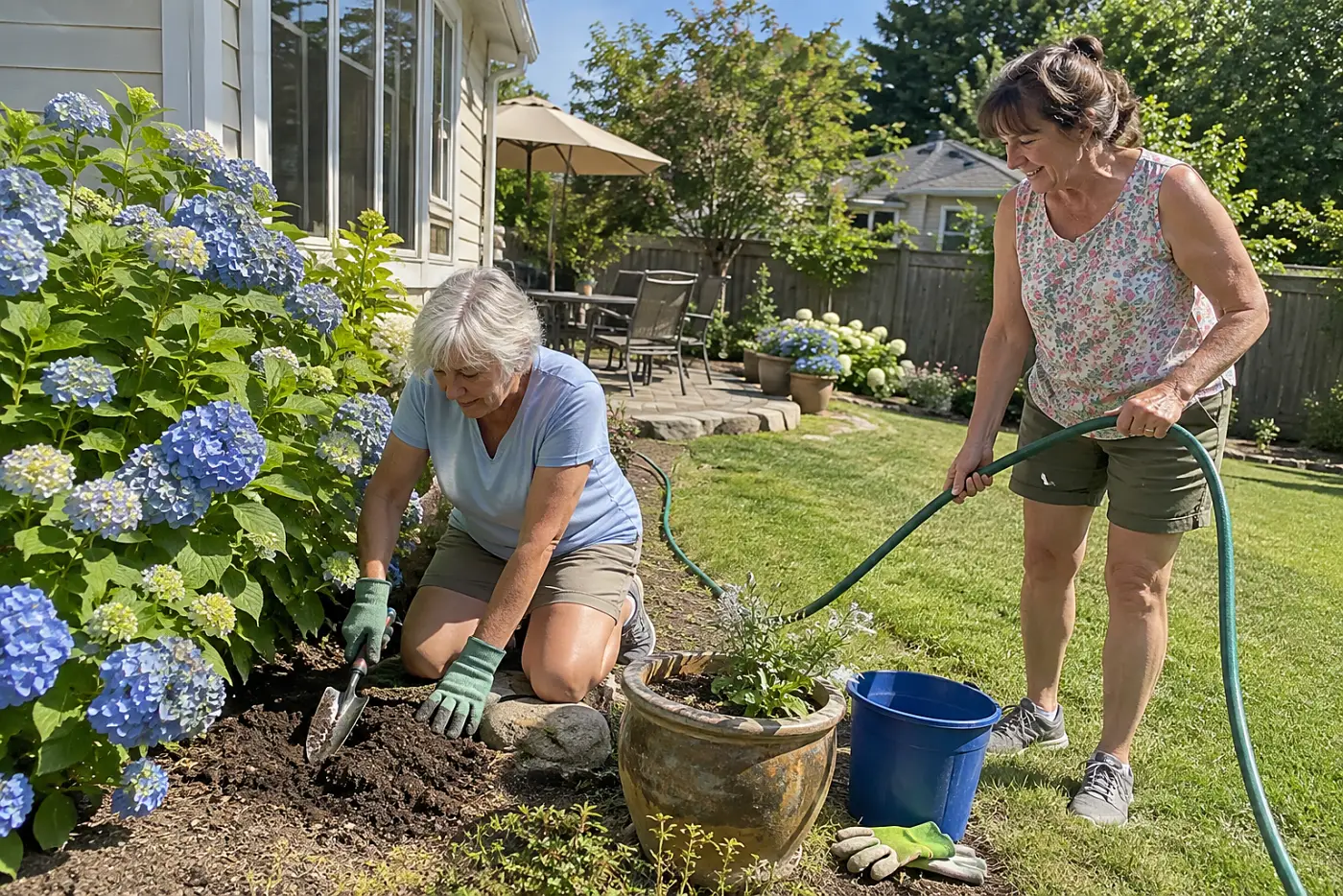
A tidy mulch ring can hide hard ground.
Compacted soil slows water entering and draining through the bed. It also limits the space roots have to grow. Foot traffic, construction work, and repeated wheelbarrow trips can press down soil around an established shrub.
If water runs away from the plant, extra watering doesn’t reach the roots you meant to help. The bare soil under the mulch gives you a better test than the leaf color.
This week, pull back mulch in three spots and press a hand trowel into the soil. Compare the effort with an undisturbed part of the bed. Keep feet and equipment off the root zone, and add organic matter to the surface rather than chopping through the roots.
For a new planting, check the surrounding soil before you backfill. Ask your county Cooperative Extension office for its hydrangea problem guide if leaves and soil seem to tell different stories.
The next clue sits right against the stems.
19The mulch piled against the stems
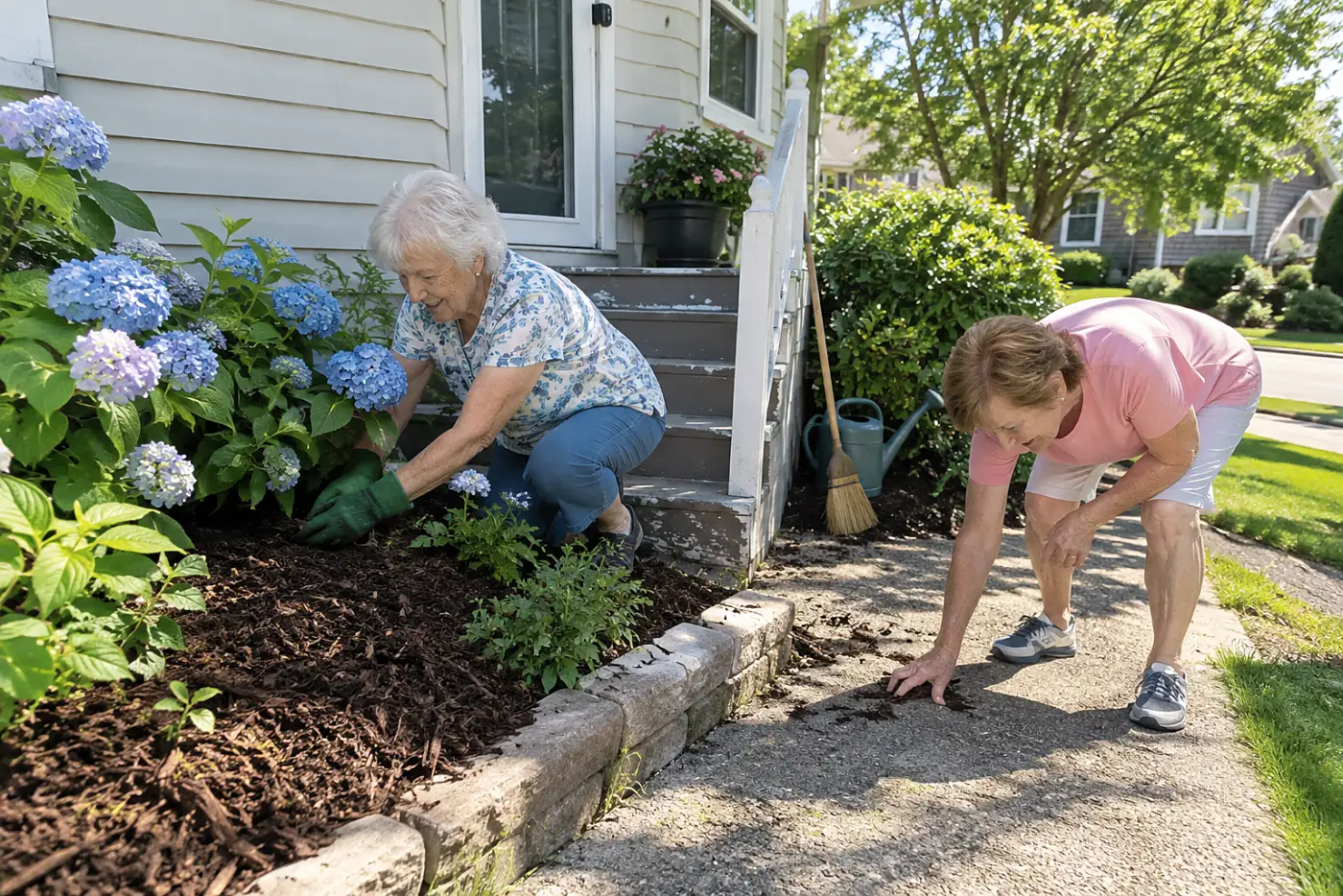
The base of the shrub needs breathing room.
Mulch helps hold soil moisture and moderate temperature. A layer about 2 to 3 inches deep covers the surrounding root area. Piled against woody stems, it keeps the crown damp and hides damage. You lose sight of the spot where stem trouble first appears.
That thick mound won’t make a nonflowering hydrangea bloom. It can leave you solving the wrong problem while the base deteriorates.
This week, pull mulch back until the stems meet visible soil. Leave a layer over the surrounding root area, without making a bare circle across the whole bed. Look for soft or darkened tissue at the base.
Then inspect what you fed the plant.
18The lawn fertilizer spread beneath the shrub
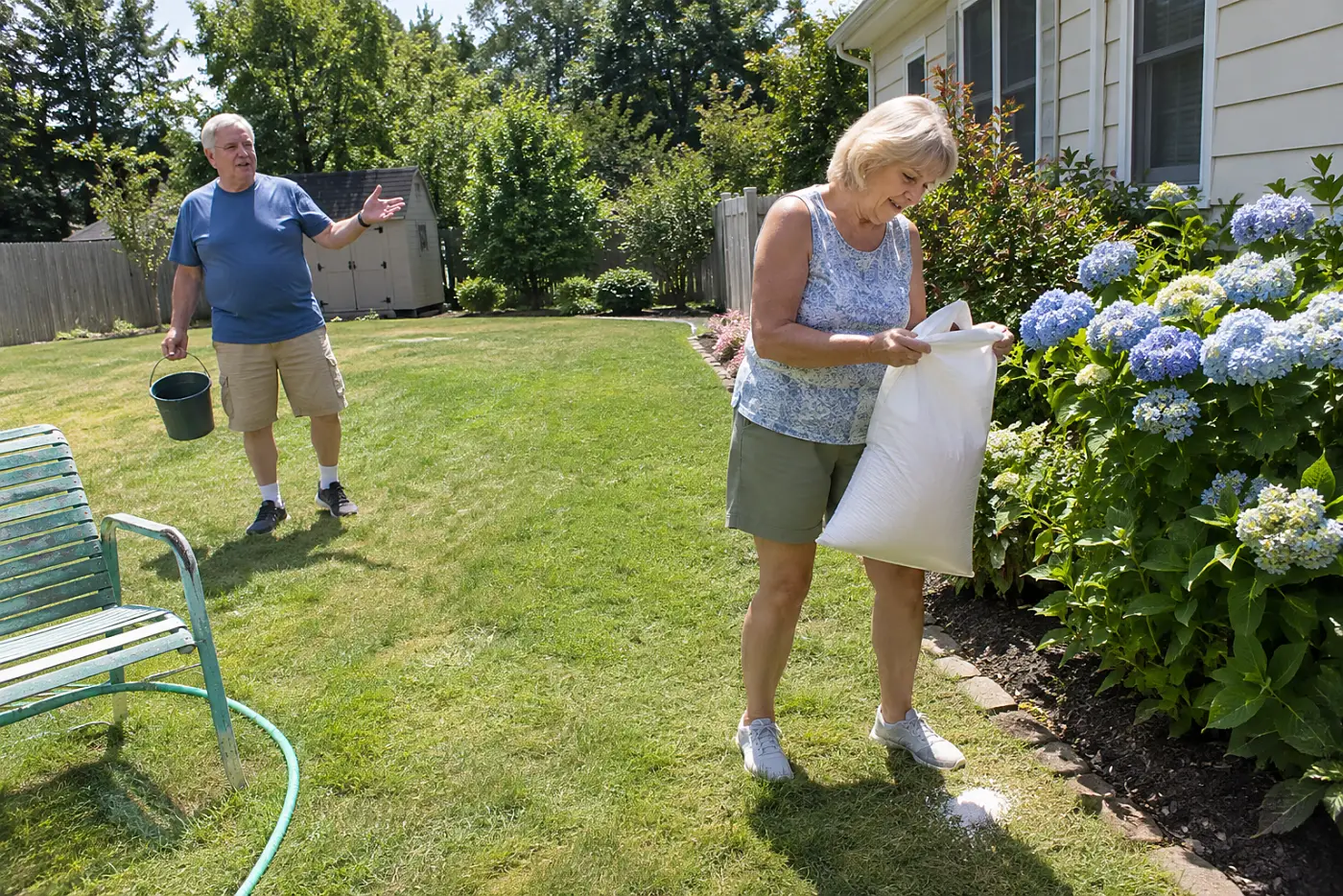
The grass treatment reached farther than the grass.
Lawn fertilizer near a hydrangea feeds its roots, too. A fertilizer high in nitrogen pushes leafy growth. It doesn’t replace the light, water, and surviving flower buds the shrub needs to bloom.
Your full, glossy plant can look like proof you fed it well. It may also be getting extra nitrogen every time the lawn is treated. Another feeding makes the diagnosis harder.
This week, find the fertilizer bag or your lawn service’s product record. Check the nitrogen number, the application area, and whether granules landed beneath the shrub. Keep future lawn applications away from its root zone.
Skip the reflex to add “bloom booster.” A soil test through a land-grant university lab gives you a reason to add nutrients, or a reason to stop. If you used a spreader, watch where its edge throws granules.
One popular amendment is blamed for more than it does.
17The coffee grounds tipped around its roots
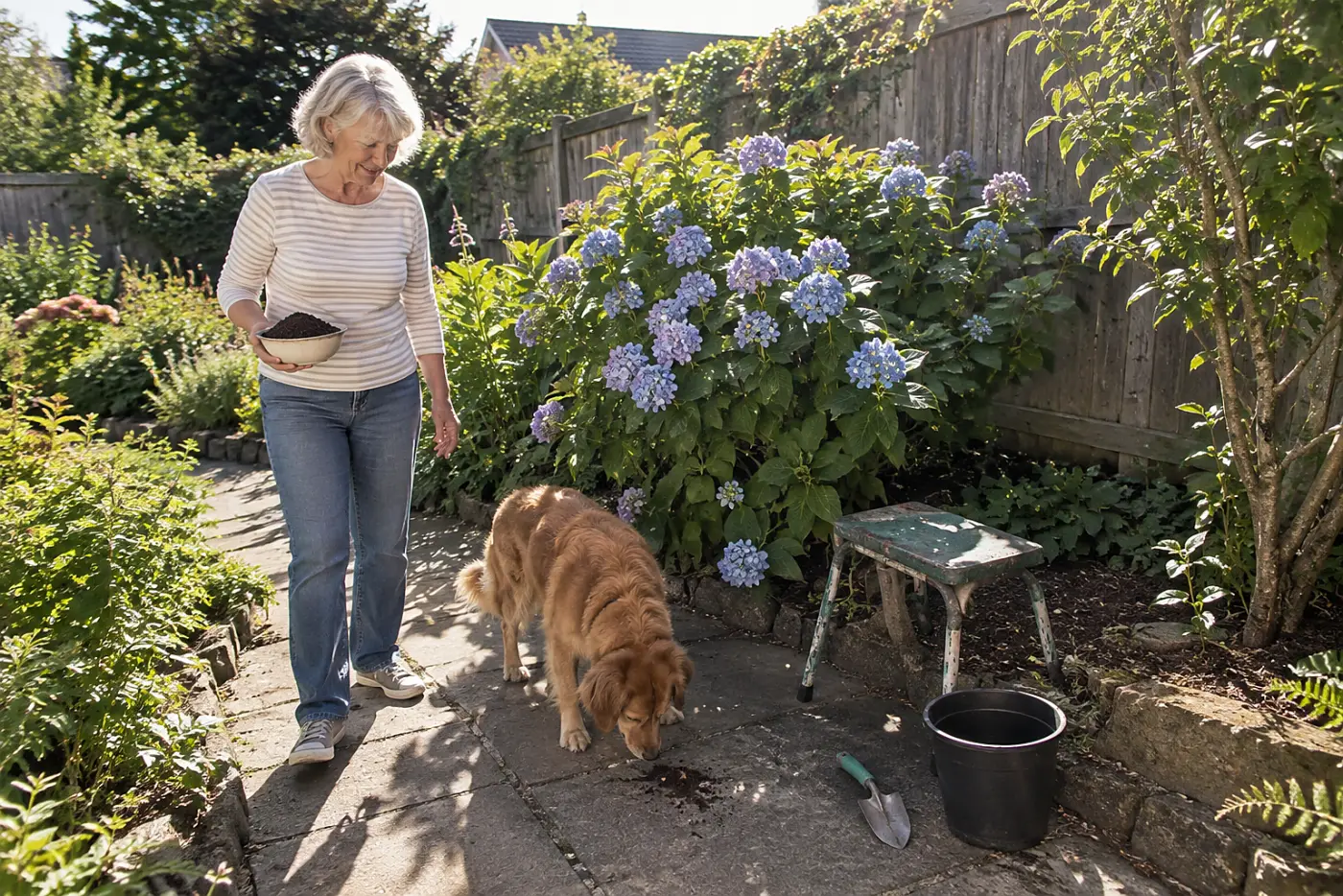
Coffee grounds aren’t a flower switch.
Bigleaf hydrangea flower color responds to soil conditions and available aluminum. Soil acidity plays a part in whether aluminum is available. A handful of used coffee grounds won’t reliably change the soil enough to control color.
Color and bloom count are separate questions. If there are no flower heads, changing soil color won’t restore buds that died or were cut off.
This week, leave the grounds out of your bloom investigation. If you want to change color, get a soil test and identify a bigleaf cultivar that changes color with soil conditions.
A different bottle on the garden shelf deserves a closer look.
See more: 23 Things Your Mother's Garden Taught You That Nobody Teaches Now →
16The weed spray used beside the bed
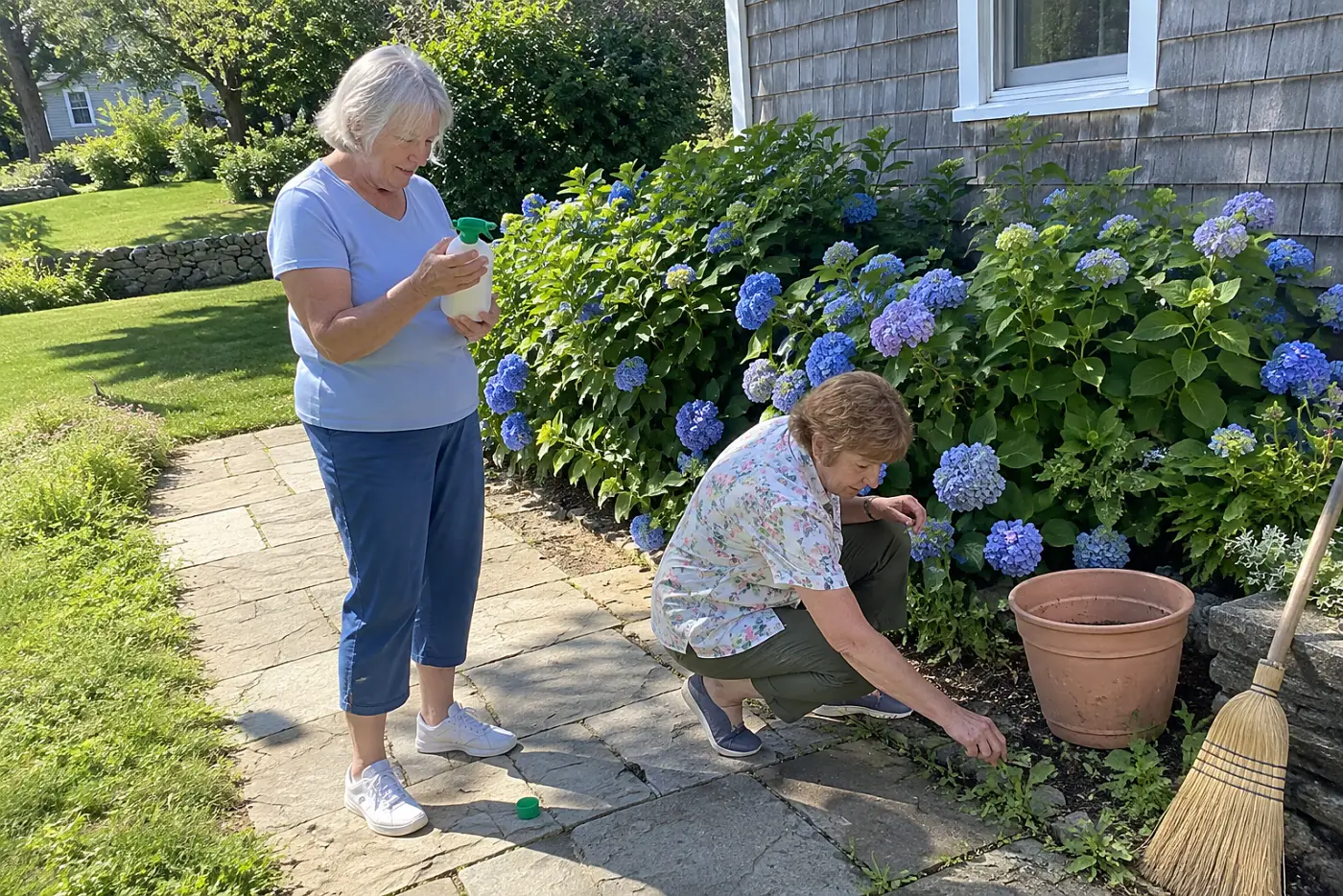
A drifting spray can damage growth before flowers open.
Herbicides meant for weeds can land on hydrangea leaves and shoots. Twisted leaves, odd new growth, or injured stems after spraying point to a possible exposure. Damage depends on the product and where it landed.
Don’t assume every misshapen leaf proves spray drift. Insects, disease, and weather also mark foliage, so timing and the product label matter.
This week, write down what was sprayed, when, and how close to the shrub. Save the container or take a photo of its label. Compare the symptoms with your state Extension service’s plant diagnostic pages before treating anything else.
Keep future spraying away from the shrub. Covering the hydrangea after drift has already happened won’t repair its growth. If a lawn company did the work, ask for the product name and application date.
Yet damage on leaves isn’t always damage to buds.
15The brown spots on last summer’s leaves
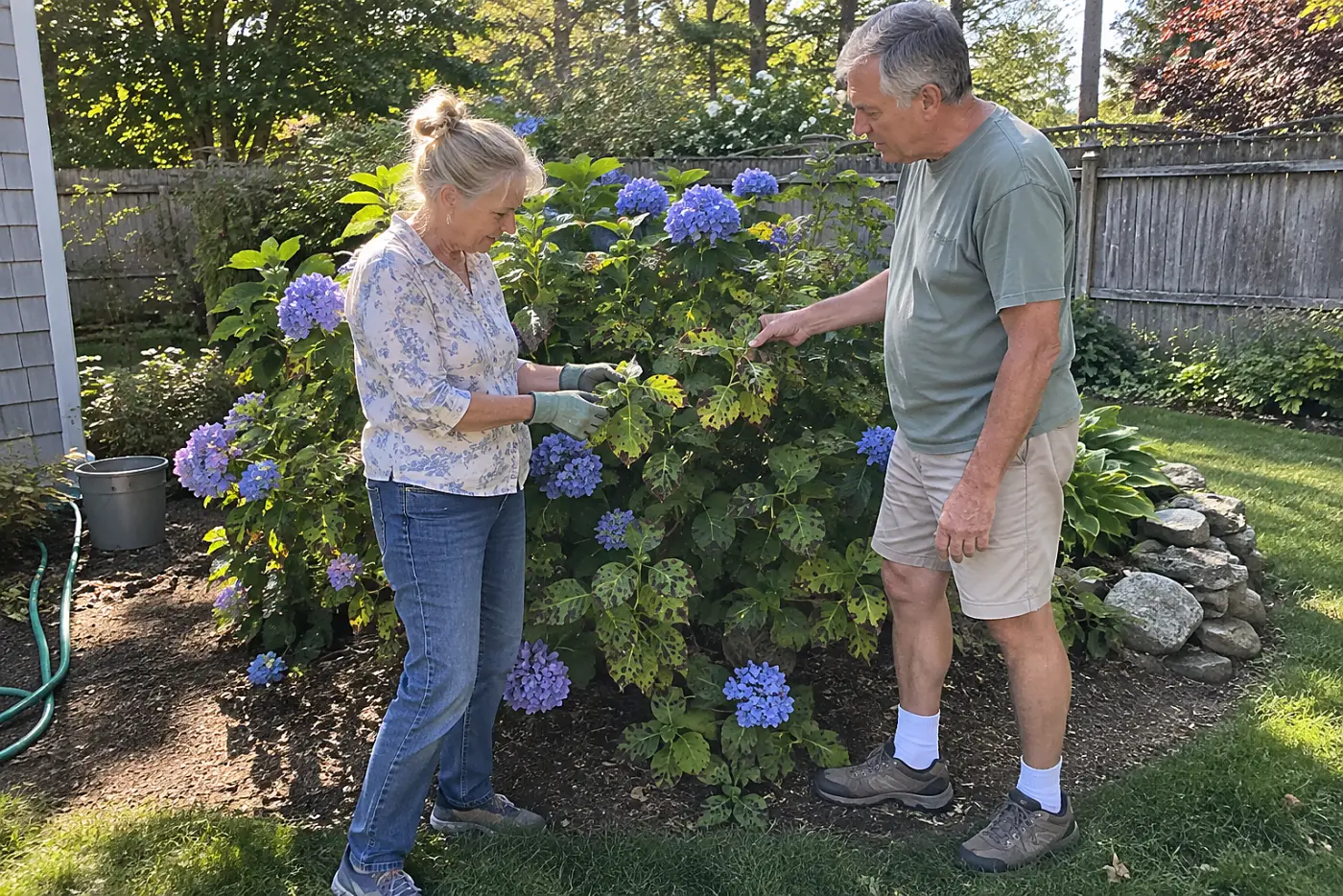
Spotted leaves make an easy suspect.
Leaf spots show on hydrangeas, especially in damp weather. A few marked leaves late in summer don’t prove the flower buds were harmed. Buds, stems, and the amount of healthy foliage tell you more.
Treating every spot can distract you from a shrub that lost its buds during winter. You’ll spend time on a visible symptom while the real cause stays hidden.
This week, check whether spots cover a few leaves or much of the plant. Remove fallen leaves and avoid wetting foliage when you water.
Now look for damage that starts inside a stem.
14The hollow stem above a leaf joint
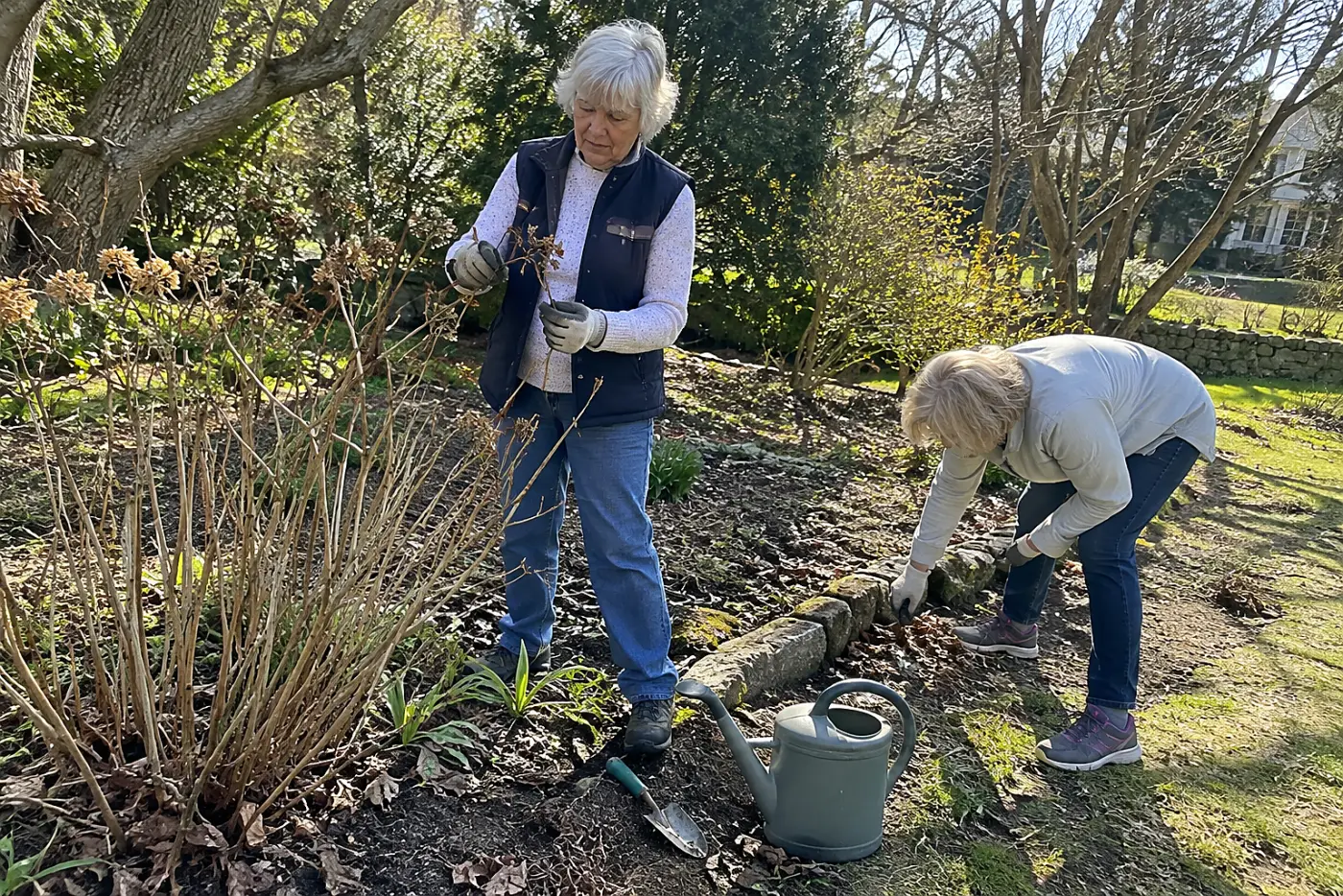
A dead tip tells only part of the story.
Dead stem tips don’t carry living flower buds. Winter injury, drought, and physical damage leave bare, brittle wood. On the same branch, a lower leaf joint can still produce growth.
Cutting every bare stem to the ground is a costly guess on an old-wood bloomer. It removes the chance to see what develops below that tip.
This week, look for buds or leaves at successive joints without cutting or scratching the stem. Photograph the bare tip and the lowest joint showing growth. Leave the branch standing while spring growth becomes clear.
Wait until you see where new leaves stop before making a broad cut. The Missouri Botanical Garden Plant Finder gives species details once you know the name.
A stem that never grew buds has a different history from one whose buds froze.
13The warm spell before a hard freeze
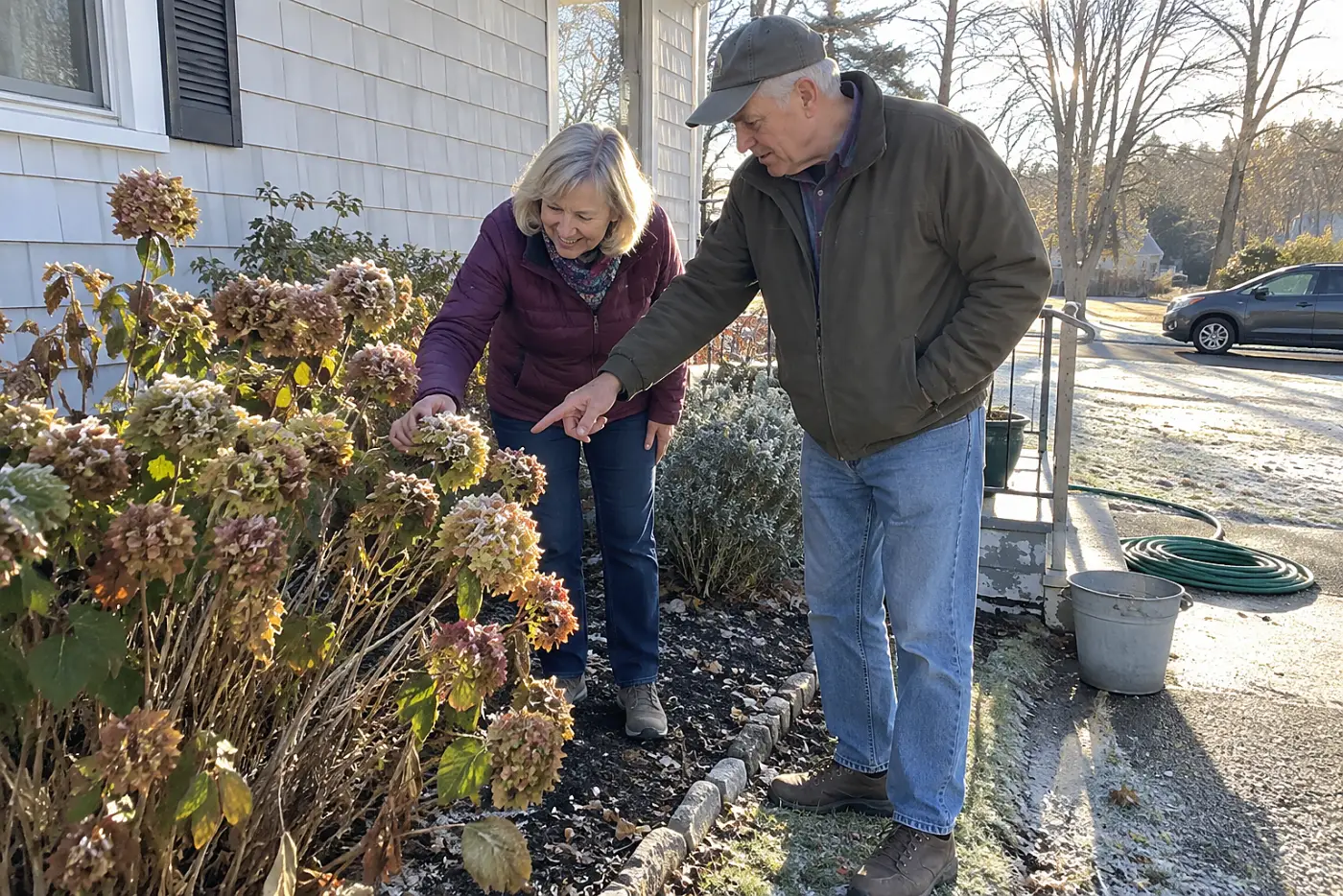
A bud can wake up too early.
Warm winter weather draws some hydrangea buds toward growth. A later hard freeze damages tender tissue. The shrub leafs out from surviving buds or its base, but flower buds on old stems are gone.
A garden full of green leaves after that freeze doesn’t rule it out. The timing matters more than how the plant looks by June.
This week, look back at your photos or notes from late winter. Did buds swell before temperatures dropped sharply? Check branches for dead tips and living growth lower down.
The next question is which stems your variety relies on.
12The exposed stems above the snow
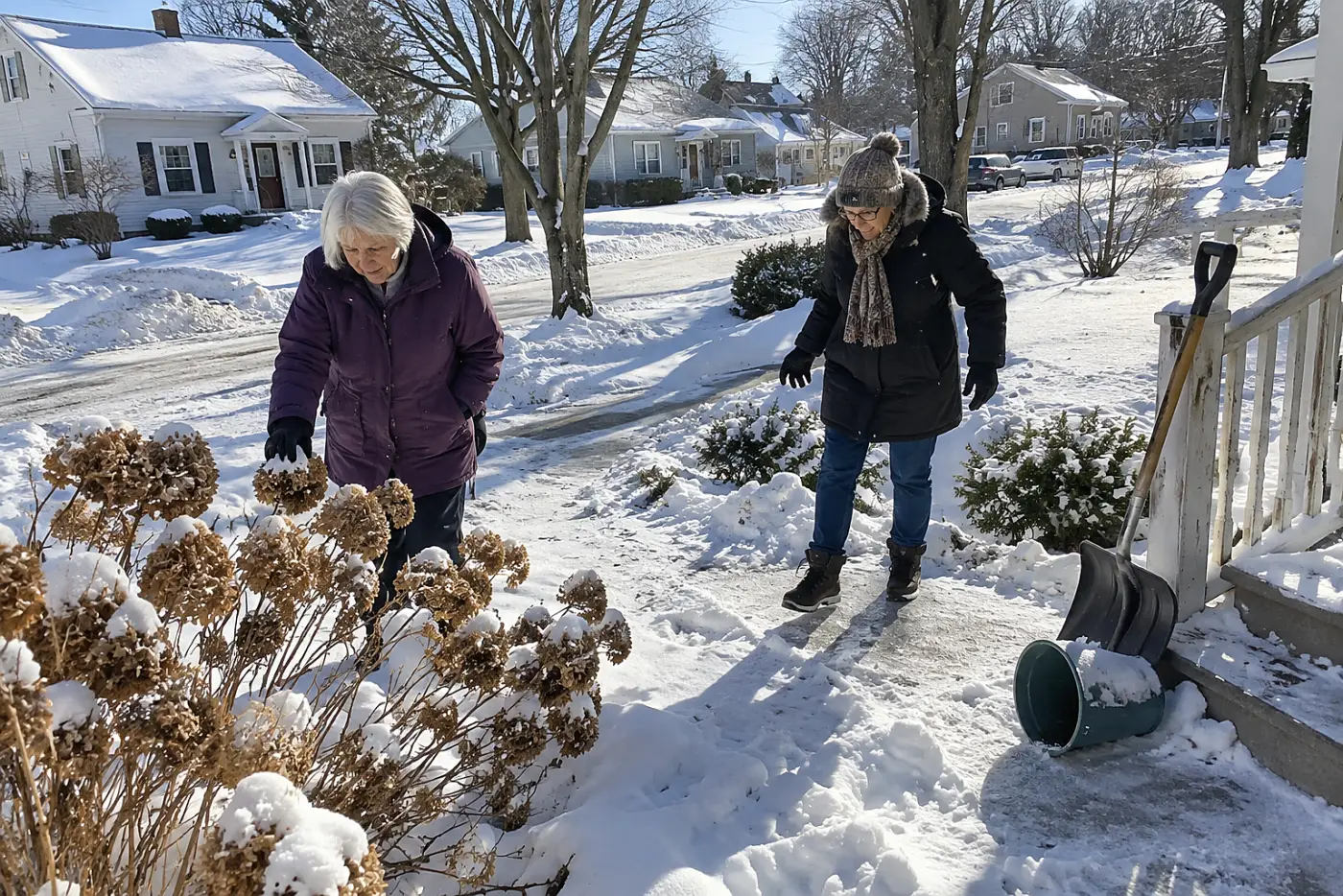
Winter can spare the base and take the flowers.
Snow insulates the lower part of a hydrangea. Buds higher on exposed old stems face colder air and drying wind. When spring arrives, new shoots from below make the shrub look healthy despite lost flower buds.
This pattern is especially telling on a bigleaf hydrangea that blooms on old wood. The plant survived. The buds you wanted did not.
This week, compare growth near the base with growth on last year’s upper stems. Note where leaves first appeared. Before next winter, move a container-grown plant to a sheltered spot or plan protection appropriate to your climate.
Check local guidance before wrapping a shrub. Your state Extension office knows the cold patterns in your area. The USDA Plant Hardiness Zone Map uses average annual extreme minimum temperatures from 1991 through 2020, not whether a single winter spared your buds.
Even intact winter buds face one more spring hazard.
11The late frost on swollen buds
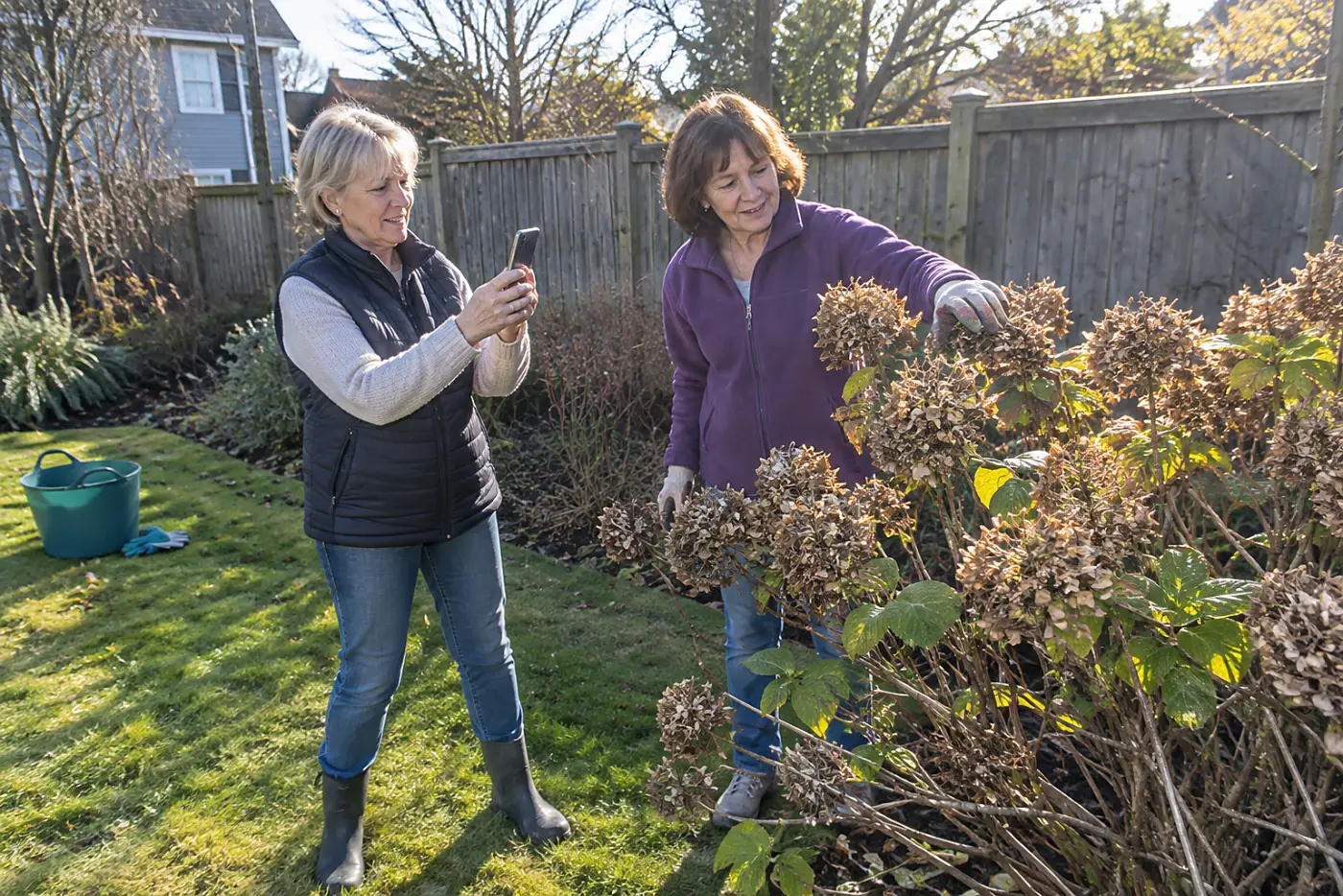
Spring frost can finish what winter left alive.
Hydrangea buds that swell and open become vulnerable to freezing temperatures. Brown, limp new growth after a cold night points to frost injury. Lower buds or new shoots can follow, but they won’t always replace lost flowers.
If you prune the whole shrub immediately, you erase the evidence and risk cutting living wood. Give it time to show which buds survived.
This week, photograph the injured tips and leave the stems in place until new growth appears. On a forecast frost night, cover a manageable shrub, then uncover it after the cold passes.
Next, separate weather damage from damage done with pruners.
10The haircut given after flowers faded
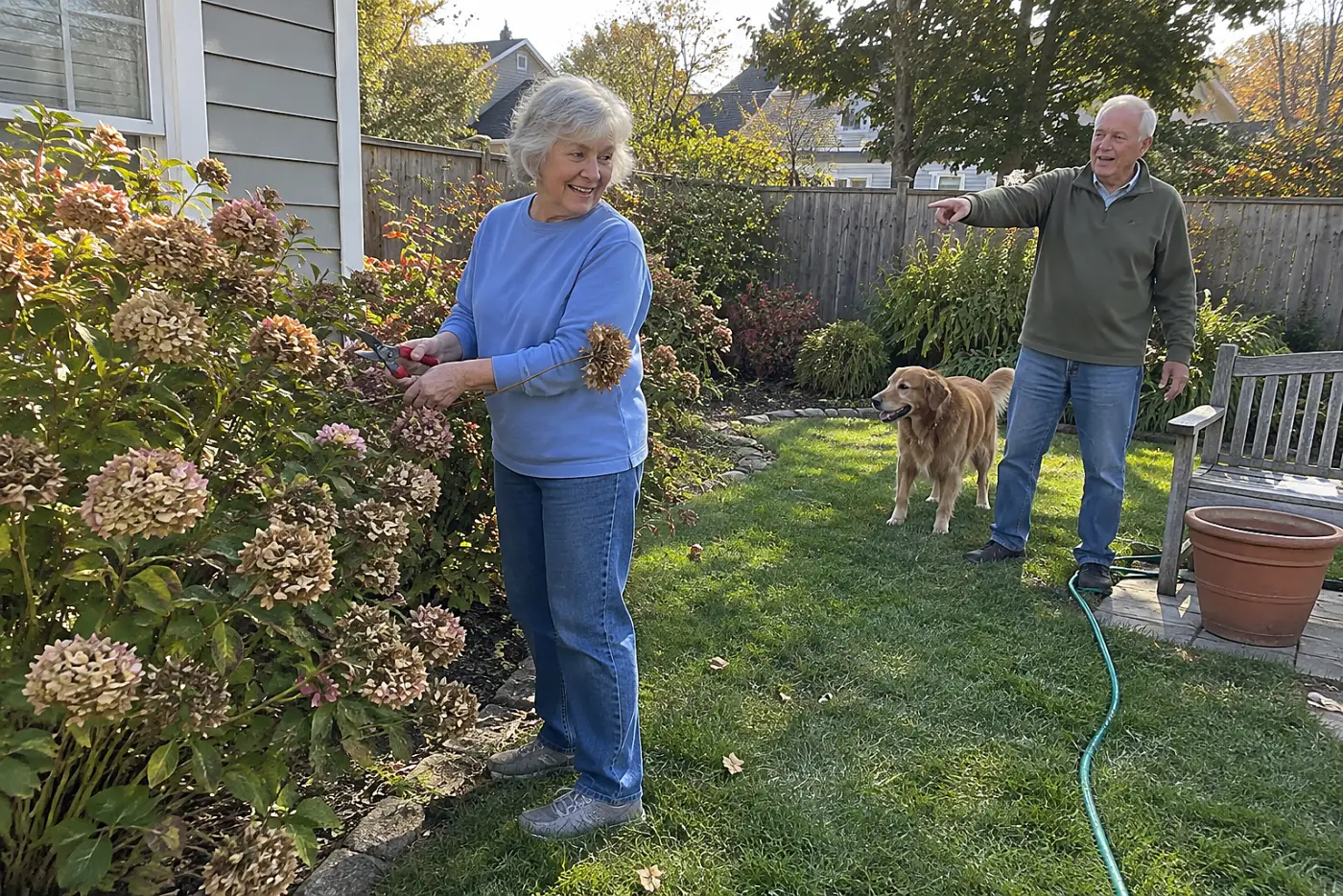
The date of a cut decides what went with it.
Many bigleaf and oakleaf hydrangeas form next year’s flower buds on stems grown this year. Cut those stems back after buds have formed, and next summer’s flowers go with them. Panicle and smooth hydrangeas form flower buds on new growth in spring.
That’s why one neighbor can prune in late winter and get flowers, while you copy her and get leaves. The plants look related; their flowering schedules differ.
This week, find the plant name before you make another cut. Then check a species-specific pruning guide from your Extension service. If the name is missing, leave healthy stems standing until you identify it.
Recall exactly when you last trimmed and how far back you went. A faded flower head removed just above a pair of leaves is different from a stem cut near the ground. Don’t blame yourself for a cut until you know which one you made.
There’s another reason a careful cut can still miss the mark.
9The pruners used on every stem
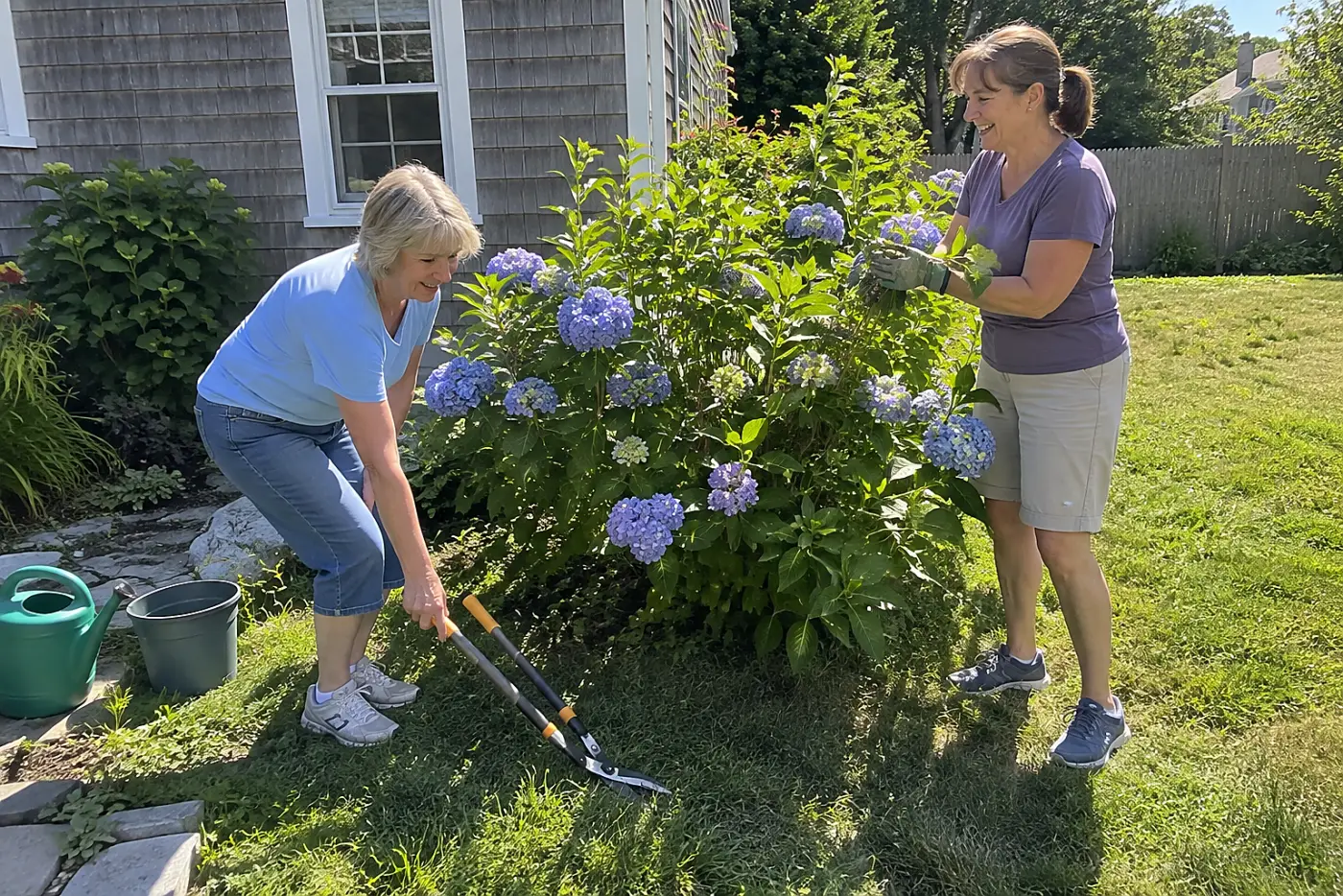
A uniform haircut removes more than untidy growth.
Shearing turns the shrub into one shape by cutting stem tips across the plant. On old-wood bloomers, those tips hold flower buds for the next season. Deadheading individual spent flowers removes far less stem.
The tidy result can hide the cause for months. You won’t see the missing buds until the next flowering season passes.
This week, put the hedge shears away from the hydrangea. Trace one stem from its tip to its base before cutting anything else. If you only want to remove a spent flower, cut just above a healthy leaf pair.
The calendar still matters when you use the right tool.
8The pruning job saved for March
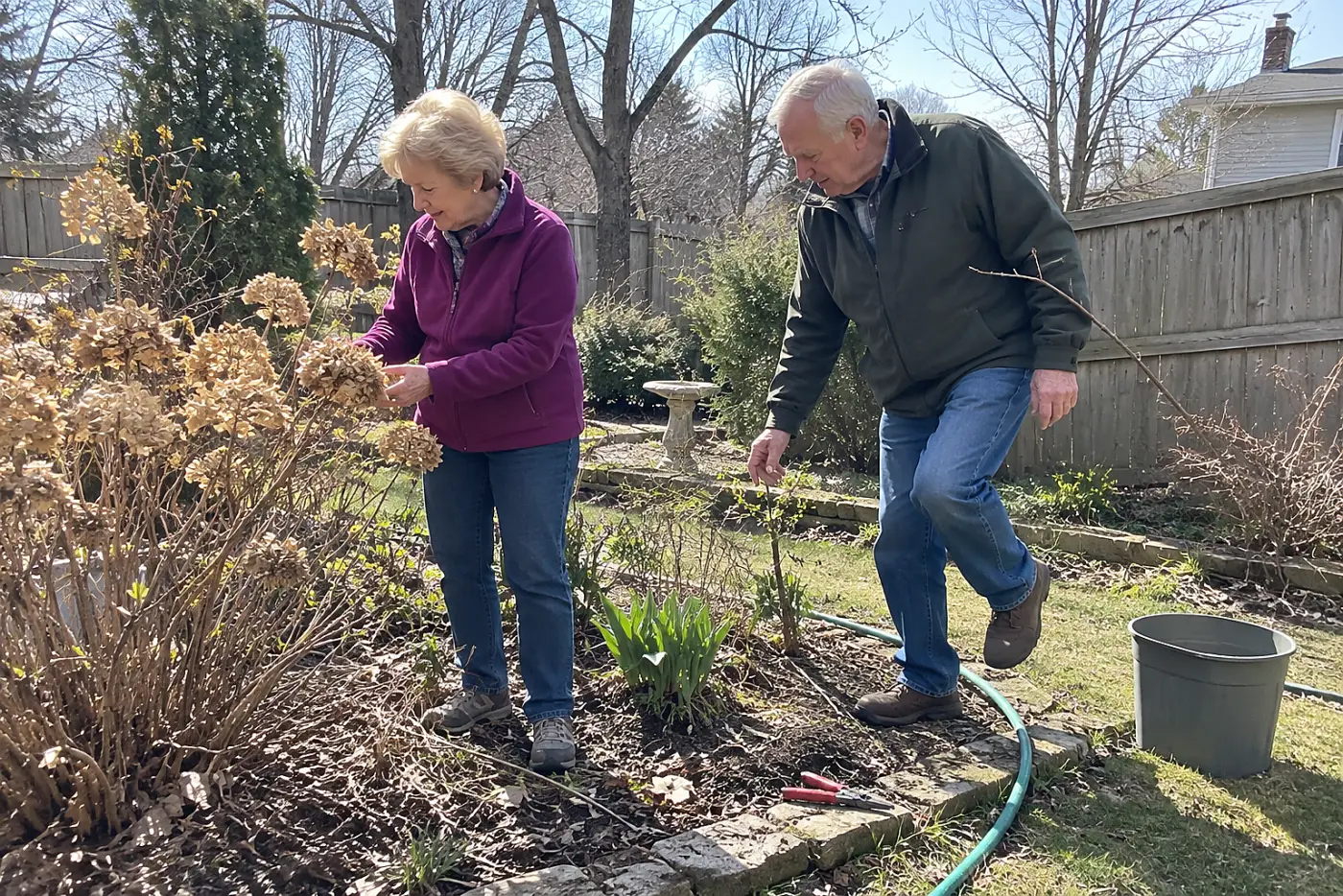
A bare shrub invites the wrong kind of cleanup.
Late winter pruning suits panicle and smooth hydrangeas because they flower on new growth. A bigleaf or oakleaf hydrangea carrying old-wood buds has already done part of its flowering work by then. Shortening those stems removes the result.
That March cut doesn’t make you a bad gardener. It means a rule for one hydrangea got applied to another.
This week, identify the plant and mark the calendar with its pruning window. If you’ve already cut it, let new stems grow without trying to correct its shape again. Watch what survives into next spring.
The North Carolina Extension Gardener Plant Toolbox lets you look up a species and check its bloom and pruning details. Use the species name from the tag when you search. A nursery label that says only “hydrangea” isn’t enough.
Before the next cut, ask whether you’re looking at a repeat bloomer.
7The reblooming label on the pot
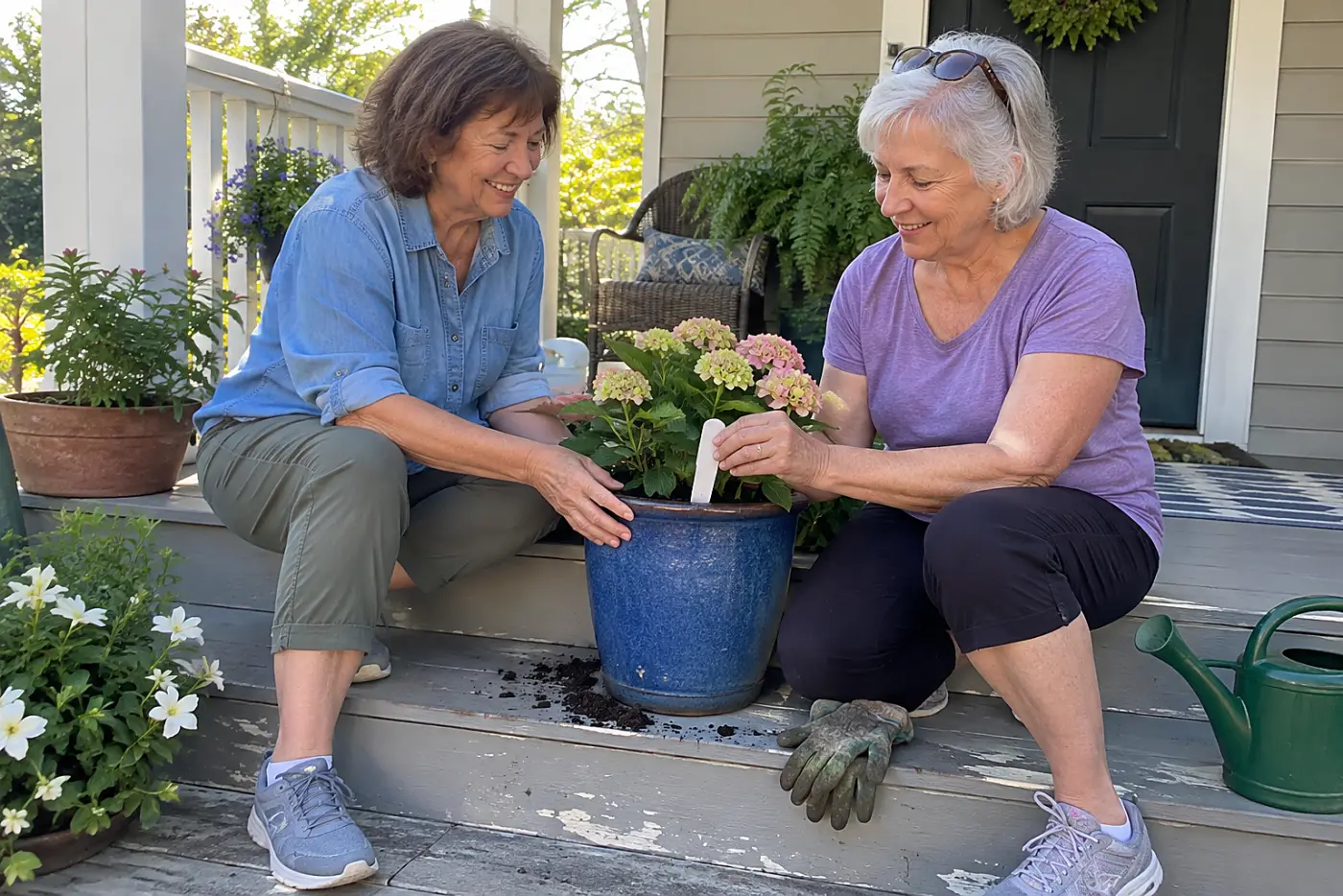
“Reblooming” isn’t a promise of nonstop flowers.
Some bigleaf cultivars flower on both old and new wood. That gives them another route to bloom after old buds are lost. Sun, growing season, and plant health still determine what you see.
If yours flowered once and stopped, the label wasn’t proof you caused the pause. It describes what the cultivar does under suitable conditions.
This week, find the exact cultivar name and its care instructions. Check whether early flowers came from old stems and later growth has formed fresh shoots. Hold off on cutting those shoots while you wait.
A plant that arrived recently has another reason to delay.
6The hydrangea planted this spring
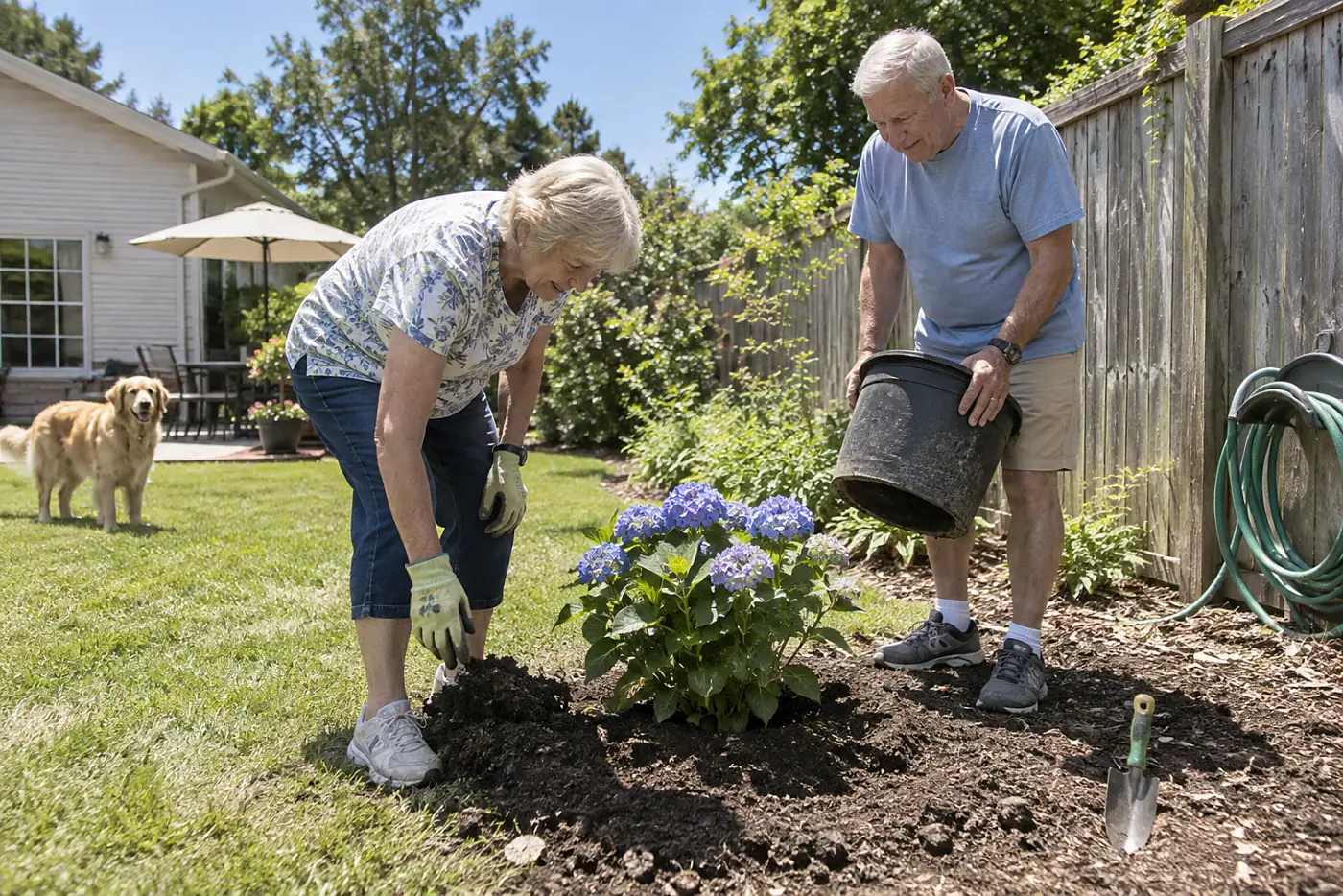
A new shrub has roots to build.
Container-grown hydrangeas arrive with a compact root system and a flowering history from the nursery. Once planted, they must establish roots in your soil. Heat, dry spells, and transplant stress compete with flowering.
A bloom-covered pot at the store doesn’t tell you what the shrub will do in its first year at home. Missing flowers this season aren’t proof you picked the wrong spot or gave it the wrong care.
This week, check soil moisture beneath the original root ball and in the surrounding bed. Water the root area when it’s dry rather than following a fixed daily schedule. Keep mulch off the stems.
Look at the planting depth, too. The top of the root ball should not be buried under a mound of added soil. If it is, uncover that top edge without tearing through roots. The Clemson Cooperative Extension Home & Garden Information Center has planting guidance for shrubs.
If the shrub was there before you were, age is less useful than its growth pattern.
5The old shrub with fresh basal shoots
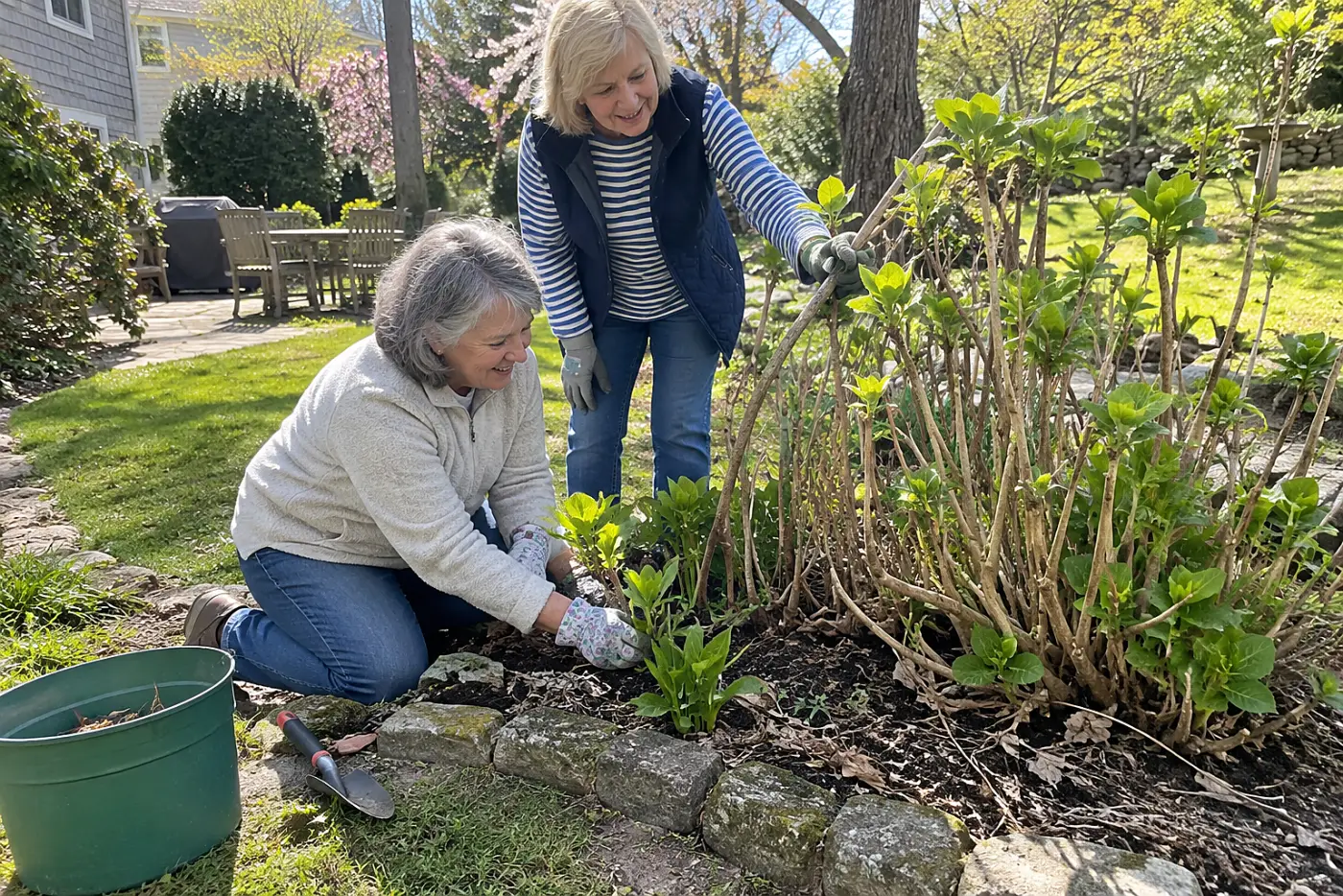
New growth at the base changes the picture.
When old stems die back, a hydrangea sends up shoots from its crown. Those fresh stems explain the leaves. On an old-wood bloomer, they won’t replace flower buds lost from last year’s stems that season.
Calling the whole shrub “healthy” misses that divide. A leafy comeback and a flowering season aren’t the same result.
This week, trace the tallest shoots to their starting points. Note which rose from the ground and which grew from older stems. Leave the new shoots to mature.
A flowerless plant still needs one final identity check.
See more: 29 Things Gardeners Over 70 Do Differently, and Why They Still Have Gardens →
4The nursery blooms forced for an early sale
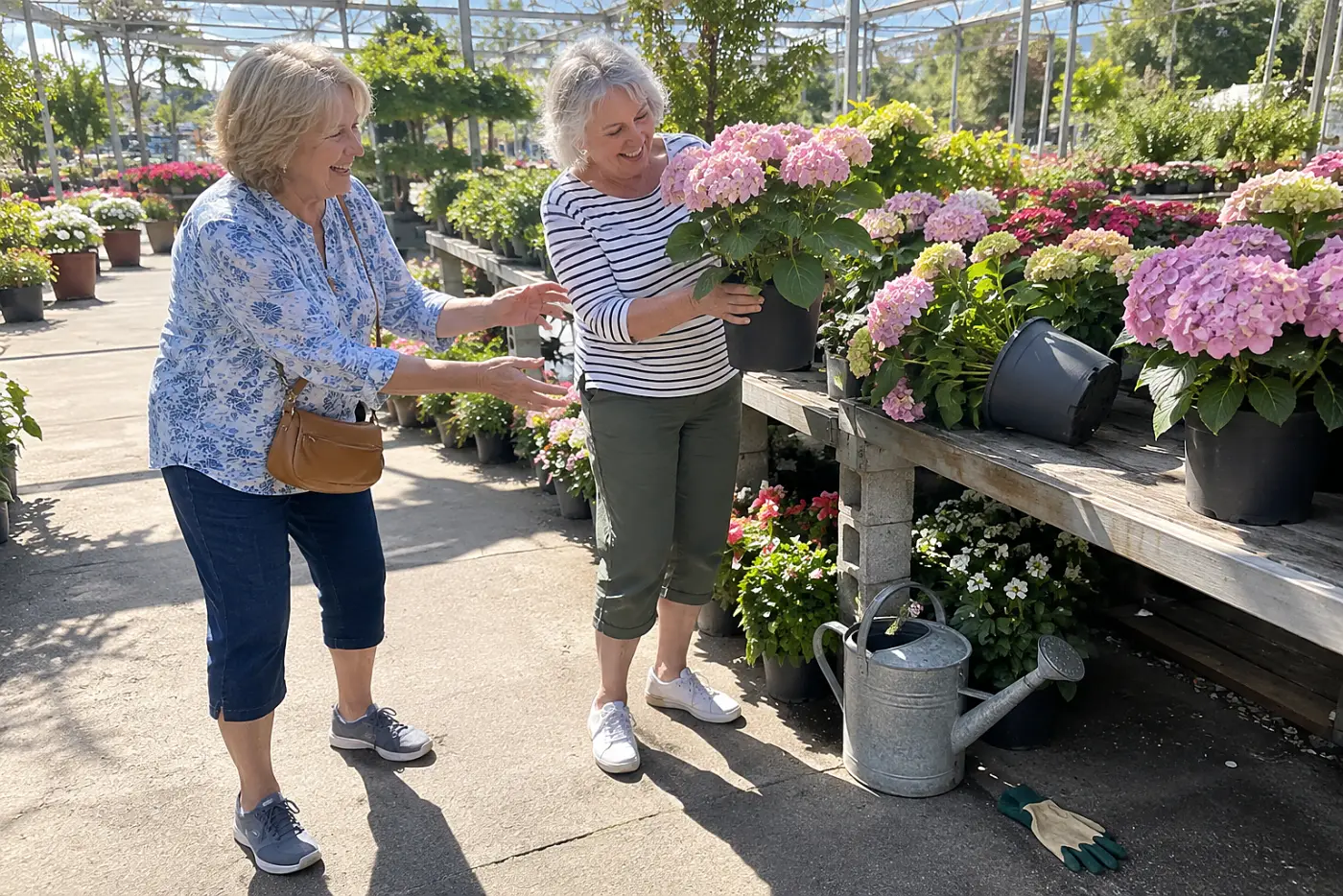
A flowering pot can arrive with next year’s timing scrambled.
Growers bring some potted hydrangeas into bloom for indoor display by controlling temperature and light. Those flowers reflect greenhouse conditions, not the season in your yard. After you plant one outside, its next bloom depends on the cultivar and whether its buds survive your winter.
That differs from a newly planted shrub putting energy into roots. One has already flowered on a grower’s schedule; the other is settling into your soil. If the first summer brings leaves instead of flowers, don’t use the store display as your baseline. You didn’t necessarily undo anything.
This week, check the original tag or purchase listing for “florist hydrangea” or “indoor gift plant.” Compare the purchase date with when hydrangeas bloom outdoors in your area. Then look for new shoots and record whether last year’s stems survived winter. The American Hydrangea Society’s growing guides help you check when your species sets its buds. If you bought it in bloom outside your local flowering season, tell the nursery, “This was flowering when I bought it. Was it grown for indoor display?”
Keep the tag with your garden notes. Next year’s flowers will tell you more about the plant outdoors than its first show did. But an empty branch tip holds another clue.
3The deer path through the flower bed
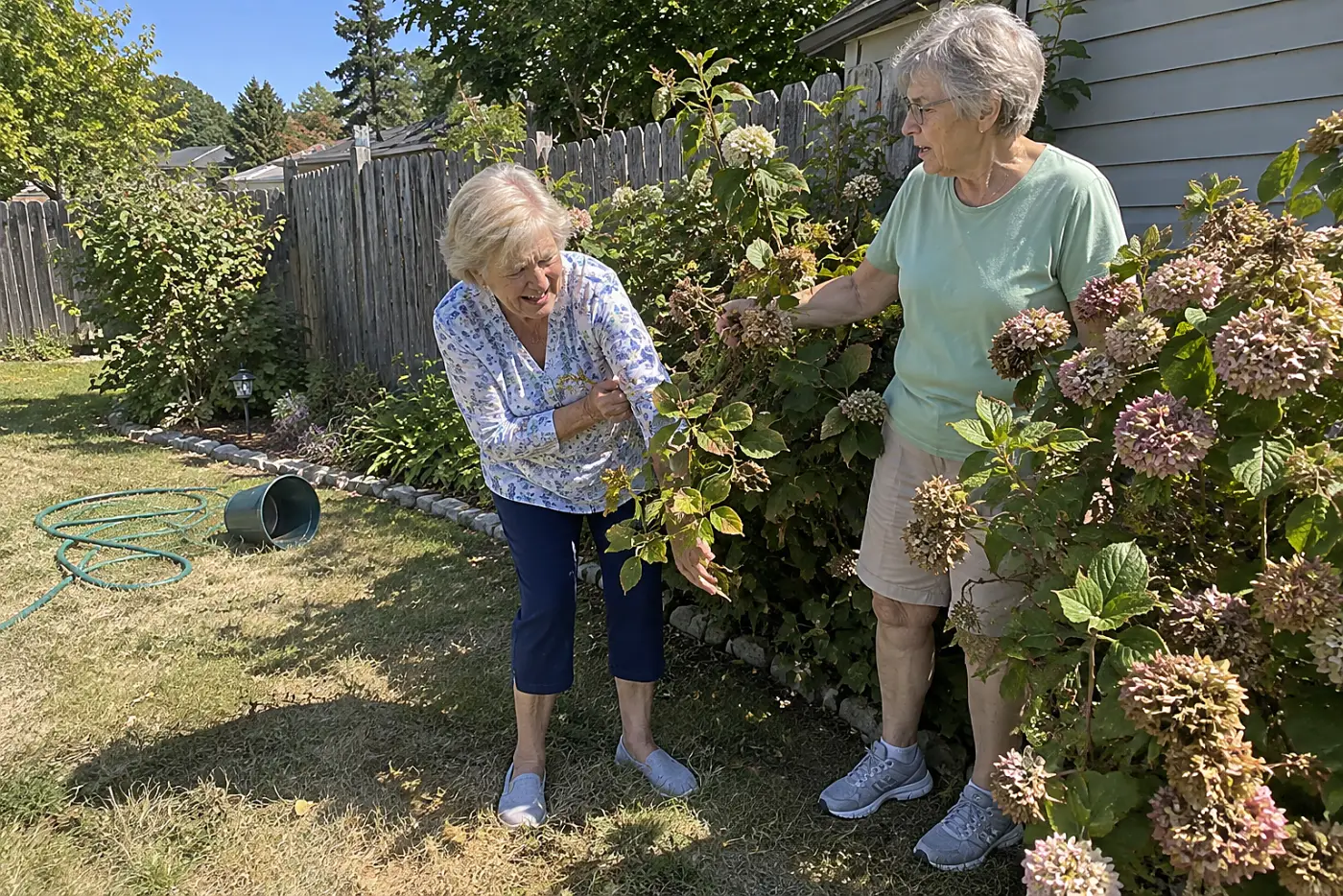
A deer needs only the branch tips.
Deer eat tender hydrangea shoots and buds. Leaves then grow from lower points on the stem. A browsed end looks torn or ragged, unlike a clean pruning cut.
If those tips held flower buds, they’re gone before you suspect pruning.
This week, check stems at browsing height for ragged ends and look for tracks or droppings nearby. If you find both, ask your nursery, “Which barrier keeps deer off this shrub?”
A protected tip still needs a living bud to make a flower.
2The lacecap mistaken for an empty flower
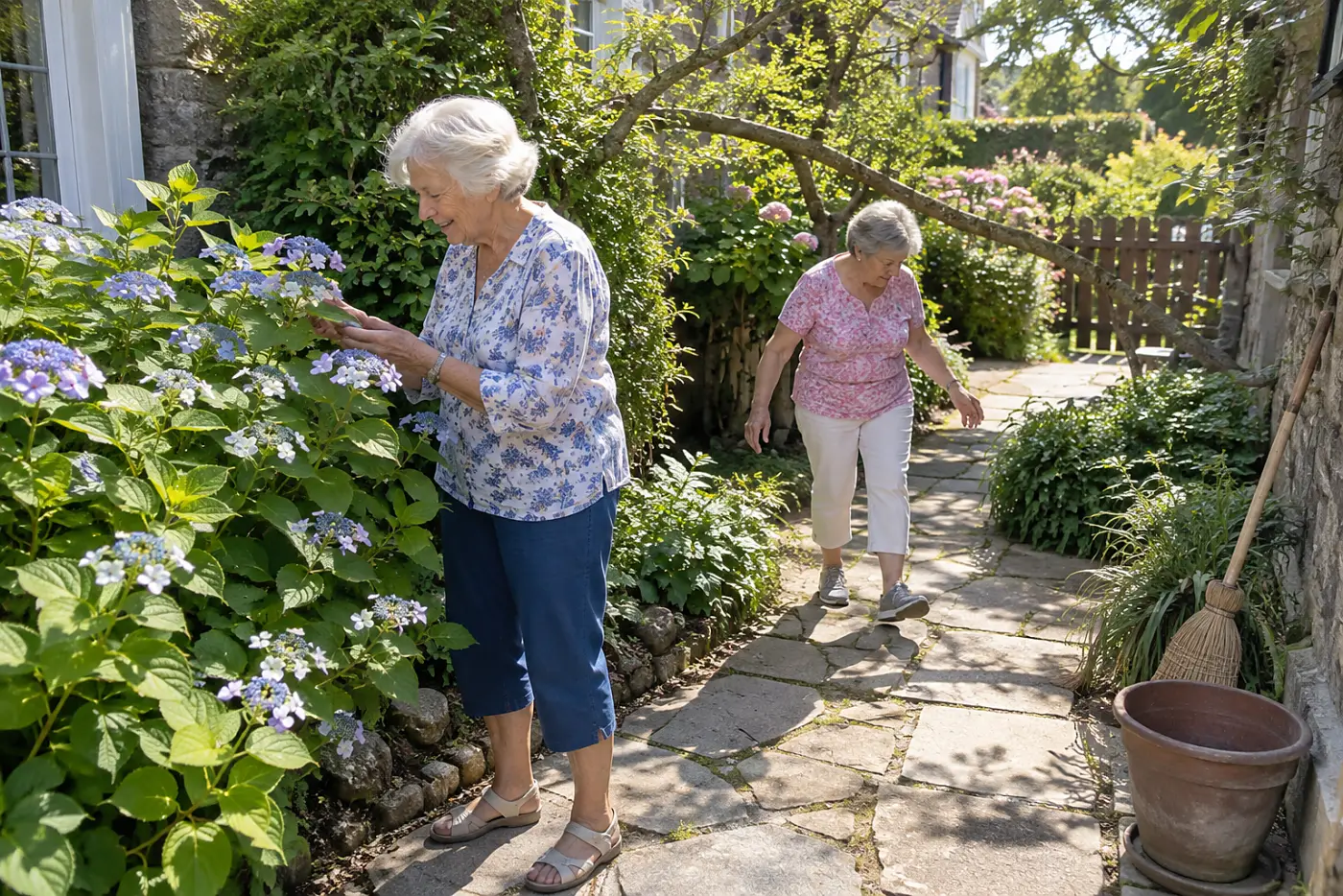
Small flowers can hide in plain sight.
Lacecap hydrangeas carry clusters of small fertile flowers in the center, ringed by showier flowers. A mophead forms the rounded, full head many shoppers expect. Looking for mopheads on a lacecap leads to a false verdict.
The same mistake happens when young green flower clusters blend into the leaves. You think nothing grew, then cut off the stems before those clusters open.
This week, inspect branch tips in good light. Look for clustered buds or small central flowers, and compare the plant with photos of its named cultivar. Don’t cut a tip to prove it’s empty.
If you find no flower buds, go back to the stems themselves. Their age, survival, and pruning history answer the question the leaves cannot. The last check takes less time than washing the pruners.
1The stem check before your next cut
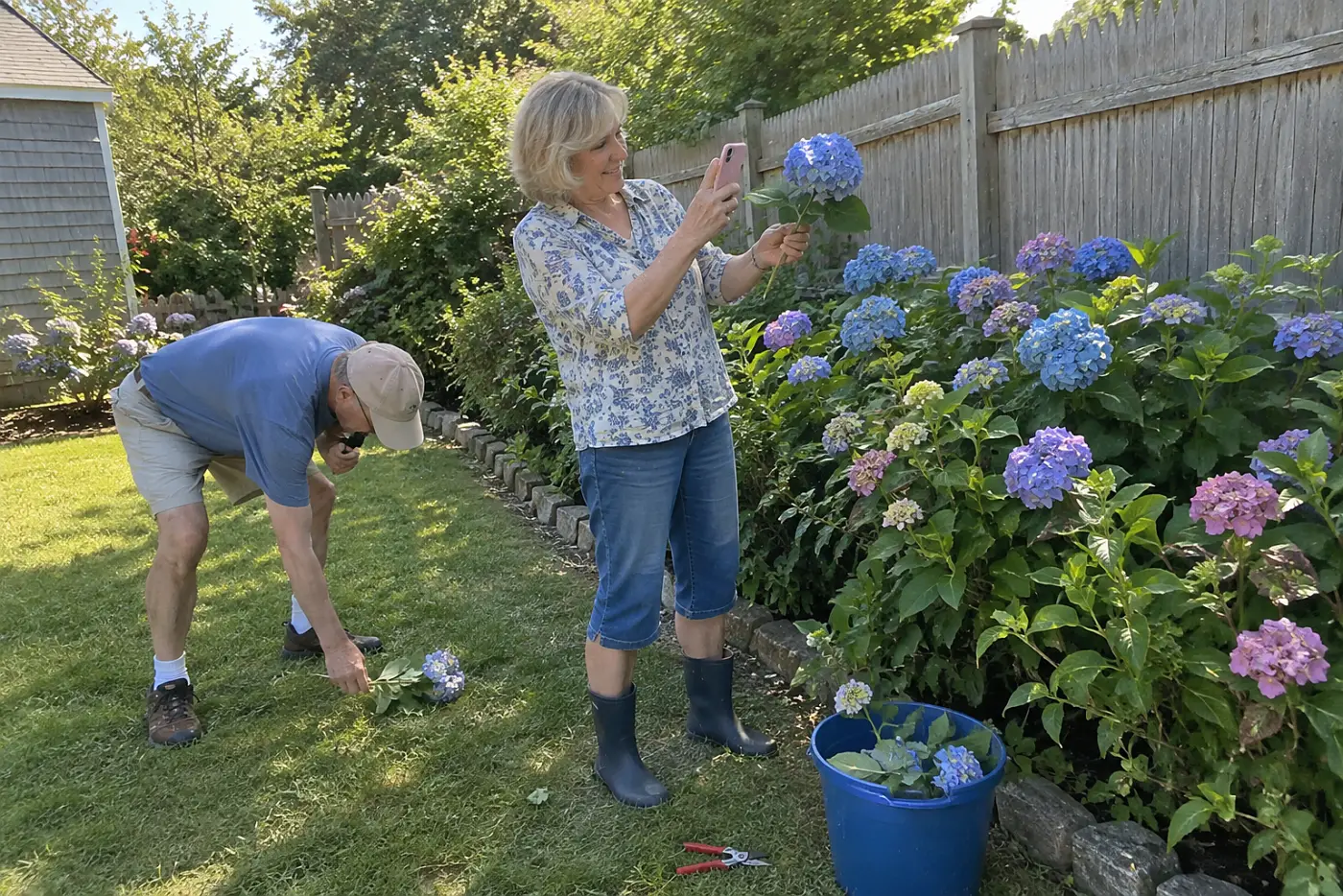
One comparison can tell you whether pruning was the culprit.
Find a stem that grew last year and still stands. Follow it from base to tip, noting buds, leaves, and dead sections. Then find a stem shortened by a pruning cut. For an old-wood bloomer, the missing section was part of its route to flowers.
Don’t convict yourself from the cut alone. Confirm the plant’s name first. Panicle hydrangeas bloom on new growth, so a March cut points you back toward sun, water, and other causes.
This week, inspect three stems before touching the pruners. Choose one untouched stem, one with winter damage, and one with an old pruning cut. Photograph each from base to tip.
If you removed most of last year’s stems from an old-wood bloomer, let this year’s growth stand. If those stems survived, check the weather record and the shrub’s light before blaming your shears.
Keep those three photos; the comparison continues below.
The bottom line
These 25 reasons lead back to the same question: what happened to the flower buds? Some never formed. Others froze, dried out, or left with a cut stem.
The best-prepared version of you knows the plant’s name and has checked its light and soil. You’ve left healthy stems standing until you know where it blooms.
Which of these has already happened in your garden? If you still have the plant tag, put it beside the stem photos for the final check.
Up next
27 Pruning Mistakes That Cost You Next Year's Flowers
A cut through a dormant flower bud removes a spring bloom, even when the shrub looks healthy and its leaves return.
Read the list →
Reader quiz
Did you catch the details?
5 questions from this article. Finish them all to unlock the editor's bonus tip.
Under the lawn sprinkler hitting shallow roots, where does the article say to check for dry soil?
Did any of these feel familiar?
Know someone who needs this?
Sources cited in this article
This article links to 6 outside sources, listed here so you can read them yourself.
- American Hydrangea Society americanhydrangeasociety.org
- USDA PLANTS database plants.usda.gov
- Soil test extension.psu.edu/soil-testing
- USDA Plant Hardiness Zone Map planthardiness.ars.usda.gov
- North Carolina Extension Gardener Plant Toolbox plants.ces.ncsu.edu
- Clemson Cooperative Extension Home & Garden Information Center hgic.clemson.edu
June Marlow
Garden Editor
June writes about gardens you can still manage: what to plant, which jobs matter each season, and the tools that spare your knees and back.
More from June Marlow