






29 Things Gardeners Over 70 Do Differently, and Why They Still Have Gardens
A hose timer cuts trips across the yard, while a lighter watering can and a written help plan keep the garden in your hands.
By June Marlow, Garden Editor
Updated · 18 min read
- Written by our garden editor
- Cited 4 sources
- How we review
Read to the end: #1 is the written help plan that keeps you in charge after a setback; almost nobody makes one.
The hose catches under the wheel of the cart again. You set down the pruners, walk back to free it, and forget which rose you meant to cut. By the time water reaches the far bed, the sun has moved onto your neck.
It’s tempting to call this a sign that the garden has become too much. But the trip across the yard, the dragging, and the reaching are jobs you can change without giving up the plants.
Here are 29 changes that keep you growing.
29A hose timer at the outdoor faucet
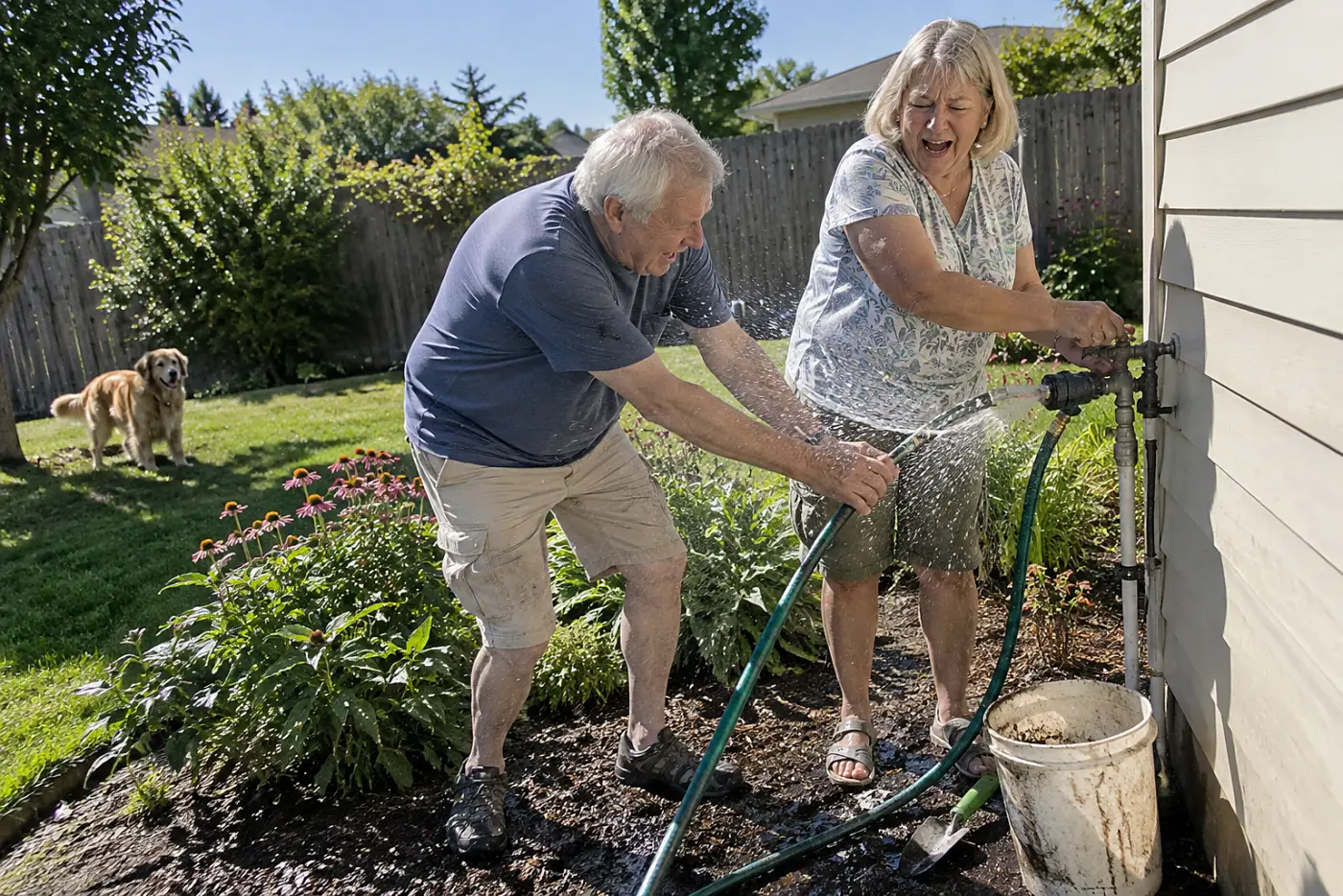
Dragging a hose twice daily can end the whole project.
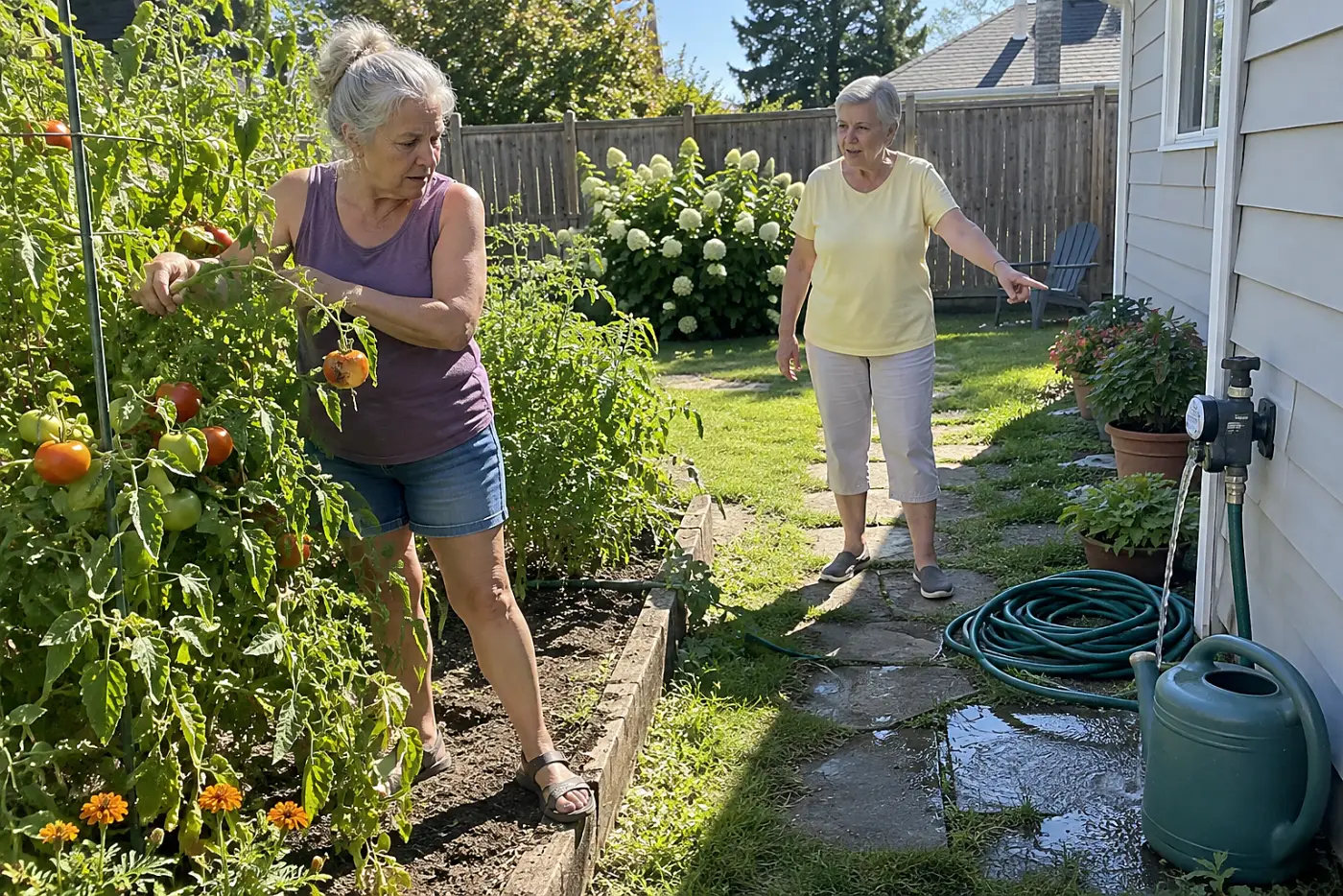
A timer at the faucet starts water without another trip across the yard. A basic hose timer generally costs about $20 to $50. Pair it with a hose laid along the beds, and you spend your visit checking plants instead of hauling equipment. Turn the faucet on after connecting the timer.
A missed watering can undo a new planting. A timer won’t tell you whether rain has soaked the soil, though.
This week, set one watering cycle and dig a finger into the soil afterward. Say, “I’ll change the timer after I see how wet the bed gets.”
The next question is what’s worth watering at all.
28A smaller watering can filled halfway
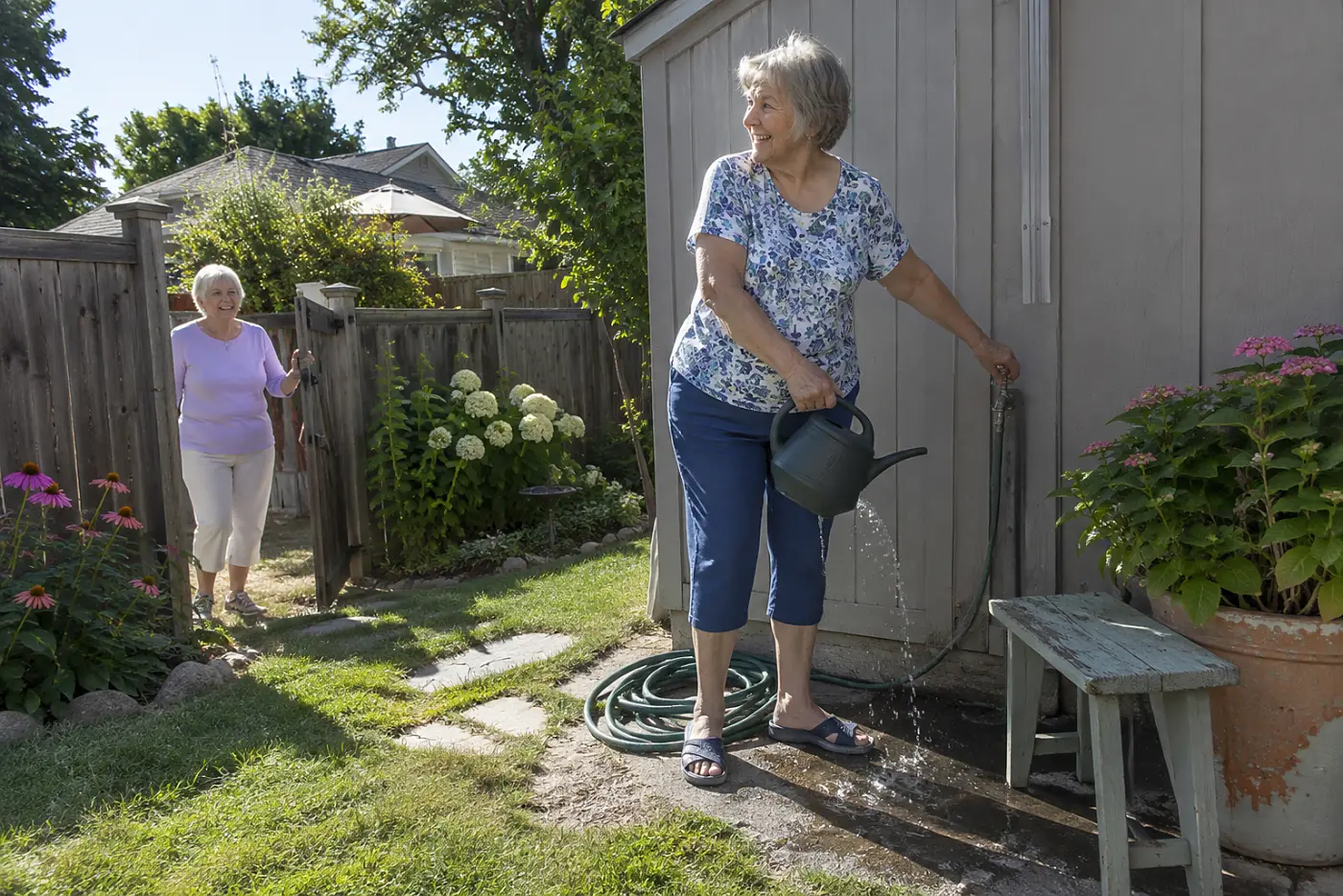
A full can grows heavier with every step.
Water weighs about eight pounds per gallon. Add the weight of the can, then carry it over uneven ground, and that quick trip to the tomatoes becomes a balancing act. Filling a smaller can halfway changes the load before you lift it.
There’s no prize for delivering all the water in one trip. A spilled can costs you the water and another walk to the faucet. The handle matters too: if your wrist bends hard to hold it level, the can is fighting you.
This week, fill your can halfway and walk your usual route. Set it down where you normally stop, then ask whether your grip still feels steady. Say, “I’m making two light trips instead of one heavy one.”
Once carrying feels easier, look at the route itself.
27Stepping stones set level with the path
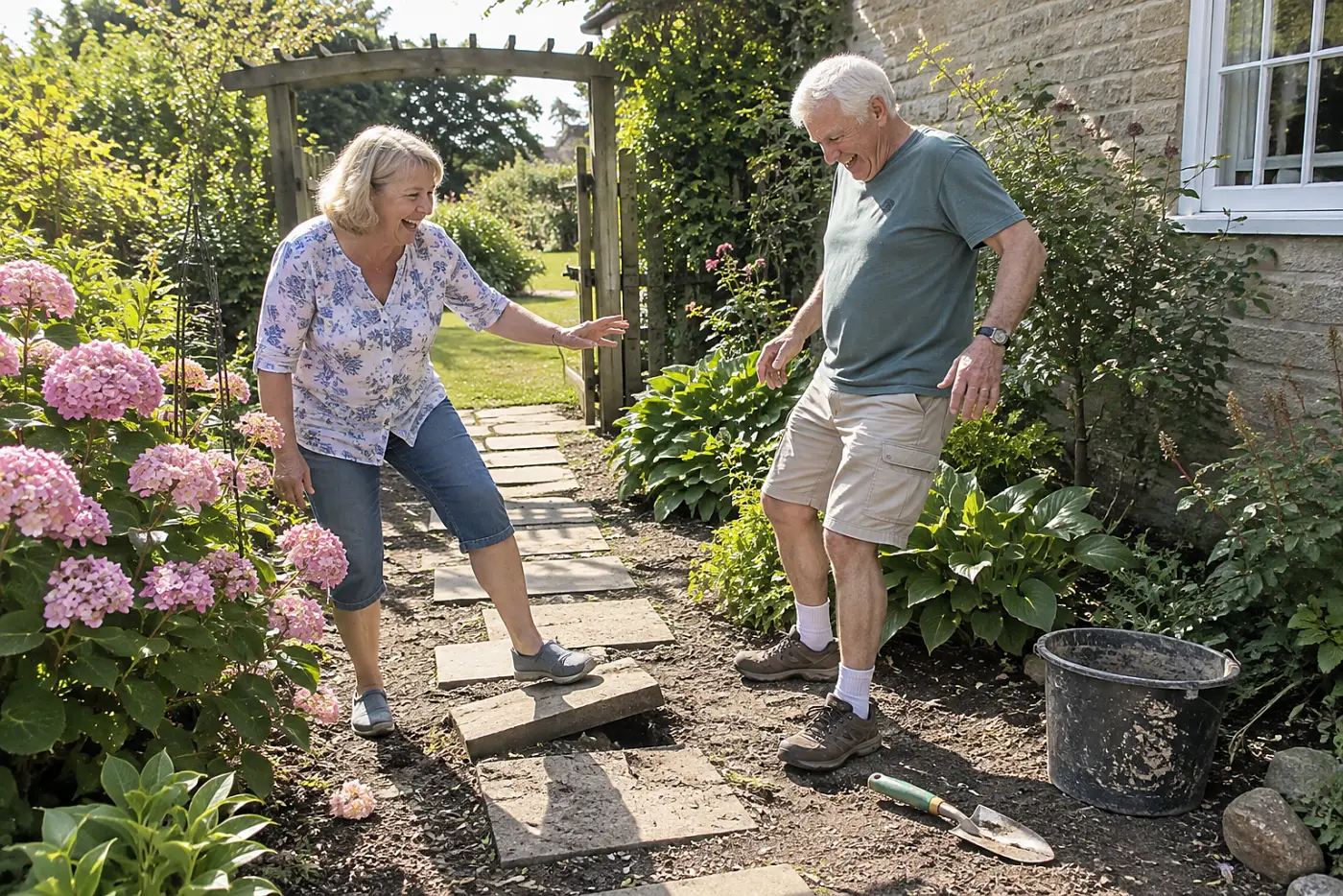
A wobbly stone makes weeding a balance test.
A stone that rocks shifts your weight when you reach across a bed. Roots and soil beneath it move over time, even if it sat flat when you laid it. A wide, firm place to stand makes the reach less precarious.
The trouble shows up when your hands are full. Then there’s nothing free to catch the fence or wall.
This week, press each stone with your foot before carrying tools along that path. Say, “This one moves, so I’m fixing it before I work here.”
Next, check what you’re reaching across.
26Narrower beds you can reach from the side
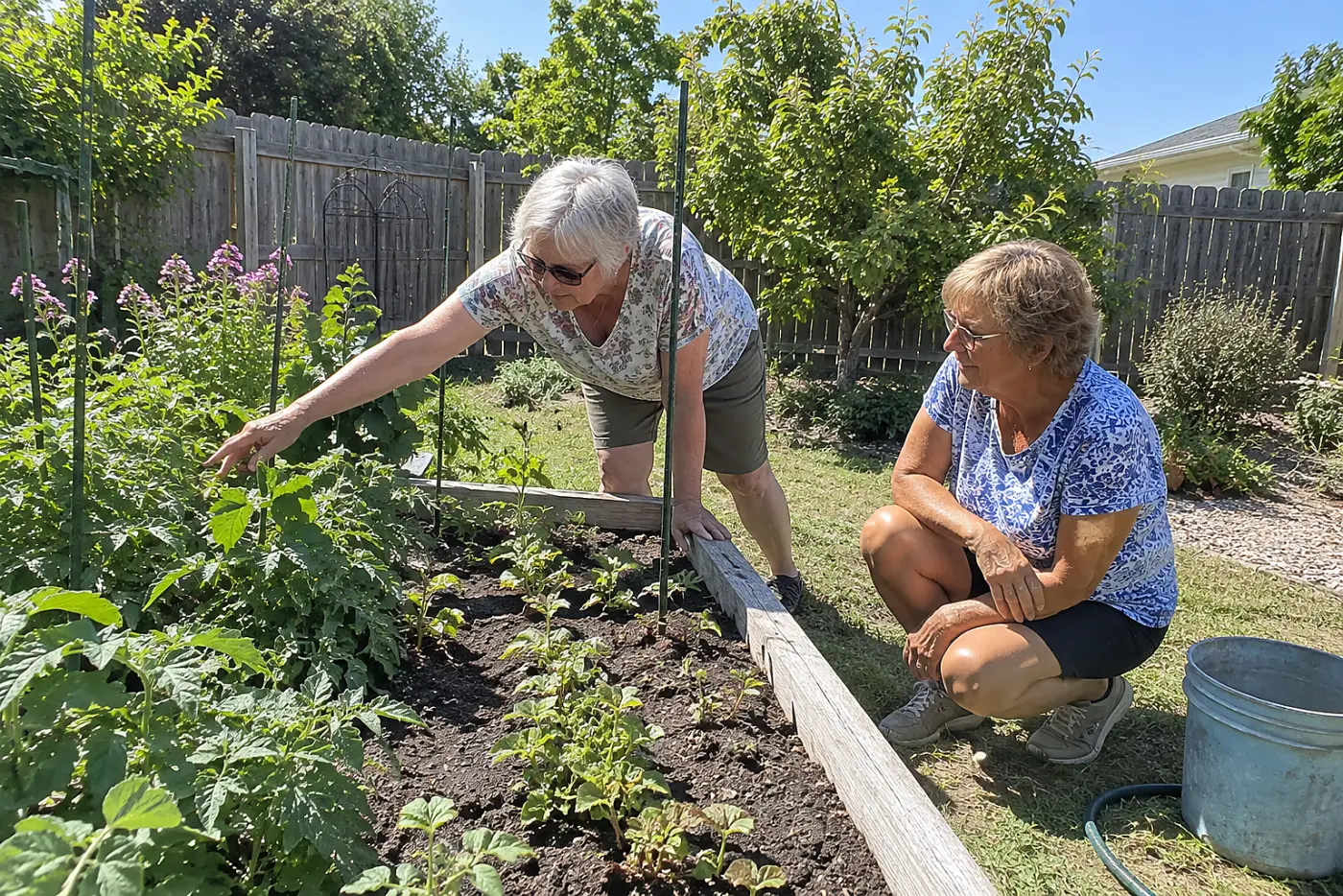
The middle of a wide bed demands a risky lean.
When you work from a path, your comfortable reach sets the useful width of the bed. A plant beyond that reach gets ignored or pulls you onto the soil. Walking on a growing bed compacts it, squeezing out air spaces roots need.
You don’t have to rebuild the whole yard. One strip of path through an overwide bed gives you access to both sides, even if it means moving a few plants.
This week, stand where you actually work and mark the farthest spot you reach without tipping forward. Move a stepping stone or shift an edge so that spot becomes reachable from a firm surface. Say, “If I have to step into the bed to tend it, the bed needs a path.”
A reachable bed still needs plants that stay within bounds.
See more: 27 Ways a Small Garden Beats the Big One You Used to Have →
25Dwarf varieties beside the kitchen path
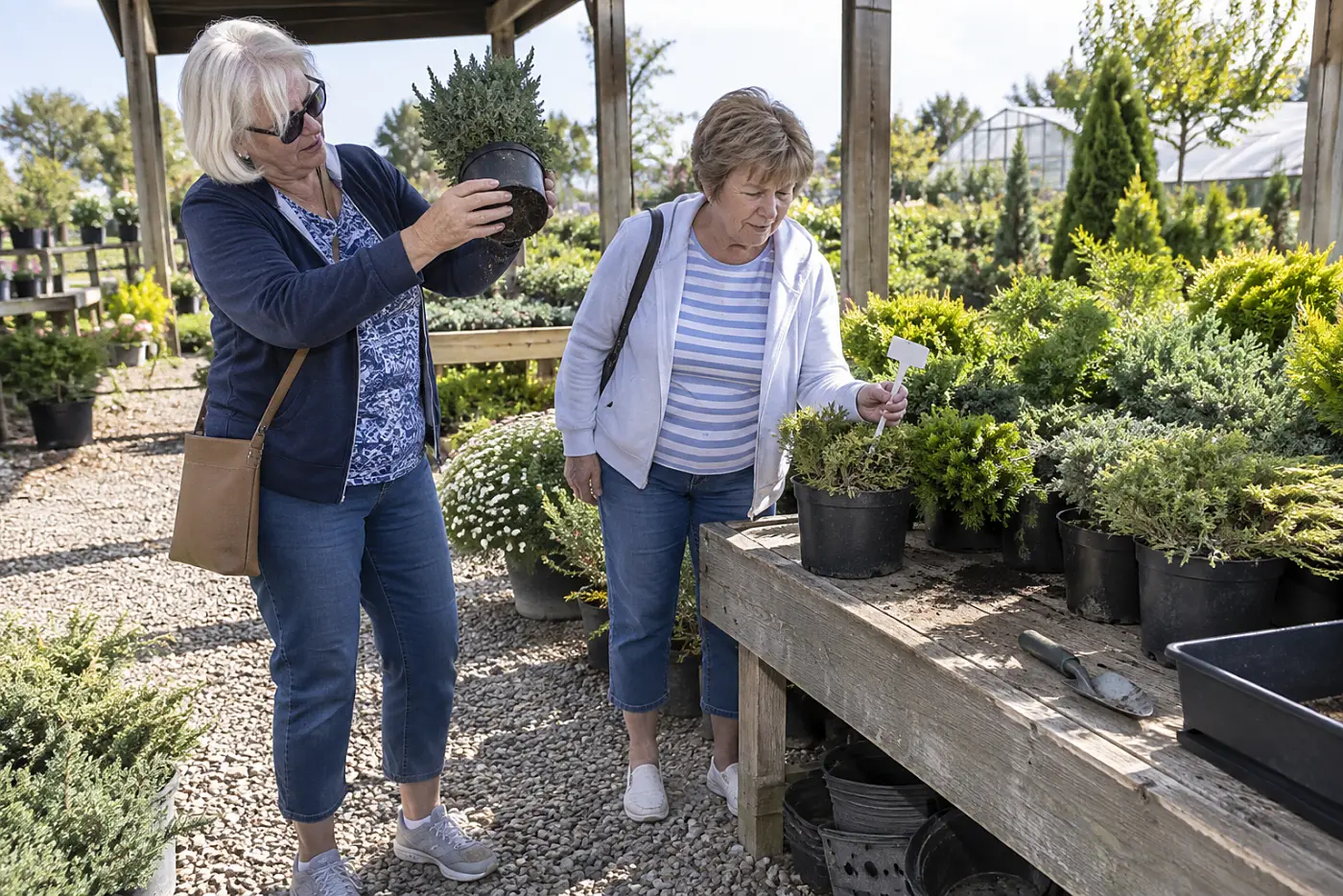
A tall plant creates work above your shoulders.
Seed catalogs and plant tags give the expected mature height and spread. That number tells you where pruning, harvesting, and staking will happen later. Choosing a compact variety near a path puts those jobs at hand level.
A plant sold small doesn’t stay small. Ignore its mature size, and the easy spot beside the door becomes another ladder job.
This week, read the tags on anything you plan to add near the house. Say, “I want the mature size, not the size of this pot.”
Next comes the part of the garden that refuses to stay planted.
24Mulch spread before the weeds sprout
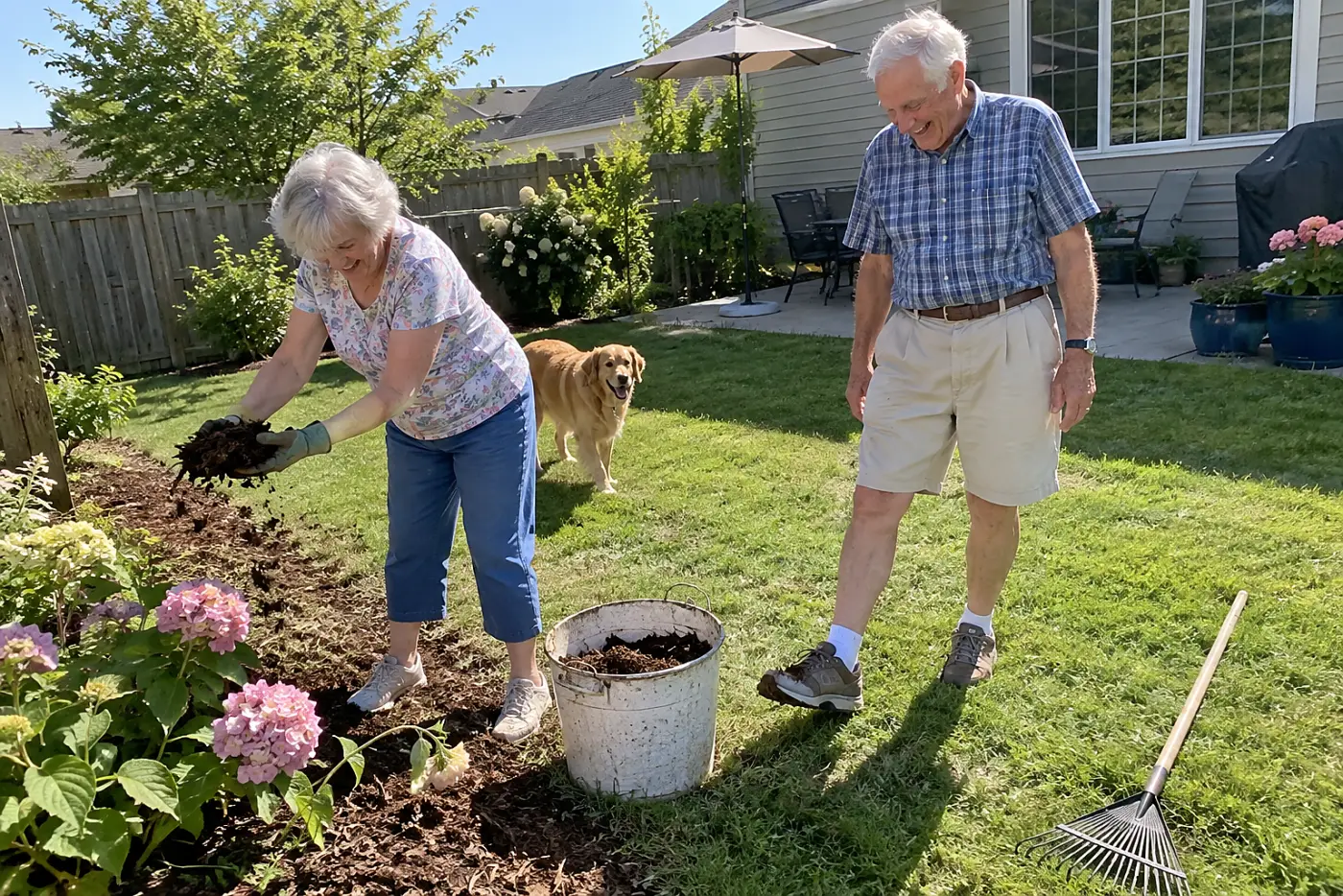
Bare soil gives every weed seed a welcome mat.
Mulch blocks light from reaching many weed seeds at the surface. A layer about 2 to 3 inches deep covers the soil without piling material against plant stems or tree trunks. It also slows water loss from the soil, so the bed needs fewer visits with the hose. A mound pressed against bark holds moisture where it doesn’t belong.
Start with a weeded patch. Cover the soil while leaving a small clear ring around each stem, then check underneath before the next watering. If the soil is dry, water it first. Mulch laid over dry soil doesn’t put water into it.
Skipping this job means pulling weeds after they’ve rooted among plants you want to keep. That takes more bending than spreading mulch over open ground.
This week, choose one bed you already cleared and cover its exposed soil. Say, “I’m doing this patch now, before I’m sorting weeds from seedlings.”
Mulch helps with weeds, but the next chore needs a separate limit.
23A kneeling pad kept beside the bed
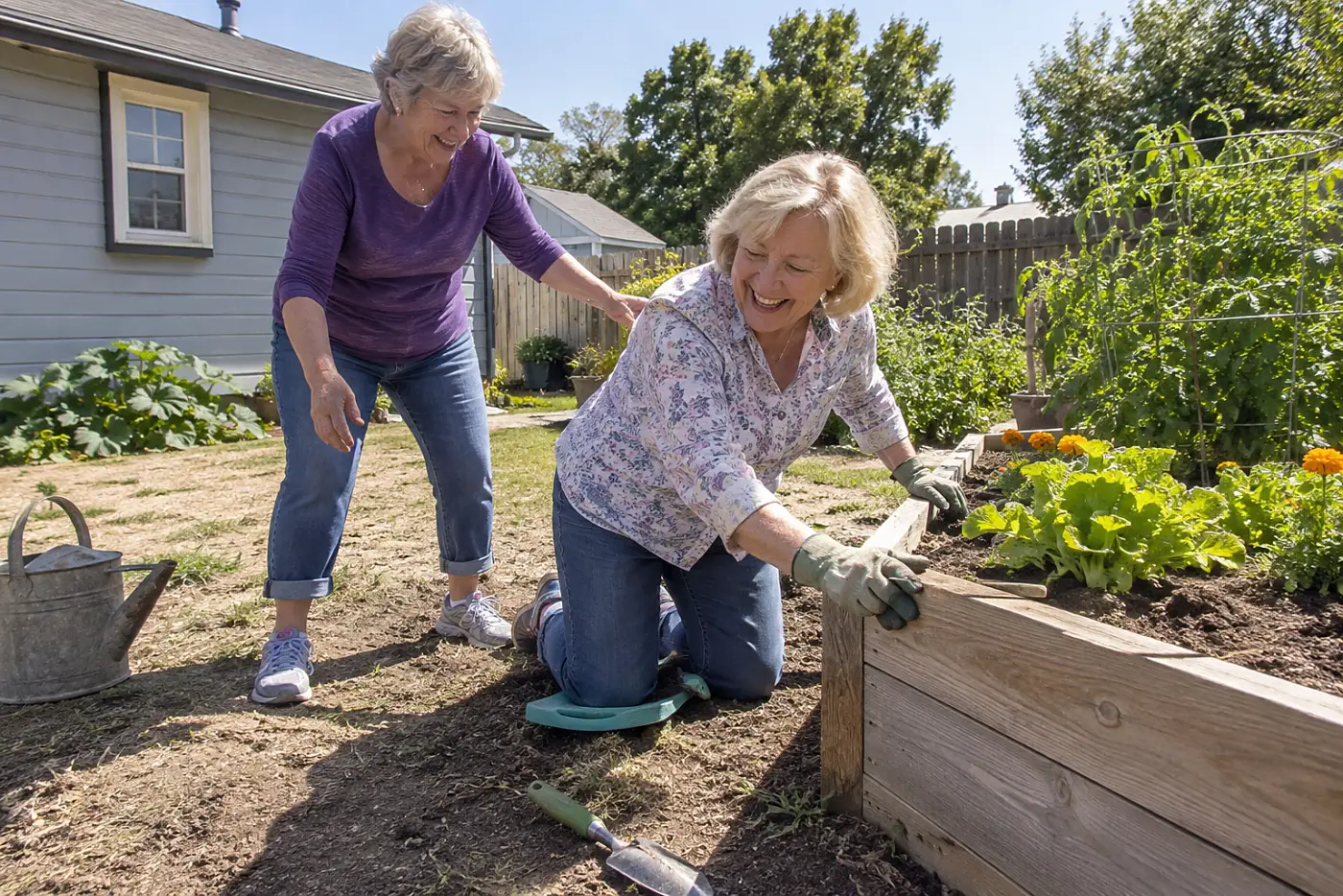
Getting down is only half the kneeling job.
A pad cushions your knees, but it doesn’t give you a handhold for standing. Before you kneel, choose a stable edge or rail you can use on the way up. Loose pots and thin plant stakes won’t support your weight.
The awkward moment comes after you’ve finished, when your legs are tired and the pad has slid away.
This week, set the pad where you weed and practice standing before you start. Say, “I need a solid place for my hand before I get down.”
For some jobs, staying upright works better.
22A long-handled tool that fits your grip
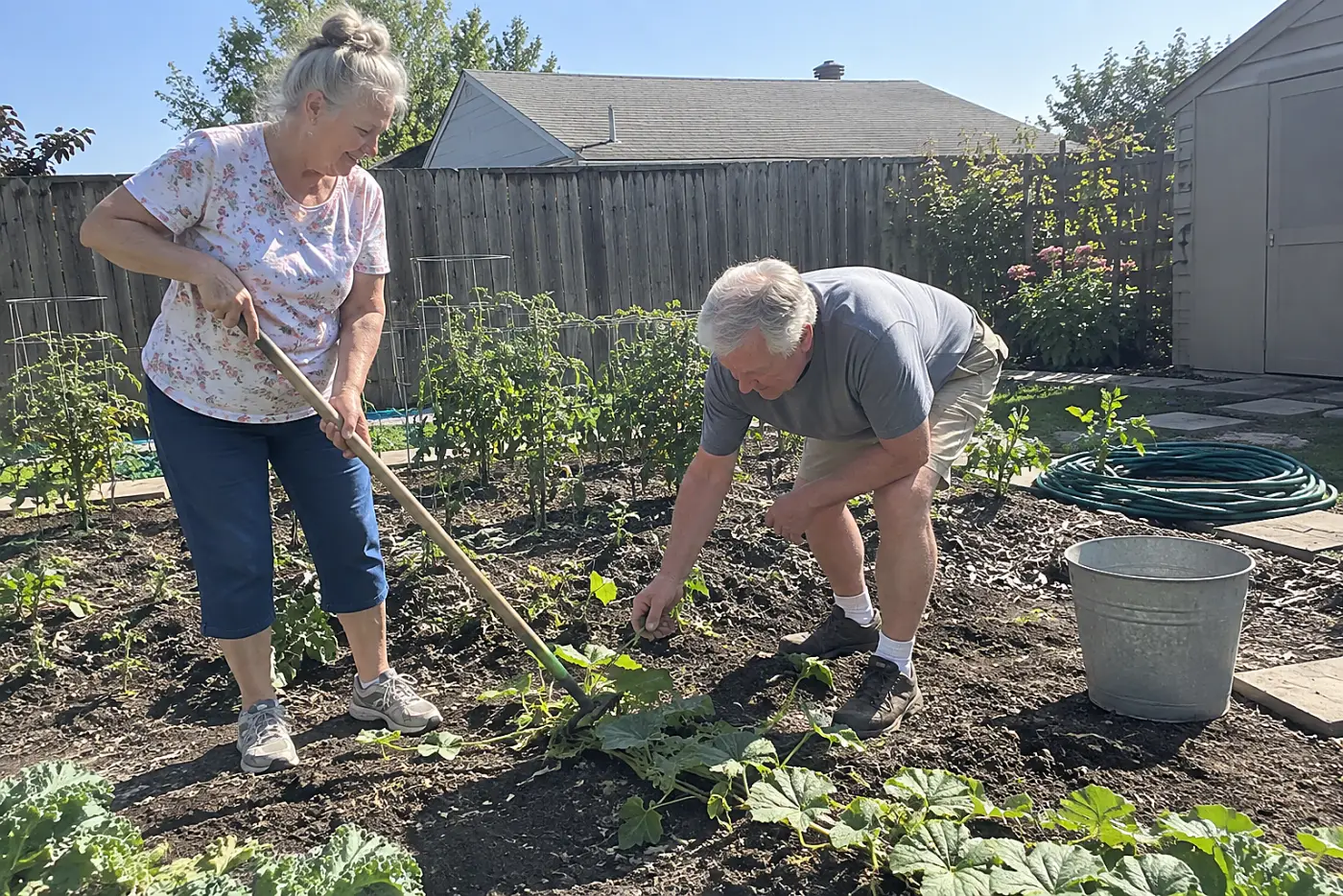
A longer handle won’t help if you lose control.
The handle lets you work soil while standing, but its length also changes the angle at your wrist. Try the motion before buying or keeping a tool. If your shoulders lift toward your ears, the handle and job don’t fit together.
Some long-handled tools are heavy at the far end. A light cultivator used close to the body beats a heavy tool you have to swing across a bed. The goal is to loosen the top of the soil, not wrestle the whole plot.
This week, test one tool on a small patch while keeping your elbows near your sides. Stop when you have to lean into it. Say, “This handle looks useful, but I’m checking the weight in my hands.”
Then give your hands somewhere to rest between jobs.
21A seat placed where the work happens
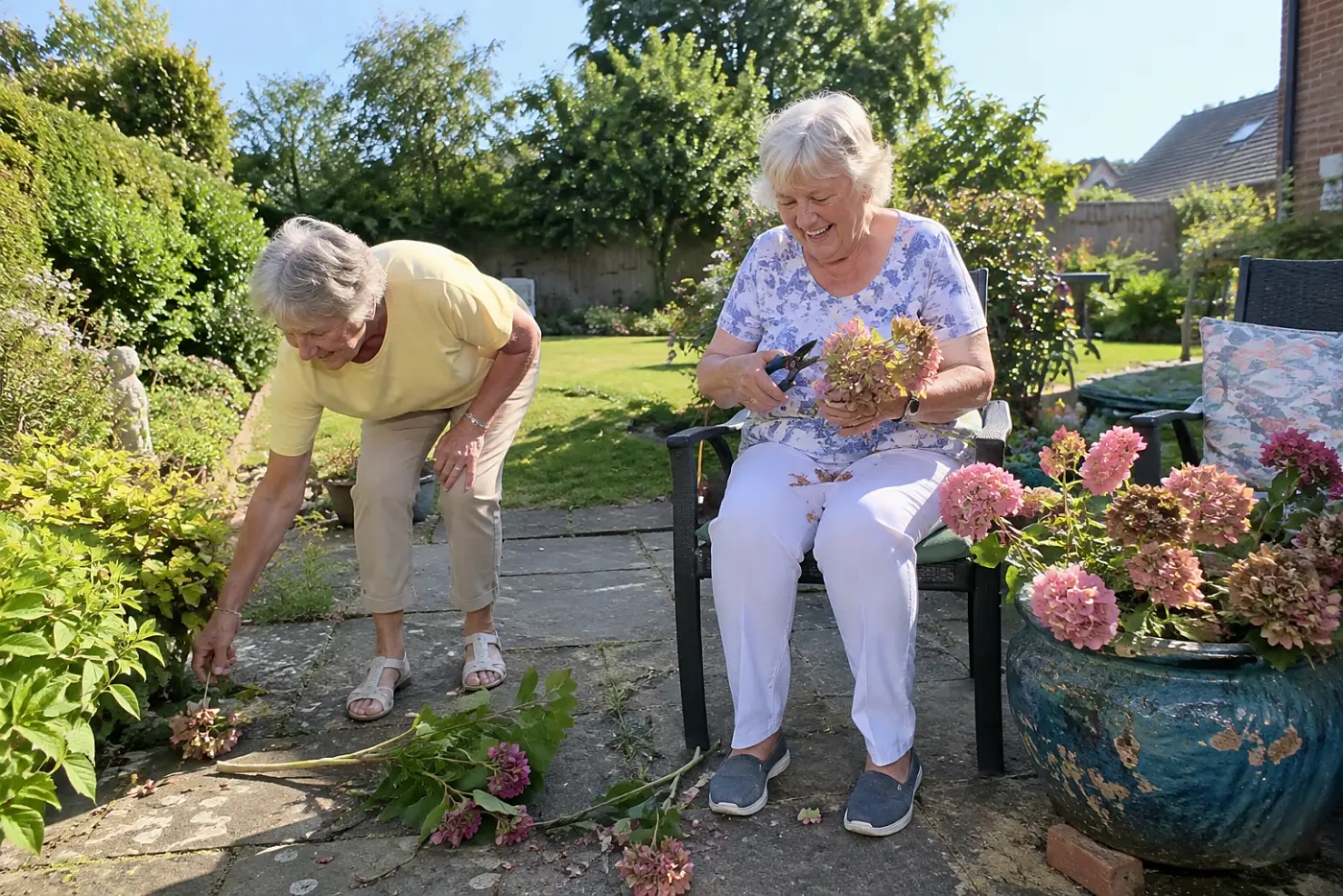
A chair across the yard helps too late.
A stable seat near the bed turns pruning or seed sorting into a seated job. Place it on firm ground, with the plants close enough to reach without twisting. A seat that rocks on soil creates a new problem.
Standing through a task just because you started standing has a cost: you rush the last cuts. That’s when the wrong stem gets clipped.
This week, carry a sturdy chair to one work area and try the reach before picking up pruners. Say, “I’m sitting for this row, then I’ll move the chair.”
The chair also changes what belongs beside you.
20A tool caddy that follows you outside
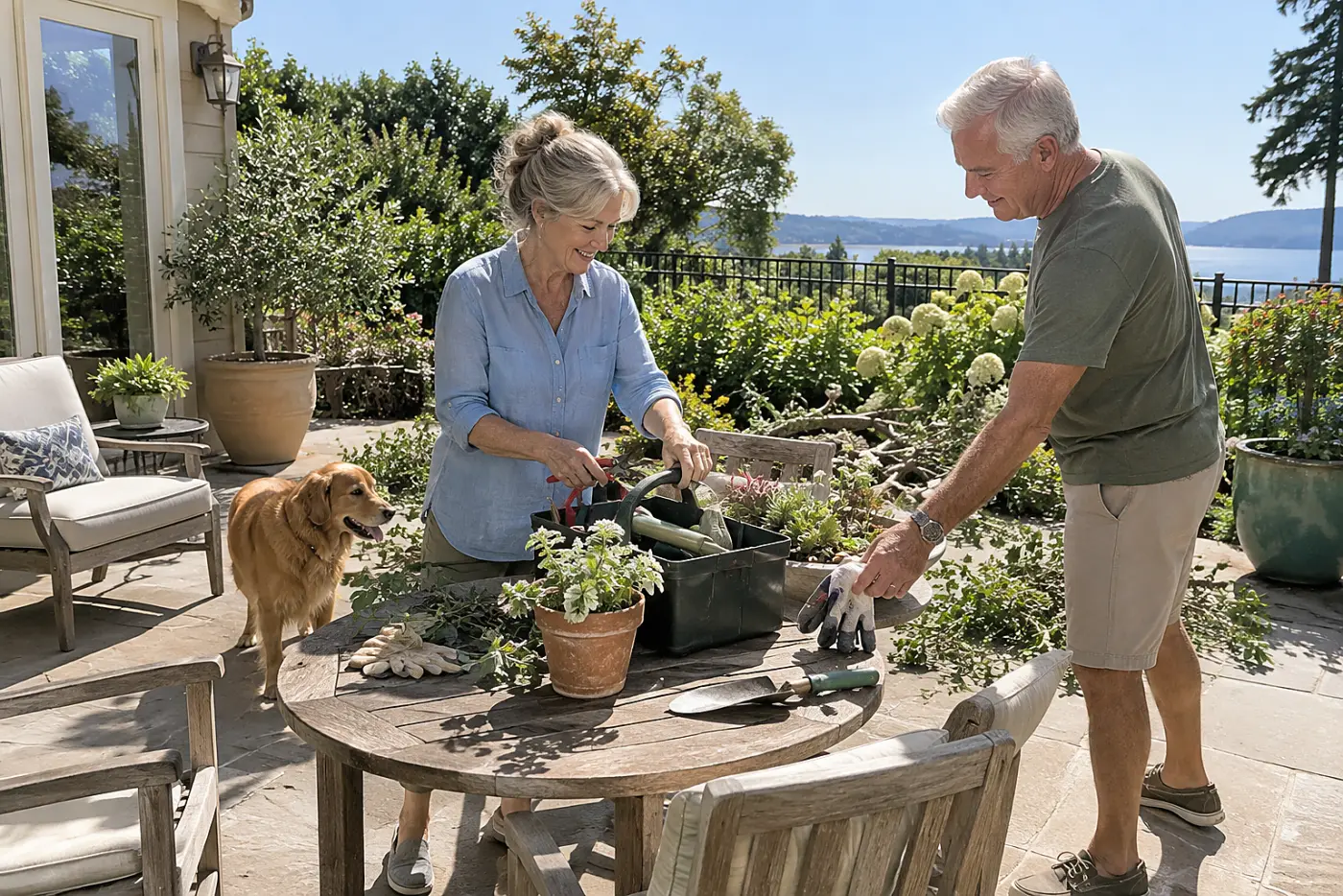
Scattered tools turn one task into six trips.
Keep the tools for the day in one caddy: pruners, gloves, twine, and a small bag for waste. Carry it to the place you’ll work, then put each tool back before moving on. That order saves you from searching the grass for pruners after sunset.
Don’t pack every tool you own. A heavy caddy defeats the purpose, and sharp blades need a sheath or a closed position before they go inside. You need room for your hand, too.
Losing a favorite tool is irritating. Leaving blades in a planting bed also puts your hand at risk the next time you pull a weed.
This week, empty the caddy and put back only what you use for one ordinary session. Say, “Everything I’m carrying has a job today.”
The next useful thing travels on wheels instead.
19A garden cart with a shallow load
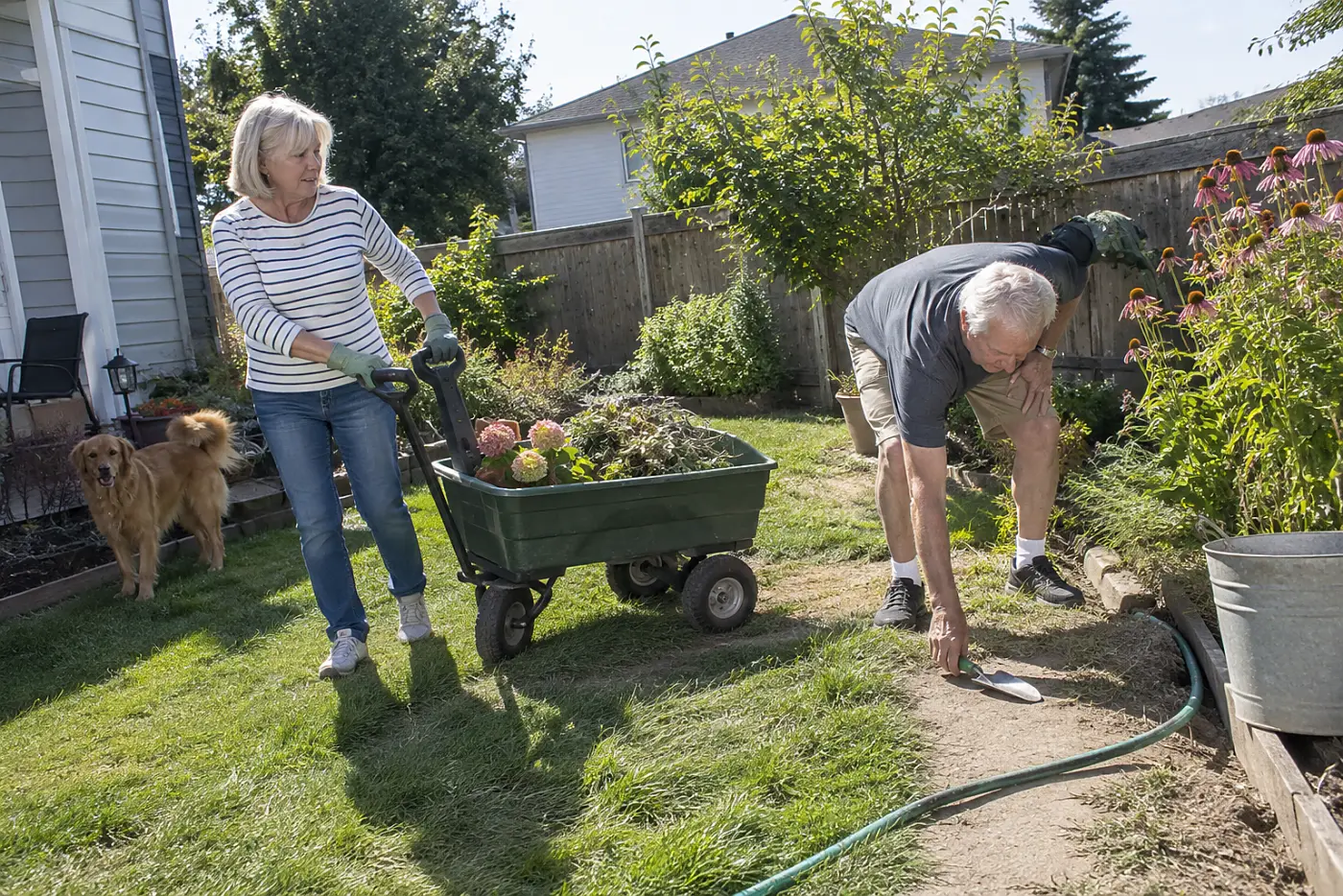
A cart can still be too heavy to steer.
Wheels take weight off your arms, but a tall pile blocks your view of the ground. Keep the load low and test turns before heading down a slope. If the cart pulls you downhill, unload it.
A bag of soil doesn’t become safer because it has wheels. You still have to lift it into the cart and out again.
This week, make one trip with a smaller load than you think necessary. Say, “I’d rather push twice than fight this around the corner.”
Before moving more soil, decide where the plants belong.
18Perennials divided before they crowd the walk
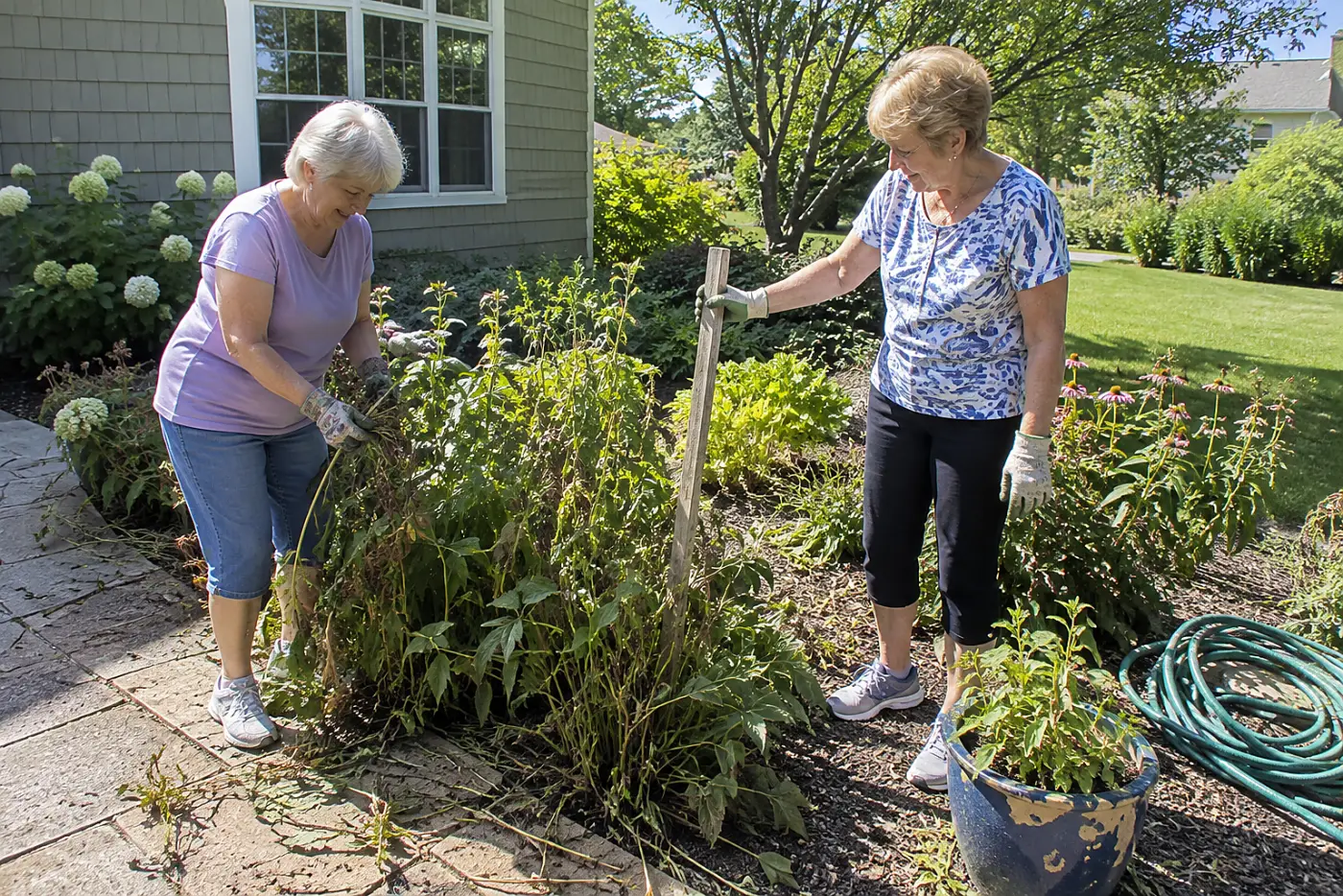
Plants don’t respect the path you drew.
As a clump spreads, its outer growth moves into the space where you stand or push a cart. Dividing suitable perennials gives each piece room again. Check the plant first: division suits clump-forming plants, not every perennial in the yard.
You can also give a division away instead of finding another spot for it. Keeping every piece turns one crowded bed into two. If digging a mature clump takes more force than you want to spend, ask someone to lift it while you choose what stays.
A blocked path matters every time you carry water or step around the bed. You shouldn’t have to brush past wet leaves to reach the faucet.
This week, mark the clumps that cross your walking line. Pick one to divide at the right season for that plant, and say, “I’m keeping the part that fits this bed.”
Then look for the plants doing work you never asked for.
See more: 23 Fall Jobs That Save Your Spring, One Weekend at a Time →
17Self-seeding flowers pulled while they’re small
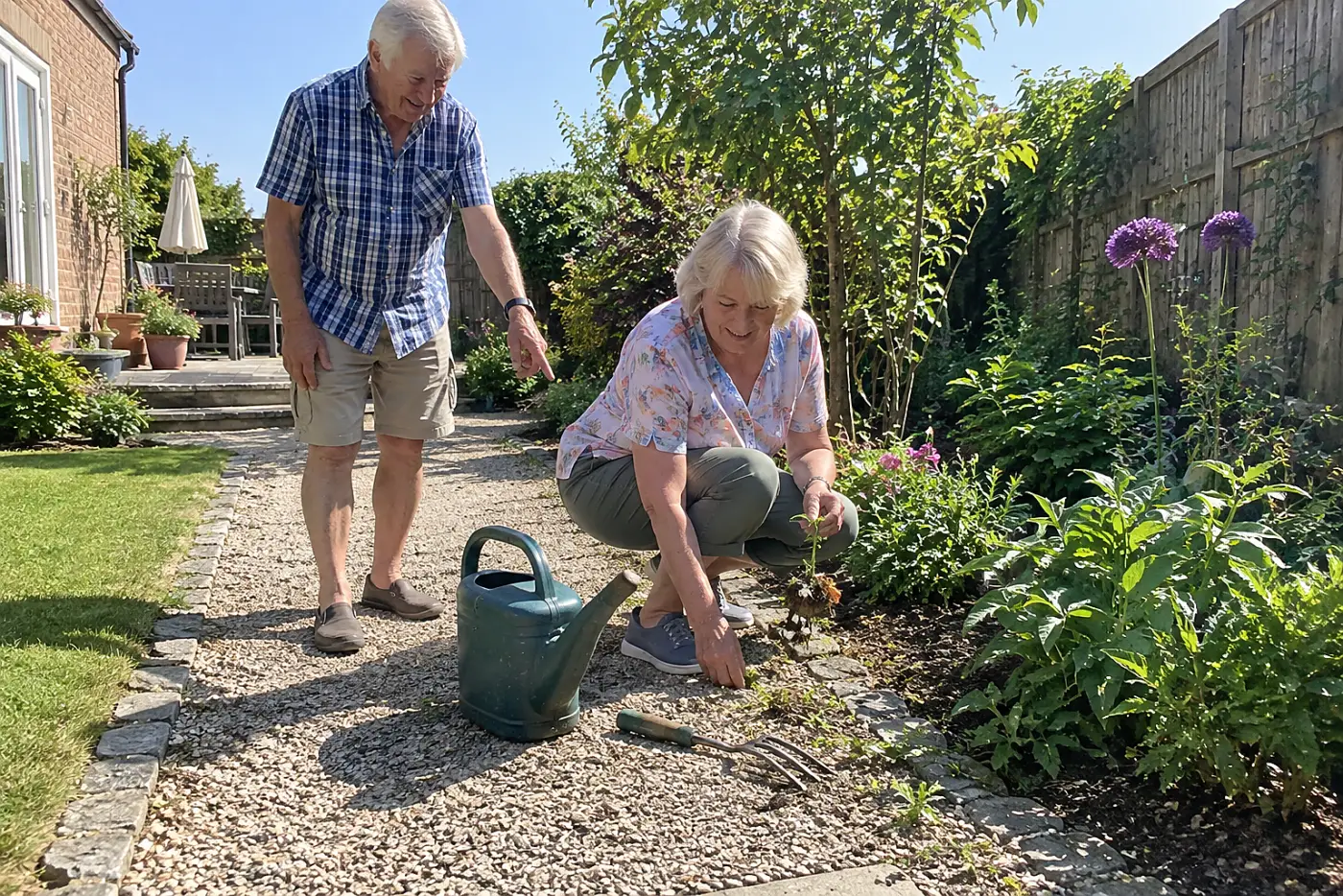
A welcome flower can take over the path.
Self-seeders drop seed where the wind, birds, and your shoes carry it. Young seedlings pull out with less effort than established plants. Leave the ones you want, and remove the rest before roots spread.
Waiting until every flower is large makes the choice harder. You’re then pulling plants you’ve already watched grow.
This week, walk one path and remove seedlings growing in its edges. Say, “I like this flower, but I don’t want it here.”
That leaves room to notice what survives without your help.
16A plant list based on last summer

The tag won’t remember what happened in your yard.
A short list of survivors tells you more than a display table at the store. Write down which plants flowered, which needed daily attention, and which made it through your usual weather. Note the bed, not just the plant name; the same plant faces different light and drainage elsewhere.
The USDA Plant Hardiness Zone Map describes average annual extreme winter temperatures. It doesn’t tell you whether a pot beside a hot wall dried out every afternoon. Your notes fill that gap.
Buying a replacement for a plant that failed in the same spot repeats the work. Changing either the plant or the spot gives the next one a fair chance.
This week, list three plants you’d grow again and one you wouldn’t. Say, “That one looked good in the store, but my yard gave me a better answer.”
Before choosing more, check the ground beneath them.
See more: 23 Things Your Mother's Garden Taught You That Nobody Teaches Now →
15A soil test before another fertilizer bag
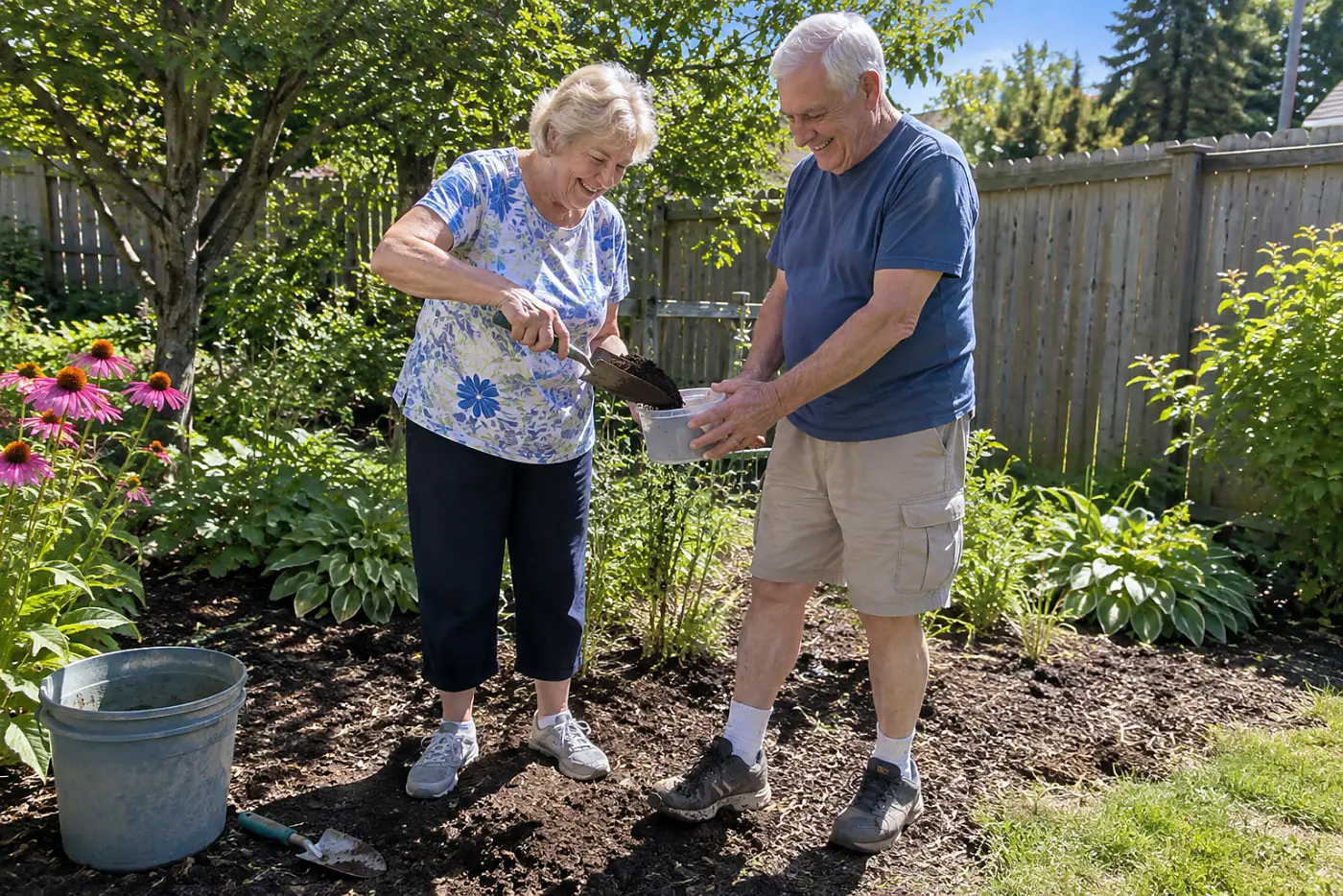
More fertilizer won’t fix every unhappy plant.
A soil test measures what’s in the sample you send. Your state’s Cooperative Extension soil-testing instructions tell you how to collect a sample and where to send it. Follow those directions so the result matches the bed you’re treating.
Guessing at fertilizer wastes effort when drainage, light, or soil pH is the problem. A test keeps you from feeding the wrong issue.
This week, search your state’s Cooperative Extension website for soil sampling instructions. Say, “I want to test this bed before I buy anything else.”
The result still won’t change where the sun falls.
14A sun map made from three checks
Yesterday’s sunny corner changes by afternoon.
Check the same patch in the morning, near midday, and late afternoon. Mark where the shade falls each time. A fence, house, or tree can leave a bed sunny when you first go outside and shaded while you’re indoors.
The National Gardening Association offers plant information, but the view from your own yard settles this question. A plant tag that calls for full sun won’t change the roofline. Move the plant to the light, or choose one suited to the spot.
A poor light match means tending a plant that never performs as you hoped. You end up doing more work for fewer flowers or fruit.
This week, photograph one bed at three times of day and compare the images. Say, “I thought this spot was sunny; I’m checking the whole day.”
Light has its limits, and so does the ground after rain.
13A rain gauge near the vegetable bed
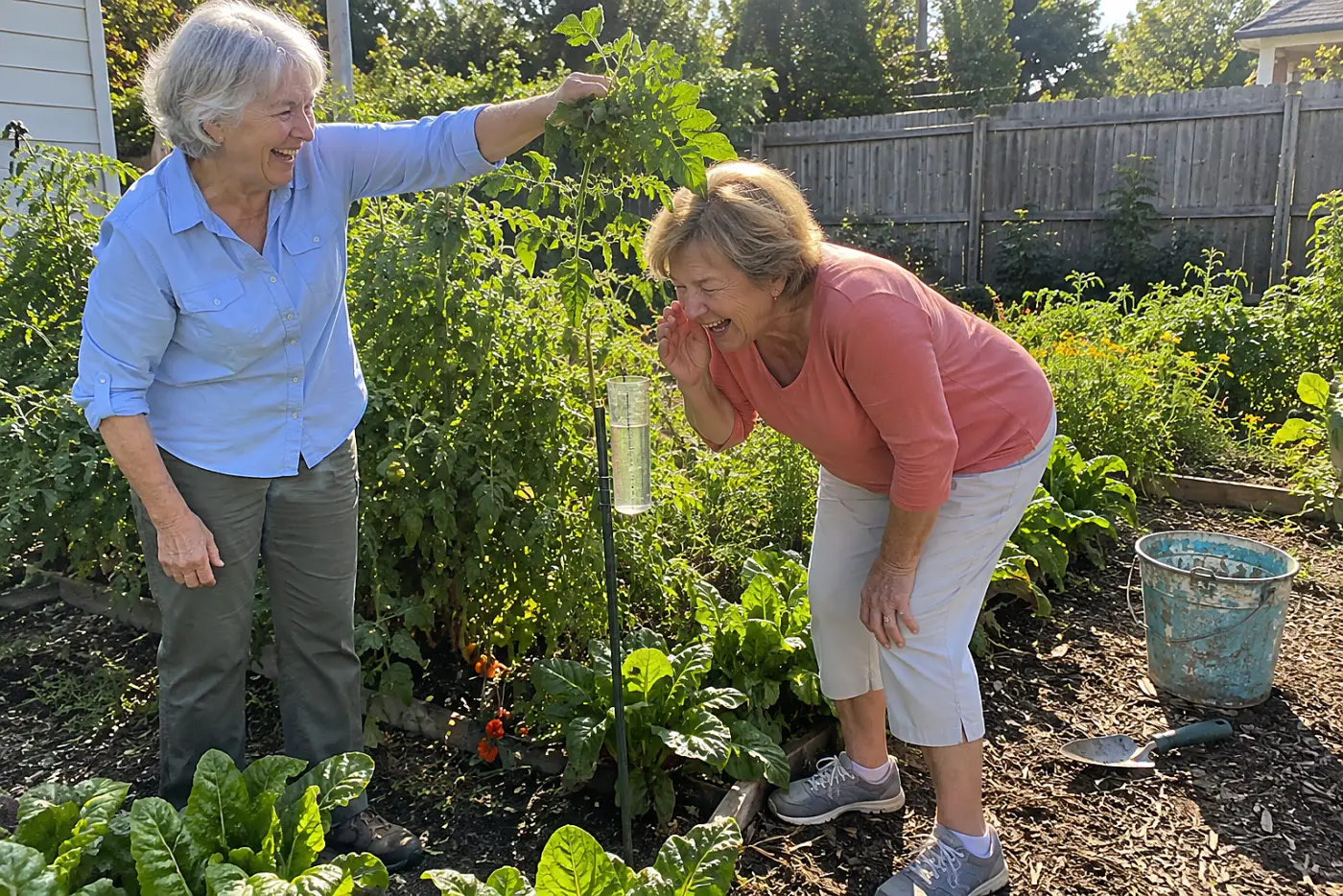
Wet leaves don’t prove the soil got rain.
A rain gauge measures what fell in that part of your yard. Empty it after recording the amount so the next reading starts fresh. Then check the soil below the surface before deciding to water.
Without a measurement, a brief shower can cancel watering in your mind while roots stay dry. A gauge gives you a number to compare with the ground.
This week, place one where trees and roof edges won’t drip into it. Say, “I’m checking the soil as well as the gauge.”
Next, spare yourself a watering job entirely.
12A layer of compost added without digging
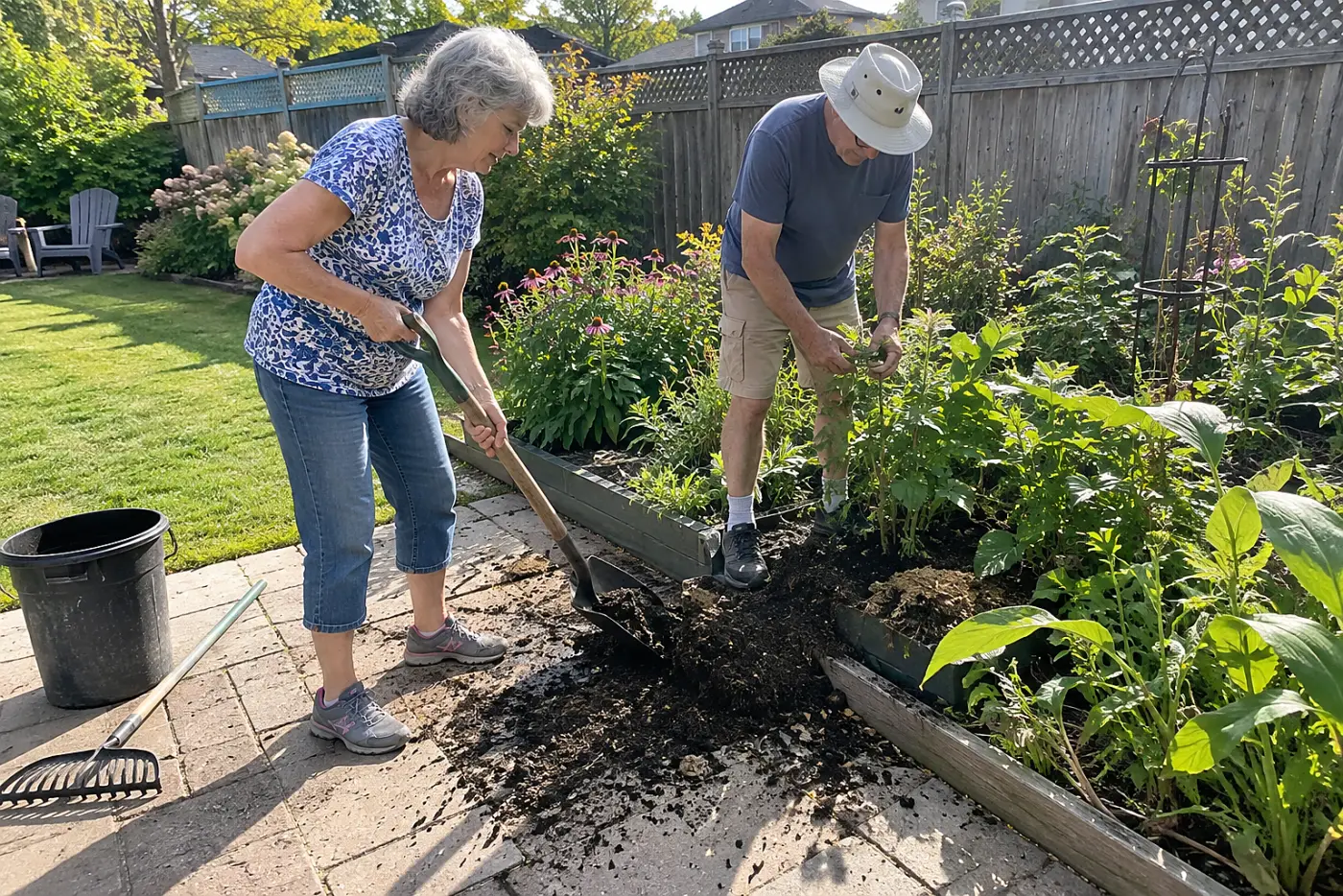
Turning a whole bed is a big job.
Finished compost can go on top of garden soil as a dressing. Soil organisms work organic matter downward over time, while you avoid lifting and turning every shovelful. Keep the compost clear of plant stems, as you would mulch.
Check what’s in the bag or pile. Finished compost looks dark and crumbly and lacks recognizable food scraps. If you make your own, the EPA’s composting guide explains what belongs in a home pile. Unfinished material is better left to break down before you spread it around growing plants.
The old habit of digging everything in can keep you from feeding a bed at all. A surface layer lets you finish the task without committing to a long session.
This week, spread finished compost over one small bed with a scoop or light bucket. Say, “I’m covering this soil, not turning the whole bed.”
There’s another job best done before it grows heavy.
See more: 24 Old Garden Habits That Turned Out to Be Right All Along →
11Pruning cuts made from the ground
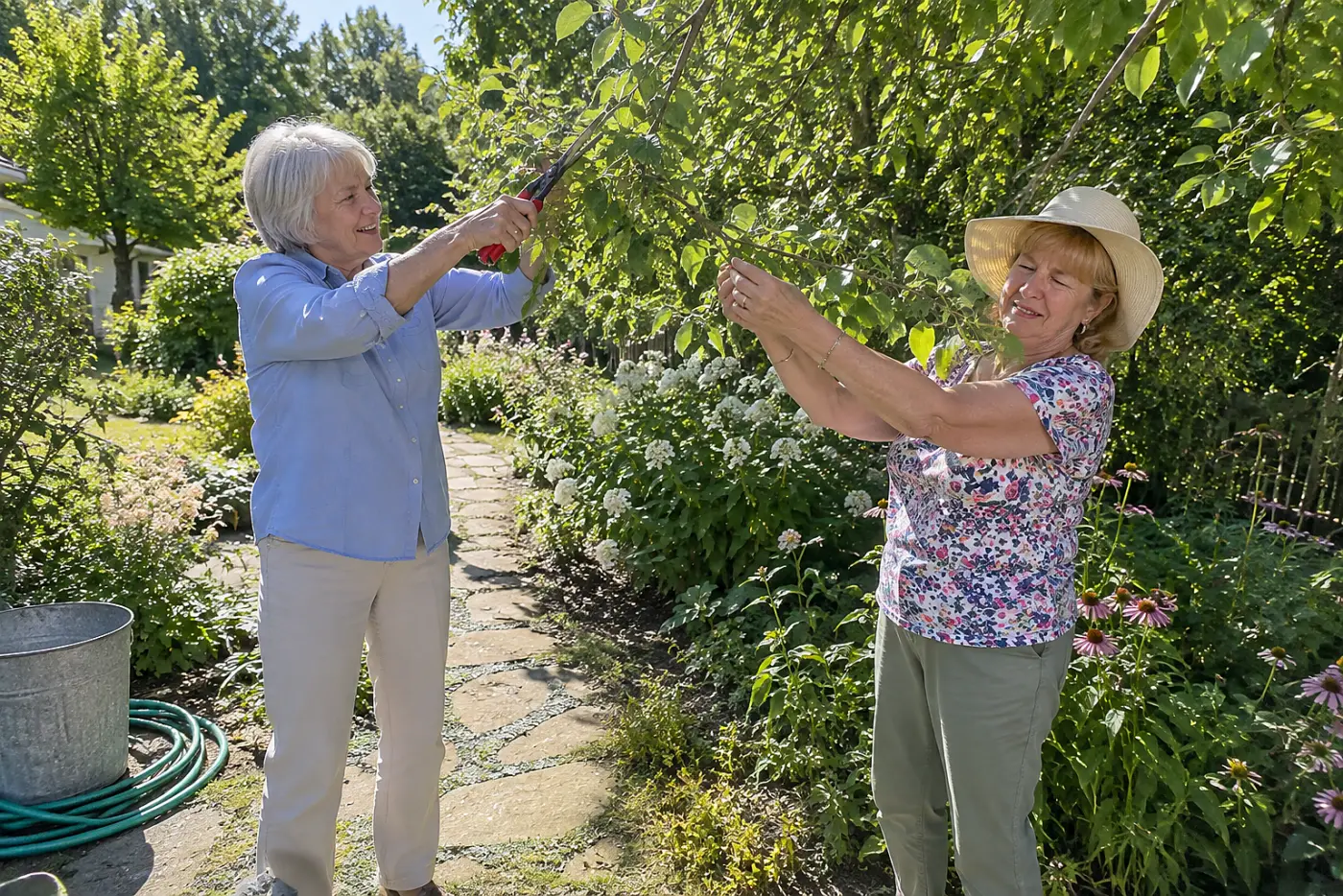
One high branch can lure you onto a ladder.
A reachable cut lets you keep both feet planted. Use clean, sharp pruners for stems they handle easily; forcing a thick branch through small blades twists the tool. Leave high or heavy branches for someone equipped to remove them.
The National Institute on Aging’s falls information describes why a fall deserves serious attention. Your garden doesn’t require you to prove you can reach a branch.
This week, mark the cuts you can make from level ground. Say, “That branch needs a different tool or a different person.”
Once the cutting is done, where will it go?
10A smaller bin for garden clippings
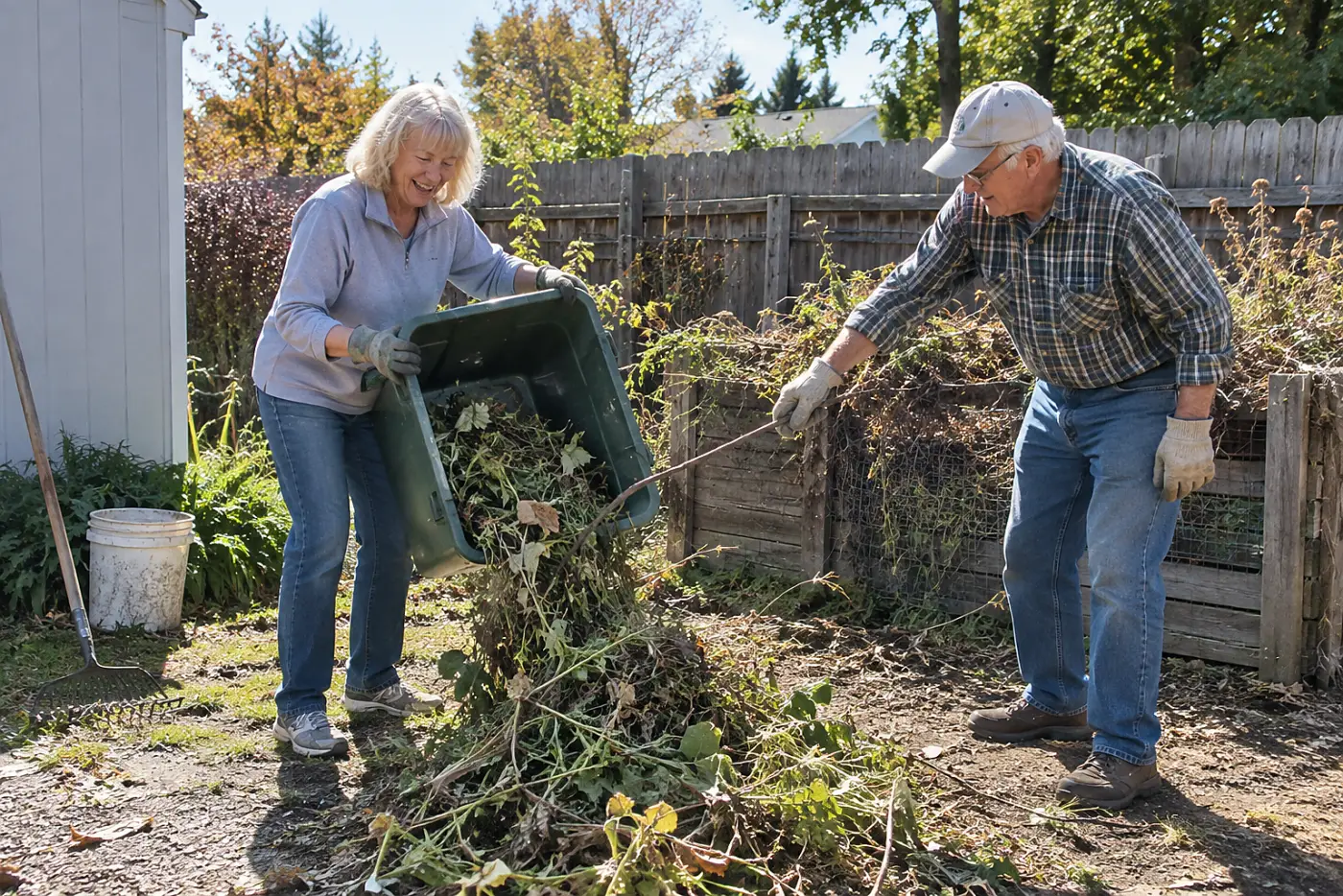
A full bin is hardest to move at the end.
Set a smaller container beside the job and empty it before it becomes a lift you dread. Dry stems, wet weeds, and soil-covered roots weigh differently. You’ll feel that difference at the handle long before the bin looks full.
Keep diseased plant material separate from compost you plan to use. Your state’s Cooperative Extension plant-disease guidance helps you identify a suspect plant and check disposal advice for your area. Don’t toss it into a pile and hope it disappears.
A giant heap left beside the bed becomes tomorrow’s obstacle. It also blocks the path you worked to keep clear.
This week, carry a partly filled bin to its destination and note when it feels easy to control. Use that level as your stopping point next time. Say, “I’m emptying this while it’s still a small job.”
There’s a similar limit to set before the day gets hot.
9A morning work window on hot days
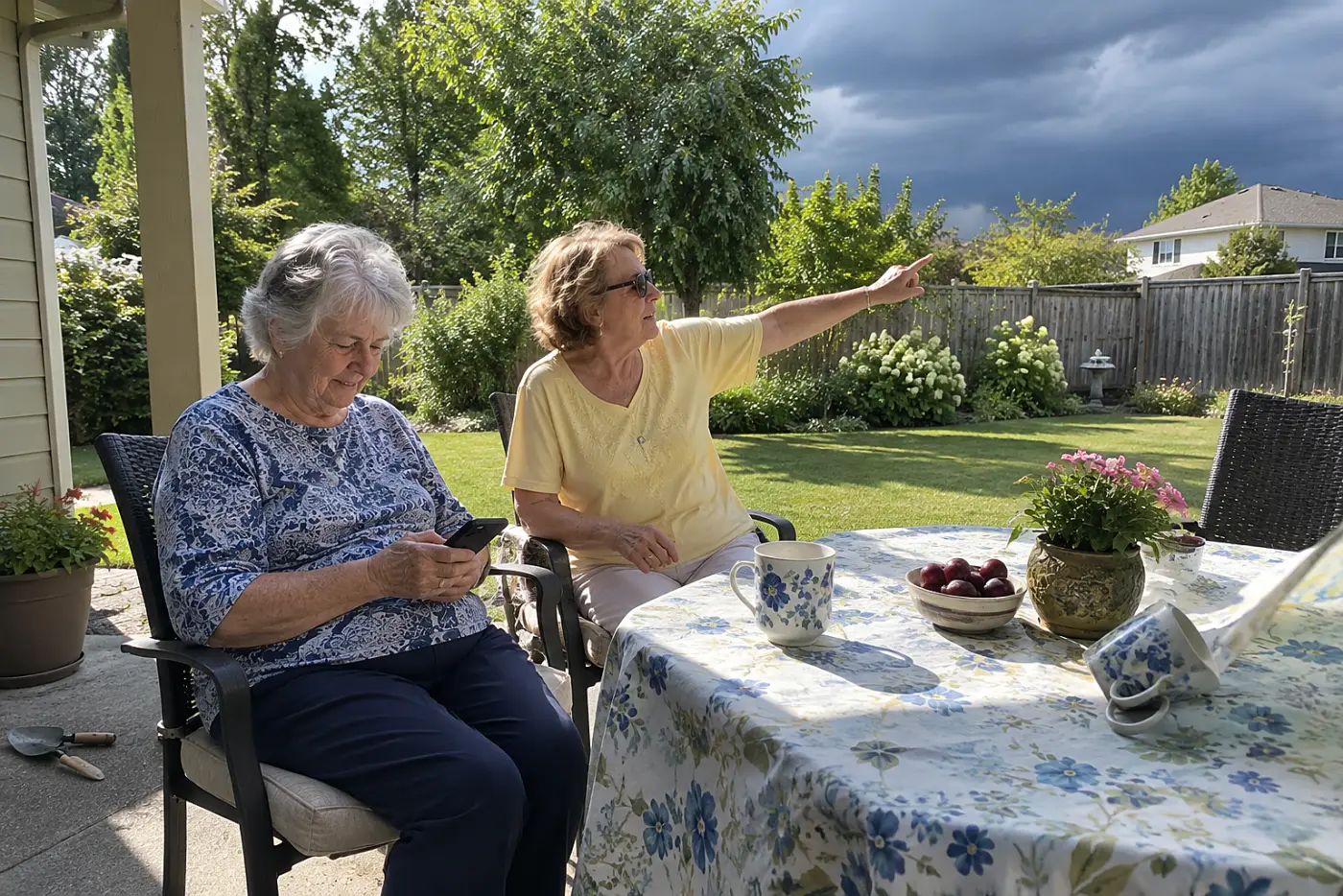
The last row isn’t worth heat illness.
Check your local National Weather Service forecast and heat alerts before planning outdoor work. Move the demanding job to a cooler part of the day, and keep water within reach. Heat still matters when you’re in the shade.
The CDC’s heat guidance lists warning signs to watch for. If you feel faint or confused, stop working and get help.
This week, choose a stopping time before you start a hot-day job. Say, “I’ll finish this section another day.”
The next choice is which section earns your time first.
8A pair of bypass pruners kept sharp
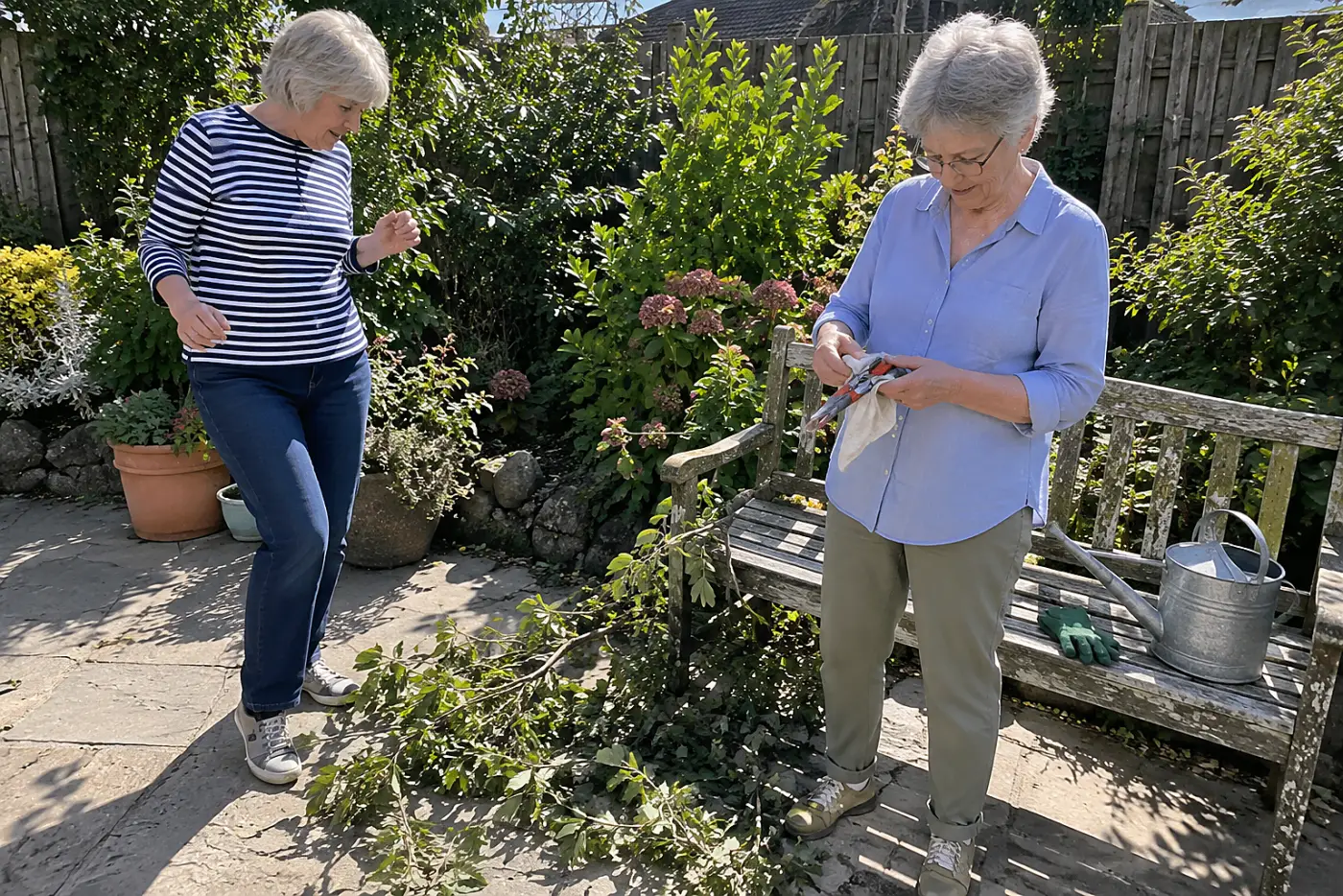
Dull pruners make your hand do the blade’s work.
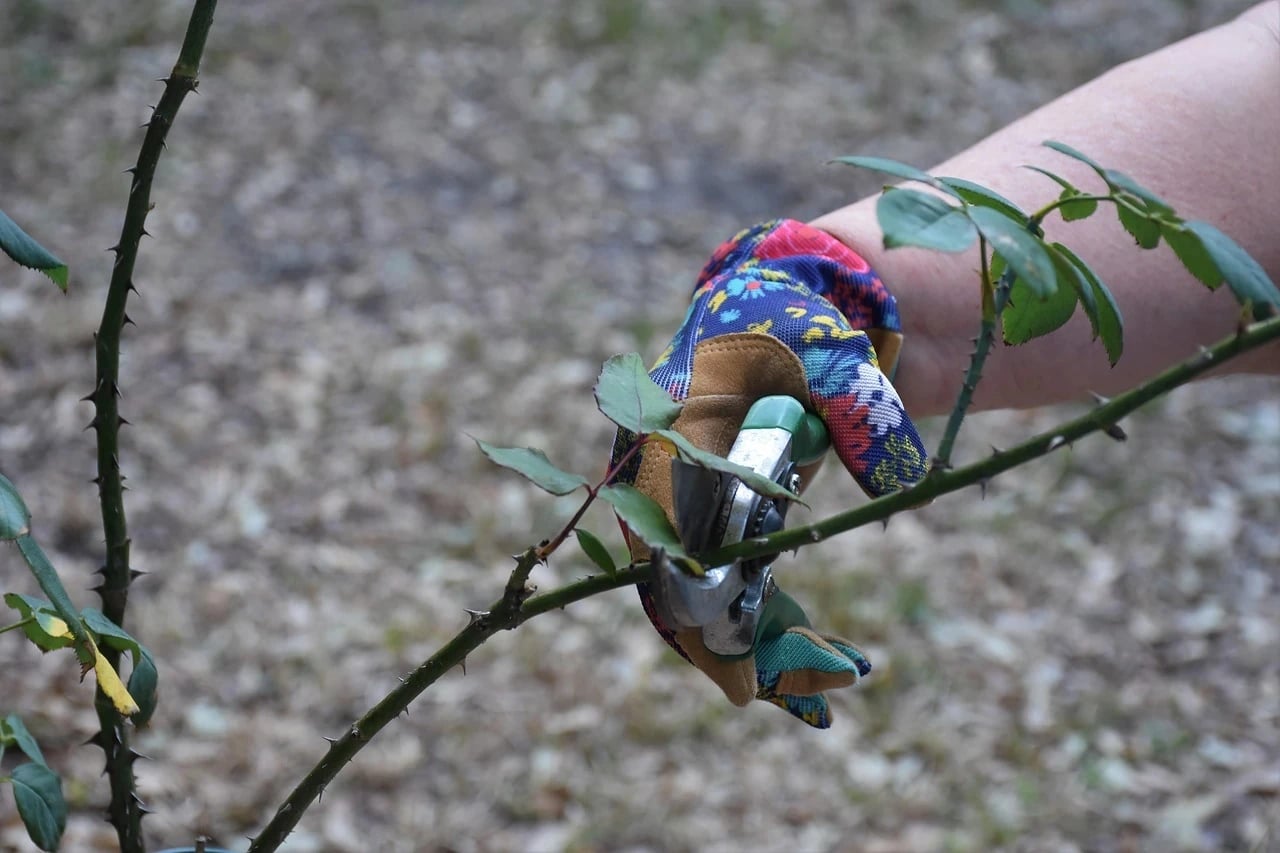
A sharp bypass blade passes its lower jaw and cuts a stem in one motion. A dull blade crushes the stem first. You squeeze again, then turn the pruners to finish the cut. Sap left on the blades dries and makes them stick at the pivot. A quick wipe after each session keeps the next cut from starting that way.
When a whole shrub needs attention, each extra squeeze takes something out of your hand. Try a thin green stem before starting. If the blades bend it instead of cutting cleanly, stop there. Thick wood won’t improve the test. Neither will gripping harder.
Keep a cloth with the pruners so cleaning doesn’t become another trip to the shed. Check the edge at the start of the growing season and again when you’ve done a stretch of pruning. Don’t wait until the tool fights you.
This week, wipe the blades and test one cut on a thin stem. If it bends, arrange to have the blade sharpened. Say, “I’m fixing the blade before I ask my hand to work harder.”
The next small adjustment happens before you make any cuts.
7A row of plant labels you can read
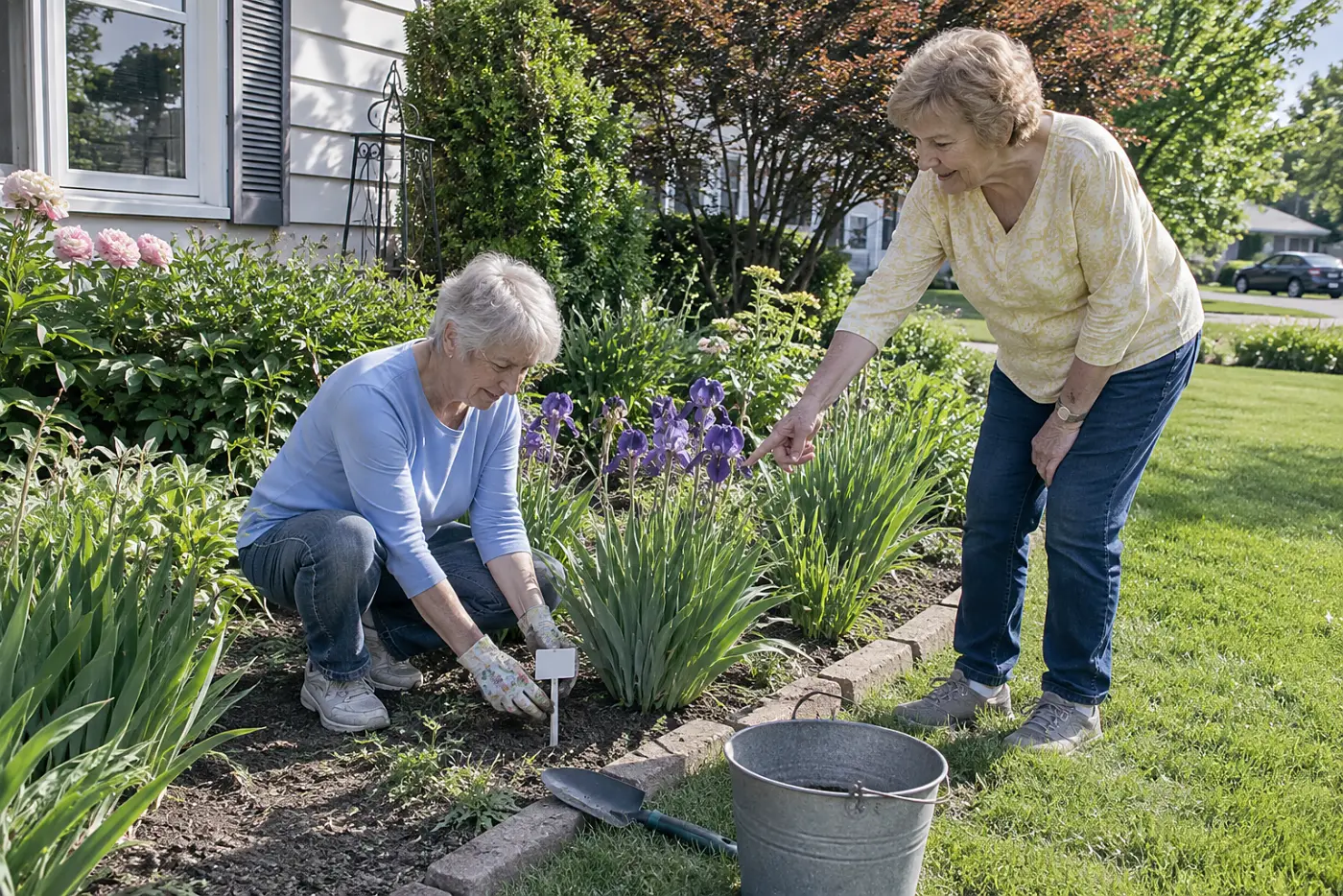
A faded label leaves you guessing from the path.
Leaves hide labels set behind a stem, and writing exposed to weather fades. Put a durable label at the edge where you stand to work. Face it toward the path so you can read it without stepping into the bed. Write the variety name, not only “tomato” or “iris,” while the original plant tag is still in your hand.
A label that looks intact but says nothing won’t help when plants need different care. If reading it means bending into a crowded bed, you’ll put off checking.
This week, walk one bed from the path and replace the labels you can’t read there. Use a weatherproof marker, and copy any names you still have before the tags disappear. Say, “I want this name where I can see it.”
Names settle one question; the next is what arrives without an invitation.
6A wire cage around young bulbs
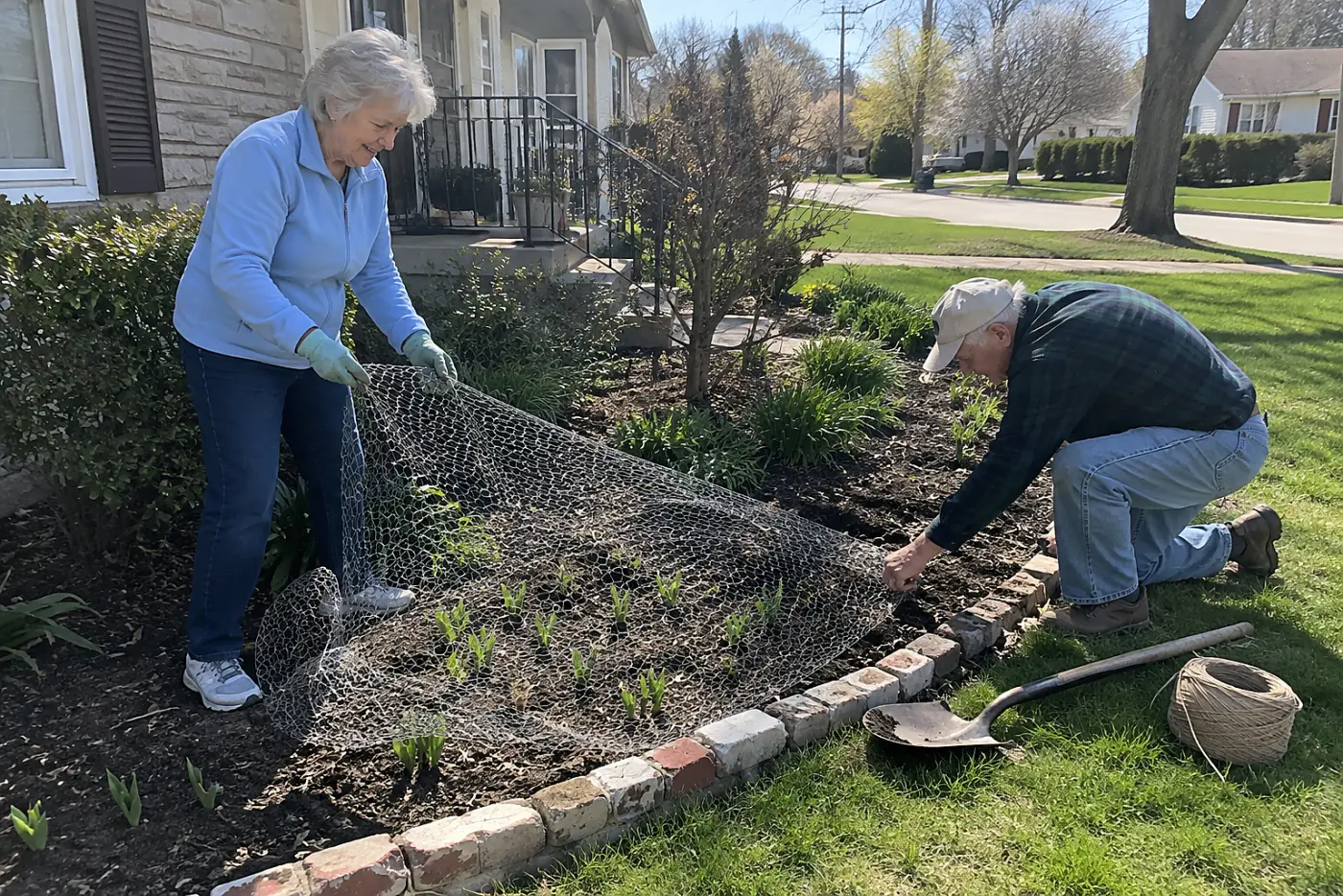
Freshly planted bulbs attract digging before they bloom.
Loose soil marks a fresh planting spot. Lay wire mesh over the planted patch and secure its edges so an animal can’t lift it. Check that shoots have room to emerge through the openings.
An empty hole in spring means the planting work is lost. Mesh added then is too late for those bulbs.
This week, cover one newly planted patch before leaving the bed. Tuck away any sharp edge near your path. Say, “These bulbs are staying where I put them.”
Once something has sprouted, the damage comes from a different direction.
5A tomato cage set before vines sprawl
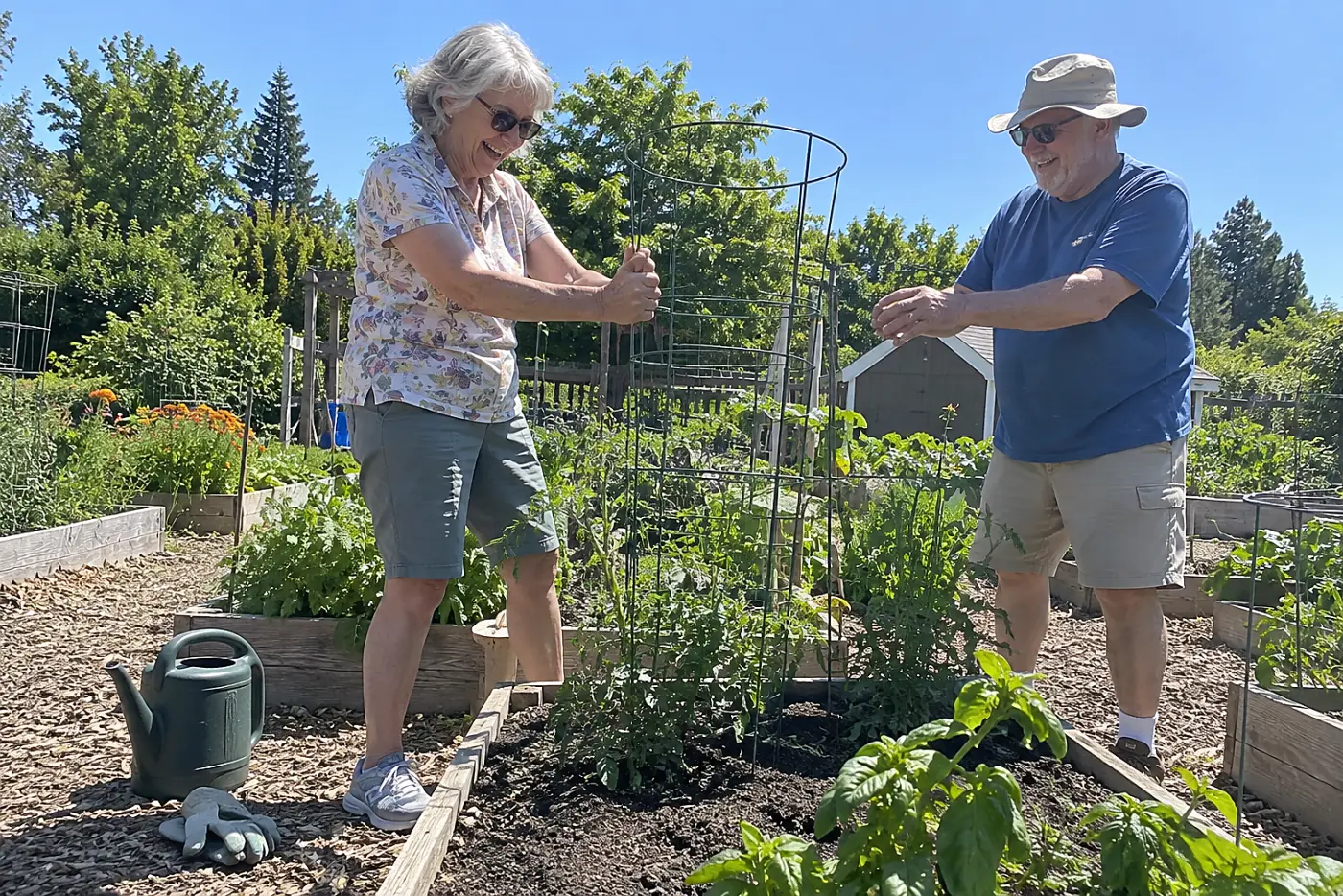
Waiting for fruit makes support harder to install.
Push a cage into the soil while the tomato plant is small. As new growth lengthens, guide it inside the wires. You won’t have to thread heavy branches through them later. Nudge the top after placing the cage; loose soil won’t hold it steady.
A fallen cage breaks stems and puts fruit on the ground. Raising one after it’s loaded means lifting the plant’s weight too, when you wanted to be picking tomatoes.
This week, check each young tomato and set its support before branches reach the path. Say, “I’m putting this in now, while the plant lets me.”
Support handles weight above the soil; trouble can also begin beneath it.
4A drainage hole checked before planting

A beautiful pot is useless if water cannot leave.
Water enters from the top and needs an opening at the bottom. Without one, wet soil stays around the roots. The surface can still look dry. Stones inside the pot don’t replace a drainage hole.
You’ll keep changing how much you water when the container is the problem. A blocked opening leaves the roots sitting in wet soil.
This week, inspect your empty pots and clear any blocked holes. Set aside pots without an opening. Say, “I’m checking the bottom before I put a plant in it.”
Once a pot drains, its location sets another limit.
3Tender pots moved out of the wind
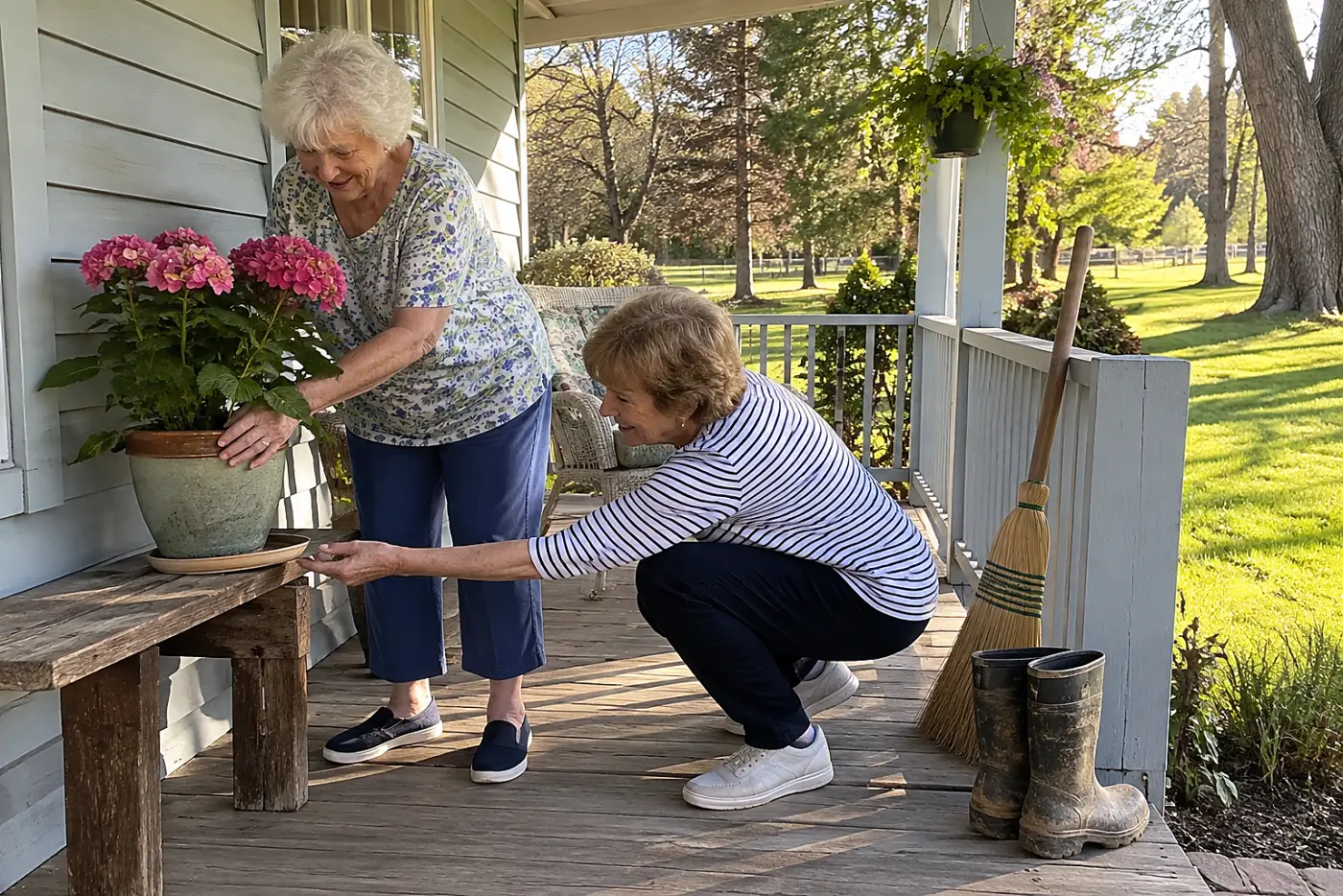
Wind dries a container from more than one side.
Moving air draws moisture from leaves and soil. A small pot holds less water around its roots than a garden bed does. That gives you less time between checks when the wind picks up. A porch wall or fence breaks the wind, but watch where its shadow falls before settling the pot there.
Shelter the tender pots that dry first, rather than moving every container in the yard. After a windy day, put a finger into the soil below the surface. Damp leaves after watering won’t tell you whether the roots still have moisture. If the sheltered spot is too dark for that plant, keep looking.
This week, feel the wind where one tender pot stands, then find a sheltered spot with the light it needs. Check the soil there after the next windy day. Say, “I’m moving this one before the wind dries it out again.”
The next decision is which plants deserve your attention when time runs short.
2A short list of plants you refuse to lose
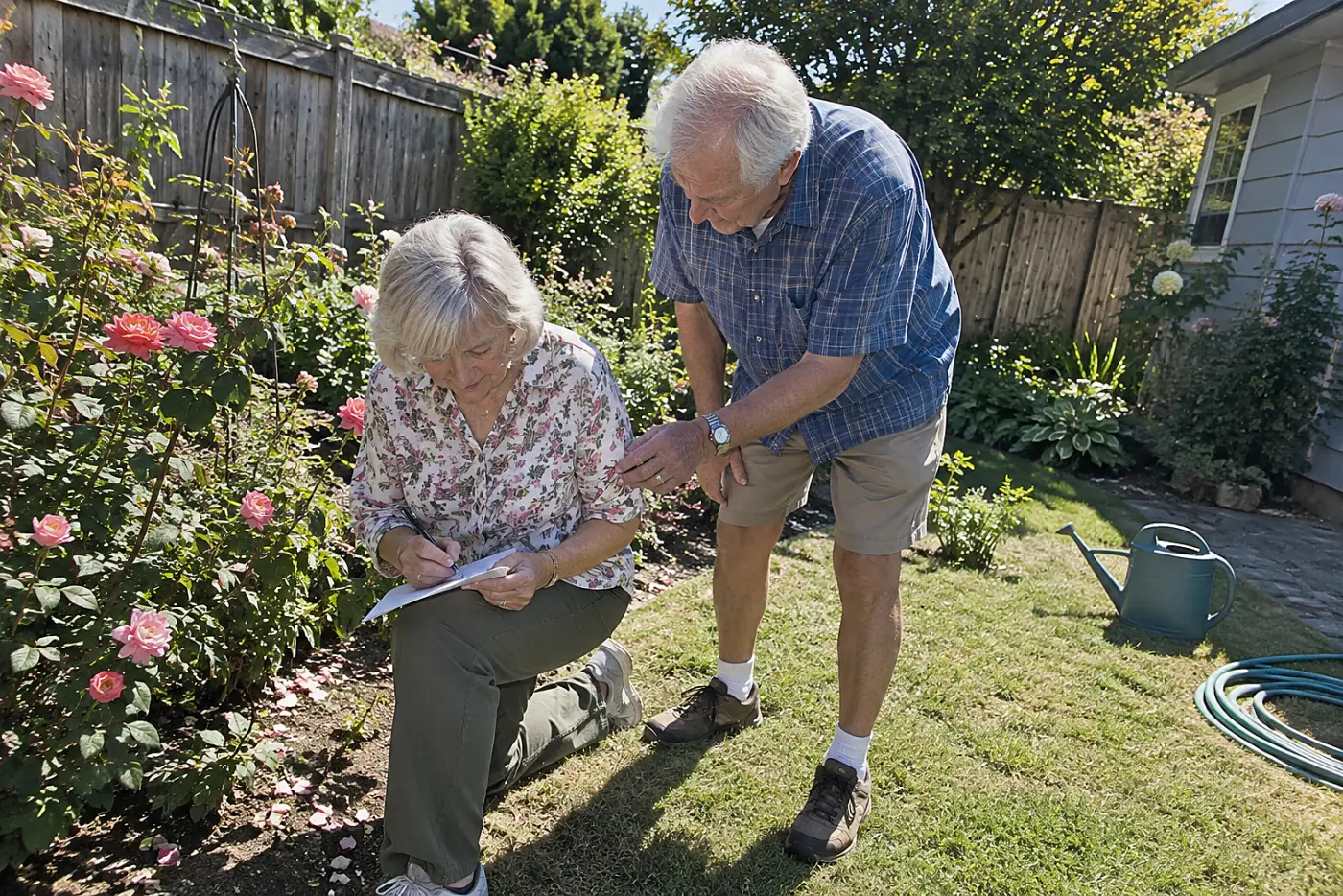
A garden can fill every hour you give it.
Name the plants that make the space yours: the rose from a friend, the tomatoes you eat, the tree you watch from the window. Put those first on your work list. A lawn edge or an empty patch can wait while those plants get water, support, or a clear path.
That choice matters when energy runs short. Treating every weed as equally urgent leaves the plants you care about waiting at the back of the line. It also makes it harder to tell someone else what help would matter.
This week, write down the three plants or places you’d protect first. Walk to each one and name the job it needs next. Say, “If I only get to three things this week, these are the three.”
Keep that list close. The last step is making sure it still guides the work when you aren’t able to do it yourself.
1A written garden help plan for setbacks
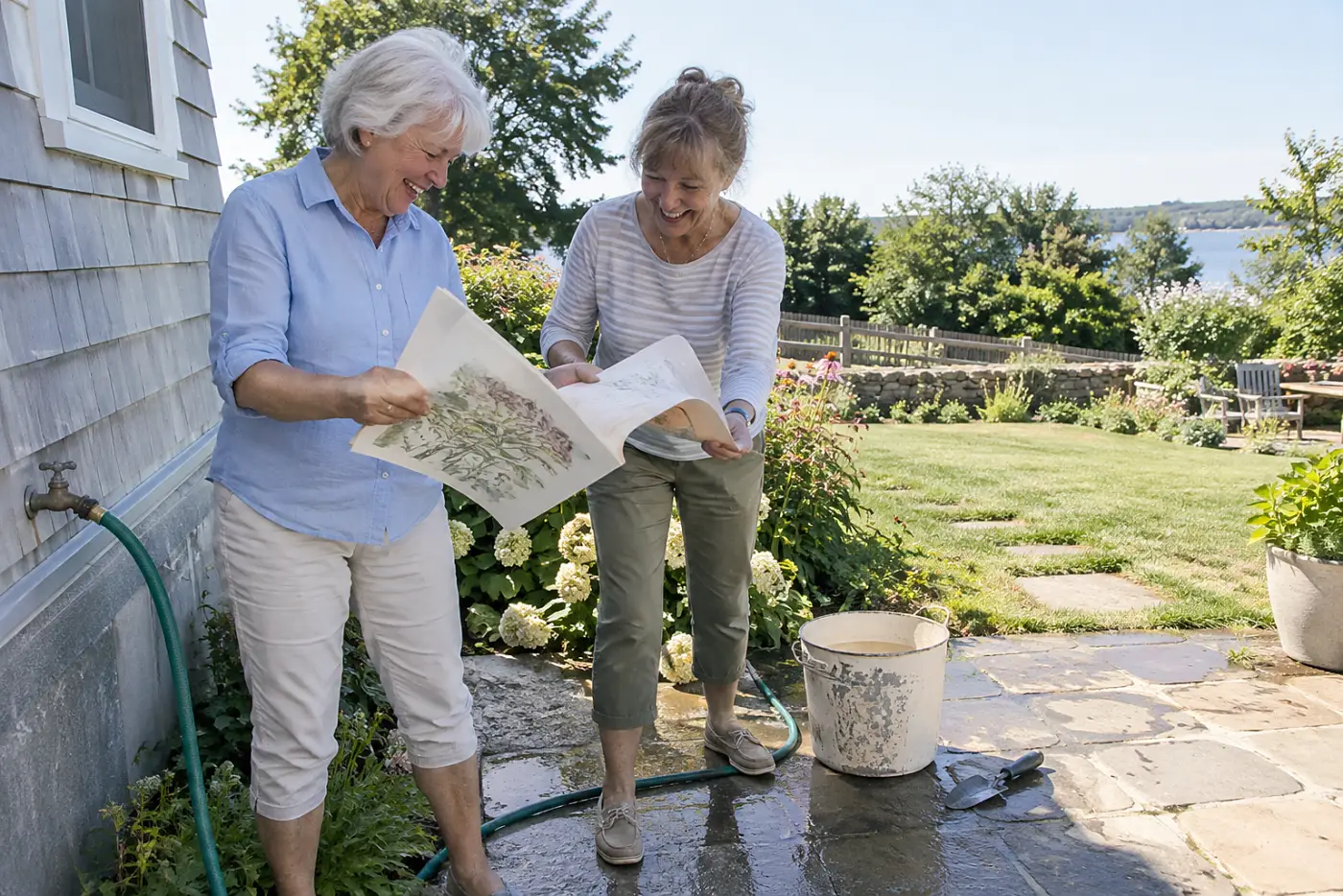
An unexpected setback leaves other people guessing what to touch.
Write a one-page plan for a week when illness, travel, or an injury keeps you out of the yard. Start with the plants that need water first. Add the faucet location, timer instructions, and where you keep the hose.
Then state what can wait. A helper doesn’t need to weed every bed or prune a shrub to keep the garden alive. Give them the small jobs that protect what matters, and tell them what you don’t want cut or sprayed.
Without that page, a willing friend has to guess. The garden becomes an argument about what “help” means while you’re trying to recover. A page left in a drawer creates another problem: nobody knows it exists.
This week, write the page and walk through it with the person you’d call first. Keep a copy where they’ll find it, not buried among seed packets. Say, “Please water these first, leave that bed alone, and call me before cutting anything.”
Tell your helper where the copy lives. But first, check whether they can follow it from the gate.
The bottom line
These 29 changes keep the work within reach. They leave room for the plants you love.
You’ve tested the route and lightened the loads. You’ve chosen what matters and written down what a helper should do when you’re away from the beds.
Which garden job have you already changed so you could keep growing?
Up next
25 Ways to Keep Gardening With Bad Knees and a Bad Back
Set the potting table at elbow height, keep a scoop beside the soil, and check the path back before lifting a basket.
Read the list →
Reader quiz
Did you catch the details?
5 questions from this article. Finish them all to unlock the editor's bonus tip.
After setting one watering cycle, what should you check before changing the timer?
Did any of these feel familiar?
Know someone who needs this?
Sources cited in this article
This article links to 4 outside sources, listed here so you can read them yourself.
- USDA Plant Hardiness Zone Map planthardiness.ars.usda.gov
- National Gardening Association garden.org
- EPA’s composting guide www.epa.gov/recycle/composting-home
- CDC’s heat guidance www.cdc.gov/heat-health
June Marlow
Garden Editor
June writes about gardens you can still manage: what to plant, which jobs matter each season, and the tools that spare your knees and back.
More from June Marlow