







29 Birds You Don't Want at the Feeder, and How to Send Them On
A house sparrow in the feeder tray is your cue to change what you serve, not abandon the chickadees.
By June Marlow, Garden Editor
Updated · 10 min read
- Written by our garden editor
- How we review
Read to the end: #1 is the one feeder reset that changes the menu, and almost nobody does it.
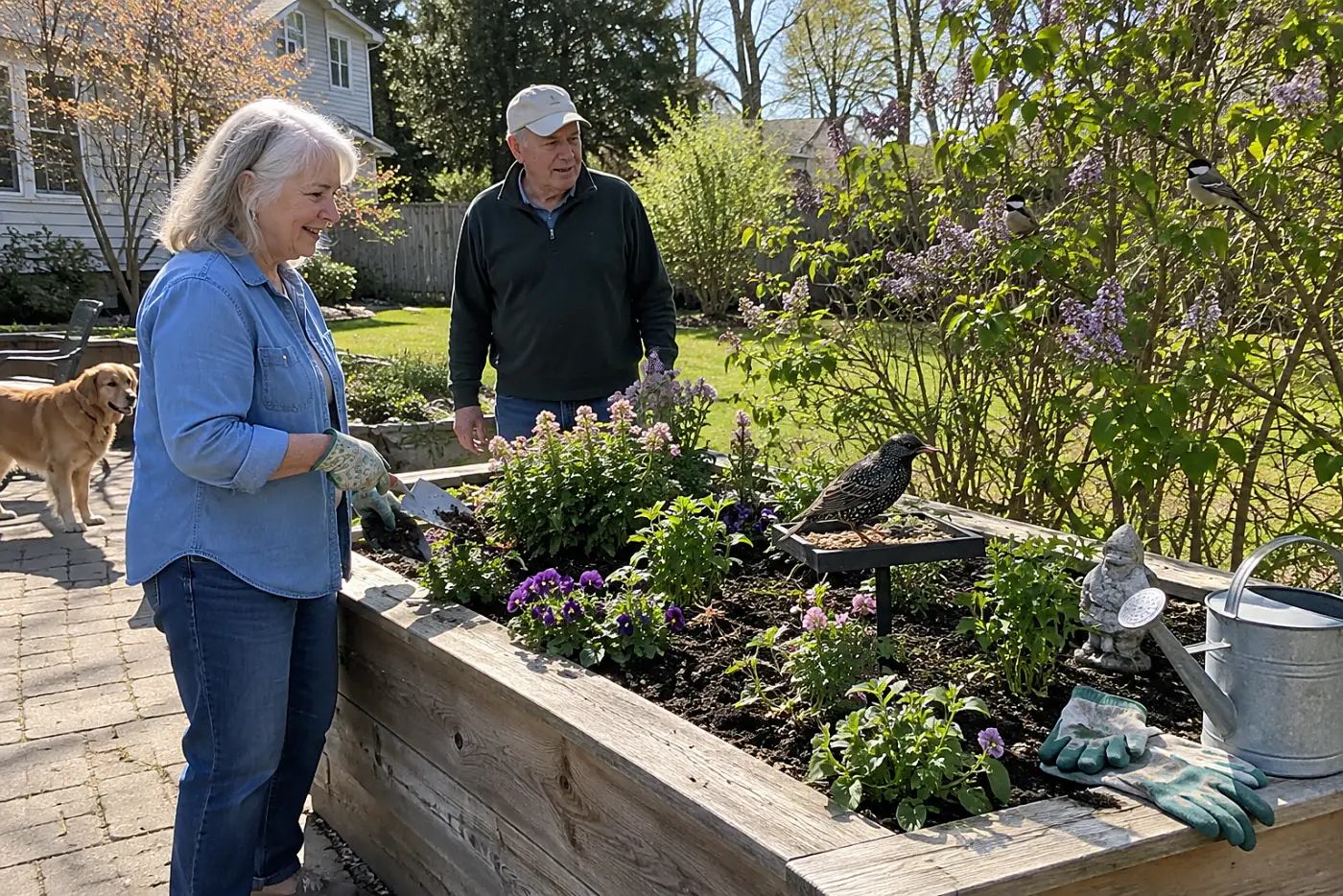
Seed coats are scattered across the patio, and a starling has its head inside the feeder port again. You filled it for the chickadees, but they’re waiting in the lilac while the bigger bird eats.
You get to decide who the feeder serves. These 29 birds show you where to change the food or access without harming the visitors you’d rather see elsewhere.
29The European Starling
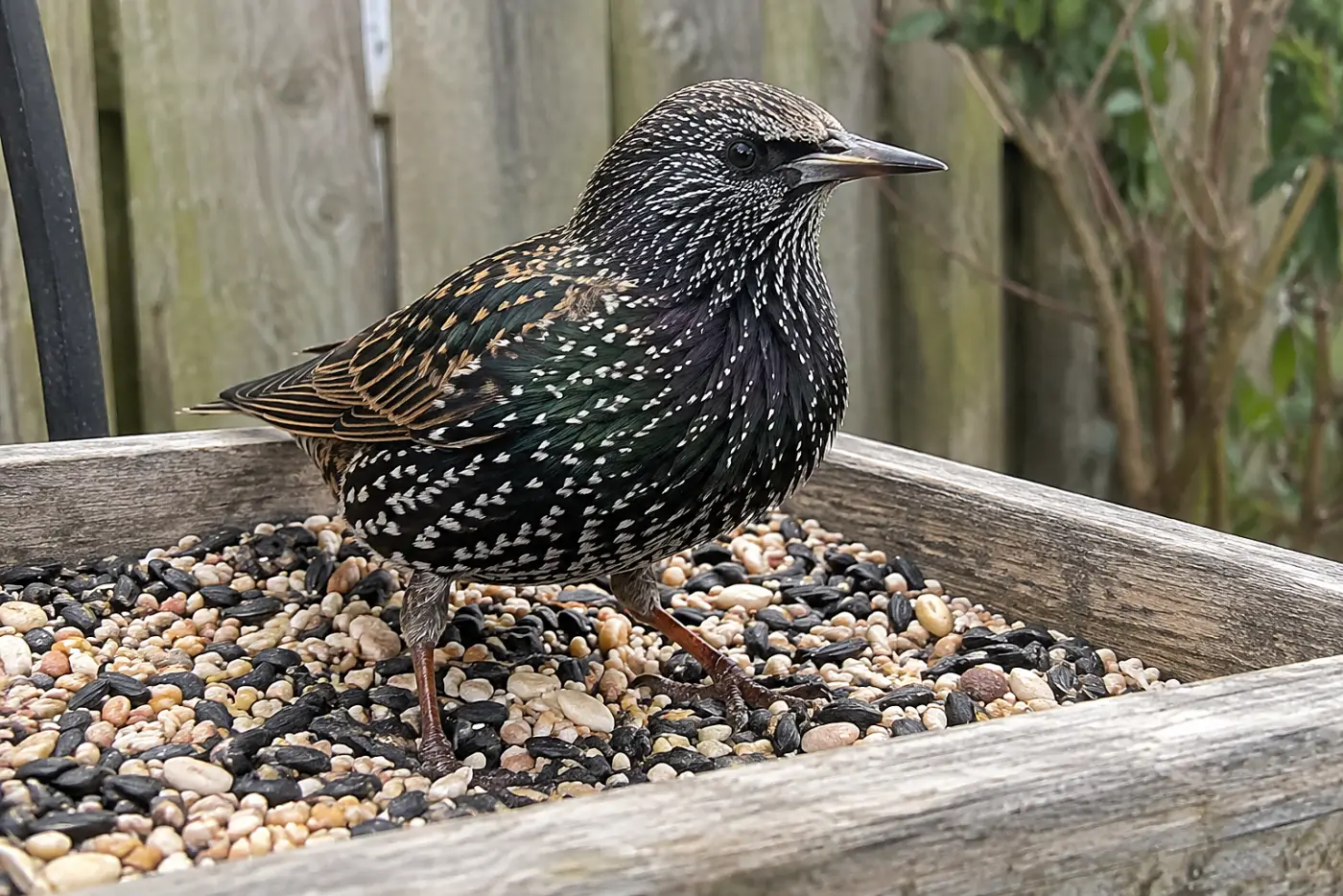
That short-tailed bird turns the feeder tray into its seat.
Starlings gather in groups and finish suet fast. Their dark feathers show pale spots in winter and a glossy sheen in spring. A tray gives them room to stand while they eat.
Take away the tray and put suet inside an upside-down feeder.
28The House Sparrow
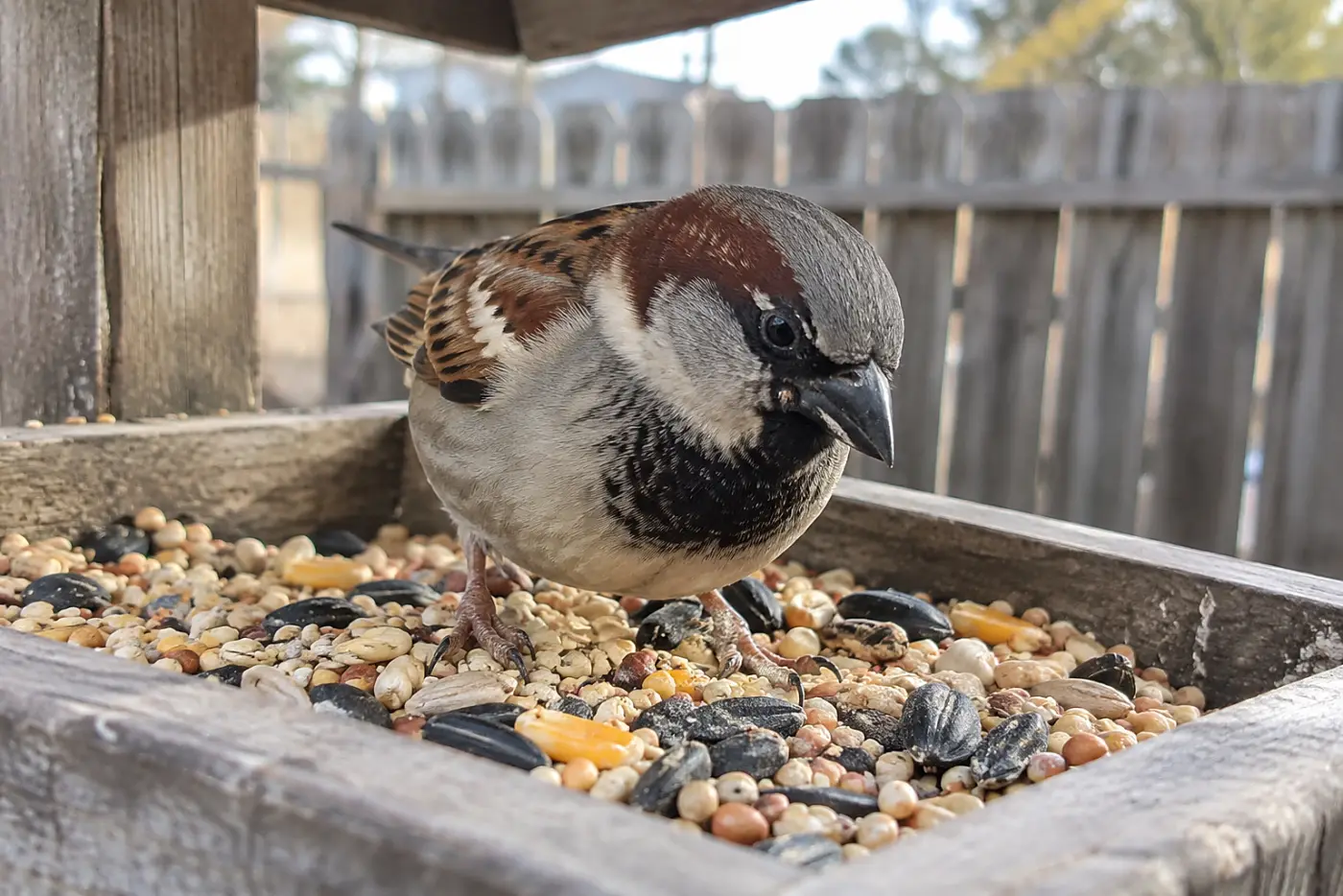
The little brown crowd keeps returning to the same seed.
House sparrows stick close to buildings, so a feeder beside your porch suits them. Look for the male’s gray crown and black bib. They eat readily from trays and mixed-seed feeders, taking up space that finches and chickadees would use.
Skip the cheap seed mix with millet, and offer sunflower hearts in a feeder with small perches. Clean up what falls below it, too. Otherwise, you’ve set a second table on the ground.
27The Rock Pigeon
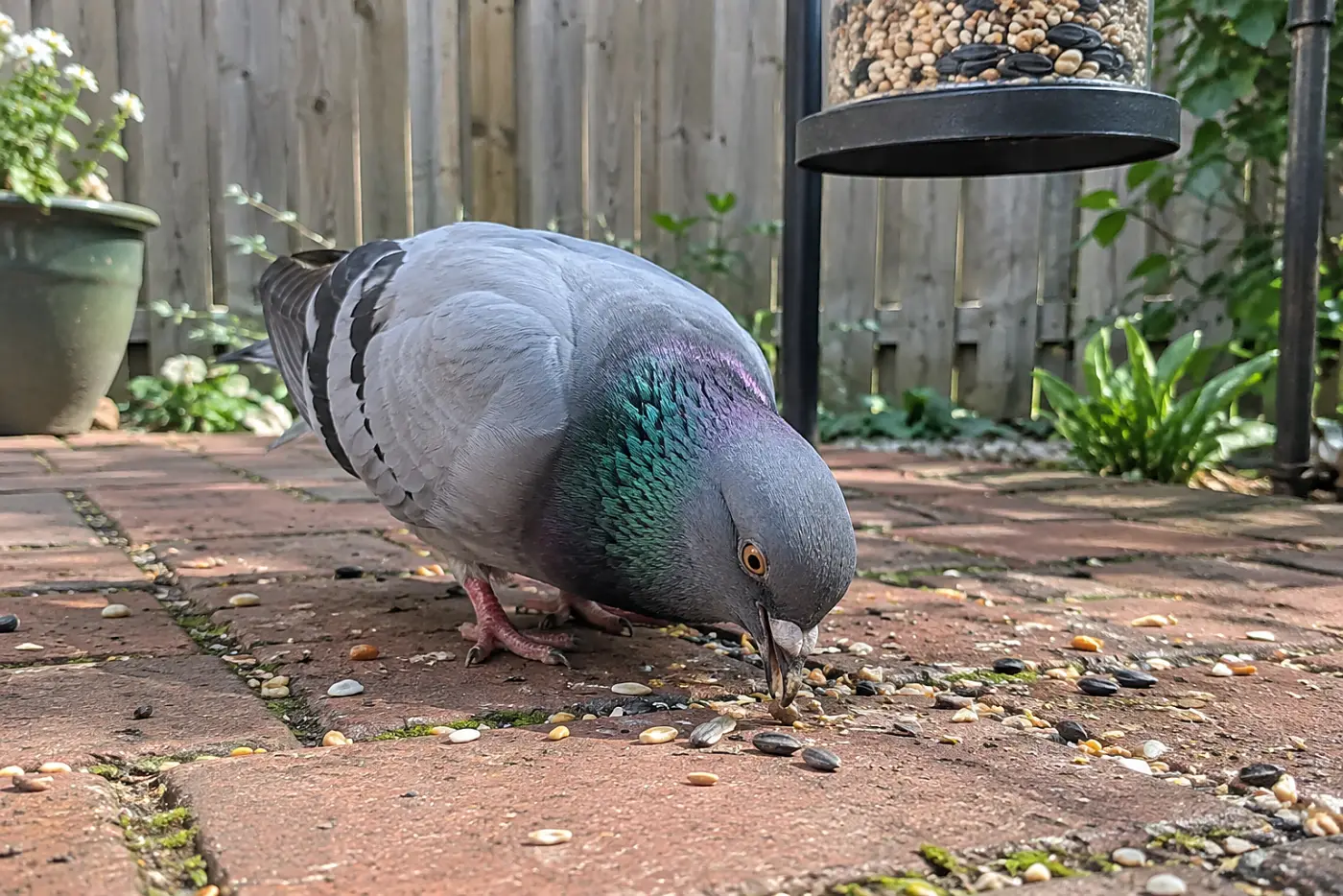
That gray bird walks beneath the feeder like it owns the patio.
Pigeons collect the seed that drops from above. A feeder full of preferred seed won’t solve that ground buffet. Watch how much lands near the legs of your chair.
Use a catch tray and sweep spilled seed before evening.
26The Mourning Dove
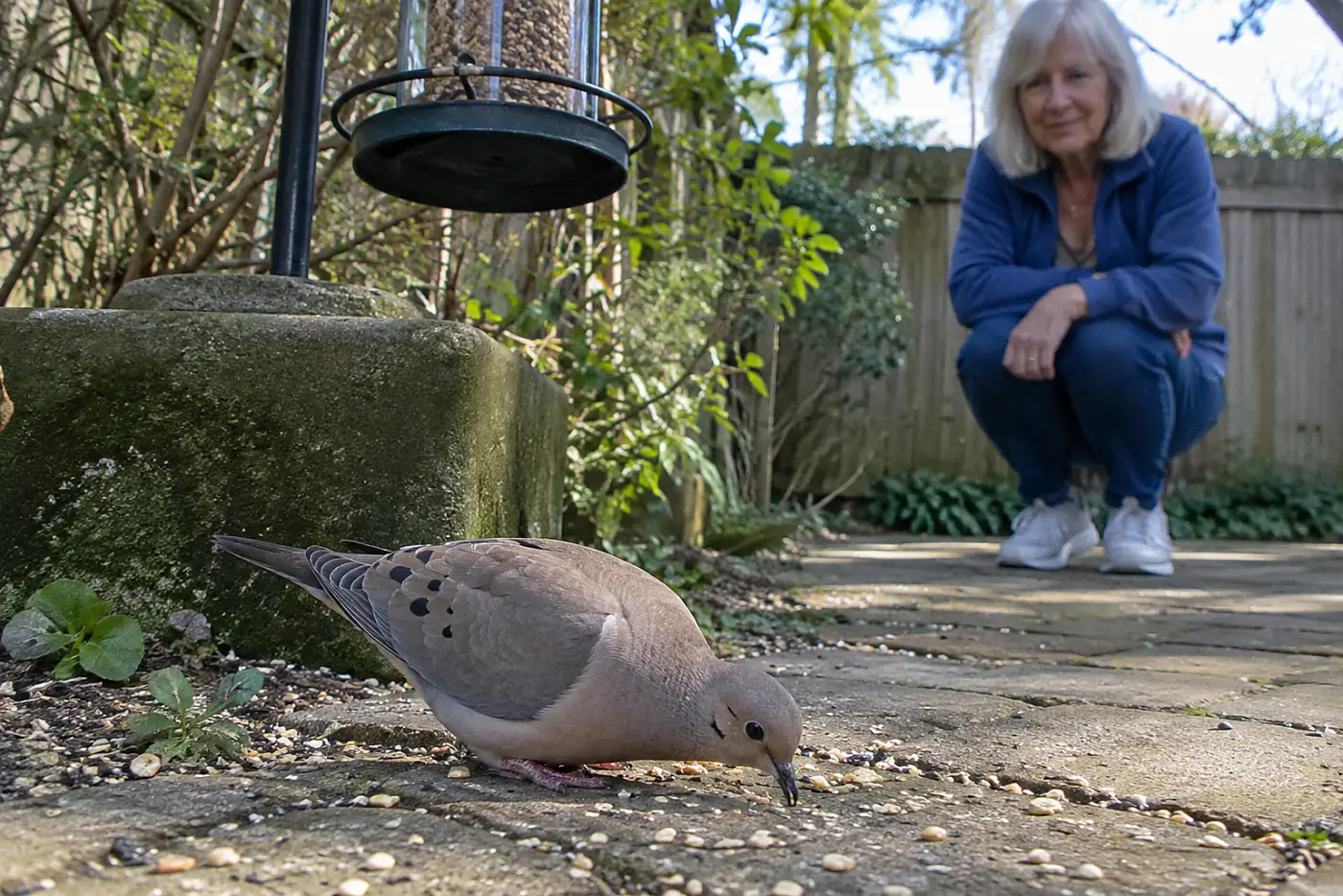
The plump dove settles under the feeder and stays there.
Mourning doves are native birds, and you needn’t treat them as villains. They feed on the ground, including the seed your hanging feeder spills. If that spot is beside a walkway, the droppings soon become the issue. A large platform invites them up.
Move the feeder away from the path and reduce the spillage. Keep a separate ground-feeding spot only if you want one. Your garden has room for choices.
25The Common Grackle
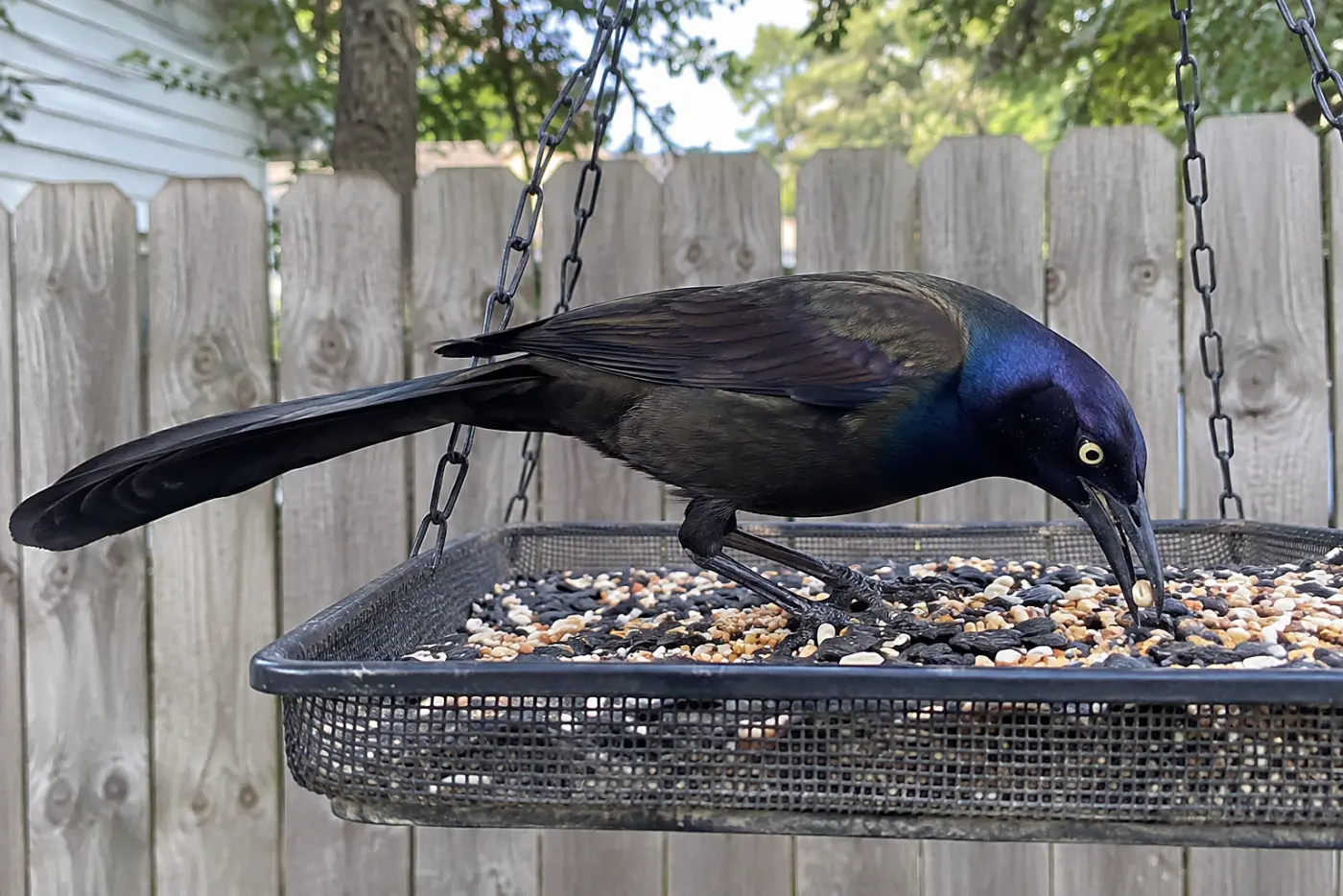
The long-tailed black bird leans across every feeding port.
Grackles have strong bills and take advantage of open trays. In sunlight, a male’s head flashes blue or purple. He’s striking, but he also sends small visitors back to the hedge.
Switch one feeder to a cage-style model that admits small birds.
24The Red-Winged Blackbird
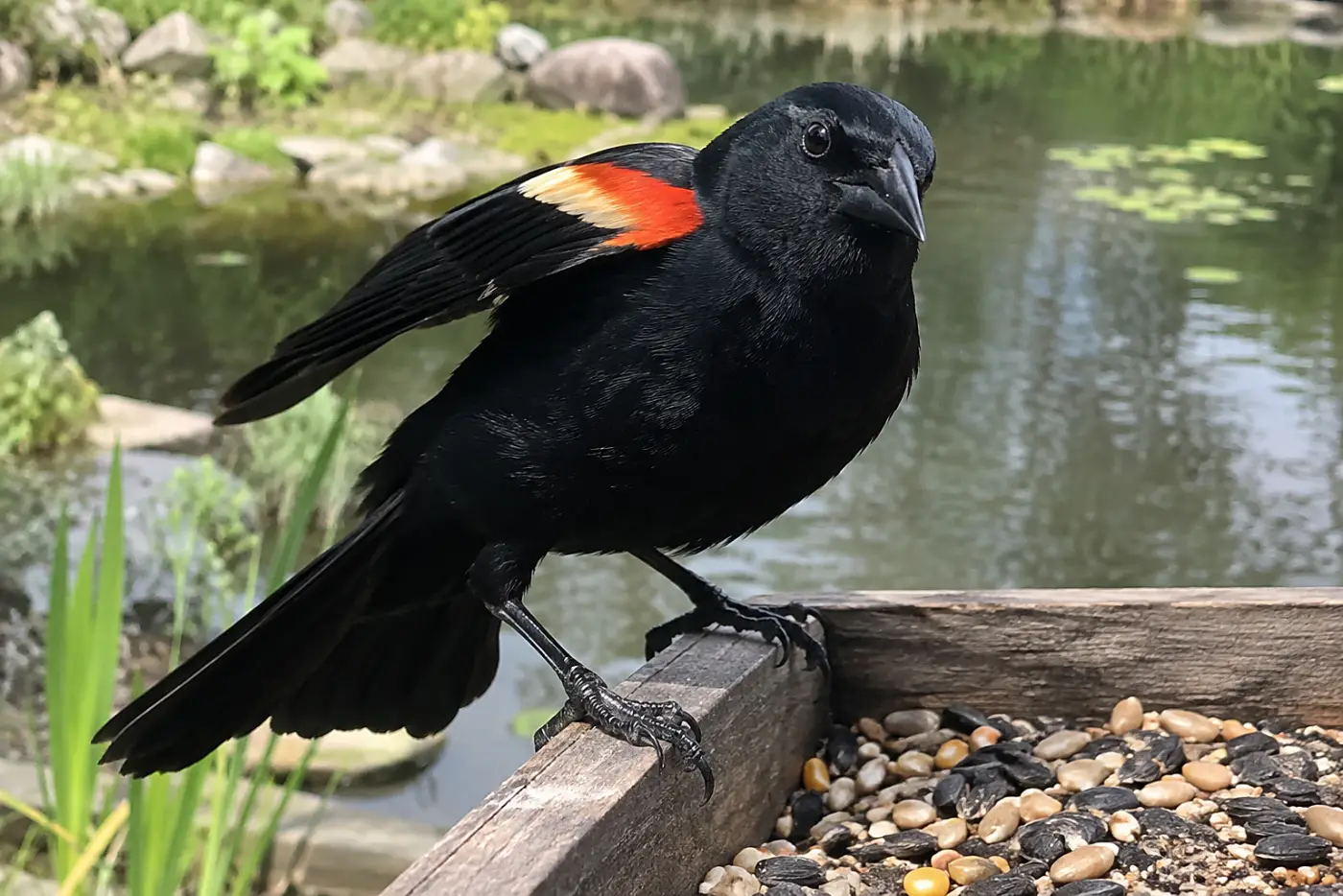
A red shoulder patch flashes above the scattered seed.
Red-winged blackbirds feed in flocks outside breeding season. Open platforms and grain-heavy mixes hold their attention. Near a pond or marsh, you’re close to their regular territory, so the feeder isn’t their only reason for being there. The females are streaked brown, without the male’s bright shoulder patch.
Replace the grain mix with shelled sunflower in a smaller feeder. Don’t chase the flock; give your finches a place to eat that the larger birds can’t easily occupy.
23The Brown-Headed Cowbird
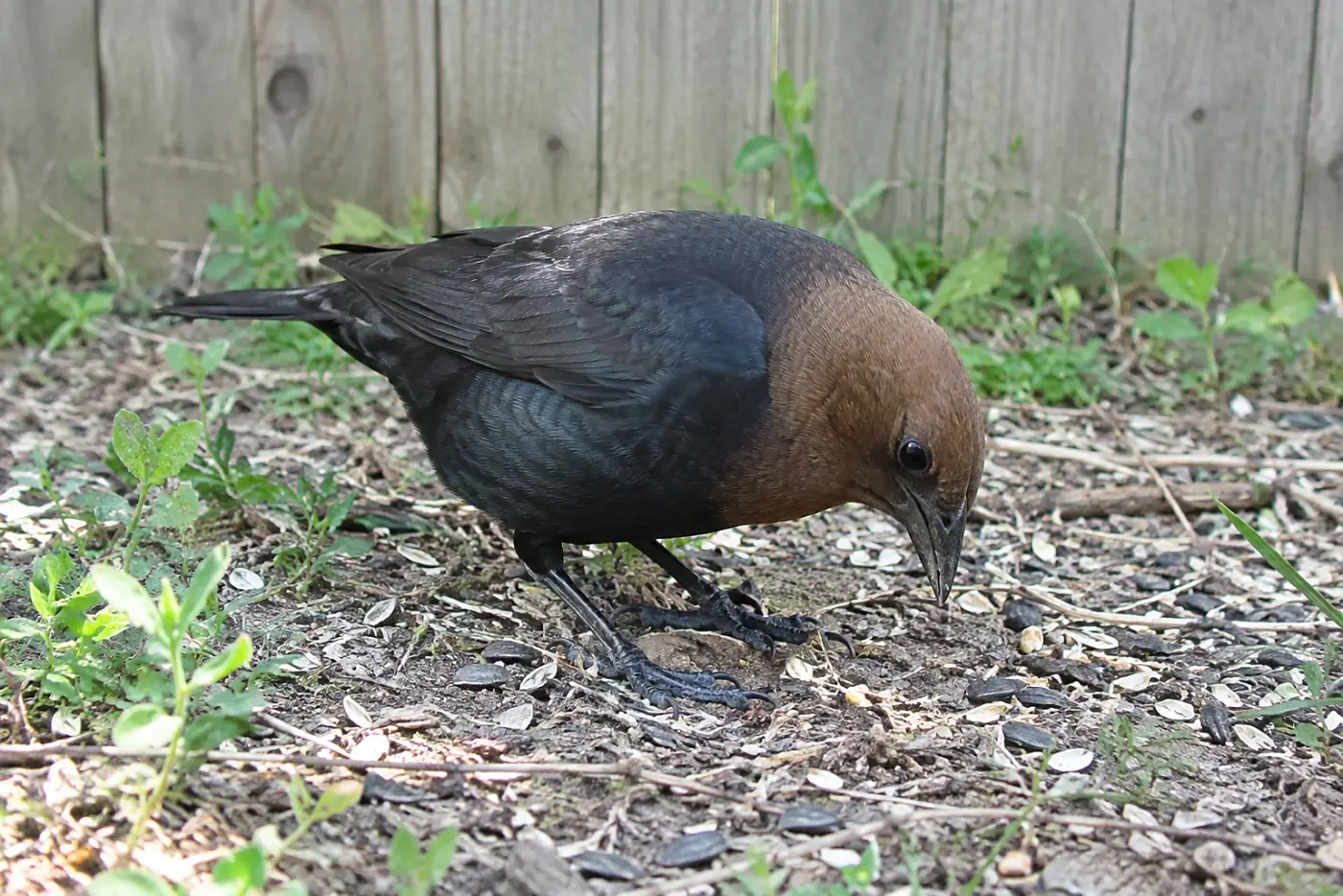
That brown head sits on a glossy black body.
Cowbirds gather below feeders where seed collects. The females are plain brown and easy to mistake for sparrows. Both will keep visiting if food stays on the ground after the feeder is empty.
Rake up dropped seed and retire the open platform for now.
22The Blue Jay
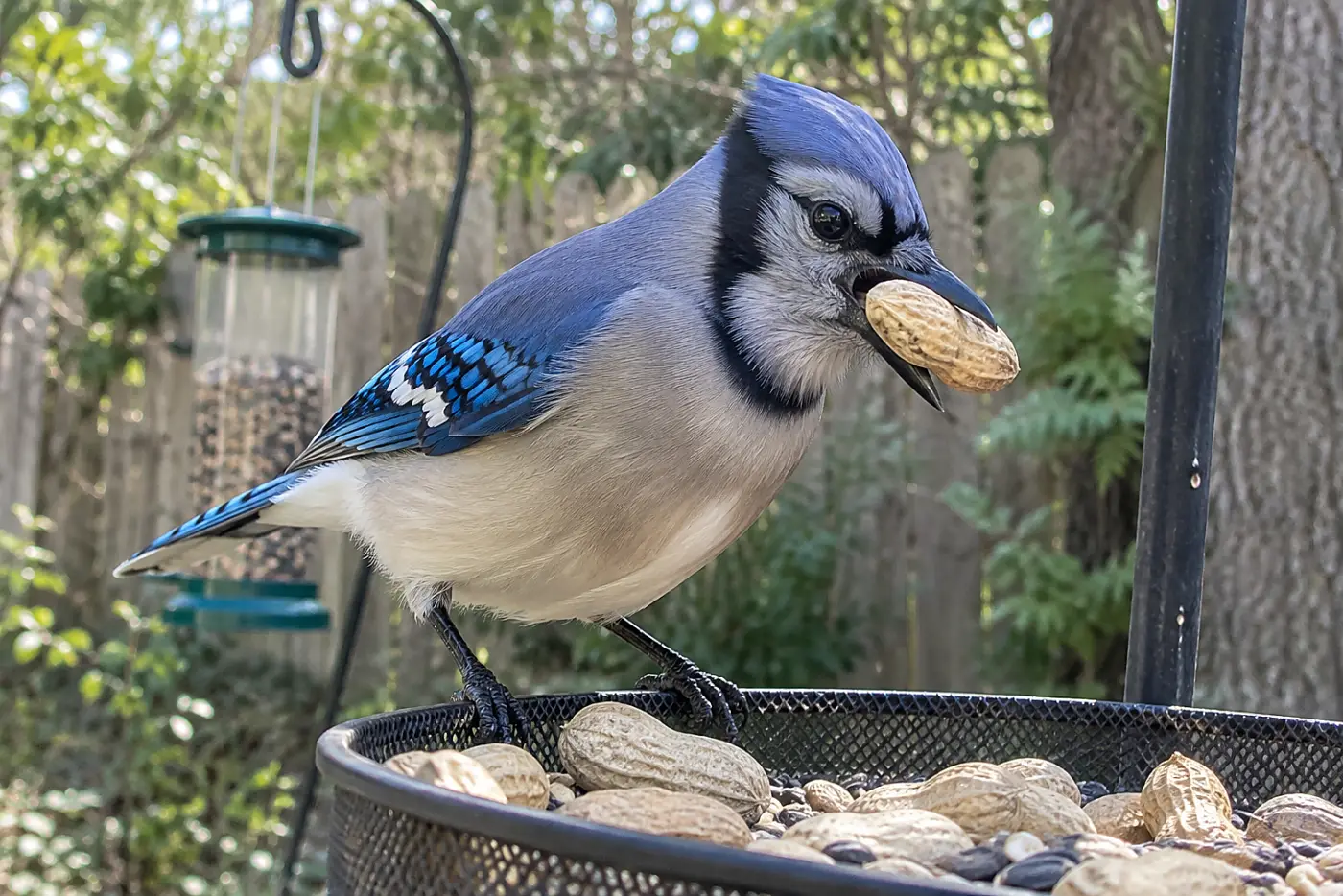
The blue bird announces itself before it reaches the peanuts.
Blue jays belong here, even when their calls make the whole yard sound occupied. They’re large enough to dominate a narrow feeder and clever enough to work a loose lid. If you like seeing them but want space for smaller birds, separation works better than a feud.
Put peanuts in a feeder away from the finch feeder. Give the smaller birds short perches elsewhere, and keep both stations clean. You’ll see who comes to each.
21The American Crow
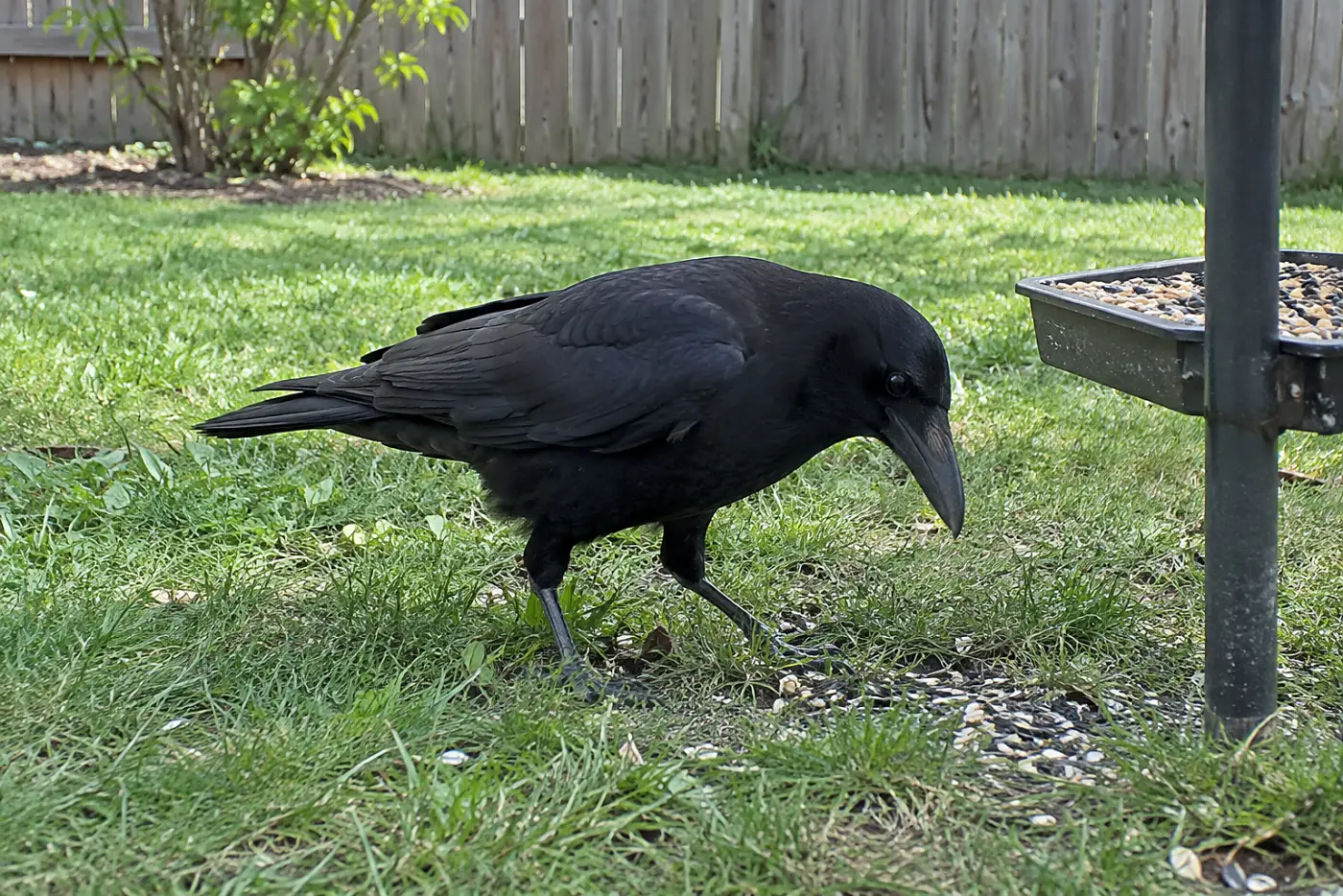
That black bird stands nearly as tall as the feeder.
A crow reaches food on an open platform or beneath a messy one. It also notices patterns: put out scraps at the same time, and you’ve made a routine. The feeder itself isn’t always the draw.
Stop putting out kitchen scraps, and keep seed off the lawn.
20The Fish Crow
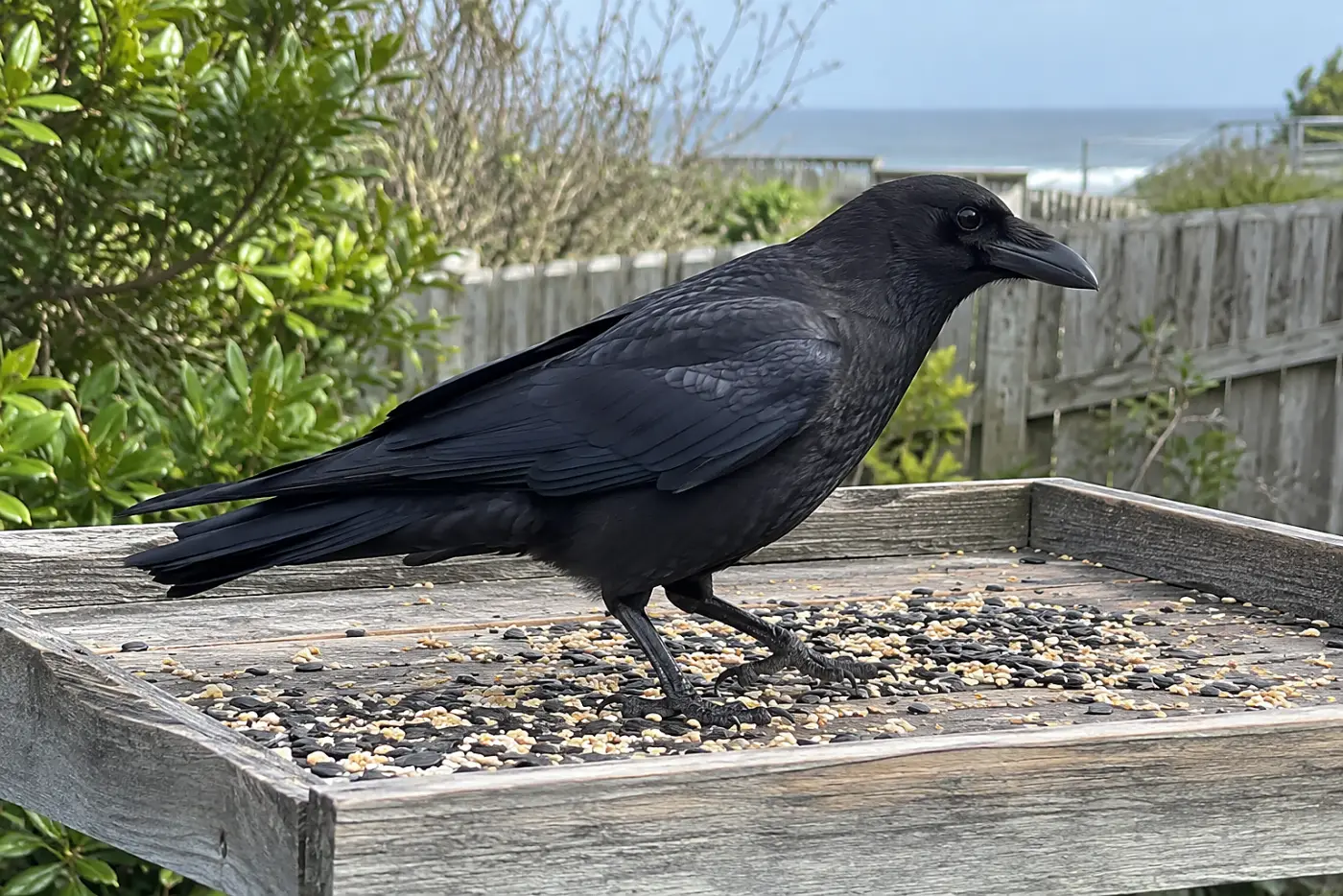
This smaller black crow walks the tray with confidence.
Fish crows live chiefly near the eastern and Gulf coasts. They’re smaller than American crows, but size is hard to judge from a kitchen window. Their nasal call is a better clue. On a wide platform, the distinction doesn’t change the problem: there’s room for a crow.
Remove the platform if your aim is feeding small songbirds. If you enjoy crows, choose a separate spot for them and clean up afterward. You set the boundaries.
19The Common Raven
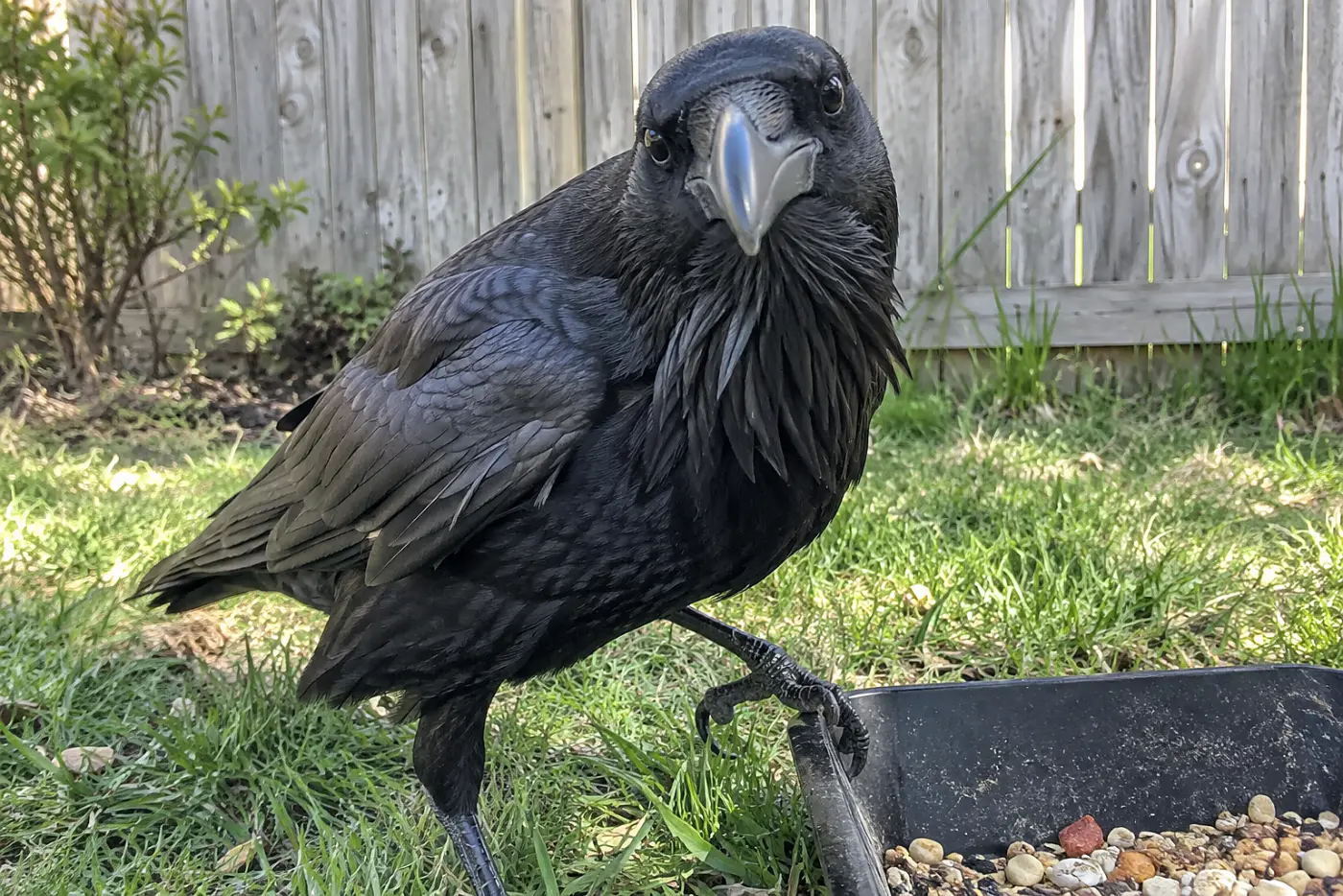
A heavy bill and shaggy throat mark this huge visitor.
Ravens aren’t standard backyard-feeder guests everywhere. Where they do visit, an open food source gives them a reason to return. Scraps beside a trash can are part of the invitation. Watch the ground as well as the perch.
Remove food scraps and use a small, enclosed seed feeder.
18The Eurasian Collared-Dove
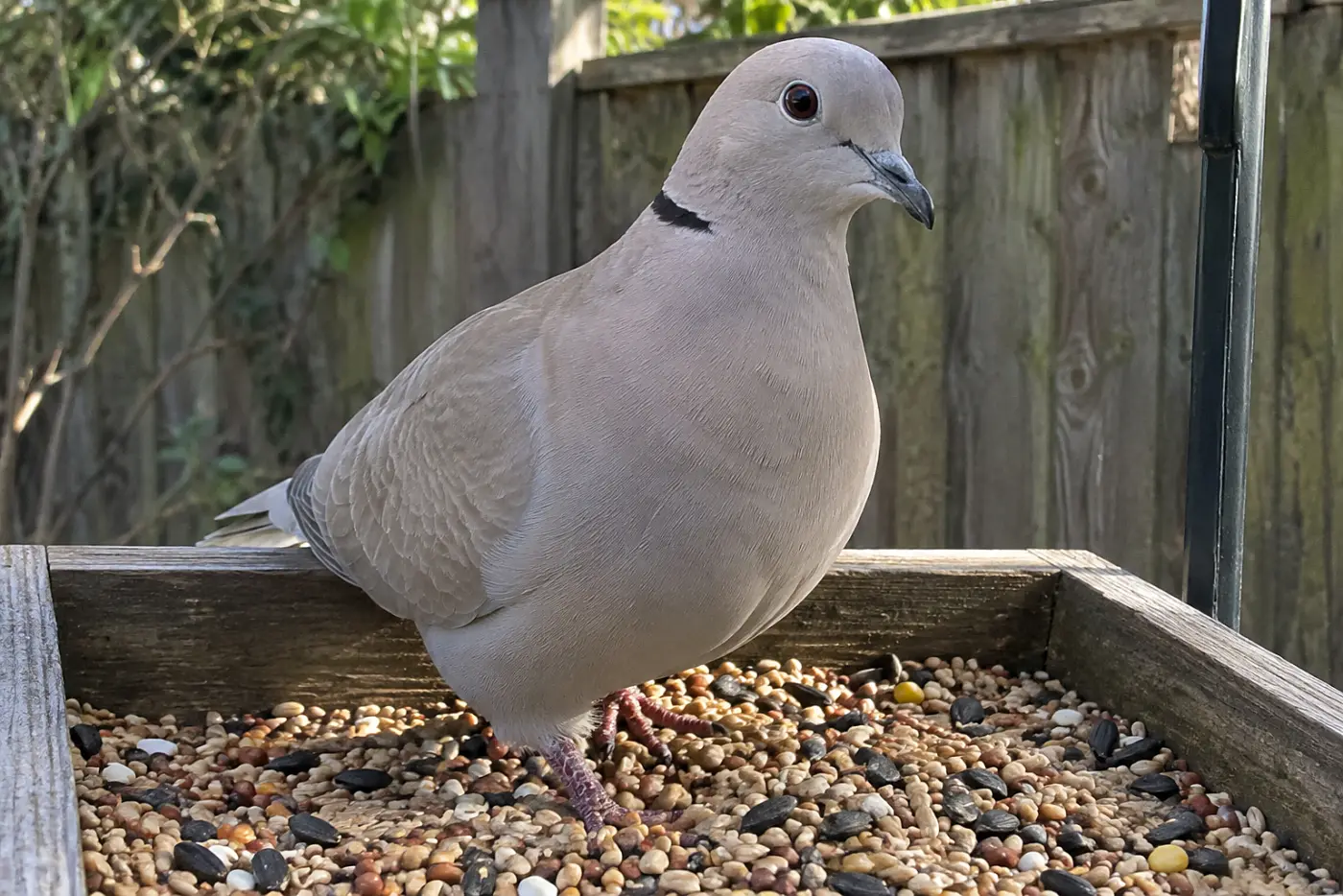
A narrow black collar circles the pale dove’s neck.
This dove has spread through much of the United States. It favors open ground and roomy platforms, where it can settle in beside spilled seed. Its long, square-tipped tail helps separate it from a mourning dove. Neither bird needs a scare tactic.
Take down the platform if it serves more doves than songbirds. Pick up the seed underneath before refilling. That last step matters: a hanging feeder still feeds ground visitors when it rains seed.
17The Northern Mockingbird
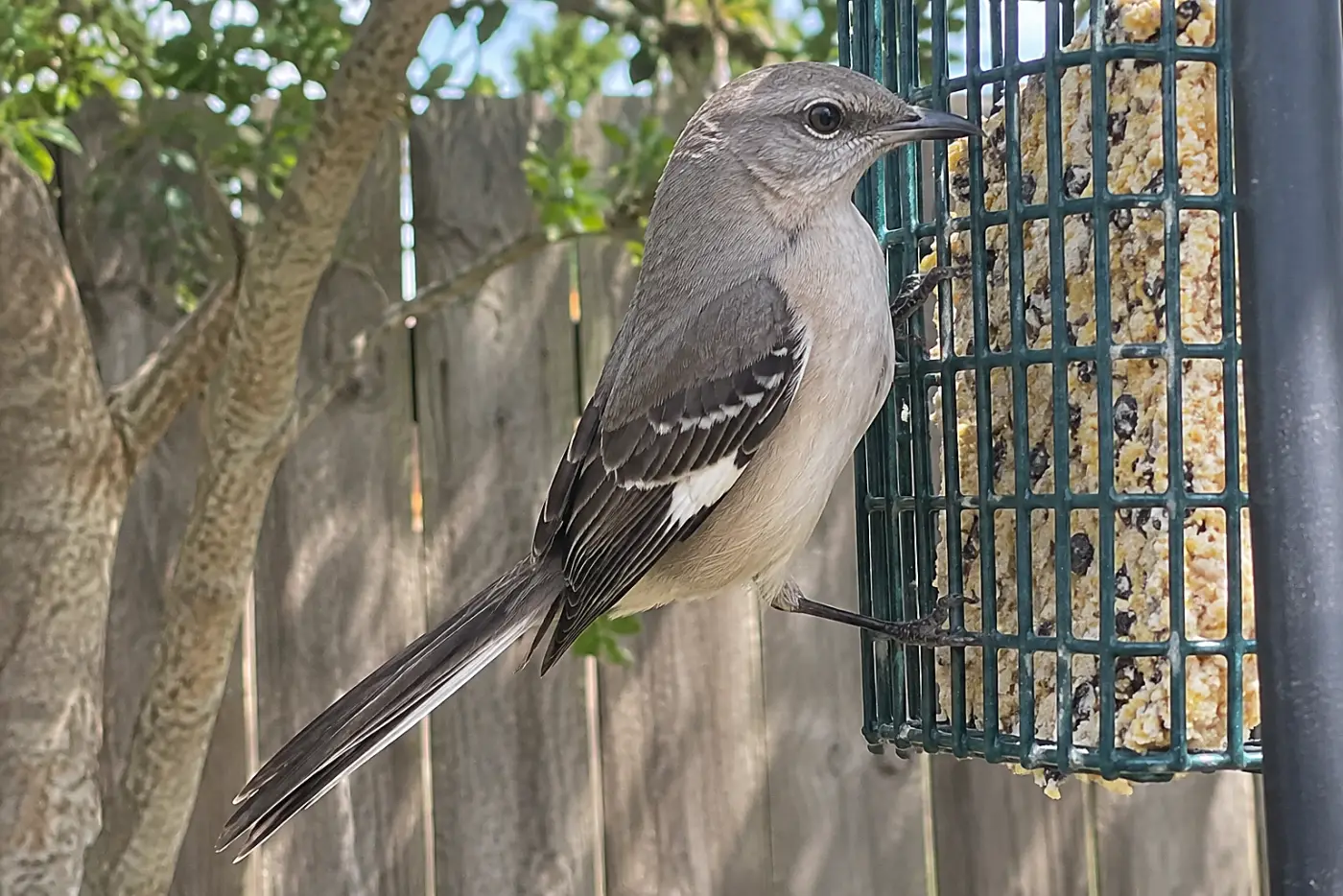
The gray bird flashes white wing patches as it turns.
A mockingbird isn’t after your sunflower seed. It comes for fruit, suet, or the insects drawn to the feeding area. During nesting season, it defends nearby territory fiercely.
Move the fruit or suet station away from your main feeder.
16The Northern Cardinal
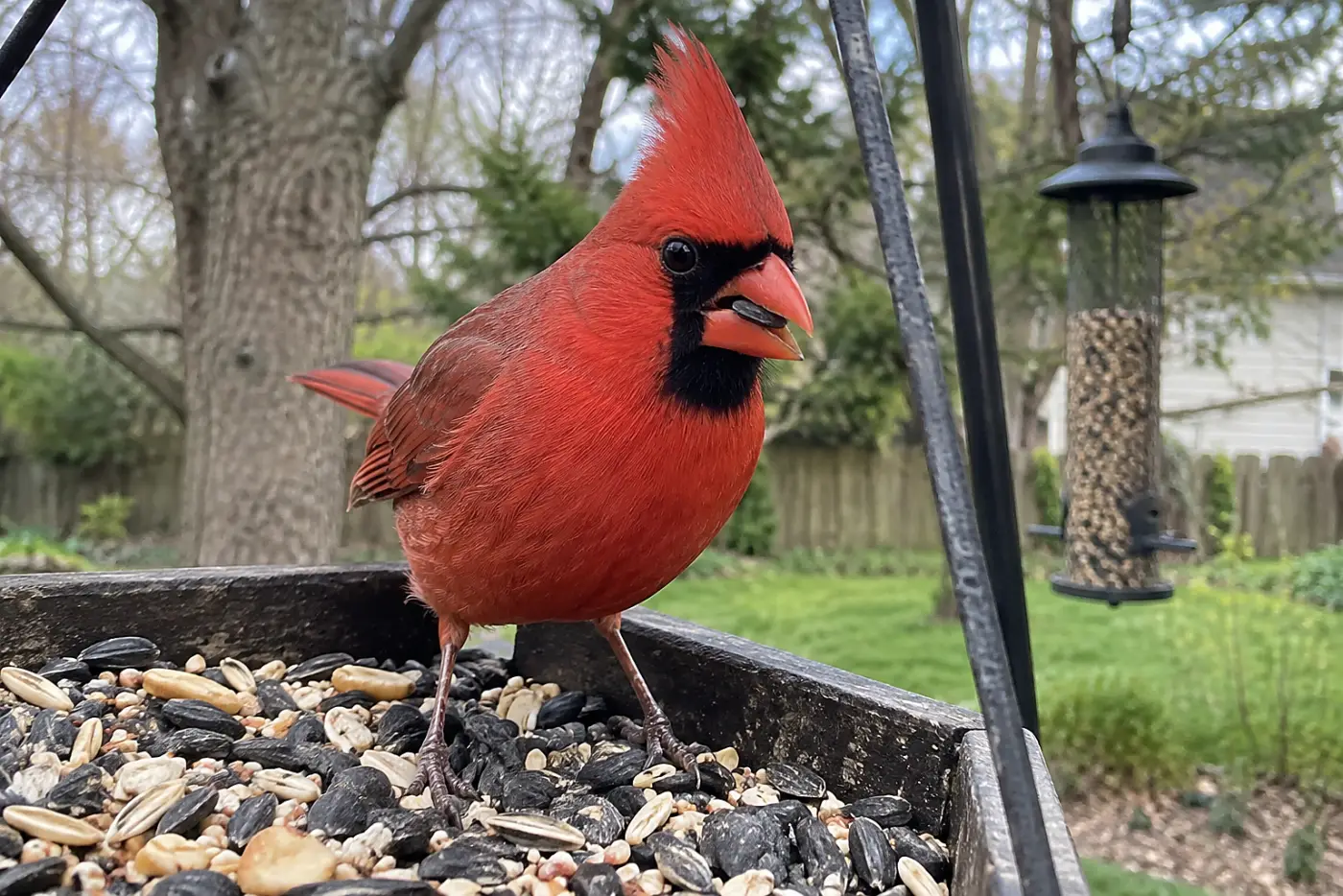
That red bird looks enormous beside a goldfinch.
Cardinals are welcome visitors in plenty of yards. Still, a male planted in a small feeder tray keeps others waiting. Cardinals need a solid place to perch; a tiny tube-feeder perch doesn’t suit them. The brown female, with her red bill and crest, needs the same space.
Give cardinals their own stable feeder with sunflower seed. Place the finch feeder a short distance away. Now you can watch both without asking either bird to share one cramped seat.
See more: 27 Pruning Mistakes That Cost You Next Year's Flowers →
15The American Robin
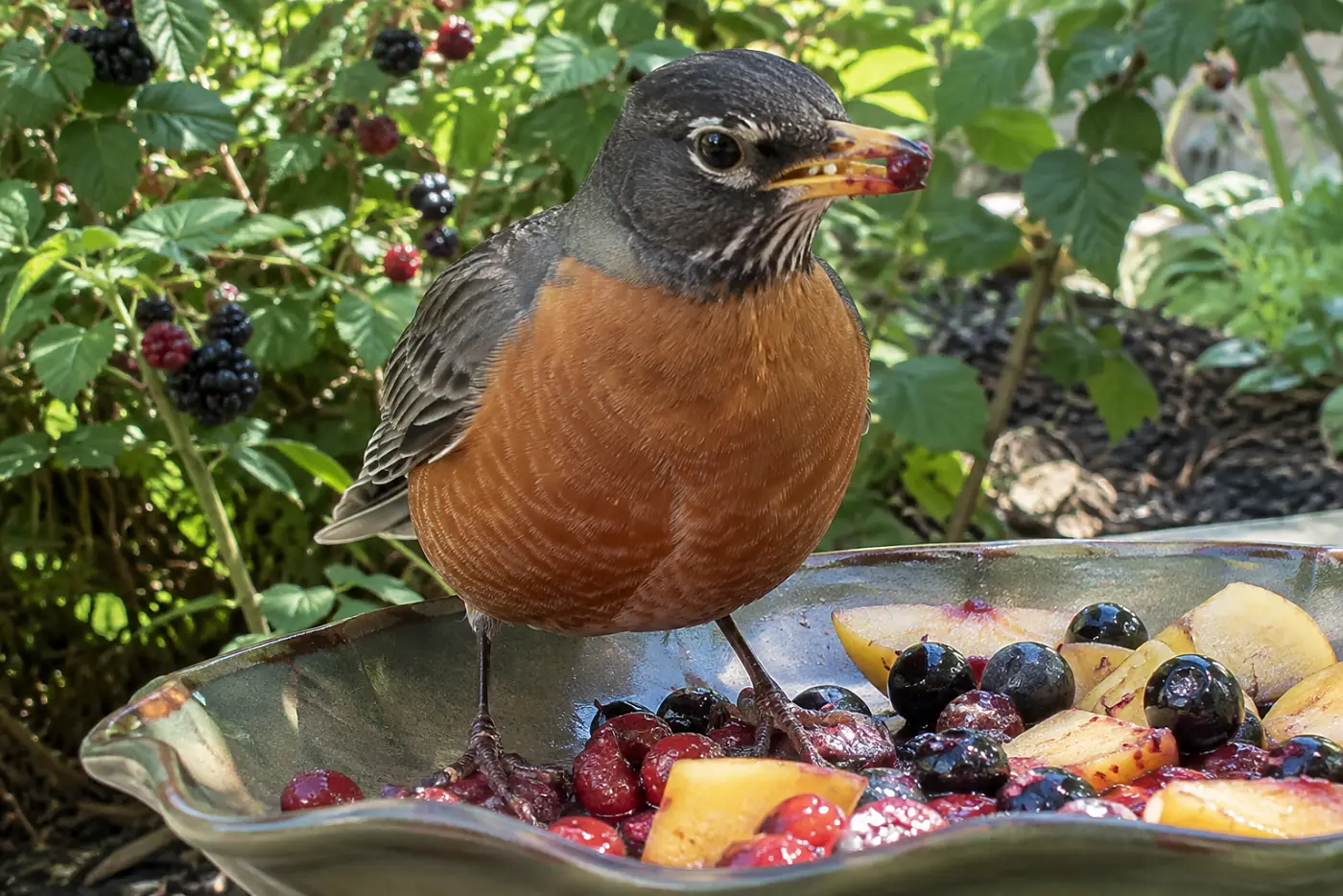
An orange breast appears beside the fruit, not the seed.
Robins look for fruit and insects, so a seed feeder holds little interest. A berry-bearing shrub nearby explains the visit better than the sunflower hearts do. If fruit is drawing a crowd onto your patio, you can move it.
Keep fruit away from the main feeding station.
See more: 23 Things Your Mother's Garden Taught You That Nobody Teaches Now →
14The Gray Catbird
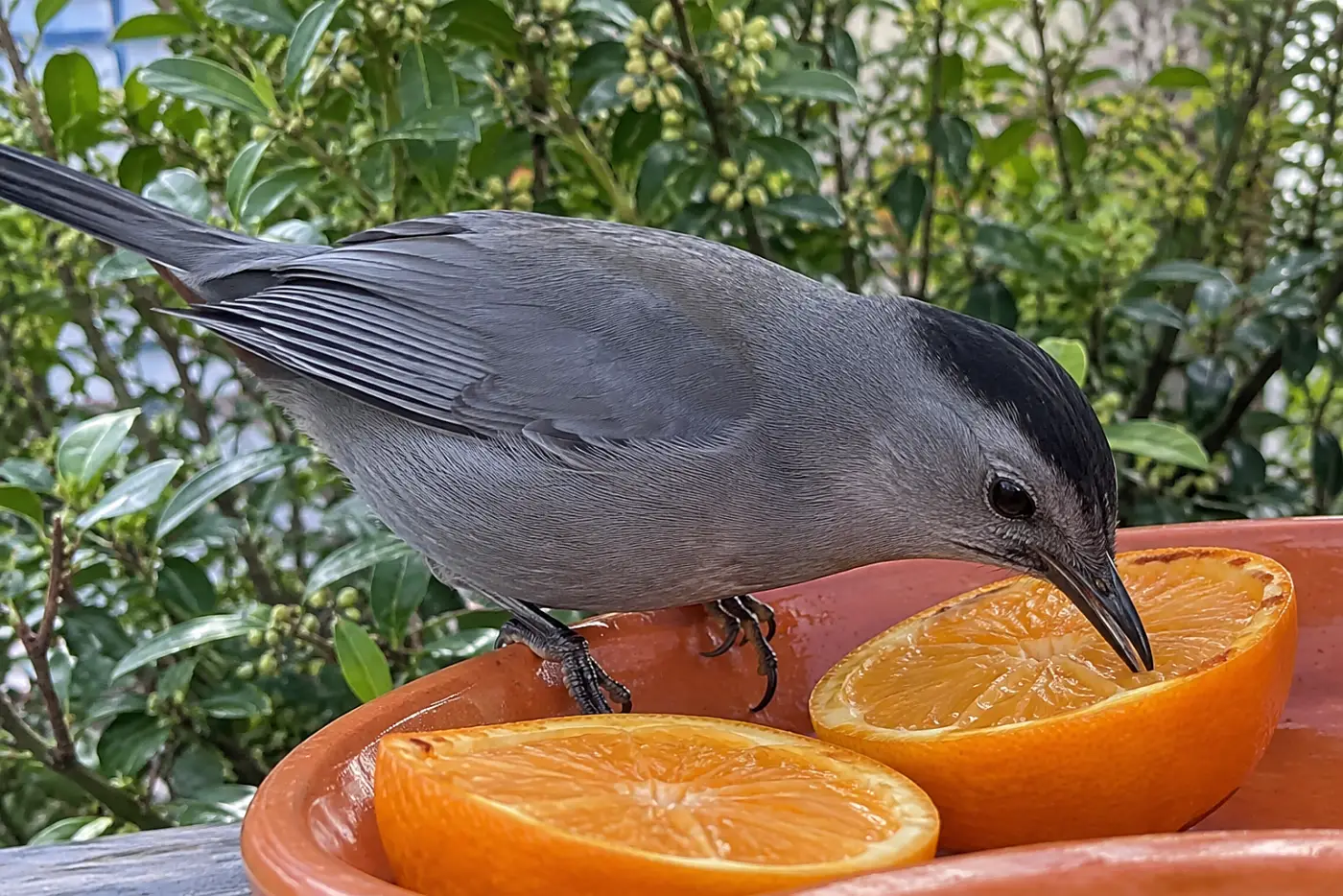
The slate-gray bird slips in for a bite of orange.
A catbird favors fruit and soft food over dry seed. Its black cap is easier to spot when it pauses at the dish. It has a rasping call that gives it its name, and it tends to work the shrubs around a yard. The feeder visit is part of that route.
Move the fruit dish toward a shrub, away from your seed feeder. If droppings are the problem, keep the dish off the patio rail.
13The Brown Thrasher
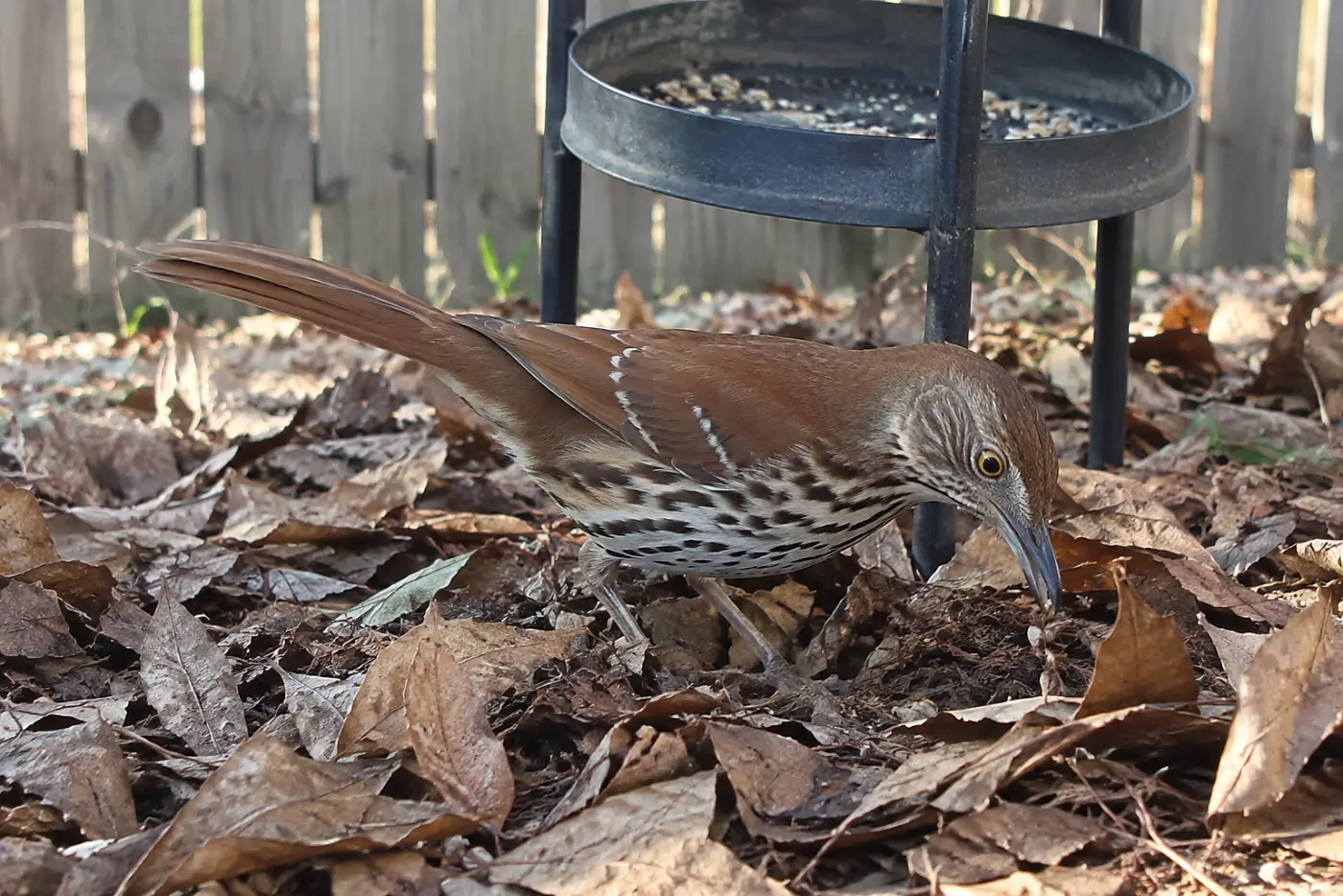
A rusty bird kicks leaves beneath the hanging feeder.
Brown thrashers search leaf litter for insects. A scatter of seed brings them into the same patch of ground, especially beside shrubs. They’re not built for clinging to a tube feeder.
Leave their leaf litter alone, but clear the seed beneath your feeder.
12The Boat-Tailed Grackle
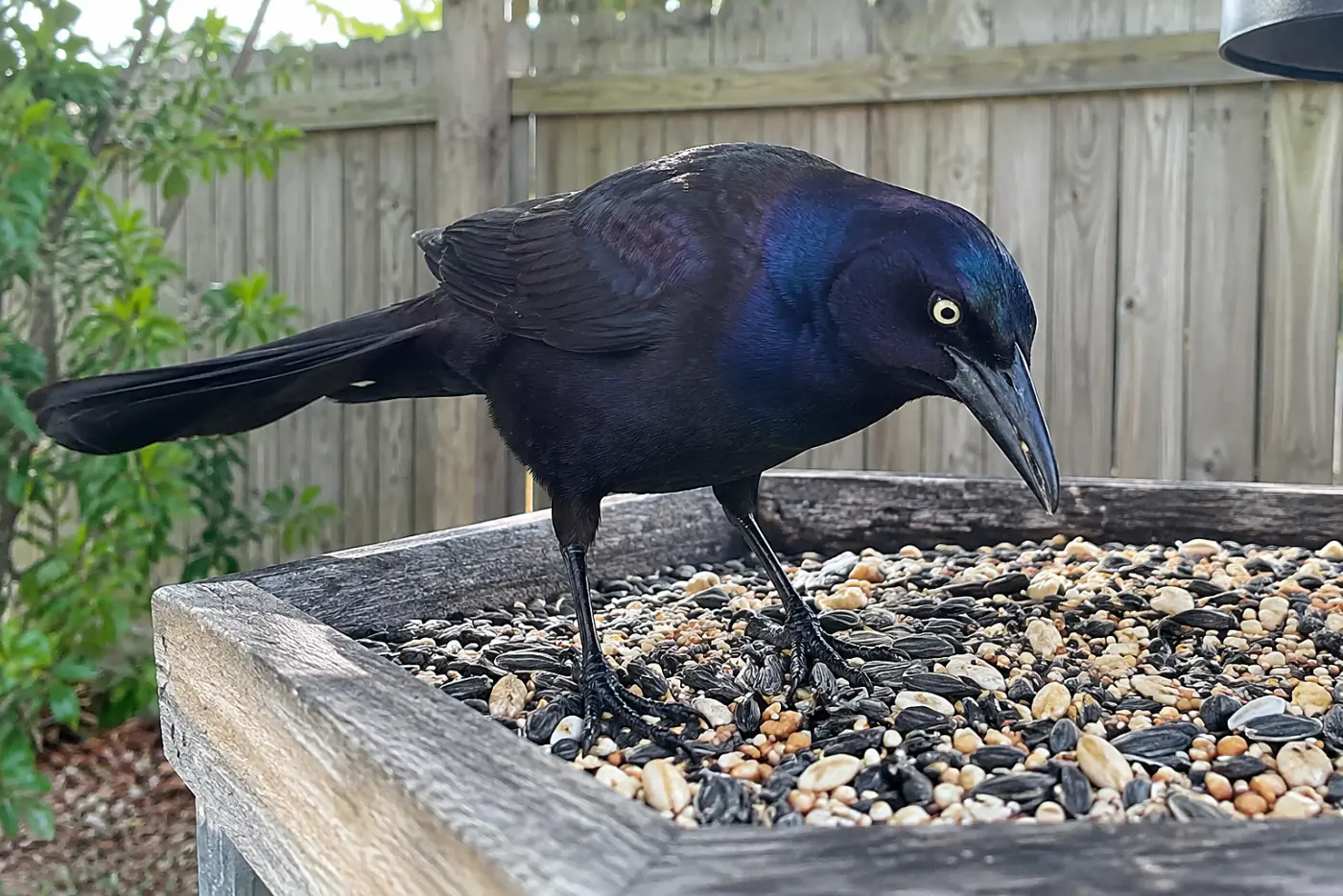
That oversized blackbird carries a tail shaped like a folded fan.
Boat-tailed grackles live along the Atlantic and Gulf coasts. Males shine blue-black; females are brown and smaller. Near coastal marshes, an open platform puts your seed directly in their path. Swapping one grain mix for another won’t change the generous landing space you’ve given them.
Trade the platform for a feeder with short perches. Sweep underneath after filling, so the flock doesn’t move from the tray to the ground.
11The Great-Tailed Grackle
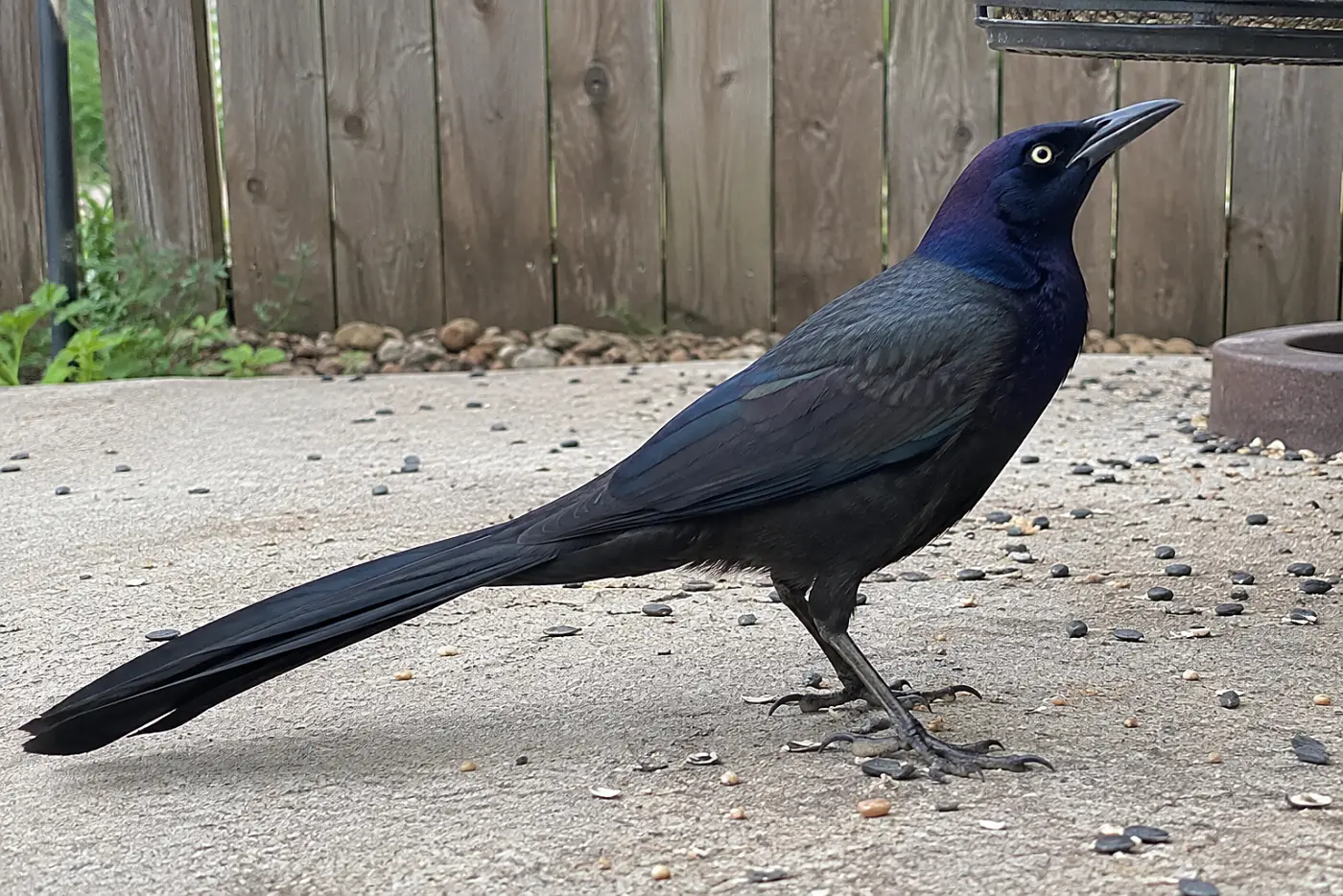
The male’s long, keeled tail nearly doubles his outline.
Across much of the South and West, great-tailed grackles thrive around people. They take food from open platforms and dropped seed from pavement. That glossy bird doesn’t need a special invitation.
Use a smaller feeder, and leave no seed on the concrete.
10The Brewer’s Blackbird
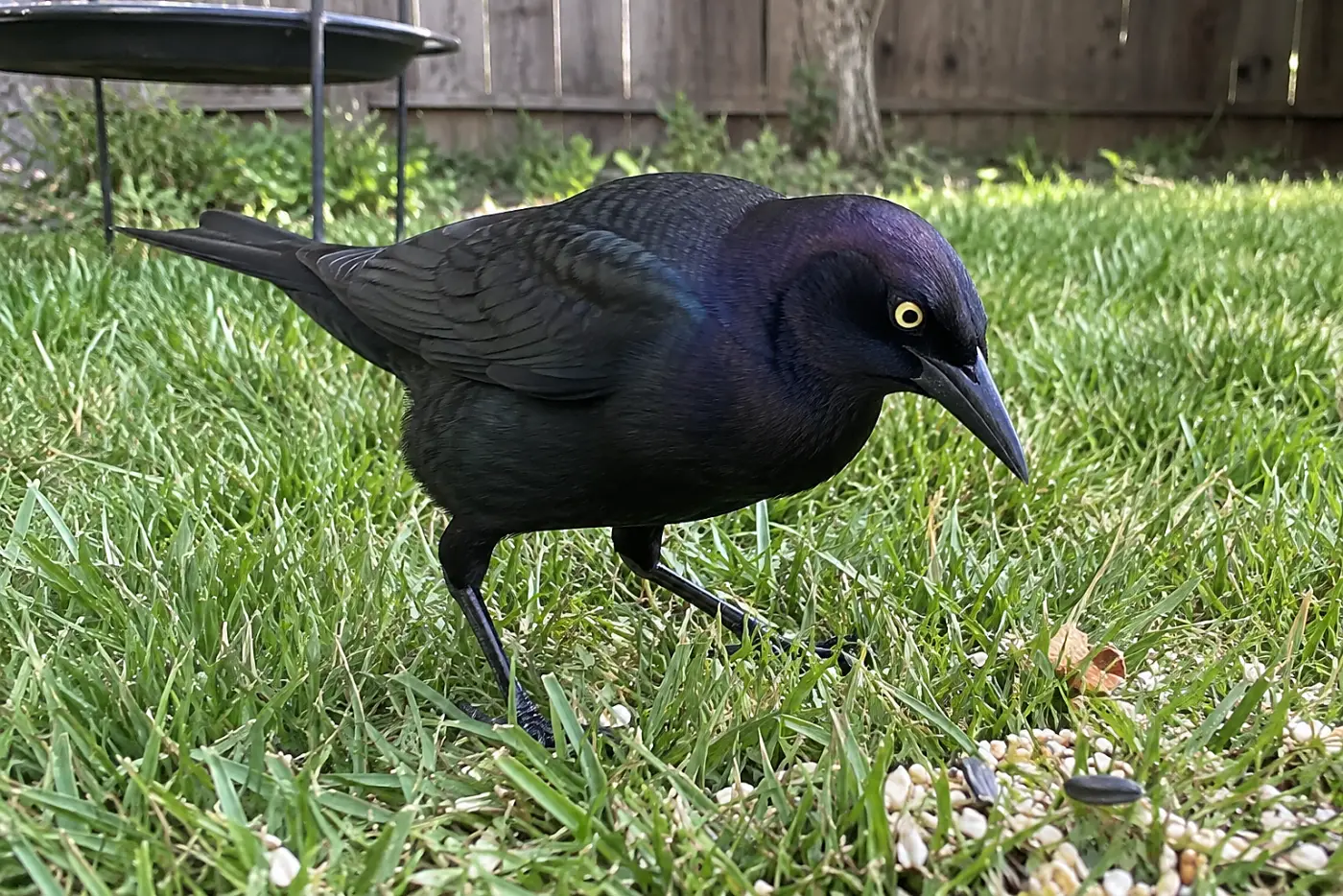
A yellow eye fixes on the seed scattered below.
Brewer’s blackbirds walk lawns and parking lots in groups, especially in the West. The male is glossy black; the female is brown with a darker eye. They don’t need to perch to benefit from your feeder. A steady fall of seed keeps them fed beneath it.
Fill the feeder with less seed each time, and clean underneath before adding more. You’re checking whether a smaller serving leaves less for the ground crew.
9The European Greenfinch
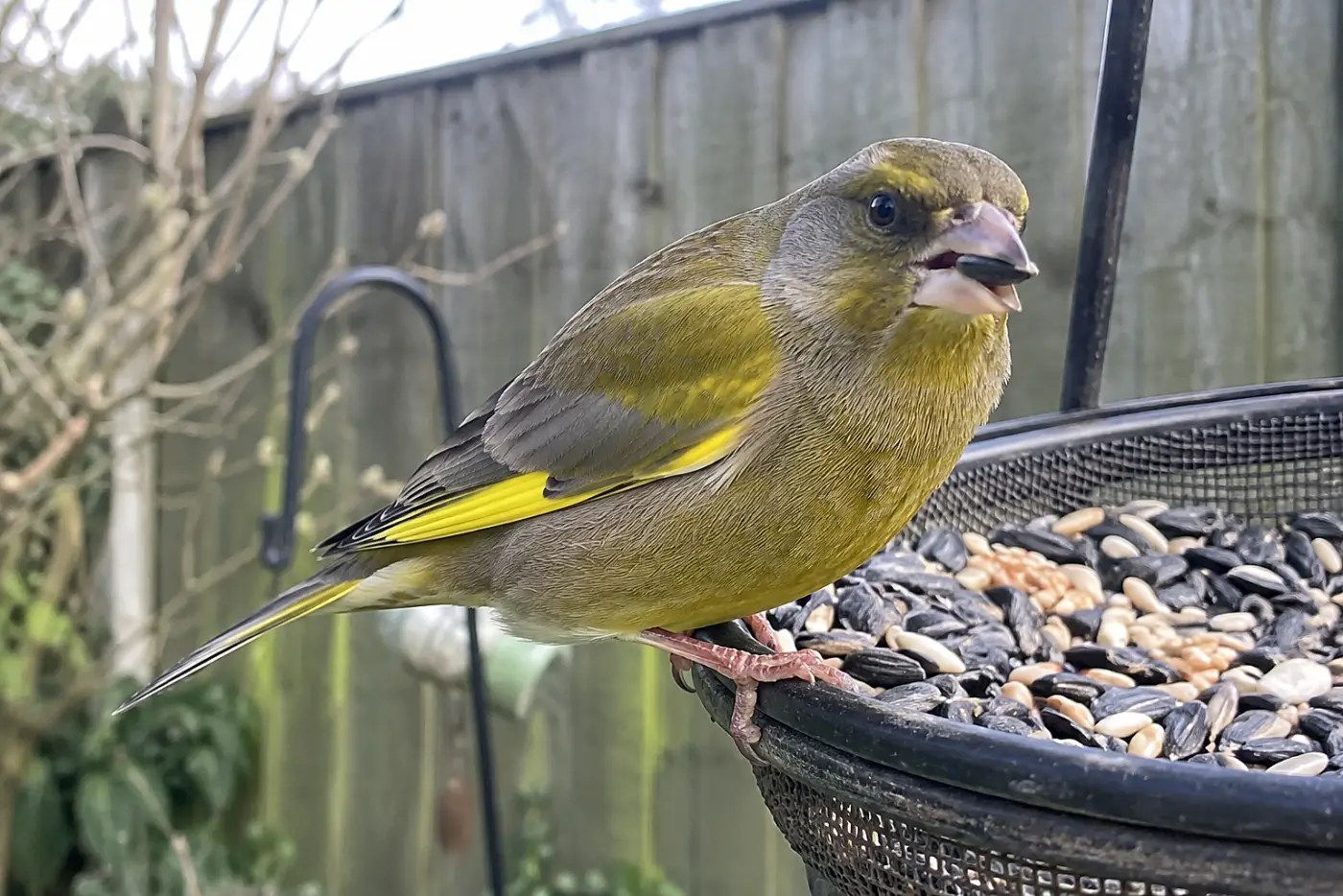
The greenish bird crowds a feeder well outside its usual range.
In the United States, a greenfinch at a feeder is unusual. Don’t change your whole setup because one unfamiliar bird appears. Look carefully: a yellow stripe runs through its wing, while familiar goldfinches have different markings.
Take a photo, then check it with a local birding group.
8The Red-Bellied Woodpecker at the Suet Cage
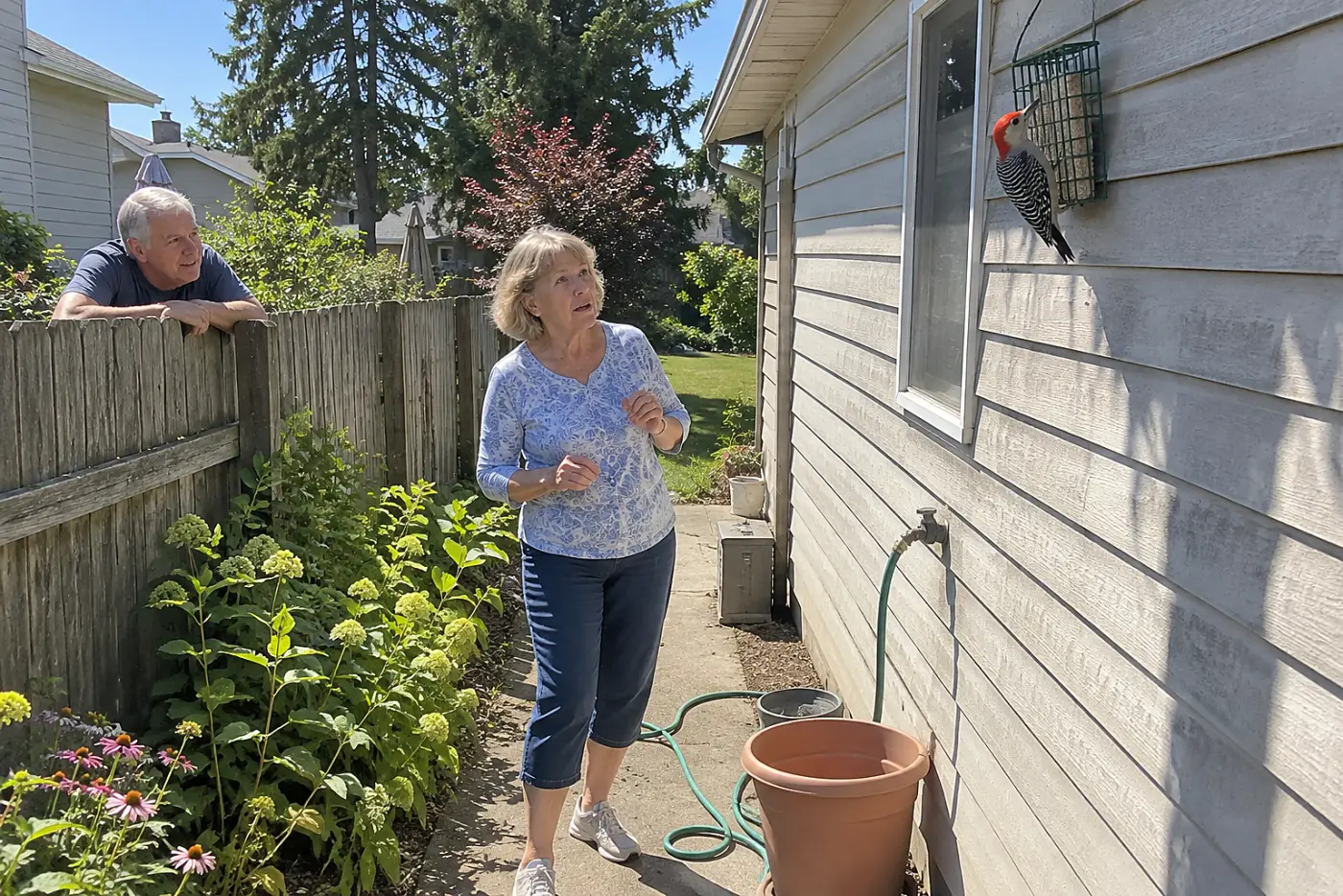
The barred back and red crown appear beside your siding.
A red-bellied woodpecker grips a suet cage with ease. Despite its name, the red on its belly is hard to see from your window. Its bill also finds insects in wood, so check the siding rather than assuming the cage caused any holes.
The trouble starts when you hear tapping on the gutter each morning. A cage fixed to the house keeps the bird near that noisy surface. Moving the food gives you control over where it lands without chasing it away.
Put the suet cage on a pole away from the house. “I’ll keep the suet, just not against the siding.”
See more: 24 Old Garden Habits That Turned Out to Be Right All Along →
7The Downy Woodpecker on the Window Feeder

A small black-and-white bird clings against your window glass.
Downy woodpeckers take suet and sunflower seed. This feeder holds every landing against the pane. A bird startled from nearby cover heads toward glass that reflects sky and trees. From inside, that reflection is easy to overlook.
The male has a small red patch at the back of his head. Both sexes have a short bill and a white stripe down the back. Those markings are worth watching, but not at the cost of a window strike.
Move the food away from the window, and treat the outside of the glass so birds see it. “You’re welcome at the feeder, not against this pane.”
6The White-Breasted Nuthatch at the Seed Port

The bird hangs headfirst, then leaves with one seed.
A white-breasted nuthatch carries sunflower seeds away to eat or store. That quick habit explains the shells wedged into your porch rail. Its blue-gray back and white face identify the visitor.
Shift the feeder away from the rail. “Take the seed, but leave my chair out of it.”
5The American Goldfinch at the Thistle Sock
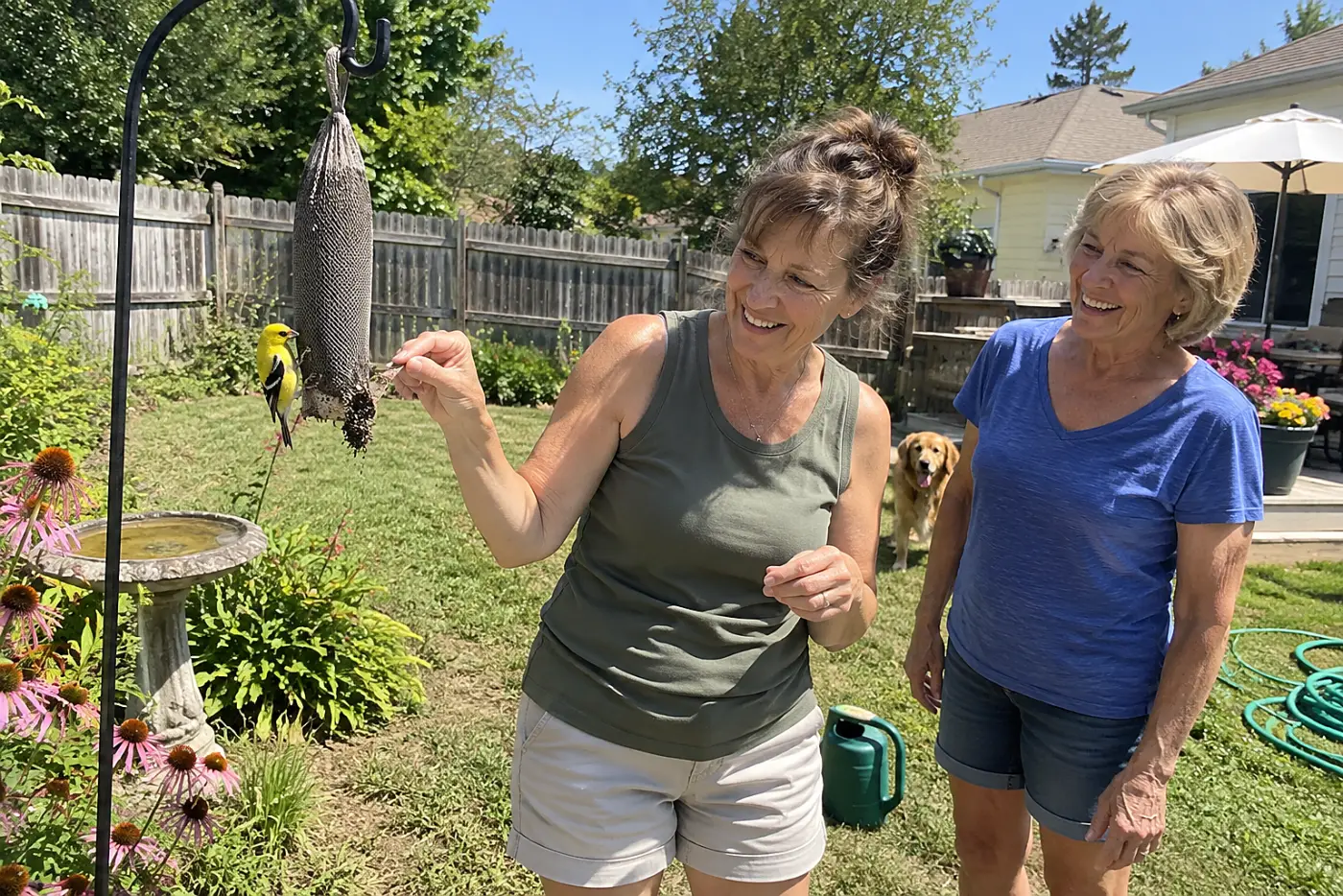
The yellow bird clings above a scatter of dark seed.
Goldfinches pull nyjer seed through the fine mesh. The sock suits their light weight, but a hole turns it into a spill bag. In fall, their bright yellow fades to a duller olive; they’re still the same visitors.
If the ground below has become the real feeding station, replacing the sock matters more than adding seed. Check the seam before you blame the birds for what lands there. Damp seed caught in the mesh is another reason to take the sock down.
Take down a torn or damp sock and use a clean, sound nyjer feeder. “You get the seed; the ground doesn’t.”
4The Tufted Titmouse at the Porch Feeder

A gray crest bobs above the feeder beside your door.
A tufted titmouse takes a sunflower seed, then darts to cover. At a feeder beside your doorway, that flight crosses the space you use. The bird’s large dark eye and pale face make it easy to recognize.
Move the feeder beyond the porch traffic. “I want to see you from here, not meet you at the door.”
3The Purple Finch at the Sunflower Feeder
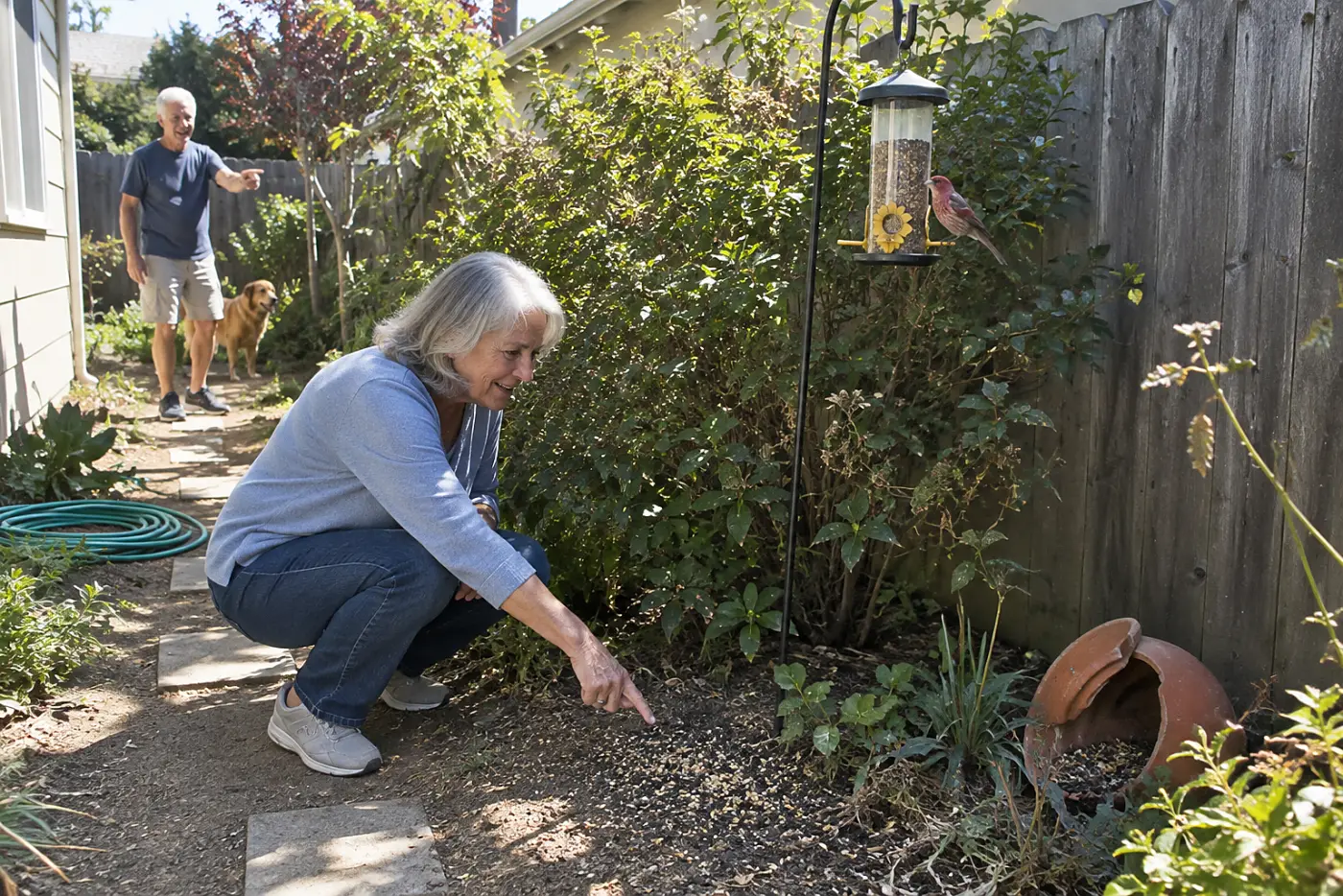
A raspberry-colored finch feeds above a shrub’s dense branches.
Purple finches eat sunflower seed. The male’s color spreads across his head and chest; the brown female takes a closer look to identify. Neither bird needs a shrub wrapped around the feeder to find the seed.
Look beneath yours. Dense branches give a hunting cat cover beside the landing spots. Moving the feeder into open space lets you spot a cat before you refill it. That matters more than changing the seed while leaving the hiding place intact.
Move the feeder away from the shrub and check the ground from your window. “You get the sunflower seed; a cat doesn’t get cover.”
2The Wild Turkey
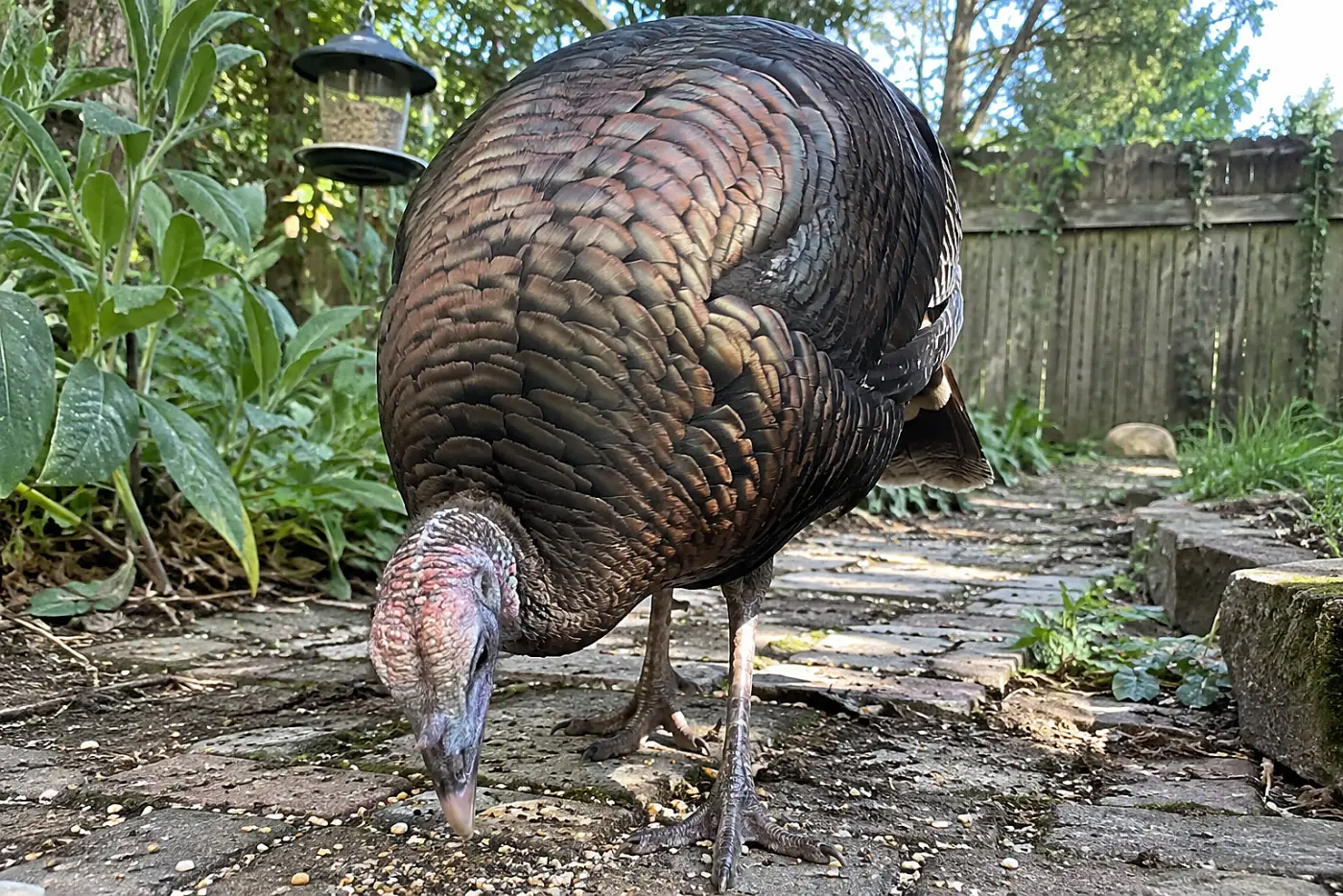
A broad bronze back blocks the path beneath the feeder.
Wild turkeys pick up fallen seed, not sunflower hearts from tiny ports. One bird under a feeder is a sight; a group crossing your garden beds and scratching around new plants is another matter. Food left on the ground rewards that route. A full platform gives them a second place to look.
Stop ground feeding and remove spills each day. Keep your distance rather than trying to herd them.
1The Empty Feeder Reset
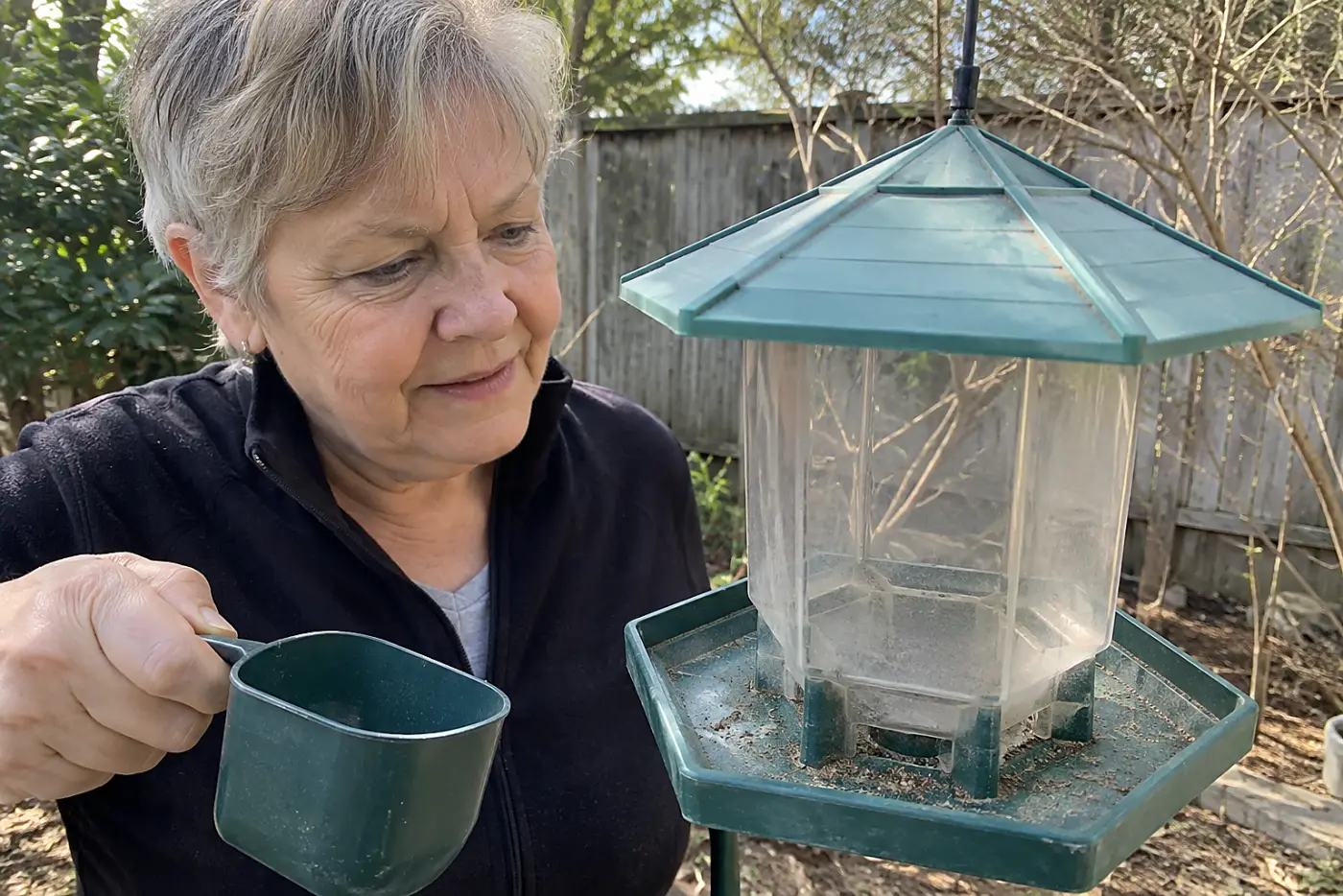
The clean, empty feeder looks odd against a busy yard.
If starlings, grackles, or house sparrows have made your feeder their regular stop, changing seed while they watch the same tray won’t do much. Take the feeder down for several days and remove every spill beneath it. Wash it, then let it dry fully. The birds that came for an easy, predictable meal have to look elsewhere.
When you put it back, change the terms: use a smaller feeder, a different food, or a new position. Watch who arrives before you refill it again. You haven’t banned a bird; you’ve stopped supplying the meal it counted on.
The bottom line
Across all 29, the pattern is food, footing, and what falls to the ground.
You already know the yard changes when you change the menu. Watch who eats where, then keep the setup that brings back the birds you wanted. Which bird still shows up at your feeder?
Up next
29 Things Gardeners Over 70 Do Differently, and Why They Still Have Gardens
A hose timer cuts trips across the yard, while a lighter watering can and a written help plan keep the garden in your hands.
Read the list →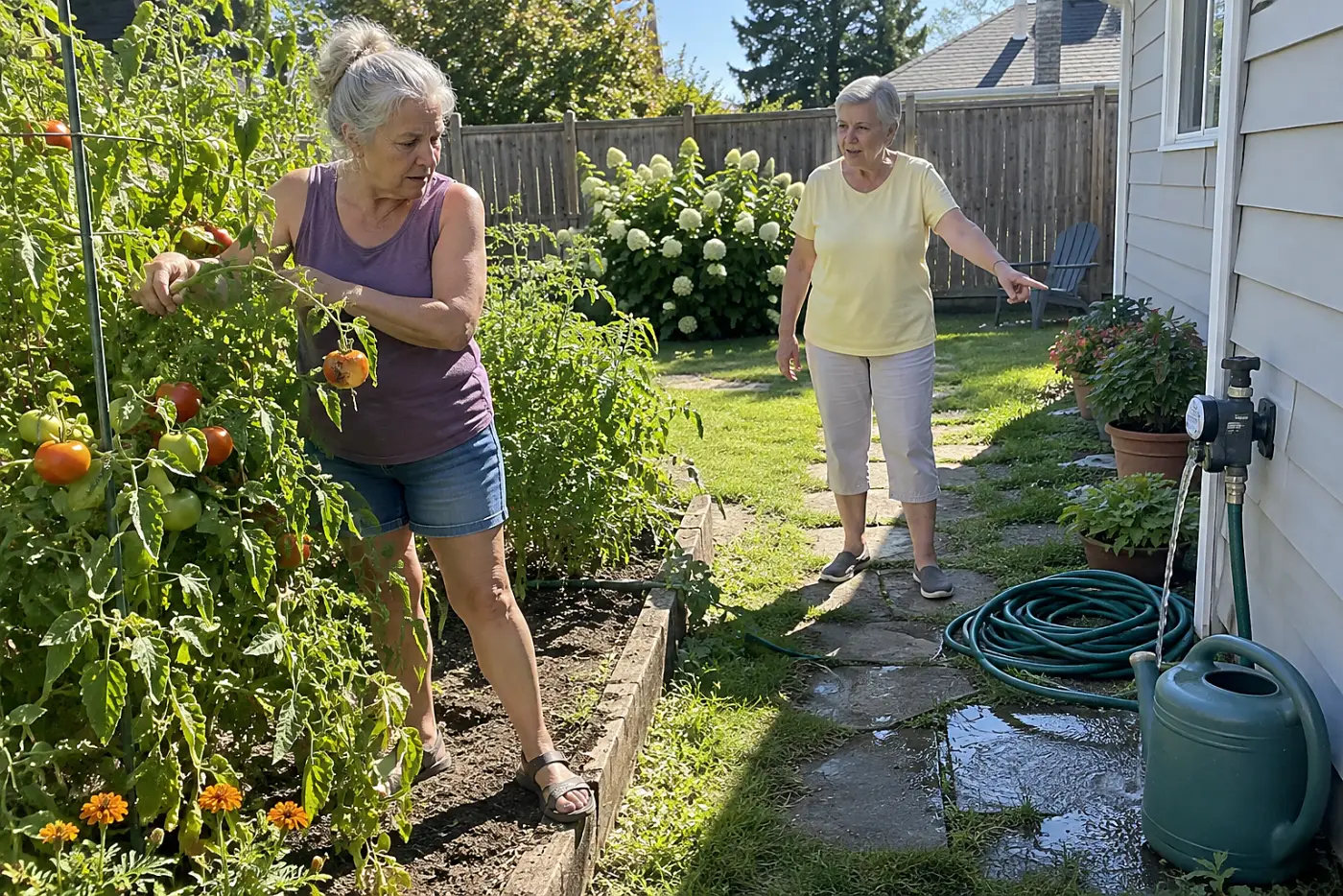


Reader quiz
Did you catch the details?
5 questions from this article. Finish them all to unlock the editor's bonus tip.
Which seed mix does the article say to skip when house sparrows crowd the feeder?
Did any of these feel familiar?
Know someone who needs this?
June Marlow
Garden Editor
June writes about gardens you can still manage: what to plant, which jobs matter each season, and the tools that spare your knees and back.
More from June Marlow