






27 Ways a Small Garden Beats the Big One You Used to Have
A smaller bed puts every leaf within reach, so you spot trouble, water roots, and pick dinner before it toughens.
By June Marlow, Garden Editor
Updated · 17 min read
- Written by our garden editor
- Cited 10 sources
- How we review
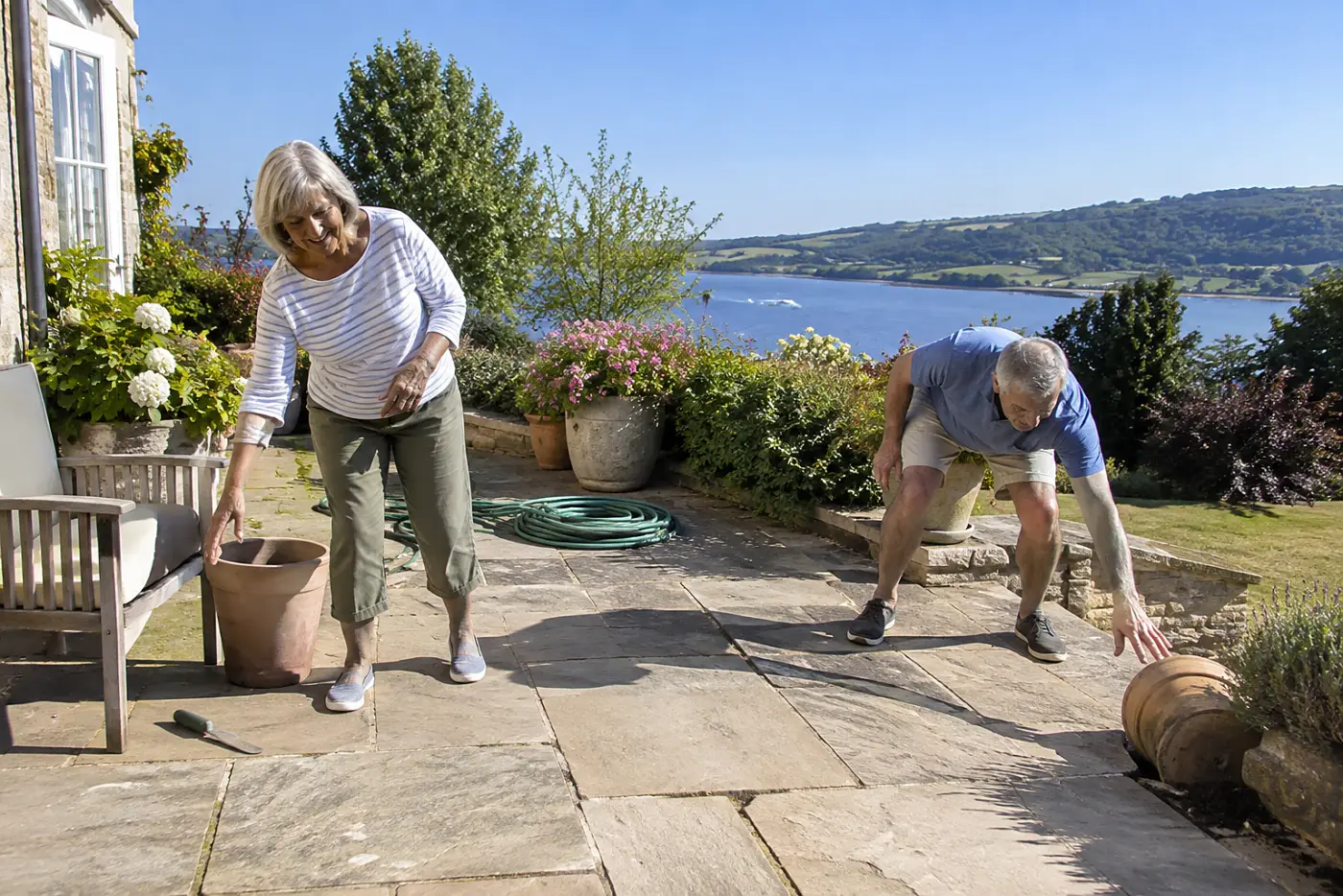
Read to the end: #1 is the reach test almost nobody runs before planting, and it saves your back.
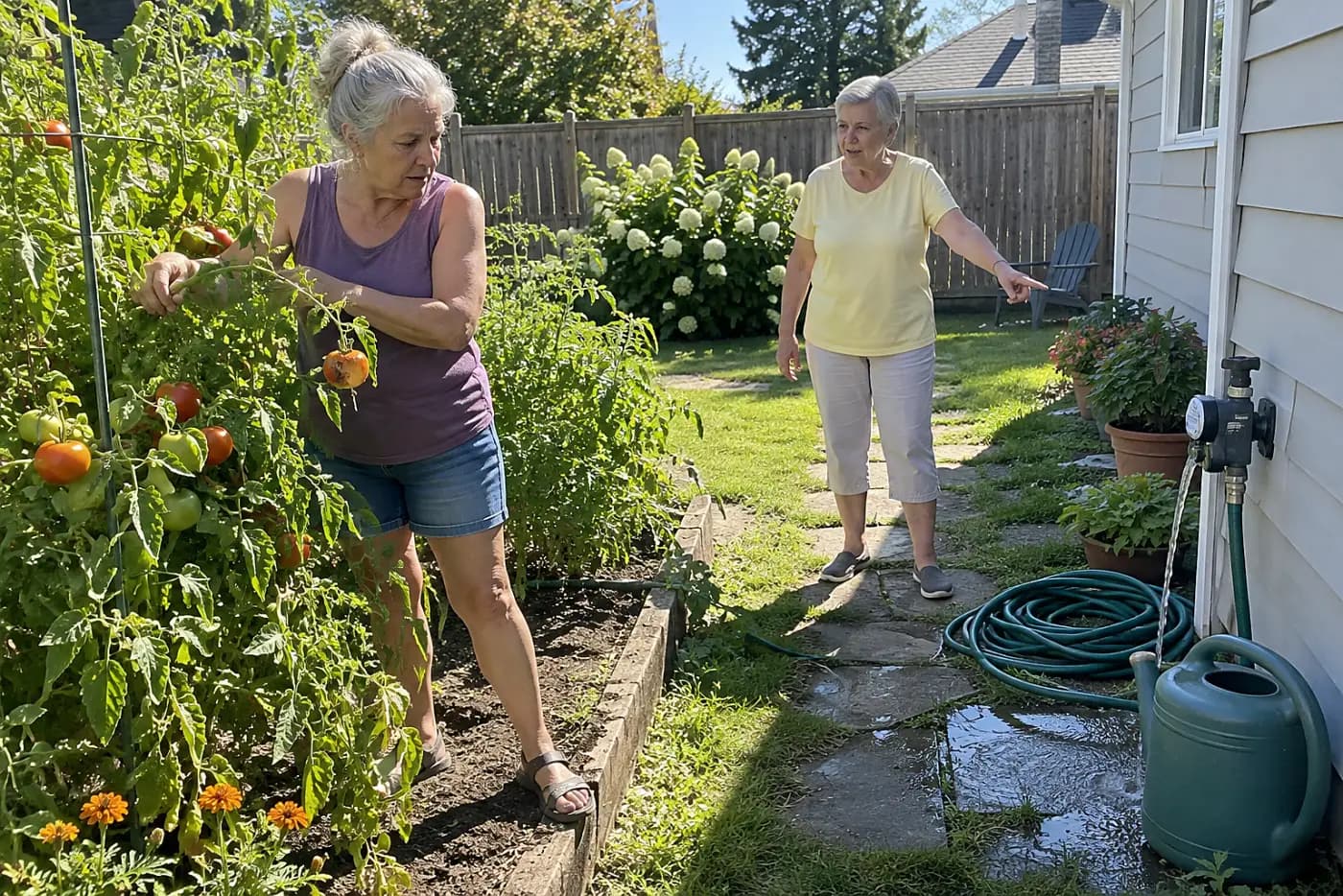
The old garden had a hose that snagged on the gate and a back row you reached by stepping over the beans. You remember the tomatoes, too. There were enough to hand out, freeze, and still find soft ones on the counter. By August, getting to the last row meant moving a cage and watching your footing.
Giving up that ground looks like giving up a harvest. But the work shrinks faster than the pleasure when each plant sits where you can see, reach, and use it. The difference shows up at supper, when you pick what you need instead of facing another basket to sort.
Here are 27 ways a smaller garden gives something back.
27One hose that reaches every pot
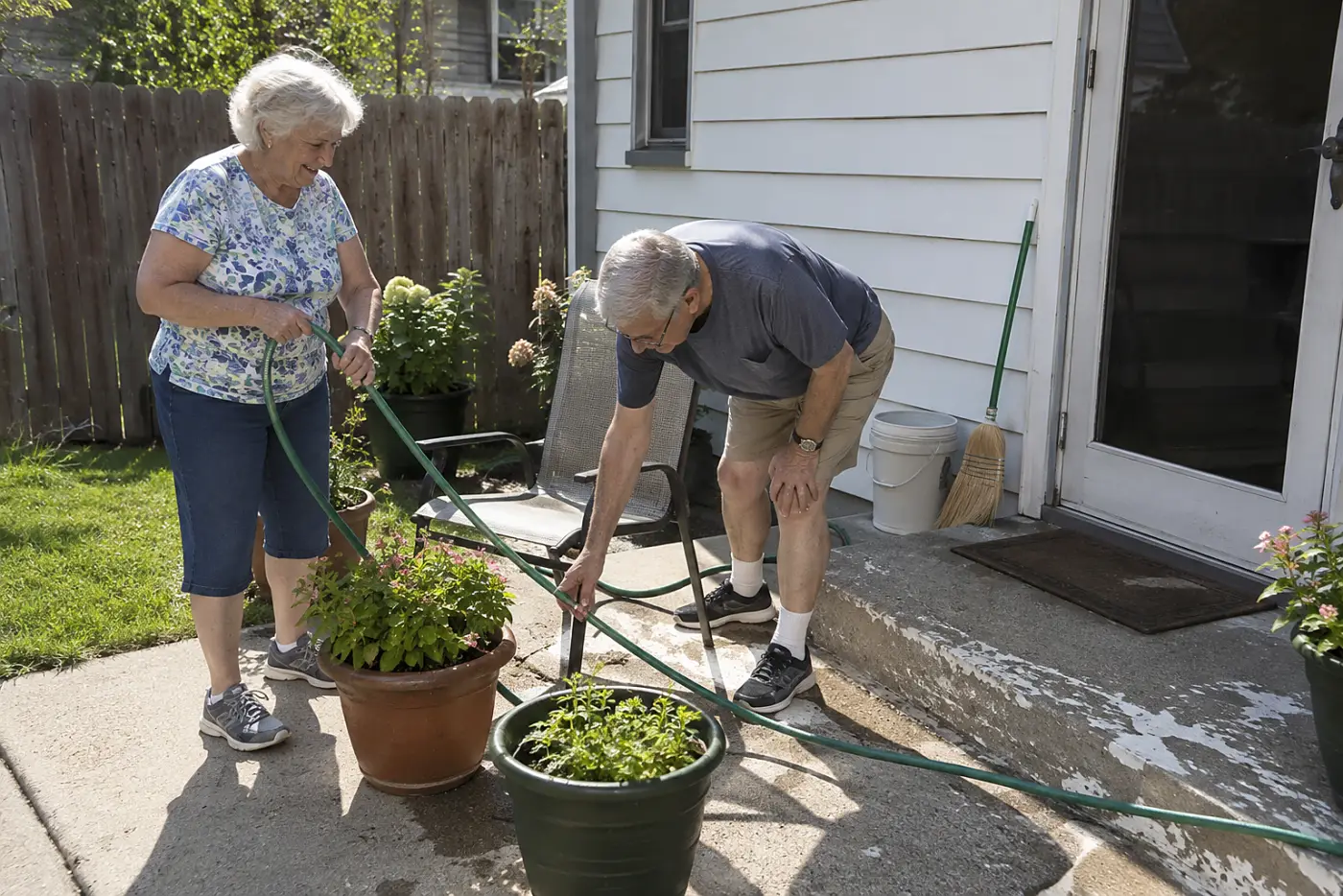
A snagged hose turns a quick watering trip into work.
With a short run, you aim water straight at the soil. Leaves stay drier, and the hose spends less time dragging across stems. Before putting it away, you see which pot still looks dry.
A missed container dries out faster than a missed patch of ground. On a hot day, that forgotten pot holds the basil you planned to cook with.
This week, stretch the hose from the faucet to each pot. Move the farthest one closer, and try the route again with the hose full. Say to anyone sharing the faucet, “Let’s keep this path clear so neither of us has to drag the hose through the plants.”
Then notice what happens when water has nowhere to drain.
26Drainage holes beneath your patio pots
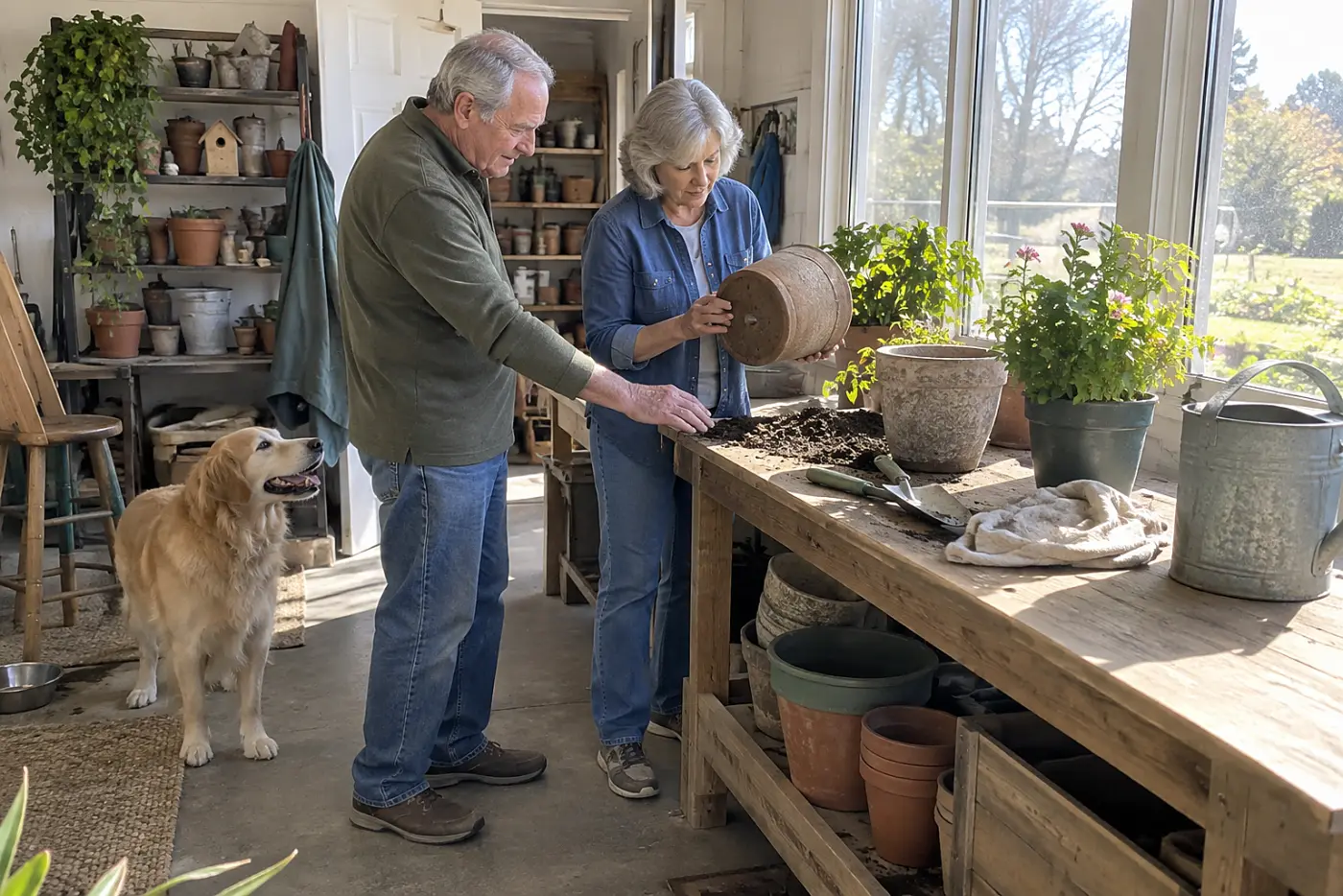
A pretty pot without a drainage hole hides trouble.
Water fills the spaces between soil particles. Roots need air there, so a sealed container leaves them sitting wet. Gravel at the bottom doesn’t replace a hole because water still collects above it.
A garden bed gives rain more soil to move through. Each pot holds its own wet patch, and a plant gives little warning before damaged roots show in its leaves.
Check every container this week. Lift each one, look for an open hole, and clear any blocked by soil or roots. If a planter has no hole, place a nursery pot with holes inside it.
Empty the outer planter after watering. Keep a saucer under a pot that sits on a table or step, and empty that, too.
Drainage is only part of where the water goes.
25A watering can by the back door
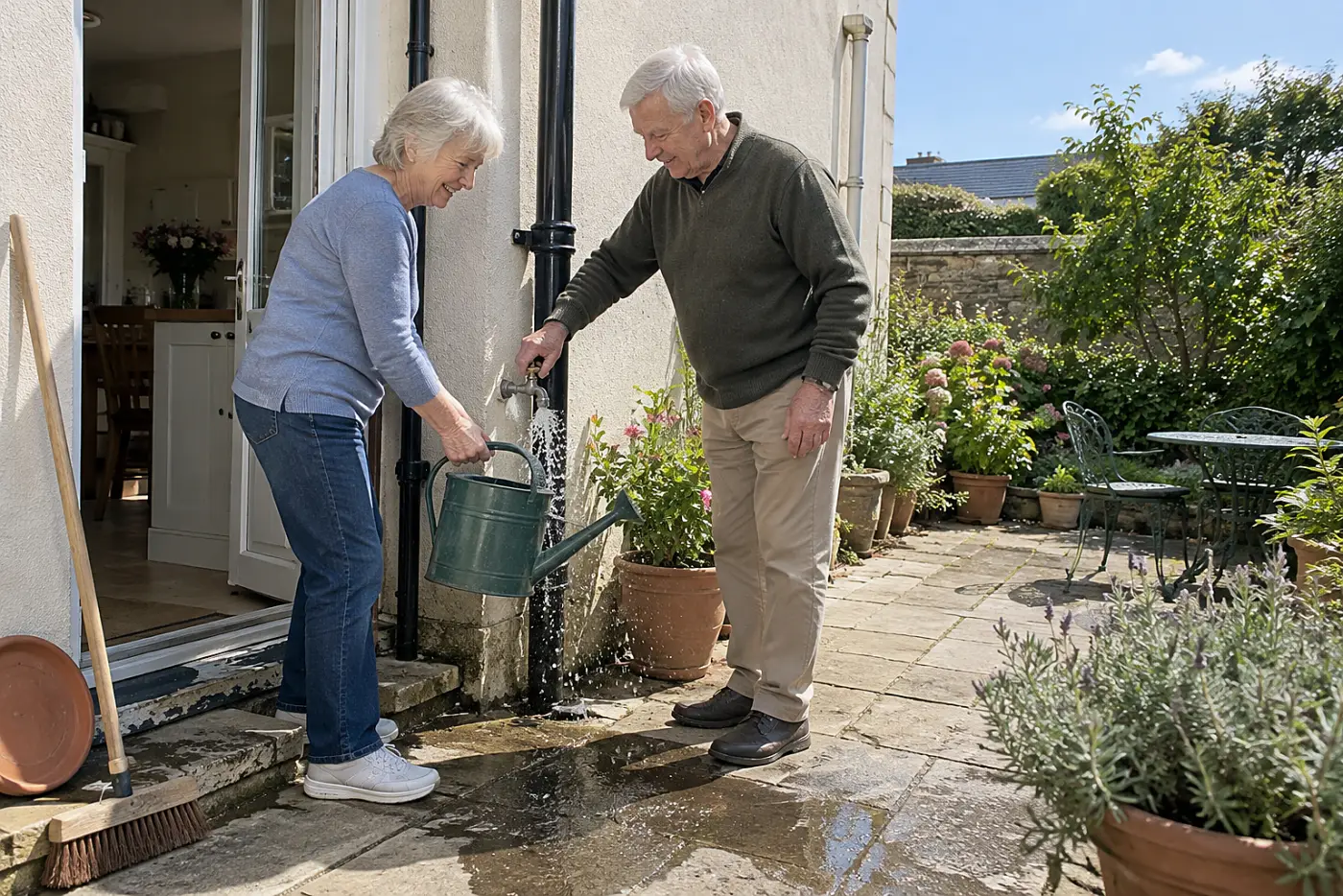
A distant watering can makes one thirsty pot wait.
Fill a manageable can near the door and carry it to the plants that need it. Its spout aims beneath leaves instead of soaking the whole patio. As it empties, the weight in your hand tells you when to refill.
In a sprawling garden, watering starts with moving equipment. Here, a can waits close enough that an empty one catches your eye before the soil gets dry.
This week, choose a can you lift comfortably when full. Set it beside the door and water one pot at a time, stopping when water runs from the drainage hole.
The next saving comes from looking before you pour.
24A finger pressed into potting mix
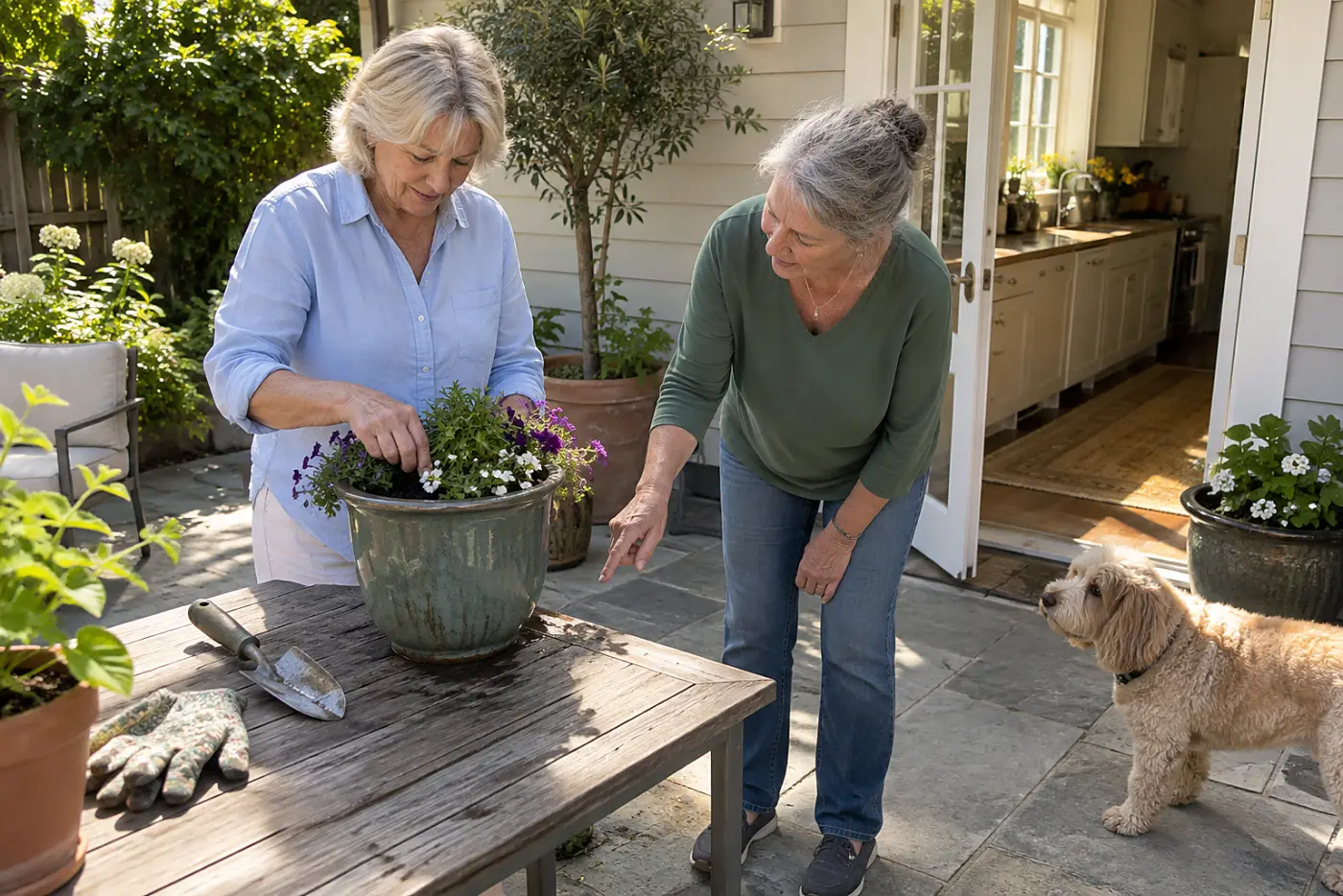
The surface looks dry while roots still sit wet.
Push a finger into the potting mix. If soil below the surface feels damp, wait before watering that container. If it feels dry, water thoroughly and let the extra run out.
Different pots dry at different speeds, even side by side. A calendar misses the rainy day, the windy afternoon, and the parsley tucked behind a larger planter. Treating every pot alike wastes water and leaves some roots wet too long.
This week, test each pot before reaching for the can. Notice which one dries first and which holds moisture. The University of Minnesota Extension’s container gardening guidance pairs soil checks with drainage; try both rather than watering by the date.
Once you know what the soil is doing, look upward.
See more: 23 Things Your Mother's Garden Taught You That Nobody Teaches Now →
23Breakfast and afternoon shade on the patio
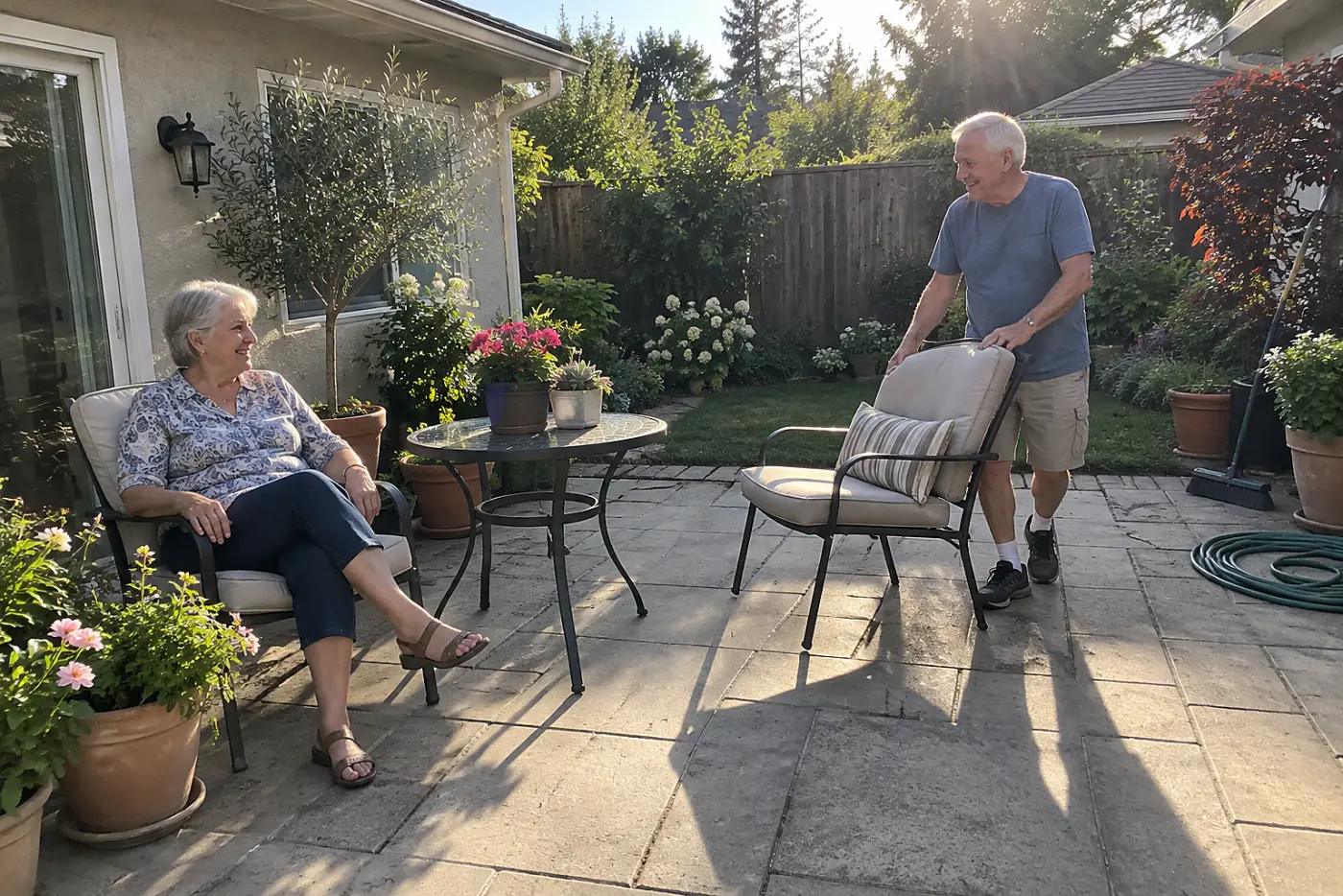
Noon sunlight hides a morning spent in shade.
Sit beside the proposed pots at breakfast and again later. Watch the shadow from the house, fence, or tree move across the patio. One bright lunch hour won’t tell you what a tomato gets all day. Tomatoes need at least 6 hours of direct sun to grow well.
A tomato in the wrong spot is harder to shift after its roots fill a large container. In a small garden, moving that single pot changes its exposure without rearranging a row.
This week, mark the brightest place with a chair. Check it at three different times, then put sun-loving crops there. If someone asks why the chair is outside, say, “I’m watching the shade before I choose a spot for the tomatoes.”
But sun won’t fix a plant bought for the wrong season.
22Seed packets beside the kitchen calendar
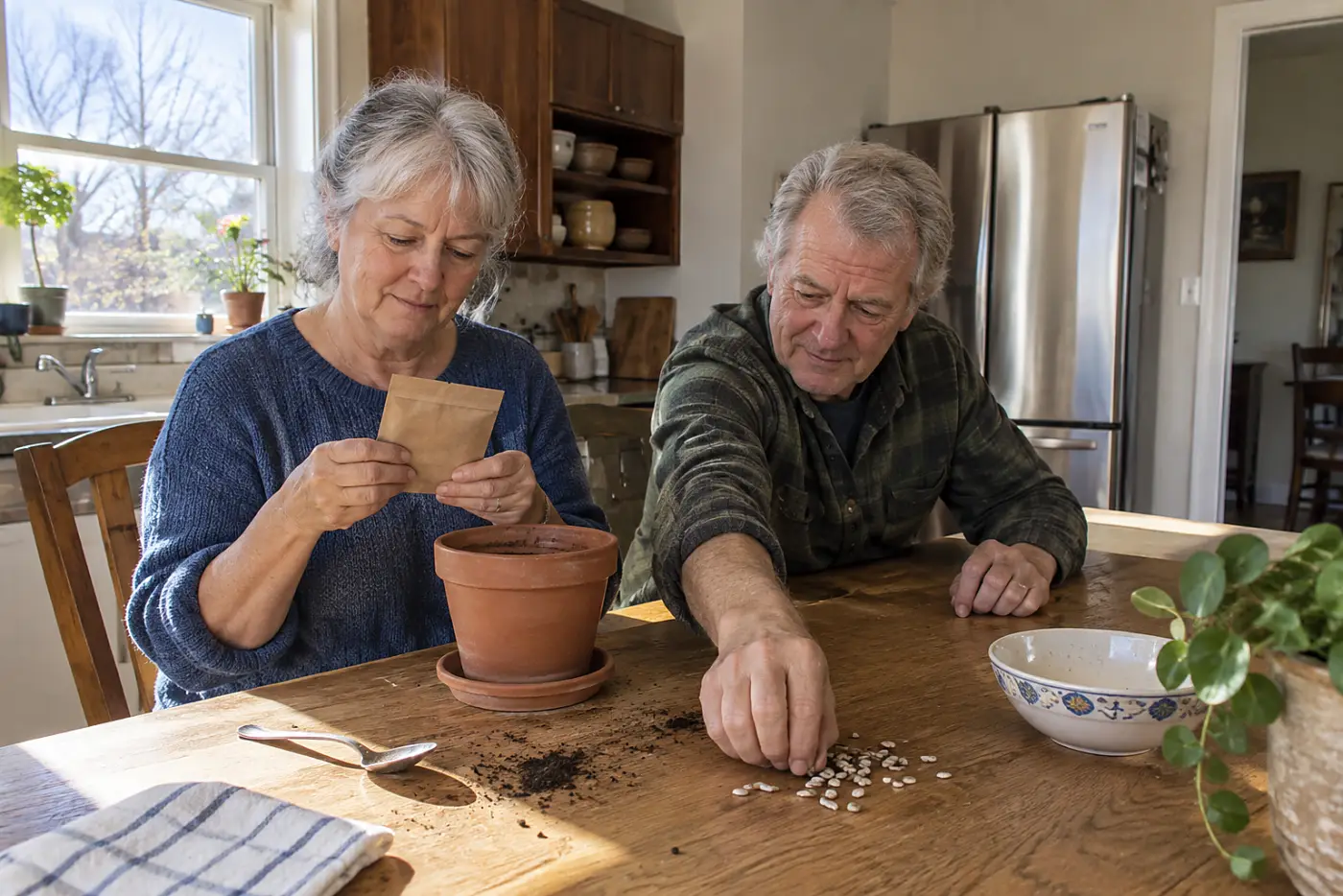
A seed packet keeps the season from becoming a guess.
Find its days to maturity and sowing directions. Count from your area’s expected first fall frost or last spring frost, whichever the crop calls for. Check the planting depth before you cover a seed.
A few seeds in a container let you try a variety without turning over a whole row. Planting the entire packet just because you bought it leaves seedlings competing for a small space.
This week, pick one crop you eat and read its packet before filling a pot. The USDA Plant Hardiness Zone Map tells you about winter cold, not your last frost date. Get that local date from your Cooperative Extension office.
A packet answers when to sow, but supper decides what deserves space.
21A basil pot beside the kitchen door
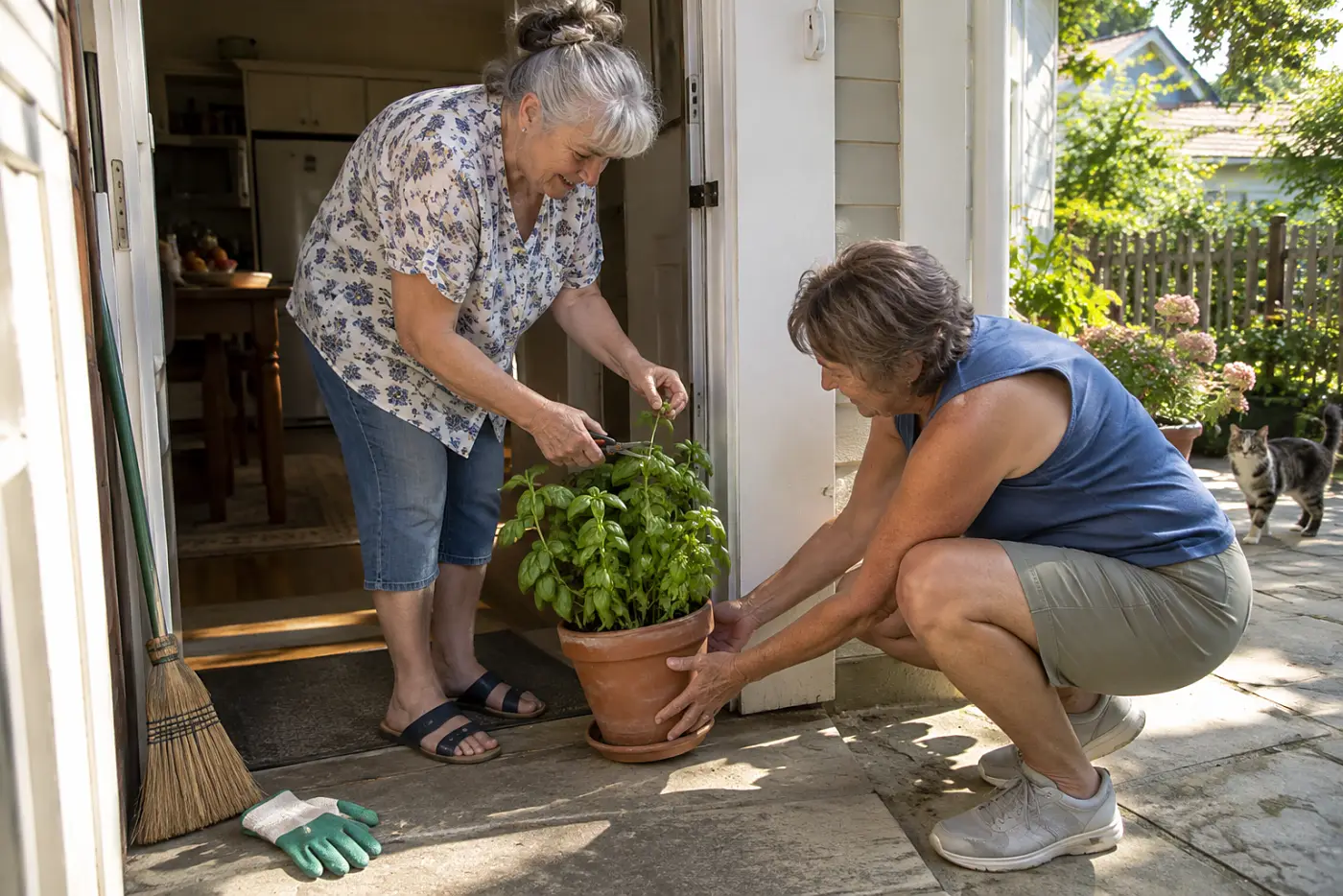
A distant herb bed leaves good leaves unused.
Keep basil where you pass before cooking. Pinch the leaves you need, then look for new growth or insect damage on the same trip. The plant stays in view instead of becoming one more stop outside.
A bunch forgotten in the refrigerator is a waste, however large the harvest. One pot near the door puts supper in charge of how much you pick.
This week, place an herb you use near the kitchen. Snip only what you’ll cook tonight. When someone offers another herb plant, say, “Thank you, but I’m growing what we’ll actually eat.”
That easy reach is worth preserving when you choose what else to grow.
20One tomato variety for your favorite meal
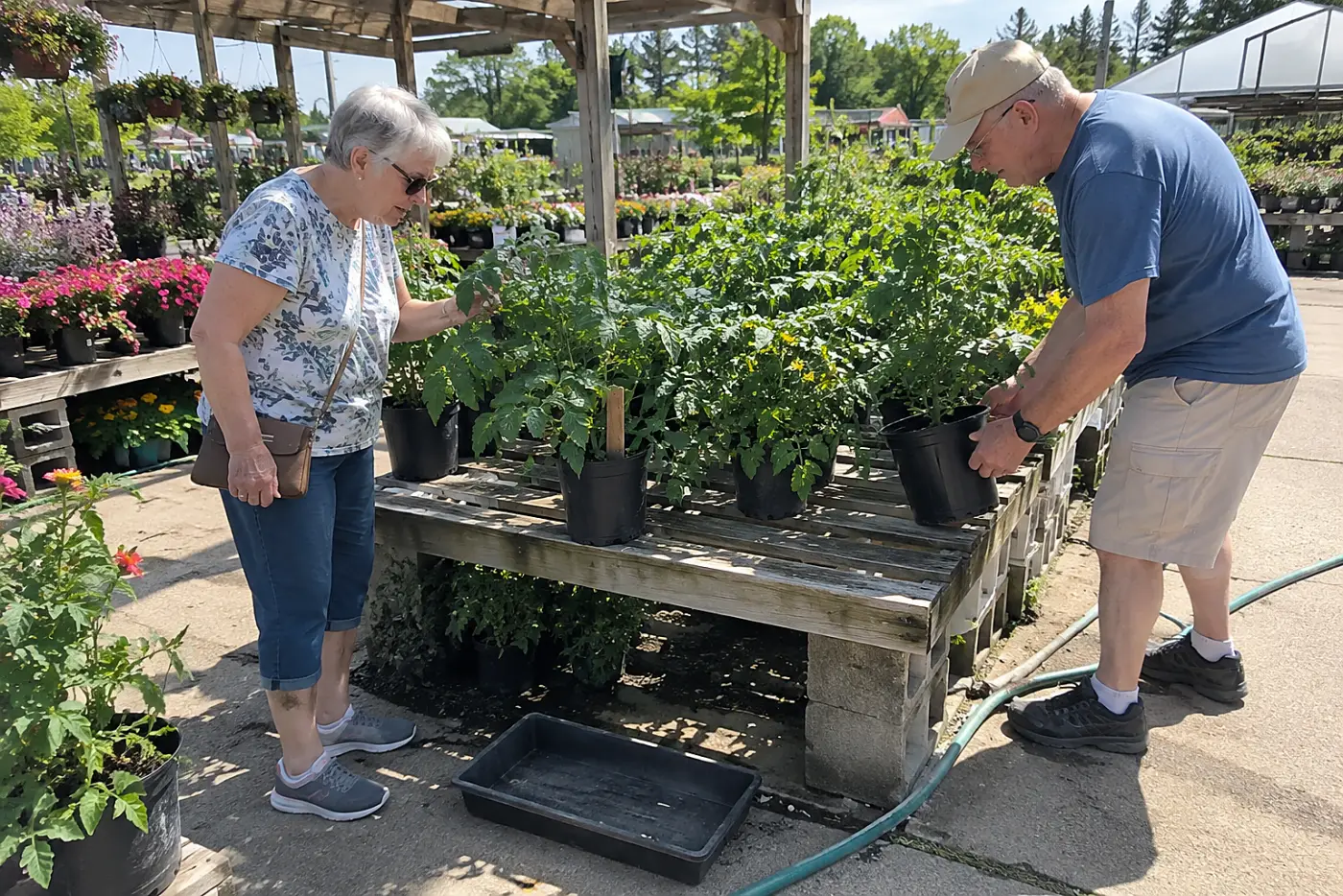
A small space exposes every poor plant choice.
One tomato plant takes up room, light, water, and a support. Choose the fruit you like to eat rather than the number of plants you once grew. A compact variety suits a container; its tag lists its expected size.
The old garden gave an experiment an entire row. In this one, a plant whose fruit nobody eats takes the place of one you’d enjoy picking.
This week, write down the tomato you enjoyed most last season. At the nursery, look for that variety or one meant for the same use, such as slicing or sauce. Say to the person helping you, “I have room for one plant; which tag shows a size that fits this pot?”
For help telling compact growth from sprawling growth, see the University of Maryland Extension. Read the plant’s tag, too, before choosing a cage.
Good choices save space. So does leaving room around them.
19Space between two full-grown plants
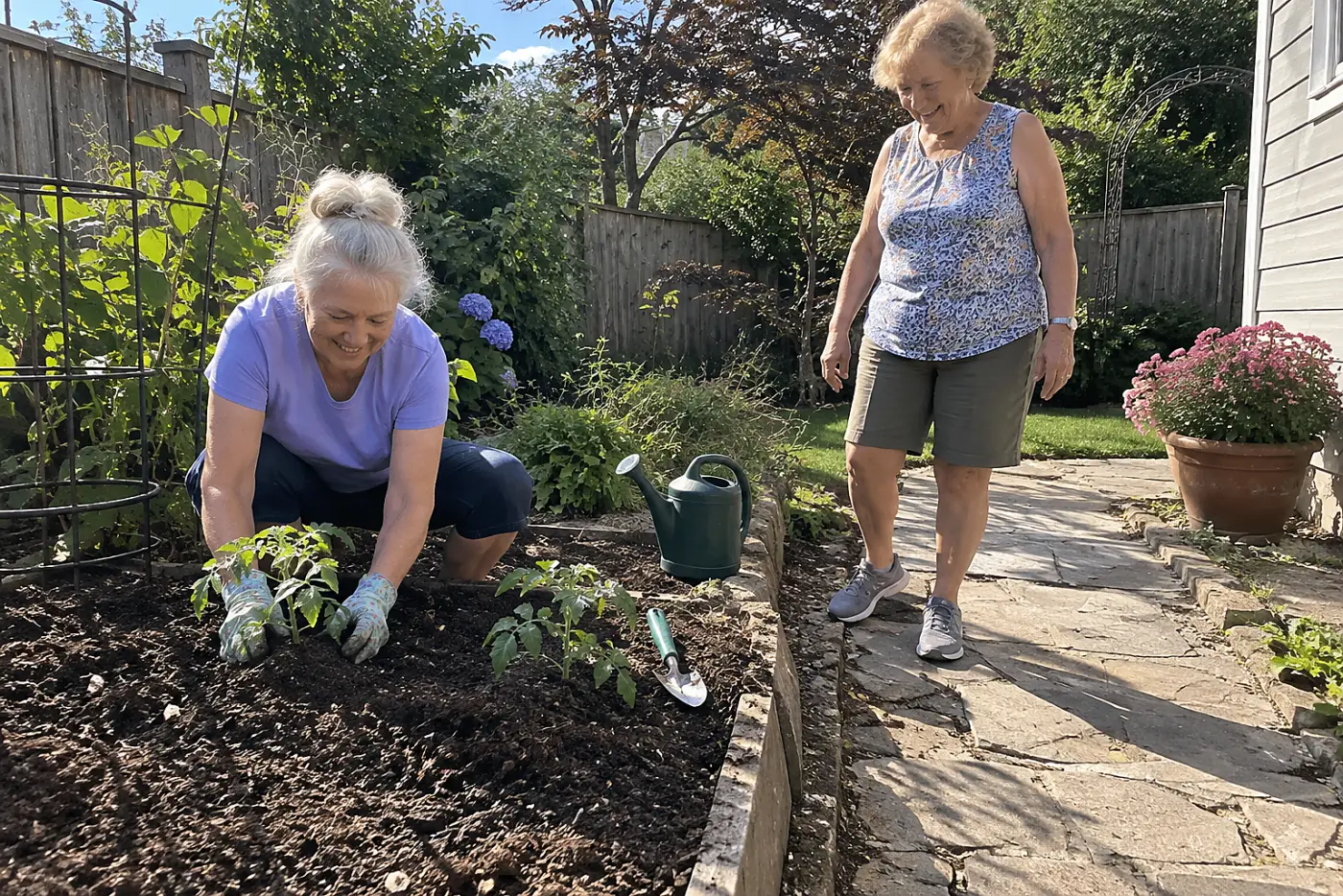
Crowded leaves hide problems from your eyes.
Read the mature width on each plant tag before setting pots or seedlings in place. Then leave enough space to see the lower leaves and reach fruit without pushing through growth. Light and air need a route between the plants, too.
In a tiny bed, one sprawling plant shades its neighbor. You lose the clear view that makes a small garden easier to tend.
This week, place the plants without digging holes. Step back, compare their tag widths, and move them apart while moving them is easy. Tell a planting partner, “Let’s leave room for these when they’re full-grown, not just today.”
The open space also gives your hands a place to work.
18Clean pruners beside the back door
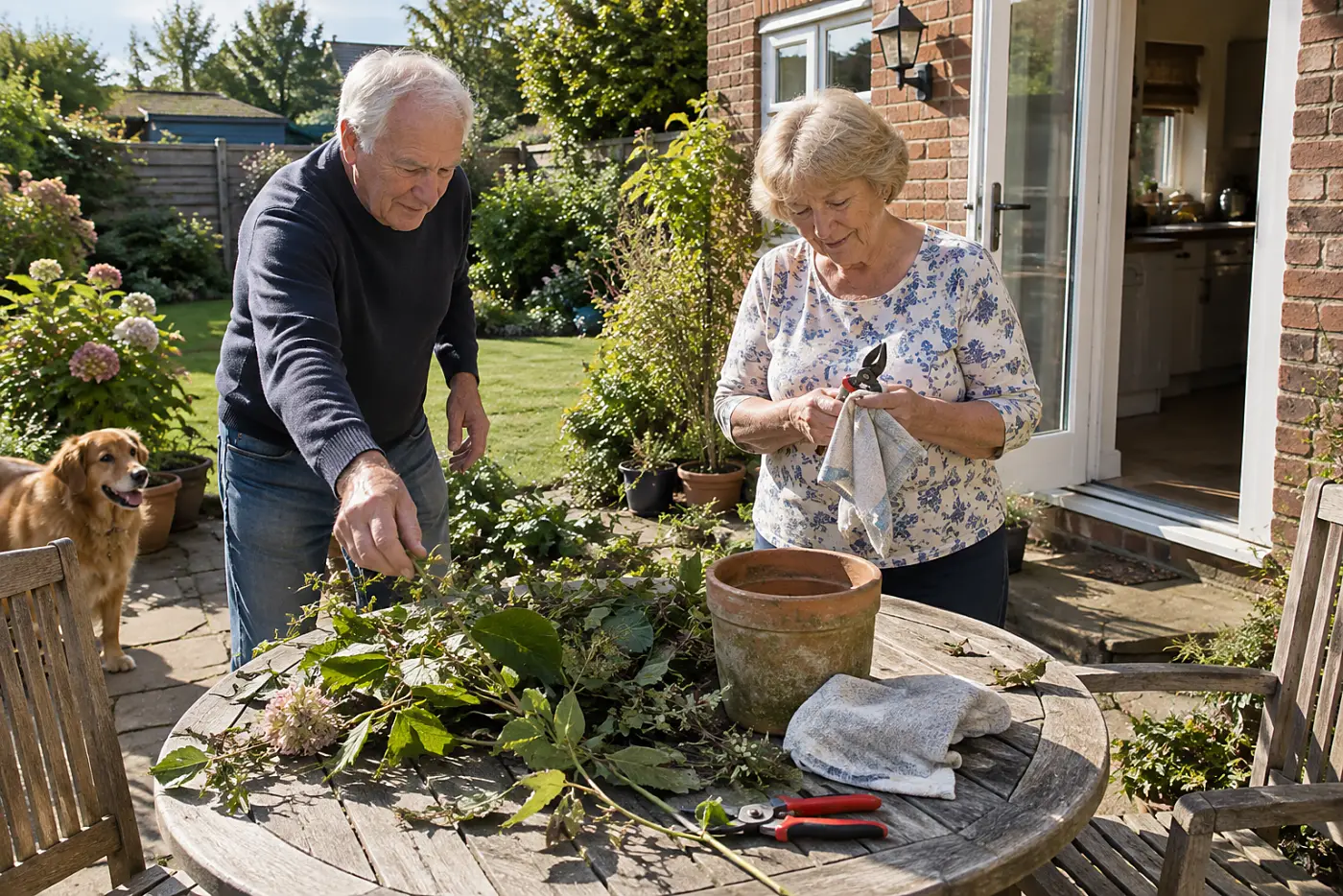
Lost pruners steal time from a five-minute job.
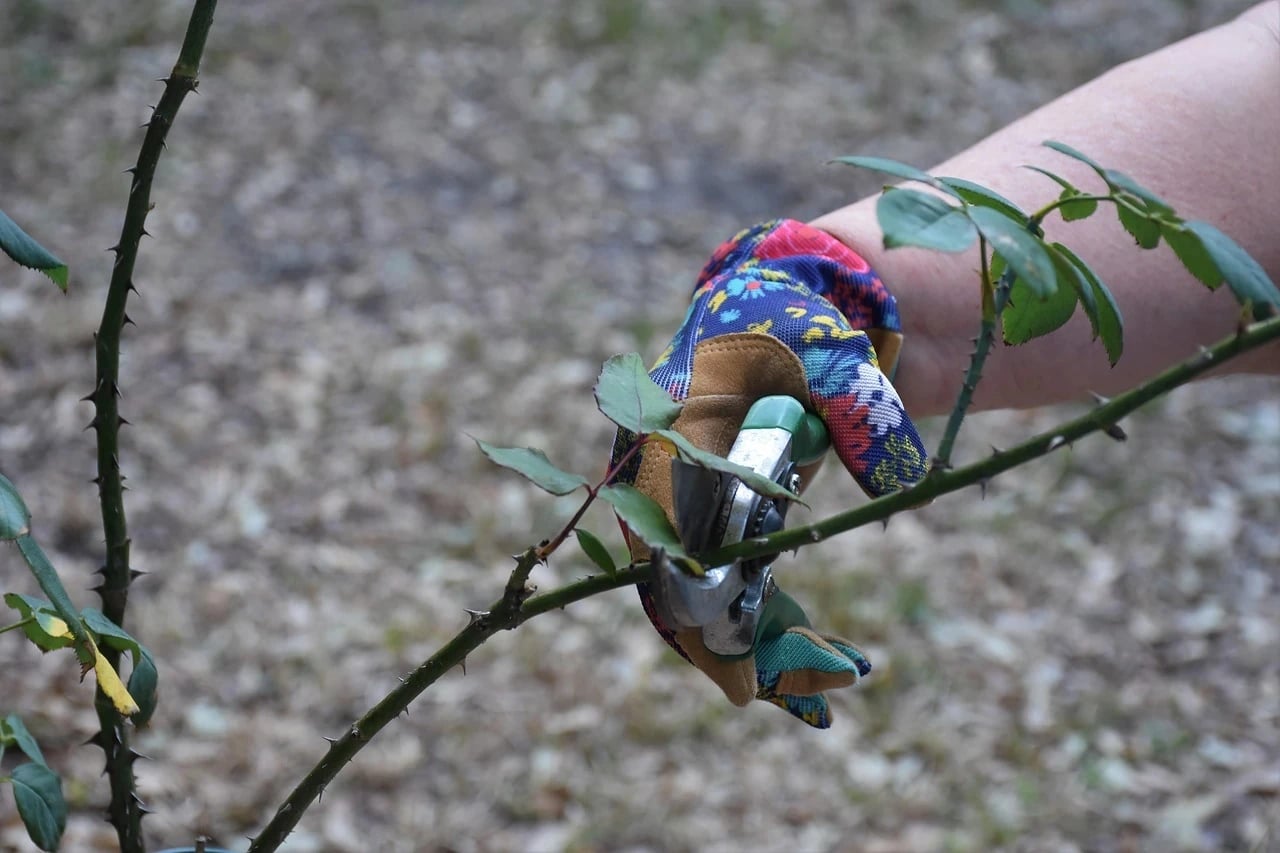
Keep one pair by the door. When you pass a dead stem or spent flower, the tool is there instead of buried in the shed. After cutting diseased growth, clean the blades before using them on another plant.
A large yard makes tool storage feel like a system. A small garden gives you a shorter trip from noticing damage to dealing with it. The difference disappears if your pruners live wherever you last set them down.
This week, choose one storage spot and return the pair after each use. Try the blades on a small stem; sharpen or replace them if they crush it. Say to anyone who borrows them, “Please put these back by the door.”
For advice on what to cut, check the University of Wisconsin-Madison Extension’s gardening resources. Your short walk takes care of the rest.
And there’s another bulky supply you no longer need much of.
17A small bag of potting mix
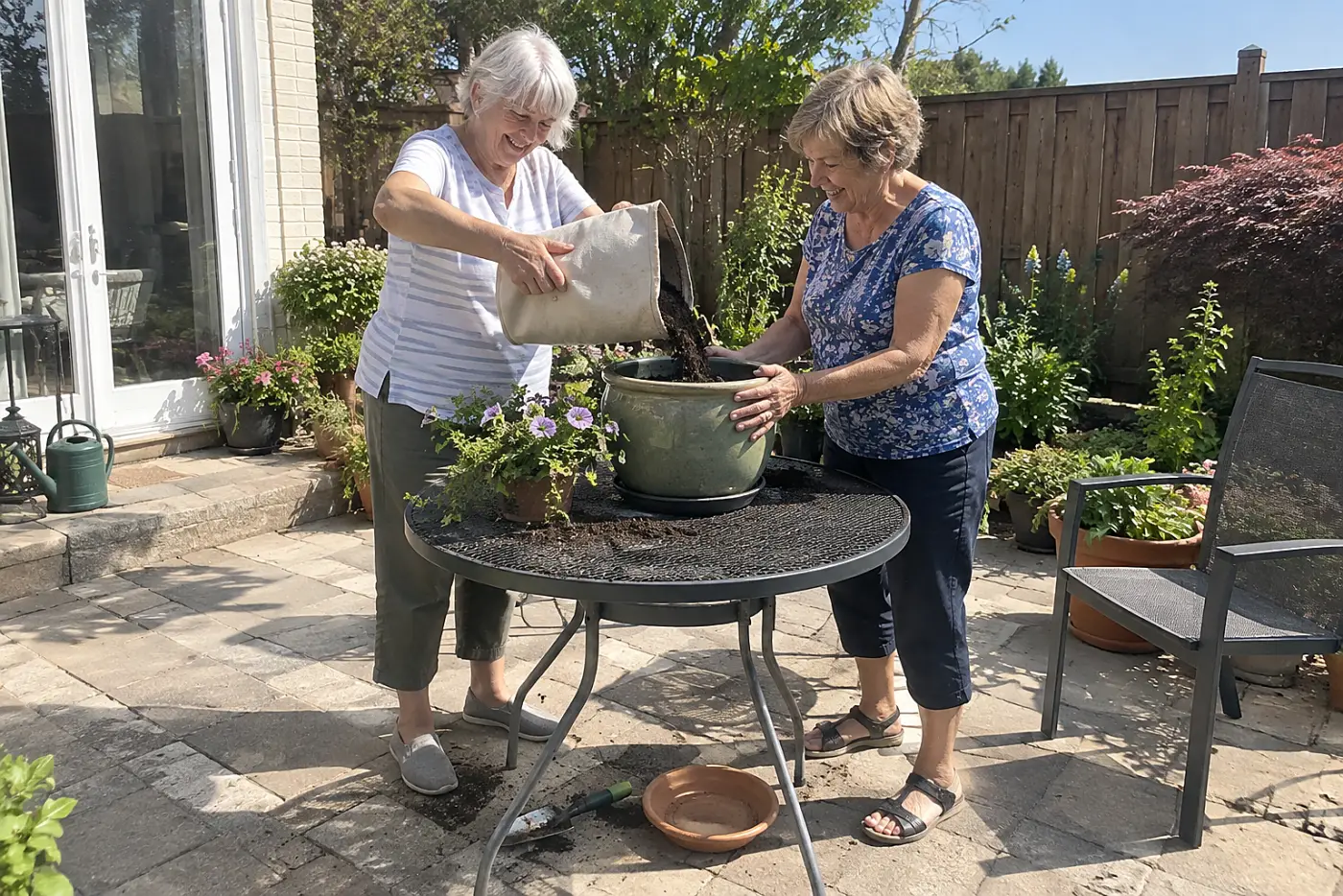
An oversized bag becomes one more thing to store.
Containers need mix made for pots. Garden soil packs down in a container and drains poorly. A smaller bag is easier to carry, close, and keep dry between plantings.
The big beds once needed loads of soil. Now the containers in front of you set the amount to buy, so an open bag needn’t sit through a season of rain.
This week, check how many pots you’re filling before you shop. Read the bag, choose potting mix for containers, and close what remains. Keep it off wet ground.
A pot that drains well still needs a place for runoff to land.
16A saucer under the patio planter
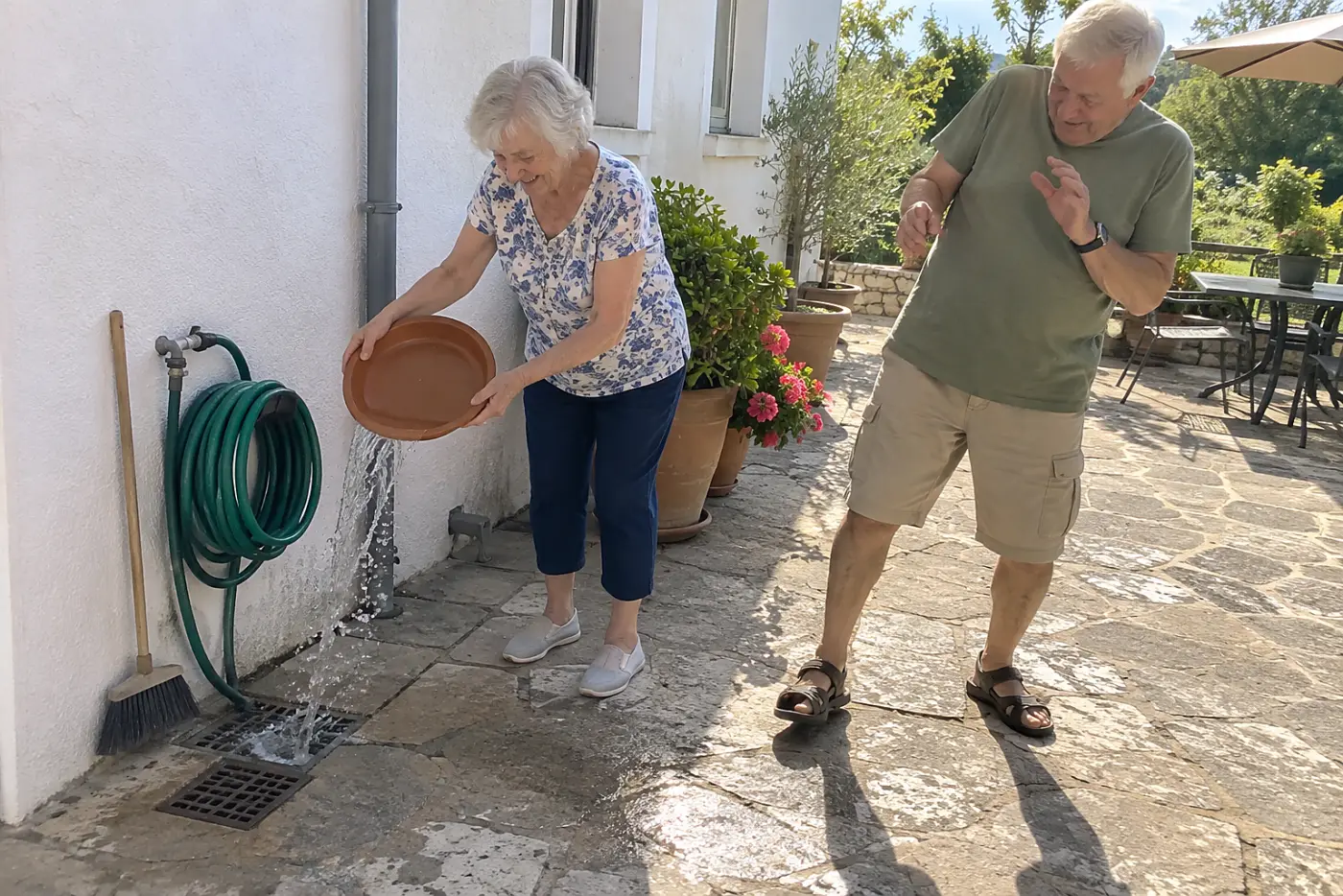
Water under a pot has to go somewhere.
A saucer catches runoff before it reaches a table or a neighbor’s space. Empty it after the pot drains so the base doesn’t sit in water. On soil, watch whether runoff washes earth away from the pot.
A small garden puts each container’s footprint in plain sight. That matters beside a doorway, where a puddle and a pot both compete with your walking route.
This week, water each pot and follow the runoff. Add a saucer where you need to catch it, then empty it when drainage stops. Say to anyone sharing the patio, “I’m moving this pot so we both have a clear path.”
For a closer look at water moving across a surface, see the EPA’s rain garden guidance. One planter shows you where that water ends up.
Once the ground beneath the pots is sorted, inspect what grows there uninvited.
15A weed pulled before it flowers
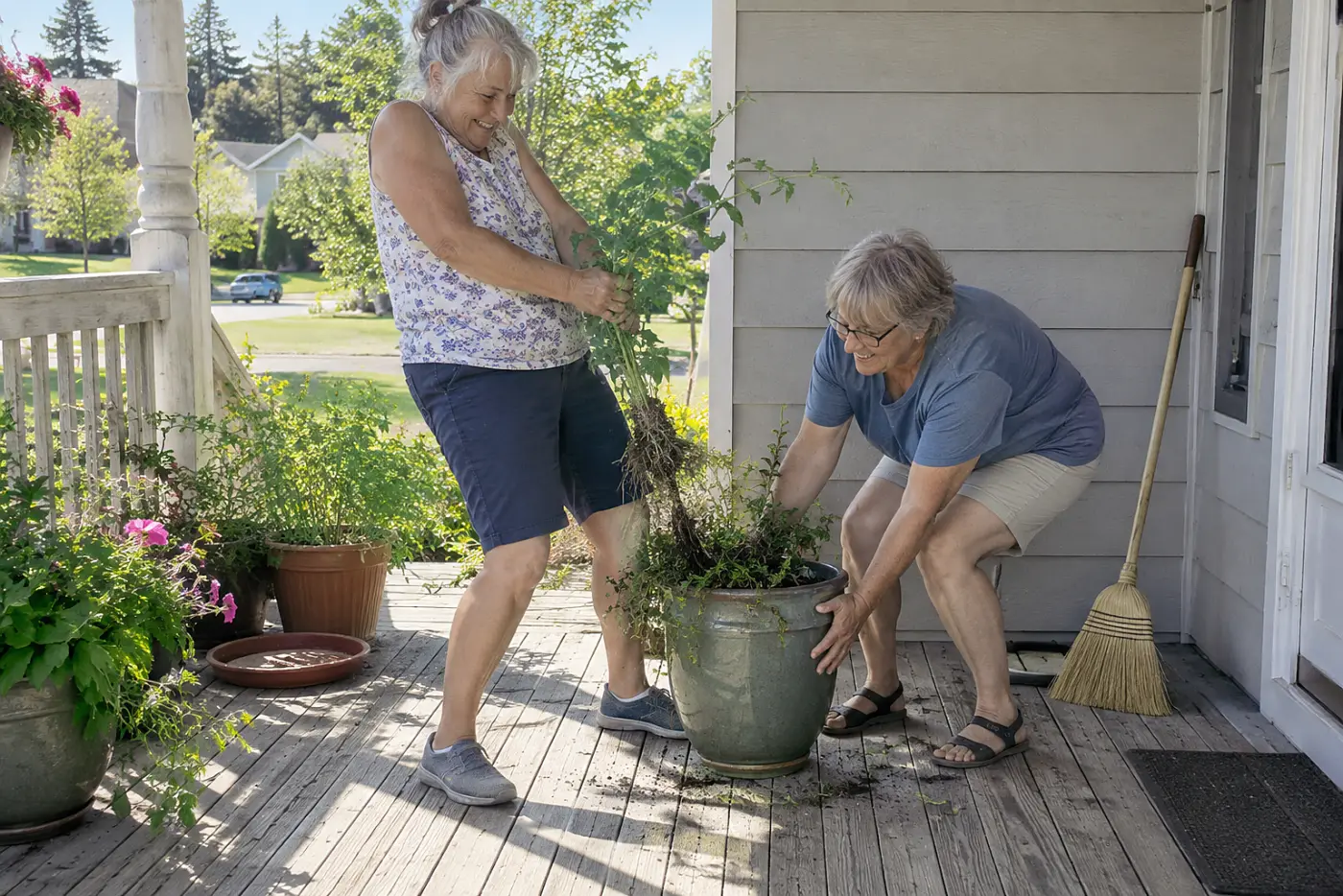
A small weed is easiest to remove now.
Pull it from damp soil, gripping near the base. Take out the root, then check the soil you disturbed.
One weed is visible in a few pots. Leave it until it seeds, and next season brings more pulling.
This week, walk the garden with a bucket. Pull what you recognize as a weed, then look twice at unfamiliar sprouts.
Some arrivals deserve a pause before the bucket claims them.
14A volunteer seedling in a spare pot
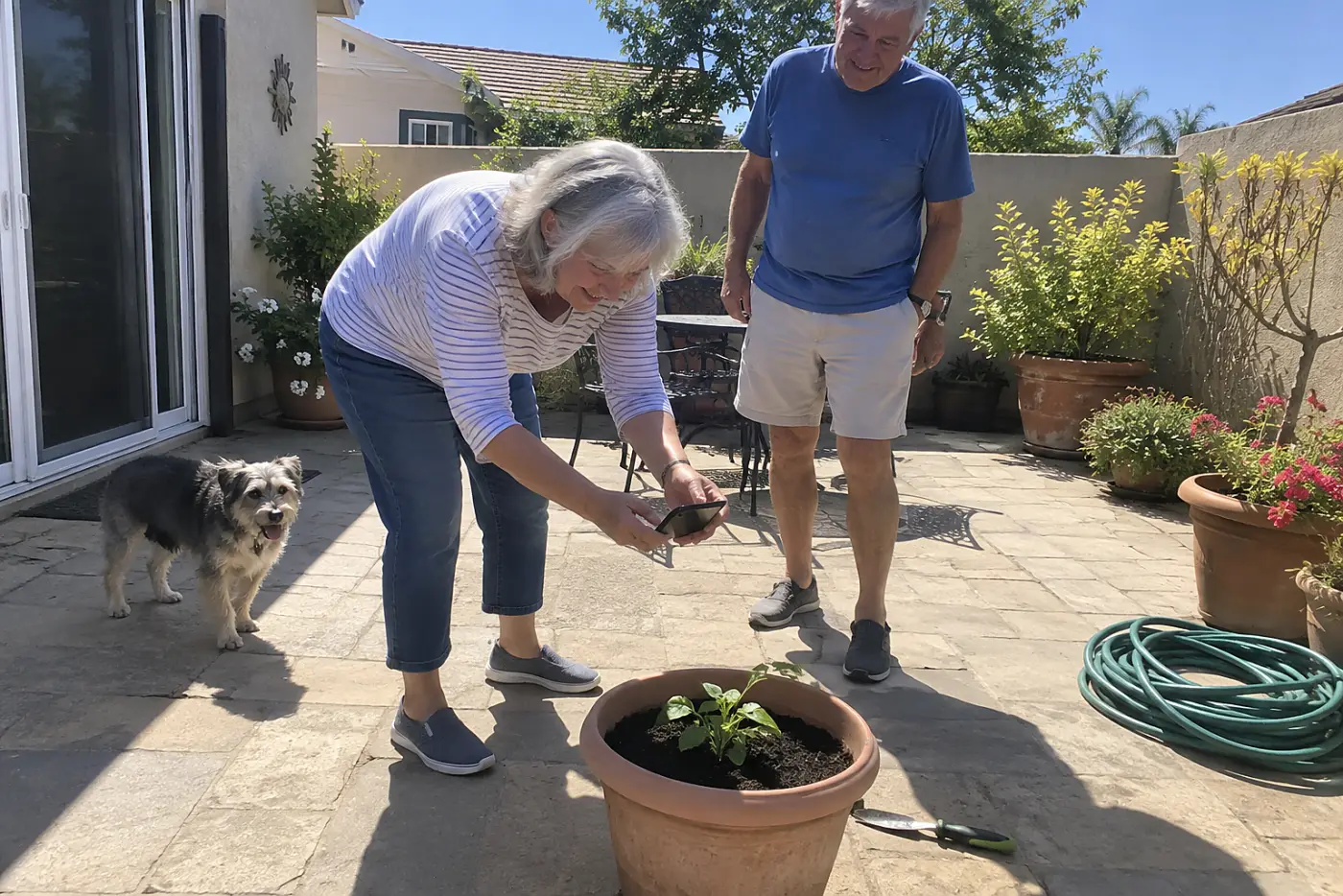
Not every unplanned sprout is a weed.
A fallen tomato or a spent flower leaves seed behind. Identify the new plant before deciding whether to keep it. If its spot is crowded, move it while it’s small into a spare pot.
A big garden hides arrivals among rows. In a little patch, one sprout is easy to watch without letting it swallow its neighbor. That close view is a pleasure, but an unknown seedling doesn’t belong on your plate.
This week, photograph one unfamiliar plant and note where it appeared. Ask your Cooperative Extension office for help if you can’t identify it. Say to anyone eager to taste it, “Let’s find out what it is first.”
The USDA PLANTS Database has plant descriptions and images. Seedlings still take care to identify, so keep unknown plants out of the kitchen.
The same decision about space applies to plants you paid for.
13An empty pot on the shelf
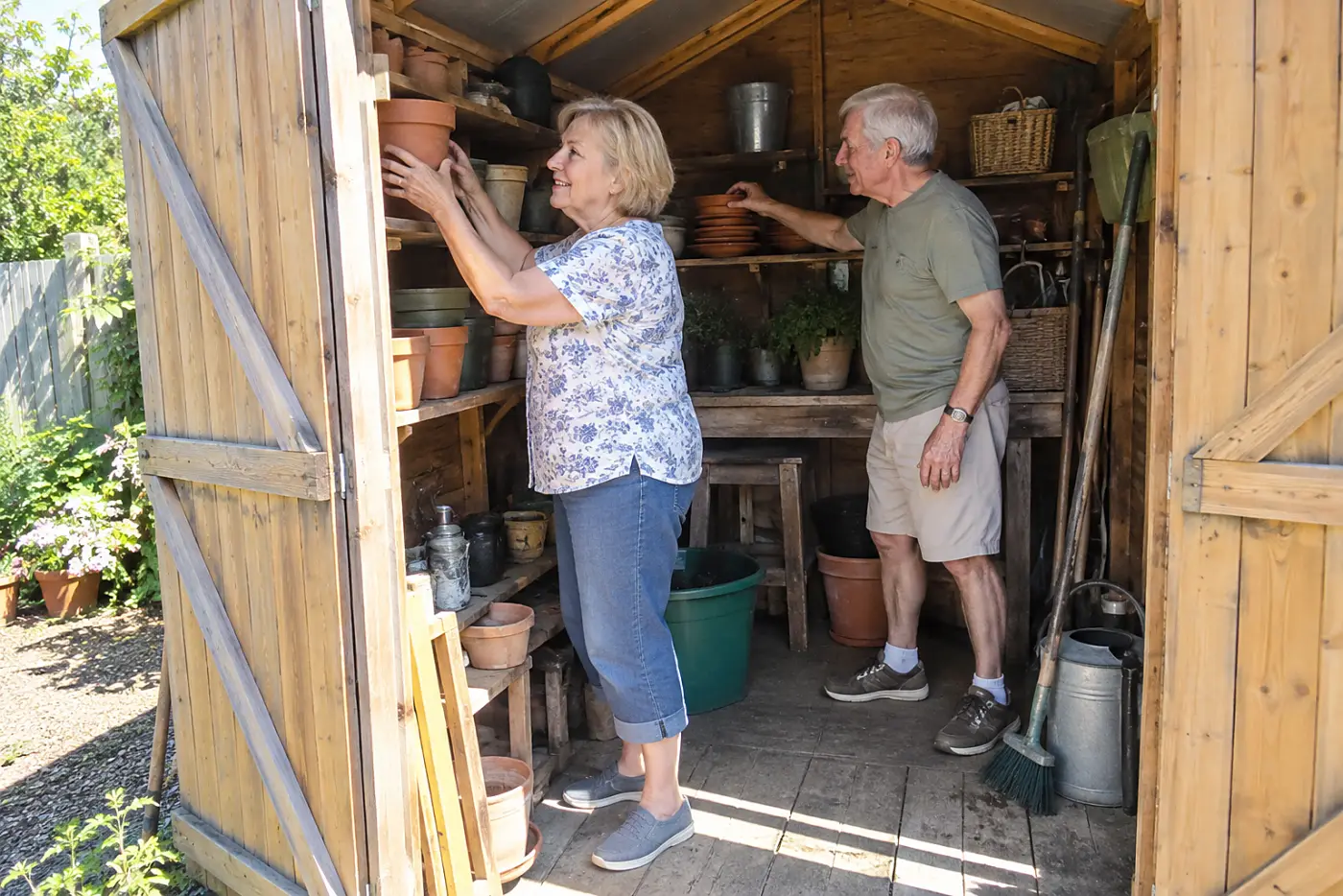
An unused pot does not need rescuing.
Every planted container asks for water and light. An empty one gives you room to move a struggling plant later.
Bare ground once looked like unfinished work. Here, spare space belongs to you.
This week, clean one pot and leave it unplanted. Put it within reach, then wait for a plant worth moving into it.
That pause makes the plants you keep easier to inspect.
12The underside of a single leaf
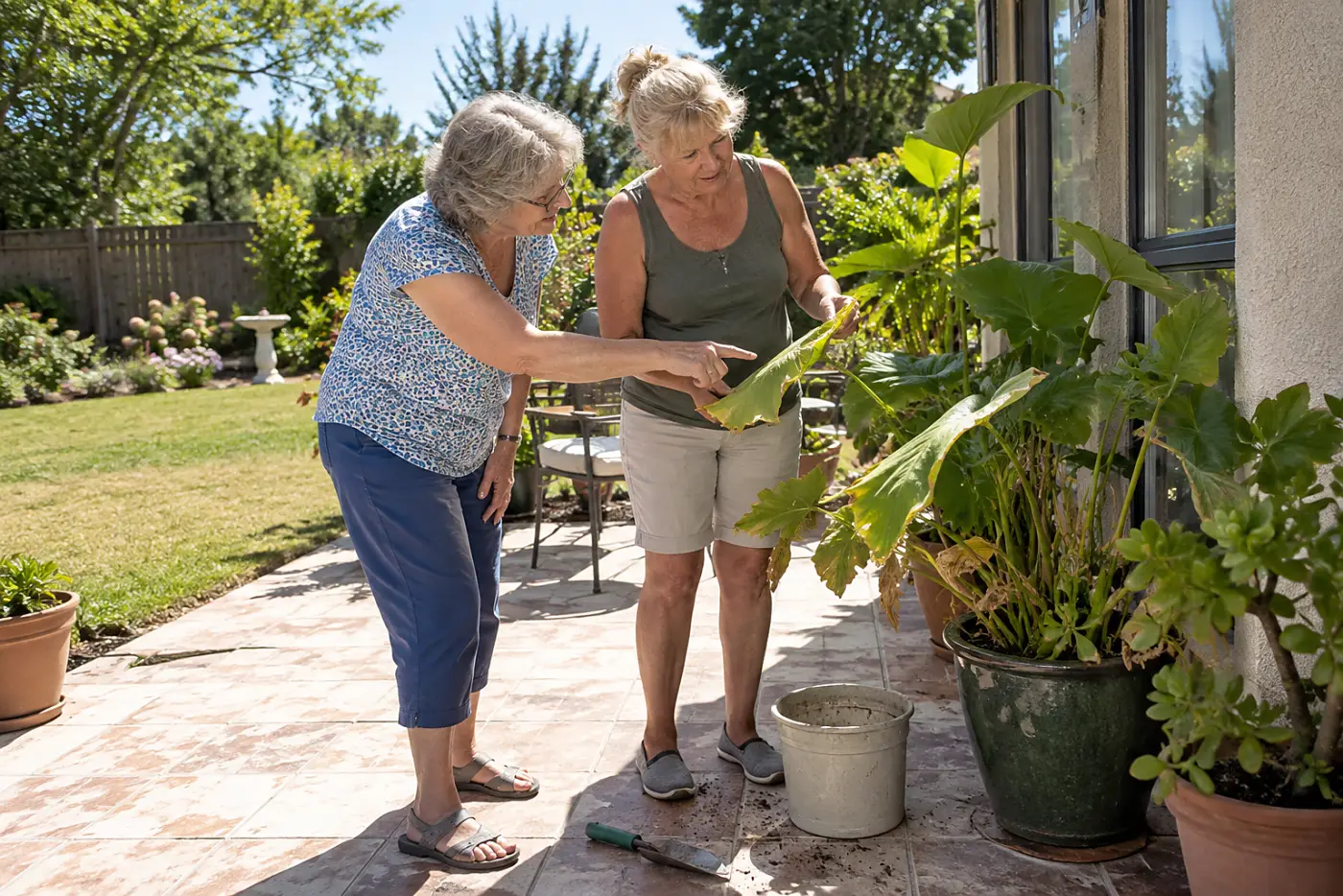
Trouble starts where a quick glance misses it.
Turn over one leaf as you pass. Look for insects, eggs, or speckling, then compare nearby leaves. Finding a problem on one plant gives you a place to start instead of treating every pot.
You know what healthy leaves look like when you see them each day. A change stands out without the long inspection a row of plants once demanded. Spray before identifying an insect, though, and you risk hitting useful visitors.
This week, inspect three leaves on one plant, including their undersides. If you find an insect, identify it before treating anything. Ask a gardening friend, “Does this look like the insect causing the damage, or just one passing through?”
The UC Integrated Pest Management program has pest photos and guides. Match what you see on the plant before choosing a response.
The next visitor gives you another reason to look closely.
11One bloom visited by a bee
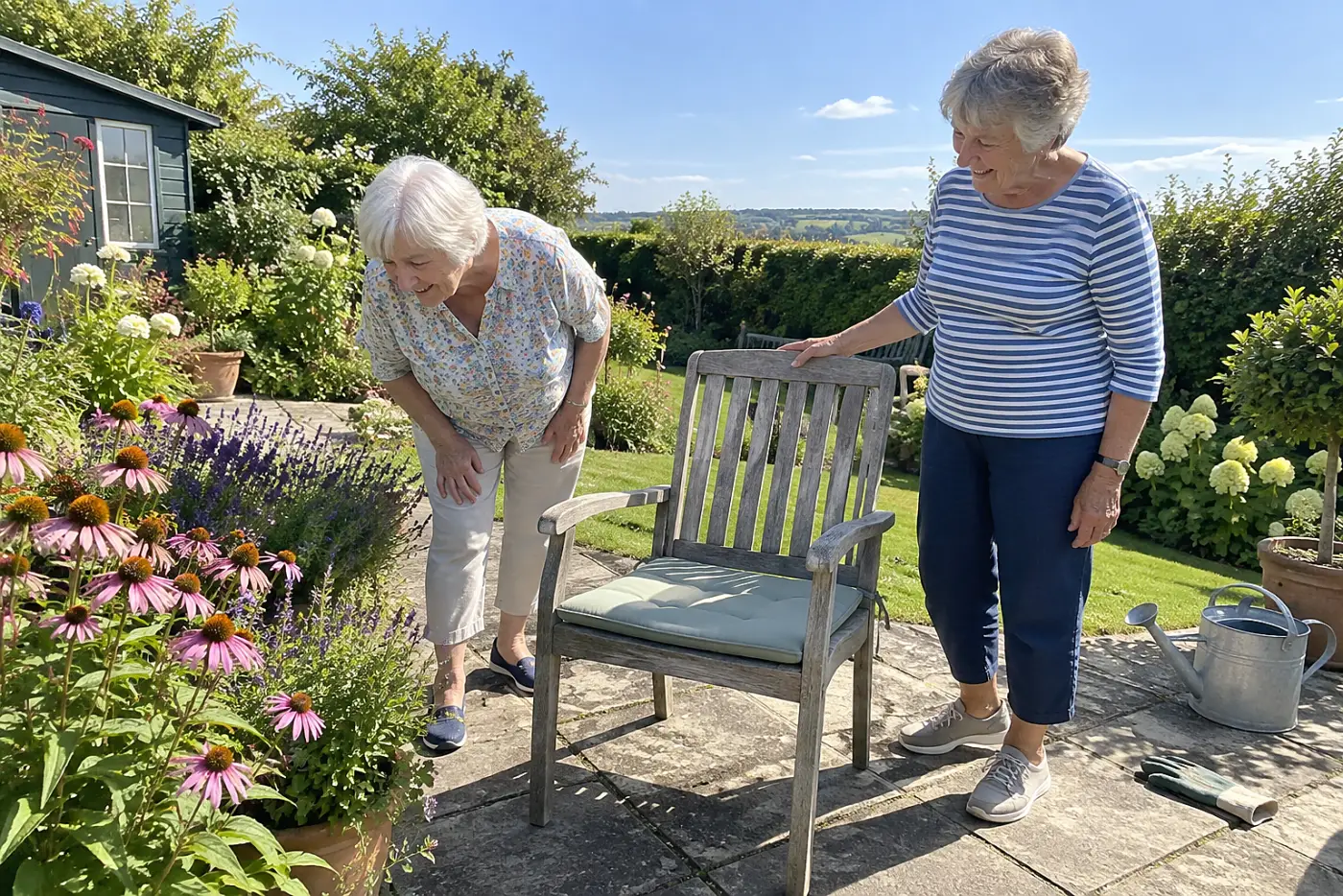
A single bloom shows you who has arrived.
Watch it for a minute without reaching in. Bees and other insects carry pollen between flowers as they feed. From a chair beside a small bed, you see that traffic without searching a long border.
A flower you once overlooked becomes part of the harvest story. Pull every bloom to tidy the space, and you lose the chance to see who used it.
This week, sit near a flowering plant and watch which blooms get visits. If someone asks why you’re watching, say, “I want to see who comes before I cut the flowers.” The USDA Forest Service’s pollinator pages put names to the work you see.
Then consider what stays after those blooms fade.
10One dry flower head left standing
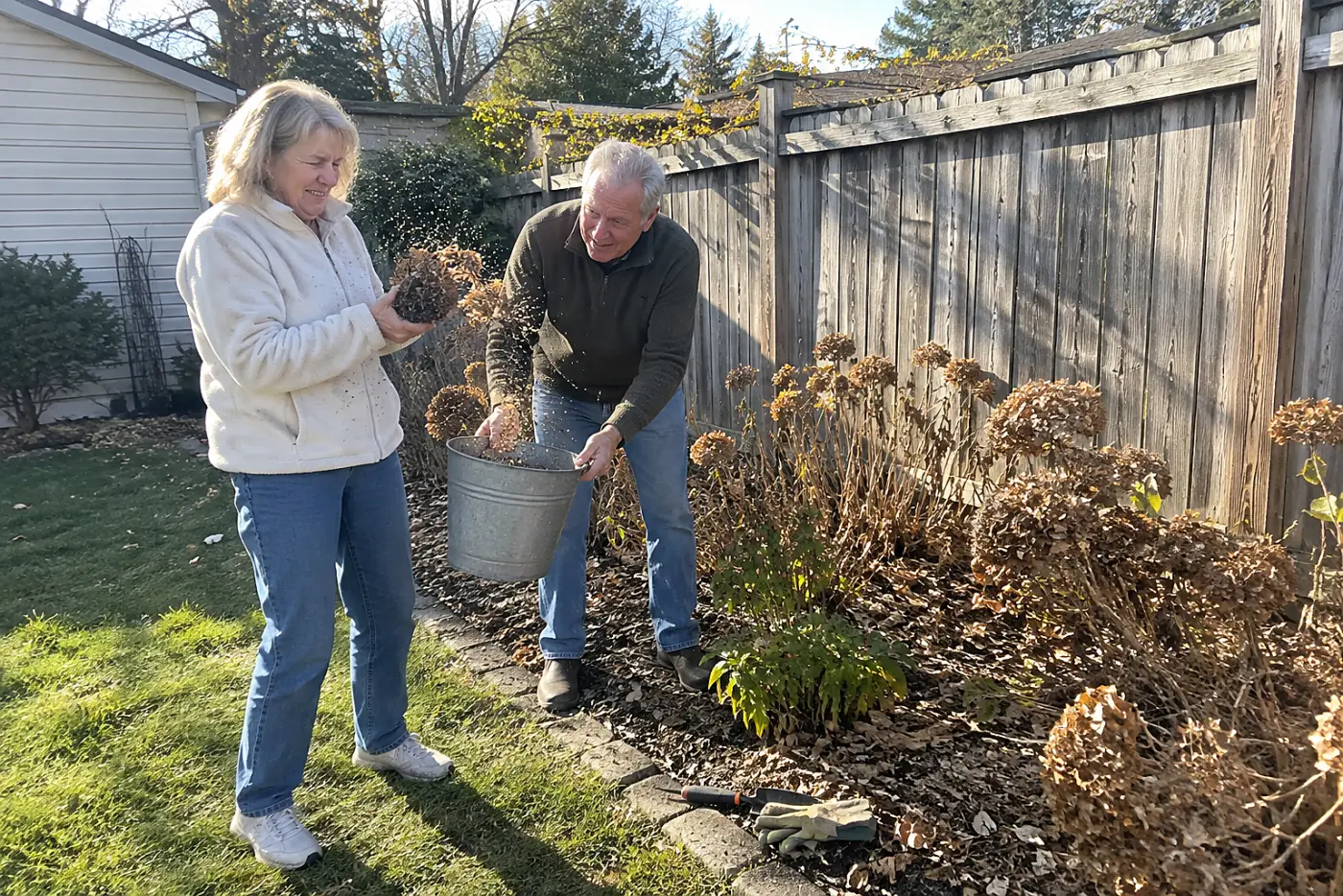
Tidiness erases the next season too early.
Leave a healthy flower head after its petals fade. Seeds form there, and some drop near the parent plant. You get to watch what returns without letting the whole garden go to seed.
A big border holds countless spent stalks. In a small bed, you choose one worth keeping and recognize it when you pass. Cut it too early, and there’s no seed to save or watch fall.
This week, mark one flower you want back. Let its head dry, then check for mature seeds before cutting it. Label any seeds you keep with the plant name.
For ideas about plants tied to local wildlife, see the National Wildlife Federation’s Native Plant Finder. Your own bed supplies the close-up view.
Still, a plant that returns isn’t welcome everywhere.
9A mint pot away from the bed
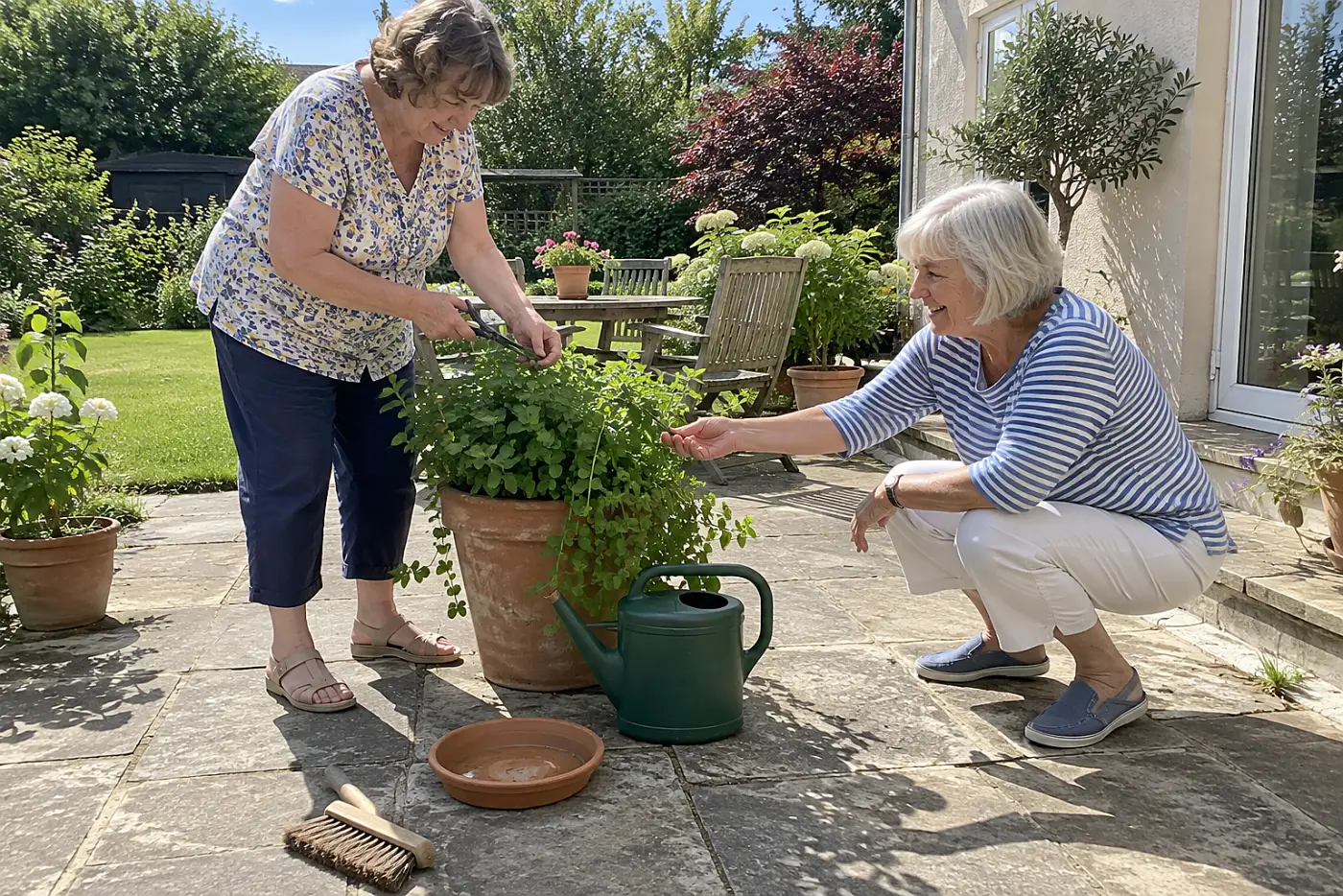
Mint does not respect the edge of a bed.
Its stems spread and root where they touch soil. A pot puts a boundary around the roots, while a quick trim stops trailing stems from settling elsewhere. You still pick a few leaves without searching through a patch.
In the old garden, mint had room to become a removal job. Here, its pot tells you exactly where to look for escaping growth.
This week, put mint in its own container with a drainage hole. Set it where you use the leaves, and trim any stem reaching the ground.
The same boundary helps with the time you spend outside.
8A five-minute circuit past every plant
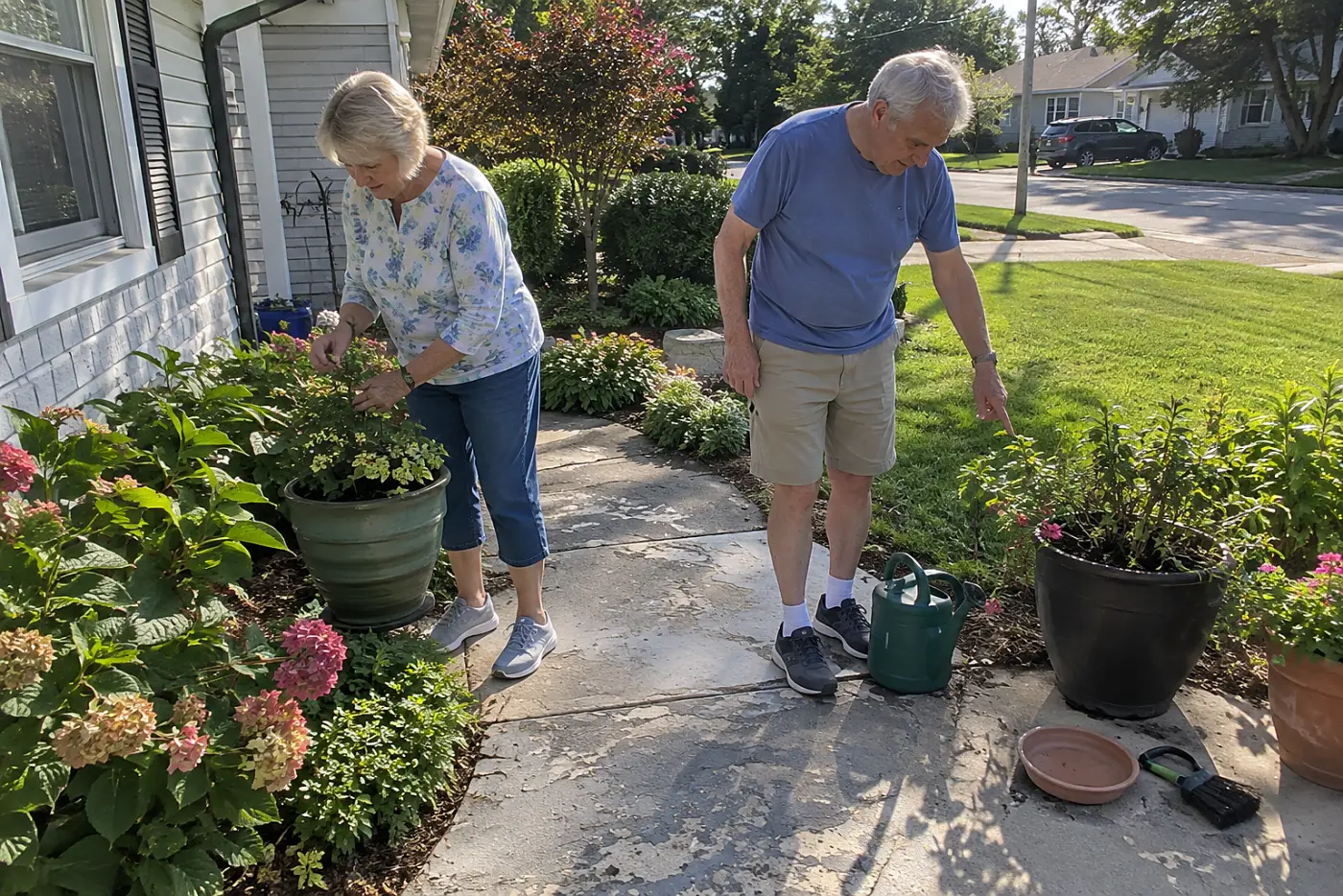
A small garden fits into an ordinary morning.
Walk past every plant before breakfast or after collecting the mail. Look at leaves, touch soil that seems dry, and pick what’s ready. You finish without setting aside an afternoon.
Repeat the route and small changes stand out. You see a cucumber before it grows past the size you like, or a tipped pot before wind rolls it farther. Those little jobs stay little because they’re in your path.
This week, choose a route you already walk and move any hidden pots into view. On three mornings, make the circuit without tools. Notice what needs fixing, then return with only what that job needs.
The National Institute on Aging’s physical activity guidance includes everyday movement. Your garden earns its place even when the visit feels nothing like exercise.
Short visits also change what harvest looks like.
See more: 24 Old Garden Habits That Turned Out to Be Right All Along →
7A supper bowl carried outside
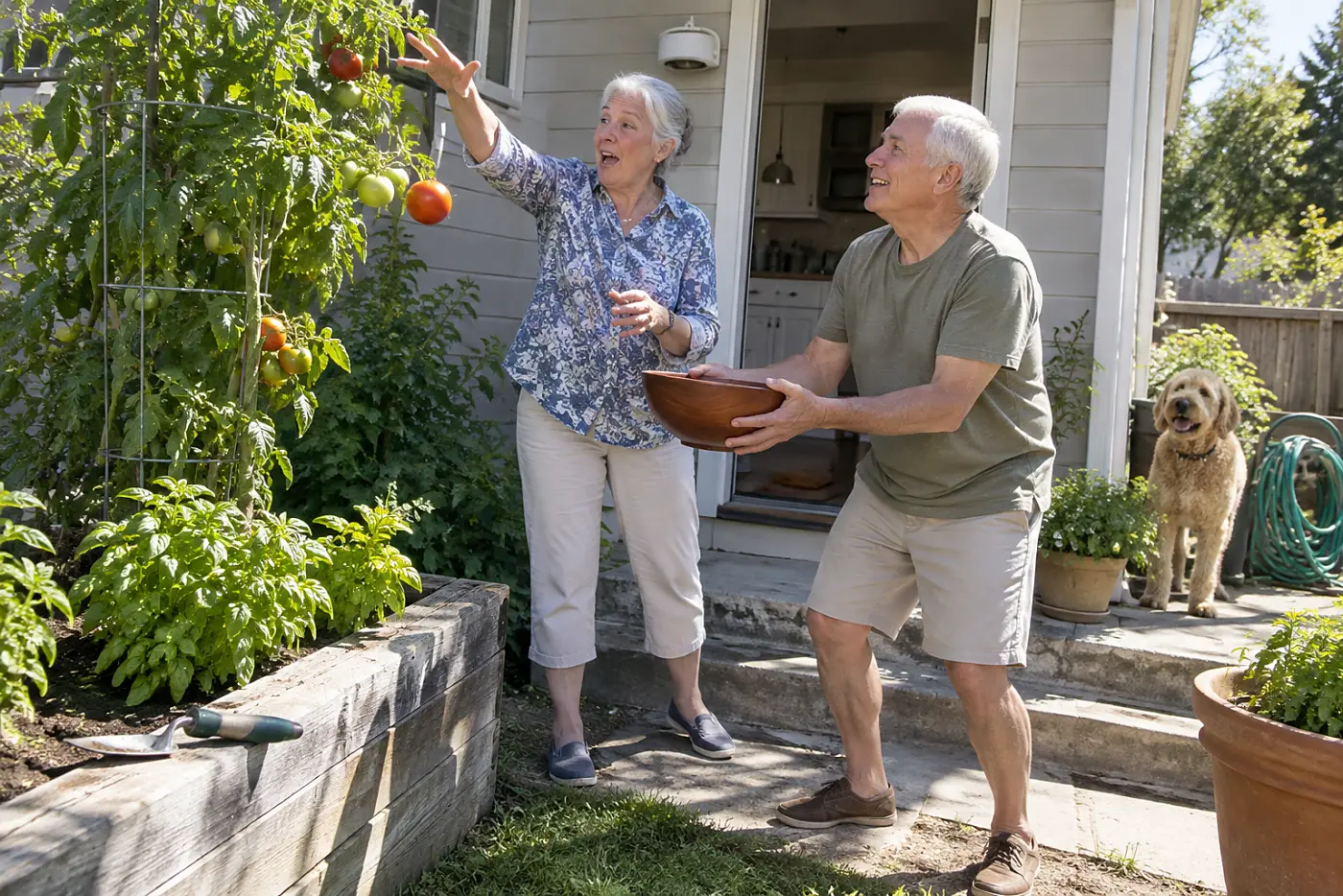
A full basket becomes another task to finish.
Pick what you plan to eat, then stop. Lettuce leaves, a tomato, and a few herbs don’t need a canning day to justify their space. A bowl sets a visible limit before you start.
In a big garden, ripe food keeps coming whether dinner needs it or not. Here, you catch food at the point you like it and leave the rest for another meal.
This week, carry a bowl outside before you cook. Fill it for one meal and notice which crop you wished you’d grown instead. Say at the table, “Tell me which of these you’d like more of next time.”
The next advantage shows up when your plans take you away.
6A trellis tied to the patio railing
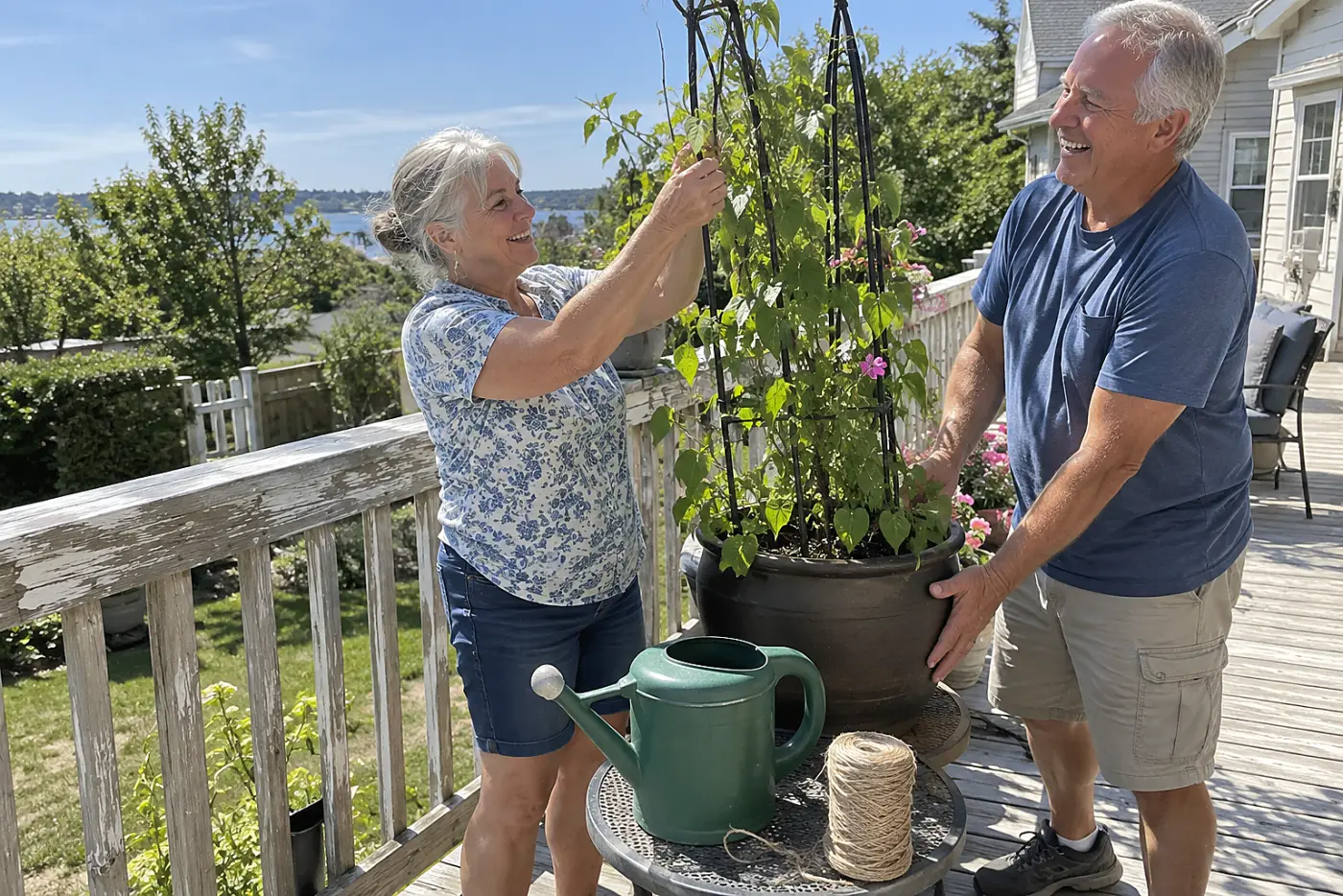
A loose trellis pulls the whole plant down with it.
Fruit adds weight. As a vine climbs, leaves catch wind and tug at the support. A trellis tied to a railing needs a firm attachment that won't slide. Check the railing first; don't fasten anything to it if the railing shifts.
One fallen climber blocks a surprising amount of patio. Its stems tangle, and lifting them back into place risks breaking the growth you wanted to keep.
This week, press the trellis from both sides. Tighten loose fittings, then guide a stem onto the support without bending it sharply. Leave room inside each tie for the stem to thicken. Say to anyone helping, “Hold the trellis steady while I tie this stem.”
Once the vine stands upright, look for what it has hidden.
5A flowerpot lifted onto rolling wheels
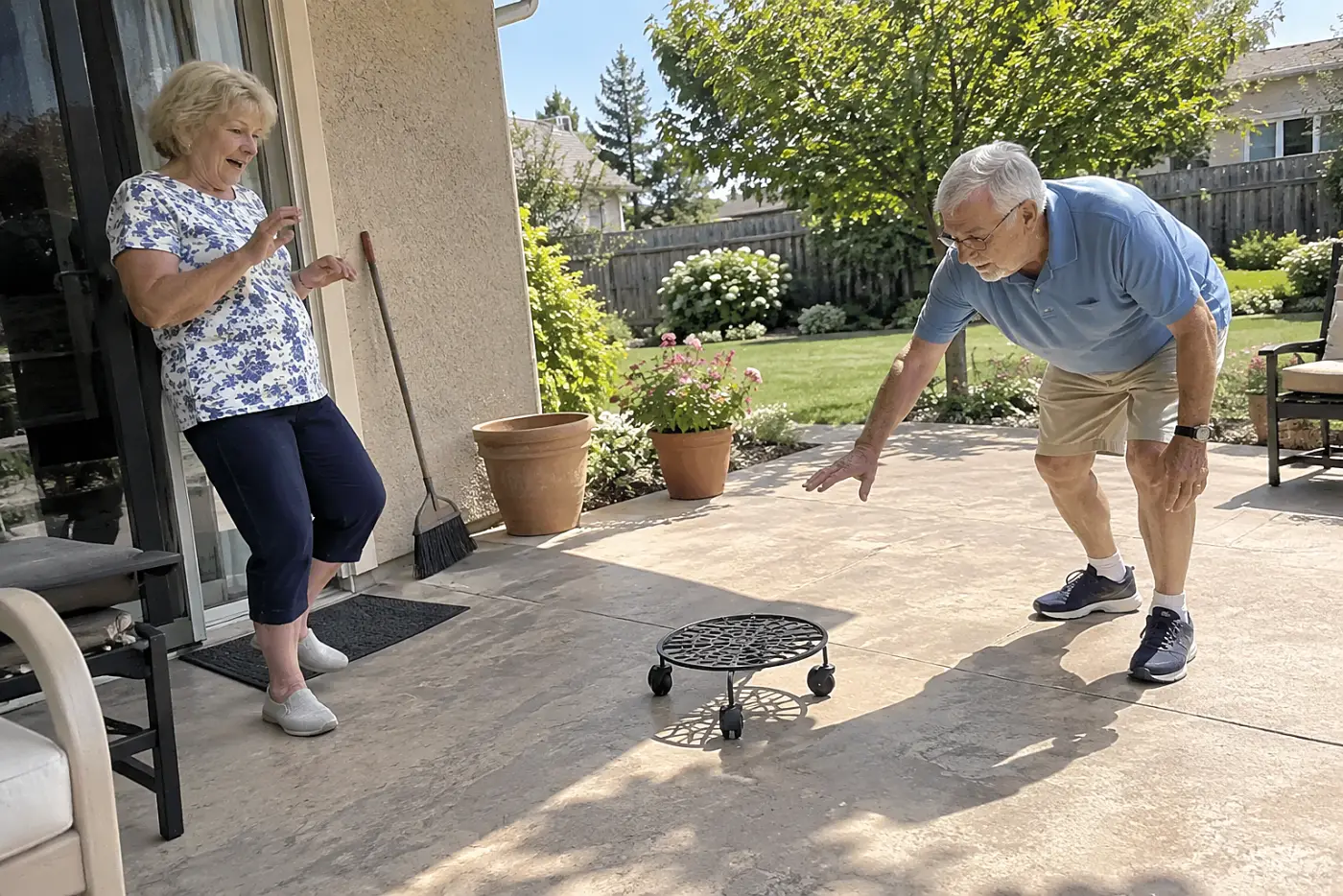
A heavy pot traps you in a poor spot.
Set it on a wheeled plant stand before filling it. The stand lets you move the pot to clean beneath it or clear a doorway without lifting its full weight.
Wheels need a level route. A stand that rolls freely on a slope puts the pot at risk.
This week, test the empty stand along its route. Set the pot on it, then check that it stays put. Say to anyone sharing the patio, “Let’s keep this pot out of the doorway.”
Now check what sits beneath the next container.
4A handful of mulch around the peppers
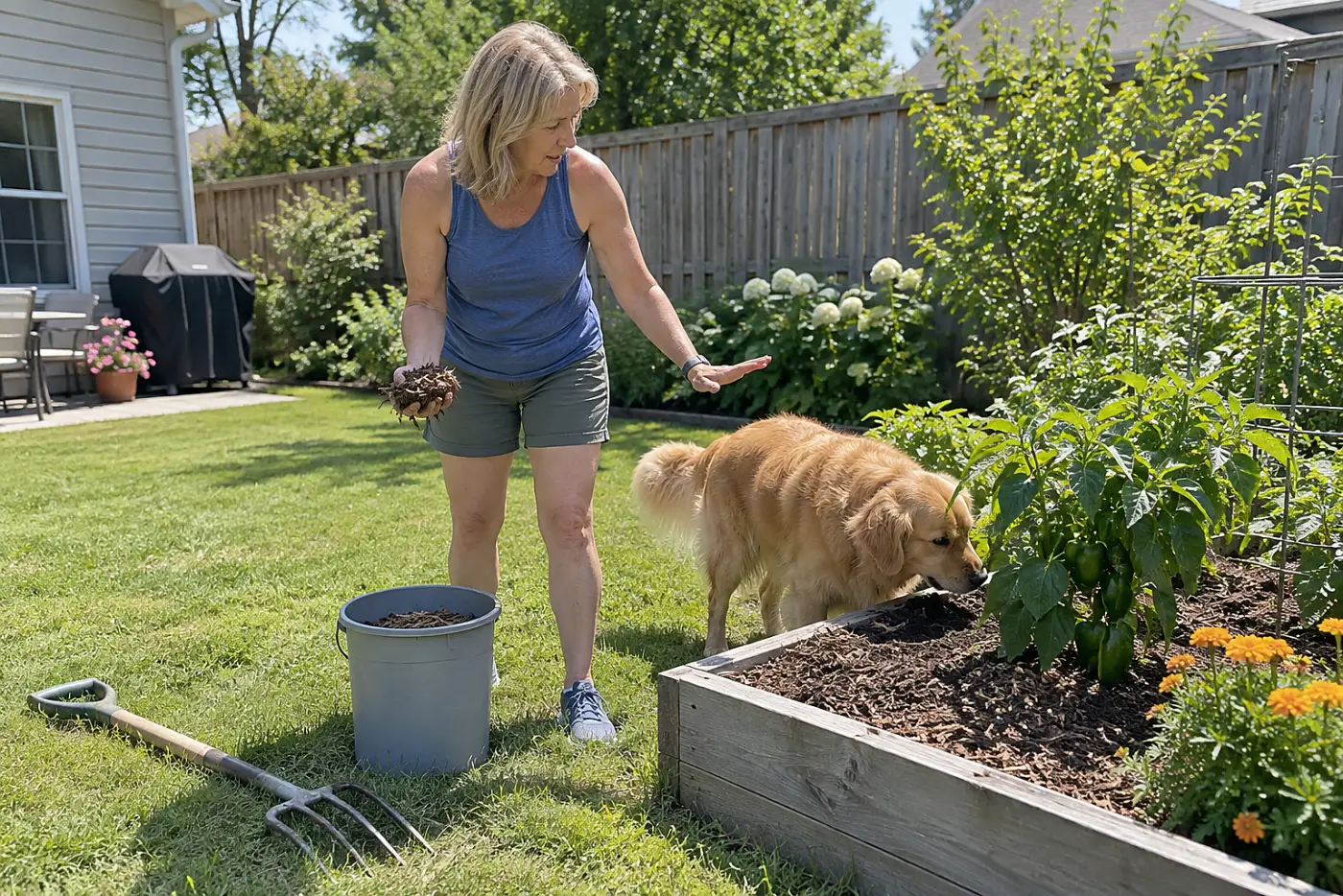
Bare soil loses water faster under the afternoon sun.
Spread mulch around an established pepper plant, leaving a gap beside its stem. The cover slows water loss from the soil surface. It also leaves less exposed ground for weed seeds to reach.
In a small bed, you see where rain has shifted the mulch. Put it back before bare patches spread.
An old plot took bags of mulch and an afternoon to cover. Here, one handful finishes the patch in front of you. Pile it against the pepper stem, though, and you hide the spot you need to inspect. You also leave damp material pressed against the plant.
This week, pull existing weeds before adding mulch. Keep the stem visible, then feel the soil beneath the cover before you water. Say to a planting partner, “Leave a little space around the stem so I can see it.”
The soil is covered, but another decision sits above it.
3A small frost cover folded by the door
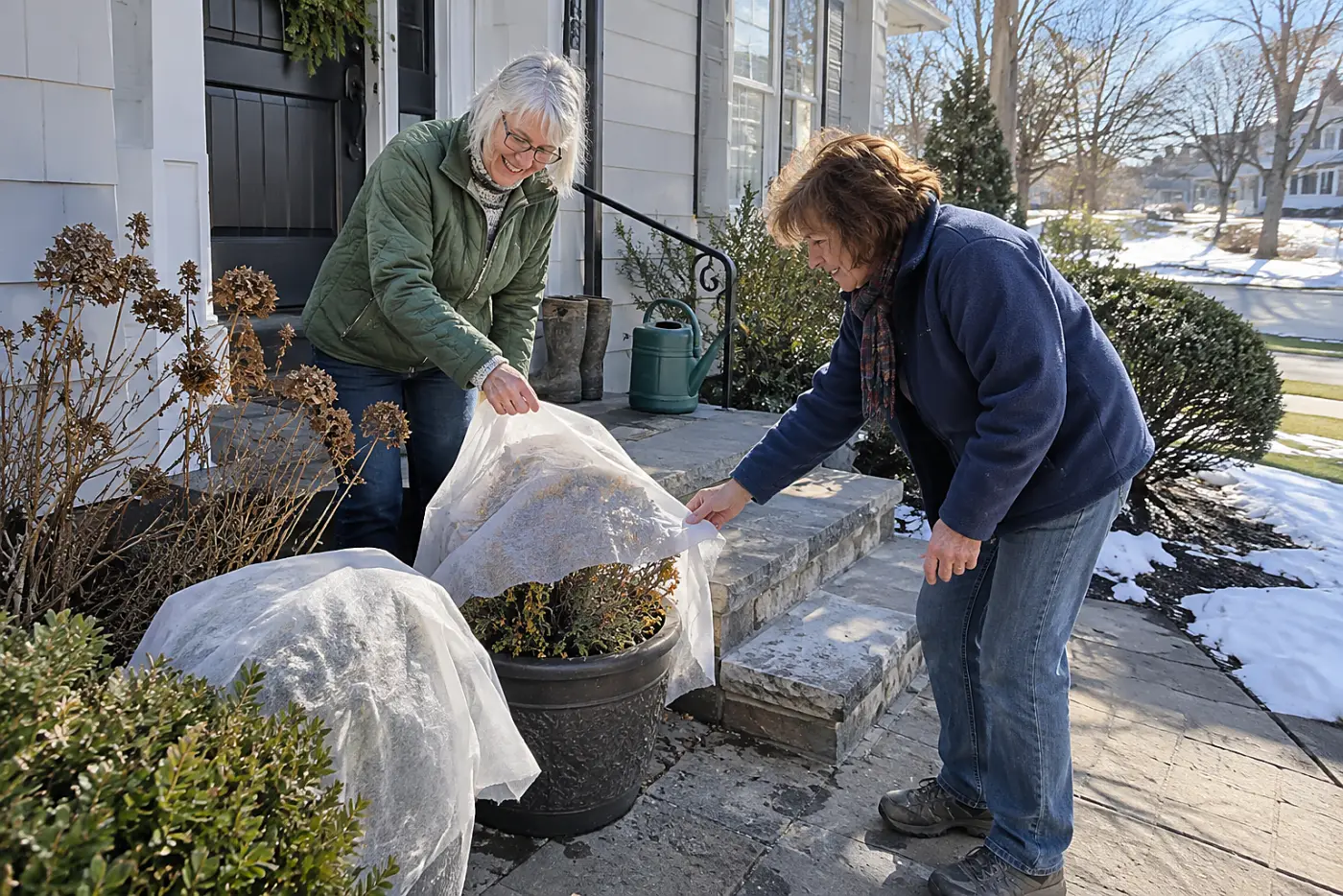
One cold night can end a tender crop.
Check the local forecast when fall nights turn cold. If frost is forecast, cover the plants before evening. Use supports to hold fabric above tender leaves. Secure the edges so wind doesn't lift it.
Covering a large plot takes more material and time than a late crop deserves. A few pots give you a choice: protect the plants still carrying fruit. Leave the spent ones alone. The cover also needs to come off when temperatures rise, so those leaves get light again.
This week, find a cover that fits and fold it by the door. Test the supports and weights before a cold evening arrives. Check that you can reach each edge without stepping into the bed. Say to someone sharing the space, “I’m covering these tonight; please leave the fabric in place until morning.”
After the cold passes, see which plants still deserve their spot.
See more: 23 Fall Jobs That Save Your Spring, One Weekend at a Time →
2A neighbor’s short watering route
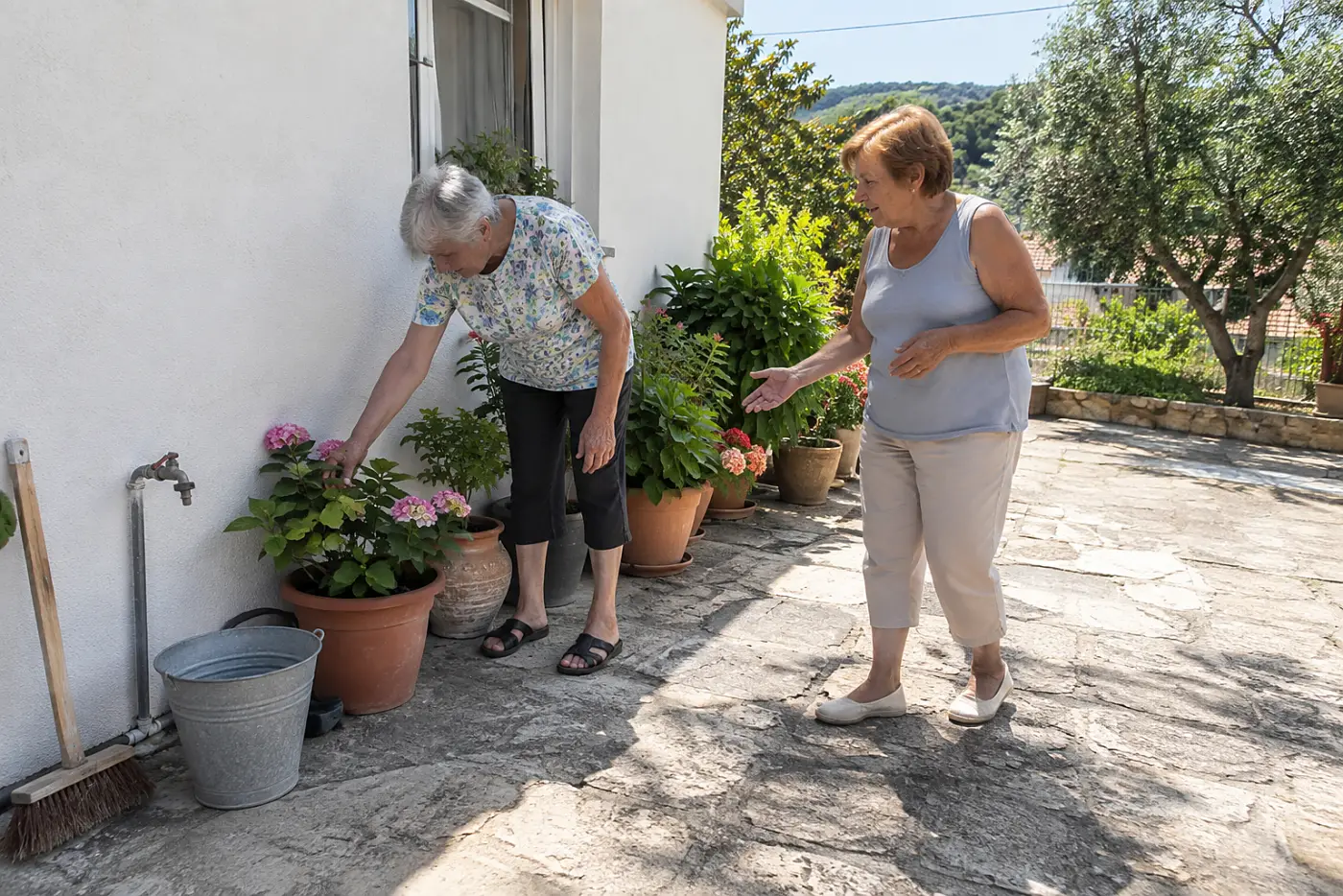
A sprawling garden makes a small favor complicated.
Before a trip, group pots near the water source. A neighbor sees every container without hunting behind the house or guessing where the last row ends. Clear access makes the job easier to show.
The old garden asked someone else to learn your whole system. This one asks for a short walk and a soil check. Still, a row of pots won’t tell a helper which ones are damp.
This week, take the route a helper would take. Move obstacles, write down the faucet location, and show the pots in person if a neighbor agrees to help. Say, “Please touch the soil before watering, and let the pots drain.”
You get a garden that’s easier to leave. First, make sure it works when you’re home.
1A reach test before the first plant
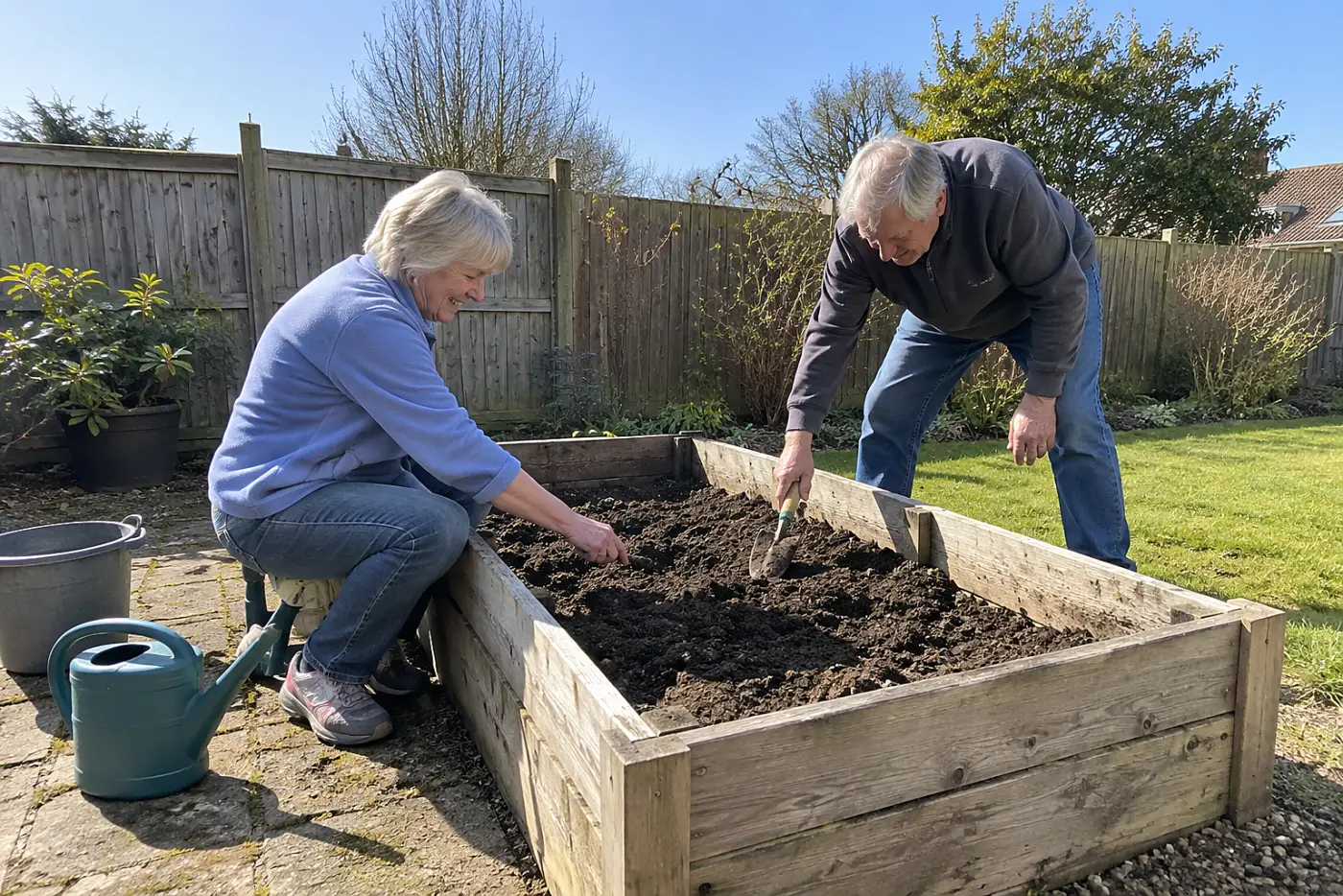
A bed becomes too wide the moment you plant its middle.
Set empty pots, a hose, and a chair where the garden would go. Walk the paths you’ll use. Sit if that’s how you’ll work, then reach toward each planting spot without leaning on a stem or stepping into the bed. For a bed reached from both sides, start with a width of no more than 4 feet; if you can reach it from only one side, start with no more than 2 feet.
Watching sunlight tells you where plants will grow. This test tells you whether your body reaches them, a different question with a harder fix after planting. Soil, lumber, and established roots make a bad layout difficult to change.
Before building, check the University of New Hampshire Extension’s raised bed guidance for access planning. Then test your own ground, since a diagram won’t show where your chair catches or the hose snags.
This week, mark the bed with string or set out empty containers. Carry a full watering can along the route, reach the back of each spot, and leave room to turn around. Ask yourself, “Could I do this on a day when I don’t feel like making a project of it?”
That answer belongs in the plan before any plant does.
The bottom line
These 27 advantages share one pattern: less ground puts more of the garden in your hands.
You’re prepared when you’ve walked the route, checked the light, and left room to reach.
Which change in garden size has already happened at your home?
Up next
29 Things Gardeners Over 70 Do Differently, and Why They Still Have Gardens
A hose timer cuts trips across the yard, while a lighter watering can and a written help plan keep the garden in your hands.
Read the list →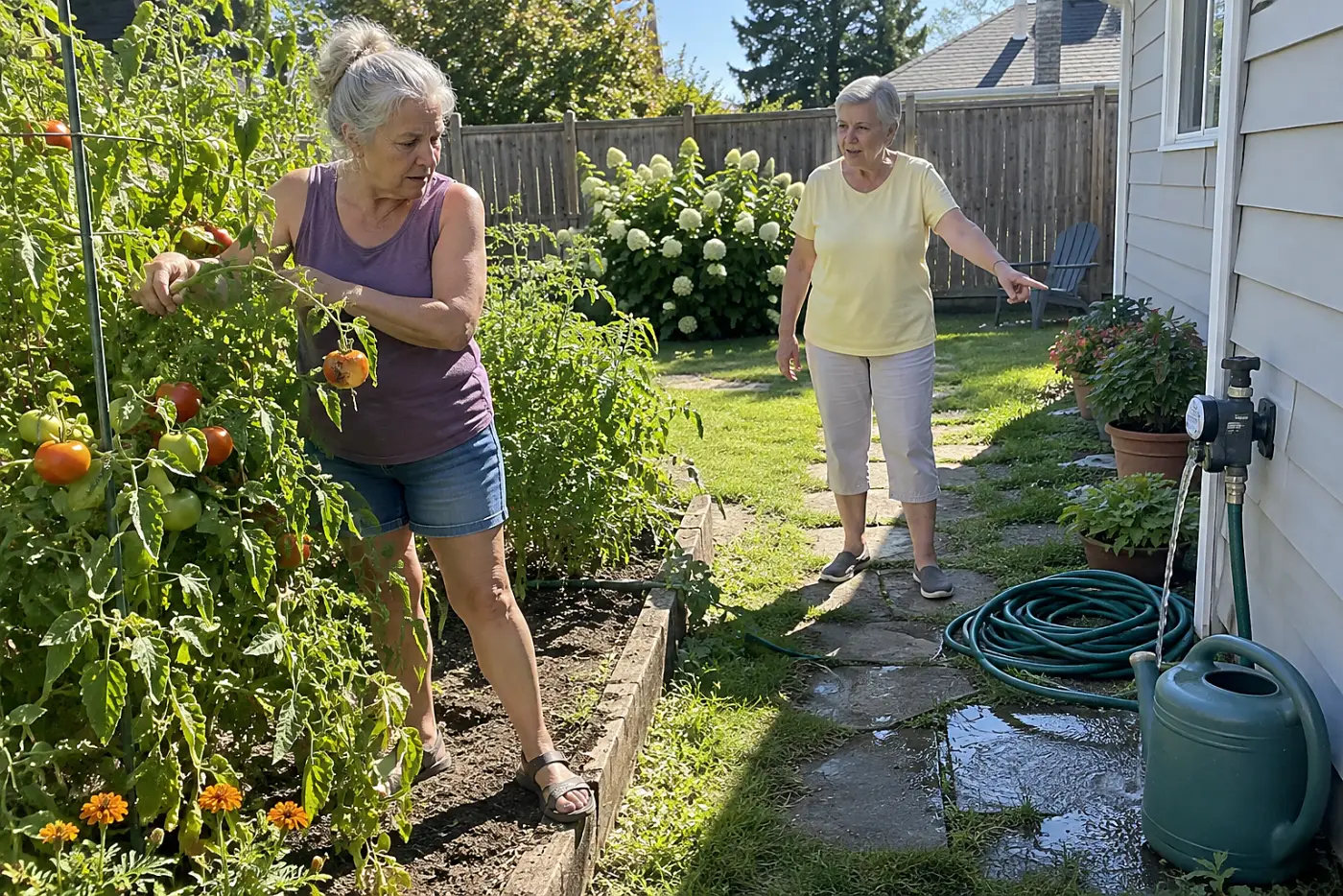
Reader quiz
Did you catch the details?
5 questions from this article. Finish them all to unlock the editor's bonus tip.
What should you do if a decorative planter has no drainage hole?
Did any of these feel familiar?
Know someone who needs this?
Sources cited in this article
This article links to 10 outside sources, listed here so you can read them yourself.
- USDA Plant Hardiness Zone Map planthardiness.ars.usda.gov
- University of Maryland Extension extension.umd.edu
- University of Wisconsin-Madison Extension’s gardening resources hort.extension.wisc.edu
- EPA’s rain garden guidance www.epa.gov/soakuptherain/soak-rain-rain-gardens
- USDA PLANTS Database plants.usda.gov
- UC Integrated Pest Management program ipm.ucanr.edu
- USDA Forest Service’s pollinator pages www.fs.usda.gov/managing-land/wildflowers/pollinators
- National Wildlife Federation’s Native Plant Finder www.nwf.org/NativePlantFinder
- National Institute on Aging’s physical activity guidance www.nia.nih.gov/health/exercise-and-physical-activity
- University of New Hampshire Extension’s raised bed guidance extension.unh.edu
June Marlow
Garden Editor
June writes about gardens you can still manage: what to plant, which jobs matter each season, and the tools that spare your knees and back.
More from June Marlow