












24 Things Going Grey Does to How People Treat You
A silver part changes how strangers address you; the salon mirror reveals whose opinion is shaping your next appointment.
By Nora Bennett, Style Editor
Updated · 16 min read
- Written by our style editor
- Cited 7 sources
- How we review

Read to the end: #1 is a boundary script that ends the hair vote. The Bonus shows what to say when someone reopens it.
At the salon, the cape snaps shut beneath your chin. Your colorist parts your hair, revealing a pale strip at the roots, and asks whether you’re “ready” to do something about it. Before you answer, you remember the cashier who called you dear yesterday, though she hadn’t seen those roots at all.
Hair color becomes a public signal before you’ve decided what it means to you. The same person who praises your silver can still treat you as though you need help choosing lunch.
Here are 24 places that gap shows up.
24The first comment at the salon mirror
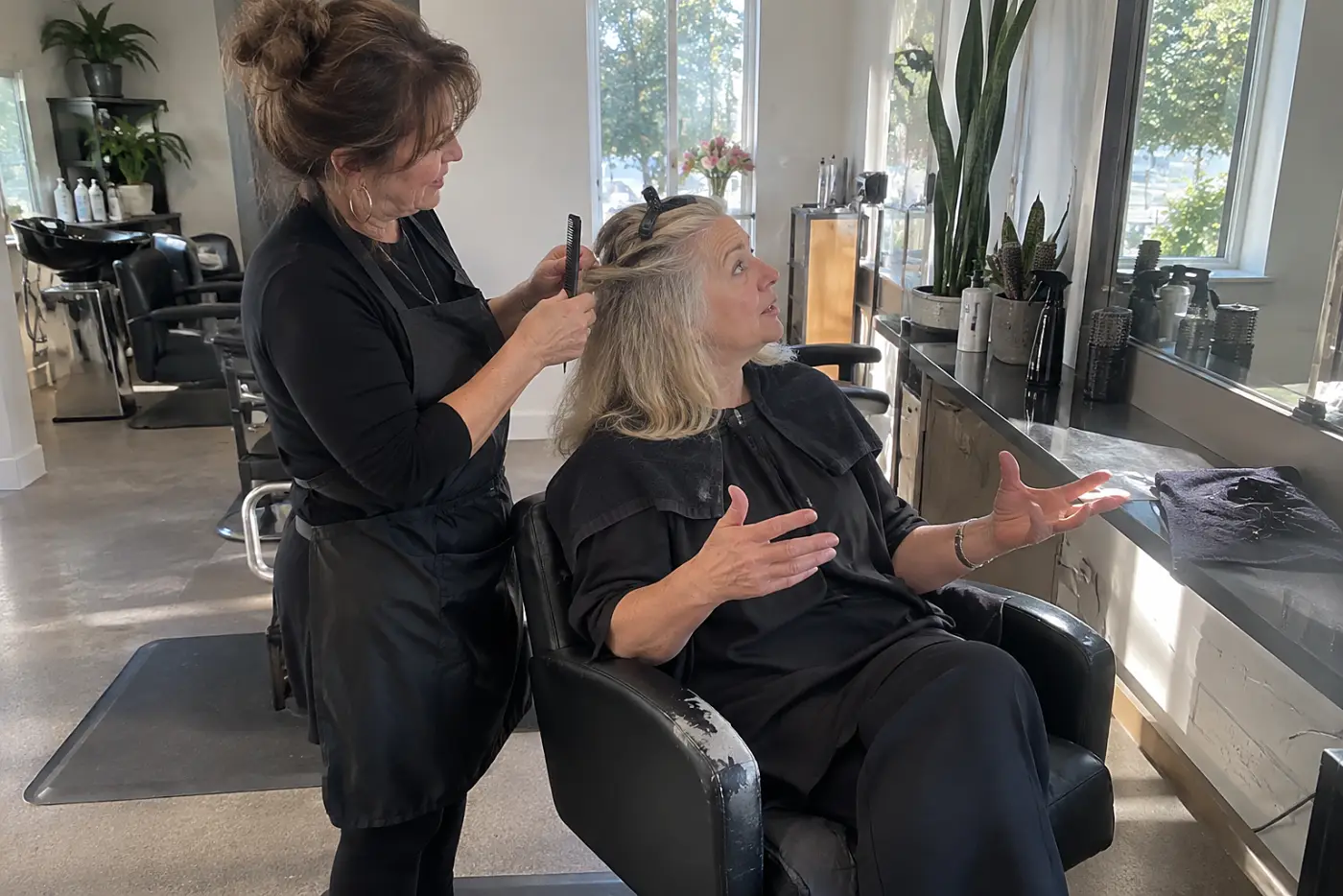
The first opinion can arrive before you sit down.
A stylist sees new growth and asks about covering it because color was part of your last appointment. That question reflects the service on the books, not a decision you’ve made for today.
If you agree from habit, you leave with another appointment tied to a choice you didn’t make. A salon root touch-up can cost roughly $60 to $150, depending on the salon and your hair. Check the service and time listed on the booking confirmation; a color appointment takes a different slot from a trim.
This week, look at that confirmation and decide whether you still want the service. At the chair, say, “Let’s talk about what I want before we mix anything.”
Once you’ve answered the professional, the next opinion arrives without an appointment.
23The family photo passed around the table

A camera turns your hair into a group project.
Someone tilts a phone toward the light, checks the picture, then points out the silver at your temples. Another person suggests a filter or asks whether you’d rather stand farther back. The talk moves so fast that nobody asks whether you like the photograph.
The cost is a familiar one: you start inspecting your head instead of remembering the occasion. A birthday dinner deserves a picture of you enjoying yourself, not a committee reviewing your roots.
This week, choose a recent photograph you like and keep the unedited version. If someone reaches for a filter at the next gathering, say, “Leave my hair as it is; I like this picture.”
That picture has a life after dinner, especially when it leaves someone else’s phone.
22The profile picture on your work account

A headshot stays visible long after you change your hair.
Coworkers who knew you with dark hair see a new photograph and register the change before reading your name. In a remote meeting, that thumbnail can be their first look at you all week.
An outdated picture also makes your appearance a conversation when the camera comes on.
This week, check the photo on your work account and replace it only if you want a current one there. If a colleague comments, say, “Yes, I changed my hair. What did you need for the meeting?”
The screen isn’t the only place where a stranger decides who needs an explanation.
21The cashier who calls you dear

One small word can change the whole exchange.
A cashier sees silver hair and reaches for “dear” or “sweetie,” even while speaking plainly to the customer ahead of you. The word comes first; then the slower voice or extra explanation follows. You’ve paid for groceries and somehow acquired a pet name.
Intent is hard to prove at a checkout. The part you control is the way someone addresses you, and you needn’t make a speech to change it.
This week, decide which response feels natural before you’re holding a card reader and a bag of oranges. When it happens, say, “Please call me Margaret,” or use whichever name you give strangers.
The next version of that voice turns up when the purchase is more complicated.
20The sales pitch given to your companion

The salesperson answers the person beside you.
A store associate glances at your silver hair, then directs the product details to your spouse, friend, or adult child. The associate has decided who is buying before checking whose money or question is involved.
If you let that pattern run, the features that matter to you never get discussed. The Consumer Financial Protection Bureau has shopping tools for financial products, but no comparison sheet replaces getting your own question answered.
This week, take the lead on one purchase you’ve already planned and ask the first question yourself. If the answer goes elsewhere, say, “I’m the customer. Please explain that part to me.”
A companion’s presence changes the room again when the subject is your body.
19The medical question answered by someone else

Your companion starts describing symptoms you came to discuss.
The clinician asks a question, and the person next to you fills the pause with their version. If you’re interrupted, the sequence of symptoms, medicines, and dates becomes their account instead of yours. Silver hair doesn’t make a companion your spokesperson.
That matters when a detail reaches the visit note. Under the federal HIPAA Privacy Rule, you have a right to access your medical records, with limited exceptions.
This week, write your three main points on paper before your next visit and check the note afterward if you want to see what was recorded. At the appointment, say, “I’ll answer first, then I’ll ask her to add anything I missed.”
A stranger needn’t be in the room for that sort of takeover.
18The adult child who calls your colorist

Your appointment belongs to the person in the chair.
An adult child who dislikes your grey hair can offer to book color “as a treat.” The gift becomes a decision about your appearance once the appointment is on the calendar.
You risk spending an afternoon and money on a service you never wanted. The charge starts with the service booked, so check what was reserved before you arrive.
This week, check who has your salon’s number and handle the next booking yourself. If the offer comes again, say, “I appreciate the thought, but I’ll book my own hair appointments.”
A favor has a different pull when it’s offered by someone you love.
17The partner who misses your old color

A compliment for the past can sound like an instruction.
Your partner remembers the shade you wore for years and says they miss it. You hear the history in that remark, along with the suggestion that you restore it. Neither of you needs to pretend the change went unnoticed.
Still, every touch-up requires your time, your scalp, and your answer at the salon. Your partner’s preference belongs in the conversation; the appointment belongs to you.
This week, tell your partner what you’ve decided for the next visit, whether that means color, a trim, or nothing. Say, “I know you liked the old shade. I’m keeping this one for now.”
The conversation gets stranger when the same choice draws praise from everyone else.
16The brave comment under your picture

Praise can hand you a story you didn’t choose.
You post a photograph, and someone calls your grey hair “brave.” They mean well, but the word turns a hair decision into a test of courage you never signed up for.
You don’t owe a public explanation of your roots. Before replying, read the comment as written, not as a request for the full history of your hair.
This week, leave that comment unanswered if you want, or reply with the plain description you prefer. Try, “Thanks. I like how my hair looks.”
A compliment from a friend is one thing; a slogan printed over your face is another.
15The age joke during a meeting

A joke can reset how the room hears you.
A colleague mentions your hair, then jokes about a “senior moment” when you pause to find a file. The first remark marks your age; the second attaches an ordinary pause to it. Nobody has to announce a bias for the exchange to change the air.
Under the federal Age Discrimination in Employment Act, workers age 40 and older have protection against age discrimination in covered employment. A single awkward joke is not, by itself, a legal finding.
This week, record the date, the words used, and who was present if the remarks repeat. In the meeting, say, “The file is here. Let’s get back to the figures.”
A room can make assumptions about your age without saying a word.
14The interview suit chosen around your hair

Your jacket starts doing work your résumé already did.
After going grey, you reach for a darker suit to look “serious enough.” The interviewer sees the whole presentation before hearing the work you’ve done, but you don’t know which detail they notice.
If you spend the interview managing your hair, you lose time meant for your examples. The EEOC’s age discrimination guidance is worth reading if an interviewer’s questions turn from the job to your age.
This week, try on the outfit under daylight and check its fit, rather than asking whether it hides your age. Before the interview, tell yourself, “My work history answers the job questions.”
Then there’s the paperwork that invites an employer to do the math.
13The graduation date on your résumé

An old date can distract from current work.
When you list a graduation year, readers can calculate your age before they reach your recent experience. The date is separate from the degree; keep it only if you want it on the résumé.
Removing it won’t erase age bias. It does put attention back on the qualifications you chose to show, while leaving every required application field for you to answer truthfully. The U.S. Department of Labor’s CareerOneStop has résumé tools if yours needs a broader edit.
This week, read your résumé on your phone and see what appears before your most recent role. If a recruiter asks why the date isn’t there, say, “The degree is listed, and I’m happy to discuss the work that fits this role.”
Outside work, a form can make the same assumption feel personal.
12The intake form filled by a companion

The pen lands in someone else’s hand.
At a clinic desk, a companion reaches for your form and starts filling in answers from memory, even the ones about your own symptoms. Staff then read those answers as yours unless you correct them on the spot.
A wrong pharmacy or medication entry is worth catching before the visit begins. It can follow you into the exam room and the prescription that comes after it.
This week, review your patient portal details or bring a current medication list to your next appointment. At the desk, say, “I’ll fill this out. She can help if I ask.”
The assumption travels beyond desks and clipboards.
11The stranger offering an arm unasked

A helpful hand can arrive too soon.
Someone sees your silver hair at a curb and reaches for your elbow before checking whether you want help. They’ve read hair color as a mobility cue. You then have to manage their hand while watching traffic.
The immediate stake is your balance. An unexpected grip can change your stride at the exact moment you’re stepping down.
This week, practice a short answer you can use without stopping to explain your health. Say, “Please don’t grab me. I’ll ask if I need a hand.” If you do want support, choose the arm and say where you want the person to stand.
A different stranger will try to help by making a decision for you.
10The restaurant menu read aloud to you

The server skips straight to help you didn’t request.
A server sees grey hair and reads menu options aloud before asking whether you want that. The gesture turns an ordinary dinner choice into a public check of your eyesight.
You lose the chance to say what would help, if anything. The National Eye Institute has information on vision changes if reading menus has become difficult beyond one dim restaurant.
This week, notice which menus or lighting actually give you trouble, rather than accepting someone else’s guess. If a server starts reading, say, “Thanks, I’m reading it. I’ll ask if I need help.”
The same guess follows you into a store, with a price tag attached.
9The beauty counter’s anti-aging pitch
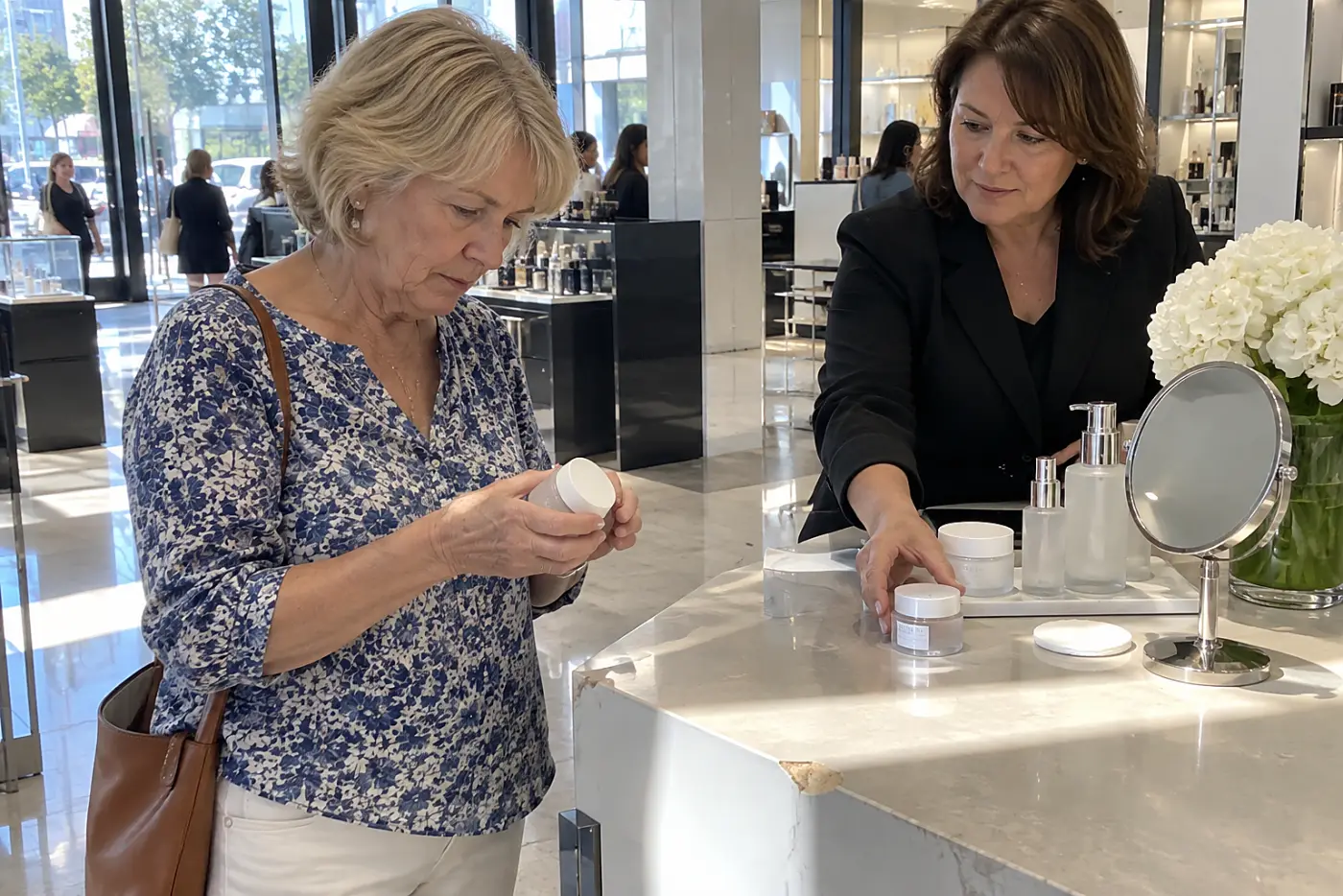
A sales label can overwrite your shopping list.
You ask for a moisturizer, and the associate points toward products marked “anti-aging” after seeing your hair. Your request was about moisture; the answer becomes a campaign against your face. Price and ingredients get pushed behind a promise you never asked for.
The Federal Trade Commission’s consumer advice site helps shoppers examine advertising claims rather than treating them as proof. A drugstore moisturizer can cost about $10 to $30; a higher price alone tells you nothing about whether a product does what you wanted it to do.
This week, bring the name of the product or ingredient you came to replace and compare labels before you pay. At the counter, say, “I’m shopping for moisturizer, not an age claim. Show me the ingredients.”
Your clothes get sorted by age even faster than a jar on a shelf.
8The dress rack someone redirects you toward
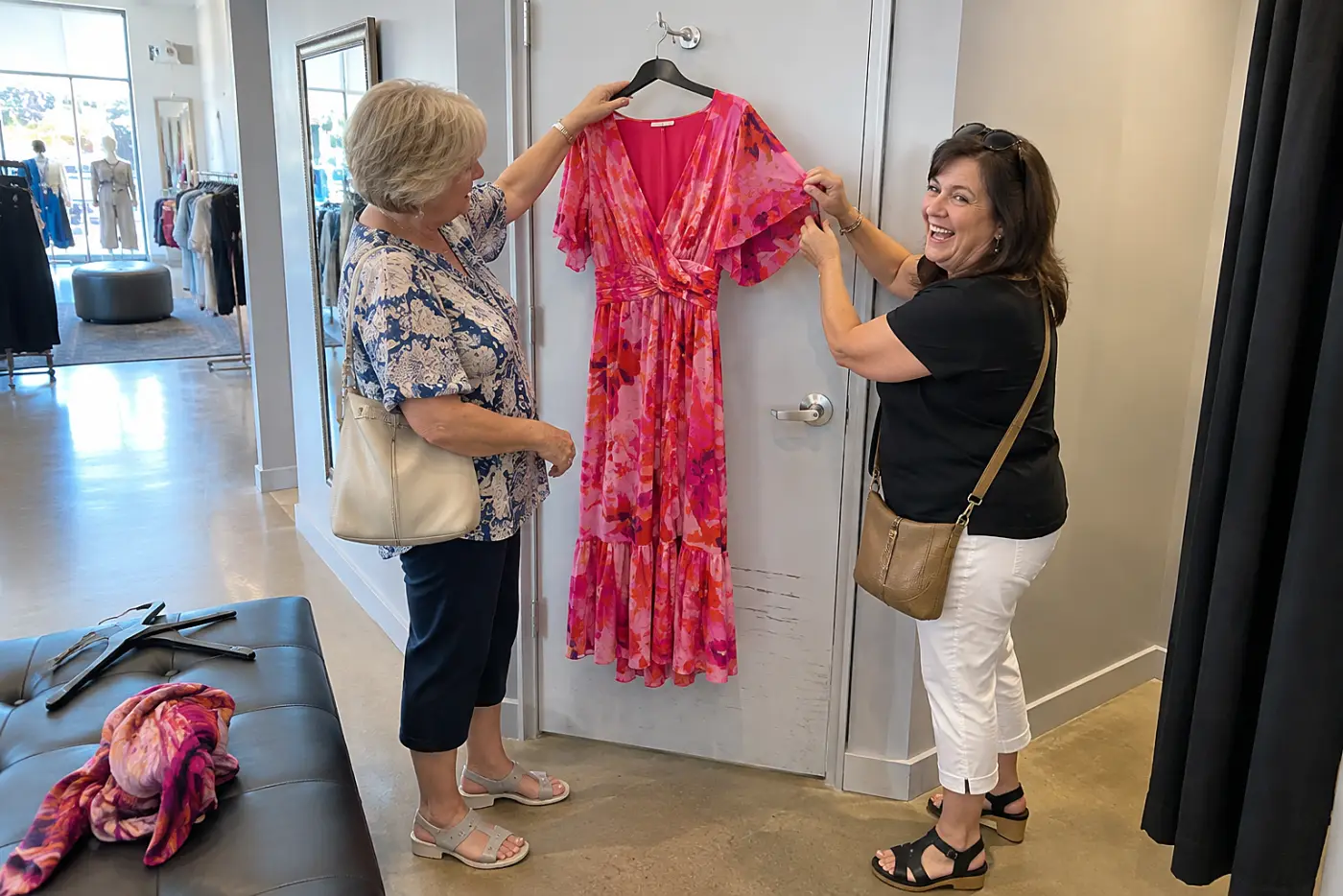
A stranger decides which colors belong to you.
You pick up a bright dress, and an associate points you toward a “more flattering” section after looking at your hair. They’ve swapped your taste for their idea of age-appropriate clothing.
The dress goes back on the rack before you see it on. Store lights and a fitting-room mirror give you more to judge than that unsolicited direction.
This week, take the color you wanted into the fitting room and judge it under the store lights. If someone redirects you, say, “I’m trying this one first.”
At home, the person policing the change can be the one who knows you best.
See more: 29 Outfit Habits That Make You Look Older Than You Are →
7The granddaughter asking why you stopped dyeing

A child notices what adults work around.
Your granddaughter asks why your hair looks different from an old photo. She wants the story, while the adults nearby wait to hear whether you’ll call grey hair a problem.
Your answer gives her a way to talk about changing bodies, including her own someday. You needn’t turn it into a lesson about confidence if you’d rather tell the plain truth.
This week, find a photograph from when you colored your hair and decide what part of that choice you want to share. If she asks, say, “I used to color it. Now I like seeing the color that grows in.”
Sooner or later, the question comes from a person with no family reason to ask.
6The stranger asking about your natural color

Personal questions have a way of sounding casual.
Someone asks whether the grey is “really yours,” then waits for an account of your dye history. You’ve been made responsible for settling their curiosity, even though you didn’t raise the subject.
Answering once can invite another question about when you started going grey. Then comes whether you plan to keep it, as though a stranger needs an update on your next appointment.
This week, choose a reply that matches how much you want to share. Say, “I like the color,” and return to what you were doing.
Hair also changes what you notice in the mirror, even when nobody comments.
5The lipstick that suddenly looks different

The old shade meets a new frame.
When hair color changes, the colors beside your face look different by comparison. A lipstick you wore with dark hair sits next to silver instead, so you notice its warmth or depth in a new way.
That doesn’t mean your face needs fixing. Replacing a drawer of makeup before trying it in daylight costs money and gives someone else’s rules too much weight. The American Academy of Dermatology has skin-care guidance if a product irritates your skin.
This week, put on your usual lipstick near a window, then try one shade you already own beside it. If a counter associate insists grey hair requires a certain color, say, “I’m comparing these on my face.”
The mirror holds another surprise when the lighting changes.
See more: 29 Colors That Wash You Out After 50, and the Ones That Don't →
4The bathroom bulb above your part
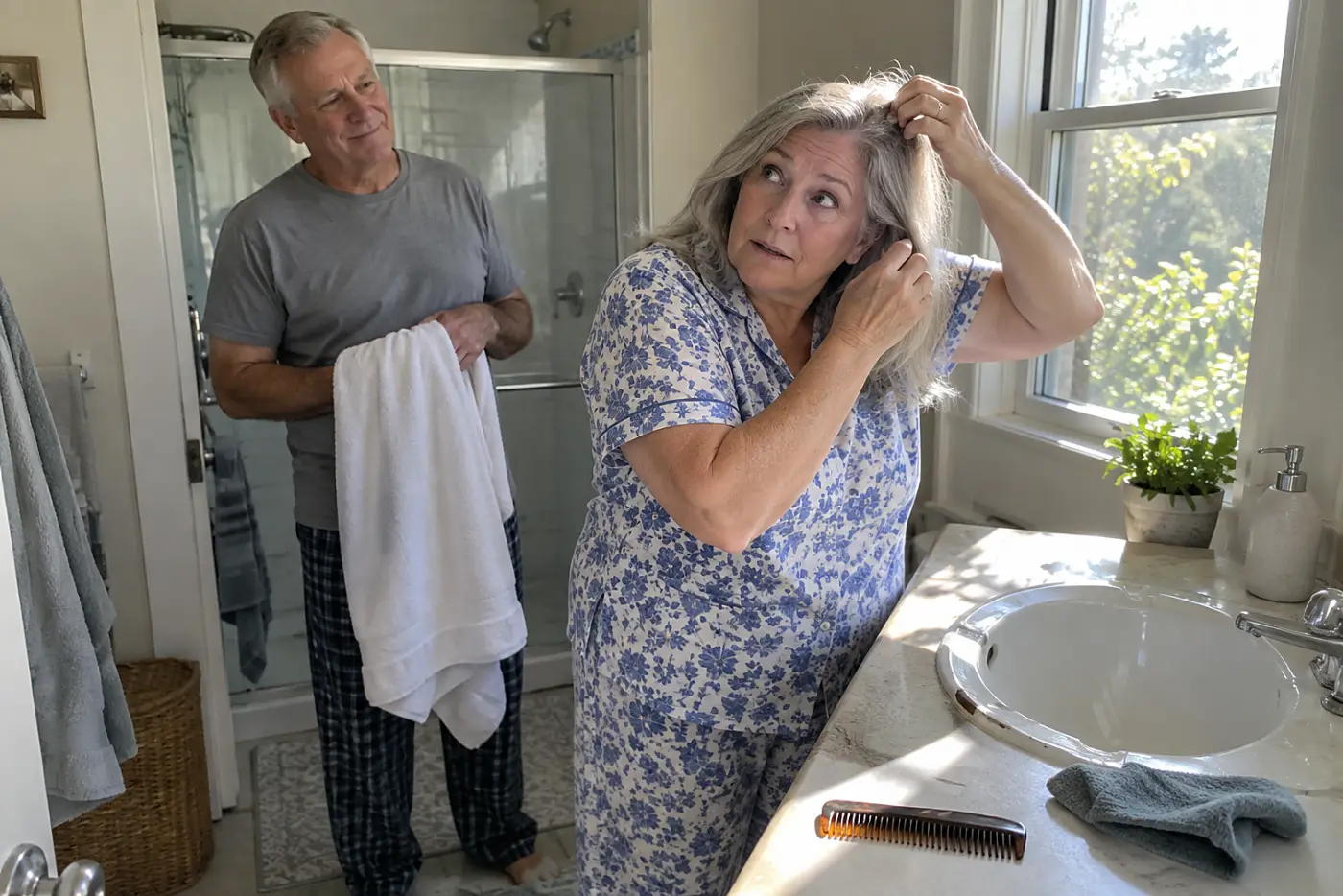
One bulb can make silver look yellow.
Warm bathroom light shifts how white and grey strands appear in the mirror. Daylight shows you a different version. Store lighting changes the view again, so one reflection is a poor reason to book color.
You risk paying to correct lighting instead of hair. Look at the same part in two places before letting a comment about its color make the choice for you.
This week, look at your part beside a window before booking a color service. At the salon, say, “I checked it in daylight. I want to keep the silver.”
When you’ve decided to keep it, upkeep becomes its own choice.
3The purple shampoo left on too long

A product can give strangers another thing to discuss.
Purple shampoo deposits violet pigment to counter yellow tones in light hair. Leave it longer than the label says, and pale strands can pick up a lavender cast that wasn’t your plan.
The fix starts with the bottle, not another person’s verdict on whether your grey looks “good.” A bottle of purple shampoo can cost about $10 to $30, so check its directions before buying another product to correct the result. If the color bothers you, show a stylist the product and say how long it sat before adding more.
This week, read the directions on what you already own and test any new product on a small section first. At the salon, say, “I want to know what this does to my hair before we use it all over.”
A product decision still leaves the bigger question of whose standard you’re trying to meet.
2The compliment that comes with conditions

Approval arrives with instructions tucked inside it.
Someone says your grey looks lovely “as long as” you keep the cut short, wear bright makeup, or dress a certain way. They’ve offered praise, then made you responsible for maintaining their preferred version of it.
You don’t have to accept a wardrobe assignment in return for a compliment. The condition is theirs, even when it arrives wrapped in praise.
This week, notice whether praise leaves you pleased or planning extra work. When the condition arrives, say, “Thanks. I’ll decide what works for me.”
That leaves one answer worth having ready before the next opinion.
1The sentence that ends the hair vote

An open-ended answer keeps the debate alive.
You say you’re “thinking about” going grey, and a relative hears an invitation to list reasons against it. You explain your schedule, your scalp, or your budget; each reason gives them another point to challenge. The exchange goes on because you’re answering the argument they started.
A boundary works differently. It states your decision and tells the other person what kind of conversation you’re willing to have. You don’t need to prove that grey hair looks good, or that coloring is bad, to make it yours.
Think about where the conversation happens. A sentence at the kitchen table leaves room to change the subject; a phone call leaves you free to end it. Pick the exit before you need it. Otherwise, the second round of objections puts you back in the position of defending a decision you already made.
This week, write one sentence you’d feel comfortable saying to the person with the strongest opinion. Say, “I’ve decided what to do with my hair, and I’m not taking votes.”
Then change the subject or end the call if the vote continues. The useful part comes after the sentence: what you do when someone tries to reopen it.
The bottom line
Grey hair gives other people a cue, and some treat that cue as permission to speak for you.
The best-prepared version of you has checked what she wants before the next comment lands. She has words ready for the moments that need them.
Which of these has already happened to you?
Up next
26 Signs Your Family Sees You Differently Since You Turned 70
A slower voice at dinner can become a pharmacy call before anyone asks what you want or what help you need.
Read the list →

Reader quiz
Did you catch the details?
5 questions from this article. Finish them all to unlock the editor's bonus tip.
What should you check before deciding whether to keep a salon color appointment?
Did any of these feel familiar?
Know someone who needs this?
Sources cited in this article
This article links to 7 outside sources, listed here so you can read them yourself.
- Consumer Financial Protection Bureau www.consumerfinance.gov
- HIPAA Privacy Rule www.hhs.gov/hipaa/for-individuals/index.html
- Age Discrimination in Employment Act www.eeoc.gov/age-discrimination
- U.S. Department of Labor’s CareerOneStop www.careeronestop.org
- National Eye Institute www.nei.nih.gov
- Federal Trade Commission’s consumer advice site consumer.ftc.gov
- American Academy of Dermatology www.aad.org
Nora Bennett
Style Editor
Nora writes about hair, clothes and grooming for people who have stopped asking permission: what to keep, what to let go, and what reads as taken care of.
More from Nora Bennett