



29 Colors That Wash You Out After 50, and the Ones That Don't
A beige scarf under your chin can change the whole photograph. The camera catches its color beside your face.
By Nora Bennett, Style Editor
Updated · 12 min read
- Written by our style editor
- How we review
Read to the end: #1 is the one window-light setup that keeps your face and camera still, and almost nobody does it.
In the family photo, your navy sweater looks crisp. Your face looks tired. Then you notice the cream scarf tucked beneath your chin, reflecting the lamp's yellow light. The color nearest your face deserves a closer look.
Here are 29 colors to check before blaming the camera.
29Flat Black at Your Chin

A black turtleneck puts a hard edge beneath your face.
Black gives a photograph strong contrast. That edge also makes shadows under the eyes stand out. If your hair has gone silver, the gap between hair and neckline looks sharper still. None of that means black has to leave your closet. The sweater's condition matters, too. A smooth, dark knit reads differently from one covered in pale lint. Check the neckline in a close photo, not just in the mirror. That small area is what sits beside your jaw in every group shot.
Keep the sweater; try a white collar or a scarf between its neckline and your face.
See more: 29 Signs Your Glasses Are Aging You →
28Faded Black Cotton

This black T-shirt looks gray beside the sleeves and seams.
Cotton loses dye with washing. Worn black has a dusty cast that shows up clearly in phone photos. Under indoor light, that cast sits close to the shadows around your mouth. The shirt you reach for to look pulled together ends up looking older than it is.
Hold it beside a newer black piece in daylight; retire the faded one from photographs.
27Yellowed White T-Shirts

That once-white crewneck now looks faintly yellow against your teeth.
White draws attention straight to the face. A yellowed collar adds a different white for the camera to compare with your eyes and teeth. It also makes a clean face look less fresh in a group shot. Look closely at the ribbed neck: that strip sits right below your jaw, even when the rest of the shirt looks fine. Laundry wear shows there first. A scarf won't hide a tired collar in a close photograph. Neither will a favorite jacket if the shirt peeks out above it.
Put the shirt beside clean white paper before choosing it for pictures.
26Stark White Shirt

A bright white shirt fills the frame beneath your face.
For some complexions, crisp white makes the eyes look clear. For others, the camera exposes the shirt and leaves the face looking darker.
Notice whether your skin looks brighter, or whether the shirt becomes the first thing you see. That difference matters more than any rule about who should wear white.
Take one photo in this shirt and one in cream, standing in the same spot.
25Cream Silk Blouse

Cream silk catches light without the glare of stark white.
A warm off-white looks calm beside silver jewelry and pearl earrings. Yet cream with a strong yellow cast brings out yellow in the skin under bathroom bulbs. The fabric isn't the problem; the shade and the light need checking together. Silk reflects light differently from matte cotton, too. A glossy fold near your collar gives the camera a bright patch that shifts as you move. Check a photo with the blouse buttoned as you actually wear it. Don't judge the color from a sleeve held at arm's length.
Hold the blouse under your chin by a window before you decide.
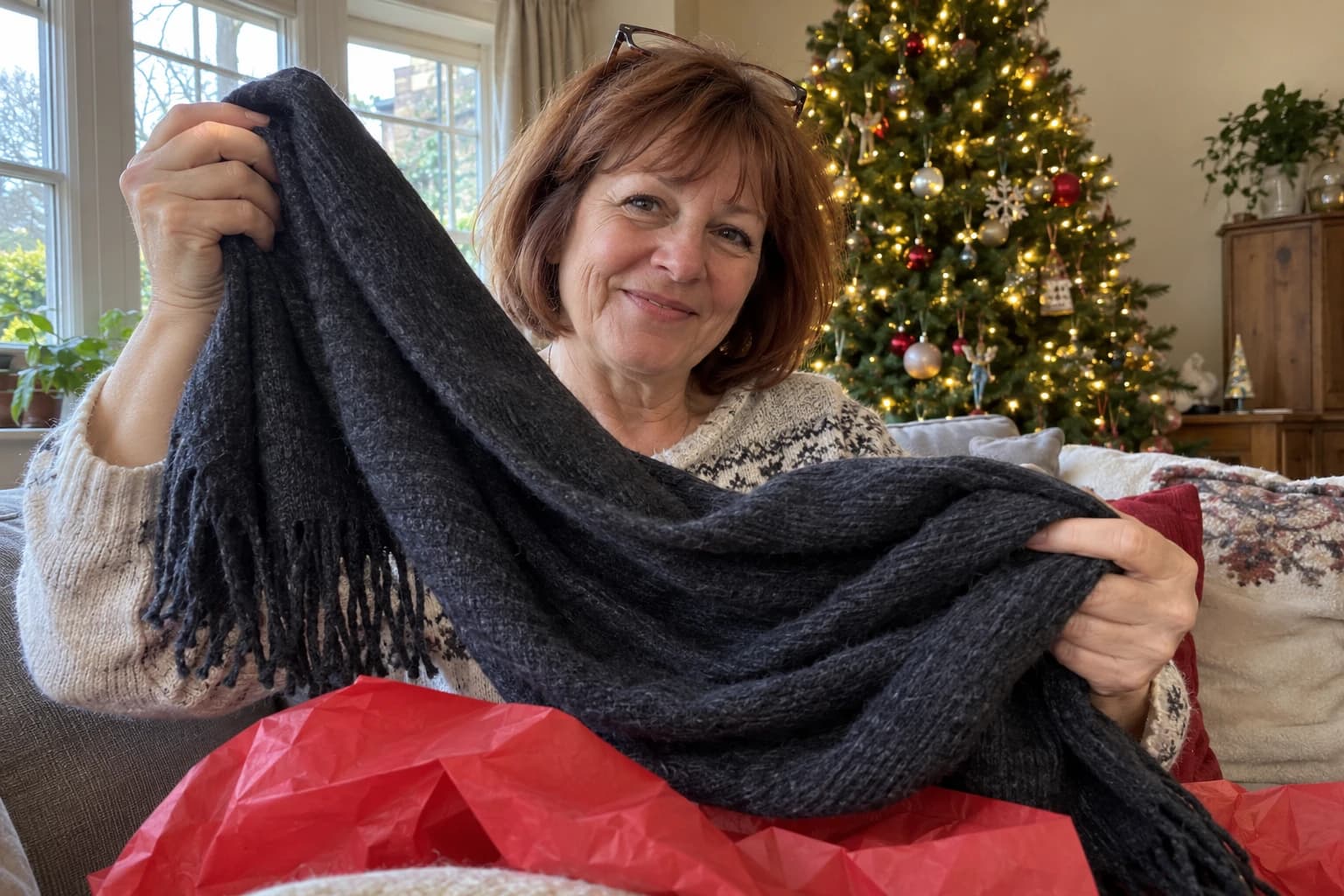
24Beige Scarf Under Your Chin
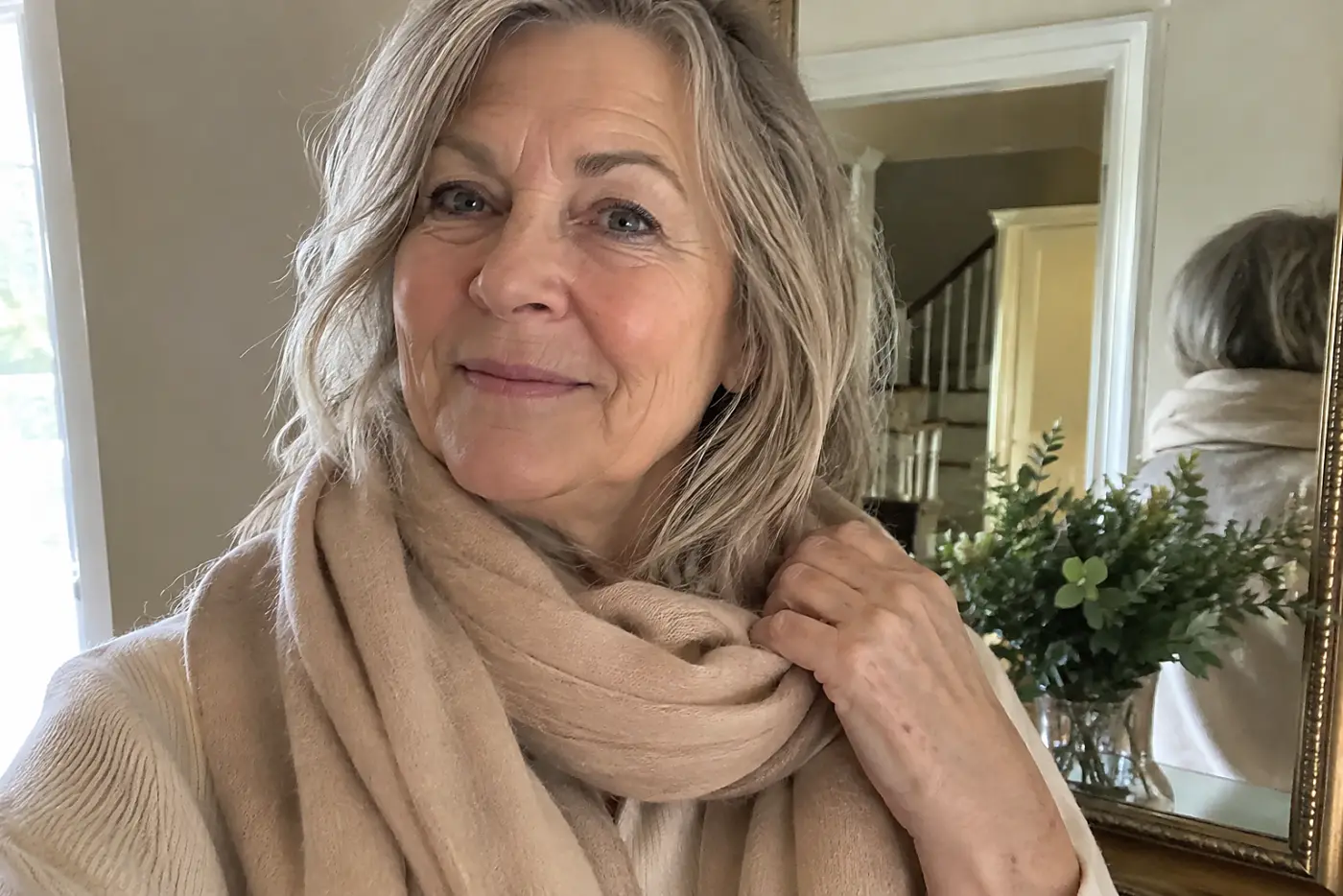
A beige scarf sits closer to your face than your coat does.
That small strip of fabric shapes the whole portrait. Beige close to your skin tone erases the line of your jaw, especially against a pale wall. Beige with more pink or more depth creates a clearer edge. Two scarves called beige won't give you the same picture.
Compare them under your chin, not draped over your arm in a store.
23Camel Wool Coat

A camel coat takes up most of a winter photograph.
Its golden brown looks rich on a hanger. Against your face, that yellow warmth deserves a test, particularly on a gray day. A scarf changes the result without changing the coat. Think of the coat you wear for a family picture outside a restaurant. In the full-length shot, its shape looks fine. Then someone crops the picture to your face and shoulders, leaving mostly camel beside your skin. That's the photograph to check. An open collar leaves space for another color; a buttoned coat puts camel directly below your chin.
If camel dulls your face, button the coat below a blue or burgundy scarf.
22Pale Gray Crewneck

Pale gray blends into a cloudy window behind your head.
The color has little contrast with silver hair or light skin. In a photo, your face, sweater and background merge into one pale area. A darker gray gives the camera an edge to hold onto. This is about separation in the picture, not whether gray belongs in your wardrobe.
Try charcoal beside pale gray in the same daylight and compare your eyes.
21Charcoal V-Neck Sweater

A charcoal V-neck frames your face without black's sharp border.
The darker tone gives silver hair a visible outline. Its V leaves space for skin or a shirt collar, so the sweater doesn't fill the entire frame. If black looks harsh in photos, charcoal is worth putting on before you give up dark clothes. Look at the depth of the V, too. A high neckline puts more gray beneath your chin; a lower one shows more skin. That changes the balance of the picture even when the color stays the same. Keep the shirt underneath consistent when you compare charcoal with black.
Photograph it beside your black sweater, with the camera in the same place.
20Heather Gray Sweatshirt

A heather gray sweatshirt has flecks of white throughout.
Those flecks give it a different look from flat pale gray, but they don't guarantee a brighter face. The sweatshirt's neckline and the light still matter. In an overhead-lit kitchen, its pale fabric reflects light upward while your eyes sit in shadow. Move toward a window before blaming the shirt.
Check it in a daylight photo, then add a darker collar for comparison.
19Dusty Rose Cardigan
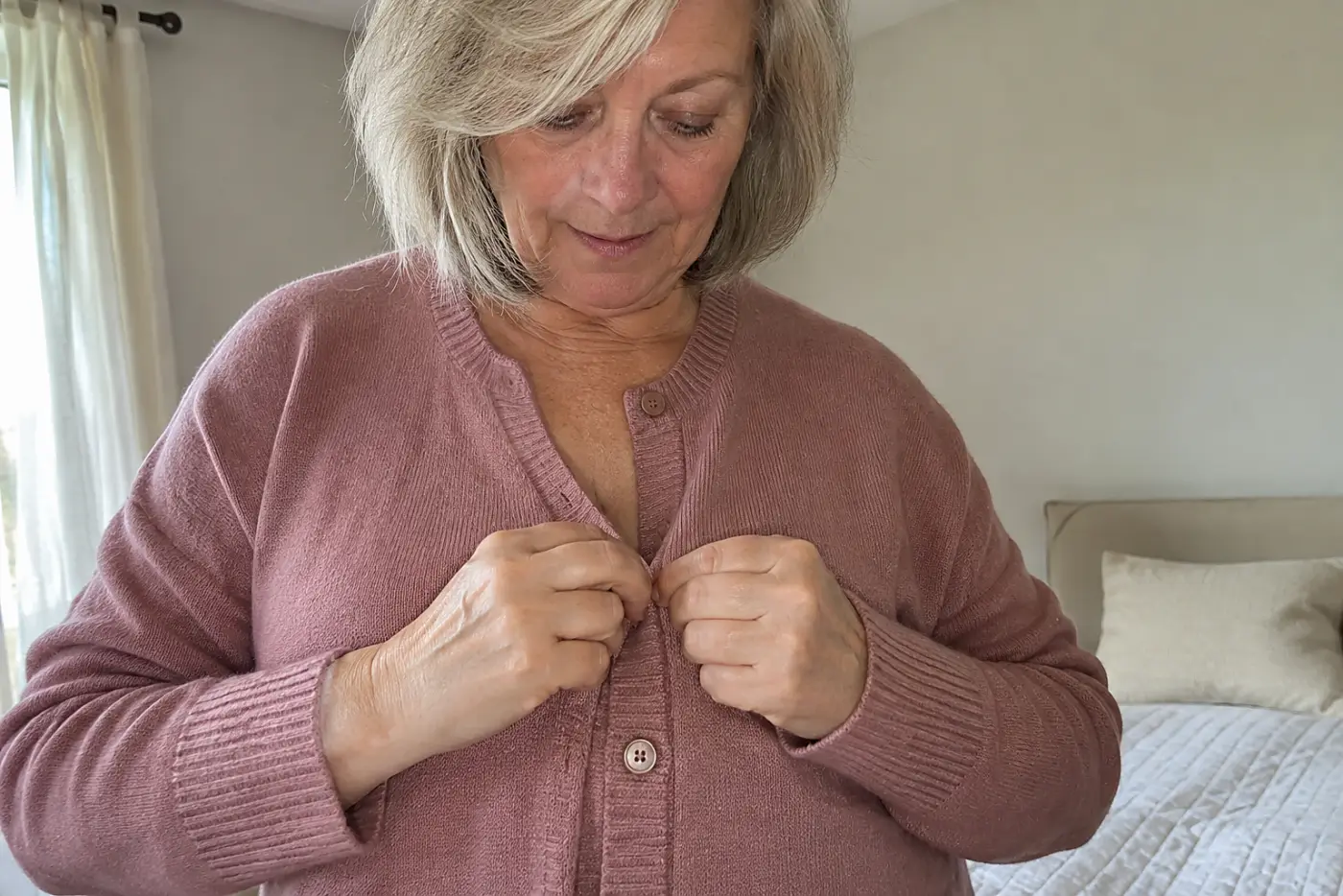
A dusty rose cardigan looks muted beside a pinker lip.
Its gray undertone feels easy to wear, but it blends with the shadows in some complexions. If you look tired in the photo, check the cardigan before reaching for more makeup. A cardigan also gives you a choice that a crewneck doesn't. Leave it open and another color appears at your collar. Button it high and dusty rose takes over the space beneath your face. Look at both versions in the same light before deciding the whole cardigan is wrong.
Hold clear pink beside it and keep the shade that makes your eyes easier to see.
See more: 12 Best Blushes for Women Over 60, and How to Wear Them →
18Clear Raspberry Sweater

A raspberry sweater stands out against a kitchen's beige cabinets.
Unlike dusty rose, this pink has a clean edge. That edge separates your face from a dull background and draws the eye toward it. It also shows how much the camera's surroundings matter: a bright wall and a beige wall produce different pictures.
Try raspberry in your usual photo spot, then compare it with the rose you already own.
17Brick Red Scarf
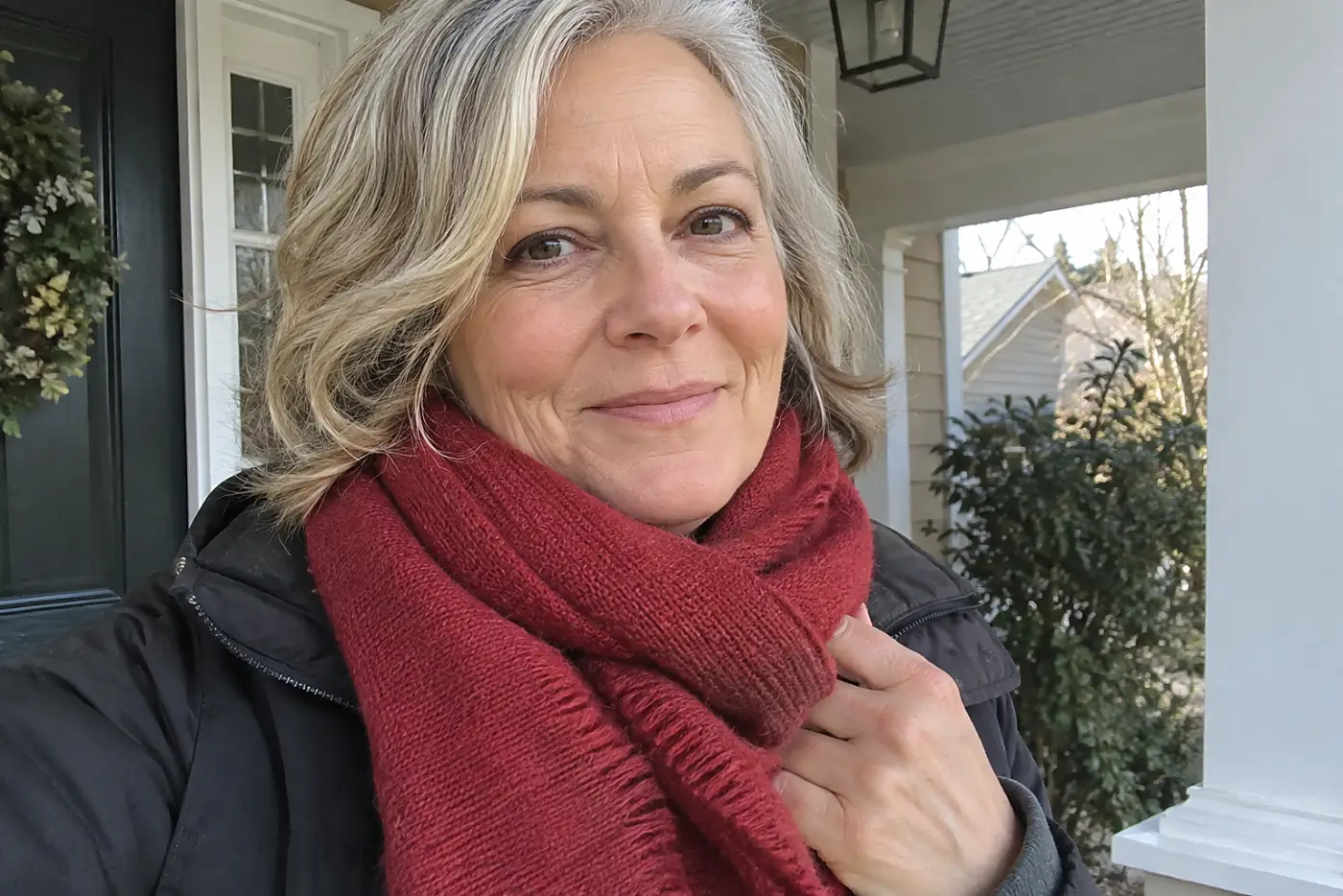
A brick red scarf puts warm red right under your chin.
The brown in brick red makes it quieter than true red. That warmth looks good on one face and brings out redness on another. The scarf is small enough to test without buying a new outfit. It's also easy to forget how much of it appears in a close picture. Fold it narrow and you see a stripe. Wrap it high and the camera sees red beside both cheeks. Test the way you actually tie it before judging the shade.
Take it outside with a true red scarf and compare both against your face.
16True Red Button-Down

A true red shirt looks unmistakable across a crowded table.
Red draws the camera's eye, but the shade matters. A red that leans orange casts a different impression from one that leans blue. Put each beside your face rather than judging the folded shirts. Watch your skin first, then decide whether you like the color.
Ask someone to take two photos from the same chair, one in each red.
15Coral Linen Top

A coral linen top glows in afternoon light near a window.
Coral combines pink and orange, so its warmth shows up strongly beside your skin. If your face looks ruddy in it, the fabric's color is doing some of that work. Linen's wrinkles aren't the issue. The neckline matters more in a head-and-shoulders photo. A wide neck leaves skin between the coral and your face; a close collar brings orange-pink right to your chin. Take the picture at the distance your family uses, not from across the room. You'll see what the camera sees beside your cheeks.
Try a cooler pink beside coral before you blame the photograph.
14Peach Knit Tee

A peach tee nearly matches the color of some skin.
When the neckline and face blend, the photograph loses a clear boundary. A warmer peach also draws attention to yellow light from lamps. You don't need to throw out a favorite tee because of one dim dinner photo; you need another view of it.
Wear it by a window, then compare it with a deeper coral or a cooler pink.
13Mustard Yellow Cardigan
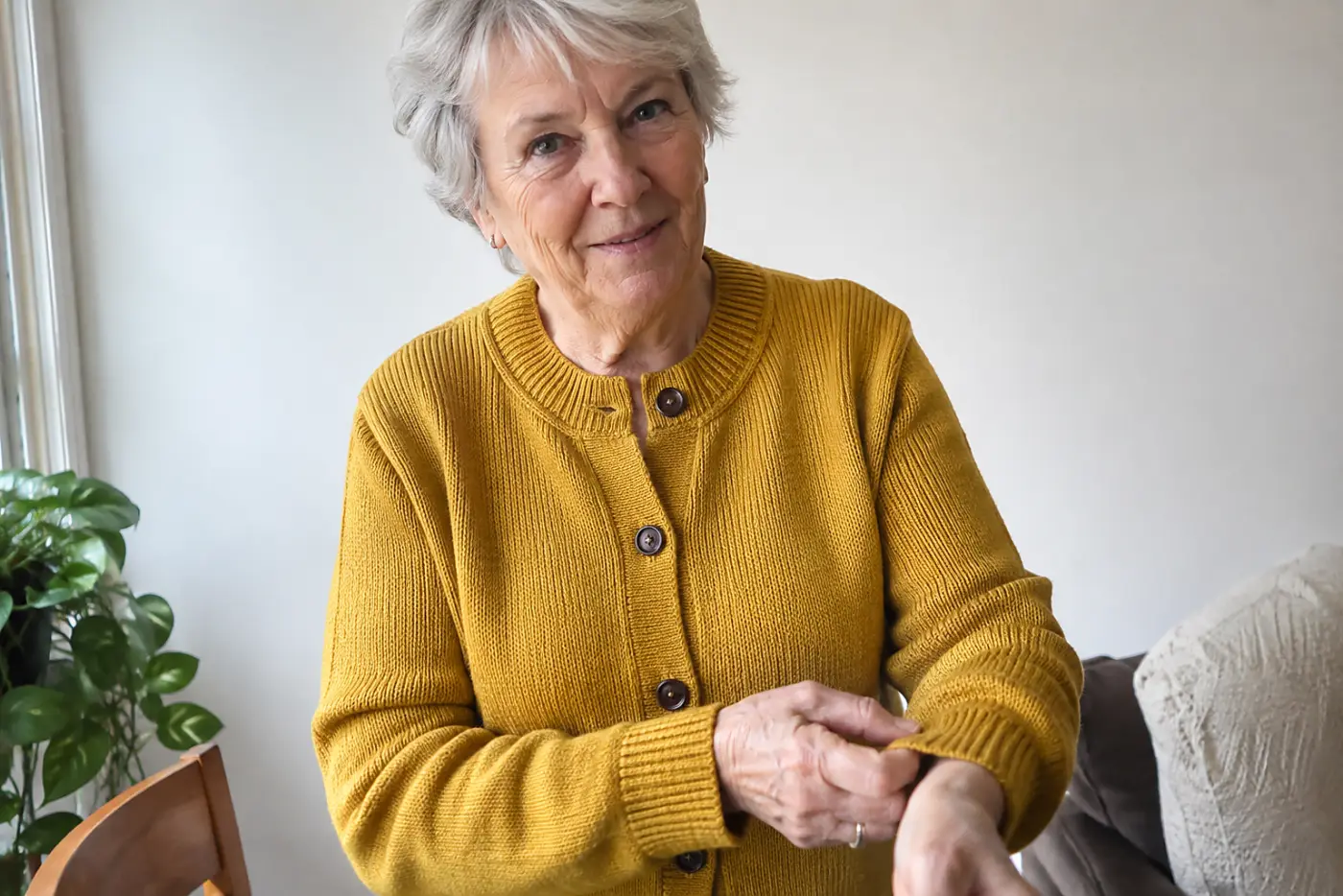
A mustard cardigan looks strong against dark jeans and a white wall.
Near your face, its brown-yellow tone has more influence than the jeans ever will. Under warm household bulbs, mustard and skin pick up the same yellow light. That makes a tired-looking photo a poor test of how rested you are. Notice the buttons as well. When the cardigan is closed, mustard fills the space from waist to chin. Open it over white and the line beneath your face changes. That gives you a way to keep the cardigan without asking its color to do all the work.
Try the cardigan in daylight with a white shirt collar showing.
12Butter Yellow Blouse
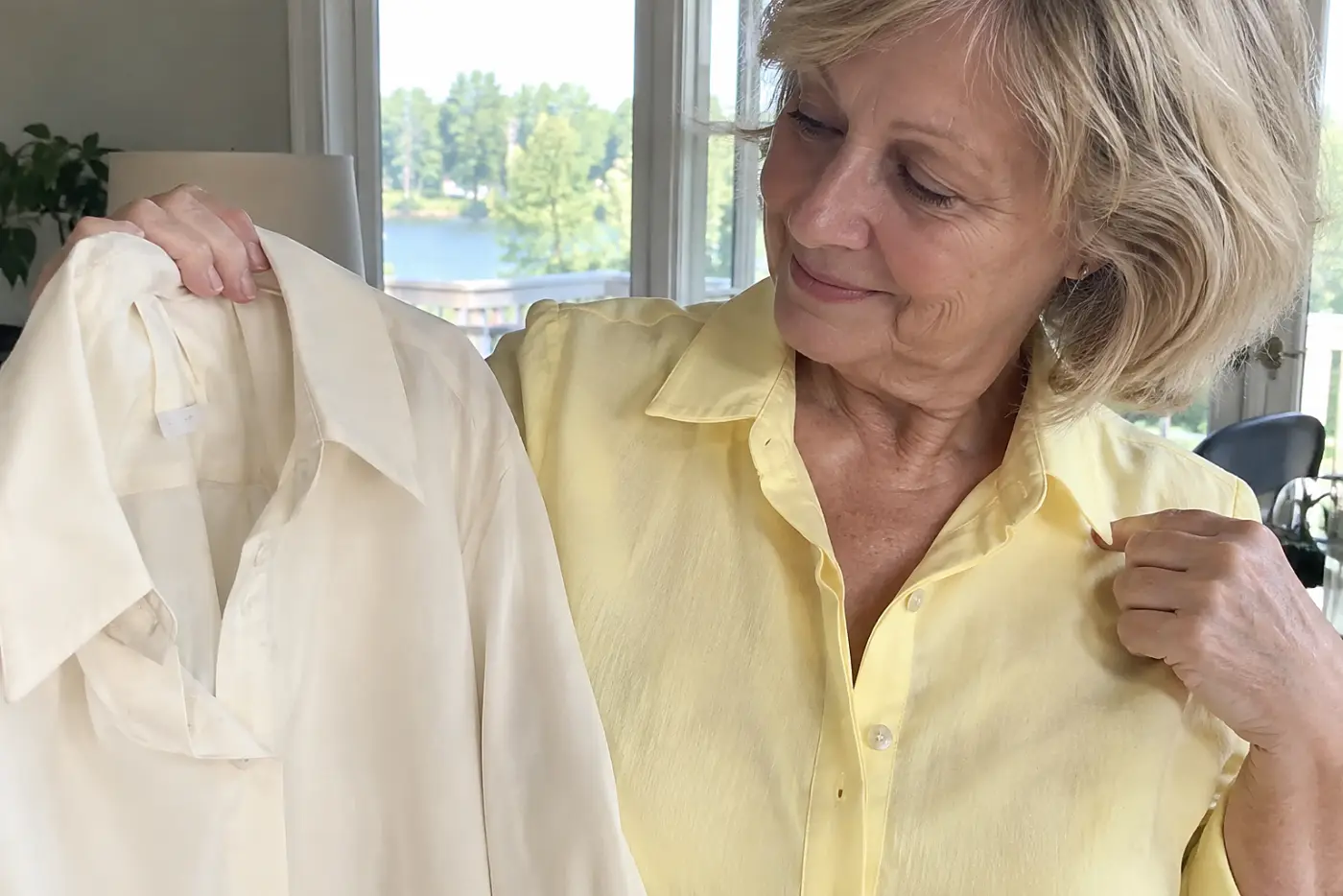
Butter yellow looks almost cream until you place the two together.
That extra yellow is exactly what your camera notices. Against some faces, it makes skin look lively; against others, it brings out yellow around the mouth. Check the blouse next to cream in the same light. Your eyes and skin, not the prettiness of the fabric, settle the question.
Put both colors under your chin before choosing one for the family picture.
11Olive Green Jacket

An olive jacket fills the picture with brown-green color.
Olive looks sensible beside denim, but its muted tone also sits close to shadows in skin. If your face disappears against it, a pale shirt collar gives the photograph a brighter break. Check the jacket zipped, then open. The color covers far more of a close photo when the zipper reaches your throat. On a coat hook, olive is easy to judge against the wall. On you, it sits beside your cheeks. That's where it earns its place in a picture, or needs help from the shirt beneath.
Wear the jacket open over white, then check whether the photo changes.
10Emerald Green Sweater

An emerald sweater holds its color even in a dull room.
It has more blue and more clarity than olive, so it separates easily from beige walls and brown furniture. That contrast puts your face back at the center of the picture. Still, a bright sweater can't repair poor light: ceiling fixtures leave shadows under the eyes no matter what you're wearing.
Take a second picture by a window before deciding emerald is your answer.
9Navy Blue Blazer

A navy blazer looks dark without disappearing like black.
The blue gives its edge a little distance from shadows beneath your eyes. A light shirt inside the lapels brings brightness close to your face without filling the photograph with white. Navy also changes under different light. In a dim hallway, it looks nearly black. Beside a window, the blue becomes visible again. Don't judge it from the hallway snapshot alone. The same blazer gives you two different pictures before you change a thing about your face.
Try the blazer over cream, then over stark white, in the same light.
See more: 25 Spring Outfits for Women Over 60 (and What Makes Them Work) →
8Powder Blue Oxford Shirt

Powder blue looks fresh on the hanger, then fades in the photograph.
This blue has a lot of white in it. Beside a pale wall or silver hair, an Oxford collar loses its outline, and your face loses a clear frame.
The woven cotton still gives the shirt shape. Color is the part to question. You see the difference when the collar is open and powder blue sits beside your cheeks, not hidden under a jacket.
Compare it with your cobalt shirt in one daylight photo, keeping the wall behind you unchanged.
7Violet Print Scarf
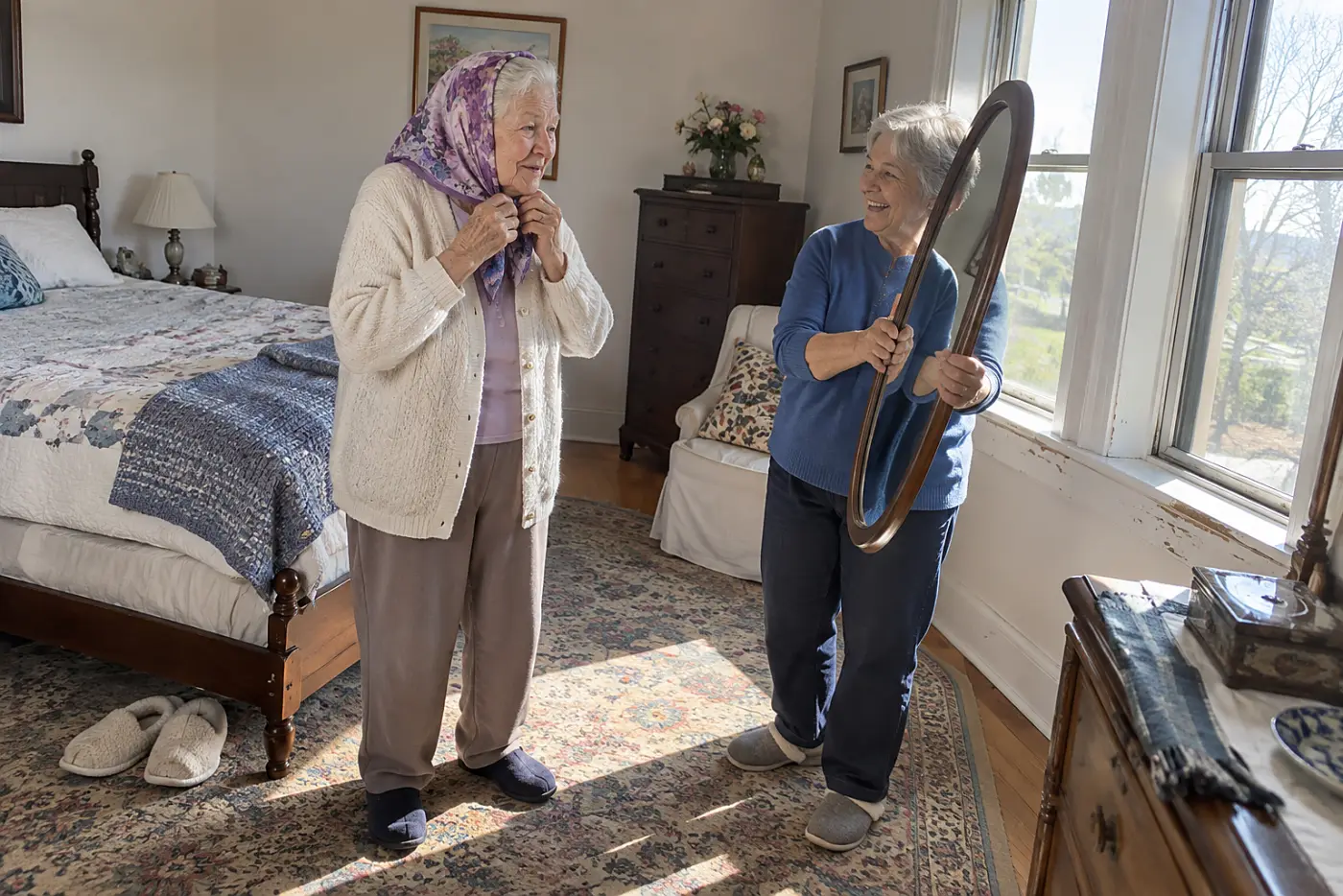
A violet print scarf breaks up the dark band beneath your chin.
A solid dark scarf puts one unbroken shape beside your face. A print leaves small patches of lighter color near your jaw, where the camera sees them in a close shot. The print's scale matters: tiny flowers blur together on a phone screen, while broad shapes remain visible. Check that the lightest patch lands near your face rather than disappearing inside the knot.
Tie the scarf as you normally wear it, then take a head-and-shoulders photo.
6Chocolate Brown Silk Shell
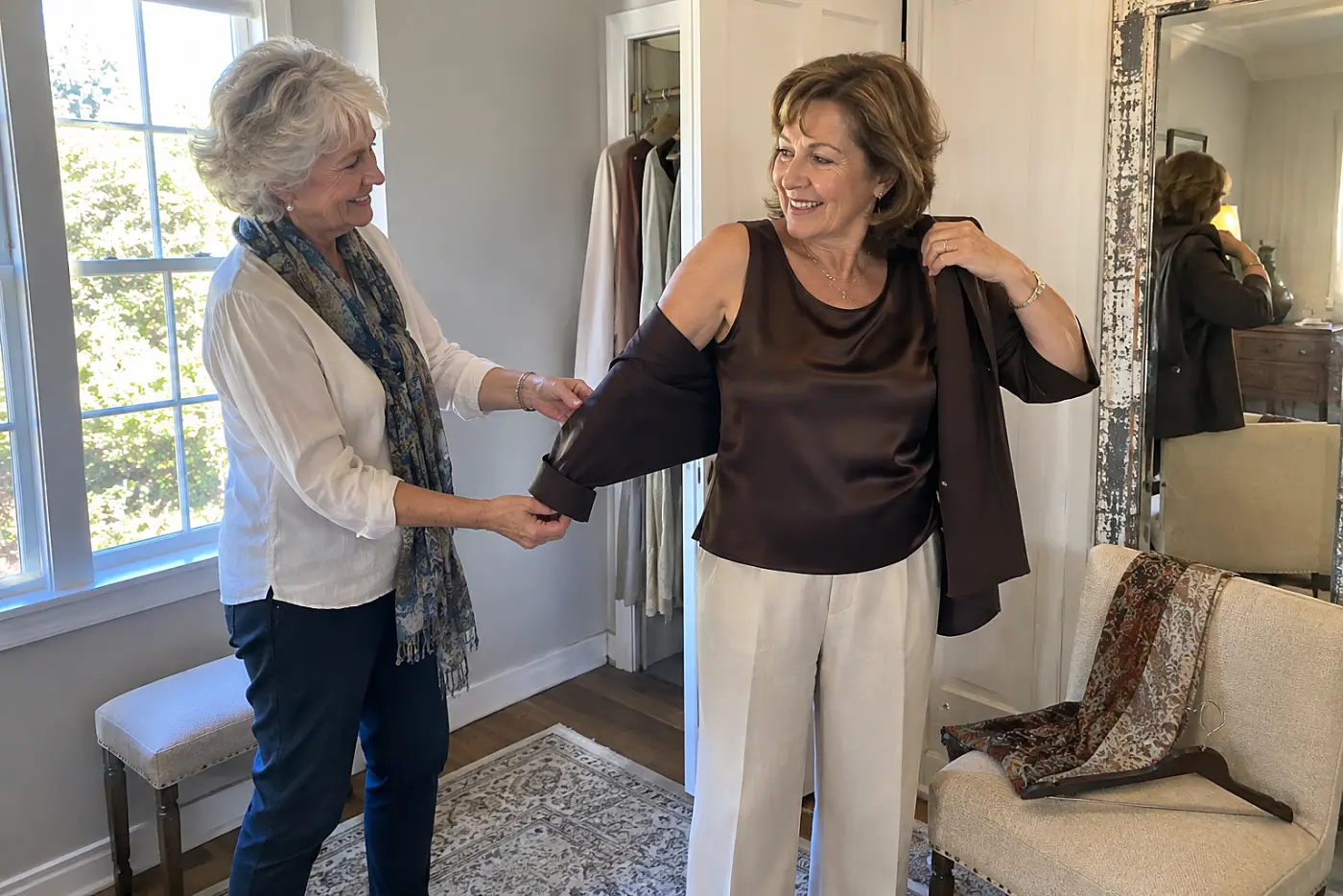
Chocolate brown looks almost black until daylight reaches the fabric.
Its warmth sets it apart from charcoal and navy. Against your face, look at the shadows around your mouth. A shell worn under a jacket shows only a narrow strip of brown; worn alone, it fills the frame below your neck.
Photograph both ways before deciding whether the brown belongs near your face.
5Turquoise Cotton Shirt

Turquoise catches your eye before the rest of the outfit does.
It sits between blue and green. When a phone brightens a dim room, a vivid shirt stays vivid while your face looks pale beside it. That contrast can make an ordinary family photo look like proof you were tired. The shirt and your face need the same daylight before you judge either one.
Take a photo by the window, then look at your face before the shirt.
4Lilac and White Striped Shirt
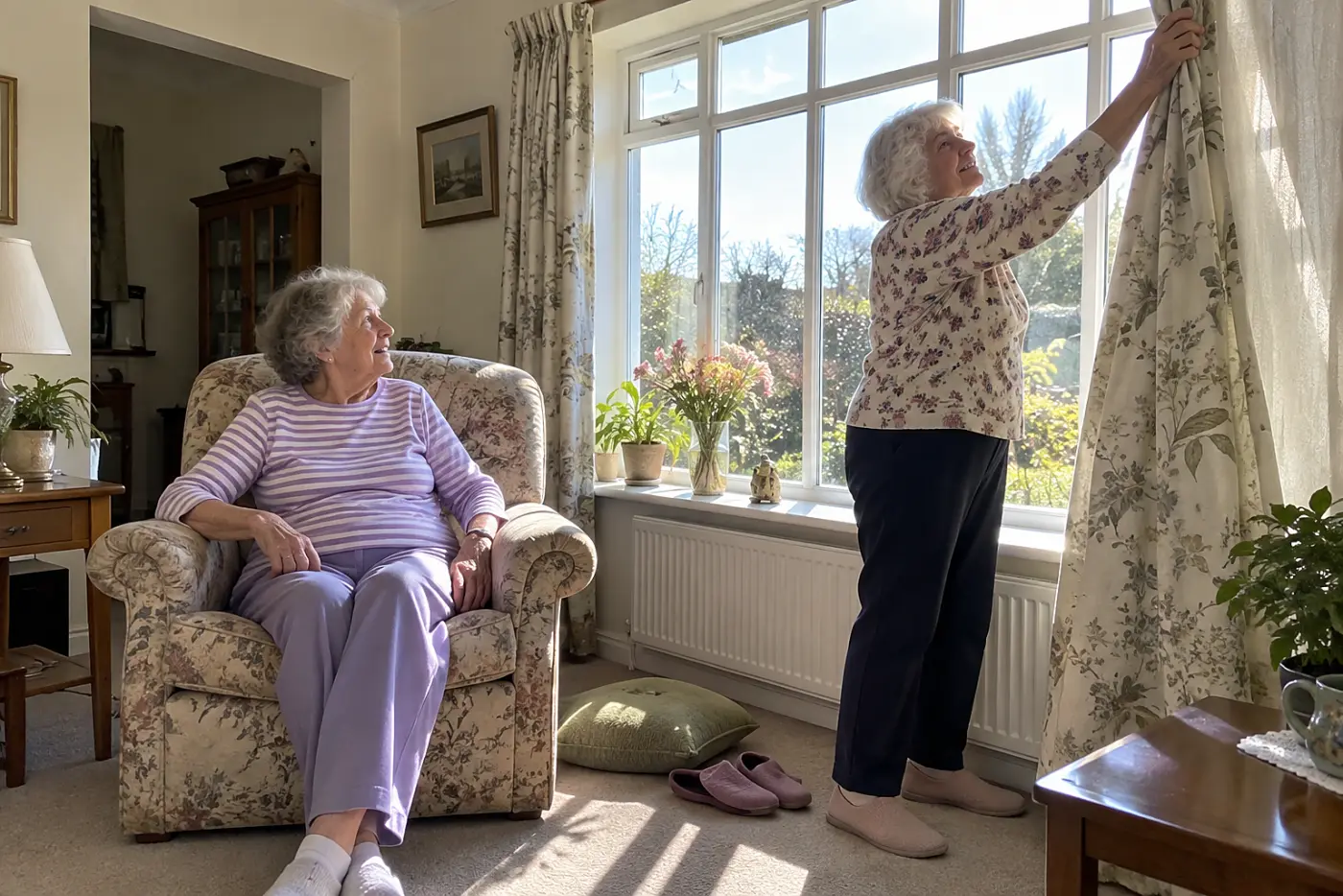
Narrow lilac stripes run across a white collar beneath your face.
From across the room, those stripes blend into pale lavender. Up close, the white gaps keep the collar from becoming one flat patch. A phone photograph taken several feet away gives you both views: the shirt has a pattern, but your face still needs to stand apart from it.
Photograph it from the distance your family uses, not in a mirror close-up.
3Teal Denim Jacket

A teal denim jacket shows blue-green even beside gray hair.
Denim has seams and a firm collar that hold their shape in a photograph. Teal changes the picture most when you fasten the top button: then its color reaches your neck on both sides. Leave it open, and the shirt underneath becomes the color nearest your face. That gives you two distinct pictures without changing jackets.
Take one photo open and one buttoned, then keep the version that lets your eyes stand out.
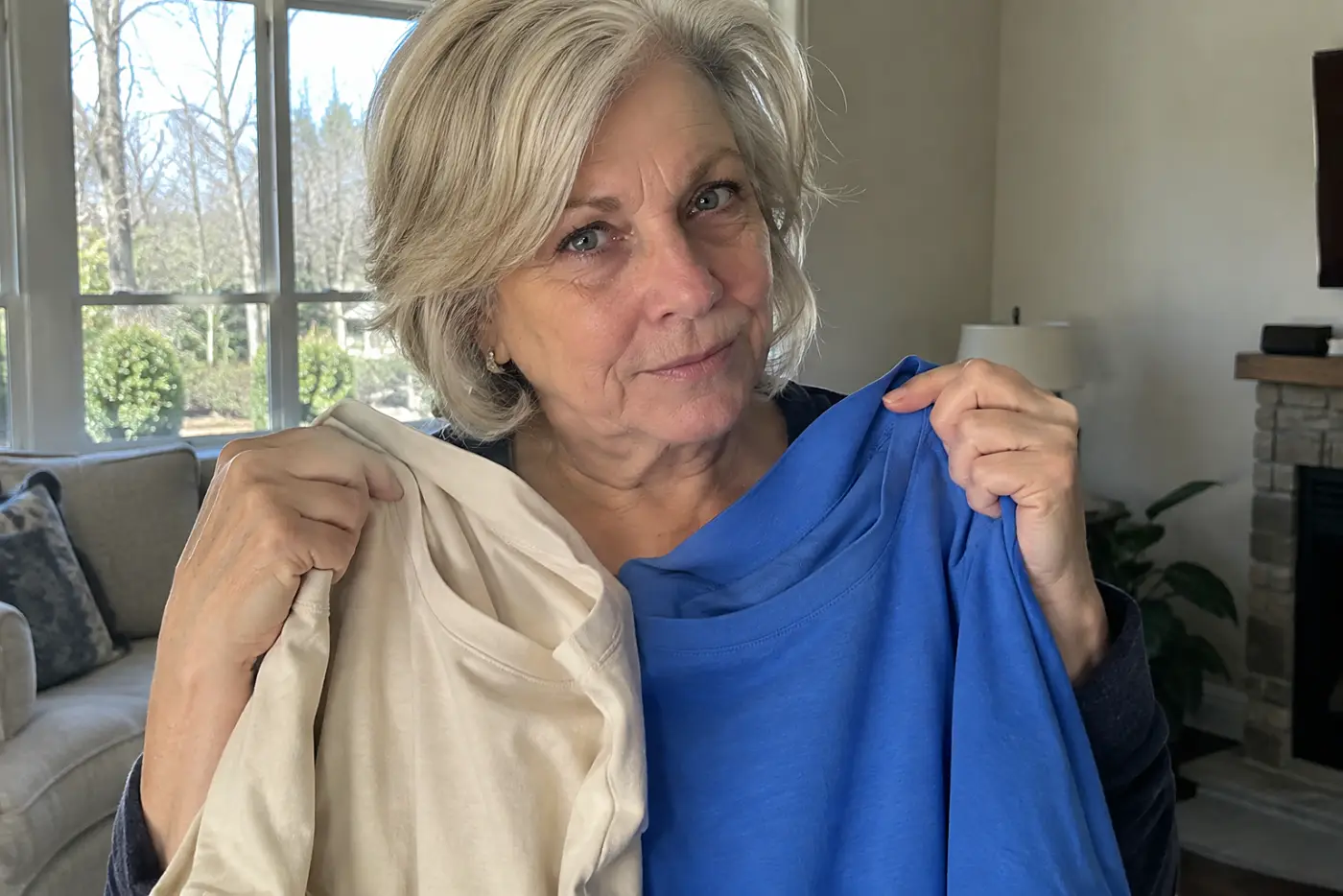
2Cobalt Blue Shirt

A cobalt shirt is impossible to mistake for washed-out blue.
Its strong blue separates your face from a tan wall, a gray sofa or a cloudy sky. Cobalt isn't a rule for everyone; it's a useful comparison against the faded blue already in your drawer. In photos, look for eyes that stand out, not a shirt that steals the scene.
Hold both blues beneath your chin and photograph them without moving.
1Two Tops in Fixed Window Light
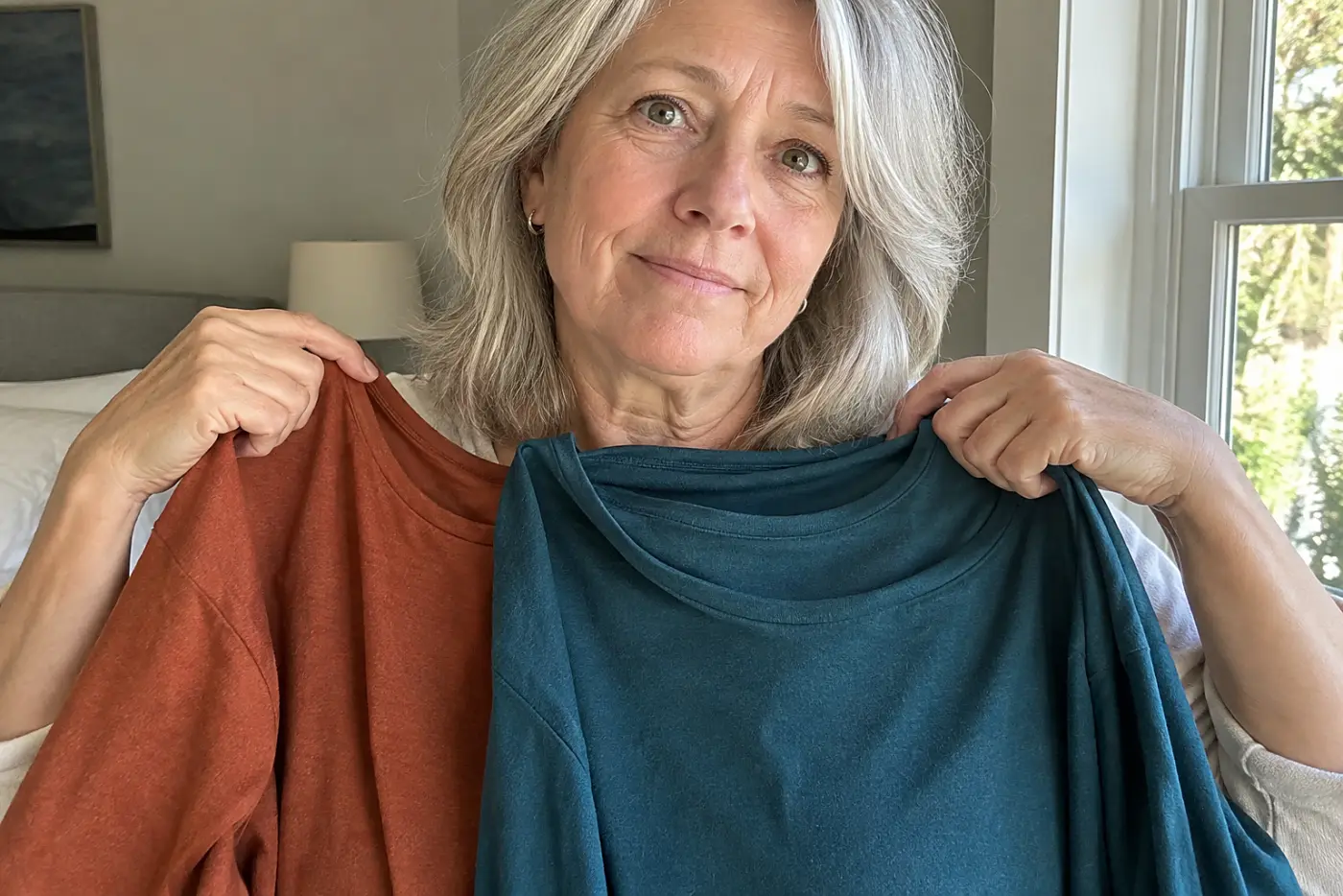
Two tops take turns beneath your chin beside one window.
The colors matter, but the setup matters more. Place your phone on a shelf and stand on the same floorboard for both photos. Turn off the lamp. Hold each top at the same height beneath your chin, without covering your jaw. Now the light, angle and background stay put while only the color changes. A difference in shadows is easier to spot that way. You aren't guessing from last week's dinner picture, where the light and camera position were different.
Pick your two most-worn tops and photograph each from that fixed spot today.
The bottom line
Across these 29 items, the pattern is what sits beneath your face: its color and its edge change what the camera notices first.
Once you know your better shades, you check the scarf or collar before blaming your sleep. Which color is still in your closet despite every bad photo?
Up next
29 Outfit Habits That Make You Look Older Than You Are
A jacket that once looked sharp now hangs past your knuckles. Before replacing it, check where the shoulder seam sits.
Read the list →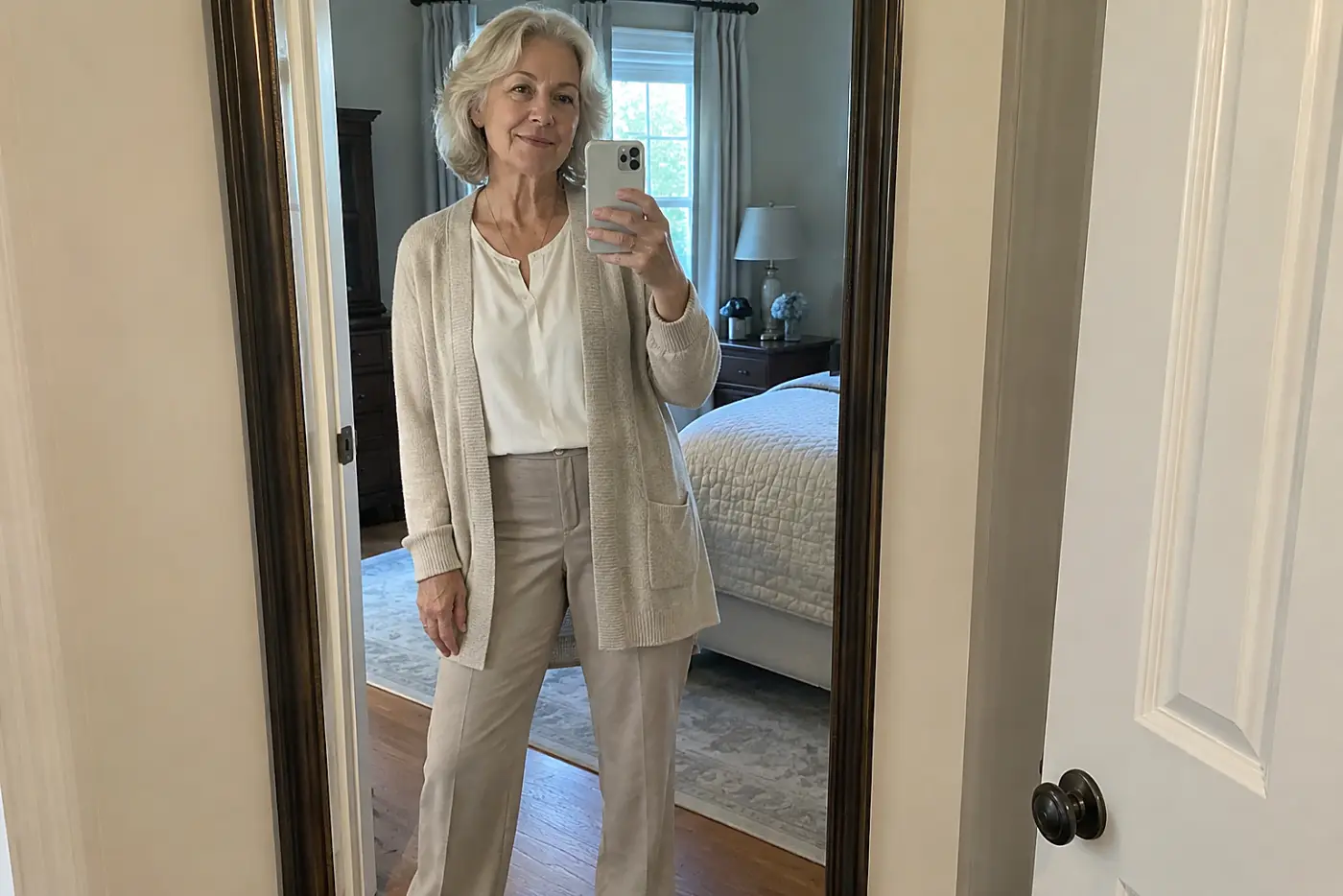

Reader quiz
Did you catch the details?
5 questions from this article. Finish them all to unlock the editor's bonus tip.
What does the article suggest placing between a black sweater's neckline and your face?
Did any of these feel familiar?
Know someone who needs this?
Nora Bennett
Style Editor
Nora writes about hair, clothes and grooming for people who have stopped asking permission: what to keep, what to let go, and what reads as taken care of.
More from Nora Bennett