









29 Outfit Habits That Make You Look Older Than You Are
A jacket that once looked sharp now hangs past your knuckles. Before replacing it, check where the shoulder seam sits.
By Nora Bennett, Style Editor
Updated · 13 min read
- Written by our style editor
- How we review

Read to the end: #1 is the one mirror test that shows why an old favorite looks wrong, and almost nobody does it.
You pull on the jacket you've worn for years. The shoulders sit where they always did, but the sleeves cover half your hands. In the mirror, something feels off. You haven't changed your taste. Yet the shape you remember isn't quite the shape you're wearing.
Here are 29 outfit habits worth a closer look.
29The Coat That Swallows Your Hands

That good winter coat now hides your hands and knees.
A roomy coat once left space for a suit jacket and winter layers. Over a thin sweater, that same space hangs empty. Check the shoulders first. If the seams fall down your arms, shorter sleeves won't fix the coat. A good fit underneath also changes where the coat hangs.
Try it over your usual winter layers. If the shoulders fit, mark each sleeve at your wrist.
28The Necklace Stuck at One Length

The pendant disappears inside your crewneck before anyone sees its shape.
You've worn that chain for years because it goes with everything. It did, when more of your tops had open collars. Now the pendant catches on a crewneck's edge and slips out of sight. That's a neckline problem, not a reason to abandon the necklace.
Lay out the tops you wear most and try the chain with each. Look in a mirror, not at the clasp in your hand. A shorter chain puts the pendant above the neckline. A longer one lets it rest clearly below.
Wear the length that leaves the pendant visible, or leave it off that day.
27The Black Top Against Your Face
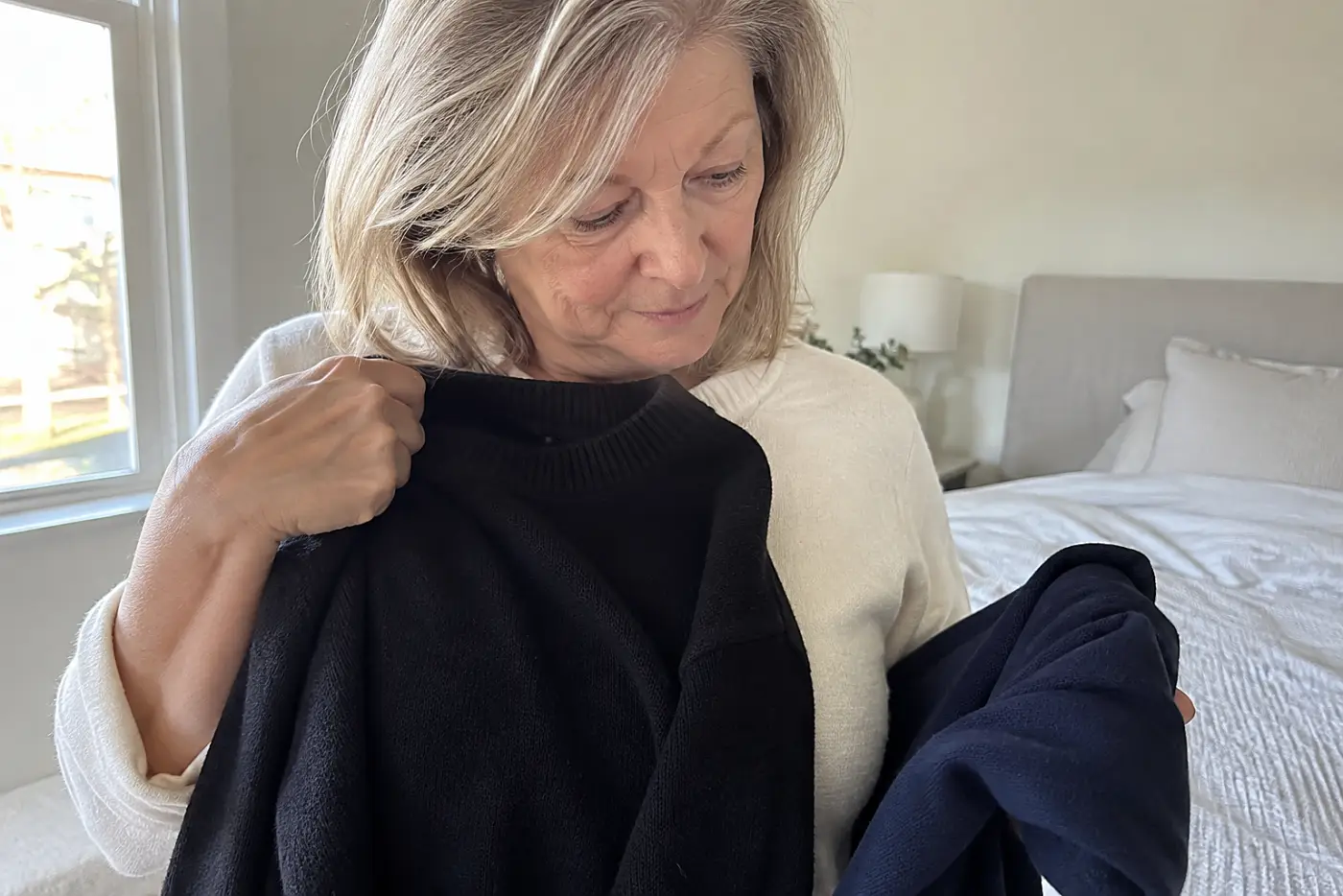
The black sweater looks crisp, but your face falls into shadow.
Black earned its place in your closet: it hides spills and matches the trousers you trust. Under a store's bright lights, it looks decisive. At the kitchen window, its edge against your neck tells a different story. Compare it with navy or deep teal in that same daylight.
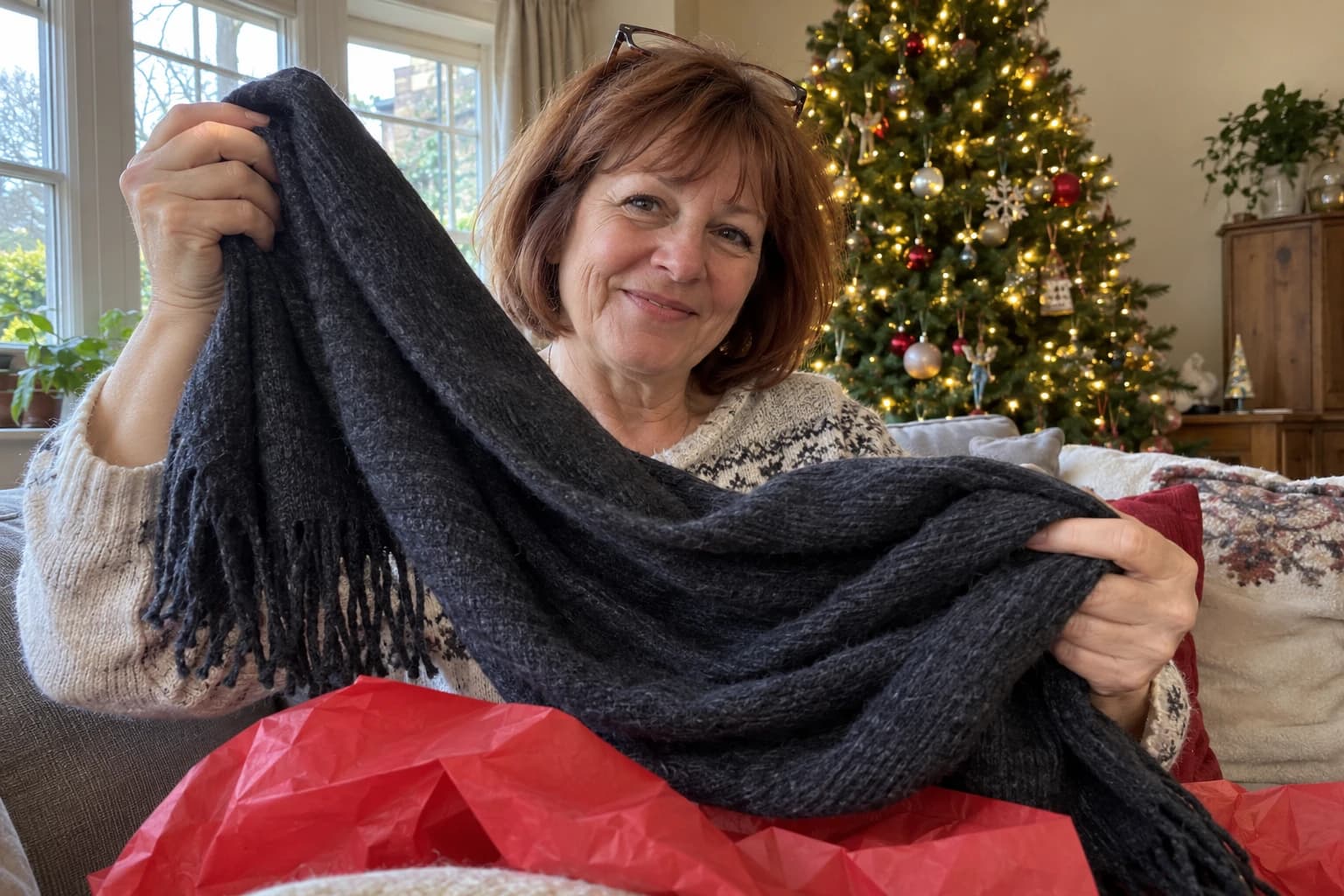
Hold both colors beneath your chin. Keep the one that brings your face forward.
See more: 25 Haircuts That Make Women Over 60 Look Rested, and What to Tell the Stylist →
26The Cardigan That Hangs Open

The cardigan's front edges drift apart below your waist.
That long cardigan made sense over slim pants and a narrow top. Over a loose shirt, it adds another moving layer. The outfit loses its outline, though none of the pieces is wrong alone. Three hems land in three places, and your eye has nowhere to stop.
Look from the side as well. A front mirror hides how far the knit falls behind you. The old pairing worked because the layer underneath stayed close to your body.
Button two middle buttons, or wear the cardigan over a closer-fitting top.
25The Pants Pooled Over Your Shoes
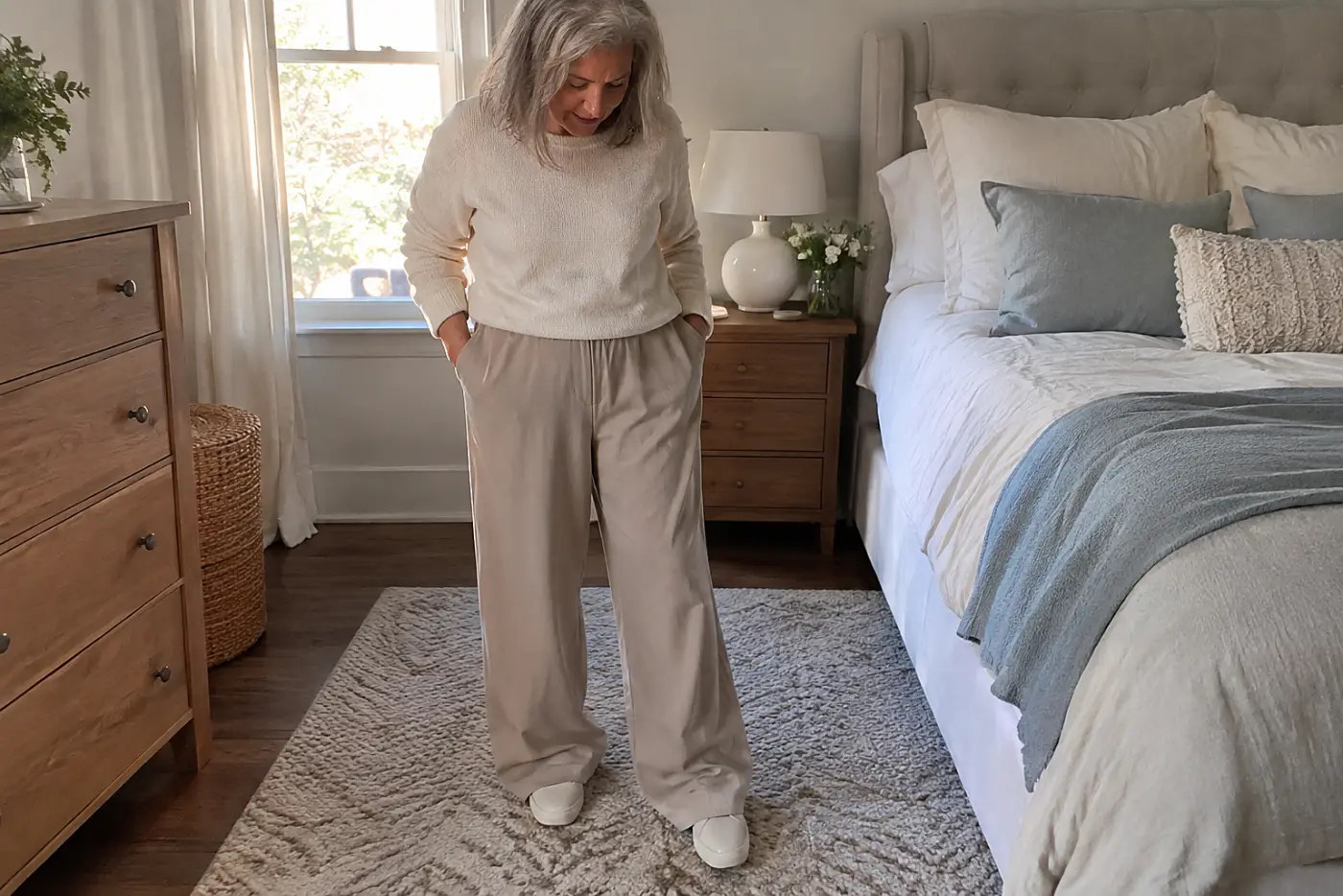
A fold of trouser fabric sits on each shoe.
You bought those pants for a heel you no longer reach for. Now the hem bends across a lower shoe. It also catches under your heel when you walk. The pants aren't worn out; the shoes beneath them changed.
Pin the hem while wearing today's shoes. Walk across the room before deciding.
24The Tiny Print From Another Decade
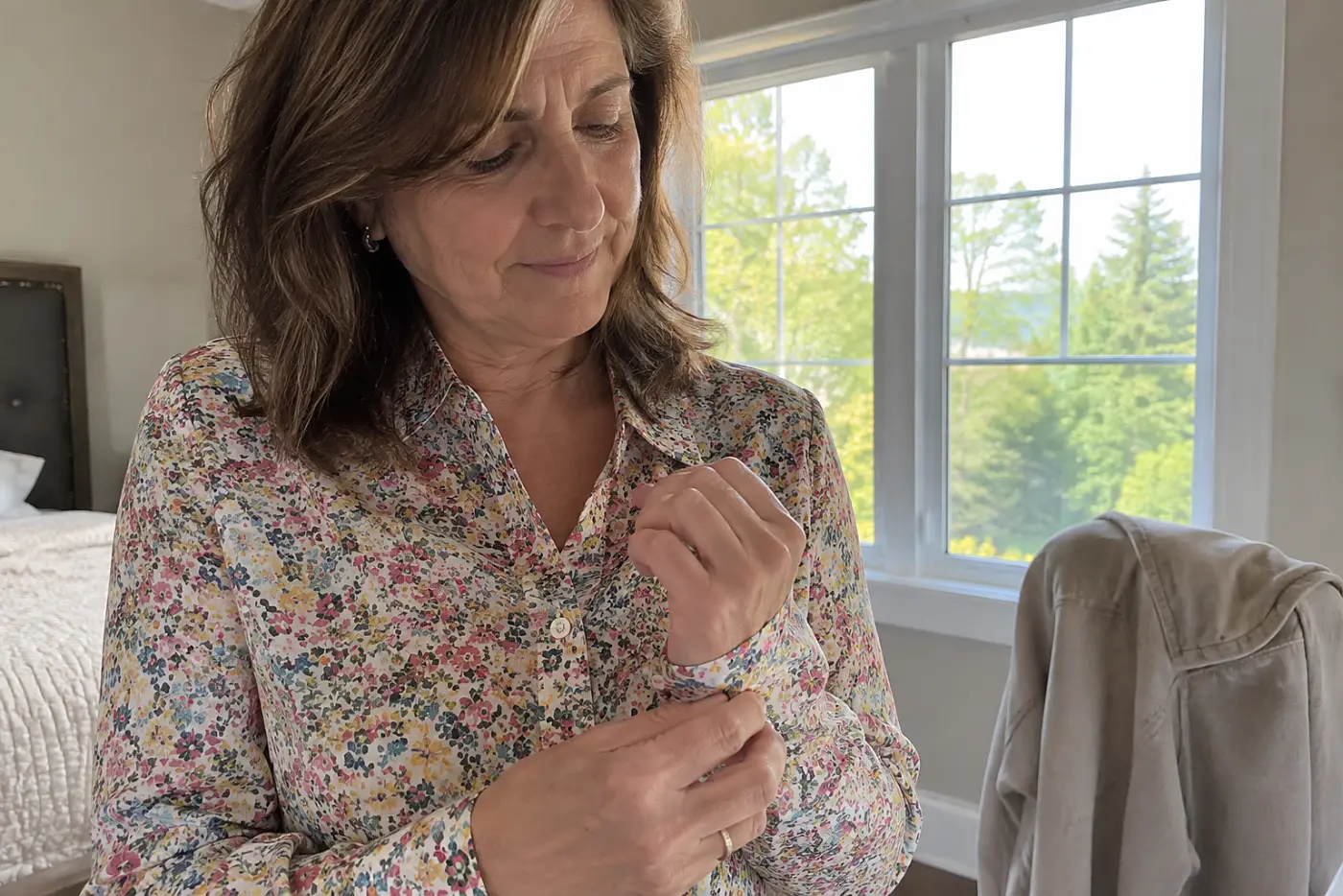
The little floral print blends together from across the room.
A blouse like this could carry an outfit in the 1990s, when its small print sat beneath a plain jacket. Worn alone now, the flowers blur into one patch of color. A patterned scarf makes them harder to see.
Keep the blouse if you love its cotton or its familiar shape. Give the print space. Put it beside a solid jacket, then step back. If the flowers still vanish, the blouse works better as a layer than as the center of the outfit.
Wear it with one solid piece and check the full outfit from across the room.
23The Jacket With Dropped Shoulders

The jacket's shoulder seams sit halfway down your upper arms.
Soft shoulders are a deliberate shape when the rest of the jacket follows through. On an older tailored jacket, a dropped seam means the whole thing is too wide. Pulling the waist in won't move that seam back into place. This is worth spotting before paying for alterations.
Compare each seam with the edge of your shoulder. Pass on the jacket if both sides sag.
22The Scarf Tied Too Tight

The silk scarf makes a neat knot beneath your chin.
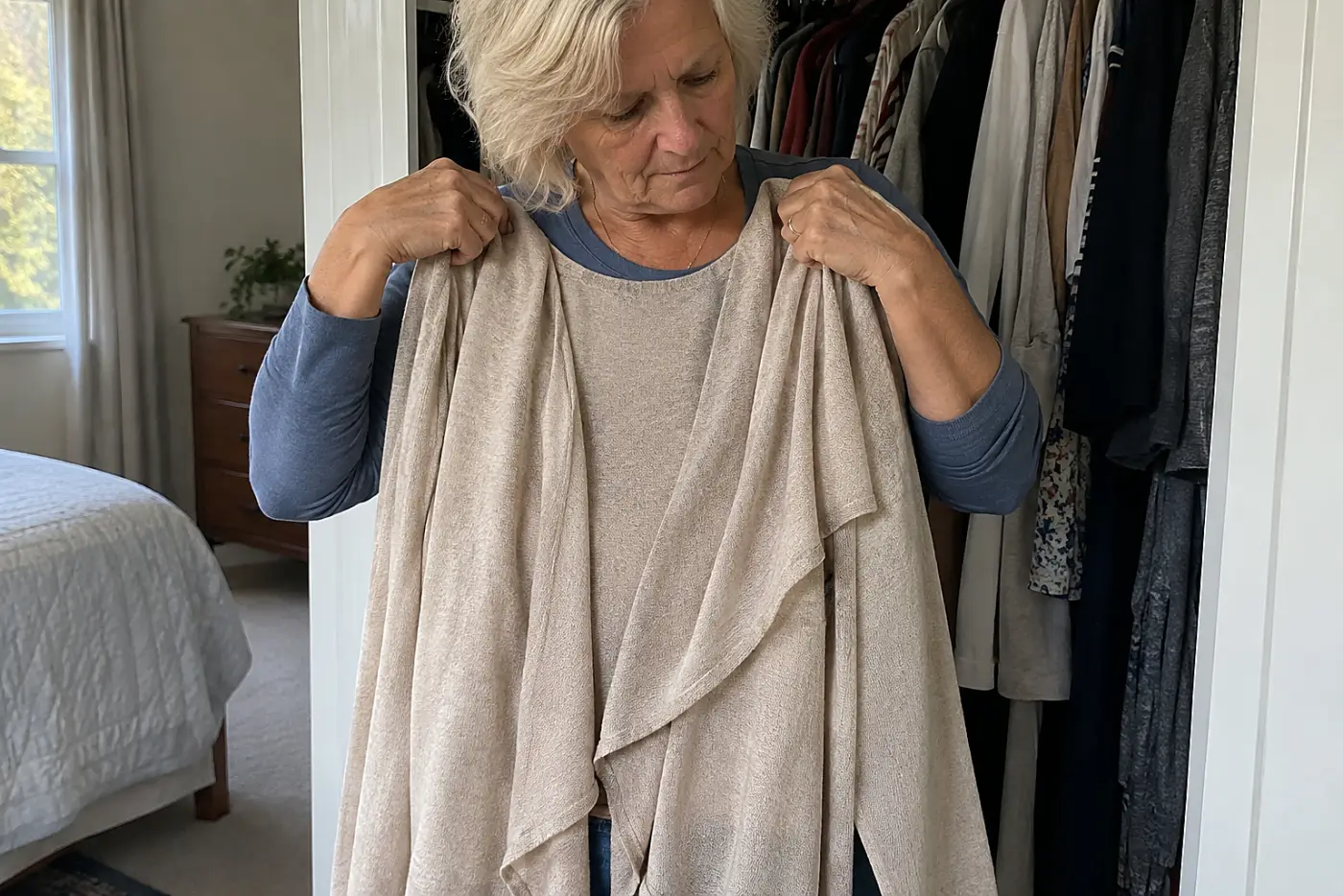
You learned that knot when scarves sat inside jacket collars. Over a crewneck, it crowds the same small patch of skin. There's no break between fabric and face. The scarf itself deserves another try.
Spread the square of silk on a table and fold it into a wider band. Let the ends hang below your collarbone. Now its color shows without covering the neckline. That old knot had a purpose; it just belonged to a different collar.
Untie the scarf tomorrow and let its ends hang lower.
21The Skirt at Midcalf
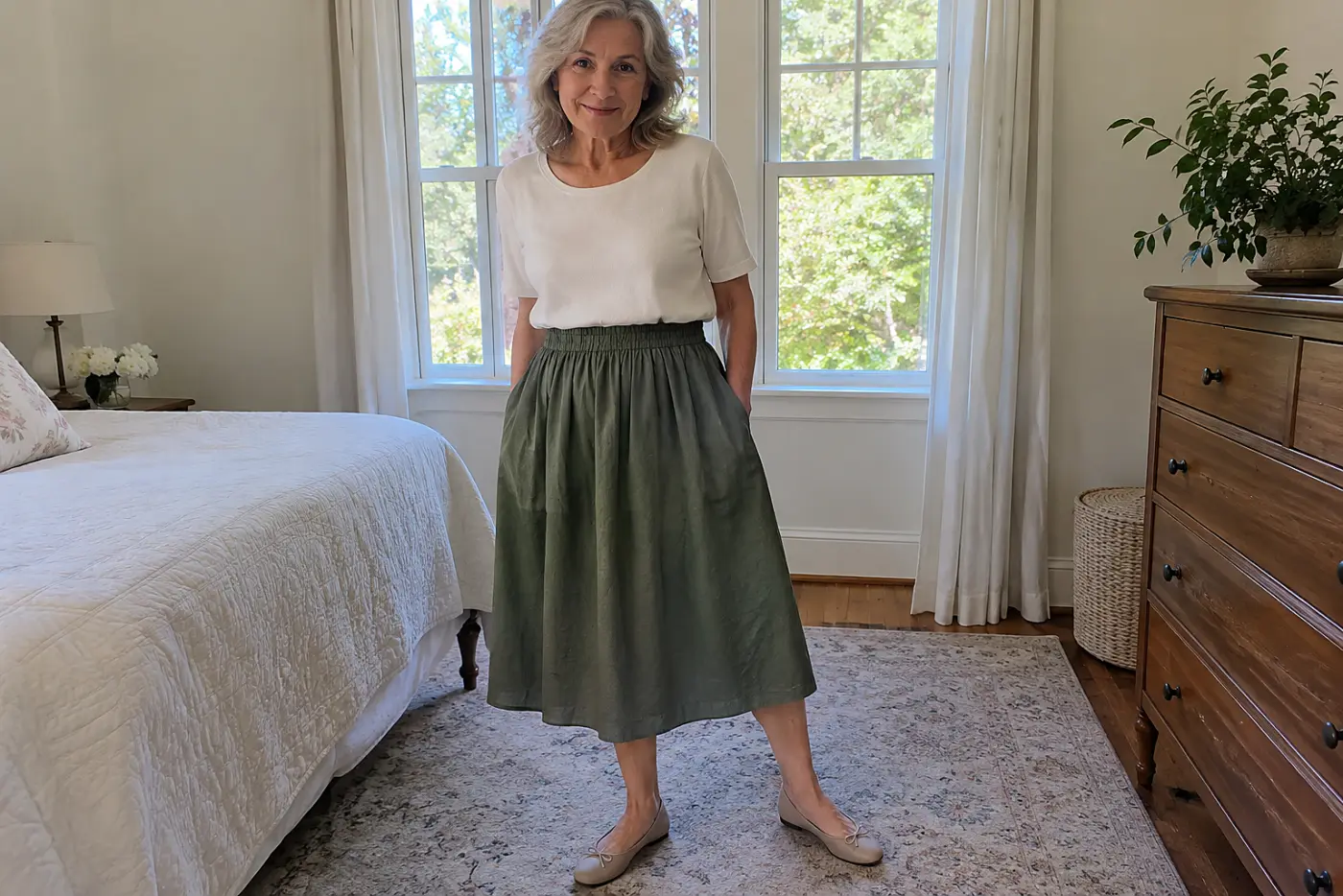
The hem stops at the widest part of your calf.
That length looked right with boots you wore years ago. With flat shoes, the same skirt covers the narrow part of your lower leg. The hem breaks at a broader point. Don't judge it on a hanger; it shifts when you walk.
Pin the hem a little higher and try it with your everyday shoes.
20The Matching Jewelry Set
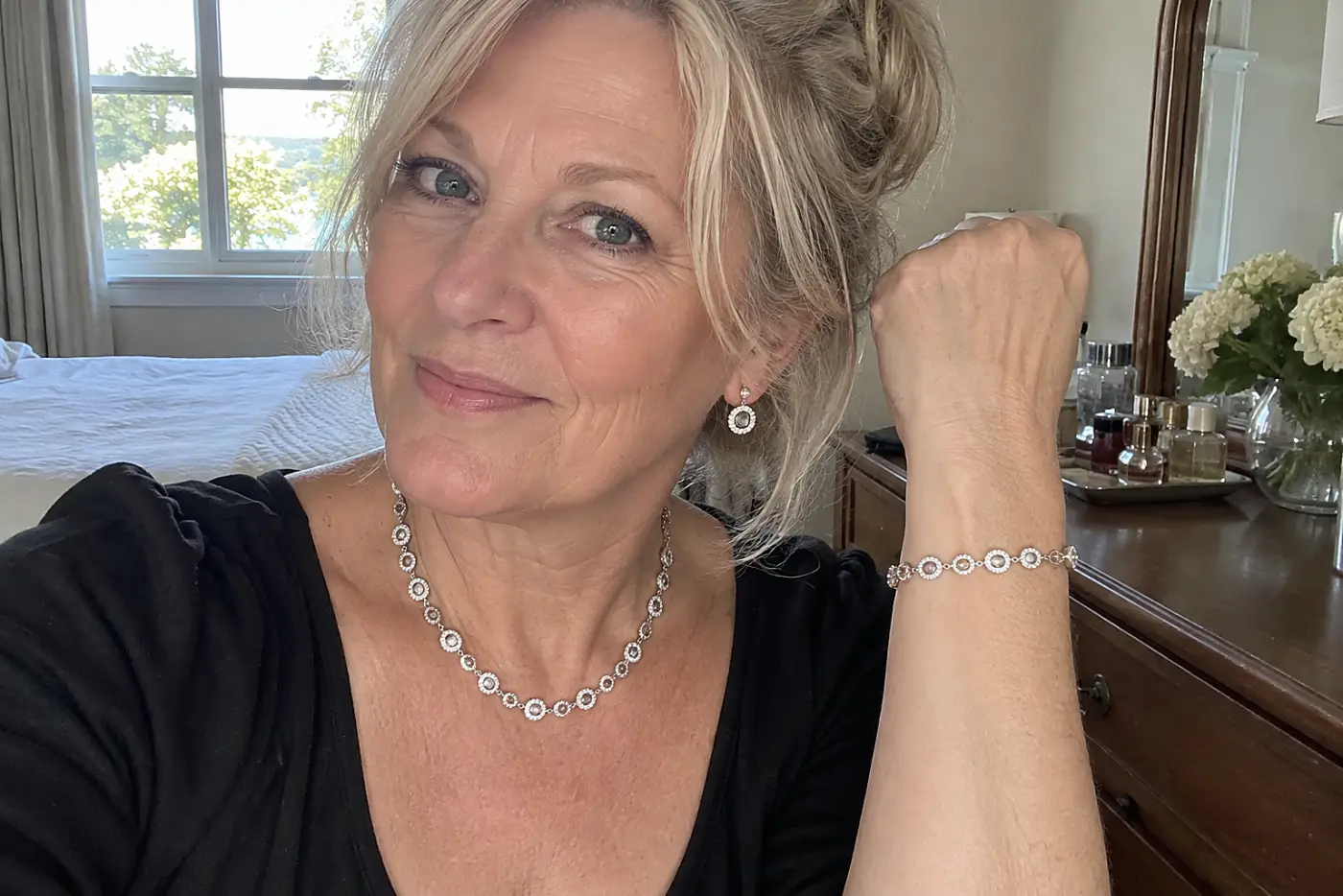
The necklace, earrings, and bracelet all share the same stones.
A matching set was a satisfying purchase. There's no reason to split it up forever. Worn together, though, three identical pieces pull attention in three directions. Add a printed blouse and the small details start to compete.
Your favorite piece gets lost among its companions. Look at each part on its own. Perhaps the earrings still frame your face beautifully, while the necklace sits against the wrong neckline. Keeping the set doesn't mean wearing the set every time.
Wear one piece tomorrow and give it a plain background.
19The White Sneakers Turned Gray
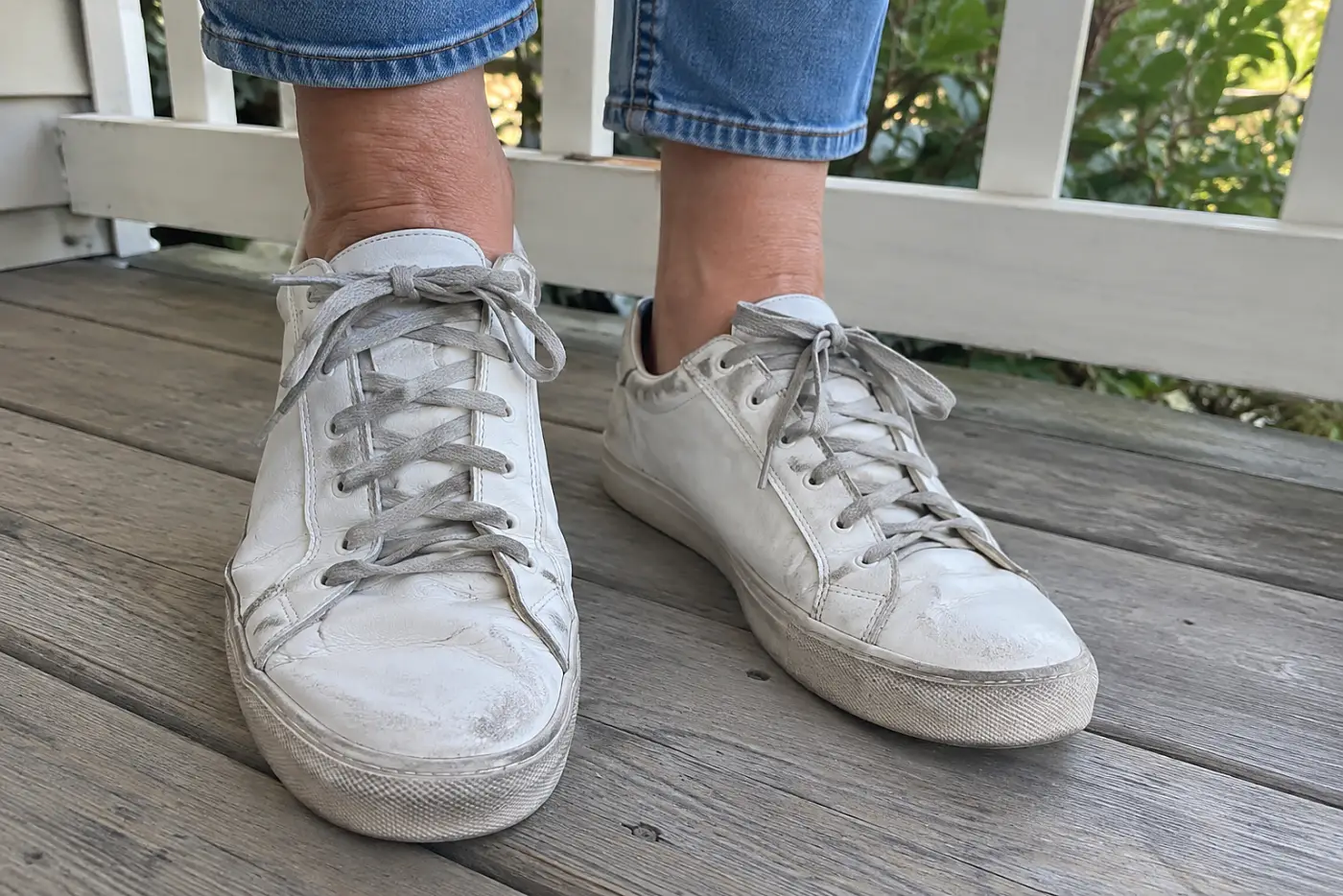
The shoes have gray laces and dark marks along the rubber.
You bought white sneakers because they gave your older clothes a cleaner edge. Dirt takes that edge away slowly. You stop seeing it until the shoes sit beside a fresh white sock. This isn't a call to buy another pair.
Wash the laces and clean the rubber. Then judge the uppers in daylight. If they still look worn beside the trousers you love, keep them for messy walks instead of every outing. The small change you noticed in the outfit had a source.
Clean the shoes first, then decide where you still want to wear them.
18The Blouse With a Huge Collar
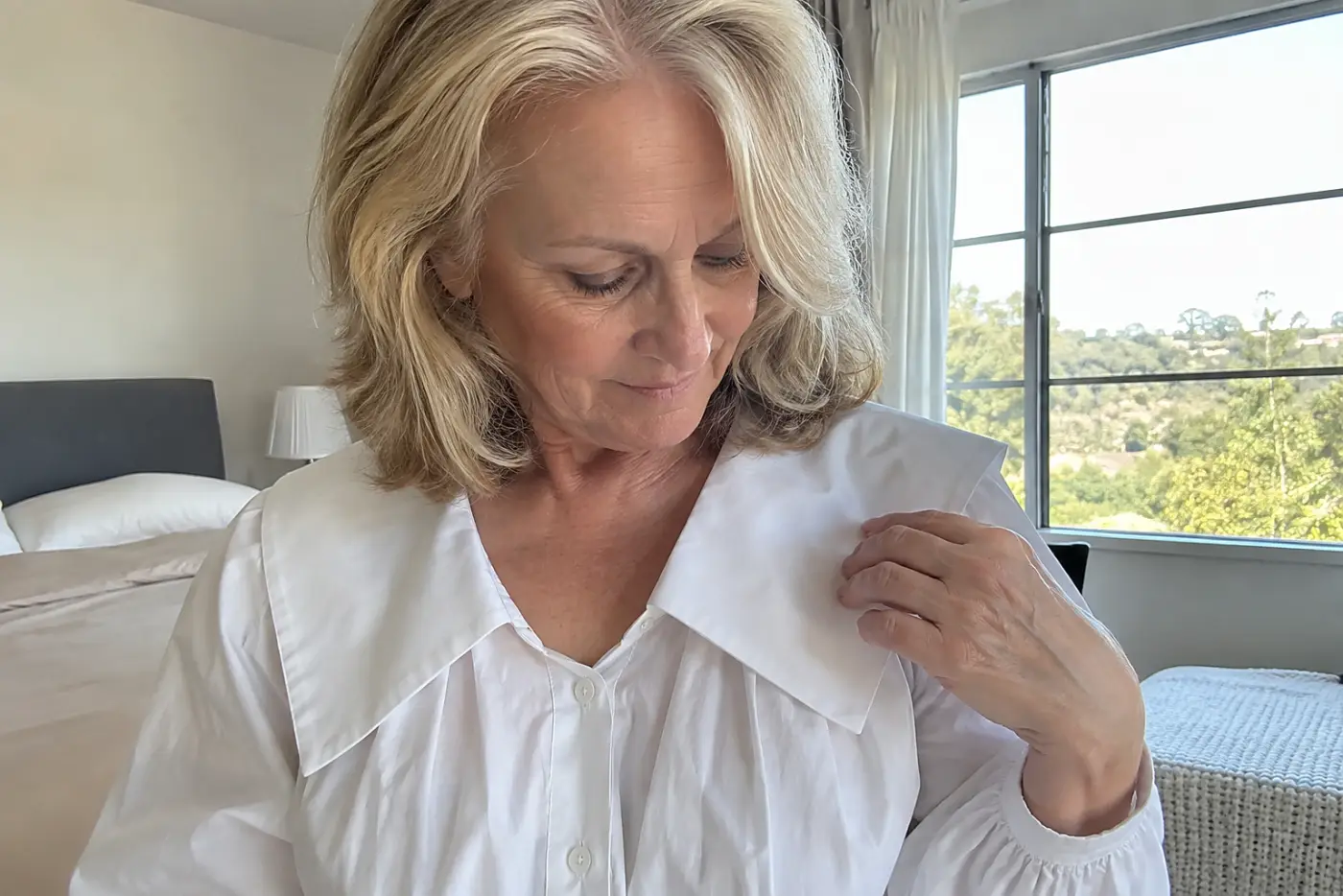
The collar spreads across both shoulders and covers your necklace.
Big collars had their moment, and you kept this blouse because its cotton still feels good. That doesn't mean the collar has to run the outfit. Under a jacket, its points push outward; worn open, they crowd your face. If the blouse fits everywhere else, experiment before letting it go.
Tuck the points inside a sweater neckline. Then decide whether the blouse earns its place.
17The Belt at the Wrong Height

The belt cuts across your middle while your shirt bunches above.
You've used the same belt holes for years. A different trouser rise shifts where that belt lands. A long shirt adds fabric with nowhere to go. The result looks fussy even when each piece fits.
Before changing the belt, check what's happening underneath it. Lift your arms, then sit down. If the shirt rides up and stays there, the belt isn't holding a clean line. The old tuck suited different pants.
Untuck the shirt, or tuck it fully and smooth the fabric before fastening the belt.
16The Bra Showing Through Your Shirt
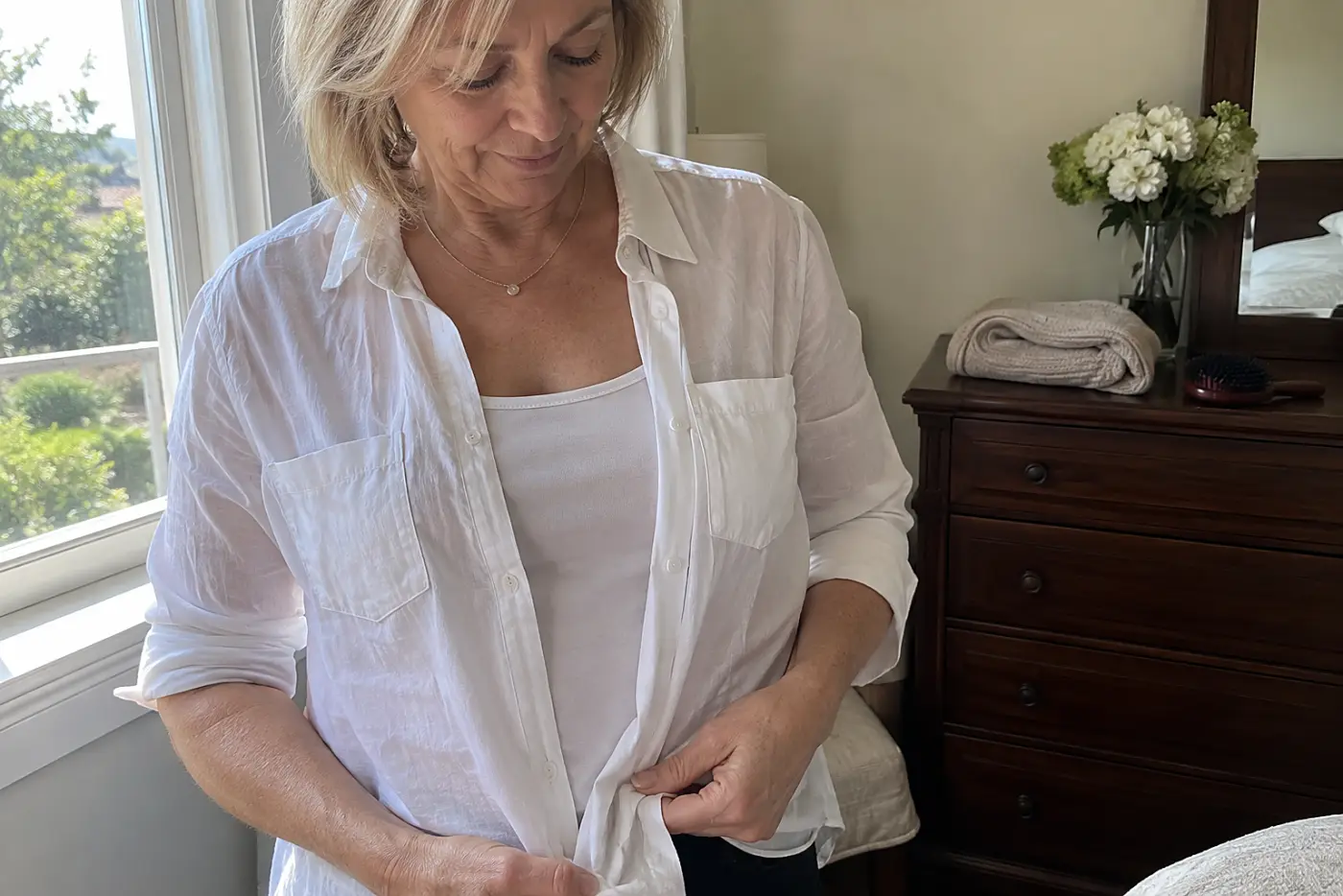
A pale bra stands out beneath a thin white shirt.
White under white seems sensible until daylight shows both layers. The eye goes to the underwear instead of the shirt. That shirt doesn't need a new cut. It needs a layer that disappears beneath its fabric.
Skin tones vary, so compare bras against your own skin. Check from the side as well as straight on. The bedroom light won't tell you what a window does. You knew the shirt looked different outside; this is one reason.
Try it in daylight over a bra close to your skin tone.
15The Leggings Worn as Trousers

The thin leggings show every seam beneath your short sweater.
Those leggings started as a comfortable answer to long tunics. When the top changed, the leggings stayed. Now thin fabric is doing a trouser's job without a trouser's weight. Turn toward the light. Check the knees and seat for stretched, sheer patches.
Comfort shouldn't require that inspection every time you leave. Keep the pairing that worked, if you still like it. Otherwise, give the short sweater a sturdier bottom. A knit trouser with an opaque seat leaves you just as free to move.
Save the leggings for longer tops, or wear thicker pants with that sweater.
14The Jacket Buttoned to the Neck

Every button is fastened, and the jacket sits tight beneath your throat.
You wore it that way to look put together, especially when the blouse underneath felt too plain. The closed front makes one solid block from chin to waist.
Open one button and the blouse shows an edge. Open two, and the jacket's shape changes. If the fronts still pull when open, check the fit.
Unfasten the top button and step back. Compare both versions before changing anything else.
13The Shoes With Heavy Soles
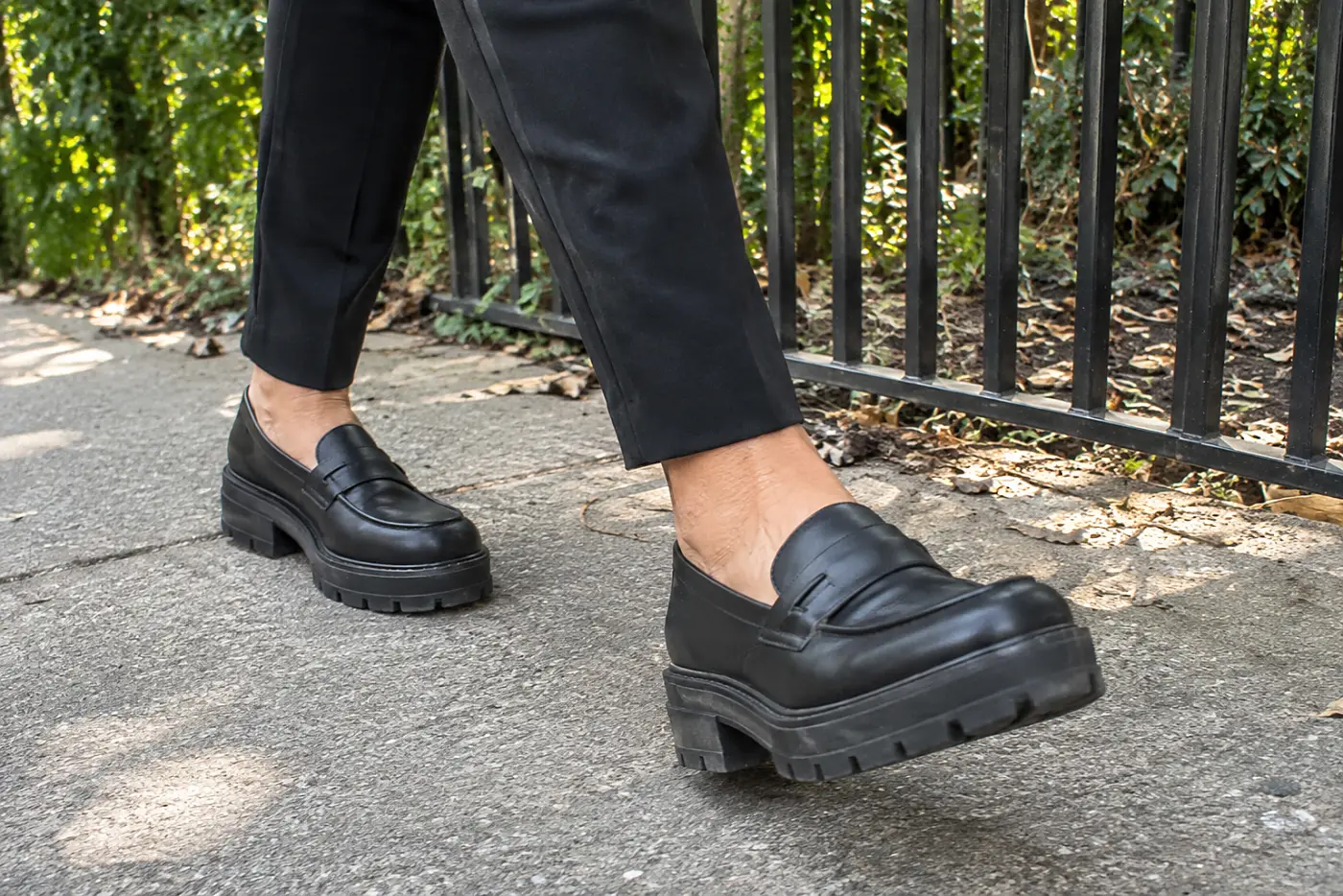
The dark soles look wider than the hems above them.
Sturdy shoes are worth keeping when they let you walk where you want. An old pair of wide, worn soles changes the balance beneath narrow pants. The shoe starts to look like the largest piece of the outfit.
Don't trade comfort for a photograph. Start with the pants instead. A wider hem rests over more of the shoe and shifts the outline you see. Your walking shoes haven't suddenly become wrong; the pants beside them changed.
Try a wider hem over those shoes, then check the outfit standing and walking.
12The Trousers With Sagging Knees

The knees stay bent after you've taken the trousers off.
You know the pair: comfortable in the morning, baggy before dinner. Fabric that doesn't spring back makes a good fit look borrowed. A knee bulge also changes where the hem falls over your shoes.
Hang the trousers overnight. If the knees still hold their shape, retire this pair from outings.
11The Glasses on a Chain

The chain hangs beside your earrings and across your blouse.
A glasses chain solved a real problem: you knew where your readers were. Keep that convenience. When the chain and earrings both swing near your face, though, the details pile up.
Look at the chain against the blouse you wore yesterday. Is it visible, or does it disappear into a print? A plain chain beside small earrings gives your eyes a clearer frame. Nothing about needing your glasses changed. What changed was how many pieces sat in the same small space.
Wear the chain with simpler earrings, or let it be the only moving piece.
See more: 29 Signs Your Glasses Are Aging You →
10The All-Beige Outfit

The sweater, pants, and shoes are nearly the same beige.
You chose each piece because it worked with the others. In the closet, that felt like a useful plan. On you, the colors run together. The sweater cuff and trouser waist disappear.
You don't have to abandon neutrals. Put two pieces beside a window. Cream against camel shows a boundary that two matching beiges don't. A darker shoe works, too, if the sweater and trousers are the pair you love. This is a contrast check, not a shopping list.
Change one shade or texture, then look for the edges of each piece.
9The Handbag With Fraying Corners

The bag's worn corners show pale threads against dark leather.
You kept carrying it because the handle fits your hand and the pockets make sense. Those are good reasons. The corners are visible when the bag hangs at your side, though. They sit beside the coat or dress you took care choosing.
Don't assume the bag is beyond saving. Empty it and check the handle and lining, too. A sound bag with worn corners deserves a repair question. If the leather is splitting in several places, give the bag a different job at home.
Ask a leather repair shop about the corners before retiring it from everyday use.
8The Blouse That Gapes Between Buttons

The blouse lies smooth until you reach for something.
Button-front shirts shift with movement. A blouse that closed neatly when you bought it can pull across the chest after repeated washing or a change in what you wear underneath. That little opening draws attention even when the rest of the shirt fits. More importantly, it makes you check yourself every time you move.
Raise both arms and sit down while wearing it. If one gap opens but the fabric doesn't pull, a hidden snap gives that spot support. If the buttons strain across the whole chest, the snap won't solve the fit.
Ask an alterations tailor, “Does this need a snap or more room?” Check the fit before adding a fastening.
Next, check what happens when you lift your arms.
7The Jacket That Rides Up

The jacket hem jumps above your waist when you lift your arms.
It looks fine while you stand still. Reach for a shelf, though, and the whole jacket climbs. A snug armhole or tight back leaves too little room for that movement. Pulling the hem down won't change the fit. You remember wearing this jacket without thinking about it; now you're adjusting it whenever you reach.
Try it over the top you wear with it most. Lift both arms, then lower them. If the hem stays high, ask an alterations tailor, “Is there enough room in the back to let this jacket move?”
Then look at the part of the outfit that sits just above your shoes.
6The Socks Above Your Shoe Tops

A band of white sock shows between your dark pants and loafers.
You dressed around the trousers and shoes; the socks were what you found in the drawer. When you sit, the hem rises and that bright band takes over the space above your shoes.
Sit down before you leave. If the socks show, try a darker pair with the same shoes, or choose a length you want people to see.
Ask a friend, “Do these socks show when I sit?” Check from a few feet away.
The same small check helps with fabric you see only after sitting.
5The Linen Shirt With Permanent Creases

The shirt has crisp cuffs and one deep crease across its front.
Linen wrinkles as you wear it. That isn't the problem. A fold line left from storage cuts straight across your chest and makes the shirt look as if you pulled it from a drawer. You remember it looking relaxed, not neglected. Those are different things.
Hang it after washing and smooth that fold while the fabric is still damp. If it remains, press just the front panel. You don't need to flatten every bend the linen makes during the day.
Say to yourself, “This crease came from the drawer, not from wearing it.” Then check what happened to the color while it was stored.
4The Sweater With Faded Shoulder Stripes
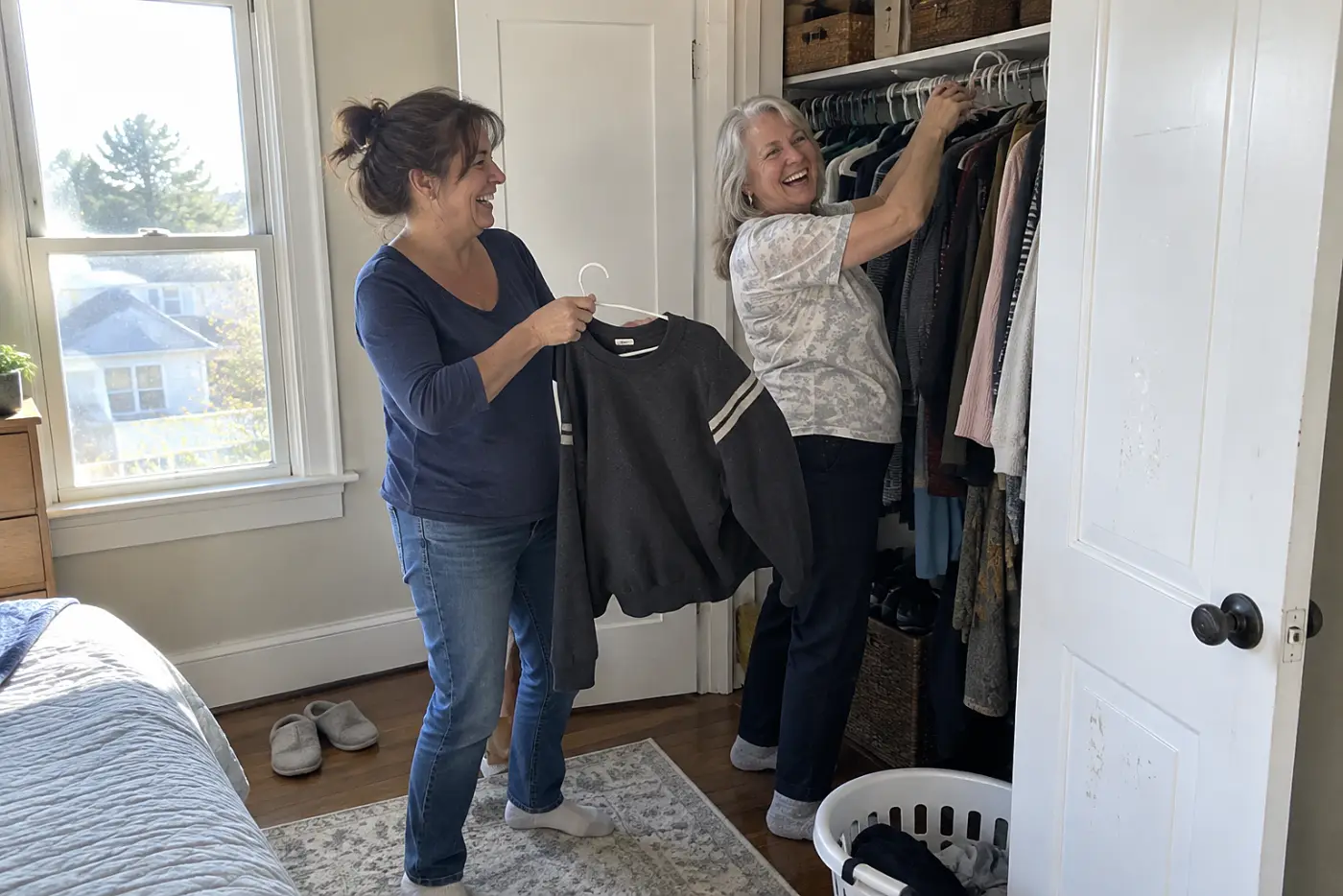
Two pale stripes run across the shoulders of your dark sweater.
The rest of the knit still looks sound, so it's easy to overlook the change. Sunlight through a closet window fades the exposed folds while the fabric underneath keeps its color.
Put the sweater on, and those stripes sit exactly where your eye first lands. The sweater you remember is still there, but its color isn't even anymore.
Look at it beside a window with the shoulders unfolded. If the stripes stand out, ask a cleaner, “Is this dye loss, or will cleaning help?” Don't scrub the pale areas.
Turn to the clothes that have changed shape rather than color.
3The Dress With a Twisted Side Seam
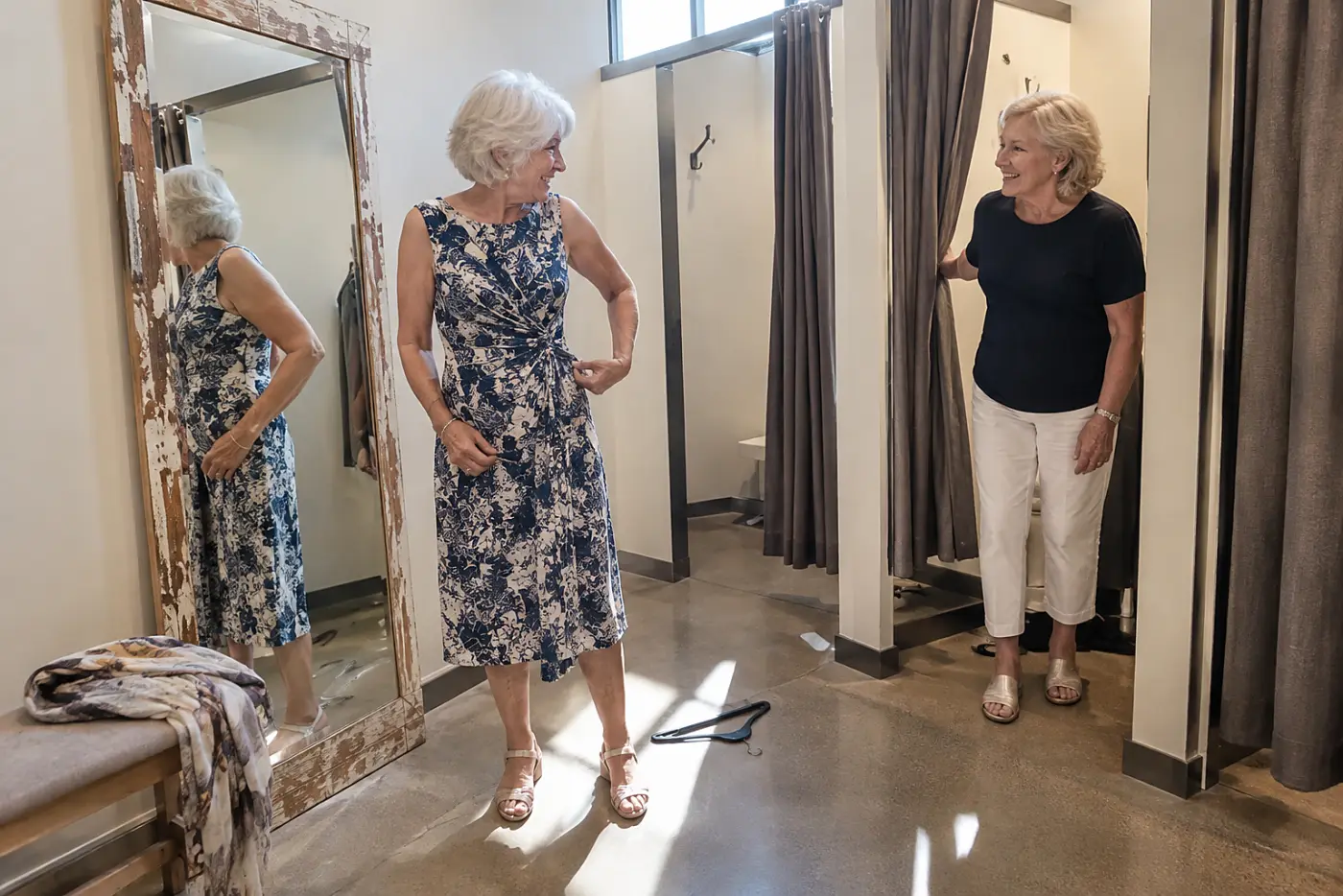
The seam starts beneath your arm and ends near the front of your knee.
You wore this dress because it needed little thought. You pulled it on, checked the mirror, and went out. Now you keep tugging the hem around after each wash. It won't settle, even when you straighten it before leaving home.
The seam tells you more than the hem does. Follow it with your hand while the dress is on. On one side, it runs from the armhole toward the front of your leg. The other side stays where you remember it. A belt covers part of the problem without changing how the fabric hangs. Smoothing the front moves the twist behind you; a few steps bring it back.
Take the dress off and lay it flat on a bed. Match the shoulders and let the hem fall without pulling either side. Follow the seam again. If it curves across the fabric, don't spend another morning turning the dress around on your body. Check it after washing, too, before you assume a hanger caused the pull.
Show the dress to an alterations tailor and ask, “Can this seam be straightened without changing the fit?” If it can't, stop spending your day adjusting it.
Your next check belongs with the piece you reach for underneath.
See more: 25 Spring Outfits for Women Over 60 (and What Makes Them Work) →
2The Turtleneck Beneath Everything

The turtleneck fills the space beneath your jacket and scarf.
A fine turtleneck keeps your neck warm without much bulk. Add a thick jacket and a scarf, and three layers meet under your chin. What once looked sharp loses its shape indoors.
You don't need to expose your neck to fix that. Let one layer do the warming. Leave the others farther from your face. The difference shows as soon as you remove the scarf.
Wear the turtleneck with an open jacket, or pair the scarf with a lower neckline.
1The Mirror You Never Stepped Back From

Up close, the blouse looks right; from the doorway, it disappears.
You checked its collar and buttons in the bathroom mirror. You didn't see it beside the long cardigan, dark trousers, and heavy shoes. Each piece made sense alone. Together, their outlines swallowed the blouse you liked.
The doorway view shows what the close mirror missed. Step back in the outfit you plan to wear, shoes included. Turn sideways, then take a few steps. Look for the piece that vanishes or pulls your eye away. That's the one to change first, not the entire outfit.
Do the doorway check before you give up on an old favorite.
The bottom line
All 29 habits have the same pattern: a familiar piece meets a changed outfit, and you don't see the mismatch up close.
You know which clothes still feel like yours. Step back, check the whole outfit, and change one thing first. Which old favorite is still in your closet?
Up next
27 Things in Your Closet Keeping You Stuck in 2009
That long cardigan by the door isn't a mistake, but it deserves a fresh look before you wear it again.
Read the list →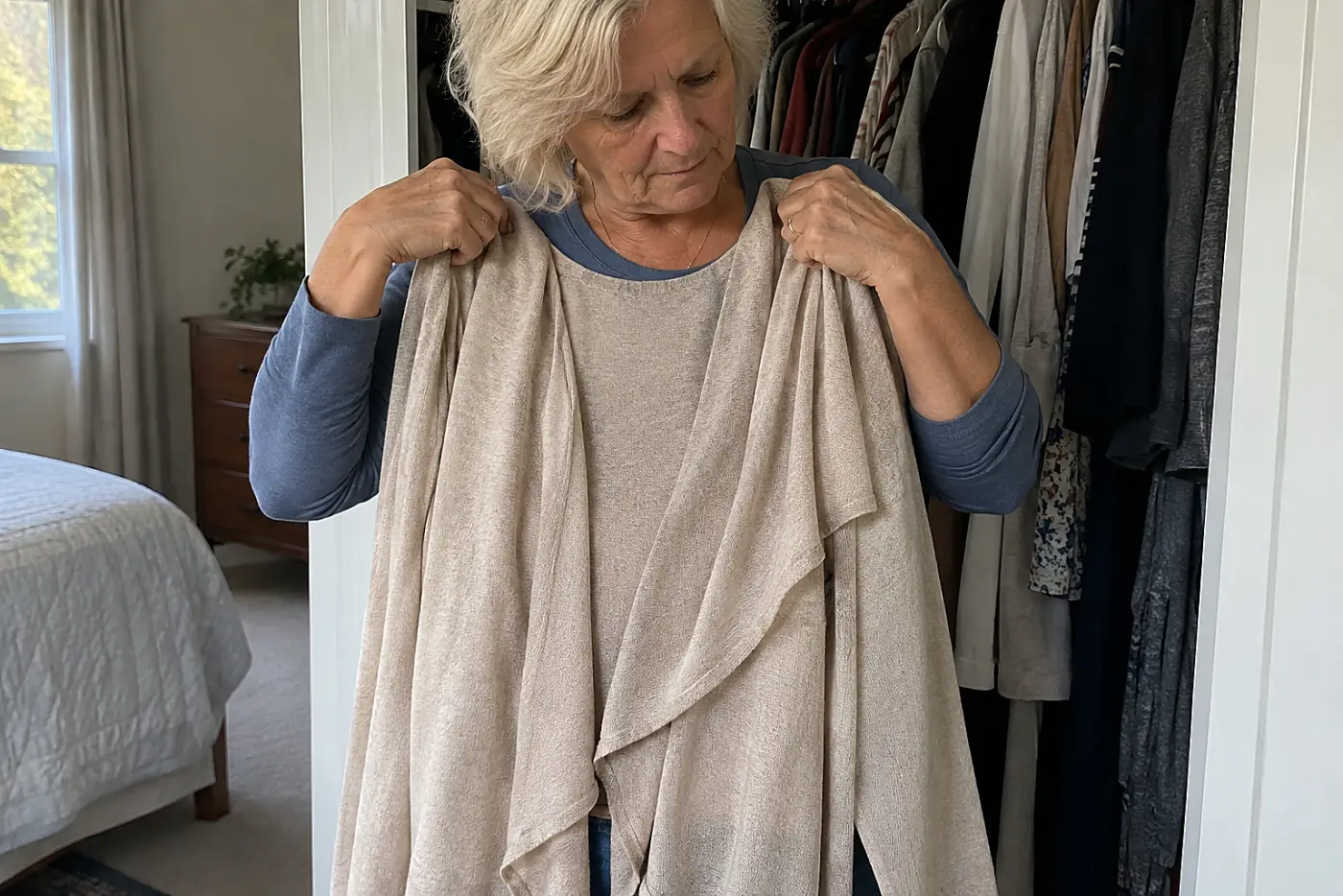

Reader quiz
Did you catch the details?
5 questions from this article. Finish them all to unlock the editor's bonus tip.
What should you check first when a roomy coat hangs too loosely?
Did any of these feel familiar?
Know someone who needs this?
Nora Bennett
Style Editor
Nora writes about hair, clothes and grooming for people who have stopped asking permission: what to keep, what to let go, and what reads as taken care of.
More from Nora Bennett