











29 Signs Your Glasses Are Aging You
A strip of blue along the arms can date your glasses before anyone notices the shape of the frames.
By Nora Bennett, Style Editor
Updated · 11 min read
- Written by our style editor
- How we review

Read to the end: #1 is the fitting check that puts your eyes in the right place, and almost nobody asks for it.
At the bathroom mirror, you push your glasses up with one finger. The frames look exactly as they did in a photo from ten years ago. Your hair has changed. Your clothes have changed. The glasses, right in the middle of your face, haven’t.
Here are 29 details worth checking before you choose your next pair.
29The Blue Stripe Along the Arms

The bright blue temples show up before your face does.
That little streak felt fun when you chose it. Now it ties every outfit to one purchase, even when the front of the frame still looks good.
Turn sideways in your usual clothes. If the stripe grabs your eye first, try a plain temple.
28The Oversized Square Frame

The square lenses stretch from your brows toward your cheeks.
Big frames had a long run, and there’s nothing wrong with keeping a shape you love. The problem starts when the lower corners hide your cheeks and the top rim covers your eyebrows.
Then the frame takes up the space where people read your expression. Your face deserves to be visible inside the glasses, not behind them.
Compare them with a smaller square that leaves both brows and cheeks in view.
27The Tiny Rectangular Lenses

The narrow rectangles leave a lot of face above and below.
They recall the reading glasses many of us kept near the phone in the early 2000s. On an everyday pair, that small window gives your eyes little room to move.
Ask to see a deeper lens in a similar width before you rule out the shape.
26The Thick Black Brow Line

The heavy black upper rim sits like a second eyebrow.
Black frames have earned their place. Still, a thick straight bar changes the look of your brow, especially when it runs well past the outer corner of your eye.
What seemed crisp ten years ago now interrupts the expression underneath. You don’t have to give up dark frames to see the difference. Look at where the rim meets your brow.
Hold a thinner black frame beside your current pair and compare where each top rim lands.
25The Silver Rectangle From Work

The silver rectangles look ready for another Monday meeting.
You chose them to go with everything, and they did. But an office-neutral frame from ten years ago still reads like part of that old work uniform. The sharp corners draw attention away from your eyes.
Try a softer rectangle in brushed metal, then decide whether the old pair still earns its spot.
24The Pale Frame That Disappears

The nearly clear rims vanish against your skin.
Clear plastic looked fresh when you brought it home. Under flat indoor light, the rim barely outlines your eyes in photographs. Put the glasses on and look from across the room. If you notice the lenses but lose the frame, the color is doing too little.
You don’t need a dark replacement. Honey, smoke, and warm gray give the rim a visible edge. Check each shade beside your skin, not against the shop’s display board. The old pair still has its place if you like how it looks in daylight.
Try those colors by a window, away from the optical shop’s overhead lights.
23The Yellowed Clear Plastic
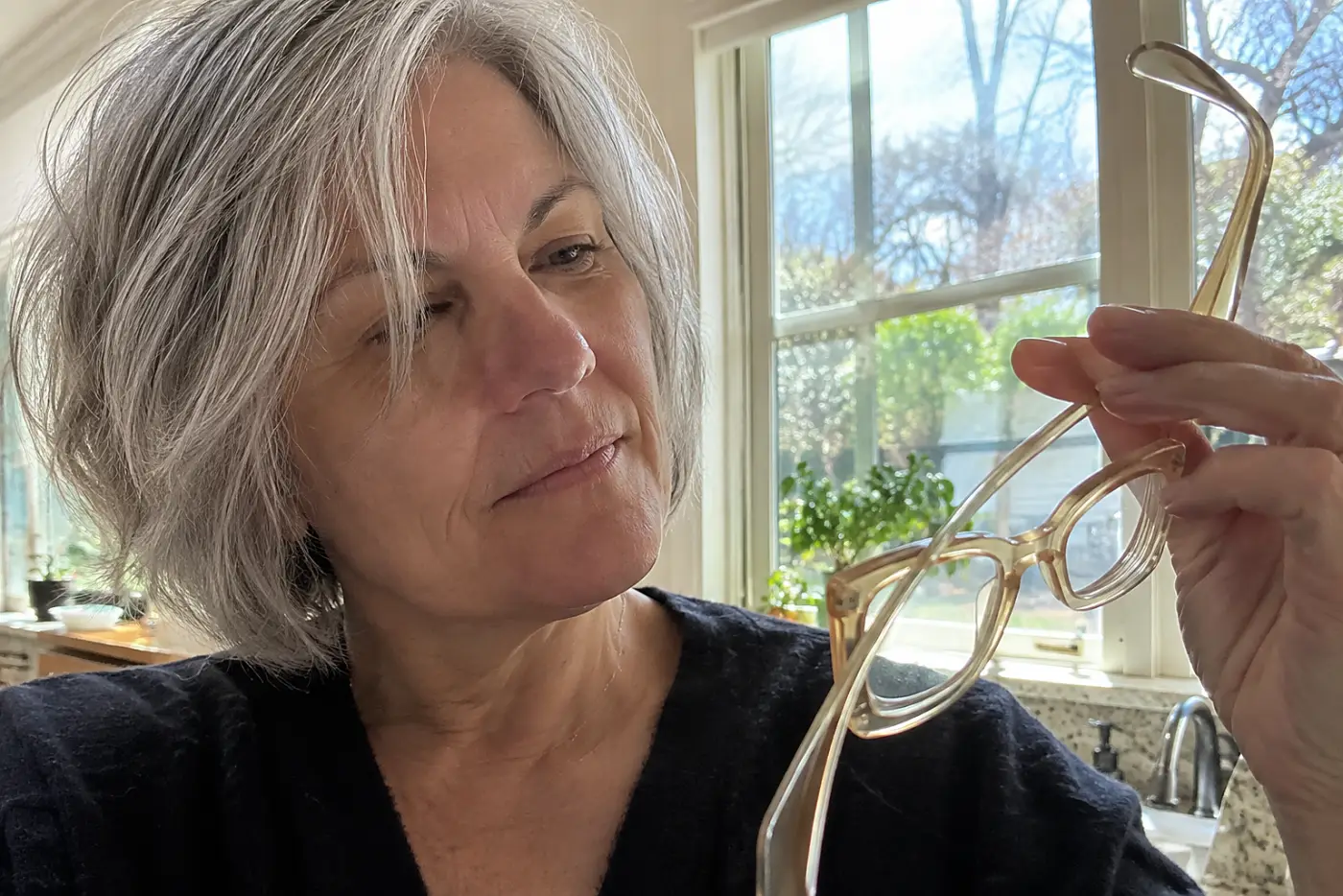
The clear rims have turned the color of old tape.
That tint isn’t a style choice you made. Years of wear have changed the plastic, and cleaning won’t bring back its original clarity. Next to your skin, the yellowing makes the entire pair look tired.
Take the glasses into daylight; if the color looks uneven, retire the frame.
22The Faded Tortoiseshell Front
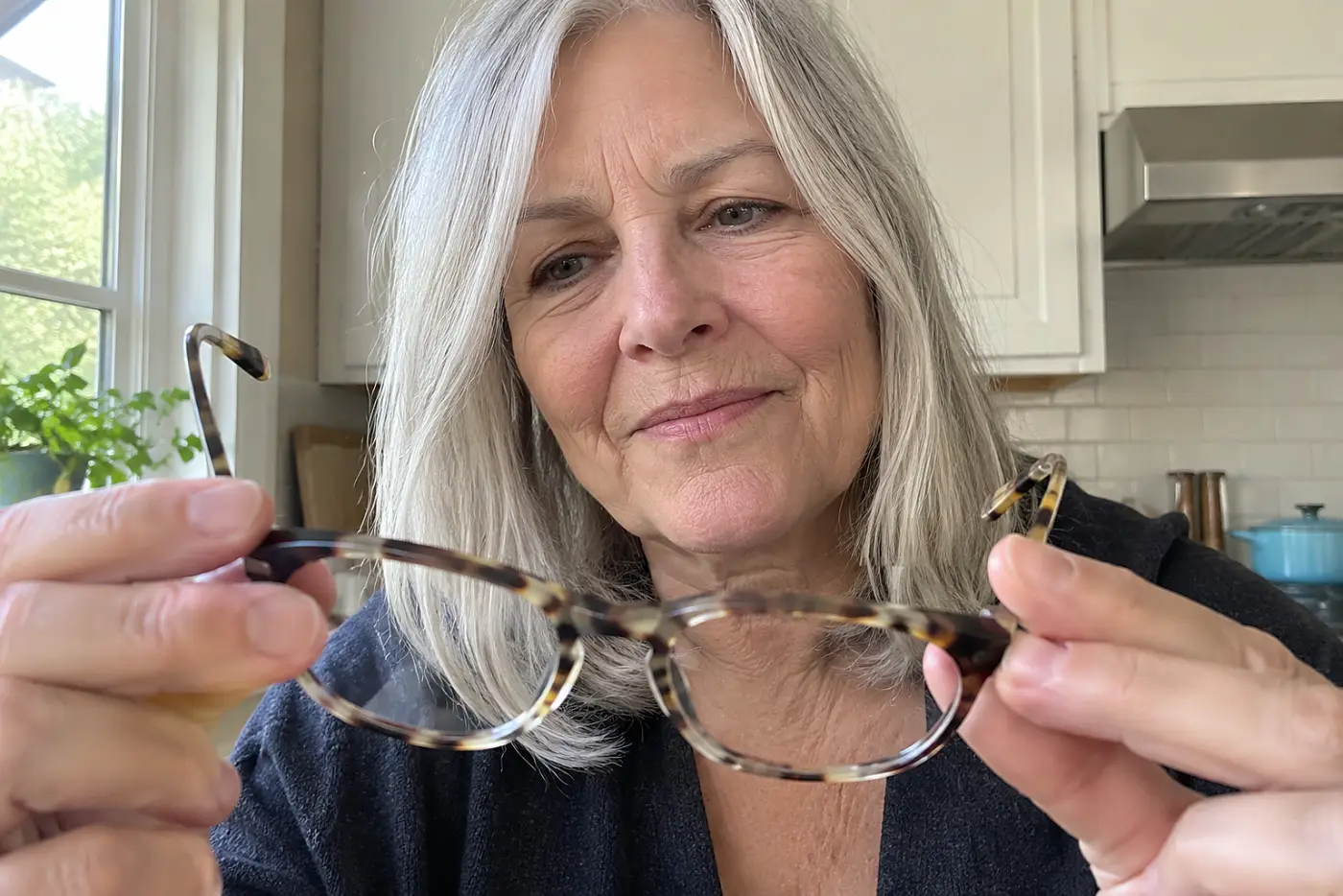
The tortoiseshell looks dull where your fingers touch it.
A brown mottled frame has warmth that a flat brown one lacks. When its surface loses its shine, though, the pattern stops looking distinct. Check the bridge and the places beside the hinges. Those are the spots you handle every day, and they tell the real story of the frame’s condition.
Ask an optician whether a professional polish suits the material before replacing it.
21The Rhinestones at the Corners

The rhinestones sparkle where the temples meet the front.
They were a cheerful detail when you bought the pair. Now each flash pulls attention toward the outer corners instead of your eyes. The decoration also fixes the glasses to a very particular moment in style.
Try the same basic shape without the stones; see whether your face comes forward.
20The Frame Wider Than Your Face

The outer corners extend well past the sides of your face.
Width isn’t just a matter of fashion. When a frame reaches too far, your eyes sit close to its inner edges and the outer corners seem empty. The temples also have farther to travel back to your ears. A pair that looked bold on the display can feel like borrowed glasses once you see it straight on.
Try a narrower front and check where your eyes sit inside each lens.
19The Frame Pinching Your Temples

The arms press lines into the sides of your head.
You’ve put up with the squeeze so long it feels normal. From the front, the frame looks narrower and more strained than it should. By lunchtime, those arms have made their point. You take the pair off, then put it back on because it’s the only one you have with you.
A good shape won’t rescue a pair that hurts. Don’t choose its replacement from the front view alone.
Bring it to an optician for a fit check. If the width is wrong, try a wider frame.
18The Bridge Sliding Down Your Nose

The bridge rests halfway down your nose again.
You push the glasses up while you read, cook, or talk. That repeated gesture changes how the frames look in every candid photograph. When the pair slips, your eyes sit high behind the lenses and the top rim drops away from your brows. There’s a useful difference between an adjustment and a bridge that never fit.
Have an optician check the fit before you blame the frame’s shape.
17The Pads Sitting Unevenly
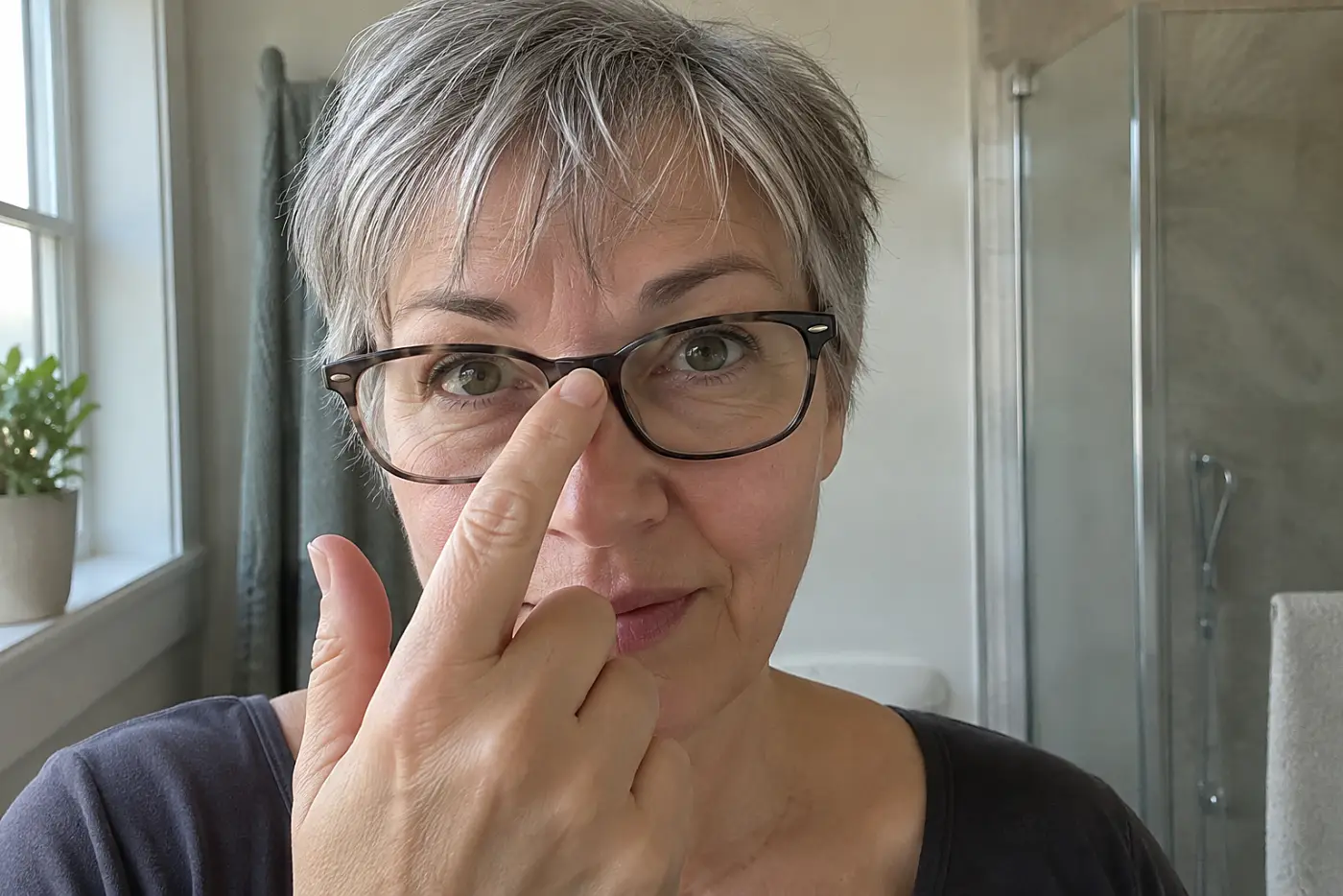
One lens sits higher because the nose pads don’t match.
A tiny tilt is hard to notice in the mirror you use every morning. In a photograph, it makes your glasses look crooked even when your head is level. Metal pads shift with daily wear.
Ask an optician to check both pads rather than bending them yourself.
16The Lenses Hanging Below Your Cheeks

The bottoms of the lenses reach down beside your nose.
A deep lens gives you room to look down without moving your head. Too much depth, though, covers the upper cheek and changes your face’s proportions.
This is especially clear when the frame has a dark lower rim. Compare it with the line of your cheekbone, not just the shape on a display board.
Try a shallower version and look down through it before deciding.
15The Top Rim Covering Your Brows

The upper edge cuts straight across your eyebrows.
Your brows still do important work when you smile or raise a question. A rim that hides them makes your expression harder to read. The fix isn’t always a smaller frame; placement matters, too.
Try the pair at its proper position on your nose, then check whether both brows show.
14The Corners Pointing Down

The outer corners dip below the inner ones.
That small angle pulls the eye downward, even when the rest of the frame fits. It’s easy to miss while you’re looking at lenses close up. Step back and look at the whole face. The corners tell you where the line of the glasses leads, and your eyes follow it.
Compare a level upper rim with the dipping one in a straight-on photo.
13The Narrow Gap Between Lenses

The lenses crowd together over the bridge of your nose.
Your eyes need room to sit comfortably within the frame. A narrow bridge pushes the visual center of each lens away from where your eyes belong. It also makes the front look pinched.
Ask the optician to show you a bridge width that places your eyes nearer the middle.
12The Thick Rim Beneath Your Eyes

The heavy lower edge traces a dark line across your cheeks.
You notice the top of a frame first. In pictures, the bottom edge has just as much presence. A thick dark rim under each eye competes with the eyes themselves, especially when the frame is also deep. That’s why two pairs with similar upper edges look completely different once you put them on.
Compare one with a thinner lower rim, using the same mirror and light.
11The Pattern Across the Entire Front

The mottled print runs from one hinge to the other.
Pattern works differently when it covers your whole face. A print that felt lively in the case now competes with your hair, earrings, and clothes. You end up dressing around glasses you chose years ago.
Try a patterned temple with a plain front. See which pair works with more of your clothes.
10The Bright Color Beside Your Skin

The vivid front casts color across your cheeks in daylight.
A red or purple frame is a real commitment when it sits this close to your face. The shade you loved under shop lights follows you through every photograph and every change in hair color. Look at what it does beside your skin, not whether you still like the color by itself.
Take a daylight photo wearing the frame and compare it with a quieter shade.
See more: 29 Colors That Wash You Out After 50, and the Ones That Don't →
9The Peeling Coating on the Arms

The finish flakes where the arms curve over your ears.
From the front, the pair looks fine. Then you turn your head and the worn spots show. That’s ordinary wear, not a failure of taste, but it keeps an old frame looking old.
Ask whether the arms can be replaced; if not, put the pair aside.
8The Chain Hanging Below Your Chin

The chain swings against your collar each time you turn.
A glasses chain earns its place when you take your frames off throughout the day.
But a long chain with large links becomes part of your look, whether you chose it for today’s clothes or bought it years ago. In a photograph, it draws a line from your ears to the middle of your chest. That line stays visible even while you’re wearing the glasses.
Look at the chain separately from the frame. The glasses could still suit you. The chain is an accessory you put on with them, not a part of the pair you have to keep. Take both into daylight and check them from the front and side.
If you still use the chain, try a shorter, finer one. Say, “I want to keep my glasses handy without the chain taking over.”
Check the new chain with your usual clothes before you decide it stays.
See more: 27 Things in Your Closet Keeping You Stuck in 2009 →
7The Clip-On Lenses Above the Frame

The dark lenses sit slightly forward of your everyday glasses.
Clip-ons spare you from carrying a second pair. Their extra layer is easy to spot from the side, though, especially when the clips and the frame are different colors. You chose a practical fix, and it still works. It just deserves the same look in the mirror that you give the frame underneath.
Put them on before you leave the optical shop and turn toward the side mirror. Say, “Show me how these look from the side.” A closer color match changes what people notice first.
6The Glare Across Both Lenses

Two bright reflections cover your eyes in a photograph.
Overhead lights and windows reflect off lenses. In a video call or a dinner photo, those bright patches hide your eyes while the frames remain visible. It’s easy to blame the pair you’ve worn for years without checking the glass. Look at an older photo, then take one beside a window. Is the glare in both?
Clean the lenses and take another picture. If the reflections remain, ask an optician to show you lens options before replacing the frames.
5The Rimless Lenses on Your Face

The lenses float on your face without an outline.
Rimless glasses leave your brows and cheeks in full view. That was the point when you picked them, and it still has appeal. Yet the lens edges, screws, and bare bridge carry the whole look. If they’ve been your only pair for a decade, you haven’t seen what even a thin outline does for your eyes.
Try a light metal frame beside the rimless pair, with your hair as you wear it every day. Say, “I want to see my face in both, not just compare the frames.”
4The Visible Line Across Each Lens

A horizontal line crosses both lenses when the light hits.
Lined bifocals give you separate areas for distance and near vision. The line marks that change. It also shows in close conversation and photographs. If you’ve worn the same kind for years, you’ve had no reason to notice it. A different lens design is a choice to discuss, not a reason to discard a pair that works.
At your next fitting, say, “Show me my lens options and tell me what changes in how I’ll see.” Keep the answer about your vision as well as your appearance.
3The Hinges That No Longer Hold

One arm folds inward while the other stays open.
A hinge takes the strain each time you put your glasses on. When one loosens, the pair sits unevenly and looks worn before anyone notices its shape. Don’t bend the arm to make it match. That won’t fix a loose hinge.
Open both arms on a table and compare them. Then ask an optician whether the hinge needs tightening or repair.
2The Lenses Full of Fine Scratches

The scratches catch the window light before your eyes do.
You stop seeing them because you look through the lenses all day. Everyone else sees the haze across the front. It follows the pair into every photo, even when the frames are clean.
A scratched pair also makes it harder to judge whether the frame itself still suits you. Clean the lenses first so you’re looking at damage, not fingerprints. Hold them toward the window. Turn them until the light catches the surface.
Have an optician inspect them and discuss replacement lenses if the frame still fits.
1The Pupils Off Center in the Lenses

Your eyes sit noticeably high and inward behind the glass.
This is the check to do before falling for another frame. A pair looks wrong when your eyes seem stranded near its edges, even if the color and shape are right. Start with the frame resting where it belongs on your nose.
Ask the optician, “Do my pupils sit well within this frame, and will this frame work with my prescription?”
The bottom line
Across all 29 signs, one pattern holds: the frame’s age, wear, or poor fit draws attention away from your eyes.
You already know which pair you keep pushing up, hiding behind, or planning outfits around. Bring it to the mirror in daylight. Which pair in your house has stayed ten years too long?
Up next
21 Best Eyeglasses for Women Over 60
Find frame shapes, colors, and comfort features worth trying, plus the measurement to check before you choose a pair.
Read the list →


Reader quiz
Did you catch the details?
5 questions from this article. Finish them all to unlock the editor's bonus tip.
What should you try if the blue stripe catches your eye first when you turn sideways?
Did any of these feel familiar?
Know someone who needs this?
Nora Bennett
Style Editor
Nora writes about hair, clothes and grooming for people who have stopped asking permission: what to keep, what to let go, and what reads as taken care of.
More from Nora Bennett